32 Jaw-Dropping Easy Landscaping Ideas for a Stunning Yard That Will Turn Heads

You know that feeling when you finally find the perfect landscaping photo that looks exactly right for your space? We’ve gathered 32 of those moments right here. After filtering through hundreds of designs, we narrowed it down to achievable looks that feel both personal and polished. This isn’t just a random gallery; we’ve focused on styles from modern minimalist to lush traditional that work for real yards. In 2026, it’s all about creating an outdoor sanctuary without the endless upkeep, and these ideas nail it. And stay until the end—we break down the most common mistakes that can ruin these looks.
📌 Save this to Pinterest for later—you’ll want to revisit these ideas.
1. A Diamond-Patterned Stone and Grass Path
This landscape feels so grand because it masters the art of contrast and repetition. The hard, geometric lines of the gray stone path are softened by the lush, organic grass growing within its diamond pattern. This creates visual interest without feeling busy. The large white spheres in the foreground are a genius touch; they repeat the circular shape of the distant white archway, subtly tying the entire front yard together into one cohesive, elegant statement.
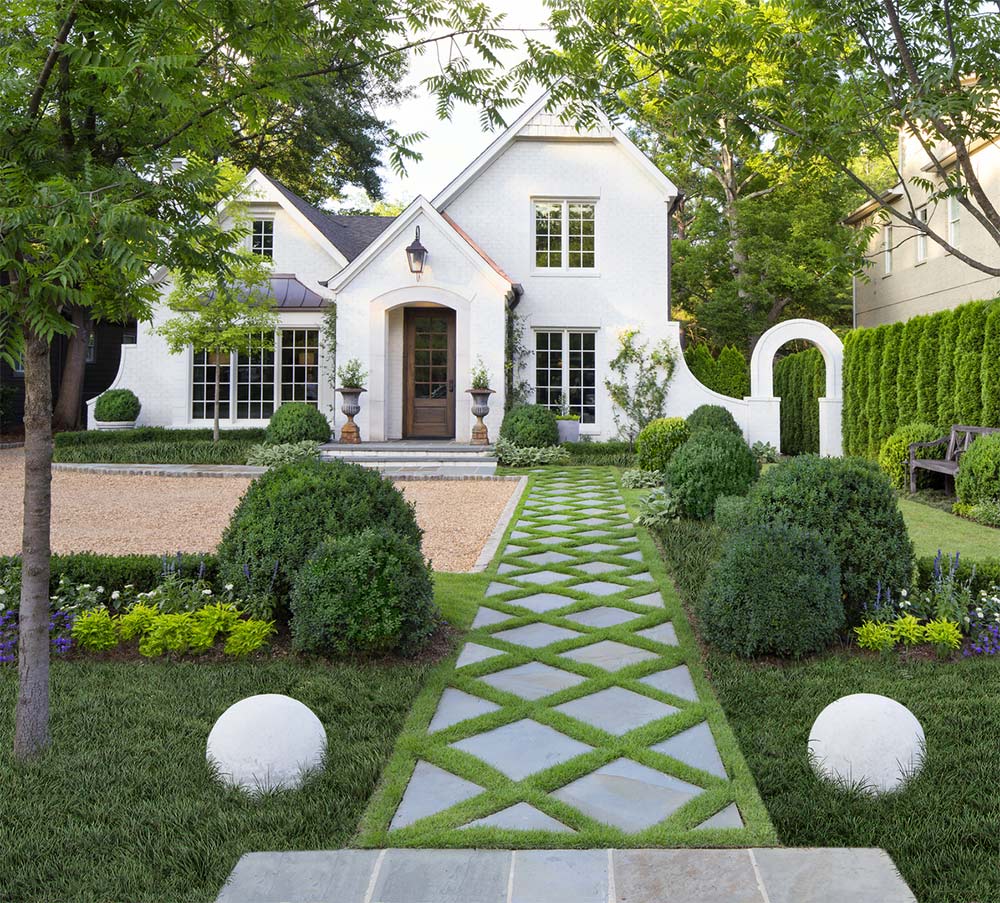
To create a crisp grass-and-paver pattern that lasts, install a steel or aluminum edge restraint underneath the pavers, just below the soil line where the grass will grow. This unseen barrier prevents grass roots from creeping under the stones and keeps your pattern looking sharp for years with minimal re-edging. It’s a professional trick that saves you hours of tedious trimming later and maintains that clean, geometric look.
2. A Cozy Small Deck with a Vertical Garden Wall
The vertical garden wall is the undeniable hero of this small space. Without it, you’d just have a couple of chairs on a deck. With it, the entire area is transformed into a lush, private oasis. It draws the eye upward, making the compact footprint feel larger and more immersive. This single feature provides privacy, texture, color, and a powerful sense of enclosure, proving you don’t need a sprawling yard to be surrounded by greenery.
This idea is perfect for small urban backyards, patios, or even apartment balconies that are at least 8 feet by 10 feet. The key is verticality. You need a wall or sturdy privacy screen at least 6 feet tall to support the garden structure. This approach is specifically for maximizing tight quarters; if you have a larger yard, a vertical garden can still be a great feature wall, but its space-saving magic is most potent in smaller areas.
3. Minimalist Patio with Pavers Set in Light Gravel
The visual formula here is a study in modern simplicity: 50% textured ground plane (the large pavers and light gravel create a unified, low-maintenance base), 30% structured comfort (the dark modular sofa and fire pit anchor the seating zone), and 20% organic relief (the white planters with greenery and the warm wood fence soften the hard lines). You could swap the gravel for a carpet of mondo grass or the wood fence for a painted stucco wall, and the perfect balance would still hold.
Here’s a rough estimate to recreate this modern look for a 12’x15′ space:
- Large Square Pavers (24×24): $600 – $1,200
- Light Gray Gravel: $300 – $600
- Modular Outdoor Sofa: $1,500 – $4,000
- Low Fire Pit: $400 – $1,000
- Planters & Plants: $300 – $800
- TOTAL: $3,100 – $7,600
- Budget alternative: Use fewer, smaller pavers, find a sofa on Facebook Marketplace, and use a simple metal fire bowl to get the look for around $1,500.
4. Vibrant Layered Perennial Beds Along a Paved Walkway
A perennial garden like this is stunning, but it’s not a “plant it and forget it” project. The first year requires consistent watering to get plants established. After that, you’ll spend a few hours each spring cutting back the dead growth from the previous season and a few hours in the fall tidying up. To keep it from looking overgrown, plan on weeding for about an hour every 1-2 weeks during the growing season. The reward is a garden that comes back fuller and more beautiful each year.
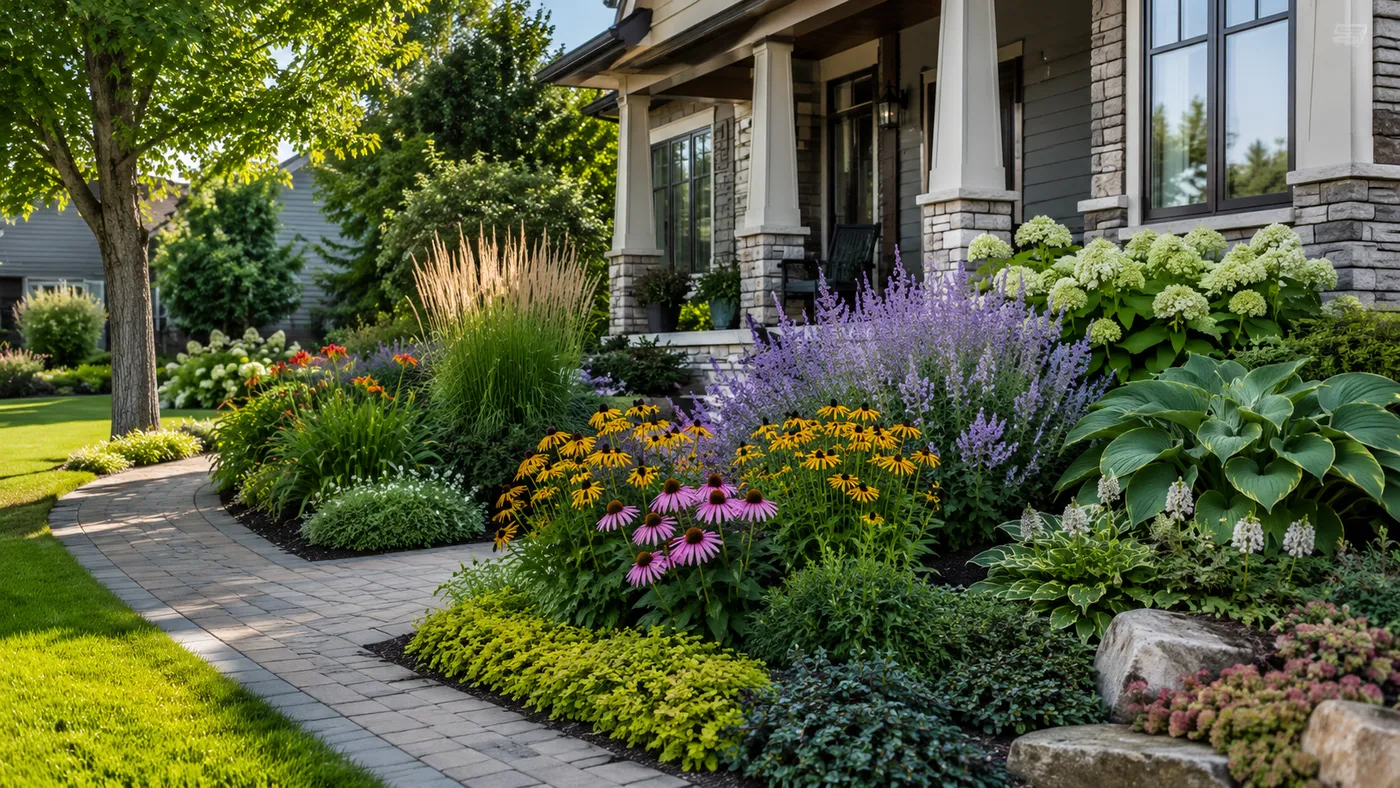
The incredible depth and lushness here come from masterful layering. The designer used the “thriller, filler, spiller” concept on a grand scale. Tall, upright plants like coneflowers act as the thrillers for height. Mounded plants like hostas are the fillers that create mass. And lower, spreading plants along the grey paver edge are the spillers that soften the transition from bed to path. This creates a rich, full look from every angle.
5. Modern Landscape with Corten Steel and Concrete Stepping Stones
When using large, bold elements like that gorgeous Corten steel planter, create visual balance by repeating its material or color elsewhere, but in a smaller dose. Here, the warm rust of the steel is subtly echoed in the color of the Japanese maple’s leaves. This small touch makes the planter feel integrated and intentional, not just plopped down. It’s a simple trick to create a more cohesive, professionally designed look. For a similar effect, compare this to the minimalist pavers in Idea #3.
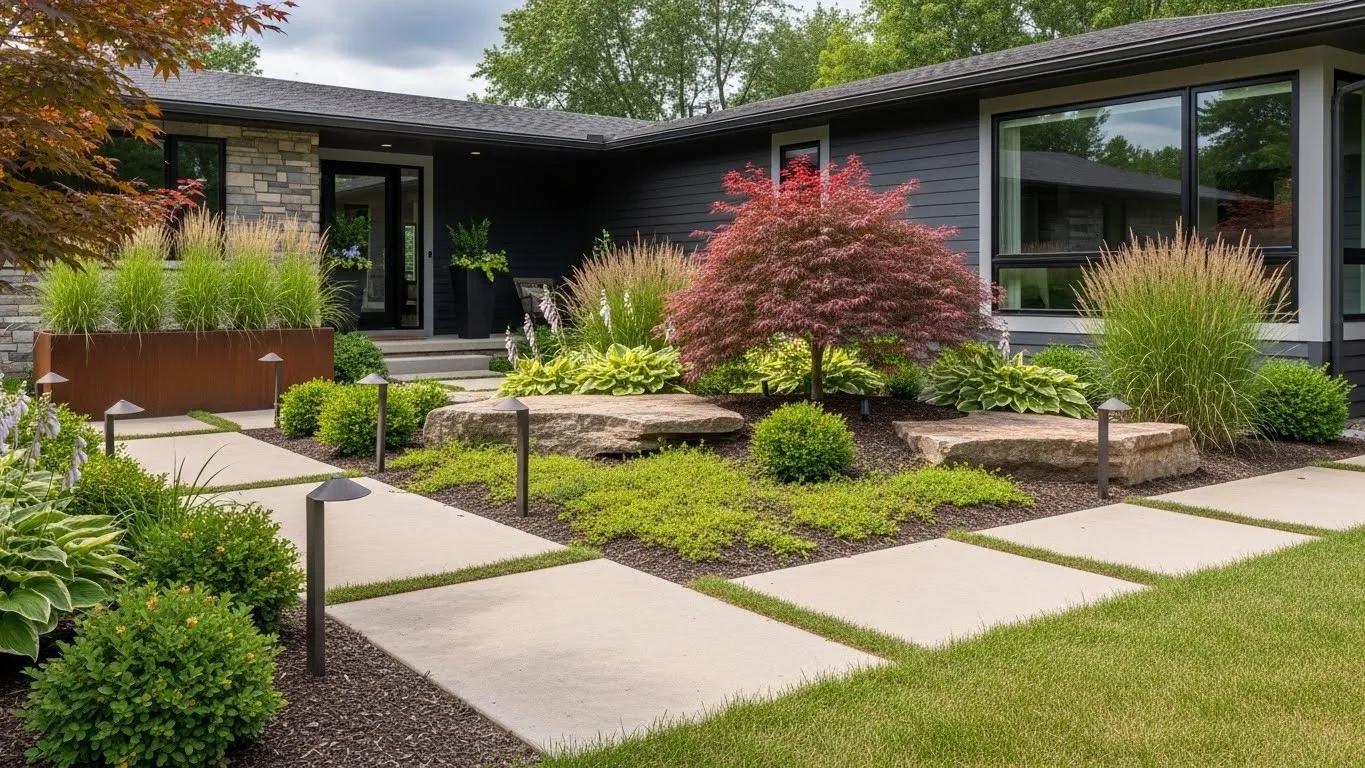
Corten steel, or “weathering steel,” is having a major moment because it perfectly bridges the gap between industrial modernism and natural, earthy textures. Its warm, rusty patina evolves over time, adding a dynamic, living quality that contrasts beautifully with the cool gray of concrete and the vibrant greens of plants. It feels both raw and refined, which is why it’s become a go-to for designers aiming for a sophisticated, contemporary look.
6. Curved Concrete Paver Path Through Gravel and Lawn
A path made of pavers set in loose gravel looks fantastic, but be prepared for some upkeep. The gravel will inevitably migrate onto the pavers and into the lawn, requiring regular sweeping or blowing to keep the lines clean. Weeds can also pop up in the gravel, so you’ll need to stay on top of them. If you have kids or pets who love to run, you might find yourself constantly redistributing the gravel from low spots. It’s a trade-off for a very chic, modern aesthetic.
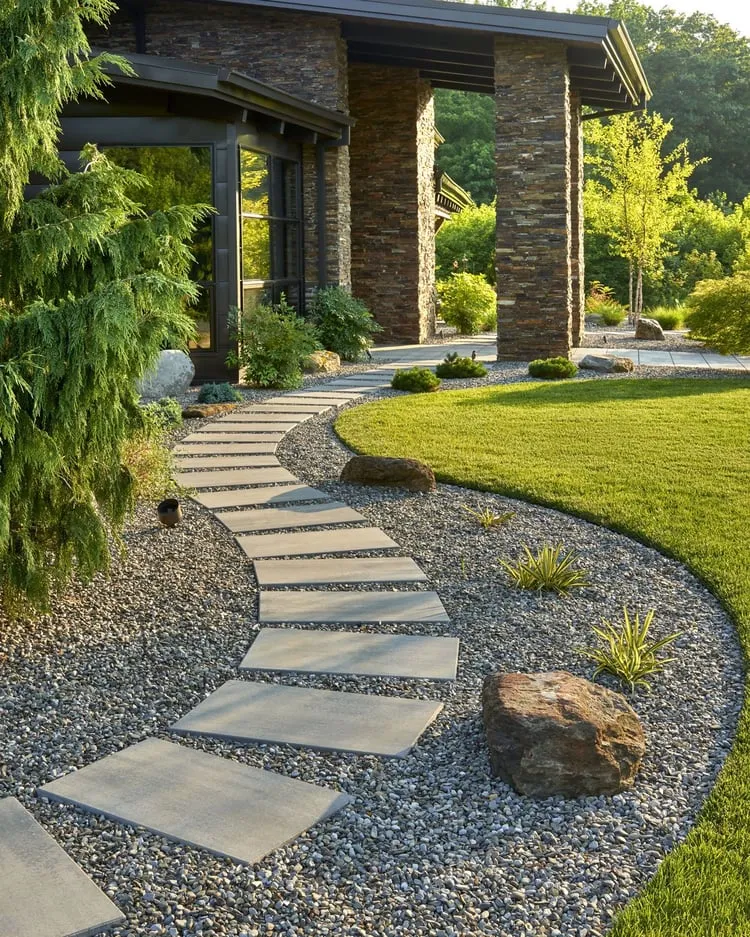
This design succeeds with a simple equation: 40% structured pathway (the pavers and gravel), 40% softscape (the vibrant green lawn), and 20% natural accents (the boulders and small plants). The gentle curve of the lawn edge is the key. It prevents the composition from feeling too rigid and guides the eye smoothly through the landscape. The dark stone pillars of the building provide a strong vertical anchor for the whole scene.
7. Geometric Stepping Stone Path with Green Ground Cover
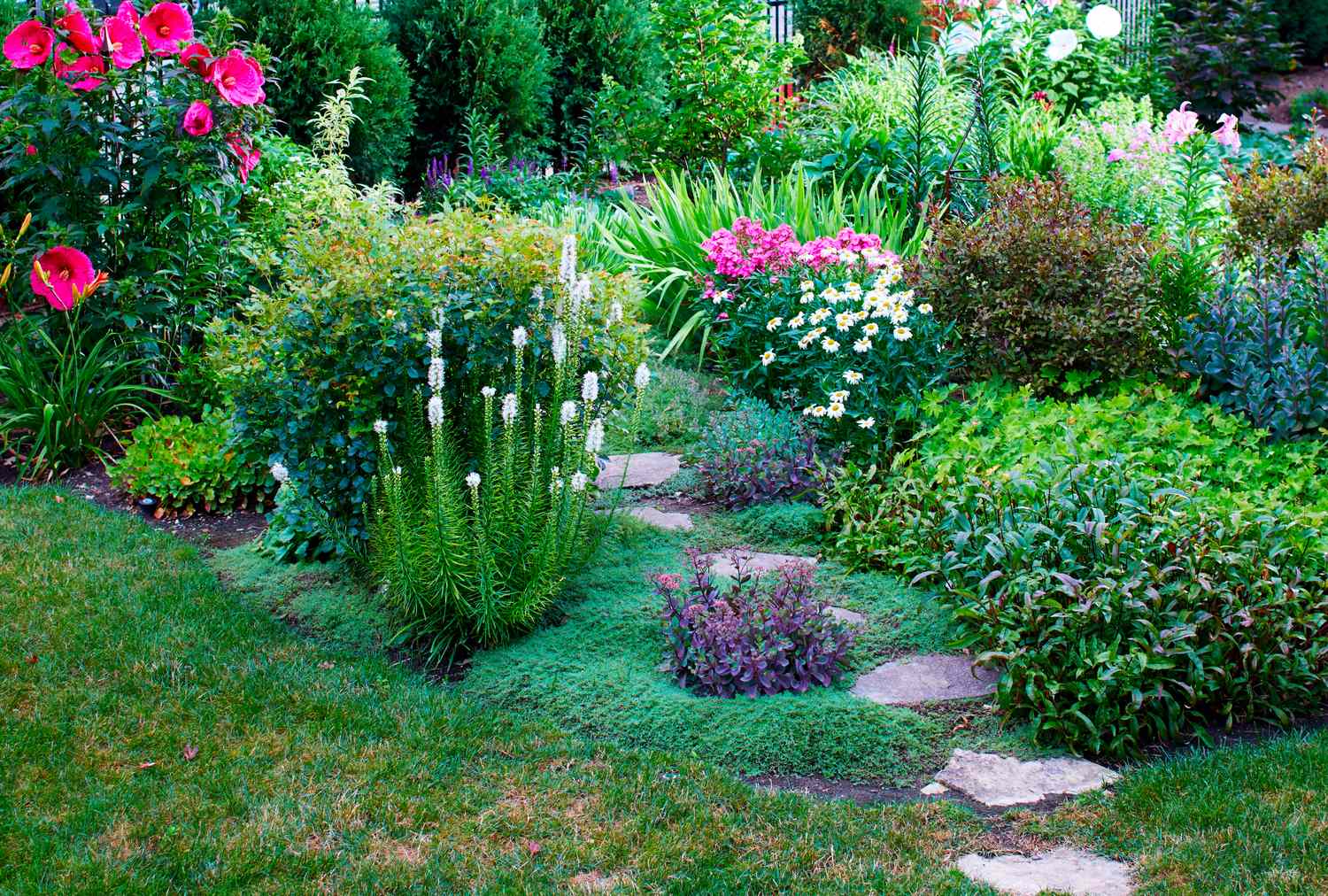
The magic of this path is the green ground cover filling the gaps between the pavers. It completely transforms what could be a sterile, hard pathway into a living, breathing part of the garden. This “soft joint” technique erases the harsh lines between hardscape and softscape, creating a beautifully integrated look that feels natural and modern at the same time. Take away the green, and you lose all the charm.
You don’t need expensive stone pavers to get this effect. You can achieve a very similar look using affordable concrete pavers from a big-box store like Lowe’s or Home Depot (around $3-$5 per paver). For the green infill, skip the sod and use a tough, low-growing ground cover like Creeping Thyme or Irish Moss, which you can buy in flats for about $20-$30. The entire project could be done for under $250, depending on the length of your path.
8. Simple Stepping Stone Path Through Mulched Beds
Create this simple path in an afternoon. Estimated time: 2-3 hours. Cost: $100-$200.
- Lay out your stepping stones on the ground to finalize placement, aiming for a comfortable stride length between them (about 18-24 inches center-to-center).
- Use a spade to trace the outline of each stone.
- Set the stone aside and dig out the soil or old mulch to a depth equal to the stone’s thickness plus one inch.
- Add a one-inch layer of sand or paver base and tamp it down to create a level, stable footing.
- Place the stone and check for level, adding or removing sand as needed until it’s firm and doesn’t rock.
- Spread your dark brown mulch around the stones, bringing it up to their top edge.
This is a genuinely low-maintenance look. The dark brown mulch is excellent at suppressing weeds and retaining moisture for the plants. You’ll likely need to top it up with a fresh layer once a year (or every other year) to keep the color rich and the depth sufficient for weed control. The stepping stones themselves require virtually no upkeep beyond an occasional sweeping or rinse with a hose. It’s an ideal choice for a side yard or a secondary path in your garden.
9. Waterside Garden with a Winding Flagstone Path
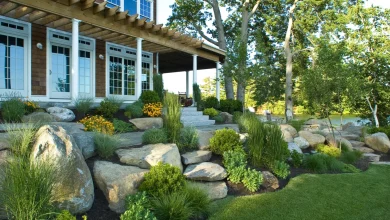
This landscape feels so natural and established because of the masterful use of scale and texture. The large, rugged boulders act as anchors, grounding the design and making the man-made flagstone path feel like it was carved from the environment. The plant selection is key, with a rich mix of textures—from fine ornamental grasses to broad-leafed shrubs—that mimics the diversity of a natural shoreline. The path’s gentle curve invites exploration rather than rushing you through.
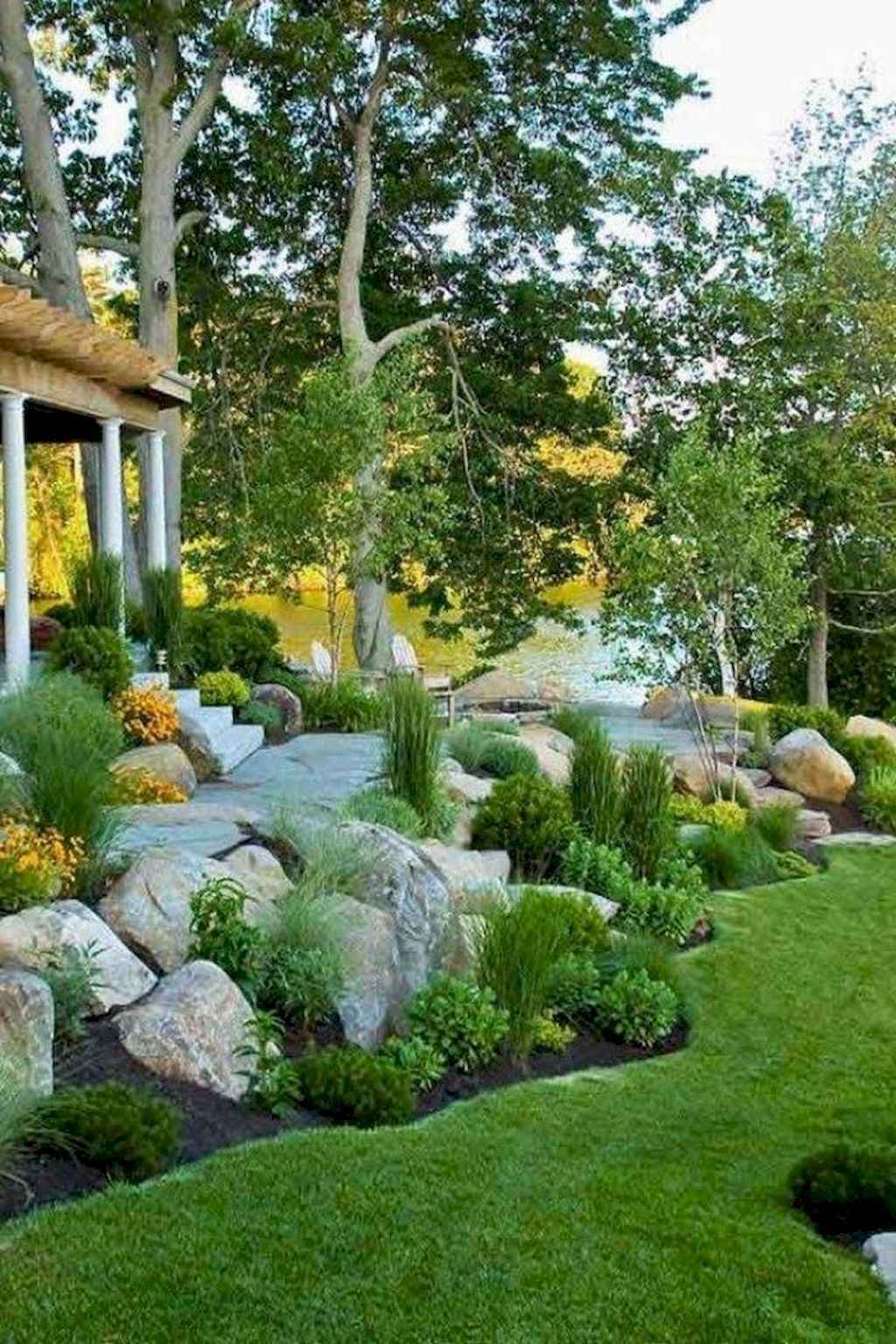
This kind of lush, layered, and meandering design works best on a property with some natural slope or a significant grade change, ideally 500 square feet or more. The changes in elevation are crucial for creating the tiered effect with the rocks and plantings. On a perfectly flat, small lot, it can look forced and out of place. It’s particularly effective for properties that border a natural feature like a pond, lake, or wooded area, as it helps blur the line between the manicured and the wild.
10. Layered Ornamental Grasses Against a Concrete Wall
When designing with ornamental grasses, think in layers of texture and color, not just height. Here, the designer placed the tall, golden feathery grasses at the back for a breezy silhouette. In front, they layered in fluffy, light green grasses for soft volume, and finally, silvery-green shrubs at the base for a cool-toned contrast. This creates incredible visual depth. Always plant in odd-numbered groups (3, 5, 7) for a more natural, less regimented appearance.
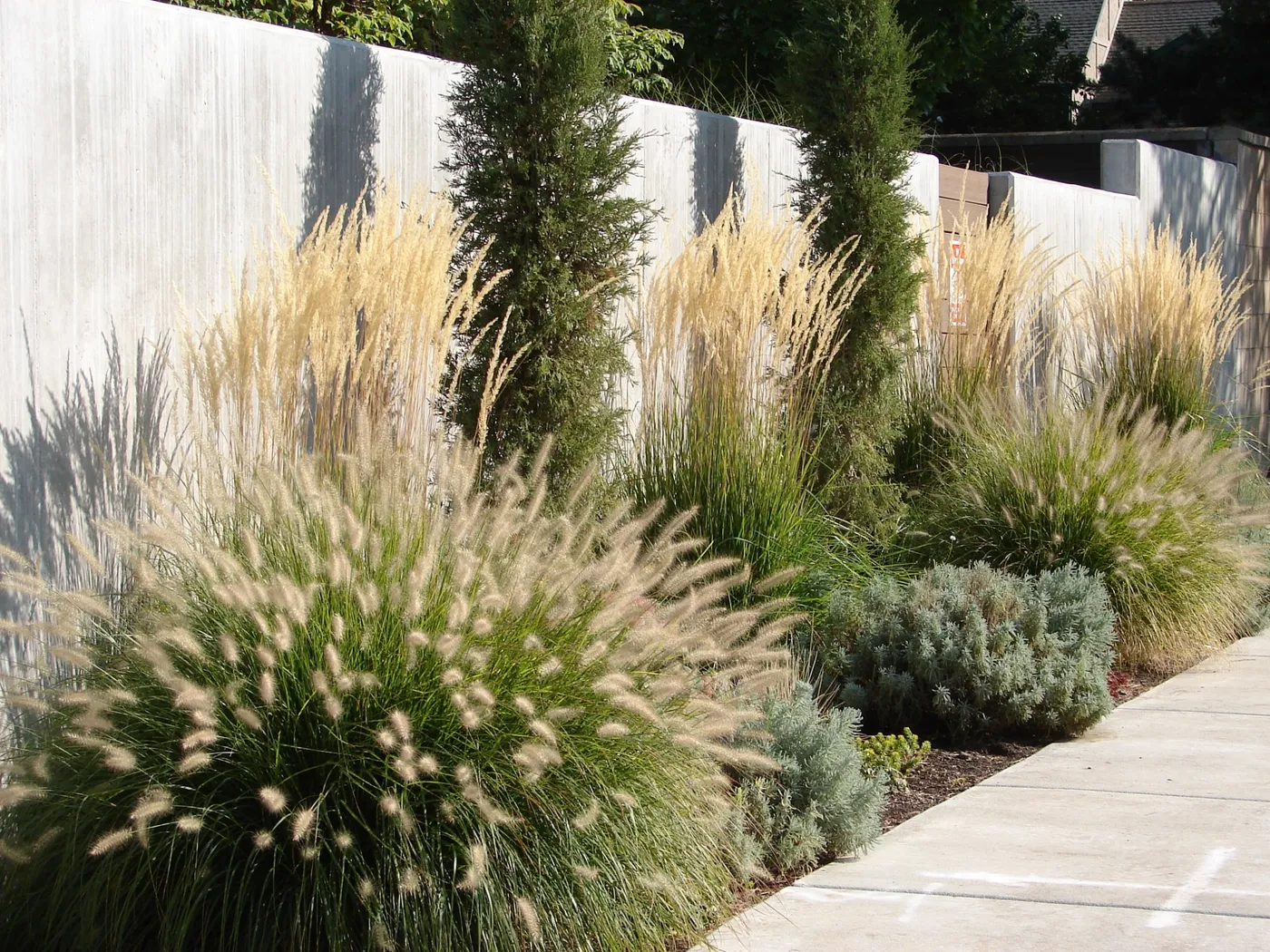
It’s the texture. While the colors are beautiful, it’s the rich tapestry of textures that makes this planting bed so captivating. You have the wispy, see-through quality of the tall golden grasses, the dense fluff of the lighter green mounds, the solid form of the evergreens, and the hard, smooth surface of the concrete wall behind it all. Without this textural variety, the all-green-and-tan palette could fall flat. The texture is what gives it life and sophistication. It’s a great lesson for anyone who wants a more interesting garden, similar to the mix in Idea #31.
11. Rustic Gravel Path with Weathered Wood Edging
This charming, rustic look is incredibly budget-friendly. You can often find weathered planks or old landscaping timbers for free or cheap on Facebook Marketplace or Craigslist. A bag of light pea gravel from a home improvement store costs less than $5. The real savings come from the plants—ask friends for divisions of their established perennials like Hostas or Daylilies. With a bit of digging and sourcing, a 20-foot path like this could be built for well under $100.
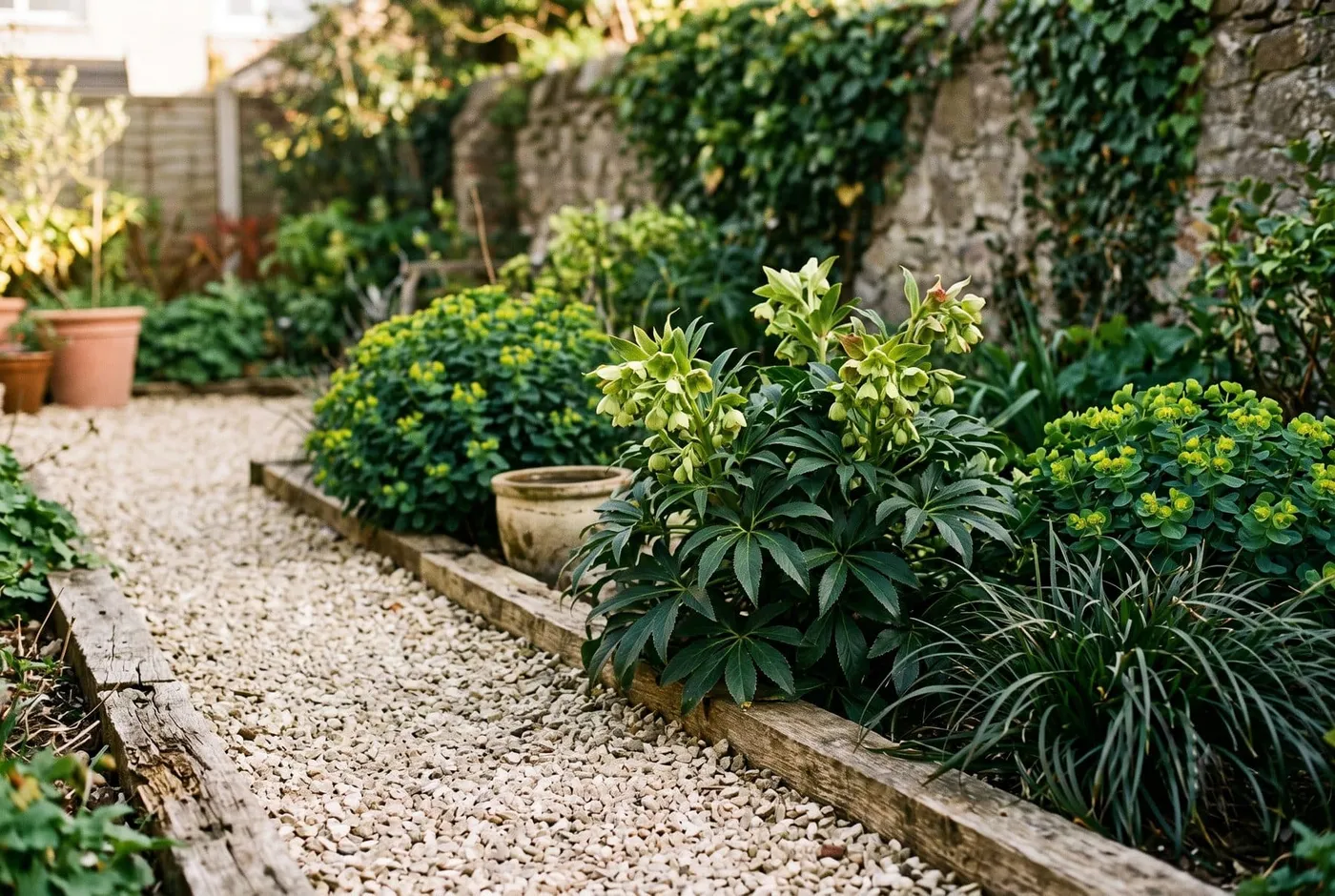
That weathered wooden plank edging looks beautifully rustic, but be honest with yourself about its lifespan. Untreated wood in direct contact with damp soil will start to rot and break down in 3-5 years, depending on your climate. While it’s an inexpensive and charming option, you will eventually have to replace it. For a similar look with more longevity, consider using a composite or corten steel edging, though it will have a higher upfront cost. The gravel also requires weeding, as mentioned for the path in Idea #14.
12. Modern Grid Pathway with Vibrant Tropical Plants
This look is a masterclass in balance: 60% clean, modern structure (the concrete pavers and white wall) + 40% wild, tropical vibrancy (the explosion of red, pink, and green foliage). The artificial grass strips are a key part of the formula, adding a pop of perfect, maintenance-free green that reinforces the geometric grid while softening the concrete. This strict grid-plus-jungle math is what makes the design feel both exciting and controlled.
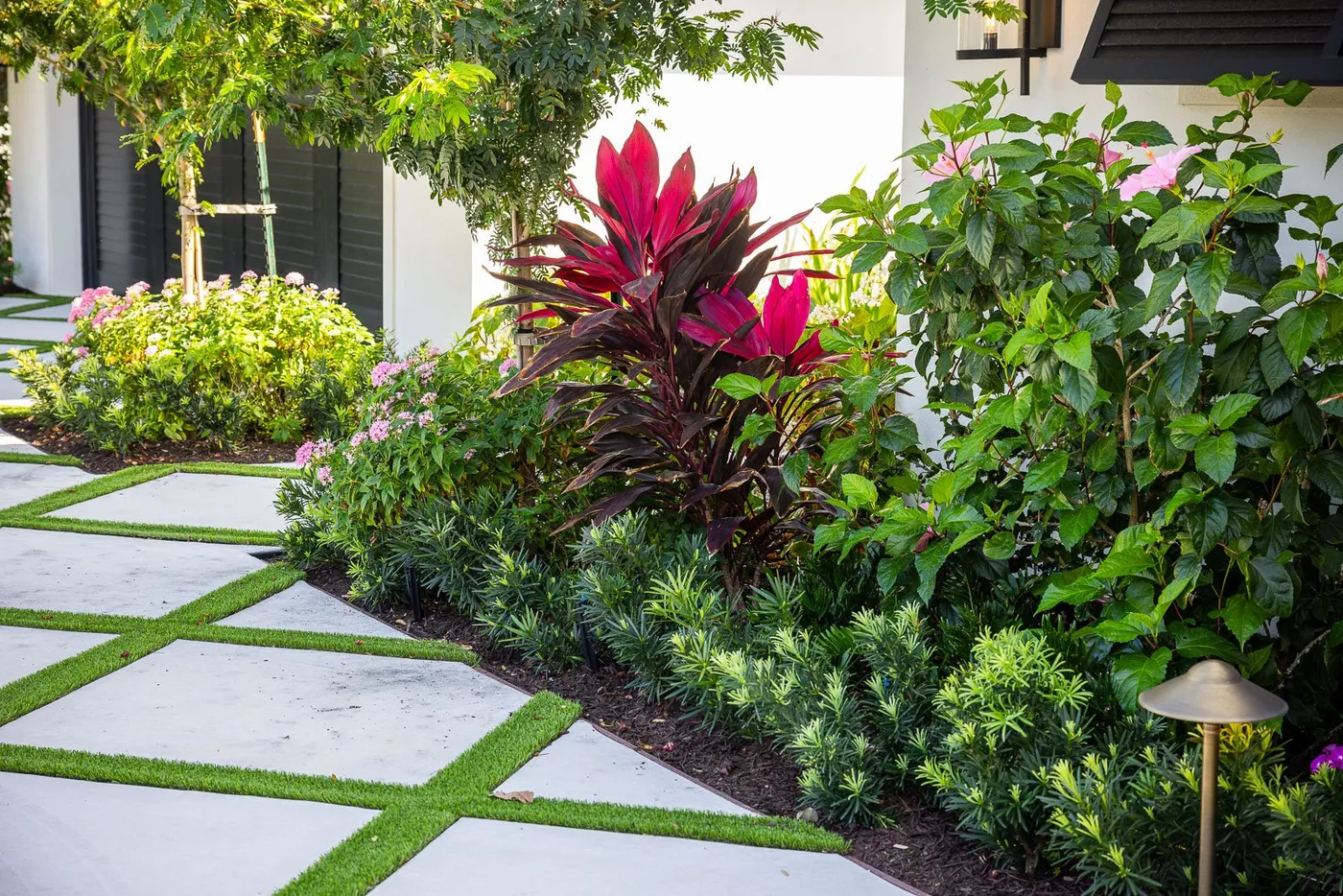
The sharp contrast between the rigid, man-made grid of the pathway and the unrestrained, organic forms of the tropical plants is what creates such dynamic energy. The straight lines of the concrete pavers and artificial grass act as a perfect frame, making the vibrant red and lush green foliage pop even more. The clean white wall serves as a blank canvas, ensuring the plants are the undisputed stars of the show. It’s a composition that feels both orderly and alive.
13. Modern Garden Bed with Corten Steel and River Rocks
This combination is popular right now because it’s the perfect blend of three major trends: the industrial-chic of corten steel, the organic, zen-like quality of river rocks, and the wildflower-meadow vibe of the snapdragons. It’s a low-water, relatively low-maintenance design that still delivers a huge pop of color. Homeowners are craving landscapes that are both stylishly structured and a little bit wild, and this checks both boxes beautifully.
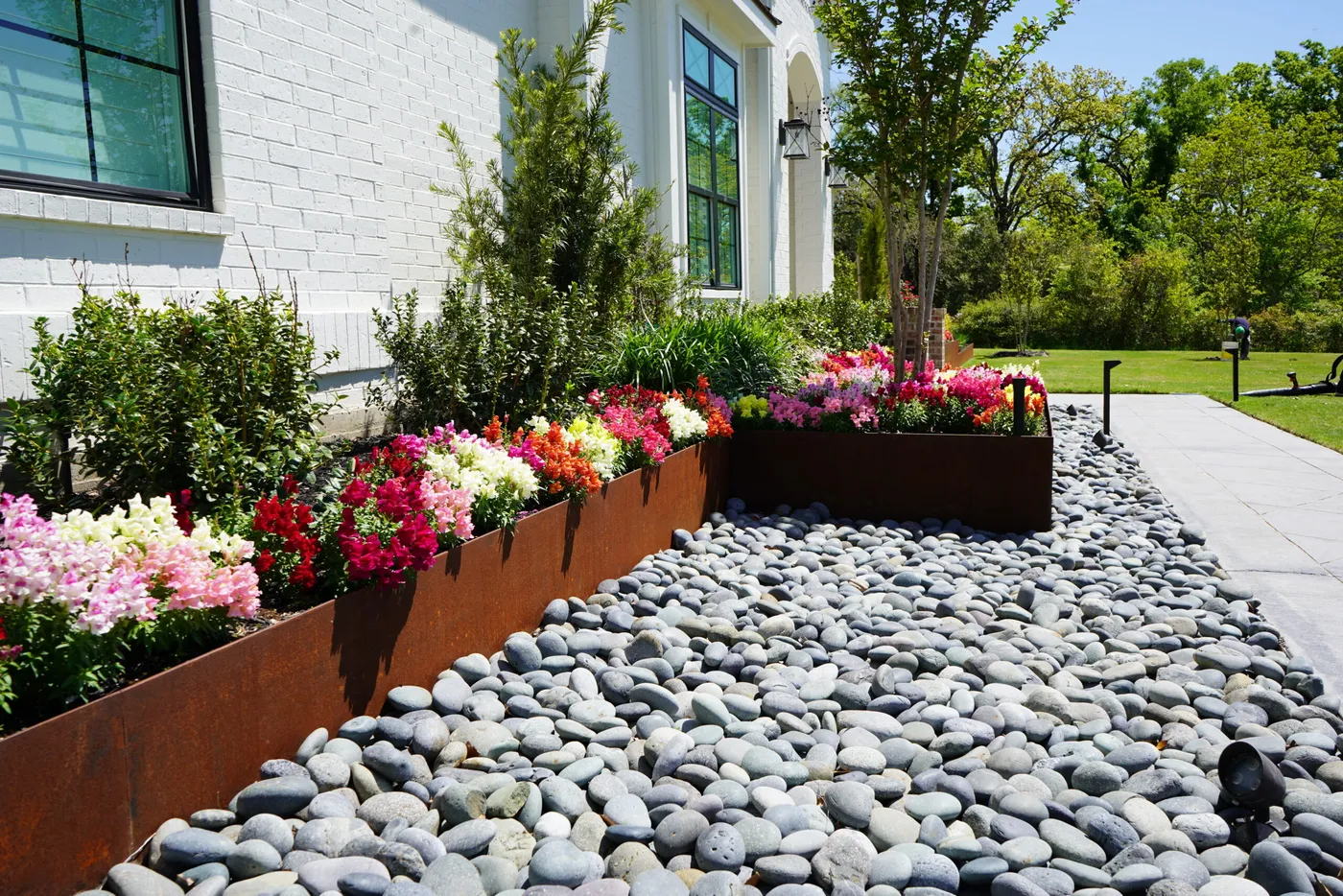
To create a 15-foot long bed like this, here’s a potential cost breakdown:
- Corten Steel Planter Boxes (custom or pre-fab): $800 – $2,500
- Smooth Grey River Rocks (approx. 1 ton): $300 – $700
- Snapdragon Plants & Potting Soil: $100 – $250
- Paved Path (if not existing): $500 – $1,500
- TOTAL (excluding path): $1,200 – $3,450
- Budget alternative: Use galvanized steel stock tanks (around $100 each) instead of corten, and source rocks locally for less.
14. Winding Gravel Path with Irregular Stepping Stones
Before you commit to a gravel and stepper path, check these items off your list:
- Do you have a solid, compacted base? Simply putting gravel on topsoil will lead to a mushy, weedy mess. You’ll need to remove 3-4 inches of soil first.
- Have you installed landscape fabric? This is crucial for preventing weeds from growing up through the gravel.
- Is there proper edging? Without a border (metal, plastic, or stone), your gravel will spill into the surrounding garden beds and lawn.
- Are the stepping stones thick enough? Use stones that are at least 2 inches thick so they stay put and don’t shift underfoot.
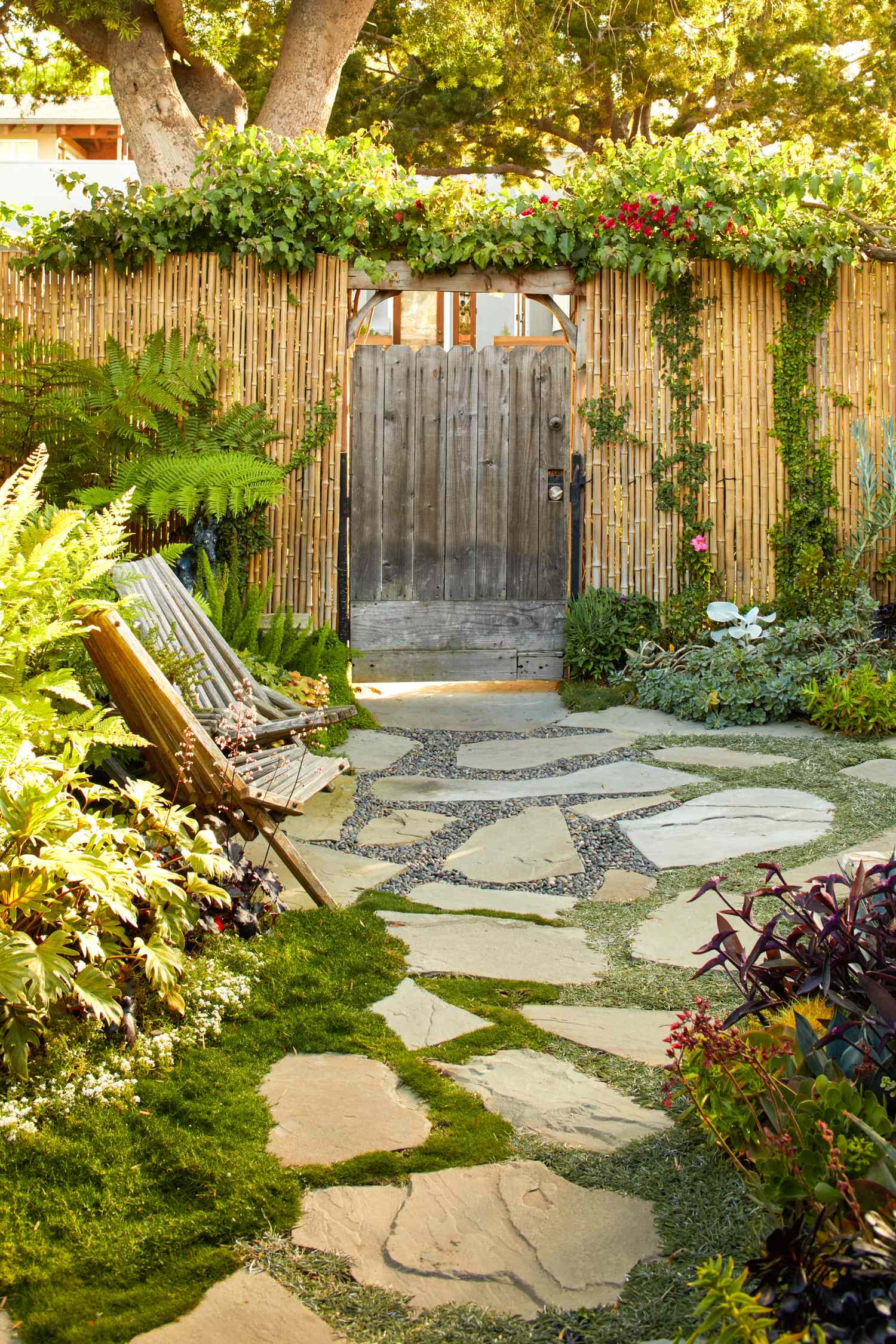
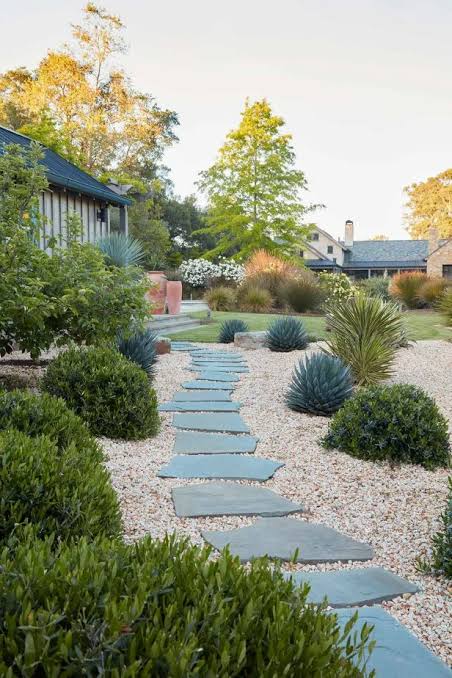
For a natural, meandering path, avoid placing the stepping stones in a perfectly straight line or with perfectly even spacing. Instead, lay them out and walk the path, adjusting their position to match a comfortable, natural stride. Place them slightly off-center within the gravel bed and rotate them so their shapes feel varied. This intentional imperfection is what makes a path like this feel like it has always been part of the garden, rather than something brand new and rigid.
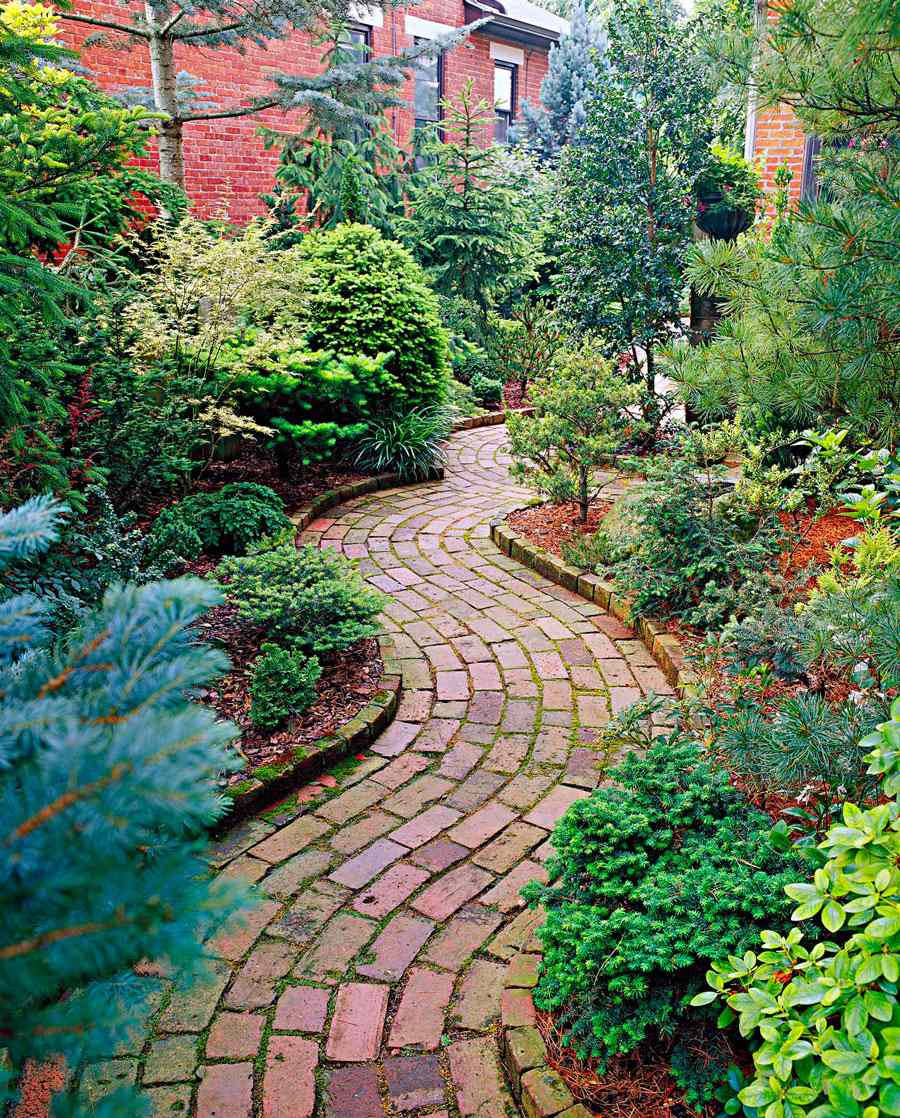
15. Winding Stone Path Through a Lush, Verdant Tunnel
The single element that makes this garden feel so magical and enchanting is the overhead plant canopy. It transforms a simple walk through a garden into an immersive experience. The feeling of being enclosed by foliage, with dappled light filtering through the leaves, creates a sense of mystery and discovery. Without that overhead layer, it would still be a pretty path, but it would lose all its secret-garden charm and sense of place.
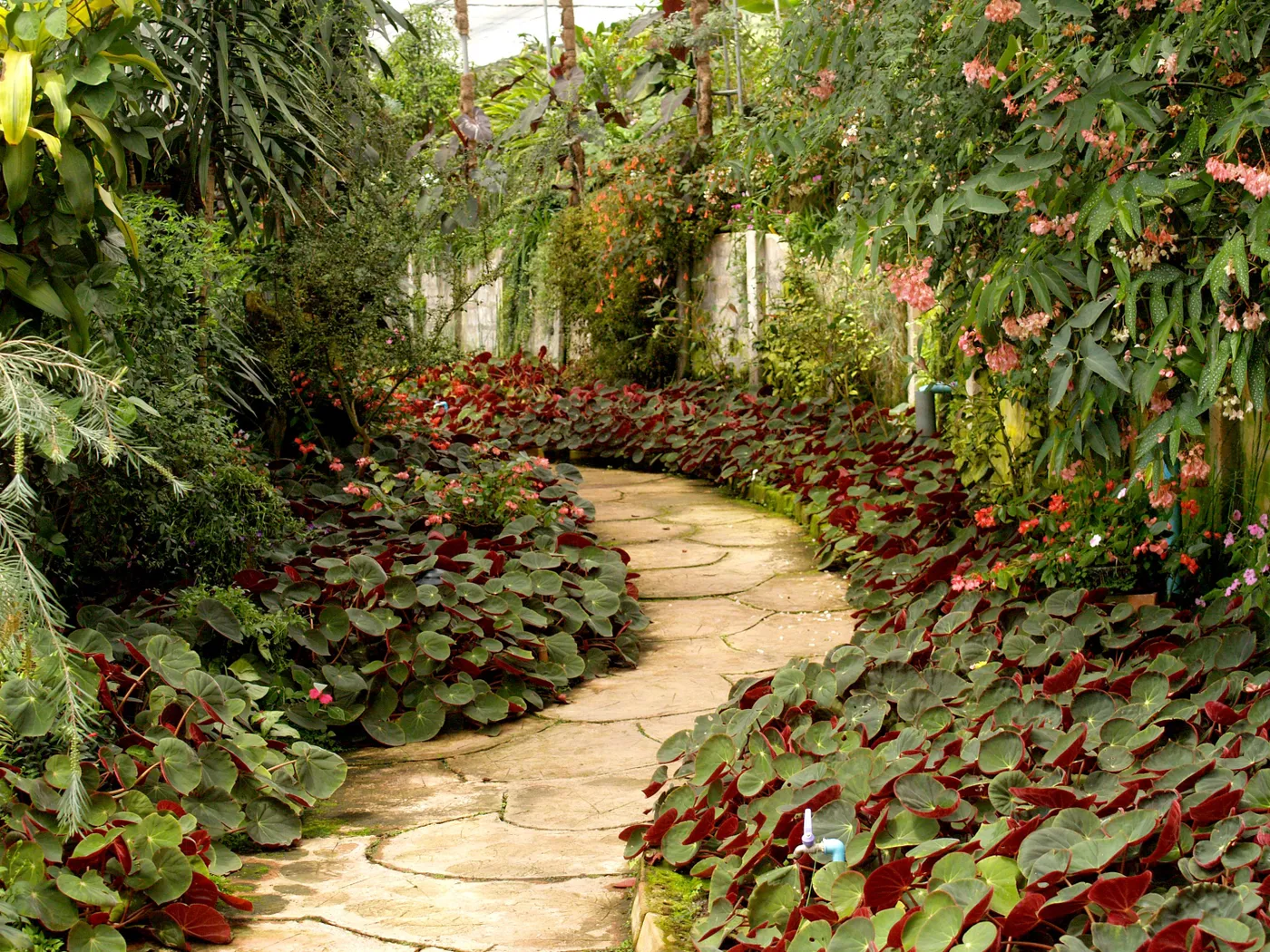
A densely planted, enclosed space like this can be a haven for pests like slugs, snails, and mosquitos that thrive in damp, shady conditions. You’ll need to be vigilant about air circulation and clearing fallen leaves to prevent creating a perfect breeding ground. Also, a narrow, winding path bordered by dense foliage can be tricky to navigate with a wheelbarrow or lawnmower, so plan your access routes for garden maintenance accordingly. It’s beautiful, but it requires a hands-on approach.
16. Curved Garden Bed with Modern Pathway Lighting
Here’s how to install modern low-voltage path lights. Time: 3-4 hours. Cost: $200-$500.
- Plan your layout: Place the lights along the curve, about 6-8 feet apart, so their light pools overlap slightly.
- Install the transformer near an outdoor GFCI outlet. Don’t plug it in yet.
- Run the low-voltage cable from the transformer along the path, tucking it just under the stone edging or burying it 3-4 inches deep.
- Attach the lights to the cable using the provided connectors. Pierce the cable insulation to make contact.
- Bury the stakes and ensure each light is standing straight and at the desired height.
- Plug in the transformer and set the timer or photocell for automatic operation.
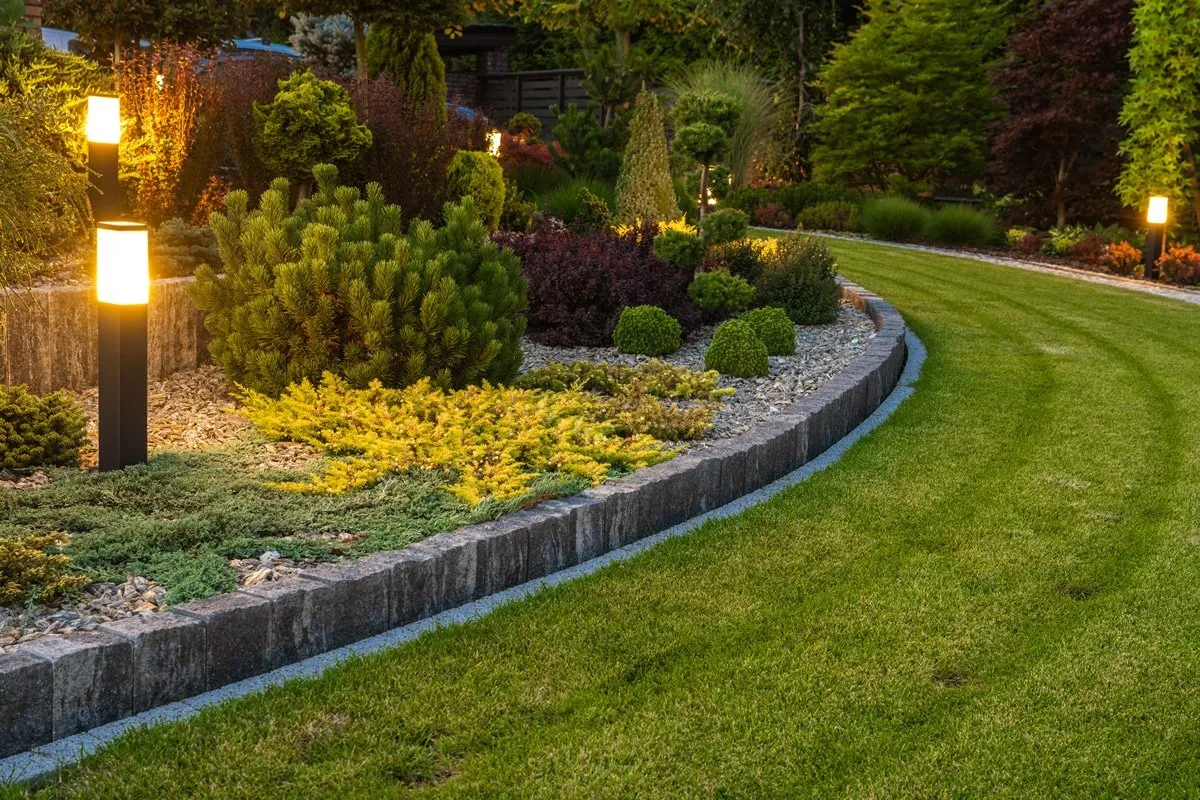
This style of defined, sweeping garden bed works beautifully for medium to large suburban front yards, particularly corner lots. You need enough lawn space—at least 15-20 feet of depth from the curb—to appreciate the grand curve of the dark gray stone edging. In a very small or narrow yard, a large curve can feel awkward and eat up too much usable space. The key is having enough green lawn to provide a strong visual contrast to the shape of the bed itself.
17. Private Backyard with Green Lawn and Brick Perimeter Wall
Simplicity is the secret here. The design relies on a few high-quality elements working in harmony. The vibrant green lawn acts as a simple, calming centerpiece—a negative space that makes the garden feel restful. The curved planting beds soften the corners of the yard, while the light-colored brick wall provides a warm, textured backdrop that makes the green of the lawn and plants appear even richer. The white patio cover keeps the look light and airy. There’s no clutter, just clean lines and healthy plants.
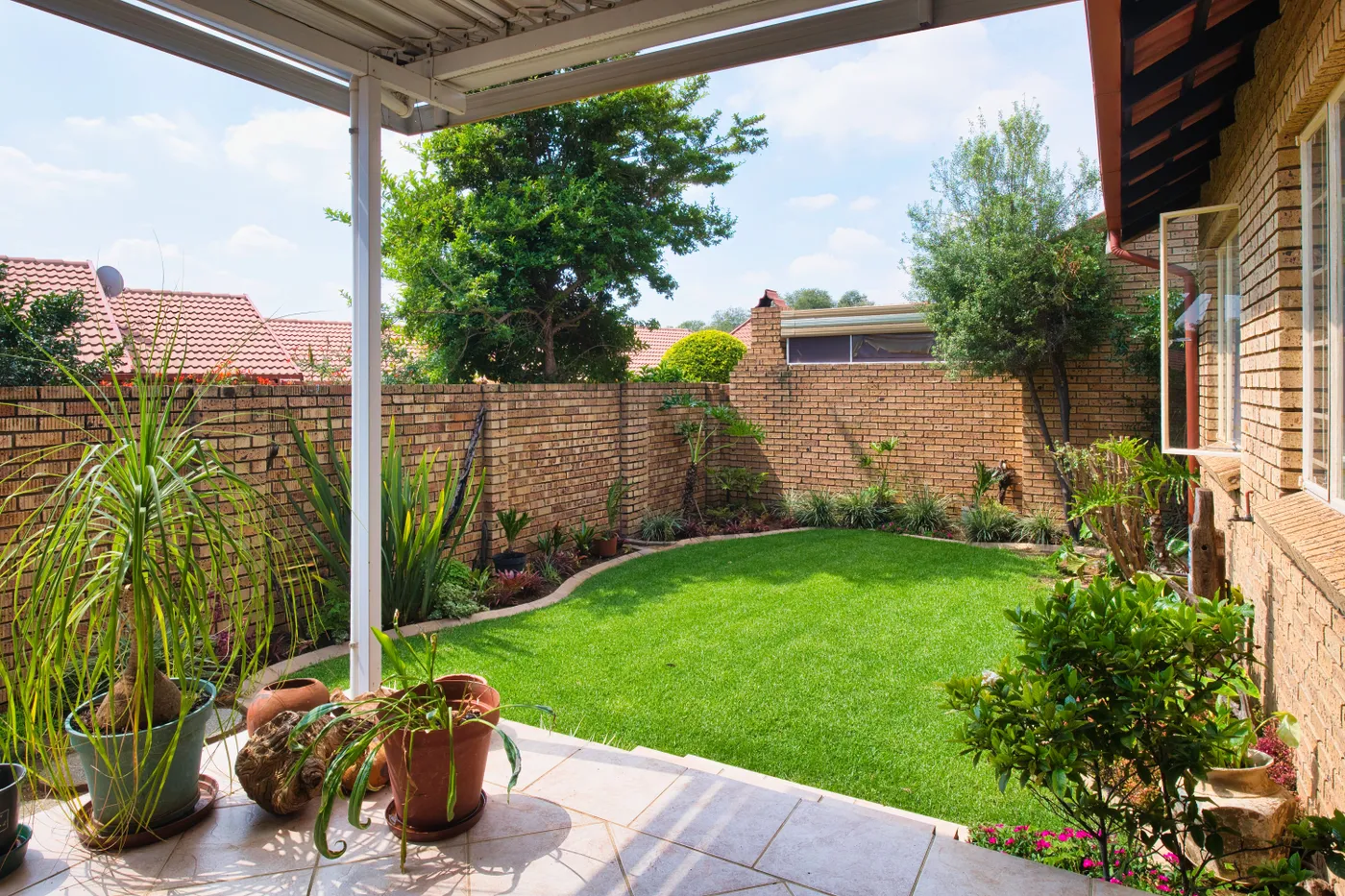
A full brick wall is a significant investment. To get a similar sense of privacy and enclosure for a fraction of the cost, consider a simple wooden privacy fence (around $20-$40 per linear foot installed). You can paint or stain it a light, warm color to mimic the feel of the brick. For an even more budget-friendly option, plant a fast-growing hedge like Arborvitae or Privet. It will take a couple of years to fill in, but will provide a beautiful, living green wall for a minimal upfront cost.
18. Compact Raised Stone Planter with a Gravel Walkway
When building a raised bed with stacked stone blocks, always use a high-quality landscape block adhesive between each layer, especially on the corners. This prevents the blocks from shifting over time due to frost heave or soil pressure. A few dollars spent on construction adhesive is cheap insurance to ensure your beautiful planter wall stays straight and sturdy for a decade or more, rather than becoming a wobbly mess in a few seasons.
This tidy little corner is a lesson in small-space efficiency. The formula is: 50% vertical planting (the raised bed lifts the garden up, making it more prominent and easier to tend), 40% functional pathway (the gravel and single paver provide clear, durable access), and 10% clean definition (the low wooden border creates a crisp edge between the path and the rest of the yard). It’s a perfect equation for adding structured greenery to a tight side yard or courtyard.
19. Simple Paved Patio with Potted Greenery and String Lights
The string lights are everything here. They are the single element that transforms a simple patch of pavers and pots into an outdoor room. They define the space from above, creating a ceiling effect that makes the area feel cozy, intentional, and magical, especially at dusk. Without them, it’s just a patio. With them, it’s an invitation to come outside and stay a while. It’s the cheapest, easiest way to add a huge dose of atmosphere. This is a more casual take than the vertical garden room in Idea #2.
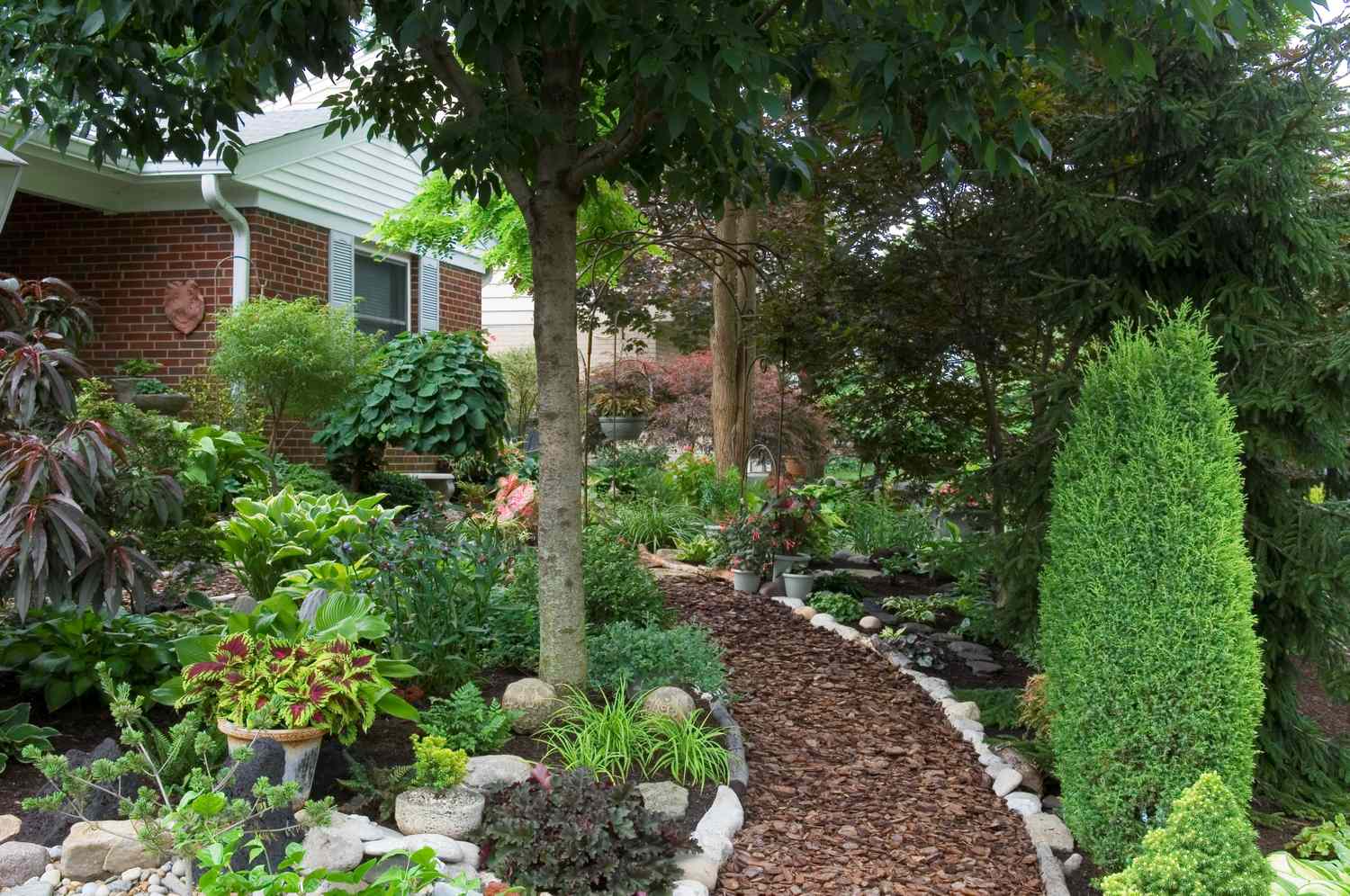
An arrangement like this is ideal for smaller backyards where you want to create a distinct zone without building a full structure. It works best for patios ranging from 10×10 feet to 15×15 feet. Any smaller, and the pots might feel cluttered; any larger, and you’ll need more substantial furniture to anchor the space. The key is having anchor points for the string lights, like the house, a fence post, or a sturdy tree, within about 20-25 feet of each other.
20. Minimalist Wood Deck with a Concrete Bench
This design feels incredibly serene because of its strict, curated palette of materials and forms. The designer limited the elements to light wood, gray concrete, and green foliage. The shapes are also simple and clean: the long lines of the deck boards, the solid rectangle of the bench, and the tall cylinder of the main planter. This restraint eliminates visual noise, creating a space that feels calm, uncluttered, and deeply restful. It’s a purposeful lack of stuff.
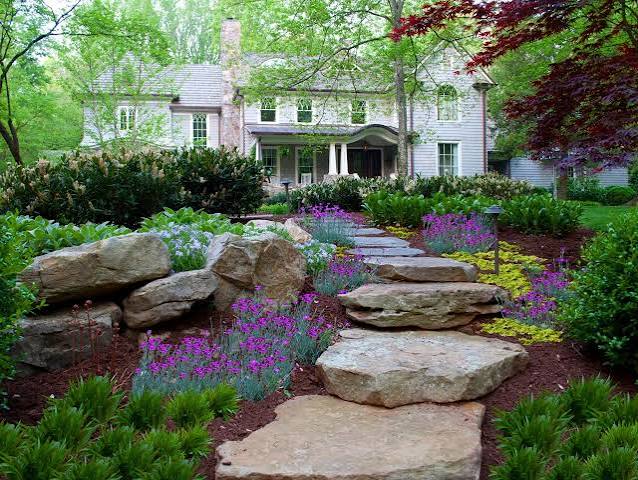
A light-colored concrete bench looks incredibly chic, but it’s not the most comfortable seating option for long periods. Be realistic: this is a spot for perching with a coffee for 15 minutes, not for lounging for hours with a book. Also, light, porous concrete can be prone to staining from wet leaves, spills, or bird droppings. It may require sealing every year or two and prompt cleaning to keep it looking pristine. Think of it as a beautiful, functional sculpture more than a cozy sofa.
21. Modern Black House with a Bright Green Lawn Path
The key to making a dark house feel welcoming is to use vibrant, almost electric greens in the landscaping right next to it. The high contrast between the matte black siding and the bright green lawn and shrubs is what creates the pop. If the greens were dull or muted, the whole composition could feel somber. When choosing plants for a dark exterior, specifically ask for varieties with chartreuse or bright lime-green foliage to maximize this effect.
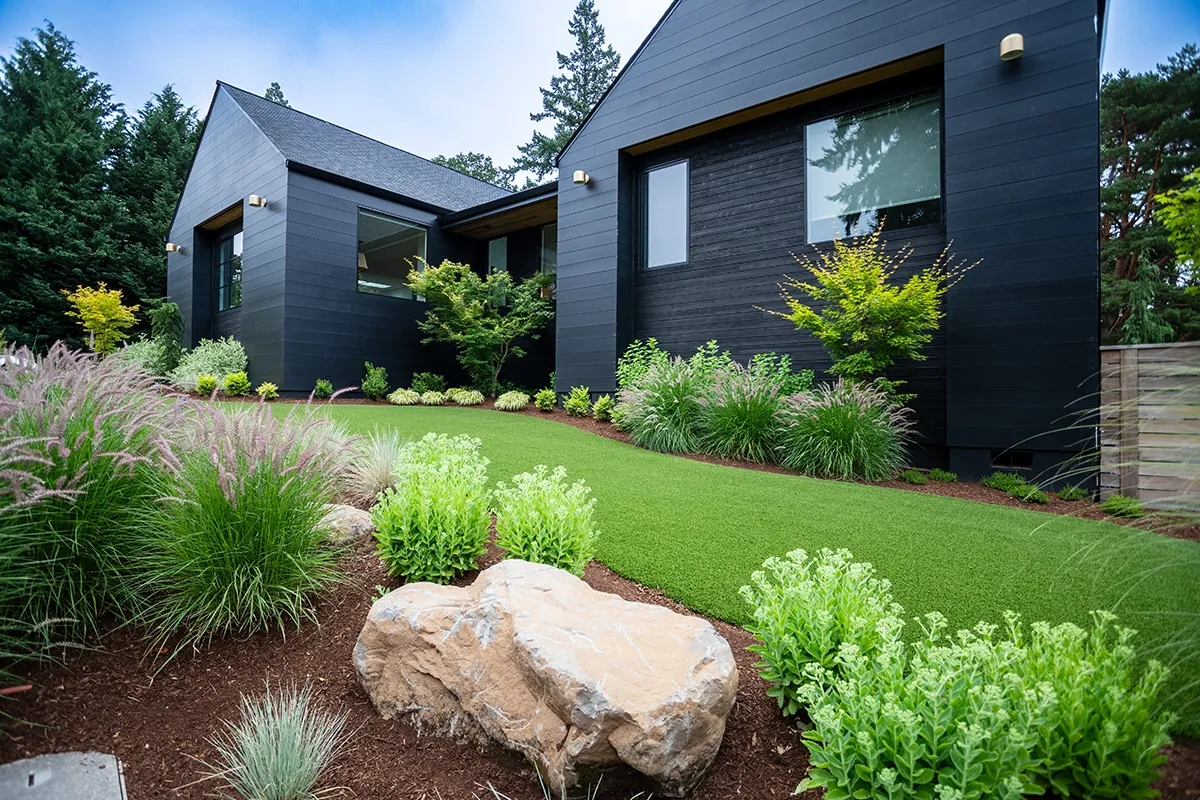
Dark exteriors, especially black, have been trending for several years and show no signs of stopping. They lend an air of sophisticated, Scandinavian-inspired modernism to almost any architectural style. In 2026, the trend is evolving to pair these dark, moody facades with more naturalistic and textured landscaping, moving away from overly rigid modern gardens. This look, with its soft ornamental grasses and natural boulders, is a perfect example of that evolution.
22. Cozy Paver Patio with a Modern Wood Pergola
This inviting patio look can vary widely in cost.
- Wooden Pergola Kit (DIY): $1,000 – $3,000
- Custom-Built Pergola: $4,000 – $10,000+
- Paver Patio (12’x14′ professionally installed): $2,500 – $5,000
- Outdoor Sectional Sofa: $1,500 – $4,000
- Coffee Table & Planters: $400 – $1,000
- TOTAL: $5,400 – $23,000+
- Budget alternative: Look for a simple canvas-sail shade instead of a pergola ($200), find a used patio set on Marketplace ($500), and you can create a similar zone for under $1,500 if the pavers are already there.
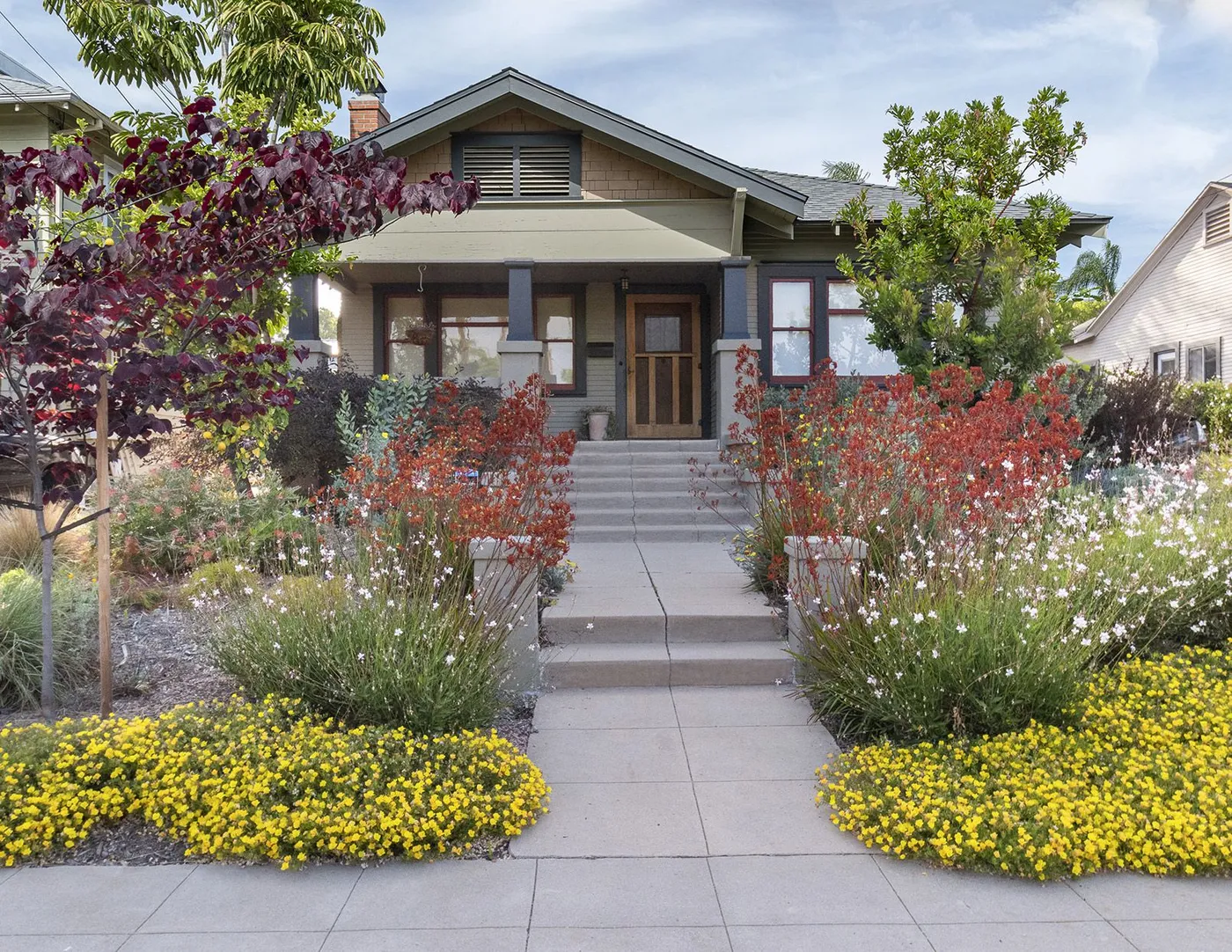
A pergola-covered seating area is perfect for defining a space within a larger backyard. This setup is ideal for a footprint of about 12×14 feet to 16×18 feet. This size allows enough room for a comfortable sectional and coffee table without feeling cramped, and ensures the pergola feels substantial and not like a flimsy afterthought. It’s a great way to create a focal point and an outdoor room on a larger property. For smaller spaces, a cantilever umbrella or simple shade sail might be a better fit.
23. Vibrant Garden Bed with Pink Azaleas and a Red Japanese Maple
Color, color, color. The electrifying combination of the hot pink azaleas and the deep burgundy of the Japanese maple is the heart and soul of this design. It’s a bold, confident color pairing that instantly energizes the entire landscape. The lush green lawn and dark mulch act as a neutral backdrop, allowing these two powerhouse plants to take center stage. If you replaced them with simple green shrubs, the entire front yard would lose its personality and impact.
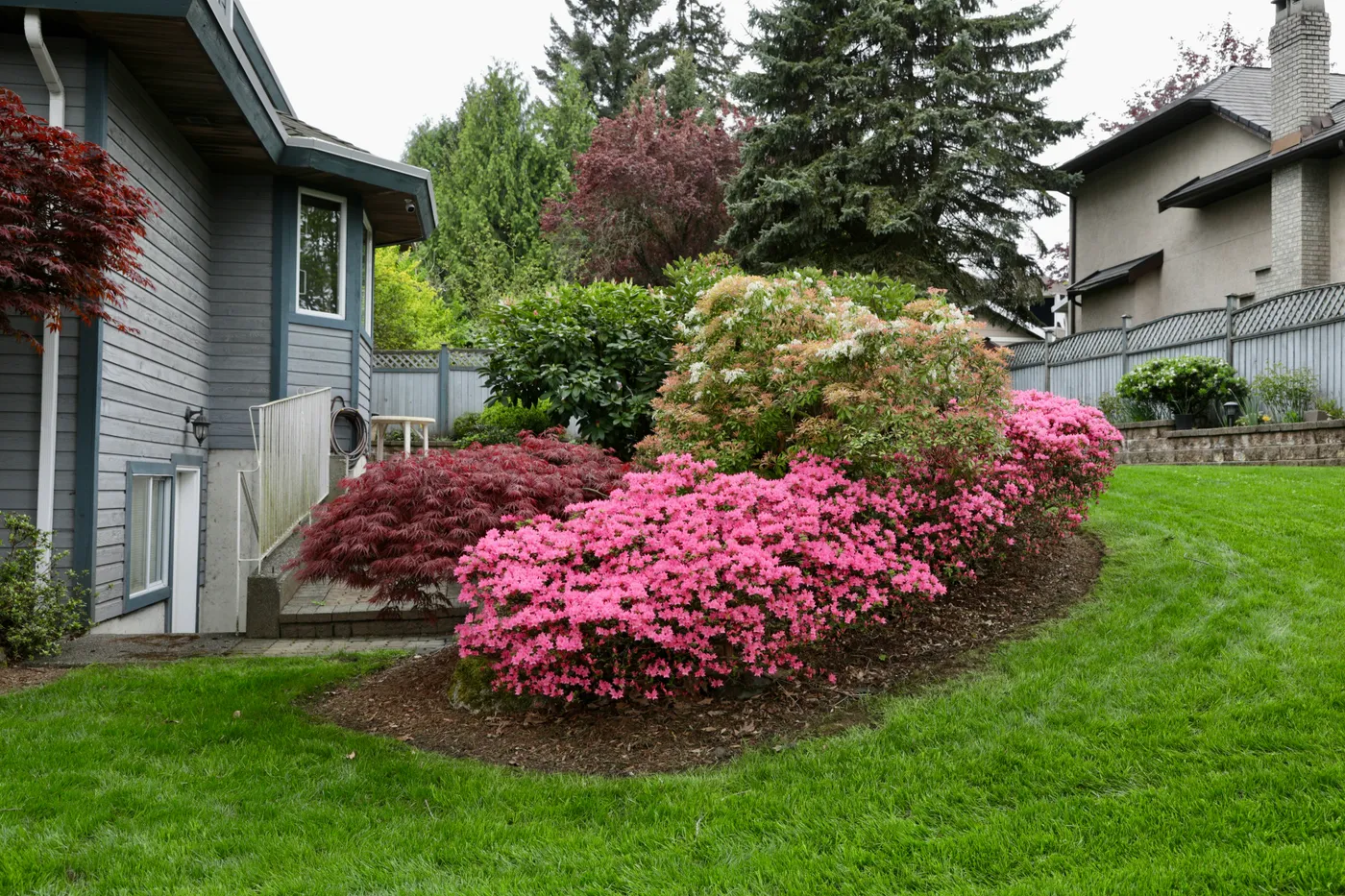
While stunning, both azaleas and Japanese maples require specific care. Azaleas need acidic, well-drained soil and are prone to lace bugs, which can damage the leaves. They also need a good pruning right after they finish blooming to ensure a full flush of flowers the next year. Japanese maples need protection from harsh afternoon sun and strong winds, which can scorch their delicate leaves. This isn’t a low-maintenance combo; it’s for the gardener who enjoys a bit of tending.
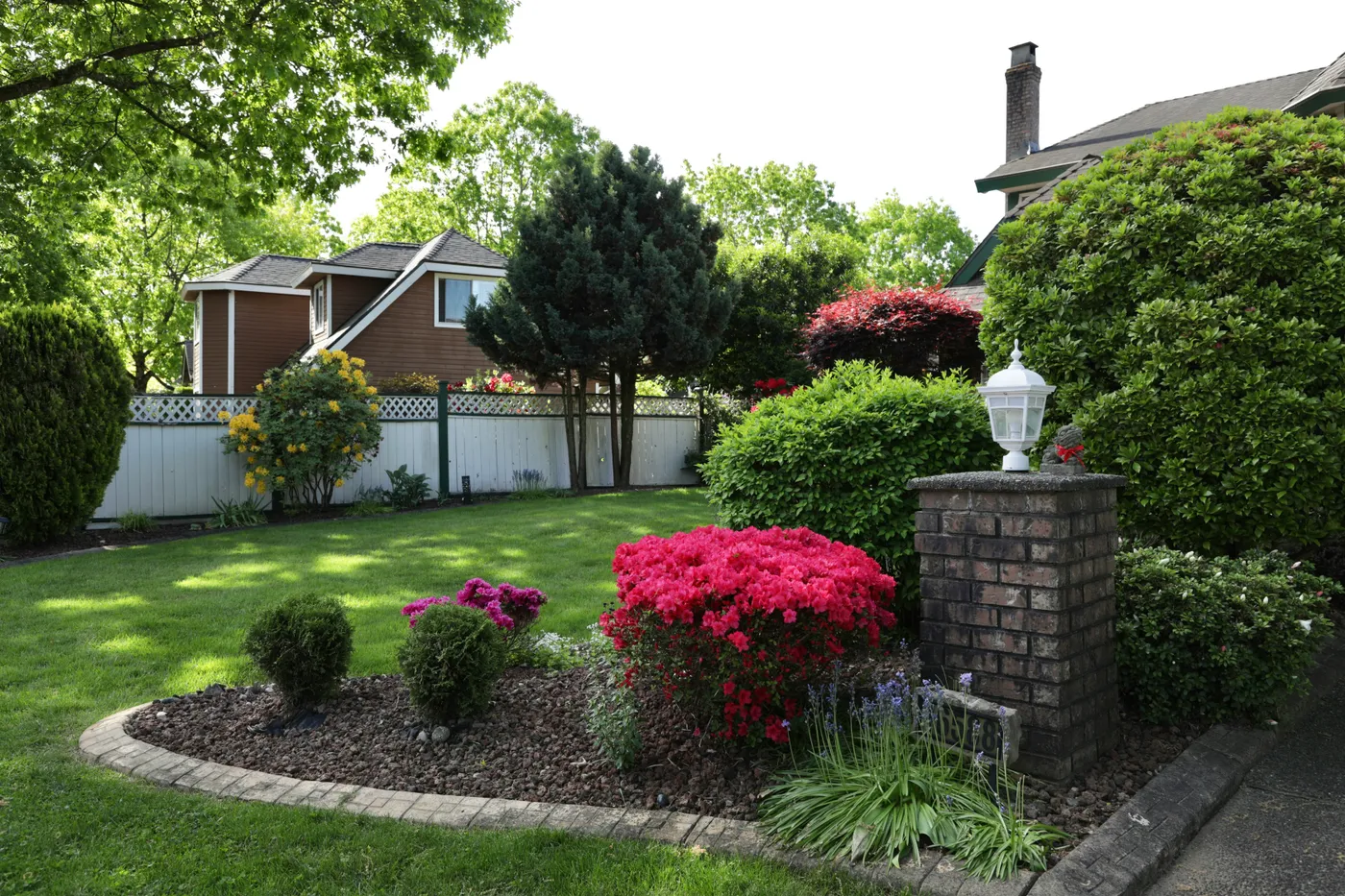
24. Lush Garden Beds with Lava Rock Mulch and Defined Edging
This classic, polished look follows a clear formula: 40% manicured lawn + 30% vibrant, mixed plantings + 20% dark, textured mulch + 10% crisp, white structure. The green lawn is the canvas, the flowering azaleas and shrubs provide the art, the dark lava rock makes the colors pop, and the white fence and lamp post add a touch of traditional, formal definition. The balance is what feels so pleasant and complete. A similar balance is struck in Idea #26, but with a different style.
|
📋 Copy HEX 🔗 Share |
This design feels so lush and satisfying because of the strong contrast between colors and textures. The deep green of the lawn is made richer next to the dark, porous texture of the lava rock mulch. In turn, the dark mulch makes the bright pinks and yellows of the flowers seem even more vibrant. Finally, the smooth, clean white of the picket fence provides a crisp frame for the entire composition. Every element is chosen to enhance the others.
25. A Formal Avenue of Pollarded Trees Flanking a Gravel Path
Pollarding—that severe pruning technique that creates the knuckles at the tops of the trunks—is a major commitment. It is not a one-time haircut. To maintain this formal, sculptural look, the new shoots must be trimmed back to the knuckle every single year or two during the dormant season. If you skip this annual maintenance, the trees will quickly grow out of shape and lose their intended form. This is a high-style, high-maintenance choice that requires professional knowledge or a lot of research.
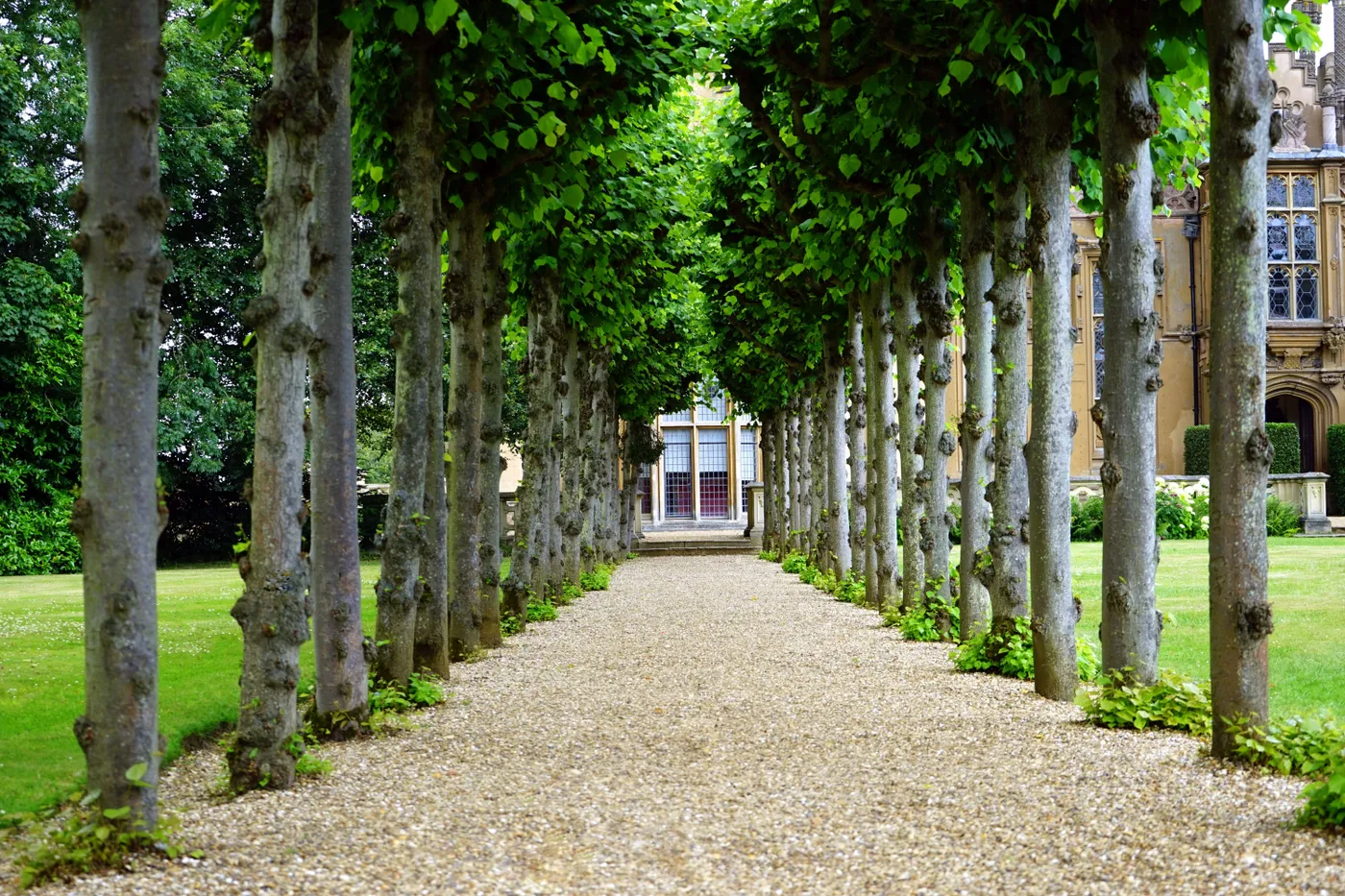
The secret to the grand, green tunnel effect is the spacing of the trees. For this look, plant the trees much closer together than you normally would—typically 10 to 15 feet apart. This encourages the canopies to grow into each other, forming a continuous line of foliage overhead. The path itself should be at least 8 to 10 feet wide to feel proportional to the height of the trees and create that sense of a grand promenade rather than a cramped corridor.
26. Lush Perennial Beds with Dry-Stacked Stone Edging
The magic here is in the curves. The winding stone path, the curved edge of the stacked-stone wall, and the arch of the wooden arbor all work together to create a soft, flowing energy. These gentle arcs guide the eye through the landscape and invite you to explore. In a landscape full of soft, organic plants, using curves in the hardscaping (the paths and walls) makes the entire design feel more natural and integrated, as if it grew there over time.
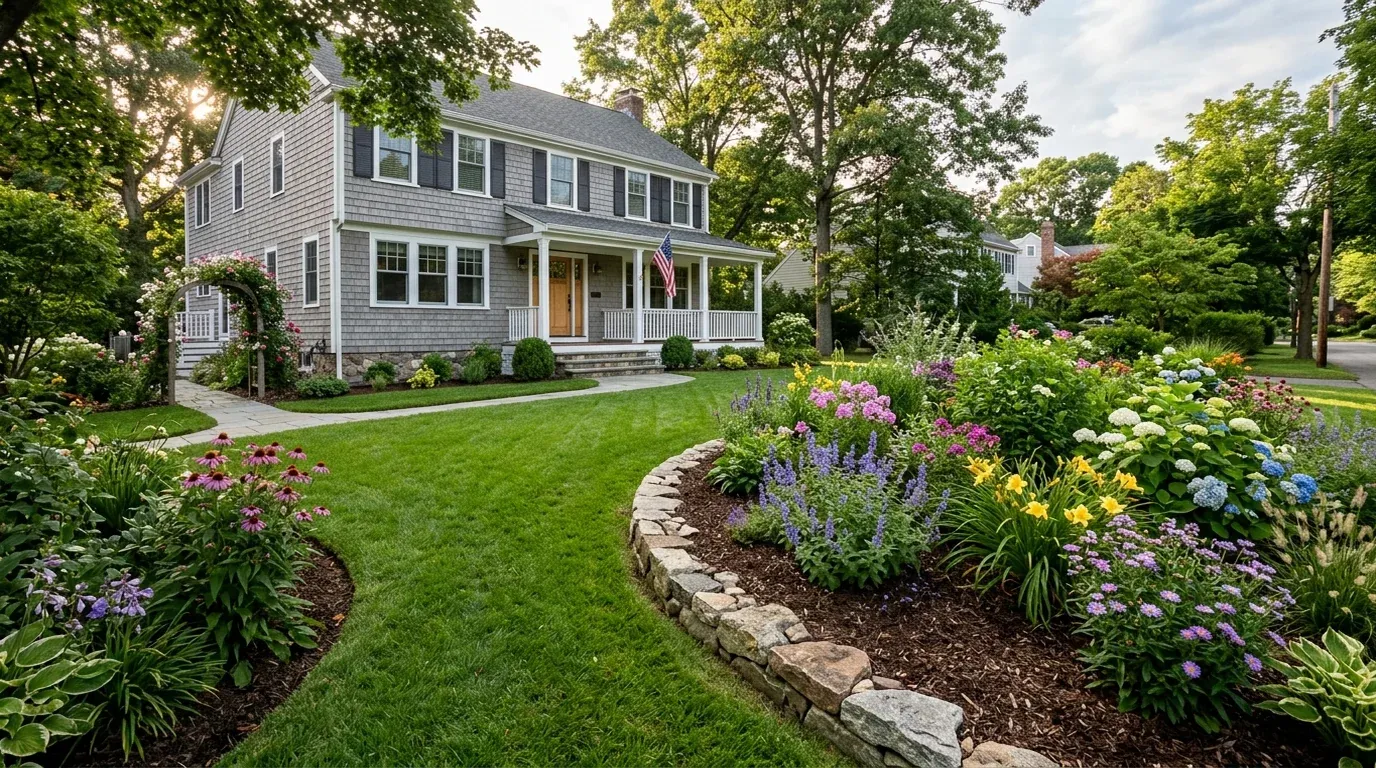
A professionally built dry-stacked stone wall is beautiful but pricey due to the labor involved. For a similar look on a budget, you can buy interlocking concrete wall blocks from a big-box store that have a split-face texture resembling natural stone. They are designed for DIY installation and can create a sturdy, curved retaining wall for a fraction of the cost. To get the same lush planting, buy smaller, younger perennial plants—they are much cheaper and will fill in within a season or two.
27. Lush, Layered Garden with Modern Green Metal Chairs
For a truly immersive, secret garden feel, don’t be afraid to place your seating within the garden beds, not just next to them. Carve out a small nook on a deck or patio and let the plants grow right up to and even slightly over the edge. Here, the slatted chairs allow the greenery to be visible through them, enhancing the feeling of being completely surrounded. The key is choosing tough plants for the edges that can handle being occasionally brushed up against.
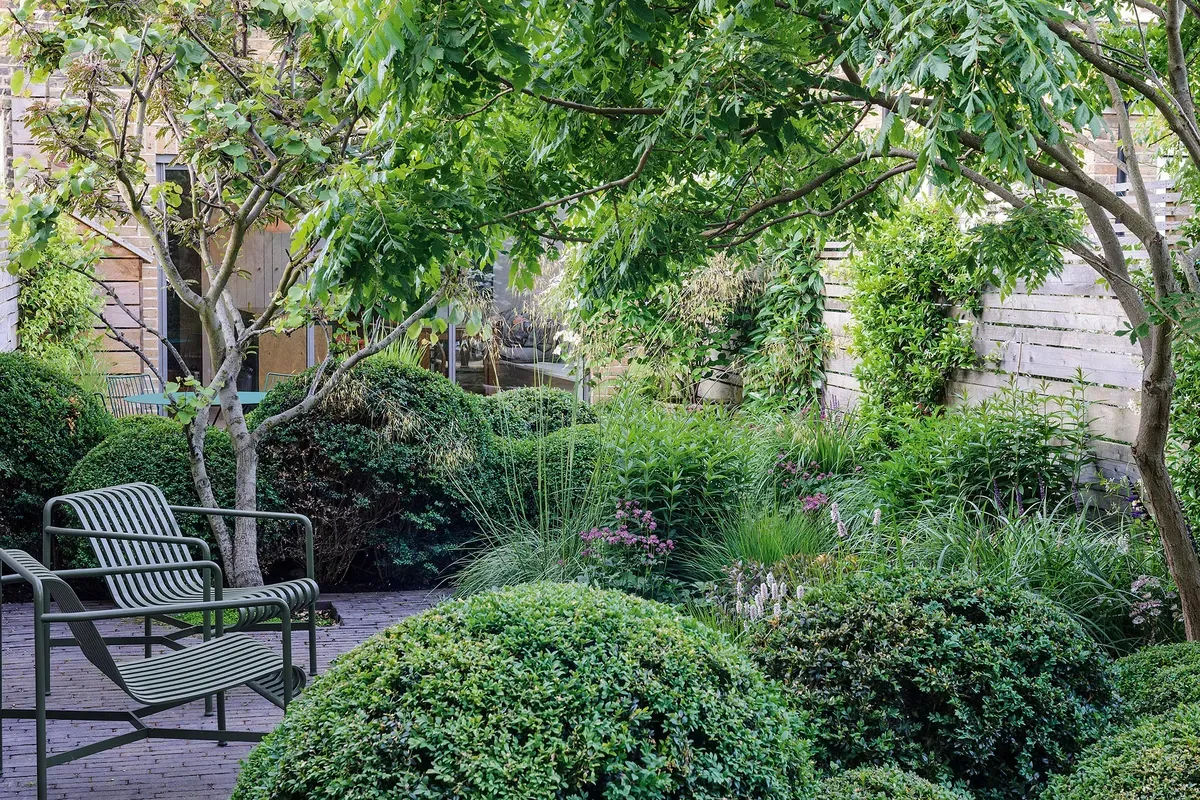
This deep, multi-layered planting scheme is best suited for a yard with some depth, ideally a space that’s at least 20 feet deep from the house or patio to the property line. You need that room to create the layers: low groundcovers and shrubs in the front, mid-sized plants and hedges behind them, and finally taller trees and climbing vines at the very back. In a narrow space, this much planting can feel overwhelming and dark, but with enough depth, it becomes a lush, private retreat.
28. Mixed Shrub Landscaping with a Dry Creek Bed
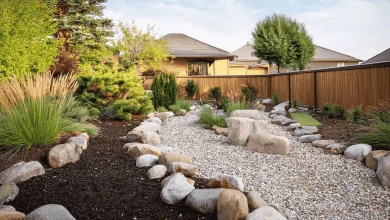
This landscape works because it skillfully mimics a natural environment. The dry creek bed, with its varied rock sizes and meandering path, looks like a real stream that has dried up for the season. It provides a strong, organic line that organizes the space and adds interest even when there are no flowers in bloom. The use of drought-tolerant shrubs and grasses reinforces this naturalistic, water-wise theme, making the whole design feel cohesive and authentic.
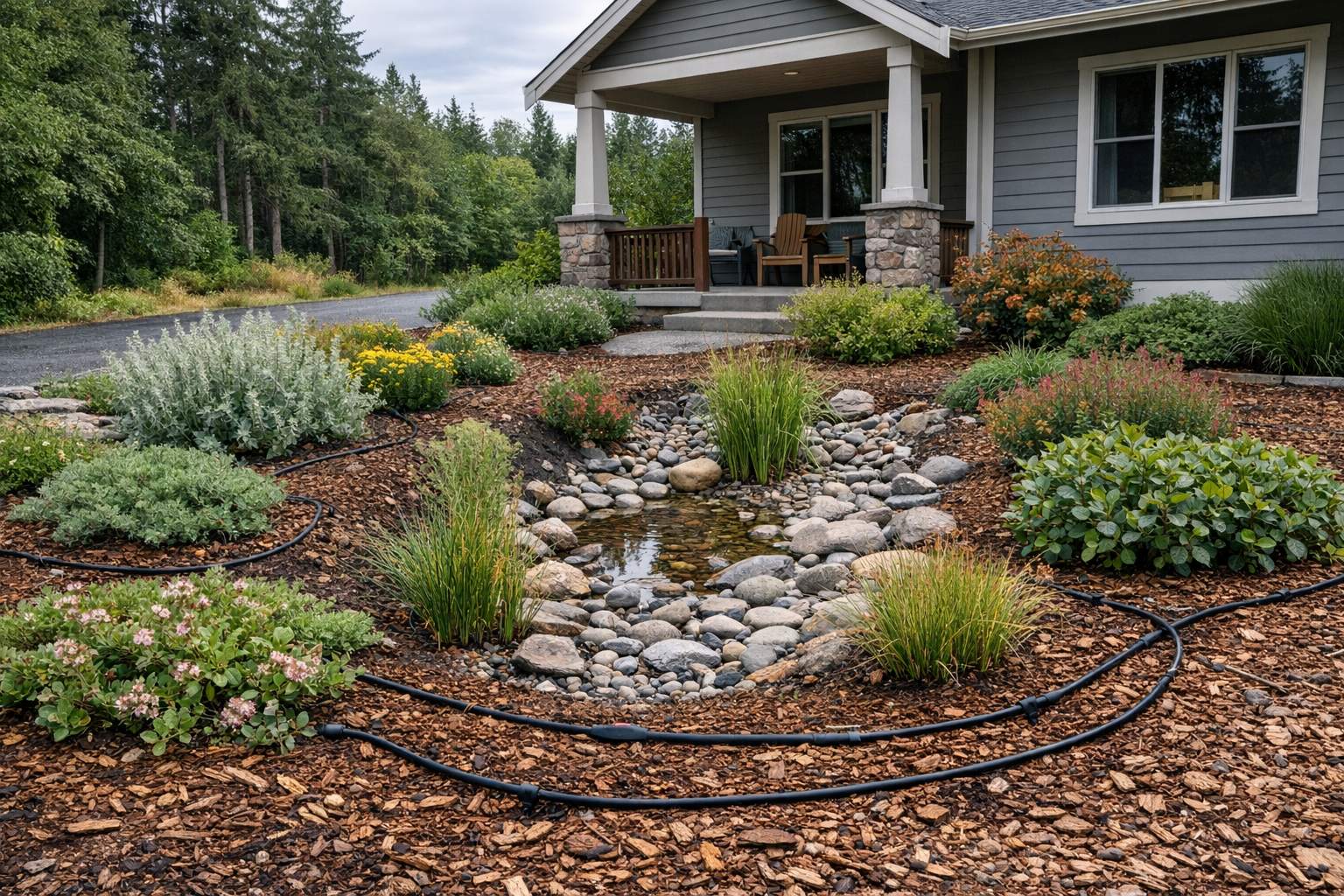
A dry creek bed is fantastic for drainage, but the rocks are notorious for collecting leaves and debris. Plan on using a leaf blower (not a rake) several times in the fall to keep it looking clean. The black drip irrigation tubing is incredibly efficient for watering, but it can be damaged by weed whackers or sharp shovels, leading to leaks. You’ll also need to check the emitters periodically to make sure they haven’t clogged with sediment, especially if you have hard water.
29. Stepped Stone Path on a Hillside with a Fountain
Building on a slope is more complex than working on flat ground. Those stacked stone steps require a properly compacted base for each one to prevent them from shifting and becoming a tripping hazard. You also need to manage water runoff; a heavy rain could wash all your mulch downhill if you haven’t planned for drainage or used appropriate groundcover plants to hold the soil. This is a project that can quickly go wrong if you don’t account for gravity and water flow from the start.
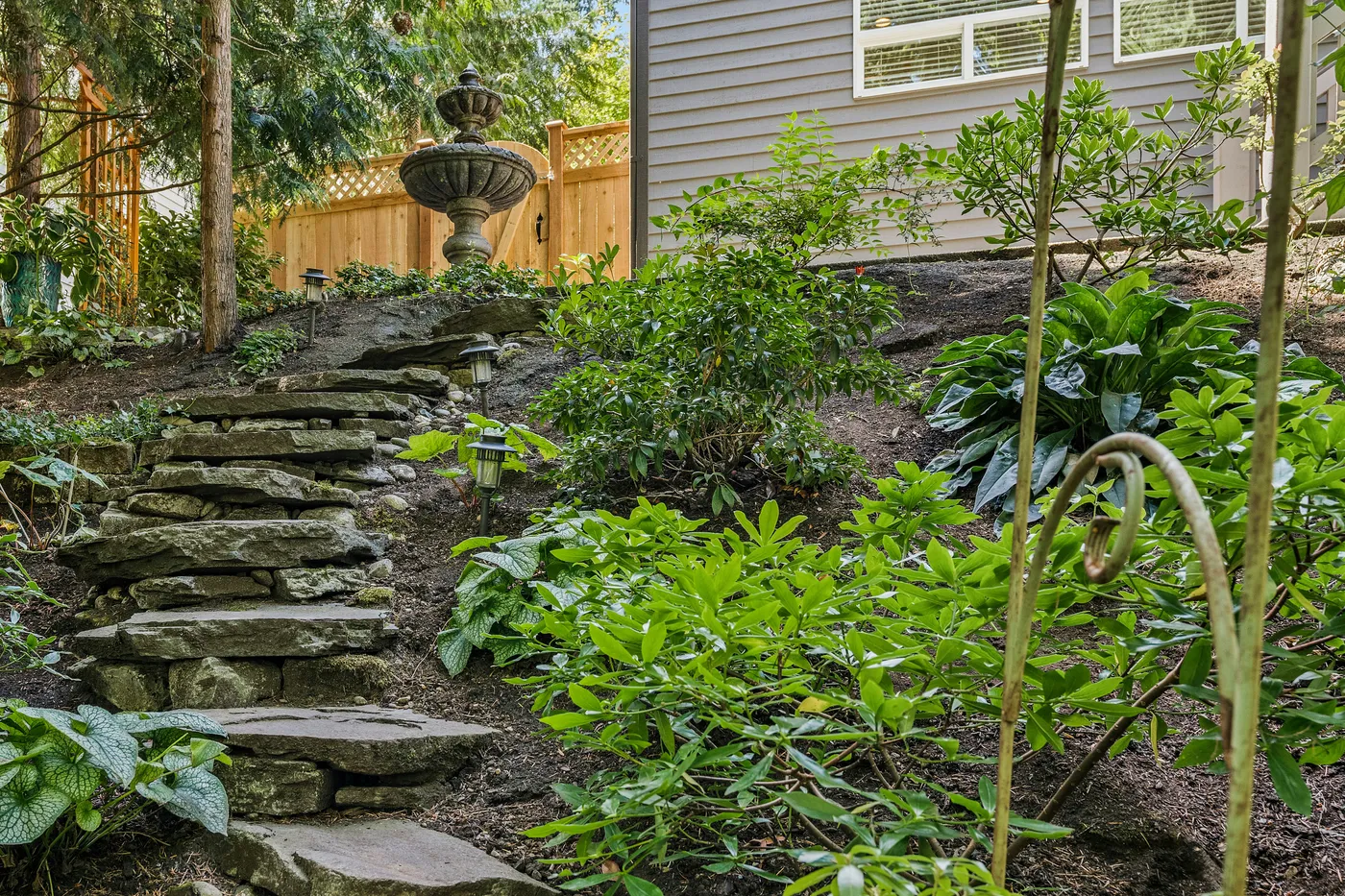
Before starting a hillside project like this, make sure you’ve covered the basics:
- Have you checked your local building codes? Steps or retaining walls over a certain height often require a permit.
- Do you have a plan for getting materials up the slope? A wheelbarrow on a steep grade can be dangerous.
- Where is your water source? Running water lines and electrical for the fountain and lights is much easier to plan before you start building.
- How will you manage erosion during construction? Have jute netting or mulch ready to cover bare soil immediately.
30. Textured Front Yard with Ornamental Grasses and Stone Steps
The beauty of this yard lies in its textural formula: 40% soft and feathery (the ornamental grasses), 30% solid and broad (the green shrubs and house siding), 20% hard and rustic (the stone steps and veneer), and 10% bold accent (the dark ceramic planter). This mix of textures creates a rich, layered look that is interesting in all seasons, even when nothing is blooming. It’s a sophisticated approach that relies on form and texture over fleeting color. This has a similar feel to the grass layering in Idea #10.
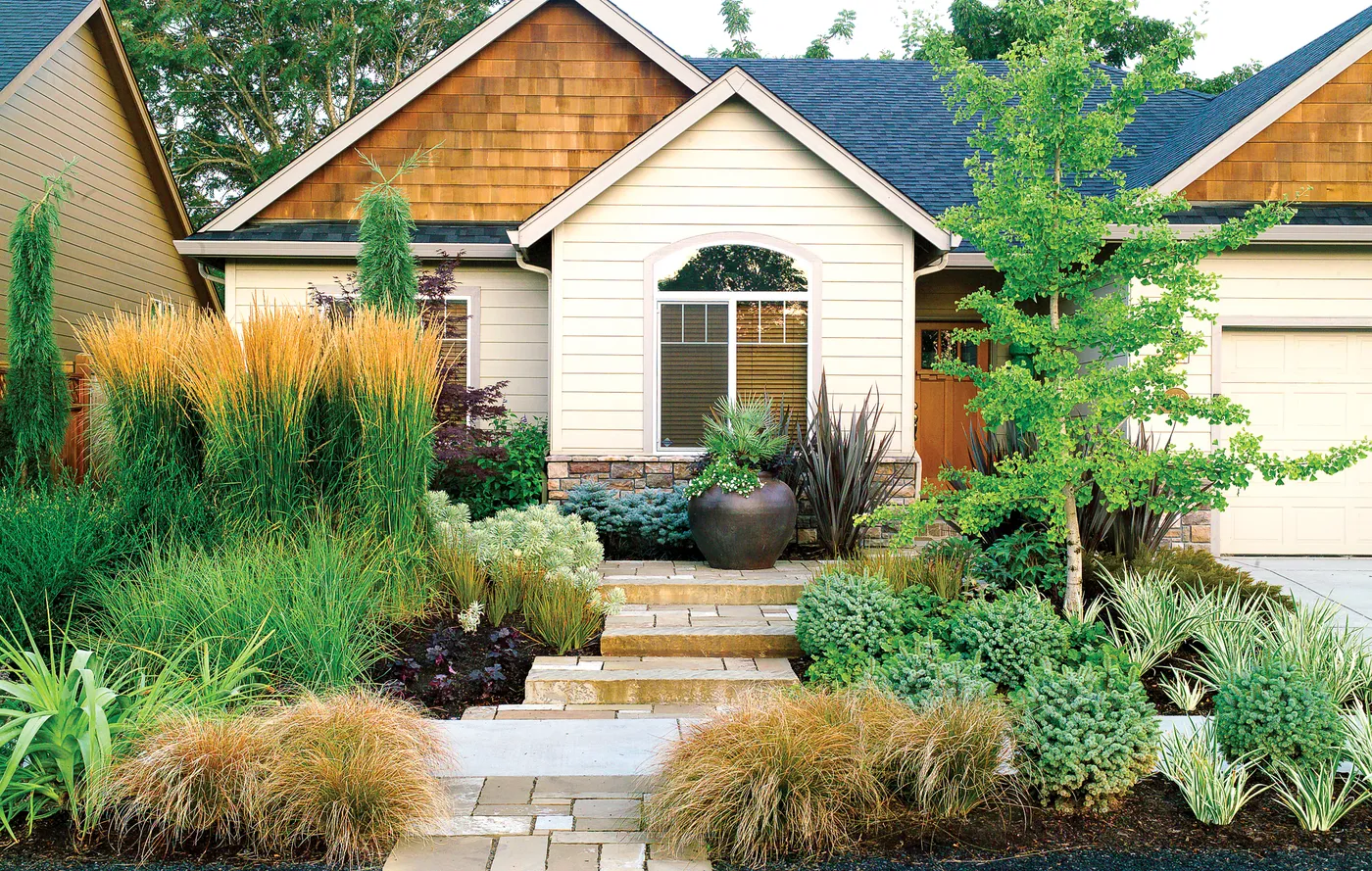
The ornamental grasses are the absolute key to this design’s success. Their fine texture, golden-brown color, and gentle movement in the wind provide a perfect counterpoint to the hard, static stone of the pathway and the solid green of the shrubs. They soften everything, catch the light beautifully, and give the entire landscape a relaxed, naturalistic vibe. Without the grasses, the yard would feel much more rigid and far less dynamic.
31. Traditional Front Yard with a Large Boulder Accent
A giant boulder delivered and placed by a landscape company can cost hundreds or even thousands of dollars. To get a similar focal point for less, search for free rocks on Facebook Marketplace or Craigslist. People are often trying to get rid of large rocks dug up during construction. You’ll need some muscle to move it, but the rock itself could be free. Alternatively, create a faux boulder grouping by clustering 3 or 5 smaller (but still substantial) rocks together to create a single, impactful feature.
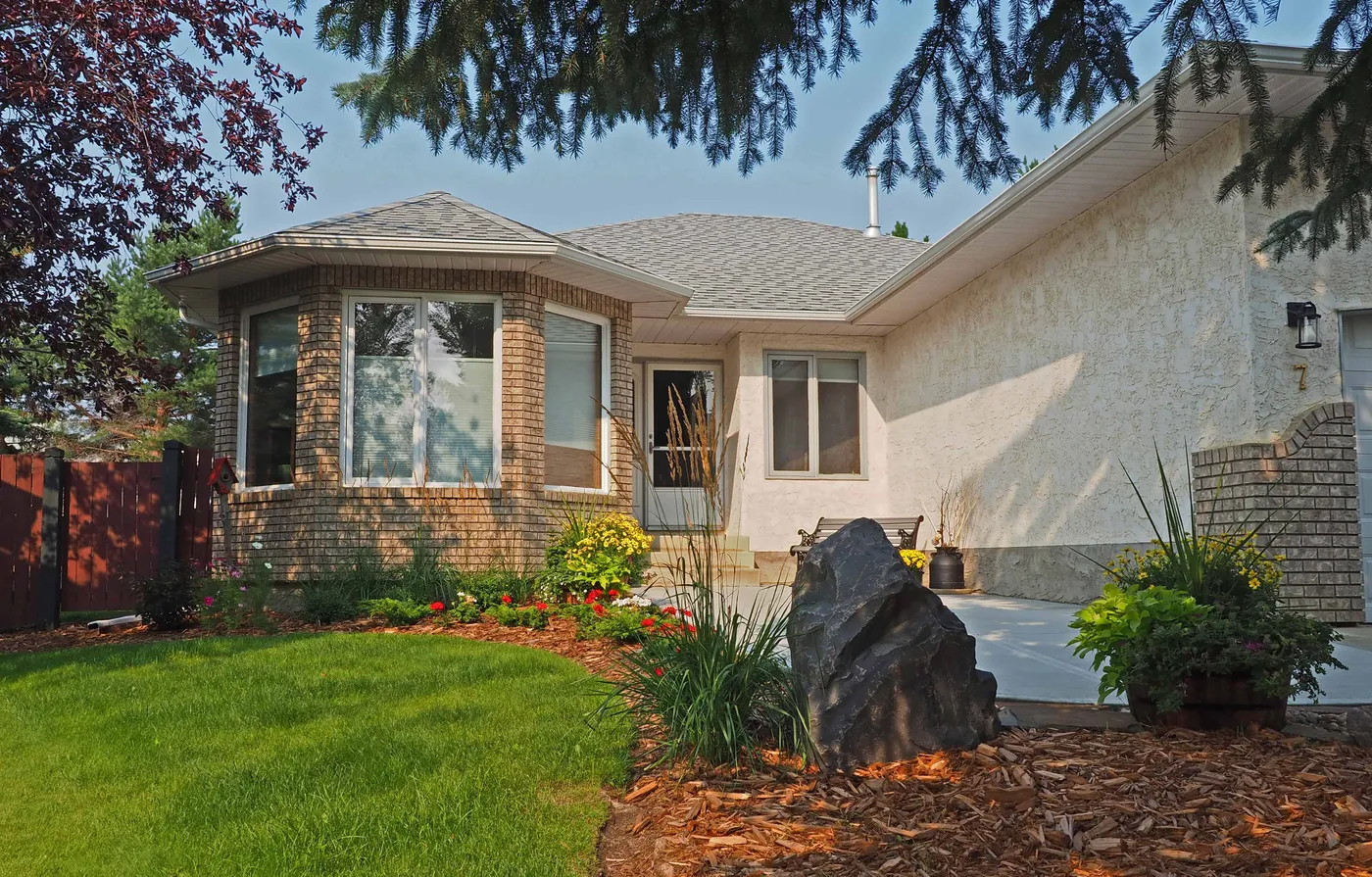
When placing a large accent boulder, dig a hole and bury the bottom third of it. A rock just sitting on top of the mulch looks unnatural and temporary, like a decoration. Burying it makes it look like it’s a natural outcropping that has been there forever, emerging from the earth. This single trick is what separates an amateur-looking rock placement from a professional one. Always orient the boulder with its widest, flattest side facing down for stability.
32. Contained Mulch Bed with Ferns and a Stone Border
This small garden bed is so effective because of its high-contrast, clean-edged design. The dark brown, fine-textured mulch makes the vibrant green of the ferns and other leafy plants pop. The light-colored stone border creates a crisp, defined line that contains the bed and separates it cleanly from the surrounding patio. Finally, the plain white wall acts as a blank canvas, ensuring there are no distracting background elements. It’s a simple, focused composition.
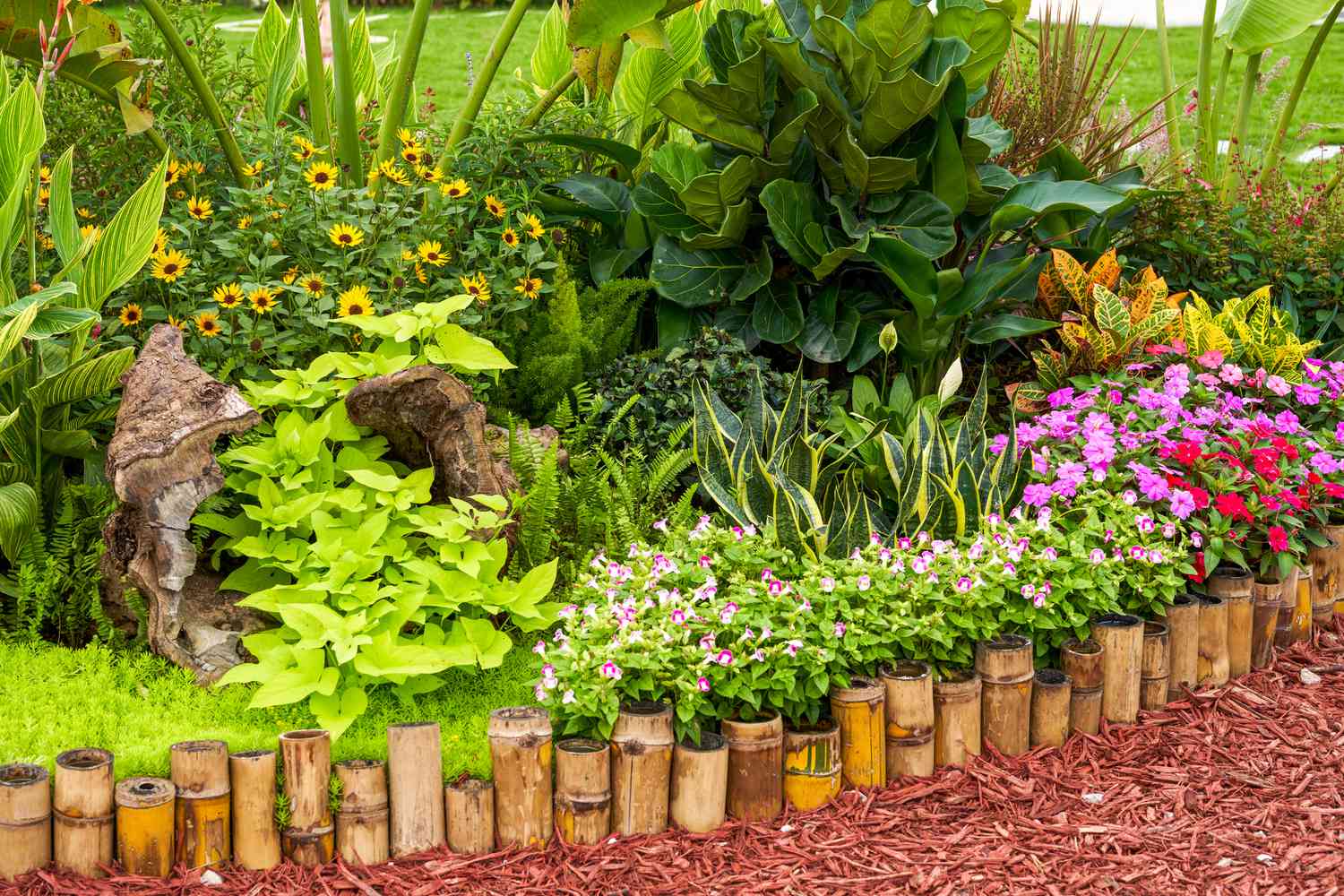
A small, contained bed like this can dry out very quickly, especially if it’s against a heat-reflecting white wall and gets a lot of sun. The dark mulch will also absorb heat. You’ll need to be diligent about watering, likely more often than you would for plants in a larger garden bed or in the ground. Because the space is small, it will also show weeds or fallen leaves immediately, so it requires regular tidying to maintain its neat appearance.

Your Yard’s Next Chapter Starts Now
Feeling inspired? The best landscapes start with a single idea. Don’t feel pressured to tackle everything at once. Pick one of these looks that speaks to you, whether it’s a simple container garden or a whole new pathway. Check your Pinterest boards, see what you’ve been saving, and take that first small step. You’ve got this.