
Still scrolling through endless gender-neutral nursery photos without knowing where to start? We get it. That’s why we spent serious time curating ideas that bring together style and serenity. This guide breaks down 26 distinct, beautiful nurseries that feel personal and thoughtful. For 2026, it’s all about creating calming sanctuaries, and we’re seeing a huge move towards earthy tones and natural materials—and we’ve found the best examples. And stay until the end—we break down the most common mistakes that can ruin these looks. 📌 Save this to Pinterest for later—you’ll want to revisit these ideas.
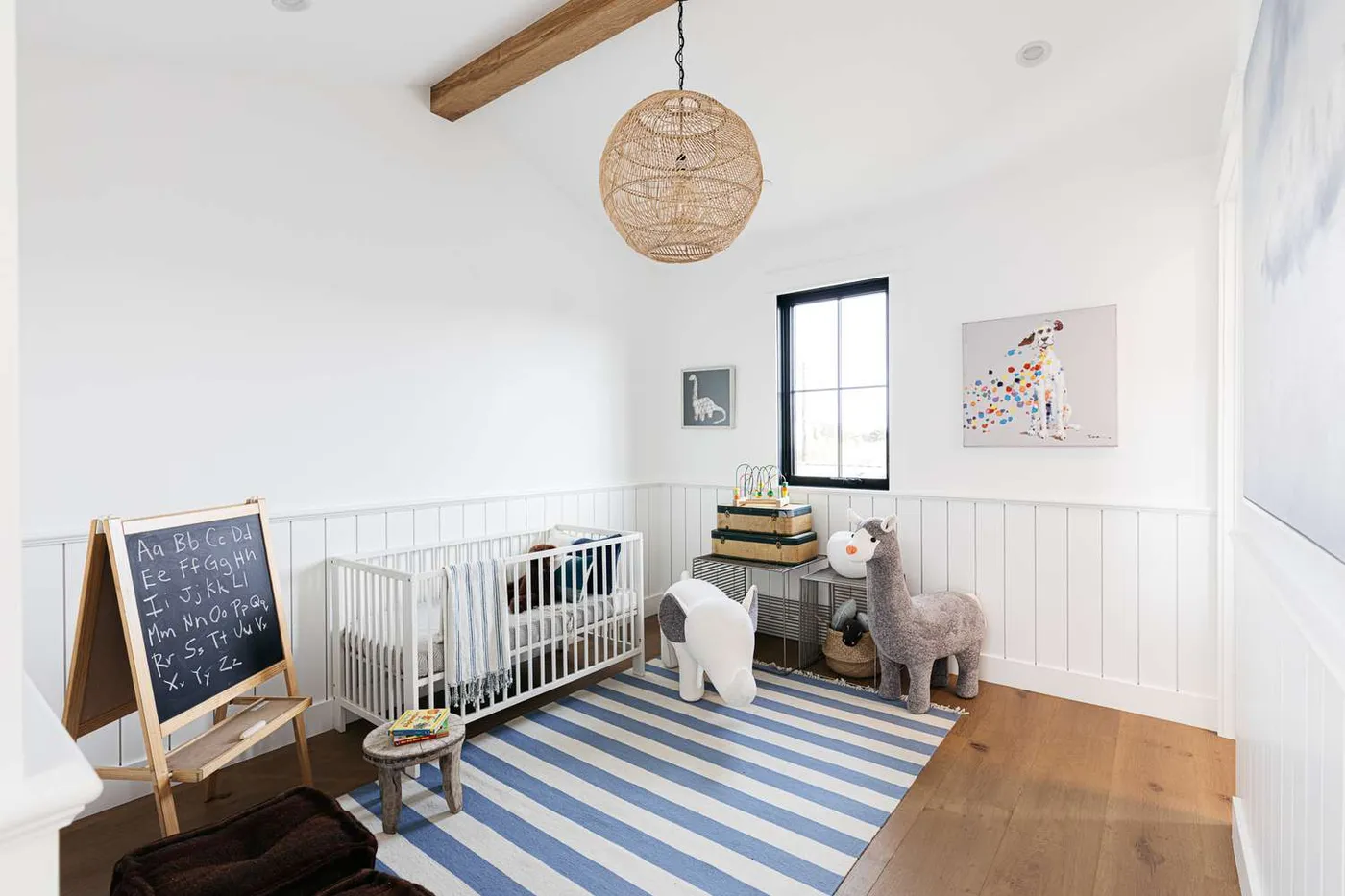
1. Classic White Nursery with a Bold Blue Stripe
This room nails the balance between playful and serene. The crisp white wainscoting provides a clean, structured backdrop that makes the room feel bright and airy. The bold, wide stripes of the blue and white rug add a perfect pop of graphic interest and color without overwhelming the space. Finally, the natural textures from the large woven pendant light and the wood floor bring in a layer of warmth, keeping the room from feeling too stark or cold. It’s a classic combination that feels timeless.
|
📋 Copy HEX 🔗 Share |
When choosing a rug for under the crib, make sure it’s large enough to extend at least 18 inches around the crib on all accessible sides. This creates a soft landing zone for your feet during late-night check-ins and visually anchors the main piece of furniture in the room. A rug that’s too small will look like an afterthought and make the room feel disjointed. For a standard crib, a 5’x8′ rug is often a good minimum size, but an 8’x10′ can define the entire nursery zone even better.
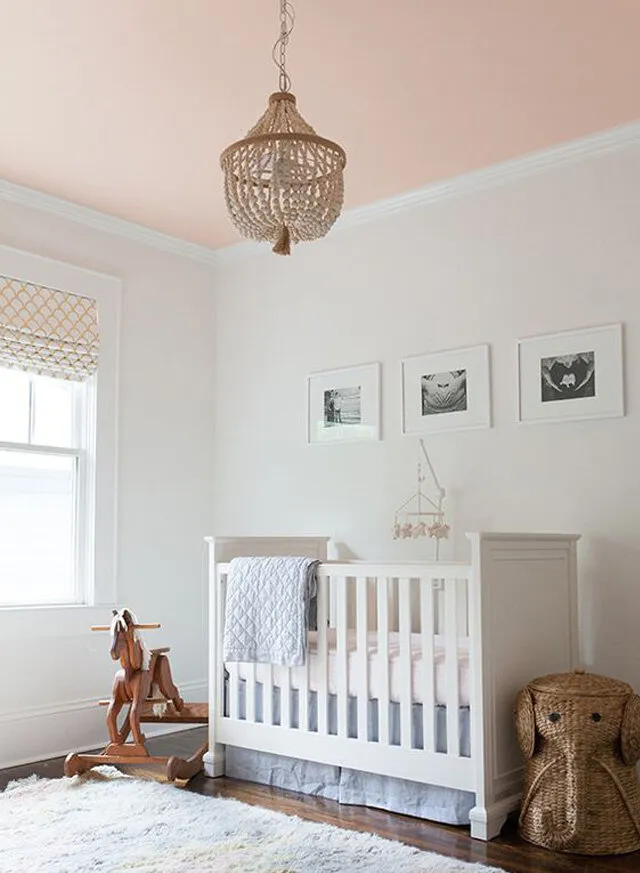
2. Subtle Sophistication with a Blush Pink Ceiling
The single most important element here is the blush pink ceiling. It’s an unexpected and brilliant move. Painting the “fifth wall” draws the eye upward, making the room feel taller and more special. In a space with otherwise neutral white walls and wood furniture, the ceiling becomes a soft, warm canopy that envelops the room in a gentle glow. Without it, this would be a lovely, but standard, nursery. With it, the room has a distinct personality and a touch of magic. The woven beaded chandelier only enhances this effect.
|
📋 Copy HEX 🔗 Share |
Let’s be honest: painting a ceiling is a pain. It’s a physically demanding job that involves a lot of looking up, potential neck strain, and a high likelihood of paint drips. If you have textured ceilings, it’s even harder to get clean coverage. You’ll want to invest in high-quality painter’s tape for the crown molding, use a good primer, and be prepared for at least two coats. Or, better yet, consider hiring a professional for this part. It might be worth the cost to save your neck and get a flawless finish.
3. Modern Nursery with Natural Wood and Brushed Gold
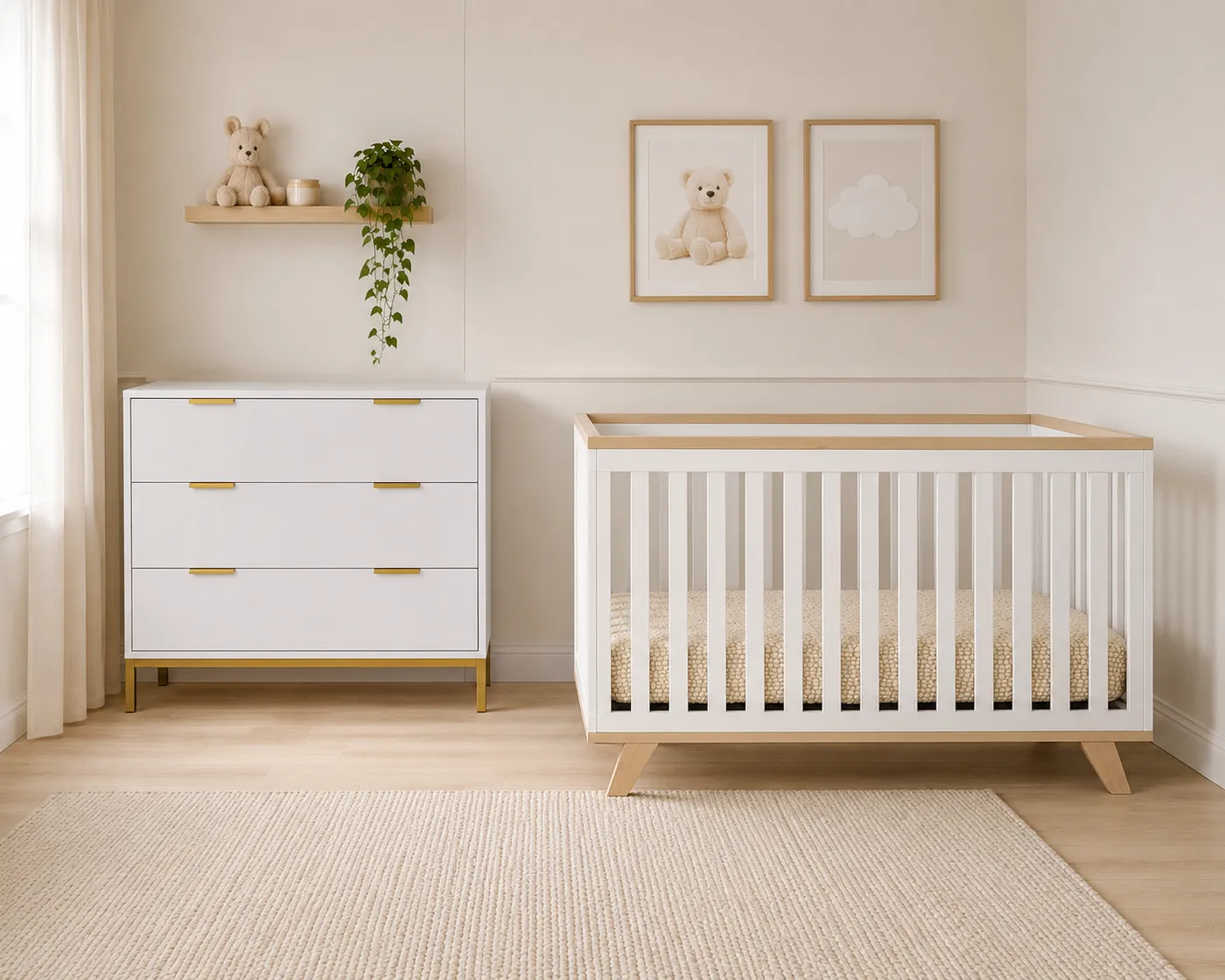
This look follows a simple but effective formula: 60% soft neutrals + 30% natural wood + 10% metallic accents. The walls, wainscoting, and woven rug create a calm, neutral base. The natural wood on the crib and floating shelf adds organic warmth and texture. The final 10% comes from the brushed gold hardware on the dresser and legs, providing just enough shine to feel sophisticated and modern. You could swap the gold for matte black for a more graphic look or even a soft color for a playful twist, and the core balance would still work.
|
📋 Copy HEX 🔗 Share |
You don’t need a high-end dresser to get this chic look. Find a simple, affordable white dresser from a place like IKEA or Target (the Songesand or Hemnes models are great candidates, often under $300). Then, head to a hardware store or an online shop like Schoolhouse or Rejuvenation and buy new pulls and legs. For under $100, you can swap the standard hardware for beautiful gold-toned pieces, completely transforming the look of the furniture. It’s a weekend DIY that delivers a high-end feel for a fraction of the price.
4. Earthy Olive Green and Rich Leather Accents
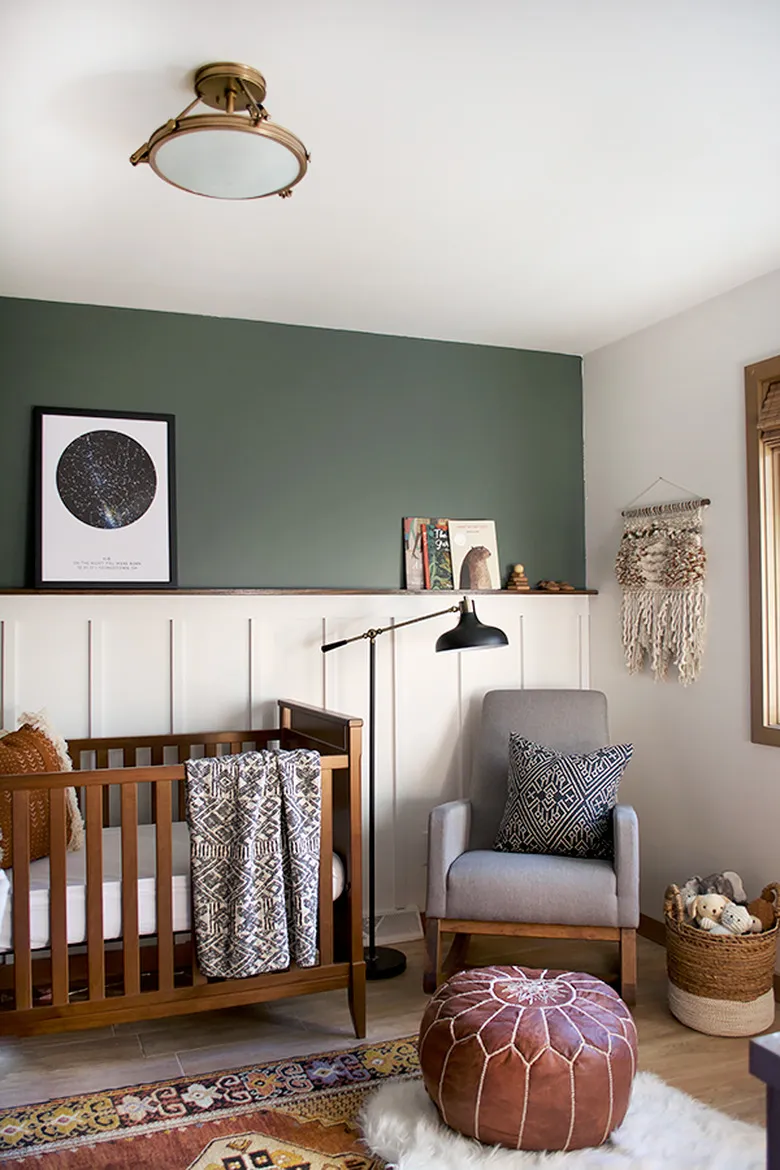
Earthy, grounding colors are having a huge moment, and this nursery shows exactly why. We’re moving away from sterile, all-white spaces and embracing colors that connect us to nature. This deep olive green feels nurturing and calm, not trendy in a fleeting way. Paired with natural materials like the dark wood crib, brown leather pouf, and woven decor, it taps into the biophilic design trend—the idea that bringing natural elements indoors makes us feel better. It’s a look that feels both current and timeless.
|
📋 Copy HEX 🔗 Share |
A leather pouf looks amazing, but it requires a bit of care to stay that way. It can be prone to scratches from pets or even zippers on clothing. You’ll want to condition it with a leather cream every 6-12 months to keep it from drying out or cracking. As for the layered rugs, they create a wonderfully cozy look, but be prepared for some extra vacuuming. Dust and crumbs love to settle between the layers, so you’ll need to separate and clean them regularly to keep things fresh for a crawling baby.
5. Serene Twin Nursery with Symmetrical White Cribs
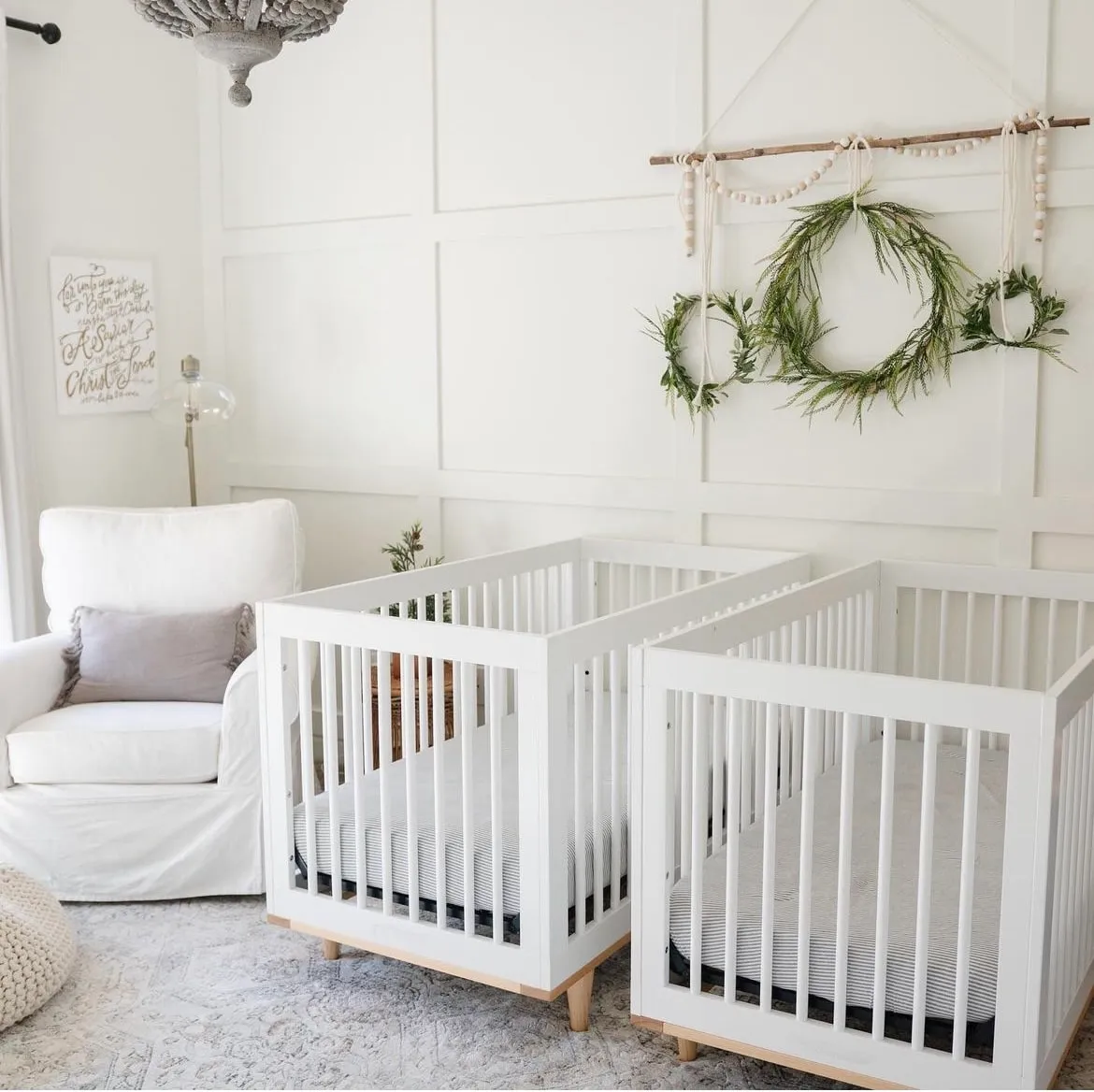
A twin nursery requires careful space planning. To comfortably fit two standard cribs (approx. 54″ long each) with enough space to walk between them (at least 24″), plus a glider and changing area, you’ll need a room that’s at least 12′ x 12′, or around 144 square feet. A rectangular room often works best, allowing you to place the cribs along the longest wall. This layout avoids feeling cramped and ensures clear pathways for those inevitable middle-of-the-night trips. Anything smaller, and you might consider mini-cribs to save space.
|
📋 Copy HEX 🔗 Share |
The power of symmetry is on full display here. Placing the two identical white spindle cribs side-by-side creates an immediate sense of order and calm, which is essential in a room that could easily feel chaotic. The repetition of shapes—the vertical spindles on the cribs, the lines in the board and batten walls—further enhances this feeling of harmony. The hanging branch decor centered above the cribs reinforces this balanced composition, making the whole space feel intentional and incredibly peaceful.
6. Attic Nursery with a Plaid Accent Wall
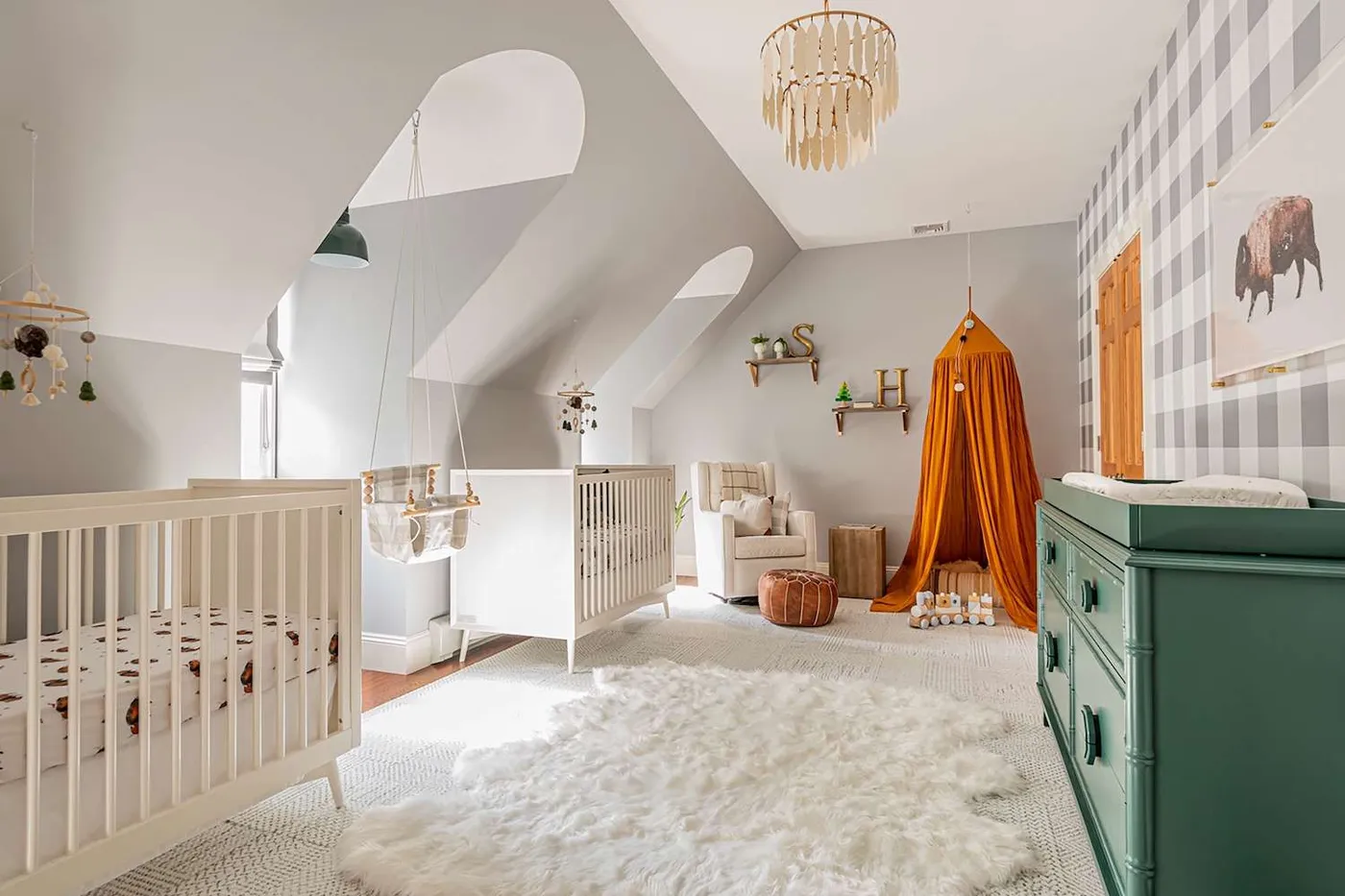
The plaid accent wall is the defining feature of this room. In a space with interesting architecture like sloped ceilings and arched cutouts, adding a classic pattern like plaid brings a cozy, traditional counterpoint to the modern lines. It introduces color and visual texture without being overwhelming, and the forest green and gray palette feels both sophisticated and soothing. It turns what could be an awkward wall into the nursery’s charming focal point. The orange canopy is a brilliant, unexpected color companion.
|
📋 Copy HEX 🔗 Share |
When working with an attic room or any space with sloped ceilings, don’t fight the architecture—lean into it. Use the lower sections for furniture like cribs and dressers, as seen here. This keeps the taller, central part of the room open for walking and playing, maximizing the usable headspace. Painting the angled walls and the flat ceiling the same light color (like this light gray) can also minimize the visual chop and make the space feel more open and less cramped.
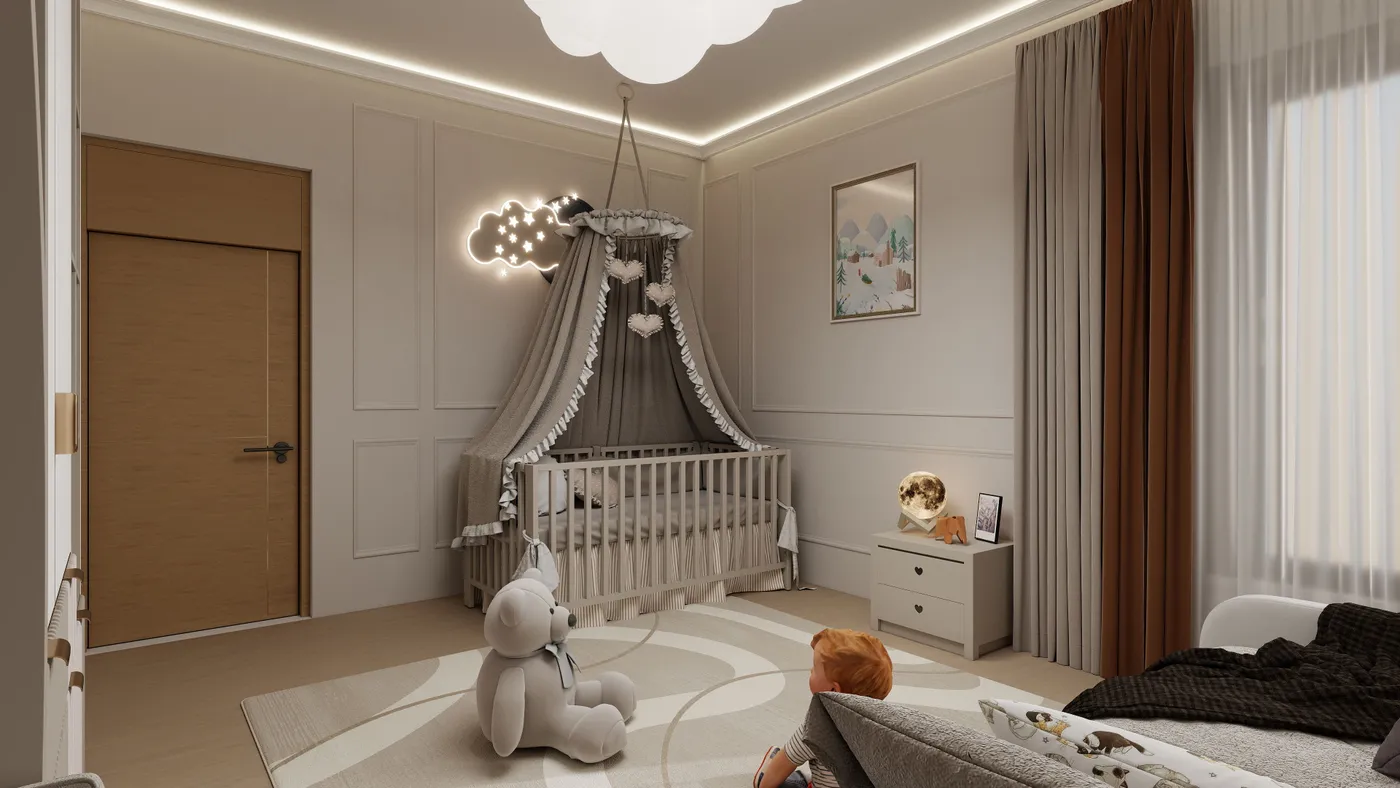
7. Dreamy Gray Nursery with Cloud-Shaped Lighting
Installing a plug-in neon wall light is a simple way to add personality. Here’s a quick guide:
|
📋 Copy HEX 🔗 Share |
- Choose your spot: Hold the light against the wall to find the perfect height. Aim for eye level or slightly above the crib, ensuring it’s out of baby’s reach.
- Mark the holes: Use a pencil to mark where the mounting hardware will go through the pre-drilled holes on the light’s acrylic backing.
- Install anchors: For drywall, gently tap in the included wall anchors on your marks.
- Mount the light: Screw the light into the anchors.
- Conceal the cord: Use a paintable cord cover to run the power cord neatly down to the outlet for a clean, professional look.
This project takes about 30 minutes and costs around $15 for a cord cover kit.
Whimsical, theme-specific lighting is incredibly charming but can feel dated as your child grows. That adorable cloud or moon lamp might not fit the vibe of a 5-year-old’s room. When choosing statement lighting, consider its longevity. One solution is to make it the one baby element in a room of more classic furniture. That way, you only need to swap out one or two light fixtures in a few years to update the room, rather than redoing the entire space. It keeps the design flexible for the future.
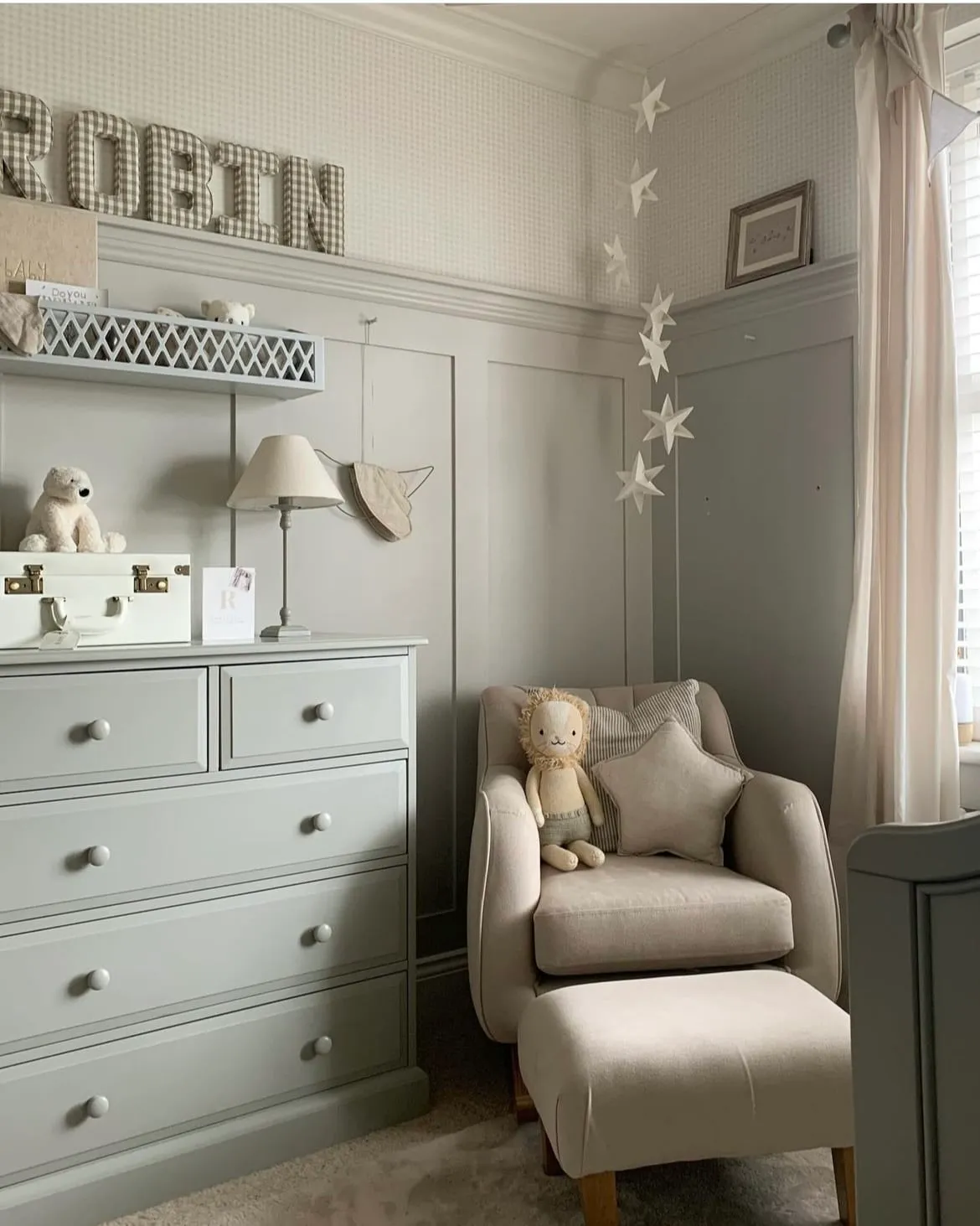
8. Soft and Cozy Nursery with Gray Paneling
This room’s serene feel comes from a carefully layered formula: 50% solid color + 40% soft texture + 10% subtle pattern. The light gray paneling and dresser provide a solid, calming base. The plush beige armchair and ottoman, along with the soft rug, make up the significant textural component, adding immense coziness. The final 10% is the gentle checked wallpaper and gingham letters, which introduce just enough pattern to be interesting without disturbing the peaceful atmosphere. It’s a recipe for a quiet, restful space.
|
📋 Copy HEX 🔗 Share |
Recreating this cozy corner is more accessible than it looks. Here’s a possible breakdown:
- Main Furniture (Armchair, Ottoman, Dresser): $800 – $1,800
- Wall Treatment (Paneling, Wallpaper, Paint): $400 – $900
- Textiles (Rug, Curtains): $250 – $600
- Decor (Star garlands, Lettering): $100 – $250
- TOTAL: $1,550 – $3,550
Budget alternative: Find a used glider/ottoman on Facebook Marketplace ($150), use a paint-and-stencil technique instead of wallpaper ($75), and DIY the star garlands with felt and string ($20) to get the look for around $1,000.
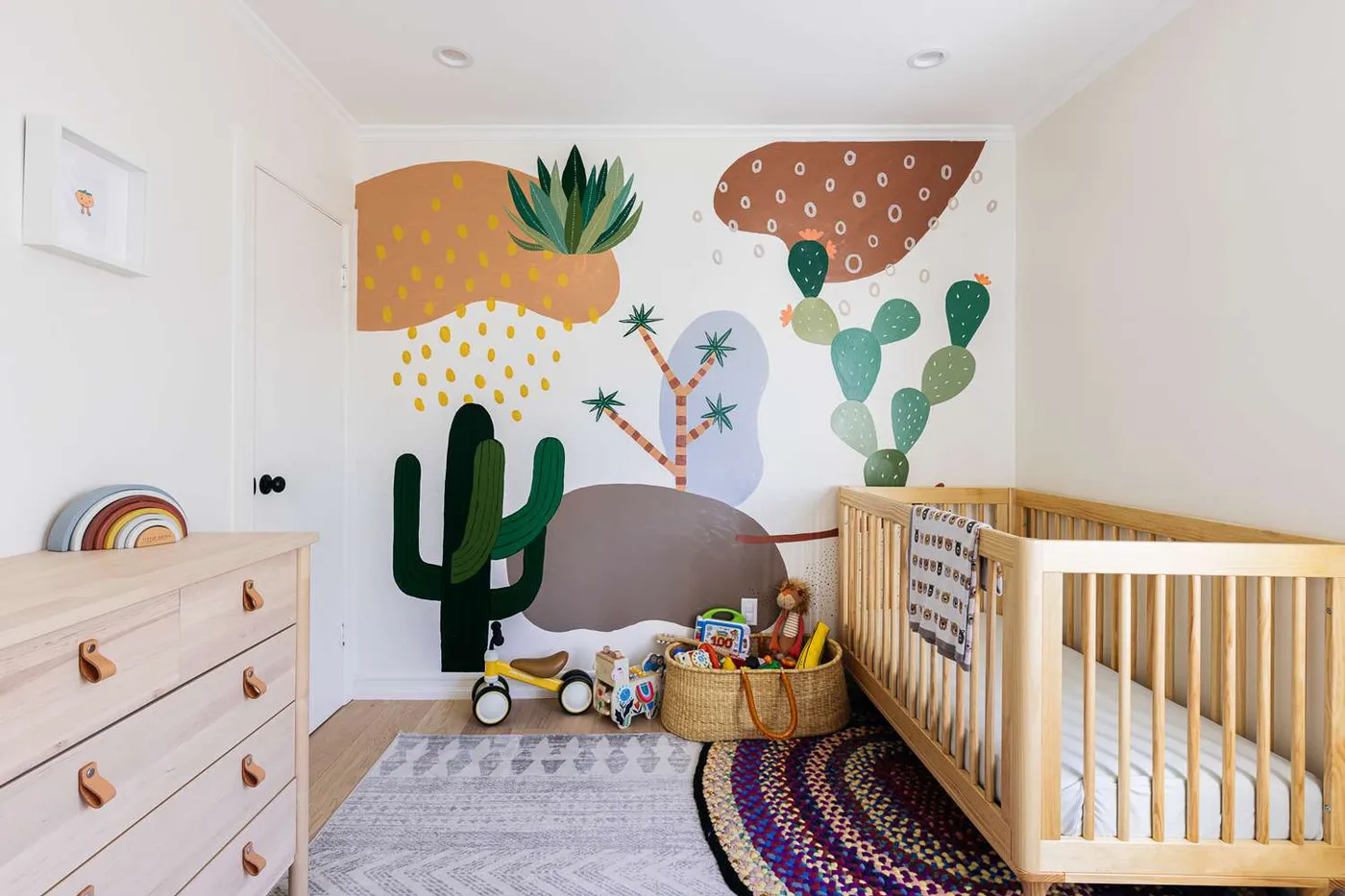
9. Playful Nursery with a Hand-Painted Desert Mural
Thinking about a mural? It’s a fantastic way to personalize a room, but run through this checklist first:
|
📋 Copy HEX 🔗 Share |
- Wall Condition: Is the wall smooth and repaired? A mural will highlight any bumps or cracks. You’ll need to sand and prime it for the best result.
- Design Commitment: Are you ready to commit to this theme for a few years? A mural is a bigger undertaking to paint over than a simple accent wall.
- Your Skill Level: If painting it yourself, be honest about your artistic ability. Consider projecting the image onto the wall to trace it for a more polished outcome.
- Budget: Will you DIY or hire an artist? A pro muralist can cost $1,000-$5,000+, while DIY costs are just paint and supplies ($100-$300).
Obviously, it’s the mural. This one element transforms the room from a simple nursery into a unique, imaginative world. Its large scale and organic, abstract shapes feel artistic and modern, not like a generic cartoon. The earthy palette of greens, browns, and terracotta sets the tone for the entire room, dictating the choice of natural wood furniture and textured rugs. If you removed the mural, you’d have a nice, neutral nursery. With the mural, you have a story.
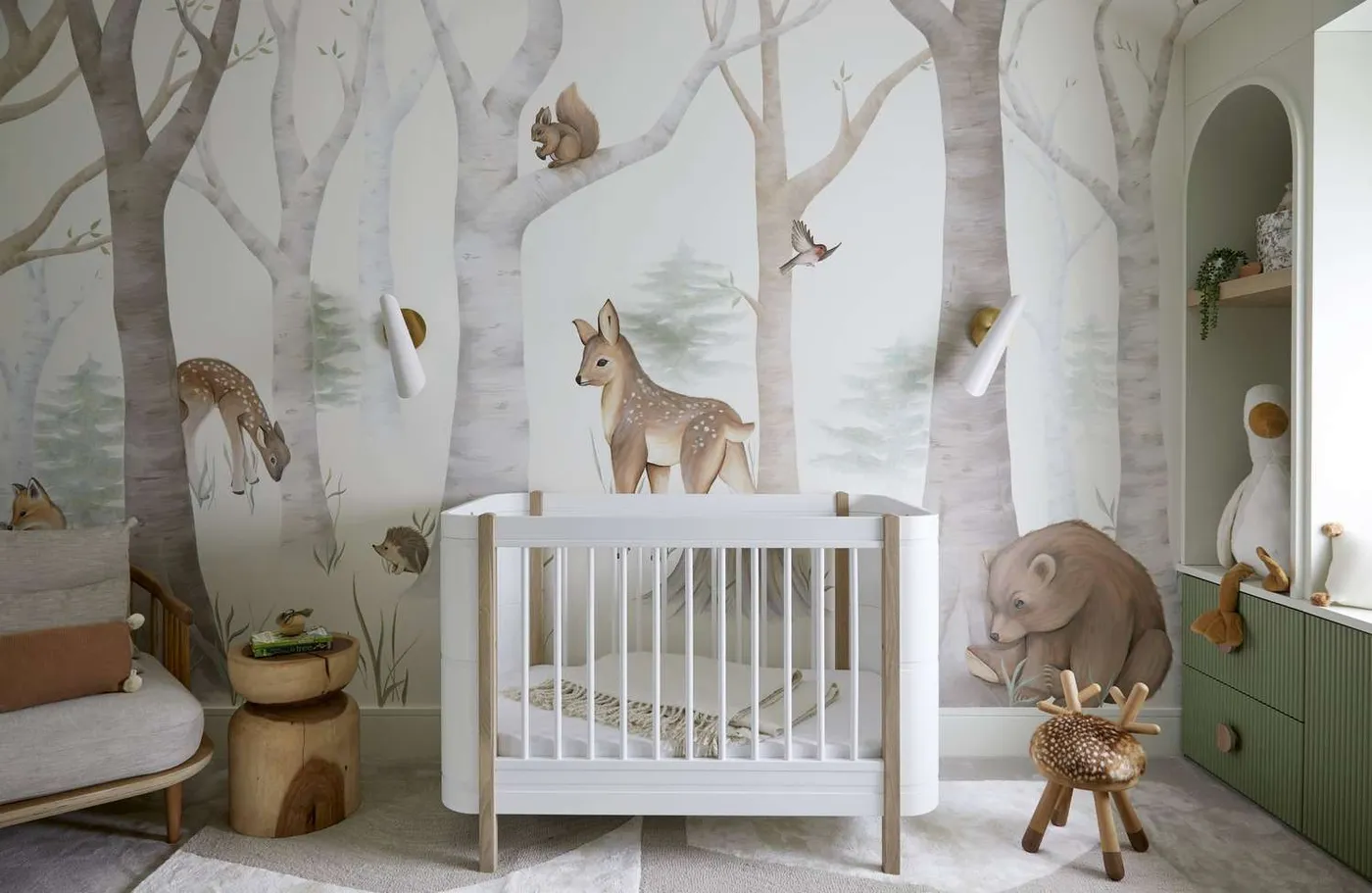
10. Whimsical Woodland Nursery with Sage Green Cabinetry
This nursery excels at creating a theme that feels sophisticated, not kitschy. The key is the mural’s muted, almost monochromatic color palette, which acts more like a textured wallpaper than a loud cartoon. This subtlety allows other elements, like the sage green fluted cabinet and the natural wood crib, to share the spotlight. The design also cleverly mixes scales, from the large forest scene to the tiny spotted fawn stool, creating layers of interest that draw you in. It feels like a calm, enchanted forest, not a character-themed room.
|
📋 Copy HEX 🔗 Share |
A full wall mural can be a significant investment. For a similar woodland vibe on a budget, consider large-scale wall decals. You can buy sets of trees, deer, and other woodland creatures for $50-$150 online and arrange them yourself. This gives you creative control and is much easier to remove or change down the line. Pair the decals with a soft gray or sage green paint color on the wall to mimic the serene backdrop of the mural. This approach delivers 80% of the charm for about 10% of the cost of a custom wallpaper or artist-painted mural.
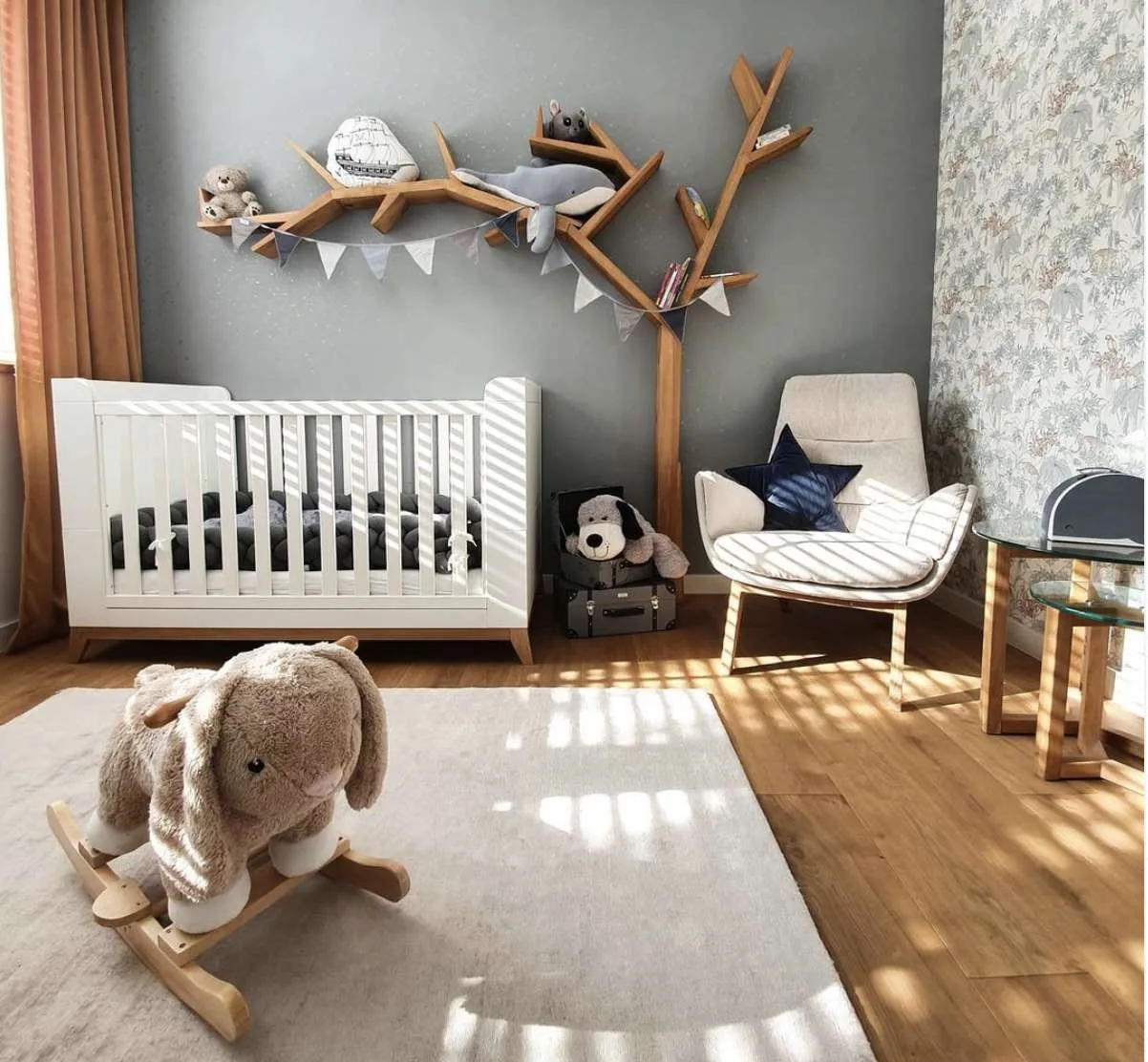
11. Playful and Modern Nursery with a Tree Bookshelf
When incorporating novelty furniture like this fantastic tree-shaped bookshelf, safety is paramount. Always, always anchor tall or unusually shaped furniture to the wall. Once a baby starts pulling up and climbing, these pieces can become a tipping hazard. Use the anti-tip hardware that comes with the product, or buy a separate furniture anchor kit for under $15. Secure it into a stud for maximum stability. It’s a five-minute job that provides essential peace of mind.
|
📋 Copy HEX 🔗 Share |
That tree bookshelf is an absolute showstopper, but let’s talk about dusting it. All those little branches and nooks are magnets for dust bunnies. A regular feather duster won’t cut it. You’ll need a microfiber cloth or a vacuum with a brush attachment to really get it clean. While it’s a super fun and functional piece for storing books and plush toys, just be aware that it’s a bit more high-maintenance to clean than a standard, straight-edged bookshelf. Factor that in if low-maintenance is high on your priority list.
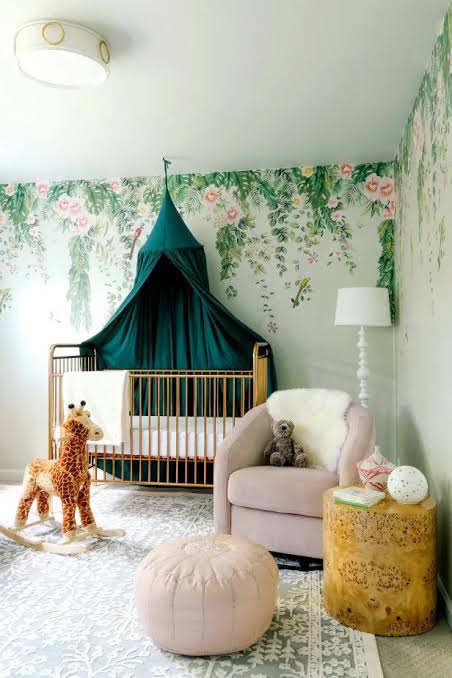
12. Embrace a Soothing Wash of Green
Creating a green nursery is all about balance. A great formula is 70% Neutral + 30% Green. This means using your chosen shade of green on a key feature, like an accent wall or a large piece of furniture, but keeping the majority of the room in calming neutrals like white, cream, or light wood. This prevents the green from overpowering the space and ensures the atmosphere remains restful and serene, rather than overly stimulating. The specific shade of green—be it sage, olive, or mint—can then define the room’s entire mood.
|
📋 Copy HEX 🔗 Share |
Green is the unofficial color of wellness and nature, so it’s no surprise it has become a go-to for gender-neutral nurseries. After years of gray dominating neutral palettes, parents are looking for colors that feel more organic, calming, and hopeful. Green connects us to the outdoors and has a proven psychological calming effect. It’s a color with incredible staying power because it’s rooted in nature, not a fleeting design trend. It’s a choice that will still feel fresh and relevant years from now.
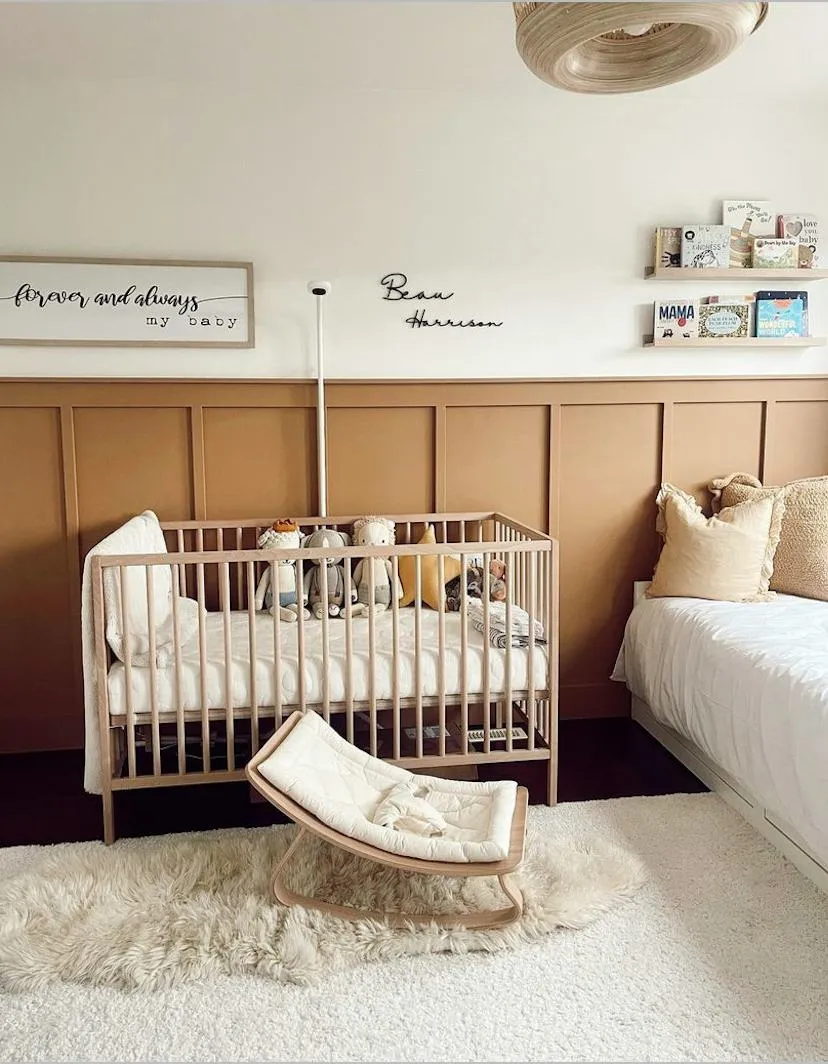
13. Warm and Inviting with Brown Board and Batten
A board and batten wall adds instant architectural character. Here’s a simplified DIY guide:
|
📋 Copy HEX 🔗 Share |
- Plan your layout: Decide on the height of your paneling (3-4 feet is common) and the spacing of your vertical battens (usually 16-24 inches apart).
- Install the top rail: Cut a 1×4 MDF or pine board to the length of your wall and nail it in at your desired height, ensuring it’s level.
- Add vertical battens: Cut your 1×3 vertical batten pieces to size and attach them using construction adhesive and finishing nails.
- Caulk and fill: Fill all nail holes with wood filler and caulk every seam for a seamless, professional finish.
- Paint: Prime and paint the paneling and the wall below it in your chosen color.
This is a weekend project that dramatically transforms a room.
Those fluffy, high-pile rugs feel like a cloud underfoot, but they are a trap for everything a baby can produce: spit-up, crumbs, and diaper leaks. Spot cleaning can be difficult, and a deep clean often requires a professional. If you love the look, consider a smaller, washable sheepskin rug layered over a low-pile base rug. That way, you can throw the small one in the wash when messes happen. Alternatively, look for rugs made from polypropylene or other synthetic, stain-resistant fibers that are easier to clean.
14. Textured and Tranquil with Plaid Wallpaper
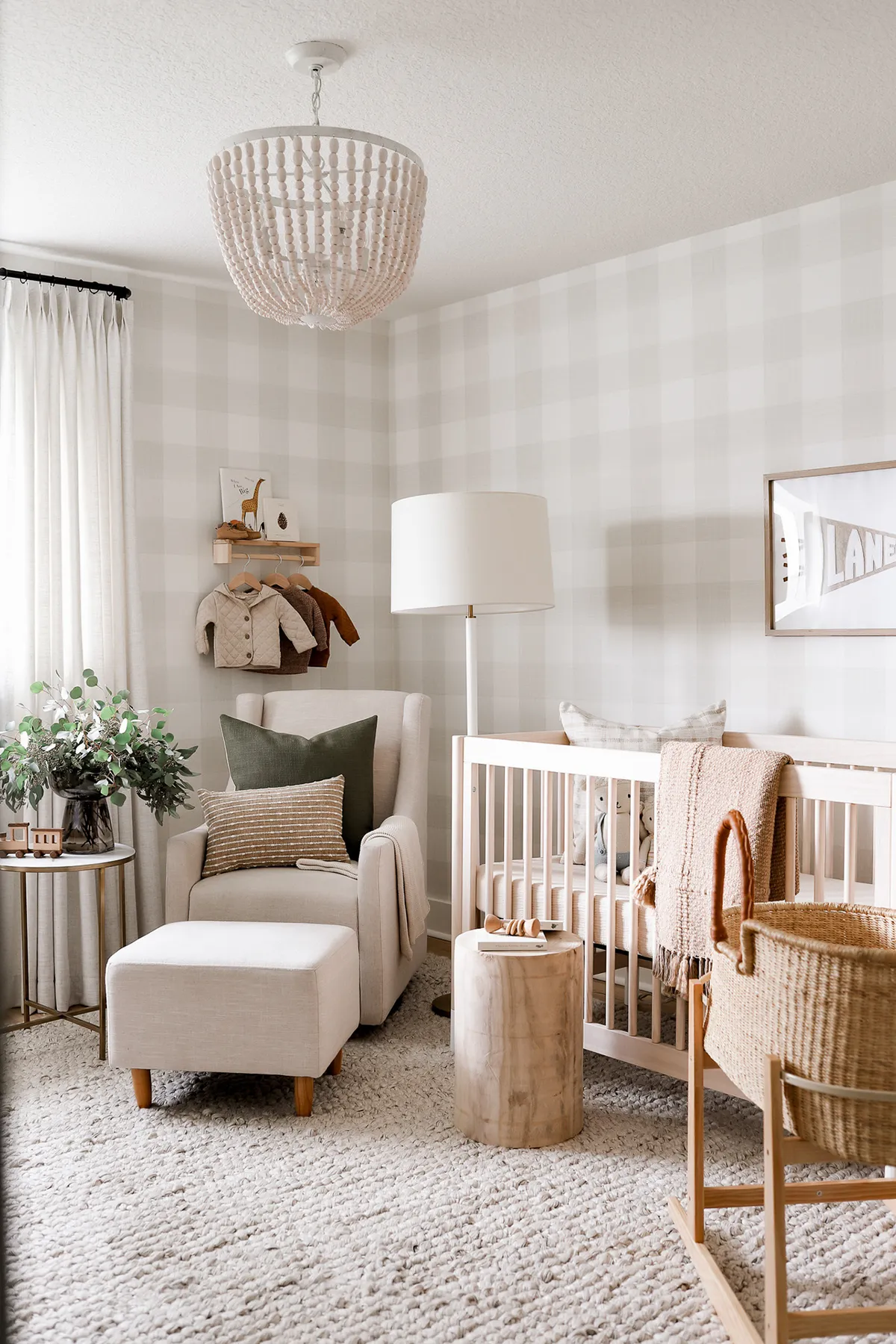
When using a patterned wallpaper like this plaid, the scale of the pattern is crucial. For a nursery, a larger-scale pattern is often better than a small, busy one. A large, open plaid like this one reads as a calming texture from a distance, rather than a dizzying pattern. It adds visual interest without overstimulating the eye. Before committing, always order a large sample (at least 2′ x 2′) and tape it to the wall to see how it feels in the actual room and with the natural light throughout the day.
|
📋 Copy HEX 🔗 Share |
This room is a masterclass in layering textures. You have the soft, subtle pattern of the plaid wallpaper, the chunky, nubby weave of the knit area rug, the smooth upholstery of the glider, the raw grain of the wood side table, and the delicate beads of the chandelier. Each element brings a different tactile quality, but they all exist within a very tight, neutral color palette. This is the secret to creating a room that feels incredibly rich and cozy, yet remains completely serene and uncluttered.
15. Minimalist Nursery with a Sage Green Shiplap Wall
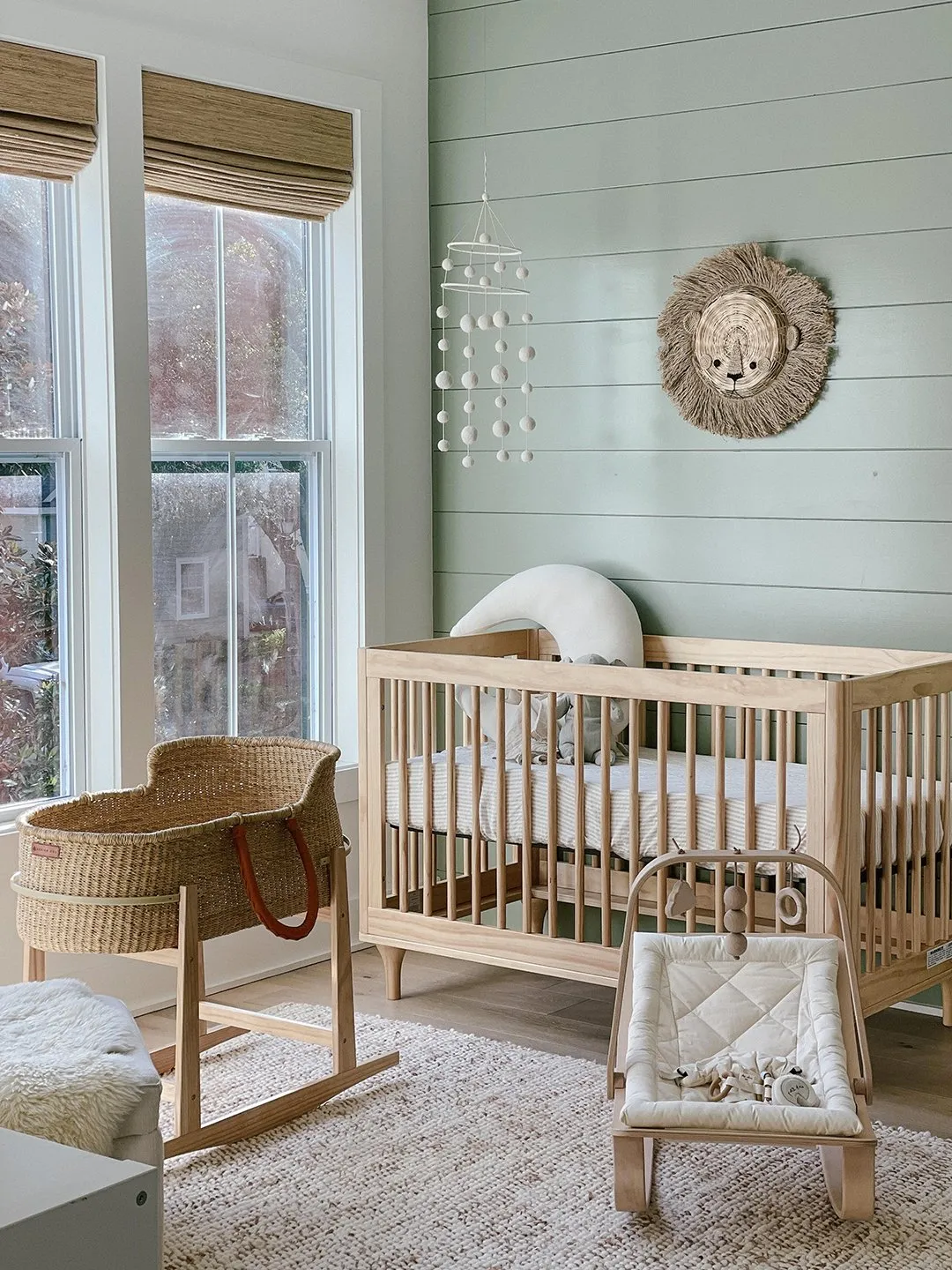
The sage green shiplap accent wall is the heart of this design. Shiplap itself adds texture and a touch of rustic charm, but painting it this soft, earthy green is what makes it special. The color is calming and connects the room to nature, while the horizontal lines of the shiplap make the room feel wider. It provides the perfect amount of color and interest for a minimalist space, serving as a focal point without needing a lot of extra decor on top of it. It’s both a color statement and a textural element in one.
|
📋 Copy HEX 🔗 Share |
Minimalist designs like this one are particularly effective in smaller rooms (under 120 square feet). By keeping the color palette limited and the furniture clean-lined, the space feels open and uncluttered, not cramped. The single accent wall provides a strong focal point without overwhelming the small footprint. This is a much calmer approach for a small nursery than trying to fit in too many colors or patterns. Compare this minimalist sage with the bolder, more layered olive green in Idea #3, which suits a slightly larger space.
16. Scandinavian-Inspired Room with Sky Blue Walls
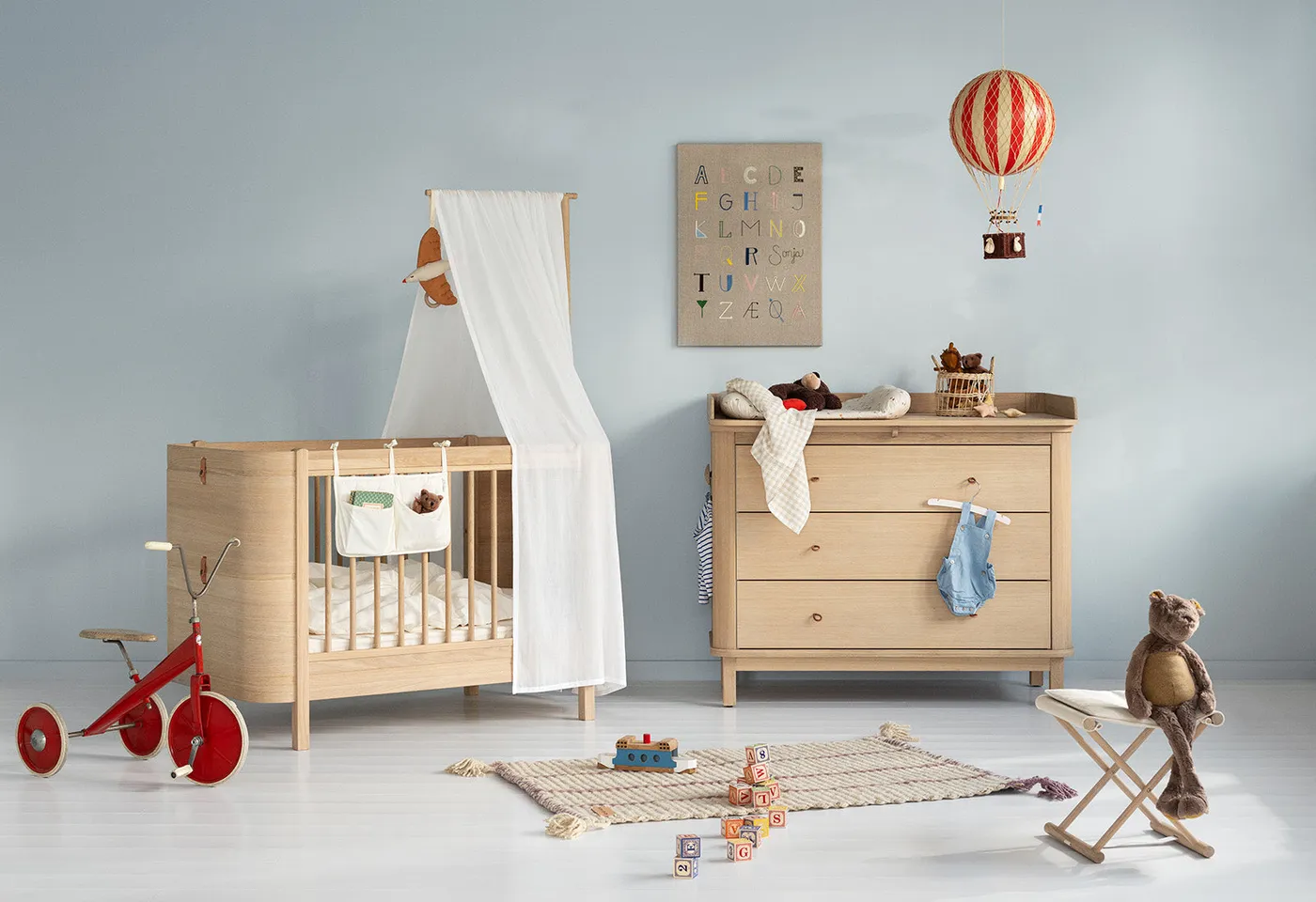
Scandinavian design remains a nursery favorite for good reason. Its core principles—light, functionality, and a connection to nature—are perfect for a child’s space. The emphasis on light wood, clean lines, and uncluttered surfaces creates a calming and practical environment. While it’s been popular for years, it’s not a fleeting trend. It’s a timeless design philosophy that prioritizes well-being. This room’s mix of pale wood furniture, soft sky blue walls, and playful pops of color is a perfect example of modern Scandi style.
|
📋 Copy HEX 🔗 Share |
You can achieve this clean, Scandinavian vibe without a high-end budget. IKEA is your best friend here. Look for their light birch or pine furniture, like the SNIGLAR crib (often under $100) or the IVAR storage system. Pair these affordable wood pieces with a soft, calming paint color and a simple, textured rug. The key to the Scandi look is not expensive furniture, but a light-filled, uncluttered space with natural materials. You can furnish a whole room in this style for under $1,000 if you shop smart.
17. Bold Teal Wainscoting and Mid-Century Furniture
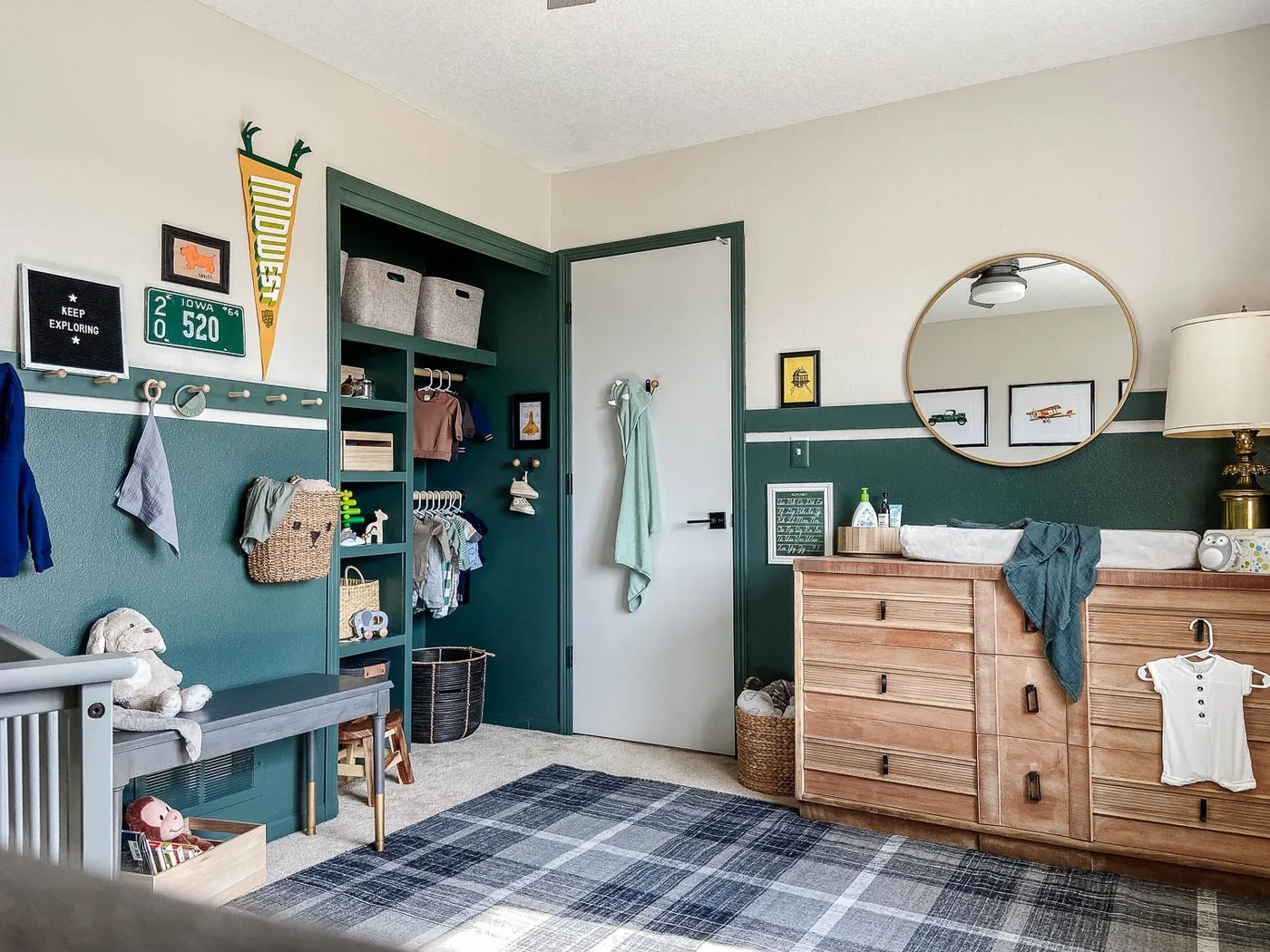
This room uses color blocking to create major impact. The formula is simple: 40% Bold Color + 60% Warm Neutral. By painting the lower portion of the walls and the inside of the closet in this rich dark teal, the design establishes a strong, grounding base. The rest of the walls are kept a soft off-white, preventing the dark color from making the room feel small. The natural wood tone of the mid-century dresser acts as a bridge between the two, adding warmth. The plaid rug then cleverly ties all the colors together.
|
📋 Copy HEX 🔗 Share |
Choosing a dark, saturated color like this teal for a nursery can be intimidating. A test patch is non-negotiable. Paint a large swatch (at least 2’x2′) on the wall and observe it for a few days in different lighting conditions—morning sun, overcast afternoon, and with artificial light at night. A color this bold can change dramatically. What looks like a perfect deep green in the store might look almost black in a low-light corner of your room. Testing first prevents a costly and frustrating repaint job.
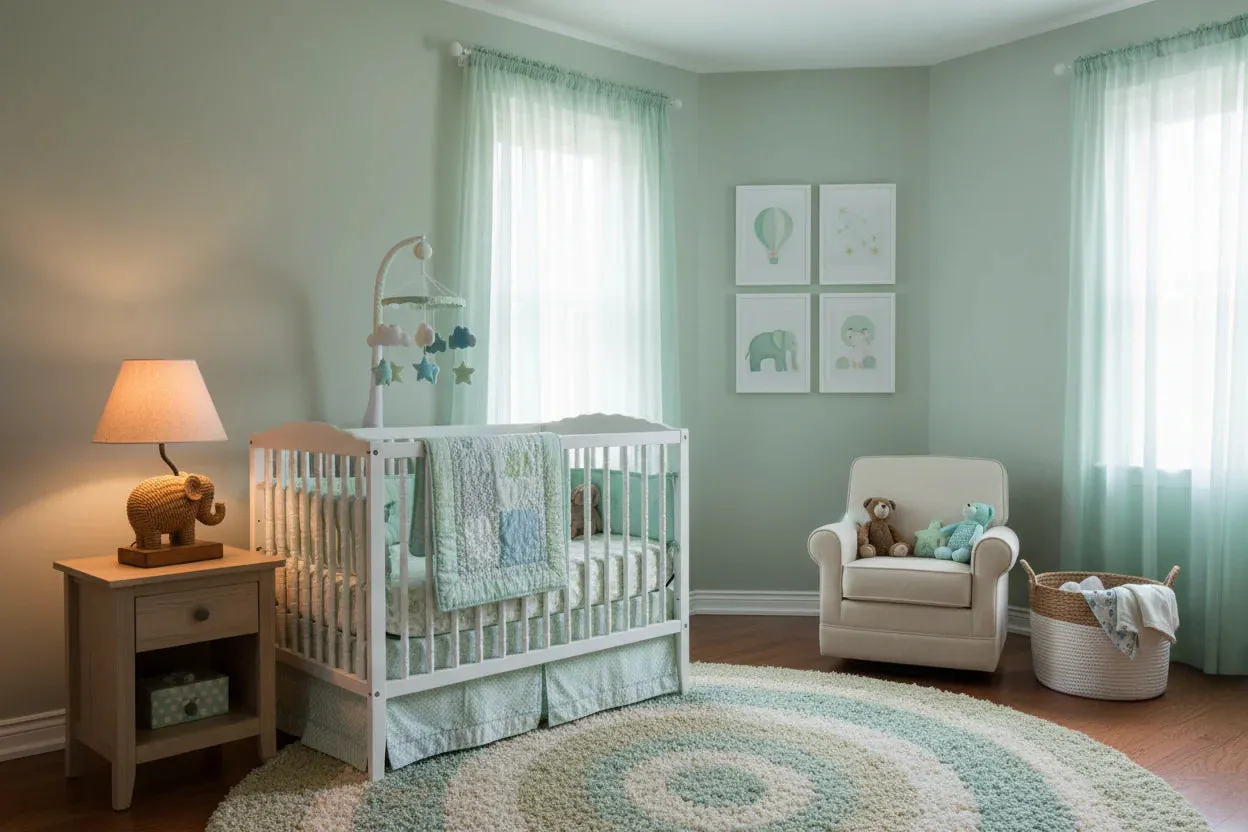
18. Serene Nursery with Sage Walls and Light Blue Curtains
This room’s incredible sense of calm comes from its analogous color scheme. Sage green and light blue sit next to each other on the color wheel, creating a naturally harmonious and restful pairing. There’s no harsh contrast, just a gentle flow from one soft color to the next. The cream glider and white crib act as neutral breathing room, allowing the subtle colors to shine. The concentric circles on the rug echo both the blue and cream, tying the entire palette together beautifully. This is a much softer take on the green nursery theme than the bold teal in Idea #16.
|
📋 Copy HEX 🔗 Share |
Using sheer curtains is a brilliant move for a nursery. They diffuse the harsh midday sun, casting a soft, even glow across the room instead of creating sharp lines of light and shadow. This gentle, filtered light is perfect for naptime, as it darkens the room slightly without plunging it into total darkness. For more light control, layer sheer curtains over a blackout roller shade. This gives you the best of both worlds: soft, filtered light during the day and complete darkness when needed.
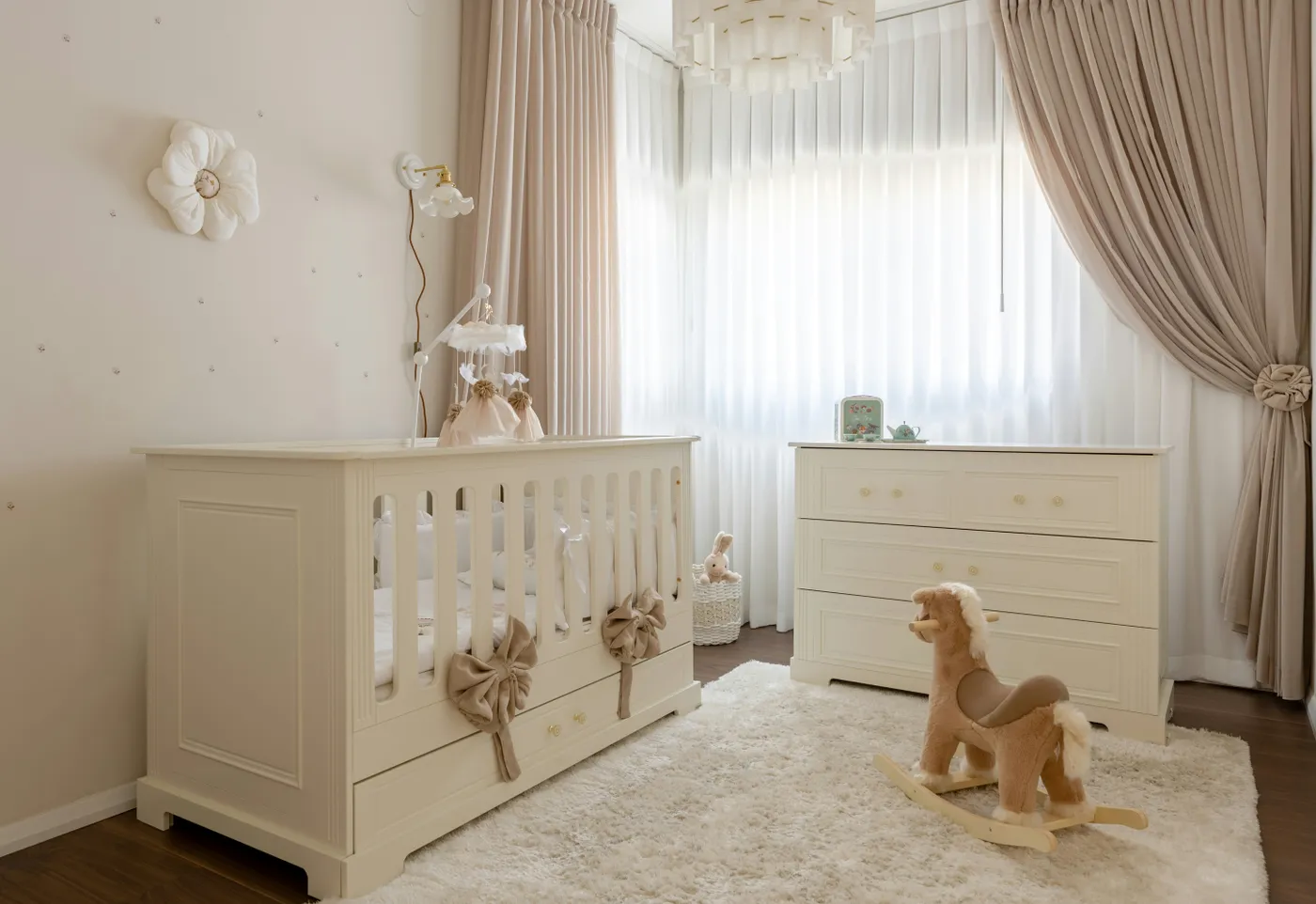
19. Classic and Soft with White Furniture and Cream Textures
An all-white and cream nursery is beautiful, but it requires a practical mindset. White furniture will show every scuff and handprint. Keep a magic eraser on hand for quick cleanups on painted wood. For the cream shag rug, regular vacuuming is a must. Invest in a good spot cleaner for inevitable spills. The key is to act fast—the longer a stain sits, the harder it is to remove. While it is higher maintenance, the serene and airy feel it provides can be well worth the extra effort for some families.
|
📋 Copy HEX 🔗 Share |
Achieving this classic, serene look has a flexible price range. Here’s an estimated breakdown:
- Main Furniture (Crib with drawer, Chest of Drawers): $700 – $2,000
- Textiles (Shag Rug, Layered Curtains): $300 – $800
- Lighting (Sconce, Ceiling Fixture): $200 – $600
- Decor (Rocking Horse, Art): $150 – $400
- TOTAL: $1,350 – $3,800
Budget alternative: Look for furniture bundles to save money, find similar rugs at stores like HomeGoods or Target, and source lighting from Wayfair or Amazon to keep costs down.
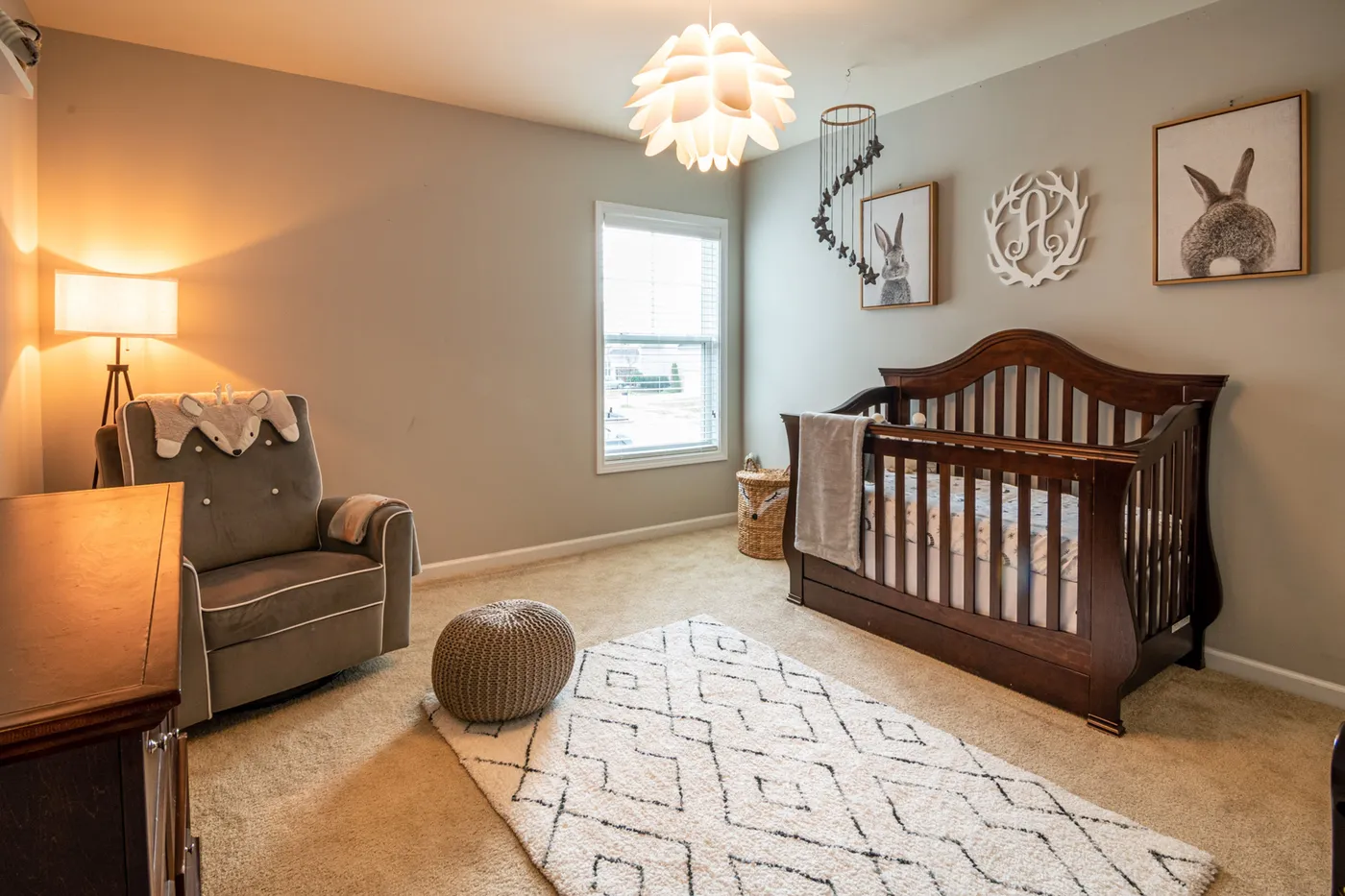
20. Cozy Greige Walls with Dark Wood Furniture
Dark wood furniture, like this sleigh-style crib, brings a sense of history and gravitas to a room. However, it can also make a small or poorly lit nursery feel heavy and dark. To pull it off successfully, you need to balance it with plenty of light elements. This room does it perfectly with light greige walls, a fluffy white shag rug, a white ceiling light, and light-colored carpeting underneath. Without these lighter counterpoints, the dark furniture could easily overwhelm the space. It’s a great choice if your room gets lots of natural light.
|
📋 Copy HEX 🔗 Share |
The whimsical rabbit artwork is the element that injects personality and charm into this otherwise classic and calm nursery. The split-view—the head on one side, the tail on the other—is witty and playful without being childish. It’s a sophisticated take on animal art that elevates the whole room. It signals that while this is a baby’s room, it’s also a thoughtfully designed space with a sense of humor. It’s the perfect conversation starter and a memorable, unique touch. Check out the similar animal-themed approach in Idea #9 for comparison.
21. Warm Neutrals and a Subtle Safari Vibe
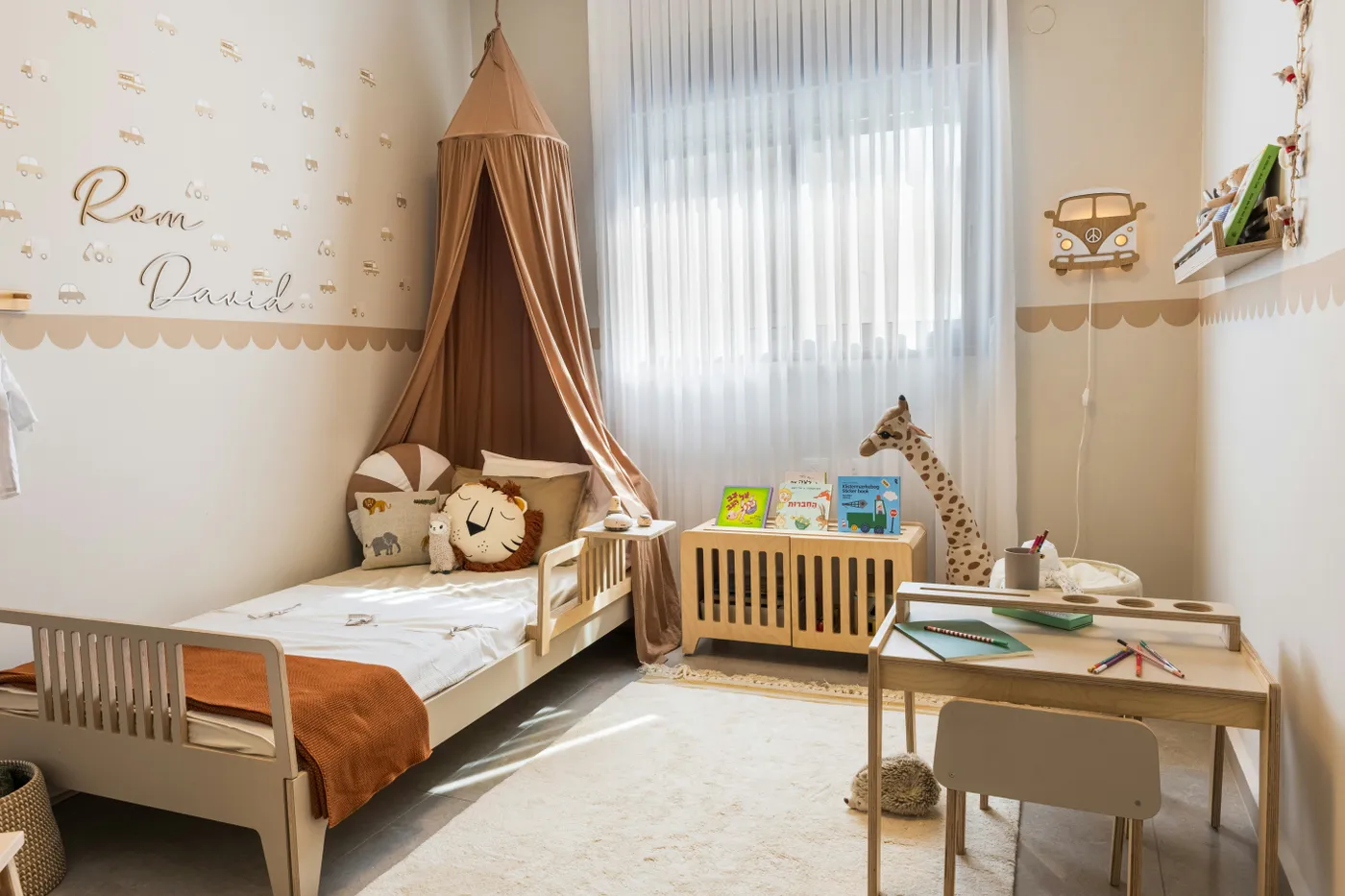
A custom wood name sign adds a beautiful, personal touch. Here’s how to create a display like this:
|
📋 Copy HEX 🔗 Share |
- Order your sign: Find a vendor on Etsy that makes custom laser-cut name signs. Choose a font and size that fits your wall space. Most cost between $40-$100.
- Plan your layout: Lightly trace the sign’s position on the wall with a pencil. Decide if you want to add other elements, like the scalloped border shown here.
- Paint details first: If you’re adding a painted element like the border, do this before mounting the sign. Use painter’s tape for clean lines.
- Mount the sign: Most signs are lightweight enough to be hung with small finishing nails or strong double-sided mounting tape. Use a level to ensure it’s straight.
Incorporating a daybed into a nursery is a fantastic, functional choice, but it requires space. A standard twin daybed is about 75″ long by 39″ wide. To make it work, you’ll need a room that is at least 10 x 11. This allows you to place the daybed against one wall and still have ample room for a crib, a small changing area, and a clear path to walk. It’s a brilliant solution for a guest room that needs to double as a nursery, or if you want a comfortable spot for late-night feedings and story time.
22. Modern Nursery with Pink Curtains and Chevron Accent
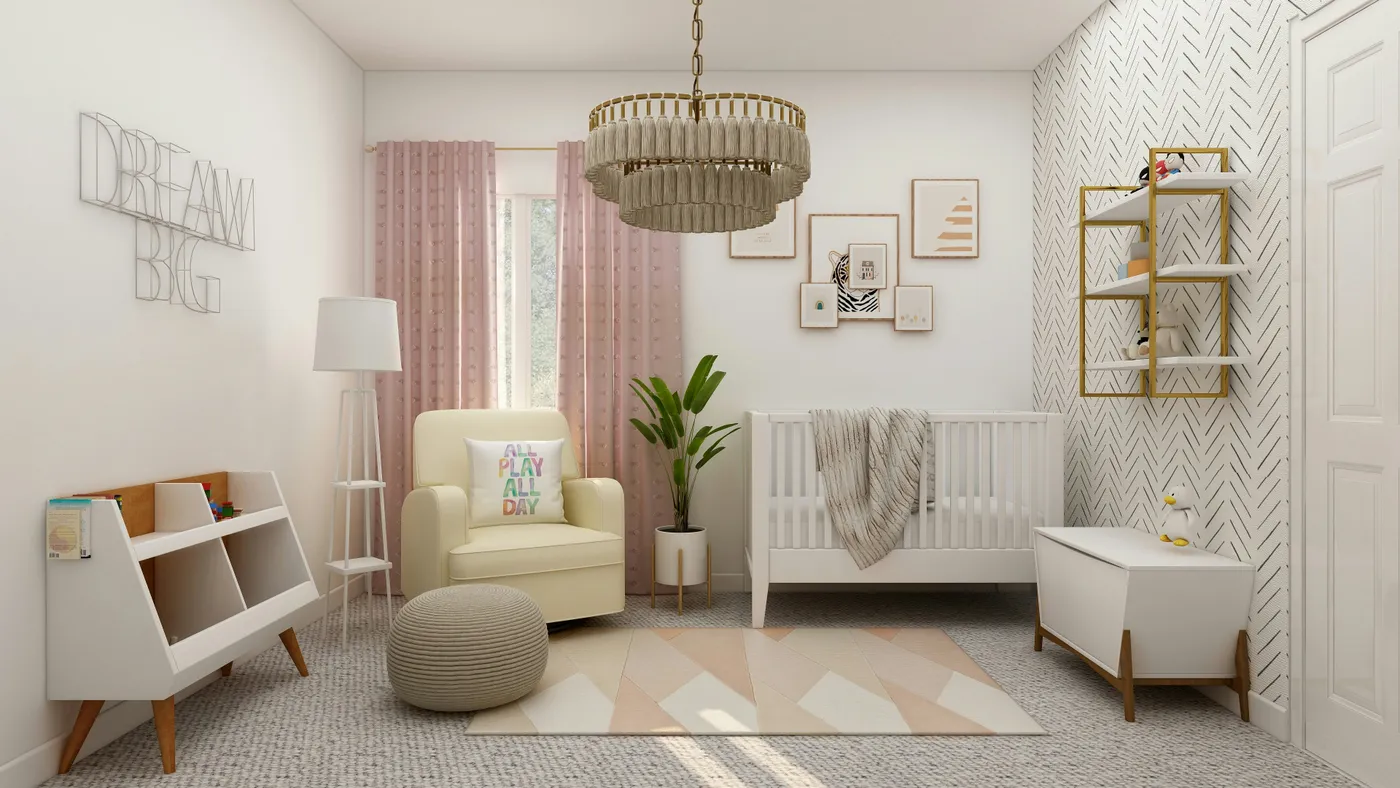
An accent wall is a powerful tool, but the key is to choose the right wall. The best choice is usually the wall you see first when you walk into the room, or the wall behind the main piece of furniture—in this case, the crib. Placing the bold chevron pattern behind the crib immediately establishes it as the focal point. Putting an accent pattern on a less important wall, like one with just a window, can feel random and throw off the balance of the entire room. Think of it as the backdrop for your main event.
|
📋 Copy HEX 🔗 Share |
That gold-framed shelving unit adds a lovely touch of glam, but similar pieces can cost upwards of $500. You can get the same effect for much less. Start with a basic white ladder bookshelf, like the IKEA LAIVA or a similar style from Target, which often costs less than $50. Then, with a can of high-quality metallic gold spray paint (like Rust-Oleum’s Pure Gold, about $10), carefully paint the frame. In one afternoon, you’ll have a chic, expensive-looking shelving unit for under $60.
23. High-Contrast Nursery with a Black Spindle Crib
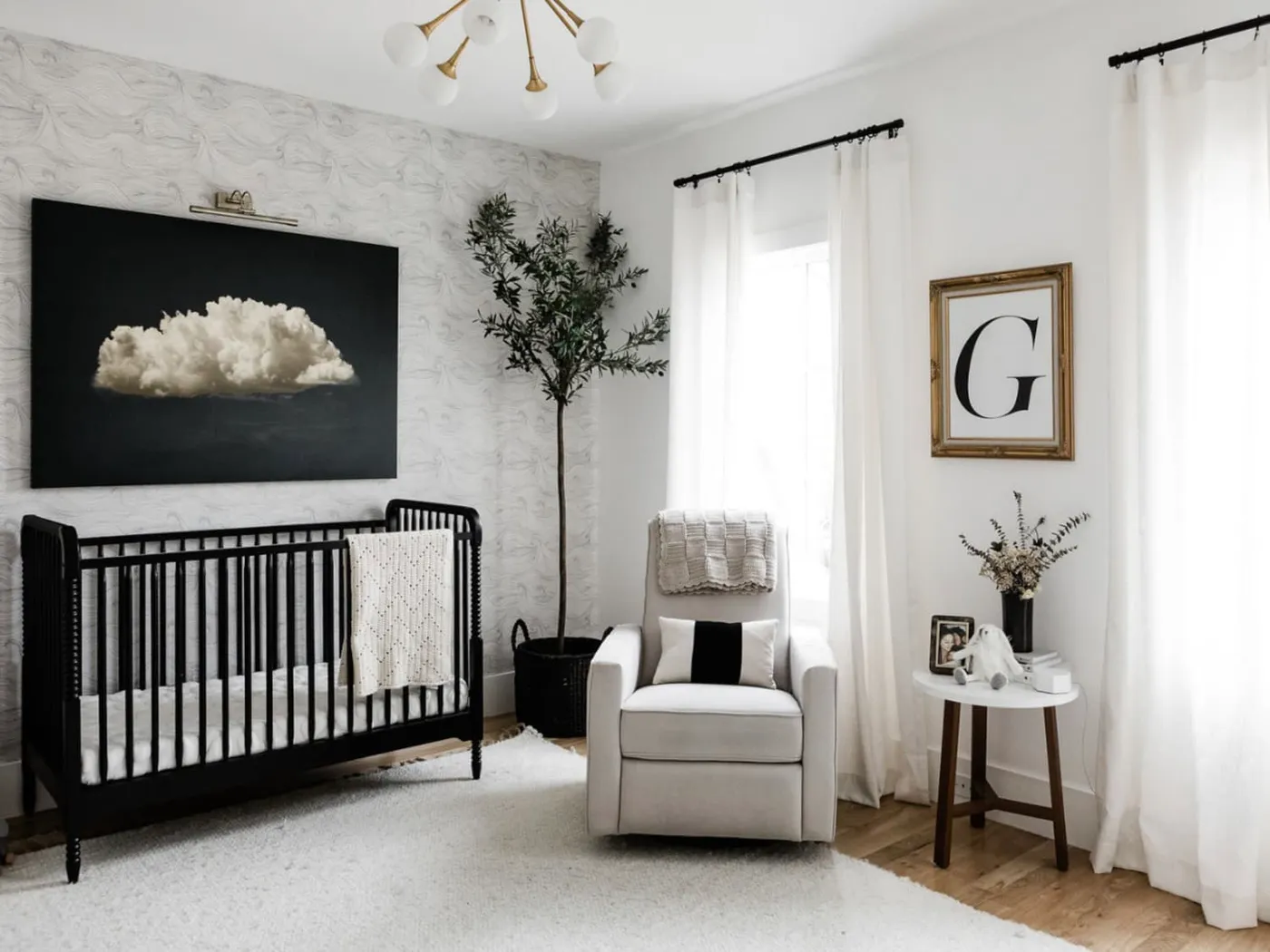
The success of this monochromatic room lies in its masterful use of contrast and texture. The bold, black spindle crib creates a striking focal point against the light grey wavy wallpaper. The design isn’t just black and white; it’s a full spectrum of grays, from the wall to the glider. Critically, textures like the sheer curtains and the plush rug add softness and depth, preventing the high-contrast palette from feeling cold or sterile. The small touches of gold and wood provide just enough warmth to make the space feel inviting.
|
📋 Copy HEX 🔗 Share |
Planning a monochromatic room requires more than just picking black, white, and gray. Before you buy anything, gather samples of all your materials.
- Get paint chips: Grab several shades of gray, from near-white to charcoal. See how they look in your room’s light.
- Collect fabric swatches: Order swatches of your glider fabric, rug options, and curtain material.
- Check undertones: Do your grays have blue, green, or purple undertones? Make sure they are compatible or contrast intentionally. A cool blue-gray might clash with a warm taupe-gray.
This prep work ensures your final room looks cohesive and intentional, not like a random collection of gray items.
24. Earthy Nursery with a Rich Jewel-Toned Rug
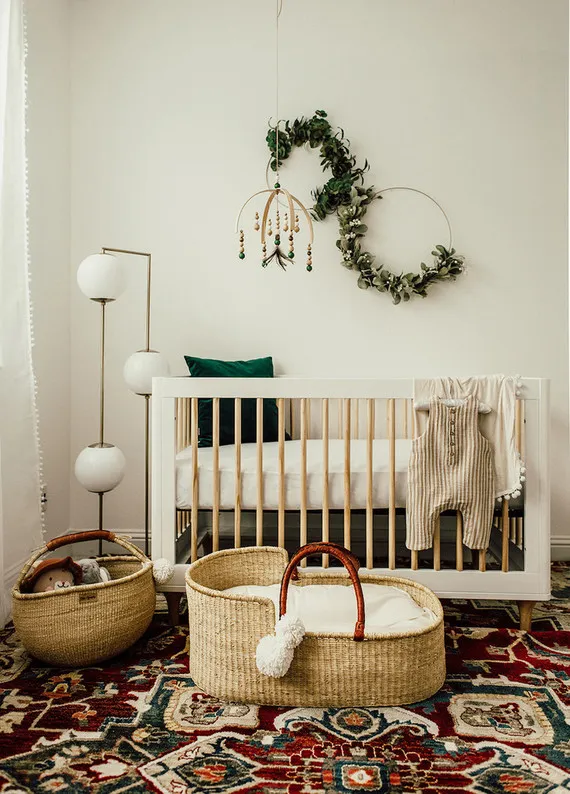
Without a doubt, the patterned rug is the heart of this room. While the rest of the nursery uses a calm, neutral palette of white and natural wood, the rug injects a huge dose of color, pattern, and personality. Its rich jewel tones of red, blue, and green provide a warm, bohemian foundation for the entire space. It proves that a neutral nursery doesn’t have to mean a no-color nursery. Remove this rug, and the room would be pleasant but forgettable. With it, the room feels curated, warm, and full of life.
|
📋 Copy HEX 🔗 Share |
This room uses the rug as its color anchor. The formula looks like this: 80% Neutral Base + 20% Color & Pattern Infusion. The neutral base is the white crib, walls, and natural woven elements. This creates a calm canvas. The rug then comes in as the 20%, providing all the vibrant color the room needs. The green foliage in the wreaths subtly picks up on the green in the rug, tying it all together. You can use this formula with any bold rug to build a nursery that feels both exciting and balanced.
25. Serene and Simple with Sage Green Walls
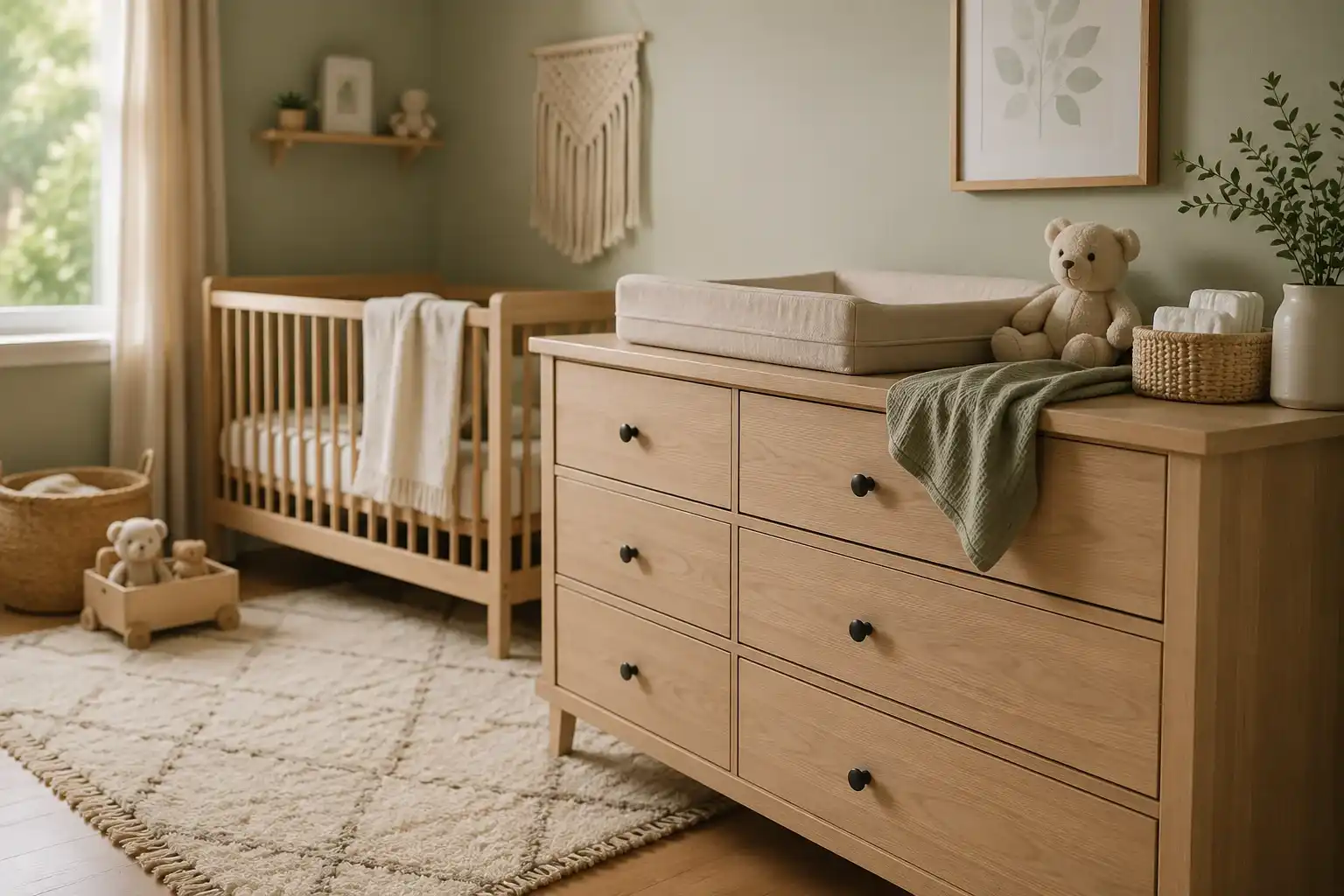
A shag rug adds incredible texture, but keeping it clean with a little one is a consideration. For a rug like this, a vacuum with good suction and a beater bar you can turn off (to avoid snagging the fibers) is essential. For macrame wall hangings, they can collect dust over time. The best way to clean them is to take them outside and give them a gentle shake every few months. You can also use a lint roller or the upholstery attachment on your vacuum for a quick refresh. Neither is high-maintenance, but they require a specific cleaning approach.
|
📋 Copy HEX 🔗 Share |
This room feels so cohesive because of the simple repetition of materials and colors. The light, natural wood tone is repeated in the crib, the dresser, and the frame of the botanical print. The soft sage green of the walls is a constant, calming backdrop. The woven texture of the wicker baskets echoes the weave of the macrame hanging. This thoughtful repetition creates a visual rhythm that is incredibly soothing to the eye, making the entire space feel harmonious and intentionally designed.
26. Airy and Inviting with a Star-Patterned Wall
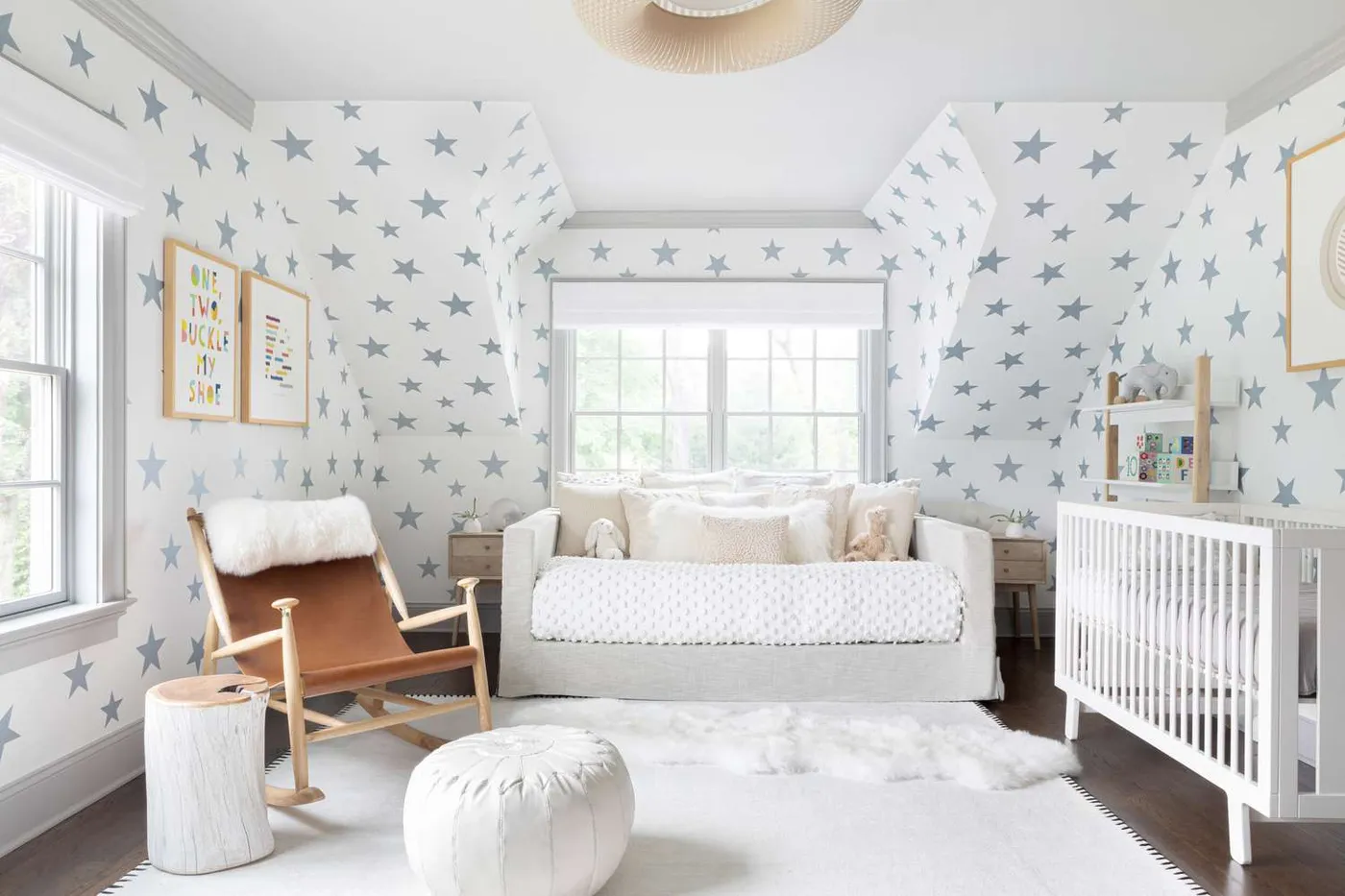
Celestial themes—stars, moons, and constellations—are a perennial favorite for nurseries, and they’re seeing a big resurgence. In a world that can feel chaotic, these themes tap into a sense of wonder, calm, and the vastness of the universe. The look seen here, with a subtle, small-scale star pattern, feels more like a sophisticated wallpaper than a childish theme. It’s a gentle nod to the written in the stars sentiment that feels perfect for a new baby’s room without being overly thematic.
|
📋 Copy HEX 🔗 Share |
Vaulted or high ceilings can be a design gift, but they can also make a room feel cavernous and cold. The key is to bring the scale down to a human level. This room does it beautifully in two ways. First, the star pattern on the walls provides visual interest that stops the white walls from feeling like a blank void. Second, the furniture—like the daybed and the crib—is kept low to the ground, creating a cozy, grounded zone within the larger volume. This makes the room feel both airy and intimate at the same time.
Your Baby’s Calm & Centered Start
Creating a nursery is about so much more than just decorating; it’s about crafting the first little world your baby will know. We hope these ideas have sparked some serious inspiration for a space that feels just right for your family. Now go get pinning and start planning that perfect room!