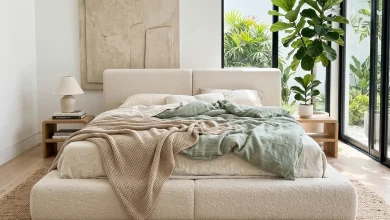

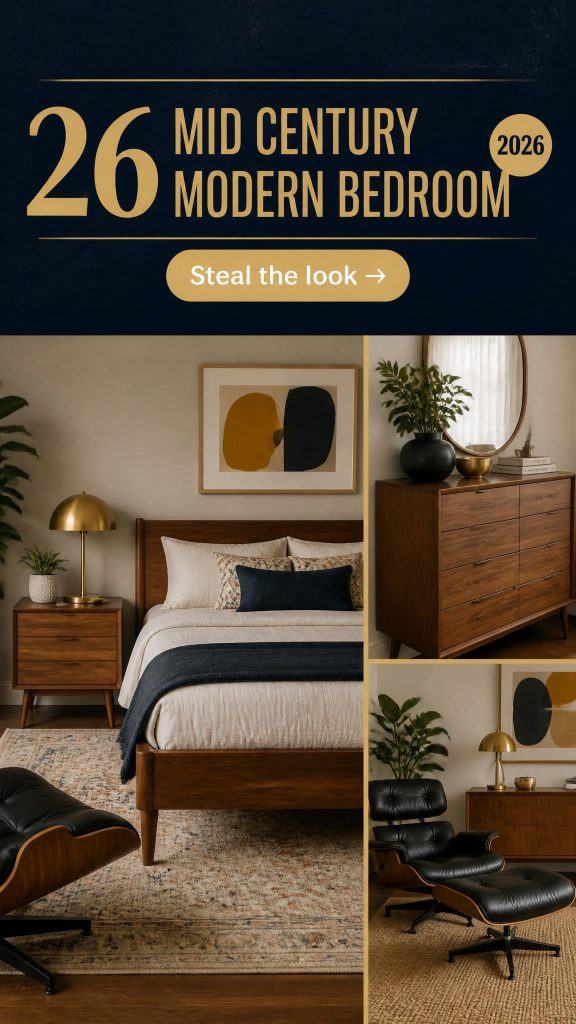
You know that feeling when you finally find the mid-century modern bedroom that looks exactly right for your space? It feels like you’ve struck gold. But turning that saved pin into a real room can feel like a huge leap. We get it. After filtering through hundreds of options, we narrowed it down to 26 ideas that actually deliver. In this guide, you’ll find everything from moody, dark sanctuaries to bright, plant-filled retreats—all with that signature mid-century warmth. The best part? The mid-century modern focus on clean lines and natural materials is more relevant than ever in 2026, as we all look to create calm, uncluttered homes. And stay until the end—we break down the most common mistakes that can ruin these looks. Pin this guide for later—your future self will thank you when it’s time to actually do this.
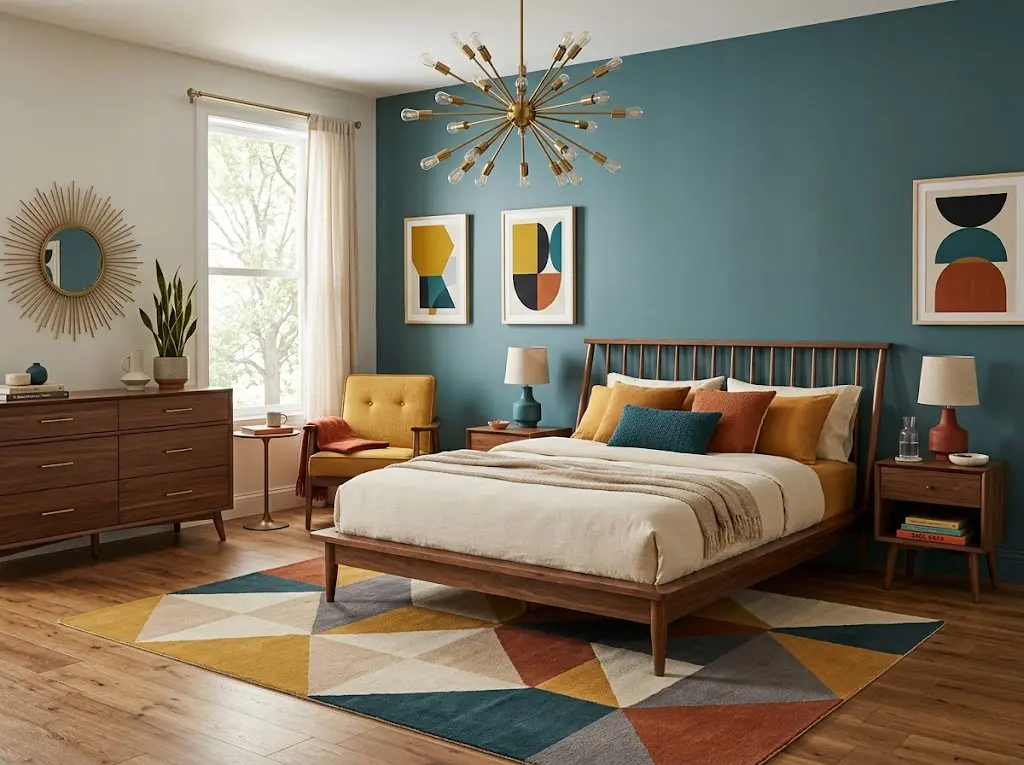
1. Pair a Bold Teal Accent Wall with Warm Wood Furniture
The magic here is in the color balance. A full wall of deep teal could easily feel overwhelming, but the warm, honey-toned wood of the spindle headboard and matching furniture provides the perfect counterbalance. It adds organic warmth and prevents the cool teal from feeling sterile. The geometric rug is the secret weapon, with its pops of mustard, rust, and cream acting as a bridge to harmonize the primary colors of the room. It’s a textbook example of using complementary tones to build a space that’s both vibrant and cohesive.
|
📋 Copy HEX 🔗 Share |
When aiming for a rich, saturated accent wall like this, always opt for a matte or eggshell paint finish. Shinier finishes like satin or semi-gloss can create distracting glare and will highlight every single imperfection on your wall. Always use a quality primer, especially for a deep color, to ensure true, even coverage. Most importantly, buy a sample pot first. Paint a large square (at least 2’x2′) on the wall and observe it for 24-48 hours to see how it shifts with the natural and artificial light in your room.
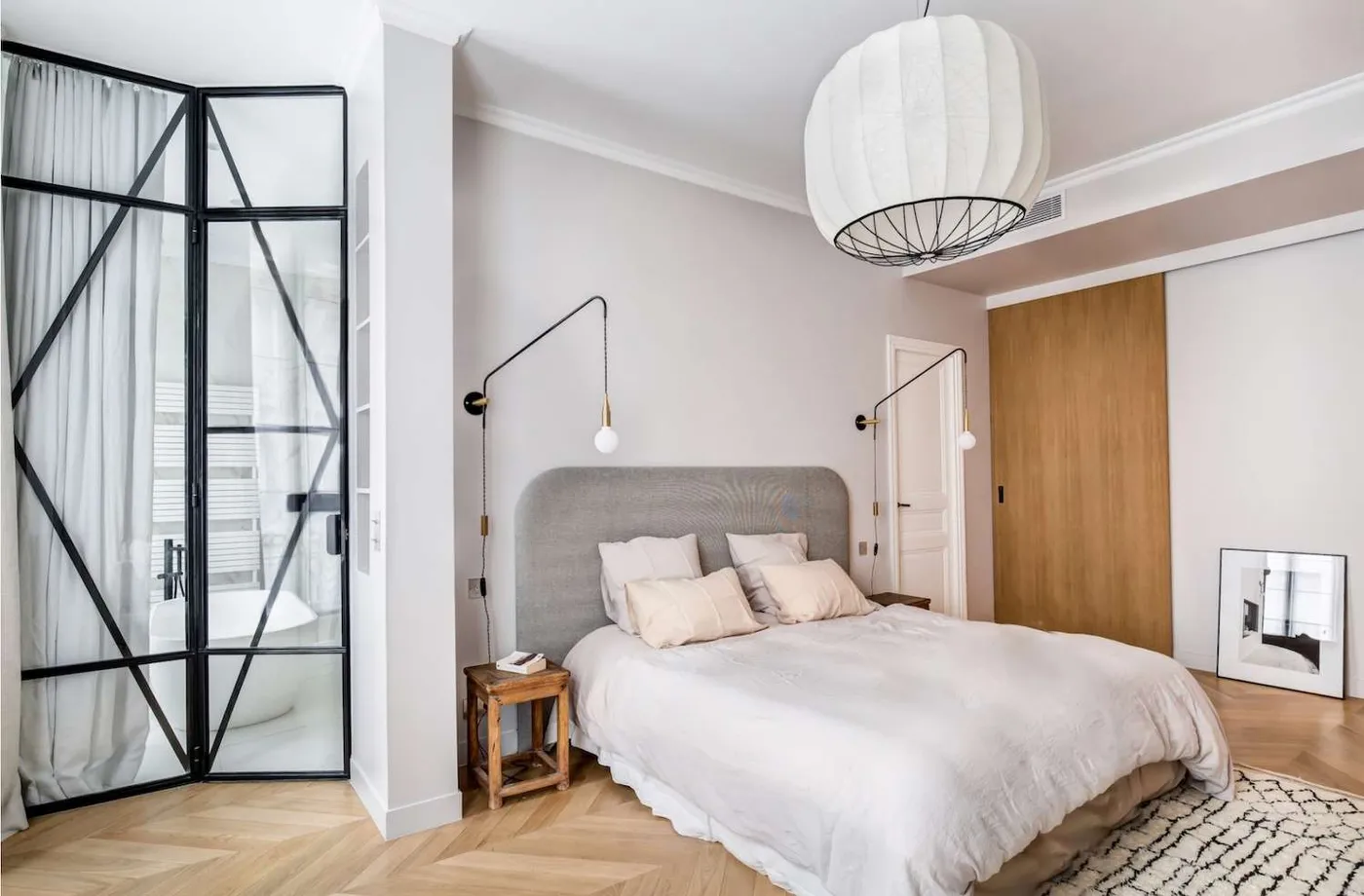
2. Define an Open-Concept Space with a Black-Framed Glass Partition
It’s all about that black-framed glass partition. This single architectural element does so much work. It masterfully separates the sleeping area from the ensuite bathroom without sacrificing an ounce of light or visual space, maintaining an airy, open feel. More than just a divider, it introduces a sharp, industrial edge that elevates the entire room from simply well-decorated to architecturally significant. Remove it, and you’re left with a beautiful but far more conventional bedroom. It’s the defining feature.
|
📋 Copy HEX 🔗 Share |
A statement piece like this industrial glass partition thrives in rooms with at least 9-foot ceilings to really emphasize its verticality. The bedroom itself should ideally be 14’x14′ or larger to ensure the partition defines the space rather than crowds it. In a smaller room, you could achieve a similar effect with a half-height partition or a version with fewer, larger panes of glass to keep it feeling light. The open feel here is a great contrast to the cozy enclosure of Idea #9.
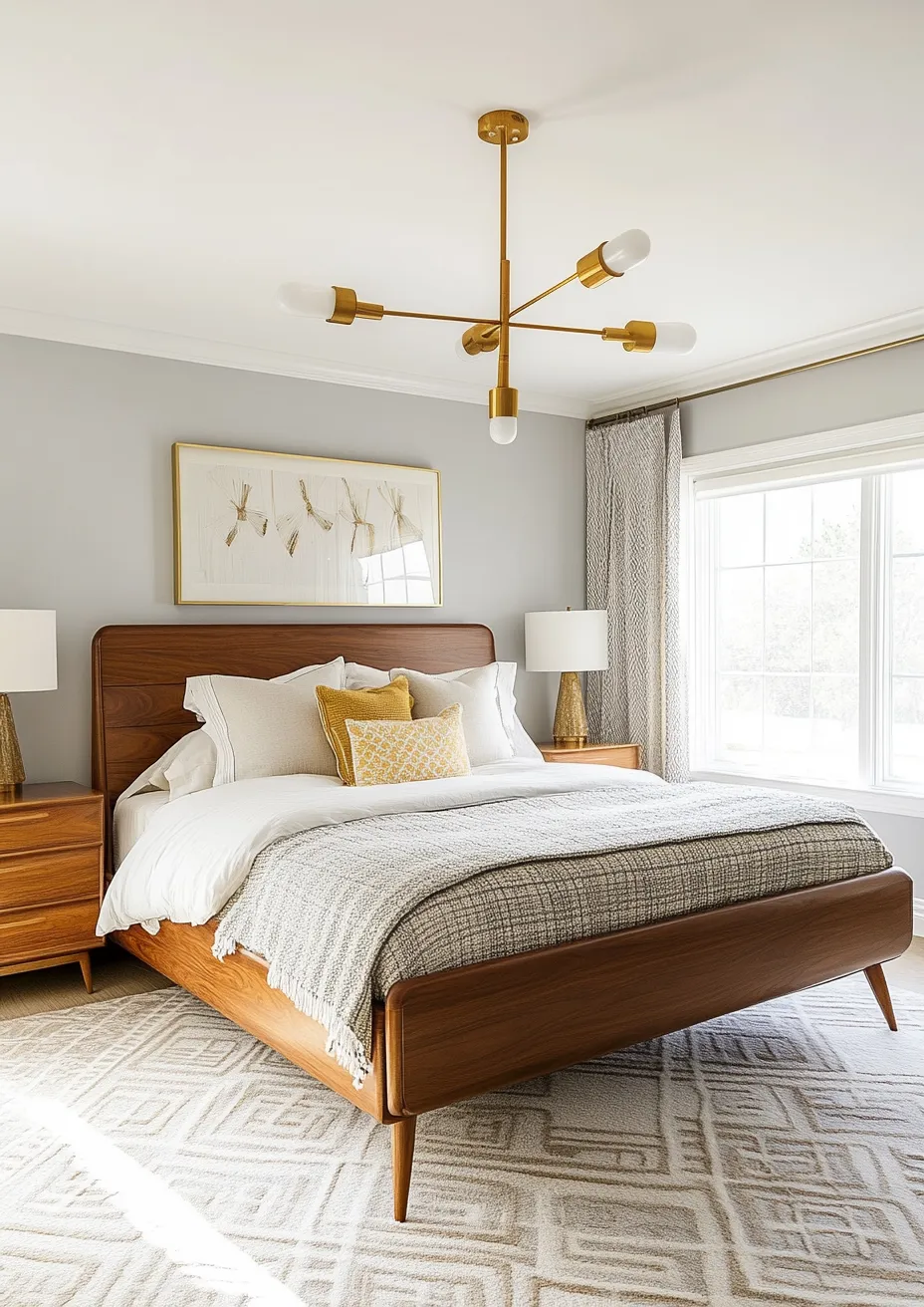
3. Layer Gold Accents and Geometric Patterns for an Elegant Glow
This room’s serene formula is a study in thoughtful composition: 60% warm wood and neutral gray base + 30% soft textures (bedding, rug) + 10% gleaming metallic accents. The gold isn’t overwhelming; it’s a quiet rhythm repeated in the sputnik chandelier, the textured table lamps, and the thin art frame. This strategic repetition makes the space feel intentional and luxurious. You could easily swap the gold for brushed nickel for a cooler, more contemporary vibe, and the core design math would still work perfectly.
|
📋 Copy HEX 🔗 Share |
Recreating this warm and elegant look can fit a range of budgets. Here’s a possible breakdown:
- Main Furniture (bed frame, nightstands): $1,800 – $4,500
- Lighting (chandelier, table lamps): $700 – $1,800
- Textiles (rug, pillows, curtains): $800 – $2,000
- Decor & Art: $400 – $900
- TOTAL: $3,700 – $9,200
Budget alternative: Achieve this vibe for under $2,500 by hunting for vintage wood furniture on Facebook Marketplace, opting for plug-in wall sconces instead of a hardwired chandelier, and sourcing affordable prints from sites like Etsy or Society6.
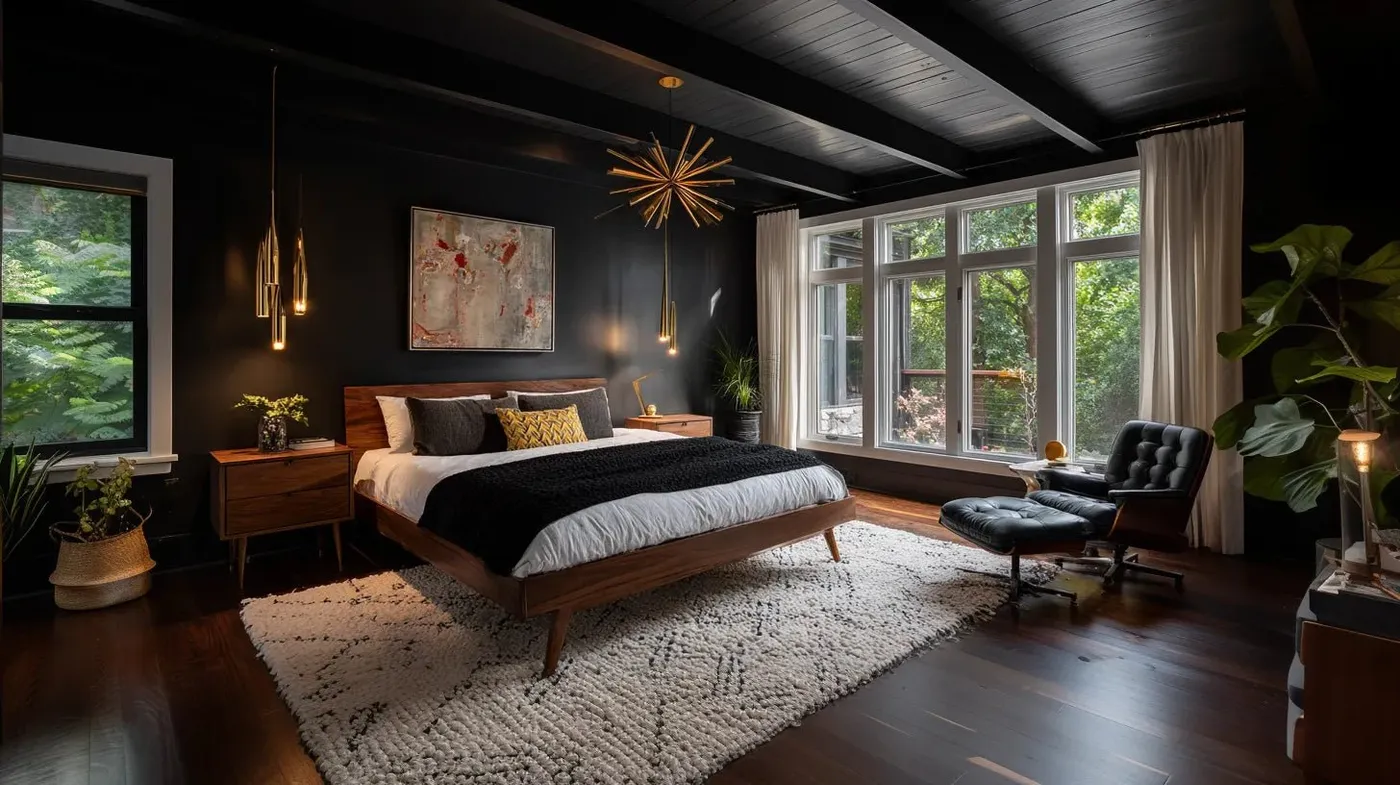
4. Create a Moody Retreat with Black Walls and Exposed Beams
Let’s be honest: a black-on-black room is a serious commitment. This look is stunning, but it absolutely depends on having a ton of natural light, like the floor-to-ceiling windows seen here, to keep it from feeling claustrophobic. If your room lacks big windows, you’ll need a robust lighting plan with multiple sources—a statement chandelier, bedside lamps, floor lamps, maybe even uplighting—to create dimension and prevent it from becoming a black hole at night. Also, dark matte walls are notorious for showing every scuff and speck of dust.
|
📋 Copy HEX 🔗 Share |
The rise of dark, moody interiors like this is a direct and welcome response to the decade of all-white-everything. People are craving spaces that feel like a hug—cozy, enveloping, and protective. A dark room encourages you to slow down and retreat from the visual noise of the outside world. It’s less about creating a bright, showy space and more about curating a personal sanctuary, a design trend that’s all about introspection and comfort and has real staying power.
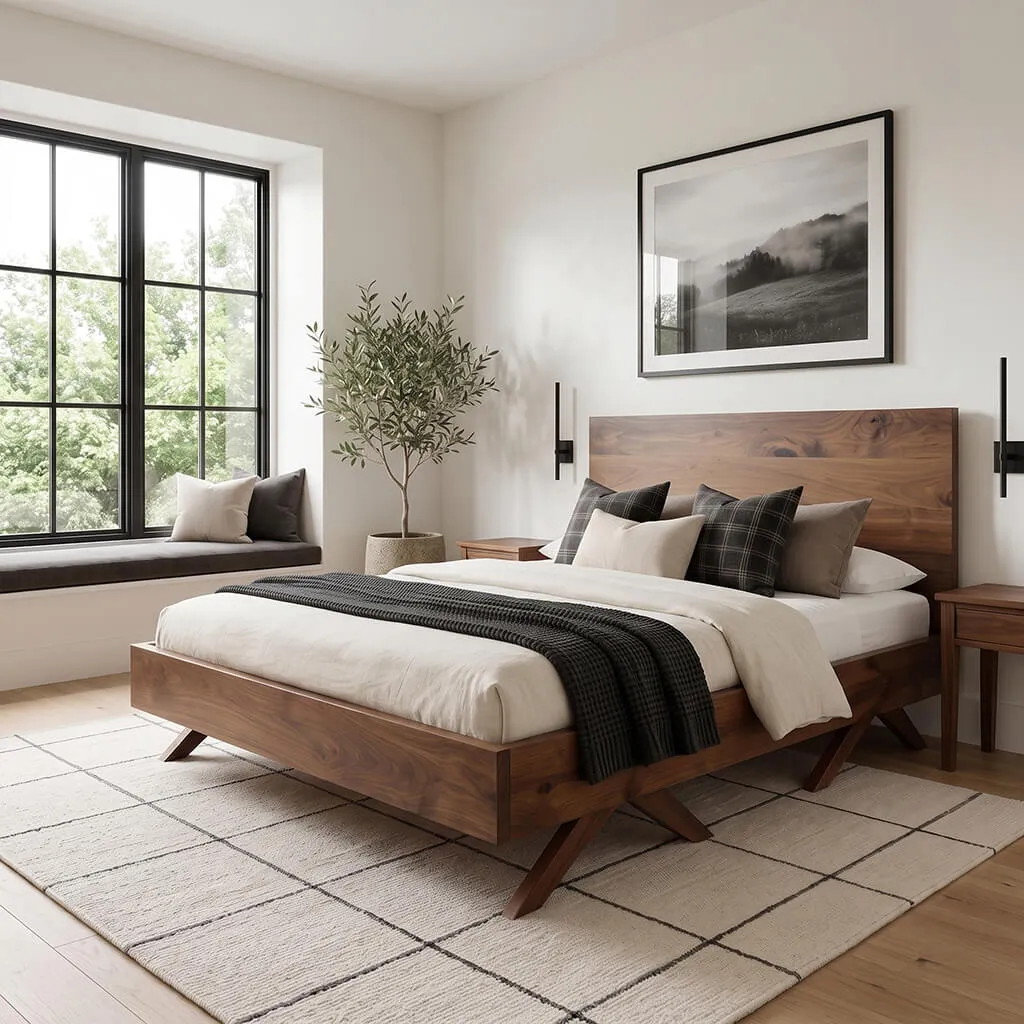
5. Center a Low-Profile Bed to Frame a Large Window View
This design works because it doesn’t try to compete with the view; it complements it. The low profile of the wood platform bed keeps the sightline to the window clear and unobstructed. The strong, clean lines of the black window frame and matching black wall sconces add a graphic, modern structure that contrasts beautifully with the organic shapes of the trees outside. The masterstroke is the large black and white landscape photo, which acts as a conceptual second window, echoing the natural world in a minimalist, artistic way.
|
📋 Copy HEX 🔗 Share |
When placing art above a bed, scale and position are everything. The artwork should be about two-thirds the width of the headboard. If you’re using a single piece, as seen here, its center should be at eye level when you’re standing—typically around 57-60 inches from the floor. Crucially, the bottom of the frame should be just 6-10 inches above the top of the headboard. This closes the visual gap and makes the bed and art feel like a single, cohesive unit.
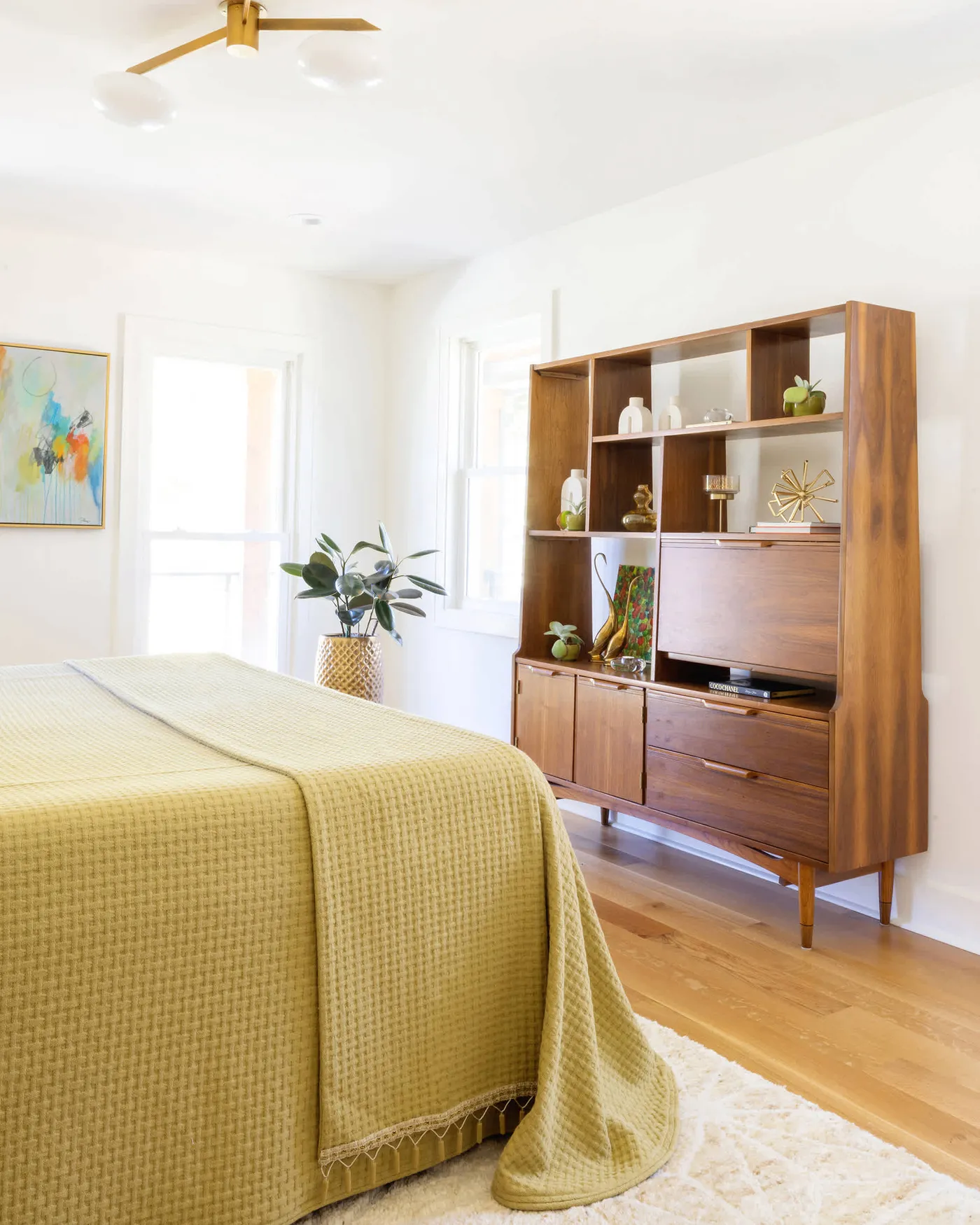
6. Combine Olive Green Textiles with a Warm Wood Credenza
The inviting formula here is simple and effective: 50% bright white walls and natural light + 30% warm wood tones (credenza, bed) + 15% earthy green textiles (bedspread) + 5% metallic shine (brass light fixture, pot). The white creates a clean canvas, the wood brings in natural warmth, and the olive green adds a touch of calming, organic color without being overpowering. The small brass accents are like jewelry, adding a final layer of polish and sophistication to the entire look.
|
📋 Copy HEX 🔗 Share |
That beautiful white shag rug looks incredibly cozy, but it requires some dedication. High-pile rugs are magnets for dust, pet hair, and crumbs. You’ll need to vacuum it 2-3 times a week, and a vacuum with a beater bar is essential to get deep into the fibers. For spills, immediate spot-cleaning is crucial. Plan on a professional cleaning once a year (around $50-$100) to keep it looking fresh. If that sounds like too much work, a low-pile wool rug in a similar color will give you the same brightness with much easier upkeep.
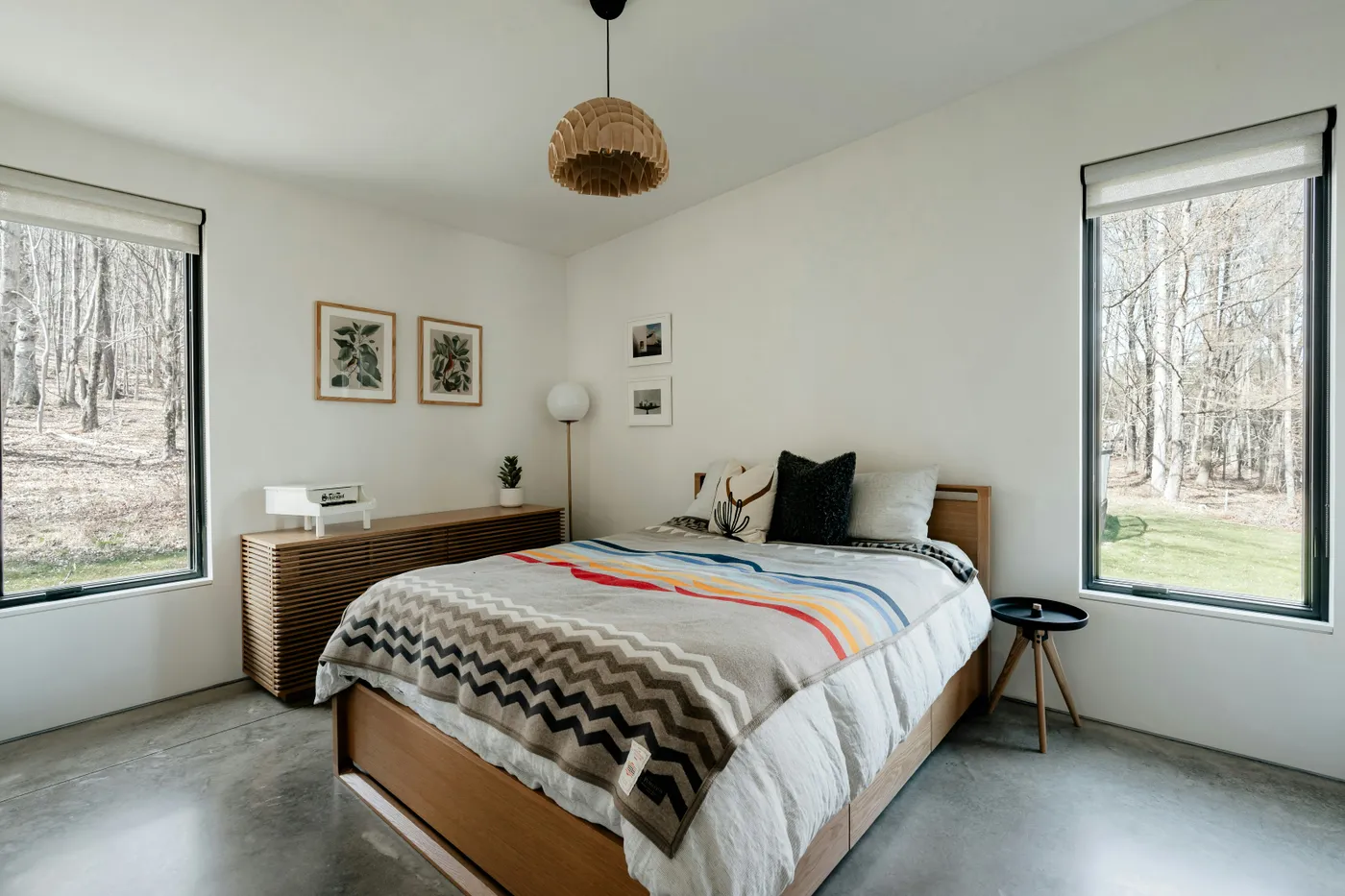
7. Embrace Natural Light with a Slatted Wood Sideboard
This room feels so serene because it prioritizes natural elements. The large windows flanking the bed don’t just let in light; they make the wooded landscape a primary piece of decor. The choice of a light wood platform bed and a low, slatted sideboard keeps the furniture from feeling heavy, allowing the eye to travel easily to the view outside. The polished concrete floor adds a cool, modern contrast to the warmth of the wood, while the multi-patterned blanket introduces just enough color and texture to keep the space from feeling stark.
|
📋 Copy HEX 🔗 Share |
Polished concrete floors are a fantastic modern statement, but they come with practical considerations. They are incredibly hard, so dropping a glass or phone will likely result in a shatter. They can also be cold underfoot, especially in the morning, making an area rug a necessity for comfort. While durable, they can be susceptible to staining from acidic liquids (like wine or juice) if not sealed properly and regularly. Finally, the installation process can be dusty and disruptive, so it’s best done as part of a larger renovation.
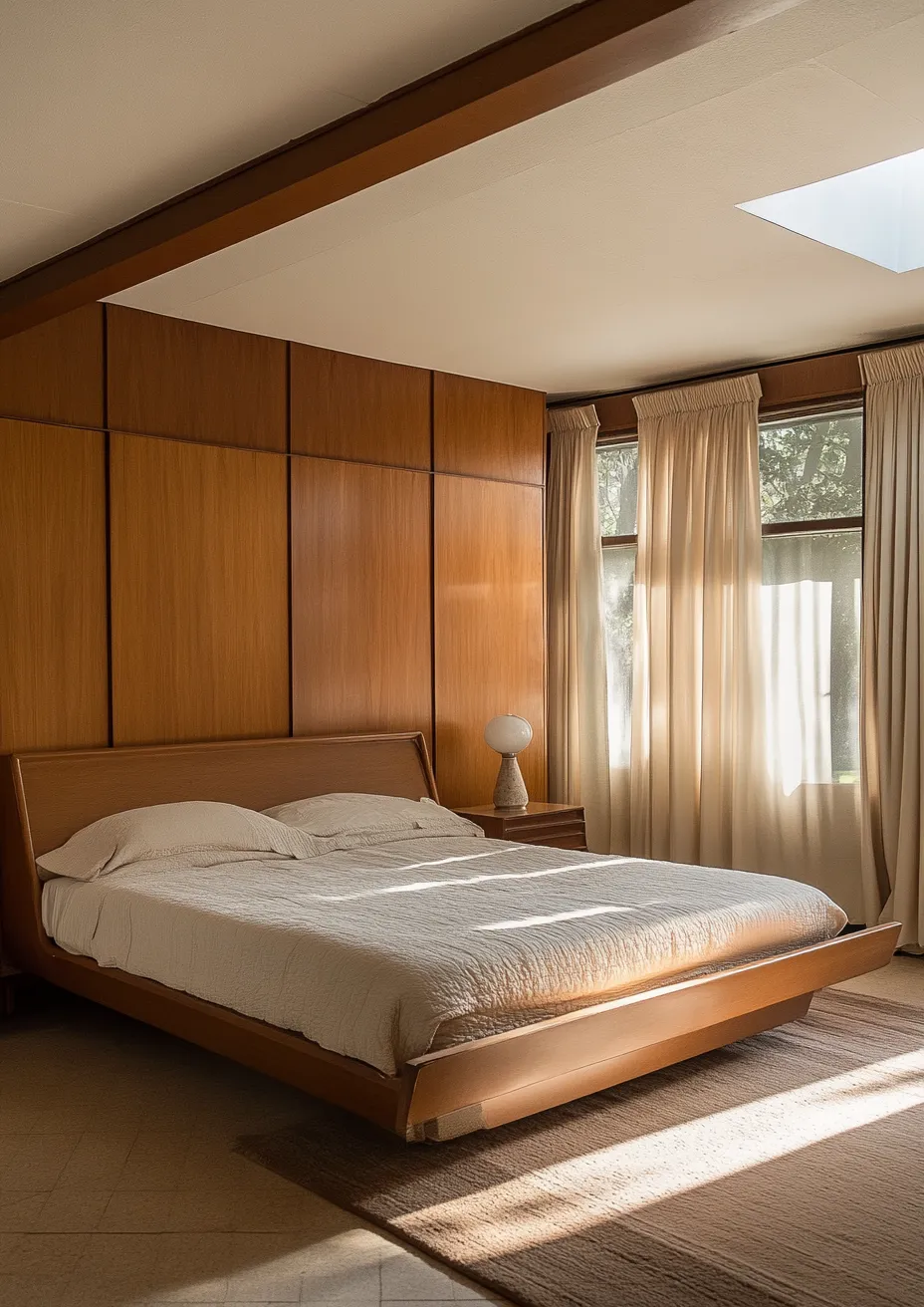
8. Create a Focal Point with a Warm Wood-Paneled Wall
The undeniable heart of this room is the wood-paneled accent wall. It does the job of both a headboard and a major architectural feature, infusing the entire space with immense warmth and texture. The horizontal lines of the panels make the room feel wider and more expansive. Without this wall, the low-profile bed and minimalist decor might feel a bit lost. The paneling provides a rich, organic backdrop that anchors the entire design and creates that cozy, enveloping feeling.
|
📋 Copy HEX 🔗 Share |
Install a DIY Wood Slat Wall:
- Measure your wall and determine your desired spacing. A 1/2-inch to 3/4-inch gap is standard.
- Purchase 1×2 lumber (like oak or poplar) and sand all sides smooth. Apply your desired stain or clear coat and let it dry completely.
- Paint your wall a dark color, like black or charcoal gray. This makes the gaps between the slats disappear and adds depth.
- Using a level and a brad nailer, attach the slats to the wall, starting from one side. Use small wood scraps as spacers to ensure consistent gaps.
This is a weekend project that can cost between $250 – $600 in materials.
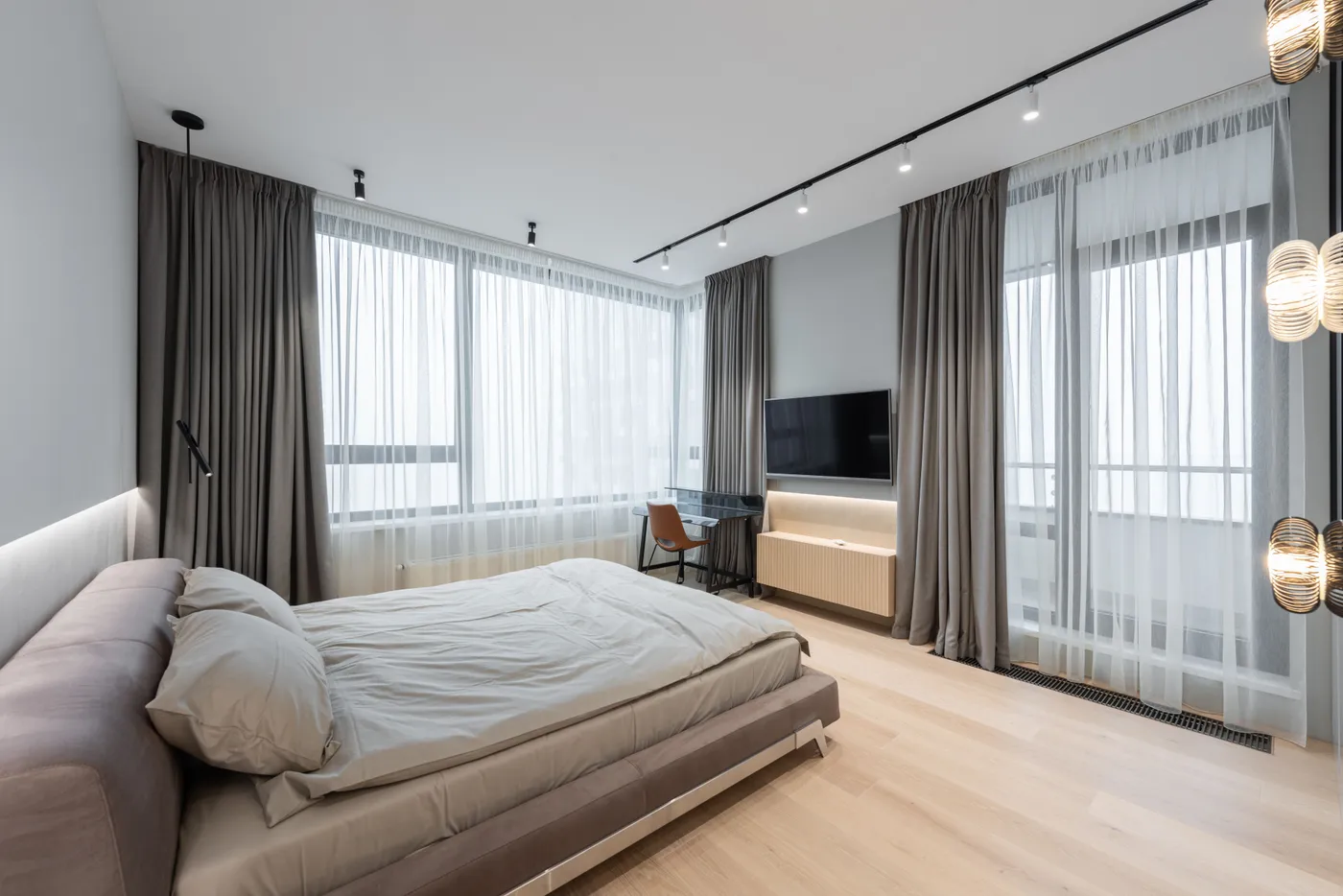
9. Use a Fluted Media Cabinet for Sleek, Modern Storage
When mounting a TV in the bedroom, conceal the cords for a clean, hotel-like finish. The easiest way is with an in-wall cord-hiding kit (about $25 from a hardware store). It allows you to pass the cables behind the drywall from the TV down to the outlet near your media cabinet. If you can’t cut into the wall, a paintable cord cover that sticks to the wall surface is the next best thing. Matching it to your wall color will make it nearly disappear, preserving the room’s sleek, minimalist aesthetic.
|
📋 Copy HEX 🔗 Share |
This layout, with a TV opposite the bed, works best in rooms that are at least 12 feet long to ensure a comfortable viewing distance. The fluted media cabinet shown here is likely around 16-20 inches deep, so you need to account for that plus walking space. To avoid a cramped feeling, maintain a clear pathway of at least 30-36 inches between the foot of the bed and the media cabinet. This is a much more modern and media-focused setup than the cozy reading nook seen in Idea #6.
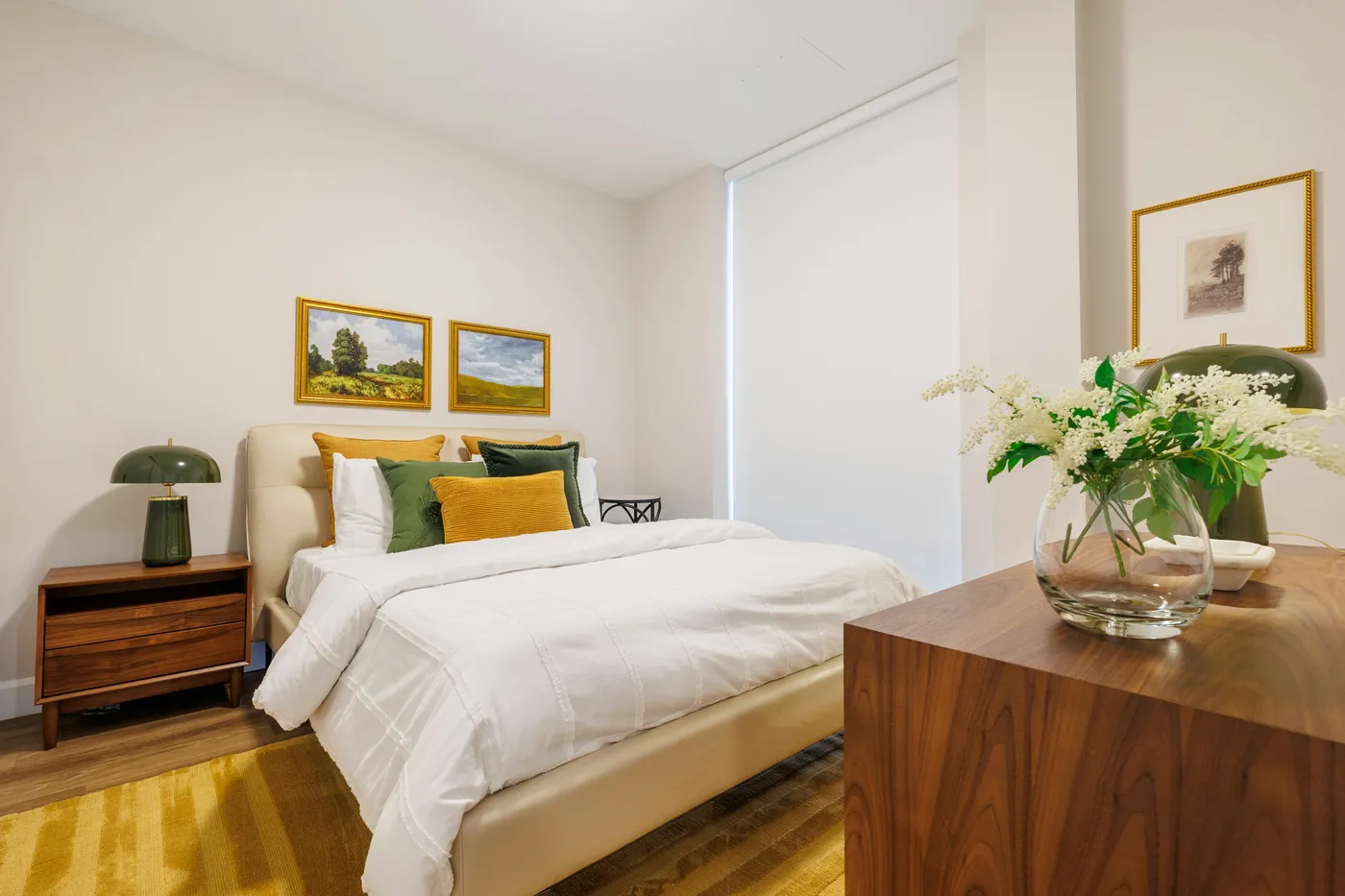
10. Accent a Neutral Palette with Green and Mustard Yellow
This bedroom proves that neutral doesn’t have to mean boring. The design works by layering various shades of warm white and beige to create a soft, calm base. Then, it strategically introduces pops of saturated color—the mustard yellow pillows and striped rug, the deep green lamp and pillow—to add life and personality. The dark walnut of the furniture and the gold of the picture frames provide depth and a touch of classic elegance, grounding the lighter elements and making the room feel complete and sophisticated.
|
📋 Copy HEX 🔗 Share |
You don’t need designer pieces to get this warm, layered look. The key is the color palette. Find a neutral upholstered bed from Wayfair or IKEA. Hunt for vintage dark wood nightstands at a thrift store—they don’t have to match perfectly! The green mushroom lamp is a classic design with many affordable dupes available for under $50. Source a yellow-striped rug from Target or Rugs USA, and find inexpensive landscape prints on Etsy to frame yourself. You can achieve this entire vibe for under $1,500.
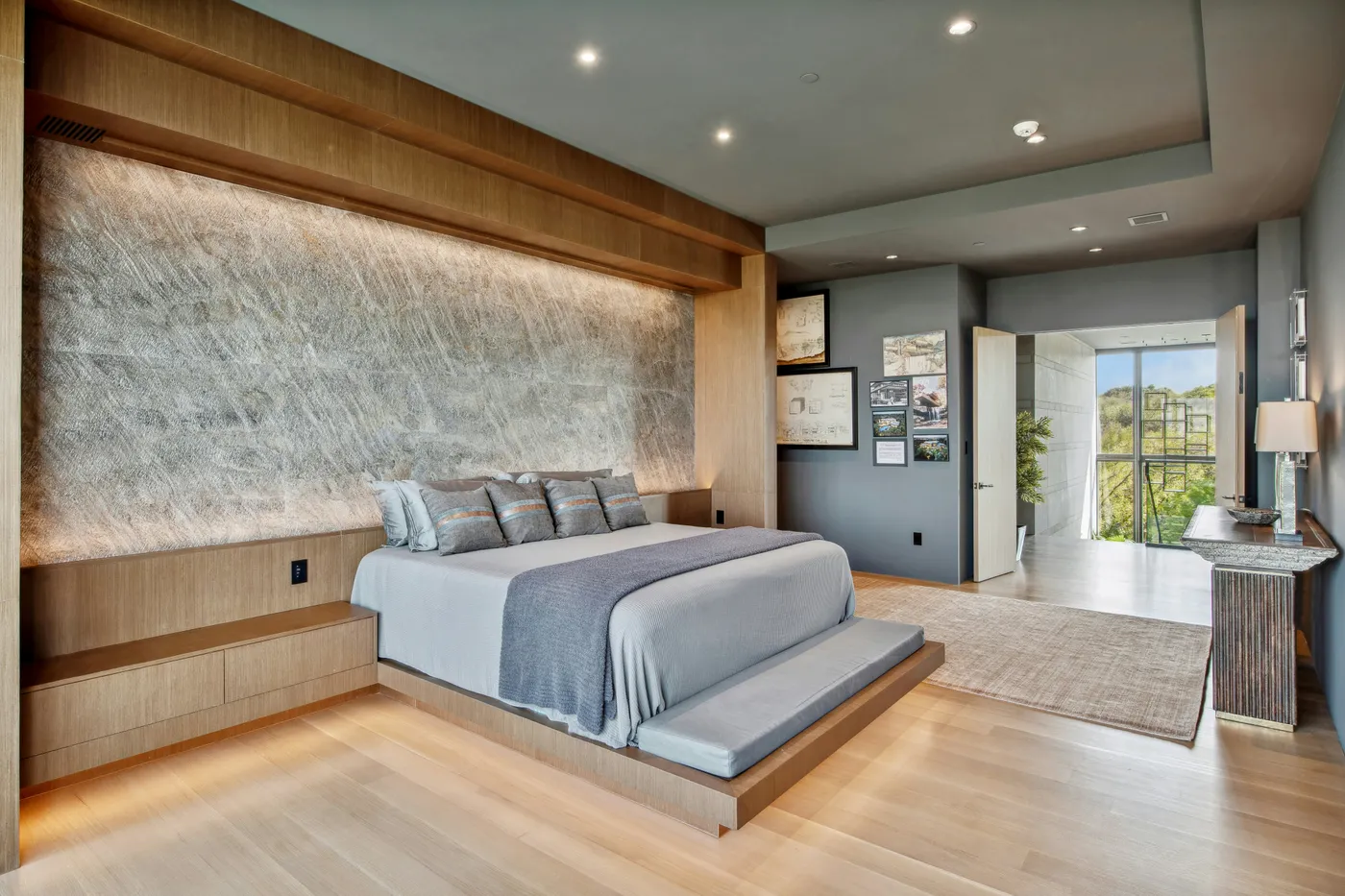
11. Add Drama with a Textured Stone Accent Wall and Uplighting
The showstopper here is undeniably the textured stone accent wall. It brings a raw, natural, and highly tactile element into a sleek, modern space. The integrated uplighting that grazes the stone’s surface is what takes it to the next level, highlighting every crevice and creating a dramatic play of light and shadow. The under-bed lighting is a great touch, but the stone wall is the feature that gives this room its unique character and a sense of permanence and luxury. Without it, the room would be nicely minimalist but lack this powerful focal point.
|
📋 Copy HEX 🔗 Share |
Before committing to a feature wall and integrated lighting, run through this checklist:
- Check Wall Structure: Can your wall support the weight of real stone or heavy panels? You may need to reinforce it. Lighter faux-stone panels are an alternative.
- Plan Electrical: Where are your existing outlets? You will need to hire an electrician to safely run wiring for uplighting, recessed lights, and integrated outlets in the bed frame.
- Measure Twice, Buy Once: Confirm your bed dimensions. A platform bed with integrated side tables is a single large unit, so ensure it will fit through your doorways and hallways.
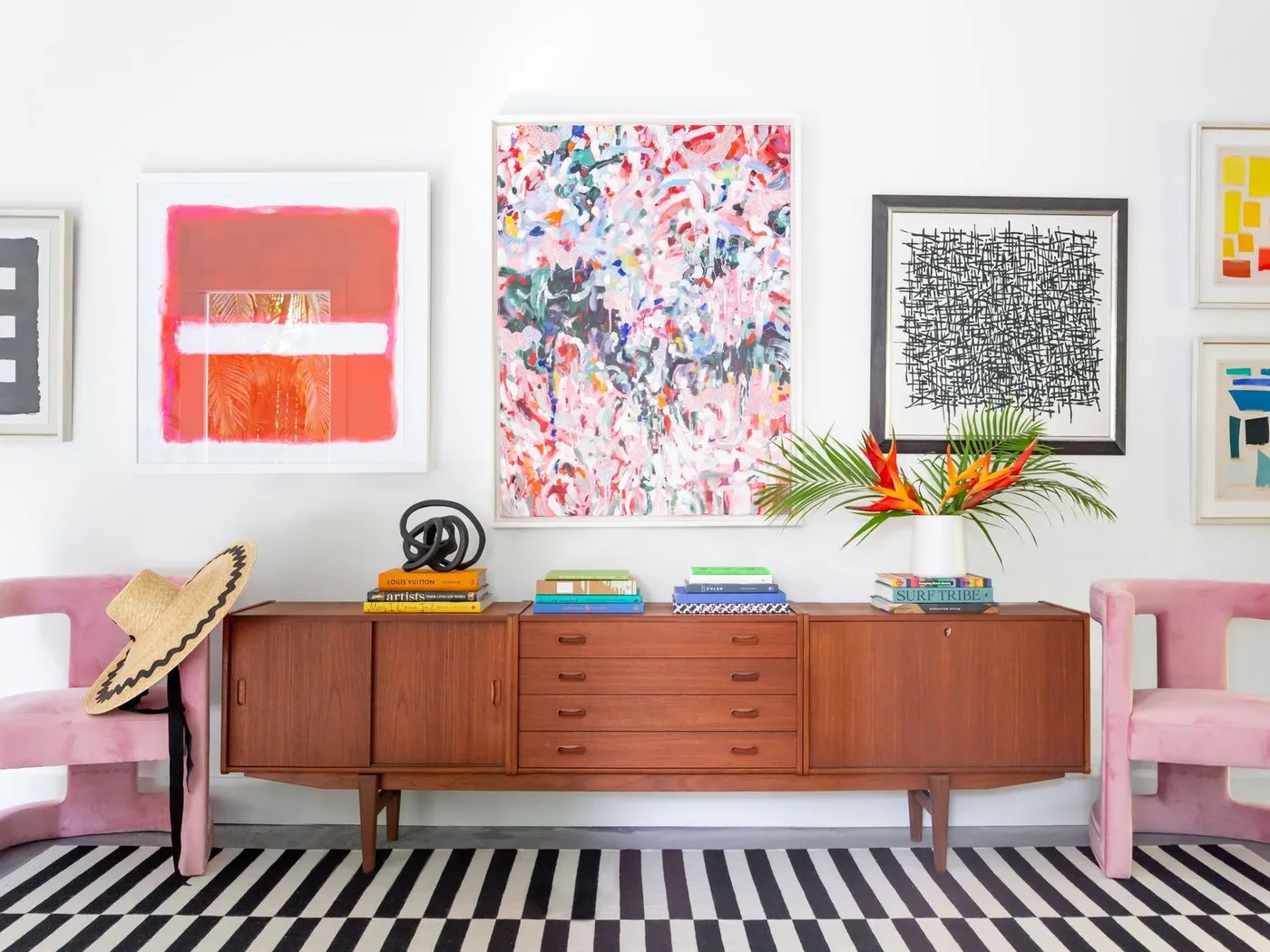
12. Curate a Vibrant Gallery Wall Above a Long Credenza
This eclectic space follows a bold formula: 50% neutral foundation (white walls, wood credenza) + 30% graphic pattern (black and white striped rug) + 20% saturated color explosion (gallery wall, pink chairs). The neutral backdrop is crucial; it keeps the vibrant art and bold rug from becoming chaotic. The pink velvet chairs pick up on hues from the artwork, making the whole arrangement feel intentional. This is a perfect equation for anyone who loves color but still wants their space to feel curated.
|
📋 Copy HEX 🔗 Share |
- Choose a Theme: Select a color palette or subject matter. Here, it’s bright, abstract, and colorful.
- Lay It Out: Arrange your framed art on the floor first. Trace each frame onto paper, cut them out, and tape the paper templates to the wall to perfect your layout without making extra nail holes.
- Anchor the Arrangement: Start by hanging your largest piece slightly off-center, about 6-8 inches above the furniture.
- Build Outward: Add the other pieces around the anchor, keeping the spacing between frames relatively consistent (2-3 inches is a good rule of thumb). Mix vertical and horizontal orientations for a dynamic feel.
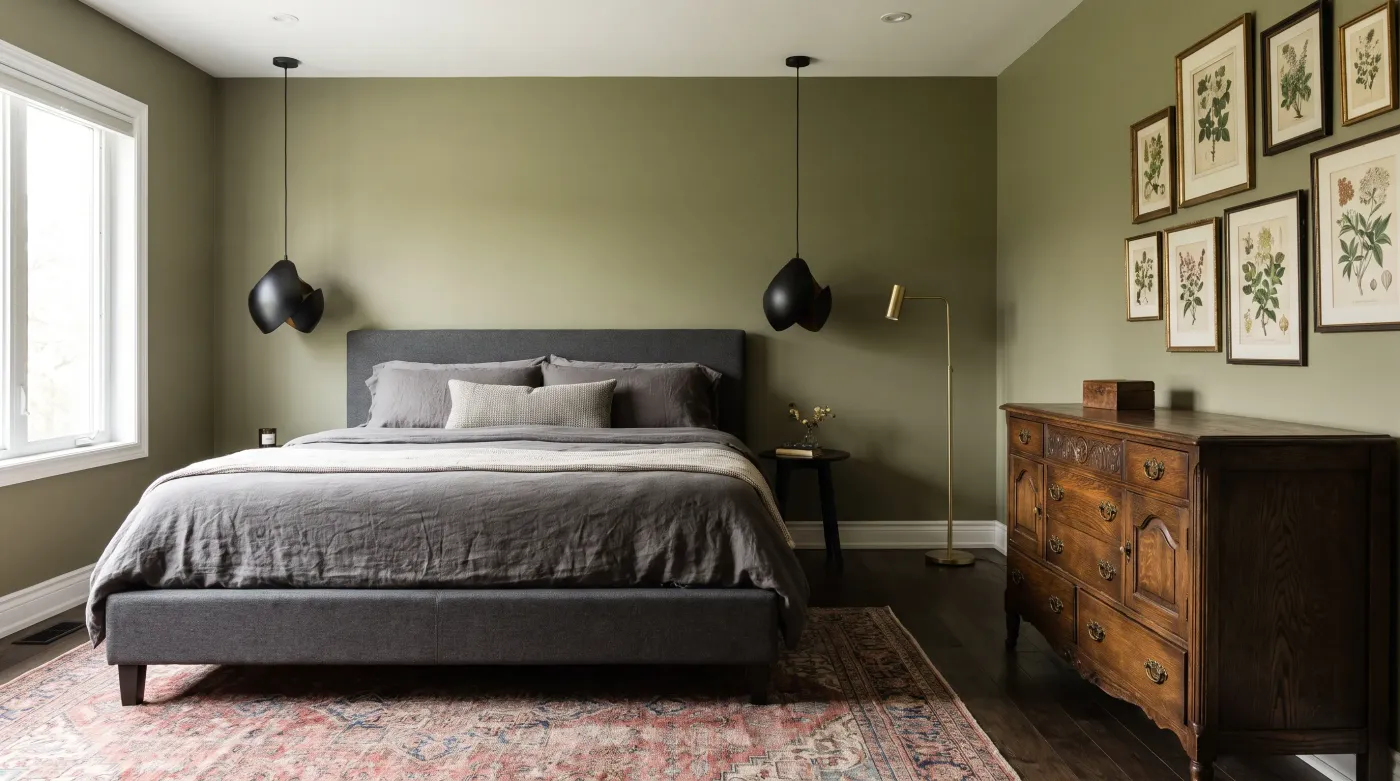
13. Go Deep and Calming with Olive Green Walls
When pairing dark walls with dark floors, creating contrast is key to prevent the room from feeling heavy. Notice how the grey upholstered bed and light grey bedding provide a visual lift. The vintage-style rug also plays a crucial role by breaking up the large expanse of dark wood flooring. If your furniture is also dark, make sure your area rug is significantly lighter to create that necessary separation and keep the elements from blending together into a dark mass.
|
📋 Copy HEX 🔗 Share |
An eclectic mix of styles—like the modern grey bed, traditional carved dresser, and abstract pendant lights—can be incredibly chic, but it’s a tricky balance to strike. If the pieces don’t have a common thread (like a shared color, material, or level of formality), the room can end up looking disjointed rather than intentionally curated. To make it work, ensure at least two of the major pieces share a design language. Here, the dark wood of the floor and dresser connect, helping to ground the more modern elements.
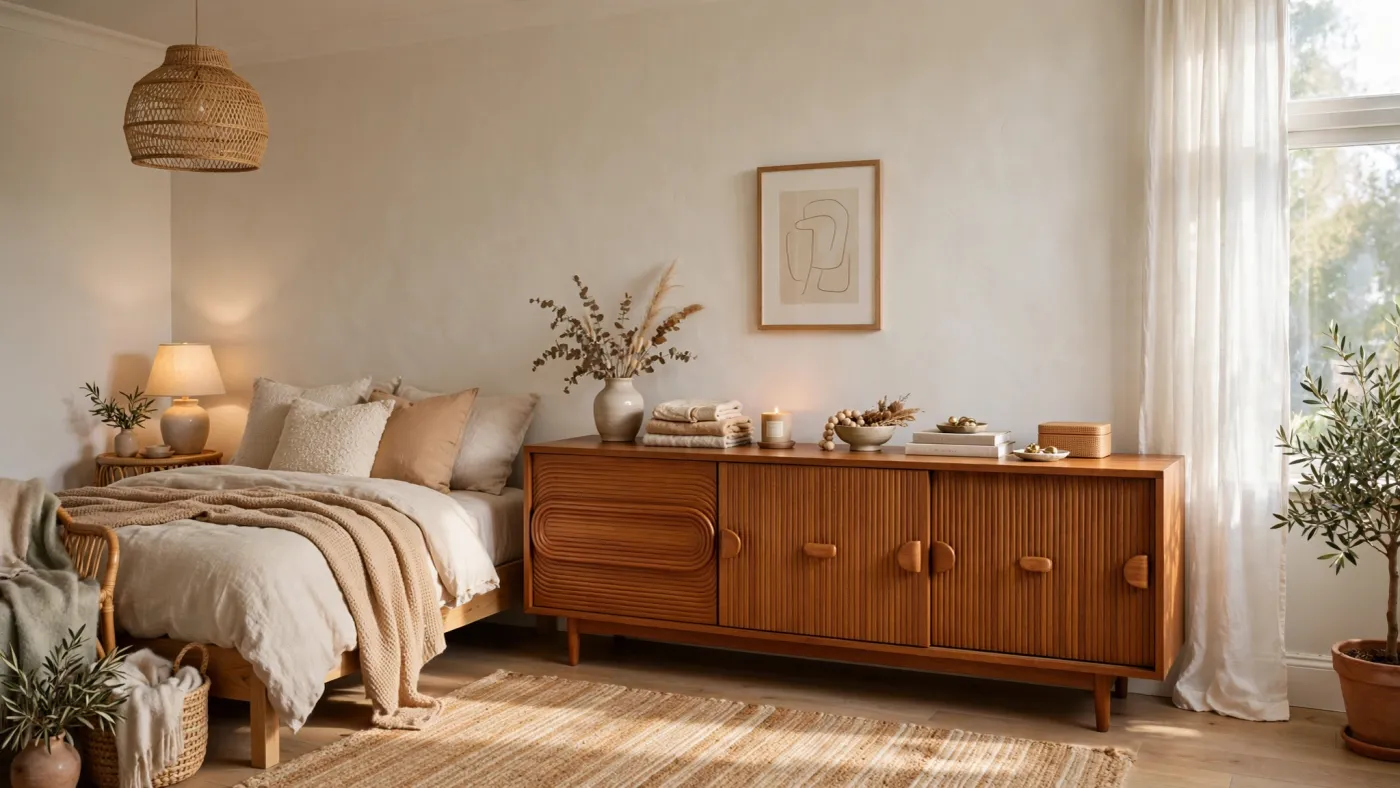
14. Layer Woven Textures for a Soft, Organic Feel
This room feels so calming because of its masterful use of layered natural textures. The woven rattan of the pendant light, the jute of the area rug, the reeded detail on the sideboard, and the linen-like bedding all work together to create a soft, tactile environment. By sticking to a tight palette of warm neutrals and letting the textures do the talking, the design achieves a look that is simple but incredibly rich and inviting. The minimalist line art and simple botanicals add to the organic, uncluttered feel.
|
📋 Copy HEX 🔗 Share |
This look is part of the larger Japandi and Organic Modern trends that continue to dominate interior design. It’s a move away from stark, cold minimalism toward a warmer, more human-centric version of simplicity. We’re drawn to natural materials like wood, rattan, and jute because they connect us to the outdoors and feel grounding in our digitally-saturated lives. This style has major staying power because it’s based on timeless materials and a feeling of tranquility rather than a fleeting pattern or color.
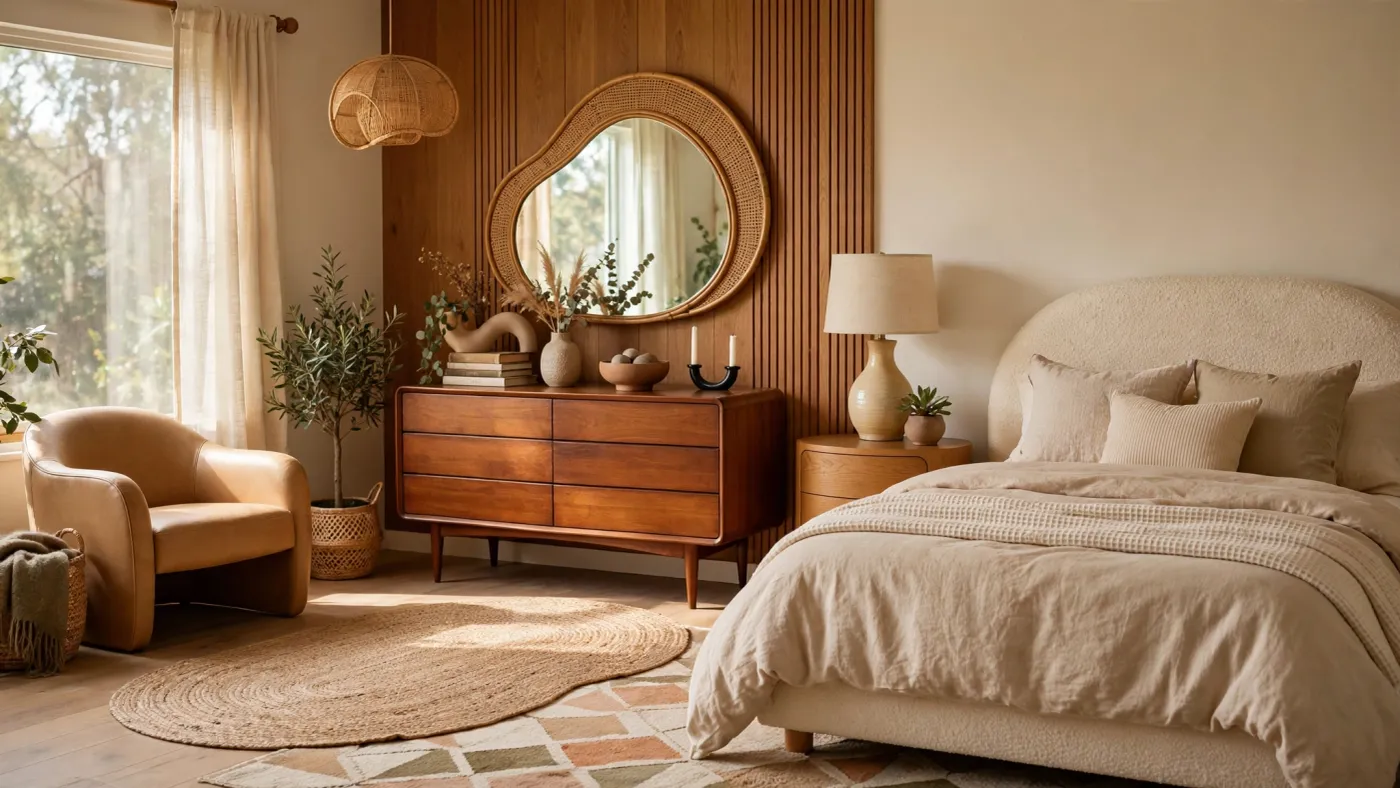
15. Soften a Room with a Curved Sherpa Headboard
The single element that defines the soft, inviting nature of this room is the arched sherpa headboard. Its gentle curve immediately breaks up the straight lines and right angles typical of a bedroom, while the fuzzy sherpa texture begs to be touched. It sets a tone of comfort and coziness that is echoed in the round jute rug and wavy rattan mirror. Without this headboard, the room would still be lovely, but it would lose its most defining feature and that unique, cloud-like softness.
|
📋 Copy HEX 🔗 Share |
To keep a sherpa or bouclé headboard looking its best, regular maintenance is key. Vacuum it weekly with an upholstery attachment to remove dust and debris. For any spills, blot immediately with a clean, dry cloth—do not rub, as that can push the stain deeper into the fibers. For tougher spots, a gentle fabric cleaner or a simple solution of mild soap and water can be used, but always test it on an inconspicuous area first. Avoid harsh chemical cleaners at all costs.
16. Use a Plaster-Like Wall Finish for Subtle Texture
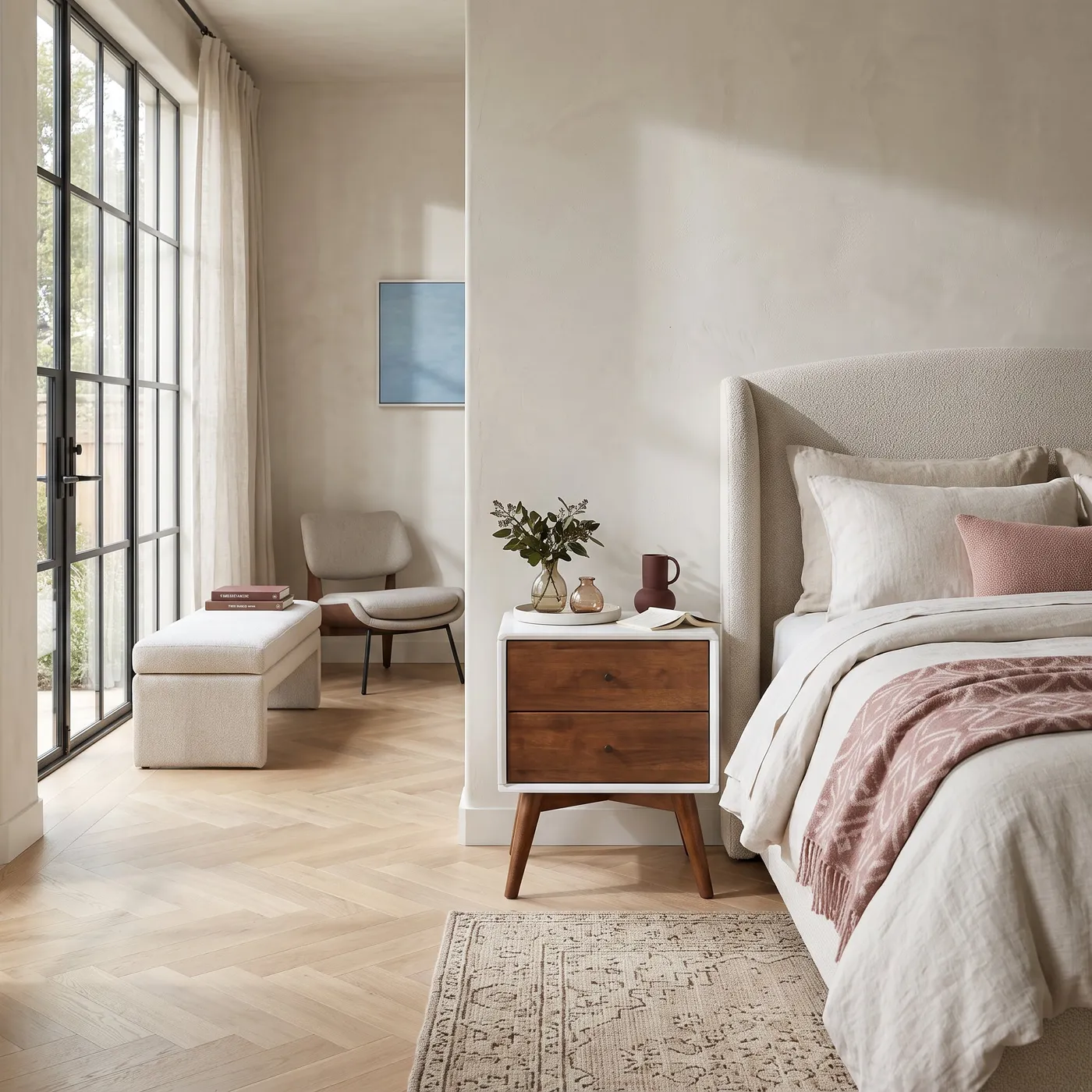
The formula for this airy space is all about texture and tone: 70% warm neutrals (plaster walls, upholstered bed, rug) + 20% natural wood (flooring, nightstand) + 10% sharp black accents (window frames, lamp). The plaster-like finish on the walls provides a subtle, light-catching texture that’s much more interesting than flat paint. This tactile quality, combined with the herringbone wood floors, creates a rich foundation that makes the simple, modern furniture feel special and considered.
|
📋 Copy HEX 🔗 Share |
This look is perfect for medium to large bedrooms (at least 12’x12′) where the light herringbone floors have room to establish their pattern. The key is ample natural light; the black metal-framed windows are essential for keeping the warm beige walls from feeling flat. In a smaller or darker room, you might use a lighter wood for the floor and stick to white for the window frames to maximize brightness. This is a more expansive take compared to the color-saturated Idea #18.
17. Embrace an Earthy Mood with Textured Olive Green Walls
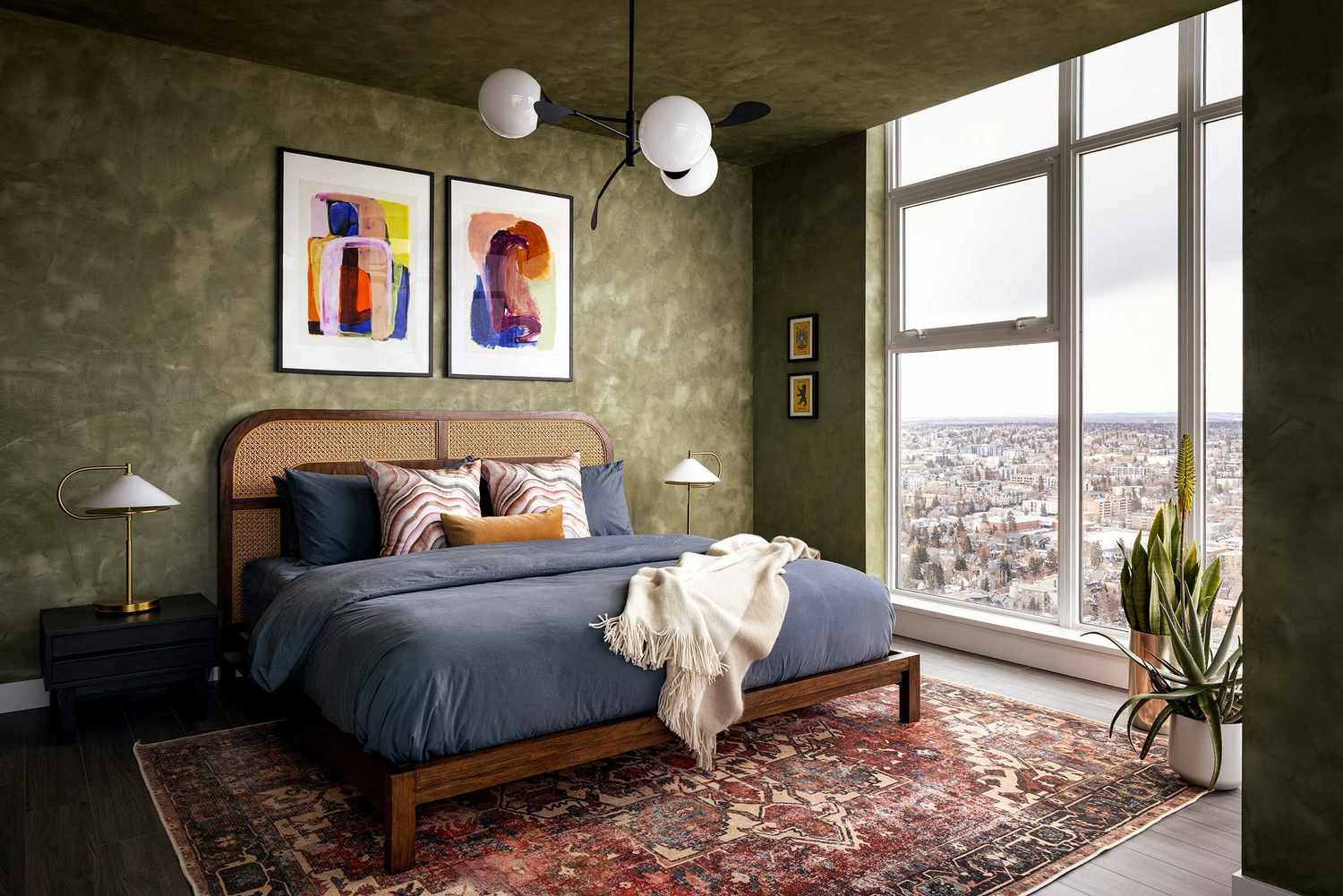
This bedroom succeeds by fully committing to its moody, urban-jungle aesthetic. The textured olive green on both the walls and ceiling creates a completely immersive, cocooning effect. This deep, earthy backdrop makes the other elements—the warm cane headboard, the rich navy duvet, the vibrant red in the rug—pop with intensity. The floor-to-ceiling windows are critical, as they flood the dark space with light and connect the interior color scheme to the real greenery outside, making the design feel holistic and intentional.
|
📋 Copy HEX 🔗 Share |
A cane or rattan headboard is a beautiful, natural element, but it can be fragile. The woven material can dry out and become brittle over time, especially in a dry climate or with direct sun exposure. It’s also prone to snagging fabrics and can be tricky to dust. Use a soft brush attachment on your vacuum to clean it. While it offers a fantastic textural look, it might not be the most durable choice for a home with active kids or pets who might be tempted to scratch or poke it.
18. Mix Wood Paneling with Bright Blue and Yellow Accents
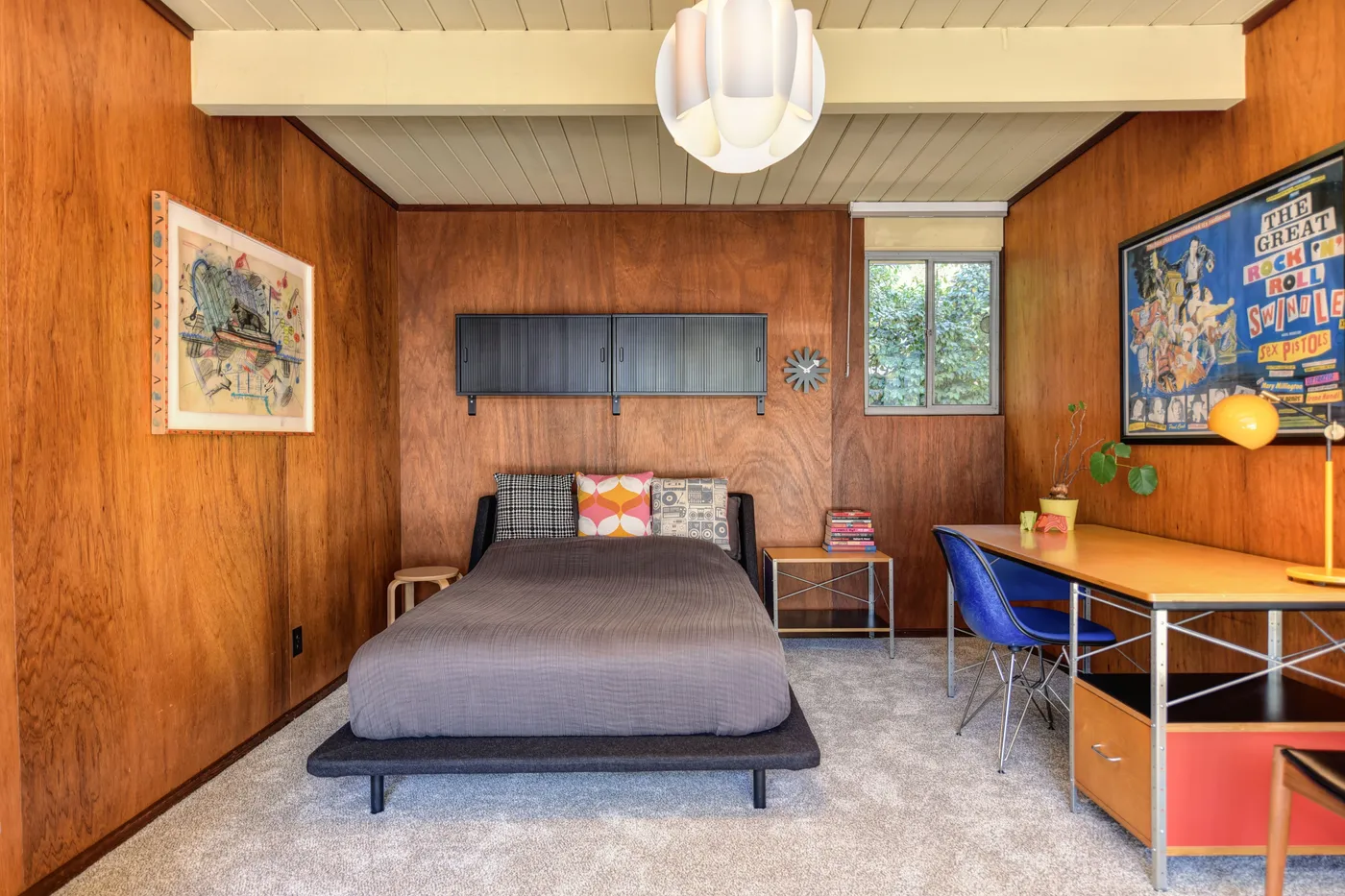
This retro room’s design equation is pure mid-century fun: 60% warm wood paneling + 30% calm neutrals (gray bed, cream ceiling) + 10% high-energy primary colors (royal blue chair, bright yellow lamp). The extensive wood paneling provides a cozy, cabin-like base, while the gray and cream elements keep it from feeling too dark. The strategic pops of bright, clean color are what give the room its playful personality and prevent the wood from feeling dated. It’s a perfect balance of rustic and modern.
|
📋 Copy HEX 🔗 Share |
When working with existing wood paneling, don’t feel obligated to keep its original finish if it feels dated. You can absolutely paint it! For a modern look, painting the paneling a crisp white or a dark charcoal gray can completely transform a room while preserving the texture. Be sure to properly prep the surface by cleaning it thoroughly and using a high-quality adhesion primer designed for glossy surfaces to ensure the paint sticks and provides a durable finish.
19. Combine a Green Panel Wall with a Woven Leather Headboard
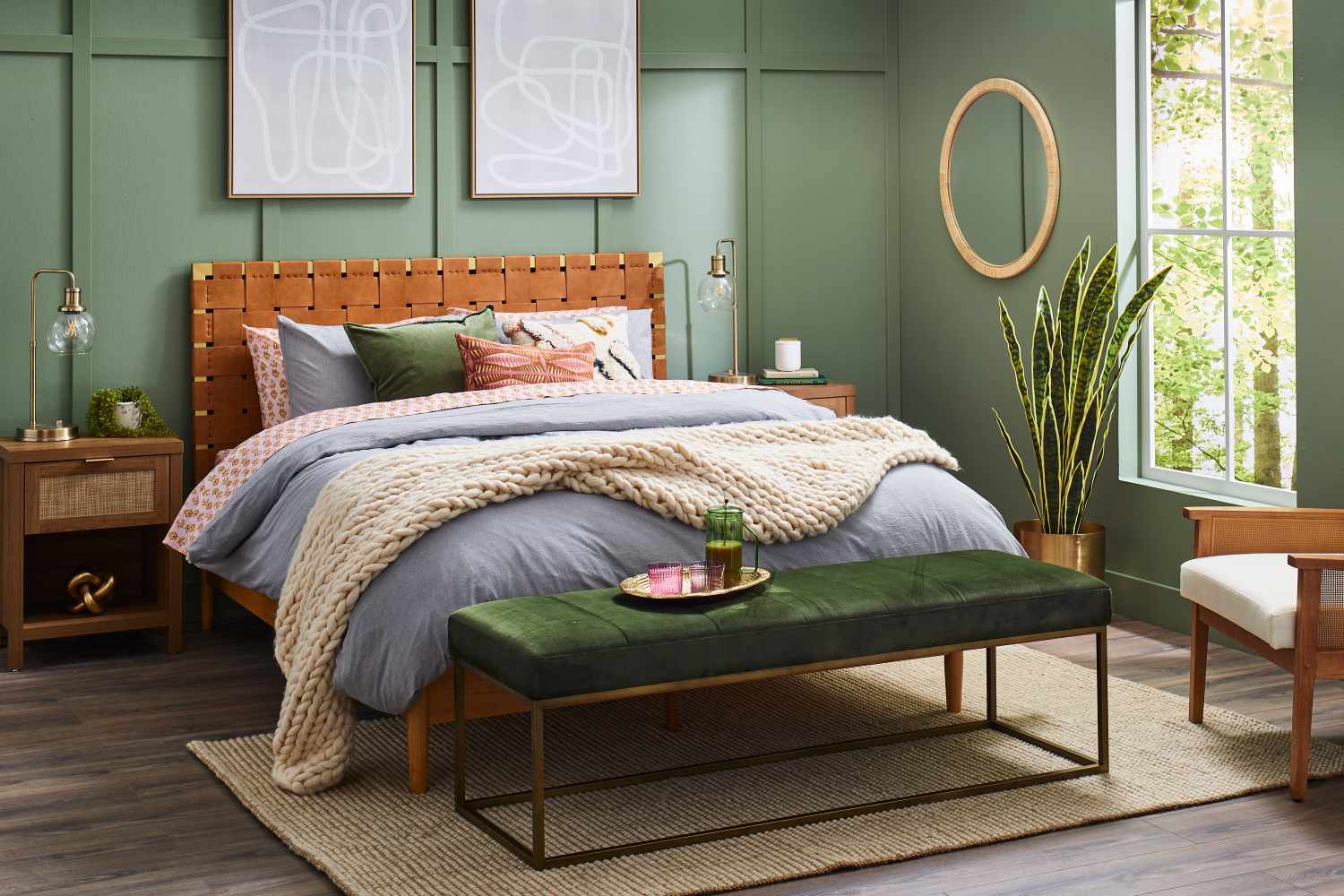
This design feels so cohesive because it pulls its entire color palette from a walk in the woods. The sage green paneled wall is the color of soft leaves, the woven cognac leather headboard recalls rich earth, the cream and light blue bedding are like the sky, and the dark wood nightstands are the tree trunks. By layering these natural, earthy tones and textures (like the chunky knit throw and rattan drawers), the room creates a deeply serene and grounded atmosphere that feels like a true retreat.
|
📋 Copy HEX 🔗 Share |
The woven leather headboard is the standout element in this room. While the green paneled wall is a beautiful backdrop, the headboard provides a unique and luxurious texture that you don’t see every day. It’s the piece that adds a touch of bespoke craftsmanship and elevates the room from a simple green bedroom to a sophisticated, textural haven. It’s warm, unexpected, and adds a layer of quiet luxury that pulls everything together.
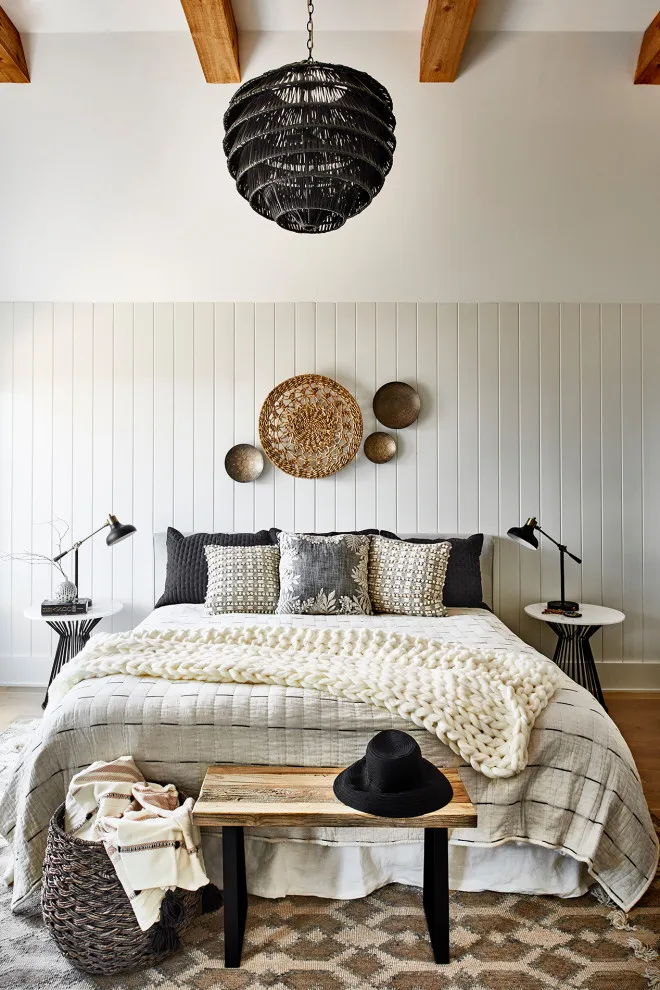
20. Create a Cozy Retreat with a Large Woven Pendant Light
You don’t need a massive budget to get this cozy, textured look. The vertical paneling can be a DIY project using affordable MDF boards. A chunky knit blanket can be found at Target or HomeGoods, or you could even arm-knit one yourself. The key piece, the large woven pendant light, has many affordable versions at places like IKEA (the SINNERLIG pendant is a classic for a reason) or World Market. Hunt for a rustic wood bench at a flea market or on Facebook Marketplace to complete the look for less.
|
📋 Copy HEX 🔗 Share |
Exposed natural wood ceiling beams are stunning, but they can be dust magnets. Plan to dust them every month or two with a long-handled duster or the brush attachment on your vacuum. Over time, the wood may need to be resealed or oiled (every 5-10 years) to keep it from drying out and to maintain its rich color. Also, be aware that the crevices can be an attractive spot for spiders to build webs, so occasional deep cleaning is a must to keep them looking fresh and clean.
21. Pair a Curved Wood Headboard with an Earthy Geometric Rug
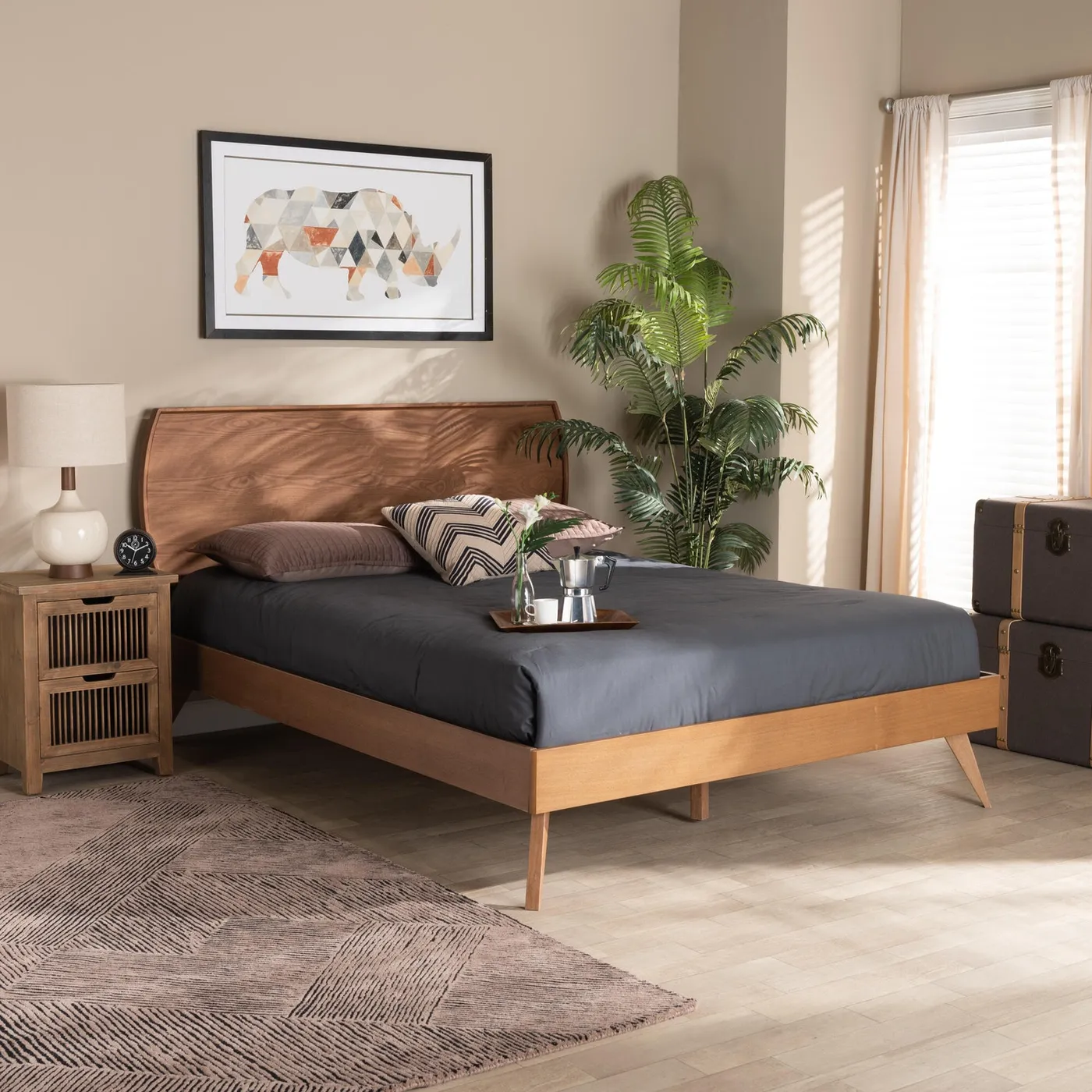
The visual math for this calm space is all about earthy harmony: 50% warm wood tones (bed, nightstand) + 30% soft neutrals (beige walls, curtains) + 20% deep, grounding accents (charcoal bedding, black in the rug and art). The formula keeps the palette simple and restrained, allowing the shapes and patterns to take center stage. The curves of the headboard contrast beautifully with the sharp angles of the rug’s geometric pattern, creating a dynamic yet balanced composition.
|
📋 Copy HEX 🔗 Share |
This room feels grounded and complete because of the smart use of repetition and contrast. The warm wood of the bed is repeated in the slatted nightstand, creating a cohesive set. The angular geometric pattern on the rug is echoed in the colorful triangles on the rhino art piece, tying the floor to the wall. Meanwhile, the soft curve of the headboard provides a gentle contrast to all the straight lines, adding a touch of softness and preventing the design from feeling too rigid. It’s a simple but incredibly effective set of design choices.
22. Use Olive Walls as a Backdrop for Vibrant Orange and Red Bedding
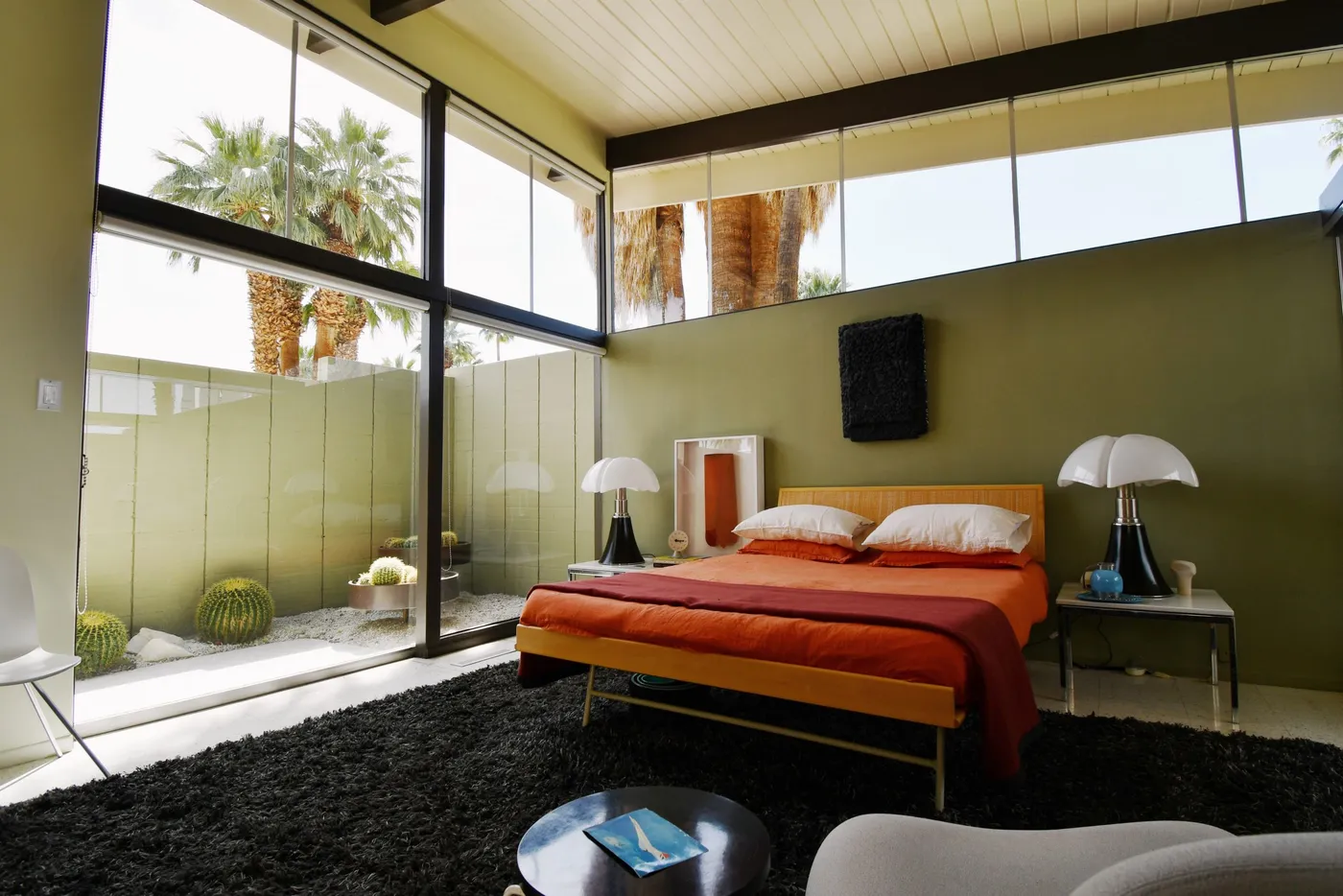
When using a bold, retro color palette like this, texture is your best friend. The shaggy black rug, the cane headboard, and the smooth, mushroom-shaped lamps all have distinct textures that add depth and prevent the strong colors from feeling flat or cartoonish. If all the surfaces were smooth, the room would lose much of its warmth and character. By mixing textures, you create a richer, more tactile experience that makes the bold colors feel more sophisticated and inviting.
|
📋 Copy HEX 🔗 Share |
Full-height windows are a dream for natural light, but they present challenges for privacy and light control, especially in a bedroom. While they offer stunning views during the day, they can make a room feel exposed at night. You’ll need to invest in a high-quality window treatment solution, like ceiling-mounted blackout curtains or remote-controlled roller shades, to ensure you can sleep soundly. This is an added cost and a crucial functional consideration that shouldn’t be overlooked.
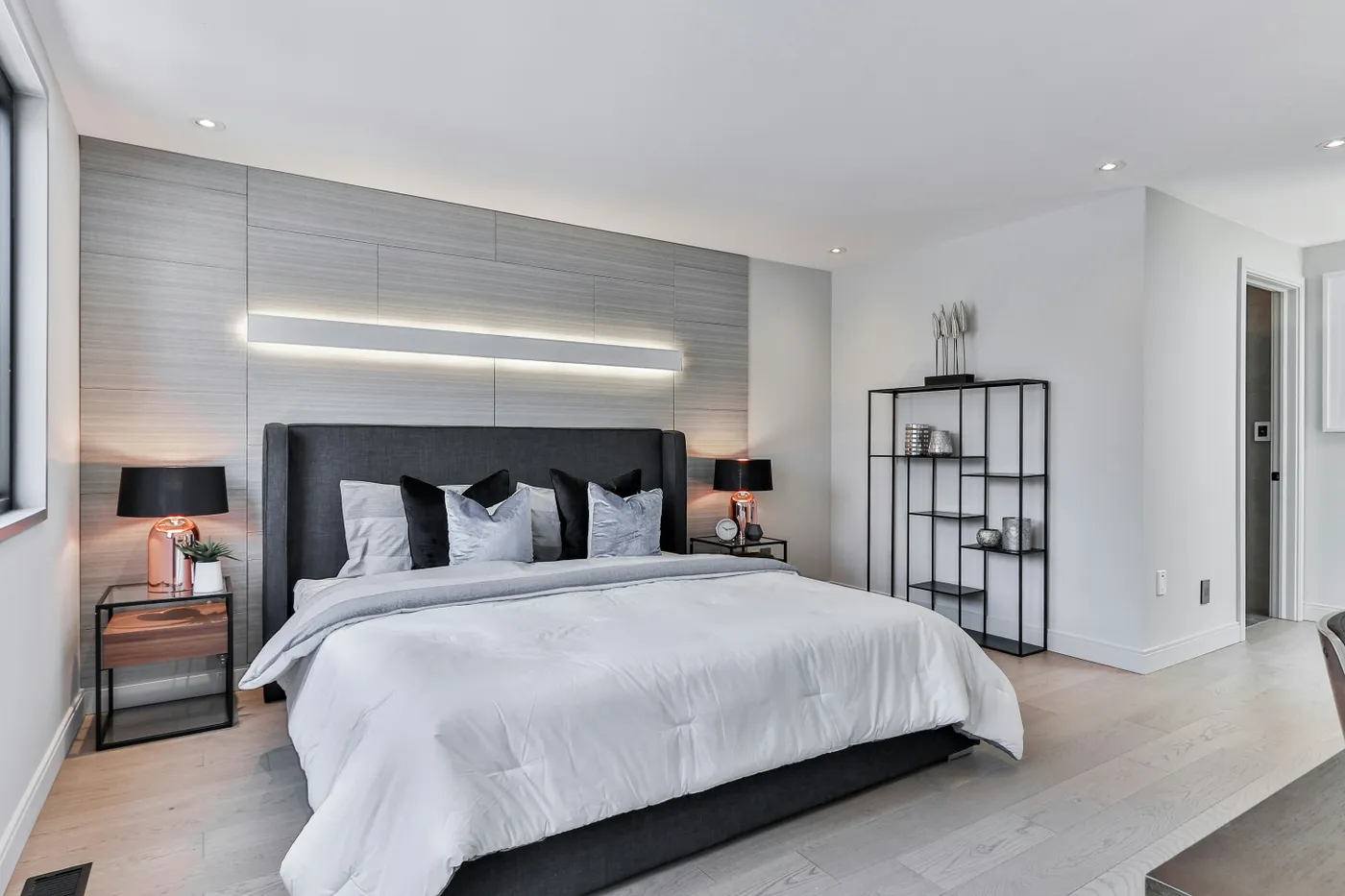
23. Incorporate Rose Gold Lamps for a Touch of Modern Glamour
This sleek design works by creating a low-contrast, tonal foundation with the light gray textured wall and dark gray bed. This allows the metallic accents to truly shine. The warm, reflective quality of the rose gold lamps provides a perfect touch of warmth and color, preventing the gray-on-gray scheme from feeling cold or monotonous. The thin black lines of the shelving unit add a final layer of sharp, graphic contrast that gives the room a polished, contemporary edge. Compare this with the brass accents in Idea #3.
|
📋 Copy HEX 🔗 Share |
While yellow gold and brass have dominated mid-century-inspired design for years, we’re seeing a resurgence of warmer, softer metals like rose gold and copper. They offer a fresh, modern alternative that feels a bit more unique and gentle. Integrated LED lighting, like the strip used in the headboard wall, is also a massive trend. It’s moving beyond just under-cabinet lighting into architectural applications, used to highlight textures and create an ambient glow that feels luxurious and futuristic.
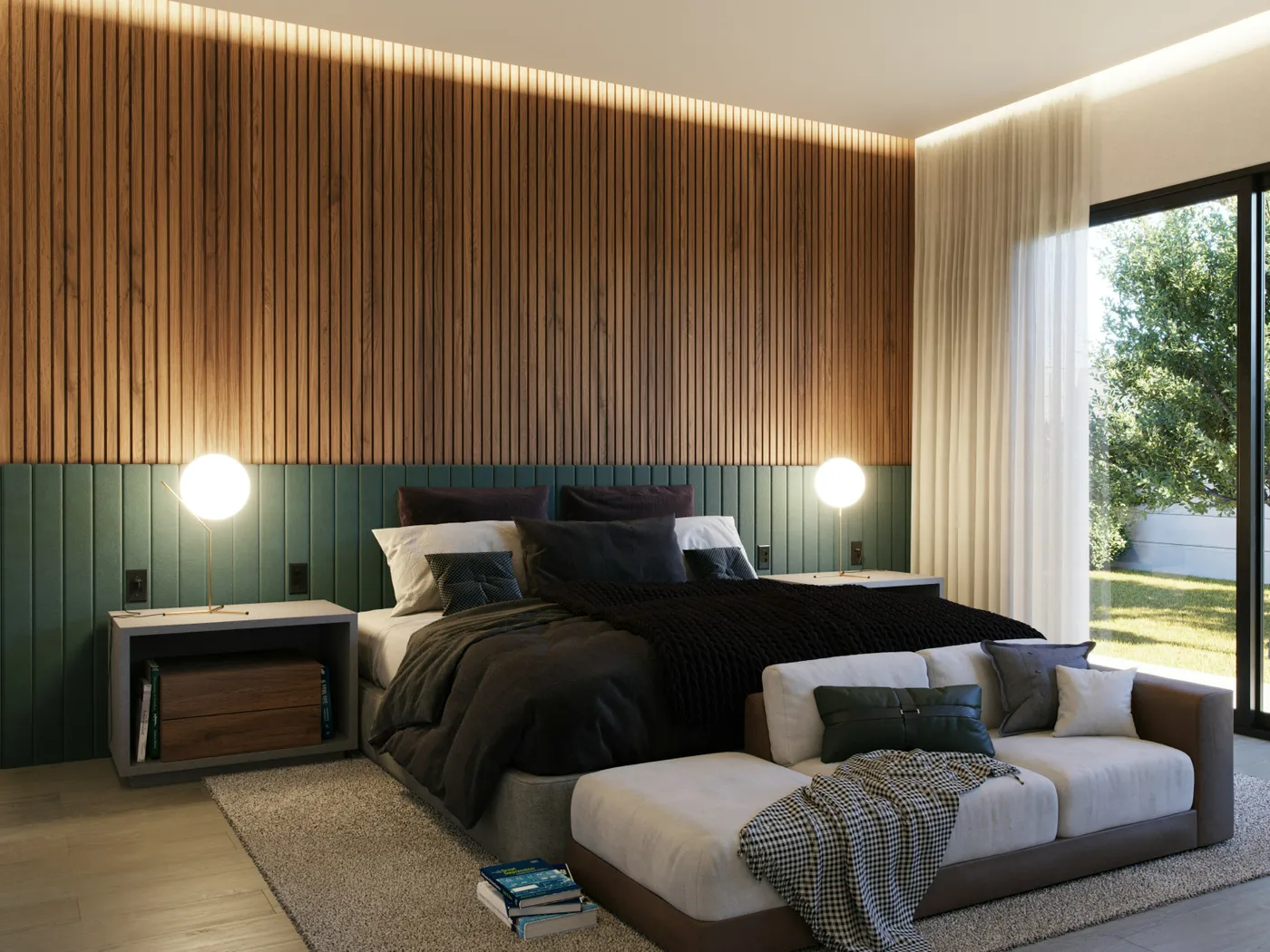
24. Anchor a Slat Wood Wall with a Deep Green Headboard
The collaboration between the vertical slat wood wall and the wide, deep green upholstered headboard is the heart of this design. The wood paneling provides warmth, texture, and a strong vertical rhythm, while the plush, colorful headboard introduces softness and a block of rich, saturated color. The headboard is wide enough to sit behind the floating nightstands, making the entire wall feel like a single, integrated unit. This powerful combination is what gives the room its sophisticated, hotel-like feel.
|
📋 Copy HEX 🔗 Share |
A full-wall feature like this requires a decent-sized room, ideally at least 13 feet wide, to accommodate a king or queen bed plus the floating nightstands without feeling squeezed. The ceiling height should be standard (8 feet) or higher to prevent the vertical slats from feeling stunted. The chaise lounge adds another layer of luxury, but you’ll need a clear area of at least 4’x6′ for it to fit comfortably without obstructing the walkway to the glass door.
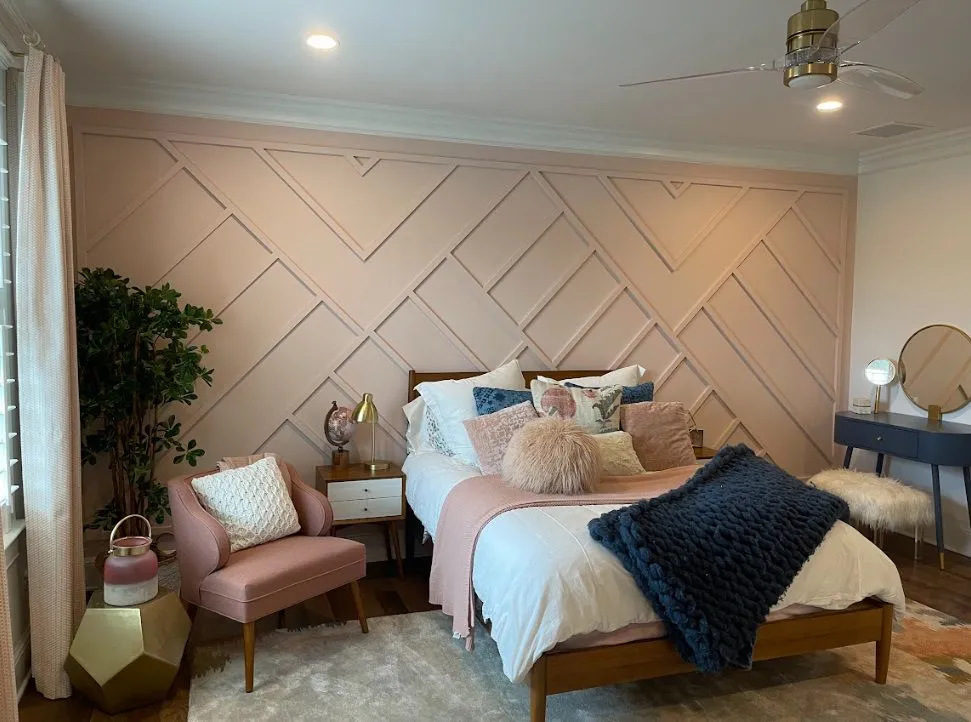
25. Create a Playful Look with a Blush Geometric Accent Wall
The formula for this cheerful room is all about balancing soft and bold: 50% soft blush pink and white + 30% grounding navy blue + 10% natural wood + 10% shiny brass. The geometric paneling on the accent wall adds architectural interest without introducing more color. The navy blue in the throw blanket and vanity provides a sophisticated, deep contrast that keeps the pink from feeling overly sweet. The wood and brass elements add warmth and a touch of mid-century glamour, tying it all together.
|
📋 Copy HEX 🔗 Share |
You can create a similar geometric accent wall on a shoestring budget. Plan your design on paper first. Then, use lightweight MDF trim or even simple lattice strips from a home improvement store, which are very inexpensive. Cut them to size with a miter box and saw. Attach them to the wall with construction adhesive and a few finishing nails. Once the adhesive is dry, caulk the seams, and then paint the entire wall and the trim in the same color and finish for a seamless, high-end look.
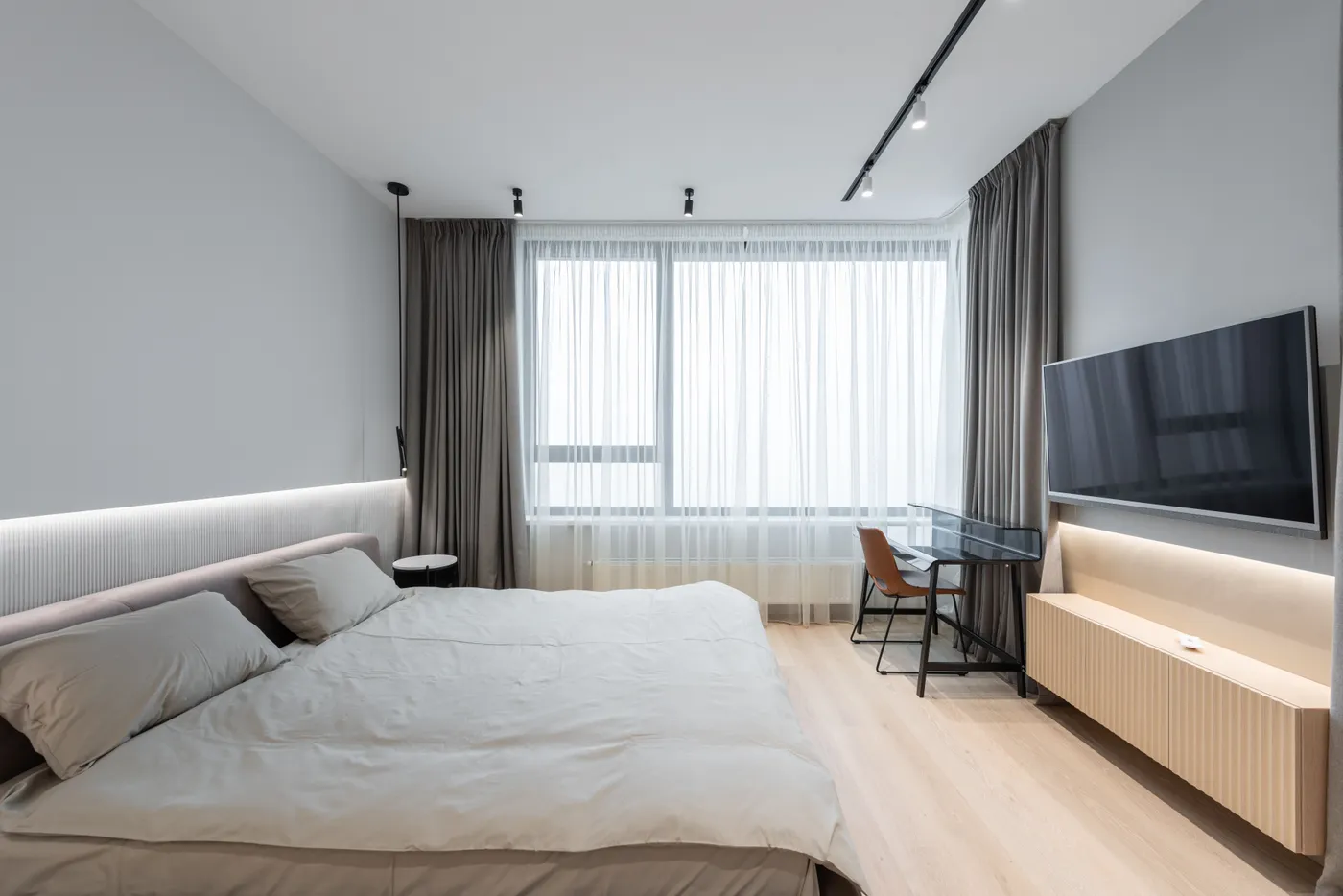
26. Combine a Ribbed Wall Panel with an Upholstered Bed
This room achieves its serene, minimalist feel through a sophisticated play on texture. Instead of using bold colors, it creates interest by layering similar tones with different surfaces: the soft fabric of the upholstered bed, the clean vertical lines of the ribbed wall panel, the smooth grain of the light wood floor, and the slightly rougher texture of the heavy gray curtains. This tonal and textural layering makes the simple color palette feel rich, complex, and intentionally designed.
|
📋 Copy HEX 🔗 Share |
A ribbed or fluted wall panel, while visually stunning, can be a bit of a dust trap. The small grooves will collect dust over time, especially the horizontal surface on top. You’ll need to run a duster or a vacuum brush attachment along the panels every few weeks to keep them looking sharp. The integrated backlighting is a fantastic feature, but be aware that LED strips have a finite lifespan. Choose a system where the strip can be easily replaced without having to dismantle the entire wall feature.
Your Mid-Century Story Starts Now
With these 26 ideas, you’re not just looking at pictures anymore—you’re gathering the ingredients for a bedroom that truly feels like you. Pick the elements that speak to your soul, mix them with your own story, and create a space you can’t wait to come home to. Ready to start dreaming? Save your favorites to your Pinterest board and let the magic begin!