
Let’s be honest, you’ve probably scrolled through hundreds of garage addition ideas, saving pins that feel right but not knowing how to connect the dots for your own home. It’s a huge project, and the fear of choosing the wrong style is real. We get it. That’s why we dove deep into the world of architectural plans, material costs, and style trends for 2026 to bring you the good stuff.
We’ve curated 23 distinct attached garage additions that go way beyond simple car storage. These are real-life examples that show how a garage can become a seamless, beautiful, and functional part of your home, whether you’re dreaming of a modern farmhouse look or a classic colonial expansion. And stay until the end — we break down the most common mistakes that can ruin these looks. 📌 Save this to Pinterest for later — you’ll want to revisit these ideas.
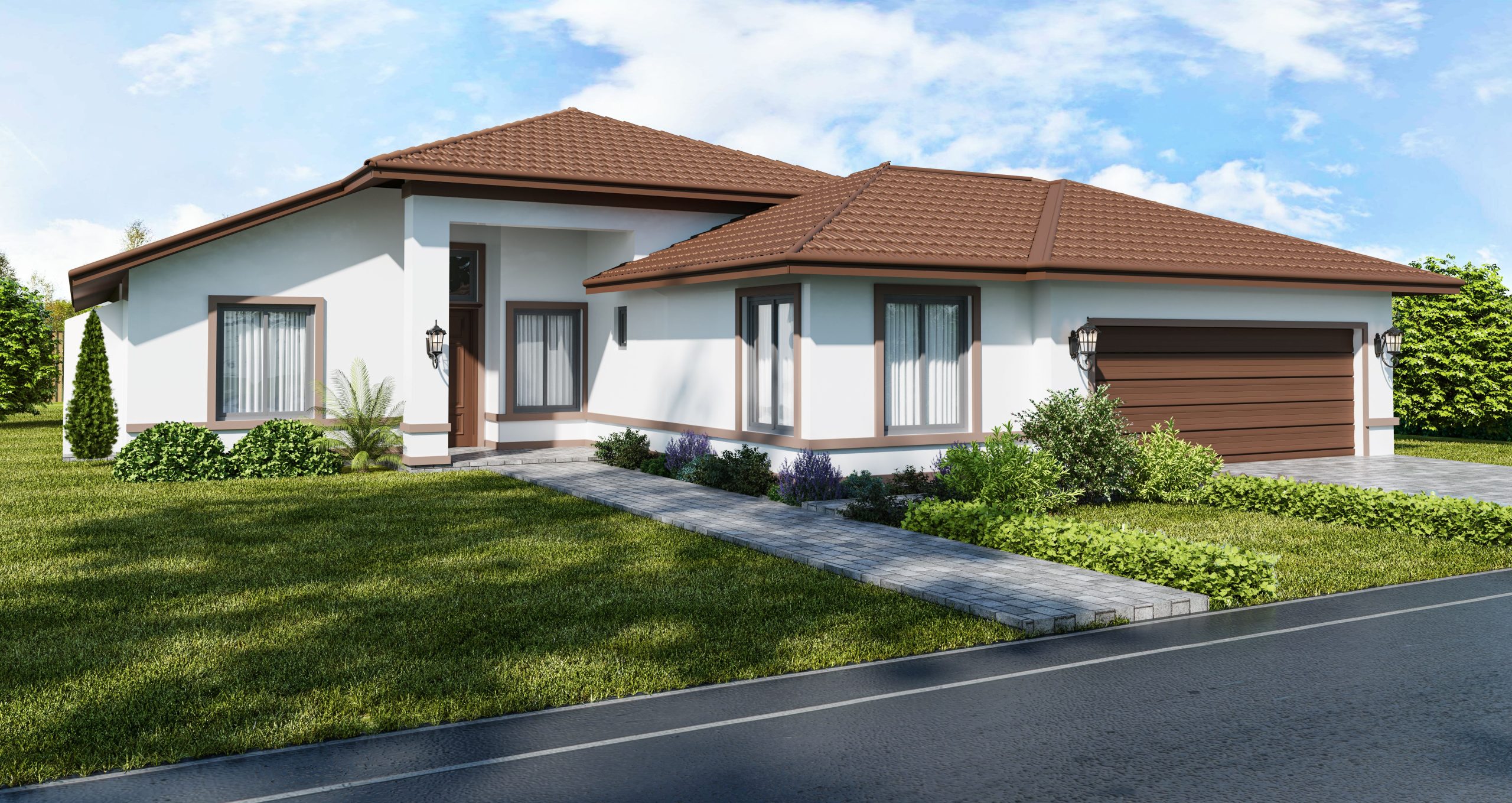
1. Cohesive White Stucco & Brown Tile Roof
This design is a masterclass in creating a unified look. The key is repetition with restraint. The warm brown of the tile roof is perfectly mirrored in the window frames and the paneled garage door. This creates a visual connection that makes the garage feel like it was always part of the original house, not an afterthought. The clean white stucco serves as a neutral canvas, allowing the brown architectural details and the black ornamental lanterns to stand out without competing.
|
📋 Copy HEX 🔗 Share |
To ensure your addition blends this seamlessly, order your new windows and garage door from the same manufacturer and color series. Even slight variations in ‘brown’ or ‘white’ from different brands can be jarringly obvious once installed. Ask for color chip samples and view them in direct sunlight against your home’s exterior paint or siding before placing the final order. This simple step can prevent a costly color mismatch.
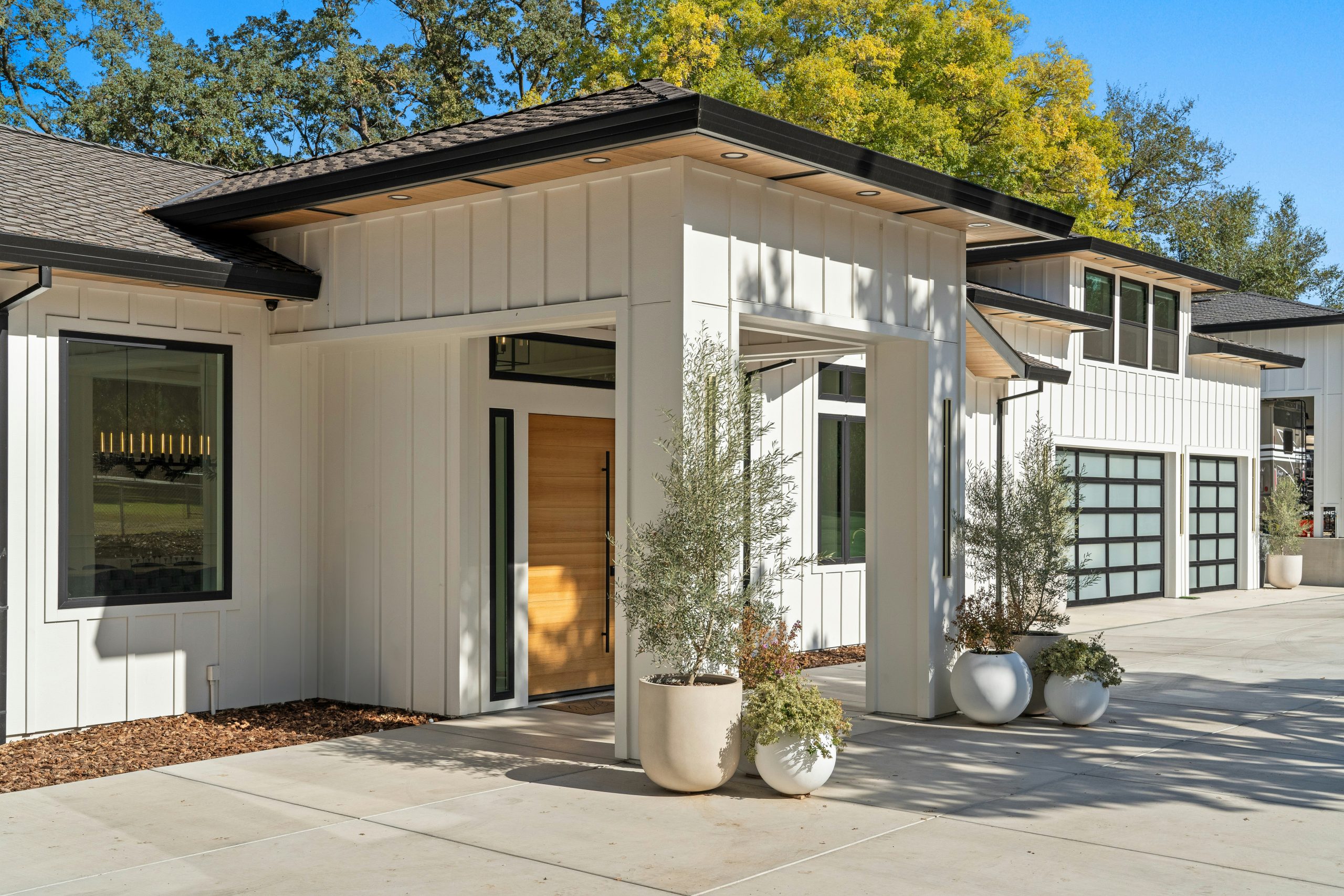
2. Modern Farmhouse with Board & Batten Siding
The formula for this popular look is all about high-contrast harmony. Think 70% crisp white siding (like this vertical board and batten), 20% bold black accents for windows, gutters, and garage doors, and 10% natural wood warmth in the soffits and front door. This ratio keeps the aesthetic feeling clean and modern, not stark. You can swap the wood tone for a darker stain or even a pop of color on the front door, as long as you maintain that strong white-and-black foundation.
|
📋 Copy HEX 🔗 Share |
That beautiful white siding looks pristine, but it’s also a magnet for dirt, pollen, and mildew, especially on the north side of a house or in damp climates. Plan on pressure washing it gently at least once a year to keep it looking fresh. Also, a concrete driveway and pathways are durable but can show oil stains easily. Sealing the concrete every 2-3 years is a non-negotiable part of maintaining this clean, minimalist aesthetic.
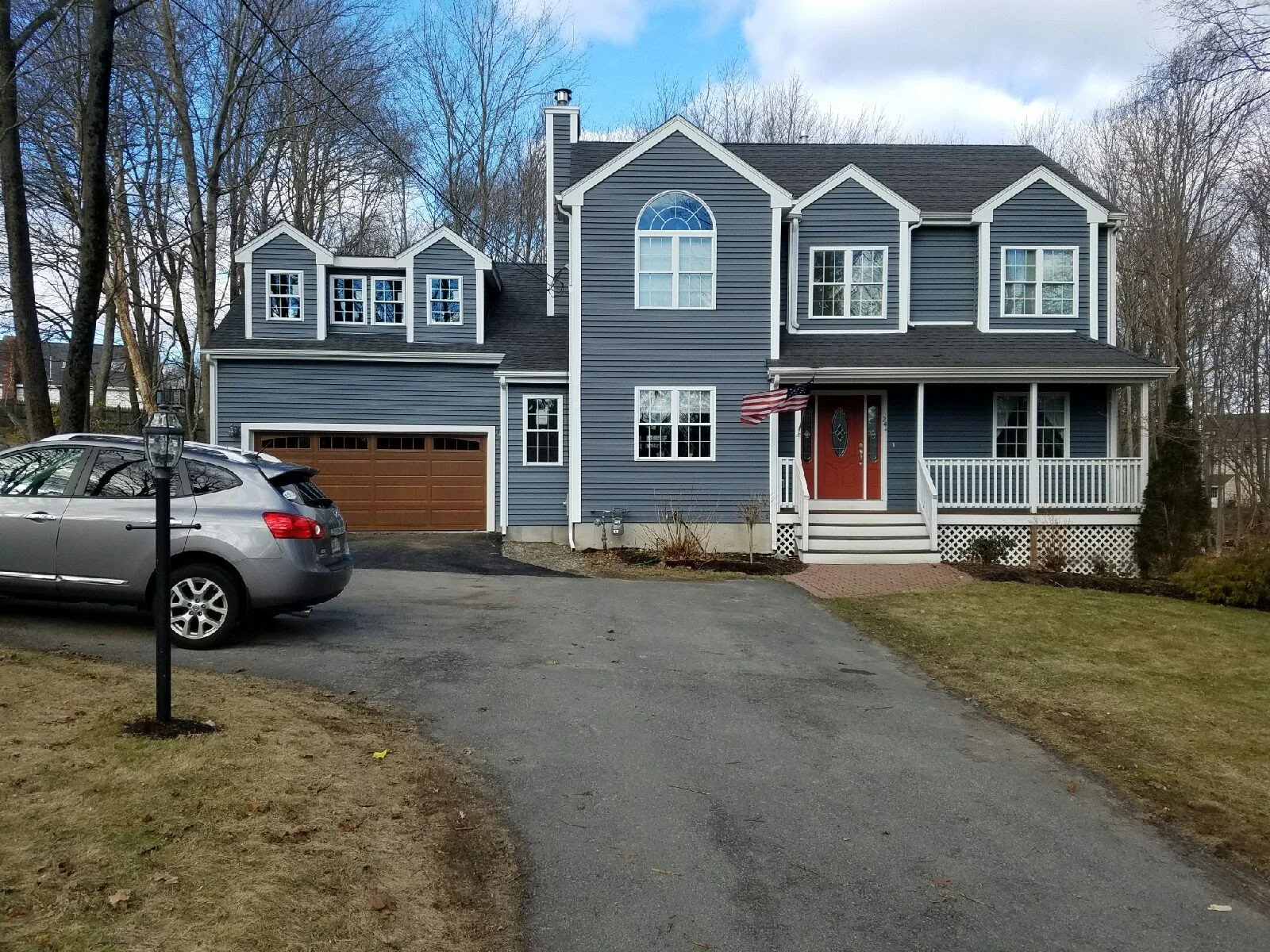
3. Classic Navy Siding with a Welcoming Red Door
The single element that makes this entire design sing is the bold, red front door. On their own, the navy blue-gray siding, white trim, and brown garage door are handsome and classic. But the injection of that vibrant red creates a focal point, drawing the eye to the entrance and signaling a warm, inviting home. It’s a small detail with a huge personality impact, proving that you don’t need to change everything to make a statement. Without it, the house would be lovely, but far less memorable.
|
📋 Copy HEX 🔗 Share |
This style of addition works best on medium to large suburban lots where you have at least 20-25 feet of frontage to accommodate a two-car garage without overwhelming the main house. For the covered front porch to feel generous and not cramped, you need a minimum depth of 6 feet from the front wall to the railing. Anything less, and it becomes more of a decorative feature than a usable outdoor space.
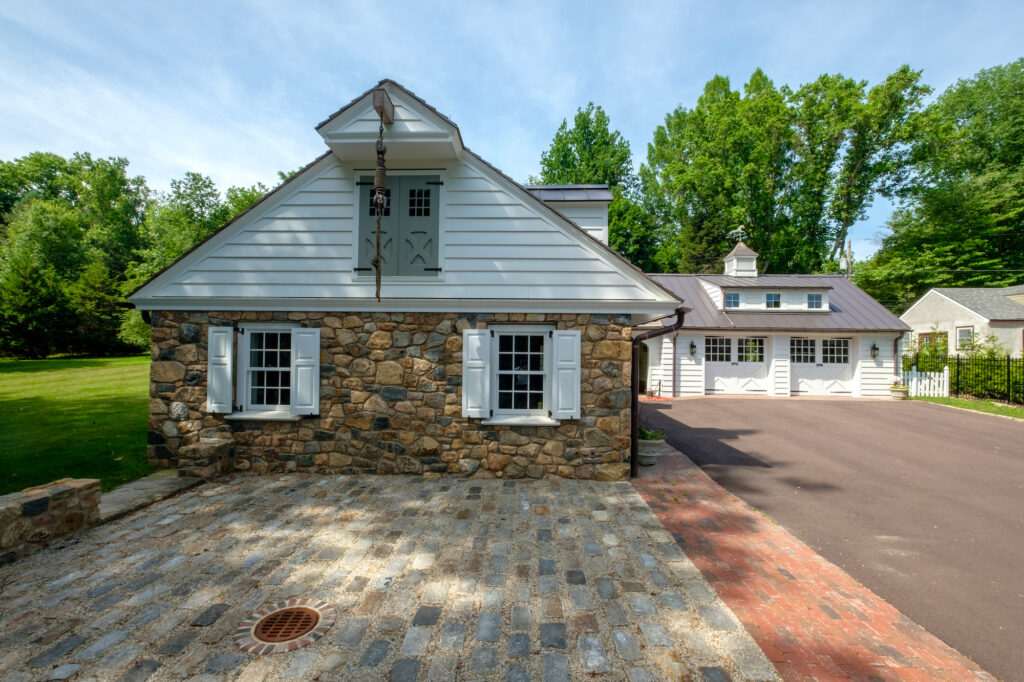
4. Textured Garage with Stone and Carriage-Style Doors
- Main Structure (framing, siding, roofing): $35,000 – $60,000
- Stone Veneer (materials & labor): $15,000 – $25,000
- Carriage-Style Garage Doors (2 doors): $4,000 – $8,000
- Windows & Dormer: $5,000 – $10,000
- Finishing (shutters, paint, lighting): $2,000 – $5,000
- TOTAL: $61,000 – $108,000
- Budget alternative: Get a similar vibe for around $35,000 by using high-quality stone veneer panels (instead of individual stones) and opting for standard garage doors with decorative magnetic hardware that mimics the carriage style.
|
📋 Copy HEX 🔗 Share |
Stacked stone veneer is gorgeous and durable, but its textured surface is a prime spot for dirt, cobwebs, and even moss to accumulate. You’ll want to gently hose it down once or twice a year. The biggest maintenance task here is the carriage-style doors. If they are real wood, they will need to be re-sealed or re-stained every 3-5 years, especially if they face the sun, to prevent fading and cracking. The metal roof, however, is a huge win for low maintenance, lasting 50+ years with minimal upkeep.
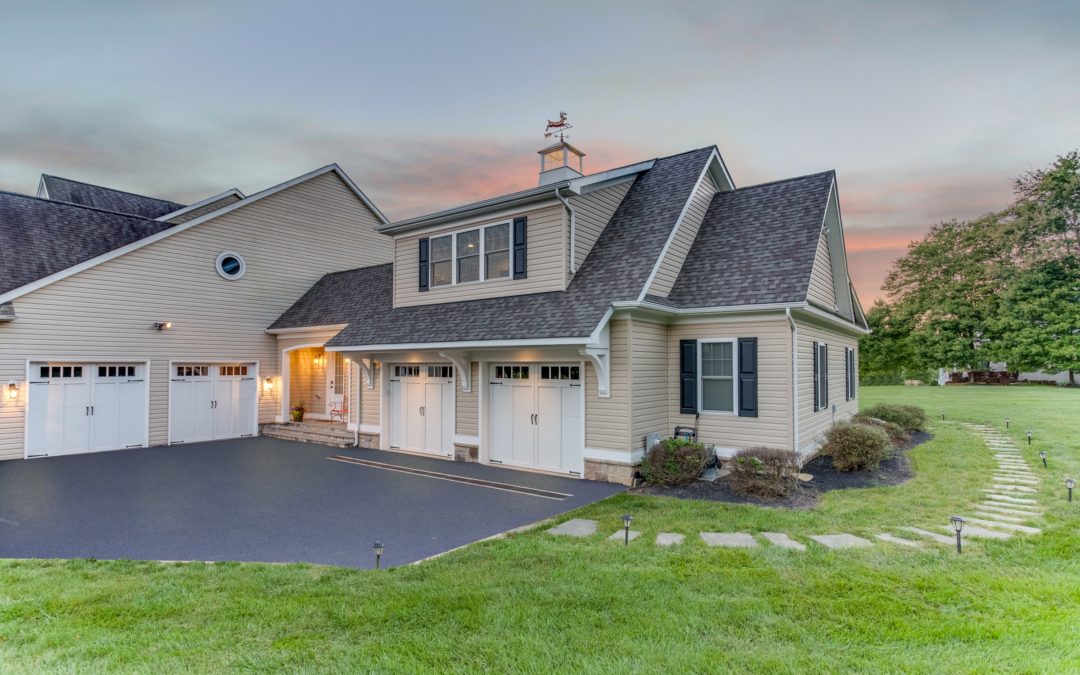
5. The Ultimate Mudroom-Garage Connection
A truly functional mudroom isn’t just a hallway; it’s a ‘drop zone’ system. Here’s a quick plan for creating one. 1. Start with flooring: Choose a durable, easy-to-clean material like porcelain tile or luxury vinyl tile that can handle dirt and water. 2. Plan your storage: Install a combination of open cubbies for shoes, hooks for coats and bags, and at least one closed cabinet to hide clutter. 3. Add a bench: A built-in or freestanding bench is non-negotiable for sitting down to take off boots. 4. Light it right: Ensure the space is well-lit with both overhead lighting and task lighting, like a lamp or under-cabinet LEDs. 5. Power up: Don’t forget to add an outlet for a boot dryer or for charging devices.
|
📋 Copy HEX 🔗 Share |
The mudroom is no longer just a pass-through space. In 2026, we’re seeing a major trend toward treating them as thoughtfully designed transitions that extend the home’s primary style. As our garages become more integrated with our homes—serving as gyms, workshops, and extended living areas—the connection point needs to work harder. Homeowners want a mudroom that feels organized and welcoming, not like a cluttered back-alley entrance. This is a direct response to our increasingly busy lives where functional, organized spaces reduce daily friction.
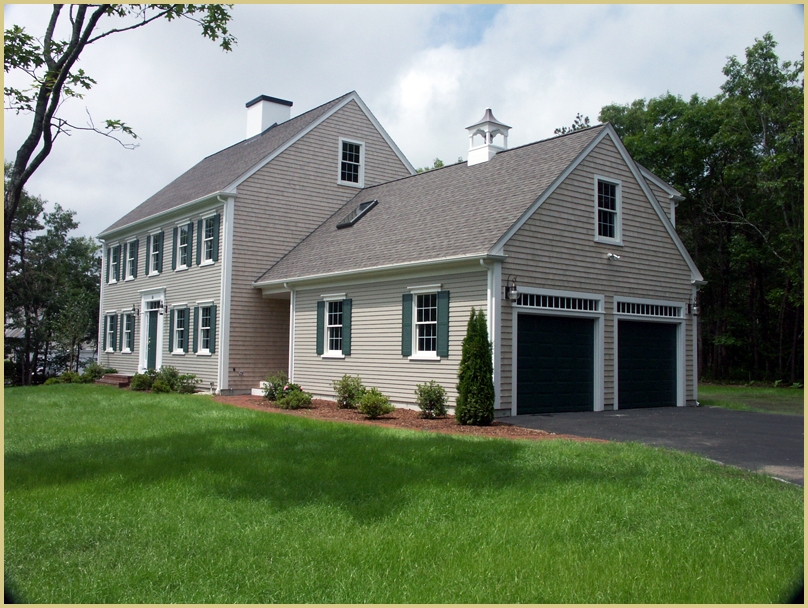
6. Building a Breezeway for a Farmhouse Garage
A breezeway is a brilliant architectural device that connects a new garage to an existing home without creating a massive, bulky structure. It works because it adds function (a covered walkway, a small mudroom area) while maintaining a sense of separation and airiness. This visual break prevents a large addition from overwhelming a classic home shape like a Cape Cod or farmhouse. It respects the original architecture while providing the modern convenience of an attached garage. This is a key design choice for a successful farmhouse attached garage breezeway.
|
📋 Copy HEX 🔗 Share |
When designing a breezeway, the roofline is critical. Don’t try to match the height of the main house roof. Instead, the breezeway roof should be subordinate, connecting at a lower point on the main house wall. A good rule of thumb is to have the breezeway’s ridge line at least 24 inches below the main house’s eaves. This creates a clear visual hierarchy and makes the entire composition look intentional and professionally designed.
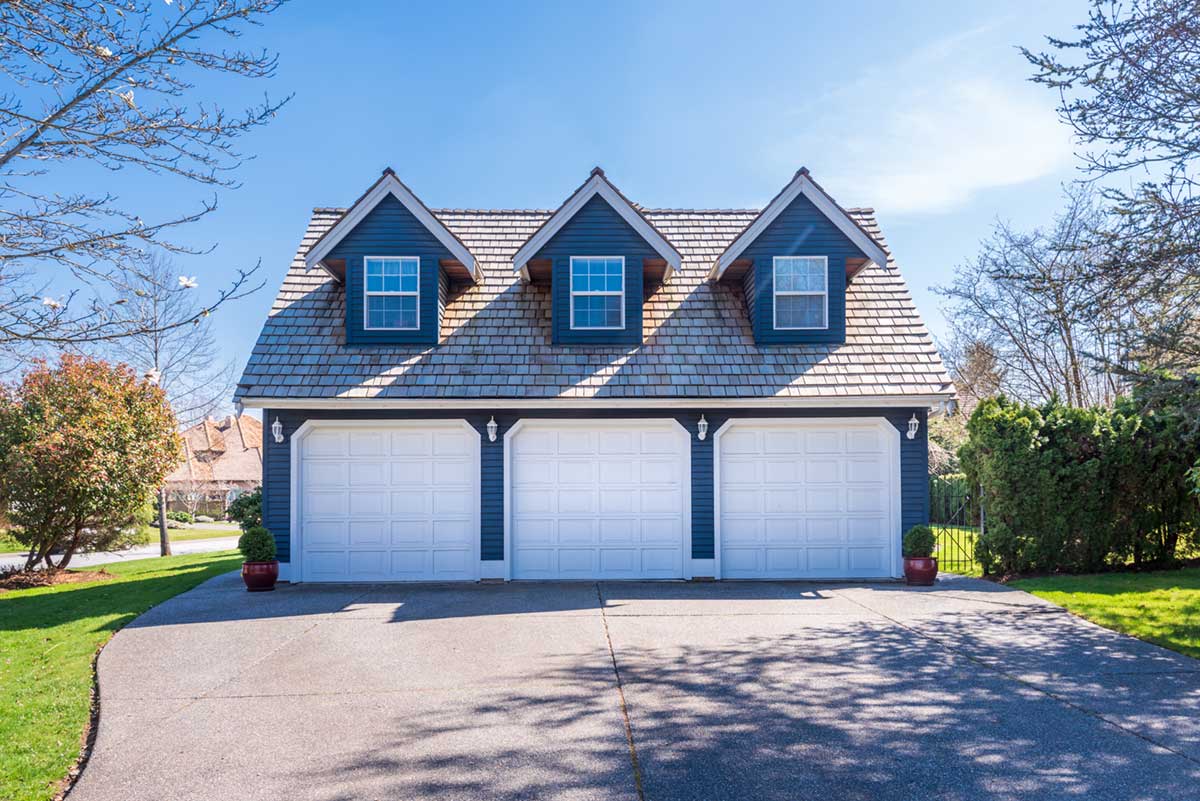
7. Expansive Three-Car Garage with Dormer Windows
A three-car addition is a significant structural commitment that requires a wide lot. You’ll need a minimum of 32-36 feet of uninterrupted linear space on the side of your house, plus additional clearance for foundation work. This idea is best suited for larger Colonial or ranch-style homes on lots that are at least 70-80 feet wide. Trying to force a three-door garage onto a narrower property will almost certainly make the garage the dominant feature, throwing the entire home’s scale off balance.
|
📋 Copy HEX 🔗 Share |
Let’s be direct: a three-car garage can easily look like a monotonous wall of doors. The dormers are essential here to break up the massive roofline and add architectural interest. However, be prepared for the added cost and potential for leaks that any roof penetration introduces. Ensure your builder properly flashes and seals around each dormer. Also, consider that three separate garage door openers will mean triple the maintenance points over the years.
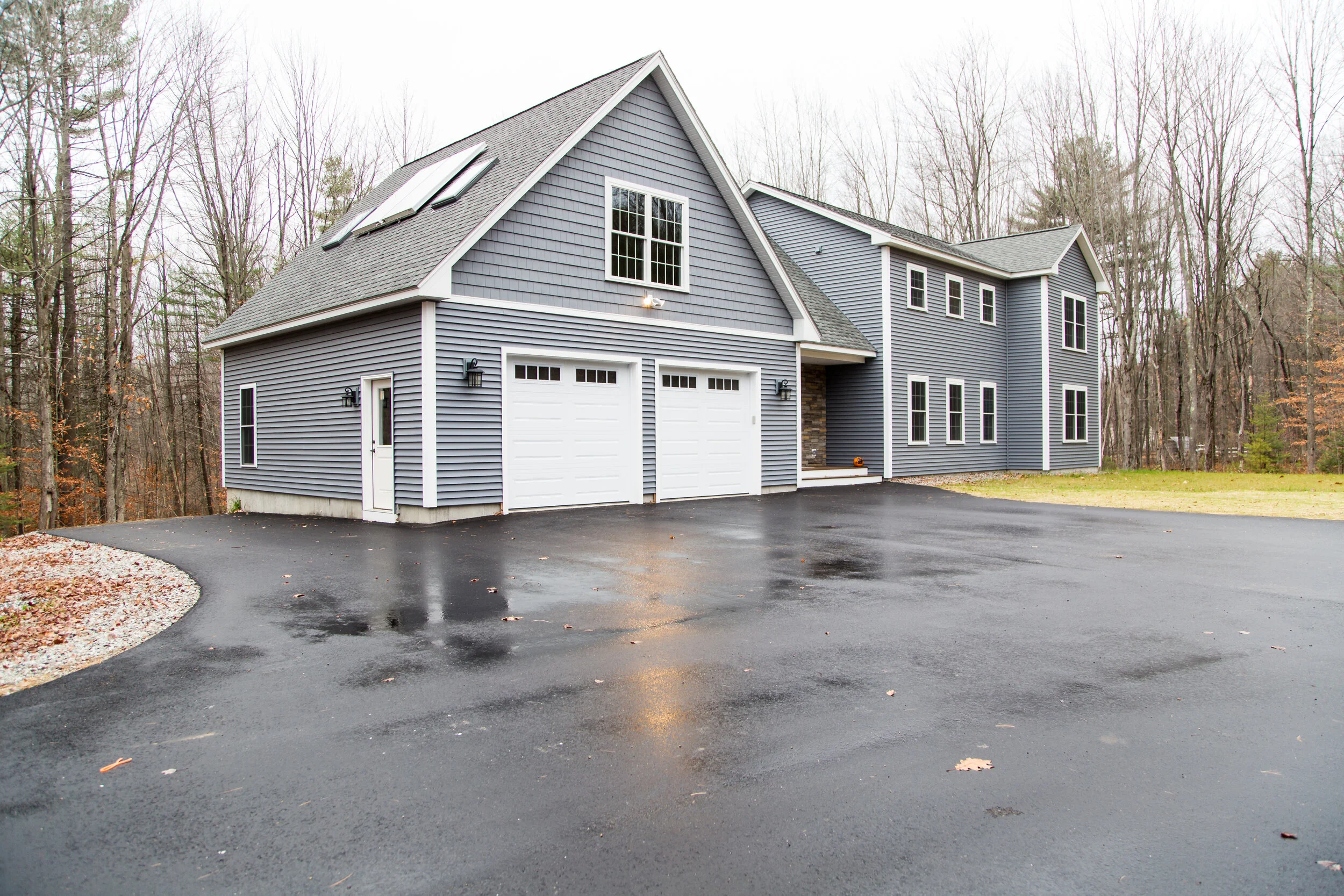
8. Contemporary Gray Addition with Skylights
While the gray siding and clean lines are sharp, the skylights in the garage roof are the game-changing element here. Garages are notoriously dark spaces, often relegated to pure utility. By adding skylights, the owner has transformed this space into something more. It suggests the garage is used for more than just parking—perhaps a workshop, a home gym, or a studio where natural light is a huge asset. It’s a thoughtful upgrade that elevates the addition from a box for cars to a truly usable bonus space. Compare this to the similar suburban feel of Idea #14, but with a more modern touch.
|
📋 Copy HEX 🔗 Share |
You can achieve this sleek, modern look for less. Instead of premium horizontal siding, look at cost-effective vinyl or fiber cement options in a similar dark gray. Skip the skylights initially (you can add them later) and focus on well-placed windows in the garage doors and on a side wall to bring in light. For lighting, choose simple, black ‘barn ‘light’-style sconces from a big-box store like Home Depot for under $50 each, which mimic the look of the more expensive carriage house fixtures.
9. Bright and Simple Light Yellow Garage Addition
The trick to making a colorful siding choice like this light yellow work is to keep absolutely everything else simple and consistent. Notice how the garage door, the side door, the window trim, and the corner boards are all the exact same shade of crisp white. This creates a clean, unified frame for the yellow and prevents the look from becoming busy. If the trim were a different color or the doors were mismatched, the whole addition would feel disjointed.
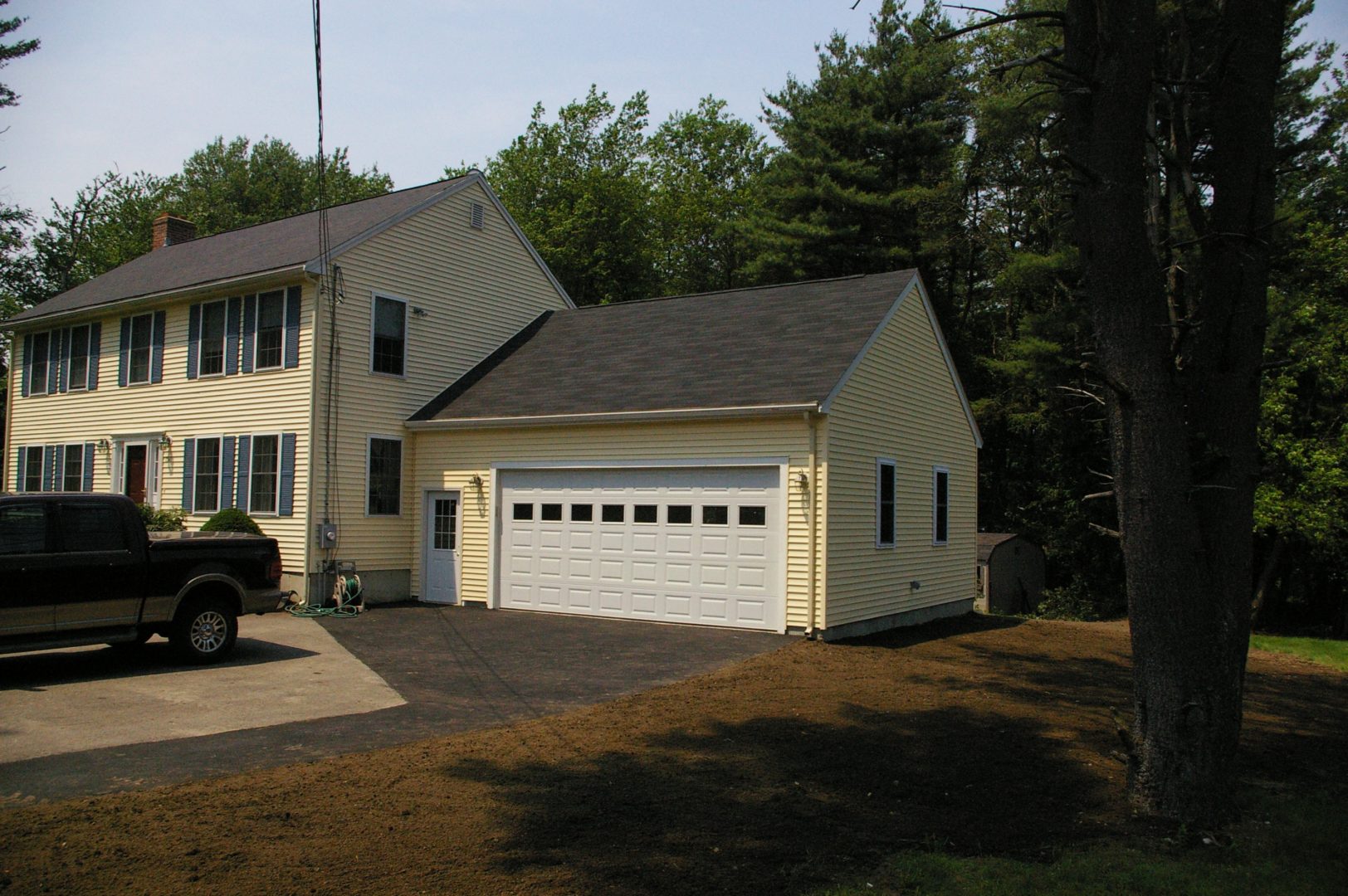
|
📋 Copy HEX 🔗 Share |
This addition follows a simple 80/20 rule. About 80% of the visible surface is a single, soft color (the light yellow siding). The remaining 20% is crisp white trim, used on every edge, window, and door. This strict color discipline is what gives it a cohesive, intentional appearance. The dark roof and driveway act as a grounding neutral base that doesn’t participate in the percentage math but is critical for anchoring the light colors.
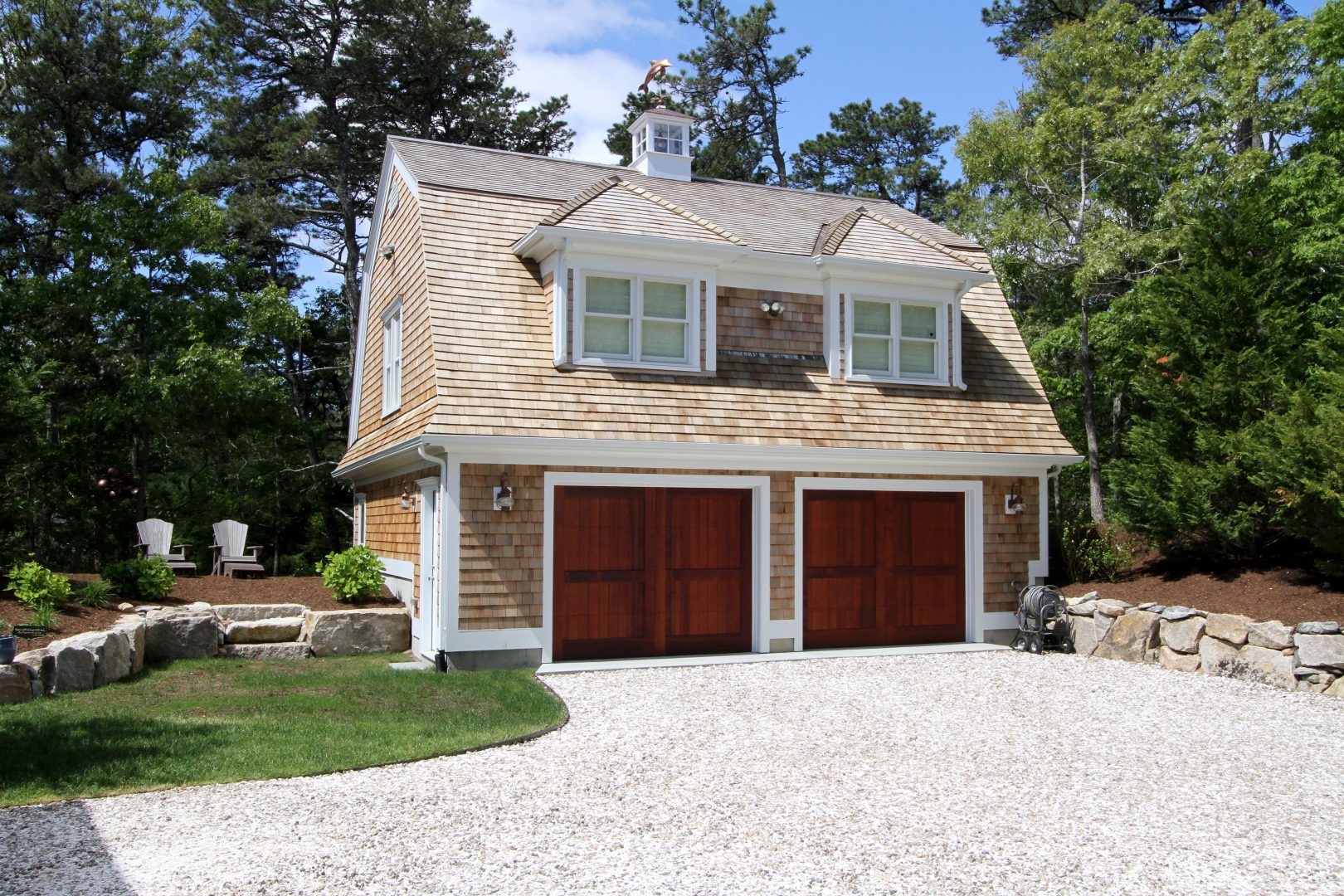
10. Designing an Apartment Above a Cape Cod Garage
- Check Local Zoning: Before you dream, you must verify. Many municipalities have strict rules about ‘Accessory Dwelling Units’ (ADUs). Confirm that a garage apartment is legal on your property and understand the restrictions on size, occupancy, and whether you can rent it out.
- Consult a Structural Engineer: A standard garage is not built to support a living space. You’ll need an engineer to assess the existing foundation and structure and design the necessary reinforcements to handle the weight of an entire apartment.
- Plan for Utilities: How will you get water, sewer, and electricity up to the second floor? These are major logistical and budgetary items that need to be planned from day one.
|
📋 Copy HEX 🔗 Share |
With housing costs continuing to rise and the shift towards remote work becoming permanent for many, the ‘garage apartment’ is seeing a massive resurgence in 2026. What used to be a niche ‘in-law suite’ idea is now a mainstream solution for creating rental income, housing adult children, or establishing a private home office completely separate from the main house. This trend is all about maximizing the square footage of your property in a smart, self-sufficient way.
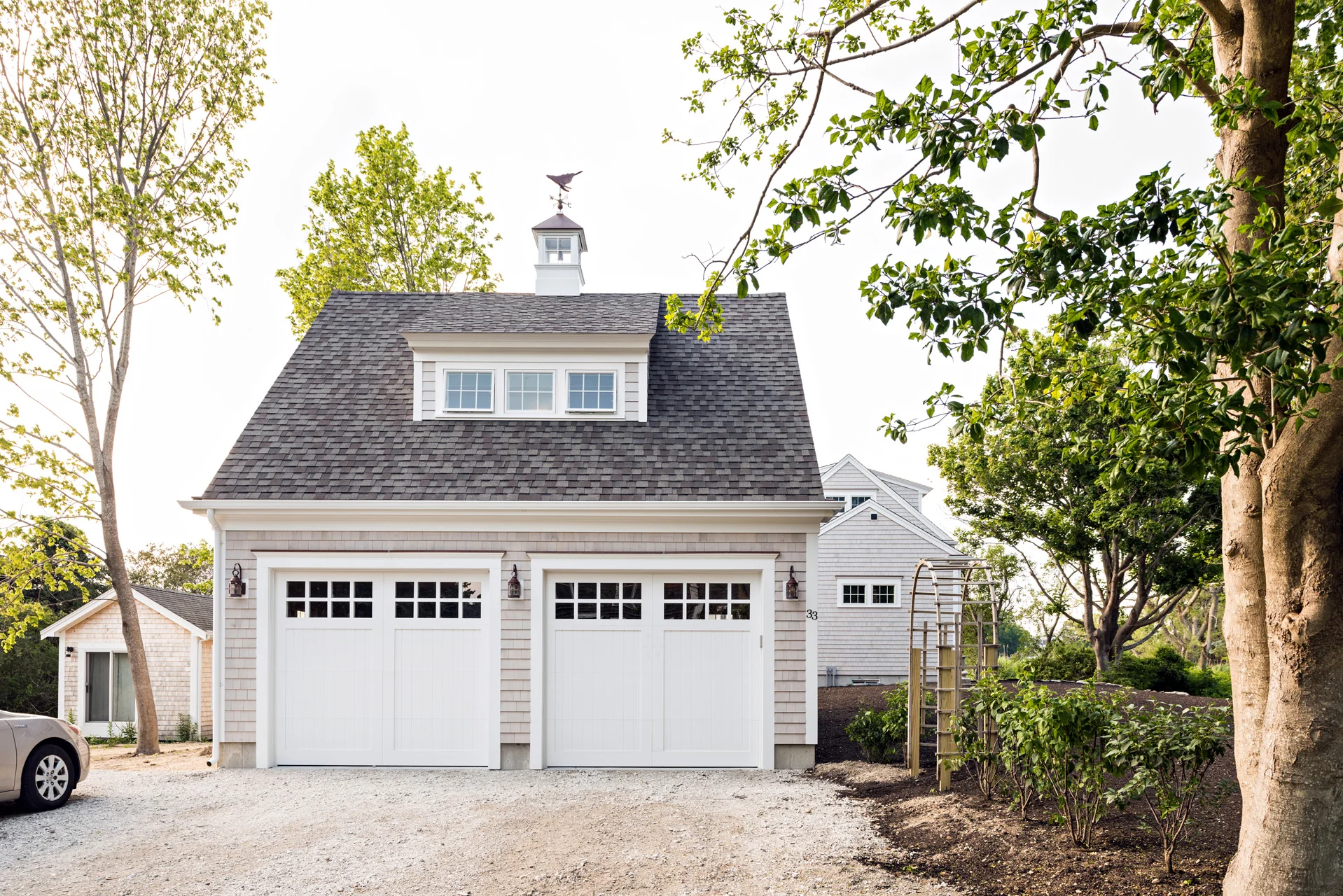
11. Shingle-Sided Garage with a Classic Cupola
This design excels by fully committing to a classic, coastal aesthetic. The light wood shingle siding provides rich texture that paint simply cannot replicate. The gambrel roof and cupola are traditional architectural elements that add height and character, preventing the two-story structure from looking like a bland box. Finally, the white carriage-style doors with their large windows create a friendly, welcoming facade. Every element works together to reinforce the charming, coastal New England vibe.
|
📋 Copy HEX 🔗 Share |
Natural wood shingles, like the ones shown here, are undeniably beautiful but require the most upkeep of any siding material. They will need to be professionally cleaned every few years to remove mildew and dirt. Depending on the type of wood and your climate, they also need to be resealed or re-stained every 5-7 years to protect against moisture and sun damage. If you love the look but not the work, consider high-quality polymer or fiber cement shingles that mimic wood without the maintenance.
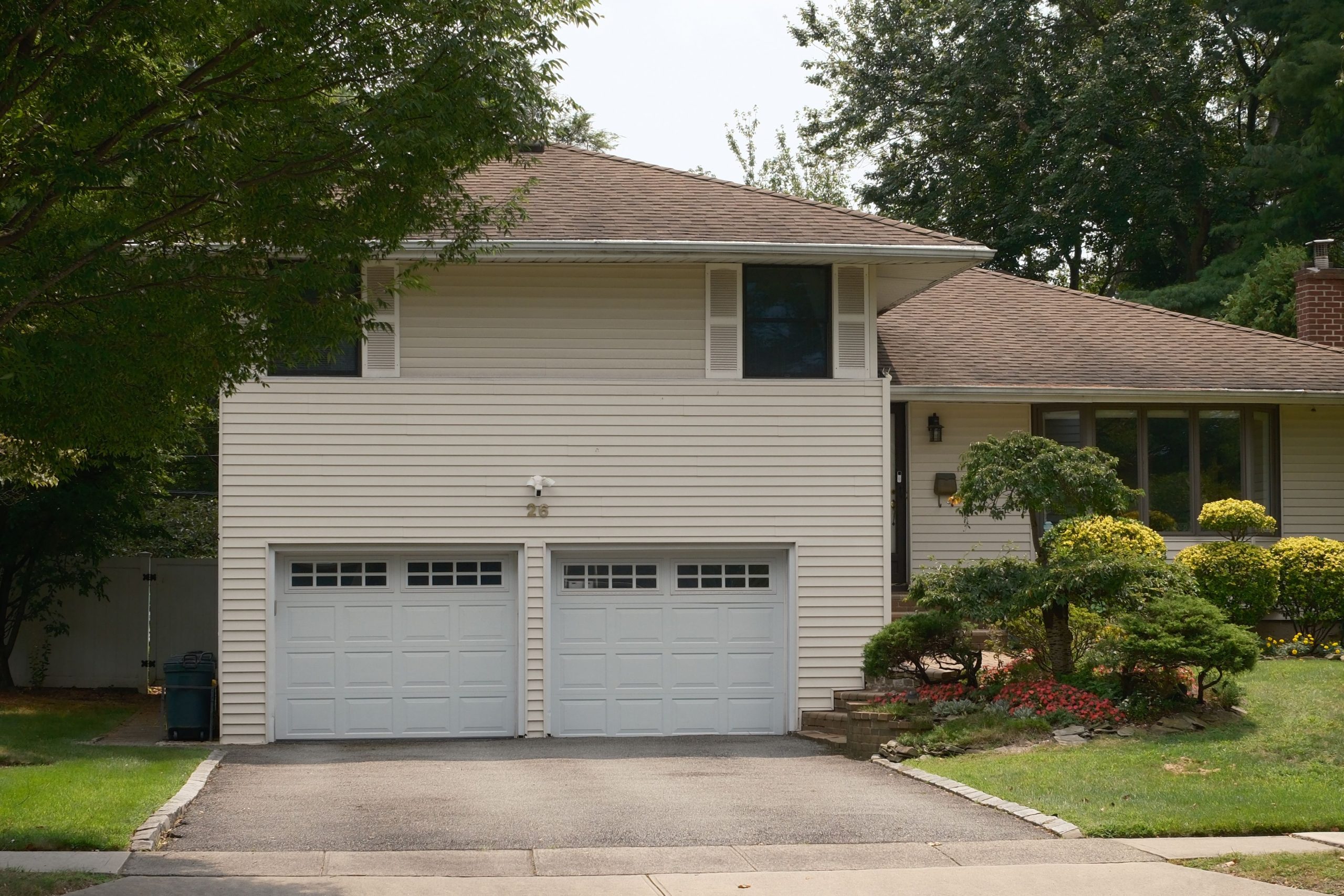
12. Suburban Standard: Beige Siding and Dual Garage Doors
The most important element in this photo isn’t the house itself but the mature, well-planned landscaping. The beige siding and white garage doors are a perfectly nice, neutral backdrop, but it’s the layers of green and yellow shrubs and the colorful ground cover that give this home its curb appeal and established feel. If you were to strip all the plants away, the house would look generic and bare. The landscaping is doing all the work to create a custom, high-end impression.
|
📋 Copy HEX 🔗 Share |
A beige and white color scheme is safe, but it can also be incredibly boring if not executed with care. Without the rich landscaping seen here, a house like this can easily look bland and dated. To avoid this, you need to add texture and depth. Consider adding shutters, decorative hardware on the garage doors, or substantial light fixtures to create points of interest. A neutral palette requires a stronger focus on architectural detail and texture to succeed.
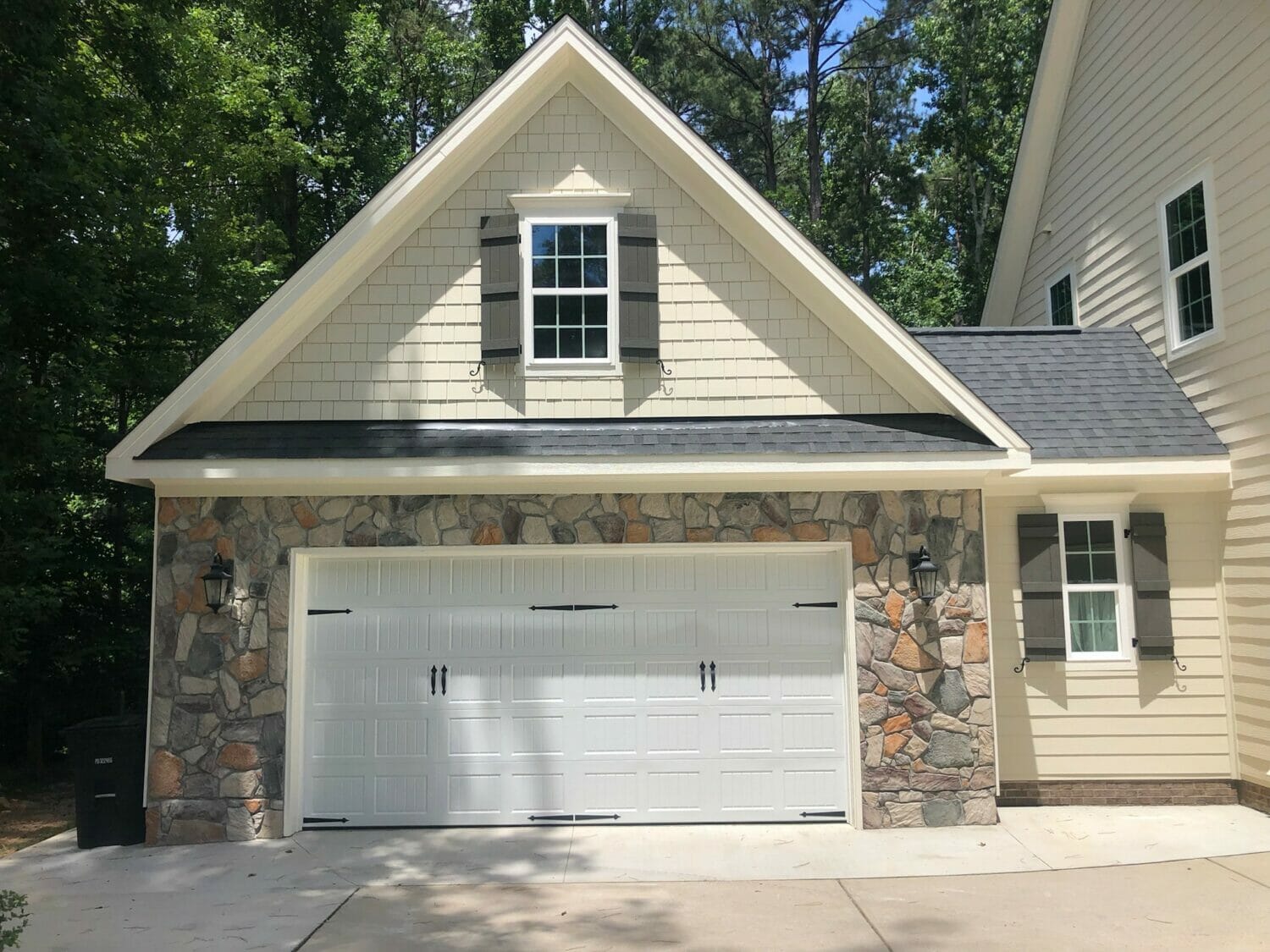
13. Mixed Materials: Stone Facade with Scalloped Shingles
This look is a beautiful exercise in texture mixing. The formula is roughly 40% rugged stacked stone, 40% traditional horizontal siding, and 20% detailed accent siding (like the beige scalloped shingles in the gable). The key is that while the textures are very different, the colors are all in the same warm, earthy family. This chromatic harmony allows the different materials to feel cohesive rather than chaotic. The black hardware and dark gray roof/shutters provide a necessary grounding contrast. This material mix feels more custom than the stone on its own, showcased in Idea #4.
|
📋 Copy HEX 🔗 Share |
When combining stone veneer with siding, the transition point is everything. The best application, as seen here, is to have the stone cover the entire first floor of the garage, with a clean horizontal line where the siding begins. This feels intentional and grounded. Avoid ‘patches’ of stone or running a thin stone wainscoting just a few feet up the wall, which can look cheap and stuck-on. Let each material have its own clearly defined zone.
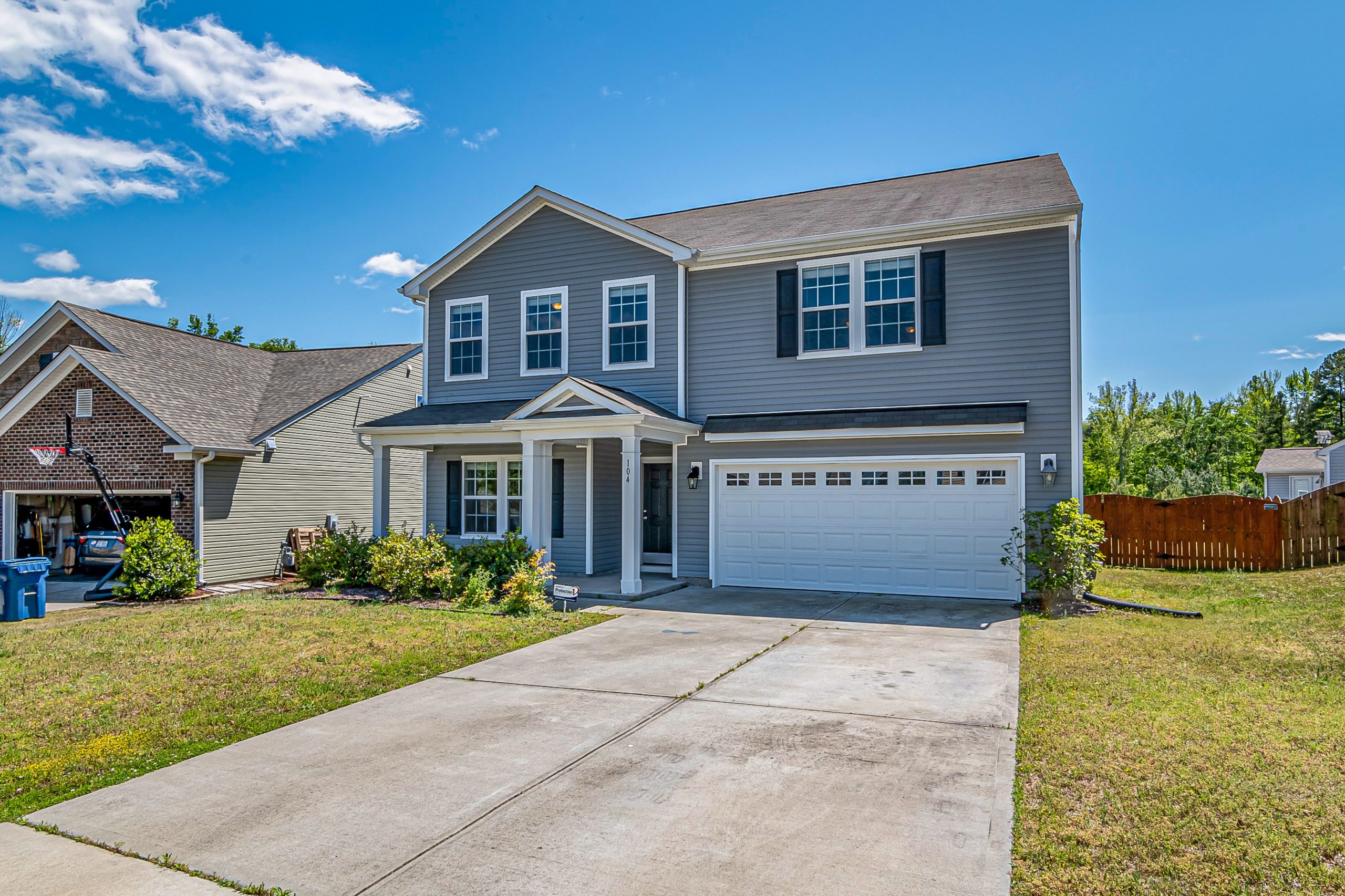
14. Classic Gray Colonial with an Attached Garage
This is a great example of a classic, attainable suburban look. You can recreate this style on a budget by focusing on standard, widely available materials. Choose a mid-range vinyl siding in gray, which is one of the most affordable options. Opt for a standard paneled garage door from a major brand like Clopay and add window inserts for a more custom look. The dark shutters and simple white porch columns are inexpensive additions that have a big impact. Your biggest savings will come from choosing these builder-grade staples over custom millwork or premium siding. A similar look to this is seen in Idea #8.
|
📋 Copy HEX 🔗 Share |
The success of this front-facing attached garage hinges on balance. This design works well for a two-story Colonial-style home that is at least 30-35 feet wide. The house needs enough visual mass to not be overpowered by the garage. The small covered porch also plays a crucial role by pulling focus back towards the center of the home and the actual front door, preventing the garage from being the first and only thing you notice.
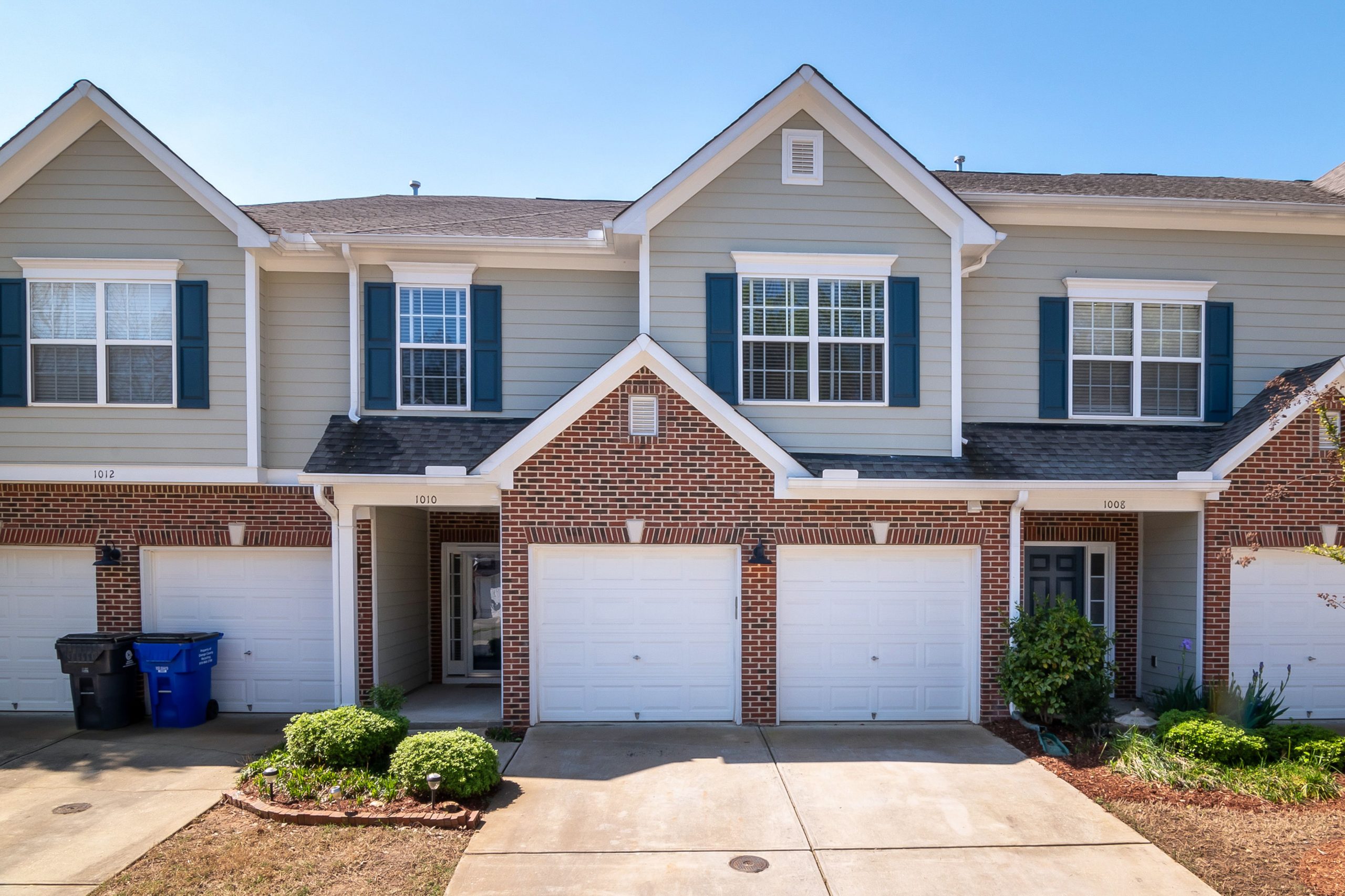
15. Uniform Townhouse Look with Light Green Siding
The design of these townhouses works because of disciplined repetition. Every unit uses the exact same palette: light green siding, red brick, white trim and garage doors, and dark blue shutters. This consistency creates a pleasing rhythm and a clean, orderly streetscape. The brick on the ground level provides a sense of weight and permanence, while the lighter green siding on the upper floors keeps the buildings from feeling too heavy or imposing. It’s a formula that delivers a lot of classic charm.
|
📋 Copy HEX 🔗 Share |
In 2026, we are seeing more and more new developments and attached-home communities moving away from bland beige and gray. Soft colors like this light green, sage, and dusty blue are trending for exteriors. They offer personality and charm without being overly loud or divisive, which is key in a community setting where homes are close together. It reflects a broader desire for homes that feel a bit more cheerful and individualized, even within a uniform development.
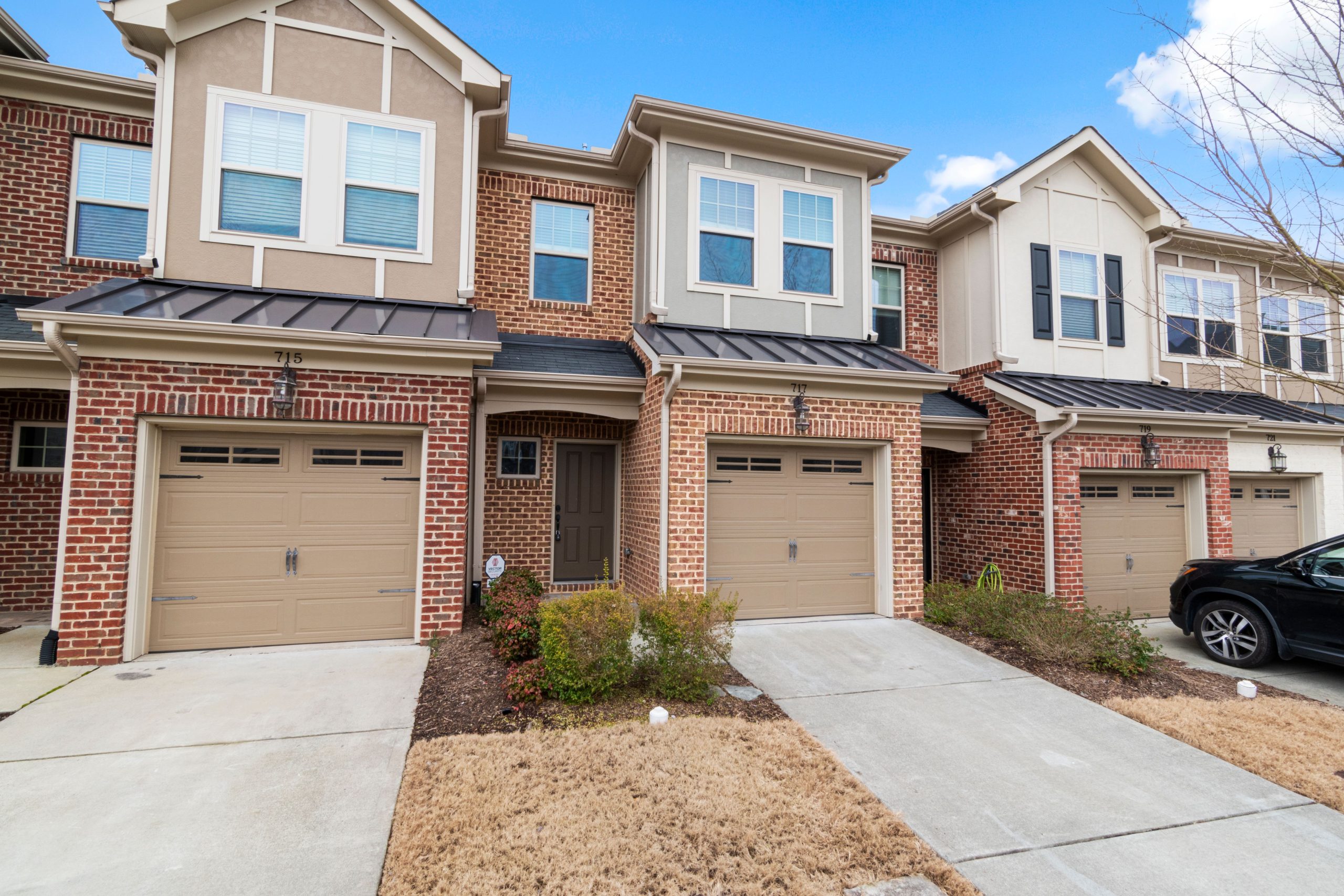
16. Multi-Texture Townhouses with Tan Garage Doors
While this mixed-material look adds variety, it’s walking a fine line. With brick, beige stucco, gray stucco, and black metal awnings all on one facade, the look can become visually busy if not carefully balanced. For a potential buyer or homeowner, this can be polarizing. A simpler palette, like the one in Idea #15, often has broader and more timeless appeal. When selling, a complex exterior can sometimes be a negative if it’s too taste-specific.
|
📋 Copy HEX 🔗 Share |
If you have a townhouse with a prominent garage, one of the easiest and most affordable ways to upgrade your curb appeal is by simply painting the garage door. Instead of a default white, choosing a coordinating color like the light tan seen here instantly makes the home feel more custom and designed. A gallon of high-quality exterior paint is around $50-$80. Add decorative magnetic hardware for $20-$40 to simulate the look of expensive carriage doors. That’s a huge impact for about $100.
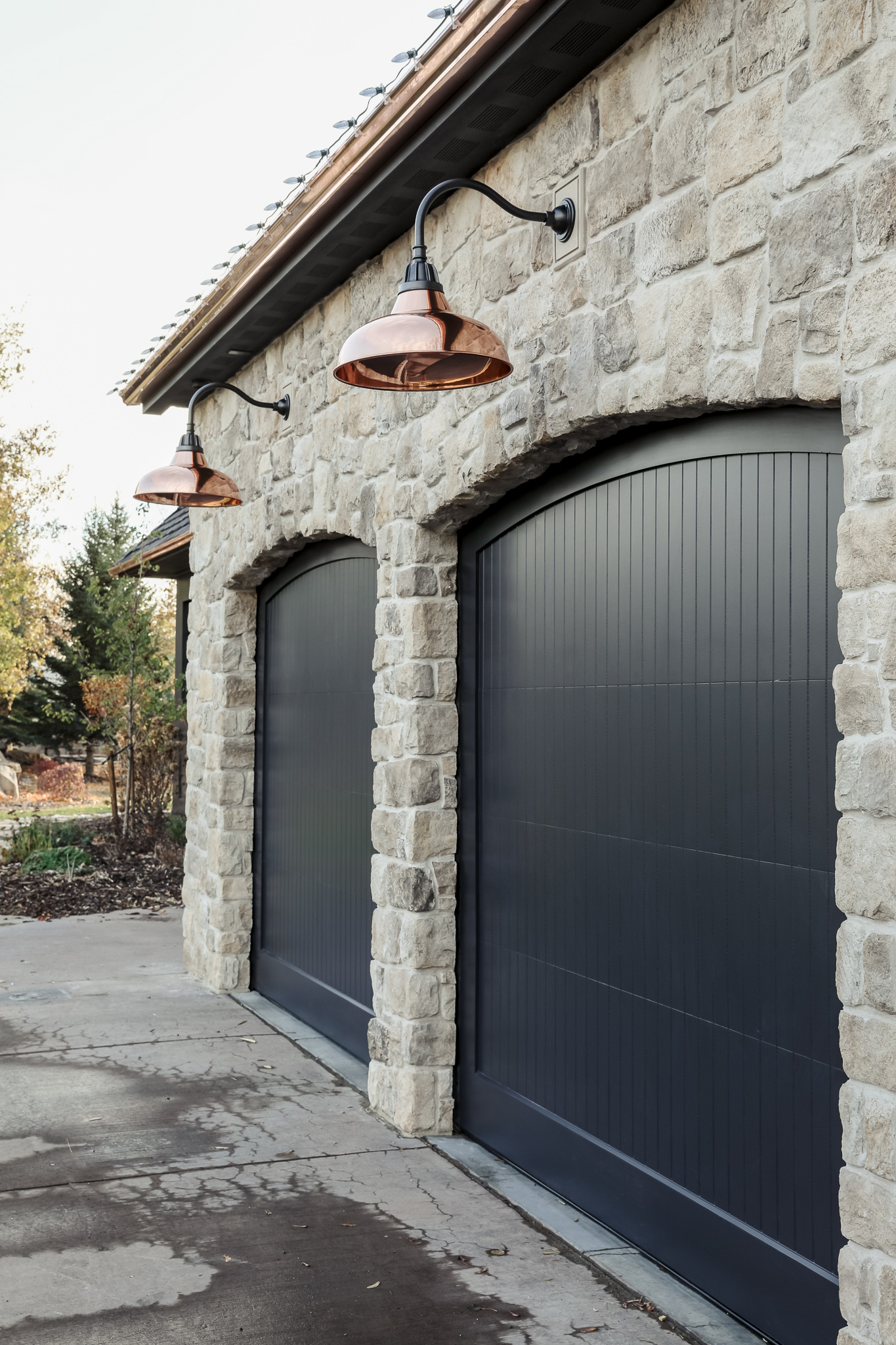
17. Rustic Stone Facade with Arched Doors
The arched garage doors are unquestionably the hero of this design. The elegant curve softens the heavy, rustic feel of the stone, creating a look that’s both sturdy and sophisticated. Standard rectangular doors would have worked, but they would have resulted in a much more common, blocky appearance. The arches elevate the entire facade, making it feel more like a custom European countryside home than a standard suburban garage. It’s a significant investment in form that pays huge dividends in character.
|
📋 Copy HEX 🔗 Share |
Real copper lighting and gutters, like the ones that make this exterior so special, are stunning but come with a specific maintenance reality. Over time, copper develops a patina, turning from a shiny penny color to a cloudy brown, and eventually to the characteristic green/blue. While many people love this natural aging process, if you want to maintain the original warm metallic shine, the copper will need to be polished and sealed by a professional every 1-2 years, which can be a significant recurring cost.
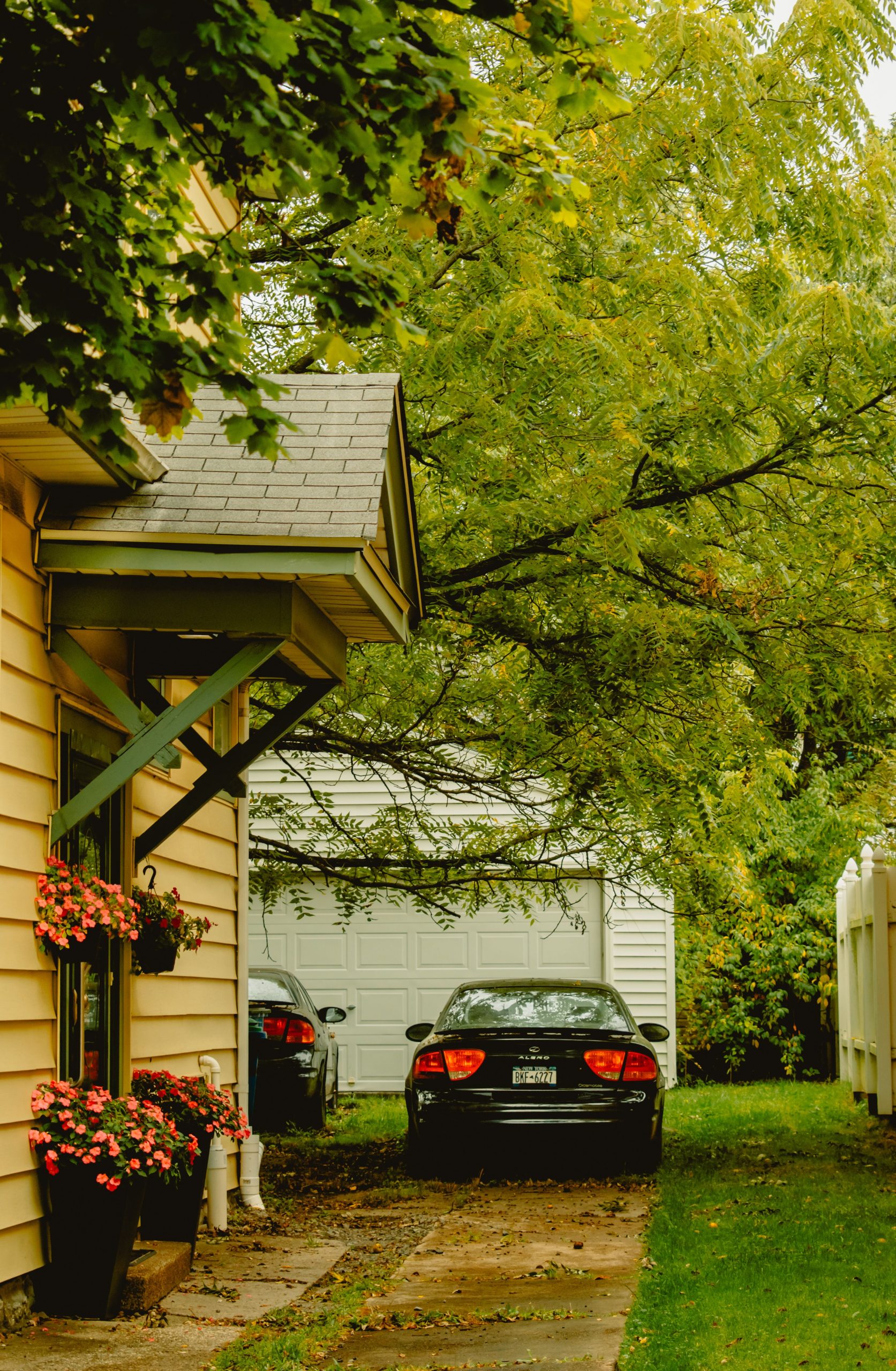
18. Adding an Off-White Garage to a Yellow House
Choosing the right ‘white’ is critical for a cohesive look. Here’s how to get it right. 1. Gather paint chips in various off-white, cream, and beige tones. 2. Tape them directly onto your existing yellow siding. 3. Observe them at different times of day—morning light, harsh midday sun, and evening shadow. A white that looks perfect in the morning might look too yellow or too gray in the afternoon. 4. Once you’ve narrowed it down to two or three options, buy sample pots and paint larger swatches before committing. The goal is a complementary, not a competing, neutral.
|
📋 Copy HEX 🔗 Share |
- Match the Trim: Your new garage door color should ideally match the existing trim color of your house for the most seamless look. If your trim is bright white, an off-white door might clash.
- Consider the Undertones: Look at your yellow siding closely. Does it have warm (peachy) or cool (lemony) undertones? Your off-white should share the same undertone.
- Driveway Color: Note the color of your driveway. The off-white door here works well with the light gray concrete. If you have a dark asphalt driveway, a brighter white might provide better contrast.
19. A Trio of Simple, Gabled Garages
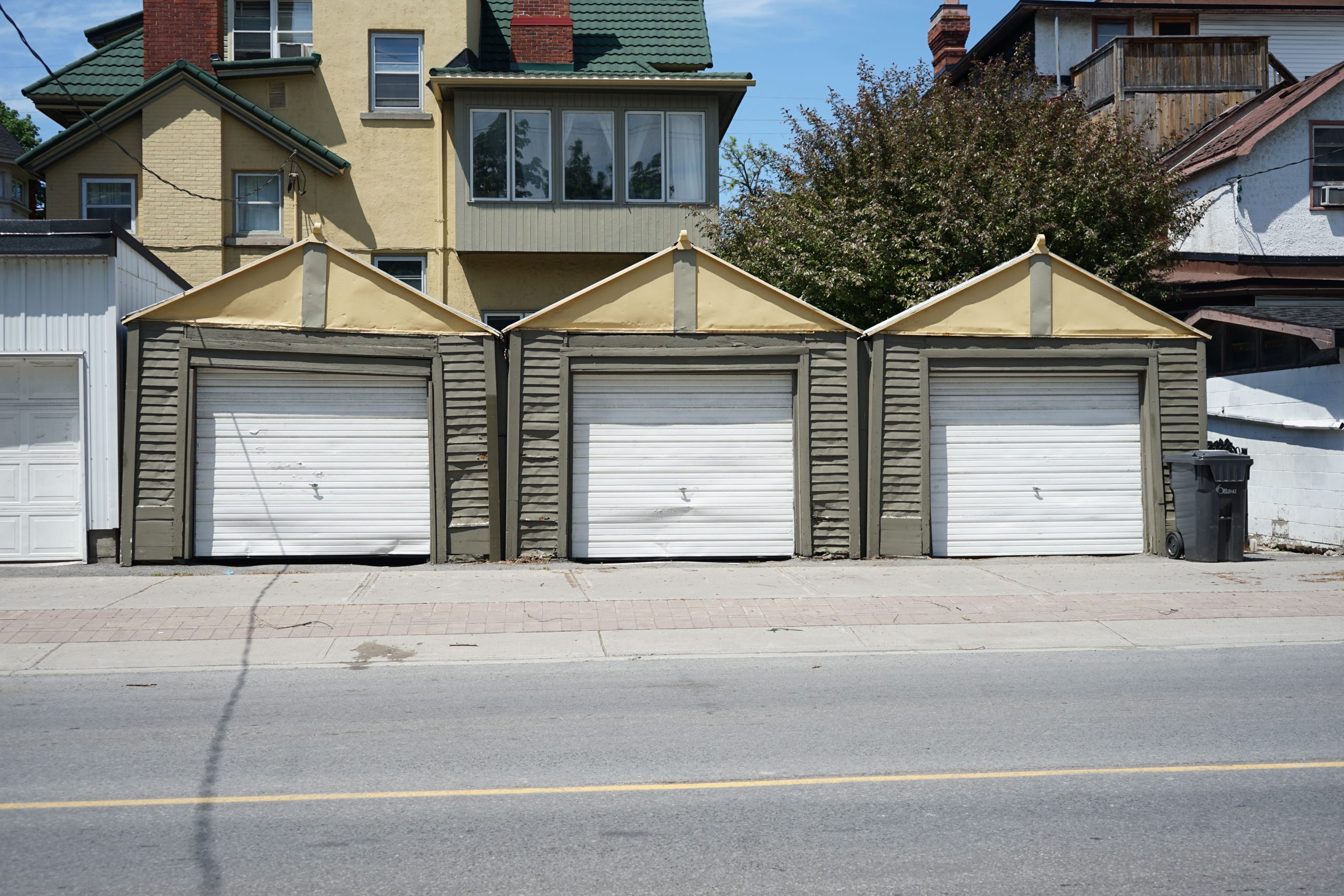
This is a study in simple, effective color blocking. Each garage unit follows a strict formula: 50% dark green siding, 30% white door, and 20% pale yellow roof. This clear, three-part color scheme is what gives the trio its graphic, almost storybook quality. The repetition of this exact formula across all three units creates a powerful visual rhythm. The key is the limited palette—using more than three main colors would have made the scene feel chaotic and unplanned.
|
📋 Copy HEX 🔗 Share |
When placing multiple small structures like this side-by-side, spacing is everything. The small but consistent gap between each garage is crucial. It gives each unit its own identity and prevents them from looking like one long, awkward building. A good rule is to leave a space that’s at least 18-24 inches wide between the structures. This also provides necessary access for maintenance like painting and repairs down the line.
20. Detached Garage with Brick and Stucco
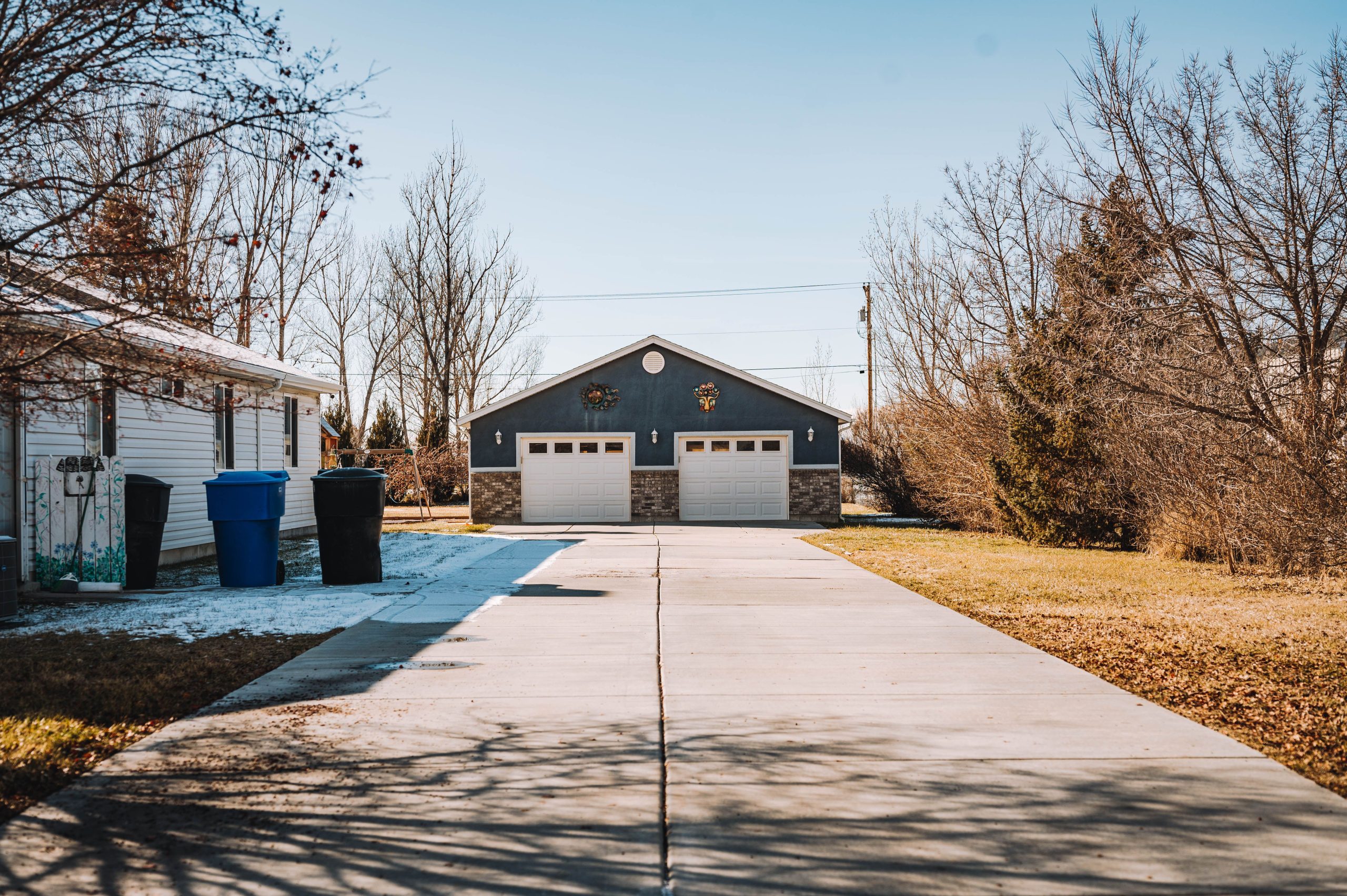
- Basic Garage Shell (2-car, slab foundation): $25,000 – $40,000
- Brick Veneer (lower portion only): $3,000 – $6,000
- Stucco Application: $5,000 – $9,000
- White Paneled Garage Doors (2): $2,500 – $5,000
- Lighting & Decorative Accents: $500 – $1,500
- TOTAL: $36,000 – $61,500
- Budget alternative: For a similar appearance at a lower cost (around $25,000), use brick-look veneer panels instead of masonry, opt for textured fiber cement siding instead of stucco, and choose basic white garage doors without windows.
|
📋 Copy HEX 🔗 Share |
This design successfully combines multiple materials by assigning them clear roles. The brown brick provides a heavy, durable base, grounding the structure visually. The lighter gray-blue stucco on the upper portion keeps the building from feeling too dark or massive. The crisp white of the garage doors and gable vent provides a clean, bright contrast that draws the eye. This clear separation of materials—bottom, middle, and accent—creates a balanced and intentional composition.
21. White Farmhouse Garage with X-Brace Doors
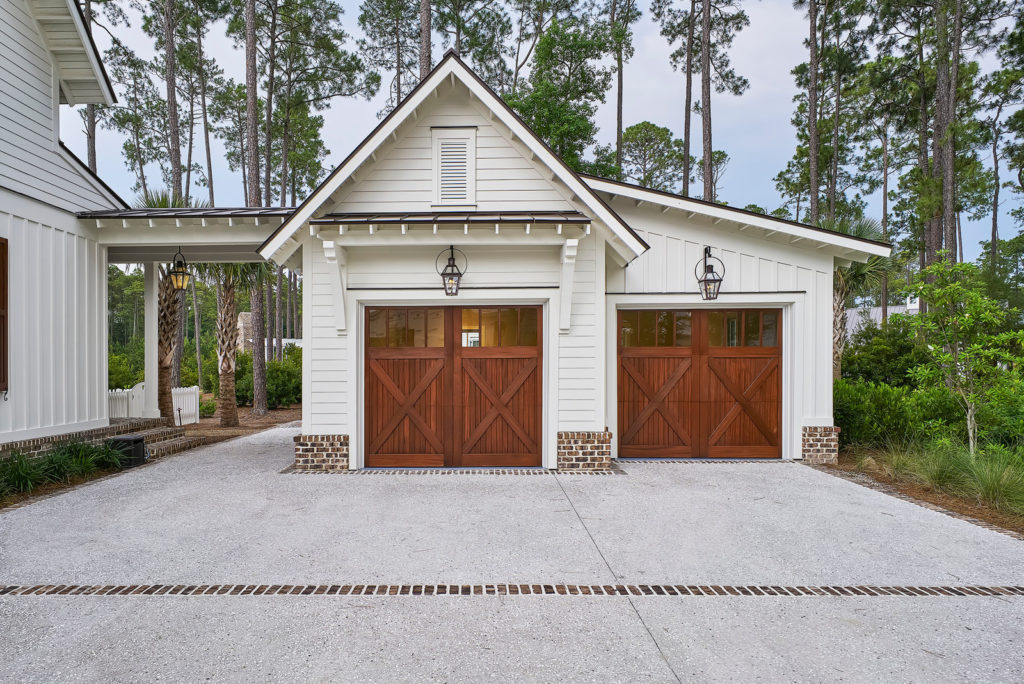
The A-frame gable over the left garage door is a key detail for this style, but it requires sufficient ceiling height inside the garage to be effective. For this architectural feature to look proportional and not stunted, you’ll want the interior garage ceiling to be at least 10 feet high, with 12 feet being ideal. This allows the pitch of the gable to be steep enough to make a visual statement and differentiates it from a standard low-slope rooflineSeen in a different style in Idea 2‘s farmhouse, this shows that proportions are key.
|
📋 Copy HEX 🔗 Share |
Those gorgeous dark wood garage doors with the X-brace design are a hallmark of the modern farmhouse look, but they are also a significant investment and a maintenance commitment. Real wood doors can cost two to three times as much as steel or vinyl doors. They also require regular sealing or staining every few years to protect them from sun and moisture, which cause fading and warping. If you’re not prepared for the upkeep, consider insulated steel doors with a faux wood grain finish and magnetic decorative hardware.
22. Modern Mountain Home with Integrated Garages
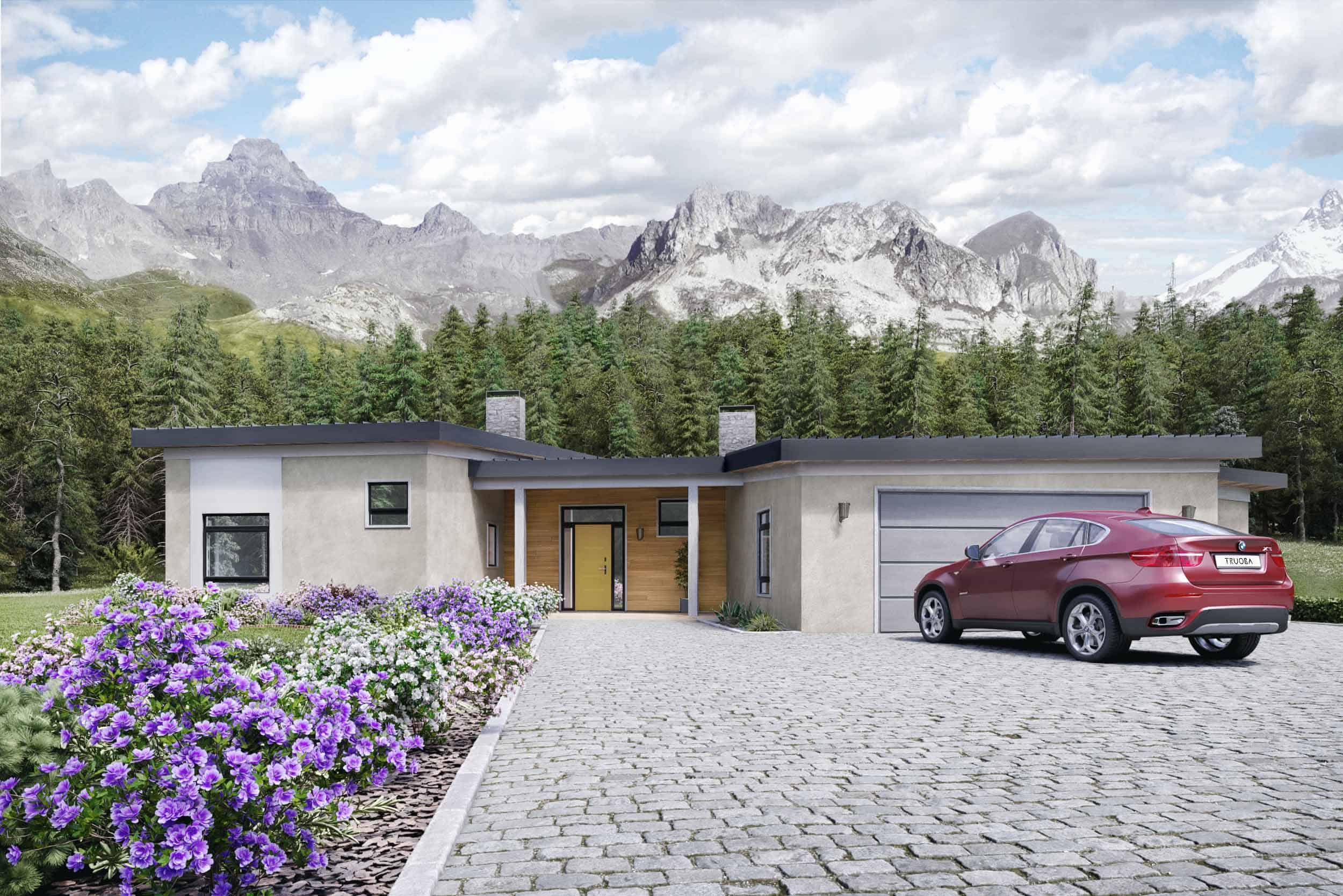
The singular element that defines this home’s character is its seamless integration with the natural landscape. This isn’t just a house with a garage; it’s a structure designed to be part of the forest. The light beige stucco and warm wood paneling echo the colors of the surrounding earth and trees. The low, single-story profile doesn’t try to dominate the scenery. Even the pebble driveway feels more organic than harsh asphalt. The entire design prioritizes a harmonious connection to its mountain setting.
|
📋 Copy HEX 🔗 Share |
When building in a natural setting, draw your color palette directly from the environment. Take photos of the rocks, tree bark, soil, and native plants on your property. Use these as your reference when choosing stucco, paint, and stain colors. For this home, the light beige stucco could have been pulled from a local stone, and the warm brown wood paneling mimics the tone of pine bark. This technique ensures your home will always look like it belongs right where it is.
23. Traditional Home with Brick and Shingle Siding
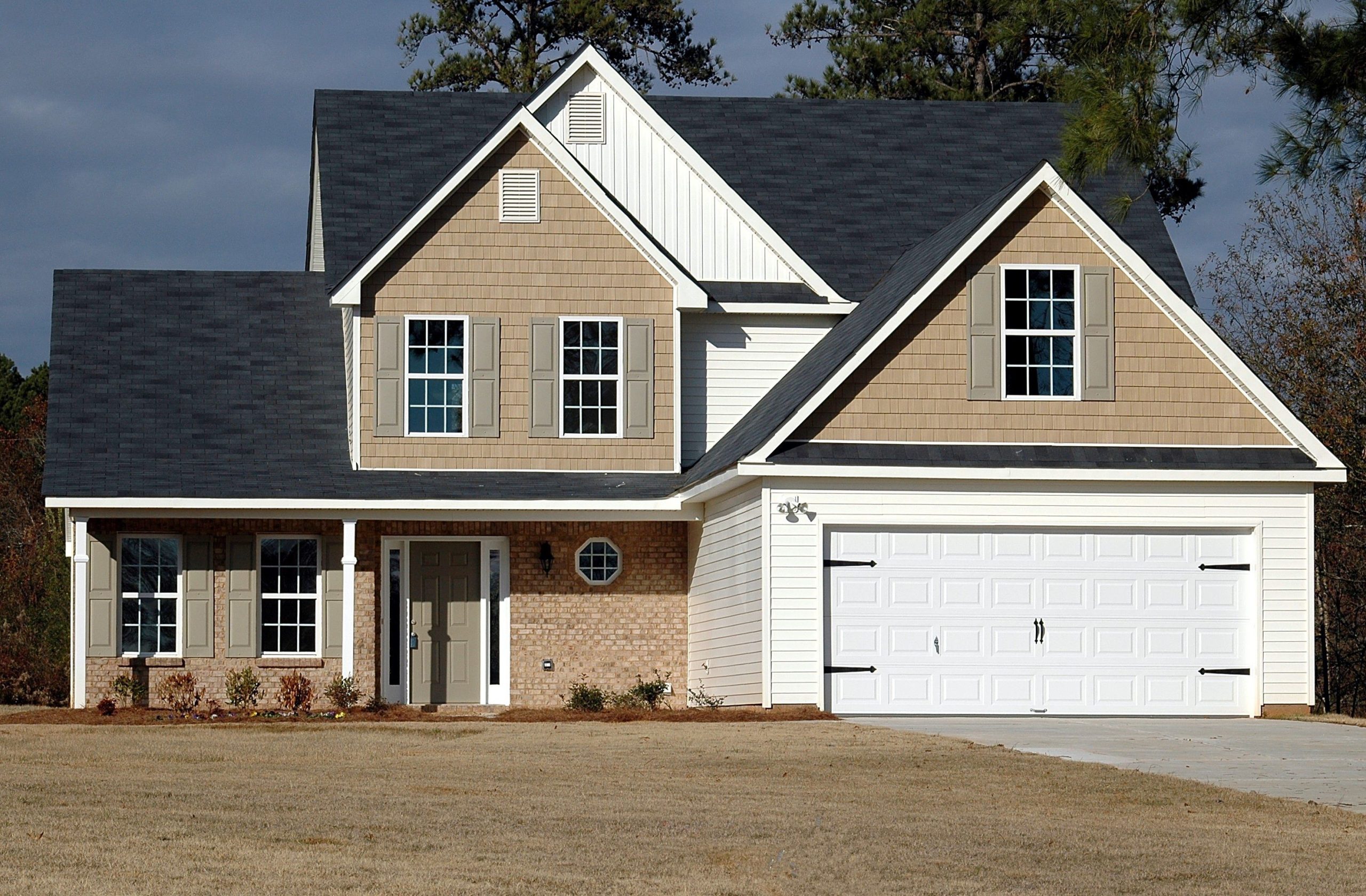
This classic, multi-textured look can be achieved with more budget-friendly materials. Instead of expensive cream-colored brick, you can use a brick veneer product, which is thinner and cheaper to install. For the siding, look for vinyl or fiber cement shingles instead of real wood, which offers a very similar look with less cost and maintenance. Finally, the decorative black hardware on the garage door is often sold as inexpensive magnetic kits that give the illusion of high-end wrought iron hinges and handles. Proper integration is key, a theme we explore in our common mistakes section.
|
📋 Copy HEX 🔗 Share |
This home’s exterior works because it sticks to a simple, two-part material strategy. The heavier, more textured material (the cream brick) is kept on the lower level, providing a solid visual foundation for the house. The lighter material (the beige shingle siding) is used on the upper level, which keeps the two-story home from feeling too bulky or top-heavy. The dark gray roof and shutters act as a unifying accent color that ties both materials together.
Conclusion
An attached garage is so much more than a place to park your car; it’s an opportunity to enhance your home’s beauty, functionality, and value. Whether you’re drawn to a rustic stone facade or a clean modern farmhouse, the right design can transform the way you live. We hope these real-world examples have sparked your imagination and given you the confidence to move forward.
Feeling inspired? Don’t lose all these ideas. Go ahead and save your favorites to your Pinterest board to start building the vision for your perfect garage addition.