
You know that feeling when you finally find the composite deck railing idea that looks exactly right for your space? That perfect blend of style, safety, and low-maintenance bliss you’ve been saving to your Pinterest boards for months. After filtering through hundreds of options from top brands like Trex, Schillings, and ProWood, we narrowed it down to the 29 ideas that actually deliver. We’ve curated looks covering everything from sleek black minimalist designs to classic white railings with integrated seating. In 2026, it’s all about creating a seamless indoor-outdoor flow, and your deck railing is the frame for that perfect view. And stay until the end — we break down the most common mistakes that can ruin these looks. 📌 Save this to Pinterest for later — you’ll want to revisit these ideas.
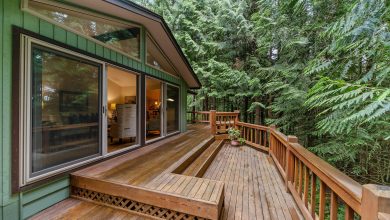
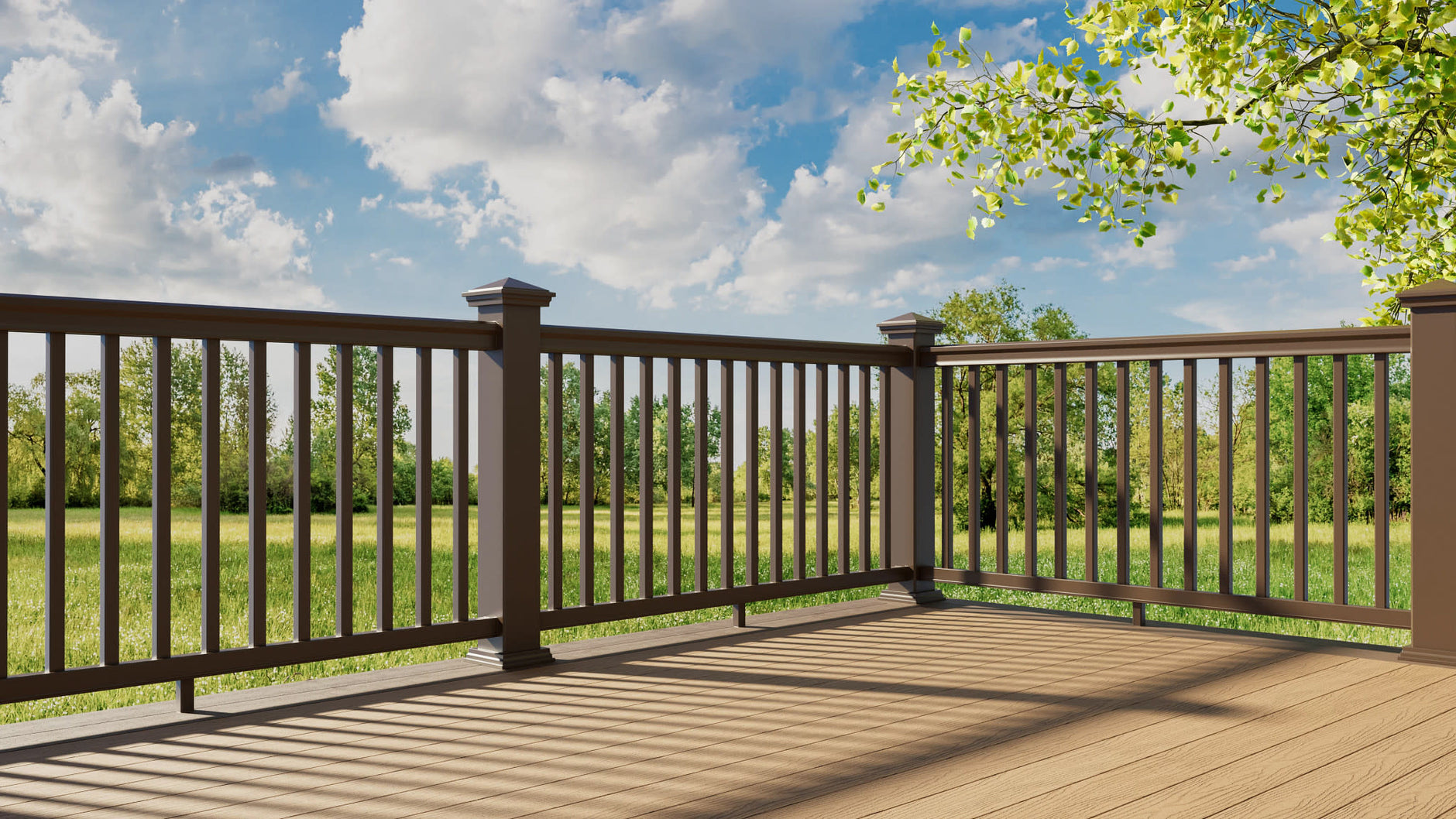
1. Warm Brown Composite Railing with Classic Square Spindles
What makes this design so successful is the smart use of contrast and proportion. The deep, dark brown of the railing creates a strong visual frame against the lighter brown of the deck boards. This distinction adds depth and prevents the deck from looking like a flat, monotonous surface. Furthermore, the substantial, chunky posts anchor the design, giving it a feeling of permanence and safety that complements the wide-open natural view. It feels sturdy without feeling bulky.
|
📋 Copy HEX 🔗 Share |
Composite materials are champions of low maintenance, but they aren’t “no maintenance.” For a railing like this, especially with the darker color, you’ll want to plan for a seasonal cleaning. A simple wash-down with soap and water each spring and fall will prevent pollen, dirt, and mildew from building up. Annually, check for any loose post caps or hardware, tightening as needed. The biggest advantage over wood? No staining, sealing, or painting required, saving you a full weekend of work every couple of years.
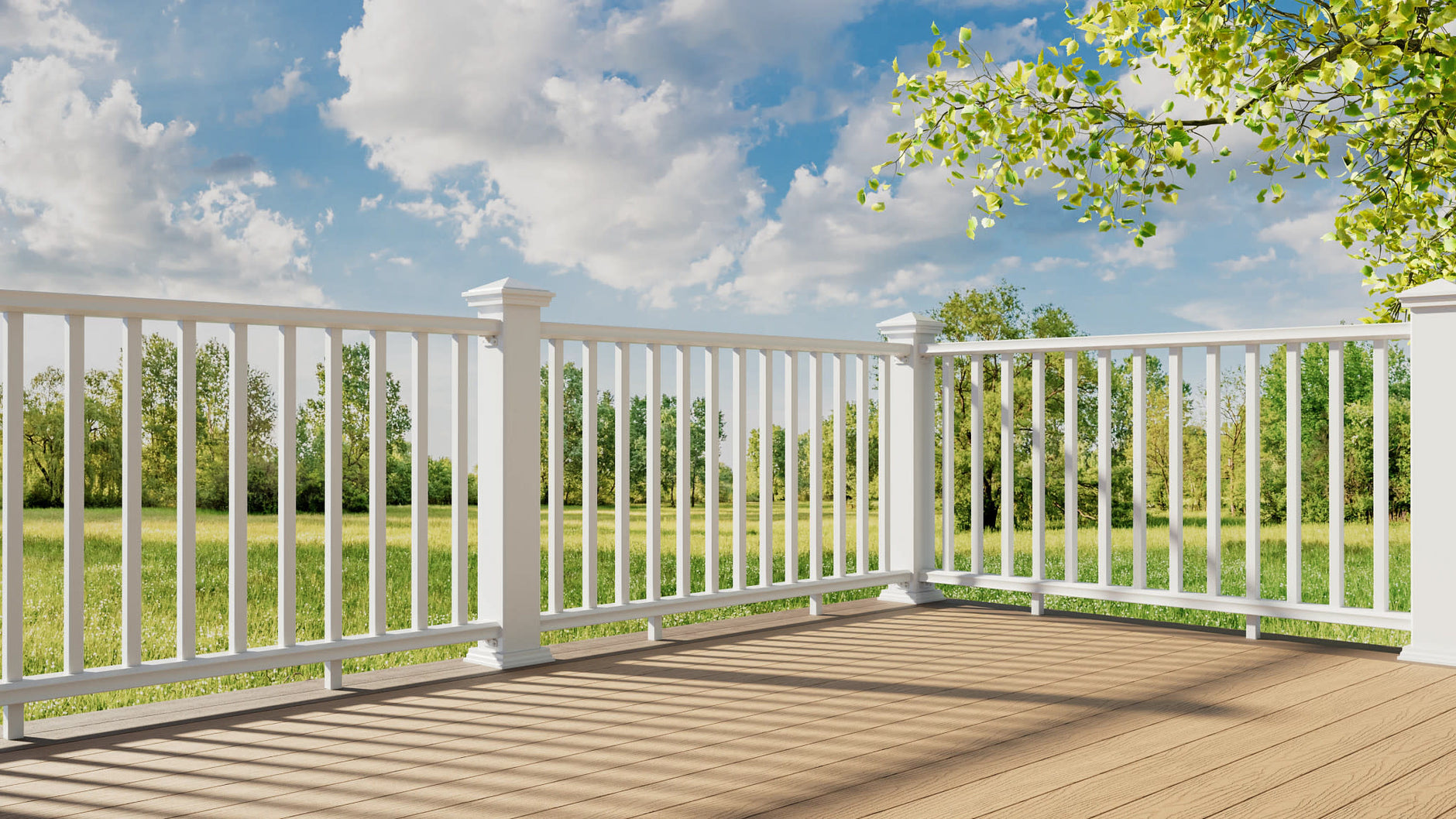
2. Crisp White Composite Railing Paired with Light Wood-Look Decking
To keep a white railing looking its absolute best, the secret is in the post caps. Instead of standard flat caps, choose a decorative, multi-layered style like the ones shown here. This small upgrade adds a touch of architectural detail that elevates the entire system from merely functional to truly finished. It breaks up the vertical lines of the posts and balusters, adding a sense of classic, custom-built quality. For an extra touch, consider solar-powered post caps that provide a soft, ambient glow in the evenings.
|
📋 Copy HEX 🔗 Share |
Think of this classic look as a simple equation: 60% neutral decking + 30% crisp white railing + 10% natural scenery. The light wood-look floor acts as a warm, neutral base that’s easy on the eyes. The white railing provides a bright, clean frame that pops against the green landscape. The final 10% is the view itself, which the simple railing design is meant to showcase, not obstruct. You could swap the decking for a light grey composite and achieve the same fresh, airy feeling.
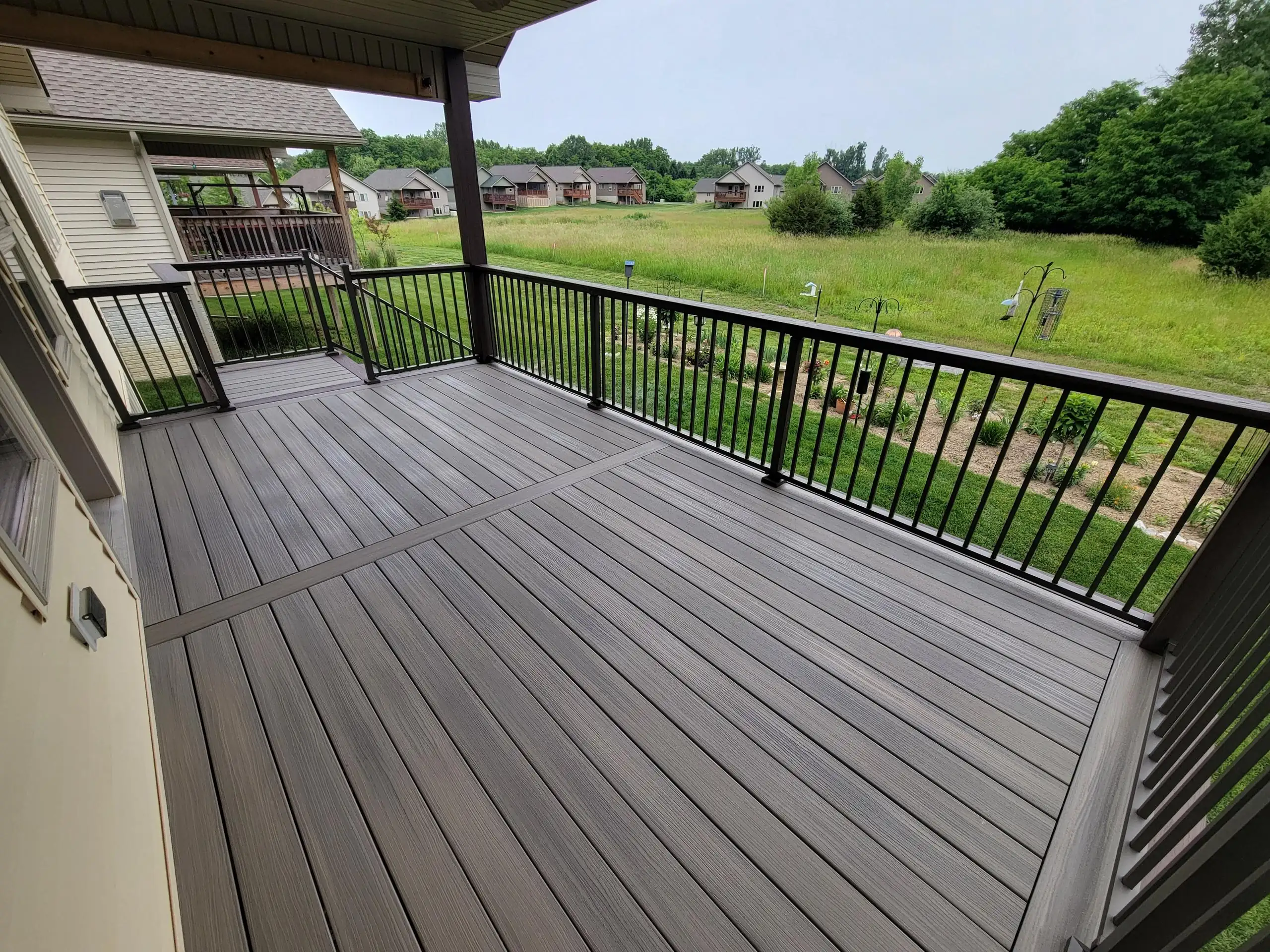
3. Contemporary Grey Deck with a Black Vertical Baluster Railing
The single element holding this entire look together is the clean, uninterrupted line of the black top rail. While the vertical balusters provide safety, it’s the horizontal rail that draws your eye across the landscape, enhancing the sense of spaciousness. If you swapped it for a thick, bulky wood or composite rail, the modern, open feel would be lost instantly. It’s a minimalist choice that maximizes the view and gives the entire deck a sharp, contemporary edge that feels intentional and high-end.
|
📋 Copy HEX 🔗 Share |
This minimalist railing style shines on larger, more expansive decks. For this look to feel open and not like a cage, you need a minimum deck depth of 12-14 feet. This allows for furniture groupings that don’t feel cramped against the railing. This idea works best for ground-level or second-story decks where the primary goal is an unobstructed view. Key considerations for this style include:
- Minimum Width: 16 feet to appreciate the long, clean lines.
- Ceiling Height: Not applicable for open decks, but ensure it doesn’t conflict with low-hanging eaves.
- View: Best for properties with a yard, trees, or a distant view to showcase.
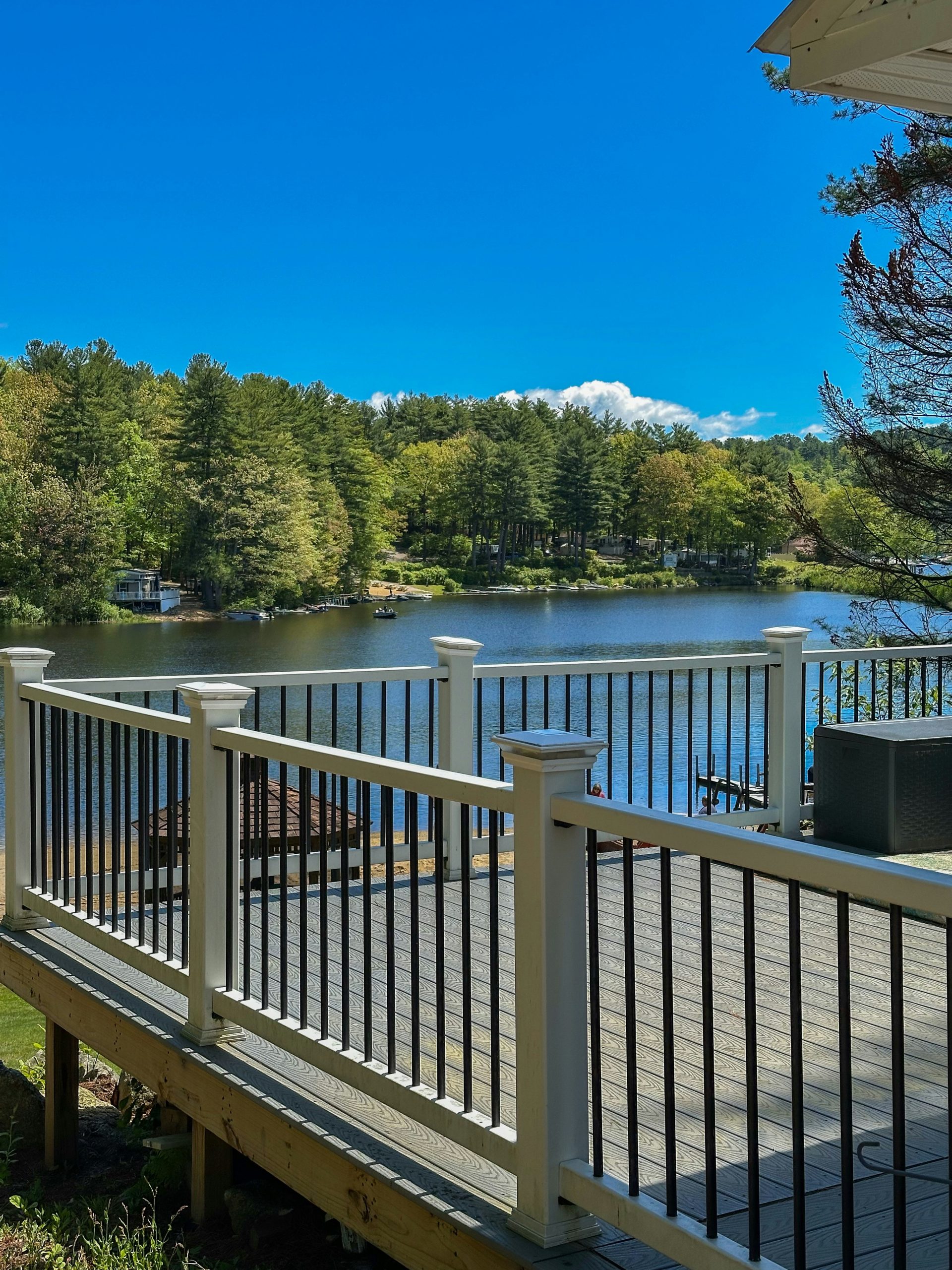
4. Two-Tone White and Black Balustrade Overlooking a Lake
While high-end composite systems can be pricey, you can get this timeless cottage look for significantly less. Check out complete railing kits from big-box stores like Lowe’s or The Home Depot, which often cost $30-$50 per linear foot. Instead of composite posts, use pressure-treated wood posts wrapped in a vinyl or PVC sleeve, which gives the same look for a fraction of the cost. For the balusters, standard black aluminum spindles are widely available and often more affordable than their composite counterparts. You can achieve this entire vibe for around $1,800-$2,500 on a standard deck.
|
📋 Copy HEX 🔗 Share |
A white railing with a water view is a dream, but be prepared for the reality of maintenance. The white horizontal surfaces, especially the bottom rail, will show every speck of dirt, pollen, and mildew. If your deck is near trees that drop leaves or pollen, you’ll be cleaning this railing more often than with a darker color. The black metal balusters are more forgiving, but the white components will require a dedicated scrub with a soft brush and deck cleaner at least twice a year to stay looking bright and new.
5. Minimalist Dark Gray Decking with a Black Metal Railing System
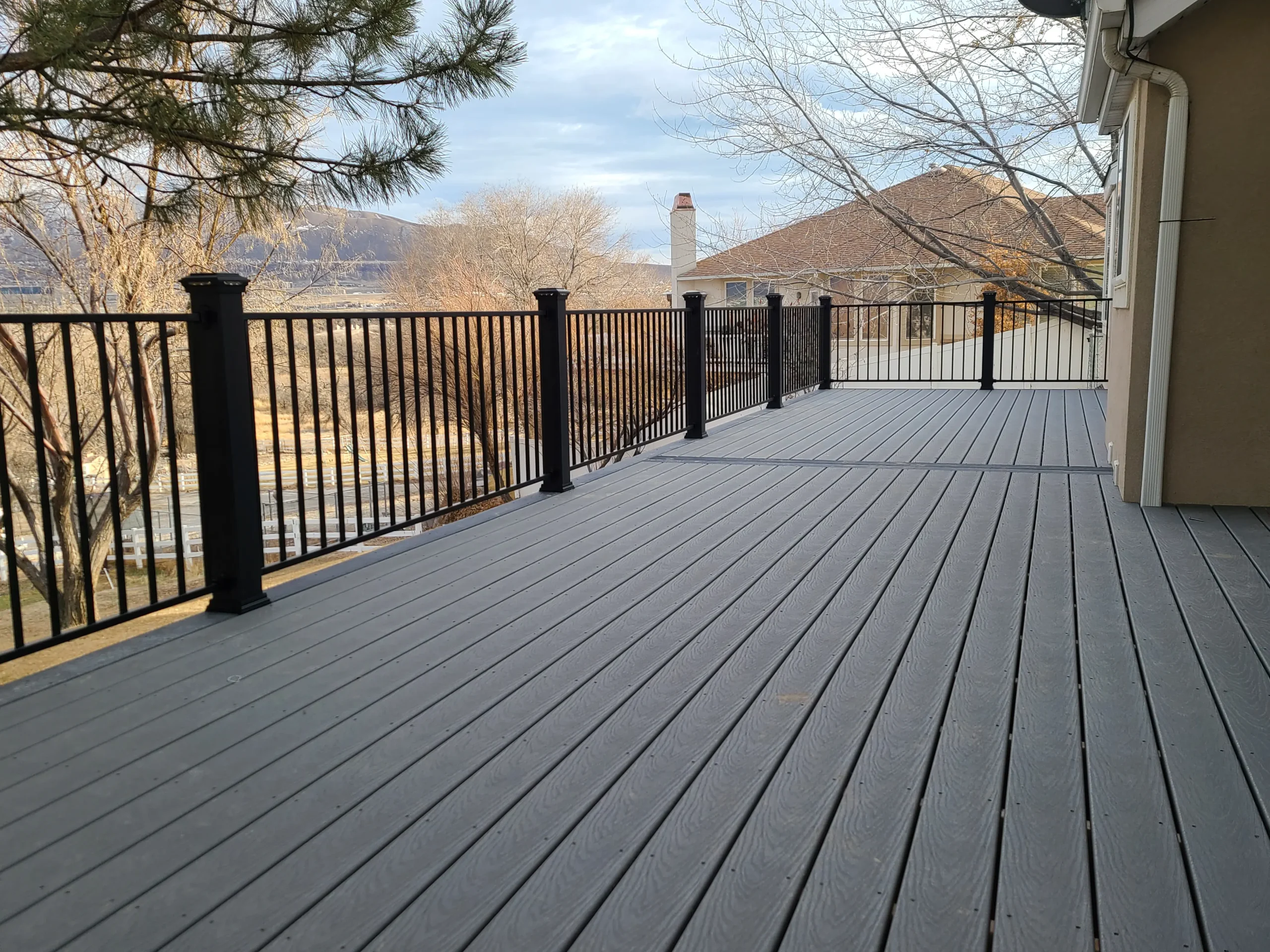
This design is a masterclass in monochromatic texture. By pairing dark gray deck boards with a matte black railing, the focus shifts from color to form and finish. The subtle wood grain texture on the decking keeps the surface from feeling flat and industrial, while the clean, simple lines of the square metal balusters provide a rigid, modern frame. The lack of a contrasting color makes the space feel larger and more cohesive, blending seamlessly with the modern aesthetic of the home. Compare this to the lighter grey in Idea #7 for a slightly different mood.
|
📋 Copy HEX 🔗 Share |
When working with a dark-on-dark color scheme like this, lighting is everything. A deck with this palette in a heavily shaded or north-facing area can feel gloomy. To counteract this, install subtle exterior lighting. Consider adding step lights, post cap lights, or even a sleek outdoor wall sconce on the house itself. This not only improves safety but also adds warmth and dimension to the space after the sun goes down, highlighting the clean lines of the railing.
6. Warm Wood-Look Composite Posts with Sleek Black Balusters
Installing black metal balusters into a wood-look composite rail is a straightforward DIY project. Here’s a quick guide for a single rail section. (Time: 1-2 hours, Cost: $50-$100 for balusters and connectors).
- First, measure and mark your baluster locations on the top and bottom rails, ensuring they comply with the 4-inch sphere rule.
- Drill holes at your marks. Use a drill bit size recommended by the baluster manufacturer.
- Install the baluster connectors. These small plastic or metal pieces are often sold with the balusters and screw directly into the pre-drilled holes.
- Insert the balusters into the connectors on the bottom rail.
- Place the top rail over the balusters, fitting each one into its corresponding connector.
- Secure the top rail to your posts, and you’re done!
|
📋 Copy HEX 🔗 Share |
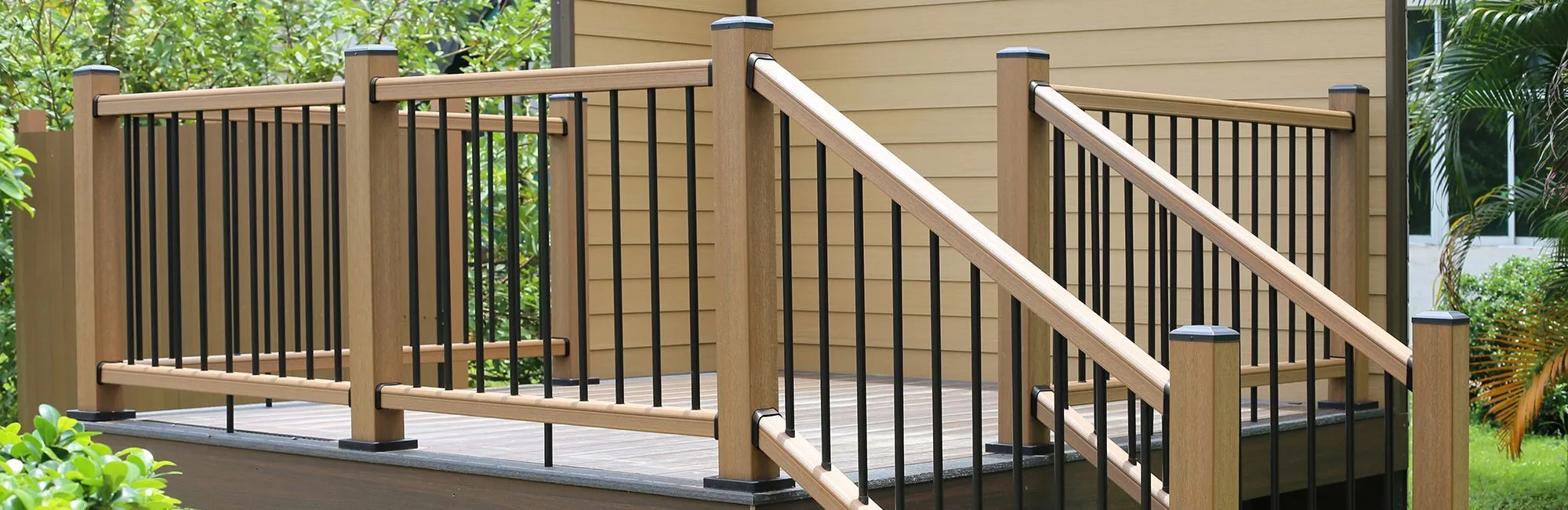
The defining feature here is the use of a wood-look composite for the structural elements—the posts and handrails. This is what separates it from standard all-black or all-white systems. It borrows the warmth and natural appeal of real wood but eliminates the constant need for staining and sealing. This single choice provides the perfect visual bridge between the man-made black metal balusters and the natural outdoor environment, creating a look that is both modern and organic.
7. Serene Grey Composite Deck with an Unobstructed Landscape View
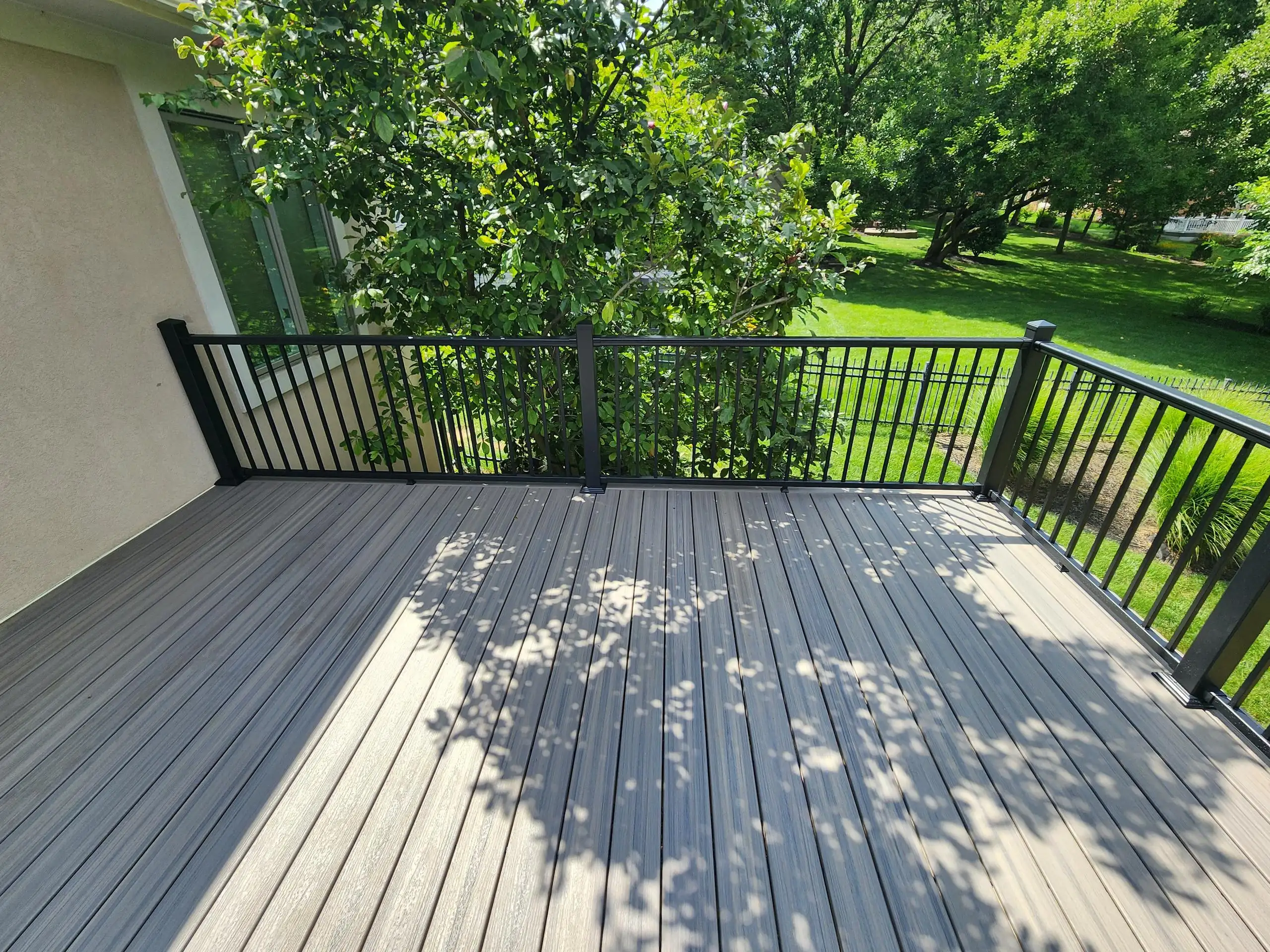
This tranquil space follows a simple formula: 70% cool neutral tones + 30% vibrant natural color. The light grey of the deck and the pale beige of the stucco wall create a calm, unobtrusive backdrop. All the visual energy comes from the lush greens of the trees and grass. The black railing acts as a neutral accent, defining the space without competing for attention. You could swap the grey deck for a warm tan, and the formula would still work, proving the power of a simple, nature-focused palette.
|
📋 Copy HEX 🔗 Share |
A minimalist design like this is perfect for decks that serve as a transition between the home and a beautiful yard. It’s ideal for spaces from 150 to 400 square feet. It’s large enough to feel open, but not so vast that the simple railing feels underwhelming. The key is the view; this style is designed to disappear, making it best for properties that overlook gardens, woods, or open fields rather than a neighbor’s wall. For smaller, more intimate decks, a chunkier white railing like in Idea #2 might feel cozier.
8. Chic Dark Gray Deck with a Contrasting Black and White Railing
Recreating this chic, high-contrast look involves a mix of standard and premium components. The cost can vary, but here is a typical breakdown for a 150-square-foot deck.
- Main Decking (Dark Gray Composite): $1,500 – $2,500
- Railing System (White Posts/Balusters, Black Top Rail): $1,800 – $3,000
- Decor & Accessories (Planters, Side Table): $300 – $600
- Professional Installation: $2,000 – $4,000
- TOTAL: $5,600 – $10,100
Budget alternative: Use pressure-treated wood for the posts and paint them white, and source a more basic black metal top rail to save around 40%.
|
📋 Copy HEX 🔗 Share |
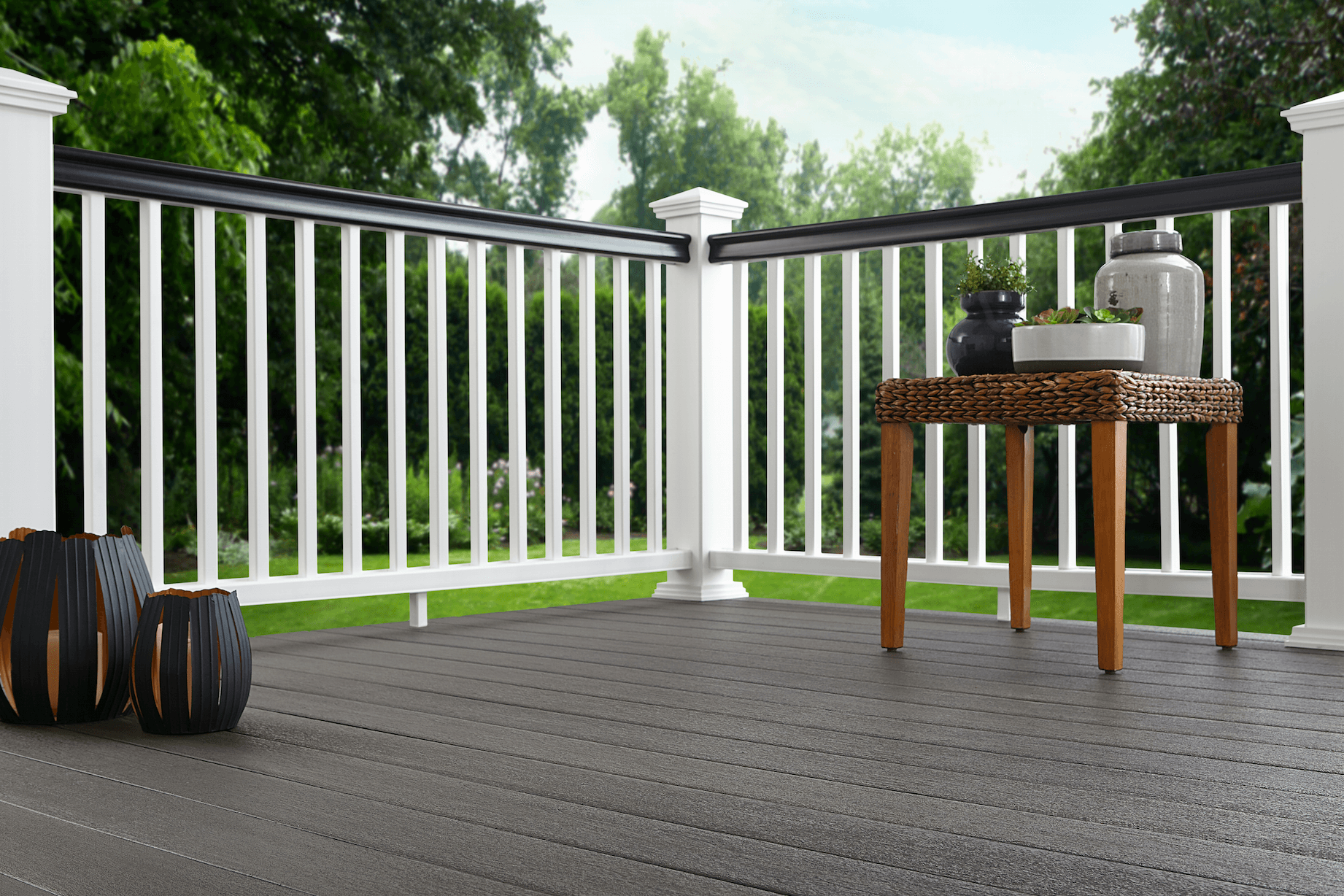
The secret to nailing a two-tone railing is to use the darker color on the top rail. Why? Because your eye naturally goes to the highest point. A black top rail against a backdrop of trees or sky is less visually jarring than a stark white one. It creates a cleaner, more modern horizontal line that helps the railing “disappear,” while the white posts and balusters provide a bright, classic foundation. Reversing the colors would make the railing feel heavier and more obtrusive.
9. Modern Grey Deck with Ample Space for Outdoor Living
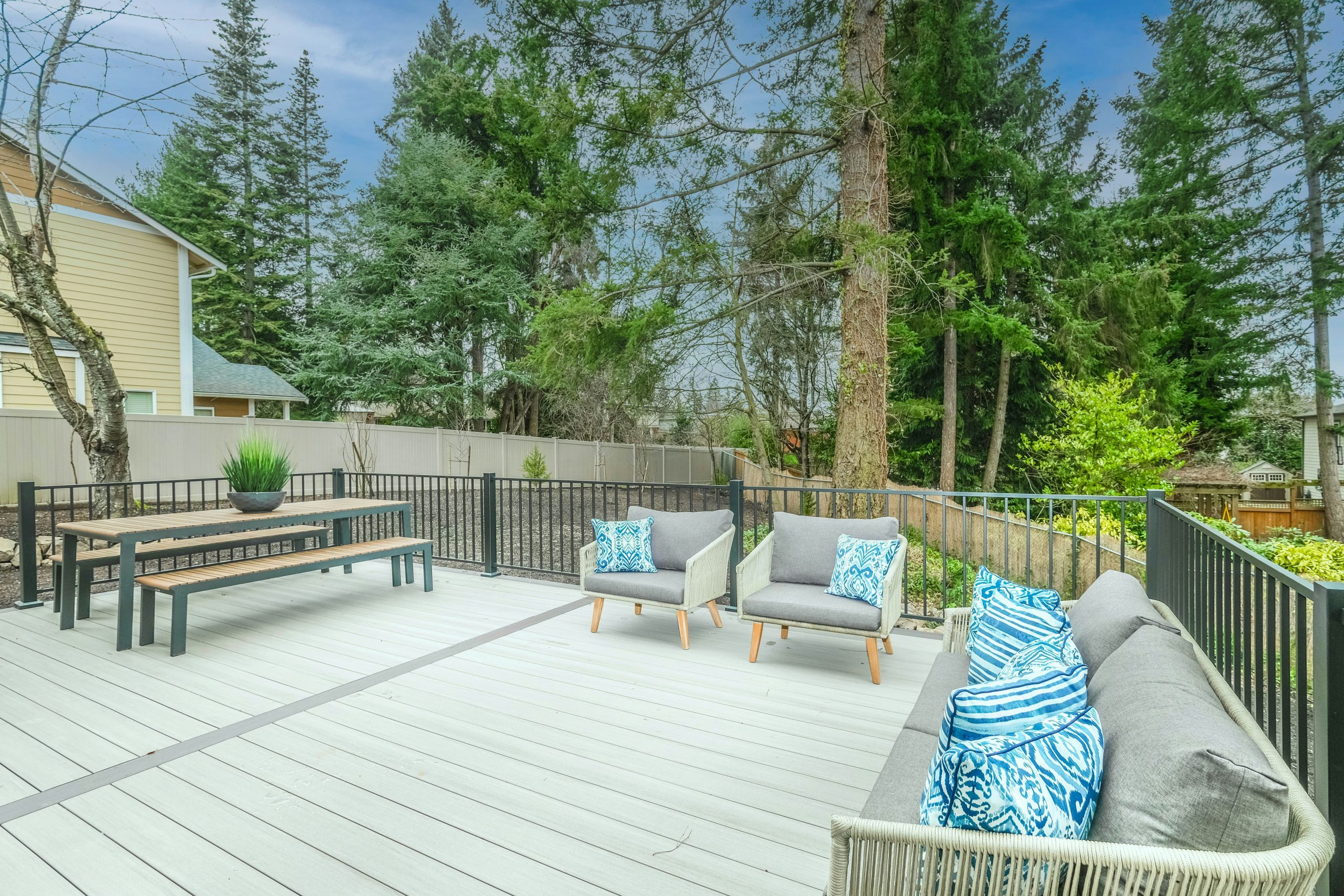
This design succeeds by treating the deck as a true outdoor room. The choice of a single, consistent color—light grey—for the flooring unifies the large space and makes it feel even bigger. The black, thin-profile spindle railing encloses the area for safety without enclosing it visually, maintaining that crucial connection to the outdoors. The furniture arrangement carves out distinct “zones” for dining and lounging, a classic interior design trick applied brilliantly to an exterior space. The result is functional, stylish, and incredibly inviting.
|
📋 Copy HEX 🔗 Share |
A large, open deck with minimalist furniture looks fantastic, but it can also be an echo chamber. Composite decking over a hollow space can amplify sounds like scooting chairs, running feet, or dropped items more than a wood deck would. To mitigate this, use outdoor rugs under dining and seating areas, as shown here. They not only define the space and add a pop of color but also do an excellent job of dampening sound to create a more peaceful, serene environment.
10. Focus on Classic Composite Balusters
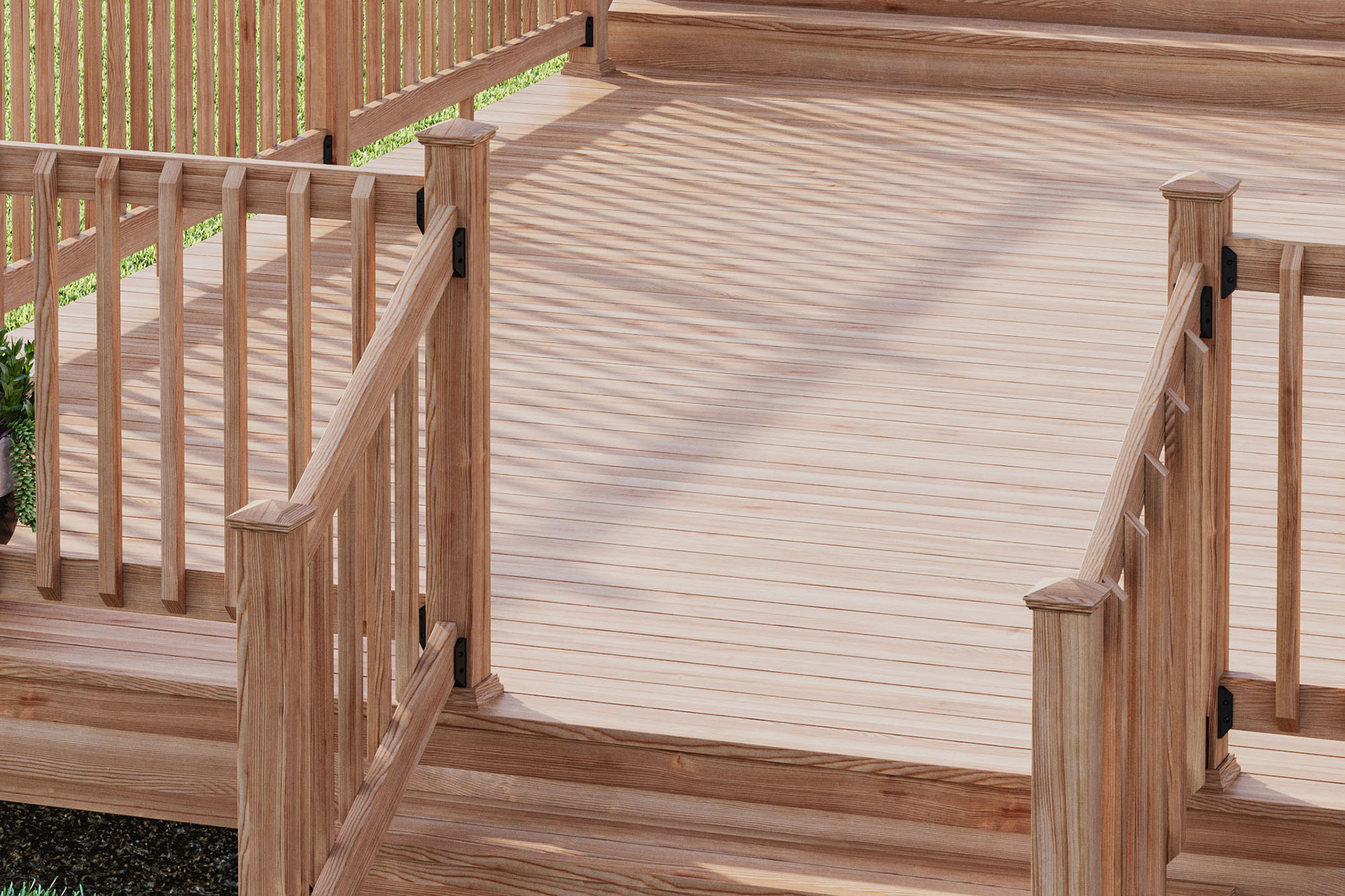
When selecting composite balusters, pay close attention to the shape. While simple square balusters are common, choosing a style with beveled edges or a slightly turned profile can add a surprising amount of custom detail for very little extra cost. These subtle shapes catch the light in different ways throughout the day, adding dimension and character that you won’t get from a basic, flat spindle. It’s a small detail that makes the entire railing system look more expensive and thoughtfully designed.
|
📋 Copy HEX 🔗 Share |
While composite materials resist rot and insects, they aren’t immune to environmental staining. If your deck is located under trees, especially pine or fruit trees, be prepared for sap and organic matter to stain the surface. For balusters, this can be particularly tedious to clean. A yearly wash with a composite-safe deck cleaner and a soft brush is a must. For stubborn stains, a product specifically designed for composite stain removal may be necessary. Unlike wood, you can’t simply sand the stain out.
11. Multi-Level Deck with Beige Railings and Black Pickets
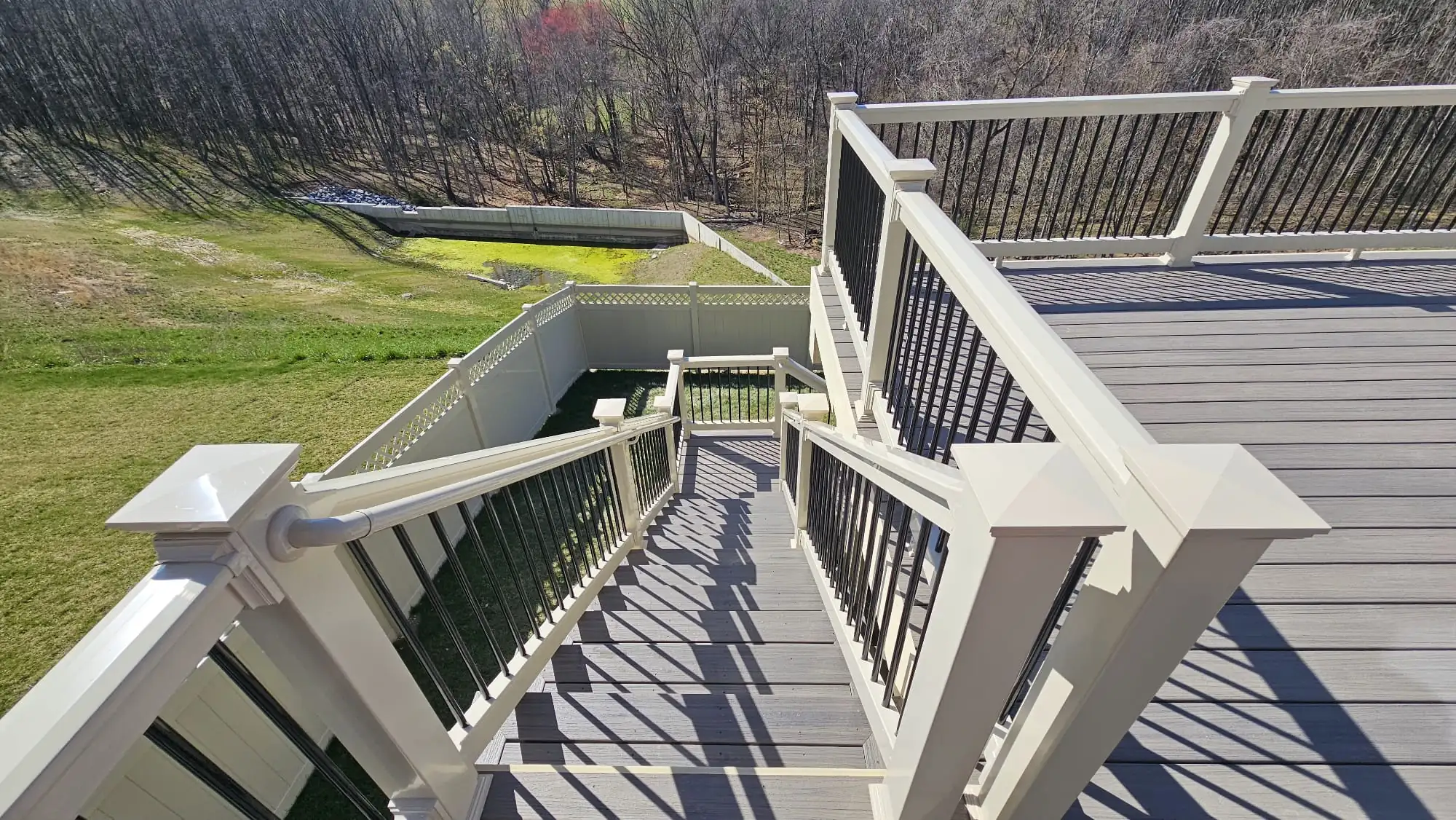
This type of multi-level railing system is born for properties with a slope. It excels at creating usable, flat areas on land that would otherwise be a simple hill. The design works best for a drop of at least 3-6 feet from the house door to the ground, justifying the need for a staircase and multiple levels. The total deck footprint here is likely substantial, in the 400-600 square foot range, to make each level feel purposeful rather than just a landing. A smaller yard might feel overwhelmed by such a large structure.
|
📋 Copy HEX 🔗 Share |
The single most important element in this design is consistency. By using the exact same railing style—light beige rails with black pickets—across the upper deck, the lower deck, and the staircase, the entire structure reads as one cohesive unit. If the homeowner had switched styles or colors for the stairs, the whole project would look disjointed and chaotic. This visual repetition is what makes a complex, multi-level build feel intentional, clean, and professionally executed.
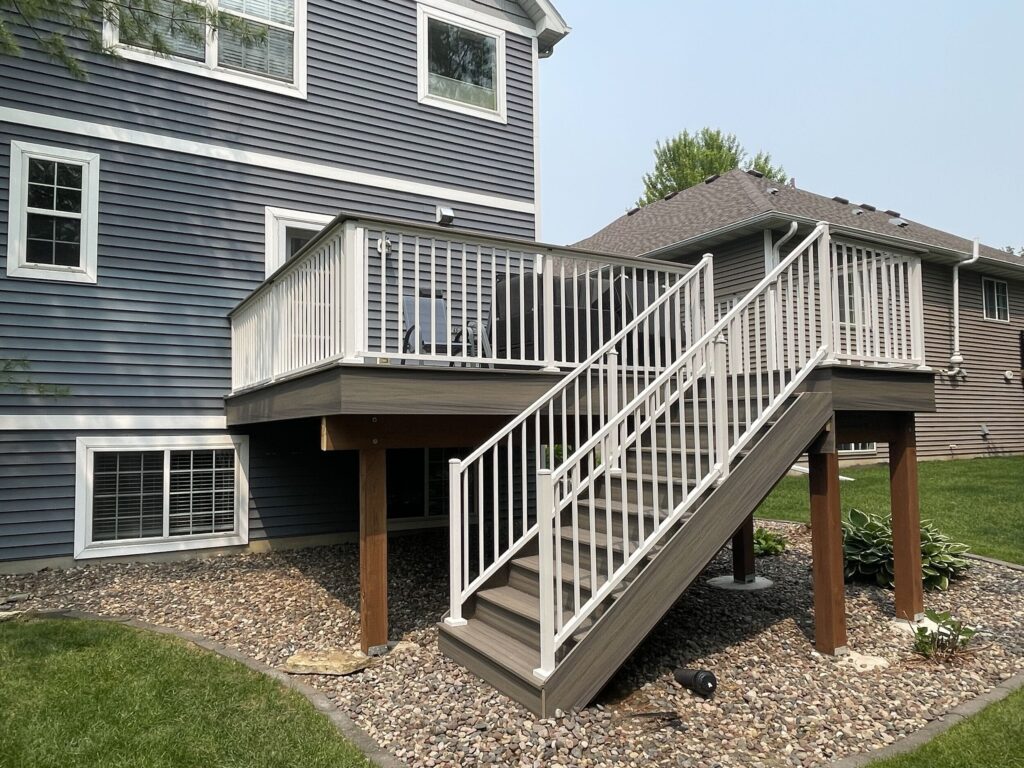
12. Gray Composite Deck with White Spindles and an L-Shaped Staircase
This entire exterior works because of its carefully controlled color palette. The dark blue-gray siding of the house provides a moody, modern backdrop. The white trim and railings pop against it, creating crisp, clean lines that define the architecture. The neutral gray of the composite decking acts as a perfect mid-tone, bridging the gap between the dark siding and the bright white accents. This thoughtful color cohesion makes the deck feel like a natural extension of the home, not a tacked-on afterthought.
|
📋 Copy HEX 🔗 Share |
Planning an L-shaped staircase requires careful measurement to ensure safety and comfort. Here’s a quick guide to laying it out:
- Measure Total Rise: Measure the vertical distance from the deck surface to the ground where the stairs will land.
- Determine Number of Steps: Divide the total rise by an ideal step height (around 7 inches). Round to the nearest whole number.
- Calculate Riser and Tread Size: Divide the total rise by your number of steps to get the exact riser height for each step. Plan for a tread depth of at least 10 inches.
- Plan the Landing: The “L” turn requires a landing. This landing must be at least as deep as the stairs are wide (typically 36-48 inches).
- Lay Out Both Flights: Calculate the number of steps needed before and after the landing to complete your total rise.
Always double-check your local building codes for specific requirements.
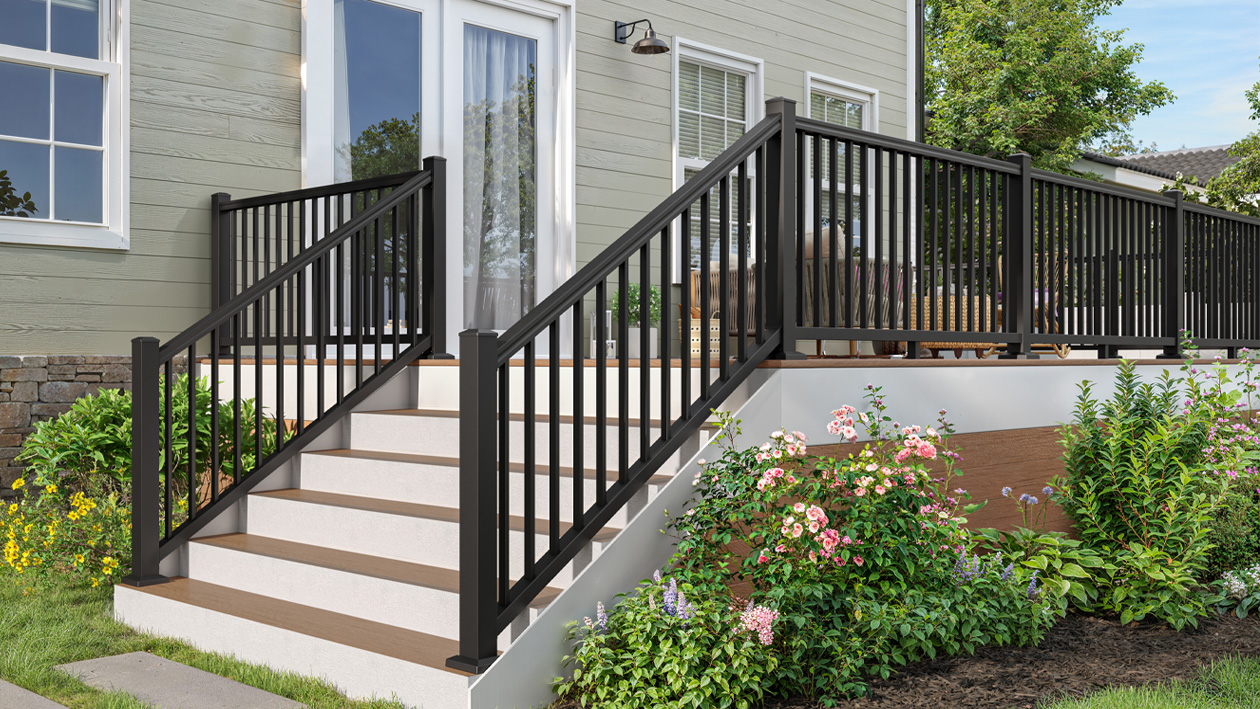
13. Modern Black Railing Accenting a Sage Green House
The formula for this fresh, modern farmhouse look is about balancing color and form. It breaks down to roughly 50% soft, earthy color (the sage green siding) + 40% sharp, modern lines (the black railing system) + 10% warm, natural texture (the light brown deck surface). The key is the contrast: the organic, muted color of the house is given structure and an updated feel by the rigid, dark geometry of the railing. Without the black railing, the look would be far more traditional and less dynamic.
|
📋 Copy HEX 🔗 Share |
You don’t need a premium composite system to get this sharp, modern look. The key is the color, not the material. You can achieve a nearly identical vibe on a tighter budget. For a similar project, you would need:
- Rail & Posts: Use standard pressure-treated wood posts and rails. A gallon of high-quality exterior black paint (like Sherwin-Williams Tricorn Black) costs about $70.
- Balusters: Basic black aluminum balusters are very affordable, often under $5 each at home improvement stores.
- Deck Surface: Look for entry-level composite boards or use classic wood decking and a semi-transparent stain.
You could replicate the railing for this deck and stair combo for under $1,500. For a very similar all-black style, see Idea #5.
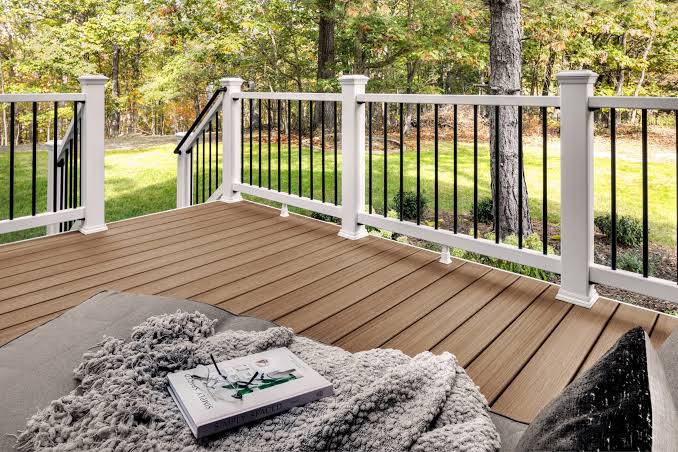
14. Warm “Golden Hour” Decking and Railing Detail
The standout feature here is undoubtedly the color. Trex’s “Golden Hour” composite captures that warm, amber glow of late afternoon sun, and by using it for both the decking and the railing components, it creates a wonderfully immersive, monochromatic look. This isn’t just a light brown; it has a specific, rosy undertone that feels rich and inviting. Removing this specific color and replacing it with a standard brown would make the design lose its unique, atmospheric quality.
|
📋 Copy HEX 🔗 Share |
There’s a major shift away from the cool grays that dominated decking for the last decade. Homeowners in 2026 are craving warmth and a connection to nature. Colors like this “Golden Hour” are surging in popularity because they feel organic and inviting, mimicking the tones of natural woods like teak or cedar without the associated maintenance. This trend is all about creating a cozy, relaxing outdoor haven rather than a stark, modern platform. It signals a move toward more “natural neutral” palettes in exterior design.
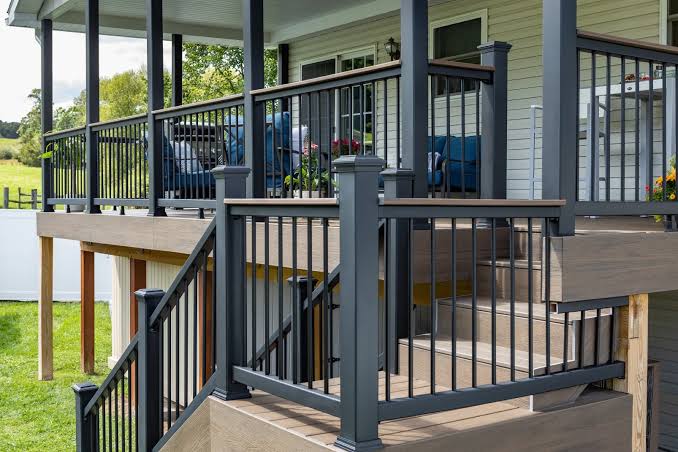
15. Classic Black Stair Rail Kit with Round Balusters
Installing a stair rail kit seems intimidating, but it’s designed for DIYers. The key is finding your angle. (Time: 2-3 hours, Cost: $150-$300 per section).
- First, temporarily place your top and bottom rails alongside the stair stringers. Use a scrap piece of baluster to ensure you have the correct height off the treads.
- Mark the angle where the rails meet the posts at the top and bottom of the stairs.
- Use a miter saw to cut the rails at the marked angles for a perfect, flush fit.
- Install the rail support brackets onto the posts.
- Attach the bottom rail, then insert all your balusters.
- Finally, place the top rail over the balusters and secure it to the top bracket.
|
📋 Copy HEX 🔗 Share |
While kits like the Trex Select are designed for easy installation, the one variable that can complicate things is your post placement. These kits are made for specific maximum spans (usually 6 or 8 feet on center). If your existing posts are further apart, you can’t just use a longer rail section. You will need to install an intermediate post or a support block mid-span to prevent sagging and meet building codes. Always measure your post-to-post distance before you buy a kit.
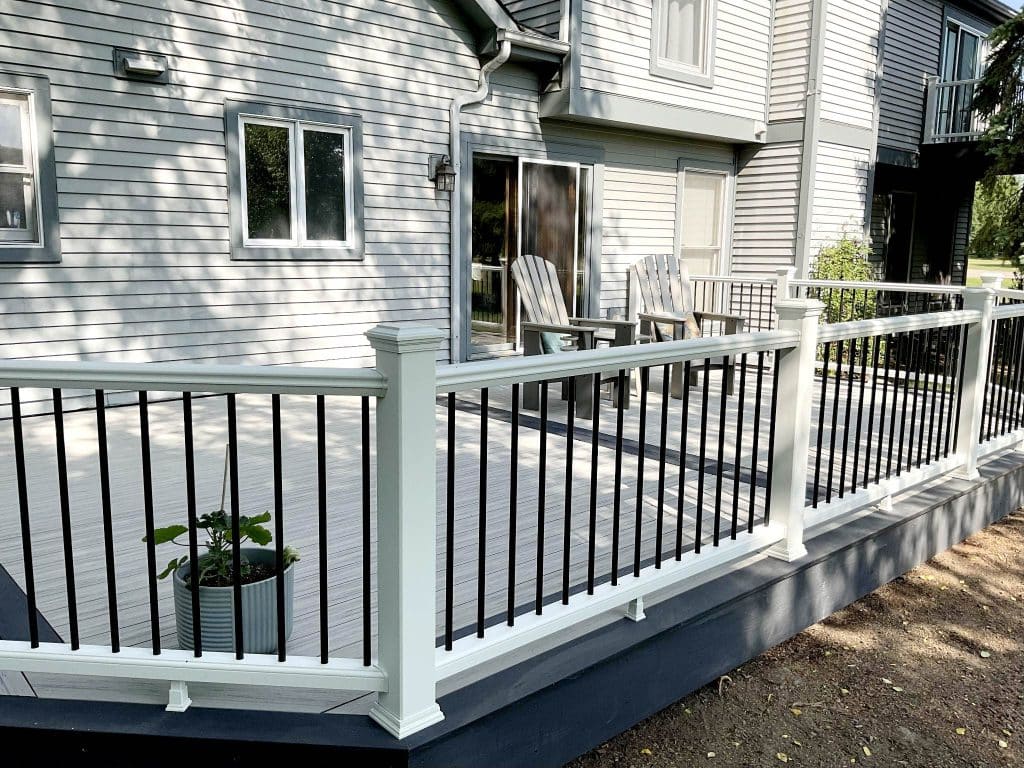
16. Clean Contrast: White Railing with Black Balusters on a Gray Deck
For a high-contrast railing like this to look truly polished, the details matter. Ensure your black balusters have a matte or low-sheen finish. A glossy black can look cheap and reflect too much light, creating a distracting “pinstripe” effect. A matte finish, on the other hand, absorbs light, making the balusters recede visually and allowing the eye to focus on the view beyond. This subtle choice is what gives the railing a sophisticated, architectural quality rather than a basic, off-the-shelf look. The style is similar to Idea #4, but on a gray deck.
|
📋 Copy HEX 🔗 Share |
This is a classic “visual sandwich” design, and it works because it provides both structure and openness. The white top and bottom rails create strong, clean horizontal lines that frame the deck, mirroring the home’s trim and architectural lines. The black vertical balusters, due to their dark color, seem to disappear against the backdrop of the yard and neighboring houses. The result is a railing that feels sturdy and present from a design perspective, yet transparent when you look through it.
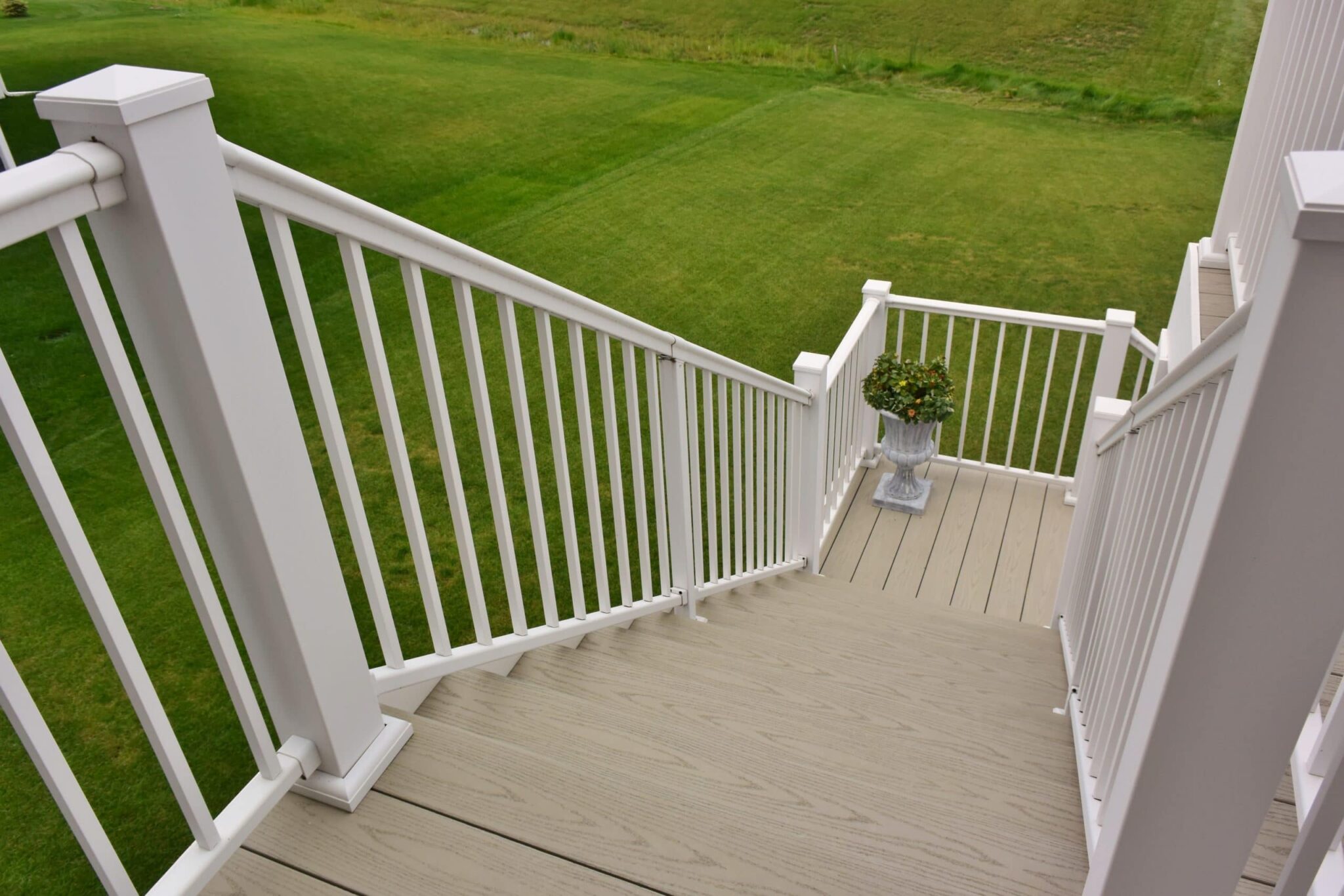
17. Bright White Railing on a Multi-Level Wood-Look Deck
A full white railing system like this is a bold statement and works best on a generously sized deck, particularly one with multiple levels or a staircase. For a single-level deck, you’d want a minimum of 200 square feet for this to not feel overwhelming. The visual weight of an all-white railing can make smaller decks feel cramped. It’s an ideal choice for larger homes with traditional architectural styles (like Colonial or Cape Cod) where the bright white complements the window trim and other exterior details.
|
📋 Copy HEX 🔗 Share |
Before you commit to a bright white railing, especially on a large, multi-level project, run through this quick checklist:
- Sunlight Direction: Is the deck south-facing? The glare off a large white surface can be intense in direct sun. Consider an off-white or light beige for a softer look.
- Surrounding Trees: Do you have nearby pine, fruit, or other trees that drop sap or pollen? White will show this environmental fallout more than any other color.
- Home Exterior Palette: Lay a sample of the white composite against your home’s siding and trim. Not all whites are the same; ensure it’s a complementary tone.
- Budget for Post Caps: Don’t skimp here. The decorative caps are what will give the project a finished, high-end look. Factor them into your total cost.
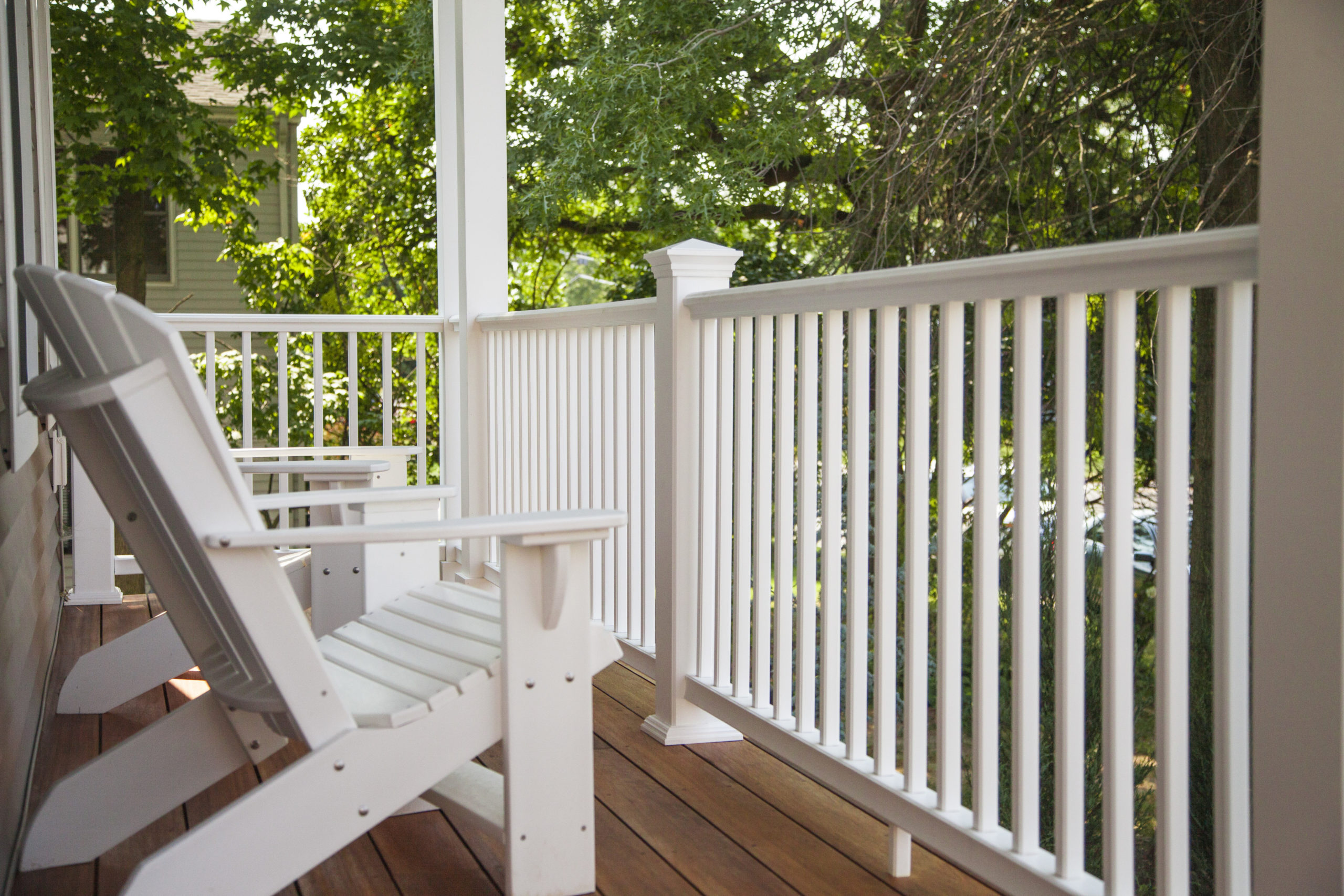
18. Classic Porch with a Contrasting Gray Top Rail
The single detail that makes this porch railing feel fresh and modern—not generic—is the contrasting gray top rail. It’s a simple, brilliant move. If the top rail were also white, the look would be perfectly nice but very traditional. By capping the classic white balusters and posts with a sleek, medium-gray rail, the design is instantly updated. It introduces an element of quiet sophistication and intentionality, proving that you don’t need a wild design to be stylish; sometimes one thoughtful choice is enough.
|
📋 Copy HEX 🔗 Share |
This is an incredibly budget-friendly look to achieve, as it relies on paint color for its impact, not expensive materials. Start with a standard pressure-treated wood railing—the kind you can find at any lumberyard. Prime everything thoroughly. Paint the posts and balusters with a high-quality exterior white paint. For the top rail, simply use a different color! A quart of gray exterior paint is about $25. This entire high-end, custom look can be achieved for the cost of basic materials and a little bit of sweat equity.
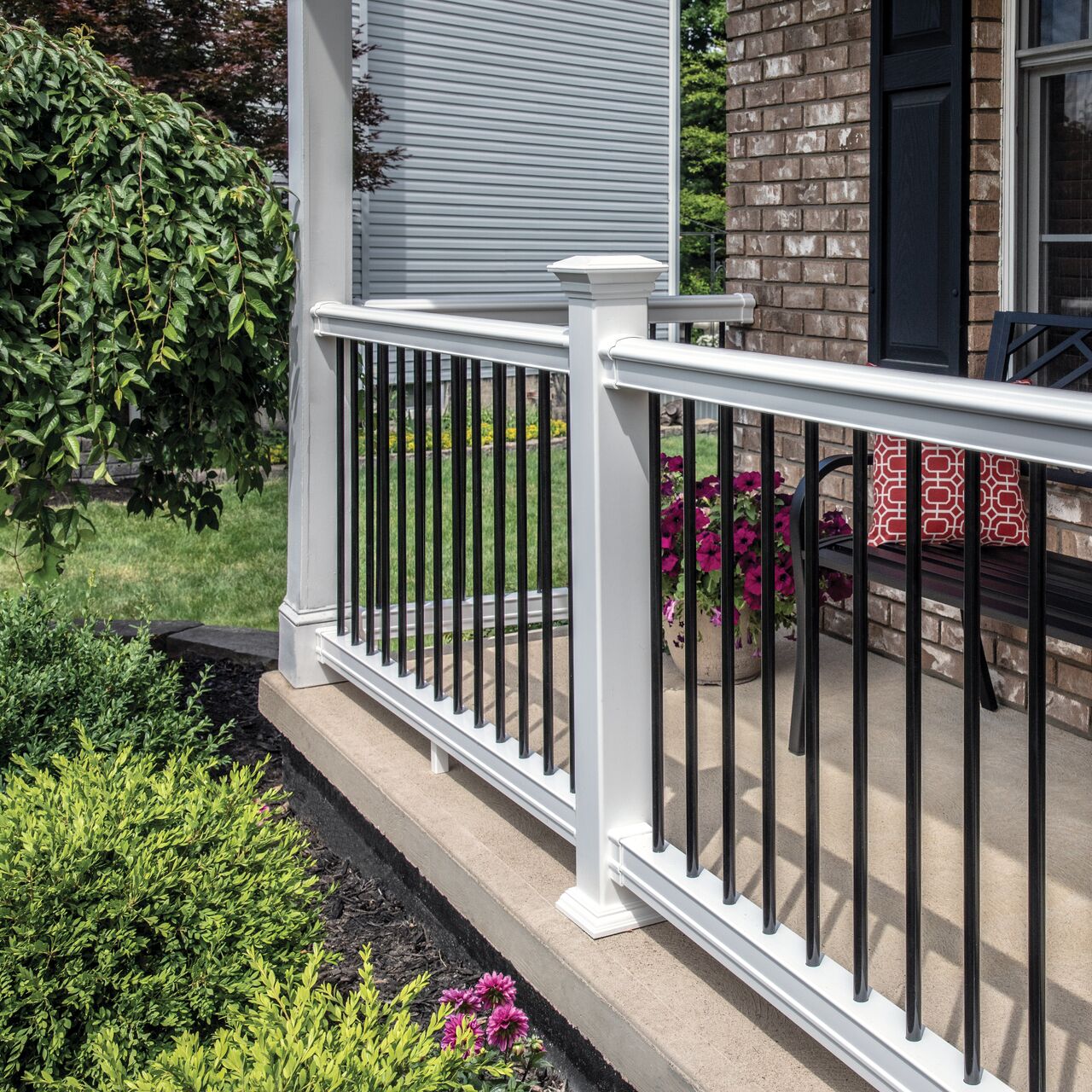
19. Traditional White and Black Railing on a Concrete Base
While the composite railing itself is low-maintenance, pairing it with a concrete or masonry base introduces different upkeep needs. Concrete is porous and can be prone to mildew and staining, especially in shaded, damp areas. To keep the base looking clean, you’ll need to pressure wash it annually on a low setting. A white railing base can also show splash-up stains from dirt and mulch after heavy rain. A quick scrub with a brush and soapy water a few times a season will keep that base line looking crisp and clean.
|
📋 Copy HEX 🔗 Share |
This design succeeds because of its robust, traditional proportions. The thick, substantial white posts anchor the railing, giving it a sense of permanence and classic appeal. The black balusters are purely functional, providing safety without adding visual bulk. This allows the lush, green foliage of the surrounding garden to be the star of the show. The combination of the heavy, architectural white elements and the “disappearing” black infill is a timeless pairing that works with almost any traditional home style.
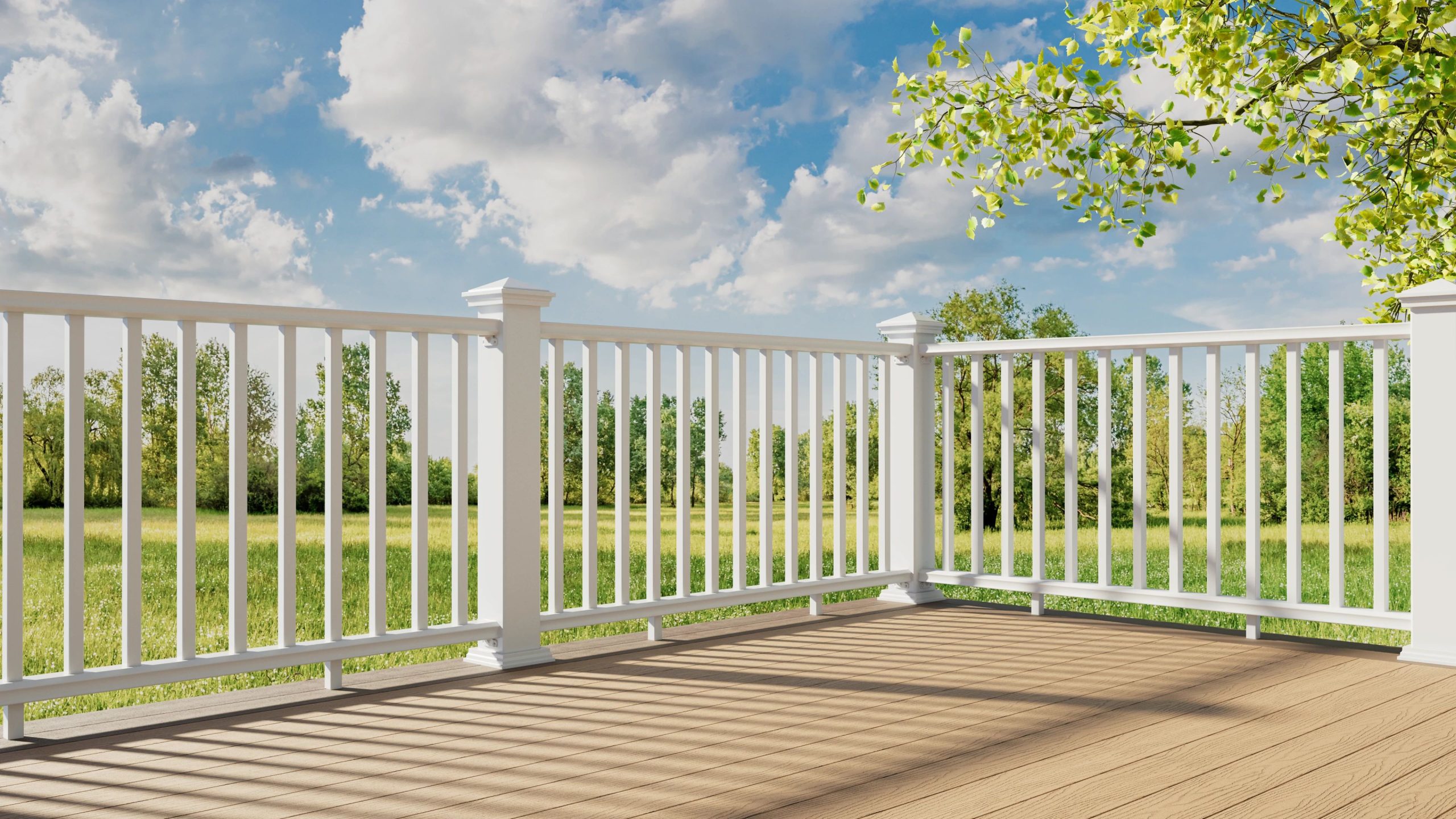
20. Minimalist White Baluster Railing on a Light Brown Deck
When installing a white railing system, the fasteners you use are critical to the final look. Insist on using white-headed or color-matched screws for all visible connections, especially for the balusters and rail brackets. Using standard silver or gray screws will create a “polka dot” effect that looks distracting and cheapens the overall appearance. Most composite railing systems offer their own color-matched hardware. It’s a small extra cost that makes a huge difference in the professional quality of the finished product.
|
📋 Copy HEX 🔗 Share |
This clean, bright aesthetic follows a simple rule: 80% light and airy + 20% natural texture. The vast majority of the visuals—the white railing and the blue sky—are bright and high-key. The light brown decking provides just enough warmth and organic texture to keep the scene from feeling sterile or washed out. The subtle wood grain on the planks is doing a lot of work here, adding necessary visual interest. You could exchange the brown deck for a light gray and still maintain the formula as long as it has some textural detail.
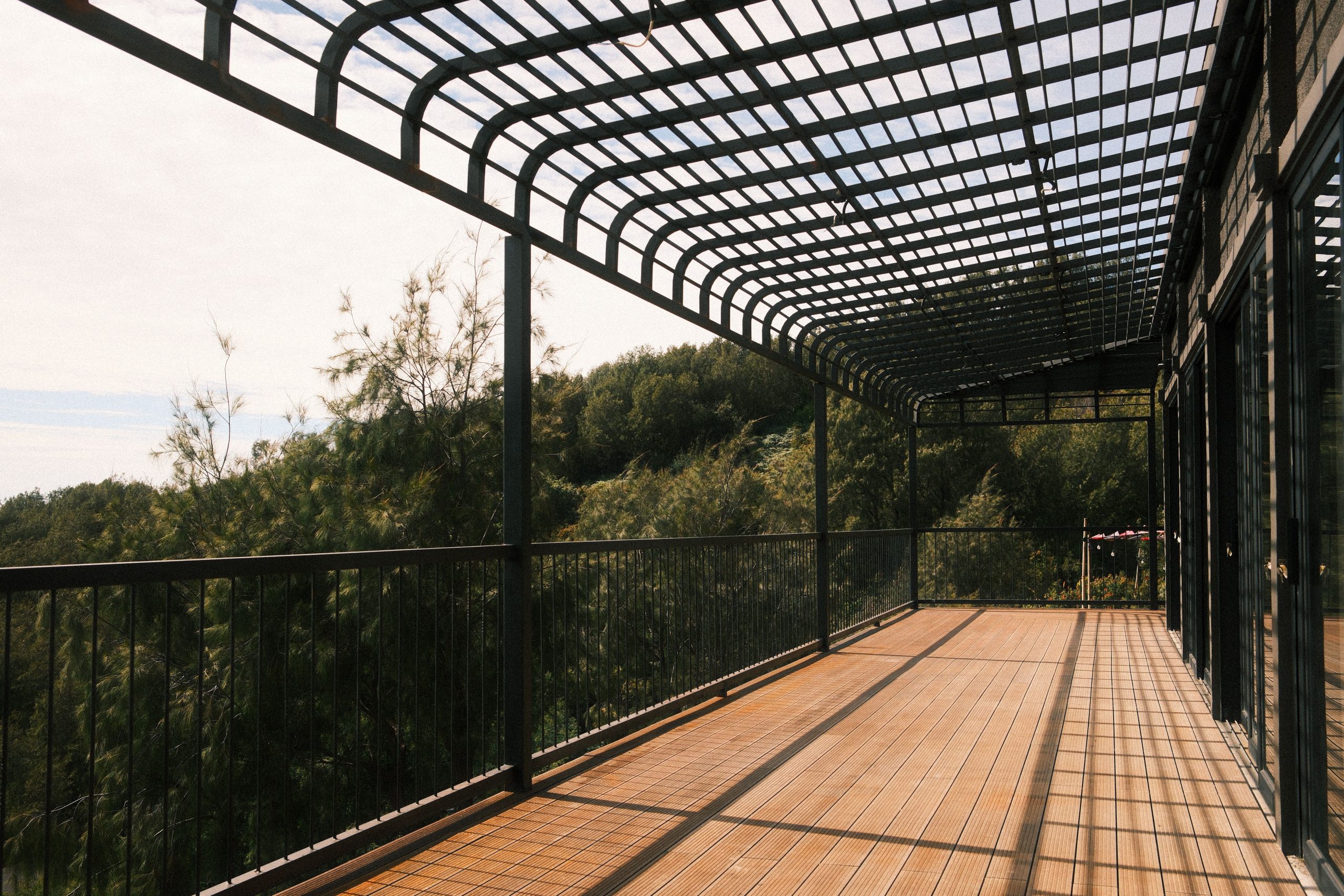
21. Light Wood-Look Deck Under a Striking Dark Metal Pergola
A large-scale pergola and railing combination like this demands a substantial deck to avoid looking top-heavy and crowded. This design is best suited for a deck that is at least 300 square feet, with a minimum dimension of 15 feet in either direction. This allows the pergola to define a distinct zone for seating or dining while leaving ample open space around it. On a smaller deck, a full pergola would consume the entire area, making it feel more like a cage than an open, airy retreat.
|
📋 Copy HEX 🔗 Share |
A dark metal pergola looks stunning, but be realistic about the heat it can attract. On a south- or west-facing deck, that dark metal will get extremely hot to the touch in the summer. More importantly, it will absorb and radiate heat downward, potentially making the seating area underneath less comfortable during the hottest parts of the day. To mitigate this, consider adding a retractable fabric shade or planting a deciduous vine to grow over the top, providing natural shade in the summer and letting sun through in the winter.
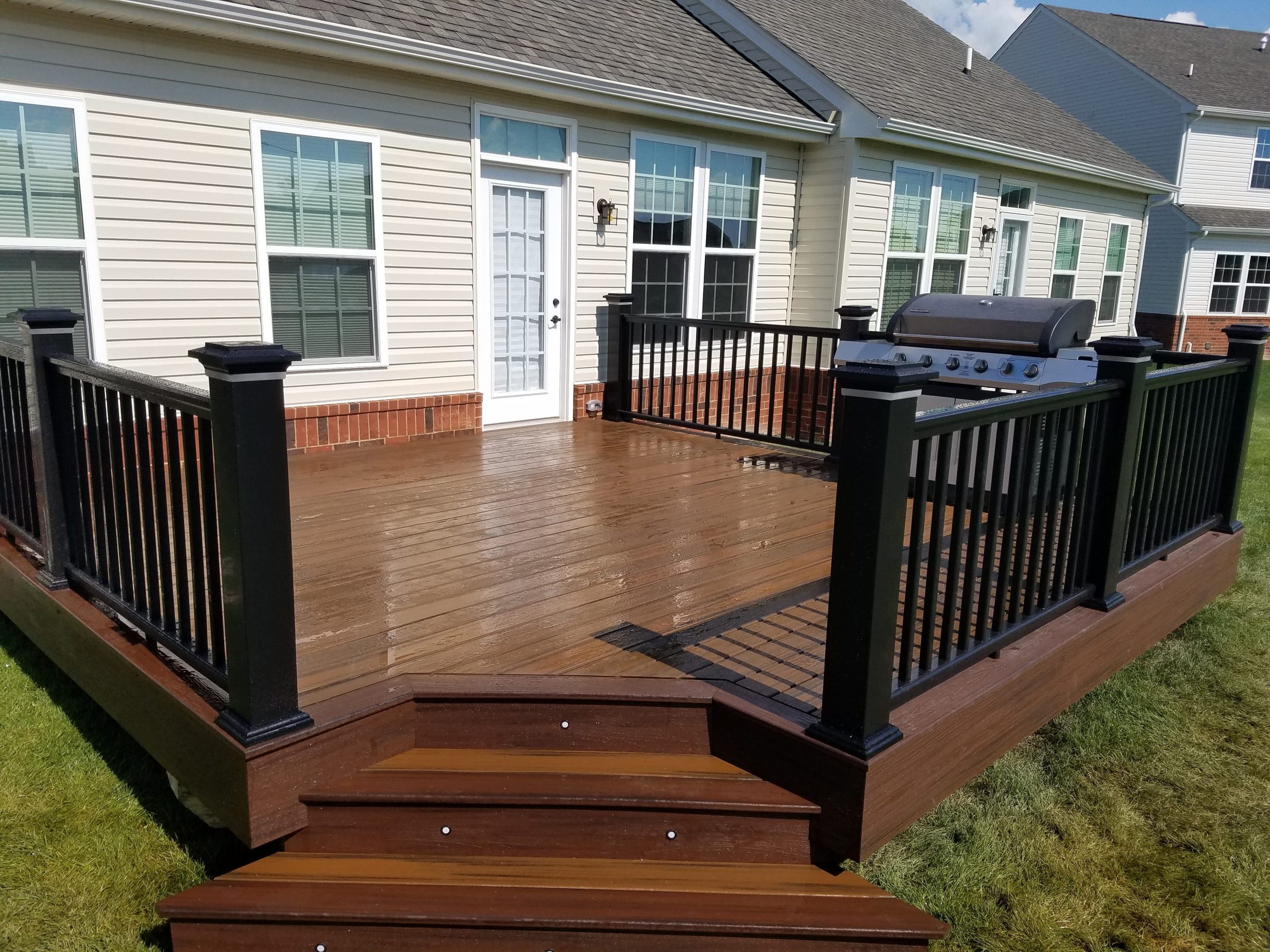
22. Rich Brown Composite Deck with Integrated Stair Lighting
Adding recessed stair lights is a high-impact DIY project that dramatically improves safety and ambiance. This process is for low-voltage lighting. (Time: 3-4 hours, Cost: $150-$300 for a kit).
- Plan Layout: Decide where you want your lights. On the risers is most common. Mark the center of each riser where a light will go.
- Drill Holes: Use a Forstner bit or hole saw sized to your specific light fixture to drill clean holes through the composite stair risers.
- Run Wires: Before installing the stairs, run the low-voltage cable from your transformer, connecting each light fixture in a chain. Most kits use simple snap-on connectors.
- Install Lights: Push the light fixtures into the holes; most are held in place by tension clips.
- Connect to Transformer: Connect the main cable to the low-voltage transformer, plug it in, and set the timer or photocell.
See a different stair style in Idea #12.
|
📋 Copy HEX 🔗 Share |
The element that truly elevates this deck from standard to spectacular is the integrated lighting. Without it, the deck is perfectly nice. With it, the deck becomes a usable, high-end entertaining space well after sunset. The small, warm pools of light on the stair treads not only prevent trips but also add a layer of sophisticated ambiance that makes the entire space feel more luxurious and thoughtfully designed. It’s a feature that provides both a practical safety benefit and a powerful aesthetic upgrade.
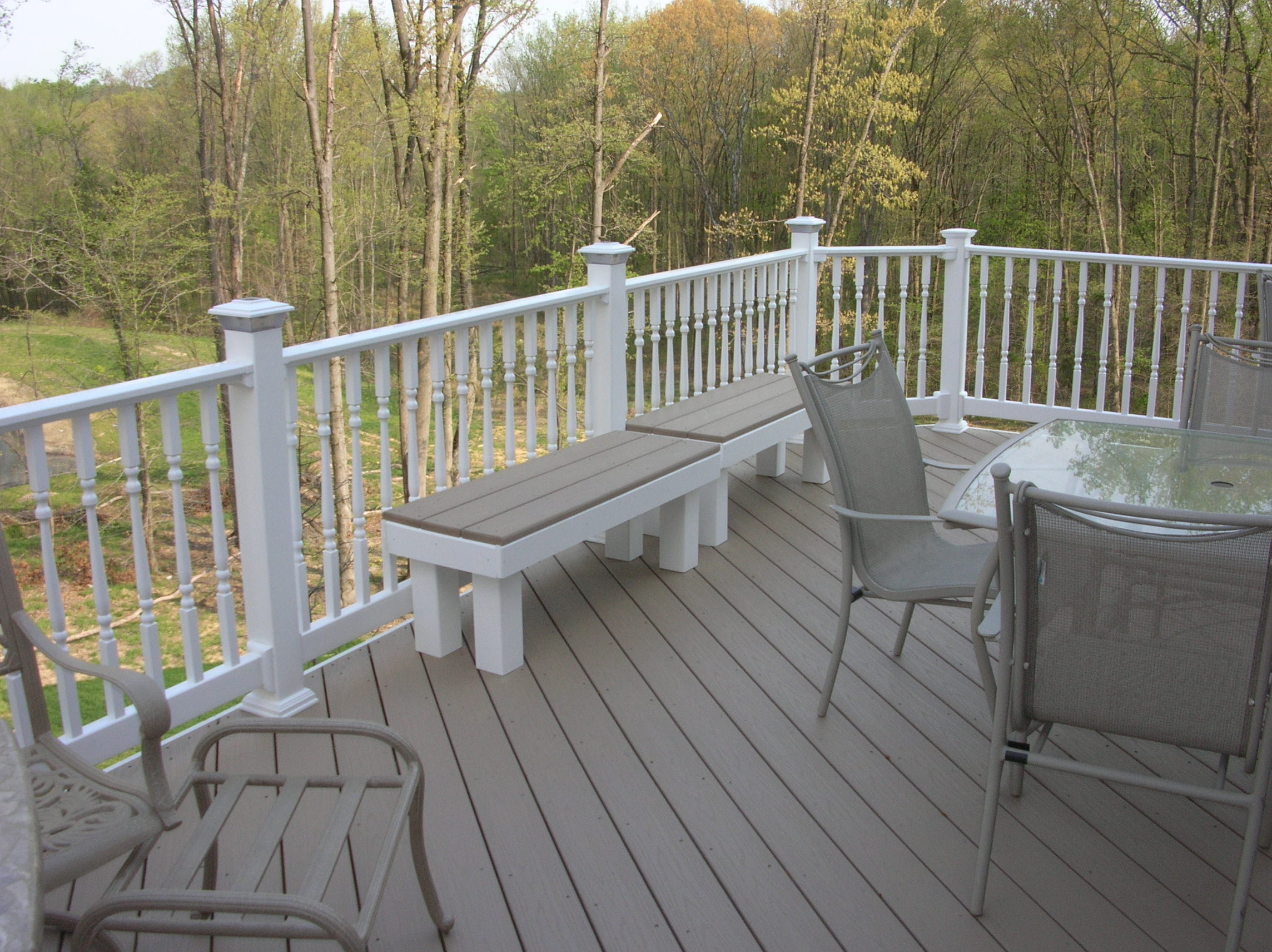
23. Spacious Grey Deck Featuring Integrated White Bench Seating
Creating this built-in look is a significant investment, but it adds immense functionality. Here’s a sample breakdown for a 200 sq. ft. deck with 20 linear feet of built-in benches.
- Decking (Light Grey Composite): $2,000 – $3,500
- Railing System (White Composite): $2,400 – $4,000
- Built-in Bench Framing & Structure: $1,000 – $2,000
- Composite Cladding for Benches: $800 – $1,500
- Professional Installation (Total): $4,000 – $7,000
- TOTAL: $10,200 – $18,000
Budget alternative: Use wood for the bench structure and paint it white to match a vinyl railing, saving nearly 50% on the bench portion.
|
📋 Copy HEX 🔗 Share |
This design works so well because the integrated benches solve multiple problems at once. They provide a massive amount of seating without the clutter of individual chairs, keeping the deck feeling open and spacious. They also serve as a visual and physical continuation of the railing, making the edge of the deck feel more substantial and purposeful. The contrasting grey tops of the benches tie back to the deck floor, creating a cohesive, layered design that feels custom-built and flawlessly executed.
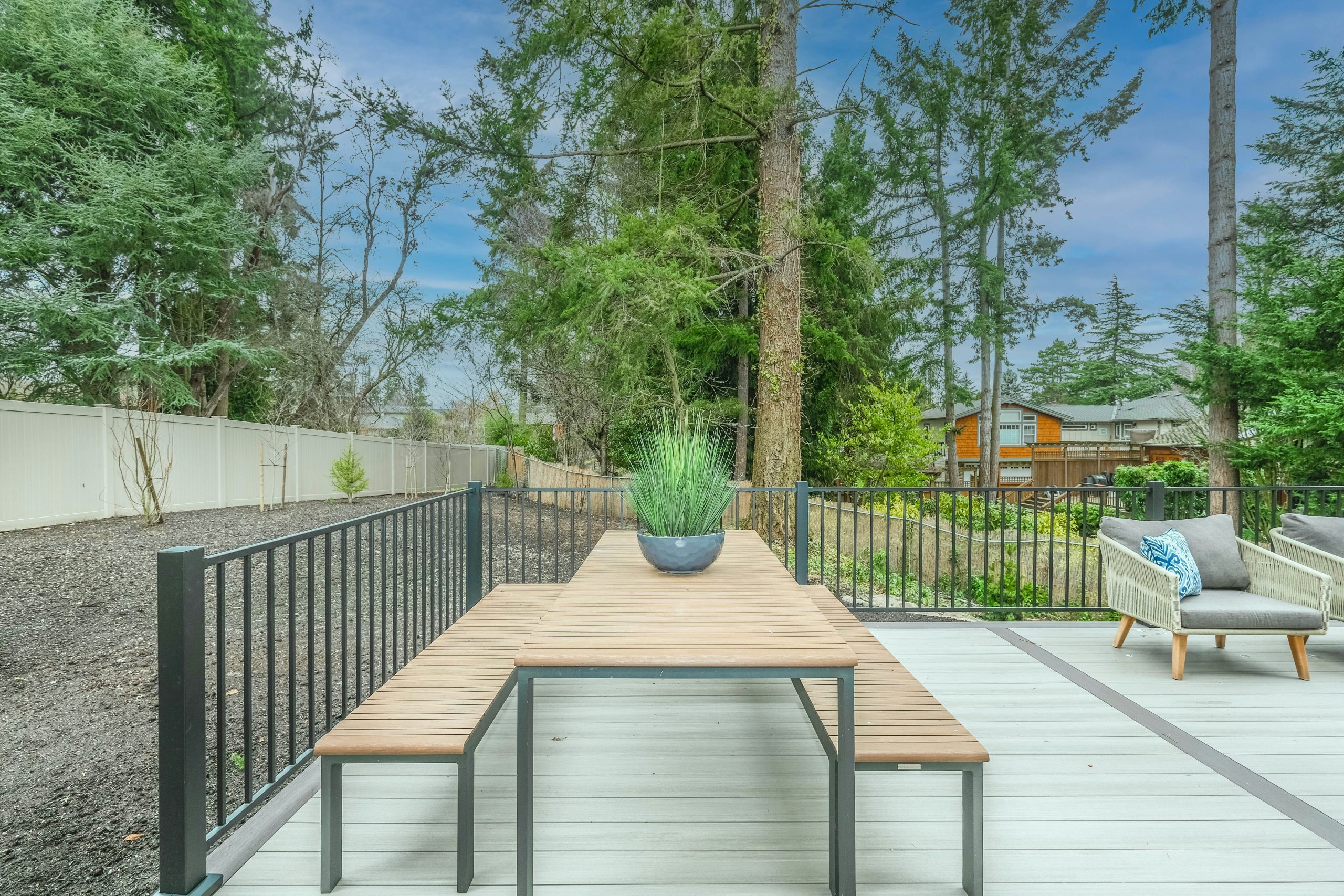
24. Modern Two-Tone Grey Composite Deck with Black Vertical Railing
This deck’s visual recipe is all about sophisticated layering of neutrals. Let’s call it 60% Light Grey Base + 20% Dark Grey Accent + 20% Black Linear Elements. The light grey decking provides a bright, expansive canvas. The single dark grey accent strip is a brilliant touch—it acts like a built-in area rug, grounding the dining area without adding physical clutter. The black railing and furniture frames provide the sharp, graphic lines that give the whole space a modern, architectural feel. It’s a perfectly balanced mix of soft and sharp tones.
|
📋 Copy HEX 🔗 Share |
When creating a “deck-within-a-deck” using a contrasting color strip, the width is critical. A good rule of thumb is to make the accent strip at least as wide as your dining table, plus an additional 18-24 inches on each side. This ensures that when chairs are pulled out and people are seated, the entire dining set is still contained within the dark grey “frame.” Anything narrower will look unintentional and make the space feel cramped.
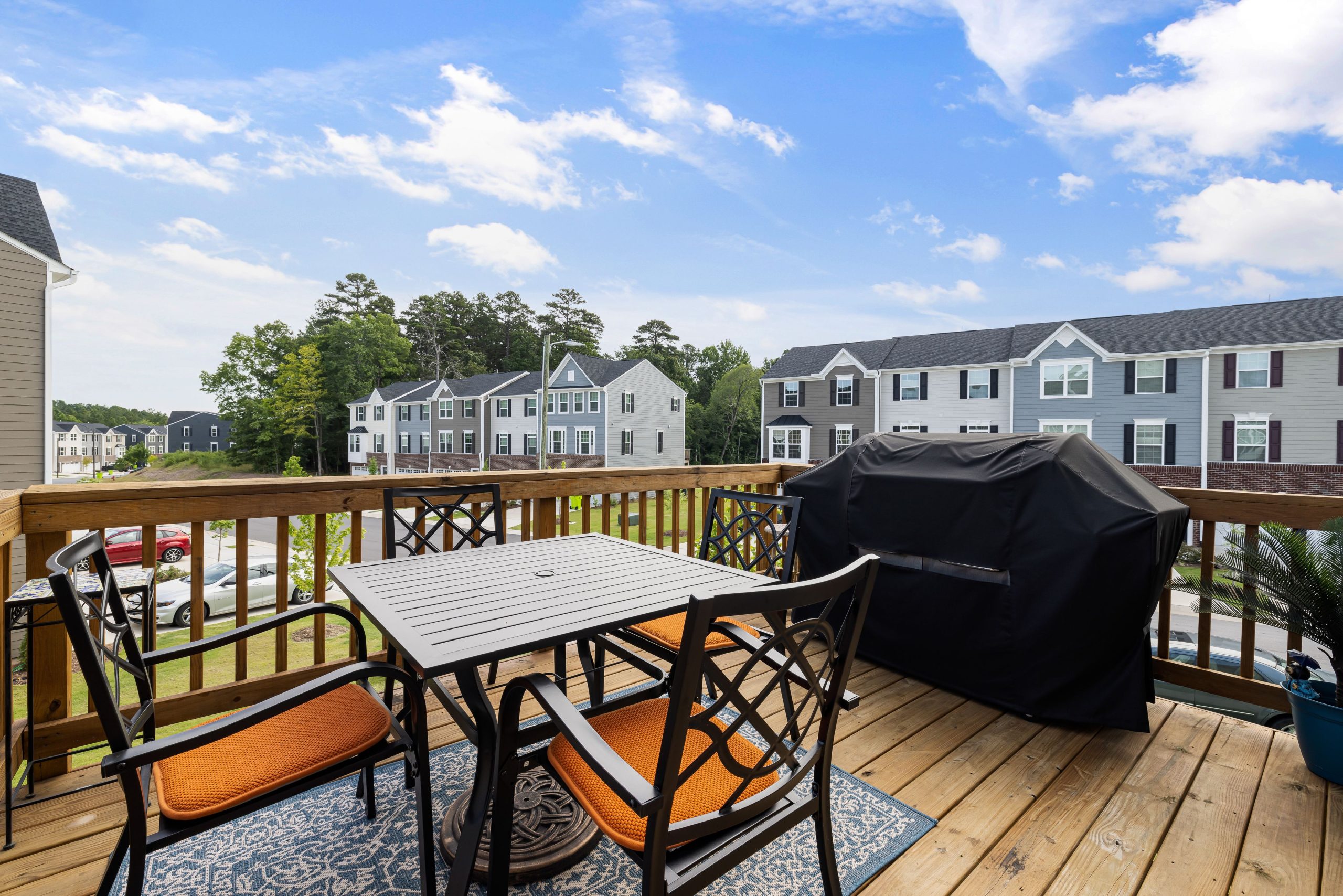
25. Natural Wood Deck with a Bold Blue and White Accent Rug
While this deck features natural wood, it taps directly into the 2026 trend of defining outdoor “rooms” with bold textiles. For years, outdoor decor was all about beige and neutrals. Now, people are treating their decks like living rooms, using vibrant, patterned rugs to add personality and anchor furniture groupings. A bold blue and white rug like this provides a powerful pop of color and pattern that makes the entire space feel more intentional and stylish. It’s a move away from letting the furniture just “float” on the deck boards.
|
📋 Copy HEX 🔗 Share |
You can get this energetic, colorful look without the expense of a high-end composite deck. The star of the show here is the styling. Start with a basic pressure-treated wood deck. Instead of expensive furniture, look for black metal dining sets on Facebook Marketplace or at Target for around $300-$500. The key investment is the outdoor rug, which you can find for $100-$200 online. Add a few colorful seat cushions ($15 each), and you have captured this entire inviting vibe for under $700. For a composite version of a natural look, check out Idea #2.
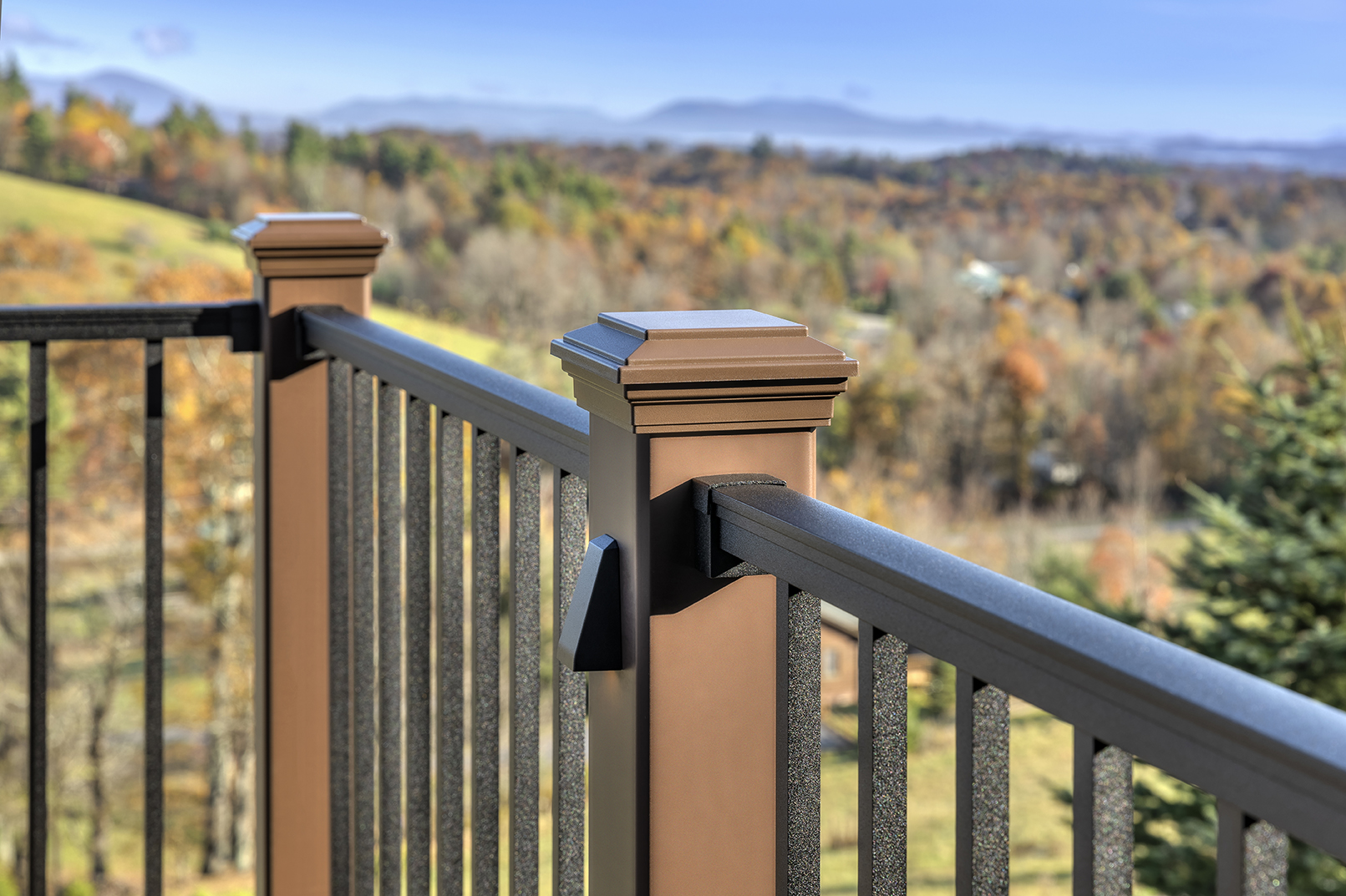
26. Modern Bronze Railing with a Serene Autumn Vista
The choice of a bronze finish for the railing is the single element that makes this design so unique and successful. Black or white would have worked, but bronze adds an unexpected layer of warmth and sophistication. It has a softer, more organic feel than stark black, and it beautifully complements the warm tones of the autumn foliage in the background. It’s a color that feels connected to the natural landscape, bridging the gap between the modern structure and the wildness of the view. It’s an elevated, designer choice.
|
📋 Copy HEX 🔗 Share |
This design is a study in texture and tone. The smooth, metallic finish of the bronze posts and top rail provides a clean, modern frame. This is contrasted by the textured, almost gritty finish of the darker balusters. This subtle textural shift adds depth and visual interest up close. Furthermore, the warm bronze tone of the railing harmonizes perfectly with the warm colors of the distant autumn hills, creating a seamless connection between the man-made deck and the natural environment. The railing becomes part of the landscape, not just an observer of it.
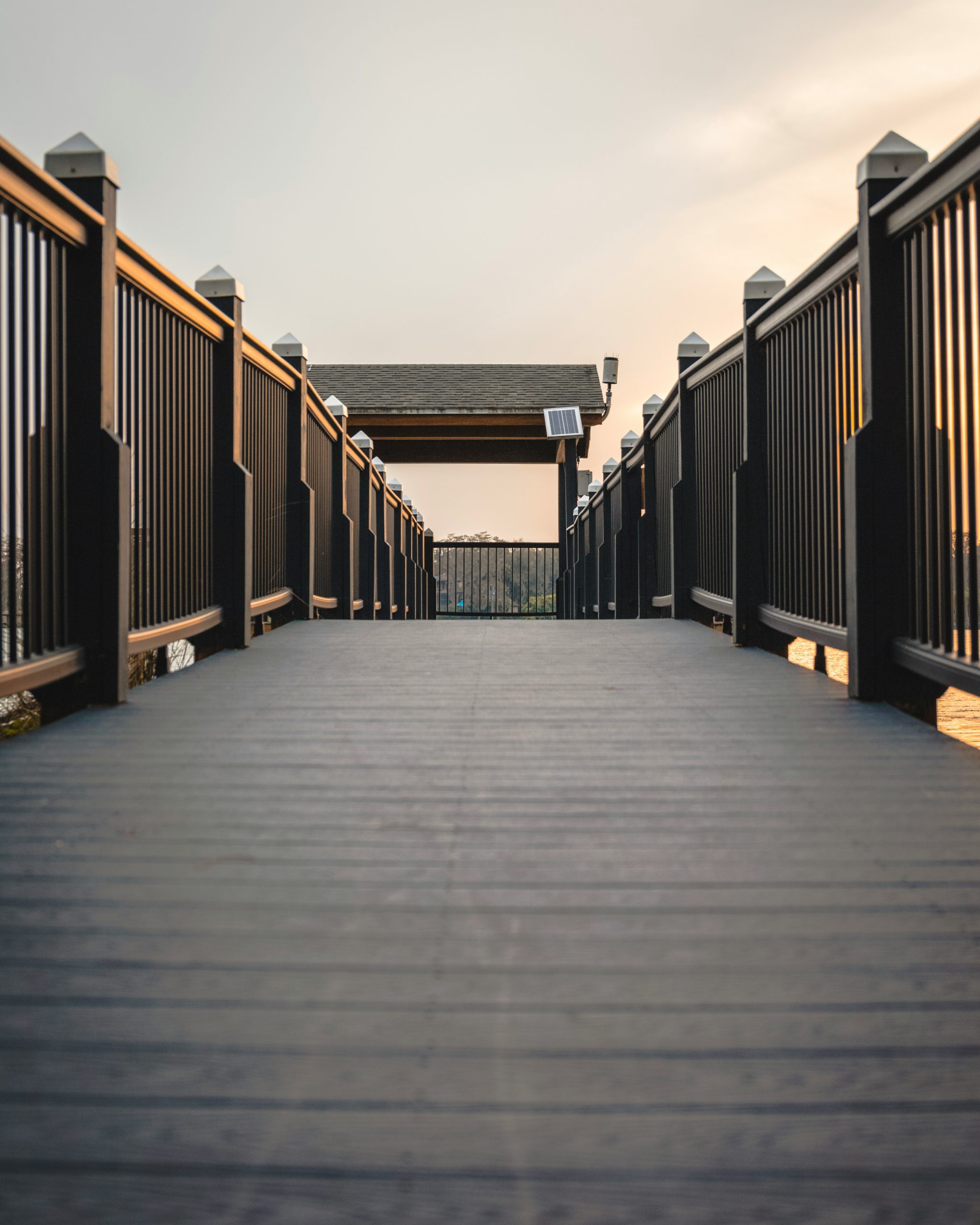
27. Sleek Dark Composite Dock Extending Over the Water
This look is specifically for waterfront properties, but the principles apply to any long, narrow deck or walkway. The key to success is maintaining long, uninterrupted lines. This style demands a length of at least 30 feet to achieve its dramatic, vanishing-point effect. The railing posts should be perfectly plumb and evenly spaced (typically 6-8 feet) to create a satisfying visual rhythm. The design is less about creating a “room” and more about creating a pathway that draws the eye toward a destination—in this case, the water.
|
📋 Copy HEX 🔗 Share |
A dock railing, especially a dark-colored one, is subject to unique environmental challenges. Constant exposure to sun and water is a given. The light-colored post caps, while providing a nice contrast, will be a favorite resting spot for birds, leading to frequent cleaning. The dark composite will get hot in direct sun, a key consideration for bare feet. A yearly pressure washing is essential to remove algae, bird droppings, and water spots, particularly on the lower sections closer to the water.
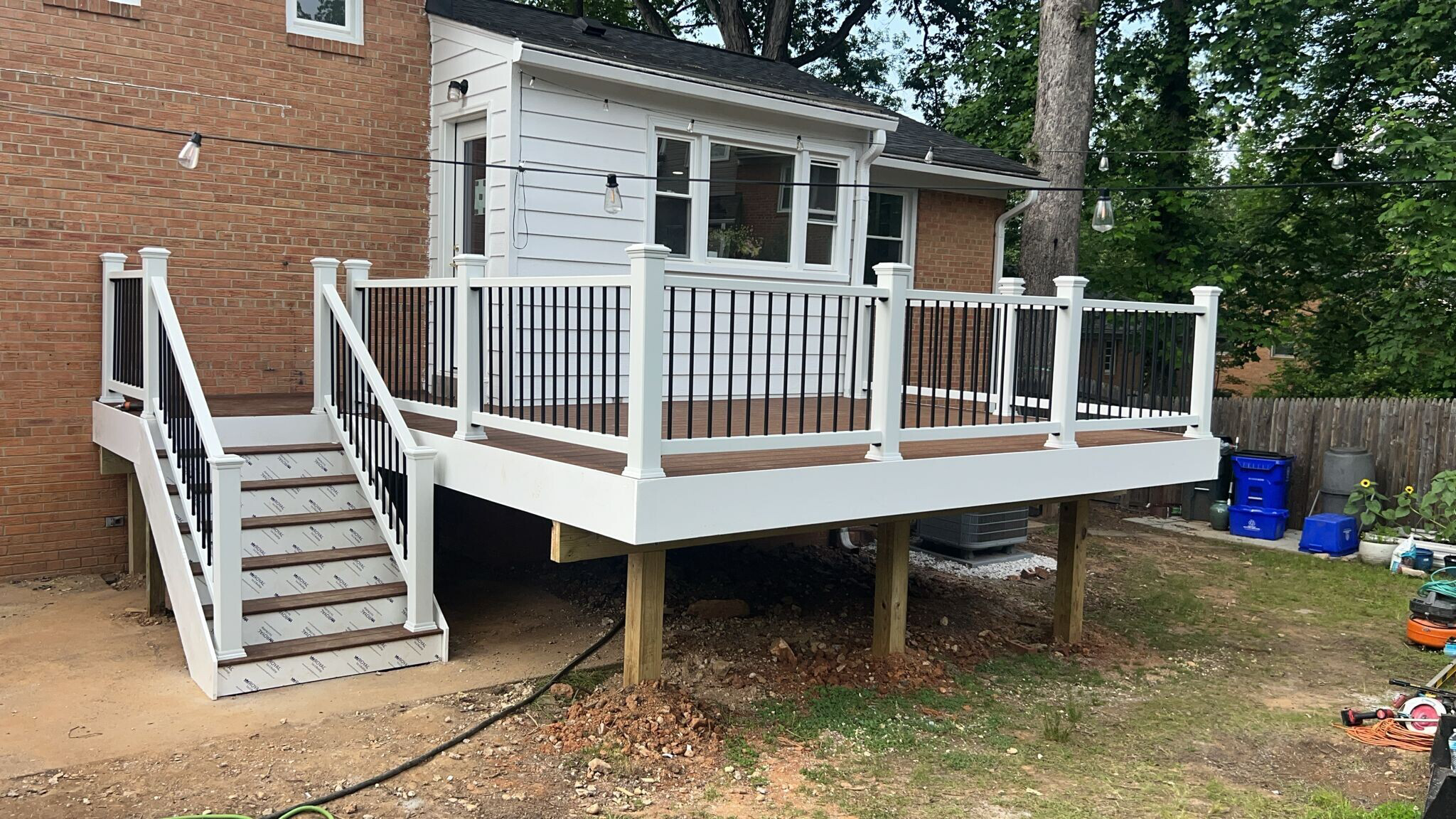
28. Multi-Level Deck with String Lights and a Contrasting Railing
String lights create an amazing atmosphere, but don’t underestimate the hassle. If your deck doesn’t have conveniently placed posts or house walls to hang them from, you’ll need to install dedicated poles, which can look awkward if not planned properly. Also, cheap string lights don’t last. The plastic bulbs cloud over, and the wires become brittle. Invest in commercial-grade, heavy-duty string lights—they cost more upfront but will save you the annual frustration of replacing a dead string. Finally, be mindful of light pollution for your neighbors. It’s for ambience, not for lighting up the whole yard!
|
📋 Copy HEX 🔗 Share |
This cozy, inviting look is a perfect blend of structure and softness. The formula is: 50% warm wood tones (the decking) + 40% crisp, architectural lines (the white and black railing) + 10% ambient glow (the string lights). The dark decking provides a solid, earthy base. The white and black railing adds sharp contrast and a modern touch, similar to what you see in Idea #11 but with a darker floor. The string lights are the magic ingredient, draping the entire scene in a soft, warm light that makes the hard lines and surfaces feel instantly welcoming and festive.
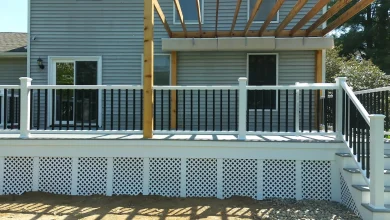
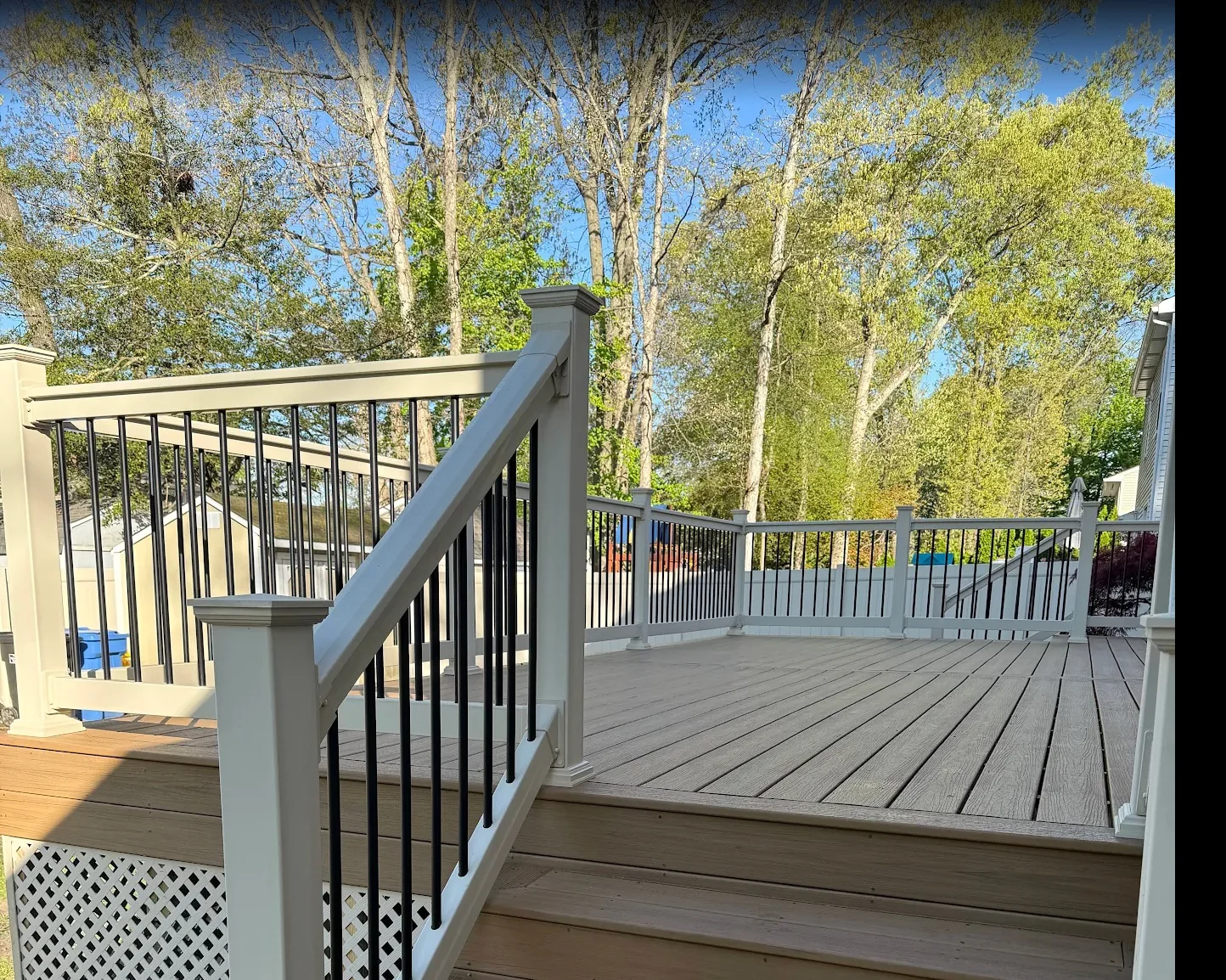
29. Light Gray Deck with Beige Wood Stairs and a Lattice Skirt
Mixing several colors and materials requires careful planning. Before you commit to this three-tone look, make sure you have a solid plan.
- Get Samples: Get physical samples of the gray decking, the black balusters, and the paint or stain for the beige stairs. View them together outdoors in both direct sun and in shade.
- Confirm Undertones: Ensure the gray composite and the beige wood have compatible undertones (e.g., both warm or both cool). A cool gray with a yellow-toned beige can look jarring.
- Plan Your Transitions: Decide exactly where one color will end and another will begin. A clean, deliberate transition point is crucial for a professional look.
|
📋 Copy HEX 🔗 Share |
When combining a composite deck with wooden stairs, the key to a cohesive look is to treat the stair landing and fascia as a single design element. Here, the light beige wood is used for the stair treads, the risers, AND the fascia board that trims out the deck. This creates a distinct “block” of color and material that feels intentional. If only the treads were wood and the rest were gray or white, the effect would be messy and disconnected. This thoughtful grouping is what elevates the design.
Your deck’s next chapter starts here.
You’ve seen the possibilities, from sleek, modern setups to timeless, traditional designs. The right railing doesn’t just add safety; it defines your outdoor space and frames your view of the world. Ready to create your own backyard getaway? Start pinning your favorites and make a plan!