
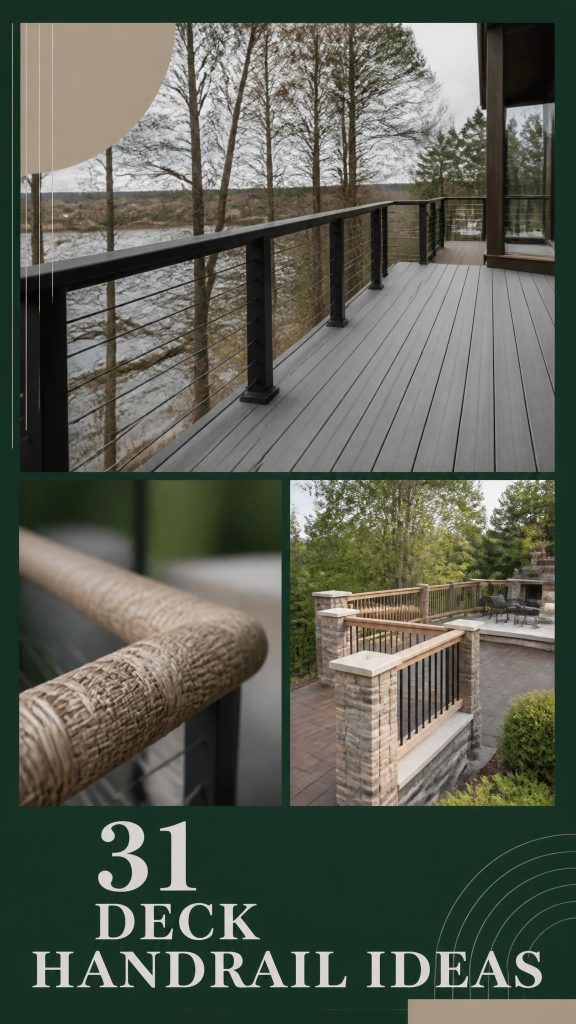
You know that feeling when you finally find the deck handrail idea that looks exactly right for your space? That little spark when a photo on Pinterest makes you say, “That’s it!” Well, get ready for that feeling, because we’ve waded through the endless scroll to find the best of the best. After filtering through hundreds of options, we narrowed it down to 31 ideas that actually deliver. In this guide, you’ll find everything from sleek cable railings to classic wood designs, covering every style. These aren’t just pretty pictures; they’re real, buildable designs for 2026. And stay until the end—we break down the most common mistakes that can ruin these looks. 📌 Save this to Pinterest for later—you’ll want to revisit these ideas.
1. Modern Black Post and Thin Cable Deck Handrail
This design is all about confident contrast and letting the view do the talking. The choice of thin, horizontal stainless steel cables makes the railing feel almost invisible, ensuring the mountain landscape remains the star of the show. Pairing them with matte black square posts grounds the design, creating a sharp, modern frame that echoes the dark accents on the stone-clad building. It’s a sophisticated look that feels both high-end and deeply connected to its natural setting.
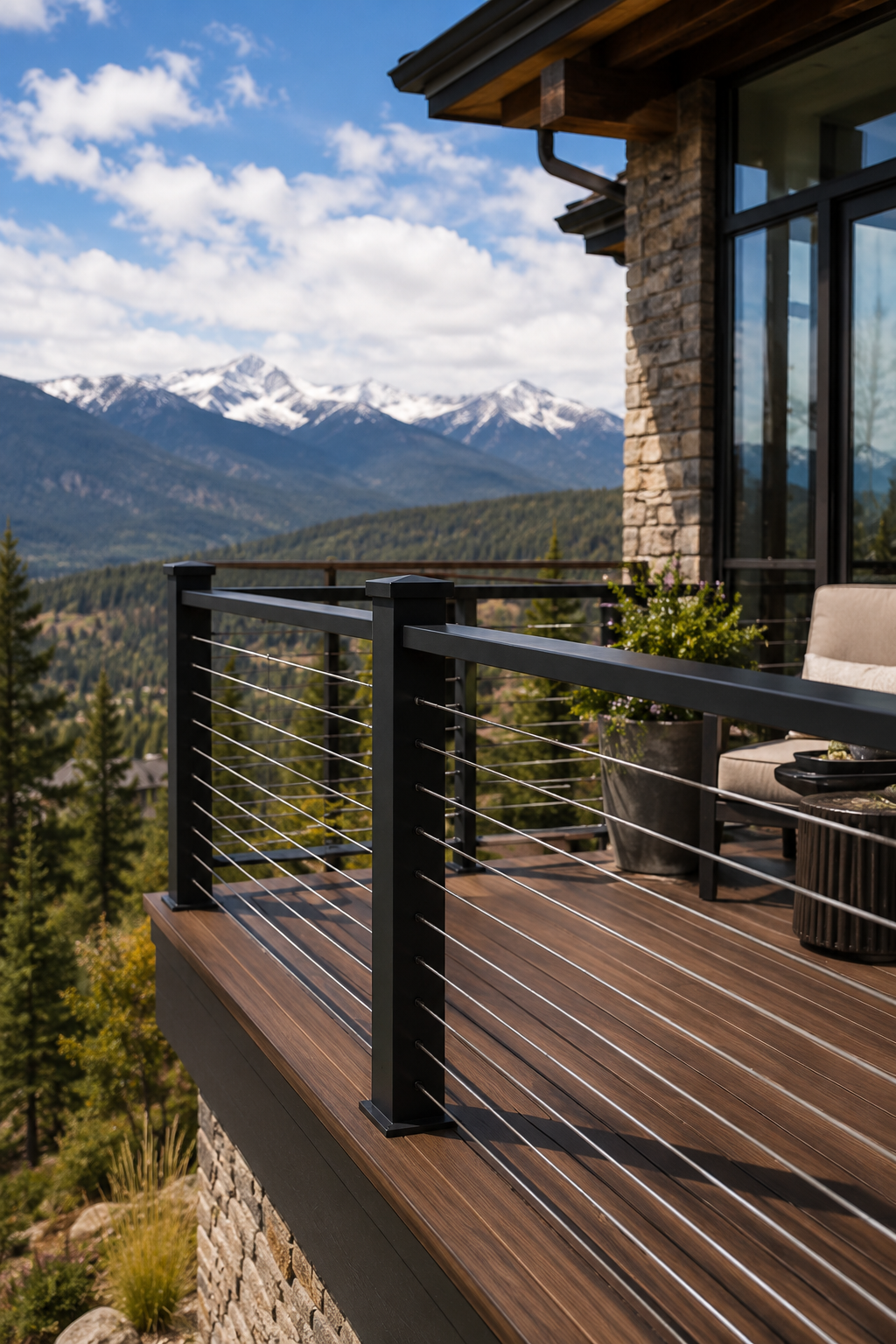
When installing a cable railing system, the tension is everything. Too loose, and the cables will sag, looking sloppy and failing to meet safety codes. Too tight, and you risk putting excessive strain on your end posts, potentially causing them to bow over time. Aim for a tension where the cable deflects no more than 3 inches when you push on its center with about 50 pounds of force. A tension gauge is your best friend for getting this just right on every single run.
2. White Post and Dark Wood Top Cable Deck Railing
Think of this railing as a simple but powerful equation: 50% crisp white structure + 40% warm wood accents + 10% sleek silver cable. The substantial white vertical posts provide a bright, coastal-inspired base that feels clean and classic. The dark wood top rail and matching post caps introduce warmth and a touch of organic texture, preventing the design from feeling sterile. The silver cables are the modern element that keeps it light and open. You could swap the dark wood for a gray composite to lean more contemporary, but the ratio is key.
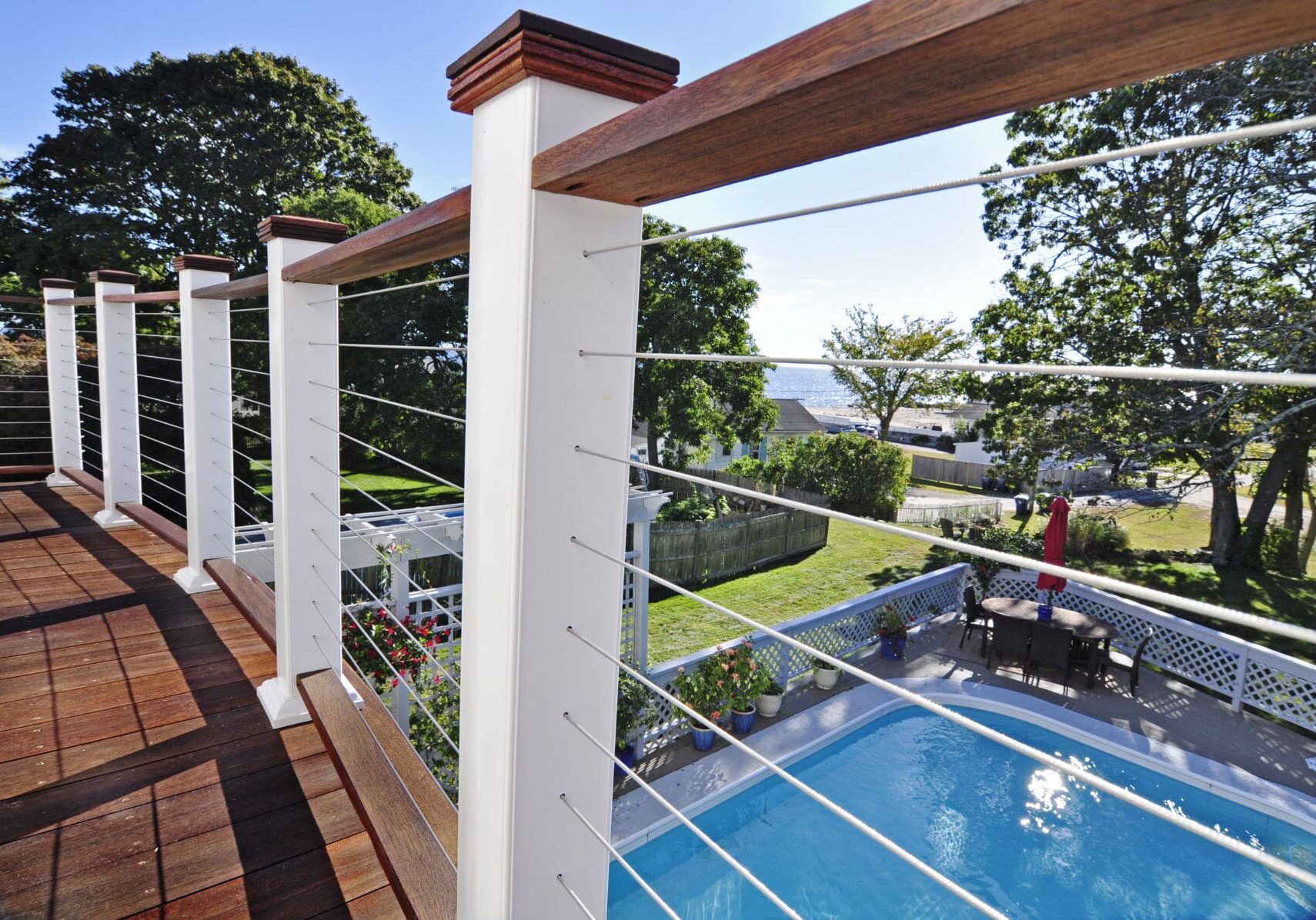
Let’s be honest: white deck railings look incredible, but they are not a “set it and forget it” choice. They will show every speck of dirt, pollen, and mildew, especially at the base where rain splashes up from the deck boards. Plan on giving them a good scrub with a mild cleaner at least twice a year—once in the spring and once in the fall—to keep them looking sharp. If you live in a wooded area with lots of pollen or falling leaves, you might even be cleaning them more frequently.
3. Modern Gray Deck with White Frame and Black Picket Railing
You don’t need a high-end composite system to get this clean, modern look. You can achieve a very similar vibe with standard pressure-treated lumber. Use 4×4 posts and 2x4s for the top and bottom rails, then paint them with a high-quality exterior white paint. For the infill, you can find simple, round black metal balusters online or at big-box hardware stores for just a few dollars each. The key is the color blocking: a crisp white frame, black balusters, and a solid gray stain on your deck boards. Total cost could be under $800 for a small deck.
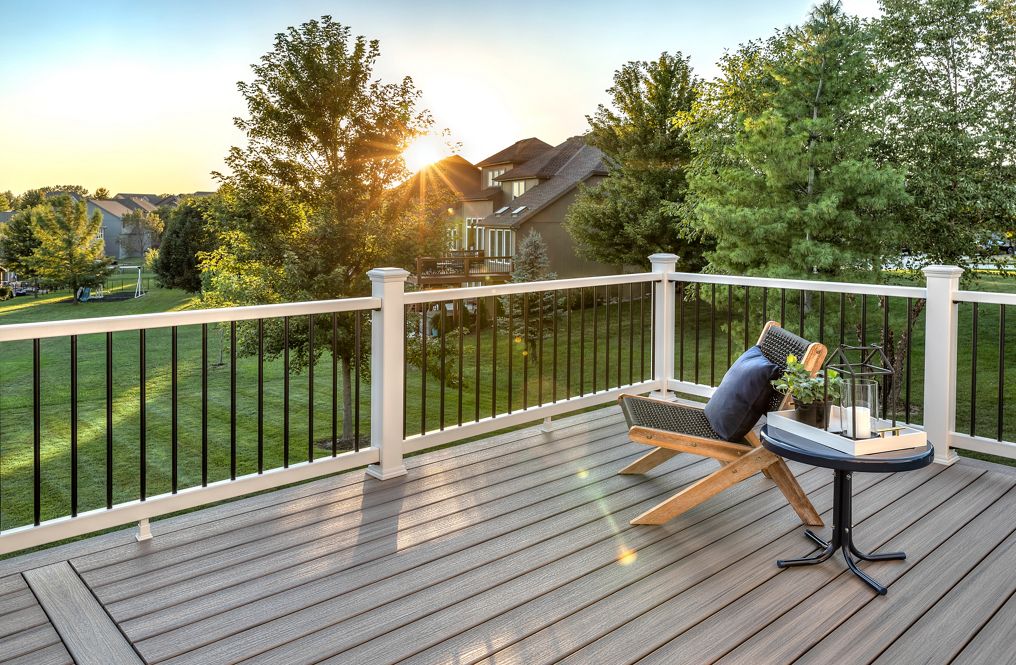
This style of railing is incredibly versatile, but it shines on small to medium-sized decks (think 10×12 to 15×20 feet). The clean white frame and thin black balusters create a defined perimeter without feeling heavy or closed-in, which helps preserve a sense of space in a smaller footprint. On a very large, sprawling deck, the look can sometimes feel a bit too busy. For a larger space, consider the more expansive feel of a cable system, like in Idea #18.
4. Modern Wood and Stainless Steel Horizontal Rod Railing
The single element that makes this railing work so well is the use of substantial, horizontal stainless steel rods instead of thin cables. While cables disappear, these rods have a deliberate presence. They feel architectural and strong, turning the railing from a simple safety feature into a major design statement. The rods reflect light and provide a cool, metallic contrast to the warm, dark wood of the deck and posts. Removing them for a different infill would completely erase the sleek, industrial-modern character of the space.
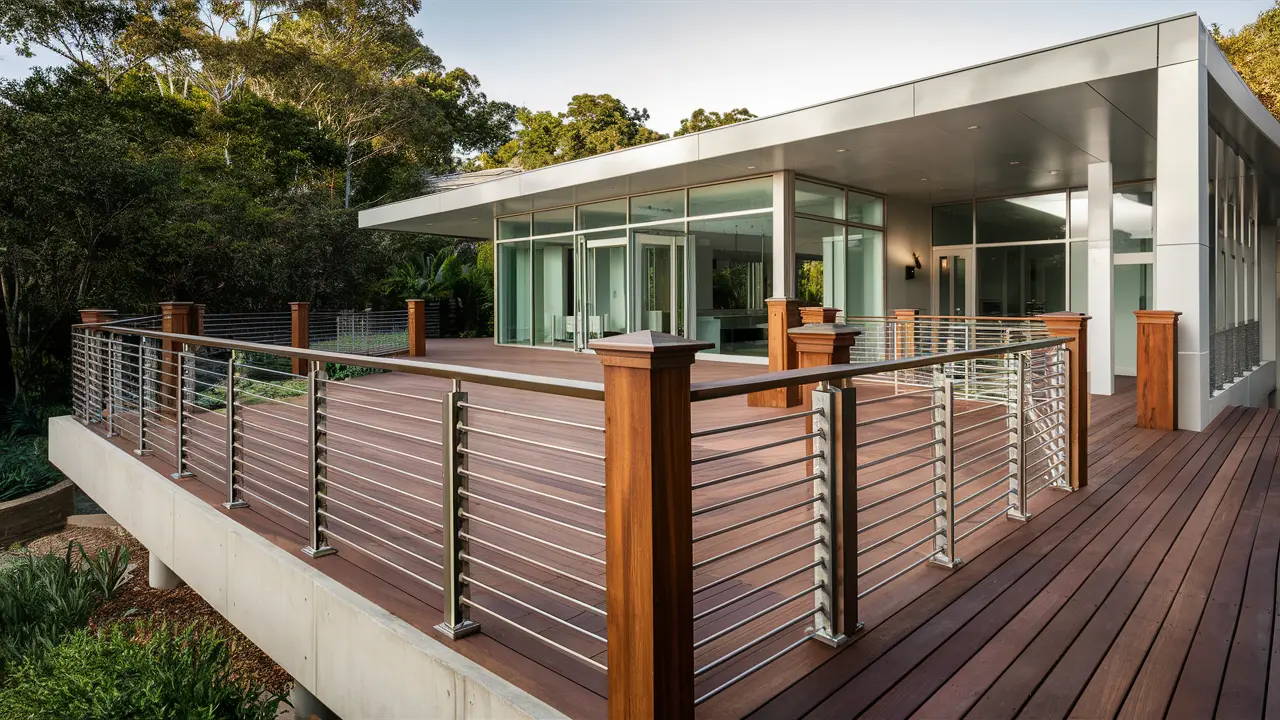
Stainless steel looks amazing, but it’s not entirely maintenance-free, especially outdoors. Depending on your climate (especially near saltwater), you might notice small rust spots or pitting over time. To keep the rods looking pristine, plan to clean them once or twice a year with a soft cloth and a specialized stainless steel cleaner. For stubborn spots, a non-abrasive pad can work wonders. This small bit of upkeep prevents minor discoloration from becoming a permanent issue and preserves that sharp, modern finish.
5. Modern Red Wood Deck with Horizontal Cable Railing
- Main Furniture (Lounge Chairs/Table): $700 – $2,500
- Lighting (Exterior Sconces): $200 – $600
- Textiles (Cushions/Pillows): $150 – $400
- Railings (Cable System & Posts): $3,500 – $8,000+ for a medium deck
- Decking (Reddish-brown composite): $4,000 – $10,000
- TOTAL: $8,550 – $21,500
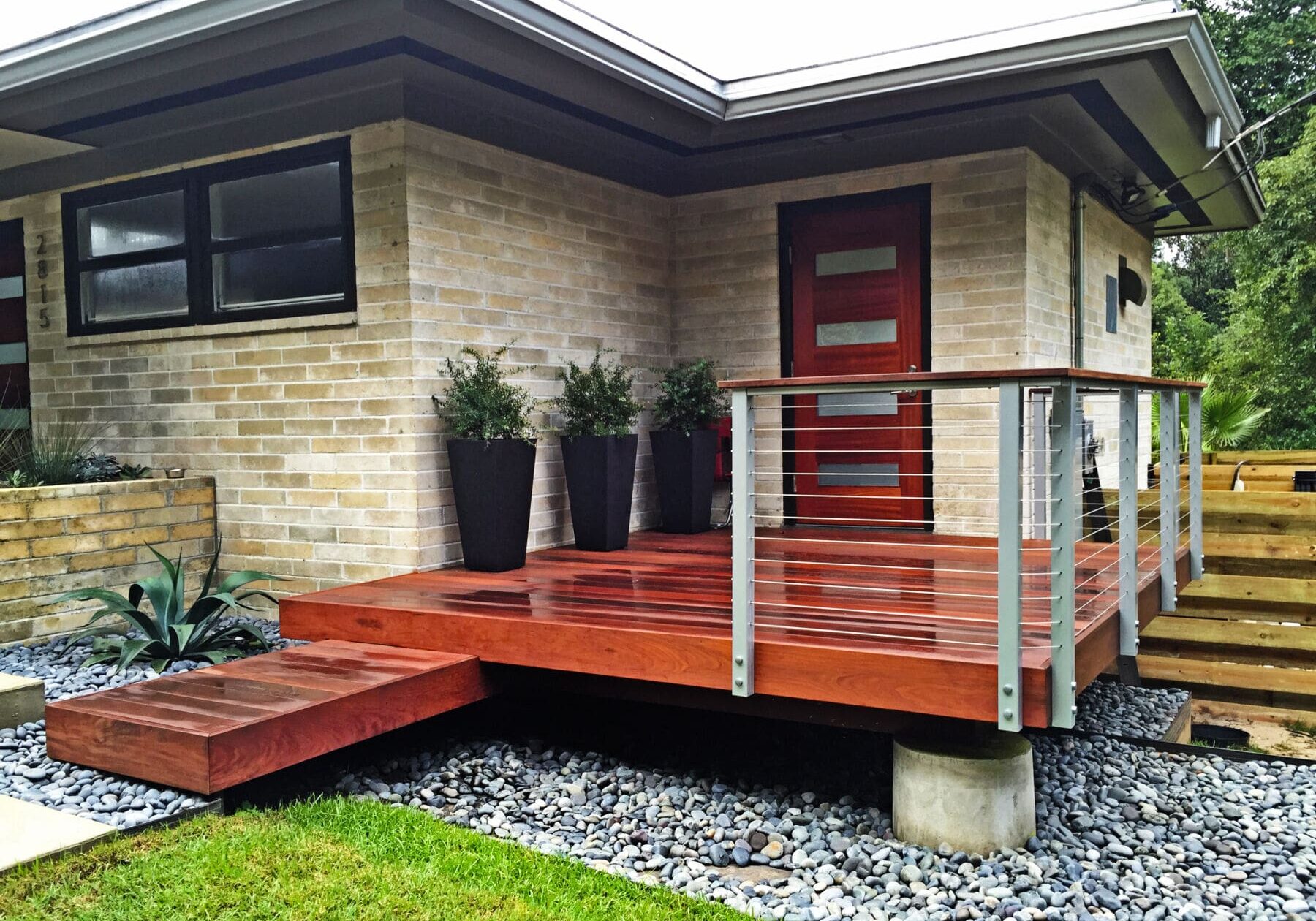
Budget alternative: Use pressure-treated wood for the deck and stain it a similar reddish-brown tone. Opt for wood posts instead of metal and a more basic cable hardware kit. This could bring the total project cost down to the $4,000 – $7,000 range.
This design succeeds by masterfully mixing warm and cool tones. The reddish-brown wood of the deck and top rail is deeply warm and inviting, creating a rich, organic base. This warmth is balanced by the cool, industrial feel of the light gray metal posts and the sleek stainless steel cables. This intentional temperature contrast makes both materials stand out more. It’s a sophisticated palette that feels more deliberate and curated than just using one material throughout. Compare this to the similar cable system in Idea #1, which uses a darker, more monochromatic scheme.
6. Sleek Deck Railing with Vertical Metal Balusters and Wood Trim
A critical detail for any railing with vertical balusters is the spacing. Building codes almost universally mandate that the gap between balusters must be small enough that a 4-inch sphere cannot pass through it. This is primarily for child safety. When planning your layout, don’t just measure the gap; account for the thickness of the balusters themselves. A common mistake is planning for a 4-inch gap and ending up with something larger once the balusters are installed. Always aim for a clear space of 3.75 inches to be safe.
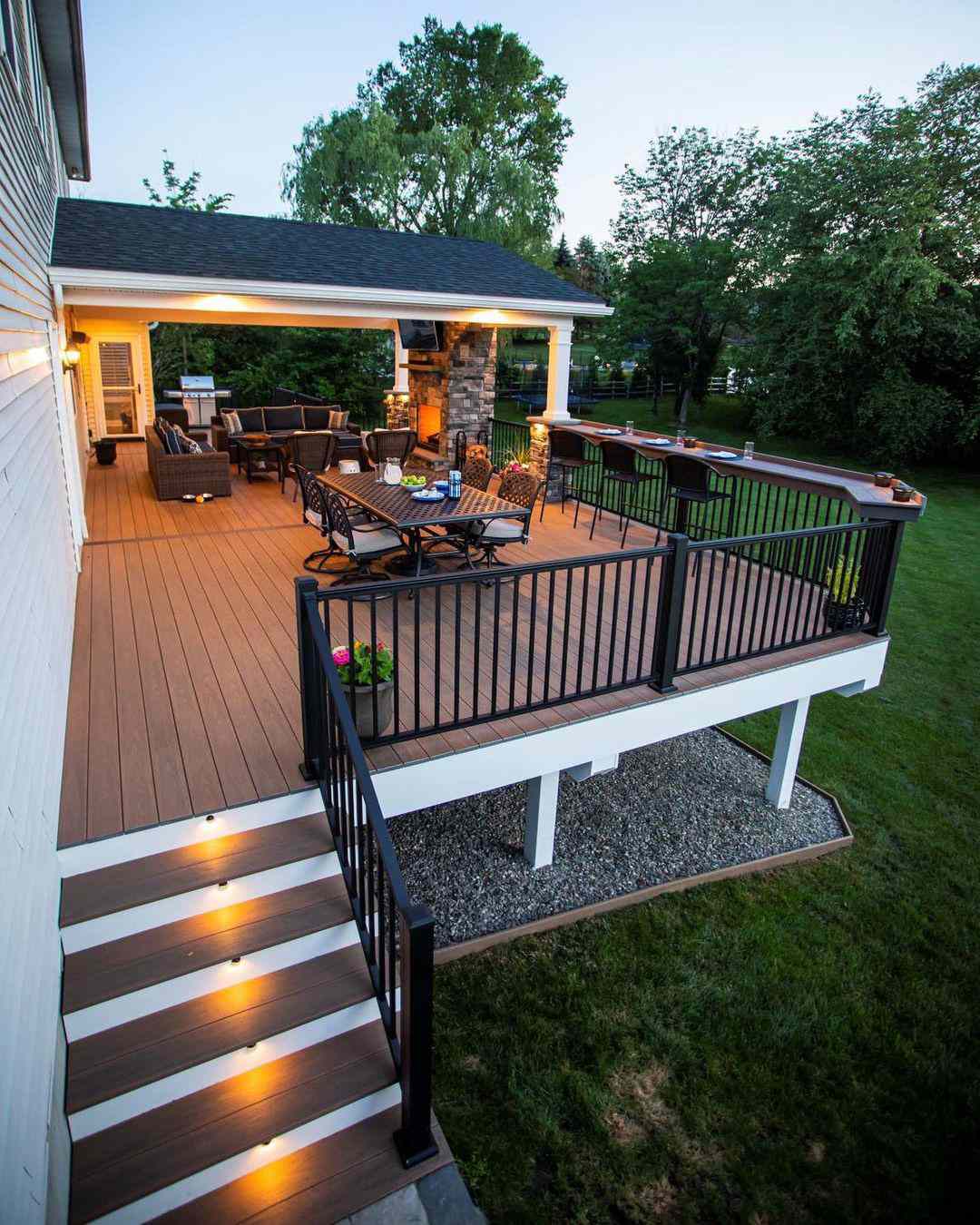
This clean, minimalist combination of light natural wood and thin metal elements is right in line with the rise of “Japandi” design—a hybrid of Japanese minimalism and Scandinavian functionality. We’re seeing this aesthetic move outdoors as people crave serene, uncluttered spaces that connect with nature. The simple vertical lines, unadorned wood, and focus on craftsmanship create a sense of calm that feels very relevant right now. It’s a timeless look that has staying power precisely because it’s so elegantly simple.
7. Contemporary Black Metal Deck Railing with Wood-Look Top
This is a classic high-contrast formula that always works: 70% dark structure + 30% warm accents. The charcoal black metal posts and balusters create a strong, graphic foundation that reads as modern and sturdy. The light brown, wood-look composite top rail and matching deck boards provide 30% of the warmth and texture. This prevents the deck from feeling like a black cage and makes it more inviting. You could apply this same 70/30 ratio with different colors—like a white railing with a dark gray top rail—to get a different mood with the same balanced feel.
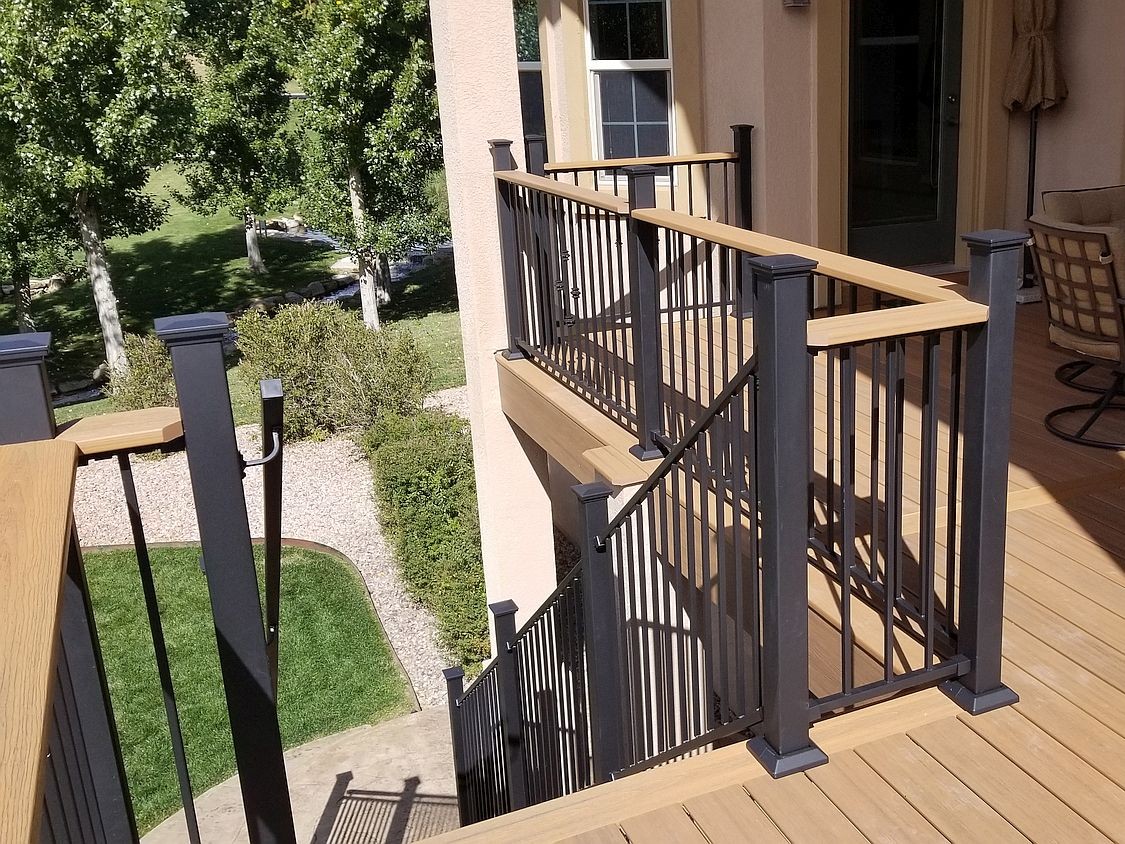
A composite top rail that looks like wood is a fantastic low-maintenance choice, but be aware of how it behaves in direct sunlight. Darker-colored composites, and even some lighter ones, can get surprisingly hot to the touch on a blistering summer day—sometimes too hot to comfortably rest your arm on. If your deck gets relentless all-day sun, you might consider a true wood top rail (which stays cooler) or a lighter-colored composite to minimize heat absorption. It’s a practical consideration that affects how you’ll actually use the space.
8. Dark Gray Metal Deck Handrail with Vertical Pickets
A sturdy, all-metal railing system like this is an excellent choice for large, expansive decks, especially those with a sweeping view. The uniform dark gray color and repeating vertical lines create a strong visual boundary that frames the landscape without competing with it. On a smaller deck, this much metal might feel a bit imposing or heavy. But for a space that’s 300 square feet or larger, it provides a sense of security and permanence that matches the scale of the deck and the open space beyond.
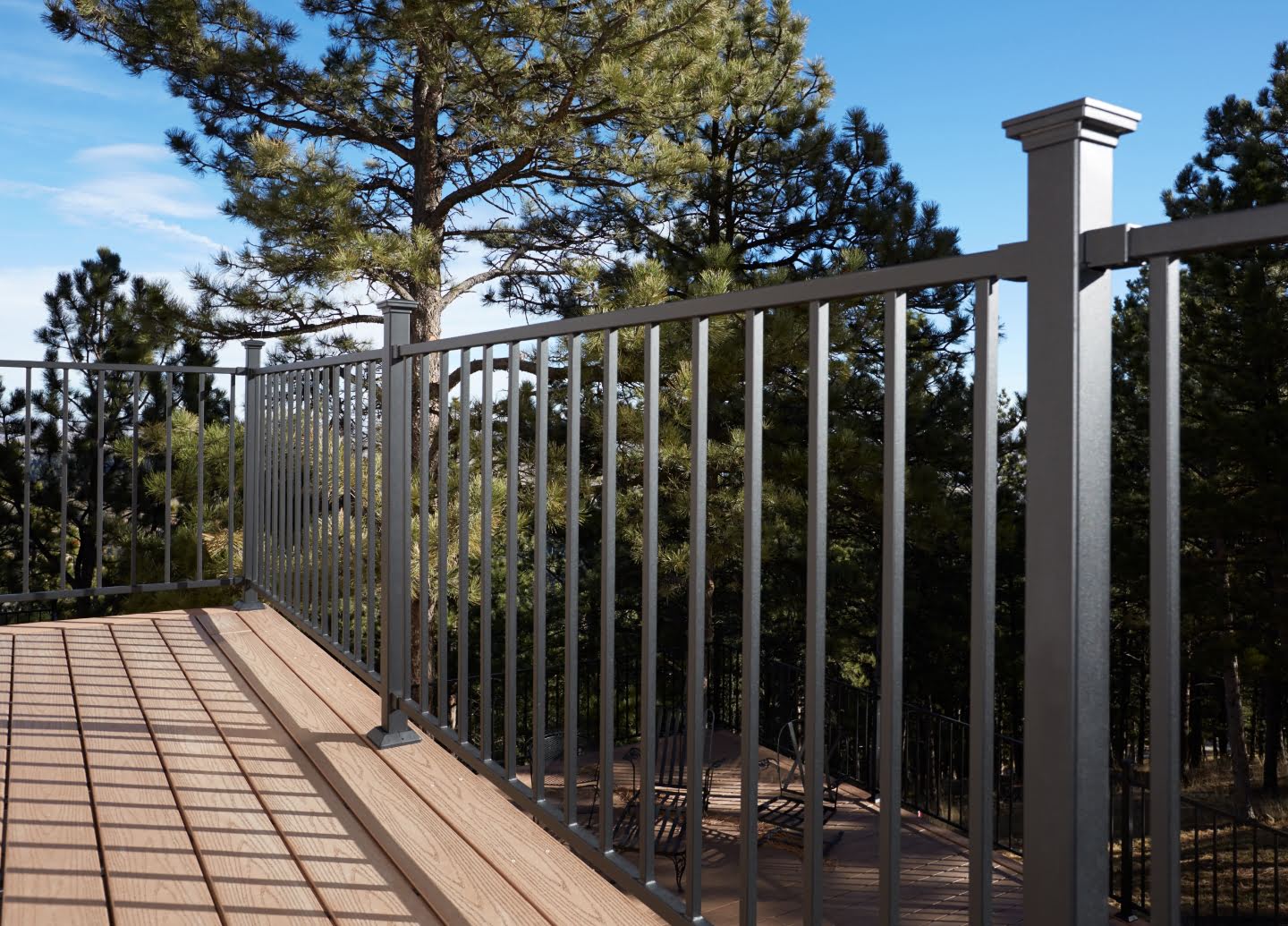
You can get this look without springing for a full custom system. Many home improvement stores sell pre-fabricated aluminum railing panels in standard 6-foot or 8-foot lengths. You buy the posts, the panels, and the hardware separately and assemble them on-site. This is significantly more affordable than having a railing custom-welded and powder-coated. While you might have slightly less design flexibility, the cost savings can be substantial, often cutting the price by 40-50% while achieving a nearly identical aesthetic.
9. Modern Black Metal Horizontal Bar Deck Handrail
The single element that defines this railing is its strong horizontal orientation. Unlike vertical balusters that draw the eye up and down, these horizontal bars pull the eye across the landscape, emphasizing the width of the deck and the expanse of the view. This creates a distinctly modern and dynamic feeling. Swapping these bars for vertical pickets or even glass would fundamentally change the experience; you’d lose that powerful sense of linear flow and openness that makes this design so sleek and effective.
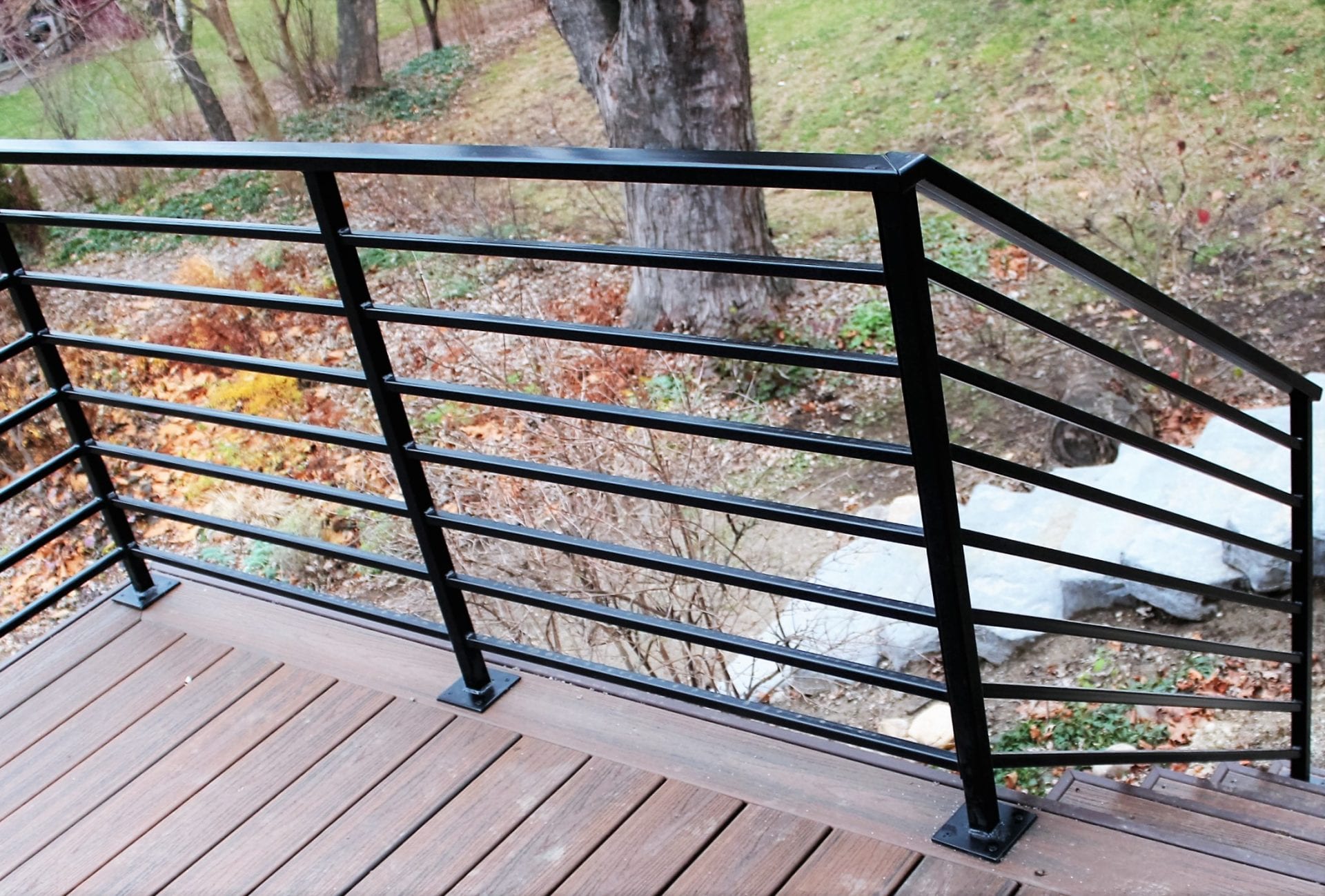
While horizontal railings look sharp, they can be a bit more tedious to clean than their vertical counterparts. Dust, pollen, and spiderwebs love to collect on the top surfaces of each of the bars. A quick wipe-down isn’t as simple as with a vertical baluster you can clean in one motion. You’ll need to wipe each horizontal run individually. A leaf blower can be a great first step to clear loose debris, followed by a damp microfiber cloth to get them truly clean. It’s not a deal-breaker, but it’s a small bit of extra work to factor in.
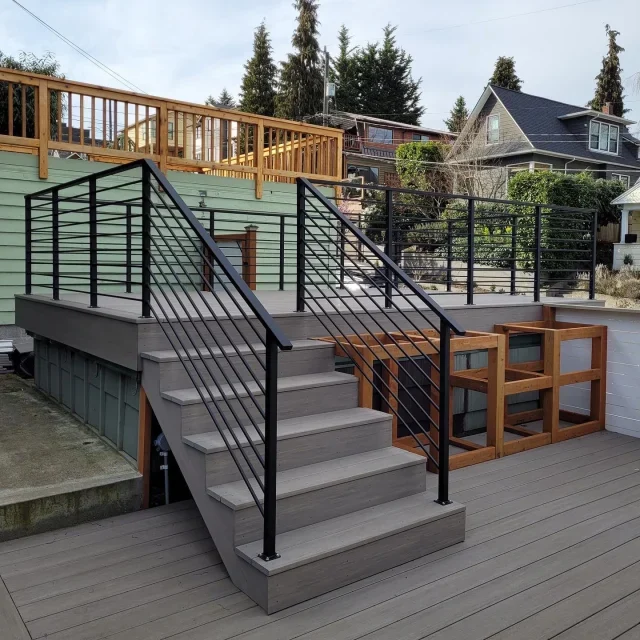
10. Modern Black Horizontal Rod Railing on a Grey Composite Deck
Rhythm and repetition are the secret ingredients here. The strong horizontal lines of the black metal railings are echoed in the horizontal lines of the grey composite deck boards and the wide stair treads. This creates a cohesive and deeply satisfying visual rhythm that guides the eye through the space. The consistent use of clean lines and a simple, cool-toned palette (grey and black) makes the entire multi-level structure feel intentional and thoughtfully designed, rather than just a collection of functional parts. This is a more graphic version of the horizontal style seen in Idea #8.
|
📋 Copy HEX 🔗 Share |
Installing a pre-fabricated horizontal railing panel is a manageable DIY project. Here’s a quick guide:
- Install Posts: Securely mount your main posts to the deck frame, ensuring they are perfectly plumb and spaced according to the panel manufacturer’s instructions (usually 6 or 8 feet on center).
- Attach Brackets: Screw the mounting brackets that come with your panel kit to the inside faces of the posts. Use a level to ensure the top and bottom brackets are aligned.
- Set the Panel: Rest the railing panel onto the bottom brackets. Tilt it into place and fit it between the posts.
- Secure the Panel: Drive screws through the bracket holes into the panel’s frame to lock it in place.
- Install Top Rail: If your system has a separate top rail, secure it over the posts and panel for a finished look.
This process for one panel can take about 1-2 hours.
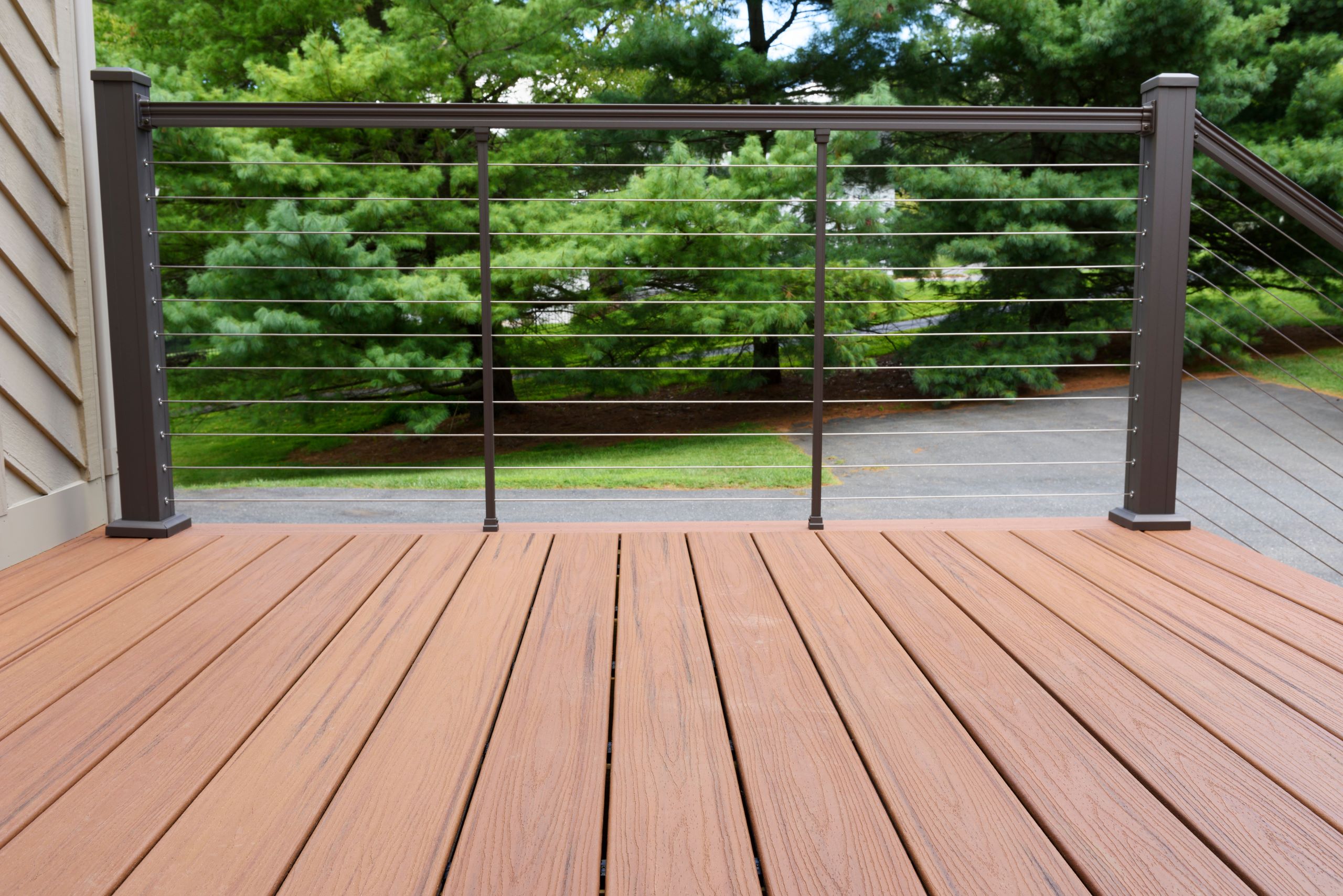
11. Modern Dark Brown Cable Railing on a Composite Deck
For cable railings, post spacing is crucial not just for looks but for safety and performance. To prevent cable sag and ensure the railing is rigid, your main structural posts should be no more than 6-7 feet apart. More importantly, you need intermediate posts, or ‘cable braces,’ every 3 feet. These thinner posts don’t provide major structural support but are essential for keeping the cables taut and preventing them from being spread apart. Skipping the intermediate posts is a common mistake that leads to a flimsy, unsafe railing.
- Main Furniture (not pictured): $1,000 – $3,000
- Lighting (not pictured): $200 – $500
- Railings (premium cable system): $4,000 – $9,000 for a medium deck
- Decking (Reddish-brown composite): $4,500 – $11,000
- TOTAL: $9,700 – $23,500
Budget alternative: Use pressure-treated wood posts stained dark brown instead of powder-coated aluminum or steel. Source cable and fittings online from a specialty supplier rather than a full kit, which can save 20-30%. This could lower the project cost to the $5,000 – $9,000 range.
12. Simple Black Metal and Wood Deck Handrail with a Glass Corner
The glass corner panel is the single most impactful feature of this entire design. It’s a brilliant move that solves a common problem: how to handle a corner without a bulky post interrupting the view. By using a seamless glass panel, the eye can travel right through the corner, making the entire deck feel more open and preserving the prime vista. It elevates the railing from a standard metal-and-wood system to something much more custom and high-end. Everything else is classic, but that corner is pure genius.
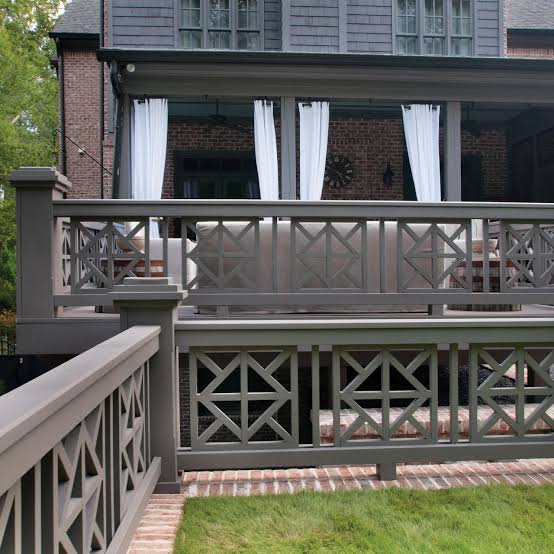
A glass railing panel looks absolutely stunning… when it’s clean. The reality is that it’s a magnet for fingerprints, water spots, dust, and bird droppings. If you have kids or pets, expect to be cleaning it constantly. Keeping it looking crystal-clear requires a regular date with a squeegee and glass cleaner. If that sounds like a chore you’ll constantly put off, you might be happier with a cable or vertical baluster railing that is far more forgiving of a little dirt. Honesty with yourself about maintenance is key!
13. Simple Natural Wood Deck with Vertical Baluster Railing
This classic all-wood railing is one of the most budget-friendly options available, especially for a DIYer. Using standard pressure-treated pine for the posts, rails, and balusters is the most economical choice, costing around $15-$25 per linear foot in materials. Cedar is a step up in price (around $30-$50/ft) but offers natural rot resistance and a richer color. The key to making it look good is consistency: clean cuts, even spacing, and a quality stain or sealer to protect the wood and give it a uniform finish.
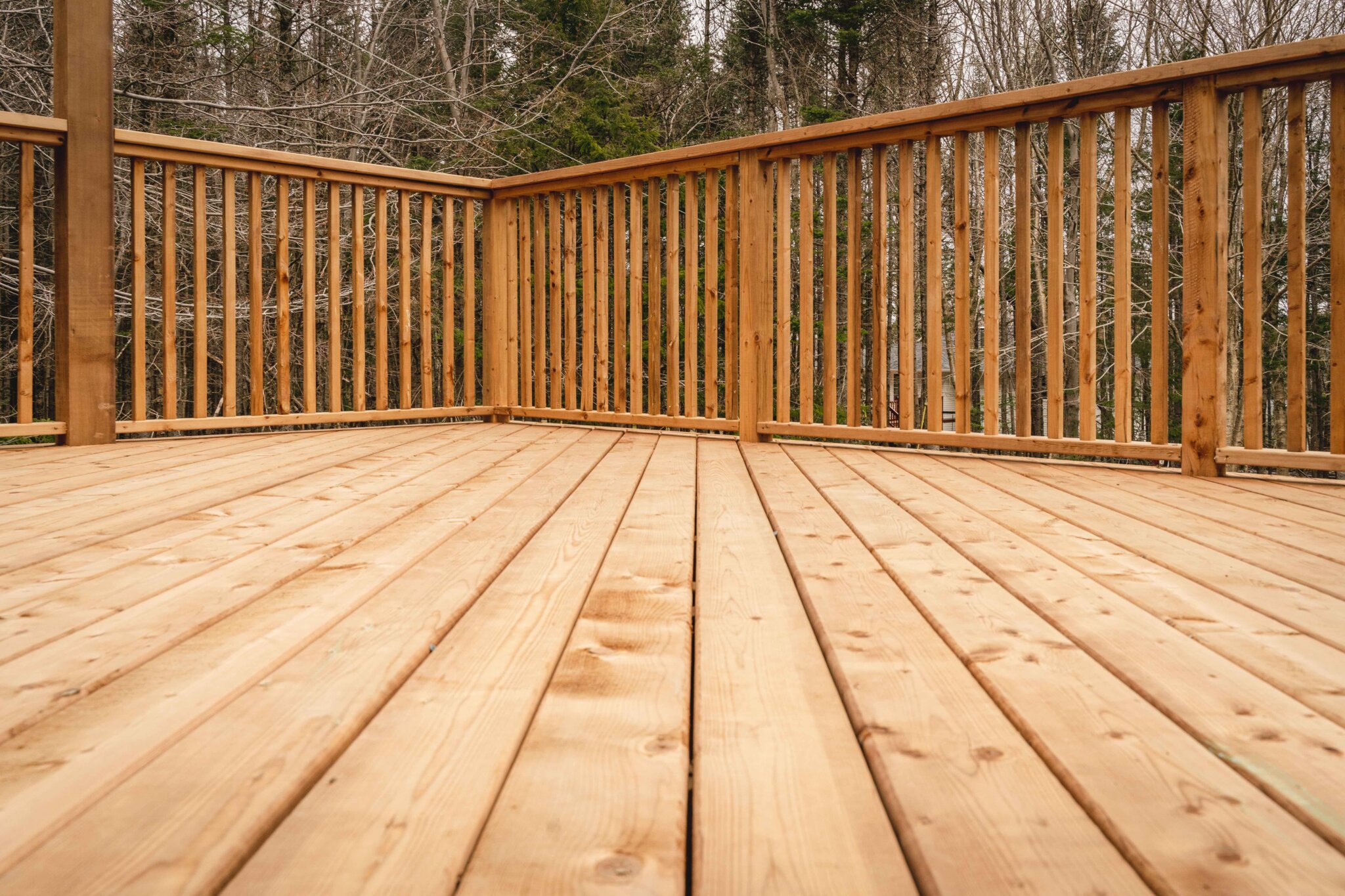
Before you buy a single piece of lumber for this project, double-check a few things:
- Local Codes: What are the required railing height (usually 36″), baluster spacing (usually under 4″), and post footing requirements in your specific municipality? Don’t guess.
- Material Choice: Are you prepared for the annual maintenance of natural wood (staining/sealing), or would a composite material be a better fit for your lifestyle?
- Total Length: Accurately measure the entire perimeter of your deck to calculate the linear footage. Buy about 10-15% extra material to account for cuts and mistakes.
14. Natural Wood Vertical Baluster Deck Handrail with White Base
The visual formula here is a study in pleasing contrast: 60% warm, natural wood + 40% crisp, clean white. The light-toned wood of the deck, rails, and balusters provides a beautiful, organic texture that feels connected to the outdoor setting. The solid white cladding on the deck’s base acts as a clean, bright foundation that makes the natural wood tones pop. This combination feels both fresh and sturdy. You could flip the ratio—white railing with a wood base—for a totally different but equally balanced effect.
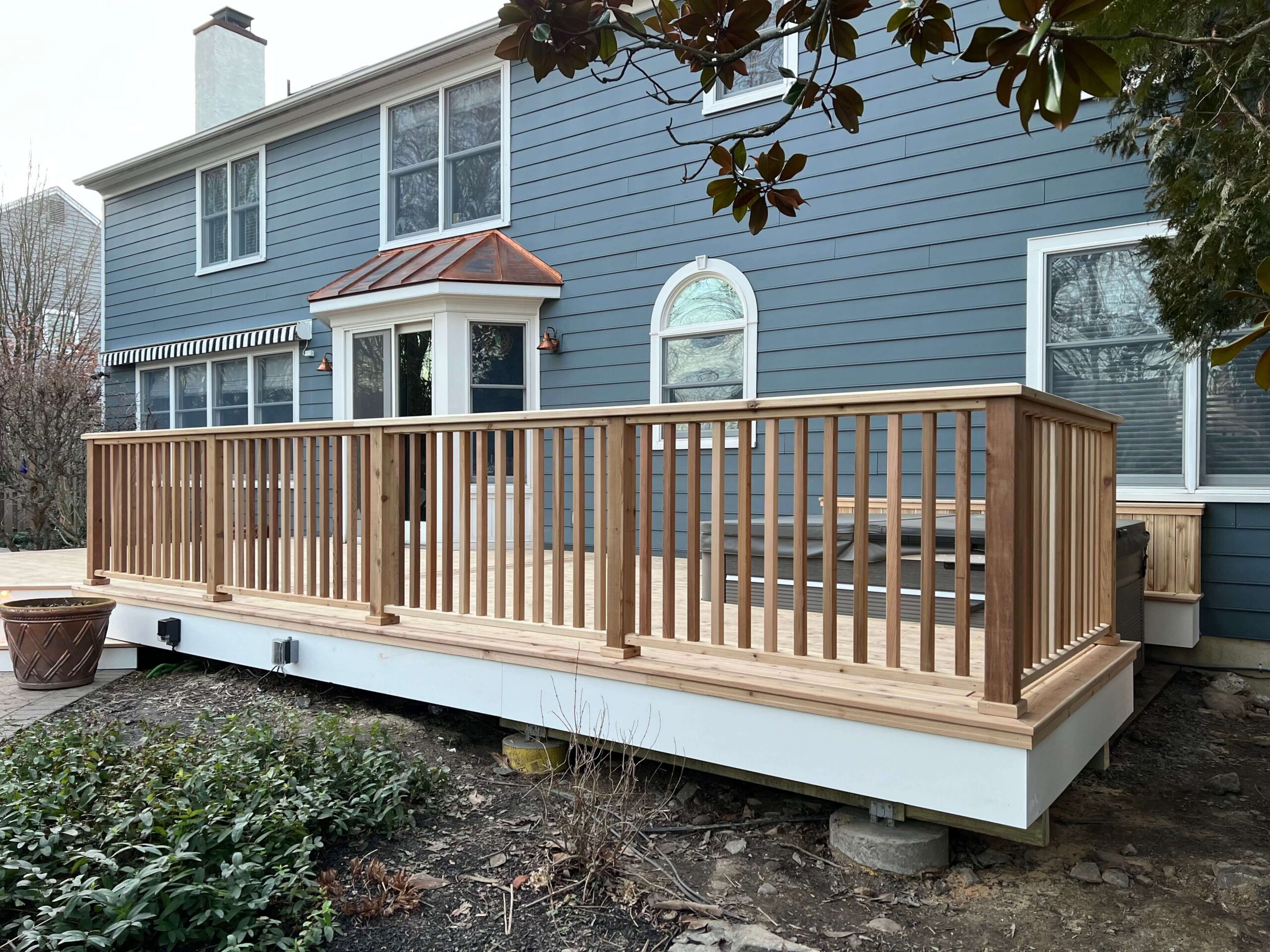
This design works because of the smart use of contrast in both color and form. The warm, slightly rustic texture of the natural wood railing is set against the smooth, clean, and bright white of the deck base. This contrast highlights the beauty of both materials. Furthermore, the vertical lines of the balusters are balanced by the strong horizontal lines of the deck planks and the white base boards, creating a visually stable and well-composed structure. It’s a look that feels more put-together than the all-wood version in Idea #12.
15. Simple Wooden Deck Handrail with Vertical Balusters
There’s a reason this simple, rustic style is perennial. It taps directly into the “cabin-core” and modern rustic aesthetics that are all over Pinterest. In a world of sleek, modern, and sometimes cold designs, a straightforward wooden railing feels honest, approachable, and deeply connected to nature. It’s not trying to be anything other than what it is: a sturdy, functional, and beautiful structure made of wood. The addition of the dark Adirondack chairs completes the picture, signaling that this is a space for relaxation and enjoying the outdoors.
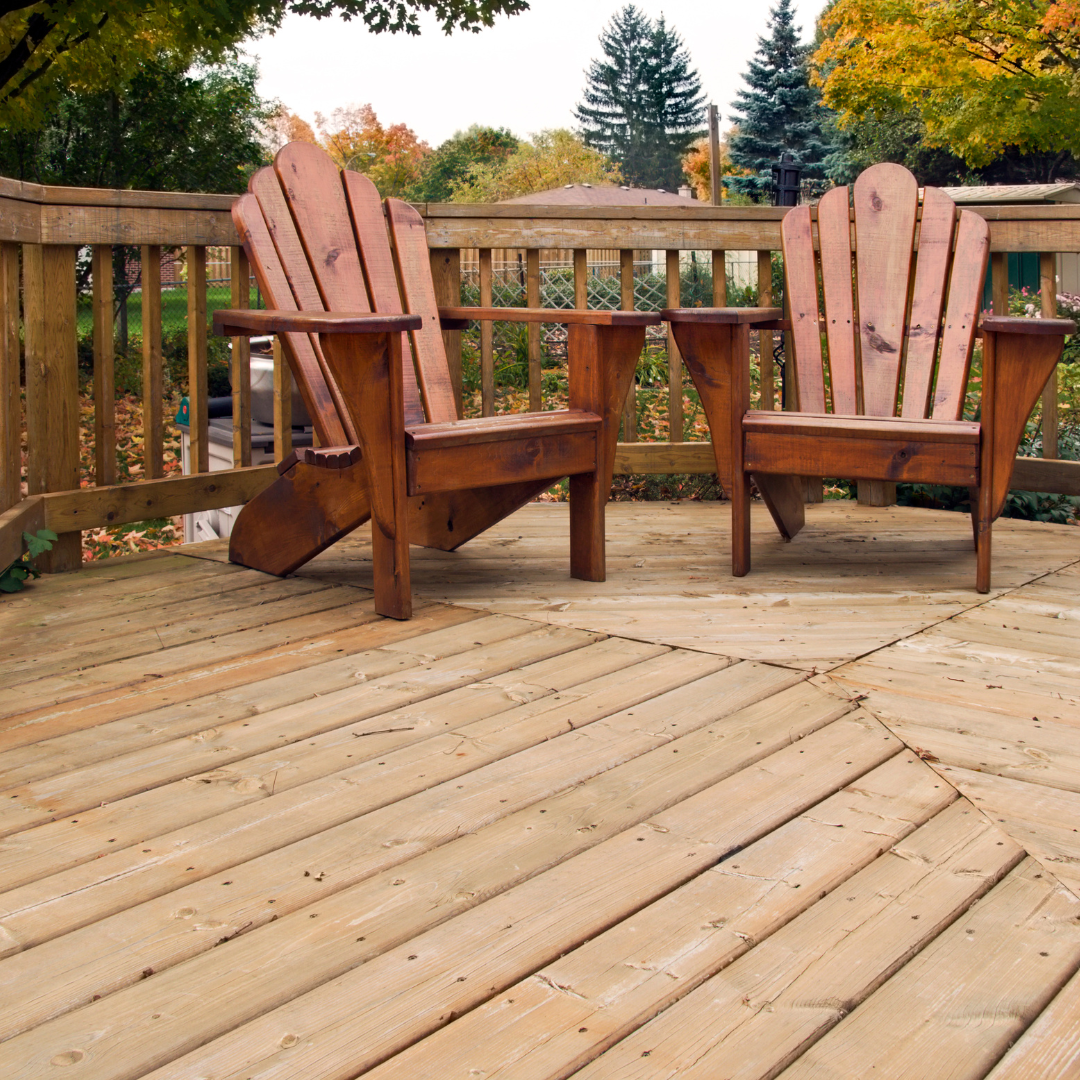
A chunky, all-wood railing like this is best suited for medium to large decks, particularly in rural or natural settings. The visual weight of the wood posts and rails feels substantial and appropriate when surrounded by trees and open space. On a very small urban patio or a narrow balcony, this style might feel a bit bulky or overwhelming. For smaller spaces, a railing with thinner elements, like metal balusters or cables, can help create a more open and airy feeling, as seen in Idea #5.
16. Warm, Lighted Composite Deck Railing with Square Balusters
Installing low-voltage post cap lights is a fantastic way to add ambiance and safety. Here’s the basic process:
- Plan Your Wiring: Run low-voltage wire from a transformer (plugged into a GFCI outlet) along your deck’s joists, leaving slack near each post.
- Drill for Wires: Drill a small hole through the deck surface next to the post sleeve and another hole in the side of the vinyl post sleeve itself.
- Feed the Wires: Pull the wire up through the deck and into the hollow post sleeve, leaving a few inches extending out the top.
- Connect the Light: Use the connectors that come with the light fixture to attach the post cap light to the wire.
- Mount the Cap: Secure the lighted post cap onto the post, tucking the wires inside. Test the connection before sealing.
The materials (transformer, wire, lights) can cost between $300 and $800 for an average deck.
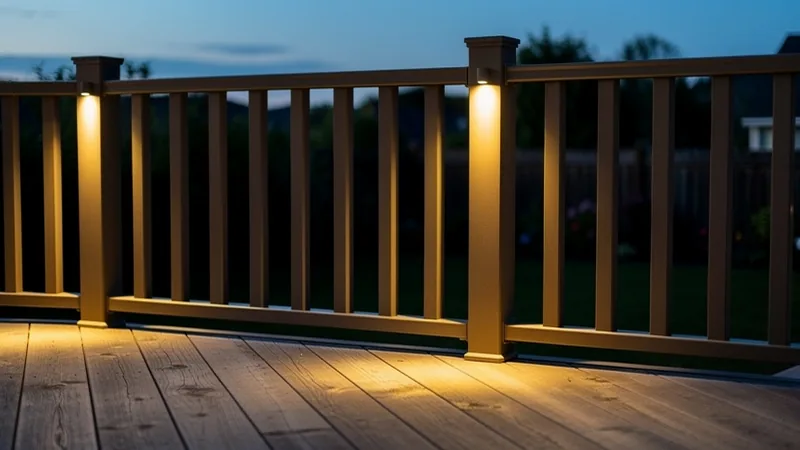
When selecting deck lighting, pay close attention to the color temperature, measured in Kelvins (K). For the warm, cozy, and inviting glow seen here, you want a light source in the 2700K to 3000K range. This is considered “warm white” and mimics the color of traditional incandescent bulbs. Anything higher, like 4000K or 5000K, will start to look blueish-white (“cool white”), which can feel harsh and clinical in a relaxing outdoor setting. Stick to 3000K or lower for the best ambient effect.
17. Modern Black Horizontal Bar Deck Railing with Wood Treads
This entire composition is a masterclass in using a sophisticated color palette. It’s not just black and wood; it’s a carefully chosen family of tones. The matte black of the railings provides a sharp, graphic element. The reddish-brown wood of the deck brings warmth. The olive-green siding is an earthy, muted counterpoint, and the dark stacked stone adds rugged texture. Even the deep red of the front door is a deliberate accent. Together, these colors create a look that is rich, layered, and feels incredibly custom and high-end.
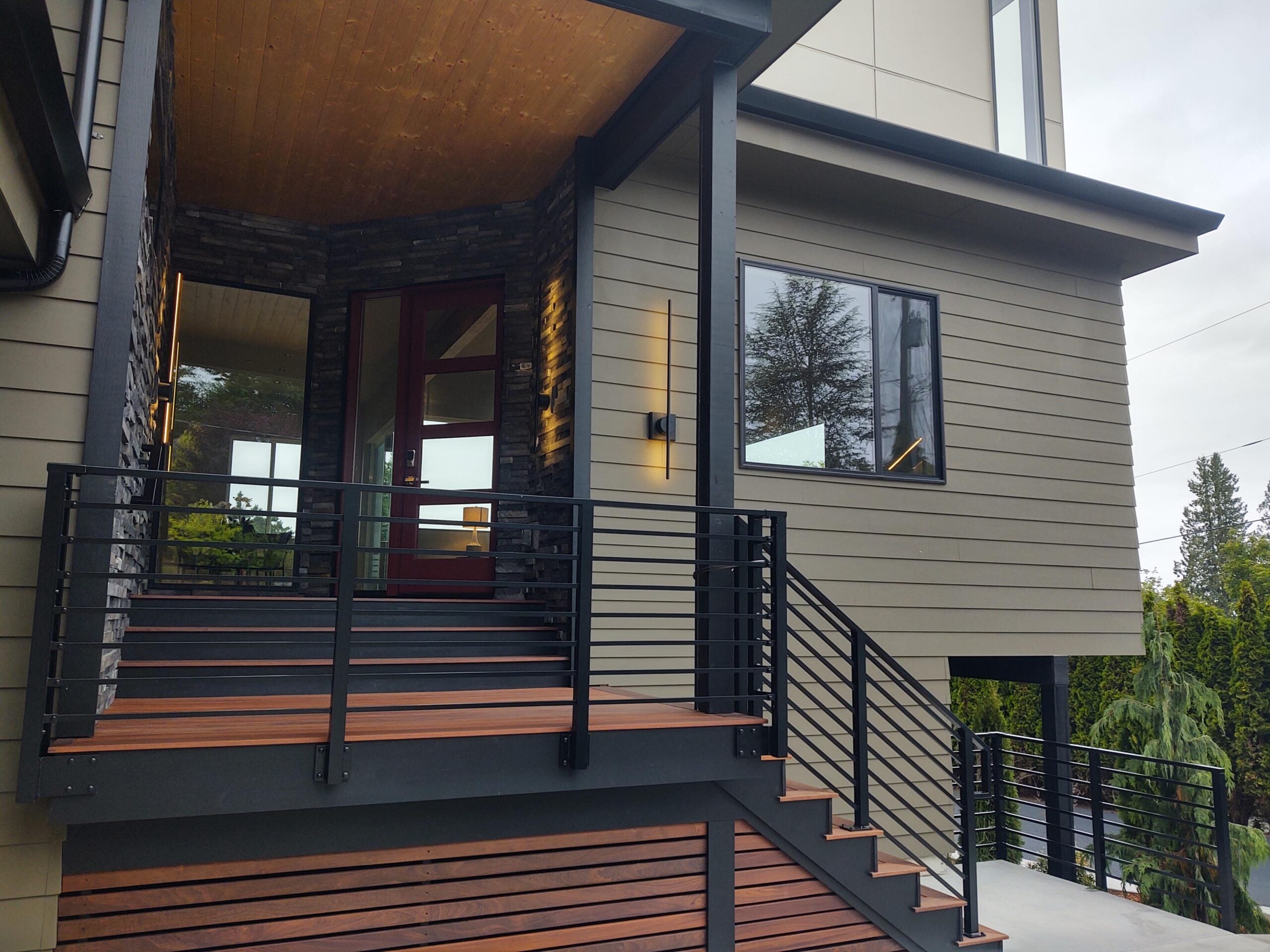
While every element is beautifully chosen, the thing that truly makes this design sing is the bold color and material contrast. The sharp, cool, industrial feel of the black horizontal railings is placed directly against the warm, organic, and natural textures of the wood decking and stone wall. This juxtaposition is what creates the visual excitement and drama. If the railing were wood or the siding were white, the entire effect would be diminished. The power is in the tension between these opposing materials.
18. Modern Black Post and Stainless Cable Deck Railing
If your deck is near a lake, ocean, or even a swimming pool, you need to be specific about your materials. While all cable railings look similar, not all stainless steel is created equal. For environments with high humidity or salt in the air, you must use Type 316 stainless steel, often called “marine grade.” It has added molybdenum, which provides superior corrosion resistance compared to the more common Type 304. Using the wrong grade of steel in these environments will lead to rust, pitting, and failure much sooner than you’d expect.
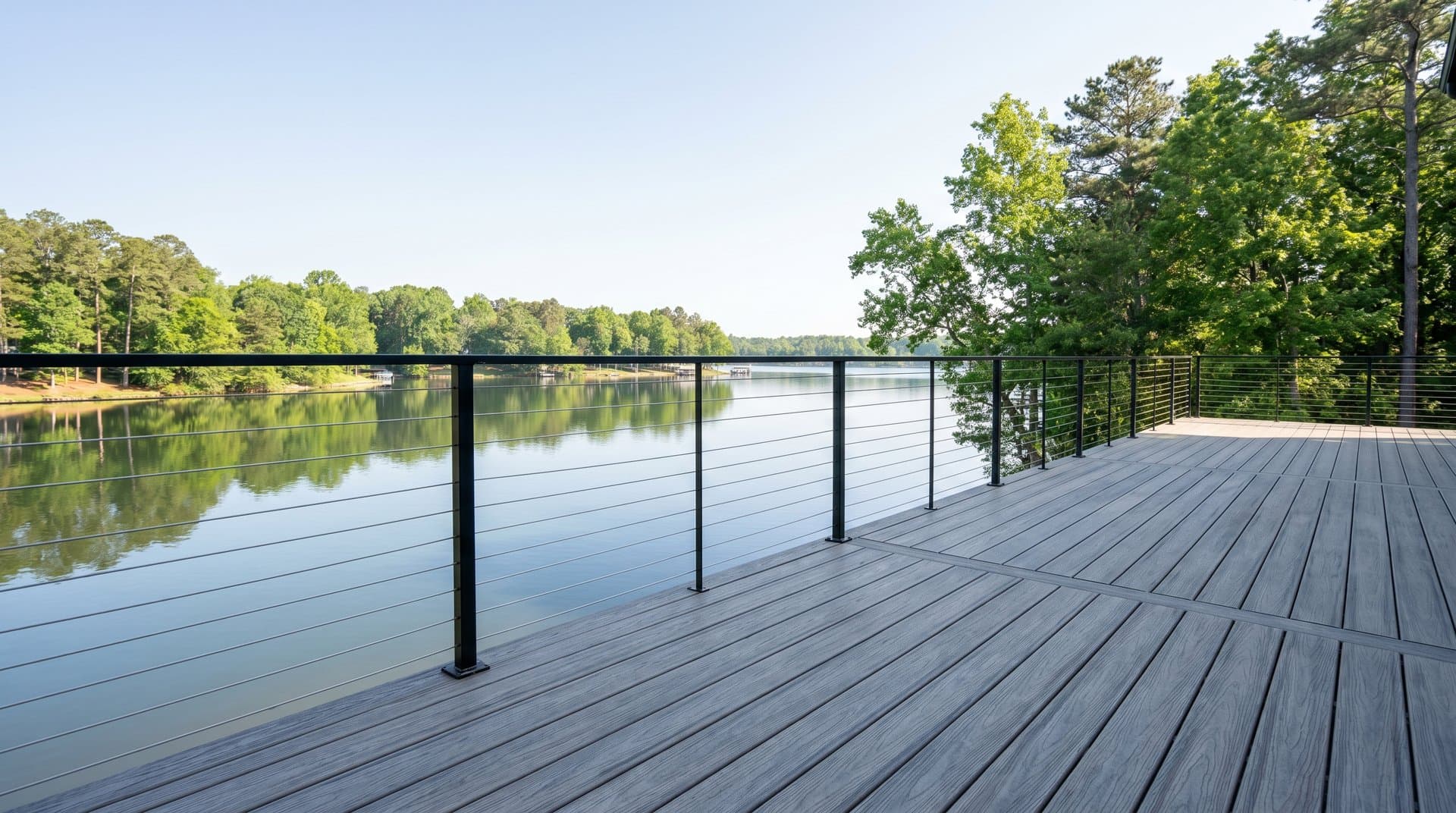
Cable railings are the undisputed champion for any deck where the view is the main attraction. This design is perfect for waterfront properties, homes overlooking a valley, or any backyard that backs up to a beautiful natural landscape. The ultra-thin cables virtually disappear from a distance, giving you an almost completely unobstructed panorama. This makes them ideal for any size deck, from a small balcony to a large, sprawling entertainment space, where maximizing the connection to the outdoors is the number one priority.
19. Gray Composite Deck with Modern Black and Cable Railing
This inviting modern look is built on a cool, monochromatic base with a pop of warmth. The formula is approximately 50% light gray composite decking, 40% black railing and furniture frames, and 10% warm, ambient light. The gray and black create a sophisticated, contemporary canvas, while the integrated LED post cap lights introduce a soft, welcoming glow that prevents the space from feeling cold. The silver cables are a neutral element that adds to the modern feel without competing. The white cushions on the furniture also play into this clean, high-contrast palette.
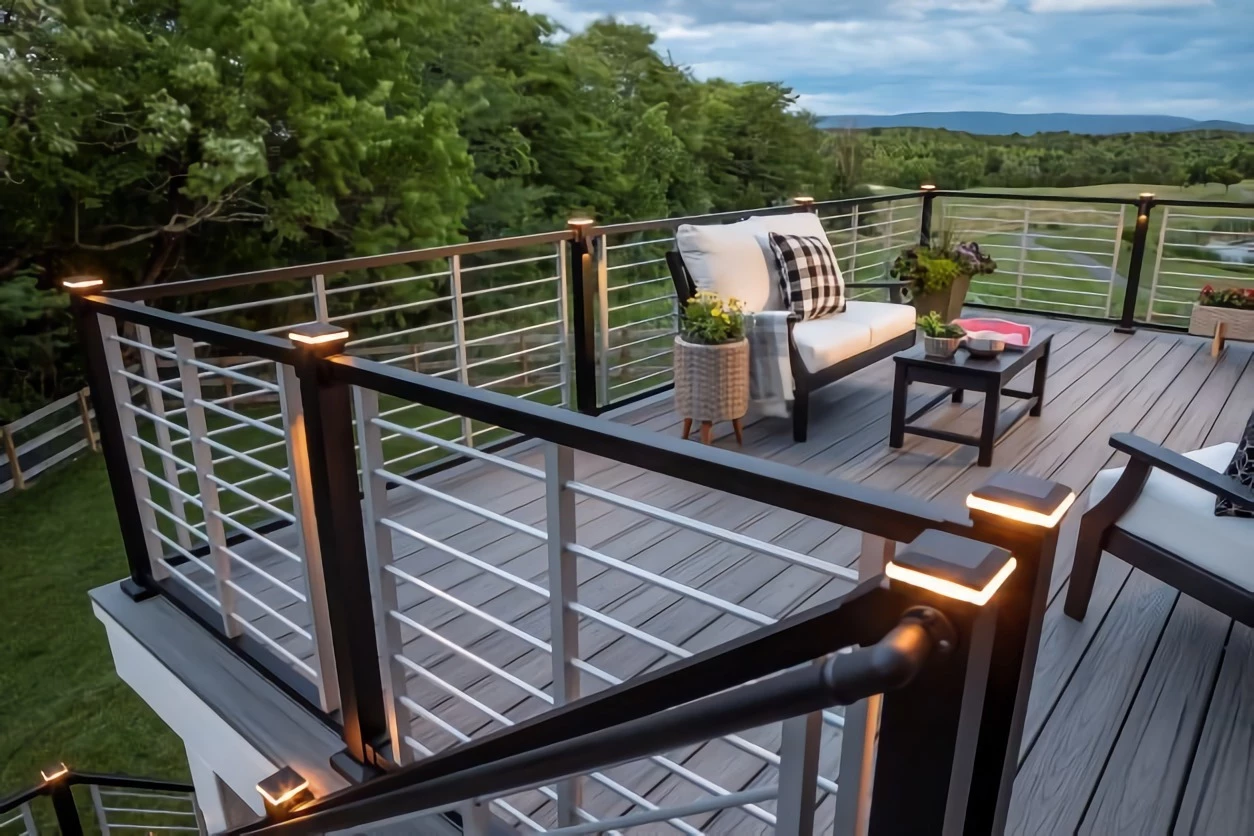
Before you commit to a railing system with integrated lighting, there are a few practicalities to consider.
- Power Source: Do you have a GFCI-protected outdoor outlet located conveniently to power the low-voltage transformer? If not, you’ll need to hire an electrician to install one.
- Wire Management: How will you run and conceal the low-voltage wiring? It’s easiest to do this during deck construction, but it can be retrofitted under an existing deck.
- Component Compatibility: Ensure the lights, transformer, and wiring are all from the same system or are certified to be compatible. Mixing and matching can lead to system failure or flickering lights.
20. Sleek Glass Panel Deck Railing with Dark Top Rail
The sleek, unobstructed view a glass railing provides is unmatched, but it comes at the cost of constant upkeep. Let’s be real: you will be cleaning these panels. A lot. Rain leaves water spots, wind blows dust onto them, birds will not respect them, and if you have kids or pets, expect a constant collection of fingerprints and nose prints. A good-quality squeegee is non-negotiable. If the thought of wiping down glass panels every week makes you tired, this is probably not the right choice for you, no matter how good it looks in photos.
When specifying a glass railing, safety is the absolute top priority. Don’t just ask for ‘glass’; you must specify the type. For railings, the standard is tempered glass, which is four to five times stronger than regular glass and shatters into small, dull pebbles instead of sharp shards. Even better is laminated tempered glass, which is a sandwich of two tempered glass panels with a clear plastic interlayer. If one side breaks, the interlayer holds the panel in place, preventing a dangerous opening. It costs more, but the peace of mind is worth it.
21. Dark Metal Baluster Handrail with Curved Trellis Roof
While the railing itself is handsome and effective, the element that truly transforms this space from a simple deck into an outdoor room is the dark metal grid trellis above. It does more than just provide partial shade; it creates a sense of enclosure and architecture. The linear shadows it casts across the wooden deck planks add a dynamic, graphic pattern that changes throughout the day. Without this overhead element, the deck would feel much more exposed and far less special. It’s the trellis that gives the space its soul.
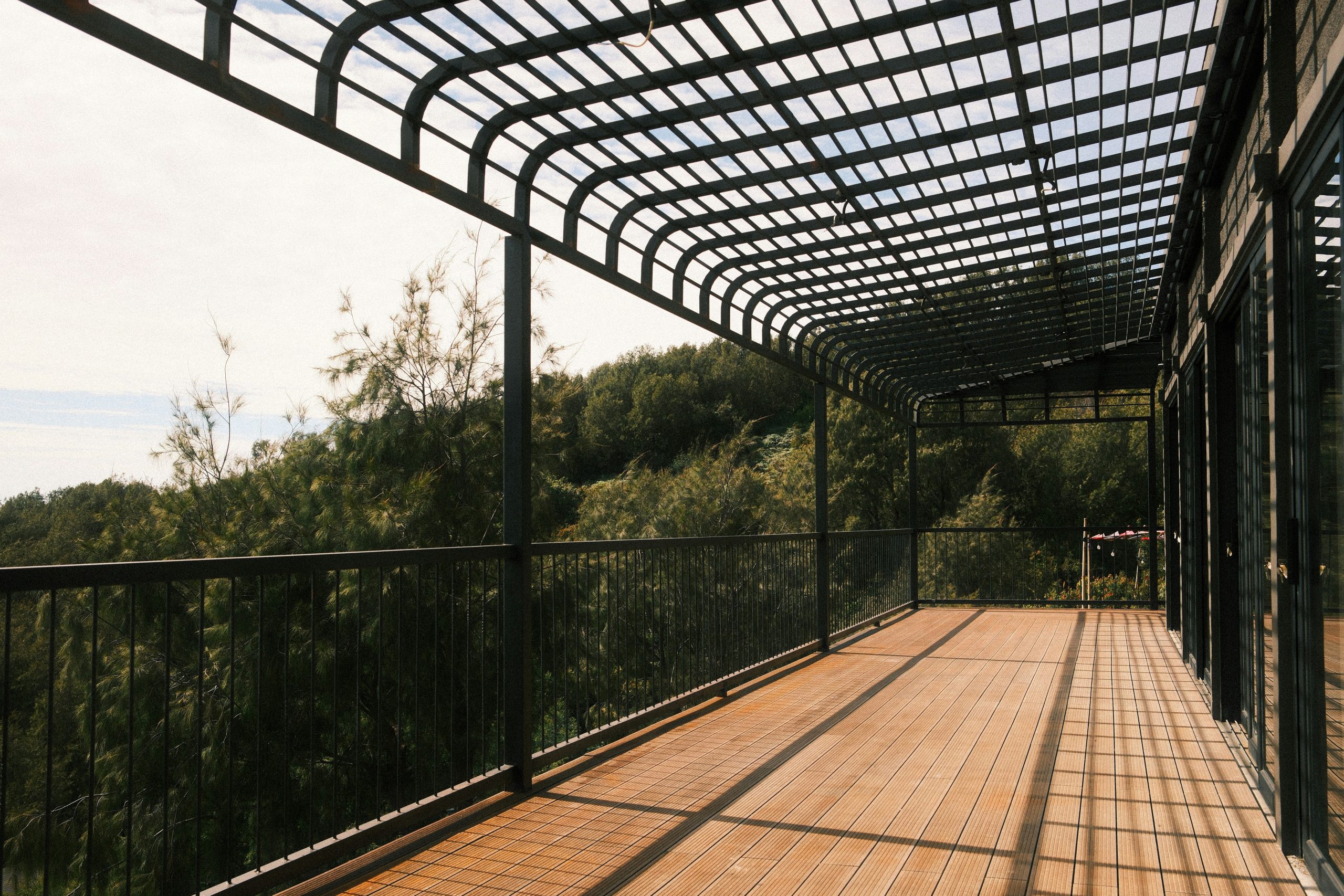
An overhead structure like this trellis has specific spatial requirements to feel right. You need a minimum ceiling height of at least 8 feet from the deck surface to the bottom of the trellis beams to avoid feeling cramped. A height of 9 to 10 feet is even better, creating a more open and airy atmosphere. This design is best for medium to large decks (at least 150 sq. ft.) where the structure won’t overwhelm the space. It’s also ideal for decks directly adjoining the house, as seen here with the sliding glass doors, to create a seamless indoor-outdoor transition.
22. White Post, Black Baluster, and Natural Wood Top Rail Deck
This popular and timeless look is all about a balanced three-part formula: 40% crisp white structure + 30% sleek black infill + 30% warm wood accent. The white posts provide a classic, sturdy frame. The black vertical balusters recede visually, helping to open up the view while adding a touch of modern contrast. The natural wood top rail is the key connecting element, bringing organic warmth and a comfortable touchpoint. It’s a nearly foolproof recipe for a railing that feels traditional yet current. This trio of materials is a proven winner.
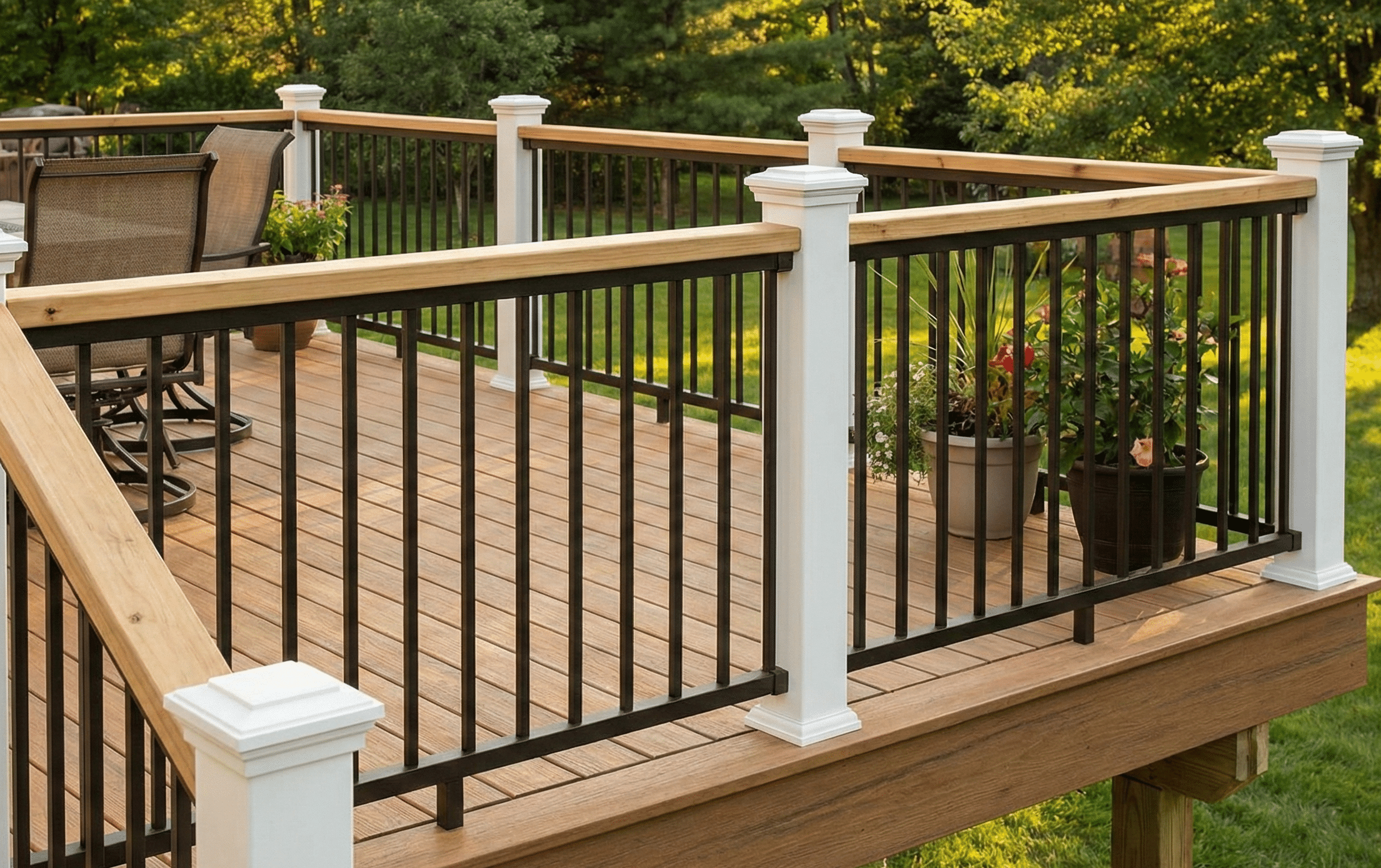
Attaching a wood top rail to composite or vinyl post sleeves is a common way to get this mixed-material look. Here’s how:
- Select Your Wood: Choose a durable outdoor wood like cedar or redwood for your top rail (e.g., a 2×6).
- Find a Mounting Kit: Many railing brands sell a specific ‘wood top rail adapter’ or ‘deck board adapter.’ This is typically a flat plate or bracket that fastens to the top of the post sleeve.
- Attach the Bracket: Screw the adapter securely to the top of your white vinyl or composite posts.
- Cut and Finish Rail: Cut your wooden rail to length, sand it smooth, and apply a quality outdoor sealer or stain.
- Fasten from Below: Place the finished wood rail on top of the brackets and fasten it by driving exterior-grade screws up through the bracket into the underside of the wood. This hides the fasteners for a clean look.
23. Ornate Scrollwork Metal and Wood Deck Railing
A word of caution: this ornate, wrought-iron scrollwork style is very specific and can be tricky to pull off. It’s heavily associated with Mediterranean or Tuscan-style homes from the 1990s and early 2000s. When paired with the right architecture, as seen here with the curved deck and beige siding, it can look elegant and grand. However, if you attach this style of railing to a modern farmhouse or a simple ranch house, it can easily look out of place and dated. It’s a bold choice that really needs the right house to support it.
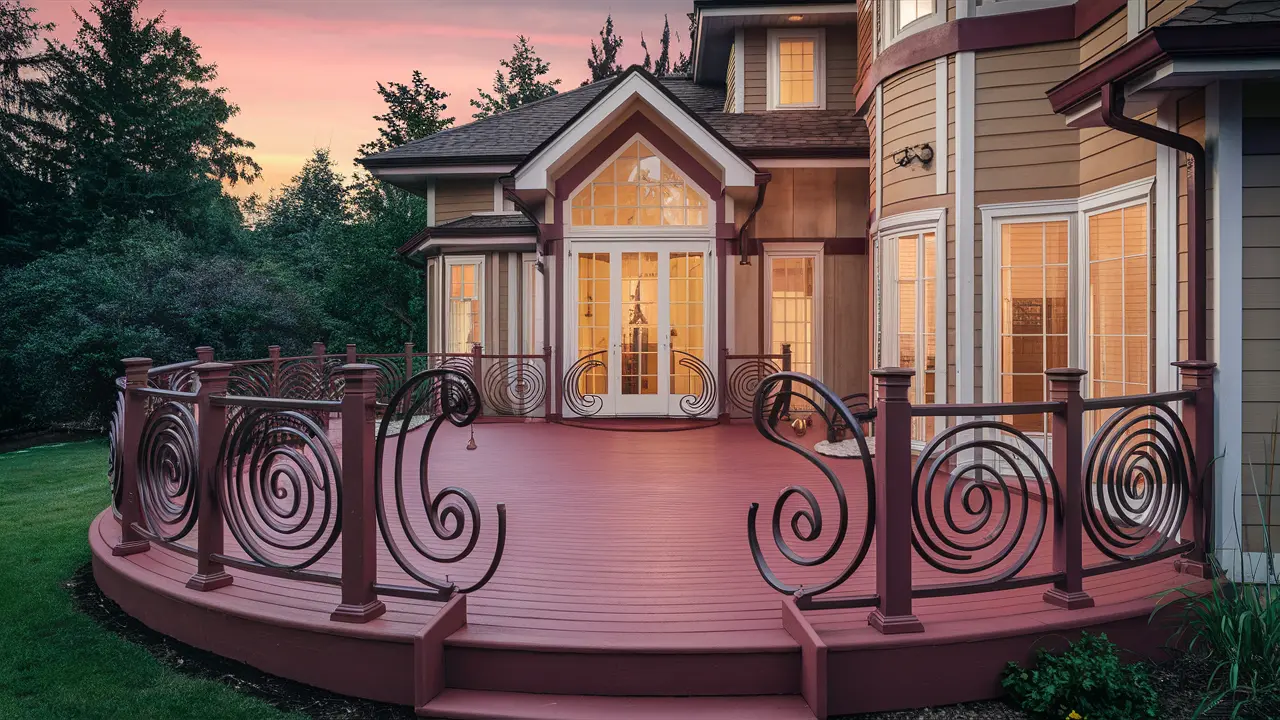
While minimalist and modern styles have dominated for years, we are seeing a resurgence of interest in more traditional and decorative aesthetics, sometimes called “Grandmillennial” or “Modern European.” This railing fits into that trend. People are looking for ways to add personality, character, and a sense of history to their homes. The intricate scrollwork and combination of rich wood and dark iron feel substantial and timeless, offering a clear alternative to the clean lines of cable or simple baluster railings. It’s a choice for someone who wants their deck to feel established and romantic.
24. Classic White Picket Deck Railing with Light Gray Top Rail
This charming look is very achievable on a budget. Instead of a pricey composite system, you can use standard pressure-treated 4×4 posts and 2×2 pickets, all painted with a quality exterior white paint like Behr Ultra Pure White. For the top rail, use a standard 2×6 or a piece of composite decking in a contrasting light gray. Painting just the top rail a different color is a simple designer trick that costs almost nothing but makes the entire project look much more custom and thoughtful. You get a high-end feel for the price of a can of paint.
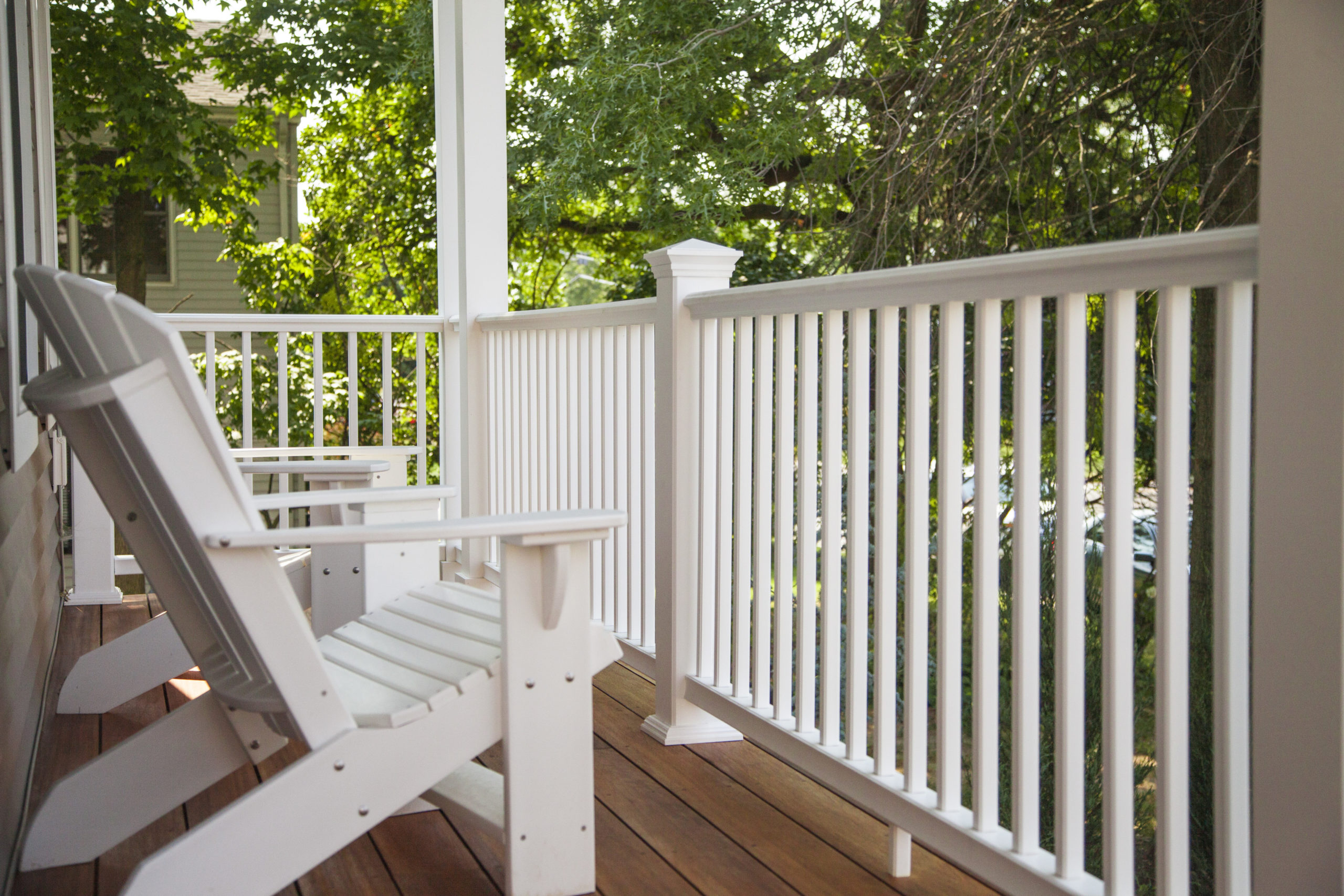
This design is so successful because it takes a beloved classic and gives it a subtle, modern twist. The white picket or baluster railing is a timeless, cottage-style staple that feels friendly and inviting. The simple act of adding a light gray top rail updates the look, preventing it from feeling too traditional or generic. This small touch of color contrast adds visual interest and a hint of sophistication, bridging the gap between classic charm and contemporary style. It feels familiar and fresh at the same time.
25. White Wooden Porch Handrail with a Light Blue Ceiling
Painting a porch ceiling light blue is a tradition rooted in the American South, and choosing the right shade is key. You’re looking for a specific kind of light, airy blue-green, often called ‘Haint Blue.’ The name comes from Gullah folklore, where the color was believed to ward off spirits (‘haints’). Great options to sample are Sherwin-Williams ‘Window Pane’ or ‘Sleepy Blue’ and Benjamin Moore ‘Palladian Blue. ‘ Avoid primary blues or anything too saturated; the goal is a soft, sky-like color that feels calming and traditional.
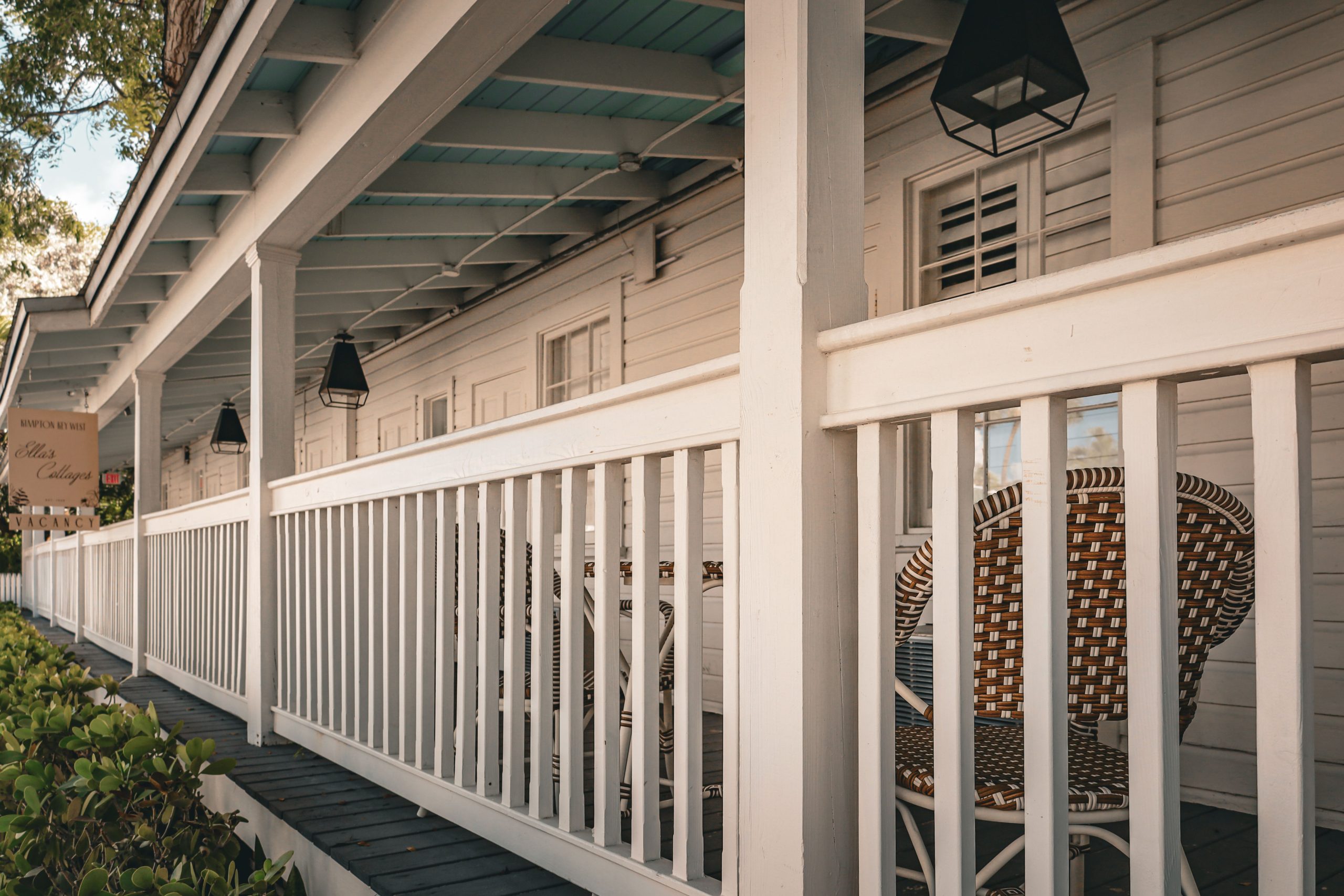
Take away the light blue ceiling, and you have a perfectly nice, classic white porch. It’s lovely, but not memorable. The ‘haint blue’ ceiling is absolutely the one thing that elevates this entire space. It adds a surprising and delightful splash of color, creates a sense of history and charm, and makes the whole porch feel like a special, designated ‘room.’ It’s a simple coat of paint, but it completely transforms the character of the space from standard to soulful. It’s the detail everyone will comment on.
26. Multi-Level Deck with Black Vertical Baluster Metal Railing
A simple, strong railing system like this black metal one is an excellent choice for complex, multi-level decks. Because the design is so clean and consistent, it can be applied to flat sections, stairs, and landings without looking cluttered or chaotic. This visual consistency helps to unify the different levels of the deck, making the entire structure feel cohesive. This style is also great for staircases, as the vertical balusters provide clear, safe boundaries without the complexity of tensioning cables on an angle.
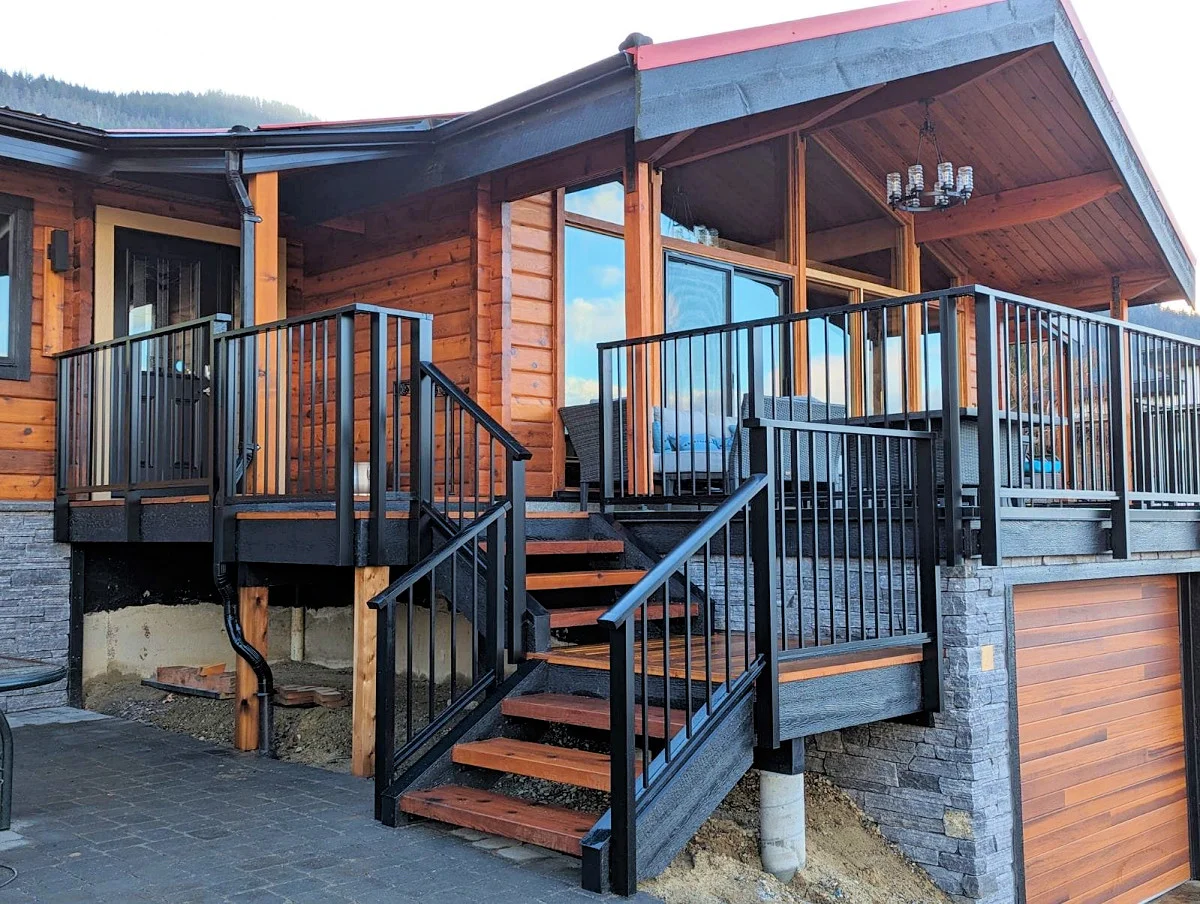
When you have a deck that mixes materials like this—composite deck boards on the main level and natural wood treads on the stairs—you’re signing up for two different maintenance schedules. The dark composite decking will likely just need a good cleaning with soap and water once or twice a year. The natural wood stair treads, however, will need to be cleaned and resealed or re-stained every 1-2 years to protect them from foot traffic, sun, and moisture. Don’t forget this step, or your stairs will weather much faster than your deck.
27. Natural Light Wood Deck Railing with Black Metal Balusters
This is a perfectly balanced 50/50 design equation: 50% warm, natural wood + 50% cool, modern black. The substantial light wood posts and rails provide a sturdy, organic frame that feels grounded and connected to the outdoors. The slim, black metal balusters and matching post caps offer a sharp, contemporary contrast that keeps the look from feeling too rustic. It’s a hugely popular combination right now because it strikes that ideal balance between modern and traditional, making it a versatile choice that complements many home styles.
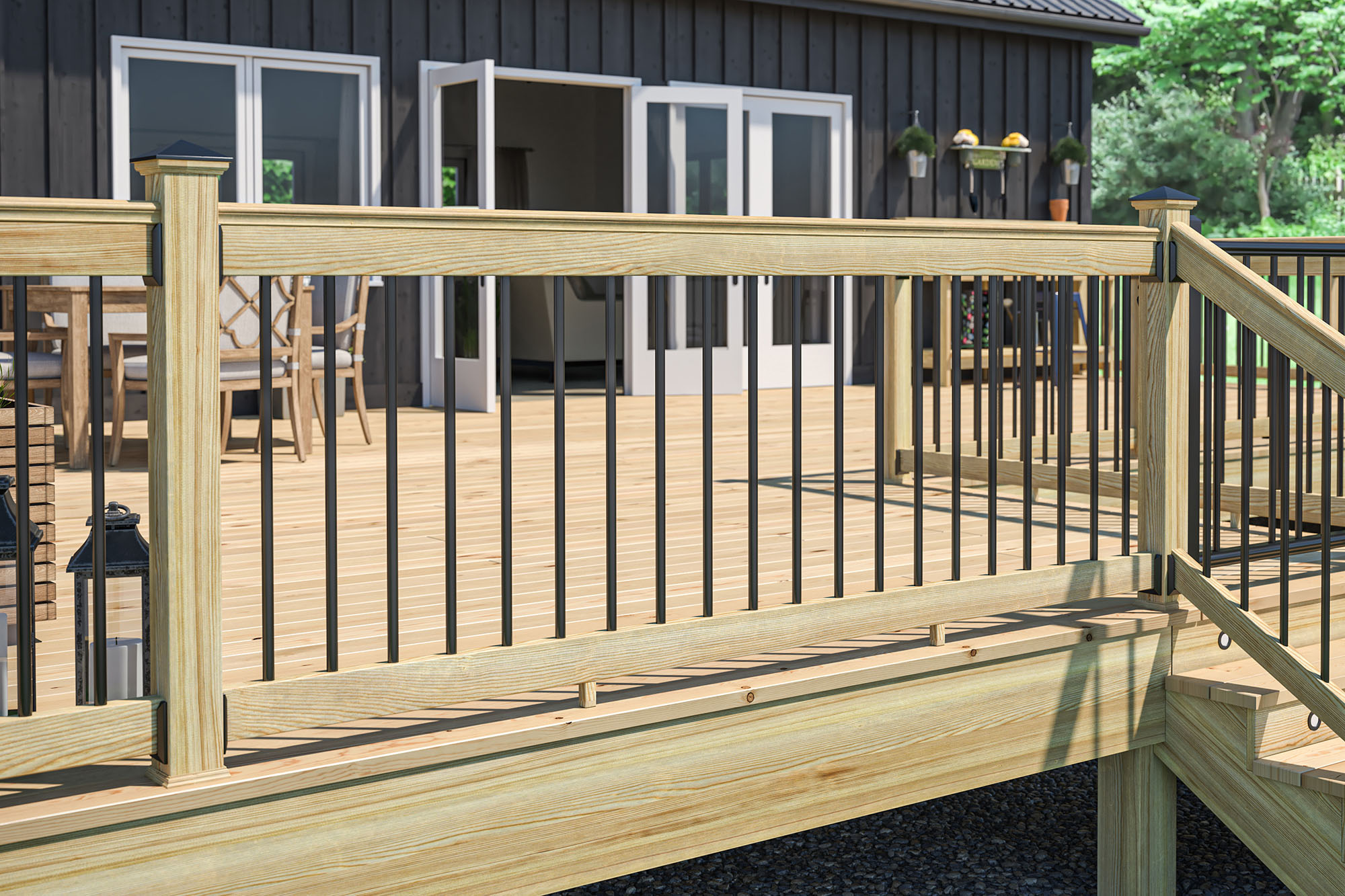
If you’re opting for a beautiful natural wood railing, proper sealing is not an optional step—it’s essential. Before you install, make sure you have a plan.
- Choose your finish: Do you want a clear sealer that lets the natural wood show, or a semi-transparent stain to add color and UV protection? Research products from brands like Penofin or Cabot.
- Seal all six sides: Before assembly, it’s crucial to apply your sealer or stain to all sides of every piece of wood, including the cut ends. This prevents moisture from wicking into the wood and causing rot or warping.
- Plan for re-coating: Natural wood railings require maintenance. Plan to reapply your chosen finish every 1-3 years, depending on your climate and sun exposure.
28. Modern Dark Metal Horizontal Rod Handrail with Wood-Look Posts
This design masterfully creates a high-end look by layering different tones and textures from the same color family. Notice how the dark metal of the handrail, the dark brown of the structural posts, and the dark weave of the furniture are all different materials but share a similar deep, rich tone. This is then contrasted with the lighter brown of the composite decking. This subtle variation creates visual depth and sophistication. It looks curated and expensive because the materials aren’t perfectly matched, but they harmonize beautifully.
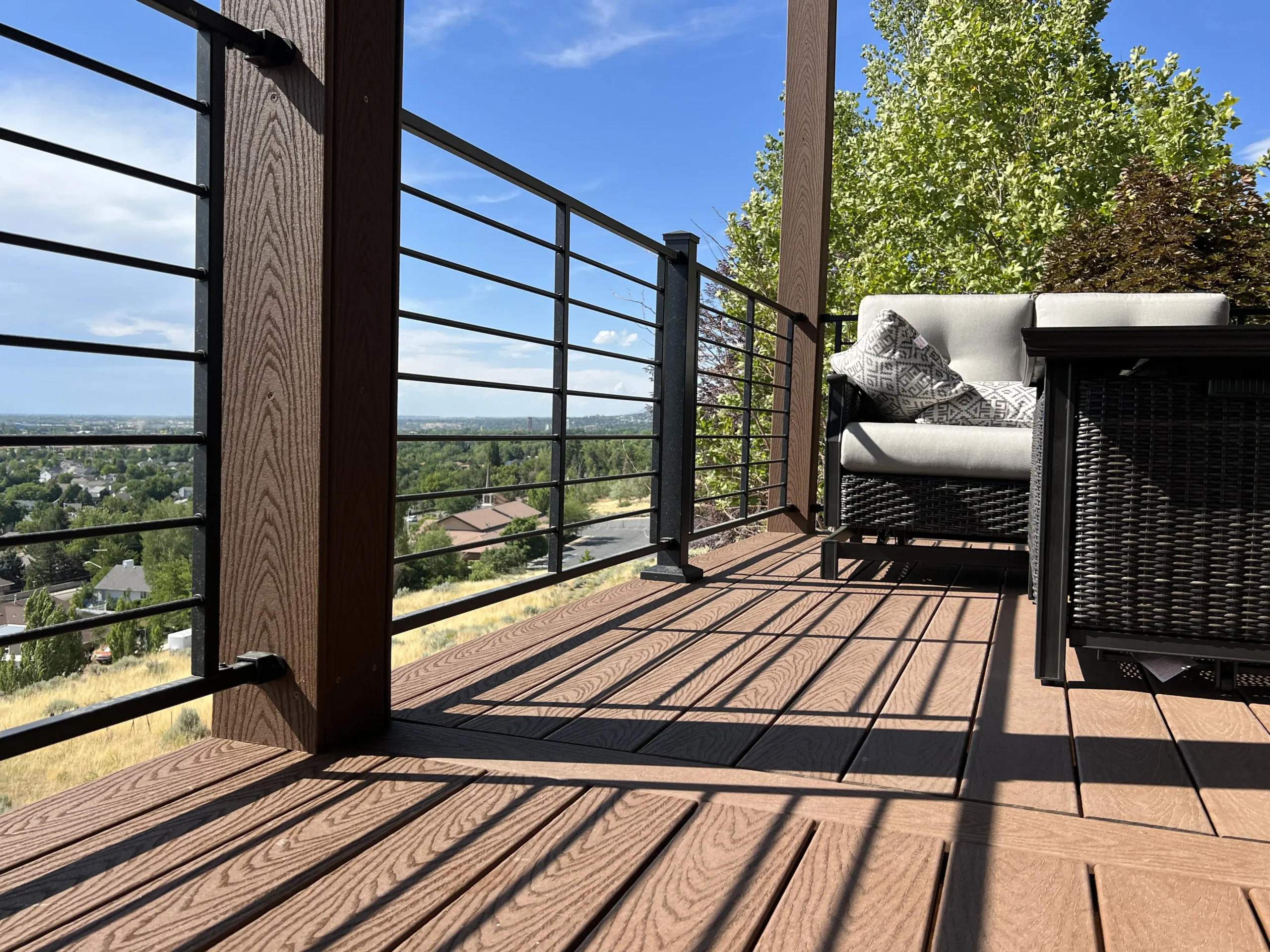
A quick reality check on “wood-look” materials, whether they’re composite posts or fiber cement siding. The quality and realism can vary dramatically from one brand to another. Some look incredibly authentic, with realistic grain patterns and color variations. Others can look flat, plasticky, and obviously fake. Always get samples and look at them in natural daylight before you commit. A cheap-looking wood-look material can unfortunately bring down the feel of the entire project.
29. Modern Black Frame Wood Lattice Deck Handrail
Lattice is an incredibly useful tool for creating privacy without completely blocking light and air. The key to making it look modern, as seen here, is to frame it. By building a sturdy black frame around the lattice panel and setting it within substantial posts, the lattice goes from being a flimsy garden material to a solid, architectural element. Painting the lattice a dark color also helps it feel more contemporary and sophisticated than the traditional white or natural wood versions. It’s all in the execution.
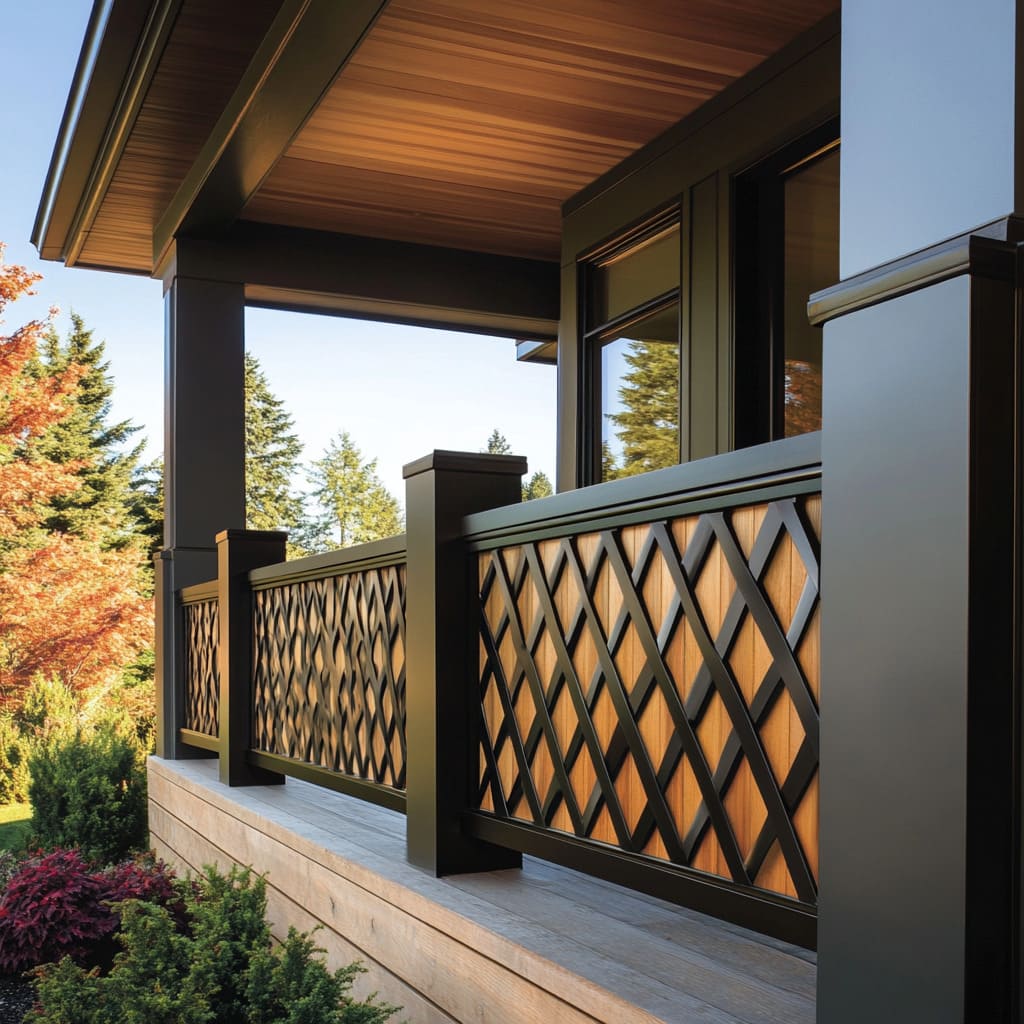
The unique infill is what makes this railing a standout. Instead of standard balusters or cables, the combination of light wood planks set behind a black diagonal lattice creates a layered, textured, and semi-private screen. It’s a custom look that feels inspired by Japanese screen design, adding a dose of artistry to the deck’s perimeter. This choice turns the railing from a purely functional item into the most interesting design feature of the entire outdoor space. This is how you make a statement with a safety feature.
30. Vibrant Red Metal Deck Handrail in a Modern Lounge
This bold use of color is a perfect example of the “dopamine decor” trend moving outdoors. After years of neutrals dominating, people are craving joy, personality, and energy in their spaces—and a shot of vibrant color is the fastest way to get there. A bright red handrail is unexpected, playful, and confident. It turns a purely functional element into a piece of sculpture. It’s a sign that we’re moving away from “safe” design choices and embracing things that simply make us happy. Compare this to the more subdued metal of Idea #16.
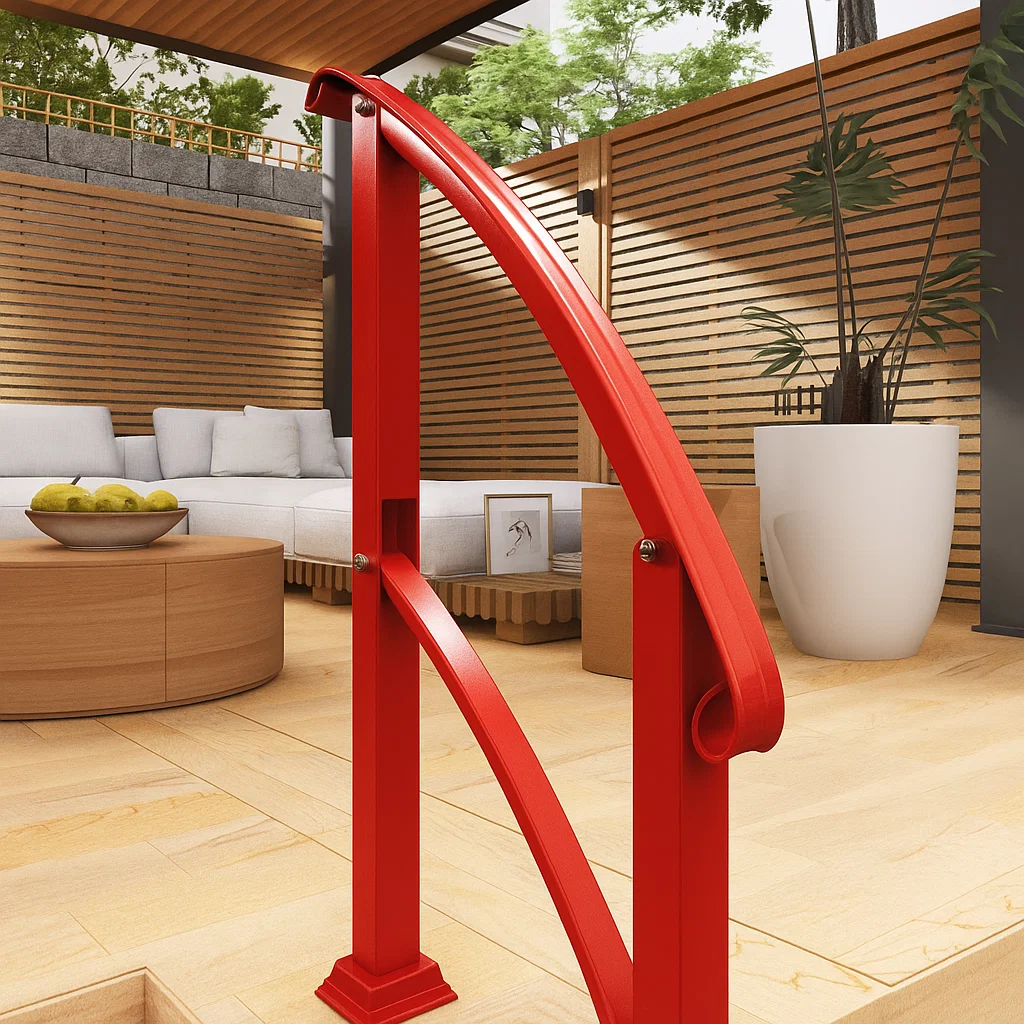
This design is so effective because the red handrail acts as a powerful focal point and a directional cue. In a sea of calm neutrals—the light wood, white sofa, and grey accents—the saturated red immediately draws your eye. It says, “Look here! This is the way to go.” It guides you visually and physically toward the sunken lounge area, creating a sense of arrival and excitement. Without that pop of color, the space would still be beautiful, but it would lack the energy and clear narrative that the red provides.
31. Modern Stainless Steel Cable Deck Railing with Flat Posts
One thing to know about cable railings is that the cables will stretch and sag slightly over time, especially in the first year after installation as they settle. This is normal. You will need to re-tension them periodically to keep them taut and safe. This usually involves simply tightening the nuts or threaded terminals at the end of each cable run. Plan on checking the tension once a year, perhaps in the spring as you’re getting your deck ready for the season. It’s a quick 30-minute job that keeps the railing looking its best. The different post style on Idea #1 requires the same care.
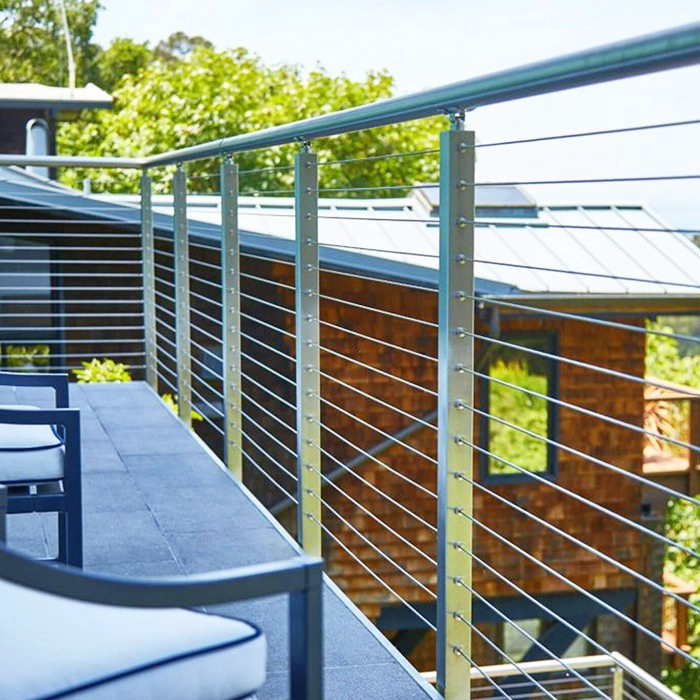
A full stainless steel system with metal posts is a premium and pricey option. To get a very similar open, modern look for less, use pressure-treated wood 4×4 posts instead. You can stain them a dark gray or black to mimic the look of metal. By using wood posts, you significantly reduce the material cost, as the metal posts are often one of the most expensive components of a cable railing kit. You still get the minimalist, view-preserving benefits of the cables, but at a much more accessible price point.
Your Perfect Deck Is Just a Handrail Away
As you can see, a deck handrail isn’t just a safety requirement; it’s a major design opportunity. Whether you’re drawn to the barely-there look of cables or the timeless appeal of wood, the right railing can completely define your outdoor space. Take these ideas, find what sparks joy for you, and get ready to create a deck you’ll love for years to come. Don’t forget to save your favorites to Pinterest to keep them handy!