
You know that feeling when you finally find the one? That single photo on Pinterest that makes you say, “That’s it. That’s the deck.” For many of us, that perfect finishing touch is a black deck railing. It’s the little black dress of outdoor design: timeless and versatile, and it looks good on everything. To make your search a little easier, we dove deep into the latest designs to pull together 27 distinct black deck railing ideas that work for real homes. And stay until the end—we break down the most common mistakes that can ruin these looks. 📌 Save this to Pinterest for later—you’ll want to revisit these ideas.
1. Modern Cable Railing with a Sweeping Mountain View
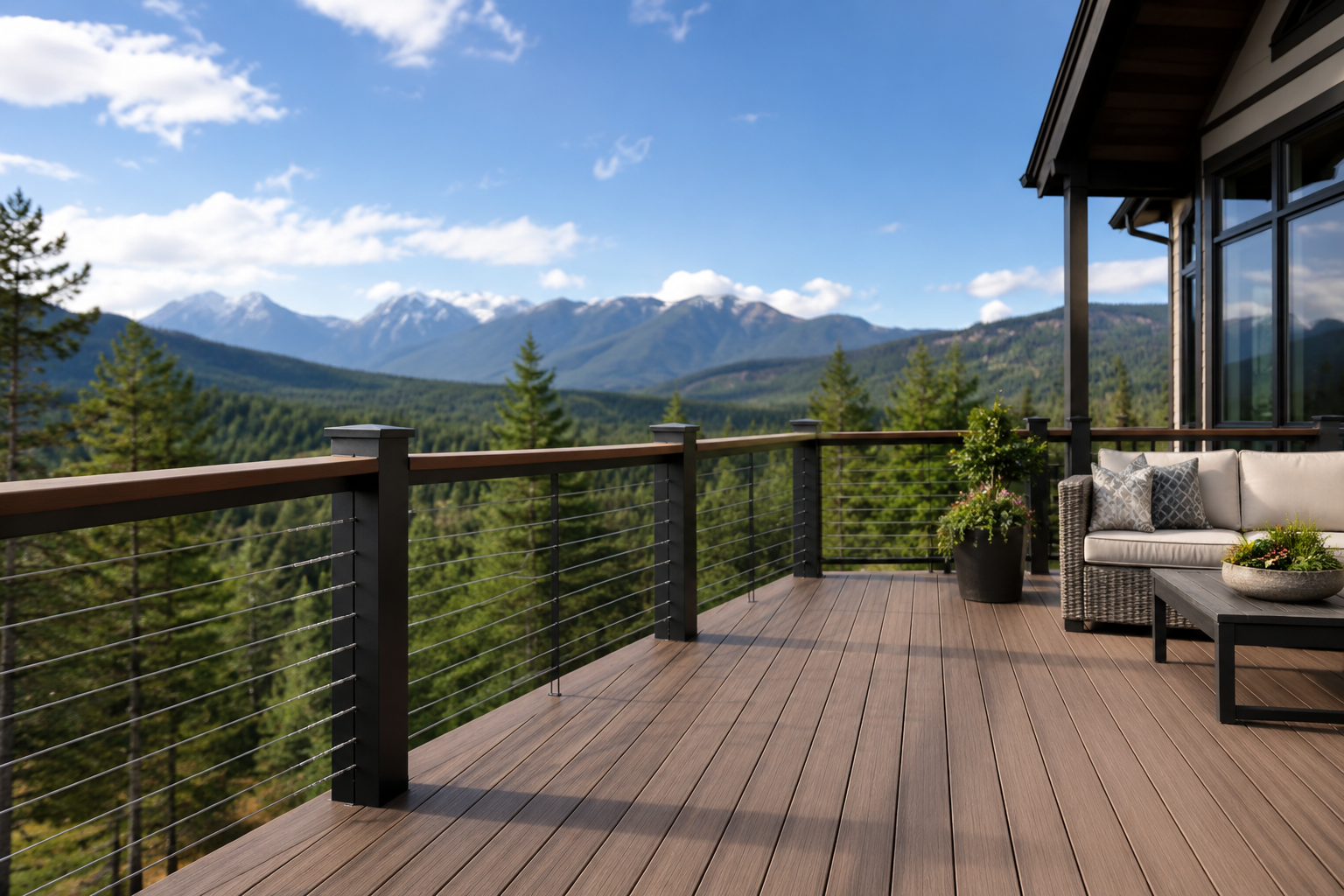
The magic here is in what you don’t see. By pairing thin, horizontal stainless steel cables with slender black posts, the railing almost disappears, leaving the stunning mountain view completely unobstructed. The dark metal posts and top rail create a crisp frame without adding visual bulk, while the warm-toned composite decking prevents the modern design from feeling cold. It’s a perfect example of using dark accents to define a space while simultaneously making it feel more open and connected to the landscape beyond.
|
📋 Copy HEX 🔗 Share |
For cable railings, tension is everything. The cables must be tight enough to prevent sagging and meet building codes (typically, a 4-inch sphere shouldn’t pass through), but not so tight that they strain the end posts. Invest in high-quality tensioning hardware and consider hiring a pro for the final tightening. A professional installer will use a tension gauge to ensure each cable is tightened to the manufacturer’s specification, usually between 200 and 300 pounds. This prevents future sagging and ensures maximum safety.
2. Sleek Black Cable Railing for a Natural Hillside View
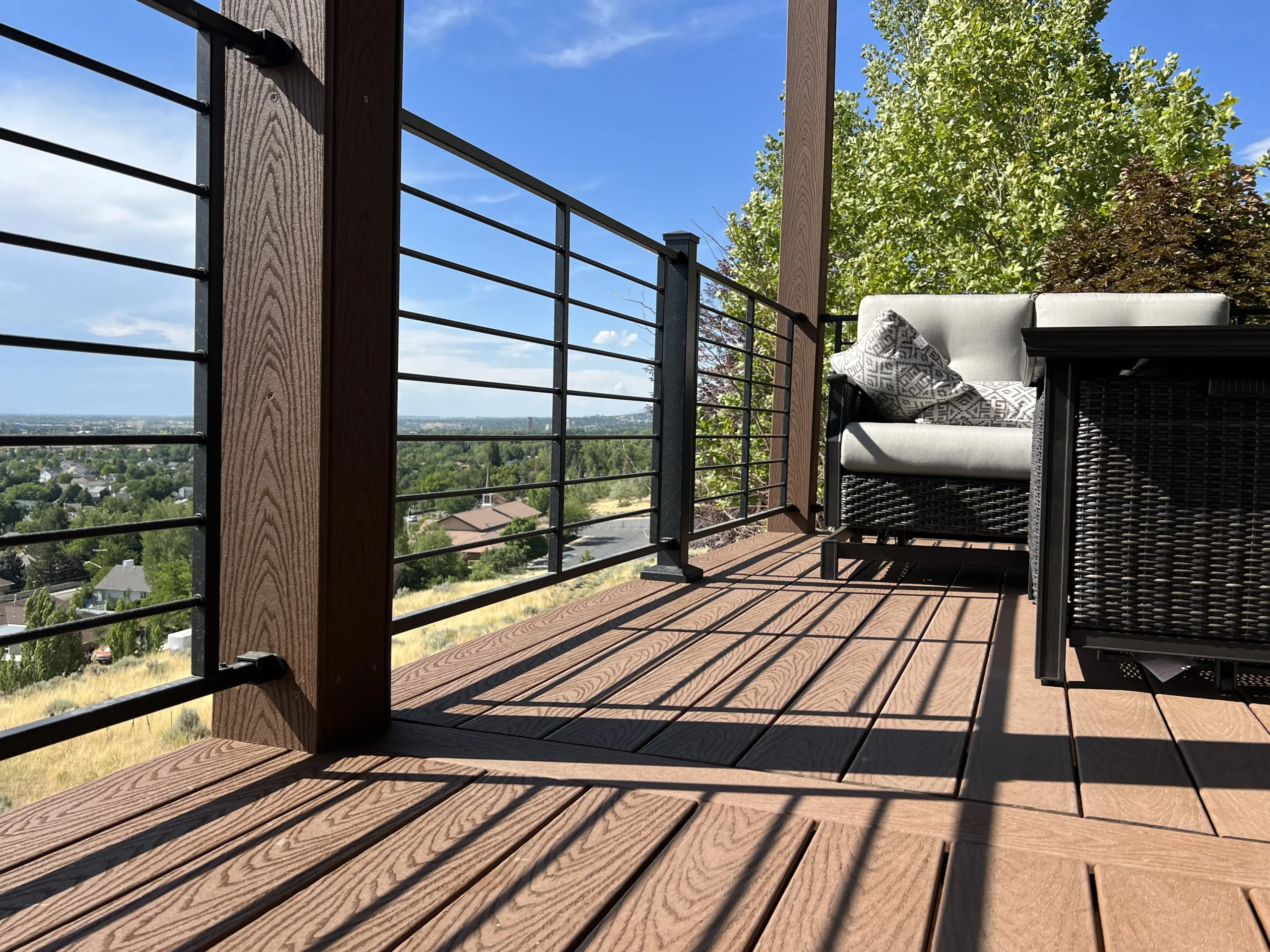
It’s all about the minimal footprint. While the overall design is beautiful, the single element that makes this deck work is the near-invisibility of the horizontal cable infill. If you swapped the cables for traditional vertical balusters, you would suddenly have a visual cage, chopping up the serene view of the hillside. The cables provide essential safety without demanding attention, allowing the eye to travel right through to the deep green foliage and sky. It proves that sometimes the most effective design element is the one you notice the least.
|
📋 Copy HEX 🔗 Share |
Horizontal railings, especially cable systems, can present a climbing hazard for small children, earning them the nickname “ladder railings.” While they are permitted by national building codes in most areas, some local jurisdictions have stricter regulations. If you have young kids or frequent little visitors, vertical balusters might be a more worry-free choice. Always check your local municipal codes before committing to a horizontal design to ensure it’s compliant and safe for your family.
3. Classic Contrast: Black Horizontal Balusters with White Rails
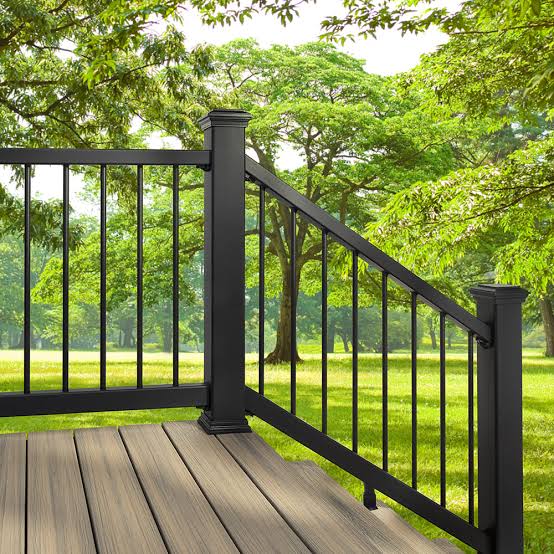
While a full Trex Select kit provides a polished, ready-to-install solution, you can achieve this classic high-contrast look for less. Source your white composite post sleeves and rails from a big-box store like Lowe’s or The Home Depot, where they are often sold individually. Then, shop online for charcoal black aluminum balusters, which are typically more affordable than steel. By buying the components separately and handling the installation yourself, you could potentially cut the material cost by 30-40%, bringing a project from $3,000 down to the $1,800-$2,100 range.
|
📋 Copy HEX 🔗 Share |
Composite and vinyl materials are champions of low maintenance, but “low” doesn’t mean “no.” White railings, in particular, are prone to showing green mildew and black-spot fungus, especially in damp or shaded areas. Plan on a good cleaning at least once or twice a year with a soft brush and a specialized composite deck cleaner. Avoid pressure washers, as they can damage the surface of the composite material, voiding the warranty and making it more susceptible to future staining. A little seasonal scrubbing keeps the white bright and fungus-free.
4. Framing a Lakeside View with White Posts and Black Balusters
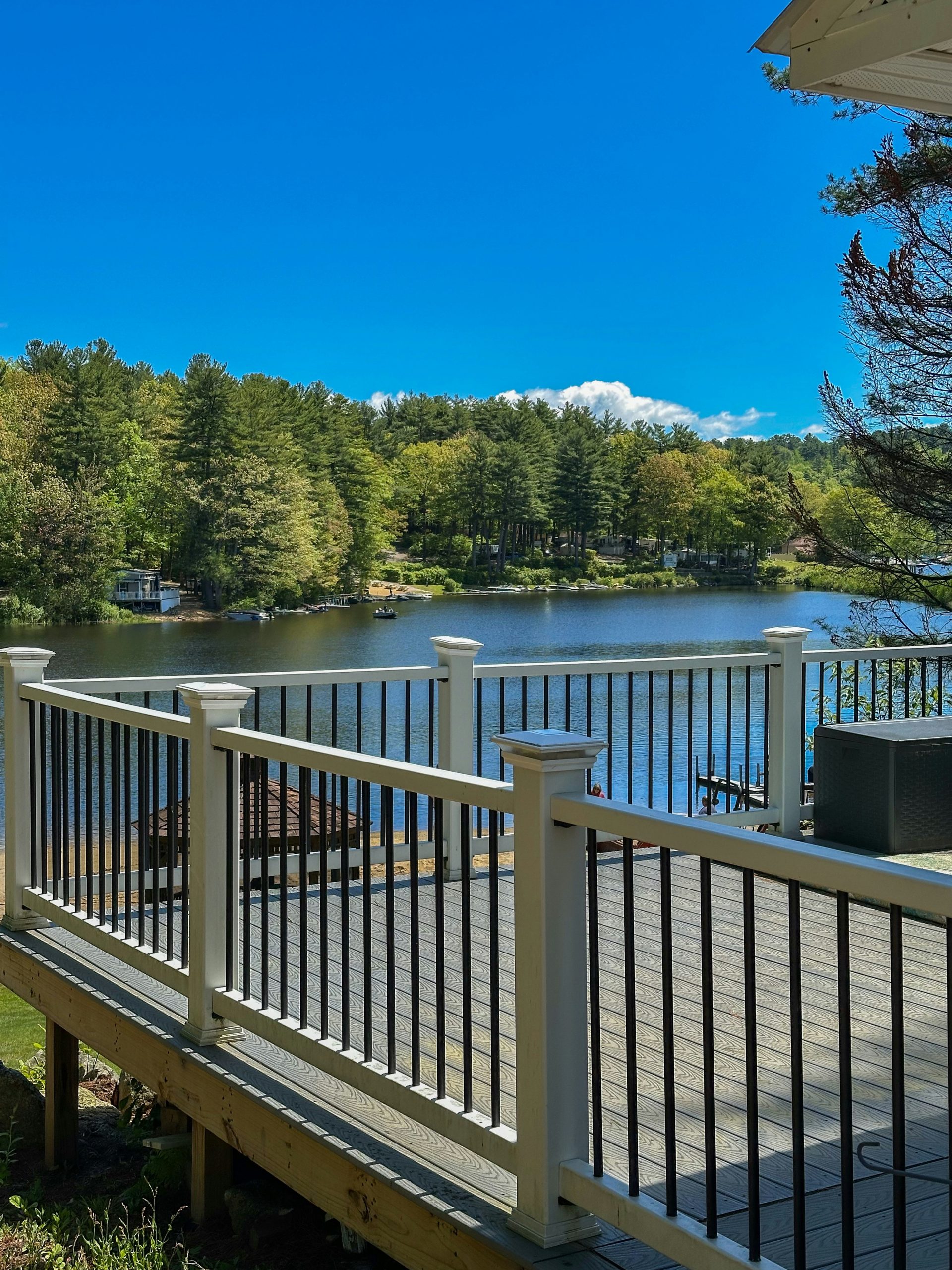
This design is a masterclass in framing a view. The substantial white posts and rails create a clean, crisp border that acts like a picture frame for the lake and forest beyond. The slender, black vertical balusters are key; they provide the necessary safety barrier but are visually unobtrusive, allowing the eye to focus on the scenery. The light grey decking complements the palette, keeping the overall feel bright and airy. It’s a classic combination that feels both sturdy and elegant. Compare this vertical style with the horizontal one in Idea #2 to see the difference in feel.
|
📋 Copy HEX 🔗 Share |
Solar post caps are a fantastic, eco-friendly way to add ambiance without running wires, but their performance is entirely dependent on sunlight. If your deck is heavily shaded by trees or a roof structure for most of the day, the solar panels won’t get enough charge to provide meaningful light at night. For shady spots, you’re better off investing in a low-voltage hardwired lighting system, which offers reliability and often a brighter, more consistent glow. The lighted look in Idea #26 is a great example of this.
5. Modern Industrial Vibe with Black Rod Railing on Stairs
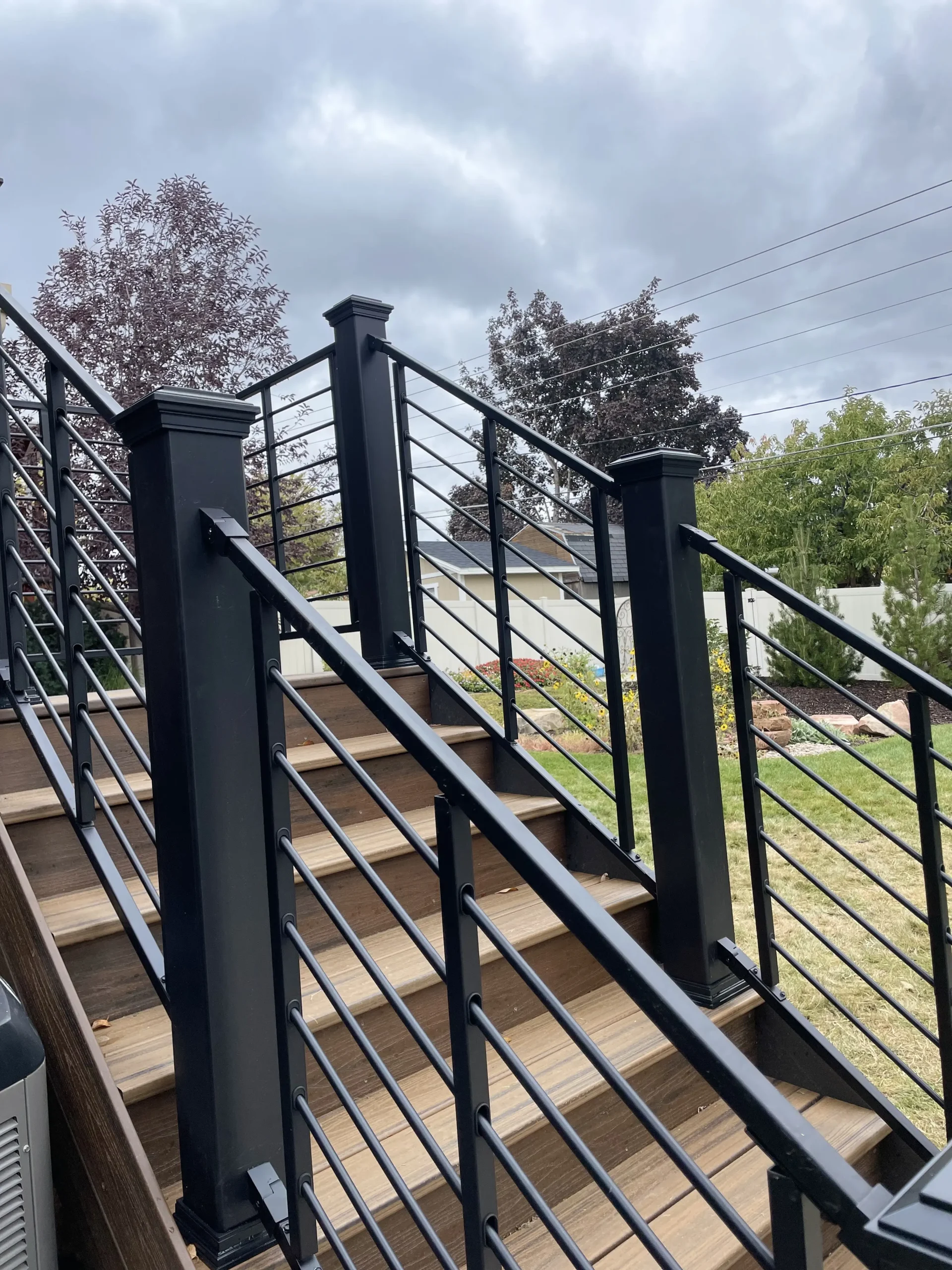
The thick, square newel posts are the undeniable anchor of this design. While the thin horizontal rods provide a modern, minimalist infill, it’s the hefty, solid posts that give the railing its substantial and industrial character. Without them, the railing might feel flimsy or incomplete. These posts ground the entire structure, providing a satisfying visual weight that contrasts beautifully with the airiness of the rods and the open view of the garden beyond. They elevate the railing from purely functional to a strong architectural statement.
|
📋 Copy HEX 🔗 Share |
When installing a handrail on stairs, the height requirements are different and often stricter than for level deck railings. While a deck guardrail is typically 36 inches high, a stair handrail needs to be set between 34 and 38 inches high, measured vertically from the nose of the stair tread. This specific height range is ergonomically designed for safe grasping while ascending or descending. Always measure from the front edge of the step, not the back, to ensure you meet this critical safety code.
6. A Clean Look with Charcoal Black Balusters and White Framing
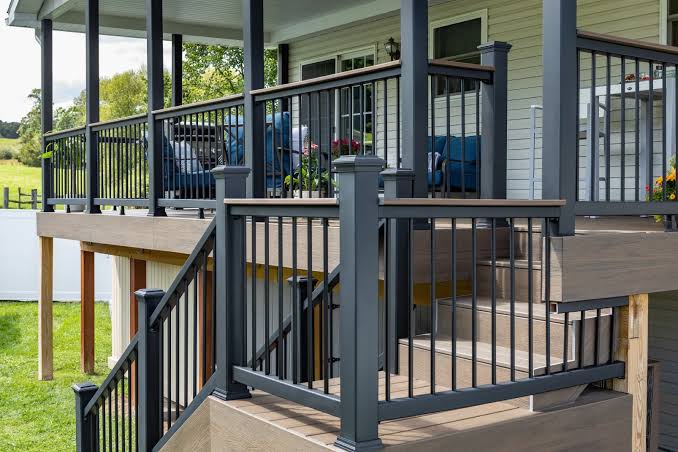
The visual success of this look comes down to a simple formula: 60% crisp white + 30% deep charcoal black + 10% decking color. The white components (posts and rails) form the dominant structure, making the deck feel bright and substantial. The black balusters provide a sharp, modern contrast without overwhelming the space. The final 10% is the floor, which can be a warm wood tone or a cool grey composite without upsetting the primary balance. This formula ensures a timeless, clean aesthetic that won’t feel dated in a few years.
|
📋 Copy HEX 🔗 Share |
This style of railing is incredibly versatile and works well on decks of almost any size, from a small 10×12-foot landing to a large, sprawling multi-level structure. The key is in the proportions. For smaller decks, stick to standard 4×4 post sleeves. On a very large or high deck, consider upgrading to more substantial 6×6 posts to ensure the railing feels visually balanced with the scale of the space. The combination itself is a classic for a reason—it simply works everywhere.
7. Rustic Modernism with Black Pipe Railing and Natural Wood
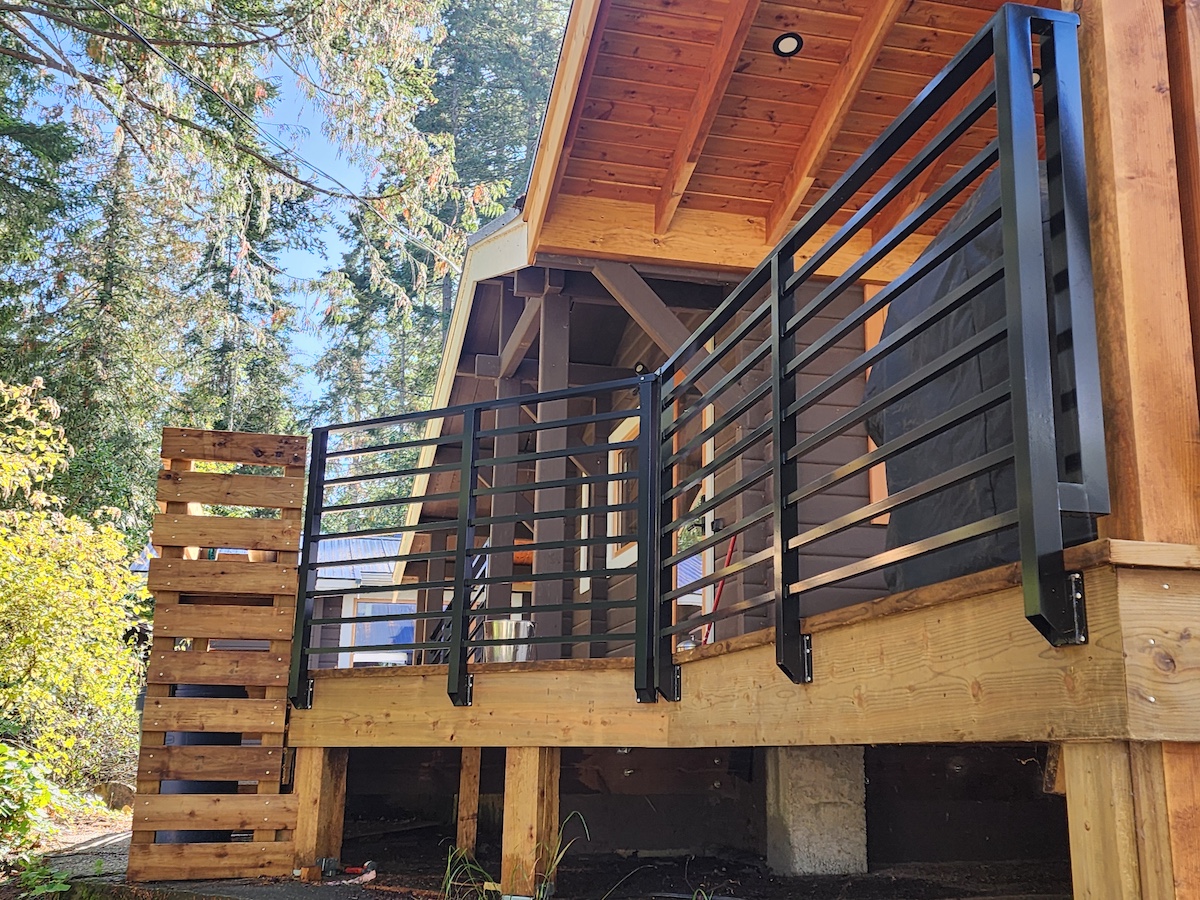
This design perfectly balances rustic and modern elements. The formula is approximately 70% natural wood to 30% matte black metal. The light-colored wood on the deck and ceiling brings warmth, texture, and a connection to the natural surroundings. The sleek, black horizontal pipe railing introduces a clean, industrial edge that keeps the look current and prevents it from feeling like a dated cabin. By keeping the metal elements simple and geometric, the design feels sophisticated and intentional, not DIY. It is the perfect blend of natural material and man-made structure.
|
📋 Copy HEX 🔗 Share |
A black metal railing looks incredibly chic, but on a deck that gets persistent, direct sun, it can become dangerously hot to the touch. This is especially true for solid steel or aluminum handrails. If your deck is a sun-trap and you have young children (or just like to lean on the railing), this is a serious consideration. You might opt for a wood top rail for a more comfortable touch-point or choose a lighter-colored metal finish. Alternatively, ensure a large umbrella or pergola provides shade during the hottest parts of the day.
8. Accessorized Deck with Black Cable Railing and an Outdoor Rug
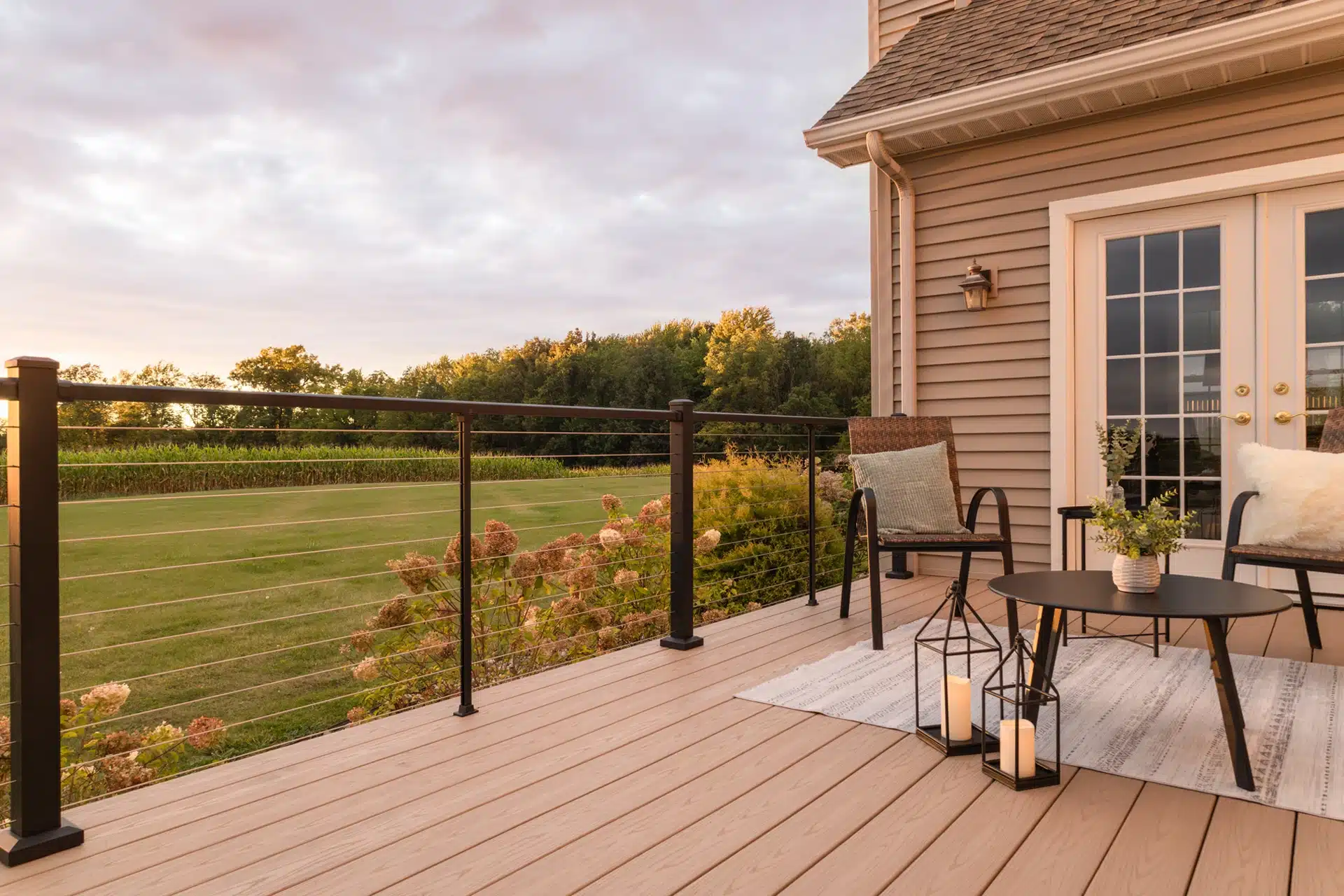
This look taps directly into the huge trend of treating outdoor spaces as true extensions of our indoor living rooms. The black cable railing is modern and minimal, acting as a quiet backdrop rather than a focal point. All the attention goes to the domestic comforts: the plush seating, the decorative lanterns, and especially the textured outdoor rug. The rug defines the seating area, adds a layer of softness, and makes the whole space feel more intentional and curated. It’s less about the deck itself and more about the lifestyle it enables.
|
📋 Copy HEX 🔗 Share |
You don’t need to spend a fortune on high-end outdoor furniture to create this comfortable vibe. An almost identical look can be achieved with a stop at IKEA for the outdoor rug (their offerings are durable and stylish) and Target for the seating. Look at Target’s Threshold™ designed with the Studio McGee line for chairs and pillows with a similar aesthetic. For the final touch, check Facebook Marketplace for used lanterns; a can of matte black spray paint can make mismatched finds look like a cohesive set for under $10.
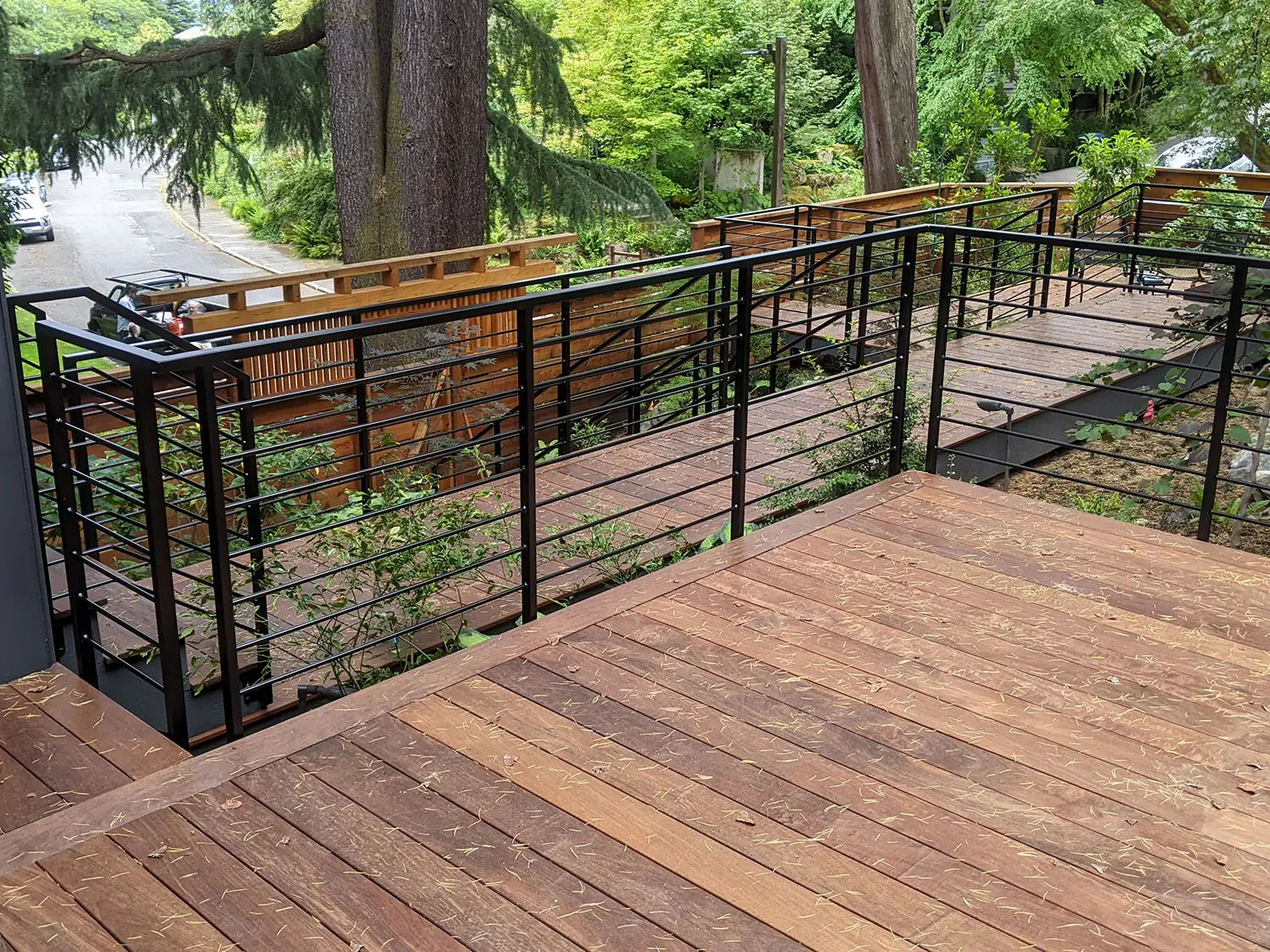
9. Warm Reddish-Wood Deck with Black Horizontal Bar Railings
The success of this design lies in repetition. The strong horizontal lines of the black metal railing are echoed in the long planks of the reddish-brown wood deck. This creates a powerful sense of cohesion and directs the eye outward toward the lush greenery. The use of the same material on the integrated stairs further unifies the space, making the different levels feel like part of a single, well-planned structure. The result is a deck that feels both modern and organically connected to its natural setting. The horizontal theme is a strong contrast to the vertical pickets seen in Idea #14.
|
📋 Copy HEX 🔗 Share |
Horizontal railings are particularly effective on multi-level or hillside decks because they emphasize the width of the space and draw the eye across the landscape. This style is ideal for decks that are at least 15-20 feet wide, where the long, unbroken lines can really make an impact. On a very small or narrow deck, a horizontal railing can sometimes feel a bit confining, in which case a cable or glass railing might be a better choice to maximize the sense of openness.
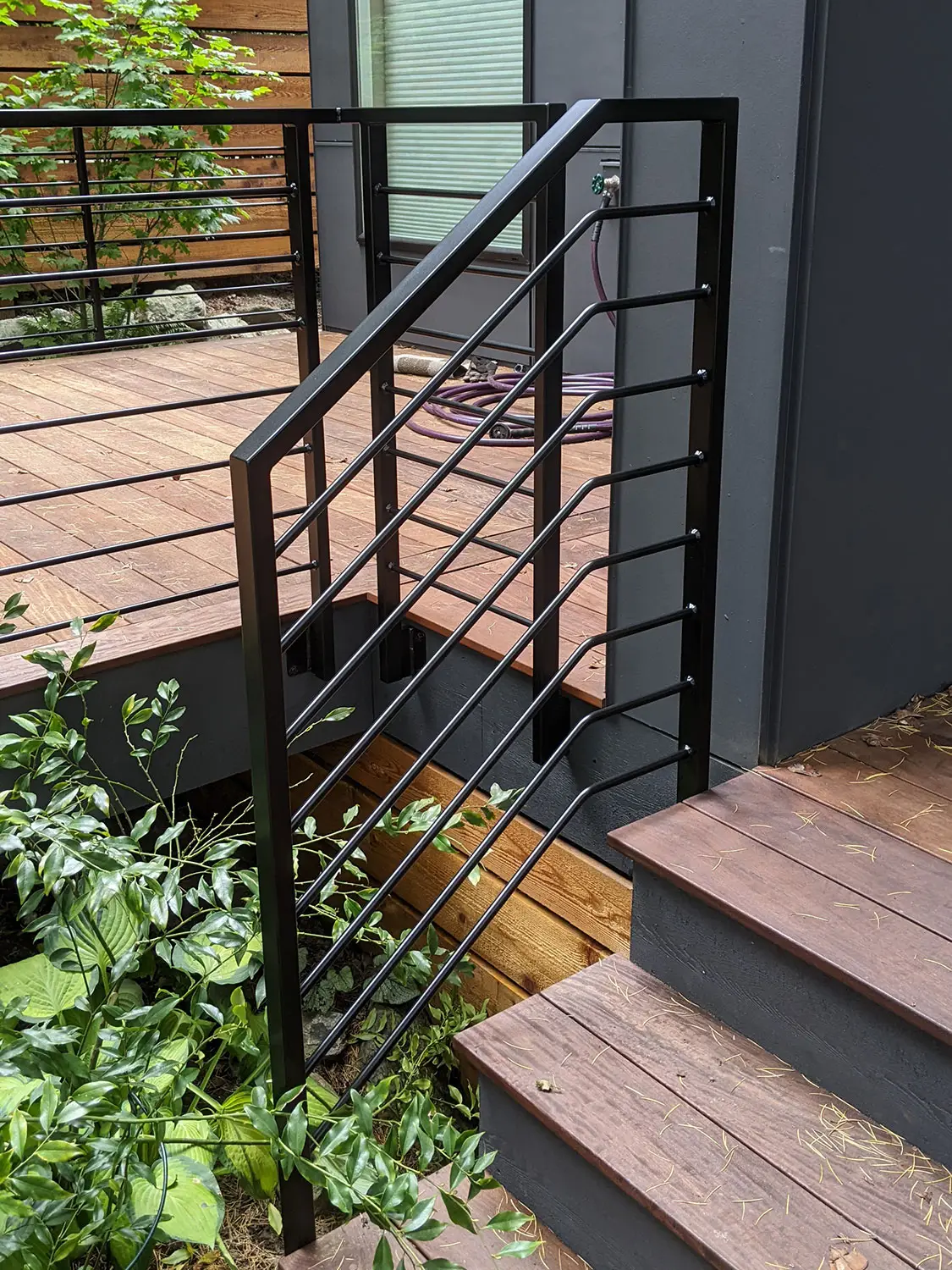
10. Dynamic Design: A Black Metal Railing with Slanted Balusters
The slanted balusters are, without a doubt, the defining feature of this deck. It’s a bold and unexpected twist on the standard vertical picket. This single design choice injects a sense of movement and energy into the railing, transforming it from a simple safety barrier into a striking graphic element. It proves that you don’t need intricate details or expensive materials to make a statement. A simple change in direction can completely alter the personality of a design and create a memorable, custom look.
|
📋 Copy HEX 🔗 Share |
A unique baluster pattern like this often looks best when the rest of the railing is kept simple. Notice how the posts and rails are straightforward and unadorned. This allows the slanted pattern to be the star. For a truly professional finish, ensure the angle of the slant is consistent across the entire project. We recommend setting the first baluster at your desired angle (say, 20 degrees) and then creating a simple wooden jig to ensure every subsequent baluster is installed at the exact same angle.
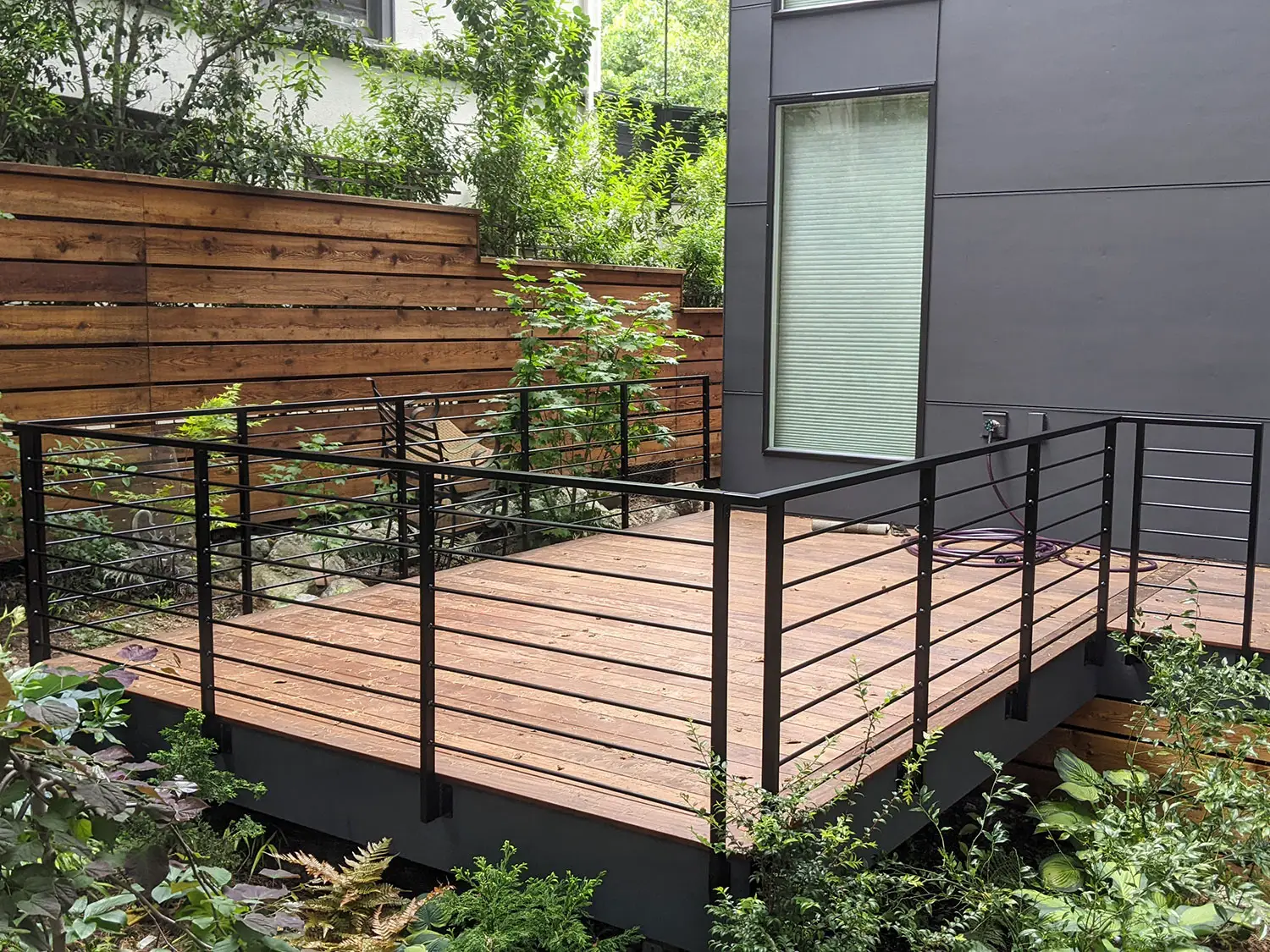
11. High-Contrast Palette: Black Bar Railing Against a Gray Facade
This entire look is a lesson in balanced contrast. The formula breaks down to roughly 50% warm, light wood tones from the deck, 30% cool, dark gray from the building facade, and 20% matte black from the railing and trim. This trifecta of neutrals works because it includes a balance of temperatures (warm wood vs. cool gray) and values (light deck vs. dark facade). The black railing acts as the unifying element, its clean lines tying the horizontal deck to the vertical wall. The surrounding green foliage provides the perfect pop of organic color.
|
📋 Copy HEX 🔗 Share |
Before you commit to a dark railing against a dark house color, make sure it’s what you really want. This bold, modern look is fantastic, but it requires careful planning. Here is a quick checklist to run through:
- Test Your Paint: Paint a large swatch of your proposed facade color next to a sample of the black railing. Observe it in morning, noon, and evening light.
- Consider the Sun: Will the dark wall absorb a lot of heat? Is the wall south or west-facing? A darker color can increase wall temperature significantly.
- Check Material Textures: A matte black railing against a matte gray wall can look flat. Ensure there is some textural difference, like the wood-plank deck here, to add visual interest.
- Plan for Greenery: This look is softened by the surrounding plants. If your space is all hardscaping, it might feel too severe.
12. Crisp and Clean: Black Spindles with White and Gray Accents
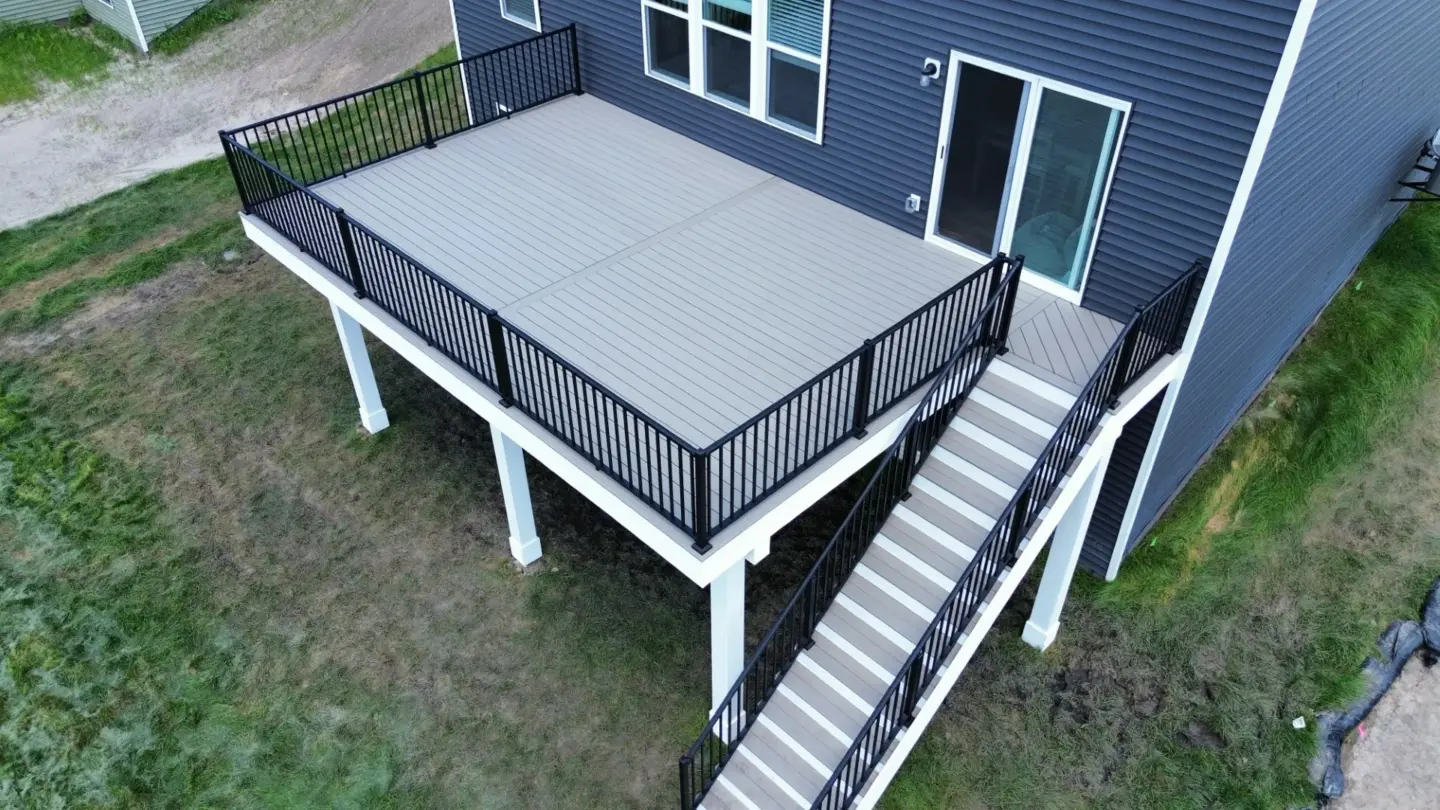
This design is so visually satisfying because of its clean lines and defined color blocking. The stark white support posts and beams create a strong, grounding structure. The light gray deck boards provide a soft, neutral field that doesn’t compete for attention. And the black vertical spindles of the railing and staircase deliver a sharp, graphic punch that adds a modern edge. The alternating gray and white on the stair risers is a thoughtful detail that ties the whole scheme together, proving that a limited palette can still be rich with detail.
|
📋 Copy HEX 🔗 Share |
The core elements of this look—white, black, and gray—are readily available at budget-friendly price points. Instead of pricey composite decking, consider using standard pressure-treated wood and finishing it with a high-quality, solid-color gray deck stain. You can often find affordable white vinyl post sleeves at places like Walmart or on Amazon. Combine these with standard black aluminum balusters, which are relatively inexpensive, to get this crisp, modern aesthetic for a fraction of the cost of high-end materials.
13. Practical Suburban Style: A White and Black Baluster Railing with a Gate
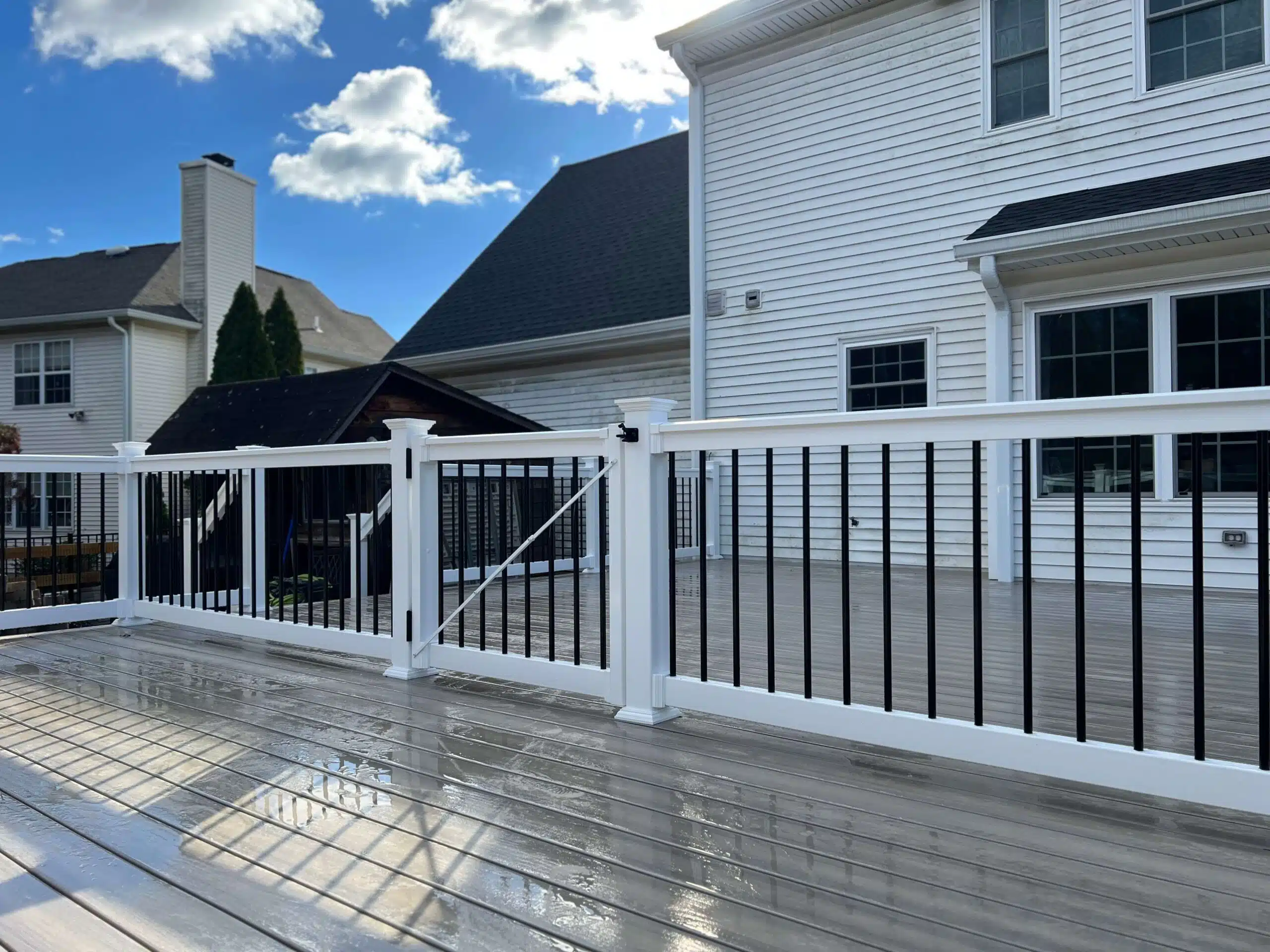
A deck gate is a non-negotiable for safety if you have pets or small children, but getting it right can be tricky. The biggest potential issue is sagging. Over time, the weight of the gate can pull on the hinge-side post, causing the gate to droop and scrape the deck. Using heavy-duty hinges and reinforcing the hinge post with extra blocking inside the vinyl sleeve is crucial for long-term stability. Also, ensure the latch is easy for adults to operate but tricky for little hands; a magnetic latch is often a great solution.
|
📋 Copy HEX 🔗 Share |
While vinyl and aluminum are low-maintenance, the combination of white rails and black balusters has its own cleaning quirks. The white top rail will show every speck of dust, pollen, and bird dropping, requiring frequent wipe-downs. The thin, black metal balusters are magnets for spider webs, which can be tedious to remove one by one. The best tool for the job is a soft-bristled brush on an extension pole, allowing you to quickly sweep both the top rail and the balusters clean in one go.
14. Timeless Black Picket Railing on a Tan Composite Deck
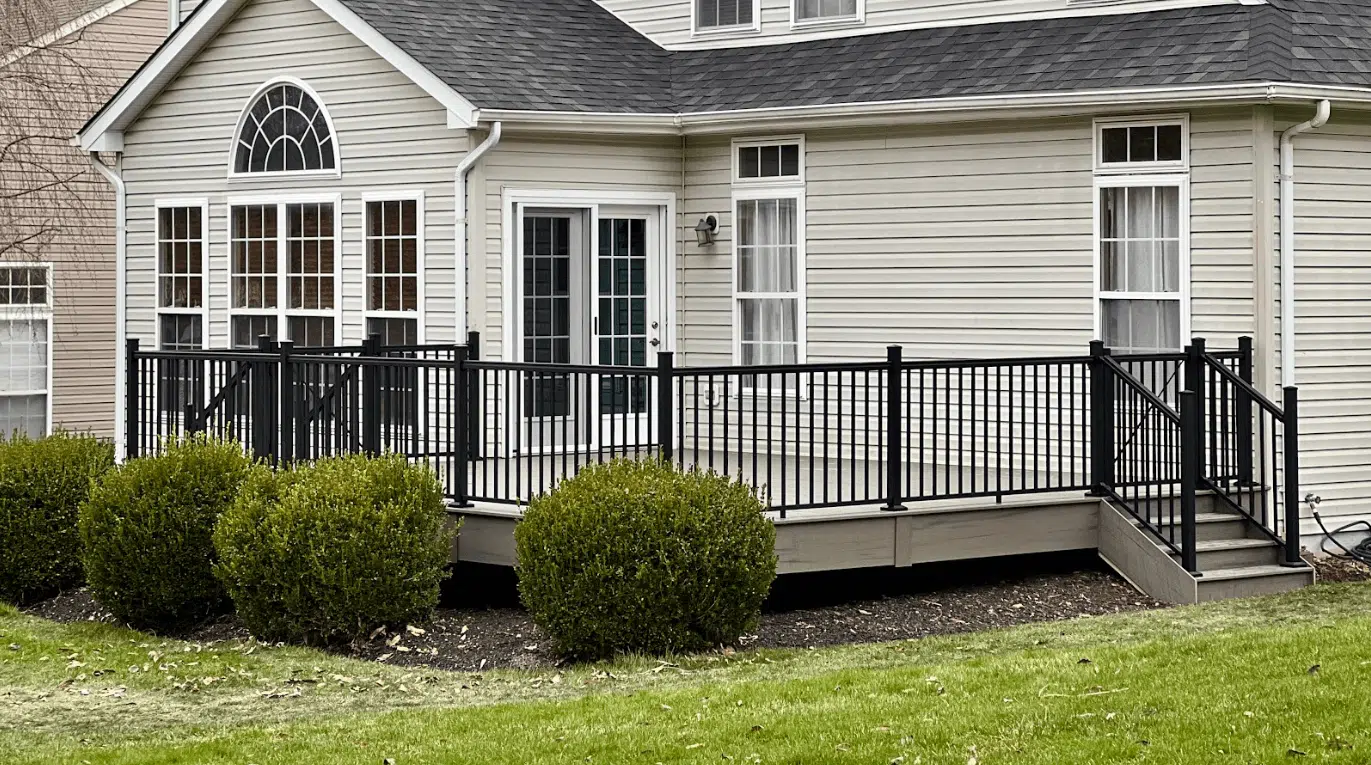
The spacing between your balusters (or pickets) isn’t just an aesthetic choice—it’s a critical safety regulation. The universal rule, known as the “4-inch sphere rule,” states that the gap between balusters must be small enough that a 4-inch sphere cannot pass through it. This is designed to prevent a small child’s head from getting stuck. When planning your layout, remember to account for the thickness of the balusters themselves. A common mistake is measuring 4 inches from the center of one baluster to the center of the next, which results in a gap that is too wide.
|
📋 Copy HEX 🔗 Share |
A simple black picket railing is the ultimate chameleon—it works on nearly any house style, from a modern new build to a traditional colonial. For a standard 8 to 10-foot-high ceiling home with a deck less than 12 feet off the ground, a 36-inch-high railing is typical. If your deck is higher (a second-story deck, for example) or if you live in an area with specific building codes, you may be required to have a 42-inch-high railing. The look is the same, just taller, and it maintains its classic appeal at either height.
15. Durable Aluminum Picket Railing for a Low-Maintenance Deck
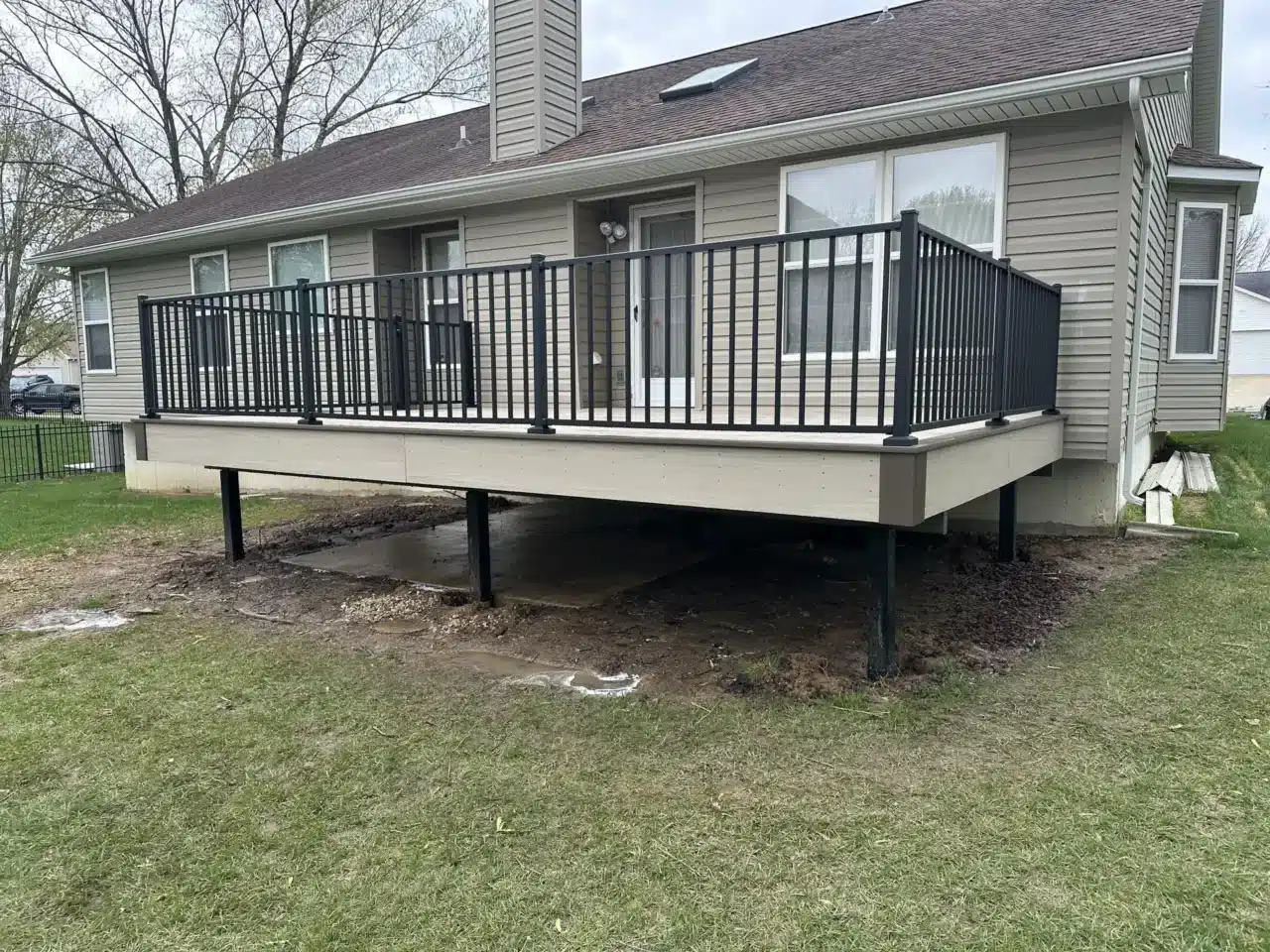
The single best thing about this railing is the material: powder-coated aluminum. While it may look similar to other black picket railings from a distance, its composition is what makes it a superior choice for many homeowners. Aluminum does not rust like steel or iron, and it won’t rot, warp, or splinter like wood. This makes it the ultimate “set it and forget it” railing material. For anyone who would rather spend their weekend enjoying their deck than maintaining it, choosing aluminum is a decision you will appreciate for years to come.
|
📋 Copy HEX 🔗 Share |
This design demonstrates the power of visual cohesion. The black aluminum railing on the deck doesn’t exist in a vacuum; it directly matches the black aluminum fence enclosing the rest of the yard. This repetition of material and color makes the entire property feel unified and thoughtfully designed. The consistent use of black metal creates a clean, graphic outline that neatly contains the beige and green elements of the house and lawn, resulting in a look that is tidy, intentional, and polished.
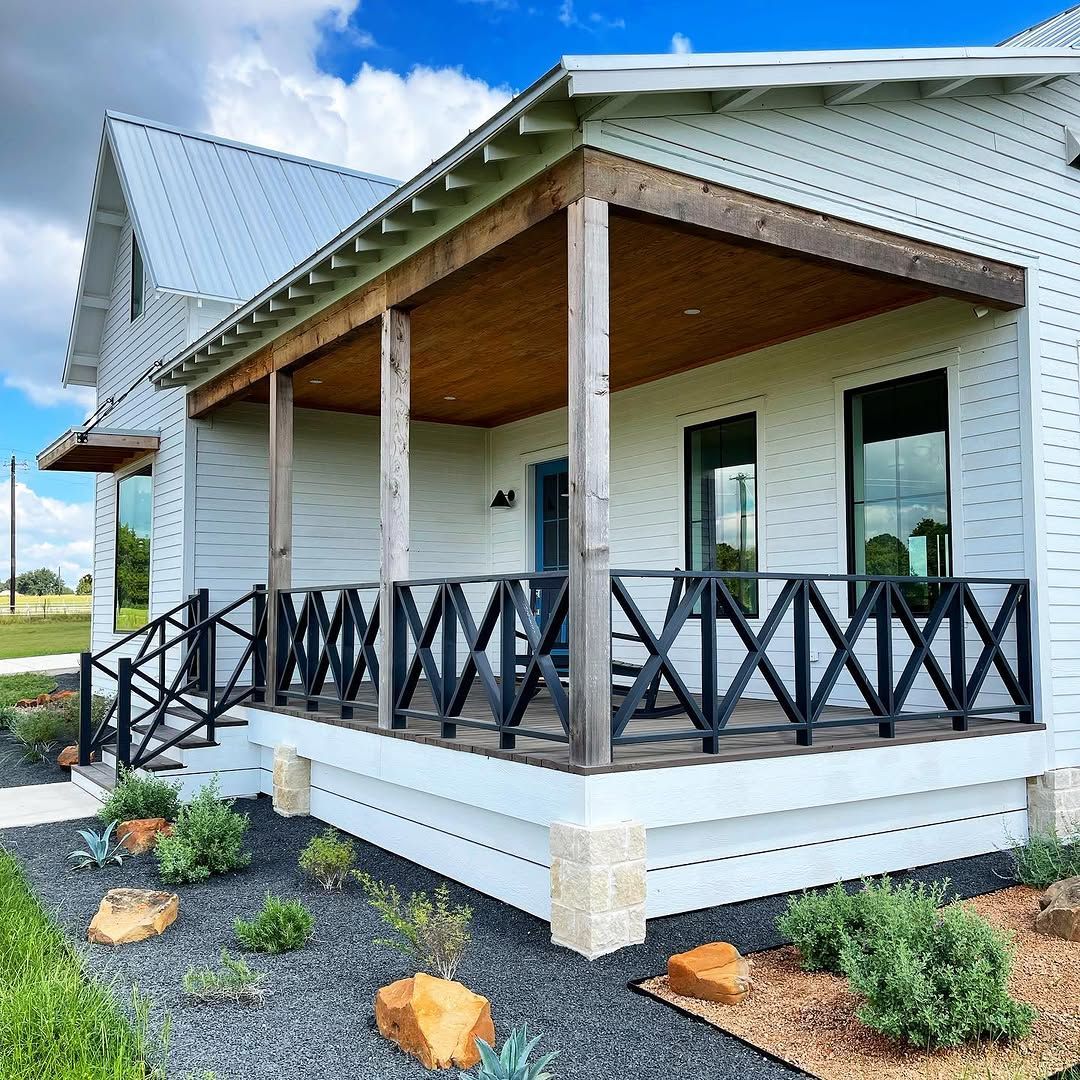
16. Modern Farmhouse Charm with a Black X-Pattern Porch Railing
The modern farmhouse trend continues to dominate Pinterest feeds, and this porch is a perfect example of why. The black “X” railing is a hallmark of the style, offering a more graphic and contemporary alternative to traditional vertical balusters. It feels rustic and sturdy, while the clean lines and black color keep it from looking dated. Paired with classic white siding and dark-framed windows, it hits all the right notes for this enduringly popular aesthetic, blending pastoral charm with modern sensibilities.
|
📋 Copy HEX 🔗 Share |
This X-pattern railing is so effective because it “breaks the frame.” A standard porch with vertical pillars and horizontal floorboards is a grid of right angles. The strong diagonal lines of the “X” cut across that grid, creating immediate visual interest and a dynamic focal point. The choice of black makes the pattern stand out boldly against the white house, turning a functional safety feature into the porch’s main decorative element. It’s a simple geometric trick that pays off in big style points.
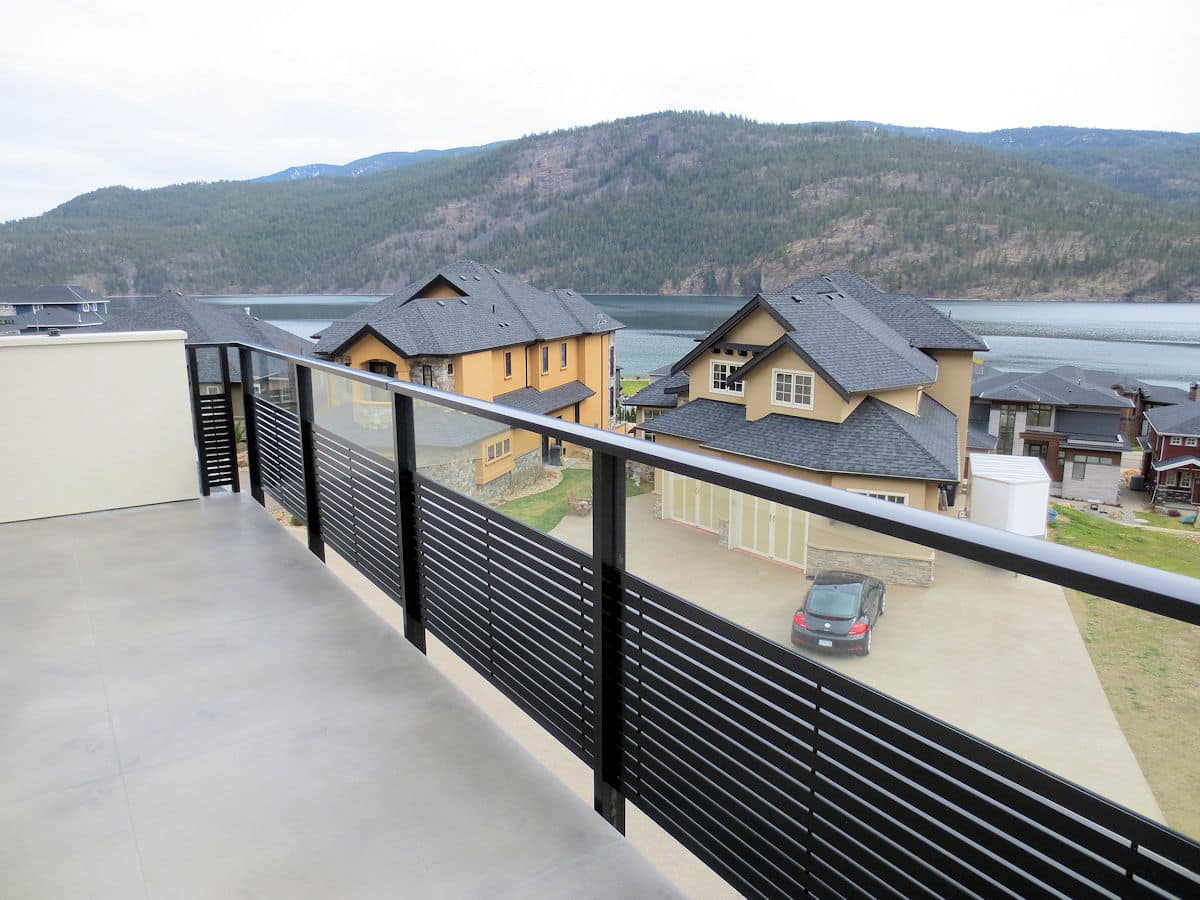
17. Mixed-Media Railing: Combining Black Slats and Glass Panels
When combining different railing types like this, the key is to maintain a consistent top rail. By running the same black metal top cap across the slatted sections and the glass panels, the design feels intentional and cohesive, rather than a jumble of different ideas. Use the glass panels strategically in the areas where the view is most critical, and use the more affordable and private slatted panels elsewhere. This approach gives you the best of both worlds: transparency where it counts and privacy where you need it, all within a unified design. A similar mix of open and closed can be seen in Idea #1, though with cables instead of glass.
|
📋 Copy HEX 🔗 Share |
Glass railings offer an unparalleled, crystal-clear view, but that clarity comes at the cost of constant cleaning. Every fingerprint, water spot, and streak of pollen will be on full display. If you live near the coast, salt spray will be a constant battle. If you have kids or pets, expect to be cleaning smudges daily. Be honest with yourself about how much time you’re willing to spend with a squeegee. If the answer is “not much,” you may be happier with a cable or low-profile spindle railing that offers a similar sense of openness with far less upkeep.
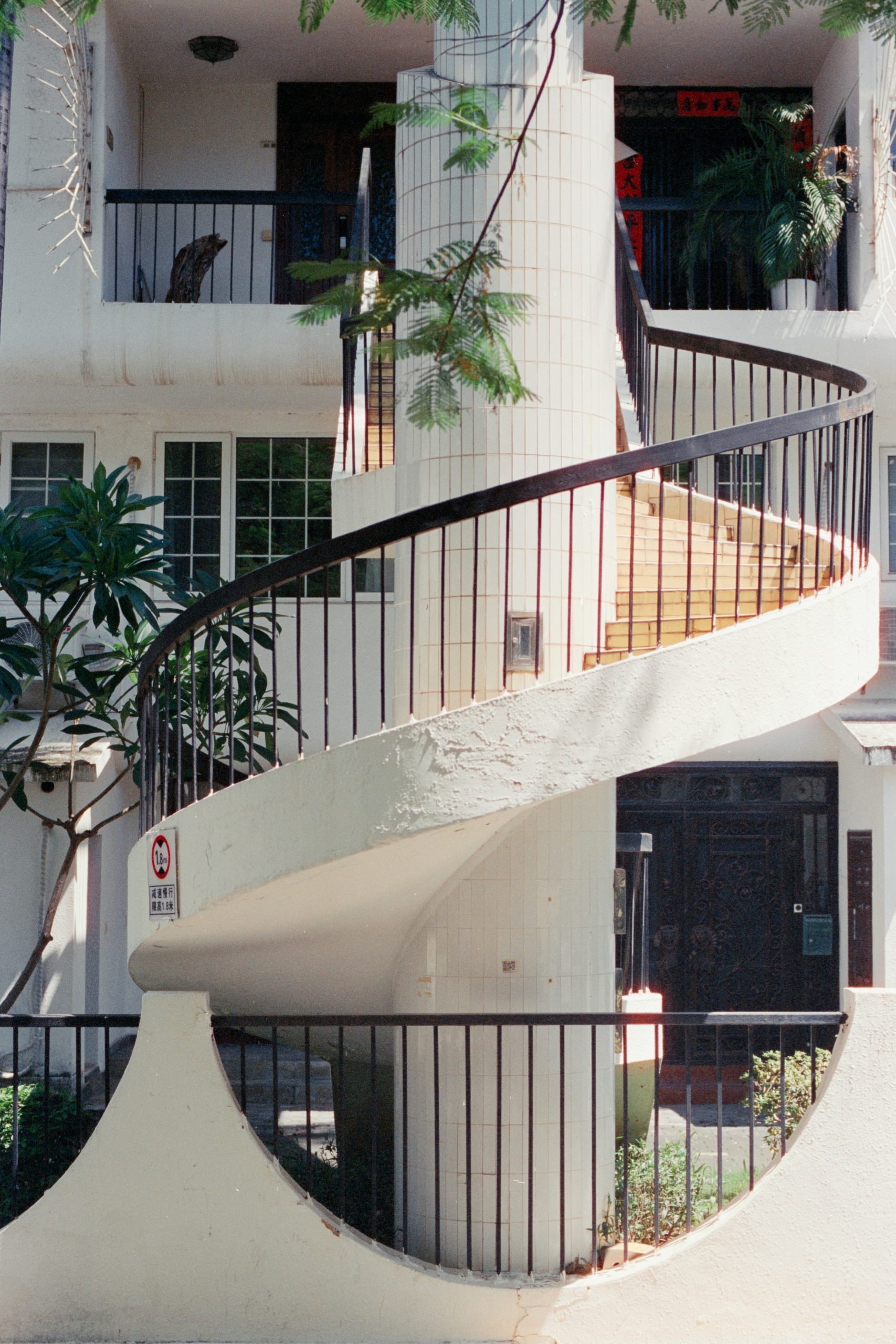
18. Functional Elegance: A Spiral Staircase with Black Metal Railing
A spiral staircase is a brilliant space-saving solution for connecting two levels of a deck or patio. A standard “switchback” staircase requires a large rectangular footprint, easily eating up 80-100 square feet of valuable deck space. A spiral staircase, on the other hand, fits within a much smaller circular footprint, typically ranging from 4 to 6 feet in diameter. This makes it an ideal choice for smaller decks or for homeowners who want to maximize their usable living area without sacrificing access between floors.
|
📋 Copy HEX 🔗 Share |
The most important element of this design is its verticality. While most decks and railings emphasize horizontal planes, a spiral staircase introduces a powerful and elegant vertical line. It draws the eye upward, adding a sculptural quality that a standard staircase lacks. It functions not just as a way to get from one level to another but as a striking architectural feature in its own right. Even in this simple, functional design, the graceful curve of the railing creates an undeniable sense of height and movement.
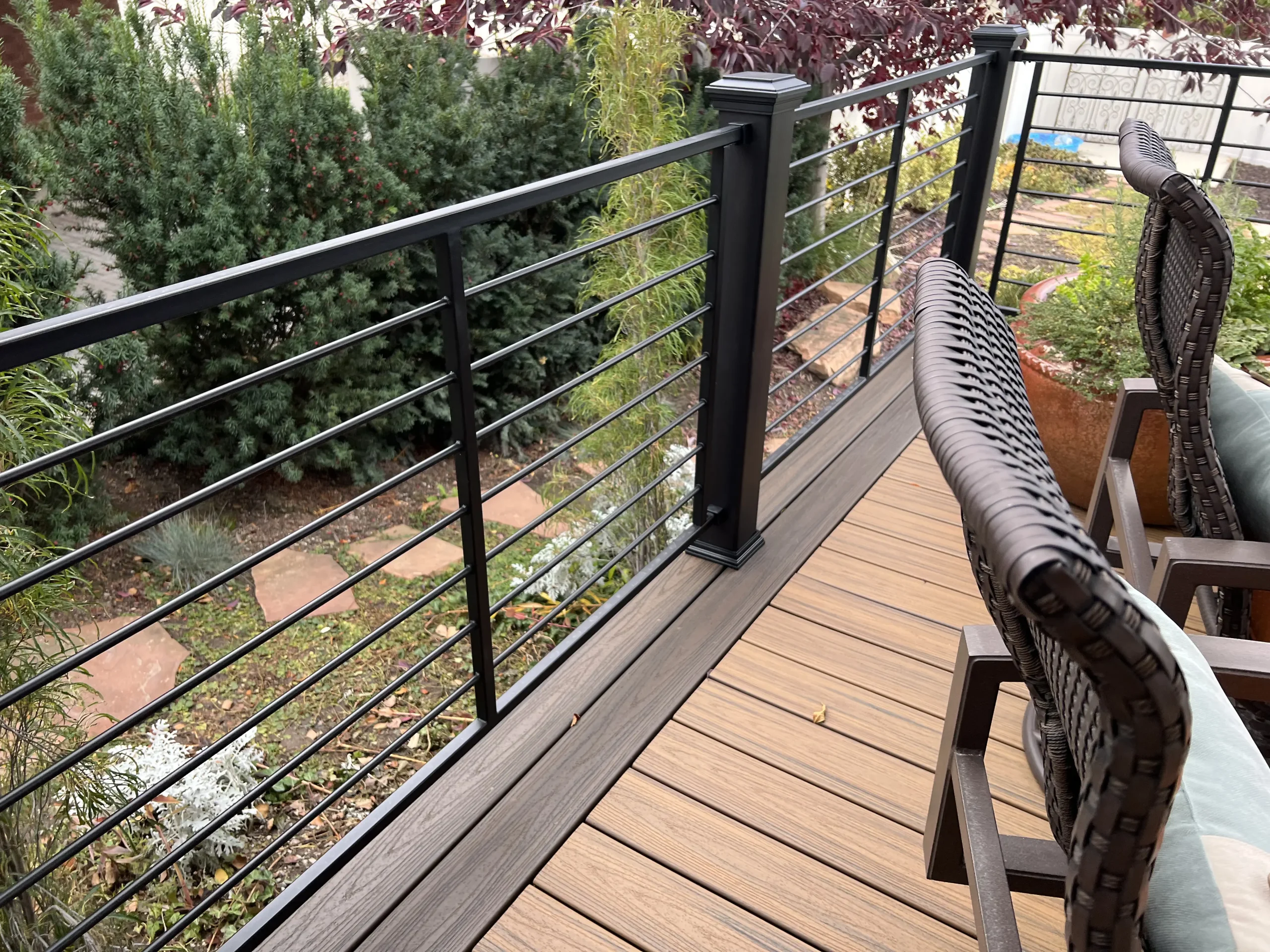
19. Contemporary Deck with Black Rod Railing and a Picture-Frame Border
Creating a “picture-frame” border with your deck boards is a high-impact detail that makes any deck look more custom and professionally finished. It requires a bit more planning and cutting, but the result is worth it. Time estimate: 4-6 hours extra for a medium-sized deck. Cost: Minimal, just a few extra boards.
|
📋 Copy HEX 🔗 Share |
- Install Your Joist Framing: Build your deck’s substructure as usual, but add extra blocking around the perimeter where the border boards will lie.
- Lay the Border Boards: Install the outer frame of boards first, mitering the corners at a 45-degree angle for a clean joint.
- Mark Your Infill Line: Snap a chalk line on the joists where the interior edge of your border meets the main deck area.
- Install the Infill Decking: Lay the main “field” boards, letting the ends run long over your chalk line.
- Cut the Infill Boards: Set your circular saw to the depth of the deck board and make a single, clean cut along your chalk line.
- Secure the Ends: Fasten the newly cut ends of the infill boards to the blocking underneath.
Recreating this specific deck look offers a great balance of style and cost.
- Main Furniture: Wicker patio chairs from a big-box store—$300-$600 for a pair.
- Lighting: None visible in this styling.
- Textiles: Outdoor cushions are often included; if not, add $100-$150.
- Decor/Accessories: Small side table – $50-$100.
- Railings & Decking: Black horizontal rod railing systems average $100-$180 per linear foot. Composite decking adds another $15-$30 per square foot. For a 200 sq. ft. deck, you’re in the $9,000 – $15,000 range for professional installation.
- TOTAL: $9,450 – $15,850
- Budget Alternative: Use pressure-treated wood decking and stain it, and opt for a vertical cable rail system, which can be more DIY-friendly. Total cost could be closer to $5,000 – $8,000.
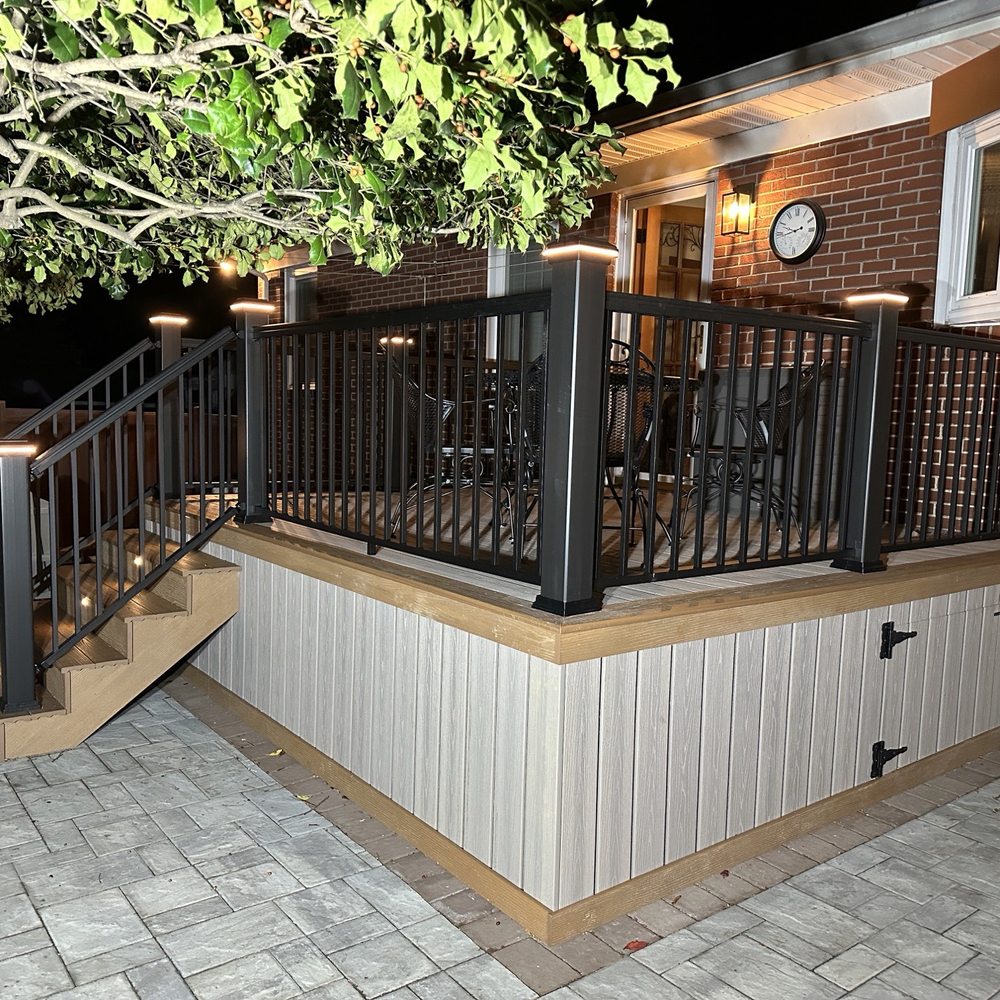
20. Illuminated Evenings: Black Deck Railing with Integrated Post Cap Lighting
Integrated lighting completely transforms a deck at night, moving it from a dark, unusable space to a welcoming outdoor room. The soft glow from the post caps provides gentle, ambient illumination—enough to see and move around safely without the harsh glare of a floodlight. This kind of lighting highlights the perimeter of the deck, adding a sense of drama and making the space feel more expansive after dark. It’s a functional feature that doubles as a powerful aesthetic upgrade, adding value and hours of enjoyment to your home.
|
📋 Copy HEX 🔗 Share |
Installing low-voltage post-cap lights is a very achievable DIY project. It’s safer than working with 120V household electricity, and the results are incredibly rewarding. Time estimate: 2-3 hours. Material cost: $150-$400.
- Choose Your Lights: Purchase a low-voltage lighting kit that includes a transformer, low-voltage wire, and the post-cap lights themselves.
- Mount the Transformer: Install the transformer on an exterior wall near a GFCI outlet, at least 12 inches above the ground.
- Run the Wires: Plan your wire path. It’s often easiest to run the main wire along the underside of the deck joists using cable staples.
- Connect the Lights: At each post, drill a small hole to pass the wire through. Most modern lights have simple, clamp-on connectors that pierce the wire’s insulation—no stripping required.
- Test and Tidy: Plug in the transformer and test the lights. Once everything is working, neatly secure any loose wires with cable staples.
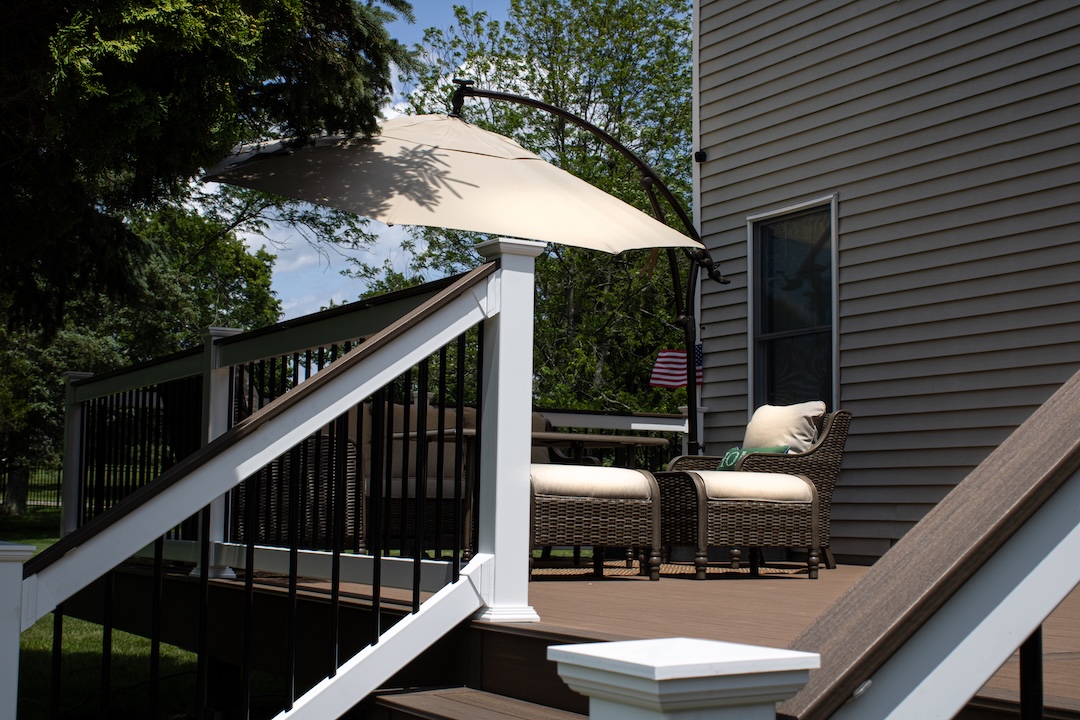
21. Classic Combo: White Posts, Black Balusters, and Brown Decking
This is a perennially popular look, and it’s easy to replicate on a tight budget. The key is to swap the high-end materials for more affordable lookalikes. Start with a standard pressure-treated wood deck instead of expensive composite; you can get a similar brown tone with a good-quality stain for about 70% less cost. For the railing, use pressure-treated 4×4 posts and paint them white with exterior-grade paint. The only place to spend a little is on the black aluminum balusters, which provide the crisp, clean look that makes the design work. This brings the aesthetic of a $20,000+ deck into the realm of a $7,000-$10,000 DIY project. Compare this to the similar but cooler-toned palette in Idea #4.
|
📋 Copy HEX 🔗 Share |
This timeless deck design follows a simple visual recipe: 50% warm brown, 40% crisp white, and 10% bold black. The brown decking creates a warm, earthy foundation that feels welcoming and natural. The white posts and rails provide a bright, clean structure that pops against the brown and any background landscaping. The black balusters are the accent—a slim, graphic element that adds a touch of modern sophistication without dominating the view. You could swap the brown for a gray deck and it would still work, but the warmth of the brown is what gives this particular example its classic, inviting feel.
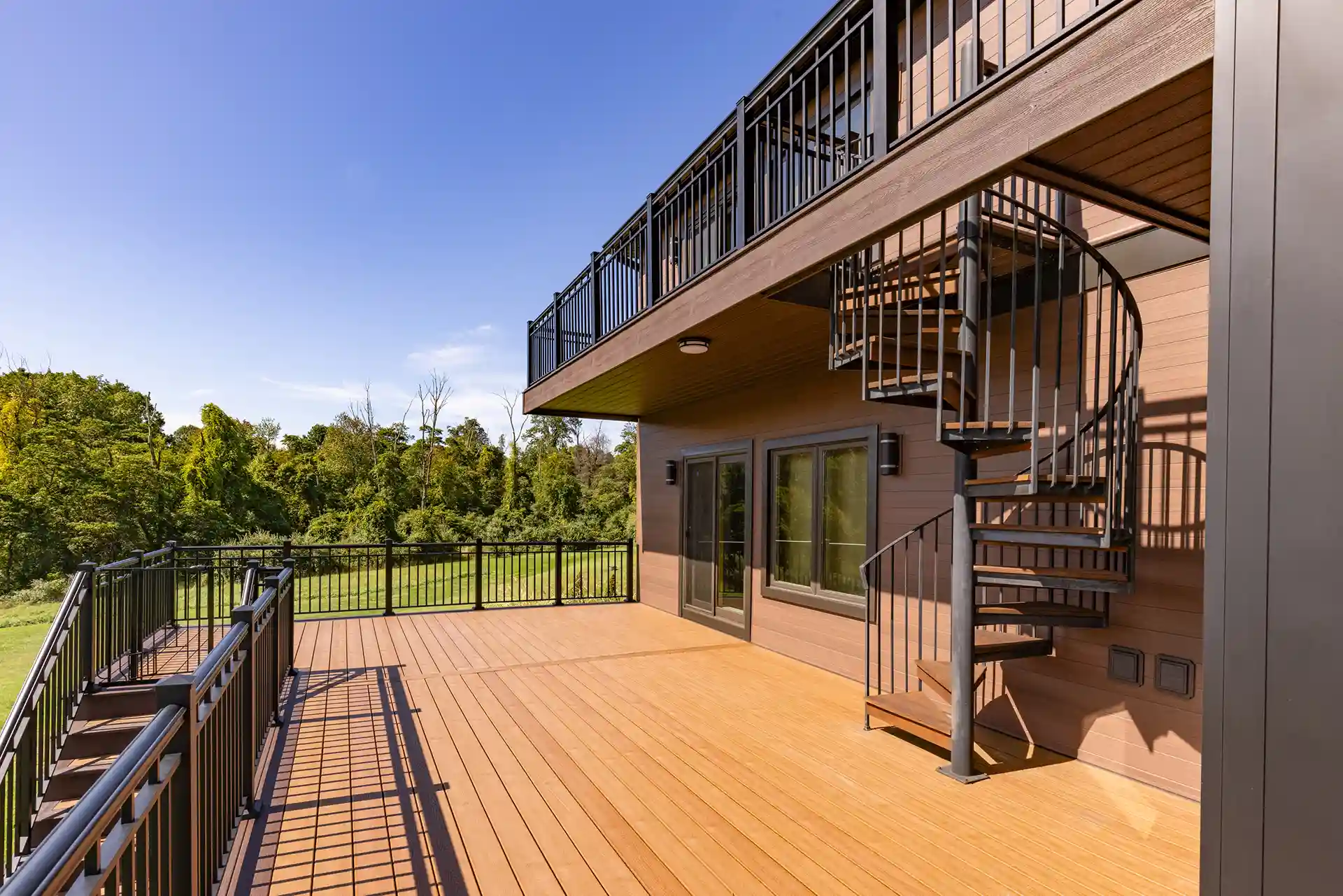
22. Cohesive Outdoor Design with a Black Spiral Staircase and Matching Railing
The single thing that makes this entire multi-level space work so well is consistency. The designer used the exact same matte black metal railing system for every part of the project: the upper balcony, the main deck perimeter, the access stairs, and the spiral staircase. This creates a powerful visual thread that ties all the different zones and levels together into one cohesive statement. Without this consistency, the space could easily have felt disjointed and chaotic. It’s a testament to the idea that a simple, repeated element is often more powerful than a dozen competing ones.
|
📋 Copy HEX 🔗 Share |
This is an expansive, multi-level design that is best suited for a home with a generous backyard and a significant grade change. A setup this large, connecting at least two stories, implies a minimum footprint of 400-500 square feet for the deck alone. The spiral staircase, while a space-saver compared to traditional stairs, still requires a dedicated circular area about 5-6 feet in diameter on both the upper and lower levels. This is a large-scale solution for creating a seamless indoor-outdoor flow on a grander scale.
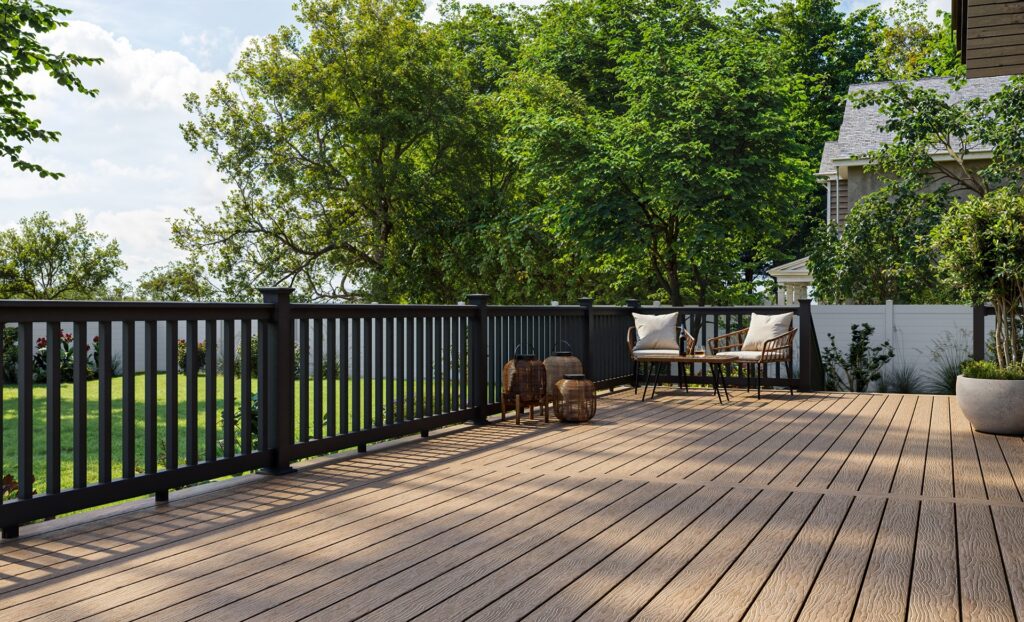
23. A Relaxed Seating Nook Framed by Black Spindle Railing
When creating a small seating area on a deck, use furniture to signal the space’s purpose. Notice the scale here: the two wicker chairs are substantial enough to feel comfortable, but their open-weave design keeps them from looking too heavy. The small round table is just large enough for two drinks, reinforcing the idea of an intimate conversation spot. By “floating” the furniture away from the railing, you create a pathway and make the nook feel more intentional, like a true outdoor room. A small outdoor rug would complete the effect.
|
📋 Copy HEX 🔗 Share |
There is a growing movement in design away from massive, sprawling decks toward creating smaller, more intimate, and functional outdoor “zones.” This seating nook is a perfect example. It isn’t trying to be an all-purpose entertaining space; it’s designed for a quiet morning coffee or an evening chat. The simple black vertical railing provides a clean, modern backdrop that doesn’t distract from the relaxed, natural vibe. This trend acknowledges that quality of space is often more important than quantity, even outdoors.
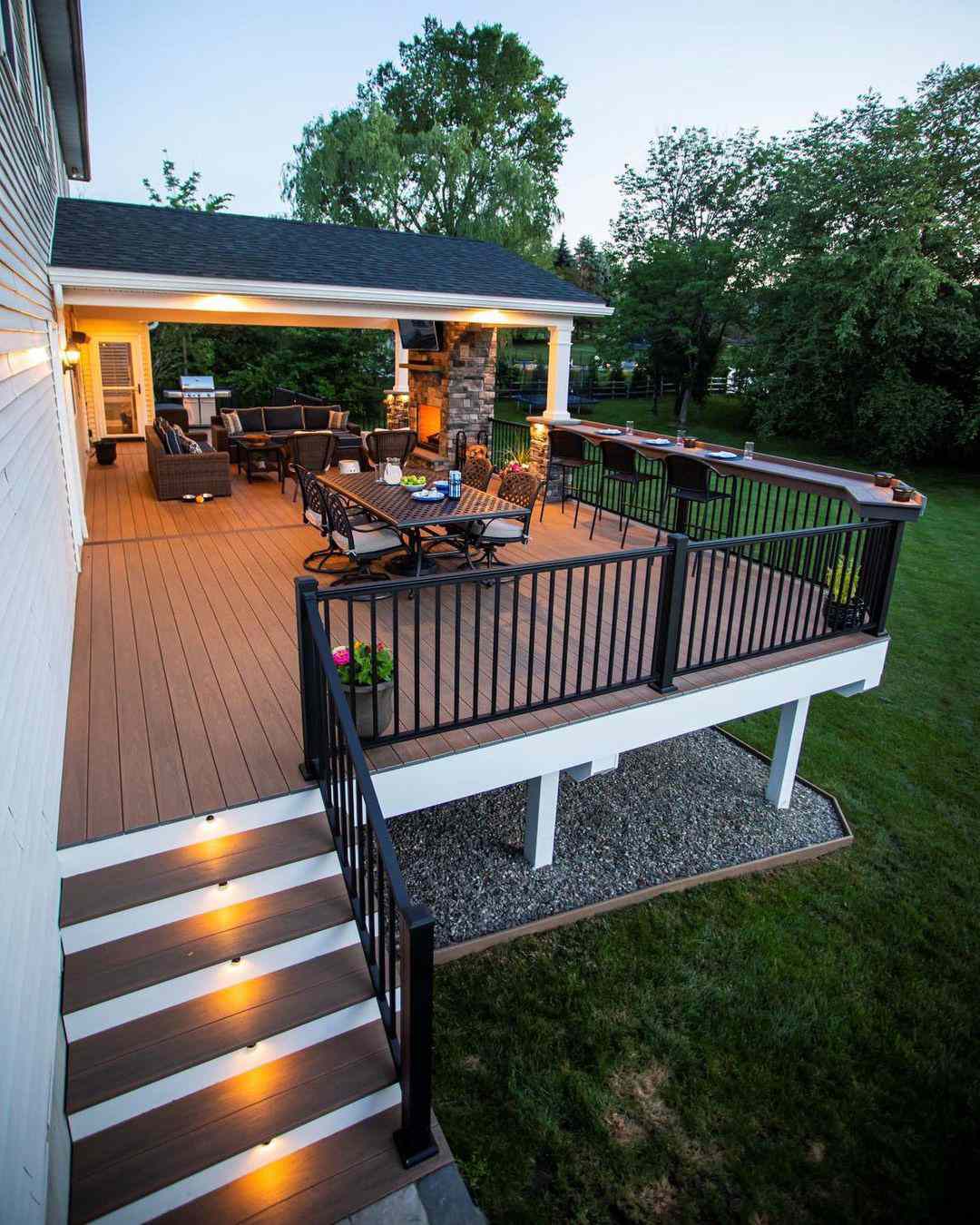
24. The Entertainer’s Dream: A Multilevel Deck with Black Picket Railing
A multi-zone entertaining deck like this is a major investment, but it creates an incredible hub for socializing. Here’s a realistic cost estimate for a professionally built project of this scale.
|
📋 Copy HEX 🔗 Share |
- Main Furniture: Large dining set ($1,500-$3,000), wicker lounge set ($2,000-$4,000), and bar stools ($400-$800).
- Lighting: Integrated stair and post lighting will add $1,500-$3,000 to the electrical budget.
- Textiles: High-quality outdoor cushions and rugs could be another $1,000-$2,000.
- Structures: The covered lounge area and stone fireplace are significant costs, likely $15,000-$30,000+.
- Railings & Decking: For a large (~500 sq. ft.) multilevel composite deck with black aluminum railing, expect to pay $30,000-$50,000.
- TOTAL: $51,400 – $93,800+
- Budget Alternative: For a much smaller, simpler version like the one in Idea #23, you could create a lovely seating area for under $15,000.
This deck design works because it clearly defines different “rooms” without walls. The large dining area is its own zone. The covered lounge area provides a cozy, sheltered spot. The bar counter creates a casual spot for mingling. Even though it’s one large, open space, the strategic placement of furniture and structures makes each area feel like it has a distinct purpose. The consistent use of dark brown decking and black railings ties all the zones together into a unified, cohesive whole.
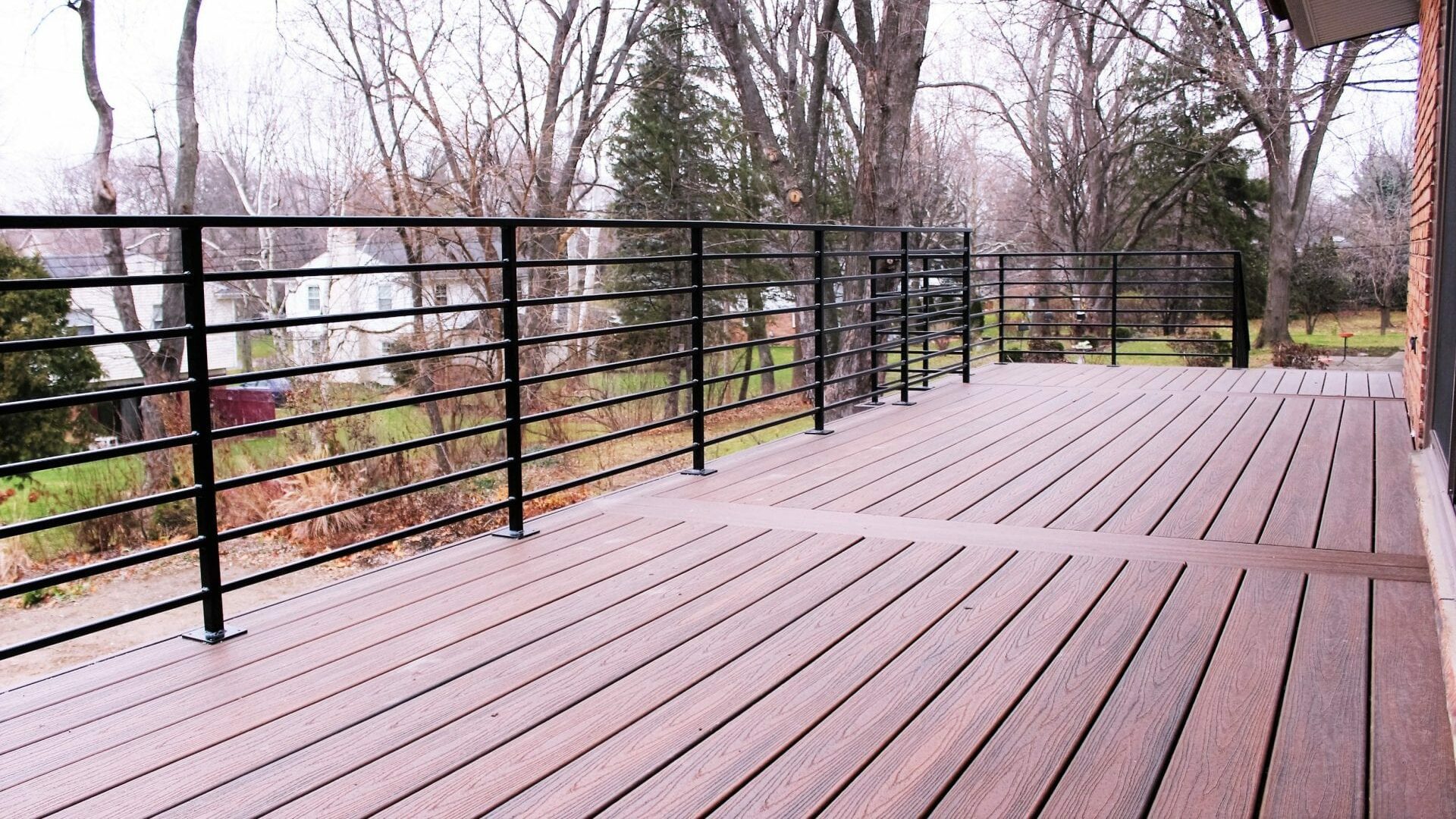
25. Patterned Decking with a Modern Black Horizontal Bar Railing
Adding visual interest to your deck surface can be as simple as changing the direction of the boards. Creating a central “rug” area with boards running perpendicular to the border is a classic designer trick. Time estimate: 2-3 hours extra. Cost: Negligible.
|
📋 Copy HEX 🔗 Share |
- Frame for It: This is the most critical step. You must install extra joist blocking perpendicular to your main joists where the pattern will shift. This provides a surface to fasten the ends of the boards.
- Lay the Main Field: Install the deck boards in the largest section of the deck first.
- Install the “Rug”: Lay the boards in the designated central area, running them in the opposite direction. Ensure the board ends are fully supported by your extra blocking.
- Add a Transition Board: A single “breaker board” running along the seam between the two patterns can provide a clean, intentional transition.
A horizontal railing offers a sleek, modern look, but it has one surprising drawback: it’s incredibly easy for things to fall off the deck. Unlike vertical balusters that create a tight cage, the wide horizontal gaps in this style of railing do little to stop a stray sippy cup, phone, or dog toy from tumbling over the edge. If your deck is elevated and you have kids, pets, or a tendency to be clumsy, you might find yourself constantly retrieving items from the yard below. It’s a small, practical annoyance to consider.
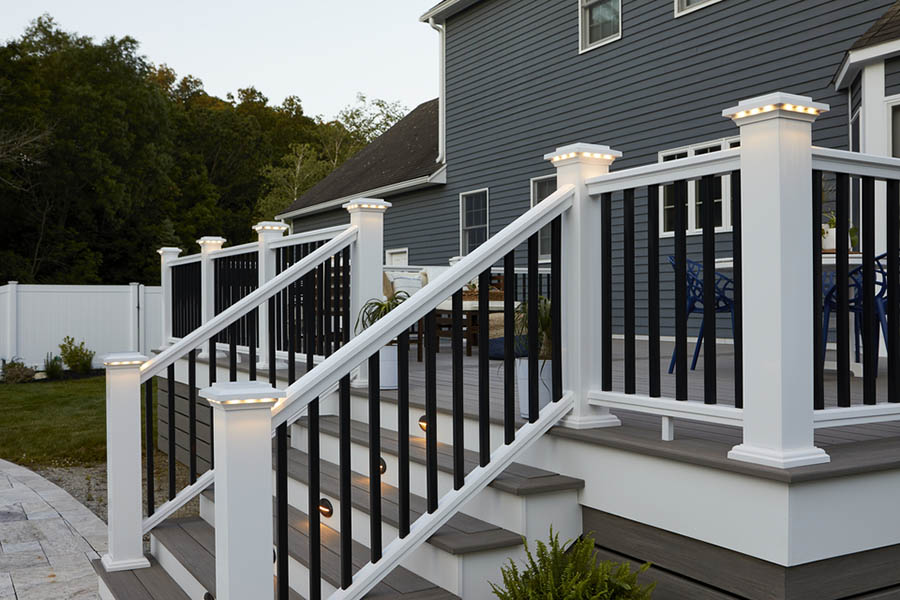
26. A Bright Idea: White and Black Railing with Integrated Lighting
This entire design is elevated by its lighting strategy. It’s not just an afterthought; it’s a core feature. The warm lights on the white post caps provide ambient, downward-cast light, while the step lights ensure safe navigation. This two-pronged approach is what makes it so successful. The post caps provide the “where am I?” glow, and the step lights provide the “where am I going?” safety. Together, they create a deck that is not only usable after dark but also incredibly beautiful and dramatic. Compare this to the all-black version in Idea #20.
|
📋 Copy HEX 🔗 Share |
Modern LED deck lighting is incredibly energy-efficient and long-lasting, with most bulbs rated for 20,000-50,000 hours of use. You will likely never have to replace a bulb. However, the fixtures themselves require care. The white vinyl posts and caps will need to be wiped down seasonally to remove dirt and prevent mildew. The clear plastic or glass lenses on the lights can also get cloudy with dust and pollen, so giving them a quick wipe with a damp cloth a few times a year will ensure your light stays bright and clear.
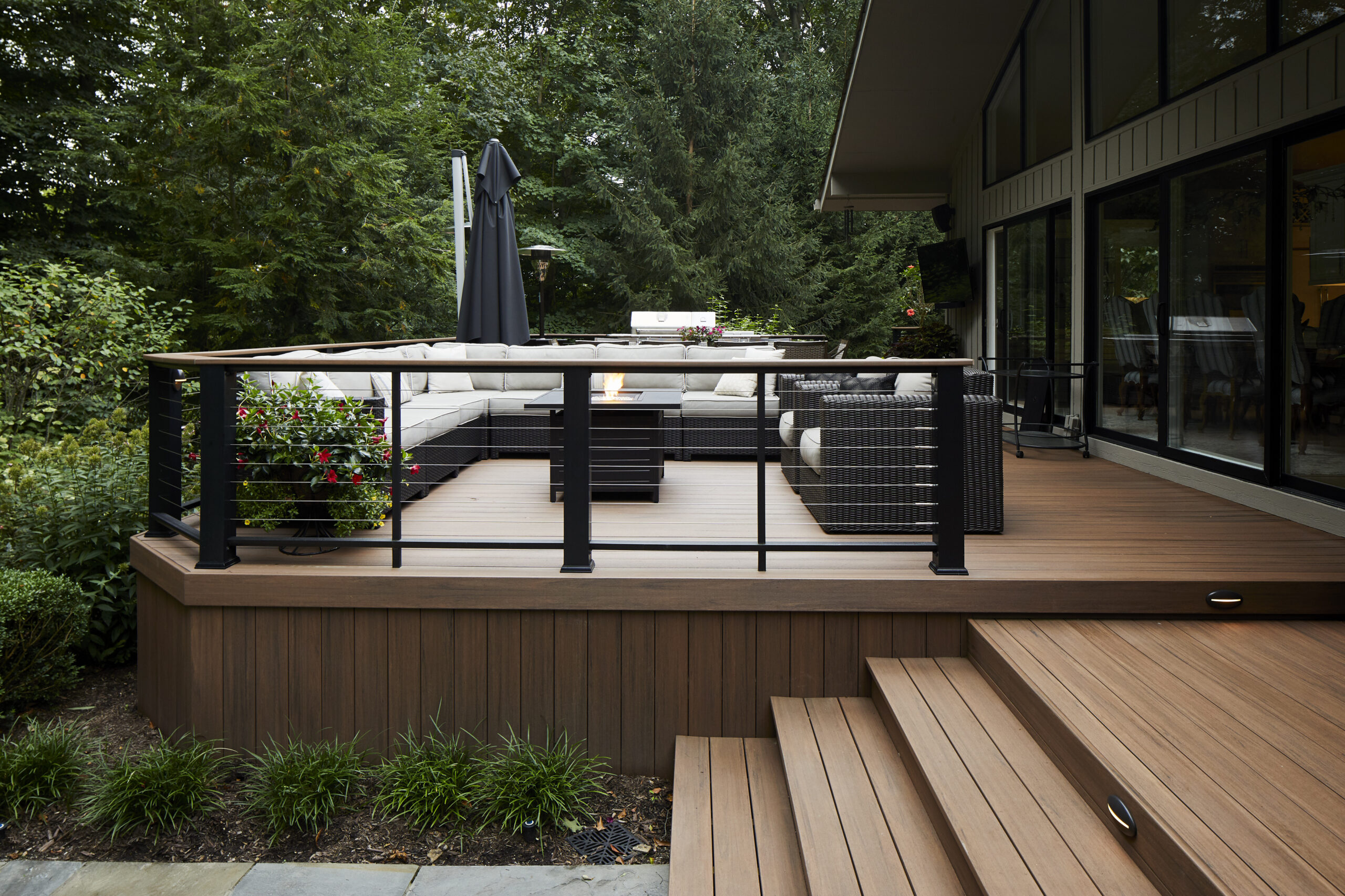
27. Luxury Lounging: Black Cable Railing with an Integrated Fire Pit
An integrated fire pit is a fantastic luxury feature, but it demands careful planning to be safe and functional. Before you even think about deck plans, run through this critical checklist:
|
📋 Copy HEX 🔗 Share |
- Check Local Codes: Many municipalities have strict regulations about the placement of fire features on combustible surfaces like wood or composite decks. There are often minimum clearance requirements for the house and railings.
- Material Matters: Is your decking rated for use with a fire pit? Some composite decking brands offer specific guidance. You may need to install a non-combustible pad of stone or tile underneath the fire pit.
- Fuel Source: Will you be using propane or natural gas? A natural gas line needs to be professionally installed, which is a significant cost. A propane tank needs to be housed in a code-compliant, ventilated enclosure.
- Wind Direction: Note the prevailing wind direction on your property. You don’t want smoke and embers constantly blowing into your seating area or towards the house.
This space feels so luxurious because it successfully blends sophisticated design with creature comforts. The sleek black cable railing and dark composite decking provide a moody, modern canvas. The massive U-shaped sectional offers unparalleled comfort and encourages social gathering. And the fire pit acts as a magnetic focal point, drawing people together and providing warmth and ambiance. The integrated deck lighting is the final touch, adding a soft glow that makes the entire space feel like an exclusive resort lounge.
Ready to Frame Your View?
Whether you’re drawn to the barely-there look of modern cables, the timeless rhythm of vertical pickets, or the graphic punch of a farmhouse “X,” there’s a black railing design ready to complete your outdoor space. Each style offers a different way to frame your view and define your deck, proving that this one simple color is anything but boring. So go ahead and start planning! Don’t forget to save your favorites to your Pinterest board to keep the inspiration flowing.