26 Jaw-Dropping Landscape Design Software Ideas for 2026 You Absolutely Must See

You know that feeling when you finally find the landscape idea that looks exactly right for your space, but turning that saved pin into a reality feels impossible? It’s a common roadblock. That’s why we’ve moved beyond generic concepts to curate 26 distinct, real-world landscape designs, from lush, natural gardens to sleek, modern patios. These are the kinds of polished, professional looks you might try to create with landscape design software, but we’re breaking down what actually makes them work. And stay until the end — we break down the most common mistakes that can ruin these looks.
1. The Classic Welcome: A Curving Brick Path Through a Lush Lawn
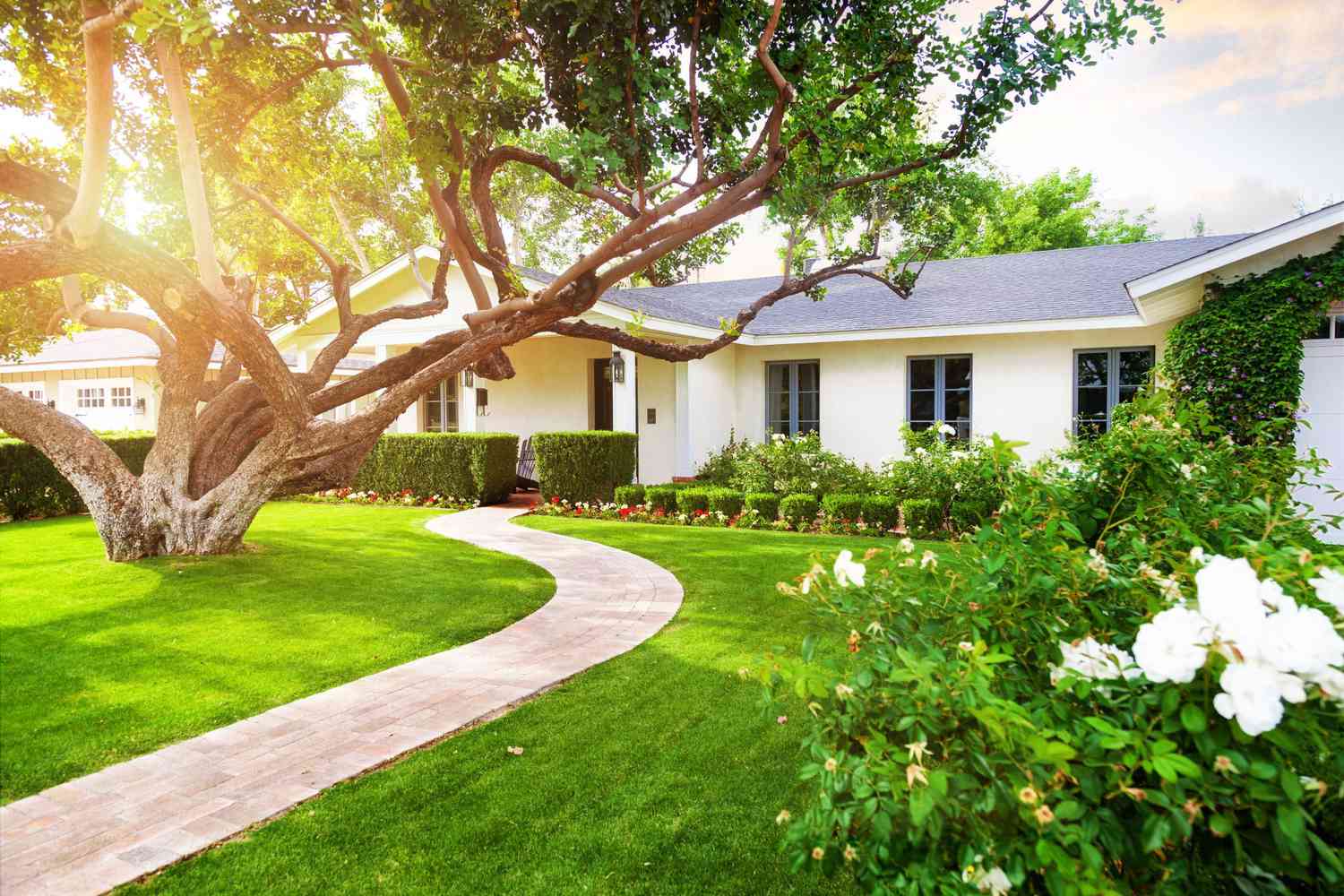
This look is a masterclass in classic curb appeal. What makes it work so well is the graceful interplay of color and line. The warm, earthy tones of the curving brick path provide a beautiful visual contrast against the vibrant, uniform green of the lawn. This isn’t just a way to get to the door; it’s an element that guides the eye gently through the space, making the front yard feel more dynamic and inviting than a straight concrete walkway ever could. The large, mature tree adds a sense of permanence and an organic, vertical element that balances the horizontal lines of the house and lawn.
|
📋 Copy HEX 🔗 Share |
To keep a lawn this vibrant and healthy, it’s all about the watering schedule. Instead of frequent, shallow watering, aim for deep watering sessions once or twice a week. This encourages the grass to grow deeper roots, making it more resilient to drought and heat. A simple trick is to place an empty tuna can on the lawn when you water; once it’s full (about 1 inch), you’ve watered enough for that session. This method saves water and leads to a genuinely healthier, greener lawn that can better withstand foot traffic and stress.
2. A Coastal Getaway with Sandy Paths and Tropical Greenery
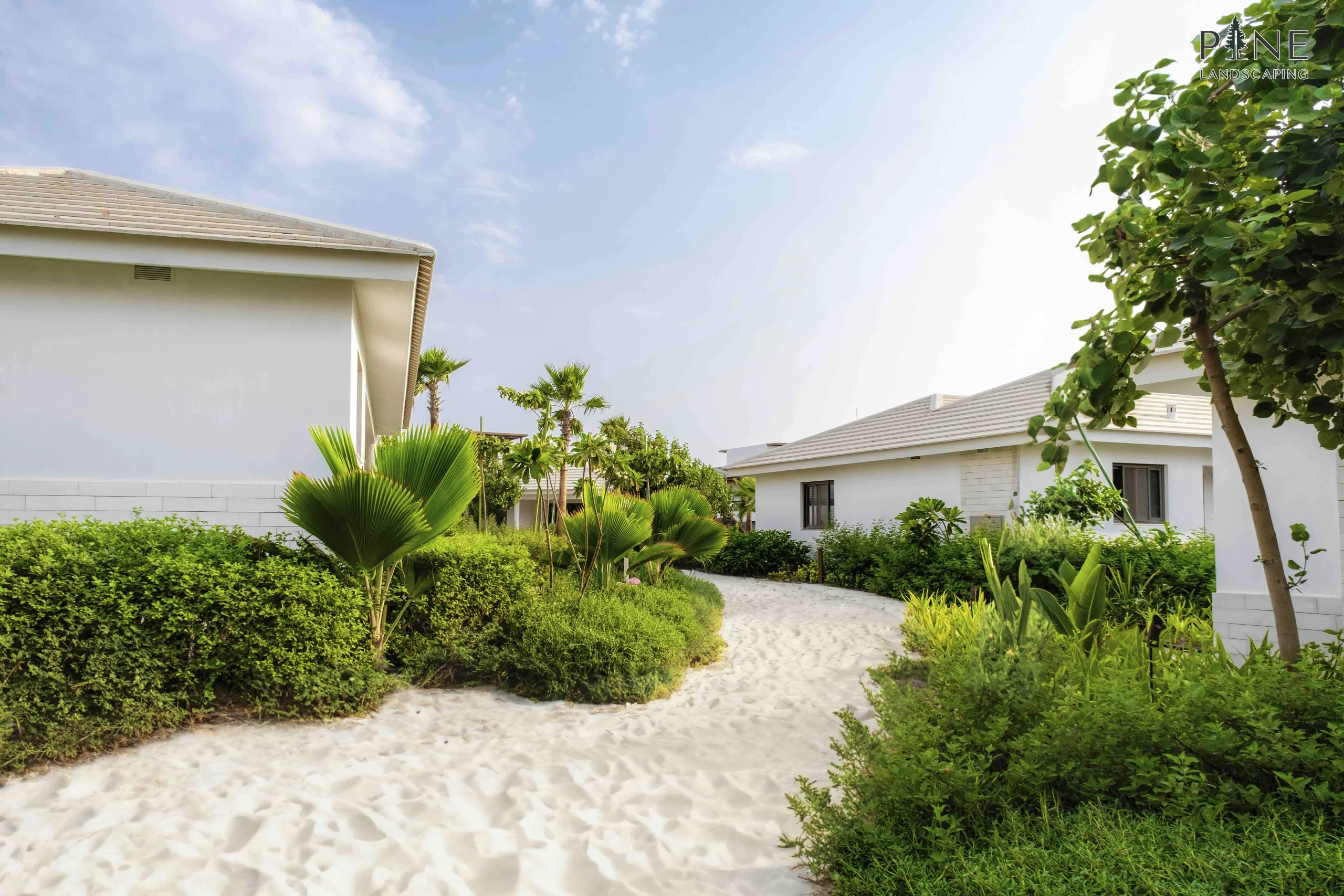
The formula for this breezy, coastal vibe is surprisingly simple. Think of it as 60% lush, varied foliage + 30% bright white surfaces + 10% natural texture. The bulk of the visual weight comes from the dense greenery—a mix of fan-shaped palms, low-lying shrubs, and small trees that create a sense of tropical privacy. The bright white of the sandy path and stucco villas reflects the sun, keeping the space cool and airy. The final 10% is the texture from the tiled roofs, which adds just enough detail to keep the simple palette interesting. You could swap the white stucco for a light beige and the sand for fine white gravel to achieve a similar effect.
|
📋 Copy HEX 🔗 Share |
While a sandy path screams “beach vacation,” it requires a specific kind of maintenance. Sand will inevitably get kicked into surrounding garden beds and tracked indoors. It also needs regular raking to look tidy and may require replenishment every few years. Furthermore, the plants here are key; you’ll need to choose salt-tolerant and drought-resistant species that thrive in sandy, well-draining soil. Fan palms and coastal grasses are great, but delicate flowers might struggle. It’s a commitment to a specific coastal ecosystem, not just a look.
3. The Ultimate Resort-Style Pool with a Rock Grotto and Waterfall
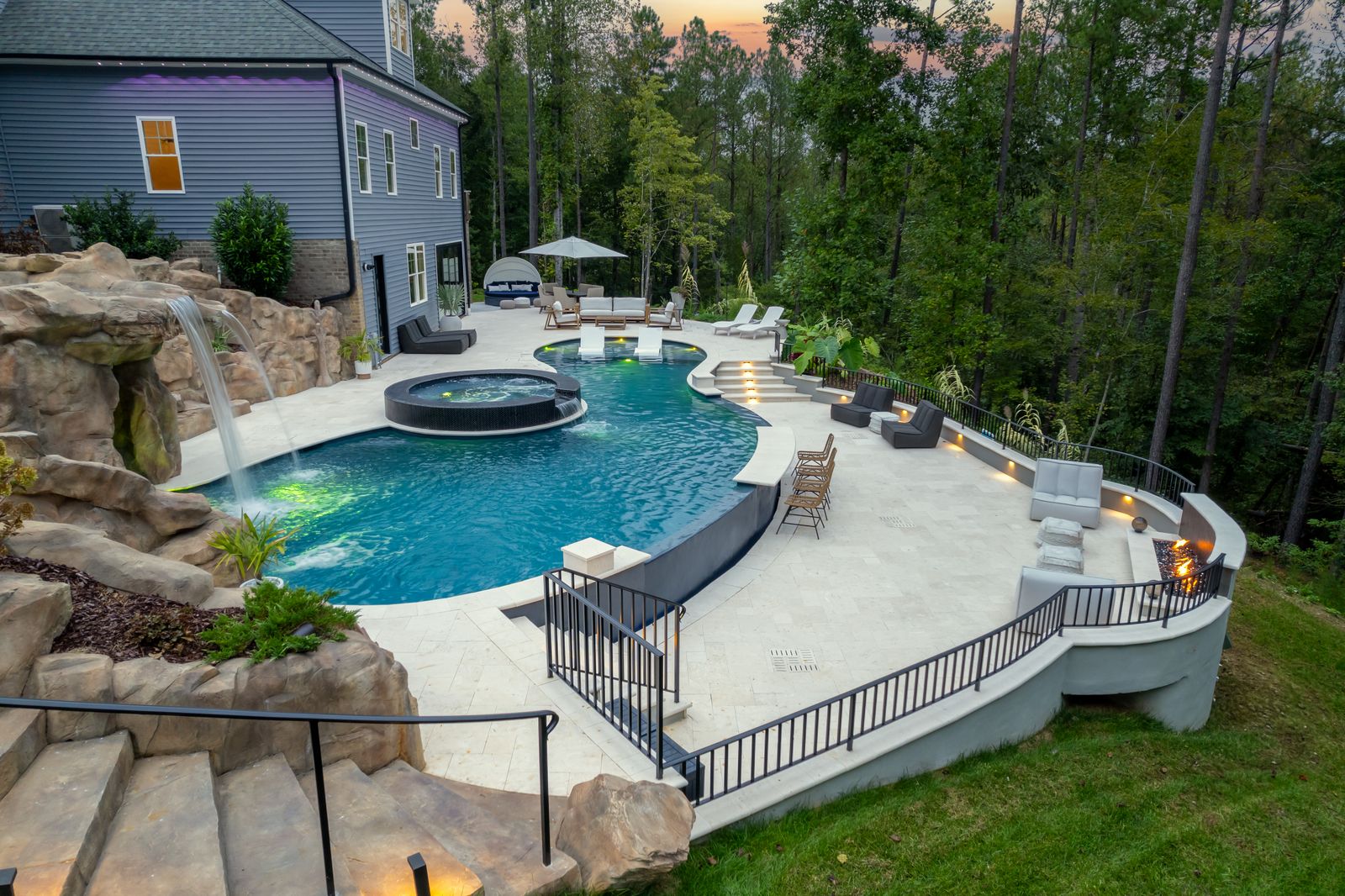
Achieving this level of integrated luxury is a significant investment, but understanding the components helps. The cost is driven by the custom features that blend together seamlessly.
- Main Furniture (lounge chairs, seating): $5,000 – $15,000
- Lighting (wall sconces, landscape lights): $3,000 – $8,000
- Pool & Hot Tub (custom freeform shape): $80,000 – $150,000+
- Hardscaping (paved patios, steps, walls): $25,000 – $60,000
- Custom Features (rock grotto, waterfall, fire pits): $20,000 – $50,000
- TOTAL: $133,000 – $283,000+
Budget alternative: A high-quality fiberglass pool with a standalone hot tub, a simple concrete patio, and a gas fire pit table can deliver a similar vibe for around $70,000 – $100,000.
|
📋 Copy HEX 🔗 Share |
Let’s be honest: a pool complex of this scale is more like a part-time job than a simple backyard feature. The maintenance is substantial. You’re not just chlorinating a simple pool; you’re managing the chemistry for a pool, a hot tub, and a waterfall, all with different needs. The pumps, filters, and heaters for a multi-level system are complex and costly to run and repair. The beautiful stone patio will need regular pressure washing to prevent mildew, especially with the constant moisture from the waterfall. This isn’t a set-it-and-forget-it situation; it’s a commitment to significant annual upkeep costs and time.
4. Modern Poolside Cabanas with High-Contrast Furnishings
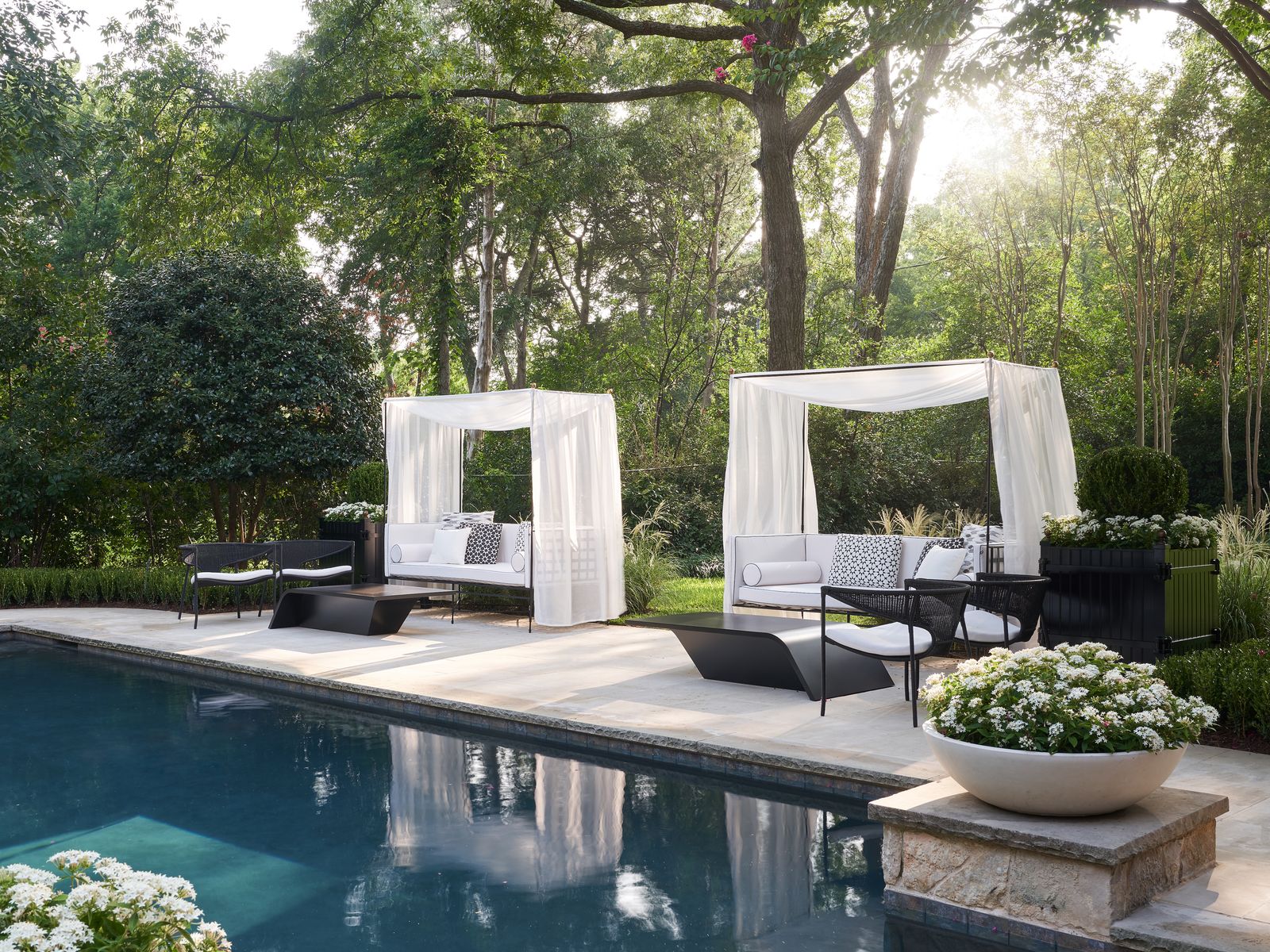
The single element that elevates this pool area from nice to truly luxurious is the set of white canvas cabanas. Without them, you just have a lovely pool with some modern chairs. With them, you have designated zones for shade, relaxation, and conversation. They function like miniature outdoor living rooms, offering a sense of privacy and architectural structure. The cabanas instantly signal a resort-like atmosphere, suggesting that this is a space designed for lingering all day, not just for a quick dip. They are the crucial element defining the entire experience.
|
📋 Copy HEX 🔗 Share |
This idea is best suited for a medium to large backyard with at least 1,000-1,500 square feet of available space around the pool itself. Each cabana typically requires a footprint of about 10×10 feet, and you need ample clearance around them for foot traffic and a sense of openness. A minimum ceiling height isn’t applicable here, but a sense of vertical space is, which the surrounding mature trees provide. For a smaller space, consider the more integrated seating approach shown in Idea #15, which tucks benches into planters to save space.
5. An Idyllic streamside setting with ornamental seating
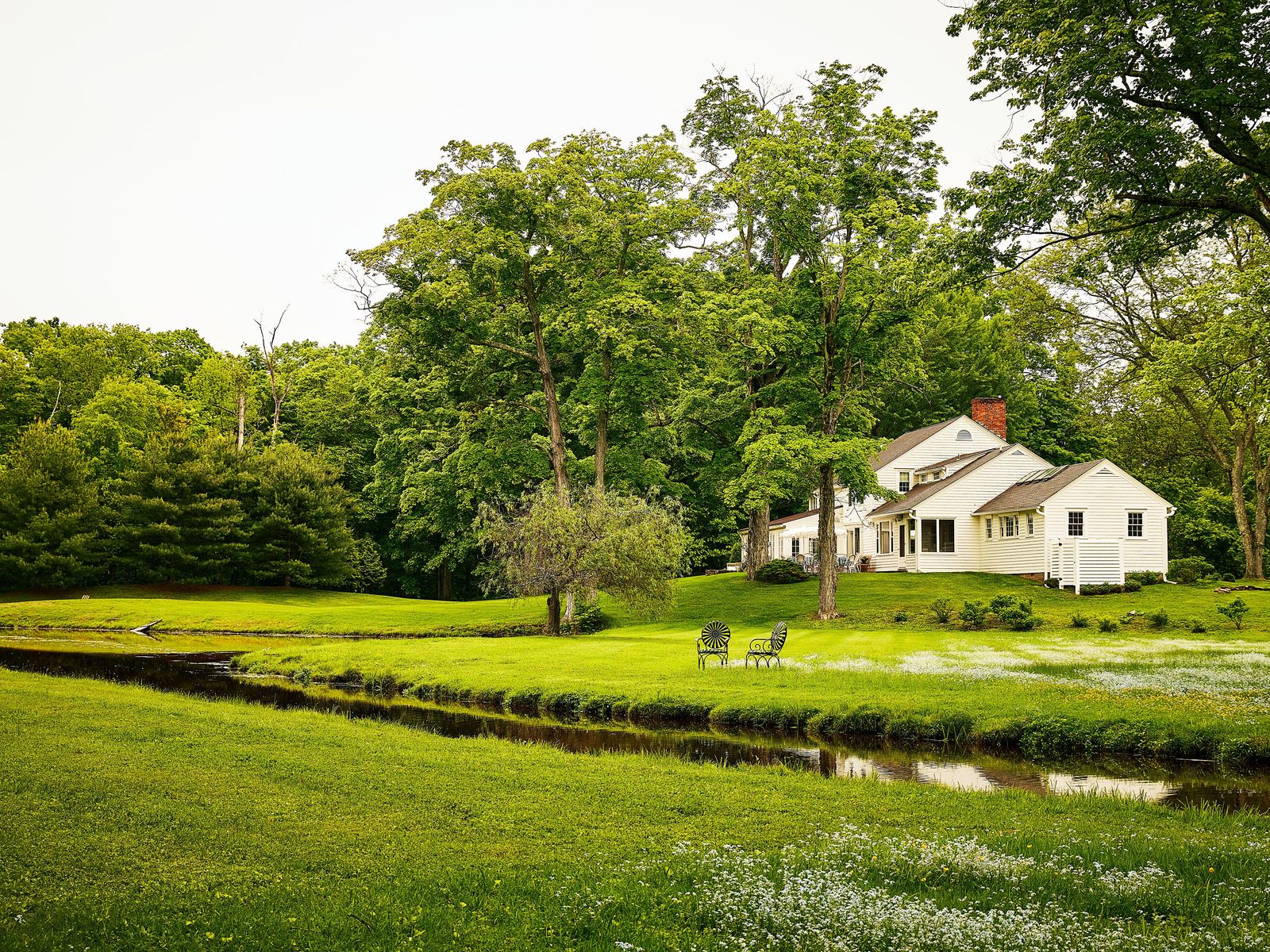
This landscape feels so peaceful because it masters the art of creating a thoughtful destination. The two ornate black chairs aren’t just randomly placed; they are positioned to offer a specific experience—a quiet moment overlooking the stream. This transforms a simple patch of grass into a designated point of reflection. The design works by balancing the manicured (the lush lawn, the grand house) with the natural (the dark stream, the wildflowers, and the dense trees). The chairs act as a bridge between these two worlds, inviting human interaction within the natural setting. It’s a subtle but powerful way to make a large space feel intimate.
|
📋 Copy HEX 🔗 Share |
When placing seating in a large landscape, don’t just stick it on the patio. Think like a director staging a scene. Ask yourself, what do I want to look at from here? The best spots often have a ‘borrowed view’ of a feature, whether it’s a stream like this, a distant mountain, or a beautiful tree. Also, consider the time of day. Place chairs to catch the morning sun for a coffee spot or to watch the sunset in the evening. This intentional placement, similar to the Adirondack chairs in Idea #9, is what turns a simple bench into a cherished retreat.
6. Manicured Alpine Garden with Classic Topiary and Mountain Views
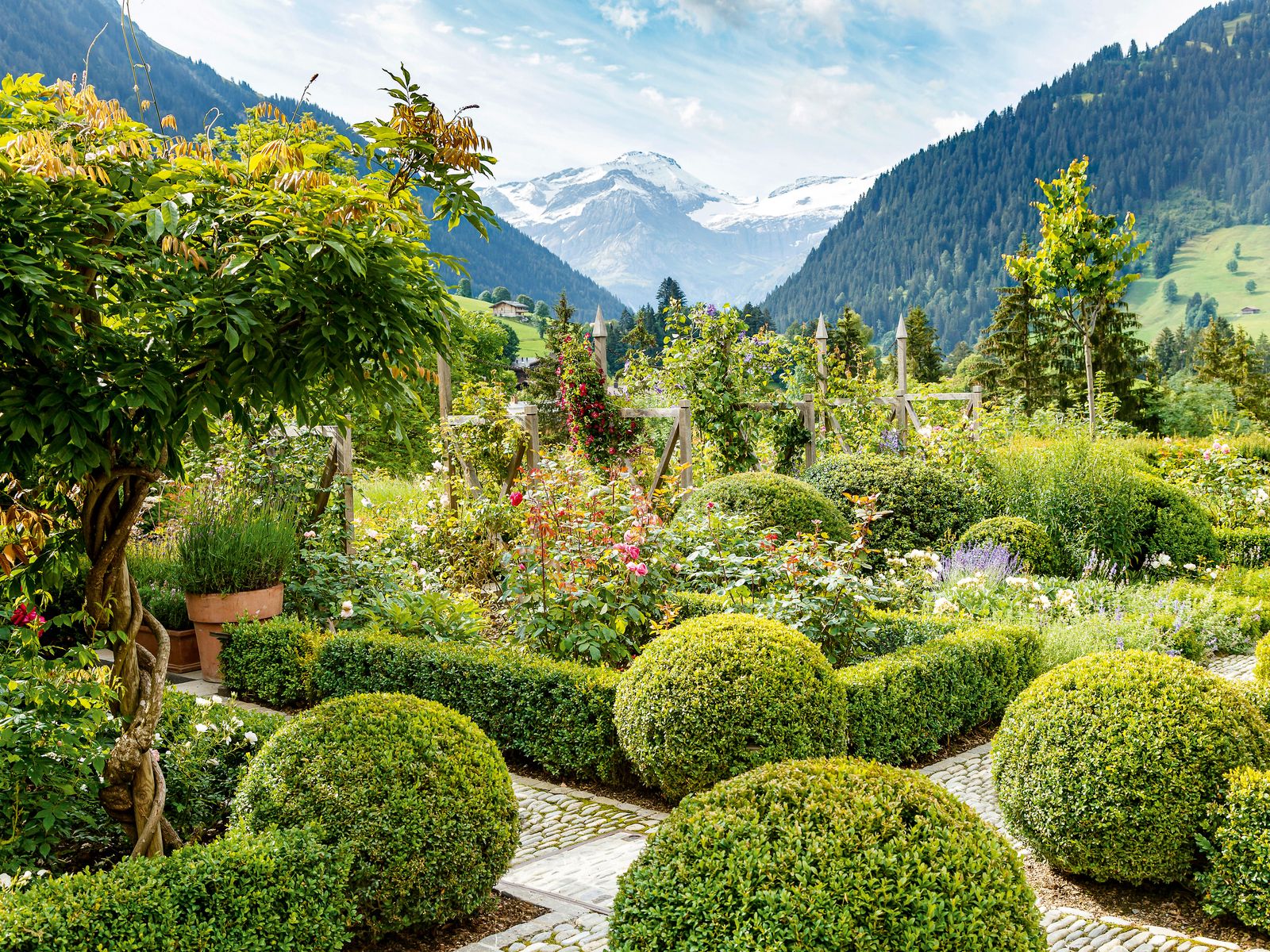
This highly structured, formal garden style is gaining traction as homeowners seek to create a sense of order and escape. With the rise of ‘dopamine gardening’ focused on joyful, colorful chaos, there’s a strong counter-trend emerging. People are drawn to the calm, meditative quality of manicured spaces like this. The precision of the topiary and the neatness of the hedges feel like a soothing antidote to a hectic world. It reflects a desire for control and harmony in one’s personal environment, creating a five-star resort feeling right at home, where the landscape itself is the main event.
|
📋 Copy HEX 🔗 Share |
You can create a simple spherical topiary from a common boxwood or yew shrub. It takes patience, but it’s very rewarding. Time: 30 mins per shrub, 2-3 times per year. Cost: $15 for shears.
- Start with a healthy, dense, roughly round shrub.
- Use hand-held topiary shears, not electric hedge trimmers, for better control.
- Imagine the final sphere shape. Start at the top and trim a small, flat-ish circle as your guide.
- Work your way down the sides, making small, angled cuts as if you are carving the sphere out of the greenery.
- Step back frequently (every 30 seconds) to check your progress from a distance. Rotate around the plant.
- Once the basic shape is there, go back and snip any stray stems to perfect the smooth, round silhouette. Don’t overdo it on the first try!
7. Sleek Urban Pathway with Layered Greenery and Red Accents
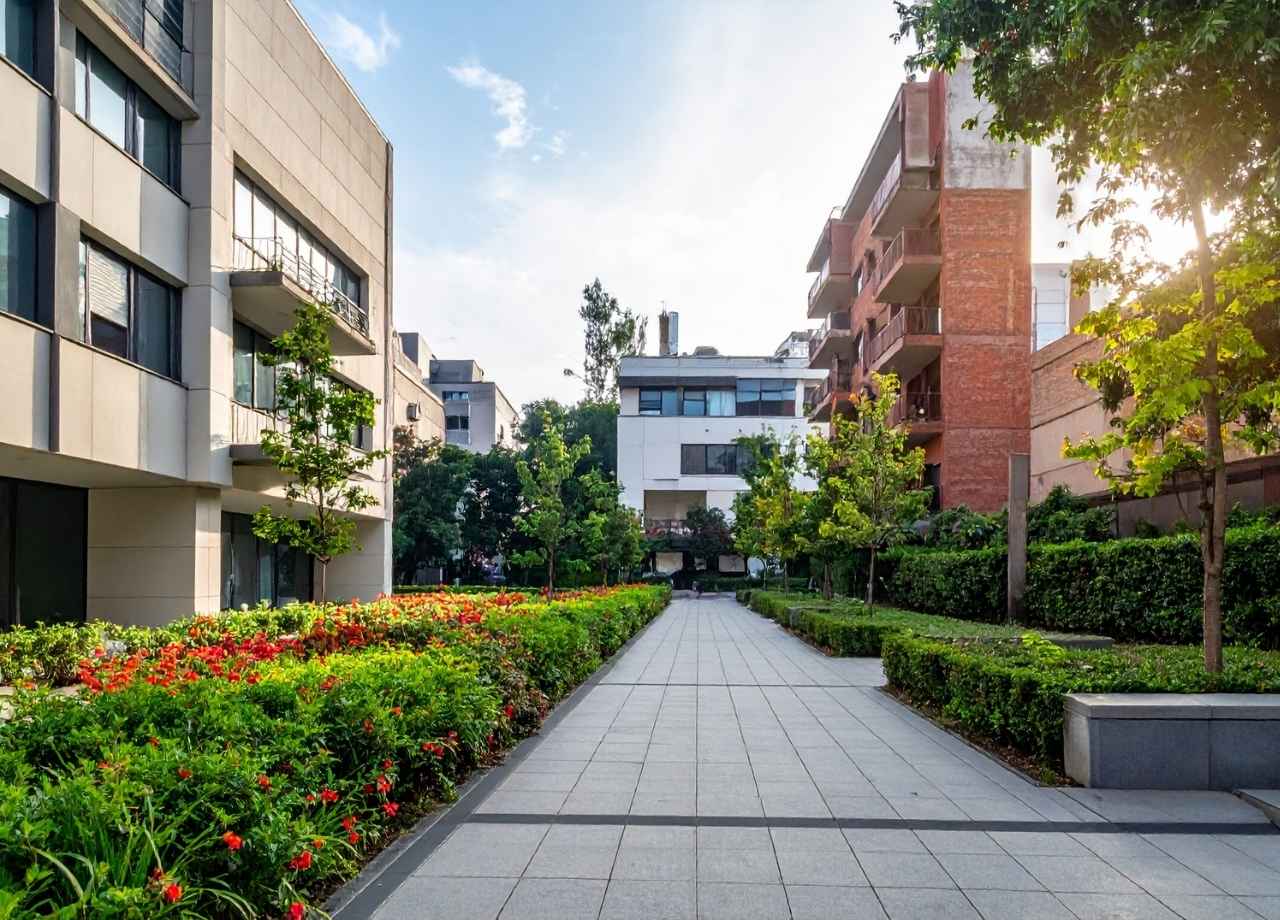
This modern, urban landscape relies on a balanced formula of hardscape and softscape. It’s roughly 50% hardscape (the light grey pavers) and 50% softscape (the garden beds). Within the softscape, the rhythm is key: 70% structured green hedges provide a calm, uniform base, while 20% taller, leafy trees add verticality. The final 10% is the ‘pop’ of vibrant red from the flowering plants, which are used sparingly as thoughtful accents rather than a chaotic jumble. This disciplined approach is what makes the design feel clean and serene, not overgrown, even in a dense urban environment.
|
📋 Copy HEX 🔗 Share |
Before you commit to a landscaping project in a shared or community space like this, you have a few boxes to tick. This isn’t like your private backyard, and overlooking these steps can lead to headaches.
- Check HOA/Condo Rules: Is there an approved plant list? Are there restrictions on pathway materials or lighting? Get the guidelines in writing first.
- Verify Utility Lines: Before any digging, even for small shrubs, use your local ‘call before you dig’ service to mark underground utility lines.
- Assess Sun Exposure: Map how the sun moves across the area throughout the day, being mindful of shadows cast by the tall buildings. Full sun, part shade, and full shade areas will dictate what you can plant where.
8. A Lush Wall of Hydrangeas Along a Simple Gravel Path
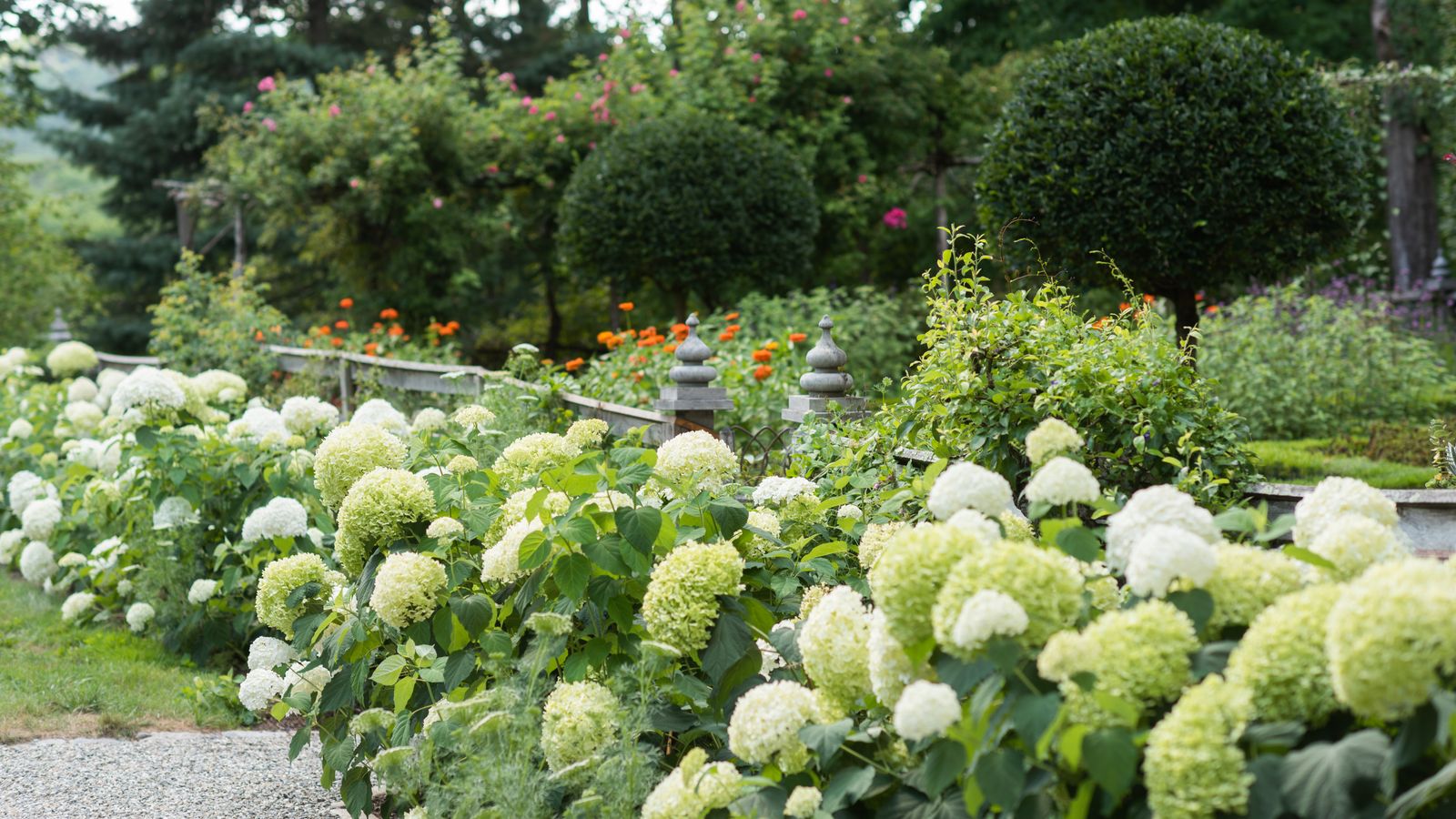
The secret to getting those big, beautiful, snow-white hydrangea blooms is all about the soil pH and the pruning. For most white varieties like the ones pictured (‘Annabelle’ types), the color is not affected by soil pH, so you don’t need to add aluminum sulfate or lime. However, they bloom on ‘new wood,’ meaning the current season’s growth. For the biggest, most prolific blooms, you can prune them back hard in late winter or early spring down to about 12-18 inches. This encourages the plant to put all its energy into producing large, new stems with massive flower heads.
|
📋 Copy HEX 🔗 Share |
While hydrangeas are stunning, they are not ‘plant-it-and-forget-it’ shrubs. They are notoriously thirsty plants and will wilt dramatically in the summer heat if they don’t get enough water. The large white flower heads can become very heavy, especially after rain, causing the stems to flop over. You may need to use stakes or a support cage to keep them upright. Deadheading the spent blooms is also important to encourage a second, smaller flush of flowers later in the season. Compare their upkeep to the more low-maintenance ornamental grasses seen in Idea #15.
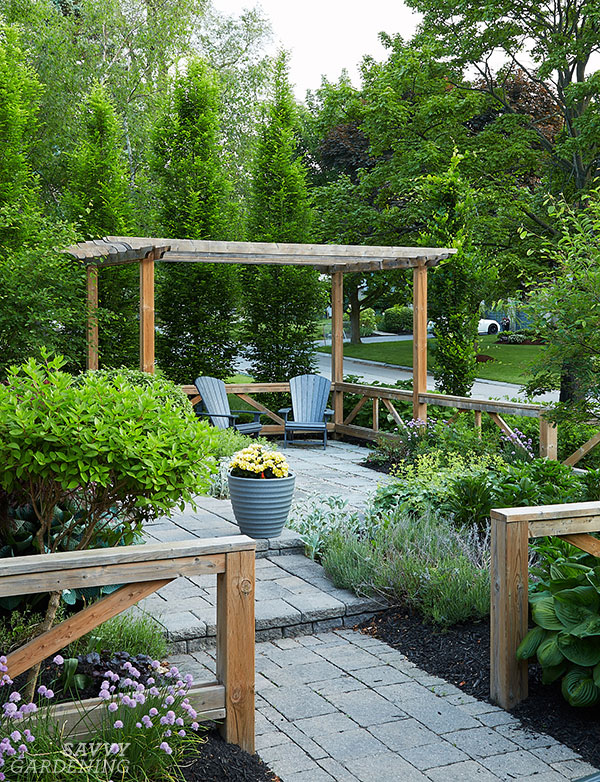
9. A Pergola-Covered Patio with Cozy Adirondack Seating
This design successfully creates the feeling of an outdoor room. The light wood pergola is the key; it acts as a ‘ceiling,’ defining the patio space and making it feel more intimate and sheltered, even without a solid roof. The changes in elevation and material—from the lawn, up the steps, to the stone pavers—also help to delineate the area as a distinct ‘room.’ Finally, the placement of the two grey Adirondack chairs invites you in, signaling that this is a destination for relaxation. It’s a space with a clear purpose, nestled within the larger, wilder garden.
|
📋 Copy HEX 🔗 Share |
You don’t need a custom-built pergola and expensive stone pavers to get this vibe. You can create a very similar outdoor room on a budget. IKEA and Target often sell stylish metal or wood pergolas for $300-$700. Instead of stone pavers, consider using a large outdoor rug over your existing deck or concrete slab to define the space ($100-$250). You can find classic Adirondack chairs at Walmart or on Facebook Marketplace for $50-$100 each. Add a few potted plants, and you’ve captured the essence of this look for under $1,000.
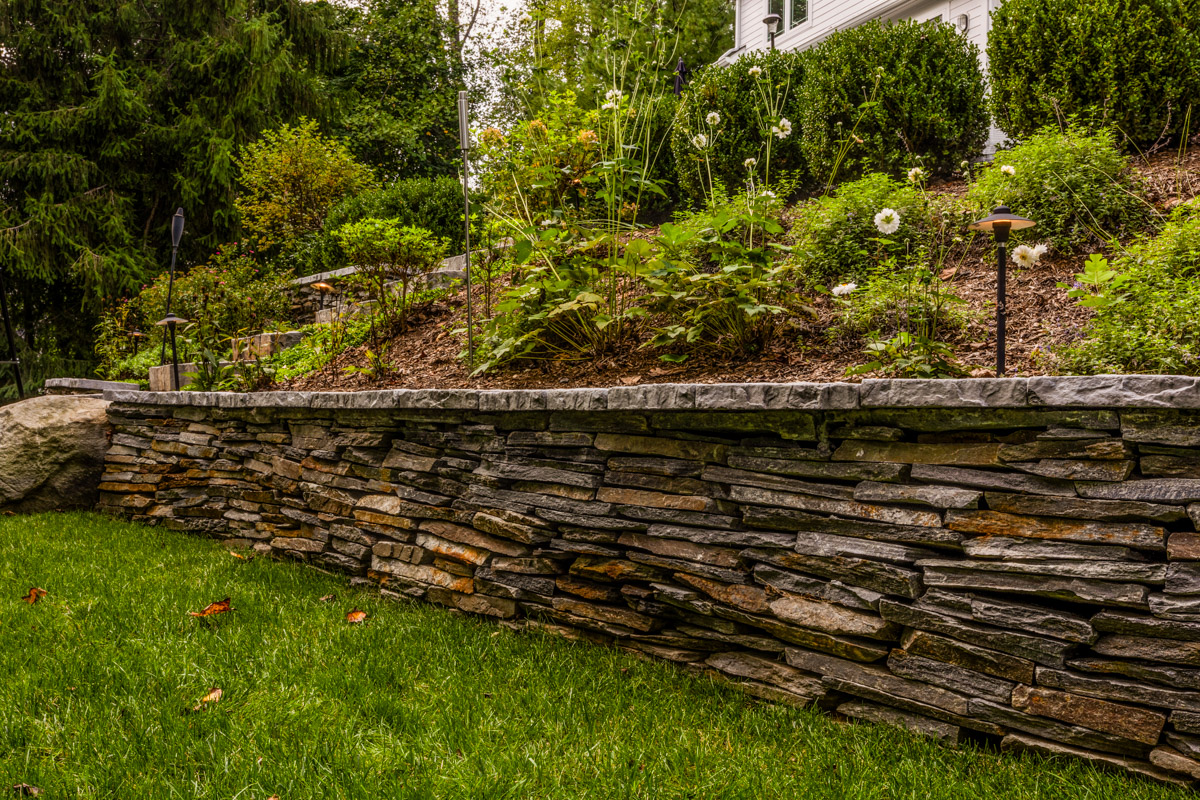
10. Layered garden with a natural stacked stone retaining wall
A low, dry-stack stone wall (under 2 feet) is a great DIY project. This technique uses no mortar, relying on gravity and friction. Time: 1-2 weekends. Cost: $200-$500 for stone.
- Dig a level trench about 6 inches deep and 1.5 times the width of your base stones.
- Fill the trench with 4 inches of compactible gravel and tamp it down level. This is your foundation.
- Select your largest, flattest stones for the first course. Lay them on the gravel foundation.
- Begin the second course, making sure to stagger the joints like a brick pattern. Avoid stacking vertical seams on top of each other.
- For stability, each new layer should be set back from the edge of the one below it by about half an inch.
- Use smaller stones as shims to level and secure larger stones as you go. A snug fit is crucial.
|
📋 Copy HEX 🔗 Share |
While a low, decorative stacked stone wall is a manageable project, building a retaining wall over three or four feet tall is a serious engineering task. The pressure from the soil and water behind the wall is immense. If not built correctly, a tall wall can bulge, crack, or even collapse, causing a dangerous landslide. For any significant change in grade, you absolutely must consult a structural engineer or a professional landscape contractor. They will ensure the wall has the proper foundation, drainage (like weep holes and a gravel backfill), and ‘batter’ (the backward lean) to handle the load safely. Don’t risk it.
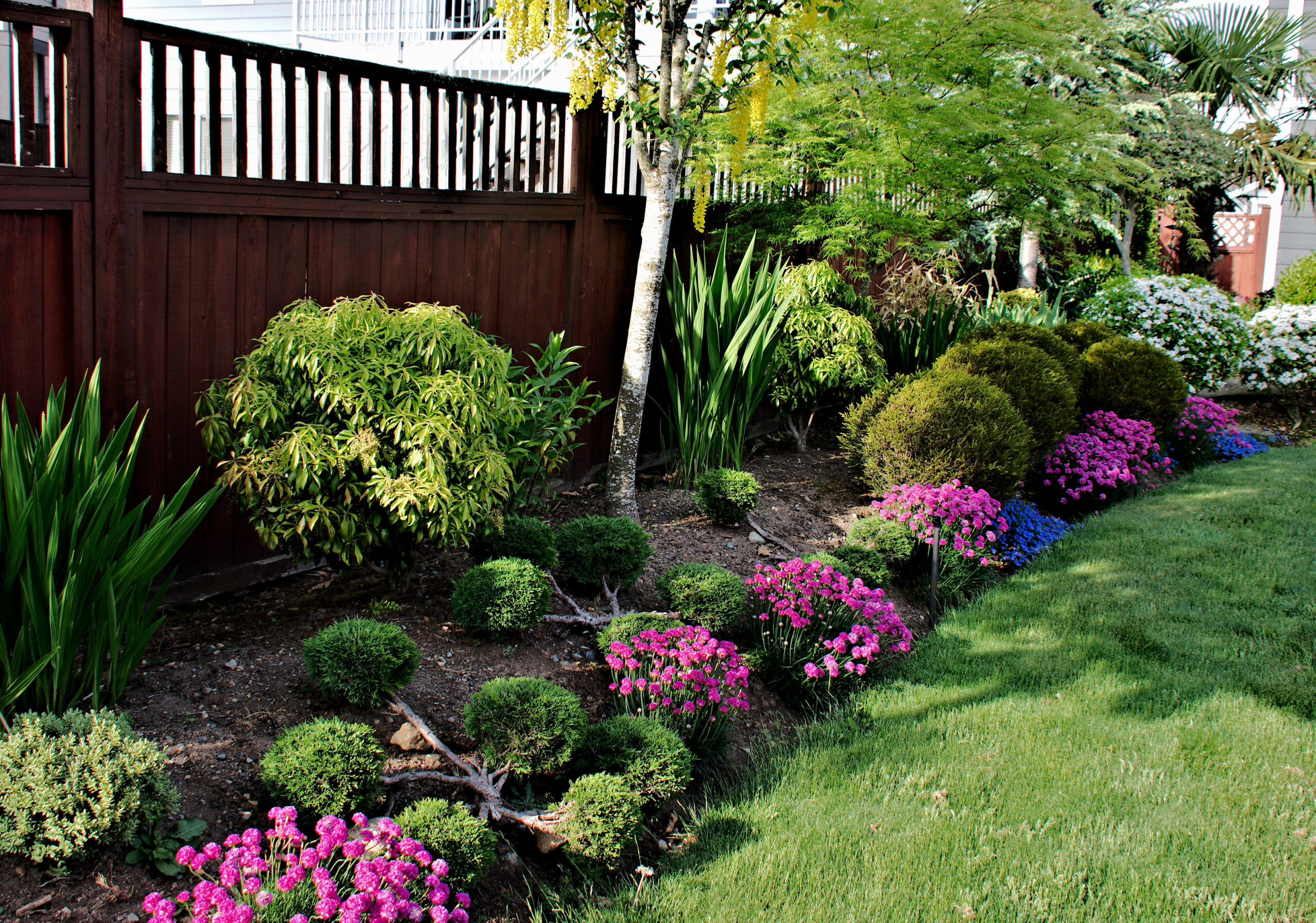
11. A Vibrant Border with a Dark Fence and Brightly Layered Flowers
For a lush, full-looking garden bed like this one, use the classic ‘Thriller, Filler, Spiller’ planting method. The ‘thriller’ is the main, eye-catching plant—here, it’s the light-barked tree. ‘Fillers’ are the mounded plants that surround the thriller and fill the space, like the shrubs with light-green foliage and the pink flower clusters. ‘Spillers’ are plants that trail over the edge of the bed or wall, though they’re less prominent here. This simple framework helps you combine plants of different heights and textures to create a cohesive, professional-looking design instead of a flat, one-dimensional collection of plants.
|
📋 Copy HEX 🔗 Share |
This vibrant look is achieved with a specific color formula. The base is 60% varied greens, from the deep green of the lawn to the light lime-green of the central shrubs. This creates a rich, textured canvas. The main accent color, that bold fuchsia pink, makes up about 30% of the visual interest, drawing the eye immediately. The final 10% is a mix of other colors like the sky blue flowers and the dark brown fence, which serves as a neutral backdrop that makes the pink and green pop even more. Sticking to one dominant accent color gives the design major impact.
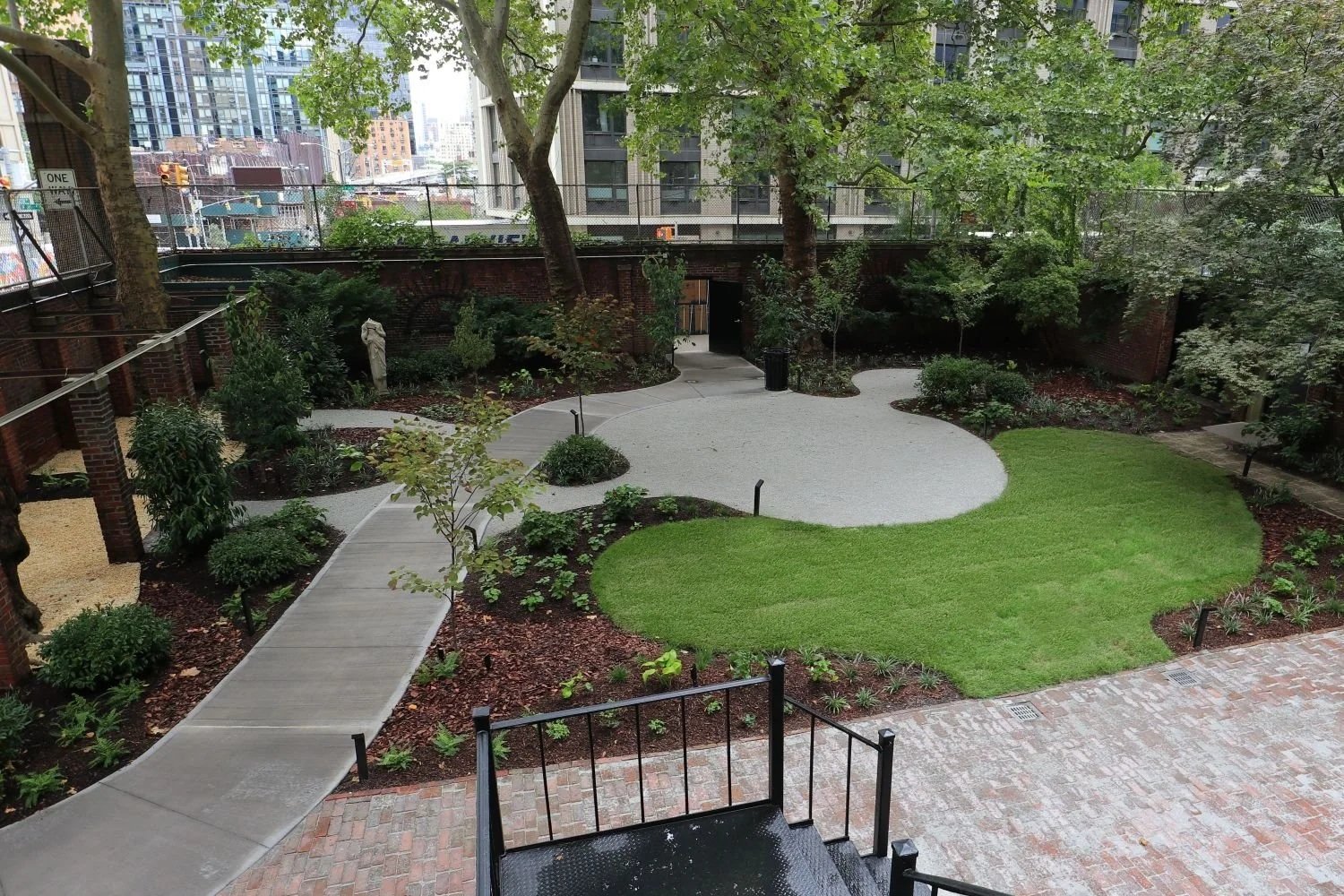
12. An Urban Courtyard Blending Gravel, Lawn, and Concrete
This design is perfect for small to medium urban spaces, from 500 to 1,500 square feet, where a single surface would feel monotonous. The winding paths are a clever trick to make the area feel larger than it is. The eye follows the curve, creating a sense of a journey and discovery, even in a compact yard. A straight path would immediately reveal the yard’s boundaries. This technique works especially well in long, narrow city backyards. The key is to keep the path’s curves gentle and walkways at least 3 feet wide for comfortable passage.
|
📋 Copy HEX 🔗 Share |
The success of this courtyard lies in its thoughtful use of mixed materials and textures. Instead of choosing just one surface—all grass, all patio, or all gravel—the designer has layered them to create distinct zones and visual interest. The smooth gray concrete offers a clean, modern edge, while the light gray gravel provides a soft, audible crunch underfoot. The patches of bright green lawn and dark brown mulch act as organic counterpoints to the hardscaping. This variety keeps the eye moving and makes the space feel dynamic and intentionally designed.
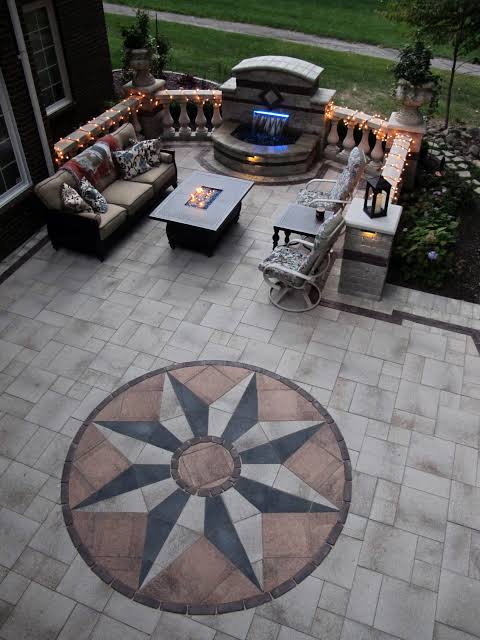
13. Creating a Professional ‘Showcase’ Patio Space
To create a patio that feels like a professional display, focus on defining distinct ‘rooms’ within the space. Don’t just have one big area. Use changes in paver patterns, low retaining walls, or built-in planters to create separate zones for dining, lounging, and cooking. For example, have a main area with a running bond paver pattern and an inset ‘rug’ area under the dining table with a herringbone pattern. This level of detail, using hardscaping to define function, is what gives a patio a high-end, custom-designed feel. It shows intentionality beyond just laying down some stones.
|
📋 Copy HEX 🔗 Share |
In 2026, the concept of the ‘outdoor room’ has fully matured. Homeowners are no longer content with a simple slab of concrete and a grill. They want their outdoor spaces to have the same level of design sophistication and functionality as their interiors. This is driving a trend towards creating patios that serve as true extensions of the home, complete with features like integrated lighting, outdoor kitchens, and multiple seating ‘rooms.’ This ‘Rochester Patio’ display embodies the shift towards investing in high-quality, permanent outdoor living structures that increase a home’s usable square footage and overall value.
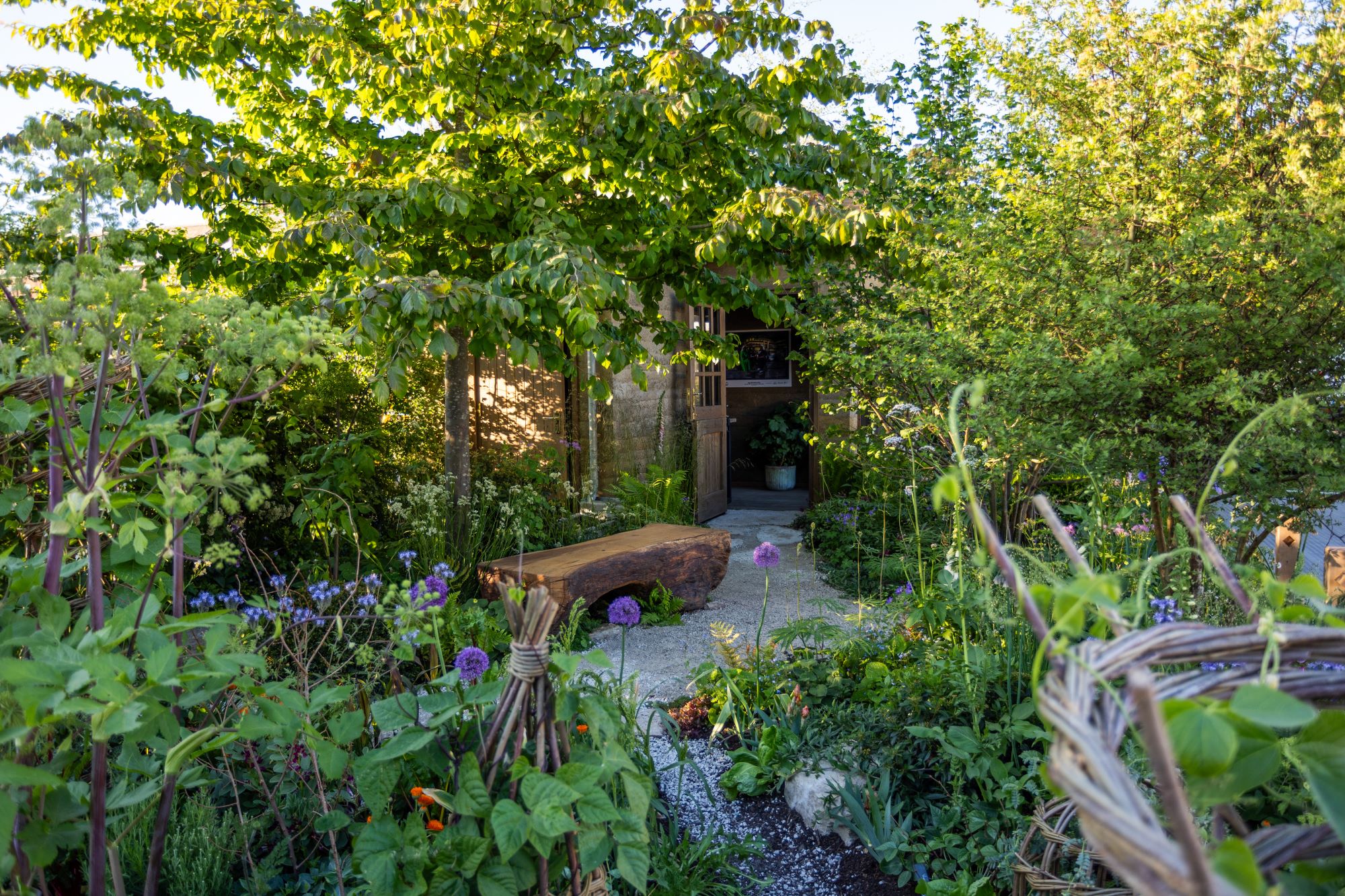
14. A Rustic Garden Path with a Natural Log Bench
What gives this garden its soulful, enchanting character is the rustic log bench. Remove it, and you have a beautiful, but somewhat standard, flowering pathway. The bench, in its unrefined, natural state, provides a crucial focal point and adds a story. It feels discovered rather than placed. It suggests a history and a connection to the surrounding woods, turning a simple garden path into a secret grove. It’s the piece that bridges the gap between a manicured garden and untamed nature, inviting you to sit and be part of the landscape. Compare this to the contemporary fabricated seating in Idea #15 for a completely different effect.
|
📋 Copy HEX 🔗 Share |
What makes this scene so compelling is the beautiful tension between the wild and the tamed. The purple alliums and other flowers are clearly planted and arranged, and the gravel path is intentionally laid. But these elements are juxtaposed with the overhanging trees, the rough stone wall, and the found-object feel of the log bench. This balance is tricky to get right. It’s not just about letting a garden go wild; it’s about a thoughtful curation of both manicured and natural elements to create a space that feels both magical and purposefully designed.
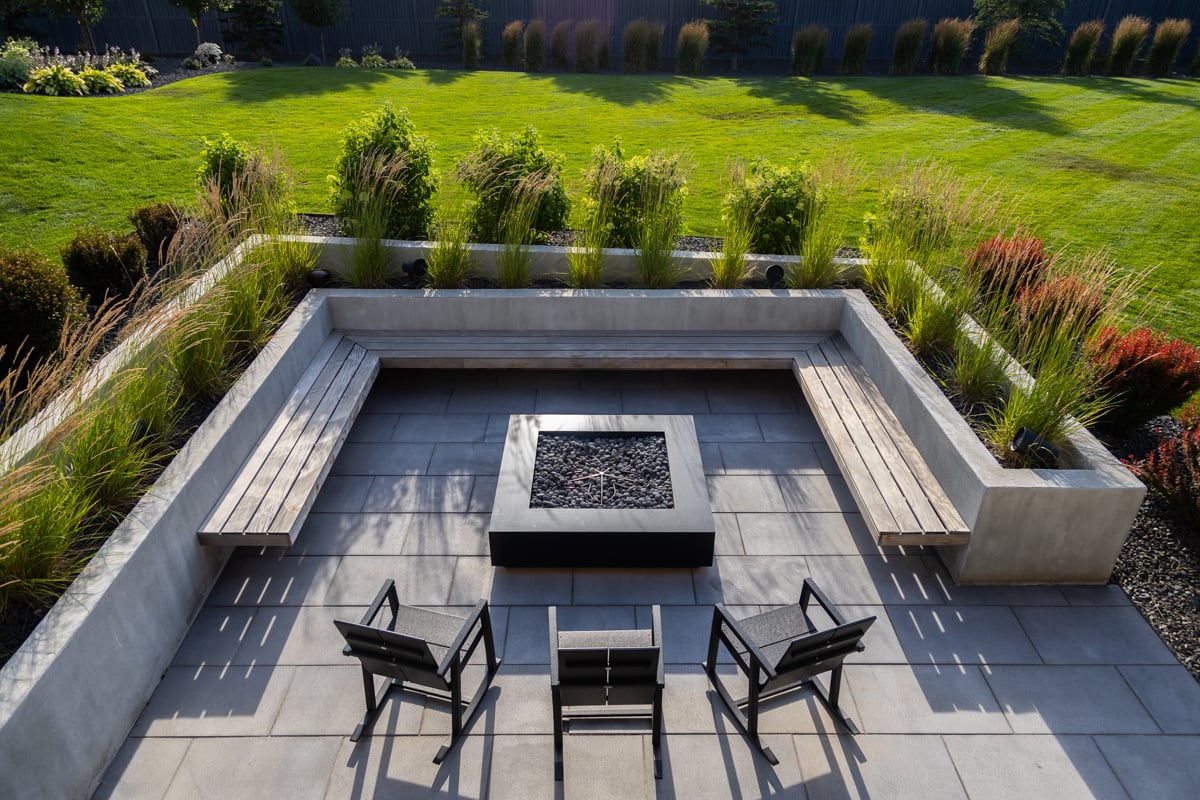
15. Modern Concrete Patio with an Integrated Bench and Fire Pit
This high-end look can be adapted for a more modest budget. Instead of custom-poured concrete walls, you can achieve a similar effect using large, modern concrete retaining wall blocks from a home improvement store like Home Depot or Lowe’s, which you can stack to create planters. For the bench, attach weather-treated cedar or redwood planks to the top of the block wall. A simple, square black metal fire pit can be found for $150-$400 at Target or Wayfair. Paired with some affordable modern chairs from IKEA, you can capture the clean, modern aesthetic for a fraction of the cost of custom work.
|
📋 Copy HEX 🔗 Share |
The visual formula here is a perfect example of modern landscape design: 40% clean hardscape (the light gray concrete pavers and planters) + 30% natural wood tones (the slatted benches) + 20% soft textures (the ornamental grasses) + 10% black accents (the fire pit and chairs). The coolness of the concrete is warmed up by the wood, the grasses soften the hard lines, and the black elements provide a sharp, graphic contrast. You could swap the concrete for large-format porcelain tiles and the wood for a composite material, and the formula would still hold true.
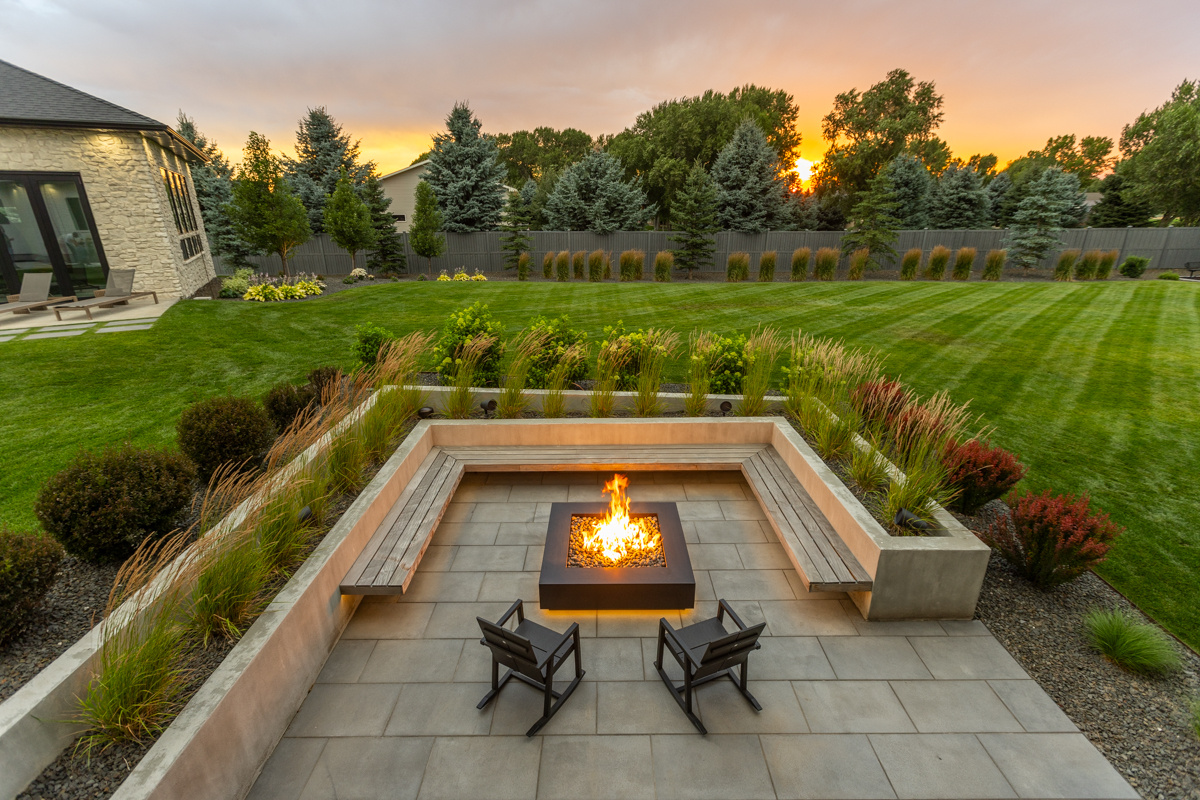
16. Expansive Fire Pit Lounge with Built-In Wooden Seating
This is a large-scale, professionally installed outdoor living room. The costs reflect the custom nature of the built-in elements and the extensive hardscaping needed to support them.
- Main Seating (custom built-in wood bench): $8,000 – $20,000
- Accent Seating (2 high-end rocking chairs): $1,000 – $2,500
- Hardscaping (large-format pavers, concrete planter walls): $20,000 – $45,000
- Fire Feature (gas fire pit with installation): $5,000 – $12,000
- Landscaping (ornamental grasses, shrubs, mulch): $4,000 – $10,000
- TOTAL: $38,000 – $89,500
Budget alternative: A similar feel can be achieved with a large sectional sofa, a standalone fire pit, and large potted plants for around $5,000 – $10,000. It lacks the seamless built-in look but provides the same function.
|
📋 Copy HEX 🔗 Share |
This sprawling seating area is designed for a generous, open backyard, requiring a minimum footprint of 20×25 feet just for the patio and seating itself. To feel balanced and not cramped, it needs to be surrounded by a significant amount of open lawn, as shown. This look would overwhelm a small or average-sized suburban yard. It’s a statement piece for a property of at least a quarter-acre or more. For a more compact but equally modern fire pit solution that fits a smaller space, check out the clever design in Idea #15, which uses a more contained layout.
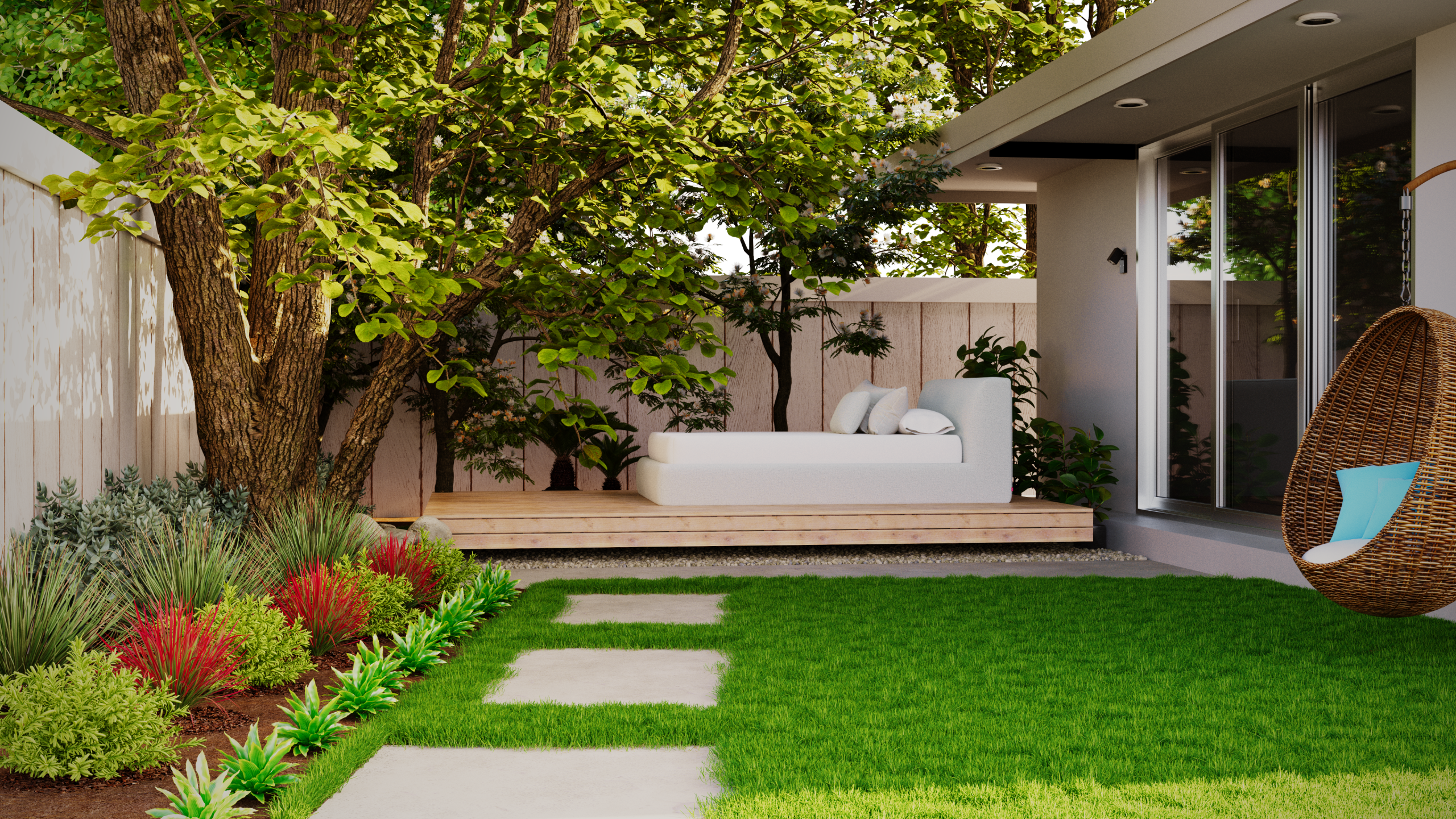
17. The Modern Backyard: A Seamless Blend of Lawn, Deck, and Lounge
You can achieve this multi-zone relaxation space without a massive budget. The key pieces are the hanging egg chair and the outdoor sofa. Look for egg chairs on sale at the end of the season from stores like CB2 or Article; you can often find them for 40% off. For the sofa, Facebook Marketplace is a goldmine for high-quality outdoor sectionals being sold by people who are moving. The floating deck effect can be mimicked using pre-made deck tiles from IKEA laid over a simple gravel base. It’s about getting the key shapes and functions right, not necessarily spending a fortune on custom construction.
|
📋 Copy HEX 🔗 Share |
This design feels so serene and inviting because it creates distinct ‘zones’ for different types of relaxation, all within one cohesive space. You have the soft, green lawn for open play or sunbathing. You have the warm wooden deck for a more structured lounging experience on the sofa bed. And you have the playful, cocoon-like retreat of the hanging egg chair. The use of different materials and levels (grass, concrete steppers, and a raised deck) clearly defines these areas without using walls, making the backyard feel both organized and expansive.
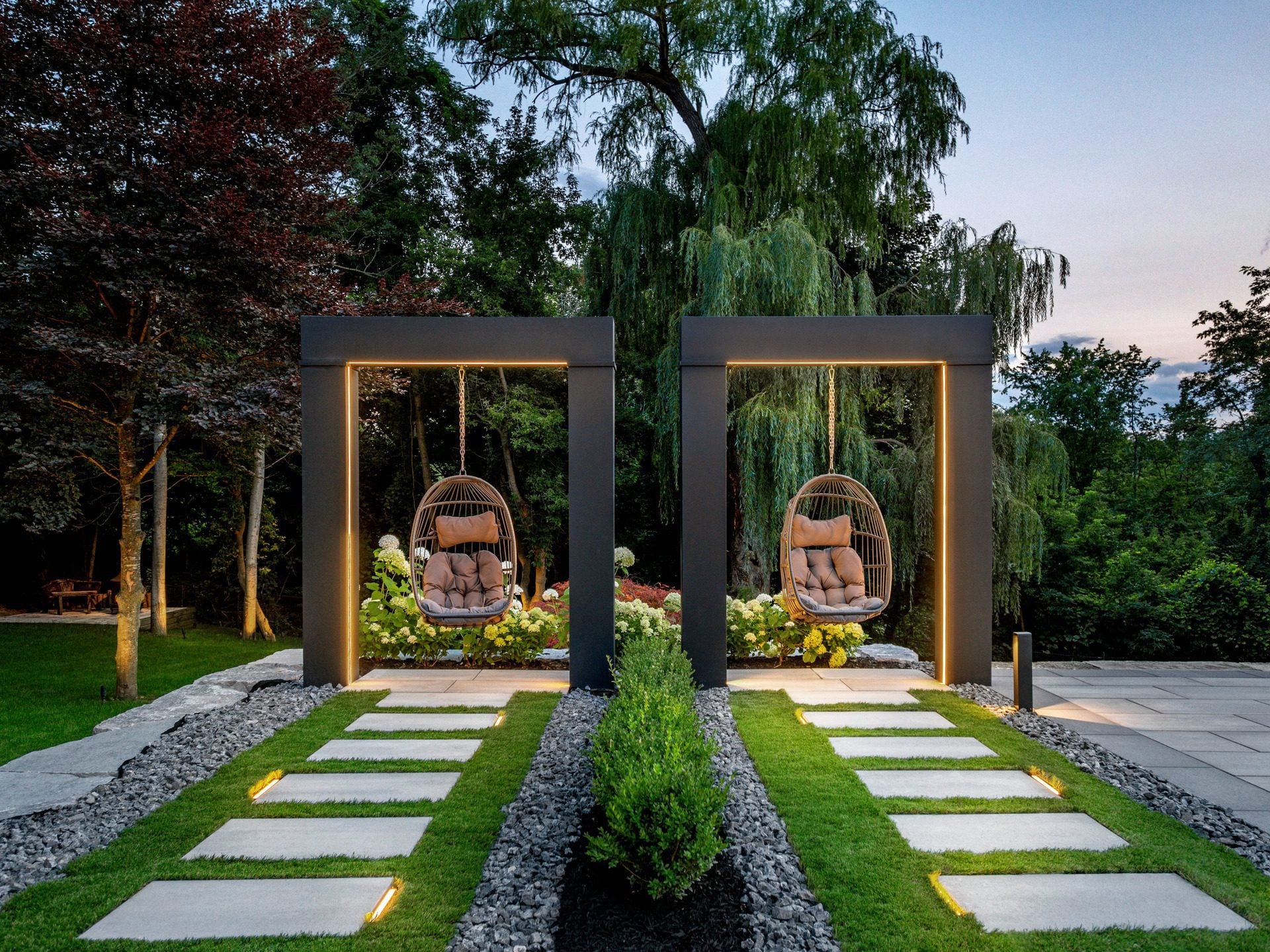
18. An Illuminated Nook with Modern Hanging Chairs
The single element that transforms this from a simple patio into a dramatic, high-design feature is the integrated strip lighting. Without the warm glow, the dark rectangular structures and hanging chairs would look interesting during the day but would disappear at night. The lighting traces the architecture of the frames, turning them into sculptural lanterns. It highlights the clean, modern lines and creates an incredibly warm and welcoming ambiance. This isn’t just illumination; it’s a core design feature that defines the entire mood of the space after dusk.
|
📋 Copy HEX 🔗 Share |
Installing low-voltage LED strip lighting is a surprisingly accessible project. Time: 2-3 hours. Cost: $100-$250 for a kit.
- Plan your layout. Measure the total length of strip lighting you will need.
- Purchase a waterproof, outdoor-rated LED strip light kit, which includes the light strip, a transformer, and a power cord.
- Clean the surface where you’ll mount the light strip thoroughly. Most strips come with an adhesive backing. For outdoor use on wood or metal, add a few small clips for extra security.
- Peel and stick the light strip into its designated channel or surface. Press firmly.
- Connect the strip to the low-voltage transformer.
- Plug the transformer into a GFCI-protected outdoor outlet. Use a waterproof outlet cover to protect the connection from rain.

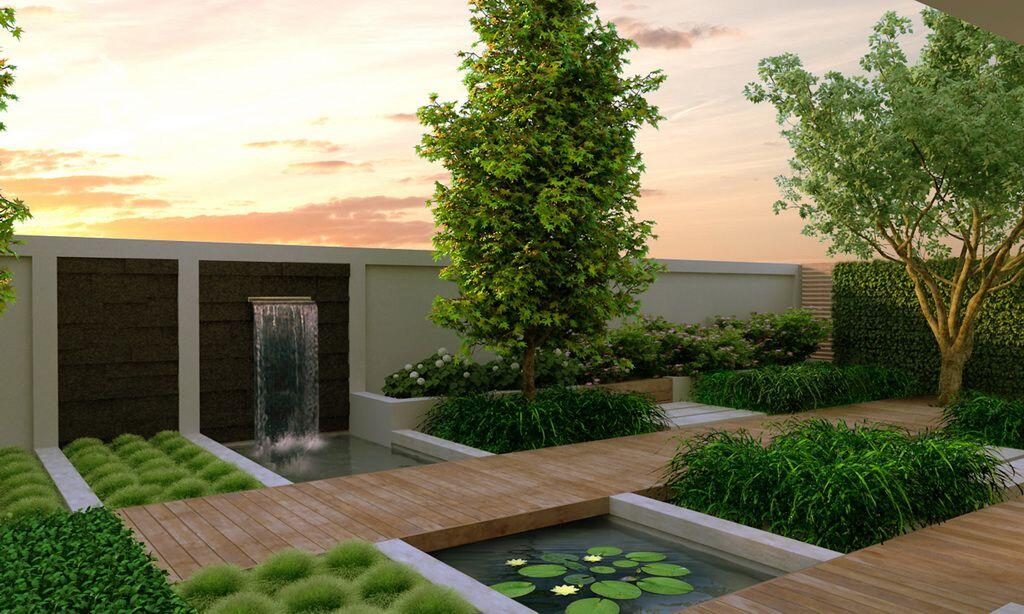
19. A Modern Courtyard with Water Features and Wooden Walkways
A landscape with this many water features—a waterfall and a lily pond—is a commitment. Waterfalls require a powerful, continuously running pump, which will affect your electricity bill. Both features will need regular monitoring to maintain water clarity and prevent algae buildup, which often involves adding treatments and cleaning filters. The pond will collect leaves and debris, requiring skimming, and you’ll need to manage the health of the aquatic plants. In colder climates, you’ll also have to properly winterize the pumps and plumbing to prevent freeze damage. It’s a beautiful, sensory experience, but it is not low-maintenance.
|
📋 Copy HEX 🔗 Share |
In an urban or semi-urban environment, the sound of your landscape is as important as the look. The gentle, consistent sound of a waterfall or fountain is one of the most effective tools for masking unwanted background noise. It can help drown out the sounds of traffic, neighbors, or nearby commercial activity, creating a bubble of tranquility in your own backyard. When planning a water feature, sit in the space and listen. Position the feature to best counter the source of the noise pollution. The goal is to replace an irritating sound with a soothing one.
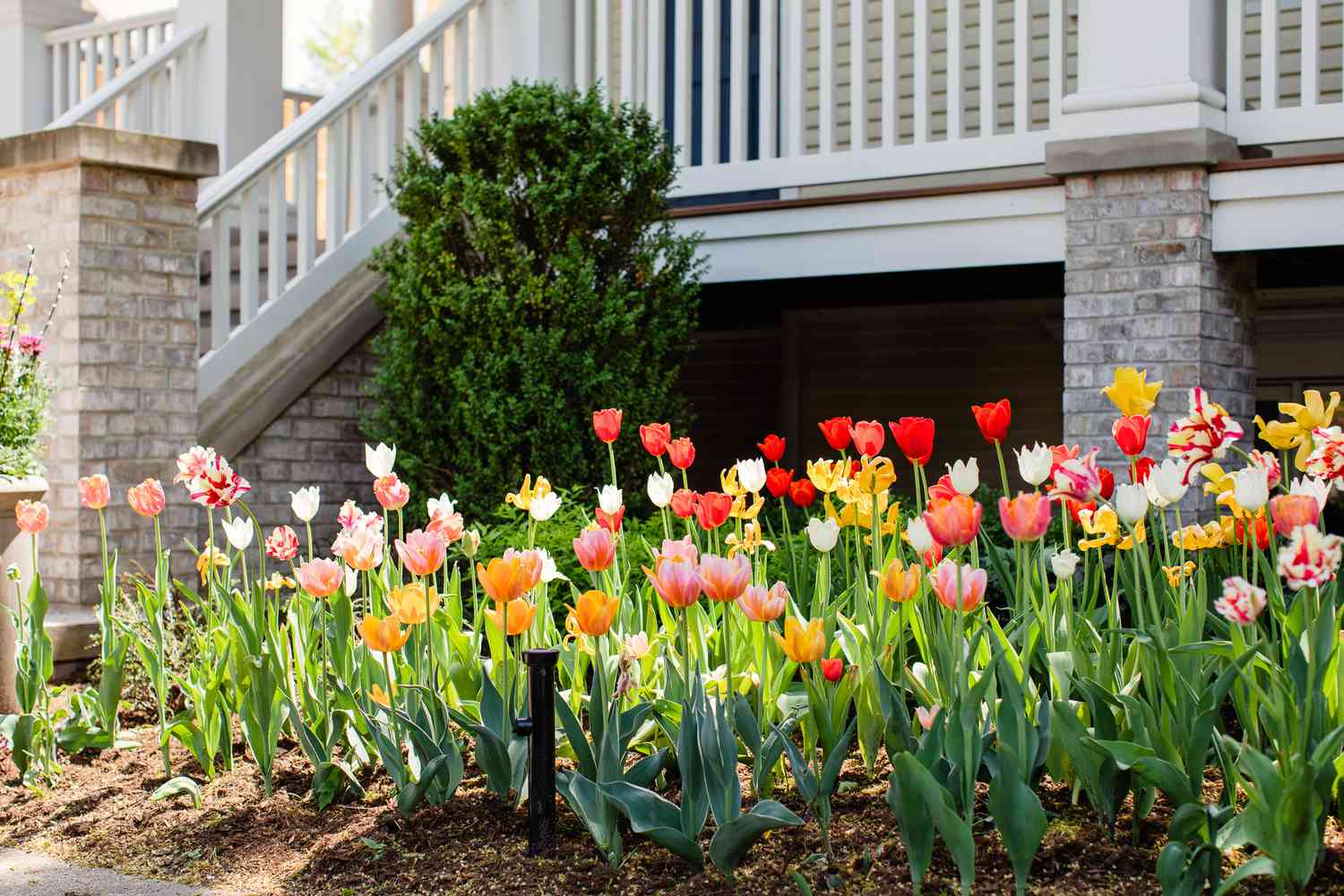
20. A Riot of Spring Color: Tulips Against a Brick and White Backdrop
Here’s the honest truth about a stunning tulip display like this: in most parts of the US, this is a one-and-done show. While some species of tulips will come back for a few years, the big, vibrant hybrid varieties that create this kind of impact are best treated as annuals. They put all their energy into that first spectacular bloom. To get this exact look year after year, you will likely need to dig up the old bulbs in the summer and plant a fresh batch every single fall. It’s a significant recurring investment of time and money, a fact that Pinterest rarely mentions.
|
📋 Copy HEX 🔗 Share |
To create a dense, long-lasting floral display, borrow a technique from the pros called ‘lasagna planting’ or ‘layer planting.’ In the fall, dig a deep, wide hole. Plant your latest-blooming bulbs (like these tulips) at the bottom. Add a layer of soil, then plant your mid-season bloomers (like daffodils). Add another layer of soil, and plant your earliest-blooming bulbs (like crocuses or hyacinths) on top. This creates a continuous succession of blooms from the same patch of ground, keeping the show going from early to late spring.
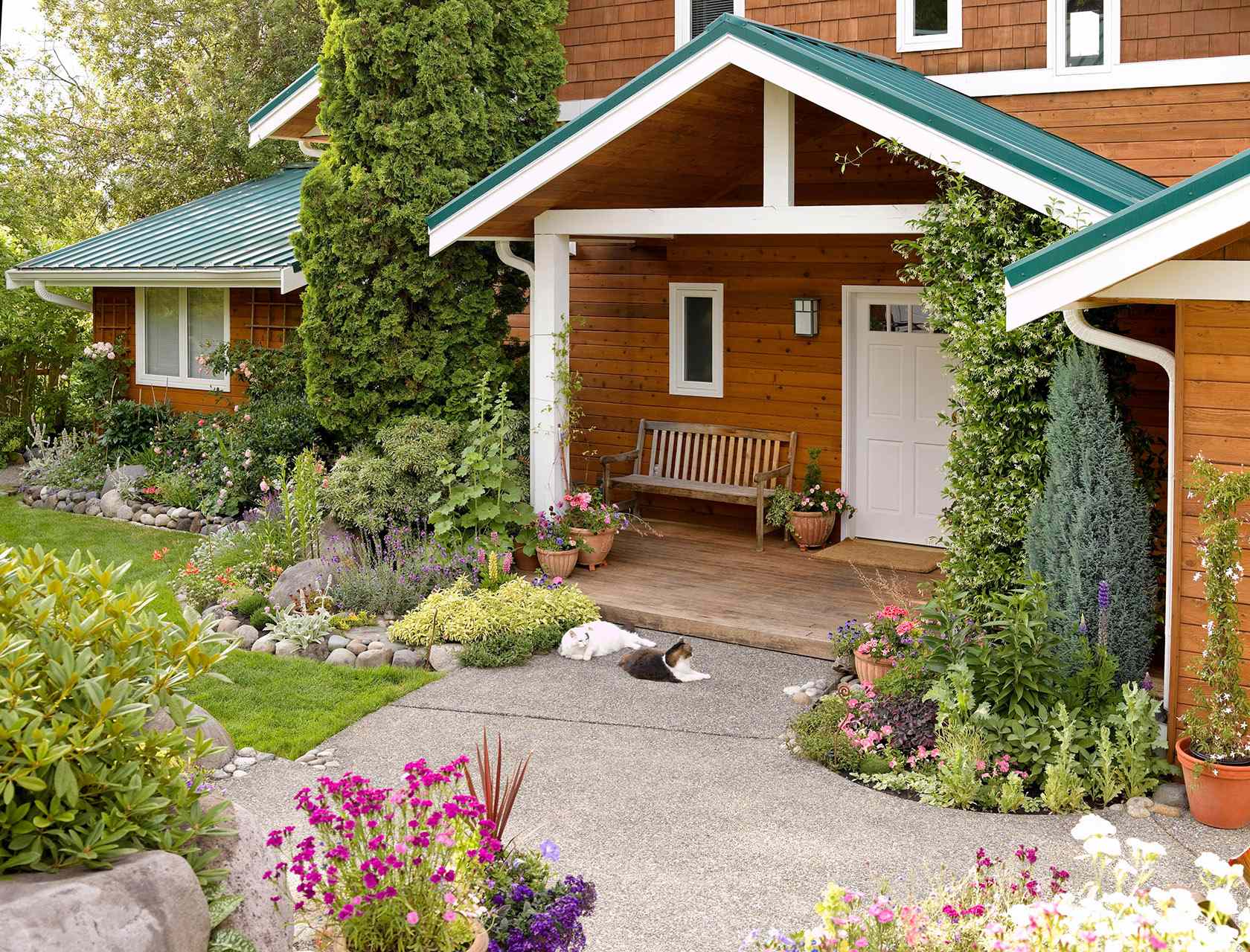
21. A Cozy Country House with Abundant Floral Borders
This landscape perfectly captures the principle of ‘controlled chaos,’ which is the heart of cottage garden design. It’s not truly wild—there are clear concrete paths, rock borders, and a maintained porch. However, the flower beds are allowed to be exuberant. Plants spill over the edges, colors and textures are densely packed together, and there’s a feeling of abundance. This balance between structure (the house and paths) and freedom (the plantings) is what makes the scene feel so inviting and charming, rather than just messy. The snoozing cats definitely add to the relaxed vibe.
|
📋 Copy HEX 🔗 Share |
This look is the epitome of the #cottagecore aesthetic that has dominated home and garden inspiration for the past few years. It represents a yearning for a simpler, more natural way of life and a rejection of overly stiff, formal design. There’s a focus on sustainability (perennials that come back year after year), attracting pollinators, and creating a space that feels personal and lived-in rather than sterile. This style has real staying power because it’s less about perfection and more about creating a joyful, life-filled environment. Compare this to the formal structure of Idea #22.
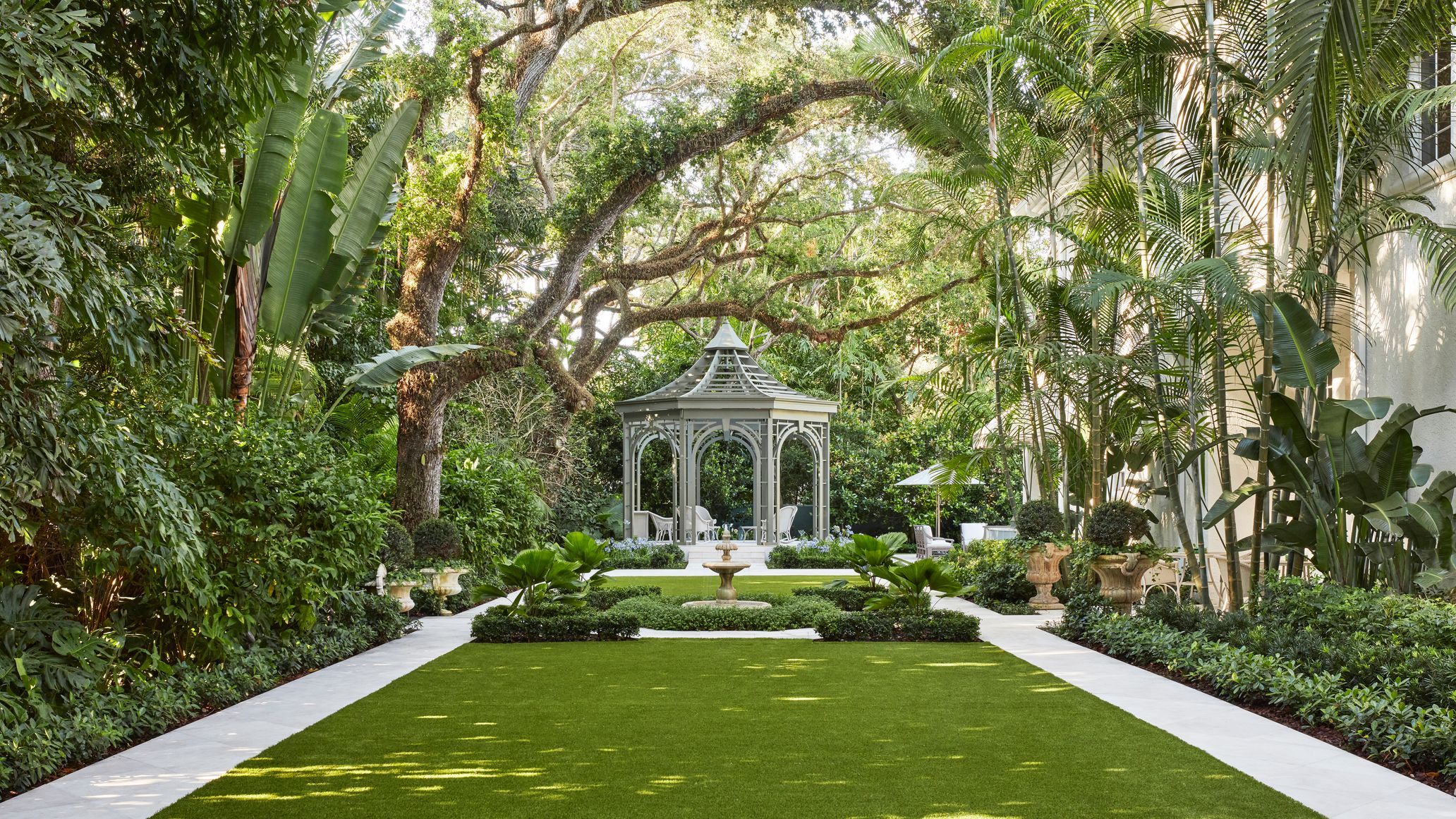
22. A Formal Tropical Garden with a Central Gazebo
Creating a formal garden of this scale is a major undertaking, with costs reflecting the extensive hardscaping and specimen plantings.
- Central Feature (ornate stone gazebo): $15,000 – $40,000
- Hardscaping (paved pathways, fountain, planters): $30,000 – $70,000
- Lighting (path lights, uplighting): $5,000 – $12,000
- Plantings (mature trees, lush foliage, lawn installation): $15,000 – $35,000
- Irrigation System: $5,000 – $10,000
- TOTAL: $70,000 – $167,000
Budget alternative: A simple wooden pergola ($2,000), gravel paths ($1,000), and younger, smaller plants ($3,000) can create a formal layout for a fraction of the cost, which will mature over time.
|
📋 Copy HEX 🔗 Share |
A formal, symmetrical design like this requires a significant amount of space to feel grand rather than cramped. This layout is best suited for a large, relatively flat lot of at least half an acre or more. The central lawn and wide, sweeping pathways need room to breathe. Attempting this on a small or narrow suburban lot would likely feel forced and out of proportion. It’s a design that commands a large canvas. For a more naturalistic approach that works well on varied terrain, consider the charming, less rigid style of the country house in Idea #21.
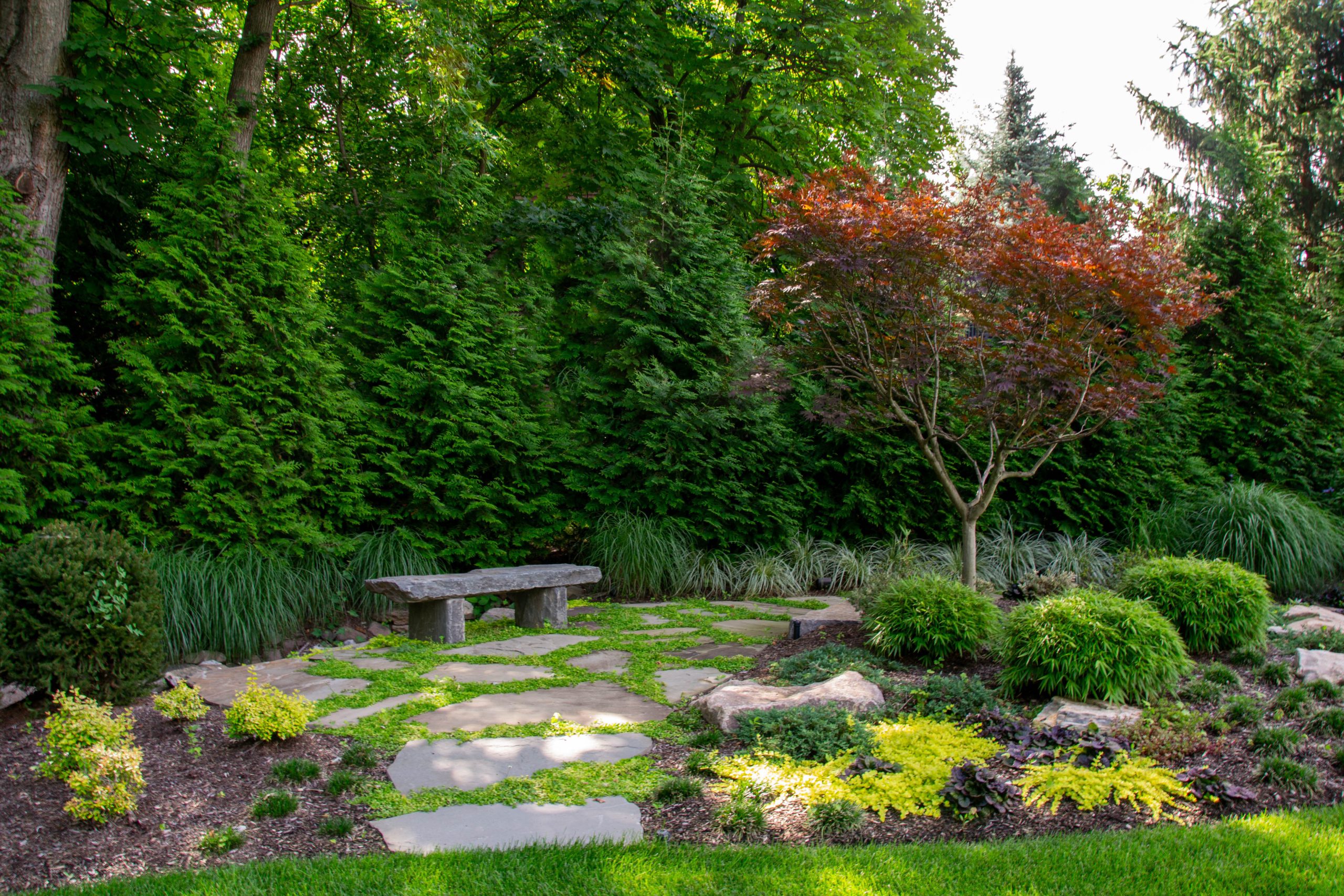
23. Harnessing the Principles of a Zen Garden
The single most important element in any Zen garden-inspired design is negative space. It’s not about what you put in; it’s about what you leave out. In traditional Japanese gardens, this concept is called ‘ma.’ The empty space—the raked gravel, the still water, the simple mossy ground—is just as important as the rocks and plants. It gives the elements room to be appreciated and provides a place for the mind to rest. Resisting the urge to fill every corner is the key to capturing the serene, meditative quality of this ancient design philosophy.
|
📋 Copy HEX 🔗 Share |
What makes a Zen garden feel so calming is its deep connection to nature, expressed through minimalism and symbolism. Rocks are chosen to represent mountains or islands. Raked sand or gravel symbolizes water. Plants are used sparingly and are carefully pruned to highlight their essential form. The design focuses on creating a tranquil, uncluttered scene that encourages contemplation. It’s about creating a miniature, idealized version of nature that provides a peaceful escape from the everyday world.
24. A Vibrant Tiered Garden with Colorful Flower Beds
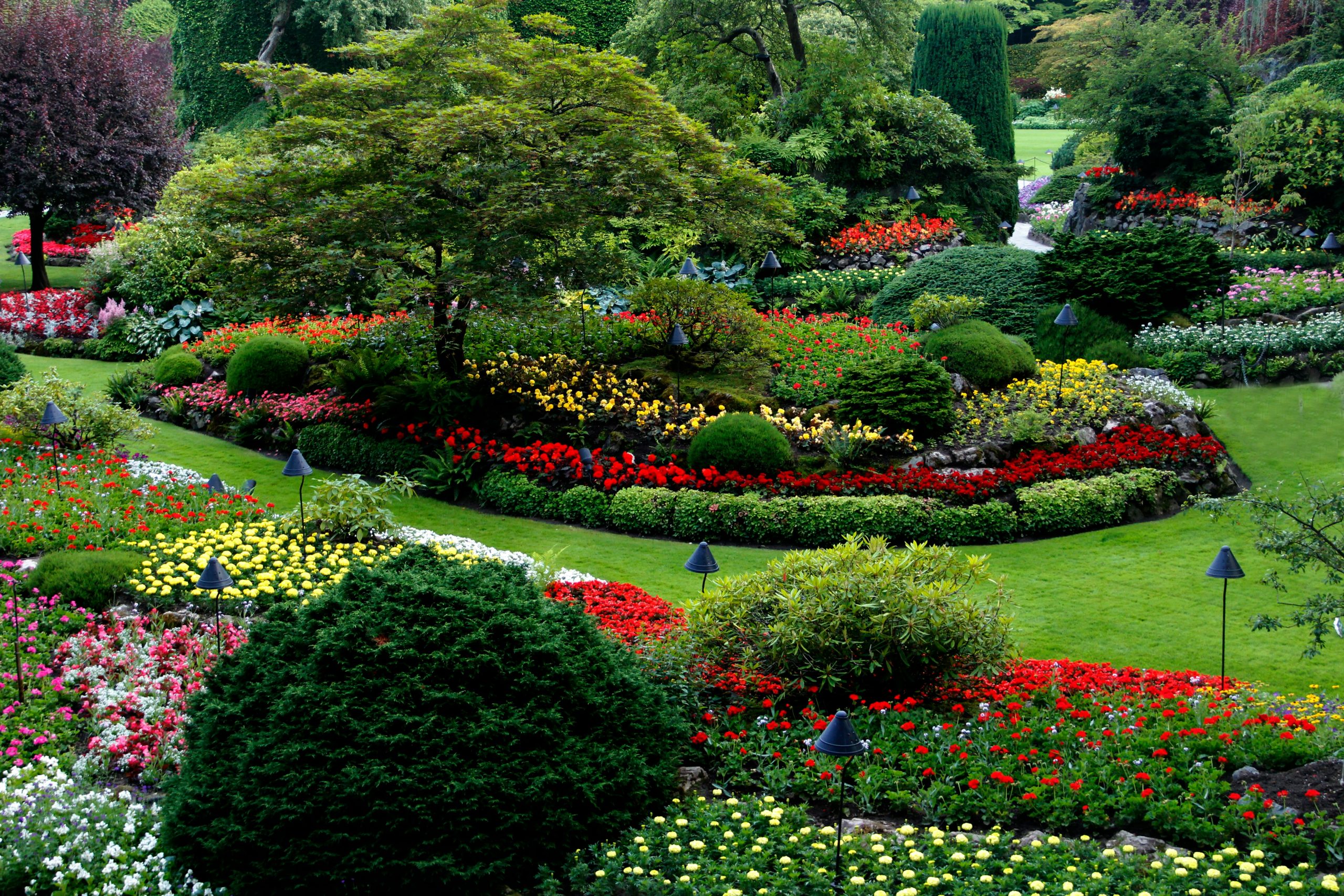
This lush landscape follows a simple but effective formula for balance: 50% calm green space + 40% dense, colorful plantings + 10% structural elements. The green lawn acts as a restful visual break between the vibrant flower beds, preventing the scene from becoming too chaotic. The flower beds themselves are densely packed with a riot of color, providing the main visual excitement. Finally, the trees, shrubs, and subtle black pathway lights provide the necessary structure and verticality that holds the whole composition together. It’s a perfect blend of rest and energy.
|
📋 Copy HEX 🔗 Share |
When designing a tiered or sloped garden, landscape lighting is your best friend. It’s not just for safety; it’s for drama. Use uplighting at the base of trees or interesting shrubs to highlight their structure against the night sky. Place path lights along the edges of the lawn pathways to guide the eye and accentuate the curves of the design. Low-voltage spotlights can be used to pick out specific floral displays. At night, this lighting transforms a sloped garden from a dark hill into a magical, multi-layered scene with depth and intrigue.
25. A Tranquil Backyard with a Circular Pond and Gravel Paths
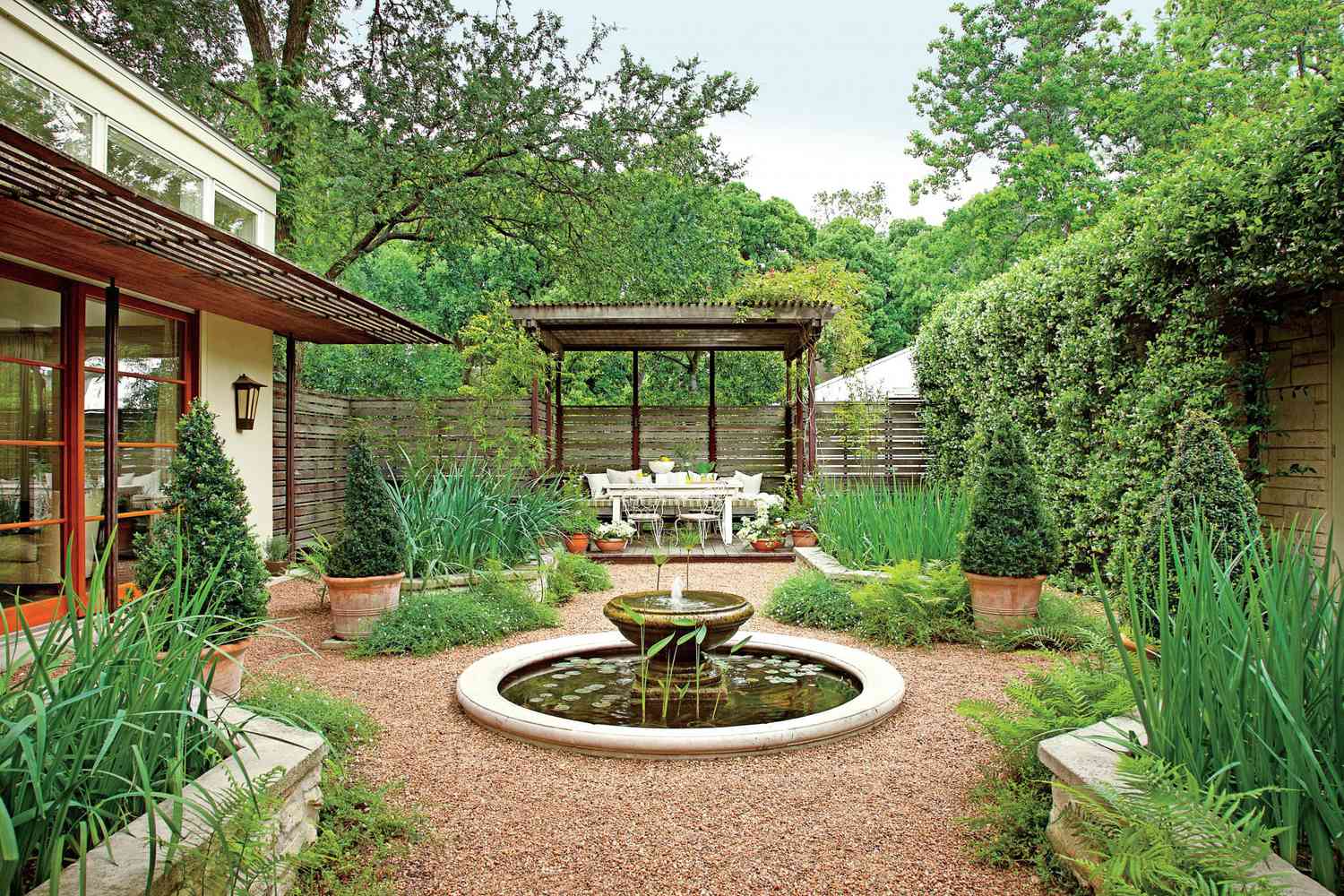
Before you dig a hole for that charming backyard pond, run through this quick checklist. Proper planning is essential for a healthy water feature.
- Sunlight Check: Does the spot get at least 4-6 hours of direct sun per day? Most water lilies and flowering pond plants need this to bloom. However, too much sun can encourage algae. It’s a balance.
- Power Source: Is there a GFCI-protected electrical outlet within reach for the pump and filter? Running outdoor-rated electrical cable can be a significant hidden cost.
- Debris patrol: Is the spot directly under a large deciduous tree? A constant shower of leaves will mean a lot of skimming and can disrupt the pond’s ecosystem.
- Safety First: Check your local bylaws regarding residential ponds, especially regarding depth and fencing requirements if you have small children.
|
📋 Copy HEX 🔗 Share |
This serene garden retreat has high-end elements, but the core concept is very budget-friendly. Instead of a custom-built pond, you can use a large pre-formed pond liner or even a galvanized metal stock tank (around $150-$300) for a modern farmhouse look. Rust-colored pea gravel, or ‘Creek Rock’ is an affordable and attractive pathway material, costing much less than pavers. Instead of a custom pergola, a simple sail shade ($100) or a more affordable kit from a big-box store can create that same sense of a defined dining area. It’s about capturing the feeling, not the exact price tag.
26. Designing with a Watershed-Wise Approach
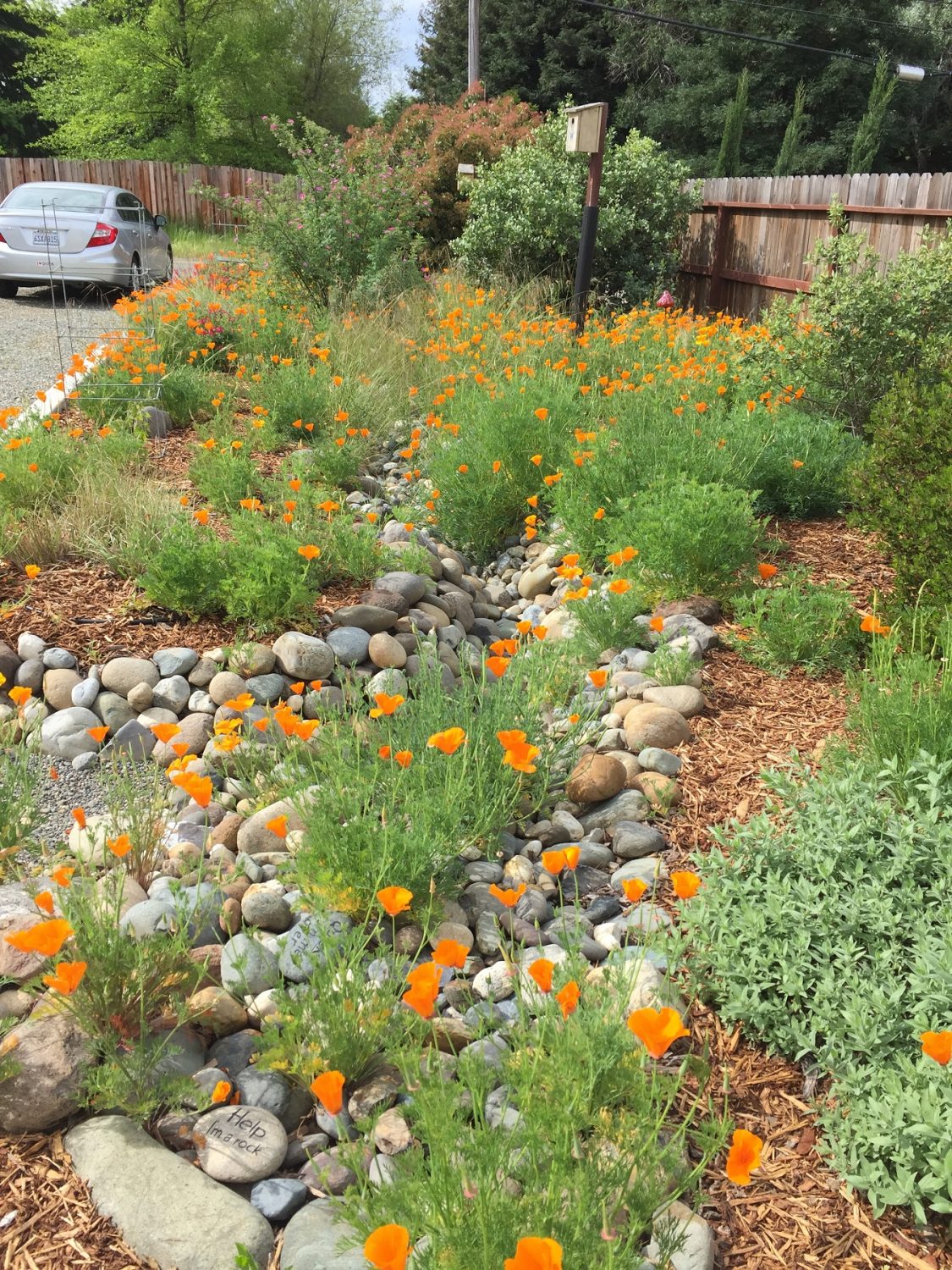
As climate change brings more extreme weather, from droughts to downpours, watershed-conscious landscaping is shifting from a niche interest to a mainstream necessity, especially in places like California. Homeowners are realizing that the traditional model of a huge, thirsty lawn with runoff-generating hardscaping is unsustainable. This approach, which focuses on capturing rainwater, using native plants, and preventing erosion, isn’t just an ecological choice anymore—it’s a practical and often required one. It’s about creating a landscape that works with the local environment, not against it.
|
📋 Copy HEX 🔗 Share |
A watershed-wise landscape functions like a natural ecosystem in miniature. It works by creating a ‘sponge’ to absorb rainwater rather than letting it run off into storm drains. This is done using features like rain gardens (shallow depressions with water-loving plants), permeable pavers that allow water to seep through, and deep-rooted native plants that help hold the soil. The goal is to slow water down, spread it out, and sink it into the ground. This recharges groundwater, reduces pollution, and creates a resilient, low-water garden that can thrive in a changing climate.
From Screen to Green: Your Yard Awaits
Feeling inspired? The best landscapes tell a story about the people who live there. Whether you’re drawn to a sleek modern patio or a wild cottage garden, the goal is to create a space that brings you joy. Don’t be afraid to start small with one corner of your yard.
Ready to start planning? Head over to Pinterest to create a board for your favorite ideas and start turning that dream landscape into your reality.