
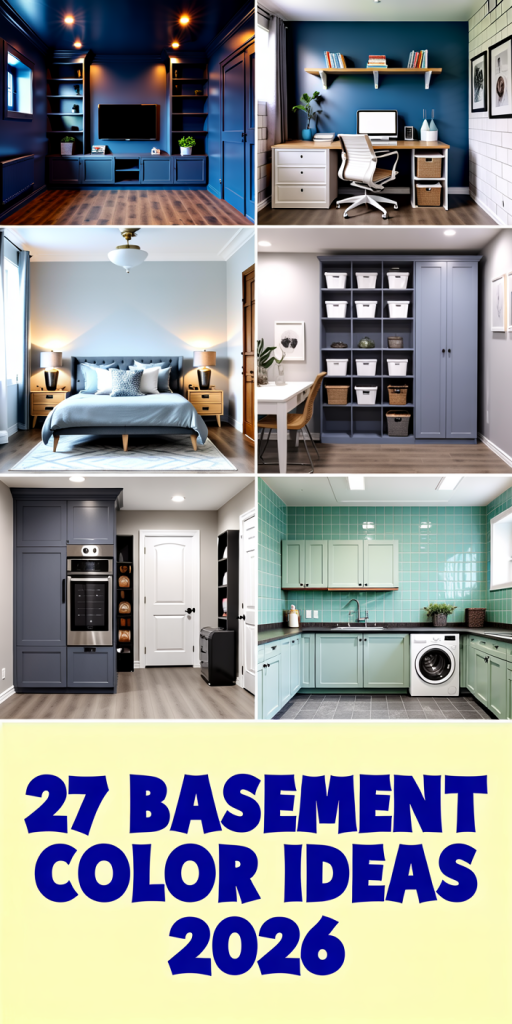
You know that feeling when you finally find the basement color idea that looks exactly right for your space, only to realize it won’t work with your low ceilings or lack of light? Let’s fix that. After filtering through hundreds of options across retailers like Sherwin-Williams, IKEA, and Target, we narrowed it down to the 27 ideas that deliver on style and function. We’re talking cozy modern looks, rustic retreats, and bold industrial vibes. This isn’t just another gallery of pretty pictures; it’s a real-world guide to what works. Plus, we’re comparing budget-friendly finds right alongside luxury inspiration. Basements in 2026 are all about creating a true extension of your home—a cozy, functional “third space” that feels intentional, not like an afterthought. 📌 Save this to Pinterest for later — you’ll want to revisit these ideas.
And stay until the end — we break down the most common mistakes that can ruin these looks.
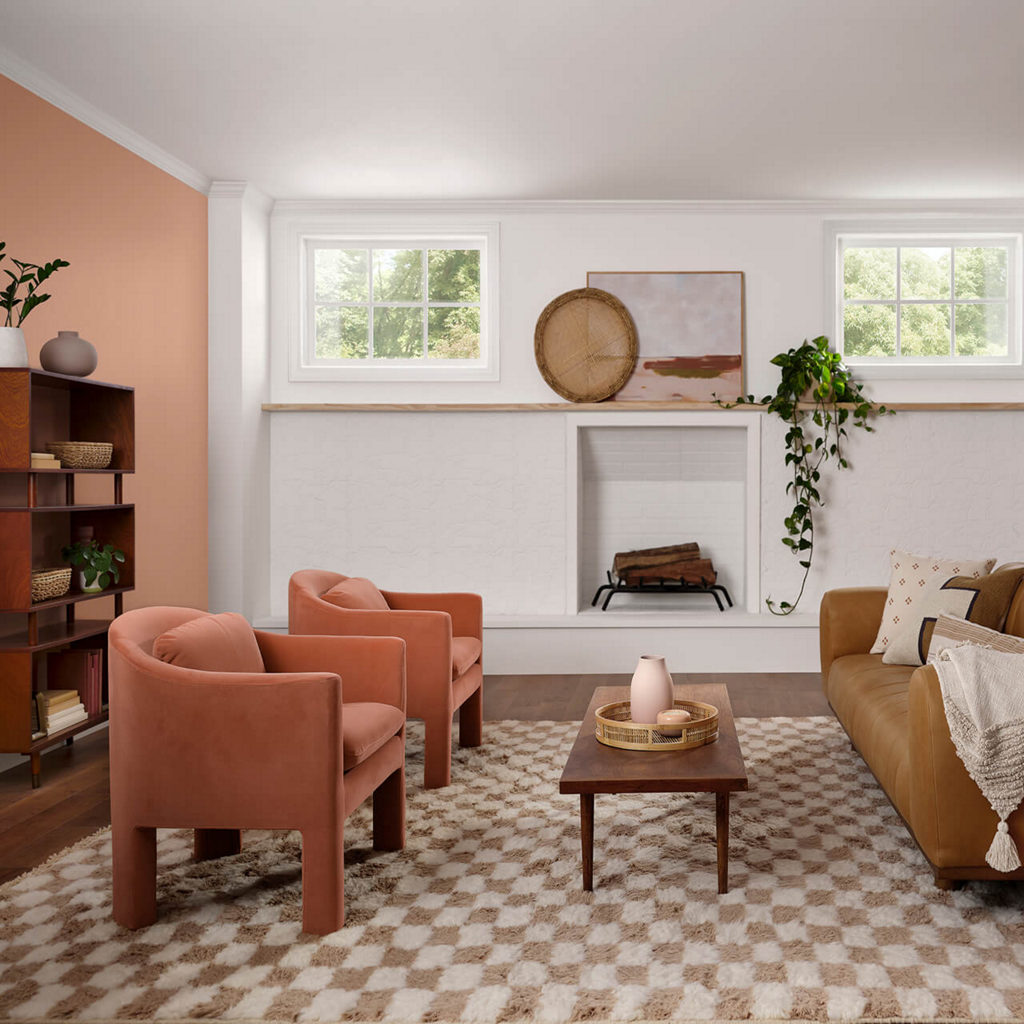
1. Embrace Earthy Tones with a Warm Peach Accent Wall
What Makes It Work: This look is a masterclass in using color to create warmth without overwhelming a space. The single peach accent wall acts as a focal point, drawing you in and making the room feel instantly cozier. It works because the rest of the palette is quiet and supportive—the crisp white of the fireplace and surrounding walls prevents the peach from feeling too sweet, while the tan leather and velvet add textural depth. It’s a beautiful balance of a strong color choice with calming, earthy neutrals.
|
📋 Copy HEX 🔗 Share |
Get This Look For Less: You don’t need custom furniture to capture this vibe. Start with the paint—a gallon of a warm peach like Sherwin-Williams’ “Likeable Sand” is under $80. Instead of a high-end leather sofa, look for a tan fabric or faux-leather option from IKEA or Target for around $600-$900. For the armchairs, hunt for vintage velvet pieces on Facebook Marketplace, which can often be found for $100-$300 each. A similar checkered rug can be found at Wayfair or Rugs USA for under $250.
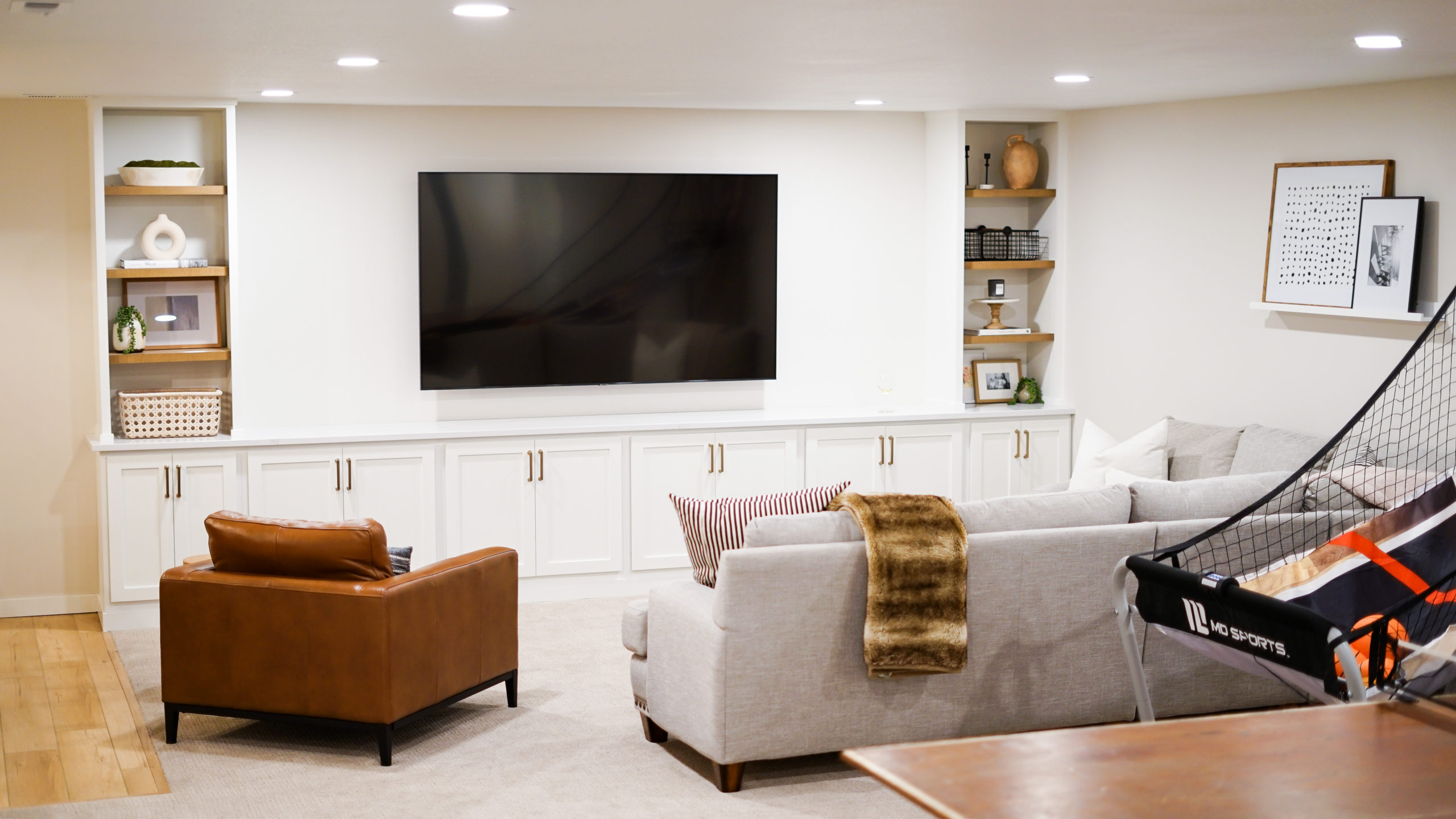
2. Create a Modern Entertainment Hub with White and Warm Wood
Designer Tip: When designing a built-in entertainment center, go wall-to-wall to maximize storage and create a high-end, custom look. Here, the long, low white cabinet makes the room feel wider. For the recessed shelving, use warm wood to add depth and prevent the white from feeling too sterile. Install LED strip lighting inside the shelves on a dimmer—it provides a soft, ambient glow that’s perfect for movie nights and makes your decor feel intentionally curated.
|
📋 Copy HEX 🔗 Share |
Scale Guide: This design is ideal for basements that are at least 15 feet wide. The long, low profile of the media cabinet requires a substantial wall to look balanced. If your basement is narrower, you can adapt this by creating a vertical version. Consider a taller, narrower shelving unit next to the TV mount instead of the long horizontal cabinet. This will draw the eye upward and create a sense of height, a great trick for smaller or more compact lower levels like the one seen in Idea #5.
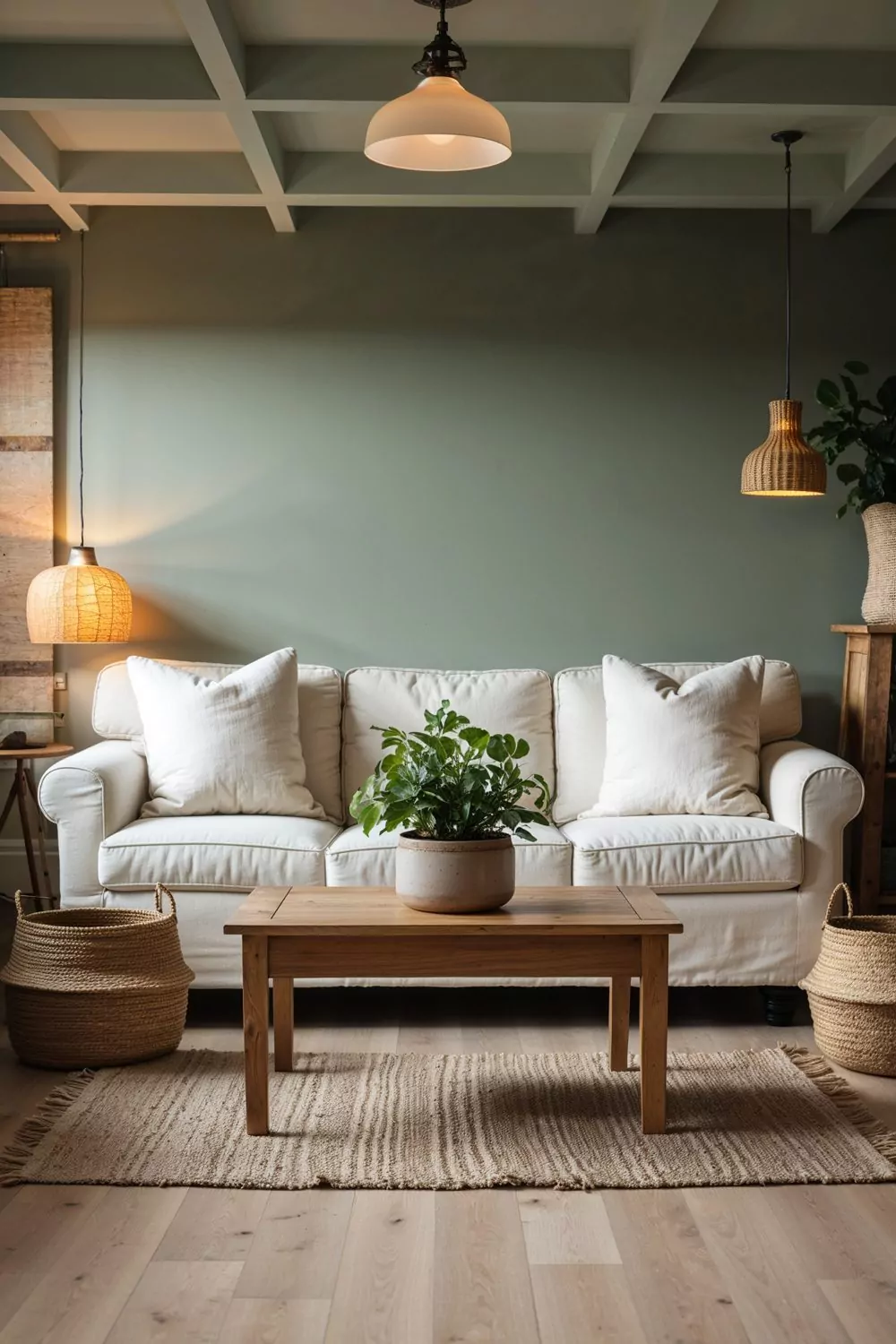
3. Find Calm with Sage Green Walls and Woven Textures
Style Math: The formula here is simple and incredibly effective: 60% calming color + 30% natural texture + 10% soft neutrals. The sage green walls provide the calming base. The woven elements—from the rattan pendant lights to the jute rug and baskets—make up the crucial textural component, adding warmth and a touch of boho flair. The final 10% comes from the off-white slipcovered sofa, which provides a soft, neutral place for the eye to rest. You could easily swap the sage green for a muted terracotta or a soft blue and achieve the same balanced, organic feel.
|
📋 Copy HEX 🔗 Share |
The One Thing: It’s all about the layered woven lighting. Without the oversized rattan pendant fixtures, this room would still be lovely, but it wouldn’t have that special, curated feel. The pendants do more than just provide light; they act as sculptural art pieces, introduce an organic material that contrasts beautifully with the painted walls, and cast a warm, patterned glow in the evening. They are the single element that elevates the entire design from “nice” to “memorable.”
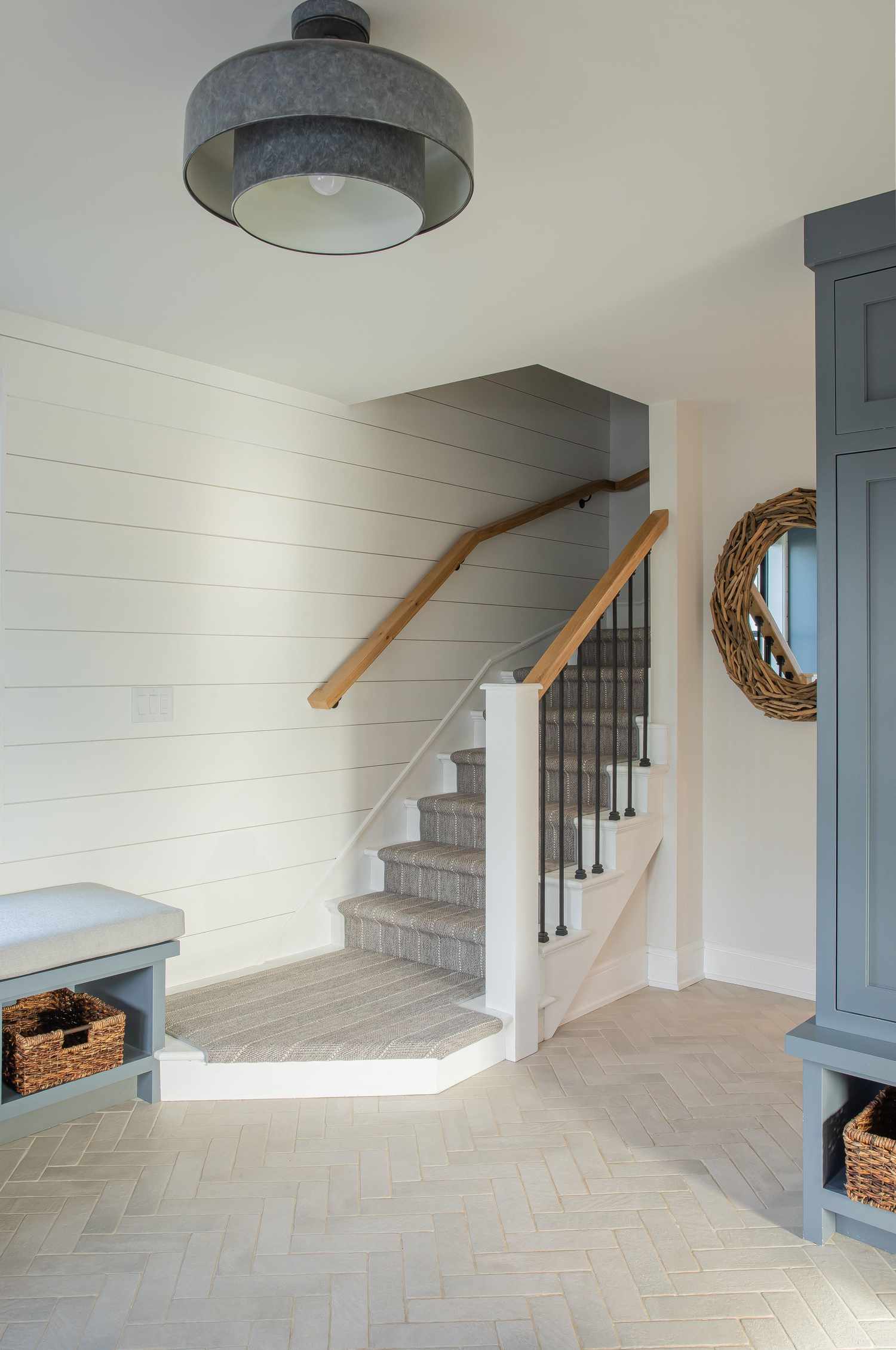
4. Define an Entry with Neutral Shiplap and Herringbone Tile
How-To Brief: Create this clean shiplap feature wall in a weekend. (Time: 6-8 hours, Cost: $200-$400 for a small wall).
- Measure your wall and purchase pre-primed shiplap boards (MDF is a budget-friendly option).
- Find and mark the studs on your wall with a pencil.
- Starting from the bottom, use a level to ensure the first board is perfectly straight. Nail it into the studs with a brad nailer.
- Place the next board, ensuring the tongue-and-groove joint fits snugly. Use nickels or tile spacers to maintain a consistent gap if your boards don’t self-space.
- Continue up the wall, cutting boards as needed for outlets or the end of a row.
- Fill nail holes, caulk the edges, and apply two coats of your favorite white paint.
|
📋 Copy HEX 🔗 Share |
Real Talk: A light and bright entryway is beautiful, but it requires commitment to keep it looking sharp. The white shiplap, especially near a staircase, is a magnet for scuffs, fingerprints, and dust in the grooves. You’ll need to wipe it down regularly. The light grey herringbone tile is more forgiving than hardwood, but the grout lines can be a pain to keep clean in a high-traffic area. If you have kids or pets, consider a semi-gloss paint finish on the shiplap for easier cleaning and choosing a slightly darker grout for the floor.
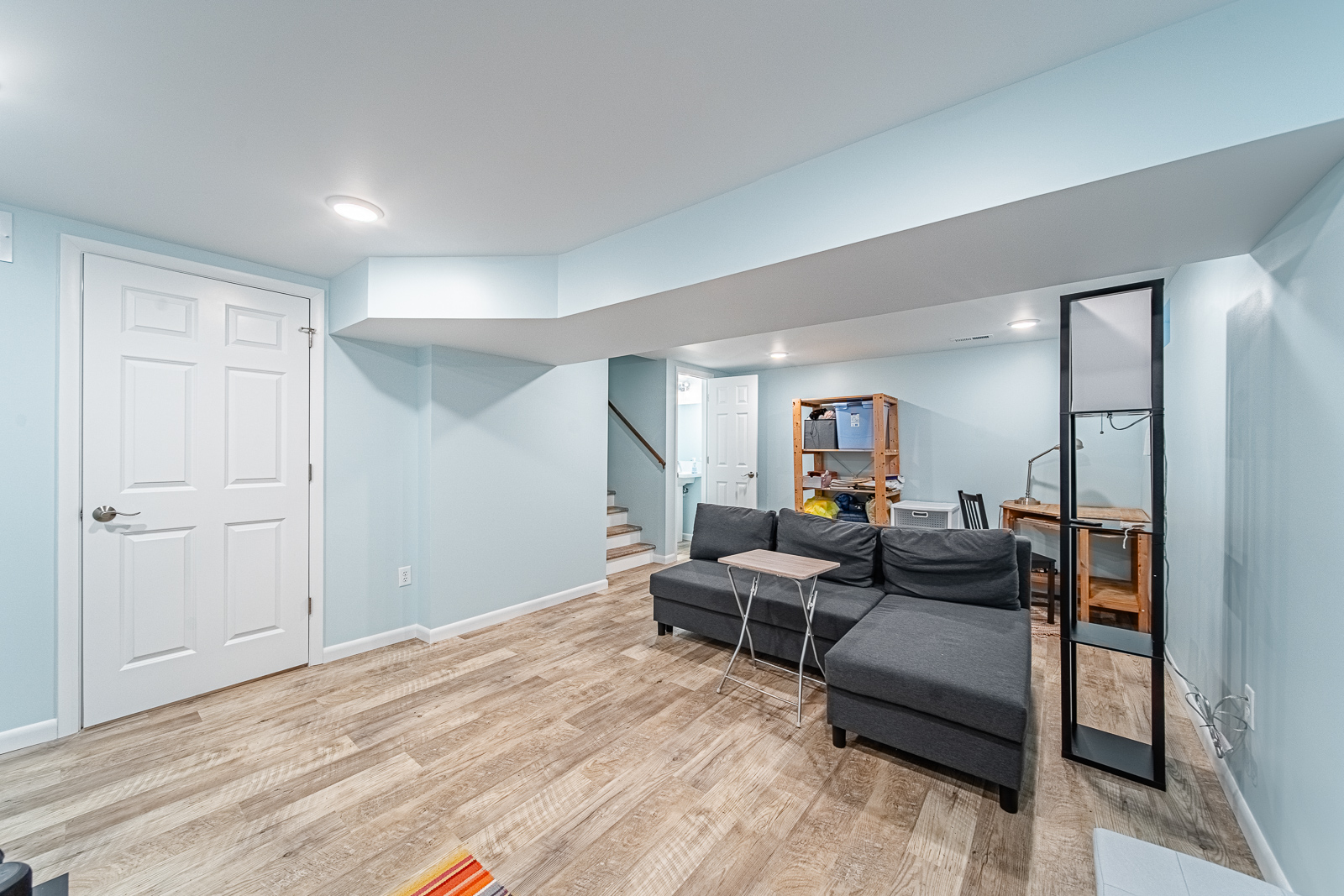
5. Brighten a Low-Ceiling Space with Light Blue Walls
Budget Breakdown: This is a fantastic example of a high-impact, low-cost refresh. The key elements are accessible and affordable.
- Paint: A gallon of quality light blue paint (e.g., Behr “Dayflower”) and white trim paint will run you $70 – $120.
- Flooring: Light wood-look laminate or vinyl plank flooring is a durable and budget-friendly choice, typically $3 – $5 per square foot. For a 200 sq. ft. room, that’s $600 – $1,000.
- Sofa: A dark gray sectional is a versatile anchor piece. You can find great options at stores like Bob’s Discount Furniture or American Freight for $800 – $1,500.
- TOTAL: $1,470 – $2,620
Budget alternative: Keep existing flooring if it’s in good shape. A thorough professional cleaning can do wonders. Focus your budget on the paint and a great secondhand sectional.
|
📋 Copy HEX 🔗 Share |
Designer Tip: When using a cool color like this light blue in a basement, it’s crucial to balance it with warmth to avoid a chilly, sterile feeling. The light wood-look flooring is doing the heavy lifting here, adding necessary warmth and a natural texture. If you have cold concrete floors, an area rug with warm tones (like a cream or beige shag) is non-negotiable. Also, ensure your recessed lighting is on a dimmer and uses “warm white” bulbs (2700K-3000K) to enhance the cozy factor in the evenings.
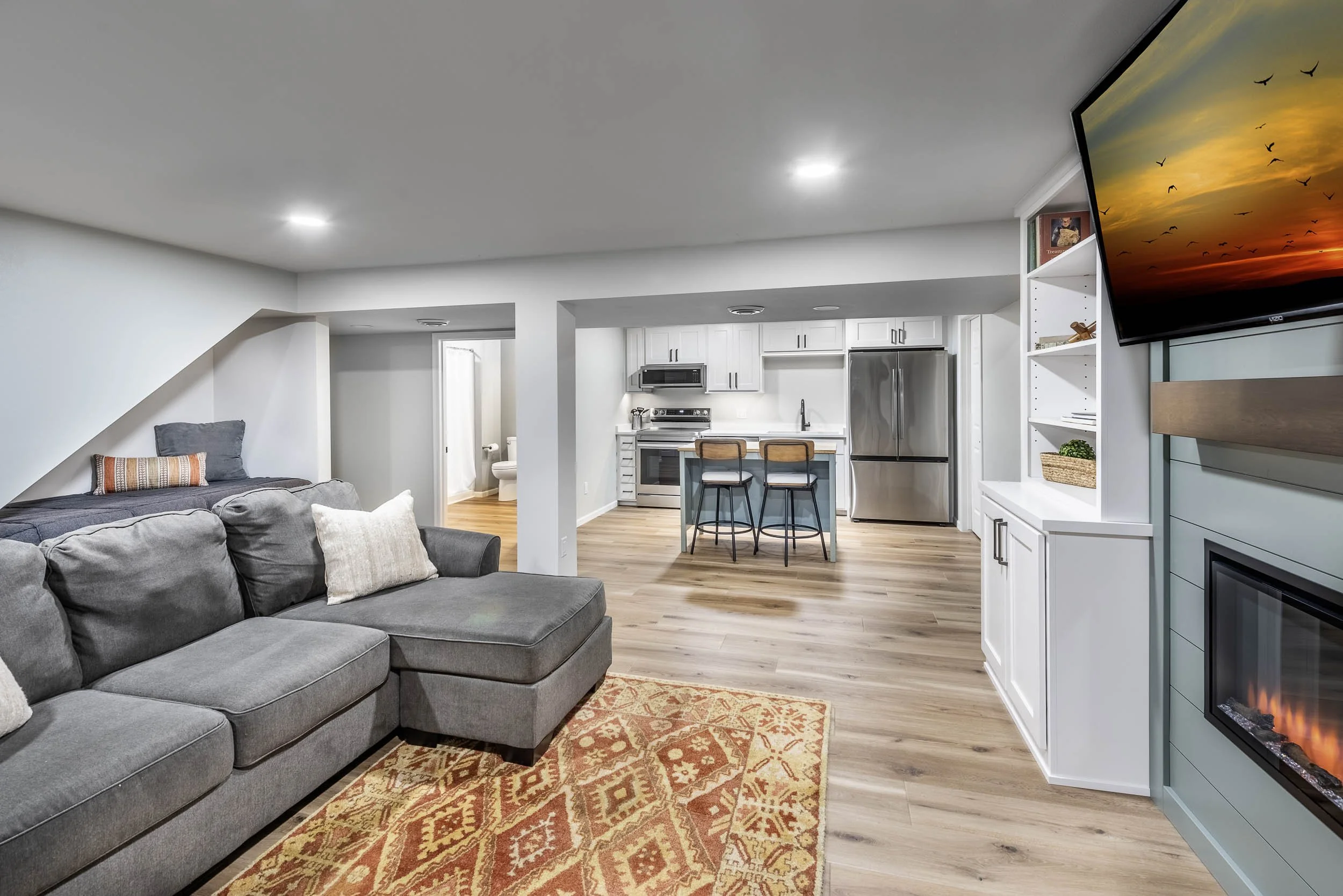
6. Zone an Open-Concept Basement with a Fireplace and Kitchenette
What Makes It Work: This design cleverly uses architectural and color elements to define different “zones” in an open-concept basement. The light blue shiplap around the fireplace acts as a visual anchor, creating a distinct moment that separates the main living area from the kitchenette. The area rug under the gray sectional further solidifies the lounge space. Even though it’s one big room, these thoughtful details make it feel like a multi-room layout, maximizing its functionality without putting up walls.
|
📋 Copy HEX 🔗 Share |
Scale Guide: An open-plan layout with a kitchenette works best in basements with a clear rectangular footprint of at least 350-400 square feet. This provides enough room for a distinct seating area and a functional kitchenette without feeling cramped. The ceiling height should be at least 7.5 feet to accommodate the fireplace surround and cabinetry comfortably. For smaller basements, consider scaling down to a wet bar instead of a full kitchenette, like the compact setup in Idea #11.
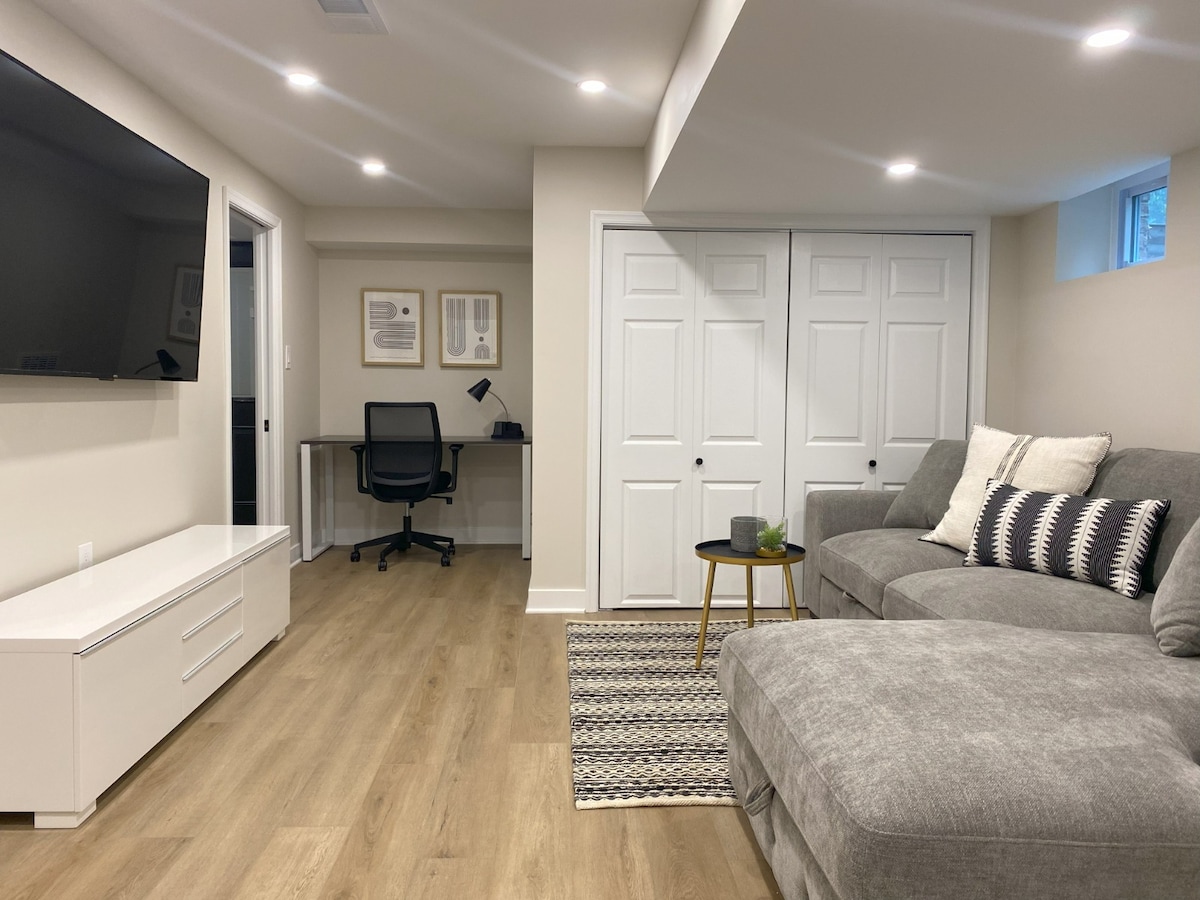
7. Achieve Serenity with Light Beige Walls and a Gray Sectional
Maintenance Reality: A pale, neutral palette is calming, but it’s not without its challenges. Light wood-tone flooring is great for hiding dust, but it will show dark scuff marks and spills easily, so keep a magic eraser handy. The real star, the large gray sectional, is a practical choice, but fabric choice is key. Opt for a performance fabric or a tight-weave polyester blend that resists stains and pilling. Those black and white patterned pillows look sharp, but be sure the covers are removable and machine-washable.
|
📋 Copy HEX 🔗 Share |
Style Math: This room follows a sophisticated 70/20/10 rule. The 70% is the neutral foundation: light beige walls and light wood floors that create a bright, airy canvas. The 20% is the grounding element: the substantial dark gray sectional sofa, which adds weight and comfort. The final 10% is the graphic punch: the high-contrast black and white accents in the pillows and decor. This formula is timeless and easily adaptable—swap the black and white for navy and cream, or emerald and gold, for a totally different feel.
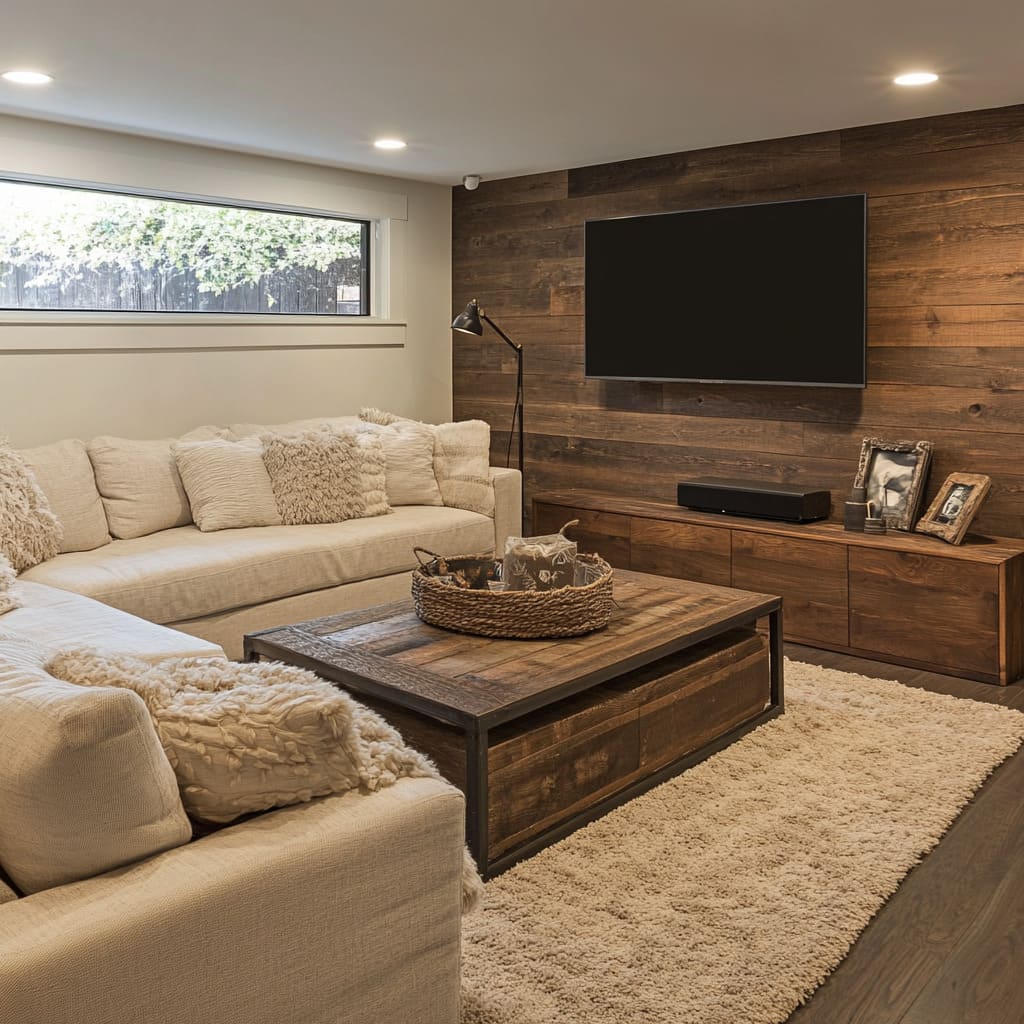
8. Explore a Modern and Moody Basement Color Palette
Trending Context: The move towards “moody modern” is a direct reaction to years of all-white-everything interiors. Homeowners are craving spaces that feel like a cozy, sophisticated escape, and basements are the perfect place to experiment with darker, more saturated color palettes. This trend, gaining traction on Pinterest and design blogs in 2026, is about creating an immersive, lounge-like atmosphere. It’s less about making the space feel huge and more about making it feel special and intimate.
|
📋 Copy HEX 🔗 Share |
Designer Tip: A successful modern color palette isn’t just about the paint color; it’s about the interplay of light and finish. If you opt for a darker wall color (like charcoal, navy, or deep green), use varying sheens to create interest. Use a matte or flat finish on the main walls for a velvety, light-absorbing effect. Then, introduce a satin or semi-gloss finish on trim, doors, or a built-in cabinet. This contrast reflects light subtly and prevents the dark color from feeling one-dimensional.
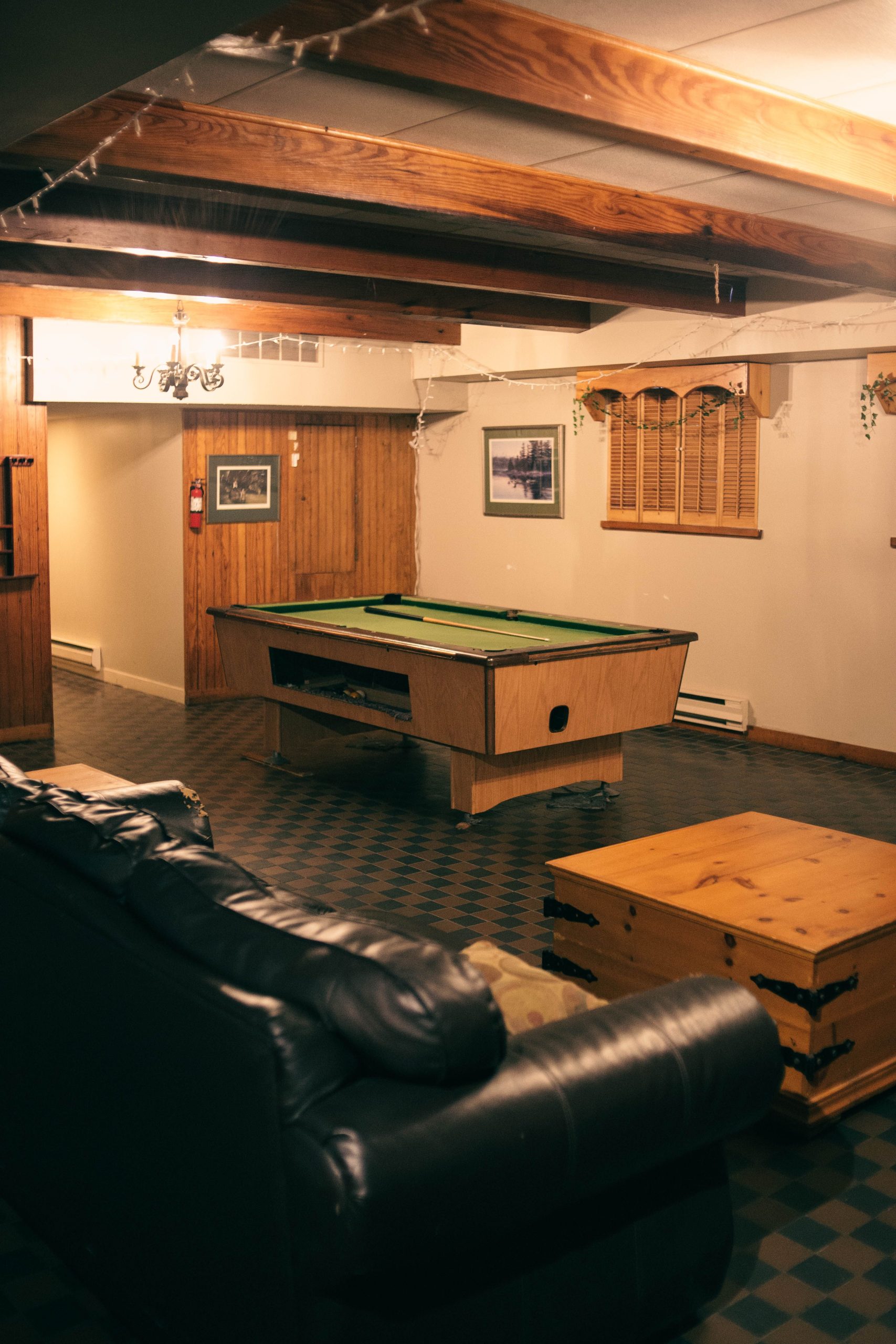
9. Design a Cozy Game Room with Exposed Beams and Dark Hues
The One Thing: The exposed wooden ceiling beams are the undeniable heart of this room’s character. They immediately establish a rustic, lodge-like feeling that’s perfect for a game room. They add architectural interest, draw the eye upward despite the dark color, and provide a perfect anchor for the string lights, which enhance the cozy, magical vibe. Without them, it would just be a basement with a pool table; with them, it’s a destination.
|
📋 Copy HEX 🔗 Share |
Get This Look For Less: Authentic ceiling beams are a major expense. You can get 80% of the look for 20% of the cost with faux wood beams. They are lightweight, made from high-density polyurethane, and are designed to look incredibly realistic. You can find them at home improvement stores or online for $100-$300 per beam. For the flooring, skip the tile and use checkered peel-and-stick vinyl tiles. And instead of a pricey leather sectional, look for a dark gray or brown fabric sofa and add some faux-leather pillows.
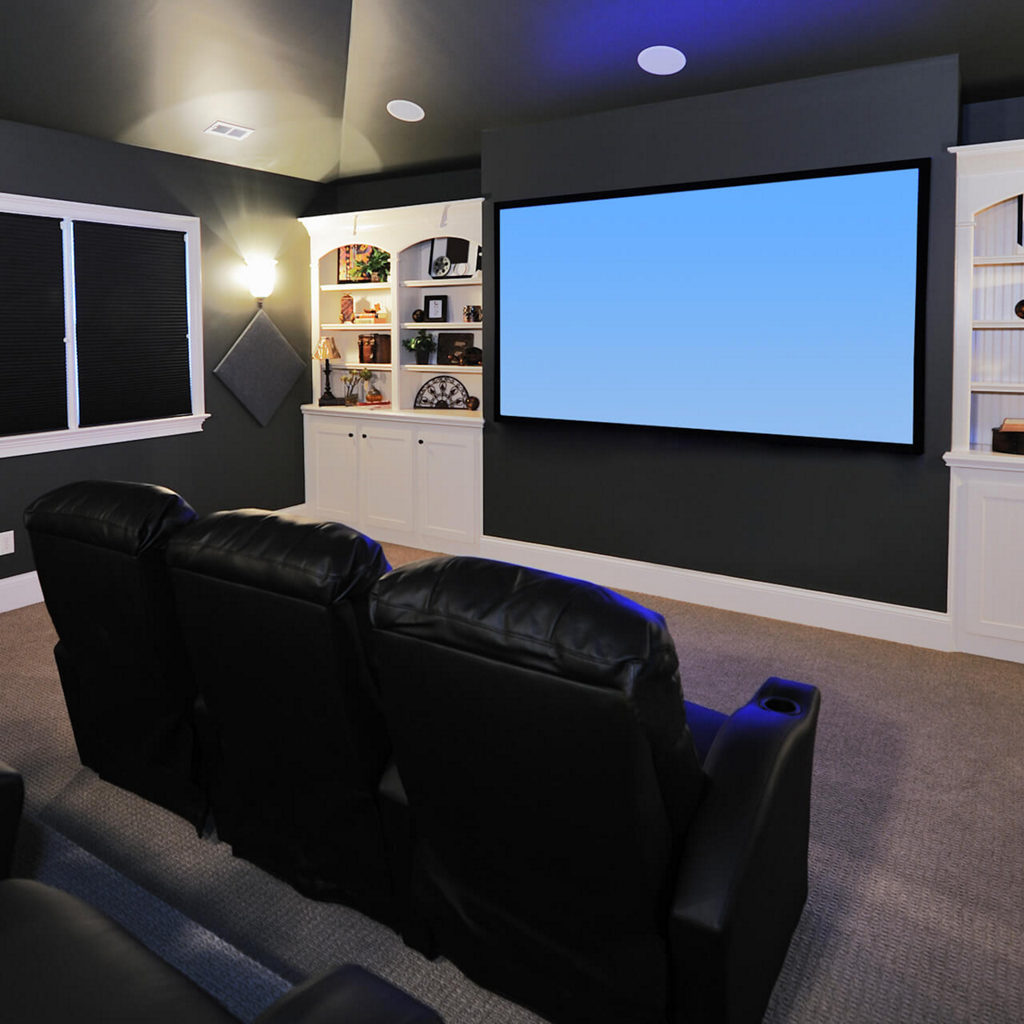
10. Craft a Chic Home Theater with Dark Gray Walls
Budget Breakdown: Creating a dedicated theater room can range wildly, but this sharp look is achievable on a real-world budget.
- Paint: Dark gray paint for walls and ceiling (e.g., Sherwin-Williams “Iron Ore”) will cost around $150 – $250.
- Screen: A quality 120-inch projector screen can be found for $200 – $500.
- Built-ins: IKEA’s HAVSTA or BILLY bookcase systems can create a similar look for $600 – $1,200.
- Seating: A set of three black leather recliner-style theater seats will range from $1,500 to $3,000.
- TOTAL: $2,450 – $4,950 (plus projector cost)
Budget alternative: Paint a large rectangle on the wall with special projector screen paint ($150-$200) instead of buying a screen. Use a comfy sectional you already own instead of specialty seating.
|
📋 Copy HEX 🔗 Share |
Real Talk: Painting your ceiling dark gray or black is a classic home theater move because it helps the screen pop and makes the ceiling “disappear.” However, it is a commitment. A dark ceiling will absorb a massive amount of light and will absolutely make the room feel smaller and shorter when the screen is off. This is great for an immersive movie experience but can feel oppressive if the room serves other purposes. Ensure you have plenty of dimmable ambient and task lighting to compensate when you’re not watching a movie.
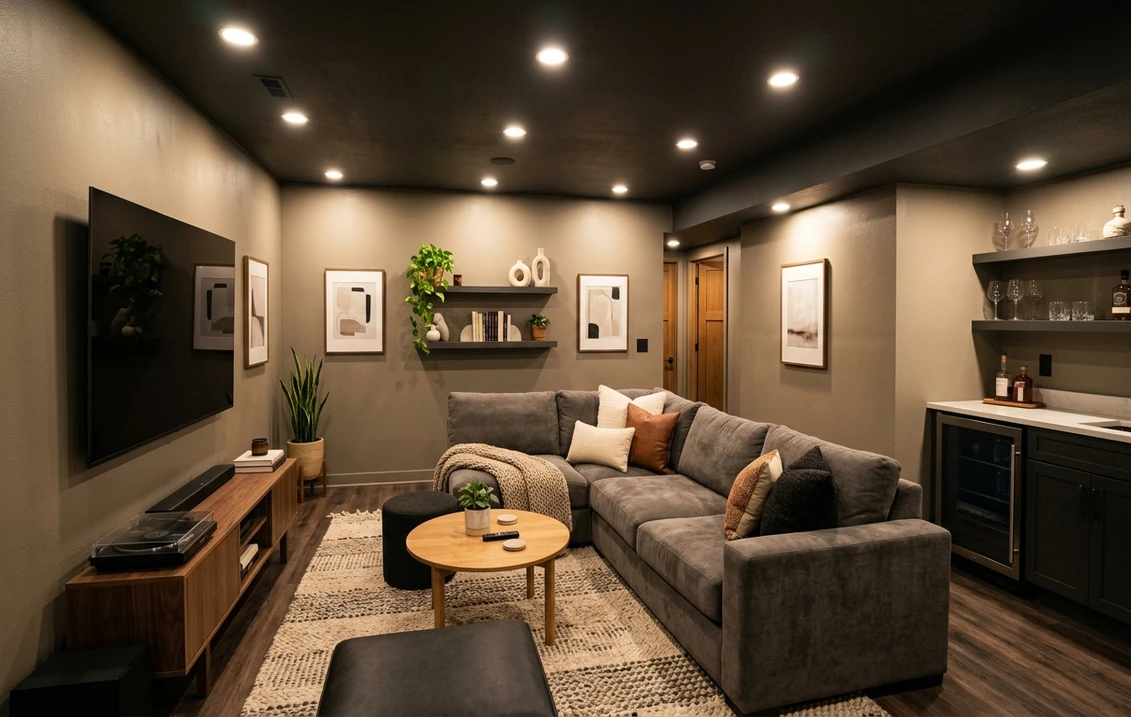
11. Unwind in a Sophisticated Retreat with an Integrated Bar
What Makes It Work: This space feels cohesive and calming because of its disciplined color palette. The key is the use of tonal grays and beiges. The walls are a muted olive-beige, while the ceiling and sectional are a deep charcoal. This creates a low-contrast, enveloping feeling that’s incredibly relaxing. The warmth of the wood media console prevents the gray from feeling cold, and the pops of off-white in the rug and pillows add just enough light to keep the space from feeling like a cave. It’s a sophisticated, layered approach to neutrals.
|
📋 Copy HEX 🔗 Share |
Before You Start Checklist: To achieve this specific moody-yet-functional vibe, check these boxes first.
- Lighting Plan: Do you have a plan for layered lighting? This look relies on recessed lights for general illumination and allows for art lights or lamps for mood. A single overhead light won’t cut it.
- Ceiling Color: Are you brave enough for a dark ceiling? It’s crucial for this enclosed, cozy feel. Test a large swatch first.
- Plumbing Access: If you’re adding a wet bar, have you confirmed you have accessible plumbing supply and drain lines nearby? This can be a major hidden cost.
- Furniture Scale: Is your sectional big enough to anchor the room but not so large it blocks flow to the bar area? Measure twice!
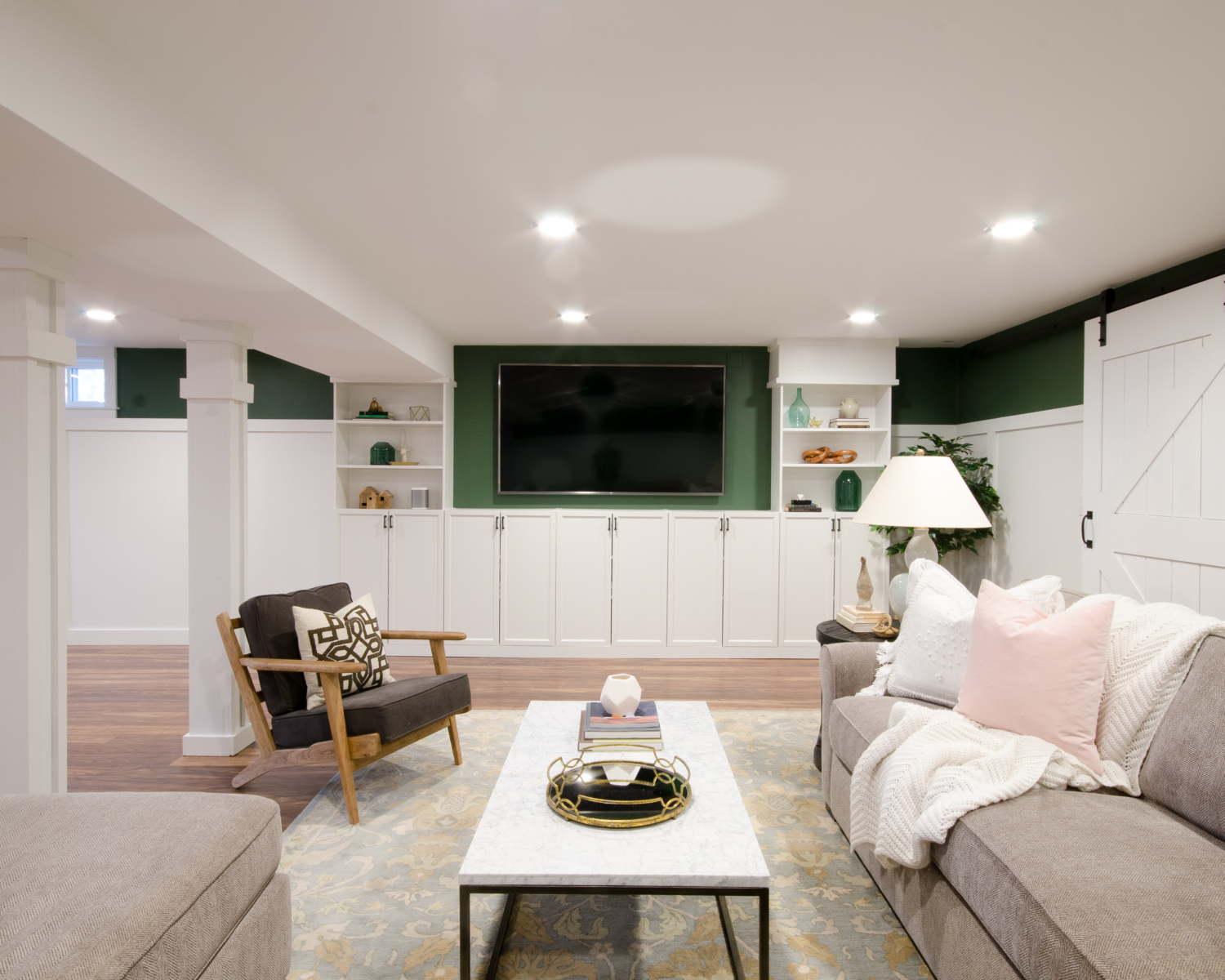
12. Make a Statement with a Deep Green Media Wall
Style Math: The formula for this inviting look is 40% bold accent + 50% calm neutral + 10% warm texture. The deep emerald green wall is the confident 40%—it’s the star of the show. The 50% neutral base comes from the white built-ins, gray sofa, and light walls, which keep the room feeling bright and balanced. The final 10% is the crucial dose of warmth, brought in by the light wood armchair and the gold tones in the patterned rug. This strategic mix feels custom and personality-driven.
|
📋 Copy HEX 🔗 Share |
How-To Brief: Create a Faux Built-in Look. (Time: 1 weekend, Cost: $400-$800).
- Choose your anchor wall and paint it your desired deep accent color. This one step will instantly create a focal point.
- Purchase two identical pre-assembled white shelving units or bookcases (like the IKEA BILLY or a Target alternative).
- Place one bookcase on either side of where your TV will be.
- Buy a long, solid piece of wood or MDF from a hardware store for the “console” top. Paint it white to match the bookcases.
- Place the board across two low base cabinets or even on top of sturdy storage boxes between the two towers.
- Anchor everything securely to the wall. The result looks much more expensive than it is. This is a simpler take on the built-ins from Idea #10.
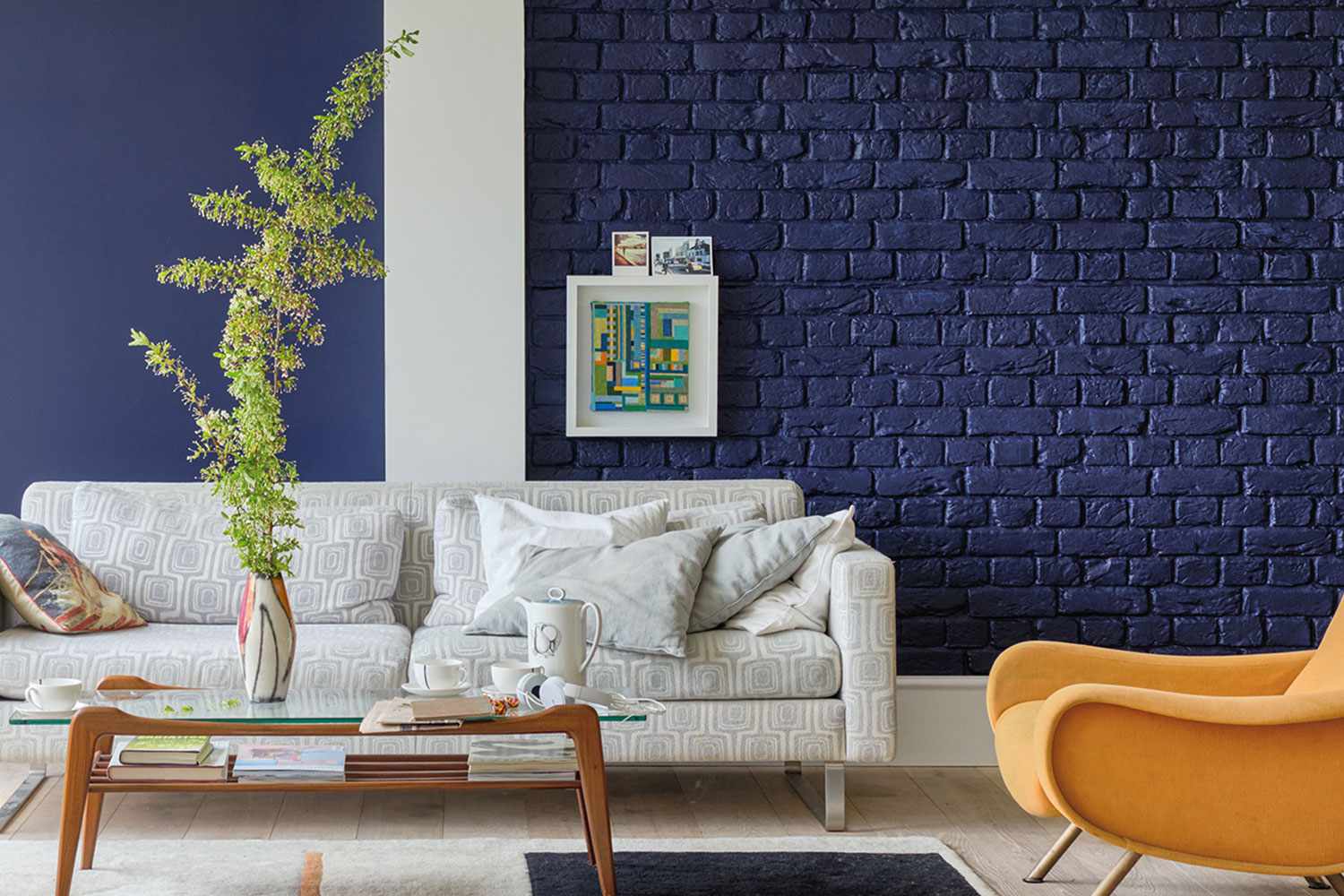
13. Mix Bold and Eclectic with a Deep Blue Brick Wall
Trending Context: Painting interior brick is a huge trend, and it’s a fantastic way to update a dated feature without the cost of removal. In 2026, we’re moving beyond basic white. Bold, saturated colors like this deep blue are being used to add character and a touch of drama to living spaces. It’s a nod to industrial design but with a more colorful, personalized twist. This look shows you don’t have to stick to one finish—the combination of the textured blue brick with the smooth blue paneling adds another layer of sophisticated interest.
|
📋 Copy HEX 🔗 Share |
The One Thing: The mustard yellow armchair is the element that makes this entire room sing. The deep blue walls are gorgeous on their own, but they could easily feel a bit cold or one-note. The pop of vibrant, warm mustard creates a perfect complementary color scheme (blue and orange/yellow are opposites on the color wheel). It injects energy, personality, and a focal point that keeps the dark wall from feeling too heavy. Remove that chair, and the room loses its joyful, eclectic spark.
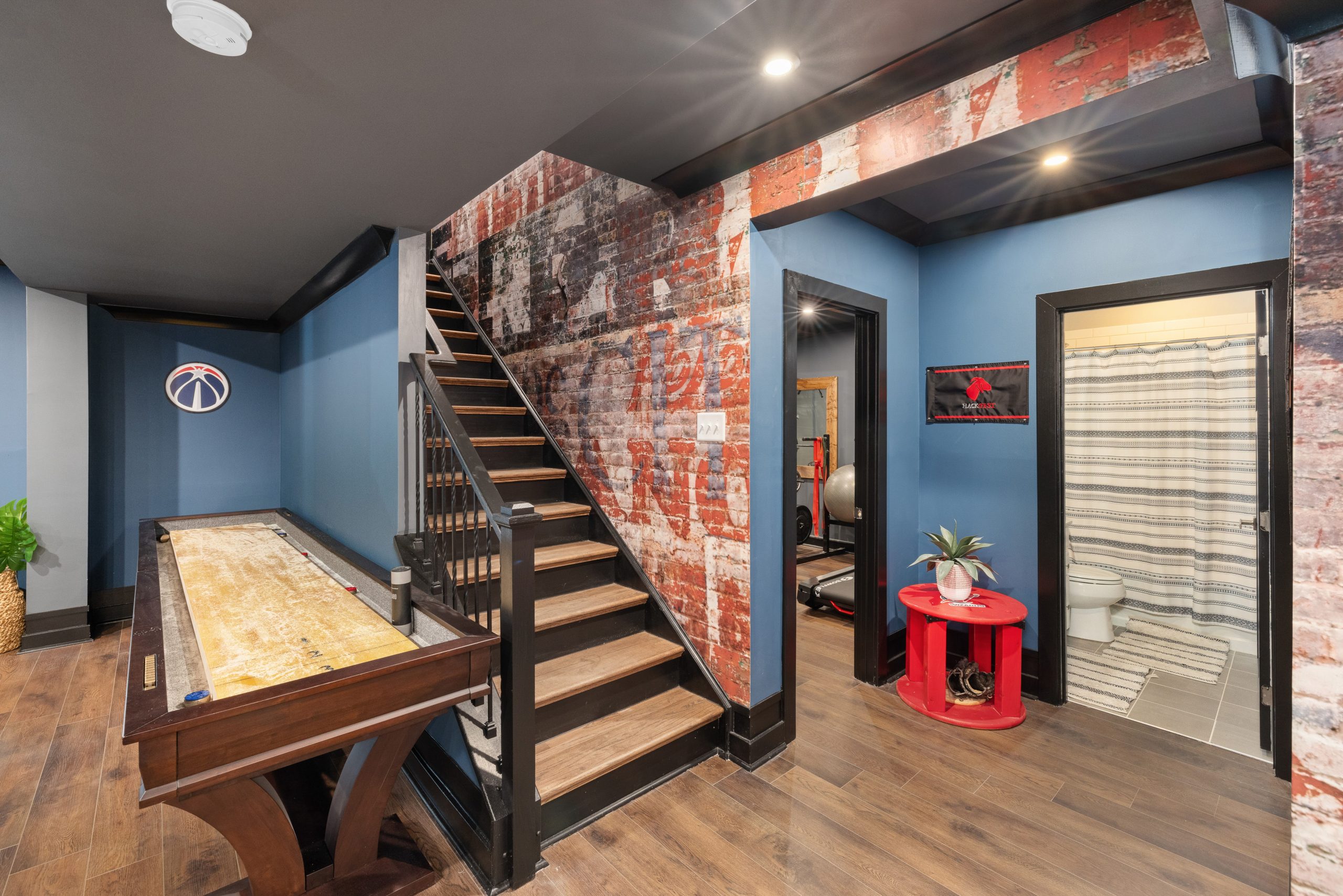
14. Go for a Bold Industrial Vibe with Blue Walls and a Brick Accent
Designer Tip: When creating a bold, industrial look, don’t be afraid to paint your trim dark. Notice how the staircase railings, newel posts, and even the window and door frames are painted black. This is a pro move that makes the deep blue walls feel even richer and more intentional. White trim would have chopped up the walls and looked much more traditional. The black trim provides a clean, graphic outline that ties in with other dark elements and commits fully to the moody, industrial aesthetic.
|
📋 Copy HEX 🔗 Share |
Scale Guide: A dark, multi-finish look like this works best in a basement with clearly defined zones and good lighting. This particular space is large enough to house a shuffleboard table, a staircase, and glimpses of an adjacent gym and bathroom. To pull this off, you need a minimum of 300 square feet to allow the dark colors to breathe. In a smaller basement, this many competing elements (brick pattern, blue walls, black trim) could feel chaotic. If your space is tight, pick just one star: either the brick wallpaper or the bold blue paint, but not both.
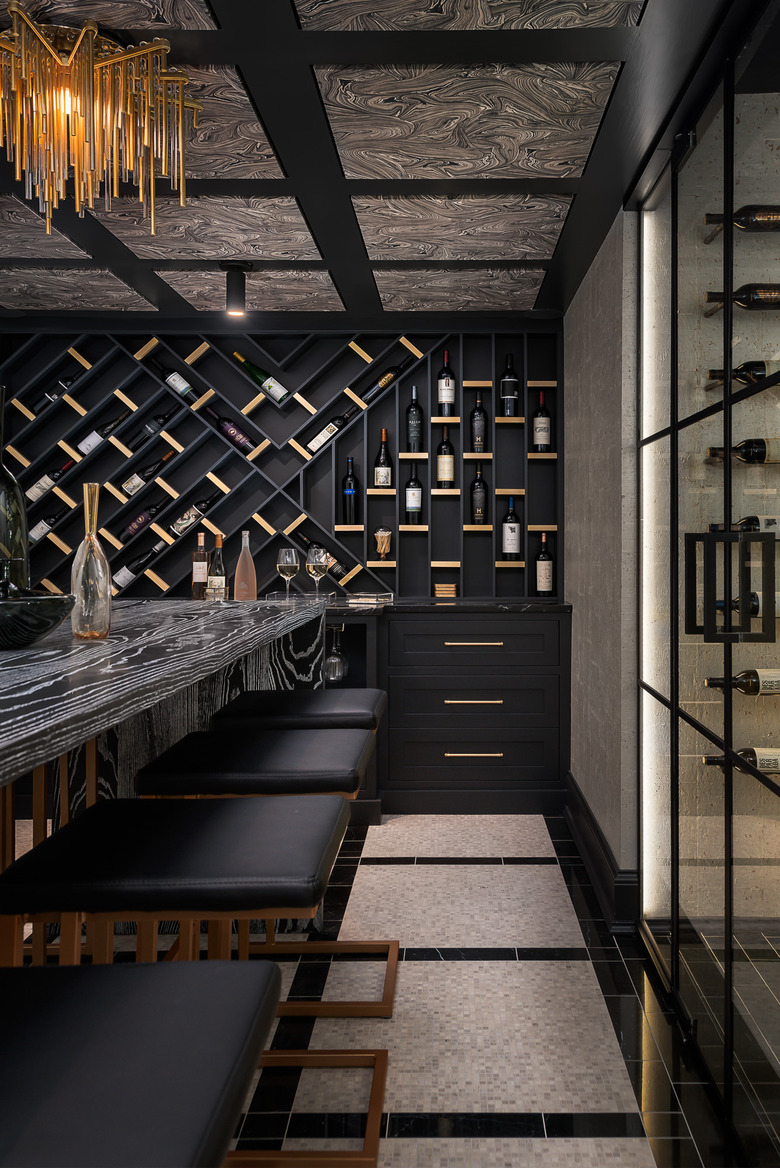
15. Design a Luxurious Modern Wine Bar with Black and Gold
Budget Breakdown: This is a high-end, luxury look with a price tag to match. Creating a dedicated wine cellar is a significant investment.
- Wine Racks: Custom or high-end modular wine racking systems like the one shown can cost anywhere from $5,000 to $20,000+.
- Bar & Cabinetry: A custom bar with a marble top and integrated cabinetry would likely be in the $4,000 – $10,000 range.
- Lighting & Ceiling: The patterned ceiling and modern gold chandelier could add another $2,000 – $5,000.
- Finishes: Mosaic floor tiles and other finishes add to the cost.
- TOTAL: $11,000 – $35,000+
Budget alternative: For a similar vibe, use black floating shelves for wine bottles, an IKEA bar cart, and a dramatic peel-and-stick wallpaper on the ceiling.
|
📋 Copy HEX 🔗 Share |
Maintenance Reality: While stunning, this room requires care. The black marble-like bar top, while dramatic, will show every fingerprint, water ring, and speck of dust, demanding constant wiping. The gold accents, especially on cabinet handles and fixtures, will also need regular polishing to stay brilliant and free of smudges. The biggest challenge? Dusting the wine bottles and the intricate rack structure. This isn’t a low-maintenance space; it’s a showpiece that requires upkeep to keep it looking pristine.
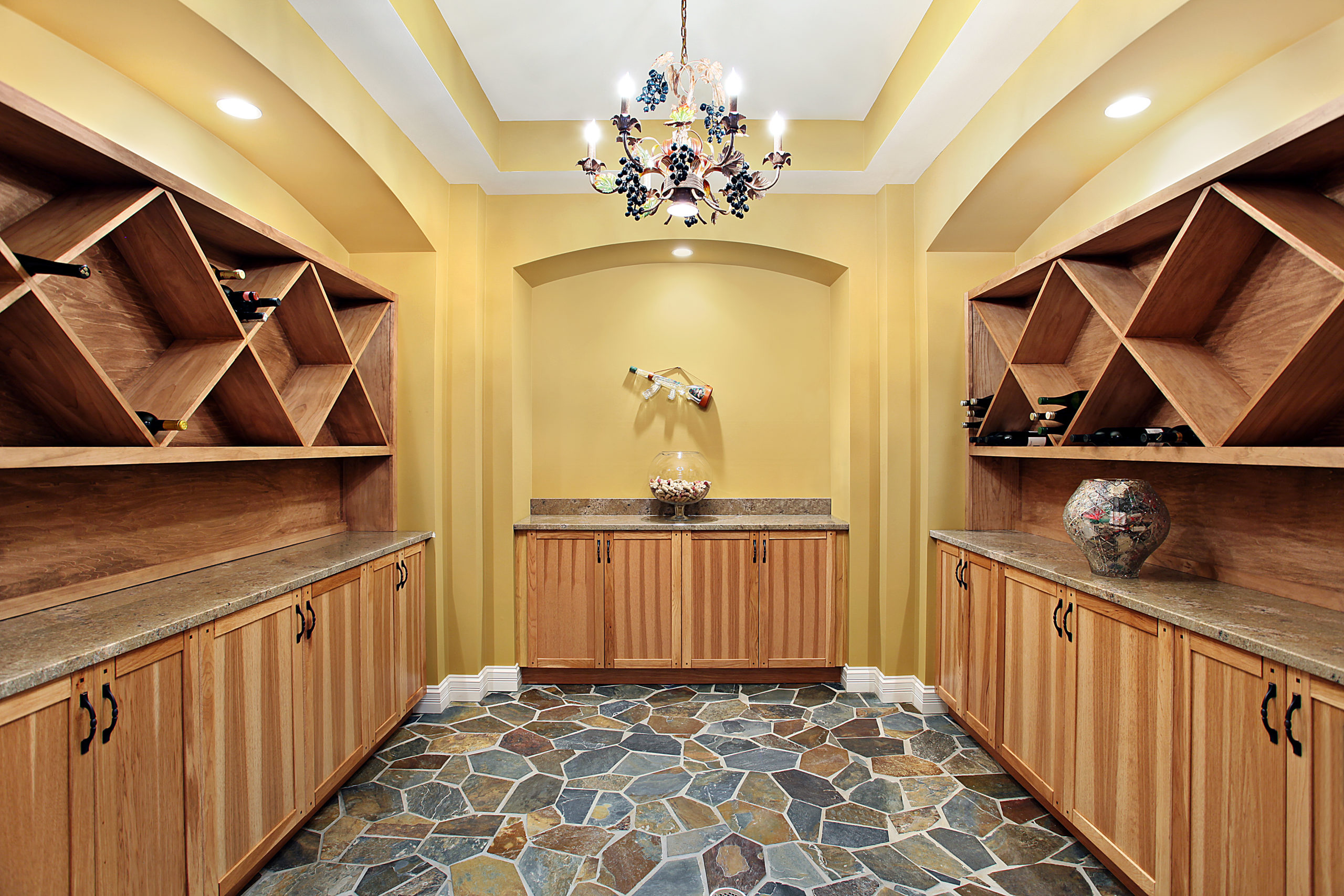
16. Create a Warm, Tuscan-Inspired Wine Cellar
What Makes It Work: This cellar feels authentically warm and rustic due to its masterful blend of natural materials and colors. The warm yellow walls cast a sunny, inviting glow, a stark contrast to the typical cool, dark cellar. This warmth is picked up by the natural wood of the cabinetry. The multi-toned flagstone floor and speckled stone countertops add layers of texture and earthy color, making the space feel solid and timeless. The arched doorway is a classic architectural element that seals the deal on the Tuscan villa vibe. It feels less like a basement and more like a trip to Italy. Compare this with the sleek, modern approach of Idea #15.
|
📋 Copy HEX 🔗 Share |
Get This Look For Less: You can evoke this Tuscan feel on a smaller budget. Paint is your best friend here—choose a warm, golden yellow paint ($50). Instead of custom cabinetry, use pre-fab unfinished wood wine racks from a place like The Container Store or even Amazon and stain them yourself ($300-$600). For the countertop, look for a remnant piece of granite or quartz from a local stone yard. And for the floor, you can find surprisingly realistic flagstone-look vinyl or porcelain tile for a fraction of the cost of real stone.
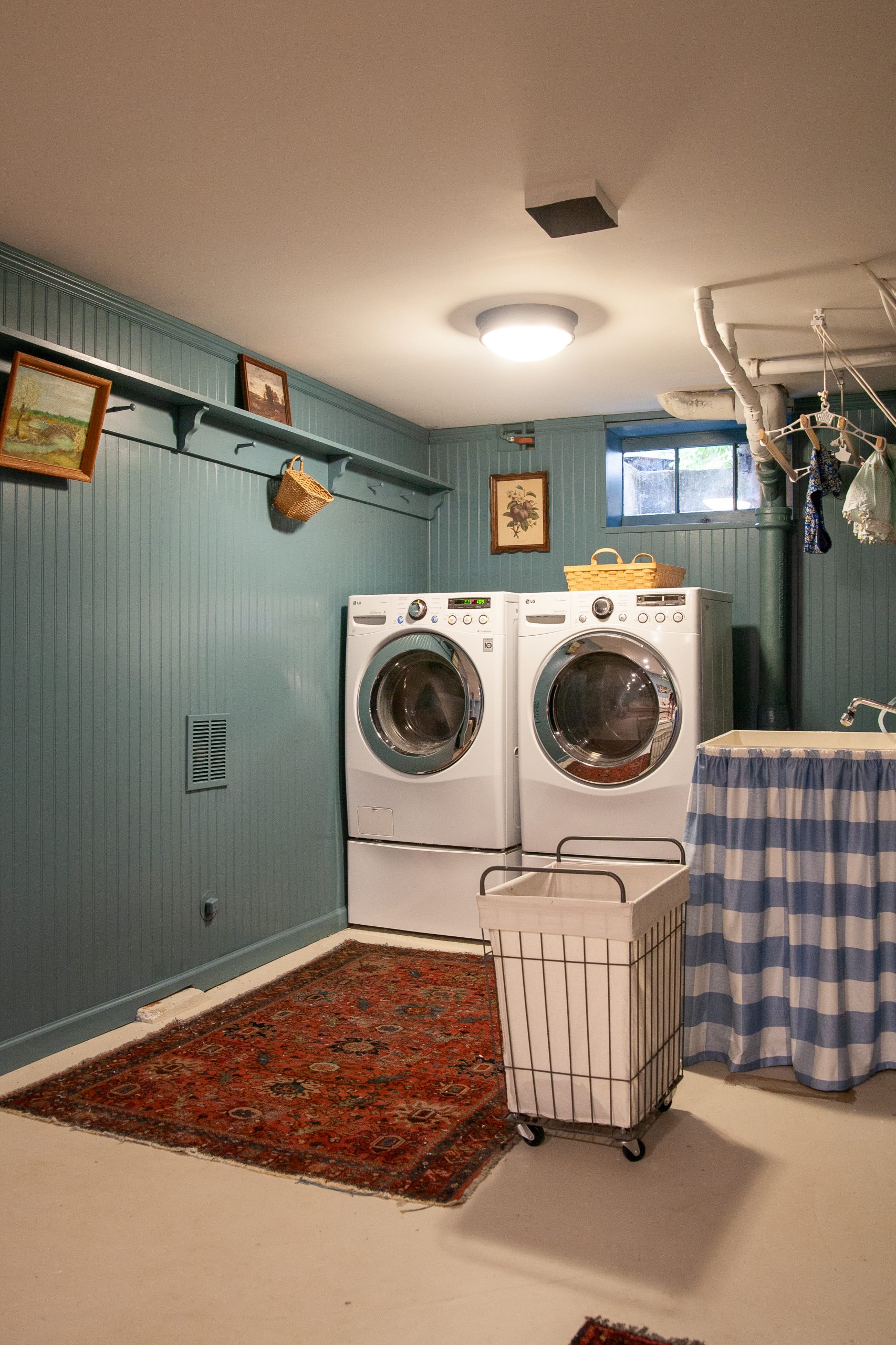
17. Brighten a Laundry Room with Teal Beadboard Walls
How-To Brief: Install Beadboard Paneling. (Time: 4-6 hours, Cost: $150-$300 for a small room.
- Measure the height you want your beadboard to reach (36-42 inches is standard) and mark a level line around the room.
- Purchase 4×8-foot sheets of beadboard paneling. Cut them to your desired height with a circular saw.
- Apply construction adhesive to the back of the first panel and press it firmly to the wall, starting in a corner.
- Use a brad nailer to secure the panel to the wall studs.
- Continue with the next panels, ensuring the seams are tight.
- Install a piece of decorative chair rail or cap molding along the top edge to give it a finished look. Caulk all seams and paint!
|
📋 Copy HEX 🔗 Share |
Real Talk: A basement laundry room can be a damp environment. While beadboard looks charming, using standard MDF (medium-density fiberboard) beadboard is a risk. It can swell or warp if exposed to moisture from a leak or high humidity. For a basement or bathroom application, it is highly recommended to invest in PVC or vinyl beadboard. It is 100% waterproof, won’t mold or mildew, and holds paint just as well. It costs more upfront, but it will save you from a major headache down the road.
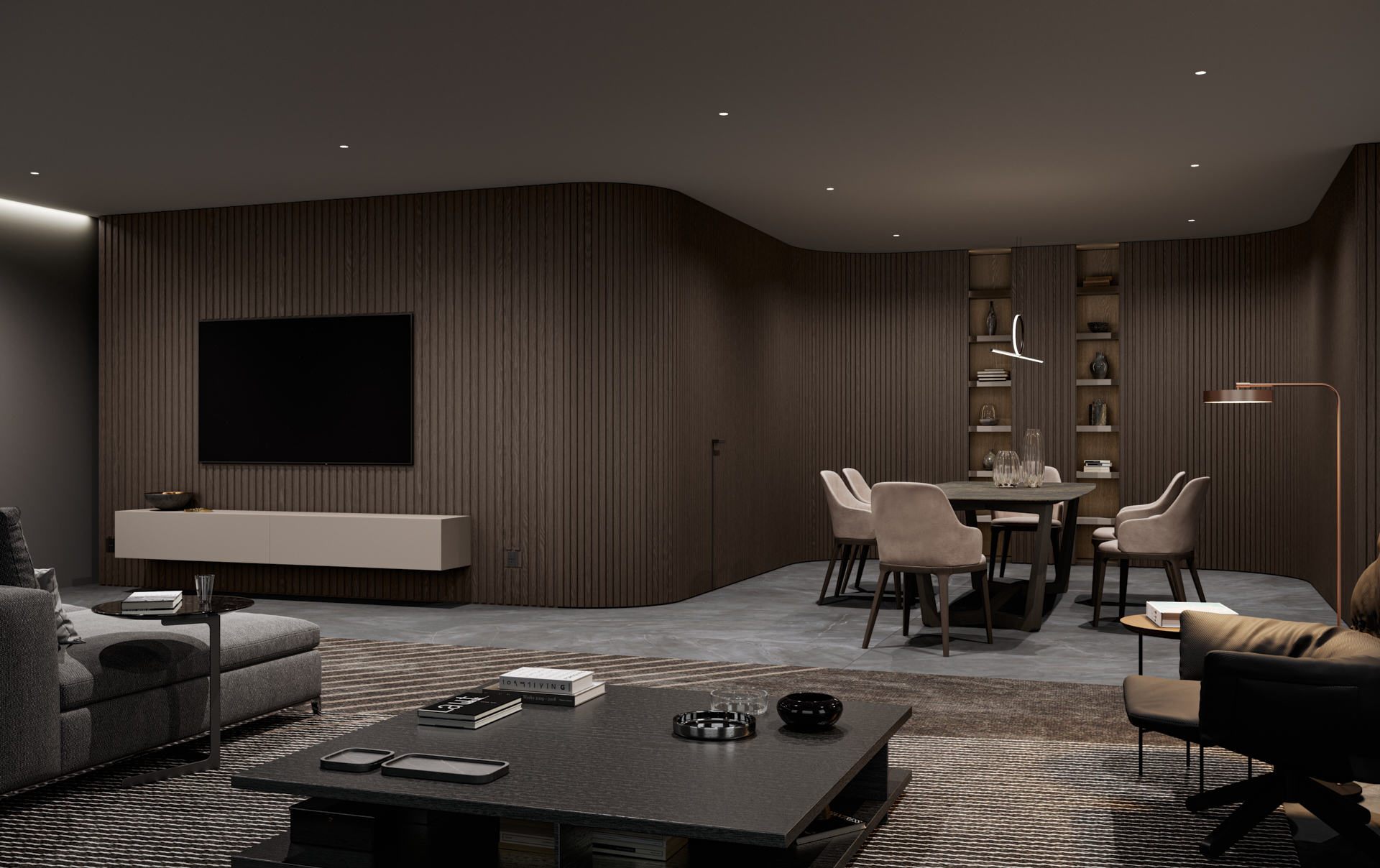
18. Define an Open Plan with Curved, Slatted Wood Walls
Designer Tip: If you’re investing in a major architectural feature like this slatted wood wall, lighting is not an afterthought—it’s essential. The recessed shelving includes integrated backlighting, which turns a simple storage space into a beautifully lit display. In the living area, instead of a standard overhead light, a dramatic copper floor lamp provides warm, focused light and acts as a sculptural element. This layered approach to lighting highlights the texture of the wood and creates a cozy, intimate mood that a single bright ceiling fixture would ruin.
|
📋 Copy HEX 🔗 Share |
The One Thing: The gracefully curved, dark wood slatted walls are what make this space extraordinary. They are the design. This element single-handedly solves the classic open-plan dilemma: how to create separation and intimacy without building traditional walls. The slats provide a sense of enclosure while still allowing light and air to pass through, so the space feels both cozy and open at the same time. It’s a high-concept, high-impact feature that turns a simple basement into a work of architectural art.
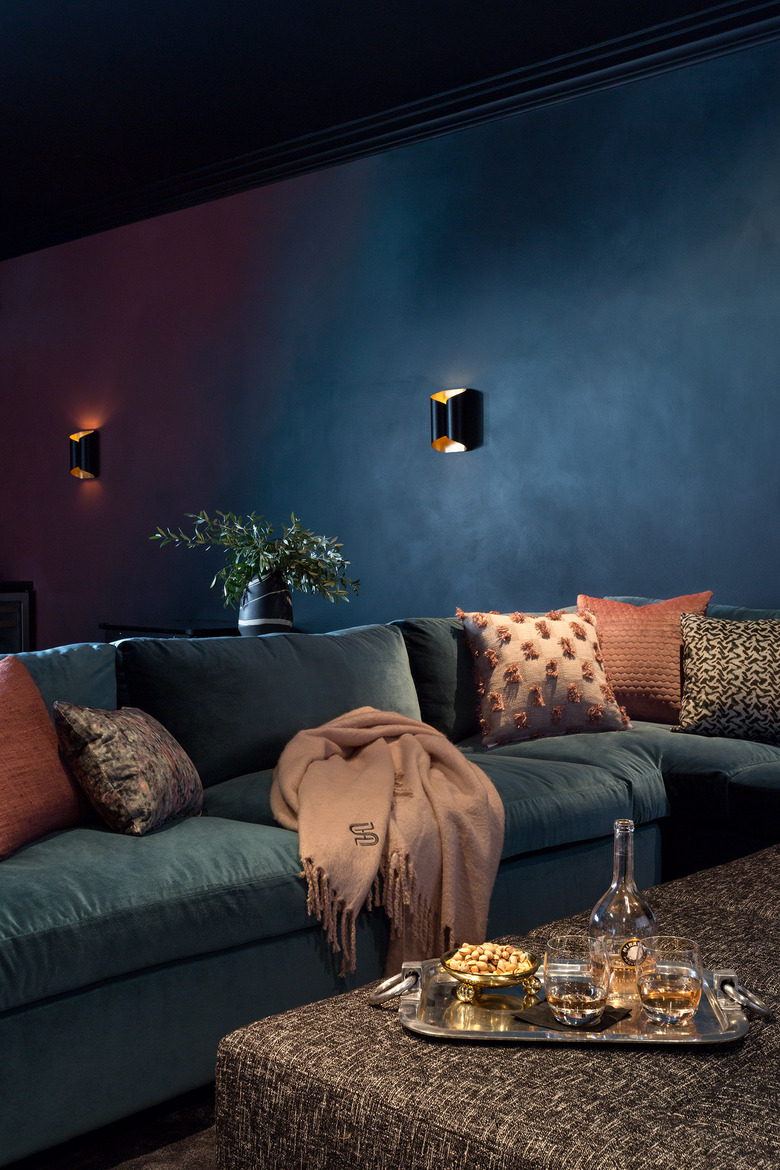
19. Indulge in a Cozy Nook with a Deep Teal Velvet Sofa
Style Math: This look achieves its luxe, moody vibe with a formula of 50% plush color + 40% textured backdrop + 10% metallic glam. The deep teal velvet sectional is the plush, colorful hero piece. The dark, textured blue-green walls provide a dramatic, tone-on-tone backdrop that wraps the corner in color. The final 10% is the essential sparkle from the black and gold wall sconces and the silver tray. This touch of metal catches the light and adds a layer of sophistication, preventing the dark colors from feeling flat.
|
📋 Copy HEX 🔗 Share |
Scale Guide: This idea is perfect for creating a cozy corner in a larger basement or for making a small, dedicated TV or reading room feel special. You don’t need a huge amount of space—a corner with at least 8×8 feet of wall space can accommodate a small sectional or loveseat. The key is to commit to the dark, enveloping colors. In a smaller room, this “color drenching” technique—painting walls and sometimes even trim the same dark shade—can actually blur the room’s edges and make it feel more intimate and less boxy.
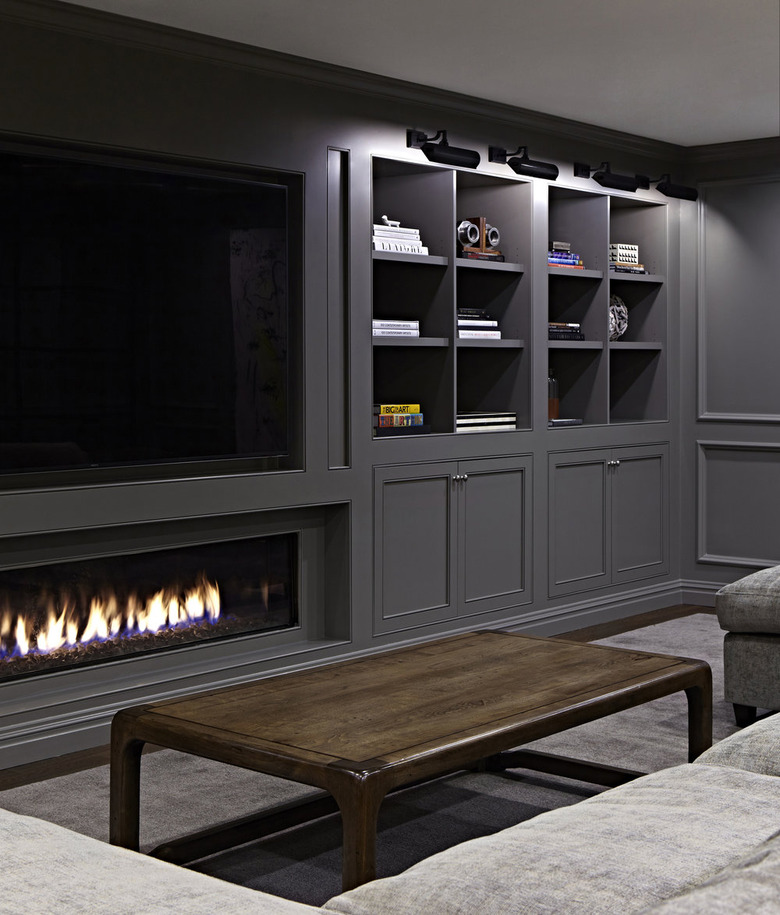
20. Center Your Room with a Dark Gray Media Wall and Fireplace
What Makes It Work: This design feels so cohesive because it concentrates all the main features onto a single, powerful feature wall. The TV, fireplace, and bookshelves are all integrated into one dark gray unit. This decision does three things: it creates an undeniable focal point, it conceals clutter within the cabinetry, and it makes the surrounding space feel calmer and more open by comparison. The contrasting warm wood coffee table and light gray rug keep the dark unit from overpowering the room, creating a perfect balance. Much like Idea #12, it shows the power of a single, statement-making wall.
|
📋 Copy HEX 🔗 Share |
Before You Start Checklist: Before committing to a large, dark built-in like this, run through these points.
- Wall Strength: Is the wall you’ve chosen strong enough to support the weight of a large TV and heavy cabinetry? Ensure you can anchor everything securely into studs.
- Electrical & Gas: Have you planned for all the necessary wiring? You’ll need outlets for the TV and other media, wiring for the accent lighting, and a gas line for the fireplace. Map this out with an electrician and/or plumber first.
- Room Proportions: A massive dark feature wall needs breathing room. Does your room have enough depth to ensure the seating arrangement isn’t pushed right up against it?
- Light Levels: Does the room have enough natural or artificial light to handle such a large, dark element without feeling gloomy?
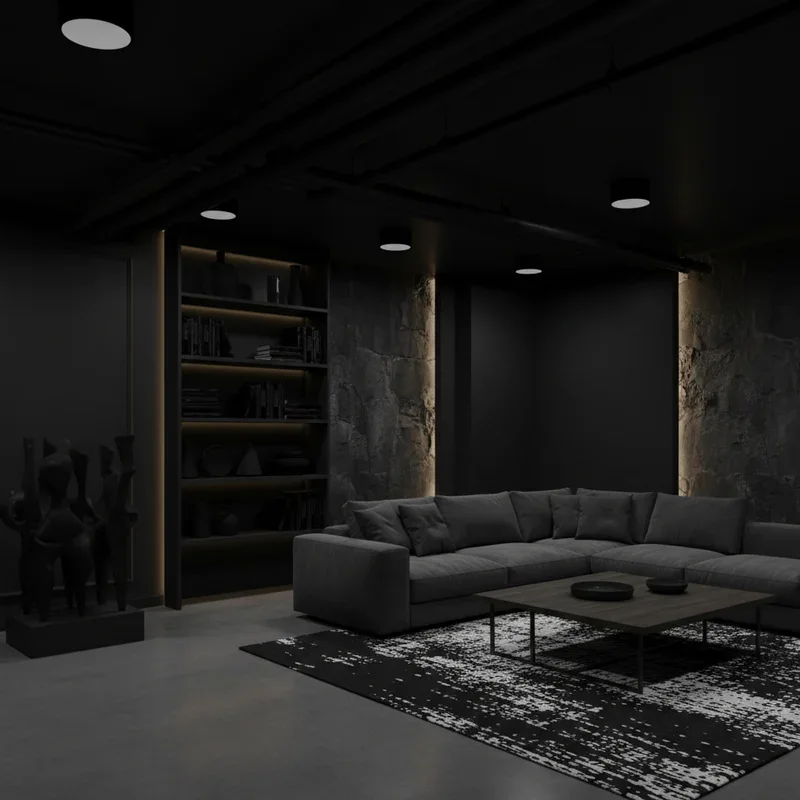
21. Embrace a Moody, Industrial Vibe with Textured Stone Walls
Designer Tip: In a dark, moody space like this, accent lighting is everything. The strategically placed strips of warm light within the wall crevices are the key to this entire look. They do more than illuminate; they create drama and highlight the rough texture of the dark stone-like walls. Without this integrated lighting, the walls would just be a flat, black surface. To replicate this, use LED light channels recessed into the walls or placed at the floor and ceiling junctions. Always choose warm white LEDs (2700K) to ensure the glow feels inviting, not sterile.
|
📋 Copy HEX 🔗 Share |
Real Talk: This dark, industrial aesthetic is incredibly cool and sophisticated, but it’s not for everyone or every home. This is a very specific, stylistic choice that creates a dramatic, cave-like, nocturnal atmosphere. It’s fantastic for a media room or a lounge intended for evening entertaining. However, if you need your basement to function as a bright playroom or a multi-purpose family room during the day, this look will likely feel too dark and oppressive. Be honest with yourself about how you need the space to function on a daily basis.
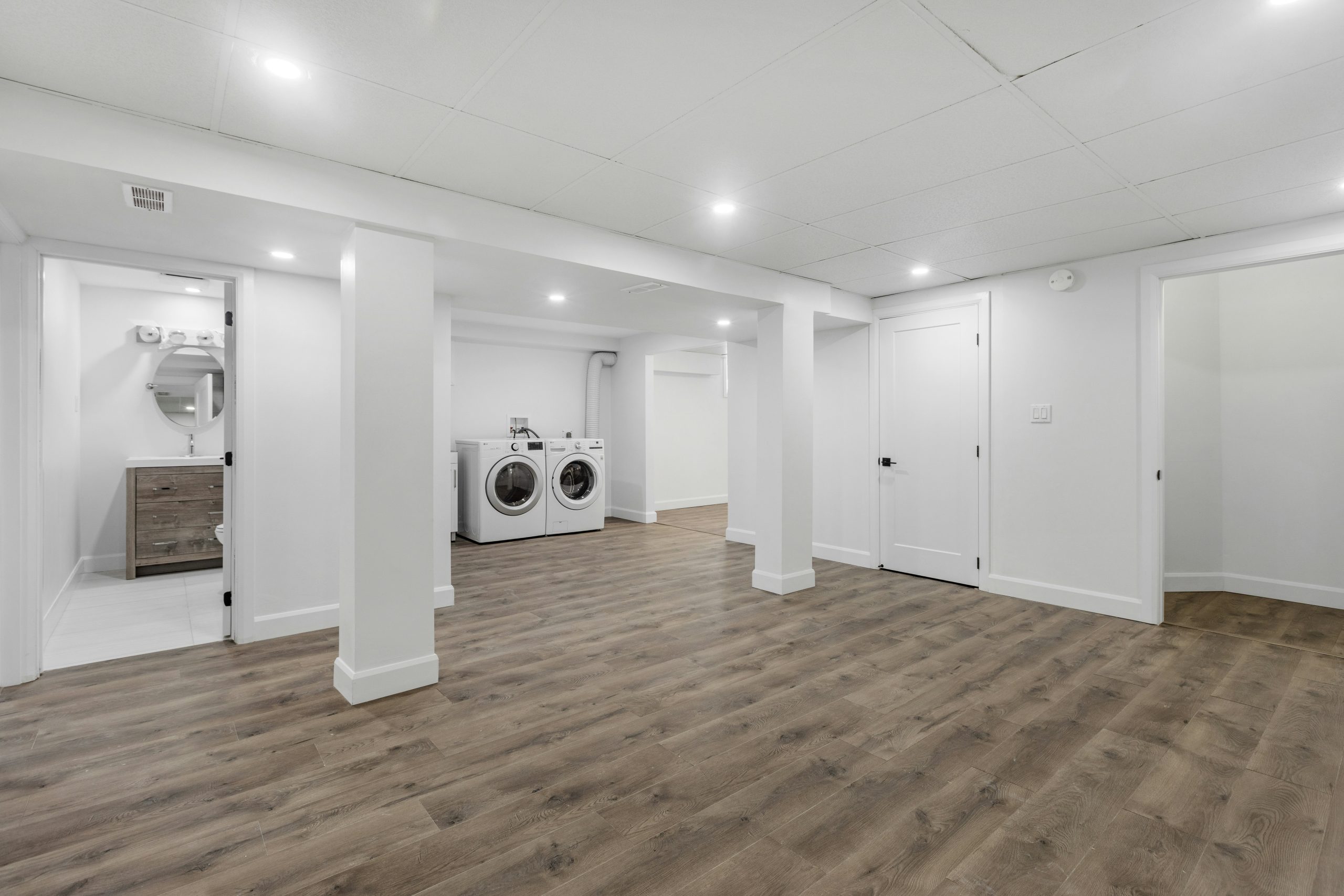
22. Create a Bright, Functional Space with White Walls and Washed Wood
Get This Look For Less: This is the quintessential budget-friendly basement finishing strategy. A crisp, clean white paint is inexpensive and instantly makes any space feel brighter and larger. Instead of expensive flooring, use washed-wood-look luxury vinyl plank (LVP). It’s affordable (often $2-$4/sq ft), durable, waterproof (perfect for basements), and DIY-friendly. For the drop ceiling, standard white tiles and a grid kit are the most cost-effective way to finish a ceiling while maintaining access to pipes and wiring. This entire look is built on smart, practical choices from your local home improvement store.
|
📋 Copy HEX 🔗 Share |
Maintenance Reality: The beauty of this space is its simplicity, but white requires vigilance. White walls, especially in a functional space with a laundry area, will show every scuff and smudge. Using a high-quality, washable paint in an eggshell or satin finish is a must. The washed wood floors are great for hiding dust, but be mindful of furniture scratching the vinyl. Use felt pads on everything. The biggest maintenance task will be keeping the white support columns clean, as they are magnets for handprints and bumps in a main walkway.
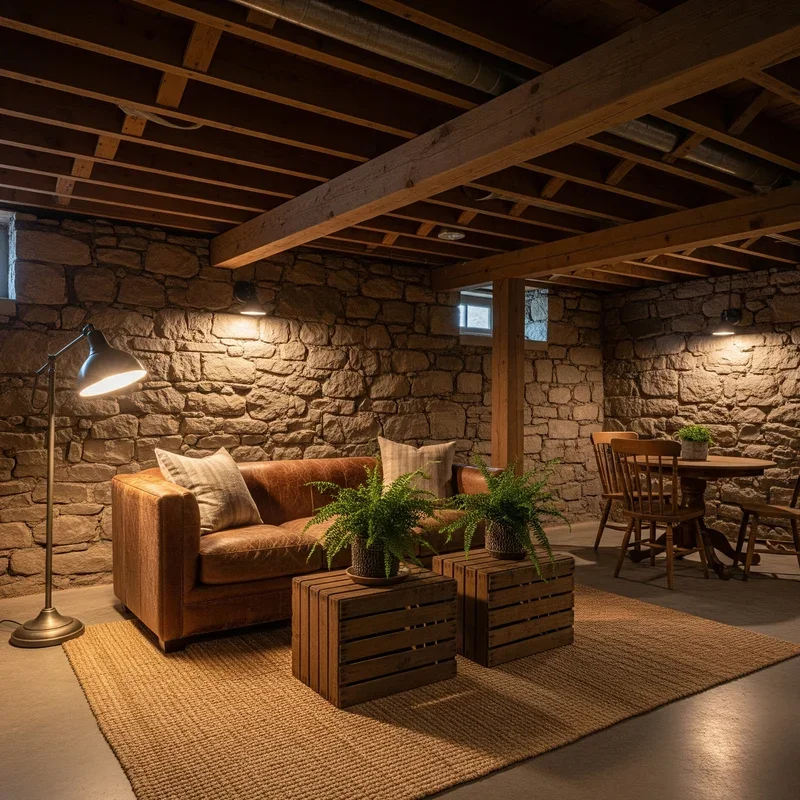
23. Go Rustic with Natural Stone, Exposed Beams, and Leather
The One Thing: The rough-hewn stone walls are the soul of this rustic basement. They are not an accent; they are the environment. This single material choice dictates the entire aesthetic of the room, providing a massive dose of texture, history, and natural color variation. Every other element—the dark wood beams, the worn leather sofa, the simple jute rug—is chosen to complement and enhance the primal, earthy quality of the stone. If you removed the stone, the rustic charm would completely vanish.
|
📋 Copy HEX 🔗 Share |
Scale Guide: A heavy, textural look with real stone and wood beams needs space and height to feel authentic and not overwhelming. This aesthetic is best suited for larger basements (400 sq. ft. or more) with at least 8-foot ceilings. The substantial visual weight of the stone and dark beams can make a small or low-ceilinged room feel cramped and cavernous. If you love this style but have a smaller basement, consider applying the stone to just one feature wall, as seen in the more contemporary take in Idea #27.
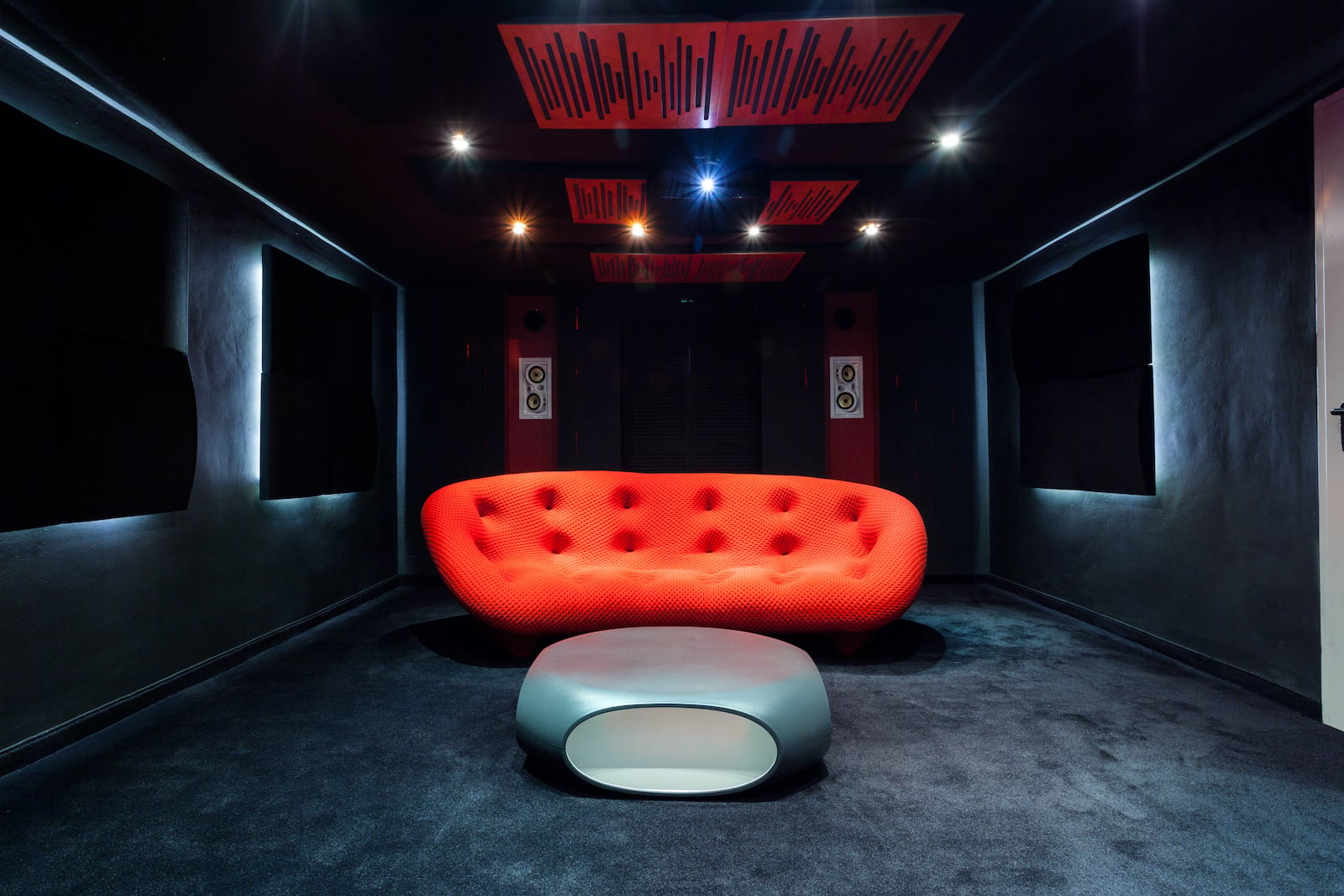
24. Design a Dynamic Media Room with Bold Red and Black
What Makes It Work: The success of this room lies in its fearless use of high contrast and repetition. The vibrant, tufted red sofa provides a powerful, singular pop of color. The key, however, is that the red is repeated in a different texture and context on the ceiling acoustic panels. This repetition makes the bold choice feel intentional and part of a cohesive design. The dark gray walls and carpet create a neutral, non-distracting envelope that allows the red elements and the bright white speakers to stand out dramatically.
|
📋 Copy HEX 🔗 Share |
Designer Tip: In a media room, acoustics are just as important as visuals. This room cleverly incorporates sound-absorbing materials that double as design elements. The textured red ceiling panels and the dark gray wall panels aren’t just for looks; they are crucial for absorbing sound, reducing echo, and creating a clearer audio experience. When designing a media space, always consider adding soft surfaces like acoustic panels, thick rugs, and upholstered furniture to improve sound quality. It’s a detail that makes a world of difference in how the room feels and functions.
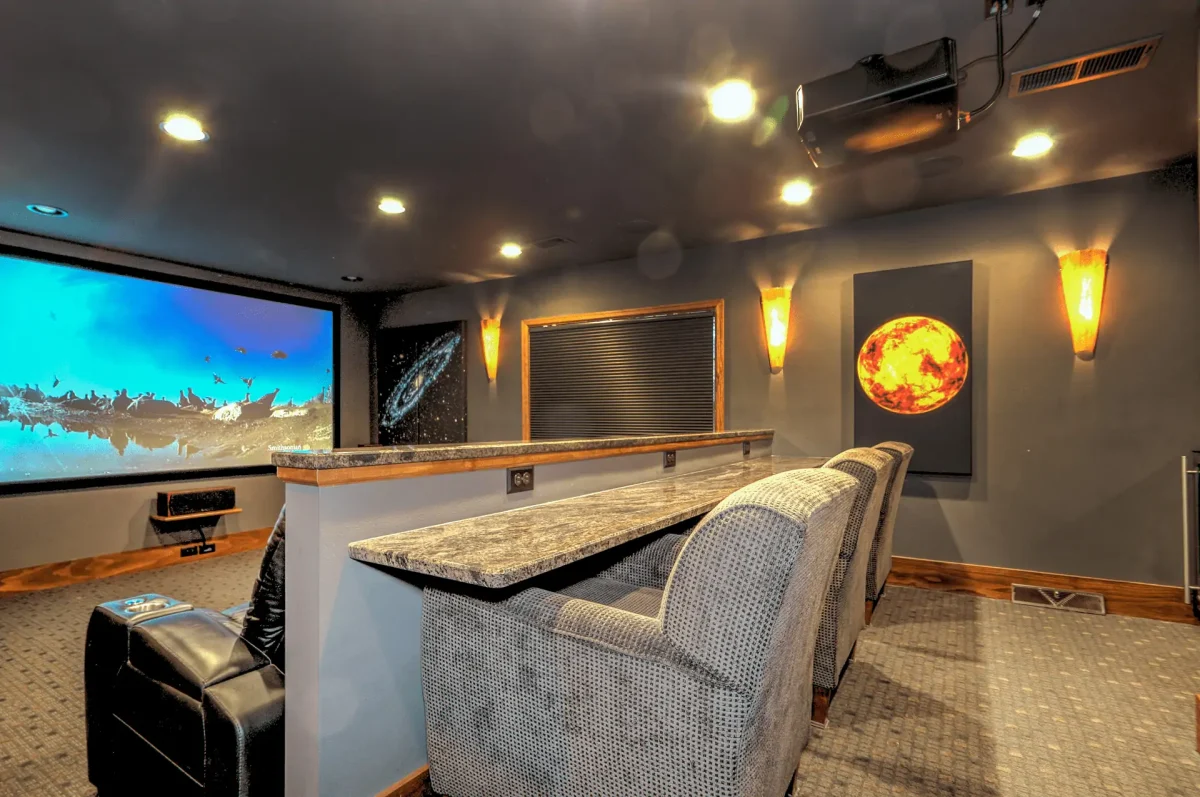
25. Maximize Light in a Basement with Low Ceilings
How-To Brief: The “Ceiling Lift” Paint Trick. (Time: 3-4 hours, Cost: $50-$80). A low ceiling is the classic basement challenge. Here’s how to create the illusion of height with paint.
- Choose a crisp, clean white paint with a bit of sheen—a flat finish can feel dead, so opt for eggshell or satin for the ceiling.
- Paint the entire ceiling white. This is the most reflective color and will bounce light around the room.
- Now for the trick: continue that same white paint down the top 6-12 inches of the walls.
- Tape a perfectly level line and paint the rest of the walls your chosen color. By blurring the line where the wall ends and the ceiling begins, you trick the eye into perceiving the ceiling as higher than it actually is.
|
📋 Copy HEX 🔗 Share |
Budget Breakdown: A stylish and functional basement remodel for a low-ceiling space focuses on light and smart materials.
- Paint: High-quality white for the ceiling and a light color for the walls: $100 – $150.
- Lighting: Upgrading to modern, slim LED recessed lights is crucial. Budget $30 – $50 per light, plus installation. For a 200 sq. ft. room, plan for 6-8 lights: $400 – $800 installed.
- Flooring: Light-colored, low-profile flooring like LVP or laminate: $3 – $6 per sq. ft. ($600 – $1200 for 200 sq. ft.).
- TOTAL: $1,100 – $2,150
Budget alternative: If new recessed lighting isn’t an option, use multiple floor and table lamps to bounce light off the white ceiling.
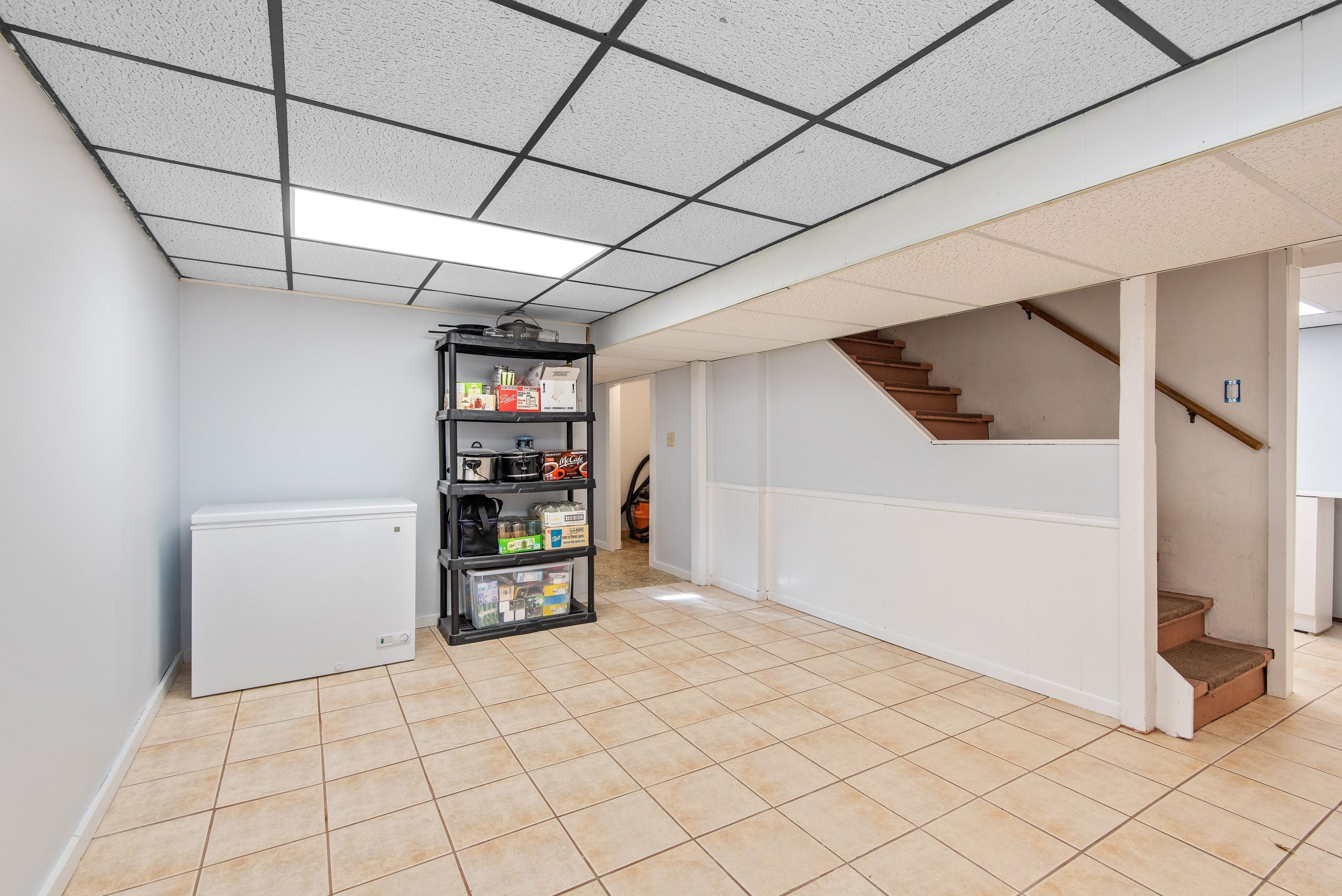
26. Upgrade a Utilitarian Space with a Calming Blue-Gray
Style Math: Even a basic, unfinished space has a formula. This one is 80% utilitarian function + 20% design potential. The bare floor tiles, drop ceiling, and chest freezer are the functional 80%. But the 20% is where the opportunity lies. The choice of a soft, light blue-gray for the walls, paired with crisp white wainscoting, is a definite step up from standard builder’s beige. This simple color choice adds a touch of intentionality and calm, hinting at what the space could become. It’s the first step in shifting the ratio more towards “design.”
|
📋 Copy HEX 🔗 Share |
Get This Look For Less: This is already a budget look, but the way to elevate it is by focusing on small, cheap upgrades. The goal is to move beyond its current state, like the finished version in Idea #4. A large, inexpensive area rug from Walmart or an online retailer ($150) would instantly cover the beige tiles and add warmth. Swapping the standard drop ceiling tiles for decorative “coffered look” tiles ($5-$10 per tile) can make a huge impact. Finally, hiding the freezer and plastic shelving behind a simple curtain hung from a tension rod ($40) would clean up the visual clutter.
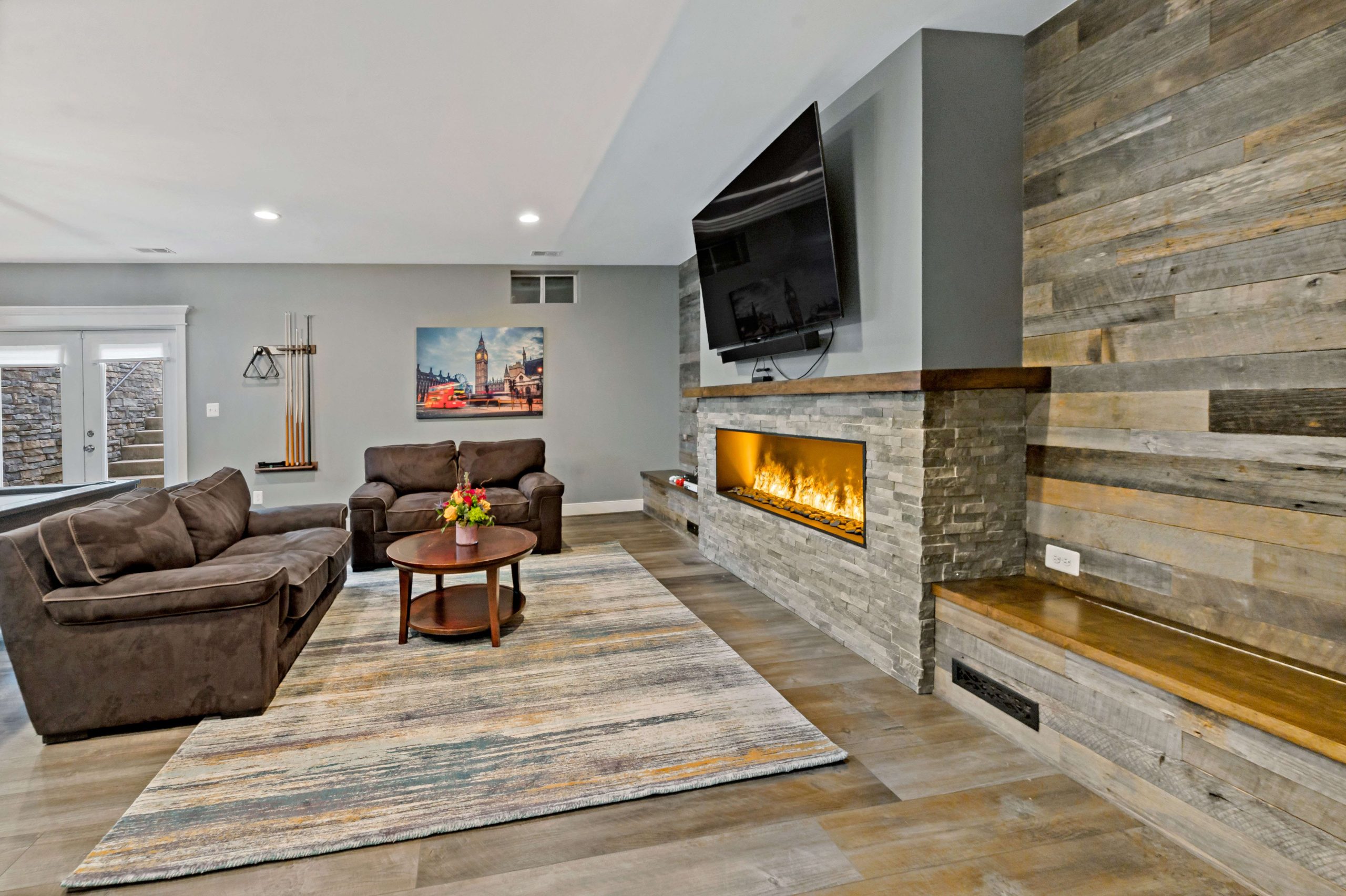
27. Combine Rustic Wood and Stone for a Cozy Retreat
What Makes It Work: This room is a masterclass in texture mixing within a tight color palette. The main colors are just gray and brown, but it looks incredibly rich because of the varied surfaces. You have the smooth, painted gray walls, the rough gray stacked stone of the fireplace, the weathered gray-brown of the reclaimed wood wall, and the soft brown of the sofas. The different materials all reflect light in a unique way, creating depth and preventing the simple color scheme from feeling boring. The multi-color rug cleverly pulls all these tones together.
|
📋 Copy HEX 🔗 Share |
How-To Brief: Create a Faux Reclaimed Wood Wall. (Time: 1 day, Cost: $200-$500).
- Measure your wall to determine the square footage you need to cover.
- Choose your material. You can use real reclaimed pallet wood (which requires a lot of prep), or for a much easier and more consistent result, buy peel-and-stick wood planks (like Stikwood) or lightweight faux-wood wall paneling.
- Ensure your wall is clean, dry, and smooth.
- If using panels, find and mark your studs. If using peel-and-stick, this is less critical but still good practice.
- Start from one corner and work your way across, staggering the seams of the planks just like you would with flooring to create a natural, random look.
- Press each plank firmly in place. Use a J-roller to ensure strong adhesion for peel-and-stick products.
Ready to Reclaim Your Lower Level?
Whew, that was a lot of inspiration! But hopefully, you’re now seeing your basement’s potential in a whole new light (and color). The perfect basement for your home is one that feels like a true extension of your upstairs living space, not an afterthought. Take some of these ideas, grab your favorite paint swatches, and start planning.
Don’t forget to check your Pinterest boards to see which of these looks you’ve saved—your next project is waiting!