
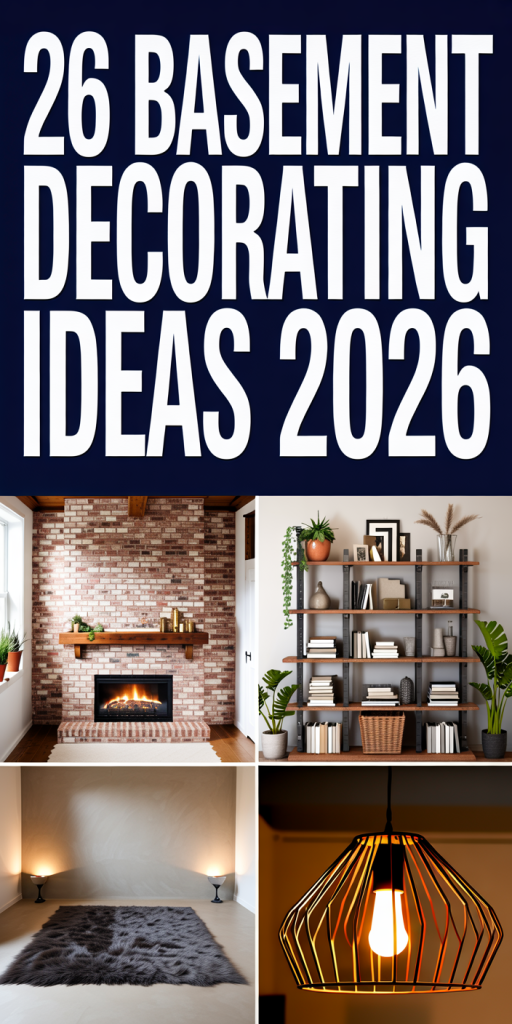
You know that feeling when you finally find the basement-decorating idea that looks exactly right for your space, but you’re not sure how to make it happen? We’ve been there. That’s why we dove deep into real homes and designer projects to pull together 26 distinct ideas that actually work. We’re covering everything from cozy modern living areas to rustic game rooms. For 2026, it’s all about creating multifunctional zones that are as beautiful as they are practical, turning that forgotten lower level into a true extension of your home. And stay until the end — we break down the most common mistakes that can ruin these looks. 📌 Save this to Pinterest for later — you’ll want to revisit these ideas.
1. Create an Open Plan with a Dark Slat Wall and Light Furnishings
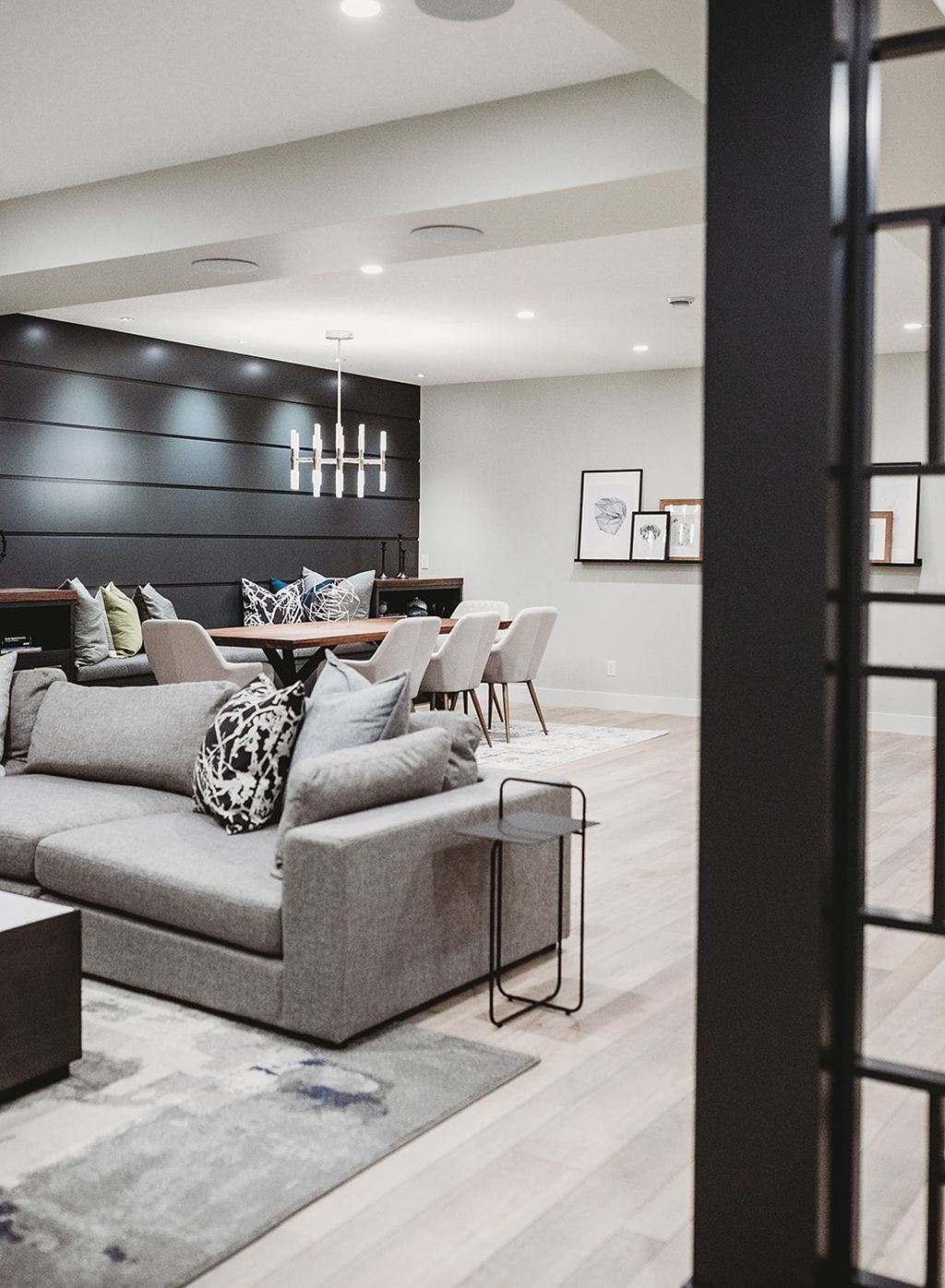
What makes this work is the bold use of contrast. The dark, horizontally slatted accent wall adds depth and architectural interest, visually widening the space. By pairing this strong feature with a light grey sectional sofa and blonde wood floors, the room feels balanced and airy, not heavy or dark. The dark wall becomes a sophisticated backdrop that makes the lighter elements in the room pop, creating a dynamic and inviting open-plan area that cleverly combines dining and lounging without feeling crowded.
|
📋 Copy HEX 🔗 Share |
When using a dark, heavily textured accent wall like this slatted one, keep the surrounding walls and ceiling a bright, neutral white. This prevents the room from feeling weighed down and ensures the feature wall is the undisputed star of the show. To finish the look, you need at least three layers of light: general overhead (like the recessed lights), a statement fixture (like the dining chandelier), and ambient or task lighting, which could be a floor lamp not pictured. This layering is what creates warmth and dimension.
2. Go for a Playful Nautical Vibe with Patterned Wallpaper and Woven Textures
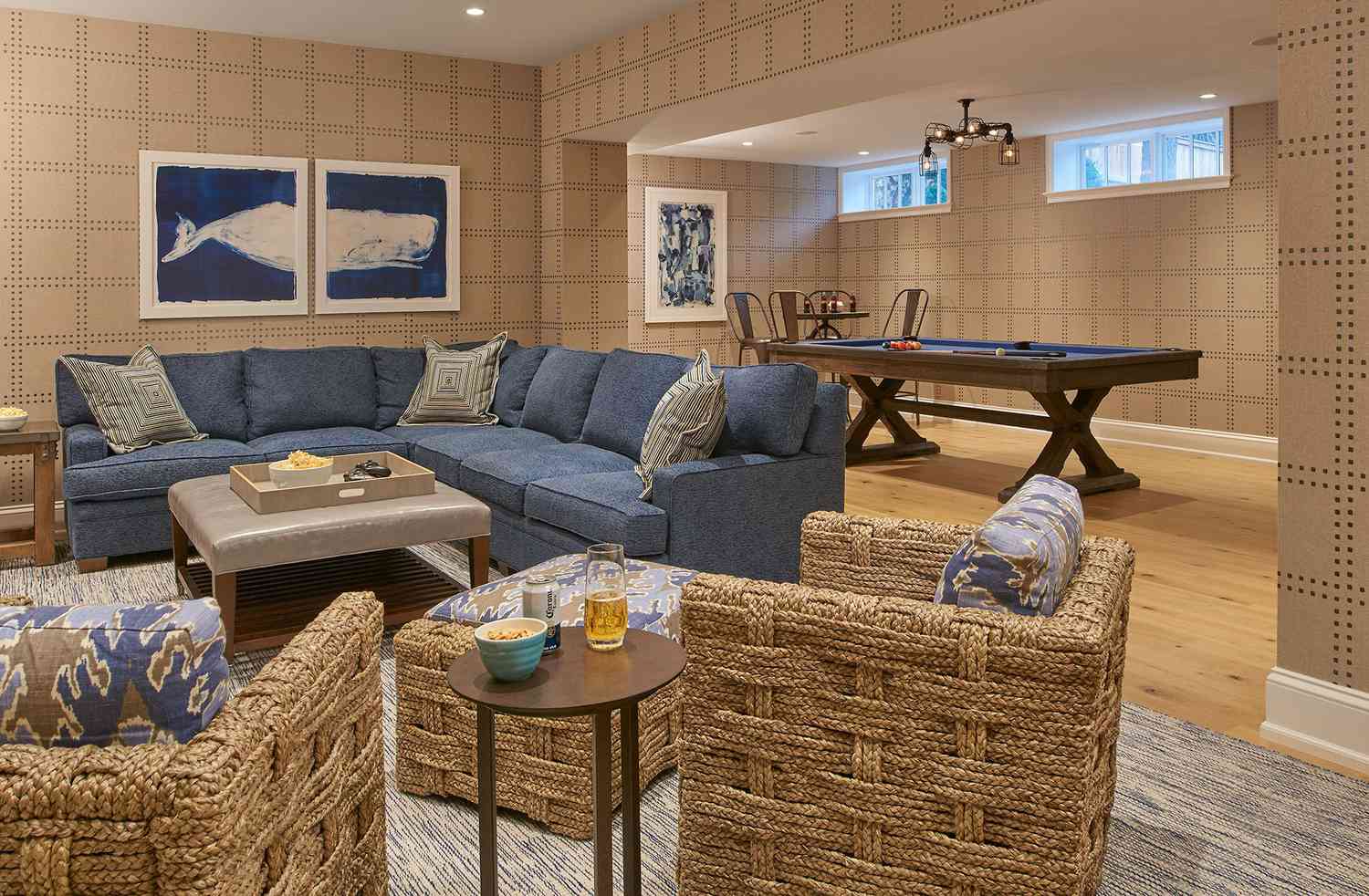
The formula for this relaxed, coastal feel is surprisingly simple: 50% calm neutrals (the patterned beige wallpaper, light hardwood floors) + 30% a single deep accent color (the navy blue sectional) + 20% natural textures (the woven armchairs, rattan ottomans, and wood pool table). This recipe ensures the room feels thematic but not kitschy. You could easily swap the navy blue for a deep forest green and the whale art for botanical prints to get a completely different, earthier vibe while keeping the same balanced, stylish foundation.
|
📋 Copy HEX 🔗 Share |
A pool table is a fantastic centerpiece for an entertainment-focused basement, but you have to be honest about the real estate it requires. For comfortable play, you need a minimum of 5 feet of clearance on all sides of the table. That means a standard 8-foot table needs a room that is at least 17.5 feet by 14 feet, just for the table area. If your basement is on the tighter side, a high-quality foosball or air hockey table can provide a similar social hub without dominating the entire floor plan.
3. Add Character with Board and Batten Paneling and a Green Sofa
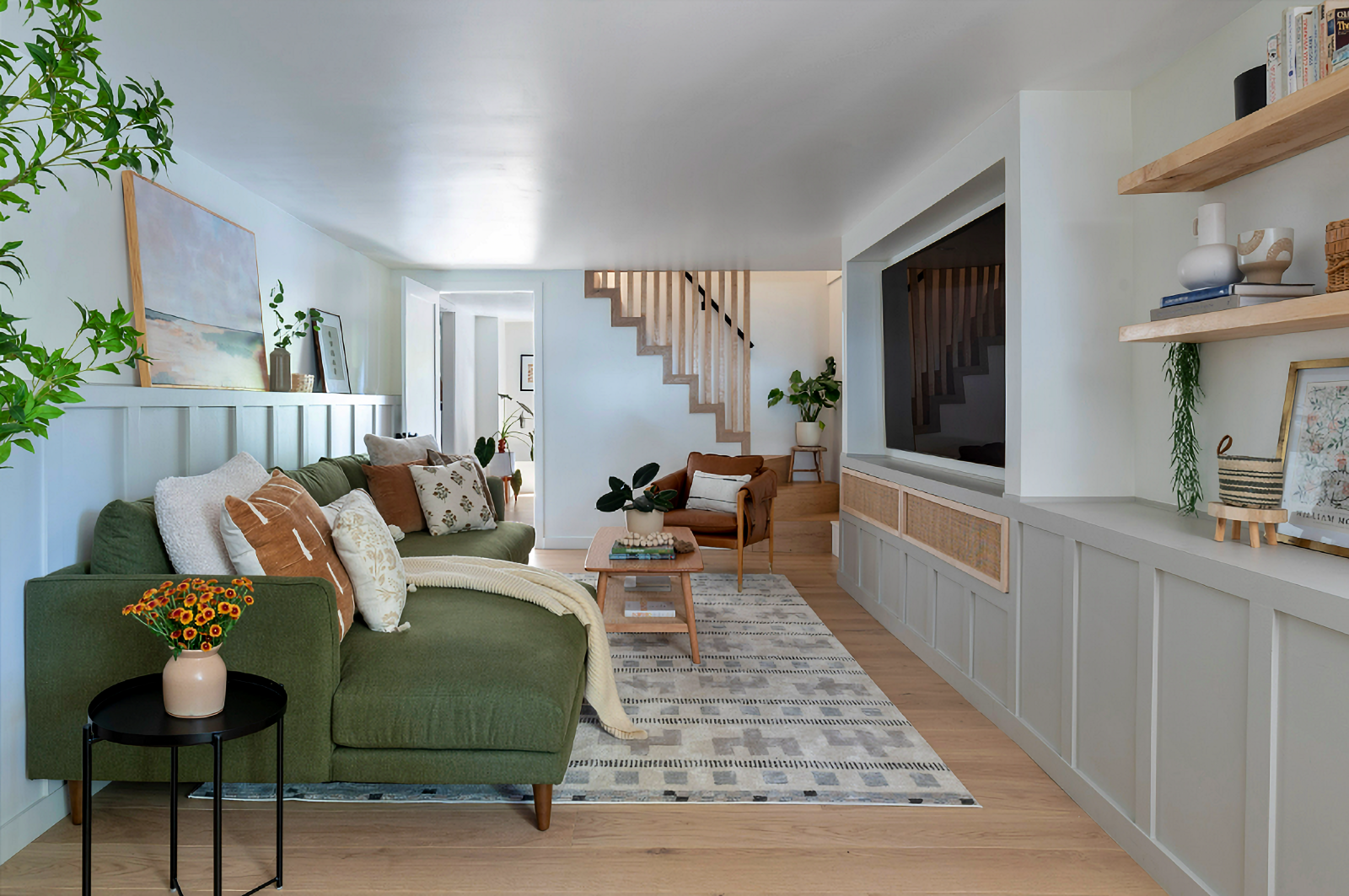
The single element that makes this room sing is the wainscot and batten paneling. In a basement, which can often lack architectural character, this detail adds a custom, high-end feel for a relatively low cost. It cleverly frames the recessed television, making it feel like an intentional part of the design rather than just a black rectangle on a wall. More importantly, the vertical lines draw the eye upward, creating an illusion of height and making the entire space feel brighter and more spacious.
|
📋 Copy HEX 🔗 Share |
You can create a simple board and batten accent wall in a weekend. Here’s a quick guide:
- Plan Your Layout: Decide on the height of your top horizontal board and the spacing of your vertical battens (typically 12-20 inches apart). Use painter’s tape to visualize it on the wall.
- Install the Horizontal Board: Cut your 1×4 MDF or pine board to length, ensure it’s level, and nail it to the wall studs.
- Add Vertical Battens: Measure and cut your vertical 1×3 battens to fit snugly between the top board and your baseboard. Attach them with construction adhesive and finishing nails.
- Finish and Paint: Caulk all the seams and fill nail holes. Once dry, sand everything smooth and apply two coats of paint for a seamless, built-in look.
Time estimate: 6-8 hours. Cost: $150-$300 for a typical 12-foot wall.
4. Embrace Coziness with a Deep Sectional and Warm Wood Shelves
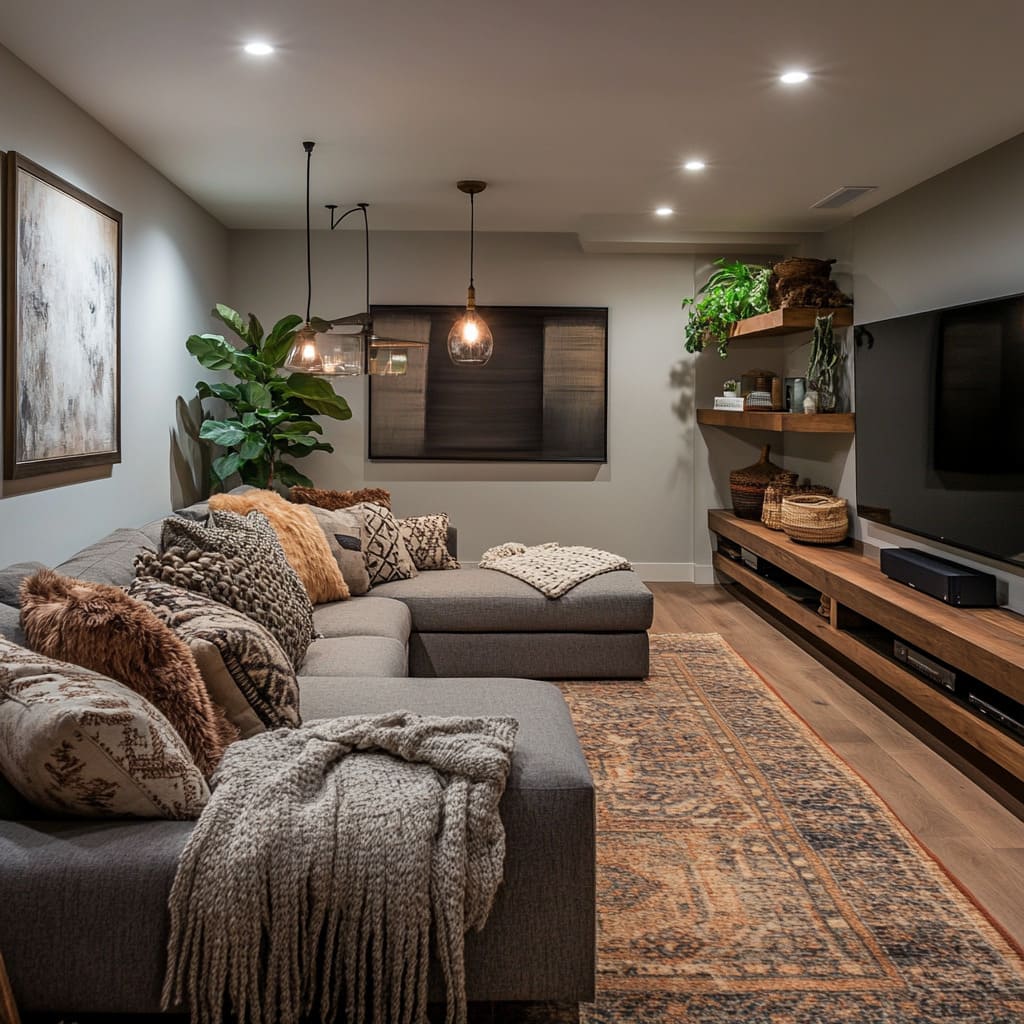
You don’t need expensive custom millwork to achieve this warm, layered look. You can get a very similar floating shelf effect with IKEA’s BERGSHULT/PERSHULT system, which offers deep, sturdy shelves in a warm wood finish for around $40 per shelf. For the long console, scour Facebook Marketplace or a local thrift store for a vintage mid-century credenza. A quick sanding and a coat of walnut stain can make an old piece look new again and match the shelves perfectly, giving you that high-end look for under $300.
|
📋 Copy HEX 🔗 Share |
To get that effortlessly plush and inviting look on your sectional, always use pillow inserts that are 2 inches larger than your pillow covers. For a 20×20-inch cover, you need a 22×22-inch insert, preferably a feather-down blend. This is the secret to avoiding sad, flimsy-looking pillows. The oversized insert completely fills out the corners and gives the pillow a firm, choppable structure that looks professionally styled. It’s a small detail that makes a huge difference in perceived quality and comfort.
5. Mix Textures with Shiplap and a Horizontal Wood-Clad Fireplace
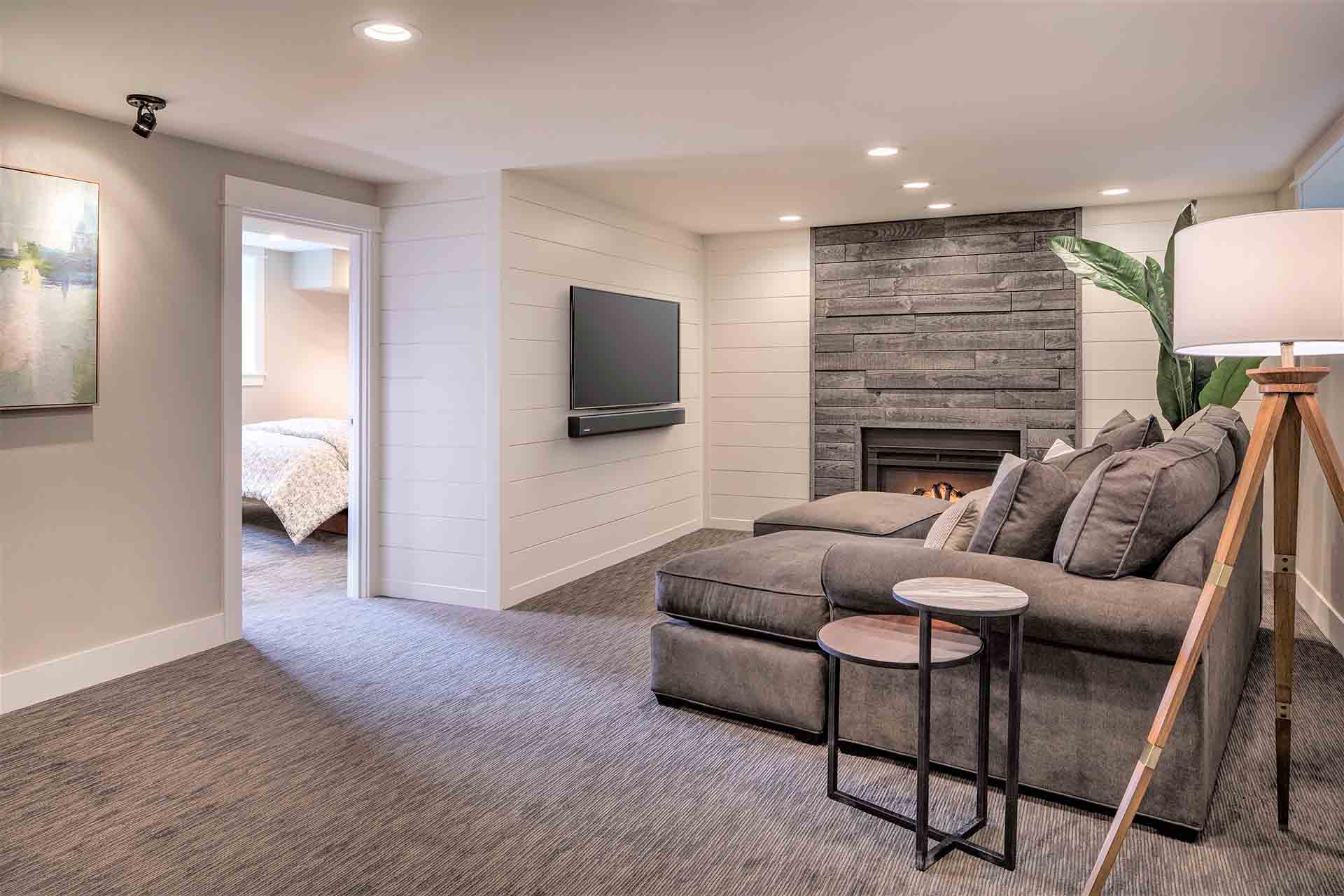
The success of this design lies in its sophisticated blend of textures. The clean, crisp horizontal lines of the white shiplap provide a bright, modern backdrop that contrasts beautifully with the chunky, rustic grain of the grey wood-clad fireplace surround. This pairing creates a single, powerful focal point that feels both contemporary and cozy. The deep charcoal of the large sectional acts as a grounding anchor for the room, allowing the different wall materials to stand out without competing with each other.
|
📋 Copy HEX 🔗 Share |
This layered-texture approach works best in a basement with at least 8-foot ceilings and a wall that’s at least 10-12 feet wide. The combination of shiplap, a fireplace, and a TV needs room to breathe; otherwise, it can feel cluttered. If your space is smaller, you might choose just one or two of these elements—for instance, a full wall of shiplap with a mounted TV, or a fireplace as the sole feature. For a similar cozy vibe in a more compact space, look at the simpler setup in Idea #4.
6. Create a Moody Lounge with Deep Blue Walls and an Olive Sofa
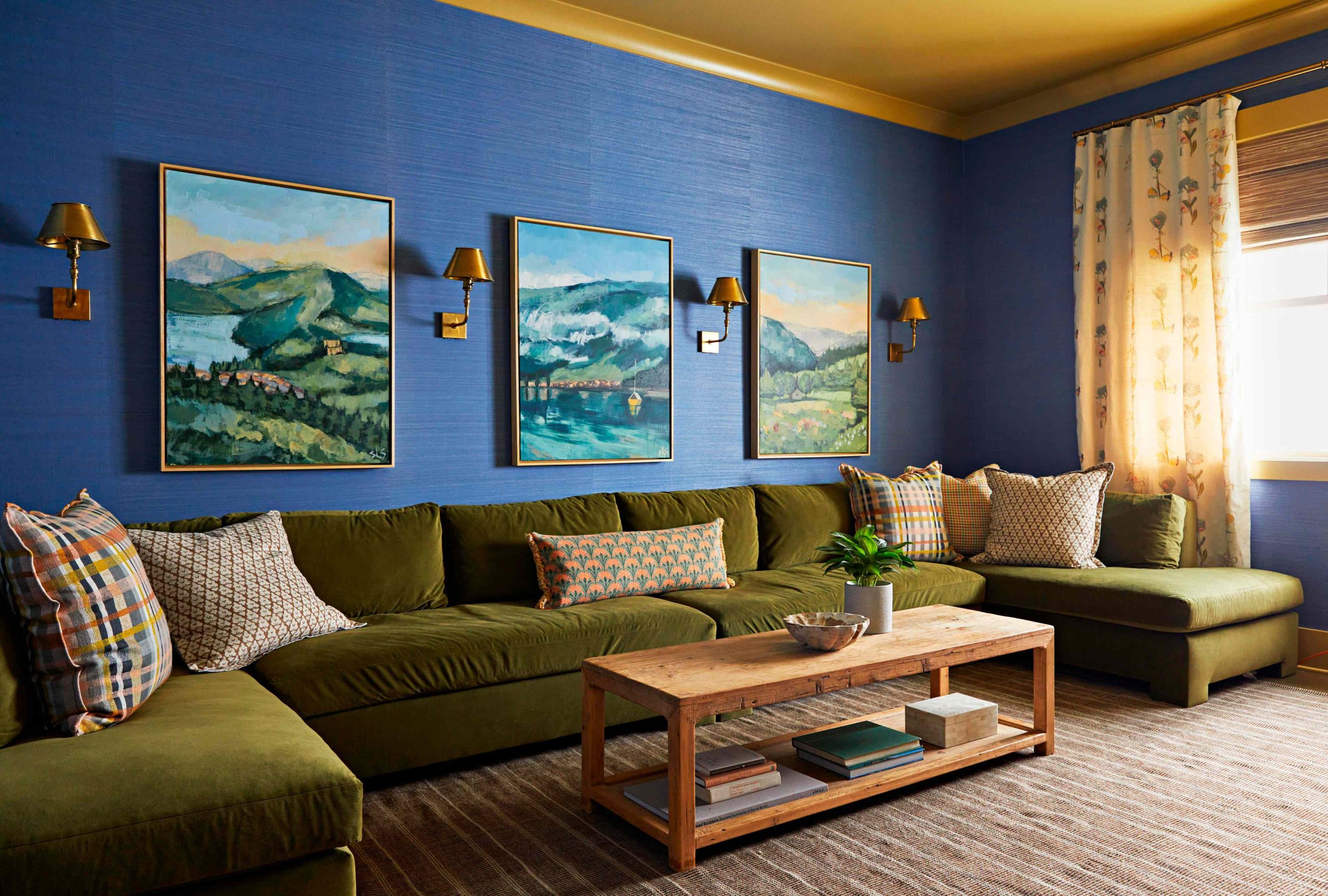
This look is leaning into the “dark and moody” trend that’s been dominating Pinterest, but with a sophisticated, earthy twist. Instead of black or charcoal, it uses a deep, complex blue with the added texture of grasscloth, giving it a richer, more organic feel. The pairing with an olive green velvet sofa is a direct nod to the growing popularity of nature-inspired palettes. This isn’t just about being dark; it’s about creating a cozy, enveloping space that feels like a retreat from the world, which is a major design priority in 2026.
|
📋 Copy HEX 🔗 Share |
Grasscloth wallpaper is absolutely beautiful, but it’s not for a high-traffic, kid-and-pet-friendly zone without some considerations. The natural fibers can be delicate and are susceptible to snagging. More importantly, it is notoriously difficult to clean; you can’t just wipe it down with a wet cloth. Water can stain it, and scrubbing will damage the fibers. This wall treatment is best reserved for a more adult-centric lounge area where the risk of scuffs, spills, and sticky fingers is low.
7. Design a Multifunctional Hub with a Kitchenette and Reading Nook
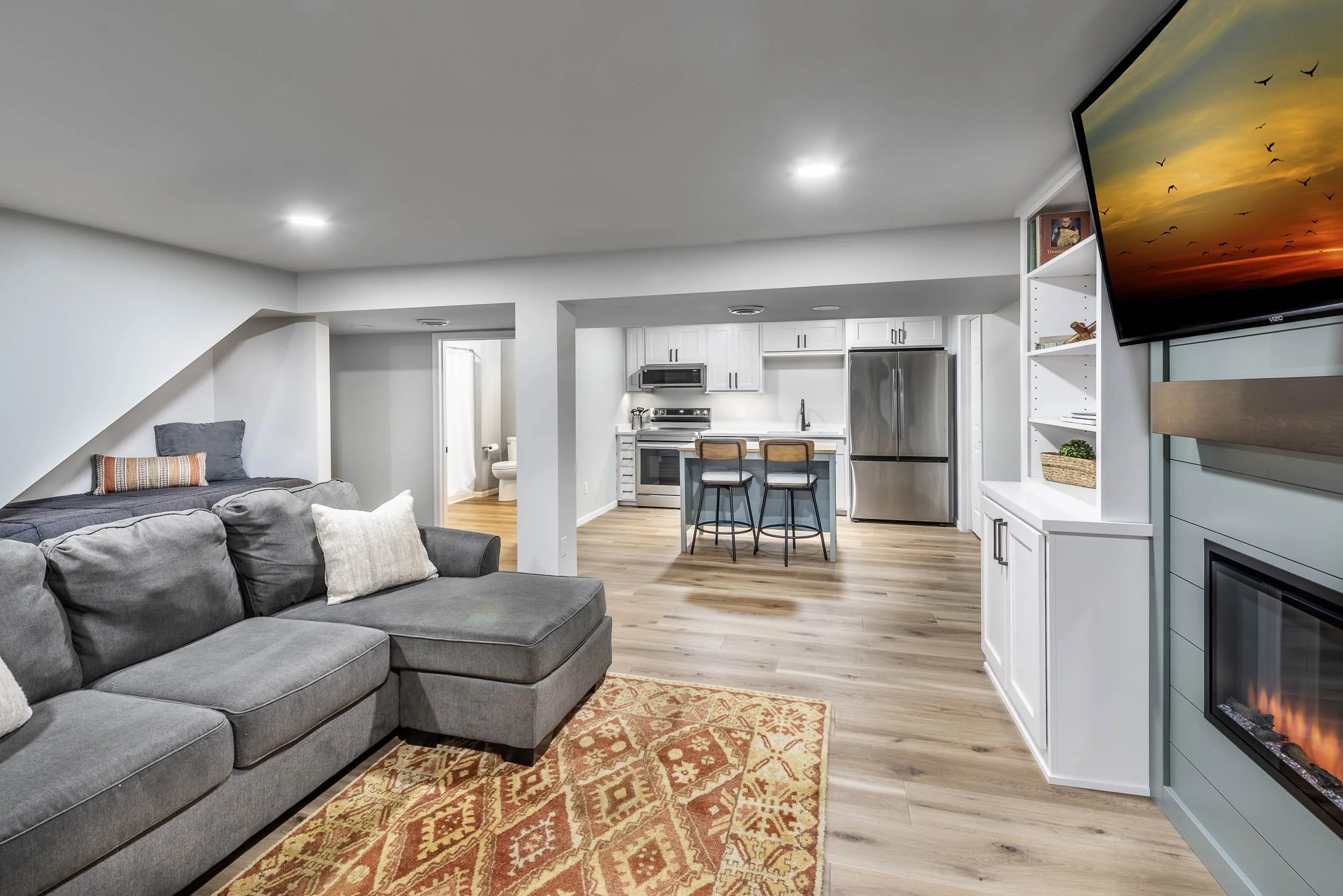
The absolute star of this basement is the built-in sleeping/reading nook under the stairs. This is a genius use of what is often awkward, wasted space. It transforms the area into a cozy destination, adding immense charm and function. It provides a quiet spot to curl up with a book, a place for guests to crash, or just a comfy hideaway for the kids. It’s the one feature that elevates the basement from a simple living area to a truly thoughtful, multi-purpose family hub that feels custom and intentional.
|
📋 Copy HEX 🔗 Share |
You don’t need a full-scale renovation to create a functional kitchenette. Instead of custom cabinetry, use IKEA’s kitchen base cabinets with a laminate countertop you cut to size. For the backsplash, skip the tile and use a peel-and-stick tile product for a similar look at a fraction of the cost and effort. You can often find small ‘apartment-sized’ refrigerators and microwaves on sale at big-box stores like Home Depot or Lowe’s, saving you hundreds over full-sized appliances. You can create a very usable kitchenette like this for under $1,500.
8. Get a Modern Rustic Vibe with a Faux Fireplace and Reclaimed Wood
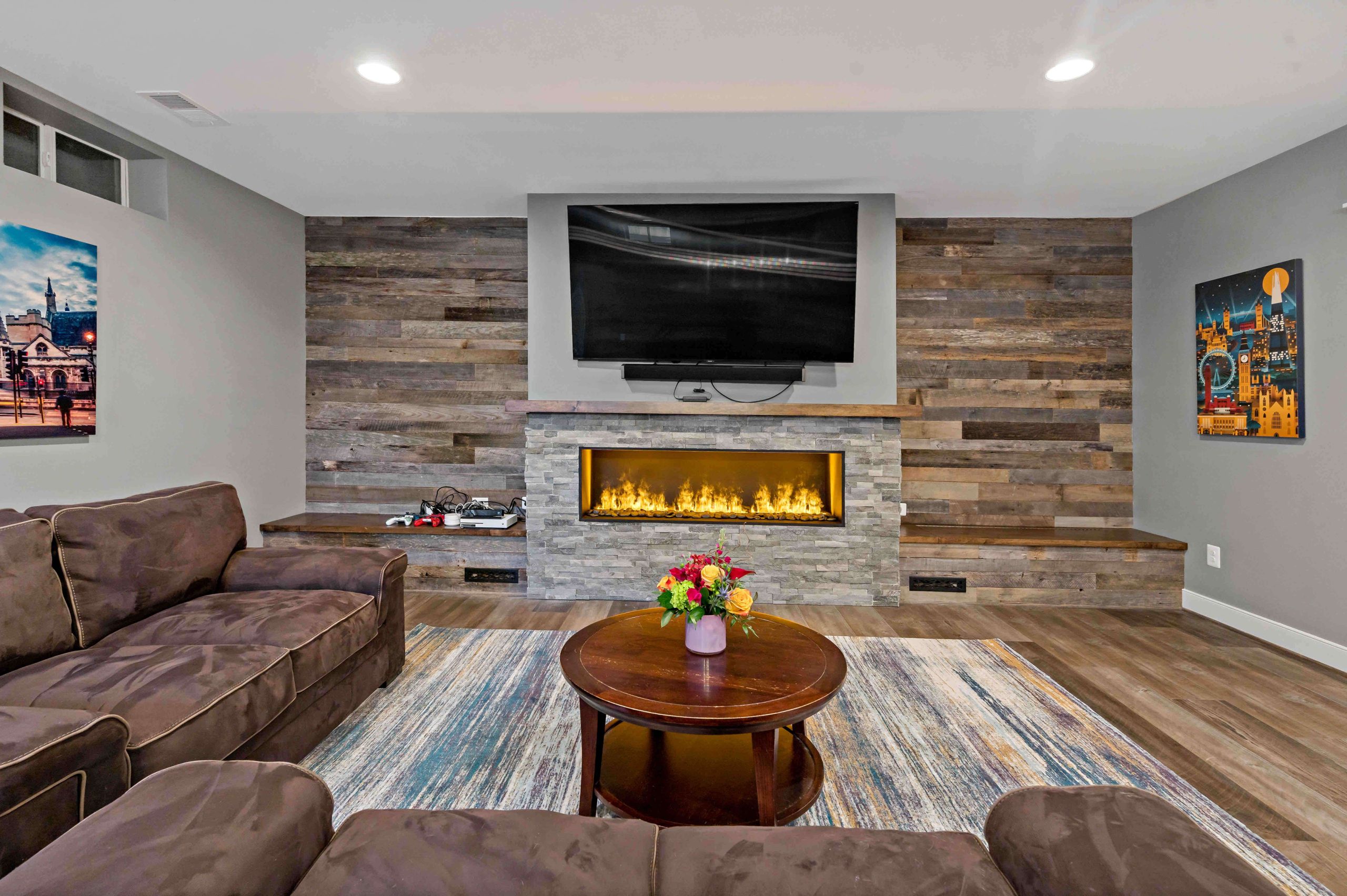
This room successfully merges rustic and modern by balancing raw textures with clean lines. The reclaimed wood accent wall and stacked stone fireplace surround bring in that warm, rustic, cabin-like feel. However, the sleek, linear form of the electric fireplace insert, the simple black soundbar, and the large, unadorned TV are purely modern. This juxtaposition works because the color palette is tight and controlled—sticking to browns, grays, and blacks prevents the mix of materials from looking chaotic and instead feels curated and intentional.
|
📋 Copy HEX 🔗 Share |
A reclaimed wood wall is a stunning feature, but be aware of what you’re signing up for. The uneven surfaces and crevices are major dust collectors. You’ll need to go over it with a vacuum cleaner’s brush attachment at least once a month to keep it looking clean. Also, if you’re using authentic reclaimed barn wood, ensure it has been properly treated and sealed to eliminate any risk of pests or splinters. If you love the look but not the upkeep, consider high-quality wood-look laminate paneling instead.
9. Combine Blue Cabinetry, Leather, and a Chevron Barn Door
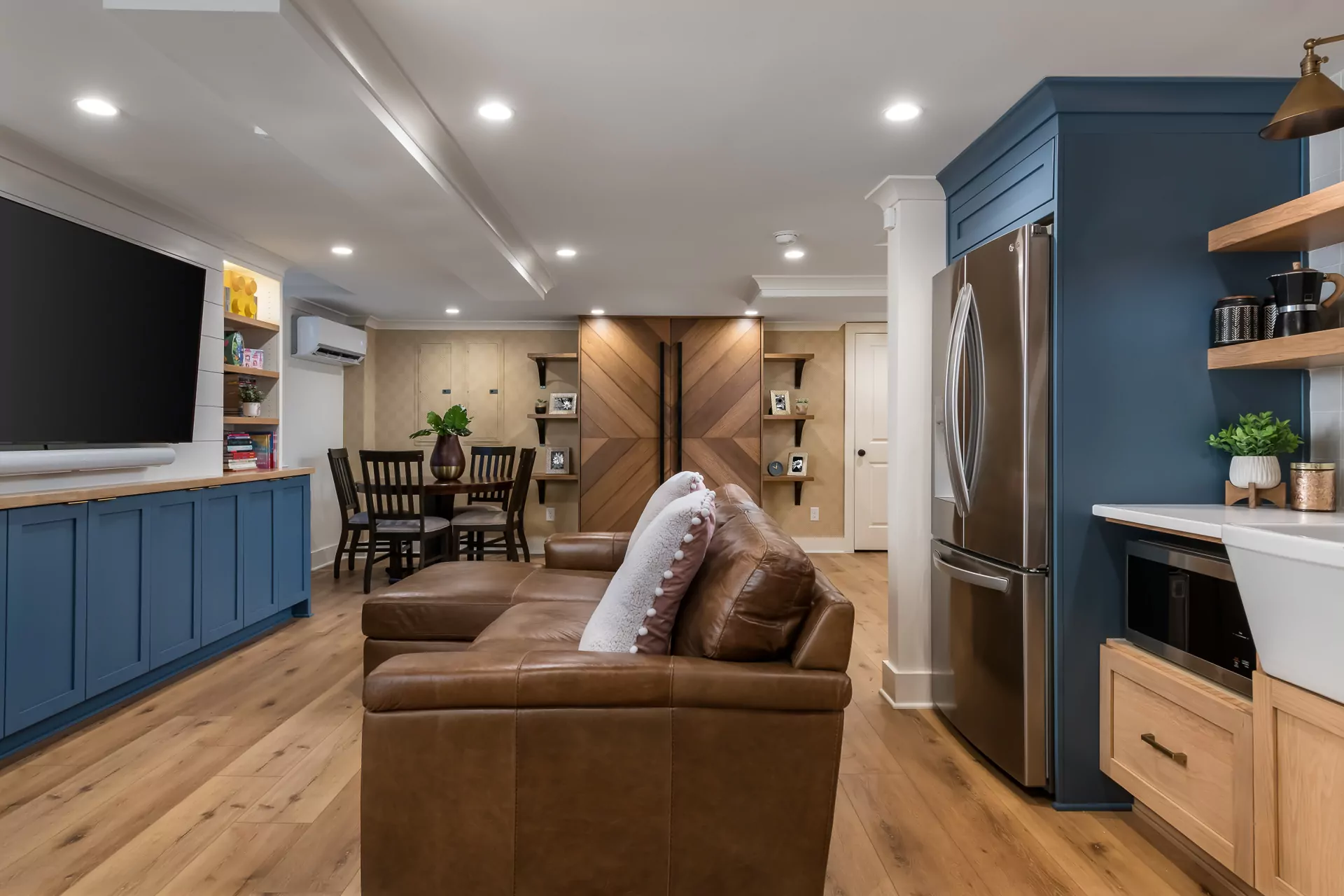
To make built-in cabinetry look truly custom and high-end, paint it a bold, saturated color like this navy blue. Then, carry that same color onto at least one other element in the room to make it feel intentional. Here, they’ve subtly matched the blue on the inside of the open shelving unit. This creates a cohesive thread that ties the room together. For the final touch, use high-quality hardware. The slim, modern pulls on these cabinets elevate the entire unit from simple storage to a true design feature.
|
📋 Copy HEX 🔗 Share |
An open-concept basement like this works best in a space that is at least 20 feet long and 15 feet wide. This allows for distinct zones—living, dining, and kitchenette—without them feeling cramped on top of one another. The key is to maintain clear pathways, at least 36 inches wide, between the zones. The chevron barn door is a great space-saver, but remember you need an empty stretch of wall equal to the door’s width for it to slide open. For a look with similar navy cabinetry in a more condensed space, check out Idea #12.
10. Craft a Sophisticated Home Theater with Dark Teal Paneling
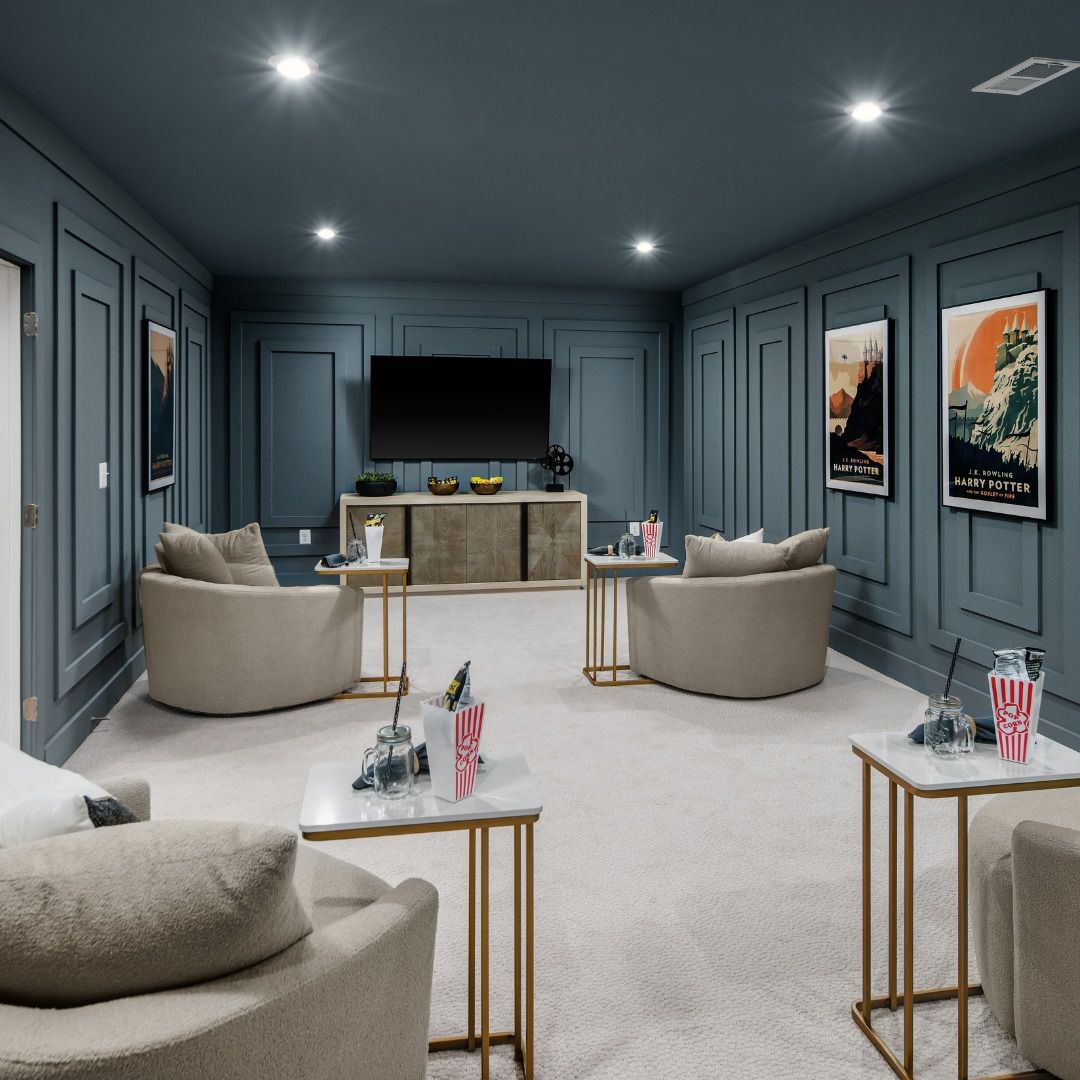
This design succeeds by committing fully to a dark, moody aesthetic without letting it become oppressive. The dark teal paneled walls create a cozy, cocoon-like effect perfect for a cinematic experience. The key is the balance: the light-colored carpet, bright white ceiling, and ample recessed lighting bounce light around the room, preventing it from feeling like a cave. The choice of plush, rounded beige armchairs instead of a bulky dark sofa adds softness and a bright counterpoint, while the slim, gold-accented tables add a touch of glamour and reflective shine.
|
📋 Copy HEX 🔗 Share |
A dedicated theater room feels luxurious, but remember that light and sound are your biggest enemies. A standard basement window can ruin the cinematic experience with light leaks and street noise. You’ll need to invest in high-quality blackout shades or even a custom window plug. Furthermore, soundproofing is crucial. Consider adding an extra layer of drywall with a product like Green Glue between the sheets, and use solid-core doors to keep the movie sounds in and the household sounds out. These aren’t glamorous upgrades, but they’re essential for the room to function as intended.
11. Pair Moody Teal Walls with Light Wood and Corduroy
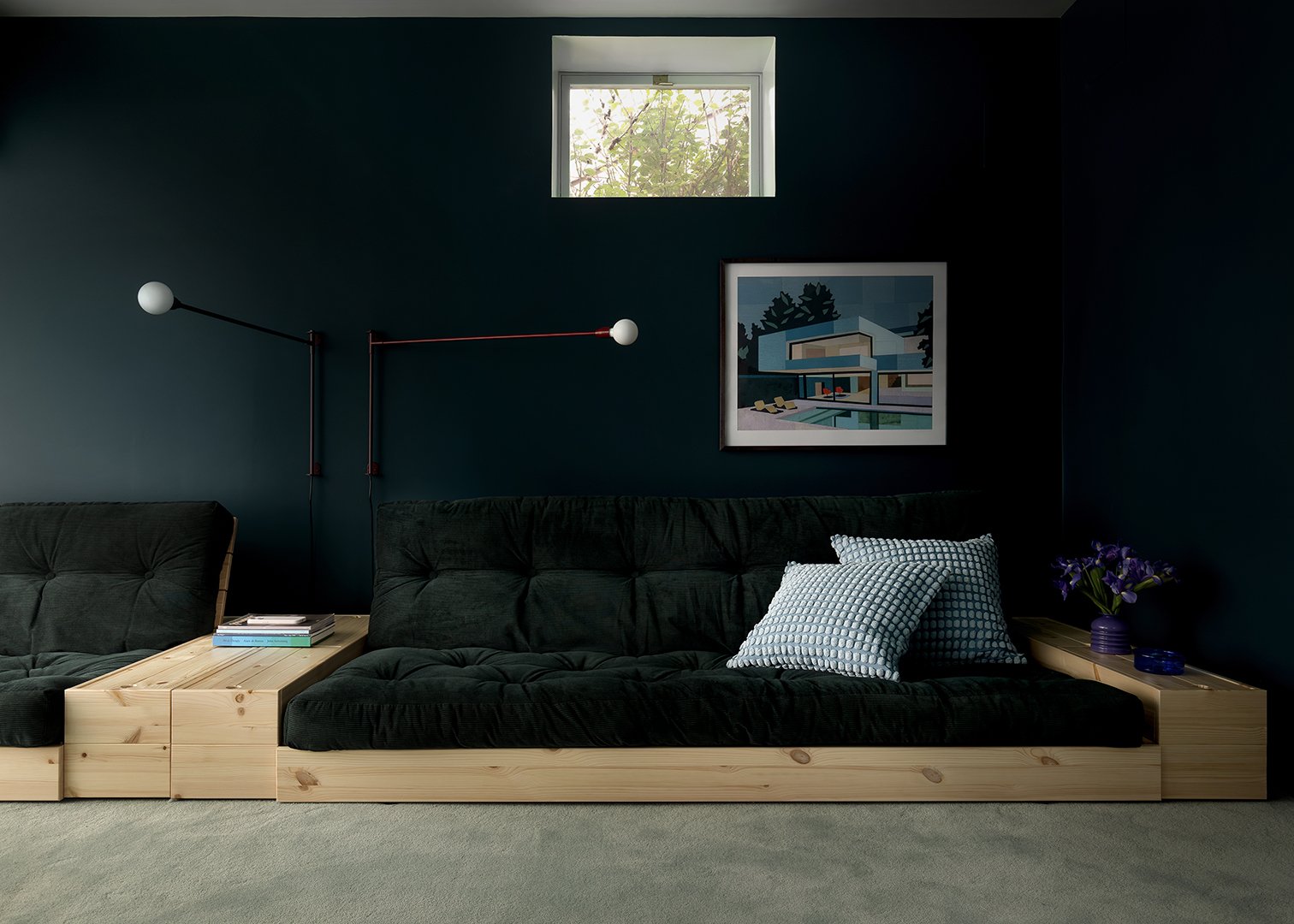
Here’s the recipe for this modern, moody lounge: 60% dramatic wall color (the deep, saturated teal) + 30% natural, light-toned wood (the futon bases and built-in table) + 10% curated color pops (the light blue cushions, green carpet, and red lamp arm). This formula allows the wall color to be the hero while the light wood keeps it from feeling too heavy. The small, intentional color accents add a layer of personality and keep the eye moving. You could swap the teal for a charcoal gray and get an equally sophisticated but more neutral result.
|
📋 Copy HEX 🔗 Share |
This custom sectional look can be recreated on a budget. Look for two separate armless futons or floor sofas from a store like Wayfair or even Walmart. Place a simple, inexpensive side table between them to fake the built-in look. For the seating itself, search for ‘corduroy floor cushions’ or ‘armless sleeper chair. ‘The key is finding two identical pieces and uniting them with a single table. For the modern lighting, explore options from Target’s Open Story line or IKEA for stylish wall sconces under $50.
12. Anchor a Lounge with a Dark Blue Paneled Wall and a Built-in Bar
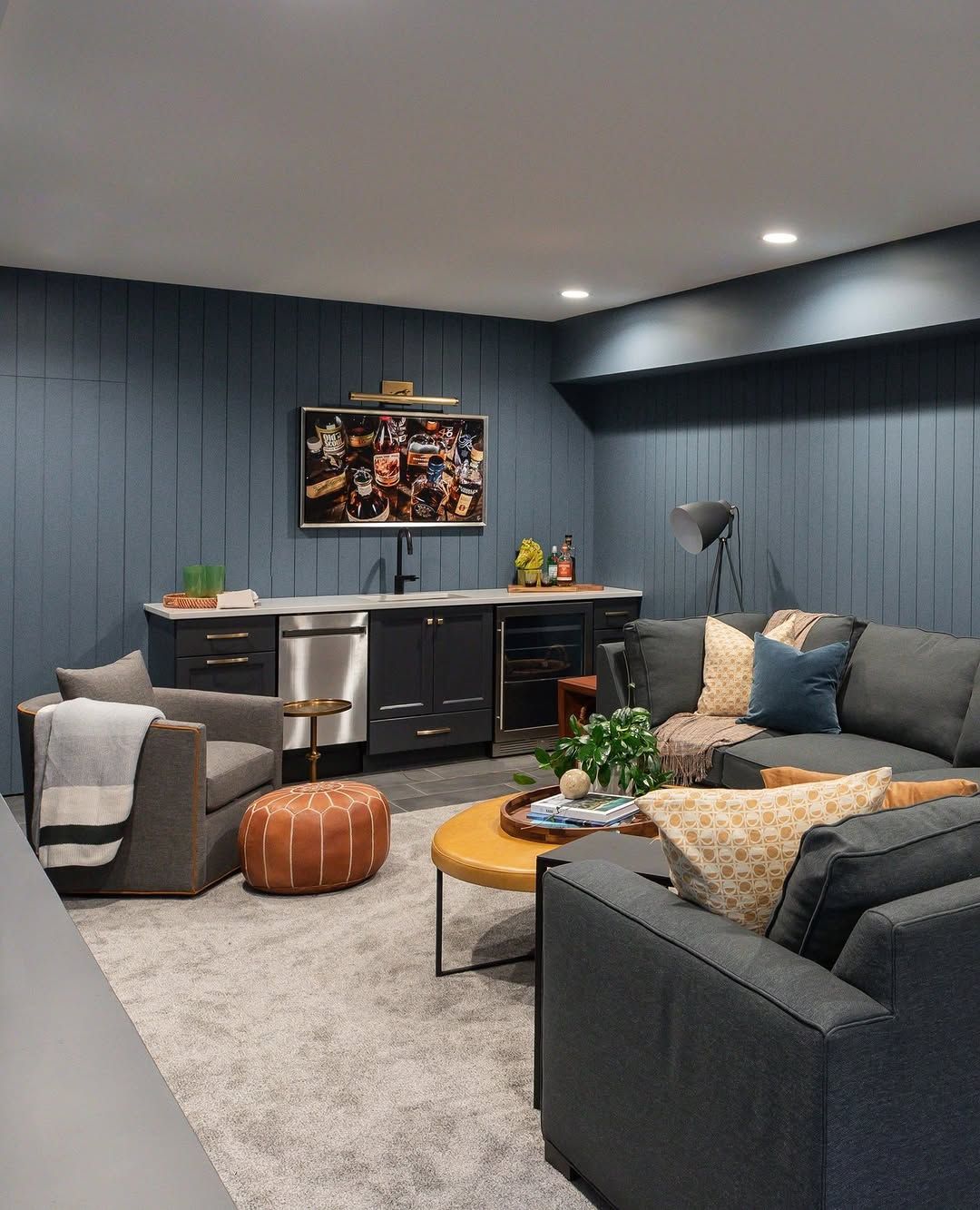
The single element that defines this space is the textured, dark blue paneled wall. It does so much more than just add color. The vertical paneling adds a sense of height and sophisticated texture, while its deep color creates a cozy, intimate feel in the bar area. It serves as a dramatic backdrop that makes the simple picture, light, and artwork feel more important. Without this feature wall, the bar and seating area would feel far less anchored and distinct from the rest of the basement.
|
📋 Copy HEX 🔗 Share |
When you have a large, deep-colored sectional sofa, the biggest mistake is choosing a rug that’s too small. To properly ground a seating area this large, the rug needs to be big enough for at least the front two feet of the sectional to rest on it comfortably. In this case, notice how the light gray rug extends well beyond the chaise and the main sofa body. This makes the space feel cohesive and intentional, rather than having a small ‘postage stamp’ rug floating in the middle.
13. Warm Up Your Basement with a Stone Fireplace and Jute Rug
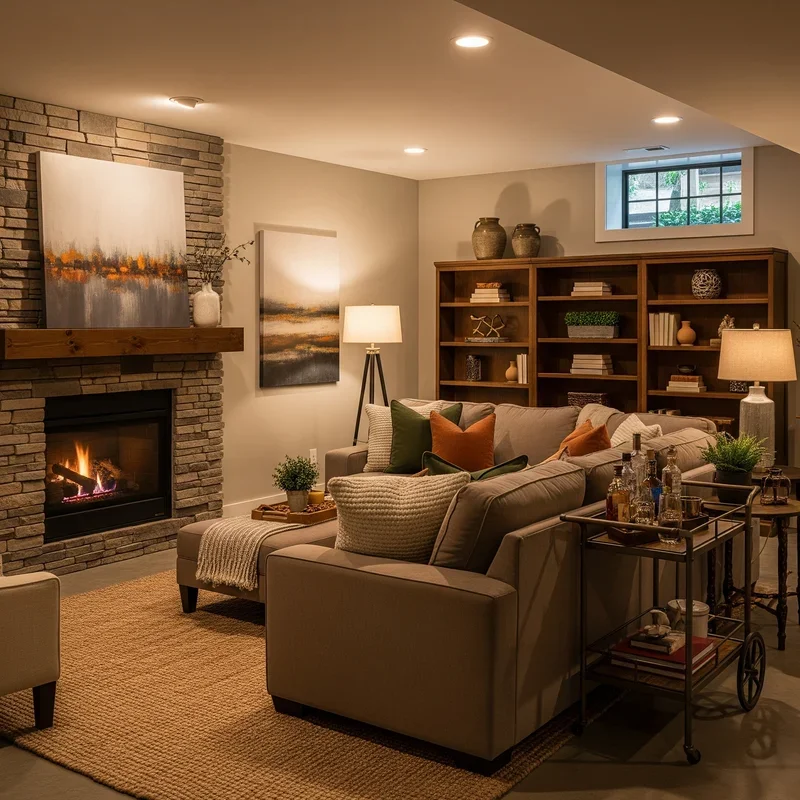
Creating this cozy, earthy retreat involves a mix of investment pieces and affordable textiles. The fireplace is the biggest splurge, but it provides the most impact.
- Stacked Stone Fireplace (electric insert & installation): $3,500 – $7,000
- Beige Sectional Sofa: $2,000 – $4,500
- Lighting (lamps & recessed): $400 – $900
- Textiles (large jute rug, pillows): $500 – $1,200
- Built-in Bookshelves (DIY): $400 – $800
- TOTAL: $6,800 – $14,400
- Budget alternative: Use Airstone veneer for the fireplace ($600) and find a secondhand sofa on Marketplace ($800).
|
📋 Copy HEX 🔗 Share |
This room feels so inviting because of the masterful layering of warm, natural materials. The rough, cool texture of the stacked stone fireplace is balanced by the warm, smooth grain of the wooden mantel and bookshelves. Below, the coarse, rustic weave of the large jute rug adds another layer of natural texture that contrasts with the soft, plush fabrics of the sectional sofa and its pillows. This constant interplay between hard and soft, rough and smooth, is what gives the space its rich, comfortable, and deeply welcoming feel. Compare this to the more modern fireplace in Idea #8.
14. Design a Game Room with a Wood Plank Ceiling and Brick Accents
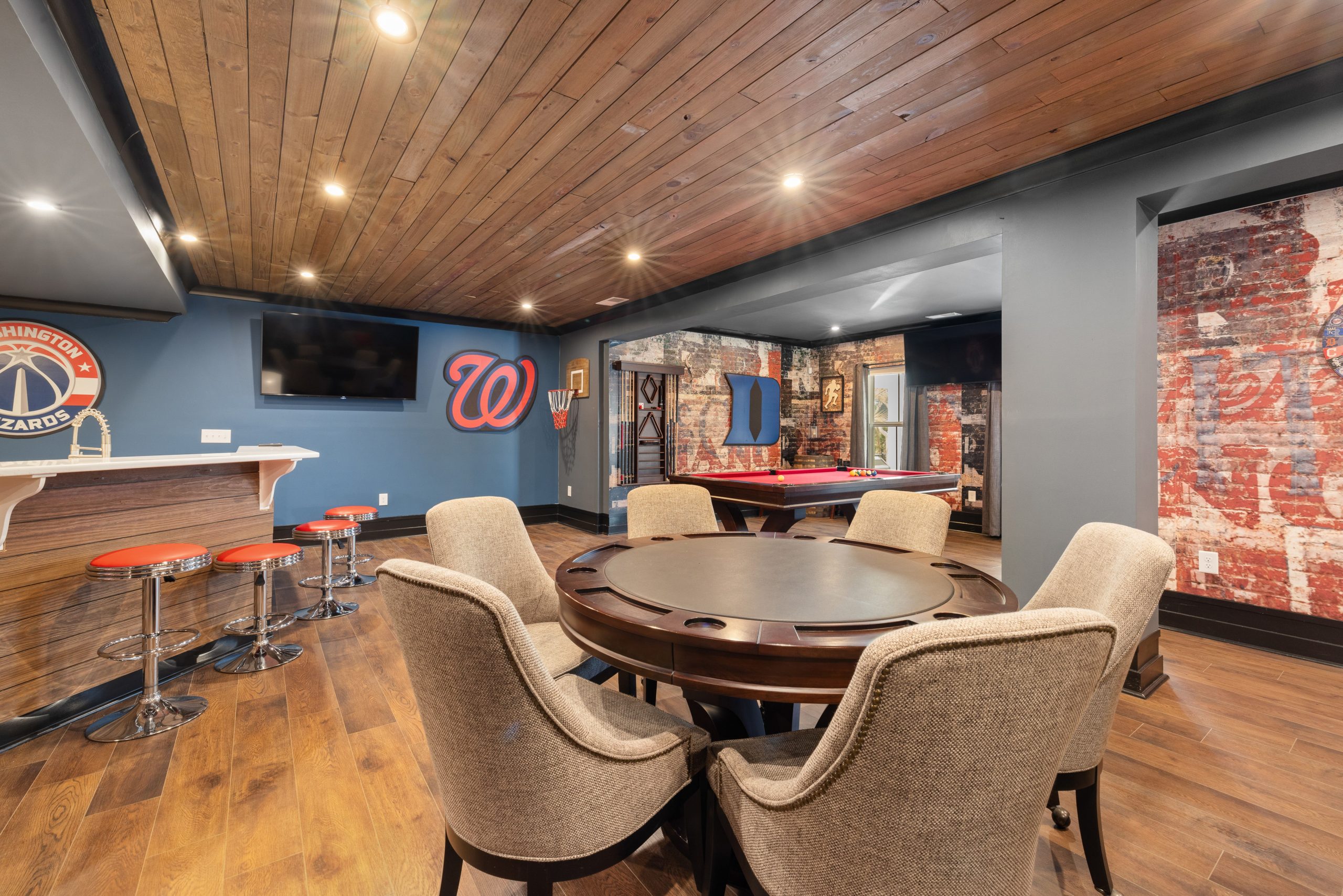
What truly sets this game room apart is the warm wood plank ceiling. In a basement, the ceiling is often an afterthought (or a problem to be hidden). Here, it’s been transformed into the main design feature. The wood adds incredible warmth and a rustic, lodge-like feel that perfectly complements the entertainment vibe. It draws the eye up, making the space feel more expansive, and the integrated lighting keeps it functional. It’s a bold choice that defines the entire character of the room.
|
📋 Copy HEX 🔗 Share |
This is a fantastic ‘hangout’ space, but remember that different games have different needs. Pool and poker require bright, direct overhead lighting to be functional, which those pendants provide. However, that same lighting might create glare on a nearby TV screen for movie-watching. If you’re designing a multi-game space, put your lighting on different switches and dimmers. This allows you to create bright, even light for active games and a dimmer, more ambient mood for relaxing or watching a movie.
15. Achieve a Rustic Look with a Coffered Ceiling and Exposed Brick
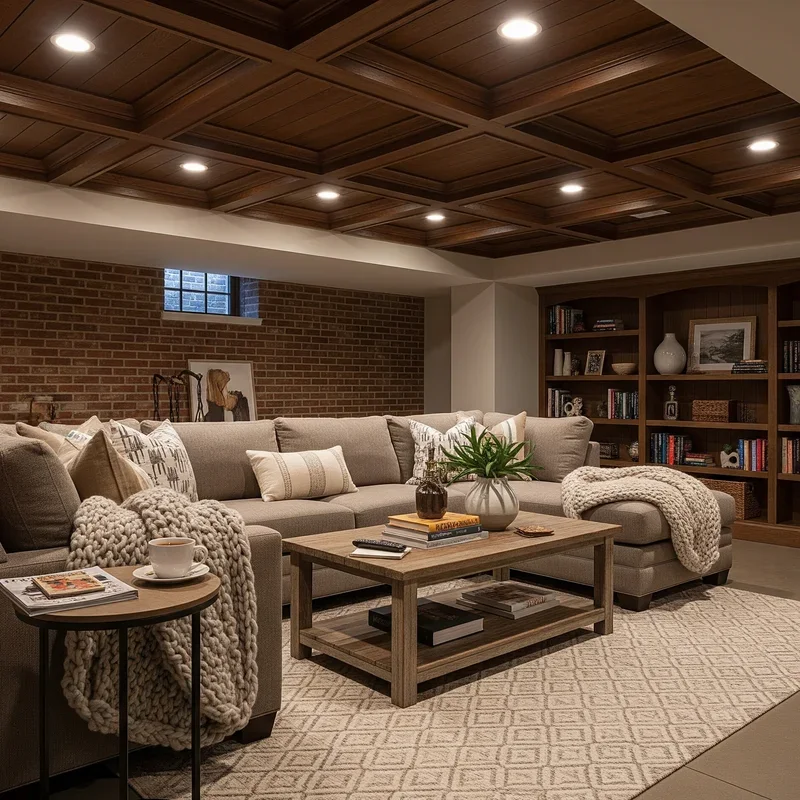
This design is a masterclass in creating a cozy, rustic atmosphere by embracing, rather than hiding, structural elements. The dark wood coffered ceiling, a feature typically found in grand, historic homes, brings a surprising level of refinement and warmth to the basement. Pairing it with the raw, textural quality of the exposed red brick wall creates a perfect balance between polished and rustic. The neutral gray sectional and light-colored rug prevent the dark wood and brick from overwhelming the space, resulting in a room that feels grounded, historic, and incredibly inviting.
|
📋 Copy HEX 🔗 Share |
An exposed brick wall, whether real or a thin-brick veneer, brings amazing character but comes with some maintenance. The surface is porous and can shed a reddish dust. It’s crucial to have it properly sealed with a matte sealant, which will prevent dust and make it easier to clean without changing the look. You’ll still need to vacuum it with a brush attachment a few times a year. Also, hanging artwork on brick requires special masonry drill bits and anchors—it’s not as simple as tapping in a nail.
16. Install a Modern Rustic Bar with a Stacked Stone Wall
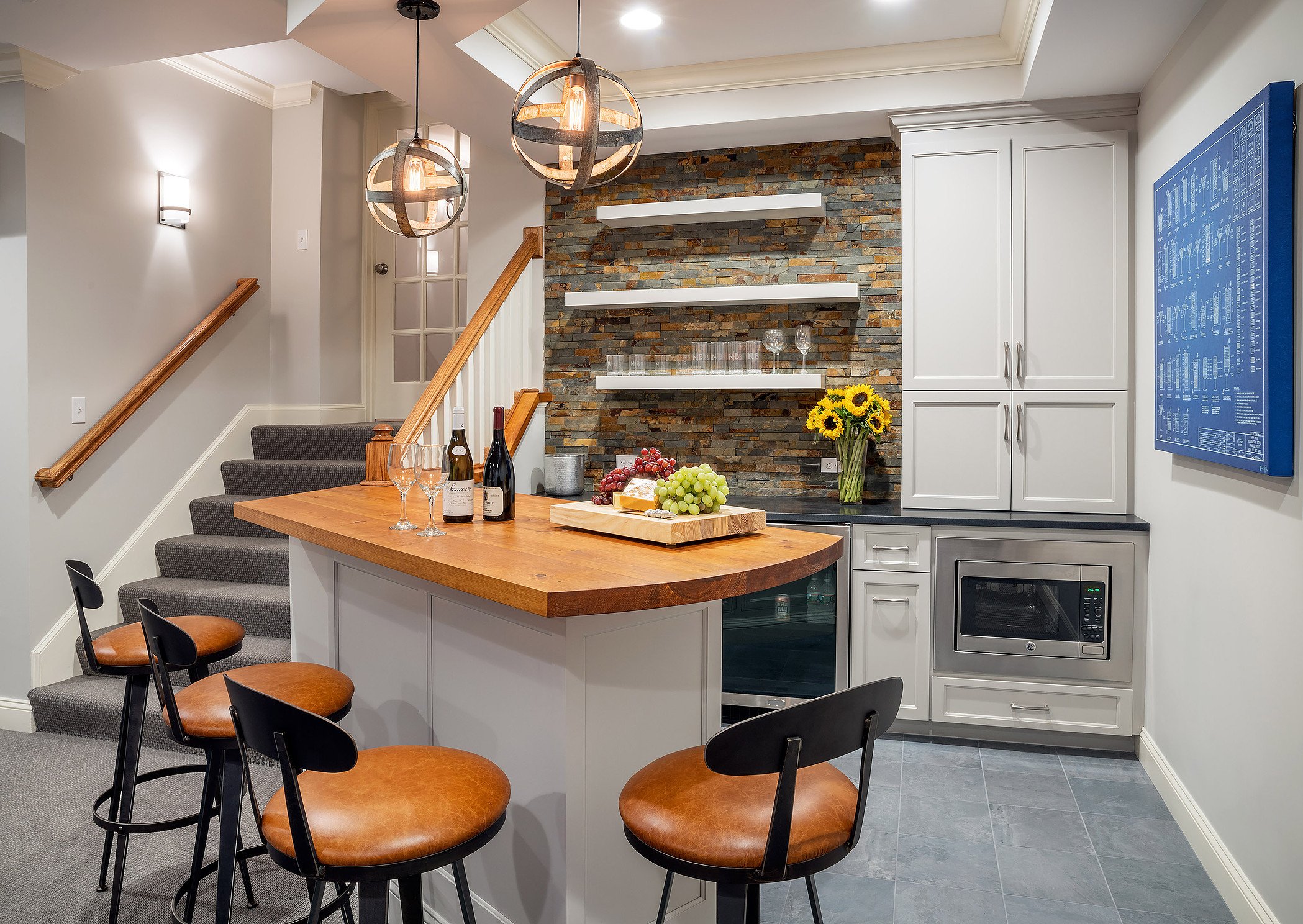
The key to a successful basement bar is lighting. You need multiple layers to make it both functional and atmospheric. This design gets it right. First, you have the statement pendant lights over the bar, which provide focused task lighting for making drinks and create a visual centerpiece. Second, you have recessed lighting throughout the ceiling for general, ambient illumination. Finally, the smartest touch is the under-cabinet lighting (not visible but implied for a high-end bar) and the lighting on the floating shelves, which highlights the glassware and decor, adding depth and a warm glow.
|
📋 Copy HEX 🔗 Share |
Installing floating shelves on a stacked stone wall requires some planning, but it’s a great DIY project. Here’s a simplified guide:
- Locate Studs or Masonry: Before you even install the stone, you need to know where your mounting points will be. Mark the stud locations. If it’s a solid masonry wall, you’ll be drilling into that.
- Install Mounting Brackets: You’ll need heavy-duty floating shelf brackets. Secure these directly to the wall studs or into the masonry with appropriate anchors *before* the stone veneer goes on.
- Install Stone Around Brackets: Carefully cut your stone veneer pieces to fit snugly around the protruding metal rods of the brackets. This is the most time-consuming part.
- Slide on the Shelves: Once the stone and mortar are fully cured, slide your custom-drilled wooden shelves onto the brackets. Secure them as per the bracket manufacturer’s instructions.
17. Create a Cozy Media Room with Stone Columns and Leather Sofas
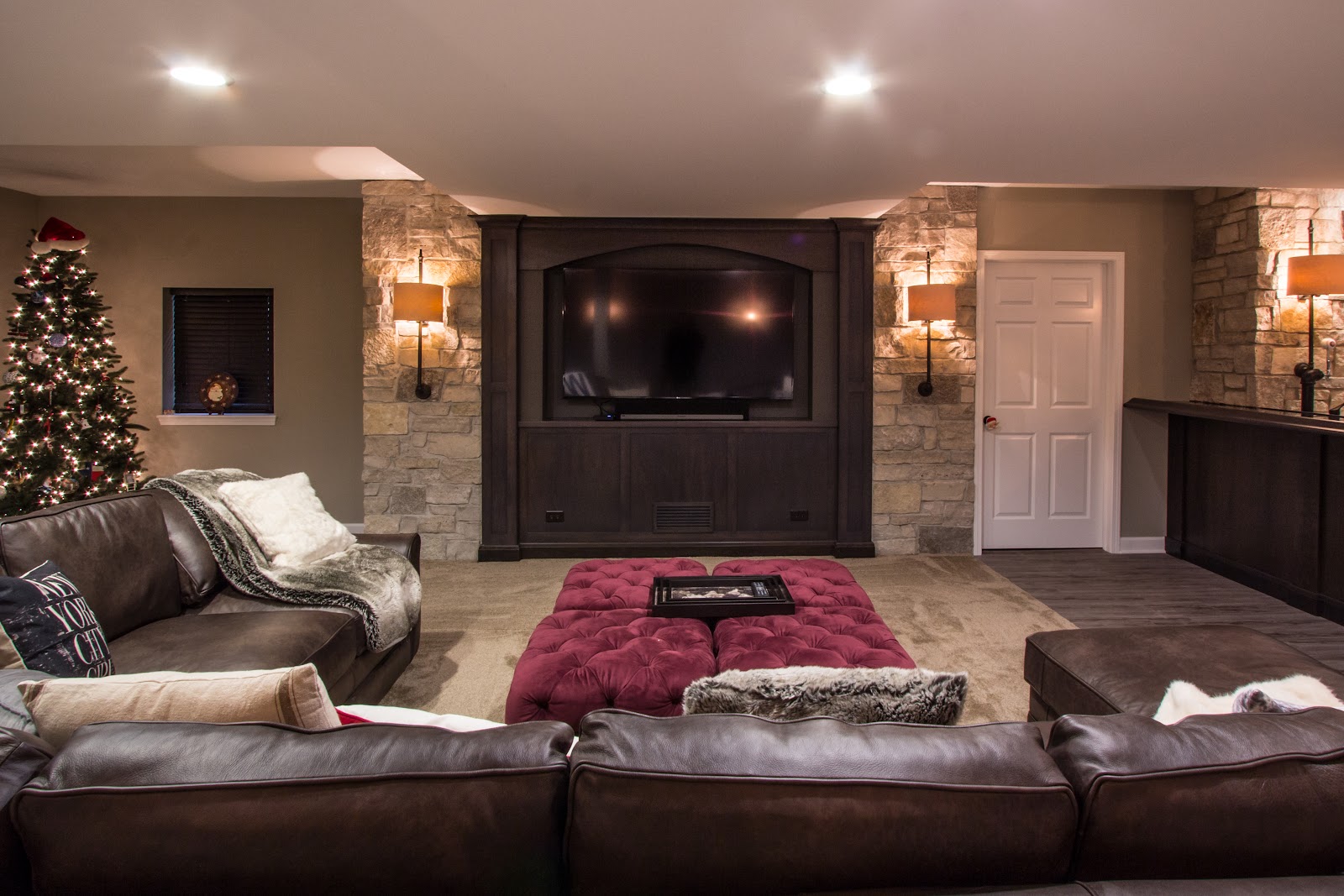
The element that gives this room its warm, lodge-like gravitas is the use of stacked stone on the structural columns and wall sections. This move transforms what could be awkward structural necessities into distinguished architectural features. It breaks up the monotony of drywall and adds a substantial, rustic texture that instantly makes the room feel cozier and more permanent. The stone, paired with the dark wood built-ins, evokes the feeling of a luxurious mountain cabin, perfect for settling in for a movie marathon (especially with that festive Christmas tree!).
|
📋 Copy HEX 🔗 Share |
You can get this upscale lodge look for much less. Instead of custom dark wood cabinetry, look for modular media units from IKEA (the BESTÅ system is a great candidate) in a black-brown finish. For the stone, use a faux-stone panel product like Airstone or similar brands from a home improvement store. They are lightweight, can be installed with adhesive, and give a remarkably similar look for a fraction of the cost and labor of real stone masonry. Finally, look for leather-look recliner sofas from big-box furniture stores for that plush seating vibe.
18. Embrace a Grand Rustic Style with Stone Pillars and a Wine Niche
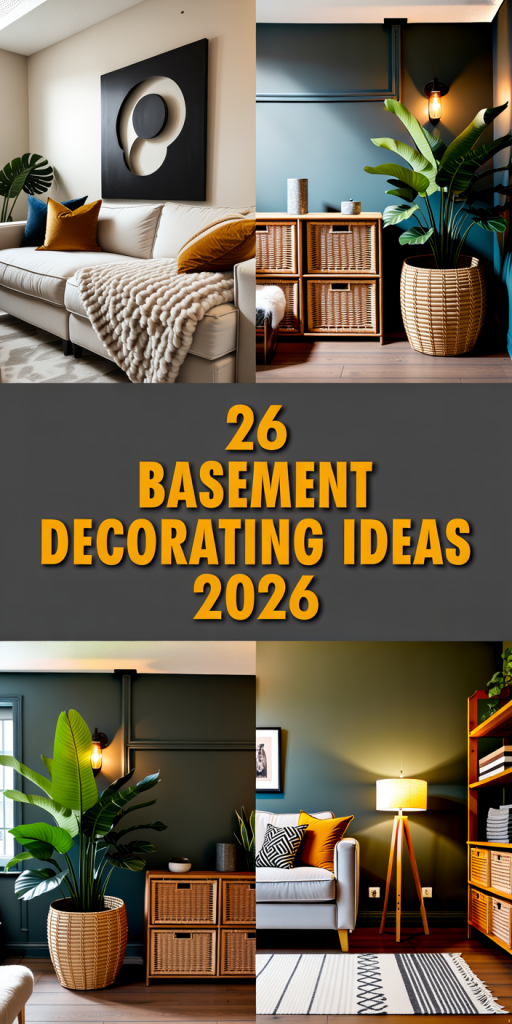
This design leans heavily into a rustic, old-world aesthetic by using a consistent palette of warm, earthy materials. The key to its success is repetition. The same warm beige stone is used for the columns and the accent wall, creating a sense of rhythm and cohesion. The dark stained wood of the bar cabinetry is echoed in the wine storage. Even the textured, golden-toned walls feel connected to the palette of the stone. This disciplined use of a few core materials makes the space feel grand and intentional, rather than a random collection of rustic elements.
|
📋 Copy HEX 🔗 Share |
A look this grand and specific requires a significant commitment in terms of both budget and style. The custom stonework, dark wood cabinetry, and specialized wall texture are not easily or cheaply changed. Before committing to a strong, thematic style like this, be sure it’s a look you will love for many years to come. A more neutral design is easier to update with paint and accessories over time. This is a forever-style, so you have to be all in.
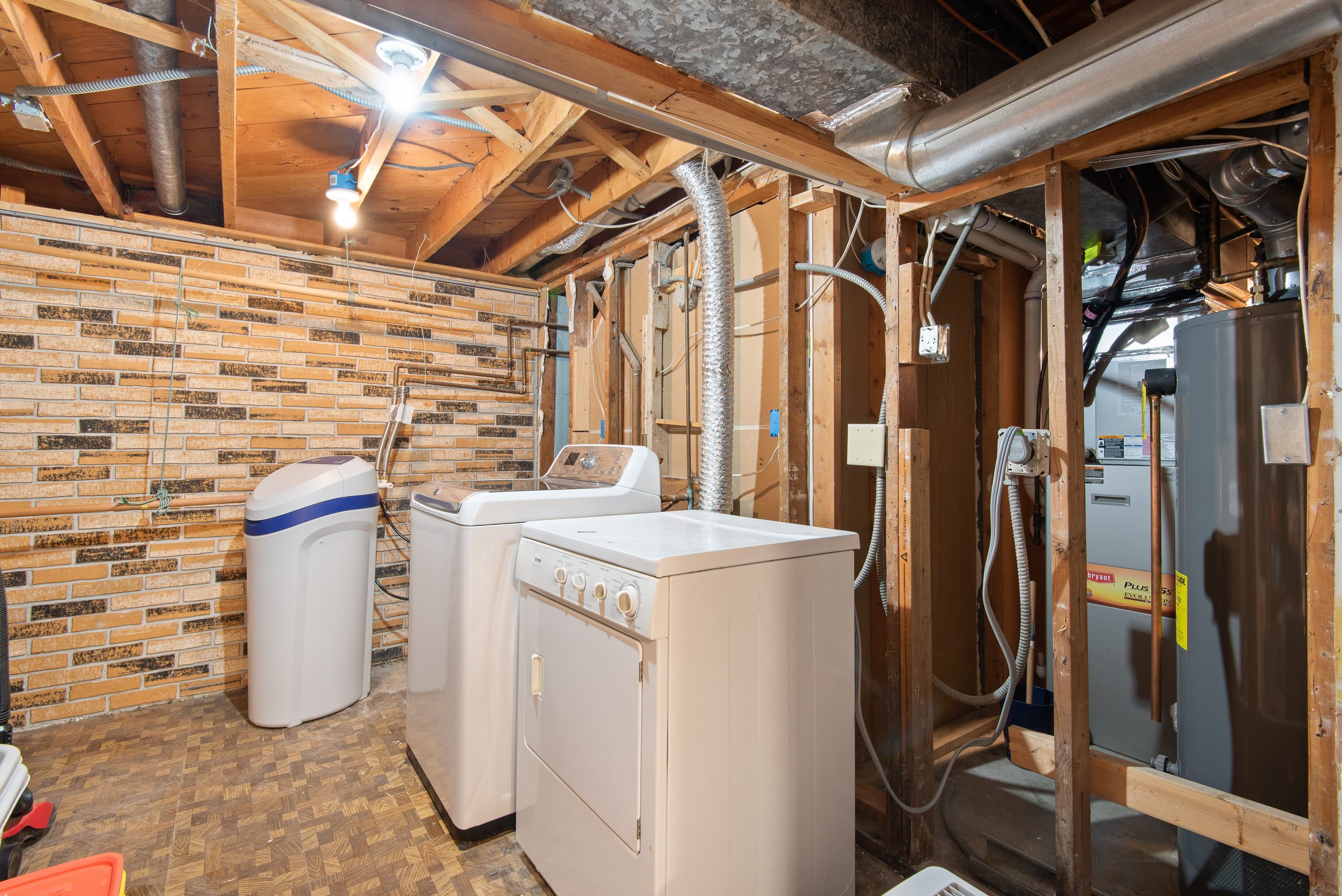
19. Lean into an Unfinished Look with Exposed Joists and Brick Paneling
This utilitarian look is tapping into the “industrial chic” and “raw architecture” movements, which celebrate honesty in materials. Instead of spending thousands to hide pipes and joists behind a drywall ceiling, this approach embraces them. It’s a trend born from a desire for authenticity and a reaction against overly polished spaces. By painting the joists and ductwork a uniform color (or leaving them raw, as seen here), the ceiling becomes a textural feature. This is particularly popular in lofts and, increasingly, in basements where ceiling height is at a premium and every inch counts.
|
📋 Copy HEX 🔗 Share |
If you’re going to expose your basement ceiling, make it intentional. First, ensure any wiring is properly secured and tidy—no stray cables dangling. Second, consider painting everything—joists, pipes, ductwork, and the subfloor above—a single, uniform color. A flat black or dark charcoal is a popular choice because it makes the ceiling recede, hiding imperfections and making it feel higher. A bright white, like in Idea #22, can also work but will highlight every single detail. The key is uniformity.
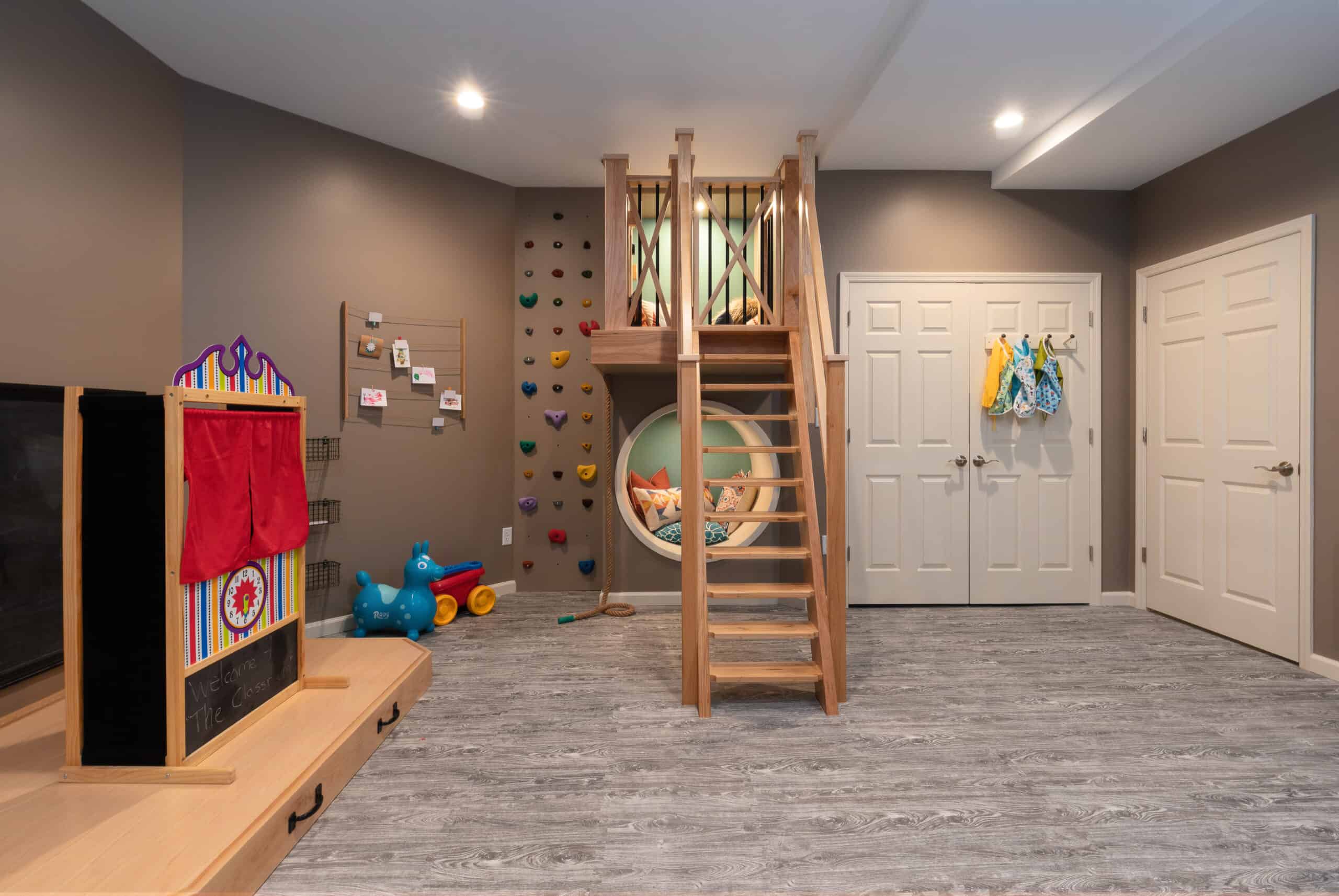
20. Build a Kid’s Paradise with a Climbing Wall and Custom Loft
The single best feature in this playroom is the custom loft structure. It’s a brilliant multi-functional piece that doubles the play space. It provides a cozy, semi-enclosed hangout spot in the circular cutout below, while the top level offers a second zone for quiet play or reading, away from the floor-level chaos. The attached ladder and the nearby climbing wall turn the entire area into an active indoor playground. It is the one element that transforms the room from a simple playroom into an unforgettable adventure zone that encourages both imaginative and physical play.
|
📋 Copy HEX 🔗 Share |
Before you commit to a major playroom build like this, run through this checklist:
- Check Ceiling Height: You need a minimum of 8-foot ceilings to make a loft like this viable, and even that will be tight. 9-foot ceilings are ideal to provide usable headroom both above and below.
- Confirm Floor Space: Measure your total floor area. Does adding a large structure and a climbing wall leave enough open floor space for other types of play?
- Plan for the Future: Kids grow fast. Will this design still be useful in 5 years? Consider how the loft could be adapted for a teen hangout space later on.
- Get a Safety Check: Ensure any custom-built structures are professionally planned and built to be sturdy and safe, with appropriate railings and weight-bearing supports.
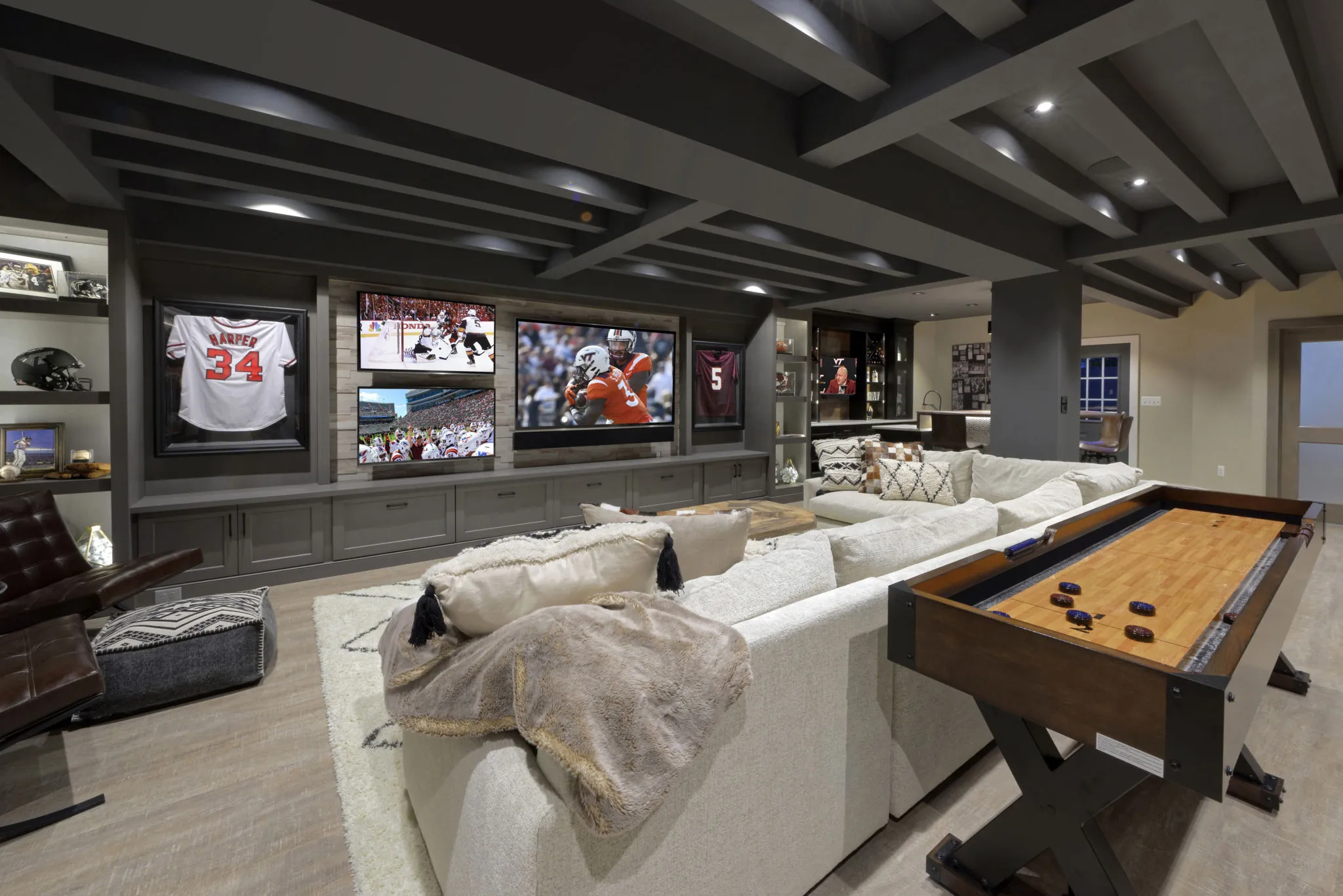
21. Create a Sports Fan’s Dream with a Multi-Screen Media Wall
This room’s design works because it fully commits to its theme without looking cluttered. The key is the sophisticated, neutral color palette. The custom cabinetry, walls, and ceiling beams are all in shades of gray, cream, and dark charcoal. This creates a calm, modern backdrop that allows the sports memorabilia and multiple TV screens to be the stars of the show. The framed jerseys and helmets feel like art because they are displayed within the clean lines of the built-in shelving, rather than being randomly placed on the walls.
|
📋 Copy HEX 🔗 Share |
You don’t need fully custom cabinetry to get this integrated sports display look. A great budget-friendly option is to use multiple IKEA BILLY bookcases or KALLAX shelving units in a dark gray or black-brown finish. Arrange them around the TV to create a ‘built-in’ look. You can find display cases for jerseys and helmets on Amazon or at craft stores like Michaels. For the shuffleboard table, keep an eye on Facebook Marketplace or Craigslist—people often sell them for a steep discount when they move.
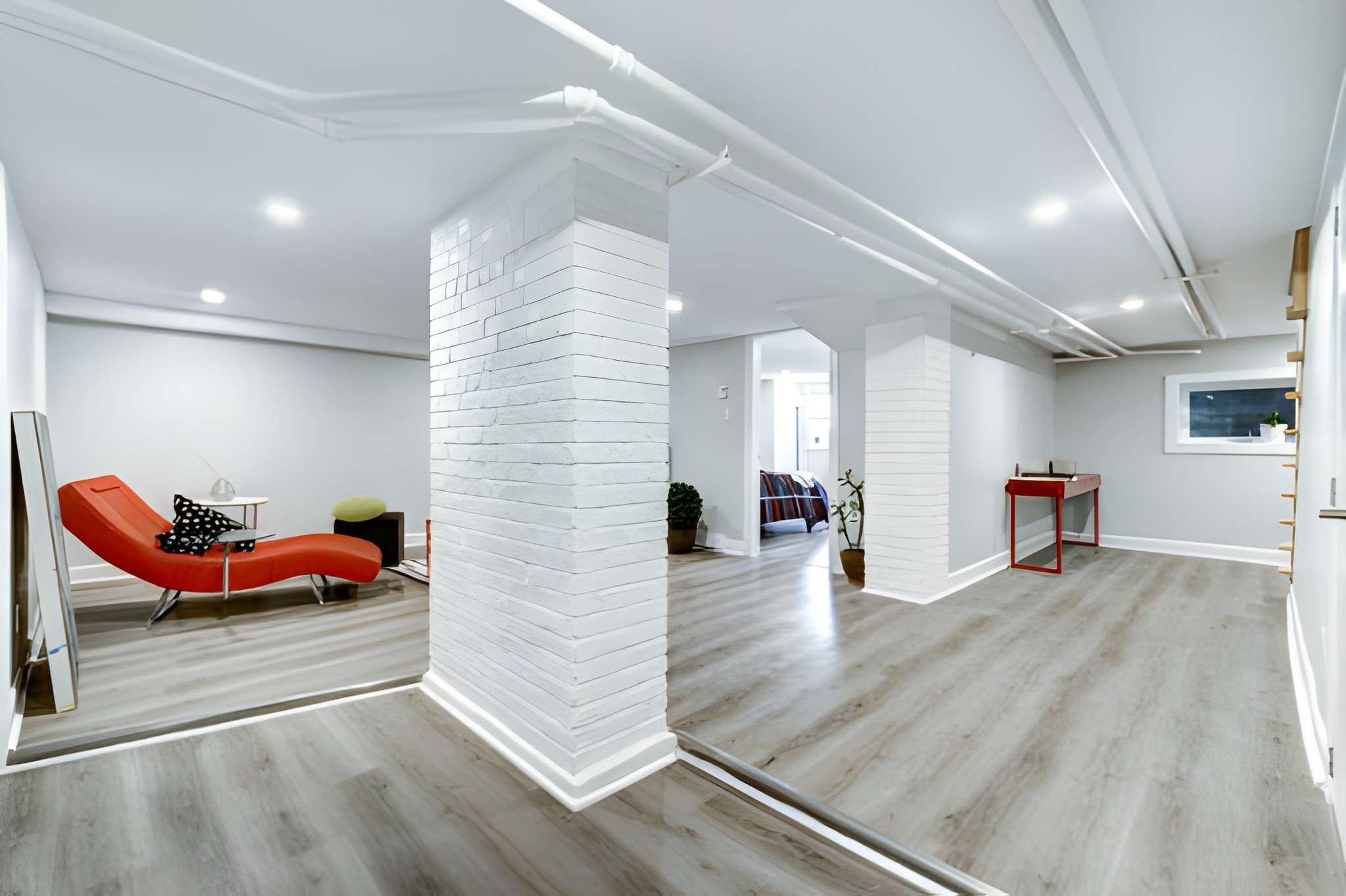
22. Define Zones with White Brick Pillars and Exposed Pipes
When you paint exposed structural elements like brick pillars and overhead pipes a clean, uniform white, you perform a neat design trick. Instead of looking unfinished or industrial, they become intentional sculptural elements. The white paint unifies them with the white ceiling, making the space feel brighter, taller, and more cohesive. It’s a way of celebrating the basement’s authentic structure while giving it a fresh, modern, and clean aesthetic. The pop of color from the orange chaise lounge provides a perfect, playful contrast.
|
📋 Copy HEX 🔗 Share |
Before you decide to paint everything white, consider these points:
- Lighting Plan: An all-white space relies on good lighting to avoid feeling sterile. Do you have a plan for layered lighting (recessed, floor lamps, and task lamps) to add warmth and dimension?
- Flooring Contrast: Notice how the light wood-look floors here add warmth. An all-white space with a cold, gray tile floor could feel clinical. Ensure your flooring provides some balance.
- Acoustics Check: Hard surfaces everywhere (drywall, painted brick, laminate floors) can make a room feel echoey. You’ll need to plan for soft textiles—like area rugs, upholstered furniture, and curtains—to absorb sound.
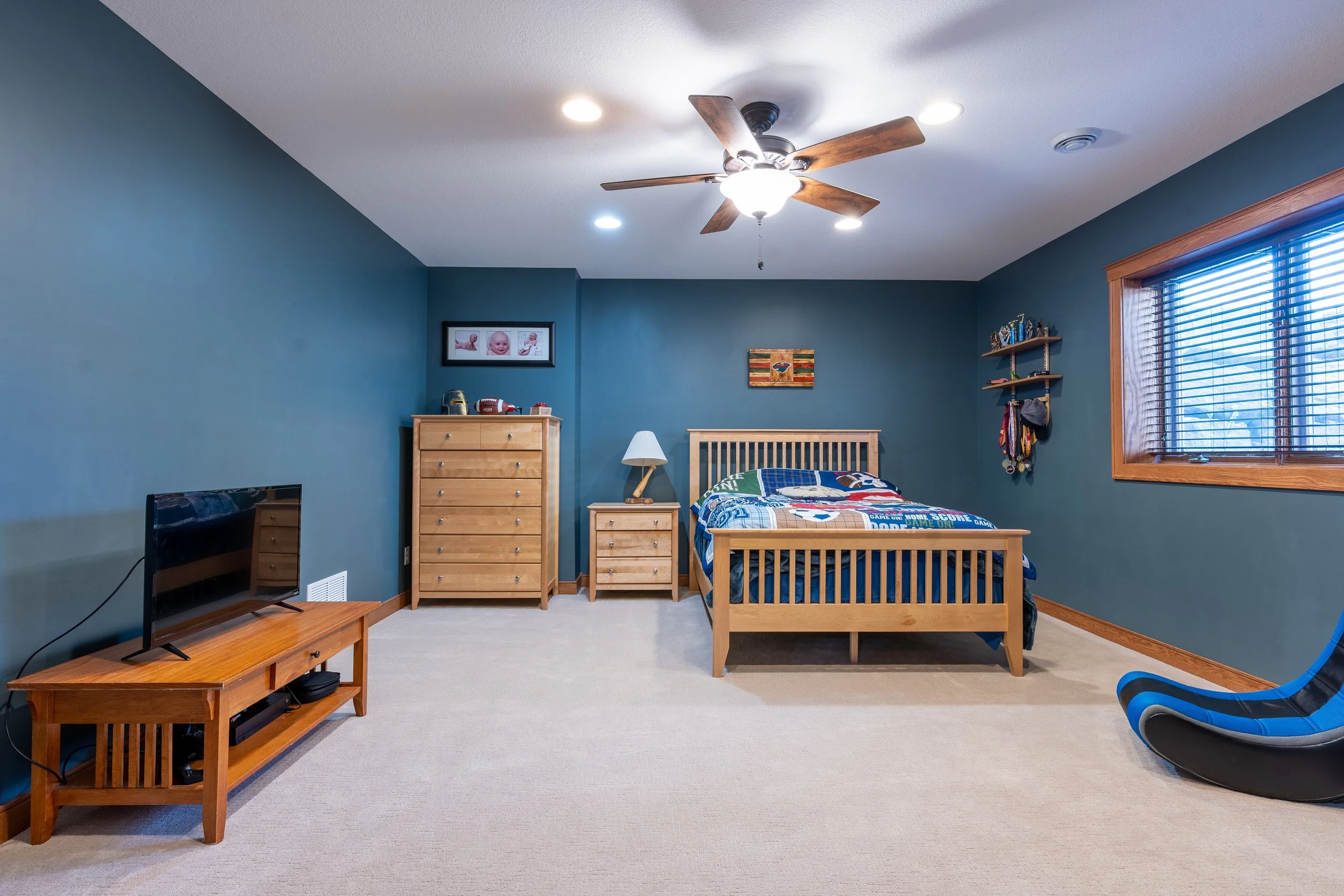
23. Design a Teen Hangout with Teal Walls and Light Wood Furniture
The formula for this youthful, energetic space is straightforward: 50% bold, saturated wall color (the vibrant blue-teal) + 40% neutral, natural materials (the light wood furniture and beige carpet) + 10% personal, functional accents (the sporty bedding, gaming chair, and fan). The natural wood and carpet provide a calm, grounding base that keeps the strong wall color from being overwhelming. This recipe is easy to adapt: swap the teal for a deep green or charcoal gray and the sports theme for a music or art theme to completely change the vibe.
|
📋 Copy HEX 🔗 Share |
A basement bedroom is a great way to give a teen some independence, but you must prioritize safety. An egress window is not just a nice feature; it’s a legal requirement for any legal bedroom. It must be large enough and low enough for a person to escape in case of a fire. If your basement room doesn’t have one, you’ll need to have one professionally installed, which can be a significant and complex job involving cutting into your home’s foundation. Don’t skip this step.
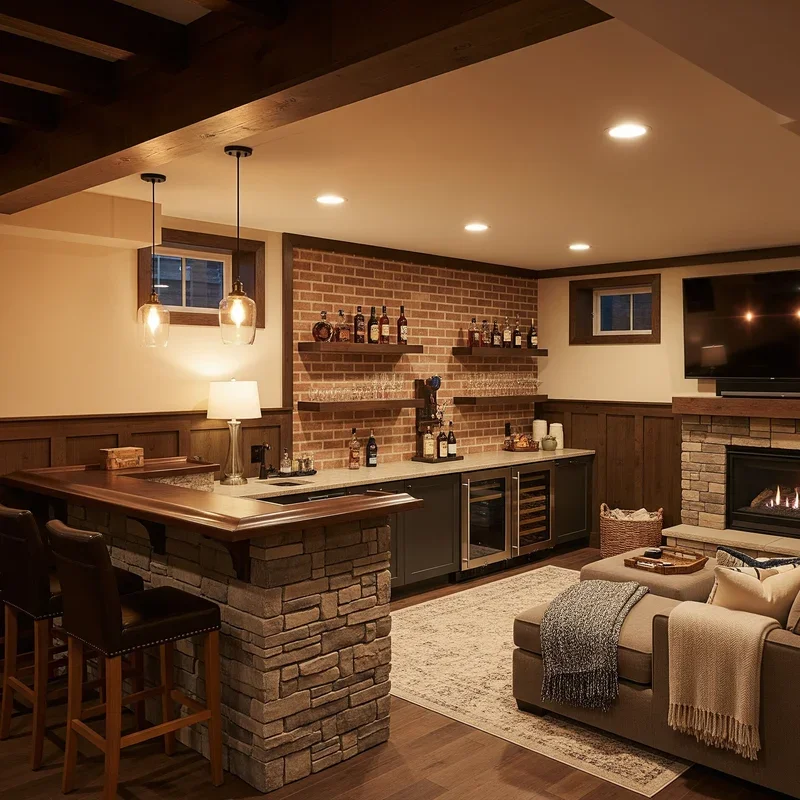
24. Build a Sophisticated Bar and Lounge with Brick and Stone
This design feels cohesive and sophisticated because it uses a consistent architectural language throughout the different zones. The warm red of the exposed brick wall behind the bar is picked up subtly in the tones of the stone fireplace surround in the living area. The dark wood of the ceiling beams is echoed in the wooden wainscoting and the fireplace mantel. This repetition of materials—stone, brick, and wood—across the entire space ties the bar and the lounge area together, making it feel like one unified, thoughtfully designed environment rather than two separate rooms.
|
📋 Copy HEX 🔗 Share |
A multi-zone entertainment space with this many heavy, rustic elements needs significant square footage to avoid feeling dark and cramped. This look is best suited for a large, open-plan basement of at least 400-500 square feet with 8-foot or higher ceilings. This allows for a full-sized bar and a separate, comfortable seating area without compromising traffic flow. In a smaller space, you might opt for just one of the main features—either the bar or the fireplace lounge—to be the star. For a livelier take on a bar, see Idea #25.
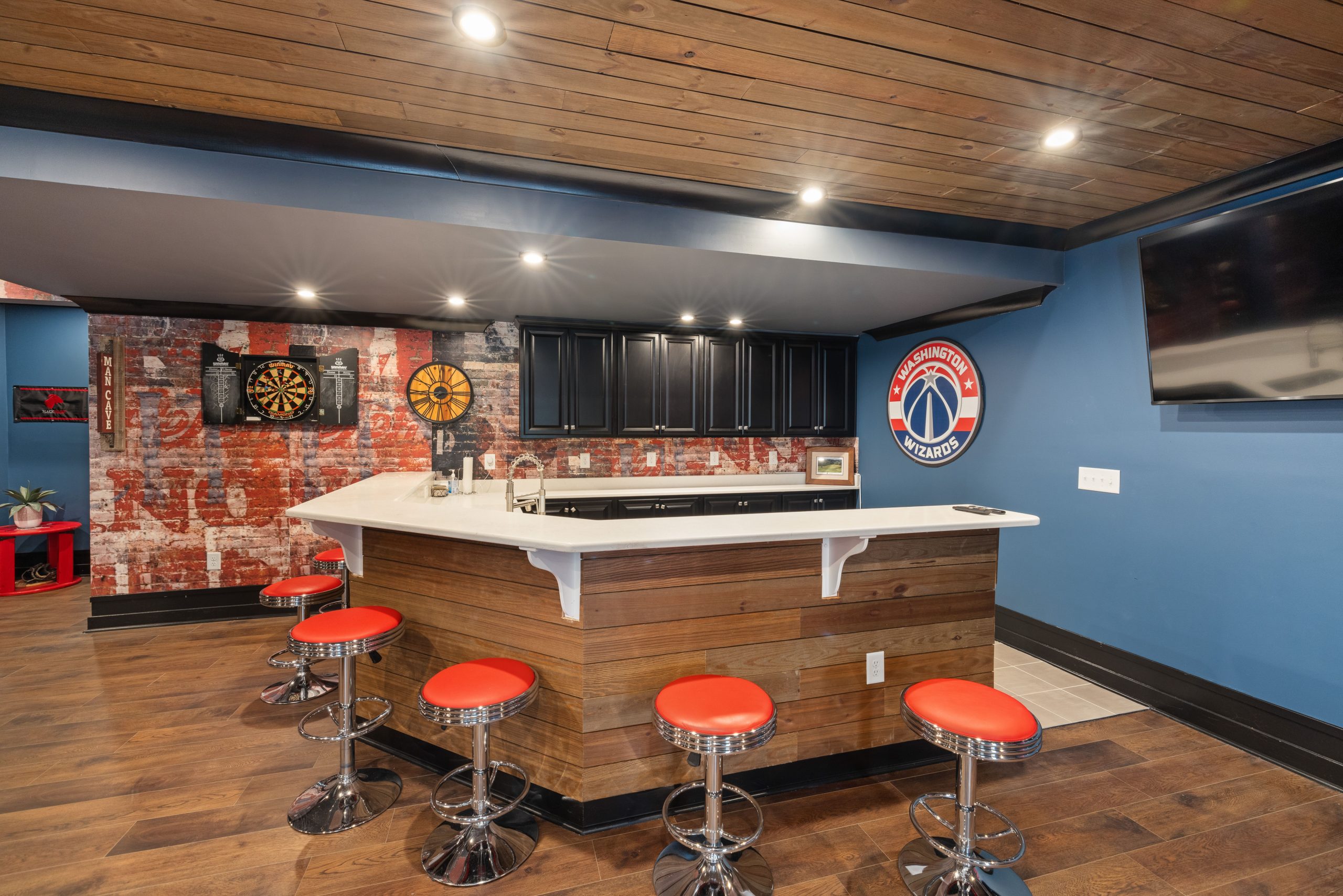
25. Mix Industrial and Retro with a Wood-Slat Bar and Brick Wall
The element that gives this basement bar its unique personality is the playful contrast between the industrial brick accent wall and the bright, retro-red bar stools. The exposed brick and wood-slat bar facade provide a rustic, textural, and slightly gritty foundation. But the injection of that bold, glossy red in the stools and the vibrant blue on the adjacent walls completely transforms the mood. It becomes fun, lively, and energetic. Without the color, it’s a nice rustic bar; with the color, it’s a party-ready space with a strong point of view.
|
📋 Copy HEX 🔗 Share |
In a basement where natural light is scarce, a good lighting plan is non-negotiable. This room gets it right with a generous grid of recessed ceiling lights. When planning, aim for one recessed light for every 25 square feet of ceiling area for good general illumination. For an 8-foot ceiling, 4-inch ‘can’ lights are a great choice. Always put them on a dimmer switch so you can have bright light when you’re cleaning or playing darts and a lower, more atmospheric mood when you’re just hanging out.
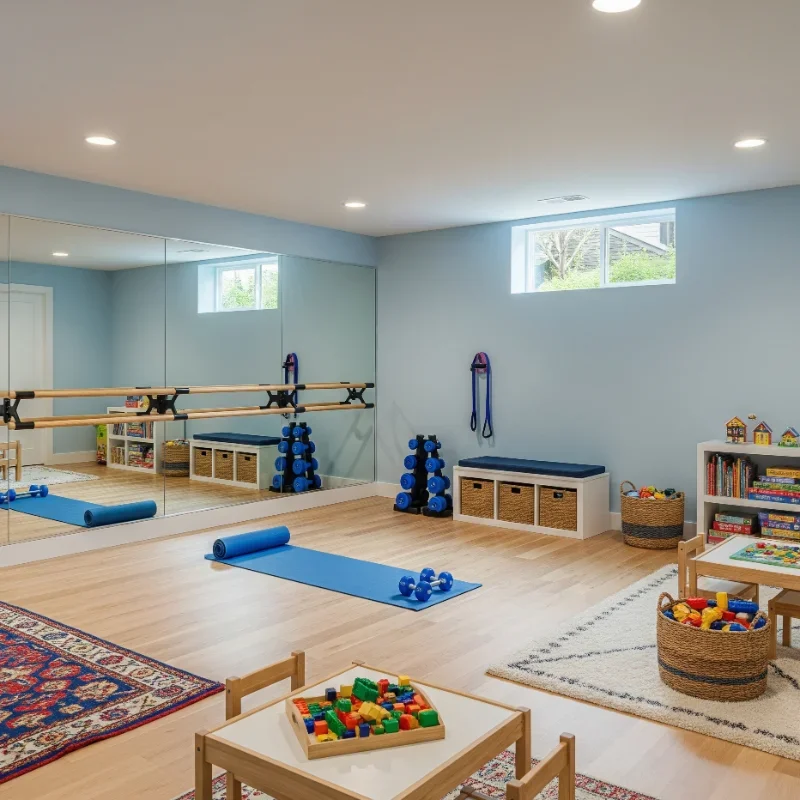
26. Combine a Home Gym and Playroom in One Bright Space
This multifunctional room is a success because it uses color and flooring to unify two very different zones. The light blue paint on the walls creates a single, cohesive backdrop for both the kids’ play area and the adult gym space. The continuous light hardwood flooring also prevents the room from feeling chopped up. The zones are created through the strategic placement of furniture and equipment—gym gear on one side, kids’ tables on the other—but the shared color scheme and flooring make it feel like one large, harmonious, and intentionally designed family activity center.
|
📋 Copy HEX 🔗 Share |
Thinking of creating a dual-purpose gym and playroom? Here’s what to check off first:
- Ventilation: Workouts create moisture and ‘gym smell. ‘Does your basement have adequate ventilation, or can you add an exhaust fan to keep the air fresh for everyone?
- Flooring Choice: Hardwood is great for play but not ideal for dropping weights. Plan for dedicated rubber gym mats in the workout zone to protect your floors.
- Safe Storage: Free weights, resistance bands, and other gym equipment can be hazardous for young children. Do you have a plan for lockable or high-up storage to keep everything safely out of reach when not in use?
For a playroom focused purely on kids’ activities, see Idea #20.
Your Basement’s Next Chapter Starts Now
That forgotten space downstairs has so much potential, and now you have the inspiration to unlock it. Whether you’re creating a cozy family retreat or a lively entertainment hub, the key is to make it feel like a seamless, intentional part of your home. Ready to start your project? Head over to Pinterest and start creating a board for your favorite looks from this list!