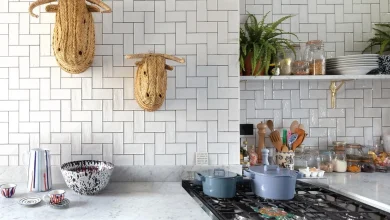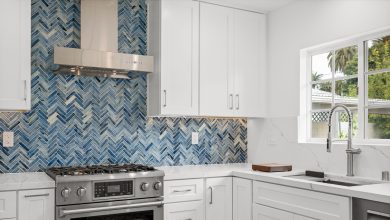

You know that feeling when you finally find the backsplash tile that looks exactly right for your space, only to find another one you love even more? The world of tile is huge, but finding the perfect fit for your kitchen doesn’t have to be overwhelming. We’ve filtered through hundreds of options to bring you the best backsplash tile ideas that deliver on style and function. From bold geometrics and earthy greens to timeless marbles, this is your ultimate guide.
In this curated collection of 27 ideas, we’re showcasing real designs that feel both fresh for 2026 and built to last. People are craving personality in their homes, moving away from cookie-cutter kitchens to create spaces that feel unique and expressive, and the backsplash is the perfect place to make that statement. And stay until the end — we break down the most common mistakes that can ruin these looks. 📌 Save this to Pinterest for later — you’ll want to revisit these ideas.
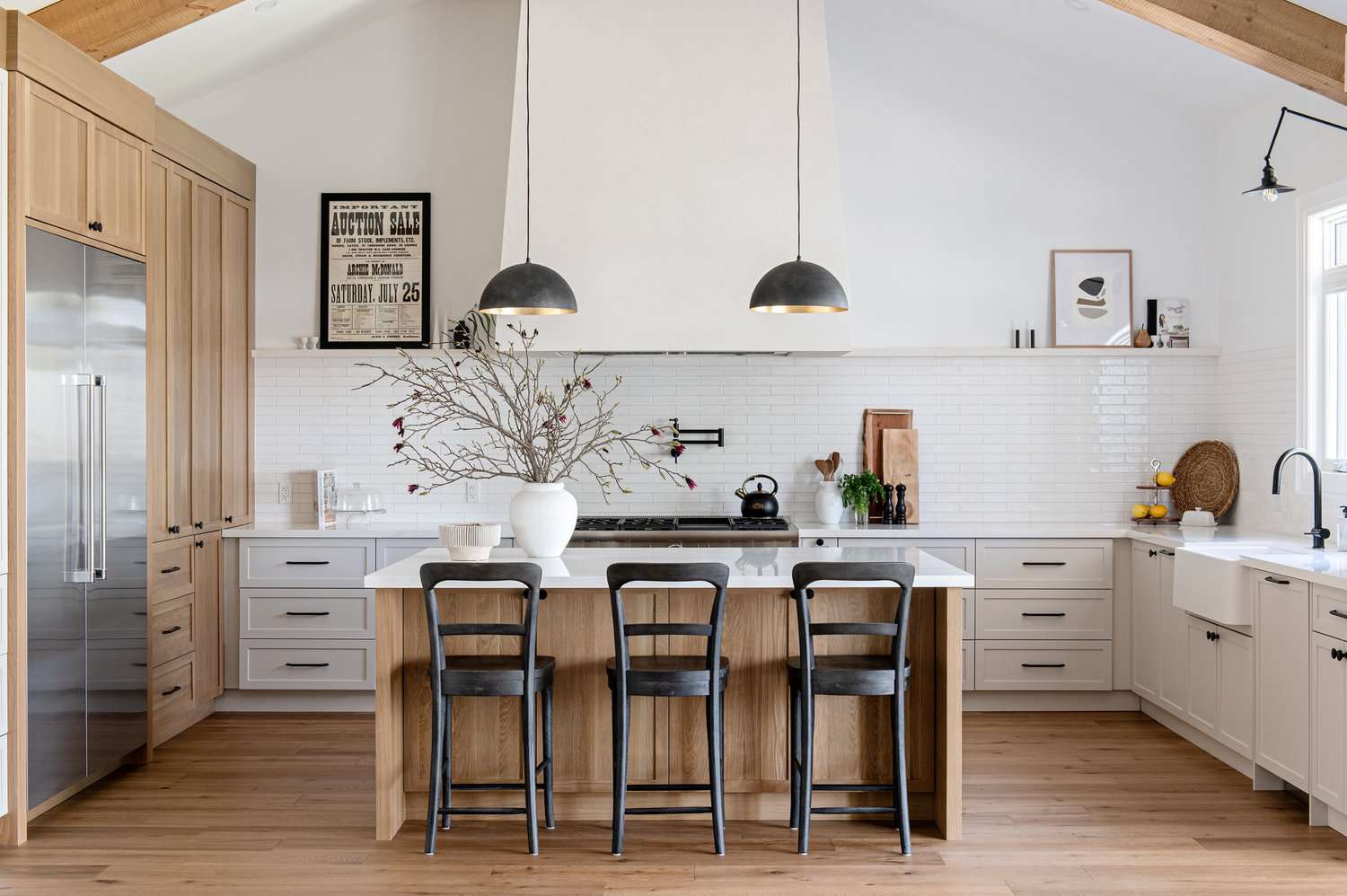
1. White Subway Tile with an Integrated Open Ledge
What makes this kitchen feel so custom and clever is the thoughtful handling of a classic material. The white subway tile runs full-height, which is great, but the real star is the integrated ledge. By building the wall out slightly on the lower half, the tile itself creates a shallow shelf. This provides a super functional spot for oils, spices, and small plants without the visual clutter of a separate floating shelf. It’s a brilliant fusion of form and function that elevates affordable tile into a high-design feature.
|
📋 Copy HEX 🔗 Share |
To recreate that integrated ledge, your contractor will need to frame out the lower portion of the wall with 2x4s laid flat to create a 1.5-inch deep ledge. The top of this frame should sit about 12-18 inches above your countertop. This allows enough clearance for small appliances while creating a usable shelf. Ensure the top of the ledge is capped with a solid piece of your countertop material or a matching tile trim piece for a durable, water-resistant surface. It’s a small detail that requires planning but makes a huge impact.
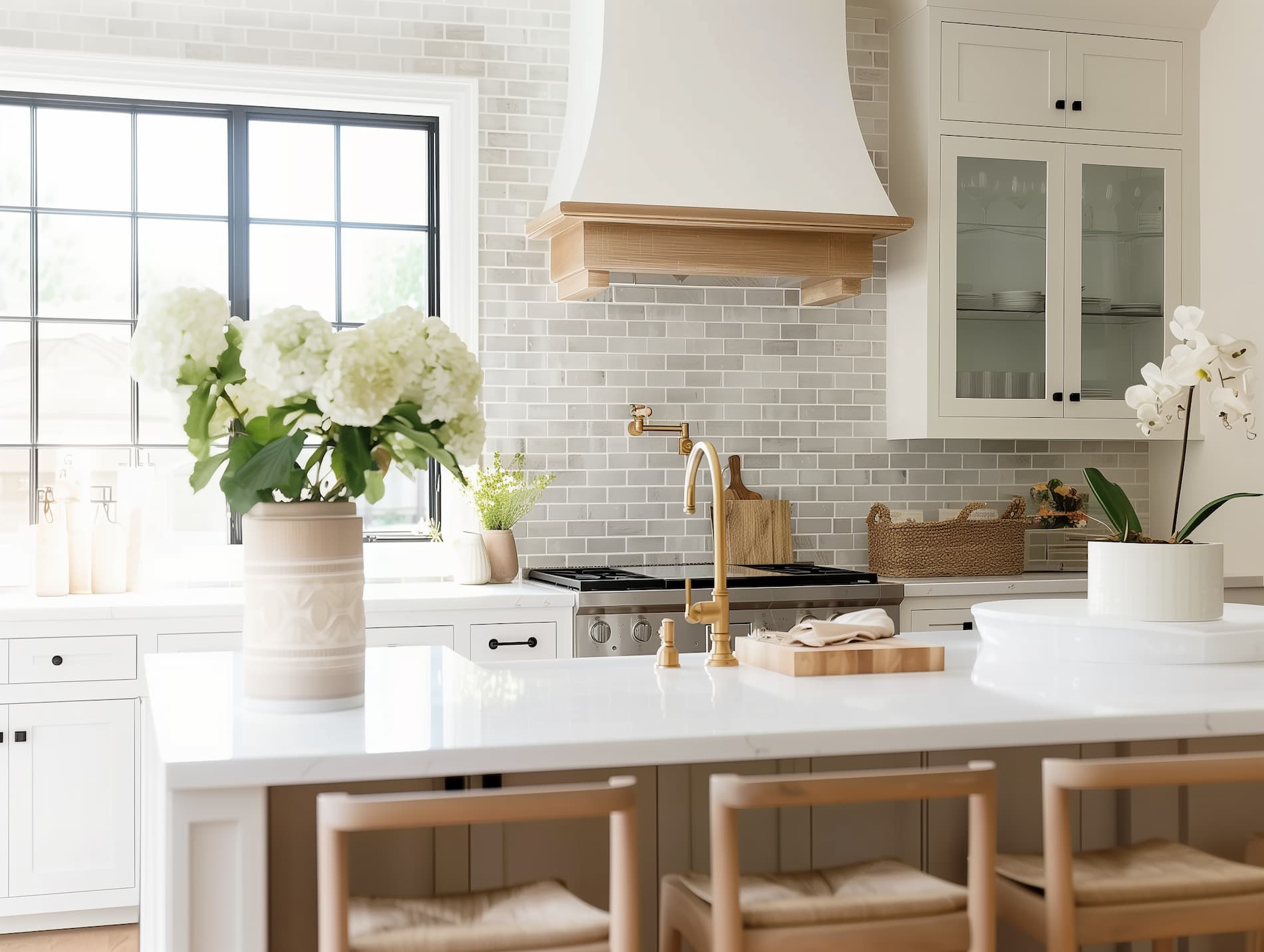
2. Light Gray Subway Tile with Warm Wood and Brass
This serene look is a masterclass in balance. Think of it as 60% soft neutrals (the light gray tile and creamy white cabinets), 30% natural warmth (the light wood trim on the hood, bar stools, and flooring), and 10% metallic shine (the brass faucet and black hardware). This formula is incredibly versatile. You could swap the light gray tile for a soft sage green or trade the brass for polished nickel, and the kitchen would still feel just as cohesive and inviting because the core ratios of neutral, natural, and metallic are maintained. It’s all about the proportions.
|
📋 Copy HEX 🔗 Share |
A backsplash with a mottled or handmade texture is beautiful, but it can be a bit trickier to clean than perfectly smooth, glossy tile. The slightly uneven surface can catch grease splatters, especially behind the cooktop. While not a dealbreaker, be prepared for a little extra scrubbing. Using a non-abrasive cleaner and a soft brush (an old toothbrush works wonders) will help you get into the subtle nooks and crannies without damaging the tile’s finish. Sealing the grout is an absolute must to prevent staining.
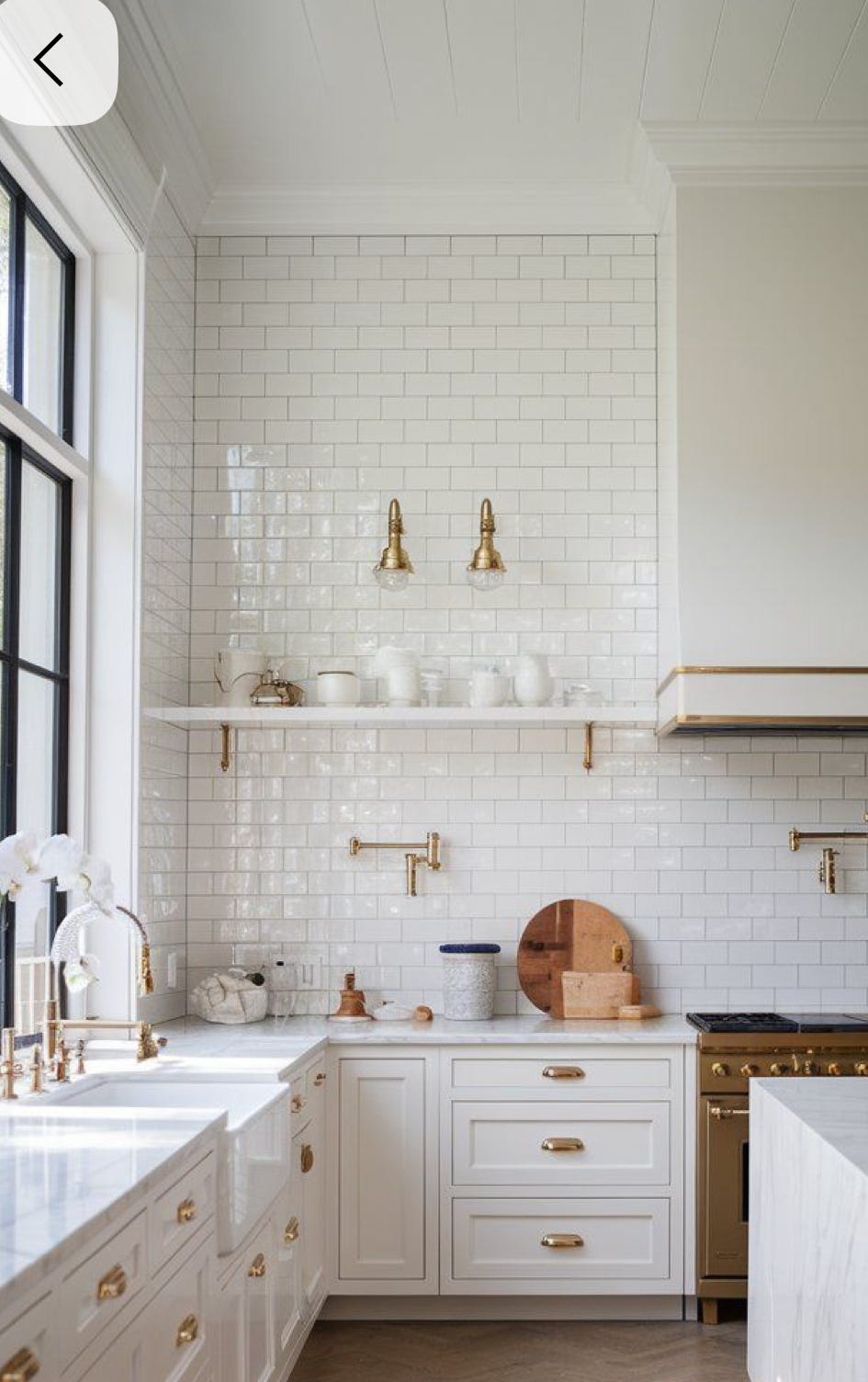
3. Glossy White Subway Tile and Marble with Polished Brass Fixtures
The single element that makes this kitchen sing is the commitment to polished brass. While the white subway tile and marble counters are a timeless and beautiful foundation, they are just that—a foundation. It’s the consistent, unapologetic use of warm, reflective brass on the cabinet hardware, the elegant pot filler, the statement lighting, and even the range hood trim that injects personality and a deep sense of luxury. Remove the brass, and the room is nice. With it, the room is memorable and feels truly curated.
|
📋 Copy HEX 🔗 Share |
- Tile: $500 – $1,200 (for standard glossy subway tile)
- Main Furniture: $6,000 – $15,000 (for semi-custom Shaker cabinets and marble countertops)
- Lighting: $800 – $2,500 (for statement brass pendants and sconces)
- Fixtures & Hardware: $1,000 – $3,000 (for brass pot filler, faucet, and all cabinet pulls)
- TOTAL: $8,300 – $21,700
- Budget alternative: Use marble-look quartz, a brass-toned faucet from a big-box store, and source hardware online for a similar vibe at around $4,000 – $9,000.
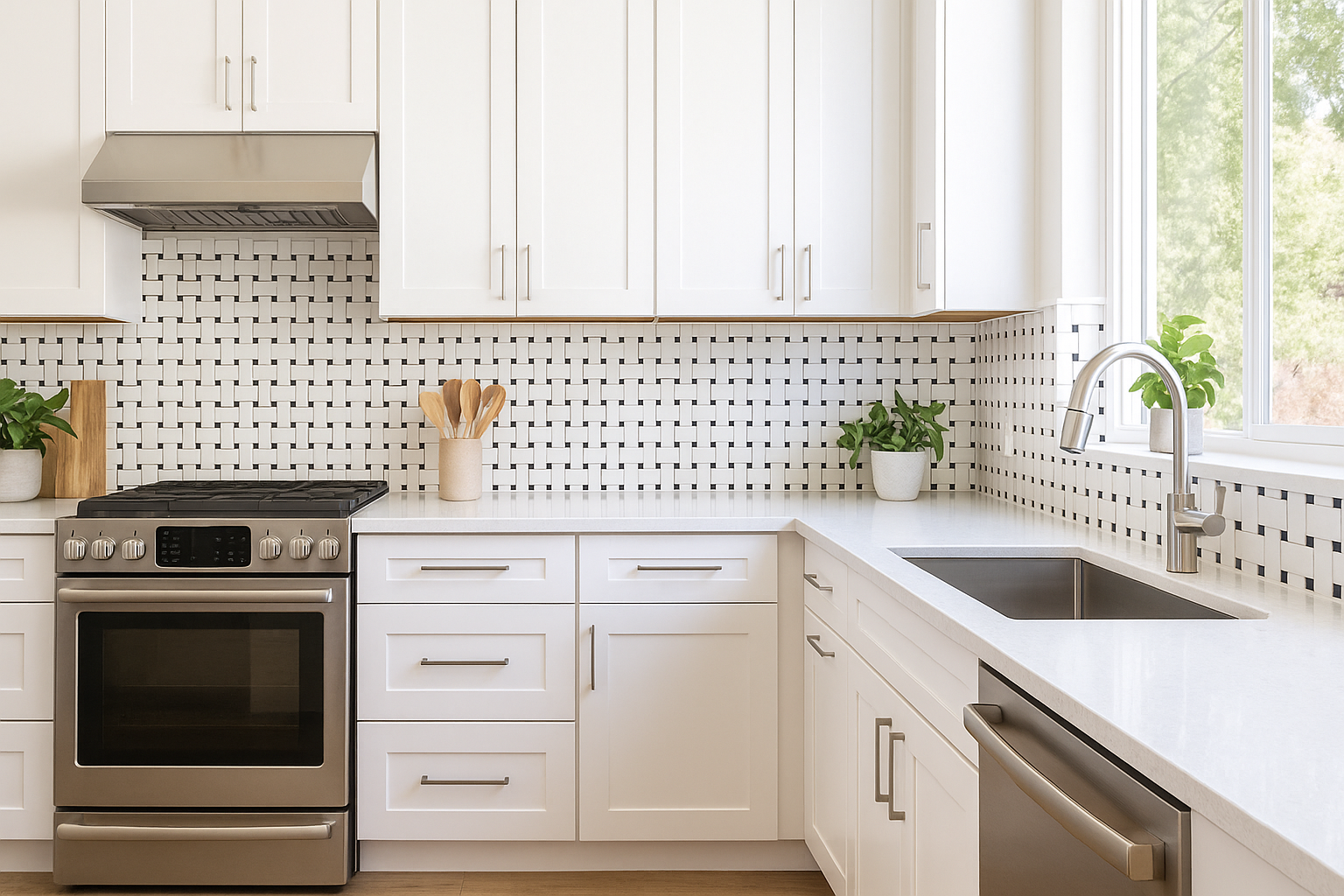
4. Modern Kitchen with a Black and White Basketweave Backsplash
After years of minimalist, texture-focused neutrals, we’re seeing a major return to classic patterns that provide graphic punch without introducing overwhelming color. The basketweave is a perfect example. It’s a heritage pattern, but rendered in a clean black-and-white palette, it feels modern and fresh, not stuffy or dated. It offers more visual interest than simple subway tile but is less busy than some of the more complex geometric or encaustic tiles, making it a sophisticated middle ground that’s resonating with homeowners tired of all-white-everything. It reminds me of the simpler vibe in Idea #1, but with a graphic twist.
|
📋 Copy HEX 🔗 Share |
A pattern this detailed looks incredible, but the visual magic depends on one thing: a perfect installation. With a basketweave, even a slightly crooked line or uneven grout joint will be glaringly obvious and throw off the entire effect. This is not a beginner DIY project. It’s worth hiring a meticulous professional tiler. Also, all those grout lines (especially white grout) will require regular cleaning and sealing to keep the pattern looking crisp and free from kitchen grime and stains.
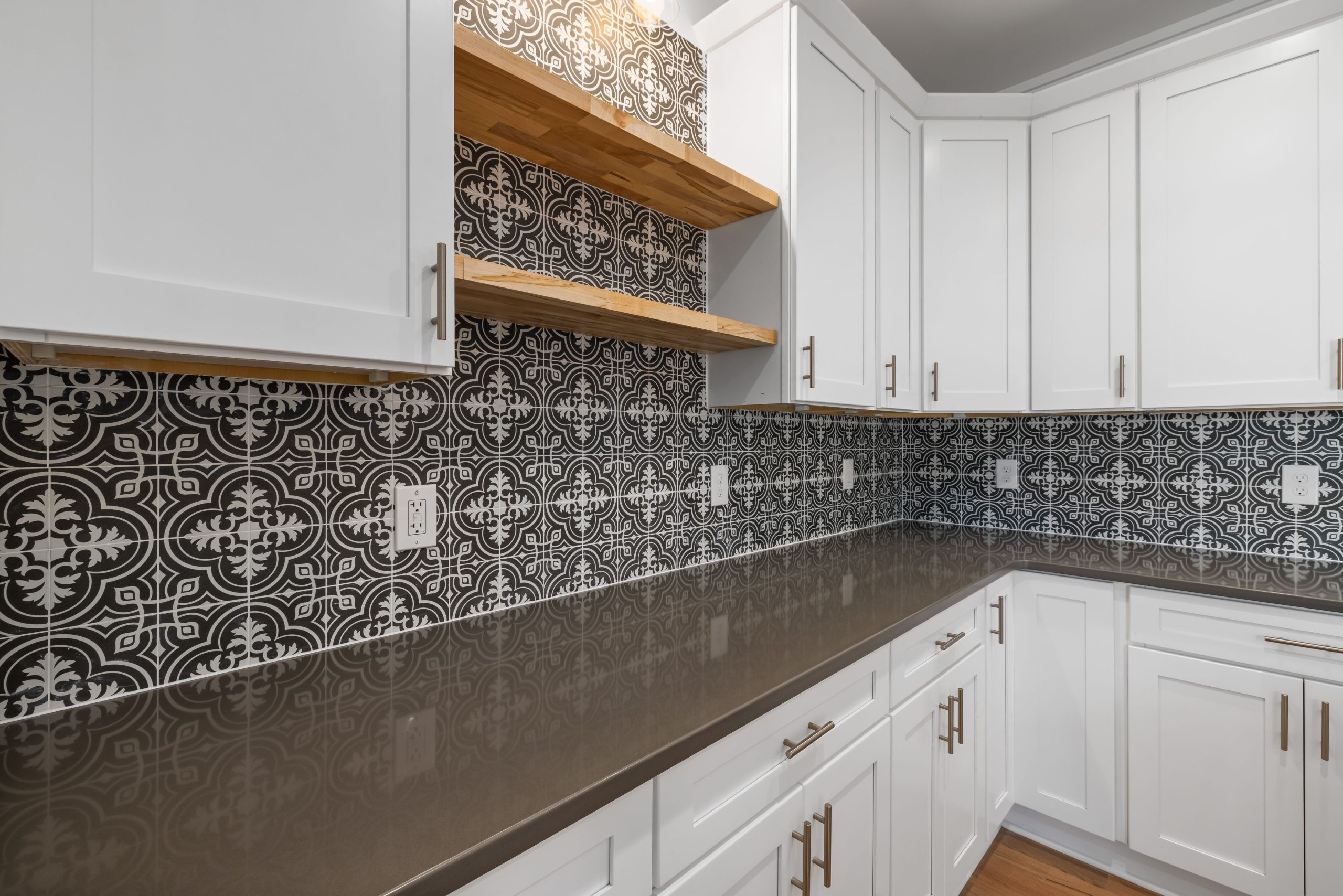
5. Stylish Geometric Pattern with Modern White Cabinets
A backsplash with a repeating geometric pattern works best in small to medium-sized kitchens, typically those with 8 to 12 linear feet of backsplash area. In a very large, open-concept space, a small-scale geometric pattern can become too busy and create a dizzying, pixelated effect from a distance. For this idea to shine, you need walls that are broken up by cabinetry, windows, or appliances, which helps to frame the pattern in digestible sections rather than applying it to one vast, uninterrupted wall.
|
📋 Copy HEX 🔗 Share |
You don’t need custom tiles to get a stunning geometric look. Peel-and-stick backsplash tiles have improved dramatically in quality and offer a fantastic, renter-friendly, and budget-conscious alternative. Brands like WallPops and FloorPops (sold at Target and Walmart) offer similar geometric designs for about $2-$4 per square foot. Pair them with IKEA’s white VEDDINGE or SÄVEDAL cabinet fronts and simple nickel hardware from a hardware store, and you can achieve this entire aesthetic for under $500 in materials.
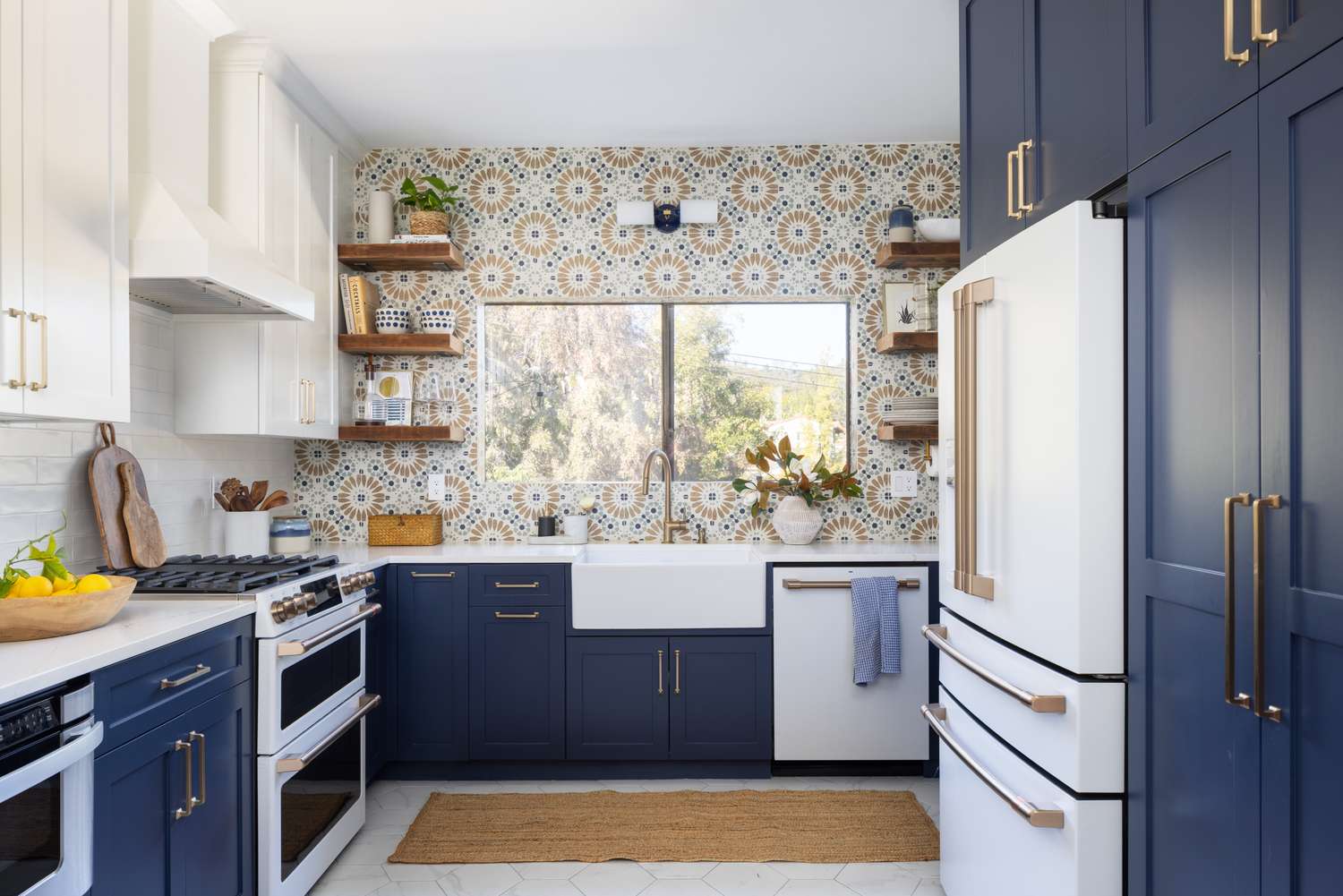
6. Vibrant Medallion Tiles with Two-Toned Cabinetry
This look is all about confident contrast and repetition. The boldness of the patterned medallion tile is balanced by grounding it between classic navy base cabinets and light, airy white uppers. The navy provides a strong anchor, while the white keeps the upper part of the room from feeling heavy. Then, the warmth is repeated: the tan and brown tones in the tile are echoed in the open wooden shelves, and the gold of the hardware is a consistent accent throughout. This repetition makes the eclectic mix feel intentional and harmonious, not chaotic.
|
📋 Copy HEX 🔗 Share |
- Confirm the tile pattern’s repeat. Order a few extra sheets to ensure you can align the medallions perfectly, especially around corners and outlets.
- Get paint swatches for your cabinets. Test the navy and white paint colors in your actual kitchen light next to a sample of the tile to ensure the undertones work together.
- Measure for your hardware. Decide if you want pulls, knobs, or a mix, and confirm the sizing and placement before you drill any holes in your new cabinets.
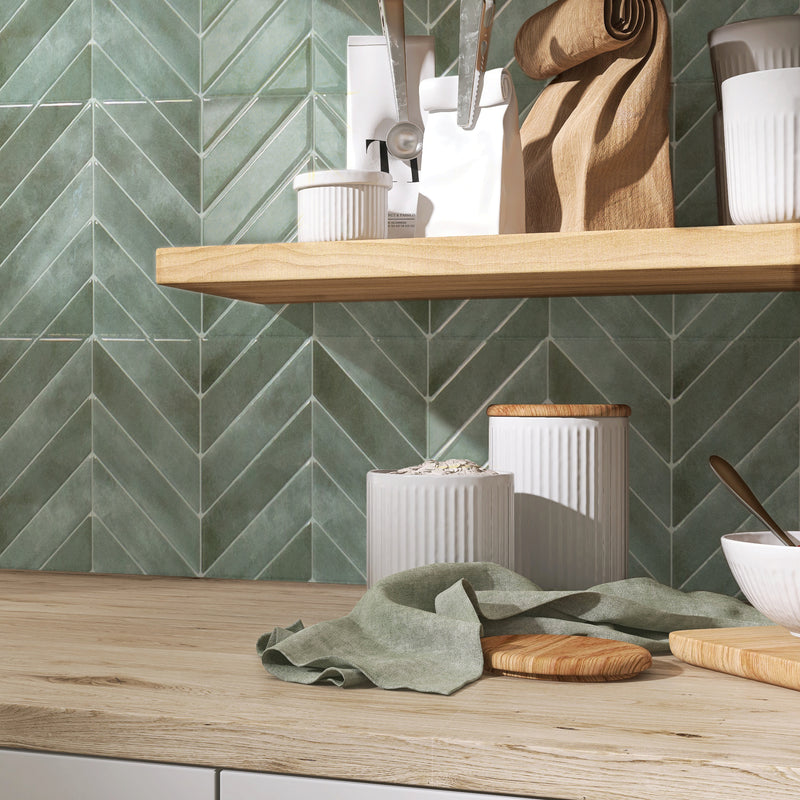
7. Glossy Green Chevron Tile with Light Wood Shelving
The magic here is the tile’s variation. If these green tiles were a single, flat color, the look would be nice, but it wouldn’t have this depth and movement. The subtle shifts from deep-sea green to a slightly brighter aqua, combined with the glossy finish, make the backsplash feel alive and artisanal. It catches the light differently across its surface, mimicking the way light filters through water. This organic variation is what turns a simple chevron pattern into a rich, captivating feature that makes the whole kitchen feel special.
|
📋 Copy HEX 🔗 Share |
When using a chevron pattern, especially with tiles that have color variation, it’s crucial to lay them out before installation. Open several boxes of tile and mix them up on the floor to get a sense of the overall color distribution. This prevents “clumps” of darker or lighter tiles in one area. For a seamless look, the 45-degree cuts at the top and bottom of the backsplash area must be precise. Using a high-quality wet saw with a diamond blade is non-negotiable for getting those clean, sharp edges.
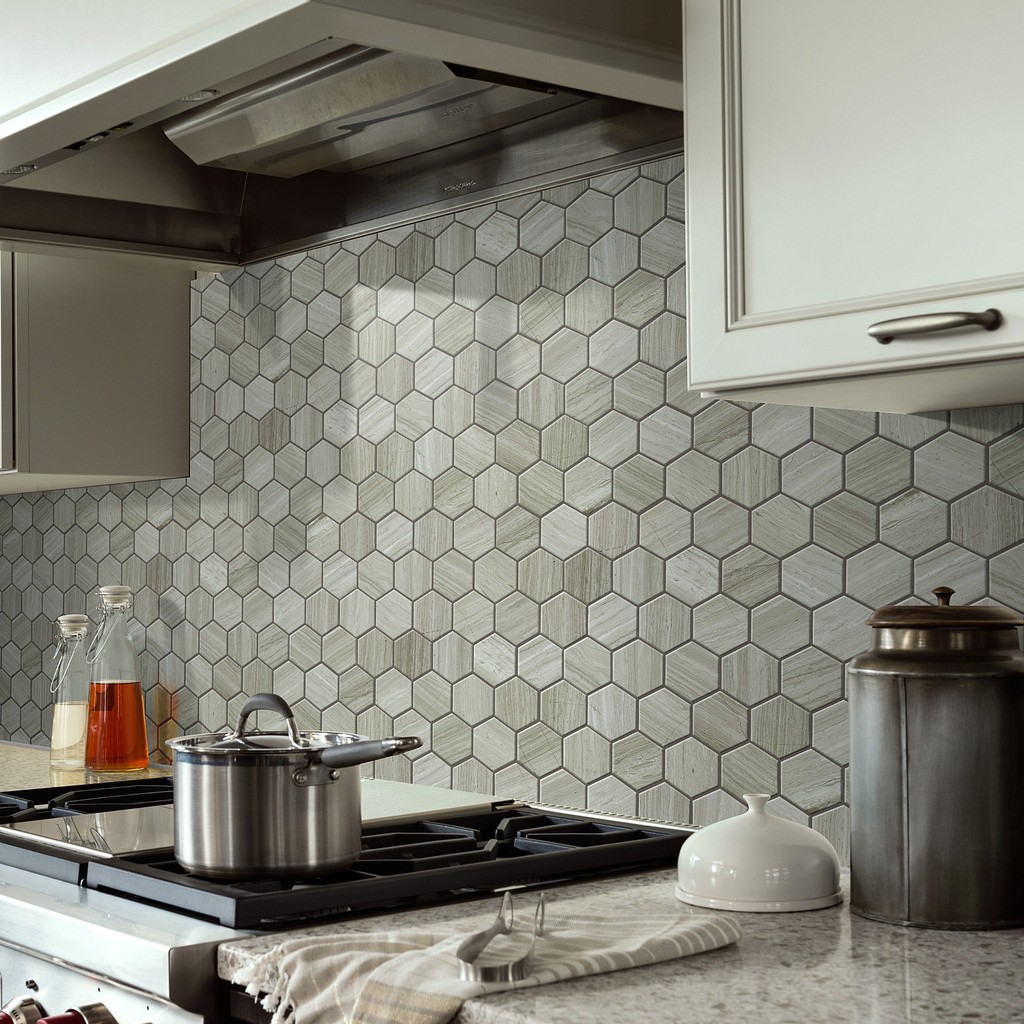
8. Wood-Look Hexagon Tile in a Modern Kitchen
The idea of a wood backsplash is lovely, but the reality of cleaning grease and water splashes off real wood behind a cooktop is a nightmare. This is where wood-look ceramic or porcelain tile is a genius solution. However, be realistic about the pattern. A low-quality print can look fake and pixelated up close. It’s essential to order samples and see the tile in person. Also, the texture that makes it look realistic can also trap grime, so while it’s more durable than wood, it may require more scrubbing than a smooth, glossy tile.
|
📋 Copy HEX 🔗 Share |
This kitchen’s visual recipe is about texture more than color. It’s approximately 50% sleek modern surfaces (the stainless steel appliances and cream cabinets), 40% natural-inspired texture (the wood-look hex tiles), and 10% neutral base (the speckled countertop). You could easily change the formula by using a slate-look or concrete-look hexagon tile instead of wood-look, and the kitchen would instantly shift from warm-modern to industrial-modern, a great comparison to the earthy tones in Idea #26.
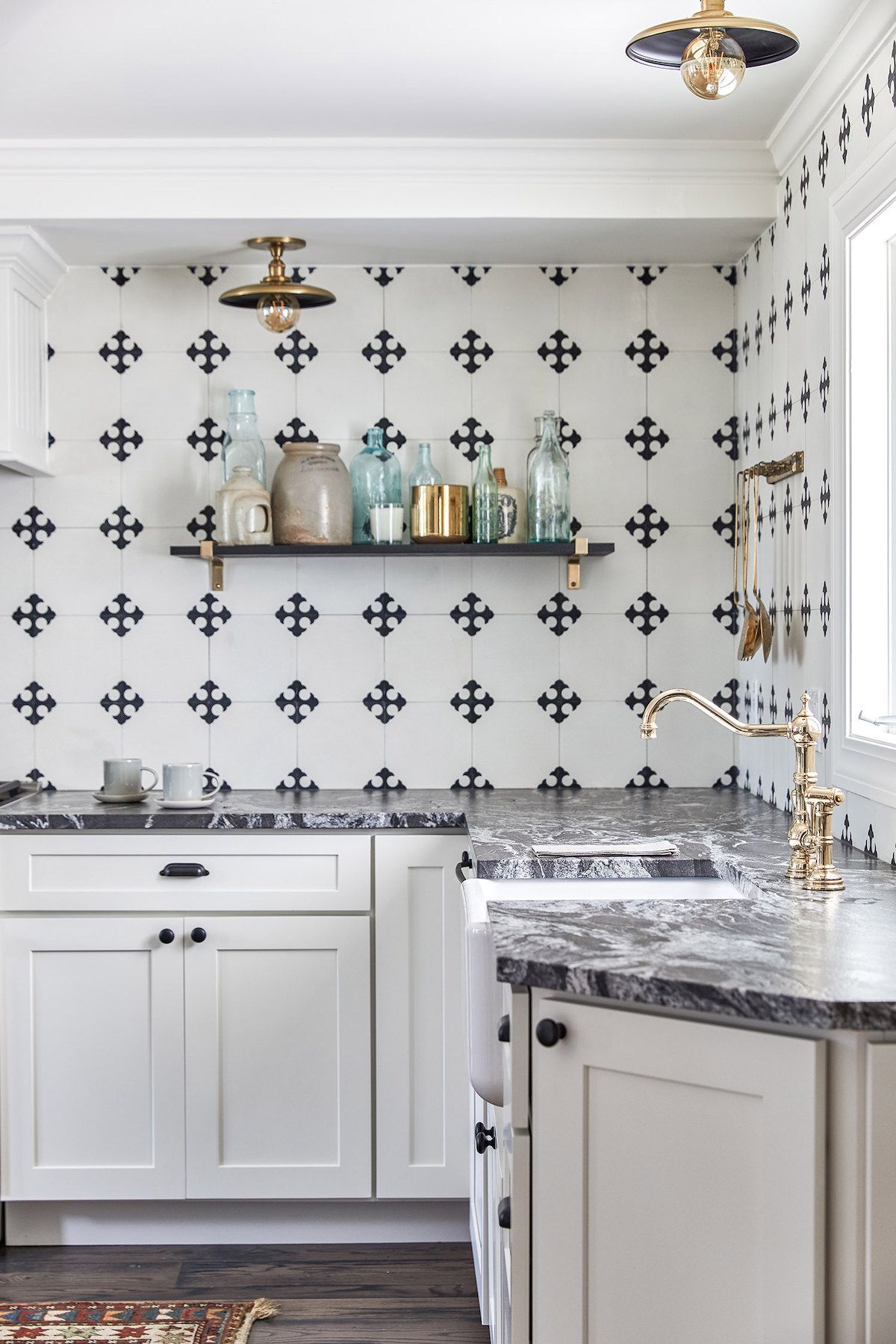
9. Bold Geometric Black and White Tile with Brass Accents
A bold pattern like this is perfect for adding personality to smaller galley kitchens or a contained section of a larger kitchen, like a butler’s pantry or coffee bar. It works best on a flat wall without too many complex corners or jogs, which can interrupt the pattern and create awkward cuts. A minimum ceiling height of 8 feet is recommended to allow the pattern to repeat and establish its rhythm. In very small spaces with low ceilings, a large-scale pattern can feel a bit overwhelming, so consider a smaller, more delicate geometric one instead.
|
📋 Copy HEX 🔗 Share |
Want to recreate that stylish black floating shelf? It’s a simple project that adds a ton of character. (Time: 1 hour, Cost: $50-$100)
- Purchase a pre-finished black shelf board (typically 8-10 inches deep) and a set of decorative metal brackets, like the brass ones shown here.
- Use a stud finder to locate the wall studs where you want to hang your shelf. This is critical for ensuring it can hold weight.
- Mark the stud locations on the wall with a pencil. Hold the first bracket up to the mark and use a level to ensure it’s straight, then mark the screw holes.
- Drill pilot holes for your screws, then securely attach the first bracket to the wall.
- Measure and mark for the second bracket, using a level to ensure it’s perfectly even with the first. Attach it to the wall.
- Place your shelf board on top of the brackets and secure it from below with short screws.
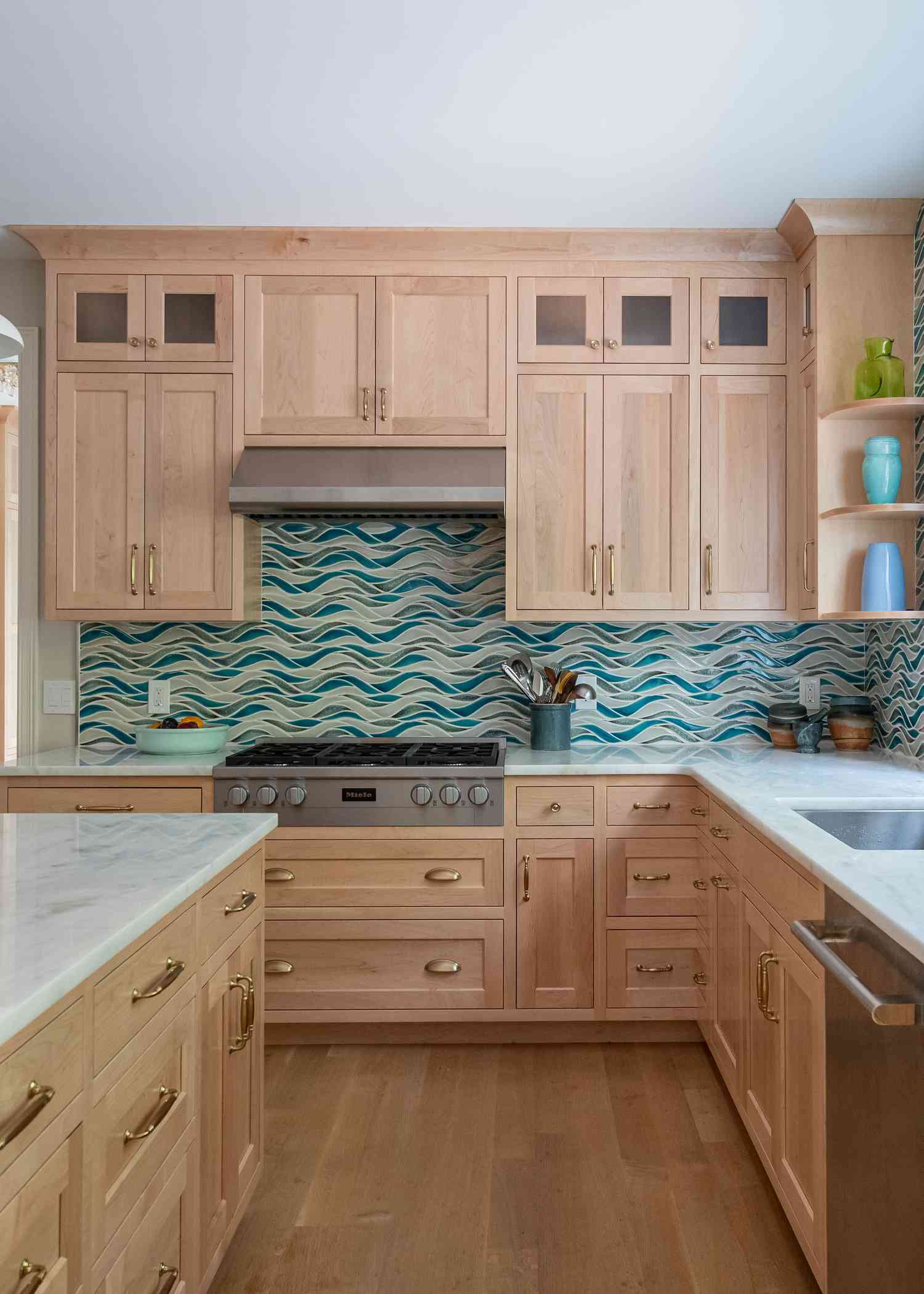
10. Playful Blue Wave Pattern Backsplash
This design taps directly into the “Coastal Grandmother” aesthetic, but with a more modern and playful energy. It’s less about literal seashells and more about capturing the feeling of the coast—the movement of water, the light, the natural materials. The wave pattern is a joyful, graphic way to do this. As people look to create homes that feel like a relaxing escape, these kinds of biophilic (nature-inspired) patterns that evoke a sense of calm and fun are becoming increasingly sought after. It’s a sophisticated and spirited take on a beach house vibe.
|
📋 Copy HEX 🔗 Share |
What makes this kitchen feel so successful is the principle of “one star.” The wave-patterned tile is the undeniable hero of the room. Everything else—the simple light wood shaker cabinets, the clean white marble countertops, the classic stainless steel appliances—is playing a supporting role. They are beautiful and high-quality, but they are quiet. This intentional restraint allows the bold, playful backsplash to shine without competing for attention, creating a look that is impactful but not chaotic.
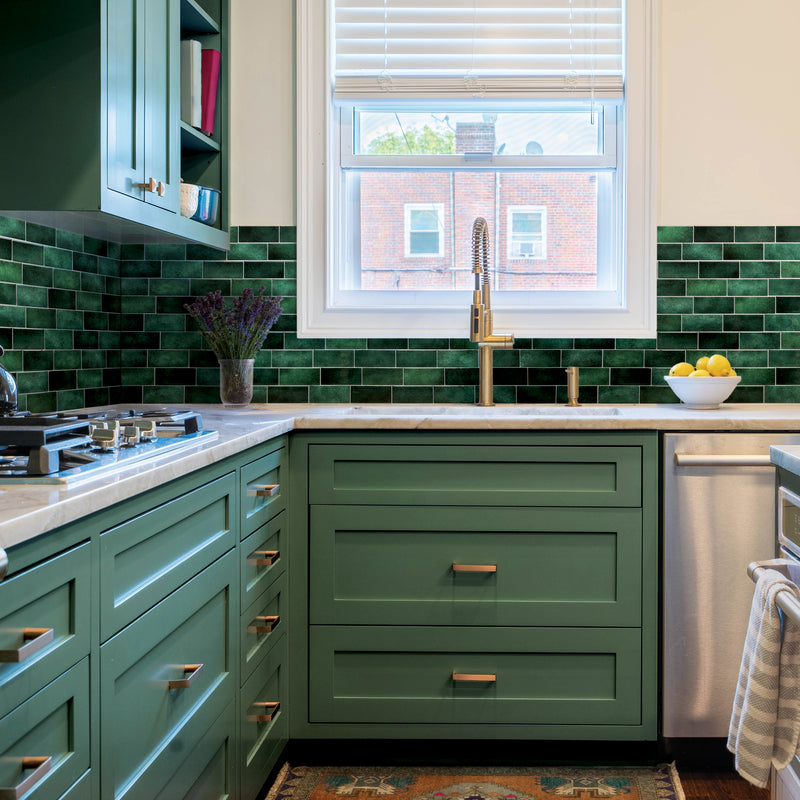
11. Monochromatic Magic with Emerald Green Tile and Cabinets
The brilliance of this design lies in its fearless use of a single, saturated color. By matching the deep emerald green of the subway tiles to the shaker cabinets, the kitchen achieves a rich, enveloping, and incredibly sophisticated look. The subtle textural difference—glossy on the tiles, matte on the cabinets—provides just enough visual interest to keep the monochromatic scheme from falling flat. Contrasting this deep green with a crisp white countertop and warm brass hardware creates a perfect balance of drama and elegance. The effect is moody, luxurious, and utterly chic.
|
📋 Copy HEX 🔗 Share |
- Tile: $600 – $1,500 (for high-quality emerald green subway tile)
- Cabinetry: $5,000 – $12,000 (for painted shaker cabinets, depending on custom vs. semi-custom)
- Countertop: $2,000 – $4,500 (for a light marble-look quartz)
- Fixtures & Hardware: $500 – $1,200 (for brass faucet and pulls)
- TOTAL: $8,100 – $19,200
- Budget alternative: Paint existing cabinets with a high-quality emerald green paint (like Farrow & Ball’s ‘Studio Green’), use a more affordable green tile, and find budget brass hardware from online retailers for a total cost of around $2,500 – $5,000.
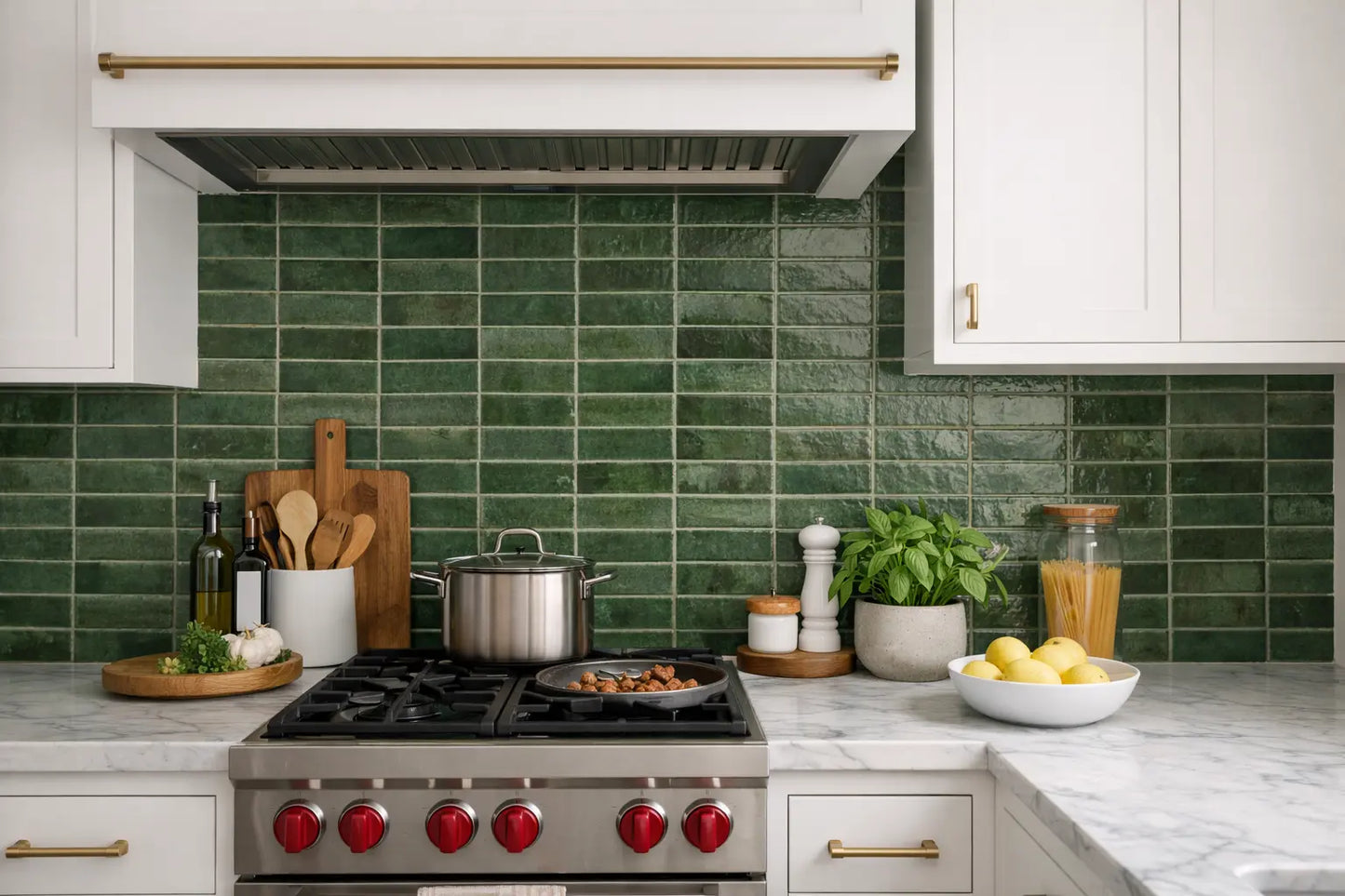
12. Deep Green Glossy Subway Tile with Crisp White Cabinets
The key element that makes this kitchen pop is the high-gloss finish on the deep green subway tiles. A matte or satin tile in the same color would be pretty, but the glossy surface is what creates those beautiful light reflections and visible variations in hue. It adds a layer of glamour and depth, making the color feel more dynamic and alive. It’s this reflective quality that contrasts so beautifully with the matte finish of the white shaker cabinets and the warm glow of the brass hardware, creating a lively and energetic space.
|
📋 Copy HEX 🔗 Share |
When pairing a bold, saturated tile color like this deep green with white cabinets, pay close attention to the undertones of your white paint. Against the cool, rich green, a white that is too creamy or yellow can look dingy, while a white that is too stark and blue-toned can feel cold and sterile. The perfect choice is often a clean, neutral white, like Benjamin Moore’s ‘Chantilly Lace’ or Sherwin-Williams’ ‘Pure White.’ Always test a large paint swatch right next to your tile sample before committing. This is a much bolder look than the more muted green in Idea #21.
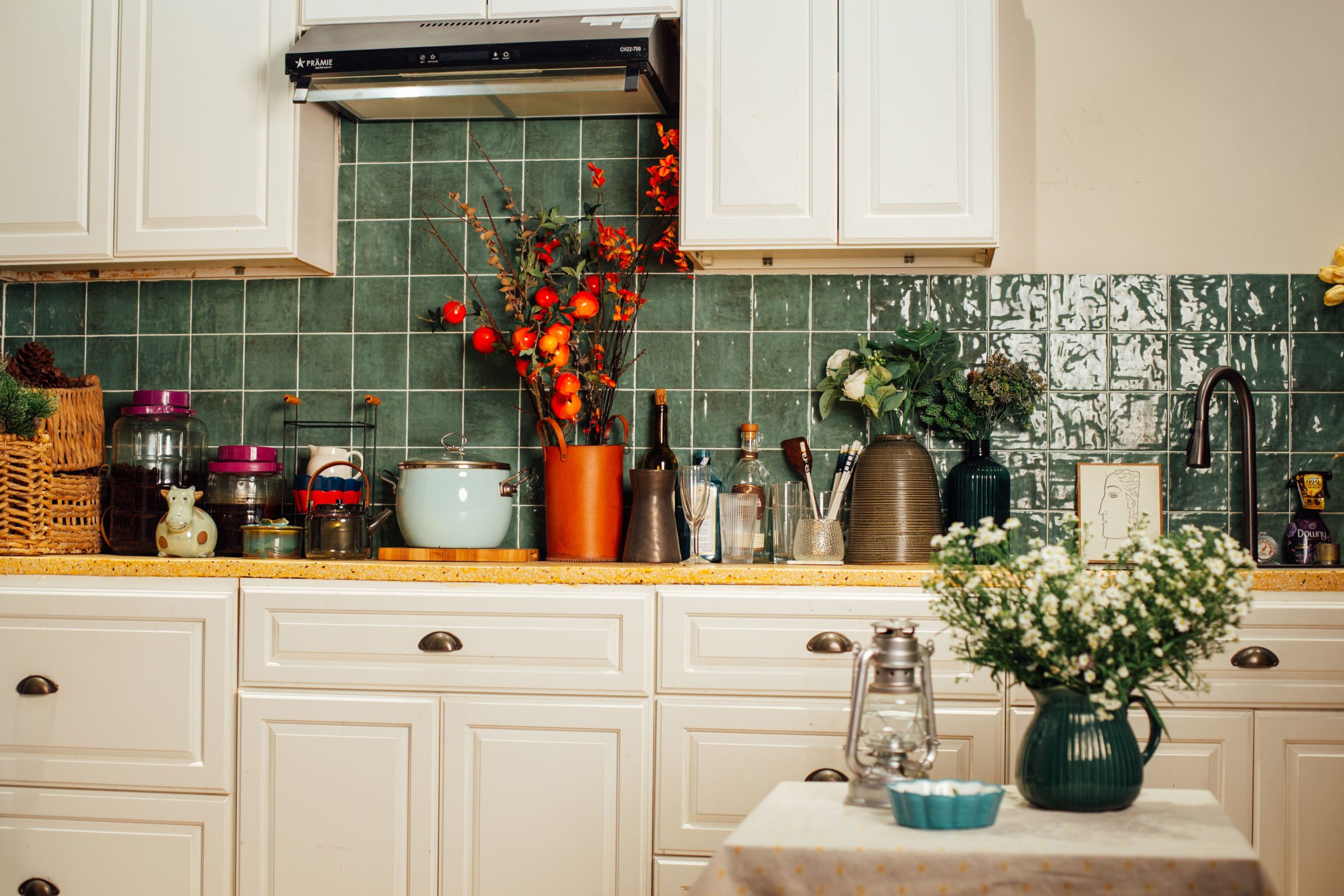
13. Earthy Deep Green Square Tiles with a Yellow Countertop
This kitchen uses a wonderfully earthy and unexpected color pairing. The formula is roughly 50% grounding neutral (the off-white shaker cabinets), 30% deep color (the dark green square tiles), and 20% vibrant accent (the yellow countertop). The dark bronze hardware acts as a subtle punctuation mark. This recipe proves you can be playful with color without overwhelming a space. You could swap the yellow countertop for a warm butcher block, and it would still work, shifting the vibe from colorful to purely earthy, but the 50/30/20 ratio holds the design together.
|
📋 Copy HEX 🔗 Share |
That textured yellow countertop is a showstopper, but a custom laminate or solid surface can be pricey. For a fraction of the cost, you can get a nearly identical look with a high-quality laminate sheet from a brand like Formica or Wilsonart, which you can have fabricated and installed for around $20-$40 per square foot. Pair it with affordable green square tiles from The Home Depot and look for bronze cup pulls on Amazon or at local hardware stores to get this entire unique, lived-in vibe on a serious budget. Compare this square tile to the chevron green in Idea #7 for a study in how shape changes everything!
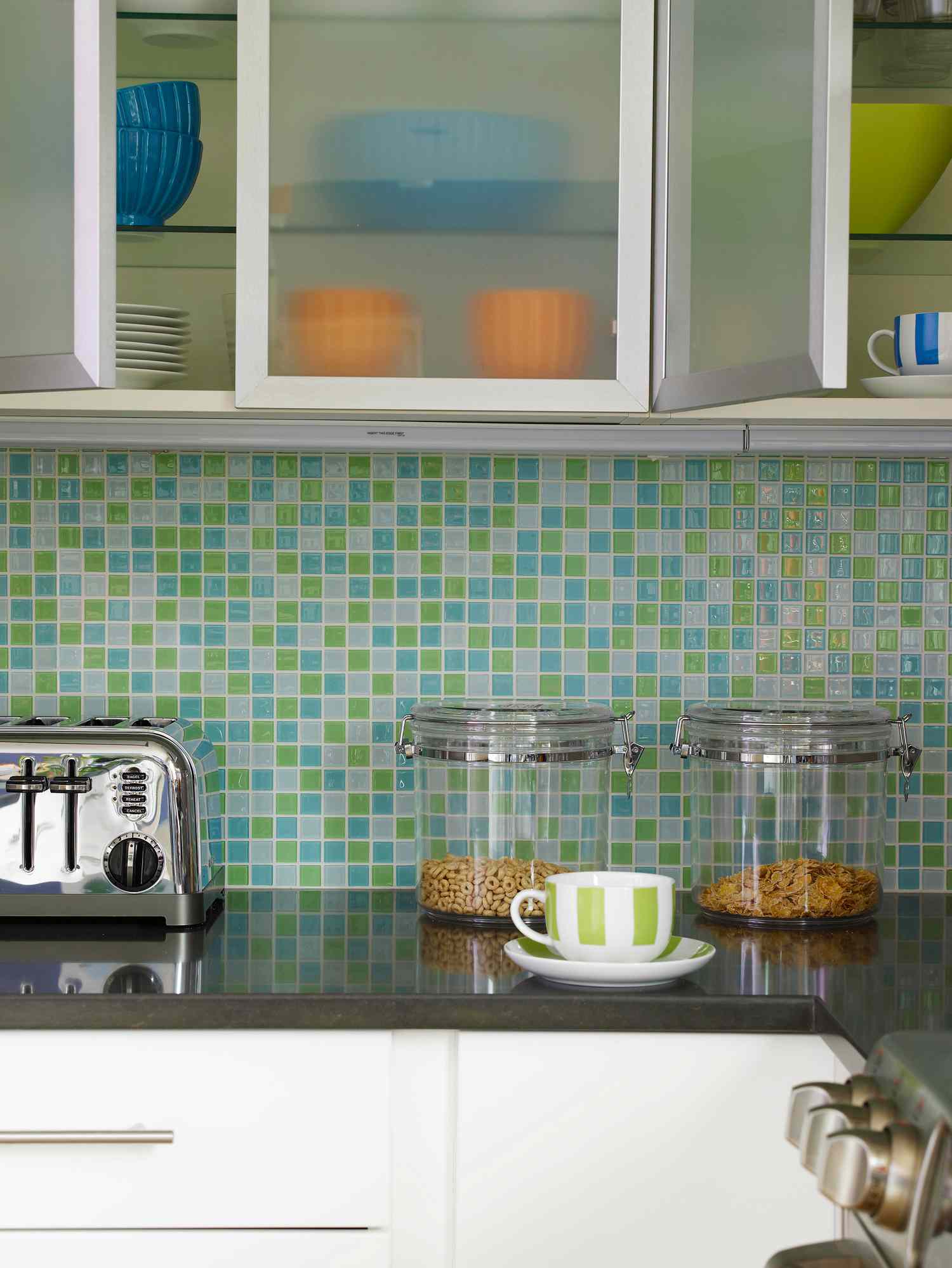
14. Vibrant Aqua and Green Glass Mosaic Backsplash
Small mosaic tiles like this create a beautiful, shimmering effect, but they come with one major trade-off: a whole lot of grout. And in a kitchen, grout is a magnet for moisture, grease, and food splatters. Keeping this backsplash looking fresh will require diligent cleaning and, most importantly, regular sealing. Using a high-quality epoxy or urethane grout from the start can be a lifesaver, as it’s much more stain and water-resistant than traditional cement-based grout. It costs more upfront but can save you hours of scrubbing down the line.
|
📋 Copy HEX 🔗 Share |
A small-scale mosaic tile is fantastic for navigating tight spaces, curved walls, or areas with lots of outlets and switches, as the small size of the tiles makes them easy to cut around obstacles. This look is ideal for smaller kitchens or as a feature in a contained area, like a wet bar or coffee station. In a very large, expansive kitchen, a tiny mosaic can sometimes look a bit busy or dated. If you have a large space but love this color palette, consider a larger-format glass subway tile in a similar aqua shade.
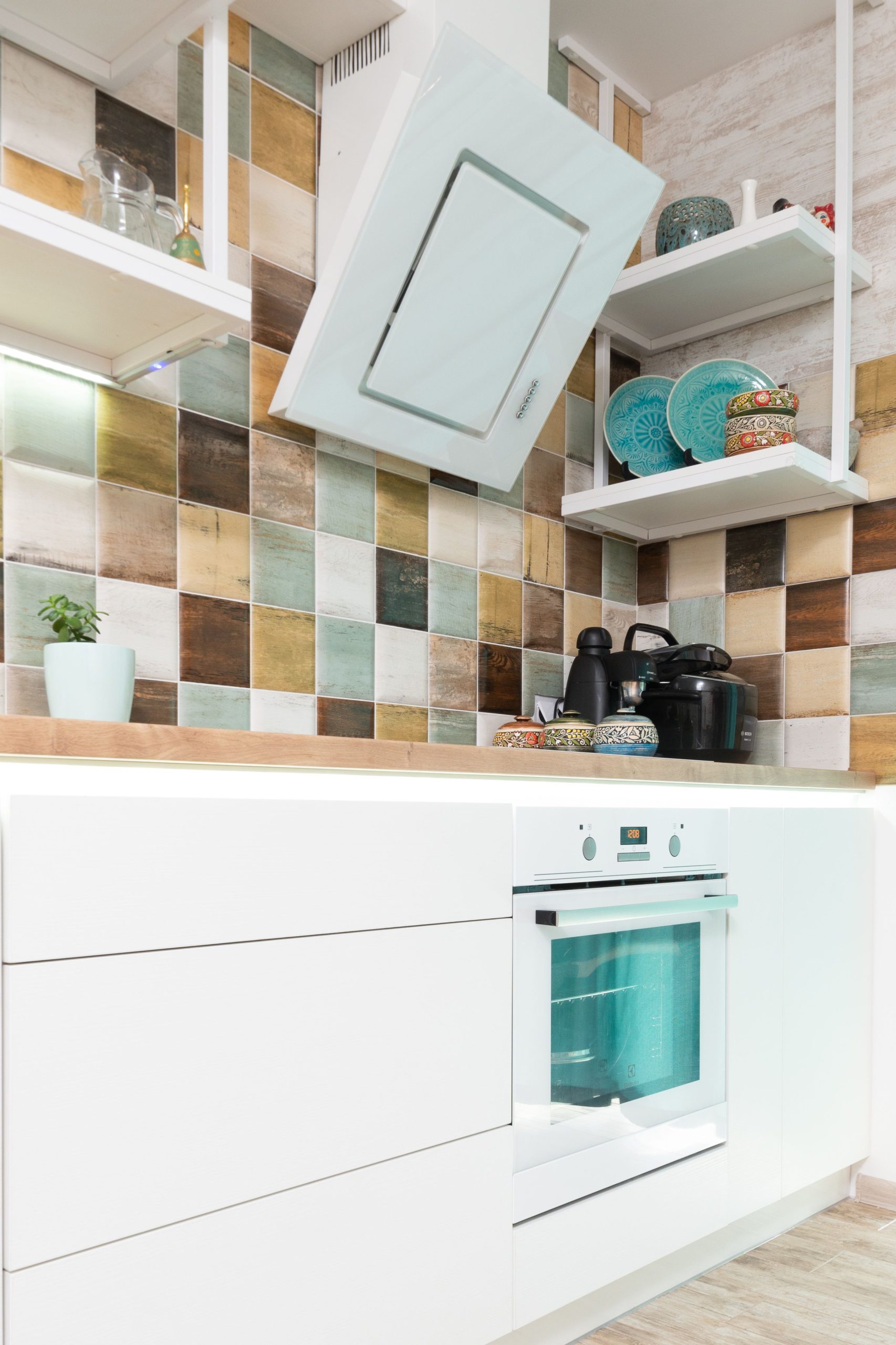
15. Modern White Kitchen with Rustic Wood-Look Square Tiles
This design succeeds by masterfully blending two opposing styles: sleek modernism and rustic texture. The handle-free, flat-panel white cabinetry, integrated appliances, and sharp-angled range hood are unapologetically modern and minimalist. The backsplash, however, introduces a completely different character with its distressed, wood-look square tiles in varied earthy tones. This juxtaposition creates a dynamic tension that is incredibly compelling. The rustic tiles add warmth, history, and texture, preventing the modern white elements from feeling sterile or cold.
|
📋 Copy HEX 🔗 Share |
While the whole composition is beautiful, the single element that truly defines this space is the backsplash tile itself. It’s the “wow” moment. Without its rich texture and palette of distressed colors, the kitchen would be a very clean, well-designed but ultimately generic modern white kitchen. The tile injects all the personality, story, and warmth. It’s the artistic touch that gives the room its soul and makes it feel distinct and memorable. All other elements are there to support and showcase it.
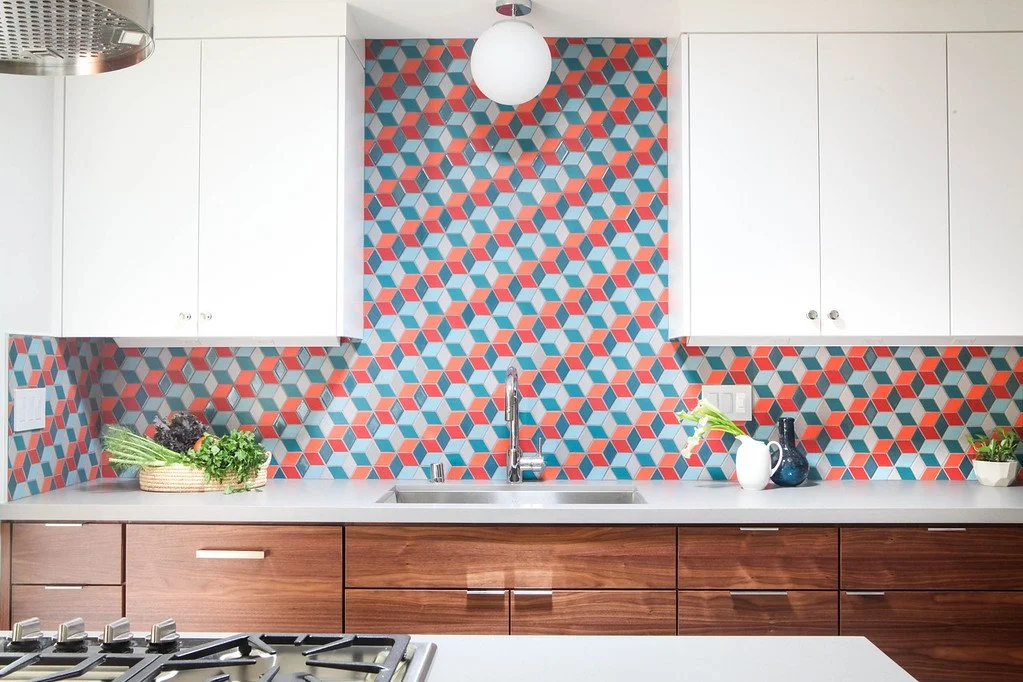
16. Playful 3D Cube Pattern Tile in Blue, Red, and Gray
This tile is pure joy, and it taps into a broader design movement we’re seeing called “dopamine decor.” It’s all about using color, pattern, and playful shapes to create spaces that actively make you feel happy. After years of safe, muted minimalism, homeowners are ready to express themselves and take some risks. This 3D-effect tile, with its cheerful, almost retro color combination, is a perfect example. It turns a functional wall into a piece of art and a daily dose of visual delight, which is a priority for many in 2026.
|
📋 Copy HEX 🔗 Share |
- Order a Full-Size Sample: A single tile won’t capture the 3D effect. You need at least a 12×12 sheet to see how the pattern repeats and how the colors interact in your kitchen’s light.
- Choose Your Grout Wisely: A light gray or white grout will make the pattern pop. Test grout colors against your sample sheet before committing, as it dramatically affects the final look.
- Plan Your Stopping Points: Decide exactly where the tile will begin and end. With a bold pattern like this, an awkward cutoff can ruin the effect. It’s best to run it from countertop to cabinet or wall to wall.
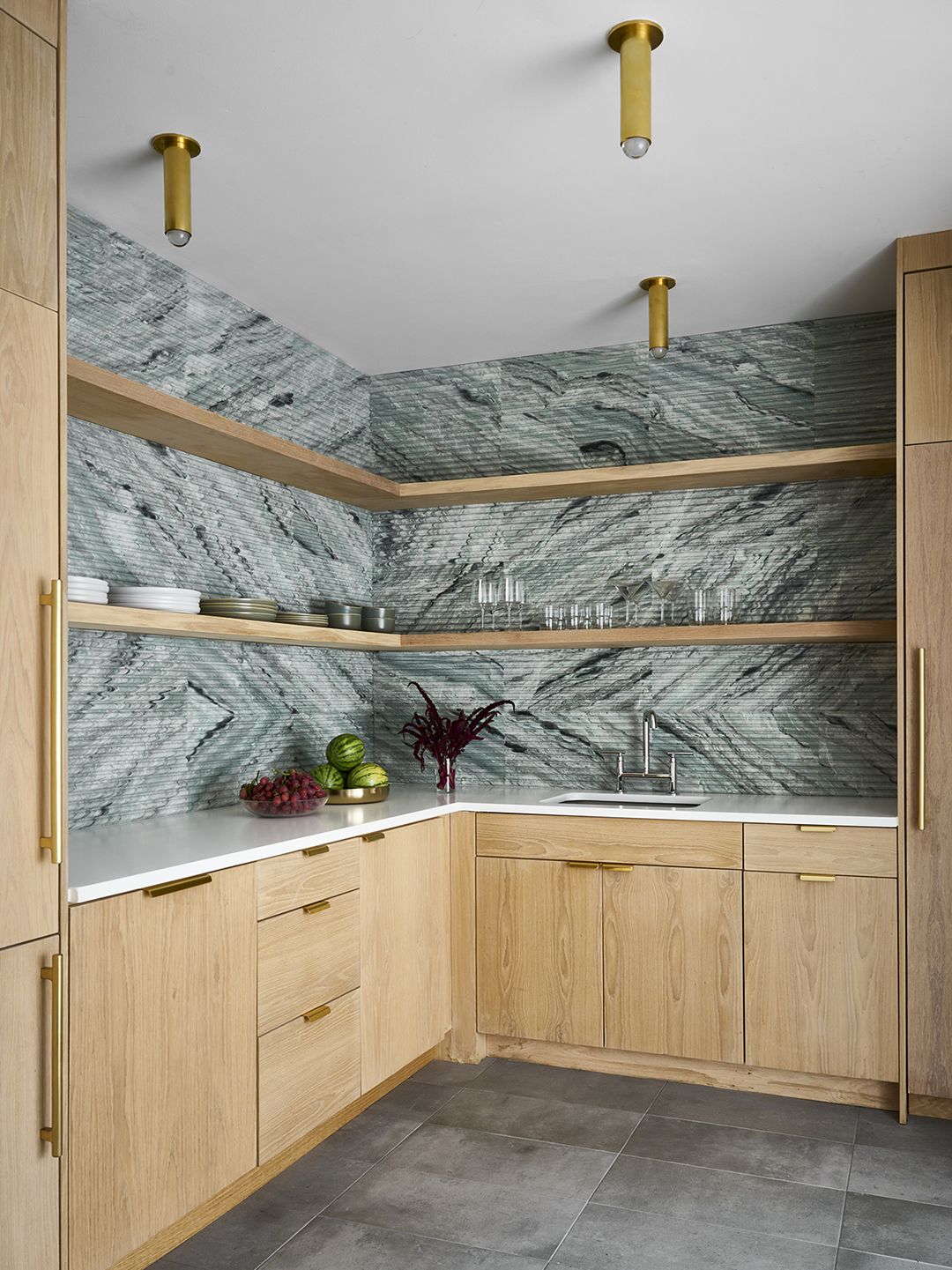
17. Full-Height Variegated Marble Tile with Light Wood Cabinets
A full wall of textured, variegated tile is a stunning statement, but be aware of the cleaning implications, especially if this is in a high-use kitchen area. The textured surface, compared to smooth polished marble, has more microscopic crevices for grease and dust to settle into. Regular wiping with a pH-neutral cleaner is essential. More importantly, natural stone like this must be sealed upon installation and then resealed every 1-2 years to protect it from staining, especially from acidic spills like lemon juice or wine.
|
📋 Copy HEX 🔗 Share |
To achieve this seamless, high-end look, bookmatching the tiles is a pro-level technique to consider. This means that adjacent tiles mirror each other, creating a continuous, symmetrical pattern from the natural veins of the stone. This requires purchasing slabs or tiles that were cut sequentially from the same block. It increases the cost and requires a highly skilled installer, but the result is a breathtaking, uninterrupted mural effect that makes the wall feel like a single piece of art. It’s the ultimate way to showcase the beauty of natural stone.
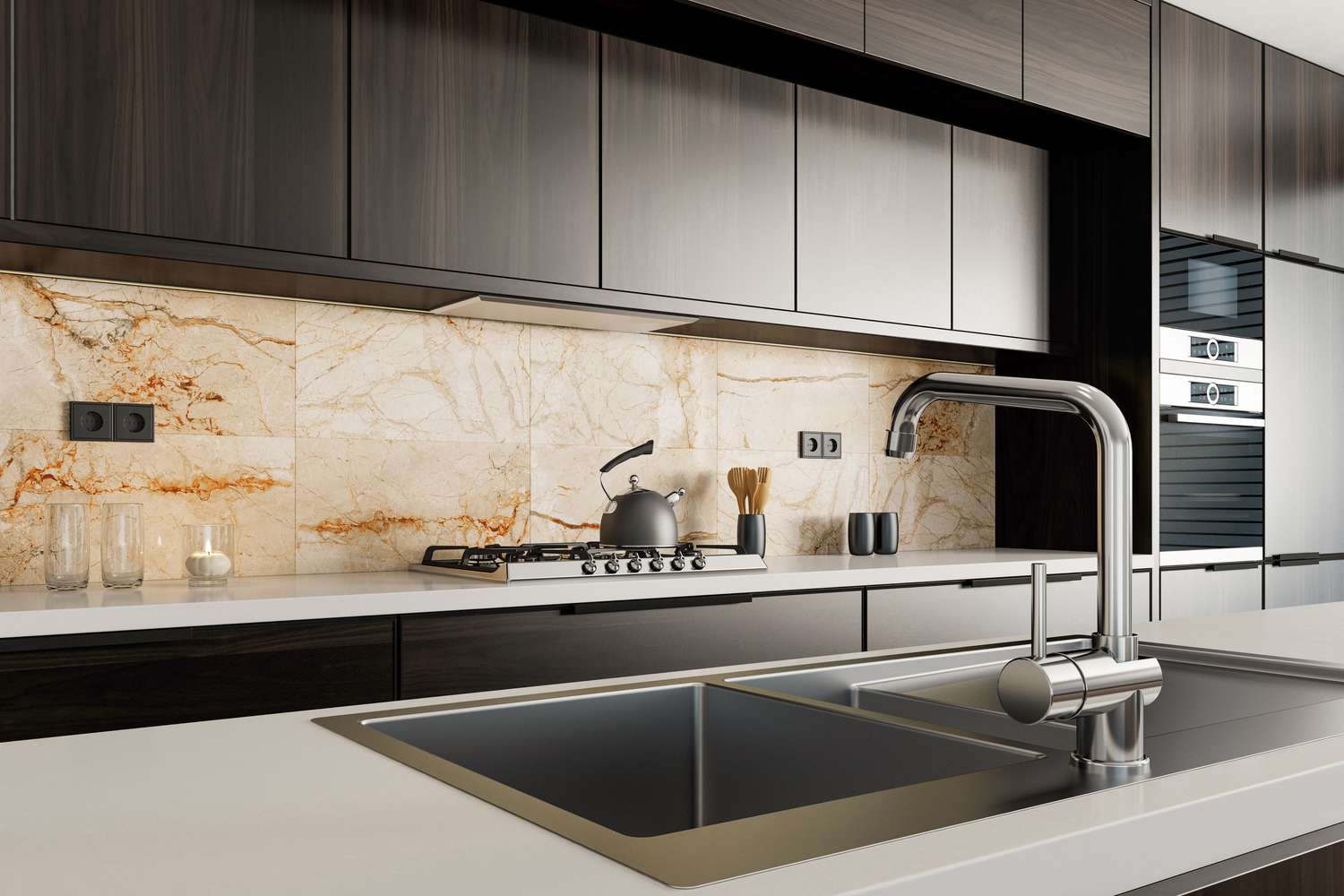
18. Square Marble Tiles with Red-Brown Veins and Dark Wood Cabinetry
This is a sophisticated, high-end look that feels both modern and timeless. The key is in the materials.
- Tile: $1,500 – $4,000 (for large format natural marble tiles with prominent veining)
- Cabinetry: $8,000 – $20,000 (for dark wood grain flat-panel cabinets, likely semi-custom or custom)
- Countertop: $2,500 – $5,000 (for a high-quality white solid surface or quartz)
- Appliances & Fixtures: $5,000 – $15,000+ (for integrated double ovens, gas range, and high-end sink/faucet)
- TOTAL: $17,000 – $44,000+
- Budget alternative: Use a large-format porcelain tile that mimics veined marble, IKEA wood-effect cabinet fronts (like ‘Lerhyttan’), a laminate countertop, and mid-range appliances to get a similar feel for $7,000 – $14,000.
|
📋 Copy HEX 🔗 Share |
Natural stone is an investment, and it comes with responsibilities. Marble, especially a lighter-colored one like this, is porous and relatively soft. It will stain and etch if spills from acidic foods (lemons, tomatoes, and vinegar) aren’t wiped up immediately. It must be professionally sealed upon installation and resealed every year or so. While many people love the patina that marble develops over time, if you are someone who wants a pristine, perfect-looking surface forever, you should consider a marble-look porcelain tile instead. Porcelain offers a nearly identical look with zero of the maintenance headaches.
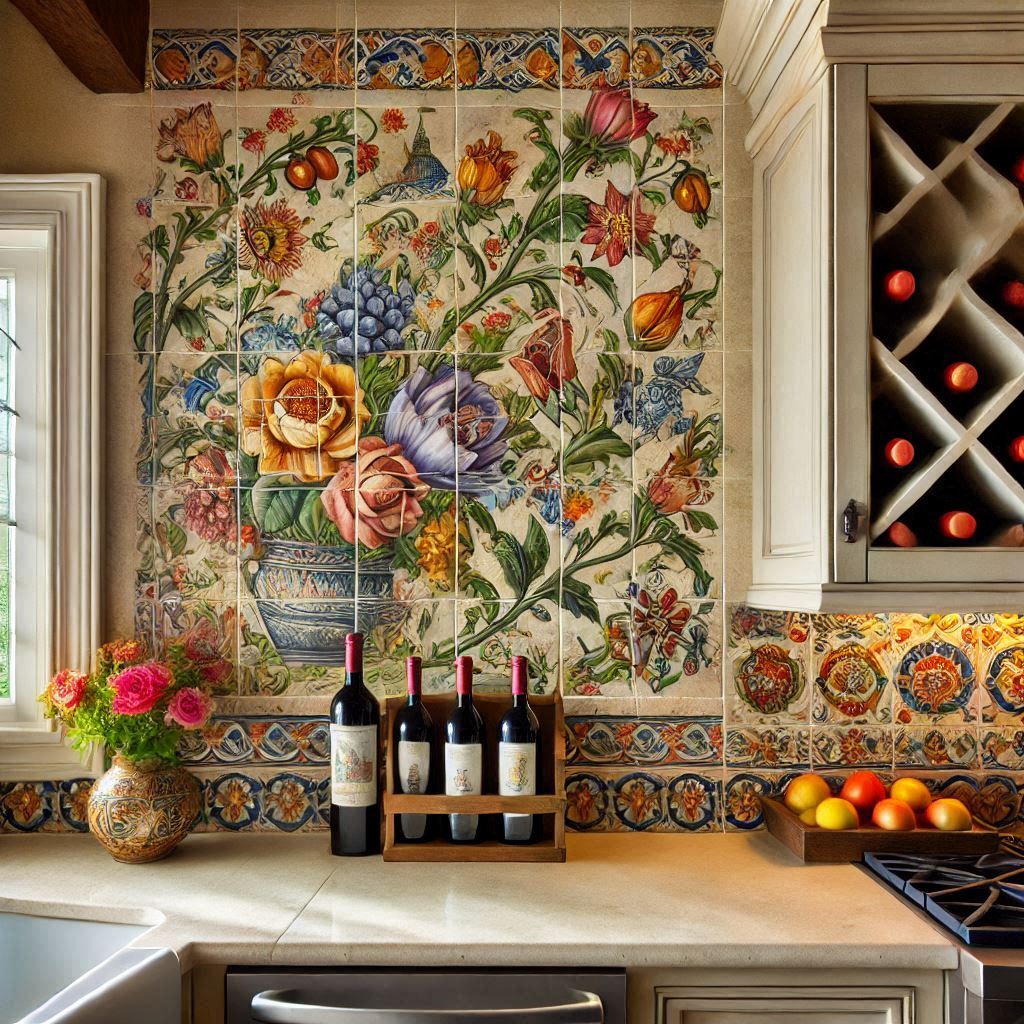
19. Hand-Painted Floral and Fruit Mural Backsplash
In this kitchen, the absolute, undeniable heart of the design is the hand-painted tile mural. It is not just a backsplash; it is a focal point, a piece of art, and a storyteller. Everything else in the kitchen, from the simple light-colored cabinets to the neutral countertop, is chosen to support and frame this feature. Removing it would fundamentally change the room from a vibrant, Mediterranean-inspired space to a standard, functional kitchen. The mural provides all the color, pattern, and personality for the entire room.
|
📋 Copy HEX 🔗 Share |
This style works because it establishes a clear visual hierarchy. The eye is immediately drawn to the complex, colorful mural. The secondary element, the decorative border tile, supports the mural without competing with it. Finally, the tertiary elements—the cabinets, countertop, and sink—are deliberately quiet and neutral. This clear “loud, medium, quiet” structure is a classic design principle that prevents a room with a bold feature from feeling chaotic. It tells your eye exactly where to look.
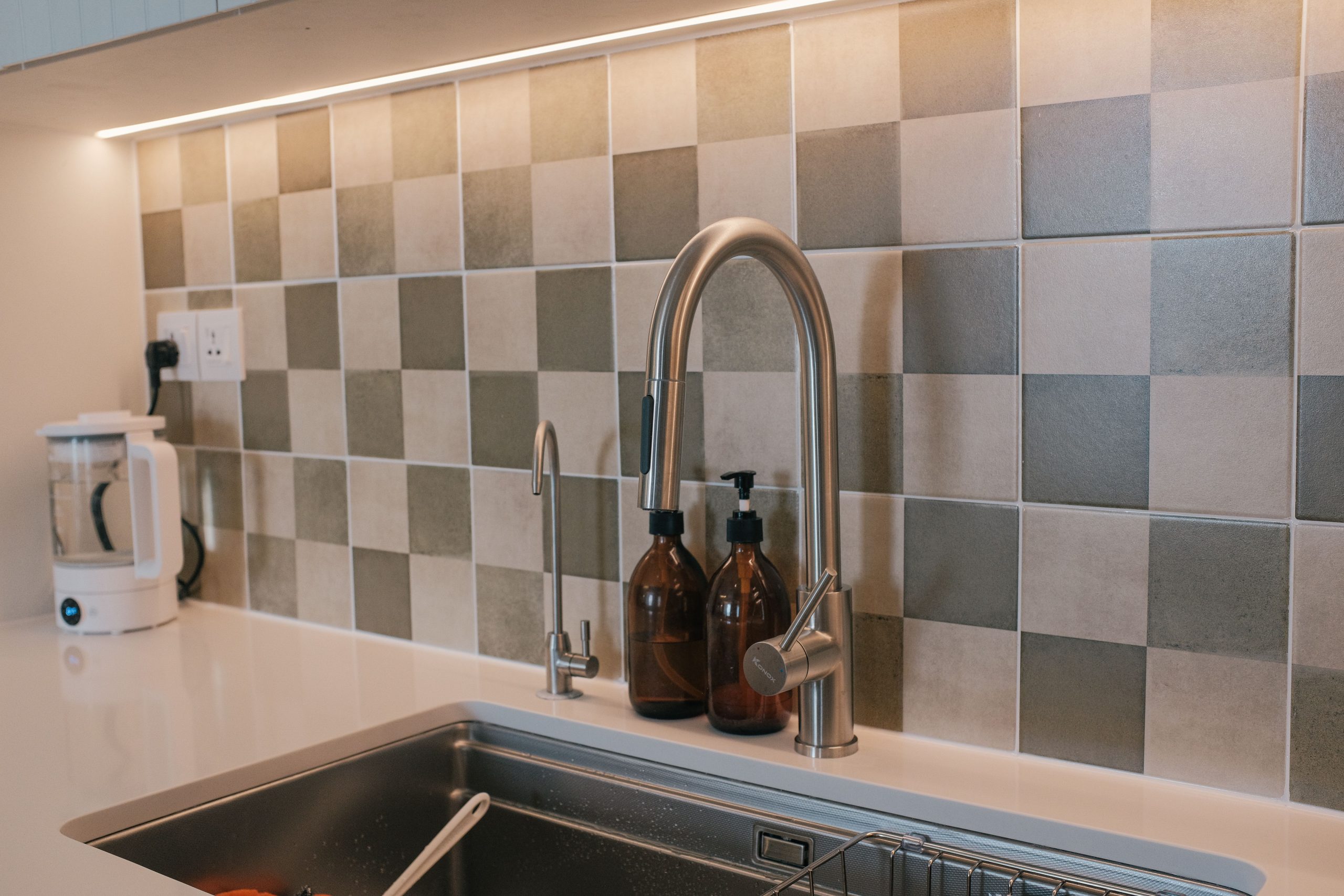
20. Checkerboard Tile Backsplash in Muted Gray-Green and Taupe
A checkerboard pattern is a fantastic way to add character on a tight budget because it uses simple, affordable square tiles. You can find basic 4×4 or 6×6 ceramic tiles at any big-box hardware store like The Home Depot or Lowe’s for well under $3 per square foot. To get this specific muted, earthy look, look for colors like ‘Light Smoke’ or ‘Mushroom’ paired with a ‘Sage.’ By choosing your own colors, you can create a custom look that feels much more expensive than it is. It’s a high-impact pattern for a low material cost.
|
📋 Copy HEX 🔗 Share |
This look is a simple but effective formula: 50% one neutral + 50% another neutral. The key is the type of neutrals chosen. Here, a warm, earthy taupe is paired with a cool, dusty gray-green, creating a subtle but sophisticated contrast. The same 50/50 formula could be used with black and white for a classic graphic look or two shades of gray for a more minimalist, tonal effect. The under-cabinet lighting is the 10% accent that elevates the whole scheme, making the tiles and the white countertop glow.
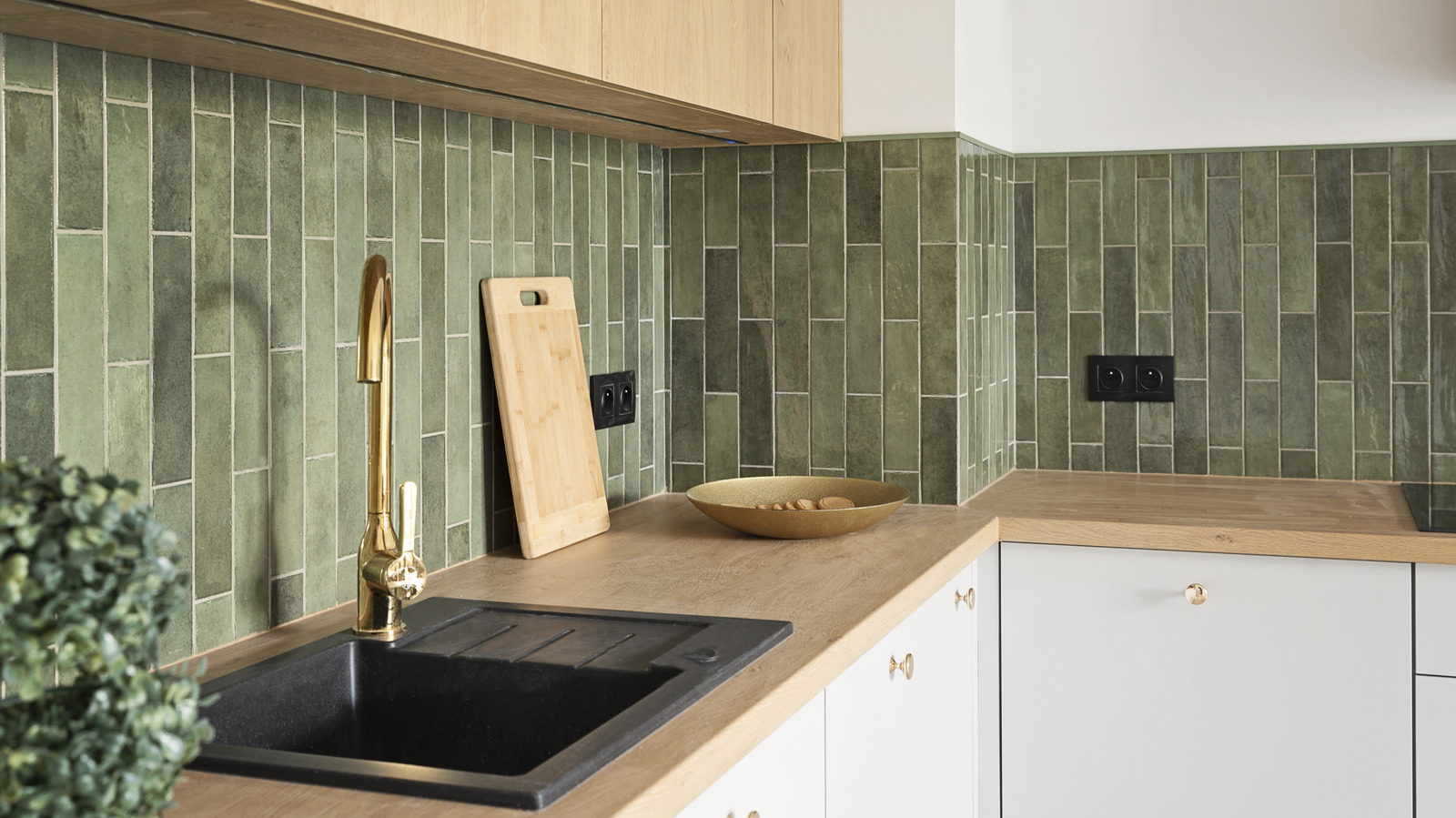
21. Sage Green Tile in a Modern Vertical Stack Pattern
A vertical stack is a clean, modern way to lay subway tile, and it can help make a wall feel taller. Here’s a quick guide to getting it right. (Time: 4-6 hours for a small backsplash, Cost: $100-$300 (for tile/materials)
- Start by finding the center of your wall and drawing a perfectly plumb (vertical) line with a level.
- Apply a thin layer of tile adhesive (mastic) with a notched trowel.
- Place your first tile against the vertical line. Place the tile directly above it, using tile spacers to create a consistent grout line. Do not offset the tiles.
- Continue this column up the wall. Then, start the next column right beside the first, again using spacers to keep the grid perfect.
- Use a wet saw to make any necessary cuts for edges and outlets.
- Let the adhesive cure for 24 hours, then apply grout, wiping away the excess with a sponge.
|
📋 Copy HEX 🔗 Share |
The secret to making this look feel so fresh and custom is the harmonious blend of tones and textures. The sage green of the tiles has an earthy, natural feel, which is perfectly complemented by the light wood of the countertops and upper cabinets. Notice how the fine grain of the wood adds a layer of organic texture that plays against the slightly irregular, Zellige-like texture of the tiles. Using a black sink and gold fixtures adds a touch of modern contrast that keeps the look from becoming too rustic. It’s a beautifully executed material palette.
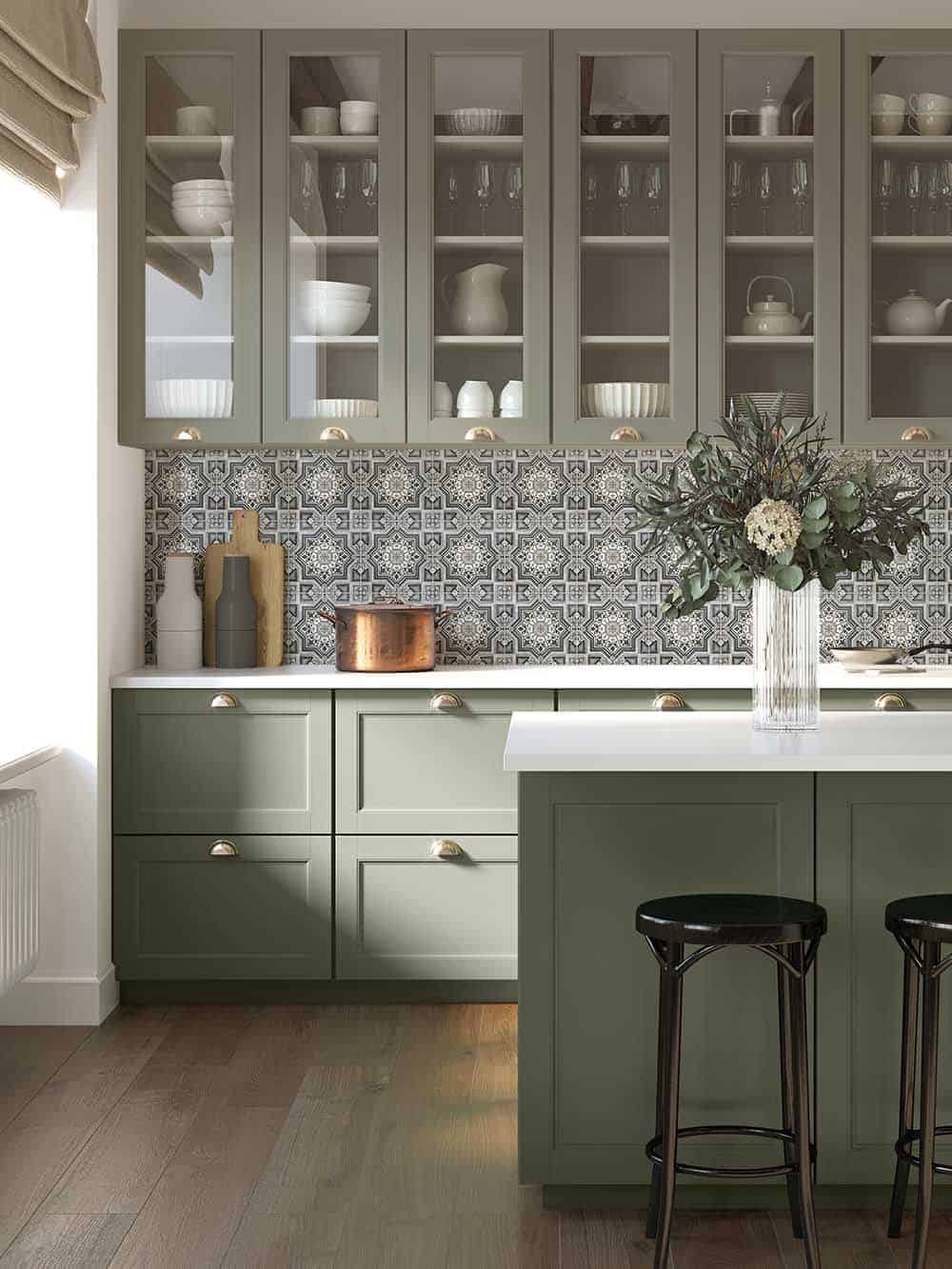
22. Olive Green Shaker Kitchen with an Ornate Patterned Backsplash
This combination of earthy olive green cabinets and a busy, intricate backsplash pattern works best in a kitchen with generous proportions and high ceilings (9 feet or taller). The deep cabinet color and detailed tile both carry significant visual weight, and they need room to breathe. In a smaller, more cramped kitchen, this duo could feel heavy and overwhelming. Good natural light is also a huge asset, helping to balance the dark tones of the cabinetry and highlight the details in the backsplash pattern. Compare this to the more open feel of the patterned tile in Idea #6, which is paired with lighter cabinets.
|
📋 Copy HEX 🔗 Share |
Be honest with yourself about your tolerance for visual complexity. While stunning in a photo, living with a bold, intricate pattern day-in and day-out isn’t for everyone. If you’re sensitive to visual “noise,” this might not be the most calming choice for the heart of your home. Before you commit, get a large sample of the tile (at least 2×2 feet) and live with it in your kitchen for a week. See how you feel about it in the morning light, under artificial light at night, and when the counter is cluttered with everyday life.
23. White Herringbone Backsplash with Bold Blue Cabinets
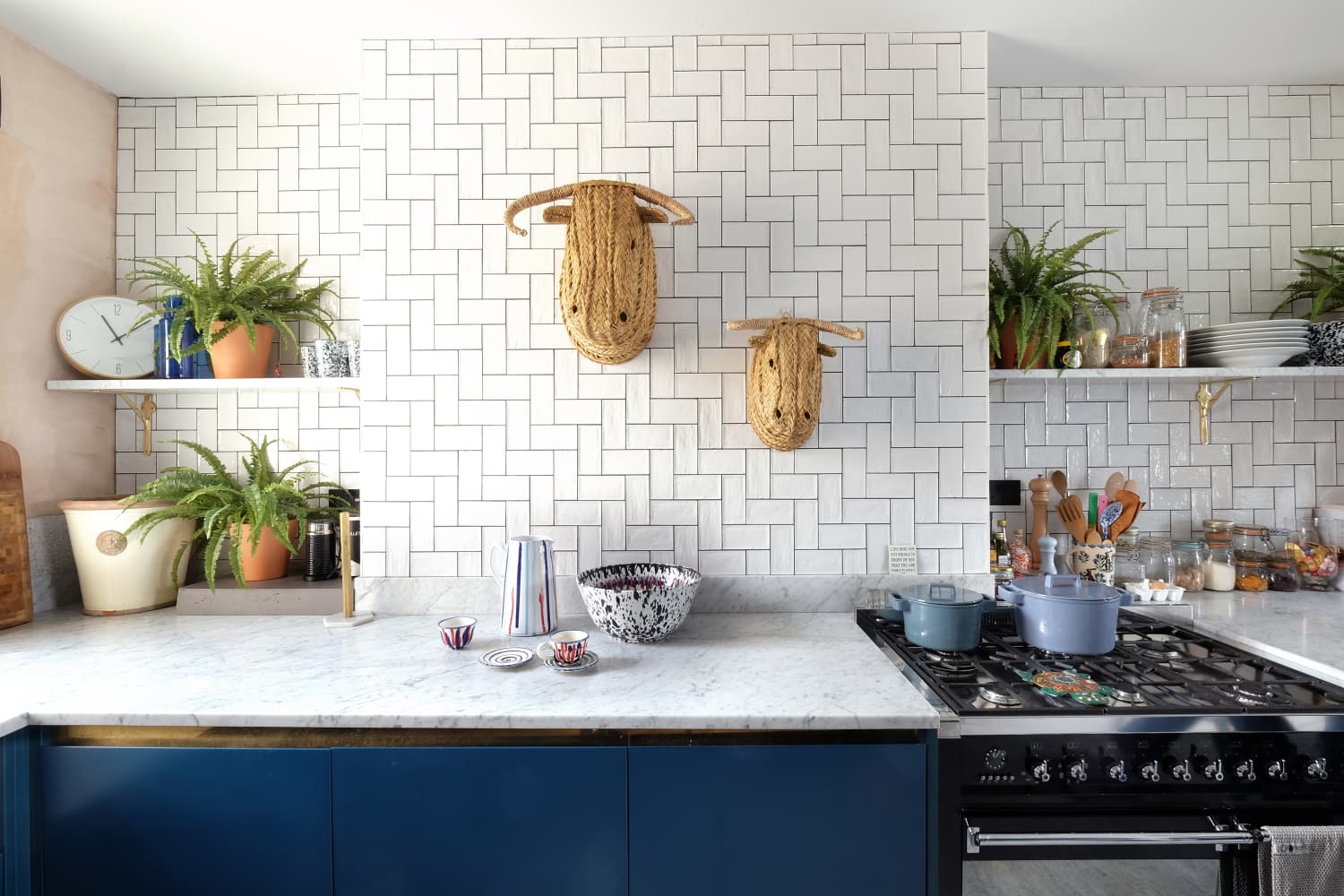
This kitchen is a masterclass in creating a lively, personal space. It works because it balances classic elements with eclectic, playful touches. The white subway tile in a herringbone pattern and the white marble countertops are timeless and sophisticated. This provides a solid, almost formal foundation. But then, the design breaks the rules in the best way: bold, flat-panel blue cabinets, whimsical rattan animal heads, and a pop of pale pink on the wall. This “classic-meets-quirky” mix is what gives the room its unique personality and keeps it from feeling like a generic show home.
|
📋 Copy HEX 🔗 Share |
You can get this high-energy look for much less. Start with basic white 3×6 subway tiles from a big-box store—the herringbone pattern is all about the installation, not the cost of the tile itself. For the cabinets, consider painting your existing ones a bold blue (try Benjamin Moore’s ‘Hale Navy’). Use a durable cabinet paint and primer for a lasting finish. Source fun woven wall decor from places like Target, HomeGoods, or even World Market. A floating shelf with gold brackets from Amazon completes the look for a fraction of the cost.
24. Vibrant Star-Patterned Tile in a Warm Wood Kitchen
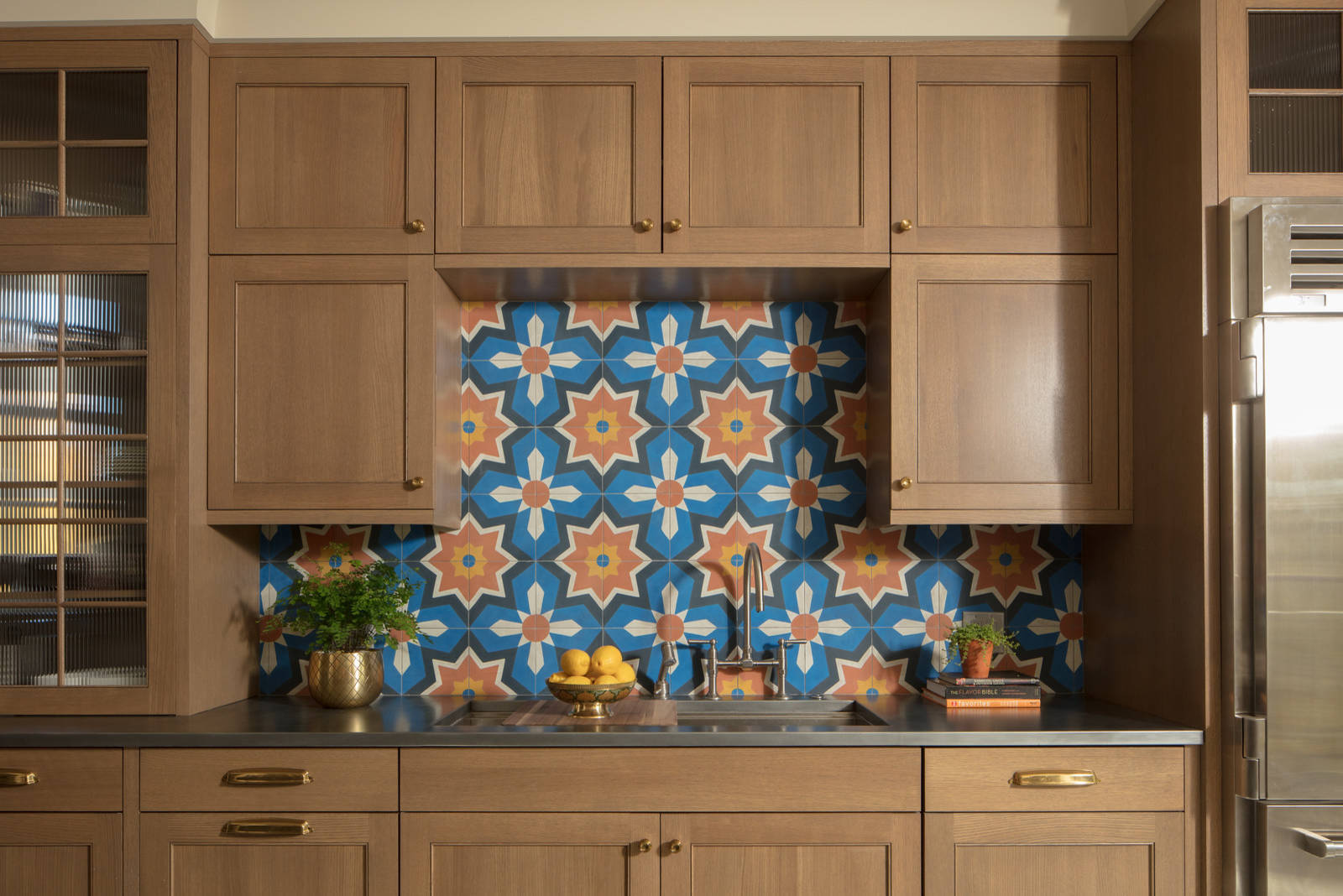
The single element that defines this kitchen is, without a doubt, the tile. It’s a bold, confident choice that sets the entire tone for the space. The light brown wooden cabinets and dark gray countertops are handsome and functional, but they form a neutral backdrop. The star-patterned tile, with its vibrant jolts of blue and orange, is the main event. It’s what you notice first and what you remember. It transforms the kitchen from a nice, classic wood kitchen into a vibrant, eclectic, and joyful space with a strong point of view.
|
📋 Copy HEX 🔗 Share |
A tile this bold is a major commitment. While it looks fantastic now, ask yourself if you will love it just as much in five or ten years. Tile is not as easy to change as a coat of paint. If you love pattern but are hesitant to commit, consider using a peel-and-stick version first to live with the look for a while. Alternatively, you could use this tile in a smaller, more contained area, like behind the stove or in a coffee nook, to get the impact without covering every wall.
25. Modern Sage Green Picket Tile Backsplash
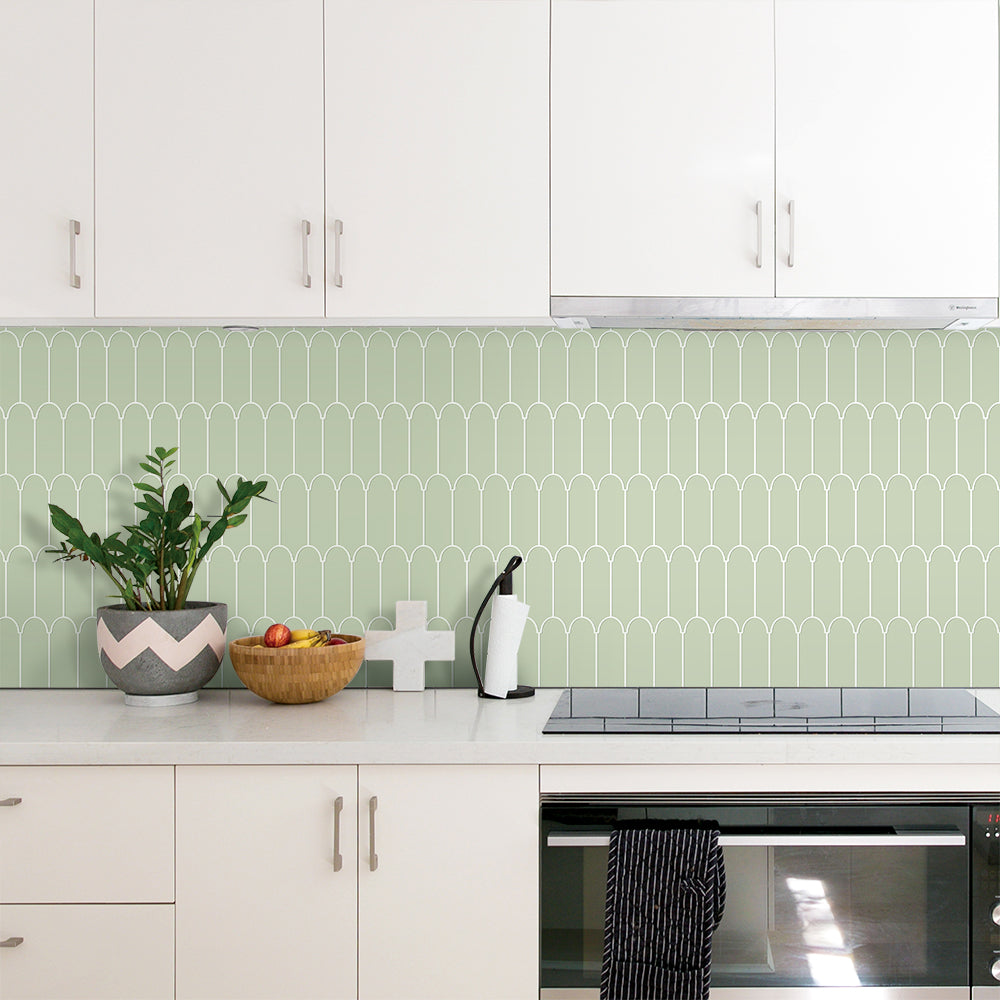
The shape of this tile—often called “picket” or “elongated hexagon”—is fantastic for creating subtle direction and movement on a wall. When laid horizontally as shown, it can make a backsplash feel wider and more expansive. If you were to install the exact same tile vertically, it would draw the eye upward and make the wall feel taller. For this horizontal installation, using a high-contrast grout like this white one is key to emphasizing the unique picket shape. A matching green grout would cause the pattern to blend together and lose its impact.
|
📋 Copy HEX 🔗 Share |
This serene and modern look follows a clear formula: 60% light neutrals (the white upper cabinets and speckled countertop), 30% soft color (the sage green picket tile), and 10% warm neutral (the light beige lower cabinets). The stainless steel hardware is a quiet, functional element that doesn’t compete. This recipe feels balanced and calm. Compare this to Idea #21, where a similar sage green tile is used in a vertical stack for a totally different feel, showing how powerful orientation can be.
26. Warm Stone Subway Tile with Distressed Ivory Cabinets
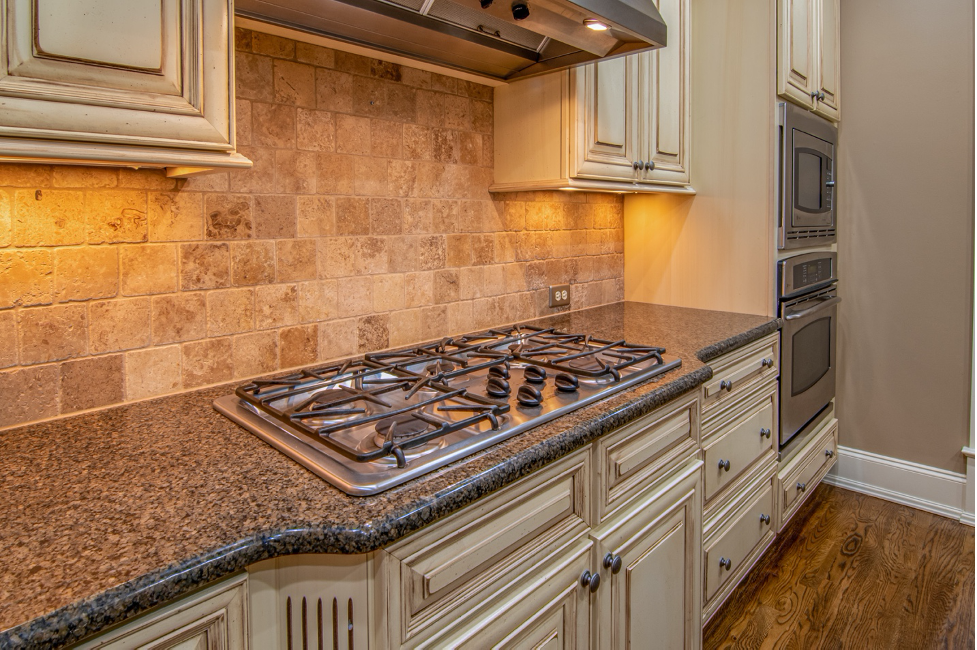
A natural stone backsplash, like this rough-hewn tile, brings incredible texture and warmth to a kitchen. However, that rugged surface is porous and can be a sponge for cooking splatters. Sealing the stone upon installation with a high-quality impregnating sealer is not optional—it’s essential to prevent grease and liquids from soaking in and causing permanent stains. This process should be repeated every 1-3 years depending on how heavily you use your kitchen. For cleaning, avoid harsh chemicals and use a pH-neutral stone cleaner to protect the sealant and the stone itself.
|
📋 Copy HEX 🔗 Share |
This design is a beautiful example of layering textures to create a rich, traditional look. You have the rough, varied texture of the stone subway tiles, the smooth, dark polish of the speckled granite countertops, and the subtly distressed, painted finish of the ivory cabinets. Each surface has its own distinct character, but they all exist within a warm, earthy color palette. This textural variety is what gives the kitchen its depth and cozy, lived-in feeling, preventing the neutral colors from feeling flat or boring.
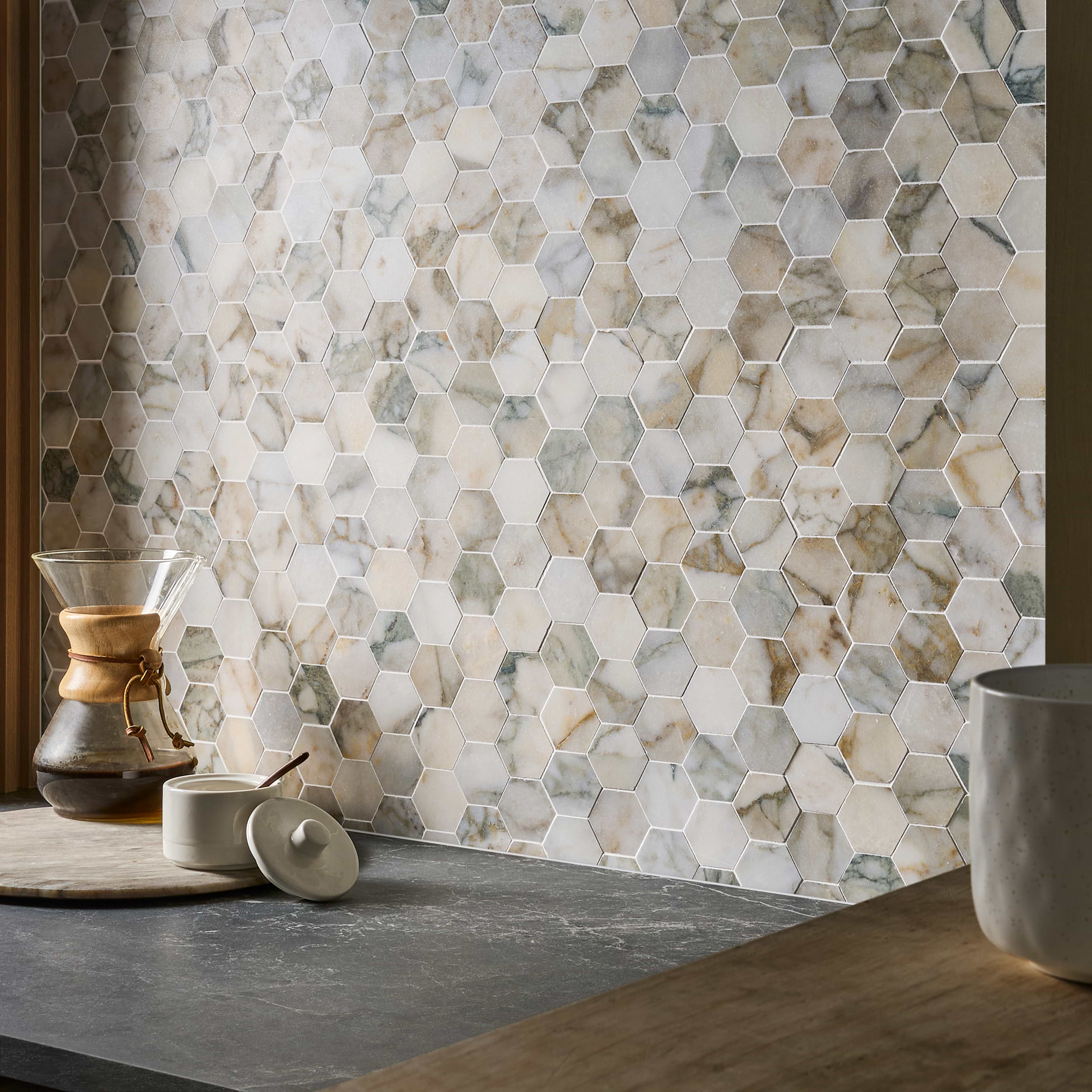
27. Neutral Toned Hexagon Marble Backsplash
A small-scale hexagon tile like this is incredibly versatile. It’s an excellent choice for a full-height feature wall in a small-to-medium kitchen, as the pattern adds texture without overwhelming the space. It’s also perfect for creating a feature nook, such as the coffee bar shown here, or for use in a powder room or laundry room. In a very large kitchen, you may want to consider a larger format hexagon (3-inch or 4-inch) to ensure the pattern feels proportional to the scale of the room. A tiny hex on a massive wall can sometimes look too busy from a distance.
|
📋 Copy HEX 🔗 Share |
While marble is timeless, it’s also high-maintenance. Even as a backsplash, it’s susceptible to etching from acidic splashes (coffee, juice, wine) and staining if not sealed properly and regularly (at least once a year). The sheer number of grout lines in a small mosaic like this also means more opportunities for dirt and grime to collect. If you love the look but not the upkeep, search for “marble-look porcelain hexagon mosaic. “You can find options that are nearly indistinguishable from real marble but offer superior stain resistance and require zero sealing.
Conclusion
That was a lot of tile, right? But hopefully, you’re leaving with a clearer vision and a shot of confidence. Remember, the “perfect” backsplash is the one that tells your story and makes you happy to be in your kitchen. Whether it’s a timeless subway tile or a bold, patterned star, choose the one that feels like you. Now, which one are you pinning to your “Dream Kitchen” board first?