
You know that feeling when you finally find the basement decor idea that looks exactly right for your space? That little spark of “Yes, that’s it!” is what this guide is all about. Forget endless, generic scrolling. We’ve filtered through hundreds of real homes to bring you 26 distinct, achievable basement designs that are actually inspiring for 2026. From cozy family rooms to sophisticated entertainment zones, there’s something here for every house and every budget.
We’re seeing a huge trend in basements becoming true multi-functional spaces—not just afterthoughts. People want a space that can be a home theater on Friday, a game room on Saturday, and a quiet retreat on Sunday. And stay until the end — we break down the most common mistakes that can ruin these looks. 📌 Save this to Pinterest for later — you’ll want to revisit these ideas.
1. Modern Farmhouse Finish with a Camel Sectional and Shiplap
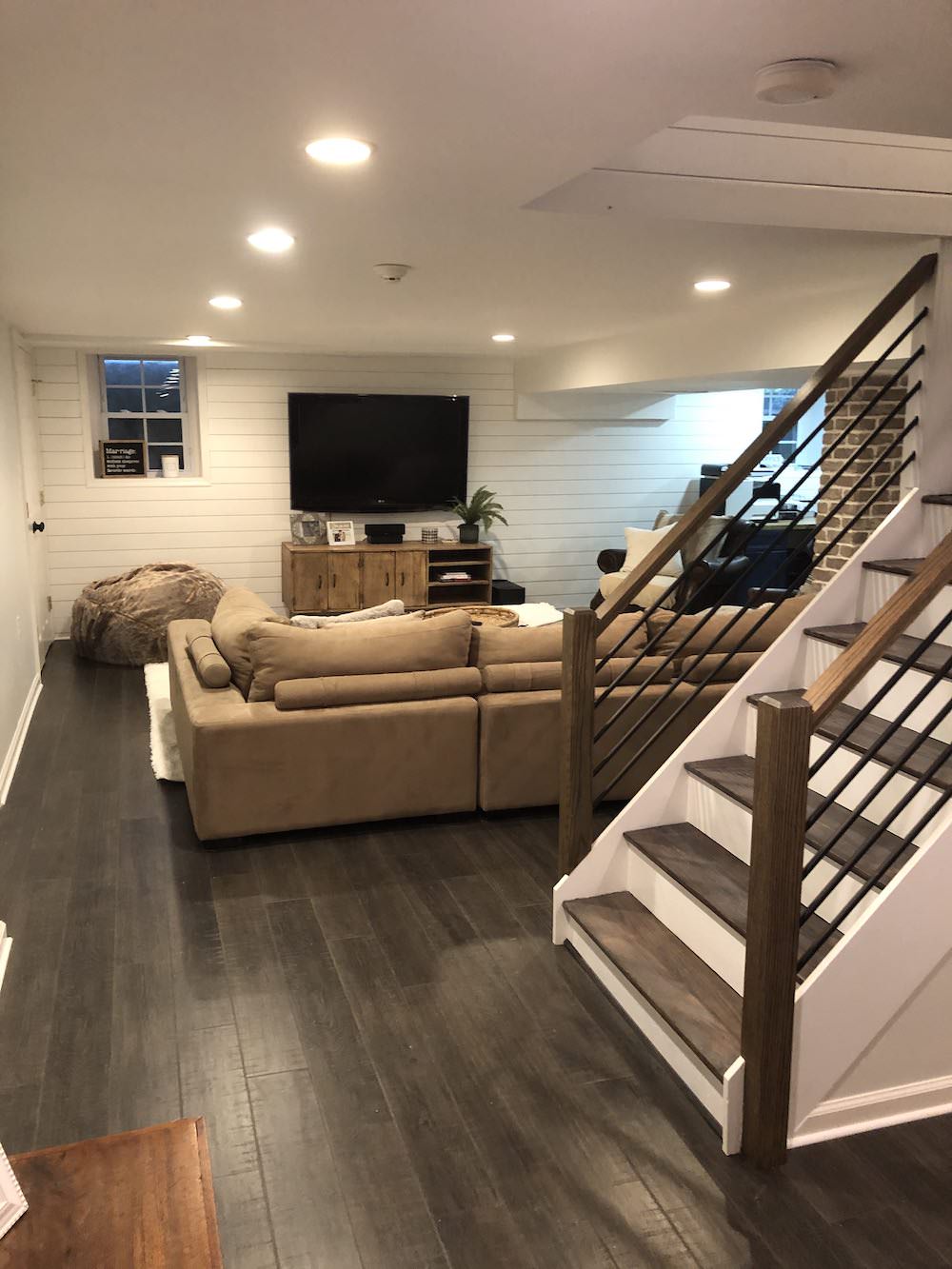
There’s a reason this look feels so balanced and inviting. It works because it masterfully blends contrasting textures and tones. The crisp, white shiplap walls provide a bright, clean backdrop that reflects the recessed ceiling light, preventing the basement from feeling dim. This brightness is grounded by the dark wood plank flooring, creating a strong visual foundation. The large, warm camel-colored sectional acts as the perfect midpoint, bridging the light walls and dark floors with a touch of cozy color. It’s a classic high-contrast palette done with a soft, modern touch.
|
📋 Copy HEX 🔗 Share |
You don’t need a massive budget to achieve this clean-and-cozy vibe. For the shiplap walls, look into MDF paneling from a big-box store, which is a fraction of the cost of real wood. A large sectional is the biggest expense, but keep an eye on holiday sales at stores like Wayfair or find a barely-used one on Facebook Marketplace for $600-$900. The dark wood flooring can be mimicked with high-quality vinyl plank flooring, which is durable, waterproof (perfect for basements!), and much more affordable than hardwood.
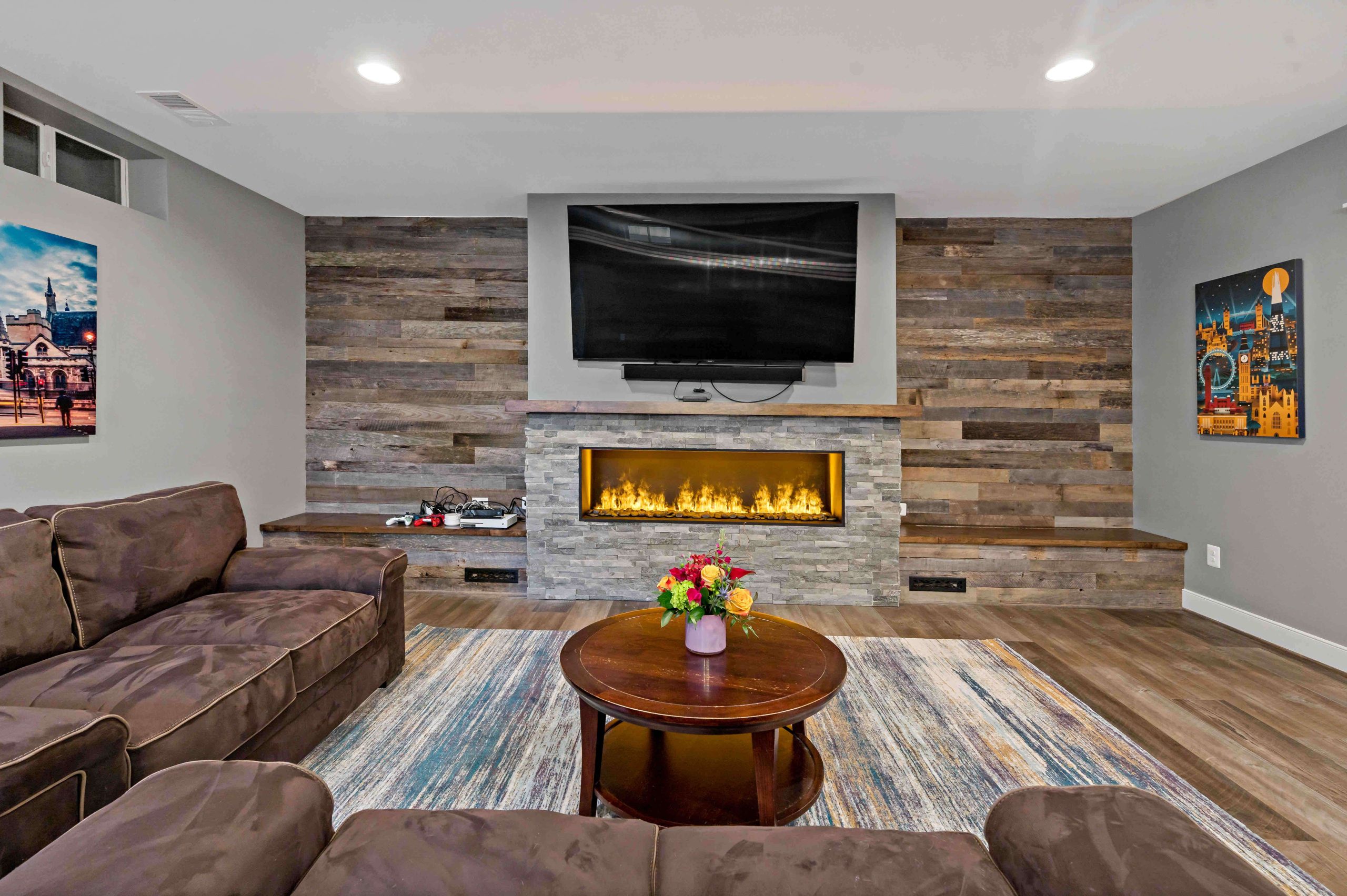
2. Build a Rustic Accent Wall Around a Modern Stone Fireplace
When creating a feature wall with multiple strong materials like reclaimed wood and stacked stone, the secret is in the transition. To ensure the elements don’t just crash into each other, create a deliberate border. Install the stacked stone fireplace surround first. Then, when you install the wood paneling, use a piece of simple, flat trim painted in the same color as your main walls to frame out the wood sections. This creates a clean, intentional separation that makes both materials look more expensive and thoughtfully placed.
|
📋 Copy HEX 🔗 Share |
An accent wall of this scale works best in a room with at least 15 feet of width and standard 8-foot-or-higher ceilings. This allows the wall to be a true feature without overwhelming the space. In a smaller room, the combination of dark wood and textured stone can feel heavy and make the ceilings appear lower. If your basement is on the narrow side, consider a scaled-down version—perhaps just the fireplace surround in stone, or a narrower wood accent section behind the TV. Compare with the more subtle stone in Idea #14.
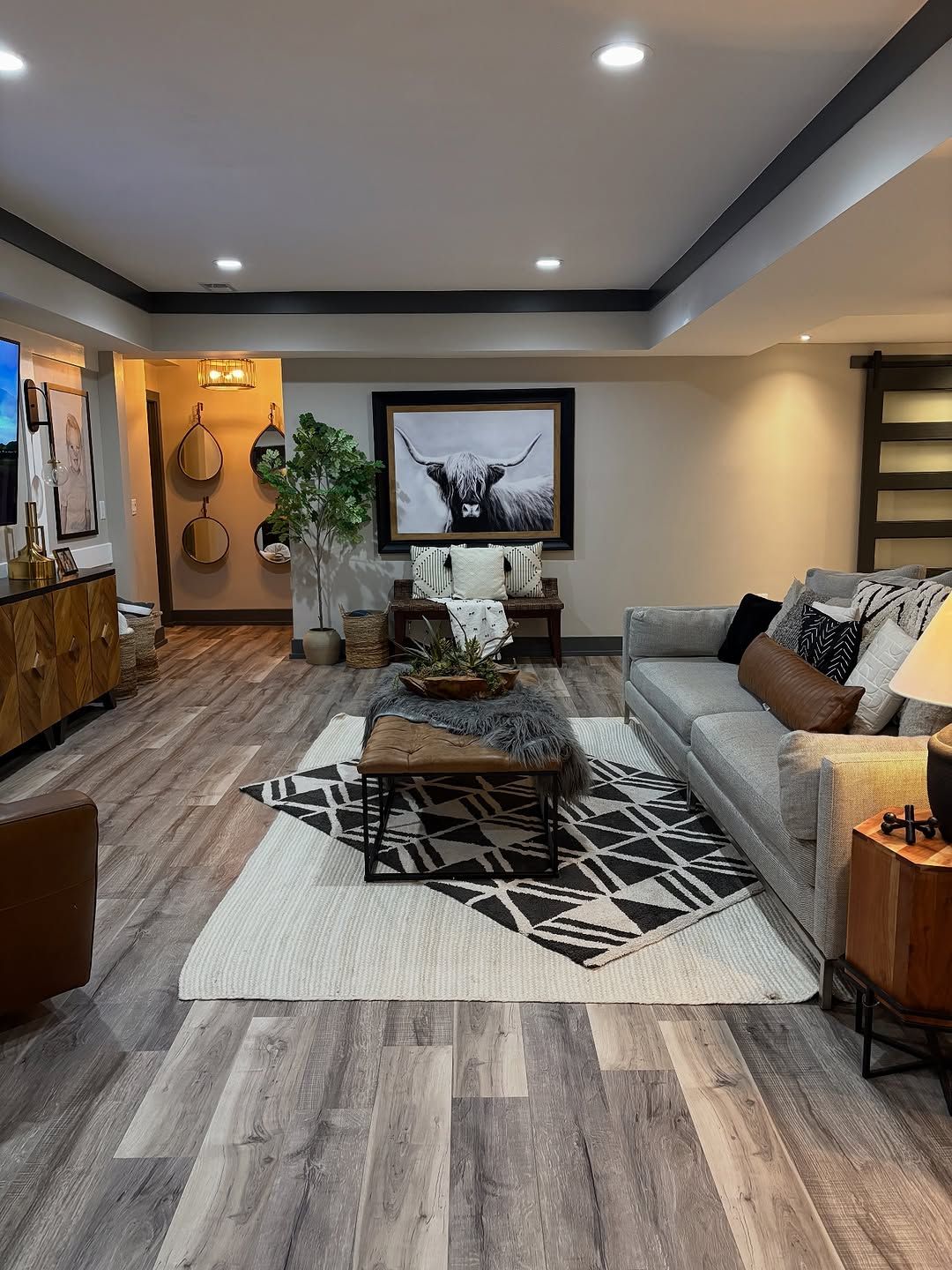
3. Go Big with Farmhouse Art and Layered Rugs
The visual recipe here is simple but so effective: 60% cozy neutral base + 30% rustic texture + 10% bold graphic element. The neutral base comes from the light beige walls and grey fabric sofa. The rustic texture is brought in through the wooden coffee table with its leather top and the layered area rugs—one plush and white, the other with a strong black geometric pattern. The final 10% is that stunning Highland cow print. It provides a necessary focal point and a dose of personality. You could swap the cow for a graphic abstract print or a large-scale landscape photo, and the formula would still hold.
|
📋 Copy HEX 🔗 Share |
Layering rugs is what makes this basement feel exceptionally plush and curated. It’s a designer trick that adds depth and breaks up the monotony of a large floor area. Here, a large, neutral textured rug defines the entire seating zone. On top of that, a smaller, high-contrast patterned rug is placed to specifically anchor the coffee table and seating. This creates a cozy island of comfort, making the large space feel more intimate and intentionally designed. The mix of textures underfoot is just a bonus.
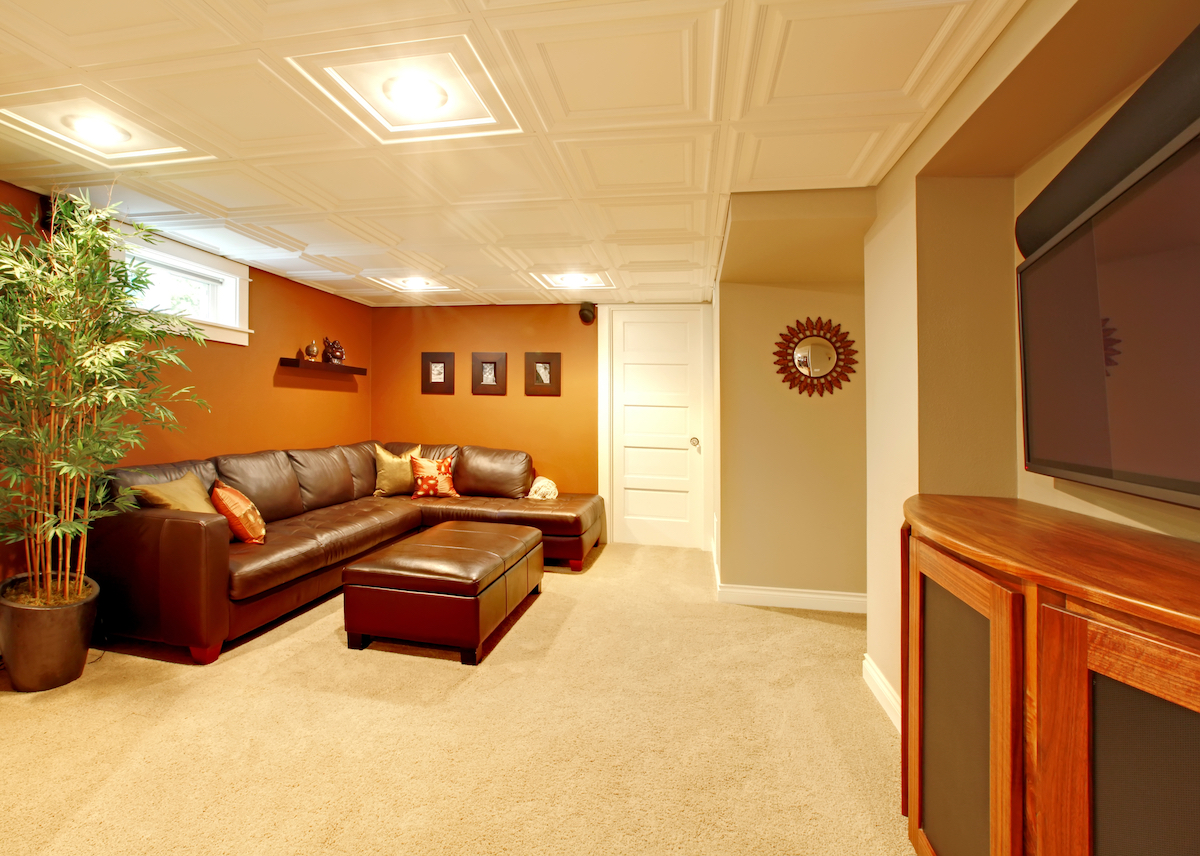
4. Warm Up a Basement with a Terracotta Accent Wall
Recreating this warm and inviting space is surprisingly accessible. The key is to invest in the seating and use paint to make a big impact.
|
📋 Copy HEX 🔗 Share |
- Main Furniture: Large brown leather sectional & ottoman—$2,500 – $5,000
- Lighting: White coffered ceiling with recessed lighting—$800 – $2,000 (pro installation)
- Paint: Terracotta accent wall & light beige paint – $150 – $300
- Flooring: Light beige wall-to-wall carpet – $1,000 – $2,500 (installed)
- Decor: Wooden TV stand and accessories – $300 – $700
- TOTAL: $4,750 – $10,500
- Budget alternative: Find a used leather sectional on Marketplace ($800), use a warm-toned paint you already have, and opt for a large area rug over new wall-to-wall carpet. Total cost: around $2,000.
While that brown leather sectional is incredibly durable and easy to wipe clean (hello, movie night snacks!), be mindful of the materials around it. Light beige carpet is a magnet for stains, especially in a high-traffic area like a basement. It will require regular vacuuming and professional steam cleaning at least once a year ($100-$200) to stay fresh. The terracotta accent wall, if done in a matte finish, can be prone to scuffs and fingerprints. Using a satin or eggshell finish will give you the same color depth with much easier wipe-ability.
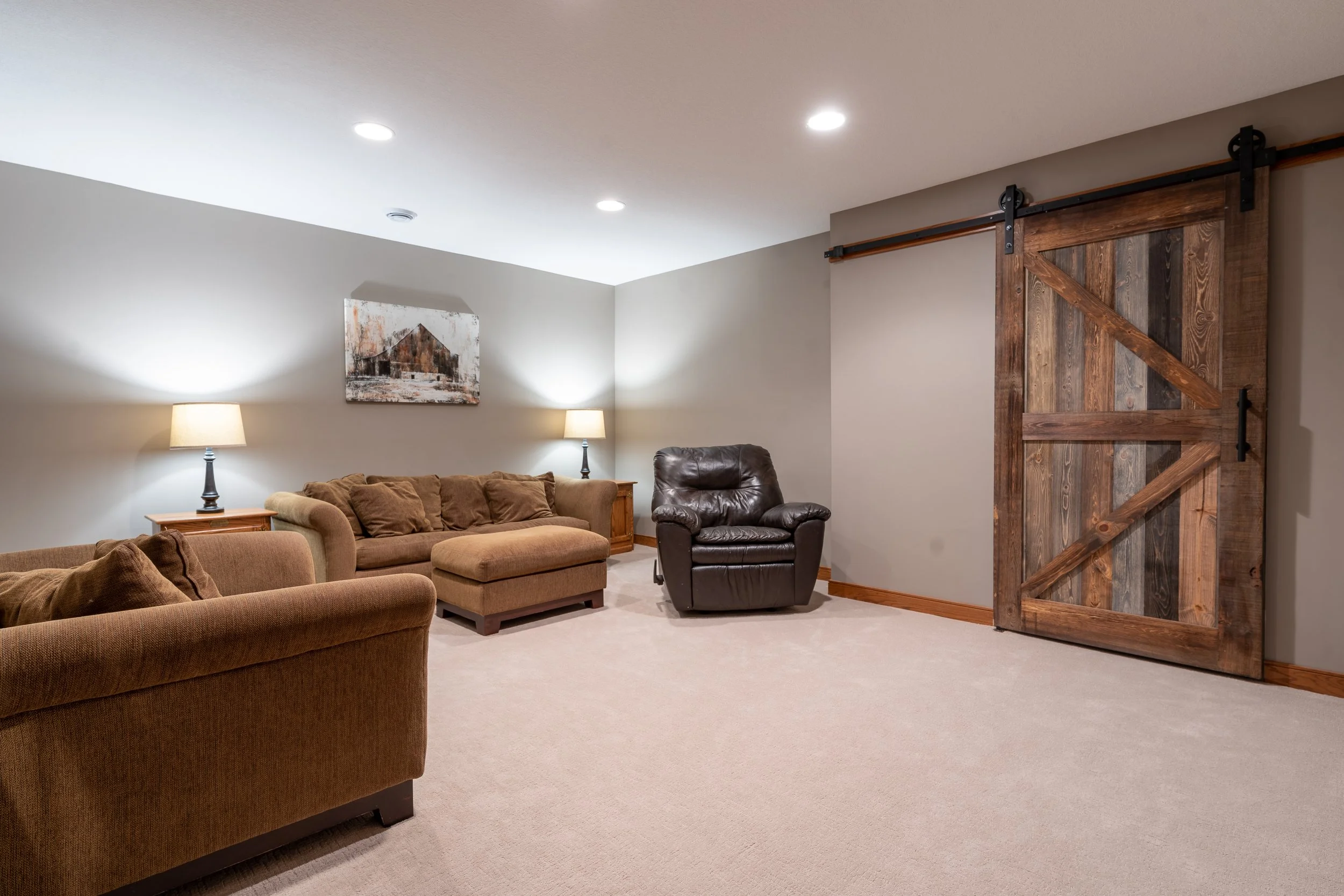
5. Add Rustic Charm with a Reclaimed Wood Barn Door
What absolutely makes this room is the reclaimed wood barn door. Without it, you’d have a perfectly nice, cozy, but frankly generic basement with gray walls, beige carpet, and brown sofas. It would be comfortable, but forgettable. The barn door injects a massive dose of character and texture. Its multi-toned wood planks add warmth and a rustic focal point that elevates the entire design. It demonstrates how a single, well-chosen architectural element can define a space and save it from being boring.
|
📋 Copy HEX 🔗 Share |
This room proves you don’t need a complete overhaul to create a stylish hangout. The core elements—neutral sofas, beige carpet, and light gray walls—are simple and versatile. The personality comes from strategic additions. The reclaimed wood barn door is the hero piece, but the dark brown leather recliner adds a different texture and a classic touch. This approach is much more accessible than redoing everything from scratch. It’s a great example of working with a simple base and adding character through key pieces. For a more dramatic wood accent, check out the full wall in Idea #2.
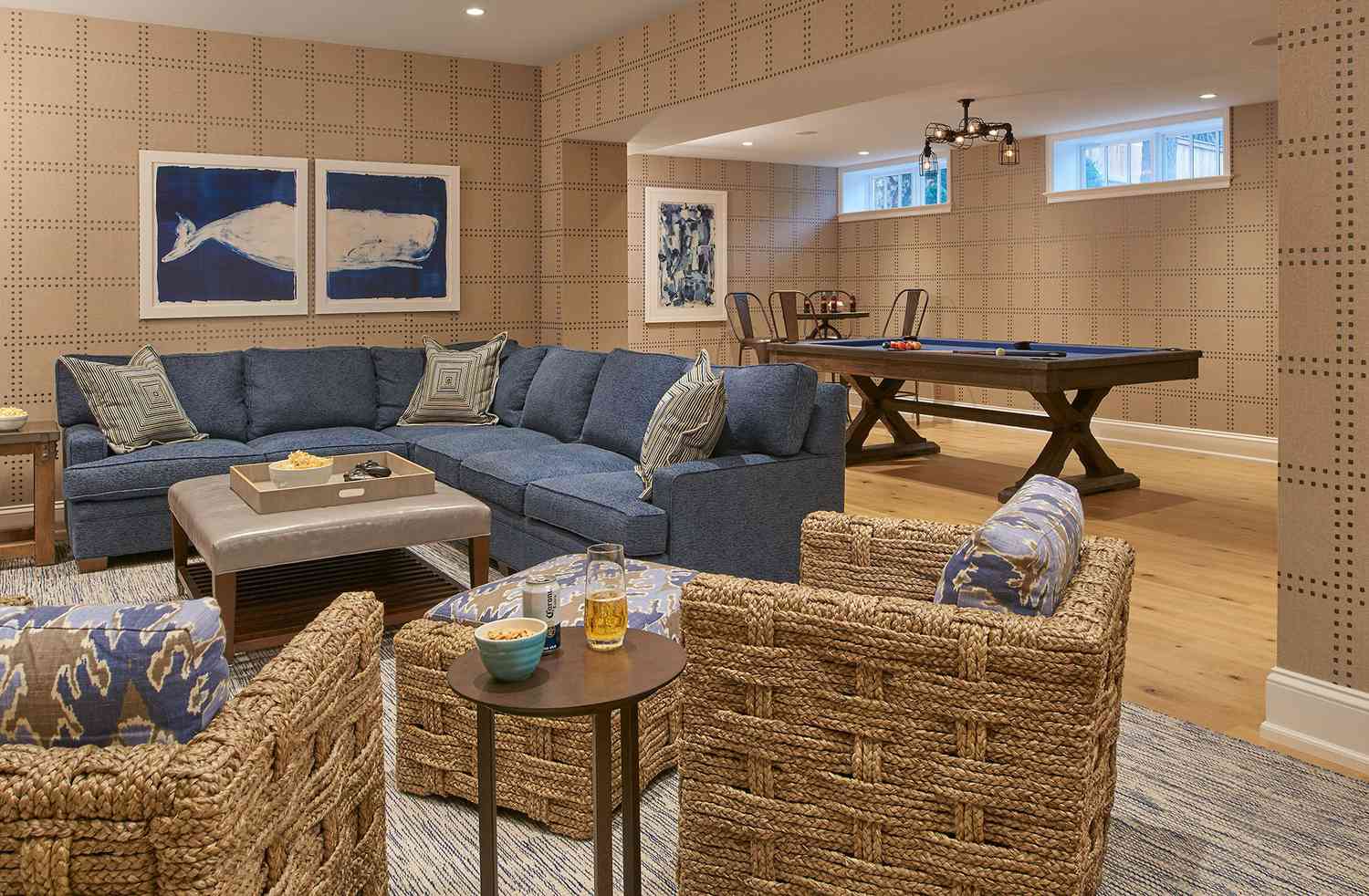
6. Create a Game Zone with a Pool Table and Woven Chairs
Want to hang that art like a pro? Symmetrical, large-scale pieces can make a huge impact. Here’s a quick guide to hanging those two whale prints.
|
📋 Copy HEX 🔗 Share |
- Time Estimate: 45 minutes. Material Cost: $20 (stud finder, level, picture hanging kit).
- Measure the width of the wall behind the sofa and find the center point. Mark it lightly with a pencil.
- Decide on your spacing. A gap of 4-6 inches between the two frames is standard. Mark the center point of each frame’s desired location.
- Use a laser level or tape measure to ensure the anchor points for both frames are at the exact same height. The center of the artwork should be at about eye level, typically 57-60 inches from the floor.
- Use a stud finder to locate studs. If your anchor points don’t align with studs, use heavy-duty drywall anchors rated for the weight of your frames.
- Hang the art, step back, and admire your perfectly balanced wall!
Before you commit to a full game room layout, double-check these critical factors:
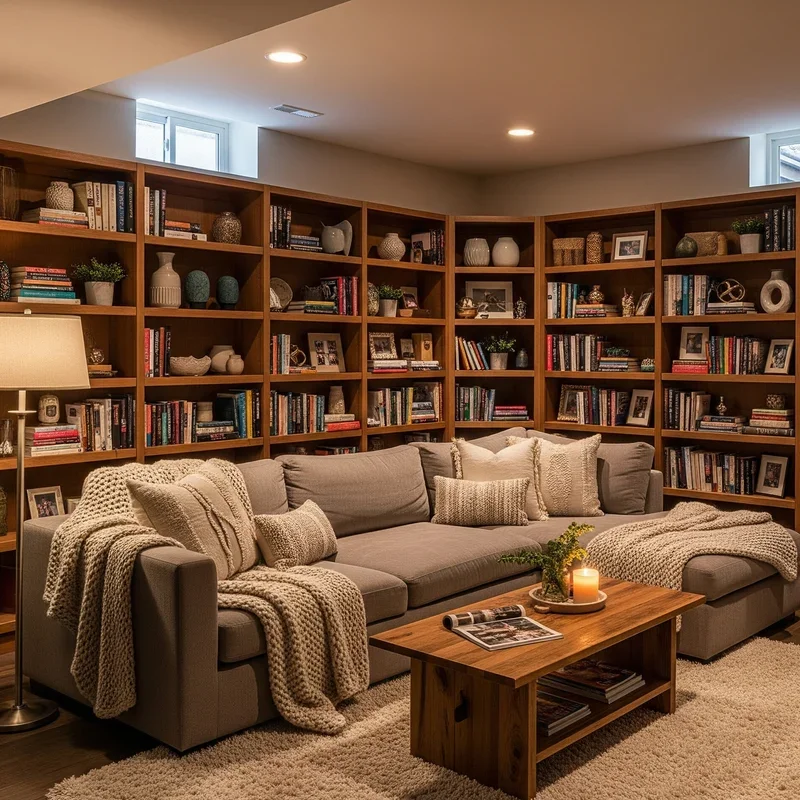
7. Surround a Grey Sectional with Floor-to-Ceiling Bookshelves
This room feels like a warm hug, and it’s all thanks to the power of repetition and texture. The wall-to-wall, floor-to-ceiling wooden bookcases create a strong, repeating vertical grid that draws the eye upward and makes the room feel organized and grand. This structure is then softened by an abundance of texture: the nubby grey fabric of the sectional, the different spines of the books, the plushness of the shaggy rug, and the soft folds of the knitted throws. It’s a masterclass in making a structured space feel incredibly comfortable.
|
📋 Copy HEX 🔗 Share |
A full wall of built-in shelving is a bold move that pays off, but it requires a certain scale. This look is ideal for a basement with at least a 12-foot-long uninterrupted wall and standard 8-foot (or higher) ceilings. In a smaller room, floor-to-ceiling shelves can feel overwhelming. If your space is more compact, you could achieve a similar feel by installing floating shelves across the upper half of the wall and placing a long, low credenza below. This still provides that library feeling without visually shrinking the room.
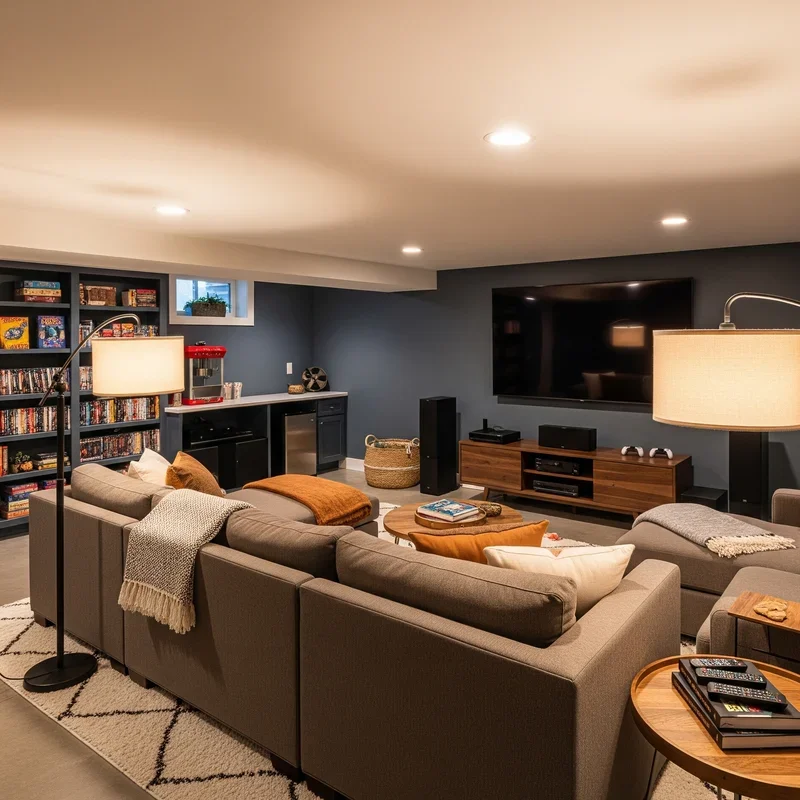
8. Paint the Walls a Moody Bluish-Gray for a Cozy Vibe
When using a deep, moody color like this bluish-gray, lighting is everything. To avoid the ‘cave’ effect, you need to layer your lighting. This room does it perfectly. It starts with a foundation of ample recessed ceiling lights for overall ambient light. Then, it adds task lighting with the arc floor lamp over the sectional, perfect for reading. Finally, you can see accent lighting within the built-in wet bar. Always plan for at least three sources of light in a dark-painted basement to create depth and highlight different zones.
|
📋 Copy HEX 🔗 Share |
The single most important element in this design is the bold, immersive wall color. If you painted these walls beige, the entire mood would be lost. The bluish-gray envelops the space, creating a sophisticated yet incredibly cozy den-like atmosphere that encourages you to settle in and relax. It makes the large TV feel integrated rather than just stuck on a wall and turns the whole room into a destination. The color is the star player, making everything else—the comfy sofa and the handy bar—feel even more luxurious.
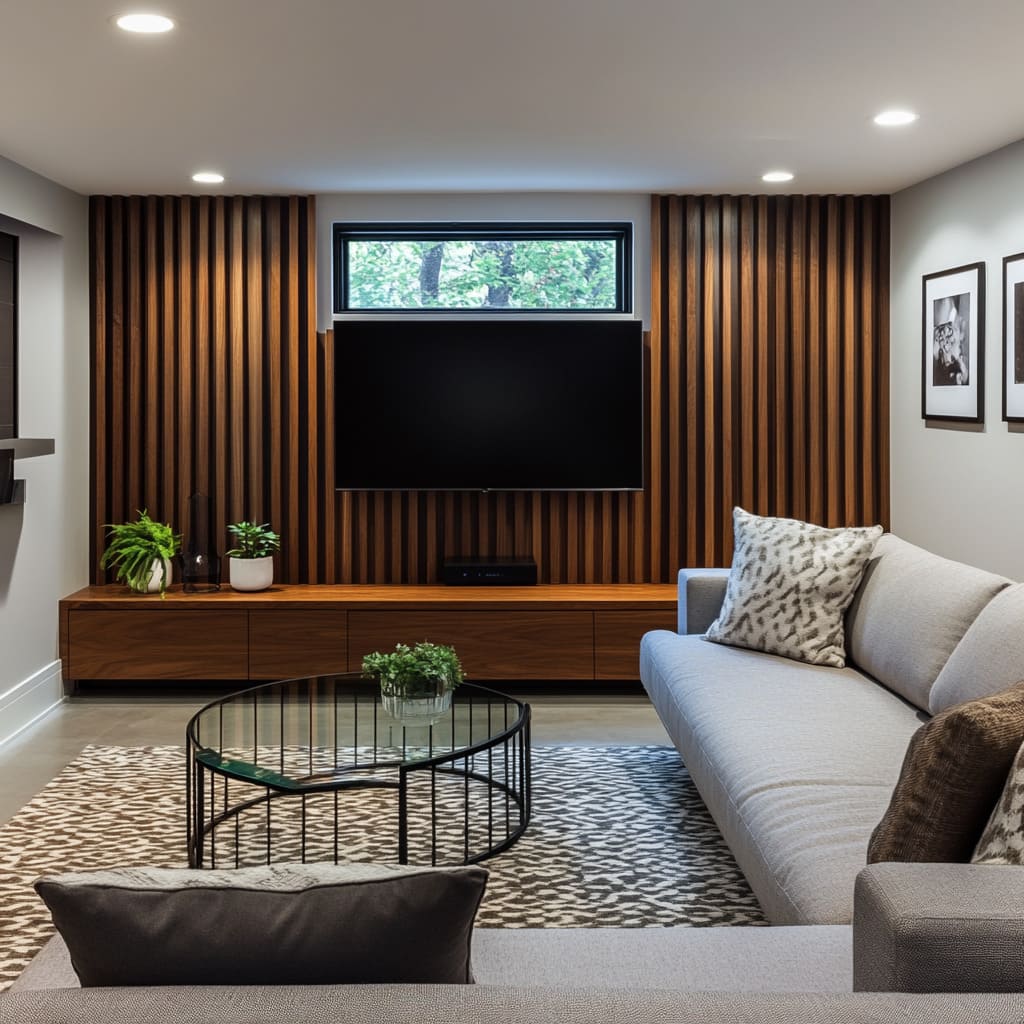
9. Frame a TV with a Modern Vertical Wood Slat Wall
Vertical wood slat walls, or ‘fluted panels,’ are exploding on Pinterest and in designer homes, and for good reason. They’re a direct evolution of the shiplap and reclaimed wood trends, but with a more sophisticated, architectural feel. This look hits the sweet spot between Japanese minimalism and Scandinavian warmth—a style sometimes called ‘Japandi.’ It adds incredible texture and a high-end feel without shouting for attention. It feels current for 2026 because it’s a texture that feels both natural and cleanly modern, a perfect fit for our desire for calm, organized living spaces.
|
📋 Copy HEX 🔗 Share |
Let’s be honest: while stunning, a wood slat wall can be a major dust collector. The narrow grooves are tricky to clean with a standard duster. You’ll need a vacuum with a soft brush attachment to properly maintain it, and it will need to be done regularly to keep it looking sharp. Also, be mindful of your basement’s humidity. You must use a high-quality sealant on all sides of the wood panels before installation to prevent warping, a very real risk in below-grade spaces. This isn’t a ‘set it and forget it’ feature.
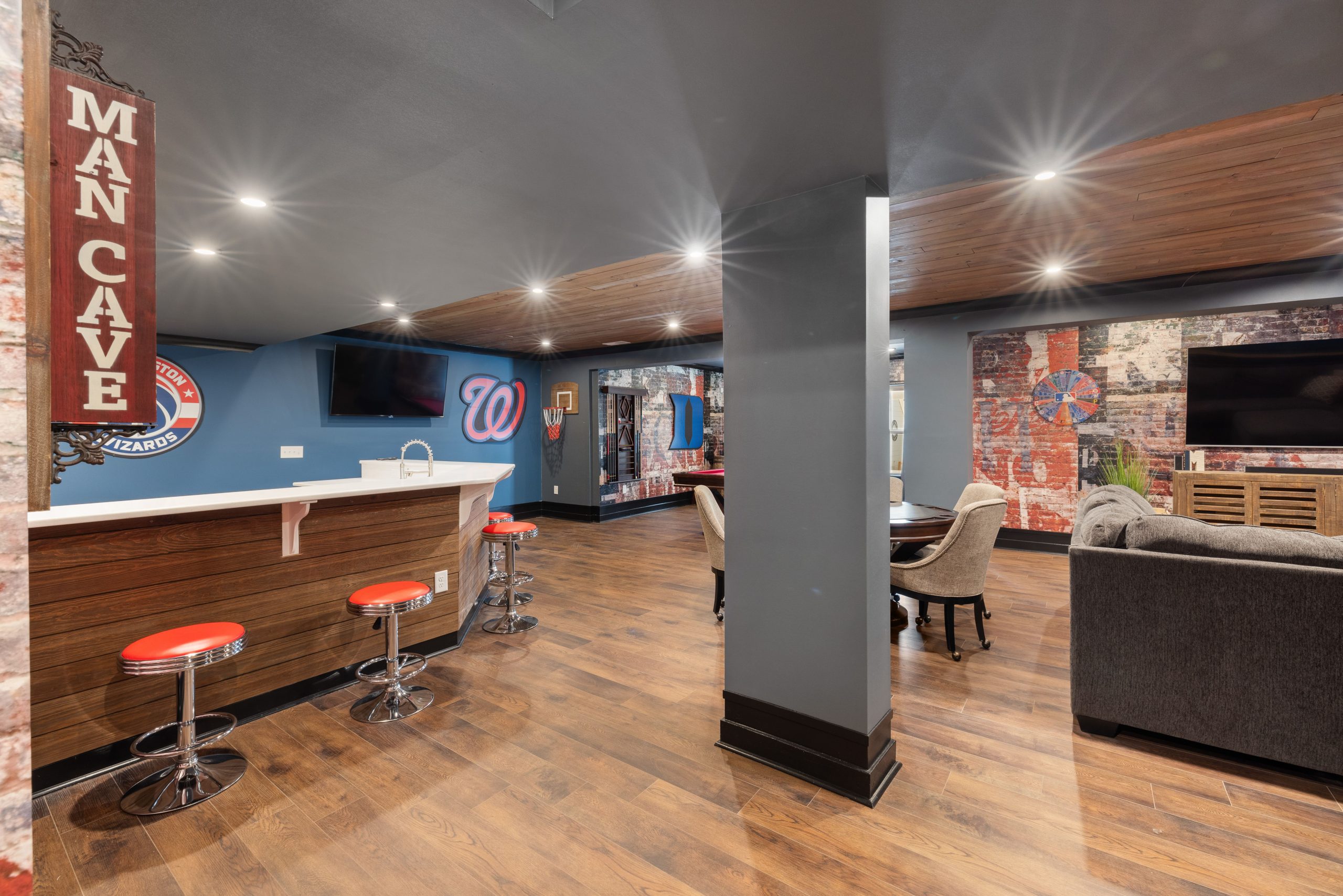
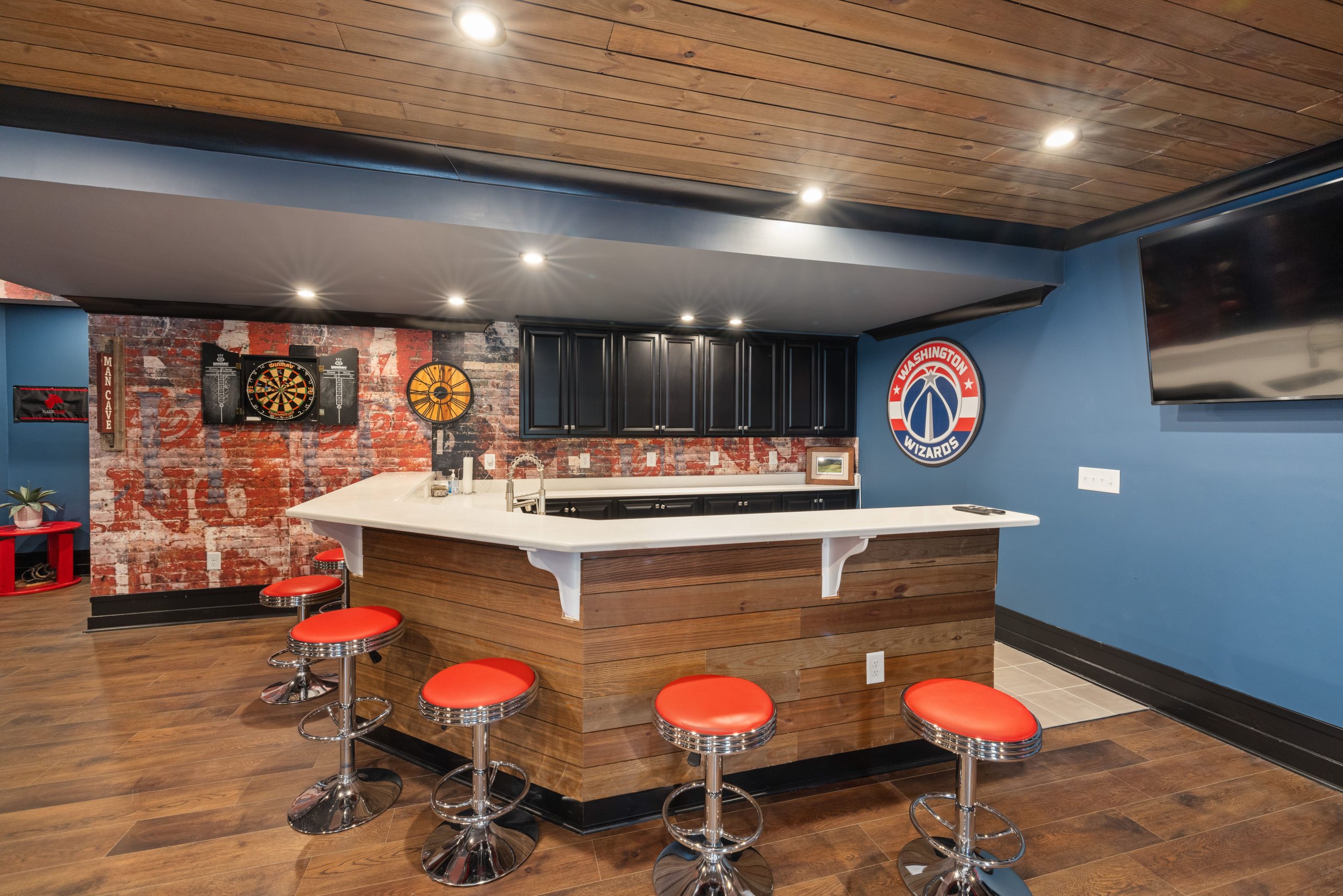
10. Design a Modern Man Cave with a Navy and Red Bar
Here’s the formula for a vibrant, modern ‘man cave’: 50% cool, dark base + 30% industrial texture + 20% bold color pop. The base is the navy blue accent walls and dark wood flooring, which sets a sophisticated, moody tone. Industrial texture comes from the exposed brick and the gray painted ceiling and support pillars. The final, crucial 20% is the pop of bright red from the bar stools, which injects energy and a playful spirit into the room. You could swap the red for a bright orange or yellow for a different but equally dynamic vibe.
|
📋 Copy HEX 🔗 Share |
This space successfully avoids feeling like a themed caricature by clearly defining zones. The bar area is its own distinct world with the white counter, red stools, and wood paneling. The adjacent seating area, hinted at, likely has a more relaxed palette. The exposed brick with graffiti provides a transitional texture that ties the spaces together. By creating these ‘rooms within a room,’ the design allows for bold choices (like the navy sports-logo walls) to exist without overwhelming the entire basement. It feels intentional and multi-purpose.
11. Mix Industrial and Rustic in a Music-Themed Bar
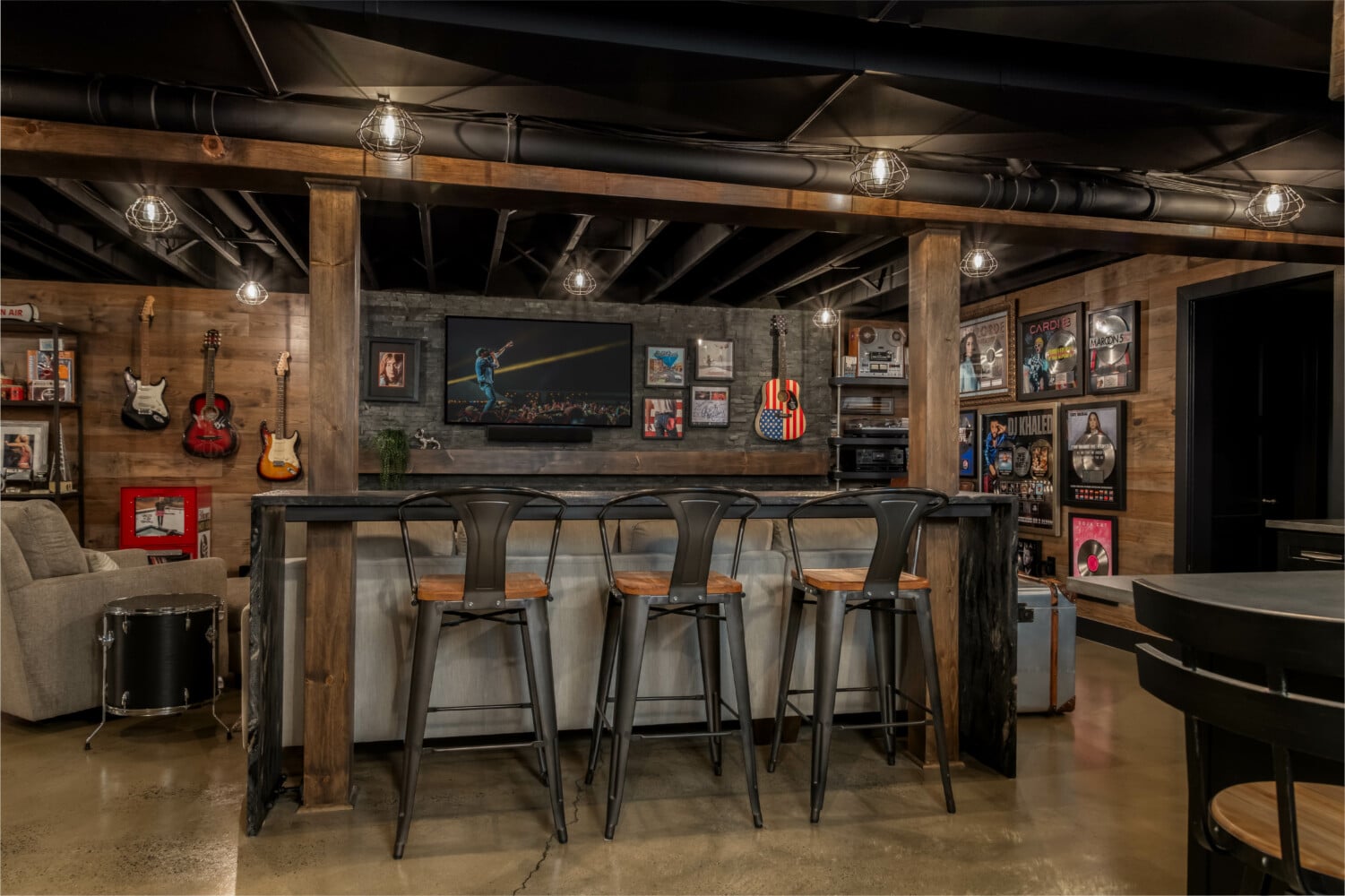
The single element that pulls this whole look together is the black painted industrial ceiling. It might seem like a small detail, but it’s the key to making the rustic and industrial styles play nicely. Painting the ceiling, ductwork, and all, a uniform matte black makes the ‘bones’ of the room recede, allowing the feature elements—the live-edge bar, the exposed wood beams, and the stacked stone—to pop. It hides visual clutter and creates a cool, moody canvas that feels intentional, not unfinished. Without it, the mix of materials could easily look chaotic.
|
📋 Copy HEX 🔗 Share |
This design is a masterclass in texture. You have the smooth, polished concrete floor, the rough, organic live-edge wooden counter, the varied texture of the stacked stone wall, and the cool, hard surfaces of the black metal barstools and light fixtures. This rich layering of materials is what gives the room its depth and character. It shows that you don’t need a lot of color to create a visually interesting space. While this bar is distinctly industrial, compare it to the more lodge-like rustic bar in Idea #21 to see how an industrial ceiling changes the whole vibe.
12. Hang String Lights from Exposed Beams in a Game Room
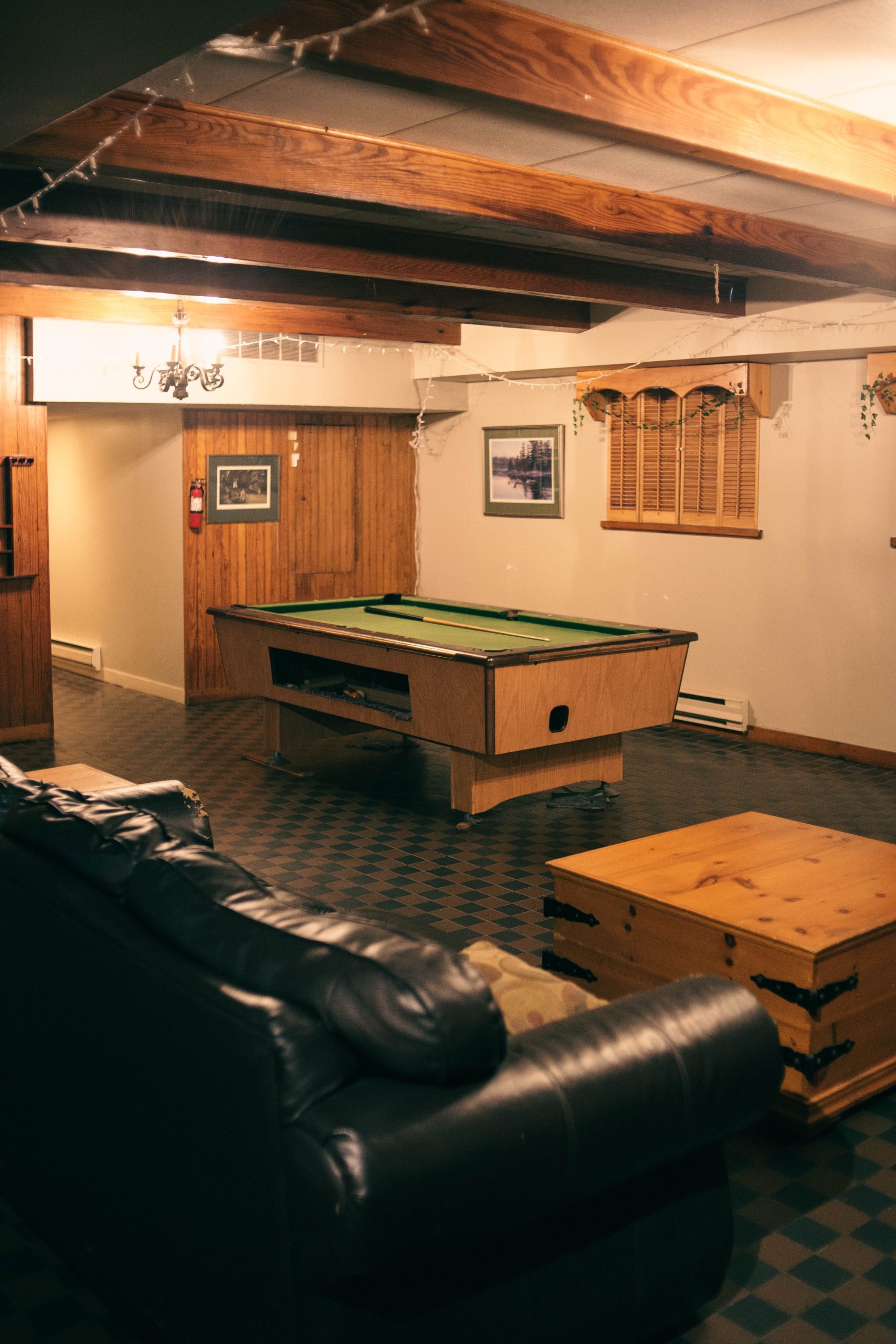
The magic here comes from the interplay of rustic structure and soft, whimsical light. The dark, exposed wooden beams provide a strong, architectural element that screams ‘rustic lodge.’ But wrapping them in simple string lights completely transforms their character. The harsh lines are softened, and a warm, playful glow fills the upper portion of the room. This high-low mix—heavy, dark wood and light, delicate points of light—is what creates that perfect cozy, relaxed game-night atmosphere. It’s a brilliant way to add charm without a major renovation.
|
📋 Copy HEX 🔗 Share |
You can get this look even if your basement doesn’t have authentic wooden beams. Create ‘faux beams’ using lightweight, hollow polyurethane beams from a home improvement store—they are surprisingly realistic and easy to install. A green felt pool table can be a huge expense, but a high-quality used one from Facebook Marketplace or Craigslist can be found for $500-$1000. For the flooring, skip the custom checkered tile and use peel-and-stick vinyl tiles in black and white for a fraction of the cost and effort. The vibe is all in the styling!
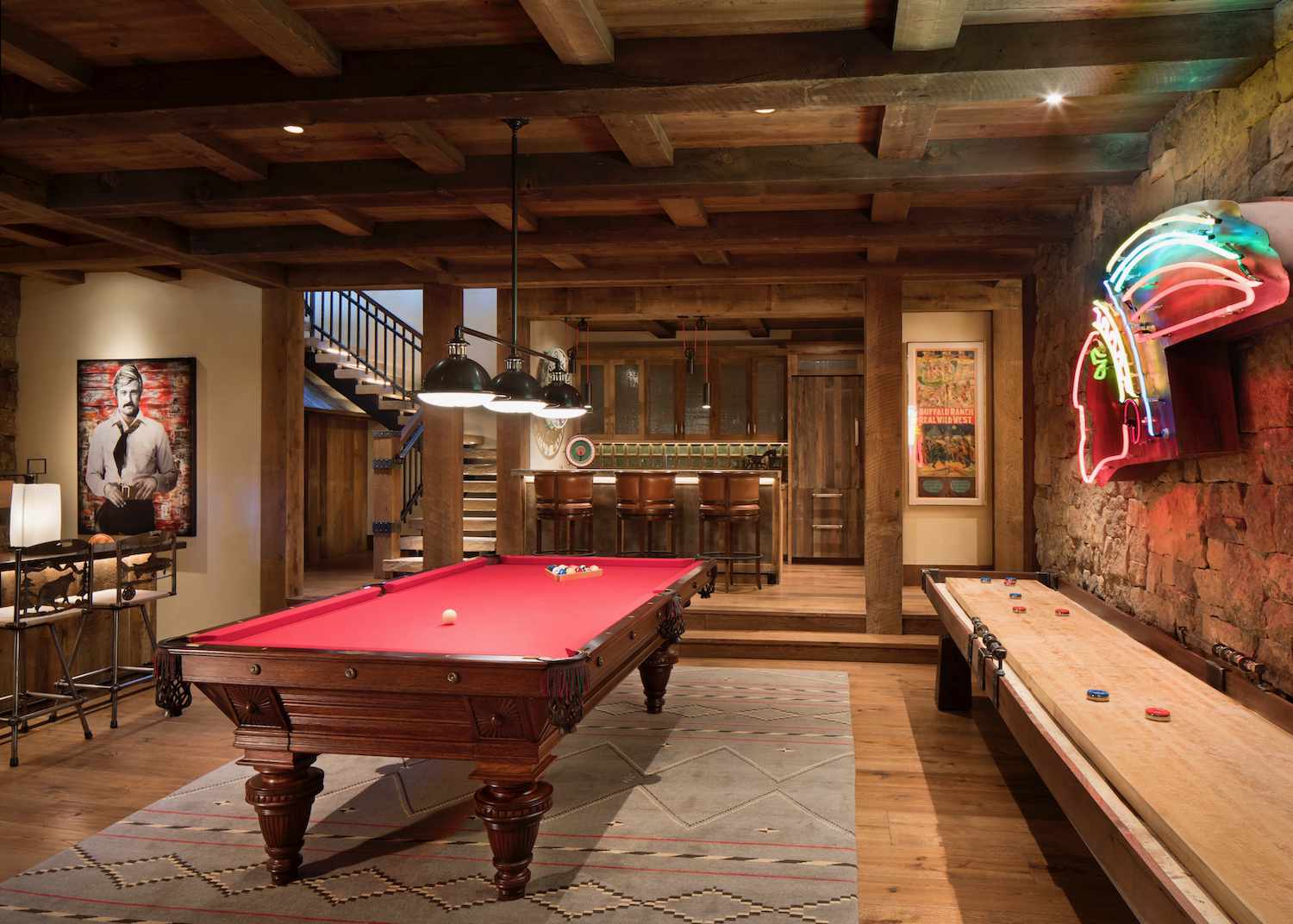
13. Go Full Lodge with a Red Pool Table and Shuffleboard
A shuffleboard table is a fantastic addition that uses less space than a pool table. Here’s a quick how-to on seasoning a new table for play:
|
📋 Copy HEX 🔗 Share |
- Time Estimate: 15 minutes. Material Cost: $25 (shuffleboard wax/powder).
- Wipe the entire playing surface with a clean, dry cloth to remove any dust.
- Apply a silicone spray specifically for shuffleboards. Spray a light, even coat down the entire length of the board and wipe it in with a towel. Let it dry completely.
- Sprinkle the shuffleboard wax, which is actually a fine powder of tiny silicone beads, across the playfield. Start with a light layer.
- Spread the powder evenly. You’re creating the surface the pucks will glide on. The amount of wax controls the speed of the game—more wax means a faster board. Experiment to find your preferred speed.
- Re-apply wax before each gaming session.
This basement commits to a full-on rustic lodge theme, which is why it works so well. It combines multiple gaming elements—the pool table and the shuffleboard—to clearly signal ‘fun.’ The material choices are consistent and reinforcing: dark wood beams, stone accents, and leather stools all belong to the same rustic family. The red felt of the pool table provides a necessary pop of color in the otherwise earthy palette. For a slightly different take on a basement game room, see the more coastal, relaxed vibe of Idea #6.
14. Frame a TV with Stacked Stone Columns and Built-ins
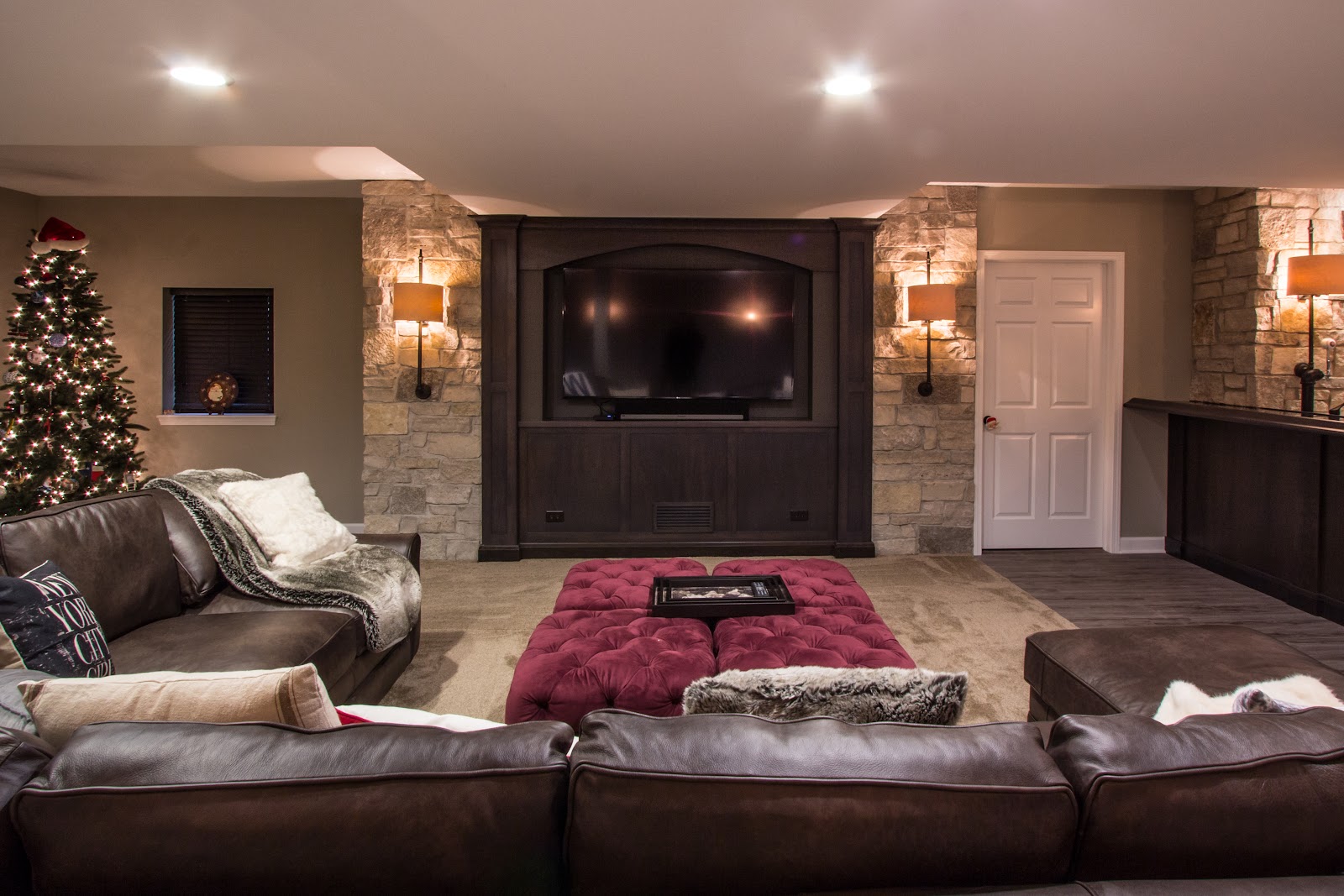
A built-in entertainment center flanked by stone columns is a major statement, but it can dictate your furniture layout forever. Before you commit to this, be absolutely sure this is the best wall for your TV. Consider glare from windows, a clear path for foot traffic, and whether the viewing distance is right for your sofa. Once it’s built, moving your entertainment zone is a massive and costly undertaking. This isn’t a flexible design; it’s a permanent architectural feature. Make sure the forever layout works for you.
|
📋 Copy HEX 🔗 Share |
This design feels so cozy and luxurious because of its thoughtful use of symmetry and materials. The two stone-faced columns create a perfect, balanced frame for the dark wood entertainment center, making the TV feel like an integrated part of the architecture rather than just an object on a wall. The four tufted ottomans pushed together to form a coffee table mirror this symmetry on a smaller scale. The combination of rough stone, smooth dark wood, and soft brown leather creates a rich textural palette that feels warm and high-end. For a different use of stone, see the full wall in Idea #22.
15. Keep it Bright and Playful with Integrated Toy Storage
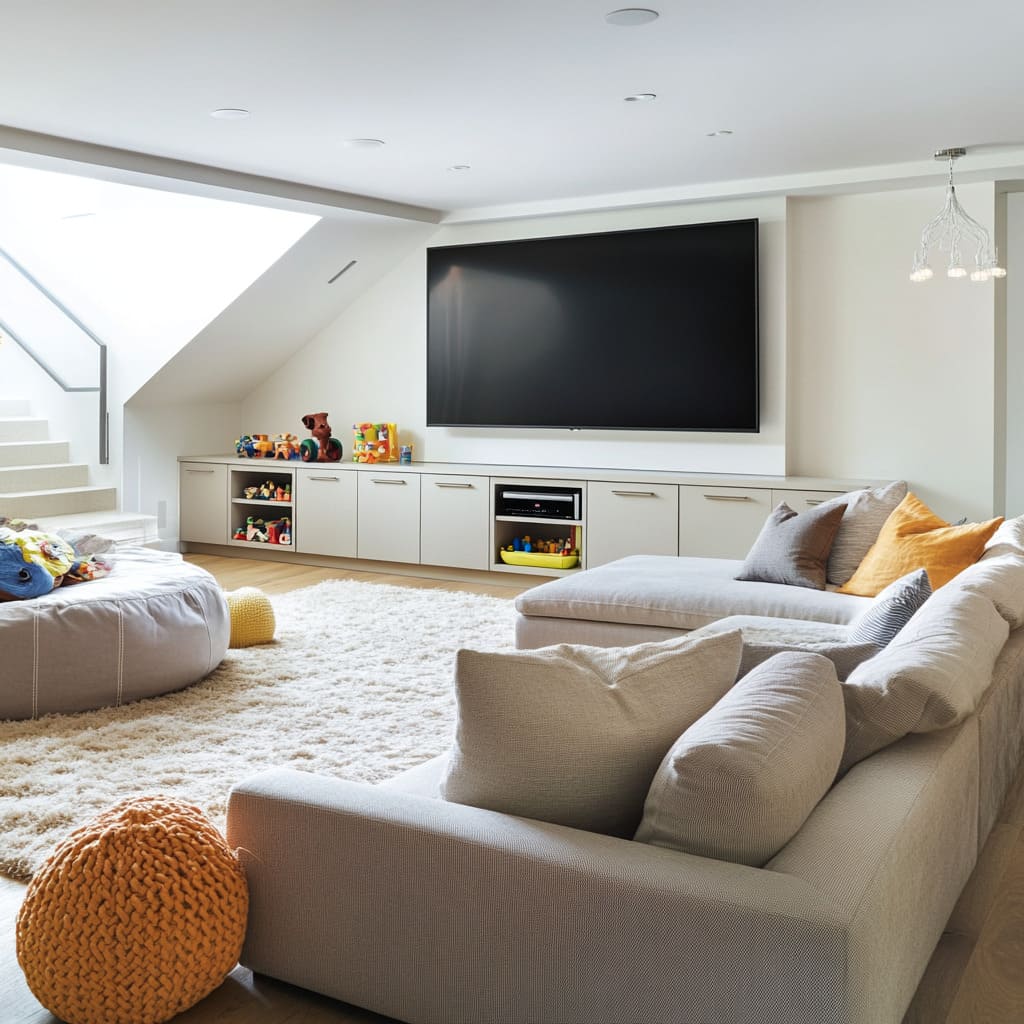
The smartest trick in this room is the use of color in the storage. Notice how the built-in cabinets are a calming light grey, blending seamlessly into the background. The toys themselves, however, are a vibrant collection of colors. By keeping the storage neutral, you let the toys become the decor. When it’s time for the kids to go to bed, you can hide the ‘clutter’ behind closed doors, and the room instantly transforms into a serene adult space. The pops of orange and yellow in the pillows and poufs tie it all together, whether the toys are out or not.
|
📋 Copy HEX 🔗 Share |
This open, airy concept is perfect for a large, multi-zone basement, especially one that needs to serve as both a kids’ play area and an adult lounge. The minimum footprint for this to feel spacious rather than cluttered would be around 300-400 square feet. A lower ceiling (7-8 feet) works fine here because the light color palette—light grey, beige, and off-white—and ample recessed lighting create a sense of height. The layout cleverly uses a half-wall for the staircase to maintain an open sightline across the different zones. Contrast this with the moody and enclosed feel of Idea #16.
16. Embrace a Moody Look with a Dark Wood Media Wall
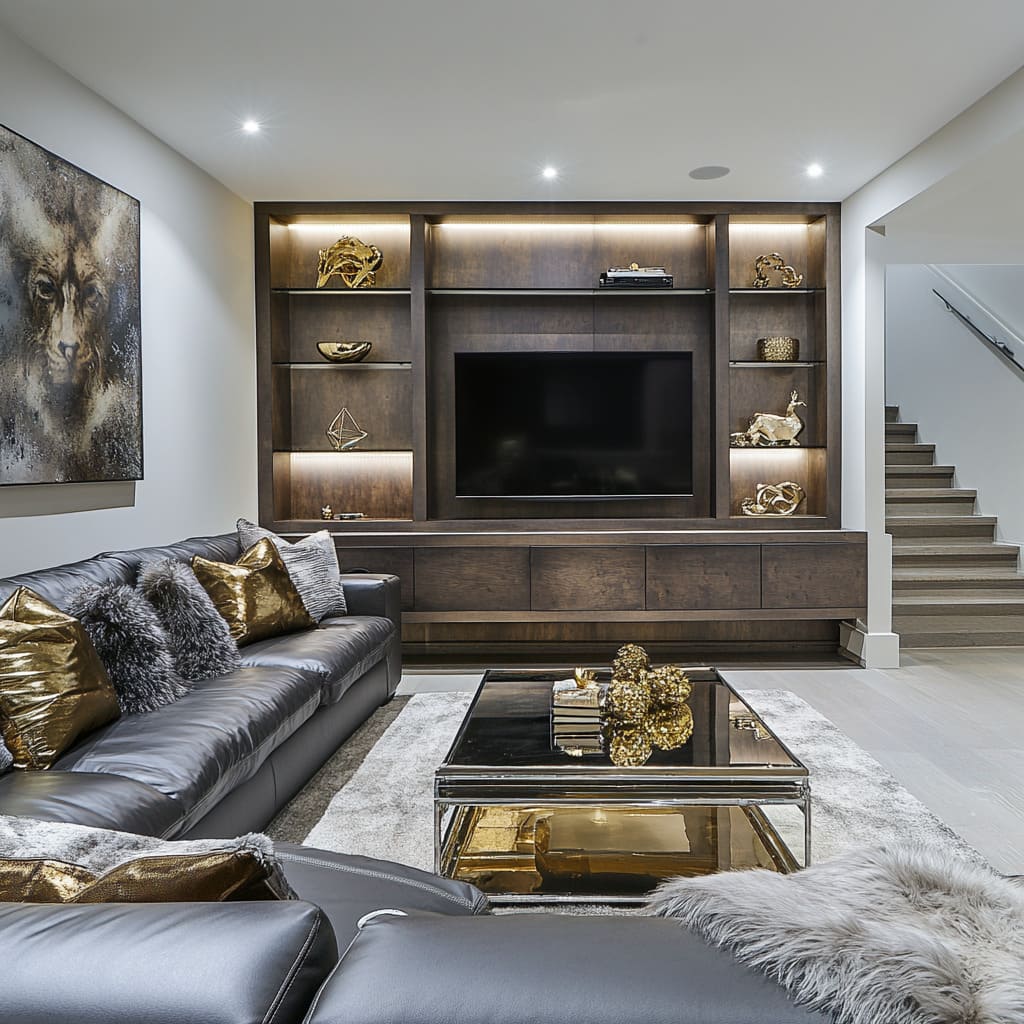
This luxurious, moody theater vibe comes with a matching price tag, driven by custom cabinetry and high-end finishes.
|
📋 Copy HEX 🔗 Share |
- Main Furniture: Large black leather sectional—$3,000—$7,000
- Custom Cabinetry: Dark wood built-in media unit with backlighting—$5,000 – $15,000+
- Lighting: Integrated LED backlighting and existing recessed lights—$500–$1,500
- Decor: Gold accessories, faux fur pillows, shag rug, chrome coffee table—$800 – $2,000
- TOTAL: $9,300 – $25,500+
- Budget alternative: Get the look for less with a dark wood media console from IKEA or Wayfair ($400-$800) flanked by two tall, dark bookcases. Use stick-on, remote-controlled LED light strips for the backlighting effect. Total cost: around $3,500.
A dark and dramatic color scheme like this requires the right lighting to work. In a basement with little to no natural light, a dark media wall and black leather sofa can quickly turn into a black hole. This room avoids that with intentional, layered lighting. The backlighting on the shelves is key—it creates depth and highlights the gold decor, preventing the unit from feeling like a solid dark mass. The light grey shag rug also provides a crucial bright surface on the floor to bounce light around. If you try this, make sure you have controllable, dimmable light sources to adjust the mood.
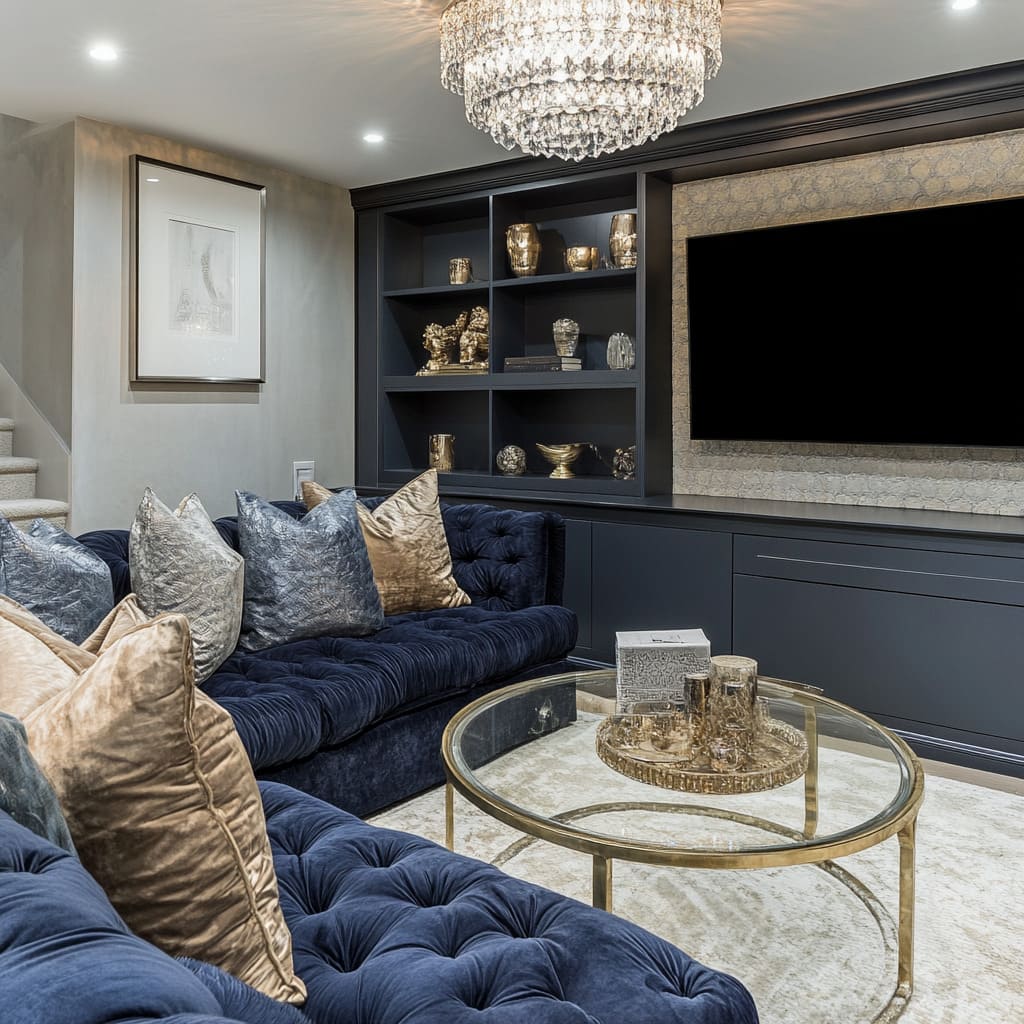
17. Go Glam with a Deep Blue Velvet Sofa and Crystal Chandelier
Obsessed with this luxe look but not the luxe price? You can absolutely recreate this vibe on a budget. Start with the walls. Paint your own built-ins (or a standalone bookcase from IKEA) a deep, moody blue like Benjamin Moore’s ‘Hale Navy.’ Scour thrift stores and Facebook Marketplace for brass objects to style the shelves. The real savings come from the seating and lighting. Look for a blue velvet sofa from Wayfair or a similar online retailer during a sale ($800-$1,500). A stunning crystal chandelier can be found on Amazon or at Home Depot for under $300. It’s all about mixing a few affordable finds with a can of paint.
|
📋 Copy HEX 🔗 Share |
This room feels so glamorous because it fully commits to a jewel-box aesthetic. The design uses a monochromatic palette—various shades of deep blue—to create a cohesive, immersive feeling. The magic happens with the accent material: brass. The warm, metallic sheen of the decorative objects and coffee table base pops dramatically against the cool blue backdrop. The crystal chandelier and glass coffee table add another layer of reflective, light-catching sparkle. It’s the confident combination of a single deep color with multiple high-shine textures that creates this sophisticated and elegant result. Compare the luxe feel here to the more casual modernism of Idea #19.
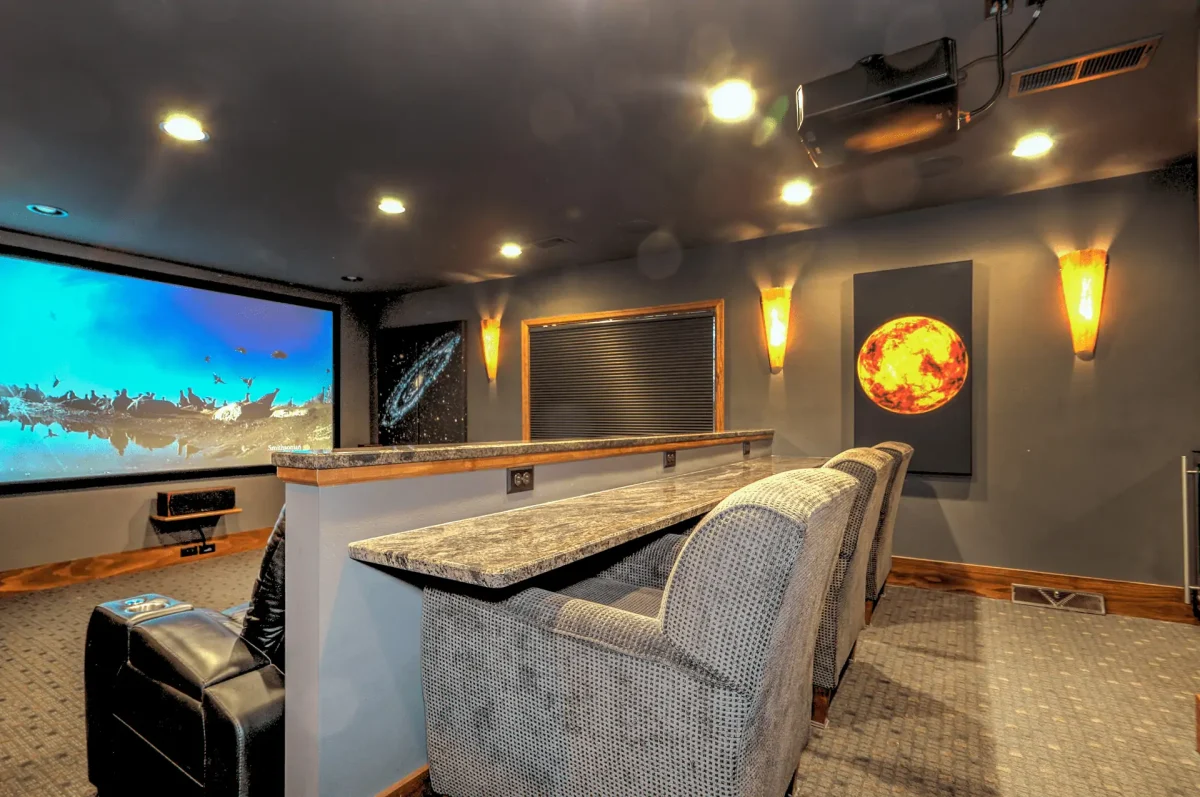
18. Design a True Home Theater with a Projection Screen and Bar Seating
Building a dedicated, dark home theater is a dream, but you have to consider sound. Dark, hard surfaces—like the walls and ceiling here—are great for visuals but can create harsh sound echoes. If you’re serious about audio quality, you’ll need to incorporate soft surfaces. This can be done by installing acoustic wall panels (which can be wrapped in dark fabric), using a thick, plush carpet instead of hardwood, and choosing seating with fabric upholstery. Even heavy velvet curtains can help absorb sound and improve the cinematic experience significantly.
|
📋 Copy HEX 🔗 Share |
The key to a successful tiered home theater is getting the platform height right. The second row of seating (the bar chairs here) needs to be high enough to see over the heads of people in the first row, but not so high that it feels precarious. A good rule of thumb is a 7-inch rise for every row. So, the platform for your second row should be at least 7 inches tall, and a third row would be on a 14-inch platform. This ensures a clear sightline to the screen for everyone, which is the entire point of a dedicated theater room.
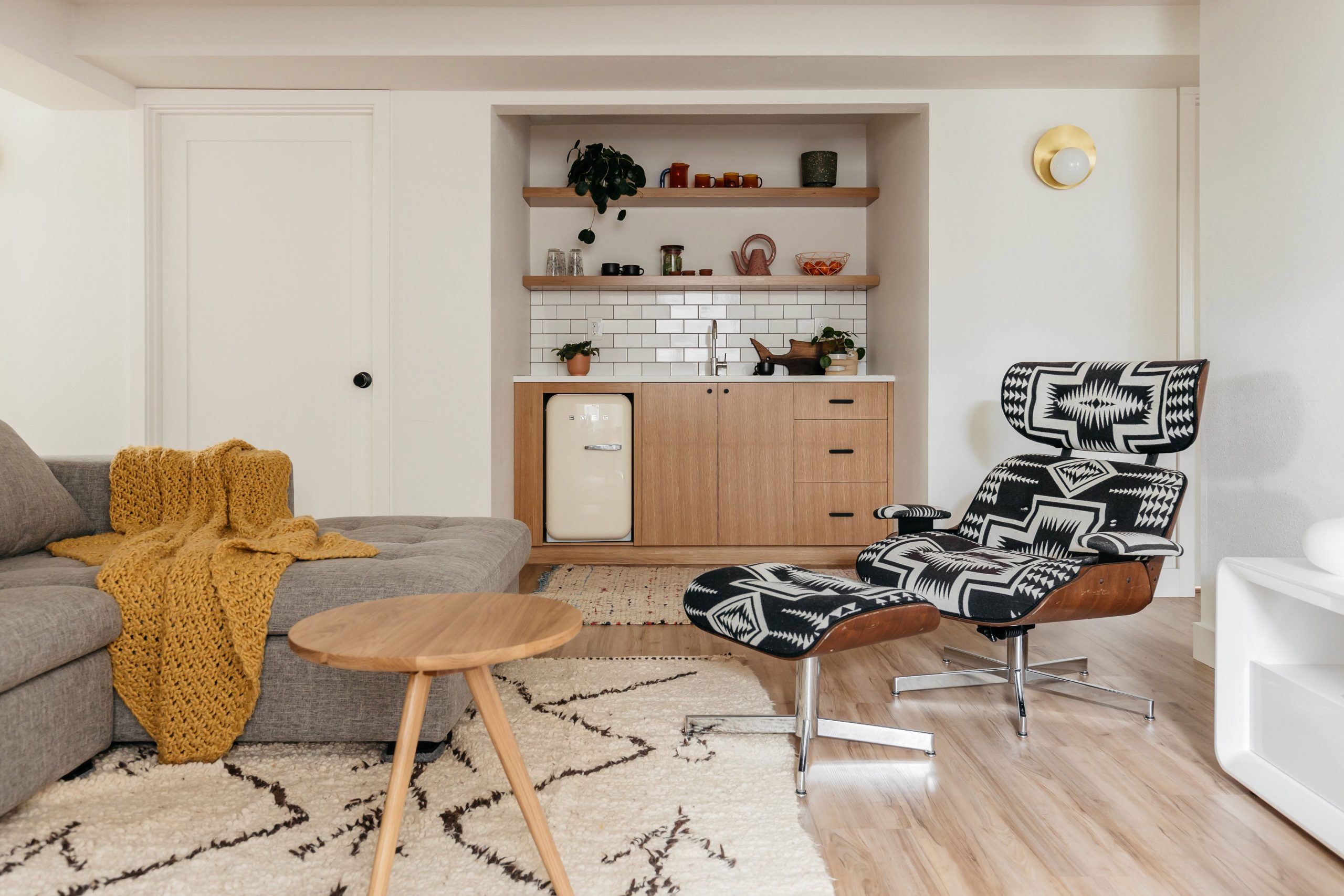
19. Carve Out a Modern Wet Bar with Southwestern Accents
The formula for this fresh, eclectic look is a game of balancing influences: 60% Modern Neutral + 20% Mid-Century Classic + 20% Southwestern Pattern. The modern neutral comes from the grey sectional, white walls, and simple subway tile. The mid-century vibe is carried entirely by that iconic Eames-style lounge chair. The Southwestern feel is injected through the geometric patterns on the area rug and the chair’s upholstery, plus the pop of warm mustard yellow in the throw. It’s a style mix that feels personal and curated, not pulled from a catalog.
|
📋 Copy HEX 🔗 Share |
This design cleverly uses a recess in the wall to create a dedicated bar zone that feels distinct yet connected to the main living area. By building the cabinetry, shelving, and tile within this nook, it effectively becomes its own ‘room.’ The use of light wood on the floating shelves and cabinets connects back to the legs of the Eames chair, creating a pleasing repetition of materials across the space. The cream shag rug with its dark pattern serves as a bridge, visually linking the seating area to the dark accents in the bar nook.
20. Pair a Faux Brick Wall with a Bright Blue Bar
A faux brick accent wall adds instant character and texture. Using veneer panels is a weekend project that makes a huge impact. Here’s the rundown:
|
📋 Copy HEX 🔗 Share |
- Time: 4-6 hours for a 10×8 ft wall. Cost: $200-$400.
- Clean your wall and ensure it’s smooth. Prime it if you’re going over a dark color.
- Start at a bottom corner. Apply panel adhesive to the back of your first brick panel.
- Press the panel firmly against the wall. Use a level to make sure it’s perfectly straight—this first one determines the rest.
- For the next panel, interlock it with the first one. Most panels have overlapping edges for a seamless look. Stagger the panels so the vertical seams don’t line up.
- Cut panels to fit around outlets and corners using a jigsaw or handsaw. Finish with corner trim pieces if needed.
Want this playful bar vibe for less? The bar base itself is a great DIY project using inexpensive wood planks from a home depot over a simple frame. For the bold wall color, check the ‘oops paint’ section at your local hardware store—you can often find a gallon of a great color for under $10. The red bar stools are a common retro style; look for them at online restaurant supply stores, which are often cheaper than home decor retailers, or search for used sets on Facebook Marketplace.
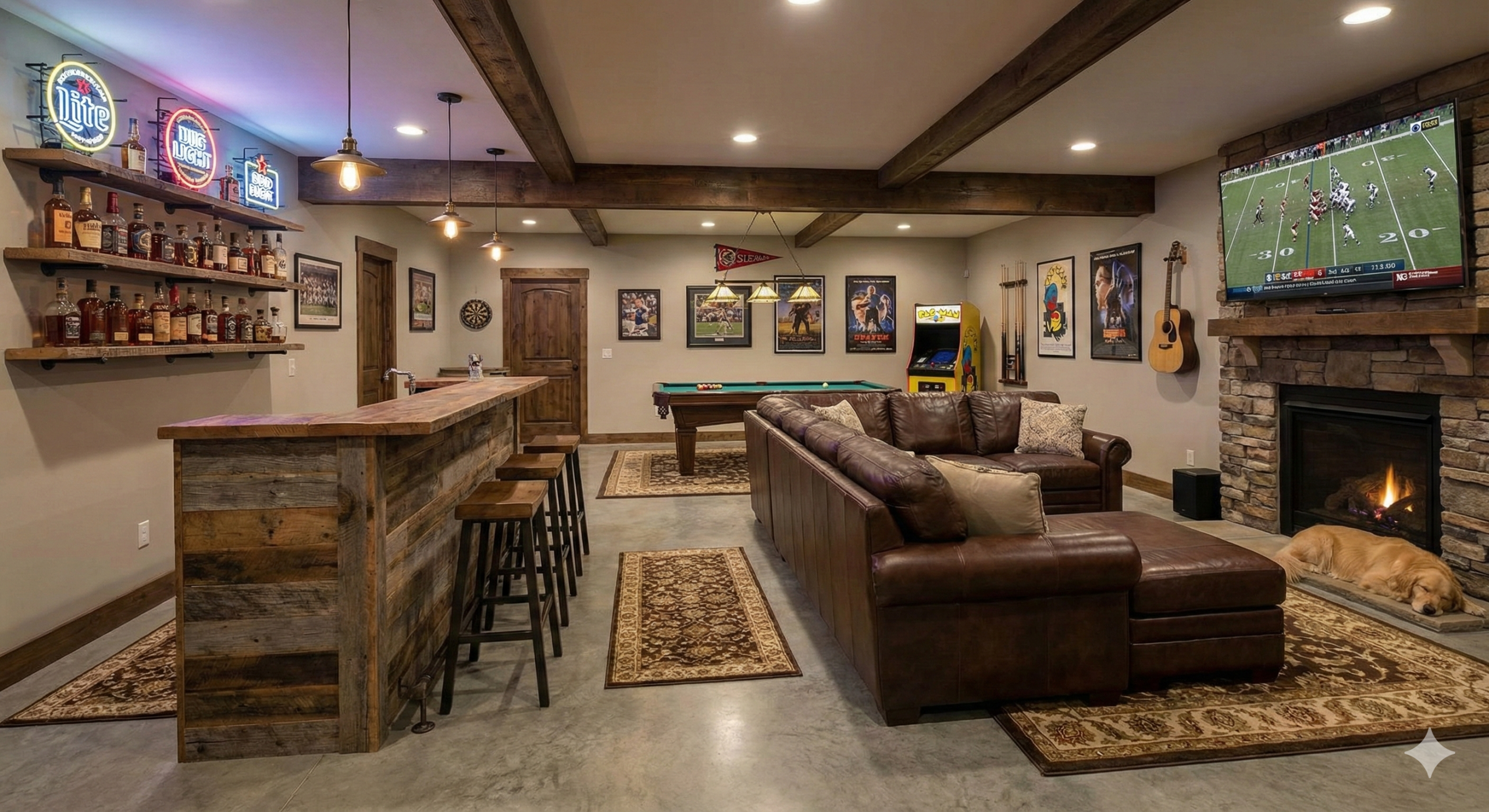
21. Combine a Stone Fireplace, Reclaimed Wood Bar, and Pool Table
A multi-zone basement like this requires serious planning. Before you buy a single thing, check these items off your list:
|
📋 Copy HEX 🔗 Share |
- Map Your Zones: Use painter’s tape on the floor to mark out the exact footprint of the bar, the sectional, and the pool table (including clearance space!). Live with it for a few days to see how the traffic flows. Does it feel cramped?
- Check Your Electrical: Do you have outlets where you need them for the TV, neon signs, and bar appliances? Do you have ceiling junction boxes for the pendant lights? Planning this now saves cutting into drywall later.
- Confirm Your Budget: A project this large has many hidden costs (plumbing for a wet bar, extra lighting, etc.). Get real quotes and add a 15% contingency fund before you start.
This look has a lot of high-ticket items, but you can achieve a similar rustic man-cave feel more affordably. The reclaimed wood bar can be a DIY project using pallet wood (be sure it’s heat-treated, not chemically treated) for a fraction of the cost. Instead of a full stone fireplace, consider applying stone veneer to just the area around a wall-mounted electric fireplace. And as always, a used pool table and arcade game from an online marketplace will save you thousands compared to buying new.
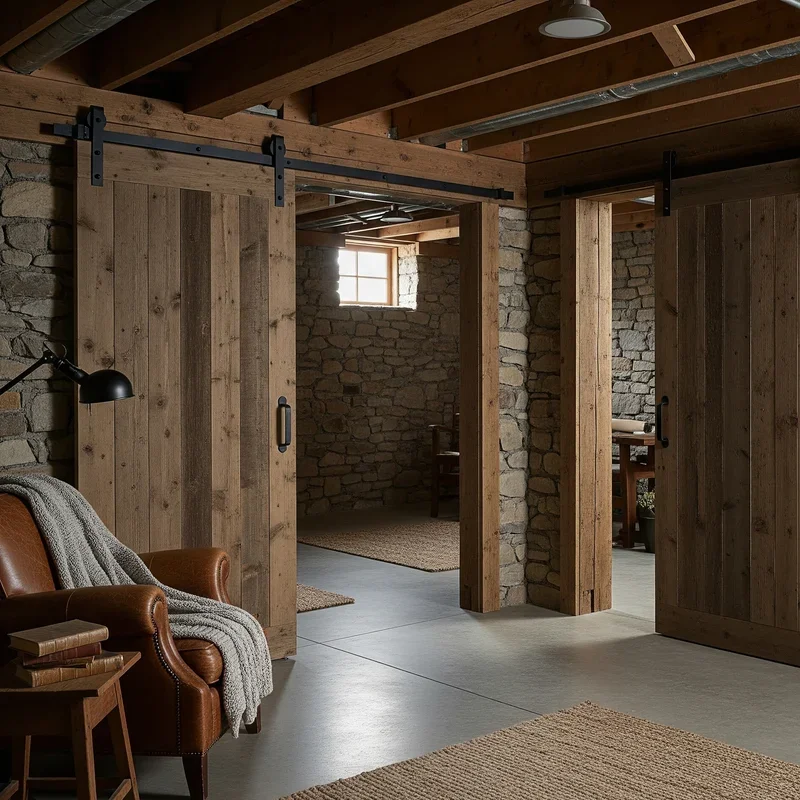
22. Embrace Natural Texture with Exposed Stone and Wood Beams
The success of this rustic retreat hinges on one thing: authentic texture. It’s the interplay between the rough, uneven surfaces of the exposed stone walls and the heavy, grainy character of the wooden ceiling beams and barn doors. Everything else is secondary. The concrete floor is left simple; the furniture is minimal. The design trusts that the inherent beauty and strength of these raw materials are enough to carry the entire space. It’s a confident choice that celebrates history and craftsmanship over trendy decor.
|
📋 Copy HEX 🔗 Share |
Living with authentic, old materials requires a specific kind of care. That beautiful exposed stone will naturally shed dust and grit; it’s not a surface you can easily wipe down. You’ll need to gently vacuum it with a brush attachment a few times a year. The rough wooden beams are also dust magnets. More importantly, in a basement environment, both materials need to be properly sealed—the stone to prevent moisture wicking and the wood to prevent rot or pests. It’s a higher-maintenance look than drywall and paint, but the character is unparalleled. The use of stone here feels more structural than in the accent columns of Idea #14.
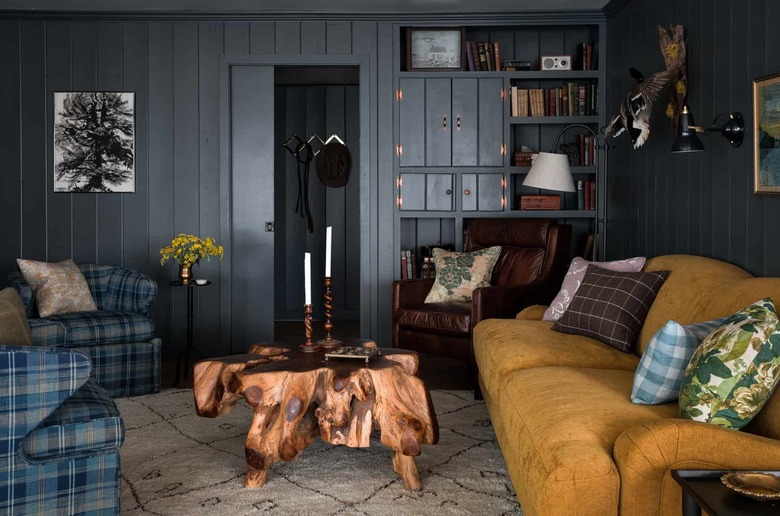
23. Create a Cozy Den with Dark Vertical Paneling
This kind of cozy, moody, slightly eclectic den is a direct reaction against the all-white, minimalist interiors that dominated for years. In 2026, there’s a strong desire for homes that feel personal, layered, and comforting. This look, often called ‘modern lodge’ or ‘eclectic cabin,’ is all about wrapping a room in a dark, textured color and filling it with comfortable, slightly mismatched furniture and personal objects. The taxidermy duck? It’s a signal that this isn’t a showroom; it’s a real person’s space with a story.
|
📋 Copy HEX 🔗 Share |
This room shouldn’t work, but it does. Why? It’s a masterful lesson in balancing color and texture. The dark vertical paneling creates a uniform, moody backdrop, but it could easily feel oppressive. The design counters this with the mustard yellow sofa, a bold splash of warmth and brightness that immediately draws you in. The variety of other textures—the smooth dark leather, the rustic tree stump table, the soft blue plaid—keeps the eye moving and adds layers of interest. It’s the tension between the dark, uniform walls and the vibrant, varied furnishings that makes it feel so dynamic and cool.
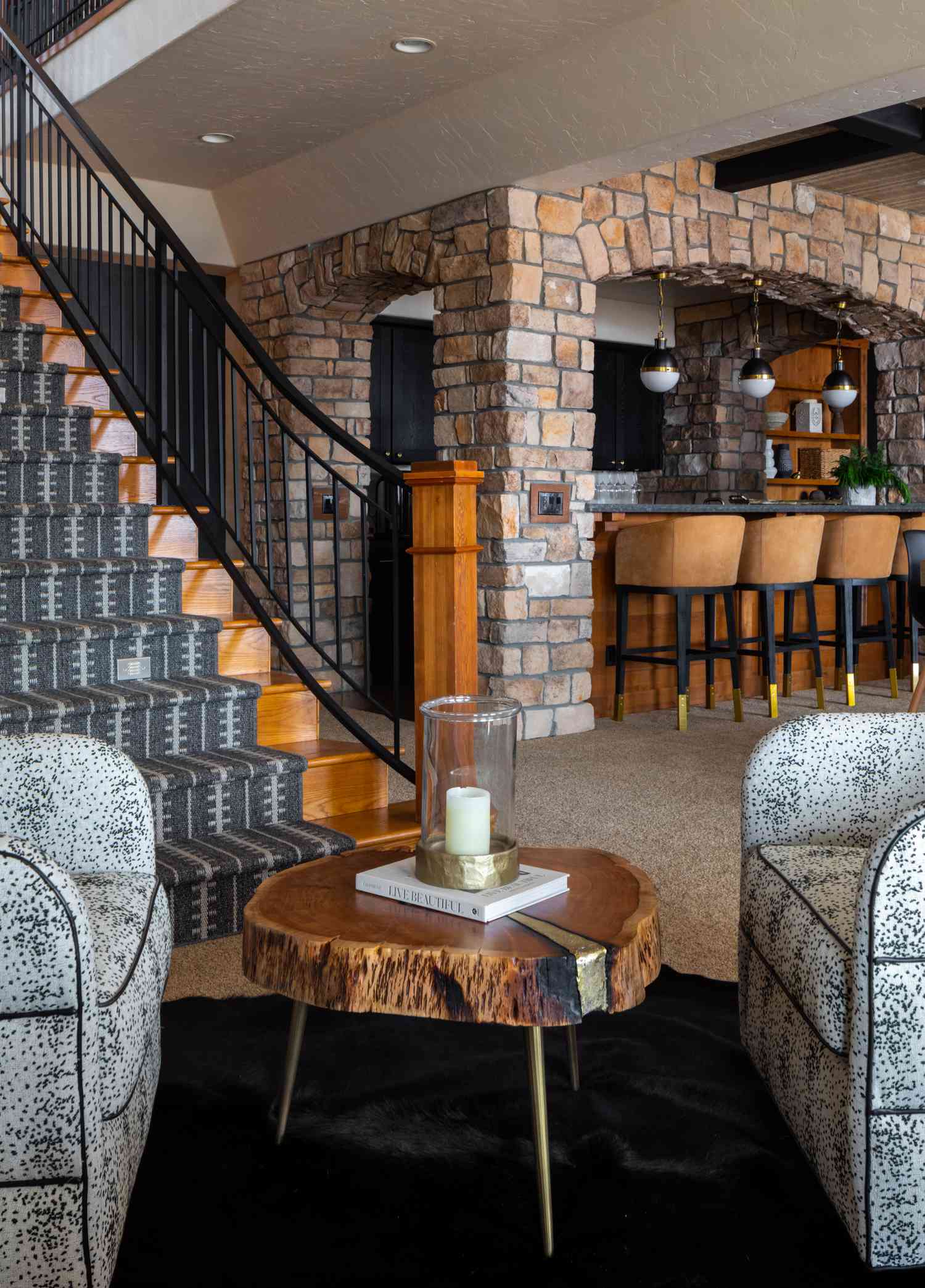
24. Marry Rustic Stone and Wood with Modern Gold Accents
When mixing rustic materials like stone and wood with a modern metal like gold or brass, the key is to be deliberate. Don’t just sprinkle the metal randomly. In this design, the gold is used in a few key places to create a visual thread: the inlay on the live-edge coffee table, the base of the bar stools, and likely the pendant lights. This repetition makes the gold feel like an intentional part of the design language, not a trendy afterthought. Stick to one metallic finish for the most cohesive and high-end look.
|
📋 Copy HEX 🔗 Share |
This design’s formula is a perfect blend of old and new: 50% Rustic Architecture + 30% Modern Comfort + 20% Sleek Accents. The ‘Rustic Architecture’ is the non-negotiable star: the stone wall, archway, and wooden staircase. ‘Modern Comfort’ comes from the soft, clean-lined upholstered armchairs and bar stools. The ‘Sleek Accents’ are the black metal stair railing and the touches of gold/brass. This balance is what keeps the space from feeling like a theme park lodge, grounding the rustic elements with clean, contemporary polish.
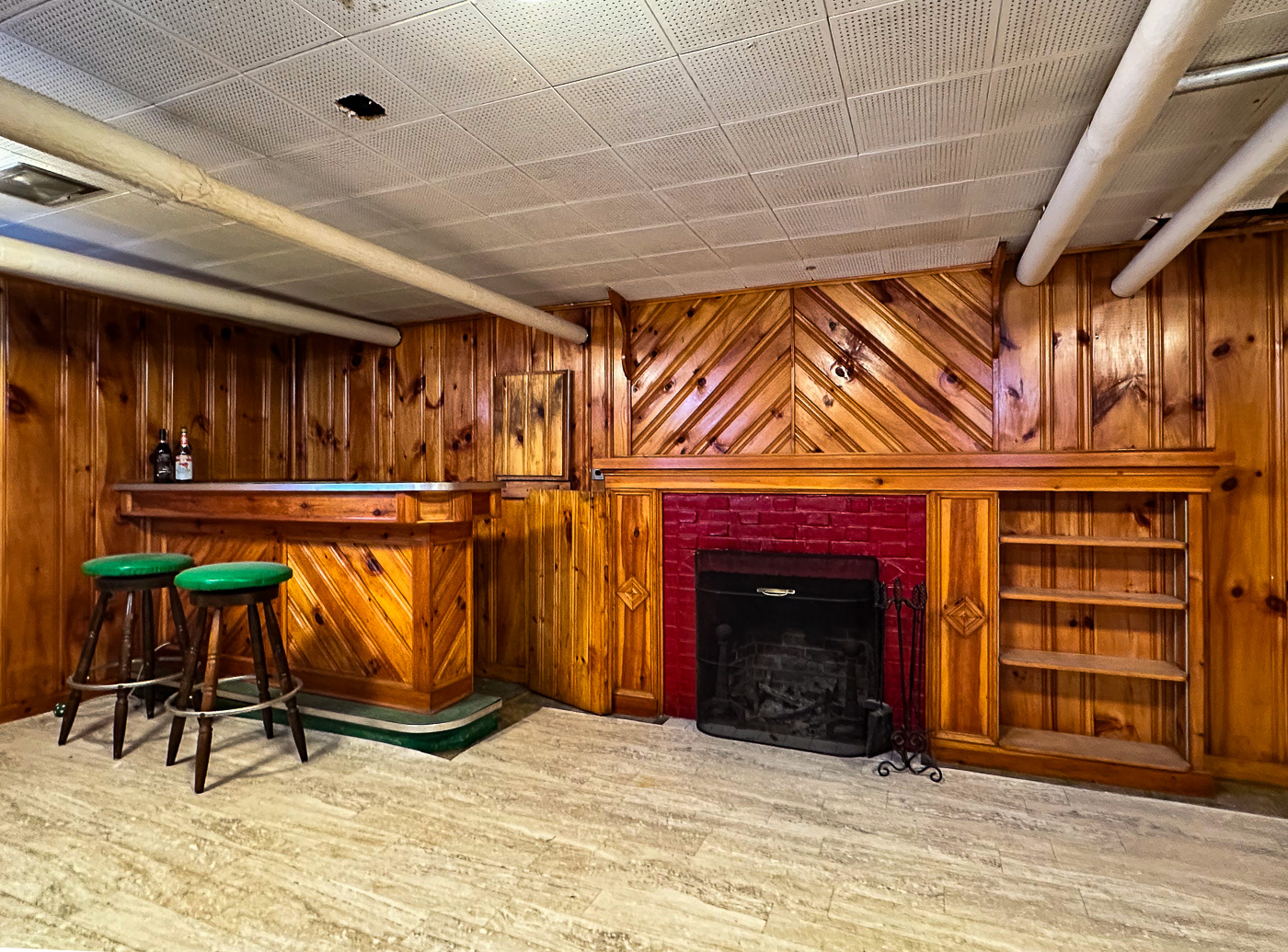
25. Lean into Retro with Wood Paneling and a Brick Fireplace
This retro basement bar is a nostalgic trip, and capturing the look is more about embracing the vintage vibe than spending a fortune. The key pieces are relatively affordable, especially if you can find them secondhand.
|
📋 Copy HEX 🔗 Share |
- Main Feature: Wood paneling – $300 – $800 (depending on coverage)
- Fireplace: Existing red brick fireplace (if you have one, it’s free!)
- Furniture: Wooden bar and green cushioned stools—$400 – $1,200 (search for vintage sets)
- Ceiling/Flooring: Drop ceiling tiles and patterned flooring—$500 – $1,500
- TOTAL: $1,200 – $3,500
- Budget alternative: This look is already a budget hero! Lean into the thrifted aesthetic. Paint existing walls a warm wood tone, find stools on Marketplace, and add retro decor. You could get the vibe for under $500.
There’s a fine line between ‘cool retro’ and ‘sadly dated,’ and it often comes down to upkeep and cleanliness. Wood paneling, especially older installations, can hold onto musty smells common in basements. A drop ceiling, while practical for accessing pipes, can look dingy if the tiles are stained or yellowed. To keep this look feeling intentional and fresh, you must commit to keeping every element pristine. Clean the paneling with a wood-safe cleaner, replace any stained ceiling tiles, and consider having the brick fireplace professionally cleaned.
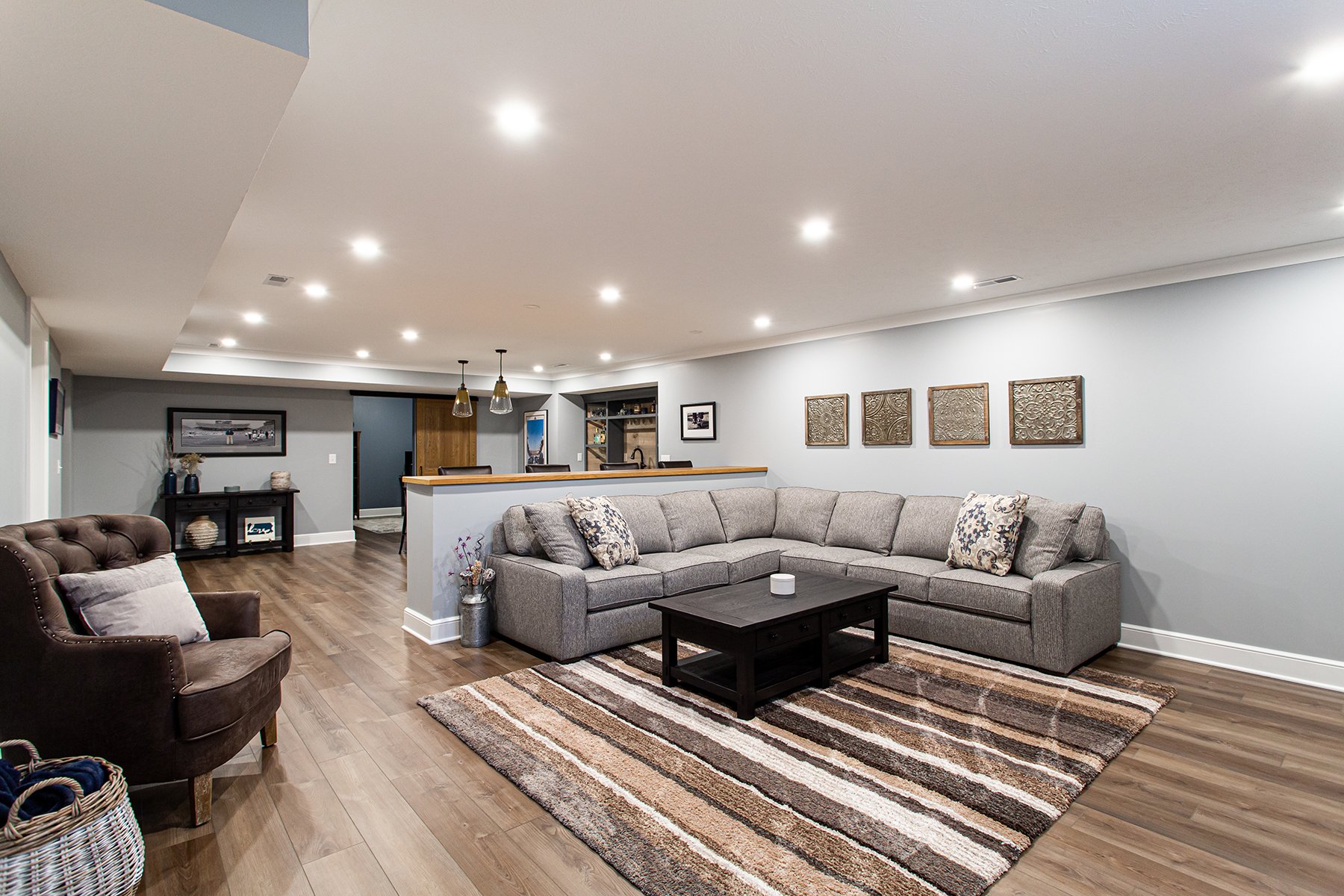
26. Create a Modern Traditional Space with a Large Gray Sectional
This room feels so livable and put-together because it nails the ‘modern traditional’ sweet spot. The foundation is timeless and traditional: the comfortable sectional, the classic wood flooring, and the simple rectangular coffee table. The ‘modern’ comes from the clean, fresh color palette. The light gray walls and white trim feel current and bright, preventing the traditional elements from feeling dated. The striped rug acts as the perfect bridge, incorporating both the brown wood tones and the gray sofa color in a clean, graphic pattern.
|
📋 Copy HEX 🔗 Share |
When you have a large, open-concept basement, creating defined ‘zones’ without building walls is crucial. This design uses a half-wall to brilliant effect. It separates the main living area from the bar area behind it, creating two distinct spaces. However, because it’s only a half-wall, it doesn’t block light or sightlines, so the entire basement still feels large and connected. A half-wall is the perfect solution for adding structure and function to an open floor plan without sacrificing that sense of spaciousness. Placing a console table or bar seating against it makes it even more useful.
Conclusion
That unfinished space downstairs isn’t just a basement; it’s a blank canvas waiting for the right idea. Whether you’re dreaming of a cozy movie den, a rustic game room, or a chic entertainment lounge, the perfect plan is within reach. The key is to find an inspiration photo that speaks to you and break it down into achievable steps.
So, which of these looks made your heart skip a beat? Head over to your Pinterest board, save your favorites, and start planning. Your dream basement is closer than you think.