24 Jaw-Dropping Basement Floor Paint Ideas for 2026 That Will Transform Your Space

That blank, gray slab at the bottom of your house isn’t just a floor; it’s a canvas. But let’s be honest, staring at endless basement floor paint ideas on Pinterest can feel more overwhelming than inspiring. How do you go from a cold concrete floor to a warm, welcoming space that actually feels like part of your home? It’s about choosing the right color and finish to build your foundation.
We’ve done the deep dive for you, filtering through hundreds of looks to bring you 24 genuinely stylish and practical basement floor ideas. We’re talking durable epoxies, creative painted patterns, and finishes that feel shockingly high-end. We’ll cover looks ranging from rugged industrial to polished and modern. And stay until the end — we break down the most common mistakes that can ruin these looks. 📌 Save this to Pinterest for later — you’ll want to revisit these ideas.
1. Beige Flake Epoxy with Exposed Industrial Joists
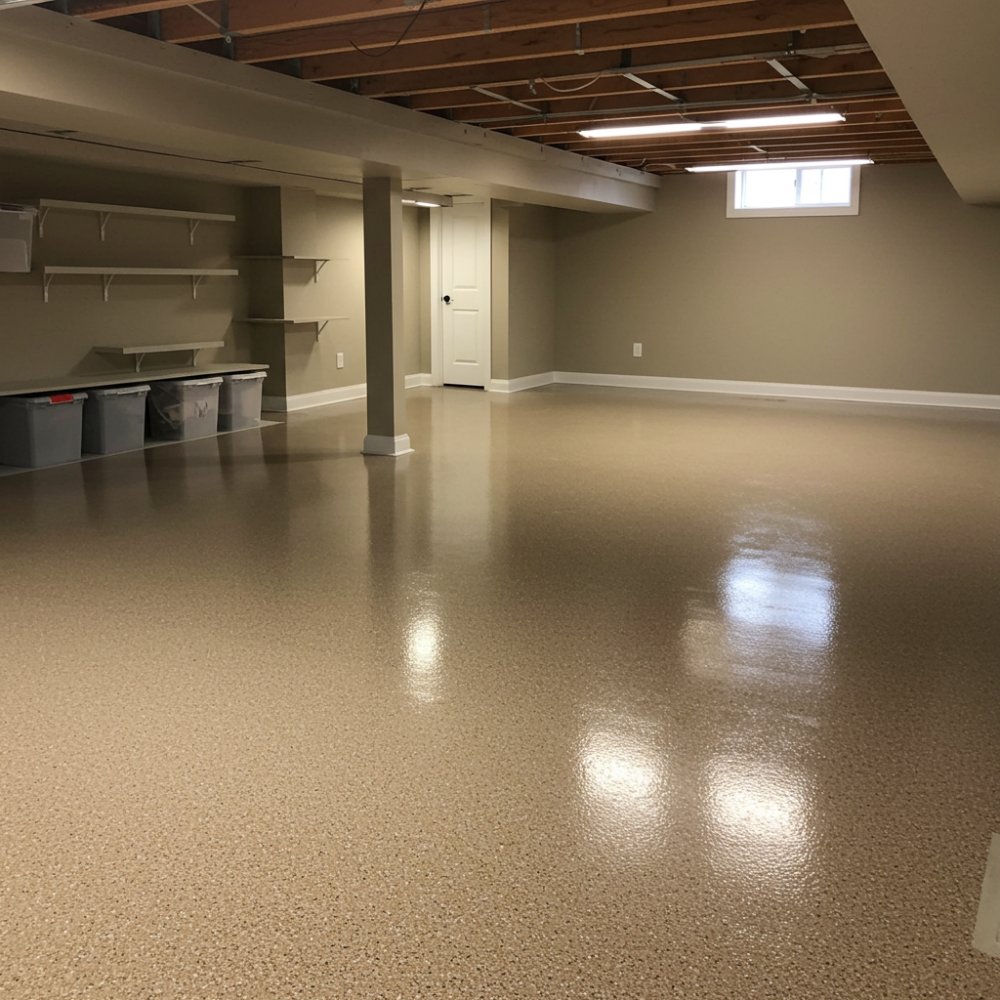
This look leans into the unfinished nature of a basement and makes it a feature, not a flaw. The high-gloss, light beige epoxy floor is speckled with darker flakes, which is brilliant for hiding dust and minor imperfections. It reflects the overhead fluorescent lighting, making the entire space feel brighter and larger than it is. Paired with greige walls and crisp white trim, the unfinished wooden joists don’t look messy; they look intentional, adding a touch of raw, industrial warmth.
|
📋 Copy HEX 🔗 Share |
Here’s a realistic look at what it takes to get this clean, utilitarian style. The biggest variable is whether you apply the epoxy yourself or hire a pro—the cost difference is significant, but so is the skill required for a flawless finish.
- Epoxy Floor Kit (DIY): $300 – $700
- Professional Epoxy Installation: $2,000 – $4,500
- Wall & Trim Paint: $150 – $300
- Shelving & Storage: $200 – $500
- TOTAL (DIY Floor): $650 – $1,500
- TOTAL (Pro Floor): $2,350 – $5,300
- Budget alternative: Use a simple one-part epoxy floor paint ($100-$200) and focus the budget on great storage to achieve a similar clean, organized feel for about 50% less.
2. Glossy White Epoxy with a Bold Magenta Accent
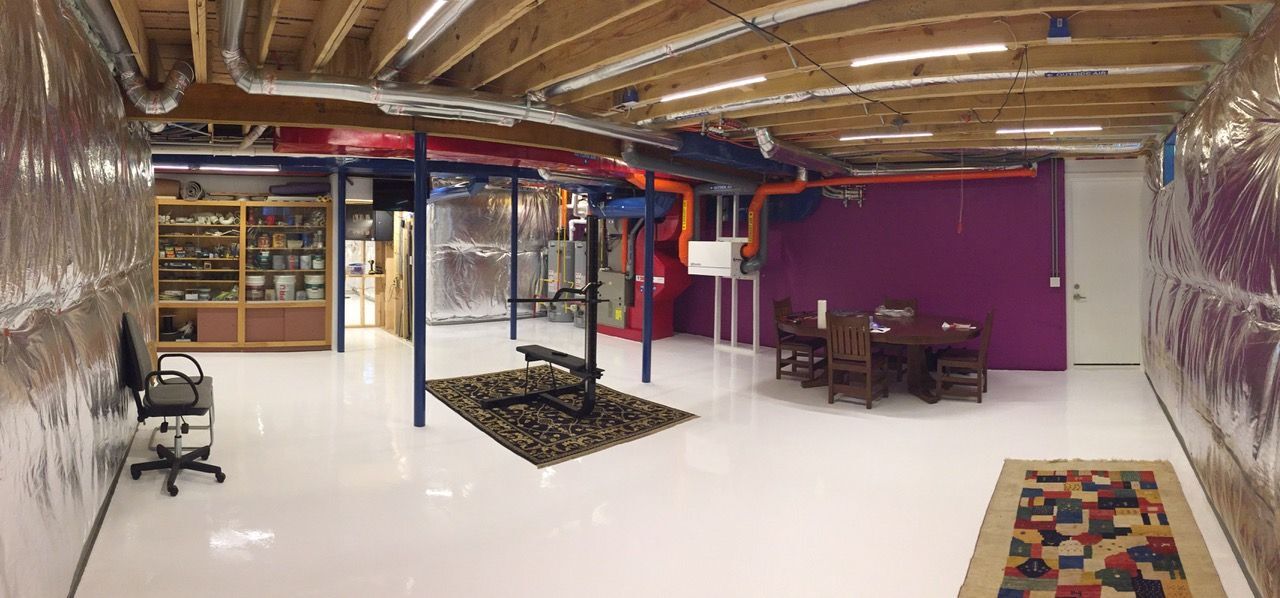
The single element that makes this basement unforgettable is that audacious magenta accent wall. In a space defined by functional, industrial elements—exposed joists, silver insulation, and polished white epoxy—the shot of vibrant color is completely unexpected. It proves that you don’t need to finish every surface to make a design statement. Without it, this is just a clean, functional basement. With it, it’s a room with personality and a focal point that says a creative person lives here.
|
📋 Copy HEX 🔗 Share |
A glossy white floor is a commitment. While its reflective quality is amazing for dark basements, be prepared for the reality of keeping it clean. Every speck of dirt, every stray pet hair, and every scuff mark will be on full display. This is not a low-maintenance option. If you have kids, pets, or use the basement as a workshop, you might find yourself constantly cleaning. A darker or speckled floor, like the one in Idea #8, would be far more forgiving.
3. Traditional Basement with Carpet and Cedar Paneling
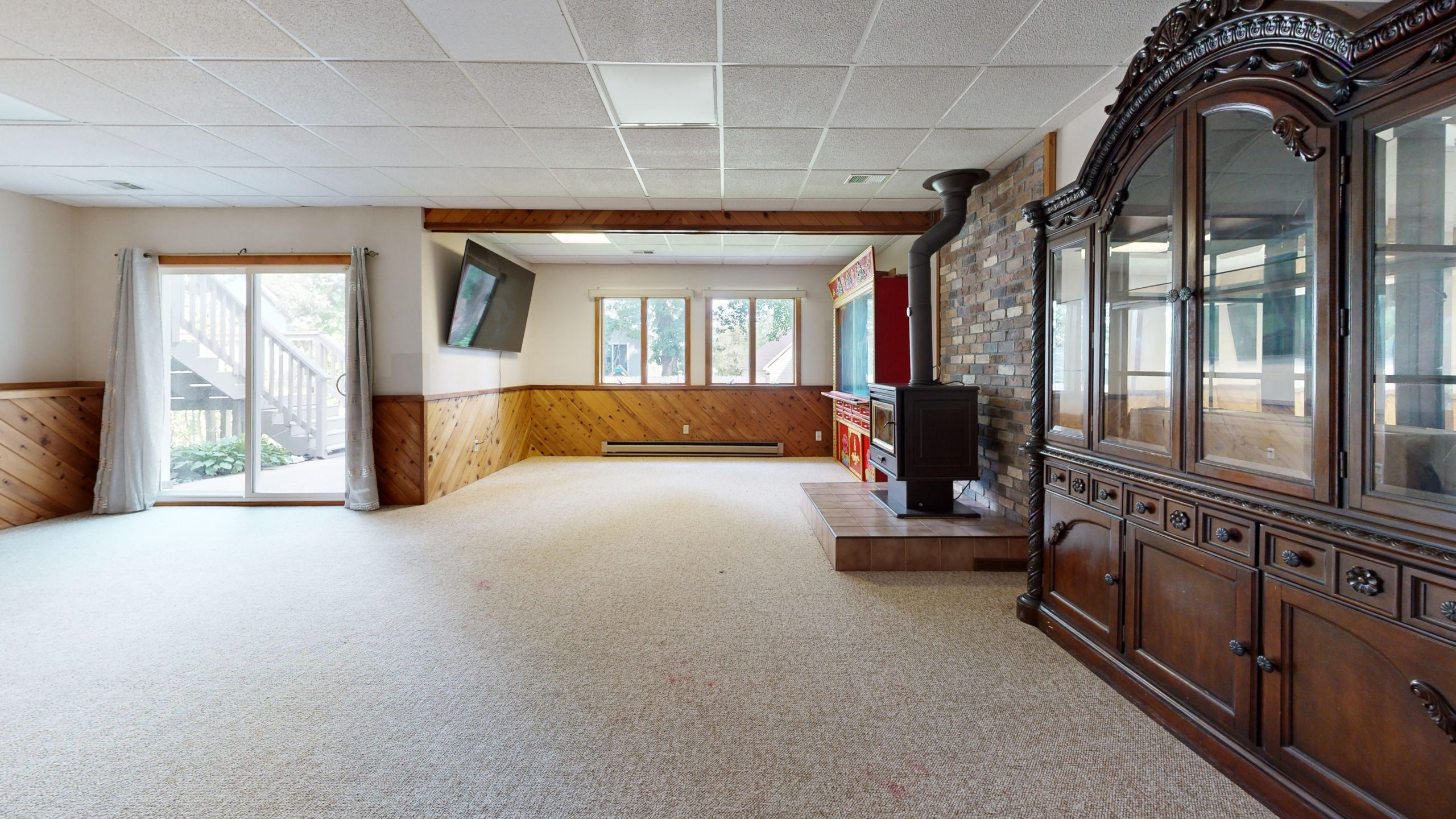
This room nails a cozy, traditional vibe by mixing textures and materials. The soft, beige wall-to-wall carpeting immediately signals comfort and warmth underfoot, a welcome departure from cold concrete. The cedar wood paneling on the lower half of the walls adds a rustic, cabin-like feel, which is beautifully complemented by the dark carved display cabinet. The wood stove on its brick hearth serves as the heart of the room, creating a focal point that is both visually and literally warm. It all works together to create a space that feels like a retreat.
|
📋 Copy HEX 🔗 Share |
This look, with its wood stove and substantial furniture, requires a decent amount of space to avoid feeling cramped. It’s best suited for a medium to large basement, ideally 300 sq. ft. or more. The wood paneling and dark furniture can make a small room feel smaller. For a more compact space, consider the brighter approach in Idea #22, which uses light grey tones and a simpler layout to maximize the feeling of spaciousness.
4. Functional Basement with Beige Tile and Wainscoting
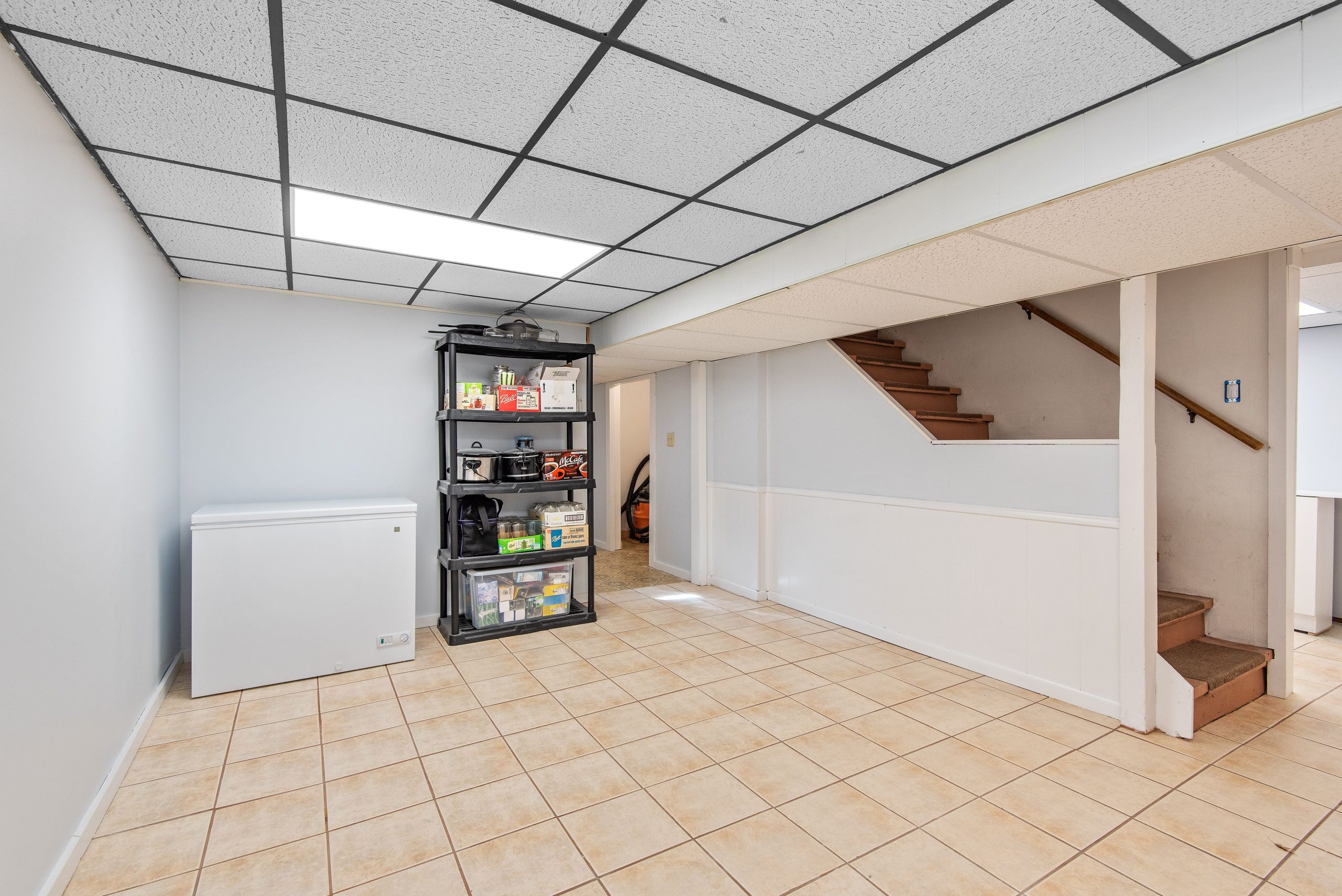
Beige ceramic or vinyl composite tile (VCT) is a workhorse for a reason. It’s incredibly durable, water-resistant, and easy to clean, making it ideal for a practical, no-fuss basement. The grout lines, however, are the weak spot. They are porous and prone to staining, especially in a basement environment. Plan on sealing the grout annually to prevent discoloration and make cleaning easier. A darker grout, like the one here, is a smart choice to pre-emptively hide dirt and stains. The white wainscoting is stylish but can be prone to scuffs in a high-traffic area.
|
📋 Copy HEX 🔗 Share |
You don’t need custom work to achieve this clean, paneled look. You can get this vibe for much less. Instead of ceramic tile, use peel-and-stick vinyl tiles from Target or Walmart for around $1-$2 per square foot. For the walls, you can fake the look of wainscoting by simply painting the lower third of the wall white and adding a thin piece of painted MDF trim at the top edge. This creates the same visual separation for a fraction of the cost and effort. The whole look could be achieved for under $500 in a small-to-medium room.
5. Simple and Bright: Beige Carpet with Light Gray Walls
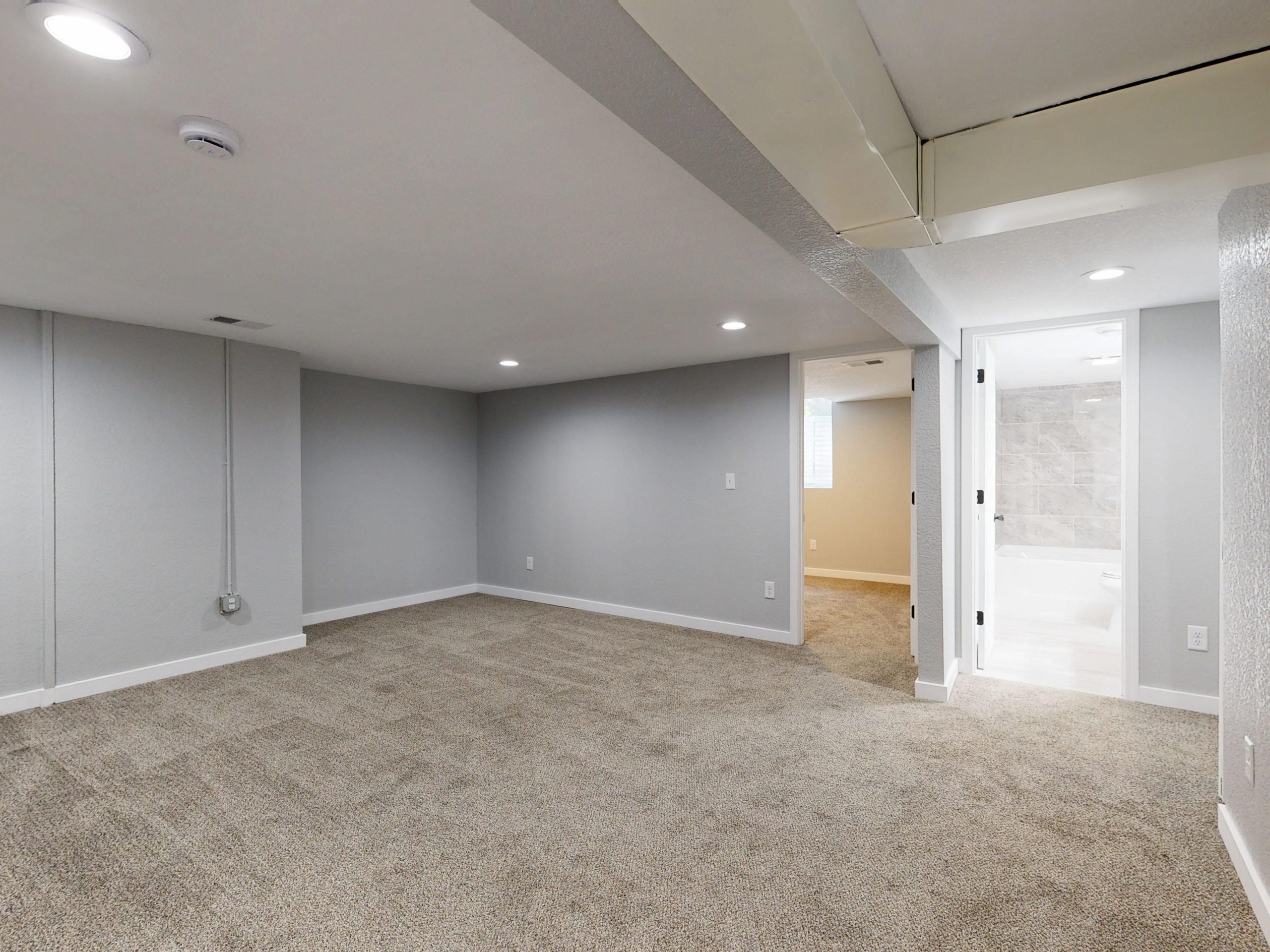
This room is a masterclass in simple, effective design. The formula is straightforward: 70% soft neutrals + 20% crisp white + 10% exposed functional elements. The neutral base is the light beige speckled carpet and the light gray walls, creating a calm and expansive feel. The white comes in through the baseboards and recessed lighting, adding brightness and a sense of finish. The final 10%—the painted beige ductwork—is a smart move that integrates a necessary utility into the color scheme, making it feel intentional rather than ignored.
|
📋 Copy HEX 🔗 Share |
When painting exposed ductwork, don’t just use leftover wall paint. For best results on metal, you need to prime it correctly. First, clean the ducts thoroughly with a degreaser. Then, apply one thin coat of a metal-adhering primer. This crucial step prevents the paint from peeling or chipping over time due to temperature changes in the metal. Once primed, you can use any interior latex paint to match your ceiling or, as seen here, your wall color.
6. Warm Metallic Brown Epoxy for a Rich Glow
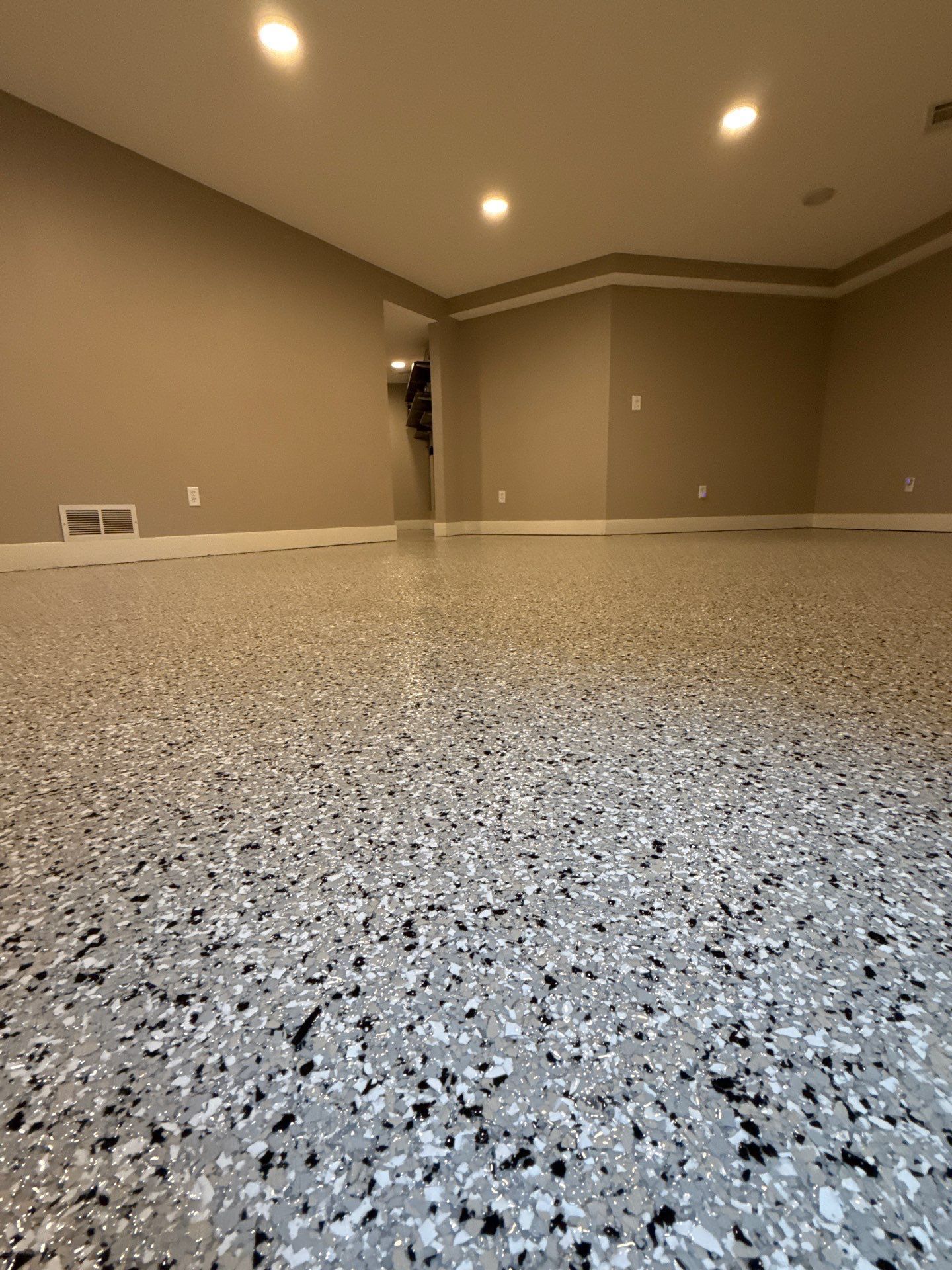
Metallic epoxy floors are having a huge moment, and for good reason. They offer a custom, high-end look that can’t be achieved with simple paint. The brown and bronze tones seen here bring a surprising warmth and depth to a basement, moving away from the typical cold grays. This trend is driven by homeowners wanting their basements to feel just as luxurious as the rest of the house. The swirled, pearlescent finish feels unique and almost like a piece of art, setting the stage for a sophisticated lounge or entertainment space. This is a look with staying power.
|
📋 Copy HEX 🔗 Share |
The key to a beautiful metallic epoxy floor is creating natural-looking swirls and highlights. Don’t overthink it. After pouring and spreading the epoxy with a notched squeegee, use a roller to gently back-roll the surface in random, overlapping patterns. For more dramatic effects, you can lightly mist the surface with denatured alcohol from a spray bottle; the alcohol reacts with the metallic pigments, creating cells and craters. Practice on a small sample board first to get a feel for the technique.
7. Subdued Basement with Speckled Epoxy and Dark Gray Walls
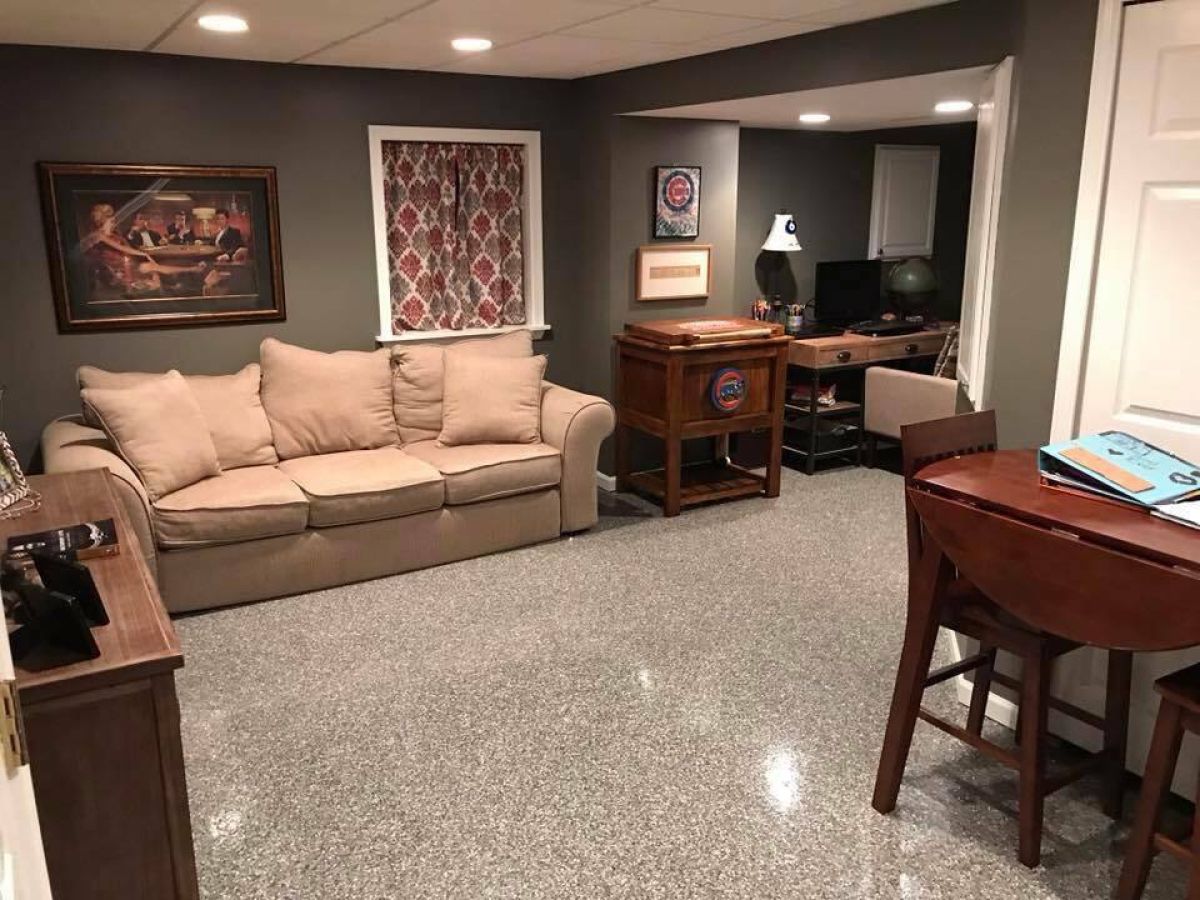
This design succeeds by embracing a darker, more intimate color palette. The dark gray walls create a cozy, den-like atmosphere, which is a bold choice that pays off. Instead of making the room feel small, it makes it feel intentional and enveloping. The light grey speckled epoxy floor provides a necessary contrast, preventing the space from feeling gloomy and helping to bounce the recessed lighting around. The beige sofa and dark wood furniture add warmth, ensuring the gray-on-gray scheme feels layered and sophisticated, not flat.
|
📋 Copy HEX 🔗 Share |
A dark wall color like this requires good lighting to work. This room relies entirely on recessed ceiling lights, which cast pools of light downwards. This can create a slightly dramatic, moody effect, but it might not be bright enough for all activities. If you plan to use the space for tasks that require more light, like reading or hobbies, you will absolutely need to supplement with floor lamps or table lamps to avoid eye strain and make the room feel more inviting.
8. Industrial Speckled Epoxy with Concrete Block Walls
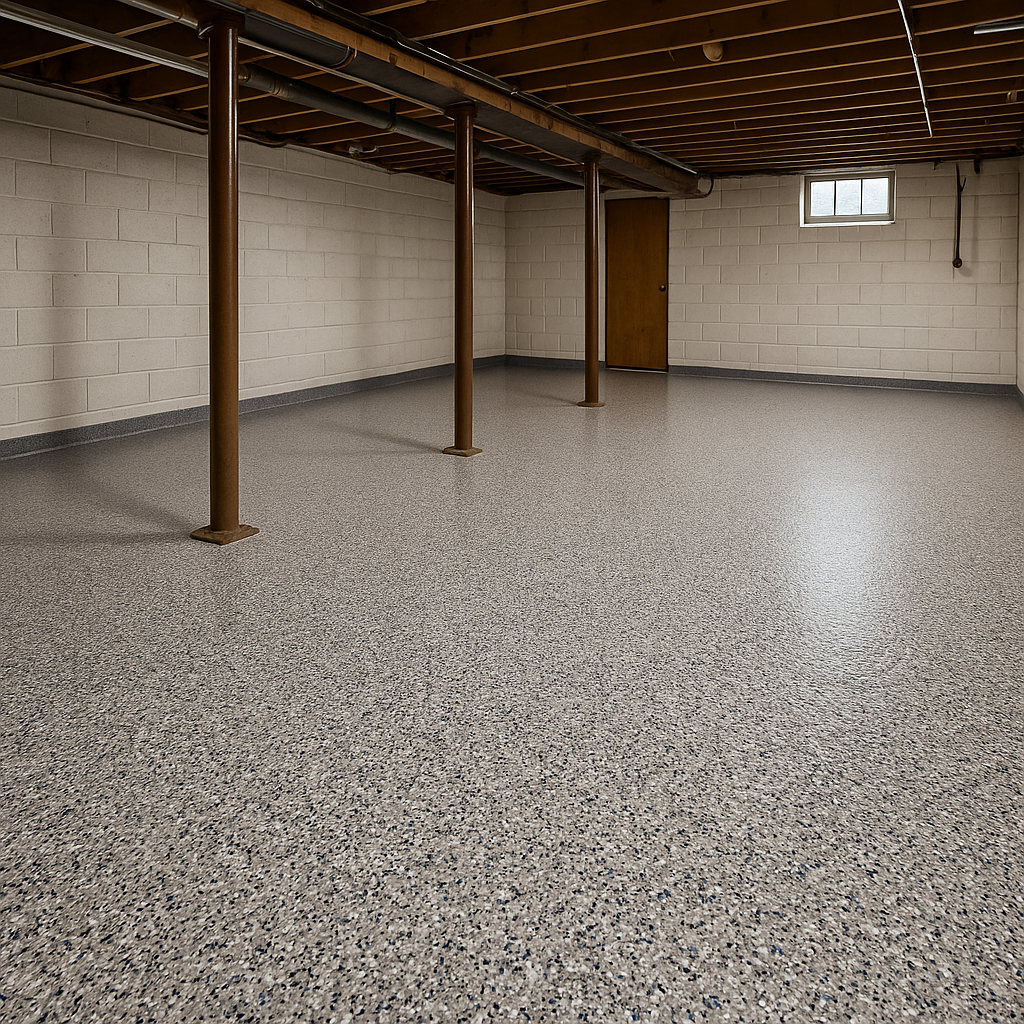
The speckled epoxy floor is the undeniable hero of this space. It takes a purely utilitarian basement—with its raw concrete block walls, exposed wooden joists, and metal support posts—and gives it a clean, polished finish. The multi-tonal gray, white, and blue chips are not only visually interesting but also incredibly practical for hiding dirt and imperfections. It provides a smooth, durable surface that elevates the entire room from a forgotten storage area to a usable, intentionally designed industrial space.
|
📋 Copy HEX 🔗 Share |
Before you commit to a full epoxy floor, you need to check a few things to ensure a long-lasting finish. This isn’t a project you can rush.
- Moisture Test: Tape a 2×2 ft square of plastic sheeting to the concrete floor. Wait 24-48 hours. If condensation forms underneath, you have a moisture issue that must be addressed with a sealing primer before applying epoxy.
- Crack/Pit Inspection: Fill any significant cracks or pits with a concrete patch compound. Epoxy is self-leveling but won’t fill deep voids.
- Previous Coatings: Check if the floor has ever been sealed or painted. If water beads on the surface, you’ll need to grind the floor to create a porous surface for the epoxy to adhere to.
9. Neutral Basement with Flake Epoxy and Tiled Entryway
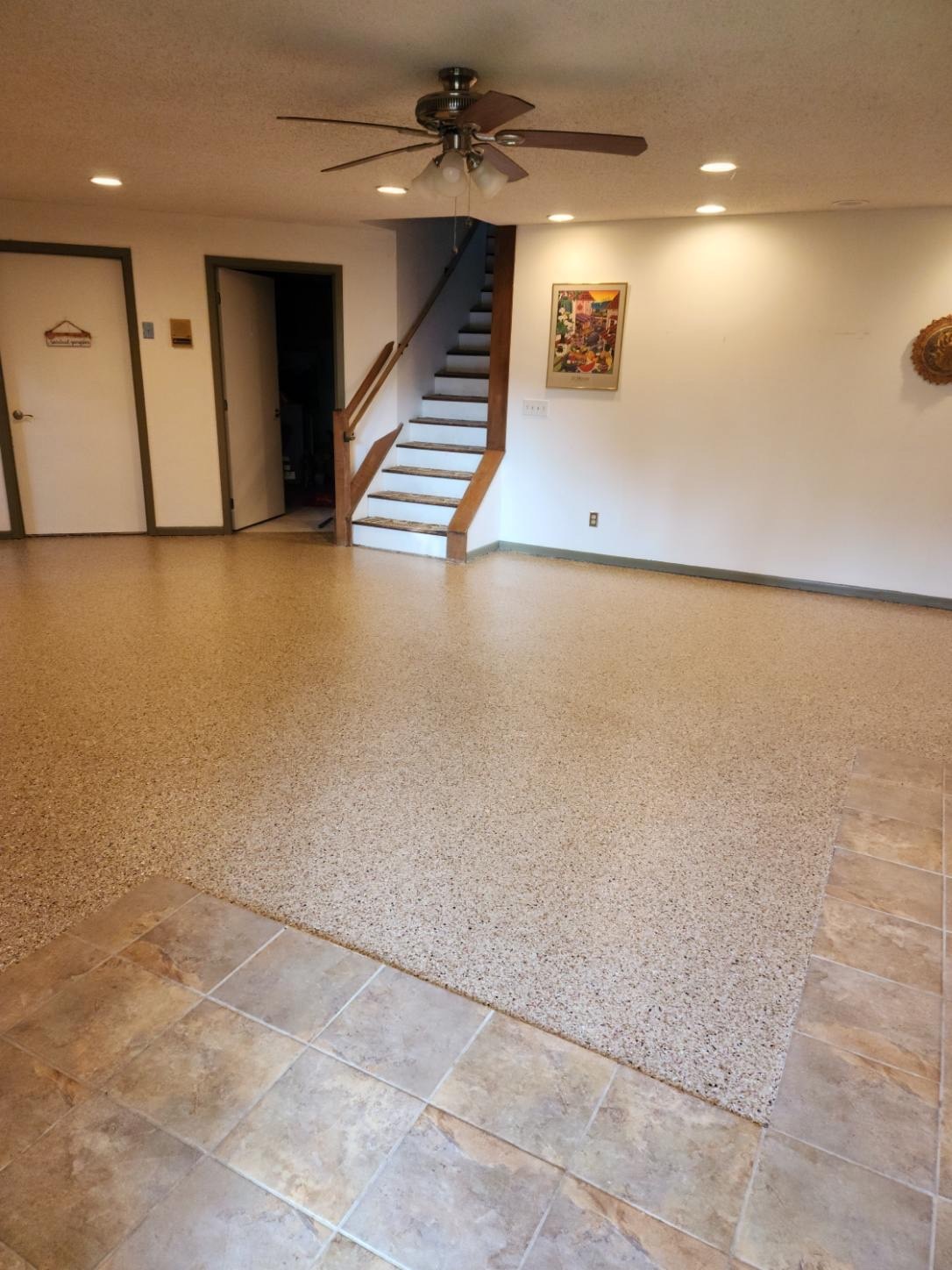
This room cleverly manages a transition of materials. The main floor is a practical, light beige flake epoxy, great for a multi-use basement space. However, at the bottom of the wooden staircase, a small landing of beige and tan ceramic tiles has been installed. This small detail implicitly defines an “entryway” zone. It’s a smart move because the durable, water-resistant tile can handle the wear and tear from foot traffic coming down the stairs better than epoxy might over time, protecting the main floor area.
|
📋 Copy HEX 🔗 Share |
When transitioning between two different flooring types, like the epoxy and tile shown here, a clean transition strip is non-negotiable. For a flush, professional look, use a T-molding strip that matches either the color of the flooring or the metal accents in the room (like the silver fan hardware here). Ensure the two floors are installed to be the same height. If one is slightly higher, a reducer strip is needed to prevent a tripping hazard. This small detail makes the whole installation look intentional and well-finished.
10. Rustic Basement with Whitewashed Stone and Wood Floors
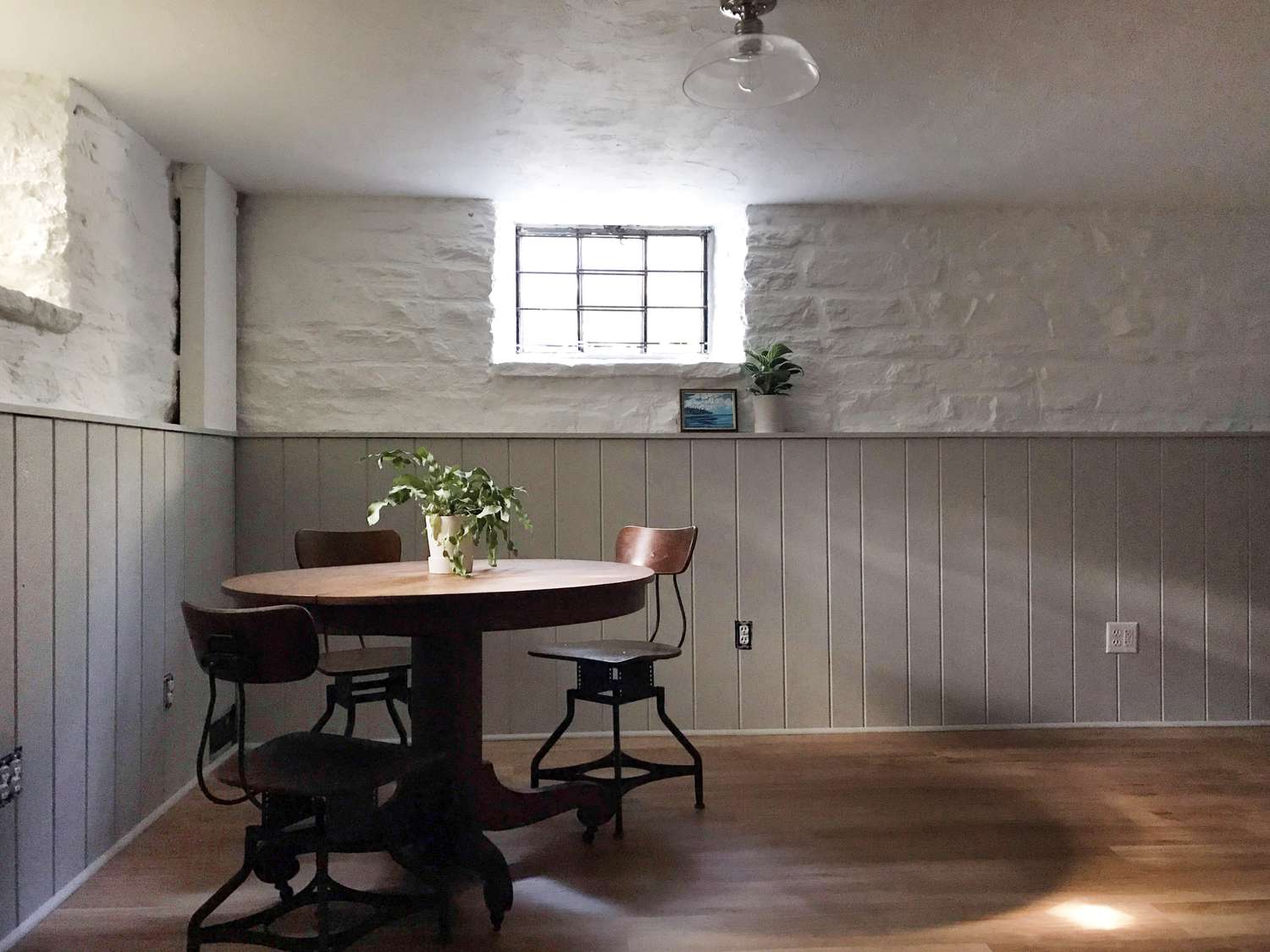
This space achieves its rustic-industrial feel through a balanced textural formula: 40% smooth wood + 30% rough stone + 20% painted paneling + 10% dark metal. The light wood floors provide a warm, smooth base. The whitewashed stone walls offer a heavy, rustic texture, which is visually lightened by the white color. The grey-painted vertical wainscoting adds a touch of classic, linear structure, while the dark metal legs of the chairs and the window grid provide a sharp, industrial contrast. It’s a perfect mix of hard and soft, rough and smooth.
|
📋 Copy HEX 🔗 Share |
Natural stone walls, even when whitewashed, are dust magnets. The deep crevices and rough texture will trap airborne dust and cobwebs. Plan on vacuuming the walls with a brush attachment every month or two to keep them looking fresh. The light wood floor, while beautiful, will show scratches more readily than a textured epoxy or carpet, so be sure to use felt pads on the feet of all furniture, especially chairs that are moved frequently.
11. Faux Wood Painted Floor with a Cozy Wood Stove
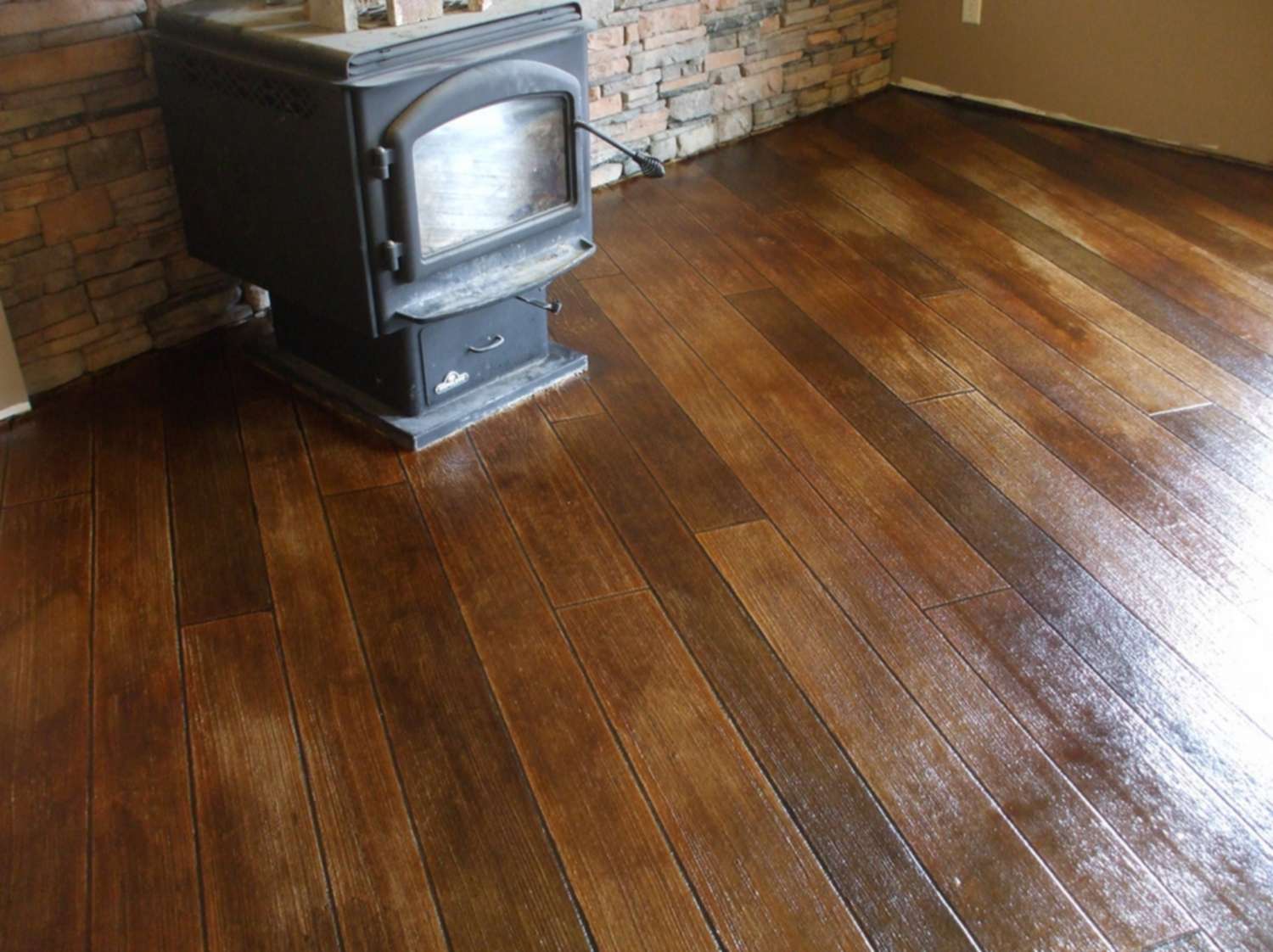
Creating a faux wood finish on a concrete floor is an ambitious but rewarding DIY project that adds incredible warmth. Here’s a simplified guide to get the look:
|
📋 Copy HEX 🔗 Share |
- Base Coat: After thoroughly prepping the concrete, apply one or two coats of a light tan or beige concrete paint or stain. Let it dry completely.
- Plank Lines: Use painter’s tape to create the “planks.” A common width is 5-6 inches. Run the tape in staggered lengths for a realistic look.
- Wood Graining: Working one “plank” at a time, apply a darker brown glaze. While the glaze is wet, drag a wood graining tool across it in a continuous, slightly rocking motion.
- Vary the Color: Use two or three different shades of brown glaze on random planks to mimic natural wood variation.
- Seal: Once dry, remove the tape and apply at least two coats of a high-traffic polyurethane sealer to protect the finish.
Time estimate: 2-3 days. Material cost: $200-$400.
The stacked stone accent wall behind the wood stove is the element that anchors this entire room. It provides the textural, rustic authenticity that makes the faux wood floor believable. Without the stone, the floor might look like a clever trick. With the stone, the entire scene feels like a cohesive, thoughtfully designed rustic retreat. It adds depth, color variation, and a sense of permanence that ties the whole look together.
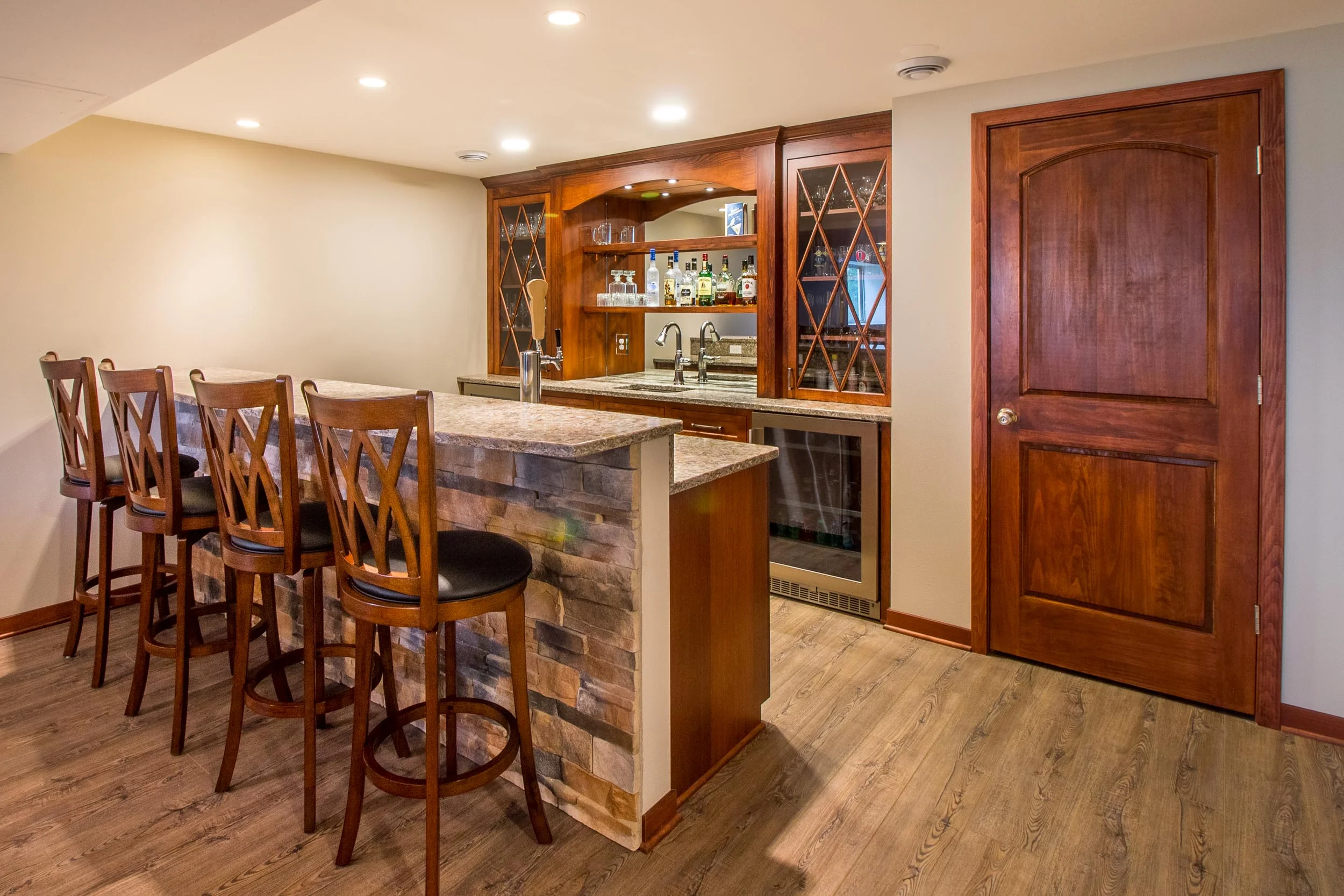
12. Warm Entertainment Basement with Stone Bar
This is a high-end basement finish, and the budget reflects the custom work. The combination of natural materials creates a warm, lodge-like feel that’s perfect for entertaining.
|
📋 Copy HEX 🔗 Share |
- Light Plank Flooring (LVP or Engineered Hardwood): $3,000 – $7,000
- Custom Bar (Cabinetry & Granite): $8,000 – $15,000+
- Stacked Stone Bar Front: $1,500 – $3,500
- Lighting & Electrical: $1,000 – $2,500
- Bar Stools & Decor: $800 – $2,000
- TOTAL: $14,300 – $30,000+
- Budget alternative: Get a similar feel by using a stock bar cabinet from a big box store, a laminate countertop, and faux stone paneling for under $4,000.
This design works because of its masterful layering of textures within a tight, warm color palette. The smooth, light wood-look floors contrast beautifully with the rough, multi-toned stacked stone on the bar. The deep, reddish tones of the bar cabinetry are echoed in the doors, creating visual continuity. The granite countertop then adds another layer of natural pattern and polish. None of the finishes are flat; they all have depth and character, which makes the space feel rich and inviting. Compare this look to the more rustic stone in Idea #24.
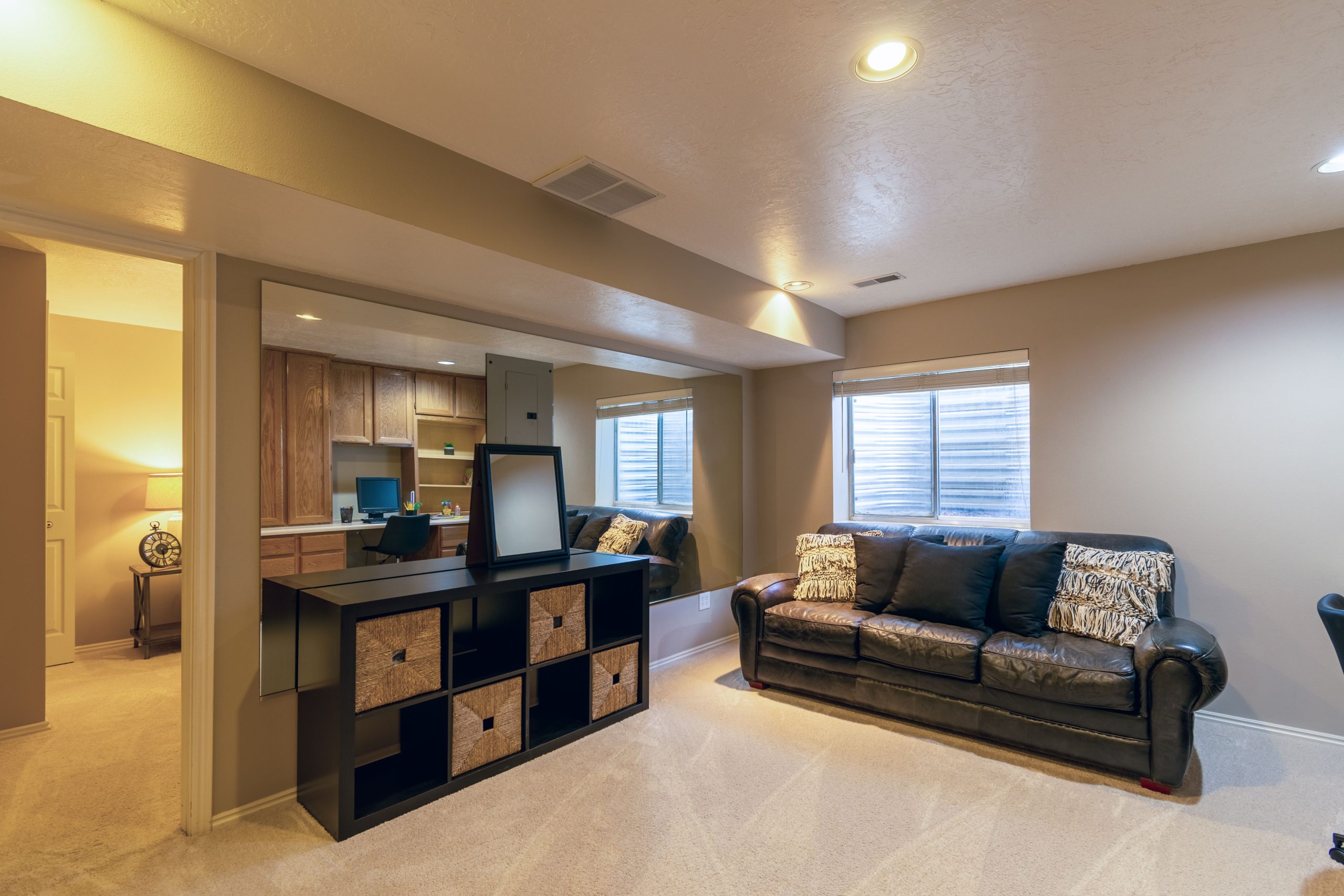
13. Multi-Zone Basement with Beige Carpet and Mirrored Wall
When you have one large basement room serving multiple functions, like a living area and an office, visual separators are key. The black cubby shelf here is a perfect example of a “psychological wall.” It separates the office zone from the seating area without blocking light or making the room feel smaller. Using open-back shelving maintains sightlines while still clearly defining the two spaces. The woven baskets add texture and hide clutter, keeping the look clean and organized.
|
📋 Copy HEX 🔗 Share |
A full wall of mirrors is a classic trick for a reason—it can visually double the size of your space. This strategy is most effective in a medium- to large-sized basement (at least 250 sq. ft.) where there’s enough space to reflect. In a very small, narrow basement, a floor-to-ceiling mirror can sometimes feel overwhelming or disorienting. For smaller rooms, consider a large, framed floor mirror leaned against a wall for a similar, less intense effect.
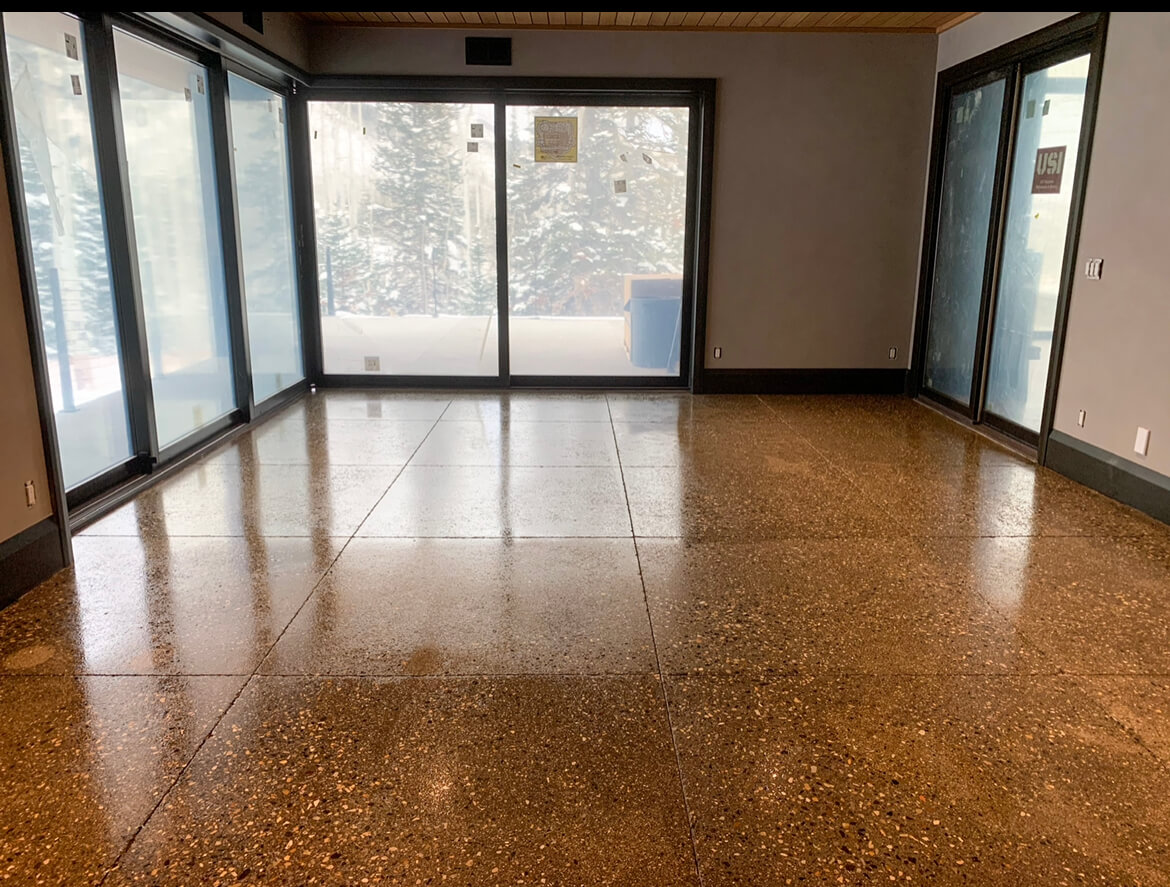
14. Polished Concrete with Exposed Aggregate and Window Wall
A polished concrete floor with exposed aggregate is stunning, but it’s not indestructible. The high-gloss surface can be scratched by dragging heavy furniture or by grit tracked in on shoes. It’s also prone to showing smudges and footprints, requiring frequent mopping with a pH-neutral cleaner to maintain its shine. The biggest maintenance task is periodic resealing. Depending on foot traffic, the floor should be professionally cleaned and a new top-coat sealer applied every 2-4 years to protect the finish and keep it from looking dull. This can cost $1-$2 per square foot.
|
📋 Copy HEX 🔗 Share |
The success of this room lies in its dramatic use of contrast. The raw, earthy texture of the exposed aggregate in the concrete floor is juxtaposed against the sleek, modern lines of the enormous, dark-framed windows. The light wood plank ceiling adds warmth, preventing the gray walls and concrete floor from feeling too cold or stark. It’s a beautiful balance of industrial, modern, and natural elements, with the reflective floor amplifying the abundant natural light.
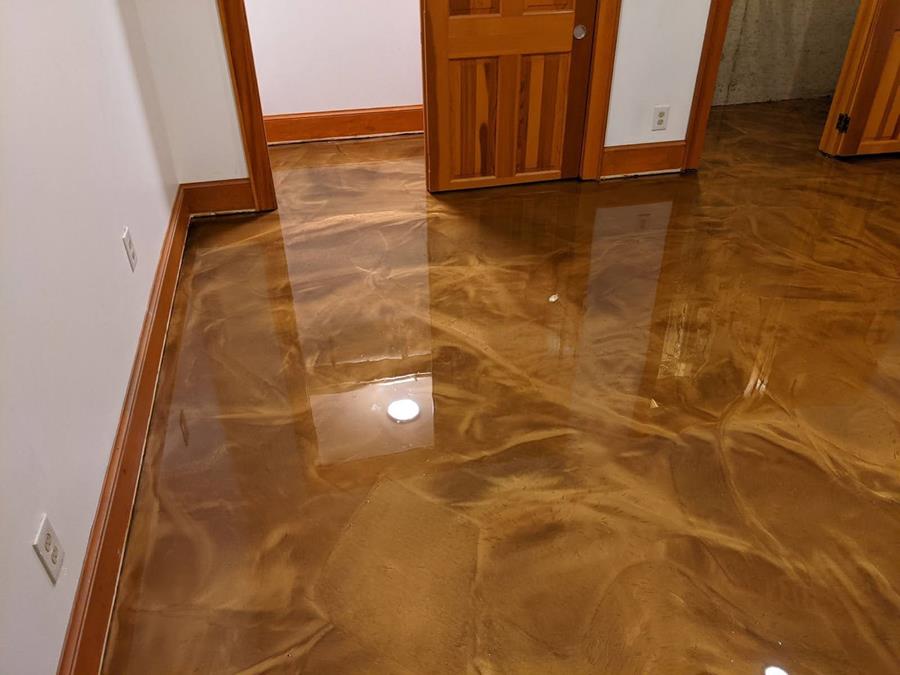
15. Lustrous Metallic Bronze Epoxy with Wood Trim
It’s all about the floor. The metallic bronze epoxy, with its deep, swirling patterns and high-gloss finish, is the undeniable star of the show. It’s not just a floor covering; it’s a statement piece that exudes a sense of luxury and custom design. The way it catches and reflects light creates a dynamic, liquid-like surface that changes as you move through the room. Removing it would leave you with a simple room; with it, you have a showstopper. The warmth of the bronze is a sophisticated choice that feels more inviting than typical industrial grays.
|
📋 Copy HEX 🔗 Share |
This look is a simple but powerful formula: 80% dramatic floor + 15% warm wood + 5% neutral walls. The absolute focus is the floor, so everything else is there to support it. The warm, medium-toned wood baseboards and door frames pick up on the warmth of the bronze, grounding the metallic shine with a natural element. The plain white walls act as a quiet backdrop, refusing to compete for attention. You could swap the bronze for a deep blue or green metallic epoxy and still use the same formula for a different but equally dramatic effect.
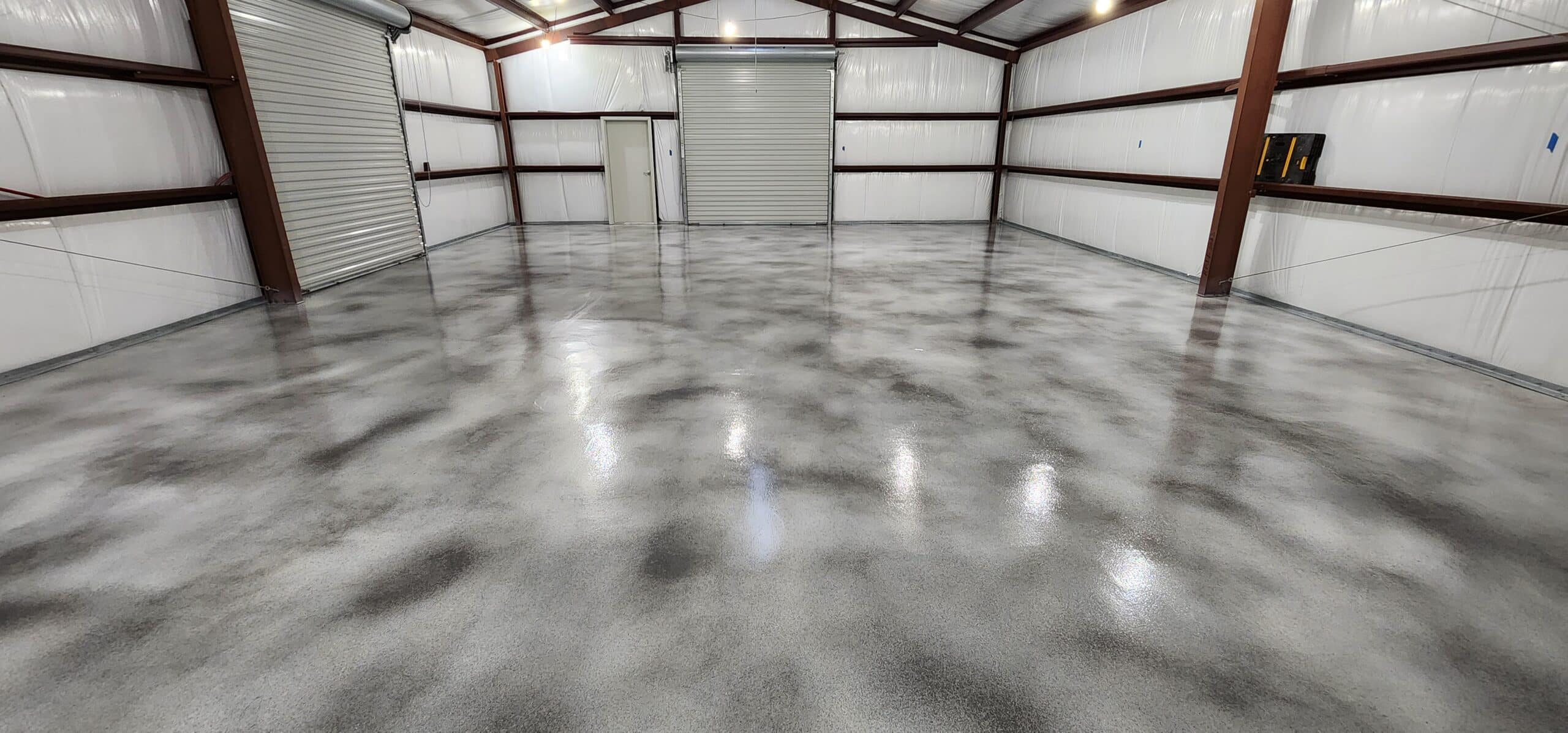
16. Industrial Swirl Epoxy with Exposed Metal Beams
Achieving that perfect, effortless swirl pattern in an epoxy floor is much harder than it looks. This isn’t a beginner-friendly DIY project if you have your heart set on a specific outcome. The “working time” for epoxy is limited, and the way the colors move and blend can be unpredictable. Professionals use specific solvents and techniques to create these looks. If you attempt it yourself, be prepared for the possibility that your swirls might look more like a muddled mess than a graceful pattern. Practice on a large piece of cardboard before you ever touch your floor.
|
📋 Copy HEX 🔗 Share |
Want the industrial-swirl look without the nail-biting stress and high cost of a professional epoxy job? There are now large-format vinyl floor tiles and even vinyl sheet flooring that mimic the look of swirled metallic epoxy. You can find these at flooring specialty stores or online. For a 200 sq. ft. basement, you might spend $600 – $1,200 for the materials, which is a significant saving compared to a pro epoxy installation that could run $3,000 or more. The finish won’t be quite as seamless, but it’s a fantastic and achievable alternative.
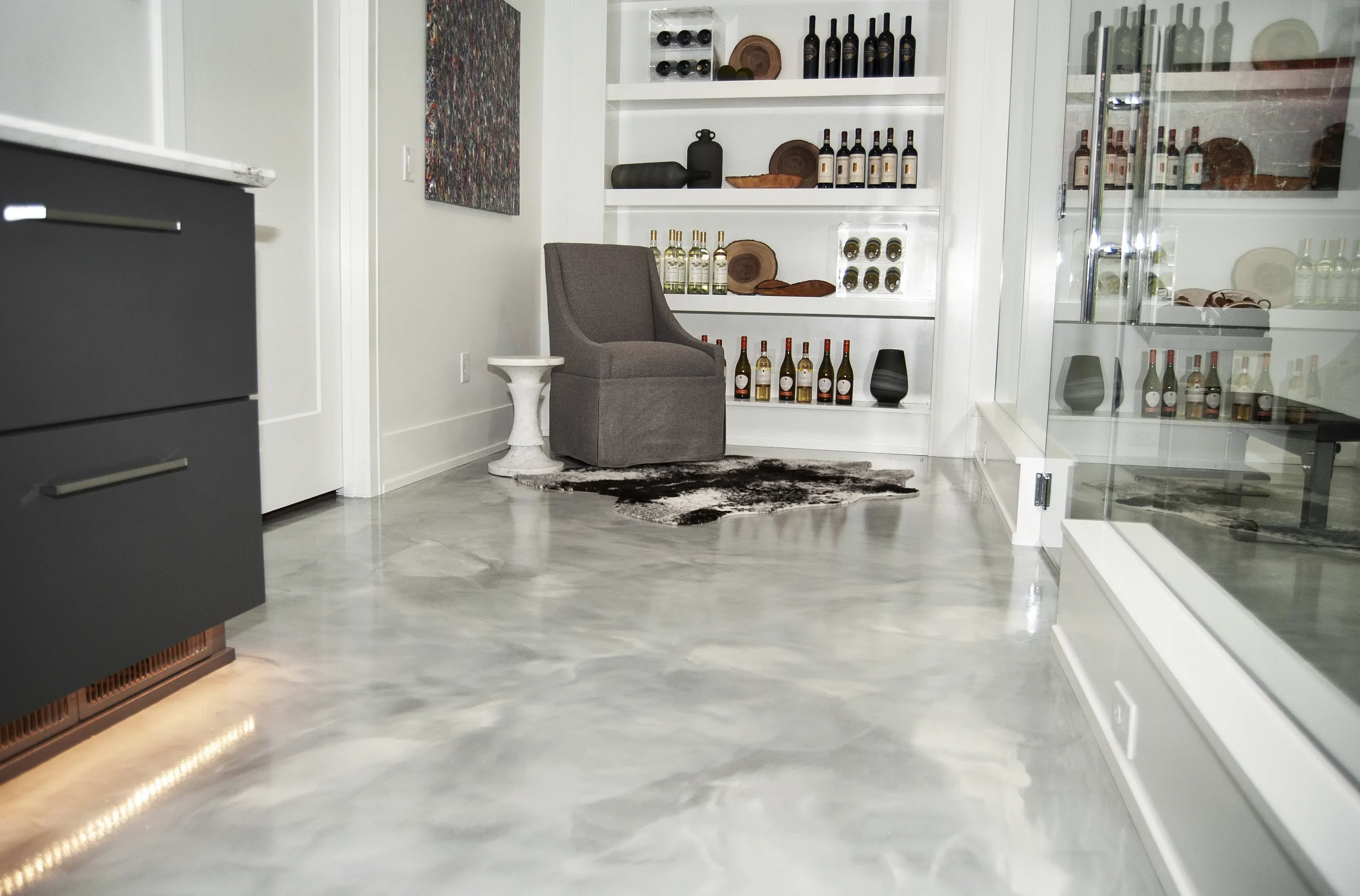
17. Custom Swirl Epoxy in High-Contrast Monochrome
The custom, high-contrast swirl is what makes this floor a work of art. Unlike a simple flake or solid-color epoxy, this finish is unique and impossible to replicate exactly. It’s a deliberate design choice that turns the floor itself into the primary decorative element of the room. The dramatic movement in the gray and white pattern creates energy and a sense of bespoke luxury. It’s the kind of detail that signals a space has been professionally and thoughtfully designed, moving far beyond a merely functional basement.
|
📋 Copy HEX 🔗 Share |
When going for a custom two-tone epoxy swirl, the key is to pour the colors strategically. Don’t just dump them randomly. S-shaped ribbons of your accent color (e.g., white) over your base color (e.g., gray). Then, use a squeegee to gently pull the colors across the floor in one direction. Finally, use a roller with very light pressure to lightly blend and soften the lines. Less is more; too much mixing will result in a muddy, uniform gray instead of distinct swirls.
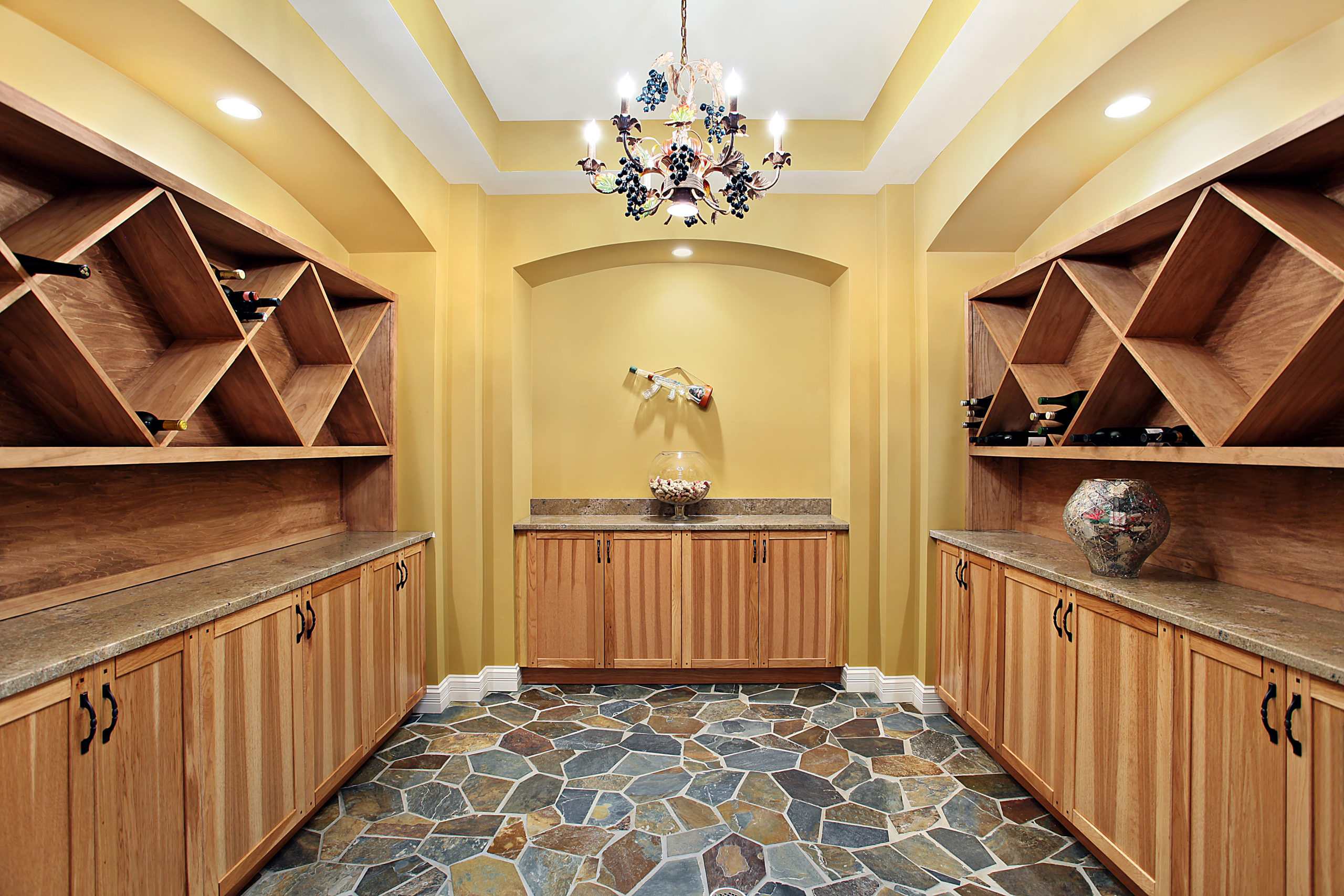
18. Warm Yellow Basement with Flagstone Floor
This wine cellar basement achieves its inviting, rustic charm through a masterful use of warm tones and natural textures. The warm yellow on the walls provides a sunny, optimistic backdrop that balances the coolness of the stone floor. The flagstone itself, with its varied earth tones, provides a rustic, old-world foundation. This is perfectly complemented by the light wood cabinetry and diamond-patterned wine racks, which add structure and a sense of purpose to the space. It feels less like a basement and more like a Tuscan villa.
|
📋 Copy HEX 🔗 Share |
A natural flagstone floor is beautiful, but be aware of its uneven surface. The texture that gives it so much character can be a challenge. Chairs may not sit perfectly level, and it can be a tripping hazard if the lippage (height difference between adjacent stones) is too great. It’s also harder to clean than a smooth surface, as dirt can get trapped in the clefts and grout lines. This is a floor you choose for its aesthetic appeal, not for its practicality as a play surface for kids, for example.
19. Worn-In Checkerboard Vinyl Tile Floor
There’s a growing appreciation for lived-in, authentic spaces, and this floor taps right into that. While perfect, glossy floors have their place, the scuffs and wear marks on these yellow and green checkerboard tiles tell a story. This look is part of a larger trend that embraces imperfection and nostalgia—think “grandma’s basement” but make it cool. It’s a reaction against sterile, cookie-cutter designs. The checkerboard pattern itself is a timeless classic, but the visible history in the worn finish gives it a unique, unpretentious character.
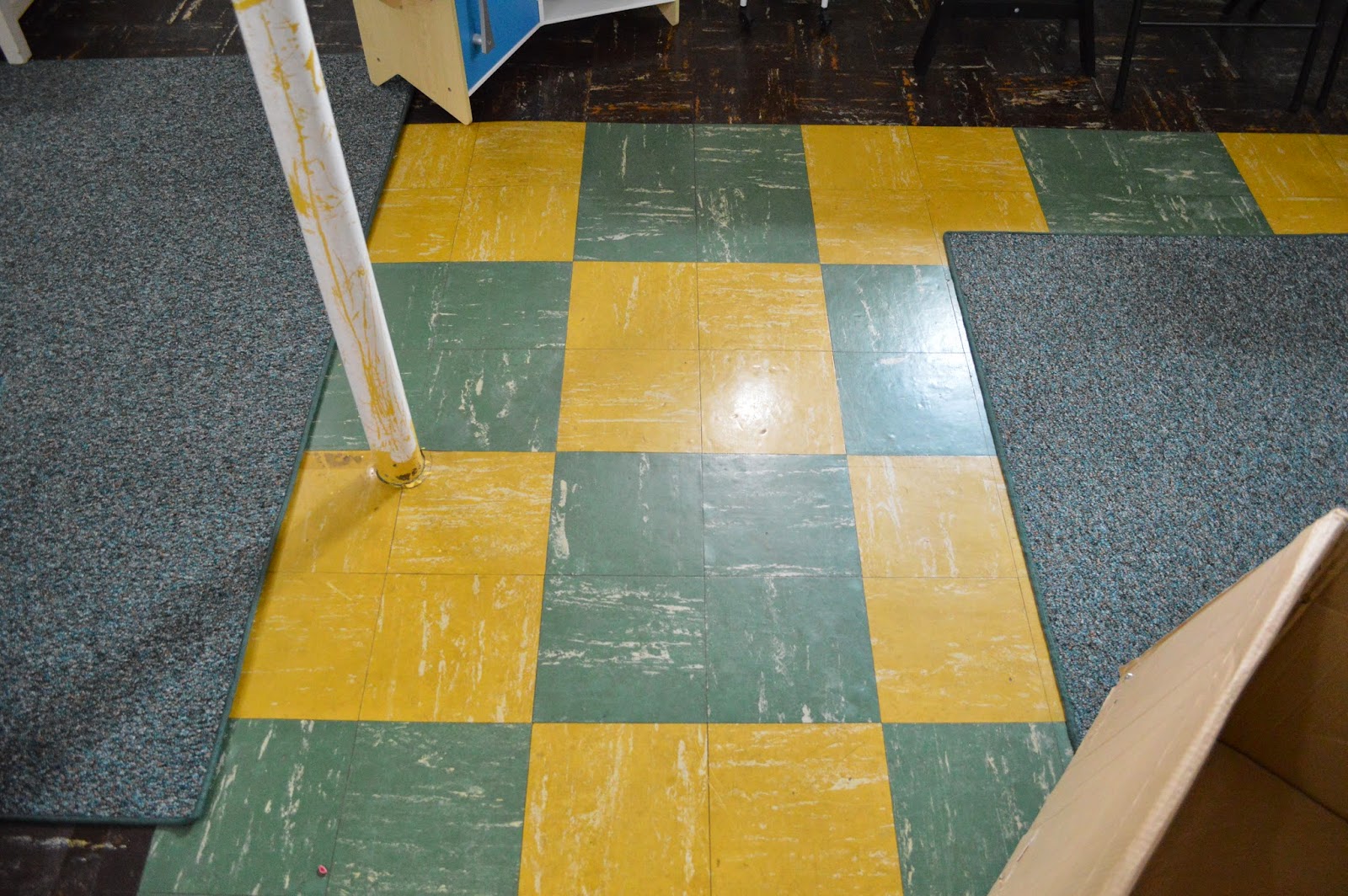
|
📋 Copy HEX 🔗 Share |
You can lay a similar checkerboard floor in a weekend. Here’s how to do it with peel-and-stick vinyl tiles:
- Prep is Key: Your concrete floor must be perfectly clean, dry, and smooth. Fill any cracks and sand them down.
- Find the Center: Measure to find the center point of your room. Snap chalk lines to divide the room into four equal quadrants.
- Dry Fit First: Starting from the center point, lay out tiles without peeling the backing to check your pattern and alignment.
- Stick Them Down: Begin at the center and work your way out, peeling and sticking one tile at a time, pressing firmly.
- Cut the Edges: Use a utility knife and a straight edge to score and snap the tiles needed for the perimeter of the room. A hair dryer can soften the tile slightly to make cutting easier.
Time estimate: 1 day. Material cost: $150 – $400.
20. Polished Concrete with a Bold Orange Area Rug
This room’s success comes from a simple but effective design equation: 70% cool industrial base + 30% vibrant accent. The polished light grey concrete floor provides a sleek, durable, and neutral foundation. It’s cool-toned and reflects light, which is perfect for a basement. The magic happens with the injection of the large, vibrant orange area rug. This single element adds a powerful dose of warmth, color, and texture, defining the dining area and preventing the space from feeling sterile. The dark metal furniture completes the look, grounding the bright accent.
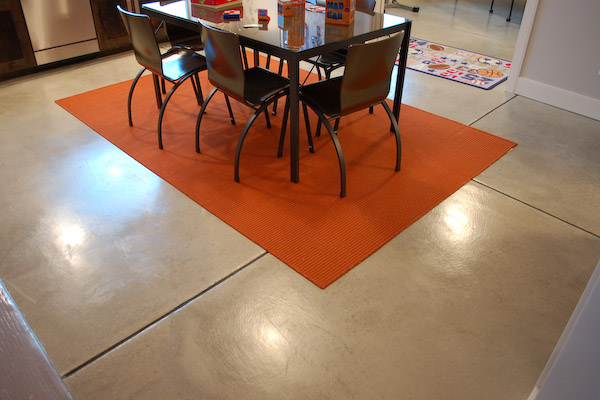
|
📋 Copy HEX 🔗 Share |
Before you commit to polished concrete, make sure your floor is a good candidate. Not all concrete slabs are created equal.
- Hardness Check: Scratch the concrete with a screwdriver. If it easily powders or creates a deep gouge, it may be too soft for polishing and will require a densifier treatment.
- Levelness: Place a long, straight 2×4 on the floor. If you see significant gaps underneath, the floor is not level. Grinding and polishing will follow these imperfections, not fix them.
- Existing Coverings: If there’s old tile glue or paint, factor in the cost and labor of removing it. Polishing can sometimes reveal stains that were hidden underneath.
21. Utilitarian Basement with Light Gray Painted Floor
This is the most straightforward and budget-friendly basement floor upgrade possible. A simple coat of light gray concrete paint can instantly make a dingy utility space feel cleaner and brighter. At Home Depot or Lowe’s, a gallon of porch and floor paint costs about $40-$60 and can cover up to 400 sq. ft. With proper prep (a good cleaning and degreasing), you can transform a typical basement for well under $100. It doesn’t have the durability of epoxy, but for a low-traffic utility area, it’s a fantastic and affordable solution.
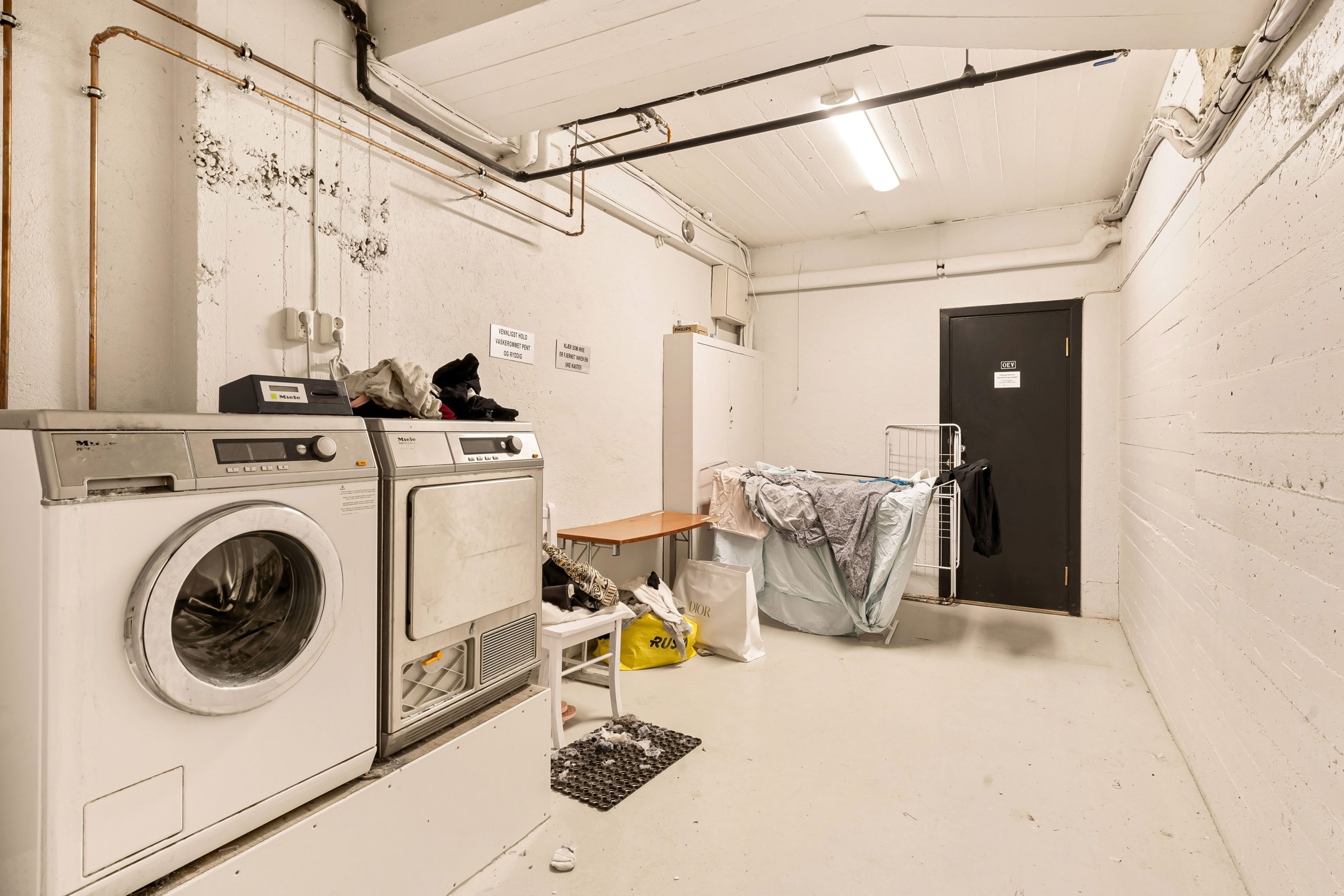
|
📋 Copy HEX 🔗 Share |
A simple painted concrete floor, especially in a damp-prone basement, will require some upkeep. The paint in this photo is already showing signs of wear and peeling where moisture might be wicking through the concrete. Be prepared to do touch-ups every year or so, especially in areas with foot traffic or around appliances. In a utility space, this level of patina is often acceptable, but if you want a perfect finish that lasts, you would need to step up to an epoxy coating like in Idea #1.
22. Modern Basement with Light Grey Wood-Look Tile
When selecting a wood-look tile, pay close attention to the “pattern repeat.” Cheaper tiles may only have 4-5 unique plank patterns in a box. When installed over a large area, your eye will start to notice the same knot or grain pattern showing up over and over, which makes it look fake. Higher-quality tiles can have 15-20 or even more unique faces. It costs a bit more, but the result is a much more realistic and natural-looking wood floor. Always buy at least 15% extra tile for cuts and waste.
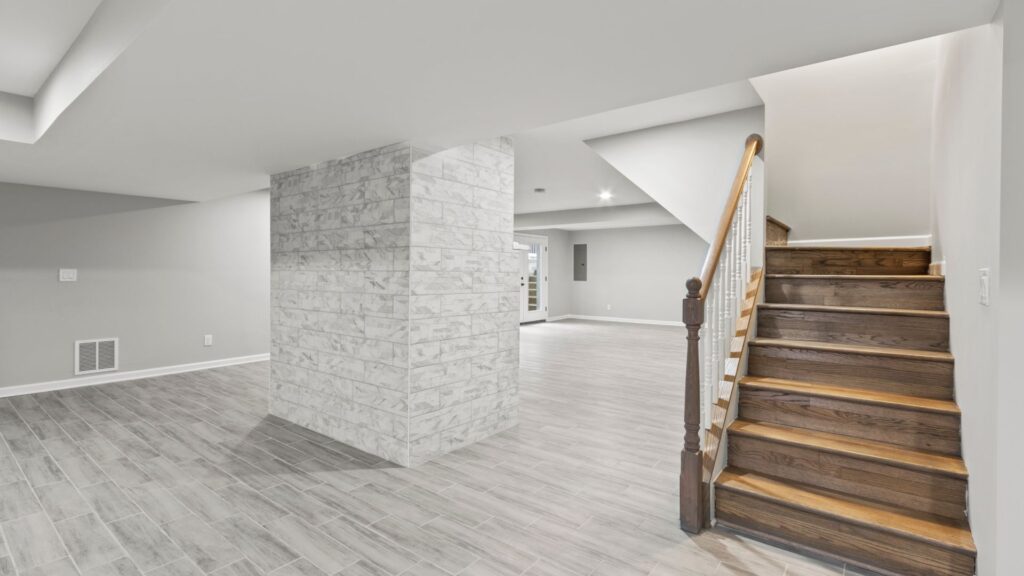
|
📋 Copy HEX 🔗 Share |
This bright, airy aesthetic is incredibly versatile and works well in basements of almost any size. For small basements (under 200 sq. ft.), the use of light grey flooring, light walls, and a white ceiling will maximize the sense of space and light. In larger basements, this clean and neutral palette provides a perfect, gallery-like backdrop for you to define different zones with furniture and rugs, similar to the approach in Idea #23 but with a lighter floor.
23. Game Room with Dark Gray Polished Concrete
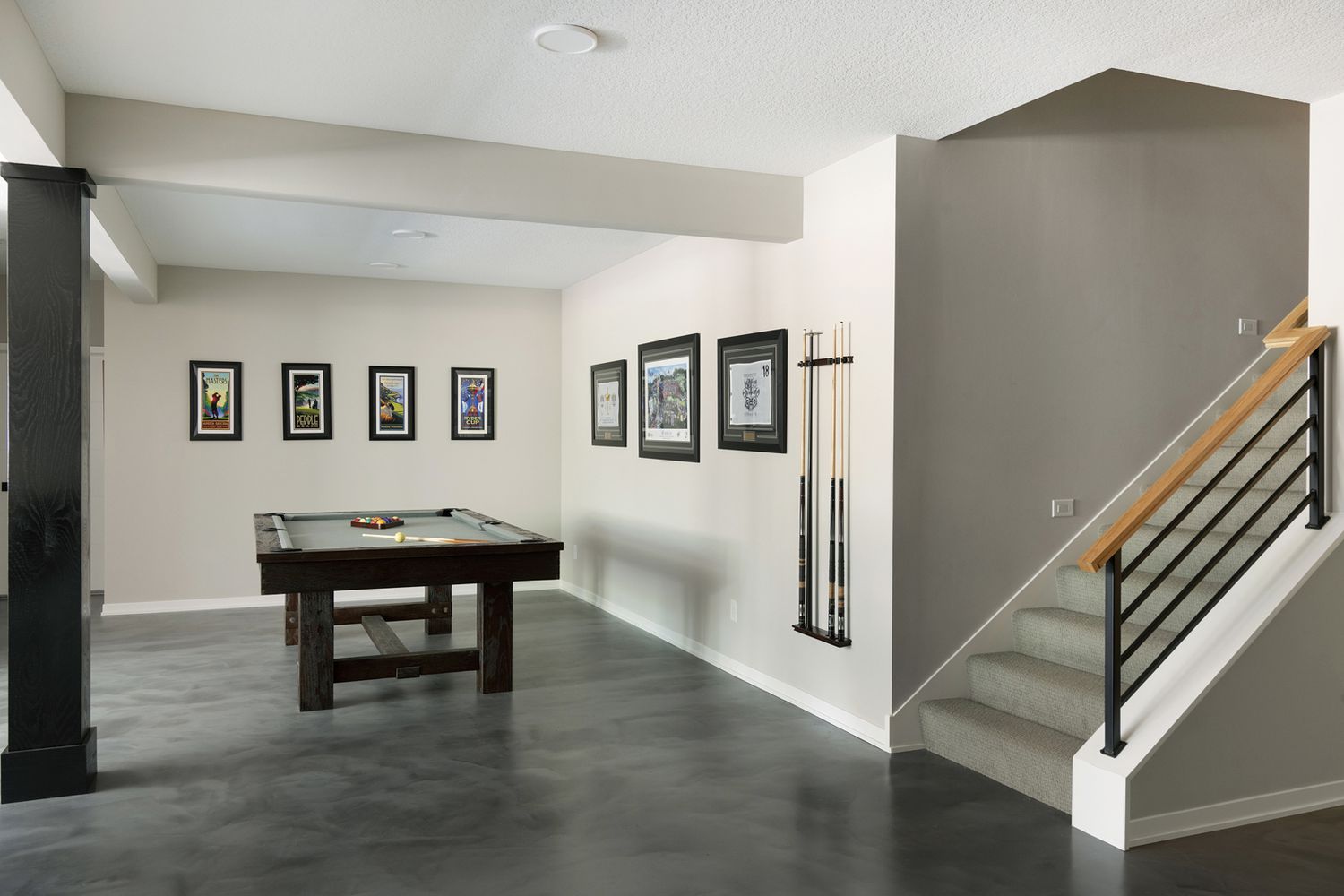
The polished dark gray concrete floor is the stylish anchor of this recreational space. Its subtle sheen reflects the overhead lighting, adding a touch of sophistication that elevates it from a simple painted floor. The dark color is practical, hiding scuffs and dust in a high-traffic game room. It provides a cool, modern contrast to the light neutral walls and classic white baseboards. The dark wood of the pool table and support column ties into the floor’s depth, creating a cohesive and handsome palette.
|
📋 Copy HEX 🔗 Share |
A polished concrete floor can be surprisingly loud. Unlike carpet or even wood, it has no sound-absorbing qualities. In a game room with a pool table, expect the clatter of balls and excited voices to echo significantly. Using a large area rug under the pool table, as shown, is not just a decorative choice—it’s a crucial element for sound dampening. Without it, the space could feel cavernous and noisy, like a gymnasium.
24. Rustic Wine Cellar with Irregular Stone Floor
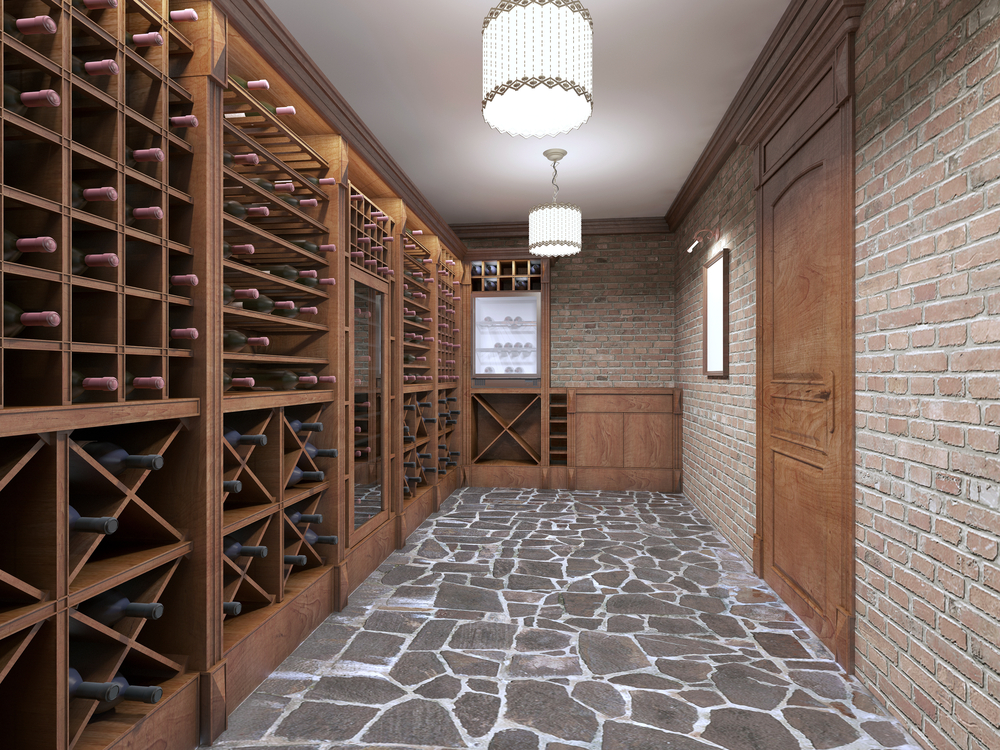
The single element that gives this wine cellar its authentic, old-world soul is the irregular stone floor. A perfectly smooth, uniform tile would feel completely wrong here. The varied shapes, sizes, and rustic gray/brown tones of the stone tiles create a surface that feels as though it has been there for centuries. It’s the foundation of the room’s entire identity. It complements the rough texture of the exposed brick and the warmth of the wooden wine racks, transporting you to a European vineyard cellar.
|
📋 Copy HEX 🔗 Share |
A rustic stone floor needs a specific cleaning routine. You cannot simply run a wet mop over it, as dirty water will settle into the low spots and grout lines, making them look permanently dingy. The best method is to vacuum thoroughly first to remove all loose debris. Then, use a deck brush with a pH-neutral stone cleaner and water to scrub the tiles and grout lines. Finally, use a wet vac to remove all the dirty water. It’s more labor-intensive, but it’s the only way to keep a textured stone floor truly clean.
Conclusion
Painting your basement floor is one of the most transformative, high-impact projects you can tackle. It truly sets the foundation for a whole new living area, whether it’s a cozy den, a functional utility space, or a high-style entertainment zone. Now go get your home’s Pinterest board ready and start planning!