
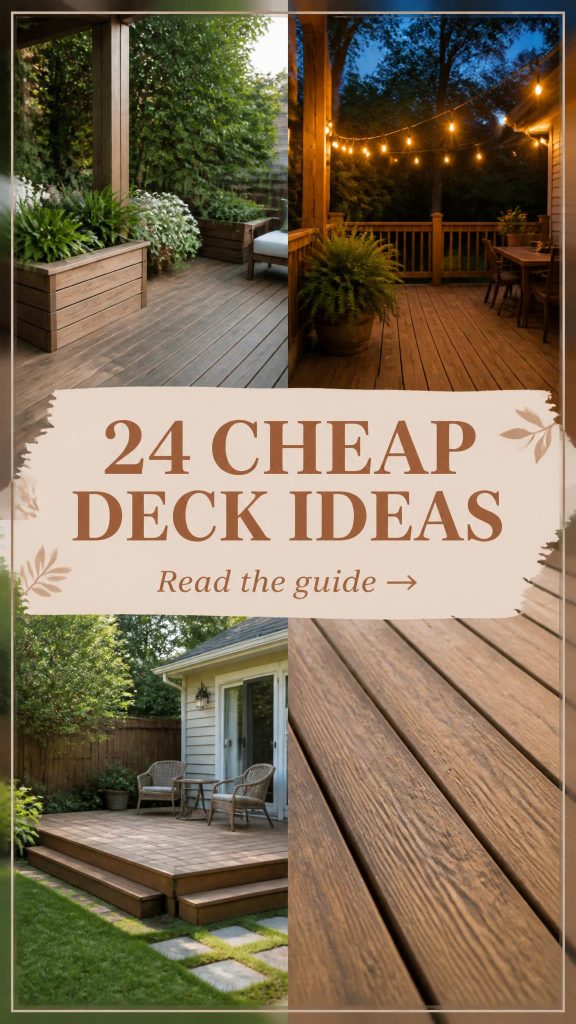
You know that feeling when you finally find the perfect cheap deck idea that looks exactly right for your space, but you’re not sure how to make it happen? We’ve all been there, endlessly scrolling Pinterest for inspiration. That’s why we did the heavy lifting for you. After filtering through hundreds of options from budget-friendly favorites like Target and IKEA to finds on Facebook Marketplace, we narrowed it down to 24 incredible, achievable deck ideas that deliver style without draining your wallet. This guide is packed with curated inspiration covering rustic, modern, and natural styles that are defining outdoor living in 2026. The shift towards creating functional, beautiful outdoor “rooms” is stronger than ever, and these ideas show you how to claim your slice of the outdoors. And stay until the end — we break down the most common mistakes that can ruin these looks. 📌 Save this to Pinterest for later—you’ll want to revisit these ideas.
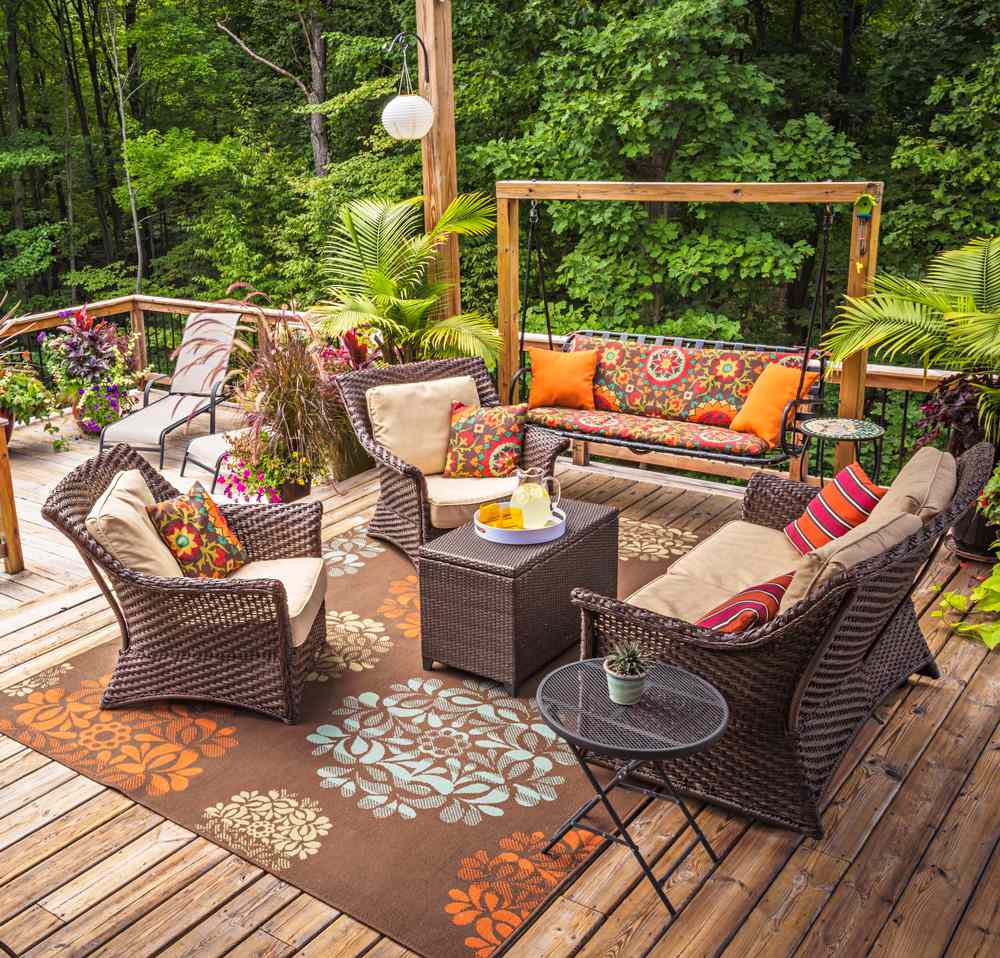
1. A Colorful Wicker Oasis on a Natural Wood Deck
The magic here is in the layering. It all starts with a large, patterned outdoor rug that acts like a bullseye, clearly defining the seating area and separating it from the rest of the deck. This simple addition makes the collection of furniture feel intentional and grounded, like a true outdoor living room. The mix of a loveseat, armchairs, and a swing, all from the same wicker family but with varied cushions, creates a collected-over-time feel that is instantly welcoming. The lush potted plants framing the space are the final touch, adding privacy and a dose of vibrant life.
|
📋 Copy HEX 🔗 Share |
When selecting outdoor cushions, don’t just look for a pretty pattern. Check the tag for performance fabrics like Sunbrella, Olefin, or solution-dyed polyester. These materials are specifically engineered to resist fading from UV exposure, and they are also water- and mildew-resistant. To test for quality, put a drop of water on the fabric; it should bead up rather than soak in immediately. A good quality outdoor cushion might cost a bit more upfront, but it will save you from replacing faded, moldy pillows every season.
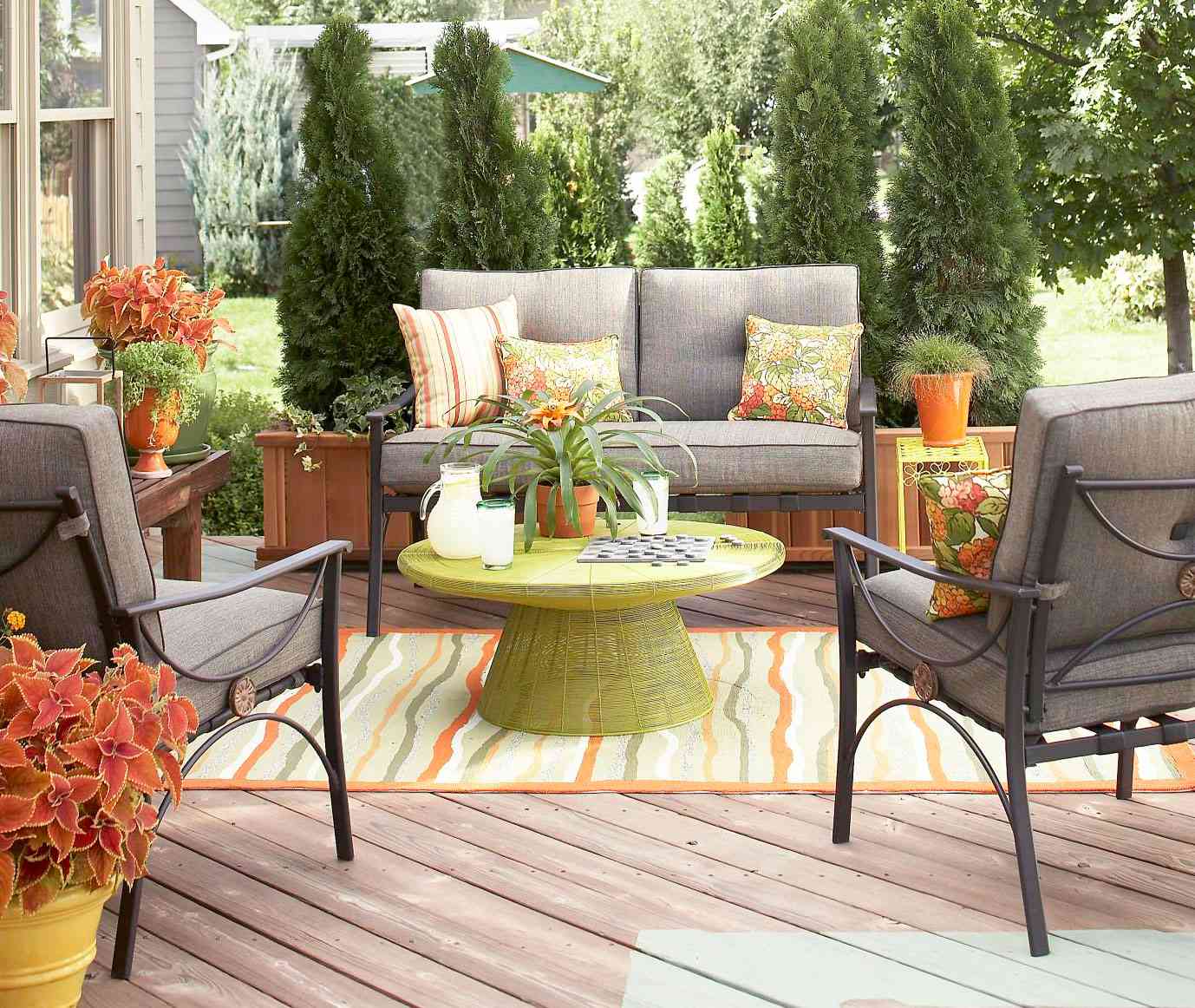
2. Chartreuse and Floral Accents on a Classic Wooden Deck
This look achieves its fresh, vibrant feel through a smart color formula. Think of it as 60% neutral, 30% secondary color, and 10% bold accent. Here, the neutral base (60%) is the charcoal gray furniture and the wood deck itself. The lush green from the surrounding foliage and striped rug provides the secondary color (30%). The final pop (10%) comes from the chartreuse coffee table and the hits of orange and terracotta in the pillows and plants. You can easily adapt this: swap the charcoal for navy, the green for blue, and the chartreuse for a zesty lemon yellow to get a completely different mood with the same balanced effect.
|
📋 Copy HEX 🔗 Share |
Let’s have a moment of honesty about light-colored outdoor rugs and cushions. While they look fantastic and create a bright, airy vibe, they are magnets for dirt, pollen, bird droppings, and spilled rosé. A striped or patterned rug like the one here is a smart choice, as it will hide dirt better than a solid color. Still, be prepared to clean it regularly. For cushions, always choose covers that are removable and machine-washable. Even then, you’ll be doing laundry more often than you think to keep them looking crisp.
3. A Modern Dark Gray Deck with a Fire Pit and Sectional
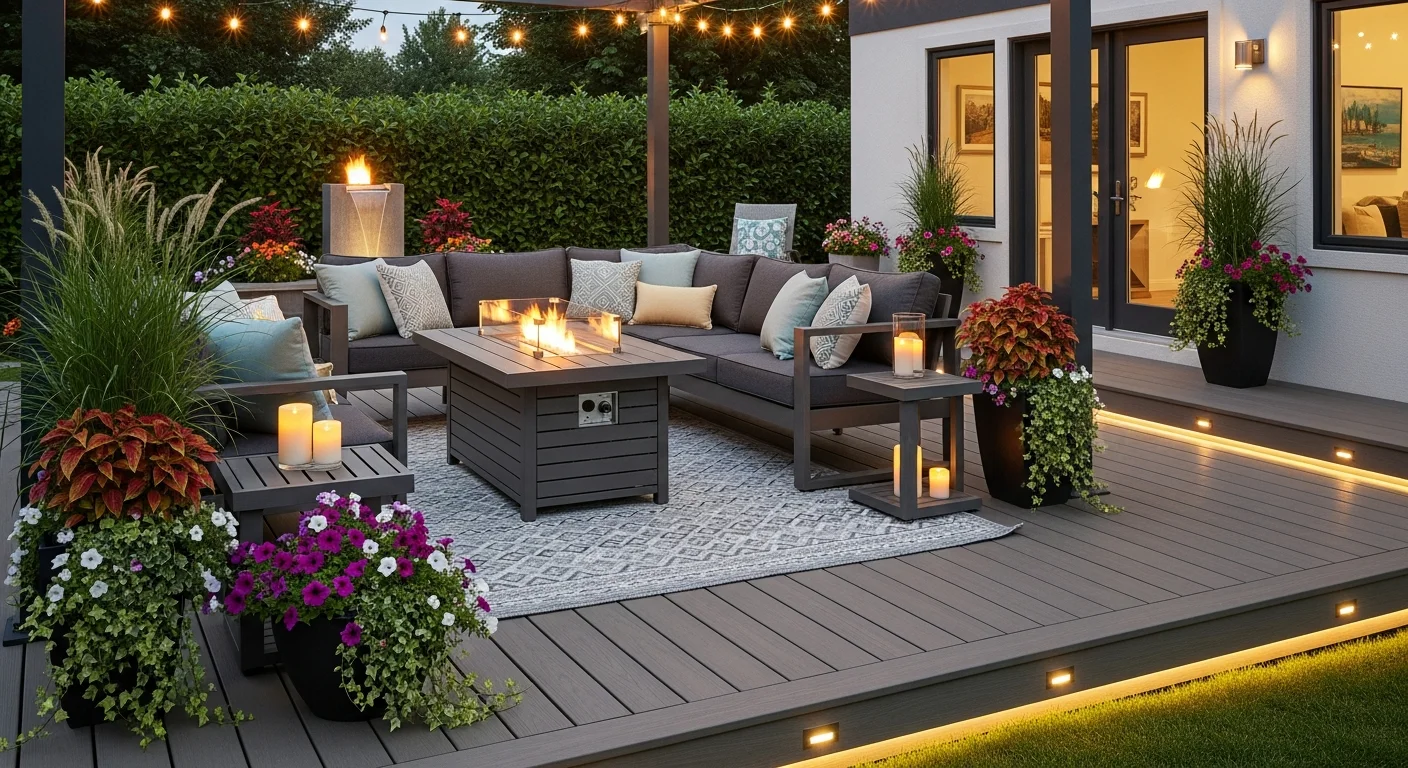
You don’t need a five-figure budget to get this modern lounge vibe. The key pieces are the sectional and the fire pit. Look to Target’s and Walmart’s outdoor collections for modular sectionals under $800. For the fire pit, a simple, clean-lined gas model can be found for $200-$400. The dark deck stain is a high-impact, low-cost DIY project. Instead of expensive built-in lighting, use solar-powered LED strip lights along stairs and edges for about $30. Finish with affordable pillows from IKEA and a few potted ferns from a local nursery to nail the look for under $1500.
|
📋 Copy HEX 🔗 Share |
A large L-shaped sectional is the dream, but it demands significant square footage. To comfortably fit a sectional of this size, you’ll need a deck area that is at least 12 feet by 12 feet. This allows for the footprint of the sofa (typically around 8-10 feet on each side) plus at least 30-36 inches of clearance for walkways around it and the fire pit. Anything smaller and the space will feel cramped and difficult to navigate. If your deck is smaller, consider a slim-profile loveseat and two armchairs instead, as seen in Idea #1.
4. Go Bold with a Multi-Tiered Deck and Neon Green Planters
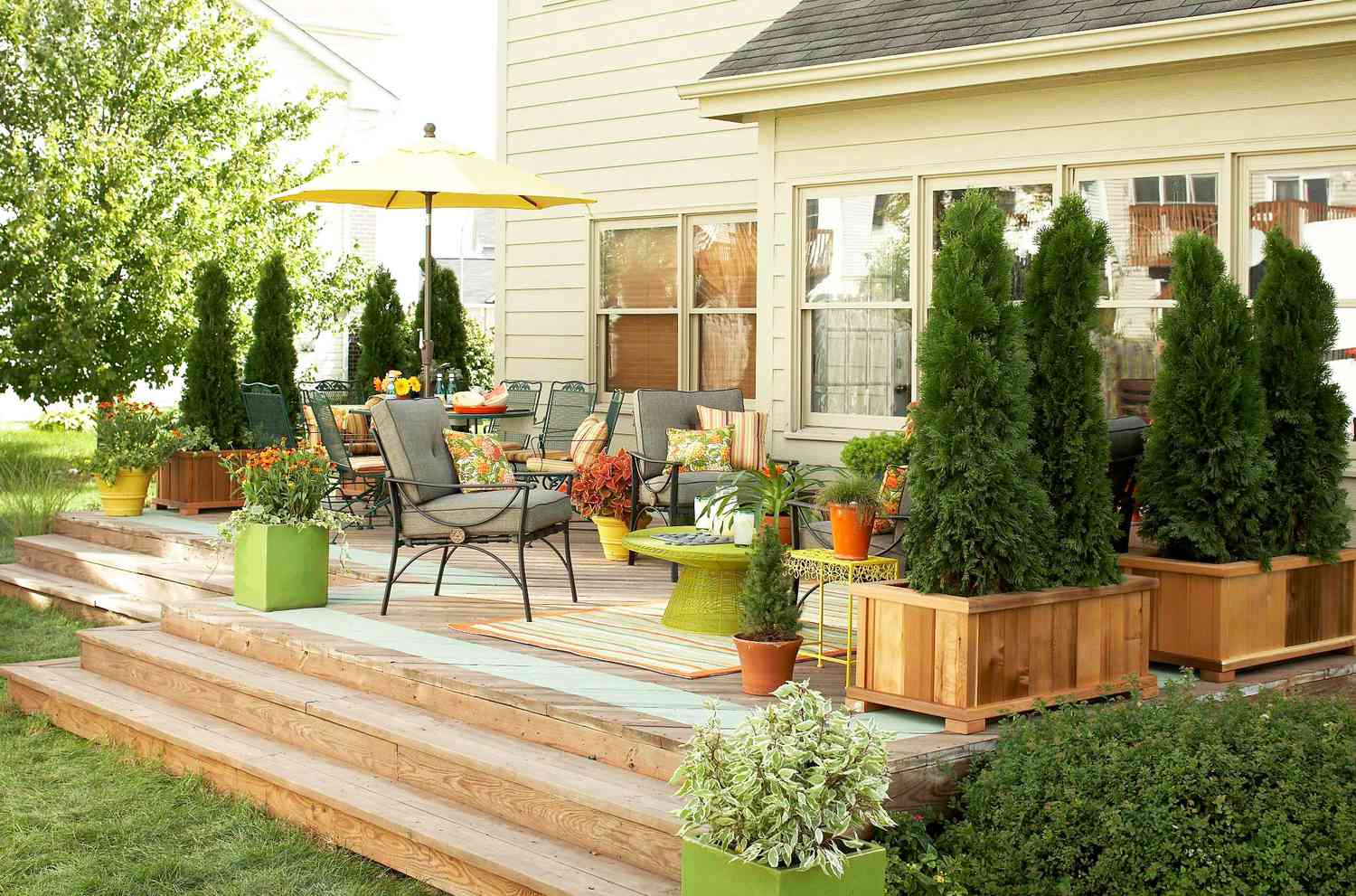
The single element that elevates this entire design from a standard multi-level deck to something special is the fearless use of brightly colored planters. The oversized, neon green and vibrant yellow planters are impossible to ignore. They serve as sculptural art pieces, drawing the eye and injecting a playful, modern energy into the natural wood surroundings. Without them, it would just be a nice deck. With them, it’s a statement. They prove that you don’t need to change your deck structure to make a massive impact; sometimes, a few bold accessories are all it takes.
|
📋 Copy HEX 🔗 Share |
When working with a multi-level deck, use furniture and accessories to create distinct ‘zones’ for different activities. Think of each level as a separate room. On the upper level, place a dining set under an umbrella for meals. On a lower, more intimate level, arrange a couple of lounge chairs for reading. Use outdoor rugs to visually anchor each zone, as shown here. This approach makes a large space feel more organized, functional, and inviting. Compare this with the vertical levels in Idea #22 to see another take on zoning.
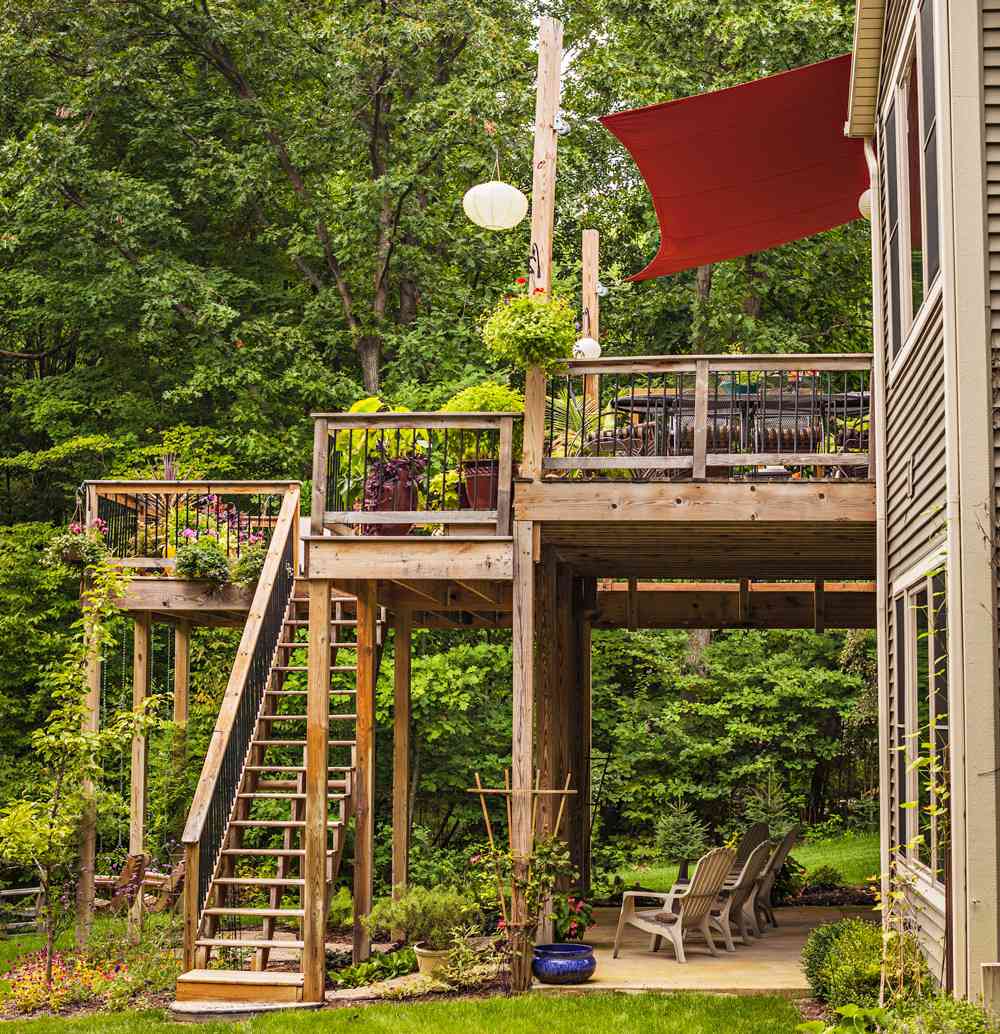
5. Make a Statement with a Red Triangular Shade Sail
Installing a shade sail is a weekend project that delivers a huge payoff. Here’s a quick guide:
- Plan Your Points: You’ll need at least three anchor points. These can be the side of your house, sturdy fascia, a deck post, or a dedicated 4×4 post set in concrete.
- Install Hardware: Securely attach mounting hardware (like pad eyes or wall plates) to your anchor points. Use hardware appropriate for the material you’re attaching to.
- Measure and Tension: Lay the sail out and attach turnbuckles to each corner. Connect the turnbuckles to your anchor points.
- Raise and Tighten: Hoist the sail and begin tightening the turnbuckles evenly until the sail is taut with no sagging. A tight sail is crucial for handling wind and rain.
Total time: 3-5 hours. Material cost: $80 – $250.
|
📋 Copy HEX 🔗 Share |
A shade sail looks incredible, but it’s not a ‘set it and forget it’ feature. It will collect leaves, pollen, and bird droppings, so plan on hosing it down every month or so. In areas with high winds, you absolutely must take it down before a big storm, or you risk it turning into a literal sail and damaging your anchor points or the house itself. Most are designed for seasonal use, so you’ll need a place to store it during the off-season. Check for any fraying or wear at the connection points each year before you install it.
6. A Casual Deck with a Faded Reddish-Brown Stain and String Lights
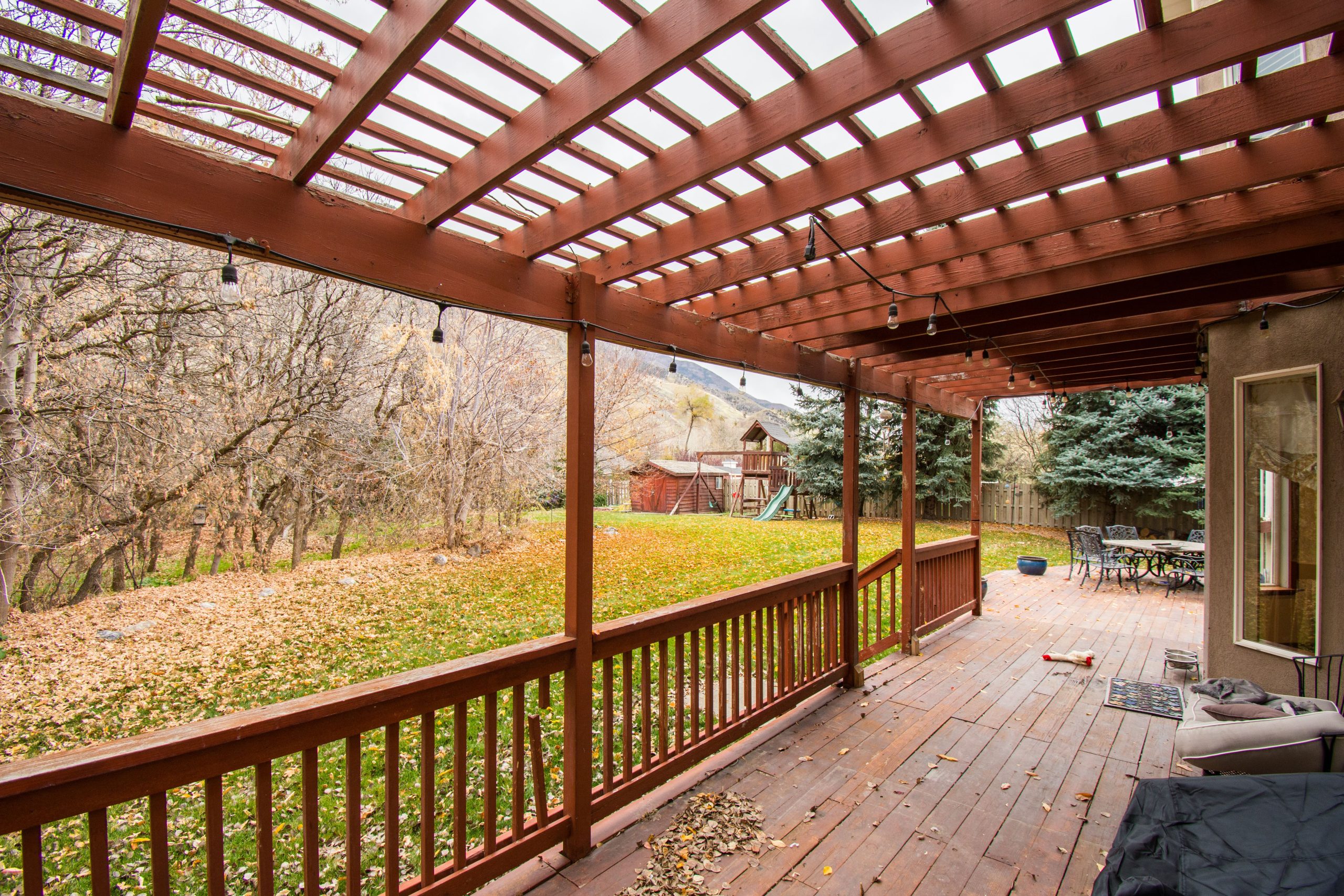
There’s a growing movement away from pristine, perfect outdoor spaces towards a more lived-in, rustic aesthetic. This deck captures that feeling perfectly. The faded, weathered stain speaks to a relaxed approach, valuing comfort and usability over constant upkeep. The open-beam pergola with simple string lights is a hallmark of this trend, seen all over Pinterest and Instagram. It’s an attainable look that feels personal and unpretentious, which is why it has so much staying power. It’s less about a flawless finish and more about creating a backdrop for real life to happen.
|
📋 Copy HEX 🔗 Share |
The single element making this deck feel so inviting is the string lights. Remove them, and you have a very basic deck and pergola structure. But the simple act of draping those warm, glowing bulbs across the beams instantly transforms the space at dusk. It lowers the visual ceiling, creating a sense of intimacy and enclosure without a solid roof. It’s the cheapest, most effective way to add ambiance and make an outdoor space feel like a dedicated room after the sun goes down. It’s pure atmosphere, and it’s everything.
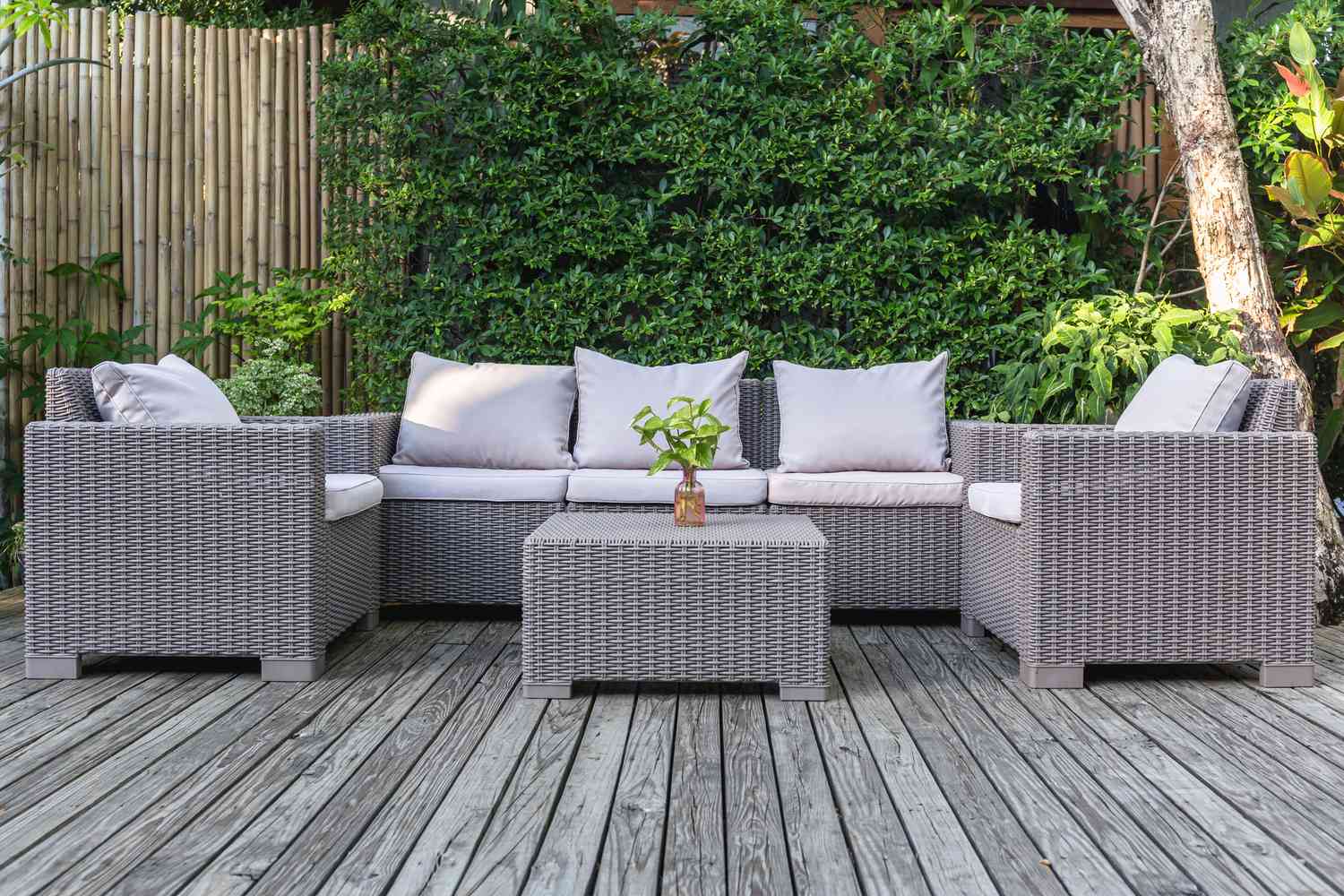
7. A Serene Retreat with Weathered Gray Wicker and a Bamboo Screen
This space feels so calm and cohesive because of its commitment to a tight, monochromatic color palette. The weathered gray of the deck boards flows seamlessly into the light gray of the wicker furniture and cushions. This lack of sharp contrast creates a serene, restful mood. The design then introduces texture to add interest without shouting: the weave of the furniture, the lines of the deck planks, the natural roughness of the bamboo screen, and the soft leaves of the surrounding foliage. It’s a masterclass in using texture over color to create depth.
|
📋 Copy HEX 🔗 Share |
Before you commit to a monochromatic gray look, take stock of a few key things:
- Measure your space precisely. A sectional needs more room than you think, even a compact one.
- Check the sun exposure. A weathered gray look happens naturally over time, but you can accelerate it with a specific stain if your deck is new.
- Confirm your privacy needs. Is a simple bamboo screen enough, or do you need a more solid fence?
- Assess the condition of your existing deck. Does it need sanding and refinishing before you add furniture?
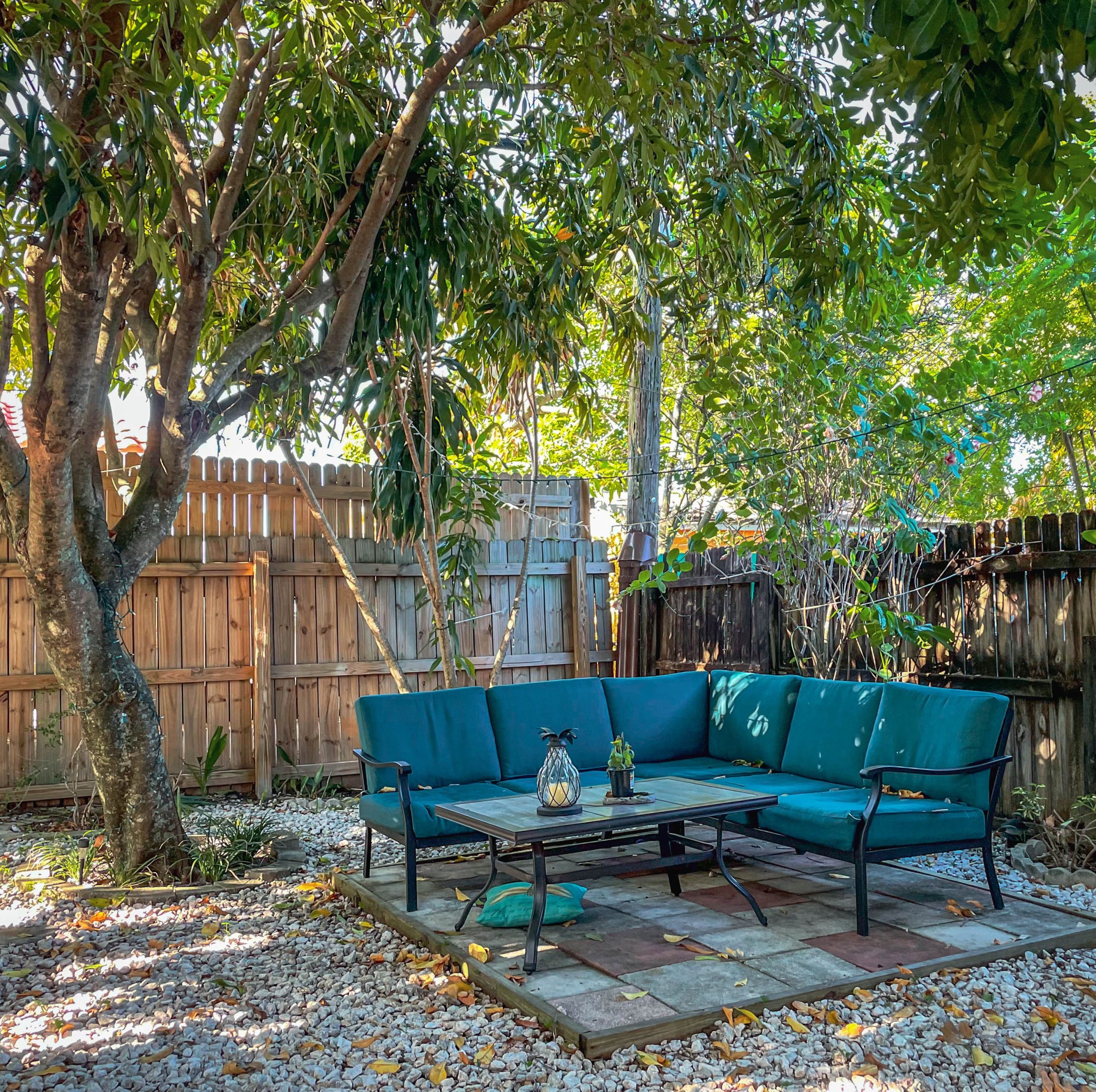
8. A Simple Paver Patio with a Teal Sectional and Gravel Frame
The smartest trick here is using gravel to dramatically expand the visual size of the patio without the cost of extra pavers. A small, 8×10 paver area can be installed relatively cheaply. By bordering it with a few feet of inexpensive light grey gravel, you create a much larger ‘floor’ for your outdoor room. The textural difference signals the edge of the seating area while still feeling open and spacious. This technique, called ‘material blocking,’ is a go-to for landscape designers to define zones and add custom detail on a tight budget. Contrast this with the composite deck in Idea #3, which uses a single material.
|
📋 Copy HEX 🔗 Share |
This entire look is incredibly budget-friendly. Instead of a pre-made paver patio kit, check Facebook Marketplace or Craigslist for people giving away leftover pavers for free. For the border, use standard pressure-treated 2x4s. A few bags of pea gravel from a home improvement store will cost less than $50. The real star, the teal sectional, might seem like a splurge, but you can find similar colorful outdoor sofas from Wayfair or Overstock for under $600 during their seasonal sales. The result is a high-design look for a fraction of the cost of a fully paved patio.
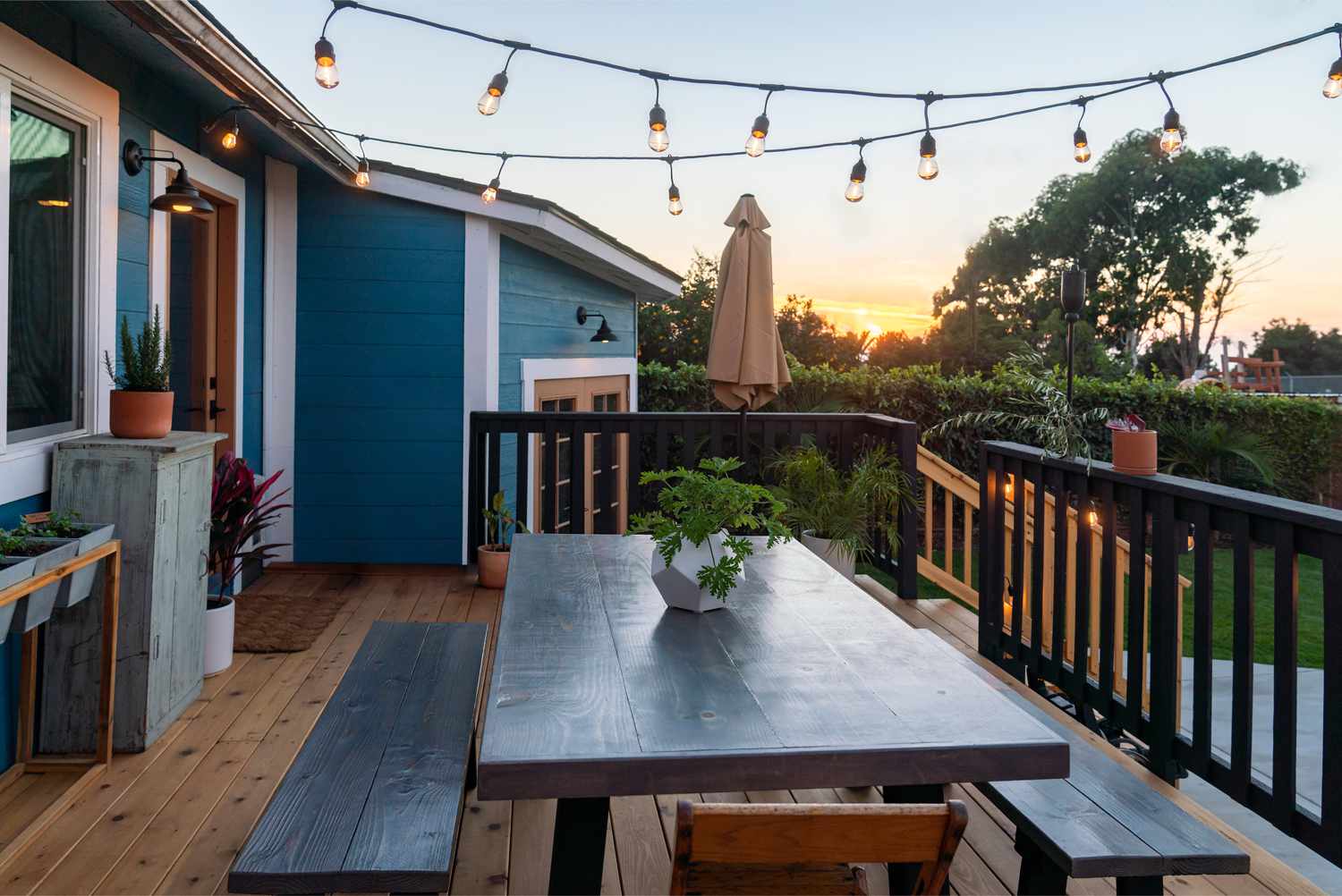
9. An Inviting Dining Deck with String Lights and Teal Siding
This deck proves that you don’t need a massive footprint to create an amazing outdoor dining experience. The success of this space comes down to two things: scale and color. The long, narrow dining table and benches are perfectly scaled to the deck, maximizing seating without feeling cramped. The vibrant teal siding of the house acts as a feature wall, providing a punch of color that makes the whole area feel designed and deliberate. The warm glow of the string lights overhead seals the deal, creating a cozy, intimate canopy of light.
|
📋 Copy HEX 🔗 Share |
A wooden dining table and benches look beautiful, but they require maintenance to stay that way, especially if they aren’t fully protected from the elements. Be prepared to sand and reseal the wood every 1-2 years to protect it from sun and moisture, which can cause fading, warping, and splintering. Also, while benches are great for fitting more people in a pinch, they aren’t always the most comfortable for long, leisurely dinners. You might want to have a few outdoor cushions on hand for guests who prefer more back support.
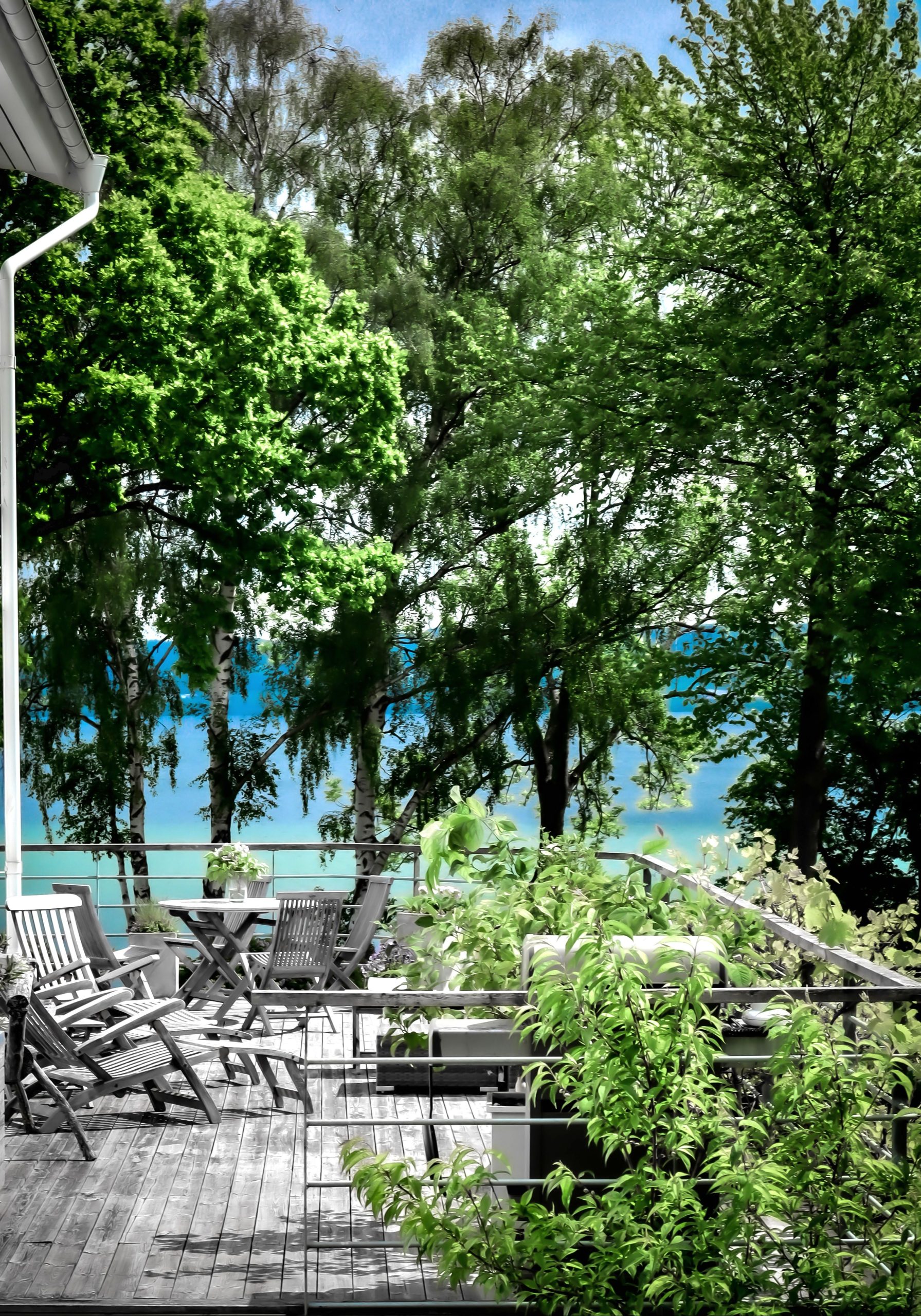
10. A Weathered Wood Deck Overlooking the Water
More than the chairs, the table, or the planters, the one thing that defines this space is the weathered, silvery-gray patina of the wood. It’s a color that can only be earned through time and exposure to the elements. This finish instantly signals a relaxed, unpretentious attitude. It doesn’t demand constant upkeep or worry about perfection. It tells a story of seasons passed and blends seamlessly with the natural surroundings of water and trees. Trying to recreate this look with a pristine new deck would miss the point entirely; the beauty is in the aging.
|
📋 Copy HEX 🔗 Share |
Letting a deck weather naturally to a gray patina is a low-maintenance approach, but it’s not no-maintenance. To prevent rot and splintering, the wood still needs to be cleaned annually with a deck cleaner to remove mildew and algae, especially in a damp environment near water. The metal railing is a practical choice here, as it requires less upkeep than wood. However, you should still inspect it yearly for any rust spots, particularly at the welds and joints, and touch them up with a rust-inhibiting paint to prevent them from spreading.
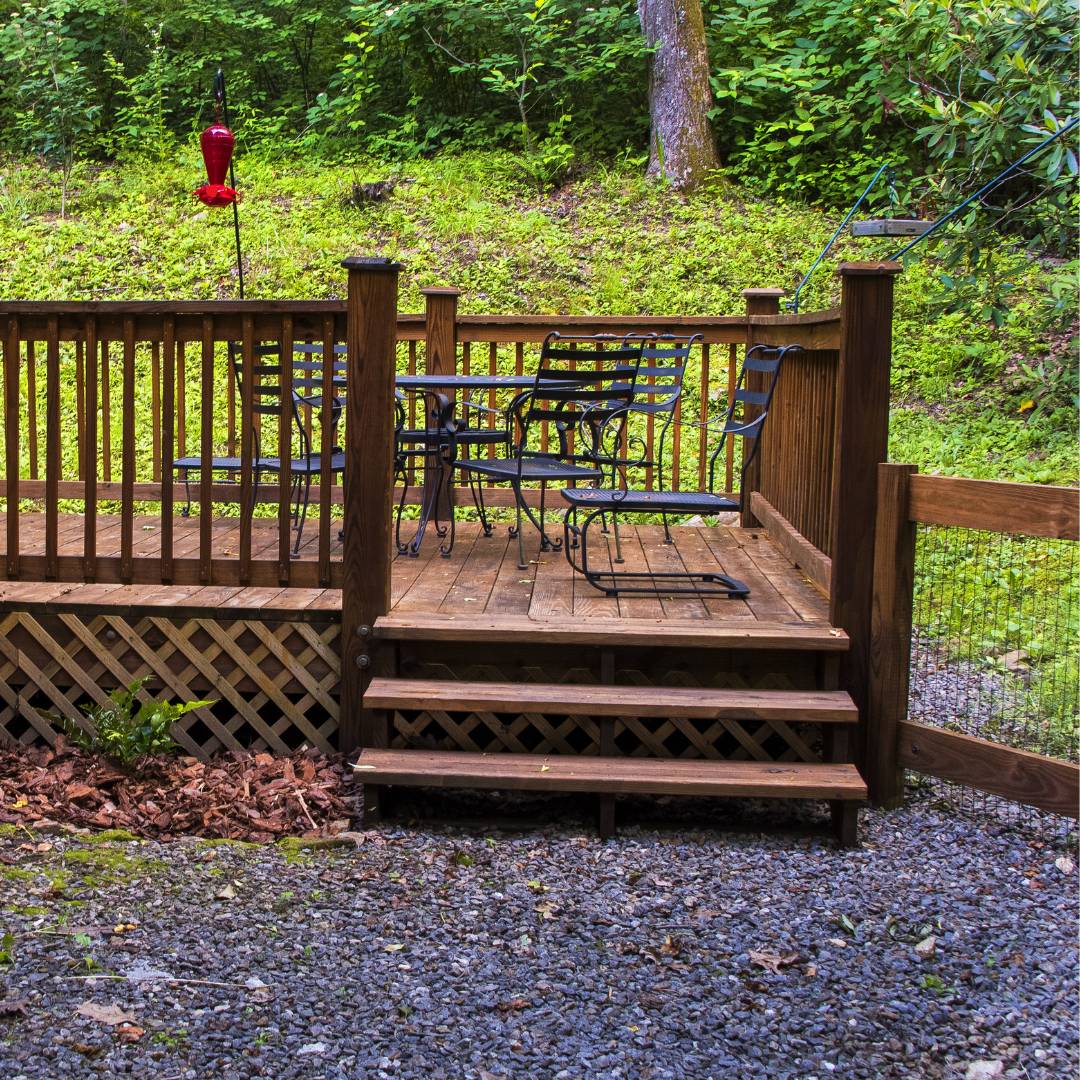
11. A Rustic Deck with Lattice Skirting and Wrought Iron Furniture
Recreating this classic rustic look is one of the most affordable ways to build a functional deck. The costs are straightforward and manageable.
- Main Furniture (wrought iron table & 4 chairs): $250 – $600
- Lattice Skirting (per 4×8 ft panel): $30 – $50
- Deck Stain/Sealer (1 gallon): $40 – $80
- Gravel for under-deck area (per bag): $5 – $10
- TOTAL: $325 – $740
Budget alternative: Find a vintage wrought iron set on Facebook Marketplace for under $150 and refresh it with a can of black spray paint. Use pressure-treated wood for the deck and let it weather naturally to save on stain.
|
📋 Copy HEX 🔗 Share |
Adding lattice skirting is a simple DIY project that instantly makes a raised deck look finished. Here’s how:
- Measure and Cut Frame: Build a simple frame from 2×2 lumber to fit between your deck posts. This gives you something solid to nail the lattice to.
- Cut Lattice: Use a circular saw or jigsaw to cut the lattice panel to the size of your frame. It’s easier to cut with a fine-tooth blade to minimize splintering.
- Attach Lattice to Frame: Lay the frame on a flat surface and attach the lattice to it using 1-inch galvanized screws or staples.
- Install the Section: Fit the framed lattice panel between your deck posts and secure it by screwing through the frame into the posts.
Total time: about 45 minutes per section.
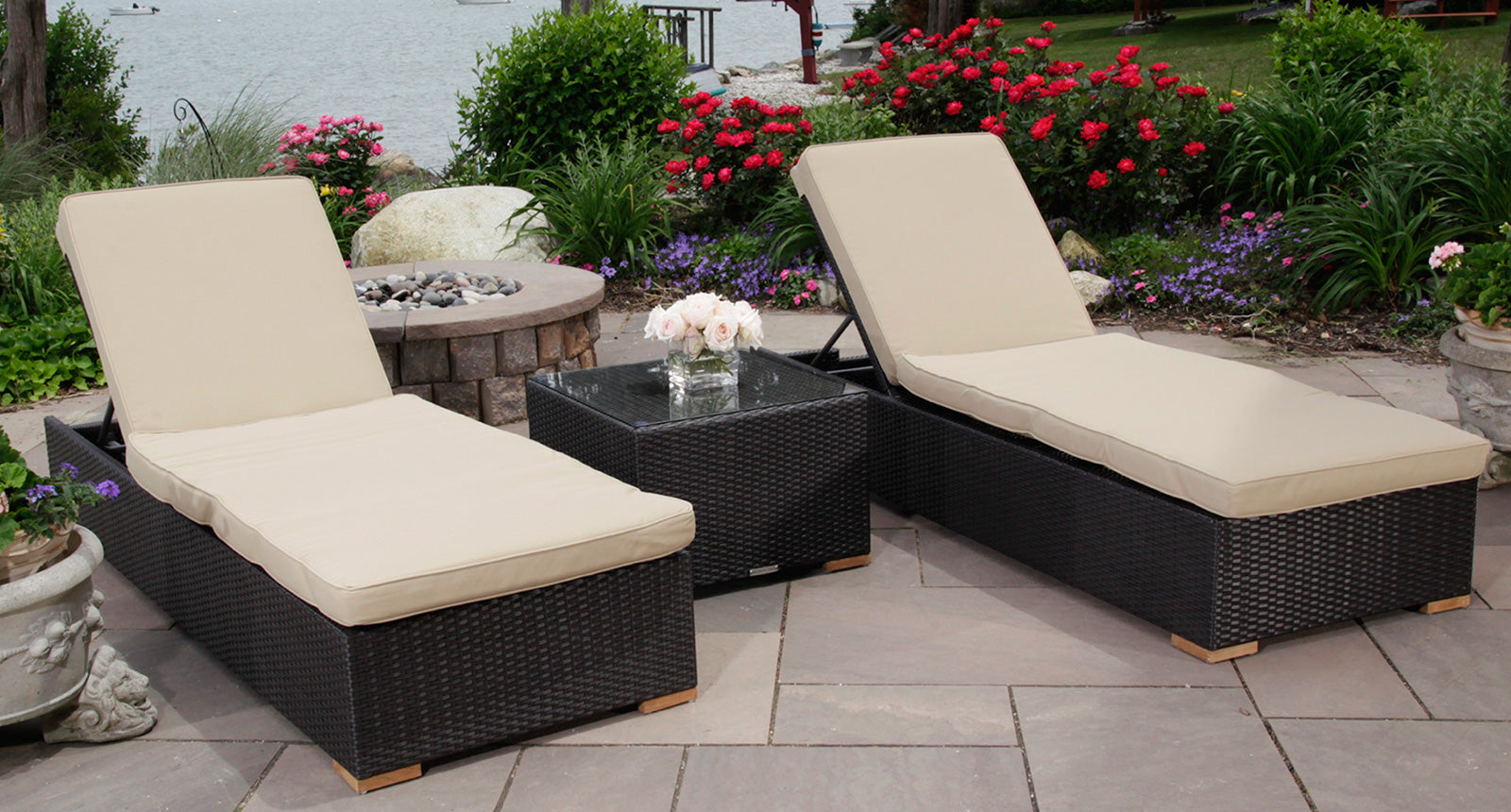
12. A Serene Patio Lounge with Brown Wicker Chaises
This poolside paradise follows a simple but effective design formula: 70% calm neutrals + 20% natural texture + 10% color. The dark brown wicker, beige cushions, and light grey stone pavers make up the vast majority of the visual space (70%). The natural texture (20%) comes from the lush green foliage, the stones in the fire pit, and the water in the background. The final, crucial 10% is the pop of color from the vibrant red and purple flowering bushes and the small vase of pink roses. This formula ensures the space feels relaxing but not boring.
|
📋 Copy HEX 🔗 Share |
Those thick, luxurious beige cushions are the epitome of comfort, but they are also a liability. Light-colored cushions show every speck of dirt, sunscreen smudge, and spilled drink. Even if they are made from performance fabric, you’ll need to be diligent about cleaning them. If you have pets or kids, or you frequently host parties, you might want to opt for a darker color like navy or charcoal gray. It will give you the same comfort with far less stress about keeping things pristine. Also, a glass-topped side table in direct sun can get incredibly hot.
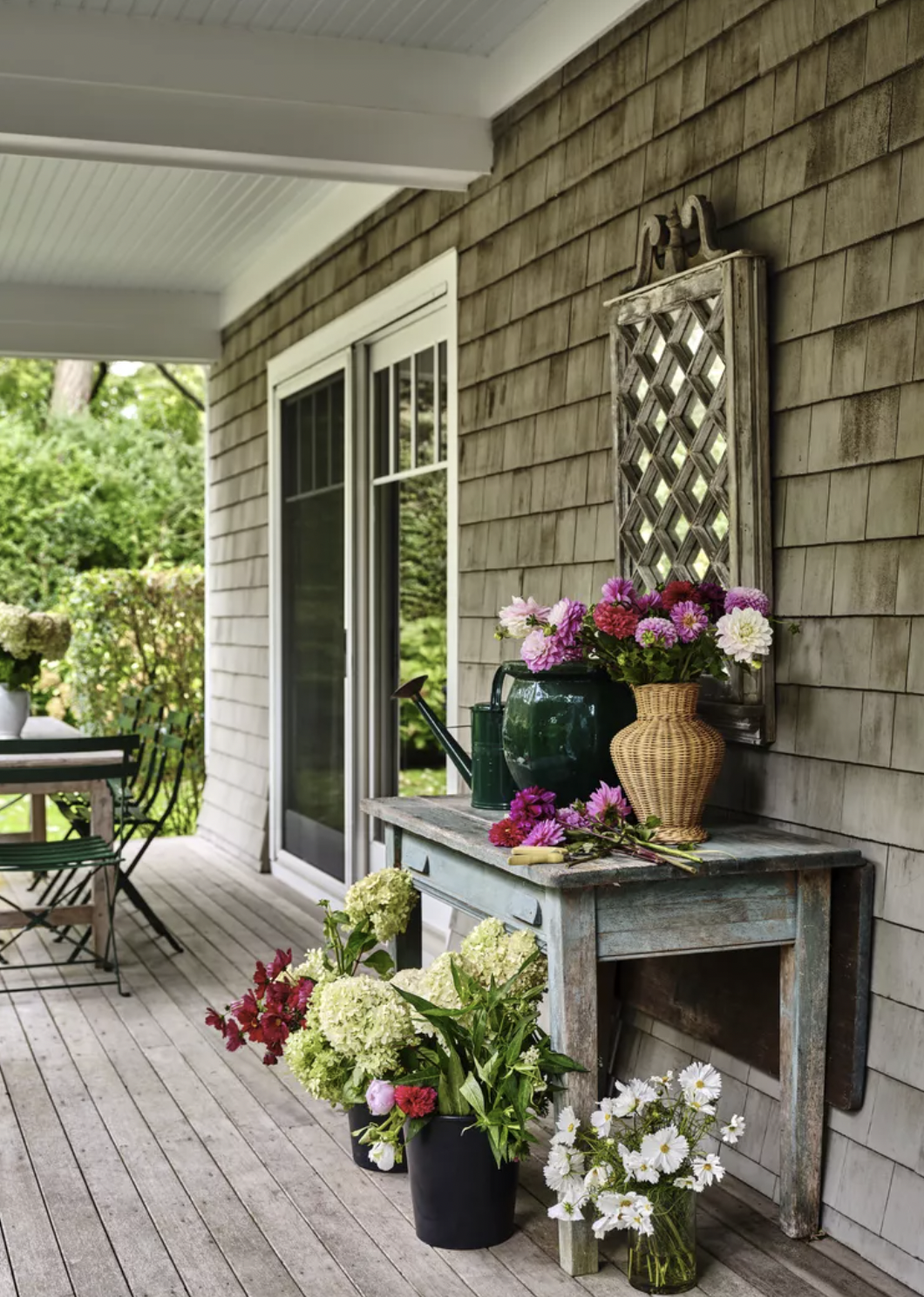
13. A Charming Porch with a Weathered Teal Console and Floral Decor
The entire story of this porch is told by the weathered teal console table. It’s the single piece that gives the space its personality and charm. Without it, you have a simple porch with some flowers. With it, you have a curated, rustic, and deeply personal vignette. The distressed finish and unexpected color transform it from a mere surface to the heart of the design. It’s a powerful reminder that sometimes, the most inexpensive and imperfect piece can have the biggest impact, especially when it’s a color that contrasts beautifully with its surroundings.
|
📋 Copy HEX 🔗 Share |
You can create this look for next to nothing. The centerpiece is a found object—a console table you could easily score for free or under $30 from a thrift store, flea market, or Facebook Marketplace. The more weathered and imperfect, the better. A sample pot of teal chalk paint ($10) and a bit of sanding are all you need to get the look. Forage for flowers and greenery from your own garden or ask a neighbor for a few clippings. The result is a high-style, editorial-worthy corner for the cost of a couple of lattes.
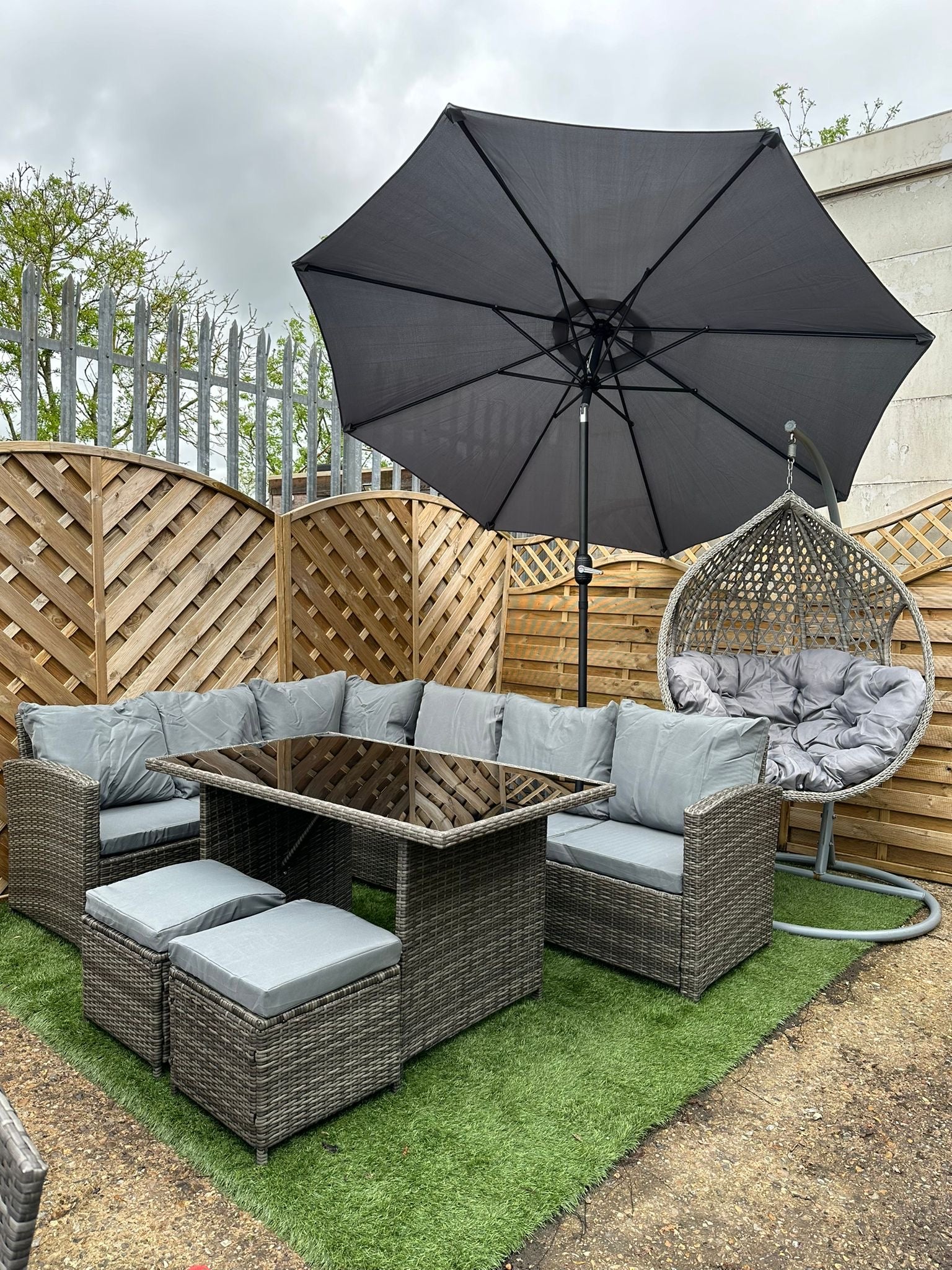
14. A Functional Seating Area with Artificial Grass and an Offset Umbrella
This setup is all about practicality and creating a comfortable zone in a potentially harsh environment. The use of an artificial grass patch is clever; it provides the softness and color of a lawn without the need for soil, water, or mowing, making it perfect for a balcony or paved yard. The large offset patio umbrella is the hero, providing a huge area of shade that can be adjusted as the sun moves. This allows the dark furniture, which would otherwise get scorching hot, to remain usable all day. The slat-and-lattice fence provides privacy while still allowing for airflow. Compare the artificial grass here with the real foliage in Idea #1.
|
📋 Copy HEX 🔗 Share |
Let’s be honest about artificial grass. While it’s low-maintenance, it’s not no-maintenance. It needs to be regularly brushed to keep the blades standing upright and rinsed to clear away dust and pet messes. In direct, intense sunlight, it can get surprisingly hot to the touch—sometimes even hotter than pavement. It’s a great solution for many spaces, but it doesn’t feel like real grass underfoot, and the initial installation, while cheaper than a new deck, is still an investment.
15. A Cozy Outdoor Lounge in White and Gray Tones
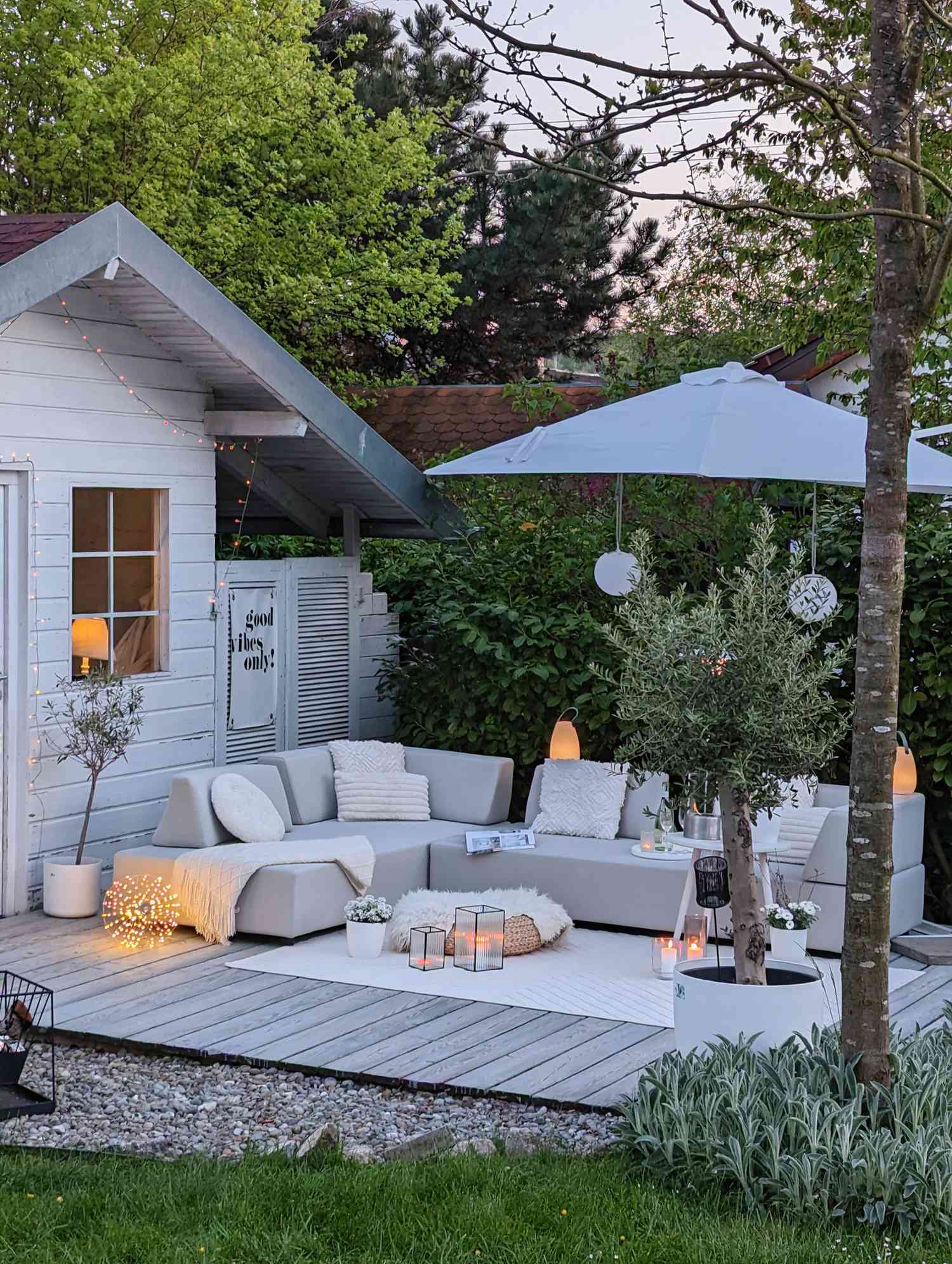
The key to making an all-neutral space feel cozy and not cold is to go overboard with texture and lighting. Notice the sheer variety of pillows: some are knitted, some have tassels, and some are simple linen. This textural mix adds visual weight and a tactile quality that begs you to lounge. The lighting is just as important. Instead of one harsh overhead light, this space layers multiple sources: warm string lights above, glowing lanterns on the floor, and round hanging lights. This creates soft pools of light and an undeniable sense of warmth and intimacy.
|
📋 Copy HEX 🔗 Share |
This intimate, cozy lounge setup is perfect for small- to medium-sized decks, roughly in the 10×12 to 14×16 foot range. The modular nature of the sofa allows it to be configured to fit the space perfectly. A smaller footprint means the layered lighting has a greater impact, as the warm glow reflects off the nearby surfaces. On a very large, expansive deck, this same setup might feel a bit lost. For bigger spaces, consider establishing multiple, distinct seating zones, like the multi-level approach in Idea #4.
16. A Poolside Patio Set with Gray Wicker and Blue Cushions
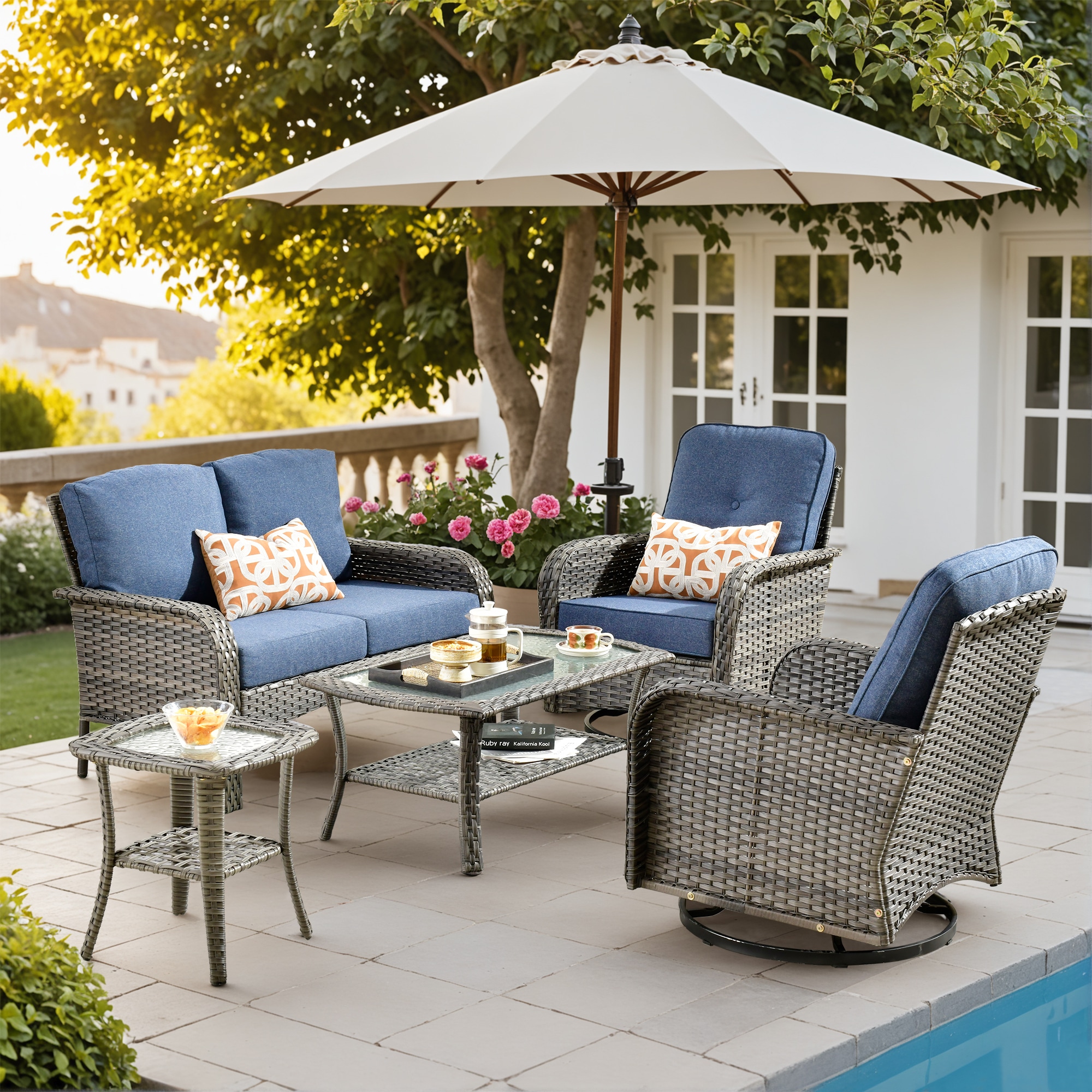
This classic poolside look is built on a breezy, coastal color formula: 50% neutral base, 40% cool tones, and 10% warm accent. The neutral base is the gray wicker furniture and light gray pavers (50%). The deep blue cushions and the blue of the pool water provide the strong cool tone (40%). The essential warm accent (10%) comes from the orange-patterned throw pillows and the beige umbrella. This pop of warmth keeps the color scheme from feeling too cold and adds a touch of playful energy. You could swap the orange for coral or yellow for a similar effect.
|
📋 Copy HEX 🔗 Share |
You can find this exact style of gray wicker conversation set at almost any big-box store like Home Depot, Lowe’s, or Walmart, often for under $500 for a 4-piece set (sofa, two chairs, and coffee table). To save even more, look for end-of-season clearance sales in late summer and early fall. The market umbrella can be found for under $100. For the pop of color, grab a couple of cheap pillow covers from Amazon or H&M Home. This entire inviting setup, a more casual take than the loungers in Idea #12, can be yours for well under $700.
17. A Modern Rooftop Deck with Wicker Seating and a Wood Pergola
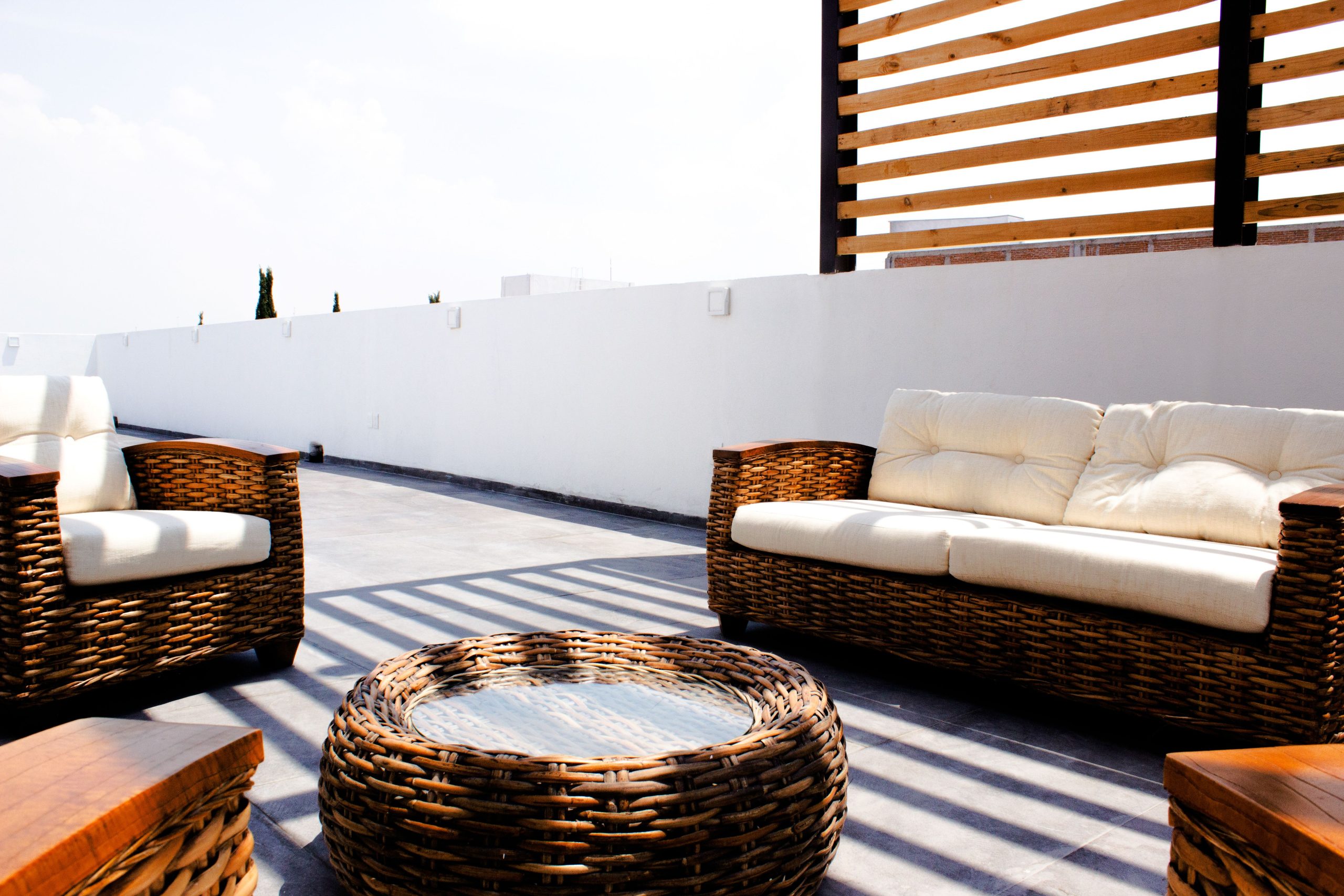
This design succeeds by beautifully blending modern and natural elements. The clean lines of the grey tile floor and the low, white perimeter wall are starkly modern. The pergola structure, with its dark metal supports, continues this theme. However, the design is softened and made inviting by the introduction of natural materials. The warm wood of the pergola slats and the woven texture of the wicker furniture provide an organic contrast. The strong, striped shadows cast by the pergola add a dynamic graphic element that changes throughout the day, becoming a design feature in itself.
|
📋 Copy HEX 🔗 Share |
A rooftop deck seems like the ultimate luxury, but it comes with challenges. Weight is a major consideration; you can’t just put anything up there. Planters filled with soil are incredibly heavy, as are large furniture pieces. You need to ensure your building’s structure can handle the load. Wind is another significant factor. Lightweight furniture can become a projectile in a storm, and umbrellas must be securely weighted or taken down. Finally, there’s sun. With no trees for protection, surfaces can become intensely hot, and materials can fade quickly if not UV-stabilized.
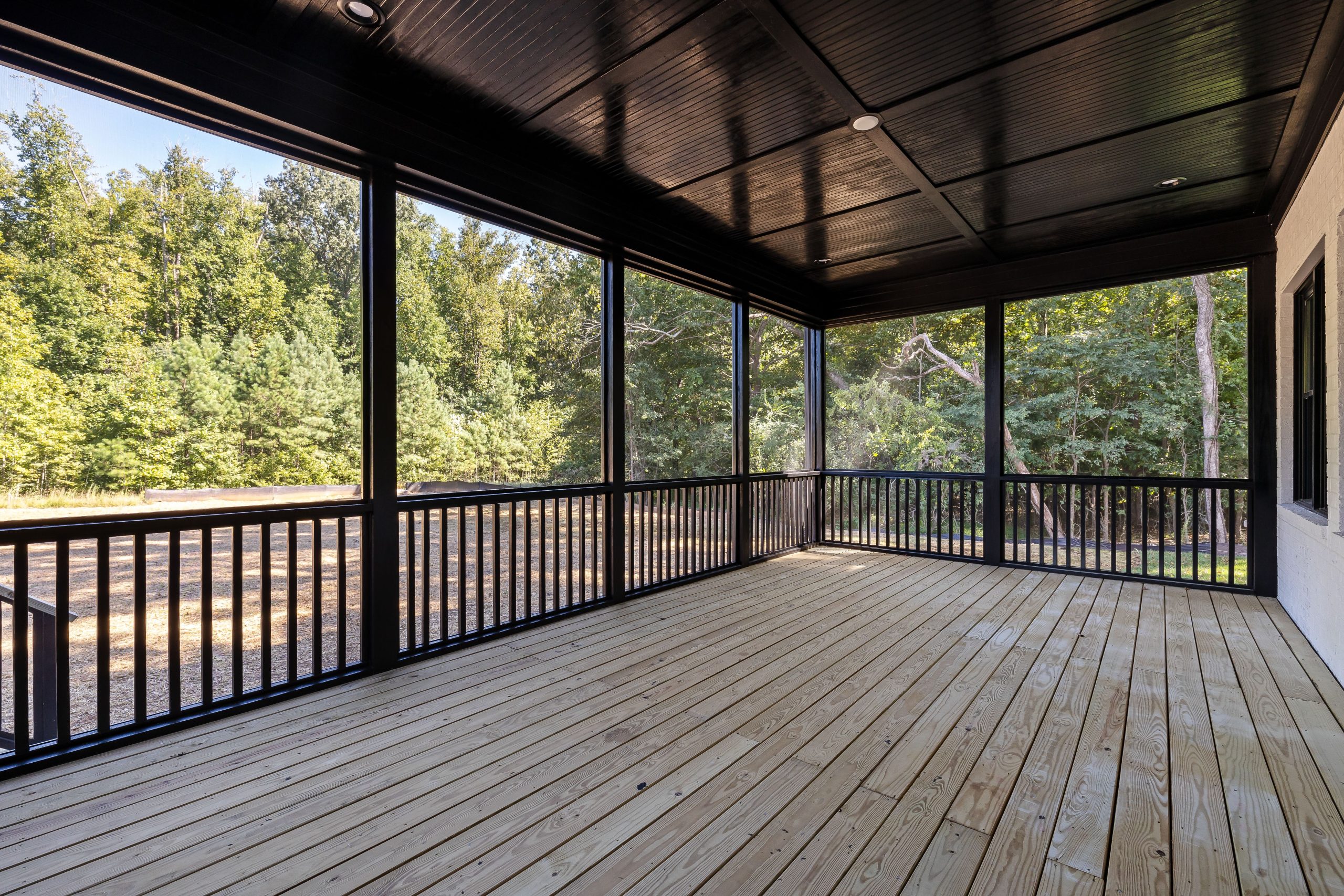
18. A High-Contrast Screened Porch with a Natural Wood Floor
The single most impactful choice in this screened porch is the dramatic color contrast. Painting the ceiling, framing, and balusters a deep, matte black while leaving the floor a light, natural wood color is a bold and brilliant move. This high contrast immediately modernizes the space and makes the light wood floor and the green trees outside the screens pop. If the framing were white or wood-toned, the effect would be far more traditional and less visually arresting. The black framing acts like a picture frame for the view, forcing you to notice the beauty outside.
|
📋 Copy HEX 🔗 Share |
If you’re painting a screened porch enclosure black, opt for a matte or flat finish. A glossy or semi-gloss finish will reflect sunlight and create distracting glare, which can make it harder to see the view outside. A matte finish, on the other hand, absorbs light and tends to ‘disappear,’ allowing your eye to look past the screen and focus on the landscape beyond. It’s a subtle but crucial detail that professional designers use to maximize the connection between indoor and outdoor spaces.
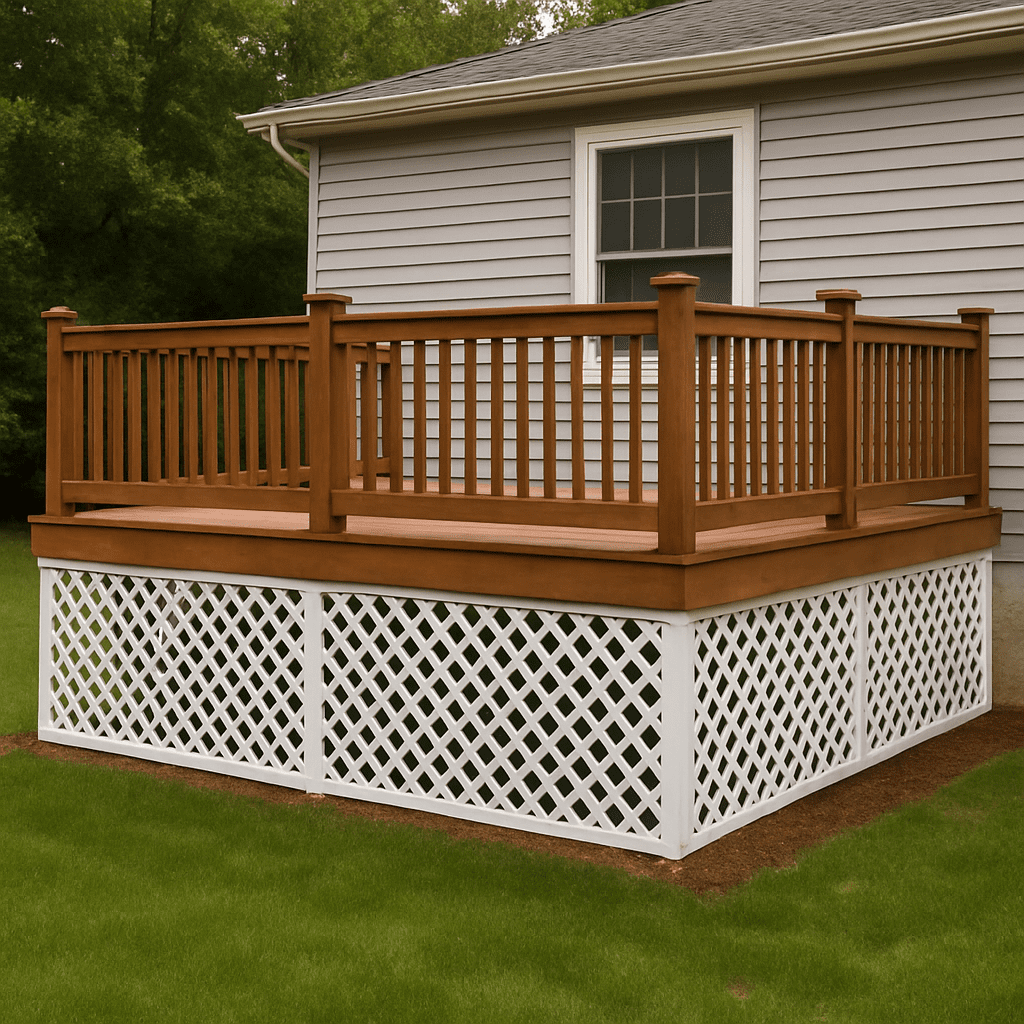
19. A Classic Brown Wood Deck with White Lattice Skirting
This design is a timeless classic for a reason: it’s clean, functional, and visually balanced. The warm brown of the deck provides a natural, earthy base that complements the light grey siding of the house. The crisp white of the lattice skirting and window trim creates a sharp, clean contrast that makes both colors look richer. The vertical lines of the balusters are repeated in the pattern of the house siding, creating a subtle sense of rhythm and cohesion. It’s not flashy, but its adherence to simple design principles makes it perpetually stylish. For a different take on skirting, see Idea #11.
|
📋 Copy HEX 🔗 Share |
This is one of the most cost-effective ways to build or update a deck. Pressure-treated pine is the go-to affordable wood choice. While this deck appears to be stained, you could leave the wood to weather naturally to save on initial costs. The real budget hero is the vinyl lattice. A 4×8-foot sheet is inexpensive (around $30-$40) and easy to cut and install. It neatly hides the under-deck area, which can be used for storage, making your yard look tidier instantly. This combination provides a polished look for a minimal investment.
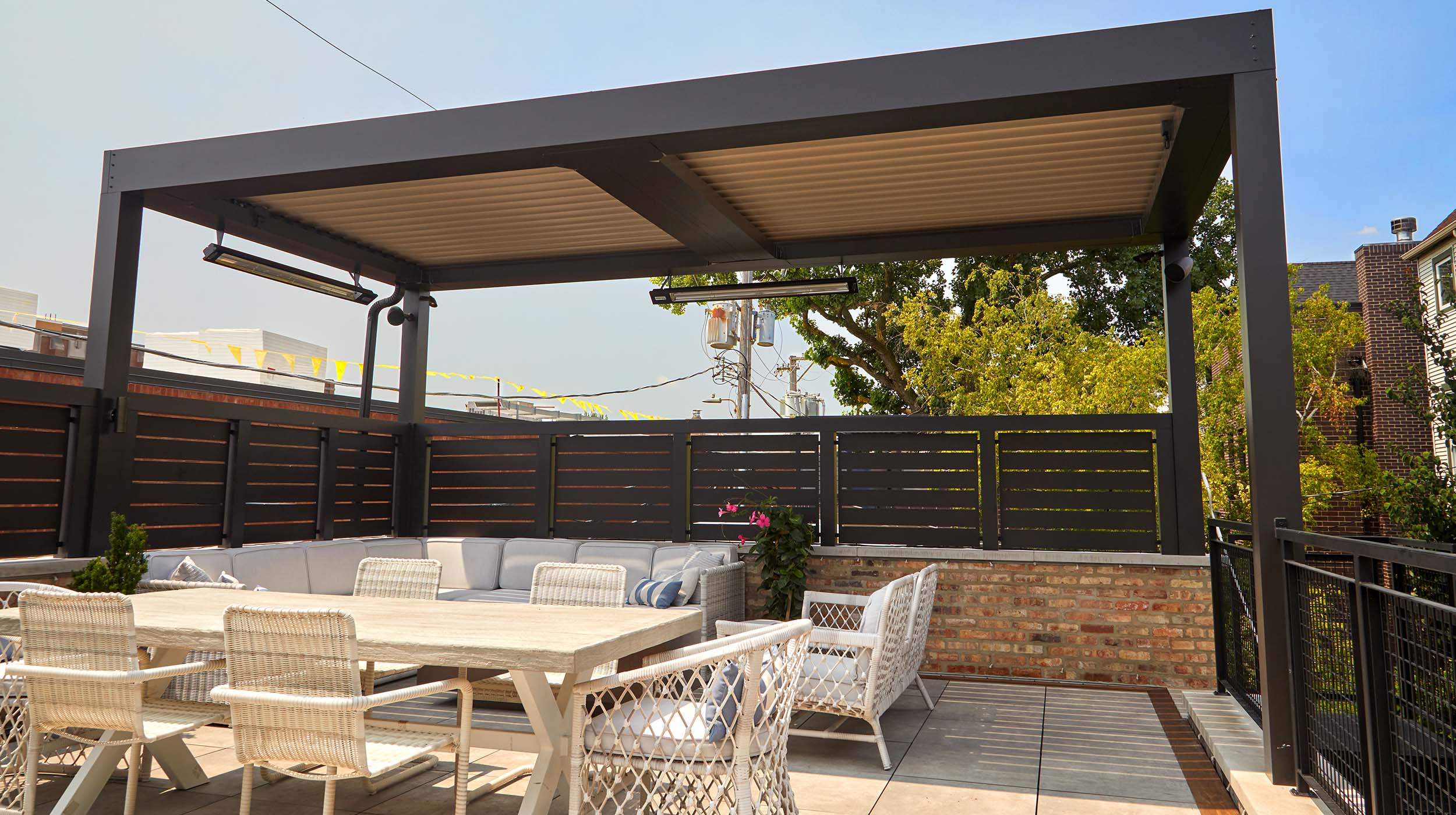
20. A Sleek Black Canopy with Woven Patio Furniture
The sleek, modern feel of this space comes from a disciplined use of color and texture. Let’s break down the formula: 50% modern structure + 30% natural/soft texture + 20% classic foundation. The black metal canopy and horizontal slat screen provide the strong, modern lines (50%). The softness comes from the light beige woven chairs and grey sofa cushions (30%). The timeless brick wall and light wood table act as the classic foundation (20%) that keeps the look grounded and warm. This balance is key to making modernism feel inviting rather than cold.
|
📋 Copy HEX 🔗 Share |
A large canopy structure like this works best in a medium- to large outdoor area, at least 15×20 feet. It needs room to breathe to appreciate its architectural quality. The key is ceiling height; the canopy should be at least 9 feet high to feel open and airy, not oppressive. This idea is excellent for defining a specific ‘room’ within a larger backyard or patio. In a smaller space, a full canopy could feel overwhelming. For more compact decks, consider a retractable awning or a simple shade sail (Idea #5) instead to provide shade without the heavy visual footprint.
21. A Rustic Deck with a Quilted Bench and Colorful Siding
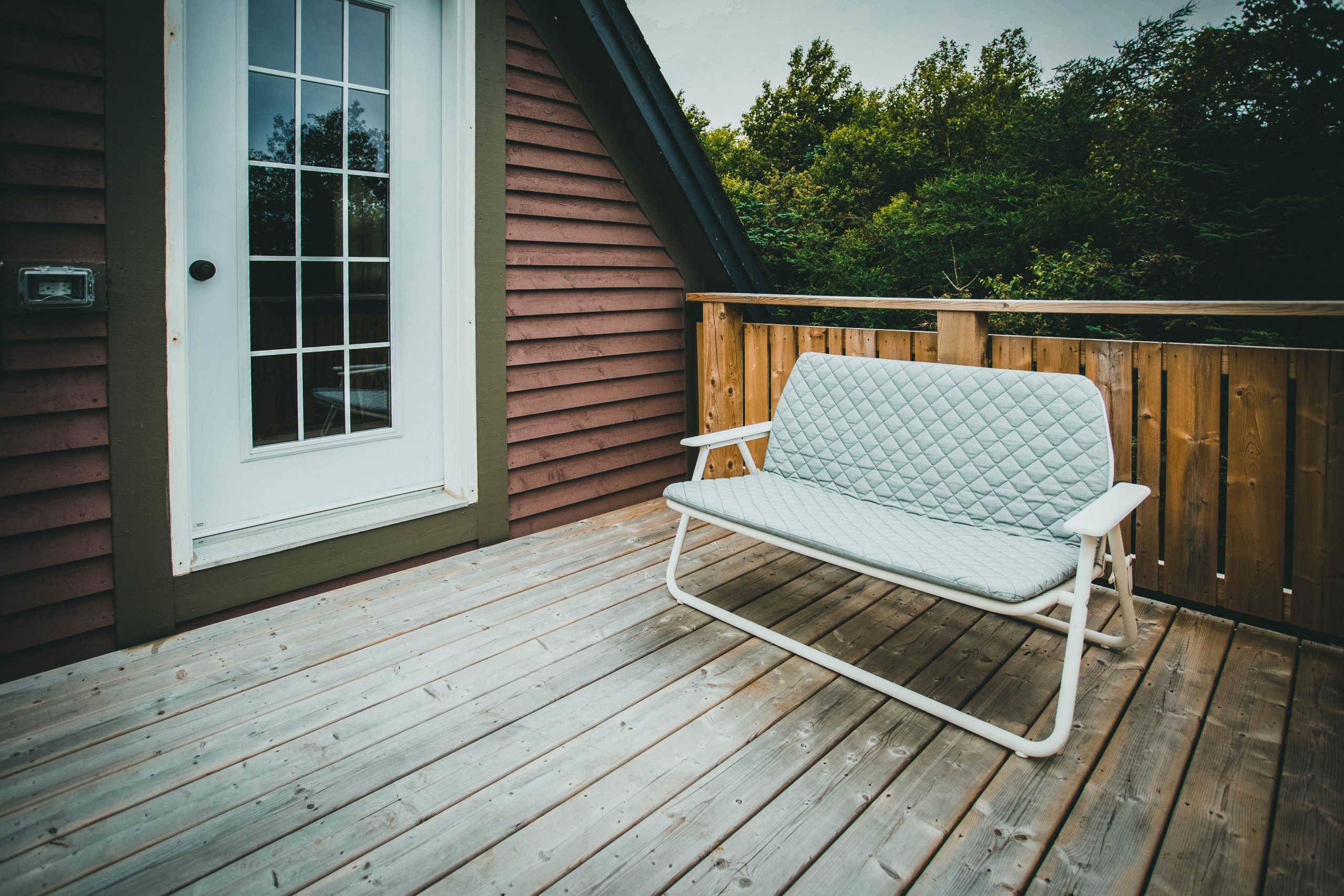
This simple setup is beautifully low-maintenance, but ‘low’ doesn’t mean ‘no.’ Here’s the reality:
- Weathered Wood Decking: Needs a good sweep to clear debris and leaves. Plan to pressure wash and seal it every 2-3 years to prevent splintering and rot, especially if you live in a wet climate.
- Painted Metal Bench Frame: The paint is its protection. At the start of each spring, check for any chips or rust spots. Sand them down and touch them up with a matching exterior metal paint to stop rust in its tracks.
- Quilted Cushion: This is your main point of upkeep. To prevent mildew and fading, bring the cushion indoors when not in use, especially overnight and during rain. Spot-clean any spills immediately.
|
📋 Copy HEX 🔗 Share |
This little corner is a perfect example of the ‘beauty in imperfection’ ethos. The weathered wood deck, the slightly rusted red siding, and the simple metal bench aren’t trying to be pristine. The charm comes from the honest materials and the relaxed composition. The light grey quilted cushion is a key element, offering a touch of modern comfort and a soft texture that contrasts with the hard surfaces of the wood and metal. It’s a quiet, unpretentious space that feels authentic and lived-in precisely because it isn’t perfect.
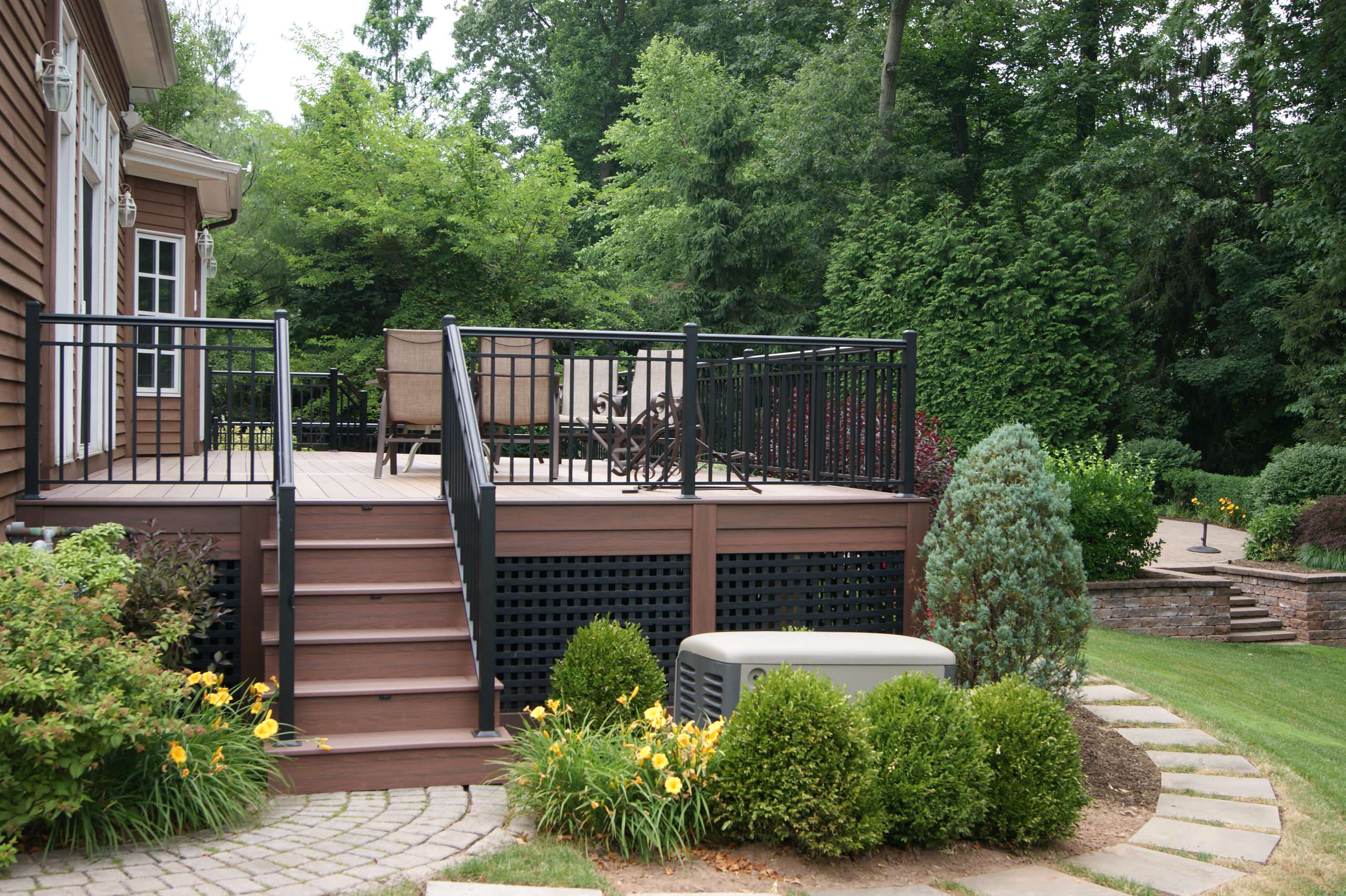
22. A Spacious Multi-Level Deck with Brown Composite and Black Railings
When designing a deck with black metal railings, carry the black accent through to at least two other elements in the space for a cohesive, professional look. Here, the black of the railing is subtly echoed in the dark frames of the dining chairs and potentially in outdoor light fixtures or planters (not pictured). This repetition makes the railing feel like an integrated part of the overall design scheme, not just a safety requirement. Even small touches, like black hardware on a door or black-cased windows, can help tie it all together.
|
📋 Copy HEX 🔗 Share |
Let’s talk composite decking. It’s often marketed as ‘maintenance-free,’ but that’s not entirely true. It is ‘low-maintenance.’ You don’t have to sand or stain it, which is a huge plus. However, it can still get stained from things like leaves, berries, or grease from a grill. It’s also susceptible to mildew and mold growth in shaded, damp areas, so it still needs to be cleaned periodically with a deck cleaner. And be aware: some older or cheaper composite materials can get extremely hot in direct sun, to the point of being uncomfortable for bare feet.
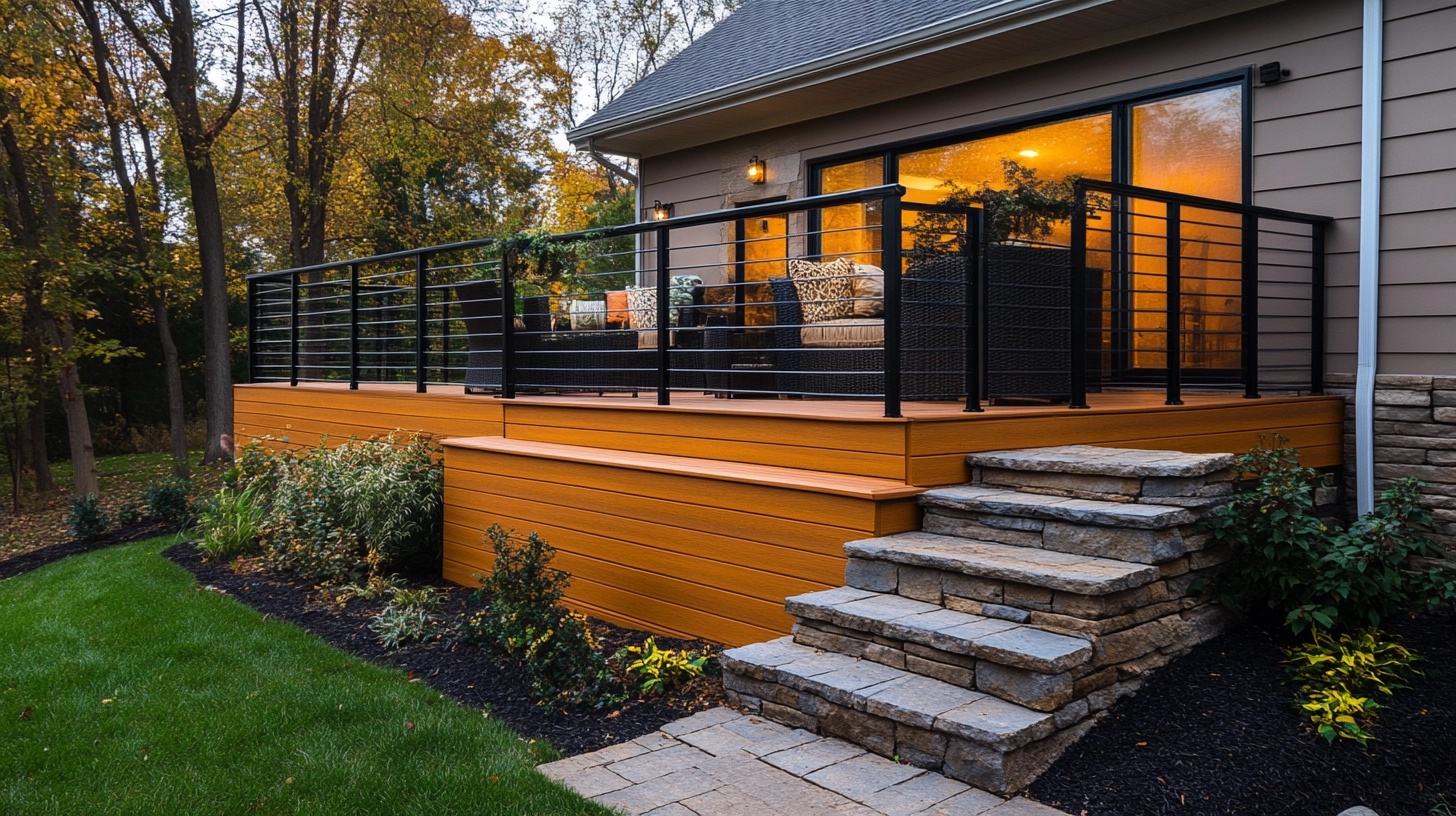
23. A Layered Deck with Wood, Stone Steps, and Wicker Furniture
This design is so successful because it masterfully mixes materials and textures. Instead of just a sea of wood, the deck incorporates a variety of surfaces that add depth and custom detail. The warm, smooth wooden planks of the deck surface contrast beautifully with the rough, cool texture of the stone-faced steps. The black metal of the horizontal railing adds a sleek, modern line, while the woven texture of the dark wicker furniture brings in a soft, organic element. This thoughtful combination of materials makes the entire project feel expensive and professionally designed.
|
📋 Copy HEX 🔗 Share |
Getting this high-end, multi-material look involves a few different cost categories. This is a more complex project than a simple square deck.
- Decking (pressure-treated wood): $4 – $6 per sq. ft.
- Railing (horizontal metal): $50 – $150 per linear foot
- Stone Veneer for Steps: $10 – $25 per sq. ft. (plus installation)
- Wicker Furniture Set: $800 – $2,500
- TOTAL (for a 150 sq. ft. deck): $4,000 – $12,000+
Budget alternative: Use faux-stone riser panels, which are cheaper and easier to install. Opt for a more affordable vertical cable railing system and look for wicker furniture during end-of-season sales.
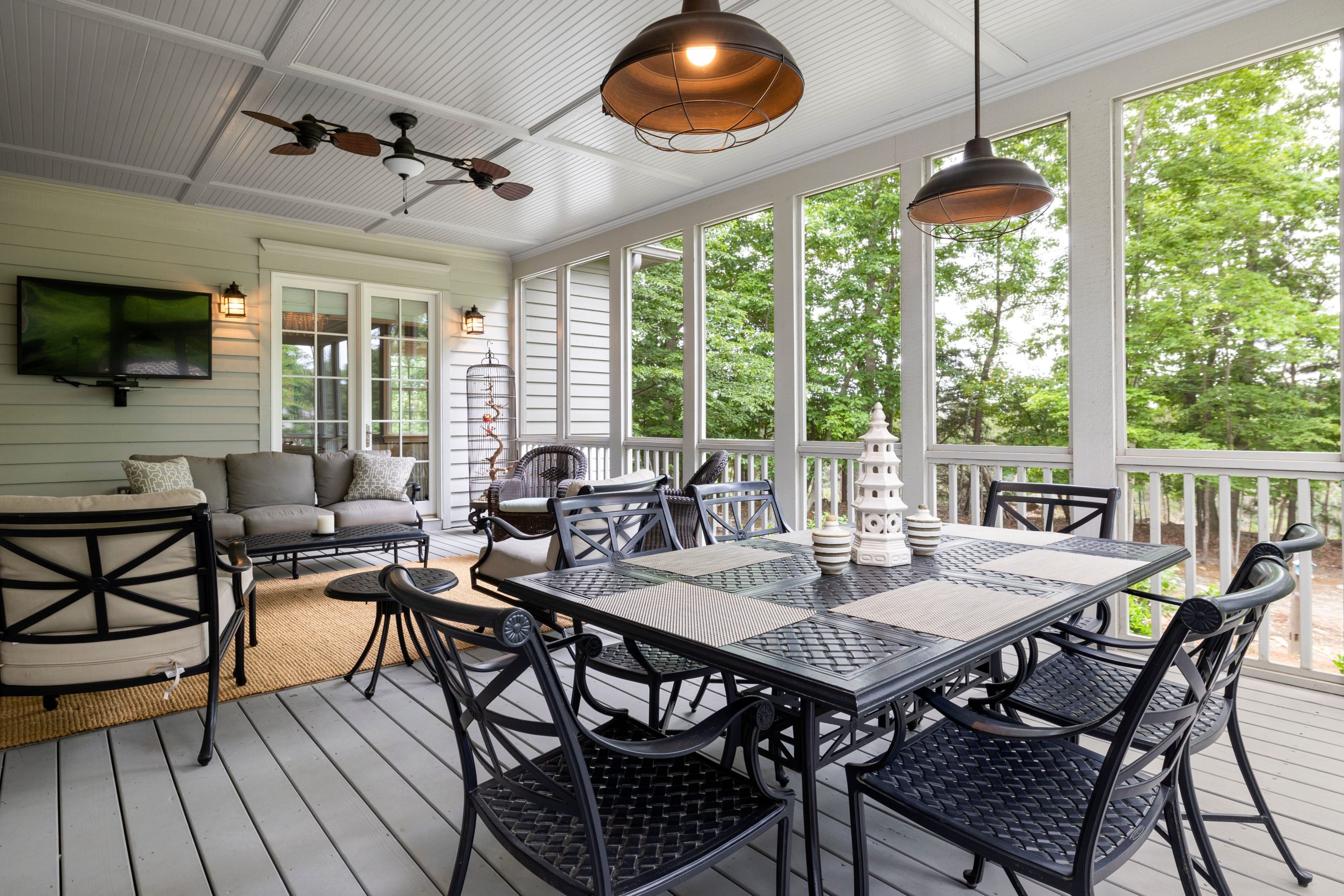
24. A Bright and Airy Screened Porch with Living and Dining Zones
Giving a tired porch ceiling a makeover is a high-impact DIY. Here’s how to install a beadboard ceiling:
-
- Find the Joists: Use a stud finder to locate and mark the ceiling joists. You’ll need to nail the panels into these.
- Measure and Cut: Measure your ceiling and cut the beadboard panels to size with a circular saw. You may need to cut holes for light fixtures or fans.
- Apply Adhesive: Apply a zigzag of construction adhesive to the back of the first panel.
- Install Panel: Position the panel, ensuring the groove edge is facing where the next panel will go. Nail it to the joists using a brad nailer.
- Repeat: Continue with the next panels, locking the tongue into the groove of the previous one, until the ceiling is covered.
- Finish: Caulk the edges and fill nail holes before painting.
|
📋 Copy HEX 🔗 Share |
The screened porch is having a major renaissance. After years of focus on open-air decks, people are rediscovering the joy of a bug-free outdoor space. This design perfectly captures the 2026 trend of treating the screened porch as a true three-season room, with distinct zones for lounging and dining. The use of stylish, comfortable indoor-quality furniture, proper lighting, and even rugs is on the rise. It’s no longer just a place for a couple of old rocking chairs; it’s a fully functional and beautifully designed extension of the home, which is a mistake to ignore, as you can see in Common Mistake #1.
Your dream deck is closer than you think.
Armed with these 24 ideas, from simple DIYs to smart furniture choices, you’re ready to stop dreaming and start planning. The best outdoor spaces are the ones that reflect your life and welcome you home. So pick an idea you love, make it your own, and get ready to enjoy your little slice of paradise. Don’t forget to save your favorites to your Pinterest board to keep the inspiration flowing!