
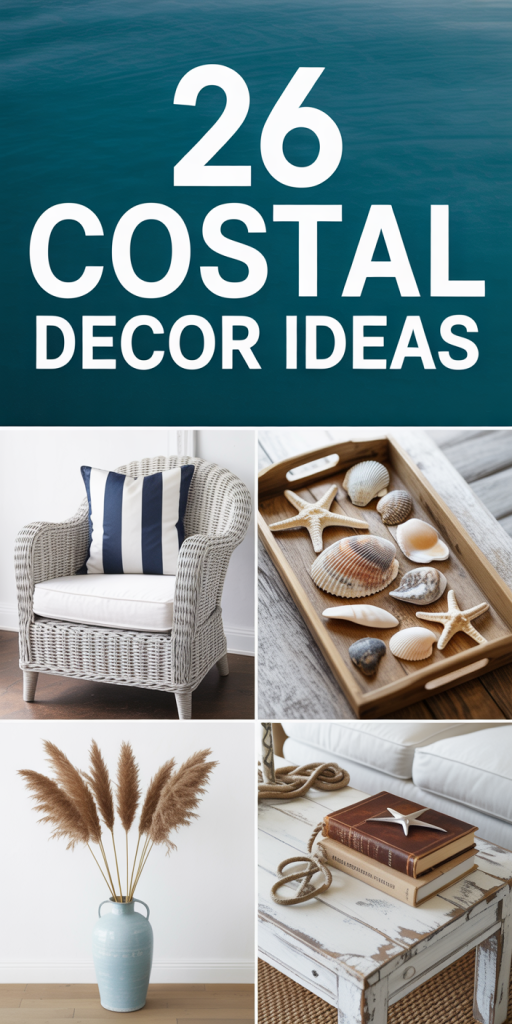
You know that feeling when you finally find the Coastal Decor Ideas 2026 that looks exactly right for your space? It feels like coming home. But sorting through endless look-alike pins can be exhausting. After filtering through hundreds of options across high-end showrooms and favorites like Target and IKEA, we narrowed it down to the looks that actually deliver. Inside, you’ll find 26 curated ideas covering everything from serene modern coastal to cozy bohemian and sophisticated neutral vibes, with options from $100 to over $10,000.
For 2026, the trend is all about personalizing the coast—it’s less about generic beach signs and more about capturing a feeling of serenity with texture and light, which is why it’s dominating Pinterest boards. And stay until the end — we break down the most common mistakes that can ruin these looks. 📌 Save this to Pinterest for later — you’ll want to revisit these ideas.
1. Frame Your Bed with a Textured Earthy Accent Wall
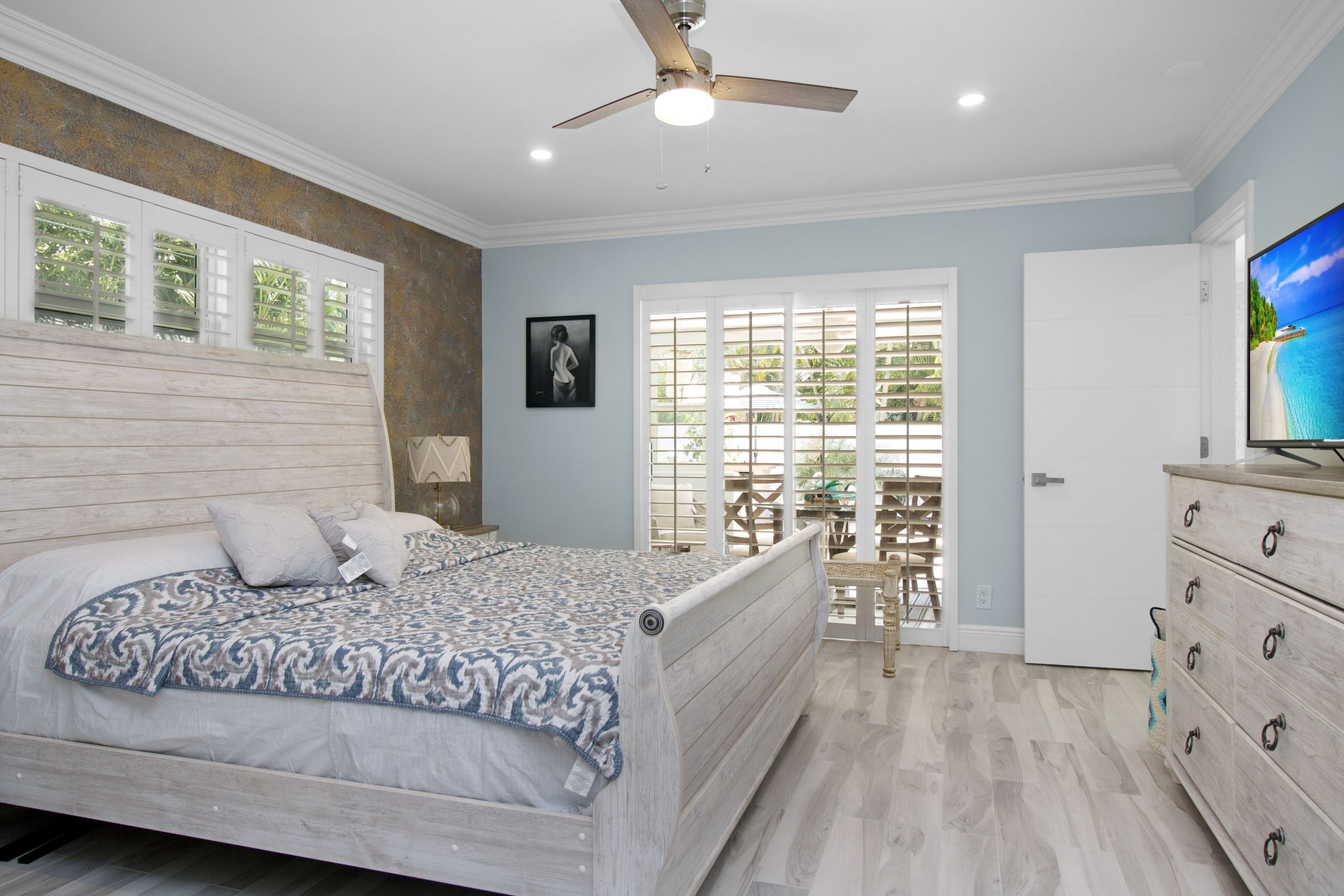
The magic here is the beautiful play between soft and substantial. The light blue walls and crisp white shutters create a serene, airy envelope. But the earthy, textured accent wall behind the bed adds depth and a touch of organic ruggedness. It keeps the room from feeling too sweet or one-note. The weathered wood of the furniture acts as a bridge between these two feelings, tying the light and dark elements together for a look that feels both grounded and breezy.
|
📋 Copy HEX 🔗 Share |
When creating a feature wall with a textured finish like this, don’t just stop at the paint or plaster. Carry that texture into at least two other items in the room. It could be a rough-hewn lamp base, a nubby linen throw, or even a piece of abstract art with a lot of dimensional impasto. This repetition makes the wall feel intentional and integrated, rather than just a standalone feature. It tells a more cohesive design story.
2. Use Dark Wood and Black Accents for a Sophisticated Neutral Vibe
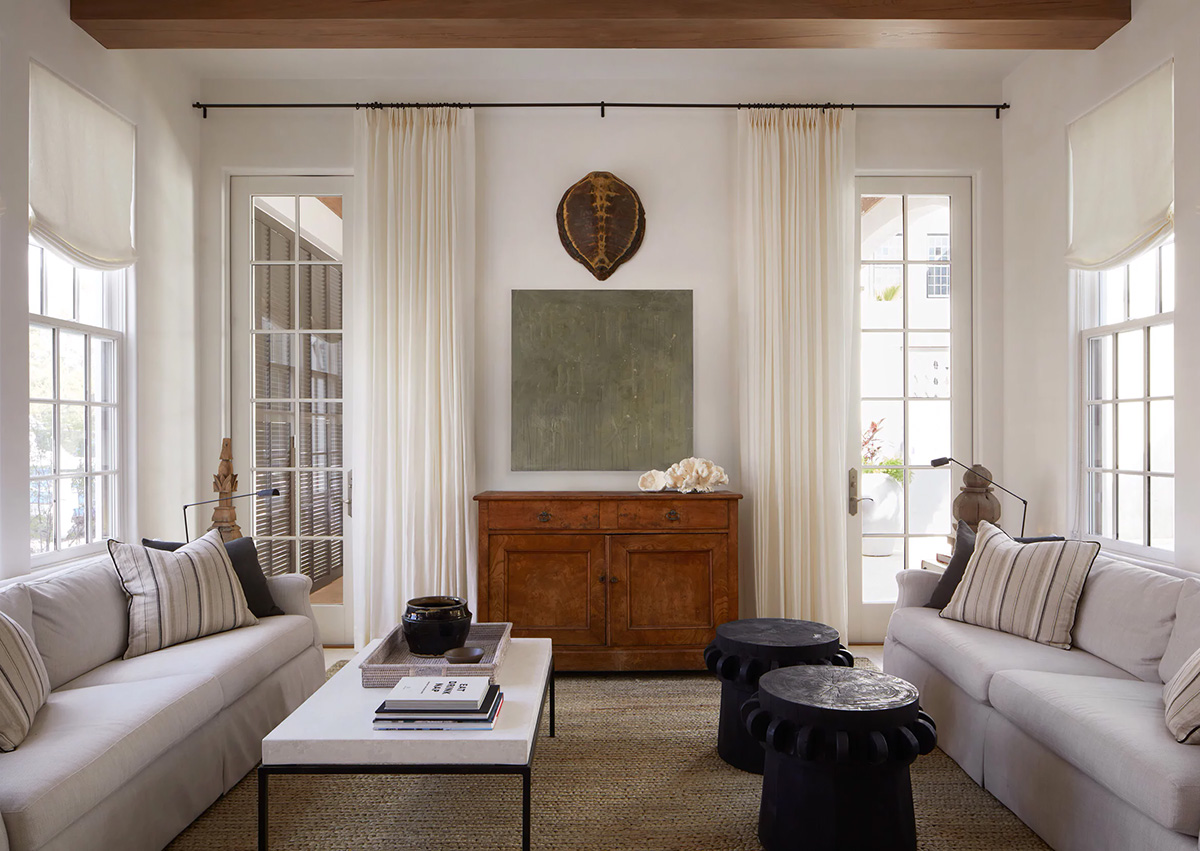
Think of this look as a simple but powerful equation: 60% light and neutral + 30% natural texture + 10% dark contrast. The light slipcovered sofas and beige walls form your neutral base. The jute rug, white coral, and woven elements provide the essential texture. Then, the dark wood cabinet and black stools are added sparingly as a final layer of contrast. This formula is easy to adapt; you could swap the dark wood for navy blue or the jute for a soft wool, but the ratio is what holds the sophisticated look together.
|
📋 Copy HEX 🔗 Share |
A room with this much light-colored upholstery requires a certain lifestyle. While slipcovers are great for washability, be honest with yourself about how often you’re willing to deal with laundry for your sofa. If you have pets that shed, small children with sticky fingers, or a strict no-red-wine-on-the-sofa rule that seems impossible, you might consider a slightly darker neutral fabric, like a heather gray or a durable taupe performance velvet, to maintain the calm vibe without the constant worry.
3. Anchor a Bright Room with a Bold, Wave-Inspired Art Piece
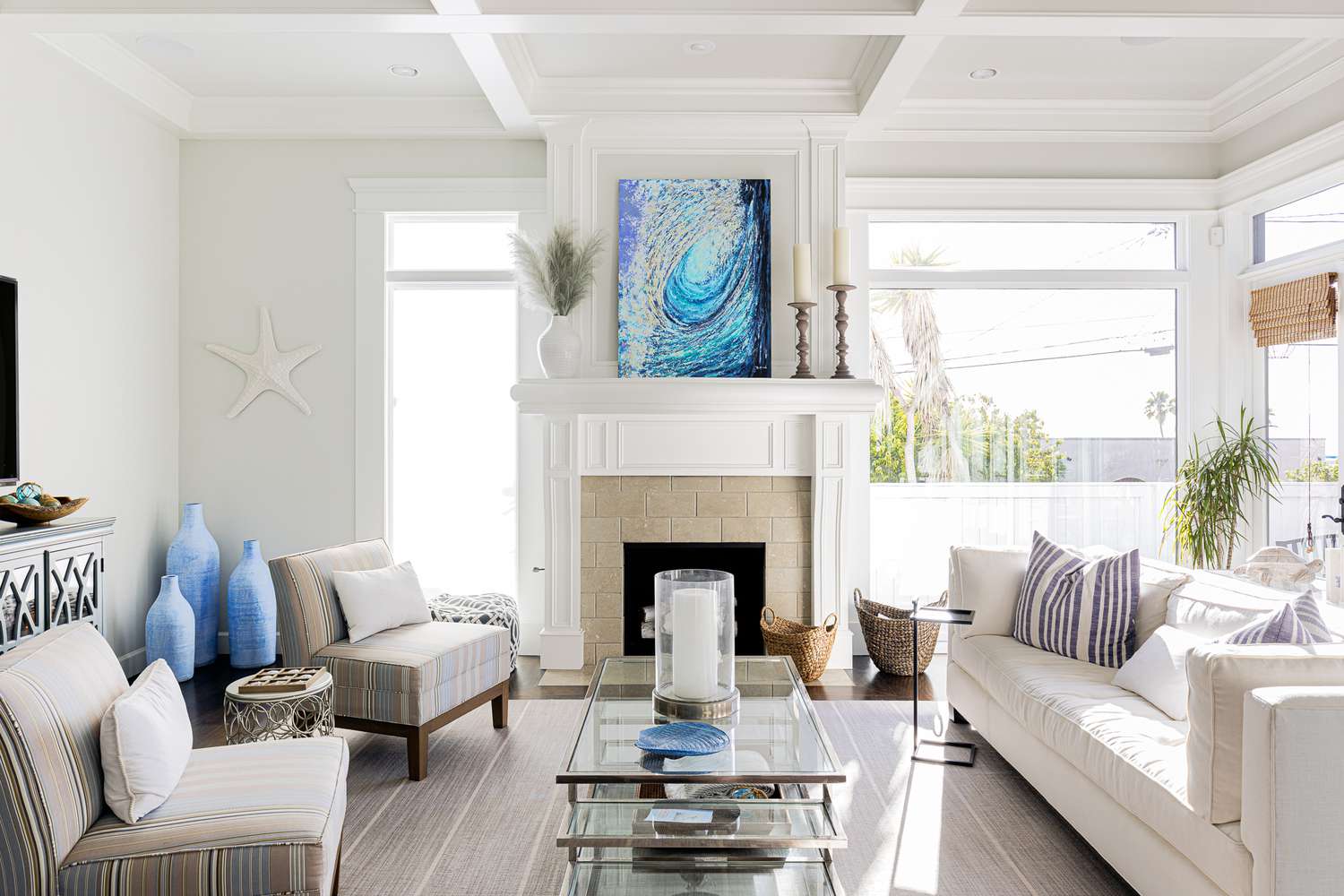
It’s all about the art. Remove that stunning, wave-inspired canvas over the fireplace, and you still have a lovely coastal room. But it’s the art that provides the space its soul and a clear, commanding focal point. It injects a sense of movement and modern energy that elevates the traditional elements like the fireplace and coffered ceiling. The piece reinforces the coastal theme in a sophisticated, abstract way, avoiding the literal clichés of beach decor. It’s a conversation starter and the heart of the design.
|
📋 Copy HEX 🔗 Share |
This grand, airy aesthetic is tailor-made for rooms with generous proportions. To truly pull this style off, you need a ceiling height of at least 10 feet to accommodate the coffered detail without making the room feel compressed. The main seating area shown here would work best in a space that is at least 15 by 20 feet. For smaller rooms, consider a scaled-down version by using a similar color palette but foregoing the coffered ceiling, as seen in Idea #7.
4. Prioritize the Ocean View with Minimalist Bedroom Design
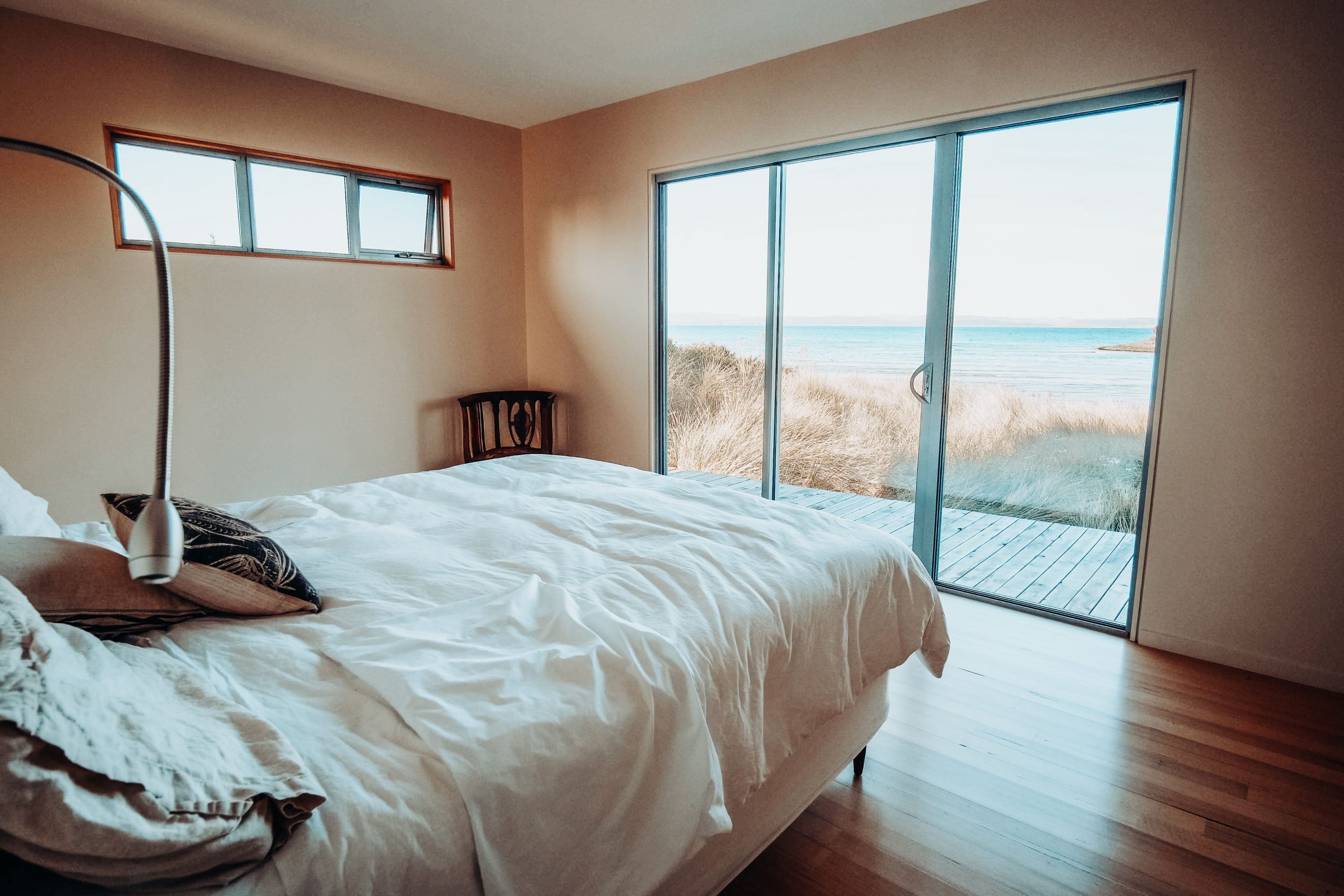
This look is a direct response to our craving for simplified, uncluttered living spaces that connect us with nature. It’s part of the larger “quiet luxury” and biophilic design trends that are gaining momentum. The idea isn’t about sterile minimalism but intentional simplicity. By keeping the interior decor sparse—bare walls, simple white bedding, clean lines—you direct the focus entirely outward to the dynamic, ever-changing ocean view. It’s about making nature the primary artwork in the room.
|
📋 Copy HEX 🔗 Share |
Those gorgeous, expansive sliding glass doors facing the ocean come with a significant maintenance commitment. Salt spray is relentless and will coat the glass, requiring frequent cleaning (weekly, or even more often depending on wind) to maintain that crystal-clear view. The tracking mechanisms for the doors will also need regular rinsing with fresh water and lubrication to prevent corrosion and sticking from the salt and sand. It’s a trade-off for an unparalleled view.
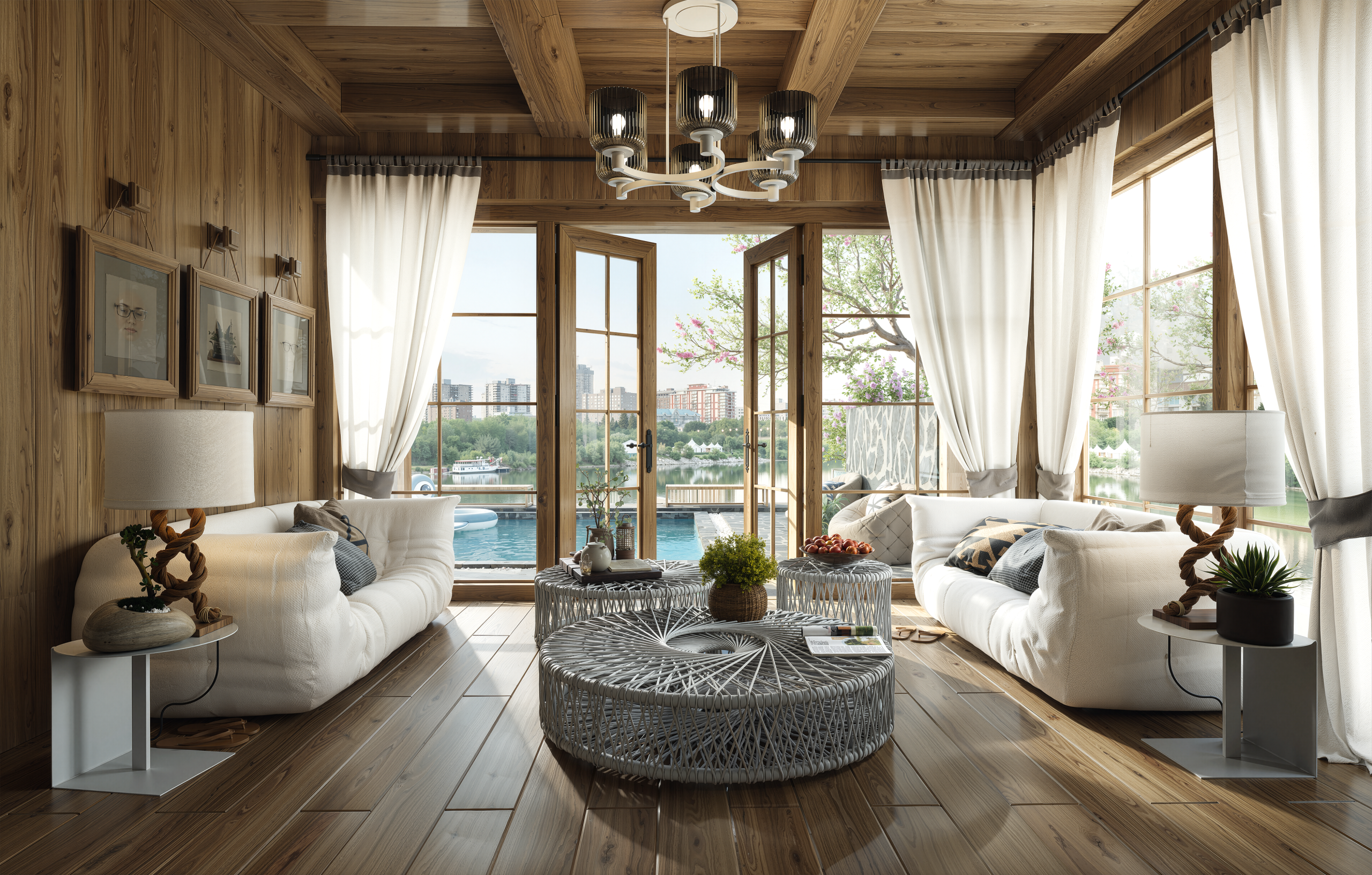
5. Wrap a Room in Warm Wood for a Cozy Waterside Retreat
The success of this space lies in its masterful use of contrast. The all-encompassing warm wood paneling on the walls and ceiling could easily feel heavy or dated, like a 70s sauna. But it’s balanced by the oversized, deep, and brilliantly white sofas. This high contrast between the dark, structured wood and the soft, luminous upholstery creates a dynamic tension that feels incredibly luxe and inviting. The woven gray coffee tables add a third, softer texture that mediates between the two extremes.
|
📋 Copy HEX 🔗 Share |
When using a single material like wood so extensively, varying its application is key. Notice how the wall paneling is vertical while the ceiling slats are horizontal. This simple shift in direction adds subtle visual interest and helps to differentiate the planes of the room. It’s a pro trick that prevents the space from feeling like a monotonous wooden box and instead gives it a more considered, architectural quality. The effect is subliminal but powerful. For a lighter take on wood walls, check out Idea #21.
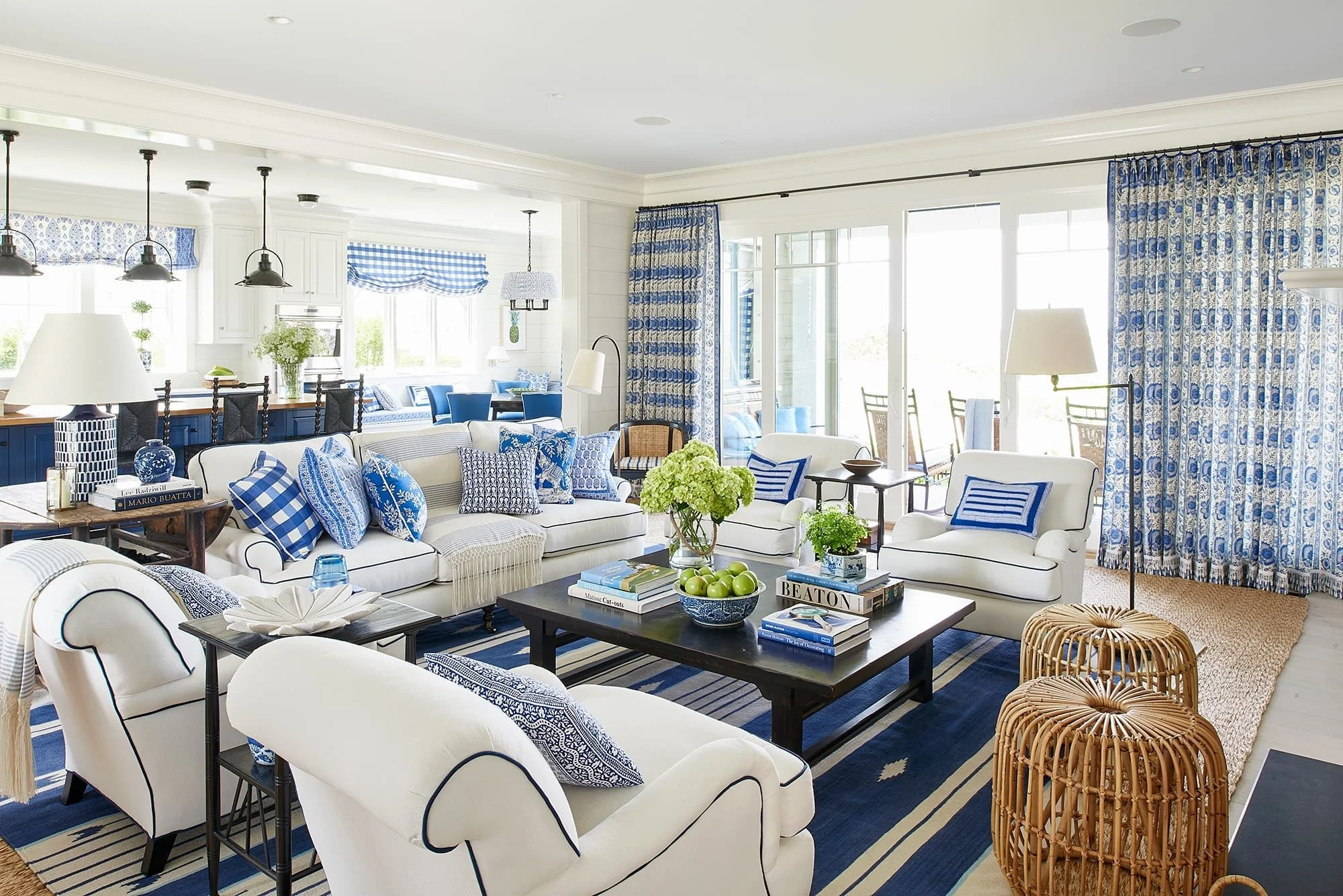
6. Layer Blue and White Patterns for a Classic Nautical Feel
You don’t need custom upholstery to get this vibrant, layered look. Start with a basic white or off-white sofa from IKEA or Wayfair ($800-$1500). The key is to then splurge a little on textiles. You can find high-quality blue and white striped rugs at stores like Target or Rugs USA for under $400. Then, hit up Etsy or HomeGoods for a curated collection of patterned pillows ($20-$40 each). You can often find the wicker stools secondhand on Facebook Marketplace for a steal, adding that perfect touch of natural texture.
|
📋 Copy HEX 🔗 Share |
Recreating the custom piping on the sofa can be a simple DIY project. Time: 2-3 hours. Cost: $20-$30.
- First, purchase 1/4-inch cotton cording and enough fabric in your accent color to create about 15 to 20 yards of bias tape.
- Cut the fabric into 2-inch-wide strips on the bias (at a 45-degree angle).
- Sew strips together to create one long piece, then fold it over the cording.
- Using a zipper foot on your sewing machine, stitch as close to the cording as possible to create the piping.
- Finally, hand-stitch the finished piping onto the existing seams of your sofa cushions for a high-end, custom look.
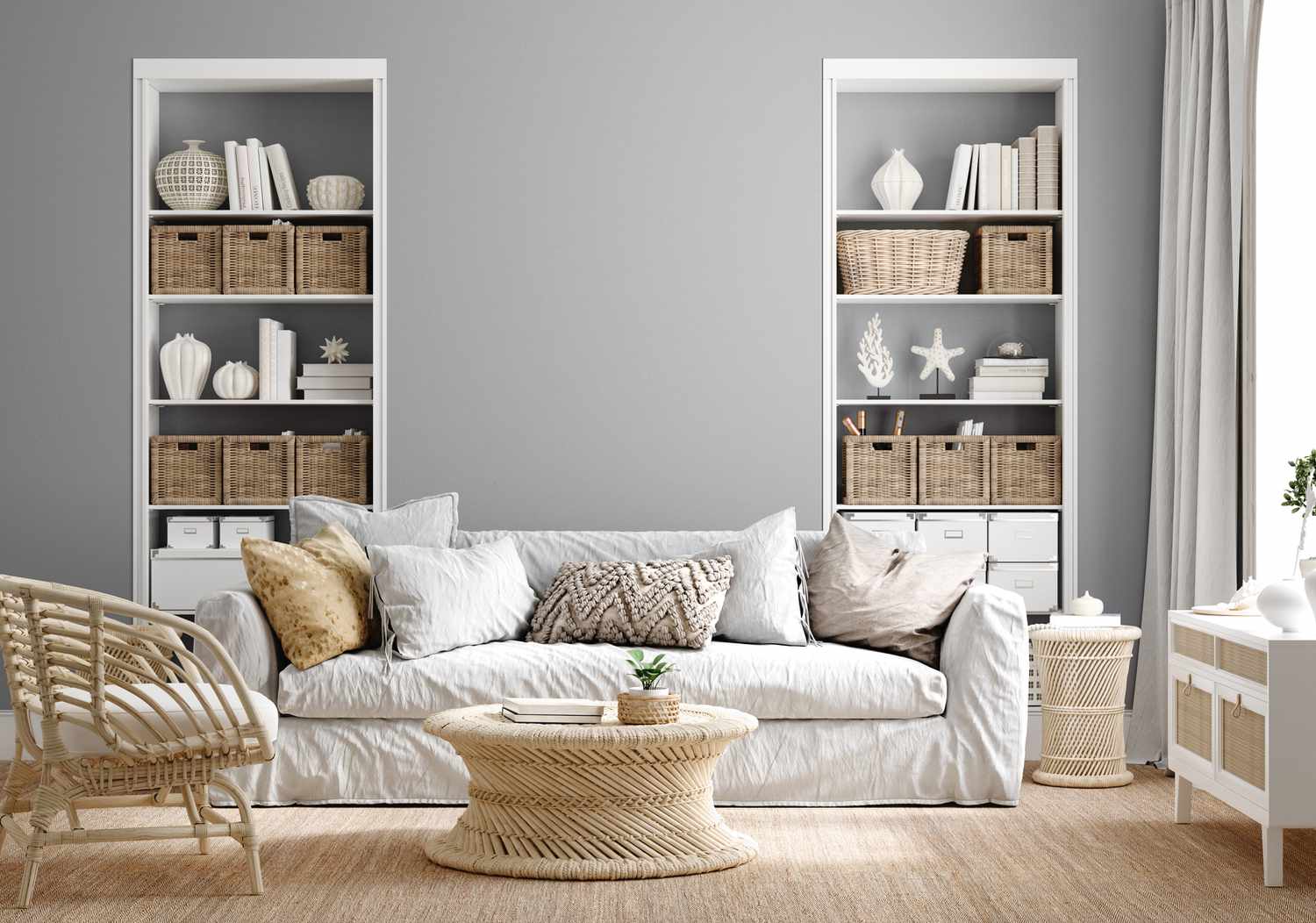
7. Style Built-Ins with Woven Baskets and Neutral Decor
The built-in bookshelves are the game-changer here. While the slipcovered sofa and rattan furniture are classic coastal elements, it’s the built-ins that provide structure, storage, and a sophisticated backdrop. They frame the living space and offer the perfect canvas for curated coastal decor. Without them, the furniture would feel a bit lost against the plain grey wall. The shelves allow for a display of texture and personality—the woven baskets and the white coral—that truly defines the room’s character.
|
📋 Copy HEX 🔗 Share |
Before you commit to this serene, layered neutral look, run through this checklist:
- Do you have enough natural light? A grey and cream palette can look dingy in a dark room. This look thrives in brightness.
- What is the function of the storage? Decide if you need open shelves for display or closed storage (like the baskets) to hide clutter.
- Have you tested the paint swatches? Grey paint is notoriously tricky. Test your potential gray on multiple walls and observe it at different times of day to ensure it doesn’t skew too blue, purple, or green.
- Is your core furniture comfortable? A serene look falls flat if the seating isn’t genuinely inviting.
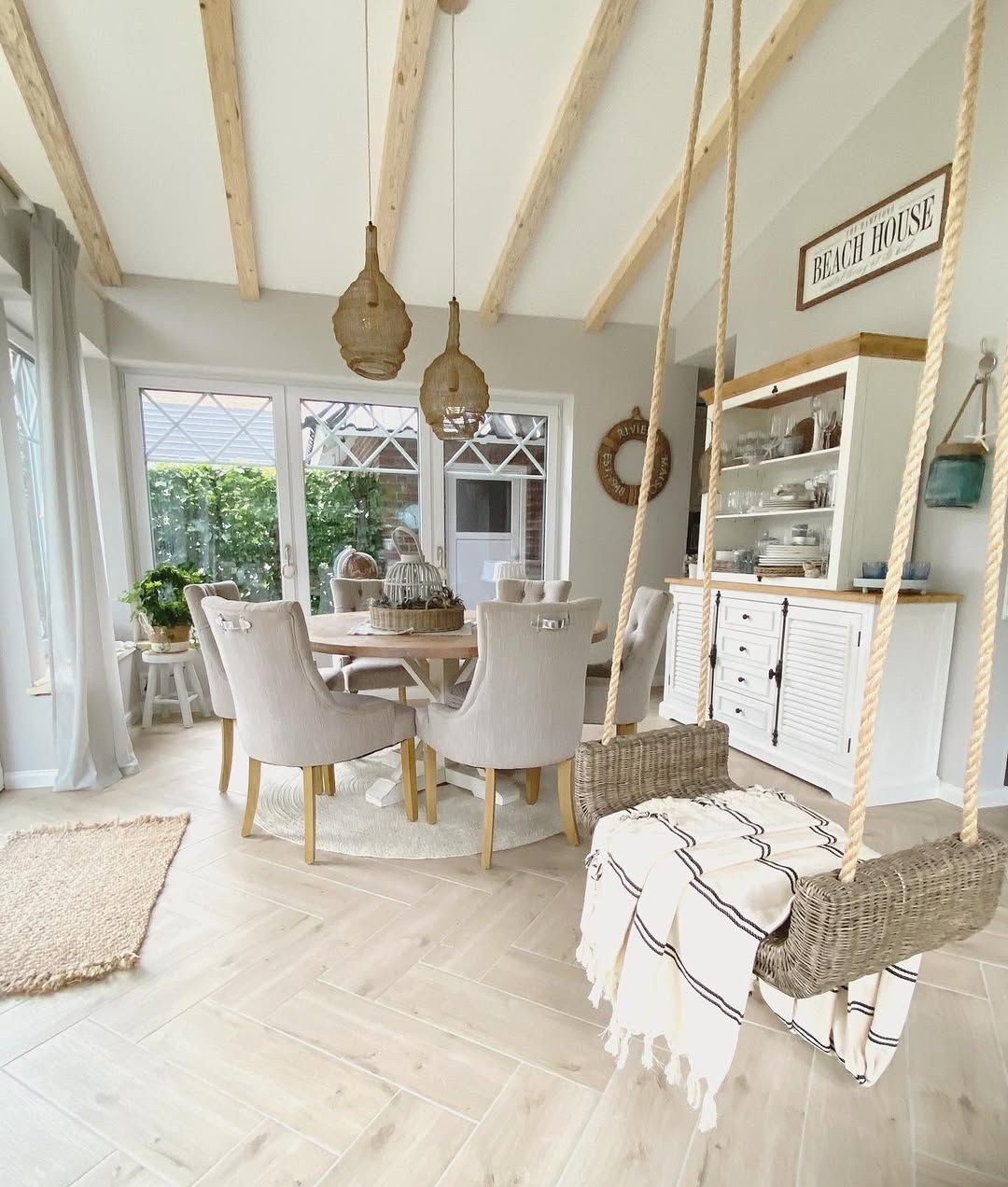
8. Add a Playful Touch with a Rattan Swing Chair
A hanging swing chair is a fantastic focal point, but installation isn’t as simple as hanging a picture. It must be anchored into a ceiling joist, not just drywall. If your desired location is between joists, you’ll need to open the ceiling to install solid wood blocking. This is a job for a professional handyman or contractor to ensure safety. Furthermore, consider the swing radius. You need at least a 3-foot clearance in all directions from the chair’s outermost edge to avoid hitting walls, windows, or furniture.
|
📋 Copy HEX 🔗 Share |
- Furniture (Table, Chairs, Hutch): $2,500 – $6,000
- Lighting (Woven Pendants): $400 – $1,200
- Swing Chair: $300 – $900
- Flooring (Herringbone Wood): $3,000 – $7,000 (for a 150 sq ft area)
- Decor & Accessories: $200 – $500
- TOTAL: $6,400 – $15,600
Budget alternative: Get a similar vibe for about 40% less by using a standard wood floor, sourcing a dining set from a mid-range store like West Elm or Crate & Barrel, and finding a similar swing chair on Wayfair or Overstock.
9. Combine a Woven Bed with Light Blue Paneled Walls
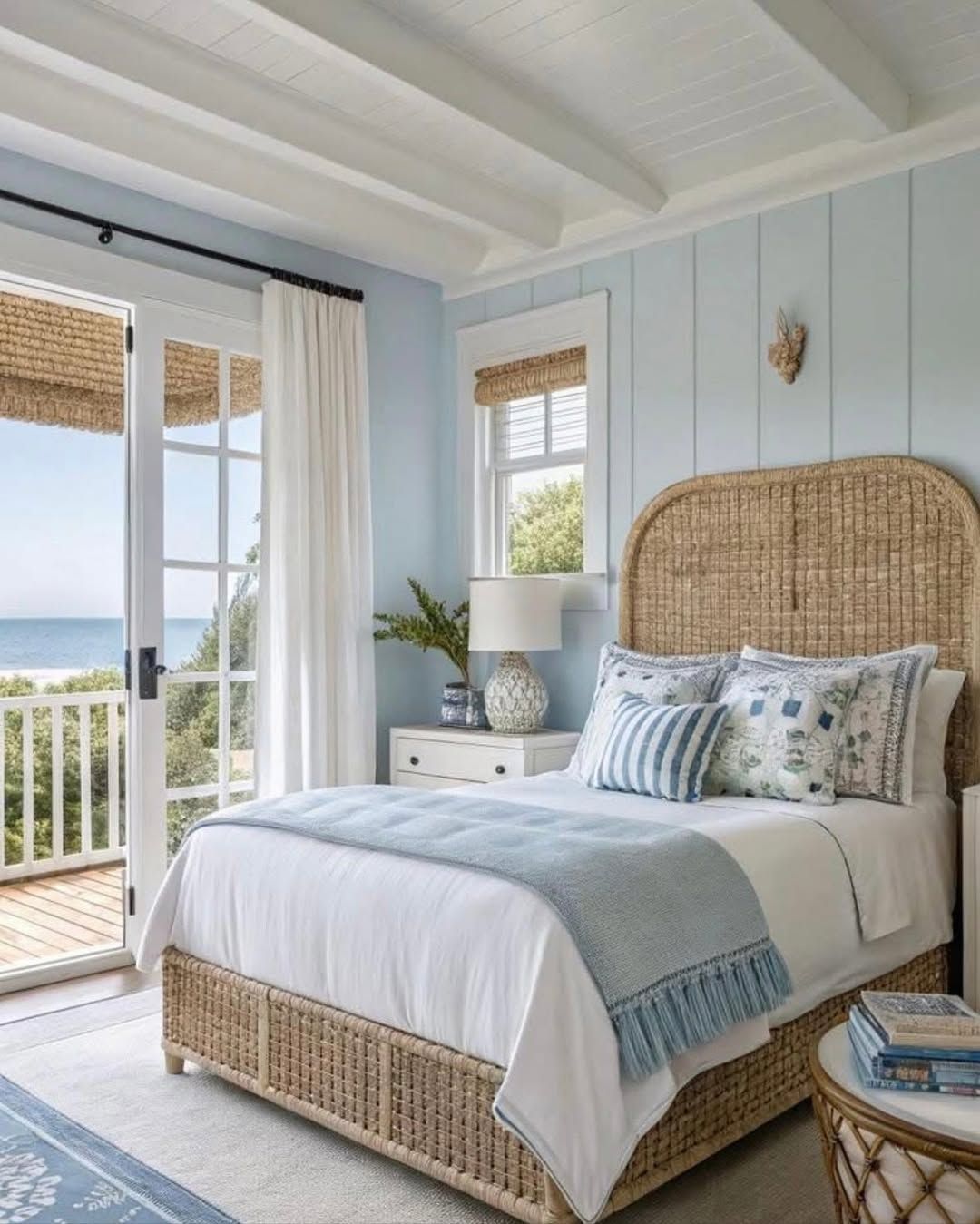
This bedroom feels so peaceful because of the harmony between color and texture. The light blue of the paneled wall is a classic coastal hue that visually recedes, making the space feel larger and more open. The natural woven material of the bed frame and headboard pushes forward, adding warmth and tactile interest. This push-and-pull between the cool, smooth wall and the warm, textured bed is what creates that perfect sense of serene balance. The white beamed ceiling then acts as a bright, crisp frame for the entire composition.
|
📋 Copy HEX 🔗 Share |
This design shines in a primary bedroom with generous dimensions, ideally 14×16 feet or larger, which allows the king-sized woven bed to be the star without overwhelming the space. A ceiling height of 9 feet or more is recommended to accommodate the beamed detail. The success of the look also depends on having a significant source of natural light, like the large glass doors shown, to keep the light blue from feeling gloomy. For a smaller room, consider a queen bed and omit the ceiling beams.
10. Mix Cane, Brass, and Wood for an Elegant Coastal Room
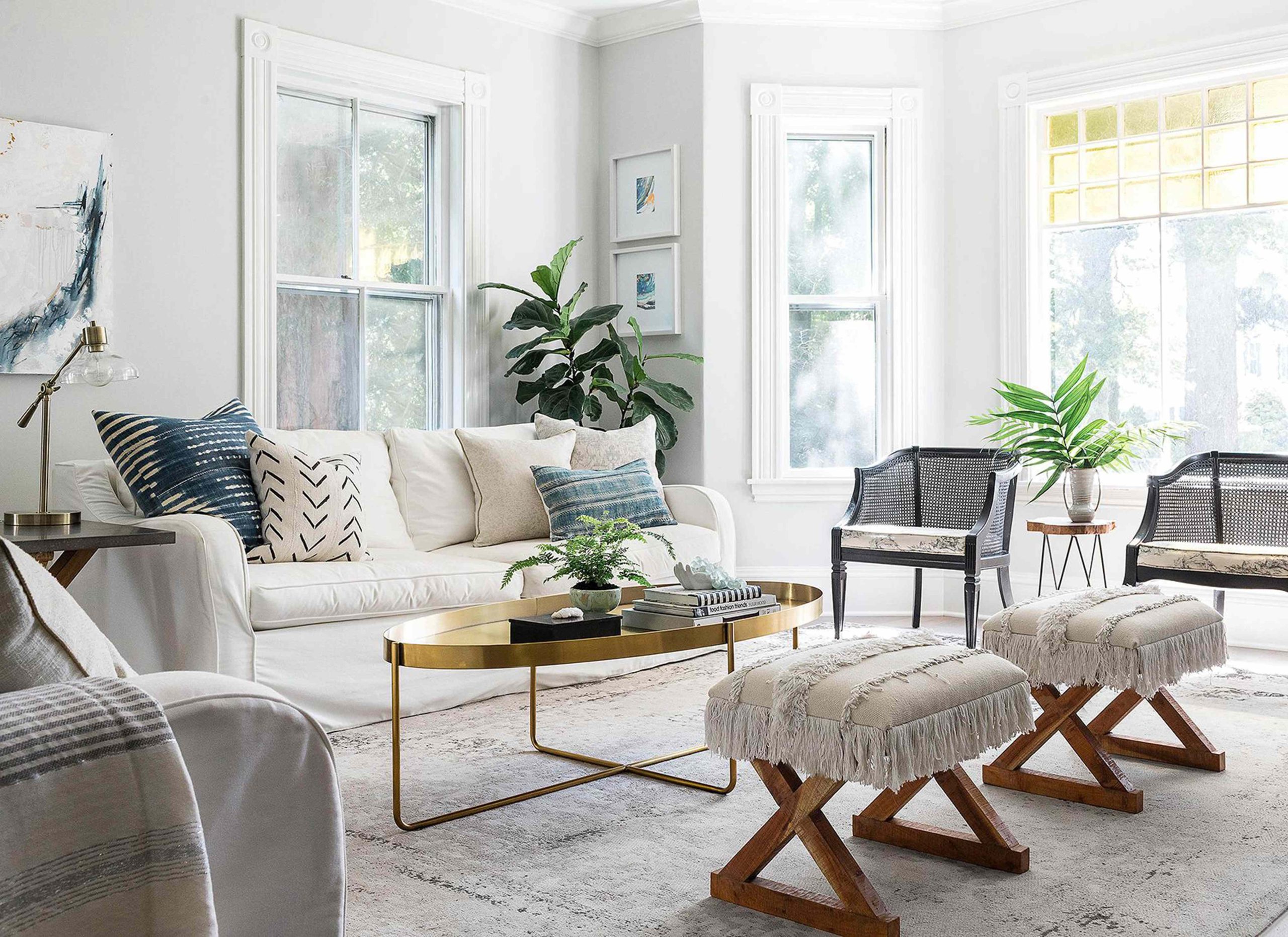
Here’s the recipe for this effortlessly chic space: Start with a 70% neutral foundation—the white sofa, light gray walls, and pale rug. Then, introduce 20% natural wood and cane elements through the accent chairs. This adds warmth and a relaxed, slightly retro vibe. Finally, sprinkle in 10% metallic shine with brass or gold accents, like the coffee table and lamp. This last touch is what elevates the room from simply ‘beachy’ to ‘coastal elegant. ‘You could swap the specific pieces, but sticking to this 70/20/10 ratio will always yield a balanced result.
|
📋 Copy HEX 🔗 Share |
When mixing wood tones in a single room, find a common thread. In this space, both the dark wood of the cane chairs and the lighter wood of the ottoman bases share a warm undertone. This prevents them from clashing. A good guideline is to stick to either all warm-toned woods (like oak, teak, and mahogany) or all cool-toned woods (like ash, maple, or gray-washed finishes). Don’t be afraid to mix light and dark, as long as the underlying temperature is consistent.
11. Energize a Neutral Room with Bright Orange Accents
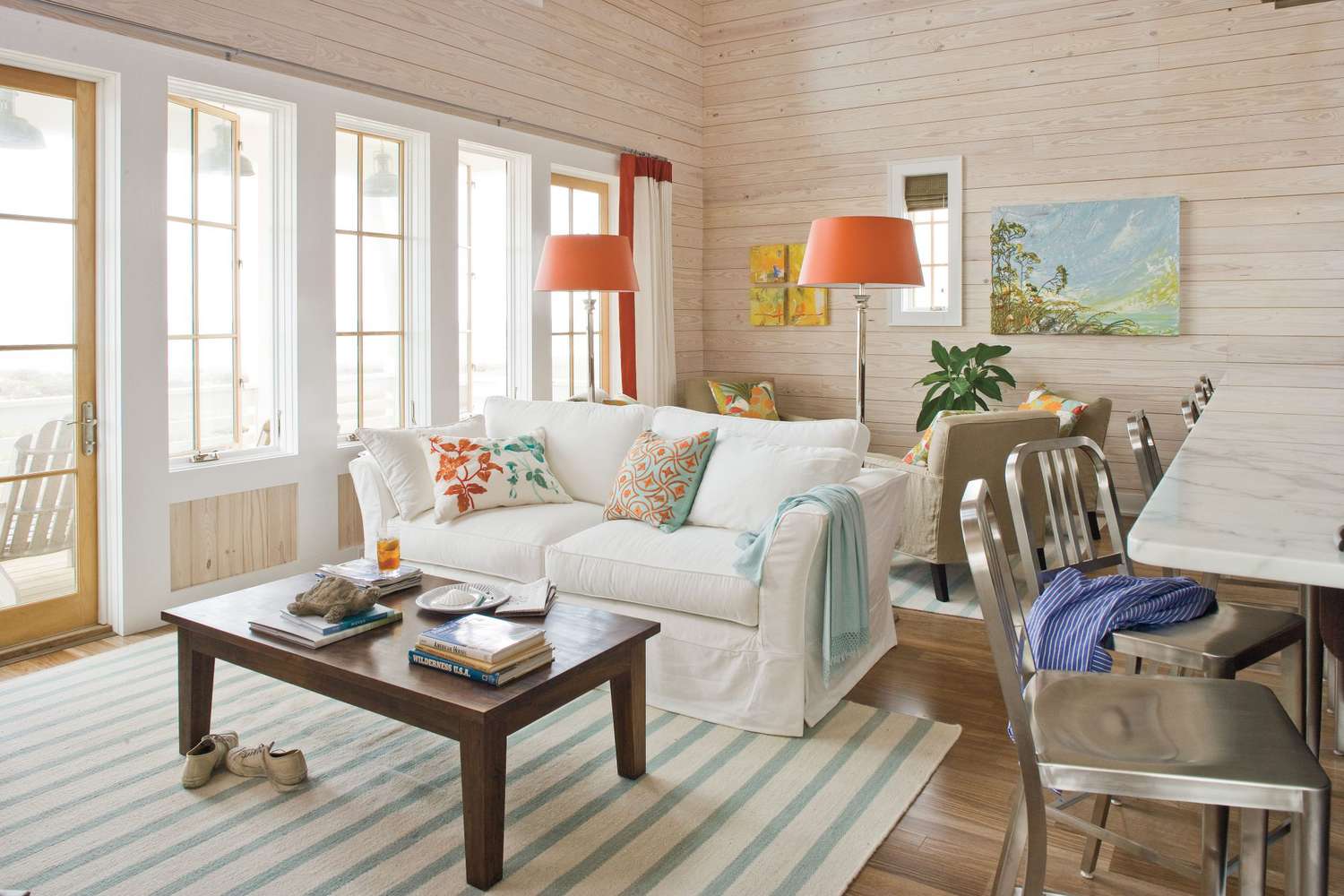
The secret ingredient here is undeniably the splash of vibrant orange. Without the bold floor lamp shades and corresponding pillows, this would be a perfectly lovely, neutral room with shiplap walls. It would be calm and coastal, but perhaps a bit predictable. The orange injects a dose of unexpected energy and personality. It demonstrates that coastal decor doesn’t have to be limited to blues and whites. This pop of citrusy color feels modern, confident, and joyful, completely transforming the mood of the space.
|
📋 Copy HEX 🔗 Share |
While those light wood plank walls are stunning, they can be a polarizing choice for resale. Some buyers will love the beachy, informal character, while others might see it as dated or too style-specific. If you’re planning to sell in the next few years, consider achieving a similar look with a high-quality, paintable textured wallpaper that mimics shiplap. It gives you the look now but is much easier for you or a future owner to remove if tastes change. True shiplap is a much bigger commitment.
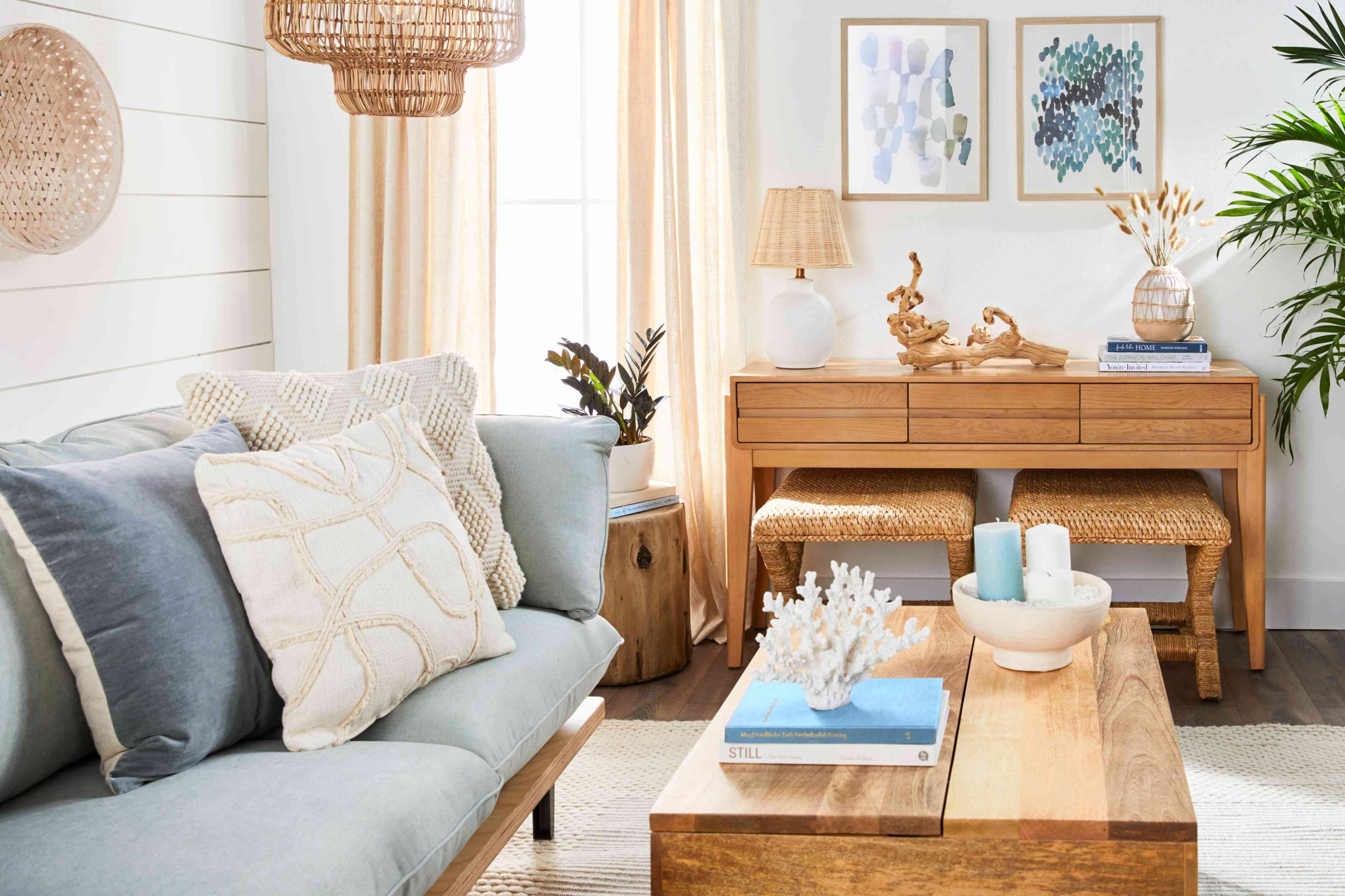
12. Center Your Living Area Around a Woven Pendant Light
What makes this room feel so cohesive is the repetition of texture and color. The large woven chandelier is the star, and its natural, fibrous texture is echoed in the woven detail on the console table and the nubby weave of the throw pillows. The abstract artwork and the darker blues of the pillows echo the light blue of the sofa. This thoughtful repetition creates rhythm and harmony, guiding your eye around the room and making the entire design feel intentional and complete, not just a collection of random items.
|
📋 Copy HEX 🔗 Share |
You can get this breezy look without a designer price tag. Start with a light blue sofa from a direct-to-consumer brand like Article or Albany Park ($1,200-$1,800). The real hero, the woven chandelier, has great affordable alternatives at places like World Market or IKEA, often for under $150. For art, browse Society6 or Minted for abstract prints, and finish the look with pillow covers from H&M Home or Zara Home. You can achieve this entire vibe for well under $3,000, which is significantly less than the high-end version.
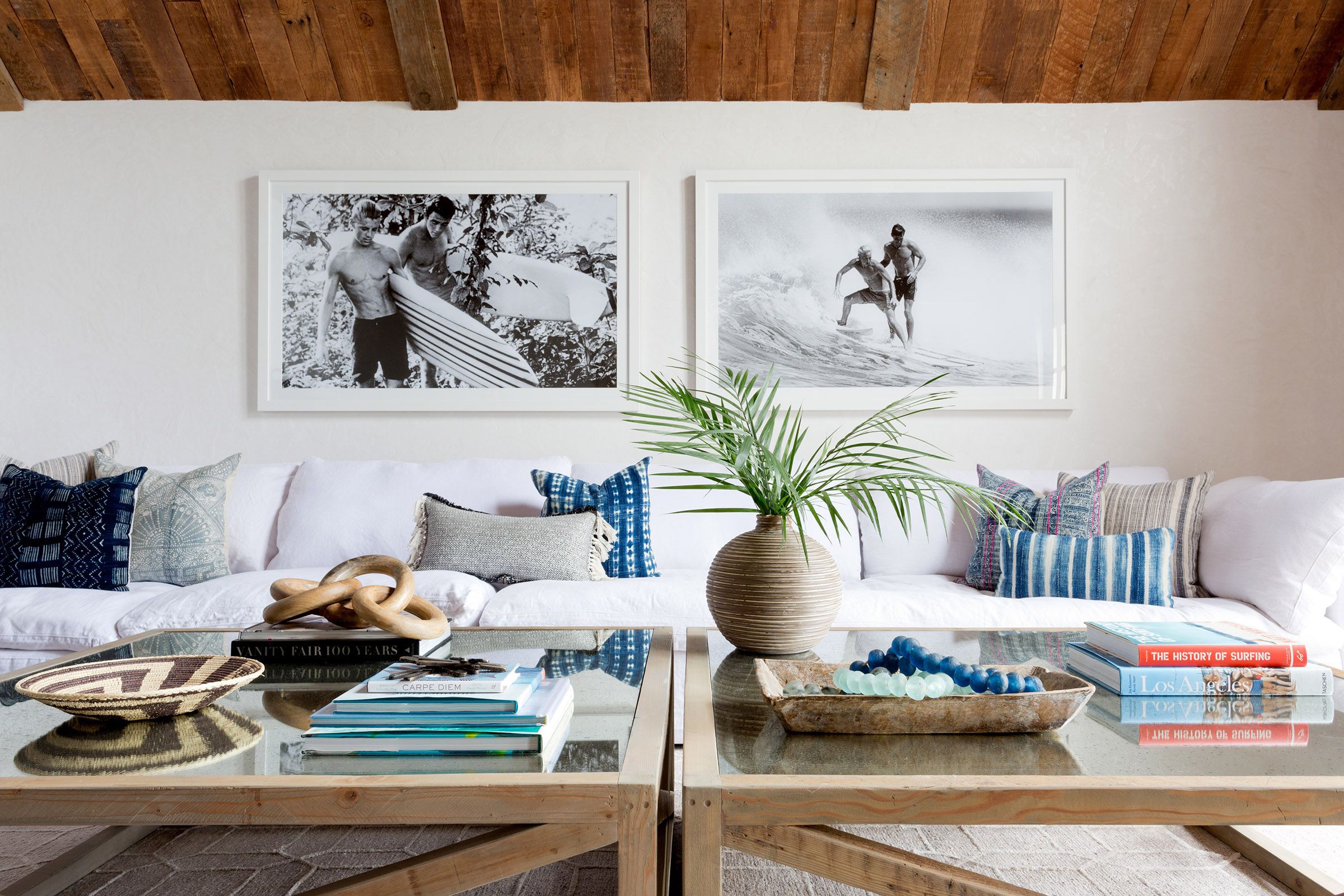
13. Try a Bohemian Vibe with Surf Art and Raw Wood
This look taps into the growing “Coastal Cowboy” and “California Cool” aesthetics, which blend laid-back beach culture with rustic, natural elements. It’s less about pristine Hamptons style and more about an authentic, lived-in feel. The raw wood coffee tables and rustic plank ceiling provide an earthy base, while the black and white surf photography brings in a touch of edgy, artistic soul. It’s a style that celebrates natural materials and personal hobbies, making a space feel both stylish and deeply personal.
|
📋 Copy HEX 🔗 Share |
To make two coffee tables work together in a single seating area, vary their height and overlap them slightly. Place the taller table slightly behind the shorter one, creating a layered, more dynamic surface. This arrangement is more visually interesting than placing them side-by-side, and it’s also more practical, allowing you to dedicate one surface to decor (like the books and vase) and keep the other free for drinks or a laptop. This works best with tables that have a transparent or visually light top, like the glass shown here.
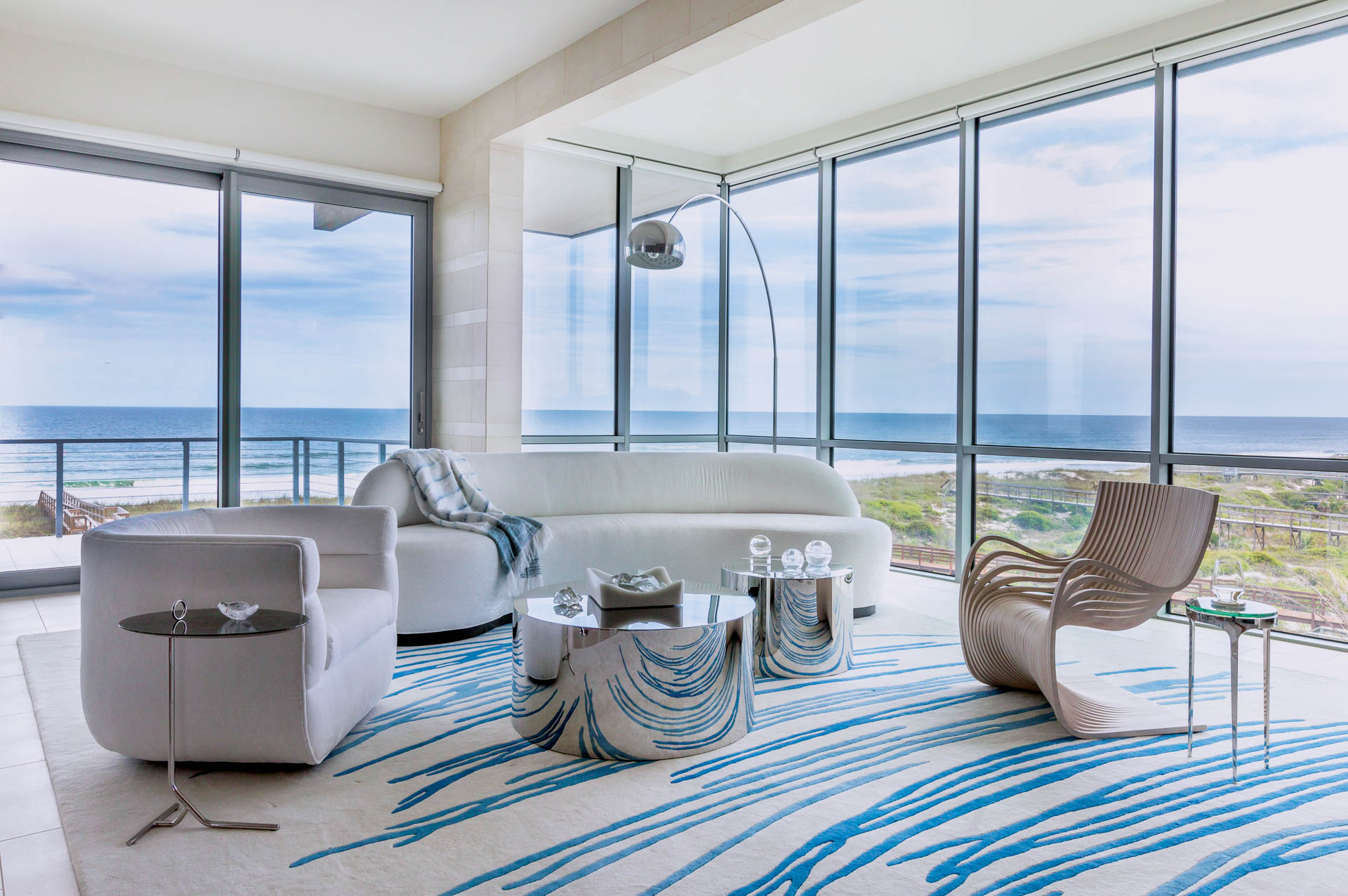
14. Mirror the Ocean with a Wavy Rug and Curved Sofa
The single element that makes this room extraordinary is the rug. The organic, wavy blue lines on the white background are a brilliant abstraction of the ocean currents just beyond the window. It connects the interior to the exterior in a way that is both clever and beautiful. The curved sofa and the lines in the rug work together to make the room feel like it’s always moving in a gentle way. Without that specific rug, the room would lose its central design concept and its powerful connection to the view.
|
📋 Copy HEX 🔗 Share |
A pristine white rug and a white sofa in a high-traffic living area with floor-to-ceiling windows are high-maintenance choices. Even with professional fabric protection, you’ll need a strict “no shoes, no dark-colored food or drink” policy. The sheer amount of sunlight also poses a risk of yellowing over time for both the rug and upholstery. Regular professional cleaning (at least twice a year, costing $200-$400) will be essential to keep this space looking its best. Consider a rug with a slightly mottled or heathered white background to better hide minor spots between cleanings.
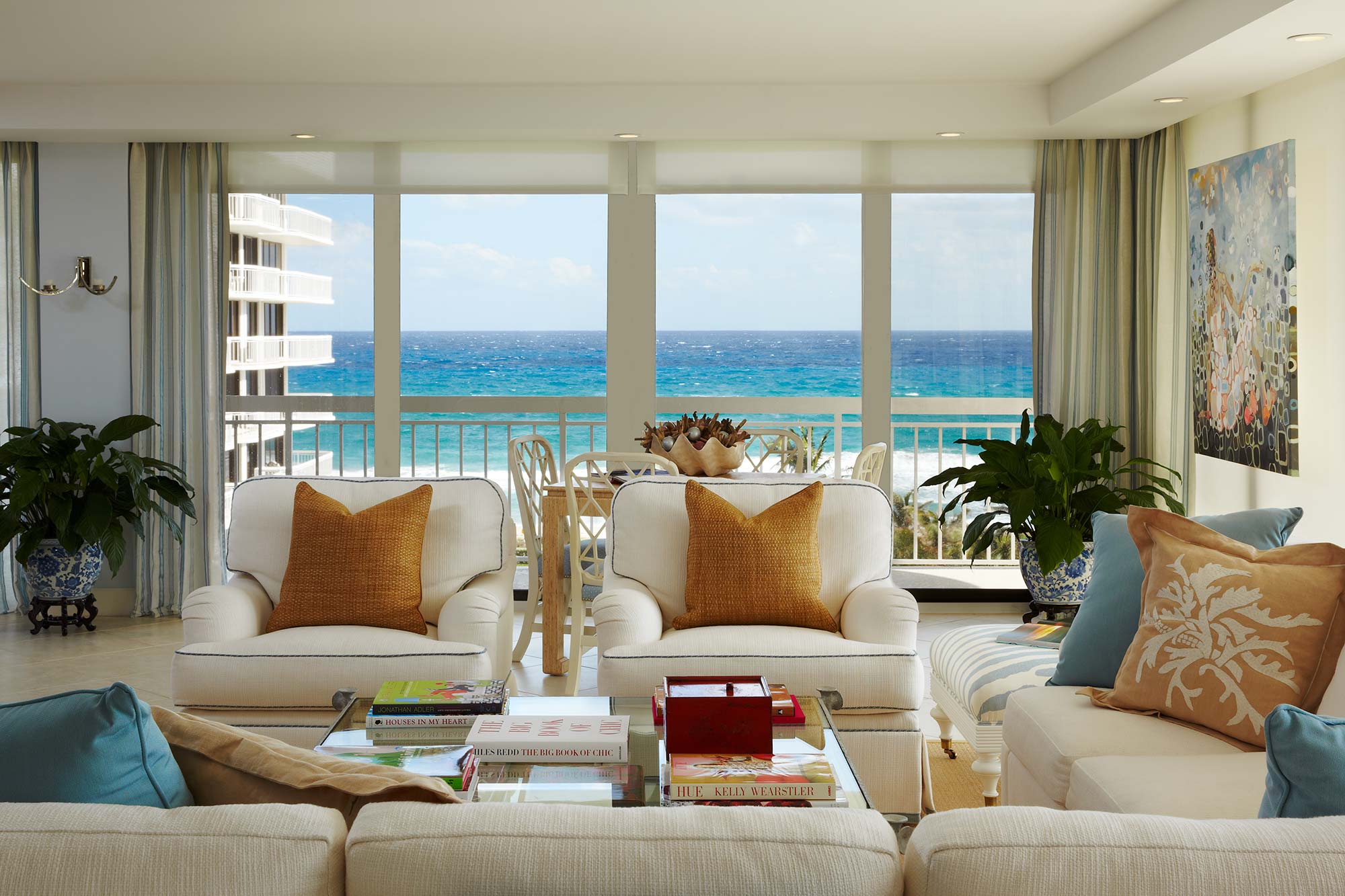
15. Frame an Ocean Vista with Blue and White Striped Curtains
This room is a masterclass in using decor to enhance a view, not compete with it. The blue and white striped curtains are a classic coastal motif, but here they serve a specific purpose: they act like arrows, with their vertical lines drawing the eye outwards towards the horizontal expanse of the ocean. The color palette inside—white, cream, and various shades of blue and gold—is directly pulled from the scene outside, creating a seamless transition between the indoor and outdoor environments. The result is a space that feels completely integrated with its stunning location.
|
📋 Copy HEX 🔗 Share |
Achieve this bright and breezy look for a fraction of the cost. A comfortable cream or white sofa can be found at Wayfair or Overstock for under $1,200. The key players—the striped curtains—are widely available at affordable prices from retailers like Amazon, Target, or IKEA; look for pairs under $60. For pillows, hunt for gold and blue covers on Etsy or at HomeGoods. A simple glass coffee table from a store like Walmart or on Facebook Marketplace can complete the look for under $100. This is the perfect example of how textiles can define a space and is a much more affordable route than buying all new furniture.
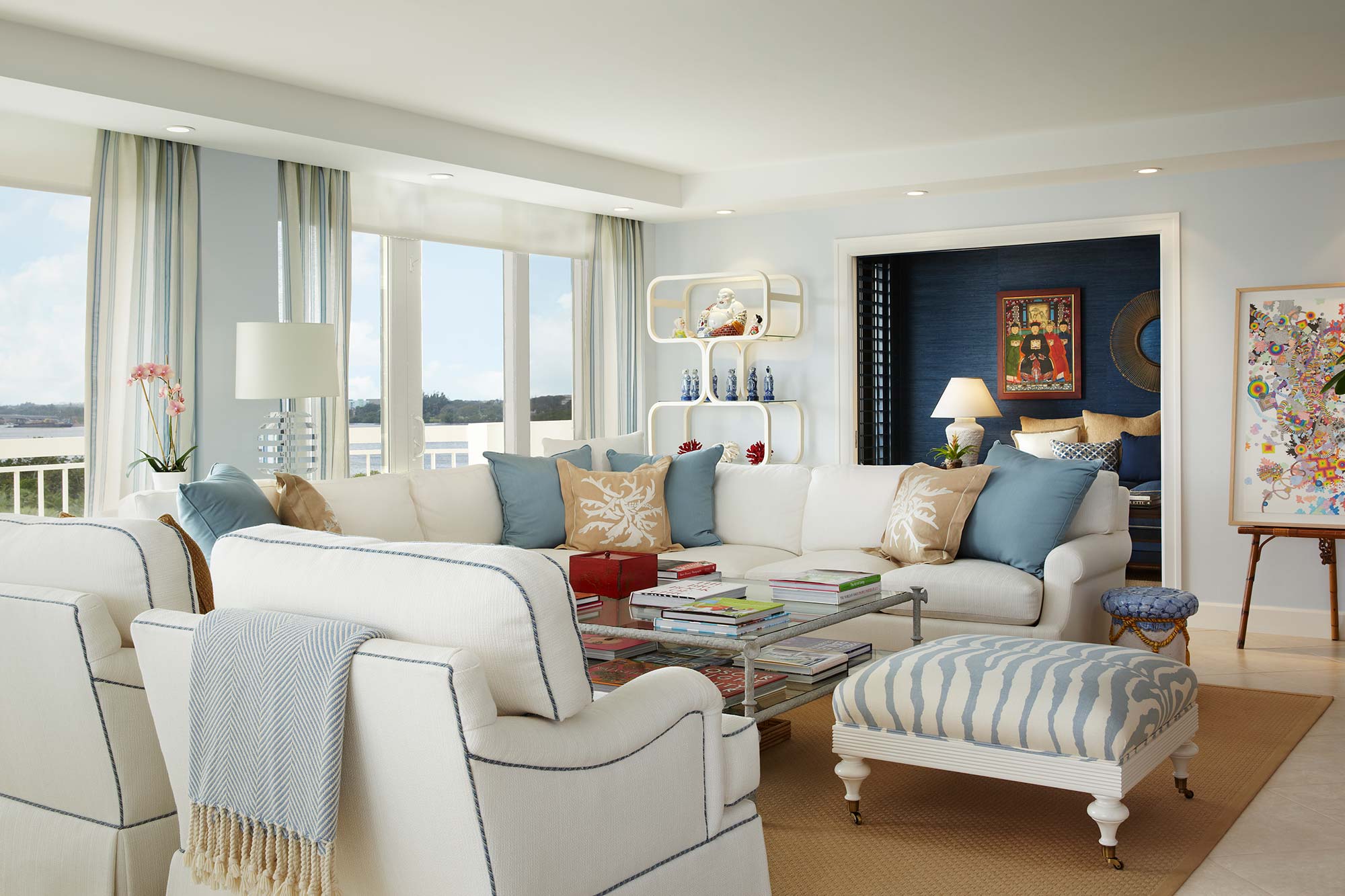
16. Coordinate a Sectional and Armchairs with Blue Piping
A patterned ottoman can be the perfect piece to tie a large seating area together. Here’s how to choose the right one. Time: 1-2 hours of shopping. Cost: $300-$900.
- First, measure your space. The ottoman should be no more than two-thirds the length of your sofa.
- Choose a pattern that includes the main colors of your room (here, light blue and white) but introduces them in a new scale or style.
- Consider the height. For comfortable footrest, the ottoman should be the same height as your sofa seats or 1-2 inches lower.
- Select a durable, stain-resistant fabric, especially if you plan to use it as a coffee table or for extra seating.
- Don’t be afraid to go bold! In a room with solid-colored furniture, the ottoman is your chance to add a major dose of personality.
|
📋 Copy HEX 🔗 Share |
While a matching set of a sofa and armchairs can create a very cohesive look, it can also feel a bit dated or like it came straight from a showroom floor. The key to making it work here is the eclectic mix of pillows and the patterned ottoman, which break up the monotony. If you’re considering a matching set, be prepared to put in the effort to style it with unique textiles, art, and accessories to give the room your own personal stamp. Otherwise, it can lack the curated, collected feel that makes a design truly special. Compare this style to the more mixed-and-matched approach in Idea #10.
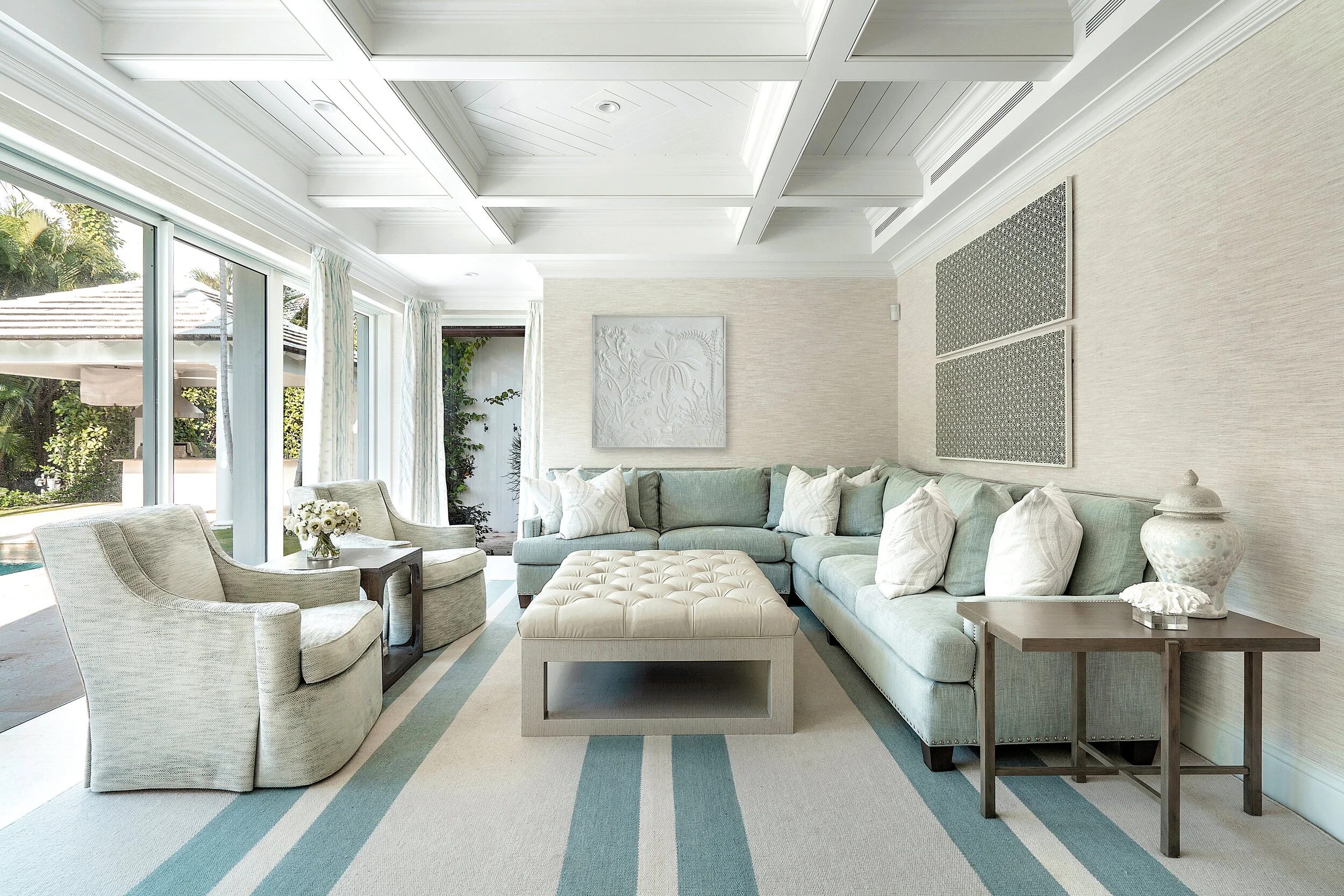
17. Use a Large Aqua Sectional for a Pop of Soft Color
This design is ideal for a large, open-plan living or family room, at least 20×25 feet. The substantial aqua sectional requires significant floor space to breathe. The coffered ceiling adds volume, so a ceiling height of 10 feet or more is crucial to avoid the room feeling top-heavy. The success of this look hinges on having ample natural light from large doors or windows to keep the soft aqua and beige tones bright and prevent them from looking muddy. This is not a look for a small, enclosed condo living room.
|
📋 Copy HEX 🔗 Share |
This room follows a sophisticated 80/20 formula. The foundation, about 80% of the room, is composed of soft, low-contrast neutrals: white ceilings, beige walls, a light-colored rug, and pale chairs. This creates a calm, expansive backdrop. The remaining 20% is dedicated to a single, impactful statement piece: the large aqua sectional. By concentrating the color in one main element, the sofa becomes a dramatic focal point without overwhelming the serene atmosphere. It’s a confident but controlled use of color.
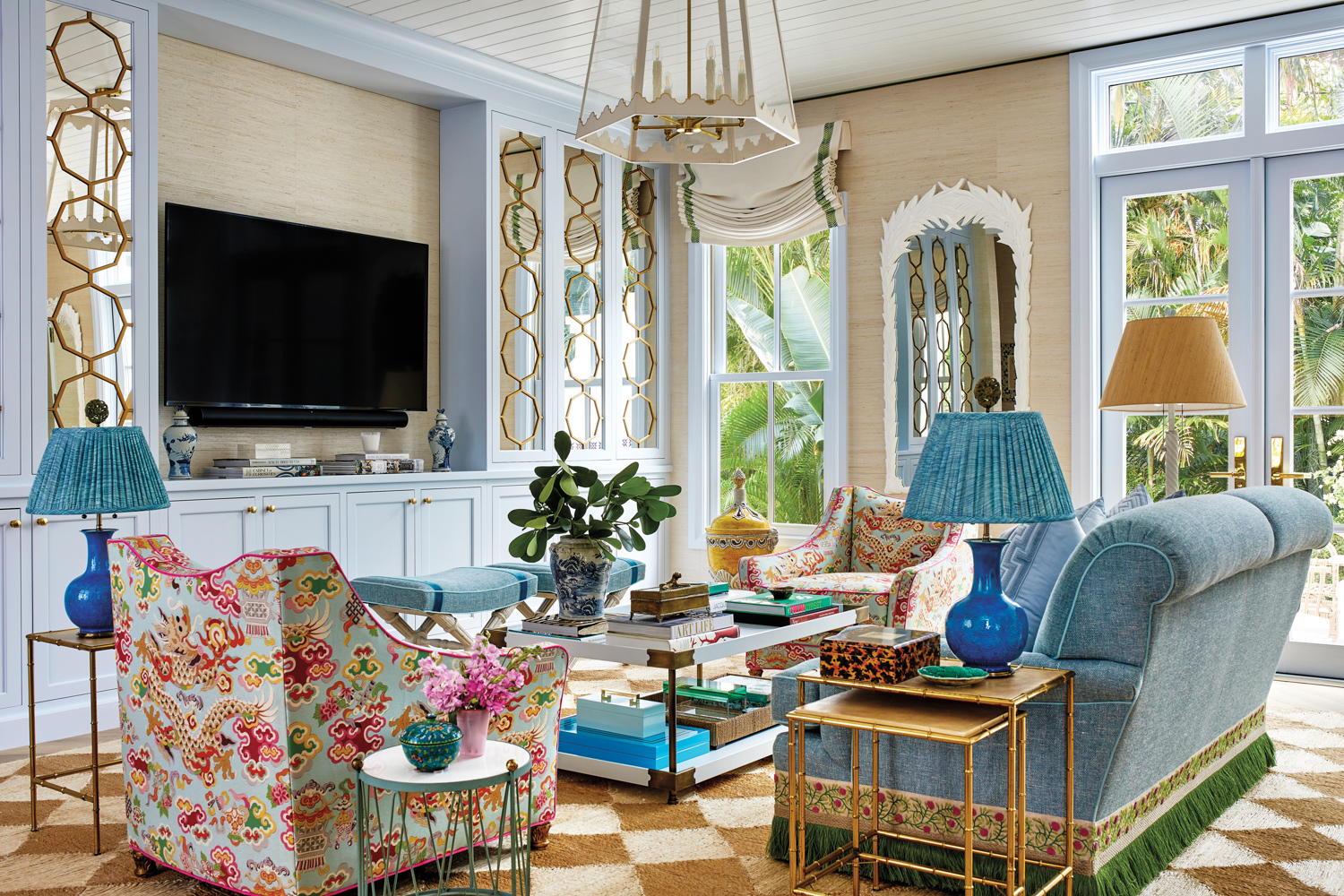
18. Embrace Eclectic Coastal with Chinoiserie and Patterned Chairs
The soul of this room is unquestionably the pair of armchairs. Upholstered in a vibrant, multi-colored fabric featuring dragons and clouds, they are a bold and unexpected choice for a coastal setting. They defy convention and announce that the room is a space for personality, not just quiet neutrals. The chairs inject a dose of worldly, eclectic Chinoiserie charm that elevates the entire design. Without them, the room would be a pleasant but far more predictable light blue living area.
|
📋 Copy HEX 🔗 Share |
This look is part of the “Grandmillennial” trend, a style that blends traditional design elements (like chinoiserie, fringed upholstery, and built-in cabinetry) with a fresh, modern sensibility. It’s a rebellion against years of minimalist, all-white interiors. Homeowners are craving spaces that feel layered, personal, and full of stories. This eclectic approach allows for the mixing of patterns and styles in a way that feels curated and unique, which is why it has such strong appeal right now.
19. Layer White-on-White Textures for a Serene Beach House Feel
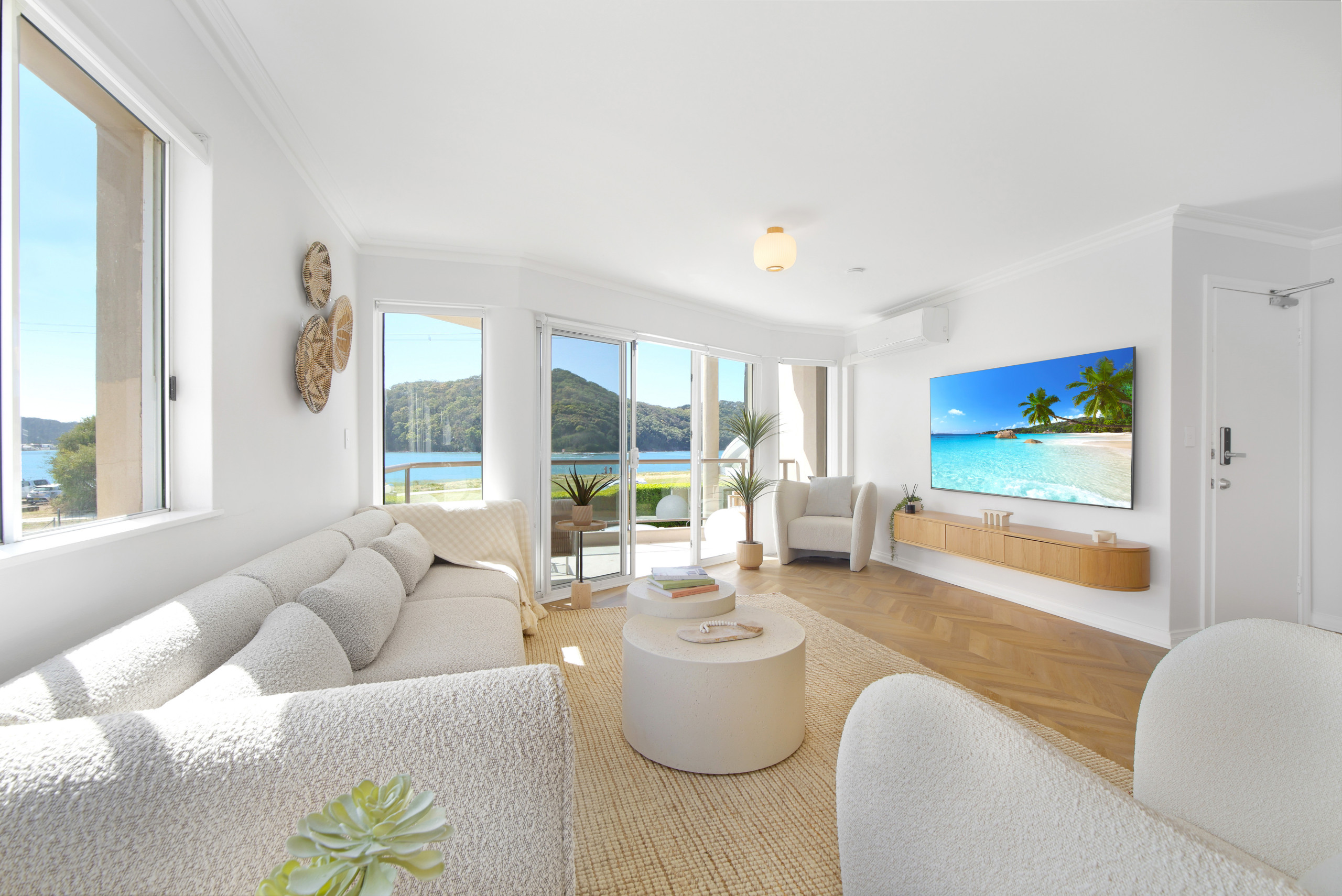
This monochromatic space works because it’s a symphony of textures. You have the bumpy, tactile weave of the white sofa and armchairs, the smooth coolness of the concrete coffee tables, the rustic fibers of the jute rug and woven wall plates, and the sleekness of the glass doors. This rich textural variety prevents the all-white palette from feeling flat, sterile, or boring. Your eye stays engaged by traveling over the different surfaces. It proves that a room doesn’t need a lot of color to have a lot of depth and interest.
|
📋 Copy HEX 🔗 Share |
Before committing to a primarily white living space, consider these factors:
- Lifestyle: Are children, pets, or frequent entertaining a part of your life? If so, investing in high-performance, stain-resistant fabrics is non-negotiable.
- Natural Light: White rooms absolutely depend on abundant natural light to feel warm and inviting. In a north-facing or dark room, this look can feel cold and clinical.
- Commitment to Cleaning: White floors and rugs show every speck of dirt. Are you prepared for more frequent vacuuming and mopping?
- The Right White: Test at least five different shades of white paint. Look for a warm white with creamy undertones to avoid a sterile, gallery-like feel.
20. Pair a Tan Sectional with Bold Navy Blue Built-ins
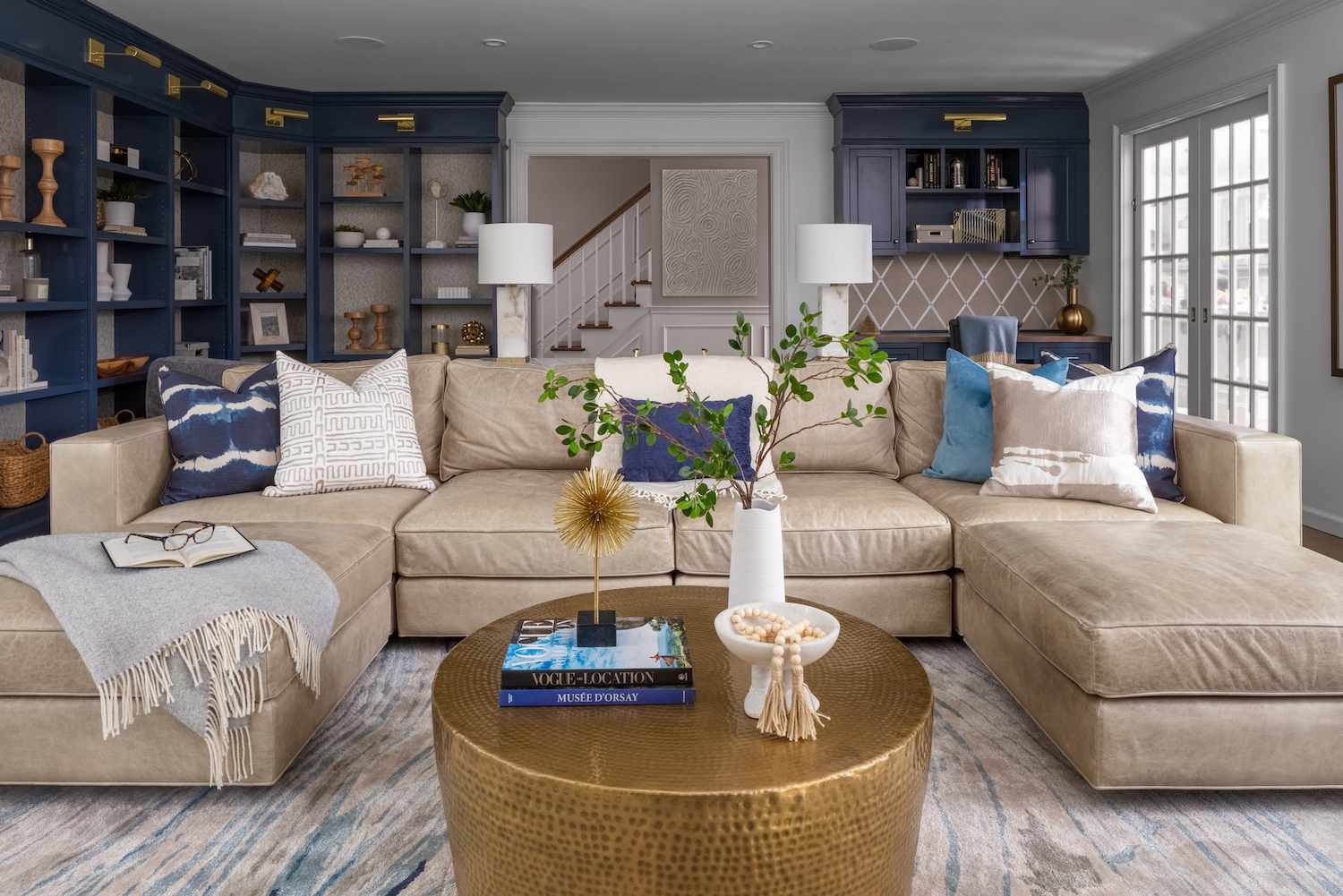
When using a dark, dramatic color like navy for built-in shelving, the finish is everything. Opt for a satin or semi-gloss sheen over a matte finish. The subtle light reflection from a satin finish will help define the lines of the cabinetry and prevent the large, dark mass from feeling flat or heavy. It also adds a touch of luxe and makes the surfaces much easier to wipe down and keep clean compared to a porous matte paint, which tends to grab dust and show fingerprints.
|
📋 Copy HEX 🔗 Share |
- Large Sectional Sofa: $3,000 – $8,000
- Custom Built-in Shelving: $5,000 – $15,000+
- Coffee Table (Hammered Gold): $500 – $1,500
- Lighting (Lamps and Shades): $400 – $1,000
- Textiles (Rug & Pillows): $800 – $2,500
- TOTAL: $9,700 – $28,000
Budget alternative: Get this look for 60% less by using freestanding navy bookcases from a store like IKEA or Crate & Barrel. Find a more affordable tan sectional and a gold-toned coffee table from Wayfair or Article. The custom built-in is the biggest cost, so this area is the most effective place to save.
21. Create a Warm, Neutral Base with Light Shiplap Walls
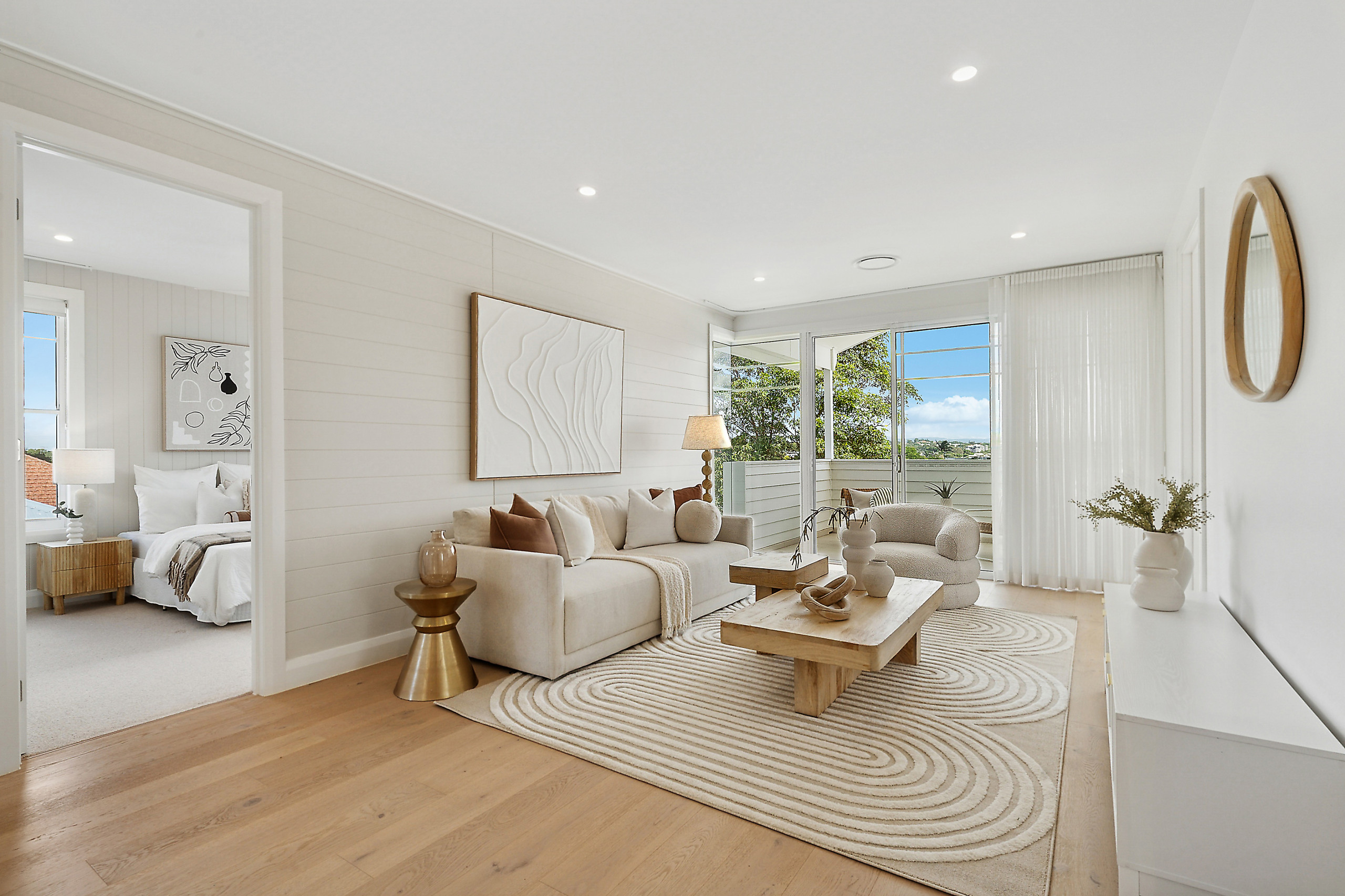
The formula for this warm and inviting space is all about subtle layering. It’s about 70% light neutrals (the cream sofa, off-white rug, and sheer curtains), 20% natural wood tones (the light shiplap, flooring, and coffee table), and 10% earthy accents (the terracotta and gold pillows and the 3D art). The key is that the two largest components—the neutrals and the wood—are very close in tone, creating a low-contrast, seamless backdrop that feels incredibly calming and cohesive.
|
📋 Copy HEX 🔗 Share |
The single element holding this entire room together is the light-toned wood shiplap. It sets the stage for everything else. It provides a touch of rustic, coastal texture without being overpowering. If the walls were plain white drywall, the room would feel much less special and far more generic. The shiplap infuses the space with architectural character and a warm, natural quality that perfectly complements the soft furnishings and earthy accent colors. It’s the foundation of the room’s entire personality.
22. Embrace Open-Plan Living with a Vaulted Ceiling and Exposed Beams
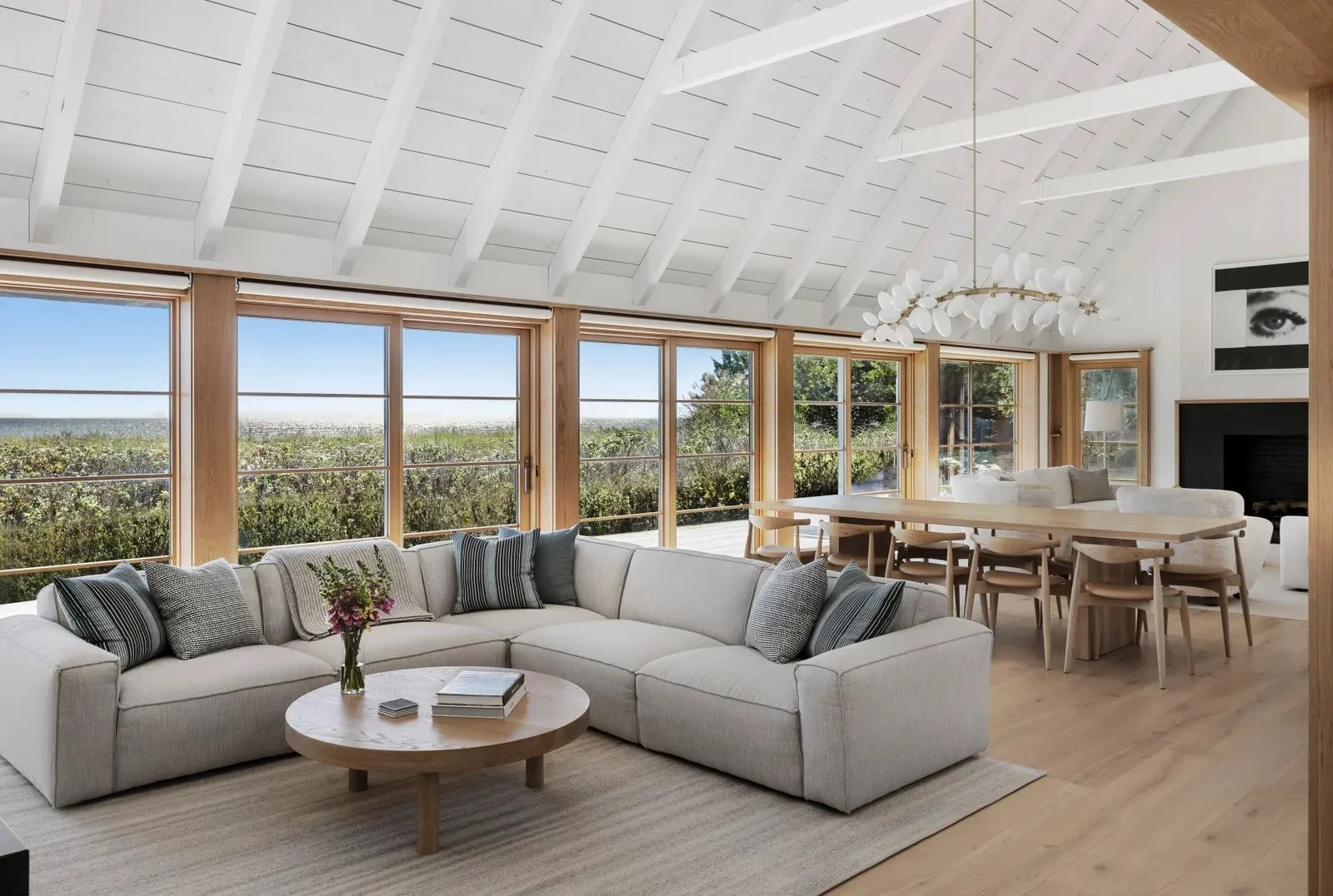
This expansive look is designed for homes with spacious rooms or open-plan layouts measuring at least 400-500 square feet. The vaulted ceiling is the key feature, requiring a roof structure that allows for it; this alteration is not a simple cosmetic change. A minimum peak ceiling height of 15 feet is needed to achieve this dramatic effect. While the furniture pieces are substantial, they are intentionally kept low-profile to avoid competing with the incredible sense of volume and the exterior view. This design is a celebration of architectural space.
|
📋 Copy HEX 🔗 Share |
This design succeeds by creating distinct “zones” within a large, open space. The large sectional and rug clearly define the living area, while the long table and chandelier delineate the dining space. The consistent use of light wood and a neutral color palette across both zones ensures they feel connected and part of a whole. The exposed white beams overhead further unify the entire room, drawing the eye up and enhancing the feeling of one large, cohesive space rather than two separate, disjointed areas.
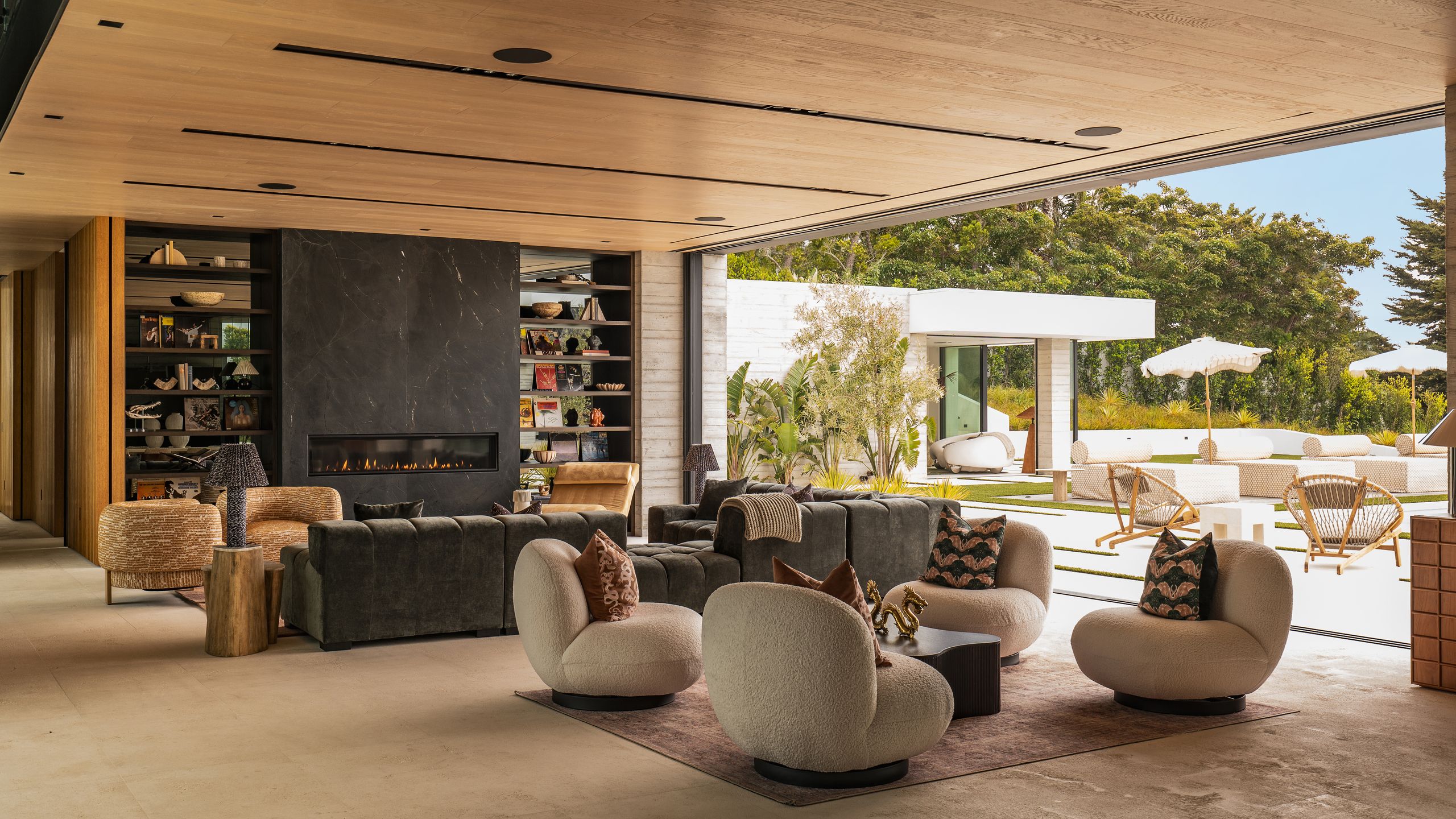
23. Blend Indoor and Outdoor Spaces with Retractable Glass Doors
Seamless indoor-outdoor living is the dream, but it comes with practical considerations. Retractable glass wall systems are a significant investment, often starting at $1,500 to $2,500 per linear foot and requiring major structural work. You also need a perfectly level transition between your interior floor and exterior patio to avoid tripping hazards. Finally, in climates with many insects, you’ll need an accompanying retractable screen system, which adds to the cost and complexity. It’s a luxurious feature, but it’s not a simple weekend project.
|
📋 Copy HEX 🔗 Share |
This kind of architecture is at the forefront of luxury home design for 2026. After years of focusing on creating cozy sanctuaries inside, the trend is now about blurring the boundaries and living more flexibly. This is especially true in climates that allow for it. It represents a shift towards wellness-focused design, where access to fresh air, natural light, and the outdoors is considered a fundamental part of a high-end living experience, rather than just a nice view.
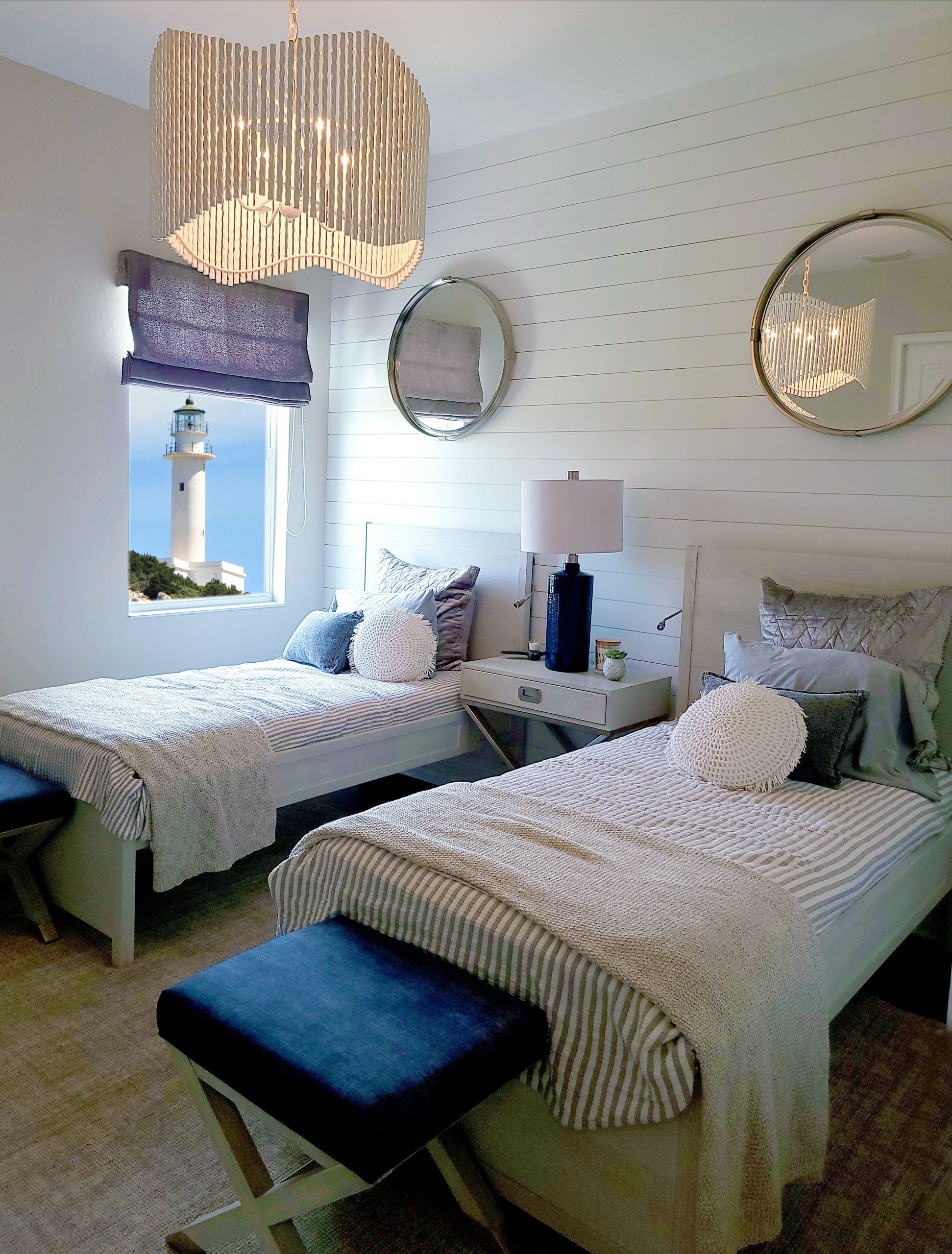
24. Design a Serene Twin Bedroom with a Shiplap Accent Wall
In a symmetrical room with two twin beds, adding a single, off-center element can keep the design from feeling too rigid or predictable. Here, the unique light wood slat chandelier is hung in the center of the room, not centered over either bed. This breaks the perfect symmetry and adds a point of interest that feels more organic and stylish. It’s a small trick that makes a big difference in giving the room a more relaxed, less formulaic designer touch. A similar effect is achieved with the varied, non-matching throw pillows.
|
📋 Copy HEX 🔗 Share |
The room feels so calm and cohesive because it uses a very controlled color palette and repeats key shapes. The design is almost entirely built from white, light gray, and pale blue, with just a few pops of dark blue for accent. This limited palette is inherently restful. Furthermore, the rectangular shape of the shiplap planks is subtly echoed in the headboards and the striped bedding, while the circular shape of the mirrors is repeated in the form of the chandelier, creating a subtle visual harmony.
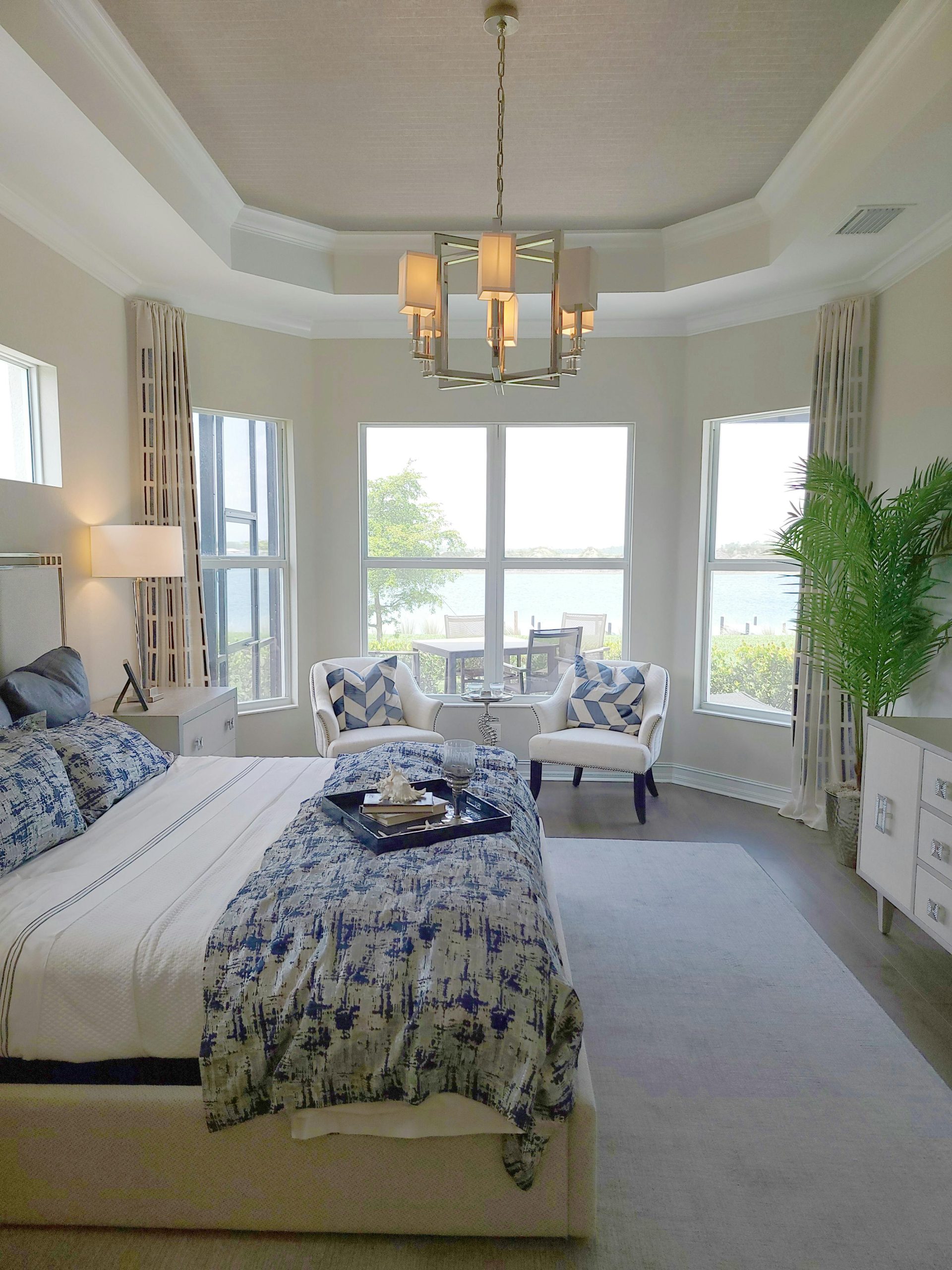
25. Create an Elegant Bedroom Nook in a Bay Window
Turn an unused bay window into a functional and beautiful seating area. Time: 2 hours. Cost: $500 – $2,000+.
- Start by measuring your bay window alcove carefully, noting the angles and depth.
- Select two small-scale armchairs that will fit comfortably without looking cramped. Look for chairs that are around 28-32 inches wide.
- Find a small side table (12-18 inches in diameter) to place between the chairs. a small side table (12-18 inches in diameter) to place between the chairs. It should be slightly lower than the chair arms.
- Anchor the nook with a small rug that fits within the bay, or let the main room’s area rug extend into it.
- Add accessories: two coordinating pillows that tie into your room’s color scheme and a small plant or lamp for the table.
- Finally, ensure your window treatments are functional and offer privacy if needed.
|
📋 Copy HEX 🔗 Share |
This idea works best in a primary bedroom that is at least 15×18 feet, with a dedicated bay window area. The key is having enough space for the seating nook to feel like a destination, not an obstacle you have to walk around. It needs about a 5-foot depth from the window and an 8-foot width to comfortably accommodate two chairs and a table. A similar, more minimalist bedroom layout can be seen in Idea #4, which forgoes the seating to maximize a direct ocean view in a slightly smaller space.
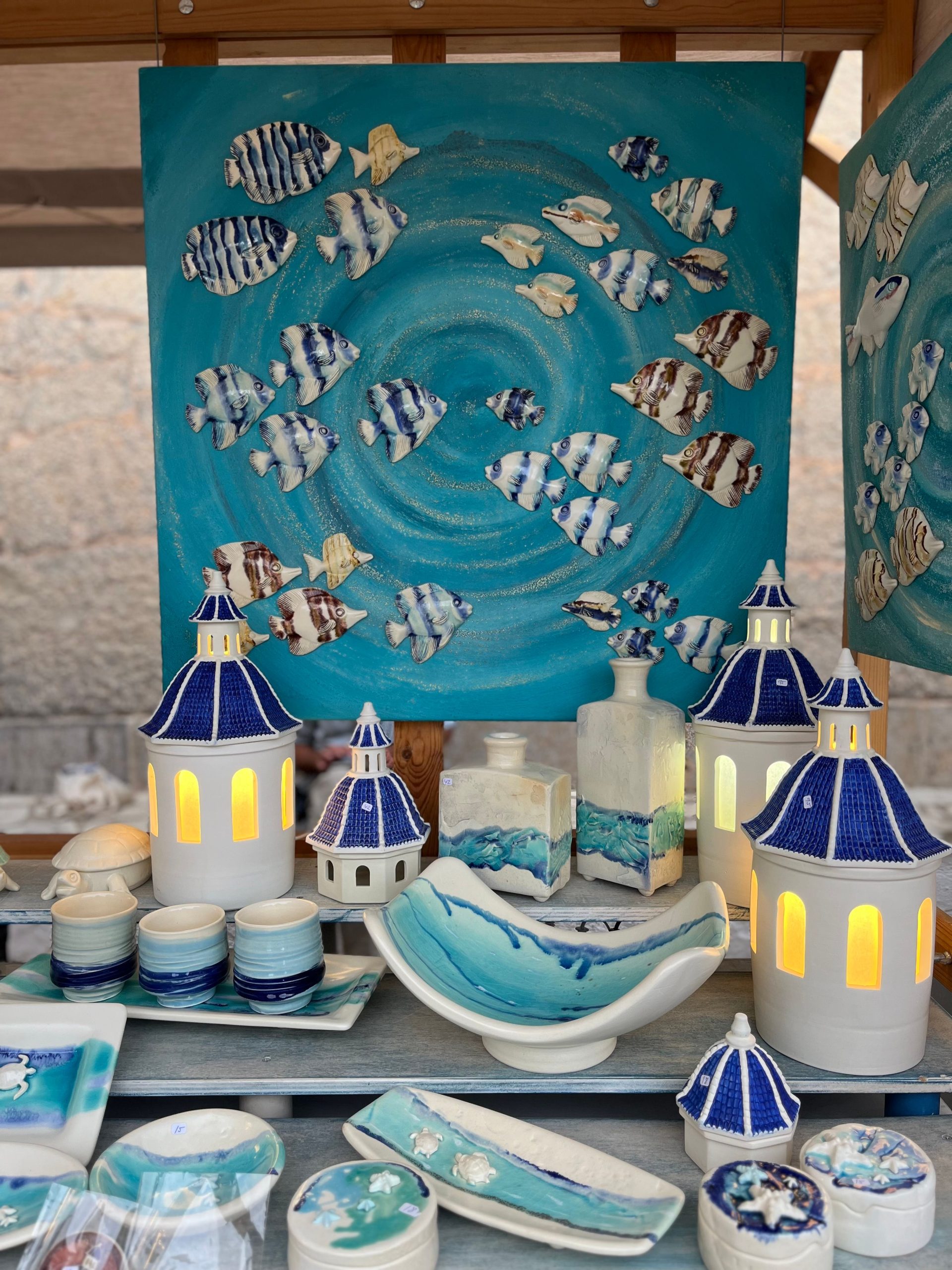
26. Display a Collection of Handmade Coastal Ceramics
This delightful display works because of the power of collection and repetition. A single ceramic fish or one house-shaped lantern might look lonely or kitschy. But grouped together, they become a powerful artistic statement. The display is unified by a tight color palette of blue and white and a consistent, charmingly imperfect handmade quality. The variation in shapes—fish, houses, bowls, cups—keeps the collection captivating and invites you to look closer at each individual piece within the cohesive whole.
|
📋 Copy HEX 🔗 Share |
You can create a similar artisanal display without spending a fortune on original studio pottery. The key is to curate with a strict theme. Visit local art fairs or farmers markets, or browse Etsy for “handmade ceramics.” Look for small, affordable pieces from different artists that share a color scheme (like blue and white) and a general theme (coastal). A small dish might be $25, a cup $30, and a tiny vase $40. Over time, you can build a meaningful collection for a few hundred dollars that looks just as impactful as one large, expensive art piece.
Conclusion
Creating a home that feels like a peaceful escape is what coastal design is all about. Whether you’re drawn to a bright, pattern-filled space or a serene, neutral retreat, you should choose elements that feel authentic to you. Don’t be afraid to mix, match, and personalize these ideas to tell your story.
Feeling inspired? Start a new board on Pinterest and begin saving your favorite looks. This is the first step to turning inspiration into a reality you can come home to every day.