
Let’s be honest, you’ve probably saved a dozen pins for “Concrete Basement Floor Ideas” that are gorgeous but feel totally out of reach. We get it. That’s why we dug through hundreds of real-world projects to find what’s genuinely working for homeowners right now. This isn’t just another gallery of pretty pictures; we’re breaking down 24 distinct, achievable ideas, from raw industrial looks to polished modern finishes. We’ll show you how to get these styles, what they really cost, and why materials like epoxy and stained concrete are becoming the go-to for designers in 2026. And stay until the end — we break down the most common mistakes that can ruin these looks. 📌 Save this to Pinterest for later — you’ll want to revisit these ideas.
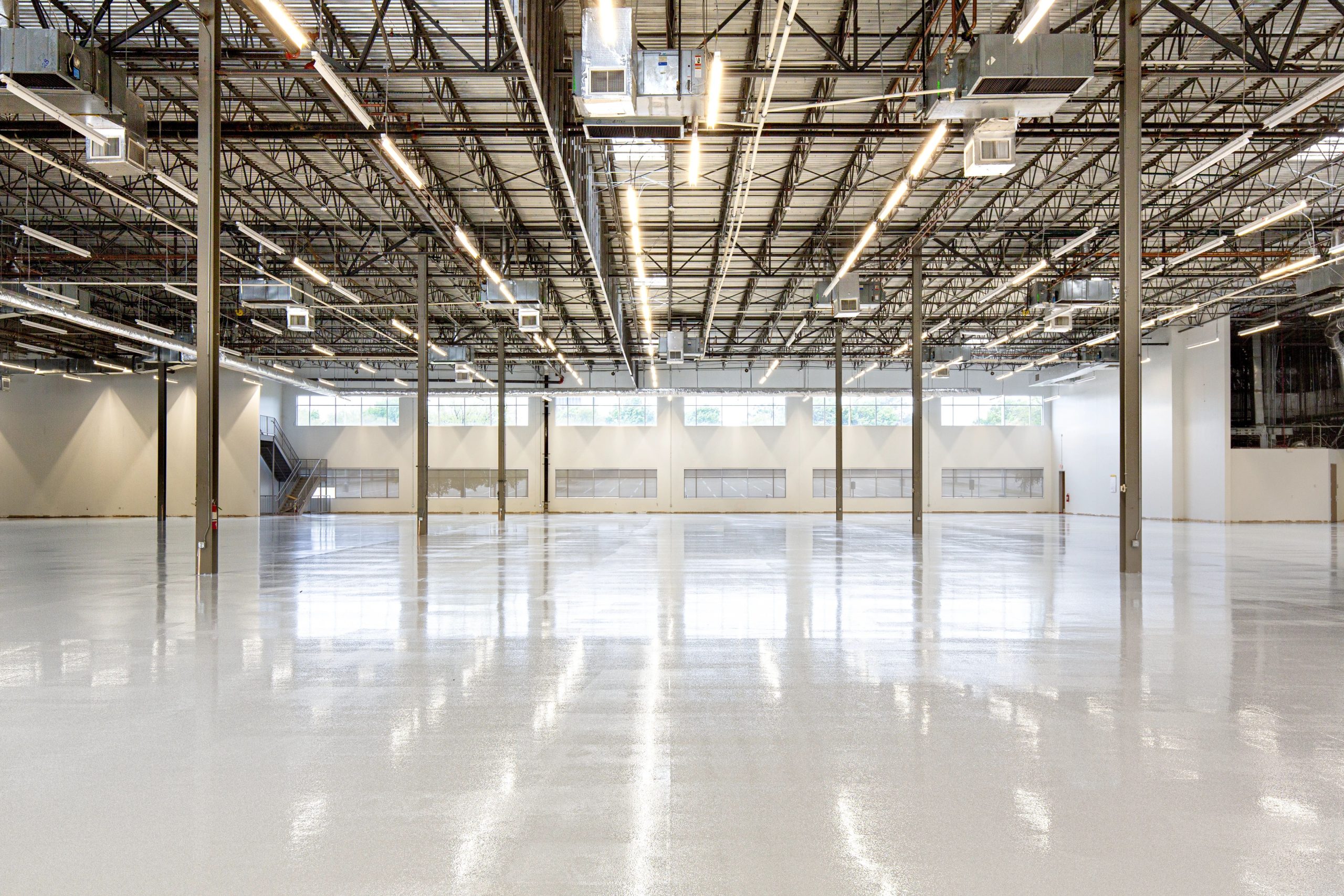
1. Embrace the Warehouse Vibe with a Polished Light Grey Concrete Floor
This look is all about the powerful contrast between the sleek, reflective floor and the raw, utilitarian ceiling. The high gloss of the light grey concrete acts like a mirror, bouncing light from the expansive windows and fluorescent fixtures all around the space. This simple trick prevents the heavy industrial elements—like the dark metal trusses and oversized HVAC ducts—from making the room feel gloomy or oppressive. The repetition of metallic silver, seen in the floor’s sheen, the ducts, and the truss system, creates a surprisingly cohesive and intentional aesthetic.
|
📋 Copy HEX 🔗 Share |
This industrial-chic style is practically tailor-made for large, open-plan basements, especially those with at least 800-1000 square feet of unbroken floor space. The grand scale is what makes the exposed ceiling feel majestic rather than messy. In a smaller, sectioned-off room, it would likely feel cluttered and bring the ceiling down. You really need a ceiling height of at least 9 feet, and preferably 10+, to comfortably accommodate the exposed ductwork and trusses without the room feeling compressed. For smaller spaces, a more refined approach like in Idea #4 might be a better fit.
2. Layer Industrial Textures Using Corrugated Metal and Polished Concrete
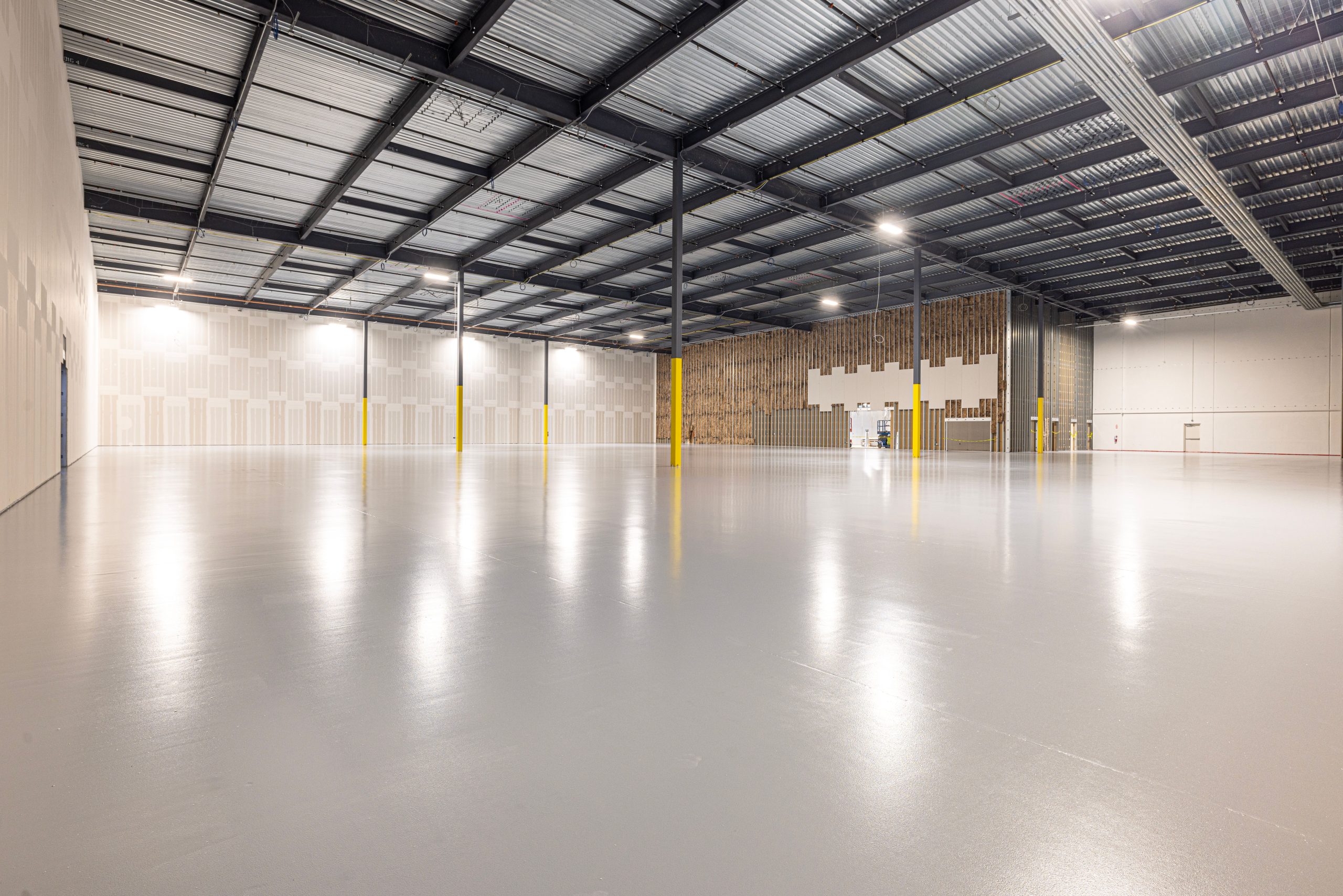
The visual formula here is a masterclass in balancing raw and refined textures. Think of it as 50% raw industrial elements (the corrugated metal ceiling, exposed black beams, unfinished wood panels) + 40% sleek modern finish (the highly polished light grey concrete floor) + 10% playful color pop (the bright yellow structural poles). This specific math ensures the space feels purposefully designed, not just like a forgotten workshop. You could easily swap the yellow for a bold primary red or an electric blue to shift the accent energy without losing the core vibe.
|
📋 Copy HEX 🔗 Share |
An exposed corrugated metal ceiling looks incredibly cool, but let’s be honest: it can be a serious dust magnet and a genuine pain to clean. More importantly, you have to consider the acoustics. In a large, open space with this many hard surfaces, sound will bounce around significantly. If you’re planning to use this as a rec room, home theater, or even a kids’ play area, you will absolutely need to invest in large, thick area rugs, acoustic wall panels, or furniture with lots of soft upholstery to absorb sound and prevent a frustrating echo chamber effect.
3. Achieve a Seamless Look with Affordable Epoxy Floor Paint
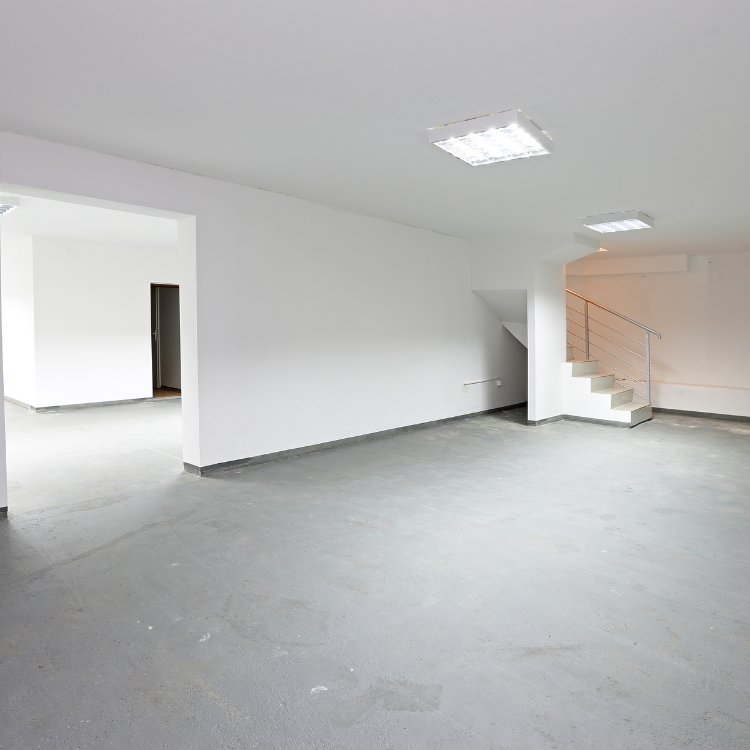
While professional concrete polishing can cost thousands, a high-quality epoxy paint kit offers a surprisingly similar seamless, glossy, and durable finish for a fraction of the price. You can find excellent DIY kits from trusted brands like Rust-Oleum or Behr at big-box stores, typically running between $150 and $300 to cover a standard two-car garage-sized area. The absolute key to a professional-looking result is meticulous prep work—thoroughly cleaning, degreasing, and etching the concrete are non-negotiable if you want the paint to adhere properly and not peel up in six months.
|
📋 Copy HEX 🔗 Share |
Recreating this look is a weekend project, but don’t rush the prep. Estimated Time: 2 days + 3 days of cure time. Estimated Cost: $200-$400.
- Prep is King (Day 1): Thoroughly sweep and then degrease the entire floor. Use a concrete etcher (usually included in the epoxy kit) to open up the pores of the concrete so the paint can grip it. Rinse it well and let it dry completely for at least 24 hours.
- Mix & Cut In (Day 2): Following the instructions precisely, mix the two parts of the epoxy paint. You have a limited window of time (pot life) to apply it, so be ready to go. Use a paintbrush to paint a 2-3 inch border around the perimeter of the basement first.
- Roll the Floor: Use a 3/8-inch nap roller with an extension pole to apply the epoxy to the main floor area, working in 4×4-foot sections. Always maintain a wet edge to avoid ugly roller marks.
- Let It Cure: The hardest part! Allow the floor to cure for the recommended time—often 24-72 hours before light foot traffic and up to a week before placing heavy furniture or equipment on it.
4. Warm Up a Modern Basement with Stained Concrete and Wood Accents
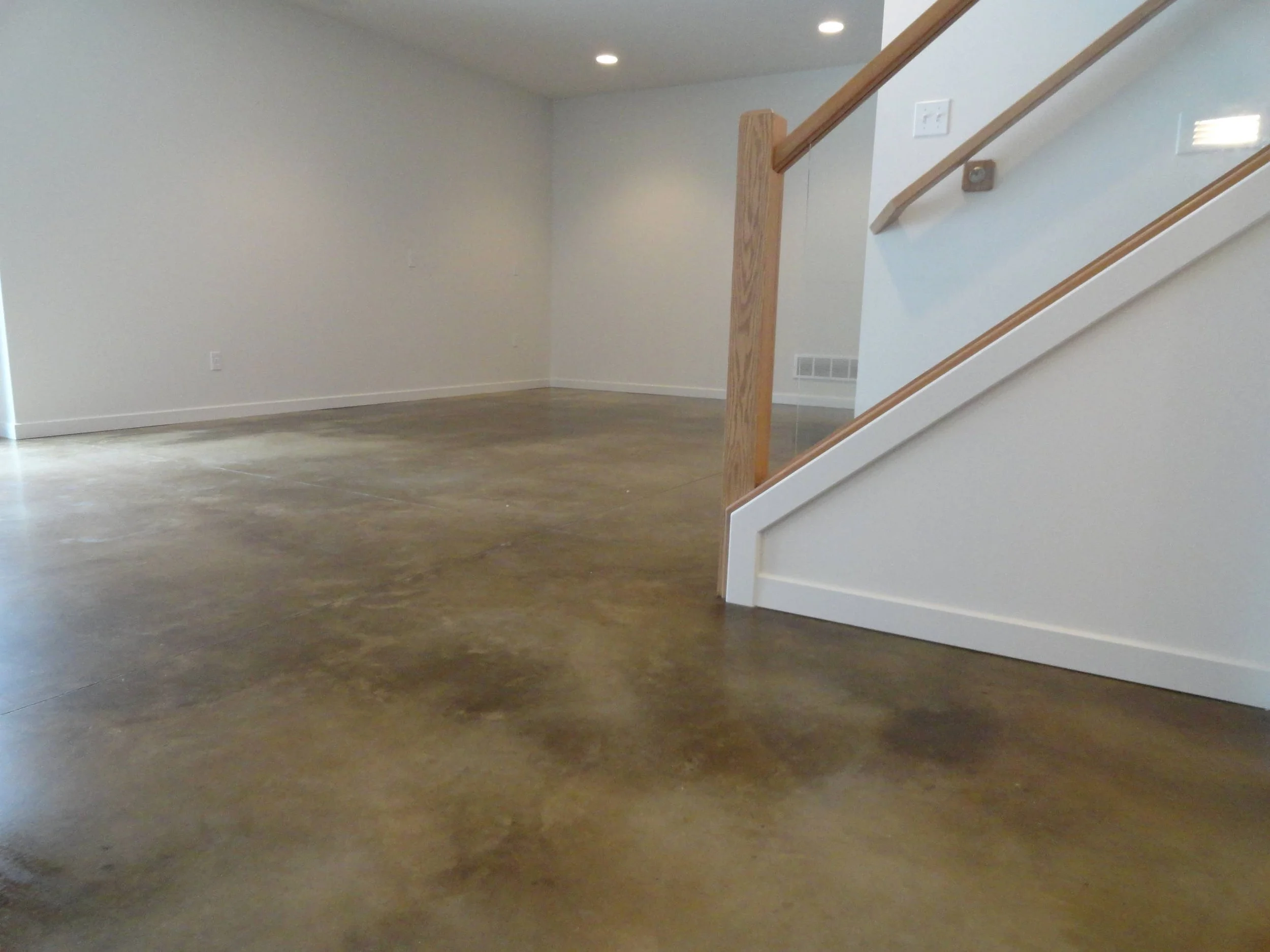
It’s the staircase handrail. Seriously. Without the visual warmth and natural grain of that light wood banister, this space would feel much colder and more clinical. The stained concrete floor and clean white walls are perfectly modern and minimalist, but that single strip of wood connects the design to more organic, comfortable materials we associate with home. It’s a small, thoughtful detail that elevates the entire area, making it feel more like a cozy lower level and less like a sterile gallery space. It proves that you don’t need a lot of stuff to make a basement feel finished.
|
📋 Copy HEX 🔗 Share |
5. Add a Pop of Color with an Orange Accent Wall and Concrete Floors
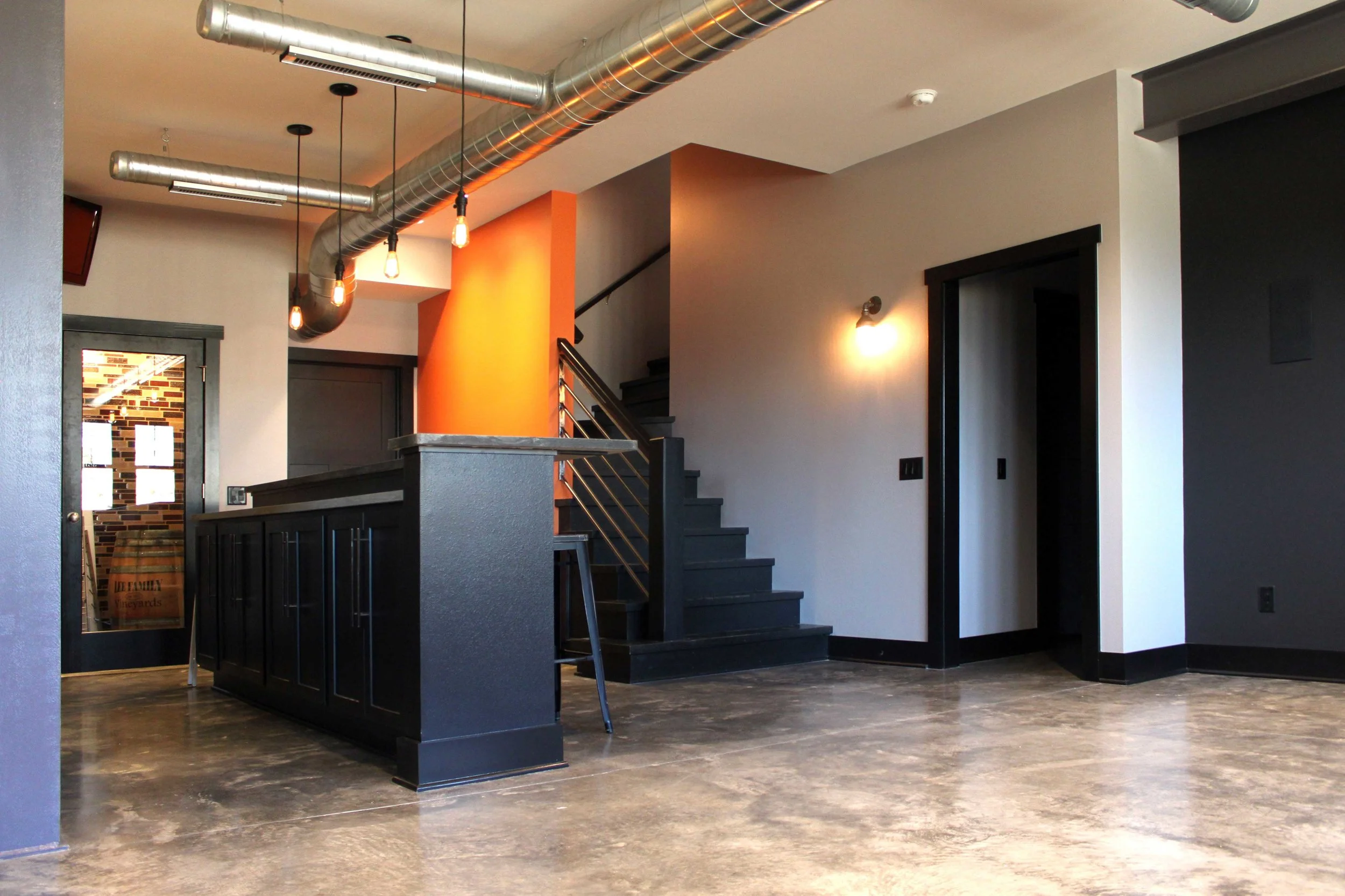
It’s the strategic use of color and light that makes this industrial space feel so dynamic and inviting. The polished concrete floor and exposed metal ductwork provide a cool, neutral gray backdrop. This allows the vibrant orange accent wall to truly pop without overwhelming the room. The warmth of the orange is then echoed in the glow of the Edison bulbs in the pendant lights, creating a cozy, connected feeling. The black bar and gray walls act as grounding elements that keep the whole scheme sophisticated.
|
📋 Copy HEX 🔗 Share |
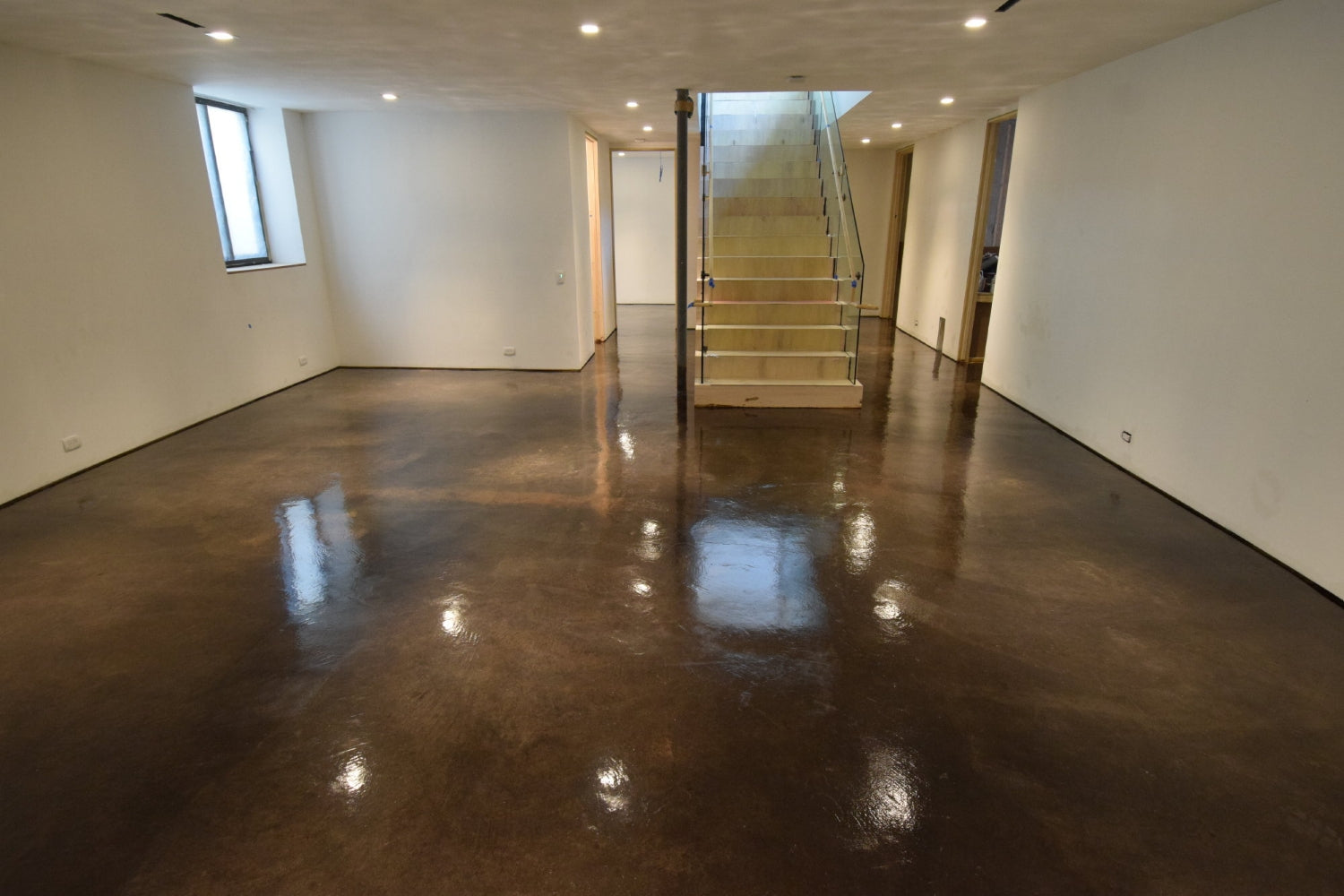
6. Achieve a Luminous, Minimal Look with Dark Brown Polished Concrete
The high-gloss finish is the secret weapon here. A matte or satin finish on a dark floor like this could easily suck all the light out of a basement room, making it feel like a cave. But by polishing the dark brown concrete to a mirror-like sheen, the floor becomes a reflective surface. It bounces light from the recessed fixtures and the small window across the entire space, creating a sense of luminosity and spaciousness that beautifully contradicts the dark, rich color underfoot.
|
📋 Copy HEX 🔗 Share |
A floor this dark and glossy is stunning, but it will show every speck of dust, every footprint, and every pet hair. It’s not for the faint of heart when it comes to cleaning. You’ll want to invest in a good microfiber dust mop for daily touch-ups. When mopping, use a pH-neutral cleaner designed for polished concrete to avoid dulling the finish. Be prepared to reapply a wax or polishing coat every 2-3 years, especially in high-traffic areas, to maintain that beautiful, light-reflecting sheen. The upkeep is real, but the payoff is a truly dramatic and sophisticated floor.
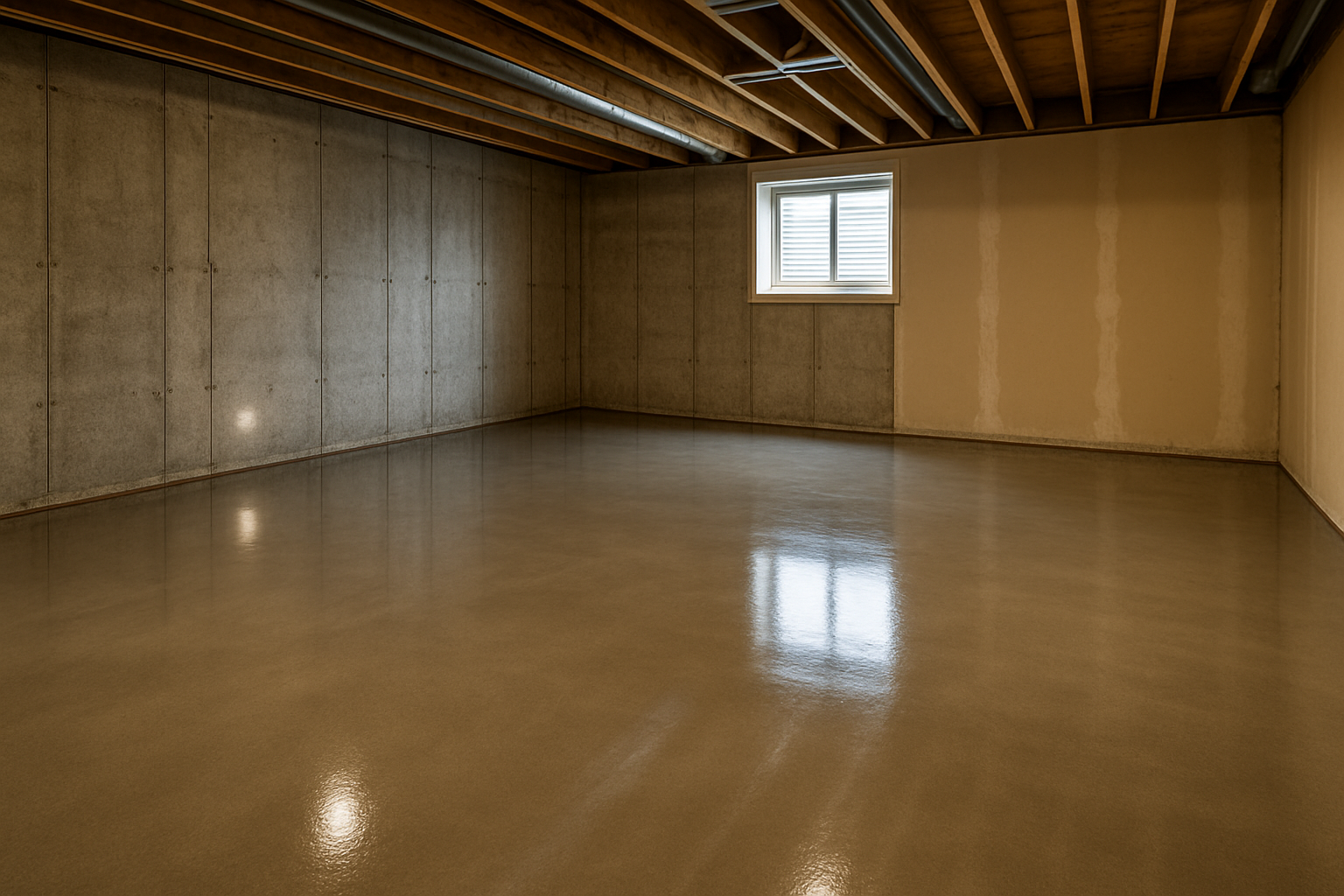
7. Embrace Raw Beauty with Board-Formed Concrete Walls and a Polished Floor
This space celebrates texture. The formula is roughly 40% raw texture (the board-formed concrete walls and exposed wood joists) + 40% smooth polish (the light brown concrete floor) + 20% clean canvas (the unfinished drywall and simple window). The key is the balance—the smooth floor prevents the rough walls and ceiling from feeling too much like a construction site, while the textured walls keep the space from feeling sterile. The light color palette across all materials ensures the different textures feel harmonious, not chaotic.
|
📋 Copy HEX 🔗 Share |
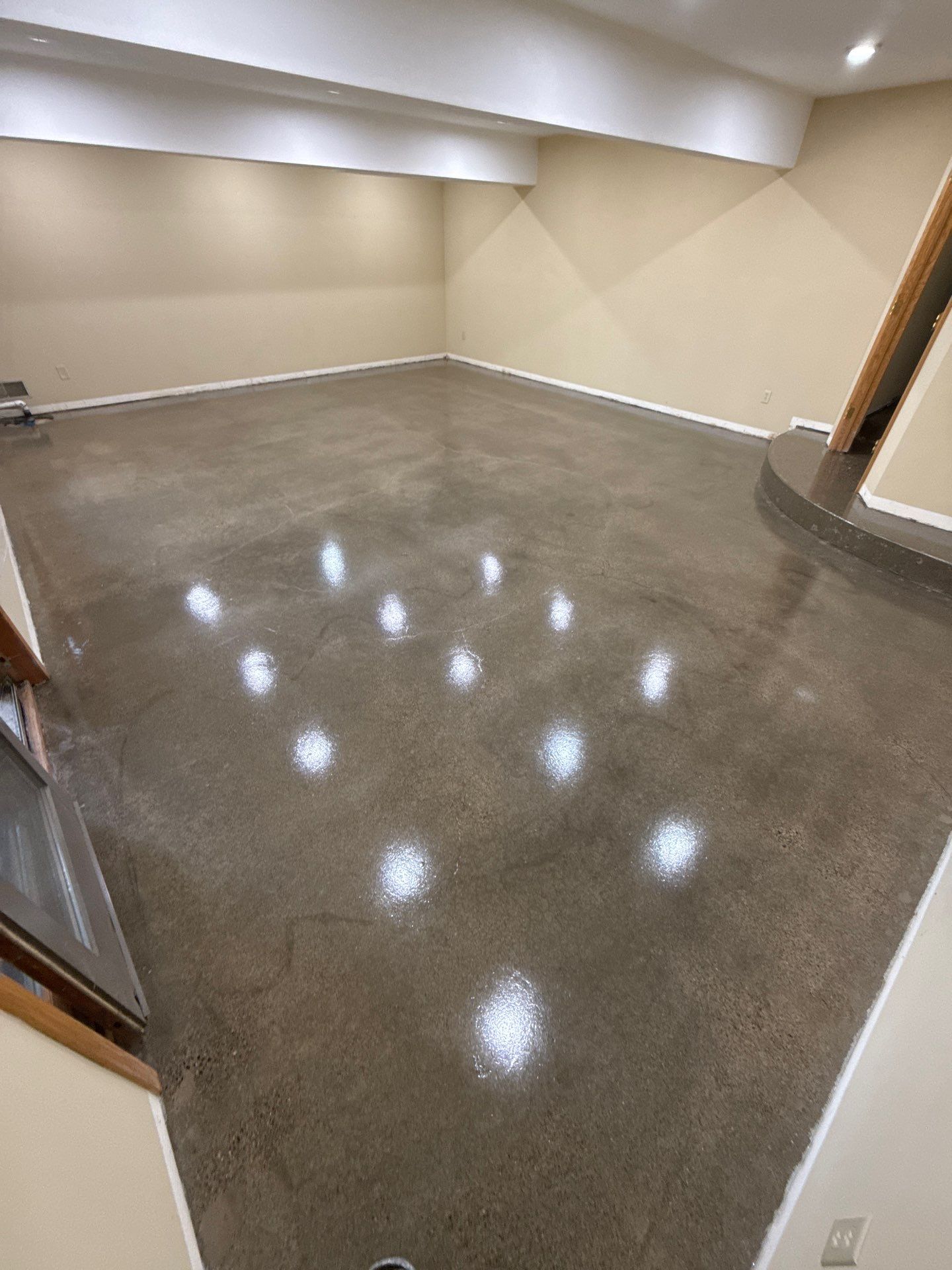
8. Create a Neutral Base with Lightly Polished Concrete Floors
The subtle curve of the built-in concrete step is a brilliant custom touch that softens the entire room. If you’re pouring a new concrete floor, adding an integrated feature like this is surprisingly cost-effective compared to building a separate step later. Ask your concrete contractor to build the form for a curved step or a built-in bench along a wall. It adds a high-end, architectural element that makes the space feel unique and thoughtfully designed for minimal extra cost in materials and labor during the main pour.
|
📋 Copy HEX 🔗 Share |
This clean, neutral approach works in almost any basement, but it’s particularly effective in small to medium-sized spaces (under 600 sq ft) or those with lower ceilings. The light beige walls, white trim, and lightly polished floor all work together to maximize the sense of space and light. Unlike the dramatic high-gloss floors in Idea #7, this subtle sheen doesn’t demand attention, making the room feel calm and open. The lack of heavy textures or dark colors prevents the space from feeling crowded.
9. Mix Rustic and Modern with a Dark Concrete Floor and a Wood-Plank Wall
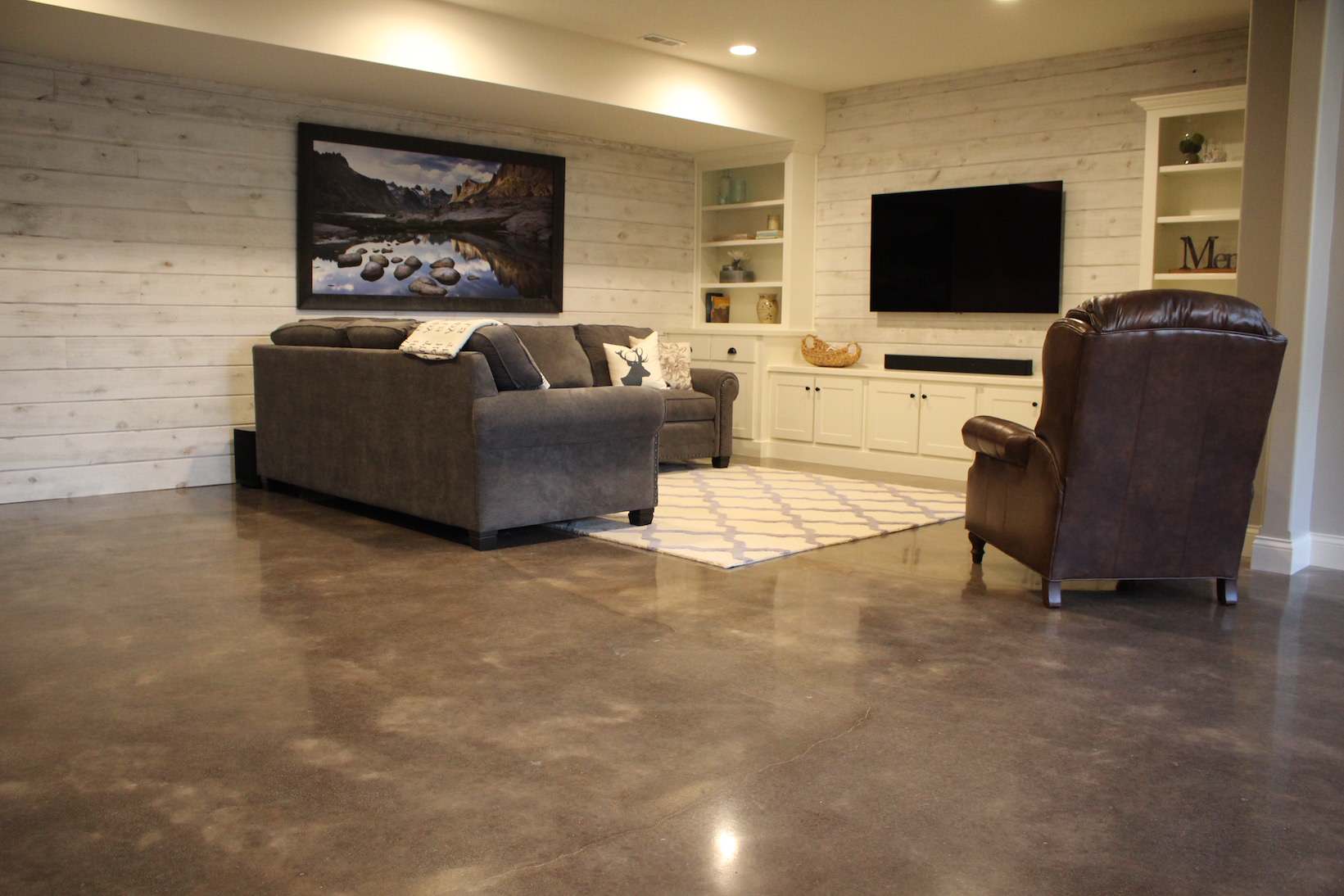
This room succeeds by balancing cool and warm, hard and soft. The polished dark concrete floor provides a sleek, cool-toned, modern foundation. This hardness is immediately balanced by the soft textures of the large grey sectional and the plush area rug. The masterstroke is the white wood plank accent wall, which introduces a rustic, cozy texture that beautifully contrasts with the floor. The warm brown leather armchair adds another layer of warmth, ensuring the room feels welcoming and lived-in, not like a cold showroom.
|
📋 Copy HEX 🔗 Share |
10. Design a Luxurious Entertainer’s Basement with a Wet Bar and Stone Fireplace
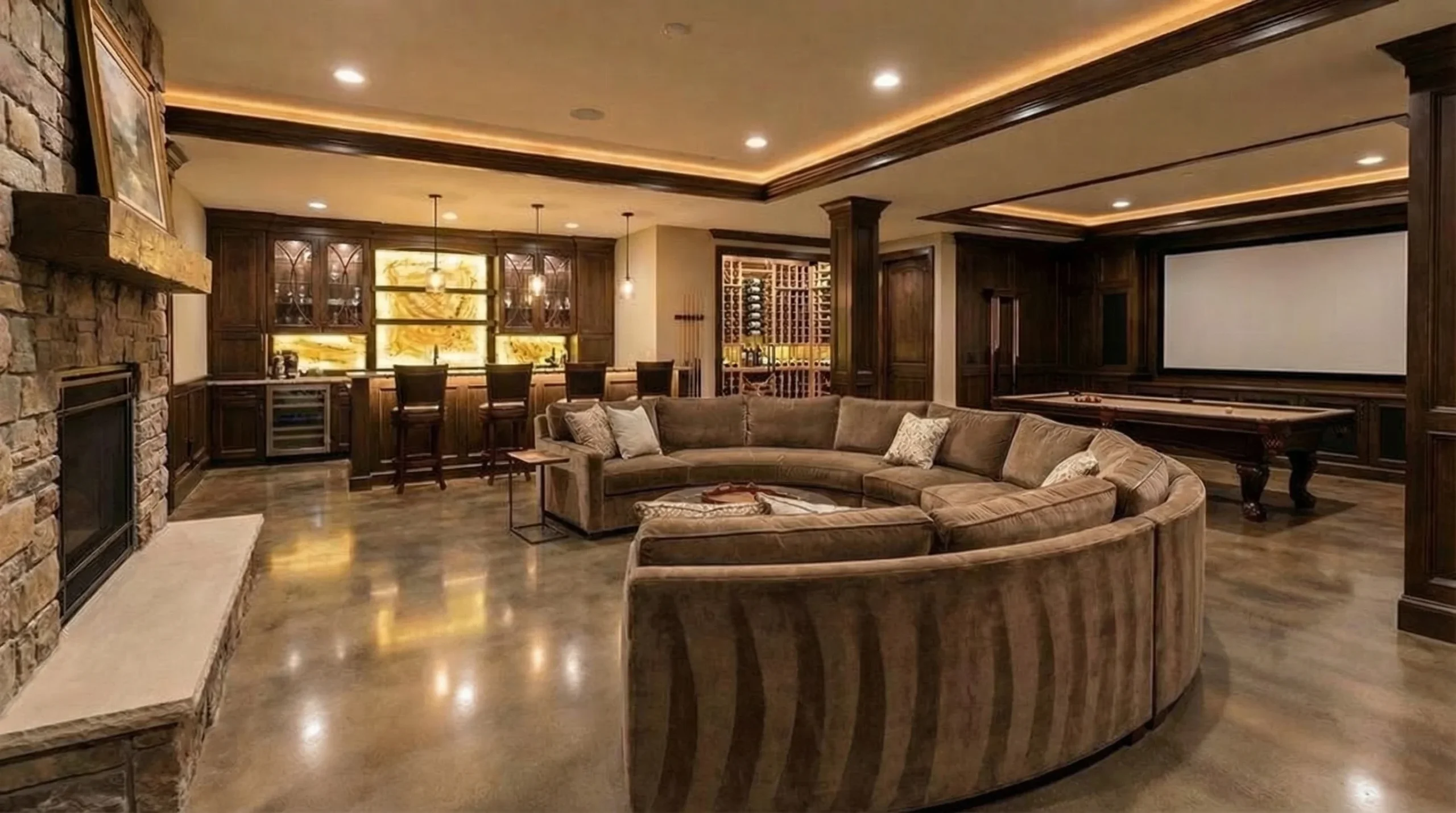
The backlit amber panels at the wet bar are the undeniable heart of this design. They infuse the entire basement with a warm, sophisticated glow that feels more like a high-end lounge than a subterranean space. This single design choice elevates everything around it—it makes the polished concrete floor gleam, the dark wood feel richer, and the stone fireplace more inviting. Without that specific, ambient lighting, the room would still be nice, but it would lack its signature mood and luxurious character.
|
📋 Copy HEX 🔗 Share |
Recreating this level of custom luxury is a significant investment. The costs are driven by high-end materials and custom millwork.
- Main Furniture (Large Sectional): $5,000 – $12,000
- Lighting (Recessed, Cove, Pendants): $3,000 – $7,000
- Textiles (Area Rugs, Pillows): $1,500 – $4,000
- Custom Wet Bar & Wine Cellar: $20,000 – $50,000+
- Stone Fireplace: $8,000 – $15,000
- Polished Concrete Floor: $7 – $15 per sq. ft.
- TOTAL: $45,000 – $100,000+
Budget Alternative: Get a similar vibe by focusing on a dark wood prefabricated bar from Wayfair or a local furniture store ($1,500), using faux stone panels for the fireplace ($1,000), and creating the amber glow with simple LED strip lighting behind floating shelves.
11. Unify an Open-Plan Basement with Light Grey Concrete
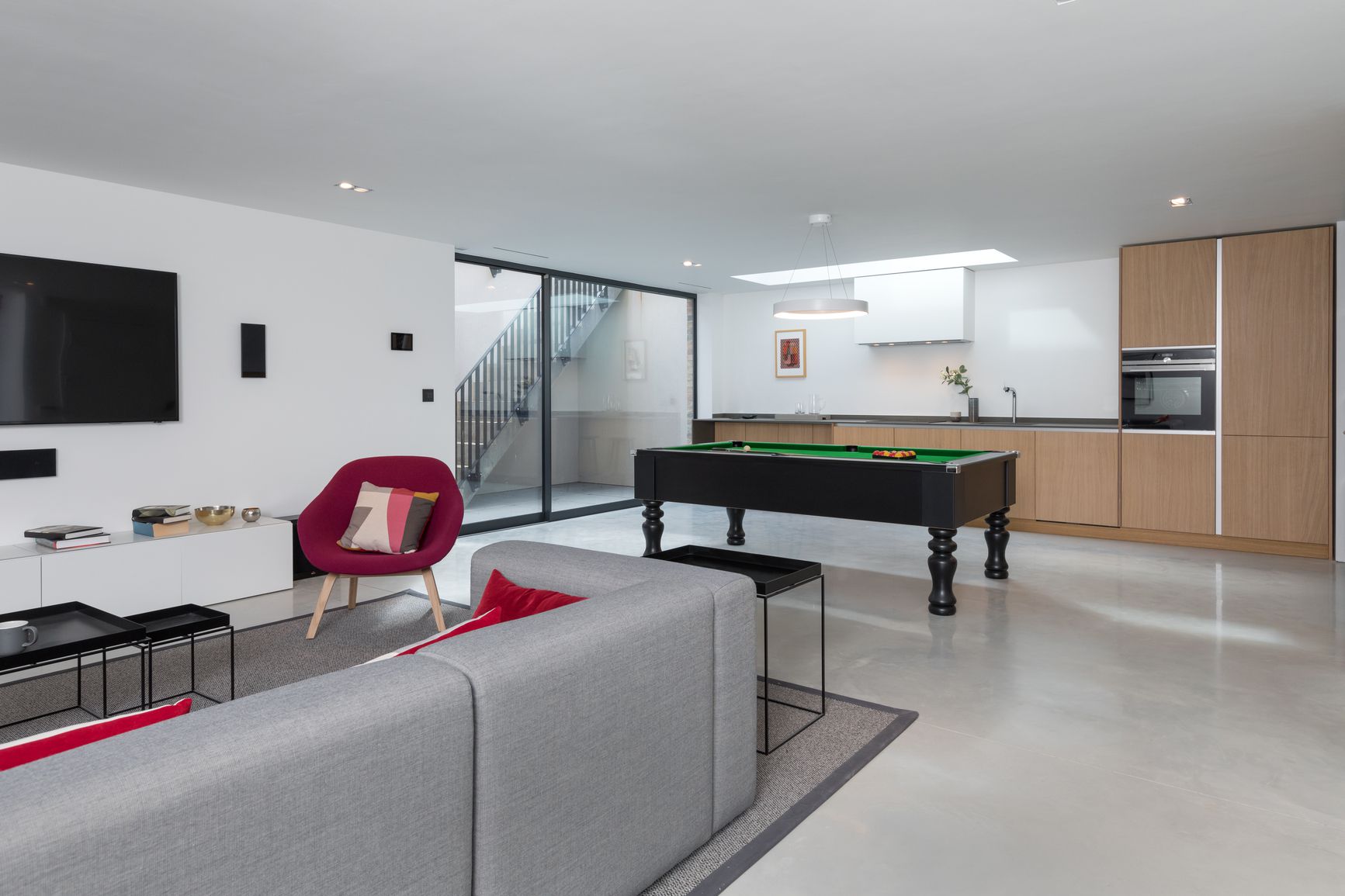
In a multi-functional open-plan space, a uniform floor is your best friend. The light grey concrete floor runs seamlessly through the kitchen, living, and recreation zones, creating a cohesive and uncluttered foundation. This visual unity makes the entire basement feel larger and more intentional. The design then uses furniture groupings (the grey sofa and red chair) and functional centerpieces (the billiards table) to define each area without needing walls. The strategic pops of red add energy and draw the eye through the space, connecting the different zones.
|
📋 Copy HEX 🔗 Share |
When using a bold accent color like red in a large, neutral space, the rule of three is crucial. Notice how the red is present in the armchair, the throw pillows on the sofa, and subtly in the artwork or accessories (not pictured). This repetition makes the color feel like a planned part of the design, not a random afterthought. Sprinkle your chosen accent in 3 to 5 places—a pillow, a vase, a book cover, or a piece of art—to create a sophisticated and cohesive color story. Compare this to the singular orange accent wall in Idea #6, which serves a different purpose.
12. Create Functional Zones with a Glossy Epoxy Floor
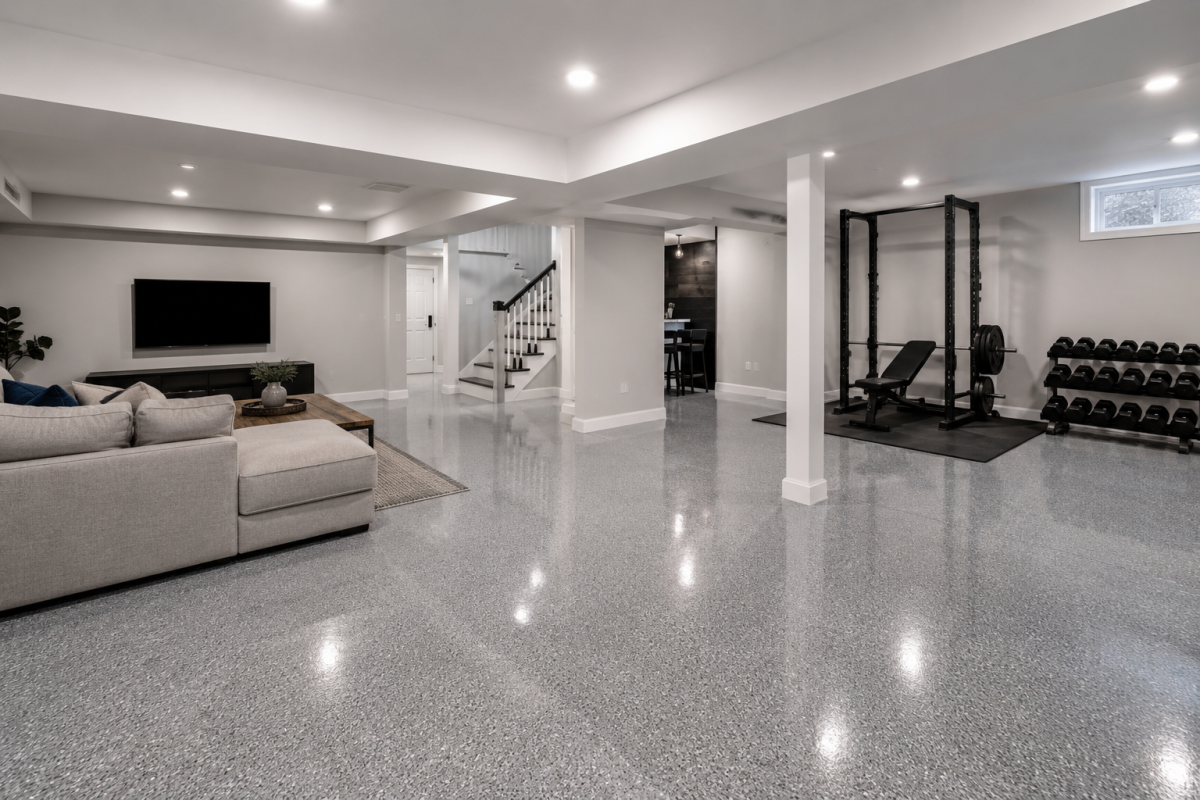
An epoxy floor is an excellent choice for a large, multi-purpose basement like this one because of its durability and ease of maintenance. This idea works best in spaces 700 sq. ft. or larger, where you can carve out distinct zones for different activities. The key is using structural elements like columns or ceiling bulkheads as natural dividers. The glossy, light-colored floor helps bounce light around, which is crucial in a deep basement that might lack large windows, ensuring even the corners of your home gym or bar area feel bright.
|
📋 Copy HEX 🔗 Share |
This basement’s formula is all about clean lines and functional separation. It’s approximately 70% neutral modern base (light grey epoxy floors, light grey walls, white columns and ceilings) + 20% Dark Industrial Accents (black gym equipment, TV, bar stools) + 10% Warmth (dark wood paneling at the bar, coffee table). This balance ensures the space is bright and open, but the dark elements add definition and a touch of sophisticated, masculine energy, preventing the all-grey-and-white scheme from feeling bland.
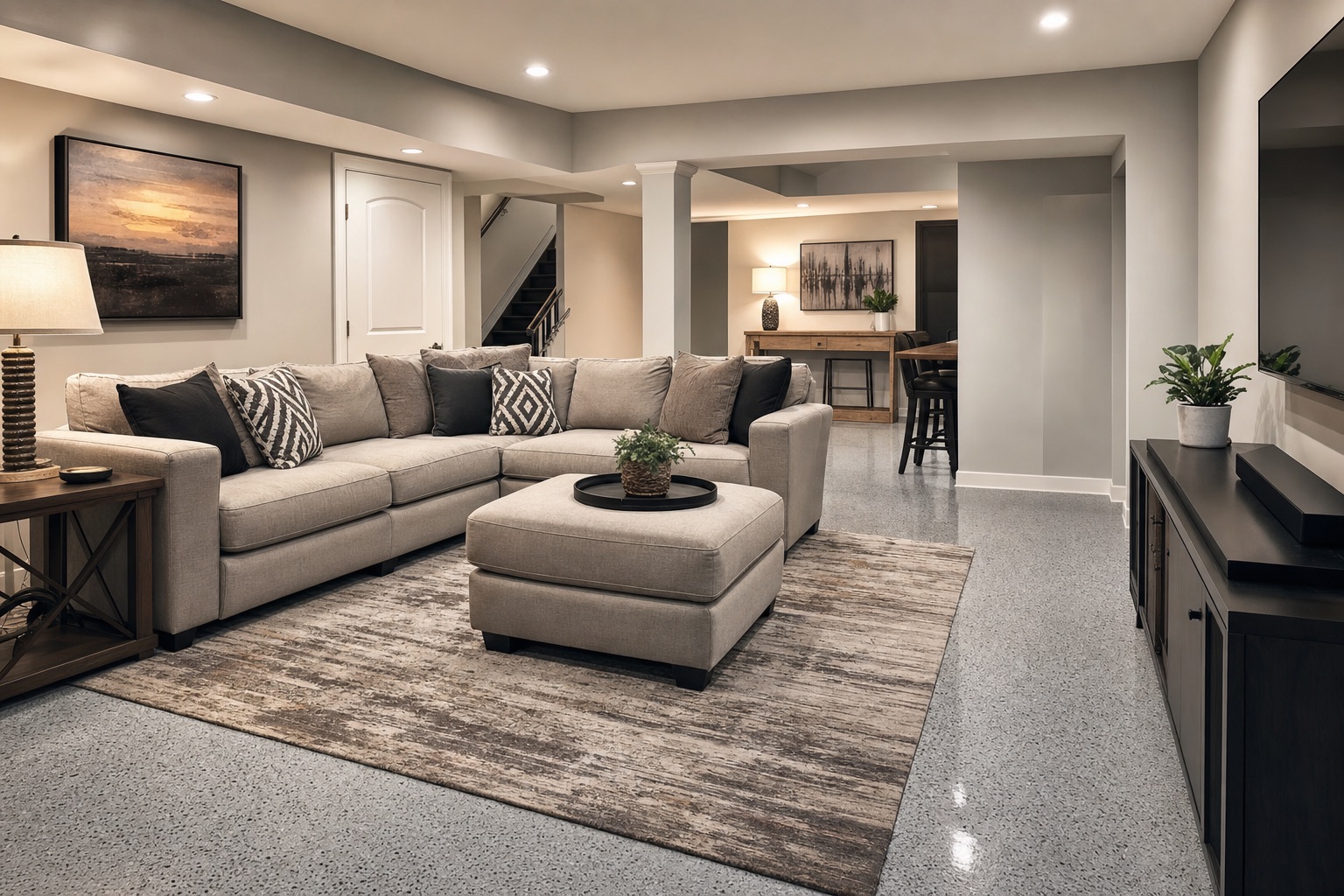
13. Layer Neutrals for a Cozy, Modern Basement Living Area
The textured area rug is the single most important element in this room. Without it, the large beige sectional would feel like it was floating in a sea of hard, cold concrete. The rug serves as an anchor, defining the seating area and adding a crucial layer of softness and warmth. Its texture and subtle pattern also provide visual interest that breaks up the monotony of the solid-colored sofa and floor. If you take away the rug, you lose the
|
📋 Copy HEX 🔗 Share |
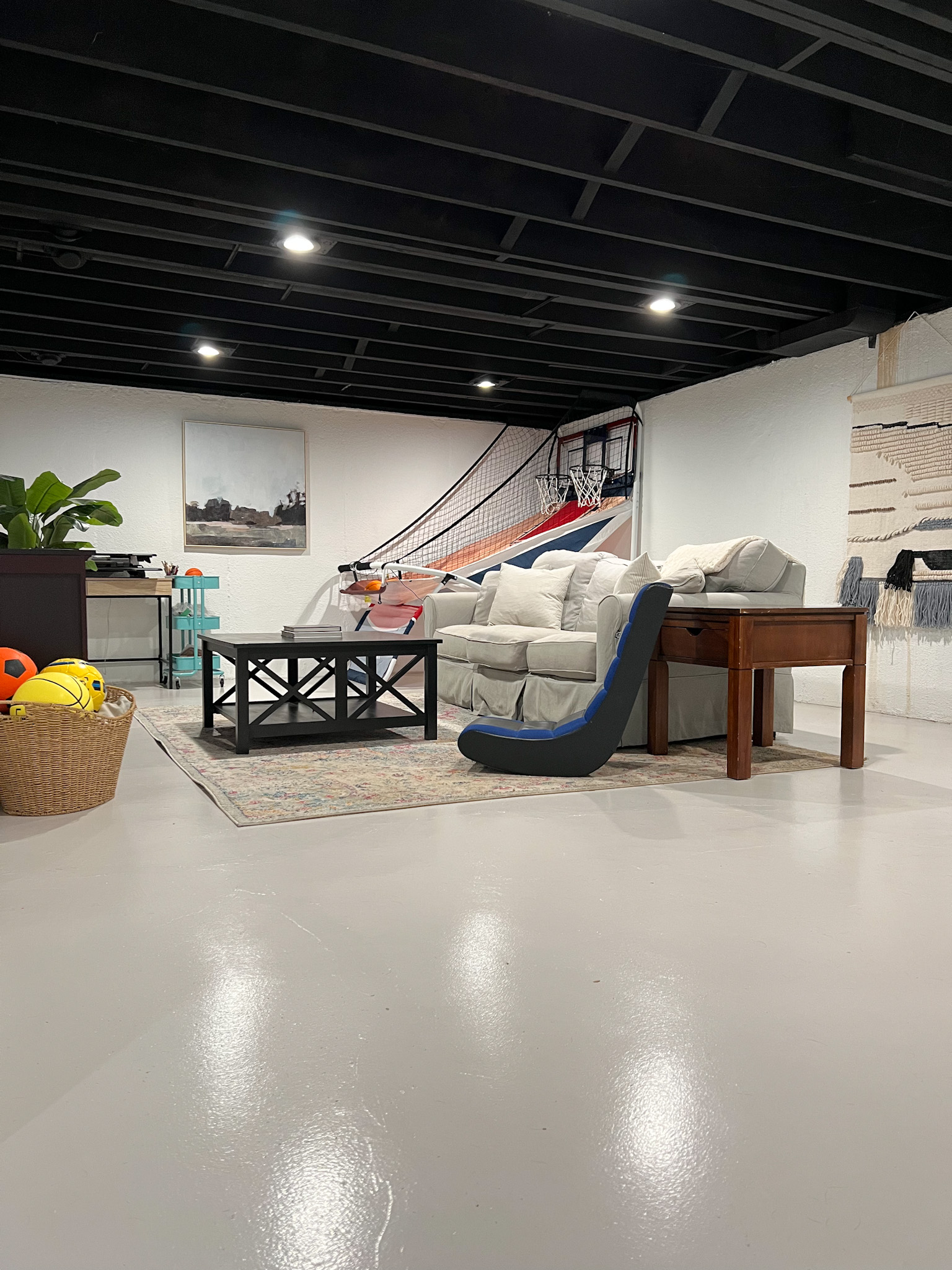
14. Go for a Casual, Modern Look with a Painted Concrete Floor
This space feels so bright and airy thanks to its high-contrast color palette and smart use of texture. The light grey painted concrete floor and crisp white walls create a simple, reflective canvas. The drama comes from the exposed ceiling, painted a bold, matte black. This draws the eye upward and makes the ceiling recede, paradoxically making the room feel taller. The texture on the white walls (perhaps a subtle plaster or wallpaper) adds depth and prevents the space from feeling flat and boring. The basketball hoop adds a touch of playful, casual energy.
|
📋 Copy HEX 🔗 Share |
This entire look is very budget-friendly at its core. Painting concrete is far cheaper than polishing or staining, and painting an exposed ceiling black is a classic designer trick to hide imperfections and give a high-end industrial feel for the cost of a few cans of paint. The slipcovered sofa is another smart, affordable choice, often available from stores like IKEA or Wayfair. You can get this entire relaxed, modern rec room vibe for a fraction of the cost of a more formally finished basement, as seen in Idea #11.
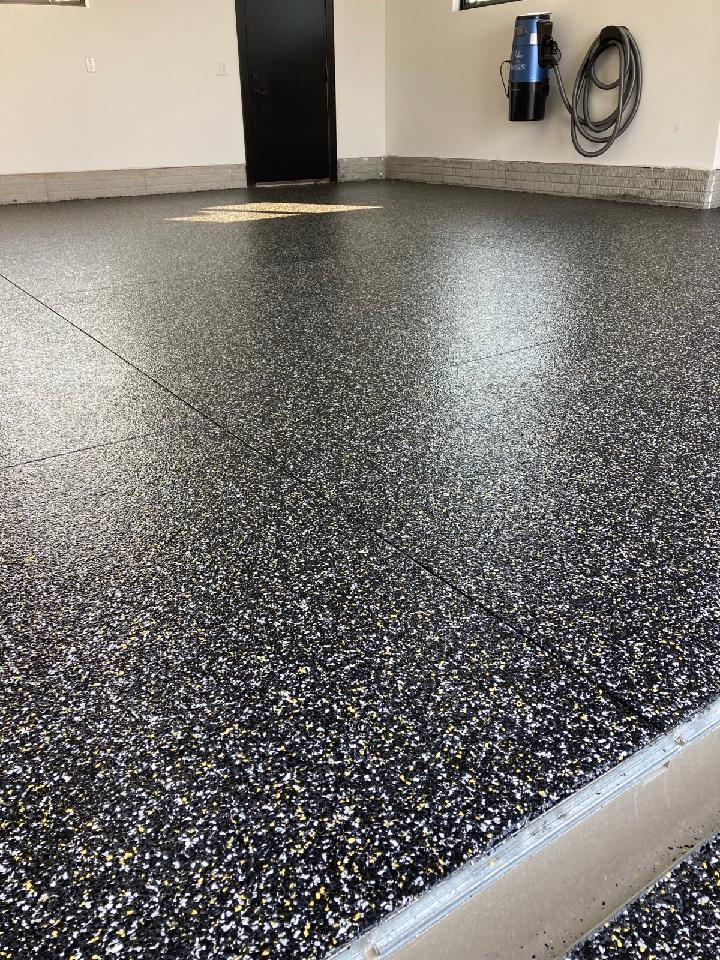
15. Choose a Durable, Speckled Epoxy for a High-Traffic Garage
This is arguably one of the most practical and durable floor choices you can make for a garage or utility basement. The epoxy coating is resistant to oil, chemicals, and hot-tire pickup. The speckled or flaked finish is brilliant at hiding dirt, dust, and minor imperfections. Cleaning is as simple as it gets: a quick sweep and an occasional mop with a mild cleaner are all it takes. The only real maintenance is ensuring you have a good seal at the edges to prevent moisture from getting underneath, which could cause lifting over time.
|
📋 Copy HEX 🔗 Share |
Don’t underestimate the impact of the decorative flakes in your epoxy. They’re not just for show; they add a bit of texture for slip resistance and are key to the floor’s ability to hide dirt. When choosing your flake blend, pull colors from the surrounding space. Here, the black and white flakes are standard, but the addition of yellow flakes could be a subtle nod to tools, safety markings, or even a classic car color. It’s a small detail that makes the floor feel integrated with the rest of the garage’s design.
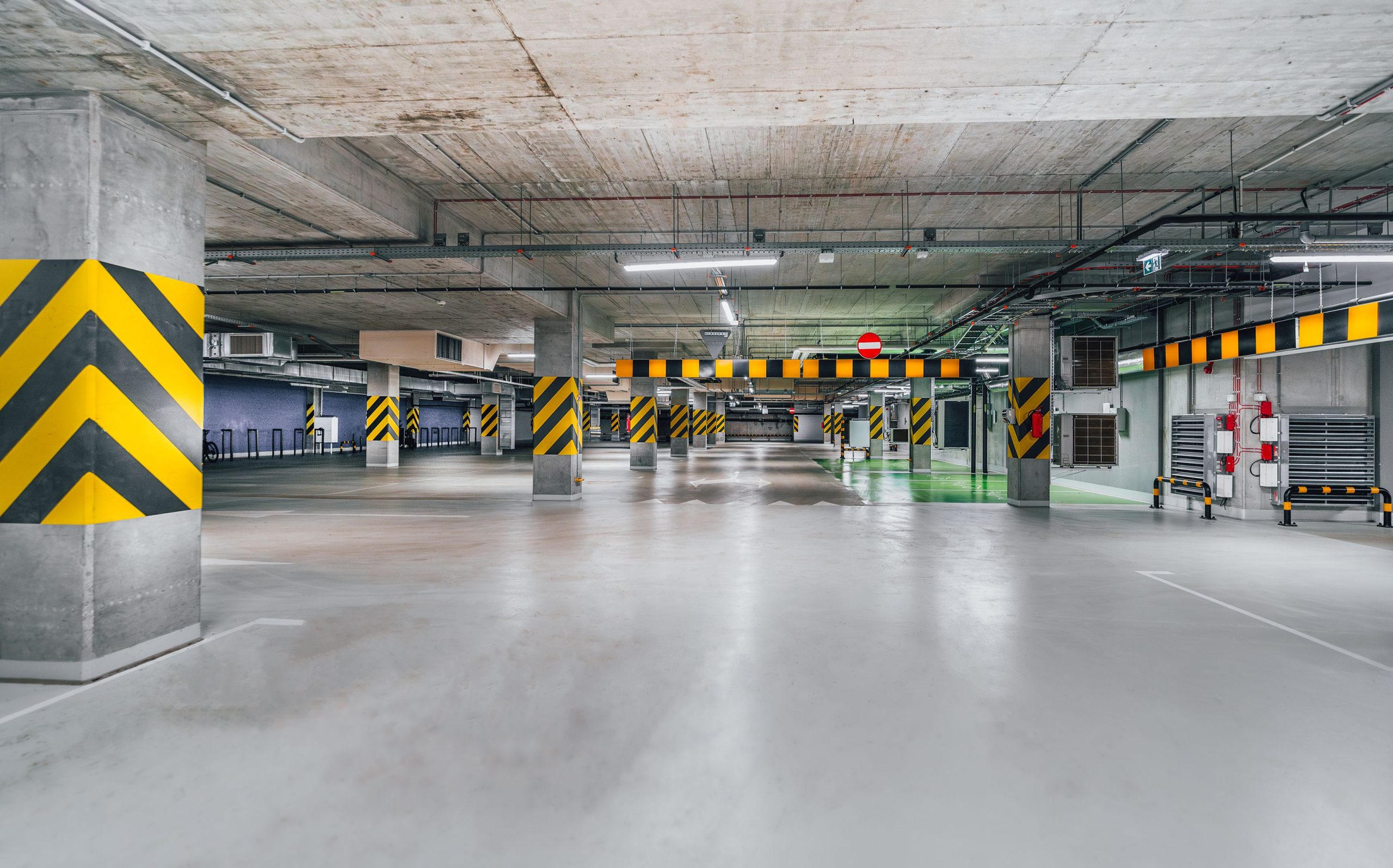
16. Define Zones in an Industrial Space with Paint and Concrete
In a vast, uniform space like a parking garage or a massive industrial basement, color is the most effective tool for creating order and directing flow. The raw grey concrete floor provides a neutral canvas. Bright, high-contrast colors are then used for
|
📋 Copy HEX 🔗 Share |
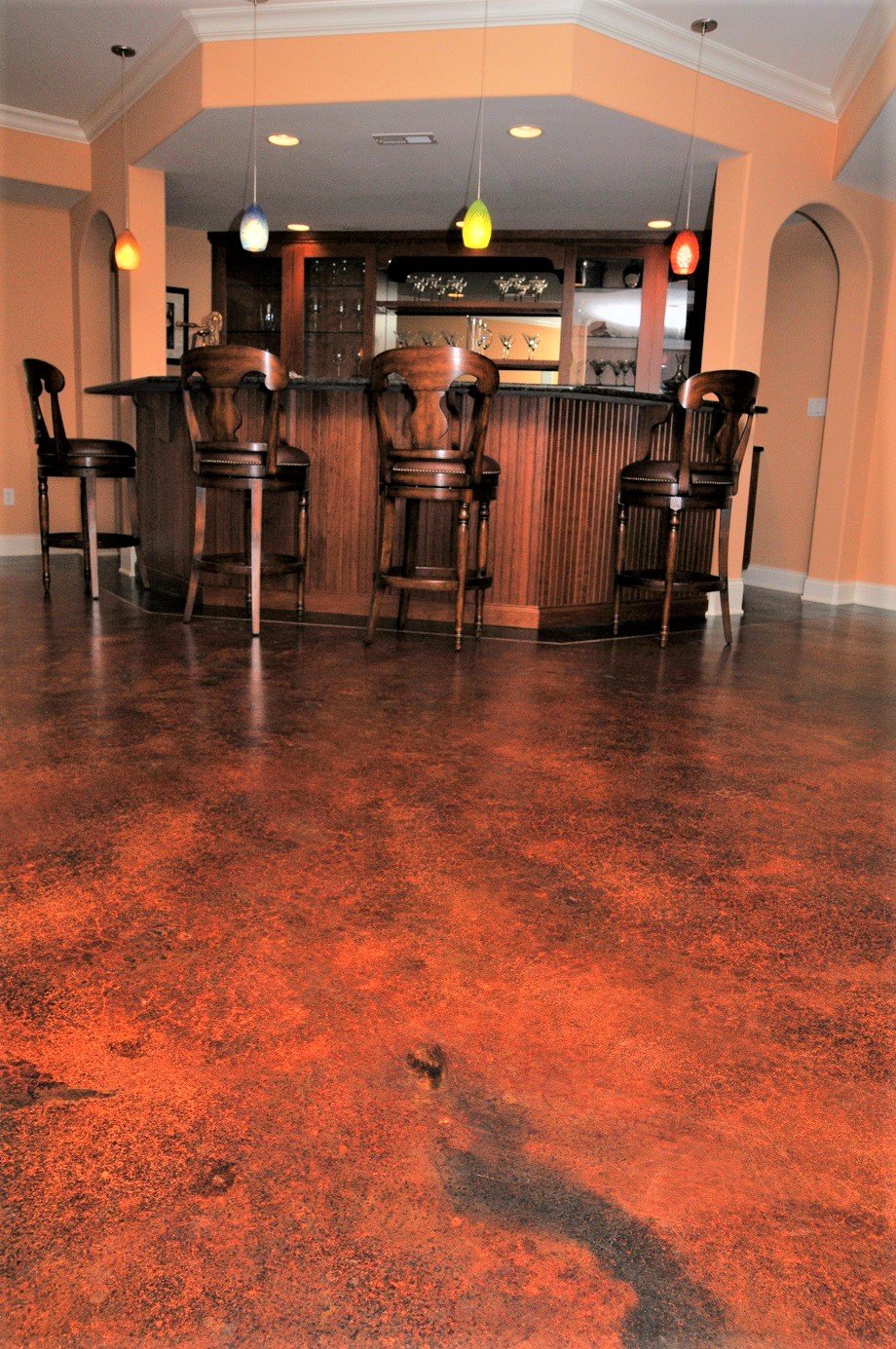
17. Get a Rich, Mottled Look with Acid-Stained Concrete
Acid staining is not painting. It’s a chemical reaction between a metallic salt solution and the lime in the concrete. This means the final result is beautifully unpredictable and unique—no two floors will ever be identical. However, it also means you have very little control over the final outcome. The color can vary dramatically based on the concrete’s age, composition, and porosity. What looks like a warm walnut on a sample can turn into a splotchy terracotta on your floor. You must be willing to embrace imperfection to be happy with an acid-stained floor.
|
📋 Copy HEX 🔗 Share |
- Intensive Prep: The floor must be immaculate. Any existing stains, sealers, or glues will prevent the acid from reacting, leaving a bald spot. The floor is usually ground or sanded.
- Application: The acid solution is typically sprayed onto the concrete using a plastic sprayer. Pros may use different techniques like sponging or ragging to create different effects. The reaction begins immediately.
- Neutralize: After several hours, the chemical reaction must be stopped by neutralizing the acid with a solution of baking soda and water or ammonia and then thoroughly rinsing the floor.
- Sealing: Once bone-dry, the floor must be sealed with multiple coats of a high-quality sealer to protect the finish and bring out the richness of the color. This step is not optional.
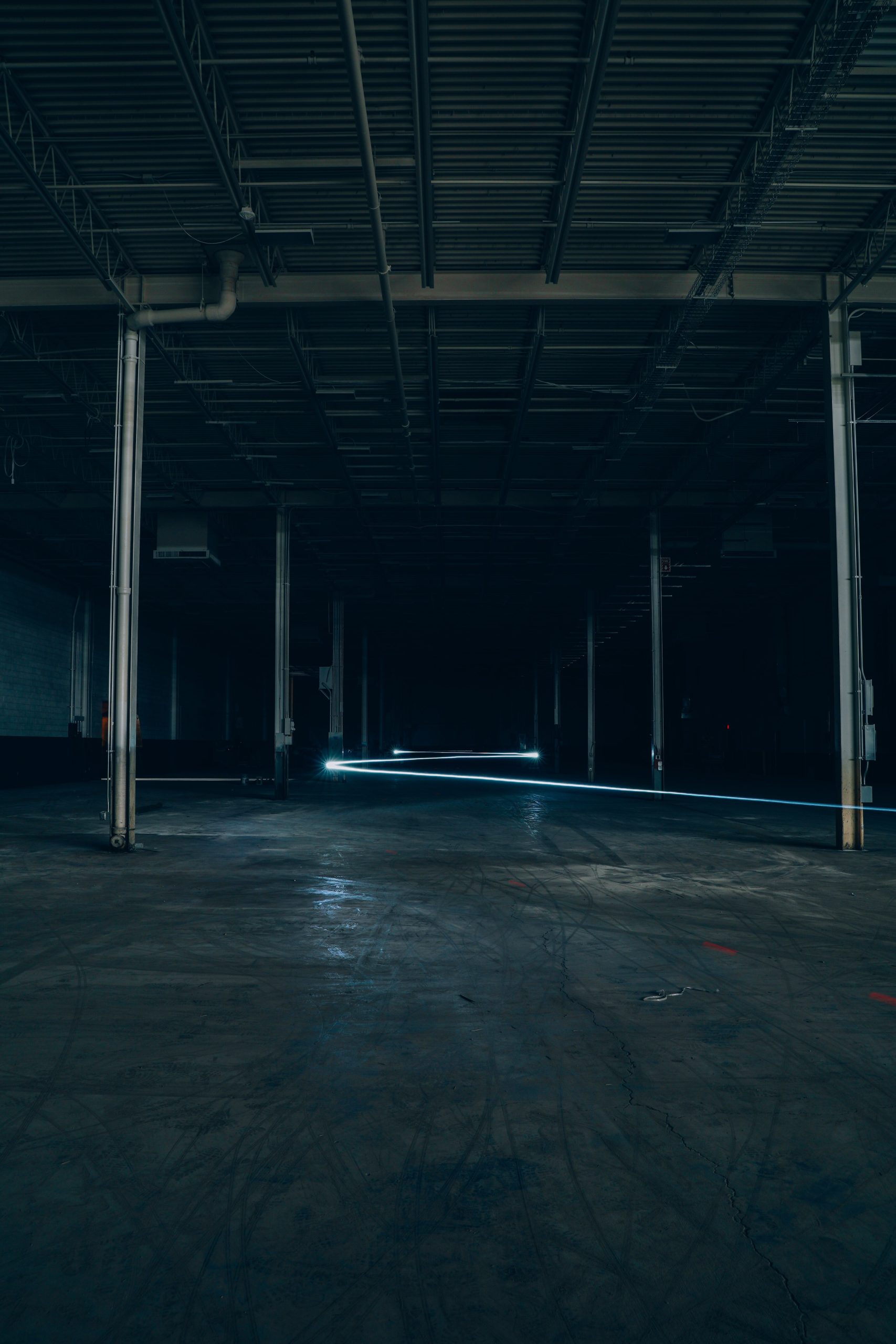
18. Create a Dramatic Mood with a Dark Concrete Floor
The single streak of blue light is the element that transforms this scene from a simple, dark industrial space into something dynamic and intriguing. It’s a powerful reminder of how lighting can be used as a design element in itself. The light trail draws the eye across the floor, highlighting the textures of the concrete—cracks, tire marks, and all. It injects a bolt of energy and mystery into the otherwise static and utilitarian environment, suggesting movement and technology.
|
📋 Copy HEX 🔗 Share |
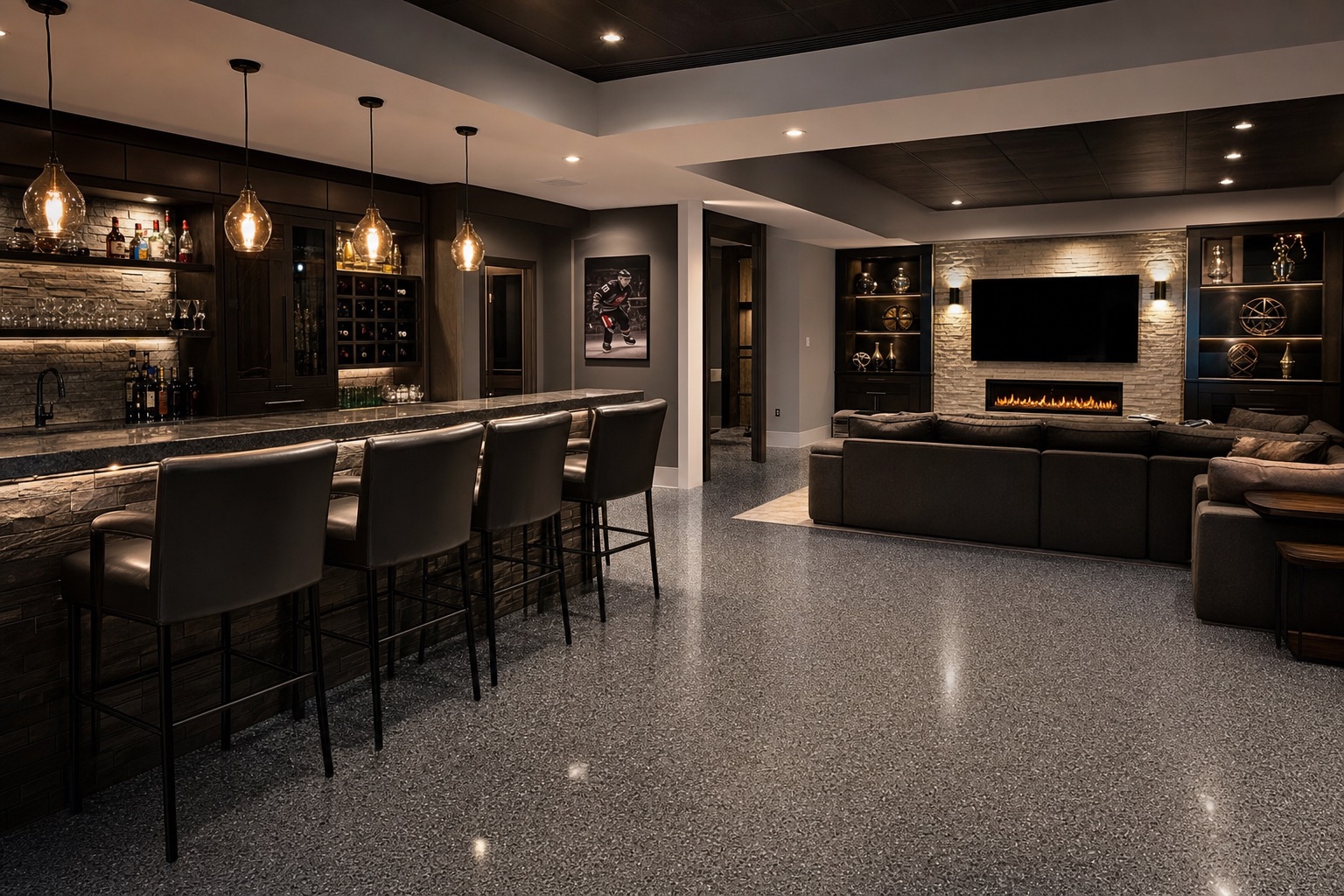
19. Go Dark and Moody in a Sophisticated Basement Entertainment Lounge
This upscale lounge vibe is achieved with a careful balance of dark tones, warm light, and varied textures. The formula is roughly 60% dark & sleek base (polished speckled concrete floors, dark sectional, and black media wall) + 20% rustic texture (stone-fronted bar and fireplace surround) + 20% warm ambient light (amber pendants, integrated strip lighting, and fireplace glow). This ensures the room feels cozy and intimate, not just dark. The light acts as a warm, inviting element that balances the coolness of the concrete and stone.
|
📋 Copy HEX 🔗 Share |
Creating a high-end entertainment lounge with custom features involves significant costs, particularly in millwork and finishes.
- Furniture (Sectional, Bar Stools): $6,000 – $15,000
- Lighting (Pendants, Integrated LEDs): $4,000 – $8,000
- Custom Bar & Media Wall Cabinetry: $15,000 – $40,000
- Linear Fireplace & Stone Surround: $7,000 – $18,000
- Polished & Speckled Concrete Floor: $8 – $16 per sq. ft.
- TOTAL: $35,000 – $90,000+
Budget Alternative: Get this dark, moody feel using dark grey paint on the walls, IKEA’s dark-toned BESTA units for the media wall, and focusing your budget on a few key elements like a comfortable sectional and stylish pendant lights.
20. Achieve a Bright, Minimalist Look with a Simple Concrete Floor
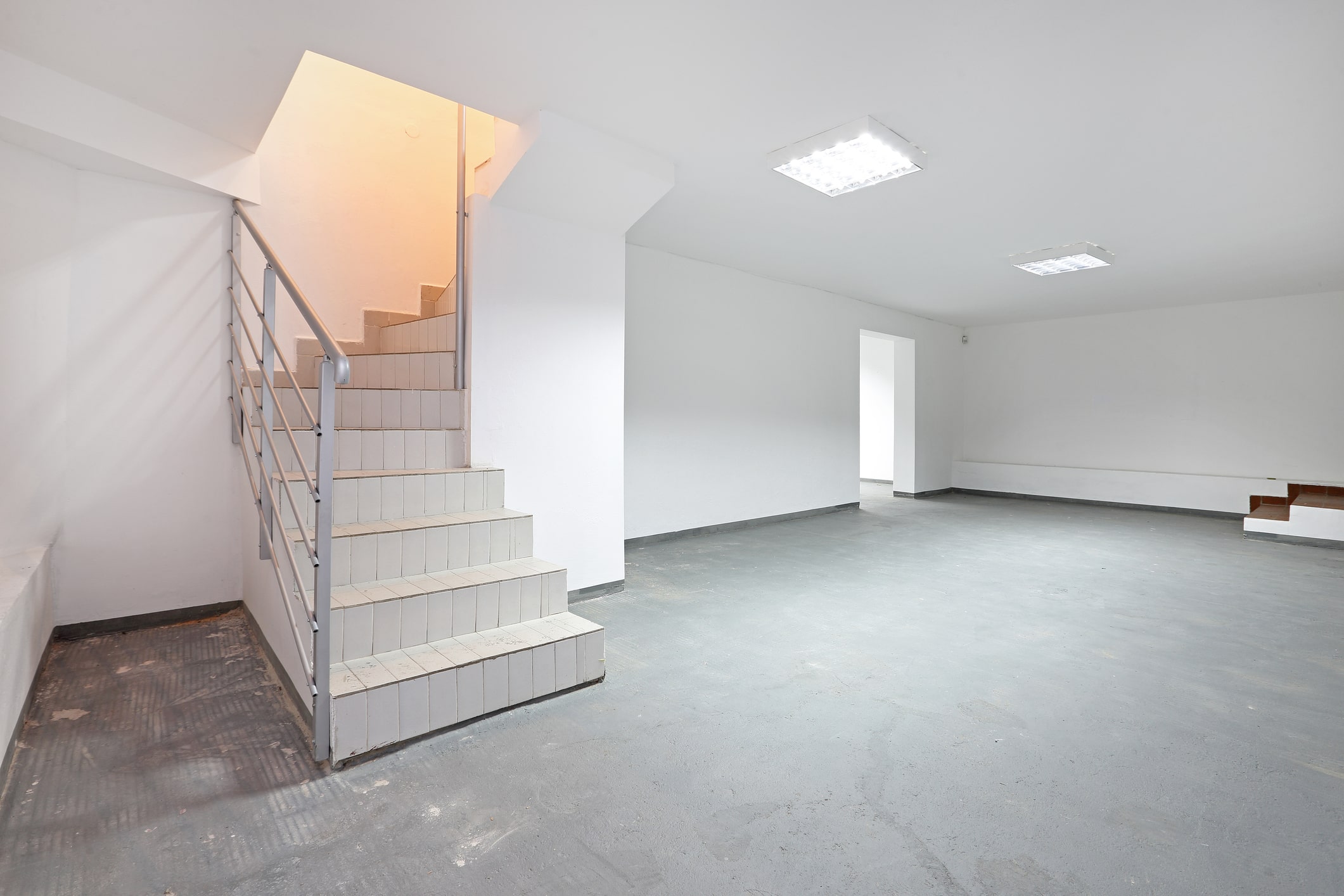
The staircase. In this hyper-minimalist space, the staircase transcends its function and becomes a piece of sculpture. The clean lines of the white tiles and the simple black metal handrail create a strong graphic element against the glowing, sunlit landing. It provides all the visual interest the room needs, allowing the floor and walls to remain a simple, clean background. The contrast between the stark white stairs and the soft grey concrete floor is a masterclass in minimalist design.
|
📋 Copy HEX 🔗 Share |
If you’re going for a minimalist aesthetic, consistency is everything. Notice how the floor is a uniform light grey, the walls are pure white, the baseboards are white, and even the recessed lighting fixtures are white. There are no competing colors or materials. To achieve this, use the same shade of white (with the same sheen) for your walls, ceiling, and trim. This continuity is what gives the space its serene, uncluttered, and gallery-like feel. It’s a simple trick that makes a huge impact.
Your Basement’s Blank Canvas Awaits
A concrete floor isn’t just a foundation; it’s a design opportunity waiting to happen. Whether you go for a simple seal, a rich stain, or a full industrial polish, you’re setting the stage for a space that’s durable, stylish, and uniquely yours. Ready to start designing? Head over to Pinterest and start your own board with your favorite looks from this article!