
Let’s be honest, scrolling through Pinterest for “basement carpet ideas” can feel like an endless loop of beiges and grays. You know there’s a perfect option out there, but it’s buried under a mountain of bland, uninspired photos. What if you could find a look that feels stylish, cozy, and actually works for a below-grade space?
We’ve done the deep dive for you, filtering through hundreds of real homes to find 25 distinct carpet ideas that bring personality and warmth to even the most challenging basements. We’re talking about everything from plush wall-to-wall options to clever area rug layering that adds instant style. Whether you’re drawn to modern minimalism, a cozy rustic vibe, or something kid-friendly and practical, we’ve got you covered. And stay until the end — we break down the most common mistakes that can ruin these looks.
📌 Save this to Pinterest for later — you’ll want to revisit these ideas.
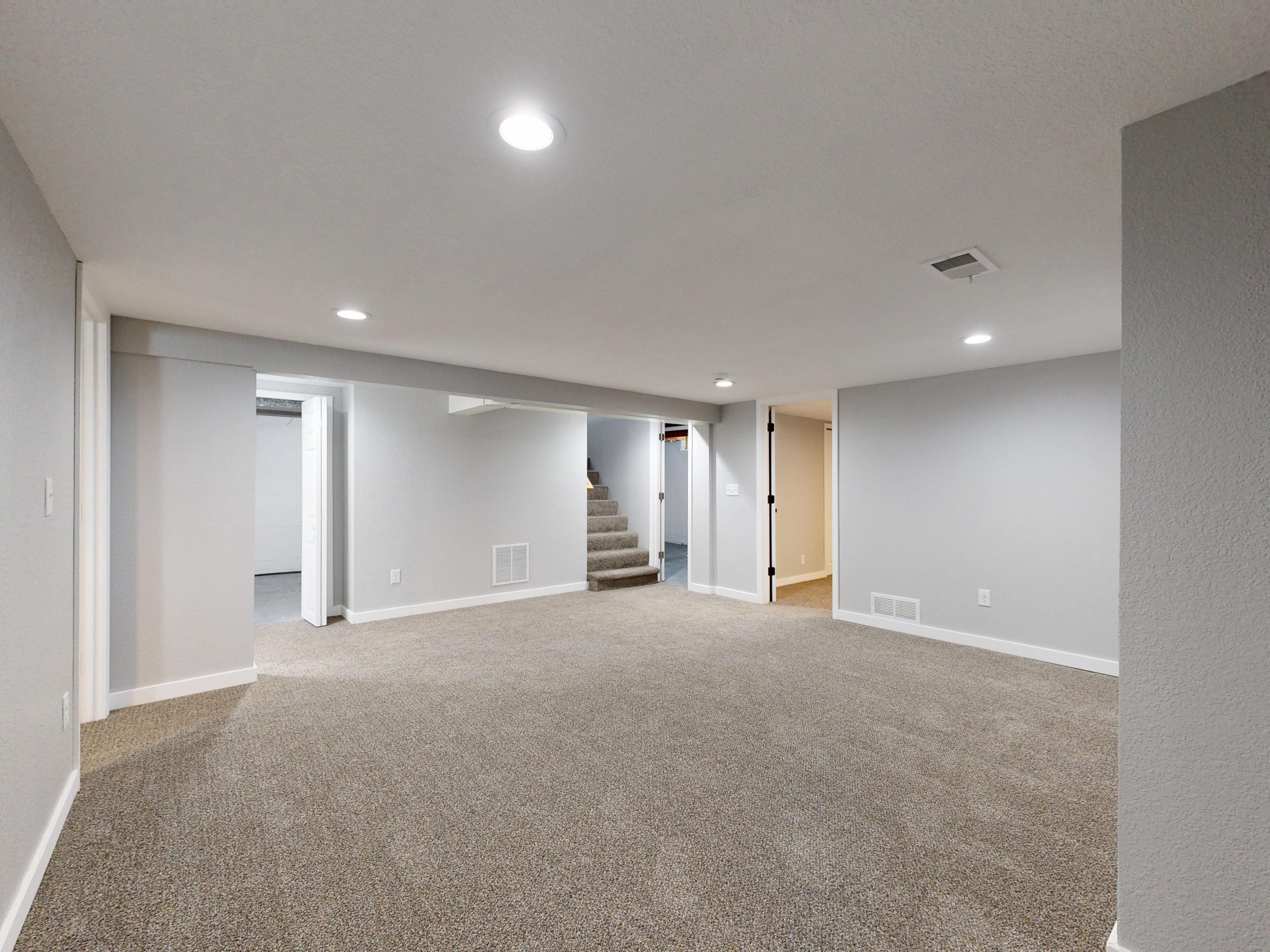
1. Create a Bright, Open Space with Speckled Neutral Carpet
This basement feels so expansive and bright for a reason. The combination of a light, neutral color palette is a classic trick to make any space feel larger. The light gray walls, white trim, and pale beige carpet all work together to reflect the light from the numerous recessed fixtures, eliminating shadows and dark corners. The subtle speckle in the carpet is a masterstroke, as it adds a touch of texture and visual interest that prevents the room from feeling flat or sterile.
|
📋 Copy HEX 🔗 Share |
Let’s have some real talk about light-colored carpet in a basement. While this speckled pattern is brilliant for hiding minor debris and lint, it won’t magically conceal a spilled glass of red wine. If your basement is a high-traffic zone for kids, pets, or just clumsy adults, consider treating the carpet with a stain-resistant finish from day one. It’s a small upfront cost that can save a lot of heartache later. Also, remember that textured walls, like the ones here, can be tougher to clean and paint than smooth ones.
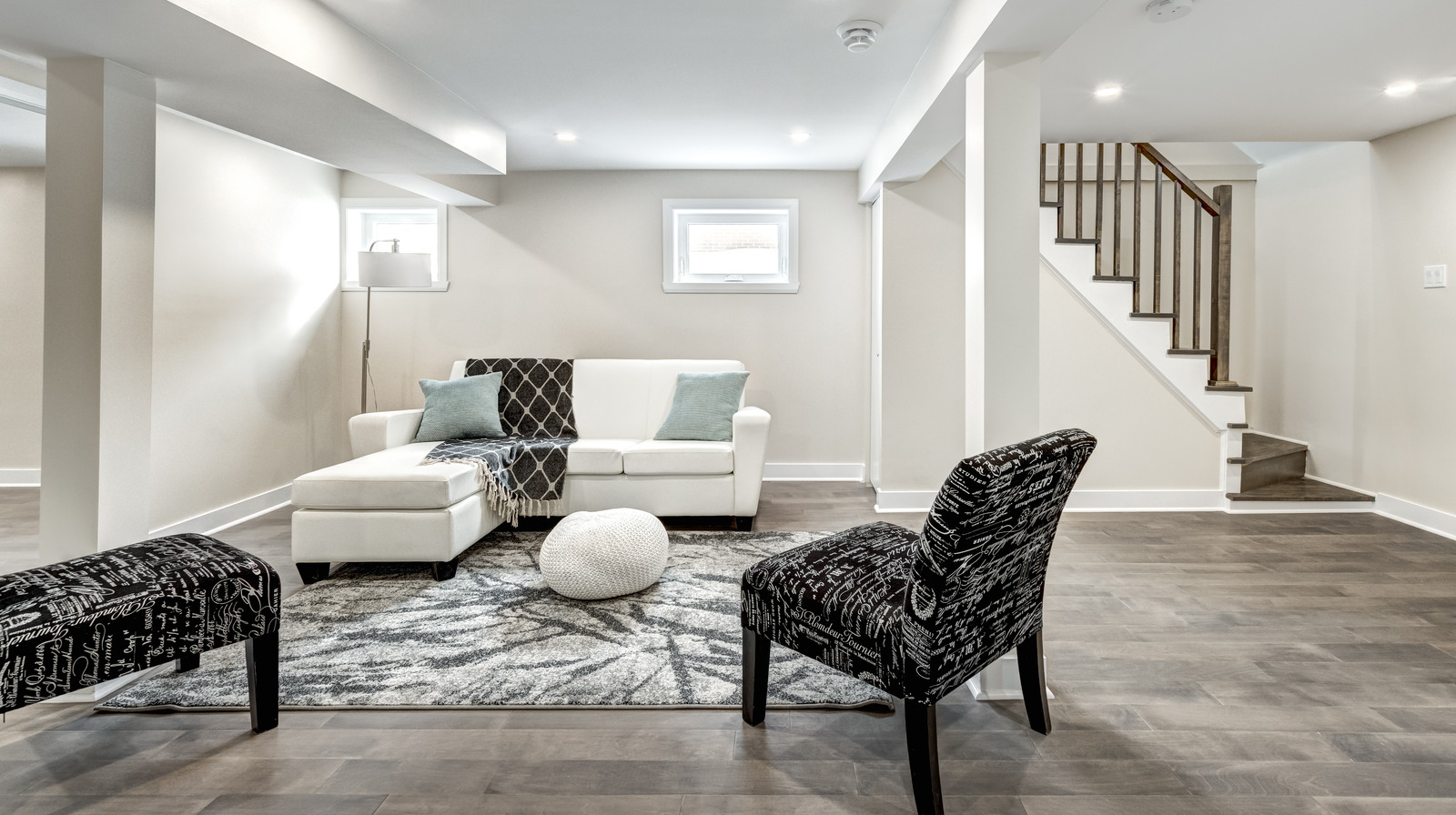
2. Layer a Graphic Area Rug Over Wood-Look Flooring
The formula for this modern, inviting space is surprisingly simple and easy to adapt. Think of it as 60% neutral foundation (the light walls and white sectional), 30% texture and pattern (the grey wood-look floors and abstract rug), and 10% curated accents (the script-upholstered chairs and pale blue pillows). You could easily swap the gray for a warm greige or change the blue accents to a sage green, and the room’s balanced feel would remain intact. The key is the high-contrast pattern on the floor, which anchors everything.
|
📋 Copy HEX 🔗 Share |
When you place an area rug under a sectional, the golden rule is to go bigger than you think you need. All legs of the sectional should ideally sit on the rug. If that’s not possible due to budget or room size, at a minimum, the front legs of all pieces must be on the rug. This connects the seating group, making it feel cohesive rather than like a collection of separate items floating in a room. An undersized rug will make the entire space feel smaller and less intentional.
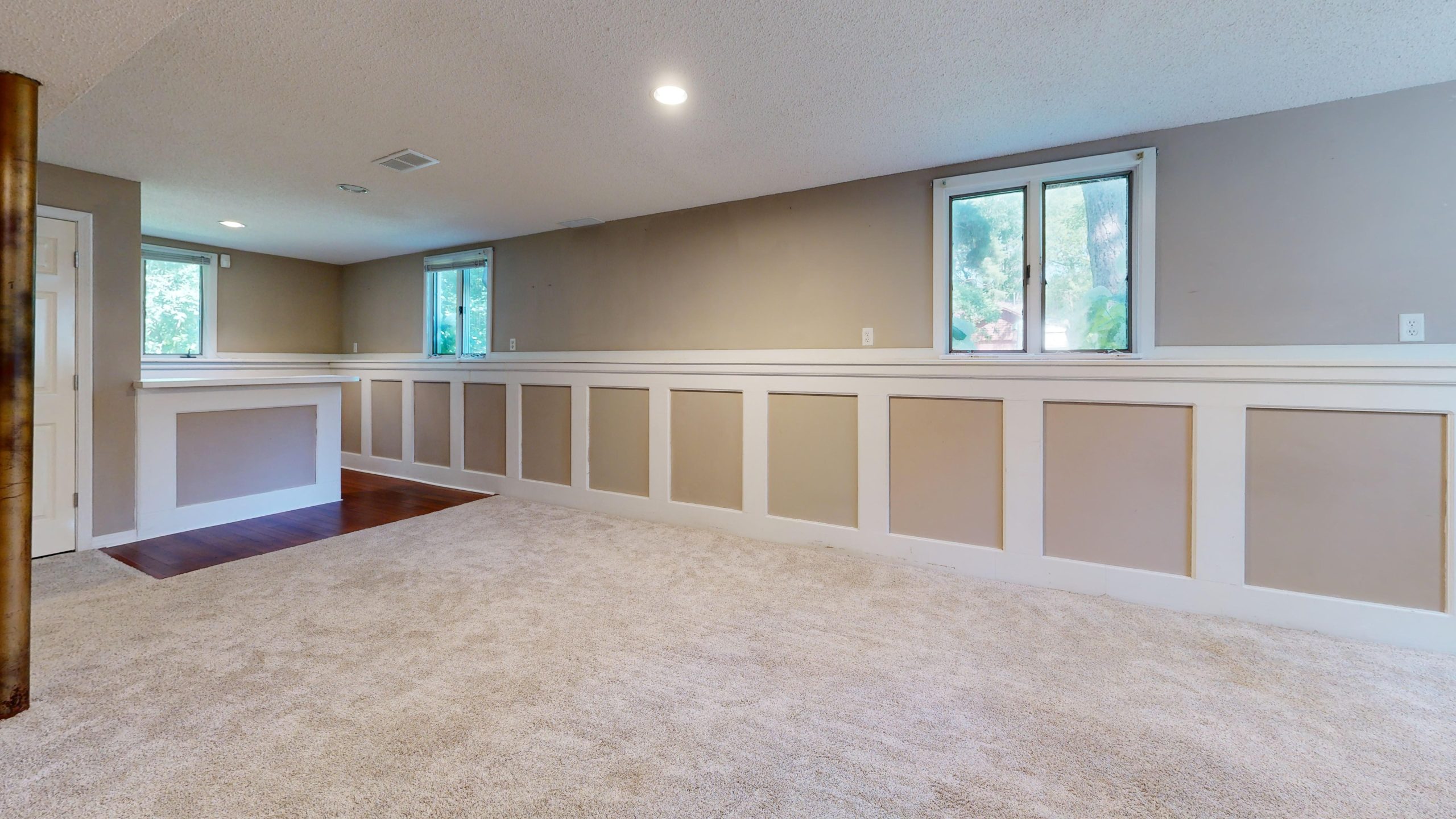
3. Add Architectural Detail with Paneled Wainscoting and Shag Carpet
The single element that elevates this basement from a simple, functional box to a room with character is the white paneled wainscoting. Without it, you’d just have plain painted walls and a shag carpet. The wainscoting adds a layer of architectural detail and traditional charm that creates a sense of history and craftsmanship. It breaks up the wall, provides a crisp contrast to the light brown paint, and makes the entire space feel more finished and thoughtfully designed.
|
📋 Copy HEX 🔗 Share |
A plush, shaggy carpet feels incredible underfoot, but it requires a specific cleaning routine. A regular vacuum cleaner might struggle with the long fibers and can even damage the rug. You’ll need a vacuum with a high-pile setting and, ideally, one where you can turn off the beater bar to prevent tangling and tearing. For deep cleaning, professional steam cleaning once a year is your best bet, as DIY shampooers can leave too much moisture behind, which is a major no-no in a basement.
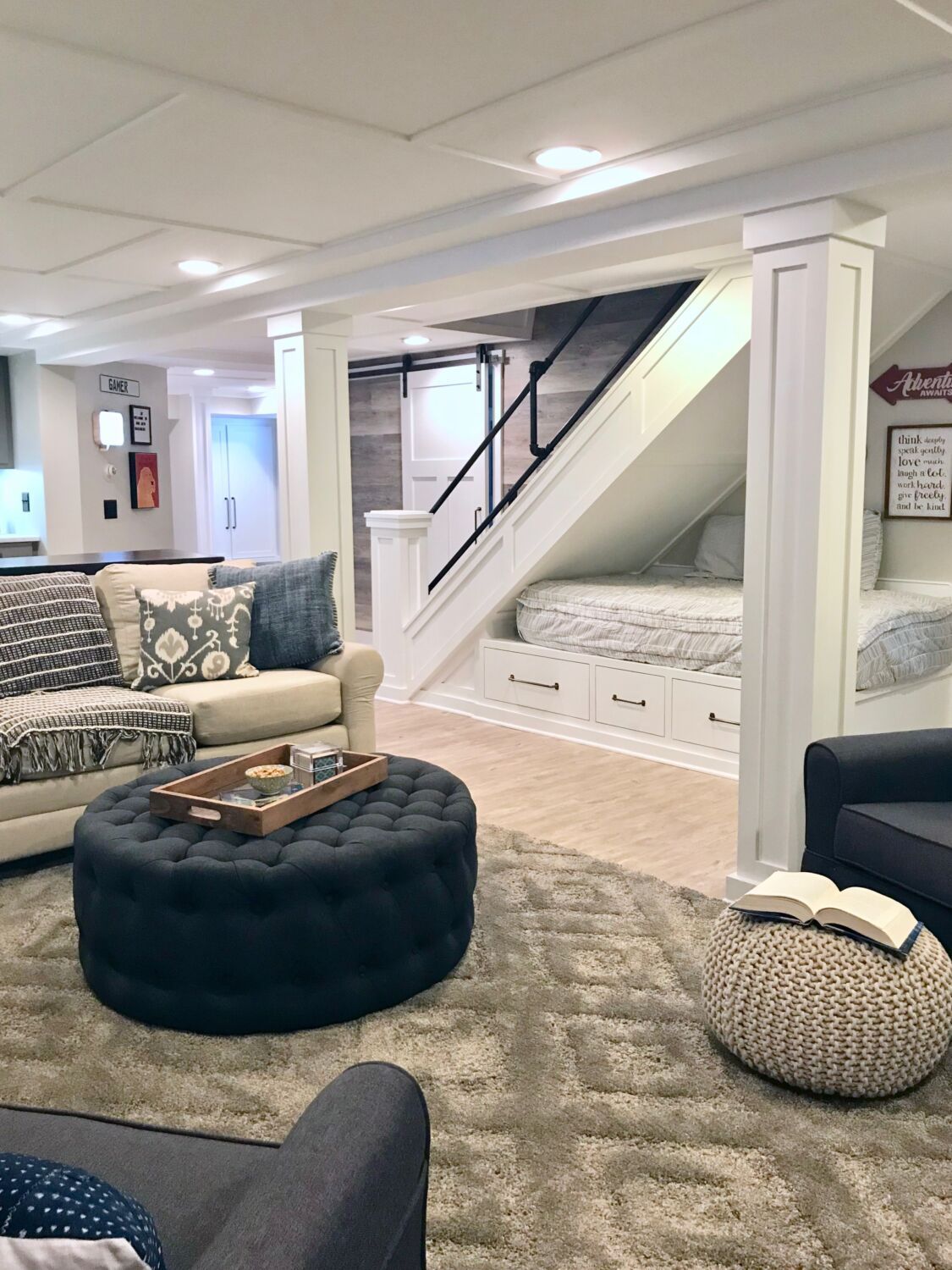
4. Define a Cozy Reading Nook with a Plush Shag Area Rug
This setup is all about creating a destination within a larger space. The plush shag area rug acts as a visual anchor, clearly marking the boundary of the cozy seating area. Its soft, deep texture provides a powerful contrast against the smooth, light wood-look flooring, creating a zone that screams ‘comfort.’ By placing the furniture entirely on the rug—from the navy ottoman to the gray knit pouf—the design establishes an intimate, self-contained lounge that feels separate from the rest of the open basement. It’s a great example of using a rug as a room divider.
|
📋 Copy HEX 🔗 Share |
You don’t need a custom built-in to get this cozy nook vibe. Recreate this look for about 50% less by using clever IKEA hacks. Instead of a custom under-stair unit, use a simple KALLAX shelf unit laid on its side, add some DRÖNA storage boxes, and top it with a custom-cut foam mattress from a craft store. For a similar shag rug, check out Target or Wayfair during their sales events. Grand total? You could likely pull off a similar feel for under $700 instead of several thousand.
5. Unify a Multi-Functional Basement with Light Wall-to-Wall Carpet
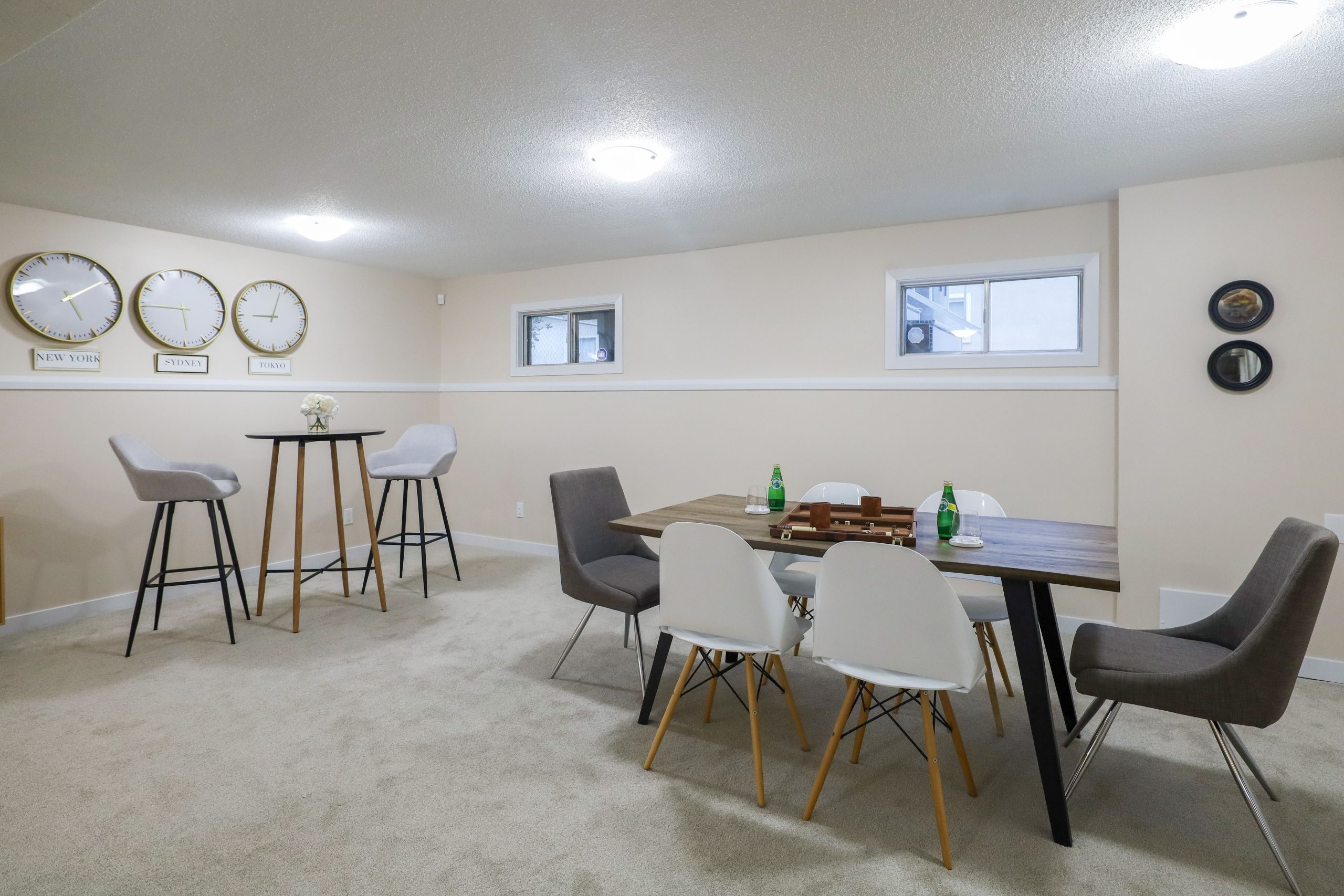
This strategy of using one continuous type of flooring is perfect for basements that serve multiple purposes, like a combined game room, bar, and media area. A single expanse of light, low-pile carpet works best in spaces that are at least 300 square feet. This uninterrupted visual plane makes the entire area feel larger and more cohesive. In smaller or more segmented basements, this approach can feel a bit monotonous. Contrast this with the zoned approach in Idea #2, which uses an area rug to define a specific spot.
|
📋 Copy HEX 🔗 Share |
Having a dining table and bar stools on a light-colored carpet is a brave choice. Spills are not a matter of ‘if’ but ‘when.’ If you love this look, be practical. Choose a commercial-grade or solution-dyed polyester or olefin carpet, which has superior stain resistance built into its fibers. Also, keep a dedicated spot-cleaning kit handy at all times. For a little extra peace of mind, place a clear, low-profile chair mat under the dining table to catch the inevitable crumbs and splashes.
6. Layering Dark Shag Rugs Over Beige Carpet Tiles
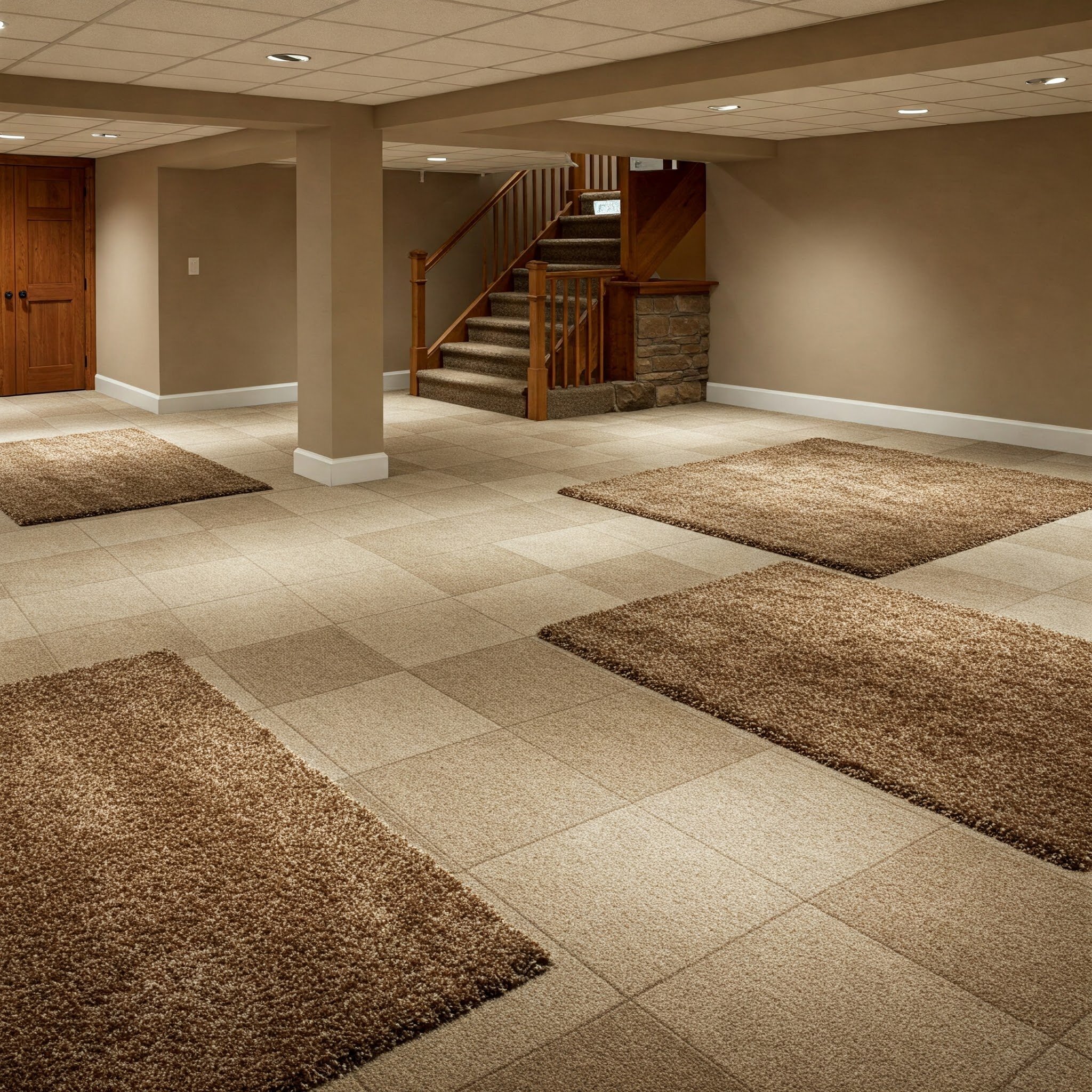
Carpet tiles are arguably the smartest flooring choice for a basement, period. Basements are prone to moisture issues, leaks, or spills. With wall-to-wall carpeting, one serious incident can mean replacing the entire floor. With carpet tiles, you can simply pull up and replace the few damaged squares. Always order at least 10% extra and store them flat in a dry place. This ensures you have perfectly matched replacements for years to come, even if the original style is discontinued.
|
📋 Copy HEX 🔗 Share |
You can create this subtle checkerboard effect by slightly rotating the orientation of each tile. Time: 2-3 hours for a 150 sq ft room. Cost: $2-5 per sq ft.
- Ensure your concrete subfloor is clean, dry, and level.
- Find the center of the room by snapping chalk lines from the midpoints of opposing walls.
- Starting from the center point, lay your first tile.
- Lay the next tile right next to it, but rotated 90 degrees. You’ll notice the grain of the carpet creates a subtle shift in color and texture.
- Continue this pattern, alternating the direction of each tile.
- Cut tiles as needed for the edges of the room using a sharp utility knife and a straight edge.
7. A Playful Basement with Textured Carpet and a Chalkboard Wall
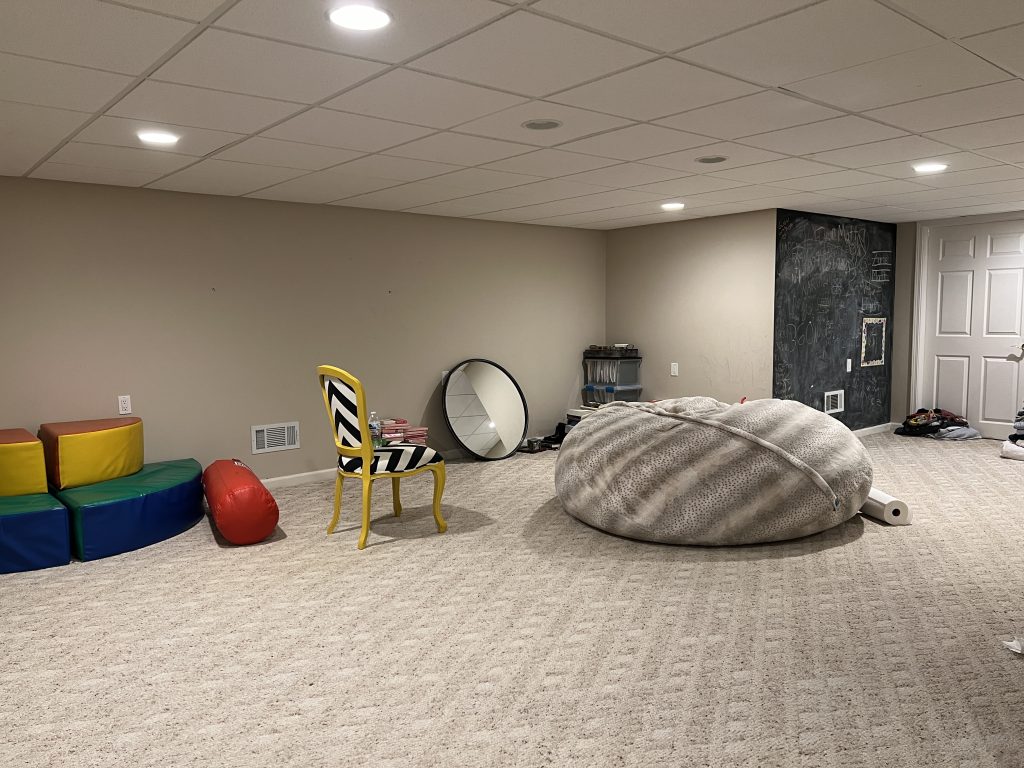
The star of this room is, without a doubt, the chalkboard wall. It instantly signals that this is a space for fun, creativity, and relaxation. It’s a dynamic feature that transforms a simple wall into an interactive canvas, providing endless entertainment for kids and a unique decorative element for adults. Removing it would leave a perfectly nice but generic basement room. The chalkboard wall injects personality and a sense of playfulness that the rest of the neutral design supports rather than competes with.
|
📋 Copy HEX 🔗 Share |
Here’s the simple recipe for a fun and functional family basement: 80% durable neutral base + 20% playful, high-impact accents. The light beige textured carpet and light gray walls form the hardworking, easy-to-live-with base. The magic comes from the 20% dedicated to fun: the bold black chalkboard wall, the pop of bright yellow in the striped chair, and the oversized comfy beanbag. This formula ensures the room can easily evolve as kids grow up—just paint the chalkboard wall and swap the accents.
8. Warming Up a Concrete Floor with a Bold, Colorful Area Rug
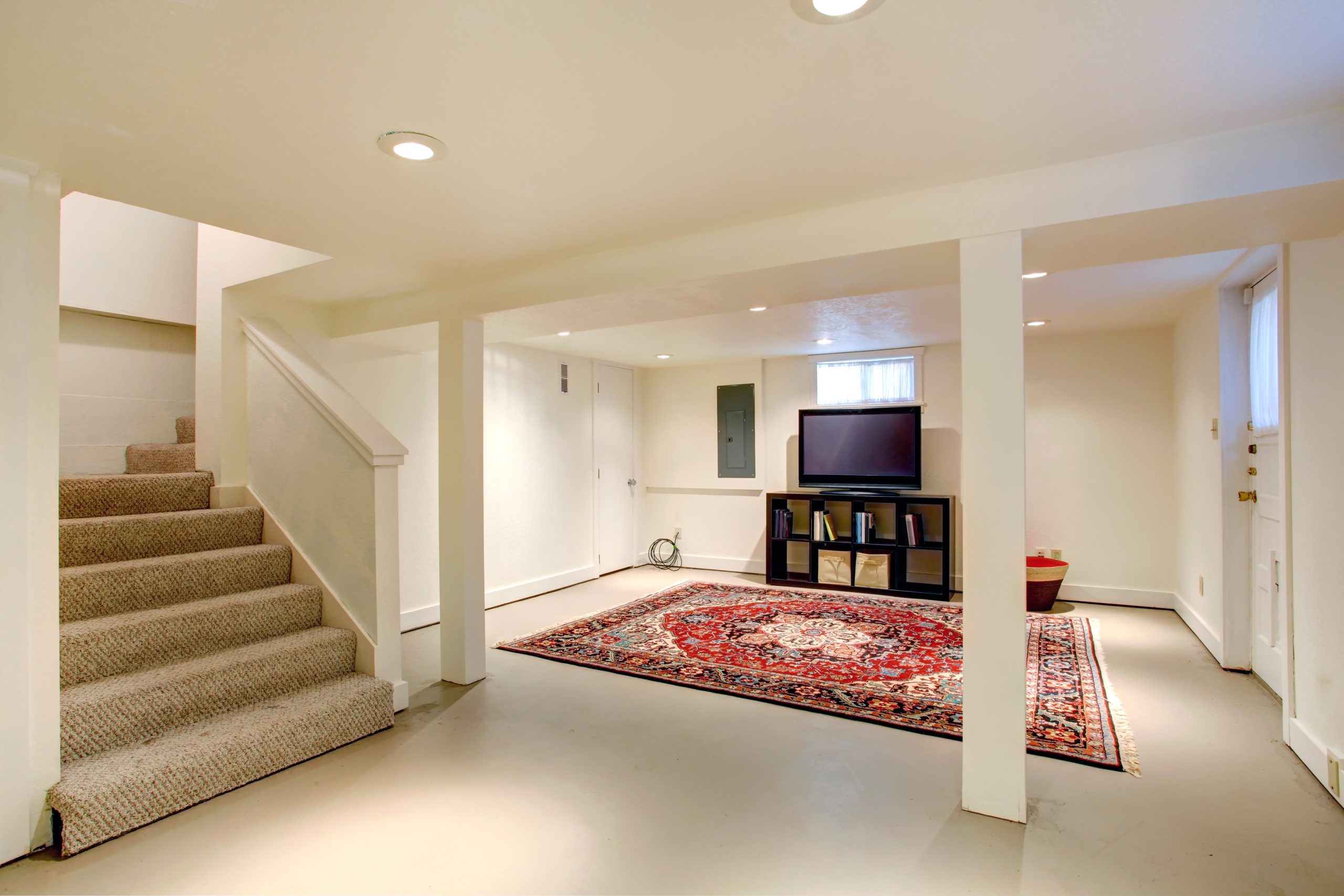
Sometimes the simplest solution is the most effective. Instead of fully carpeting the basement, painting the concrete and adding a large area rug provides warmth and style for a fraction of the cost. The bold red and blue pattern of the rug becomes the room’s centerpiece, instantly drawing the eye and defining the media zone. It solves the coldness of the concrete underfoot while injecting a huge dose of personality that neutral wall-to-wall carpet might lack. Compare this high-contrast look to the softer approach in Idea #23.
|
📋 Copy HEX 🔗 Share |
Here’s a look at what it might cost to get this functional and stylish setup. The big win here is saving on wall-to-wall installation.
- Paint & Sealer for Concrete Floor: $200 – $400
- Large Patterned Area Rug (8’x10′): $300 – $800
- Media Console: $250 – $700
- Beige Carpet Runner for Stairs: $100 – $300
- TOTAL: $850 – $2,200
- Budget alternative: Look for a similar media console on Facebook Marketplace and find a remnant carpet piece for the stairs to save an additional 40-50%.
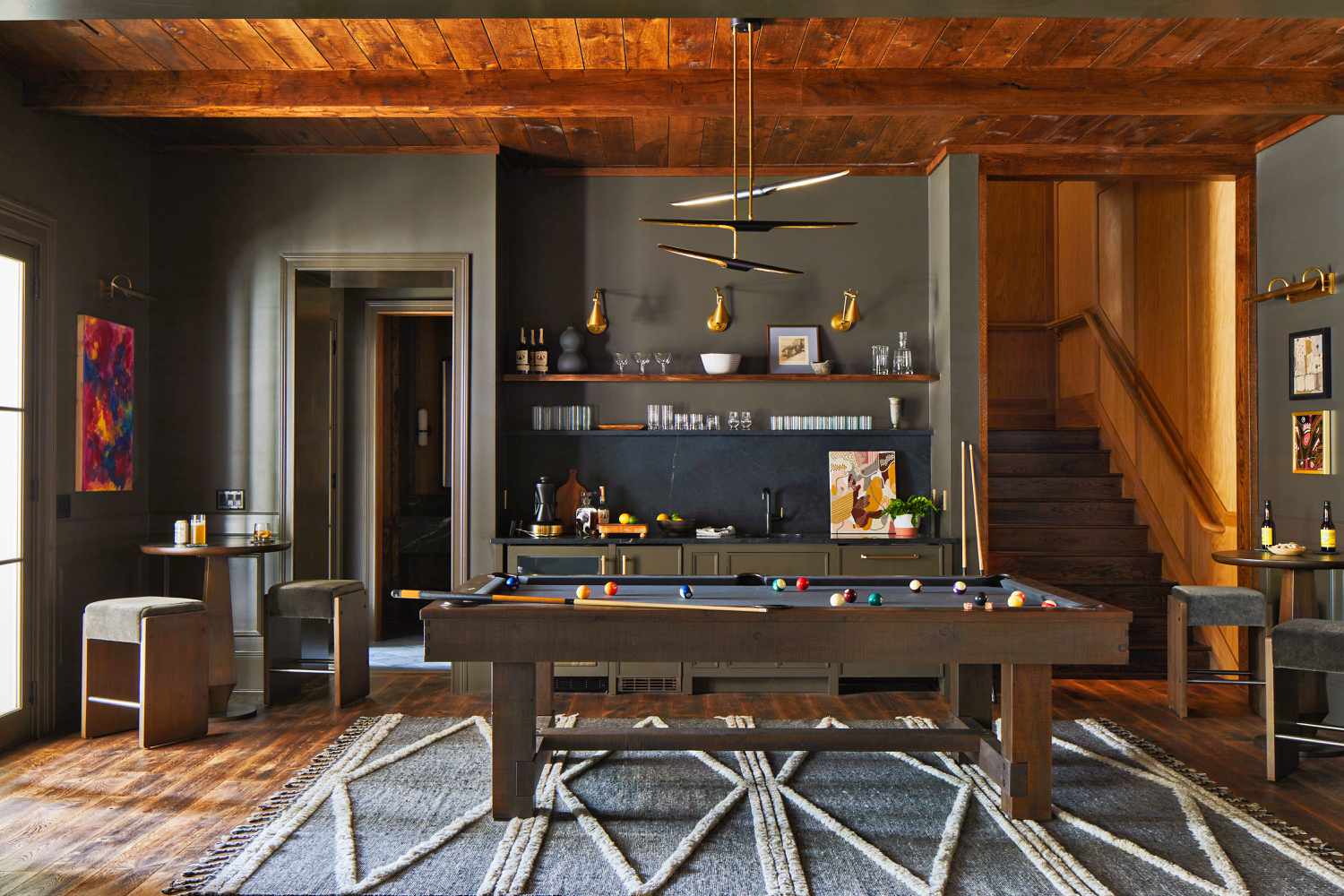
9. A Moody Lounge with Dark Green Walls and a Geometric Rug
A dark, moody design like this works best in a basement with generous proportions and good lighting. For this look to feel like a cozy, sophisticated retreat instead of a cramped cave, you ideally want a ceiling height of at least 8 feet and a minimum of 250-300 square feet. The space also benefits from multiple light sources—recessed lights, task lighting over the pool table, and accent lighting in the bar area—to create pools of light and prevent the dark colors from feeling oppressive.
|
📋 Copy HEX 🔗 Share |
The success of this design hinges on a principle called ‘contrast and relief.’ The dark olive-green walls, rich wood ceiling, and dark flooring create a deeply cozy, enveloping atmosphere. However, without a moment of visual relief, it would feel too heavy. The gray and white geometric rug provides that essential contrast. Its light colors and sharp lines cut through the darkness, lifting the entire scheme and preventing it from becoming a monotonous sea of dark tones. It proves that even in a moody room, you need light to appreciate the dark.
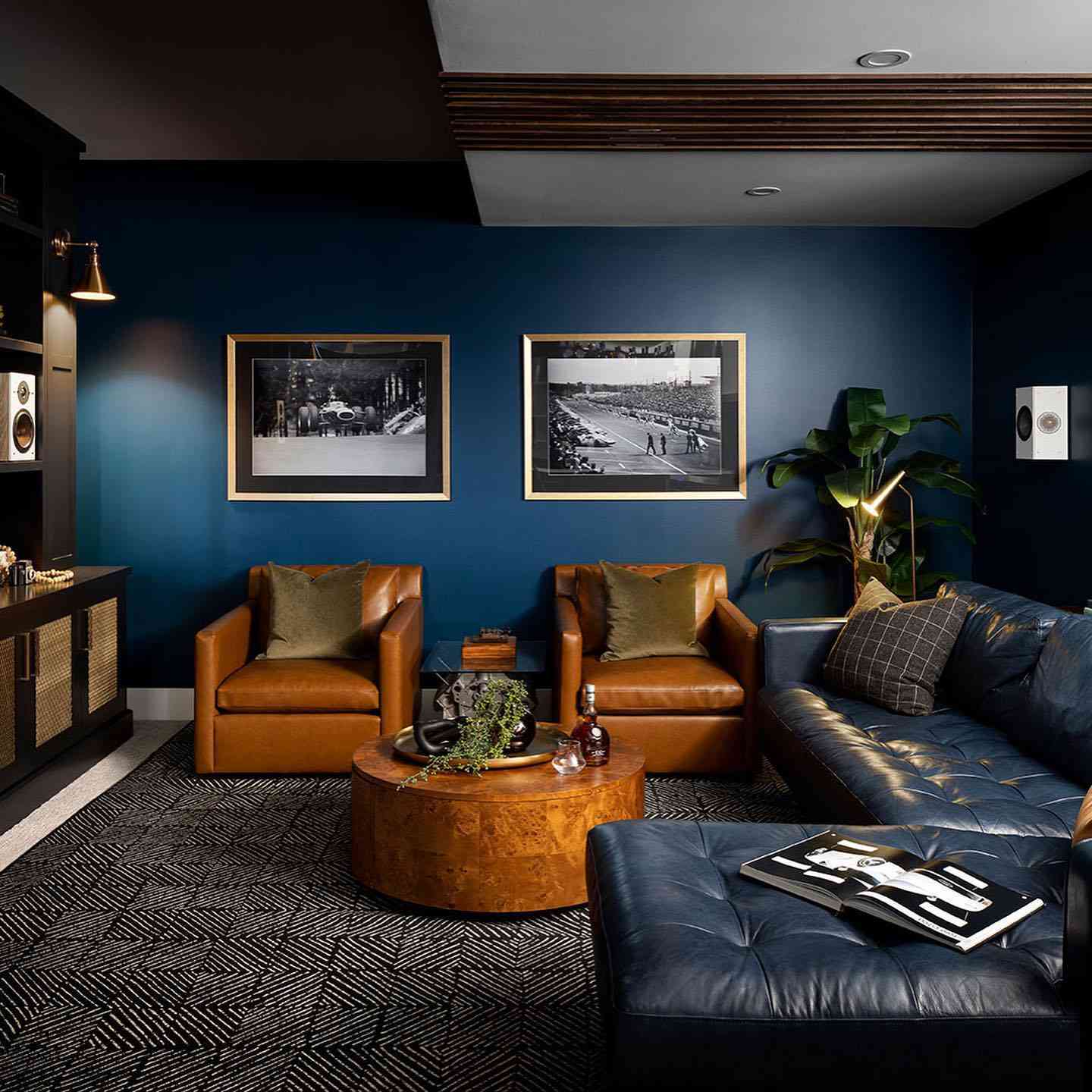
10. Pairing Deep Blue Walls with a Graphic Black and White Rug
We’re seeing a major shift away from the all-gray-everything aesthetic of the 2010s, and rooms like this are the result. Homeowners are craving color and personality, leading to the rise of ‘dark and moody’ interiors. Deep, saturated jewel tones like this rich blue, combined with cozy textures and warm leather, create a space that feels like a personal sanctuary. This isn’t just a trend; it’s a reaction, a move towards creating homes that feel layered, personal, and deeply comforting.
|
📋 Copy HEX 🔗 Share |
When hanging art on a dark, saturated wall color like this deep blue, the frame is just as important as the art itself. To create a crisp, gallery-like effect, choose a frame that provides high contrast. Here, the thin gold frames pop against the blue, and the wide white matting around the prints makes the artwork stand out. A dark or black frame would have simply blended into the wall, losing all impact. For a bolder look, a thick white frame would also work beautifully.
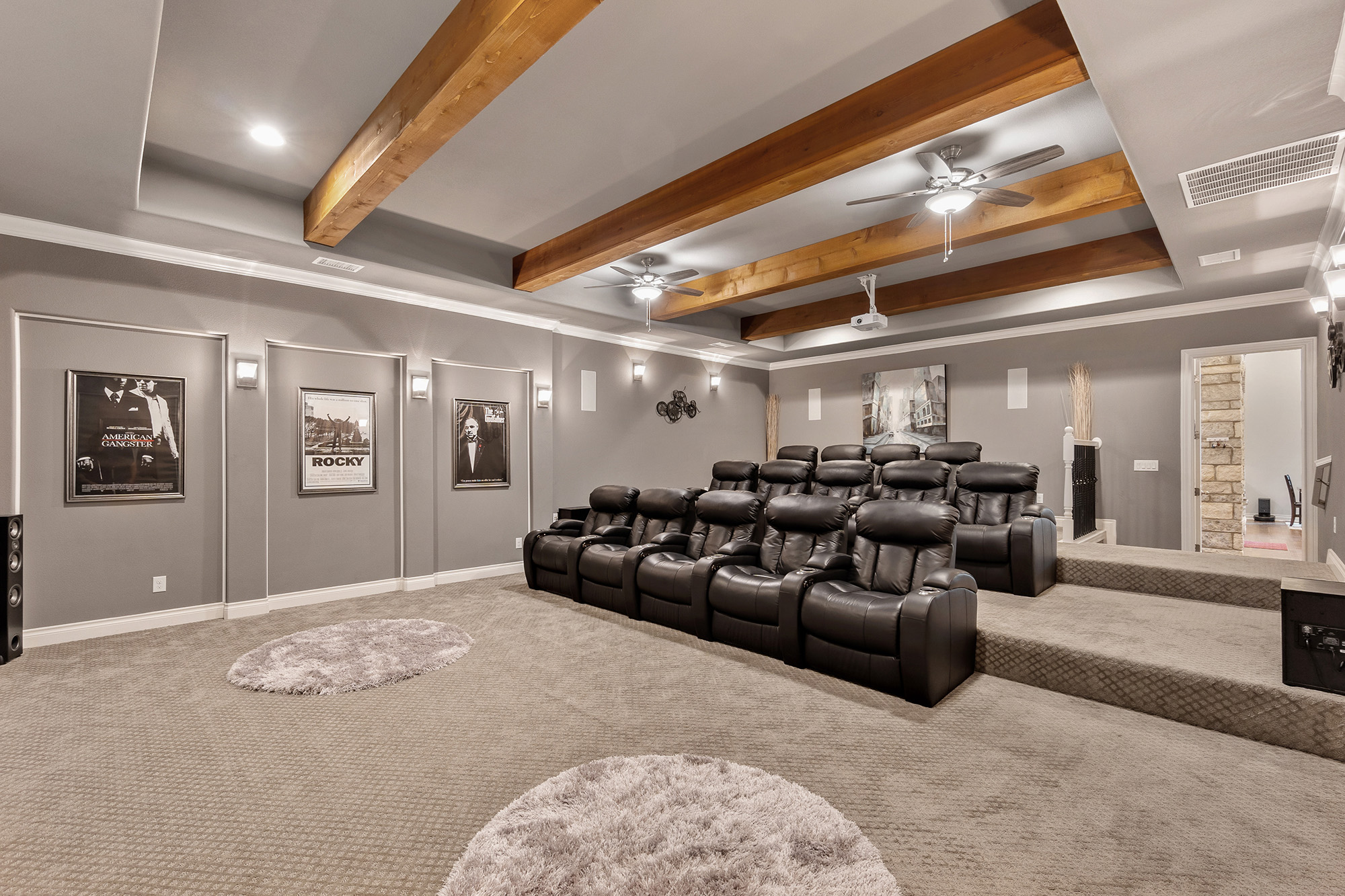
11. A Cinematic Home Theater with Tiered Gray Carpet
Building a basic tiered seating platform is a weekend project that dramatically enhances the movie-watching experience. Time: 5-7 hours. Cost: $300-$600.
- Design your platform: Plan for one or two steps. A comfortable depth for each tier is 4-5 feet (enough for recliners to lean back) and a height of 8-12 inches per step.
- Build the frame: Use 2×8 or 2×12 lumber to build a rectangular frame for each tier. Add interior joists every 16 inches for support.
- Add the decking: Cover the frame with 3/4-inch plywood or OSB, screwing it down securely to the joists.
- Carpet the platform: Before installing seats, wrap the entire platform in the same carpet as the rest of the room for a seamless, professional look. Use a strong carpet adhesive and a staple gun.
|
📋 Copy HEX 🔗 Share |
There’s a good reason why movie theaters are carpeted. Carpet is an excellent sound absorber, especially for the mid-to-high frequencies that can make a room sound echoey or harsh. In a home theater, the textured grey carpet here helps to deaden sound reflections from the surround sound system, leading to clearer dialogue and more immersive sound effects. The carpet on the tiered platforms further enhances this effect, ensuring that the sound from the speakers travels directly to the listener, not bouncing off a hard floor first.
12. Create an Immersive Home Theater with Deep Teal Walls
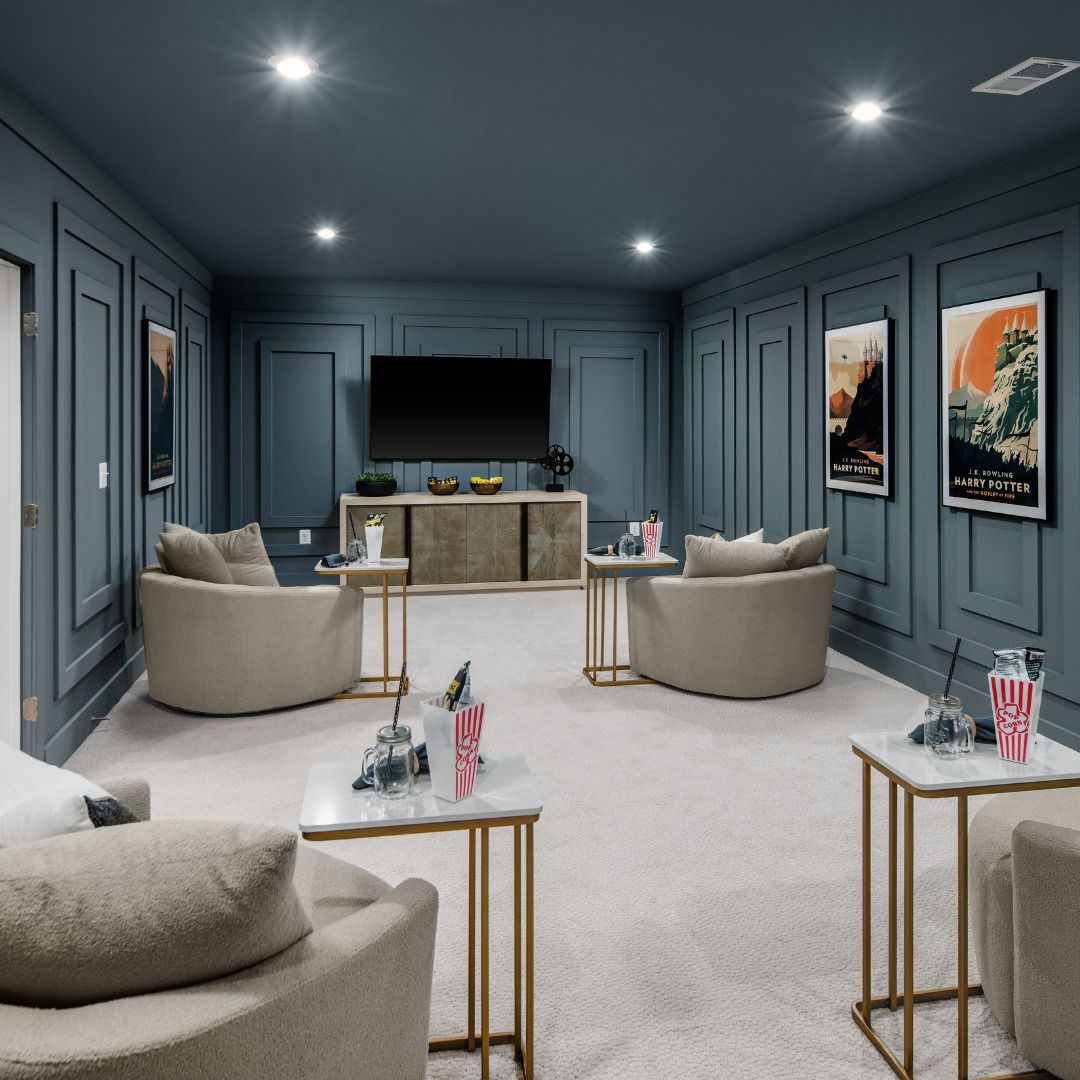
The single most impactful choice in this home theater is the commitment to a monochromatic, jewel-box design. By painting not only the paneled walls but also the ceiling in the same deep teal, the room becomes a fully immersive environment. This technique blurs the edges of the room, making the space feel boundless and causing the walls to recede when the lights are dimmed. This allows the screen to be the sole focus, which is exactly what you want in a dedicated theater space. Using a lighter color on the ceiling would have broken the spell.
|
📋 Copy HEX 🔗 Share |
A light-colored, textured carpet is a bold choice for a room dedicated to movie nights. Here’s what you need to know about keeping it pristine:
- No-Go Zone: Red wine and greasy popcorn butter are your mortal enemies. Consider establishing a ‘clear liquids and non-greasy snacks only’ rule.
- Weekly Routine: Vacuum at least once a week with a high-pile setting to pull up debris from the texture.
- Spot Cleaning Kit: Keep a high-quality carpet stain remover on hand. For this color, a product like Folex or one specifically for synthetic fibers is a must.
- Professional Cleaning: Budget for a professional deep cleaning once a year to keep it from looking dingy over time.
13. Warm Up Terracotta Tiles with an Ornate Patterned Rug
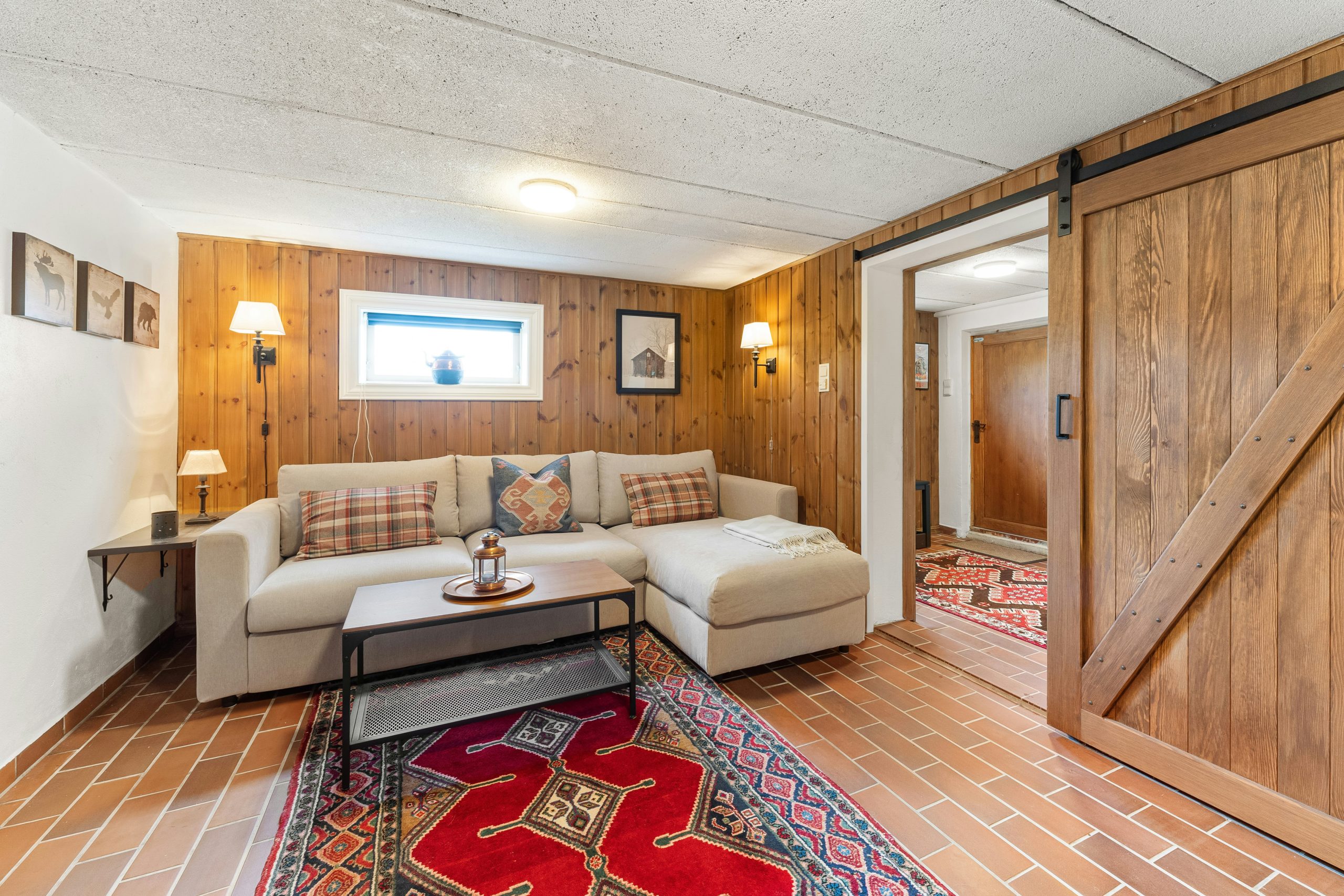
This cozy, rustic vibe is a careful balancing act. The formula is approximately 40% warm rustic textures (the wood paneling and terracotta tile) + 30% soft neutral base (the white walls and beige sectional) + 30% rich color and pattern (the red and blue rug). The white walls are crucial; if all the walls were wood-paneled, the room could feel dark and dated. The beige sectional provides a calm place for the eye to rest, allowing the vibrant rug and the wood textures to be the stars of the show without overwhelming the space.
|
📋 Copy HEX 🔗 Share |
Real terracotta or Saltillo tiles are beautiful but can be pricey and require sealing. For a similar warm, earthy look at a fraction of the cost, explore luxury vinyl tile (LVT). Modern LVT comes in incredibly realistic patterns and textures that mimic natural stone and tile, but it’s more durable, waterproof (perfect for basements!), and easier to install. You can find high-quality terracotta-look LVT for $3-$6 per square foot, compared to $8-$15 for the real thing. Pair it with a rug from Facebook Marketplace for a huge saving.
14. A Guide to the Best Carpet Types for a Basement
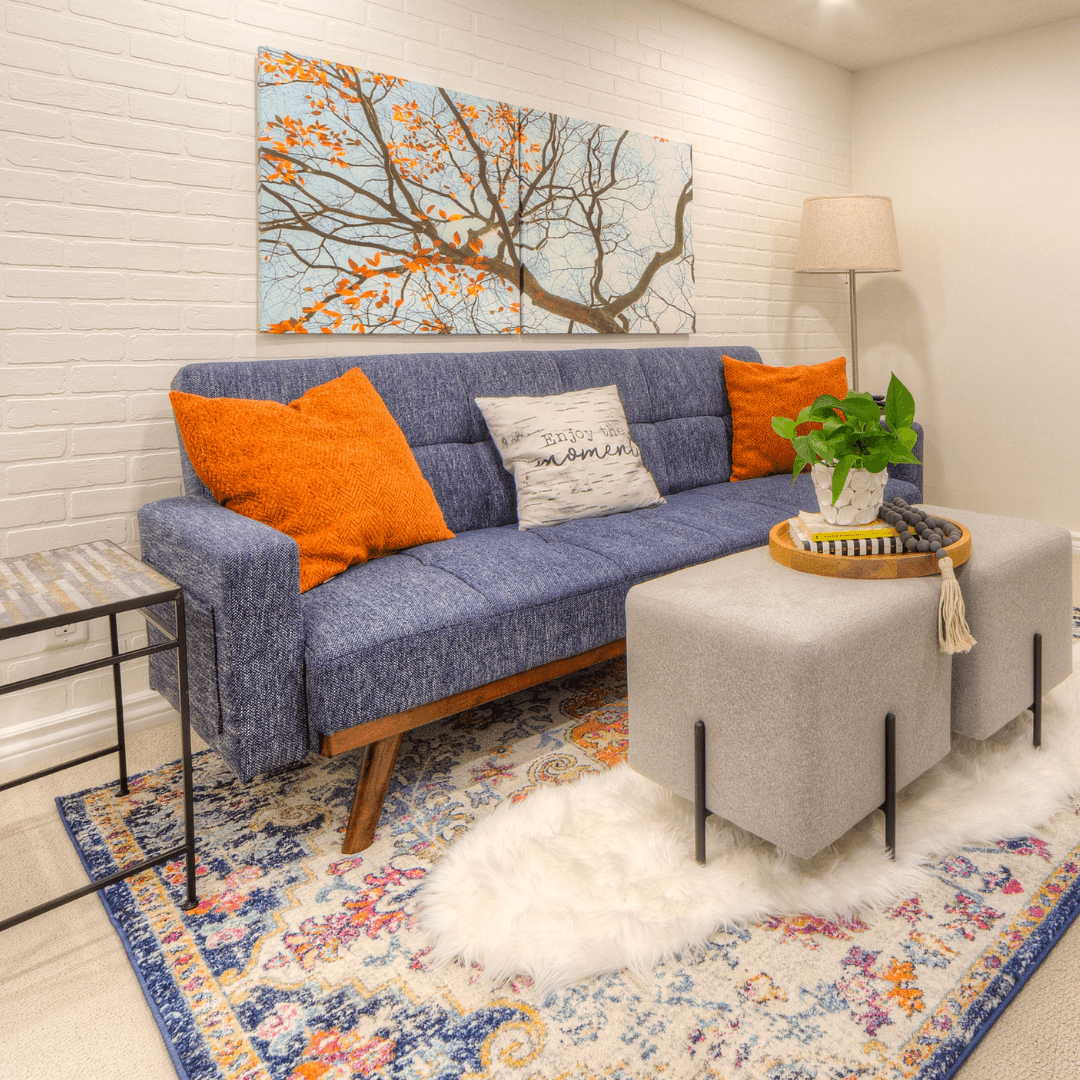
When choosing basement carpet, focus on fiber type and pile. For fibers, synthetic is the only way to go. Nylon is the most durable and resilient, making it great for high-traffic stairs and play areas. Polyester is budget-friendly and naturally stain-resistant. Olefin (polypropylene) is also a great choice, as it’s solution-dyed, meaning the color is part of the fiber, and it’s extremely resistant to fading and stains, including bleach. For pile, a low-pile or loop (like Berber) is generally better, as it’s more durable and less likely to trap moisture.
|
📋 Copy HEX 🔗 Share |
Don’t even think about buying carpet until you’ve checked these items off your list. A little prep work can save you from a costly disaster.
- Perform a moisture test. Tape a 2’x2′ square of plastic sheeting to your concrete floor for 24-48 hours. If condensation forms underneath, you have a moisture problem that needs to be addressed before installing carpet.
- Check the subfloor. Is the concrete level and free of cracks? Any major issues need to be repaired first.
- Assess your climate. If you live in a very humid area or your basement is prone to dampness, carpet might not be the best choice. Consider the tile and rug approach from Idea #13 instead.
- Confirm your budget. Remember to factor in the cost of the carpet pad, installation, and removal of any old flooring.
15. Visually Expand a Narrow Basement with Mirrors and Light Carpet
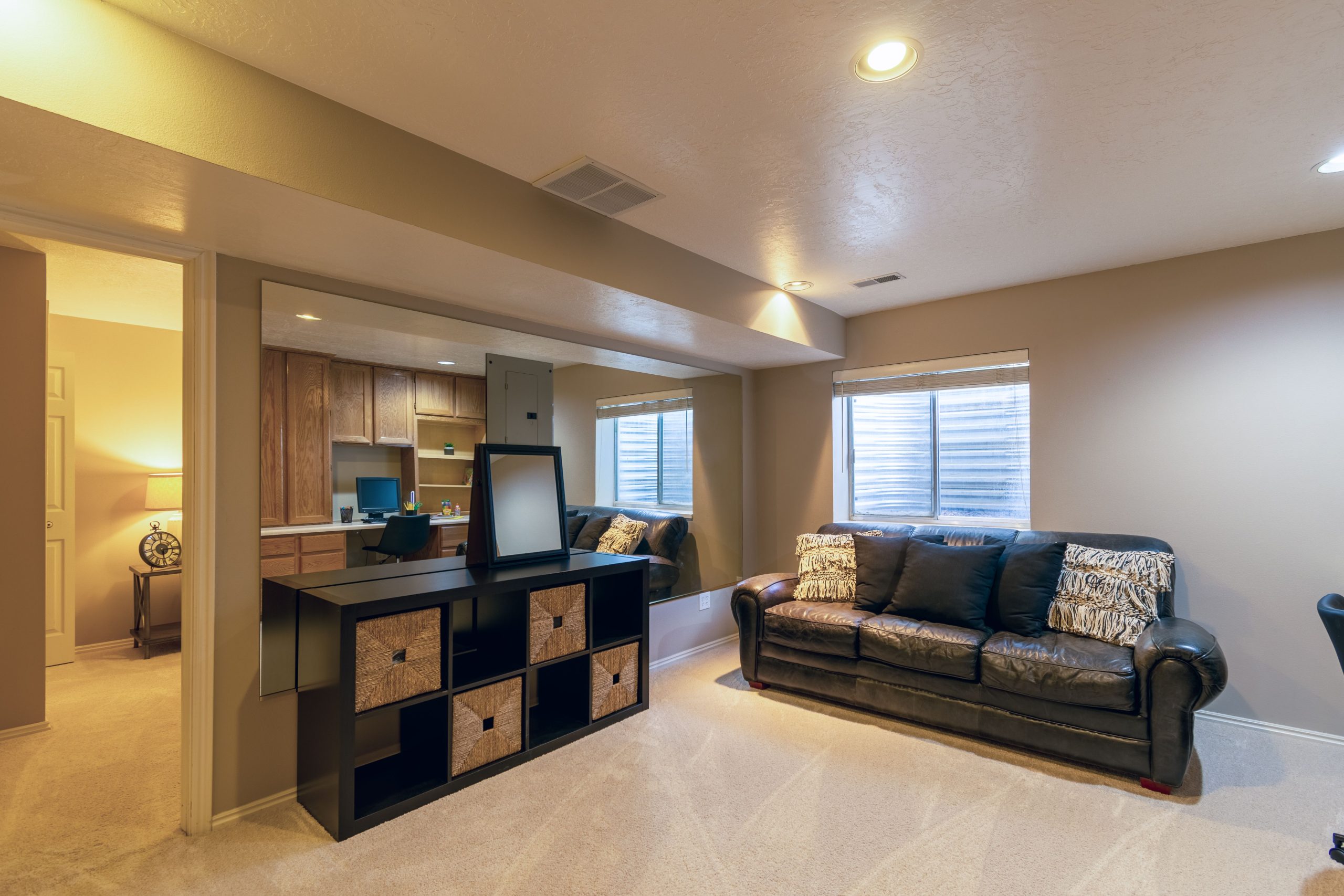
The large, unframed mirror along the wall is a classic and highly effective design trick. It works by creating a perfect reflection of the room, which doubles the perception of space. The key is to use a large, seamless mirror (or several abutted together) rather than a small, framed one. This creates an illusion of an opening into an adjacent room, rather than just a reflection. When combined with the light beige carpet and taupe walls, the mirror bounces light around, making the entire basement feel brighter and significantly more spacious.
|
📋 Copy HEX 🔗 Share |
This mirrored-wall technique is a game-changer for long, narrow basements or any subterranean space that feels cramped and has limited natural light. If your basement is less than 12 feet wide, installing a mirror along one of the long walls can make it feel almost twice as big. It’s also brilliant for basements with lower-than-average ceilings (under 7.5 feet), as the reflection of the light-colored carpet and ceiling can create a subtle illusion of more height.
16. Defining a Modern Basement Bar with a Carpet-to-Tile Transition
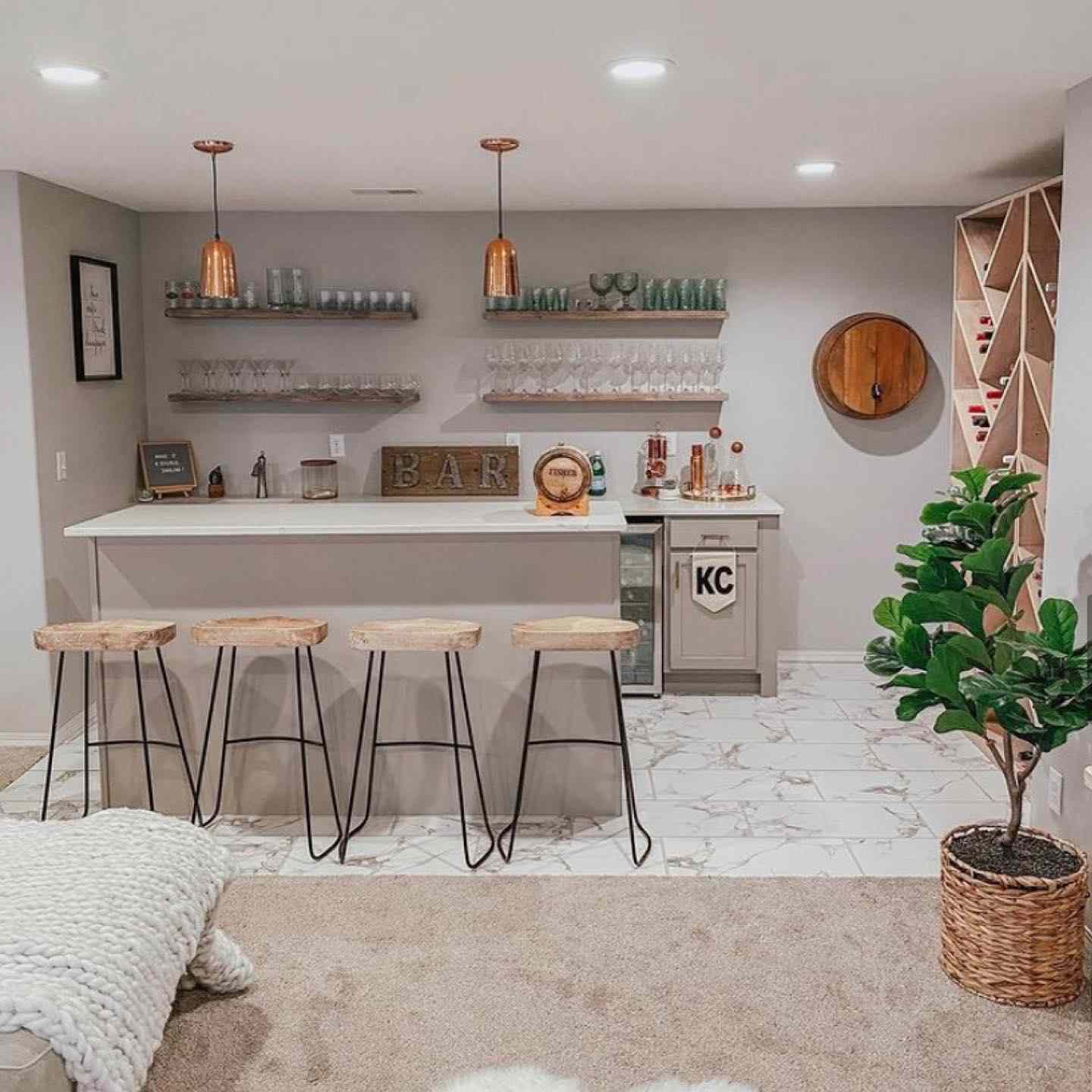
In this polished basement, the single element that provides the most warmth and visual interest is the trio of copper pendant lights. Against the backdrop of cool light grey walls, white countertops, and light beige carpet, the metallic warmth of the copper is essential. It prevents the neutral palette from feeling cold or sterile. The pendants also serve a functional purpose, clearly defining the bar area as a distinct zone and casting a warm, inviting glow that makes you want to pull up a stool.
|
📋 Copy HEX 🔗 Share |
A clean transition between different flooring types, like the carpet and marble-look tile here, is what separates a DIY-looking job from a professional one. Use a proper transition strip (or T-molding) that complements one of the flooring materials. A schluter strip in a metal finish that matches other fixtures—like the copper pendants here—is an elegant, modern choice. Make sure the tops of the two different floors are as level as possible to avoid a tripping hazard. A small difference can be accommodated by the transition strip.
17. Achieving Warm Minimalism with a Striped Area Rug
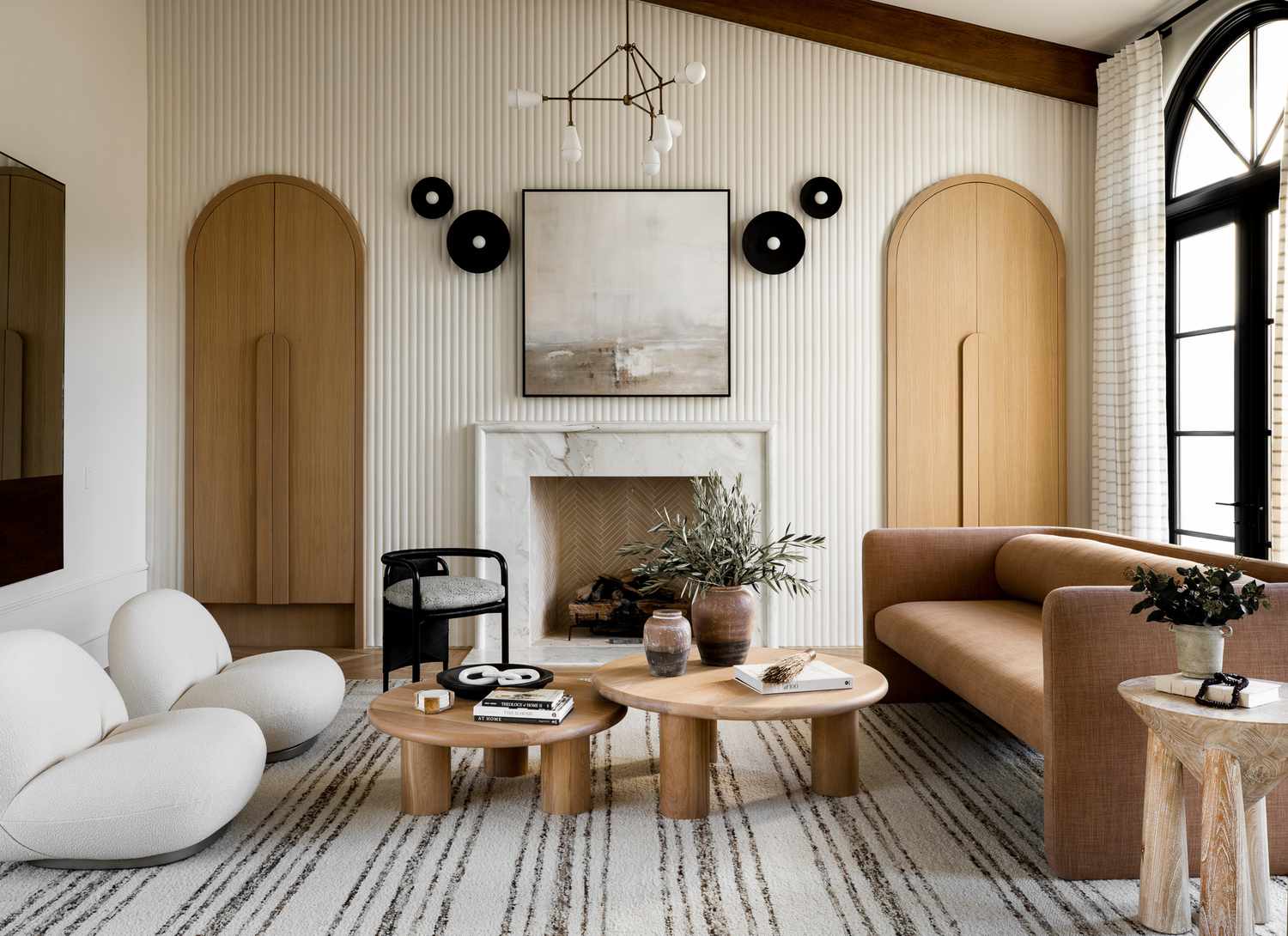
This room is a masterclass in using line and shape. The strong, dark stripes of the area rug create a sense of direction and order, guiding the eye towards the fireplace focal point. This linear pattern provides a grounding contrast to the softer, curved shapes in the room, like the arched wooden cabinet doors and the two round coffee tables. This interplay between straight lines and gentle curves is what makes the design feel balanced, dynamic, and visually interesting without needing a lot of color or clutter.
|
📋 Copy HEX 🔗 Share |
This space perfectly captures the essence of the ‘warm minimalism’ trend that is defining interior design in the mid-2020s. After years of stark, cool minimalism, there’s a collective desire for spaces that are clean and uncluttered but also feel cozy and inviting. This is achieved by combining clean lines and a neutral palette (the white walls and simple fireplace) with natural textures (wood and marble) and soft textiles, like the plush striped rug. It’s about creating a serene sanctuary that still feels like home.
18. An Industrial-Chic Basement with a Speckled Beige Carpet
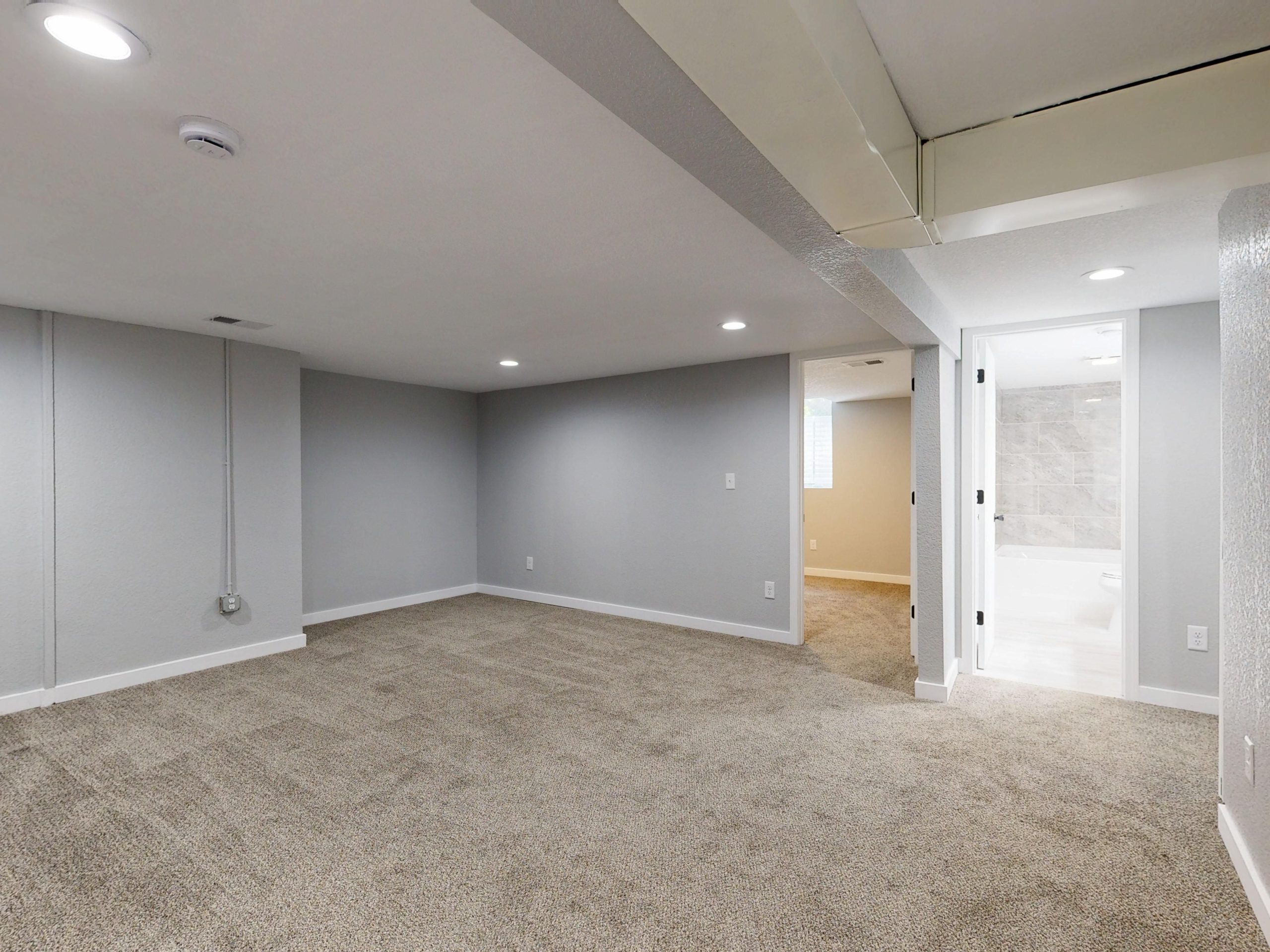
Leaving ductwork and pipes exposed is a great way to add an industrial edge and save on the cost of building a soffit. But should you paint it? Painting it white to match the ceiling, as seen partially here, helps it blend in and makes the ceiling feel higher. Painting it a bold accent color turns it into a deliberate feature. Leaving it as raw metal provides a true industrial look. The one thing to consider is dust: unpainted metal ducts show dust less, but an intricate painted duct system can be a real pain to keep clean.
|
📋 Copy HEX 🔗 Share |
Embracing the ‘unfinished’ industrial look is not just a style choice; it’s a savvy budget move. Boxing in ductwork can cost thousands in framing and drywall. By leaving it exposed and simply painting it, you save that money and gain precious ceiling height. The speckled beige carpet is another smart choice for a budget-conscious project. It’s an inexpensive type of carpet, and the pattern is excellent at hiding dirt, meaning you don’t have to spring for a more expensive, premium high-pile option to get a durable floor.
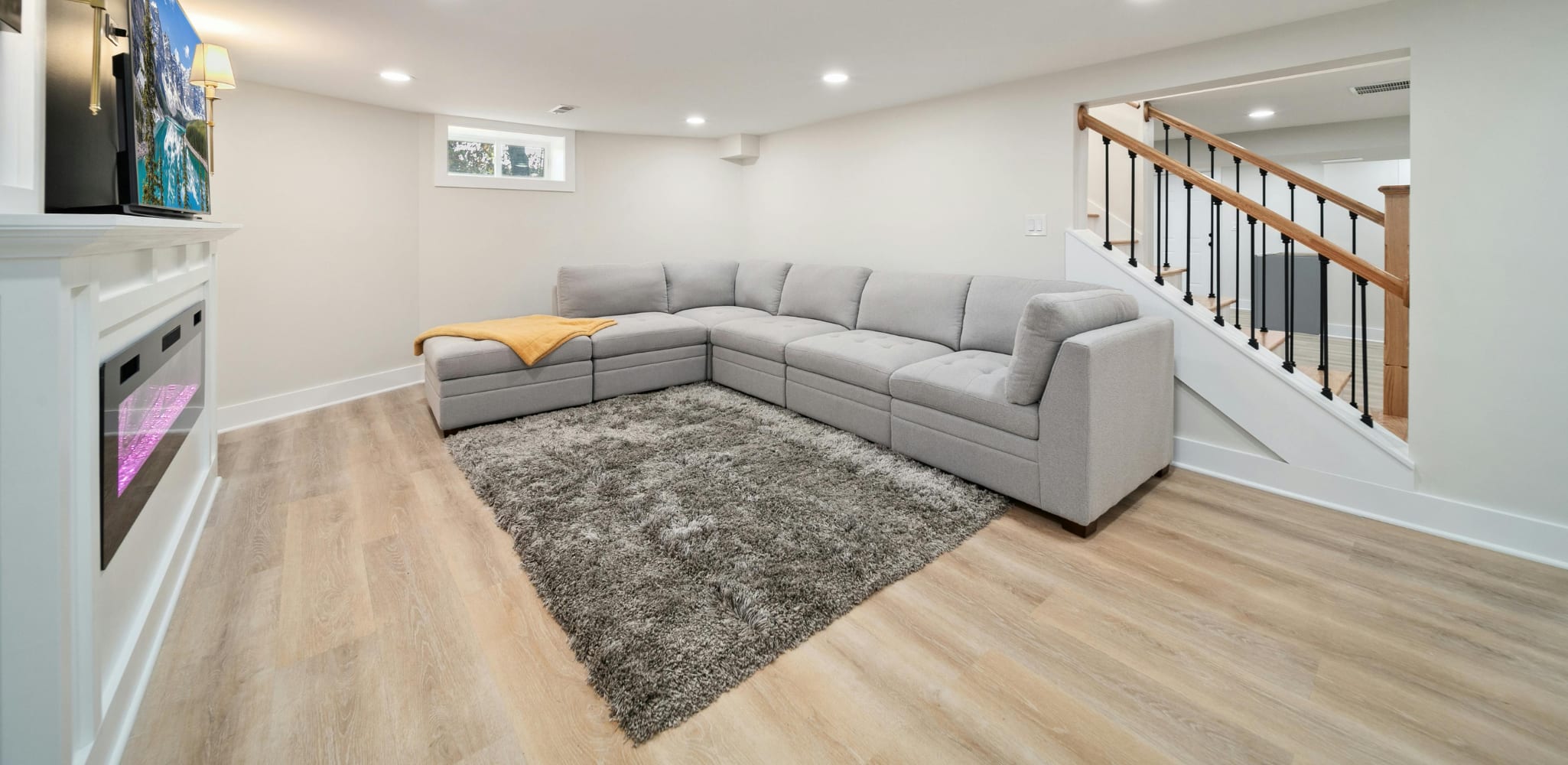
19. Layering a Cozy Gray Shag Rug Over Light Laminate Flooring
Please, I’m begging you, do not put an area rug on a laminate or wood-look floor without a proper rug pad underneath. It’s not just about comfort; it’s a safety issue. Laminate floors are slippery, and a rug without a grip pad can easily become a tripping or slipping hazard, especially in a high-traffic area. Get a good quality felt and rubber pad. The felt side cushions the rug, while the rubber side grips the floor, keeping everything securely in place. It will also extend the life of your rug.
|
📋 Copy HEX 🔗 Share |
This room’s cozy and modern vibe comes from a well-balanced formula: 70% cool neutrals + 20% warm textures + 10% color pop. The light gray sofa, white walls, and gray shag rug make up the dominant cool-toned base. The light wood laminate floor and the wood handrail provide the necessary 20% of warmth and natural texture. Finally, the single yellow throw blanket offers that perfect 10% pop of vibrant color, bringing the whole look to life. It’s a small detail with a huge impact. You can get a similar vibe to the layered rugs in Idea #23.
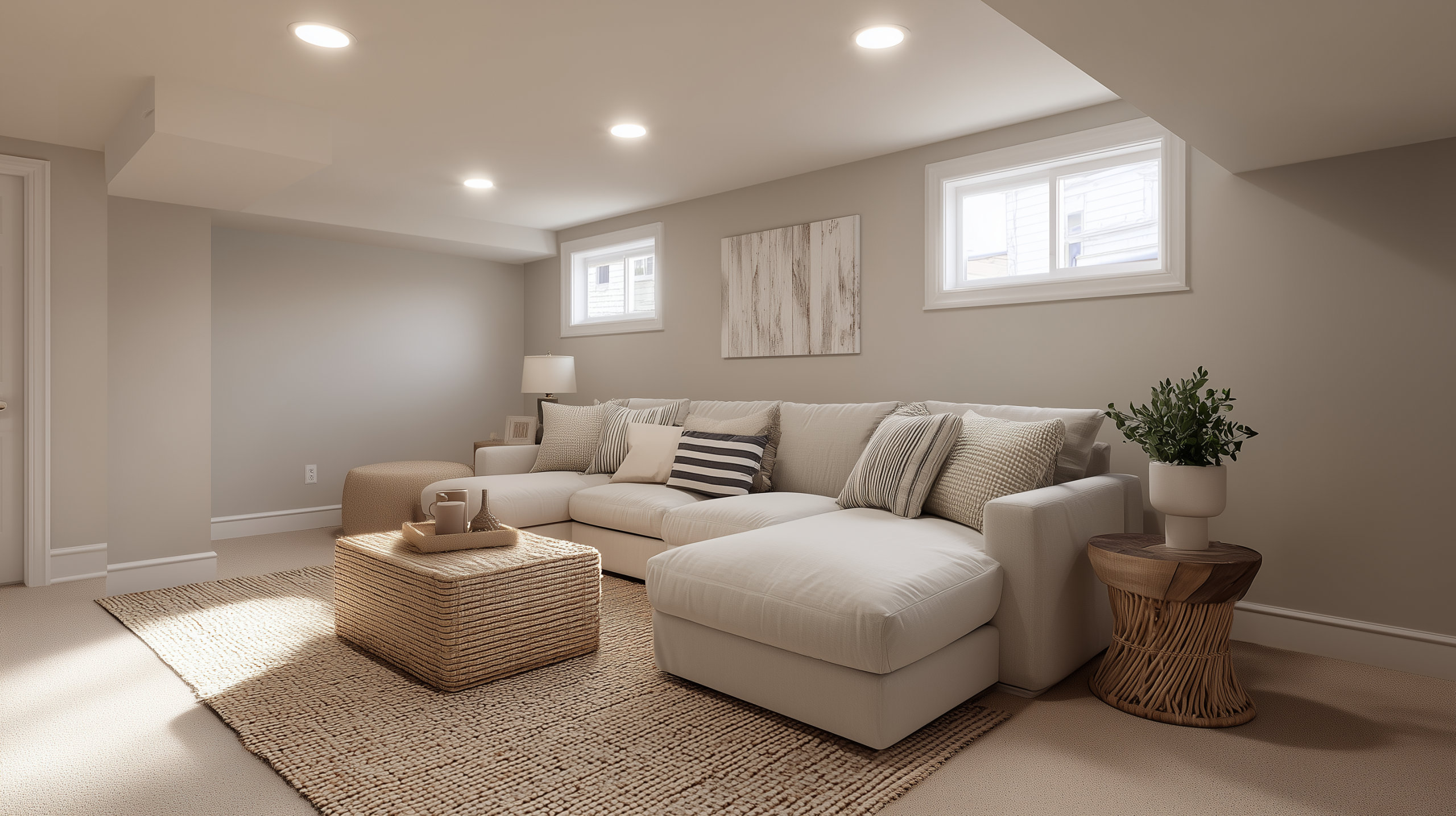
20. Layering a Jute Rug Over Wall-to-Wall Carpet for Texture
The key to making a neutral, wall-to-wall carpeted room feel designed and curated is the addition of the jute area rug. It’s the single element that adds a crucial layer of texture and natural style. Without it, the space would be a sea of soft, man-made materials. The woven jute introduces an organic, slightly rustic element that grounds the seating area and provides a welcome contrast to the plushness of the carpet and the sectional sofa. It proves that you can and should layer rugs for a richer look. For another take on layering rugs, check out Idea #18.
|
📋 Copy HEX 🔗 Share |
Let’s be clear: jute and other natural fiber rugs like sisal or seagrass shed. A lot. Especially in the first few months. You will find fine, dust-like fibers under the rug and around the room. It’s a natural characteristic of the material. These rugs also don’t love moisture, and spills should be blotted immediately to prevent staining and fiber damage. They are durable for foot traffic, but they are not as forgiving as their synthetic counterparts. The tradeoff for their beautiful, natural texture is a bit more mindful maintenance.
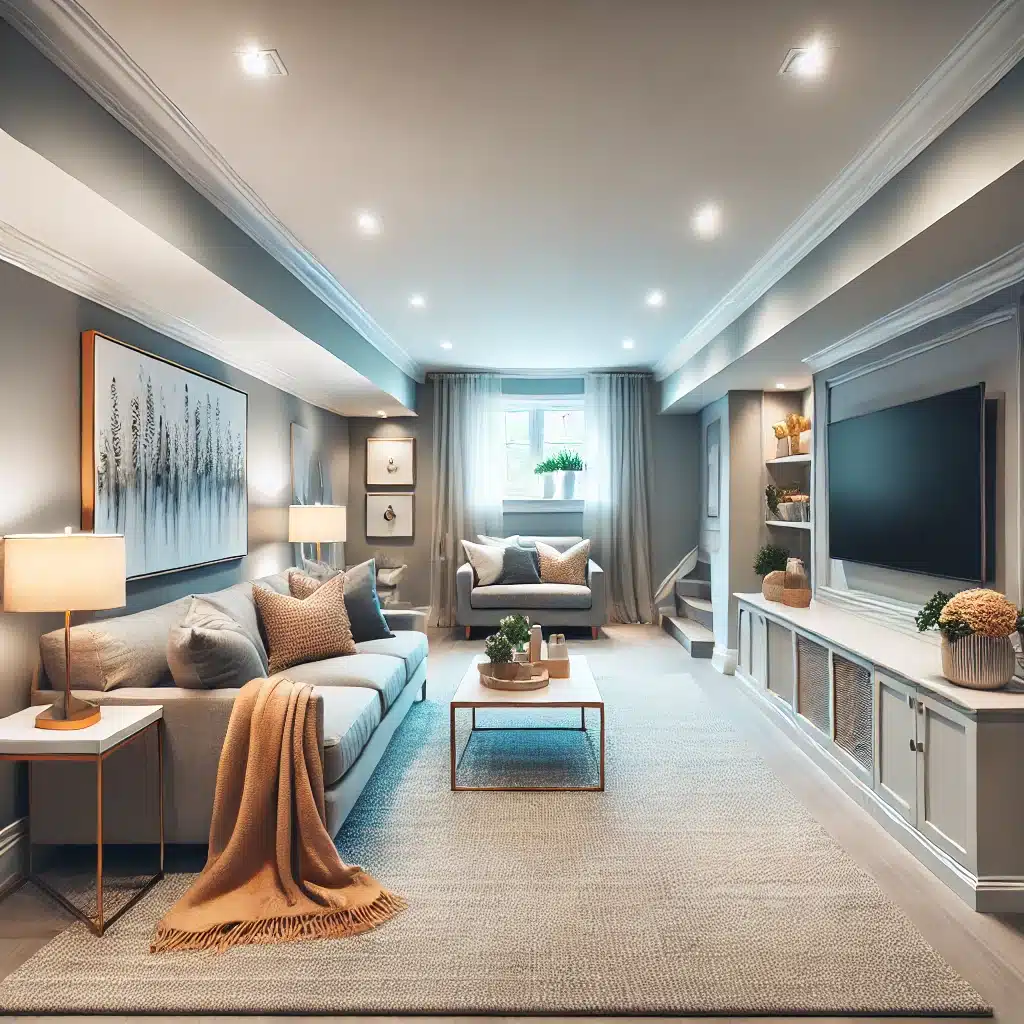
21. Choosing a Subtle Textured Carpet for a Modern Basement
In a room with clean lines and modern furniture, like the sofa and coffee table here, a plain, flat carpet can sometimes feel too stark. The subtle woven texture in this light-colored wall-to-wall carpet is the perfect solution. It adds a layer of visual interest and softness underfoot without shouting for attention. The texture creates a gentle play of light and shadow on the floor, giving it depth and preventing the large expanse of neutral from feeling boring. It complements the modern aesthetic rather than competing with it.
|
📋 Copy HEX 🔗 Share |
A light, subtly textured, wall-to-wall carpet is one of the most versatile flooring choices for a basement of any size. In a large, open basement (300+ sq ft), it creates a seamless and expansive feel, maximizing the perception of space. In a smaller, more confined basement (under 200 sq ft), its light color and uninterrupted surface reflect light and trick the eye into seeing a larger area. It’s a nearly foolproof foundation that works whether your basement is big or small, open-concept or divided into rooms.
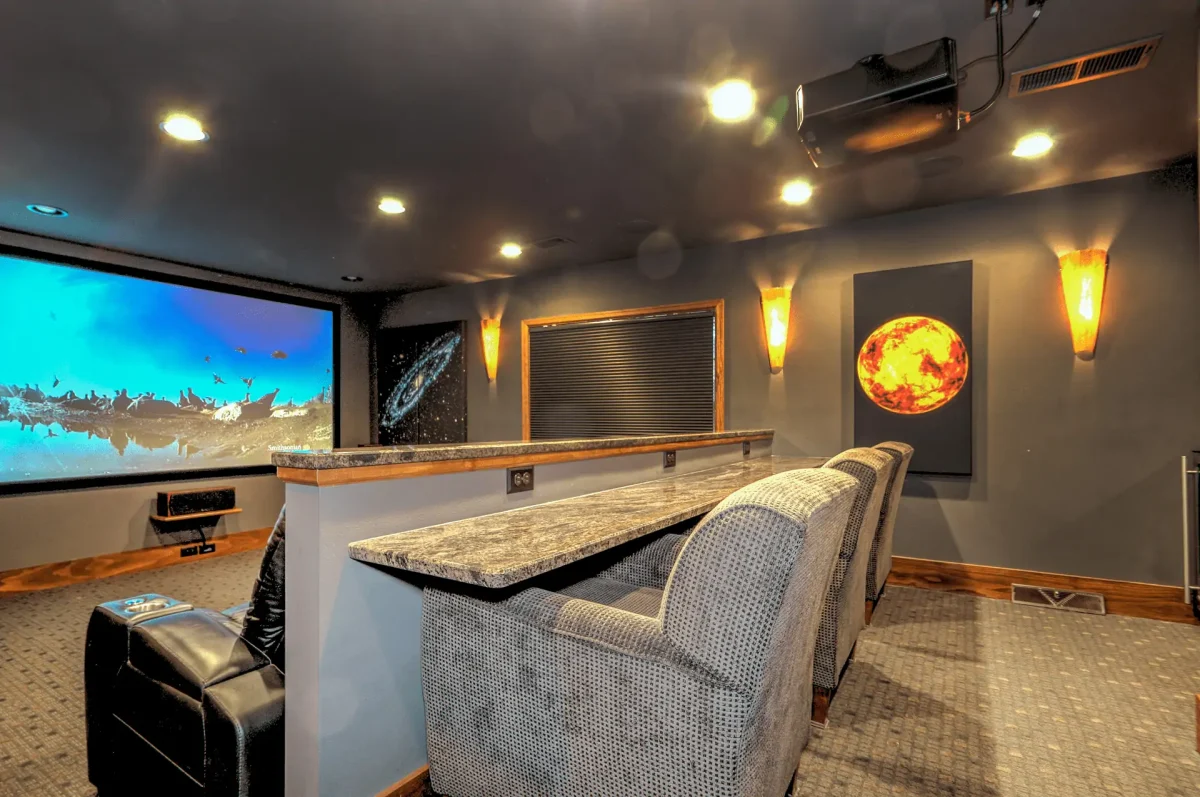
22. The Role of Carpet in a Finished Basement Design
Before you commit to a full basement remodel, a thorough check of the essentials is non-negotiable. This is especially true before installing carpet, which can trap moisture and hide problems.
- Waterproof First: Have you addressed any and all moisture intrusion? This means sealing cracks, checking gutters and downspouts, and ensuring proper grading outside.
- Test for Radon: Basements are prone to radon gas buildup. Perform a radon test and, if necessary, install a mitigation system *before* you finish the space.
- Plan Your Egress: Does your basement have a proper emergency exit, like an egress window or a door to the outside? Most building codes require this for a legal living space.
|
📋 Copy HEX 🔗 Share |
When you’re undertaking a full basement remodel, it can be tempting to choose a carpet that’s trendy or makes a bold statement. My advice? Think long-term. Choose a high-quality, durable, neutral carpet that will serve as a versatile foundation for years to come. A classic, low-pile, subtly textured carpet in a neutral greige or warm gray, like the one in Idea #21, will outlast any color or pattern trend. You can easily change the room’s entire feel by swapping out paint, pillows, and area rugs every few years, but replacing wall-to-wall carpet is a major expense.
23. Defining Activity Zones with Layered Area Rugs
Layering rugs is an art, not just a matter of throwing one on top of another. Here’s a quick guide to getting it right. Time: 15 minutes. Cost: The price of your rugs!
- Start with a neutral base. The bottom rug should be a simple, low-pile neutral, like jute, sisal, or a flatweave wool. A larger size is better here.
- Layer with pattern or texture. The top rug is your personality piece. Choose something with a bold pattern, rich color, or a plush texture like a shag or faux hide.
- Mind the gap. The top rug should be significantly smaller, leaving a border of at least 12-18 inches of the bottom rug showing on all sides.
- Anchor it with furniture. Place the front legs of your sofa or main seating on the top rug to lock it into a cohesive arrangement.
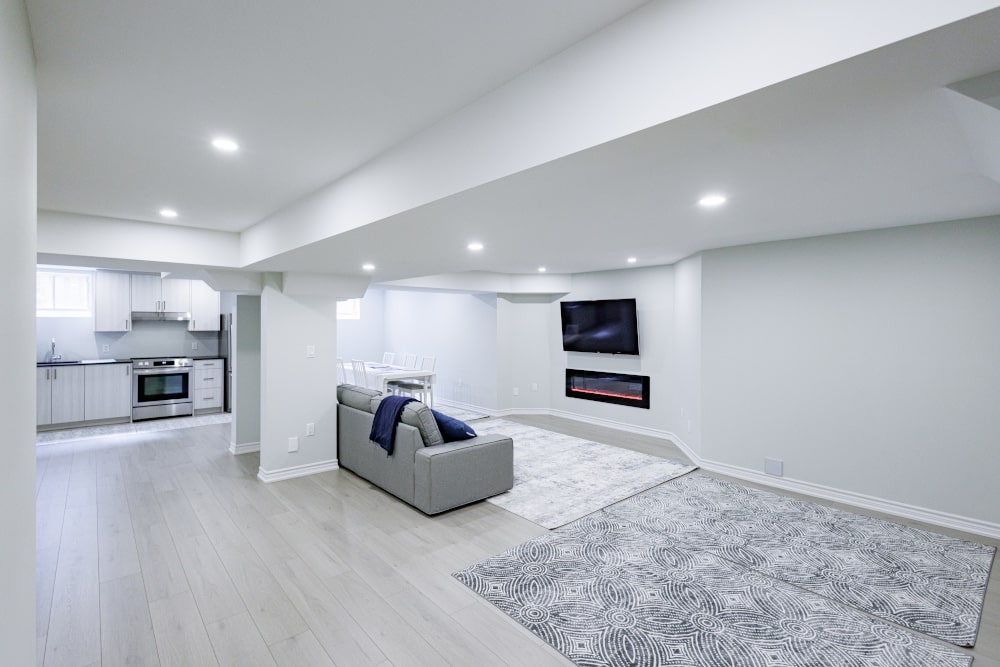
|
📋 Copy HEX 🔗 Share |
While layered rugs look fantastic, be aware of the potential for them to become a tripping hazard, especially in a high-traffic area. If the top rug is not properly anchored by furniture, or if the edges start to curl, it’s easy to catch a foot on it. Using a non-slip rug pad between the two rugs can help, but the best defense is strategic furniture placement. Make sure the main pathways in the room are clear of any rug edges. This is particularly important if you have young children or elderly family members using the space.
24. Grounding a Rustic Room with a Geometric Patterned Carpet
The success of this warm, rustic space can be broken down into a simple ratio: 50% rugged natural textures + 40% soft neutral furnishings + 10% clean geometric pattern. The exposed red brick and dark wood ceiling/bookshelves provide a powerful, rustic envelope. The light gray sectional and coffee table soften the look and add modern comfort. But it’s the 10% from the geometric diamond-patterned carpet that keeps the room from feeling like a log cabin cliché. The clean lines of the pattern add a touch of modern discipline to the rustic finishes.
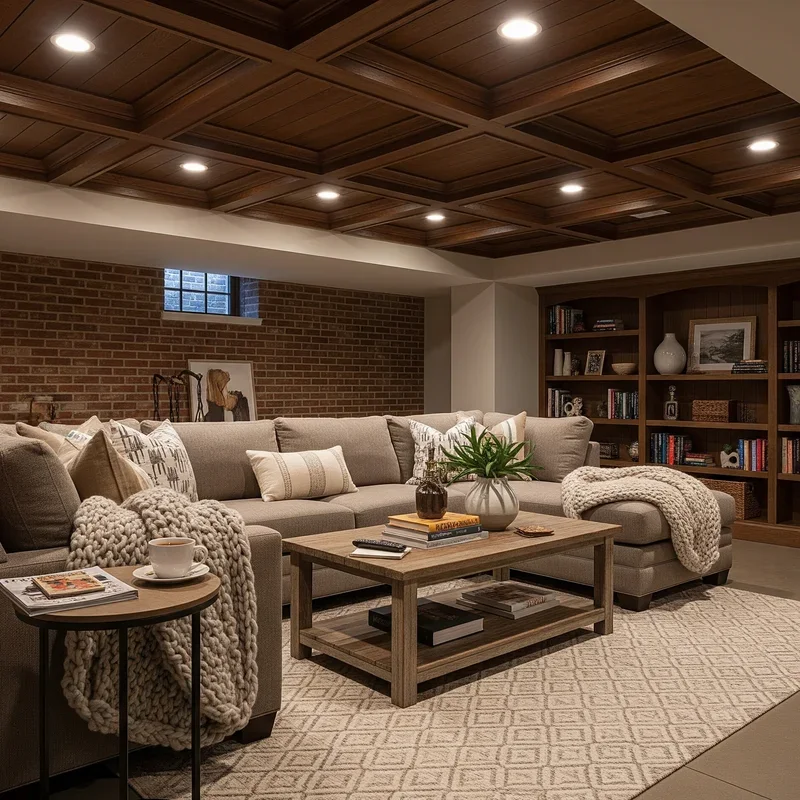
|
📋 Copy HEX 🔗 Share |
An exposed brick wall is a dream feature, but it’s not always feasible or affordable. You can achieve a very similar vibe for a fraction of the cost and effort by using brick veneer panels. These thin slices of real brick are applied to the wall like tile. A DIYer can install a brick veneer wall for about $8-$15 per square foot. For an even more budget-friendly option, high-quality, textured wallpaper that mimics brick can look surprisingly realistic and costs even less, at around $2-$4 per square foot.
25. A Durable Earth-Tone Carpet for a Vibrant, Colorful Playroom
This playroom is a perfect example of why a neutral carpet is often the best choice for a kid’s space. The light earth-toned carpet acts as a calm, grounding foundation for all the vibrant colors and patterns happening on top of it. From the multi-colored modular sofa to the bright red chair and colorful artwork, the room is full of energy. If the carpet were also brightly colored or heavily patterned, the space would feel chaotic and visually overwhelming. The neutral floor gives the eye a place to rest and allows the playful elements to shine.
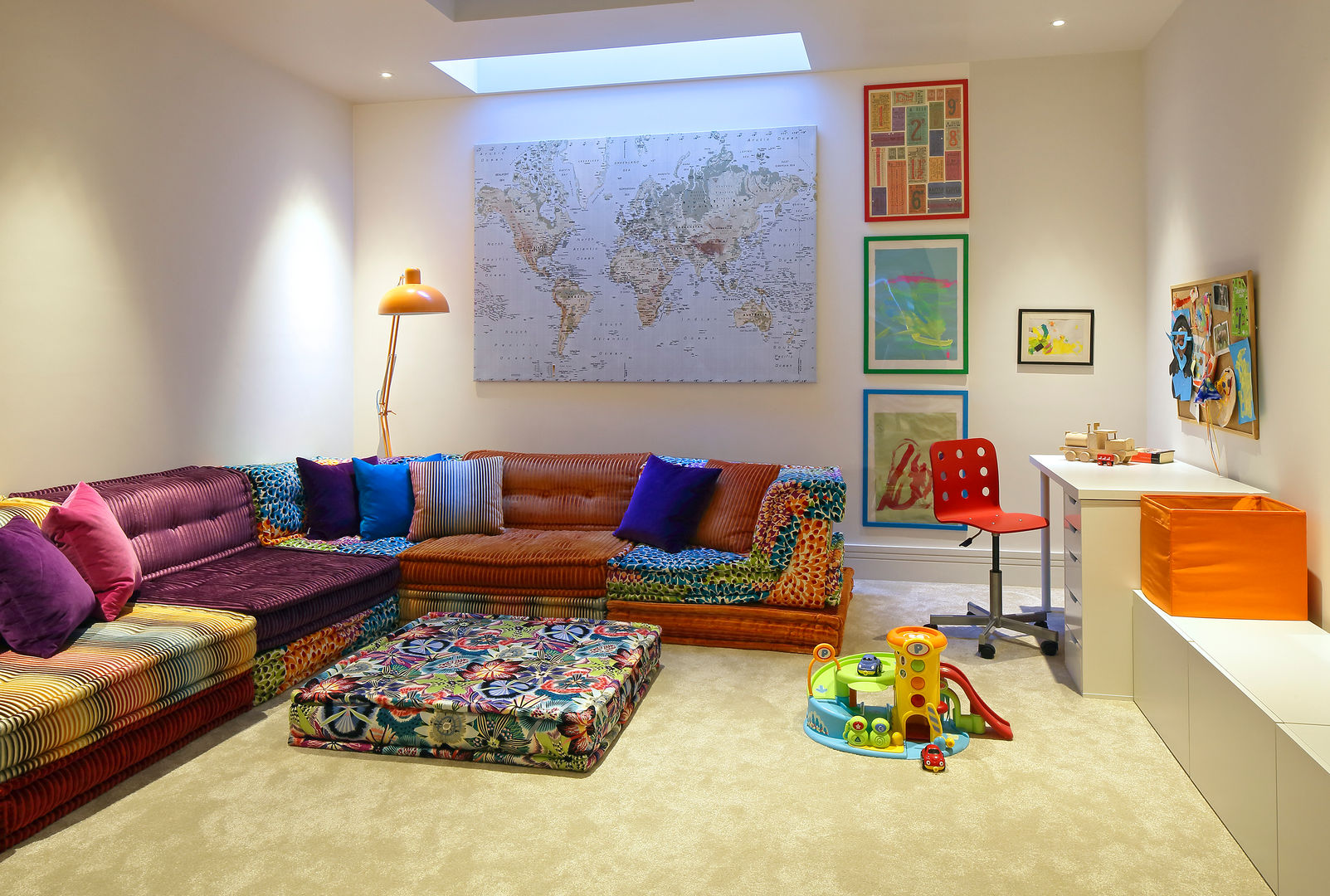
|
📋 Copy HEX 🔗 Share |
When choosing a carpet for a room that will see heavy play, spills, and artistic endeavors (hello, stray markers!), the fiber type is everything. Look for a solution-dyed fiber, like Olefin or a solution-dyed polyester. In these carpets, the color is part of the fiber itself, not just applied to the surface. This means they are incredibly resistant to stains and fading. You can often clean them with a water/bleach solution without damaging the color (always test first!). A low-pile or loop construction will also be easier to clean and more durable than a high-pile shag.
Your Cozy Basement Story Starts Here
That blank slate downstairs doesn’t have to be an afterthought. As you’ve seen, the right carpet or rug is the foundation for creating a basement that’s just as stylish and comfortable as any other room in your house. Whether you go for cozy wall-to-wall or a bold layered look, the perfect floor is waiting to transform your space.
Feeling inspired? Pick your favorite look, save it to your board, and start planning. Your dream basement is closer than you think. 📌