25 Jaw-Dropping Deck Skirt Ideas That Will Completely Transform Your Outdoor Space

You know that feeling when you finally find the deck skirt that looks exactly right for your space? That ‘aha!’ A moment is what this guide is all about. After filtering through hundreds of options from local lumber yards to big-box stores like Home Depot and Lowe’s, we narrowed it down to 25 ideas that actually deliver on style and function. Inside, you’ll find everything from classic white lattice to sleek modern horizontal slats, with looks ranging from simple DIY projects to high-end custom builds. In 2026, it’s all about making your outdoor space feel as intentional as your living room, and a polished deck skirt is the secret weapon. And stay until the end—we break down the most common mistakes that can ruin these looks. 📌 Save this to Pinterest for later—you’ll want to revisit these ideas.
1. Crisp White Lattice Skirt with Modern Black Balusters
This look is a masterclass in using contrast to create a clean, contemporary feel without being cold. The classic white diamond lattice provides a touch of tradition and texture, preventing the under-deck area from becoming a dark void. Pairing it with thin, black vertical balusters is the key move—it updates the entire railing system, making it feel current and light. The light gray decking acts as a neutral bridge between the crisp white and the bold black, tying the whole color scheme together seamlessly.
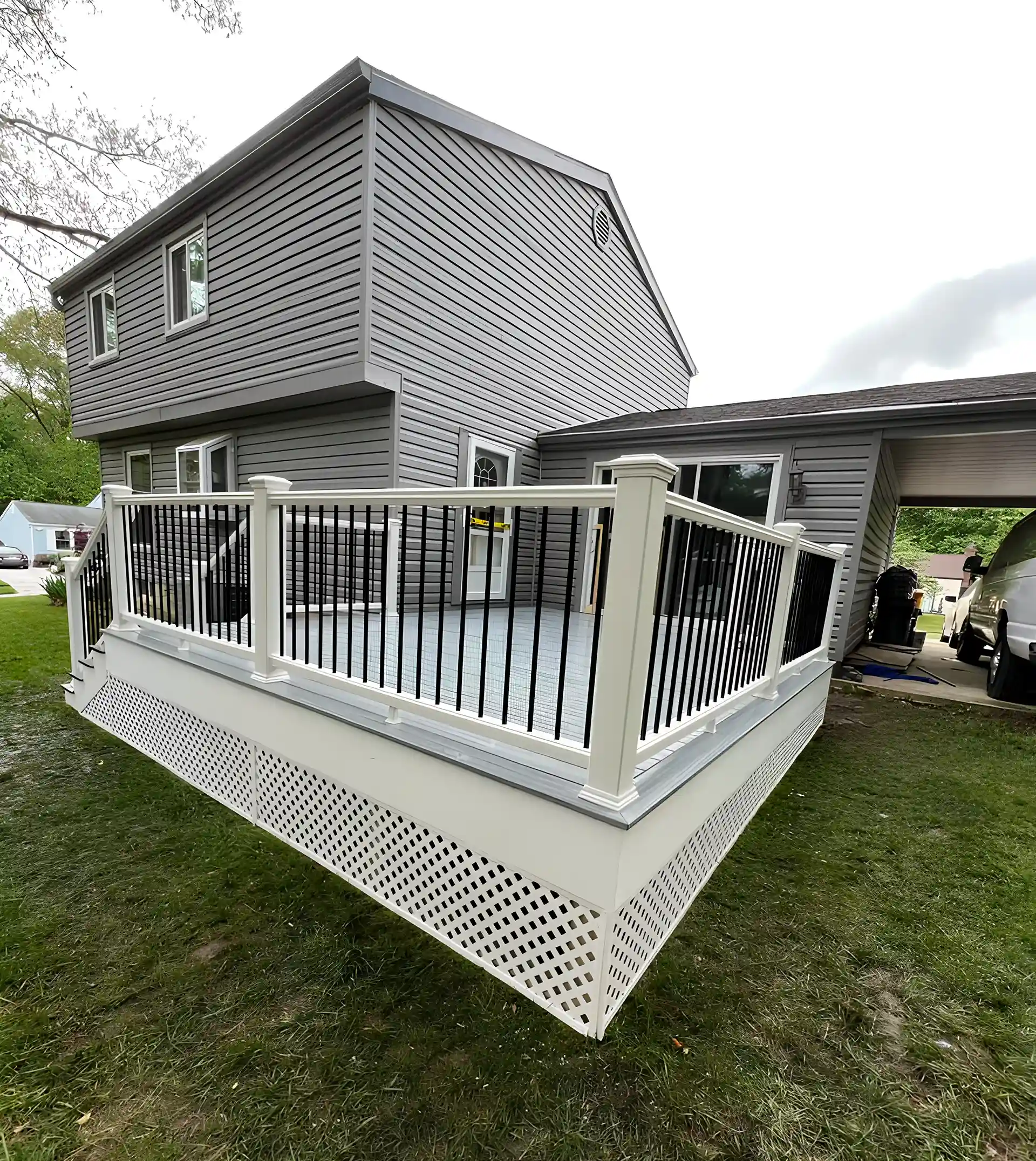
If you’re using standard wood lattice panels, they often come in a pressure-treated green or natural pine color. Don’t just install them as-is. For a truly professional finish, spray paint is your best friend. Use an exterior-grade spray primer first, followed by two coats of your final color. A paint sprayer will give you even coverage in a fraction of the time it would take with a brush, ensuring you get into every nook and cranny of the crisscross pattern. This extra step is what separates a DIY job from a designer look.
2. Modern Dark Diamond Lattice for a Polished Deck Perimeter
The single element that makes this design so successful is the choice of dark lattice. While white lattice can sometimes feel a bit dated or overly traditional, this dark, almost black, geometric pattern feels sophisticated and modern. It visually recedes, hiding the darkness under the deck rather than highlighting the enclosure itself. This allows the warm brown decking and the clean lines of the cable railing to take center stage. It’s a supporting actor that makes the whole production look better.
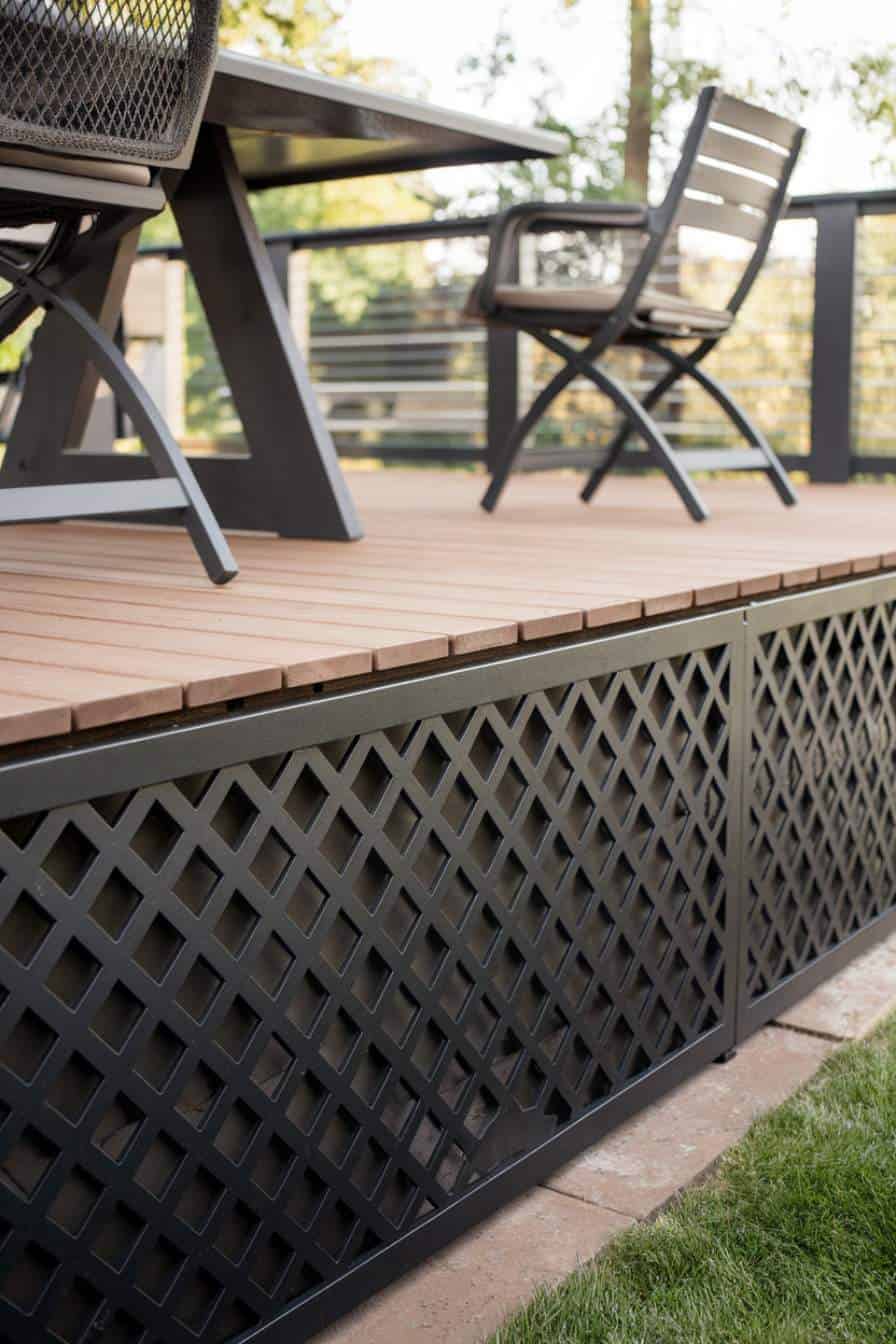
A dark finish, especially on metal or painted wood, is fantastic for a modern aesthetic, but it does have its quirks. Dust, pollen, and mud splashes will be more visible against a dark background than a lighter one. Plan on a seasonal rinse-down with a hose and a soft-bristle brush to keep it looking sharp. For painted wood, check annually for any chips or peeling paint, especially near the ground, and touch them up promptly to prevent moisture from getting into the wood and causing damage.
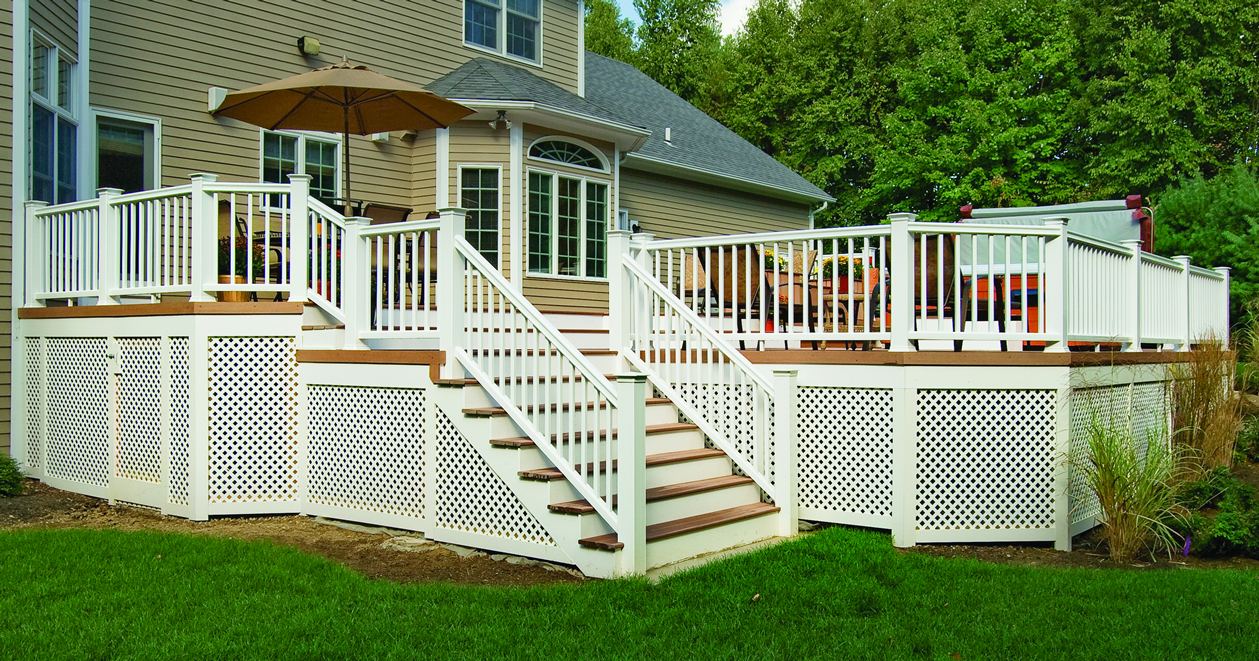
3. White Lattice Skirting for Multi-Tiered Porch Stairs
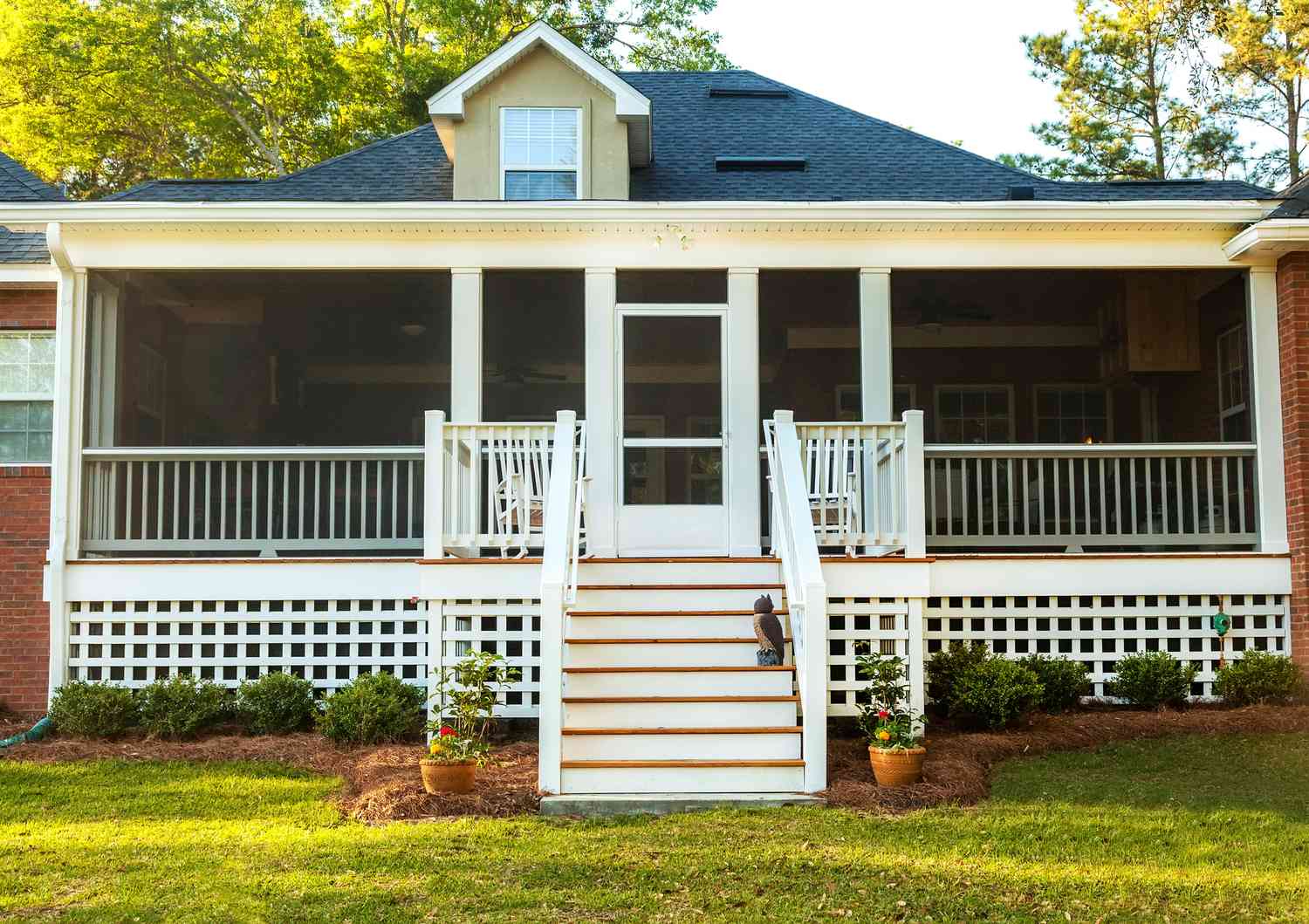
The visual formula here is all about balance. Think of it as 50% warm wood + 50% crisp white trim. The expansive wooden stair treads and porch floor bring warmth and a natural feel, while the white lattice, railings, and posts provide structure and a clean, traditional framework. This balanced approach prevents the large structure from feeling too heavy or monolithic. If you were to change the wood to a dark stain, you’d want to ensure the white remains bright to maintain that pleasing contrast.
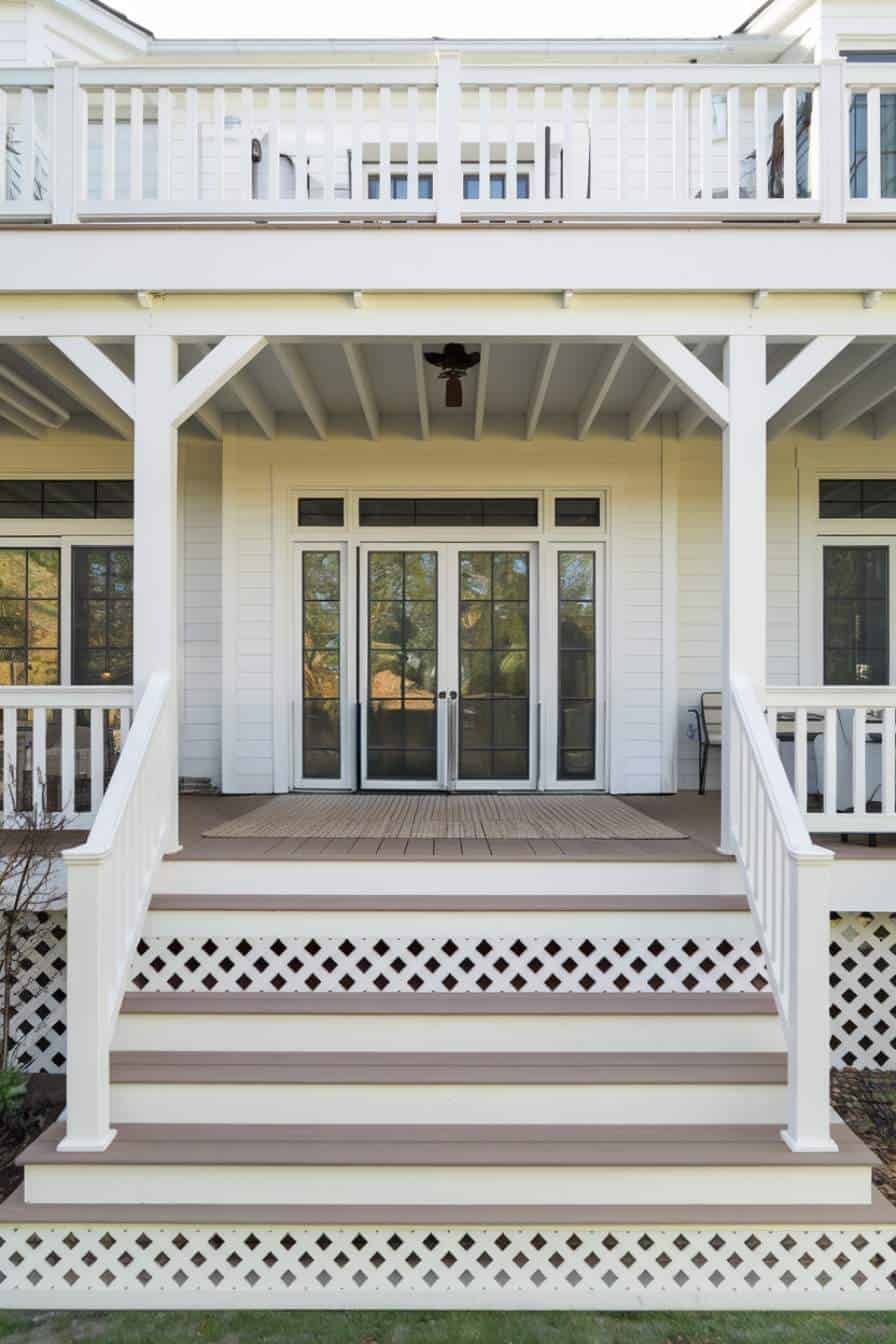
This application is perfect for large, elevated porches or decks with significant height, typically 3 feet or more off the ground. On a smaller, lower deck, this much lattice could feel overwhelming. The key is that the deck itself is substantial enough to warrant such a prominent skirting treatment. For a grand, multi-level structure like this one, which likely spans 200+ square feet, the lattice provides a necessary visual foundation and elegantly conceals the complex framing underneath.
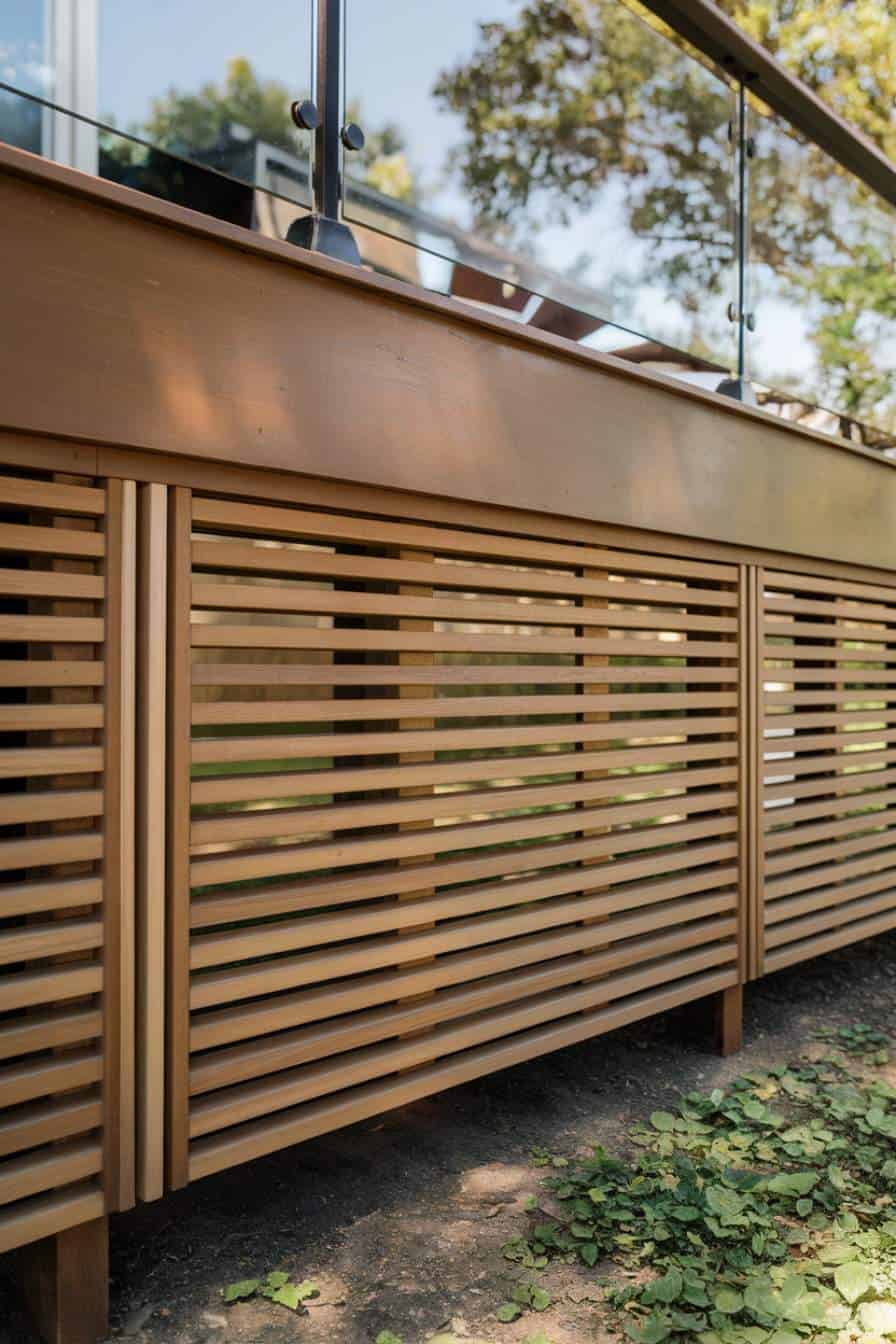
4. Sleek Horizontal Slat Wood Skirt with Glass Railing
The horizontal slat trend has been gaining momentum for a few years, largely driven by the popularity of Japandi and minimalist design principles. It’s all about clean lines, natural materials, and an uncluttered feel. This style of skirting turns a functional necessity into a strong architectural statement. It feels intentional and high-end, transforming the deck into a deliberate extension of the home’s modern design, rather than just an add-on. The glass railing complements this perfectly by maximizing the clean, open feeling.
5. Vertical Gray Skirt Paneling with a White Pavilion
This design works because of the smart use of vertical lines. The gray vertical skirting draws the eye upward, visually connecting the ground level to the deck platform and all the way up to the covered pavilion roof. This creates a sense of height and grandeur, making the entire structure feel more substantial. The color blocking—gray base, wood deck floor, and white structure—clearly defines each zone while working together in a sophisticated, modern palette. If you prefer horizontal lines, check out the look in Idea #3.
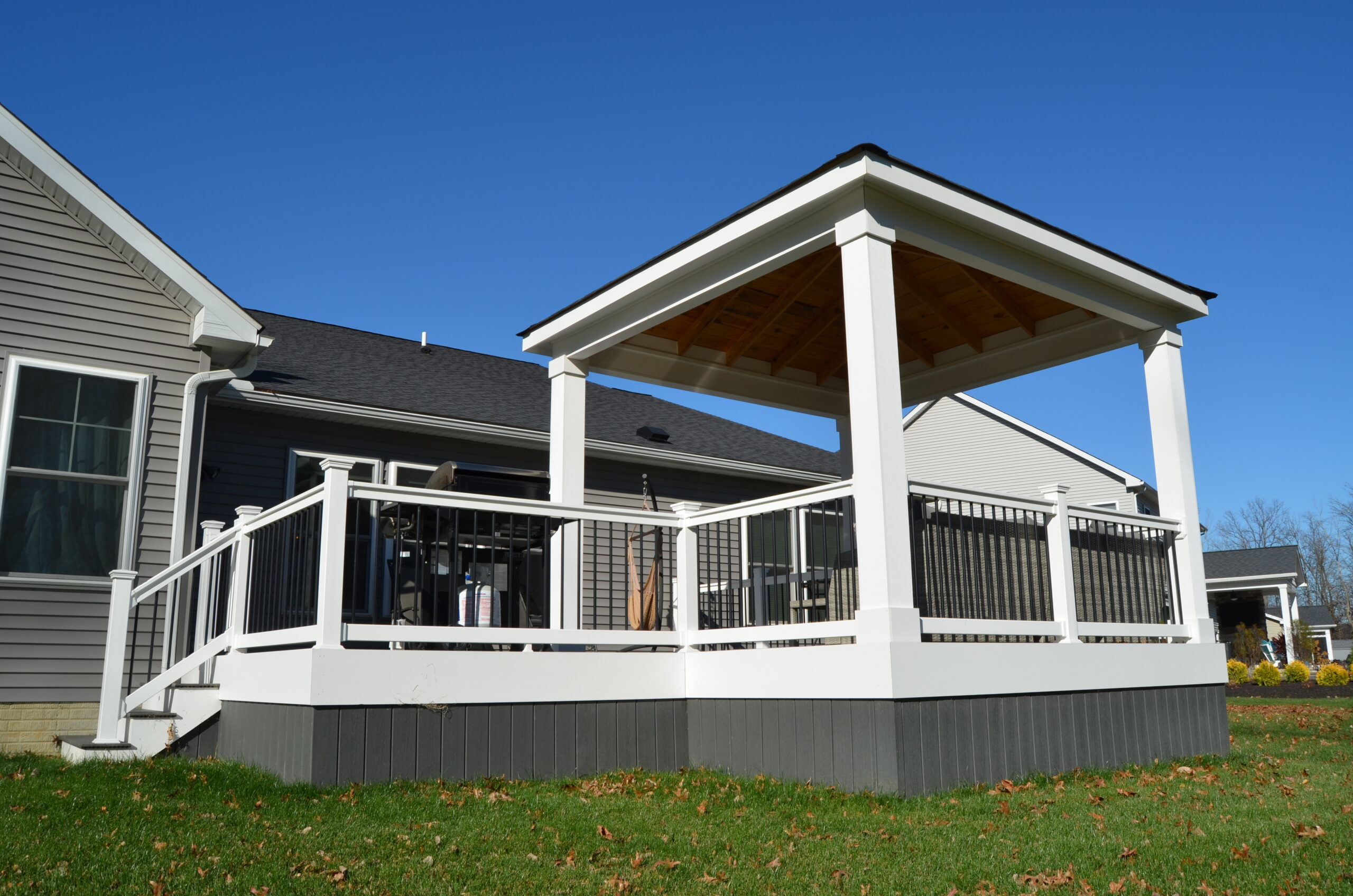
A custom-built vertical skirt can be pricey. For a similar look on a tighter budget, look at standard vertical fencing panels from a home improvement store. You can find pre-assembled wood or composite panels that can be cut to size. To get this specific gray tone, simply paint pressure-treated wood panels with a high-quality exterior solid stain. This can easily cut the material cost by 40-50% compared to using premium cedar or composite tongue-and-groove boards.
6. Classic White Lattice Skirt on a Raised Wooden Deck
One of the most overlooked aspects of deck skirting is access. Sooner or later, you’ll need to get under your deck for storage, inspections, or repairs. Instead of screwing in every panel permanently, designate one or two sections as removable access doors. You can frame out a section of lattice and attach it with hinges and a simple latch. For a cleaner look, use exterior-grade hook-and-loop fasteners or heavy-duty cabinet magnets to hold a seamless panel in place. It’s a small detail that saves a huge headache later.
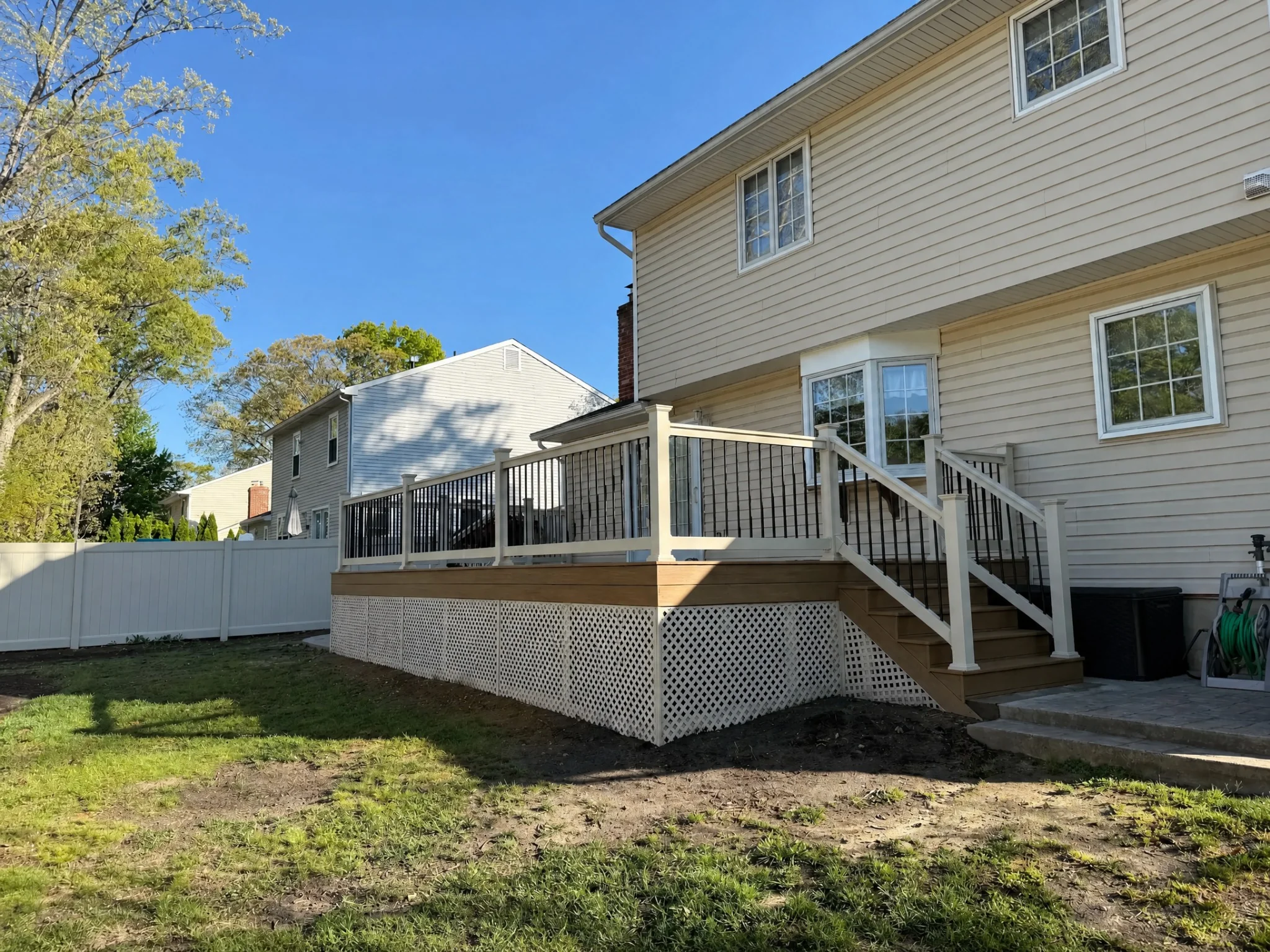
Before you enclose the underside of your deck, take the time to prep the area properly. It will save you a world of trouble down the road. Here’s a quick checklist:
- Clear out all construction debris, leaves, and organic matter that can rot or attract pests.
- Grade the soil so that water slopes away from your house’s foundation. This is non-negotiable.
- Lay down a heavy-duty landscape fabric over the entire area and secure it with staples.
- Cover the fabric with a 3-4 inch layer of gravel or stone to prevent pests and weed growth.
7. Airy Horizontal Skirting with a Gray Gravel Border
The gravel border is the secret ingredient here. It creates a clean, modern transition from the deck skirt to the ground that feels polished and intentional. Unlike mulch, which can hold moisture against the wood, or grass, which requires tricky trimming, the gravel bed provides excellent drainage and a maintenance-free edge. The cool gray tone of the stone also provides a beautiful, subtle contrast to the warm, light wood of the deck, highlighting the clean lines of the horizontal skirting.
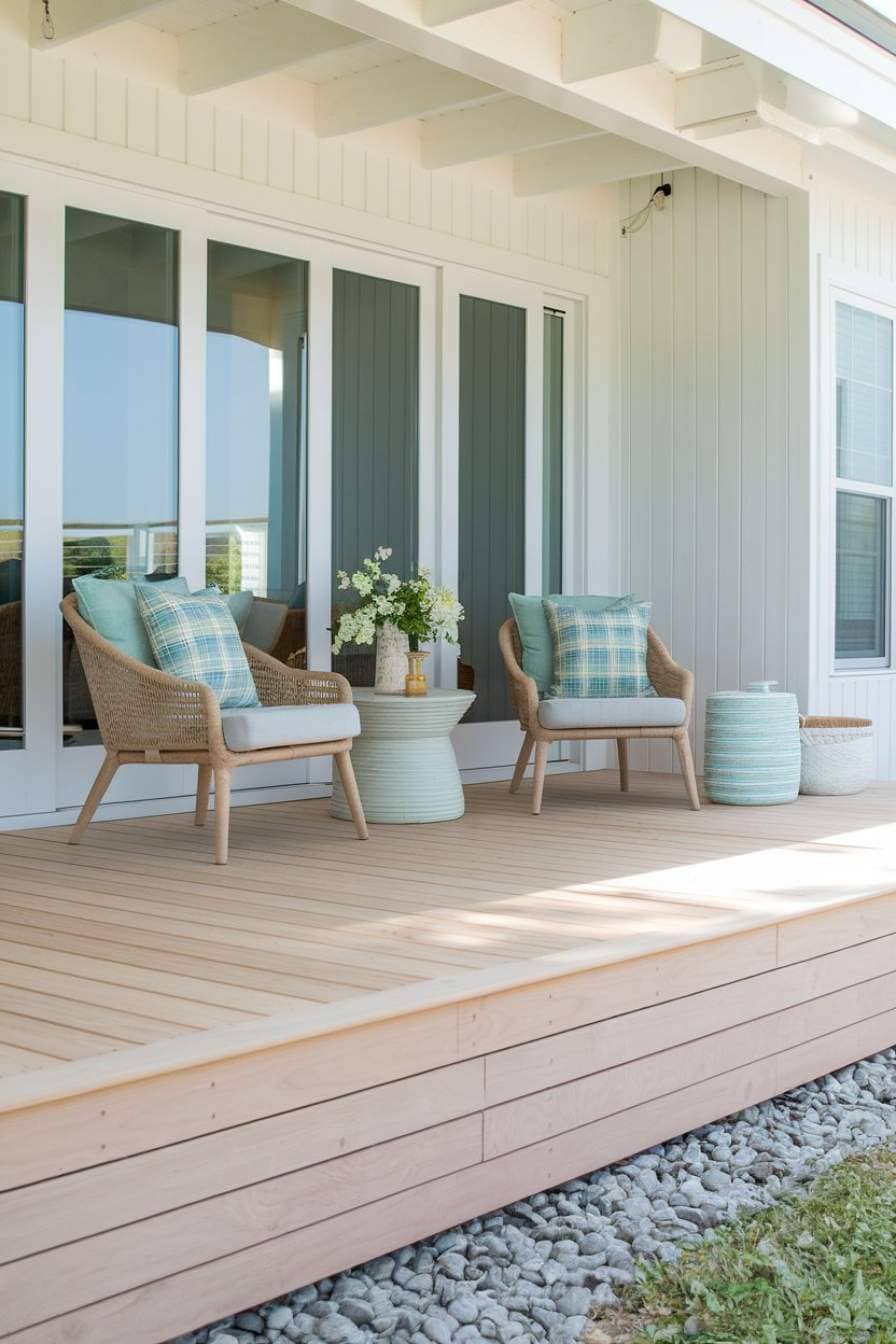
Creating a durable gravel border is a straightforward weekend project. Here’s a quick guide:
- Excavate: Dig a trench about 6-8 inches wide and 4 inches deep along the base of the deck skirt.
- Install Edging: Line the outer edge of the trench with flexible metal or plastic landscape edging to keep the gravel contained and prevent it from migrating into your lawn.
- Lay Fabric: Line the bottom of the trench with landscape fabric to suppress weeds.
- Add Gravel: Fill the trench with your chosen decorative gravel, leaving about half an inch of space at the top.
Time estimate: 2-3 hours for a 20-foot section. Cost: $50-$100 for edging and gravel.
8. Horizontal Wood Slats Paired with a Flagstone Path
This look is a beautiful exercise in texture mixing. The formula is roughly 50% smooth, linear wood + 30% rough, organic brick + 20% flat, irregular stone. The clean, repeating lines of the horizontal wood skirt provide a modern, orderly feel. This is balanced by the rustic texture of the red brick wall and the natural, uneven shapes of the flagstone pavers. The dark gravel acts as a neutral, textured filler that ties it all together. It’s a design that feels both structured and grounded in nature.
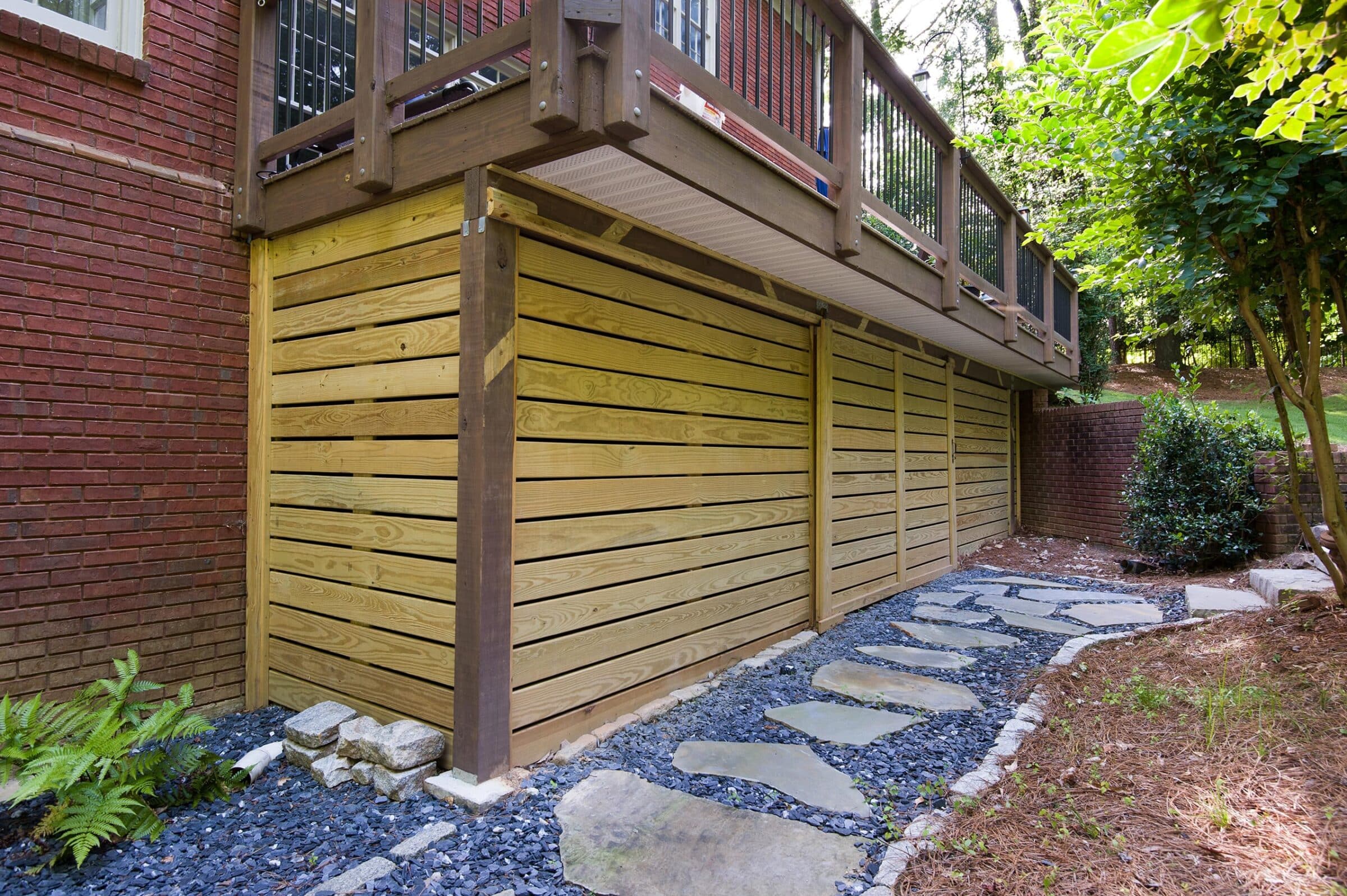
A pathway running this close to a deck skirt looks fantastic, but it creates a trap for leaves, dirt, and other debris. That narrow gap between the bottom of the skirt and the stone path needs to be kept clear to ensure proper airflow and drainage under the deck. A leaf blower will be your best tool for quickly clearing this out. If you let debris accumulate, it can hold moisture against the bottom boards of your skirt, leading to premature rot and discoloration. Be prepared for this small but regular maintenance task.
9. Vertical Wood Skirt with Integrated Base Lighting
The integration of lighting is what transforms this from a simple deck skirt into a high-end design feature. The warm, downward-facing glow highlights the texture of the gravel and stone pavers, creating a beautiful ambiance and a floating effect for the deck itself. It’s also incredibly practical, providing safe, glare-free pathway illumination without the need for separate landscape lights. The vertical wood skirt provides the perfect clean, flat surface to conceal the LED strips for a seamless look.
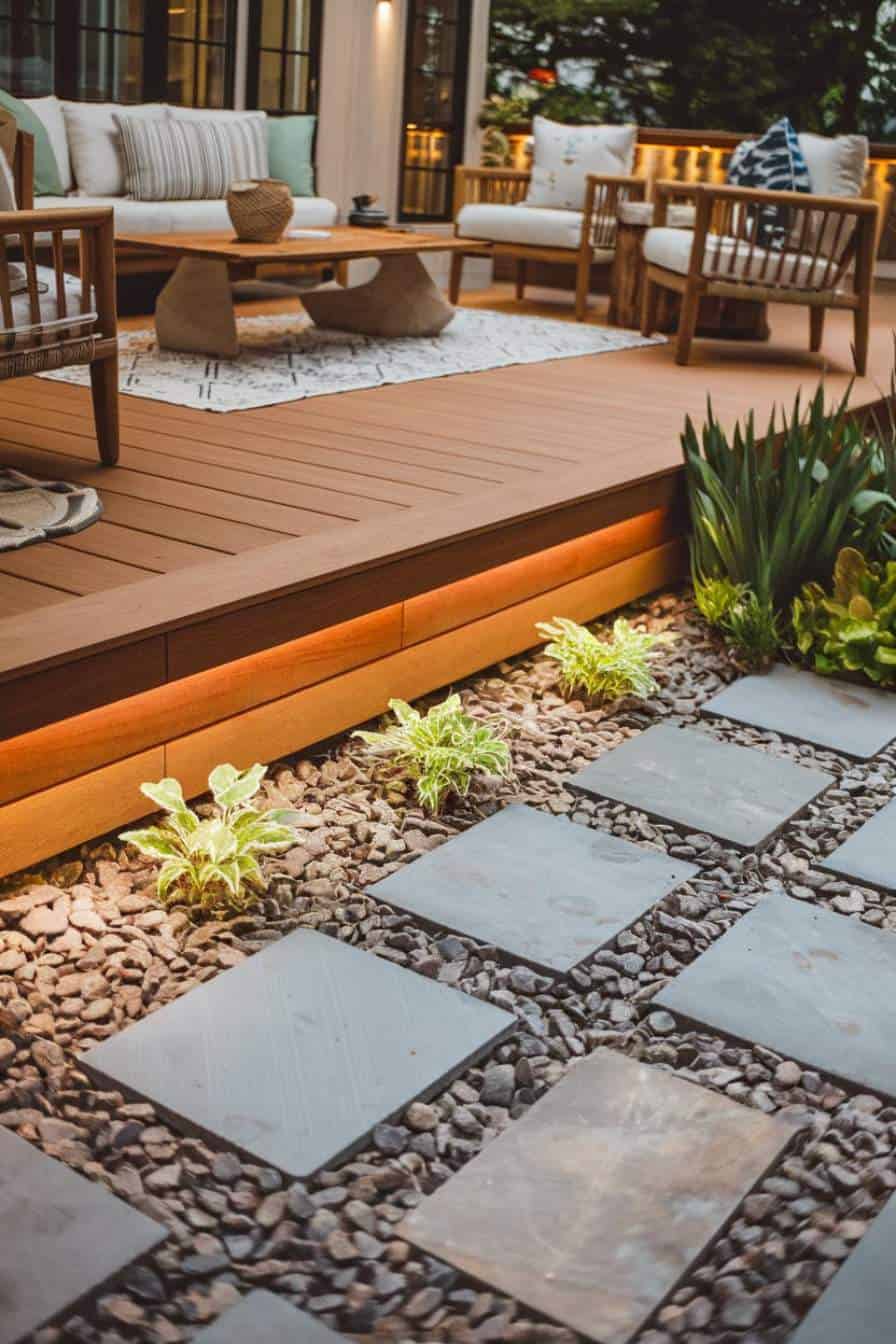
When choosing LED strip lighting for an outdoor application like this, pay close attention to the color temperature, measured in Kelvin (K). For a warm, inviting glow like the one shown here, look for something in the 2700K to 3000K range. Anything higher (like 4000K or 5000K) will appear much cooler and bluer, creating a more commercial or sterile feel. Always buy dimmable, exterior-rated (IP65 or higher) strips for maximum control and longevity.
10. Low-Profile Deck Edge with Wide, Open Steps
Sometimes the best deck skirt is no deck skirt at all. For a deck this low to the ground, enclosing the perimeter would have felt fussy and unnecessary. The key here is the clean finish of the fascia board that wraps around the edge, creating a crisp, intentional border. The wide, low-profile steps further emphasize the connection to the ground, inviting an easy transition from the deck to the pavers and lawn. It’s a confident, minimalist choice that celebrates simplicity.
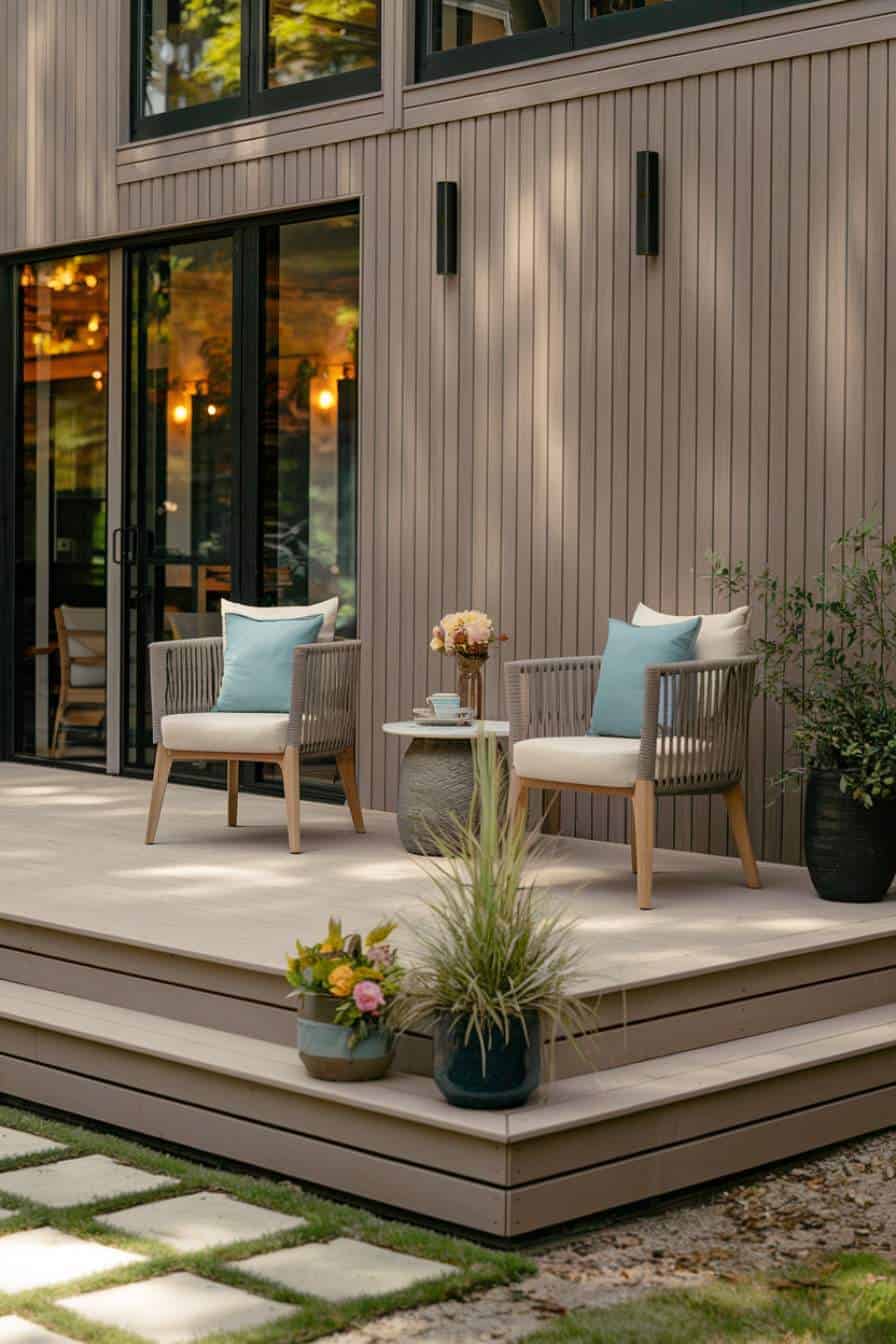
This ‘no-skirt’ approach works best when the bottom of your deck framing is less than 18 inches from the ground. Any higher than that, and the open space underneath starts to look less like an intentional design choice and more like an unfinished project. It also becomes a more tempting home for critters. If your deck is low (say, 1-2 steps high), embracing an open or minimally trimmed edge can make the entire space feel larger and more integrated with the surrounding landscape.
11. Tightly Spaced Horizontal Wood Slats for a Seamless Look
A natural wood skirt like this is stunning, but it’s not a ‘set it and forget it’ material. To keep this beautiful medium brown color, you’ll need to re-stain it every 2-3 years, depending on your climate and sun exposure. If you don’t, the wood will gradually weather to a silvery gray. The process involves thoroughly cleaning the wood, possibly light sanding, and applying a fresh coat of a UV-protecting semi-transparent stain. It’s a weekend’s worth of work, but it’s essential to preserve the original look. This is a more minimalist take on the horizontal style seen in Idea #7.
For a 100 sq. ft. area of skirting (e.g., a 40′ long deck that is 2.5′ high), here’s a rough estimate:
- Main Furniture (Wood Boards): $800 – $1,500 (for cedar or similar)
- Structural Posts & Fasteners: $200 – $400
- Stain/Sealer: $100 – $200
- Professional Labor: $1,000 – $2,000
- TOTAL: $2,100 – $4,100
- Budget alternative: Using pressure-treated pine and doing the labor yourself could bring the total cost down to the $800 – $1,200 range.
12. Two-Tone Deck with Brown Fascia and a Privacy Screen
The formula here is a sophisticated 70/30 split. About 70% of the visible surface is the cool, light gray composite decking. The other 30% is the warm, medium brown wood tone used for the fascia, skirt boards, and privacy screen. This intentional contrast is what gives the deck its sharp, modern edge. The black metal railings act as a neutral accent, defining the space without competing with the two main colors. This controlled palette feels custom and high-end.
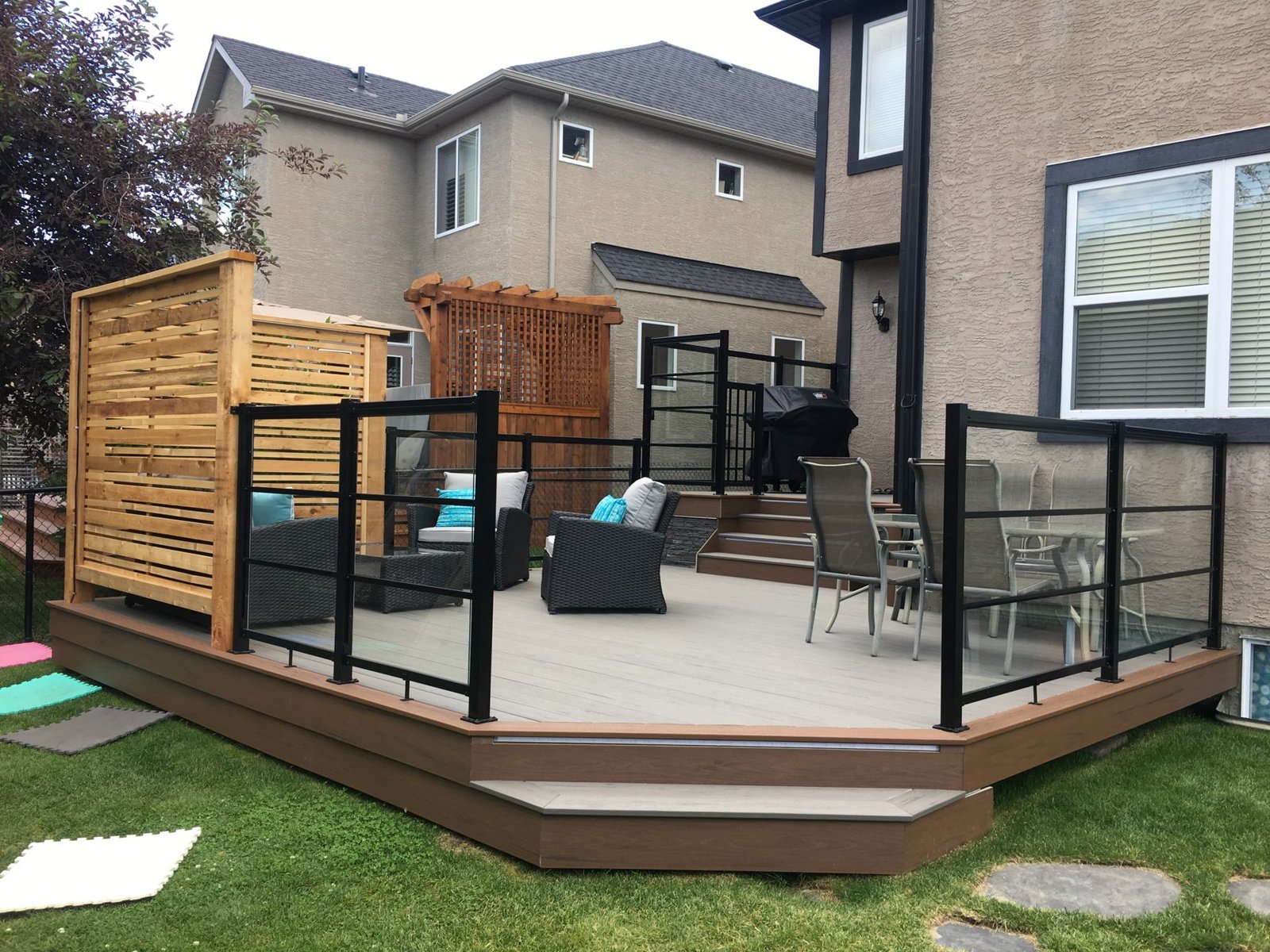
When mixing wood tones or composite colors, the key is to choose tones with a similar undertone but different values (lightness/darkness). For example, here the brown has a warm, slightly reddish undertone that pairs well with the neutral gray. Avoid mixing a warm-toned wood with a cool-toned composite that has blue or green undertones, as they can clash. Always get samples and look at them together in the actual outdoor light where your deck will be, as colors can shift dramatically from store lighting to full sun.
13. Traditional White Lattice Skirt Under a Pergola
This design is a great example of repetition creating harmony. The crisscross diamond pattern of the white lattice skirt visually echoes the overhead grid of the wooden pergola. This repetition creates a sense of cohesion and frames the deck as a complete outdoor room. The simple, high-contrast palette of white, black, and gray keeps the look feeling clean and structured, not busy. It’s a similar palette to Idea #0, but the addition of the pergola gives this a more enclosed, room-like feeling.
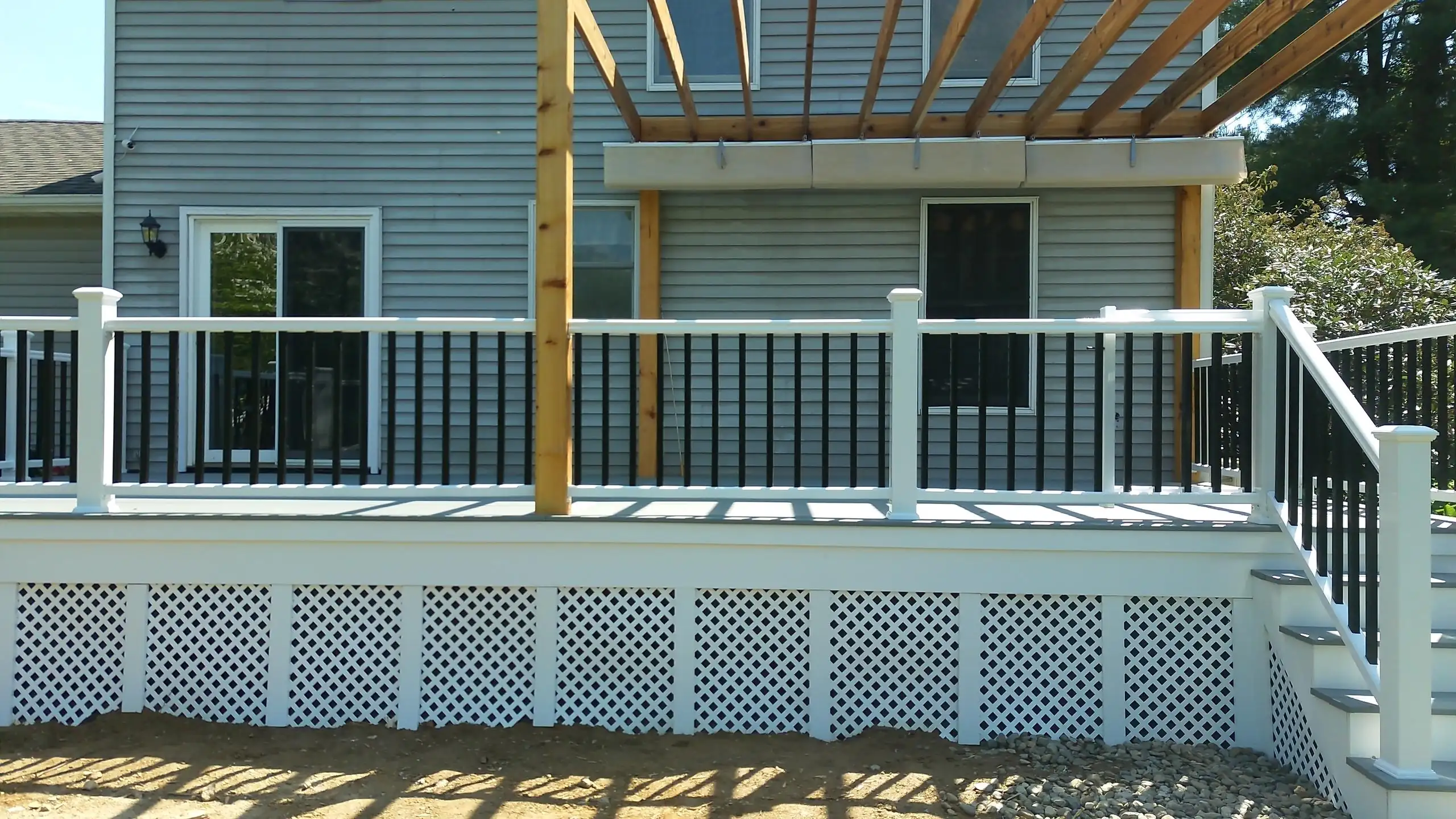
White lattice looks incredibly crisp and clean… when it’s new. Be prepared for the reality of maintenance. Located at ground level, it’s a magnet for dirt, mud splashes from rain, and green pollen dust in the spring. Because of all the overlapping slats, it’s not the easiest surface to clean. A pressure washer on a low setting or a hose with a good spray nozzle and a soft brush will be necessary at least once or twice a year to keep it from looking dingy and gray.
14. High-Contrast Dark Horizontal Slats with White Planters
It’s all about the contrast. The deep, dark stain on the horizontal wood skirt creates a dramatic, modern backdrop. By themselves, the dark slats might look a bit heavy or monolithic. But placing those brilliant white planters in front of them is a stroke of genius. The planters pop, their clean shapes highlighted against the dark wood. In turn, the dark wood looks even richer and deeper next to the bright white. This high-contrast pairing is what elevates the entire design from simple to stunning.
You don’t need expensive Ipe or cedar to get this look. You can achieve a very similar high-contrast vibe with much more affordable materials. Start with standard pressure-treated pine boards for your skirting. Then, apply two coats of a solid black or dark charcoal exterior stain. For the planters, instead of pricey designer versions, look for simple ceramic or plastic pots from a big-box store and give them a few coats of a high-quality white exterior spray paint. You can get 90% of the look for a fraction of the cost.
15. Unique Geometric Cutout Skirt Panel
We’re seeing a huge move towards personalization and unique architectural details in outdoor living, and these custom-cut panels are at the forefront of that trend. They offer a way to add personality and a bespoke touch that goes way beyond standard lattice or wood slats. These panels, often made from composite materials or aluminum, can be laser-cut into nearly any pattern, allowing homeowners to express their individual style. It’s a move away from the off-the-shelf look towards something more curated and artistic.
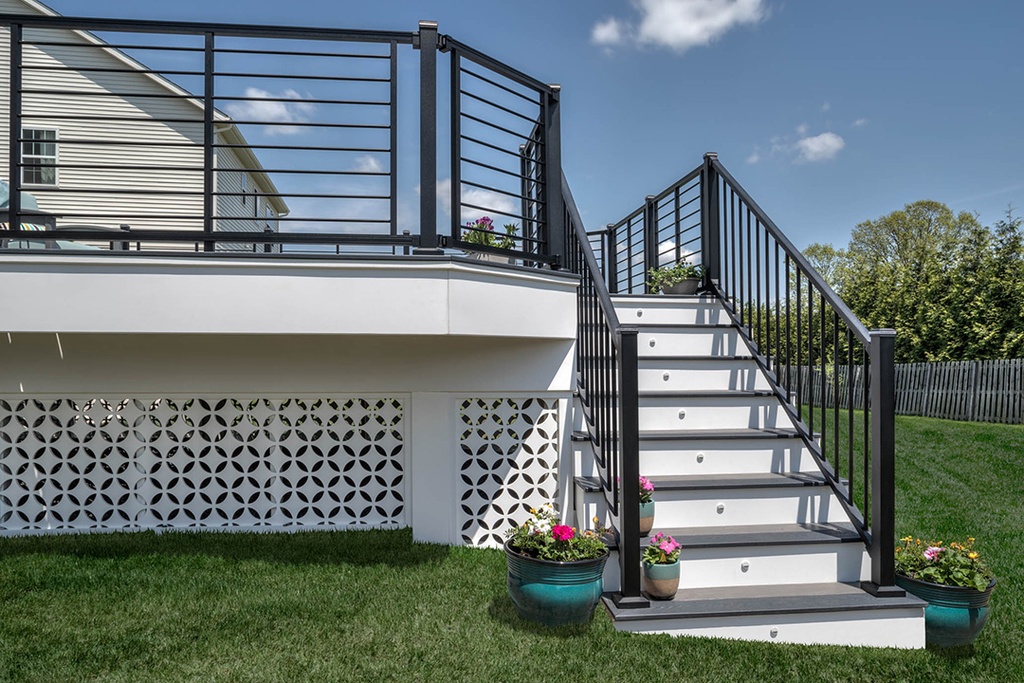
While you can buy pre-made decorative panels, creating a truly custom one is more accessible than you think.
- Design Your Pattern: Sketch out a repeating geometric pattern or find a vector file online that you like. Keep the design simple enough to be structurally sound.
- Find a Fabricator: Search for local ‘CNC routing services’ or ‘laser cutting services’. Many can work with materials like PVC, composite, or aluminum.
- Choose Your Material: Discuss with the fabricator which material is best for outdoor use and your budget. Exterior-grade PVC board is a great, paintable option.
- Provide Your File: Send them your design file and dimensions. They will program the machine to cut your panels precisely.
- Install: Frame the panels and install them just like any other skirting material.
16. Continuous Horizontal Slats for Skirt and Railing
The power of this design lies in its continuity. By using the exact same horizontal wood slat material for both the deck skirt and the privacy railing, the entire structure reads as one cohesive architectural element. The lines flow uninterrupted from the ground up to the top rail, creating a strong sense of order and rhythm. This approach is incredibly effective at making the deck feel integrated and intentional, rather than a collection of separate parts (floor, skirt, railing).
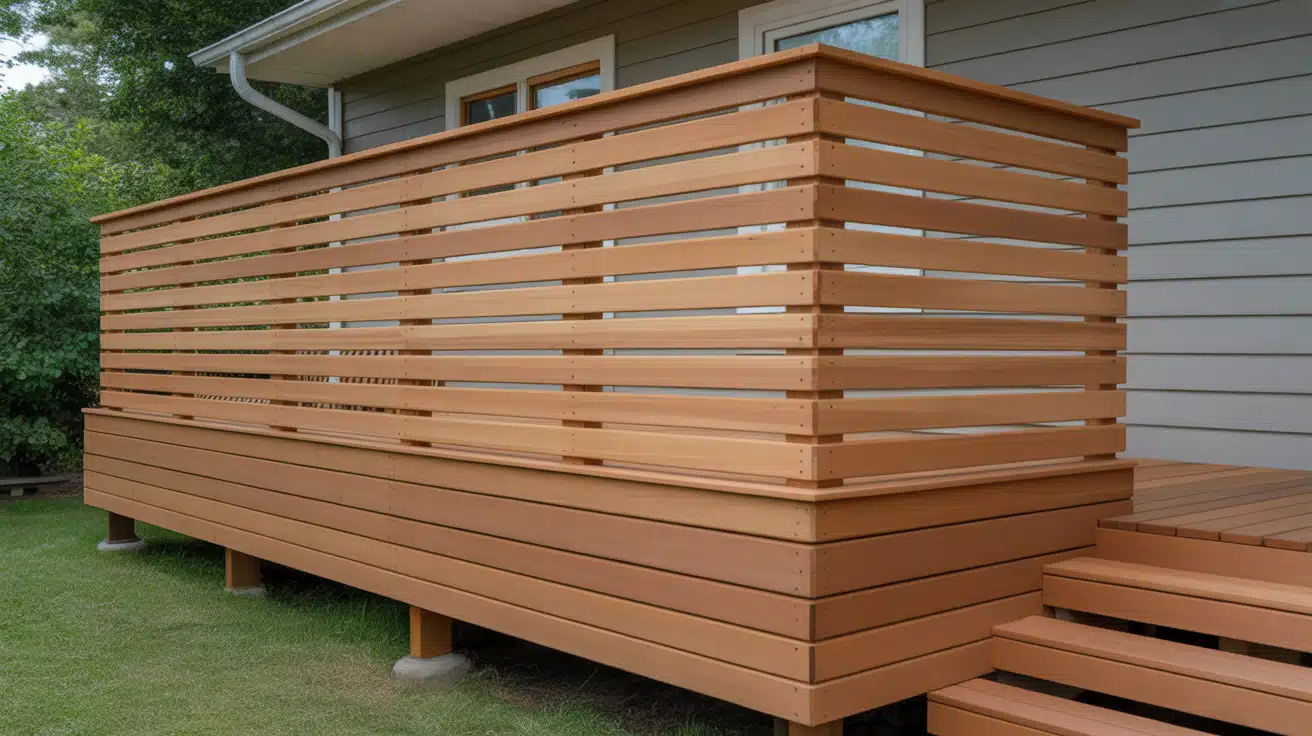
This continuous horizontal line is a fantastic tool for manipulating perception of space. The strong horizontal emphasis can make a deck feel longer and wider than it actually is. It’s an especially great choice for rectangular decks where you want to accentuate the length. This technique works well on both low-profile and moderately elevated decks (up to about 5 feet high). For very tall decks, the vast expanse of horizontal lines might start to feel a bit overwhelming, like a giant fence.
17. Cohesive Vertical Slat Skirt and Matching Railing
When planning a vertical slat skirt, the spacing between the boards is a critical design decision. For maximum privacy and to completely hide what’s under the deck, you can use tongue-and-groove boards for a solid, seamless wall. For a lighter, more open feel that still provides screening, a gap of 1/2 to 3/4 inch between boards is ideal. This allows for excellent air circulation, which is crucial for preventing mold and mildew growth in the under-deck space. Compare this vertical approach with the horizontal continuity of Idea #15.
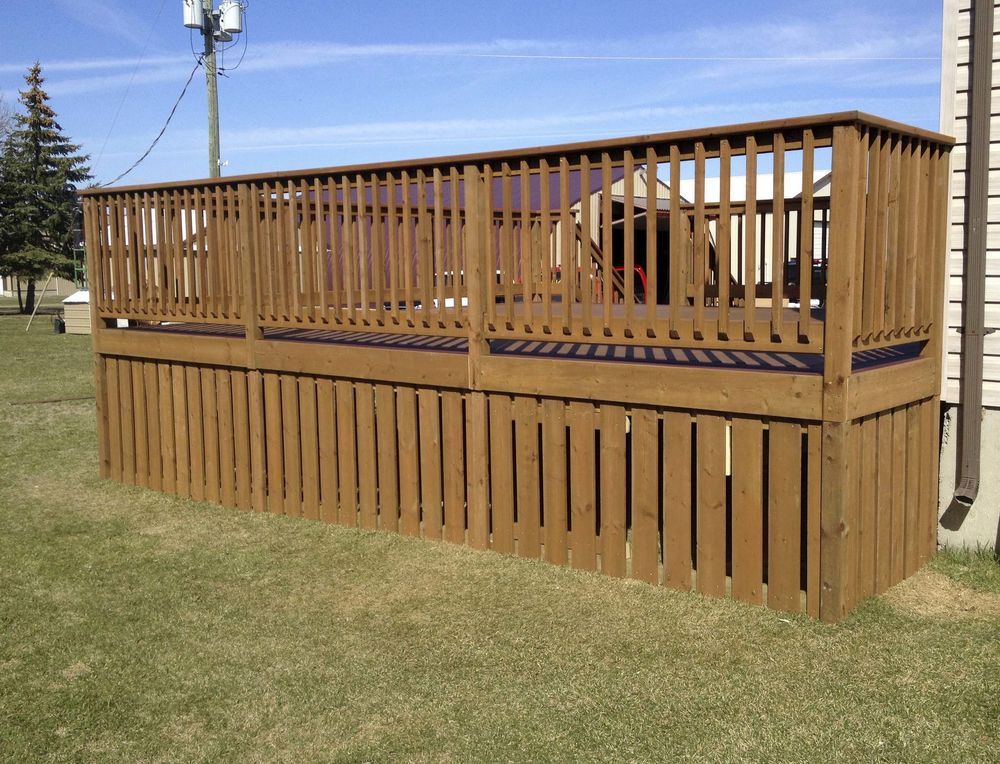
Let’s talk about staining. A design with this many individual vertical boards, both on the skirt and the railing, creates a lot of surface area and a lot of tight spaces. Staining or sealing this properly with a brush is a time-consuming, tedious task. A paint sprayer or a staining pad will be significantly faster. Remember that you need to coat all four sides of each board before installation for the best protection against moisture, which adds to the upfront labor.
18. Flush Horizontal Cedar Skirting with Black Metal Balusters
The detail that sets this design apart is how the horizontal wood skirt sits perfectly flush with the top of the dark mulch bed. There’s no awkward gap, no visible concrete footing, just a clean line where wood meets ground cover. This seamless transition makes the deck feel deeply integrated into the landscape. It’s a subtle, high-end detail that requires careful planning and installation, but the polished result is well worth the effort. It shows a thoughtful approach to the entire outdoor space, not just the deck itself.
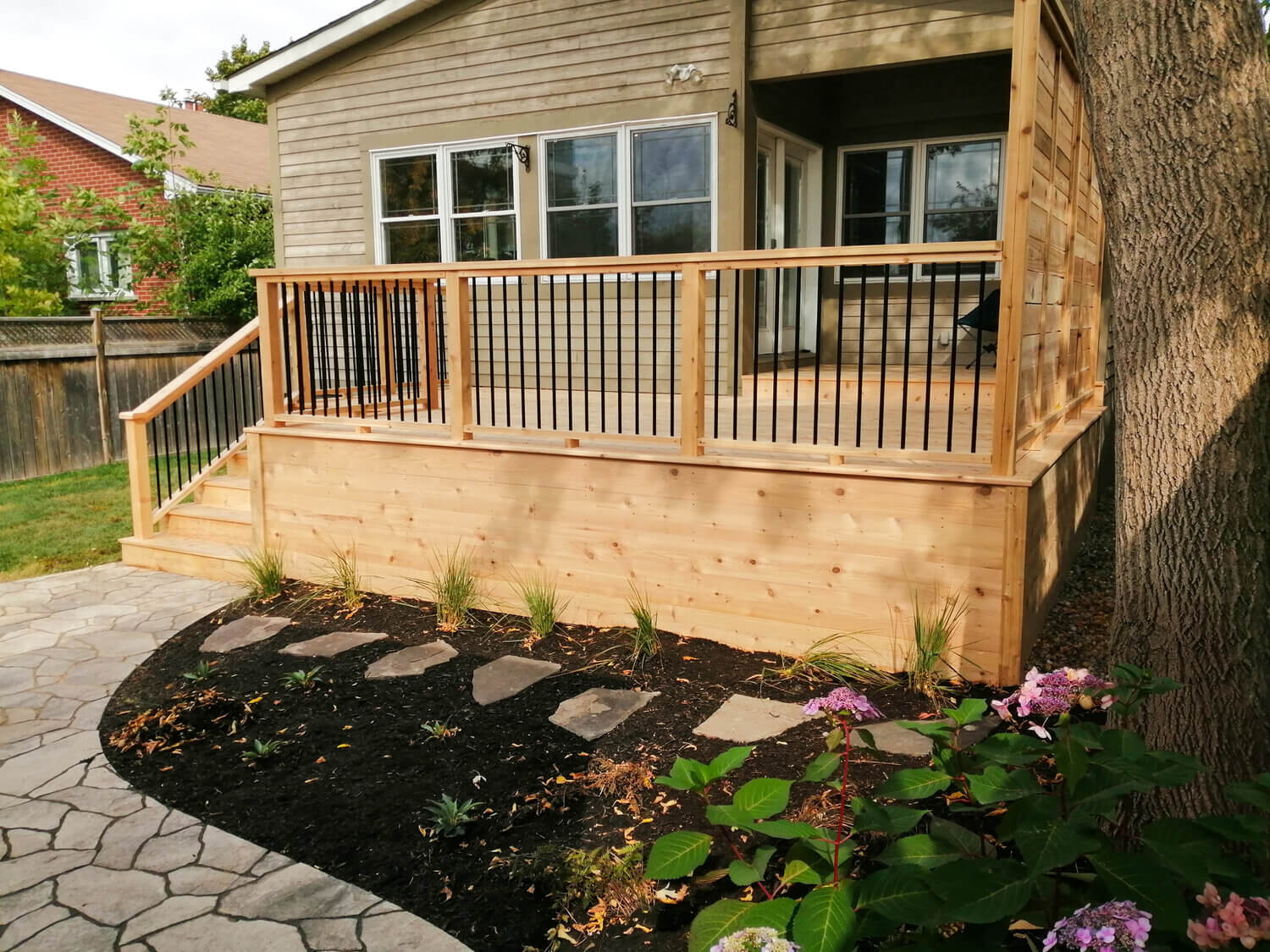
Achieving that clean, flush look with the mulch requires care to prevent rot. You absolutely cannot have the wood skirting in direct contact with the soil or damp mulch. The installer here likely used a hidden composite or pressure-treated ‘starter board’ at the very bottom, or the entire skirt is held slightly off the ground, with the mulch carefully raked up to meet it. If you allow the cedar or other premium wood to touch the ground, it will wick up moisture and begin to rot within a few seasons, no matter how well you seal it.
19. Classic Horizontal Wood Plank Skirt with a White Railing
This is a timeless recipe for a welcoming outdoor space: 60% warm, natural wood + 30% crisp, clean white + 10% bold color. The horizontal wood planks on the skirt and stairs provide a sturdy, natural base. The white railing adds a light, airy contrast that keeps the structure from feeling too heavy. The final 10% comes from the sunny yellow siding of the house, which injects personality and cheerful energy. You could easily swap the yellow for a classic navy or a soft sage green and the formula would still work beautifully.
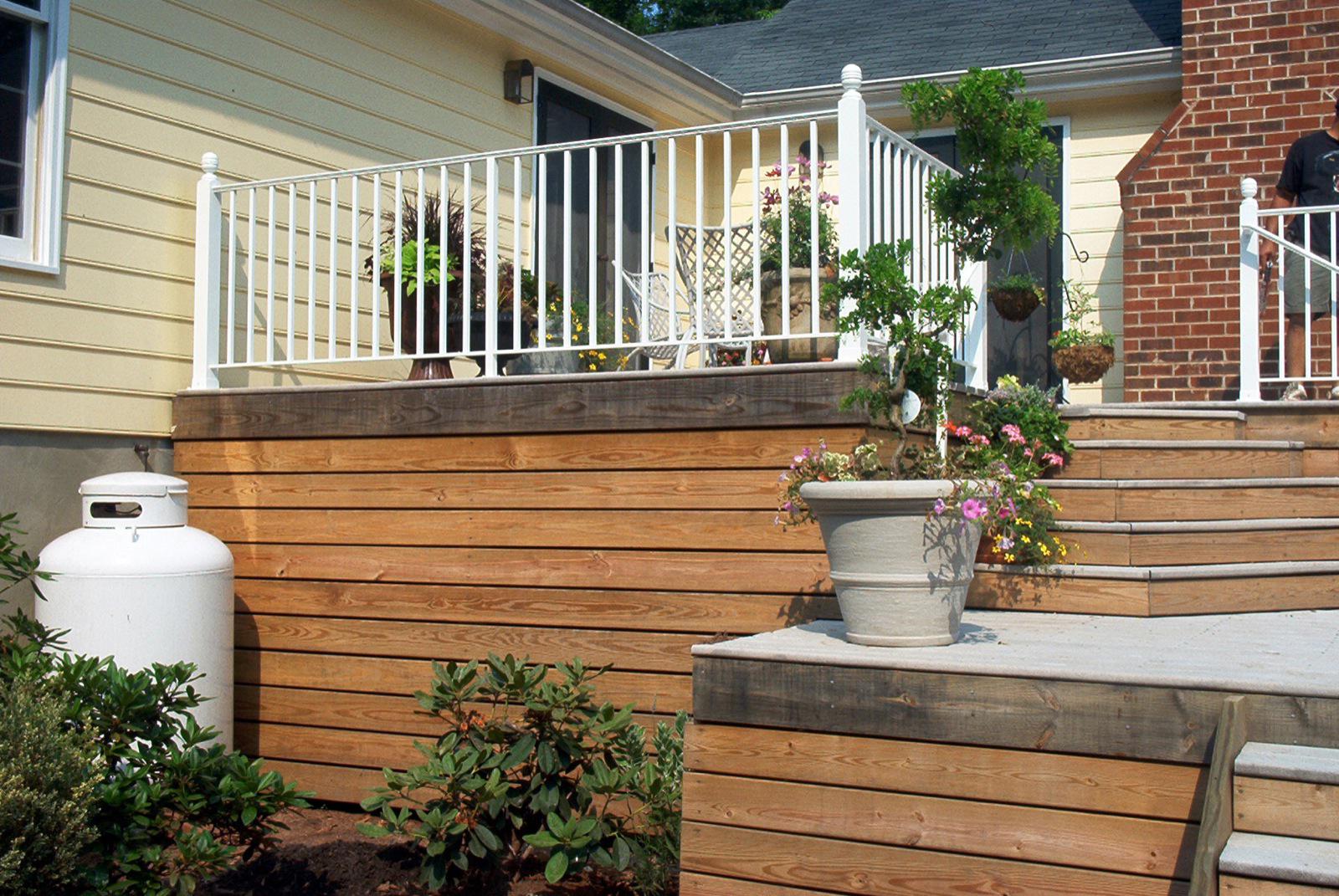
Want this friendly, classic look without the cost of cedar boards? Pressure-treated pine is your answer. Use standard 1×6 pressure-treated deck boards for the horizontal skirting. They are durable and affordable. For the railing, you can find simple, cost-effective white vinyl or aluminum railing kits at any big-box store. A gallon of quality exterior stain for the pine will complete the look. This approach can save you 50% or more compared to using premium woods and custom railings.
20. Rustic Vertical Plank Skirt with Matching Wood Railings
This design succeeds because it leans into a single material and direction. The uniform use of medium-stained vertical wood planks for the skirt, railings, and stair supports creates a powerful, cohesive look. Against the textured backdrop of the red brick wall, this solid wood construction feels sturdy, rustic, and timeless. The vertical lines of the planks draw the eye up and complement the vertical orientation of the double doors, creating a pleasing visual harmony. It feels like a structure that has always been there.
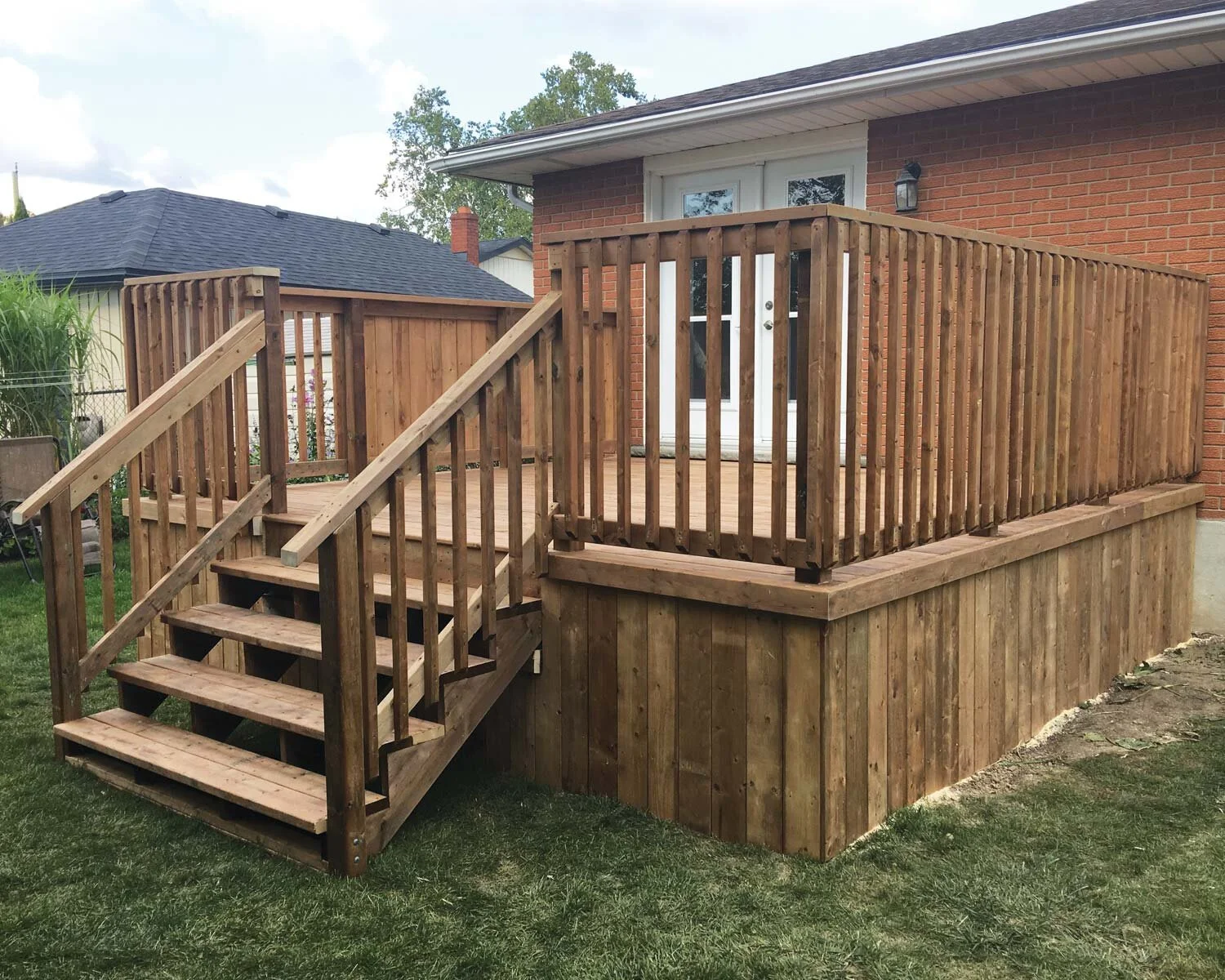
This is a sturdy, material-heavy design. For a 120 sq. ft. area of skirting (e.g., a 40′ long deck that is 3′ high), using standard pine or fir:
- Main Furniture (Wood Planks): $600 – $1,100
- Framing Lumber & Fasteners: $250 – $450
- Stain/Sealer: $150 – $250
- Professional Labor: $1,200 – $2,200
- TOTAL: $2,200 – $4,000
- Budget alternative: Using reclaimed pallet wood (if you can find enough in good condition) and providing your own labor could dramatically lower costs to the $400-$700 range, but requires significant effort.
21. Integrated Skirting with Dark Horizontal Siding
Dark exteriors are having a major moment, and this deck is a perfect example of why. Extending the home’s dark, horizontal siding all the way down to the ground level to serve as the skirt creates an incredibly chic, seamless, and modern look. It blurs the line between the house foundation and the deck structure, making them feel like one single, thoughtfully designed entity. This is a far cry from a tacked-on deck; it’s integrated architecture. The contrast with the light wood decking and ceiling keeps it from feeling gloomy.
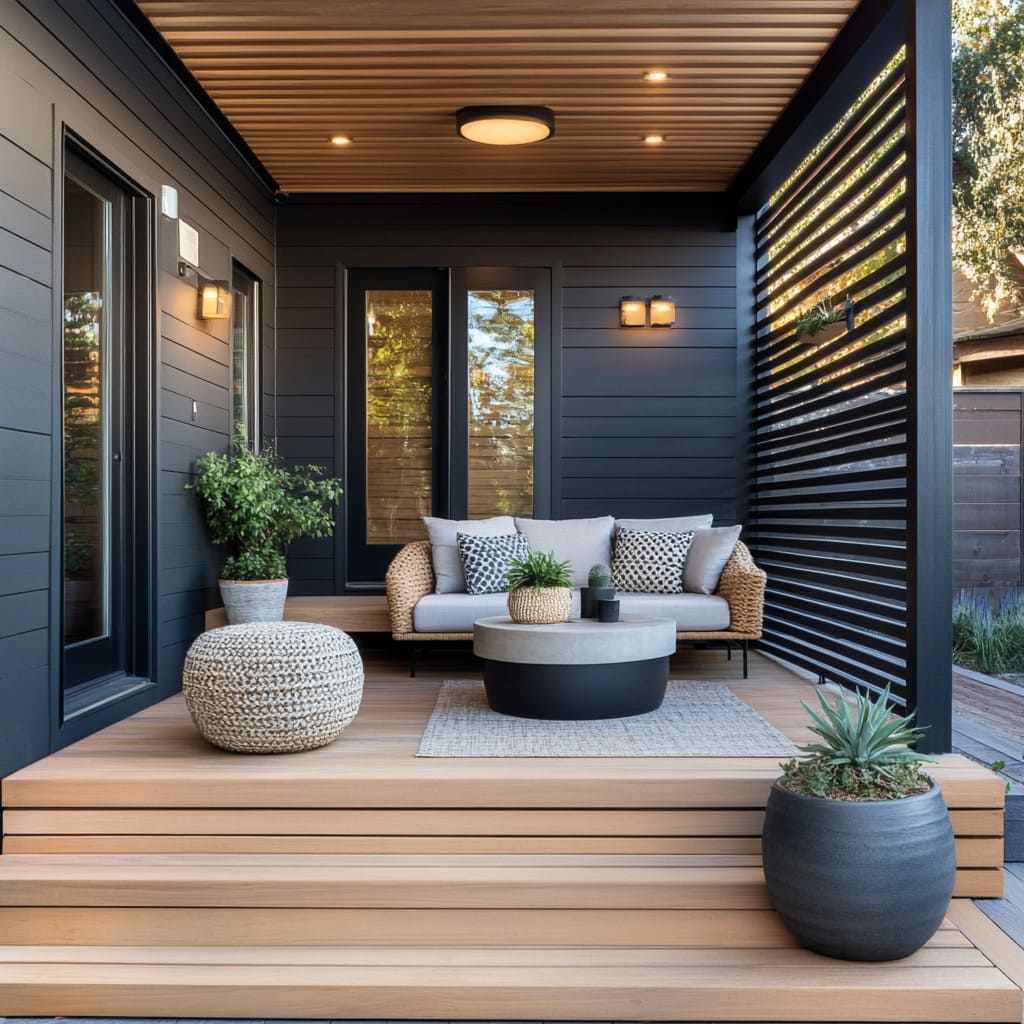
When you commit to a dark color palette for your exterior, lighting becomes absolutely critical. To prevent the space from feeling like a black hole at night, incorporate multiple layers of light. Here, the slatted wood ceiling has recessed can lights for general illumination. You could add uplighting on the privacy screen to highlight its texture, and step lights on the stairs for safety and ambiance. Using warm-toned light (2700K) is key to making a dark space feel cozy and inviting, not stark.
22. Substantial Stacked Stone Retaining Wall as a Deck Skirt
The undeniable star of this show is the stacked stone. While wood or lattice encloses a space, a stone wall grounds it. It gives the deck a sense of permanence and a powerful connection to the landscape. The varied colors and rough textures of the gray stone provide a beautiful, organic contrast to the smooth, uniform finish of the painted deck and white vinyl railing. It’s a choice that says sturdy and timeless in a way no other material can. This works especially well on a sloped yard, where a retaining wall is a functional necessity.
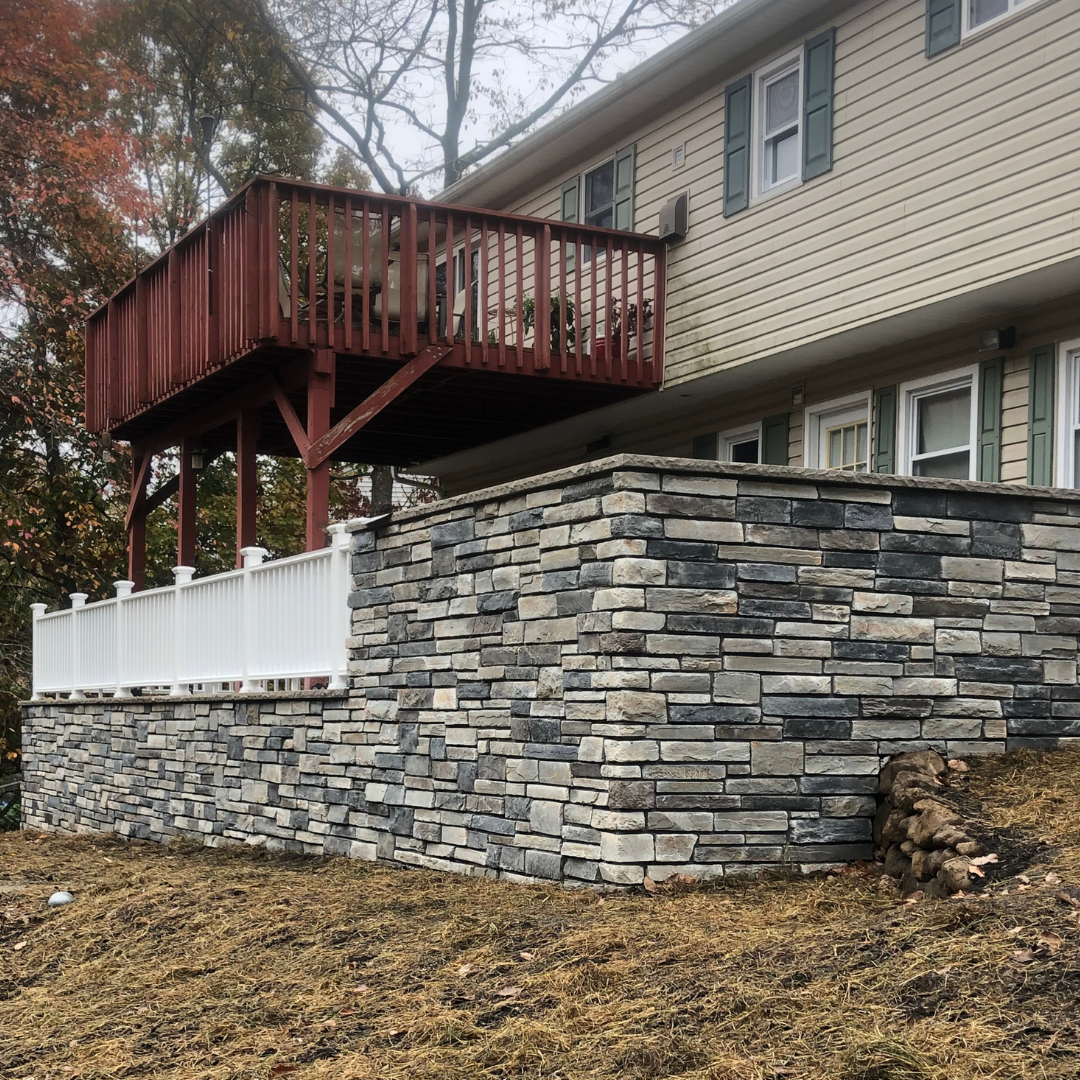
A stacked stone wall is incredibly durable, but it’s not zero-maintenance. The small crevices between stones are perfect little pockets for windblown seeds to sprout. You’ll need to be diligent about pulling weeds or treating the wall with a weed preventer once or twice a year. On uneven ground, stone walls can also shift or settle over time. It’s wise to do an annual inspection to look for any major gaps or leaning sections that might need to be repaired by a mason.
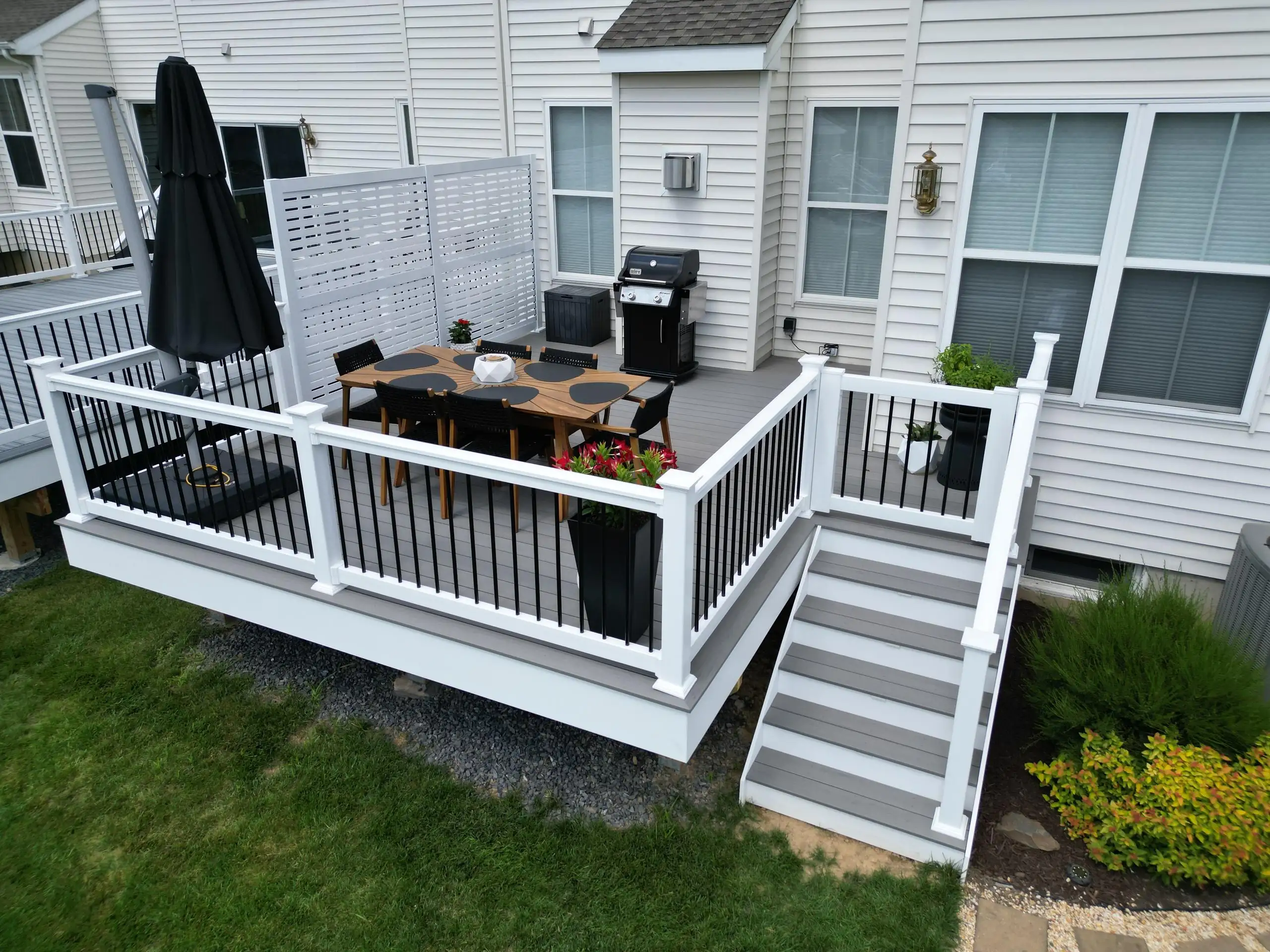
23. Clean White Composite Fascia Skirt with Gray Decking
This look is the epitome of clean, modern, and low-maintenance. The use of composite materials for the gray decking and the crisp white fascia (which acts as the skirt) means no staining, no sealing, and no worrying about rot. The color combination is timeless and fresh. The solid white skirting creates a sharp, defined edge that makes the gray deck surface pop. Combined with the black and white railings, the whole assembly feels like a finely crafted piece of outdoor furniture.
Choosing composite colors can be daunting because they are permanent. Before you commit thousands of dollars, do this:
- Order large samples, not just the tiny chips from the store display. You need to see how the color and texture look over a larger area.
- Look at the samples outside, next to your home’s siding and trim, at different times of day (morning, noon, evening). Colors change dramatically in different light.
- Check the temperature. Darker composite decking can get extremely hot in direct sun. If your deck is south-facing, a lighter color might be a much more comfortable choice.
24. Seamless Composite Deck with a Matching Vertical Skirt
For a truly high-end, custom look, use the exact same composite decking boards for your skirt as you do for your deck surface. Most composite decking lines offer matching fascia boards, but using the actual grooved or square-edge deck boards, installed vertically, creates a seamless, monolithic appearance. It’s a subtle upgrade that signals a thoughtful, cohesive design. This vertical application also helps the different levels of the deck feel connected. This approach offers a different feel from the white fascia in Idea #22.
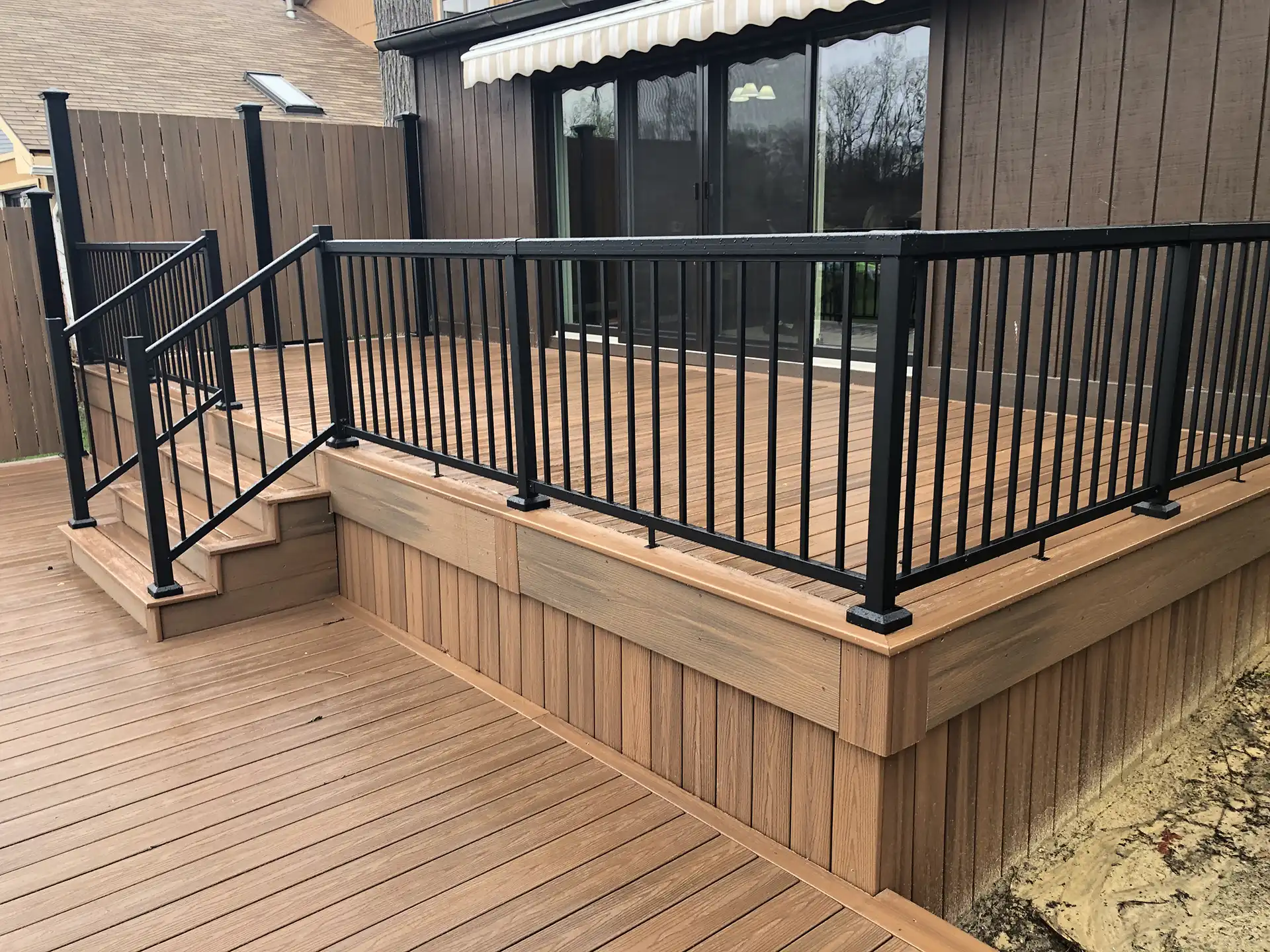
This seamless, single-material look is particularly effective on multi-level decks like this one. By cladding all the vertical surfaces—the main skirt, the riser between levels, and the stair stringers—in the same material, you unify the complex structure. It helps the eye read it as one large, elegant form rather than a jumble of different platforms. This technique is best for decks with a total height of 2 to 6 feet, where there’s enough vertical surface to make a statement without being overwhelming.
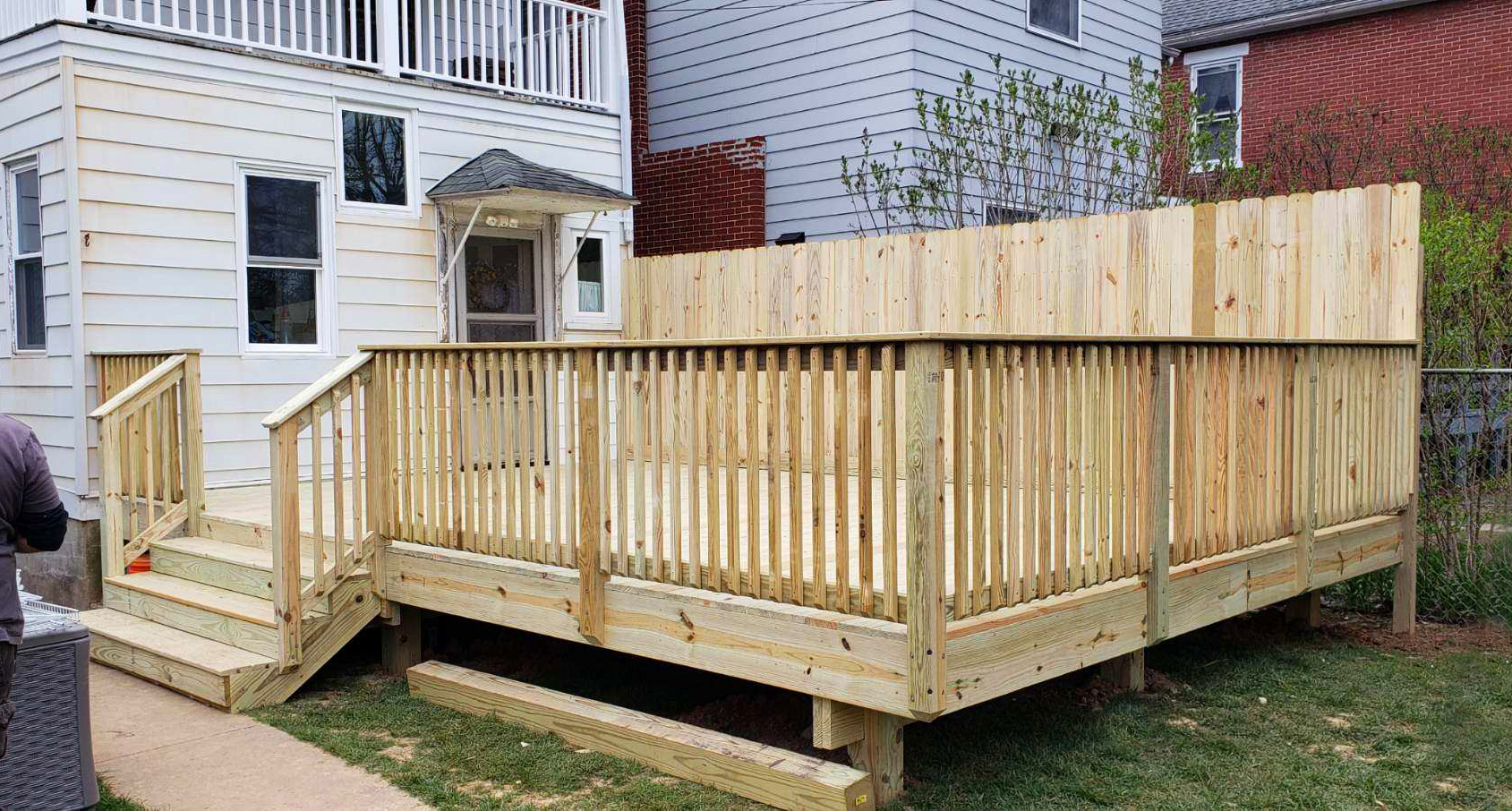
25. The Starting Point: An Open Under-Deck Area
This is what many of us start with: a perfectly functional deck with a completely open, unfinished space underneath. While it might seem fine at first, leaving it open can become a headache. It’s an open invitation for critters to make a home, a place for weeds to grow wild, and an eyesore when you’re trying to enjoy your yard. It also collects blowing leaves and trash. Skirting isn’t just about looks; it’s about solving these practical problems and making your entire backyard space more pleasant.
Before you can install any of the beautiful skirting options in this article, you need a solid frame to attach them to. Here’s the basic process:
- Measure: Determine the height you need at various points from the ground to the bottom of your deck’s rim joist.
- Build Box Frames: Using pressure-treated 2x4s, build simple rectangular frames to fit between your deck’s support posts.
- Attach Frames: Secure these frames to the main support posts, ensuring they are level and plumb.
- Add Mid-Supports: For long spans (over 6-8 feet), add vertical 2x4s in the middle of your frames to provide extra attachment points and prevent your skirting material from bowing.
- Install Skirting: Now you have a solid structure to which you can attach your lattice, boards, or panels.
Your Deck’s Best Look is Waiting
A deck skirt is more than just a finishing touch; it’s what turns a simple platform into a cohesive, intentional outdoor room. Whether you go for classic lattice or modern slats, the right choice will make your entire backyard feel more polished and inviting. Now, go save your favorites and start planning that weekend project! We can’t wait to see what you create.