
You’ve saved a hundred “Cheap Basement Ceiling Ideas” to your Pinterest board, but your actual basement ceiling is still staring back at you, looking… well, like a basement ceiling. We get it. It’s that one project that feels both overwhelming and full of potential. That’s why we went deep, filtering through hundreds of designs to find what truly works without breaking the bank.
For this 2026 guide, we dug into options from Home Depot, Amazon, and IKEA to bring you 25 ideas that are stylish, practical, and budget-conscious. We’re covering everything from sleek modern drywall solutions to rustic exposed joists and creative paneling, with project costs ranging from under $200 for a DIY fix to a few thousand for a more polished transformation.
And stay until the end — we break down the most common mistakes that can ruin these looks. 📌 Save this to Pinterest for later — you’ll want to revisit these ideas.
1. Create Architectural Depth with a Multi-Layered Suspended Ceiling
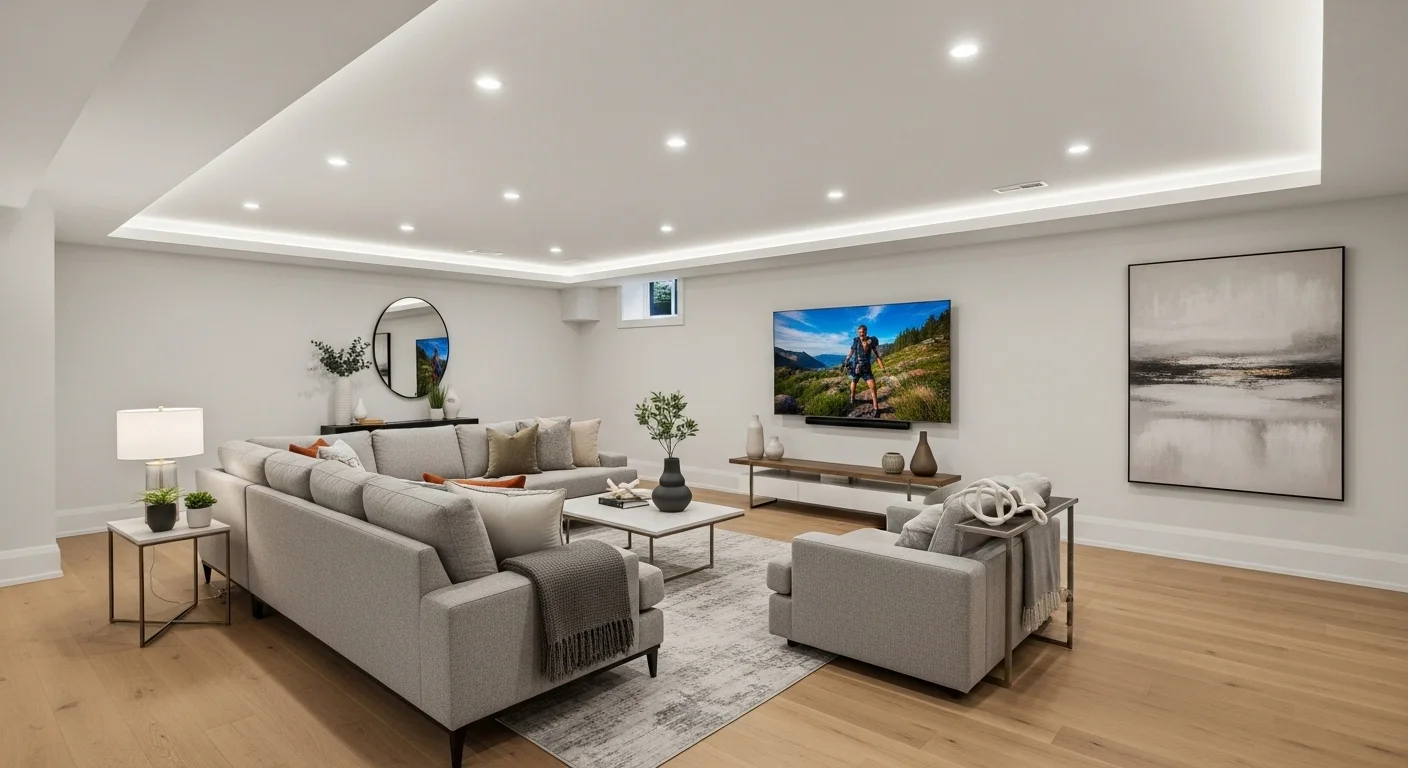
What makes this ceiling so effective is the use of layering and light to create architectural interest. The central recessed section, or tray, breaks up the otherwise flat, expansive plane of the ceiling. This adds a sense of custom design and visual depth, making the room feel taller and more spacious than it is. The combination of different lighting types—general recessed lights for overall illumination and ambient strip lighting to highlight the tray feature—adds another layer of sophistication, allowing you to change the mood of the room instantly.
|
📋 Copy HEX 🔗 Share |
For a truly seamless look, ensure the gap for your ambient strip lighting is planned before any drywall goes up. A channel depth of at least 1.5 inches and a width of 1 inch will hide the LED strip itself while allowing for a smooth, even glow to wash across the ceiling. Use a frosted or opal diffuser cover over the LED channel; this small detail prevents you from seeing individual light dots, creating a high-end, continuous line of light that looks far more expensive than it is. It’s a pro secret for that flawless, modern finish.
2. Use Drywall Bulkheads to Conceal and Clean Up Your Ceiling
While bulkheads are a fantastic way to hide ugly ductwork, plumbing, and wiring, they aren’t a simple weekend project. The challenge is in the framing. You have to build a wooden or metal stud structure around the existing utilities, leaving enough clearance for safety and access while ensuring it’s perfectly level. This can be tricky, especially in older homes where joists may not be even. If you’re not confident in your framing skills, this is one area where hiring a professional carpenter for a day can save you a massive headache and ensure a clean, polished result that looks intentional.
|
📋 Copy HEX 🔗 Share |
- Framing Lumber & Hardware: $100 – $300
- Drywall & Finishing Supplies: $150 – $400
- Recessed Lighting (6-8 units): $200 – $500
- Paint: $50 – $100
- TOTAL (DIY): $500 – $1,300
- Budget Alternative: Instead of framing with wood and drywall, you can build simpler, lightweight boxes from MDF or even foam, then finish and paint them. This is less structurally sound but much easier for a novice DIYer to manage, bringing the cost down by about 40%.
3. Go Industrial with Dark-Painted Exposed Joists and Integrated Lights
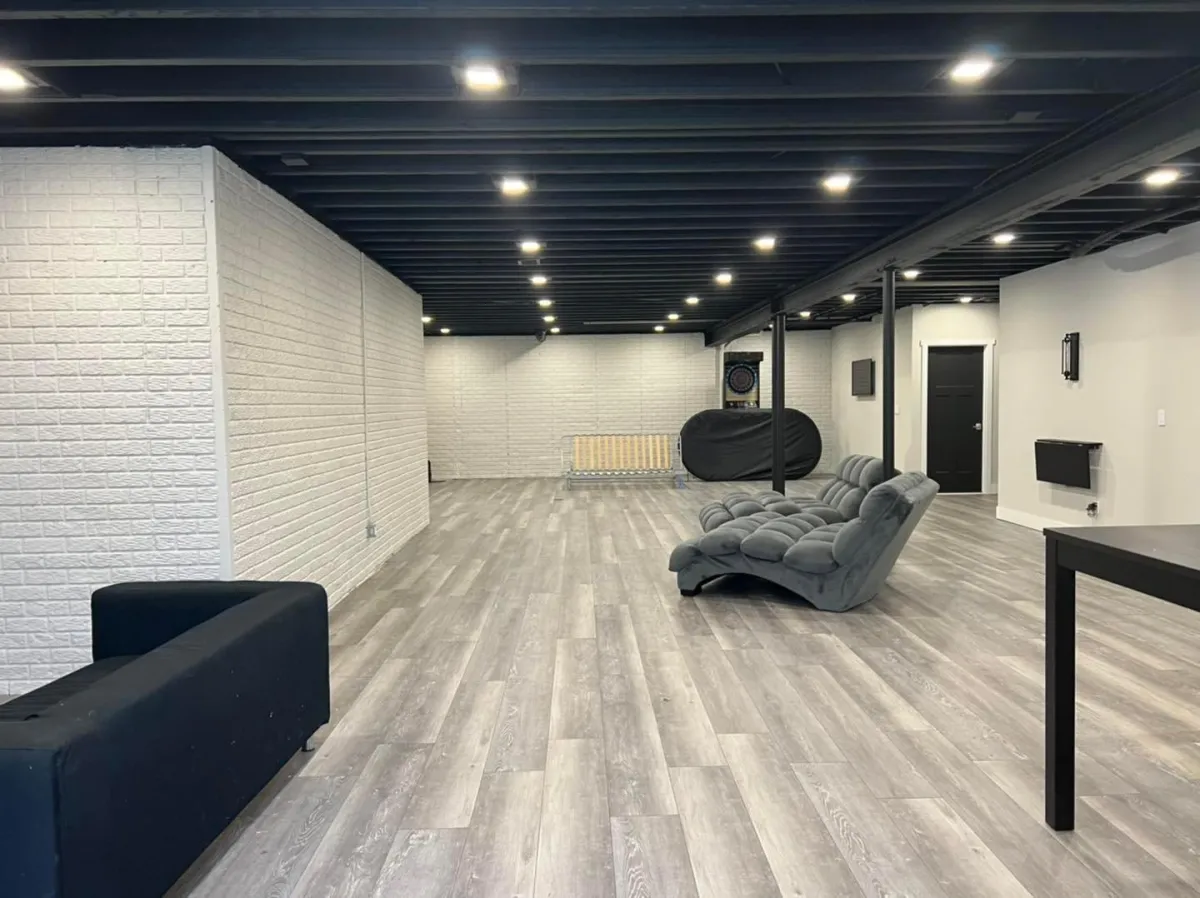
The success of this industrial-chic look comes down to a simple but effective formula: 60% dark, unifying color + 30% warm, contrasting textures + 10% clean, modern lighting. The dark charcoal or black paint on the joists and everything in between (pipes, ducts, wiring) is the key; it makes the “mess” recede and become a textural feature. This is balanced by the warmth and light color of the wide plank flooring and white brick walls. The square recessed lights add a modern, geometric touch that keeps the whole space from feeling too rustic or chaotic. You can swap the flooring for polished concrete to lean more industrial or add a plush rug to soften it up.
|
📋 Copy HEX 🔗 Share |
- Prep is everything (Est. time: 4-6 hours): Start by thoroughly cleaning all joists, pipes, and decking with a degreasing cleaner. Scrape any flaking paint or rust. Cost: ~$30 for cleaning supplies.
- Prime all surfaces: Use a high-adhesion stain-blocking primer. This is critical for ensuring the paint sticks to metal pipes, PVC, and wood and to prevent any stains from bleeding through.
- Choose your weapon: A paint sprayer is by far the most efficient tool for this job. You can rent one for about $50-80 per day. It ensures even coverage in all the nooks and crannies.
- Apply two coats: Spray two thin, even coats of a high-quality matte or flat black paint. A matte finish helps to hide imperfections. Make sure the space is well-ventilated and wear a respirator.
4. Keep It Simple and Bright with a Flat White Ceiling
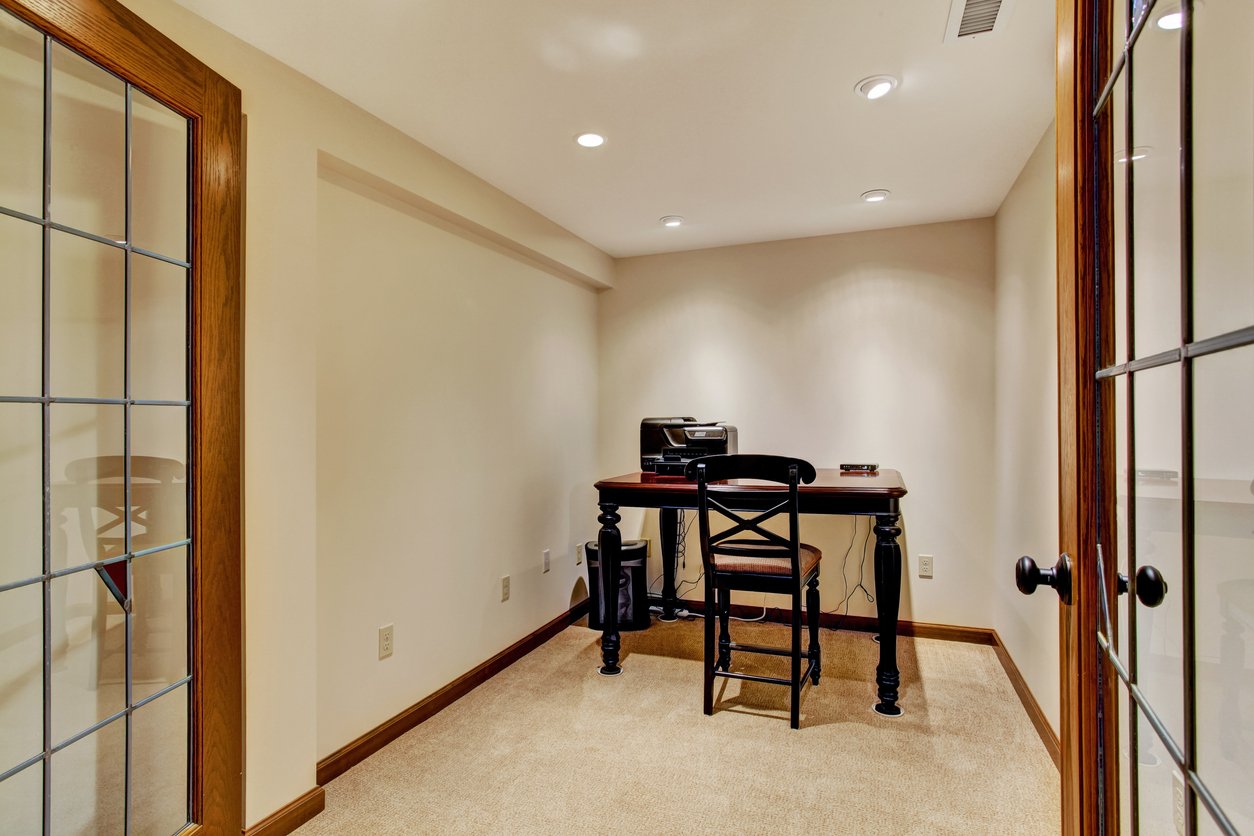
The most important element here is the unapologetic simplicity. In a world of complex ceiling treatments, choosing a completely flat, untextured white ceiling is a powerful statement. It reflects the maximum amount of light, making the basement feel taller, brighter, and cleaner. Without any texture (like popcorn or stucco) or busy grid lines, it creates a seamless canvas that allows other elements in the room, like the wall color or furnishings, to take center stage. Removing this clean slate in favor of a textured or dark ceiling would instantly make this simple, functional space feel smaller and more dated.
|
📋 Copy HEX 🔗 Share |
A classic drywall ceiling is a fantastic investment, but if the cost of professional installation is too high, you can get a very similar look for less. Look into “smooth look” ceiling tiles from brands like Armstrong, which are designed to mimic the appearance of drywall. They fit into a standard drop-ceiling grid but have a clean, flat surface. A full DIY kit from a big box store like Home Depot can run you about $1.50 – $3.00 per square foot. It’s a great compromise that gives you that smooth, modern aesthetic while still allowing easy access to pipes and wiring. For even more savings, check Facebook Marketplace for leftover tiles from other projects.
5. Try a Faux Coffered Drop Ceiling for Easy Elegance
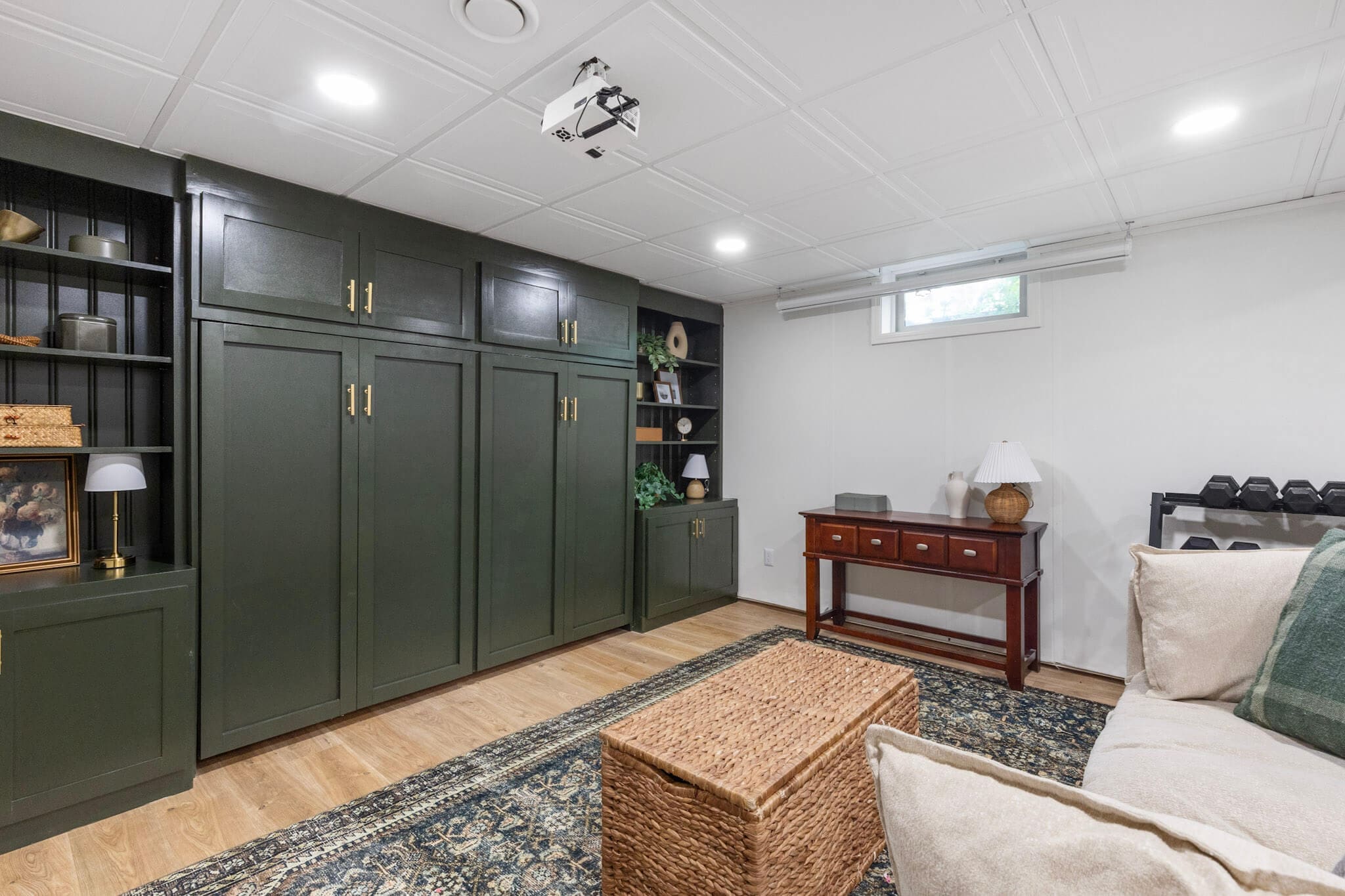
This design works because it cleverly blends the practicality of a drop ceiling with the upscale look of a coffered ceiling. The recessed panels add architectural detail and the illusion of height, preventing the flat, monotonous look that plagues many drop ceilings. The integration of a projector and recessed lighting directly into the panels proves this is a highly functional choice, not just a decorative one. This ceiling treatment, paired with the floor-to-ceiling dark green built-ins, creates a sense of intentional, well-organized design where every element has a purpose.
|
📋 Copy HEX 🔗 Share |
This style of ceiling is ideal for basements with a standard ceiling height of 8 to 9 feet. The coffered-style panels add dimension without significantly lowering the overall ceiling height, unlike true coffered ceilings, which require more vertical space. For this look to be effective, your room should be at least 120 square feet. In a smaller space, the grid pattern can feel a bit overwhelming. If you have lower ceilings (around 7 feet), a simpler, flat panel drop ceiling like the one in Idea #13 might be a better choice to maximize perceived height.
6. Warm Up Your Basement with a Recessed Grid Ceiling
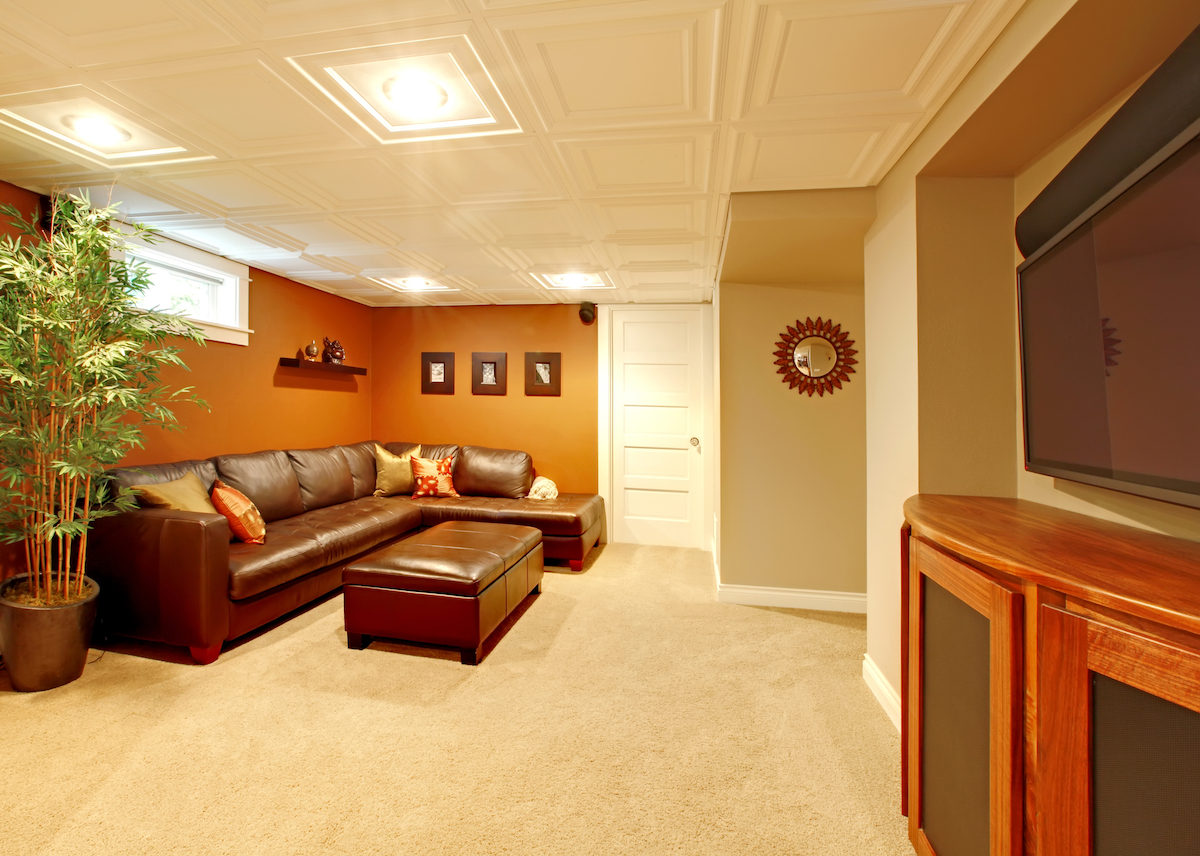
This room’s inviting atmosphere is a perfect blend of modern structure and cozy color theory. Let’s call it: 50% neutral foundation + 40% warm, bold accents + 10% clean lines. The white recessed ceiling and light beige carpet create a bright, neutral canvas. The magic happens with the generous use of a warm terracotta orange on the accent wall and the rich brown of the leather sectional. These warm tones are what make the space feel so welcoming. The clean, simple grid of the ceiling and the flush-mounted lights provide the modern structure that keeps it from feeling dated.
|
📋 Copy HEX 🔗 Share |
As basements evolve from simple storage areas into fully fledged living spaces, we’re seeing a huge trend toward making them feel as warm and inviting as the main floor. The “cozy minimalist” vibe is strong on Pinterest, and this room is a perfect example. Homeowners want functional, bright spaces that don’t feel cold or subterranean. Using warm, earthy accent colors like terracotta, paired with comfortable textiles and clean ceiling lines, is a direct response to this. It’s a trend with staying power because it focuses on livability and comfort over stark, uninviting modernism.
7. Add an Ornate Touch with a Patterned Wood Grid Tray Ceiling
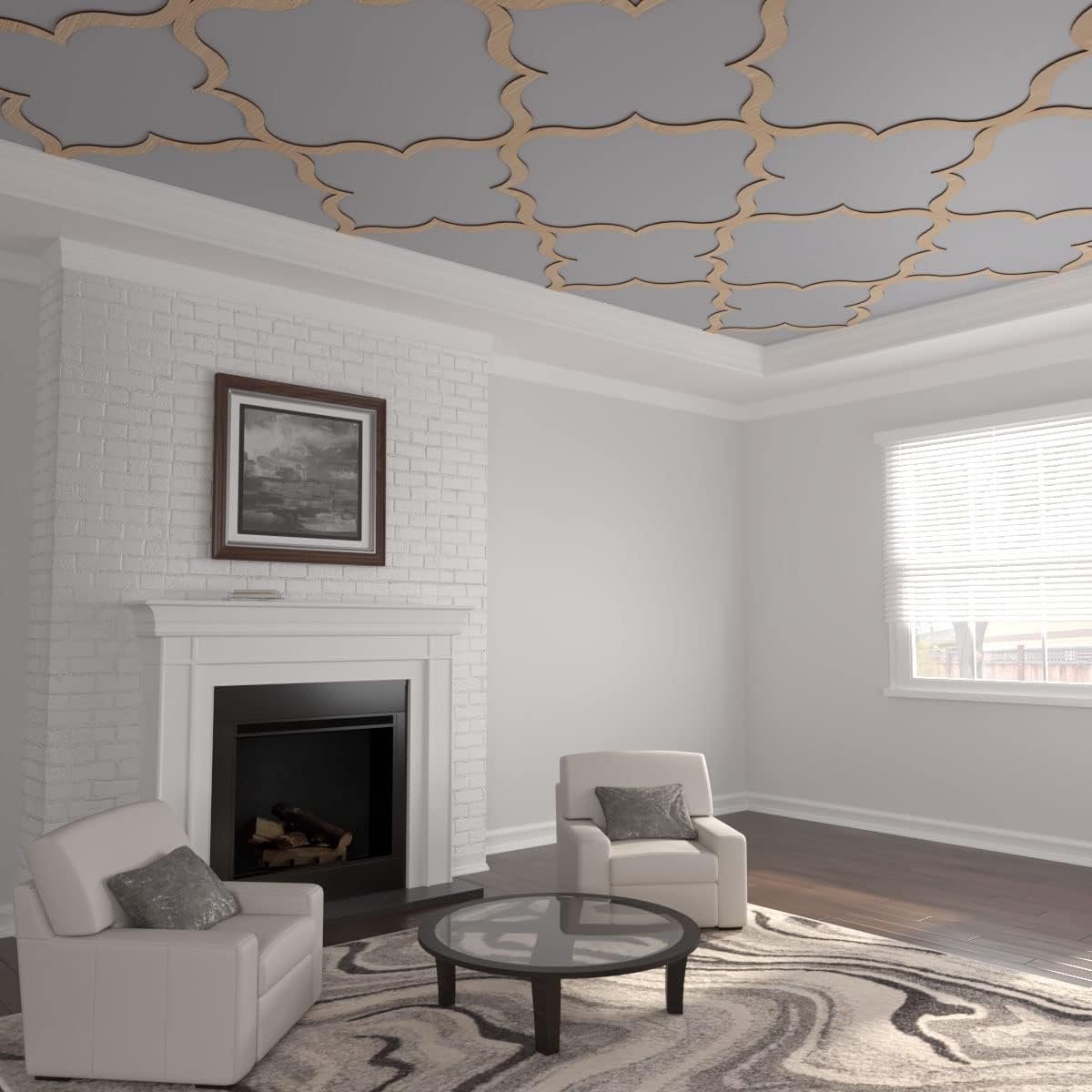
The single most impactful element in this room is the light wood patterned grid on the ceiling. Without it, you would have a simple, nice tray ceiling. But with it, the entire room is elevated into something truly special and custom. The ornate, geometric pattern adds a layer of texture and intricate detail that draws the eye upward and serves as the primary “art” in the space. It’s a bold choice that defines the room’s character, turning a standard architectural feature into a stunning focal point. It proves that you can have a “wow” moment in a quiet, understated color palette.
|
📋 Copy HEX 🔗 Share |
A ceiling feature this intricate can be a dust magnet. The crevices of the light wood grid will collect dust and cobwebs over time. For regular cleaning, a microfiber duster with a long extension handle is your best friend; plan to do a quick pass every month or two. For a deeper clean once or twice a year, you’ll need to use the soft brush attachment on your vacuum cleaner to get into all the curves and corners. Because it’s natural wood, avoid using harsh chemical cleaners. A slightly damp cloth is all you should need for any smudges.
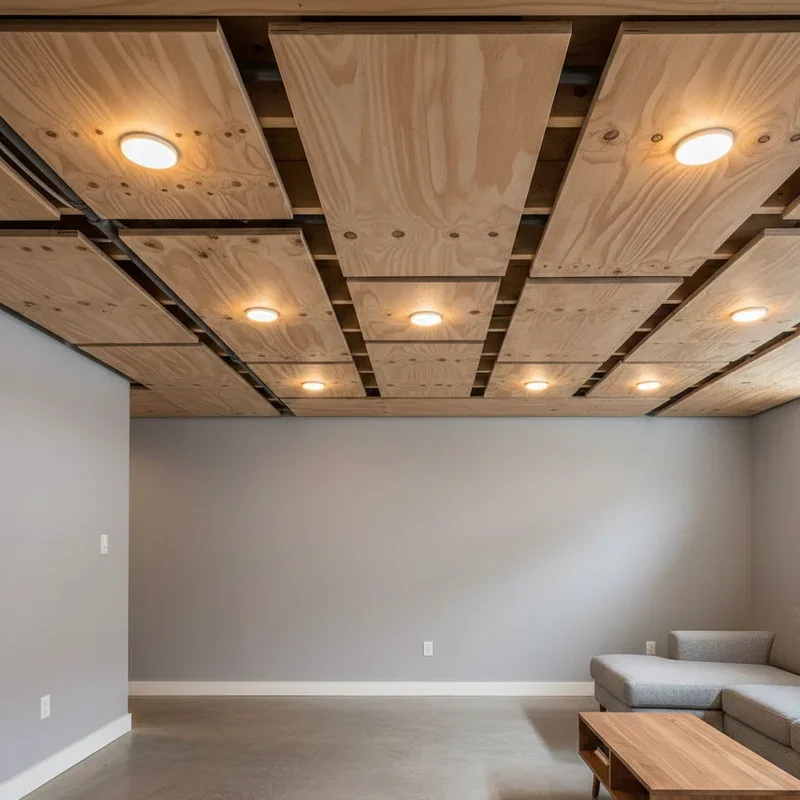
8. Get a Minimalist Look with an Exposed Plywood Panel Ceiling
This look is a masterclass in affordable, utilitarian chic. It works by taking an inexpensive, common material—plywood—and treating it with respect. By cutting the panels cleanly, arranging them in a thoughtful grid, and finishing them to reveal the natural grain, the plywood is elevated from a construction material to a design feature. The exposed framework and recessed lights add to the functional, minimalist aesthetic. Paired with the polished concrete floor and simple gray walls, the entire design feels intentional, honest, and far more stylish than the sum of its humble parts.
|
📋 Copy HEX 🔗 Share |
- Plywood Sheets (4×8 ft): $25 – $60 per sheet (need will vary)
- Wood Stain/Sealer: $30 – $70
- Recessed Lighting (10-12 units): $250 – $600
- Mounting Hardware/Suspension System: $100 – $300
- TOTAL (DIY): $400 – $1,500+
- Budget Alternative: Instead of plywood, you could use oriented strand board (OSB) for a more textured, industrial look at about half the cost. Another option is to source reclaimed pallet wood, which can often be found for free, though it requires significantly more prep work (sanding and sealing).
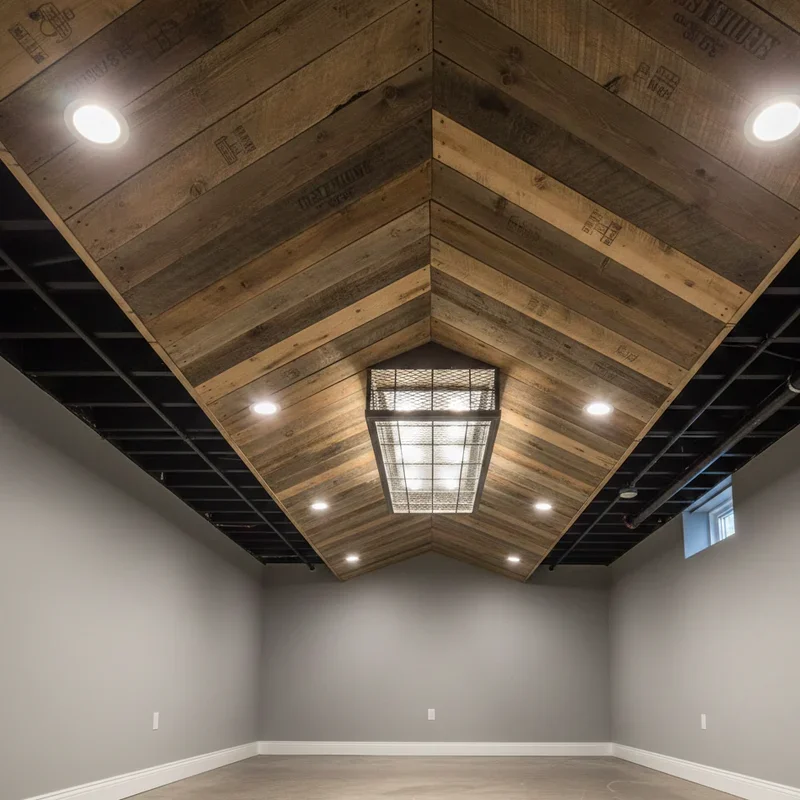
9. Craft a Rustic-Industrial Focal Point with a Vaulted Chevron Ceiling
The reclaimed wood chevron pattern is, without a doubt, the heart and soul of this design. It’s the element that immediately grabs your attention and tells a story. The varied tones, weathered textures, and even the faint lettering on the planks give the space history and warmth that new materials just can’t replicate. Flanked by the modern, black ceiling grid, it creates a powerful contrast between rustic and industrial. If you were to remove the vaulted wood section, the room would lose its primary focal point and its unique character, becoming a much more generic industrial space.
|
📋 Copy HEX 🔗 Share |
Achieving this look requires more than just nailing up some old boards. This is a project that carries significant weight, both literally and figuratively. You need to ensure your ceiling joists can handle the added load of the wood planks, especially in a vaulted application. Before you even buy the wood, consider consulting a structural engineer or a very experienced contractor. Also, sourcing truly reclaimed wood that is properly de-nailed, cleaned, and milled for installation is a challenge. Be prepared for a labor-intensive process, from sourcing to the final cut.
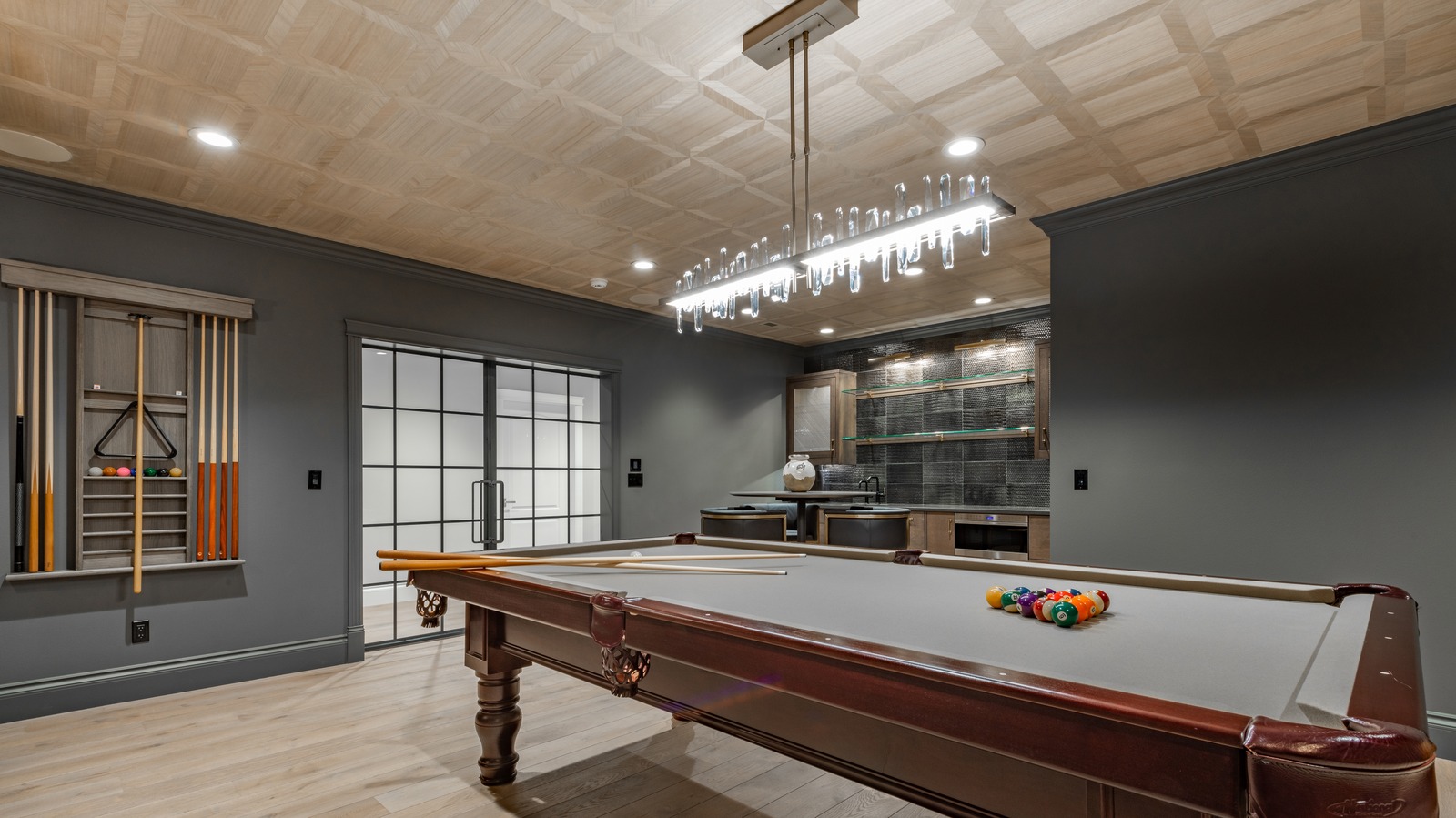
10. Install a Geometric Wood Ceiling for a Sophisticated Game Room
This ceiling design works because it adds visual interest and warmth without lowering the ceiling height, a common concern in basements. The light wood geometric pattern creates a subtle sense of movement and luxury, complementing the dark, moody wall color. It defines the game room area as a distinct, upscale zone within the basement. The recessed lights integrated within the pattern ensure the ceiling is not just decorative but also functional, providing excellent task lighting over the billiard table in conjunction with the statement chandelier.
|
📋 Copy HEX 🔗 Share |
When installing a patterned wood ceiling like this, lighting placement is critical. Plan your recessed light locations to fall in the center of the larger geometric shapes, not on the lines or joints. This creates a more integrated, high-end look. For a 150-200 square foot room, use 6 to 8 slim LED recessed lights (4-inch models are perfect) with a “warm white” color temperature (around 3000K). This provides ample, even light that enhances the wood tones and keeps the space feeling inviting, not clinical.
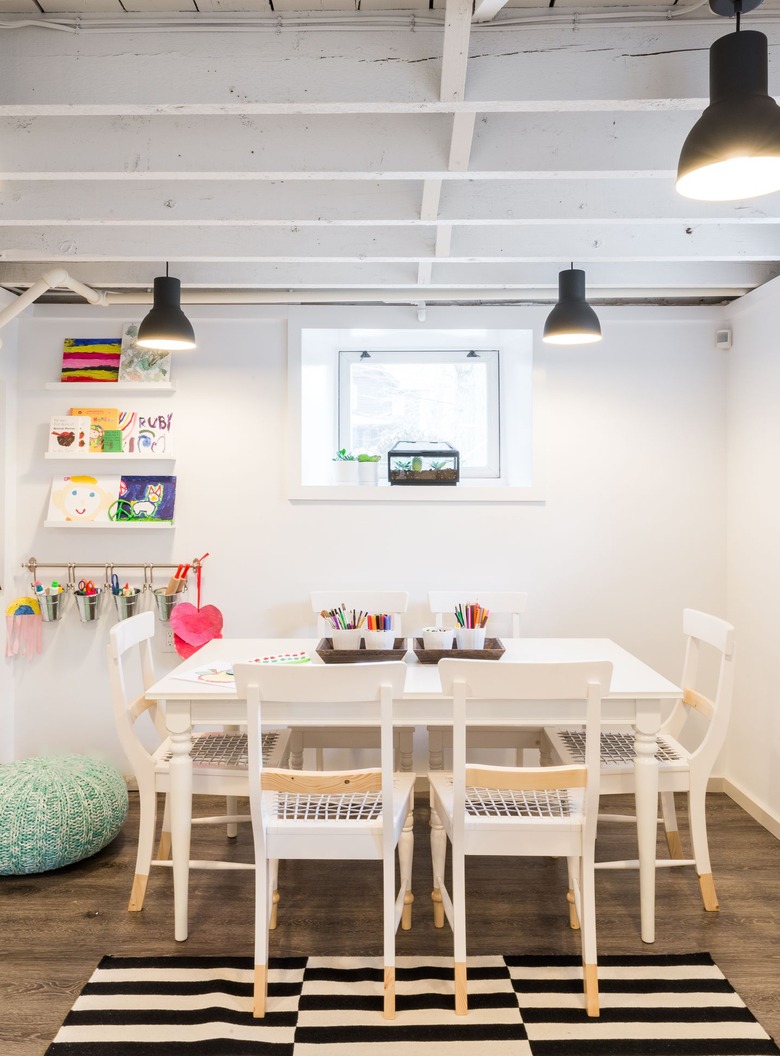
11. Brighten Your Space with White-Painted Exposed Joists
An exposed joist ceiling is one of the most budget-friendly options available because you’re working with what you already have. The biggest cost is your time and the paint. A few gallons of high-quality white paint (around $100-150) can completely transform a dark, dingy basement ceiling into something bright and modern. Compare this to the cost of drywalling, which can easily run over $1,000 in materials and labor. To get this look for less, use a good quality paint and primer in one, and rent a paint sprayer from a store like Home Depot for about $50/day to save dozens of hours of work.
|
📋 Copy HEX 🔗 Share |
- Clean Everything: Use a shop vacuum with a brush attachment to remove all dust and cobwebs from the joists, pipes, and decking. Time: 1 hour.
- Secure Loose Wires: Use zip ties or cable staples to neatly secure any hanging electrical wires against the joists or ceiling deck. This is a crucial step for a clean, finished look. Cost: ~$10.
- Prime Spot-Treat: Apply a stain-blocking primer to any knots in the wood or water stains to prevent them from bleeding through the white paint.
- Paint It All: Using a paint sprayer for speed and coverage, apply two coats of a matte or flat white paint to everything—joists, pipes, ducts, and the ceiling deck above. This uniformity is what makes the look so successful.
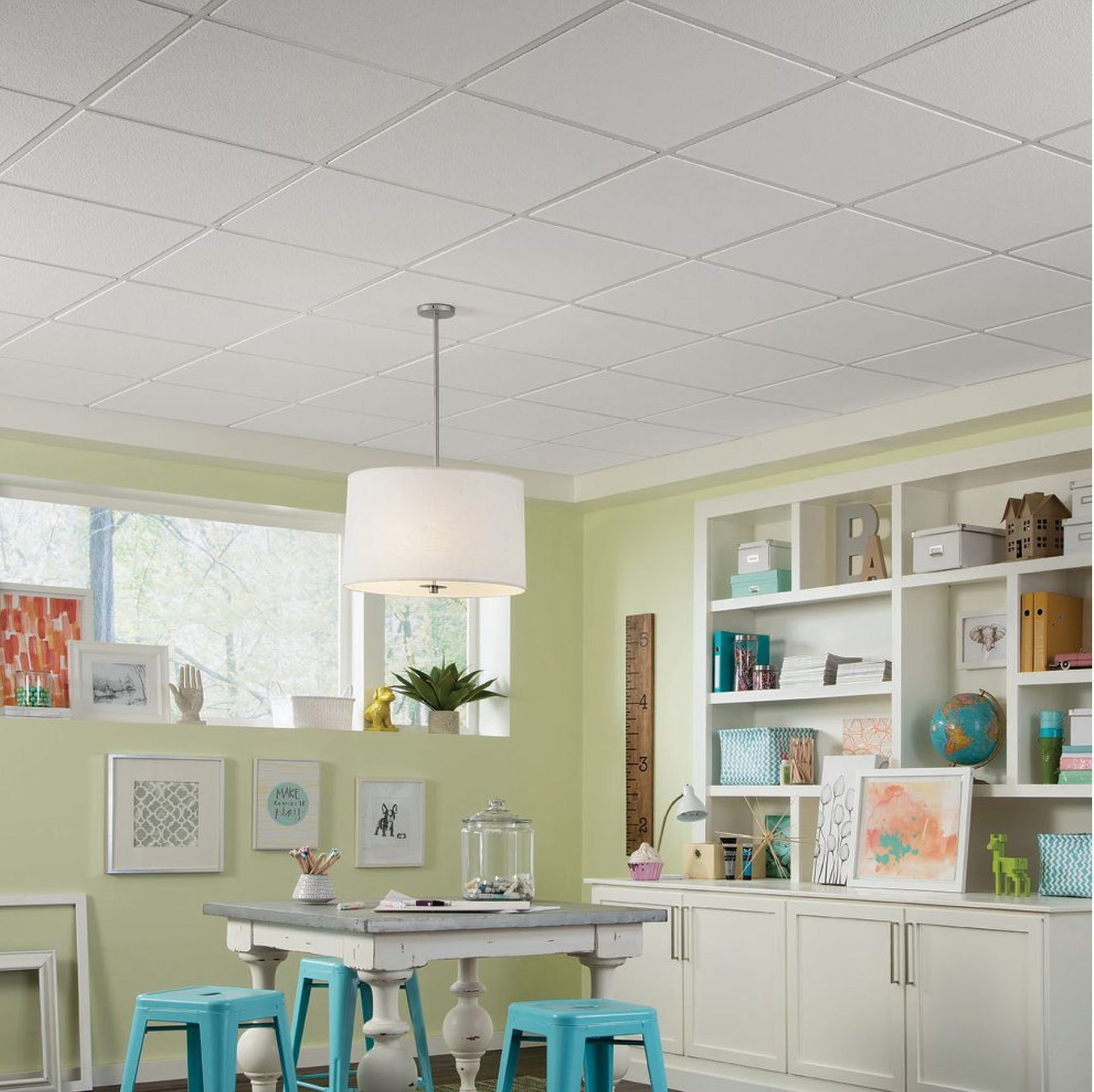
12. Choose a Classic Suspended Grid Ceiling for Functionality
A suspended grid ceiling is a practical choice for almost any basement size, but it particularly shines in rooms with numerous pipes, ducts, or wires that you need to access easily. This system works well in ceilings from 7 feet and up. While it does drop the ceiling height by a few inches (typically 3-6 inches), the trade-off is unparalleled access. It’s a smart solution for large, open basements where future plumbing or electrical work might be needed, as you can simply pop a panel out instead of cutting into drywall. In smaller rooms, using tiles with a smooth, non-patterned finish, as seen here, can help the space feel less busy.
|
📋 Copy HEX 🔗 Share |
- Measure your low points: Identify the lowest-hanging pipe or duct. Your ceiling grid must be installed at least 3 inches below this point. Do you have enough headroom to accommodate this drop?
- Check for level: Are your existing joists relatively level? A suspended ceiling can hide some unevenness, but major slopes will complicate the installation of the grid system.
- Plan your lighting: Determine where you want your lights. Standard 2×2 or 2×4 foot LED panel lights are made to drop right into the grid, which is much simpler than installing can lights. Decide on your layout before you start installing the grid.
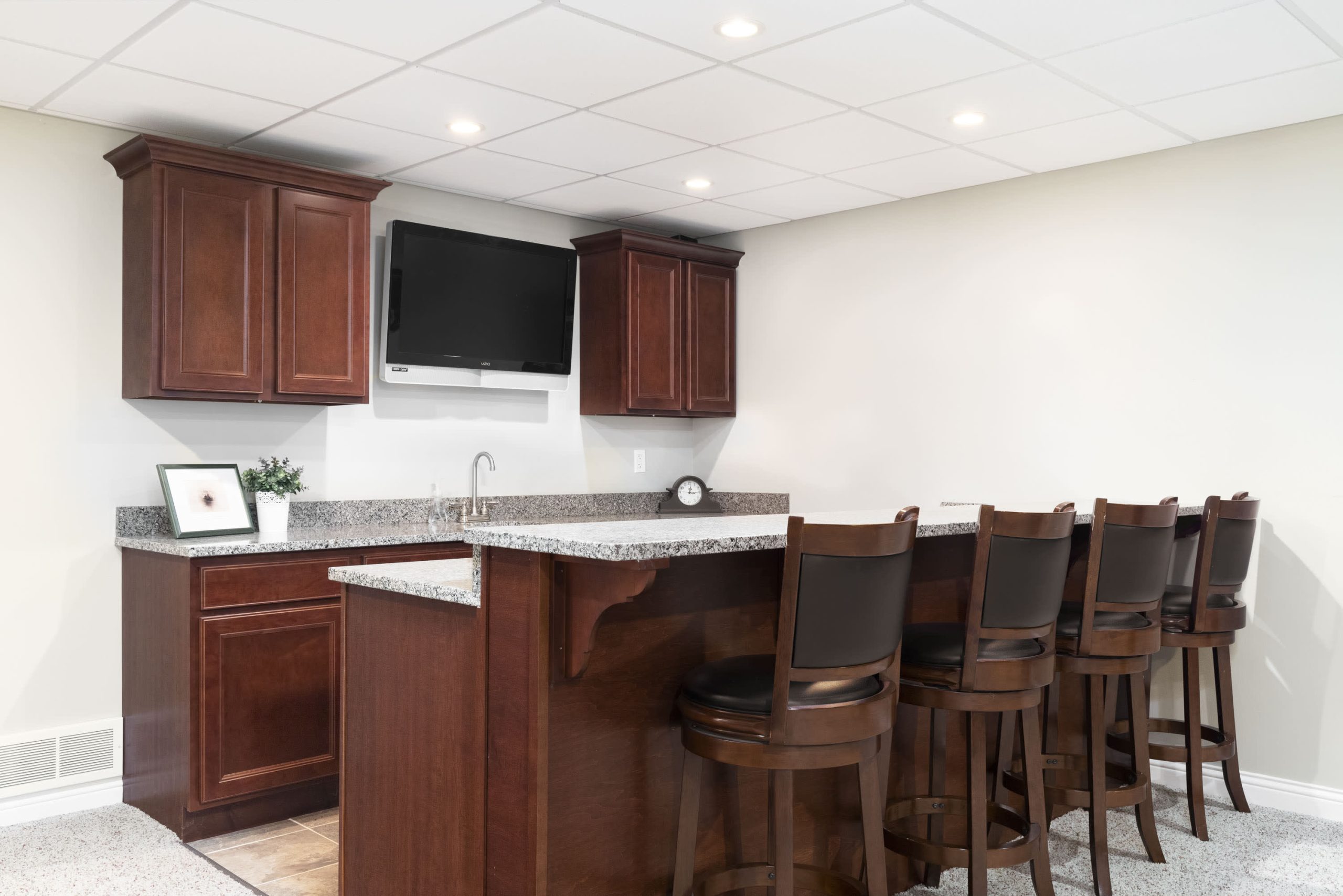
13. Install a Basic Drop Ceiling with Integrated Recessed Lights
Let’s be honest: a standard drop ceiling can sometimes feel a bit dated or “office-like.” The visible grid lines and basic tiles are a dead giveaway of a basement renovation. While incredibly functional for accessing plumbing and wiring, they don’t always scream “cozy living space.” The key to making it work is upgrading the details. Using modern, dimmable LED recessed lights instead of fluorescent panels can dramatically improve the ambiance. However, you must accept that you will always see the grid, and the tiles can sag or stain over time if there are any moisture issues.
|
📋 Copy HEX 🔗 Share |
The standard acoustic tiles you find at big-box stores are affordable, but you can get a more modern look on a similar budget. Look for “tegular” or “reveal-edge” tiles. These have a slightly recessed edge that makes them drop below the grid a little, creating some shadow and dimension that looks more sophisticated than basic flat tiles. They cost only slightly more per square foot but make a big visual impact. For a huge saving, check Craigslist or Facebook Marketplace for people giving away leftover tiles from commercial jobs—you can often find high-end tiles for free if you’re willing to haul them away. A step up from this is the look in Idea #5, which uses a more decorative panel.
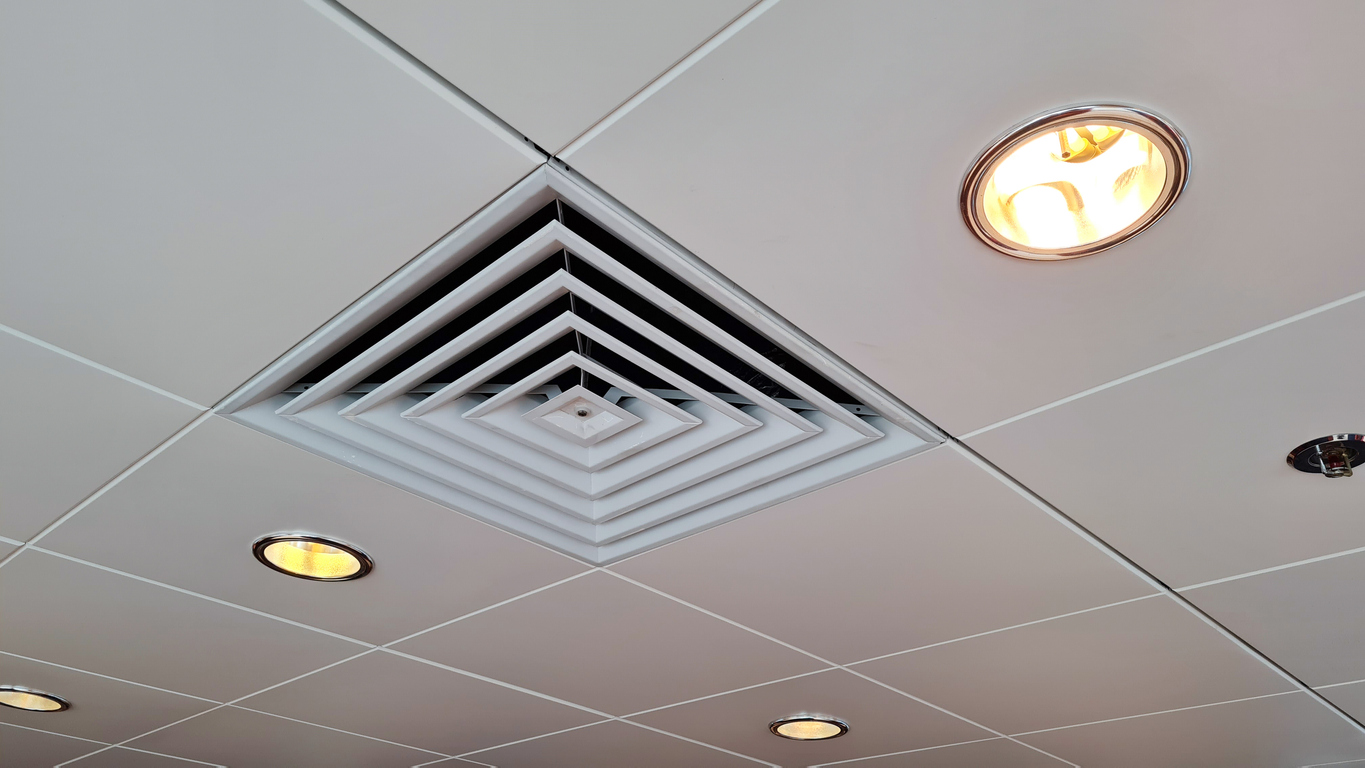
14. Embrace Function with a White Suspended Ceiling Grid
This ceiling is the definition of functional design, and that’s why it works. In a space where utility access is paramount, a suspended grid system is the most logical choice. This design embraces that practicality instead of trying to hide it. The clean white tiles and grid, paired with modern, circular recessed lights, create a bright and orderly appearance. The silver/chrome bezels on the lights and the louvered vent add a touch of metallic detail that breaks up the monochromatic white and gives it a finished, commercial-grade feel. It’s an honest, no-fuss solution that prioritizes brightness and accessibility.
|
📋 Copy HEX 🔗 Share |
Acoustic ceiling tiles are generally low-maintenance, but they are prone to dust and, more importantly, water stains. Any small leak from the floor above will leave a tell-tale brown or yellow spot. The good news is that replacing a single tile is incredibly easy and cheap. It’s a good idea to keep a few extra tiles from your installation batch stored flat in a dry place. This way, if a tile gets stained or damaged, you can pop it out and replace it in seconds, ensuring a perfect color match. For general cleaning, a light dusting or gentle wipe with a damp sponge is all that’s needed.
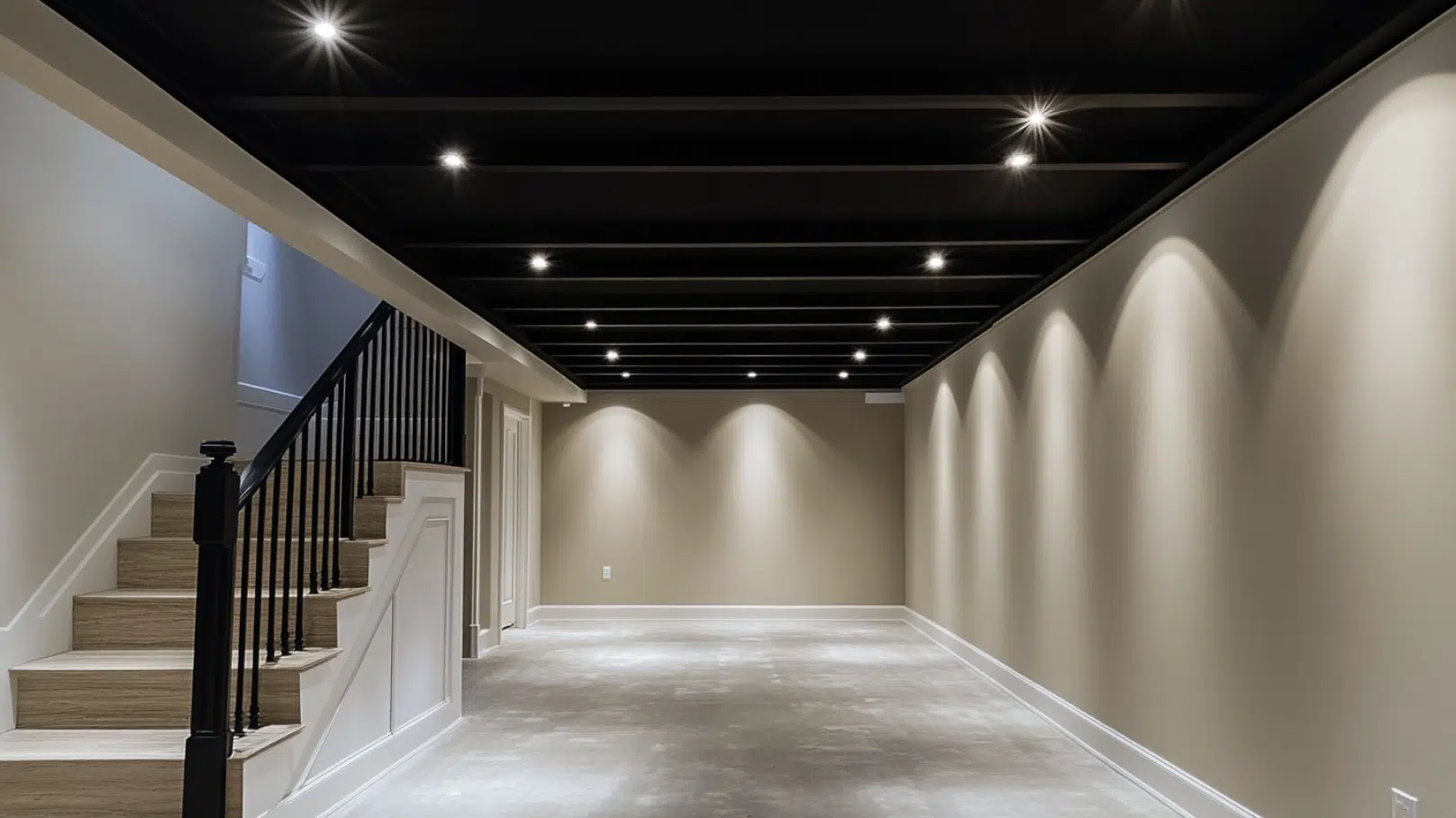
15. Create Drama with a Black Exposed Ceiling and Wall Wash Lighting
The dramatic effect of this room comes from a high-contrast formula: 70% dark, receding ceiling + 20% bright, illuminated walls + 10% warm, natural texture. By painting the exposed beams, ducts, and all ceiling elements a single matte black, they visually recede, making the ceiling feel infinitely tall. The genius is in the lighting; instead of just pointing lights down, wall-wash fixtures are used to graze the light-colored walls, making the room feel bright and wide, not cavernous. The light-toned flooring provides a warm, grounding element that completes the sophisticated modern look.
|
📋 Copy HEX 🔗 Share |
To achieve that perfect “wall wash” effect, placement is everything. Install your recessed gimbal or wall-wash fixtures 18 to 24 inches away from the wall you want to illuminate. Aim them directly at the wall so the light grazes down the surface. For an 8-foot ceiling height, space the lights about 3 to 4 feet apart to ensure even coverage without creating “hot spots.” This technique is what gives the room its gallery-like feel and prevents the dark ceiling from making the space feel gloomy. It’s a lighting trick that designers use to add drama and brightness simultaneously. For a similar but brighter take on the exposed look, see Idea #11.
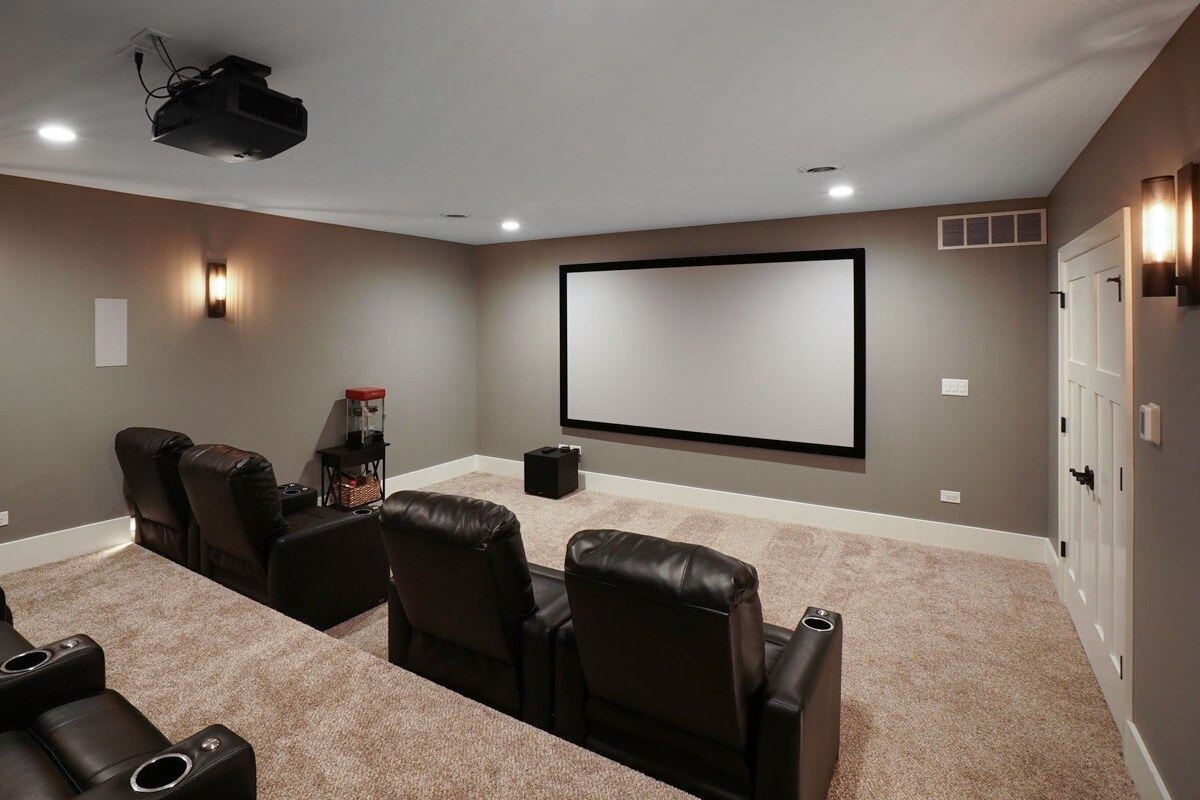
16. Design a Simple Home Theater with a Flat Ceiling and Projector
Creating a home theater is exciting, but the ceiling requires careful planning. You can’t just hang a projector anywhere. You need to know the “throw distance” of your specific projector model to determine the exact mounting spot for a perfectly sized image on your screen. You’ll also need to run both power and an HDMI cable to that spot, which can mean fishing wires through the ceiling—a task that is much easier before the drywall is finished. If you opt for a simple flat ceiling like this, make sure you install a recessed outlet or a proper projector mounting box to avoid ugly visible wires.
|
📋 Copy HEX 🔗 Share |
- Drywall & Finishing: $300 – $600
- Projector Mount: $50 – $150
- Recessed Lighting (4-6 units): $150 – $400
- Electrical Work (new outlet): $150 – $300
- TOTAL (DIY): $650 – $1,450
- Budget Alternative: Skip the ceiling mount entirely. Many modern “short throw” projectors are designed to sit on a media console just a couple of feet from the wall, projecting a huge image upwards. This saves you the cost and complexity of ceiling mounting and wiring. You can then opt for an even cheaper ceiling solution, like painting the existing joists black for a “movie theater” feel, as seen in Idea #3.
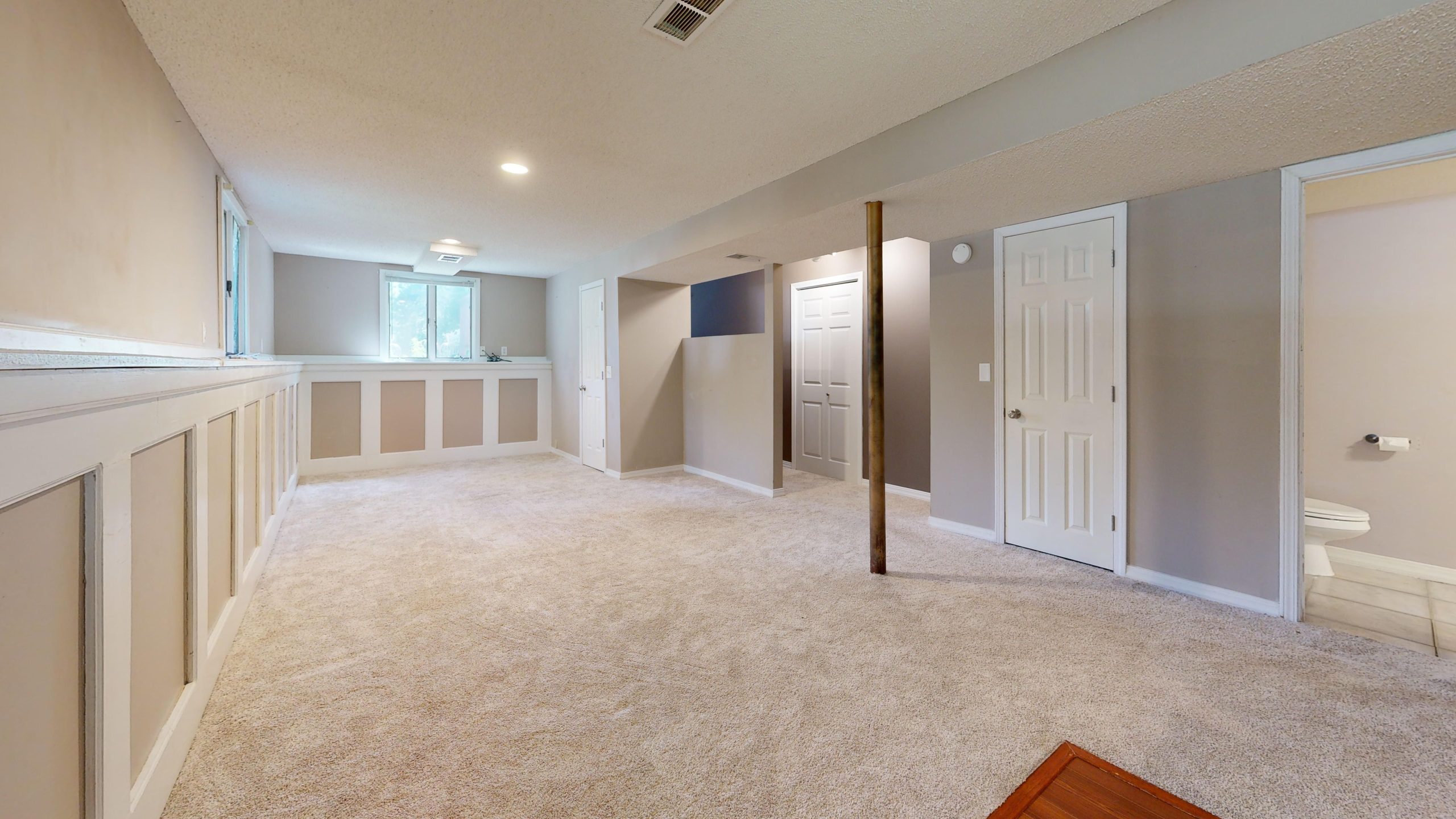
17. Opt for a Classic Textured Ceiling in a Neutral Space
A textured ceiling, often applied with a sprayer, is one of the most cost-effective ways to finish a basement ceiling. Its primary benefit is that it hides imperfections in the drywall taping and mudding job. Achieving a perfectly smooth Level 5 drywall finish is difficult, time-consuming, and expensive. A light texture like this is much more forgiving for a DIYer or a budget-friendly contractor. A 45-lb bag of ceiling texture mix costs around $15 at Walmart or Home Depot and can cover a large area, making this significantly cheaper than paying for a professional smooth finish.
|
📋 Copy HEX 🔗 Share |
This room feels cohesive and intentionally designed because it commits to a simple, neutral palette and uses architectural details to add interest. The textured ceiling, while subtle, provides a different finish from the smooth walls. The paneled wainscoting on the lower half of the walls is the key design element; it breaks up the tall beige walls, adds a touch of traditional character, and ties in with the white paneled doors and trim. This layering of simple elements—texture, paneling, and a consistent color scheme—is what makes a basic basement feel like a finished, thoughtful space.
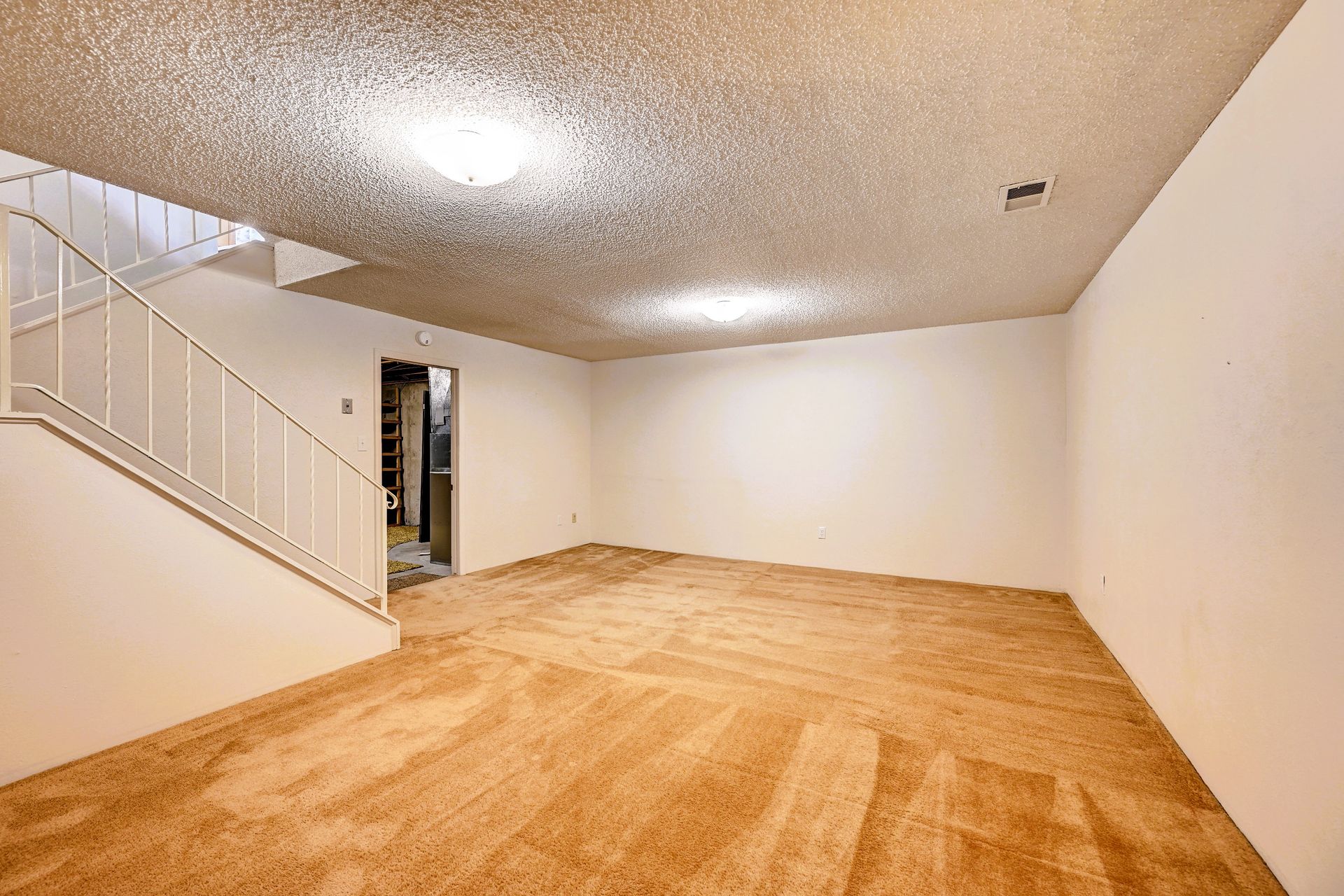
18. Work with a Popcorn Ceiling and Update the Lighting
Popcorn ceilings get a bad rap, and removing them is a notoriously messy, labor-intensive job. If your budget is tight, working with what you have is a valid choice. However, be aware that these ceilings can make a room feel dated, and they are difficult to repair or patch seamlessly if damaged. Also, if your house was built before 1979, the texture could contain asbestos, which requires professional abatement and is not a DIY project. Before you do anything, it’s wise to have a sample tested if you’re unsure of the age.
|
📋 Copy HEX 🔗 Share |
What keeps this basement from feeling completely dated is the decision to use simple, clean-lined light fixtures. The white, surface-mount dome lights are unobtrusive and functional. By avoiding anything ornate, heavy, or dated (like a “boob light” or a cheap ceiling fan), the focus stays off the ceiling texture itself. Upgrading old, yellowed, or builder-grade fixtures to simple, modern ones like these is an incredibly cheap and easy update (under $30 per light) that can make a surprisingly big difference in a room with a popcorn ceiling. It’s a smart, targeted investment.

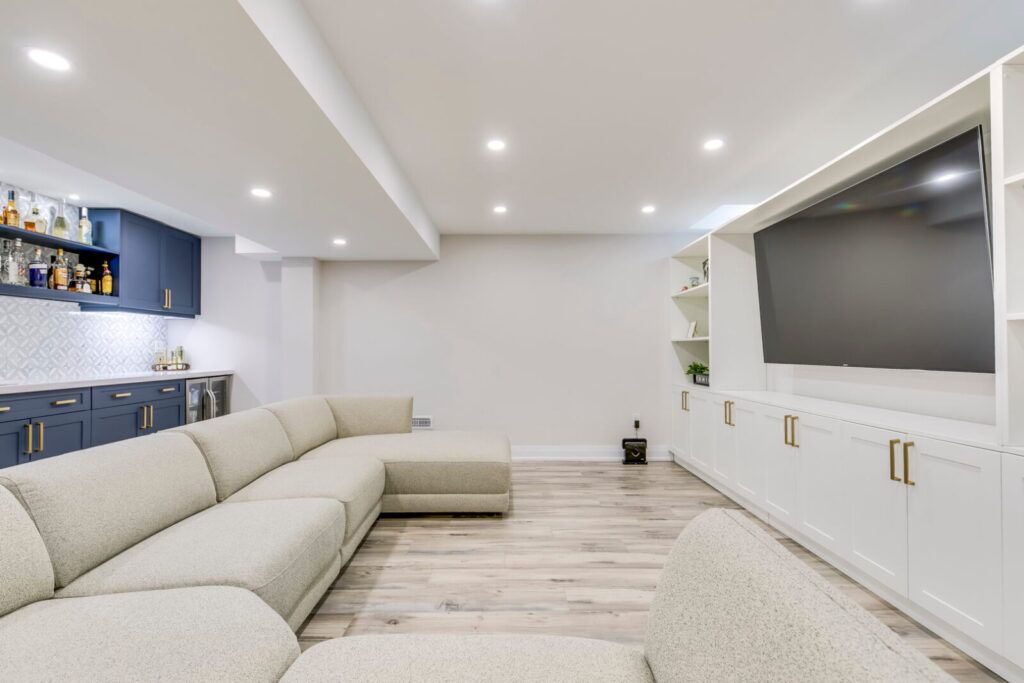
19. Achieve a Clean Look with Drywall and Recessed Lighting
A smooth drywall ceiling with integrated bulkheads and recessed lighting has become the gold standard for finished basements, and for good reason. As homeowners increasingly see basements as true extensions of their upstairs living space, they want a finish that feels just as polished. This look completely hides all the utilitarian aspects of a basement—pipes, ducts, wires—and provides a clean, seamless canvas. It maximizes the feeling of height and allows for sophisticated, layered lighting schemes. This trend has staying power because it represents the full transformation of a basement from a utility space into a living space.
|
📋 Copy HEX 🔗 Share |
When planning a drywall ceiling, the layout of your recessed lights is crucial to avoid a “runway” or spotted look. Use a simple formula: divide your ceiling height by two to get the ideal spacing between lights. For a standard 8-foot basement ceiling, this means placing your lights about 4 feet apart. For bulkheads, use smaller 4-inch lights to provide accent lighting, while using larger 6-inch lights for general illumination in the main areas. Always use dimmers to control the mood, from bright and functional to cozy and relaxed. This is what separates a basic finish from a designer one.
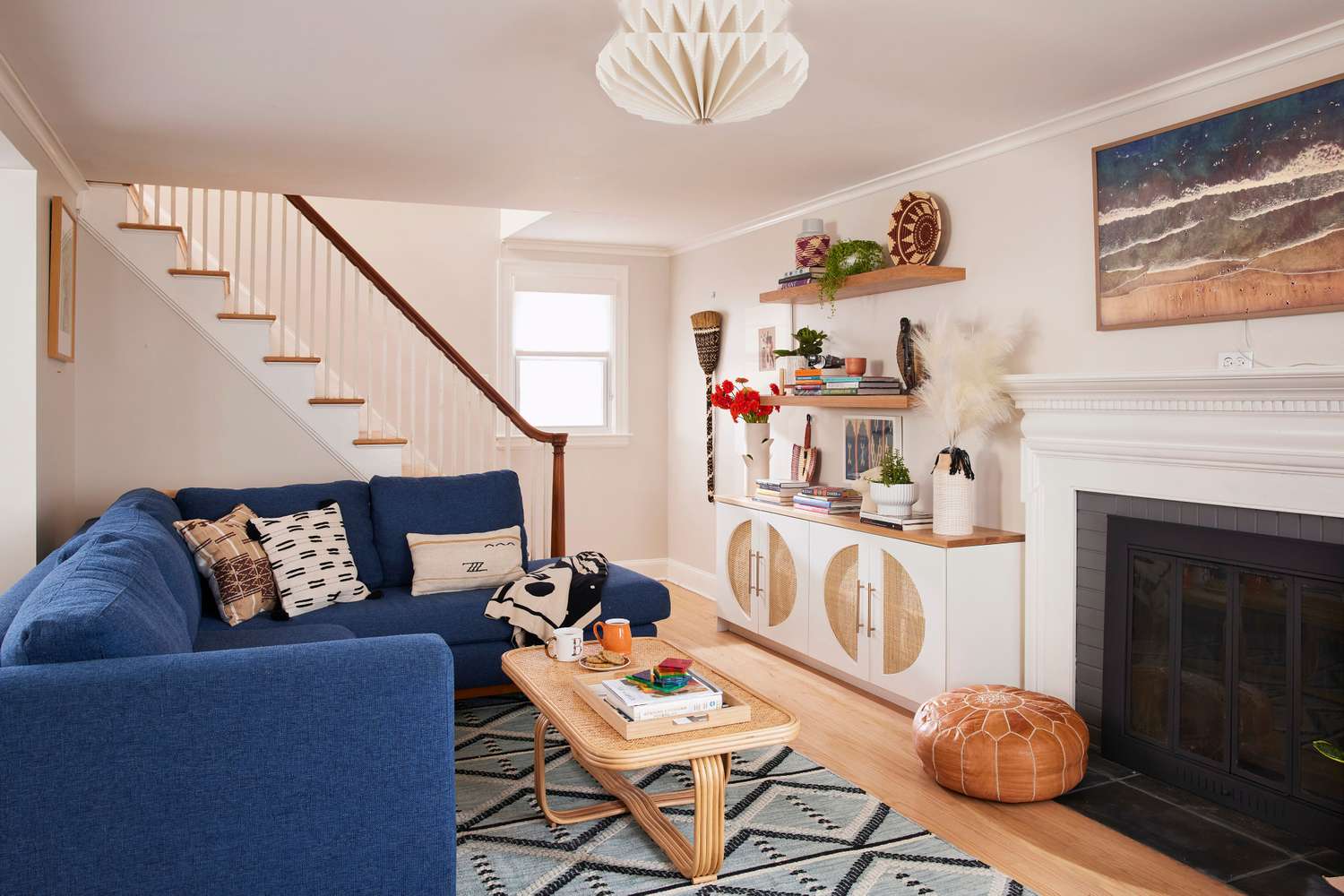
20. Add a Soft Touch with a Pleated Paper Pendant Light
The single element that gives this room its personality is the oversized, pleated paper pendant light. On a plain, neutral ceiling, this light fixture acts as a sculptural focal point. It introduces soft, organic texture that contrasts beautifully with the crisp lines of the crown molding. It turns a simple lighting requirement into a design statement. Without it, the ceiling would be perfectly fine but forgettable. The pendant adds a touch of on-trend, Japandi-inspired style and provides a warm, diffused glow that makes the space feel instantly more inviting and thoughtfully decorated. It’s an affordable way to add a ton of style.
|
📋 Copy HEX 🔗 Share |
That beautiful designer paper pendant can often come with a surprisingly high price tag. But you can get this look for a fraction of the cost. IKEA is famous for its wide range of paper and fabric pendant lights, like the REGOLIT or VÄTE, often for under $50. You can even hack them by using multiple shades together to create a larger, more dramatic fixture. World Market and even Target’s home decor sections frequently carry similar styles. This is a look where you absolutely do not need to splurge to get the high-style effect.
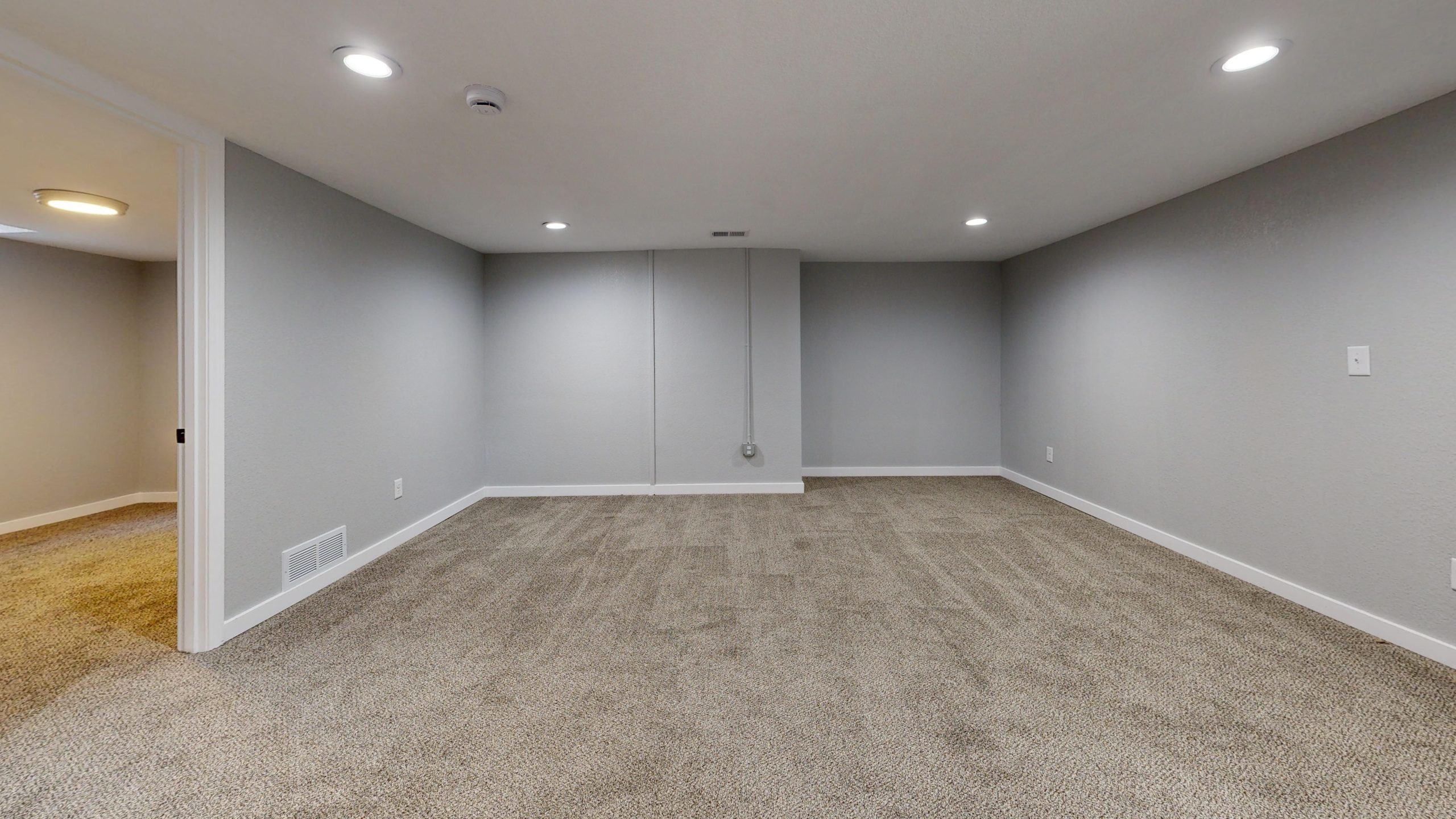
21. Get a Utilitarian Finish with a Flat White Ceiling and Exposed Pipes
This ceiling works because it’s honest and practical. Instead of spending a lot of money and effort to hide every single pipe and conduit, this design embraces a clean, utilitarian aesthetic. The flat white ceiling with its neat grid of recessed LED lights provides a bright, modern backdrop. The exposed vertical pipes in the corner are treated as a simple reality of the space. By keeping everything else minimal and clean—the white ceiling, the light gray walls—the exposed elements don’t look messy or unfinished; they just look functional. It’s a smart compromise between a fully exposed industrial ceiling and a fully finished drywall one.
|
📋 Copy HEX 🔗 Share |
While leaving some pipes exposed can be a style choice, be aware of what you’re leaving visible. Drain pipes (the thick white PVC pipes) can be noisy. You will hear water running every time a toilet is flushed or a sink is drained on the floor above. While you can get used to it, it can be disruptive in a quiet space like a home office or bedroom. If possible, it’s best to frame and insulate around drain lines, even if you leave other supply lines or electrical conduit exposed. It’s a small step that can make the space much more livable in the long run.
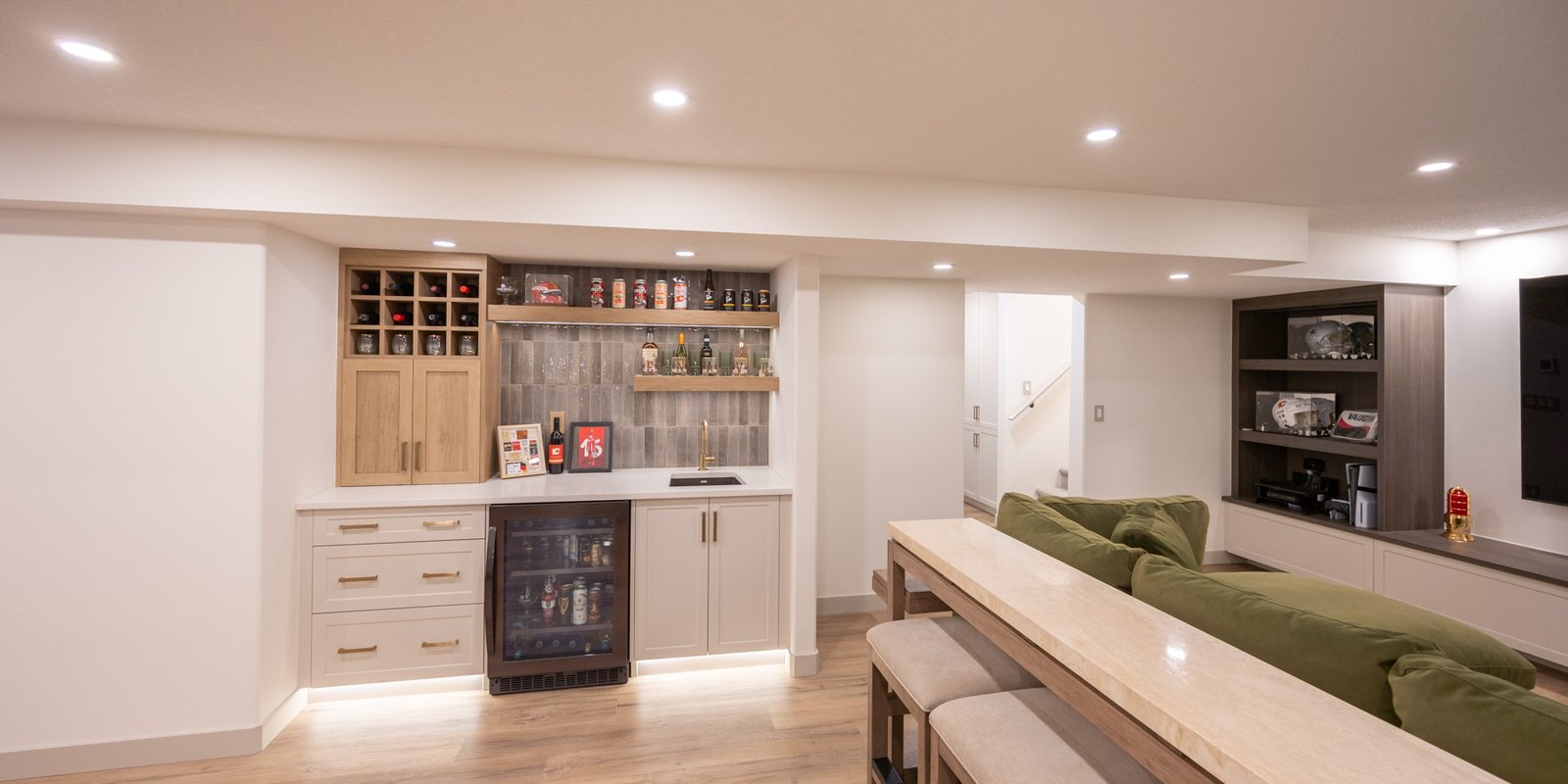
22. Integrate Structural Beams into a White Drywall Ceiling
The key to this design is integrating, not hiding. Instead of creating complex bulkheads to completely conceal the structural beams, they are wrapped in drywall and painted the same white as the ceiling. This turns a structural necessity into a clean, architectural feature. The beams now create a subtle grid or coffered effect that adds character and breaks up the ceiling plane. It acknowledges the reality of the basement structure in a way that is modern, bright, and intentional. This celebration of the beams is what gives the room its polished yet honest feel. A similar, more dramatic look can be seen in Idea #2.
|
📋 Copy HEX 🔗 Share |
- Frame the Beam: Build a simple box frame around the raw beam using 2x2s or 2x4s, leaving a flush surface for the drywall. Time: 2-3 hours. Cost: ~$50 for lumber.
- Install Drywall: Cut drywall pieces to cover the bottom and sides of the framed beam. Screw them securely into the framing.
- Tape and Mud: Apply paper tape and at least three thin coats of joint compound to all seams and corners, allowing each coat to dry fully. This is the most crucial step for a seamless look.
- Sand Smooth: Once fully dry, sand all the mudded areas until they are perfectly smooth and blend invisibly with the drywall.
- Prime and Paint: Prime the entire beam, then paint it with the same paint used for the rest of the ceiling to make it look like a single, integrated piece.
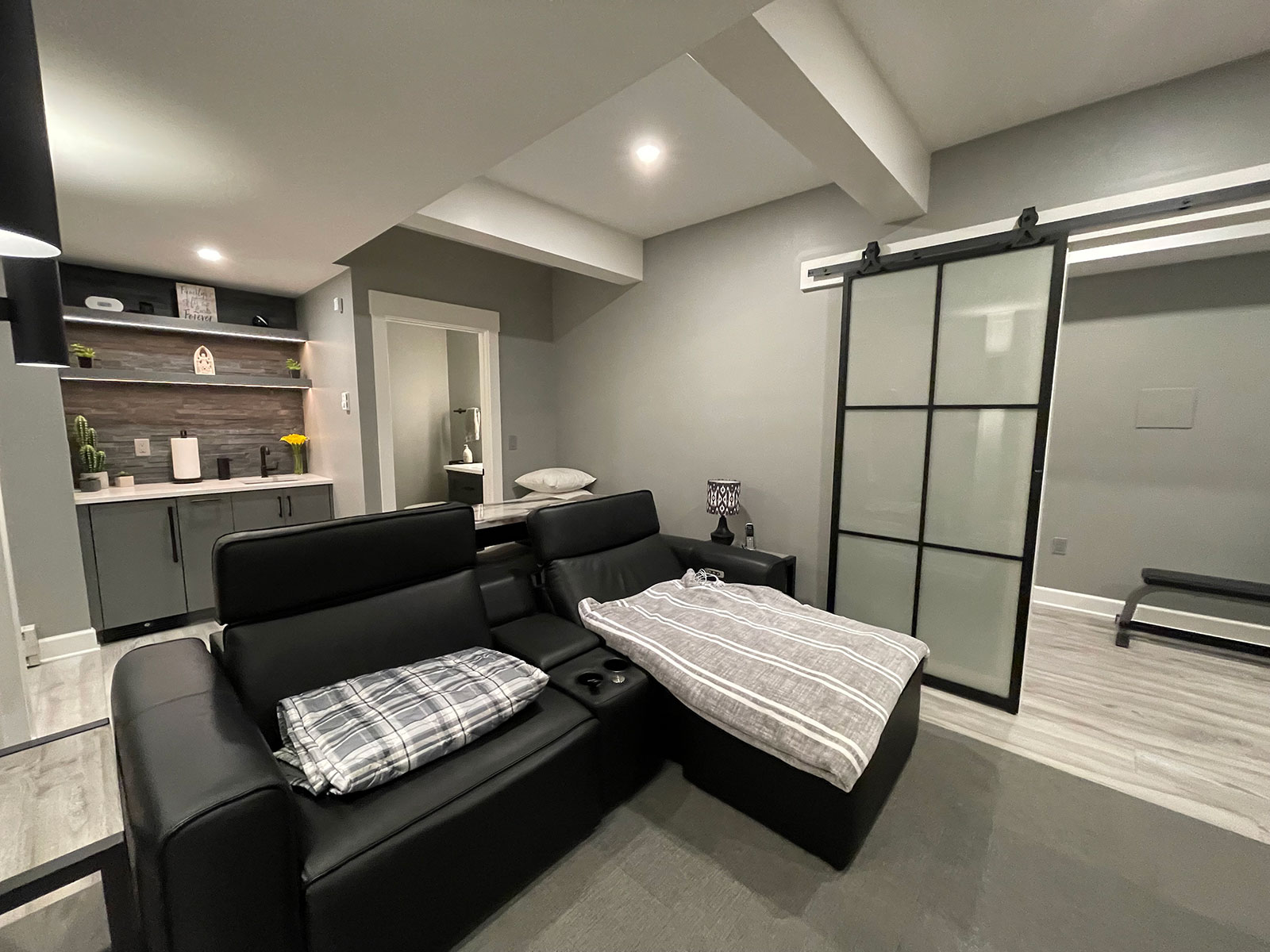
23. Define Zones with a Modern Gray and White Recessed Ceiling
This ceiling design is successful because it uses changes in height and color to define different functional zones in an open-concept basement. The lower, white recessed ceiling sections with integrated lighting create a brighter, more intimate feeling over the seating and bar areas. The higher, gray-painted sections help the space feel larger overall and differentiate the “pathways” from the “destinations.” This clever use of ceiling architecture adds a custom, high-end feel and makes the large, multi-purpose room feel organized and intentionally designed, rather than just one big, undefined space.
|
📋 Copy HEX 🔗 Share |
A multi-level ceiling like this is best suited for basements with at least 8.5 to 9 feet of initial headroom. The lowest recessed sections might drop down to a final height of around 8 feet, which still feels comfortable. The variation in height won’t be as impactful in a very low basement (under 8 feet). This technique is excellent for large, open-plan basements of 400 square feet or more, as it helps to break up the vastness of the ceiling and create cozier, human-scaled zones within the larger area. In a smaller room, it might make the space feel too busy or closed-in.
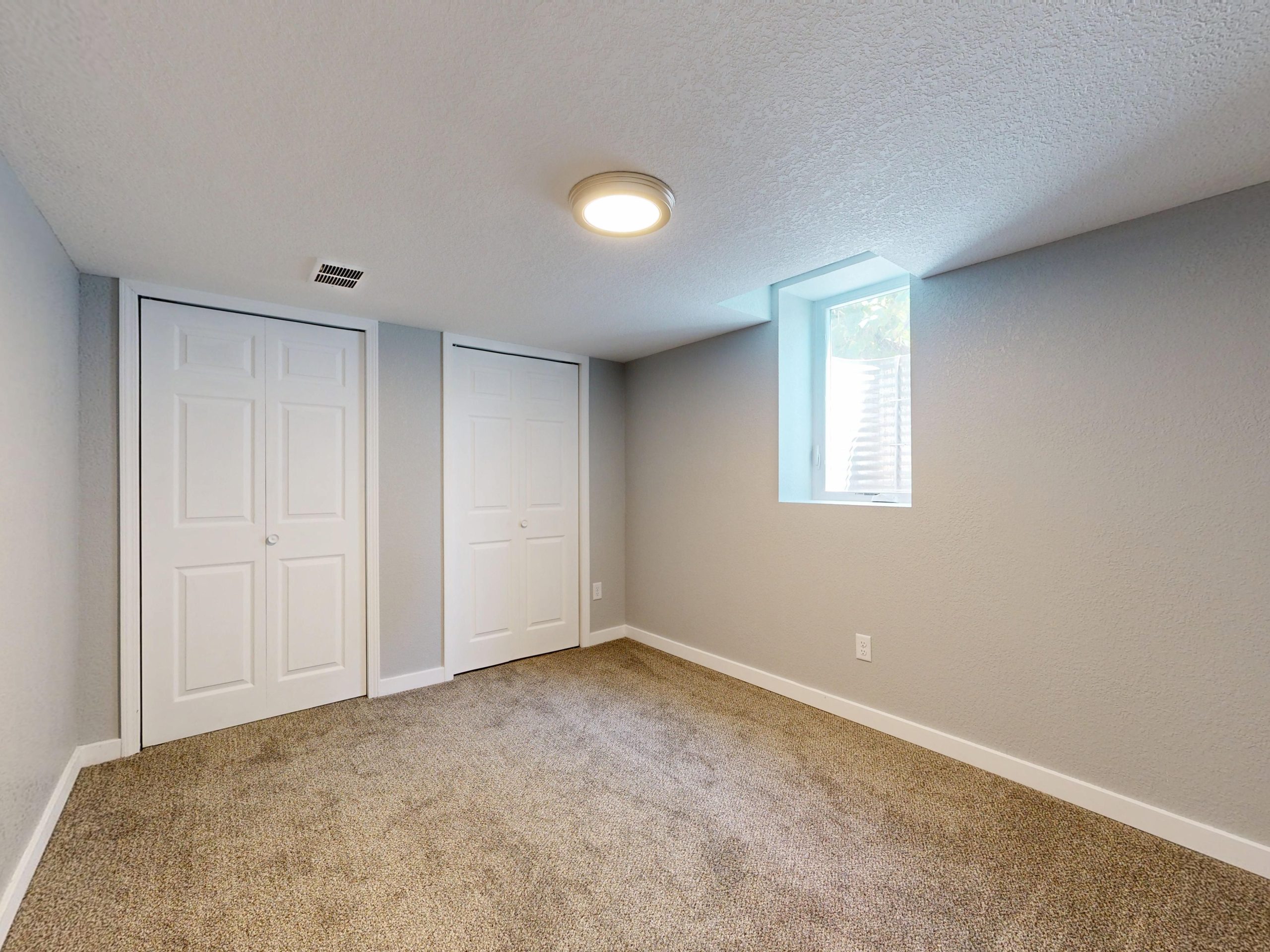
24. Disguise Imperfections with a Simple Textured Ceiling
- Drywall Sheets: $100 – $250
- Joint Compound & Tape: $50 – $100
- Ceiling Texture Mix (spray or roll-on): $30 – $60
- Flush Mount Light Fixture: $20 – $80
- Paint: $40 – $80
- TOTAL (DIY): $240 – $570
- Budget Alternative: If you already have a damaged but structurally sound drywall ceiling, you don’t need to replace it. You can often get away with just patching the worst areas and then applying a new, unifying coat of roll-on or spray texture over the entire surface. This can hide old stains and clumsy patches for under $100. This is a much more affordable option than the perfectly smooth look shown in Idea #22.
|
📋 Copy HEX 🔗 Share |
While textured ceilings are great at hiding flaws, they are notoriously difficult to clean and repair seamlessly. You can’t just wipe a smudge off a popcorn ceiling; you’re more likely to break off the texture. Dust and cobwebs cling to the rough surface, requiring careful vacuuming with a soft brush attachment. Patching a hole or stain is also tricky because it’s hard to match the original texture pattern. There are patch kits available, but they rarely produce a truly invisible repair. This is the long-term trade-off for the initial ease of installation.
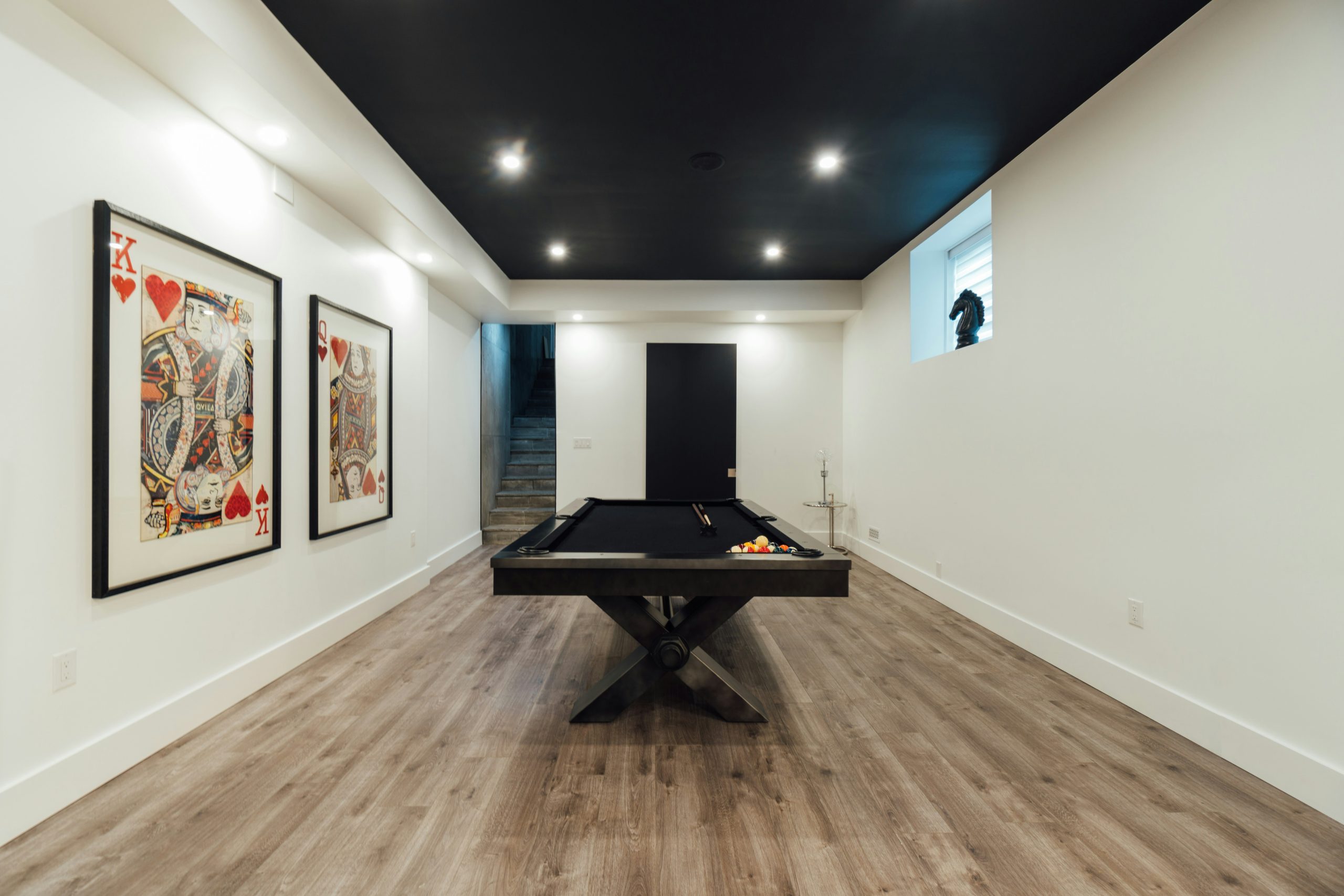
25. Go Bold with a Black Soffit and White Recessed Ceiling
The formula for this high-impact look is all about contrast and balance: 50% dramatic black + 40% crisp white + 10% warm wood tones. The black soffits and ceiling sections are the bold, modern statement, creating depth and a sophisticated mood. The white recessed areas and walls provide the brightness, preventing the black from overwhelming the space and creating perfect spots for focused light. The light wood plank flooring is the crucial balancing element, adding natural warmth and texture that keeps the stark black-and-white scheme from feeling too cold or corporate.
|
📋 Copy HEX 🔗 Share |
The single element that makes this design work is the strategic use of black. Painting not just the soffits but also large sections of the ceiling in a matte black is a daring move that pays off. It’s the unifying feature that connects the different levels and areas, from the main room to the space above the billiards table. This consistent use of black turns the necessary evil of soffits and ductwork into the defining architectural feature of the room. Without the black, this would be a much more standard, less memorable basement design. It’s a great example of how to make a feature out of your flaws.
Your Basement’s Glow-Up Starts From the Top
That awkward, unfinished basement doesn’t have to stay that way. As you’ve seen from these 25 ideas, a stylish and functional ceiling is well within reach, no matter your budget or DIY skill level. Whether you choose to paint everything out, cover it with clean drywall, or add some rustic wood, the right ceiling is the first step in unlocking your basement’s true potential.
Feeling inspired? Pick your favorite look, start planning, and get ready to reclaim your lower level. Don’t forget to save your favorite ideas to your Pinterest board to come back to when you’re ready to start!