
Is your Pinterest board for “Basement Finishing Ideas 2026” a mile long, yet you feel no closer to a decision? You’re not alone. It’s easy to get lost in a sea of stunning, but often unachievable, basement transformations. We’ve waded through the noise for you, curating layouts from real homes that work for a variety of budgets and styles, so you can stop scrolling and start planning.
After filtering through hundreds of options, we narrowed it down to 21 distinct ideas that deliver on both style and function. You’ll find inspiration that feels current but timeless, with styles ranging from modern industrial to cozy farmhouse and rustic entertainment hubs. In this guide, we’re diving deep into the specific details—the paint colors, the furniture arrangements, and the material choices—that make each space work.
And for 2026, the trend is clear: basements are no longer just bonus rooms; they are fully integrated, multi-functional extensions of the home, designed for living, working, and playing. And stay until the end — we break down the most common mistakes that can ruin these looks. 📌 Save this to Pinterest for later — you’ll want to revisit these ideas.
1. Modern Cozy Living with an Electric Fireplace
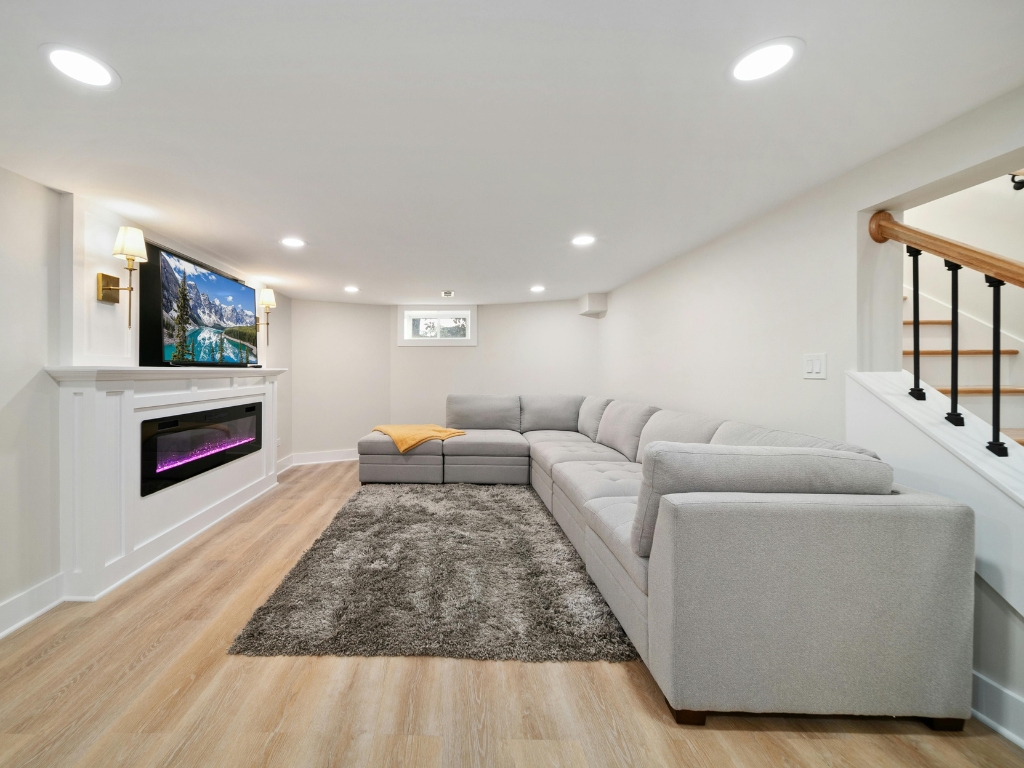
What makes this space feel so inviting is the smart combination of warm and cool tones. The purple flame of the electric fireplace injects a playful, modern touch of color that prevents the gray and white palette from feeling too sterile. This is balanced by the light wood-look flooring, which adds natural warmth and texture underfoot, grounding the entire room and keeping it from feeling like a typical basement. The shaggy rug doesn’t just add comfort; it defines the seating area as a distinct zone, making the open space feel more intimate and purposeful.
|
📋 Copy HEX 🔗 Share |
When installing a TV above a fireplace, whether real or electric, the ideal viewing height is often a concern. A great rule of thumb is to mount the center of the television screen approximately 60 to 68 inches from the floor. This height allows for comfortable viewing from a seated position on the sofa, typically 9-12 feet away, without causing neck strain. It also ensures the TV doesn’t feel disconnected from the fireplace mantel below, maintaining a cohesive vertical line for the room’s focal point.
2. Bright Industrial Vibe with an Exposed Painted Ceiling
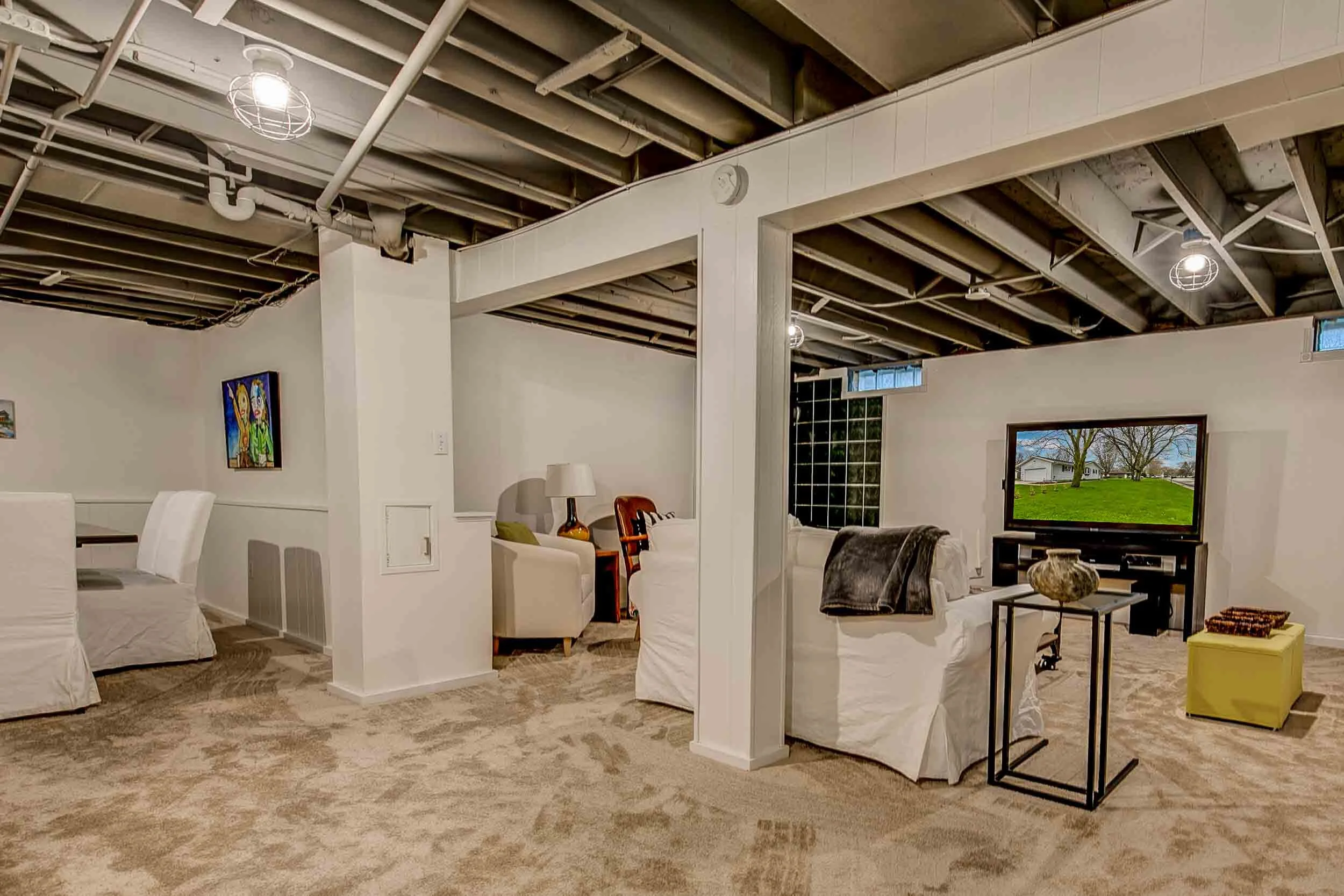
The single most impactful choice here is painting the entire exposed ceiling—beams, pipes, ductwork, and all—a uniform light gray. Removing this one element would completely change the room’s character, turning it from a deliberate, industrial-chic space into a messy, unfinished basement. This technique cleverly conceals the visual chaos of utilities while retaining the textural interest and height, making the space feel both airy and intentionally designed. It’s a masterclass in turning a potential negative into a defining positive feature.
|
📋 Copy HEX 🔗 Share |
3. Neutral Modern Basement with Script-Patterned Accent Chairs
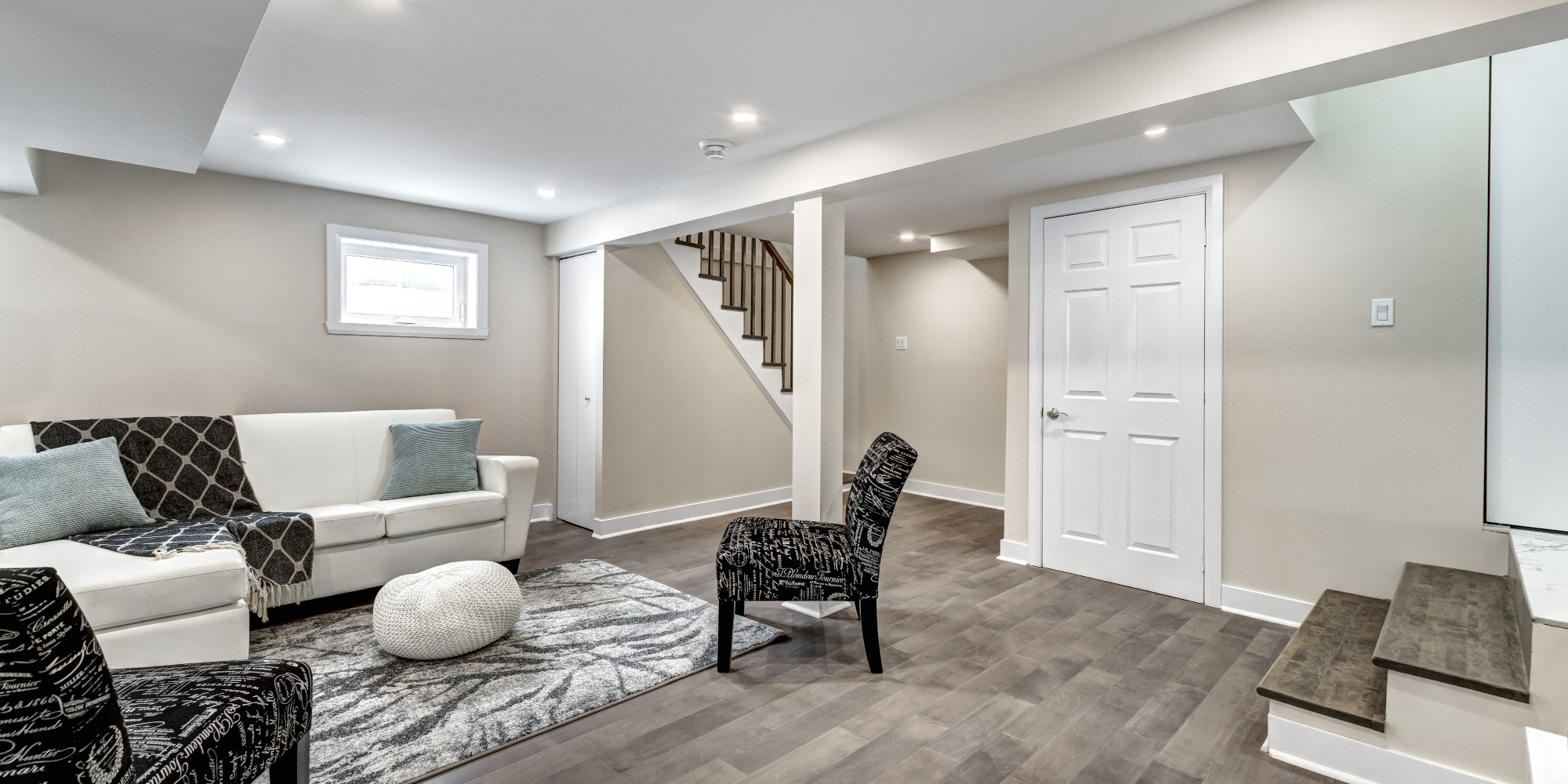
This room’s inviting feel comes from a balanced design recipe: 60% soft neutrals (the greige walls, white sectional, and soft gray rug), 30% bold patterns (the script chairs and throw pillows), and 10% natural texture (the braided pouf and dark wood staircase). By keeping the big-ticket items neutral, the room remains flexible and timeless. You could easily swap the script chairs for leather or a bold color in the future, and the entire room’s vibe would change without having to replace the sofa or repaint.
|
📋 Copy HEX 🔗 Share |
You don’t need a huge budget to pull off this eclectic neutral look. Find a similar large sectional on Facebook Marketplace for $400-$800. For the statement chairs, check out Target or Wayfair’s accent chair collections, where you can often find bold patterns for under $250 each. The key is to invest in a comfortable, neutral sofa and then have fun with more affordable accent pieces that bring in personality without breaking the bank. An abstract rug from IKEA can complete the look for another $200.
4. Cozy Basement Retreat with Light Blue Walls and a Faux Deer Head
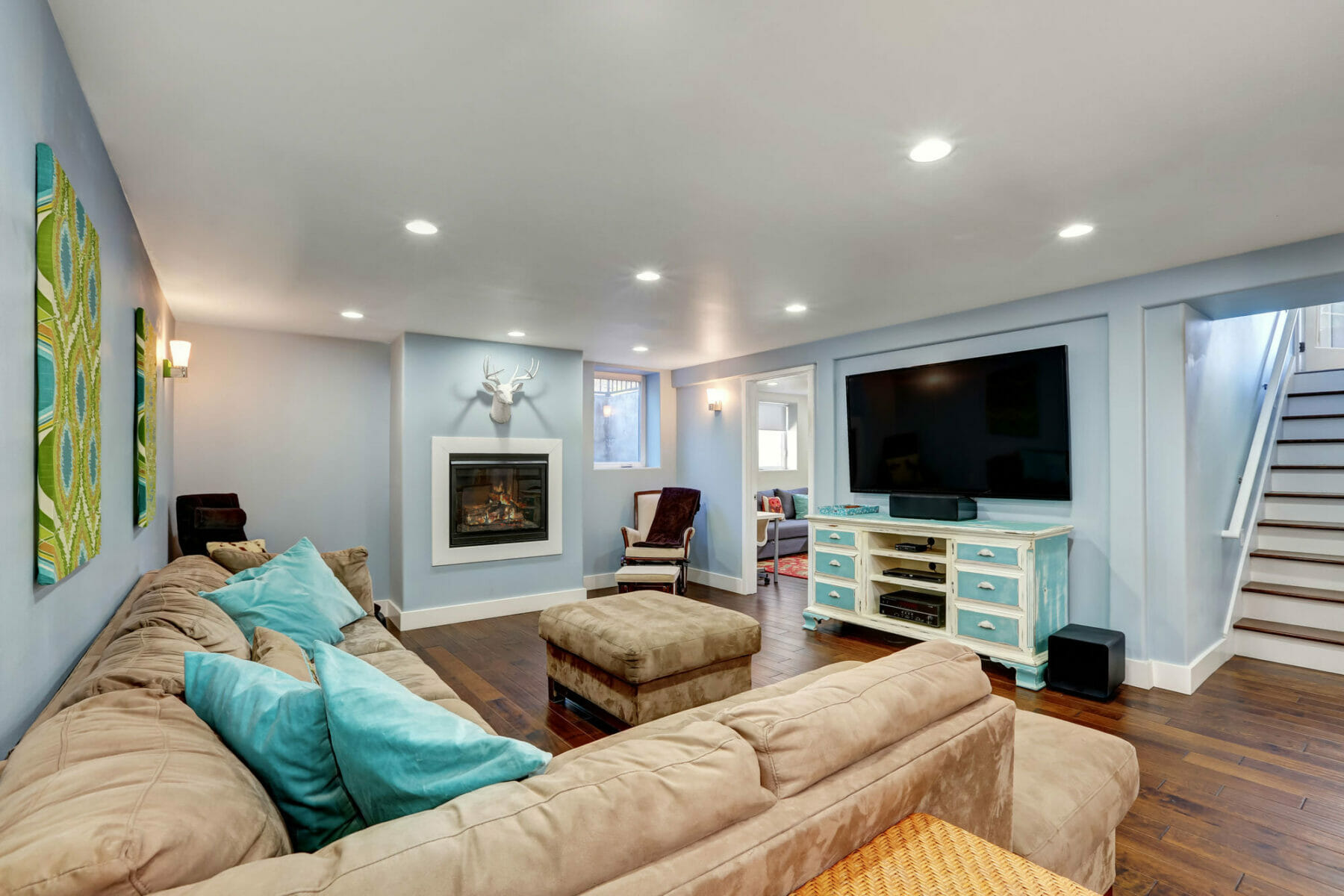
A light blue on the walls can be beautiful, but it’s a color that is highly sensitive to lighting. In a basement with limited natural light, a cool blue can quickly look murky or even depressing. Before you commit, paint a large sample board (at least 2×2 feet) and observe it at different times of the day. You may need to choose a shade with more gray or green undertones to keep it from feeling too chilly. Also, ensure your artificial lighting plan includes warm-temperature bulbs (2700K-3000K) to counteract the coolness of the walls.
|
📋 Copy HEX 🔗 Share |
The design works because of a masterful use of complementary colors and material contrast. The light blue walls and the warm tones of the dark wood flooring and light brown sofa create a subtle but pleasing tension. The distressed teal media console doesn’t just match the pillows; it echoes the wall color in a different saturation and finish, which adds depth. Finally, the stark white of the fireplace frame provides a crisp, clean focal point that prevents the colors and textures from becoming muddled.
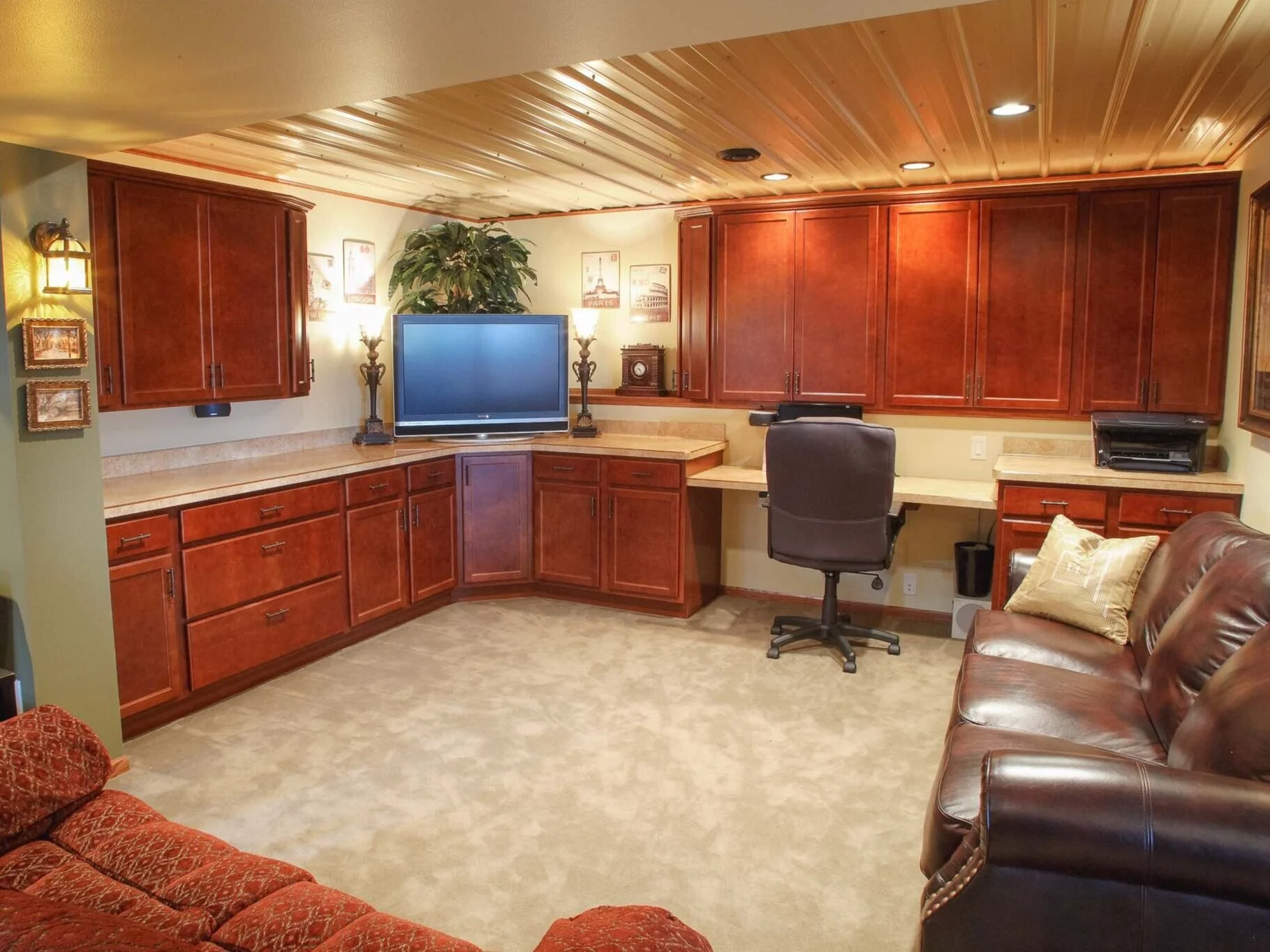
5. Traditional Basement with L-Shaped Dark Wood Cabinetry
- Measure for Traffic Flow: Before committing to such extensive cabinetry, map out your primary walkways. Ensure there is at least 36 inches of clearance between the edge of the cabinets and the sofas or other furniture to allow for comfortable movement.
- Check Your Lighting Plan: Dark wood absorbs a lot of light. Do you have enough recessed, task, and accent lighting planned to keep the space from feeling like a cave? Count your fixtures and their lumens.
- Confirm Your Needs: Does an L-shaped configuration truly serve your purpose? Define what you need to store and what activities (work, media, etc.) will happen here to ensure the layout is functional, not just space-filling.
|
📋 Copy HEX 🔗 Share |
While beautiful, dark wood cabinetry and paneling require consistent care to look their best. The reddish-brown finish is prone to showing dust, so plan for a weekly dusting with a microfiber cloth. Be mindful of scratches, especially in a high-traffic area like a basement; keep a wood repair marker on hand for quick touch-ups. The light-colored countertops, while providing a lovely contrast, will need immediate attention for any spills (especially wine or coffee) to prevent staining. This is a look that trades low maintenance for high style.
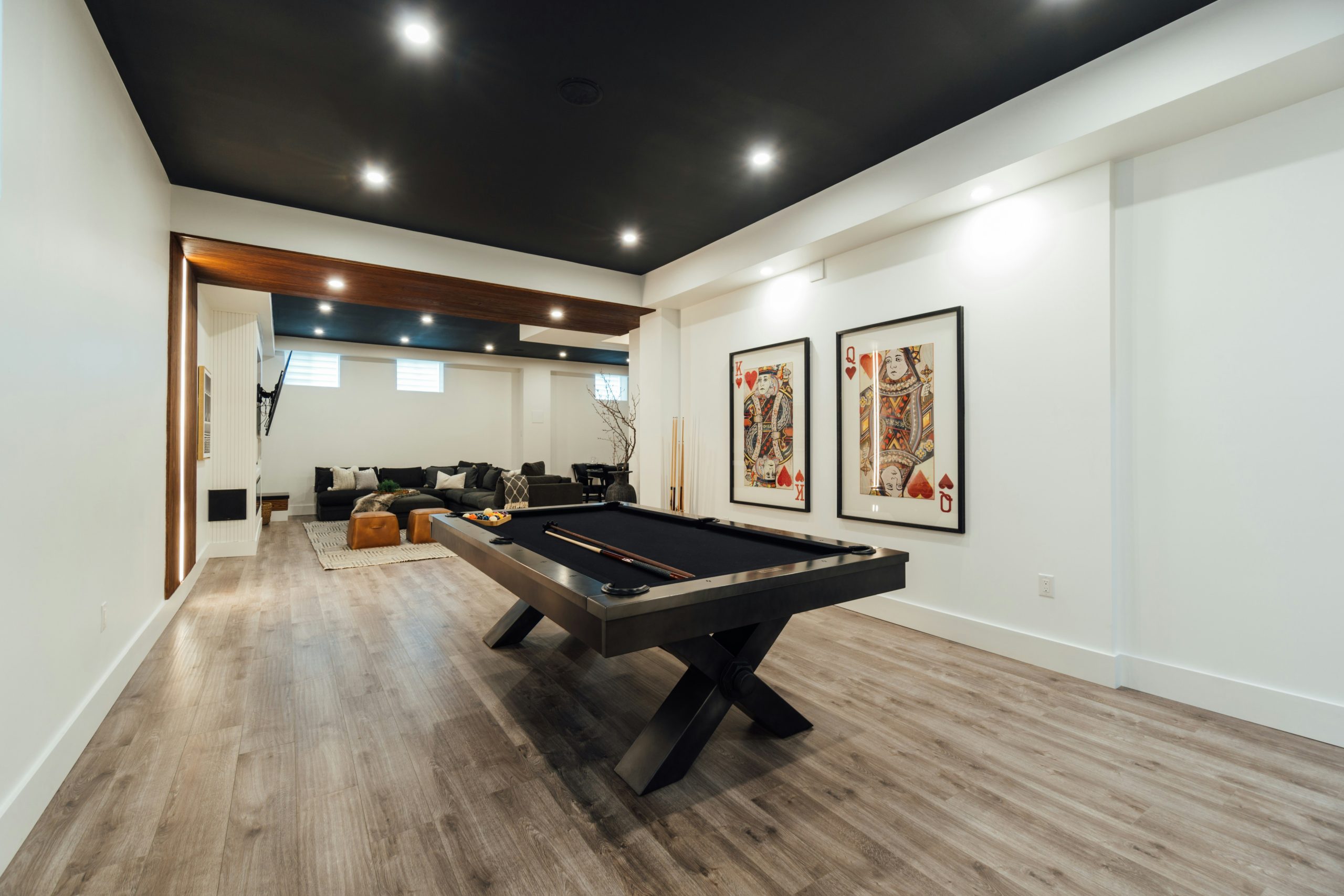
6. Modern Game Room with a Dramatic Black Ceiling
Painting a basement ceiling black is a bold move that can pay off beautifully, but the secret is in the sheen. Always use a matte or flat finish. A glossy or semi-gloss black paint will reflect light in strange ways, highlighting every imperfection, joint, and piece of ductwork you were trying to hide. A flat black finish, however, makes the ceiling recede, creating an illusion of infinite space overhead while making the recessed lighting pop. It feels intentional and high-end, not like you just painted over everything.
|
📋 Copy HEX 🔗 Share |
A black ceiling works surprisingly well in basements with both high and low ceilings, but for different reasons. In a space with 8-foot or higher ceilings, it adds drama and intimacy. In a basement with lower 7-foot ceilings, a flat black paint job can help the ceiling visually disappear, especially if the walls are light-colored. This trick can make a low ceiling less noticeable than a standard white one. This idea is best for a room that is at least 15×20 feet to accommodate a game table and a separate seating area without feeling cramped.
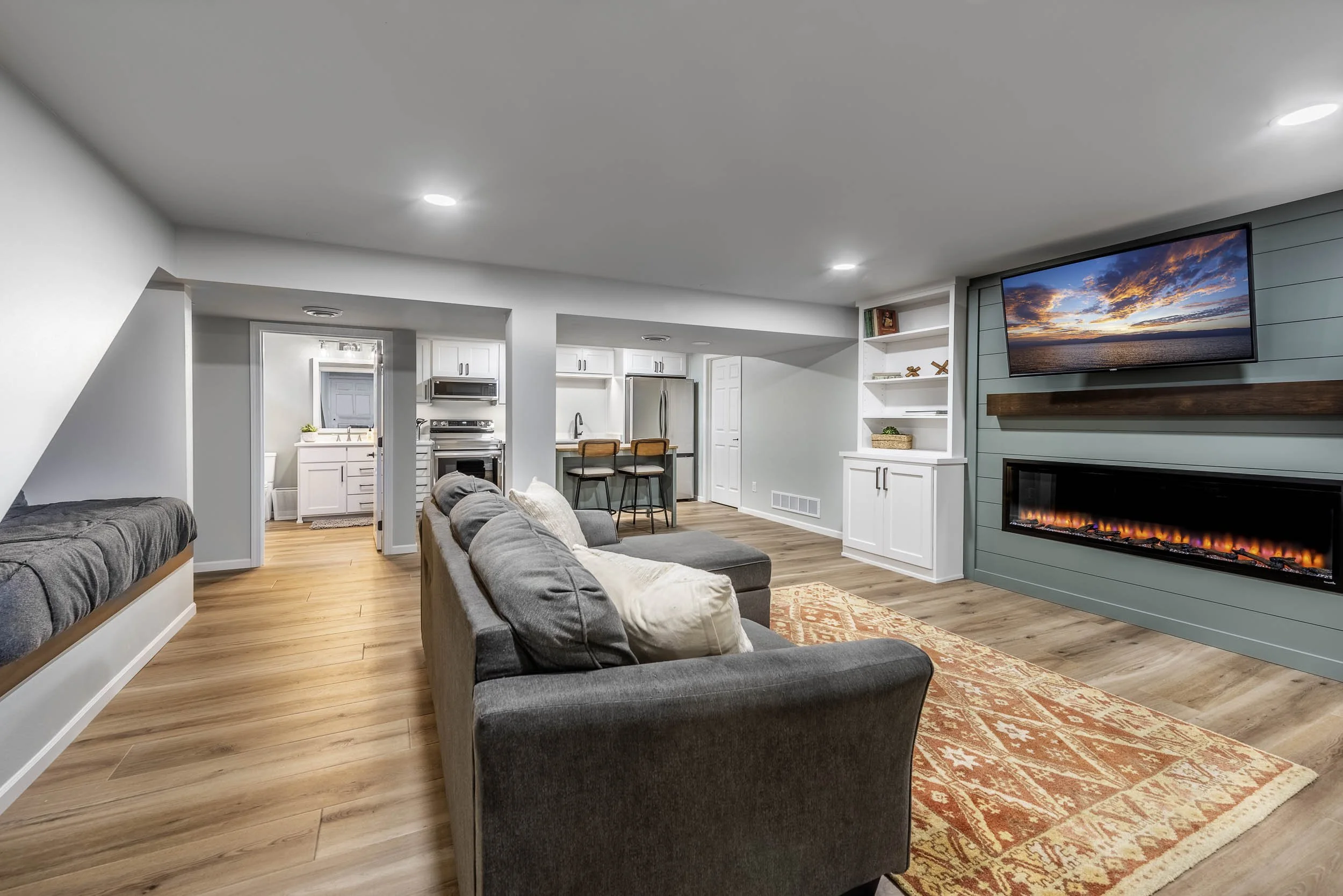
7. Open Concept Basement with Built-in Daybed and Media Wall
This layout succeeds because of its thoughtful zoning and visual continuity. The light wood-look flooring runs seamlessly throughout the entire space, from the living area to the kitchenette and daybed nook, which makes the basement feel larger and more cohesive. The repetition of color—the teal on the shiplap media wall echoed in subtle decor and the consistent use of white for all built-ins—creates a calming, unified aesthetic. It feels less like a basement and more like a fully integrated lower level of the home.
|
📋 Copy HEX 🔗 Share |
The single element holding this entire design together is the built-in daybed niche. Without it, this would be a standard, albeit nicely done, basement living area. But the daybed transforms the space, adding a layer of architectural interest and a cozy, multifunctional destination. It’s a quiet reading spot, an extra guest bed, and a visual anchor all in one. It signals that this isn’t just a place for watching TV, but a space designed for true relaxation and living. Compare its cozy appeal to the more open setup in Idea #2.
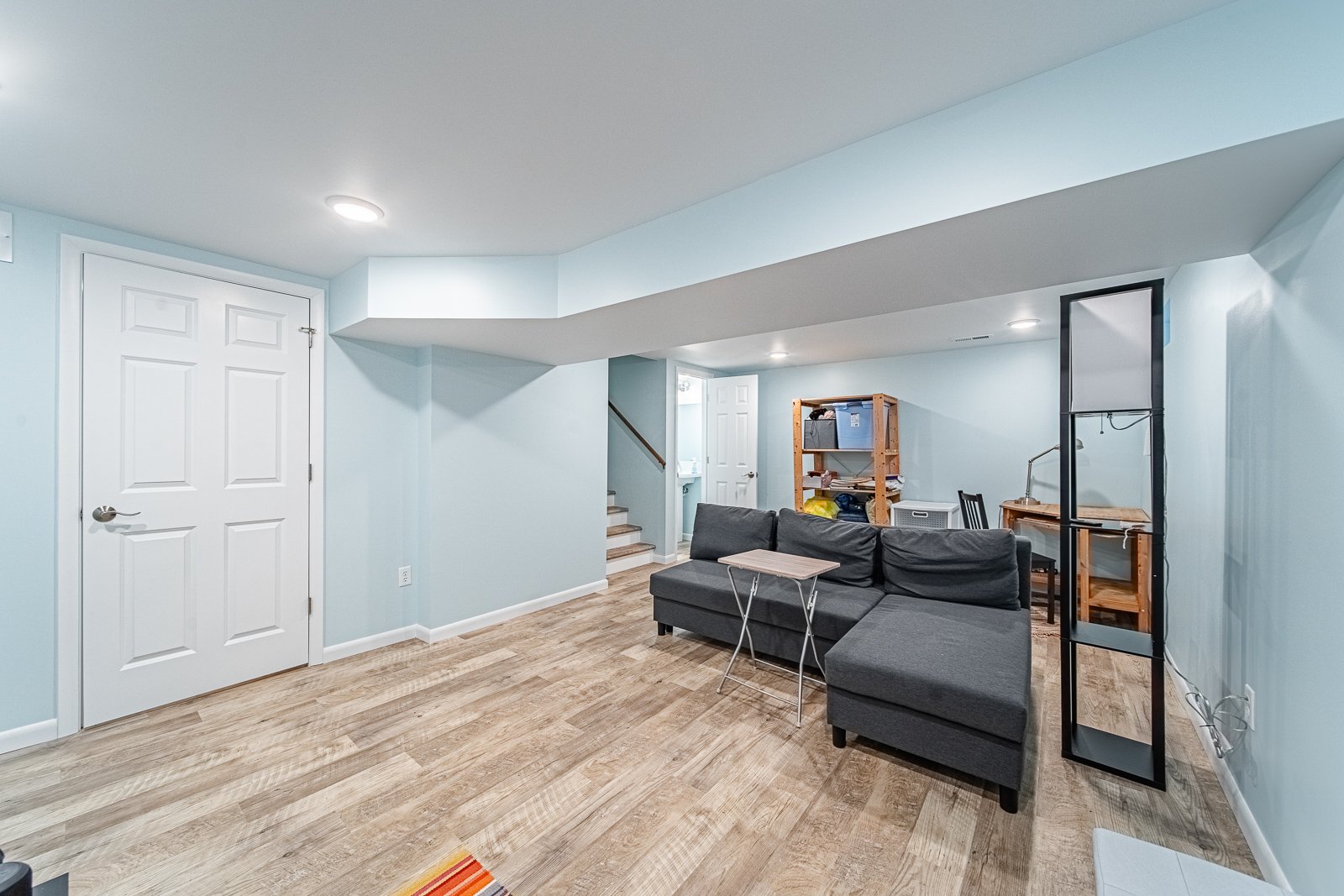
8. Simple & Bright Basement with Light Blue Walls
This look is incredibly achievable on a tight budget. The key is to leverage paint and simple finishes. A gallon of quality light blue paint might cost $50-$70. For flooring, similar light wood-look vinyl plank flooring from stores like Floor & Decor or Home Depot can be found for $1.50-$2.50 per square foot, making it one of the most cost-effective yet durable options. The dark gray sectional can be sourced secondhand from Facebook Marketplace or a local consignment shop, often for under $500. It’s a prime example of how clean lines and a fresh color palette can make a big impact for less. This is the budget version of Idea #4.
|
📋 Copy HEX 🔗 Share |
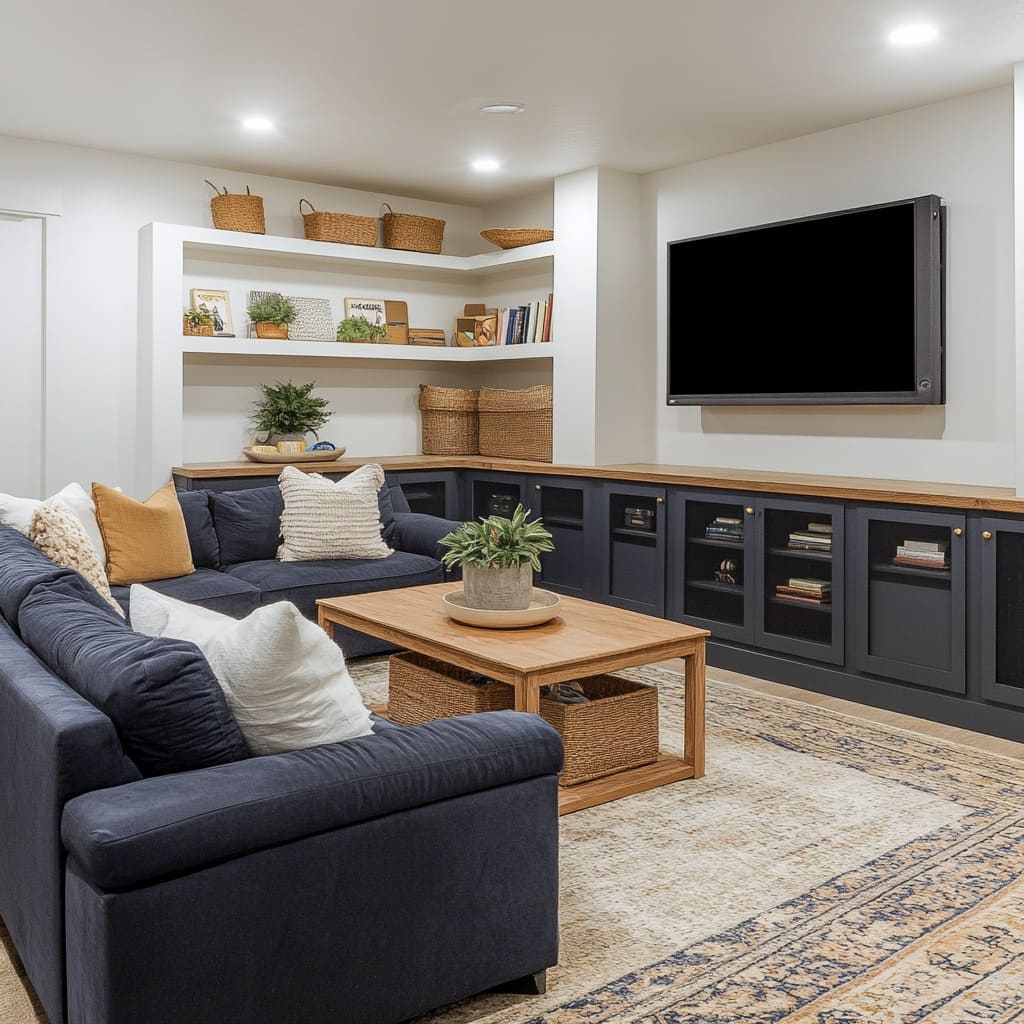
9. Cozy Den with Navy Built-ins and Floating Shelves
- Custom Cabinetry: $6,000 – $15,000 (depending on materials and labor)
- Sectional Sofa: $2,500 – $6,000
- Area Rug: $500 – $1,500
- Coffee Table & Decor: $700 – $2,000
- Lighting & Hardware: $400 – $1,000
- Budget alternative: Use stock IKEA kitchen cabinets (like the SEKTION/AXSTAD combo) in matte blue for a similar look, costing around $2,000-$4,000.
- TOTAL: $10,100 – $25,500
|
📋 Copy HEX 🔗 Share |
For floating shelves in a corner alcove like this, getting the spacing right is key. For a balanced look that accommodates both decor and books, aim for 14-16 inches of vertical space between each shelf. The shelves themselves should be at least 2 inches thick to appear substantial and prevent sagging. And don’t make them too deep—a depth of 10-12 inches is perfect for most decorative items and books without making the corner feel too heavy or cluttered. This ensures both form and function.
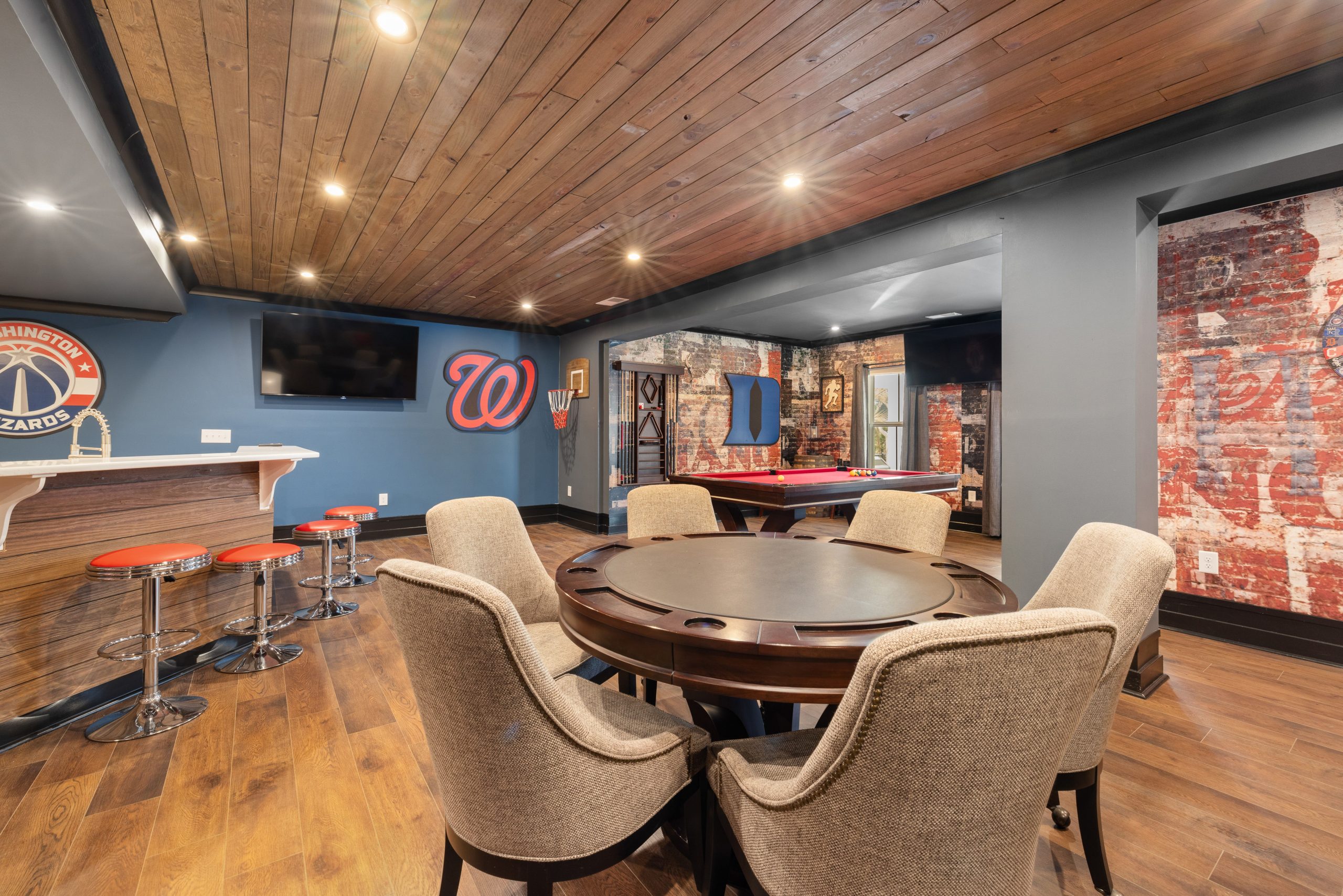
10. Vibrant Game Room with Wood Plank Ceiling and Brick Wall
This room’s energetic formula is all about balancing textures and bold color: 50% warm wood (covering the floor and ceiling to create a cozy shell), 30% texture (the distressed brick accent wall), and 20% bold color pops (the navy blue walls and vibrant red bar stools). You could change the formula by using a different accent color—like a deep green or even a sunny yellow—for the walls and stools, and the room would still hold its dynamic, playful character because the strong wood and brick foundation can support it.
|
📋 Copy HEX 🔗 Share |
This design succeeds by creating distinct “zones” for activity within one open space. The bar area is clearly defined by the change in wall color and the row of stools. The game table sits in its own pool of light, creating another zone. The wood ceiling and floor act as unifying elements that tie all these zones together, so the space feels cohesive rather than chaotic. The mix of materials—smooth painted walls, rough brick, and warm wood—adds a layer of sensory richness that makes the room fun to be in.
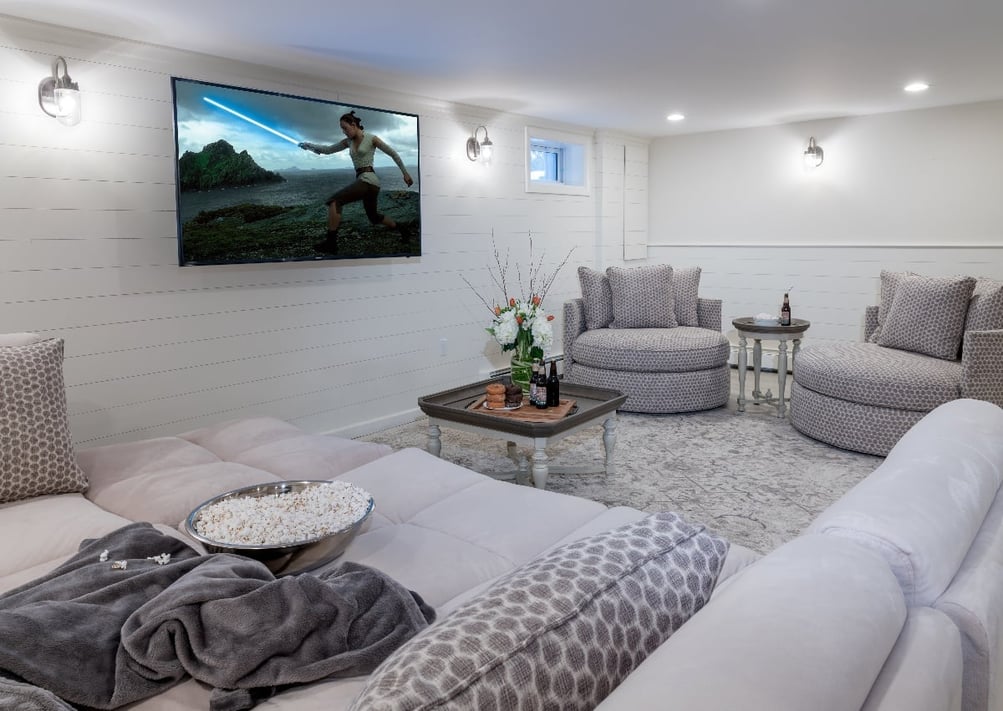
11. Casual TV Room with White Shiplap Walls
Here’s a quick guide to installing a feature wall of horizontal shiplap:
|
📋 Copy HEX 🔗 Share |
- Time Estimate: 4-6 hours for a 12-foot wall.
- Material Cost: Approximately $200-$400.
- Step 1: Find and mark the studs on your wall using a stud finder. Your shiplap boards will need to be nailed into these for support.
- Step 2: Start with the bottom board. Use a level to ensure it’s perfectly straight, then nail it to the studs.
- Step 3: Place the next board on top. Shiplap boards have a groove (the rabbet cut) that allows them to overlap neatly. Use a nickel or a spacer to ensure a consistent gap, then nail the board in place.
- Step 4: Continue this process up the wall, cutting boards as needed to fit. Finish by filling nail holes and painting.
White shiplap walls create a wonderfully bright and textured look, but they are a magnet for dust and scuffs. The small horizontal gaps are notorious for collecting dust, so you’ll need to run a microfiber cloth or the brush attachment of your vacuum over them every few weeks. In a basement that might have higher traffic or be used by kids, the white paint can get marked up easily. Consider using a semi-gloss or satin-finish paint, which is much easier to wipe clean than a flat or matte finish.
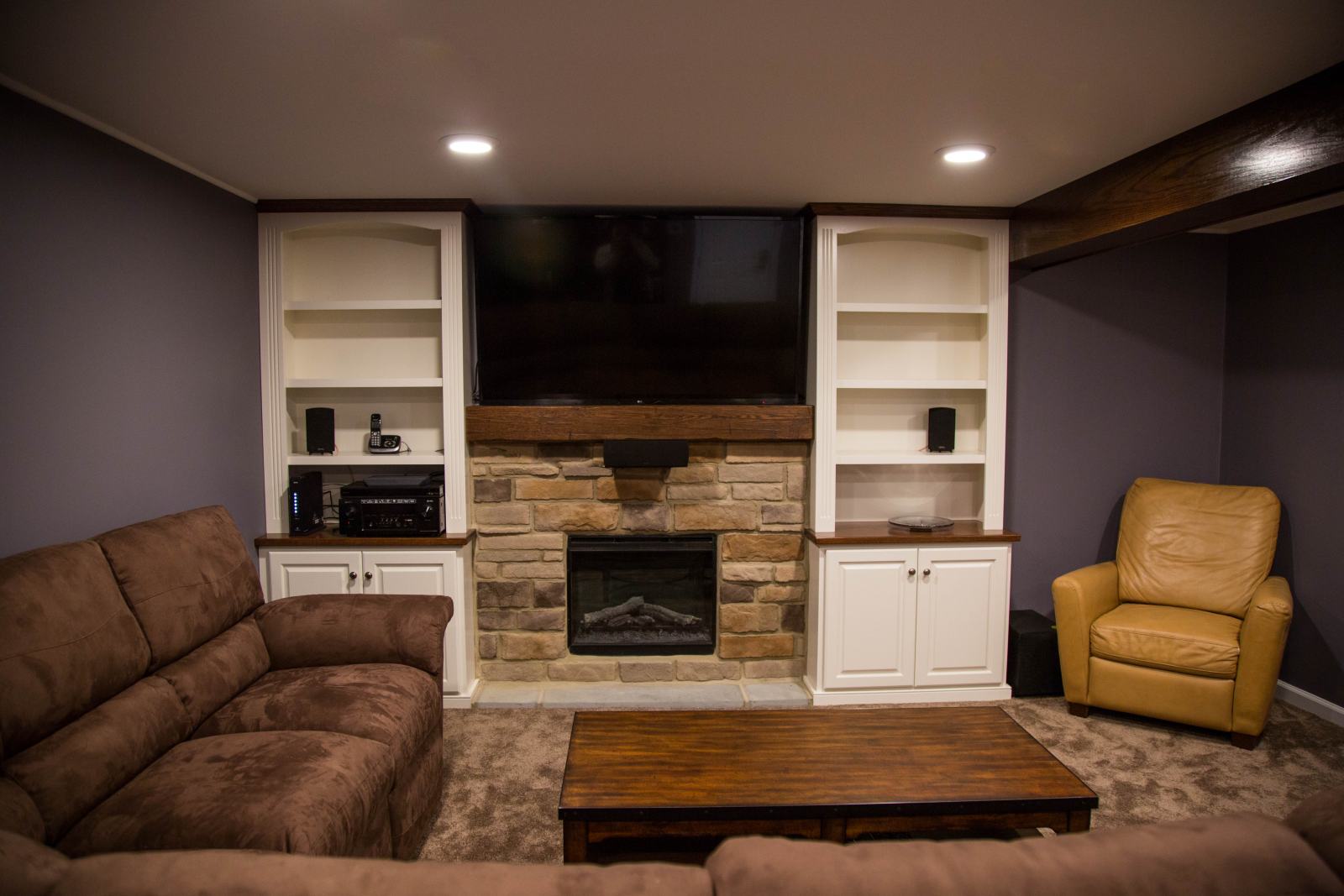
12. Cozy Media Room with a Stone Fireplace and Built-ins
The single element that makes this room feel exceptionally cozy and established is the stone fireplace surround. If you were to remove it and just have a flat, painted wall, the entire space would lose its rustic, lodge-like charm. The stone provides a powerful textural anchor, adds a sense of permanence and history, and its varied earth tones are what allow the mix of dark grey walls, brown sofa, and mustard chair to work together harmoniously. It’s the visual and emotional heart of the room.
|
📋 Copy HEX 🔗 Share |
A mix of materials means a mix of maintenance tasks. The stone facade itself is low-maintenance, requiring only occasional dusting or vacuuming with a brush attachment. However, the dark wood countertops on the built-ins will show dust quickly and need weekly wiping. Plush brown carpet is great for comfort and hiding dirt, but it will require a deep steam cleaning at least once a year to keep it fresh, especially in a basement environment. The real star, the mustard leather armchair, needs conditioning every 6-12 months to prevent cracking and keep the color vibrant.
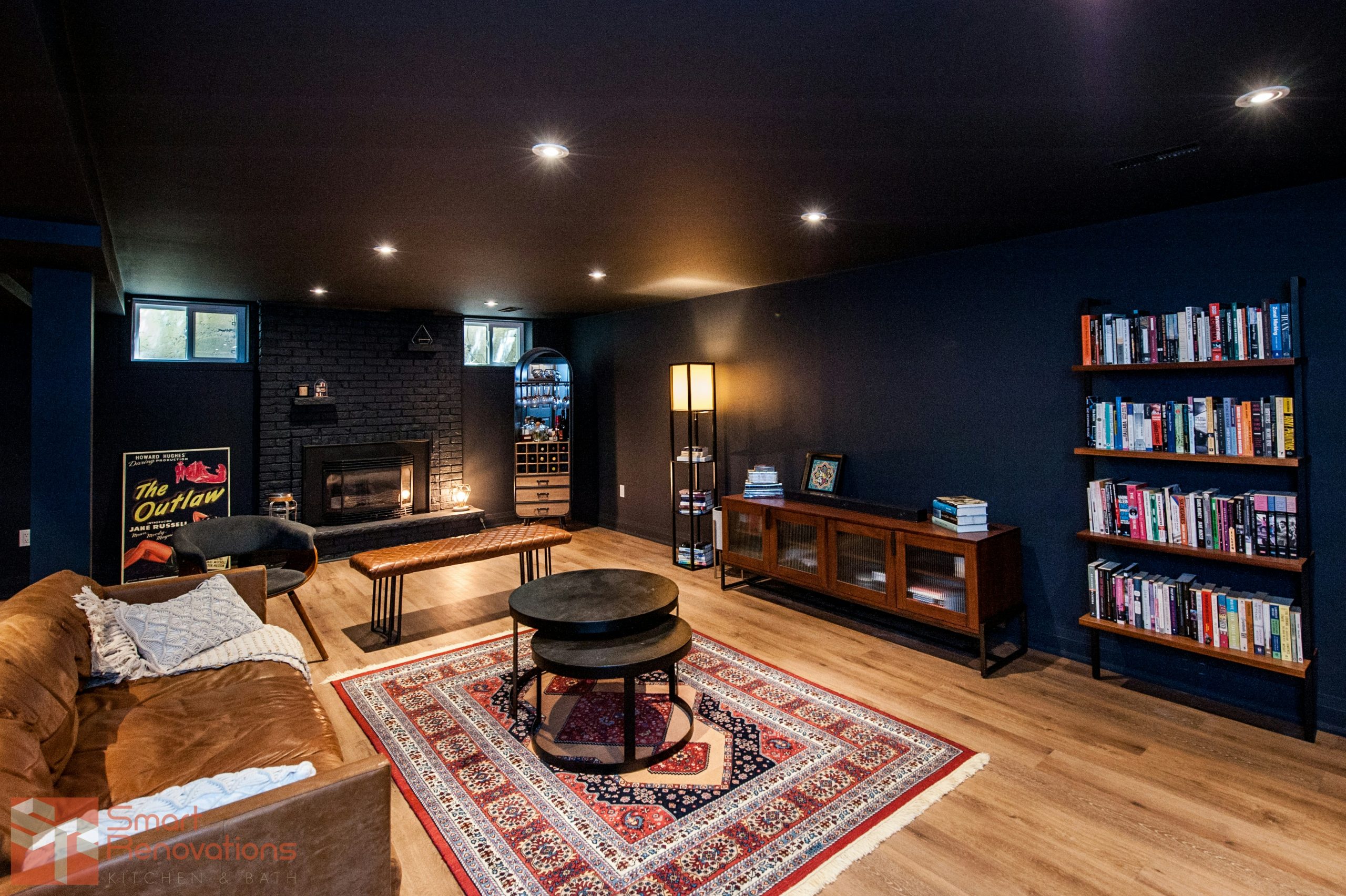
13. Sophisticated Lounge with Dark Blue Walls and a Library
A room this dark is a bold and beautiful choice, but it requires a careful lighting strategy to avoid feeling gloomy. You can’t rely on a single overhead light. This look works because of layered lighting: recessed cans for overall ambient light, accent lights to highlight the books, and likely task lamps (not pictured) for reading. Without this multi-layered approach, the dark blue walls and black ceiling would absorb all the light, creating a somber, uninviting space. If you love this look, be prepared to invest in a comprehensive lighting plan.
|
📋 Copy HEX 🔗 Share |
The formula for this moody, intellectual space is about depth and contrast: 70% dark, saturated color (the navy walls and black ceiling), 20% warm natural texture (the light wood floor and brown leather sofa), and 10% pattern and shine (the ornate rug and metallic touches). The high percentage of dark color creates the intimate, cozy feeling, while the warm wood and leather prevent it from feeling cold. The rug adds a necessary layer of complexity and history to the room. Compare this dark, cozy feel to the bright, open vibe of Idea #1.
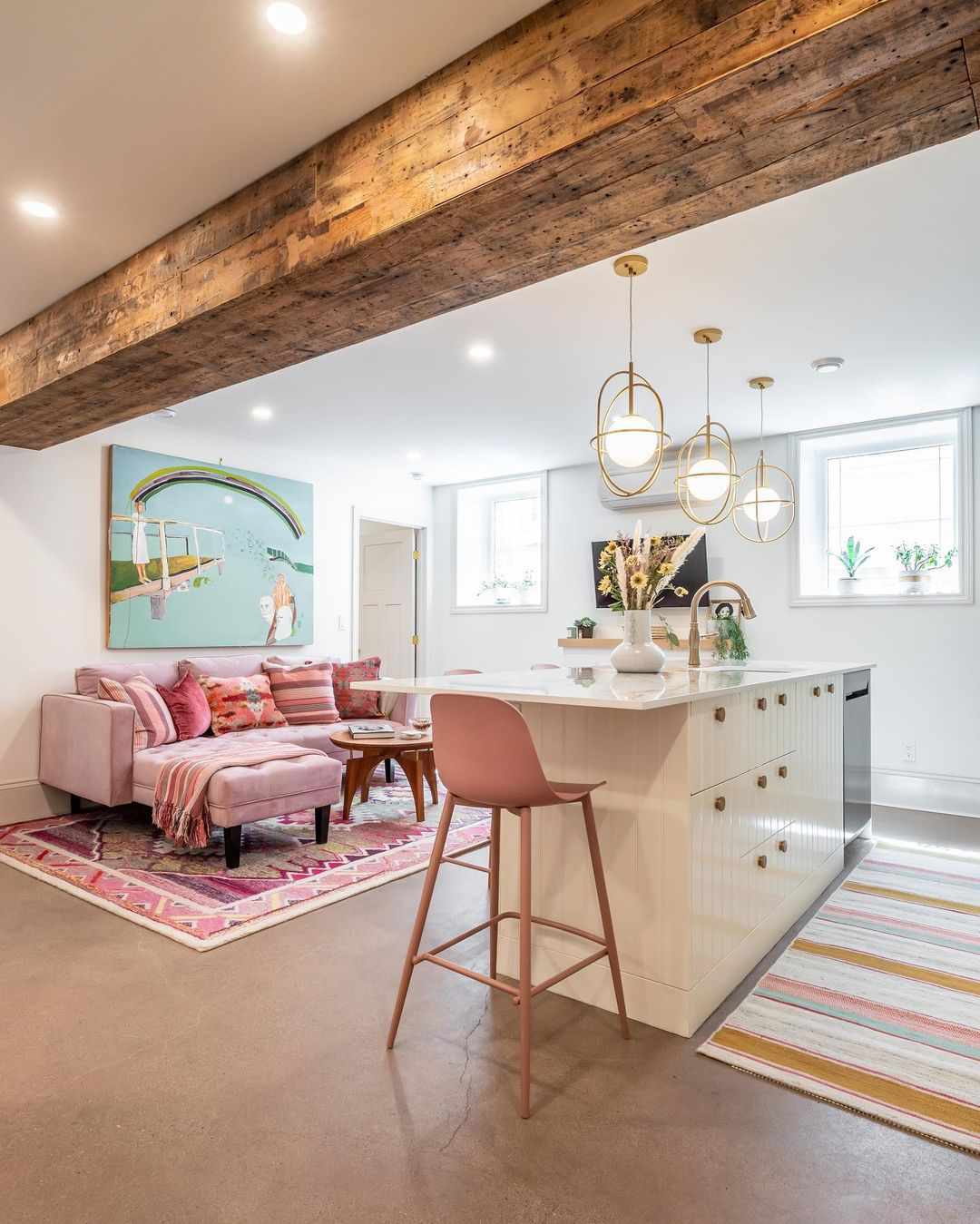
14. Playful Modern Basement with an Exposed Wood Beam
The element that absolutely makes this room is the exposed natural wood beam. In a space dominated by smooth, modern surfaces—the concrete floor, the white island, the sleek sofa—the beam introduces a critical dose of rustic, organic texture. It breaks up the white expanse of the ceiling and visually connects to the warmth of the brass fixtures. Removing it would make the room feel much colder and less grounded. It’s the perfect imperfection that gives the space its unique character and soul.
|
📋 Copy HEX 🔗 Share |
This design is a masterclass in balancing contrasts. It pairs industrial elements (concrete floor, exposed beam) with glam touches (brass pendant lights and hardware). It sets a soft, playful color (the pink sofa) against a clean, neutral backdrop (the white island and walls). And it mixes geometric shapes (the pendant lights, the artwork) with soft curves (the sofa). This constant interplay of hard and soft, rustic and refined, neutral and colorful is what creates such a vibrant, energetic, and visually interesting space.
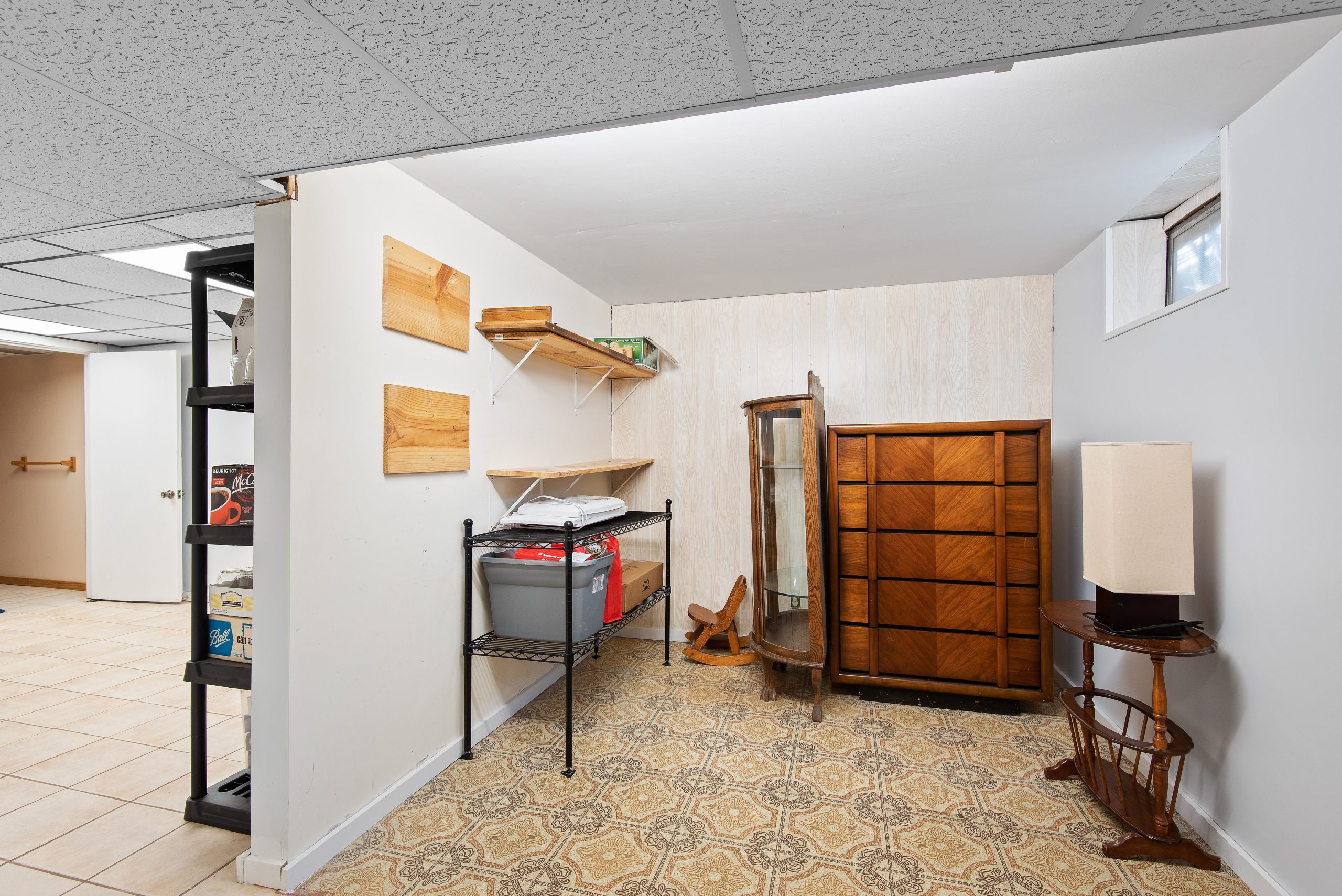
15. Unfinished Basement with Retro Linoleum Flooring
While this particular basement is in a raw state, the patterned linoleum floor is an interesting element to note. After decades of being covered up, vintage and retro-inspired sheet flooring is seeing a resurgence in popularity. Designers are embracing it for its nostalgic charm and durability, especially in secondary spaces like basements, laundry rooms, and craft areas. It’s a way to inject personality and pattern in an unexpected place, and it stands as a fun, practical alternative to the now-ubiquitous LVP flooring.
|
📋 Copy HEX 🔗 Share |
If you have an unfinished or partially finished basement, you don’t need to spend a fortune to make it a functional storage or hobby space. Instead of expensive flooring, a simple coat of concrete paint or sealant ($50-$100) can make the floor clean and dust-free. Sturdy wire shelving units, like the ones seen here, can be purchased from stores like The Home Depot or Lowe’s for $80-$150 each and provide immense, durable storage. The key is to focus on organization and cleanliness before aesthetics.
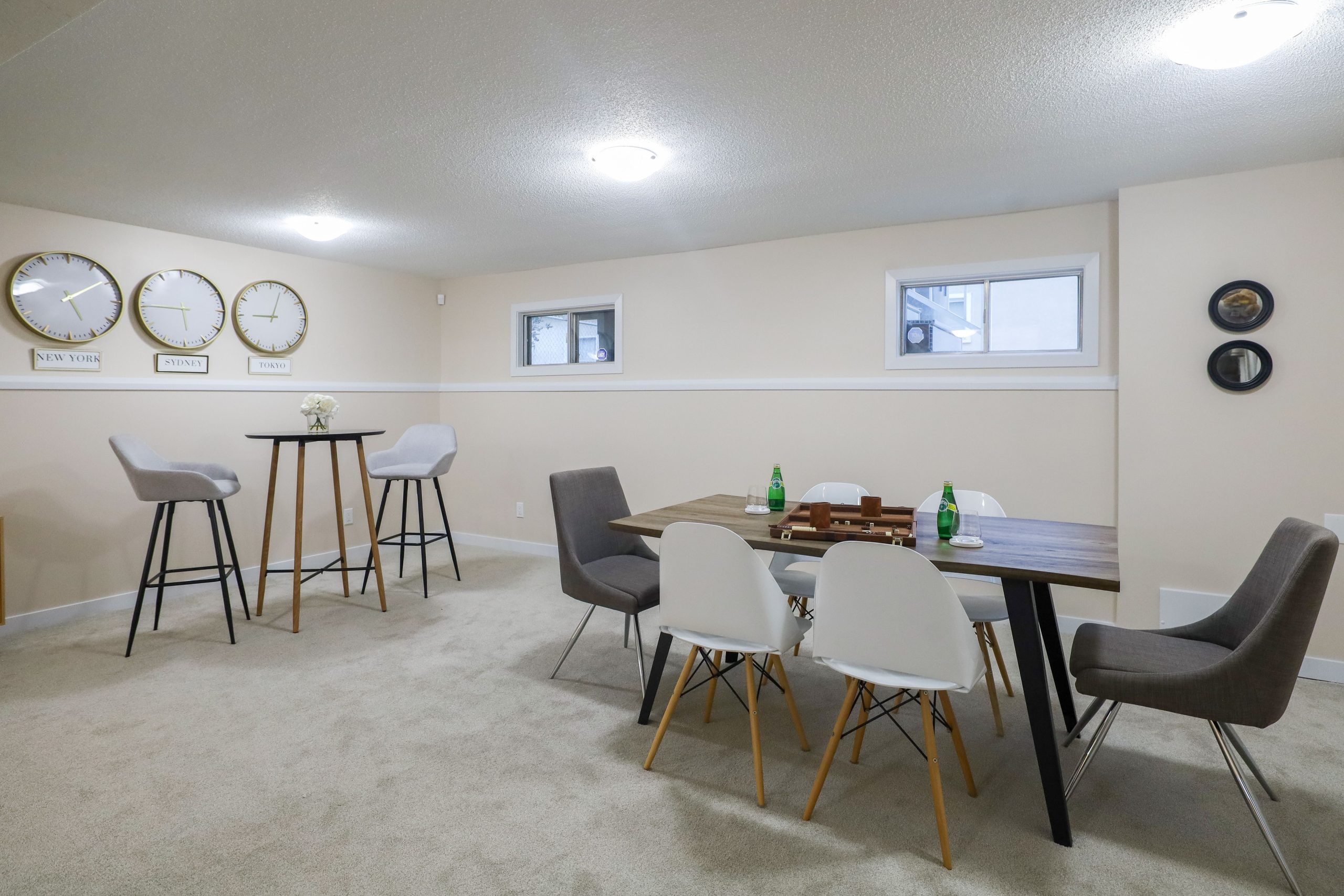
16. Contemporary Basement with Zoned Dining and Bar Areas
- Define Your Zones: Before buying furniture, use painter’s tape on the floor to map out the dining area and the bar area. Is there enough room for both without feeling cramped? Remember to leave at least 3 feet of walkway around each zone.
- Verify Your Lighting: Does your current lighting plan work for both a seated dining table and a standing-height bar table? You may need to add a pendant or chandelier over the dining area and ensure the recessed lighting adequately covers the bar.
- Measure for Egress: Those small basement windows are great for light, but check your local building codes. You may be required to have a larger egress window or door for a finished living space, which could impact your layout and budget.
|
📋 Copy HEX 🔗 Share |
This dual-zone concept is ideal for a long, rectangular basement, typically at least 12 feet wide and 24 feet long. This allows enough space for a full-size dining table (approx. 6 feet long) and a bar area while maintaining comfortable circulation paths. For smaller basements, attempting to cram in both can feel cluttered. In a space under 20 feet long, you would be better off choosing one function—either the dining table or the bar—or opting for a single, more flexible round table. Compare this to the multi-zone layout in Idea #9.
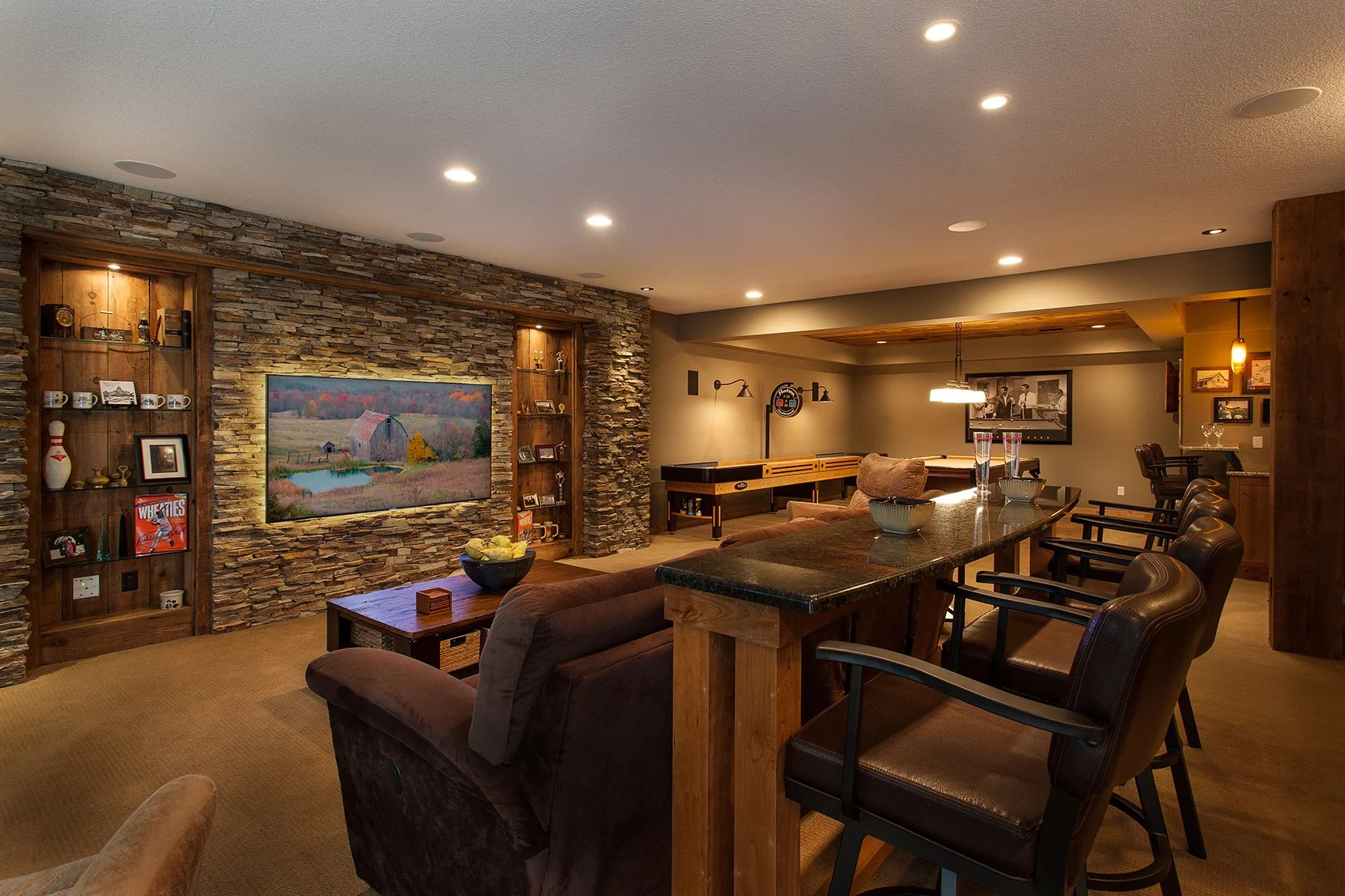
17. Rustic Entertainment Hub with a Full Bar and Stone Wall
- Stone Accent Wall (Installed): $4,000 – $12,000
- Bar Island w/ Granite Top: $5,000 – $15,000
- Furniture (Sofas, Pool Table, Stools): $8,000 – $20,000
- Lighting & TV: $2,000 – $5,000
- Labor & Finishing: $10,000 – $25,000
- Budget alternative: Use stone veneer panels ($10-20/sq ft) instead of full stone and a pre-fabricated bar island from a home improvement store.
- TOTAL: $29,000 – $77,000+
|
📋 Copy HEX 🔗 Share |
A full entertainment basement like this is an amazing feature, but be realistic about its use. How often will you genuinely use a pool table, shuffleboard, *and* a full bar? These features take up a massive amount of dedicated space. If your family isn’t full of avid players, that expensive pool table can quickly become a very large, very dusty laundry-folding station. Consider starting with one main activity center (like the media zone and bar) and leaving space for other games that can be put away, ensuring the room remains flexible for the future.
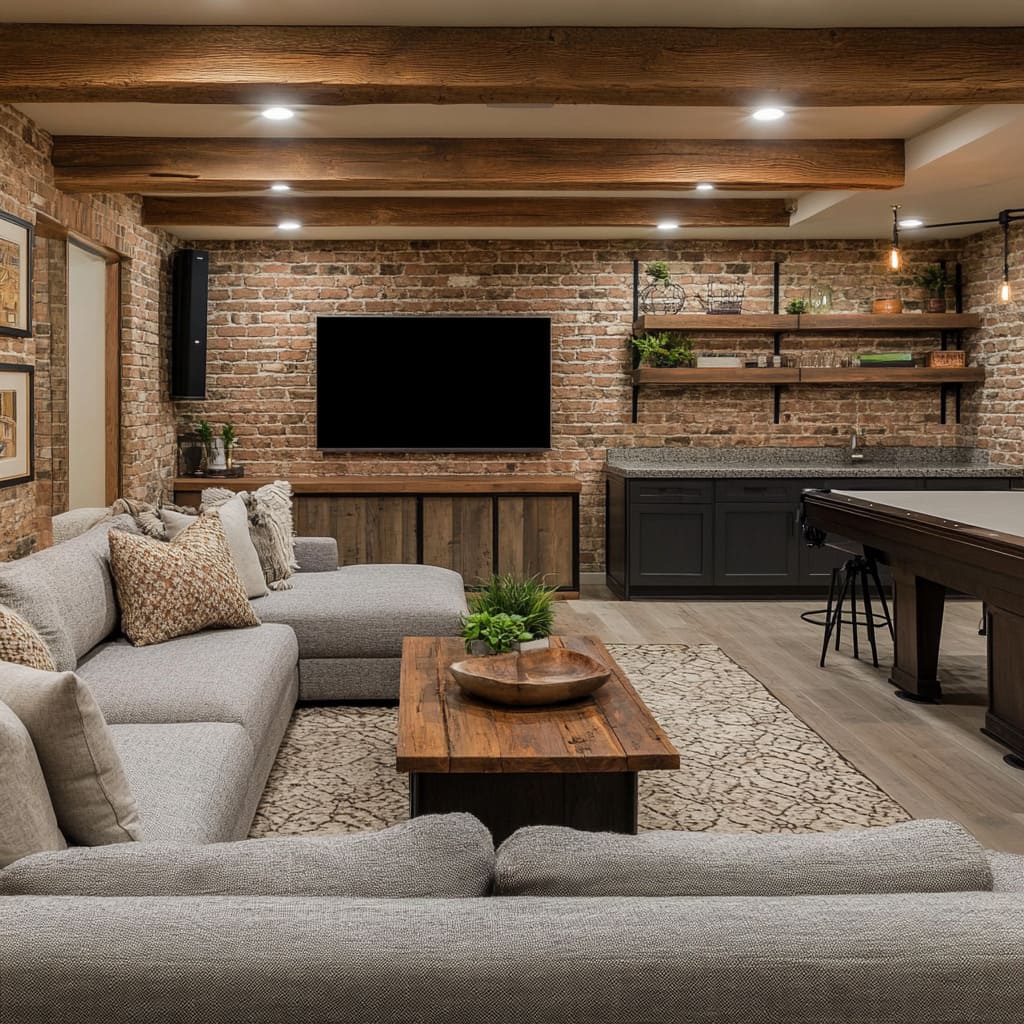
18. Industrial-Rustic Lounge with Exposed Brick and Wood Beams
This room achieves its warm, industrial-lodge feeling by following a specific textural ratio: 40% rugged brick, 30% dark and rustic wood (beams, pool table, media console), 20% soft furnishings (the light gray sectional), and 10% sleek black metal (the bar shelving and light fixtures). The key is the dominance of the warm, rough textures (brick and wood), which are then balanced by the smooth coolness of the metal and the soft comfort of the sofa. It’s a space that feels both historic and modern at the same time.
|
📋 Copy HEX 🔗 Share |
Exposed brick walls, whether real brick or a veneer, are a beautiful but potentially dusty feature. The rough surface can trap airborne dust, and older brick can sometimes shed fine particles. A good practice is to have them professionally sealed with a clear, matte sealant, which makes them much easier to wipe down and prevents shedding. The dark wood beams are low-maintenance, but like all dark surfaces, they will show cobwebs and dust, so a quick pass with an extension duster once a month is a good idea to keep them looking sharp. This look is more about texture than it is about cleanliness, which is a good thing for a basement.
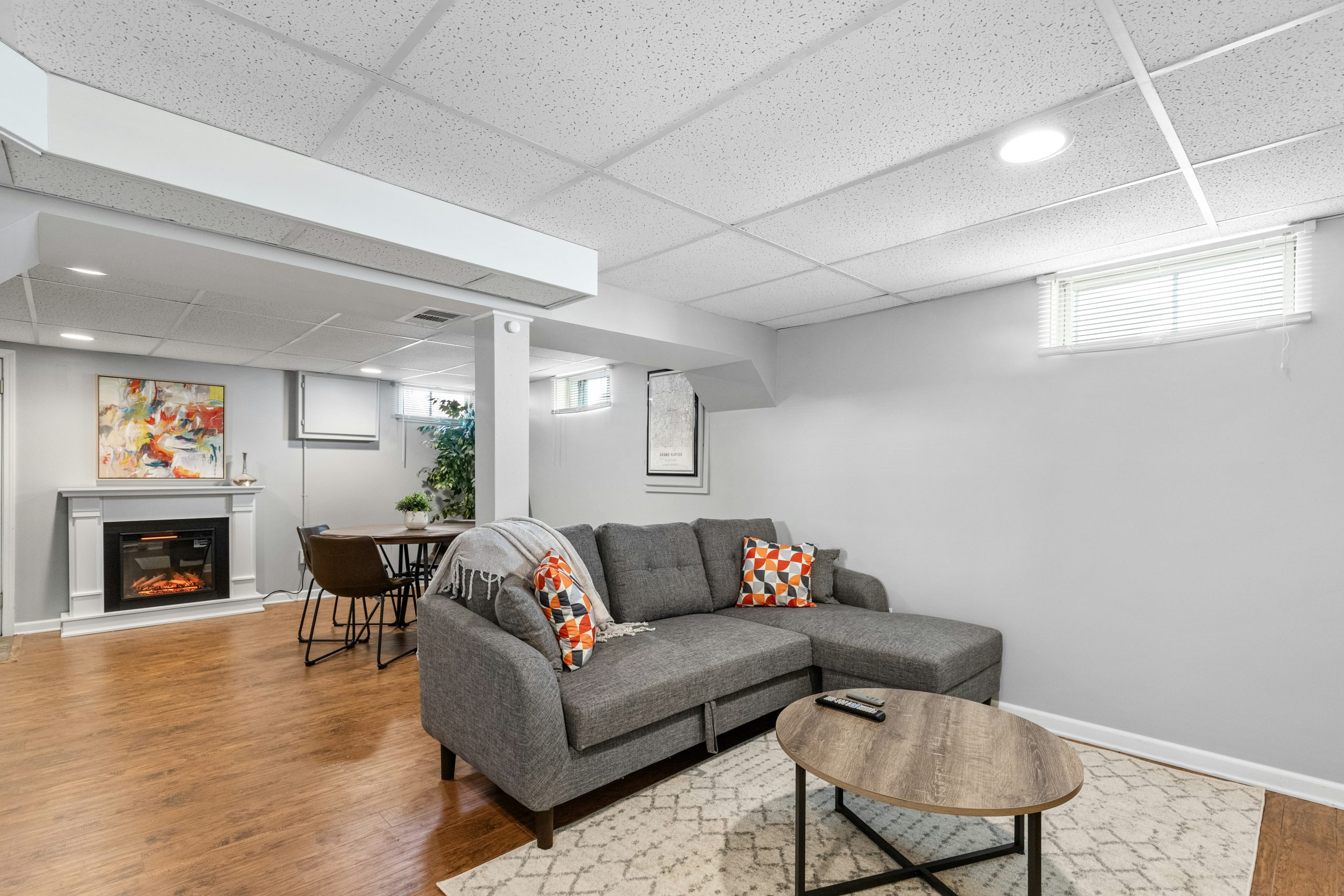
19. Casual and Bright Living Area with a Faux Fireplace
The faux fireplace is a brilliant budget-friendly focal point. You can build a similar mantelpiece using MDF and decorative molding from a hardware store for under $200. Paint it a crisp white to match the trim, and you have an instant architectural feature. For the artwork, instead of a pricey original, browse sites like Society6 or Artfully Walls for affordable prints. The geometric rug can be sourced from stores like Rugs USA or even Amazon for $150-$300, providing a major graphic punch for a relatively low cost.
|
📋 Copy HEX 🔗 Share |
This layout is perfect for a medium-sized basement, around 15×18 feet. The key to making a drop ceiling work is to have adequate ceiling height to begin with. This style of grid ceiling typically requires about 3-6 inches of space, so it’s best in basements with ceilings that are at least 7.5 feet high. Any lower, and the ceiling can start to feel oppressive. The placement of the sectional and rug effectively carves out a cozy living zone while leaving circulation space for the small dining area in the background.
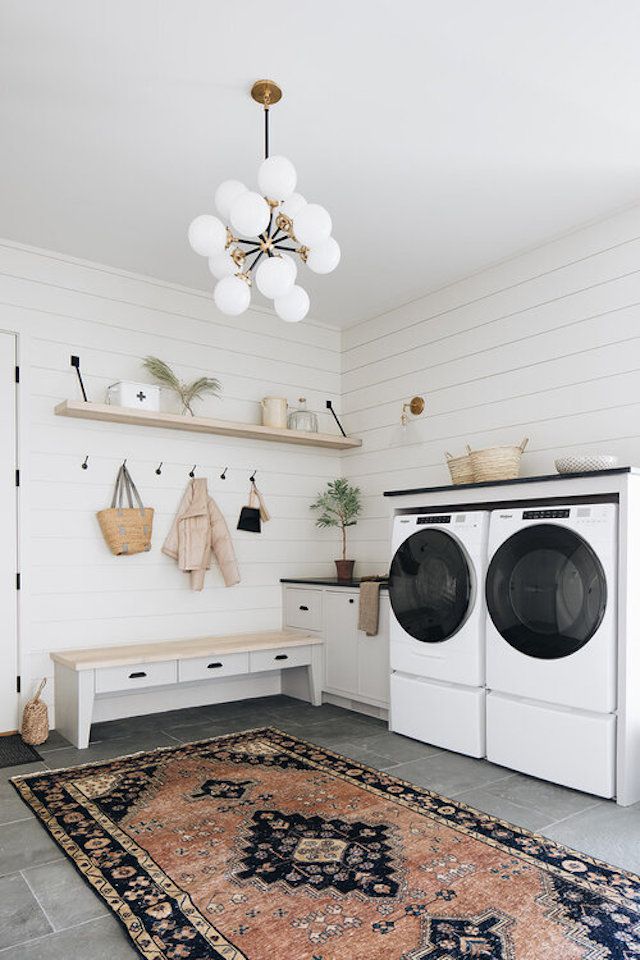
20. Modern Farmhouse Laundry Room with Patterned Rug
Take away the rust and navy patterned rug, and what do you have? A very nice, but standard, white modern farmhouse laundry room. That single element injects a huge dose of personality, warmth, and color into the otherwise neutral space. It feels unexpected and sophisticated, elevating the room from purely functional to genuinely stylish. It proves that even in a utility space, one bold design choice can be transformative, tying together the black fixtures, wood tones, and white walls into a cohesive and memorable look.
|
📋 Copy HEX 🔗 Share |
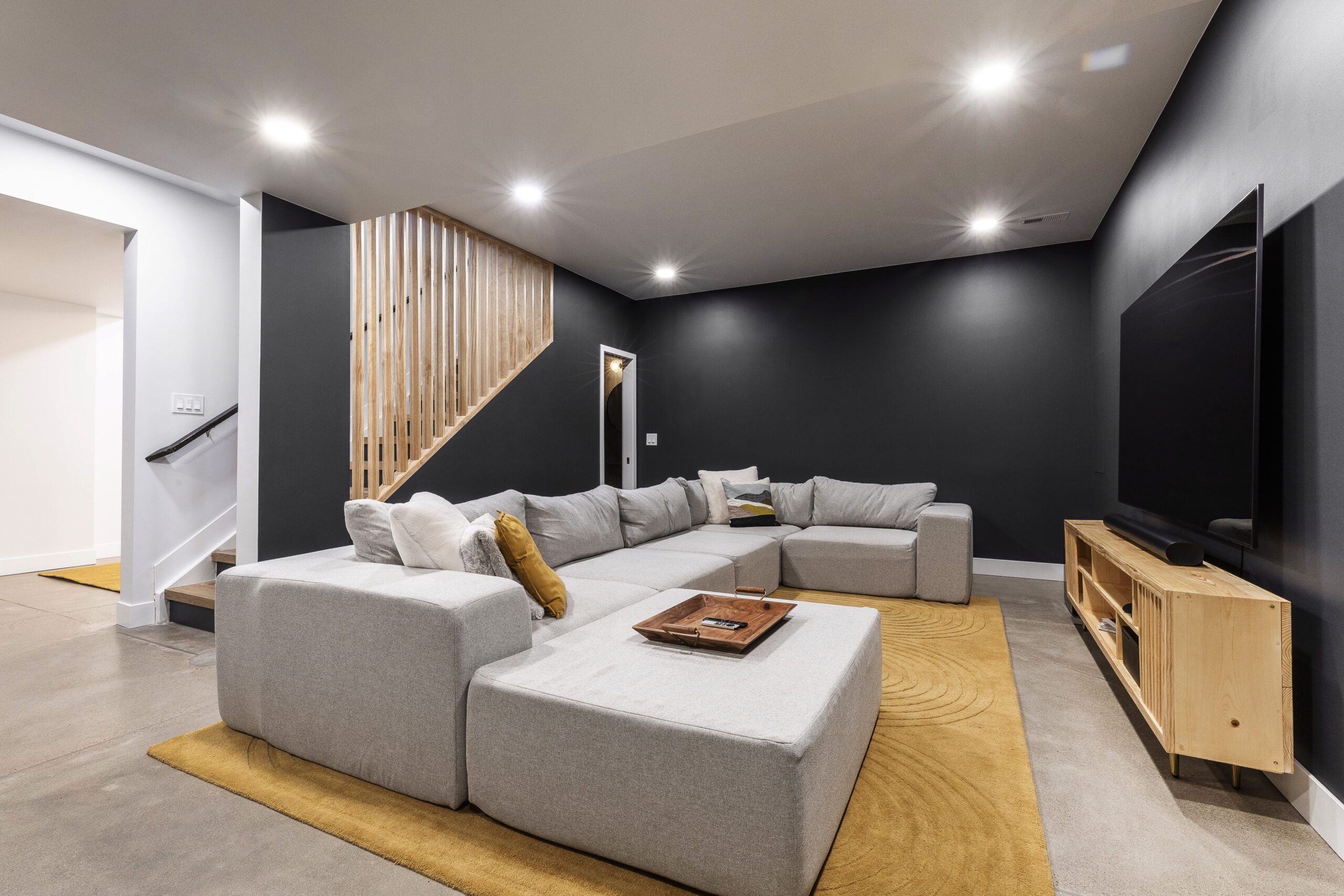
21. Bold Modern Basement with Dark Gray Walls and a Yellow Rug
This design is a textbook example of using color and material to create a balanced mood. The dark gray walls provide a sophisticated, cozy envelope but could easily become gloomy. The vibrant mustard yellow rug is the perfect antidote, injecting a massive dose of energy and warmth right in the center of the room. This bold color choice is then softened by the natural wood tones of the stair railing and media console, which act as a bridge between the cool gray and the hot yellow. It’s a dynamic, confident, and well-balanced space.
|
📋 Copy HEX 🔗 Share |
A bold, colorful rug like this mustard yellow one is a fantastic statement piece, but be prepared for the commitment. It will be the undeniable focal point of the room, and all other decor choices will need to either complement or defer to it. Also, a light-colored, patterned rug in a high-traffic area will require regular vacuuming to look its best. Before you buy, get a sample if possible and see how the color looks in your basement’s specific lighting conditions—a yellow that looks sunny upstairs can look murky underground.
Your Basement’s Next Chapter Starts Now
Hopefully, these 21 distinct ideas have sparked some real inspiration for your own underground oasis, proving that any basement can be a beautiful and functional part of your home. The key is a clear plan and a touch of creativity.
Ready to start designing your own perfect basement? Don’t forget to save your favorite looks to your Pinterest board to keep the ideas handy when you need them!