
Still scrolling through endless apartment decorating photos without a clue where to actually start? It’s easy to get overwhelmed by all the inspiration, but turning those pins into a real, livable space on a budget is the real challenge. After filtering through hundreds of options across IKEA, Target, and Facebook Marketplace, we narrowed it down to 24 ideas that actually deliver. We’ve focused on the most drool-worthy styles of 2026: cozy minimalist, warm bohemian, and personality-packed eclectic. In 2026, it’s all about creating a space that feels collected and personal, not just decorated. And stay until the end — we break down the most common mistakes that can ruin these looks. 📌 Save this to Pinterest for later — you’ll want to revisit these ideas.
1. Bring in the Sunshine with a Striped Rug and Mustard Accent
This room feels so inviting because it nails the balance between neutrals and personality. The beige sectional is the quiet, hardworking base, but it’s the strategic hits of color that bring it to life. The bold blue and white stripes of the rug ground the space and provide a graphic punch, while the mustard yellow accent chair is a confident splash of warmth. It’s a classic color theory trio—blue, yellow, and a neutral—that feels both timeless and totally fresh.
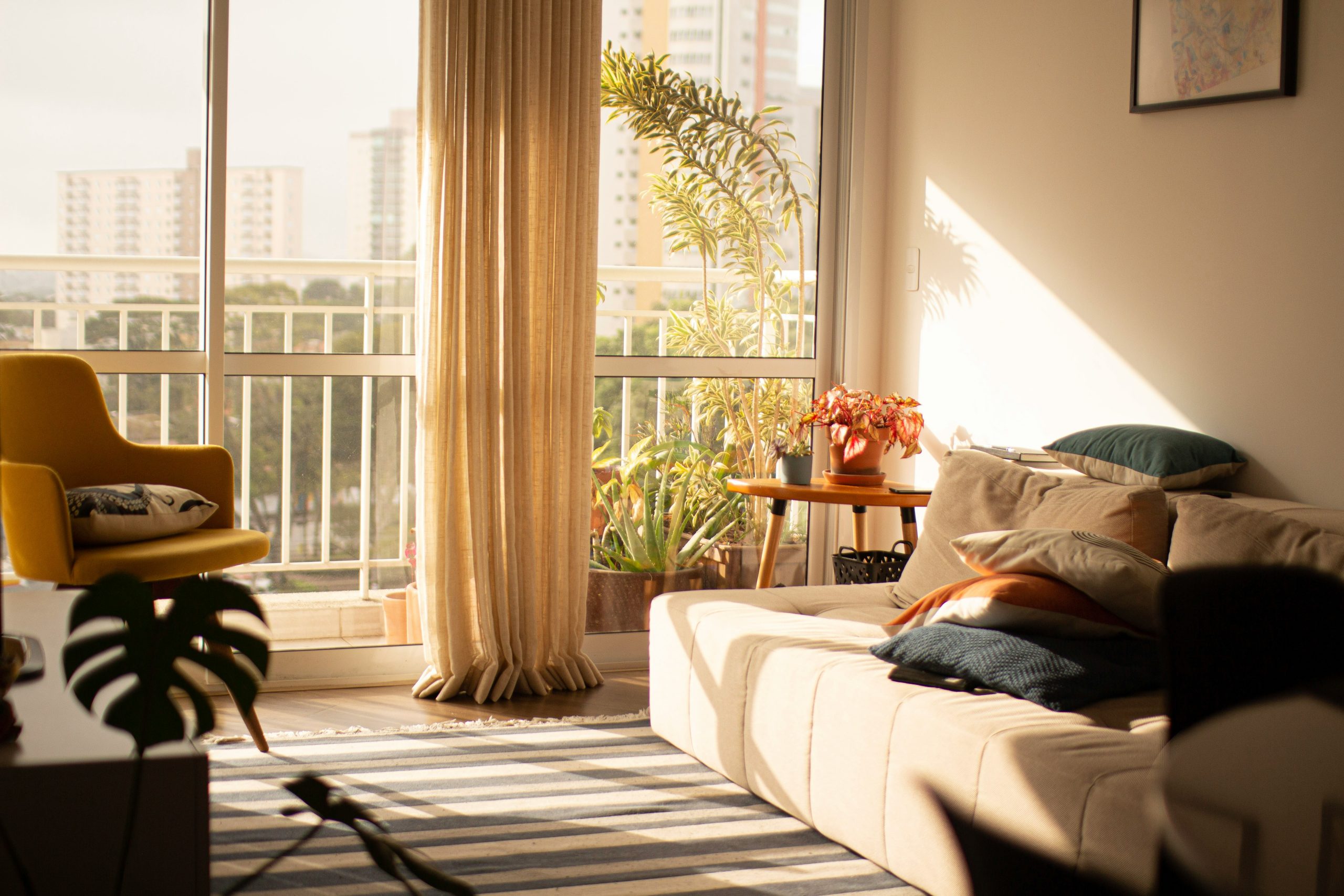
You don’t need a giant budget to get this sunny, relaxed vibe. Swap the designer accent chair for a similar style from Target or Wayfair, which is often available for $200-$300. Instead of a high-end wool rug, look for a flatweave or outdoor-rated striped rug from IKEA or a home goods store, which can be found for under $150. The key is the color story and the mix of patterns and solids, not the price tag of each individual item.
2. Embrace a Moody Vibe with Dark Gray Walls and Motorcycle Art
The single element holding this entire look together is the commitment to the dark, tonal color palette. Without the dark gray textured walls enveloping the room, the other elements wouldn’t feel nearly as cohesive or sophisticated. It creates a cozy, den-like atmosphere that makes the warm wood, metallic lighting, and even the light gray bedding feel richer and more intentional. It proves that a dark bedroom isn’t gloomy; it’s a confident backdrop for thoughtful design.
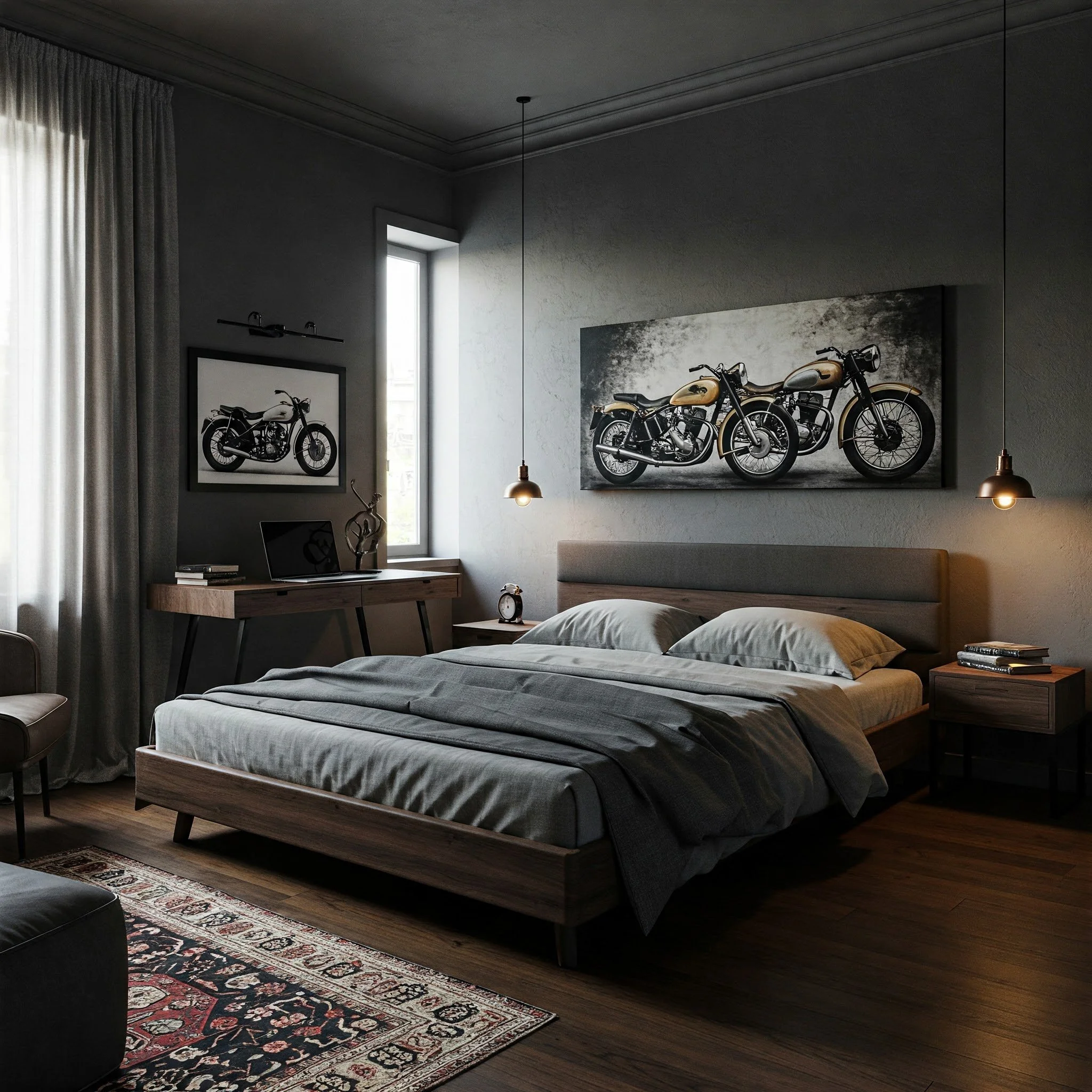
When working with a dark wall color, amplify your lighting. Don’t rely on a single overhead fixture. Notice the dual industrial pendants here? They provide both task lighting and a warm, metallic accent. In a bedroom, it’s best to have at least three light sources: ambient (a soft ceiling light), task (bedside lamps or pendants), and accent (a floor lamp or picture light). This creates layers of light that keep a dark room from feeling like a cave.
3. Energize a Modern Space with a Yellow and Orange Gradient Rug
The visual formula here is a study in confident restraint: 60% neutral architecture, 30% functional staples, and 10% high-impact color. The white walls and light wood floors are the 60% base. The grey sectional and slatted media console are the 30% workhorses. That leaves just 10% for the knockout punch—the vibrant yellow and orange rug and abstract art. You could swap the warm tones for blues and greens and still have the same perfectly balanced formula.
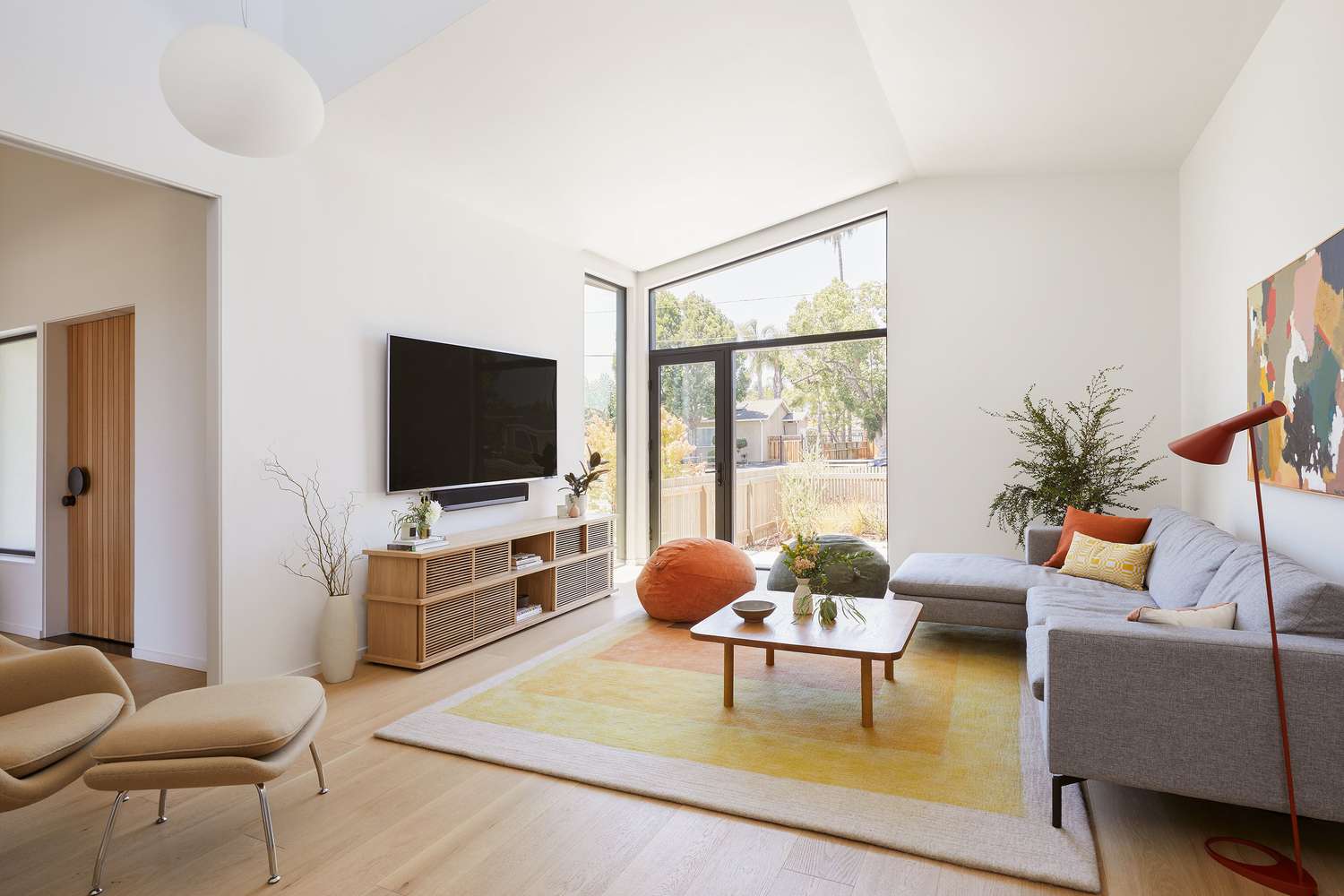
A look this clean depends heavily on cable management. That sleek, low-profile media console looks fantastic because you don’t see a nest of wires for the TV, speakers, or gaming systems. Before you commit to a floating or minimalist console, have a real plan for your cables. This might mean hiring an electrician to install an in-wall cable management kit (around $100-$150 for the kit, plus labor) or getting creative with cord concealers that match your wall color.
4. Create a Playful Studio with a Curated Gallery Wall
Creating a gallery wall that looks curated, not chaotic, is an art. Here’s a quick guide to get it right. (Time: 2 hours, Cost: $50–$200 for frames and prints.)
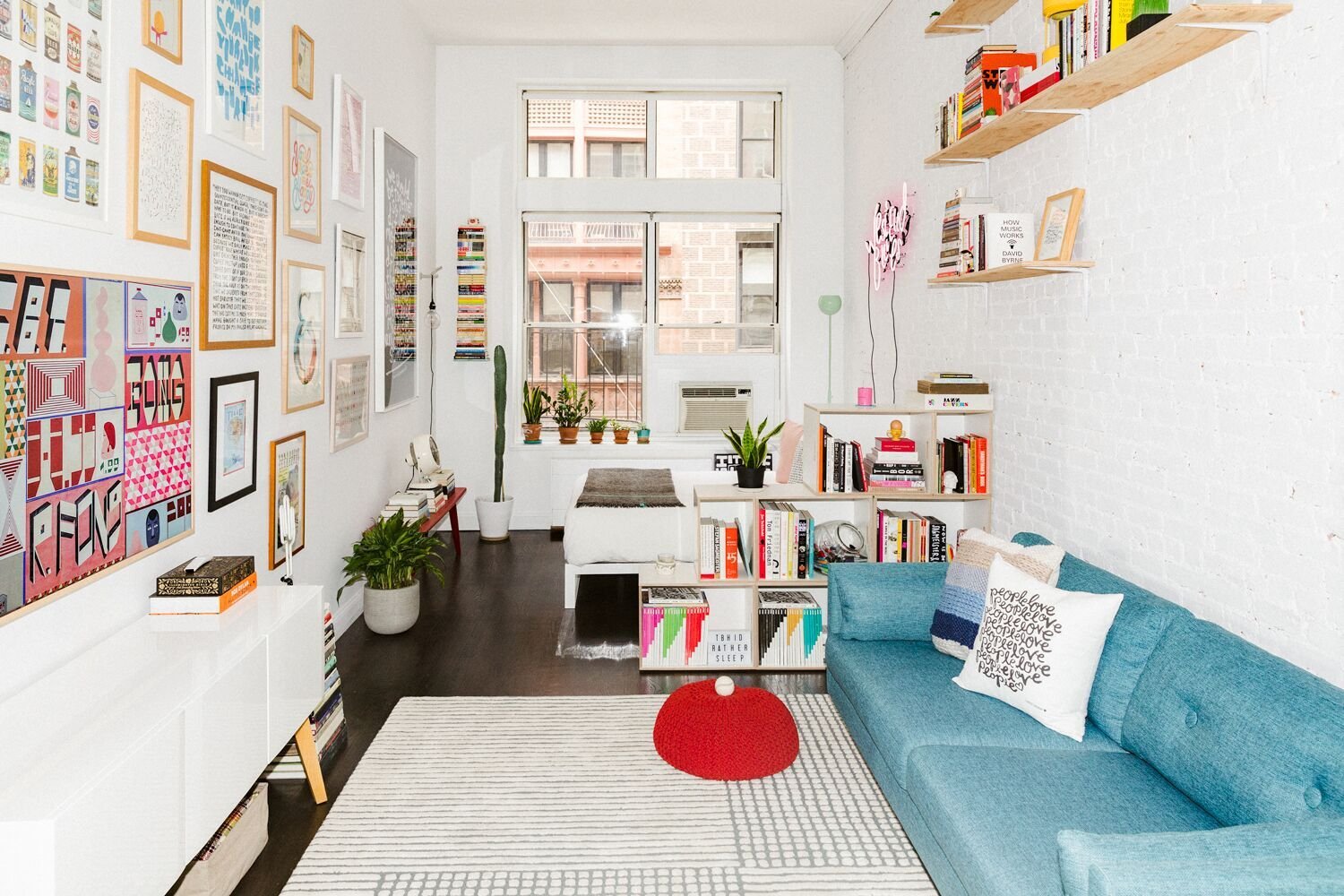
- Choose a Theme: Decide on a color palette or subject matter to unify the collection. Here, it’s a mix of bright, poppy colors and abstract shapes.
- Vary Your Frames: Use a mix of black, white, and natural wood frames in different sizes to add visual interest.
- Lay It Out First: Before hammering any nails, arrange your framed art on the floor. Play with the composition until it feels balanced.
- Start from the Center: Hang your largest, central piece first, about 6-8 inches above the sofa. Work outwards from there, keeping spacing consistent (2-3 inches between frames).
This look is perfect for studios or small one-bedroom apartments, typically ranging from 400 to 650 square feet. The key is using vertical space. The gallery wall and tall shelving units draw the eye upward, making the room feel larger than it is. The use of a visually light area rug also helps; it defines the seating area without making the floor feel crowded. This approach would be less effective in a large, open-concept house where the scale might feel too small.
5. Achieve Elegant Minimalism in a Light-Filled Space
This look works because it strictly adheres to a ‘less is more’ philosophy, focusing on high-quality basics and architectural features. The harmony comes from repetition of form—the clean lines of the sofa are echoed in the window frames and the simple furniture. The natural light isn’t just a feature; it’s a core design element, allowed to flood the space and interact with the minimalist decor, creating a serene and uncluttered feeling that is incredibly calming.
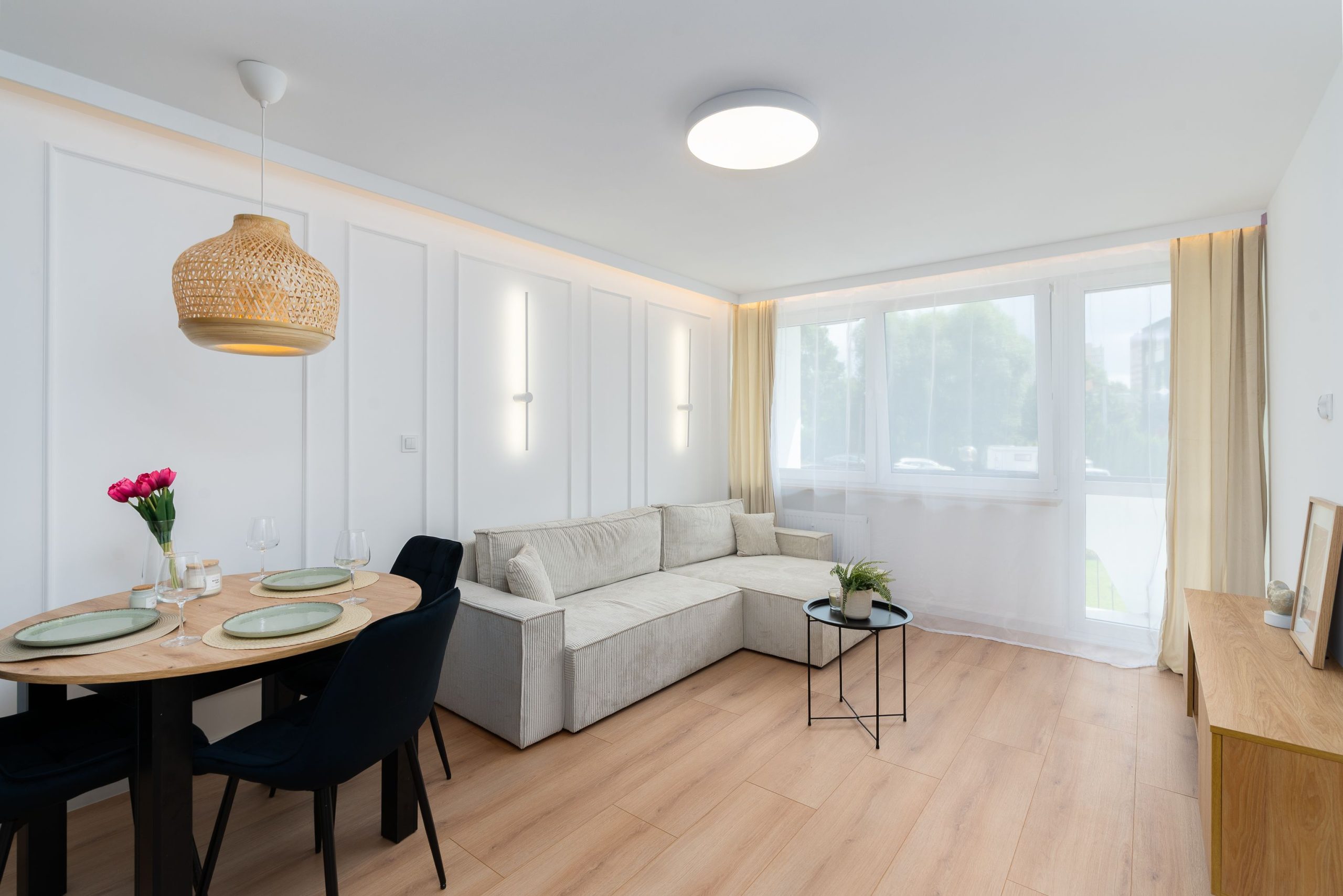
In 2026, we’re seeing a major pushback against the hyper-cluttered, ‘more is more’ aesthetic that has dominated social media for years. This clean, elegant minimalism is trending because it prioritizes mental well-being and sustainability. It’s about buying fewer, better things and creating a home that feels like a sanctuary from the noise of the outside world. It’s less about stark emptiness and more about thoughtful, intentional living.
6. Transform a Small Kitchen with Smart, Affordable Choices
Recreating a stylish and functional small kitchen doesn’t have to break the bank. Here is a sample budget for a similar look:
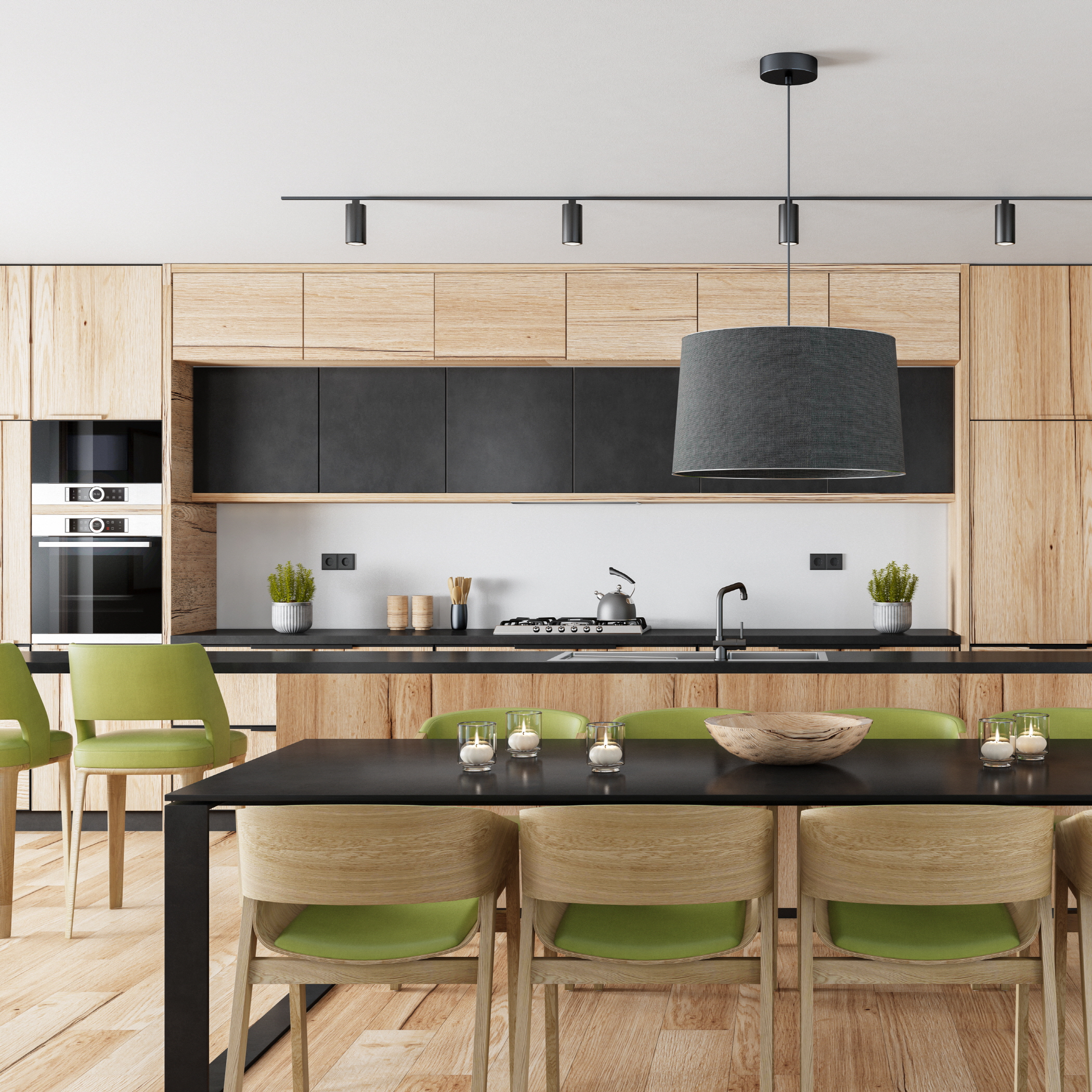
- Paint (for cabinets and walls): $100 – $200
- Peel-and-stick backsplash tiles: $150 – $300
- New cabinet hardware: $50 – $150
- Butcher block countertop (from a big-box store): $200 – $400
- Decor & open shelving: $100 – $250
- TOTAL: $600 – $1,300
Budget alternative: Get this look for about 40% less by keeping existing countertops and using a countertop refinishing kit ($80-$120), thrifting your decor, and finding cabinet pulls on clearance.
When decorating a small kitchen, every inch counts. Don’t be afraid to use vertical space. Install open shelving or a magnetic knife strip on a blank wall to free up counter space. Also, consider under-cabinet lighting. You can install inexpensive LED light strips in about 30 minutes, and they make a massive difference in how the space feels and functions, eliminating dark corners and making food prep easier and safer.
7. Use Bold Orange and Blue to Punctuate a Minimalist Open Plan
The single element that makes this space sing is the fearless use of accent color. Specifically, the vibrant orange scalloped coffee table. In a room dominated by cool grays and sharp white lines, this piece of furniture acts as a visual exclamation point. It injects personality and warmth, preventing the minimalist aesthetic from feeling sterile or impersonal. Remove it, and the room loses its soul. Unlike the calm, neutral palette in Idea #23, this space proves that minimalism can be loud.
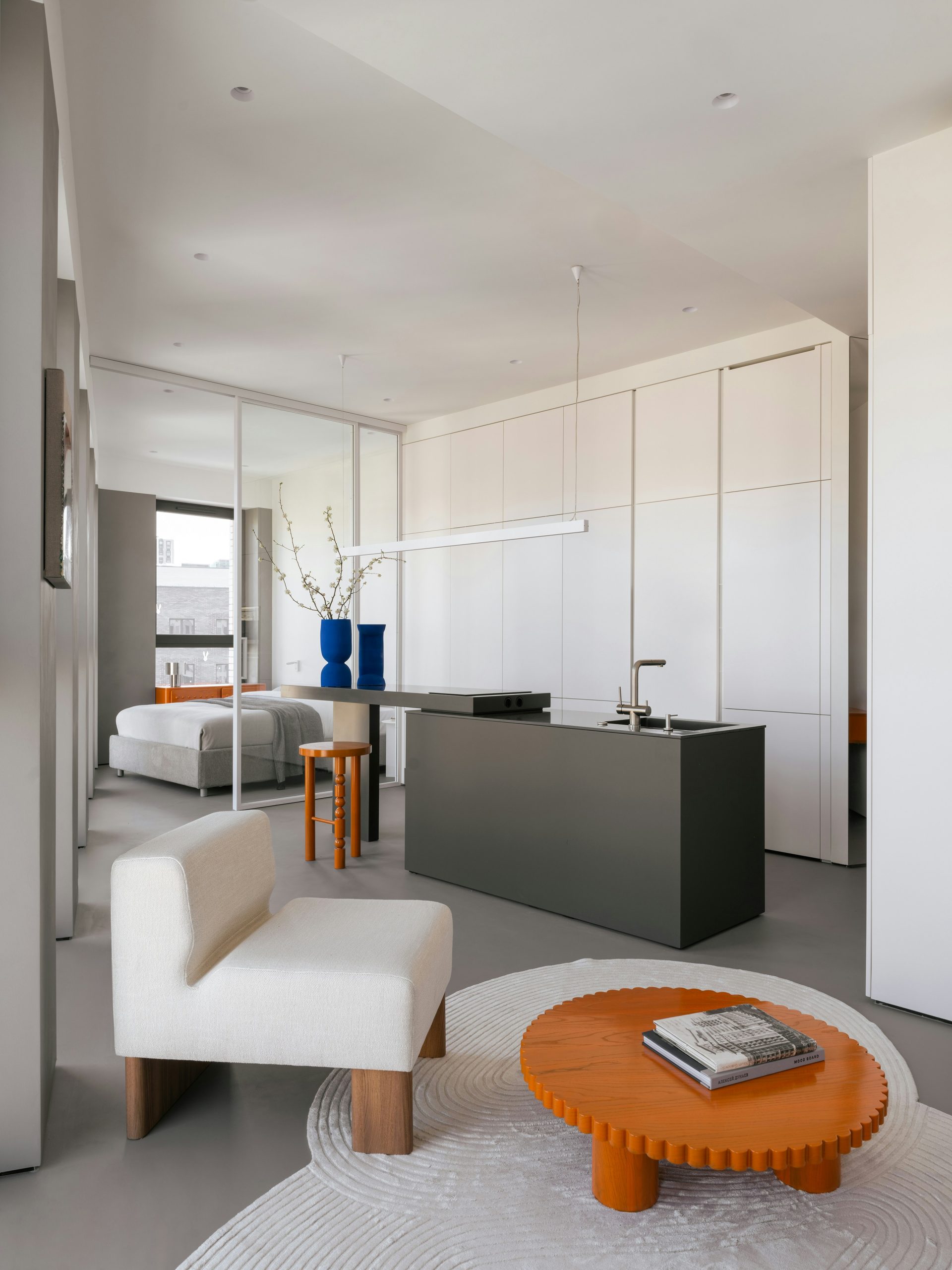
The formula here is simple but effective: 80% monochrome + 20% dual-color pop. The muted gray floor and the vast expanse of white cabinetry create a quiet, neutral canvas. Then, a carefully chosen 20% of the visual real estate is dedicated to a high-contrast duo: vibrant orange and electric blue. By limiting the bold colors to just a few key pieces—the table and the vases—the look remains sophisticated and intentional rather than chaotic.
8. Embrace Calm Modernity with an Ivory Sofa and Travertine Table
An ivory bouclé sofa is stunning, but it’s not for the faint of heart. The nubby texture can trap dust and pet hair, requiring weekly vacuuming with an upholstery attachment. Spills must be treated immediately with a specialized upholstery cleaner to prevent stains. The travertine base of the coffee table is also porous; it needs to be sealed annually to prevent staining from liquids like coffee or red wine, and you should always use coasters. This look is gorgeous but demands mindful living.
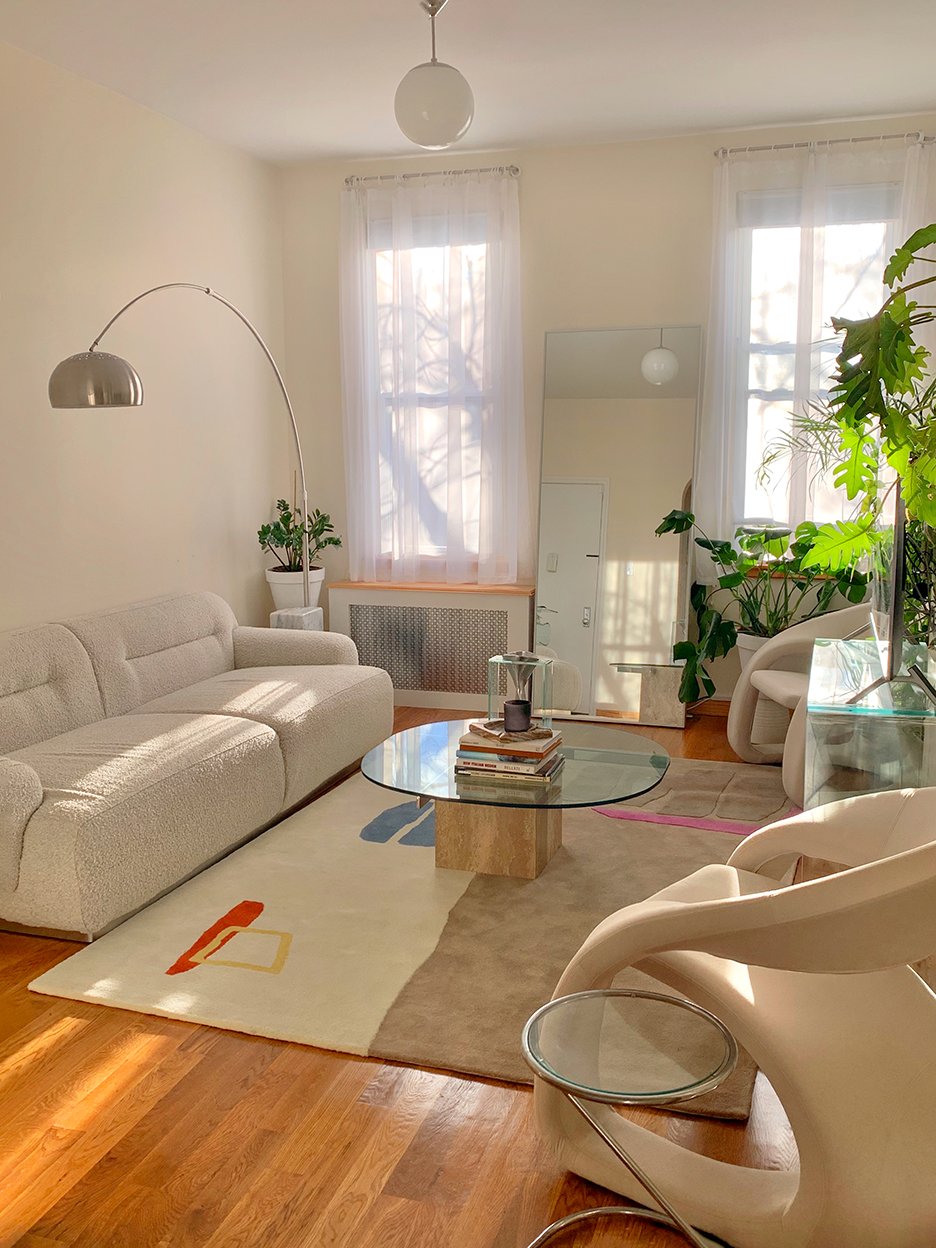
This room feels so serene because it masters the art of mixing textures and balancing shapes. The soft, nubby texture of the ivory sofa plays against the crisp, smooth surfaces of the glass coffee table and travertine base. At the same time, the strong rectangular lines of the windows and sofa are softened by the round coffee table, the curved chairs, and the organic forms of the large houseplants. This interplay gives the space a rich, layered look that feels both modern and comfortable.
9. Add Personality with Colorful Decor on Open Shelving
When styling open shelves, think in triangles. Place items of a similar color, shape, or theme at three different points on the shelving unit to form a visual triangle. This encourages the eye to move across the display. For example, place a yellow vase on a top left shelf, a book with a yellow spine on a middle right shelf, and a small yellow object on a bottom left shelf. It’s a simple trick that makes your arrangement look effortlessly balanced and professionally styled.
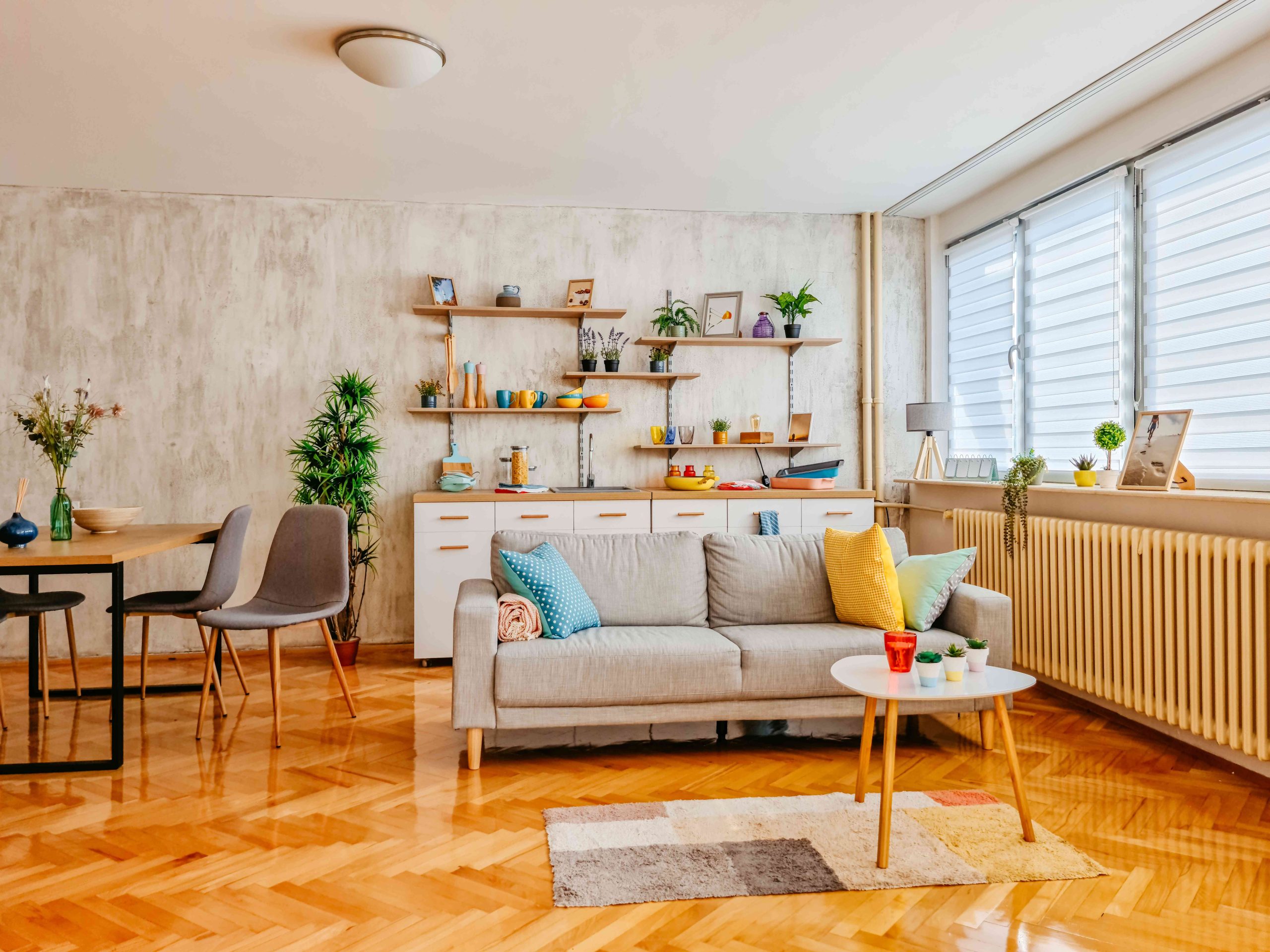
Before you commit to installing a large open shelving unit, make sure you’ve covered these bases:
- Take Inventory: Do you actually have enough attractive objects, books, and plants to fill the shelves? Empty shelves can look sad and unfinished.
- Be Honest About Clutter: Are you disciplined enough to keep the shelves tidy? Open shelving is not forgiving; it puts all your clutter on display for the world to see.
- Check Your Wall: Ensure the wall you plan to use is strong enough to support the weight of the shelves and everything on them. Use a stud finder and the proper anchors for your wall type (drywall, plaster, or brick).
10. Go Bold with a Black Media Wall and a Slatted Wood Ceiling
A black feature wall is a dramatic and sophisticated choice, but it shows every single speck of dust, scuff mark, and fingerprint. This isn’t a low-maintenance option. Be prepared to dust it at least twice as often as a light-colored wall. When choosing paint, opt for a high-quality matte or eggshell finish; a slight sheen will be easier to wipe down than a completely flat finish, which can be notoriously difficult to clean without leaving marks.
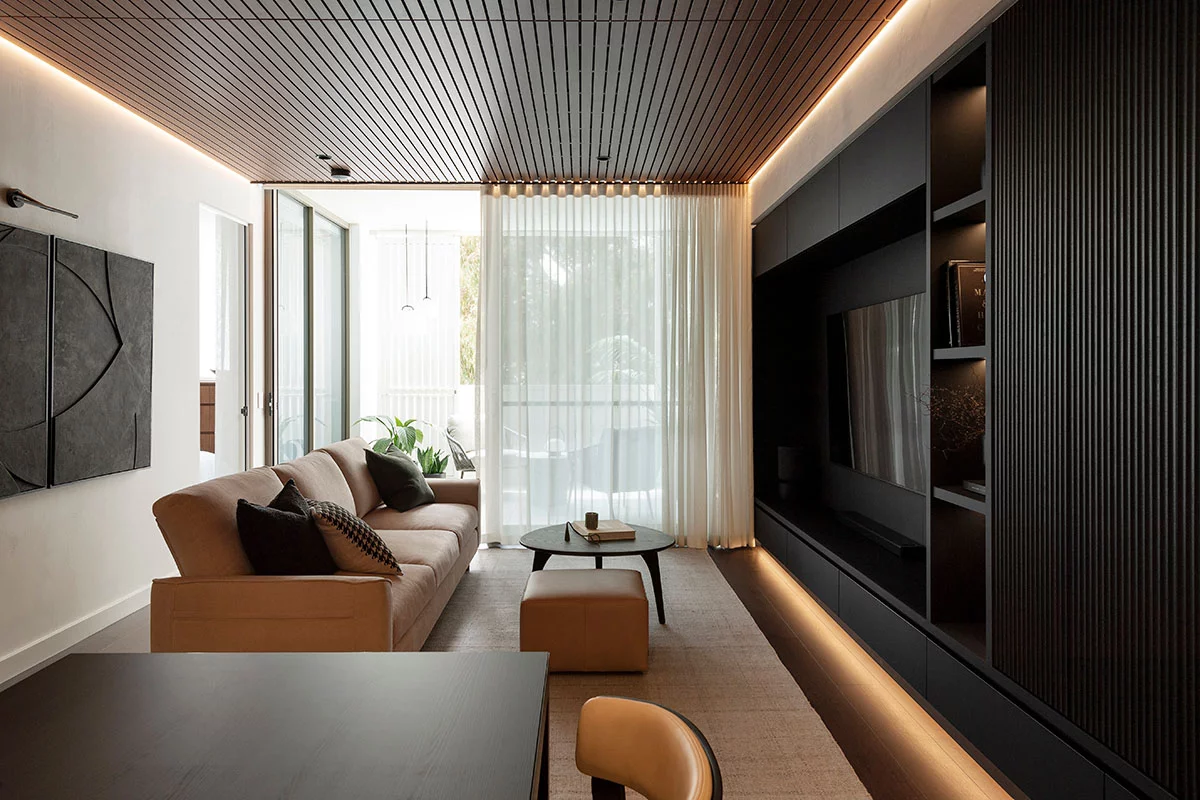
This look is best suited for rooms with generous ceiling height—at least 9 feet or higher. The dark, slatted wood ceiling and the massive black media wall can make a standard 8-foot ceiling feel oppressively low. This design thrives in spaces with a minimum of 150-200 square feet for the main living area. The sheer curtains and view to the balcony are also doing a lot of work here to bring in light and a sense of openness, balancing the heavy, dark features.
11. Mix Warm Wood and Soft Blues for an Inviting Open-Concept Space
Achieving this warm, eclectic feel is all about smart shopping. Look for light blue sectional sofas on Facebook Marketplace or at IKEA—the ‘UPPLAND’ or similar models often come in at under $1,000. Mid-century-style wooden dining sets are a common find at thrift stores and flea markets, often for just a few hundred dollars. The Tiffany-style pendant can be a splurge, but you can find surprisingly beautiful and affordable replicas on sites like Wayfair or Etsy for $100-$200, giving you that vintage charm for less.
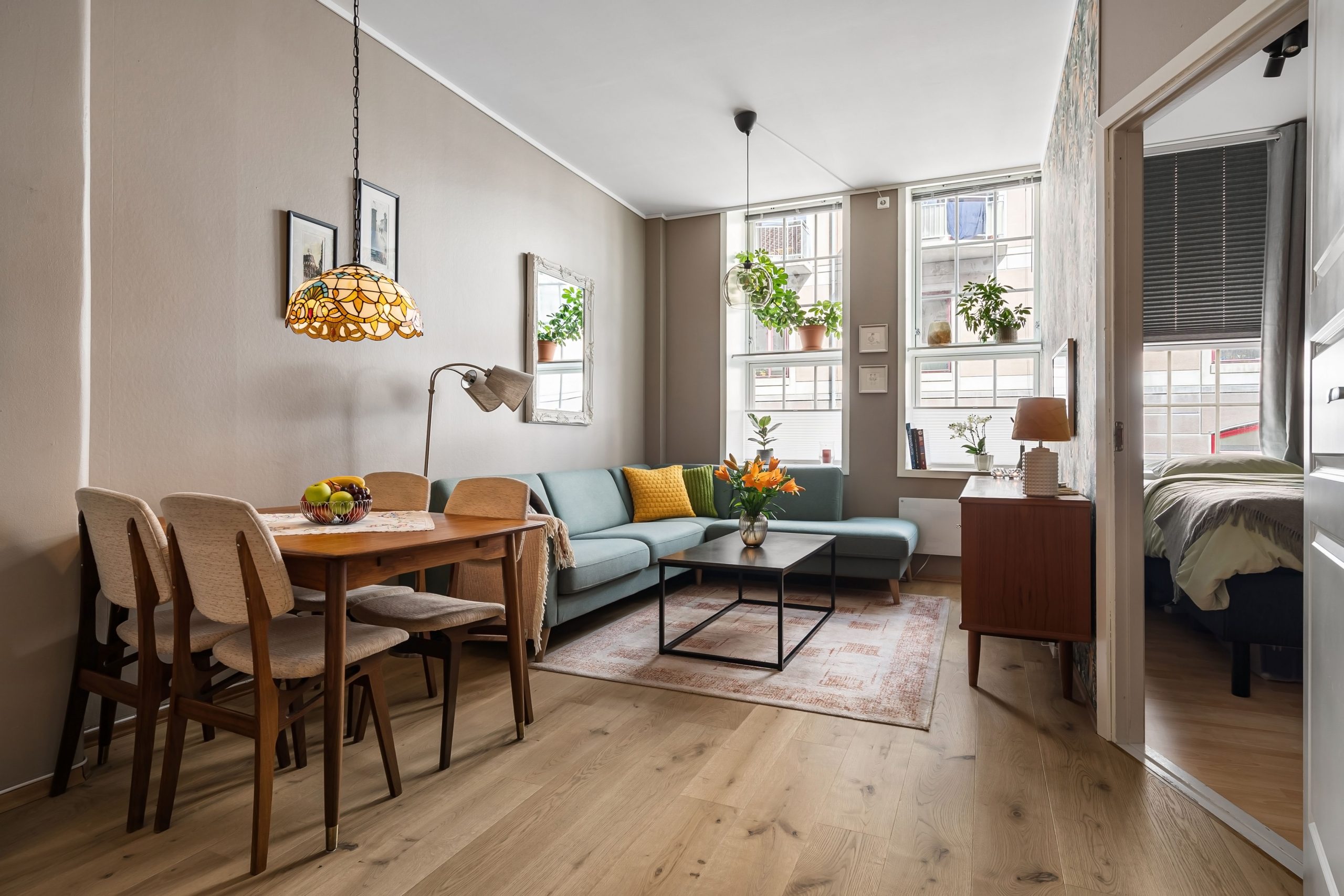
This space feels so harmonious because it successfully blends different styles and eras. The clean lines of the black metal coffee table are modern, the dining set has a distinct mid-century feel, and the mosaic glass pendant light is pure vintage charm. What ties it all together? A consistent color palette of warm woods, soft blues, and muted neutrals. This allows the different pieces to feel collected over time rather than clashing. If you love this cozy vibe but want something even brighter, check out the sunny space in Idea #1.
12. Create a Lush Oasis with a Tropical Wallpaper Accent Wall
Without a doubt, the tropical leaf-patterned wallpaper is the hero of this room. It single-handedly transforms the space from a standard living room into a lush, personality-filled oasis. It sets the color palette for the entire room—informing the choice of the deep blue sofa, the orange lilies, and even the variety of green houseplants. If you removed the wallpaper, the room would lose its narrative and its most memorable feature, reverting to a much safer, but far less interesting, design.
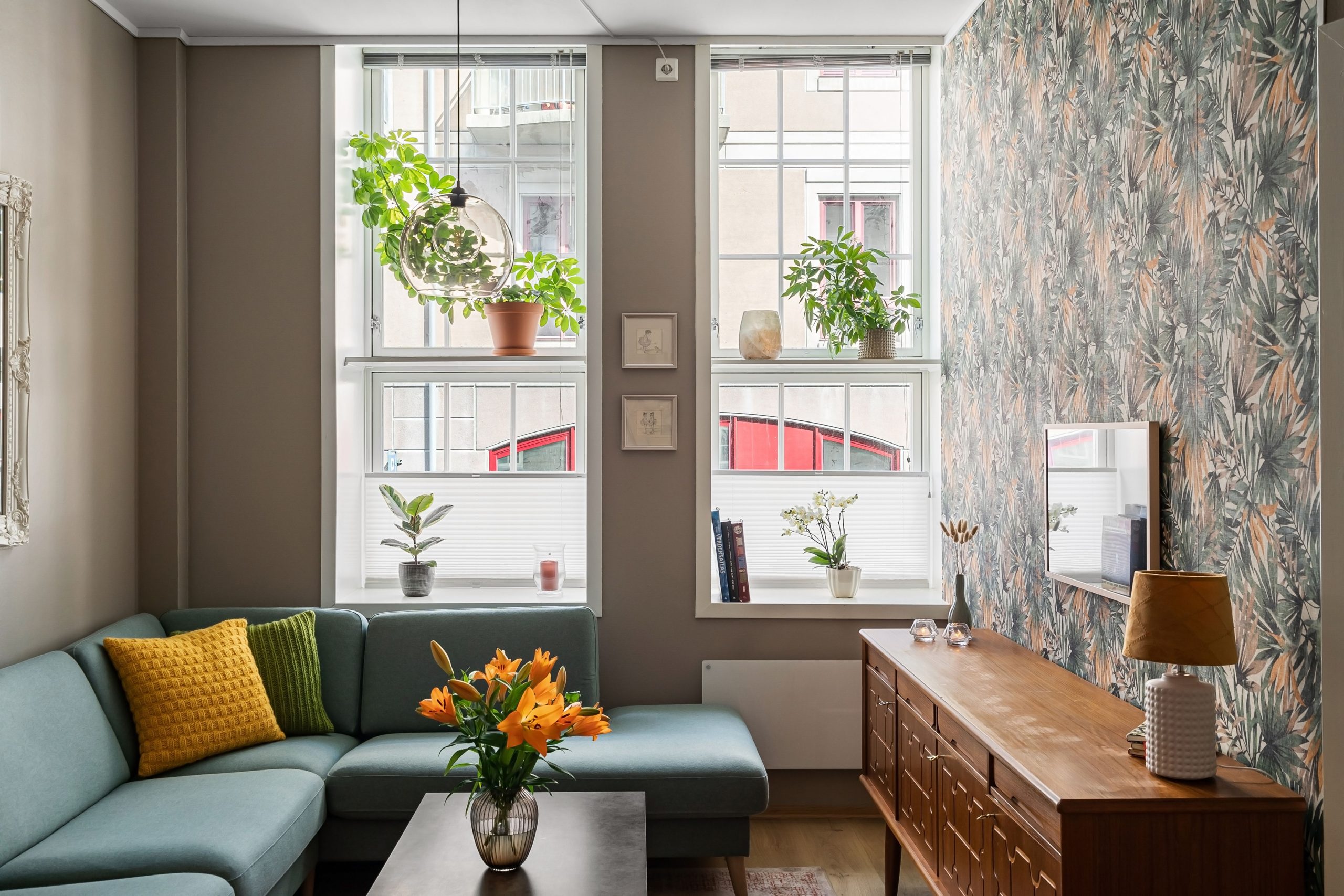
Peel-and-stick wallpaper is a renter’s best friend and a great way to try a bold pattern without a lifelong commitment. (Time: 2-3 hours, Cost: $75-$200). First, wipe down your wall to ensure it’s clean and dust-free. Start in a corner, peeling back only the first 12 inches of the backing. Align the top edge with your ceiling and press firmly. Slowly pull the backing down while smoothing the paper onto the wall with a plastic smoother to eliminate air bubbles. Overlap the next panel by about 1/4 inch, carefully matching the pattern.
13. Style a Cozy Room Around Built-In Shelves and Global Accents
This cozy, collected look follows a simple formula: 50% neutral foundation + 30% coordinated color + 20% pattern play. The white slipcovered sofa, white built-ins, and light shag rug form the neutral 50%. The 30% of color comes from the various shades of blue in the armchair, pillows, and decor. The final 20% is the magic mix of patterns—stripes, abstract florals, and geometric shapes on the pillows—that keeps the eye moving and adds a layer of global-inspired personality.
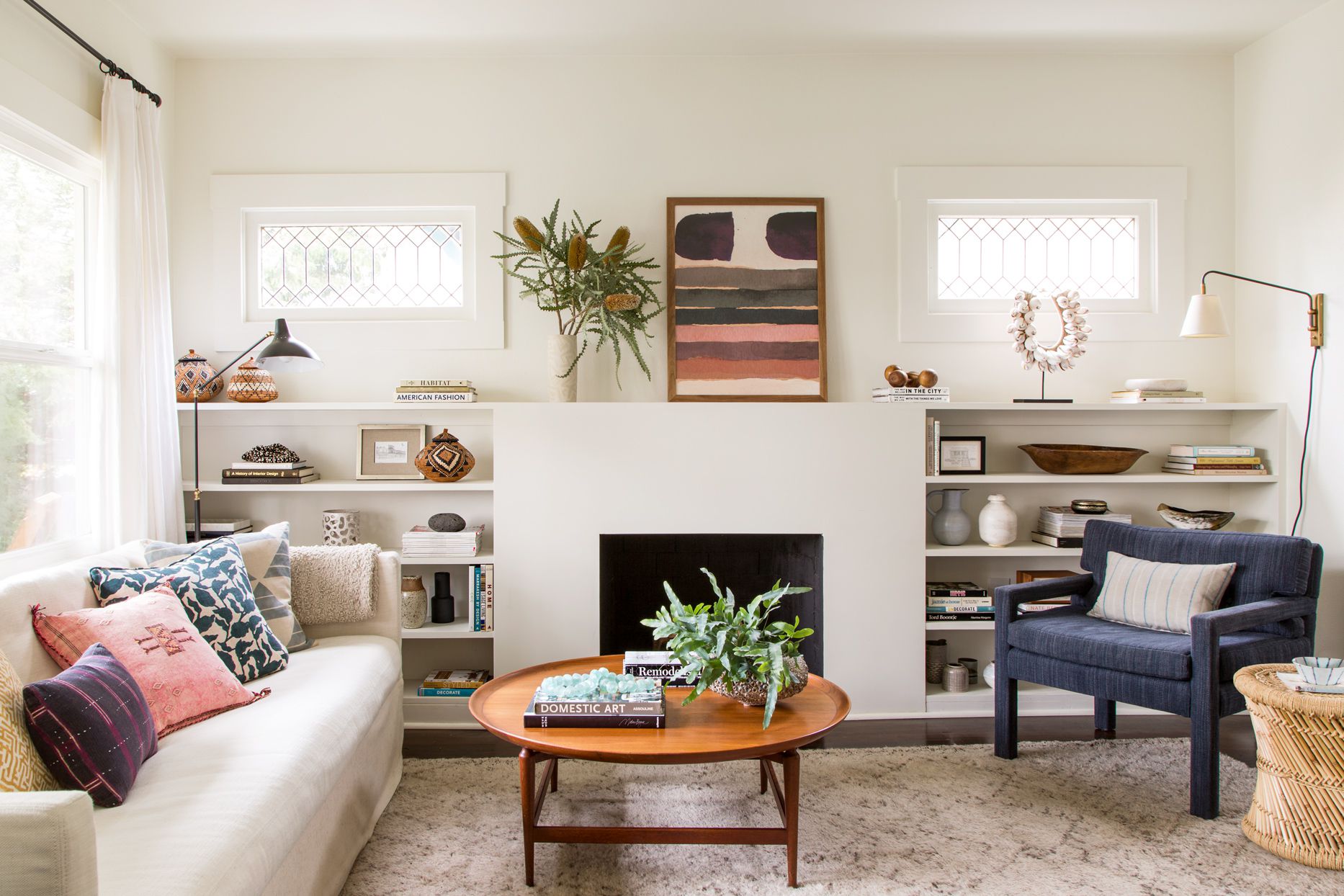
Built-in shelves are a fantastic feature, but they can quickly become a magnet for clutter. The key to this look is curation, not collection. Be prepared to edit what you display. An overstuffed bookshelf can make a room feel chaotic and stressful, defeating the purpose of a cozy living space. If you’re not naturally tidy, consider adding baskets or decorative boxes to some of the shelves to corral smaller items and keep the look clean and intentional.
14. Design a Book Lover’s Dream with Wall-to-Wall Bookshelves
When you have a full wall of bookshelves, resist the urge to fill every single inch with books. To get this styled, airy look, follow the one-third rule. One-third of your shelf space should be books (arranged both vertically and horizontally), one-third should be decorative objects or plants, and one-third should be empty space. This negative space gives your collection room to breathe and prevents the wall from feeling like a heavy, solid block. While the built-ins here are grand and book-focused, compare them to the more decorative shelving in Idea #13 for a different take.
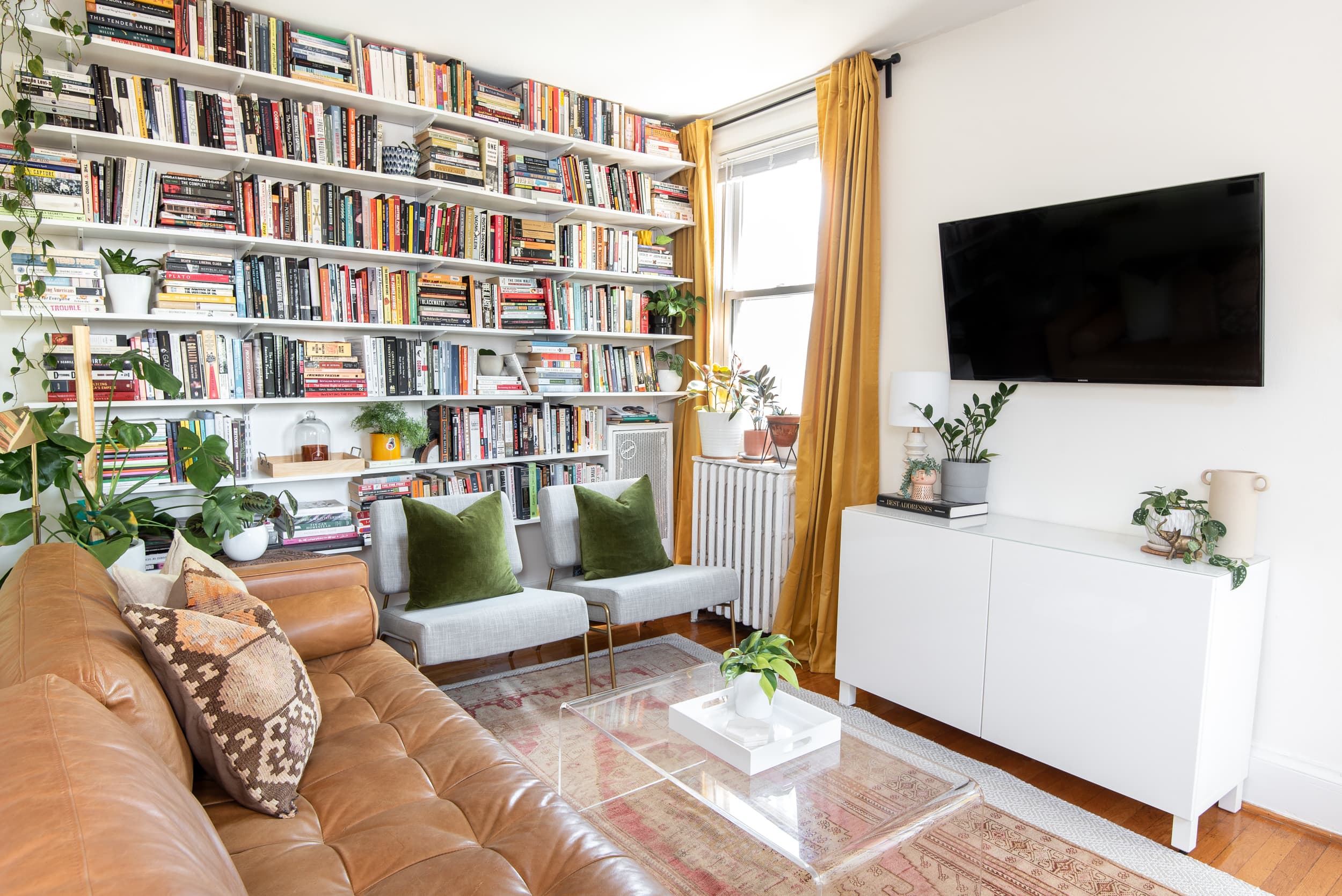
A full wall of built-in bookshelves works best in a room with a bit of breathing room, ideally a space that is at least 12 feet wide. This ensures that the shelving unit feels like a grand feature, not a storage unit that’s closing in the walls. The ceiling height should be standard (8 feet) or higher. In a very small or narrow room, a full wall of shelves can feel overwhelming. In that case, consider lower, horizontal shelving instead to create a sense of width.
15. Get Playful with an Irregular Floral Rug and Organic Shapes
This room has such a relaxed and happy energy because it breaks free from rigid lines. The star is the irregularly shaped rug, whose organic, wavy borders and floral motif defy the typical rectangle. This playful shape is echoed in the round rattan coffee table and the gentle curves of the glass pendant lights. Even the plush corduroy sofa feels soft and inviting. By prioritizing soft forms over hard angles, the entire space feels more approachable, comfortable, and unique.
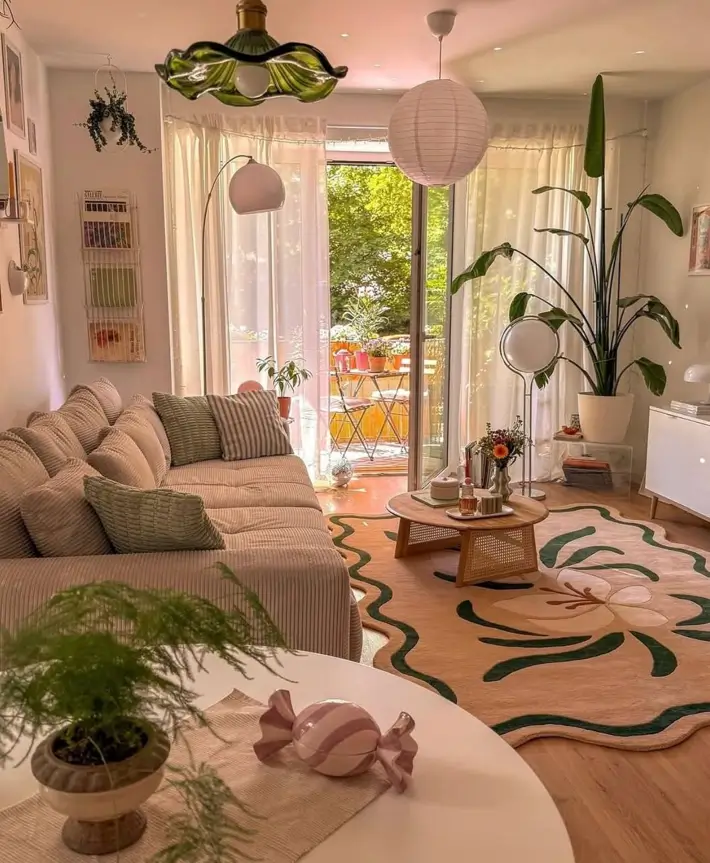
The rise of ‘dopamine decor’—design that brings you joy through color and playful shapes—is a direct reaction to years of minimalist neutrals. In 2026, people are craving homes that reflect their personality and make them smile. This trend celebrates individuality with quirky shapes, unexpected color combinations, and pieces that don’t take themselves too seriously. Irregular rugs, in particular, are having a huge moment on Pinterest and Instagram as an easy way to inject this joyful, artistic spirit into any room.
16. Curate an Urban Bohemian Vibe with Plants and Pattern
The single most important element in creating this urban bohemian atmosphere is the abundance of living plants. From the hanging plants in the windows to the potted ones scattered throughout the room, they breathe life and natural texture into the space. Without them, the room would still be stylish, with its patterned rug and woven furniture, but it would lack the vibrant, jungle-like quality that defines this specific look. The plants are not just decor; they are a primary architectural element.
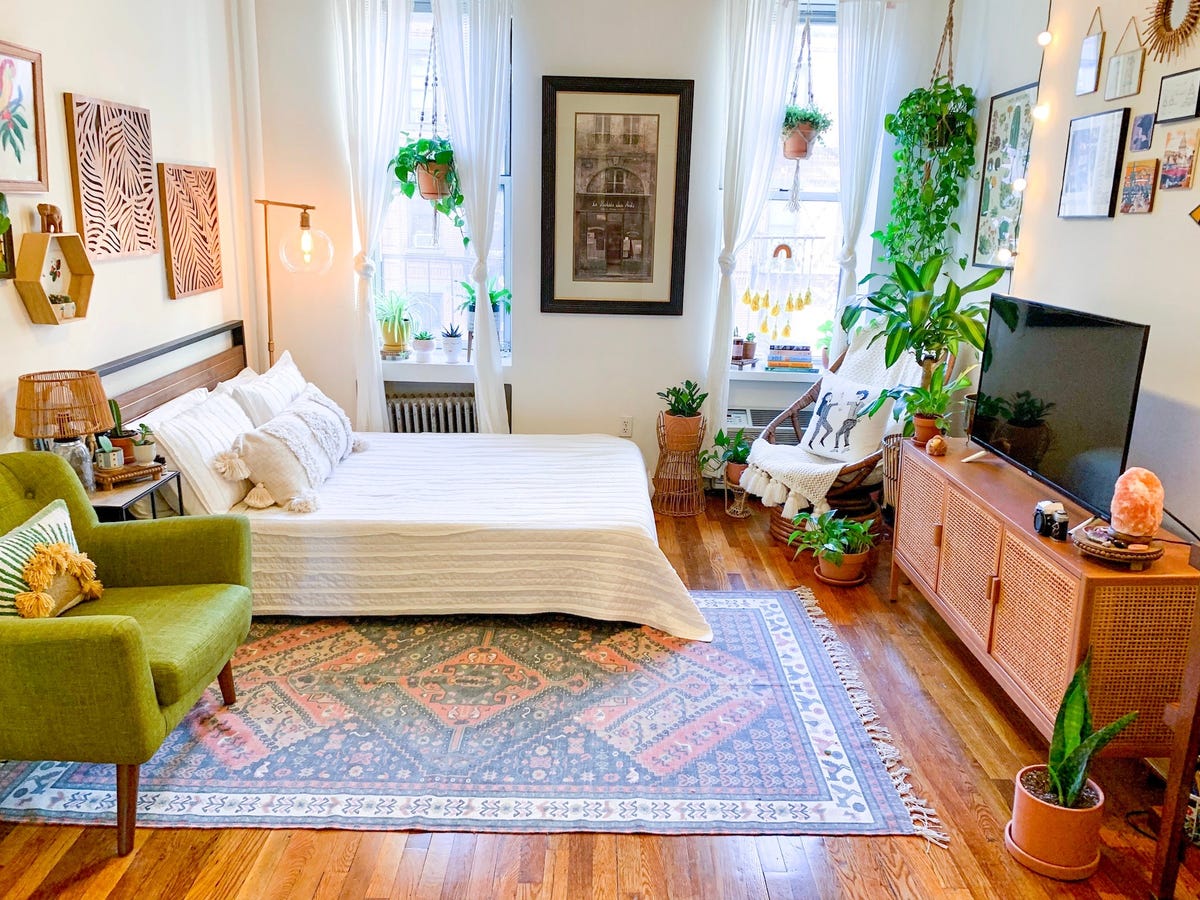
This is a look that thrives on thrifted and second-hand finds. The eclectic, collected feel is its trademark. Scour Facebook Marketplace and local thrift stores for woven rattan furniture, armchairs, and side tables, which are often available for under $50. Patterned rugs can be found affordably at stores like HomeGoods or on Overstock. The best budget tip of all: propagate your plants. Ask friends for cuttings or learn to propagate your own to fill your space with greenery for free.
17. Achieve a Cozy Bohemian Escape with a Loft Bed and Beach Art
A loft bed is a fantastic space-saver, but let’s be honest about the practicalities. Changing the sheets on that top bunk can be a mini-workout. And if you’re someone who gets up in the middle of the night, navigating a ladder in the dark isn’t ideal. It’s a brilliant solution for small spaces or guest areas, but be sure you’re okay with the daily gymnastics before committing. This takes the bohemian feel from Idea #16 and gives it a youthful, playful twist with a lofted layout.
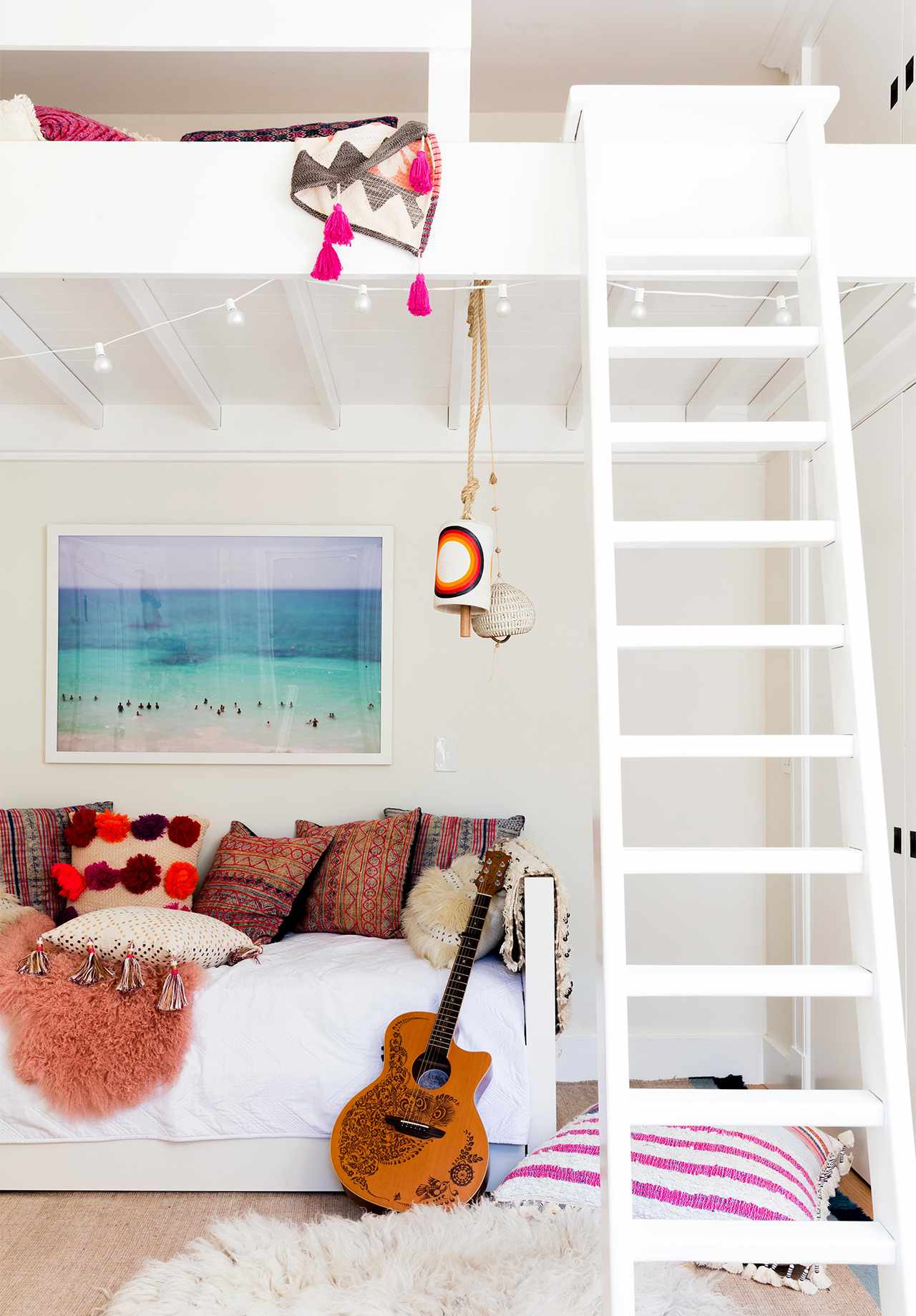
This vibrant bohemian look is all about layering. The formula is approximately 60% neutral base + 30% layered textiles + 10% personal objects. The white walls and white bed frame provide the clean 60% canvas. The 30% comes from the explosion of texture and pattern in the throw pillows, blankets, and rug. The final 10% is where the personality shines through—the large beach print, the carved guitar, and the string lights make the space uniquely yours.
18. Warm Up a Bedroom with Woven Textures and Floating Shelves
This bedroom is a masterclass in texture. It feels so cozy because nearly every surface invites touch. The eye travels from the soft knitted throw blanket to the rougher weave of the wicker trunk, the smooth grain of the wooden shelves, and the varied textures of the patterned rug and pillows. This rich layering of materials is what gives a neutral, earth-toned color palette its depth and interest. Without this textural variety, the room would risk feeling flat and one-dimensional.
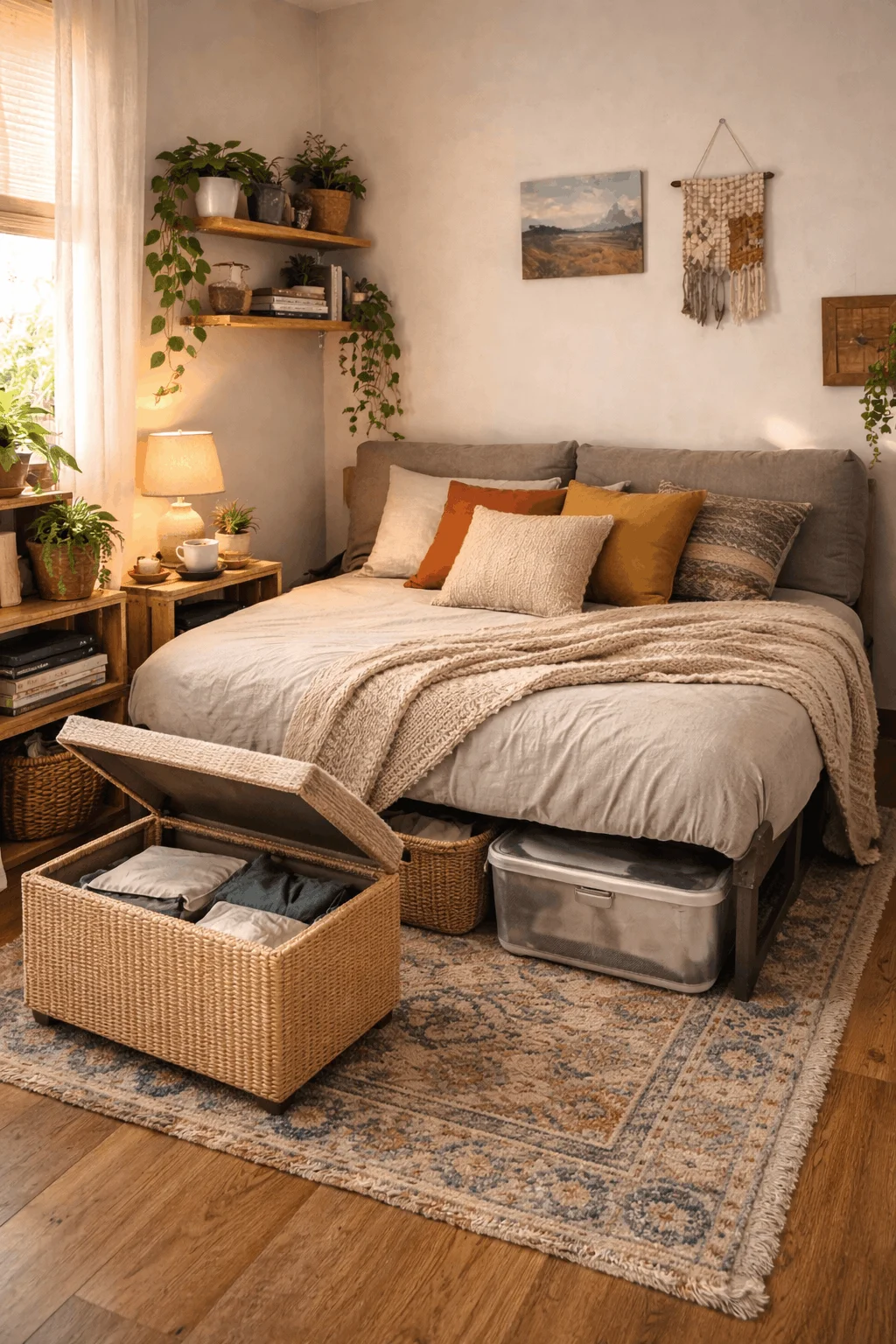
Woven textures like wicker, rattan, and chunky knits are beautiful, but they are also major dust collectors. That charming wicker storage trunk will need regular dusting with a soft brush or the brush attachment of your vacuum to keep it from looking grimy. The same goes for the knitted throw and patterned rug. If you have allergies, be prepared for a consistent cleaning routine. A less maintenance-heavy alternative for storage would be a smooth wooden or painted trunk.
19. Maximize a Cozy Studio with White Textiles and Natural Wood
In a small studio, creating ‘zones’ is crucial. Even without walls, you can use furniture and decor to define different areas. Here, the bed is clearly the ‘rest zone,’ defined by its plush white textiles. The kitchenette is the ‘utility zone,’ and the area to the right with the side table and lamp is a mini ‘living zone.’ Using a small plant stand or a different texture on the floor can also help visually separate spaces without adding physical barriers, making the studio feel more organized and intentional. This minimalist studio is a perfect counterpoint to the vibrant, eclectic studio shown in Idea #4.
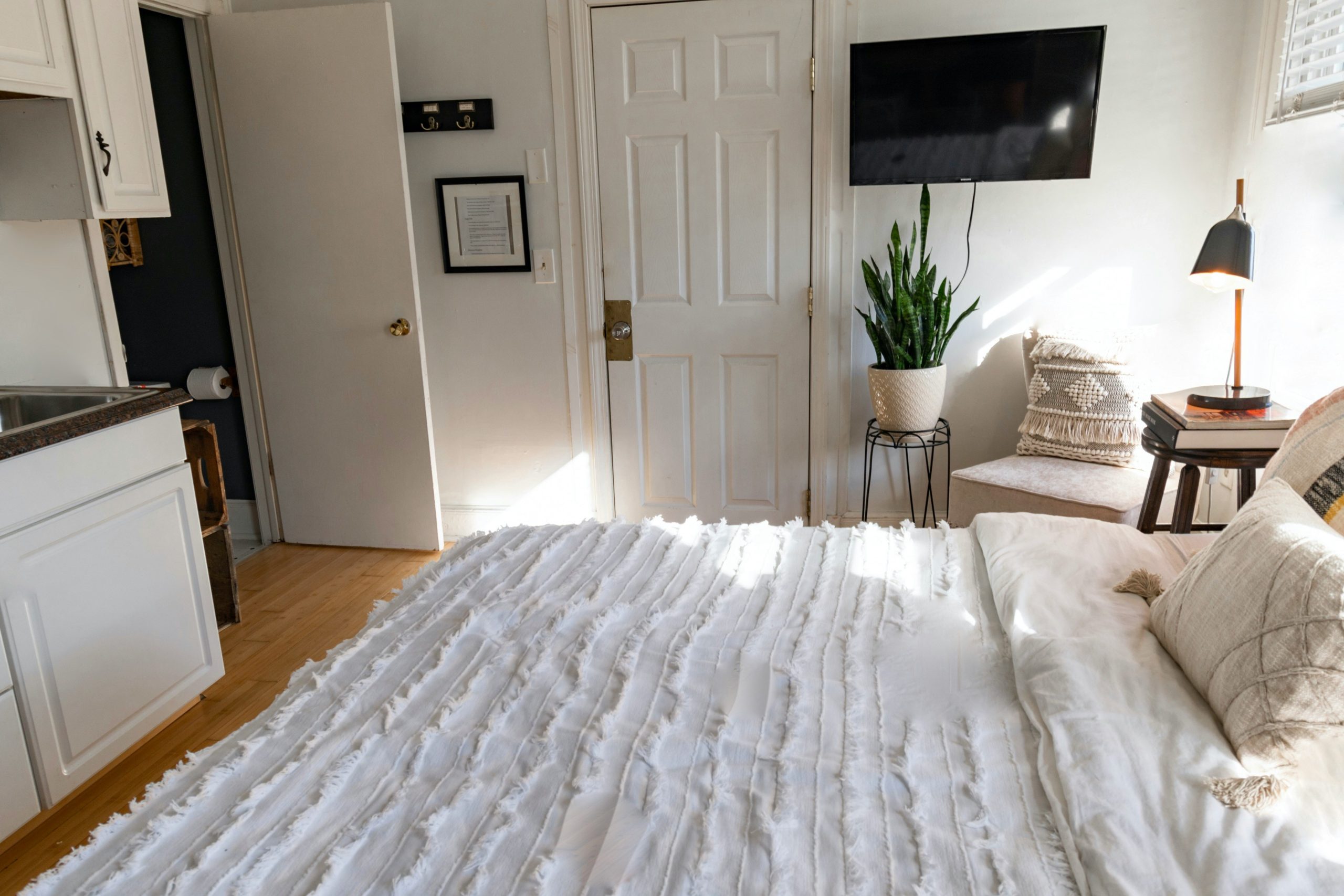
This layout is ideal for a compact rectangular studio, likely under 400 square feet. Keeping the color palette light and consistent—primarily white and light wood—is essential for making a small space feel airy rather than cramped. Mounting the television on the wall is a non-negotiable space-saver here, freeing up floor space that a media console would otherwise occupy. This strategy wouldn’t be as necessary in a larger apartment but is absolutely key to this studio’s success.
20. Carve Out a Bedroom Niche in a Compact Open-Plan Apartment
A partial wall is a brilliant way to create the feeling of a separate bedroom without closing off a small space. (Time: 1 weekend, Cost: $300-$600). First, build a simple frame with 2×4 lumber for the desired length and height. Secure the frame to the floor, ceiling, and one wall. Cut drywall to size and screw it into the frame. Apply joint compound to the seams and screw holes, sand smooth once dry, then prime and paint to match your existing walls. It’s a project that adds major architectural value for a minor investment.
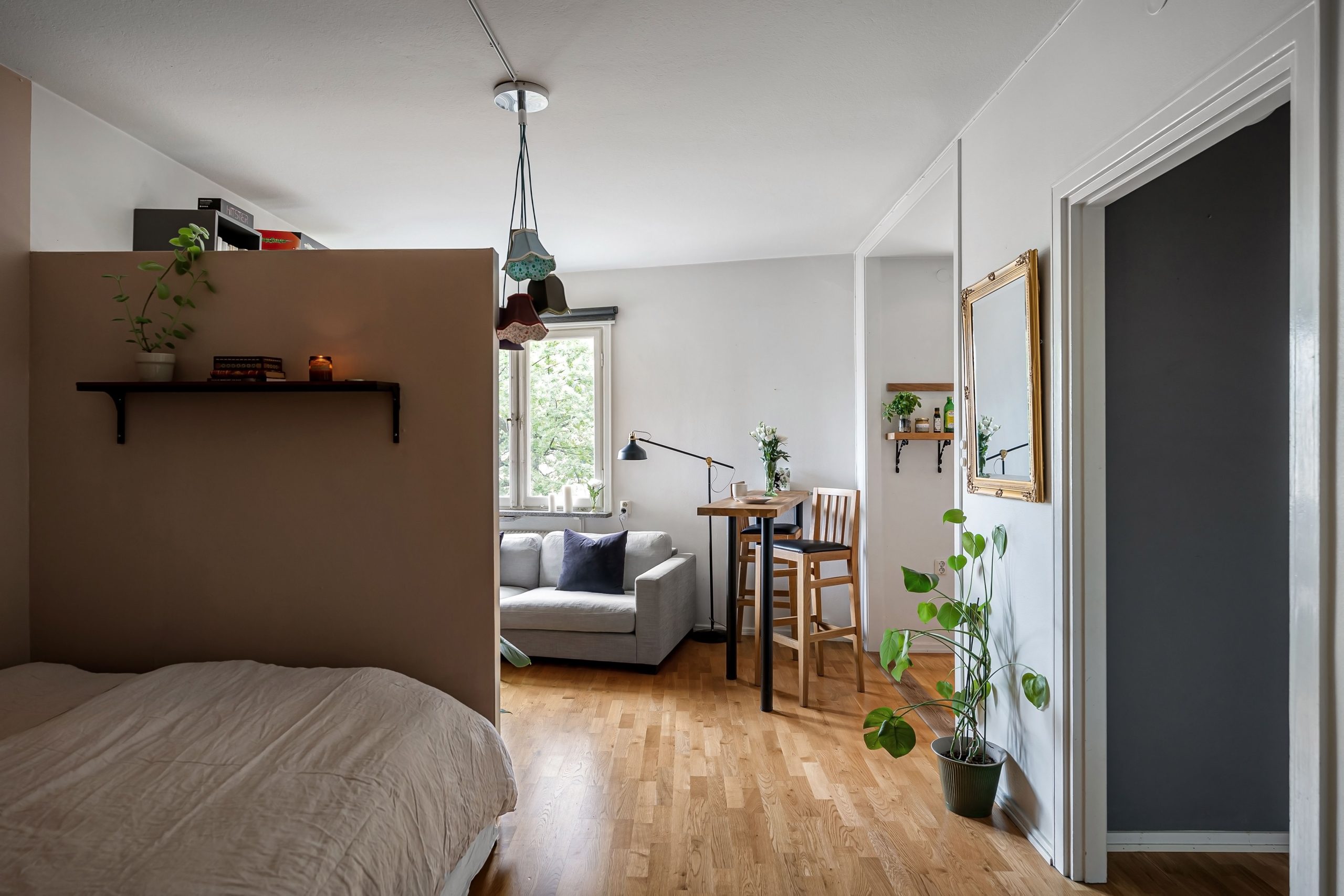
This look feels high-end, but it can be replicated on a serious budget. The light grey sofa can be an IKEA find. For the bar-height dining table, look for a simple countertop and leg set from a big box store or even find a freestanding kitchen island on Facebook Marketplace. The ornate gold mirror, a key accent piece, is a classic thrift store find. A can of gold spray paint can transform any old mirror frame into a luxe-looking statement piece for under $20.
21. Layer Patterns and Art in a Traditional yet Eclectic Living Room
The single most defining feature of this room is the fearless and expert mixing of patterns. From the bold stripes on the Roman blind to the subtle geometrics on the cushions, the traditional motif on the ottoman, and the ornate design of the rug, pattern is everywhere. It’s this layering that gives the room its rich, cultured, and deeply personal character. If you were to replace all the patterns with solid colors, the room would still be nice, but it would lose its unique story and eclectic soul.
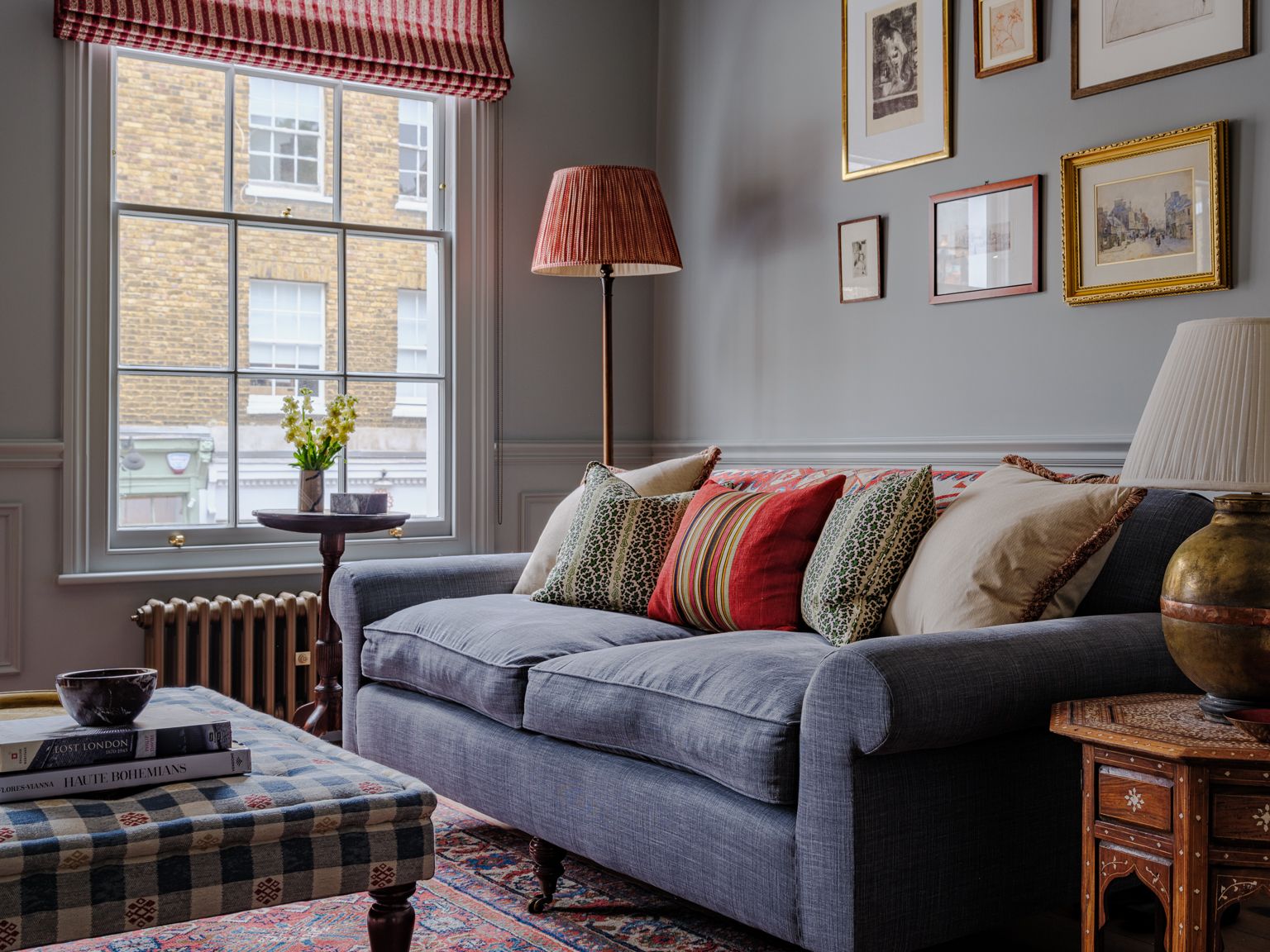
The design works because it’s grounded by a strong, unifying color: blue. The deep blue of the sofa acts as an anchor, and different shades of blue and complementary reds and creams are repeated throughout the patterns and artworks. This creates a sense of cohesion, allowing the different patterns to play together without creating chaos. The traditional paneled walls provide a quiet, structured background that holds all the eclectic energy in place.
22. Define a Dining Nook with a Bold Blue Accent Wall
This room’s successful formula is 70% neutral base + 20% dark anchor + 10% metallic warmth. The light wood floors, white walls, and light rug create the airy 70% foundation. The deep blue accent wall and the dark gray velvet sofa act as the 20% anchor, adding weight and sophistication. The final 10% comes from the brass legs of the coffee table, which inject a touch of warmth and glamour that elevates the entire space, preventing the cool tones from feeling too flat.
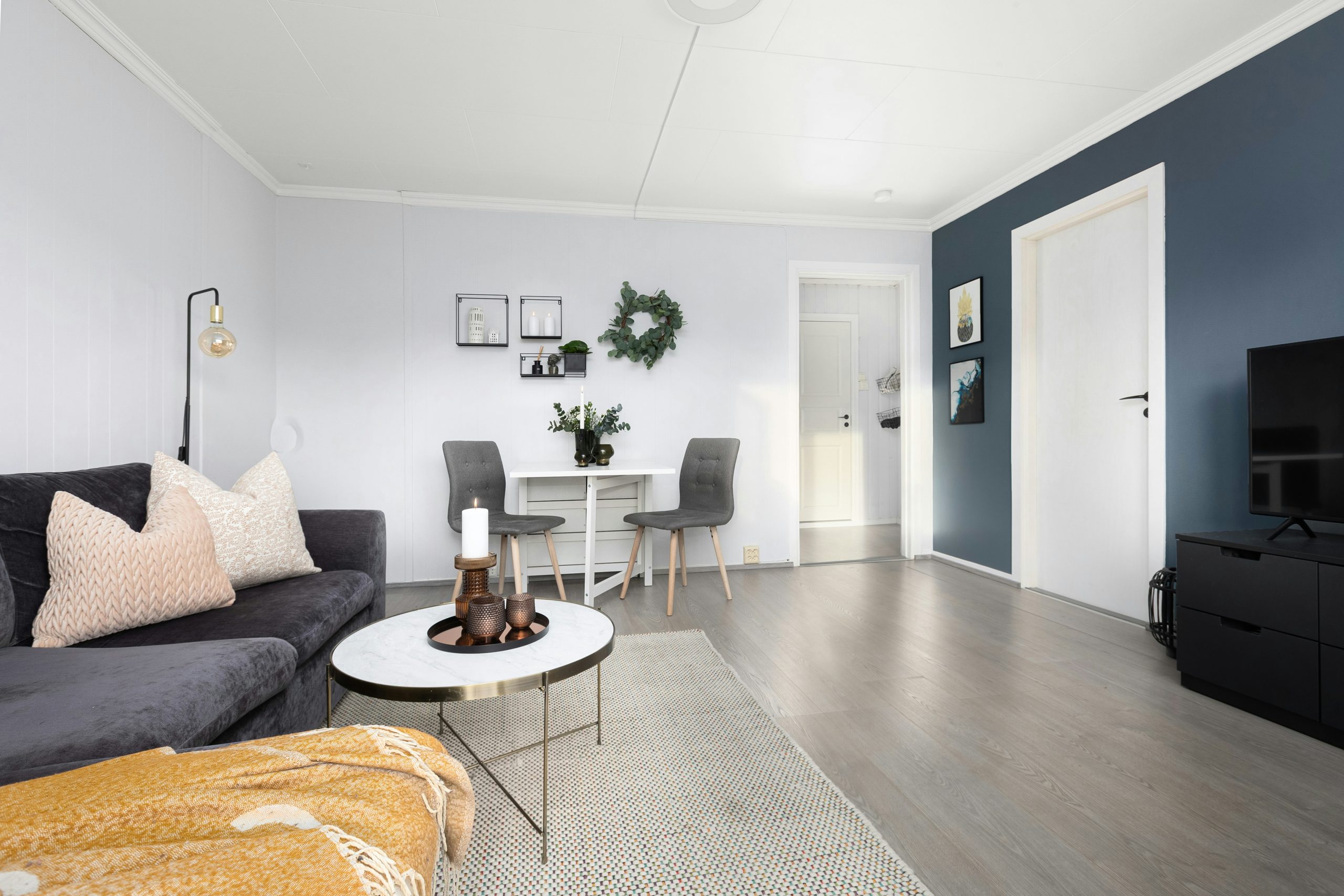
A dark blue accent wall is a fantastic way to add depth, but choosing the right paint finish is crucial. Avoid a completely flat or matte finish for a feature wall, especially in a high-traffic area. Matte paints are harder to clean and can show scuffs and fingerprints easily. Opt for an eggshell or satin finish instead. It will have a subtle sheen that is much more durable and wipeable, keeping your beautiful blue wall looking fresh and clean for years to come.
23. Achieve a Calm, Functional Space with Neutrals and Wood Tones
When working with a neutral, open-plan space, texture is your best friend. Notice the interplay between the matte black tile backsplash, the smooth grain of the wooden floors and countertop, the soft weave of the sofa, and the cool, hard surface of the white metal coffee table. In the absence of bold color, a rich mix of textures is what creates visual interest and keeps the space from feeling boring. Aim for at least four different textures in your main living area.
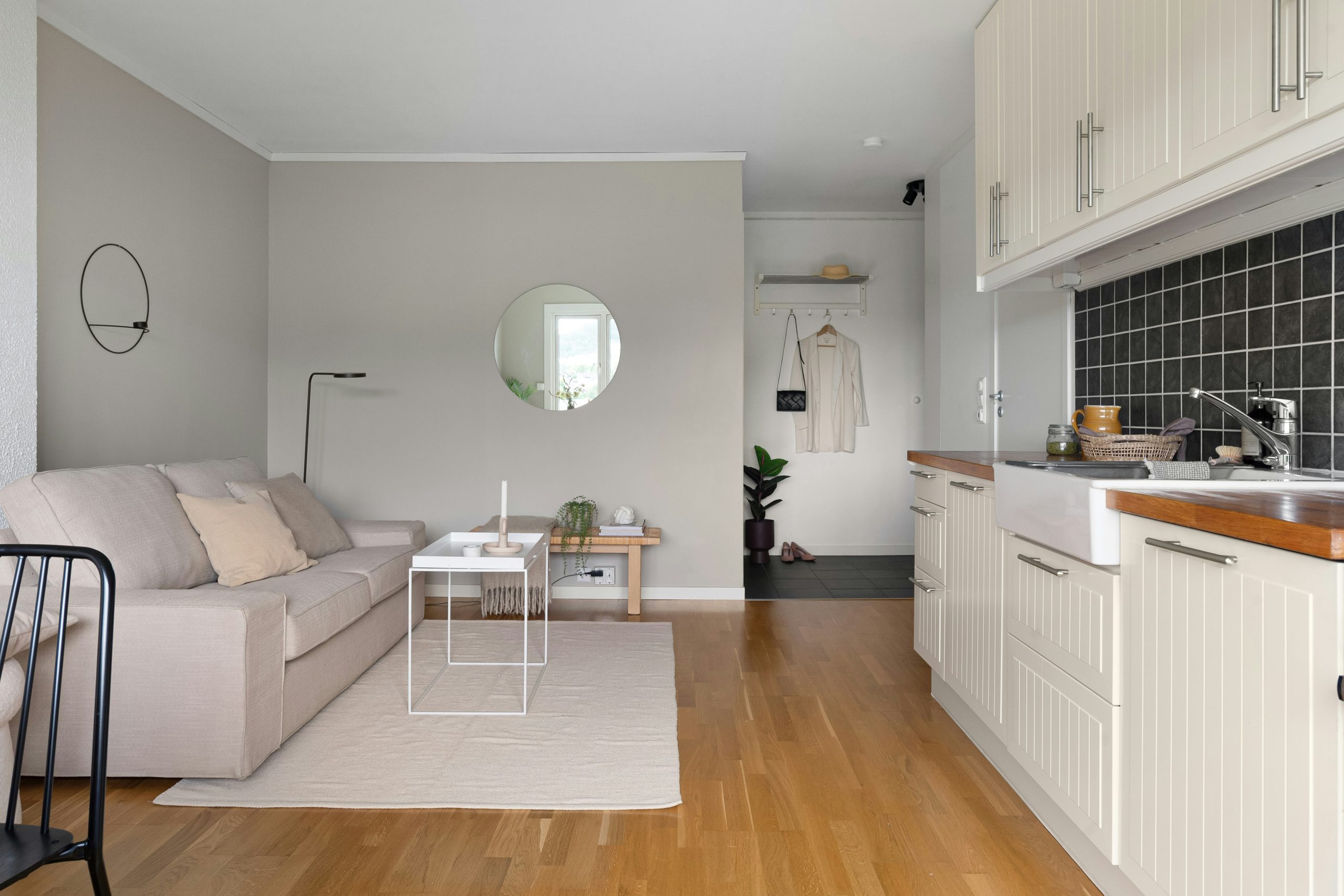
Getting this clean, cohesive look is surprisingly affordable. Here’s a possible breakdown:
- Paint (for walls and trim): $150 – $250
- IKEA sofa (like the SÖDERHAMN): $700 – $900
- Modern coffee table (from Wayfair/Target): $100 – $200
- Peel-and-stick black backsplash tiles: $100 – $180
- Round wall mirror: $50 – $100
- TOTAL: $1,100 – $1,630
Budget alternative: Find a similar sofa on Facebook Marketplace for 50-60% less, and look for mirrors at thrift stores or HomeGoods.
24. Create Contrast with Dark Floors and a Bold Patterned Rug
This room’s success lies in the high-contrast play between the dark wood flooring and the large, graphic black and off-white rug. The dark floors provide a rich, deep foundation, while the bold pattern of the rug electrifies the space and prevents the floor from feeling like a dark void. The charcoal sofa and light beige armchair then pull their colors directly from the rug and floor, creating a cohesive look that feels intentional and well-planned, rather than a random assortment of furniture.
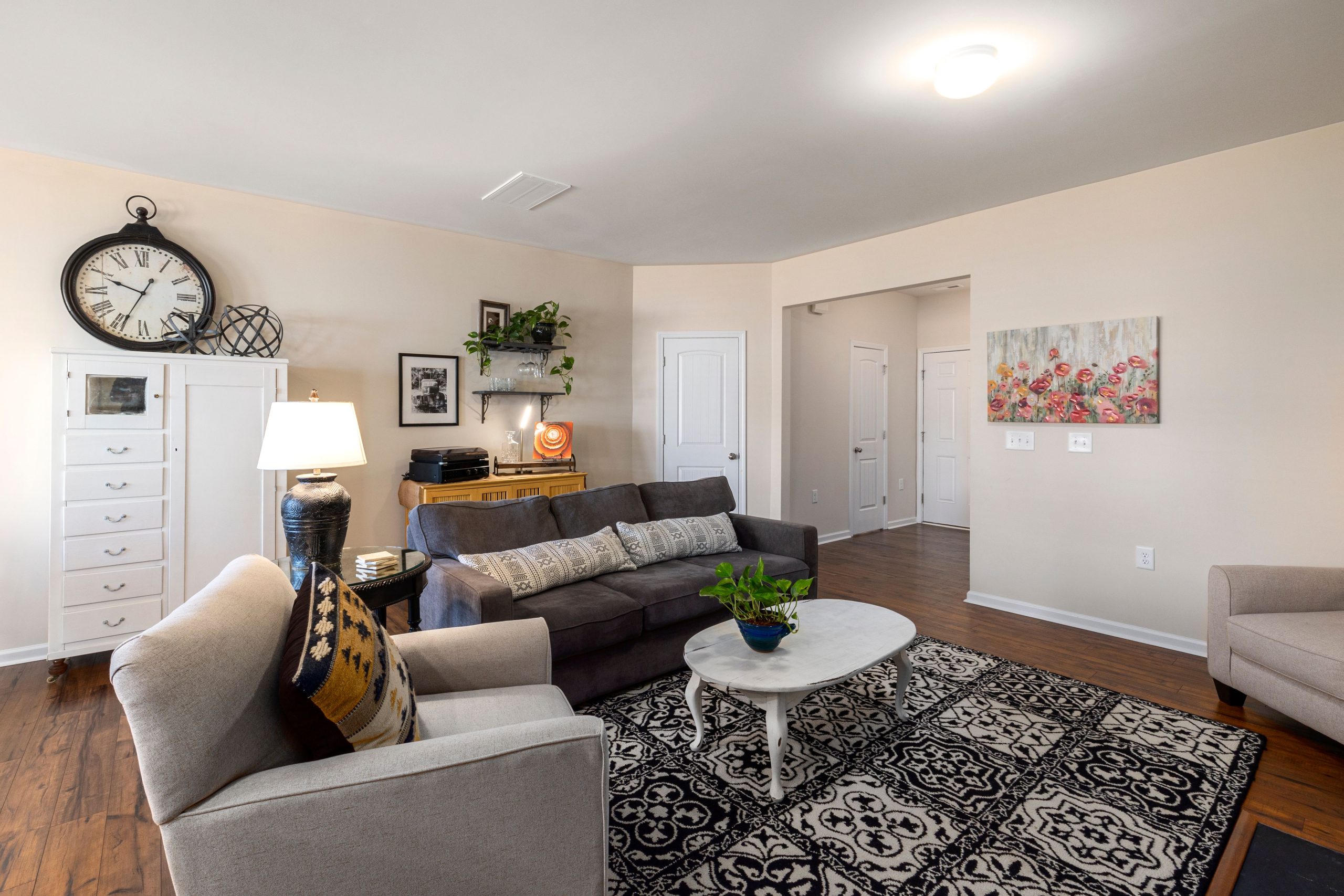
Before you commit to dark flooring, consider the following:
- Think about light: Does your room get a lot of natural light? Dark floors can absorb light and make a dim room feel even darker. This room balances it with beige walls and light furniture.
- Consider your lifestyle: Dark, smooth floors show every speck of dust, crumb, and pet hair. They require more frequent sweeping and cleaning than lighter, textured floors to look their best.
- Plan for scratches: Scratches and scuffs tend to be more visible on dark laminate or wood. Be prepared to use felt pads under all furniture legs and rugs in high-traffic areas.
Conclusion
Remember, decorating on a budget is all about smart choices, not sacrifices. Use these ideas as a starting point to tell your own story and create a space that feels like you. Happy decorating! Now go get inspired on Pinterest and start planning your perfect space.