29 Buckhead Landscape and Design Ideas for 2026 That Will Transform Your Outdoor Space

You know that feeling when you finally find the Buckhead landscape idea that looks exactly right for your space? That perfect blend of lush greenery and functional design you’ve been saving on Pinterest for months? We live for that feeling. After filtering through hundreds of options across Frontgate, Serena & Lily, and local favorites like Pike Nurseries, we narrowed it down to 29 ideas that actually deliver. We’re showing you everything from sweeping modern estates to intimate, natural gardens, with looks ranging from a cool $5,000 to over $150,000.
This isn’t just another gallery of pretty pictures. We’re breaking down exactly why these designs work, offering budget alternatives for high-end looks, and sharing real-talk maintenance tips. In 2026, the focus is all about creating personal sanctuaries—outdoor spaces that feel like a true extension of your home, not just a patch of grass. And stay until the end — we break down the most common mistakes that can ruin these looks. 📌 Save this to Pinterest for later — you’ll want to revisit these ideas.
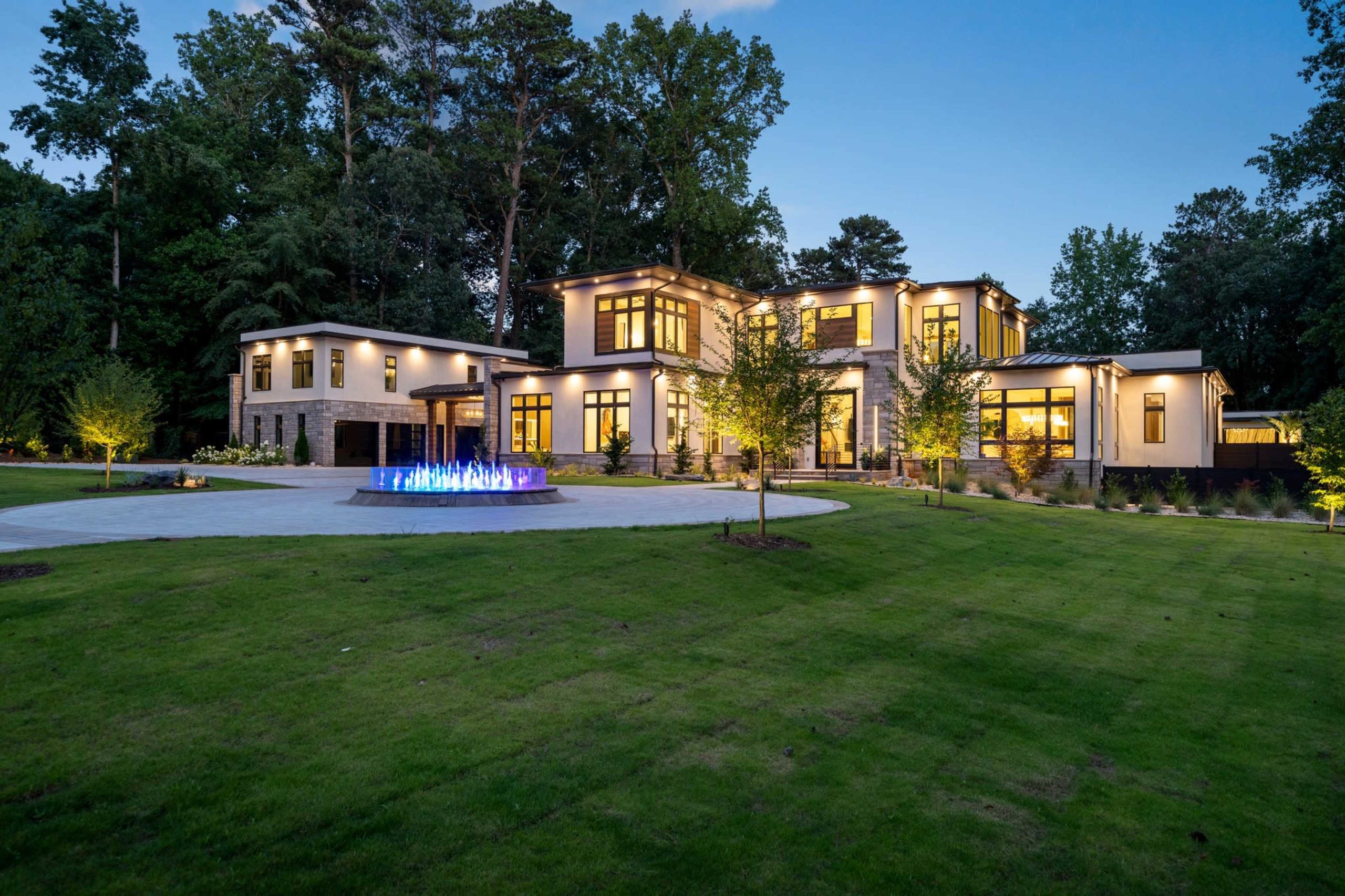
1. Illuminate a Modern Facade with Architectural Uplighting
This design succeeds by treating the house itself as the main event. Rather than hiding the structure, the landscape lighting highlights its clean lines and modern form. The key is the strategic use of uplighting, which traces the vertical planes of the light-colored exterior and casts a dramatic glow on the mature trees, creating depth and dimension. The circular driveway with its color-changing fountain isn’t just for cars; it’s a sculptural element that guides the eye and adds a touch of playful sophistication to the otherwise formal composition.
|
📋 Copy HEX 🔗 Share |
When planning landscape lighting, think in layers. Use a combination of fixtures for different effects. For a home like this, you’d use wide-angle floodlights at the base of the facade for a general wash of light and narrow-beam spotlights (between 15 and 30 degrees) to accent specific architectural details like columns or peaks. Keep all your bulbs in the same color temperature (around 2700K is a warm, inviting white) for a cohesive, high-end look, with the exception of special features like the color-changing fountain.
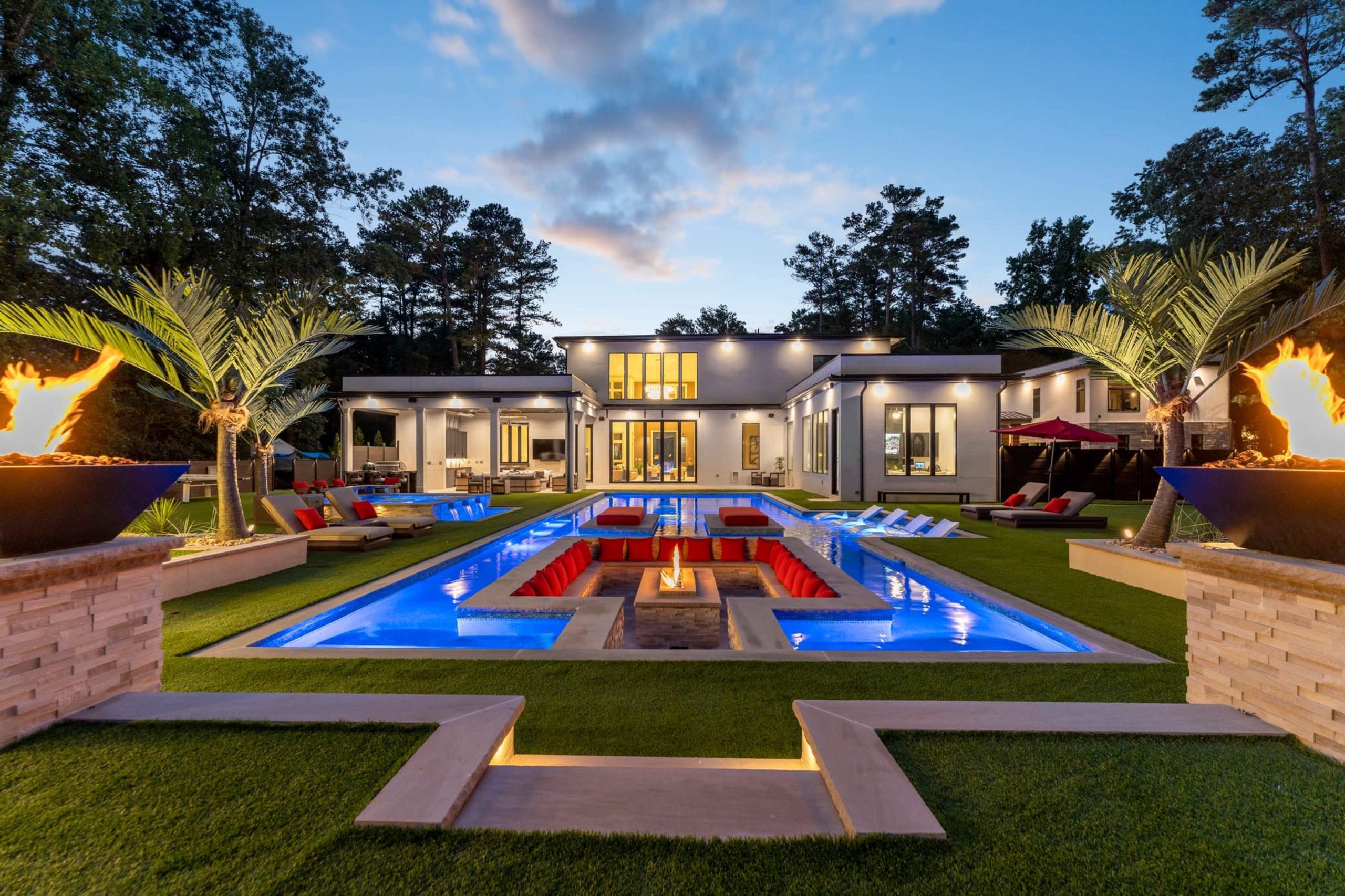
2. Combine Fire and Water with a Sunken Pit and Illuminated Pool
The sunken fire pit is the heart of this entire design. By lowering the seating area, it creates an intimate, cozy destination that feels separate from the sprawling pool deck. This single move transforms the yard from a simple pool area into a multi-zone entertainment space. The vibrant red cushions are a brilliant touch, providing a fiery visual echo of the flames themselves and a bold contrast to the cool blue of the pool. Without this defined, warm gathering spot, the large, modern space could feel cold and impersonal.
|
📋 Copy HEX 🔗 Share |
A setup this luxurious requires serious planning and upkeep. Sunken pits need excellent drainage to prevent them from turning into ponds after a rainstorm. The vibrant blue pool lighting, while stunning, relies on high-quality, professionally installed LED systems that can be costly to repair. And while that emerald green turf looks perfect, it’s almost certainly high-end artificial grass, which requires regular cleaning with blowers and occasional rinsing to stay pristine, especially in a high-traffic area around a pool.
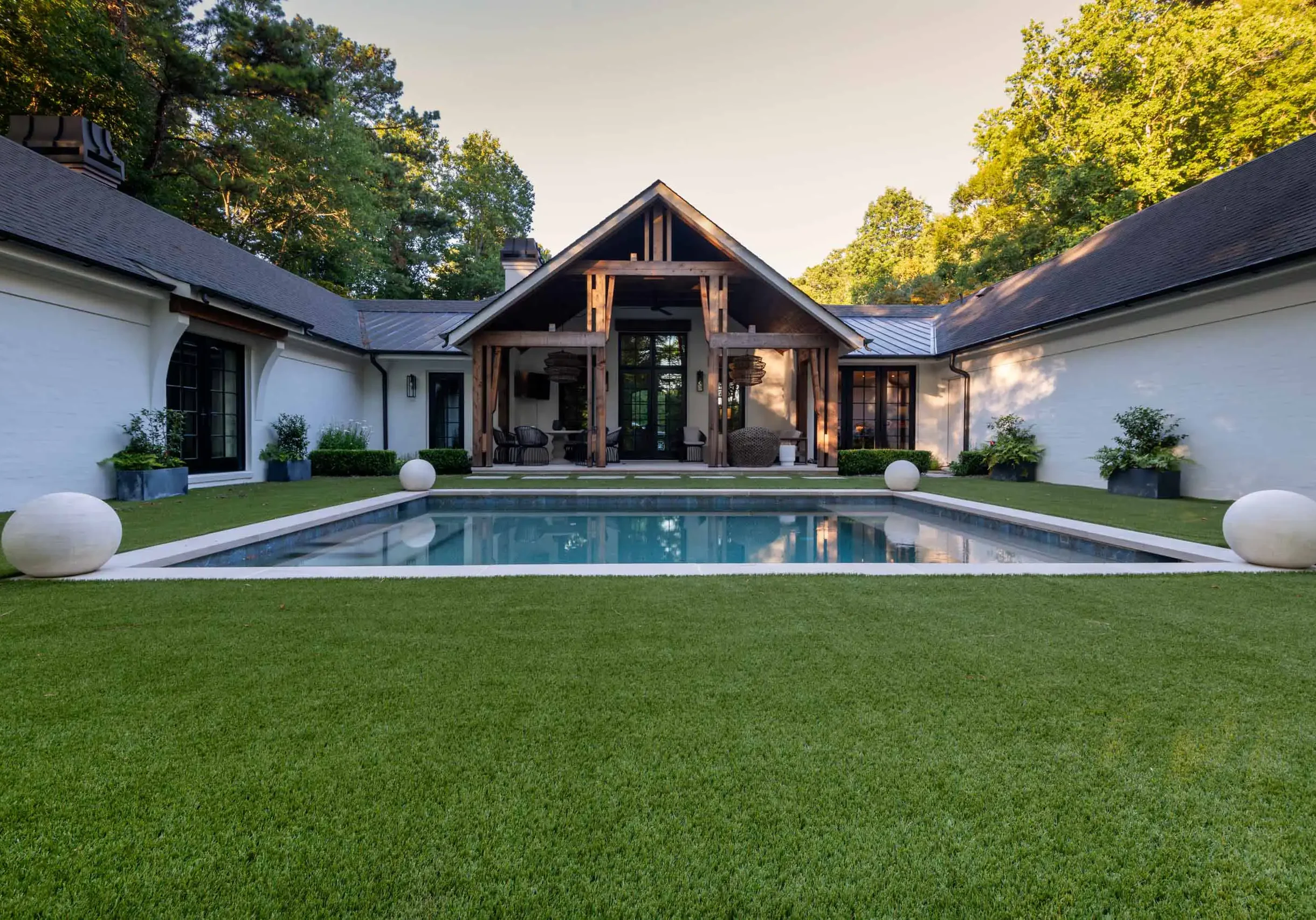
3. Frame a Courtyard Pool with Rustic Wooden Beams
This look is a masterclass in balancing styles. Think of it as 70% modern minimalism + 30% rustic warmth. The clean lines of the U-shaped white building, the simple rectangular pool, and the geometric precision of the artificial turf create a crisp, modern base. Then, the heavy wooden beams and columns of the patio cover are introduced, adding organic texture and a touch of history. The formula works because the rustic elements are contained to one zone, preventing the design from feeling confused. You could swap the wood for black steel for a more industrial vibe and still maintain the balance.
|
📋 Copy HEX 🔗 Share |
A central courtyard design is incredibly effective but requires specific architecture. This works best with a U-shaped or L-shaped home, where the building itself provides privacy and a sense of enclosure. For this look to feel balanced and not cramped, the courtyard itself should be at least 40 feet wide and 60 feet long to comfortably accommodate the pool, decking, and patio structure. The ceiling height of the covered patio needs to be at least 10 feet to support the scale of those substantial wooden beams without feeling oppressive.
4. Embrace a Moody Palette with a Dark Siding and Elevated Planters
Dark, moody exteriors have been gaining momentum on Pinterest for a reason: they feel substantial, elegant, and surprisingly warm. This home nails the trend by committing fully to a dark gray or black for both the siding and the painted brick. The key to keeping it from feeling gloomy is the introduction of layered greenery. The elevated planters filled with lush shrubs create a vibrant green buffer that brings life to the facade. It’s a sophisticated look that moves beyond the typical white farmhouse and feels incredibly custom and confident.
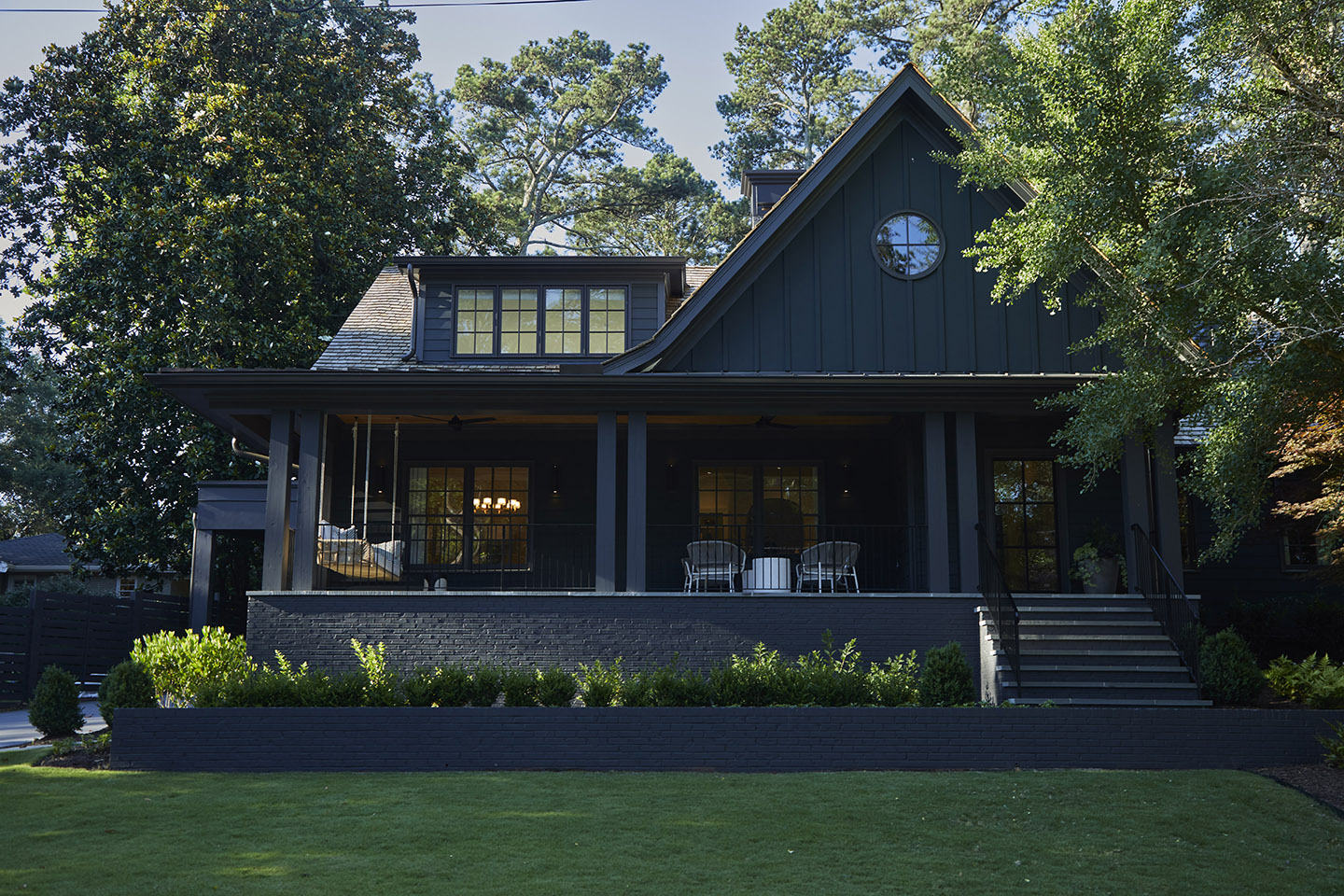
Dark paint, especially black, absorbs more heat and UV rays than lighter colors. This means it can fade faster and may require repainting every 5-7 years compared to the 8-10-year lifespan of a lighter color. It also shows dust, pollen, and water spots more readily, so you’ll want to plan for an annual soft-washing to keep it looking sharp. On the plus side, it’s fantastic at hiding minor imperfections in siding or brickwork, making it a great choice for older homes needing a modern update.
5. Soften a Brick Exterior with a Wall of Living Ivy
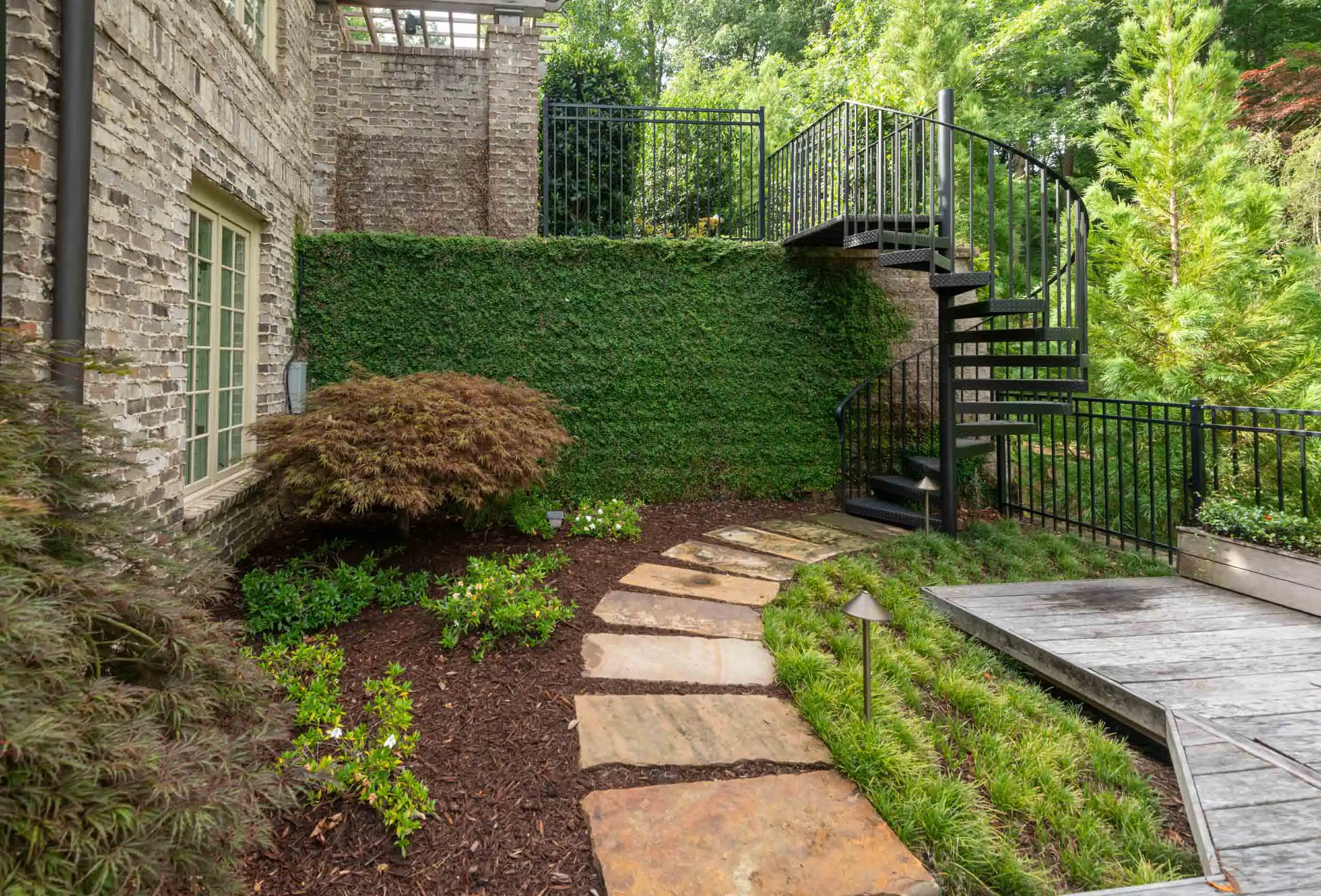
The success of this landscape lies in its textural contrast. The rough, earthy gray brick with its raked mortar joints provides a beautifully structured, man-made canvas. The dense, organic ivy acts as a living tapestry, softening the hard lines and infusing the scene with a sense of age and permanence. This dialogue between the orderly brick and the wild ivy is what creates the charm. The black metal of the spiral staircase adds a third, sleeker texture, completing a sophisticated, multi-layered material palette.
|
📋 Copy HEX 🔗 Share |
The wall of ivy is undeniably the showstopper here. It’s the single element that elevates the design from a simple brick house to something enchanting and romantic. It introduces a massive dose of color and life, connects the home directly to the garden, and creates a powerful vertical element that draws the eye upward. Removing the ivy would leave you with a perfectly nice backyard, but it would lose its soul, its unique identity, and that wonderful feeling of a secret garden.
6. Design a Complete Outdoor Living Zone with a Pool and Patio Structure
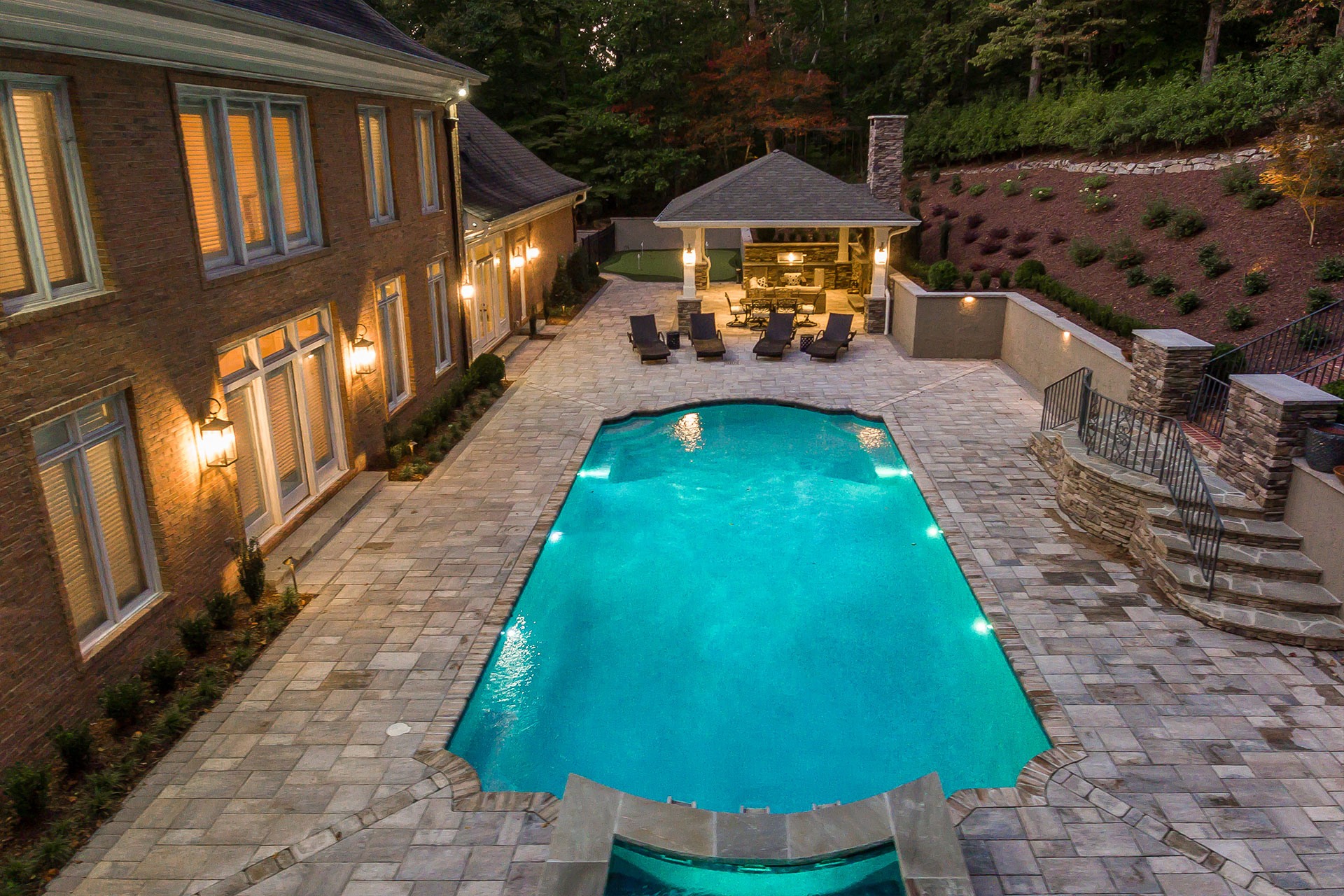
Recreating this all-in-one entertainment backyard is a significant investment in both lifestyle and property value. The seamless integration of the pool, patio, and covered kitchen is what makes it feel so luxurious.
|
📋 Copy HEX 🔗 Share |
- Pool & Decking: $80,000 – $150,000+
- Covered Patio Structure with Fireplace: $50,000 – $100,000
- Outdoor Kitchen Appliances: $10,000 – $25,000
- Furniture & Lighting: $8,000 – $20,000
- Landscaping & Retaining Walls: $15,000 – $30,000
- TOTAL: $163,000 – $325,000
Budget alternative: Achieve a similar zone-based layout for 50% less by opting for a high-quality fiberglass pool, a pre-fabricated pergola instead of a custom structure, and a standalone grill island instead of a built-in kitchen.
To ensure a large, multi-functional space feels cohesive, use one primary material for all the hardscaping. Here, light-colored pavers are used for the entire pool deck, the patio floor, and the pathways. This creates a unified visual foundation that ties the different zones—poolside lounging, dining, and cooking—together. Using different materials for each area would have made the space feel choppy and much smaller. It’s a simple rule that has a massive impact on the final result.
7. Create Distinct Zones on an Expansive Stone Patio
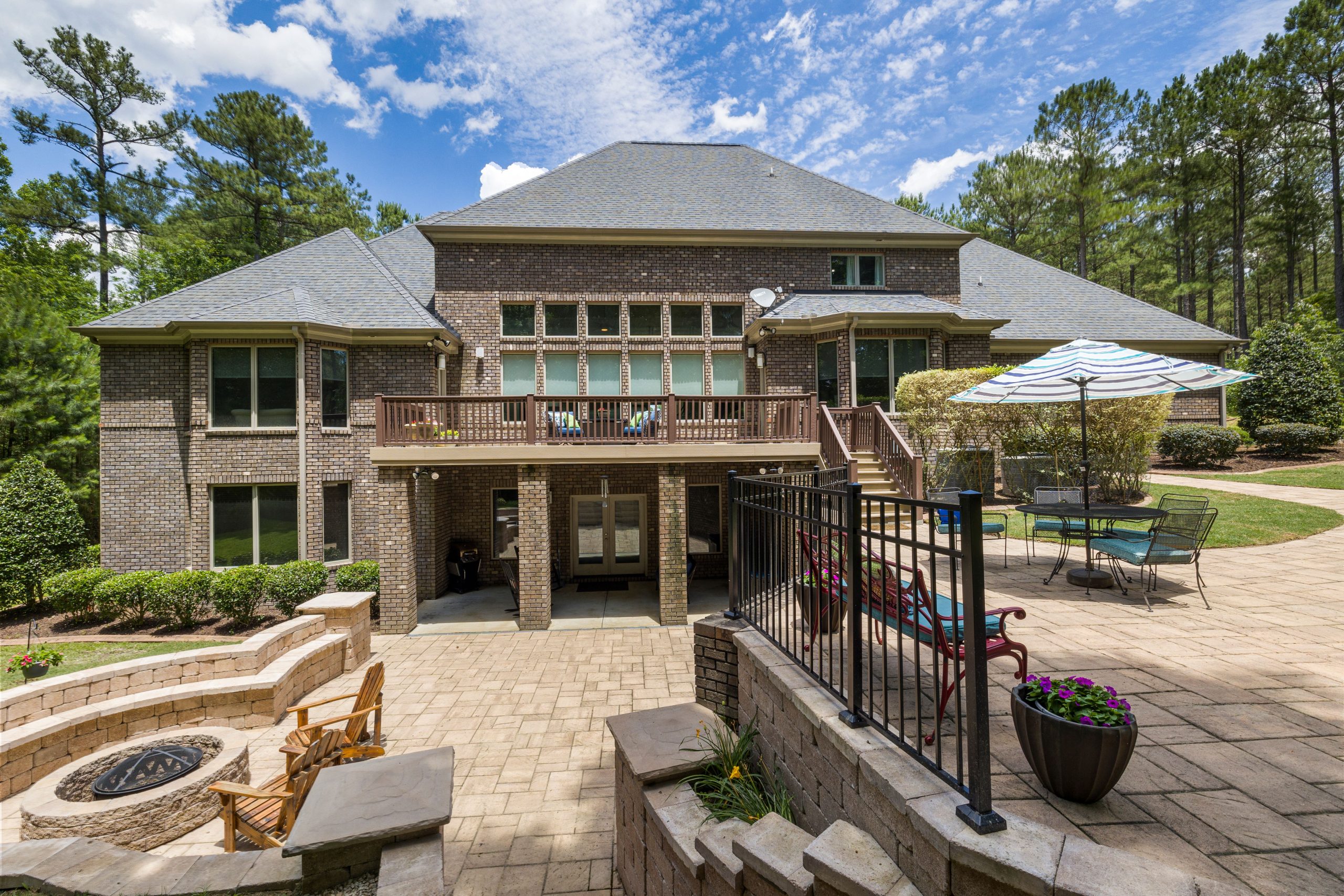
This kind of multi-zone patio works best for larger backyards, typically requiring a minimum of 800-1,200 square feet of open, relatively flat space adjacent to the house. To accommodate a fire pit area with seating for four, a dining area for six, and comfortable circulation paths between them, you need breathing room. Notice how the fire pit zone is circular, creating a sense of destination, while the dining area is defined by the umbrella. Compare the grand scale here with the more intimate feel of the single zone in Idea #2.
|
📋 Copy HEX 🔗 Share |
You don’t need a massive budget to create distinct outdoor ‘rooms.’ Instead of custom stone patios, use pea gravel or decomposed granite to define a fire pit area (Cost: $200-500). For the dining zone, a simple wood deck kit from a big box store can provide a raised platform (Cost: $1,500-$3,000). Use large outdoor rugs to visually anchor each seating or dining arrangement. The key is to create clear visual boundaries, which can be done with materials, levels, or even just smart furniture placement instead of expensive hardscaping.
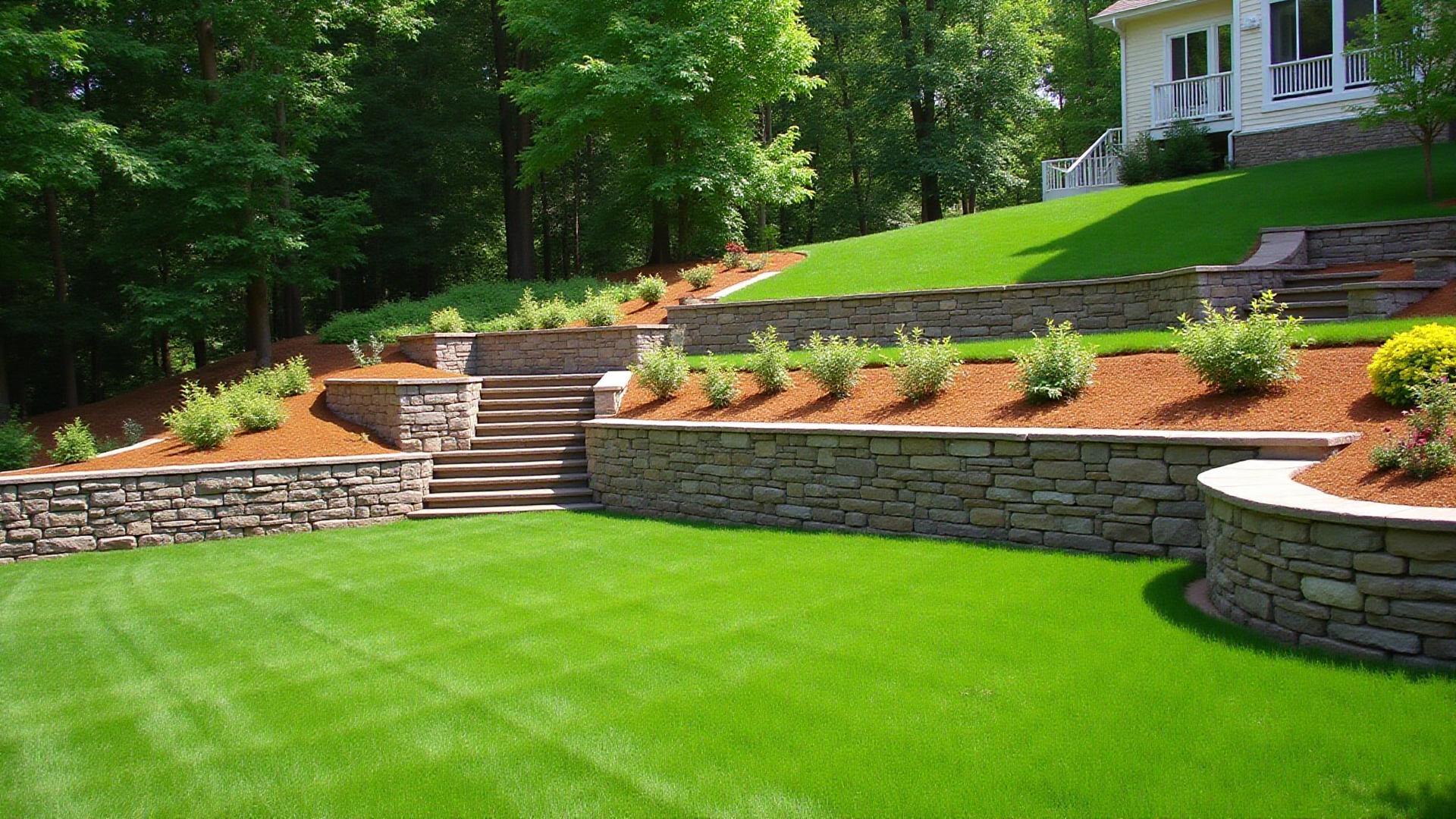
8. Manage a Sloped Yard with Terraced Stone Retaining Walls
You can build a low, DIY-friendly stacked stone wall (under 2 feet) to create a simple terrace on a gentle slope. Time: 1-2 weekends. Cost: $300-800.
|
📋 Copy HEX 🔗 Share |
- Mark your layout with stakes and string, then dig a trench 6 inches deep and about 16 inches wide.
- Fill the trench with 4 inches of packed gravel for a stable, level base.
- Lay the first course of stones, using the largest, flattest ones you have. Ensure they are level and tightly fitted.
- Begin the second course, staggering the joints like bricks for strength. For every 8-10 inches of height, step the row back about an inch (this is called ‘batter’).
- Continue stacking, fitting stones snugly. Use a hammer and chisel to shape stones as needed.
- Once finished, backfill the area behind the wall with gravel for drainage, then top with soil.
Before you commit to terracing, there are a few things to check to avoid major headaches.
- Check local building codes: Many municipalities require a permit and an engineer’s sign-off for retaining walls over a certain height (often 3 or 4 feet).
- Identify underground utilities: Call 811 before you dig to have all gas, water, and electrical lines marked. Hitting one is dangerous and expensive.
- Assess your soil type: Heavy clay soil puts more pressure on walls than sandy soil. You may need to plan for more robust drainage.
- Plan for water runoff: Where will the water that collects on the upper terrace go? Ensure you have a plan to channel it away from your home’s foundation.
9. Cover a Facade in Climbing Vines for a Timeless, Lush Look
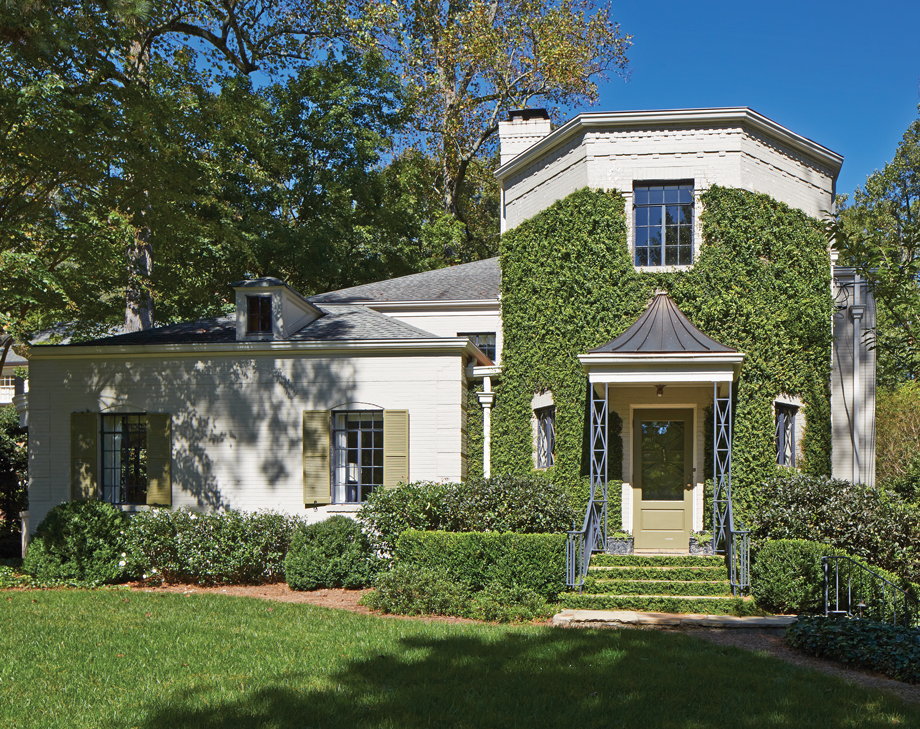
To get this full, lush look, choosing the right vine is critical. For a brick or stone facade, English ivy (Hedera helix) is a classic choice for its dense growth and ability to cling directly to masonry. However, it can be aggressive. A less damaging alternative is Boston Ivy (Parthenocissus tricuspidata), which clings with small suction-cup-like tips that are easier to remove and less likely to harm mortar. Plant 3-5 small plants spaced about 18-24 inches apart at the base of the wall to ensure even, dense coverage as they mature over the next 3-5 years.
|
📋 Copy HEX 🔗 Share |
A vine-covered wall is romantic, but it’s a serious commitment. The same tendrils that hold the vine to the wall can work their way into tiny cracks in mortar, potentially causing damage over the very long term, especially on older brickwork. Vines also provide a haven for insects and small pests. You will need to be vigilant about annual trimming to keep the vines away from windows, gutters, and the roofline. If you ever decide to remove it, you’ll be left with thousands of little clinging feet that need to be scraped or power-washed off.
10. Transition a Manicured Lawn into a Natural Forest Edge
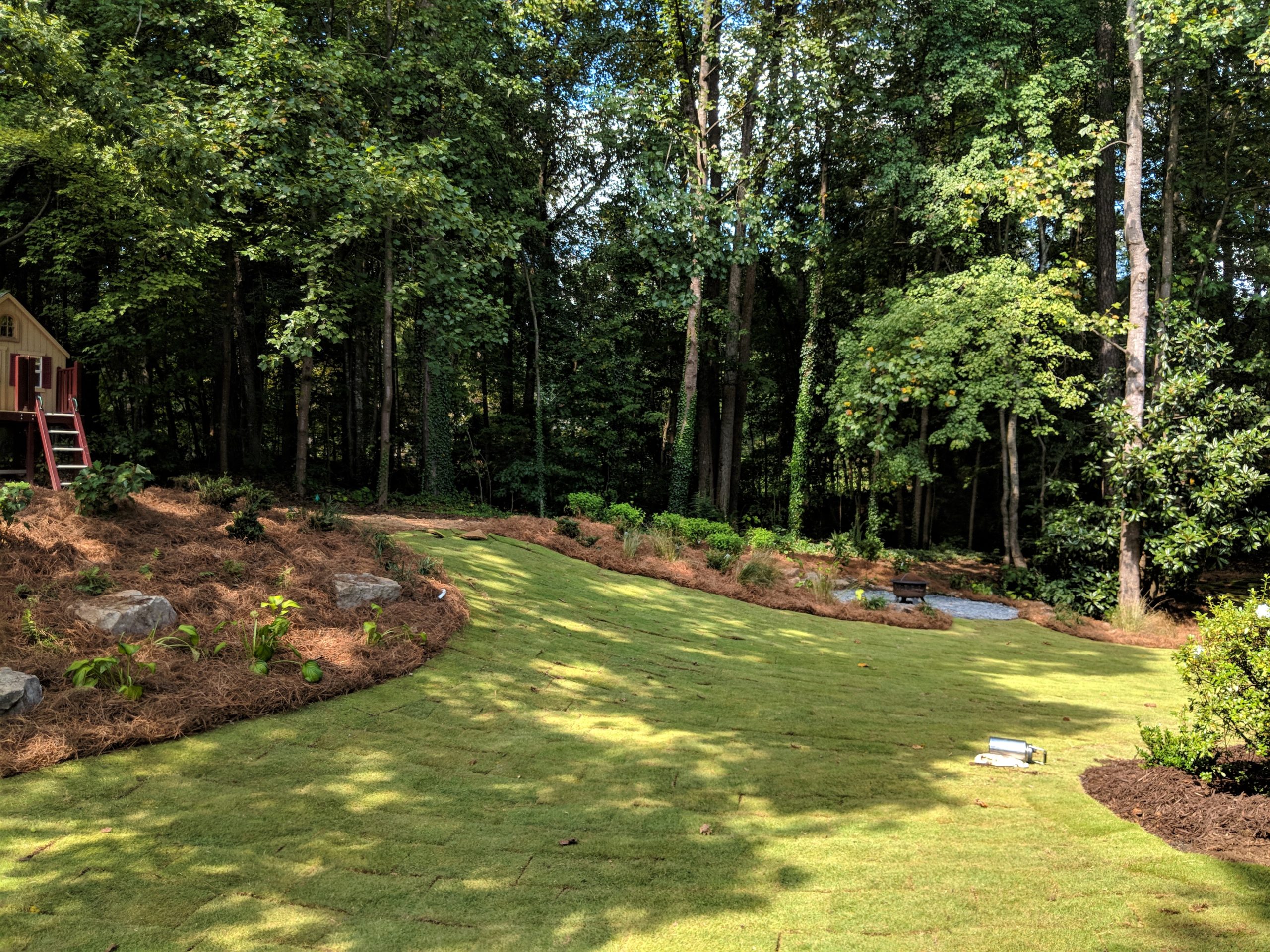
This design works because it masterfully handles the transition from ‘tame’ to ‘wild.’ The crisp, bright green lawn is clearly a cultivated space. The deep, pine straw mulch beds act as a visual buffer, a transitional zone that signals the change. Within these beds, the plantings are more relaxed and naturalistic, blending with the dense forest backdrop. The fire pit and playhouse are thoughtfully placed right at this edge, allowing you to enjoy the feeling of being in the woods while still connected to the safety and comfort of the lawn.
|
📋 Copy HEX 🔗 Share |
Creating a beautiful, naturalistic landscape doesn’t have to be expensive. Sod is costly, but you can get a beautiful lawn by seeding, which costs about 70-80% less if you’re willing to wait a few months. Instead of buying mature shrubs, purchase smaller, younger plants from a local nursery for a fraction of the price. The pine straw mulch seen here is one of the most affordable mulch options available. And for a fire pit, you can skip the expensive metal ring and create a simple circle with free fieldstones found on your property or sourced from Facebook Marketplace.
11. Mix Modern Tudor Style with Manicured Boxwoods and Ivy
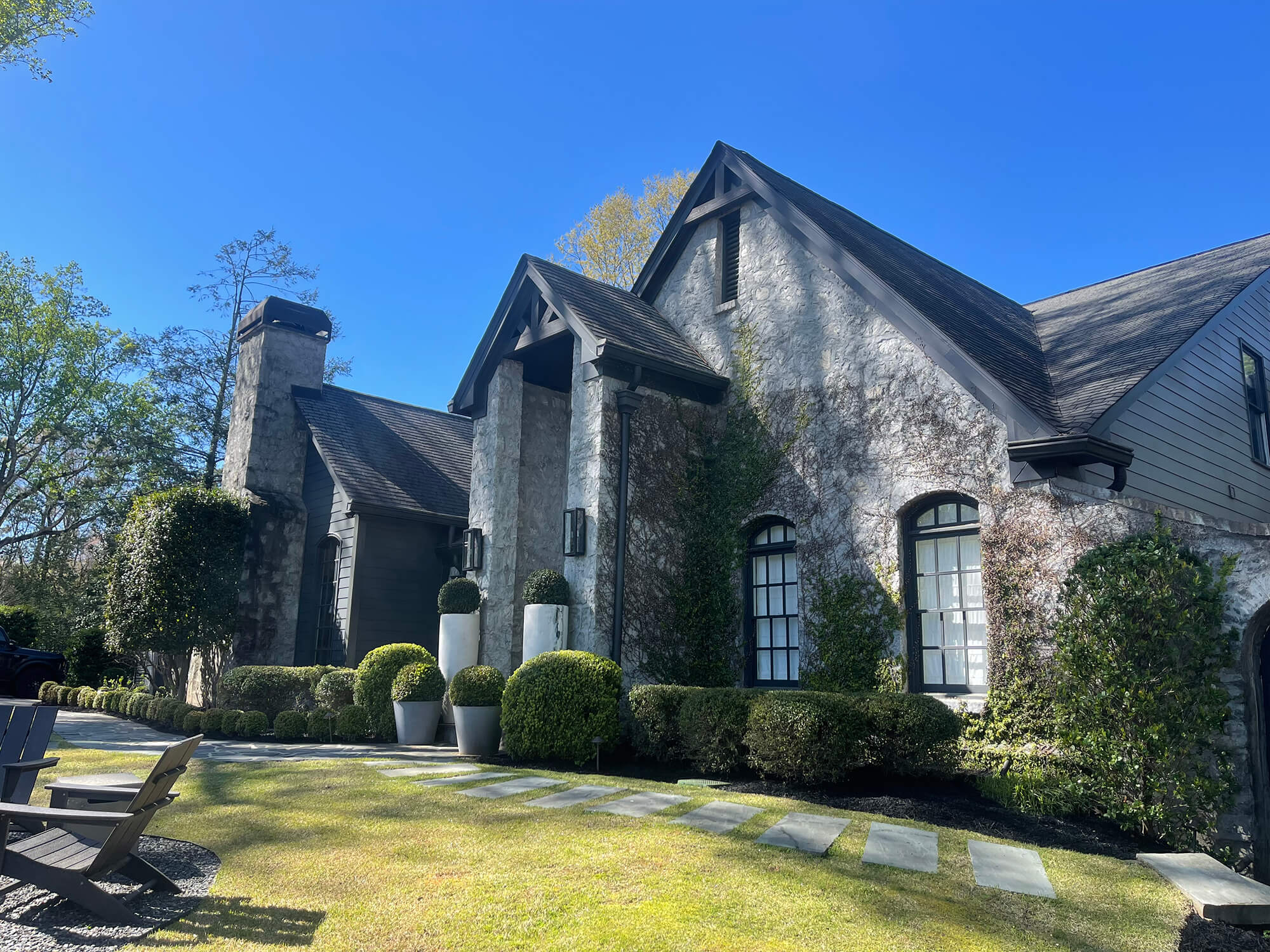
This look is a perfect equation for updated tradition: 50% classic materials + 50% modern form. The gray stone, climbing ivy, and arched windows are nods to classical Tudor architecture. However, the clean lines, the dark gray siding (instead of traditional stucco), and the minimalist black window frames give it a distinctly 2026 feel. The manicured hedges and topiaries reinforce the formal structure, but the simple, modern shapes of the planters (especially the white cylinders) keep it from looking dated. It’s a study in respecting the past while living in the present. This stylish balance is also seen in the Modern Farmhouse, just with a different architectural language.
|
📋 Copy HEX 🔗 Share |
A highly manicured landscape like this is the opposite of ‘plant it and forget it.’ The hedges and topiaries will require trimming at least 2-3 times per growing season to maintain their sharp, geometric shapes. The climbing ivy on the stone needs to be trimmed back from windows and the roofline annually. The number of containers means you’ll spend significant time watering, especially in the heat of summer. Expect to spend a few hours every other week on upkeep, or budget $200-$400 per month for a professional landscape maintenance crew.
12. Create a Secluded Courtyard Oasis with a Classical Stone Fountain
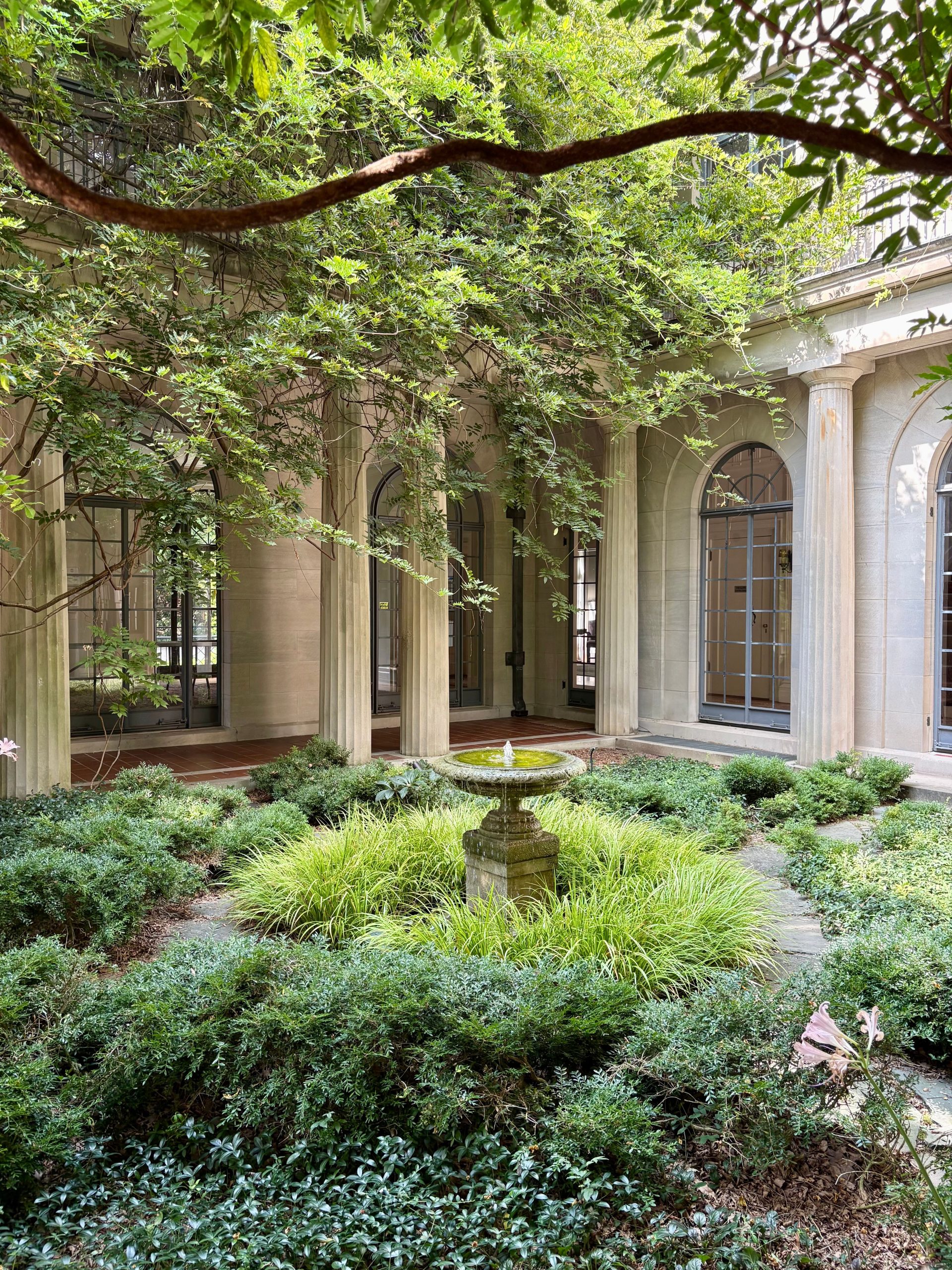
The multi-tiered stone fountain is the undeniable focal point that makes this space feel special. It provides a destination for the eye and, more importantly, fills the courtyard with the gentle, soothing sound of trickling water. This sound is critical for creating a tranquil atmosphere, masking neighborhood noise and turning the garden into a true sanctuary. The fountain also establishes the classical, timeless mood of the garden, anchoring the entire design with a sense of history and permanence.
|
📋 Copy HEX 🔗 Share |
This garden feels so immersive because of its brilliant use of enclosure and layering. The stone columns and arched doorways of the surrounding architecture create a room-like sense of privacy. Within that ‘room,’ the plants are layered by height and texture—from low, grassy foliage to taller, broader shrubs, all under a canopy of overhanging vines. This creates a lush, dense environment that makes you feel completely enveloped by nature, even in a structured, classical setting. The dappled sunlight filtering through the leaves adds the final magical touch.
13. Define a Split-Level Patio with Low Brick Retaining Walls
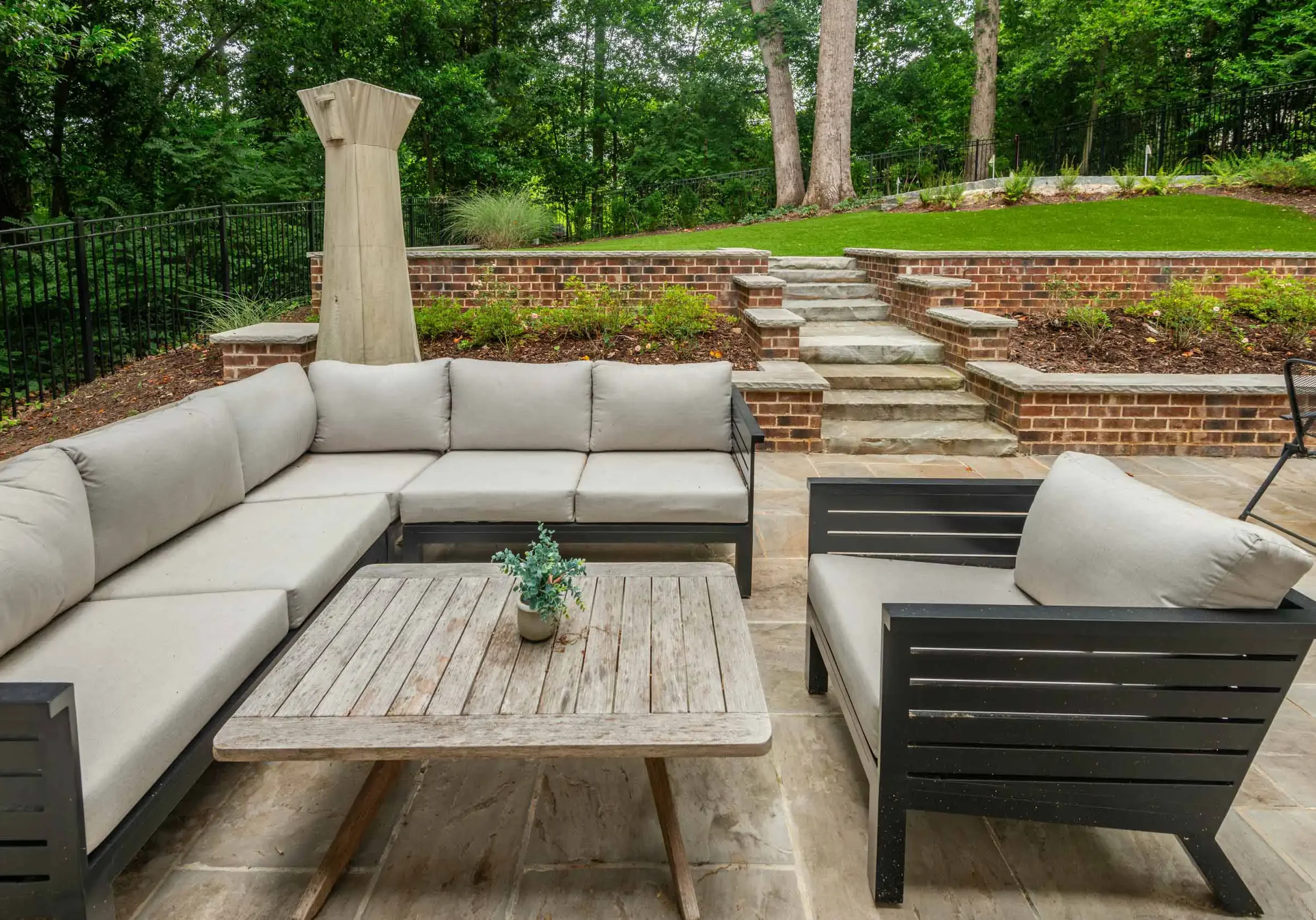
When designing a split-level patio, keep the retaining walls low (18-24 inches) and make them functional. An 18-inch-high wall is the perfect height for informal overflow seating when you have guests. By capping the brick wall with a flat stone paver, as seen here, you create a comfortable, durable surface for sitting. This turns a simple grade change into a practical feature that adds immense value to the entertainment space, a trick that feels much more custom than a simple slope or a purely functional high wall. Compare this low wall to the much taller, more structural walls in Idea #8.
|
📋 Copy HEX 🔗 Share |
This design is ideal for yards with a gentle, not-too-steep slope. The lower patio level needs to be large enough to comfortably host the furniture set; aim for a minimum of 12×16 feet for a sectional and coffee table. The height difference between the levels should be between 18 inches and 36 inches. Any less, and it’s not worth the cost of the wall. Any more, and the wall can start to feel imposing, requiring more engineering and possibly railings, which would disrupt this clean, open look.
14. Plant a Vibrant Cottage-Style Border with Mixed Flowers and Foliage
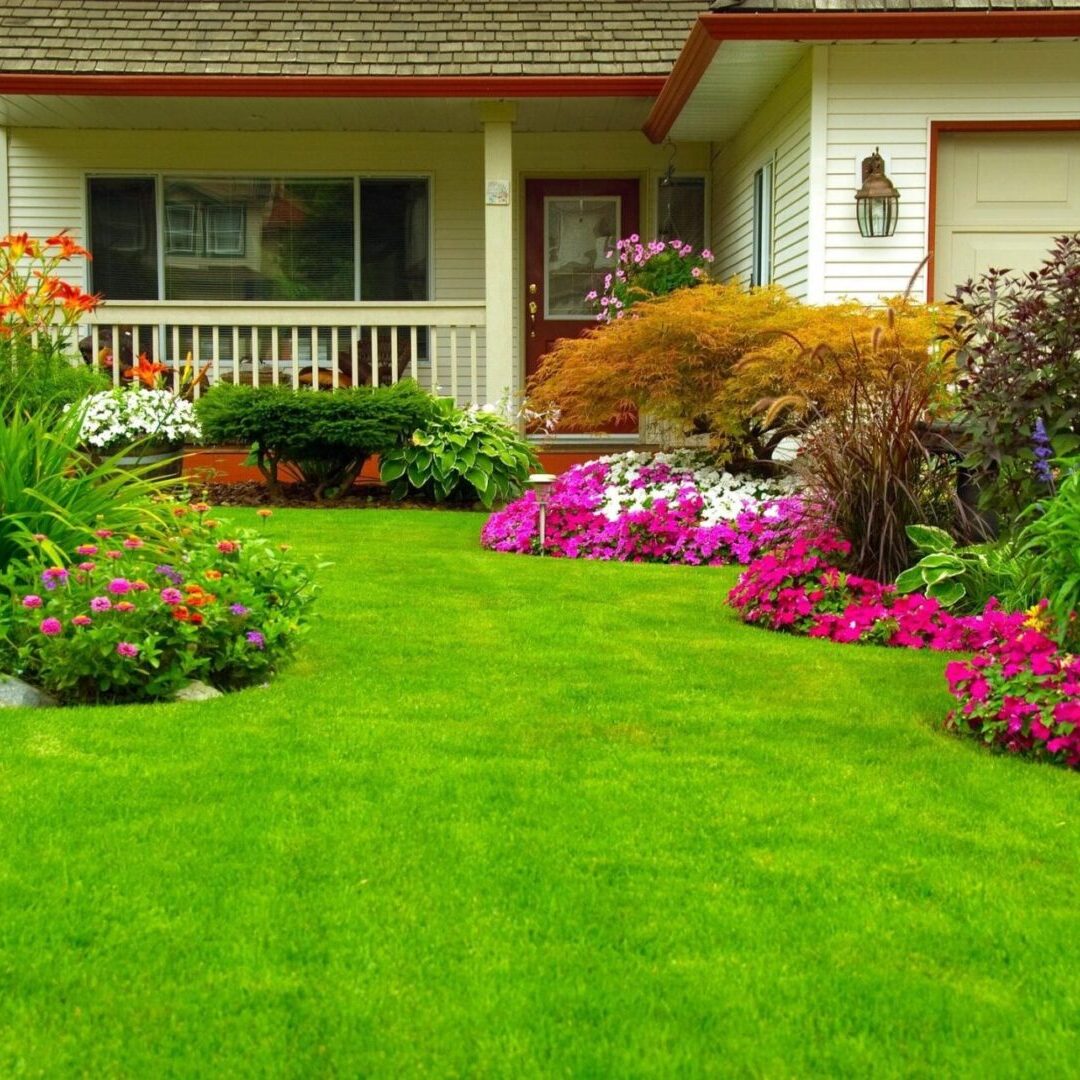
The formula for this gorgeous, welcoming border is about organized chaos. Think: 40% evergreen structure + 40% flowering perennials + 20% annuals for pops of color. The evergreen shrubs provide a backdrop and ensure the bed doesn’t look empty in the winter. The perennials, like the pink and white blossoming shrubs, are the workhorses that come back year after year. Finally, the annuals are tucked in to provide season-long, vibrant color. The key is to repeat plants and colors in drifts throughout the bed to create a sense of rhythm and prevent it from looking like a random jumble.
|
📋 Copy HEX 🔗 Share |
A lush, flower-filled garden bed requires a bit of prep to thrive. Here is your checklist:
- Sunlight Mapping: Track how many hours of direct sun the area gets per day. ‘Full sun’ plants need 6+ hours, and ‘part sun’ plants need 3-5. Don’t guess!
- Soil Test: Get a simple soil test kit from a garden center. This will tell you your pH and if you need to amend the soil with compost or other nutrients before planting.
- Water Source: Is there a hose spigot nearby? Are you willing to install drip irrigation? Hand-watering a large, dense bed like this can be a major time commitment.
- Define Your Edge: Before planting, decide on your border. It can be a simple spade edge, or a more permanent steel, stone, or brick border to keep the lawn from creeping in.
15. Layer a Hillside with Natural Rock Walls and High-Contrast Foliage
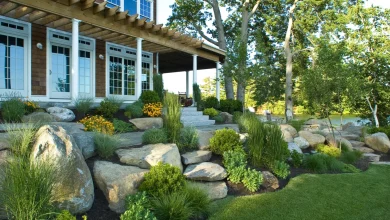
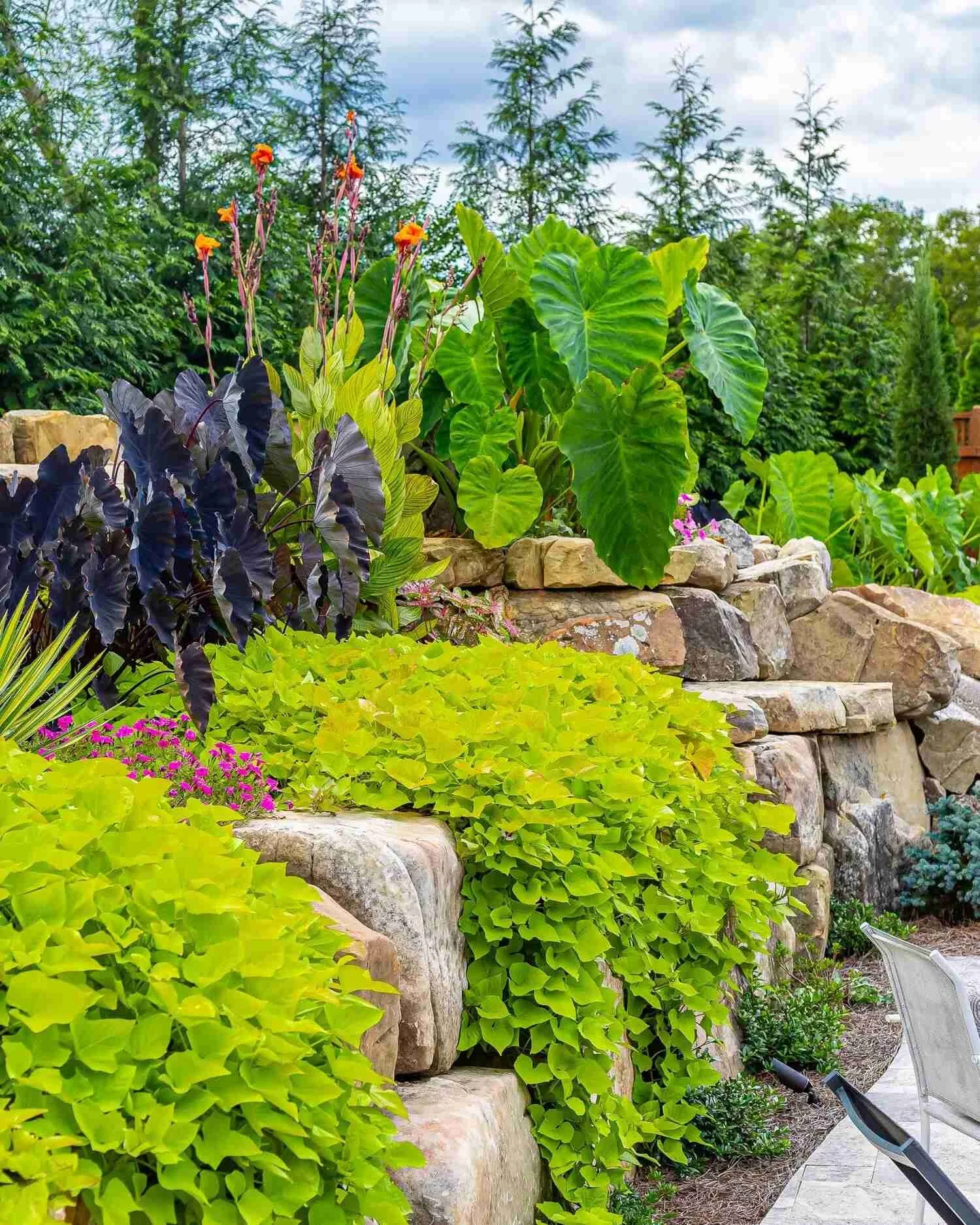
This garden is a masterclass in using foliage for color and texture, not just flowers. The design works by pairing plants with dramatically different characteristics. The vibrant, almost electric lime-green ground cover contrasts beautifully with the deep, brooding purple of the large-leafed plants. The fine texture of the orange flowers is juxtaposed against the broad, smooth leaves of other plants. This high-contrast approach creates visual excitement and a sense of lush abundance. The natural, irregular rock walls reinforce the organic, untamed feel of the planting scheme.
|
📋 Copy HEX 🔗 Share |
A garden this dense and layered will require active management to keep it looking good. The trailing lime-green groundcover will need to be trimmed back periodically to keep it from overwhelming other plants. The large-leafed plants might need protection from pests like slugs. In the fall, cutting back the perennials and removing fallen leaves from the dense foliage can be a time-consuming task. However, the density of the planting is a huge plus for weed suppression—once established, there’s very little room for weeds to take hold.
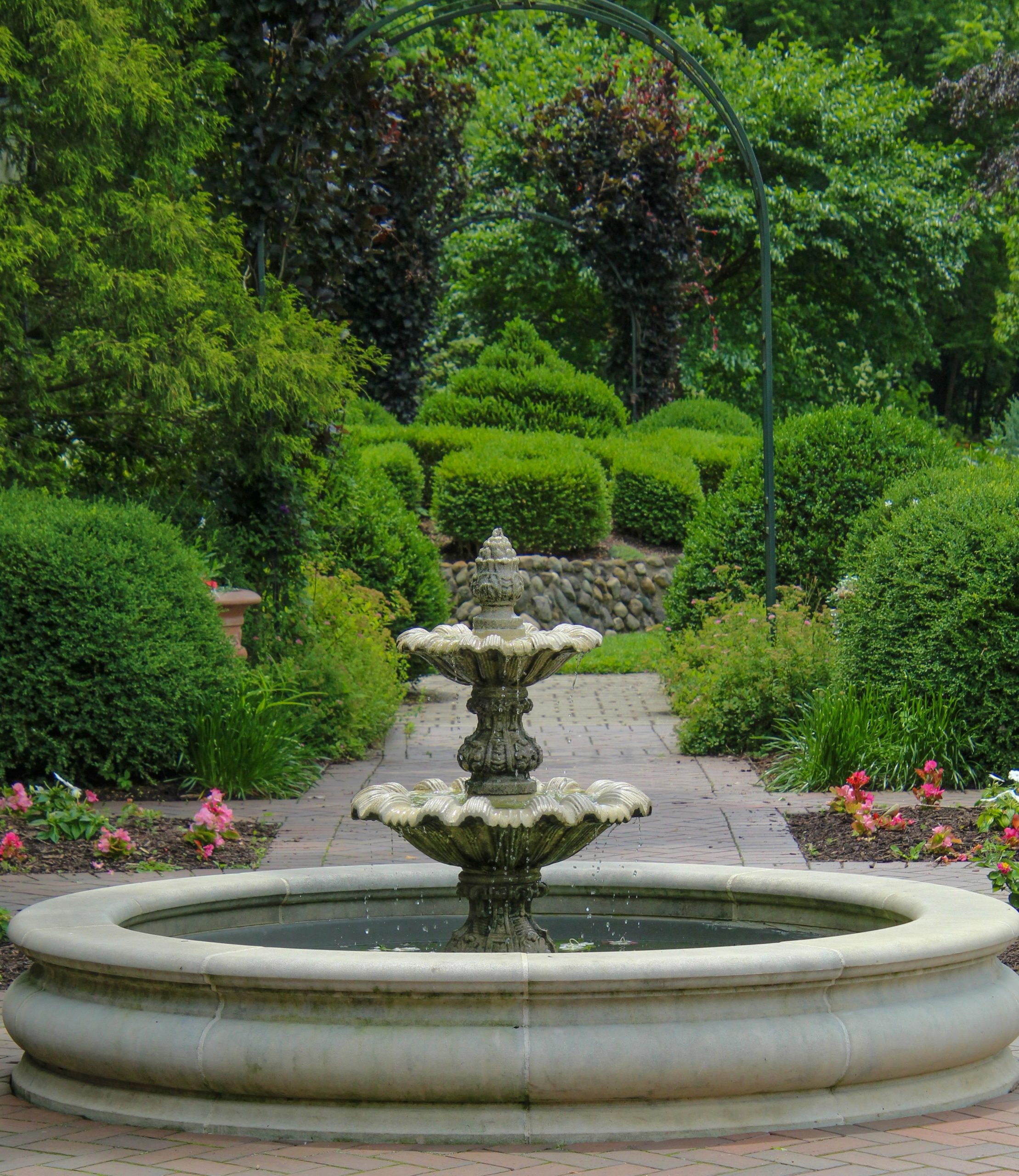
16. Center a Tranquil Garden Around a Classical Stone Fountain
When placing a focal point like a fountain, resist the urge to put it in the exact geometric center of your yard. Instead, use the rule of thirds. Imagine a tic-tac-toe grid over your garden space. Place the fountain at one of the four intersections of the lines. This creates a more dynamic, naturalistic composition that invites the eye to move through the space. Notice how the fountain here is central to a specific garden ‘room’ but likely off-center within the larger property, making it feel like a delightful discovery.
|
📋 Copy HEX 🔗 Share |
A custom-carved stone fountain can cost thousands, but you can achieve a similar effect for much less. Look for cast concrete or fiberglass fountains from garden centers or online retailers like Wayfair, which can cost between $300 and $1,000. For a truly budget-friendly option, you can create a simple bubbling rock feature using a large landscape boulder, a basin, a pump, and some tubing. The key ingredient is the sound of water; you don’t need ornate sculpture to create a tranquil atmosphere. Pair it with lush, affordable perennials like hostas and ferns for that ‘secret garden’ vibe.
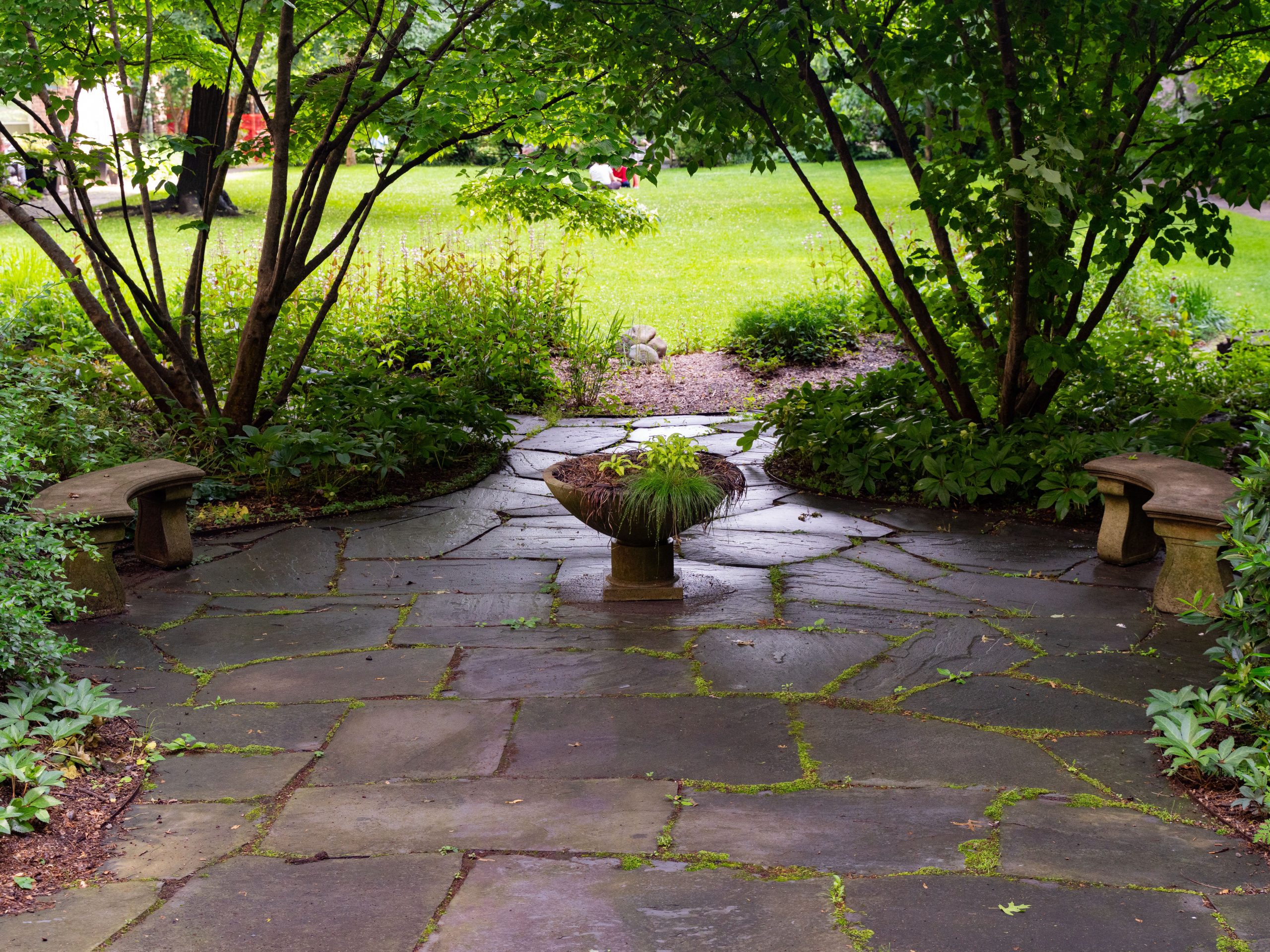
17. Create a Peaceful Patio Retreat with a Central Planter
The single element that defines this peaceful stone patio is the central planter. By breaking up the expanse of hardscaping, it introduces a focal point of life and softness right where you’d least expect it. It elevates the space from a simple patio to a true garden room. This move is particularly effective in smaller, enclosed spaces where a traditional garden bed along the perimeter might not be possible. It ensures that no matter where you sit, you have an intimate, close-up view of nature.
|
📋 Copy HEX 🔗 Share |
A ‘tree pit’ or central planter integrated into a patio requires careful planning. You must ensure there is adequate drainage at the bottom of the planter to prevent the plant’s roots from rotting. It also limits the mature size of the plant, so you need to choose a species that won’t outgrow the space too quickly (a Japanese maple is a great choice; a mighty oak is not). Finally, be aware that fallen leaves, flowers, or fruit will land directly on your patio furniture and pavers, requiring more frequent sweeping than a perimeter garden.
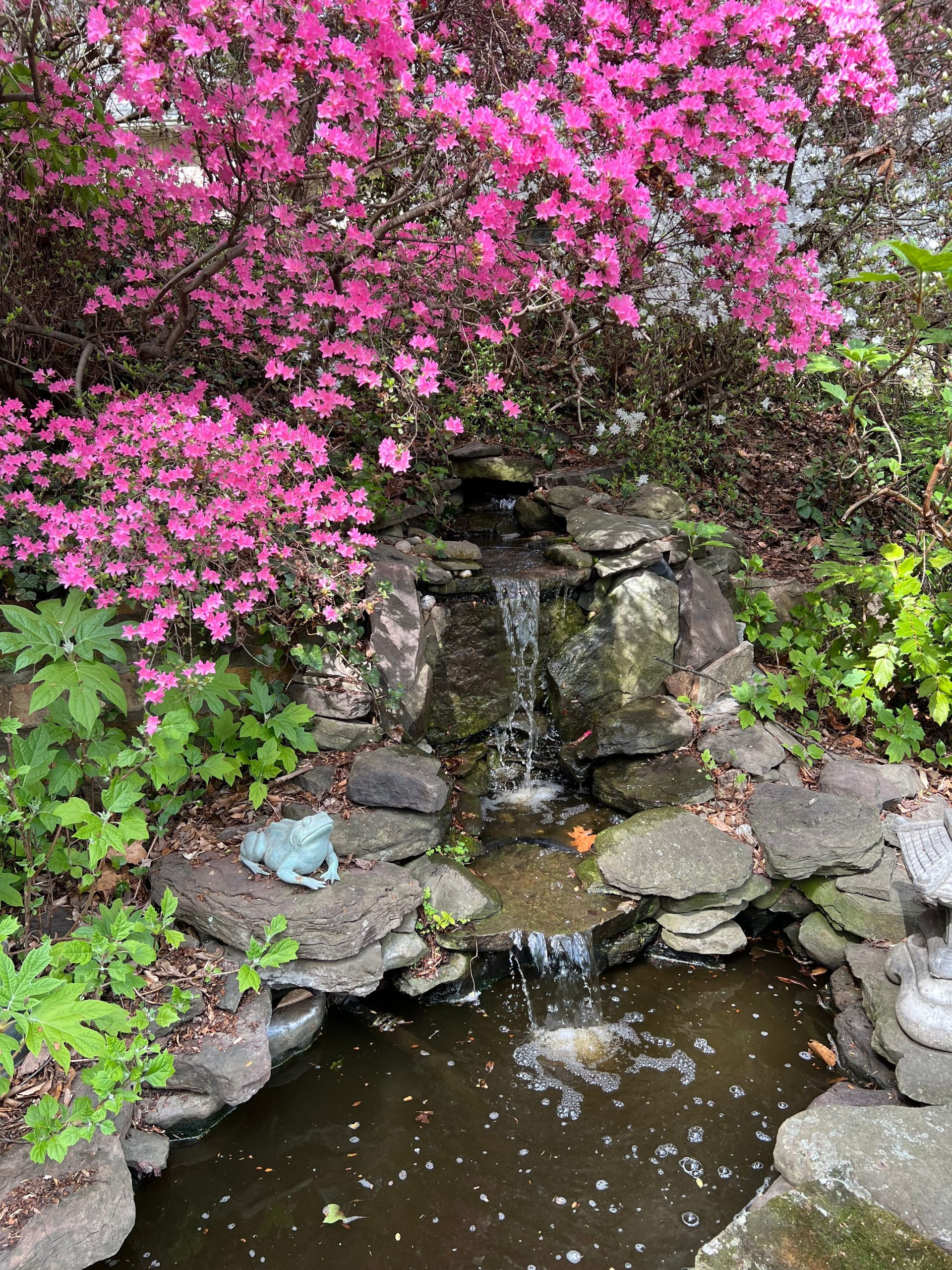
18. Integrate a Small Waterfall for Natural Sound and Beauty
The secret to a natural-looking waterfall is to vary your rock sizes significantly. Amateurs often use too many rocks of the same size, which looks artificial. For your main waterfall spillway, use a few very large, flattish ‘spill rocks. ‘ Surround them with medium-sized ‘builder’ rocks to shape the stream and hold back soil. Finally, fill in all the gaps with small rocks and gravel. This variety mimics how rocks appear in a natural stream bed and creates a much more convincing and beautiful feature.
|
📋 Copy HEX 🔗 Share |
You can create a simple, pond-less waterfall feature in a weekend. Cost: $400 – $900.
- Dig a basin for the reservoir at the bottom of your slope and a shallower, meandering channel for the stream.
- Place the reservoir basin and pump in the hole, then lay a flexible pond liner over the entire feature, from basin to top.
- Place your large spill rocks and builder rocks to create the waterfall drops and stream banks, hiding the liner.
- Run the tubing from the pump to the top of the waterfall, camouflaging it with rocks.
- Fill in gaps with smaller rocks and gravel, then fill the basin with water and turn it on!

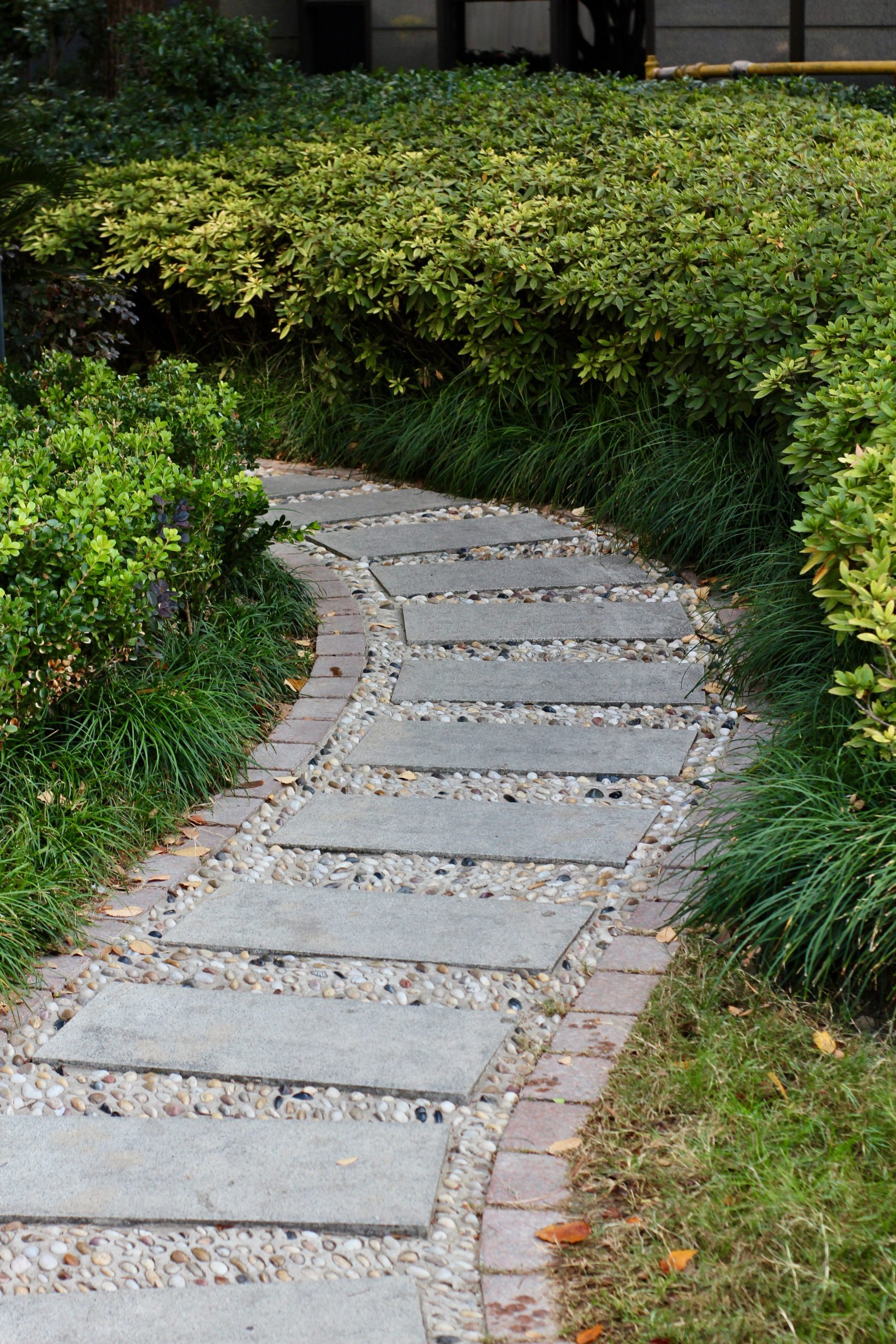
19. Lay a Curved Stone Pathway Through a Lush Garden
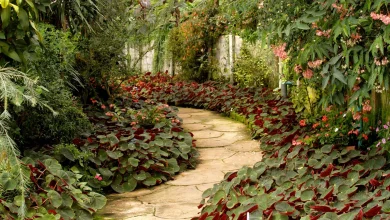
A curved path works so well because it slows down the journey and creates a sense of mystery. Unlike a straight path where you can see the destination immediately, a gentle curve encourages a leisurely stroll and makes the garden feel larger by hiding what’s around the next bend. This design enhances that effect by planting lush, tall greenery right up to the edge of the path, partially obscuring the view and making you feel enveloped by the garden as you walk.
|
📋 Copy HEX 🔗 Share |
Natural stone flagging is beautiful but can be very expensive. For a similar look at a fraction of the cost, use pre-cast concrete pavers that mimic the look of irregular stone. Stores like Home Depot and Lowe’s sell a wide variety of these for $5-$10 per piece. Another option is to create a ‘mulch path. ‘Simply lay down a thick layer of wood chip or pine straw mulch in a curving shape. It’s affordable, soft underfoot, and incredibly easy to install and modify. For a more defined edge, you can use simple, flexible plastic landscape edging.
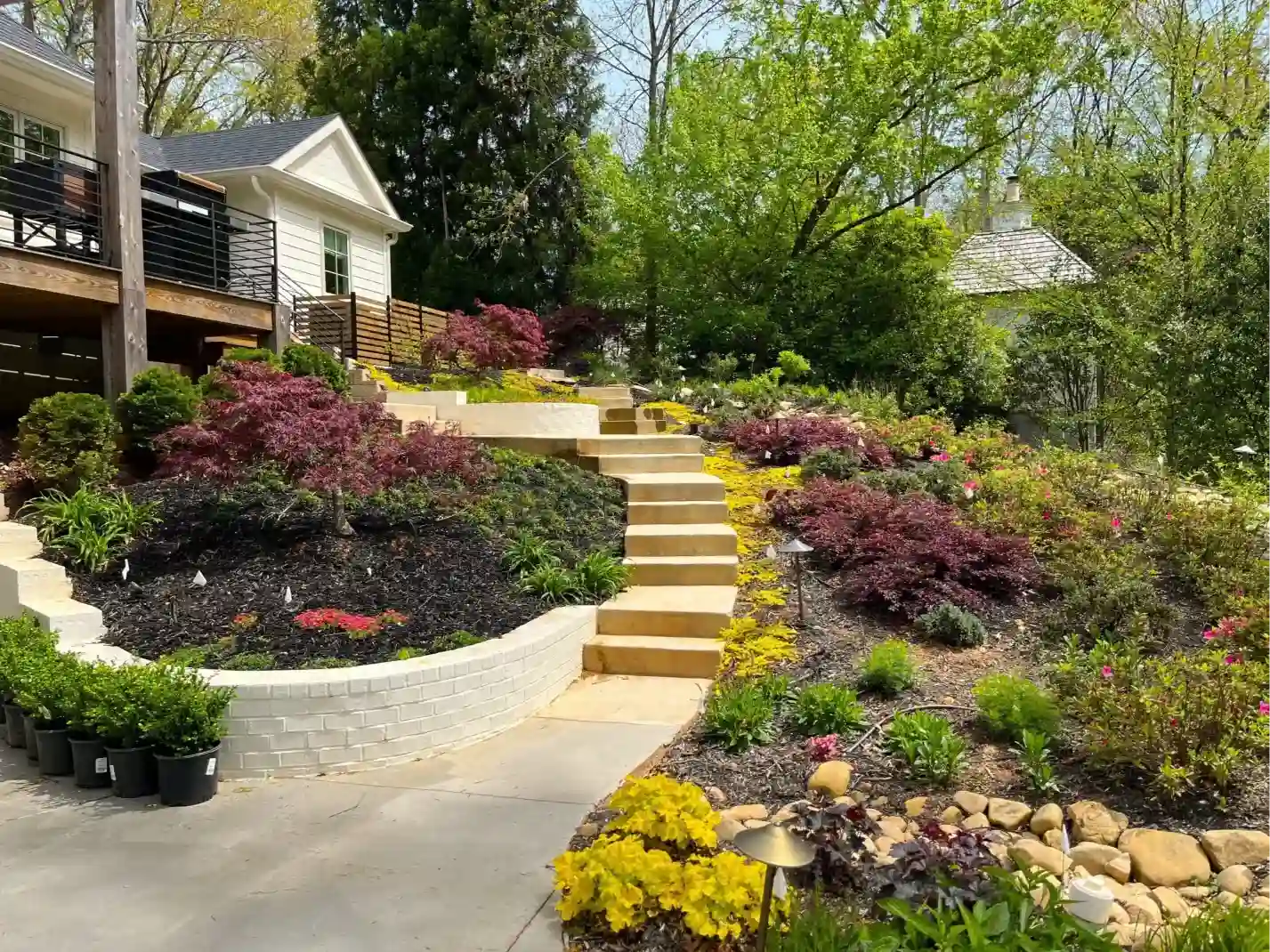
20. Design a Vibrant, Low-Maintenance Bed with Terraced Concrete Steps
This vibrant planting scheme follows a simple but effective formula: 60% green foliage foundation + 30% contrasting color + 10% bright ‘exclamation points.’ The various shades of green from leafy shrubs form the base. The deep red and burgundy leaves provide the main block of contrasting color, creating depth. Finally, the pops of bright yellow act as highlights that draw the eye and add a spark of energy. The white painted brick wall acts as a clean, neutral backdrop that makes all the colors stand out more clearly.
|
📋 Copy HEX 🔗 Share |
While this garden bed is dense with plants, the ‘low-maintenance’ aspect depends on smart plant selection. The key is using mostly perennials and shrubs that are well-suited to the climate and sun exposure. The dark mulch is doing a lot of work here, suppressing weeds and retaining soil moisture, which reduces watering needs. The biggest task will be an annual cut-back of the perennial foliage in late fall or early spring and perhaps some light pruning of the shrubs to maintain their shape. The small landscape lights will also require occasional bulb changes or fixture adjustments.
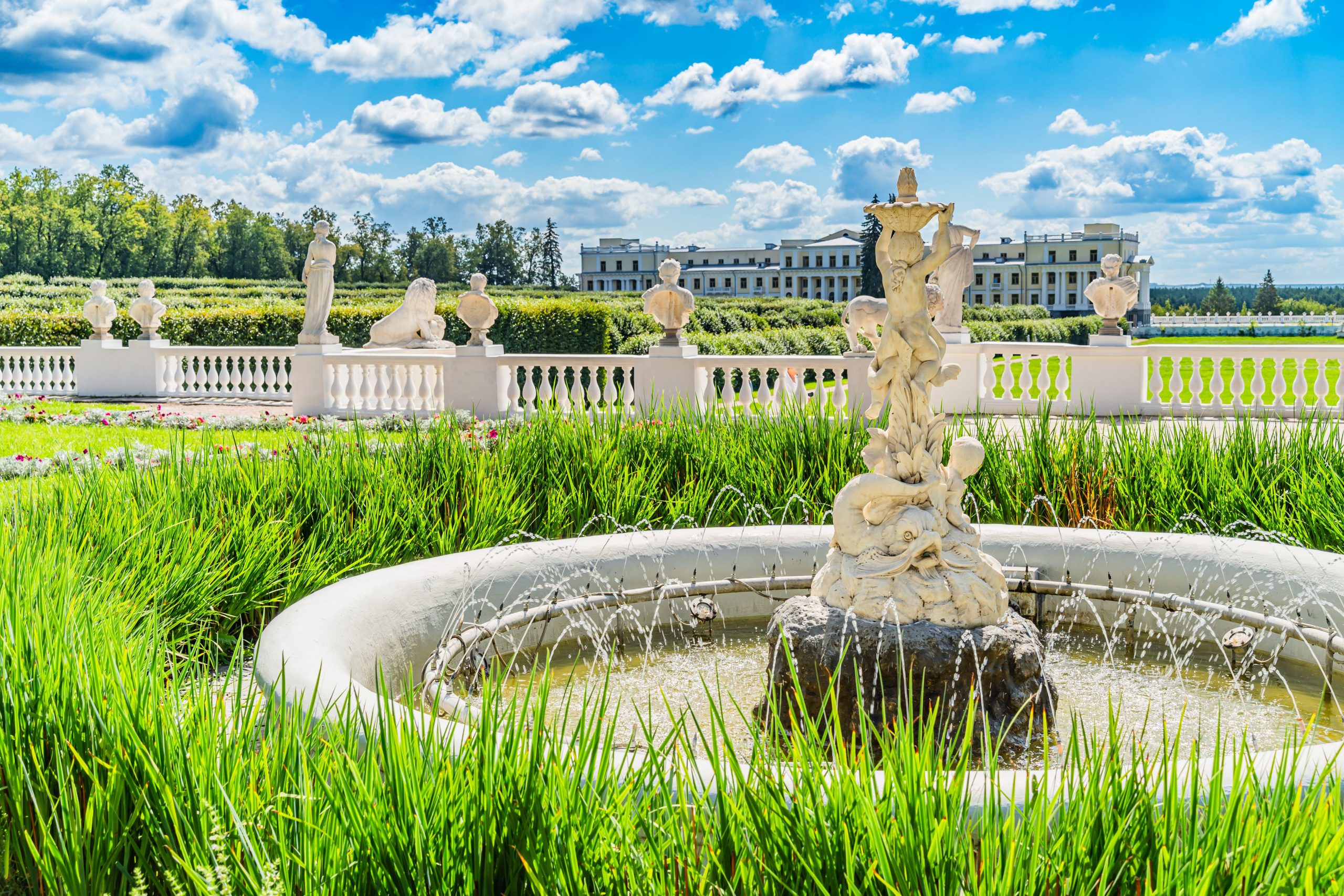
21. Achieve Grandeur with a Classical European-Inspired Garden
The key to this garden’s majestic feel is its unapologetic commitment to symmetry and classical order. The central stone fountain serves as a perfect axis, with paths, hedges, and sculptures mirroring each other on either side. This rigid geometry, set against the backdrop of a grand historic building, is what creates the powerful sense of formality and timeless elegance. It’s a declaration that this is not a wild, natural space but a highly controlled, man-made environment designed for beauty and contemplation.
|
📋 Copy HEX 🔗 Share |
This level of formal design is famously high-maintenance. Symmetrical, clipped hedges require constant, precise trimming to maintain their shape. The intricate stone fountain needs regular cleaning to prevent algae growth and pump maintenance to ensure it runs properly. The large, open gravel or paver areas must be kept perfectly weed-free. This isn’t a garden for a casual hobbyist; it requires a significant, ongoing investment of either time or money for professional landscape services to uphold its pristine, orderly appearance.
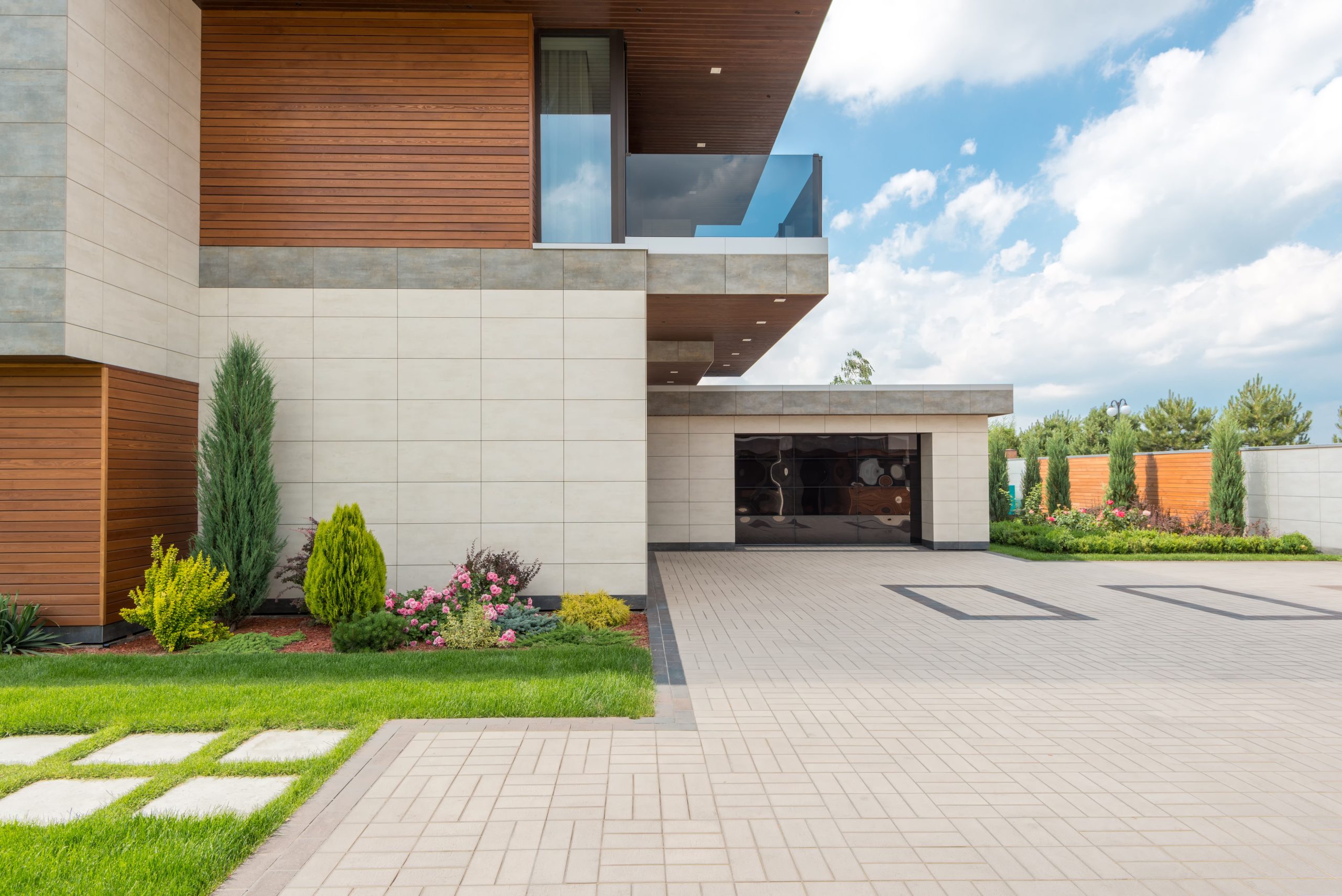
22. Embrace Minimalism with a Clean Driveway and Simple Landscaping
This modern, minimalist look succeeds through its restraint. The design isn’t cluttered with dozens of different plants or materials. Instead, it relies on a few high-quality elements: the clean lines of the house, the smooth expanse of the driveway, and a simple, well-defined garden bed with mass plantings of just one or two types of grasses or shrubs. This ‘less is more’ approach puts the focus on the home’s architecture and creates a calm, uncluttered, and confident first impression. The clear blue sky in the background becomes part of the composition.
|
📋 Copy HEX 🔗 Share |
A minimalist landscape design is often most effective on properties with modern architecture and a smaller front yard, typically under 1,000 square feet. In a smaller space, too many different elements can feel chaotic. A simple, bold design like this makes a small yard feel larger and more intentional. For larger properties, this approach can sometimes feel too sparse unless it’s executed on a grand scale with very large, sweeping beds and mature plant specimens, which can become quite costly.
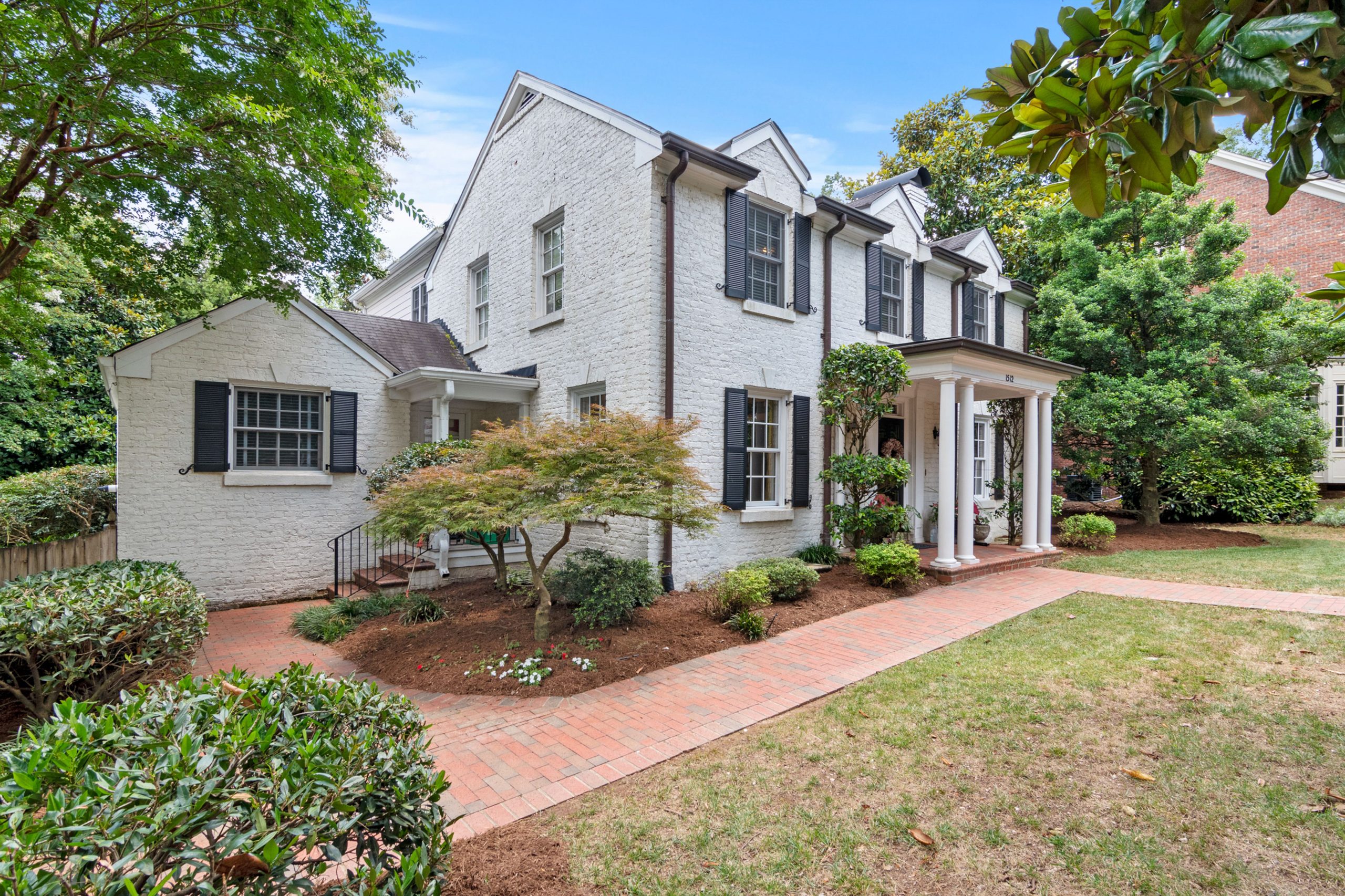
23. Cultivate Serenity with a Classic Brick Facade and Lush Garden
In an era of fleeting trends, there’s a growing appreciation for timeless design, and this look is the perfect example. The combination of a classic brick house and a lush, multi-layered garden is a style that has been beloved for generations for a reason: it’s warm, welcoming, and gets better with age as the plants mature. It taps into a desire for permanence and stability, creating a serene retreat that feels both elegant and deeply comforting. This isn’t about being trendy; it’s about creating a lasting sense of ‘home.’
|
📋 Copy HEX 🔗 Share |
To get this lush, established garden look, think ‘front to back’ when planting. Place low-growing annual flowers and groundcovers at the very front of your garden bed. Behind them, plant your medium-height perennials and smaller shrubs. Finally, the back layer, closest to the house, should be your tallest shrubs or climbing plants. This layered approach ensures that you can see all the plants, creates a sense of depth and fullness, and is the professional’s secret to a truly abundant-looking garden.
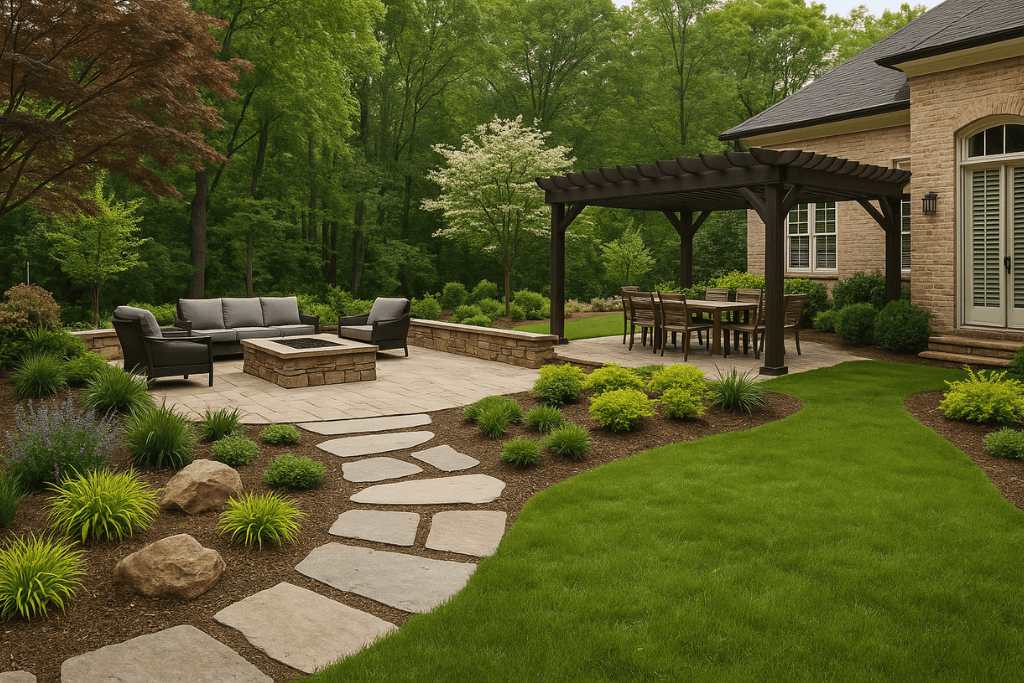
24. Create an Entertainer’s Dream with a Pergola and Fire Pit Patio
This is a serious outdoor living upgrade, incorporating multiple ‘rooms’ and materials. Here’s a realistic look at the costs.
|
📋 Copy HEX 🔗 Share |
- Stone Paver Patios (approx. 600 sq ft): $12,000 – $18,000
- Dark Wood Pergola (12×16 ft): $8,000 – $20,000 (depending on custom vs. kit)
- Square Stone Fire Pit (Gas Insert): $5,000 – $10,000
- Outdoor Sofa & Armchairs: $4,000 – $9,000
- Dining Table & Chairs: $2,000 – $5,000
- Landscaping & Pathway: $3,000 – $7,000
- TOTAL: $34,000 – $69,000
Budget alternative: Use stained pressure-treated wood for the pergola and a simple metal wood-burning fire pit to save over $10,000.
Planning an outdoor space with multiple zones requires more than just a vague idea. Before you call a contractor, get specific:
- Measure Everything: Know the exact dimensions of the space you have to work with.
- Define the Flow: How will people move between the house, the dining area, and the fire pit? Walk the path yourself. Ensure walkways are at least 3-4 feet wide.
- Confirm Sun/Shade Patterns: Where does the sun hit in the afternoon? That’s where you’ll want the pergola for shade. The fire pit might be better in a spot that gets evening sun.
- Set a Realistic Budget: Know your all-in number before you start. It’s easy for costs to spiral with landscaping projects.
25. Go for a Crisp, Modern Farmhouse Look with a Dark-Lined Pool
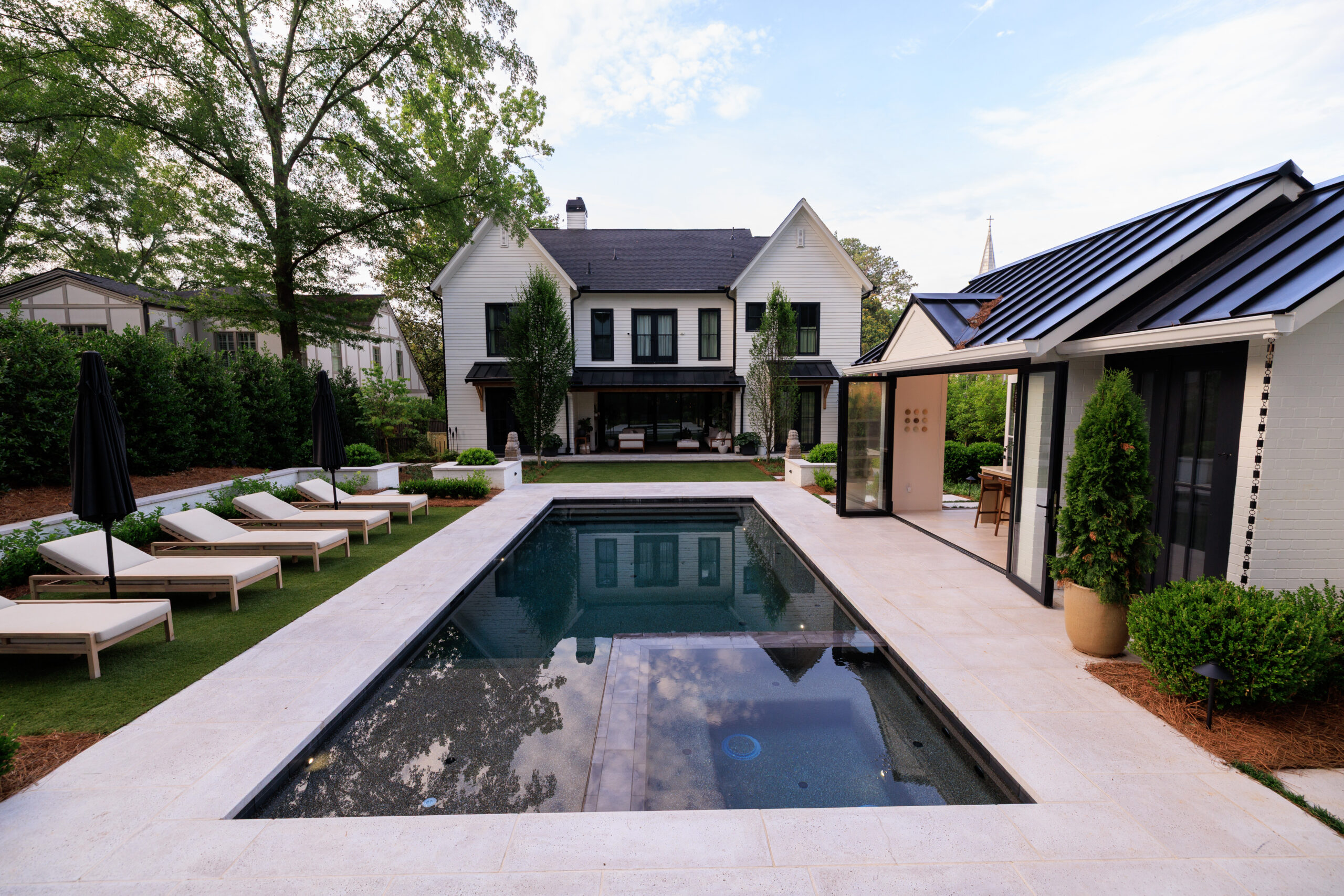
The power of this design is its bold, high-contrast palette. The brilliant white board-and-batten siding creates a clean, bright canvas. The black standing-seam roofs, window trim, and pool house doors provide sharp, graphic lines that feel incredibly modern and crisp. The masterstroke is the dark interior of the pool, which makes the water a deep, mysterious blue-green, adding a touch of drama and sophistication that a standard light-blue pool would lack. It’s a minimalist palette that delivers maximum impact, a great counterpoint to the more traditional feel of the home in Idea #11.
|
📋 Copy HEX 🔗 Share |
While stunning, a dark-bottomed pool comes with a few considerations. They absorb more sunlight, which can heat the water significantly—a potential plus in cooler climates but a possible drawback in hot southern summers, where the water might become too warm to be refreshing. The dark color can also make it slightly more difficult to spot debris or dirt on the bottom of the pool. And while artificial turf looks perfect year-round, it can get surprisingly hot to the touch in direct summer sun, much hotter than natural grass.
26. Welcome Guests with a Colorful, Winding Path and Lush Hydrangeas
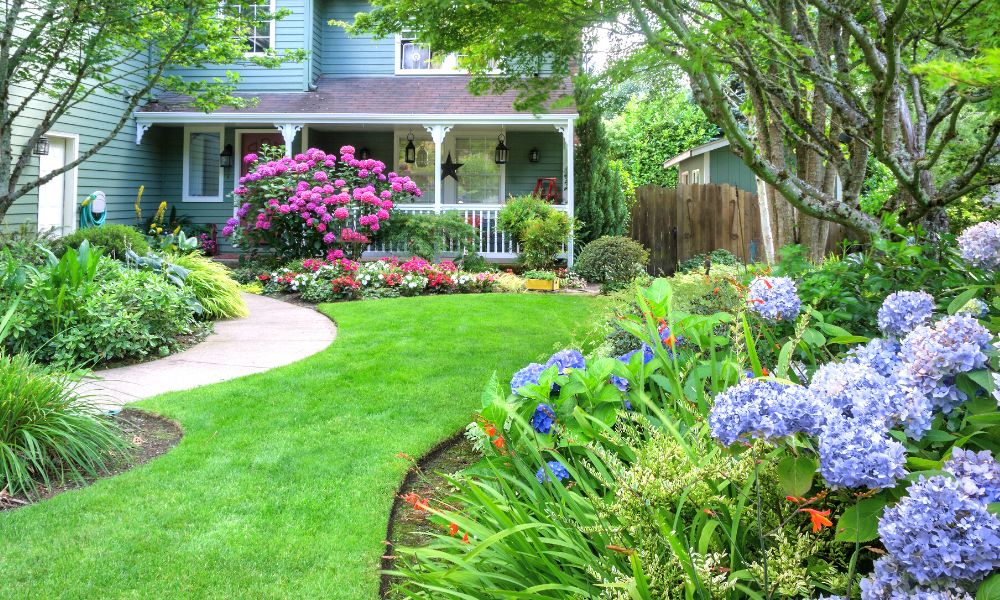
The winding concrete path is the single most important element in this friendly front yard. A straight, rigid path would have felt formal and stark. By curving the path, the design immediately creates a more relaxed, gentle, and welcoming journey to the front door. It forces a slower pace and allows for the creation of deep, sweeping garden beds that curve along with it. The path isn’t just for walking; it’s the organizing principle that gives the entire landscape its graceful, organic flow.
|
📋 Copy HEX 🔗 Share |
Getting that vibrant blue color on your Hydrangea macrophylla isn’t luck; it’s chemistry. Blue flowers are the result of acidic soil (pH 6.0 or lower). To encourage blue blooms, you can amend your soil with a soil acidifier, which usually contains aluminum sulfate. You can buy this at any garden center. Apply it in the spring as the plant is leafing out, following the package directions. For pink blooms, you want alkaline soil (pH 7.0 or higher), which you can encourage by adding garden lime. It’s a simple trick that puts you in control of the color show.
27. Gather ‘Round a Curved Stone Fire Pit with Navy Adirondack Chairs
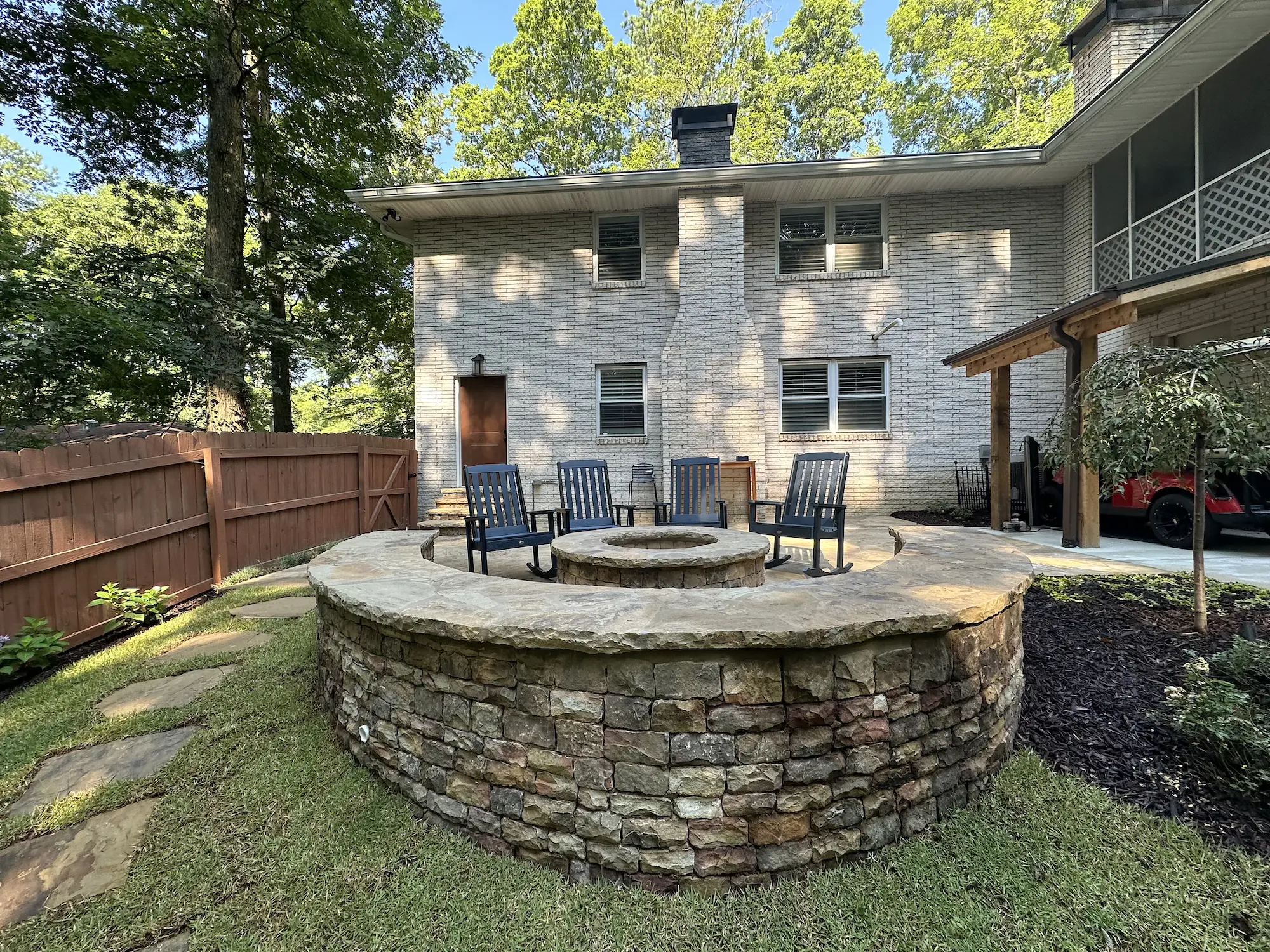
This fire pit area feels so natural and inviting because of its circular geometry. The curved shape of the stacked stone pit inherently encourages people to gather in a circle, which is ideal for conversation. The four Adirondack chairs echo this circular arrangement. This contrasts with the linear form of the brick house and fence in the background, making the fire pit a distinct ‘destination.’ The choice of dark blue for the chairs is a subtle, sophisticated move, providing a pop of color that is calmer and more elegant than a bright primary color. For another take on a fire pit, check out the sunken design in Idea #2.
|
📋 Copy HEX 🔗 Share |
A professionally installed stacked stone, gas-burning fire pit can cost $5,000 or more. You can get this exact same vibe for under $1,000. Start with a simple steel fire pit ring from a hardware store ($100-$200). Then, buy a fire pit block kit from a store like Lowe’s or Home Depot, which comes with pre-shaped concrete blocks that you can stack into a circle yourself in an afternoon ($300-$500). Purchase a set of four quality composite Adirondack chairs from Target or Wayfair ($400-$600), and you’ve created a nearly identical gathering spot for a fraction of the price.
28. Design a Classic Buckhead Outdoor Space
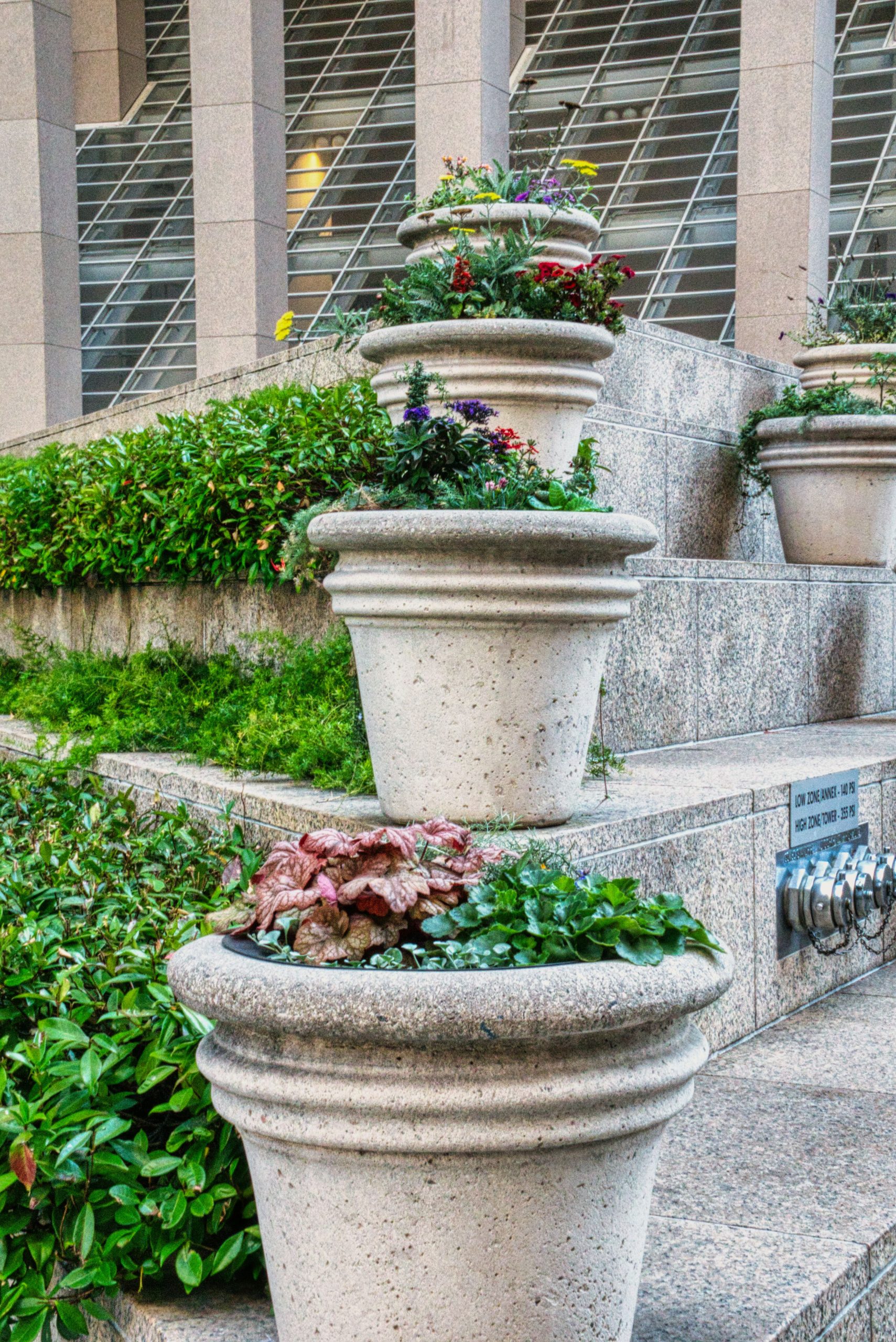
The classic, elegant outdoor spaces often seen in Buckhead follow a proven formula: 70% timeless structure + 30% lush, relaxed planting. The ‘structure’ comes from elements like formal brick patios, stone retaining walls, and well-defined pathways. The ‘lushness’ comes from generous, deep garden beds filled with a mix of evergreen shrubs (like boxwood and holly) for year-round green and flowering perennials (like hydrangeas and roses) for seasonal color. This balance ensures the garden feels established and orderly but also soft and inviting, never sterile.
|
📋 Copy HEX 🔗 Share |
Achieving this look requires an understanding of scale. Many of the grand homes in the area can visually overpower small, timid landscaping. Don’t be afraid to use larger-scale plants and create deeper garden beds (at least 4-5 feet deep) to match the home’s proportions. A common DIY mistake is planting a row of small shrubs that look diminutive against a large brick facade. Investing in a few larger, more mature specimen trees or shrubs can make a huge difference in helping the landscape feel balanced with the home’s architecture from day one.
29. Carve Out a Quiet Corner with a Rustic Bench and Garden Art
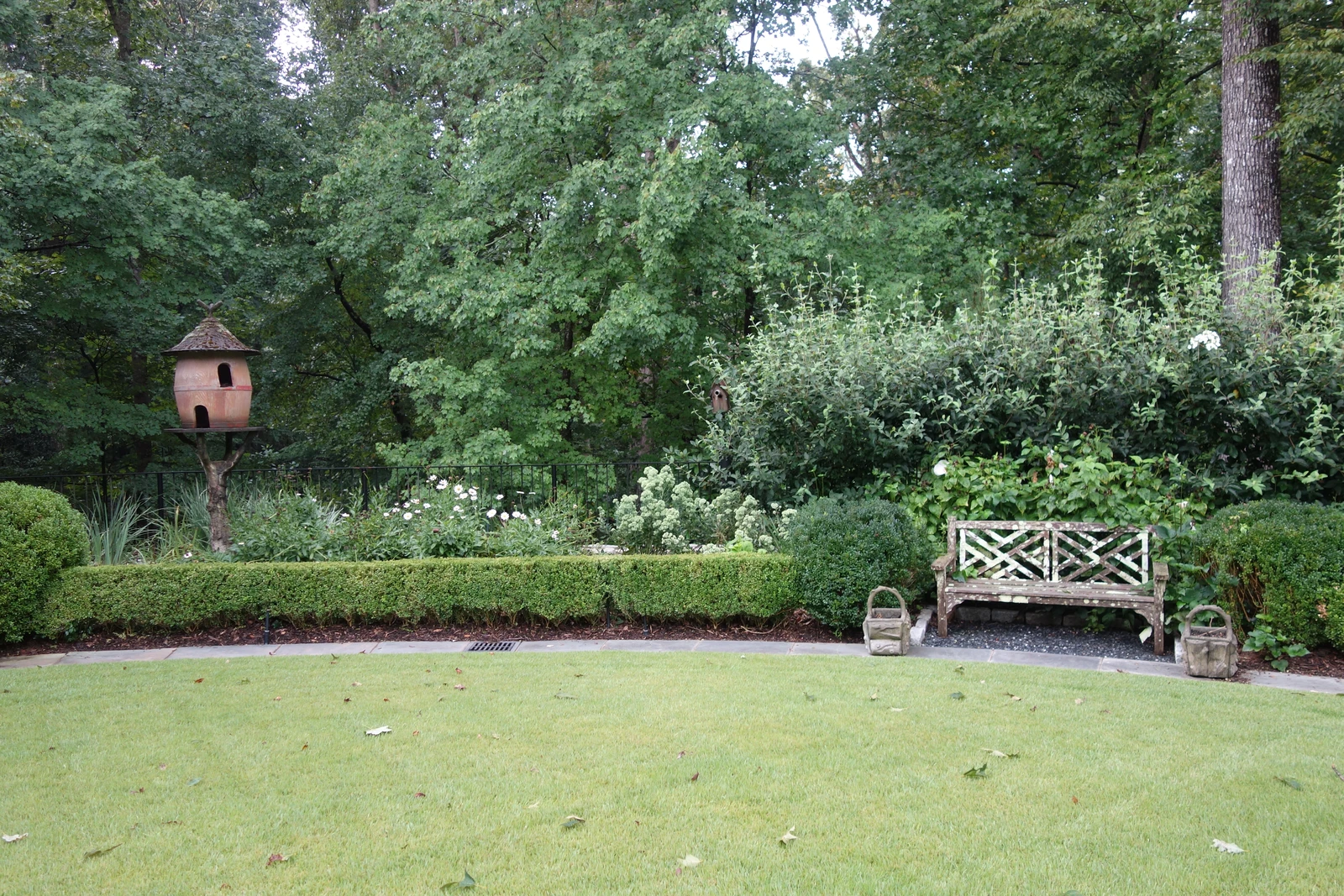
This tranquil scene is a lesson in creating a ‘vignette’—a small, curated moment within a larger garden. The design works by using a simple framing technique. The neatly trimmed hedge acts as a ‘wall,’ separating this quiet corner from the open lawn and creating a sense of enclosure. The black metal fence and dense trees in the background provide a dark, textured backdrop that makes the elements in the foreground pop. Within this frame, the rustic wooden bench and terracotta birdhouse are perfectly placed as focal points.
|
📋 Copy HEX 🔗 Share |
The rustic wooden bench is the single element that gives this space its purpose. Without it, this would just be a pretty garden bed. The bench issues an invitation. It says, ‘This is a place to stop, to sit, to rest.’ It transforms a passive scene meant to be looked at into an interactive space meant to be experienced. The weathered wood and classic lattice design add a touch of timeless, rustic charm that feels perfectly at home among the plants and flowers, far more so than a modern metal or plastic bench would.
Your Outdoor Sanctuary Awaits
Creating a truly personal outdoor space is one of the best investments you can make in your home and your well-being. Whether you’re drawn to a sleek modern pool or a quiet garden corner, the right design can transform how you live. We hope these distinct ideas have sparked your imagination for what’s possible in your own backyard.
Feeling inspired? Pick your favorite look and save it to your Pinterest board. It’s the first step to turning that dream landscape into your reality.