
You know that feeling when you finally find the desert landscaping idea that looks exactly right for your space, but then you’re totally lost on how to actually make it happen? You’re not alone. The best desert yards feel effortless, but they’re the result of smart, intentional design. After filtering through hundreds of options, we narrowed it down to 22 of the most inspiring, achievable desert landscapes out there. We’re covering everything from minimalist modern yards to lush, vibrant succulent gardens. These aren’t just pretty pictures; we’re giving you the blueprint to bring them to life. And stay until the end—we break down the most common mistakes that can ruin these looks. 📌 Save this to Pinterest for later—you’ll want to revisit these ideas.
1. Expansive Mountain View Landscape with Cacti and Patio Seating
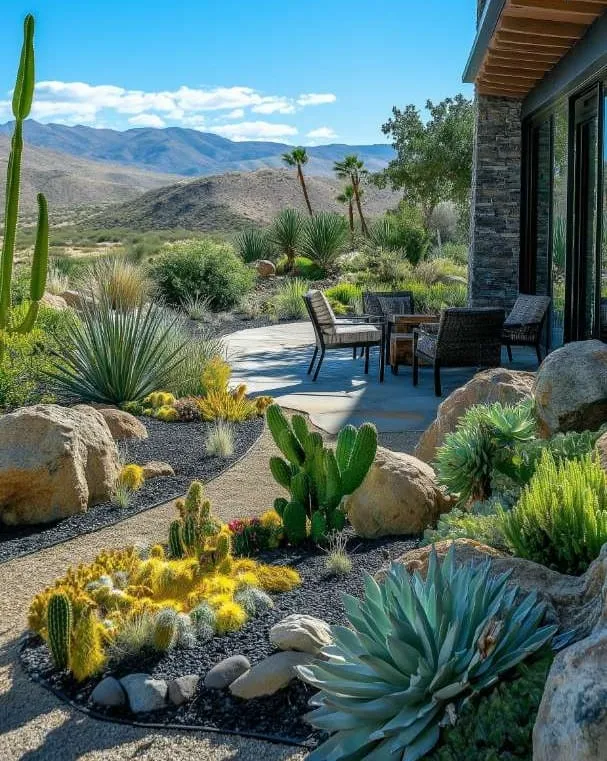
This landscape succeeds by balancing scale and texture. The vast, open space is grounded by the weight of large gray stone boulders, which act as anchors for the eye. The variety in plant forms—from the tall, architectural cacti to the low, clustered succulents—creates visual interest without feeling cluttered. The pathway’s mix of dark gravel and lighter sand defines the walking area while adding another layer of natural texture, guiding you through the space organically rather than forcing a rigid line. It’s a masterclass in making a large area feel both grand and approachable.
|
📋 Copy HEX 🔗 Share |
This kind of expansive, layered design truly shines in larger yards, ideally a quarter-acre or more. The goal is to mimic the natural desert, which requires space for plants and features to breathe. You’ll need at least 50 feet of depth from your main viewpoint (like the patio) to the background to appreciate the layering of the cacti, boulders, and distant mountains. For smaller spaces, you can adapt the core principles by scaling down the boulder size and choosing more compact succulent varieties. Check out the more contained approach in Idea #5 for inspiration on a tighter scale.
2. Modern Desert Welcome with Tall Saguaros and Variegated Agave
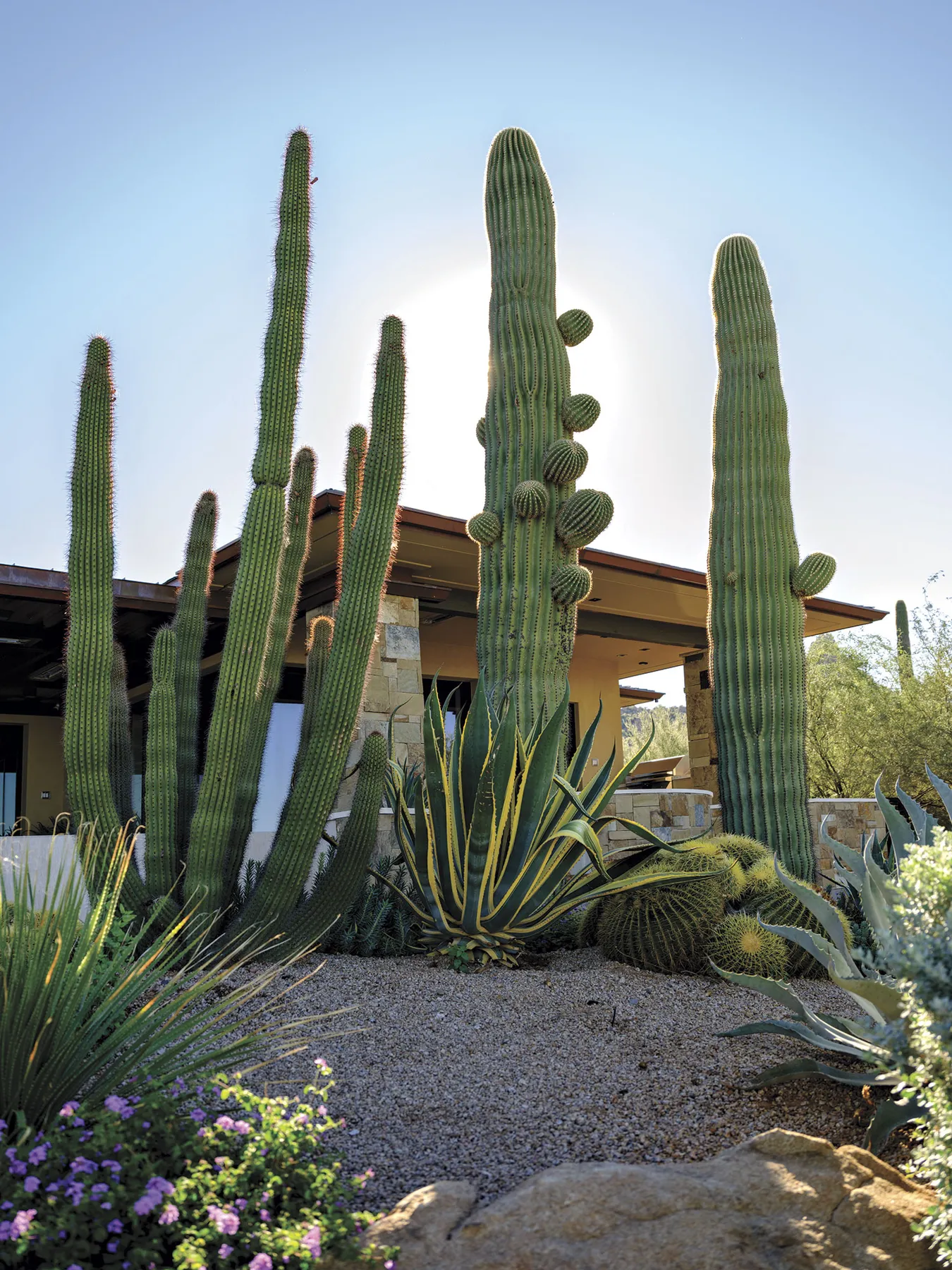
The single element that makes this design sing is the bold, variegated agave front and center. Without it, you’d just have a nice collection of cacti. But that pop of bright, striped foliage injects energy and a contemporary edge into the classic desert palette. It serves as the perfect focal point, breaking up the uniform green of the saguaros and the beige of the stone pillars. It’s proof that sometimes, one perfectly chosen plant with a unique color or pattern can elevate an entire landscape from good to truly memorable.
|
📋 Copy HEX 🔗 Share |
While this looks incredibly low-maintenance, those saguaros and agaves do have specific needs. Saguaro cacti are slow-growing but can become massive, so planting them too close to the house is a future problem. They are also protected in many areas, so be sure you’re sourcing them legally from a reputable nursery. The variegated agave is stunning but can be susceptible to snout weevils. A systemic insecticide applied once a year is your best defense. The gravel is great for drainage, but you will need to use a leaf blower to clear debris and pull the occasional weed that pops through.
3. Curved Stepping Stone Path Through a Saguaro-Accented Yard
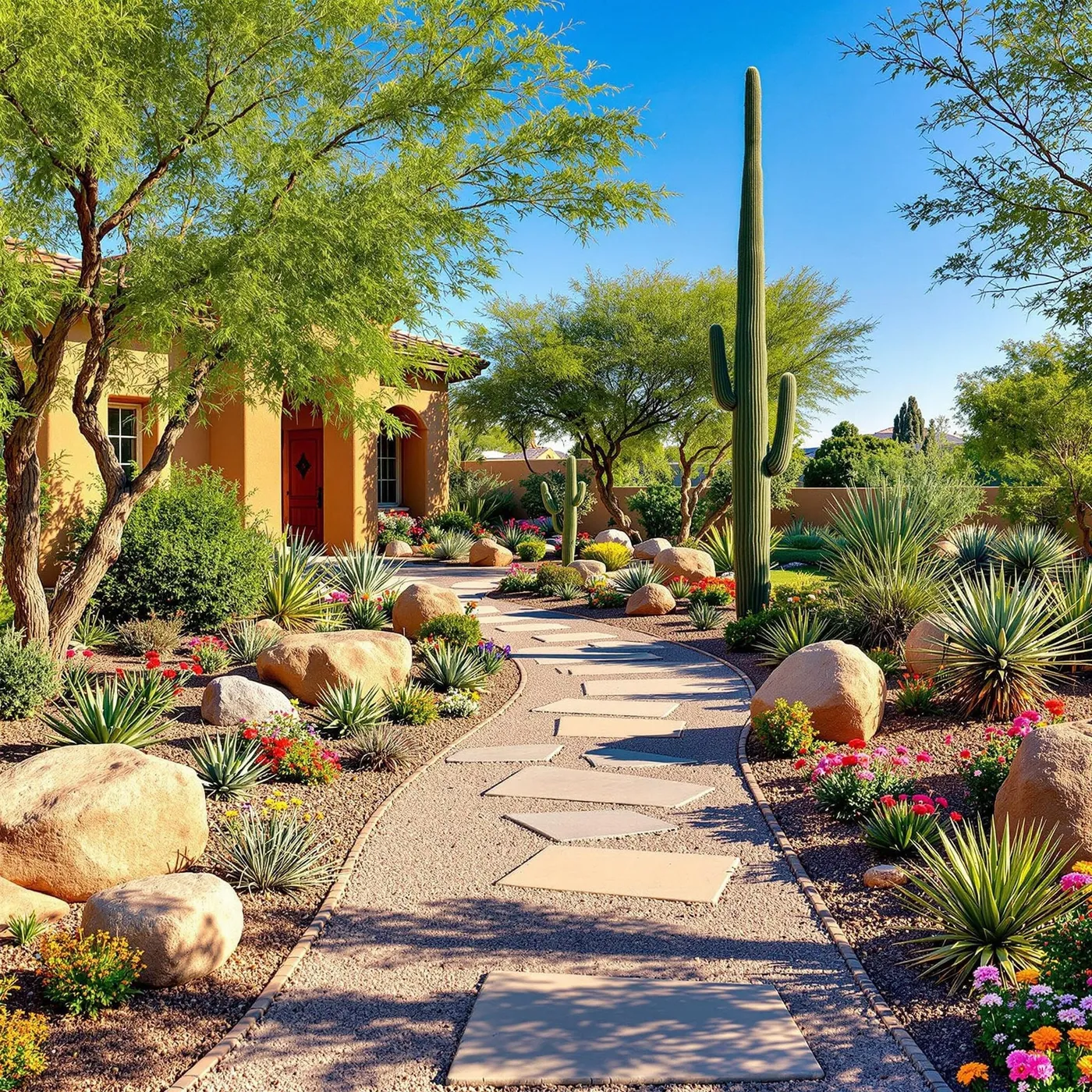
When laying a stepping-stone path like this, the spacing is everything. The goal is a comfortable, natural stride. Place the center of each stone 22 to 25 inches from the center of the next one. Any closer and it feels cramped; any farther and it becomes a leap. Before setting them permanently, lay them all out and walk the path several times. Adjust until the rhythm feels right. Also, ensure each stone is perfectly level and slightly recessed into the gravel so you don’t have a trip hazard. A rubber mallet is your best friend for this job.
|
📋 Copy HEX 🔗 Share |
A gravel yard seems like the ultimate low-effort solution, but let’s be honest: it’s not zero maintenance. Wind will blow leaves and debris into the rocks, requiring a blower (or a lot of patience) to keep it looking clean. Over time, the gravel can get thin in spots or mix with the soil underneath, so you’ll need to refresh it every few years. And if you live in an area with lots of trees, you might spend more time fishing out leaves than you’d think. It’s less work than mowing a lawn, for sure, but it isn’t a ‘set it and forget it’ solution.
4. Tiered Stone Water Feature Flowing into a Desert Pool
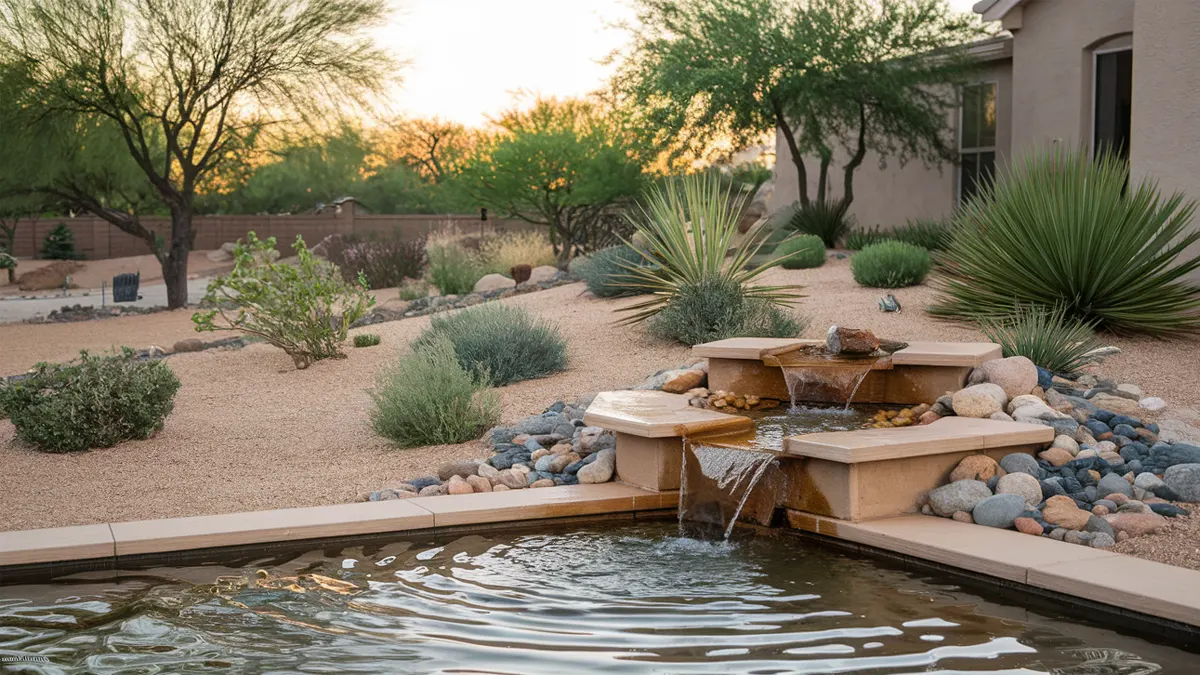
Recreating a custom water feature and poolside landscape like this is a significant investment in tranquility. The costs are primarily in the skilled labor for masonry and plumbing.
|
📋 Copy HEX 🔗 Share |
- Pool Installation: $35,000 – $70,000+ (highly variable)
- Custom Tiered Stone Waterfall (materials & labor): $5,000 – $15,000
- Plants (yuccas, shrubs): $500 – $2,000
- Ground Cover (Decomposed granite, river rock): $1,000 – $2,500
- TOTAL (excluding pool): $6,500 – $19,500
Budget alternative: Get a similar vibe for much less by opting for a self-contained, pre-fabricated fountain kit ($500 – $2,000) instead of a custom build. Surround it with decorative rocks and plants to integrate it into your landscape.
You can create a simple, effective dry riverbed feature to get this look without the water. Here’s how:
- Define the Path (1 hour): Use a rope or spray paint to outline a gentle, curving path where your ‘river’ will flow. Aim for a width of 2-4 feet.
- Excavate (2-3 hours): Dig out the area to a depth of about 4-6 inches, creating a shallow trench.
- Lay Weed Barrier (30 mins): Line the trench with landscape fabric, securing it with pins. This is crucial for preventing weeds.
- Place Boulders (1 hour): Position a few larger ‘statement’ boulders along the edges to create a natural look.
- Fill with River Rock (1-2 hours): Fill the trench with a base of larger river rocks (3-5 inches).
- Add Detail (30 mins): Intersperse smaller pebbles and gravel on top and around the edges to mimic a real riverbed.
Material cost is around $300-$800, depending on the size and rock type.
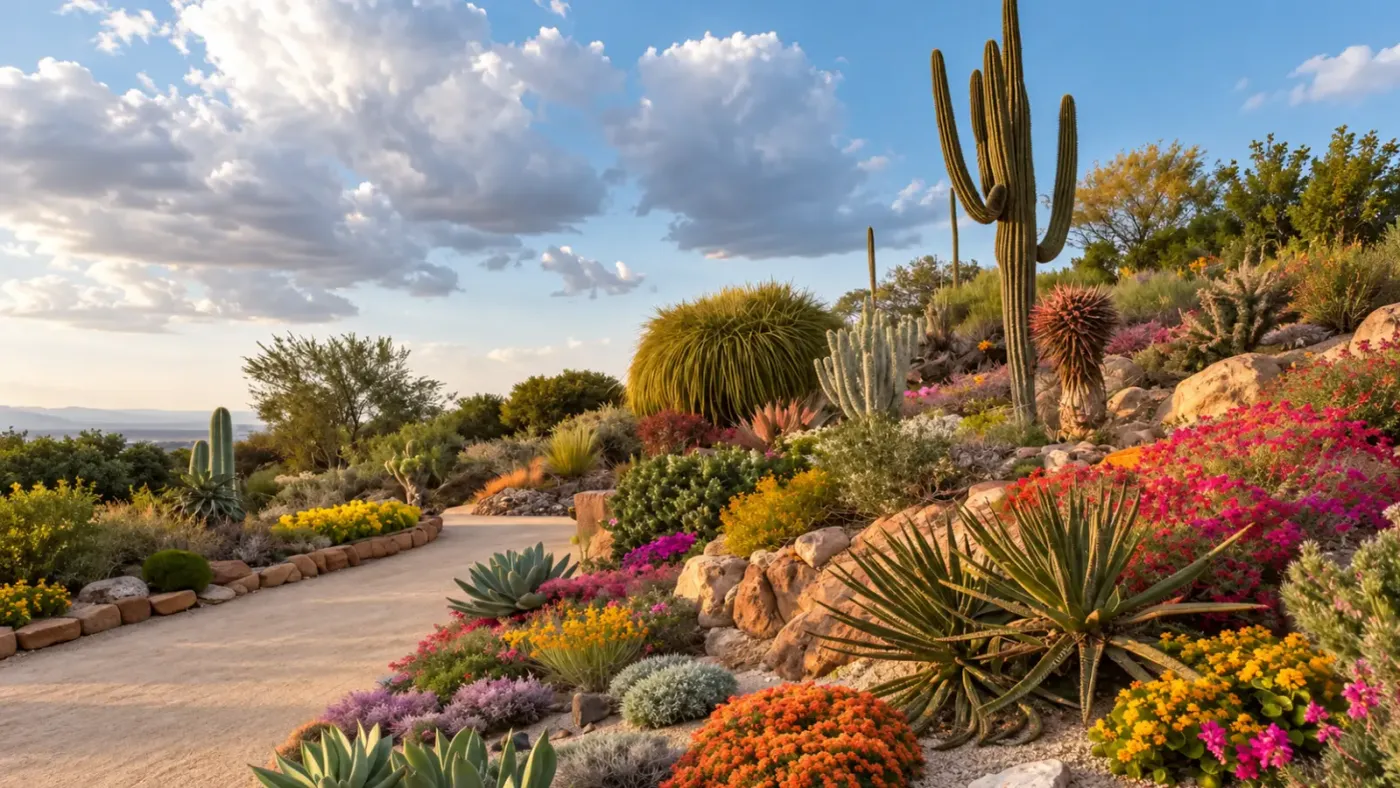
5. Vibrant Desert Garden with a Winding Dirt Pathway
This vibrant look follows a simple but effective formula: 50% mixed green foliage + 30% structural plants + 20% colorful blooms. The base is a sea of various green succulents and agaves, creating a lush foundation. Then, tall saguaro cacti are added for vertical structure and drama. The final, crucial layer is the 20% of bright flowering ground cover in yellows, oranges, and pinks. You can swap the specific plants easily: trade saguaros for columnar yuccas or exchange yellow flowers for purple ones. As long as you maintain that ratio, you’ll achieve this balanced, multi-dimensional feel.
|
📋 Copy HEX 🔗 Share |
Digging, tick off these essential planning steps to ensure your vibrant desert garden thrives:
- Measure your sun exposure: Track how many hours of direct sun each part of the yard gets. Full-sun plants like cacti need 6+ hours, while some succulents prefer partial shade.
- Test your soil drainage: Dig a 1-foot-deep hole, fill it with water, and see how long it takes to drain. If it’s still full after a few hours, you’ll need to amend the soil with sand or gravel.
- Plan your pathway: Decide on the route and width of your path first. It will dictate your planting bed shapes and sizes.
- Source your stone border: Find a local supplier for the stone edging. The cost and style of local rock will significantly impact your budget and final look.
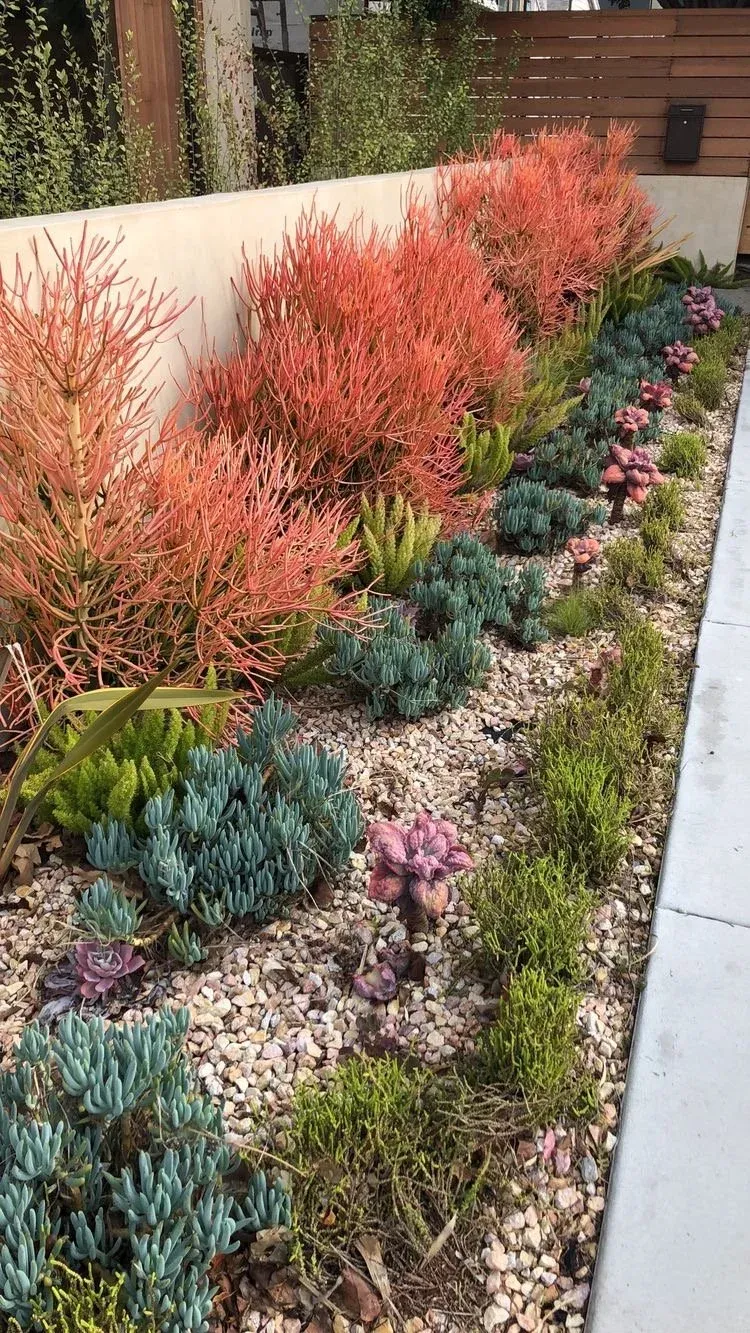
6. Modern Landscape Bed with Coral Firestick and Blue Chalk Succulents
This look is surging in popularity because it perfectly captures the plant collector trend, but for the outdoors. Instead of a uniform sea of green, it’s about curating a small-space garden with unique specimens. The combination of the fiery red Firestick plant (Euphorbia tirucalli Sticks on Fire) and the cool blue Chalk Sticks (Senecio mandraliscae) is all over Pinterest. It’s a move away from sprawling, naturalistic designs towards more controlled, jewel-box plantings that treat each plant like a piece of art. The horizontal wood fence and clean stucco wall reinforce this contemporary, gallery-like feel.
|
📋 Copy HEX 🔗 Share |
To get that sharp, clean look with your gravel mulch, the edging is non-negotiable. Use a flexible but sturdy metal or composite landscape edging to create a firm barrier between the garden bed and your walkway or lawn. Bury it so only about half an inch is visible above ground level. This not only keeps the gravel contained but also prevents soil and organic matter from mixing in, which keeps the color pure and reduces weed growth. For a bed this size, you’ll want at least a 3-inch layer of gravel to effectively block sunlight from reaching potential weed seeds.
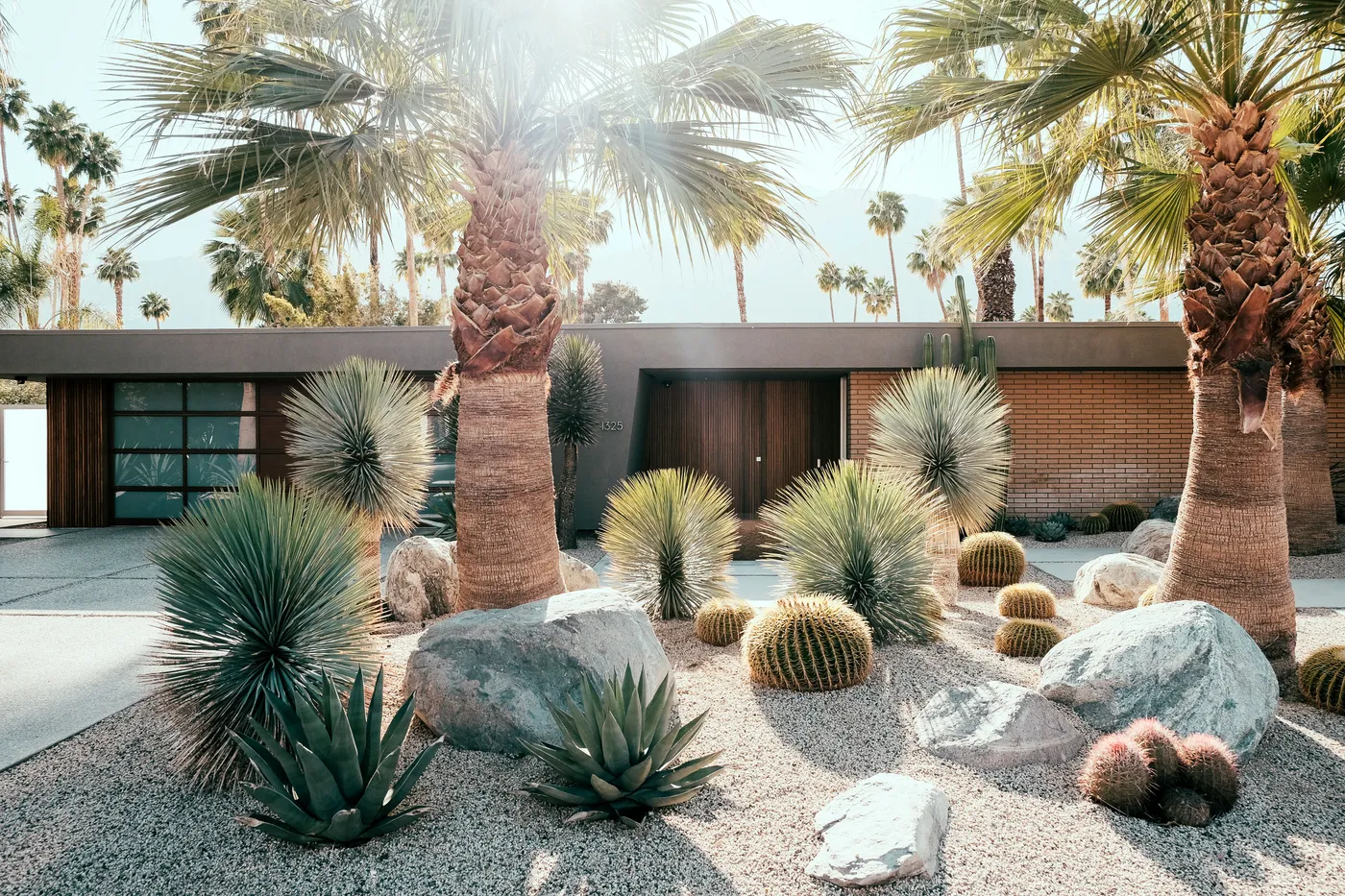
7. Minimalist Desert Front Yard with Palm Trees and Barrel Cacti
This design’s success lies in its masterful use of repetition and scale. The round, golden barrel cacti are repeated throughout the landscape, creating a sense of rhythm and cohesion. Their spherical shape is a beautiful contrast to the spiky agave and the soaring vertical lines of the palm trees. By using a limited plant palette and repeating forms, the design feels intentional and serene, not chaotic. The large grey boulders act as grounding elements, their massive scale making the entire composition feel substantial and well-anchored against the modern lines of the home.
|
📋 Copy HEX 🔗 Share |
This minimalist approach works beautifully for standard suburban front yards, from 500 to 1,500 square feet. The key is leaving ample negative space—the gravel areas between plant groupings. This prevents the design from feeling cluttered and allows each specimen plant, like the palm trees and large agaves, to be appreciated. A minimum ceiling height isn’t a concern, but you need at least 20 feet of width to create meaningful separation between the large boulders and trees. For a much smaller space, consider the container-focused approach seen in Idea #22.
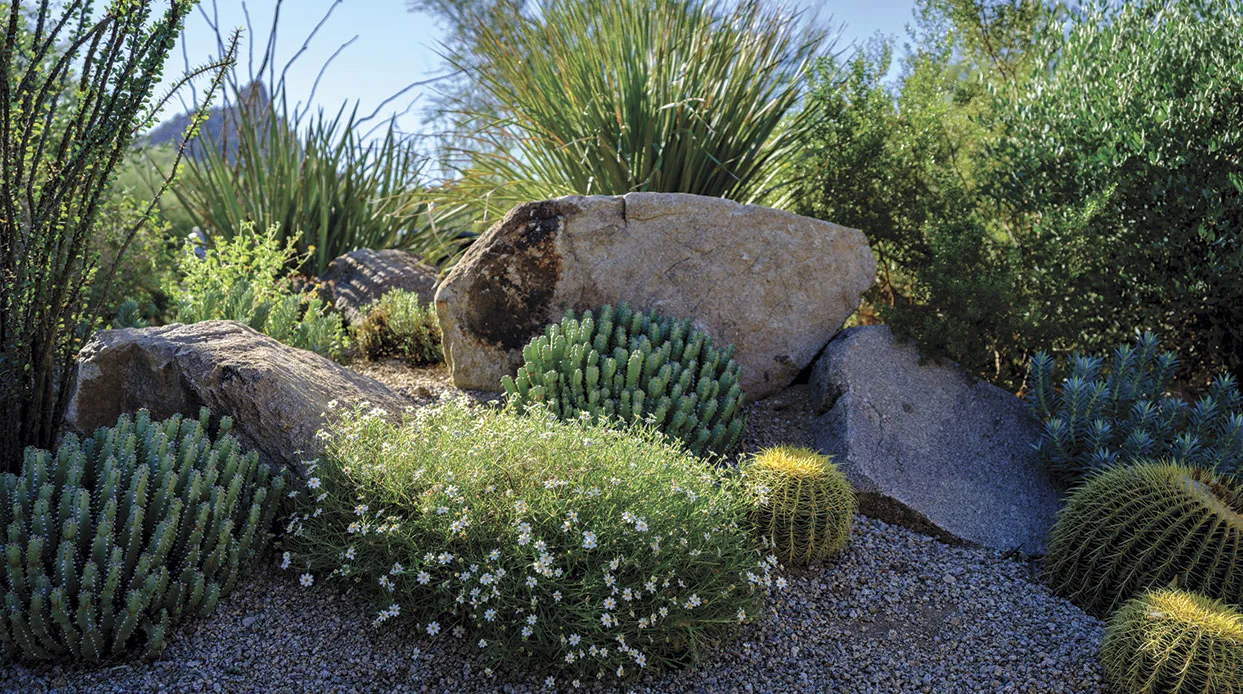
8. Naturalistic Desert Garden with Large Boulders and Golden Cacti
The large, weathered boulders are the heart and soul of this design. Take them away, and you’re left with a pleasant but flat collection of desert plants. The boulders provide crucial verticality, texture, and a sense of timelessness. They create natural planting pockets, protect smaller plants from the harshest sun, and make the entire garden feel like a genuine slice of the desert landscape that has been there for ages. Their scale and ruggedness are what ground the entire scene, providing a powerful contrast to the delicate flowers and sculptural cacti.
|
📋 Copy HEX 🔗 Share |
You don’t need a massive budget to get this natural, boulder-strewn look. Instead of paying for delivery of huge, multi-ton boulders, check Facebook Marketplace or Craigslist for people removing rocks from their own landscaping projects—you might even get them for free if you can haul them. For plants, skip the large specimens at the nursery. Buy smaller golden barrel cacti and shrubs; they’ll grow quickly in the right conditions. For ground cover, decomposed granite is often cheaper than specialty gravel. A similar, more structured look can be found in Idea #19, but this wilder version is very achievable on a budget.
9. Lush Desert Hardscape with Stacked Stone and Giant Cacti
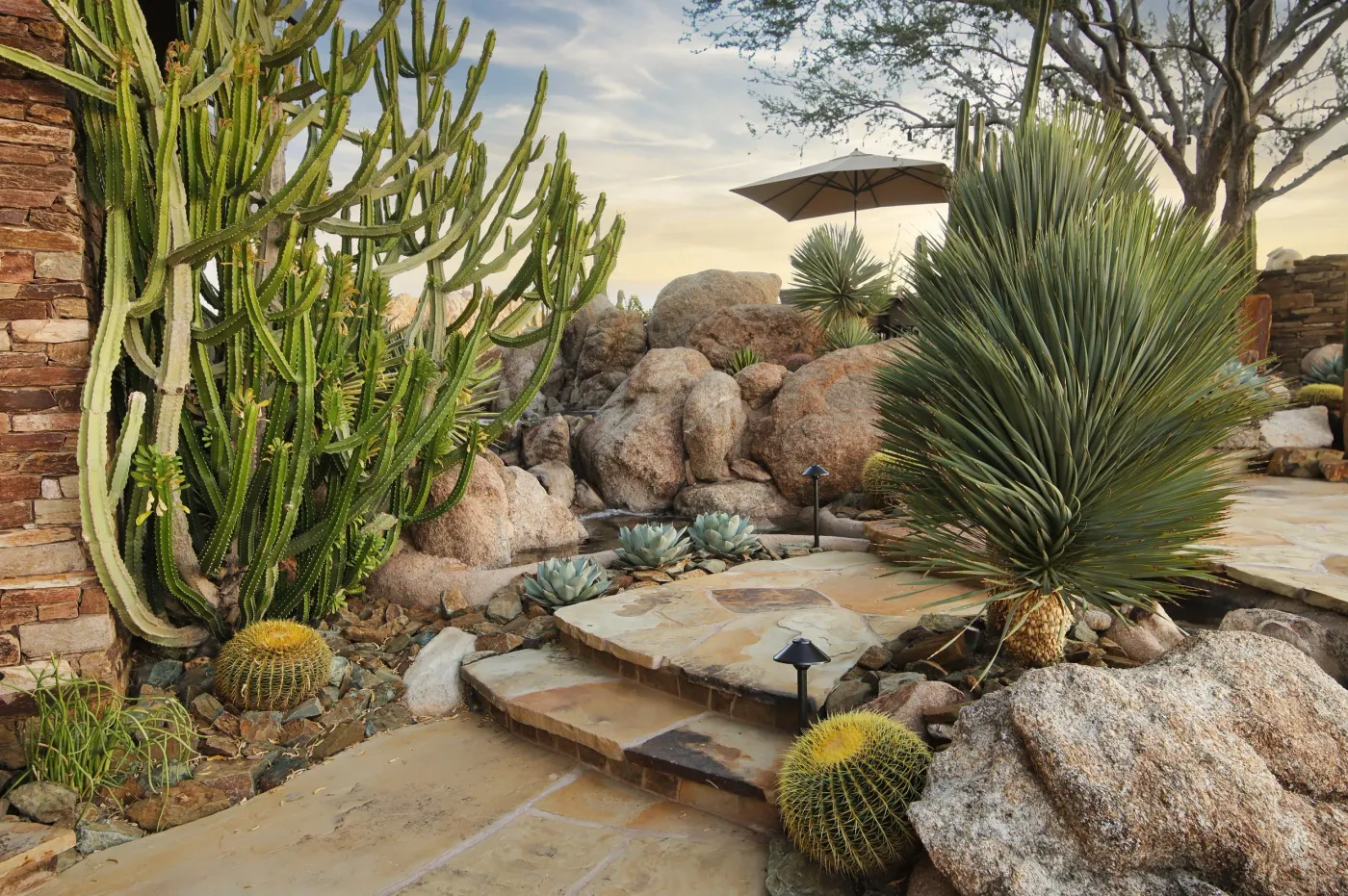
Stacked stone walls look incredible but require some specific attention. The gaps between the stones can become a haven for weeds and volunteer plants. A thorough weeding session once or twice a season is a must. Inspect the walls annually for any shifting or settling, especially after heavy rains or freezes. While these dry-stack walls don’t have mortar to crack, stones can become dislodged. The flagstone walkway will need to be swept or blown clear of debris regularly to prevent stains and slippery spots. Also, that ground-level lighting will need its lenses cleaned periodically to keep the effect sharp.
|
📋 Copy HEX 🔗 Share |
Those gorgeous, giant candelabra cacti are a statement, but they come with a caveat: many types of Euphorbia (which this resembles) contain a milky white sap that is a serious skin and eye irritant. This is not a kid-friendly or pet-friendly plant choice if there’s any chance they’ll be playing near it. Pruning or handling a broken piece requires gloves, long sleeves, and protective eyewear. If you love the look but have little ones or curious pets, consider a less-toxic columnar cactus species as an alternative.
10. Arid Garden Pathway Lined with Golden Barrel Cacti
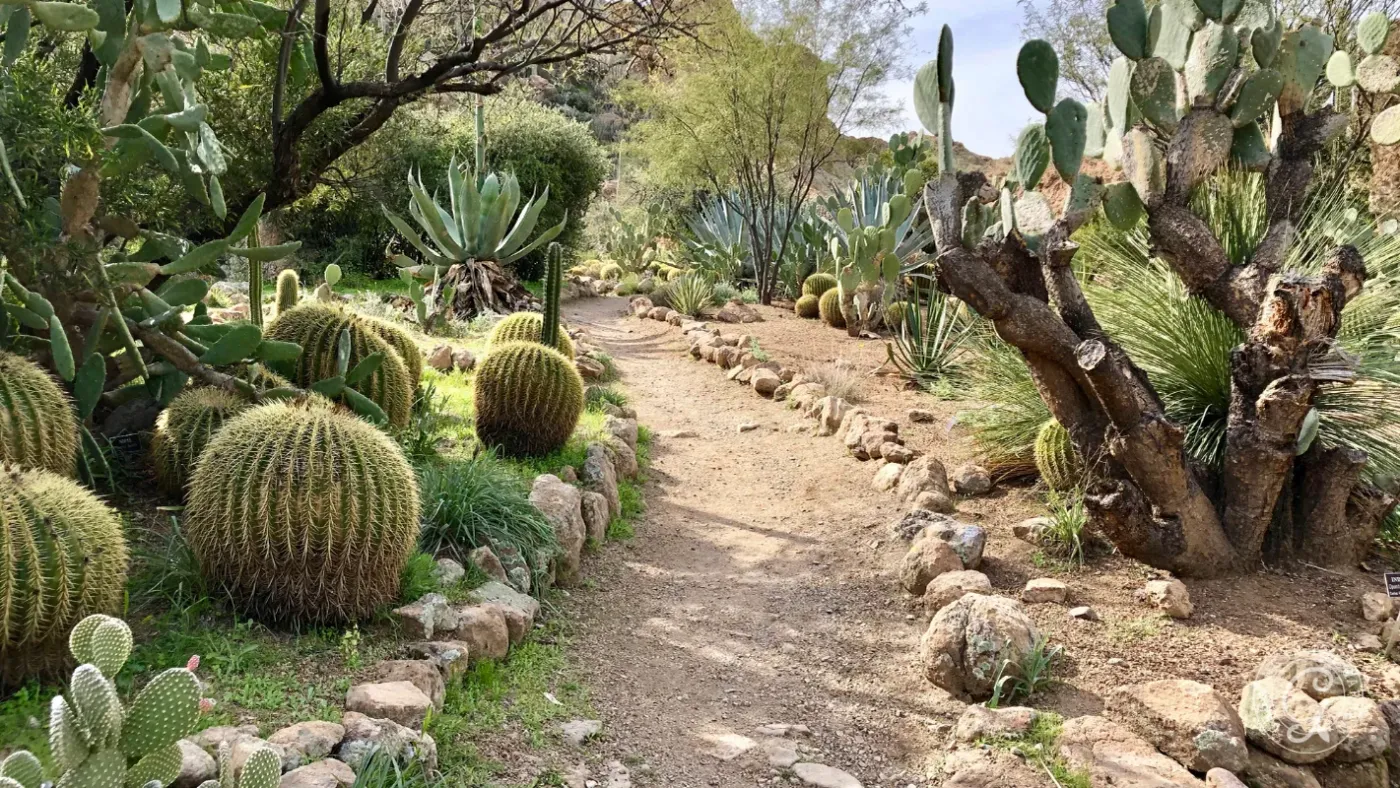
To make a narrow path feel more like a journey, use plants to create a sense of foreground, mid-ground, and background. Here, the low rock borders and golden barrel cacti are in the immediate foreground. The taller prickly pear cacti create a mid-ground layer. Finally, the desert trees and shrubs form the background. This layering technique, even in a small space, creates depth and mystery, making you want to see what’s around the next curve. Avoid planting everything at the same height, which makes a path feel like a flat, uninteresting hallway.
|
📋 Copy HEX 🔗 Share |
The visual recipe here is about texture and repetition: 60% low, repetitive forms + 30% mid-height sculptural shapes + 10% soft, leafy background. The golden barrel cacti provide the 60% base, their repeating spherical shape creating a strong rhythm. The prickly pear and agave plants offer the 30% of contrasting, sculptural forms. The final 10% comes from the softer, less defined desert trees in the background, which keeps the scene from feeling too harsh. This formula ensures the eye has a clear path to follow while still enjoying variety.
11. Artistic Desert Garden with a Sculpted Coyote Statue
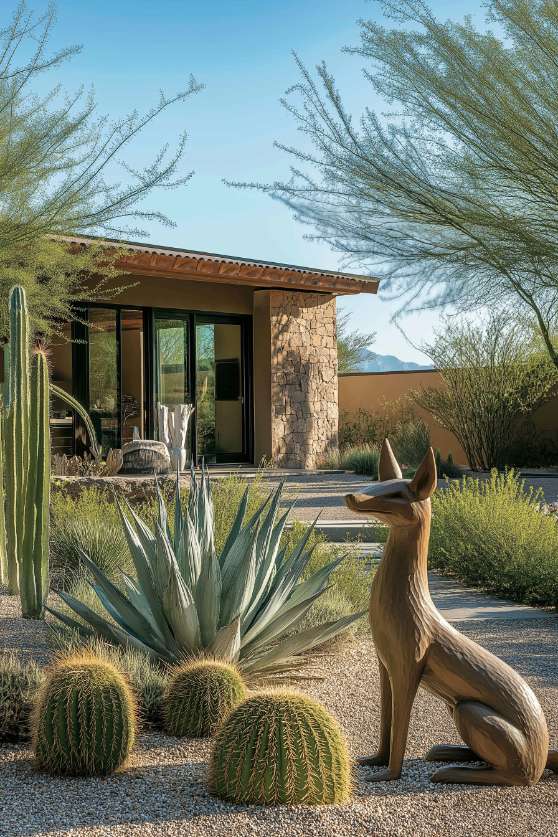
Integrating a sculpture like this coyote feels natural, not forced. Here’s a quick guide to placing art in your landscape:
|
📋 Copy HEX 🔗 Share |
- Find the Sightline (10 mins): Identify the key viewpoints—from your patio, a window, or a garden path. This is where you’ll see the art most often.
- Create a Stage (30 mins): Don’t just plop it down. Place it in a dedicated spot, like a small clearing in the gravel or a slightly raised area. Here, it has its own space defined by the cacti around it.
- Consider the Backdrop (5 mins): The coyote is placed in front of the palo verde trees, which have a lighter, airier texture. This makes the solid form of the statue stand out. Avoid placing dark art against a dark, busy background.
- Plant Around It (1-2 hours): Use plants to frame the art, not hide it. The low barrel cacti and agave lead the eye toward the statue without overwhelming it.
This is a low-effort, high-impact project you can do in an afternoon.
This composition works because it brilliantly balances man-made art with natural forms. The rigid, defined lines of the coyote statue create a compelling point of contrast against the organic, rounded shapes of the barrel cacti and the spiky explosion of the agave. Furthermore, the design uses the rule of thirds perfectly. The statue isn’t dead center; it’s placed off to the side, which is more dynamic and pleasing to the eye. It creates a story—the coyote is looking out over its domain, drawing your gaze across the entire landscape toward the house and mountains beyond.
12. Desert Courtyard Featuring Cacti and Stacked Stone Sculptures
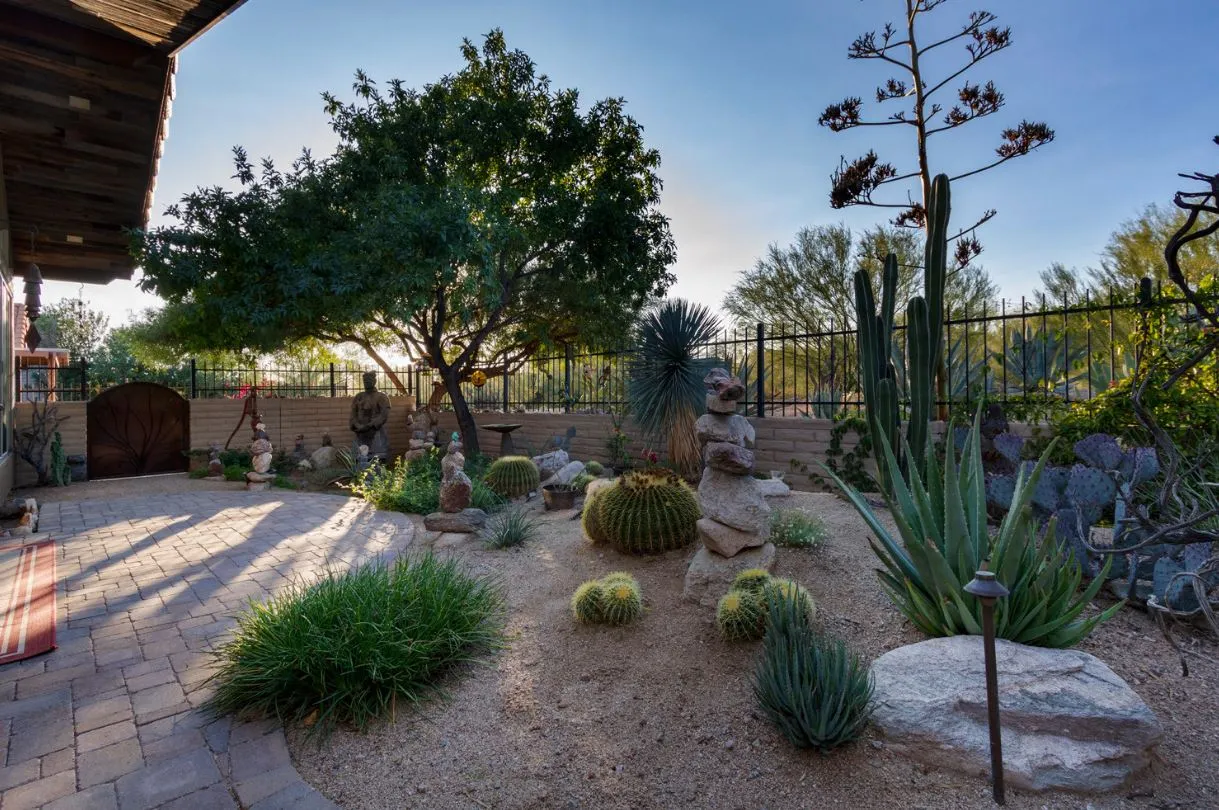
A courtyard that mixes hardscape and softscape needs careful planning. Before you bring in the pavers and gravel, consider these points:
|
📋 Copy HEX 🔗 Share |
- Confirm underground utilities: Before digging for the tree or any large cacti, call 811 to have utility lines marked. You don’t want to hit a water or gas line.
- Plan for drainage: Ensure the paver patio is slightly sloped away from your house foundation to guide rainwater into the gravel bed.
- Check the tree’s mature size: That lovely shade tree will grow. Make sure its mature canopy won’t interfere with your roofline and its roots won’t damage the patio or foundation.
- Test your paver and gravel colors together: Get samples! The tan gravel and gray pavers here work well, but a bad color combination can look jarring.
Stacked stone art and bronze statues can be pricey. To get this sculptural, contemplative feel for less, visit local quarries or landscape suppliers for interesting-looking scrap stone you can stack yourself. For a focal point statue, look at antique malls or garden centers for more affordable cast concrete or resin options. You can achieve a similar artistic effect for a few hundred dollars instead of thousands. For a more plant-focused but equally lush look, check out the terraced design in Idea #13.
13. Vast Rugged Desertscape with Mountains and Saguaro Cacti
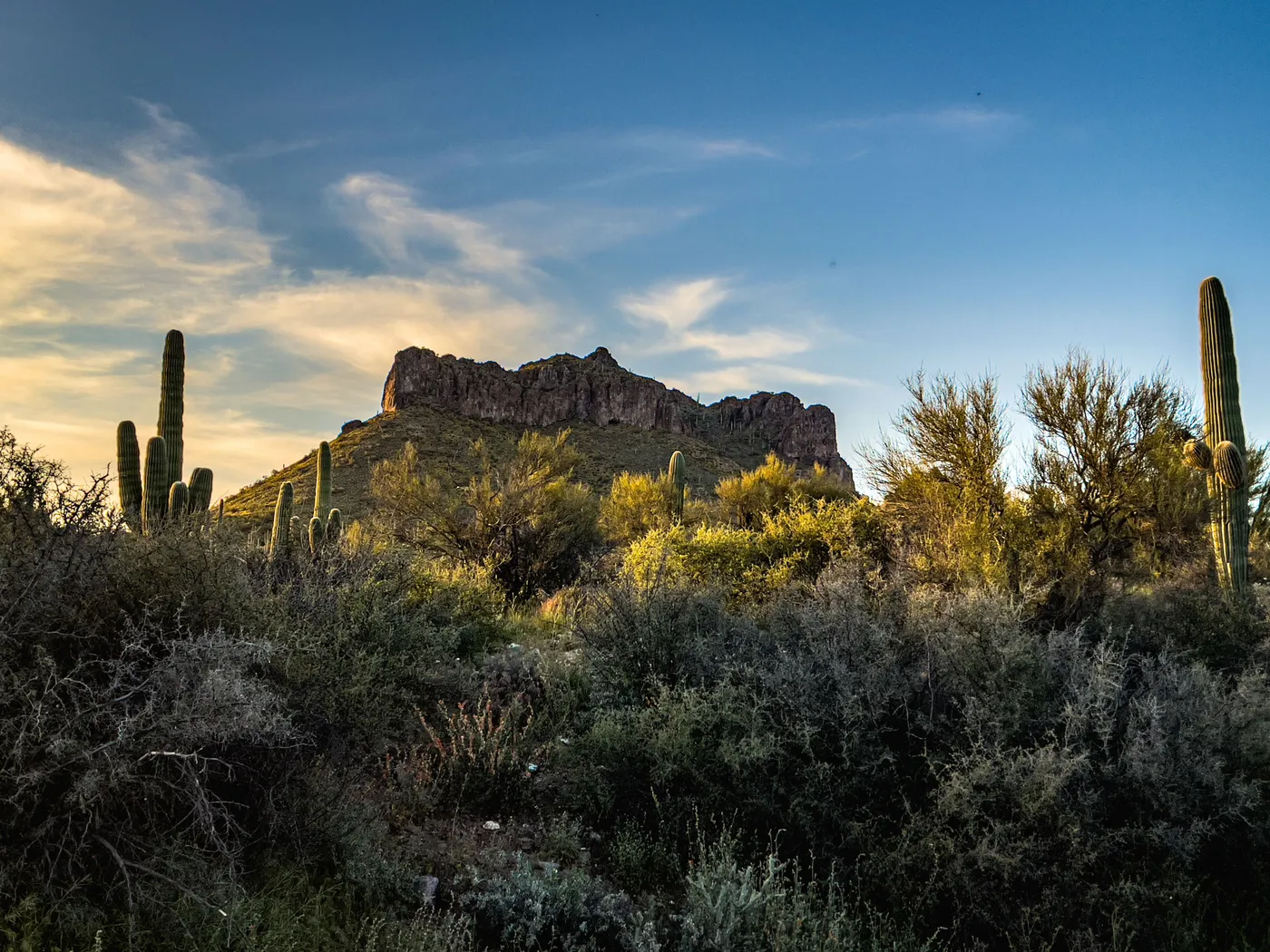
This is nature on a grand scale, and it’s not a look you can replicate in a backyard. This is for properties with acres of land that border natural desert or conservation areas. The beauty here is in the uninterrupted view. To get this feeling, you need a minimum of several acres and a location where your property visually merges with the surrounding wilderness. The ‘design’ is about what you don’t do: you don’t build fences, you don’t create formal beds. You simply let the native landscape be the star. For a more contained, curated version of desert beauty, look at the jewel-box approach in Idea #6.
|
📋 Copy HEX 🔗 Share |
While the appeal of living in a wild landscape like this is immense, it comes with real-world considerations. This type of environment means sharing your space with local wildlife—coyotes, javelinas, snakes, and scorpions are your neighbors. It’s not ideal for letting small pets or young children roam freely without supervision. It also means respecting the native ecosystem. You can’t just clear brush wherever you want; there are often local regulations about land management and fire prevention that you must follow. It’s a lifestyle choice as much as a landscaping one.
14. Vibrant Mixed Succulent Garden with Contrasting Gravels
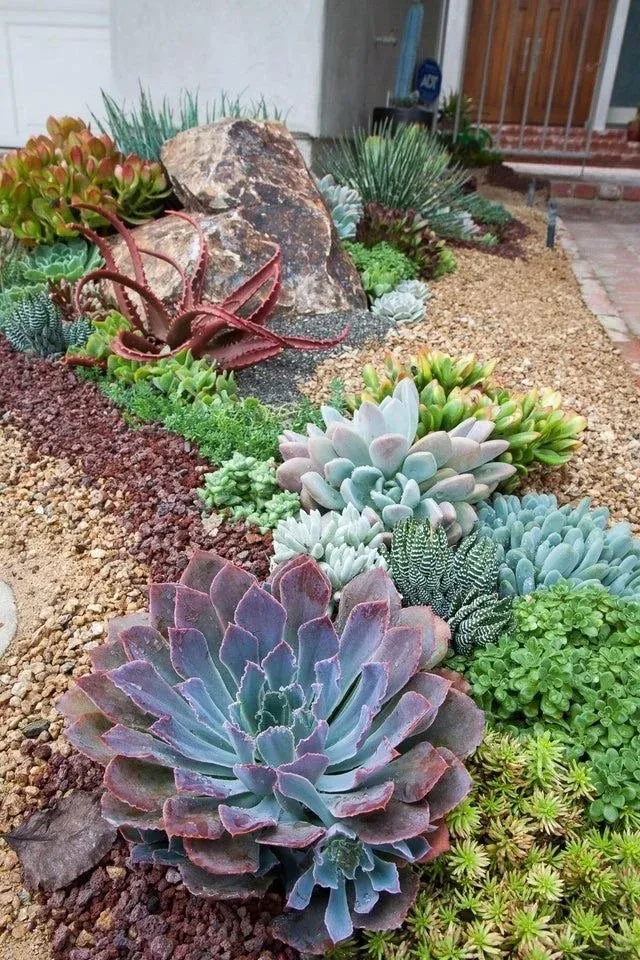
Creating a dense, collector-style succulent garden is all about the plants, which can add up. Here’s a possible breakdown for a 10×10 foot area:
|
📋 Copy HEX 🔗 Share |
- Specimen Plants (Large echeverias, aloes): $200 – $500
- Filler Succulents (Smaller varieties): $300 – $600
- Ground Cover (Gravel, lava rock): $250 – $400
- Boulders (2-3 medium): $150 – $300
- TOTAL: $900 – $1,800
Budget alternative: Start with small, inexpensive cuttings and plugs. Succulents grow relatively quickly, and your garden will fill in within a season or two for a fraction of the cost. Propagate your own plants from leaves and cuttings to fill gaps for free.
This design is so visually satisfying because of its expert use of contrast in color, texture, and form. The cool, powdery blue-gray succulents are placed right next to deep purple and fiery red varieties, making each color appear more intense. The smooth, rounded shapes of the echeveria rosettes contrast sharply with the spiky, architectural form of the aloe. Finally, the fine, light tan gravel makes the coarse, dark lava rock stand out, adding another layer of textural interest underfoot. It’s a full sensory experience.
15. Layered Desert Rock Garden with Agave and Bougainvillea
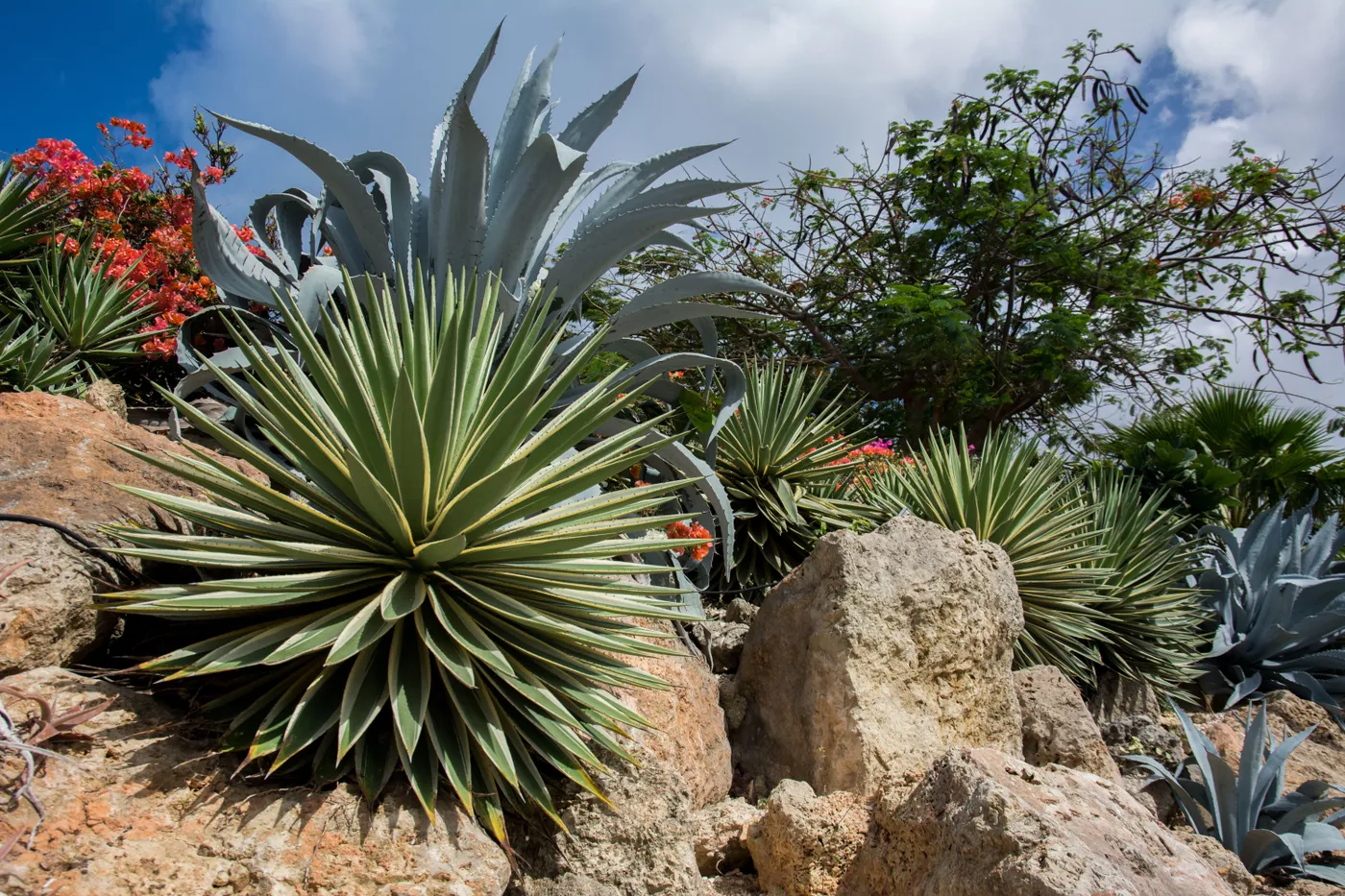
The formula for this lush, multi-level look is: 40% structural succulents + 40% large rock forms + 20% colorful accents. The large, spiky green agaves and blue-gray rosettes make up the foundational structure. They are balanced by an equal visual weight of large tan boulders, which anchor the slope. The magic comes from the final 20%: the surprising explosion of pink bougainvillea and the blue sky peeking through. You could swap the bougainvillea for yellow palo verde blooms or trade the tan boulders for gray ones; the balanced recipe ensures the scene remains harmonious and vibrant.
|
📋 Copy HEX 🔗 Share |
Bougainvillea is a showstopper, but those beautiful pink-red blooms come at a price: they are messy. The plant sheds its colorful bracts continuously, which will require regular cleanup to prevent them from staining concrete or looking untidy in the rock garden. It’s also a vigorous grower and needs heavy pruning once or twice a year to keep it from getting out of control. And don’t forget the thorns—they are sharp and formidable. Wear thick leather gloves when pruning. The agaves, on the other hand, are extremely low maintenance but watch for pups (baby plants) that you may want to remove to keep the arrangement clean.
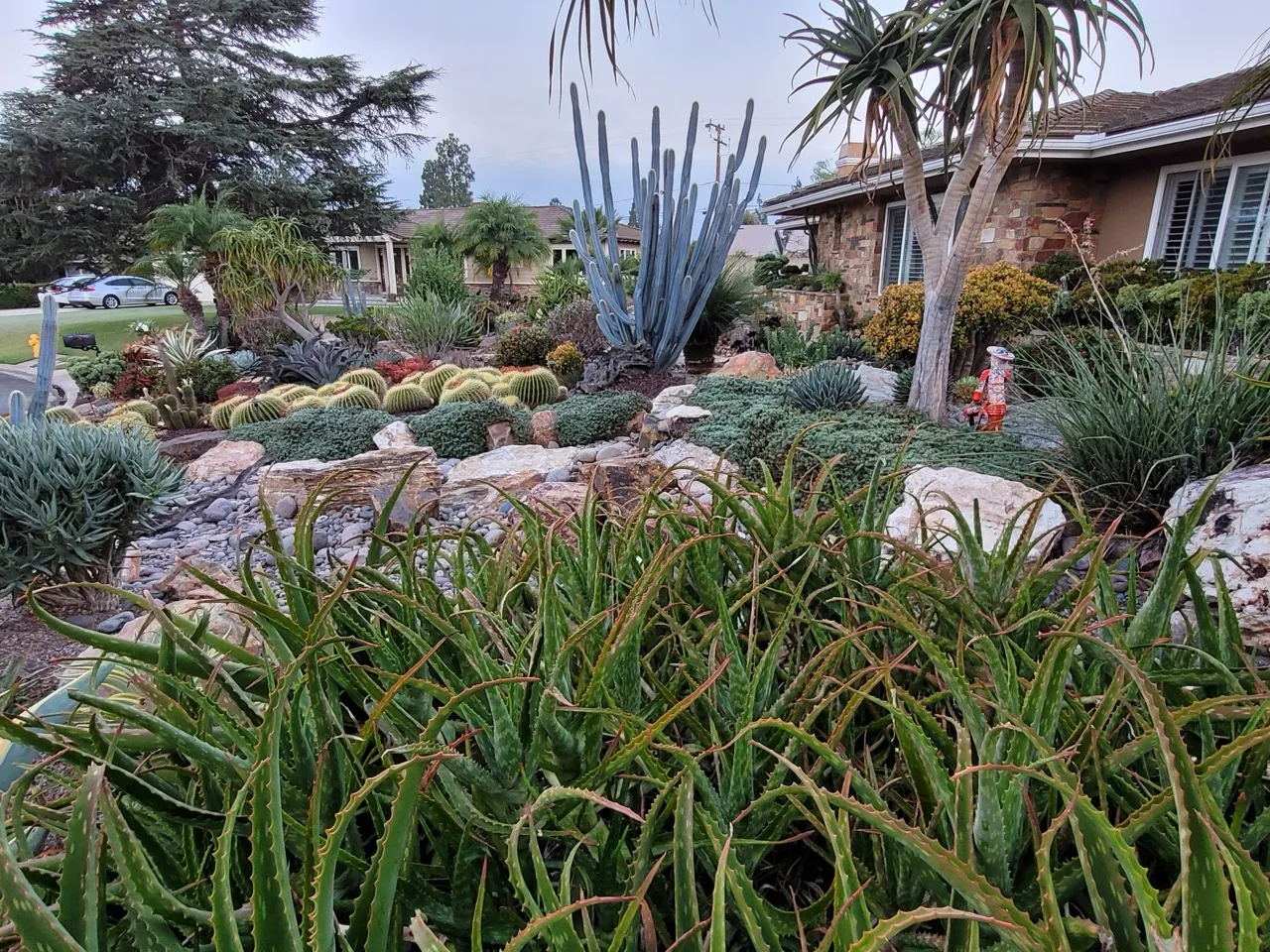
16. Lush Front Yard with Blue Columnar Cactus and Barrel Cacti
This style, often called a dry jungle, is gaining traction as a sustainable alternative to the traditional lawn. It embraces the density and layered feeling of a lush garden but uses almost no water. Homeowners are tired of the cost and environmental impact of turf grass, especially in arid climates. This approach delivers incredible curb appeal and visual interest year-round without a mower or sprinkler system. The use of striking specimens like the tall blue columnar cactus and rows of golden barrels shows a collector’s passion, turning the front yard into a living art installation.
|
📋 Copy HEX 🔗 Share |
To create this dense, layered look without it looking chaotic, plant in drifts and clusters, not in solitary polka dots. Notice how the golden barrel cacti are planted in a tight row, creating a single, powerful visual statement. The aloe vera fills a large section in the foreground, acting as a textured ground cover. Grouping at least 3 to 5 of the same plant together gives more impact than scattering individual plants around. This mimics how plants grow in nature and makes your design feel more intentional and cohesive. Compare this to the minimalist spacing in Idea #7 to see the difference.
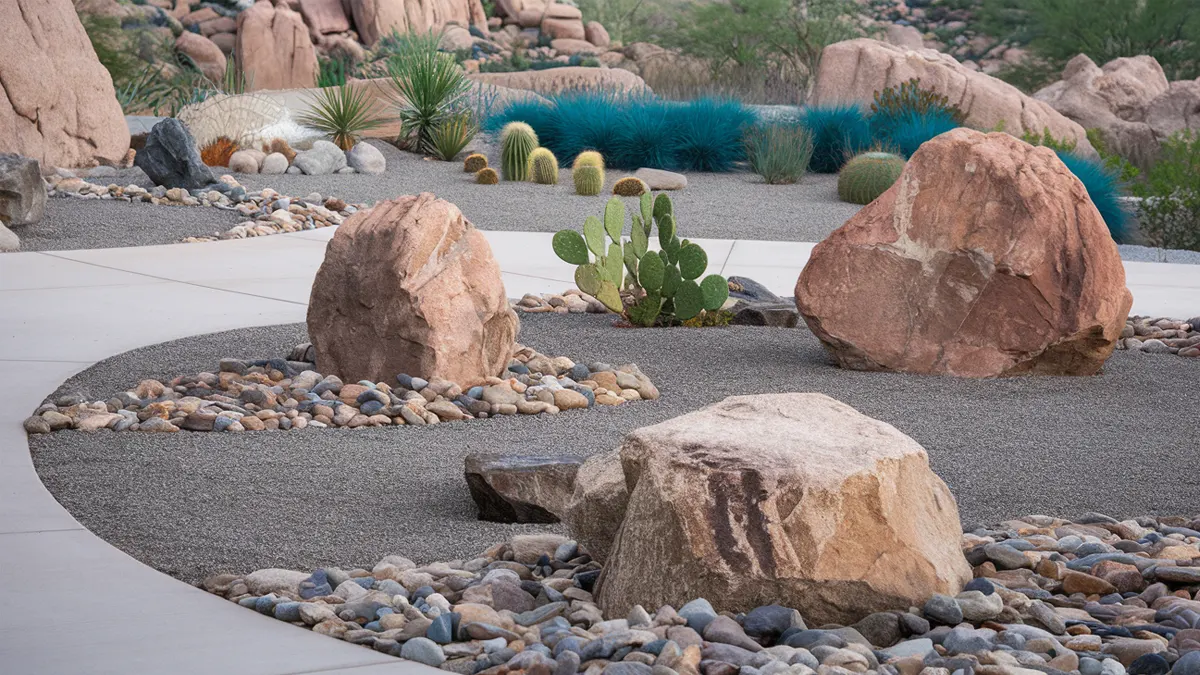
17. Modern Landscape with Large Boulders and Blue Accent Grass
Placing large boulders is an art form. You want them to look like they were placed by nature, not dropped by a crane. Here’s the secret:
|
📋 Copy HEX 🔗 Share |
- Start with the King: Choose your largest, most interesting boulder and place it first in a prominent spot. This is your anchor.
- Create a Family: Place one or two smaller boulders nearby. Group them in odd numbers (3 or 5) for a more natural feel.
- Bury the Feet: This is the most important step. Dig a shallow depression and nestle the bottom third of each boulder into the ground. This makes them look like they are emerging from the earth, not just sitting on top of it.
- Turn for the Best Face: Rotate each boulder until its most interesting face or feature is pointing toward the main viewing angle.
- Plant Around Them: Use the boulders to create natural pockets for planting, tucking plants into the crevices you’ve created.
For a look that prioritizes fewer, larger elements like this, check the mistakes section on rock placement (Mistake #1) to see what to avoid.
Those huge, weathered boulders are expensive to buy and require heavy machinery to place. You can get a similar modern, minimalist feel on a budget. Source smaller, more manageable boulders from a local landscape supply yard (where you can often pick them out yourself). Instead of a few giant ones, create tight clusters of 3-5 smaller boulders. Use a wider variety of less-expensive ornamental grasses and cacti to fill the space. The key is to maintain the clean lines and negative space with the grey gravel, which is relatively inexpensive. You can create a high-style look for 40% of the cost by focusing on composition rather than sheer size.
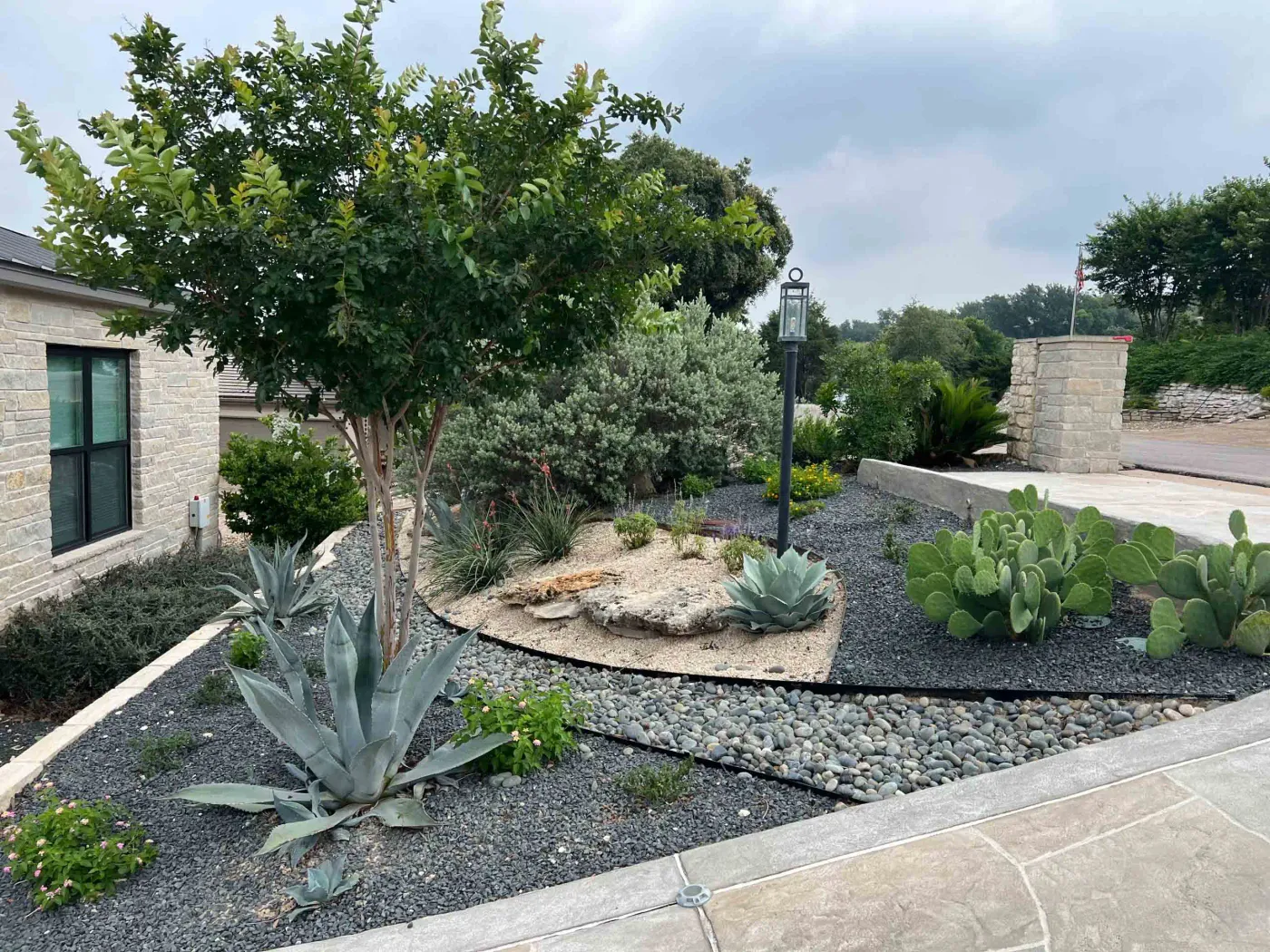
18. Layered Gravel and Succulent Yard with Metal Edging
The metal landscape edging is the unsung hero of this entire design. Without it, this would be a messy jumble of mixing gravels within a year. The crisp, curving lines of the edging are what create the clean separation between the dark gray and tan gravel areas, turning them into intentional, graphic shapes. It elevates the ground cover from simple mulch to a key design element. This simple, relatively inexpensive material is responsible for the entire structured and organized feel of the yard. It’s the framework that holds the whole picture together.
|
📋 Copy HEX 🔗 Share |
While this two-tone gravel look is incredibly sharp, be prepared for a little bit of crossover. No matter how good your edging is, wind, rain, and even just walking around can cause a few pebbles to jump the fence. You’ll find yourself occasionally picking dark rocks out of the light section and vice-versa. Also, the dark gray gravel will get significantly hotter in the sun than the tan gravel, which can stress the roots of more sensitive plants. Be mindful of this when choosing what to plant in the dark gray zones.
19. Modern Stepping Stone Path Flanked by Saguaro and Barrel Cacti
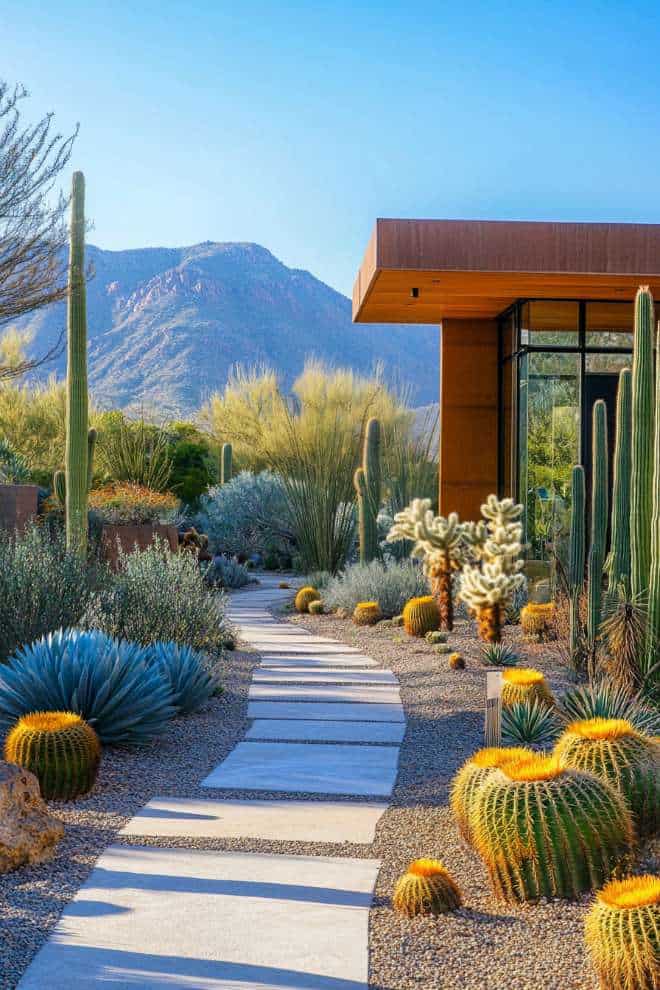
This landscape is a brilliant example of leading the eye. The curving path of oversized concrete pavers doesn’t just provide a way to walk; it actively pulls your gaze through the scene, creating a sense of movement and discovery. The path starts wide in the foreground and narrows as it recedes, a classic perspective trick that makes the space feel deeper. The repetition of the golden barrel cacti along the curve reinforces this line, acting like runway lights guiding you toward the modern building and the mountain view beyond. It’s an active, engaging design.
|
📋 Copy HEX 🔗 Share |
This design is perfect for connecting different zones in a medium to large backyard, especially one with a strong architectural element like the building shown. You need a path length of at least 30-40 feet to make the curve feel graceful and not abrupt. The large scale of the saguaro cacti and the generous spacing require a decent amount of square footage; this would feel cramped in a small yard. It’s ideal for a lot that is at least 50 feet wide, allowing the planting beds on either side of the path to feel substantial.
20. Lush Tiered Garden with Large Agaves and Rounded Boulders
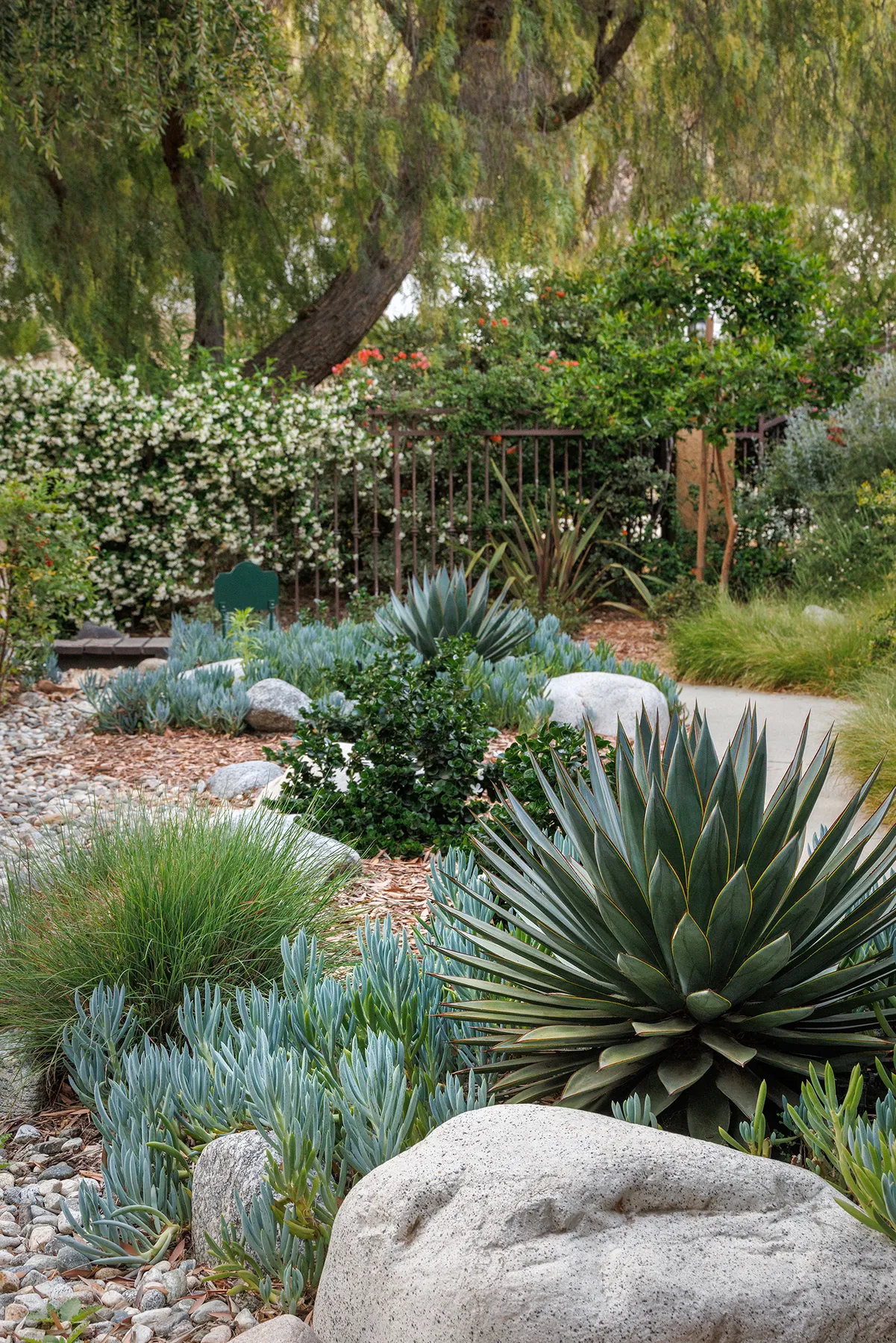
When combining mulch and rock like this, create a clear hierarchy. Use the more decorative, expensive river rock sparingly in key visual areas—here, it’s used as a stream in the foreground. Use the less expensive wood chip mulch for the bulk of the planting beds. This not only saves money but also creates visual interest. To keep them separate, use a low-profile metal or plastic edging buried just below the surface. This creates a crisp line and prevents the wood chips from washing into your pristine river rock bed every time it rains.
|
📋 Copy HEX 🔗 Share |
This lush, full look requires more than just plopping plants in the ground. Here’s your pre-planting checklist:
- Assess your slope: For a sloped area like this, you may need a small retaining wall or strategic boulder placement to prevent soil erosion.
- Plan your irrigation: While drought-tolerant, these plants will need water to get established. Plan for drip irrigation lines before you put down mulch and rock.
- Source your boulders: Find a local supplier and choose your boulders in person. Look for ones with interesting shapes and moss or lichen for extra character.
- Confirm plant spacing: That big agave needs room to grow! Check the mature spread of each plant on its tag and space them accordingly. They look small now, but they will fill in.
21. Potted Cacti and Succulents Along a Stone Paver Path
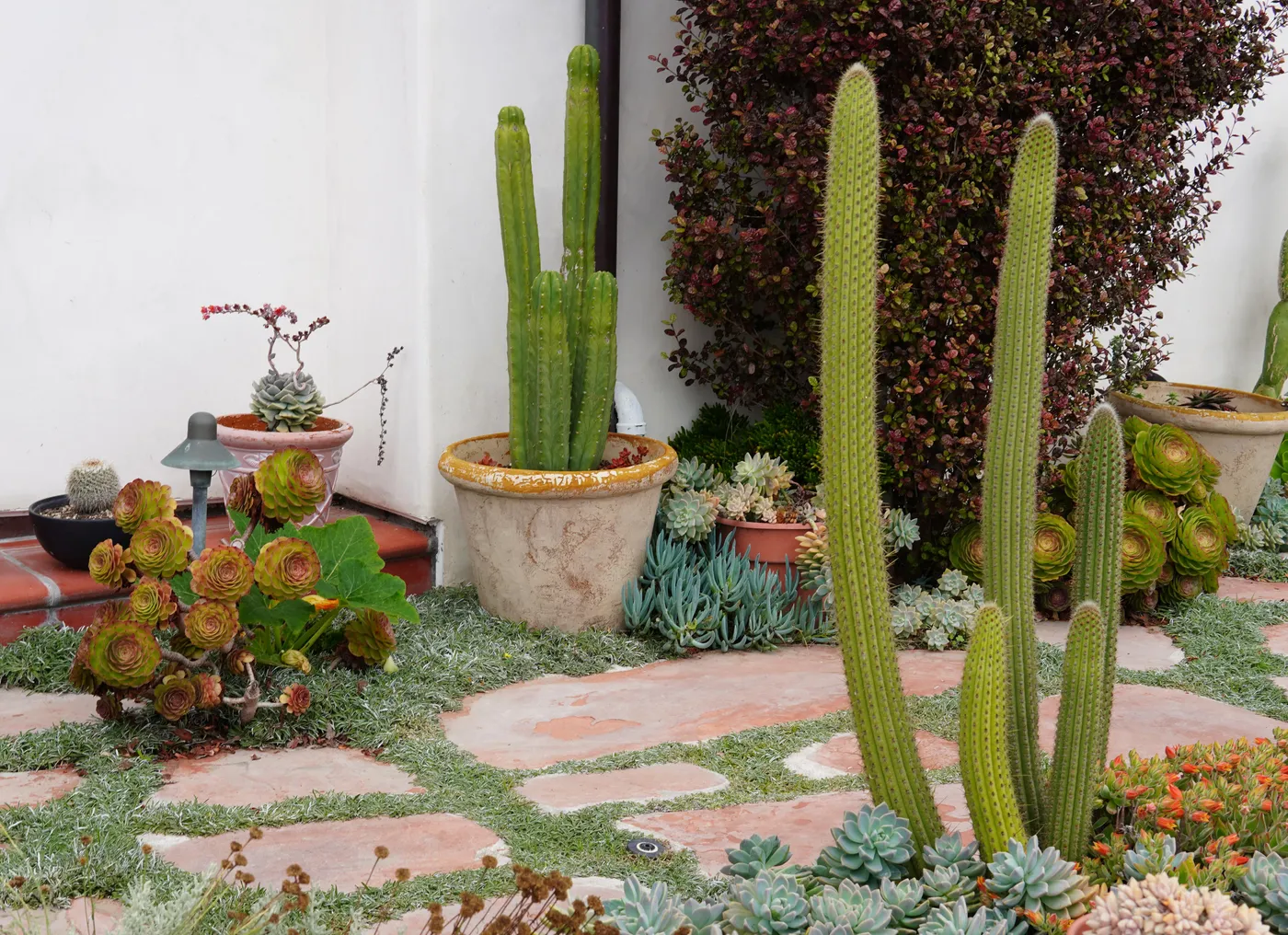
This is the perfect desert landscaping solution for renters, small patios, or anyone on a tight budget. Instead of digging up a yard, you can create a stunning and portable garden with containers. Hit up Target, Home Depot, or even thrift stores for interesting ceramic pots. A bag of cactus-specific potting mix is under $10. You can buy small, affordable succulents and cacti and create your own arrangements. The irregular stone pavers can be found at any big-box hardware store, and you only need a few to create a charming path. This entire look can be achieved for under $300, and you can take it with you when you move!
|
📋 Copy HEX 🔗 Share |
The effortless charm of this potted arrangement comes from a simple formula: 50% vertical height + 30% varied containers + 20% low-growing texture. The tall columnar cacti provide the strong vertical element that draws the eye up. The collection of different terra cotta pots in varying sizes and shapes adds the crucial layer of curated interest. Finally, the low-growing ground cover and irregular pavers provide a soft, textured base that ties it all together and makes it feel like a cohesive garden scene rather than just a bunch of pots on the ground.
22. Modern Desert Backyard with Green Lawn and Stepping Stones
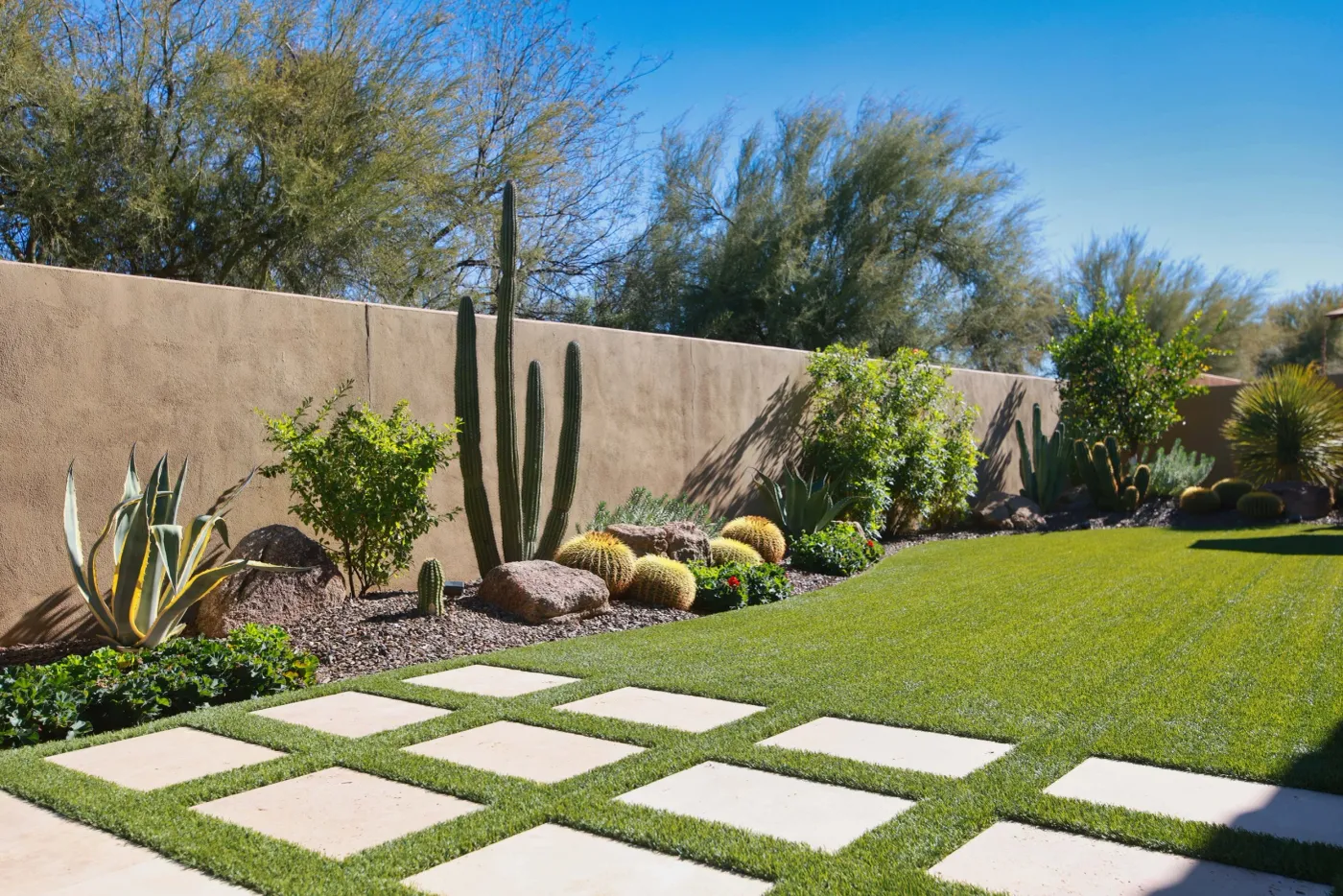
A hybrid design like this mixes high-maintenance turf with low-maintenance desert elements. The costs can be surprising.
|
📋 Copy HEX 🔗 Share |
- Sod Installation (500 sq ft): $1,000 – $2,500
- Sprinkler System Installation: $2,000 – $4,000
- Concrete Pavers (15 pavers): $400 – $800
- Large Specimen Plants (Saguaro, Agave): $800 – $3,000+
- Rock Mulch and Edging: $500 – $1,200
- TOTAL: $4,700 – $11,500+
Budget alternative: Swap the real turf for high-quality artificial turf to eliminate water and mowing costs (though the upfront cost is higher). Use smaller, less mature plants and let them grow over time.
Let’s have a moment of honesty about having a lawn in the desert. It is a massive resource commitment. The amount of water required to keep turf that green in an arid climate is staggering, and so is the bill that comes with it. It also requires regular mowing, fertilizing, and aeration—the very chores xeriscaping is designed to eliminate. While the contrast of the green grass against the desert plants is beautiful, you have to decide if that aesthetic is worth the environmental impact and high maintenance. For a truly low-water alternative, look at the beautiful gravel yard in Idea #7.
Your Desert Oasis Awaits
Creating a beautiful desert landscape is all about choosing the right plants and arranging them with intention. Whether you’re drawn to a minimalist modern yard or a lush succulent jungle, the perfect design is within reach. Start small, trust the process, and don’t be afraid to move things around. Now go get your hands dirty, and be sure to save your favorite ideas to your Pinterest board for when inspiration strikes!