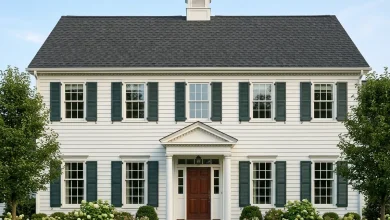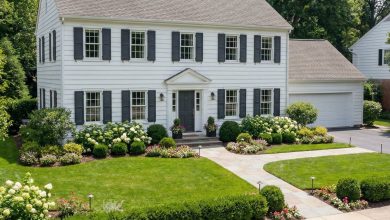

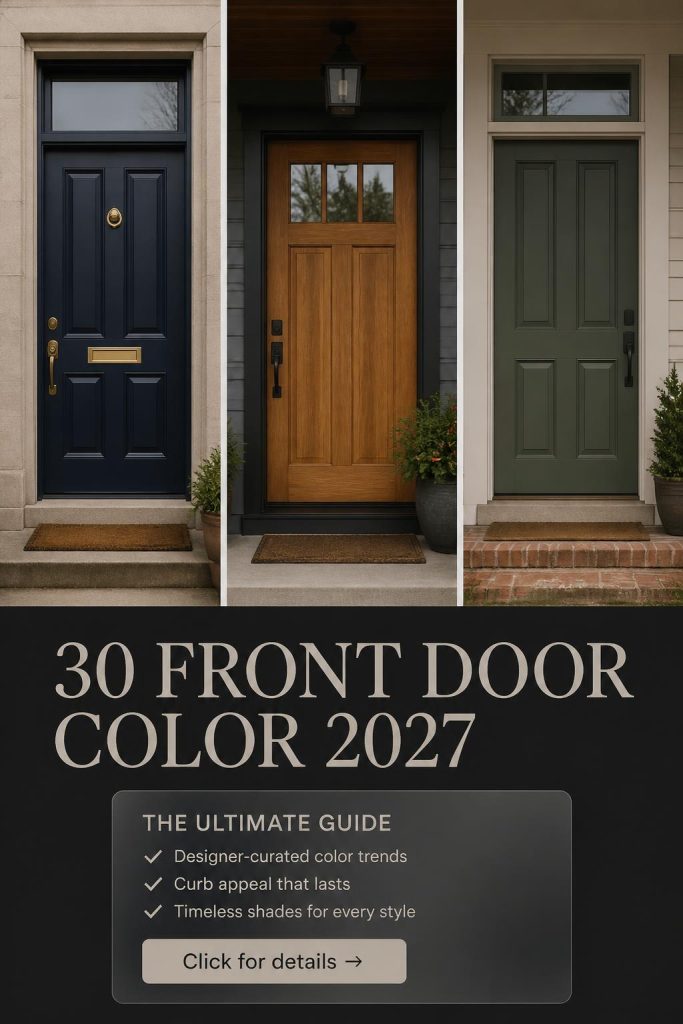
You know that feeling when you finally find the front door color that looks exactly right for your house? It’s more than just paint; it’s the first hello your home offers. For 2027, the trend is all about personality—moving beyond basic neutrals to colors that tell a story before anyone even steps inside. We spent serious time analyzing trends from sources like Sherwin-Williams and Benjamin Moore to curate these 30 striking front door color ideas, covering everything from modern minimalist to classic farmhouse styles. And stay until the end—we break down the most common mistakes that can ruin these looks. 📌 Save this to Pinterest for later—you’ll want to revisit these ideas.
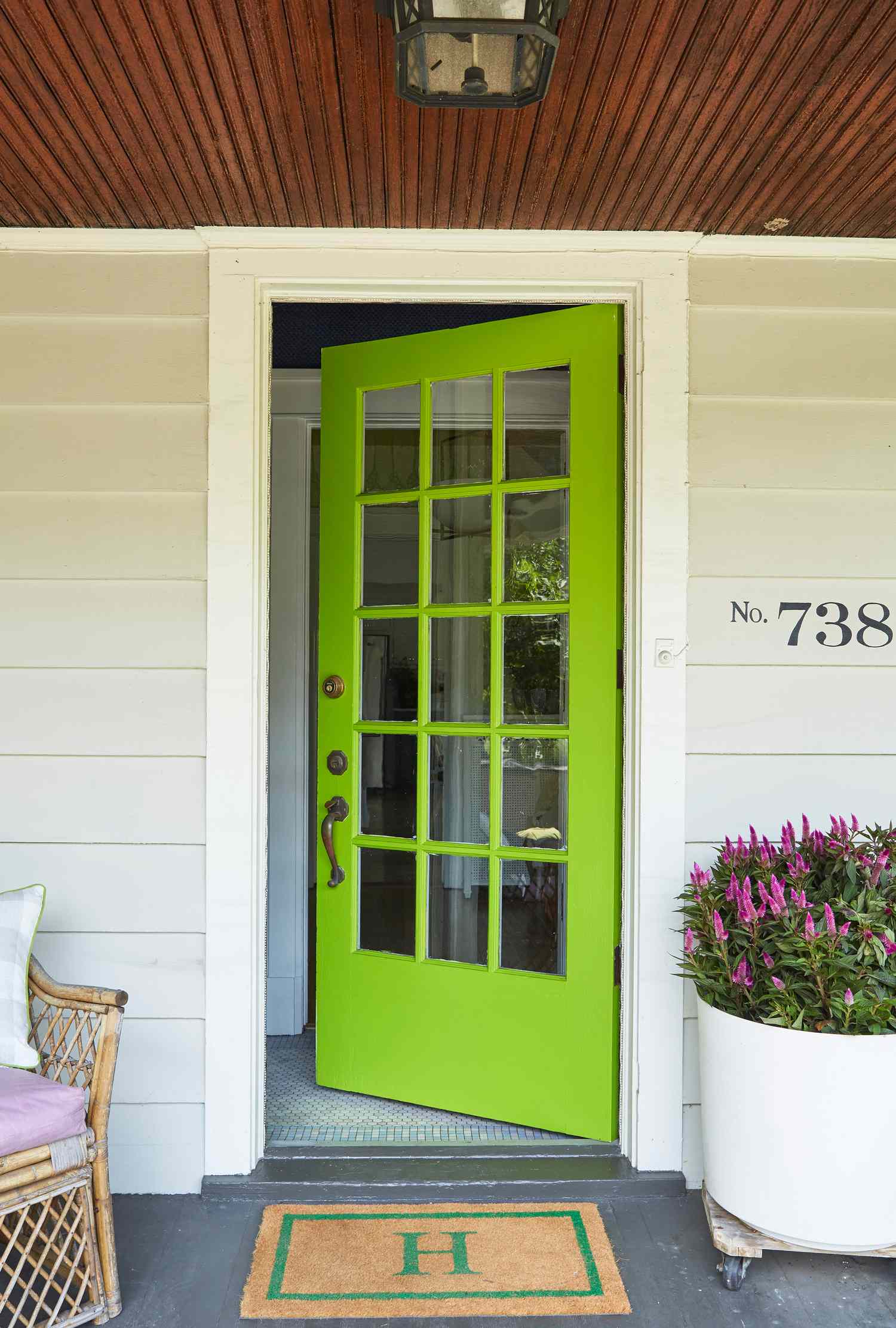
1. Vibrant Lime Green Door with a Warm Wood Porch Ceiling
When you’re working with a color this bold, the texture and finish matter immensely. Opt for a semi-gloss or high-gloss finish for a lime green door. Not only does it make the door easier to clean (a must for high-traffic areas), but the sheen reflects light, making the color appear even more vibrant and dimensional. It also provides a subtle, sophisticated contrast against matte siding, preventing the look from feeling flat.
|
📋 Copy HEX 🔗 Share |
This combination sings because of a perfect balance between bold and natural. The zesty lime green is an unexpected, energetic choice that immediately grabs attention. However, it’s grounded by the warm, organic tones of the wooden beadboard ceiling and dark brown porch floor. The white siding acts as a clean, neutral canvas, allowing both the green and the wood to have their moment without competing. It’s a masterclass in using a high-impact color without overwhelming the senses.
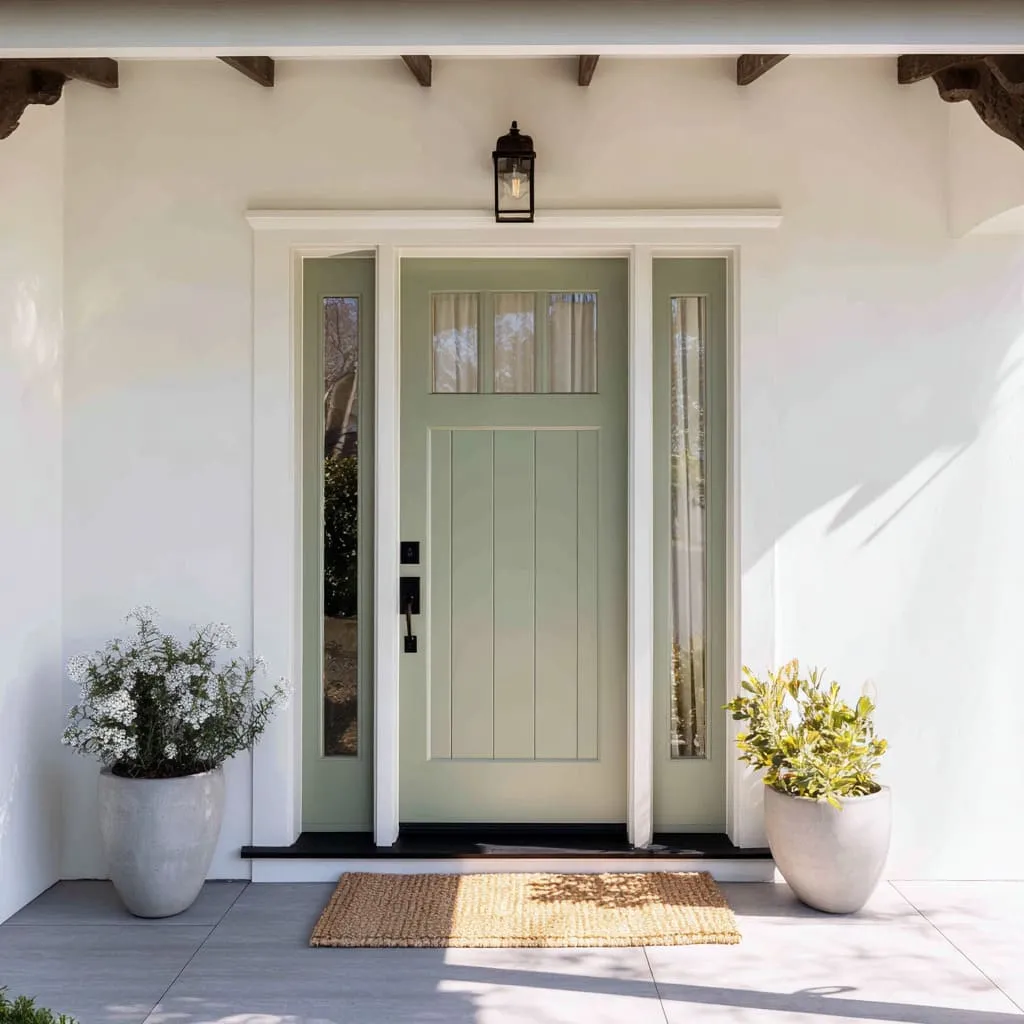
2. Serene Sage Green Door Flanked by Concrete Planters
That makes this entryway feel so complete: it is the symmetry. It’s not just about the two sidelights; it’s the matching large, light gray concrete planters on either side of the door. They perfectly echo the color of the concrete porch tiles and provide a modern, weighty anchor to the design. Without them, the door would feel less grounded and the entrance less intentional. They transform a simple doorway into a composed, welcoming vignette.
|
📋 Copy HEX 🔗 Share |
Think of this look as a simple formula: 60% calm neutral (the white trim and light gray concrete) + 30% natural color (the sage green door) + 10% sharp accent (the black hardware and doormat). You could easily swap the sage green for a dusty blue or a muted terracotta and maintain the same serene, balanced feeling. The key is keeping the accent color earthy and the surrounding elements clean and minimal.
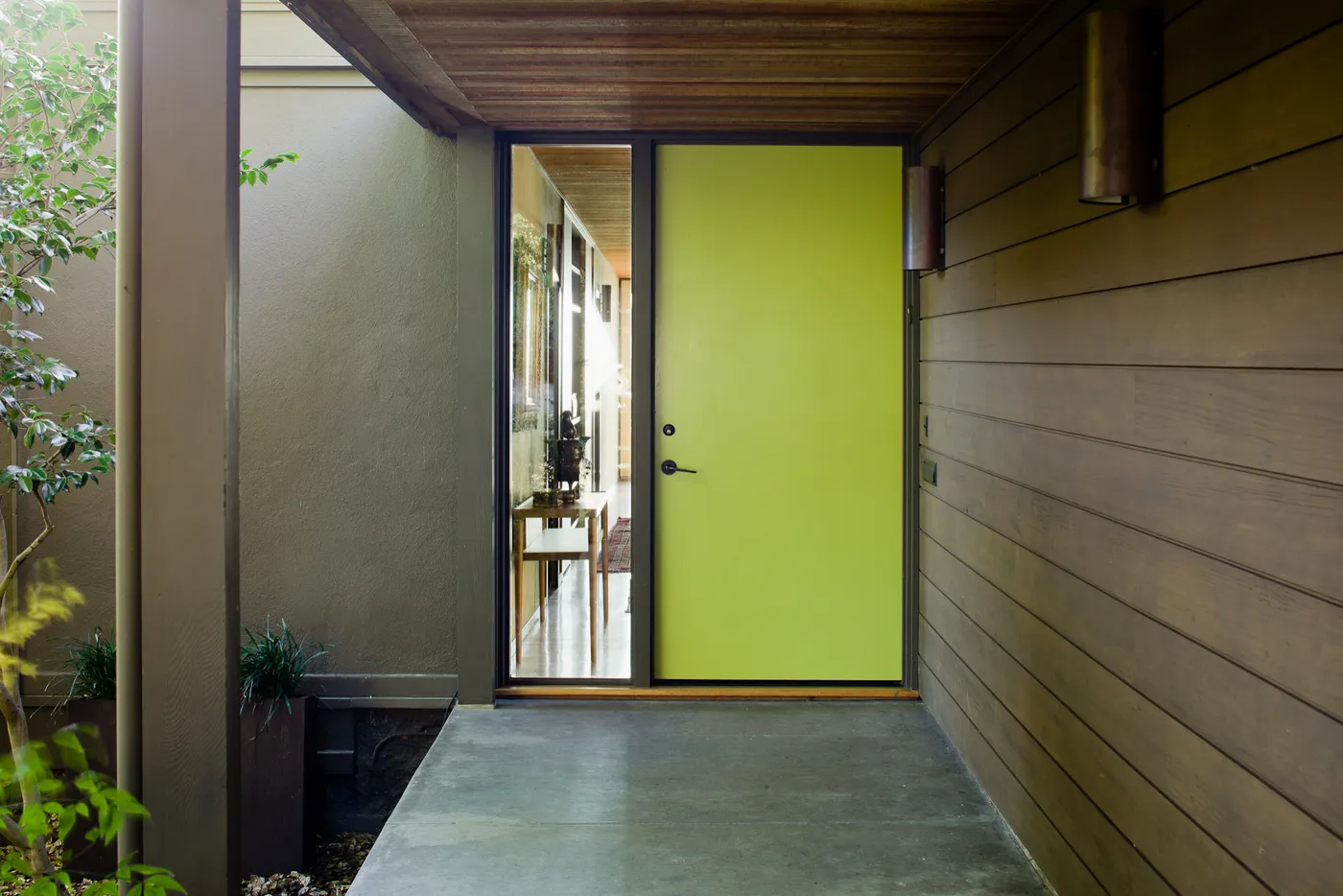
3. Chartreuse Front Door Paired with Natural Wood Siding
A color like chartreuse is stunning, but it’s not for the faint of heart or for every house style. This hue works best with modern or mid-century architecture where clean lines and natural materials (like the wood siding and concrete here) can balance its intensity. On a very traditional colonial or Victorian home, it could look out of place. Also, be aware of your natural light. In direct, harsh sunlight, chartreuse can become almost neon, so test your paint swatch at all times of day before committing.
|
📋 Copy HEX 🔗 Share |
You don’t need architectural wood siding to pull off this color pop. Get a similar vibe for much less by painting your existing door a bold chartreuse (a quart of good exterior paint runs $25-$50). Then, focus on adding natural wood accents. Find two large wooden planters on Facebook Marketplace ($40-$80 for a pair) or build a simple cedar slat doormat yourself for under $30. The goal is to introduce that warm wood tone to ground the electric door color.
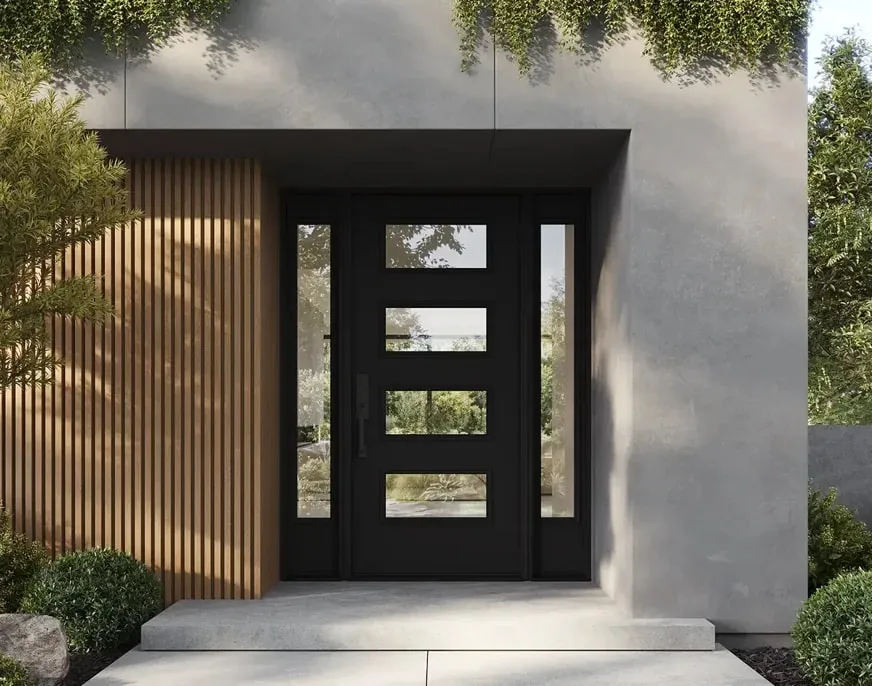
4. Modern Black Door with Vertical Wood Slat Siding
This look is a direct reflection of the ‘Japandi’ design trend—a hybrid of Scandinavian function and Japanese rustic minimalism. The combination of clean black lines, light natural wood, and raw concrete is at the heart of this style. It’s popular now because it feels both modern and deeply connected to nature. The climbing green foliage adds that biophilic touch we’re all craving, softening the hard architectural lines and creating a sense of calm sanctuary.
|
📋 Copy HEX 🔗 Share |
Recreating that vertical wood slat wall is a great weekend project. Here’s a quick guide:
- Measure your wall space and purchase 1×2 cedar or redwood slats. Estimate about 1.5 slats per foot of width, including gaps. (Material cost: $150-$400)
- Seal all sides of the wood slats with an outdoor-grade UV protectant sealant before installation to prevent warping and graying. Let dry completely.
- Mark a level line and attach the first slat, ensuring it is perfectly plumb (vertical).
- Use a spacer block (e.g., a 1/2-inch piece of scrap wood) to position the next slat, and nail it in place with a brad nailer.
- Repeat the process across the wall. (Time estimate: 4-6 hours)
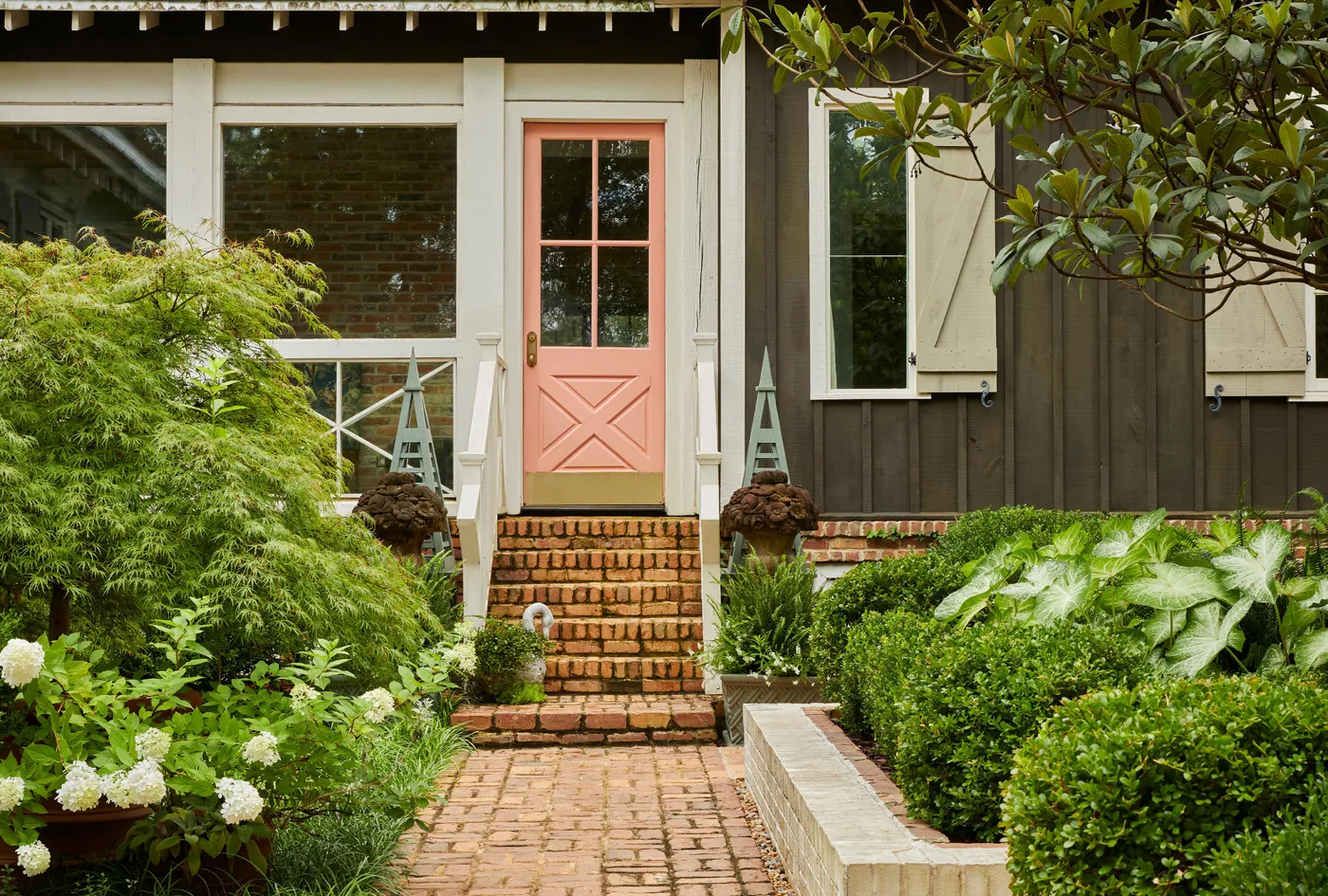
5. Contrasting Pink Door on a Dark Green House
The single element making this home so memorable is the daring color contrast. It’s the tension between the deep, moody green siding and the playful, light pink door that creates an unforgettable first impression. If the door were white, beige, or even black, the house would be handsome but conventional. The pink injects personality and a touch of whimsy, signaling that the homeowners aren’t afraid to break from tradition. It proves that a single gallon of paint can completely redefine a home’s character.
|
📋 Copy HEX 🔗 Share |
This design succeeds by using complementary colors in a sophisticated way. Green and red are opposites on the color wheel, and pink is a tint of red. By using a deep, muted forest green and a soft, dusty pink, the contrast feels intentional and chic, not jarring. The abundant white trim acts as a buffer, giving the eye a place to rest and making both the green and the pink pop even more. The brick path adds another layer of warm, earthy color that ties it all together beautifully.
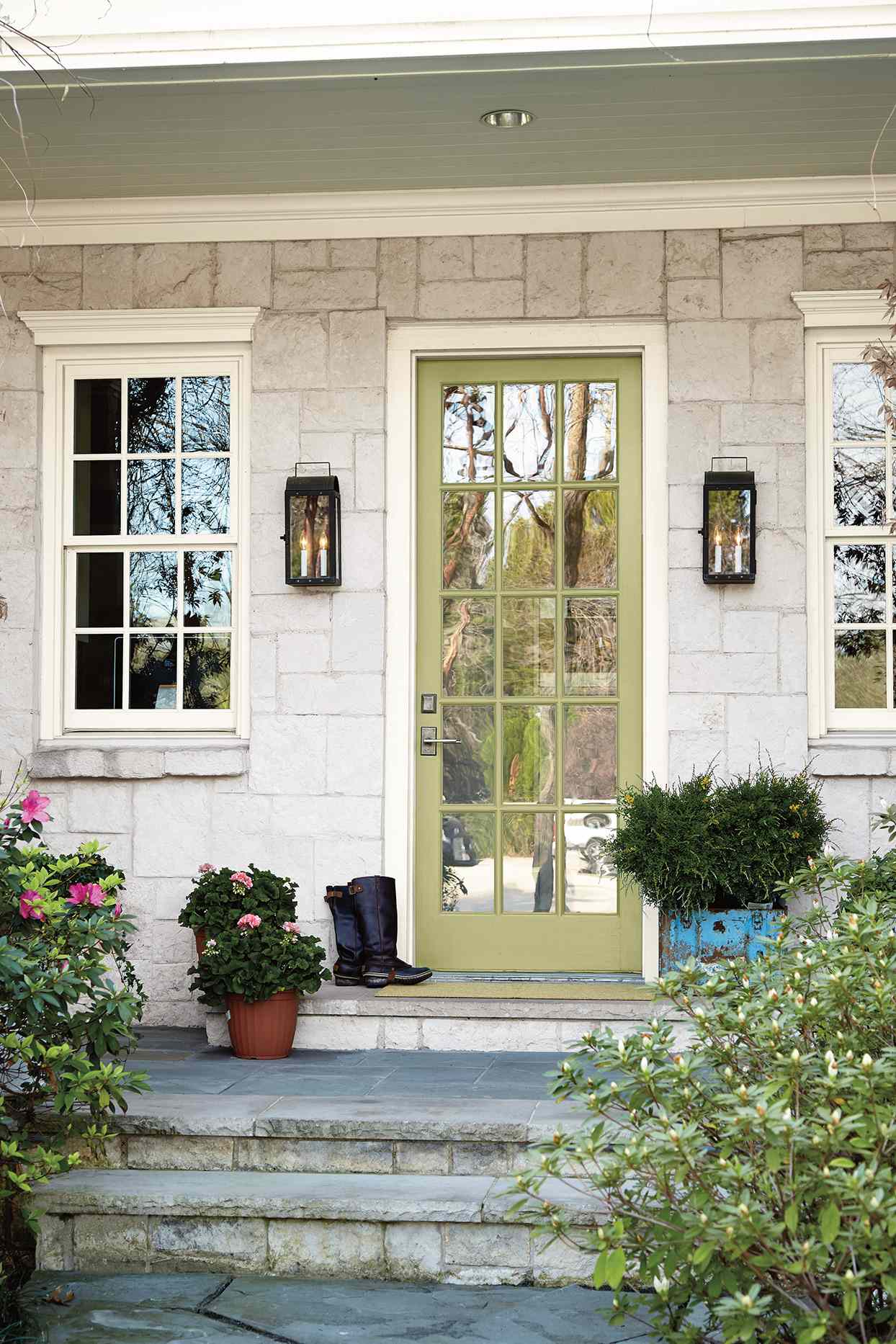
6. Sage Green Door Set into Light Stone Siding
When you have a door with many glass panes like this one, it’s crucial to consider the interior view. Don’t just stop thinking about the color on the outside. Paint the interior side of the door the same sage green. This creates a cohesive look from both inside and out and makes your entryway feel more like a planned, designed space. A white interior side would feel like a missed opportunity to carry that beautiful, calming color into your home. The same technique was used in Idea #1 to great effect.
|
📋 Copy HEX 🔗 Share |
This composition thrives on texture and works best for entryways with a bit of breathing room. The ideal landing or porch width to replicate this look is at least 8-10 feet. This allows for the door, flanking windows, and substantial lantern sconces without feeling crowded. The textured stone siding adds visual weight, so this style is well-suited to larger homes where the entrance needs to feel substantial and grounded, not lost on a large facade.
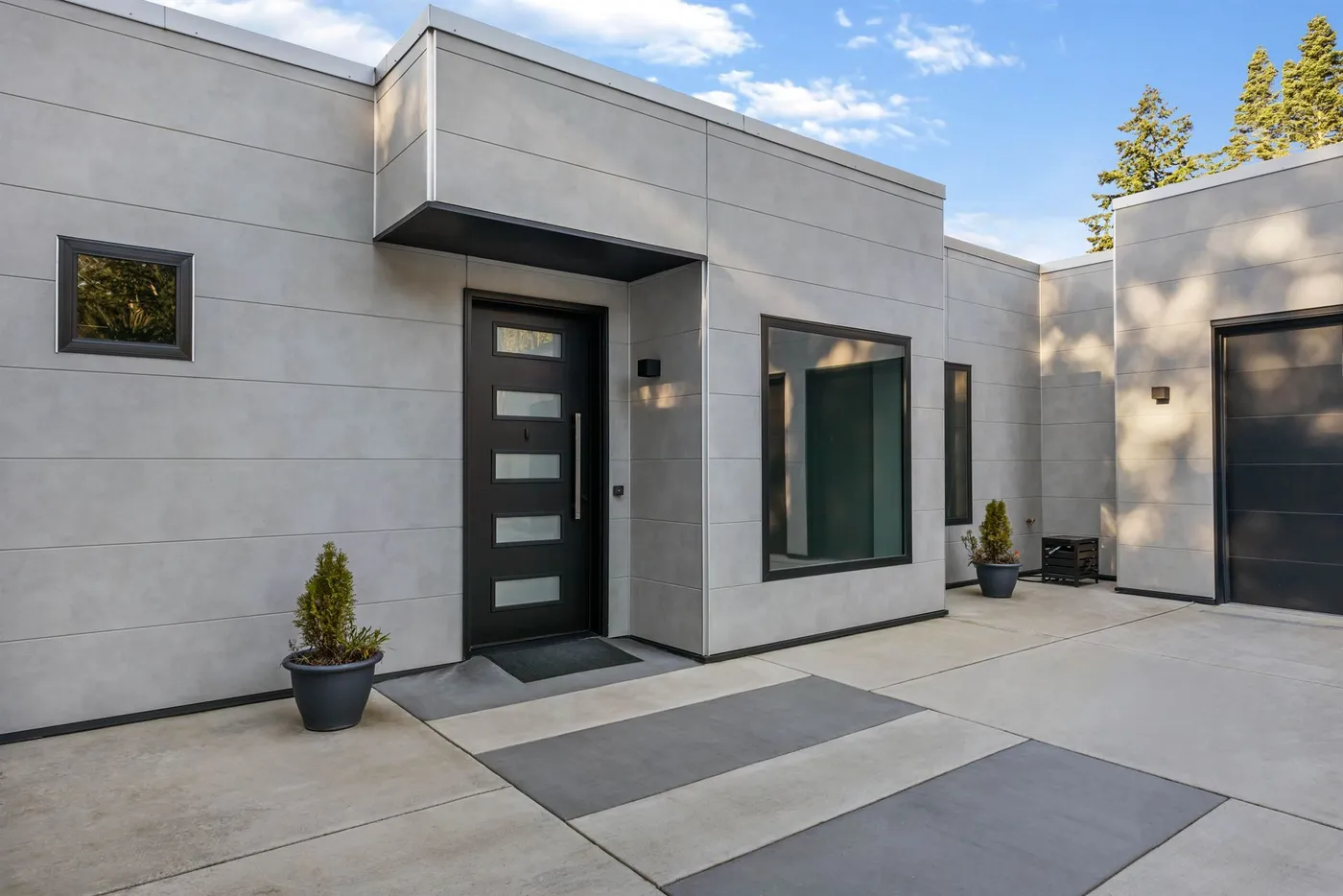
7. Modern Grey House with a Matte Black Front Door
This sleek, minimalist look follows a strict formula: 70% monochromatic base (the light grey paneled walls and darker grey paving) + 20% high-contrast accent (the matte black door, window frames, and awning) + 10% organic touch (the small potted evergreens). The power is in its simplicity. Swapping the grey for a warm beige would create a softer, more ‘organic modern’ feel, while keeping the black accents would maintain the graphic punch.
|
📋 Copy HEX 🔗 Share |
Matte black is incredibly chic, but it’s also a magnet for dust, pollen, fingerprints, and water spots, which show up much more clearly than on a satin or semi-gloss finish. Plan on wiping down your matte black door with a soft, damp microfiber cloth every one to two weeks to keep it looking sharp, especially if you live in a dusty area or have lots of trees nearby. A gentle cleaner (like a drop of dish soap in water) can be used for more stubborn smudges.
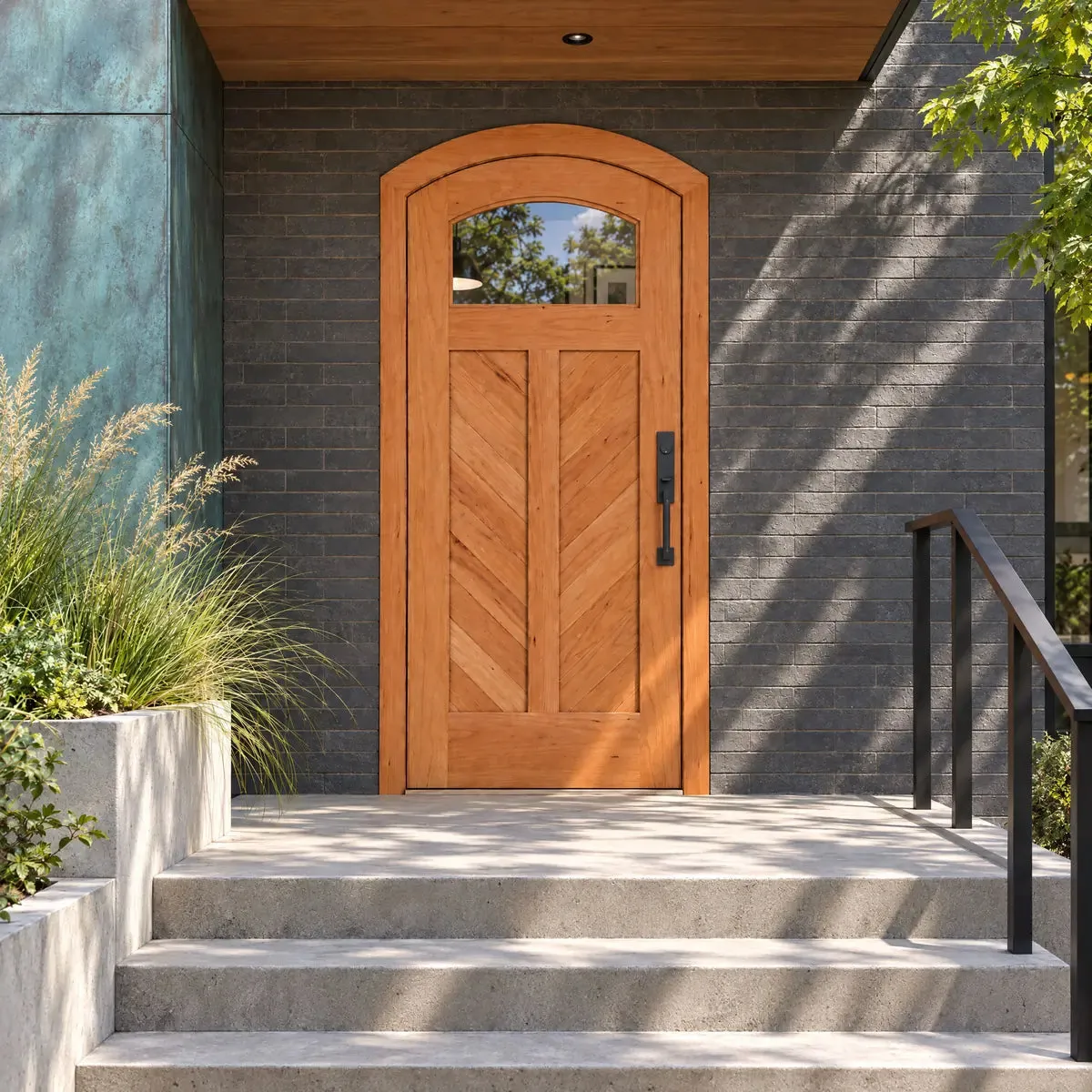
8. Arched Wood Door with Chevron Paneling and Dark Gray Brick
Arches are having a major comeback in design, and this entryway shows why. After years of sharp, straight lines dominating modern architecture, there’s a collective craving for softer, more organic shapes. The arched door brings a touch of classical elegance and warmth, while the chevron wood pattern and dark gray brick keep it firmly rooted in the present. This blend of old-world form and contemporary materials is a huge trend for 2027.
|
📋 Copy HEX 🔗 Share |
The success here is all about the interplay of textures and shapes. The smooth, gentle curve of the arched door is a beautiful counterpoint to the sharp, repeating V of the chevron paneling. This dynamic is then set against the rough, mottled texture of the dark gray brick and the smooth, cool surface of the concrete steps. Each material highlights the unique qualities of the others, creating a rich, layered, and visually interesting entryway.
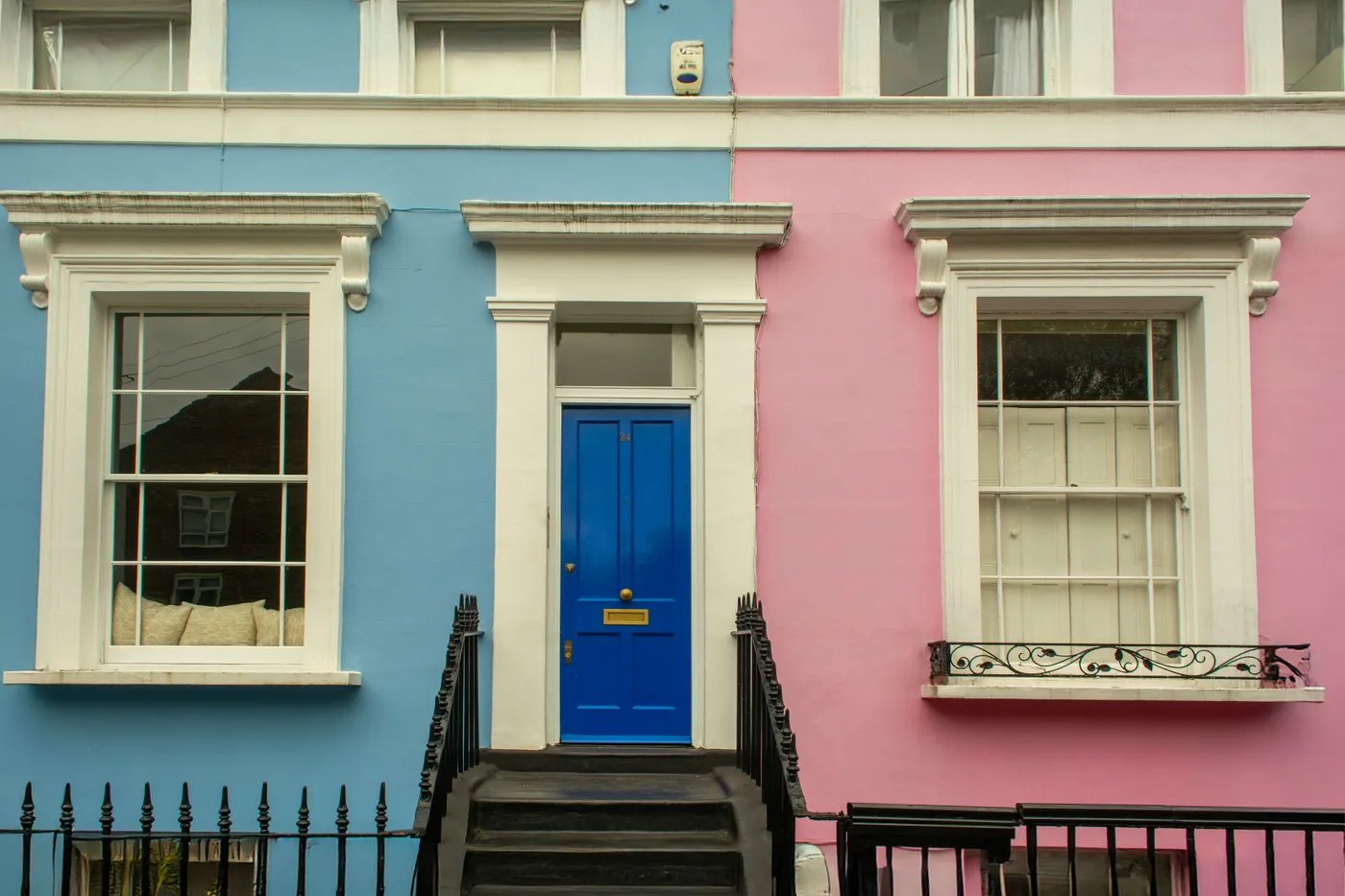
9. Vibrant Blue Door with Ornate Black Railings on a Colorful Facade
A playful, multi-color scheme like this is absolutely charming, but it requires a specific environment to work. This look thrives in dense, historic urban neighborhoods (think Charleston or New Orleans) where colorful homes are the norm. Trying to replicate this exact palette on a single house in a beige suburban cul-de-sac might feel jarring or out of place. Context is everything; what looks whimsical in one setting can look odd in another. Always consider your home’s surroundings.
|
📋 Copy HEX 🔗 Share |
The ornate black railings are the single element that grounds this whimsical color story. They provide a much-needed dose of graphic structure and historic weight. Without their dark, traditional lines, the combination of bright blue, light blue, and pale pink could risk feeling overly sweet or flimsy. The railings act as the sophisticated framework that holds the playful colors in check, adding a layer of classic elegance to the entire facade. This is a great example of how a ‘neutral’ can be a powerful design tool.
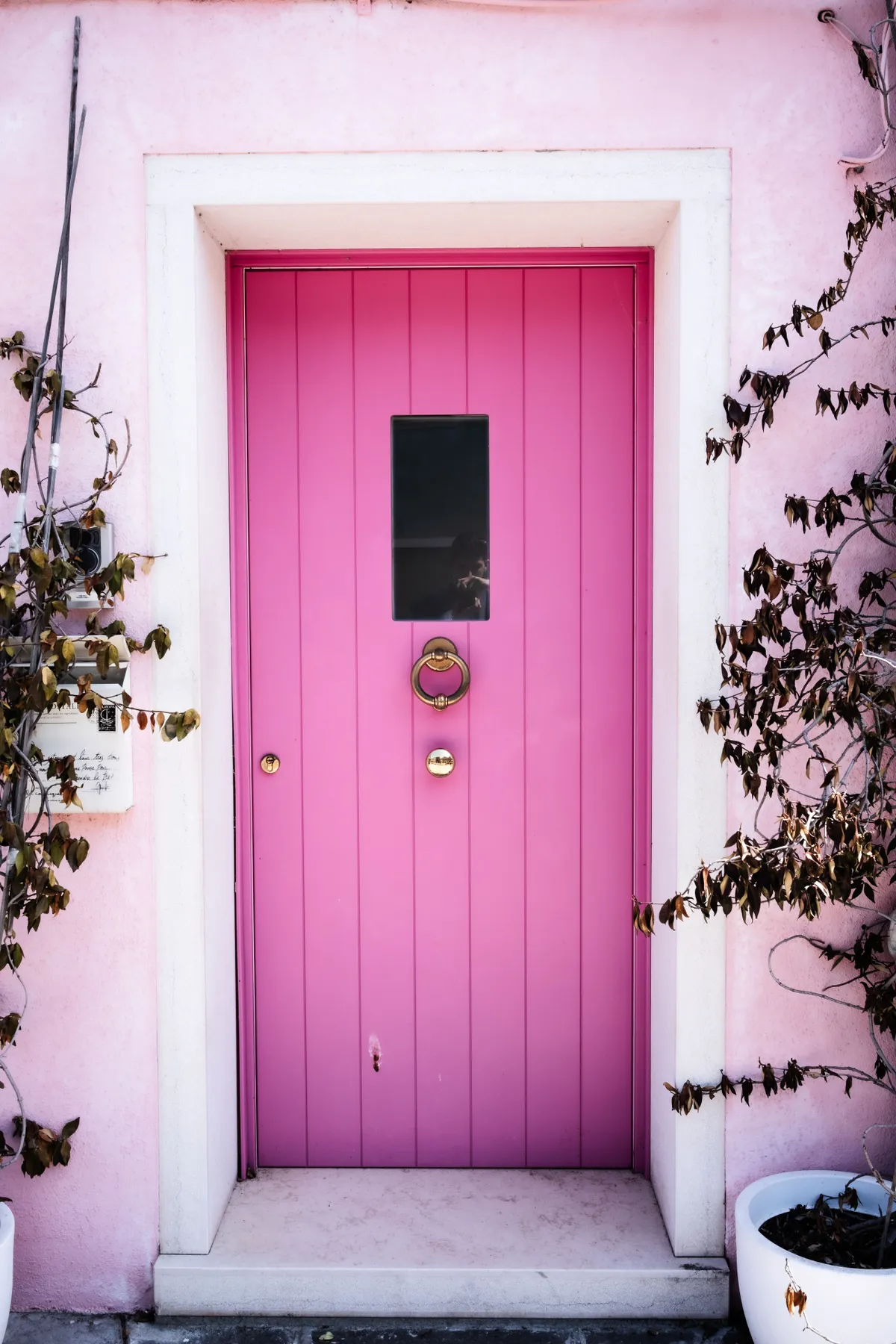
10. Bright Pink Vertical Plank Door with Gold Hardware
When using a monochromatic palette like this (bright pink door on a pale pink wall), the finish of your paint is your best friend for creating definition. Use a flat or eggshell finish on the stucco wall to give it a soft, velvety look. Then, coat the door in a high-gloss or semi-gloss version of the bolder pink. The difference in sheen will catch the light differently, allowing the door to stand out as a distinct architectural feature instead of blending into the wall.
|
📋 Copy HEX 🔗 Share |
Before you commit to a bold, monochromatic look, check these items off your list:
- Test Swatches: Paint large sample boards of both your light and dark pink and view them outside at different times of day. Pink can shift dramatically from morning to evening light.
- Hardware Check: Does your chosen door hardware (like the gold here) complement the specific undertones of your pinks? Some pinks clash with yellow-toned golds.
- HOA Rules: Double-check your neighborhood covenants. Sadly, some HOAs have strict rules about exterior paint colors.
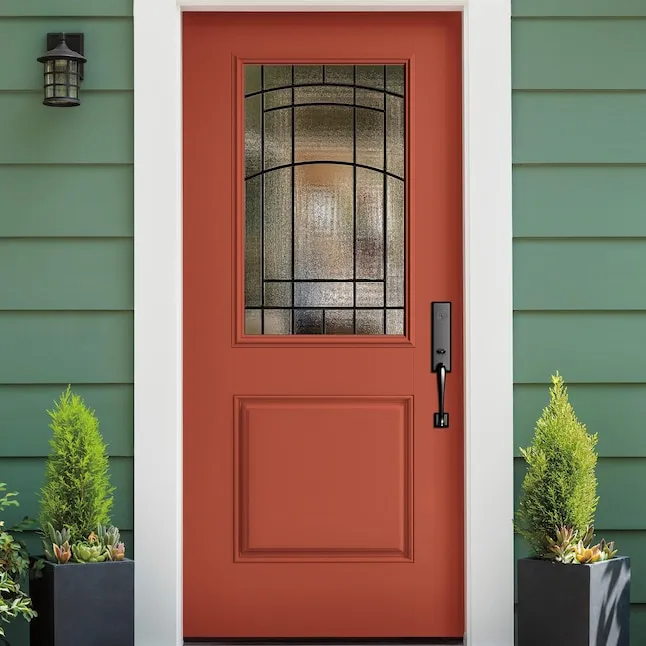
11. Terracotta Front Door with a Frosted Glass Grid
The combination of terracotta, green, and black is a timeless winner for a reason. The warm, earthy terracotta of the door provides a beautiful, organic pop of color that feels inviting. It’s perfectly complemented by the cool, dark green of the siding. The black hardware and grid on the window act as the punctuation, adding a crisp, modern edge that keeps the earthy palette from feeling too rustic. It’s a balanced and sophisticated trio.
|
📋 Copy HEX 🔗 Share |
This style, with its single door and moderate detailing, is incredibly versatile. It works well for standard entryway widths of 5-6 feet (including trim). The frosted glass is a smart choice for homes where the front door opens directly into a living space, providing both natural light and crucial privacy. It’s an ideal solution for townhouses, bungalows, or any home where you want to brighten the interior without sacrificing security.
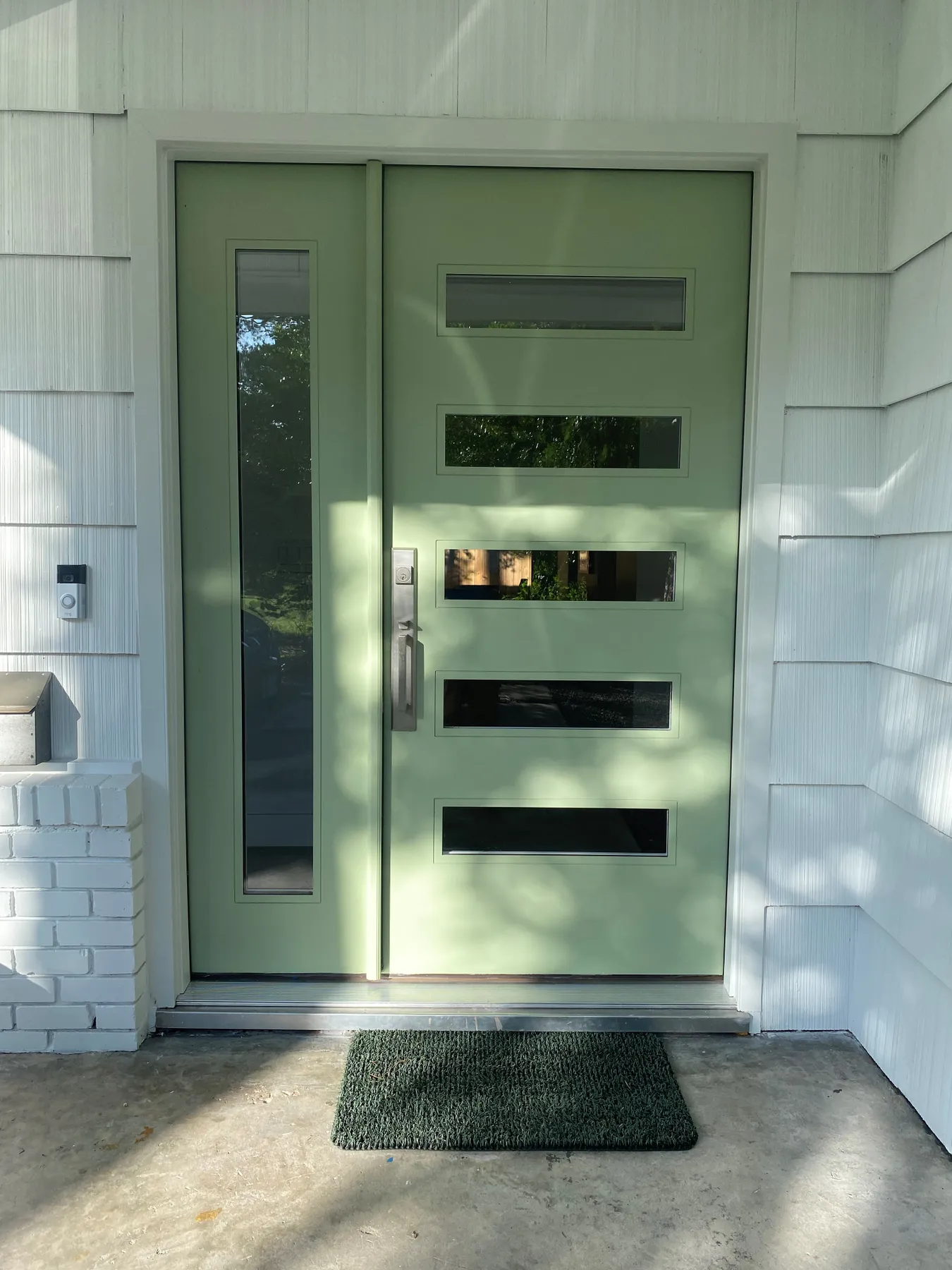
12. Modern Pastel Green Door with Textured White Siding
The horizontal window inserts are the defining feature of this door. They are what elevate it from a simple colored slab to a piece of modern design. The repetition of the four rectangular windows creates a rhythm and sense of order, while the full-length side panel provides an asymmetrical balance. This thoughtful glass placement floods the entryway with light and establishes the home’s clean, contemporary aesthetic from the moment you approach.
|
📋 Copy HEX 🔗 Share |
White shingle siding, especially the textured kind, looks fantastic but can be a challenge to keep clean. The grooves and texture are perfect for trapping dirt, dust, and pollen. Plan for an annual or semi-annual gentle power washing (use the low-pressure setting!) to keep it looking crisp and bright. For spot cleaning around the high-traffic entryway, a soft-bristled brush with a bit of soapy water will do the trick to remove smudges and scuffs.
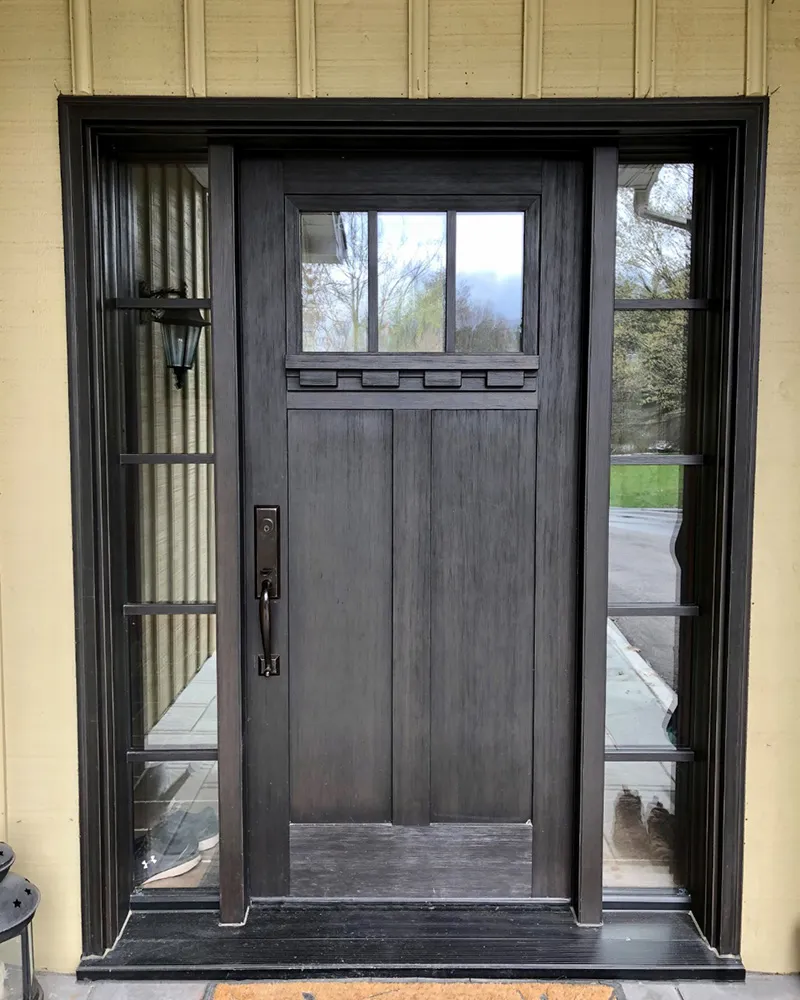
13. Dark Gray Craftsman Door with Matching Sidelights
Craving this classic Craftsman look without the cost of a brand new door and sidelight unit? You can create a similar feel for a fraction of the price. Start by painting your existing door a rich, dark gray ($40 for paint). Then, purchase decorative window film with a grille pattern (around $30 on Amazon) and apply it to your existing sidelights. Finally, upgrade your door handle to a substantial dark bronze or black model ($75-$150). The total cost is under $250, versus $2,000+ for a new unit.
|
📋 Copy HEX 🔗 Share |
This is a classic study in balance: 50% stately color (the dark gray door and trim) + 40% cheerful warmth (the light yellow siding) + 10% rich accent (the dark bronze handle). The gray provides a solid, grounding presence, while the yellow siding keeps the overall look from feeling too heavy or somber. The bronze hardware adds just a touch of metallic warmth that bridges the cool gray and the warm yellow. Compare this to the high-contrast palette of Idea #5.
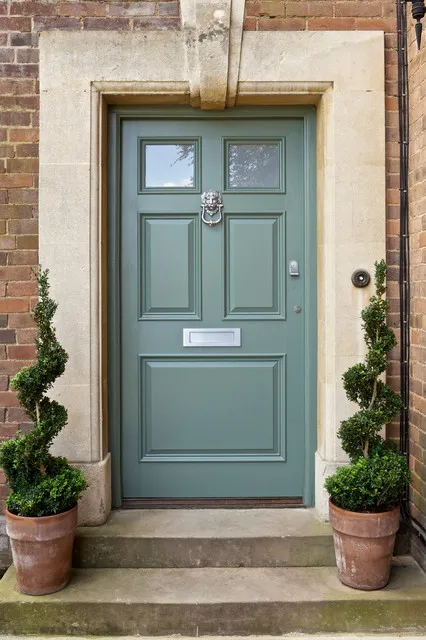
14. Classic Sage Green Door with a Silver Lion Knocker
When selecting door hardware, match the scale to the door’s presence. A substantial door with a heavy stone surround like this one needs hardware that can hold its own. The large, ornate lion head knocker is perfectly proportioned. A small, simple knob would be completely lost. As a rule of thumb, for a standard 36-inch door, your knocker should be at least 6-8 inches tall to have the right visual impact. Don’t be afraid to go big and bold with your hardware—it’s the jewelry of your front door.
|
📋 Copy HEX 🔗 Share |
The elegance of this entrance comes from its layered, traditional elements. The design uses repetition to create harmony: the green of the door is echoed in the spiral topiaries, and the light stone of the door surround is repeated in the steps. The formal symmetry of the two plants flanking the door creates a sense of order and grandeur. Finally, the mix of textures—rough brick, smooth stone, soft foliage—adds depth and interest.
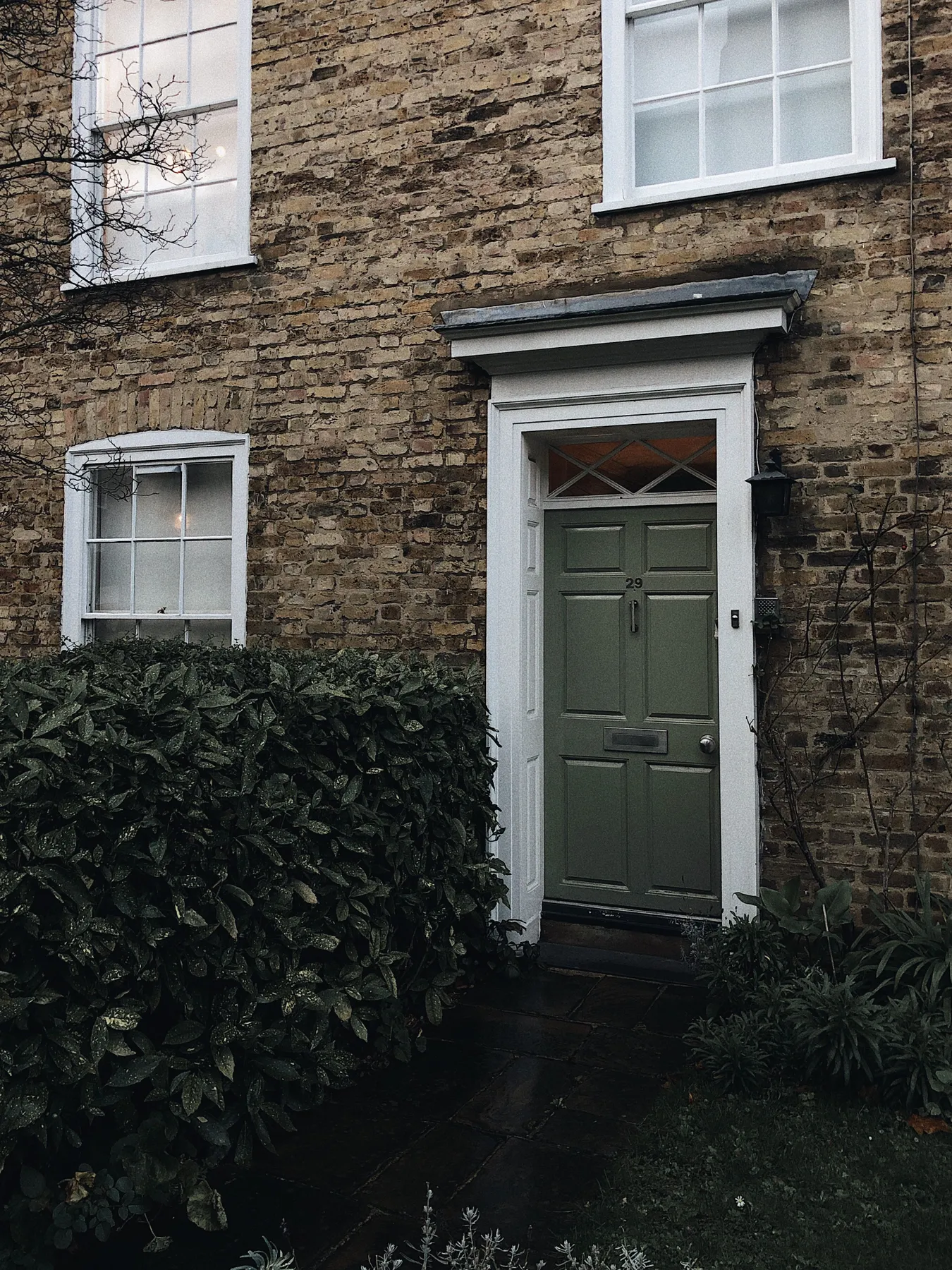
15. Understated Olive Green Door on a Light Brick Facade
An olive green door is a fantastic choice for a classic, sophisticated look, but its appearance is highly dependent on the surrounding colors. Against this light brown brick, it reads as earthy and warm. However, if you were to place this same door on a house with cool gray siding, the olive could suddenly look muddy or dated. Always test your paint color directly next to your home’s primary material (brick, stone, or siding) before you paint the whole door.
|
📋 Copy HEX 🔗 Share |
The most important element here is the color’s subtlety. This isn’t a bright, look-at-me green. The muted, earthy quality of the olive green is what makes it feel so timeless and integrated with the light brown brick. It’s a color that complements the facade rather than competing with it. This choice shows confidence and restraint, proving that you don’t need a shocking color to make a stylish statement. It’s a quiet luxury.
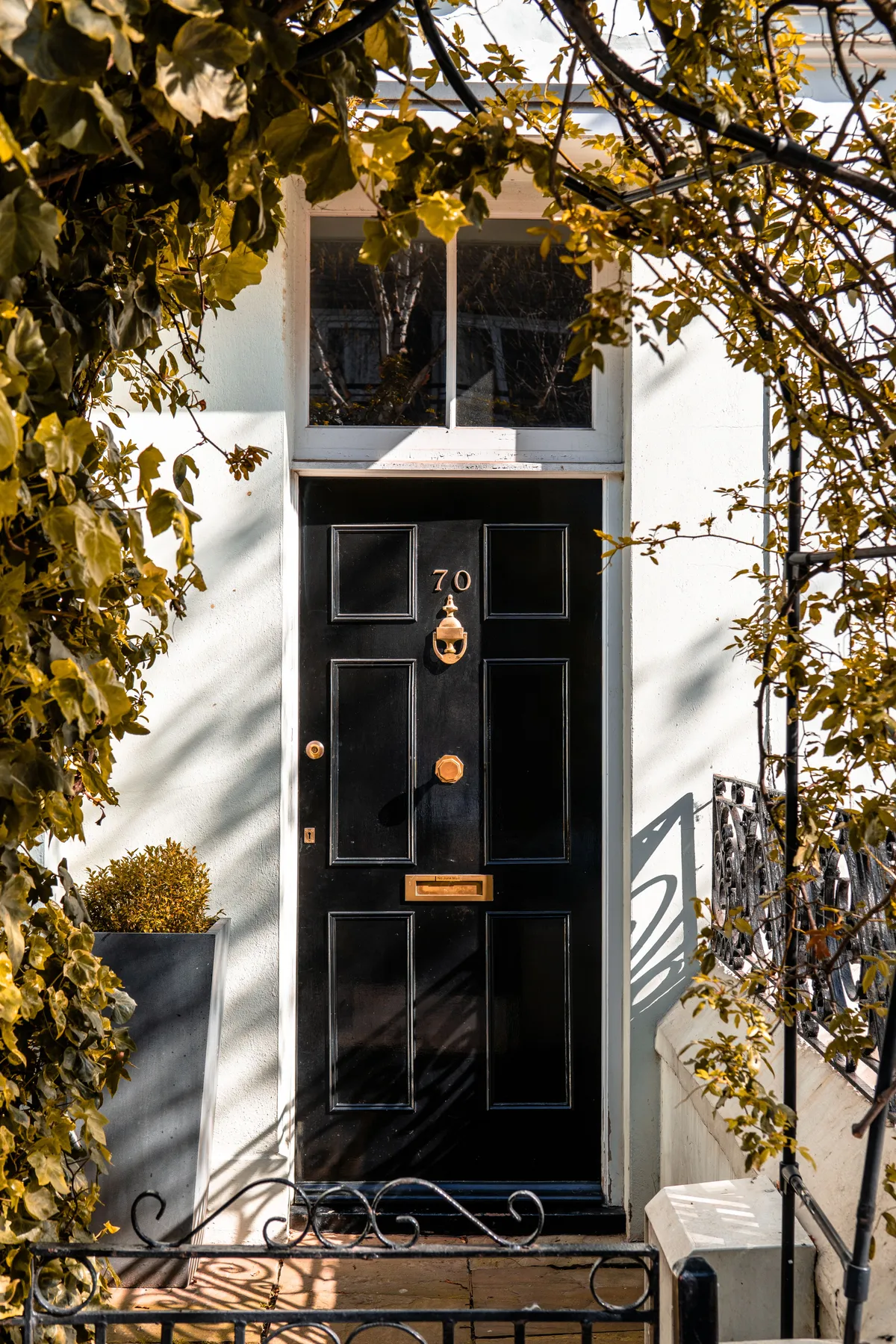
16. Timeless Glossy Black Door with Polished Brass Hardware
A high-gloss black door is a perennially chic choice. Here’s a look at what it costs to get this classic style:
- Paint: 1 Quart of high-quality, high-gloss exterior paint (e.g., Benjamin Moore Grand Entrance) – $40 – $75
- Hardware: Solid brass door knocker, letterbox, and handle set – $300 – $800
- Lighting & Decor: Wrought iron railing and foliage are existing.
- Labor: Professional painting for a flawless finish – $250 – $500
- TOTAL: $590 – $1,375
- Budget alternative: Use brass-plated hardware ($100-$150) and DIY the painting to get the look for under $250.
|
📋 Copy HEX 🔗 Share |
This look is evergreen for a reason, but it’s particularly relevant now as we see a return to classic, grandmillennial style. People are mixing traditional elements (like brass hardware and paneled doors) with a fresh, modern sensibility. The glossy black finish feels crisp and new, not stuffy. It’s a nod to historical elegance that feels perfectly at home in 2027, proving that some styles truly never fade.
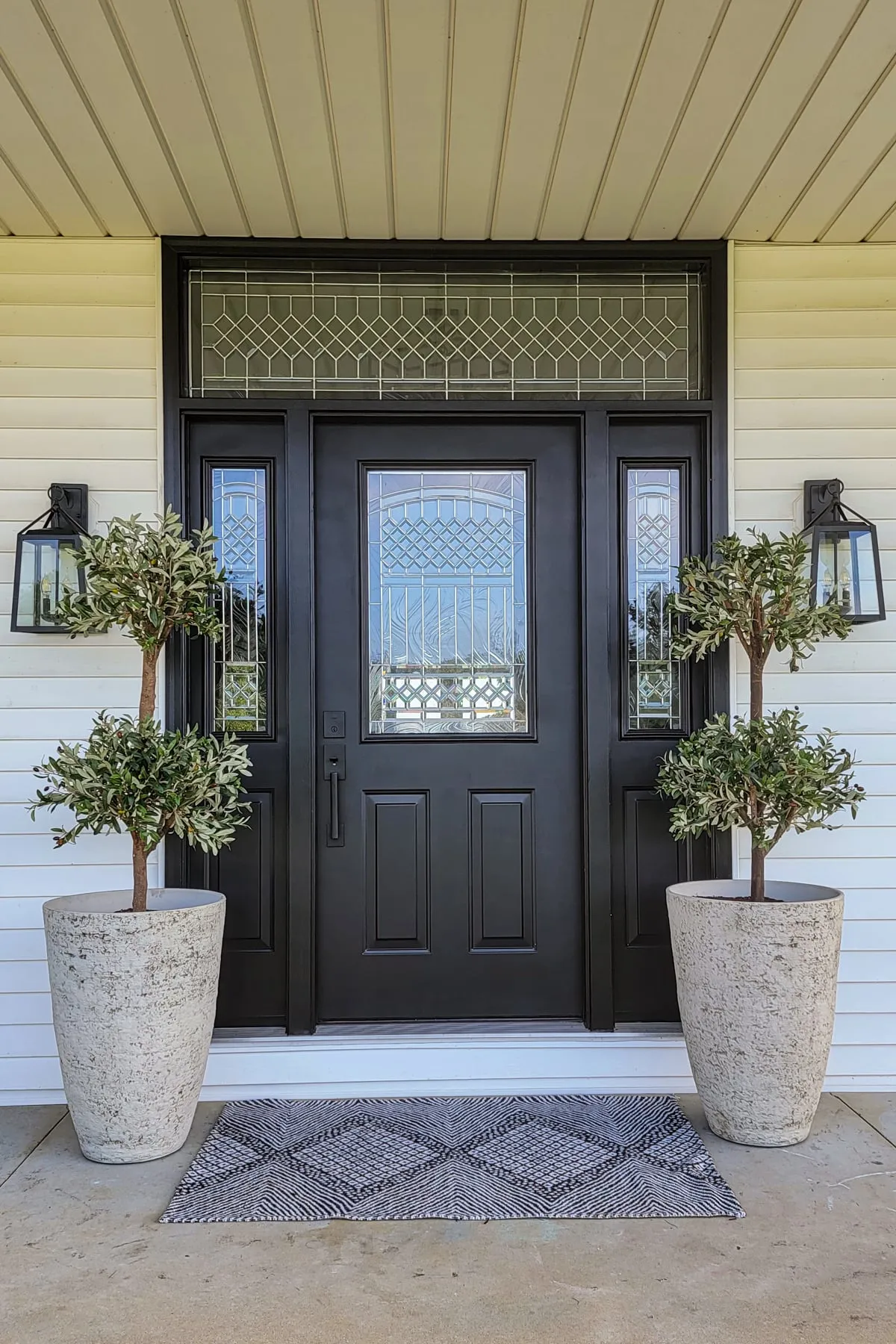
17. Modern Farmhouse Entry with Leaded Glass and Olive Trees
To achieve this balanced, welcoming modern farmhouse look, your entryway needs adequate width. To comfortably fit a standard 36″ door with two 12″-14″ sidelights and two substantial planters (at least 18″ wide each), you’re looking at a minimum total width of about 9-10 feet. This ensures the olive trees don’t crowd the walkway and the entire composition feels generous and uncluttered. It’s a grander statement than the simpler look in Idea #26.
|
📋 Copy HEX 🔗 Share |
The success of this design lies in its sophisticated layering of black and white. It’s more than just a black door on a white house. Notice how the black is repeated in the thin lines of the leaded glass, the crisp frames of the lanterns, and the geometric pattern on the doormat. This repetition creates a cohesive visual rhythm. The textured concrete planters and the soft green of the olive trees add just the right amount of organic texture to keep the high-contrast palette from feeling too stark.
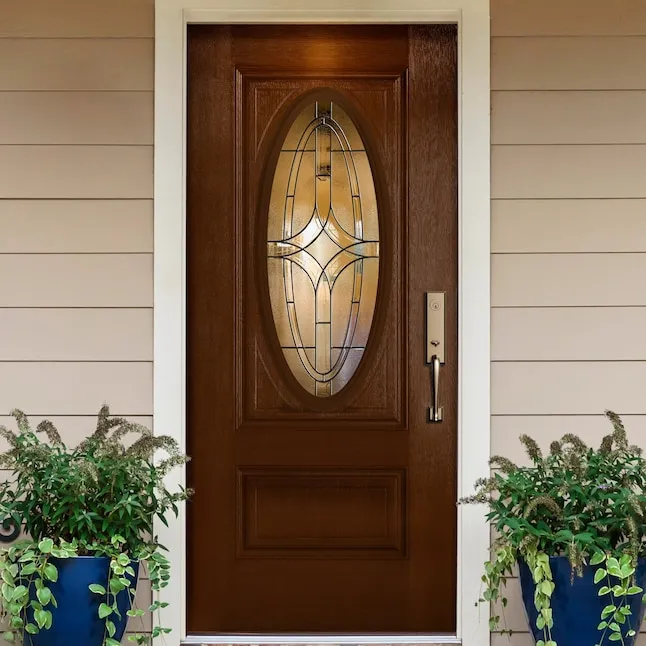
18. Rich Brown Front Door with a Decorative Oval Glass Insert
The decorative oval glass is unquestionably the star of the show. It transforms a standard paneled door into a piece of art and a statement of traditional elegance. The intricate frosted pattern provides privacy while still allowing light to filter into the entryway, and its curved shape softens the otherwise rectangular lines of the door and siding. Without this feature, the door would be handsome but forgettable; with it, it has a distinct and classic personality.
|
📋 Copy HEX 🔗 Share |
A new door with decorative glass can cost thousands. To get this elegant look for less, keep your existing door and add the decorative element yourself. You can purchase high-quality static cling window film with intricate frosted patterns for around $20-$40. Carefully cut it to fit your door’s existing glass panels. If your door is solid, you can paint a faux oval ‘window’ using frosted glass spray paint and a stencil. Finish with a new brushed nickel handle set ($80) for a total refresh under $125.
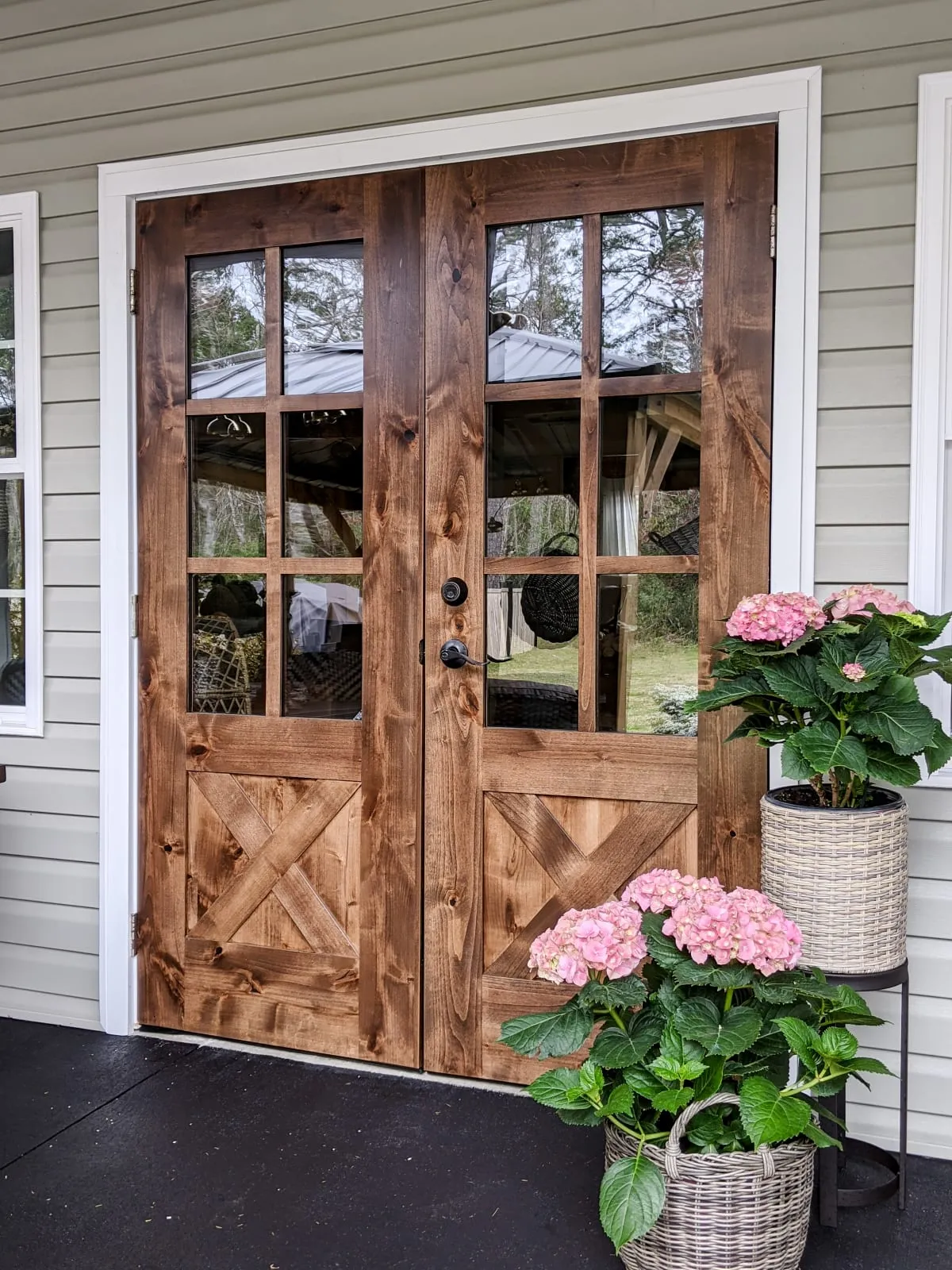
19. Double Barn-Style Doors with Hydrangeas in Woven Baskets
Double doors are beautiful, but they come with practical considerations. First, they require a wide rough opening (typically 62-74 inches), so they’re not an easy swap for a standard single door. Second, only one door (the active door) usually has a handle and opens for everyday use, while the second (inactive) door is bolted at the top and bottom. This can be slightly less convenient than a single door. Finally, ensuring a perfect, weatherproof seal on double doors can be more challenging and may require more maintenance over time.
|
📋 Copy HEX 🔗 Share |
This welcoming, rustic look is a simple recipe: 50% natural texture (the wood doors and woven baskets) + 40% clean neutral (the light gray siding and white trim) + 10% soft color (the pink hydrangeas). The formula is highly adaptable. You could swap the pink hydrangeas for blue ones, or replace the woven baskets with galvanized steel buckets for a more industrial farmhouse feel, and the core design would still work perfectly.
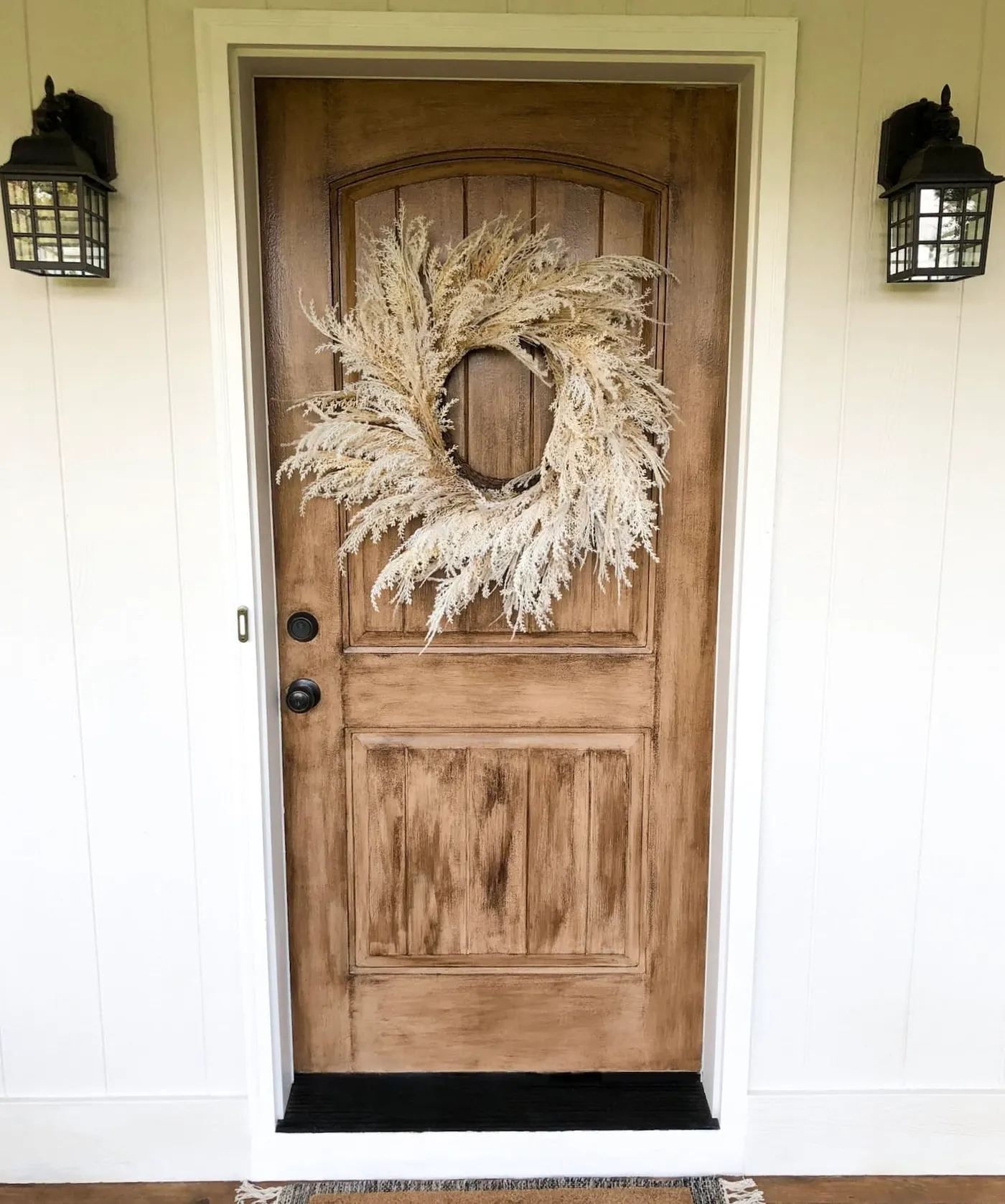
20. Rustic Wooden Door with a Natural Pampas Grass Wreath
You can easily create a designer-worthy pampas wreath in an afternoon. Here’s how:
- Gather materials: You’ll need a 14-18 inch grapevine wreath form, floral wire, and about 20-30 stems of dried pampas grass. (Material cost: $30-$50)
- Prep the pampas: Gently shake the pampas stems outdoors to remove loose bits. Lightly spray them with a strong-hold hairspray to minimize shedding.
- Create bundles: Cut the pampas stems to about 6-8 inches long. Group them into small bundles of 3-4 stems and wrap the bases tightly with floral wire.
- Attach bundles: Lay a bundle on the grapevine form and wrap the wire around both the bundle and the form to secure it.
- Layer and repeat: Place the next bundle so its fluffy tops overlap the wired base of the previous one. Continue layering in the same direction until the form is full and lush. (Time estimate: 1 hour)
|
📋 Copy HEX 🔗 Share |
The key to making a wreath look integrated, rather than just stuck on, is to echo its elements in the surroundings. Here, the creamy beige tones of the pampas grass wreath are a perfect complement to the warm undertones in the rustic brown wood of the door. The wreath’s soft, feathery texture also provides a beautiful contrast to the hard lines of the door panels and the surrounding board-and-batten siding. It feels like a natural extension of the entryway’s style.
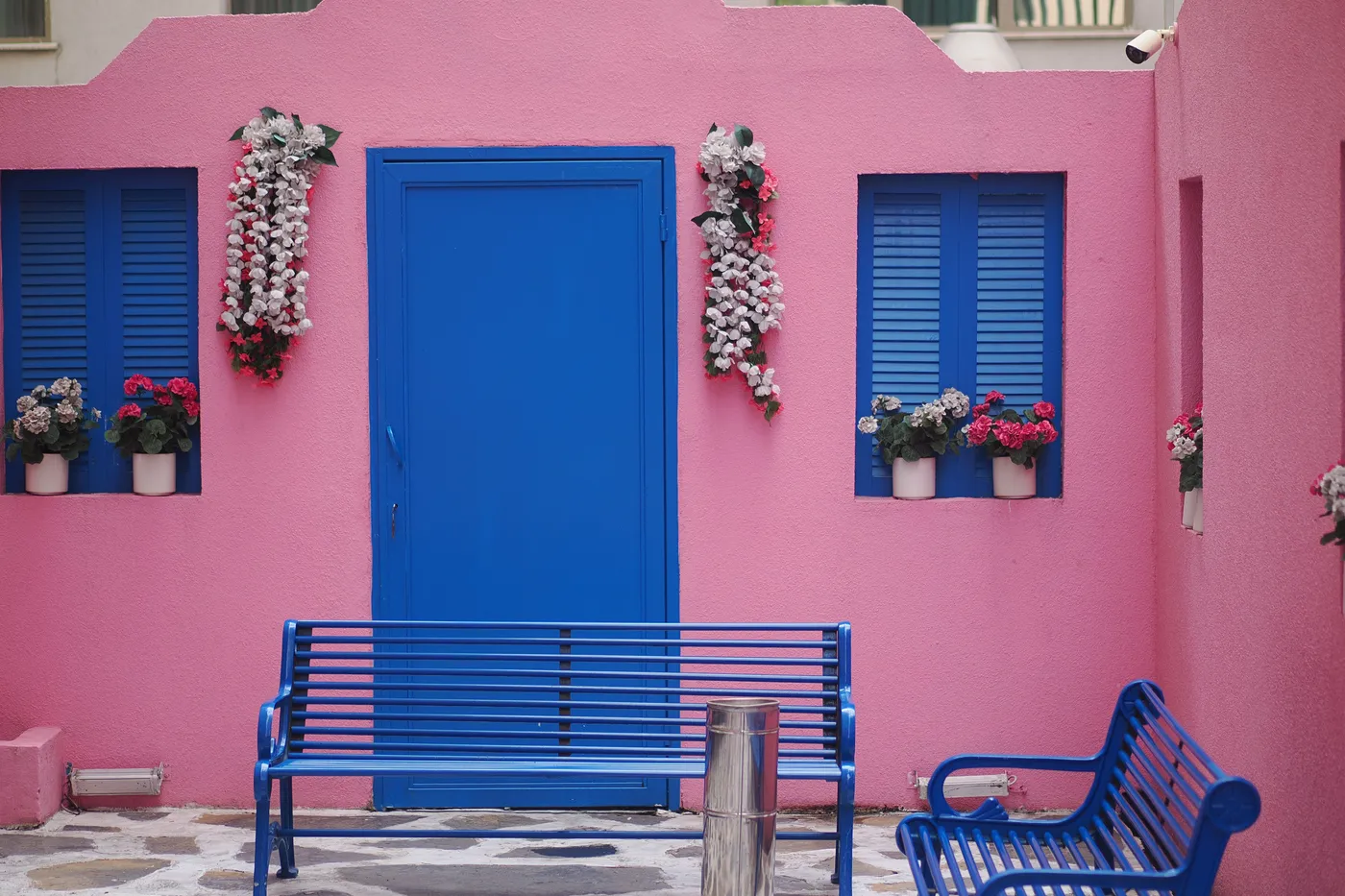
21. Vibrant Pink Facade with Electric Blue Doors and Shutters
The single most powerful element in this scene is the unapologetic use of saturated, high-contrast color. It’s the electric blue against the hot pink that creates the visual vibration and energy. This isn’t just a colorful house; it’s a statement. It’s a commitment to a bold, joyful aesthetic that refuses to be ignored. Removing that color contrast would fundamentally change the entire identity of the building from a landmark to just another structure.
|
📋 Copy HEX 🔗 Share |
This look is pure joy, but it’s a high-maintenance relationship. Bright, saturated colors like this pink and blue are more prone to fading from UV exposure than muted tones or neutrals. To keep this facade looking fresh, you’ll likely need to repaint every 3-5 years, as opposed to the 7-10 year cycle for more traditional colors. Using high-quality, UV-resistant paint is absolutely essential to maximize the life of the color.
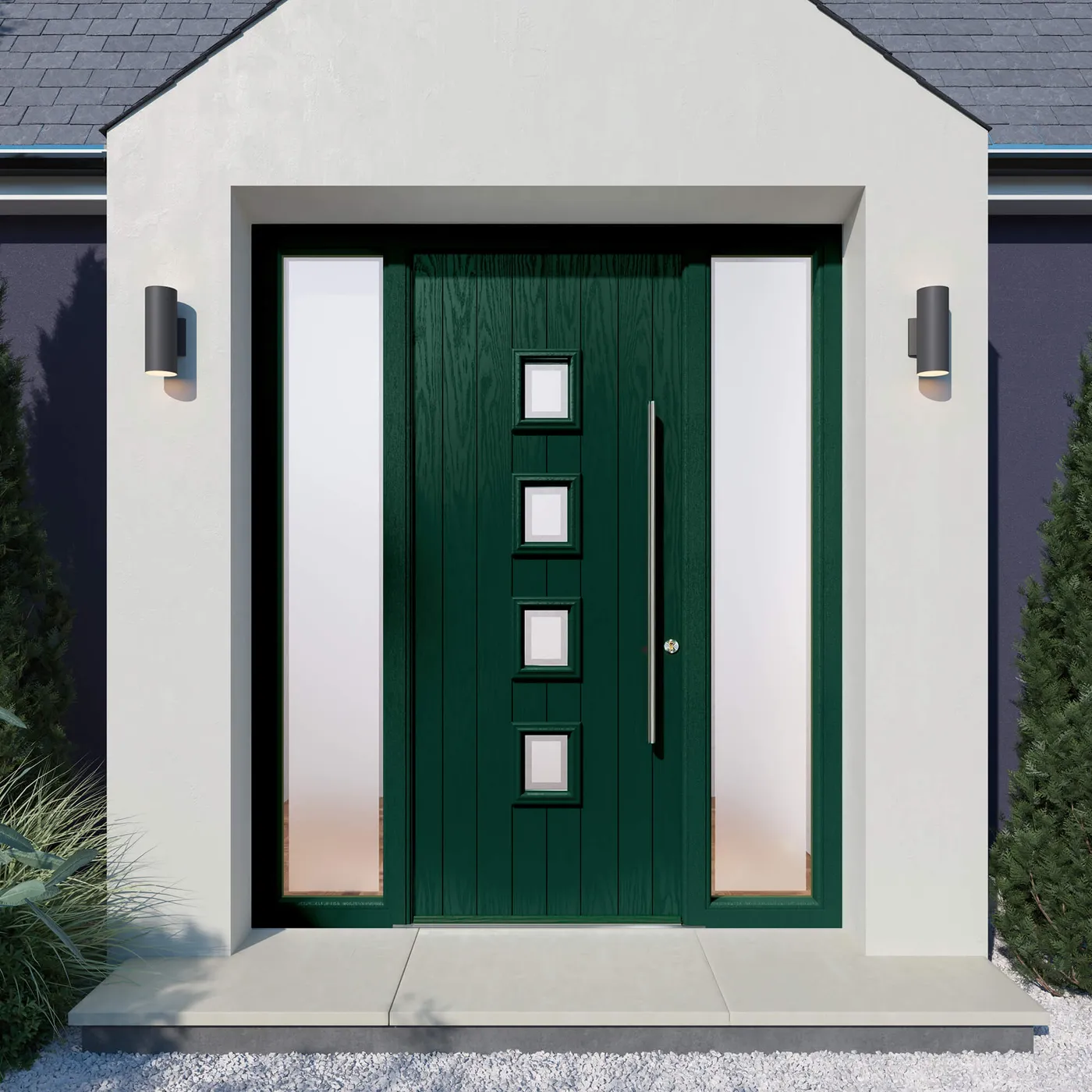
22. Modern Dark Green Door with Vertical Window Details
This entryway design masterfully balances privacy and light. The two narrow, full-height side windows and the four small square windows on the door itself let in a surprising amount of natural light without exposing the entire interior to public view. The verticality of all the glass elements—the side windows, the stacked squares, and the long handle—draws the eye upward, making the entrance feel taller and more grand than it actually is. The dark green color grounds it in nature.
|
📋 Copy HEX 🔗 Share |
This vertical design is a brilliant solution for entryways that are narrow but have standard or high ceilings. The door and sidelight combination likely fits a standard width of 5-6 feet, but the emphasis on vertical lines makes the whole composition feel more expansive. It’s an excellent choice for modern townhomes or houses on narrow lots where you want to create a sense of height and presence without a wide footprint. A similar vertical emphasis is seen in Idea #23.
23. Modern Charcoal Door with Sidelight and Red Brick Exterior
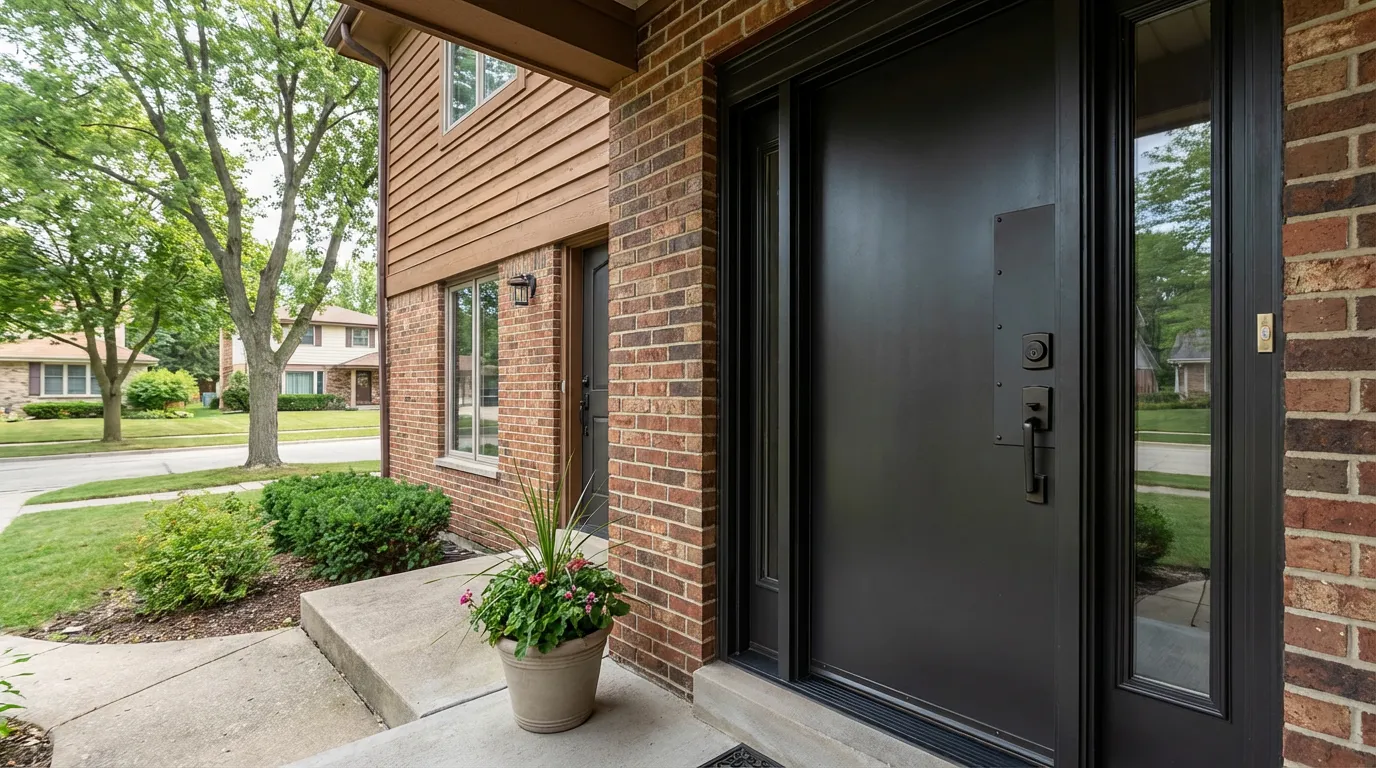
The formula for this grounded, modern look is: 60% classic texture (the red brick facade) + 30% sleek modernism (the charcoal gray door and sidelight) + 10% organic accent (the potted plant and wood siding). The charcoal door updates the traditional brick, giving it a contemporary edge. The black hardware disappears into the door, maintaining the clean, minimalist feel. It’s a perfect blend of old and new.
|
📋 Copy HEX 🔗 Share |
Before pairing a dark door with brick, consider these points:
- Brick Undertones: Look closely at your brick. Does it have brown, orange, or purple undertones? Your door color should complement these. Charcoal is a safe bet as it’s a neutral, but a warm black might work better with brown brick.
- Mortar Color: The color of the grout between your bricks matters. A dark door looks especially sharp when contrasted with light or white mortar.
- Lighting Conditions: A dark door in a deeply shaded entryway can look like a black hole. Ensure your porch gets enough natural light or plan for excellent sconce lighting.
24. White Stucco Home with a Warm Wood and Black Frame Entry
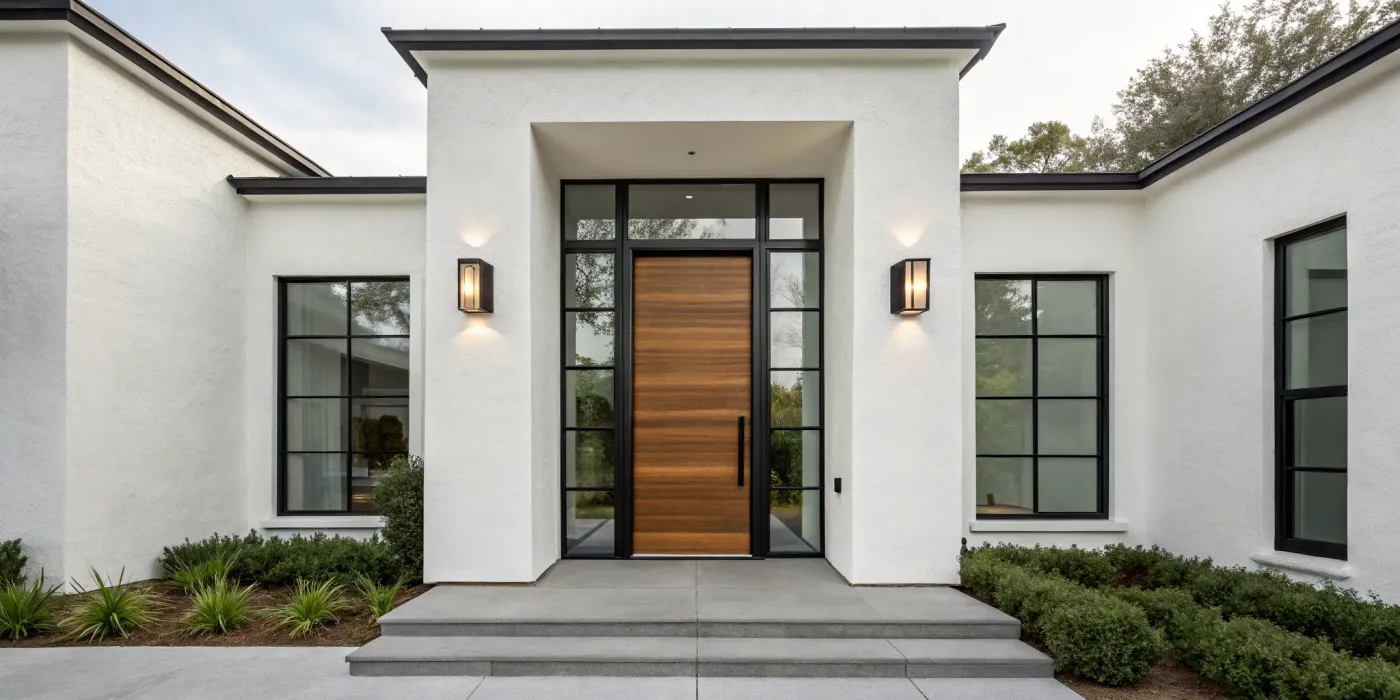
This high-contrast, Modern Transitional style is everywhere on Pinterest, and for good reason. It blends the clean, stark lines of modernism (white stucco, black frames) with the warmth and natural texture of traditional materials (the vertical grain wood door). It feels sophisticated, clean, and inviting all at once. The black-framed glass creates that sought-after indoor-outdoor connection while still feeling structured and secure.
|
📋 Copy HEX 🔗 Share |
Achieving this high-end look is an investment in curb appeal. Here’s a potential cost breakdown:
- Wood Front Door: A high-quality solid wood door – $2,500 – $6,000
- Sidelights & Transom: Custom black-framed glass units – $3,000 – $7,000
- Lighting: Pair of modern black metal wall sconces – $300 – $800
- Labor: Professional installation for the entire unit – $1,500 – $3,000
- TOTAL: $7,300 – $16,800
- Budget alternative: Paint your existing door black, and use black paint or electrical tape to create faux black mullions on your existing sidelights.
25. Dark Gray Door with a Wood Ceiling and White Siding
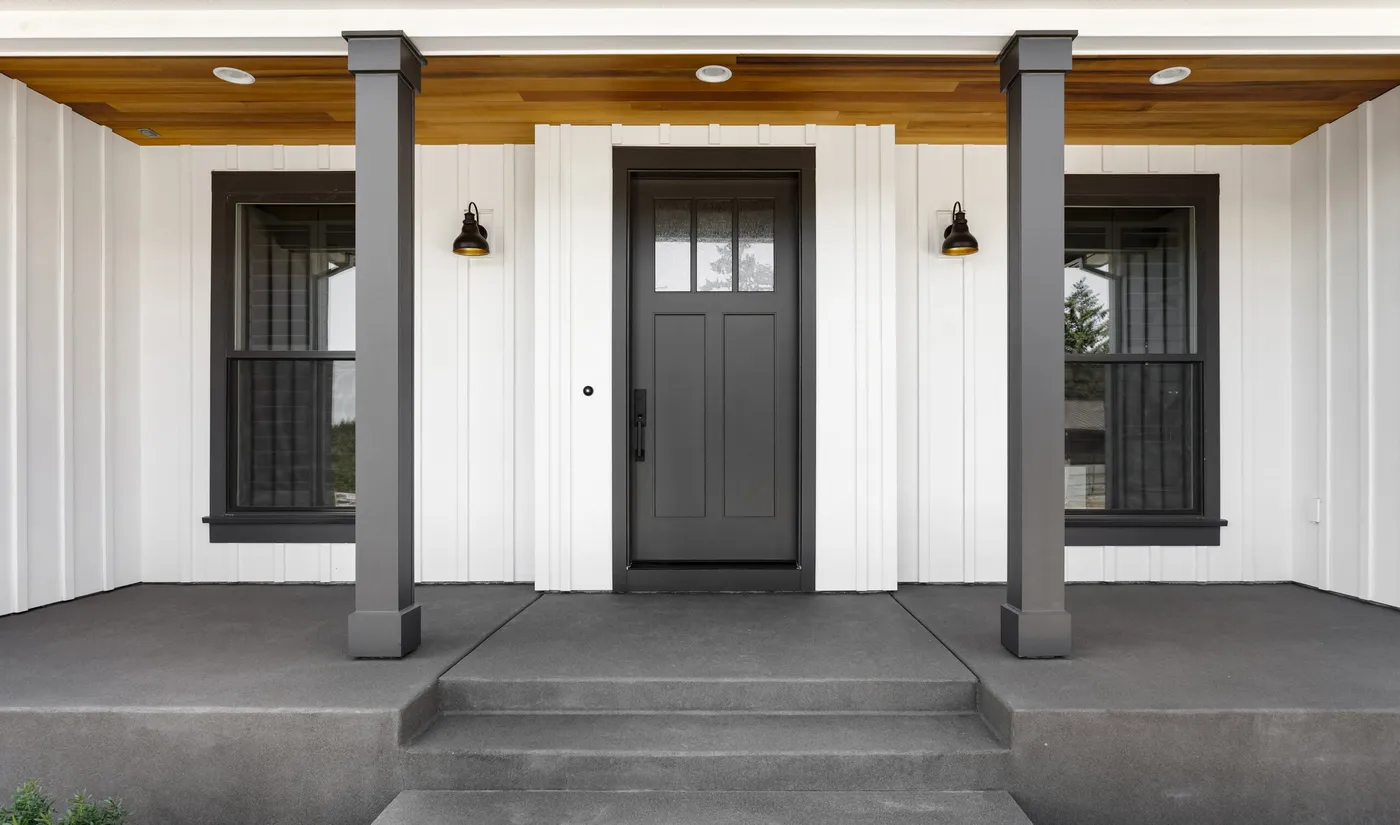
The single element that elevates this entire porch is the wood plank ceiling. Without it, you’d have a perfectly nice but standard modern farmhouse look (white siding, dark gray door). The addition of the warm-toned wood introduces a layer of unexpected texture and richness. It draws the eye up, adds organic warmth to balance the cool gray and crisp white, and makes the entire entryway feel custom and thoughtfully designed.
|
📋 Copy HEX 🔗 Share |
This design works because it follows the rule of three in its color palette: a primary color (white siding), a secondary color (dark gray door and steps), and an accent color (the warm wood tone). This creates a look that is visually balanced and interesting, but not chaotic. The black metal of the sconce lights adds a fourth, subtle layer that ties into the dark window frames, ensuring every element feels connected. Compare this to the similar but simpler palette in Idea #17.
26. Dark Green Front Door on a White Modern Farmhouse
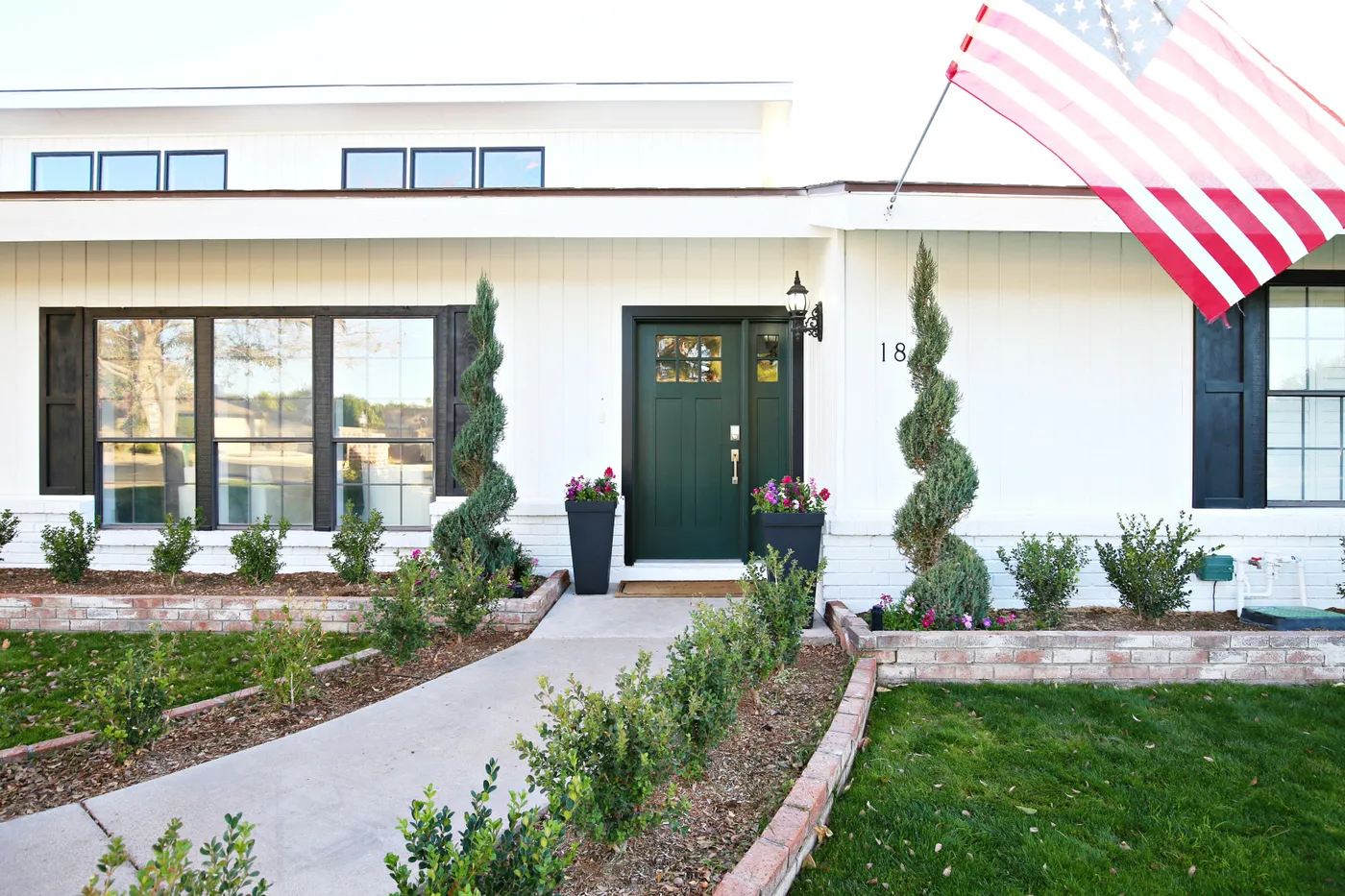
When using brass hardware, the finish makes all the difference. For a modern farmhouse look, steer clear of highly polished, shiny brass, which can feel dated. Instead, opt for a satin, brushed, or unlacquered brass finish. These finishes have a softer, more muted glow that feels current and sophisticated. They provide that perfect touch of warmth against the cool dark green door without being overly flashy. Over time, unlacquered brass will develop a beautiful, natural patina.
|
📋 Copy HEX 🔗 Share |
The visual recipe for this crisp, modern farmhouse look is: 60% classic neutral (the white vertical siding) + 30% deep accent color (the dark green door and black shutters/frames) + 10% warm metallic (the brass hardware). The high contrast between the white siding and the dark elements creates a graphic, clean look, while the small touch of brass adds just enough warmth and elegance to keep it from feeling sterile.
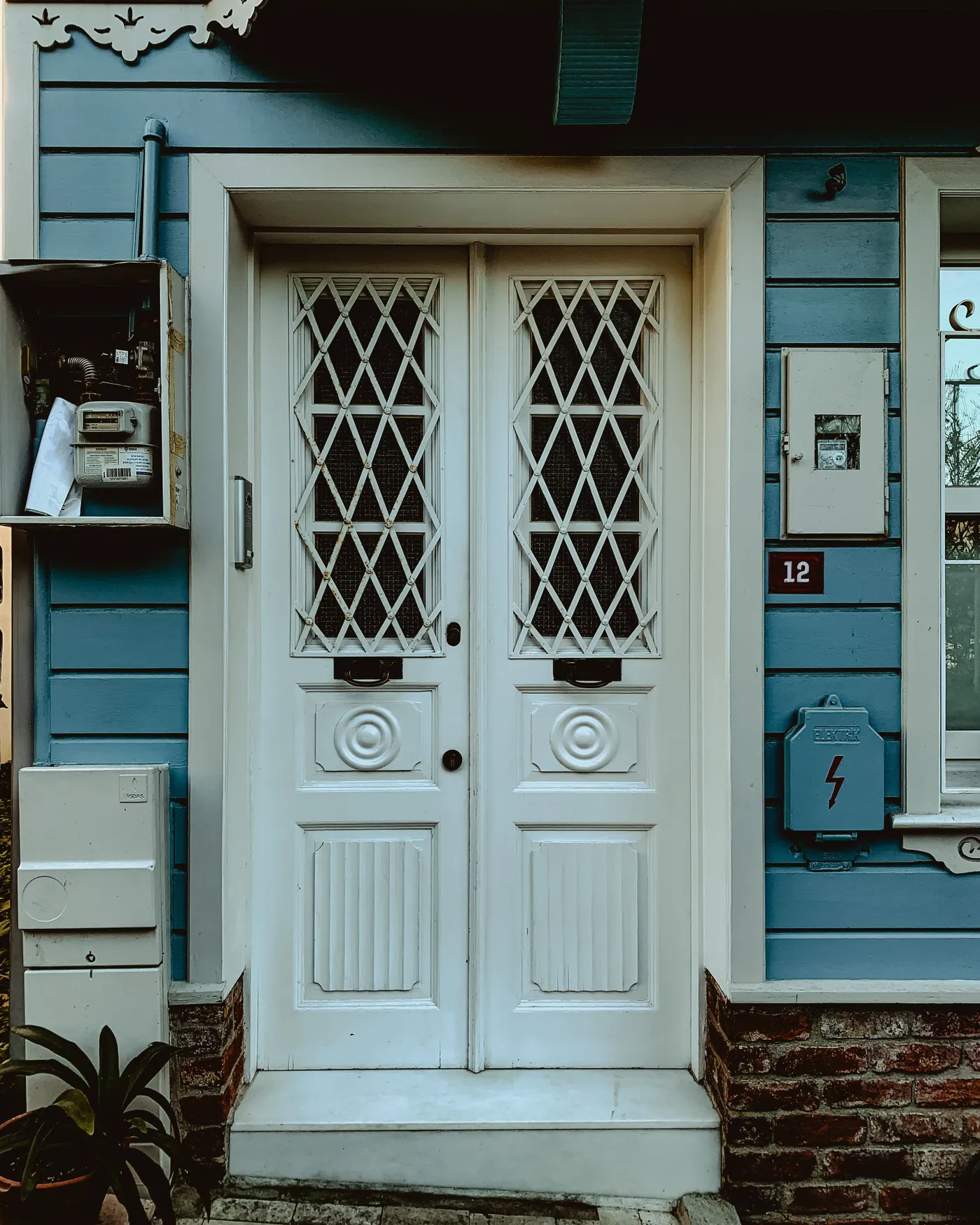
27. Weathered White Double Door with Ornate Blue Siding
A weathered or distressed finish is beautiful, but it requires careful consideration. Is this a genuine antique door with a natural patina, or a modern door with a factory-applied distressed finish? If it’s the latter, be aware that touch-ups can be nearly impossible to blend seamlessly. Any future scratches or dings will be hard to hide. For a truly authentic look, consider sourcing a salvaged door from an architectural reclamation yard, but be prepared for potential challenges with fitting and weatherproofing.
|
📋 Copy HEX 🔗 Share |
The diamond-patterned grilles are what give this entrance its unique, historic character. They are the defining feature that immediately signals a specific style and era. The weathered finish and circular details are complementary, but it’s the intricate metalwork over the glass that captures the imagination. It adds a layer of security, casts beautiful shadows, and provides a level of craftsmanship you don’t find on a standard front door. This is much more ornate than the simple wood doors in Idea #19.
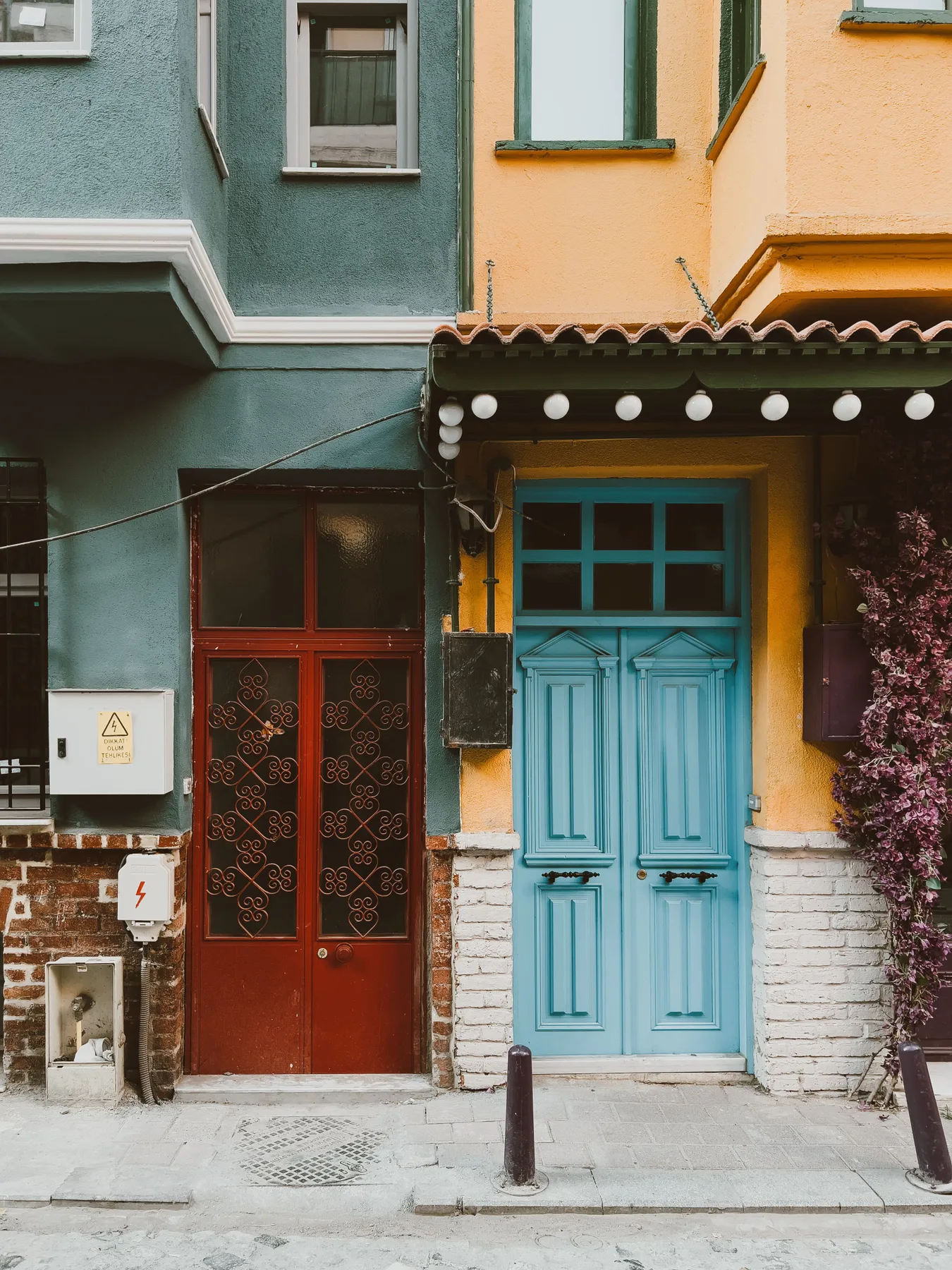
28. Vibrant Teal and Terracotta with Ornate Metalwork Doors
This look taps into the Global Artisan trend, a style that celebrates color, texture, and handcrafted details from around the world. The combination of textured stucco, rich terracotta, and ornate metalwork feels worldly and collected. In a sea of minimalist design, there’s a growing desire for spaces that feel unique, personal, and full of stories. This entryway is the opposite of mass-produced; it’s a bold declaration of individual style.
|
📋 Copy HEX 🔗 Share |
The reason these wildly different colors work together is their shared intensity and the texture of the walls. The vibrant teal and the bright yellow both have a similar level of saturation, so neither one overpowers the other. They feel like equal partners. The rough, textured finish on the walls gives the bright colors a slightly rustic, earthy quality that grounds them and keeps them from feeling like plastic. The red brick base adds a final unifying, natural element.
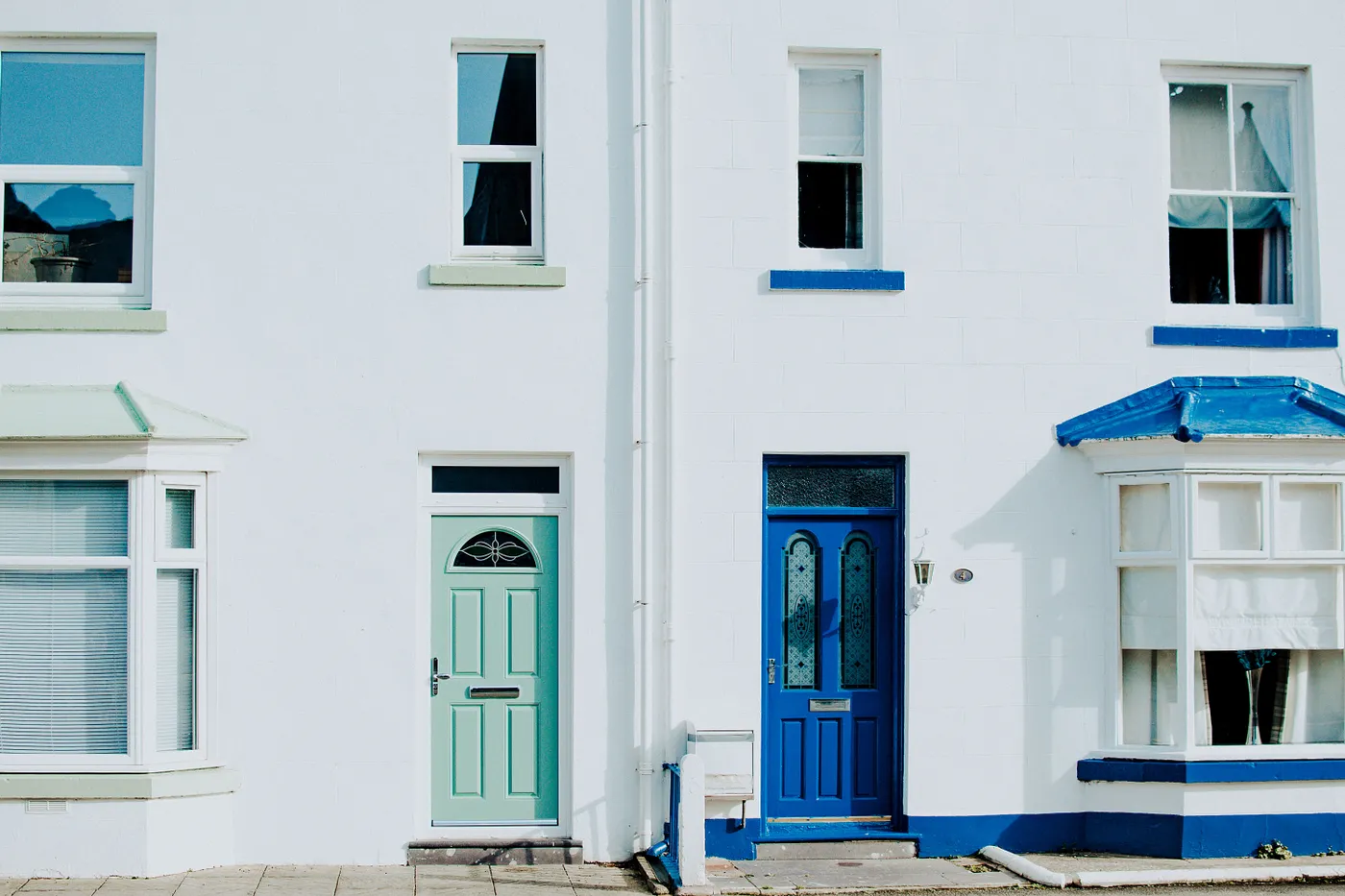
29. White Facade with Bright Blue and Mint Green Doors
When placing two different, bold door colors side-by-side, the key to a cohesive look is repetition. Notice how the vivid blue of the first door is repeated on its window sill and the base trim of the house. Likewise, the mint green of the second door is echoed on its sill and the bay window canopy. This simple trick tells your eye that the colors are intentional and belong together, creating a planned rhythm rather than a random collection of colors. The shared white brick facade and chrome hardware also act as unifying elements.
|
📋 Copy HEX 🔗 Share |
This side-by-side colorful door strategy is ideal for multi-family dwellings like duplexes, townhouses, or apartments, where you want to give each unit its own identity while maintaining a cohesive look for the overall building. It’s a fantastic way to add personality and charm to a building that might otherwise feel uniform. It also works for a single home with a main entrance and a prominent secondary entrance (like a mudroom or guest suite door).
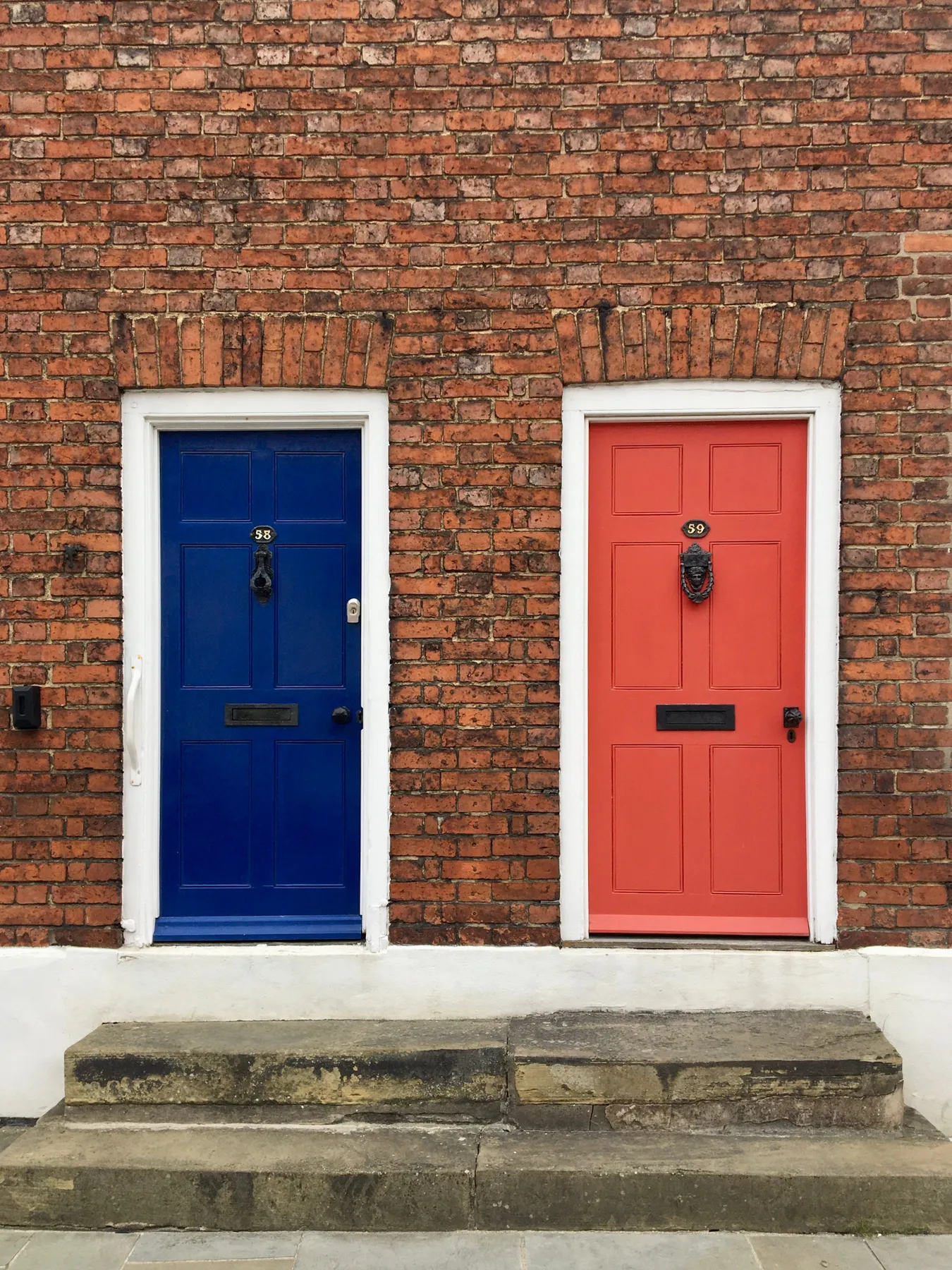
30. Blue and Terracotta Doors on a Rustic Brick Facade
This vibrant pairing works because blue and orange are complementary colors, meaning they sit opposite each other on the color wheel. This creates the highest possible contrast and a powerful visual impact. The aged red brick of the wall acts as a neutral, textured backdrop that can handle the intensity of both colors. Finally, the bright white trim frames each door like a piece of art, making them pop even more and preventing the facade from feeling too dark or heavy.
|
📋 Copy HEX 🔗 Share |
The single element that ties this eclectic look together is the identical black hardware. Using the same traditional knocker and mail slot on both the blue and terracotta doors is a subtle but brilliant move. It creates a sense of unity and intention, signaling that even though the colors are different, they are part of a single, cohesive design vision. It’s this small detail that keeps the look from feeling chaotic and instead makes it feel curated and charming.
Ready to Make Your Entrance?
Your front door is the handshake of your home—it sets the tone for everything inside. Don’t be afraid to choose a color that reflects your personality and brings you joy every time you walk up to it. Now that you’re full of ideas, which color will you choose to tell your story? Pin your favorites and get ready to transform your curb appeal!