
Two-tone kitchen cabinets break the monotony of a single color without requiring a full gut renovation. By pairing a darker shade on the lower cabinets with a lighter one above, or giving the island its own distinct hue, you add depth and visual interest to the room.
In this article, you’ll find 25 real-kitchen examples that show how different color combinations work, from creamy uppers over rich wood bases to bold navy or emerald bases paired with crisp white tops. Each look keeps the storage front and center, proving that a simple paint or finish swap can redefine the whole space.
Tuscan Charm with Dark Brown and Cream Two-Tone Cabinets
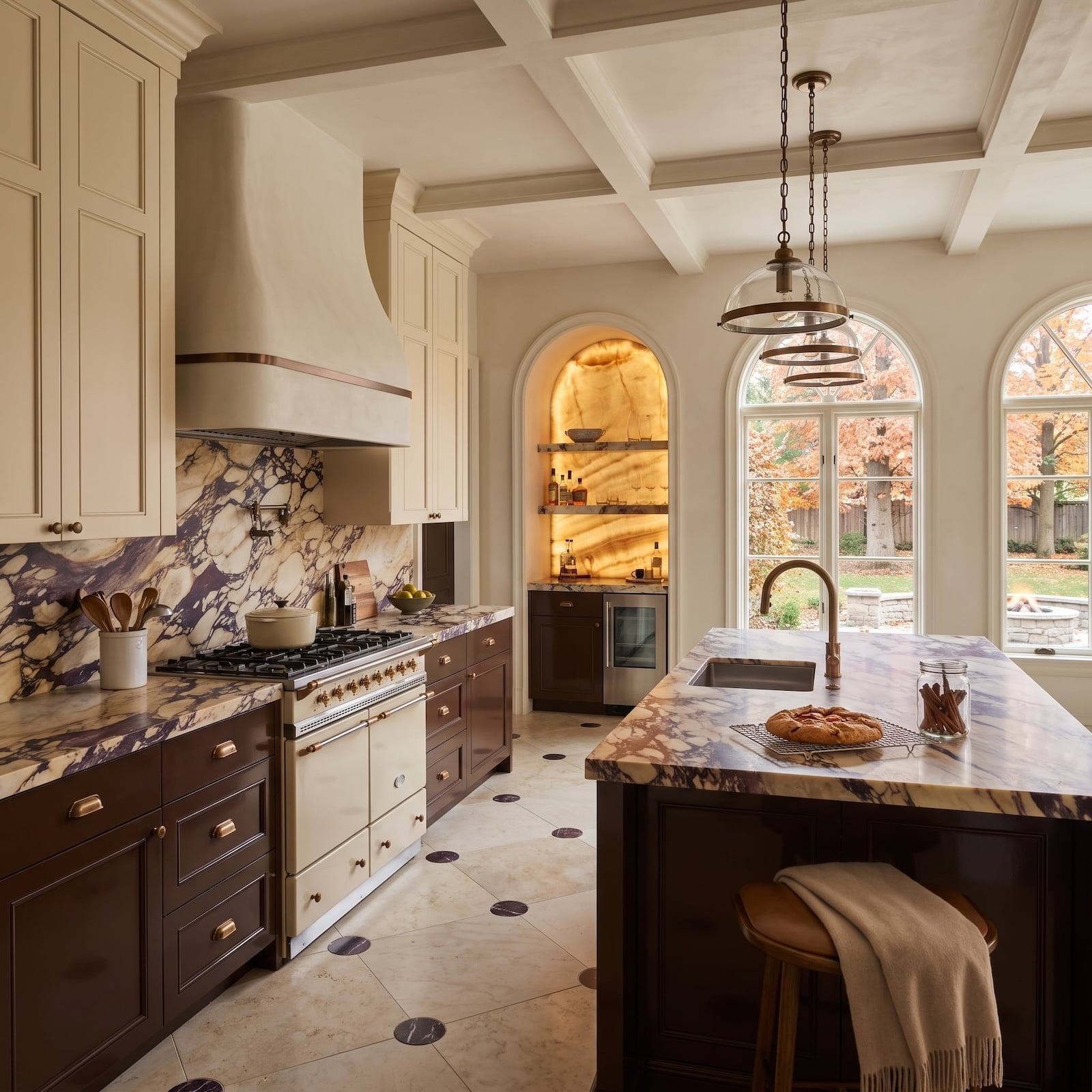
A Tuscan kitchen leans on warm contrasts, and dark brown lowers against cream uppers deliver that without extra ornament. The deep brown anchors the room while the lighter cream keeps the space open, especially under natural light from those arched windows. A marble island and tiled backsplash add texture without competing with the cabinet duo. The layout centers on the island, so the two-tone palette works as a quiet backdrop rather than the main event.
Modern Elegance: White Uppers and Wood Lowers
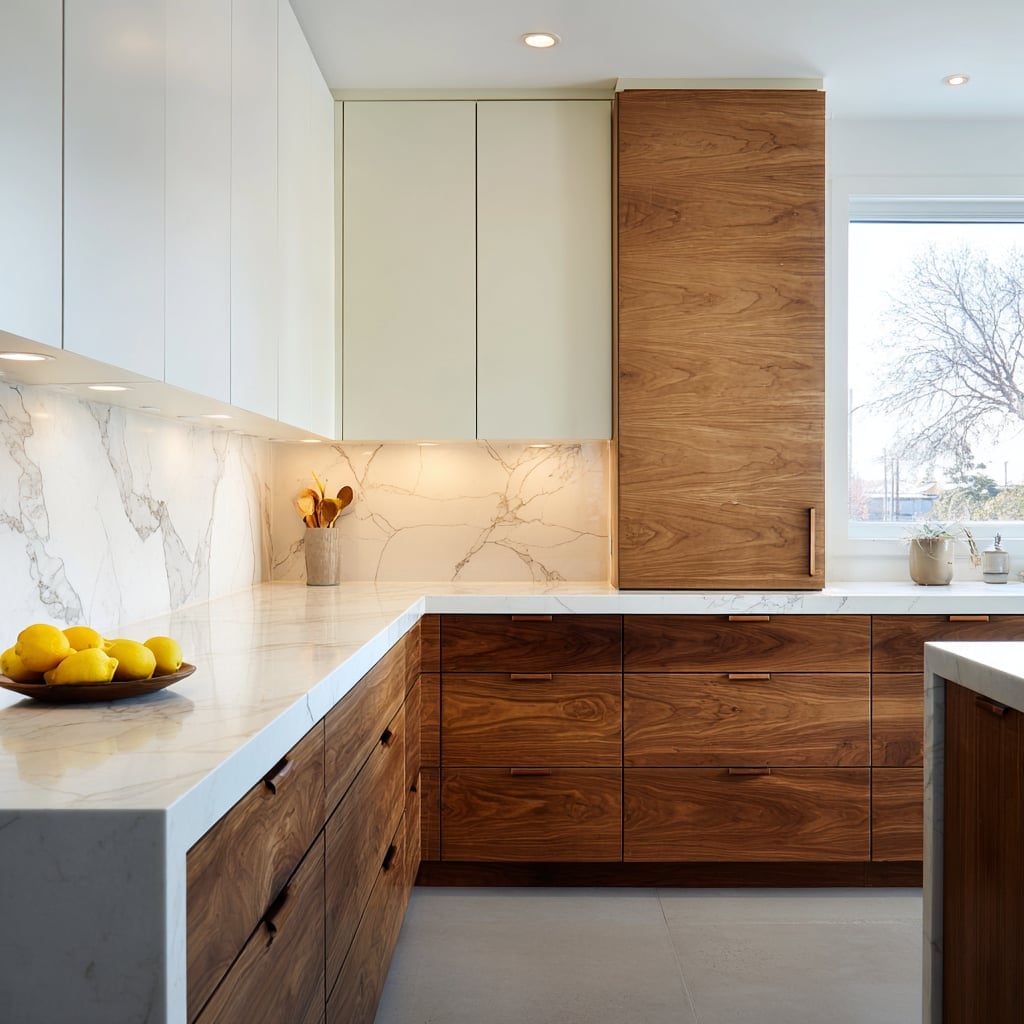
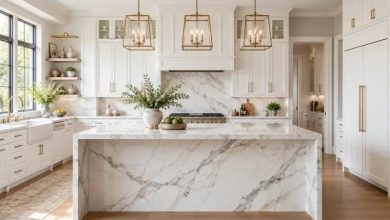
White uppers paired with wood lowers is a reliable modern move. The white keeps the upper half clean and reflective, while the wood grain on the lowers adds warmth at eye level and below. Marble on the island and backsplash ties the two together without introducing another color. Under-cabinet lighting helps the wood grain read as intentional rather than accidental, especially in a corner kitchen where shadows can hide details.
Transitional Style with Wood and Gray Two-Tone Cabinets
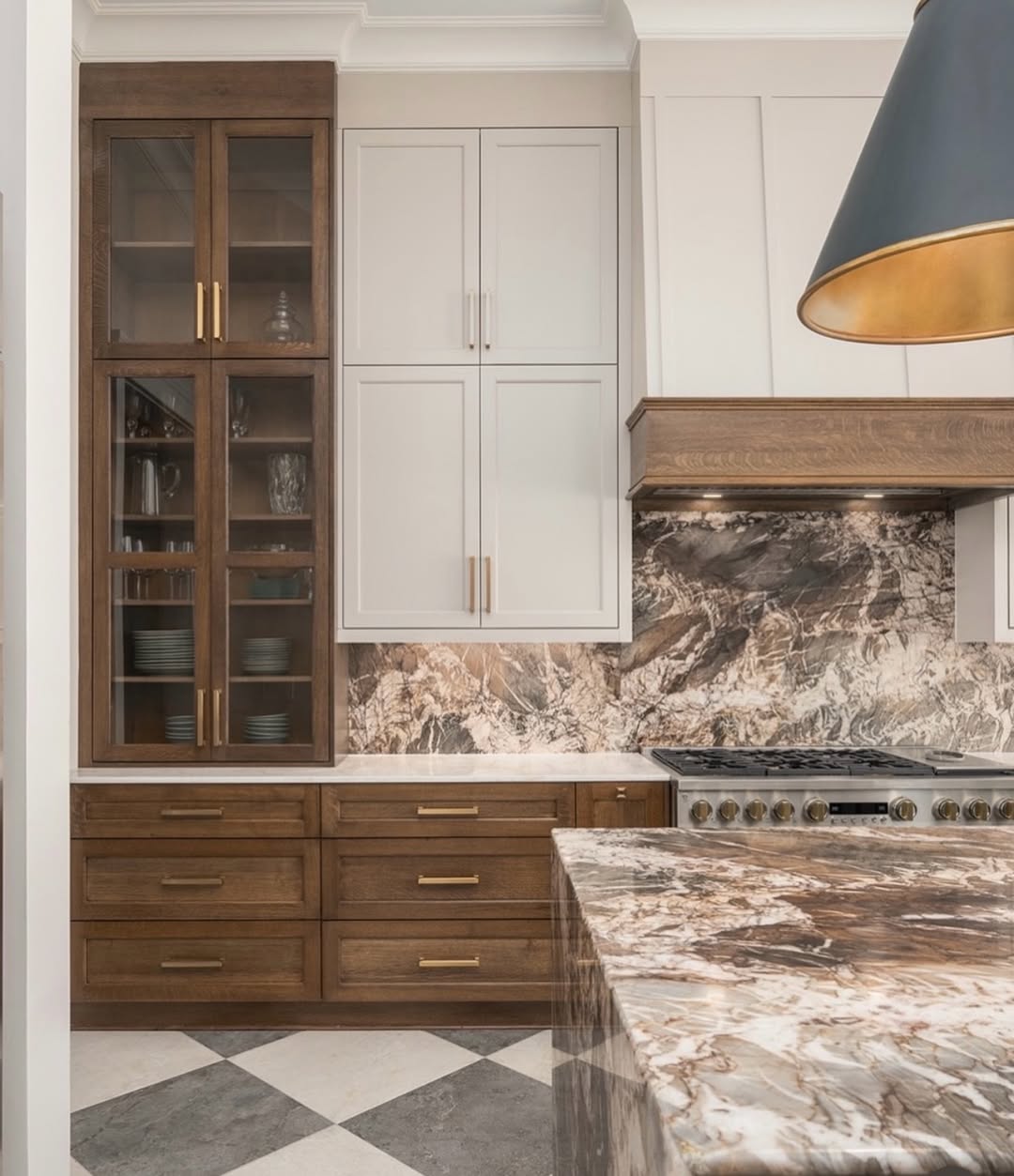
How do you bridge warm and cool without the kitchen feeling split? Wood lowers and gray uppers create a balanced middle ground. The wood brings natural texture, while gray keeps the upper half from feeling heavy. A marble island and matching backsplash unify the two zones visually. The galley-plus-island layout means the two-tone effect is visible from multiple angles, so the pendant lighting over the island becomes the anchor that pulls the whole composition together.
Elegant Transitional Kitchen with Black Island and Gray/White Cabinets
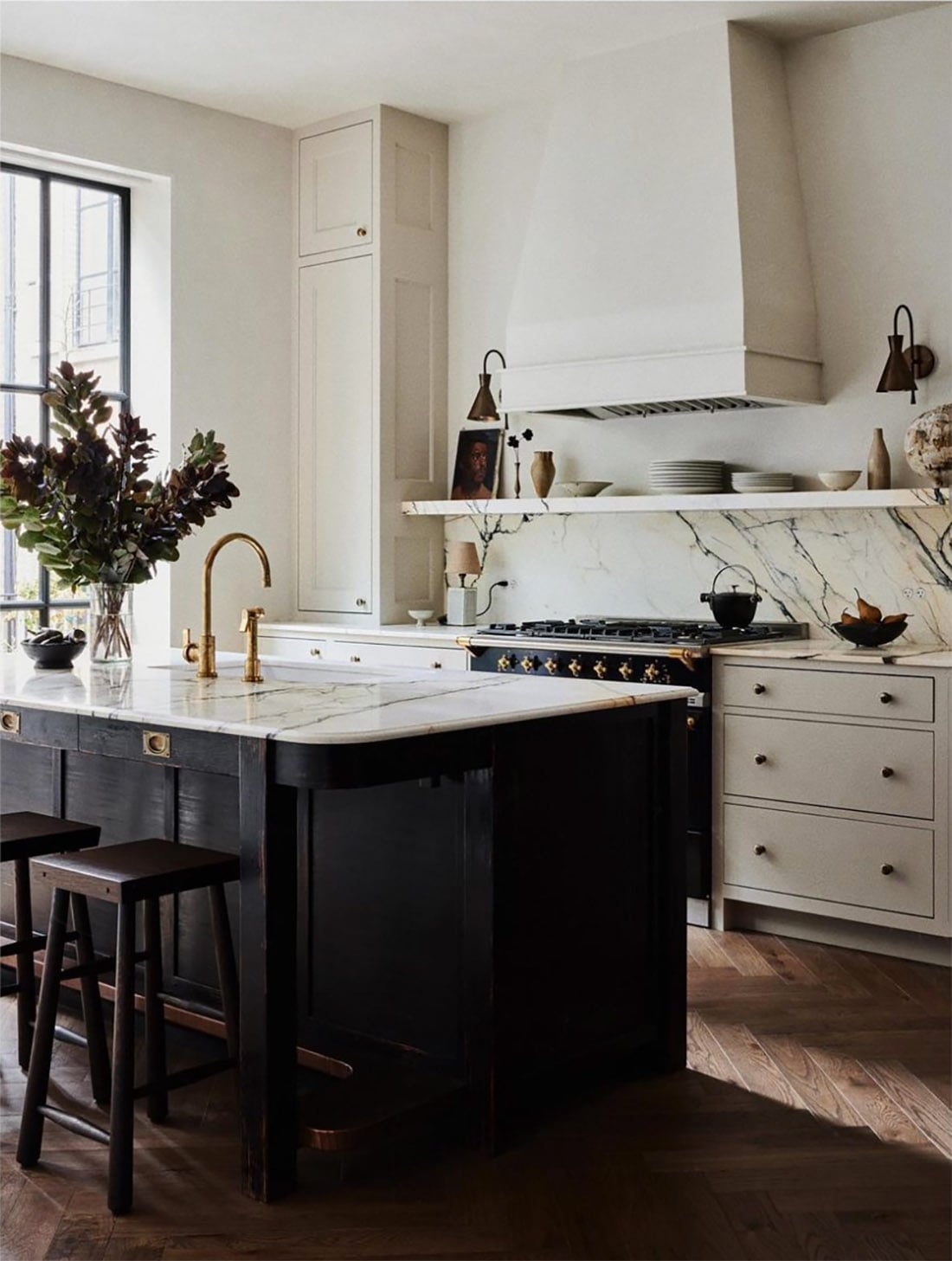
A black island changes the weight of a two-tone kitchen. Here, gray lowers and white uppers keep the perimeter light, while the black island with a marble waterfall edge becomes the focal point. Brass accents on the hardware and wall sconces add a warm gleam that softens the contrast. Natural window light balances the dark island, so the room feels grounded but not cave-like.
Farmhouse Kitchen: Gray Lowers and White Uppers
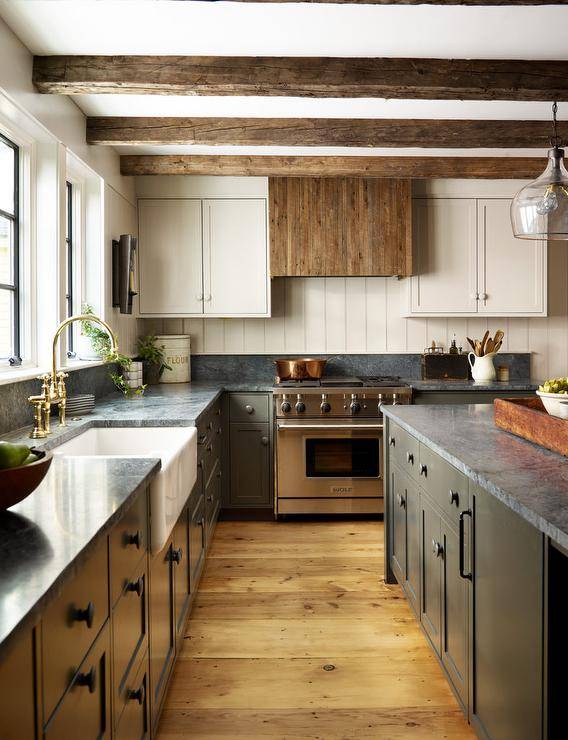
Gray lowers and white uppers is a practical farmhouse choice because the darker lower cabinets hide everyday kitchen mess better than all-white. The white uppers keep the room feeling open, especially with pendant lights over the island. A wood island adds the warm farmhouse note that gray and white alone lack. The layout is galley style with an island, so the two-tone cabinets create a clear visual boundary between work zones and gathering space.
Deep Blue Cabinets Paired with a Warm Wood Island
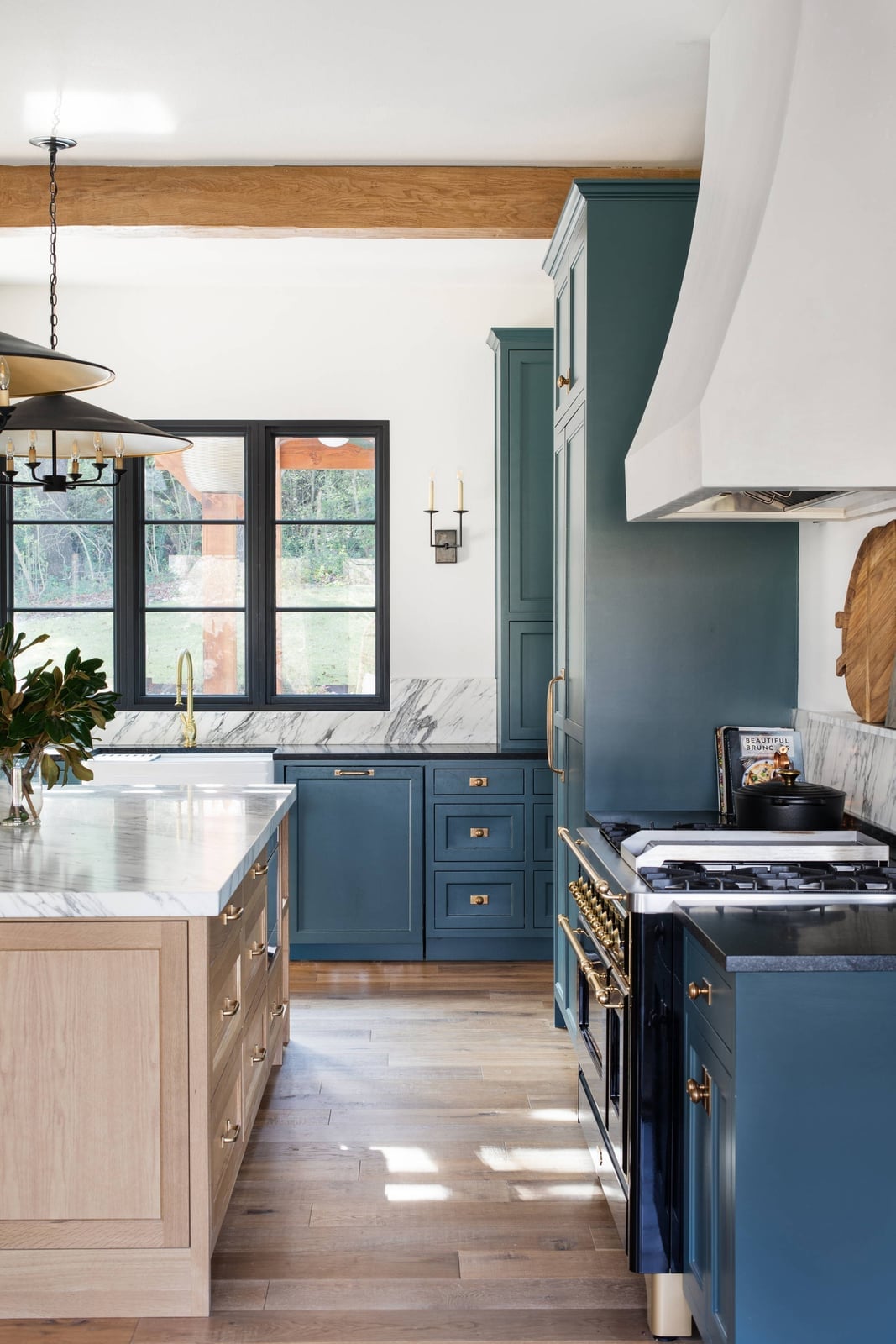
If you like the idea of dark lowers but worry about a kitchen feeling closed in, deep blue cabinets paired with a warm wood island offer a softer alternative to black. The blue is rich without swallowing the light, especially in an open plan layout where the island acts as a visual anchor. Wood tones on the island add warmth that keeps the palette from turning cold, while marble countertops and brass hardware bring in a transitional feel. A pendant light above the island provides focused task light. The key is choosing a blue with enough gray undertone so it appears sophisticated and not nautical.
Dark Gray and White Transitional Cabinets with Brass Hardware
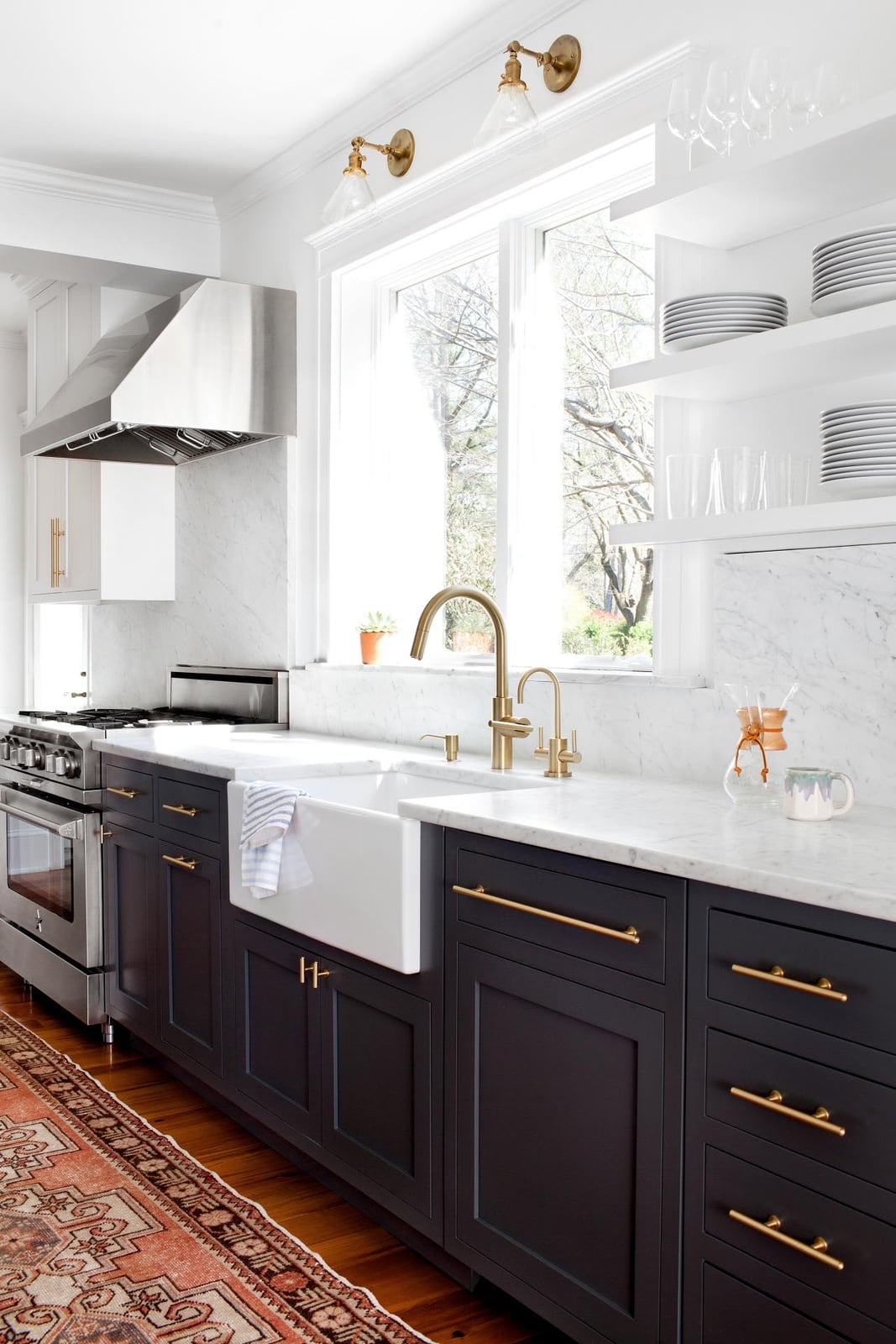
Dark gray lower cabinets paired with white uppers and brass hardware create a look that feels both polished and practical. The brass pulls and a brass faucet add warmth against the cool gray, while marble countertops keep the surface easy to wipe down. A farmhouse sink fits the transitional style, and the window light helps the dark lowers appear grounded. For renters, this is a scheme you can approximate with peel-and-stick backsplash tiles and temporary cabinet wrap on the lowers, leaving the white uppers as they are.
Modern Kitchen with Emerald Green Base Cabinets
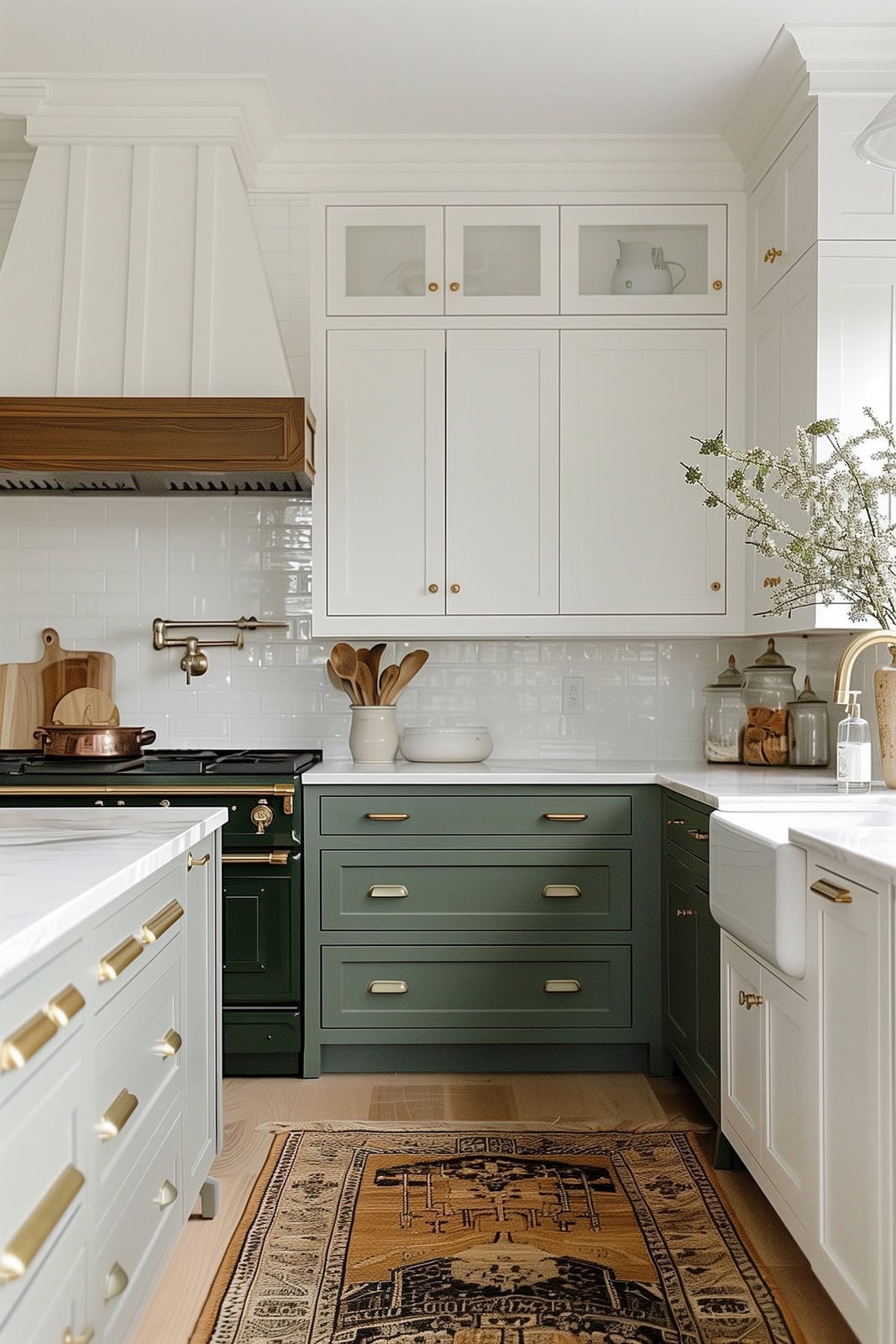
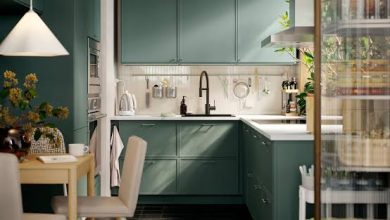
Emerald green base cabinets paired with white uppers make a clear statement without overwhelming the room. The green acts as a rich neutral, especially when balanced by white walls and a marble backsplash. An emerald green range ties the lowers to the cooking zone, creating a cohesive line of color across the base. Natural window light keeps the green from feeling too dark, and task lighting under the uppers ensures the counters stay functional. The ratio here is roughly one part green to two parts white, which keeps the look modern and not period.
Blue and White Modern Cabinets with Gold Hardware
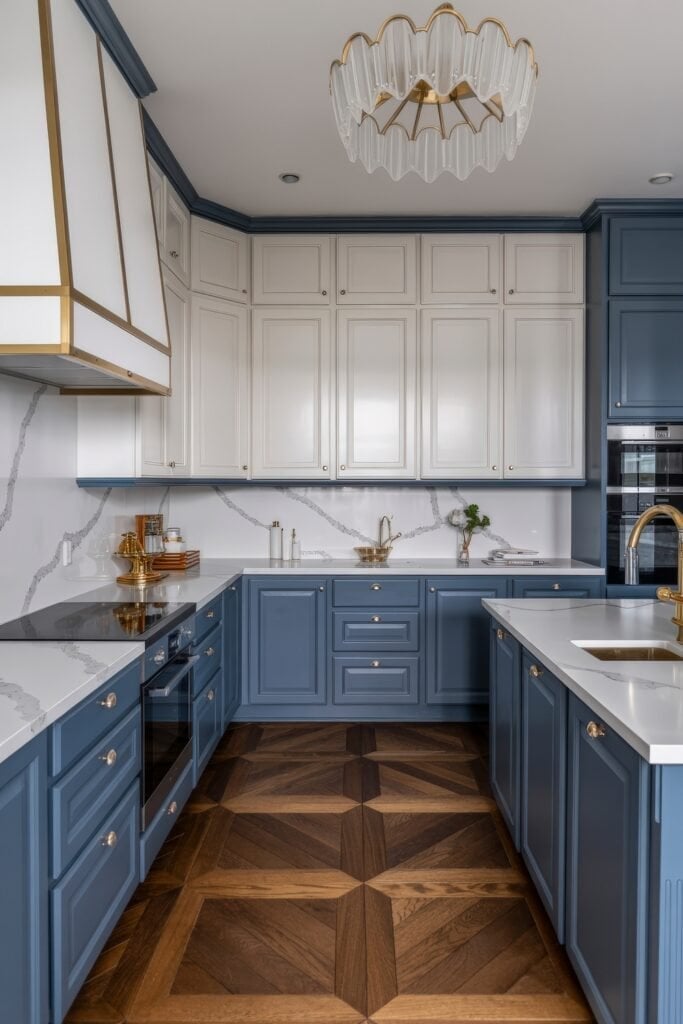
How do you keep blue cabinets from feeling cold in a modern kitchen? Pair them with warm gold hardware and white uppers. The blue lower cabinets gain a sense of richness from the brass pulls and fixtures, while white quartz countertops reflect light from the ambient and pendant lighting. A galley layout with an island benefits from this two-tone approach because the lighter uppers keep the sightlines open, and the blue base anchors the space. Gold hardware ties the blue to the warm wood tones of the island, so the whole palette feels connected rather than piecemeal.
Eclectic Kitchen with Teal Island and Gray/Blue Cabinets
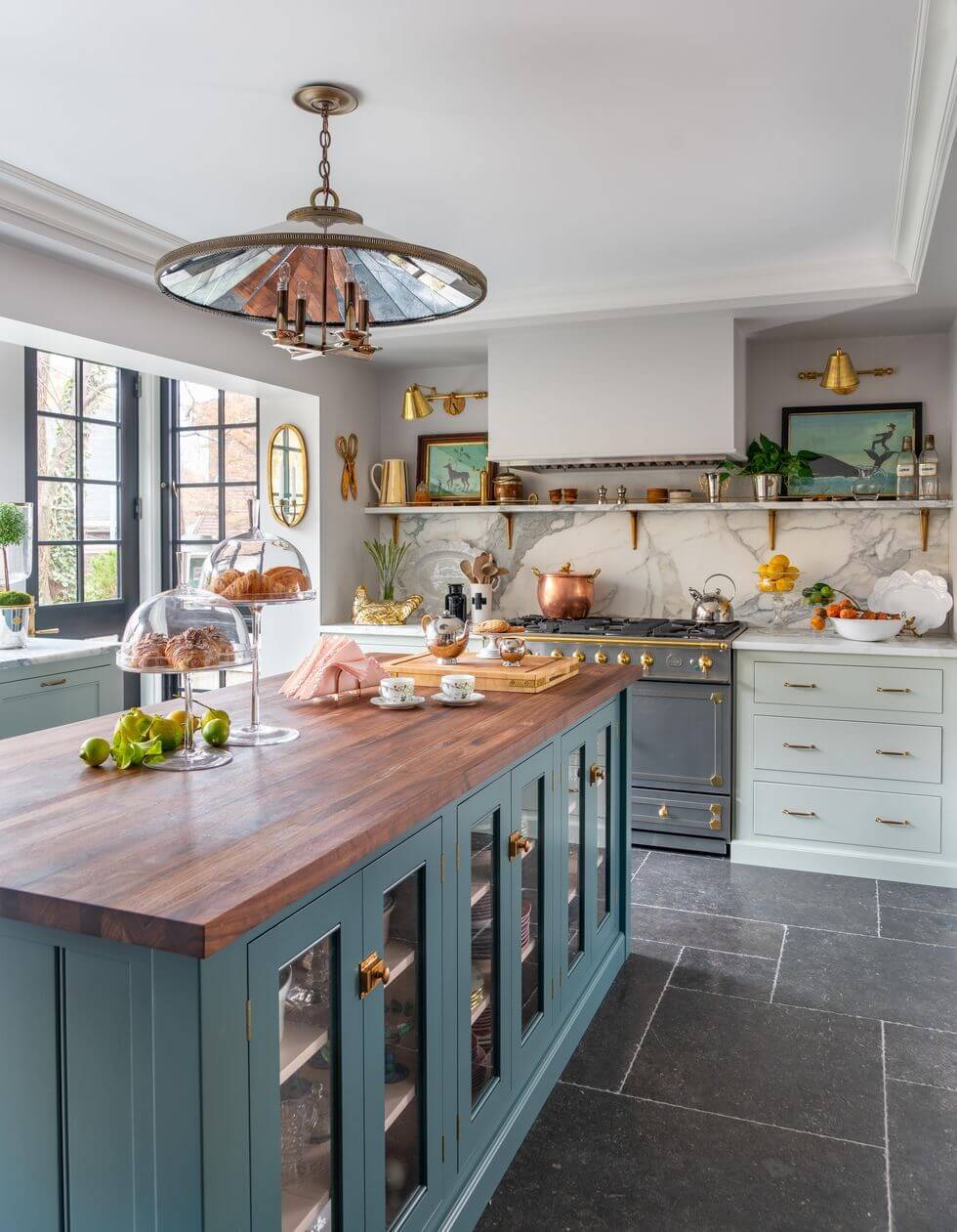
A teal island paired with gray-blue perimeter cabinets creates a layered look that avoids matching too closely. The teal reads as the accent, while the gray-blue recedes, giving the island visual weight without making the room feel top-heavy. A statement pendant above the island draws the eye up, balancing the darker island base. Natural light from nearby windows helps the teal stay vibrant rather than flat. The stone countertops tie the two blues together by repeating a similar cool undertone.
Rustic Modern Kitchen with Dark Wood Tones
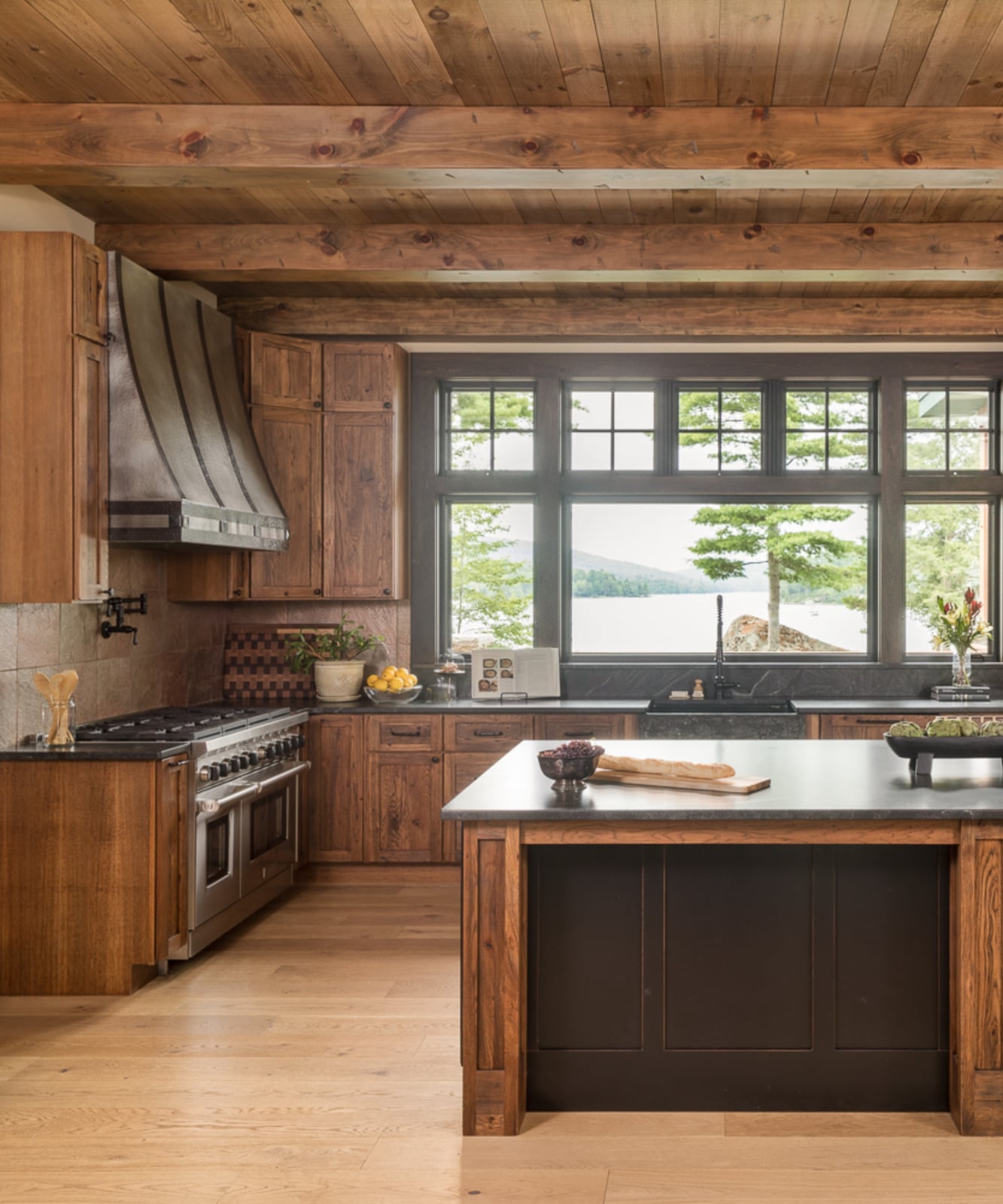
In a rustic modern kitchen, wood tones anchor the space when paired with dark cabinetry and a stone range hood. The open plan layout uses a panoramic window view to balance the weight of the dark wood with natural light. An island in a similar dark finish becomes the functional center, while lighter floor and wall tones keep the palette balanced. The two-tone cabinets do not compete with each other because the darker wood acts as the constant.
Modern Kitchen with Navy Lowers and White Glass-Front Uppers
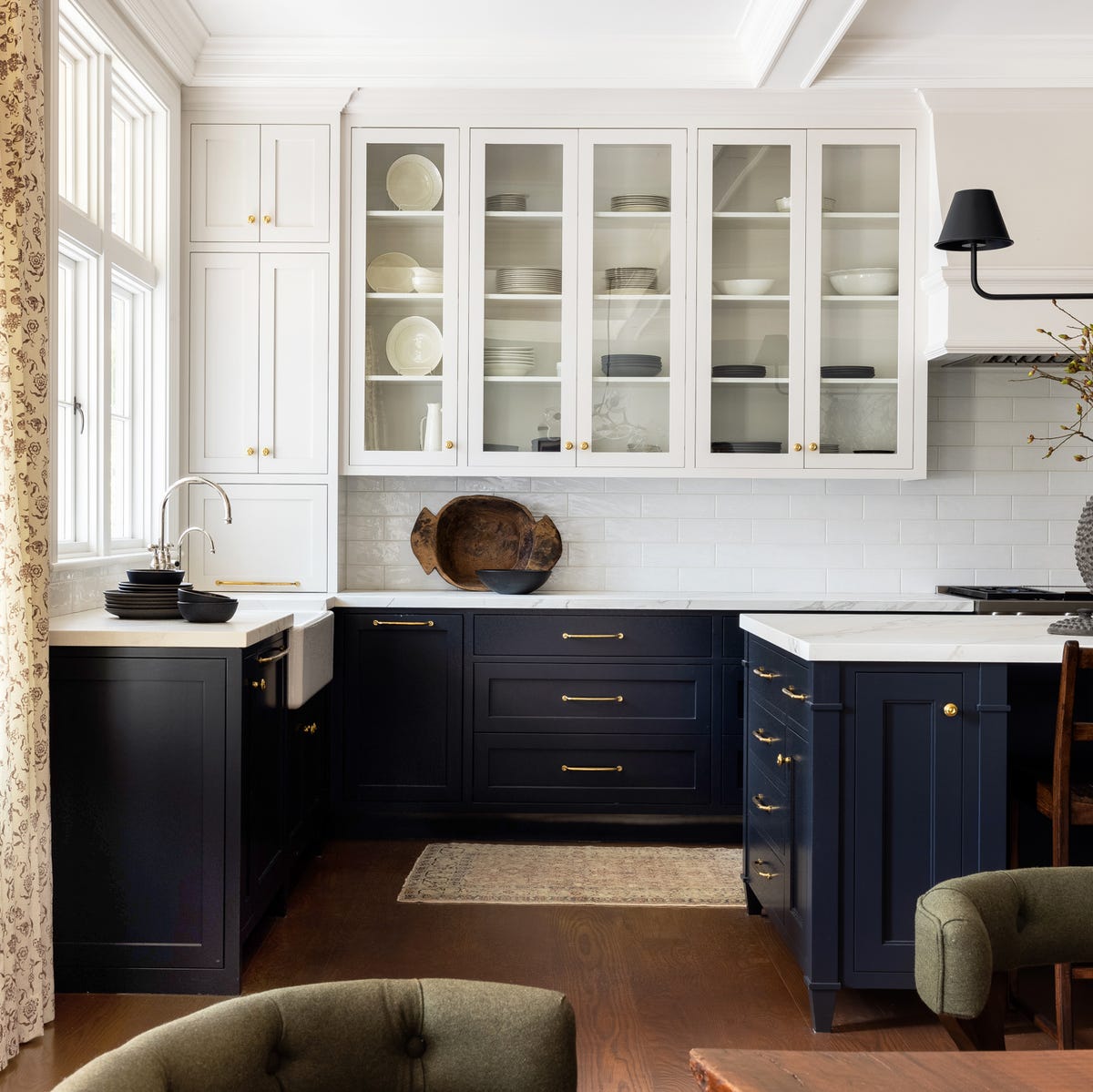
Navy lower cabinets can feel heavy, but white glass front uppers solve that by adding visual air. The u shaped layout keeps the navy base grounded and the white upper cabinets light, creating a balanced two tone kitchen. Glass fronts also serve a storage purpose: they make you keep the contents tidy, which works well in a roomy kitchen where the island also offers hidden storage.
The marble countertops and tile backsplash add a soft contrast to the navy cabinetry. Task lighting under the uppers helps the white glass fronts reflect more light, so the navy feels grounded rather than heavy. The wood tones in the island base break up the blue and white, keeping the palette from feeling too clinical.
Traditional Blue and White Cabinets with Gold Accents
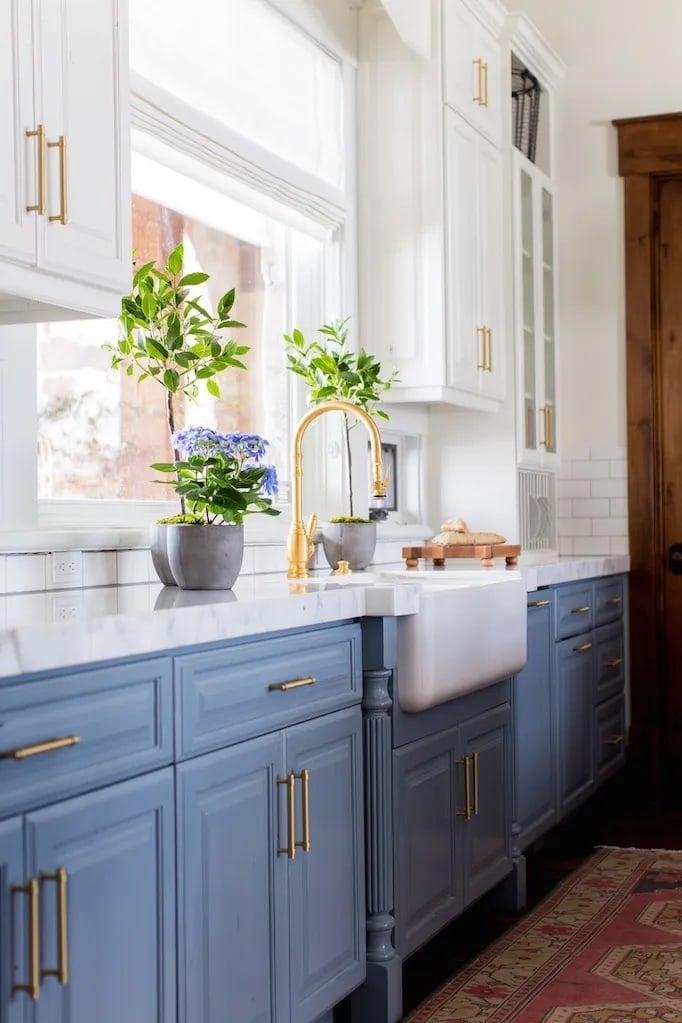
The precise observation here is that the blue lower cabinets and white uppers follow a classic 60-40 ratio, where the darker color stays below the counter line. Gold brass hardware and a farmhouse sink faucet tie the two tones together without competing. A linear layout with the sink at the center keeps the workflow direct, and the marble countertop adds a soft reflective surface that balances the bold blue. The gold accent works as the third element that stops the two-tone from looking like an unfinished paint project.
Modern Dark Green and Brass Two-Tone Cabinets
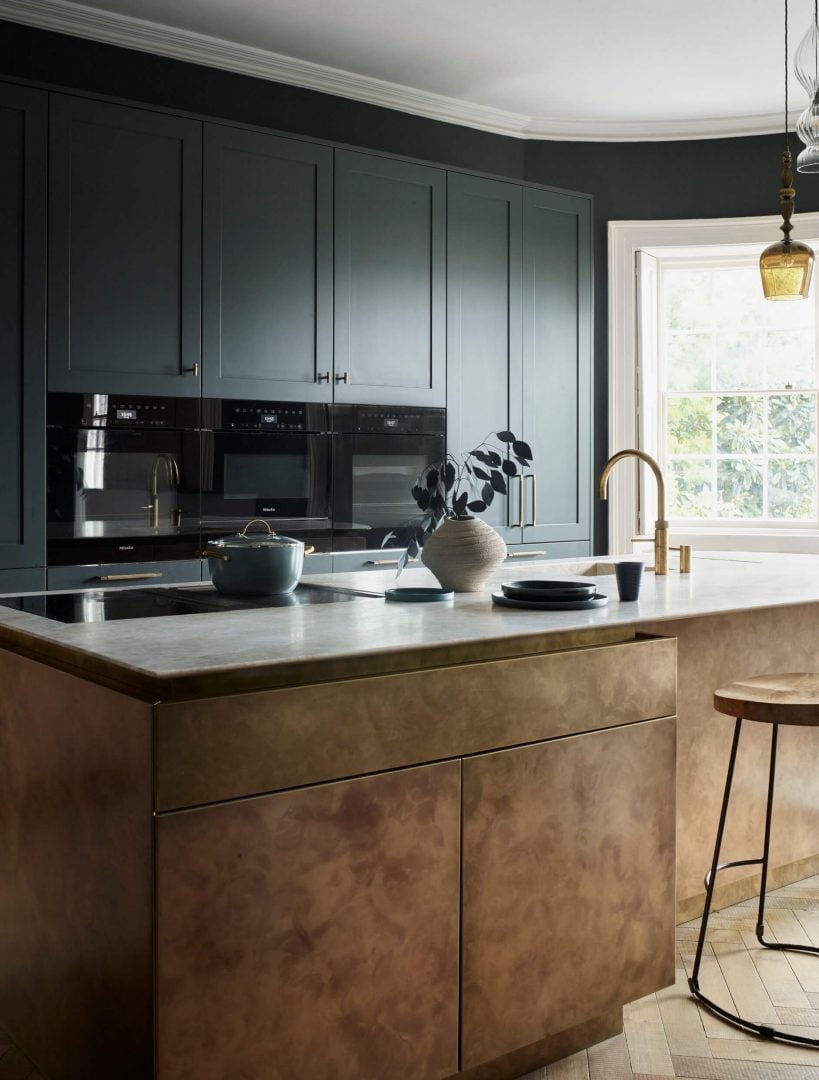
This is a modern kitchen where the dark green cabinetry and brass base on the island create a clear focal point. The brass island base breaks up the green mass and adds a warm metallic line, which is useful when the palette is cool. Ambient and task lighting here matter because dark green absorbs light faster than white or wood. The integrated cooktop on the island means the brass base stays visible from the seating side, so the two-tone effect is a deliberate design choice. The white uppers prevent the space from feeling dark, letting the green act as an accent.
Modern Kitchen with Sage Green Island and White Uppers
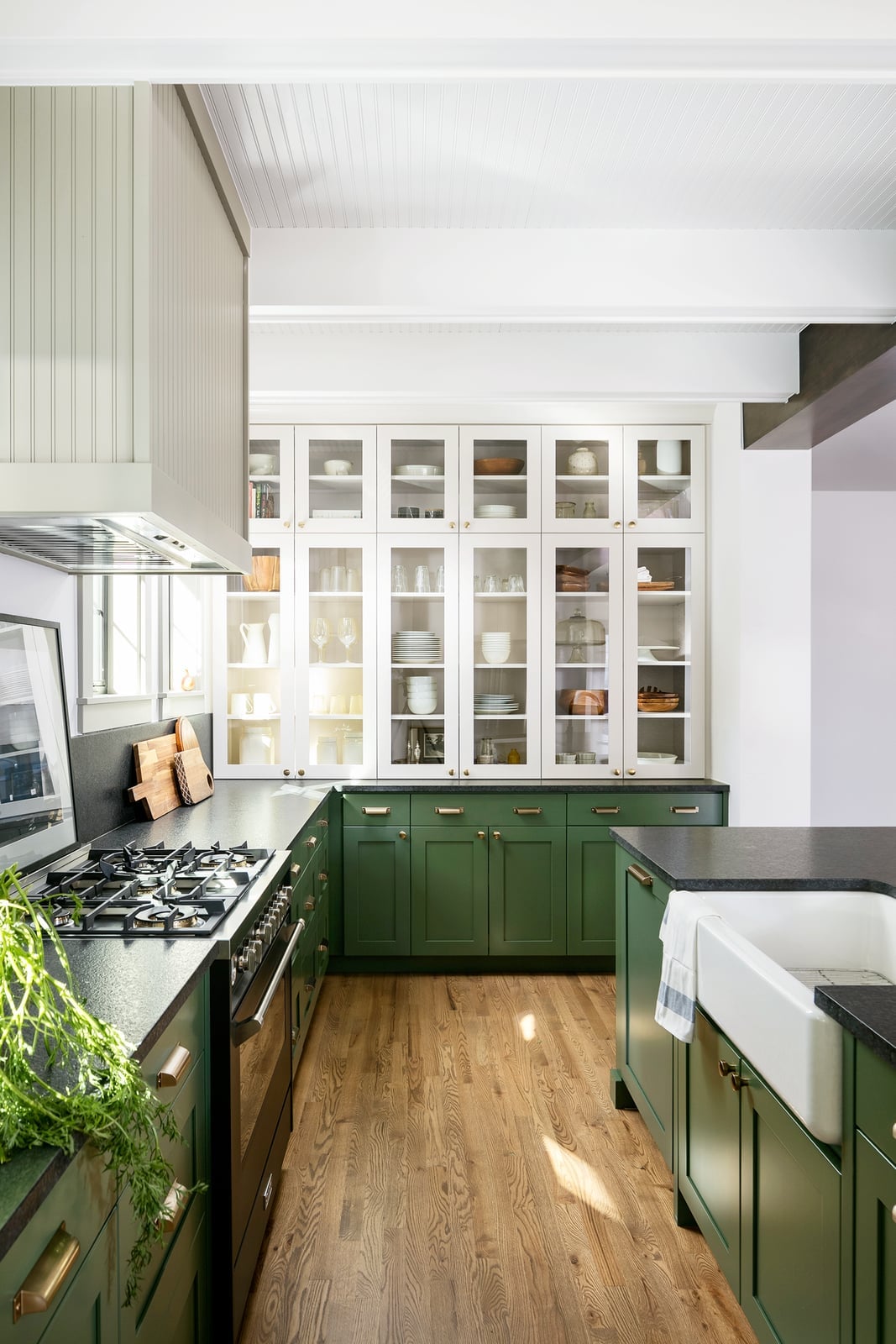
In a two-tone kitchen, the island can be the single color pop while everything else stays neutral. Here the sage green island sits against white glass-front uppers, so the green stands out clearly. The open plan layout uses natural window light to soften the green, and the quartz countertops provide a clean transition between the two colors.
The tile backsplash in a neutral tone keeps the wall from competing with the island. Glass-front uppers display items and reflect light, which helps a lighter sage green stay fresh. The black hardware on the island adds a crisp line that defines the green shape without overwhelming it. For renters, a sage green island can be achieved with peel-and-stick panels on the base cabinet fronts.
Expansive Modern Kitchen with Dark Green Island
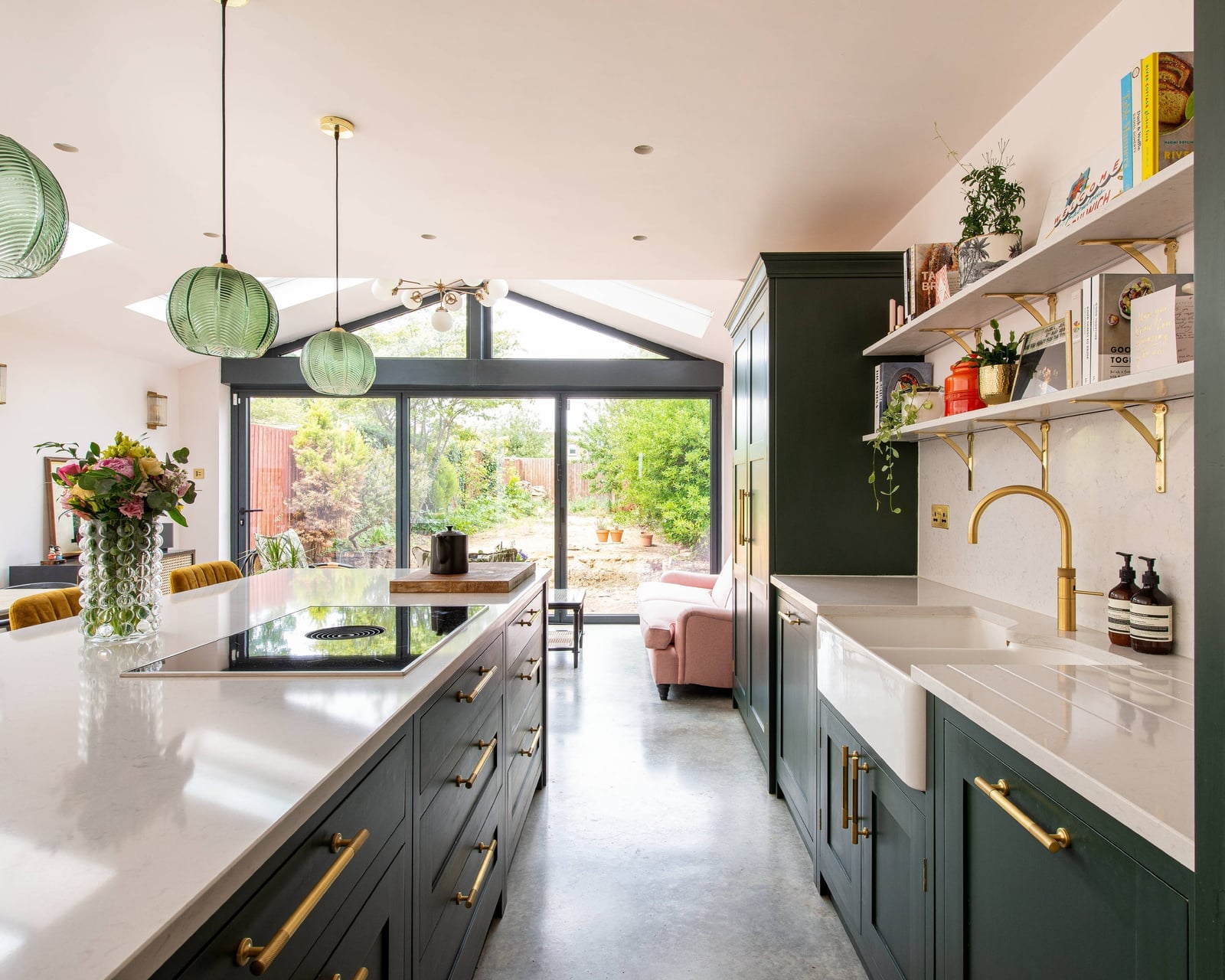
A dark green island in an open plan kitchen does not just add color, it anchors the whole layout. The deep hue stands out against surrounding white cabinets and wood tones, making the island the central piece without needing extra detailing. Marble countertops and glass pendant lights keep the look refined, while the natural light balances the darker shade. Scale and proportion matter here: a large island can handle a bold color because it has enough surface area to carry the weight visually, keeping the room open and uncluttered.
Modern Kitchen with Sage Green Cabinets and Rattan Stools
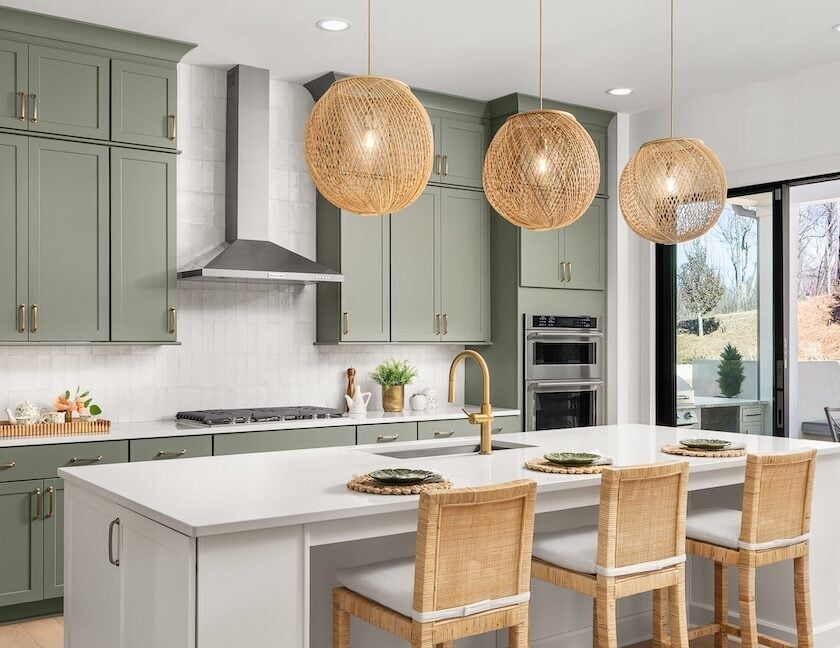
A practical rule for renters is to focus on what you can swap without touching the cabinets. In this kitchen, the sage green island and white perimeter cabinets set a calm backdrop, but the rattan bar stools and woven pendant lights bring texture that is easy to change. The wood tones and metal accents add warmth, while recessed lighting and natural window light keep the room feeling bright. For a similar effect, choose movable pieces like stools, pendant shades, or even a rug to introduce natural materials, letting the sage green cabinets stay neutral and the rental agreement intact.
Modern Kitchen with Pink Curved Island and Charcoal Cabinets
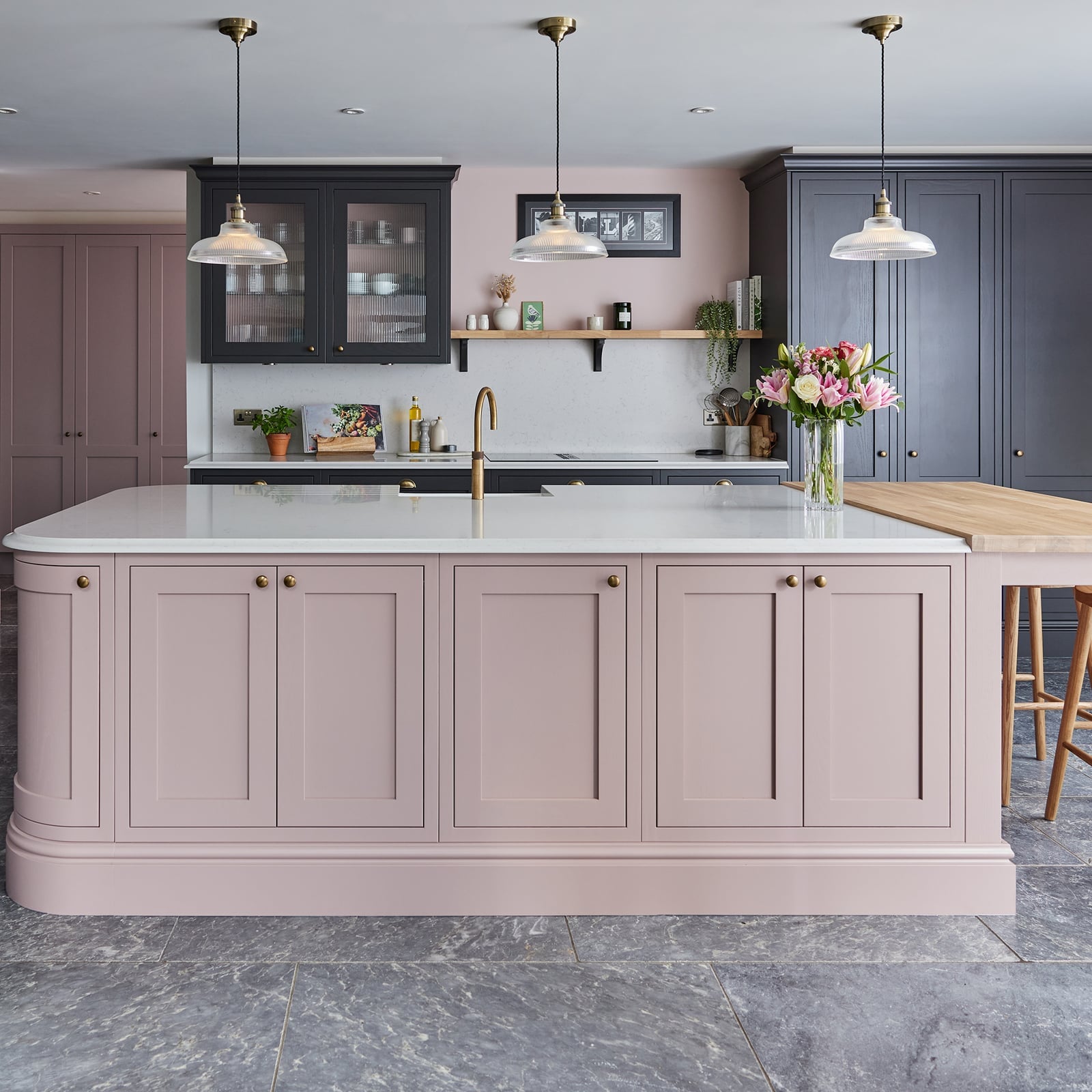
A pink curved island sounds like a bold choice, but here it works because the charcoal cabinets and wood tones ground the room. The contrast is deliberate: the soft pink feels fresh against the dark perimeter, while glass-front cabinets and marble surfaces keep the look from going too sweet. Natural light and pendant lights highlight the island’s curve, making it the focal point without overwhelming the space.
For a variation, try swapping the pink for a muted coral or a dusty rose, which would still pop against charcoal but read slightly warmer. The key is keeping the surrounding palette simple and letting the island carry the color, so the two-tone effect stays cohesive.
Modern Deep Teal Lower Cabinets with White Uppers
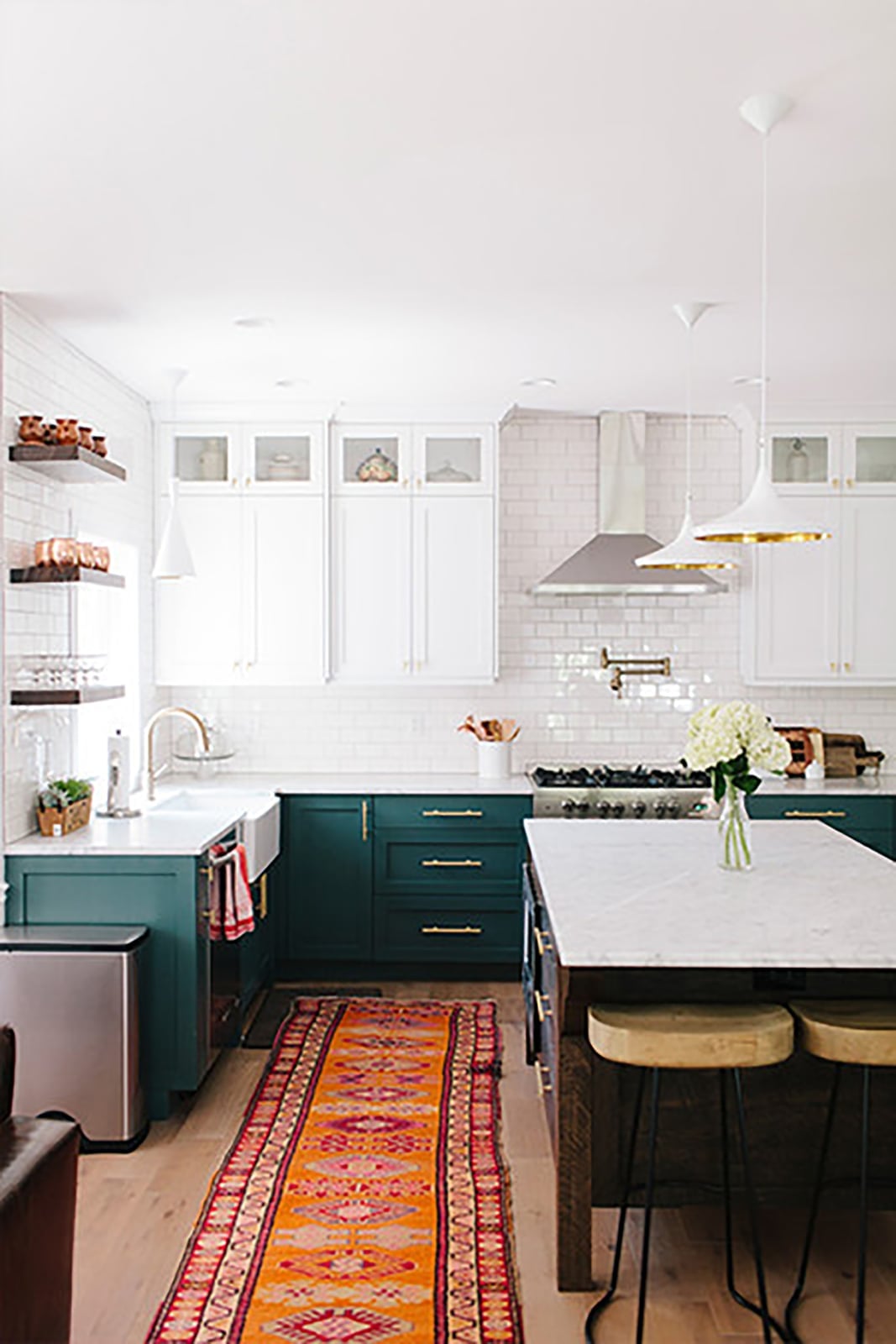
Deep teal lower cabinets create a grounded look that white uppers alone cannot achieve. The dark base anchors the kitchen, while the white perimeter cabinets and wood tones keep the open plan from feeling heavy. Marble countertops and metal hardware add a polished contrast, and the pendant lights above the island direct light where you need it most. The palette works because the teal is rich but not too bright, so it reads as a neutral accent rather than a trend. This balance makes the kitchen feel both modern and durable, since darker lowers hide everyday marks better than light ones.
Farmhouse Kitchen with Sage Green and White Cabinets
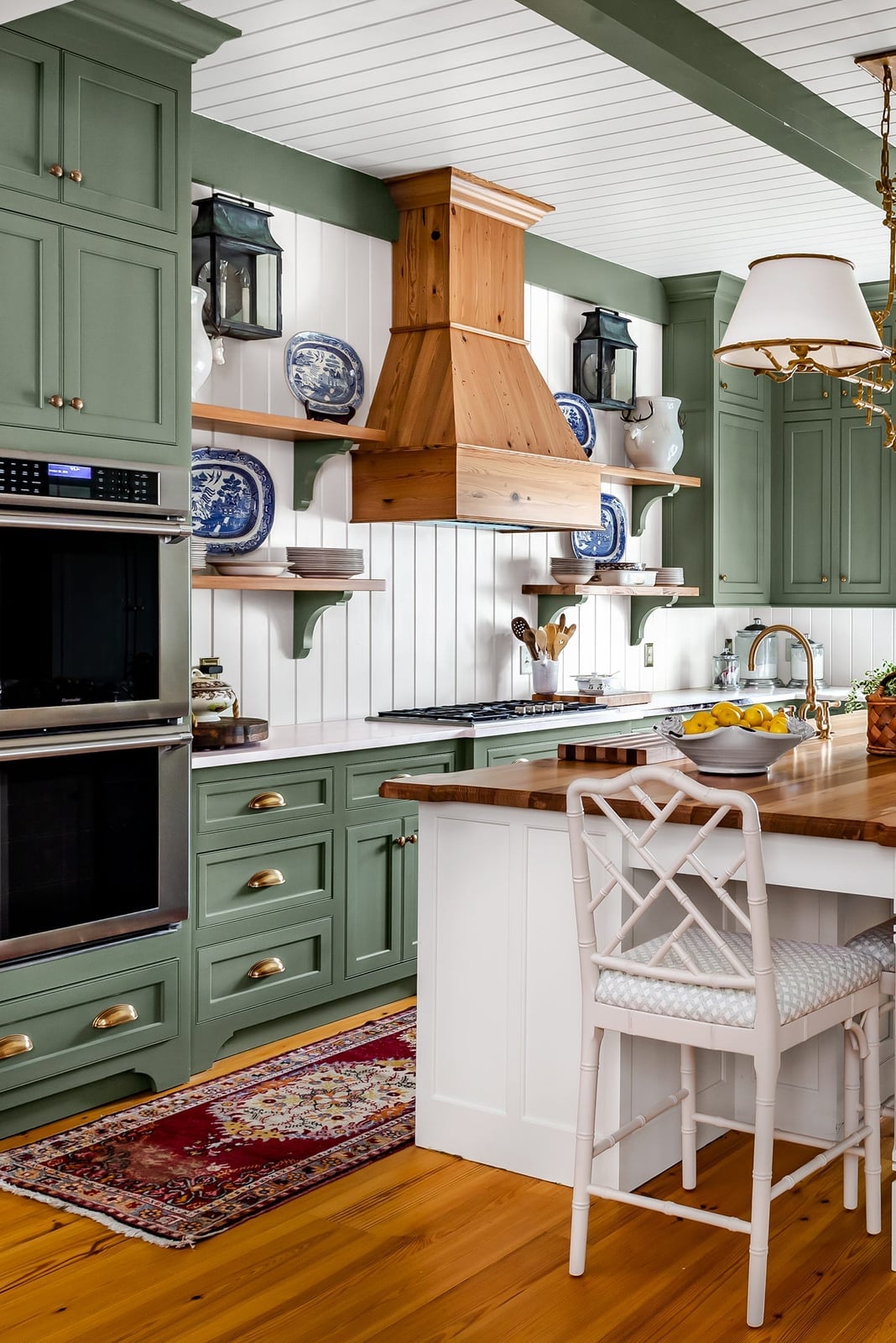
Sage green cabinets in a farmhouse kitchen offer a softer alternative to the usual white or wood. The galley layout with an island feels roomy because the light sage uppers and lowers keep the space airy, while the white painted cabinets on the perimeter add contrast. Wood tones from the island and open shelving bring warmth, and the metal range hood and lantern-style lights reinforce the farmhouse feel. For storage, the sage cabinets provide plenty of closed space, so the open shelving can stay decorative rather than cluttered. The trick is letting the sage color do the work, so you do not need extra pattern or busy hardware.
Transitional Kitchen with Navy Blue Accent Cabinet Wall
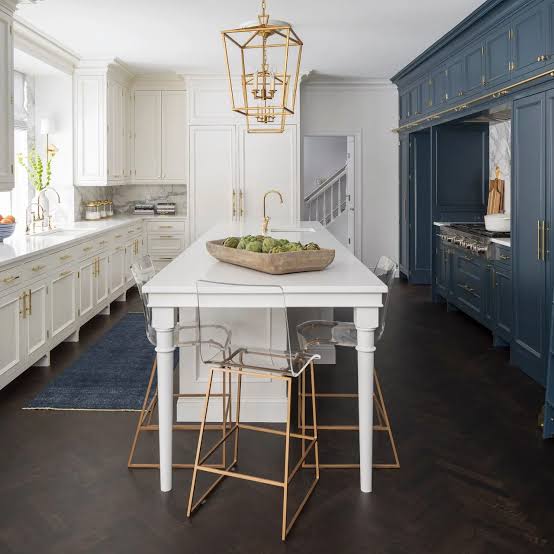
A good rule for two tone kitchen cabinets is to let one color do the heavy work and the other act as the surprise. In this transitional kitchen, white perimeter cabinets keep the room open and airy, while a full wall of navy blue cabinets becomes the focal point. The navy wall is not an island or a single base cabinet run, but a tall, built-in accent that reads as furniture. Brass hardware ties the two tones together without competing. The layout puts the statement wall opposite the main work zone, so the eye moves across the room rather than stopping at one spot. A large island in the same white as the perimeter keeps the balance from tipping too dark.
Modern Farmhouse with Wood Lowers and Blue Tile Backsplash
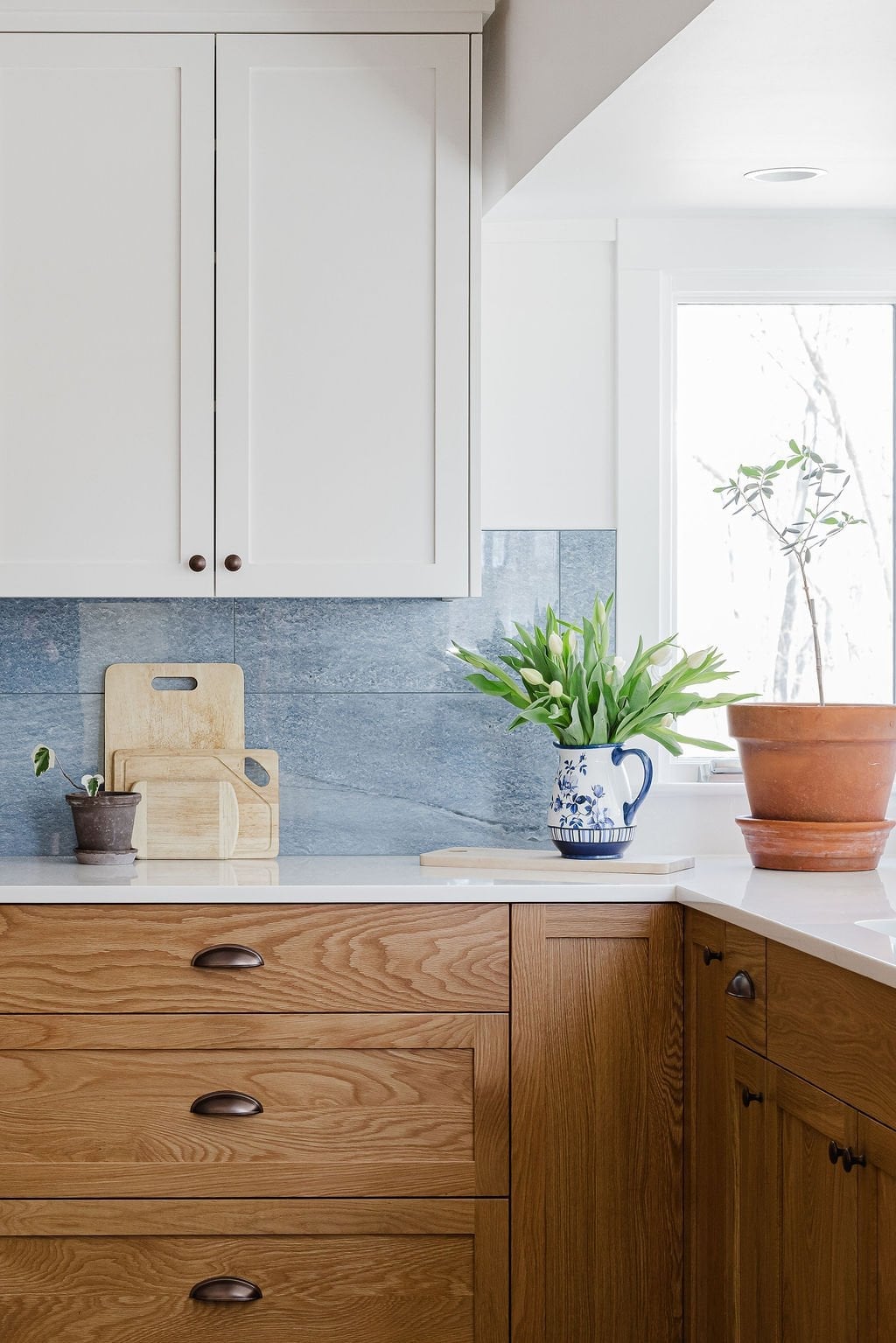
The blue tile backsplash is the link between the two cabinet colors. White uppers sit above a band of blue tile, and wood lower cabinets pick up the warm undertones in the same blue. The quartz countertop reads as a clean break between the wood base and the patterned tile. In a modern farmhouse kitchen, the mix of painted and natural wood cabinets avoids feeling too polished, while the blue tile adds a handmade quality that the straight wood grain does not have on its own.
Compact Bohemian Kitchen with Teal Cabinets and Open Shelving
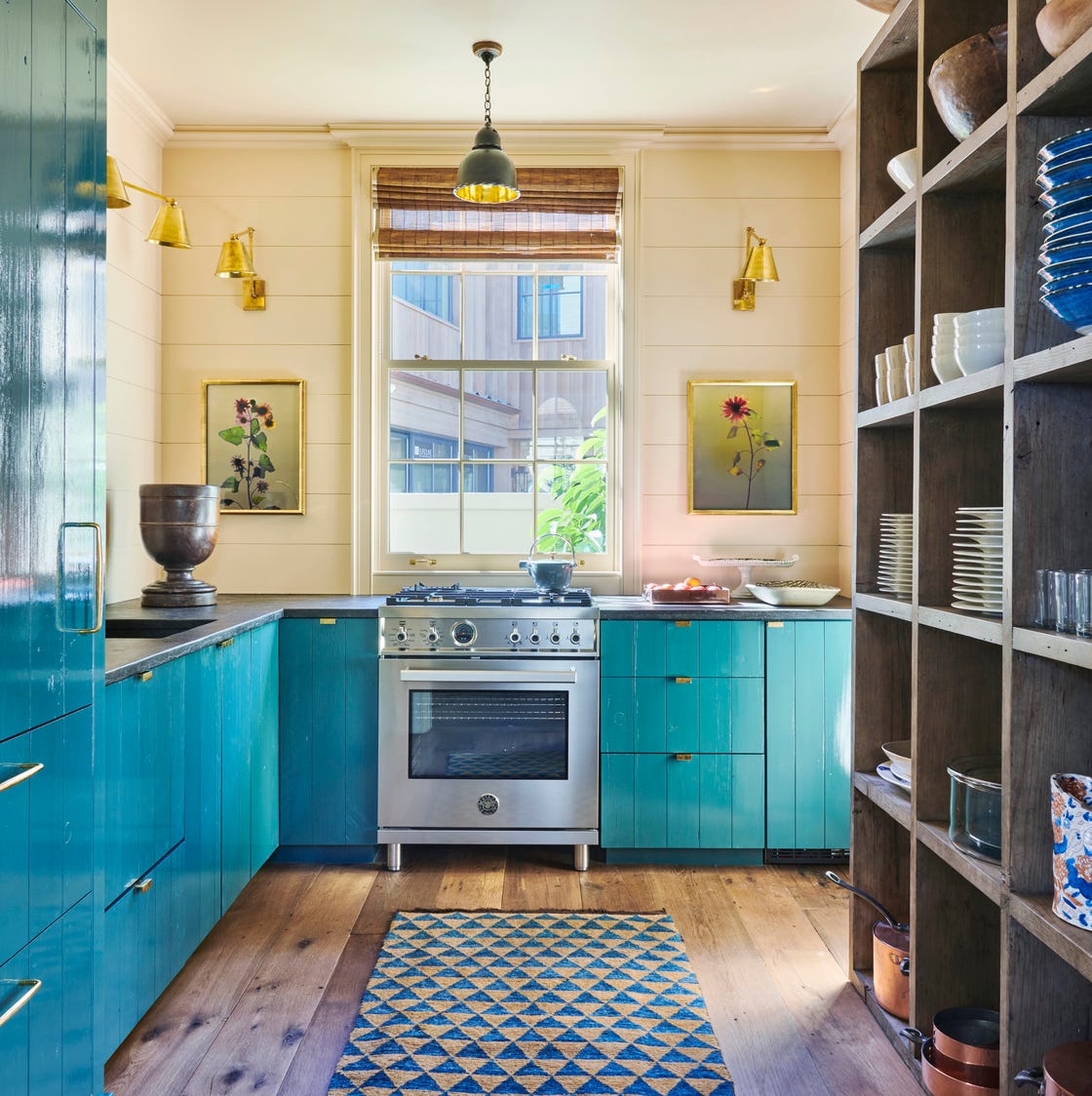
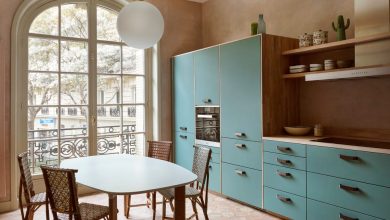
In a compact kitchen, two tone cabinets can make the room feel bigger or busier depending on where the dark color lands. Keeping the teal on the lower cabinets and the wood tone on open shelving above lets the eye travel upward. The brass sconces add a warm light that softens the contrast between the teal and the wood. A bohemian kitchen benefits from that mix of painted and natural finishes because the variation reads as collected rather than planned. The open shelving also breaks up the visual weight of the upper half of the room.
Modern Kitchen with Vibrant Blue Island and White Uppers
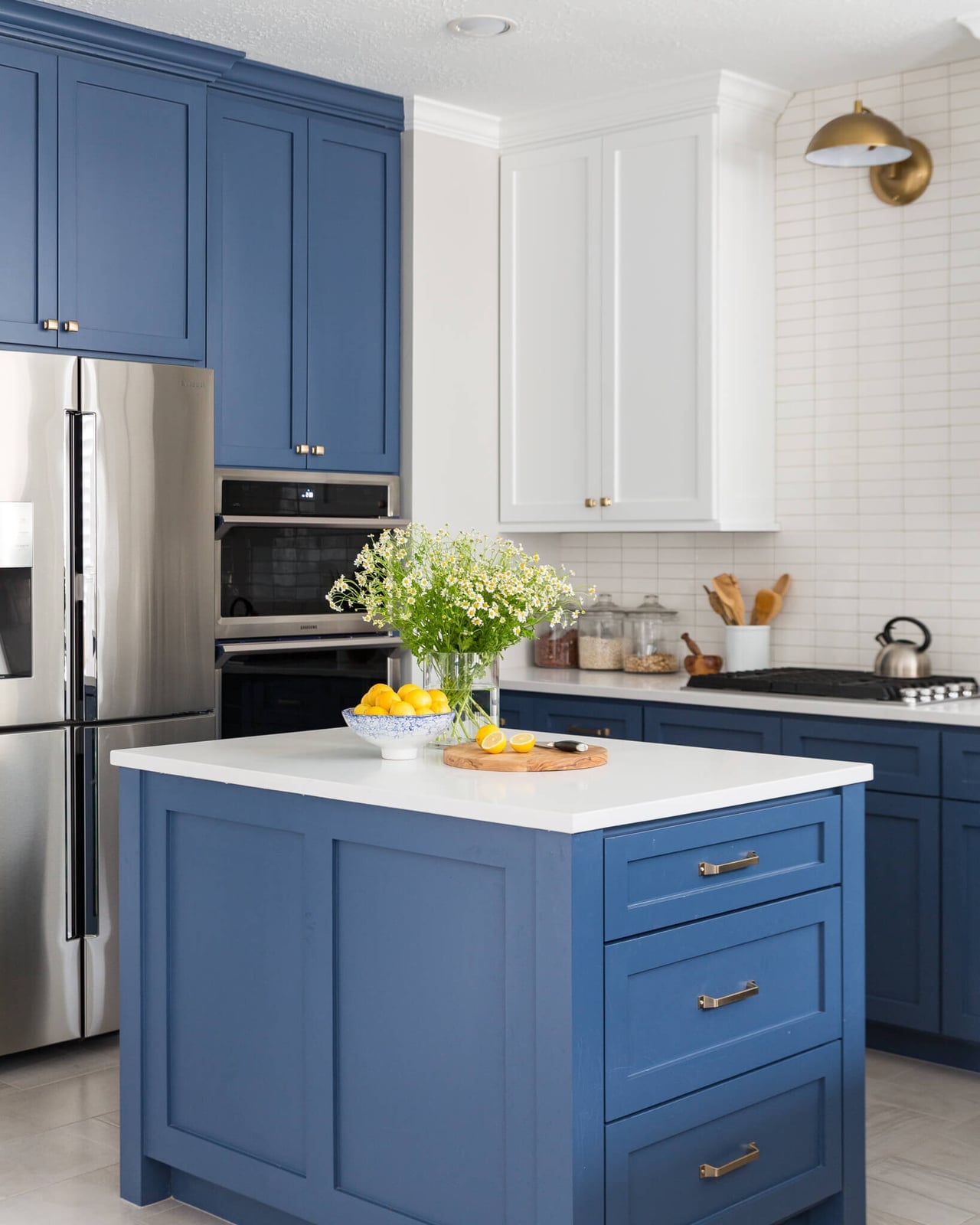
A white kitchen with a colored island is a common choice, but the two tone approach here goes a step further by keeping the perimeter cabinets white and letting the island take the full blue treatment. The vibrant blue island stands out against the white uppers and the stainless steel appliances. The window light hits the island directly, which keeps the blue from reading as too dark in the middle of the room. Task lighting under the upper cabinets helps the white perimeter recede, so the island remains the main event. The tile backsplash in a neutral tone keeps the palette from having too many competing colors.
Eclectic Kitchen with Bold Blue Base Cabinets
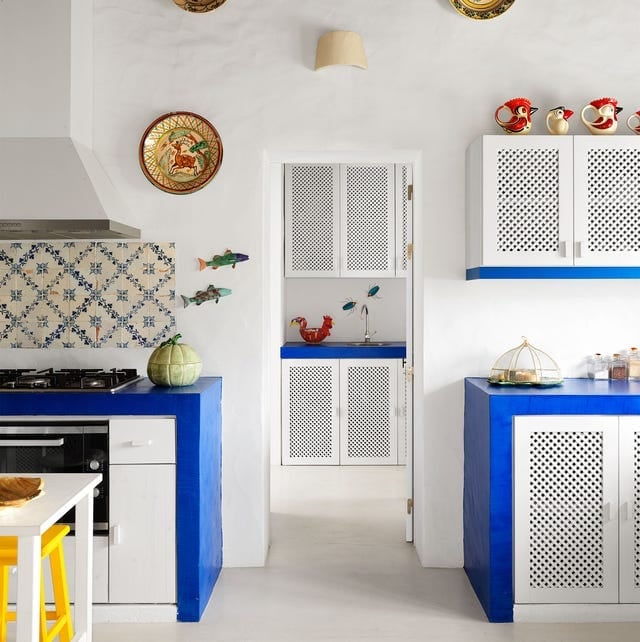
The blue base cabinets stop at the counter, and the white uppers extend to the ceiling, which creates a clear horizontal line across the kitchen. The yellow stool by the open doorway adds a third color that breaks the blue and white scheme without clashing. In an eclectic kitchen, the two tone approach works because the white uppers prevent the room from feeling too heavy, while the blue base gives the space a grounded, playful feel. The ceiling fixture keeps the blue looking clean and vibrant.
Final Thoughts
Across these 25 kitchens, the strongest two-tone schemes share a few habits. The darker color almost always goes on the lower cabinets or island, where it grounds the room. The lighter color stays above, keeping things airy. Hardware, brass, matte black, or chrome, ties the two halves together. Before you commit, tape off a sample on a cabinet door and live with it for a few days. Natural light changes the way a color reads. Two-tone cabinets are not a trend that demands perfection. They are a practical way to get more personality out of the storage you already have.