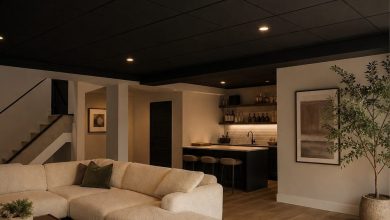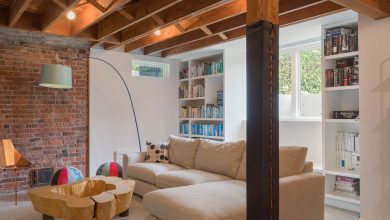

Concrete basement floors often get treated like an afterthought, but they have more potential than you might think. Whether your basement is finished or still a work in progress, the floor sets the tone for the whole space. These 18 ideas show how concrete can work in a garage, from polished finishes that bounce light around to painted surfaces that add a pop of color.
You will see options that suit a modern living area, a home bar, or a simple workshop. Each look keeps the concrete visible and lets the room breathe.
High-Gloss Dark Concrete for a Modern Basement Living, Close-Up Take
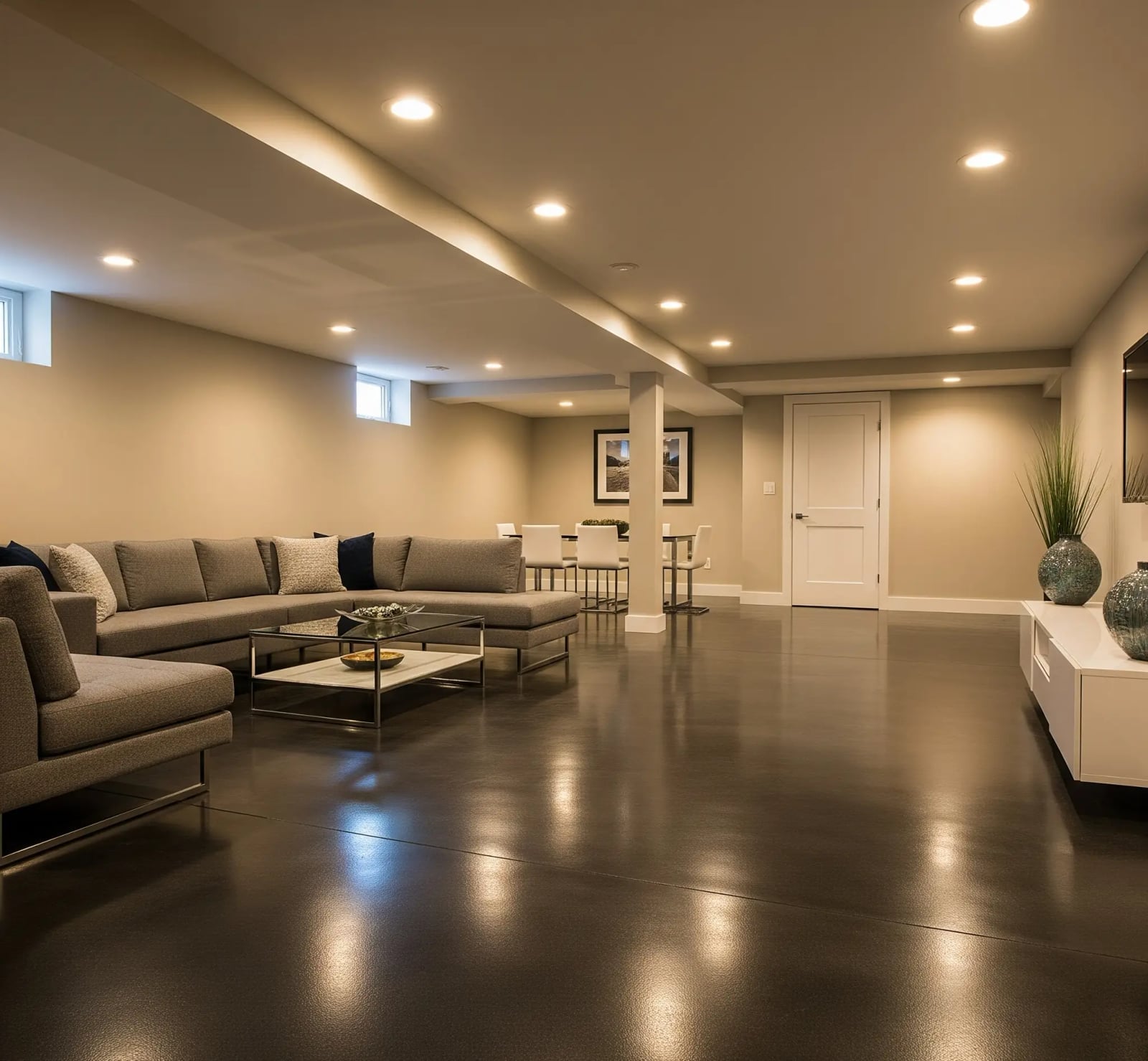
This roomy open plan living area uses a dark polished concrete floor as its defining surface. The highly reflective finish mirrors the recessed ceiling lights and the beige drywall, which keeps the space bright despite the dark palette. A sectional sofa and a dining set sit directly on the floor without a rug, letting the gloss define zones. Layout matters here: the reflective surface bounces light across the whole room, so even a basement without windows on every wall still feels open.
Warm Boho Style with a Natural Concrete Basement Floor, Close-Up Take
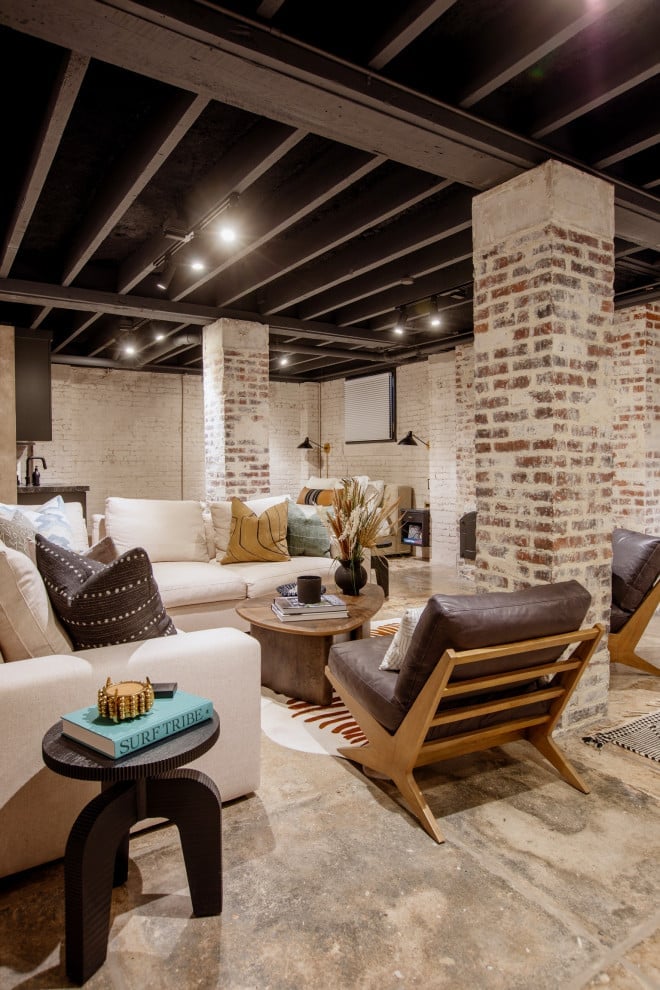
A natural concrete floor is an unexpected fit for boho decor, but this open plan living area proves the combination works. Cream and brown keep the concrete from competing with the textured brick columns and the leather armchair. A rug sits under the coffee table, breaking up the expanse of gray without covering the whole floor. The result is a room where the hard surface grounds the soft furniture, and the ambient lighting from recessed fixtures keeps the mood relaxed rather than industrial. The floor does not need to be the star; it just needs to hold its own against layered textiles and warm wood tones.
Smooth Light Gray Painted Concrete for a Spacious, Close-Up Take
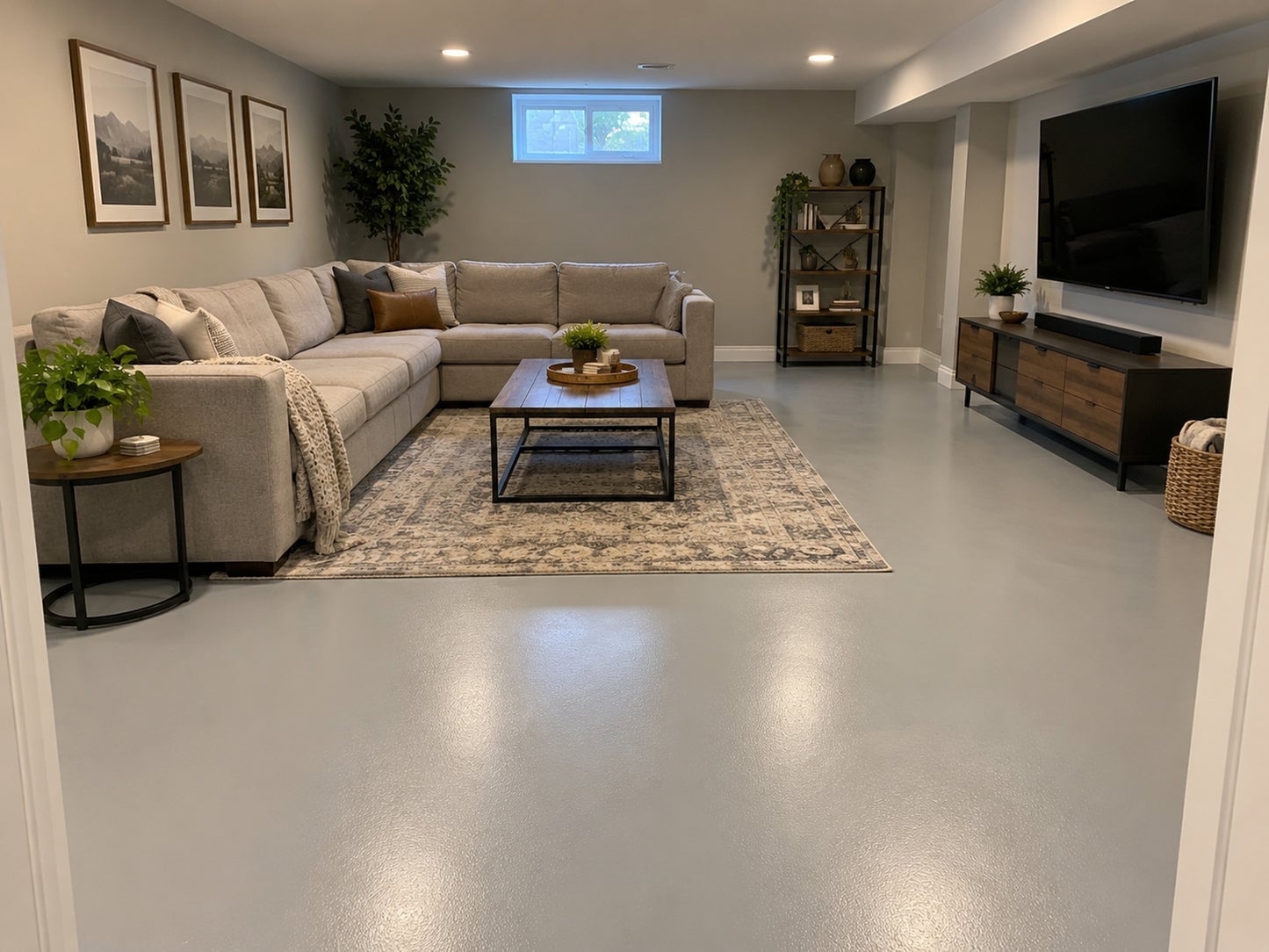
Can a concrete floor make a room feel bigger without changing the footprint? A smooth light gray painted surface does exactly that in this roomy basement living room. The pale tone sits between the beige walls and the wood tones of the media console, creating a continuous light field that makes the space read as larger. Natural light from a window hits the floor and bounces toward the ceiling, which helps the room feel less like a basement and more like a main-floor living area.
The large sectional sofa faces the media wall, and the coffee table sits on the painted concrete without a rug underneath. That choice keeps the sightlines clean and lets the floor act as a neutral backdrop rather than a pattern to work around. For renters who cannot seal or stain concrete, a high-adhesion floor paint offers a similar look without a permanent commitment.
Speckled Epoxy Concrete for a Modern Garage Floor With Overhead Lights
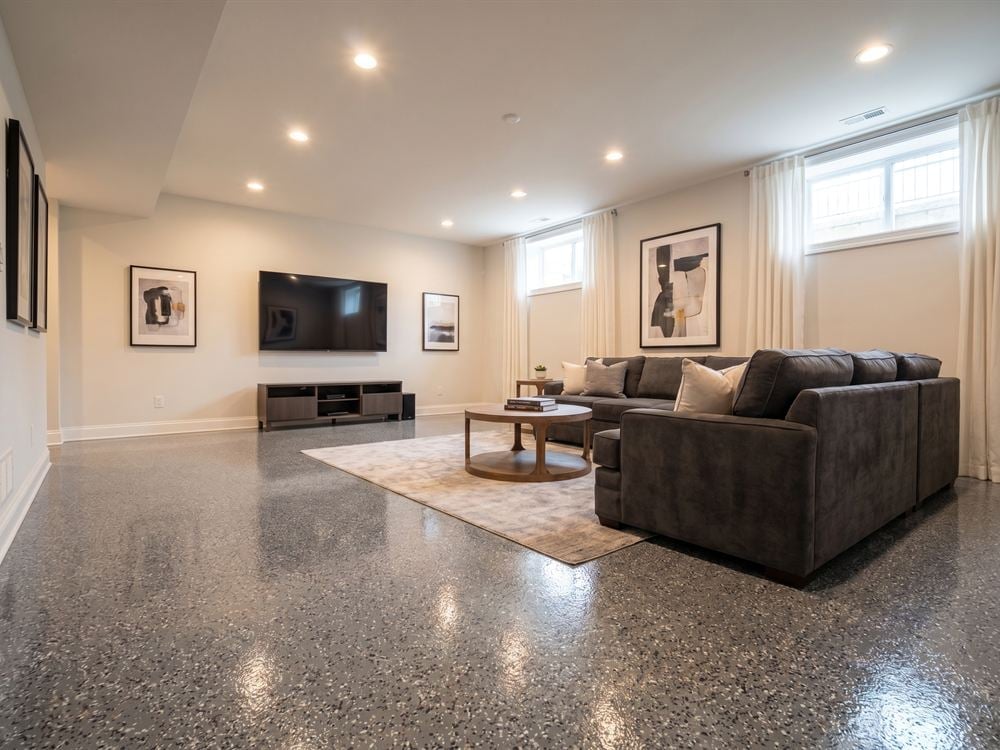
A speckled epoxy coating turns a plain concrete garage floor into a surface with depth and character. The gray base with white and black flecks hides dust and small debris better than a solid color would, so the space looks tidy between sweeping sessions. This modern garage layout places a sofa and coffee table on a rug over the speckled floor, treating the area like a proper living space rather than a parking spot. The overhead lights bounce off the epoxy’s slight sheen without creating a mirror effect, which keeps the room comfortable for relaxing or working on projects.
Industrial Basement with Polished Concrete and Brick, Close-Up Take
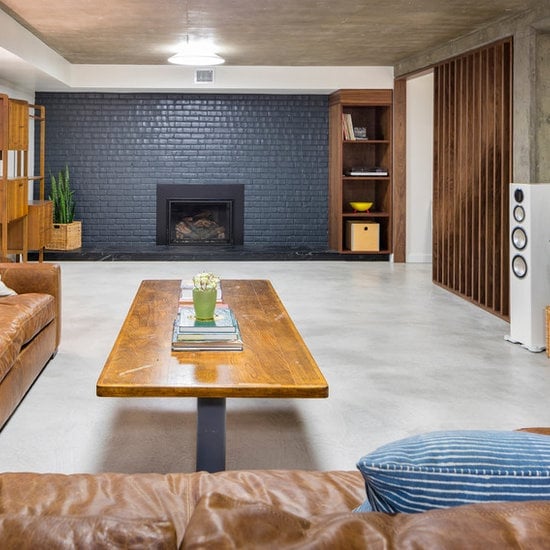
To mix polished concrete with brick, let one material lead and the other support. In this roomy open plan basement, a dark brick fireplace wall anchors the space, while the smooth gray concrete floor keeps the look grounded without competing. A sofa, coffee table, and shelving unit fill the living area, and a window brings in natural light that softens the industrial edge. The wood tones in the furniture and the brown in the brick add warmth that balances the cool gray floor. The shelving unit provides storage without needing cabinets, which keeps the industrial feel intact.
Polished Concrete Flooring in a Basement Bar Area
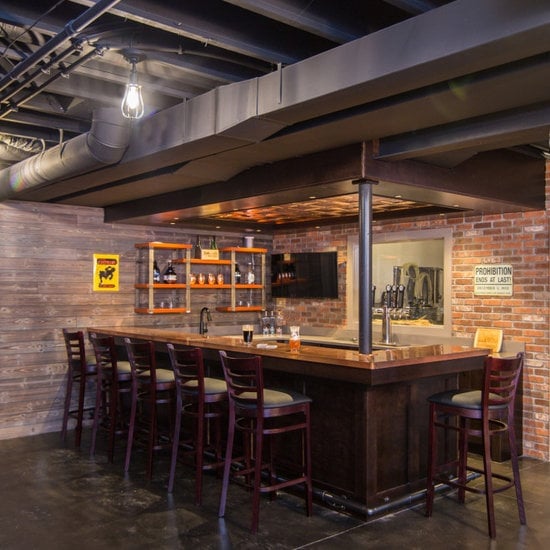
A dark wood bar anchors this room, and the polished concrete floor underneath it chooses function over flash. The layout puts the bar and stools at the center, with shelving and a television nearby for a full entertainment setup. Industrial pendant lights hang above, casting enough glow to show off the concrete’s smooth surface without turning it into a mirror. The gray floor works with the brick wall and wood tones, so nothing fights for attention. If you want a basement bar that can handle spills and foot traffic without complaint, this is the starting point.
Unfinished Basement Concrete Floor with Paint Splatters
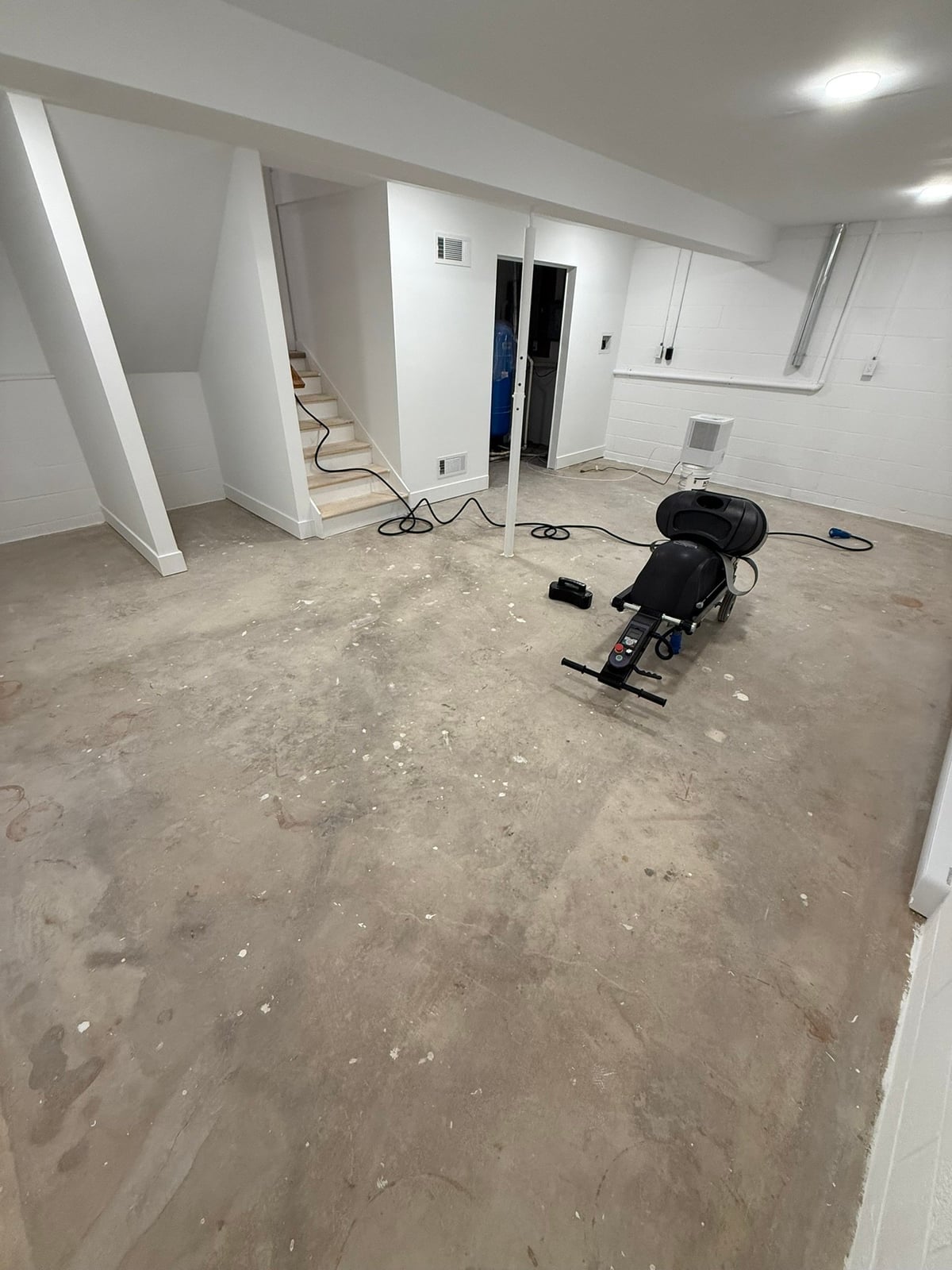
Paint splatters on an unfinished concrete floor make it clear this space is for working out, not impressing anyone. A rowing machine sits in the open area near the stairs, and the drywall and metal fixtures keep the look strictly utilitarian. The gray and beige palette means the splatters read as honest wear rather than neglect. For a home gym or workshop, this floor asks nothing of you except that you use it.
Dramatic Marble Effect Epoxy Floor in a Modern Basement
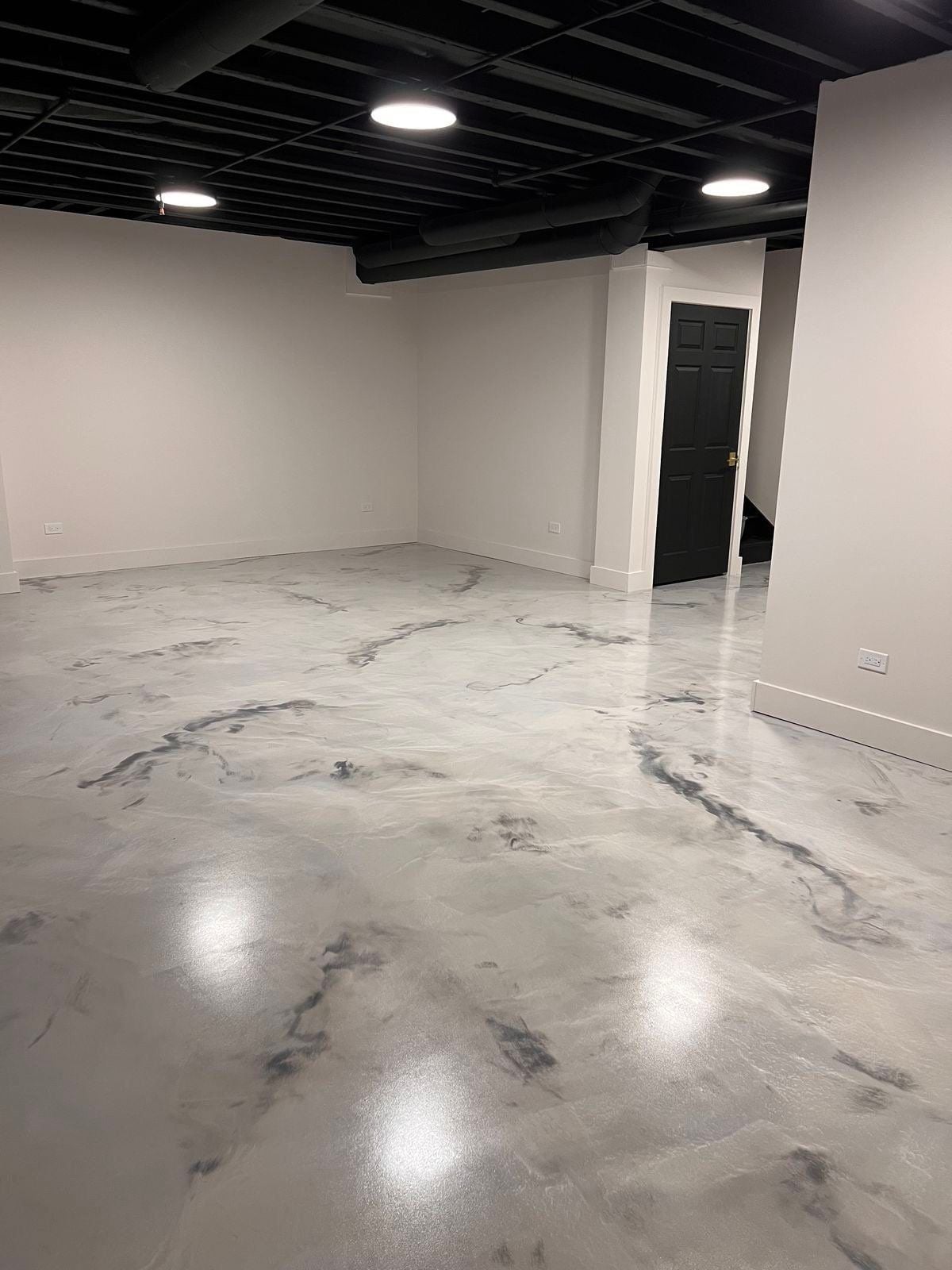
This epoxy floor pulls off a convincing marble look without the cost or upkeep of real stone. The white and gray veining spreads across the open plan room, and the recessed lighting keeps the surface visible without glare. A single door in the frame provides the only break in the expanse, which is exactly the point. The dramatic marble effect floor acts as the main feature. To recreate it, look for a high-contrast white and gray veining pattern on a dark base.
Reflective Concrete Hallway with Industrial Touches
Can a hallway feel bigger than it is without knocking down walls? This one does with a smooth, reflective concrete floor that bounces light from the track fixtures above. The long layout with exposed beams and concrete walls reads as industrial but not cold, thanks to wood tones that warm the edges. Ambient light spreads evenly across the gray surface, so the hall never looks like a dark tunnel. The trick is in the finish: a polished concrete floor in a narrow space acts like a subtle mirror, making the path feel wider than it measures. Keep the walls simple and let the floor do the work.
Minimalist Basement Living Area with Smooth Gray Concrete
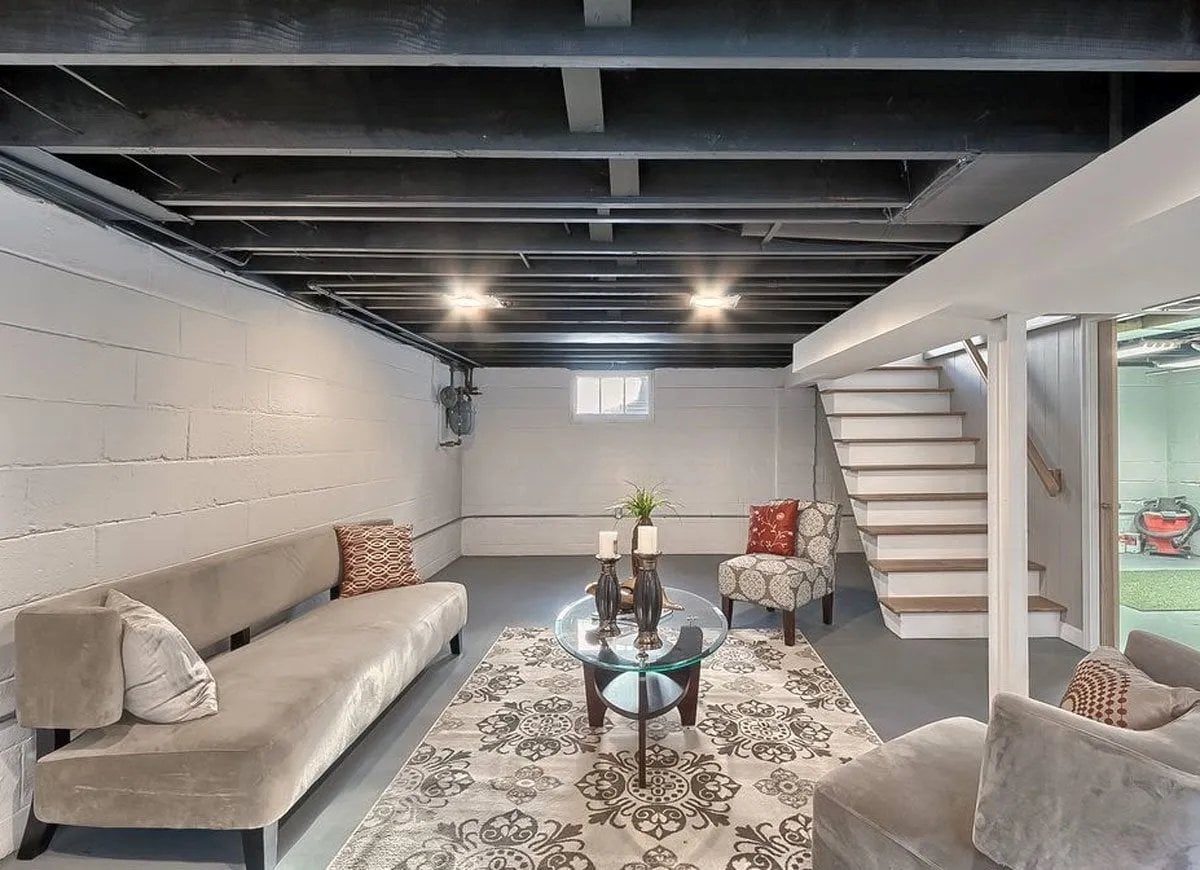
A smooth gray concrete floor sets the tone for this minimalist living area, where a sofa, armchair, and glass coffee table sit on a rug. The palette stays within gray, white, and beige, so the concrete’s texture becomes the main visual interest. A small window brings in natural light, but the overhead lights keep the room usable at any hour. The floor here is not a backdrop but a deliberate choice that defines the style.
Unfinished Basement Hallway with Exposed Studs and Concrete Floor
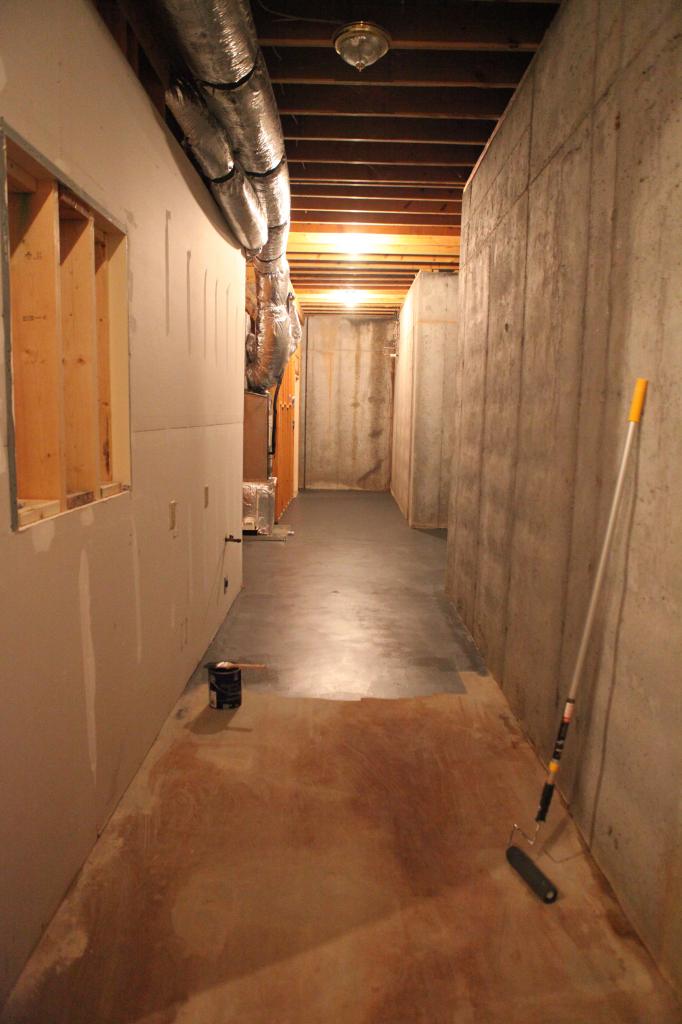
In an unfinished hallway, the bare structure defines the path. The concrete floor is a smooth gray surface that runs straight through a roomy corridor with exposed studs and an open ceiling. A roller and a paint can sit on the floor, a reminder that this space is still in progress. The layout works because the floor is the most finished element, grounding the raw drywall and metal framing around it. Overhead light bounces off the gray concrete, keeping the hallway from feeling like a tunnel.
Highly Reflective Concrete Floor for a Modern Open Space
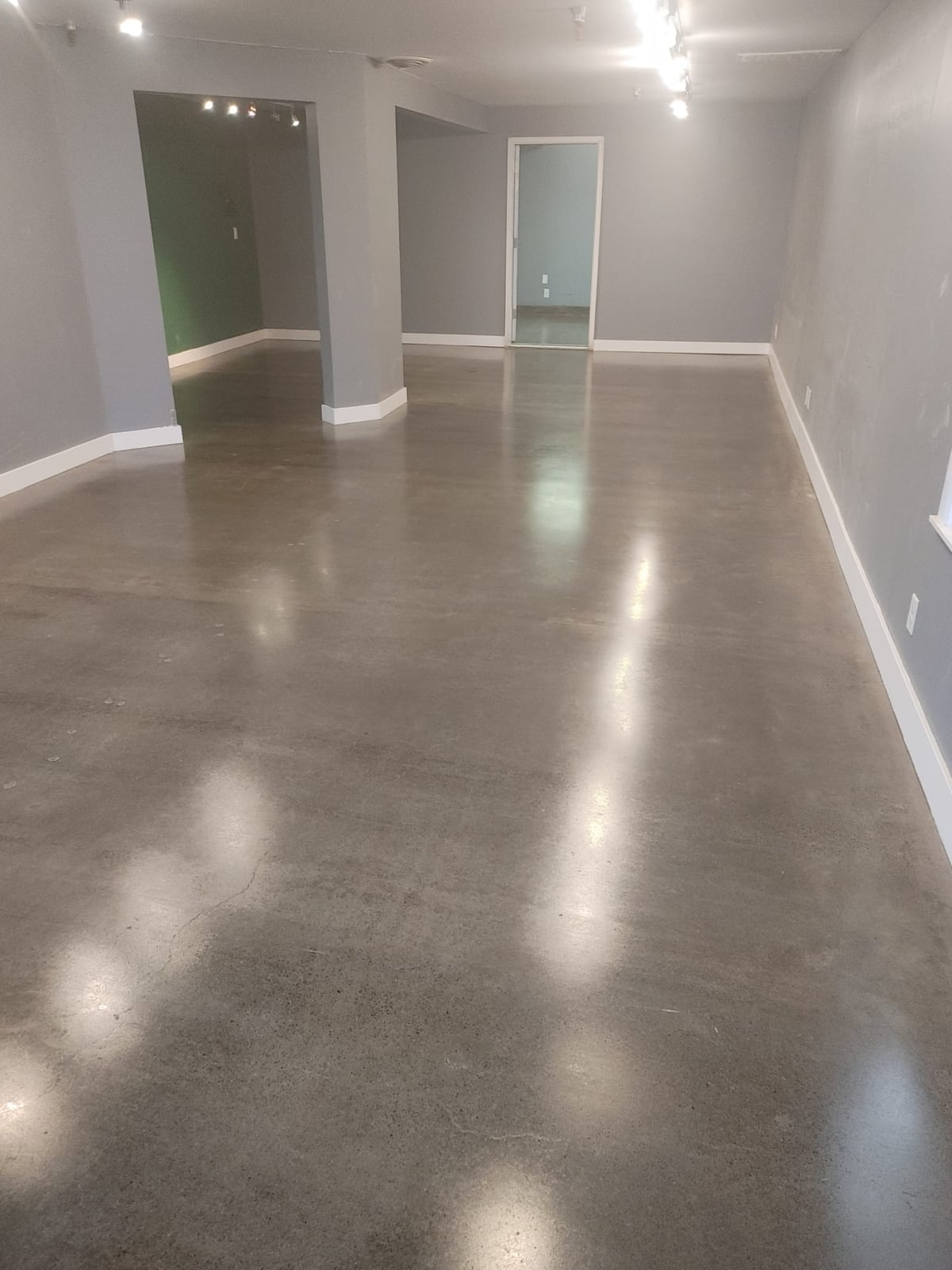
A matte floor keeps a room grounded, but a high-gloss polished concrete surface does the opposite. This modern open space uses a reflective gray floor that mirrors the white walls and track lighting overhead, making the room feel larger than its footprint. The palette stays simple, gray and white, so the floor’s shine becomes the main event without competing elements.
Windows let daylight hit the polished concrete and spread across the room, reducing the need for extra lamps. In a basement, that borrowed brightness is a practical advantage. The high-gloss finish is consistent from wall to wall, with no patches or stains breaking the surface.
Utilitarian Basement with Concrete Floor and Exposed Ceiling
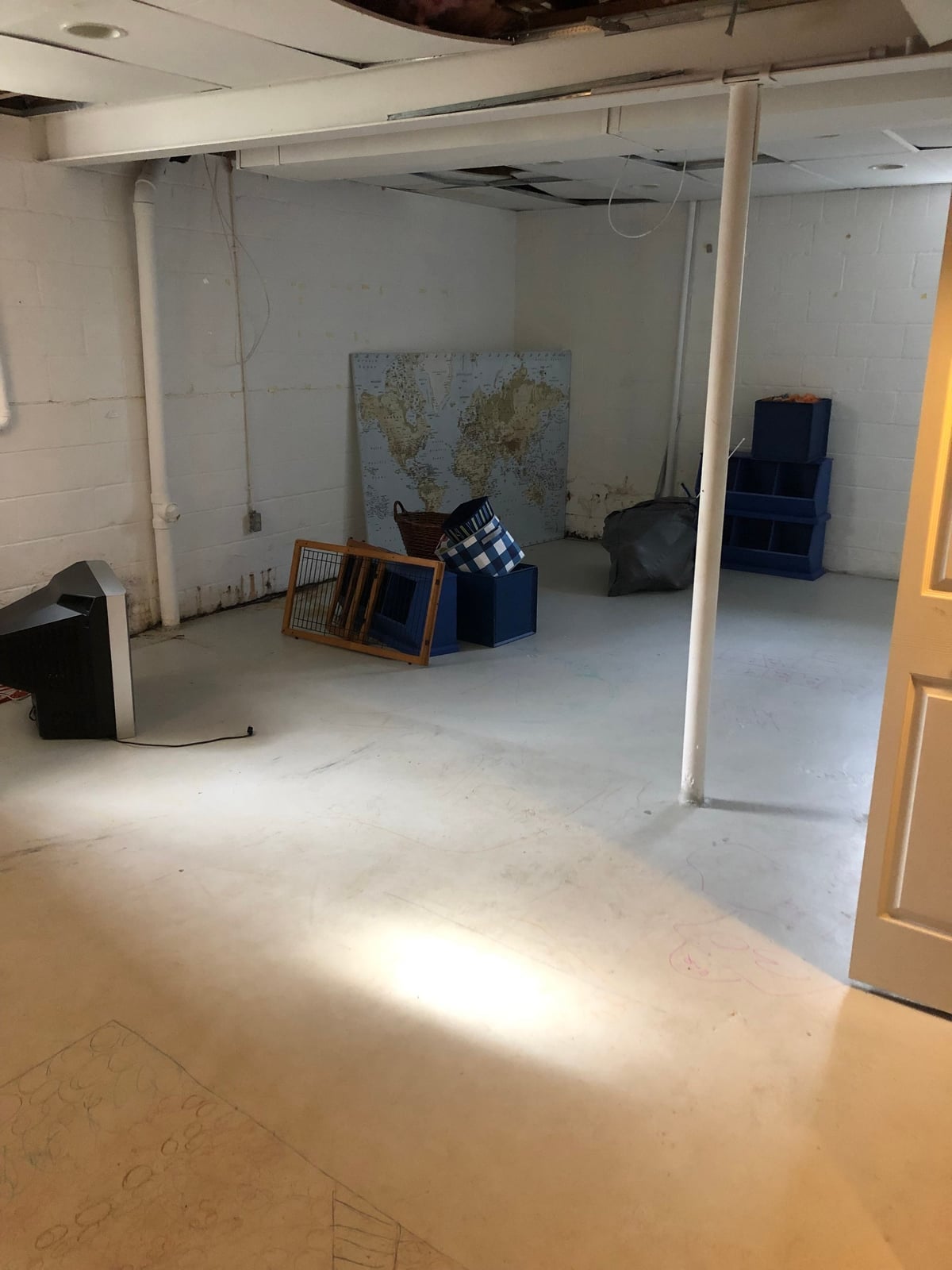
The concrete floor here is a smooth gray surface that matches the utilitarian mood of the room, with an exposed ceiling and painted brick walls in white and blue. Storage cubes and a dog crate sit directly on the concrete, and the floor handles the weight without complaint. Overhead fluorescent light casts an even glow across the open space, and the concrete does not glare or show dust the way a dark floor would. The combination of raw ceiling and smooth floor keeps the room feeling functional without crossing into unfinished.
Industrial Basement with Raw Concrete Floor and Wood Beams
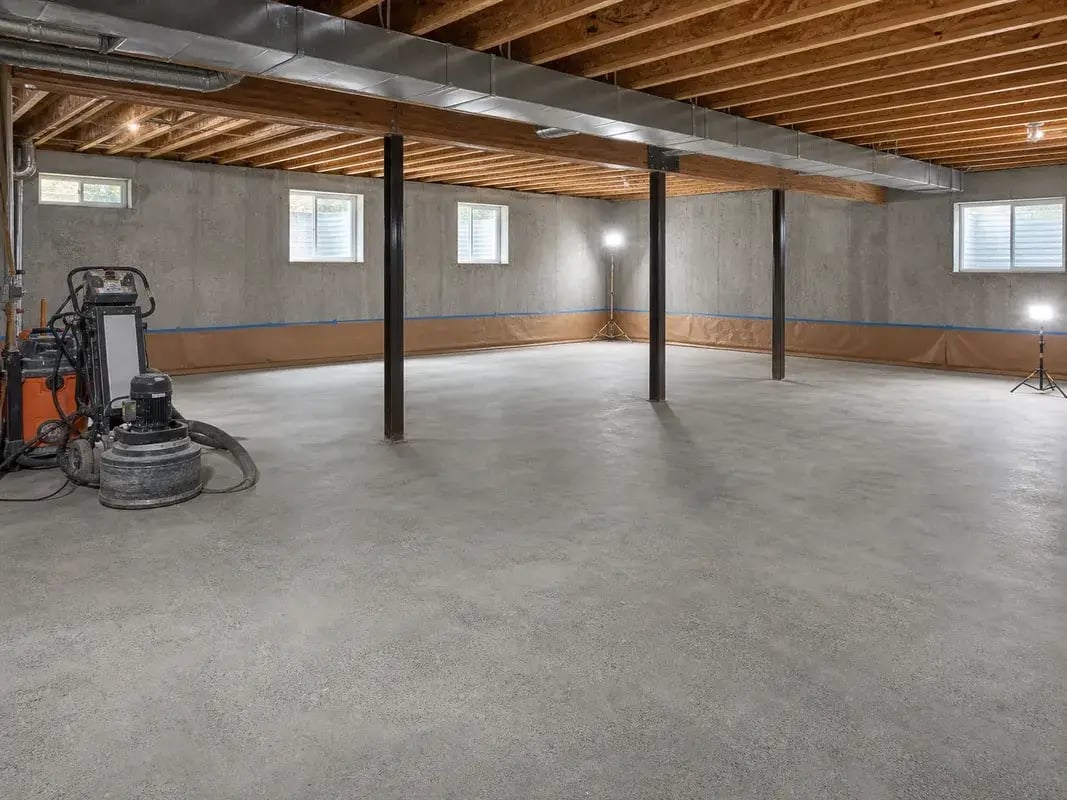
This industrial basement gets its look from the contrast between a raw concrete floor and warm wood beams overhead. The concrete has a matte, unpolished surface with visible texture, while the beams add a brown tone that softens the gray palette. Support columns and large windows break up the open layout, and work lights provide the main illumination. A floor polisher parked near one wall suggests the concrete gets occasional maintenance, but the finish is meant to show wear. The room reads as honest, with each material left to speak for itself.
Stained Concrete Floor in a Narrow Utilitarian Basement Hallway
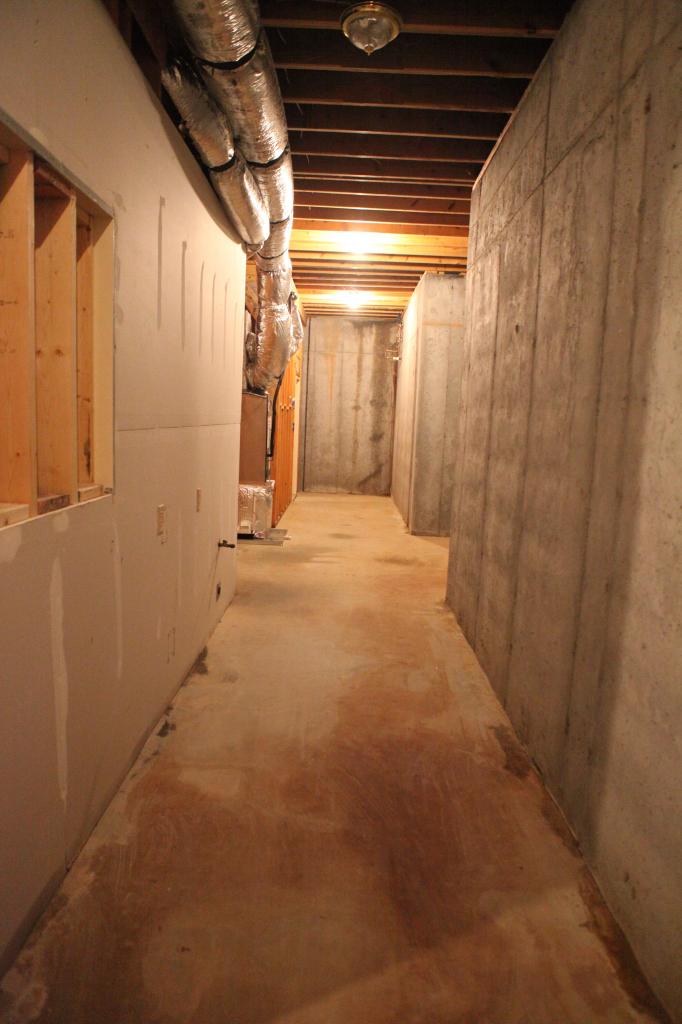
A narrow hallway benefits from a floor that stays in the background. Here the stained concrete is a warm brown tone that complements the beige drywall and wood trim, creating a continuous path from one end to the other. The stain is uneven, with lighter and darker patches, which adds texture without needing a rug.
Exposed ductwork runs along the ceiling, and the compact layout means every surface is within arm’s reach. Overhead artificial light picks up the brown stain, making the floor feel richer than plain gray concrete. The stained finish hides scuffs better than a solid paint job, a practical advantage in a hallway that sees daily foot traffic between rooms.
Vibrant Green Painted Concrete for a Finished Basement
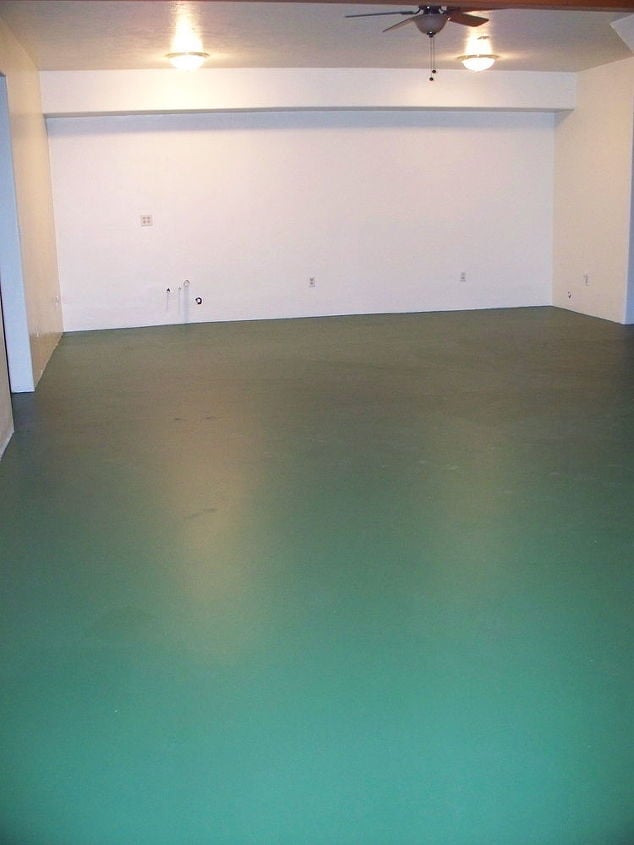
A smooth, vivid green concrete floor can change a basement from drab to distinct in a weekend. The bold color acts as the room’s anchor, while white walls and minimal furniture keep the area open. Since concrete is already a neutral base, a saturated paint color like this one adds personality without the cost of tile or hardwood. The gloss level matters here: a satin or semi-gloss finish will reflect overhead light and keep the green from looking flat. For a finished basement that still feels playful, this is a direct route.
Metallic Dark Brown Epoxy Floor in a Garage Space
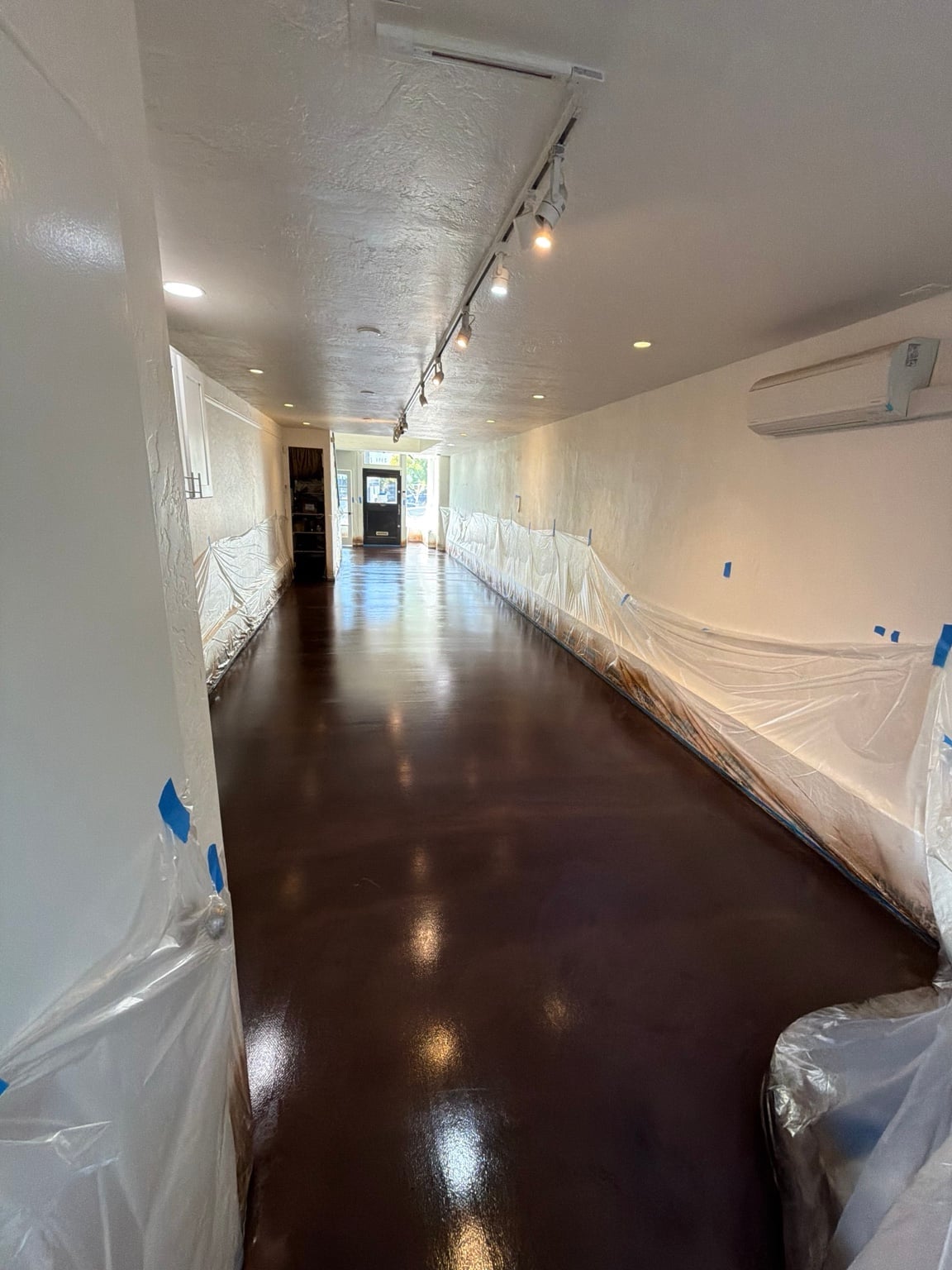
A practical rule for garage floors is that they need to handle weight, moisture, and stains without showing every scuff. Metallic epoxy in a dark brown shade does that while adding visual depth that plain gray concrete lacks. The reflective swirls catch track lighting and make a long, narrow garage feel wider. For renters, this is a tricky upgrade since epoxy is permanent once applied. A temporary alternative is a heavy-duty garage mat in a similar dark metallic finish. It gives the same reflective look and protects the concrete underneath, but rolls up when you move out.
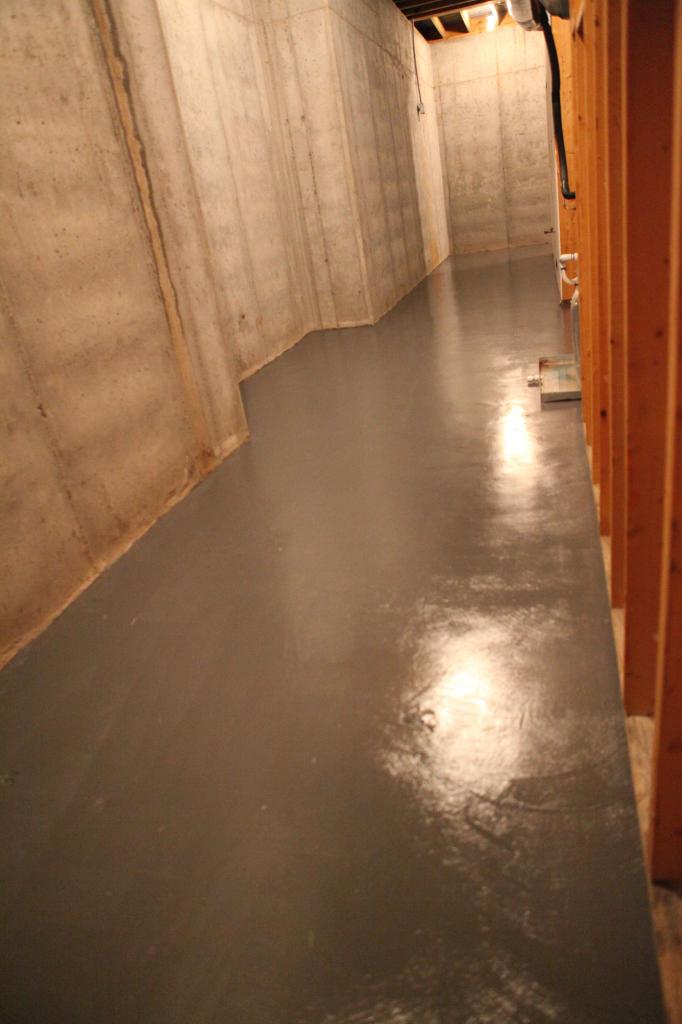
Dark Gray Painted Concrete Floor in a Basement Hallway
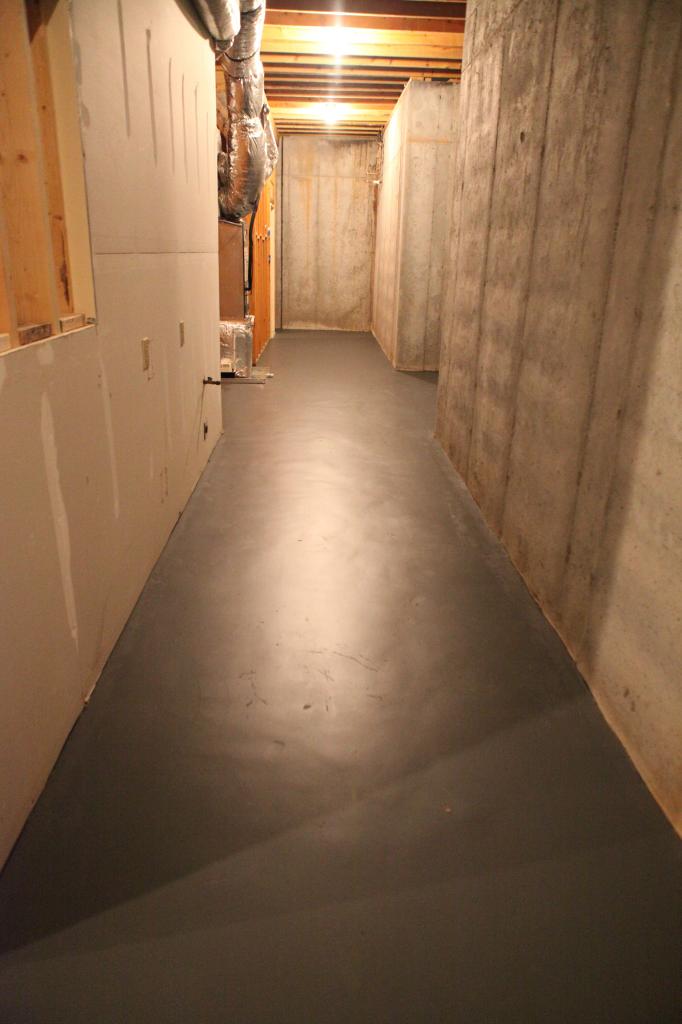
Bare concrete looks unfinished, polished concrete looks deliberate, and painted concrete lands in between. A dark gray floor in this narrow basement hallway ties the raw concrete walls and exposed ductwork together without hiding the utilitarian feel. The color hides dirt better than a lighter shade would, which matters in a high-traffic hallway. Wood shelving and metal storage bins break up the gray and keep the hallway from feeling like a tunnel. Overhead fluorescent lighting is harsh, but the dark floor absorbs some of that glare instead of bouncing it back up.
Final Thoughts
Concrete offers a solid foundation for almost any basement use, but the finish you choose determines how the room lives. A polished or epoxy surface is easier to clean and holds up to moisture better than bare concrete. For a garage or workshop, a durable coating like speckled epoxy resists stains and tire marks. In living areas, a painted or stained floor can be softened with rugs. Check your climate and subfloor before sealing, and always test a small area first. The right finish turns a practical slab into a lasting part of your home.