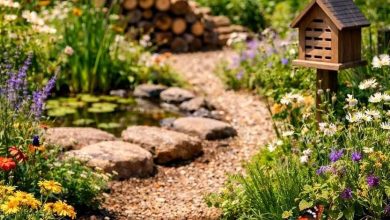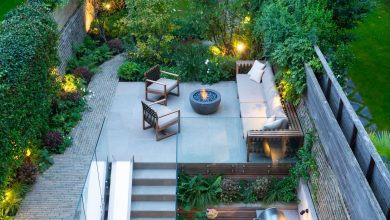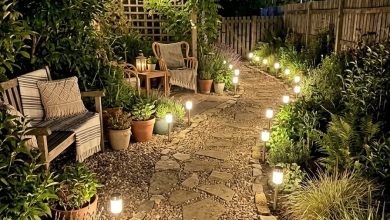

A flower garden is more than a patch of color; it’s a living space that changes with the season. This article walks through 29 real garden looks, from formal pathways to wild corners, so you can find the mix of blooms, layout, and light that fits your yard. No two gardens here repeat the same trick.
Some lean on a single archway or a weathered pot; others rely on drifts of perennials that come back on their own. The point is to see how each garden uses its own boundaries, a stone wall, a picket fence, or just a gravel path, to hold the flowers together.
Expansive Cottage Garden with Layered Pink, Blue, and Yellow Blooms
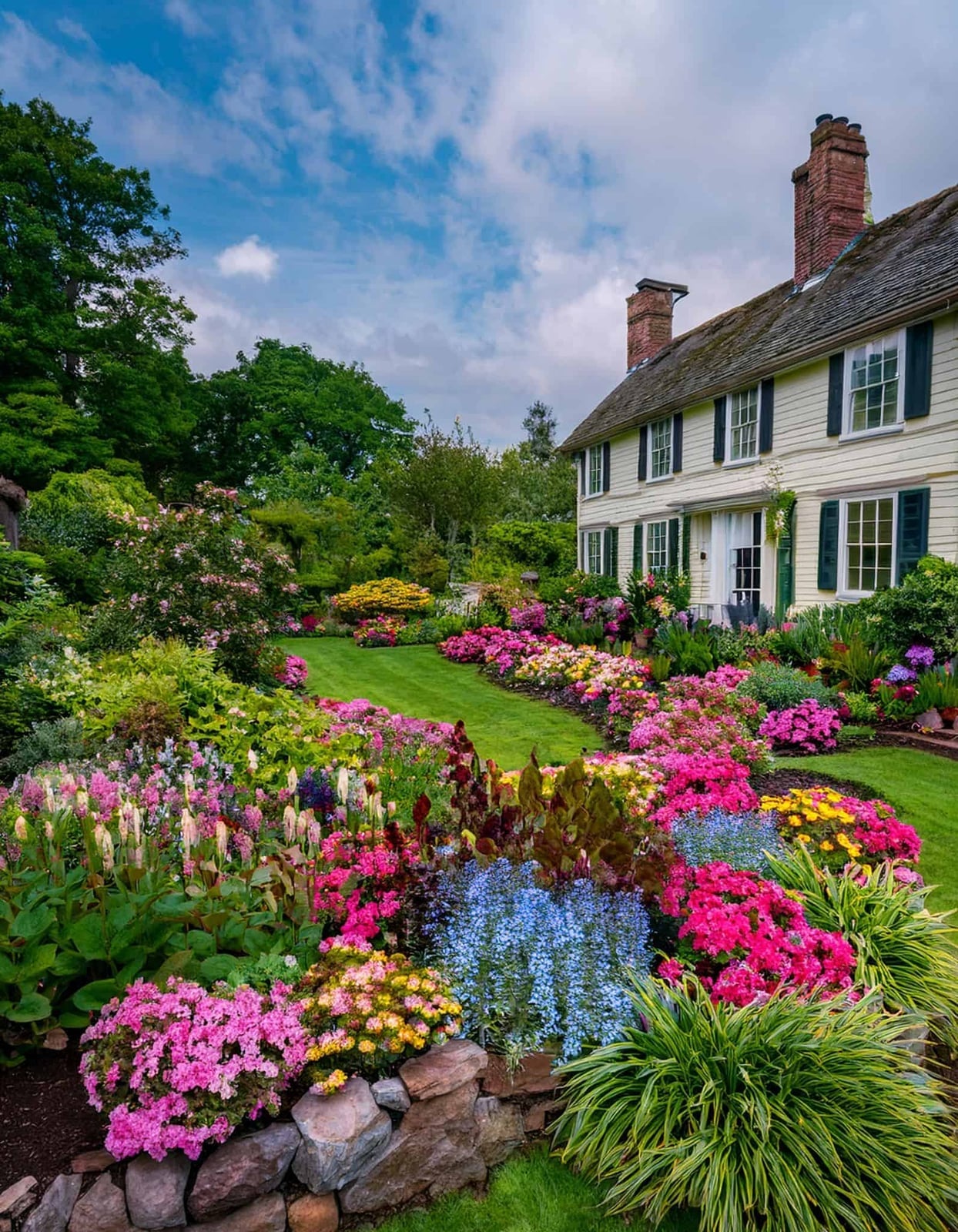
This garden reads as a series of deliberate decisions about space. The formal flower beds flank the lawn in long, parallel rows, which gives the whole yard a sense of order even when the blooms are packed tight. Pink, blue, and yellow flowers repeat across the borders, pulling the eye forward and anchoring the house at the far end. The grass path between them becomes a natural circulation route. You walk through the color rather than just looking at it.
Vibrant Wildflower Garden Bursting with Pink Echinacea and Purple
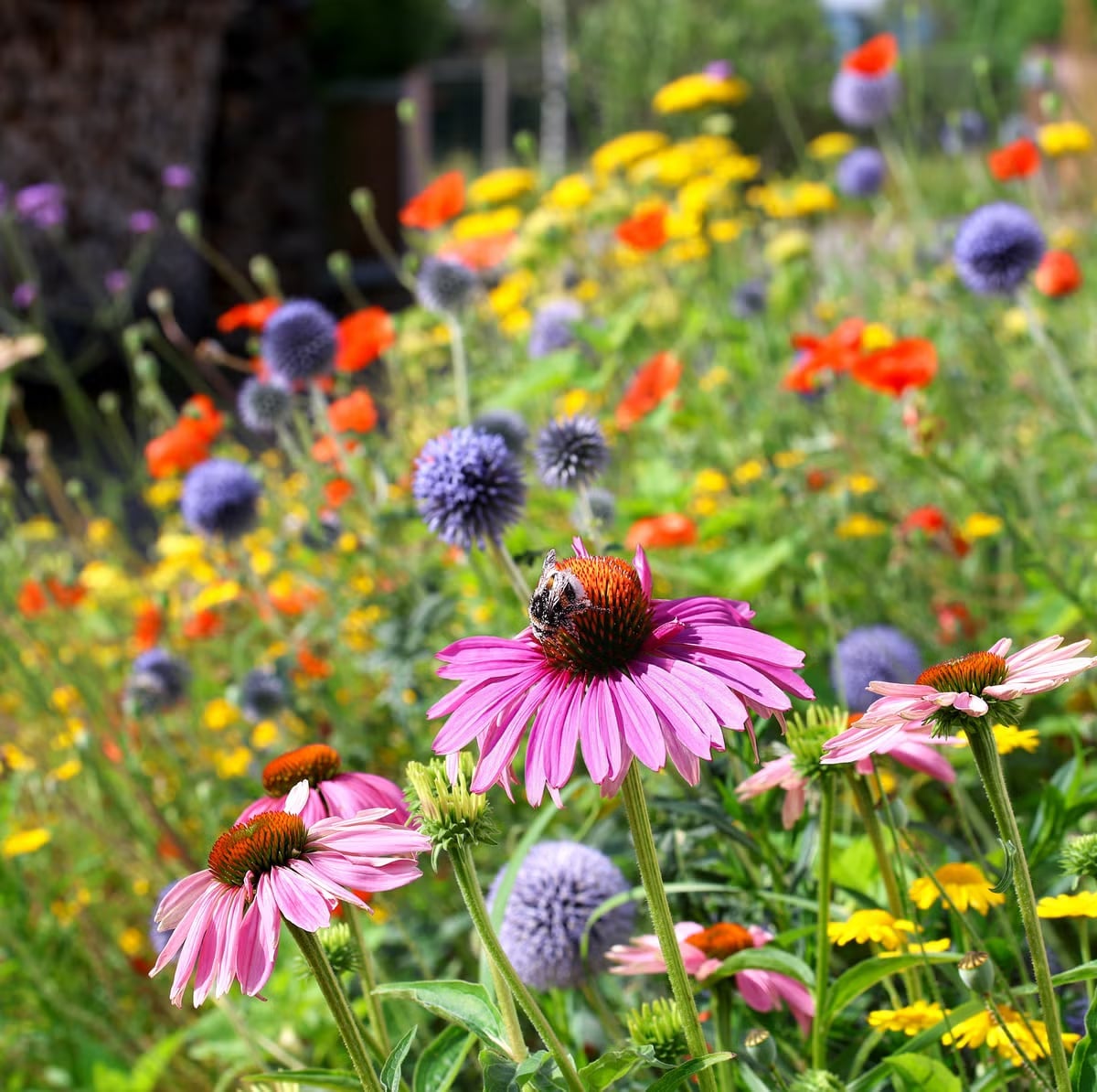
The palette here is pure pollinator bait: pink echinacea, purple globe thistle, and pops of yellow and orange from poppies and wildflowers. A bee on the echinacea confirms what the color combo suggests. This garden is built for action. The density of the planting means every square foot pulls its weight, and the hot pink against deep purple keeps the bed from feeling muddy. If you want a naturalistic look that still reads as deliberate, this ratio of warm to cool is a reliable starting point.
Traditional Garden with Masses of Orange, Yellow, and Pink Tulips
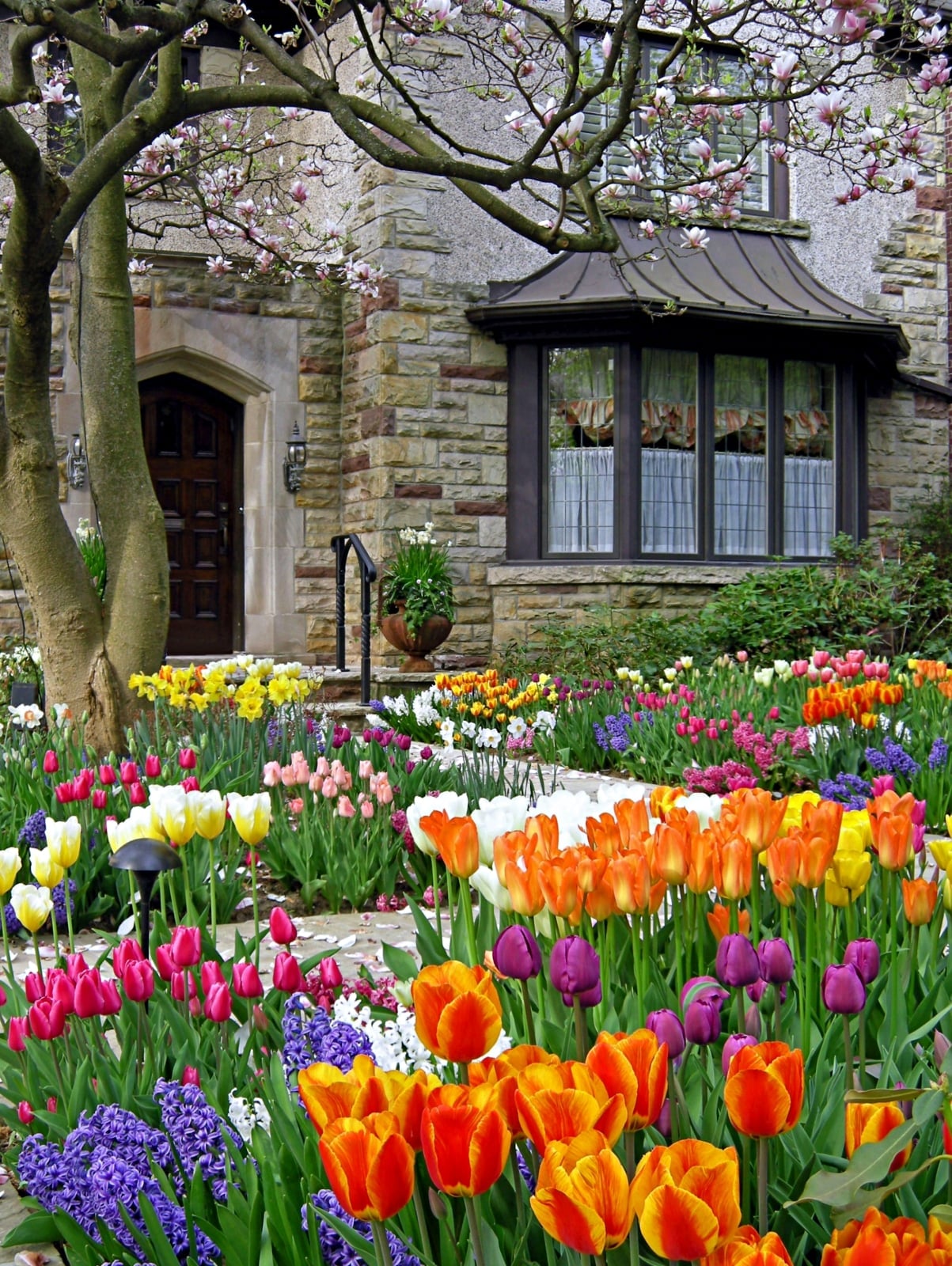
What makes a spring garden feel full without looking chaotic? Repetition. Tulips in orange, yellow, and pink are planted in dense drifts that stretch across the bed, with hyacinths and daffodils filling the gaps. The stone house behind them provides a neutral backdrop that keeps the eye on the flowers. Mulch between the clumps suppresses weeds and defines the planting area. The massed approach works because the palette is limited to three main colors, not a rainbow.
Naturalistic Garden with Raised Wooden Planter and Textured Grasses
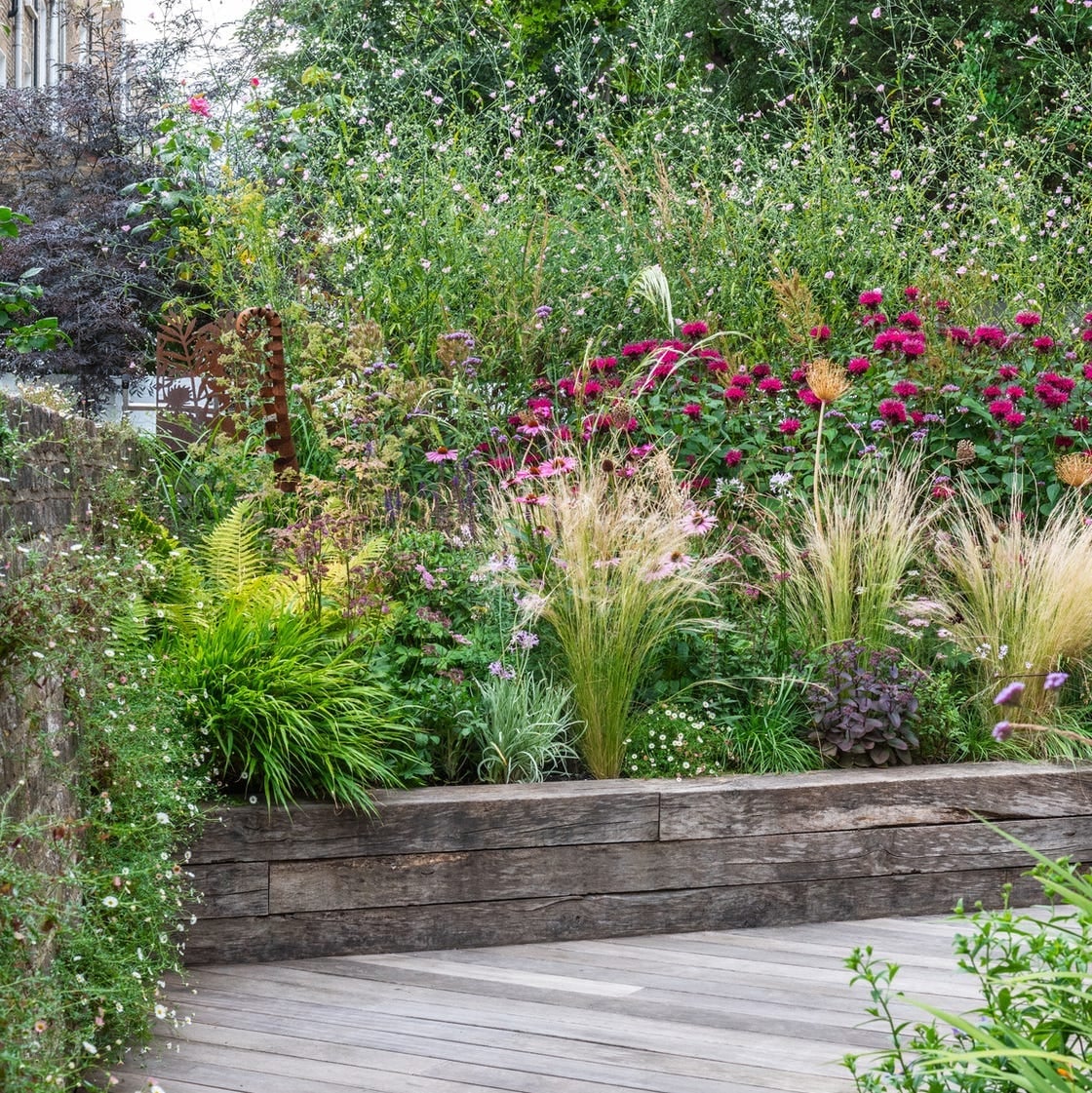
A raised wooden planter changes the way you see a garden. Here it creates a clear boundary between the lawn and the flower border, and the wood’s warm tone softens the transition. Ornamental grasses and ferns add height and movement, while pink blooms provide the color punch. The tiered planting means the back row catches the overcast light first, casting soft shadows on the lower foliage. This is a layout that works when you want structure without hard edges.
Country Garden Featuring a White Archway and Layered Purple, White
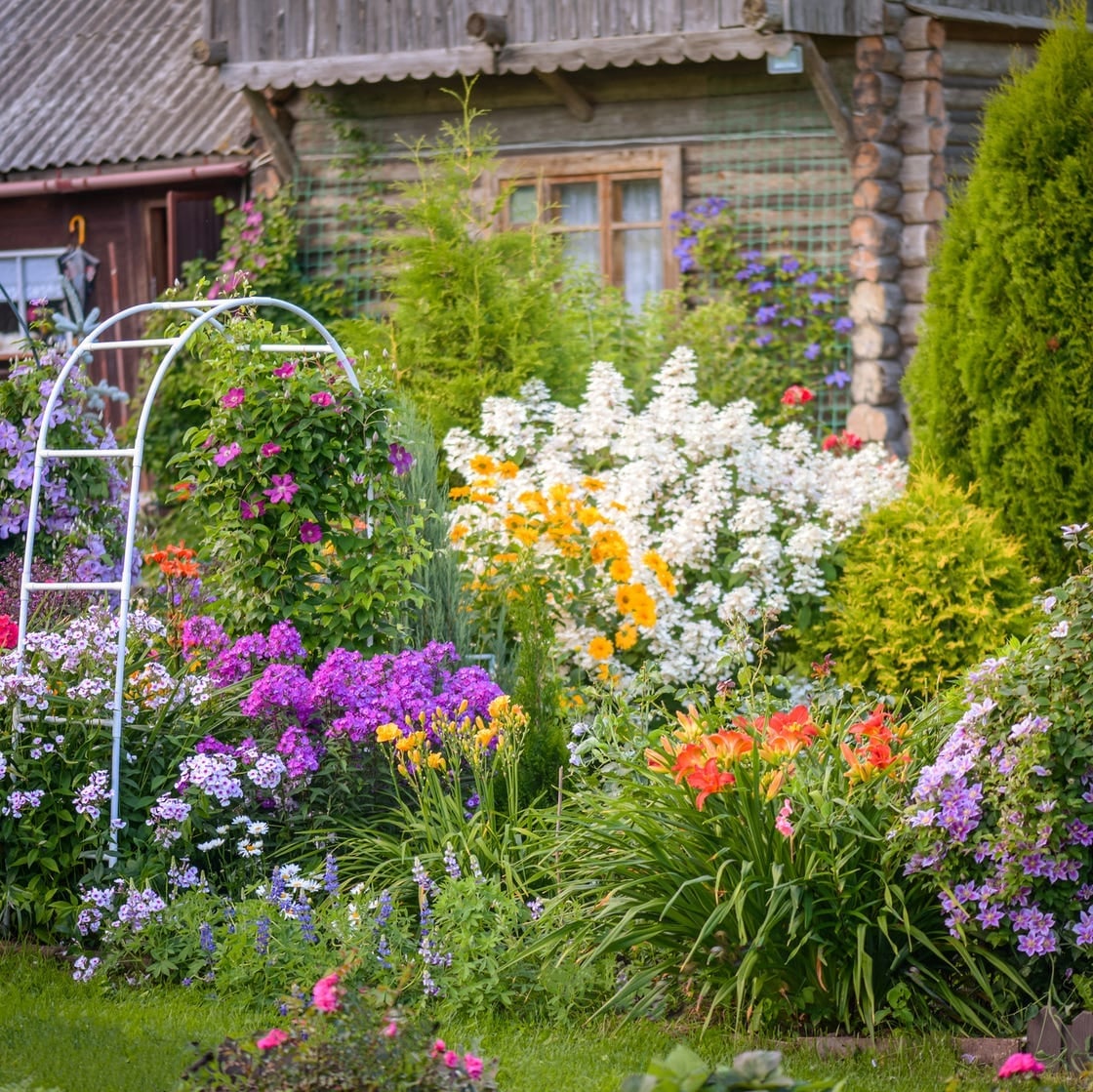
In a country garden, use a vertical element to divide the space without closing it off. A white archway frames the layered beds of purple, white, and yellow flowers beyond. The curved beds echo the arch’s soft lines, so the whole composition feels connected. Trees in the background add depth. If you are renting and cannot build an arch, a tall obelisk or a freestanding trellis can create the same sense of entry without permanent changes.
Informal Garden with Tiered Planting Beds and a Stone Wall
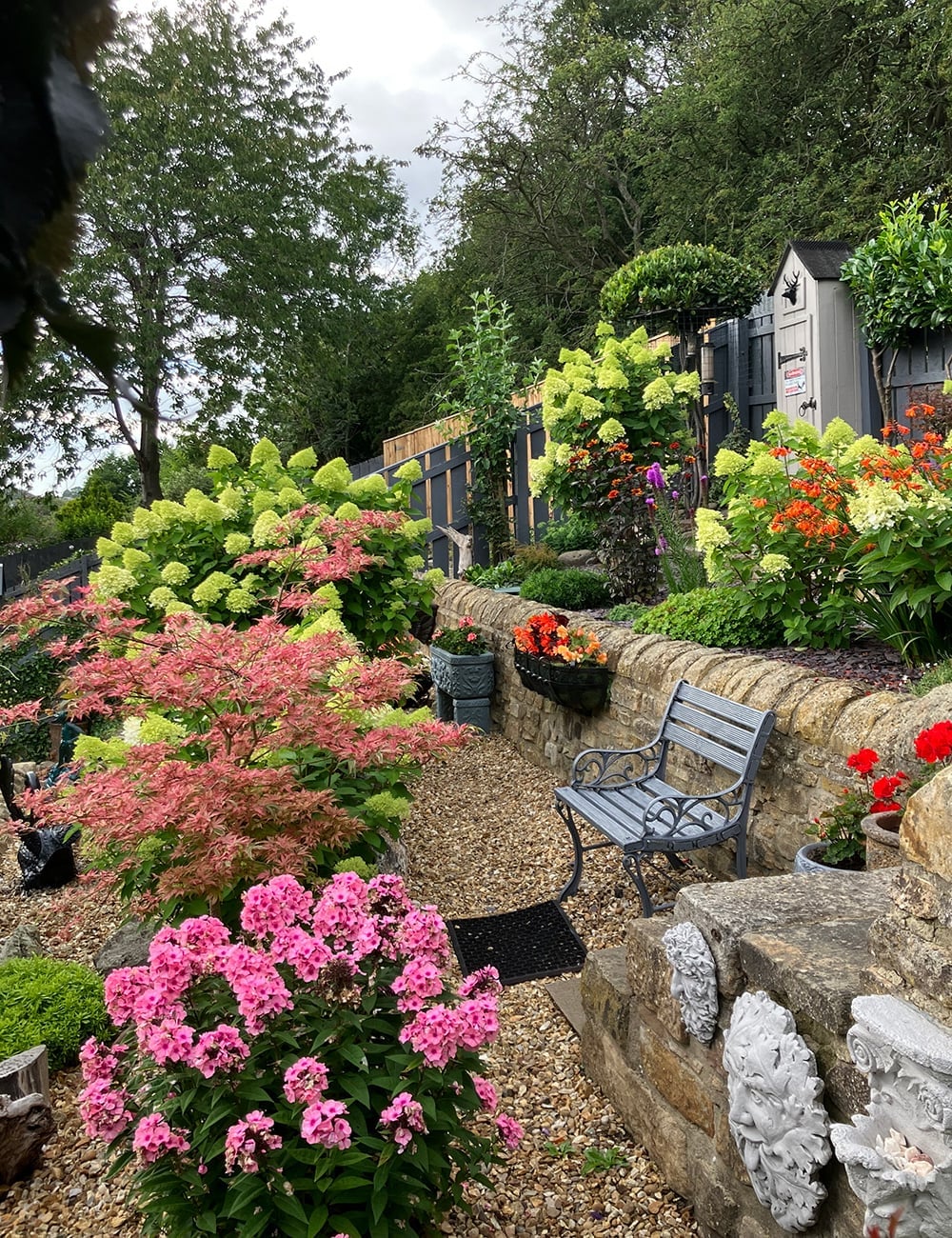
A tiered stone wall does not have to mean a formal, manicured look. Here, the stacked stone rises in broad steps, and the planting follows the same logic: low phlox spills over the front edge while hydrangeas fill the upper tier. A simple wooden bench and a few potted plants keep the scene relaxed. The layout earns its space by solving a slope without heavy excavation. For a similar effect on a budget, build a single wide terrace with railroad ties or landscape timbers instead of cut stone. The same tiered planting works, and the wood softens over time.
Cottage Garden with a Large Terracotta Pot and Curving Flower Beds
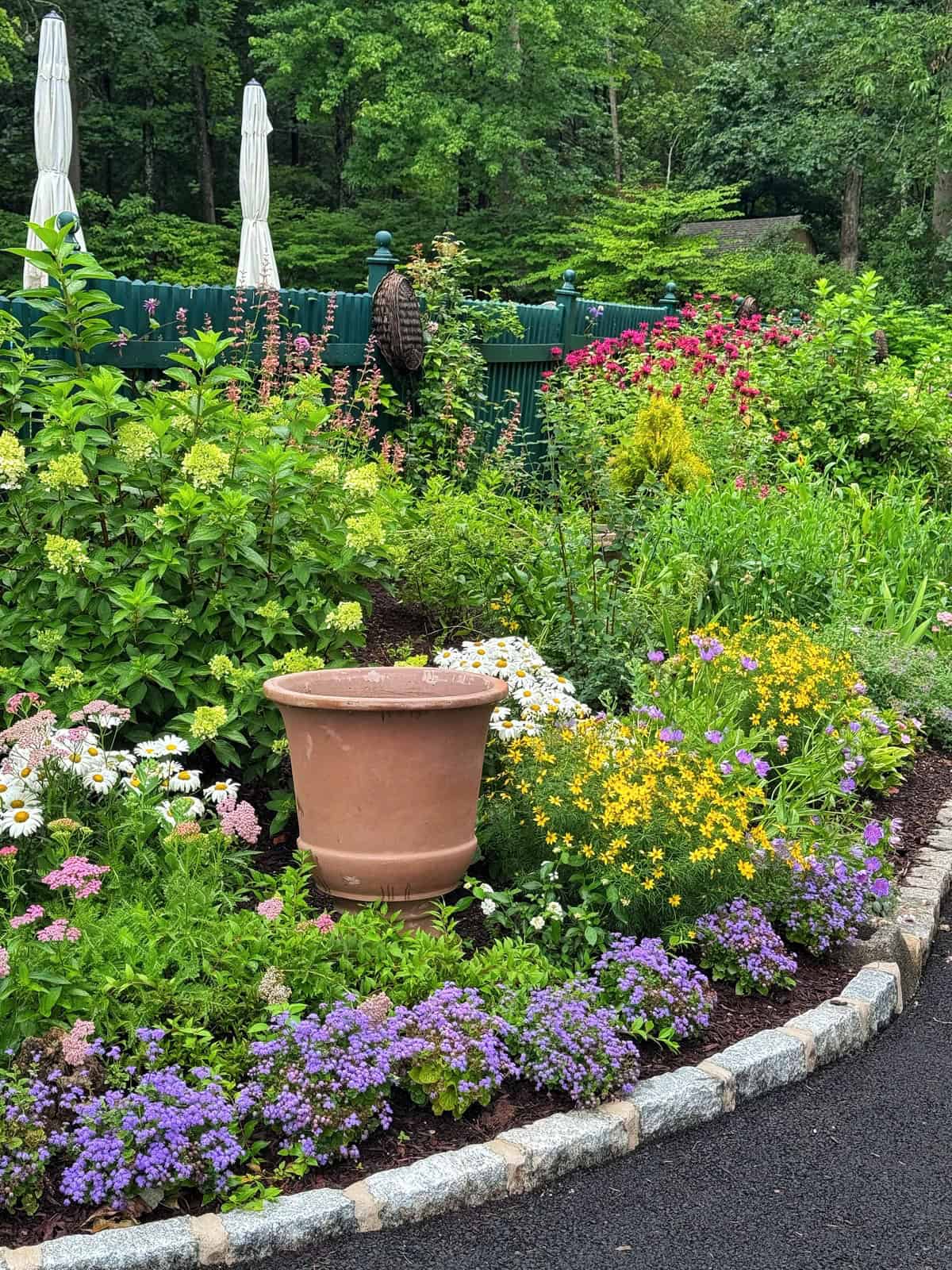
The flower bed curves away from the viewer in a slow arc, and at the pivot point sits a large terracotta pot. That single container anchors the entire bend, offering a resting point before following the line of hydrangeas, roses, and daisies. A stone border and dark mulch keep the bed defined without a hard edge. Renters cannot dig up a lawn, but they can set a generous terracotta pot at the corner of an existing bed to create the same curved silhouette with no permanent change.
Cottage Garden with Potted Plants and a Blue Adirondack Chair
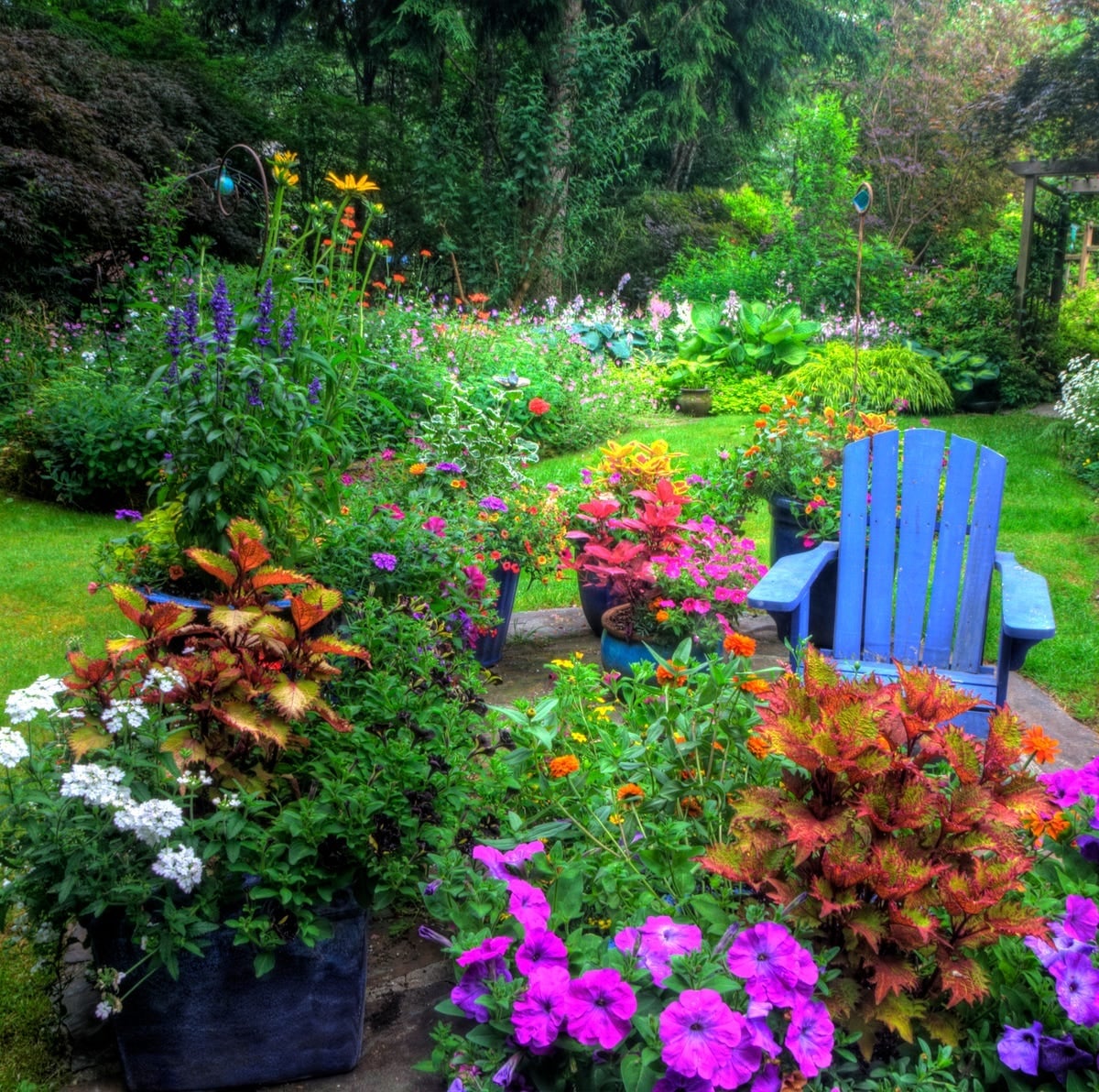
This garden proves that a single piece of painted furniture can give a whole planting scheme its character. The blue adirondack chair sits at the edge of a pathway, surrounded by dense mixed flower beds in purple, pink, orange, and red. Potted plants on concrete and stone surfaces echo the same colors at different heights. The chair serves as a clear focal point. For a variation, swap the blue for a soft sage green or a warm ochre, and shift the potted plants to the opposite side of the path to change the sightline without moving the chair.
Cottage Garden Showcasing Large Yellow Sunflowers and Hydrangeas
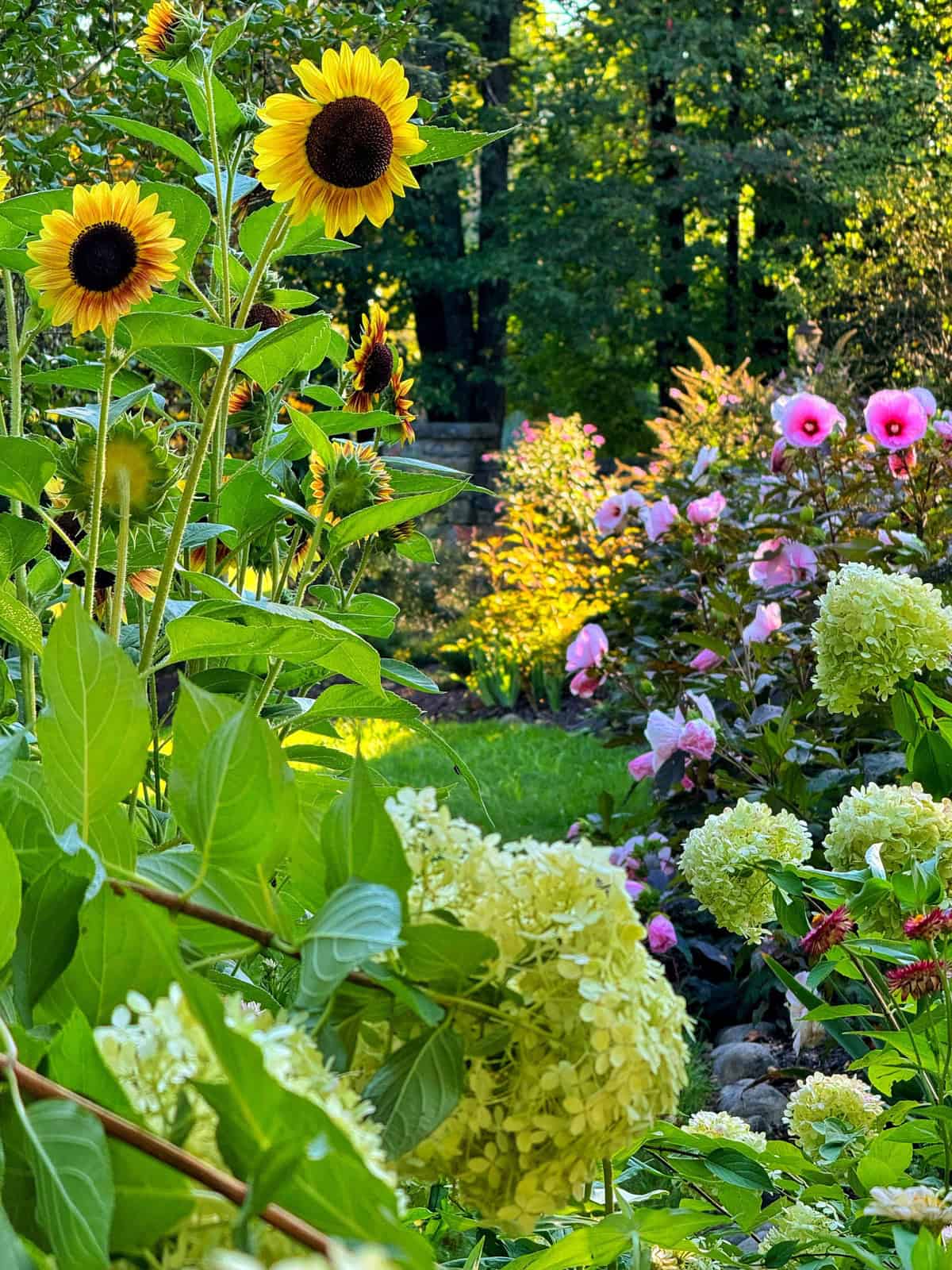
Can a single tall flower anchor an entire garden bed? These sunflowers rise well above the surrounding hydrangeas and pink hibiscus, and their yellow heads catch the late afternoon light in a way that pulls the eye upward. The trick is contrast in both height and bloom shape: the sunflowers are broad and flat, while the hydrangeas form dense round clusters. The layering keeps the bed from looking flat. For a similar effect, plant sunflowers in a tight cluster of three or five at the back of a bed, then fill the front with mounding perennials that bloom in a different color.
Cottage Garden with Dense Snapdragon Flower Beds in Golden Hour Light
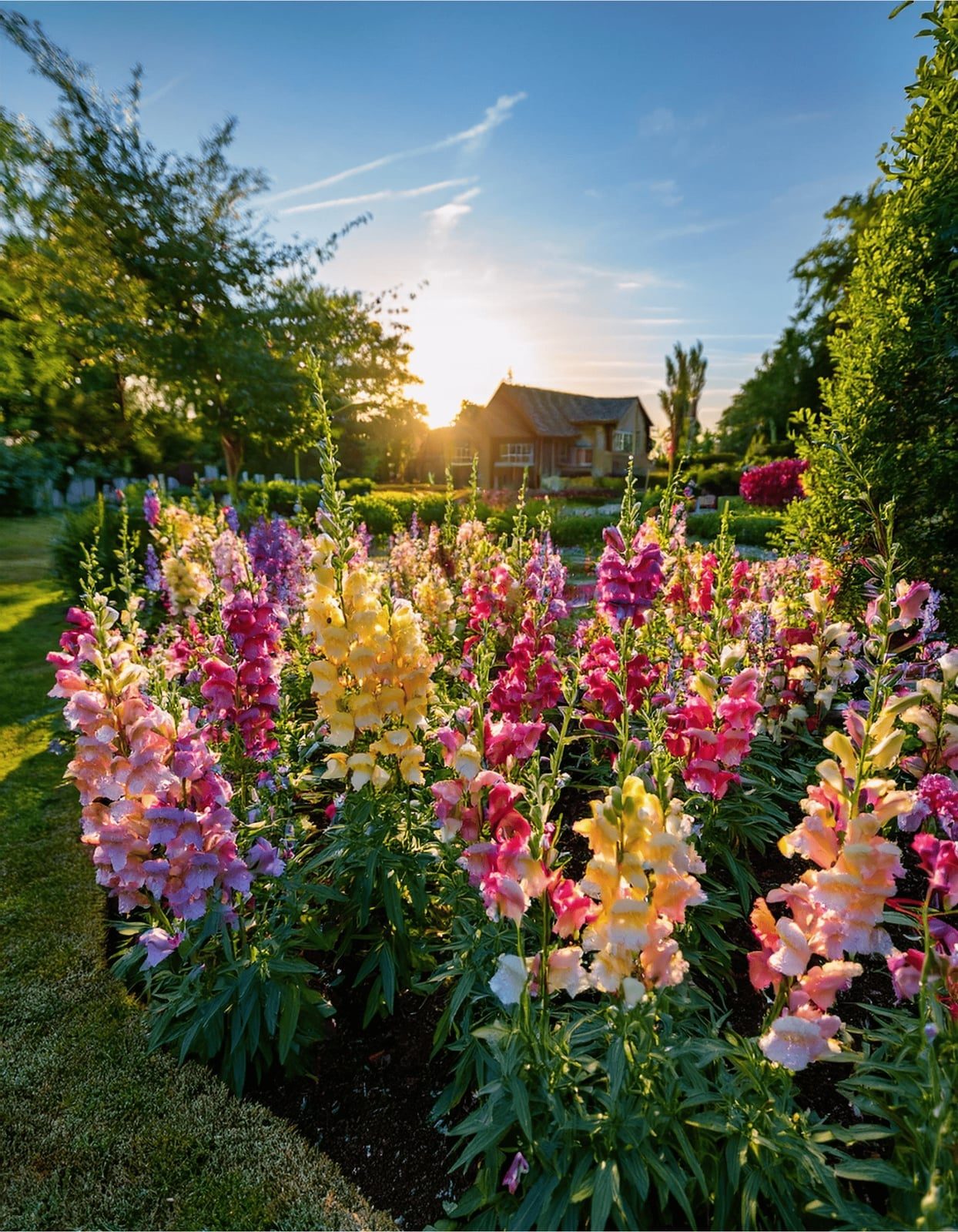
The snapdragons here are packed so tightly that their pink, purple, yellow, and orange spikes form a solid wall of color. Golden hour light hits the bed from a low angle, which makes each spike cast a shadow onto the one behind it, creating depth without any spacing tricks. The house and trees in the background stay muted, so the bed reads as the only event in the frame. To get this density, plant snapdragons on six-inch centers and pinch the early tips to encourage branching.
Cottage Garden Corner with Fall Flowers, a Pumpkin, and Terracotta Pot
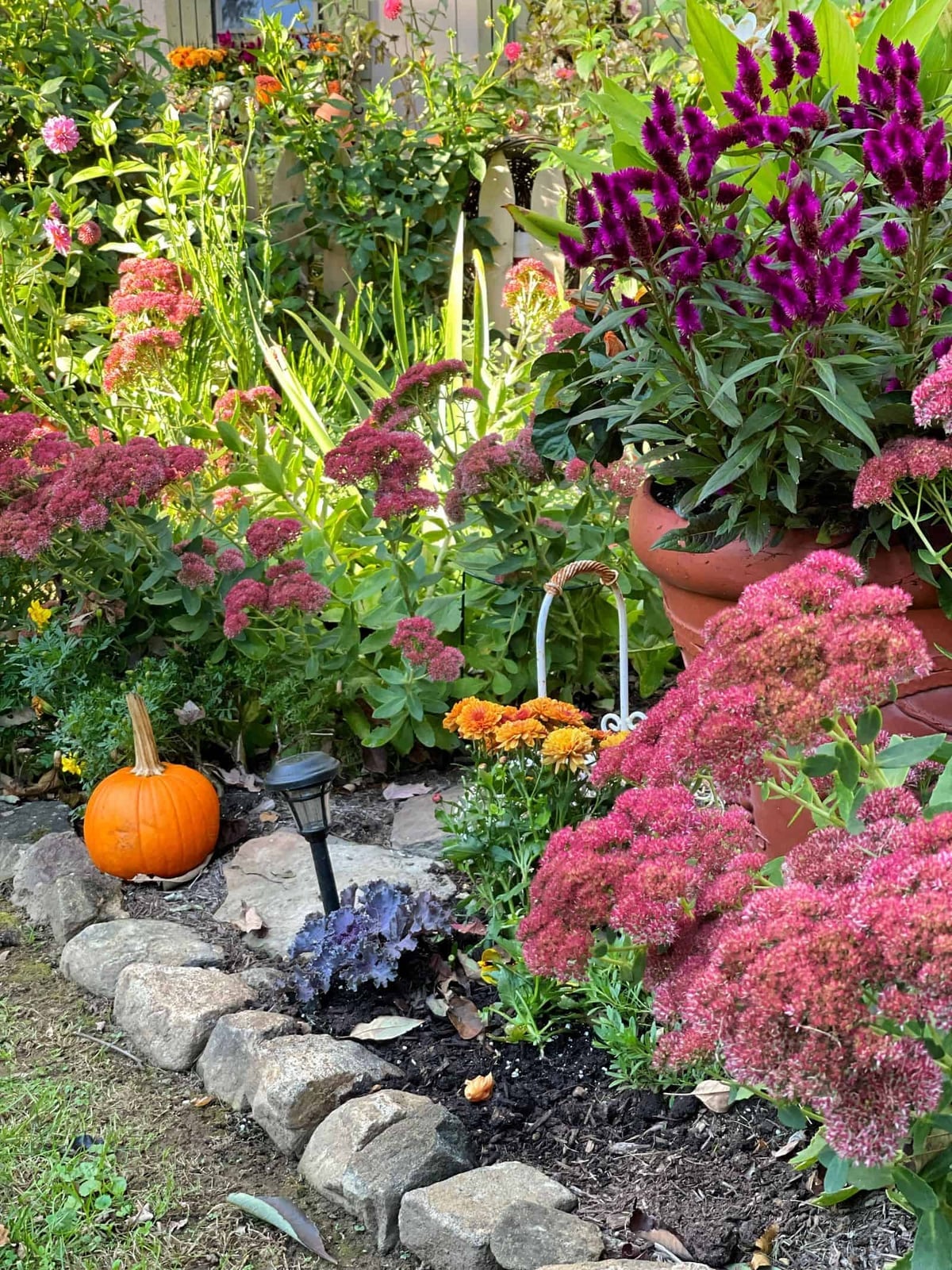
A fall vignette works best when you anchor it with one large, long-blooming plant and then tuck seasonal accents around it. Here the pink sedum heads are the anchor, substantial enough to hold their own against a terracotta pot and a pumpkin. Orange and purple mums fill in the lower layer, while a stone border and dark mulch keep the whole corner tidy without stealing attention. The overcast light makes the pink blooms look especially soft, so nothing feels harsh or overdone. Compact spots like this are a smart way to mark a season without redoing an entire bed.
Informal Garden with Tiered Stone Planters and Vibrant Mixed Flowers
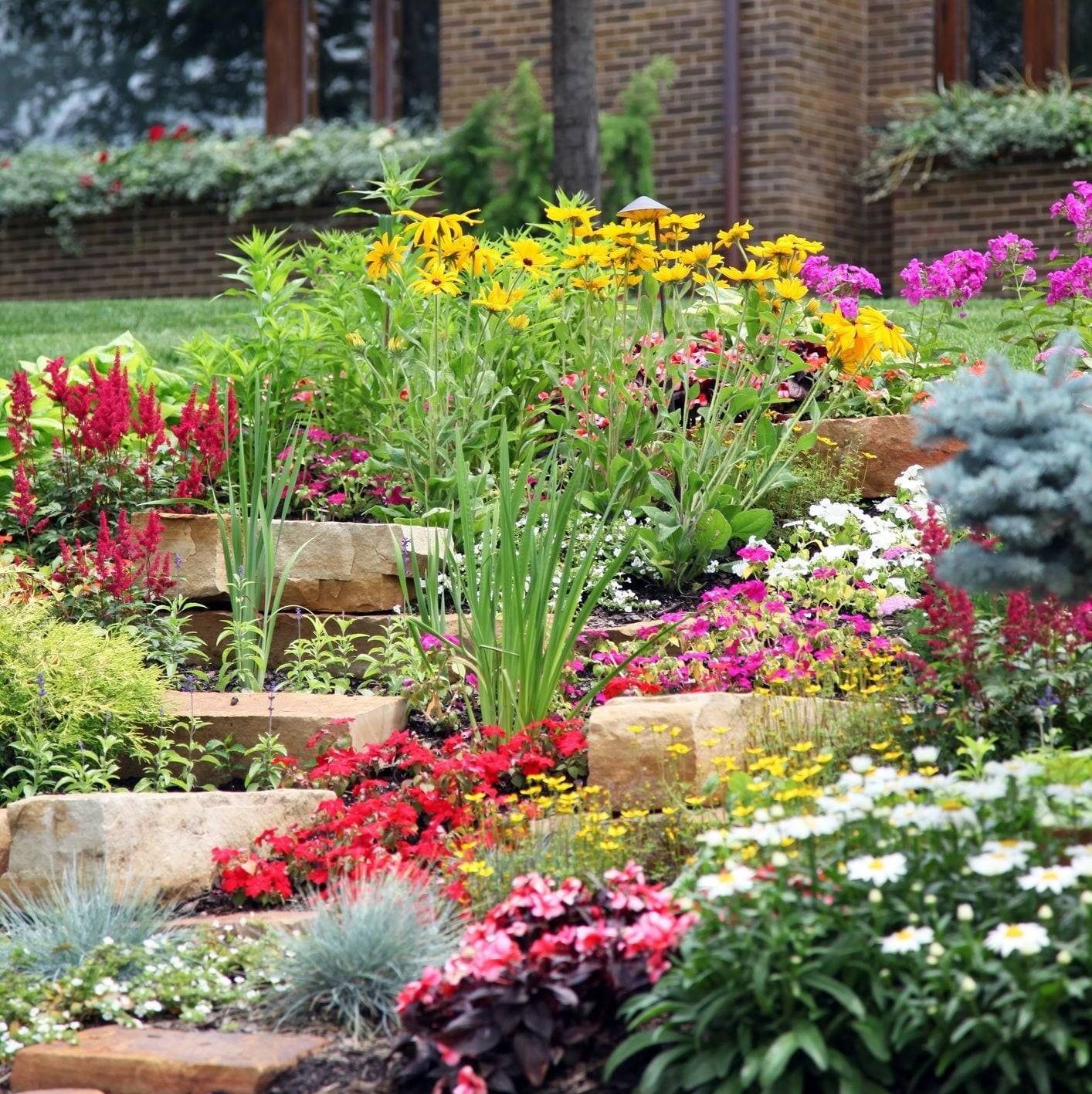
Tiered stone planters might sound like a formal setup, but the palette here keeps it loose and friendly. Red, yellow, pink, and white flowers spill over the edges in no particular pattern, and the bright daylight helps each color read clearly against the gray stone. The stone itself does the organizing: each level lifts a different mix of blooms so nothing gets lost in the crowd. That contrast between structured hardscape and casual planting is what gives the garden its relaxed feel. If you want a tidy look that still lets the plants do their own thing, this is a good model to follow.
Naturalistic Garden with Dense, Layered Planting of Red and Purple
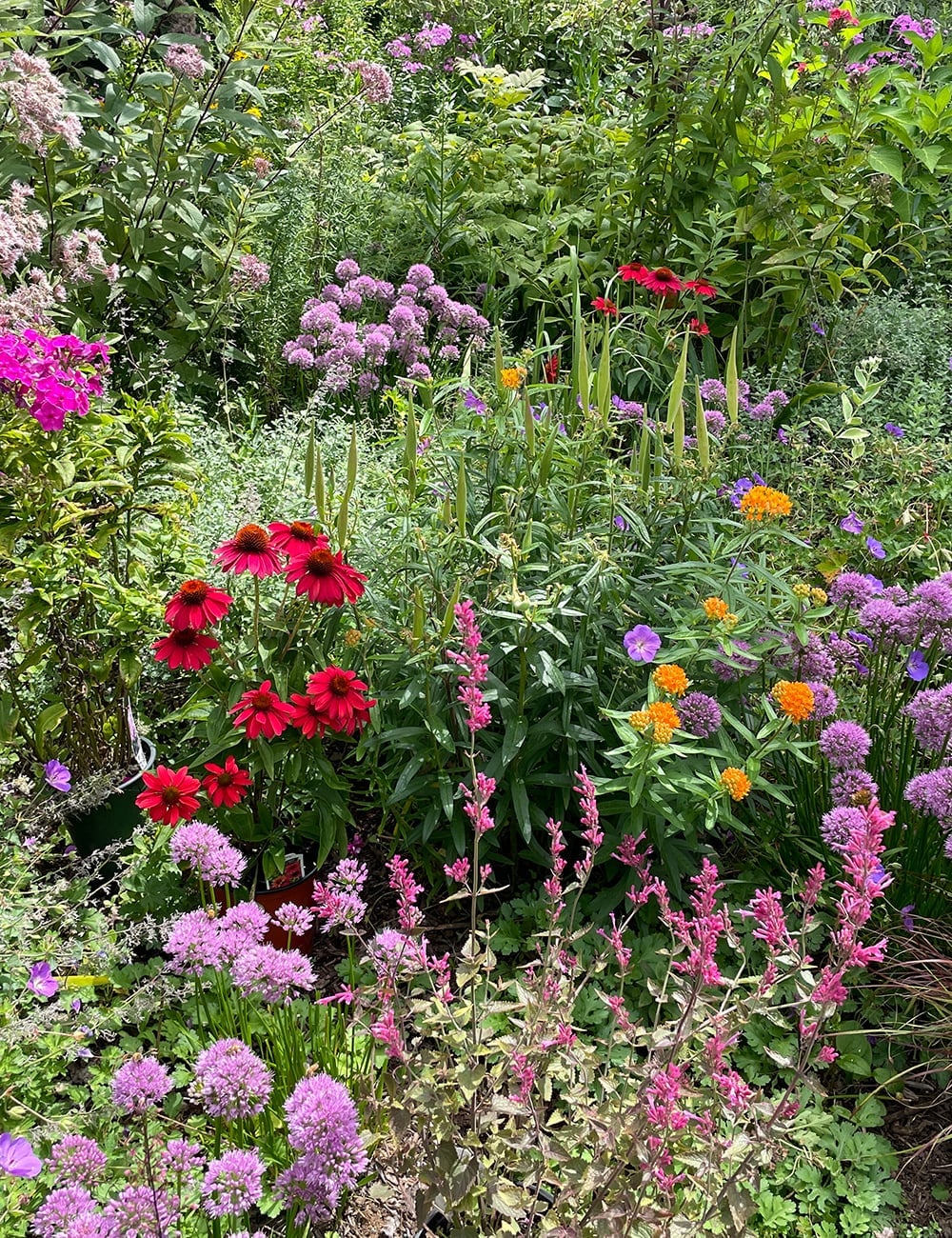
The trick to dense planting is letting each plant touch its neighbor without clashing. Here echinacea, allium, and verbena stack red, purple, pink, and orange together, and they work because the foliage stays a steady green throughout. The allium spheres rise above the rest, creating a resting point among all that color. In bright daylight the layers blend into one full, happy mass.
Wildflower Garden Field at Sunset with Rows of Pink, Orange
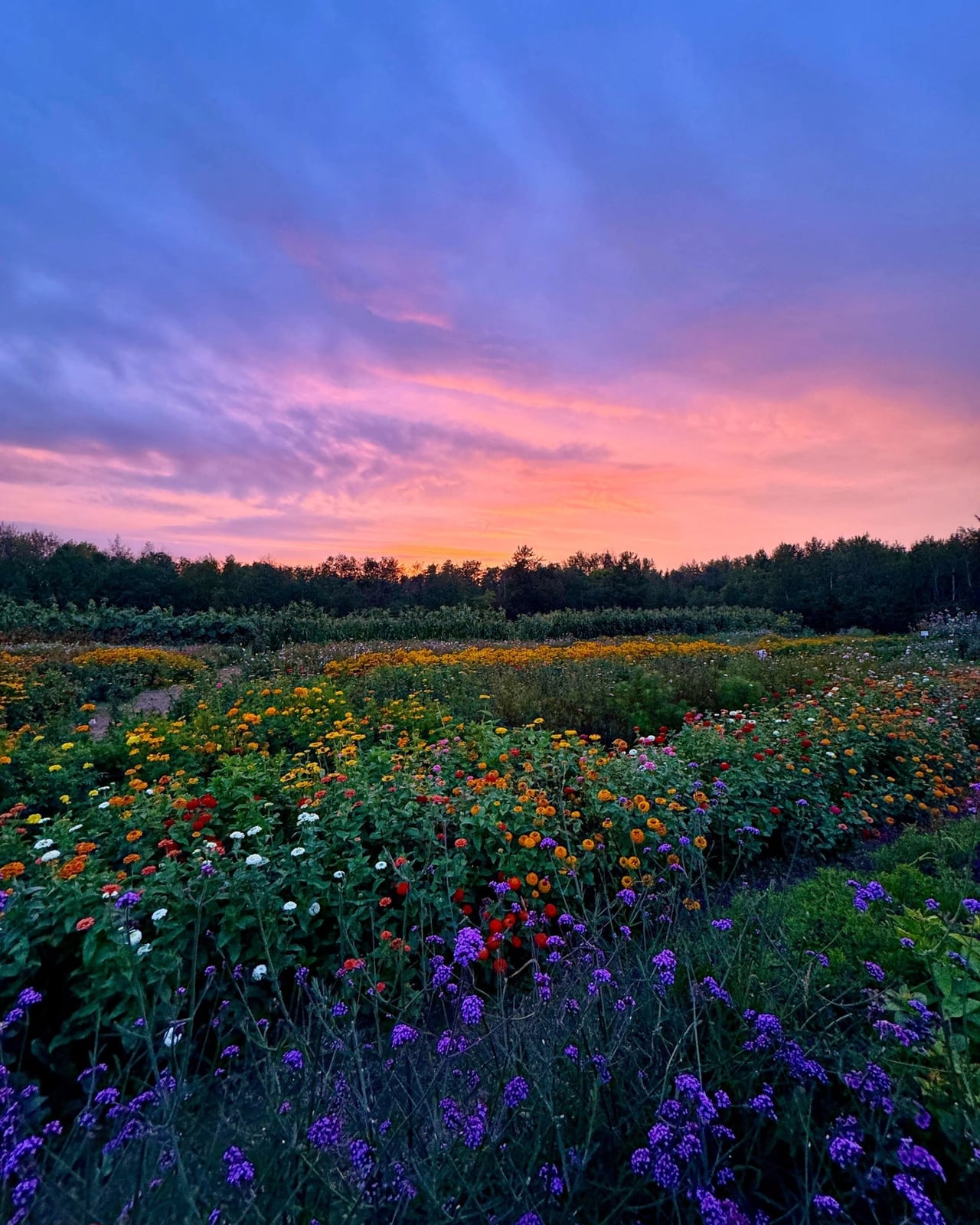
A field of wildflowers at sunset is one of those things that looks effortless but takes a little forethought. The rows here run pink, orange, yellow, and purple in bands, so the eye sweeps across the whole field instead of landing on one spot. Sunset light turns the petals almost translucent, making the colors glow without losing their individual tones. If you have enough room for broad swaths, this kind of row planting gives you a dramatic seasonal show that changes as the light shifts.
Naturalistic Garden Detail: Textured Pink Double Poppies
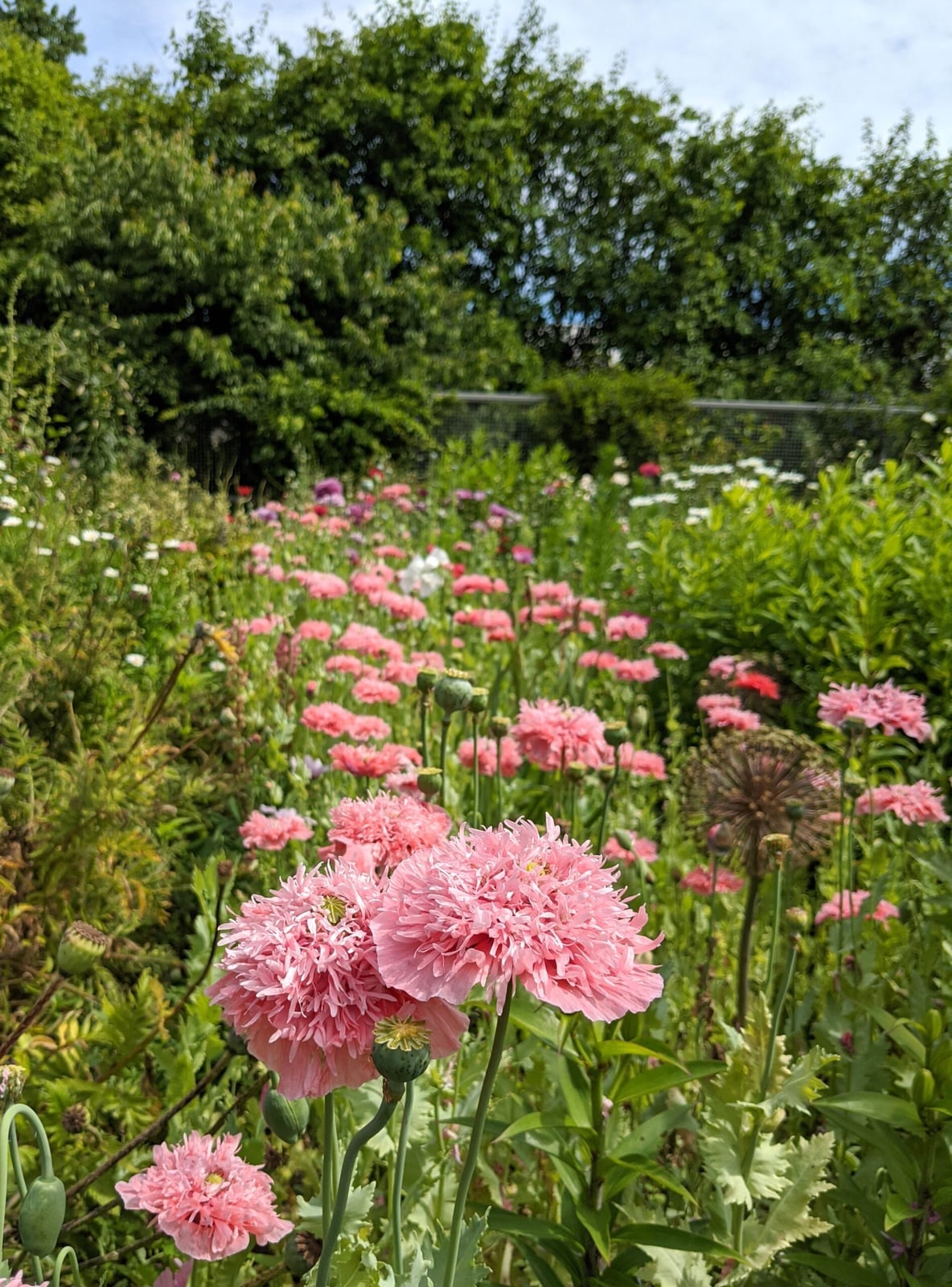
A close look at a garden reminds you that texture matters as much as color. These pink double poppies have ruffled petals that catch the soft daylight in layers, so the blooms feel almost sculptural against the green foliage. The dense planting means the poppies are packed close together, which creates a natural drift rather than isolated stems. That clustering is a practical move: in a naturalistic garden, massing the same flower in one spot gives it visual weight without needing extra plants or hard edges.
Naturalistic Garden with Yellow Black-Eyed Susans and a Curving Stone
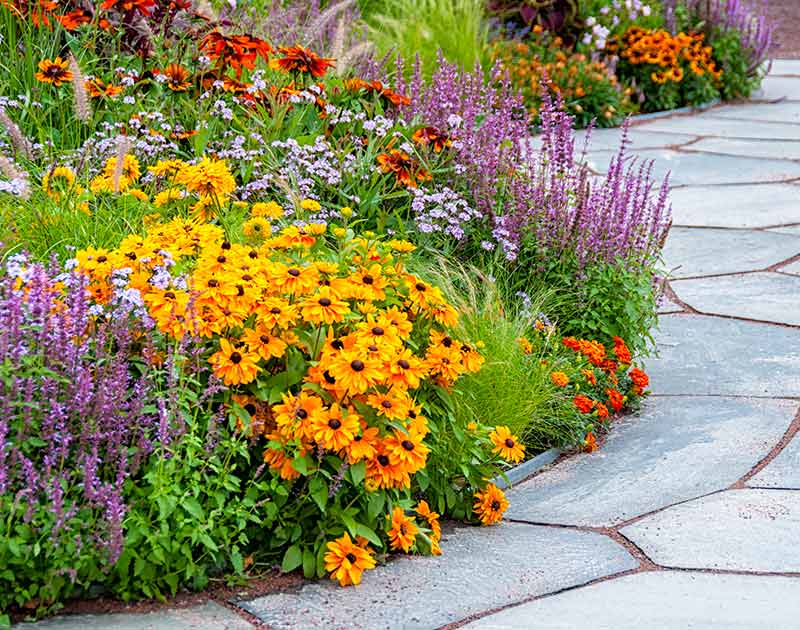
A curving stone path pulls you through this border, where a mass of yellow black-eyed susans anchors the whole scene. The path lets you move through the planting instead of just looking at it from the edge, so the garden becomes a place to be in, not just to see. Salvia and ornamental grass break up the yellow with purple and green, keeping the layout from feeling like one solid block of color. The path itself is the organizing line, and the flowers spill over it on both sides.
Cottage Front Yard Garden with Pink Peonies and White Hydrangeas
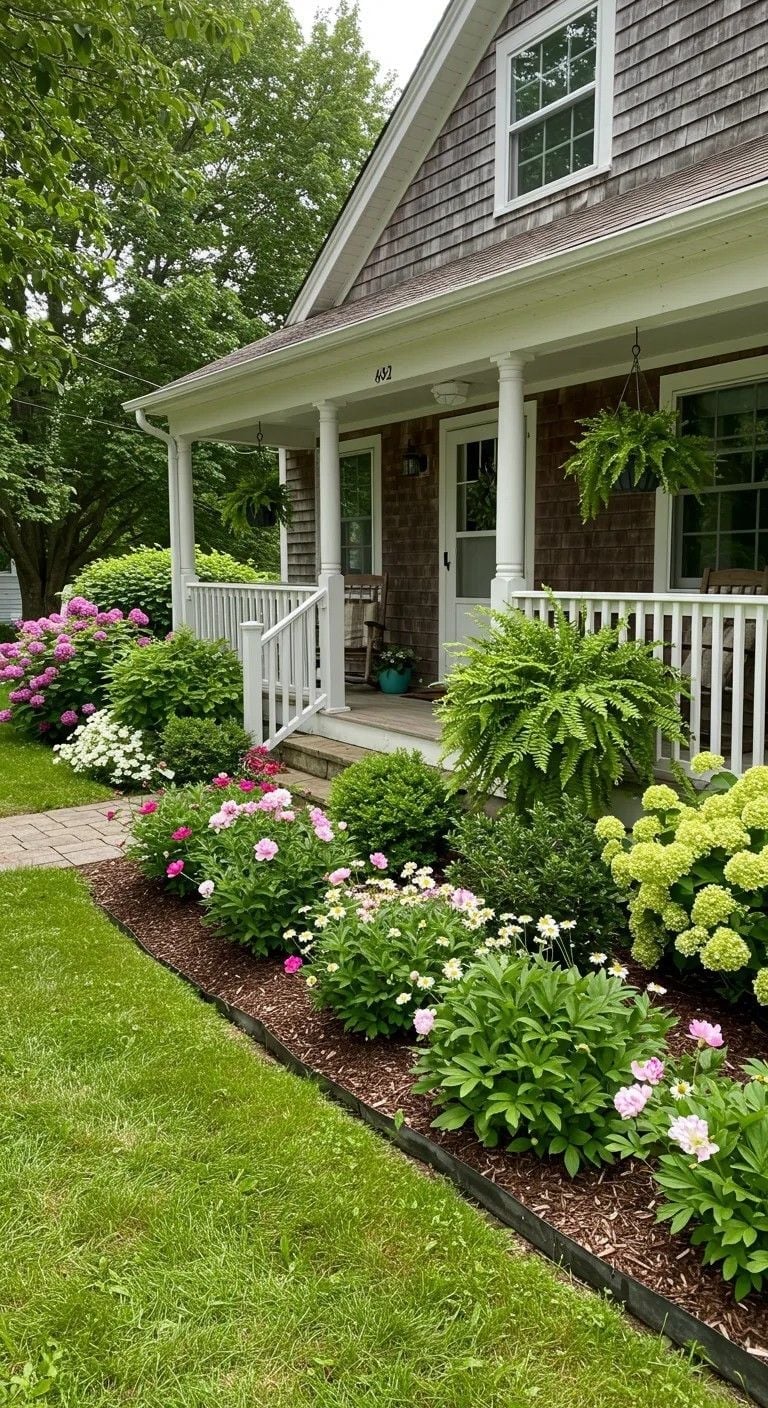
A practical rule for front yard gardens is to put the biggest, showiest bloom near the entry, and that is exactly what happens here with the pink peonies. They sit close to the porch, so anyone walking up gets that pop of color first. White hydrangeas flank the peonies and soften the transition to the green lawn and the house itself. The flower beds are mulched, which cuts down on weeding and keeps the soil from drying out too fast in full sun. The porch railings add vertical structure without blocking the view of the blooms from the street.
Naturalistic Garden Vignette: Soft Pink Peonies and Purple Catmint
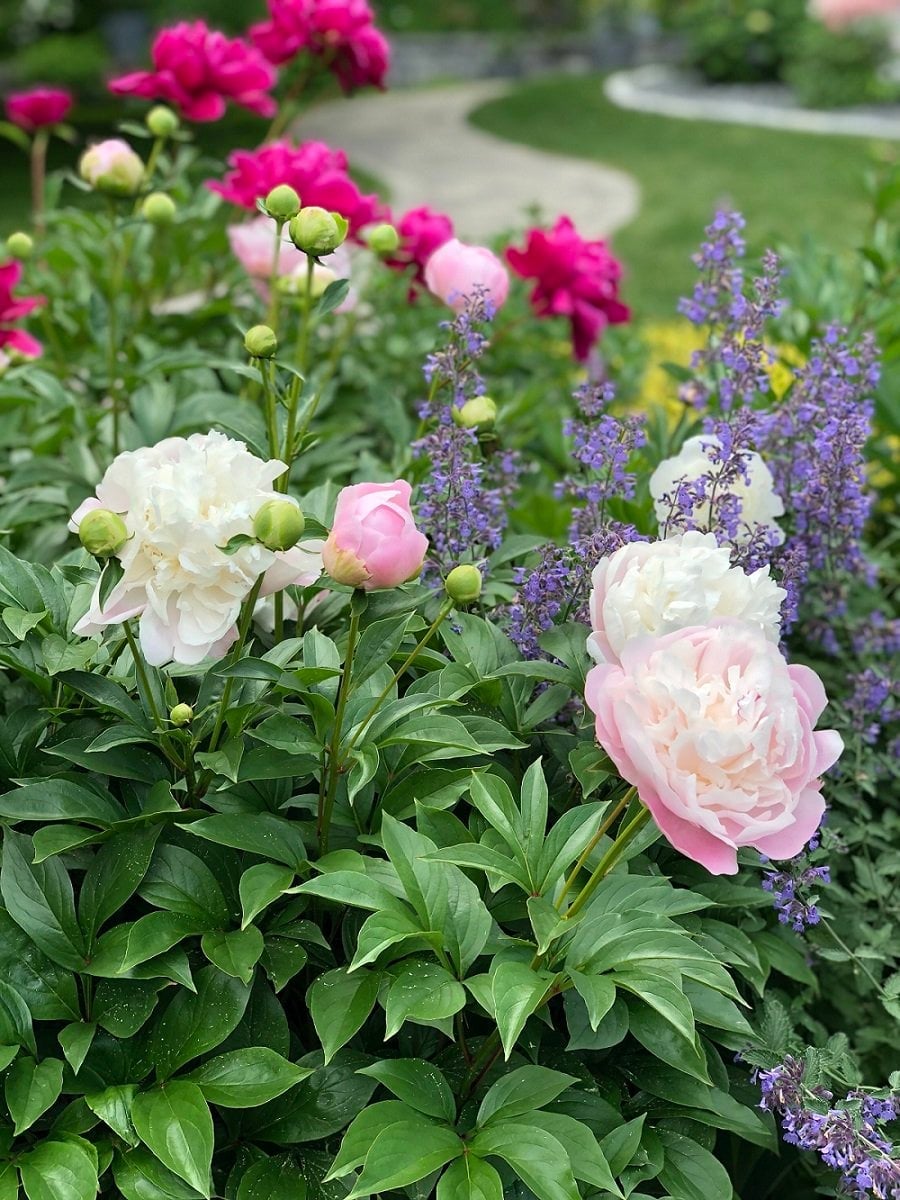
Compared to a tightly clipped formal border, this vignette looks natural, but the plant choices are deliberate. A single large, soft pink peony bloom becomes the focal point, and the surrounding buds and purple catmint keep the eye moving across the border. The gravel path in the foreground adds texture and a clear boundary, so the planting feels purposeful even though the shapes are loose.
The scale works because the peony is big enough to hold its own against the catmint’s smaller flowers. If you tried this with a smaller bloom, the purple would take over and the vignette would lose its center. The gravel also helps with drainage, which peonies need to avoid root rot in wet seasons.
Cottage Garden Bed with Vibrant Zinnias and a White Picket Fence
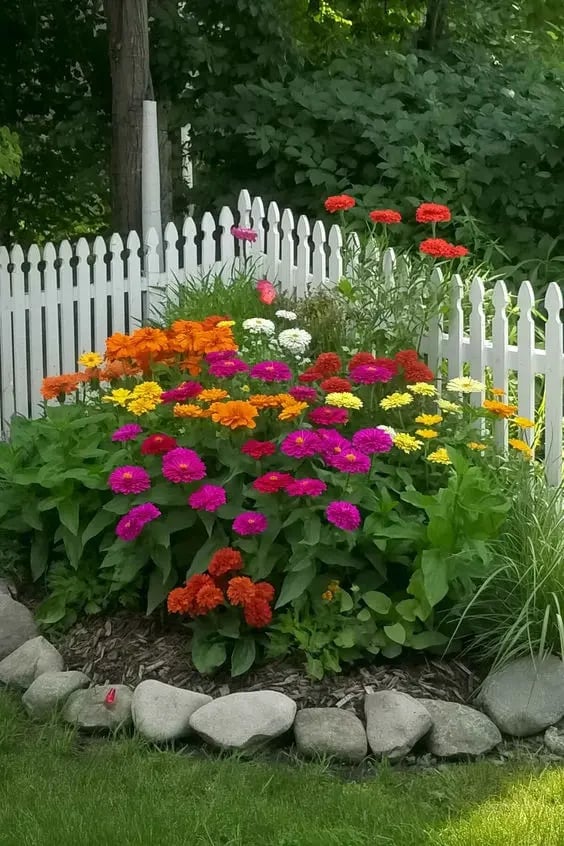
A raised flower bed with a white picket fence behind it creates a clear backdrop for the zinnias, whose orange, pink, yellow, red, and white blooms are packed together. The fence keeps the eye from wandering into the yard beyond, so the color feels concentrated. Border rocks along the front edge of the bed prevent mulch from washing onto the lawn during rain. Ornamental grass adds a vertical break between the rounded zinnia heads, which keeps the bed from looking like a solid blob of color.
Contemporary Garden with Hanging Baskets and a Gravel Path
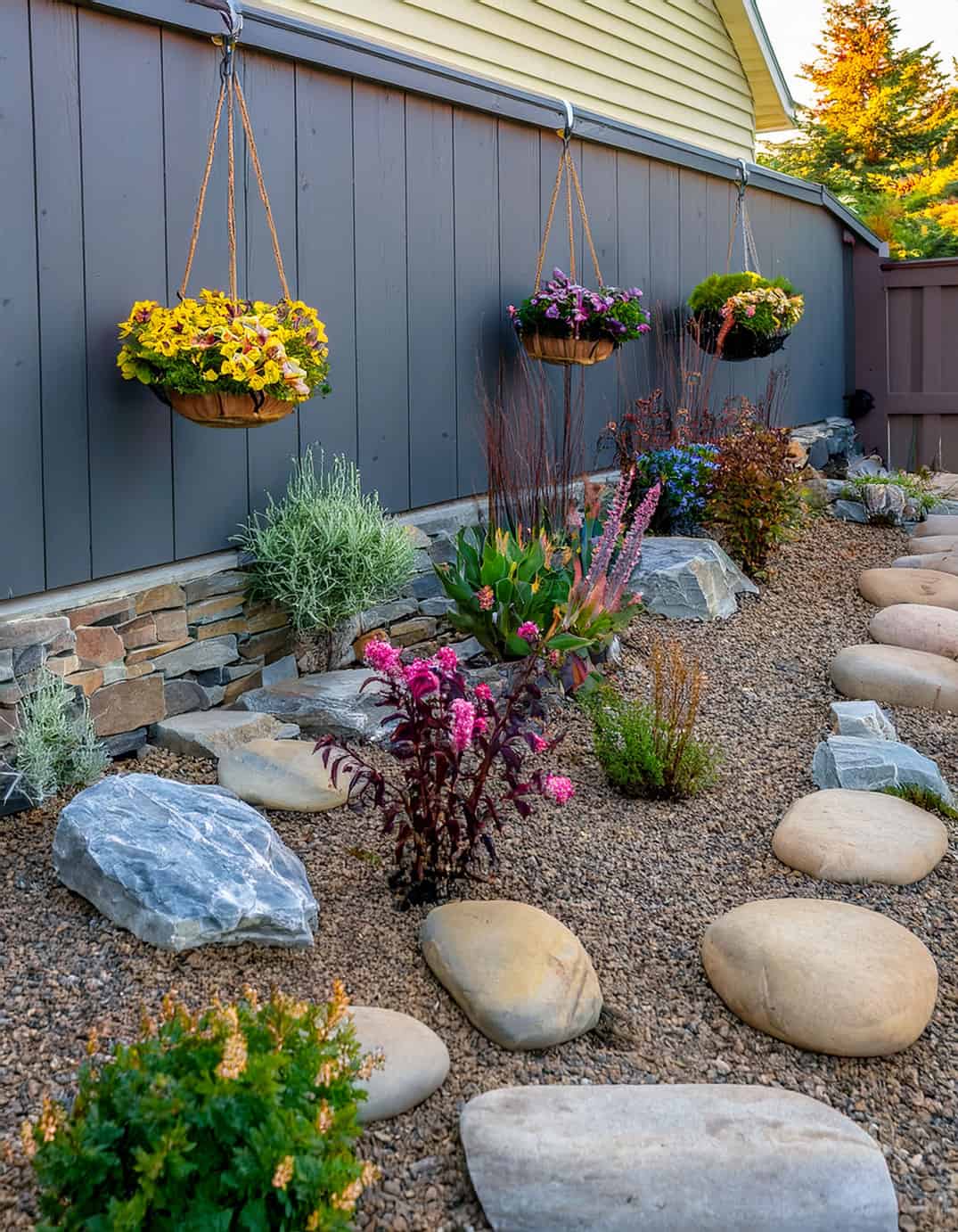
This is a clean, open layout where hanging baskets do the work of adding color at eye level, leaving the ground plane simple. The gravel path runs straight through the space, bordered by large rocks and low planting, so the structure is clear from any angle. Yellow and purple flowers in the baskets echo the same palette used in the ground beds, which ties the vertical and horizontal elements together. The dark fence behind the baskets makes the yellow pop without competing. A gravel path like this needs an edging to keep the stones from scattering into the beds, but here the large rocks serve that purpose naturally.
Informal Garden Detail: Yellow and Purple Pansies in a Wooden Crate
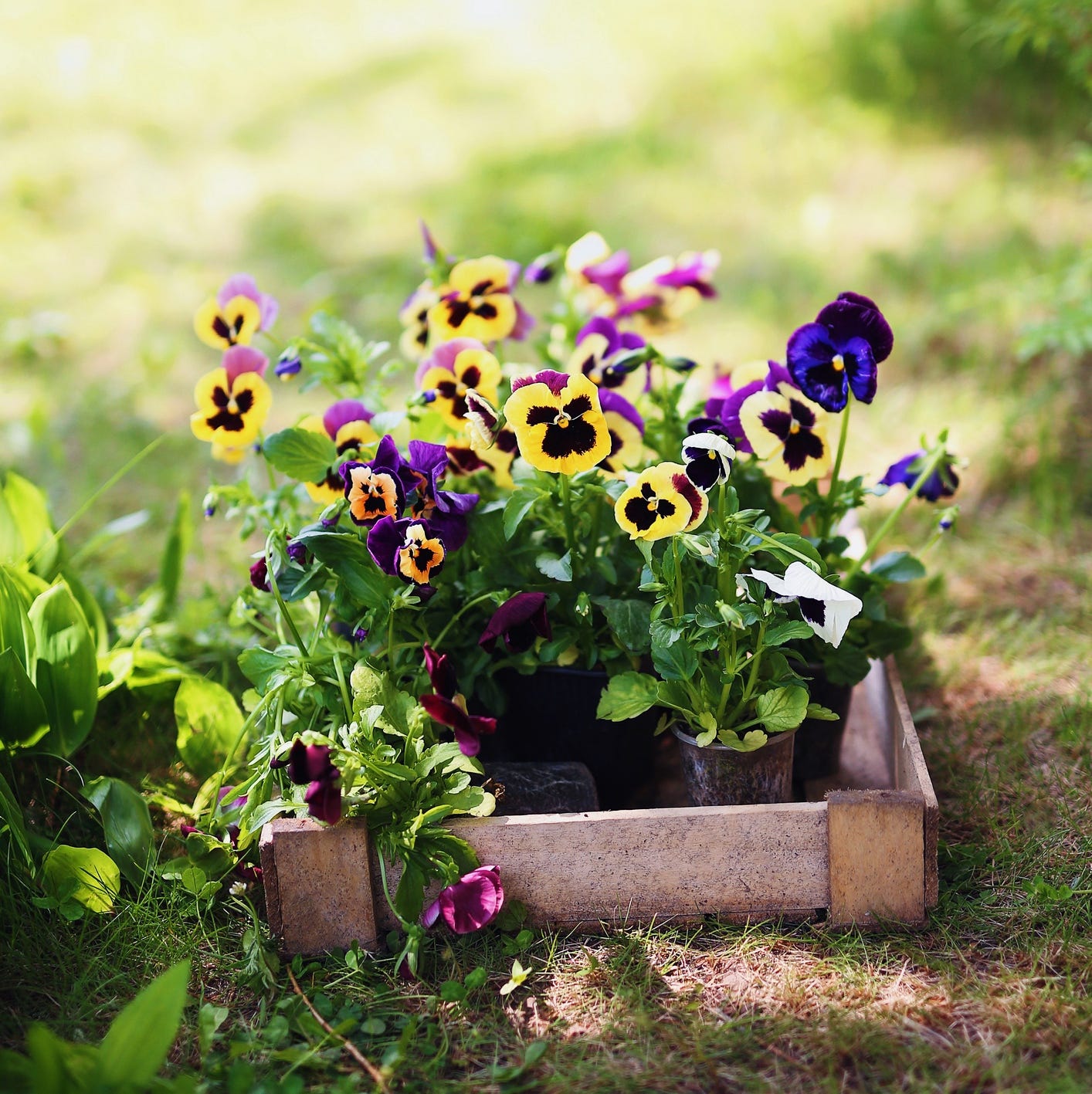
A compact, container-based planting is a good way to add color to a patio or small garden corner without committing to a full bed. Here, a wooden crate holds pots of yellow, purple, and white pansies, creating a dense, cheerful cluster that looks like a single piece. The crate sits on grass, keeping the arrangement grounded and informal. Since the display relies on a simple container, you can swap out the plants by season or move the whole crate to chase the sun. The crate should be wide enough to fit several pots snugly, so no bare soil shows between them.
To recreate it, look for pots of complementary colors grouped inside one low container instead of spaced out across the yard. The tight layout gives the same visual mass as a flower bed but needs less ground prep. Keep the crate on a flat, level surface so it stays stable, and check that the pots have drainage holes so the pansies do not sit in water.
Informal Garden with Tall Purple Lupines and Spherical Alliums
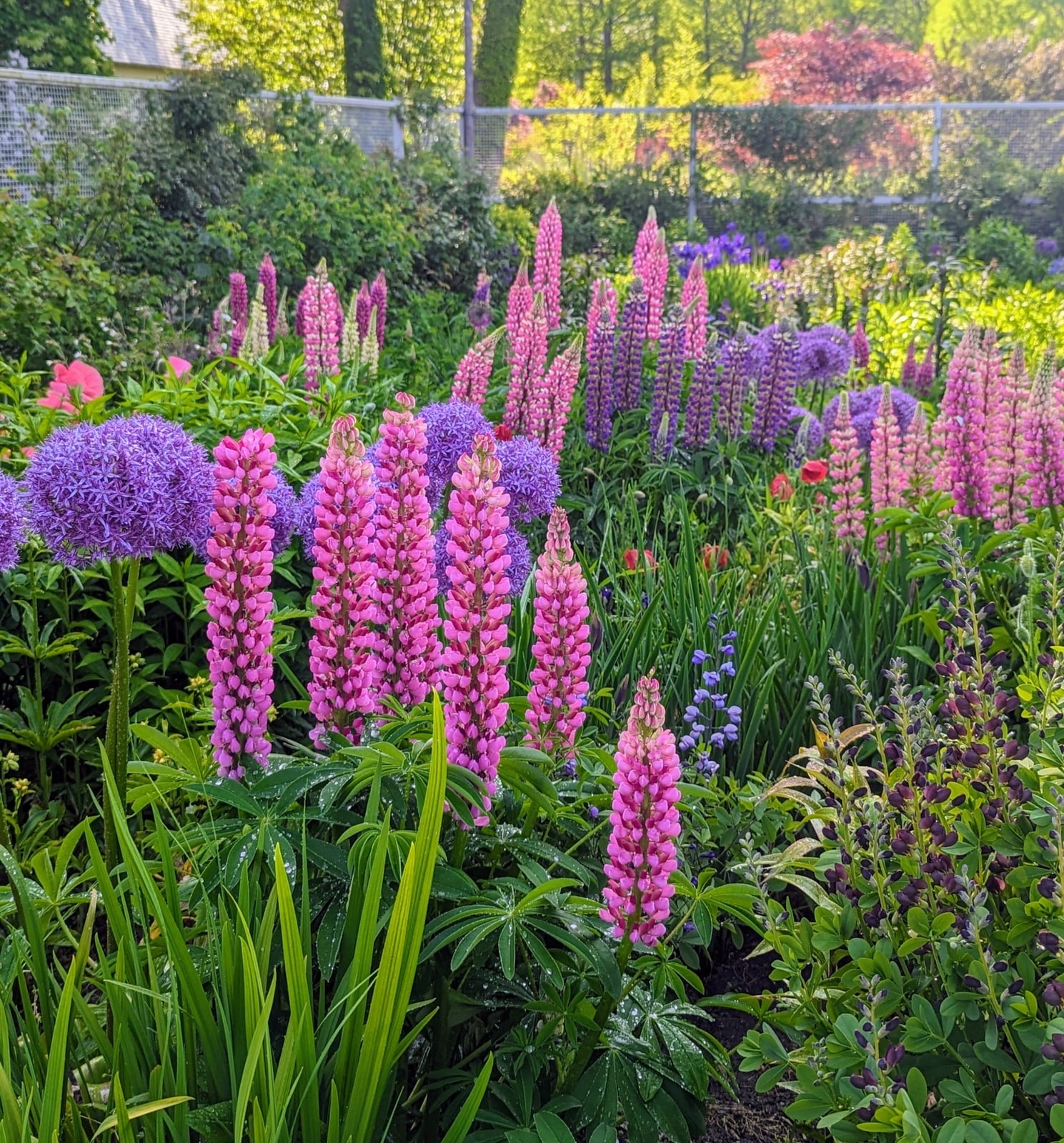
Tall purple lupines rise above rounded allium blooms in this garden, creating a clear vertical contrast within a dense planting. The spiky lupine stalks draw the eye up, while the alliums add soft, spherical shapes at a lower height. This pairing of different flower forms keeps the bed interesting without relying on a wide color range. The palette stays mostly purple and pink, with green foliage filling in the space between. To recreate it, look for one tall, upright flower paired with a rounder bloom at a shorter height, and repeat the duo in clusters instead of single specimens.
Traditional Garden with Layered Beds Along a Stone Wall and Lawn
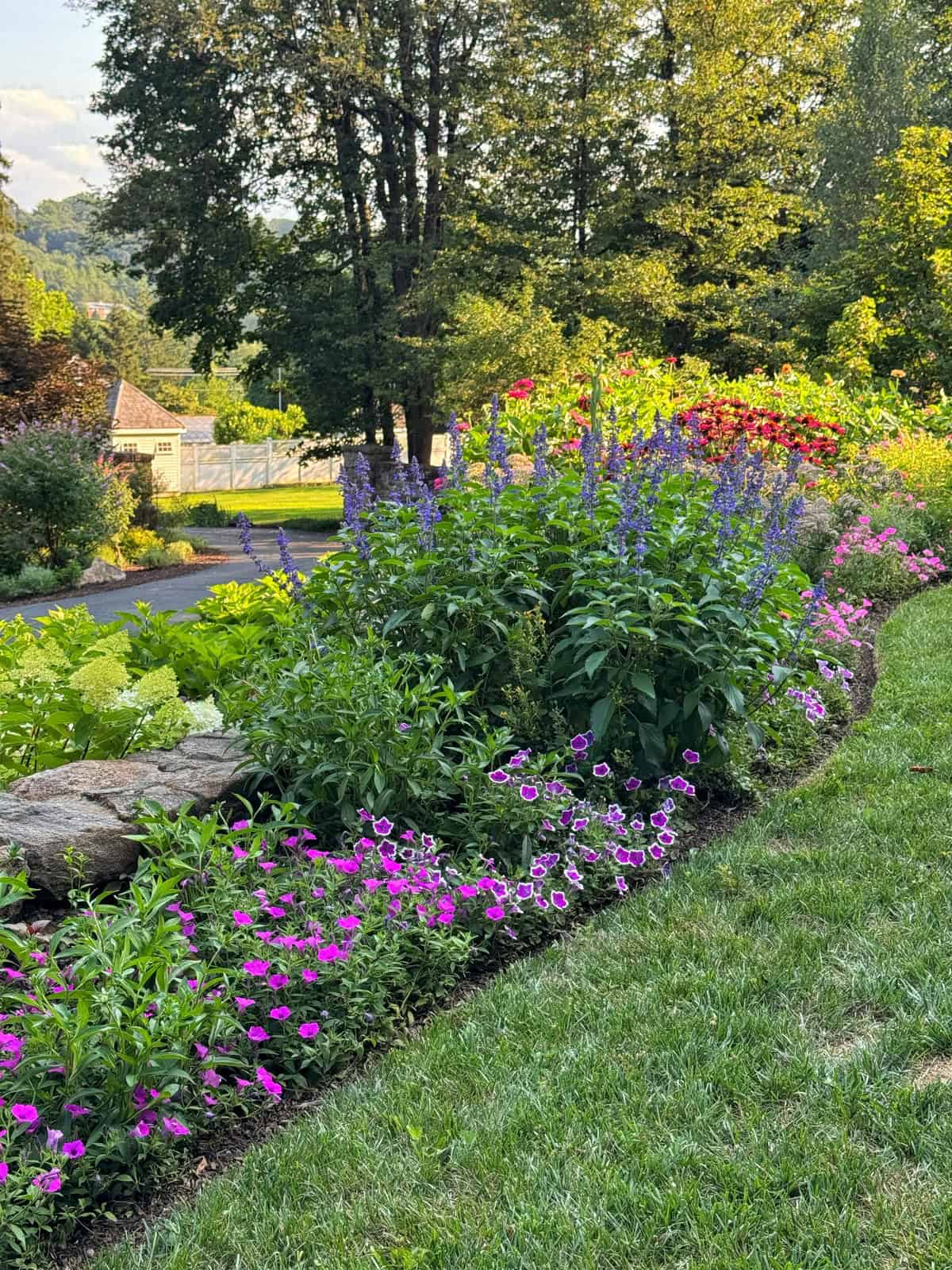
A layered bed along a low stone wall places salvia, roses, and hydrangeas in ascending stages toward the wall. The lawn edge keeps a clean boundary between the flowers and the grass, so the planting reads as deliberate. Soft morning light falls across the bed, helping the purple, red, and white blooms stand out against the stone. If you have a wall or fence line, build your bed in tiers, using the structure as a natural backdrop for taller perennials.
Whimsical Garden with a White Bicycle Planter and Potted Flowers
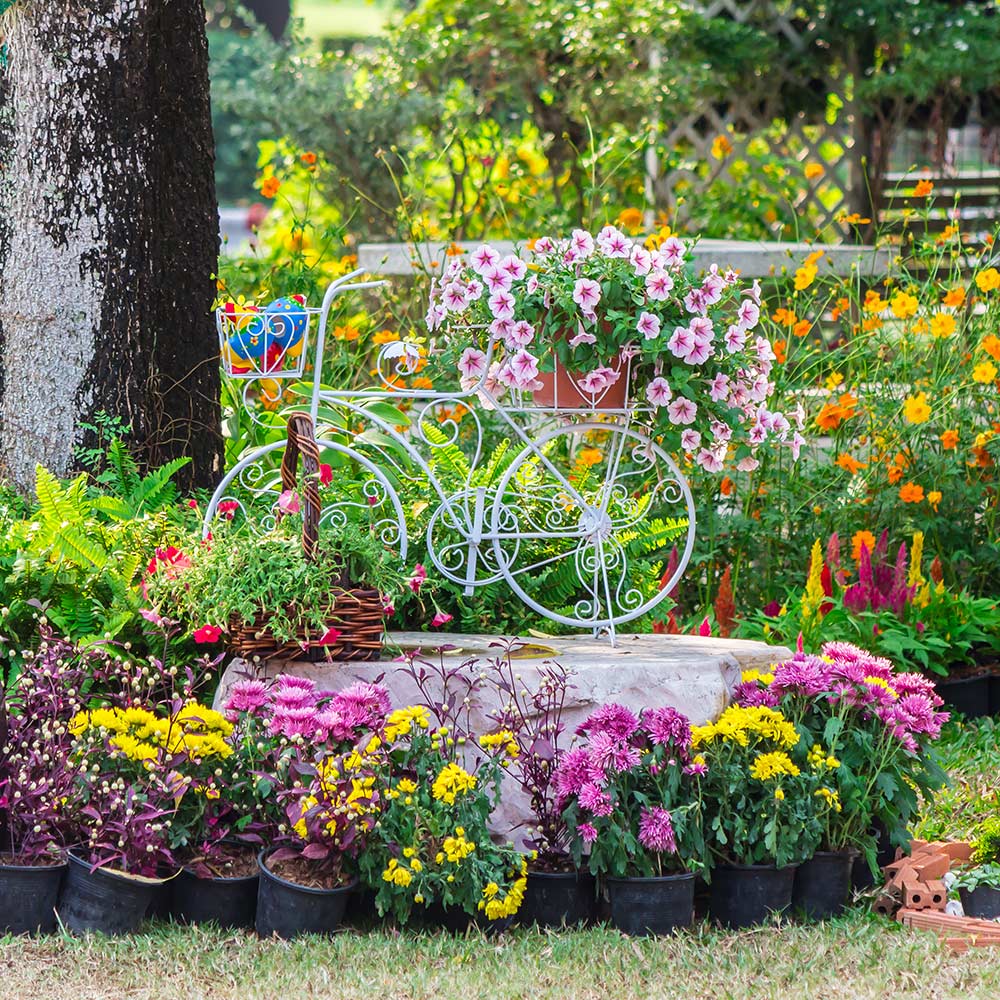
Most garden vignettes rely on a single large pot or a bench as the focal point. A white metal bicycle planter works differently: it combines a functional shape with a decorative purpose, and the open frame lets the flowers take center stage. Here, the bicycle holds pots of pink, yellow, and purple blooms, with a stone base anchoring it in place. The tiered planting means the flowers sit at different heights, so the whole display feels layered without needing a built-in bed.
This kind of piece works when the surrounding garden stays simple, so the bicycle remains the obvious focal point. Repeat a few of the same flower colors in nearby pots to tie the vignette to the rest of the yard. Check that the bicycle is stable on its base, especially if it sits on a slight slope or uneven ground.
Romantic Garden with Blooming Pink Peonies in Golden Hour Sunlight
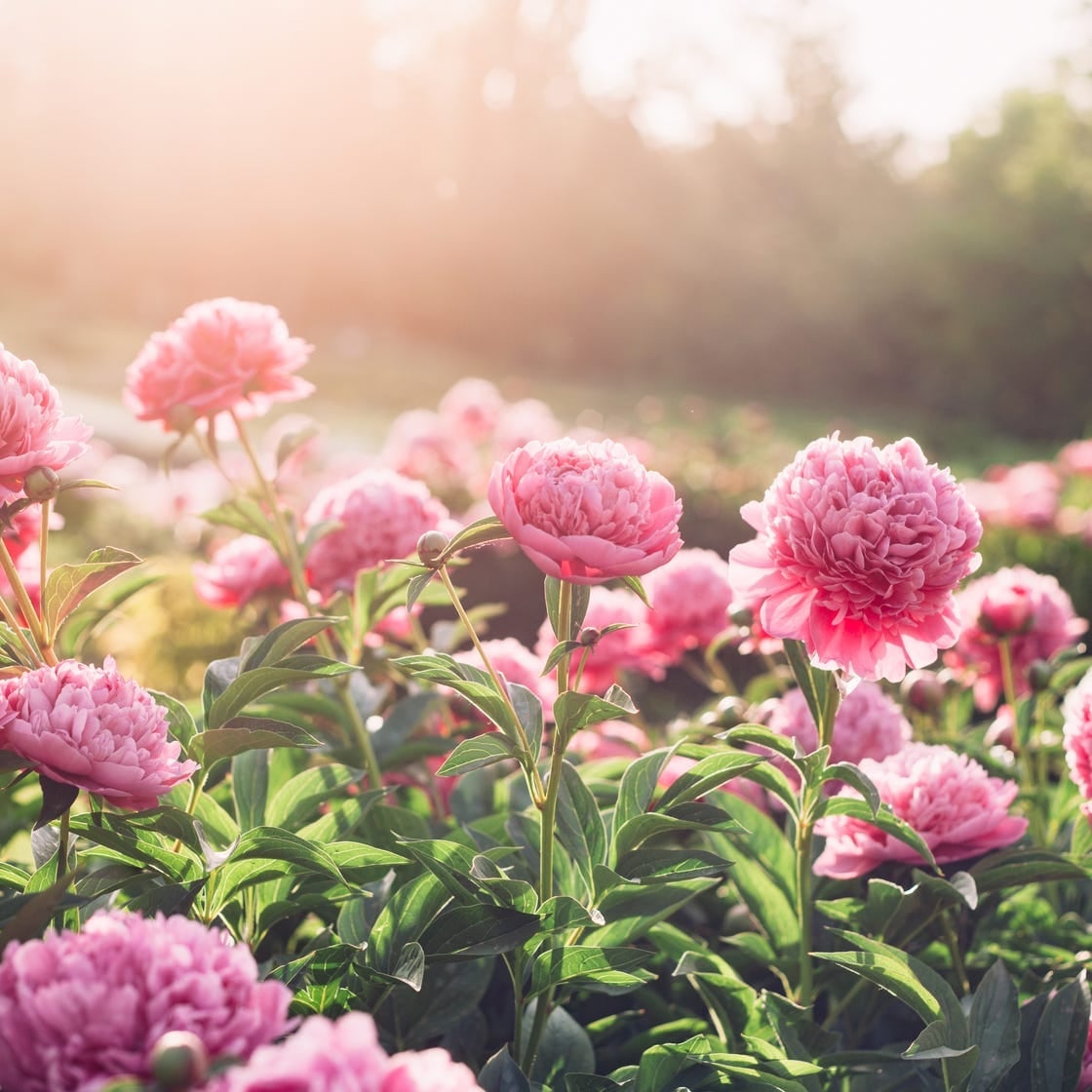
Golden hour light turns pink peony petals almost translucent, giving them a soft, glowing appearance against the green foliage. The low, warm angle of the sun creates gentle highlights on the rounded blooms, making each flower look fuller and more layered. This effect relies on timing: the same peonies in midday sun would lose that softness and read as flat pink. If you have peonies or other large-petaled flowers, position them where they catch late afternoon light, and trim back any leaves that block the sun from reaching the blooms directly.
Expansive Cottage Garden with Abundant Yellow, White, Close-Up Take
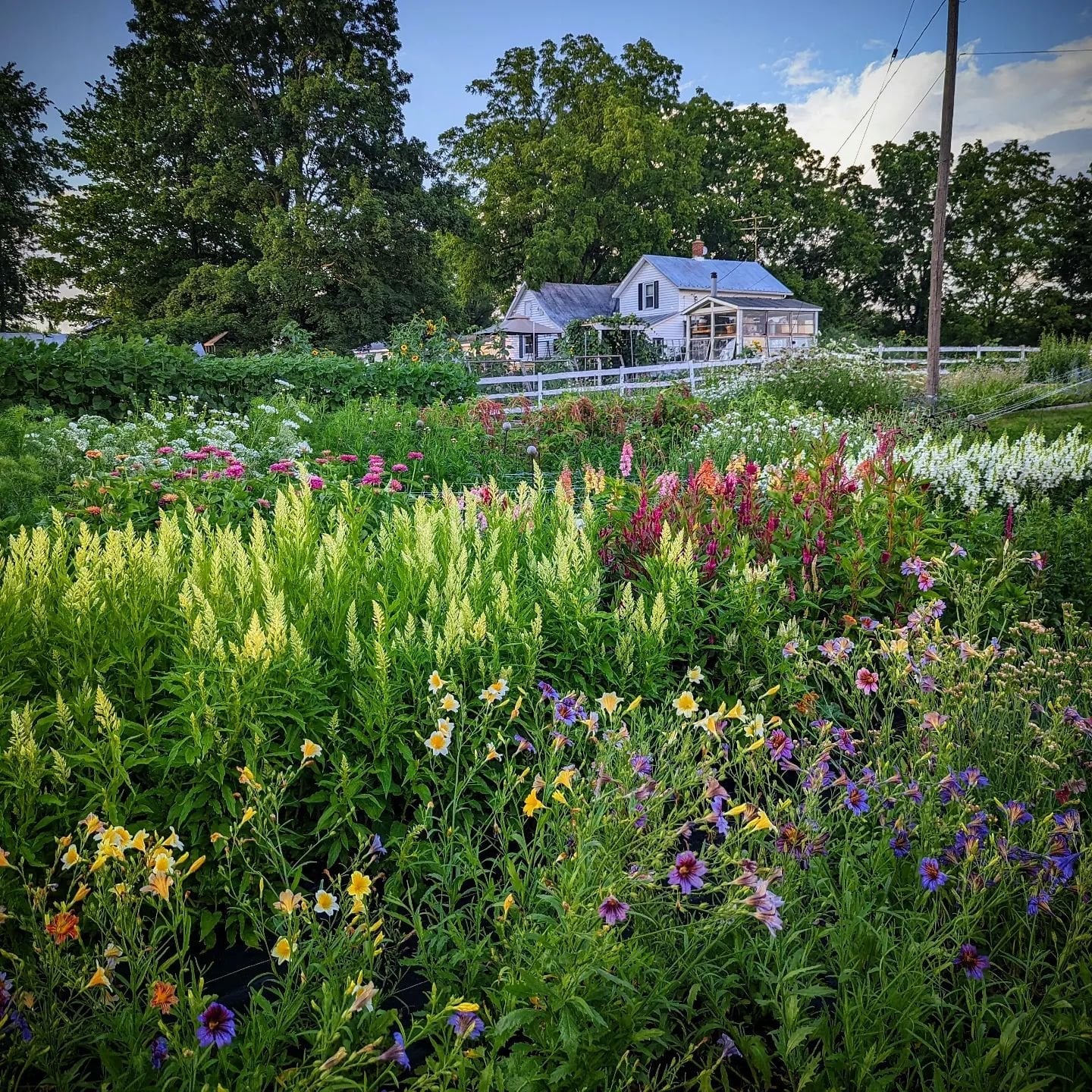
This garden leans into abundance, with expansive flower beds packed in yellow, white, pink, and purple under golden hour light. The informal, cottage style works because the scale feels generous rather than crowded. A distant house anchors the view, letting the mixed flowers take center stage. The layout relies on one color family to dominate. Yellow and white blooms carry the palette, while pink and purple add punctuation. In a smaller yard, swap out some perennials for self-seeding annuals like zinnias or cosmos. They fill gaps fast and keep the look lush without requiring a master plan.
Formal Garden with a Curving Stone Pathway and Orange, Pink Flower
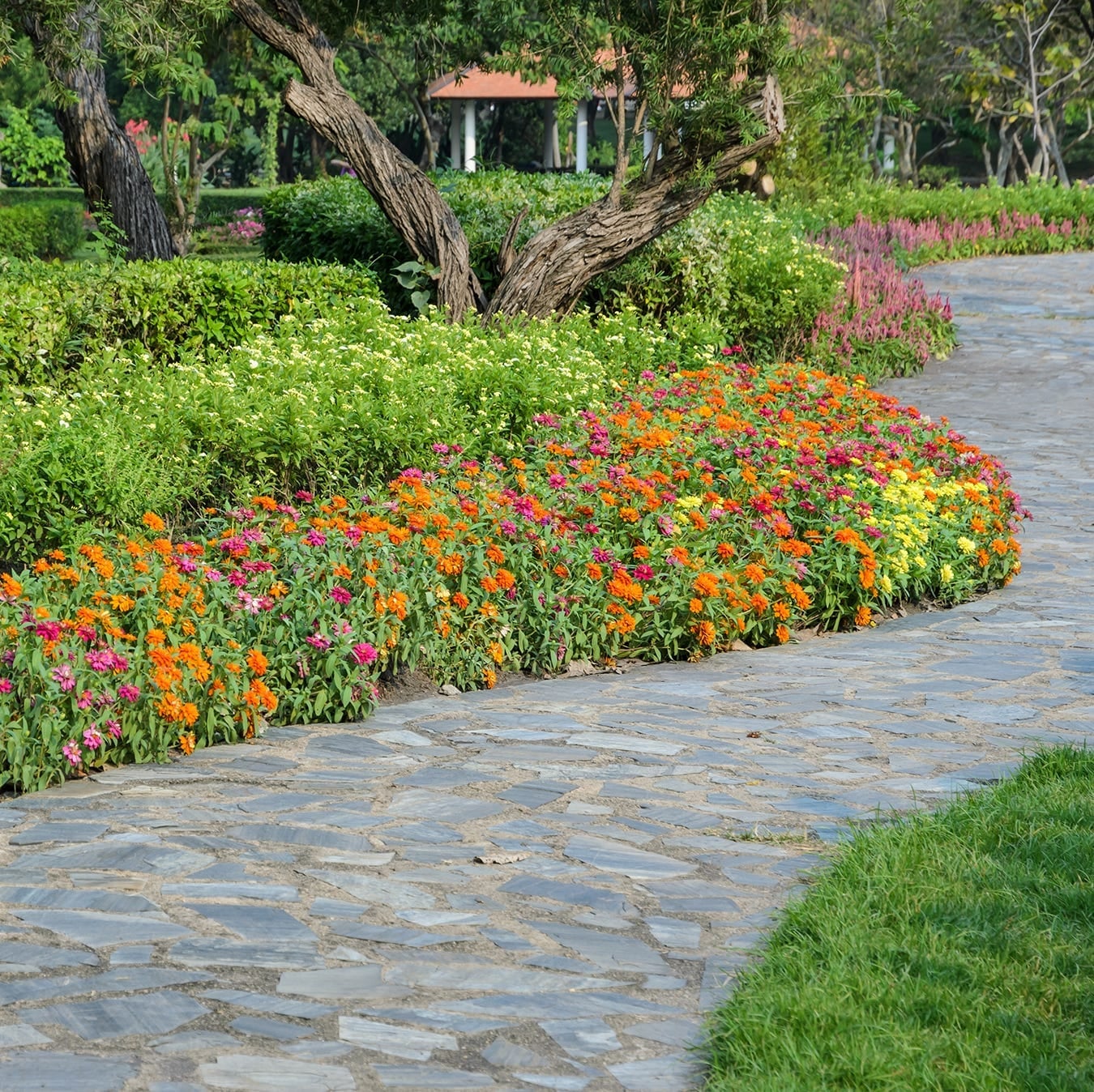
A formal garden might sound rigid, but this curving stone pathway proves otherwise. The border of orange, pink, and yellow flowers softens the stone, and the layout follows the path’s natural bend rather than a straight line. For renters, the trick is to focus on containers rather than permanent beds. Arrange pots of orange and pink annuals along an existing walkway or driveway edge. Group them in odd numbers and vary the heights with a few tall grasses or salvia. The curve creates a sense of invitation, and you can take the containers with you when you move. No digging, no commitment, just the same visual pull.
Daylight and soft sun keep the colors from washing out, so choose flowers that hold their hue in bright conditions. Marigolds, zinnias, and petunias are reliable options. The stone path stays neutral, letting the flower border do the work.
Formal Garden with Winding Gravel Path and Purple, Yellow, Pink
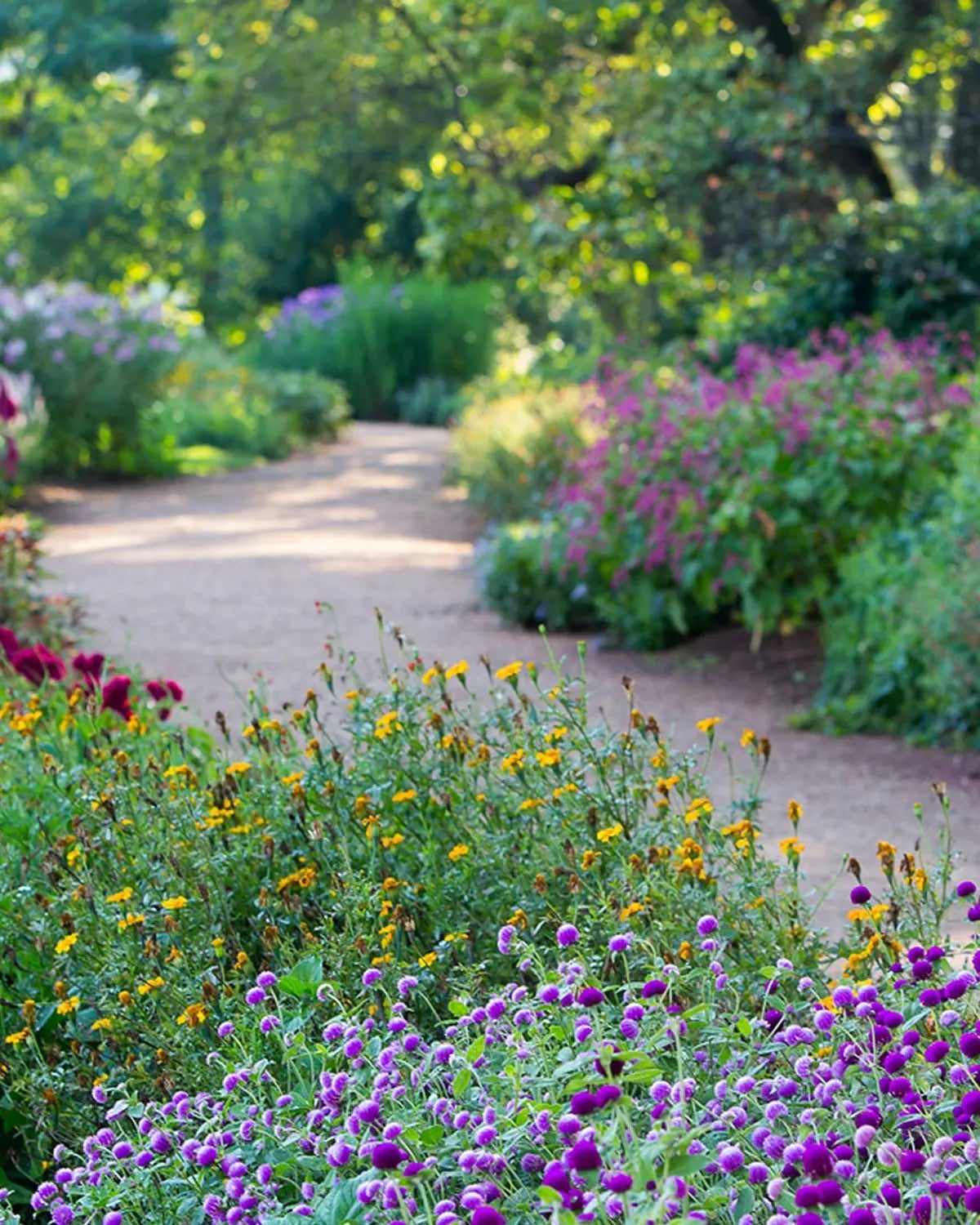
Gravel paths offer a practical surface that drains well and defines a garden’s structure without the permanence of poured concrete. Here, a winding gravel path leads the eye through borders of purple, yellow, and pink flowers. The formal layout gets a relaxed edge from the loose gravel and the diverse blooms. The material choice matters: gravel shifts underfoot, so keep the path wide enough for a wheelbarrow or garden cart. For the borders, choose plants that thrive in well-drained soil. Lavender, coreopsis, and echinacea handle gravel conditions well and keep the palette vibrant through the season.
Cottage Garden with a Curving Pink Flower Mass and Manicured Lawn
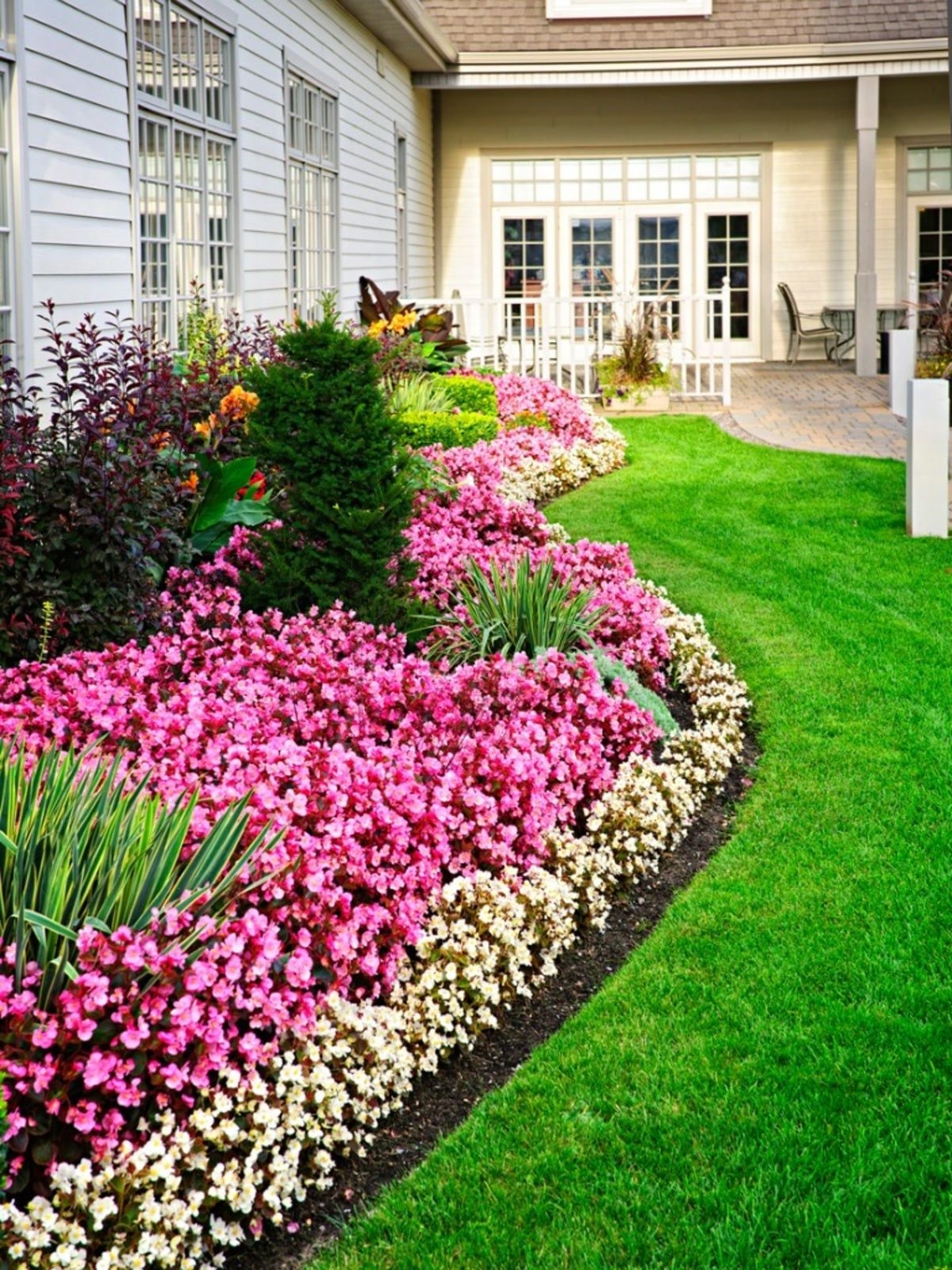
A curving border of pink flowers against a manicured lawn creates a strong visual rhythm. The pink mass reads as the hero, with white and burgundy accents tucked in for contrast. The manicured lawn acts as a quiet frame, letting the color pop without competition. The palette principle here is to use one dominant hue and keep the supporting tones within the same warmth. Pink, white, and burgundy share a rosy undertone, so the border reads as cohesive rather than chaotic. Mulch between plants helps define the curve and cuts down on weeding, keeping the look tidy with less effort.
Final Thoughts
A flower garden asks for regular deadheading, seasonal cleanup, and a watchful eye on water needs. Mulch helps keep roots cool and weeds down. Divide perennials every few years to keep them vigorous. The best gardens look full without feeling crowded; leave enough room for paths and sitting spots. Check your USDA zone before choosing plants that need to come back each year. A garden is a slow project, not a weekend flip. Start with one bed, see what thrives, and build from there. The best flower garden is the one you actually enjoy being in.