

A fairy garden is a miniature world tucked into a corner of your yard or a container on the patio. It’s a chance to build a tiny landscape with plants, pebbles, and small structures that feel like a secret hideaway.
These 19 fairy garden ideas show how to create that sense of discovery using everyday items and a little imagination. You’ll find ways to work with broken pots, tree trunks, and simple planters to make a space that feels alive and personal.
Whimsical Fairy Garden with Miniature Bridge and Swing
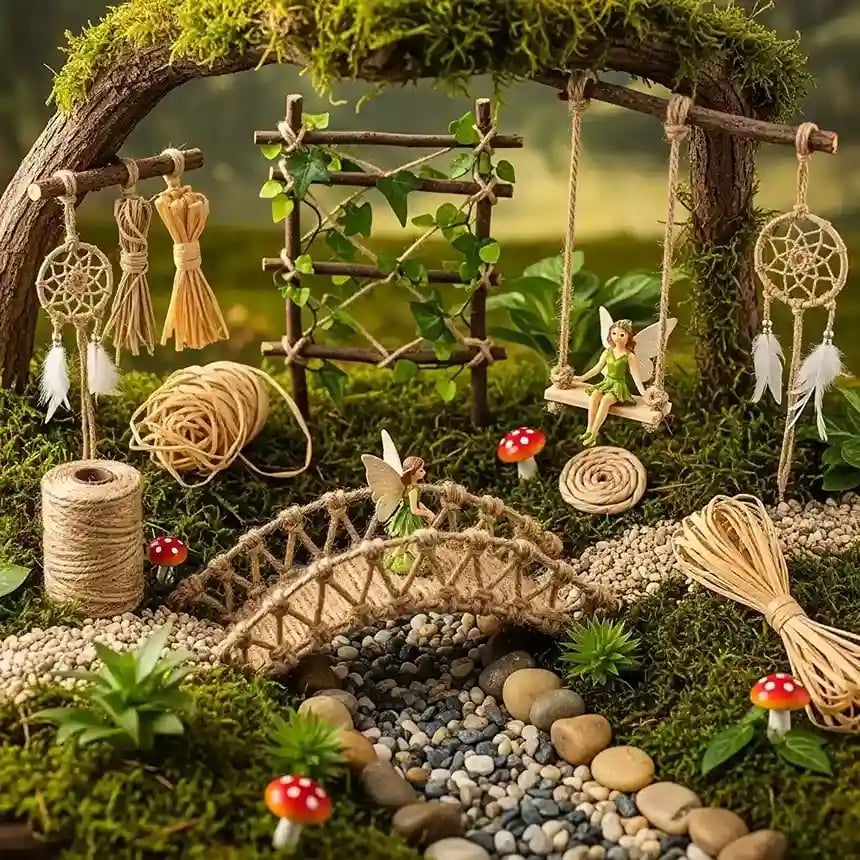
A miniature bridge crosses a small water feature, and a tiny swing hangs nearby, making the garden feel like a discovered scene. The layout places the bridge as the center point with a path leading toward it, so the eye moves through the space rather than landing on one spot. Dreamcatchers and a ladder add small surprises without crowding the compact footprint. Keeping the water feature shallow and the plants low around the bridge keeps the scale readable. In a whimsical garden, the layout decides whether the story reads as a hidden glen or just a pile of accessories.
Enchanting Miniature House in a Potted Fairy Garden
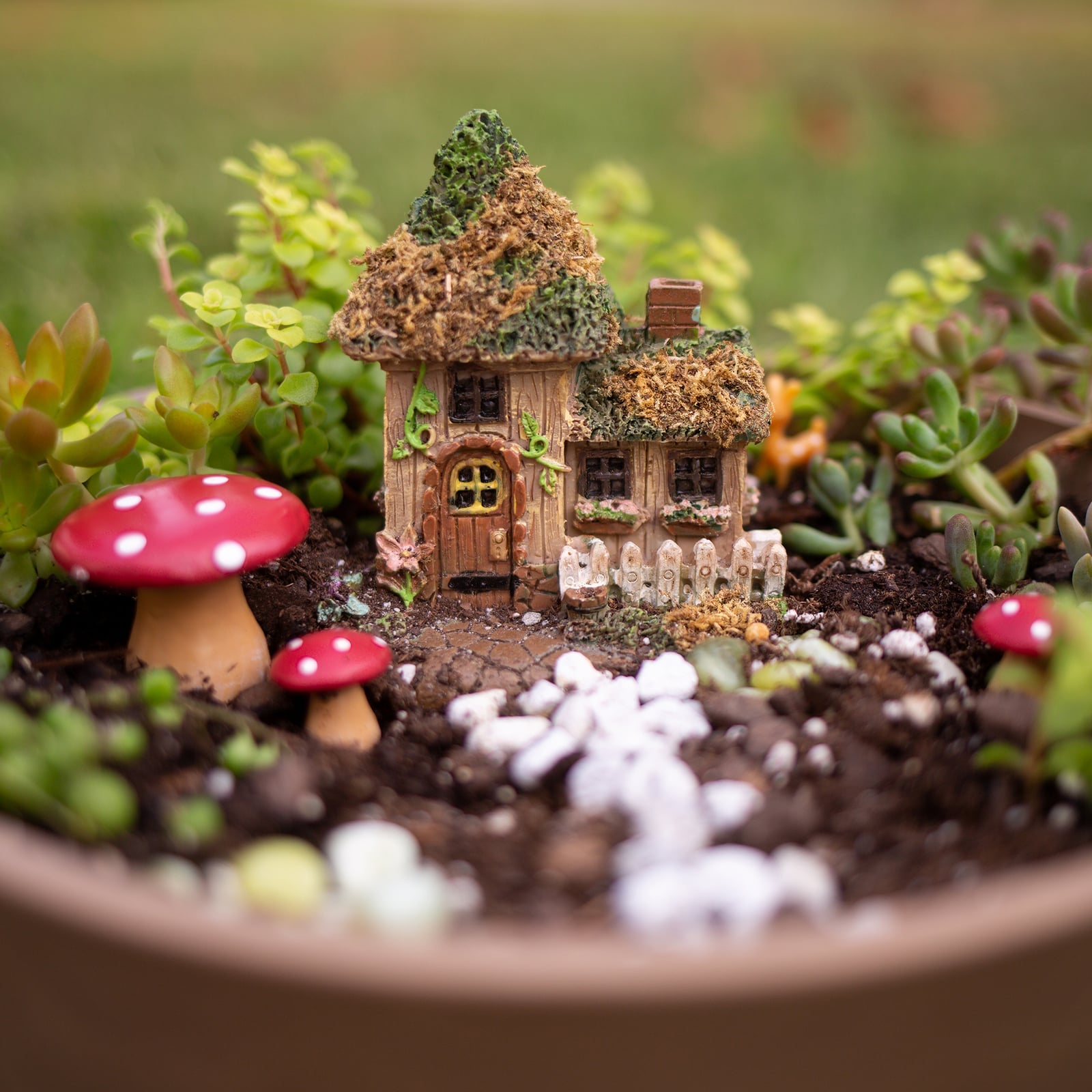
A miniature house with a moss-covered roof anchors this potted garden, and the mix of materials gives it texture that a single surface cannot. Wood forms the house structure, moss softens the roofline, stone lines the base, and plastic mushrooms add color without wilting. The combination keeps the scene from looking like a toy display. When choosing materials for a fairy garden, match durable outdoor pieces with natural elements that weather gracefully. Plastic accents hold their color, while moss and stone develop character over time. The house reads as lived-in because the materials feel chosen, not random.
Creative Fairy Garden Design in a Broken Terracotta Pot
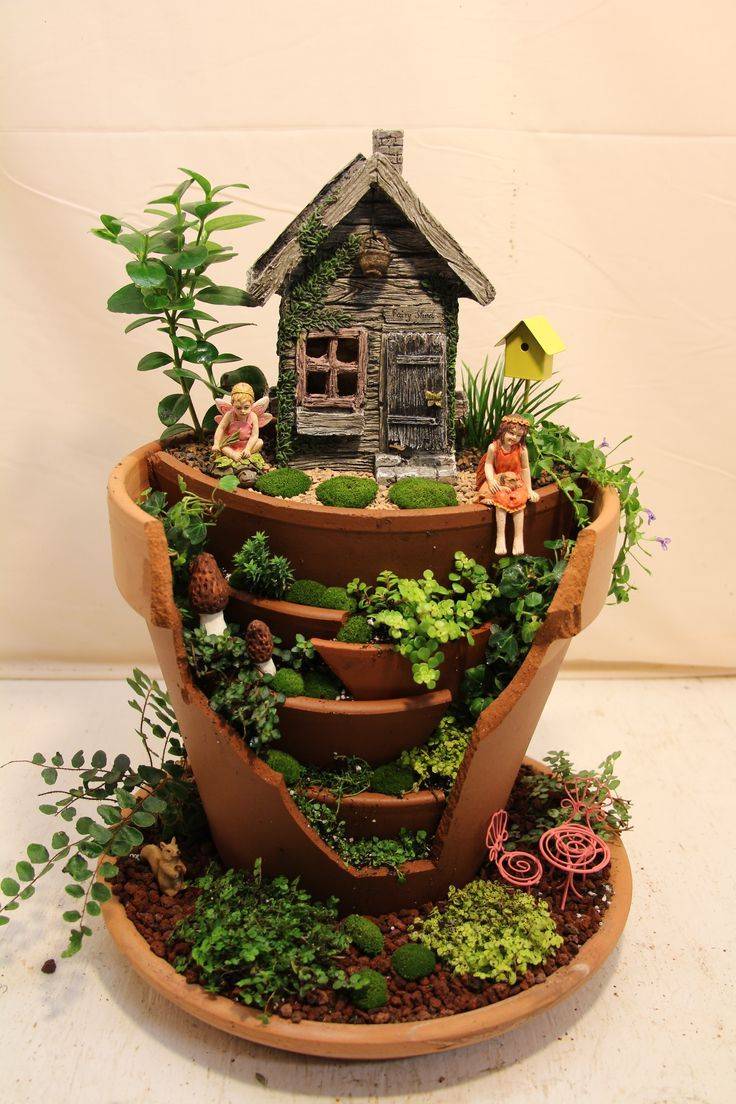
Why does a broken pot make a better fairy garden than a whole one? The shard creates a natural slope, so the scene gains depth without extra work. A miniature house sits inside the broken edge, with tiered steps leading down to a small garden bed. Fairy figurines stand along the path, and the jagged rim frames the whole setup like a stage. Yellow and pink flowers break up the brown terracotta and green foliage, preventing the rustic palette from feeling one-note. The broken pot solves a layout problem: it provides a built-in retaining wall and a visual boundary. What looks like damage becomes the best feature of the design.
Succulent-Filled Broken Pot with Miniature House
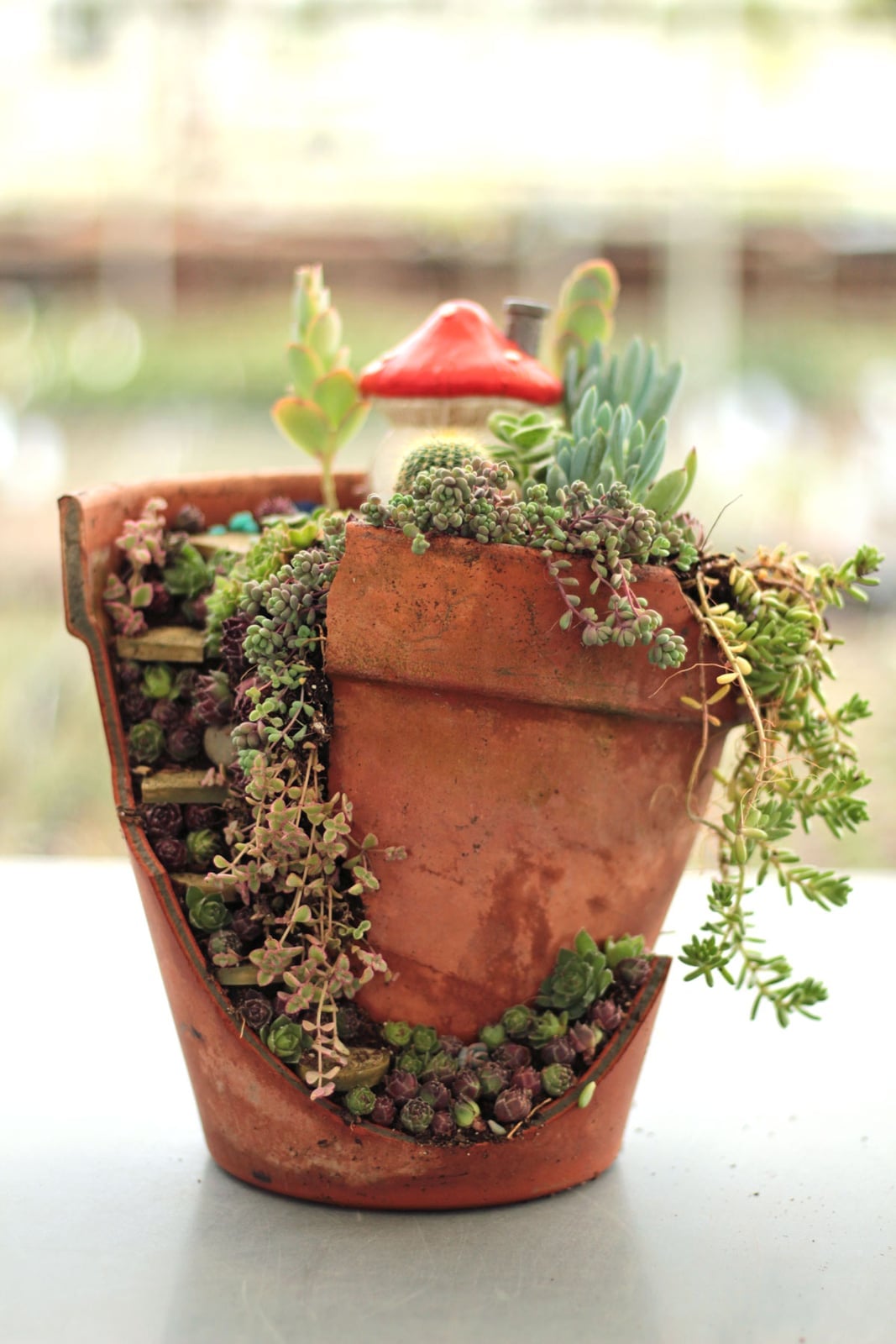
Succulents cascade over the broken edge of a terracotta pot, softening the sharp ceramic break with rounded green and pink rosettes. A miniature house tucks into the soil behind them, and the succulents act as a natural fence between the house and the pot rim. The arrangement works because succulents thrive in the same conditions that miniature houses prefer: bright light, infrequent water, and well-draining soil. The broken pot becomes a planter with a built-in spill, so the succulents do the work of creating a layered silhouette that a whole pot would need extra plants to achieve.
Fairy Garden Integrated into a Tree Trunk
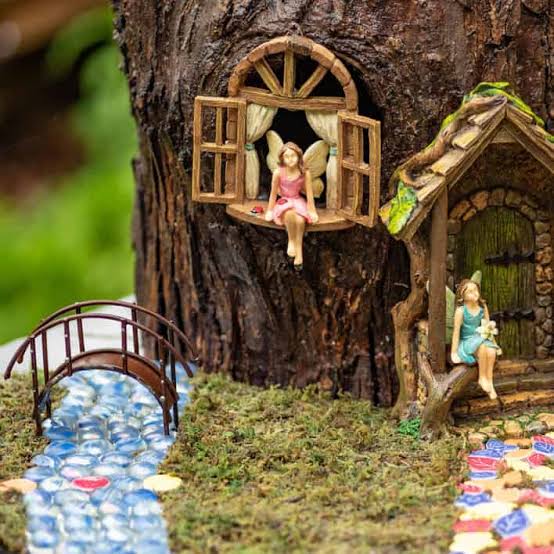
A tree trunk becomes the backdrop for a fairy garden when you work with the bark rather than against it. Miniature houses nestle into the crevices, a bridge spans a mossy river carved into the root flare, and fairy figurines stand on flat spots where the bark has worn smooth. The trunk provides vertical interest that a pot cannot match, and the natural curve of the wood creates separate rooms for each vignette. For a renter-safe swap, use a large stump or a fallen log instead of a living tree. No digging, no damage, and the garden looks like it grew there on its own.
Miniature Table Setting in a Green Metal Bucket Fairy Garden
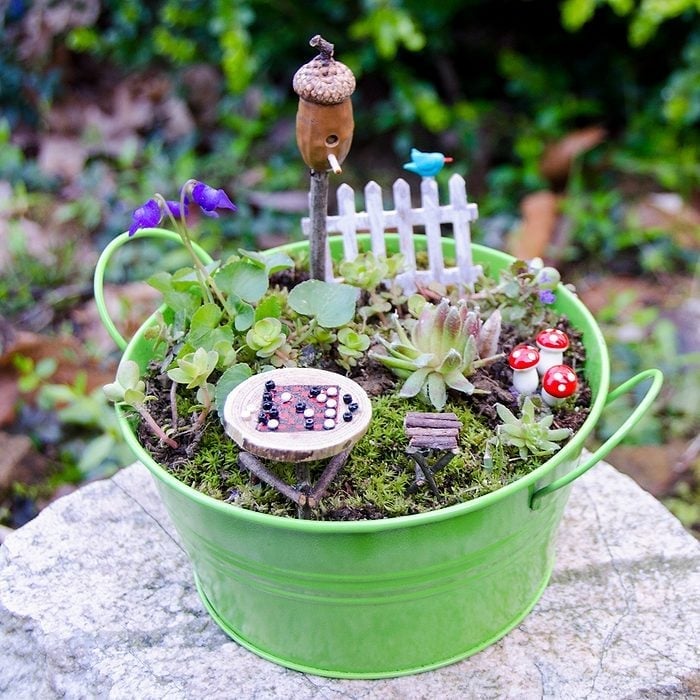
A miniature table setting turns a simple container into a tiny outdoor room. The green metal bucket holds the scene, with a small wooden table and bench at the center, surrounded by moss and plants. An acorn-shaped birdhouse and tiny mushrooms add detail without crowding the space. The compact layout means the table stays the focal point, so the eye lands there first. The bucket gets a full look from above, like on a low wall or patio step. Keeping the plants low around the table keeps the scale believable.
Purple Mushroom Fairy House in a Ceramic Planter
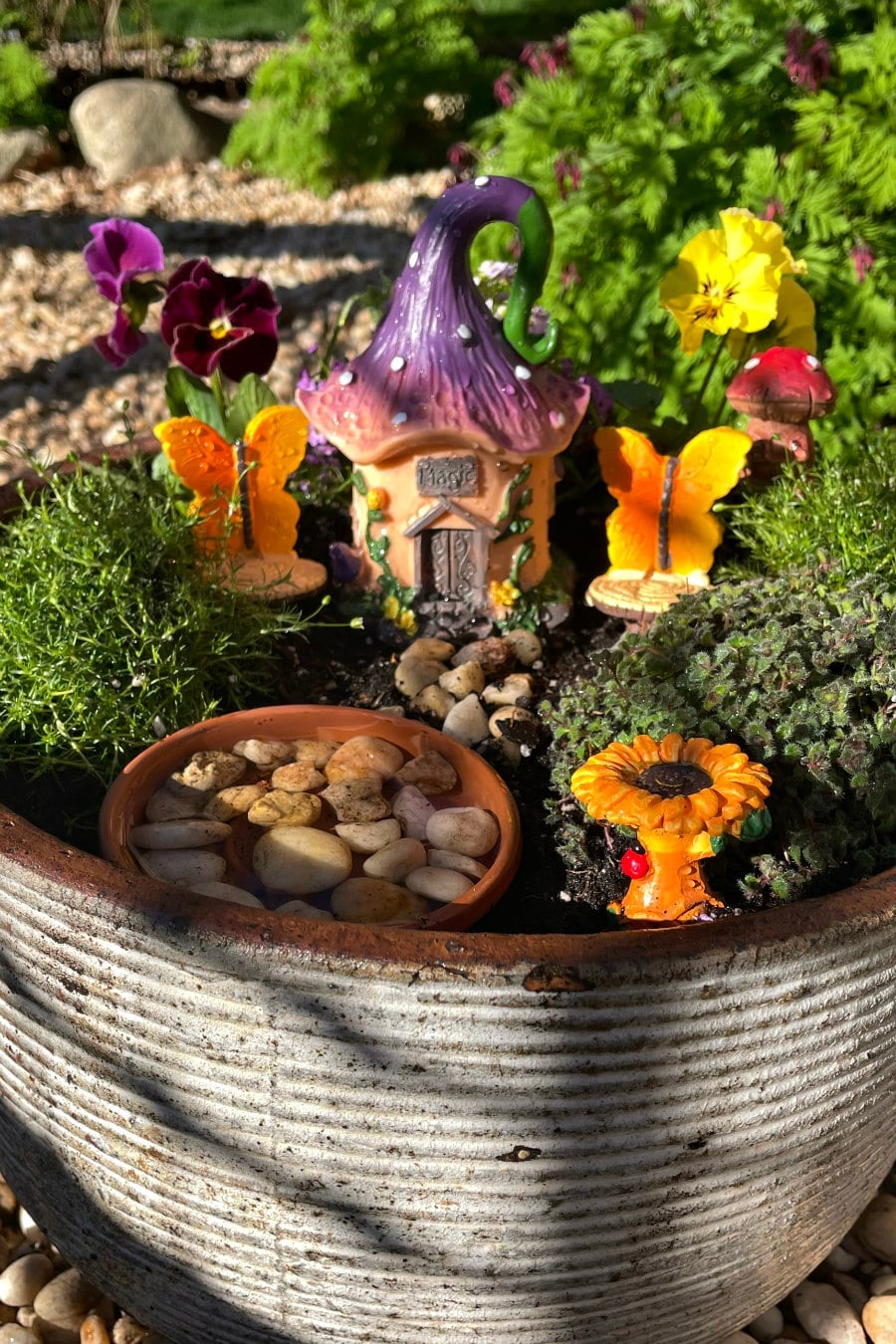
The purple mushroom house has a broad cap and a thick stem, with orange spots near the base. A sunflower rises behind it, and small butterfly figures rest on the soil. The ceramic planter keeps everything contained, so the house stays the main event. For renters, this is a smart move: the whole garden lives in one pot that moves with you. No digging, no permanent change to the yard. Just set the planter on a porch step or a sunny corner and swap out the flowers by season.
Enchanting Miniature Garden on a Wooden Deck
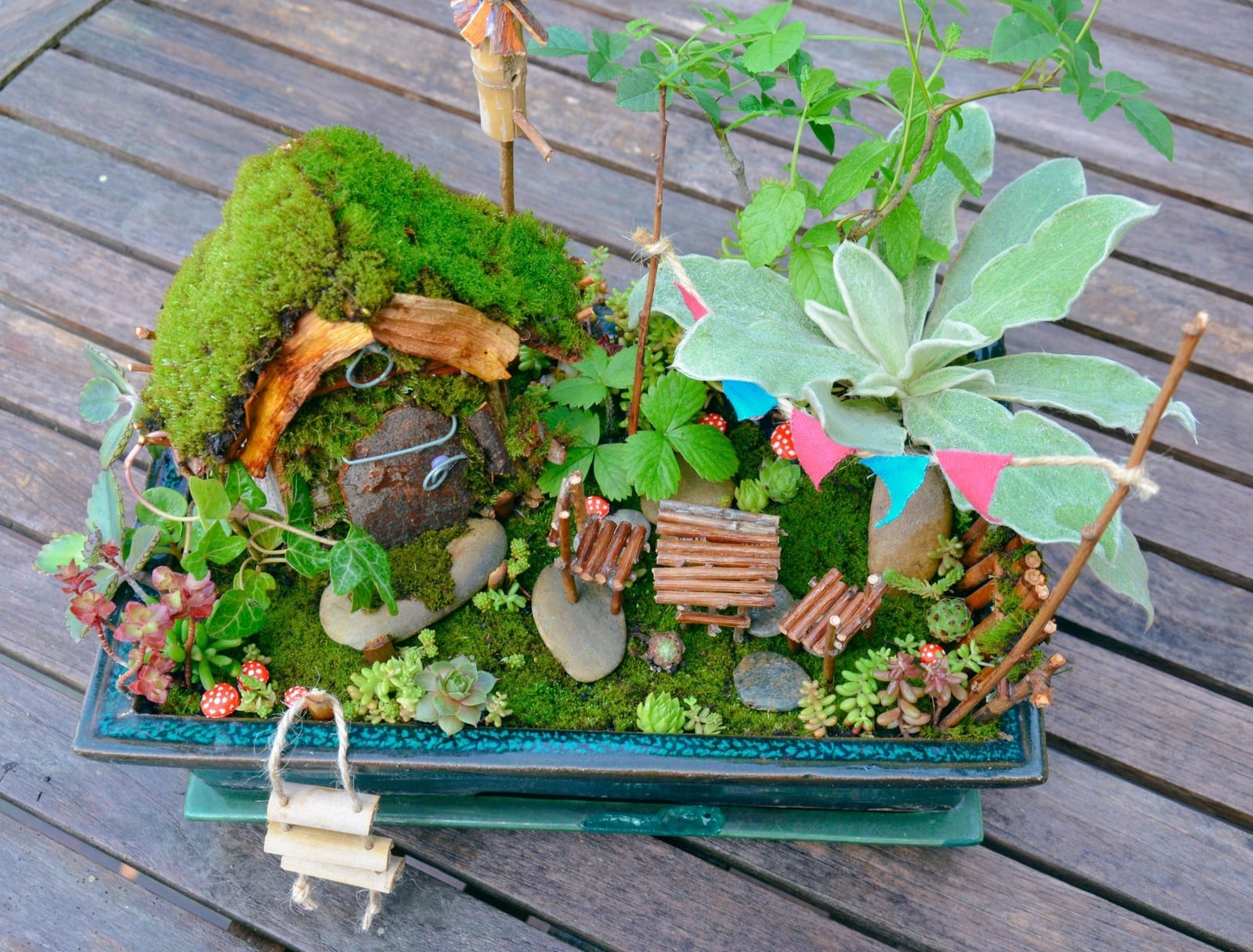
This miniature garden fills a rectangular planter set on a wooden deck, with a moss-covered house at the center. Tiny benches and succulents surround it, and fabric bunting hangs overhead. The layout works because the house anchors the scene and the benches create a clear front yard. The deck surface acts as a natural border, keeping the garden contained without a hard edge. Place the planter where it gets morning light and afternoon shade, so the moss stays green and the succulents don’t scorch.
Rustic Fairy Garden with Miniature Animals in a Broken Pot
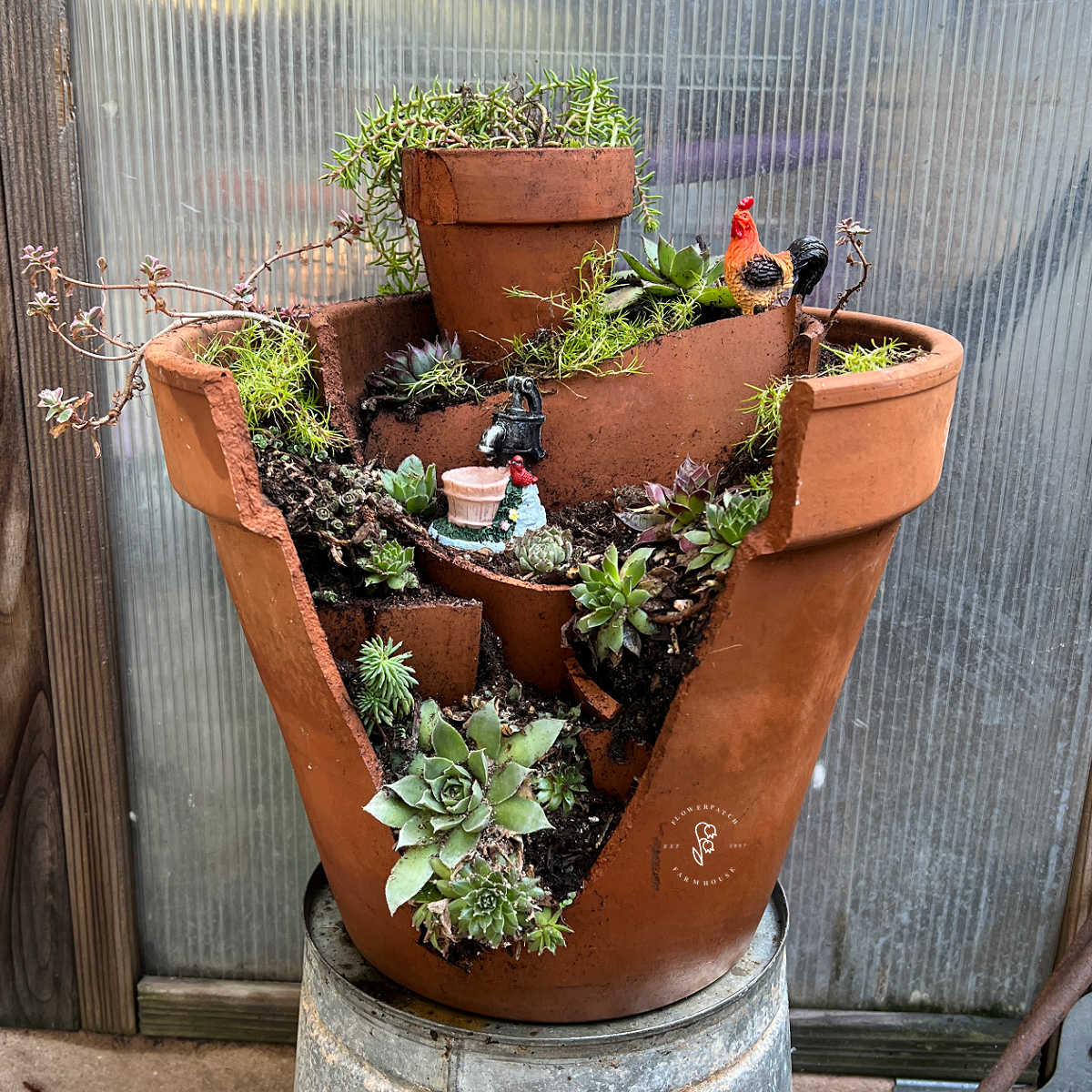
What keeps a broken pot from looking like an accident? Using the break as a design feature. This rustic fairy garden uses a cracked terracotta pot as a tiered planter, with succulents spilling out of the opening. A miniature chicken and rooster stand near a tiny watering can, and moss covers the soil. The rough edges of the pot contrast with the smooth succulents, making the break feel intentional. Terracotta is porous, so it holds moisture well for the plants but dries out faster in hot weather. Group it with other pots to create a miniature village across the patio.
Two-Tiered Fairy Garden Display on a Galvanized Stand
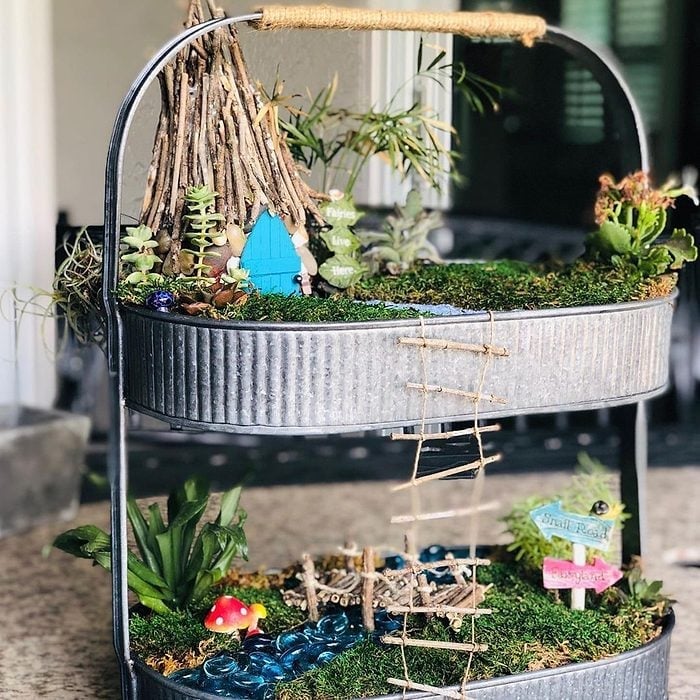
The galvanized stand has two levels, with a miniature house on the top tier and a bridge and ladder on the lower one. Moss and small plants fill the gaps between the pieces. The stand lifts the garden off the ground, so the scene sits at eye level on a table or rail. This changes the way you see the scale: the house feels taller because it has a clear base beneath it. The metal stand holds up well outdoors, but the plants need drainage, so check that the tiers have holes or use a liner.
Whimsical Fairy House in a Terracotta Bowl
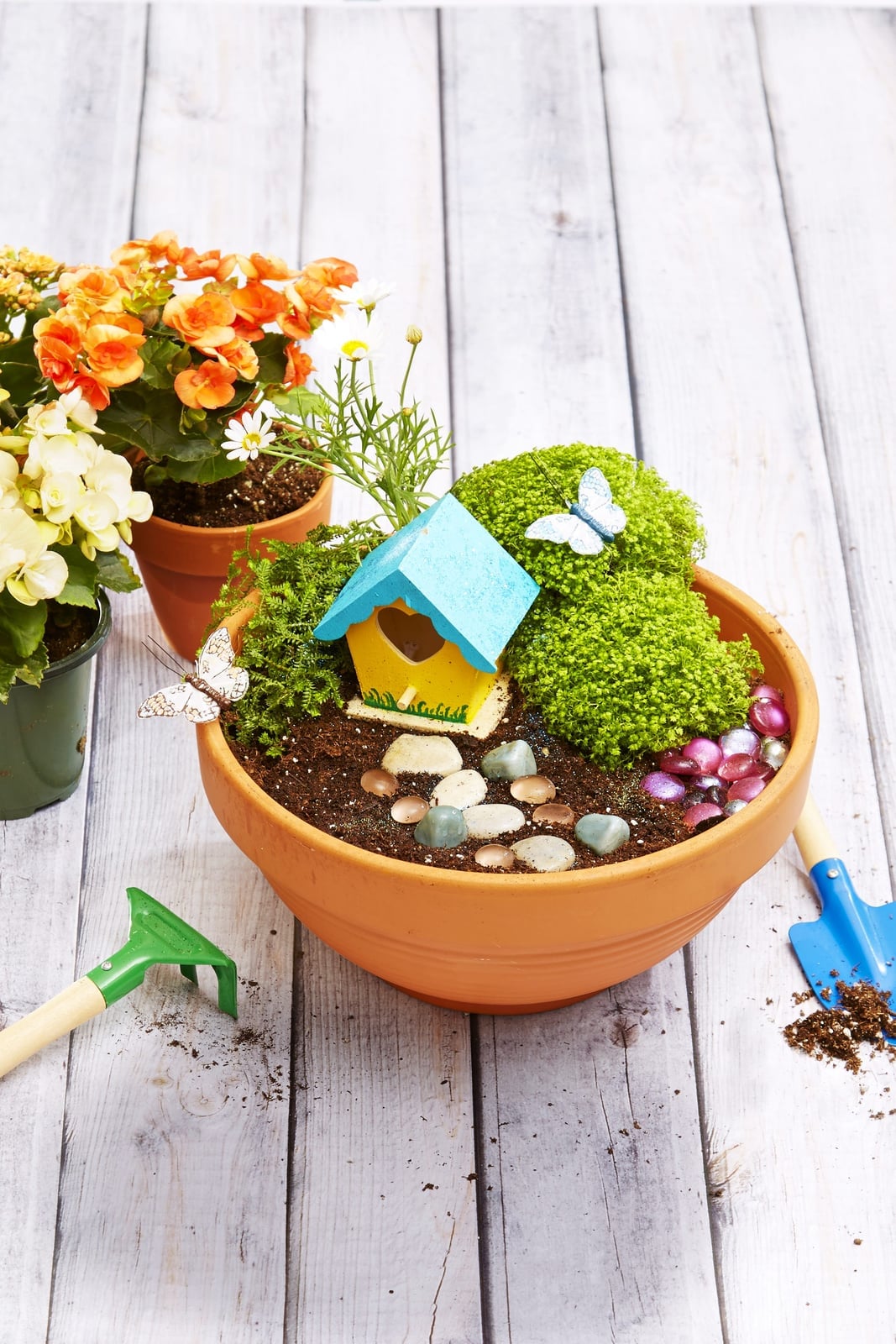
A compact fairy garden like this one works best when you let a single structure anchor the scene. Here a blue fairy house with yellow accents sits on a bed of moss inside a wide terracotta bowl, with small stones and butterfly decorations filling the space. Keeping the central element prominent and the ground plain simple makes the miniature world feel complete without looking crowded.
Detailed Miniature Fairy Garden Scene in a Large Planter
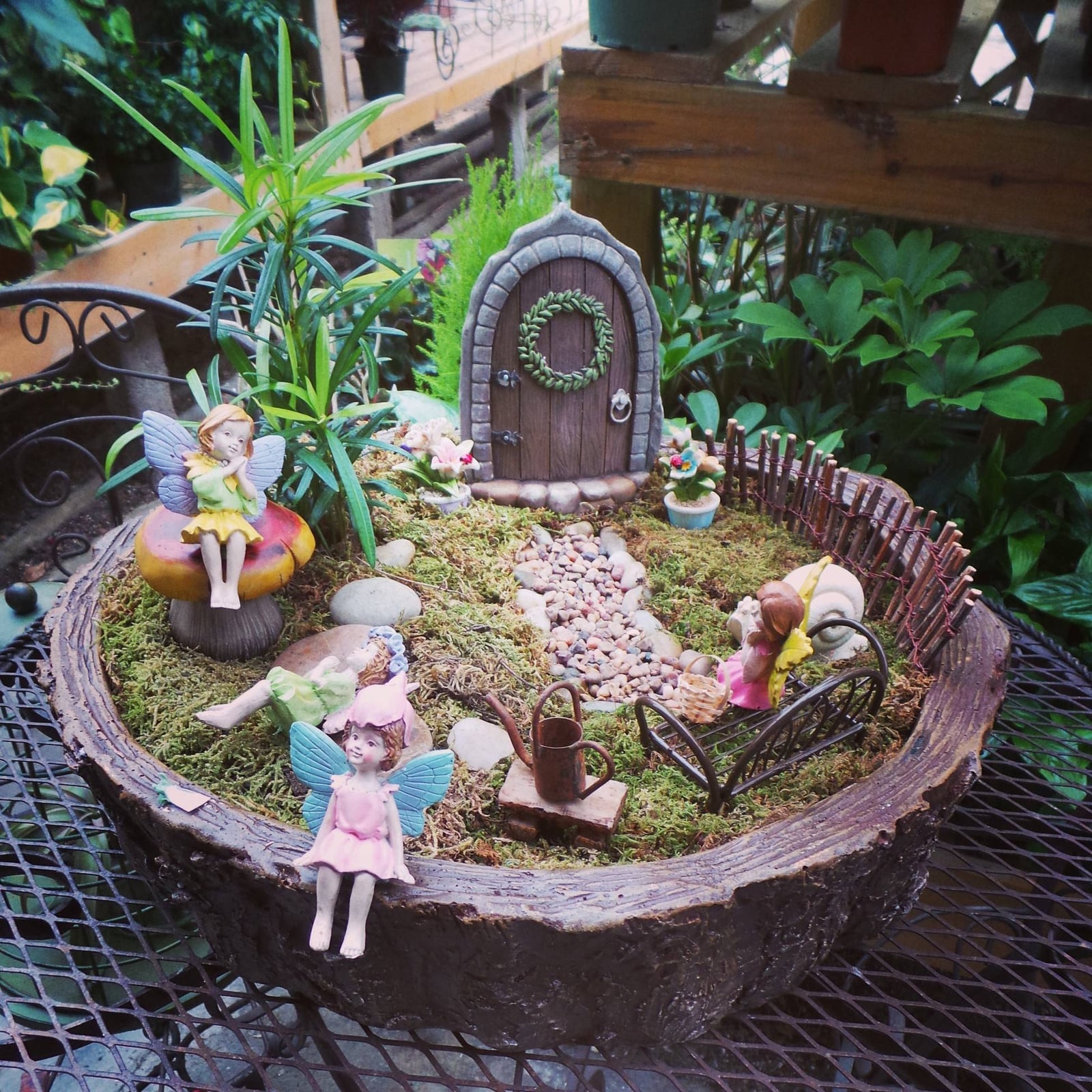
A fairy garden with lots of tiny pieces can feel cluttered unless the palette holds it together. This one stays grounded with green moss and brown wood, then adds pink and blue accents through a miniature house, fence, watering can and figurines. The ratio leans heavy on the neutrals so the color adds playful detail without chaos.
Sticking to one or two accent colors across all the accessories keeps a detailed scene coherent. When every little object shares the same pink or blue, the eye moves through the planter instead of landing on a single spot.
Multi-Tiered Fairy Garden in Stacked Planters
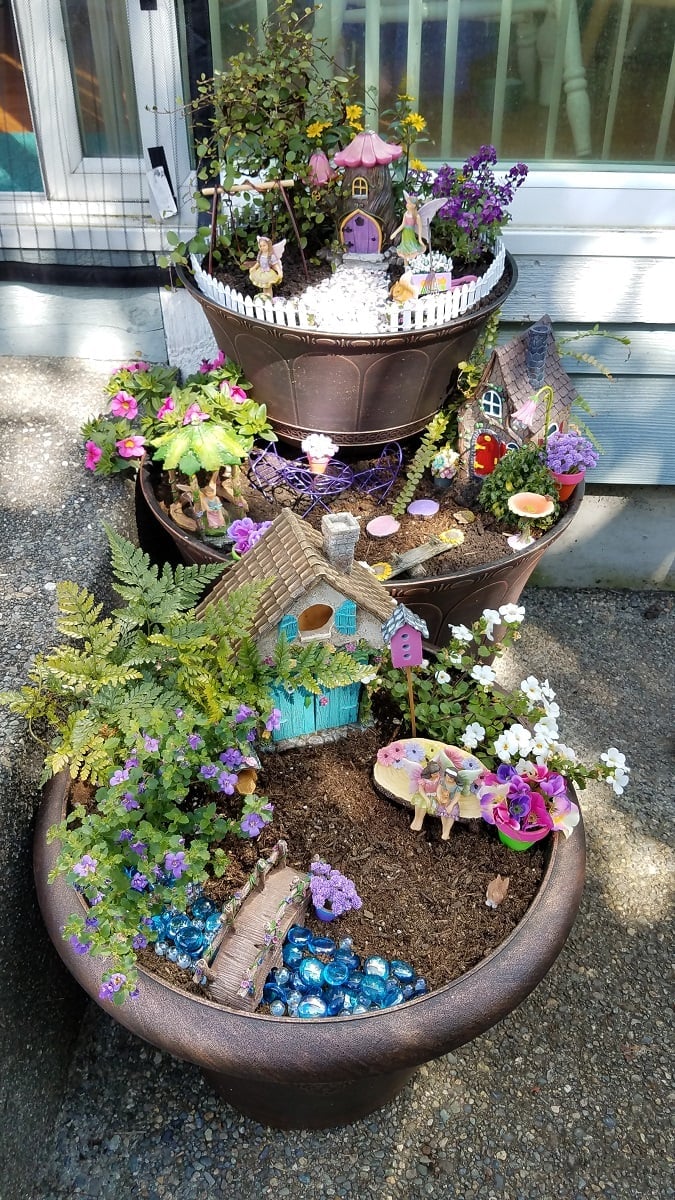
Stacking planters creates separate levels for different parts of the story. This arrangement uses three tiers with fairy houses and bridges on the upper sections and gravel paths winding down through the lower one. The vertical layout makes a small footprint feel much larger, and each tier gets its own moment.
Charming Miniature Fairy House and Bench in a Planter
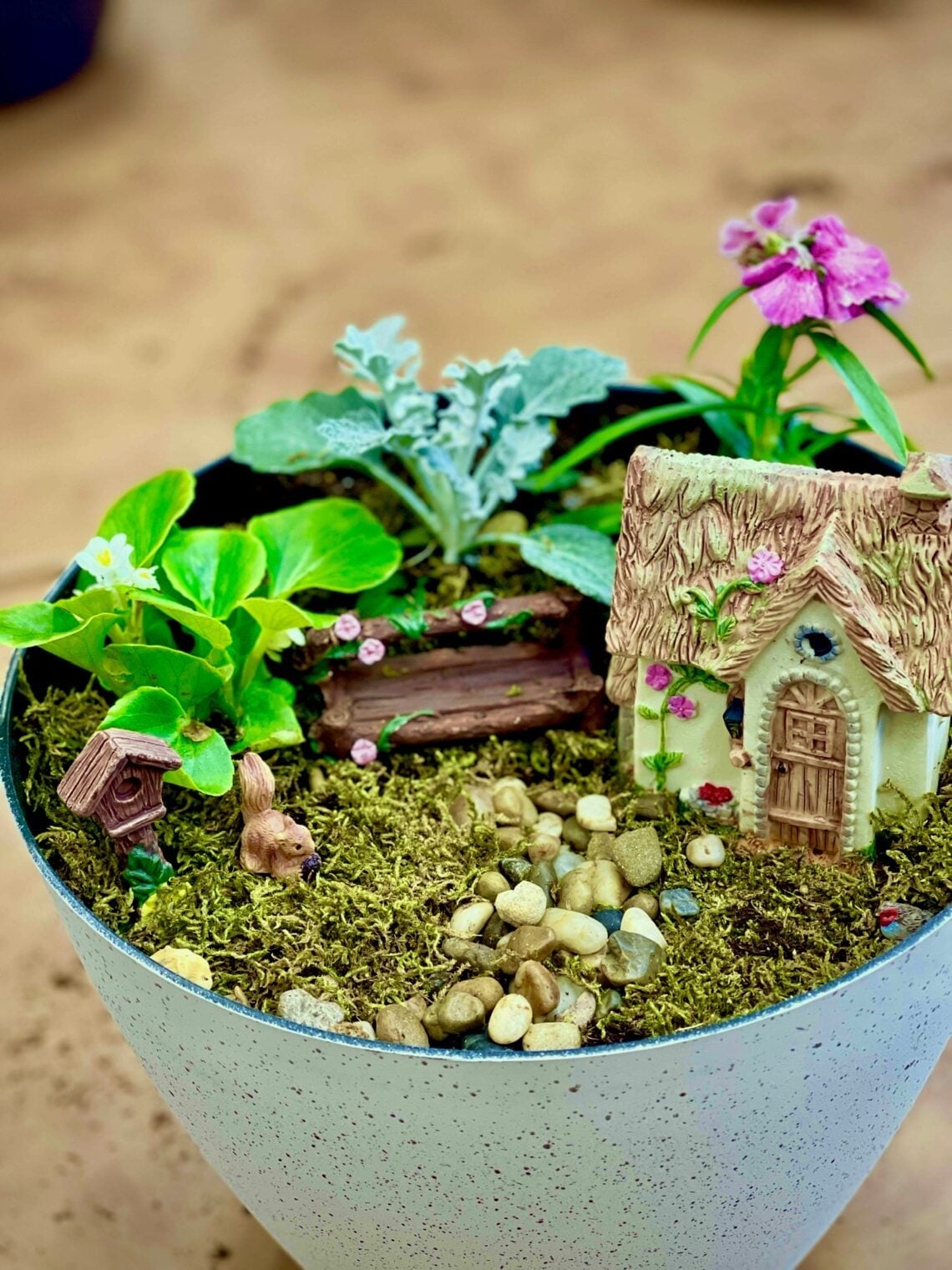
This planter works because the lighting is clean and even. A miniature house, bench and birdhouse sit among moss and flowers in natural daylight, with no deep shadows hiding the details. When you place a fairy garden in full sun or bright open shade, the small pieces stay readable and the scene looks deliberate.
Whimsical Fairy Garden Display in a Rusty Wheelbarrow
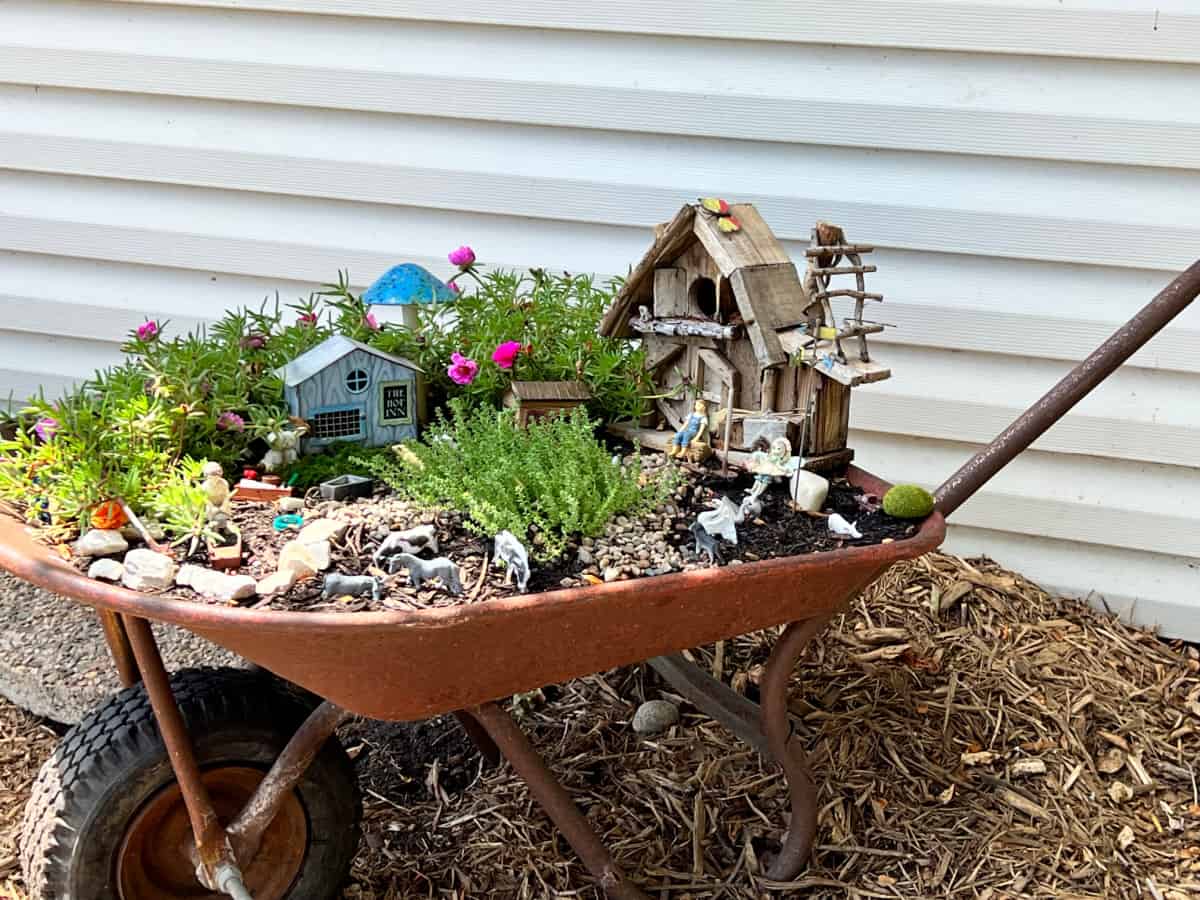
A rusty wheelbarrow makes a practical container because it already has handles and a wheel for moving the whole display around. This one holds miniature houses, a birdhouse and fairy figures among plants, with the metal body adding a weathered backdrop that contrasts with the bright blue and pink accents. The deep bed gives enough soil depth for small plants while the patina keeps the look from feeling too precious.
Fairy Garden with Blue Birdhouse and ‘Fairies Welcome’ Sign
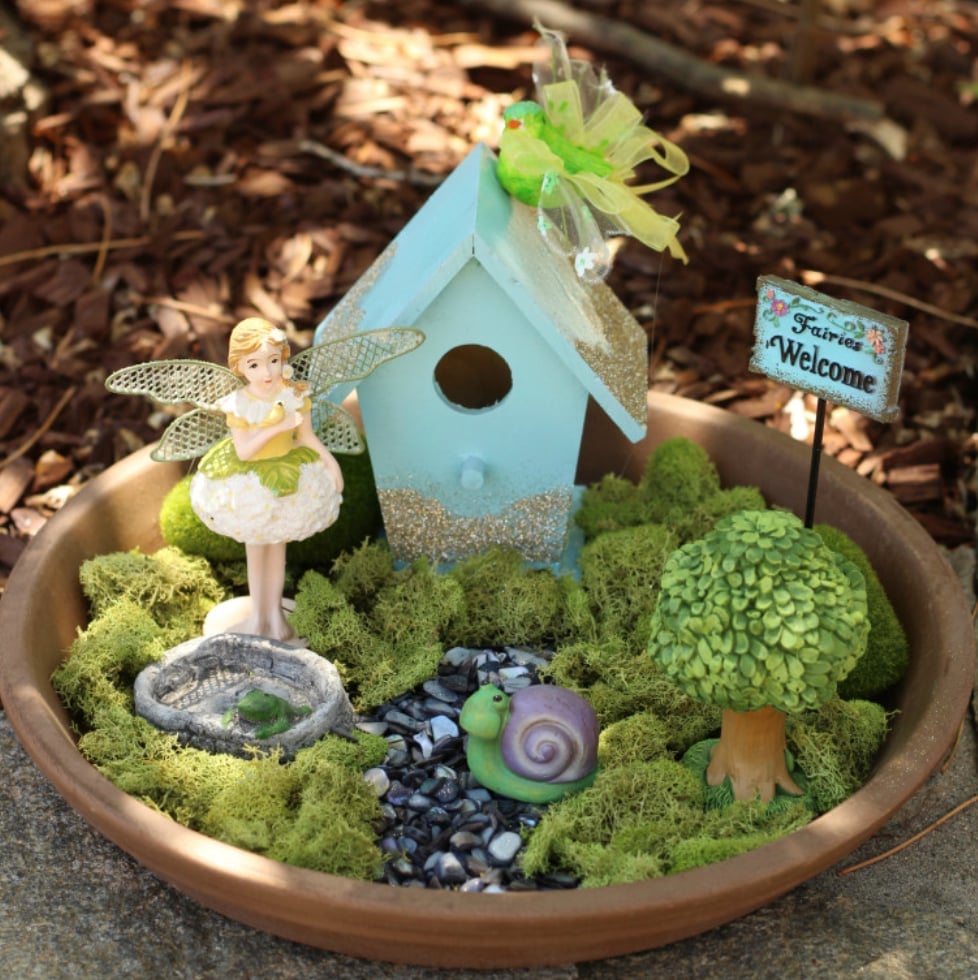
A blue birdhouse with gold glitter gives this compact potted scene its focal point. The wooden welcome sign, moss ground cover, and a tiny snail figure add the storybook details that make a fairy garden feel lived in. White miniature flowers and a small tree balance the palette so the blue stays the star. When you build a scene around one saturated color, keep the palette neutral or green. That way the color looks deliberate and the garden does not feel busy.
Miniature Fairy Garden in a Blue Plastic Container
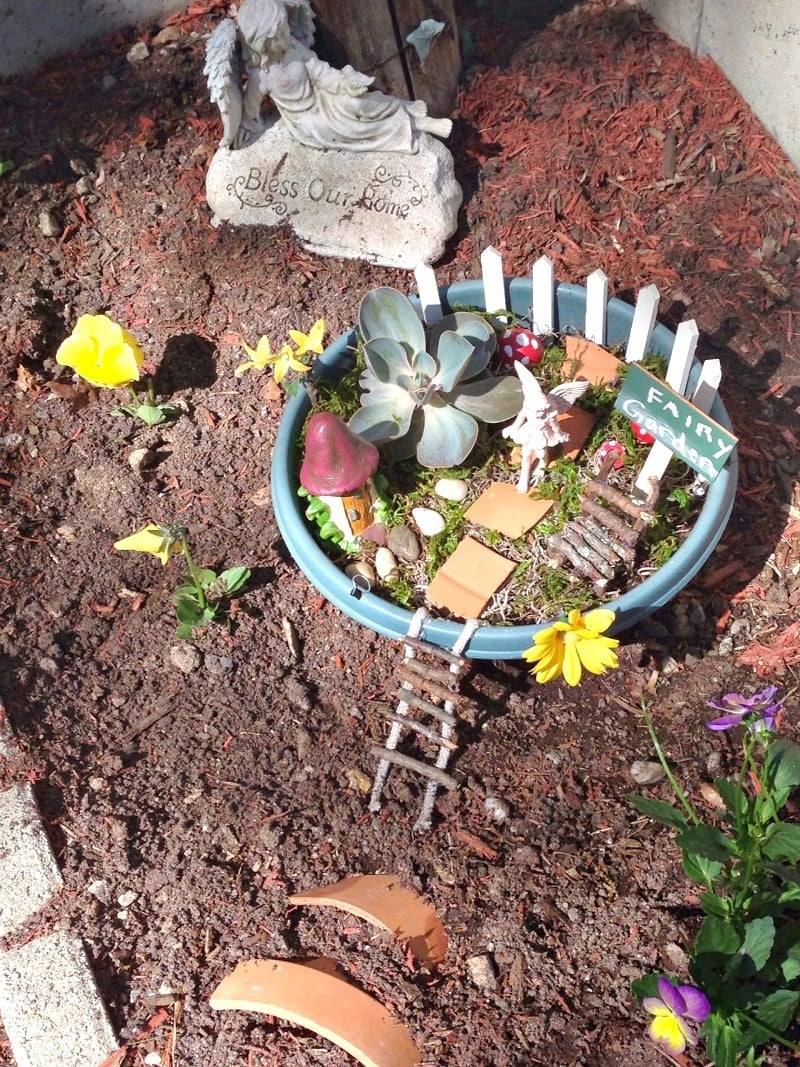
A renter-friendly fairy garden uses a container that can move with you. A blue plastic bowl holds soil, moss, pebbles, and a tiny picket fence without needing a permanent garden bed. Miniature figures and faux mushrooms add the whimsy, while a succulent keeps the planting low-maintenance. An overhead view shows how a compact scene can still have layers: ground cover, mid-height plants, and a small fence for vertical interest. Because the container is lightweight and unbreakable, you can rearrange the scene on a patio, balcony, or steps without worrying about drainage holes or winter cracks. Just lift the whole thing and go.
Enchanted Miniature Fairy Garden with Evening Fairy Lights
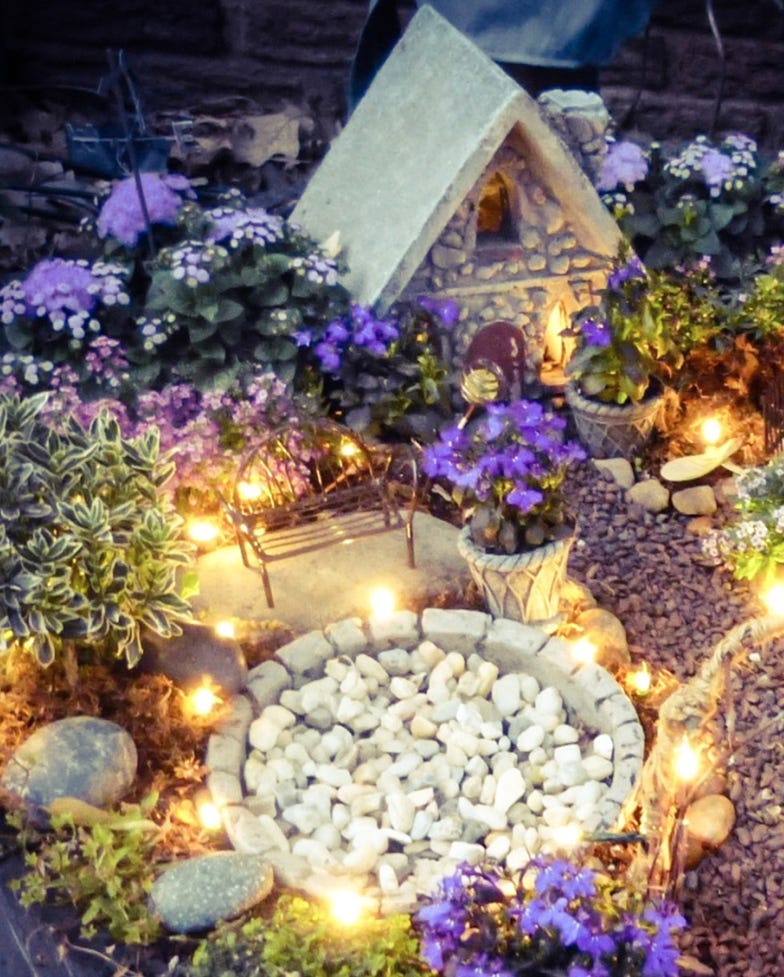
A daytime fairy garden relies on moss, stone, and ceramic details for charm, but an evening version uses small fairy lights to shift the mood from quaint to enchanted. In this scene, a miniature house with a bench sits on a gravel path, surrounded by potted plants and a stone border. The lights are strung low over the garden bed, so they glow through the leaves without washing out the tiny architecture. The palette stays cool with purple and green accents, which look richer under warm fairy lights than bright midday sun would allow. Place the lights where they highlight the path and entrance, not the whole bed. That keeps the scale intimate and the story intact.
Whimsical Gnome Village Around Tree Trunks
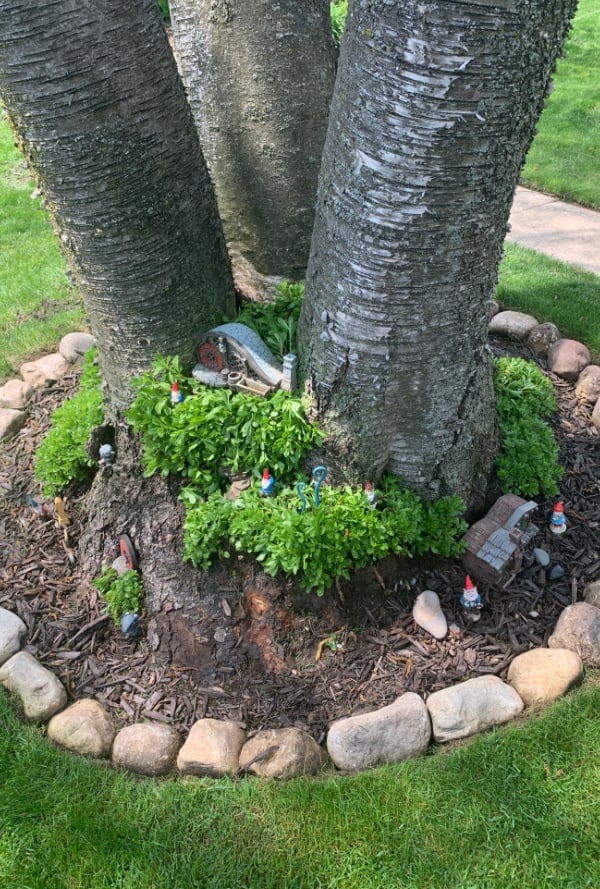
A wide shot of a garden shows multiple gnome figurines and miniature houses clustered around the base of trees, with rocks and low plants filling the gaps. The layout uses natural tree trunks as vertical anchors, so the village feels tucked into the landscape rather than staged on top of it. Red gnome hats punctuate the green and brown palette, drawing the eye across the scene without needing a single large ornament. When you arrange a village under trees, place the largest structures near the trunk and let smaller figures fan outward. That keeps the scale logical and gives the eye a clear path to follow.
Final Thoughts
A fairy garden doesn’t need to be elaborate to feel magical. The best ones start with a container you already have and a few plants that thrive in your climate. Keep the scale consistent so the miniature elements don’t get lost. Check your USDA zone before choosing plants, and place the garden where you can see it from a window or path. Over time, the moss will settle and the tiny details will blend into the garden. That’s when it starts to feel like it was always there.