
A butterfly garden isn’t just a pretty patch of flowers. It’s a living ecosystem that brings your yard to life with color and movement, from the first spring bloom through the last autumn aster. Whether you have a sprawling backyard or a modest corner bed, you can create a space that invites these winged visitors to linger.
This article shares 32 ideas to help you design a garden that butterflies will actually use, from choosing the right nectar plants to adding features that support their full life cycle. You will see real gardens in action, not just inspiration boards.
A Lush Garden Path Welcomes Butterflies and Visitors
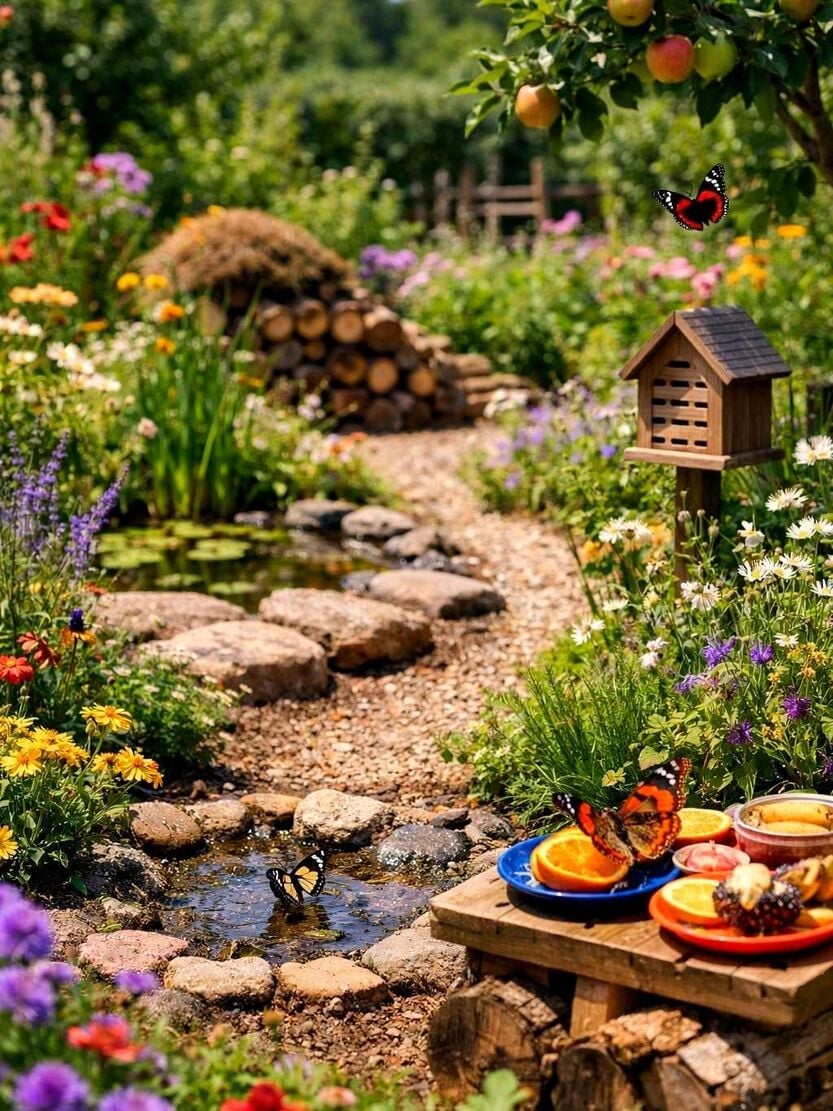
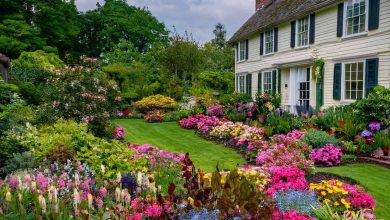
This garden layout uses a winding stone path to pull you through the space, with a pond and a seating area placed as natural pauses along the way. The path curves past dense plantings of blue and green foliage, with flowers in mixed colors that keep the eye moving. Butterflies drift between the blooms, and a small birdhouse provides structure. The path is wide enough for two people to walk side by side, making the garden feel open rather than cramped. A practical takeaway: a winding path slows visitors down and gives butterflies more spots to land undisturbed.
Delicate Glasswing Butterfly on Orange and Yellow Blooms
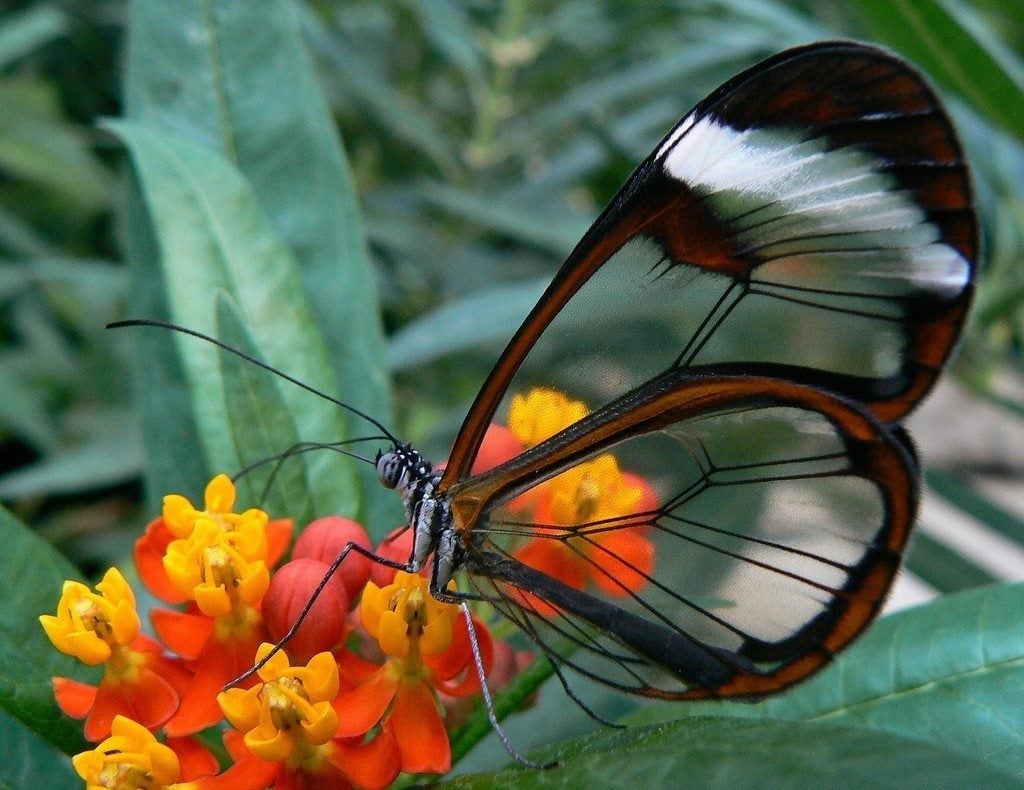
The glasswing butterfly is the hero element here, and its transparent wings change how you see the garden palette. Against orange and yellow flowers with green leaves, the clear wings let the background colors show through, creating a layered effect. The butterfly’s body is a soft white, which keeps the look light rather than heavy. For a garden that attracts glasswings, plant orange and yellow blooms in clusters so the contrast works harder. The palette depends on the butterfly’s wings acting as a neutral, letting the flower colors take center stage without competing.
Monarch Butterflies Gather on Vibrant Pink Flowers
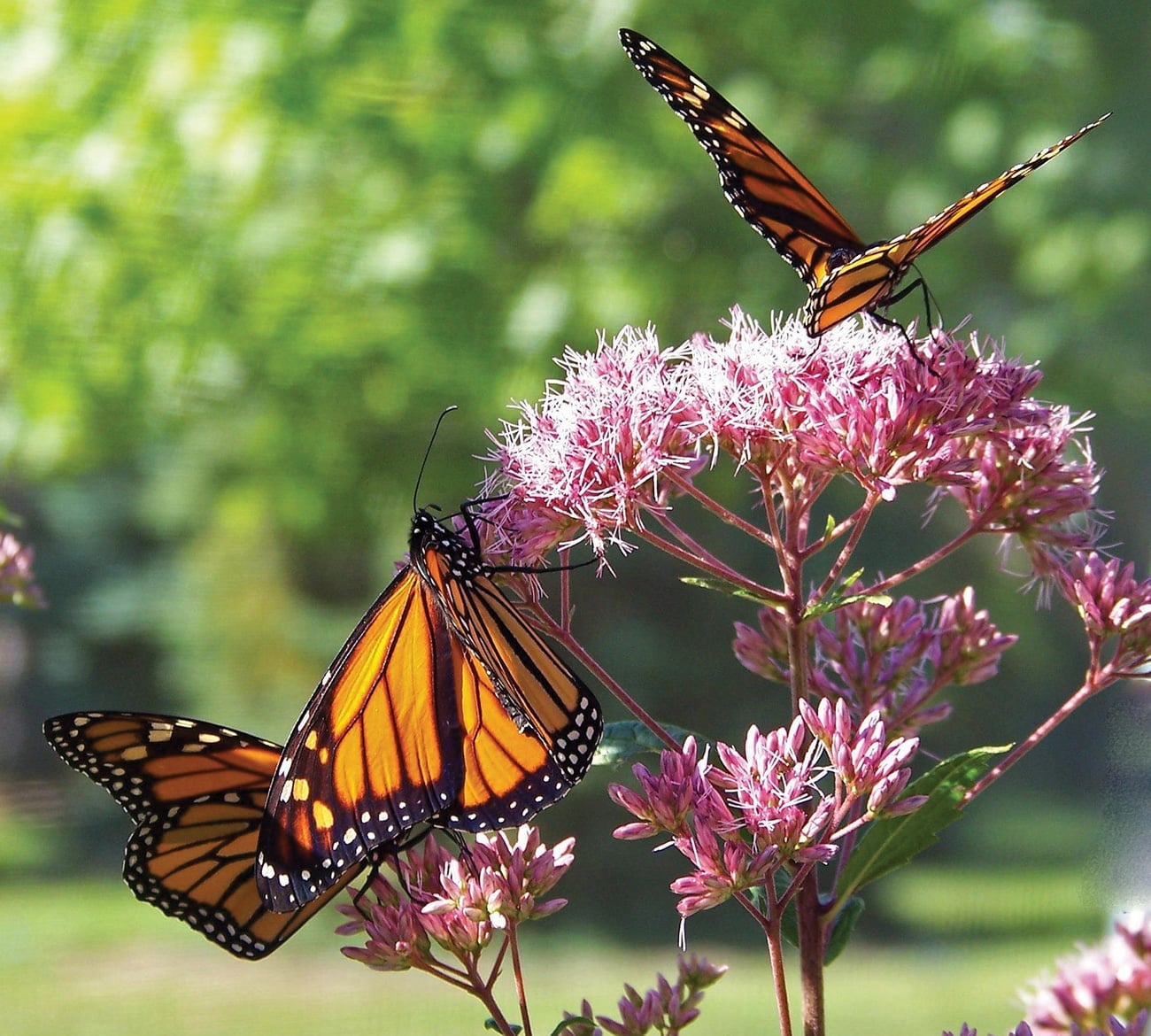
What makes a butterfly garden actually work for monarchs? The material that matters most is the plant itself, specifically the flower’s shape and density. Here, a pink flowering plant with multiple small blooms gives several monarchs a place to land at once. The bright daylight shows the orange and black pattern of the wings clearly against the pink petals. The plant’s stems are sturdy enough to hold the weight of multiple butterflies, which is a detail to look for when choosing plants for a butterfly garden. A dense cluster of flowers also provides a visual anchor in the garden bed, keeping the butterflies from scattering too far.
Monarchs on Purple Salvia: A Garden Jewel
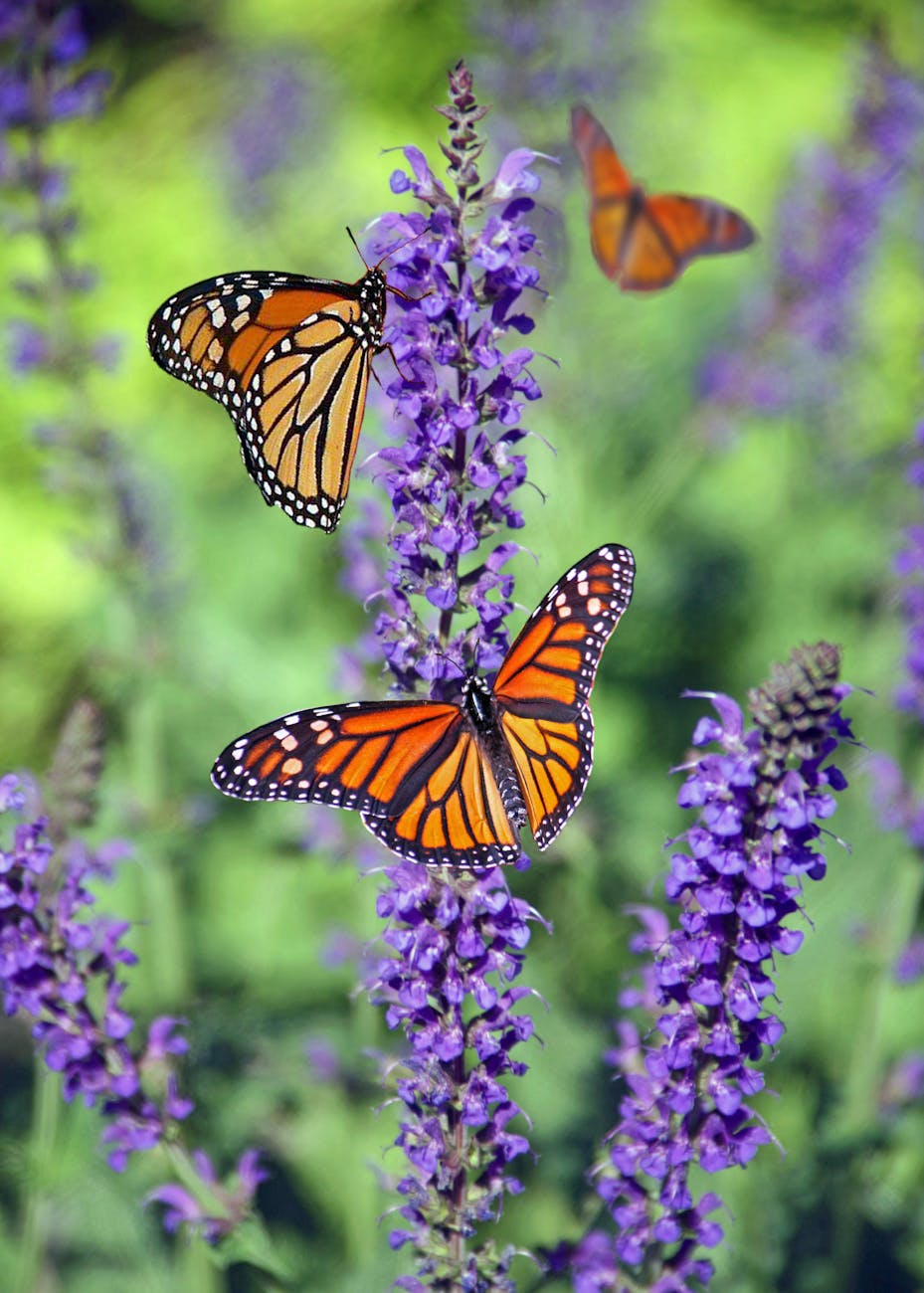
Purple salvia grows in tall spires, and monarch butterflies naturally land on the individual blooms along each stem. The orange of the monarch wings sits opposite purple on the color wheel, so the contrast is immediate and strong. Soft daylight helps the purple appear rich and vibrant, and the green leaves keep the palette grounded. For a butterfly garden, planting salvia in a dense patch creates a block of color that looks like a single unit from a distance. This palette trick makes the garden feel designed even when butterflies come and go.
Swallowtail Butterfly on a Pink Zinnia
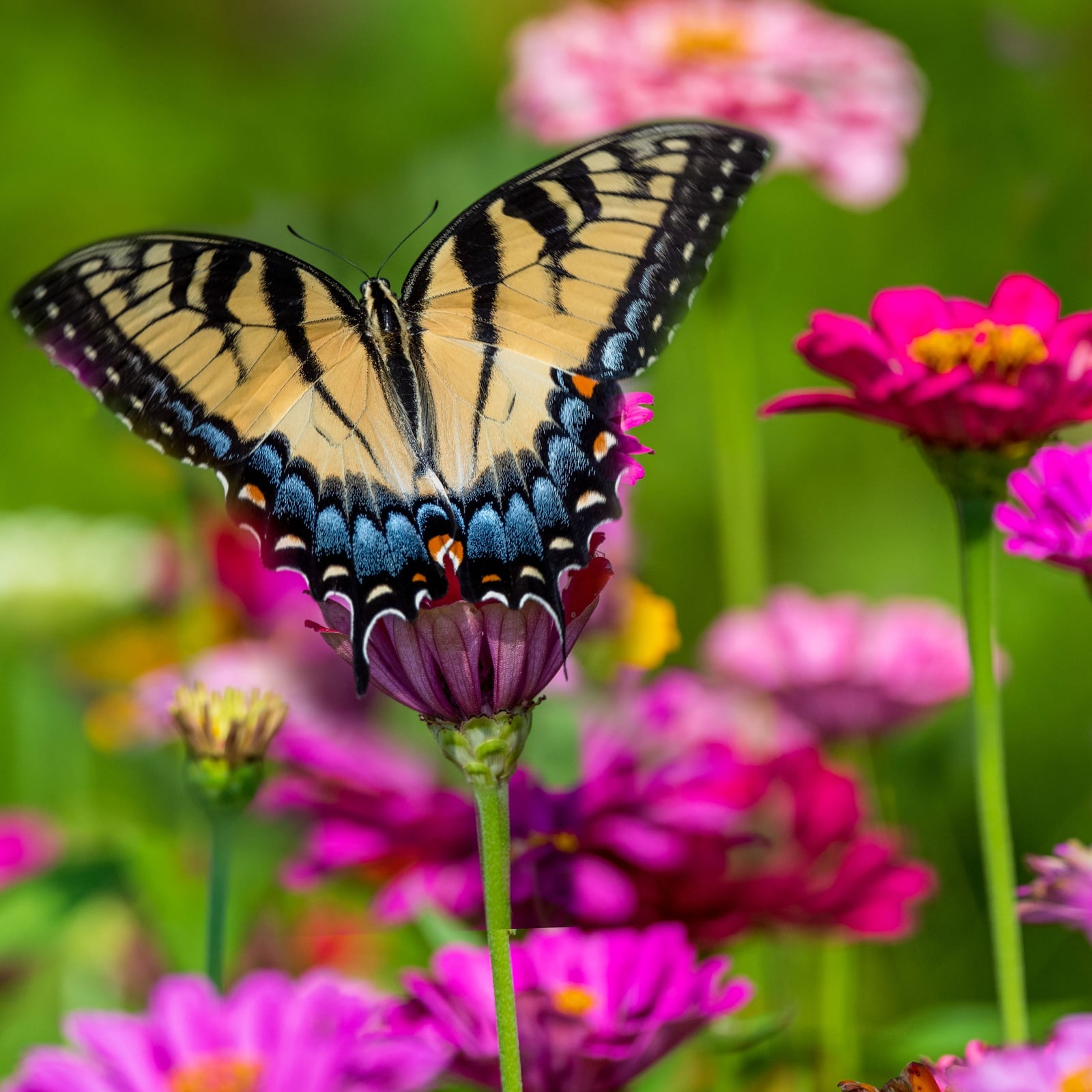
Zinnias have flat, open faces, which makes them a good choice for butterfly gardens. This swallowtail butterfly has yellow and blue markings on its wings, and it rests on a pink zinnia with layered petals. The soft daylight shows the detail of the wing patterns without harsh shadows. Zinnias grow on sturdy stems that hold up to wind and visiting butterflies, so they work as reliable landing pads. For renters or anyone working with a small space, zinnias grow well in containers and still attract swallowtails, which makes them a flexible choice for a portable butterfly garden.
Monarch Butterfly Alights on Pink Milkweed
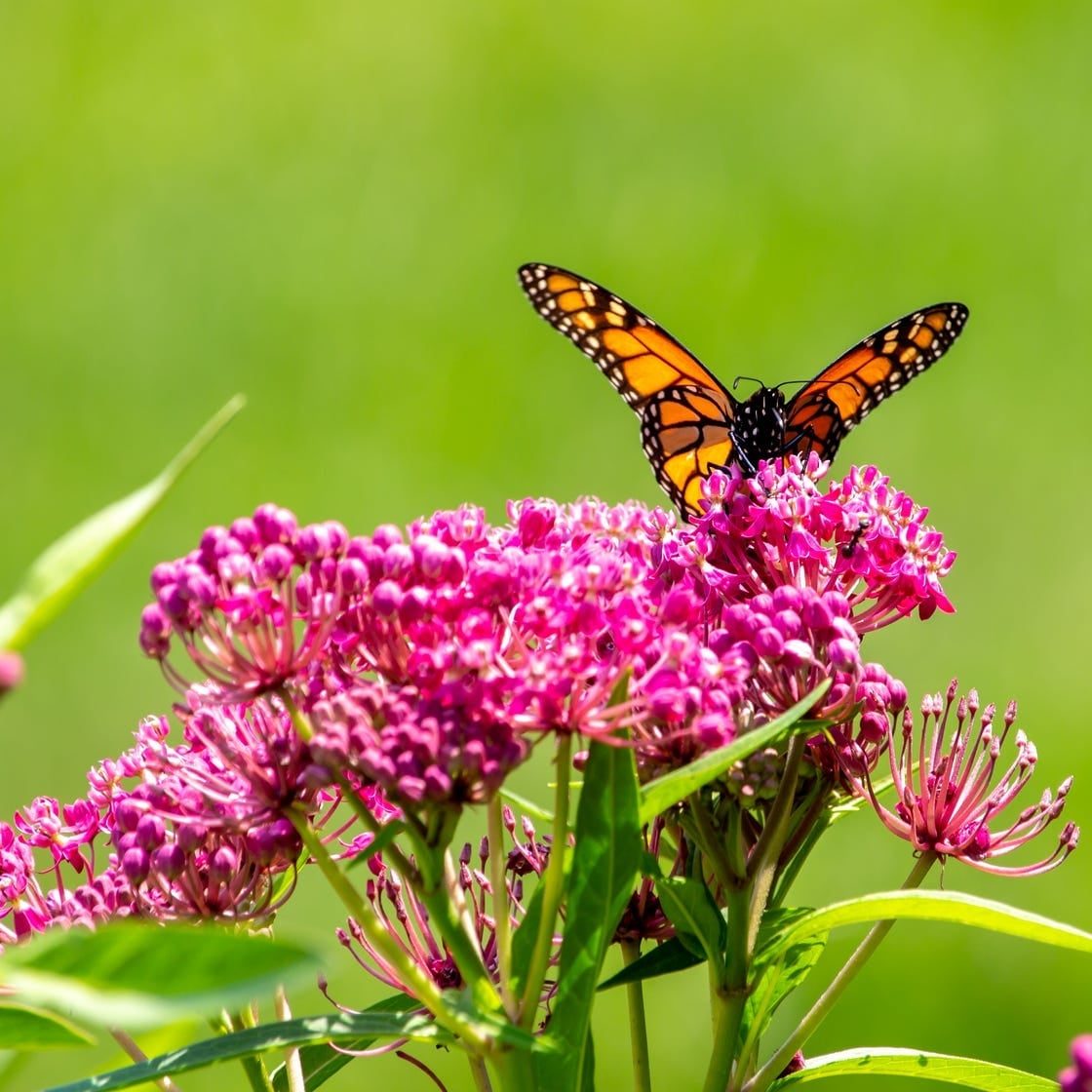
Milkweed is the plant monarchs need to survive, so a patch of it in your garden does double duty. A monarch butterfly with orange and black wings rests on bright pink milkweed flowers, the green leaves and stems framing the scene. The palette is orange, pink, and green, all in natural daylight. This is a materials-driven choice: milkweed is a host plant for caterpillars and a nectar source for adults. Plant a cluster where it gets full sun, and you will see monarchs return. The bright pink blooms add color to the garden, and the plant itself is low maintenance once established. Choose native milkweed species that suit your region. It is a practical swap from ornamental flowers that offers real habitat value.
A Monarch Visits Bright Yellow Garden Blooms
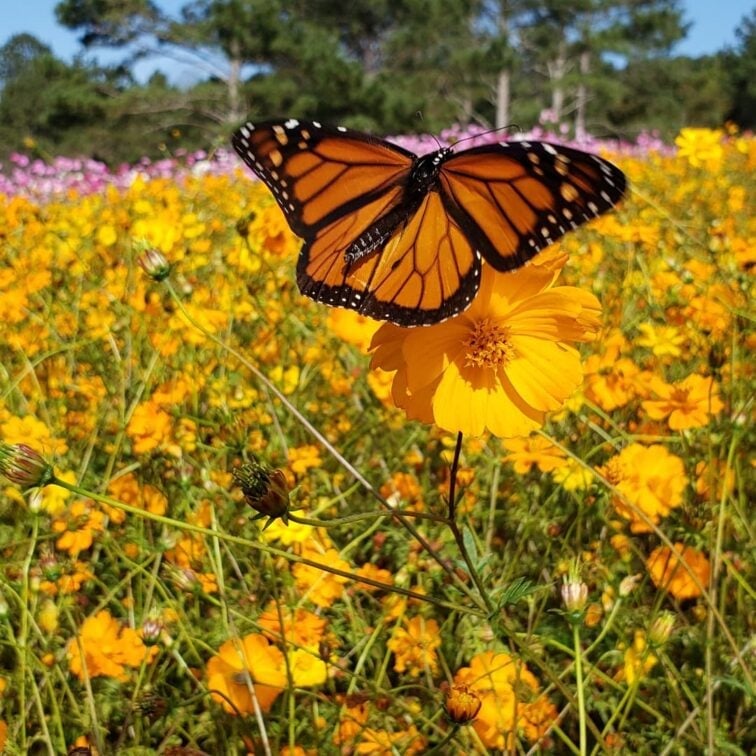
The monarch butterfly stands out against bright yellow flowers, its orange and black wings holding the eye. The yellow petals create a warm contrast that makes the butterfly the focal point. This palette works because the butterfly is the accent color against a lighter background. For a renter-friendly approach, plant yellow annuals like marigolds or sunflowers in containers near a sunny spot. You get the color contrast without digging up the yard. The monarch will find them, and you get a garden that looks intentional with minimal effort.
Indoor Conservatory with Tropical Plants and Water Feature
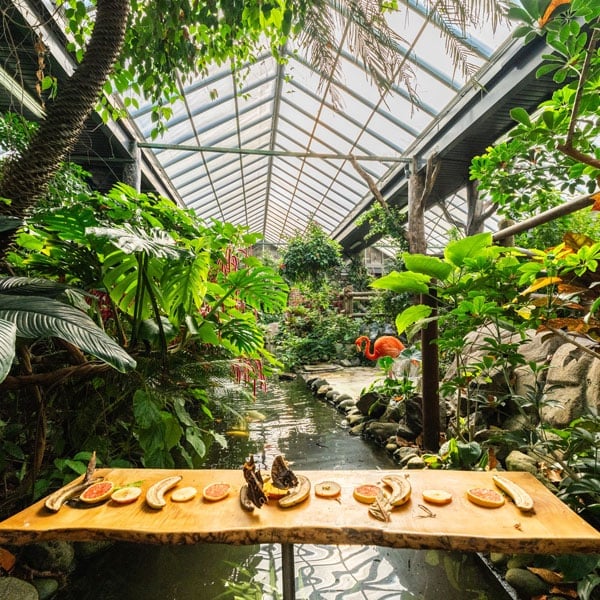
An indoor conservatory filled with lush tropical plants, a water feature, and a live flamingo shows what a dedicated space can offer. Natural light filters through the glass roof, illuminating the vibrant green foliage and stone elements. This is a room mode assessment: the layout centers the water feature, surrounded by dense planting, with the flamingo as a living accent. The style is tropical, relying on layered greenery and a stone water feature for texture. For a smaller space, a single large fern and a tabletop fountain can suggest the same feel. The key is grouping plants of varying heights and using natural materials like stone or pebbles. It is a look that thrives on humidity and consistent care.
Iconic Monarch Butterfly on Goldenrod
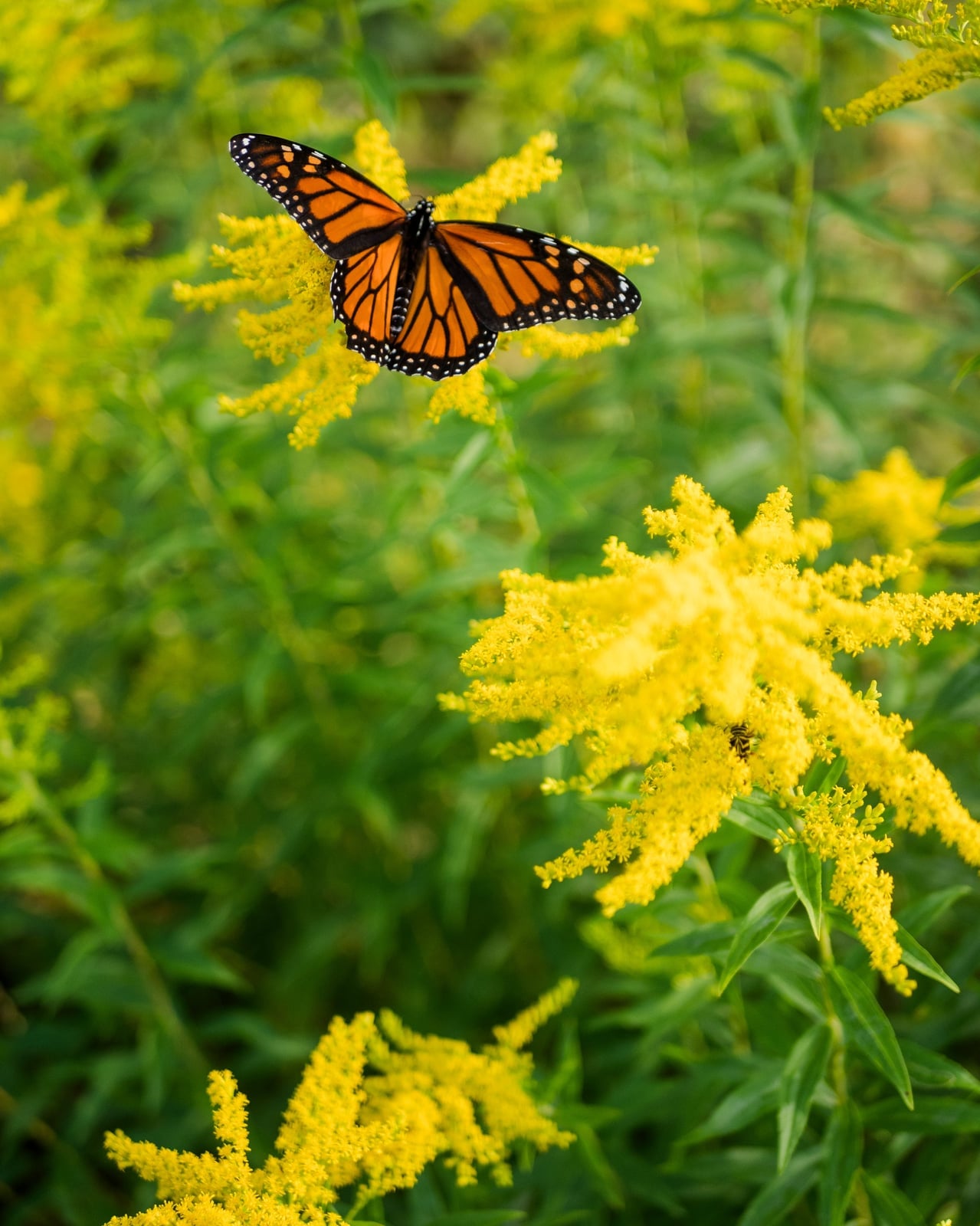
Why does the monarch on goldenrod look so classic? Because the orange and yellow are nearly the same hue, making the butterfly seem to glow. The soft focus background keeps the eye on the monarch and the goldenrod flowers. This is a style choice: a wildflower garden that pairs host plants with nectar sources. Goldenrod blooms late in the season, providing food for migrating monarchs. For durability, choose native goldenrod varieties that are well adapted to your climate. They are drought tolerant once established and spread readily. The trade-off is that goldenrod can be vigorous, so give it room. It is a plant that earns its place by feeding butterflies when other flowers are fading.
Butterflies Feeding on Pink Coneflowers
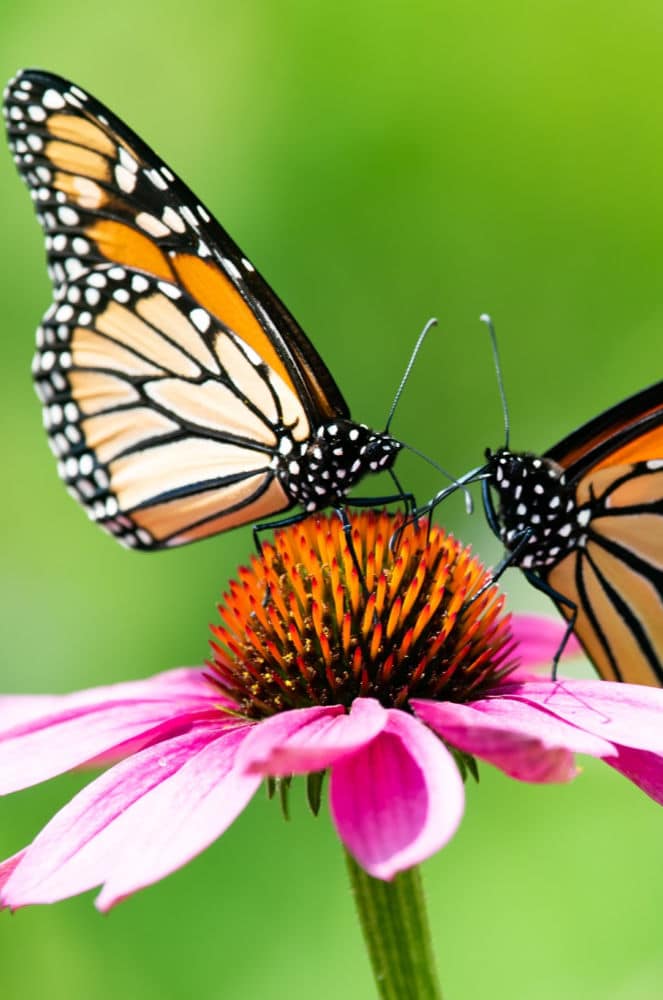
Two monarch butterflies feed on a single pink coneflower, their wings overlapping as they share the bloom. The extreme close-up shows the flower petals and plant stems in sharp detail, with soft focus on the background. This is a scale and proportion lesson: a large flower head like a coneflower can support multiple butterflies at once. For your garden, planting coneflowers in groups of three or five creates a visual mass that attracts more butterflies. The pink petals and orange wings form a complementary color pair. Coneflowers are a practical choice because they bloom for weeks and tolerate heat and drought. They also self-seed, so you get more plants each year.
Monarchs Among Butterfly Bush and Coneflowers
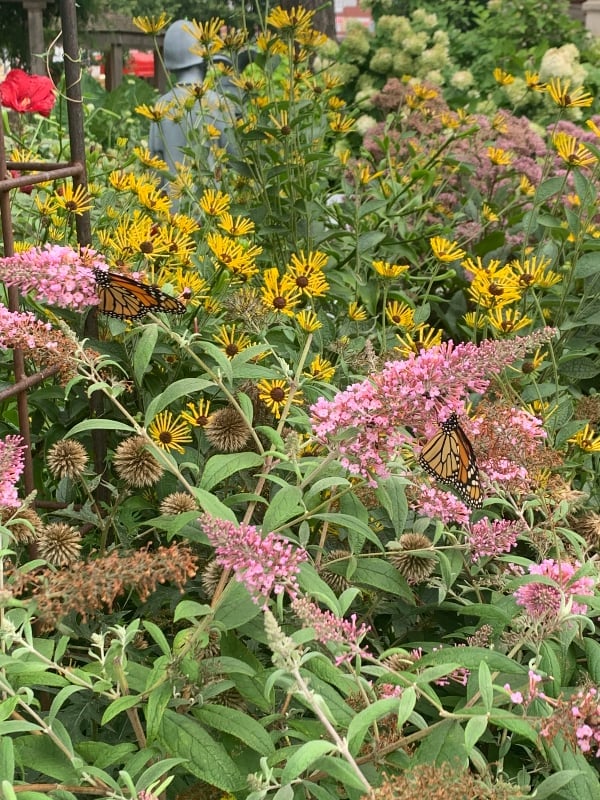
A garden that draws monarchs relies on more than luck. The palette here pairs pink butterfly bush with purple-toned coneflowers, set against green foliage and a brown soil base. That pink and green ratio is what keeps the scene from washing out under overcast daylight. Dense planting gives butterflies multiple landing spots in a single bed. The metal structure nearby, likely a support or obelisk, adds a vertical line that breaks up the soft flower forms. Cluster plants in groups of three or five to create a similar effect.
Swallowtail’s Intricate Wing Patterns on Orange Flower
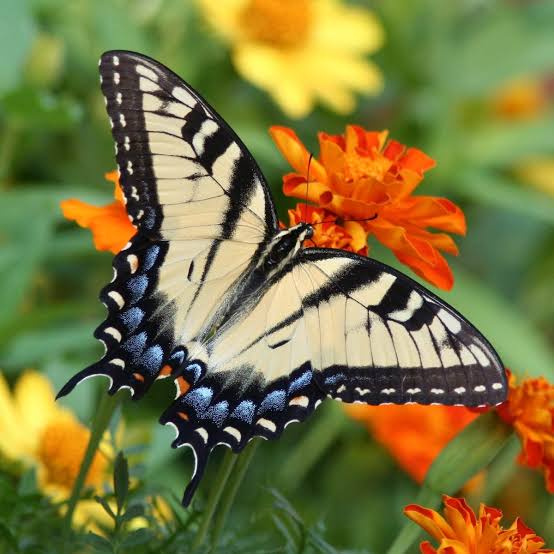
A swallowtail butterfly on an orange flower could be just another garden snapshot. What sets this one apart is the wing pattern. Yellow bands and blue spots near the tail create a geometry that pulls the eye in close. The orange petal underneath acts as a warm contrast, making the black wing edges feel sharper. Bright natural daylight helps the colors hold their saturation without looking washed out.
Garden style often leans on mass and color, but this kind of detail is where the materiality of the flower petals and the insect’s wing texture matters. The stem supports the weight without bending, which is a small structural point that keeps the composition stable. If you are planting for swallowtails, include single-stem flowers that offer a solid perch.
Monarch on Pink Coneflower Amidst Dense Planting
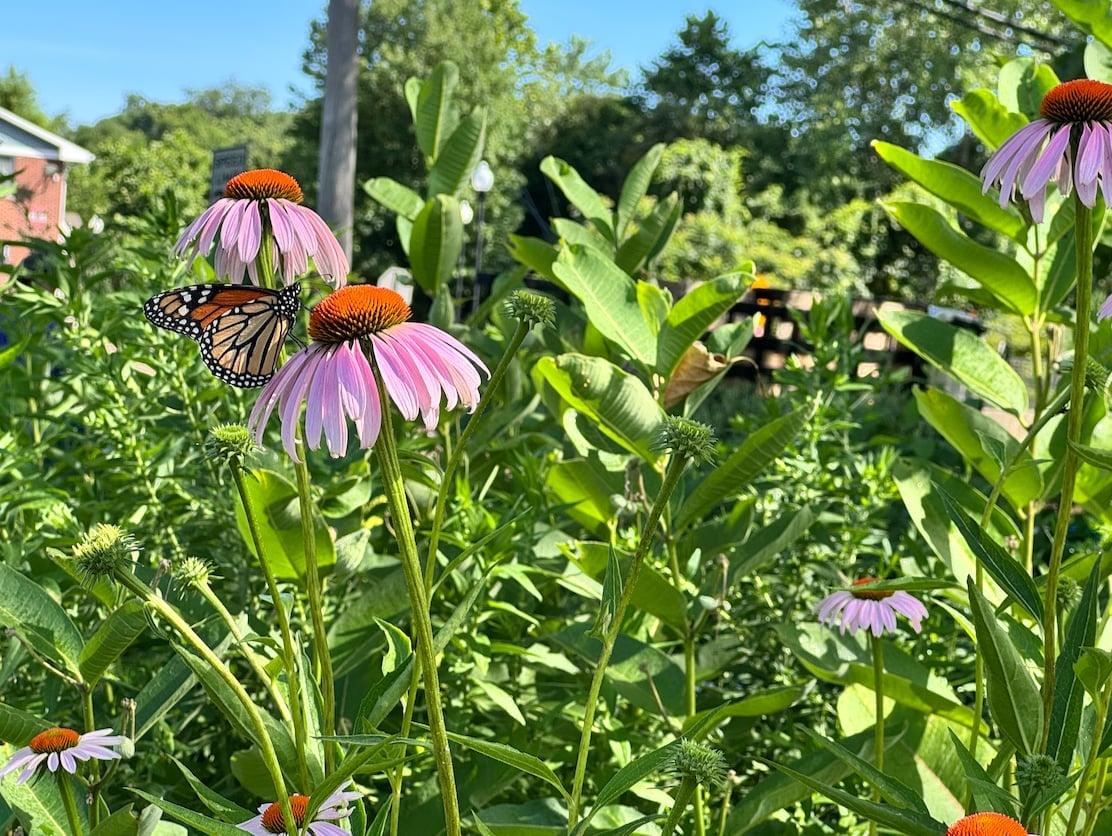
The monarch sits centered on a pink coneflower, while the background blurs into dense green foliage and a hint of blue sky. That dense planting layout is the key detail. It creates layers of depth, so the butterfly becomes the main subject without the garden feeling empty. A winding path of stone or soil is implied at the ground level, which gives the eye a route through the scene. For a garden that feels full but not chaotic, aim for three tiers of height and let the middle layer carry the color.
Butterflies Feeding on Orange Slices in the Garden
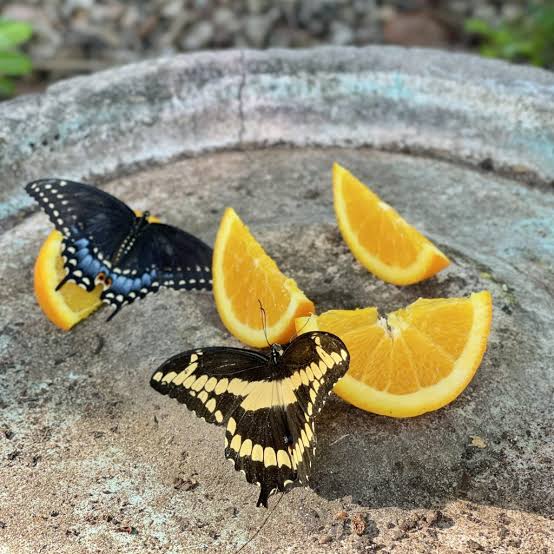
This is a practical trick that works well. Butterflies gather on orange slices placed on a flat stone surface in bright daylight. The black and yellow wings of the butterflies stand out against the orange fruit and the neutral stone. No elaborate feeder is needed. The fruit provides both moisture and sugar, which is what draws them in. For a variation, swap citrus for overripe banana or melon. Just keep the fruit off the soil to avoid ants. Place the stone in a sunny spot where you can watch from a chair nearby.
Monarch Butterfly with Wings Open on Green Foliage
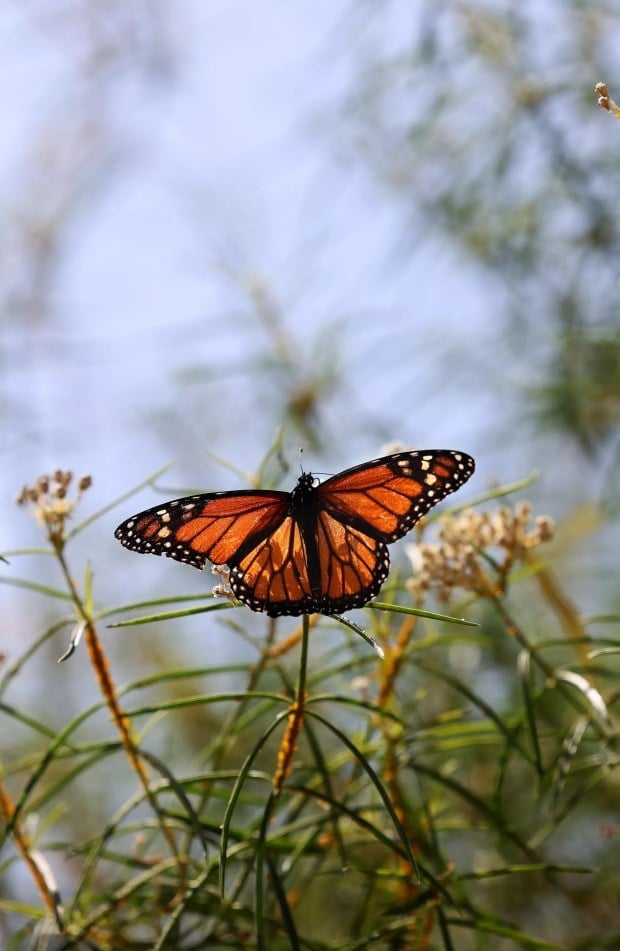
A practical rule for butterfly gardens: leave space for the wings to open. This monarch rests on a green plant with its wings fully spread, showing the orange and black pattern against a blue sky. The plant acts as a stage, not a cage. When you plant, avoid dense shrubbery that blocks wing room. Instead, choose broad-leafed plants that offer a flat surface.
Close-up framing like this one works because the butterfly is the sole focus. The green foliage behind it is soft and out of focus, which keeps the eye on the orange. For your own garden, position a few host plants near a path or seating area. That way you get the detail view without disturbing the insect.
Orange Butterfly on Purple Lavender Blooms
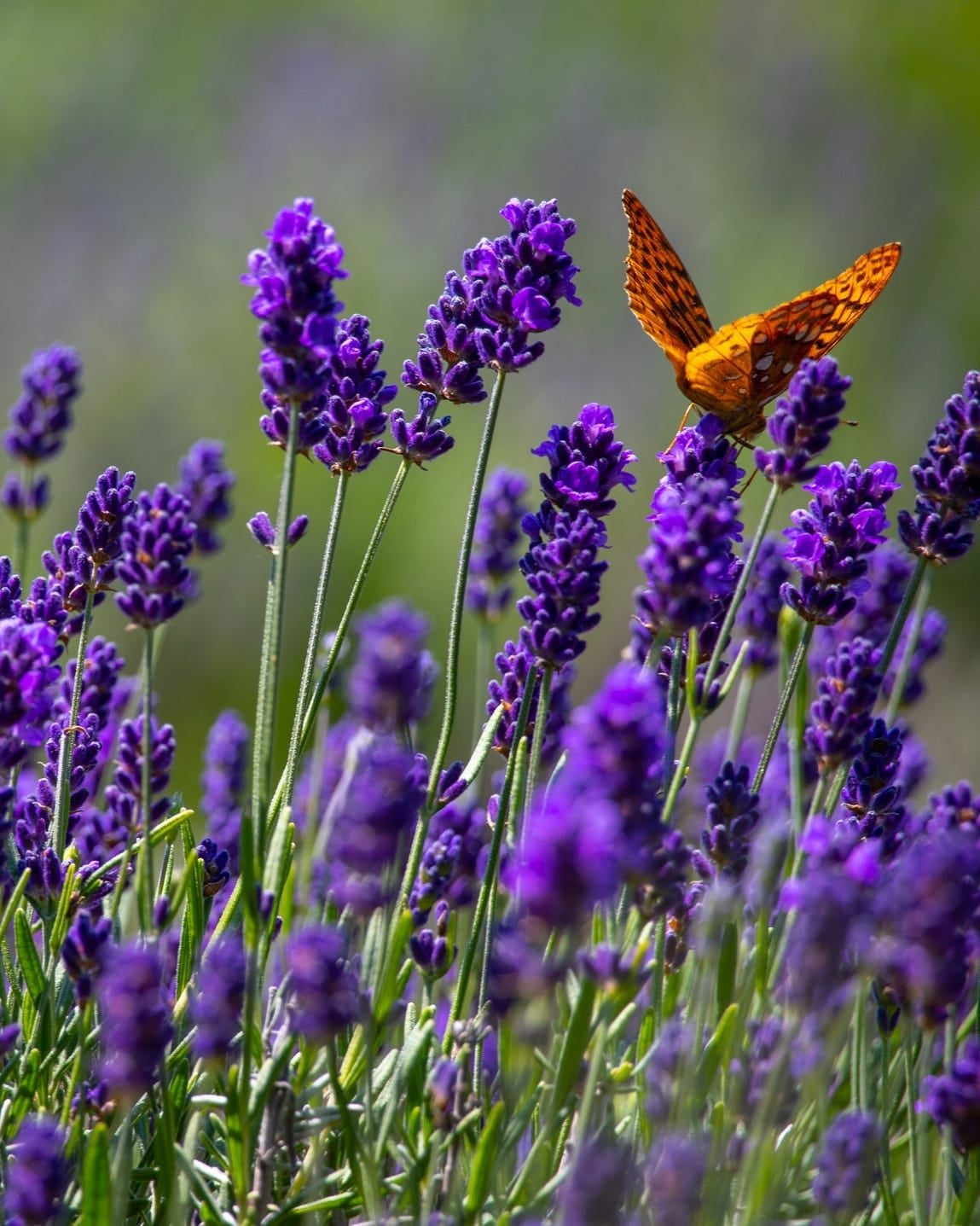
A field of lavender in full bloom creates a natural carpet of purple, and the orange butterfly perched on the spikes is a textbook complementary palette. Purple and orange sit opposite each other on the color wheel, so each one makes the other look brighter without any effort. The garden around the lavender stays simple, just green stems and more purple spikes, so the butterfly reads as the main event. This kind of color pairing works the same way indoors, a burnt orange throw on a deep purple armchair has the same jolt.
Yellow Butterfly in Flight Above Mixed Garden Blooms
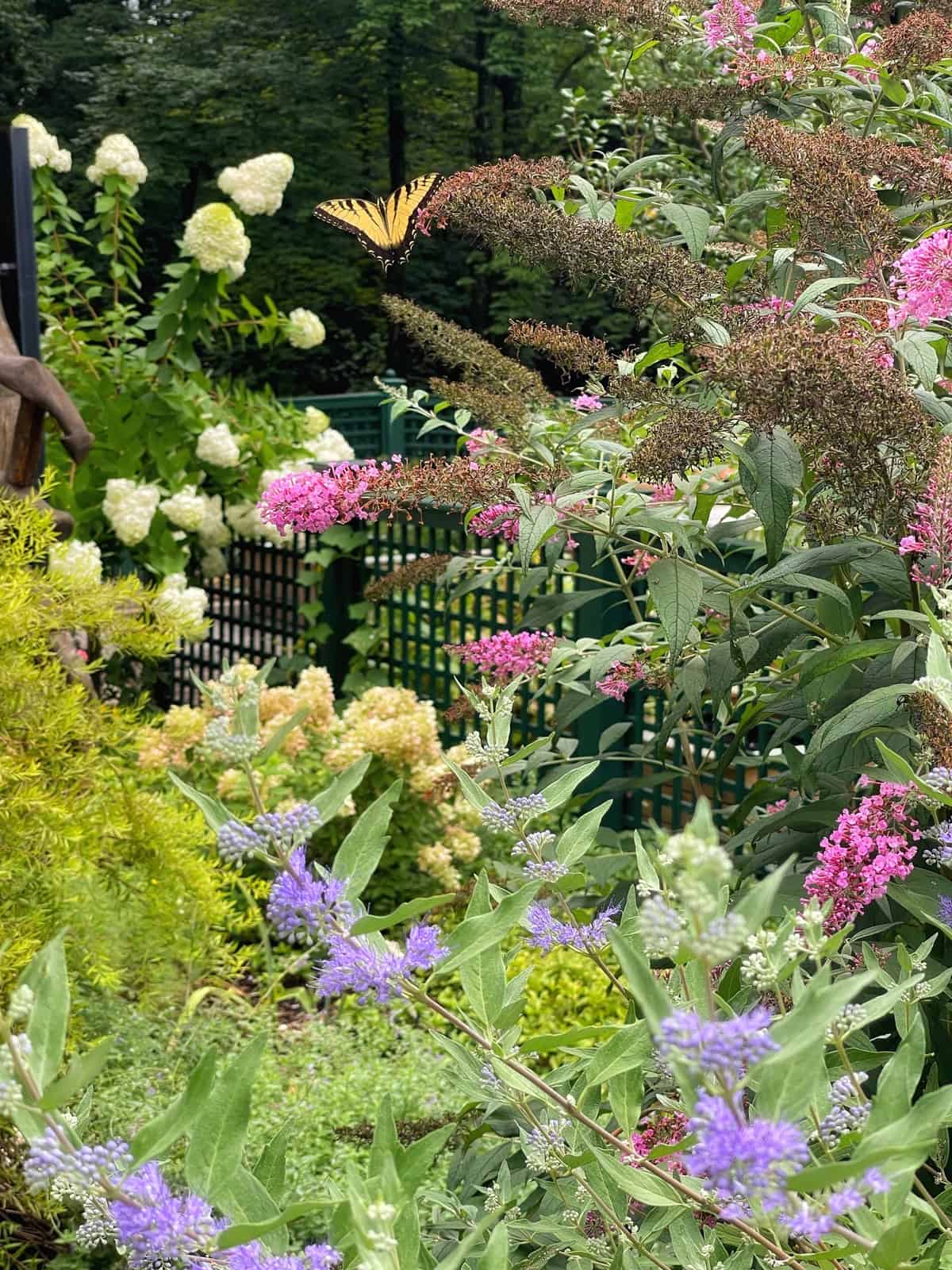
A butterfly garden needs sunlight more than it needs perfect soil, and a yellow butterfly in flight above mixed garden blooms proves the point. The light hits the yellow wings and the pink hydrangeas from the same direction, so the whole scene reads as one bright moment. For a renter, that means you can skip major planting and put a birdbath or a shallow dish in the sunniest corner of the yard instead. Butterflies will find the water and the light, and the flowers you do plant, even in pots, will catch the same glow.
A Gathering of Butterflies on Wildflowers
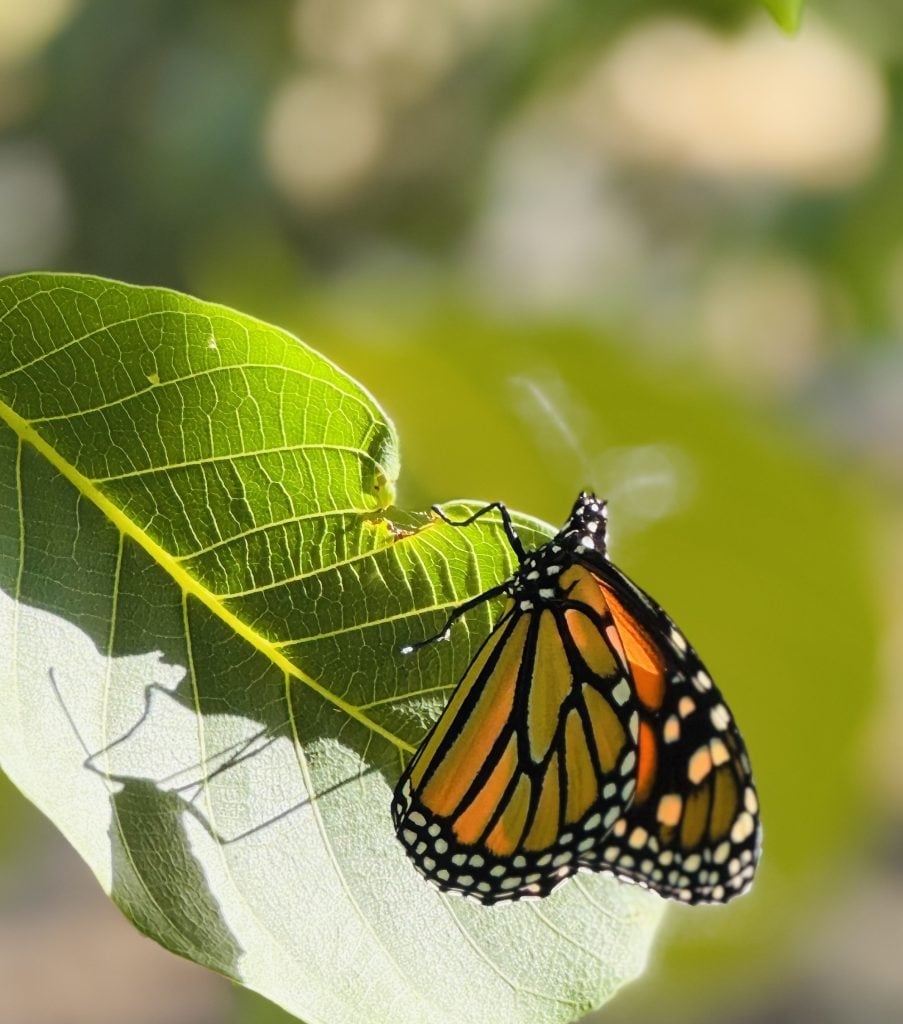
A single butterfly on a stem is pretty, but a gathering of butterflies on wildflowers turns the garden into a living centerpiece. Close up, the mix of yellow, pink and orange wings on green stems feels like a bouquet that moves. The trick to this look is density. You need enough flowers in one spot that multiple butterflies land on different blooms at the same time. A cluster of zinnias, coneflowers and black-eyed Susans planted close together does it. The butterflies come for the nectar and stay because there is room for everyone.
Yellow Butterfly on Purple Garden Flowers
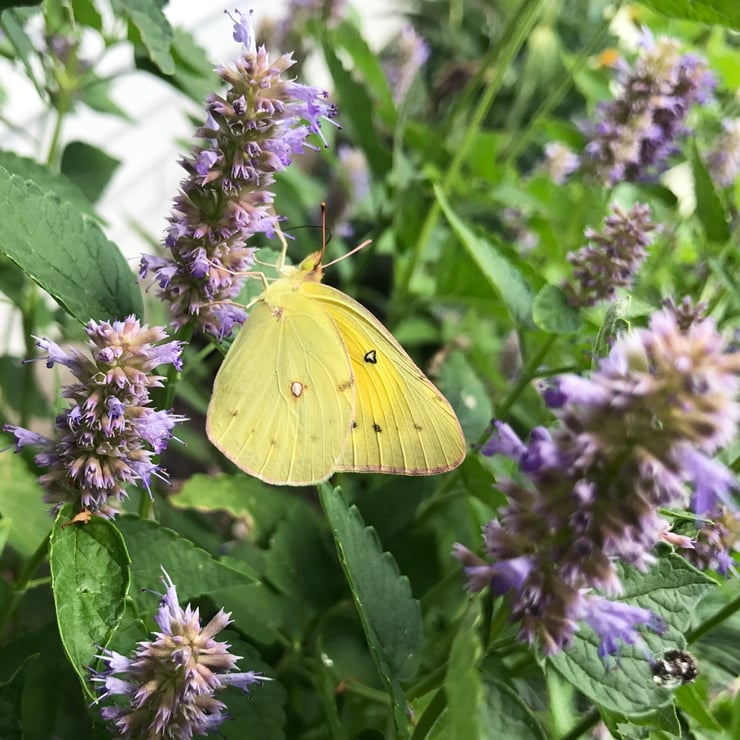
A yellow butterfly resting on purple garden flowers is a pairing that survives heat, rain and the end of the bloom cycle. Yellow petals fade to cream and purple blooms soften to mauve, but the contrast holds because they are still opposite on the color wheel. That makes this combination a durable choice for a garden bed that gets full sun and irregular watering. The butterfly’s yellow wings stay readable against the purple even when the light is harsh, and the garden still looks put together on days when nothing is in prime shape.
Monarch Butterfly Nectaring on a Zinnia
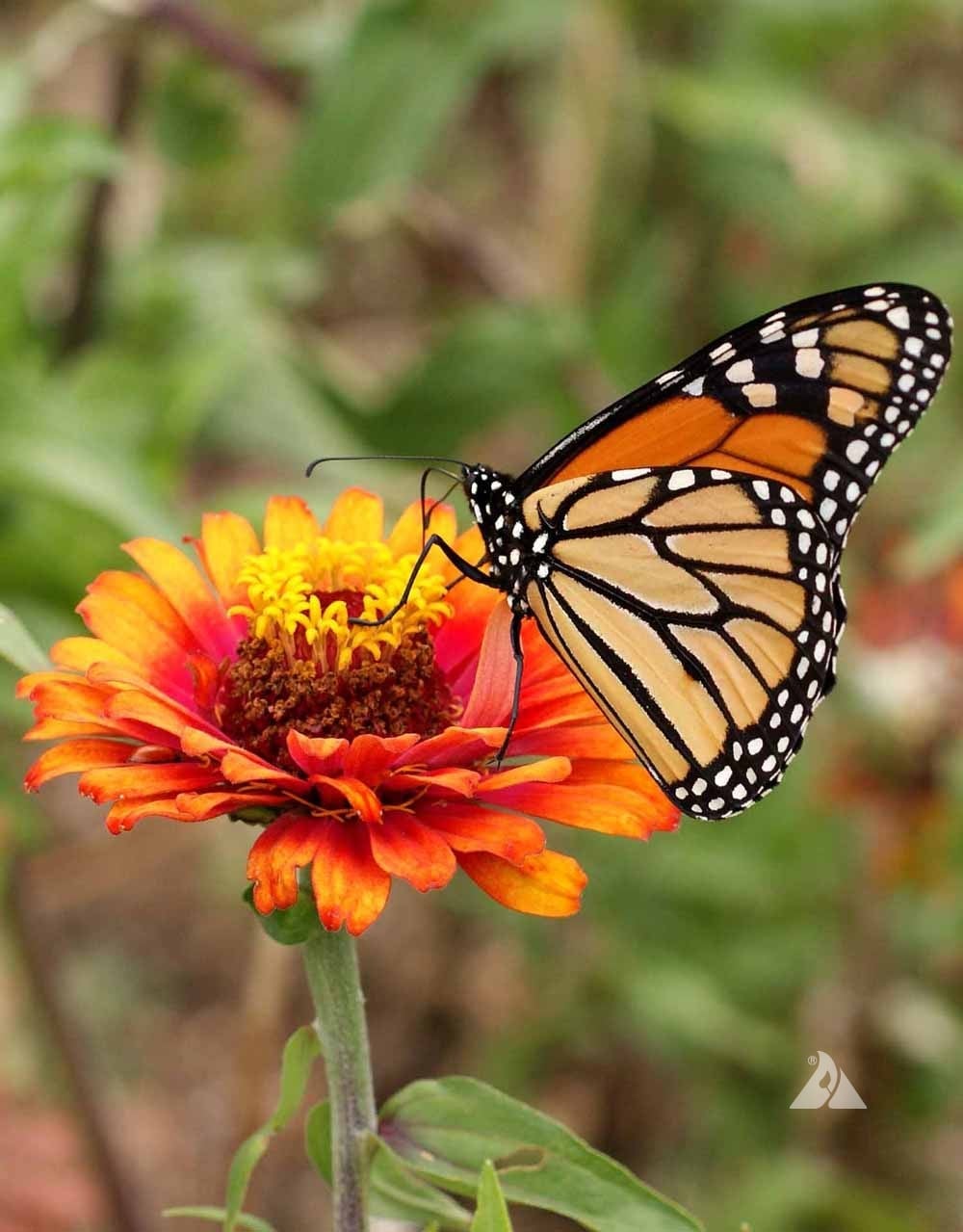
A monarch butterfly feeding on an orange and pink zinnia is a lesson in scale. The butterfly is bigger than the flower head, so the whole composition reads as one bold shape. The zinnia’s straight stem holds the bloom at eye level, which makes the monarch easy to spot from a few feet away. For a garden layout, that means tall single-stem flowers like zinnias or cosmos work better for monarchs than low spreading plants. The height gives the butterfly a perch that stands out against the green background, and the flower does not get lost in the foliage.
Butterfly on an Orange Tiger Lily
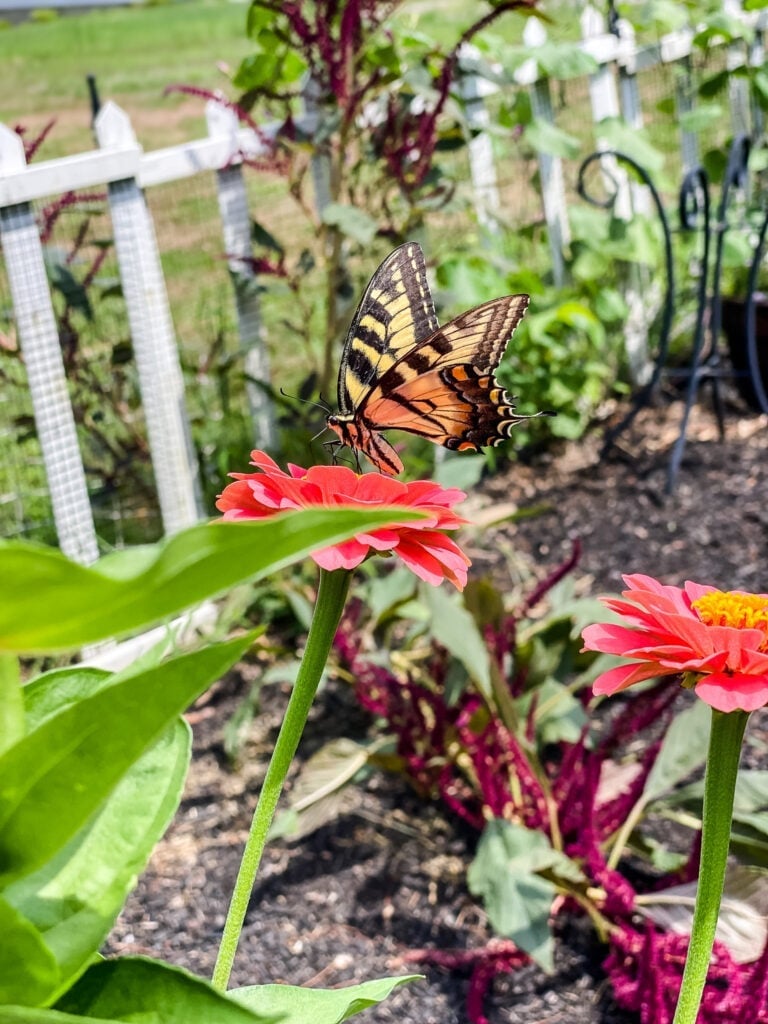
A garden that draws butterflies starts with the plants they actually use. A tiger lily’s orange bloom, held on a tall green stem, gives a butterfly a place to land and feed in bright daylight. The flower’s curved petals face outward, making the nectar easy to reach. Grouping several tiger lilies together creates a natural landing strip. Plant them where they get full sun and have room to spread, and the garden will feel full without needing much from you.
Painted Lady Butterfly on Orange Calendula
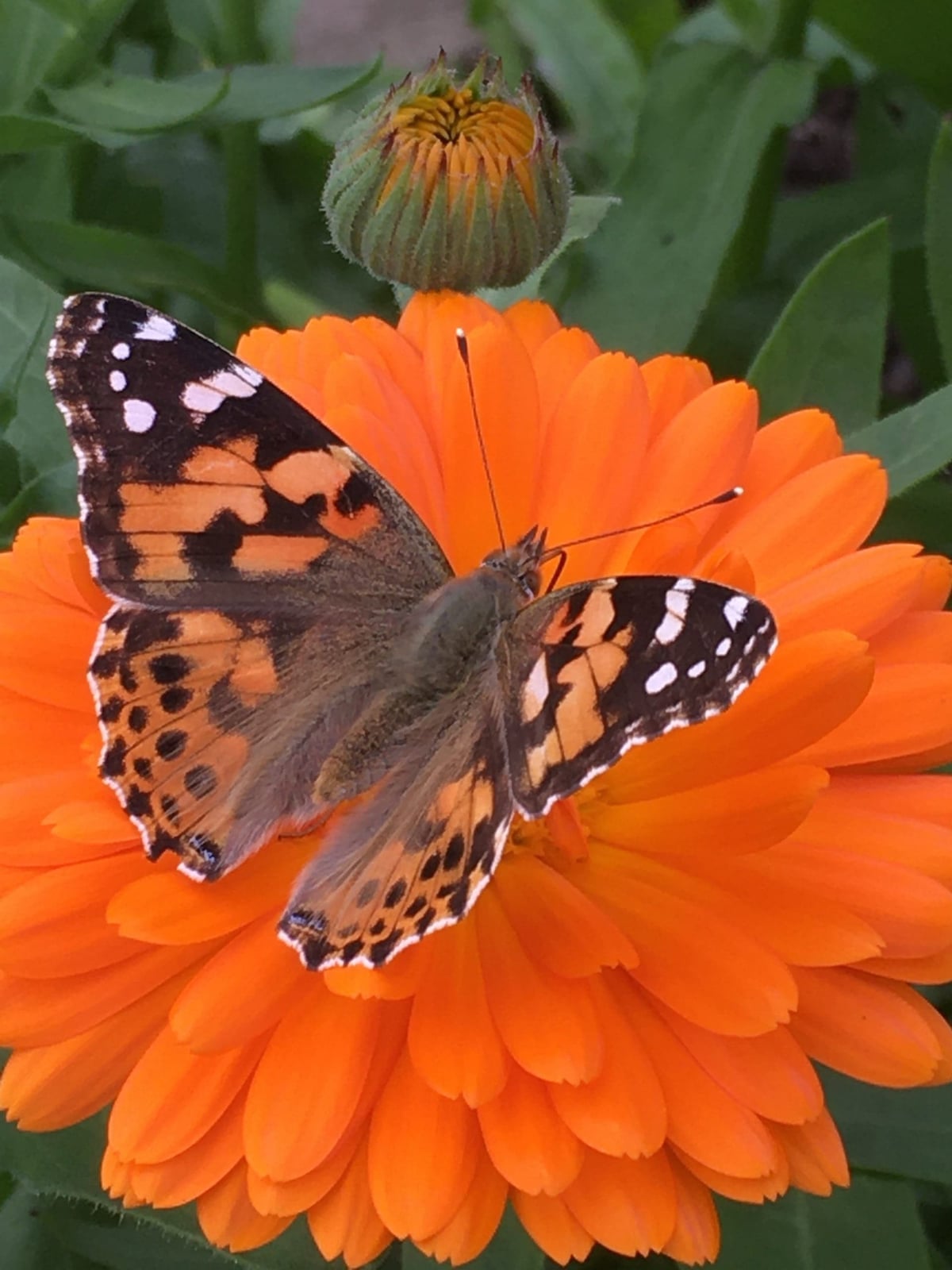
A cottage garden palette leans on warm orange and soft green, with the butterfly adding brown, black and white marks. The calendula’s petals are a simple, open shape that lets the painted lady’s wing pattern show clearly. The butterfly itself breaks the look, its orange and brown wings matching the flower’s color closely enough that the two almost blend. That close match makes the scene feel quiet, a small moment in a bigger bed.
Black Swallowtail with Yellow Spots on Purple Flowers
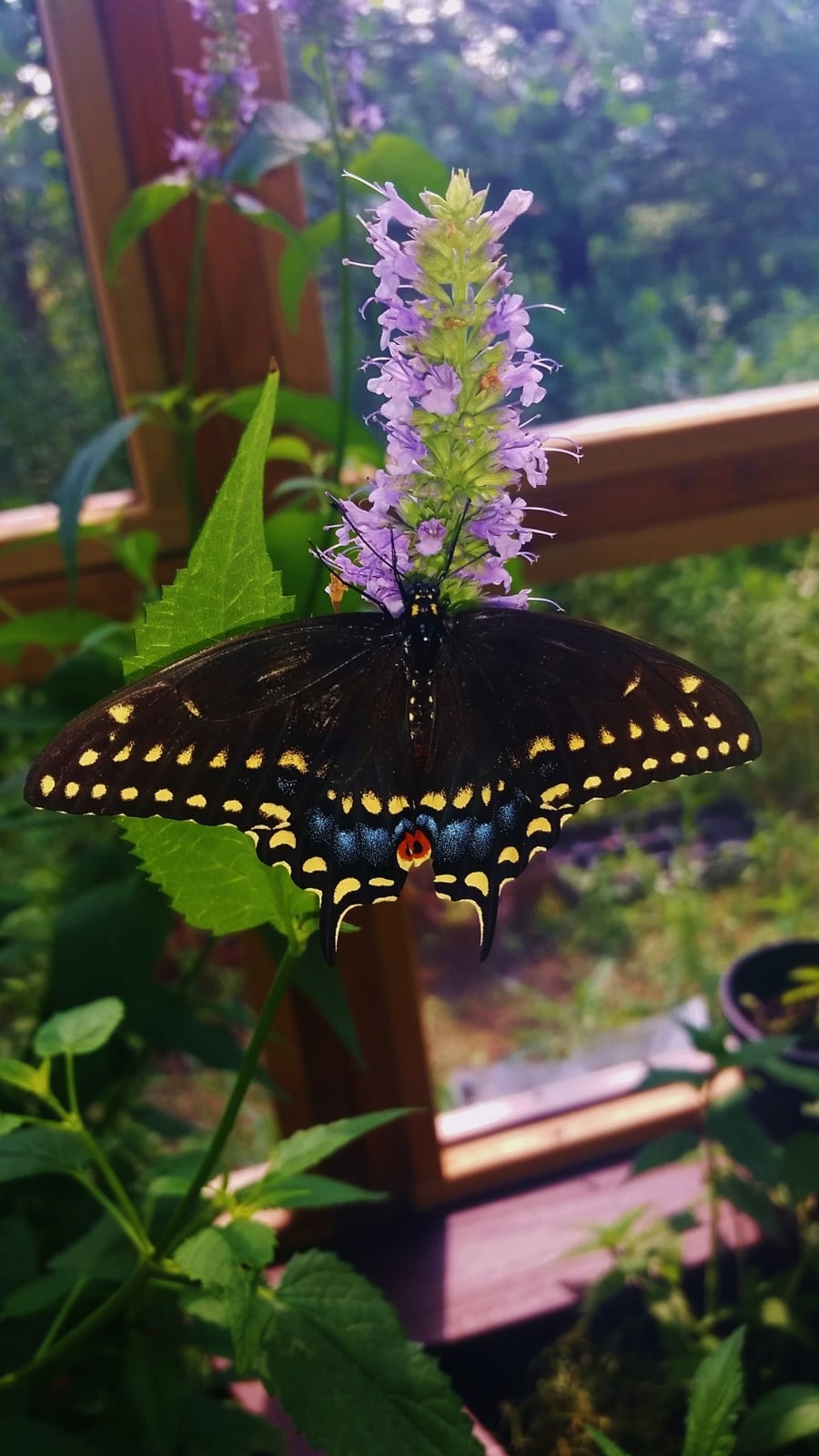
A single plant with a tall flower spike gives a butterfly a clear place to rest. The black swallowtail’s yellow spots stand out against the purple bloom, and the green stem and leaves frame it without crowding. When you pick plants for a butterfly garden, look for ones with upright flower clusters. They give butterflies a steady perch and make the garden feel more open, since the blooms rise above the lower foliage.
Monarch Butterfly on Milkweed Blooms
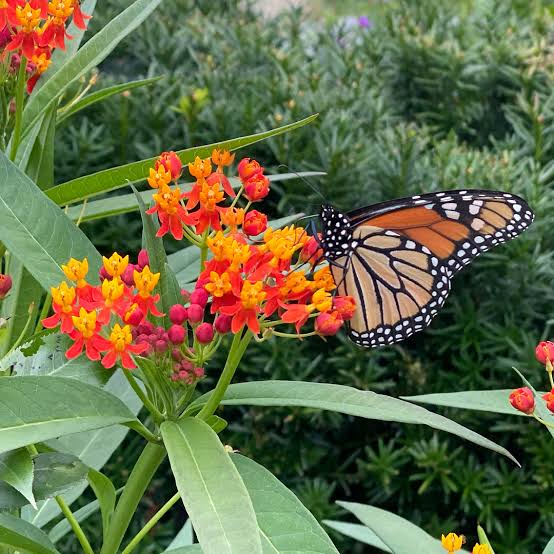
A monarch on milkweed is the classic match, but the soft daylight here makes the orange and yellow blooms look warmer than they would in harsh sun. Milkweed grows in clusters, and the flowers sit at different heights on the stem. That uneven shape gives butterflies several landing spots on one plant. It also means the garden stays interesting as the light shifts, because the flowers catch the sun from different angles throughout the day.
Butterflies Gather at a Blue Glass Feeder
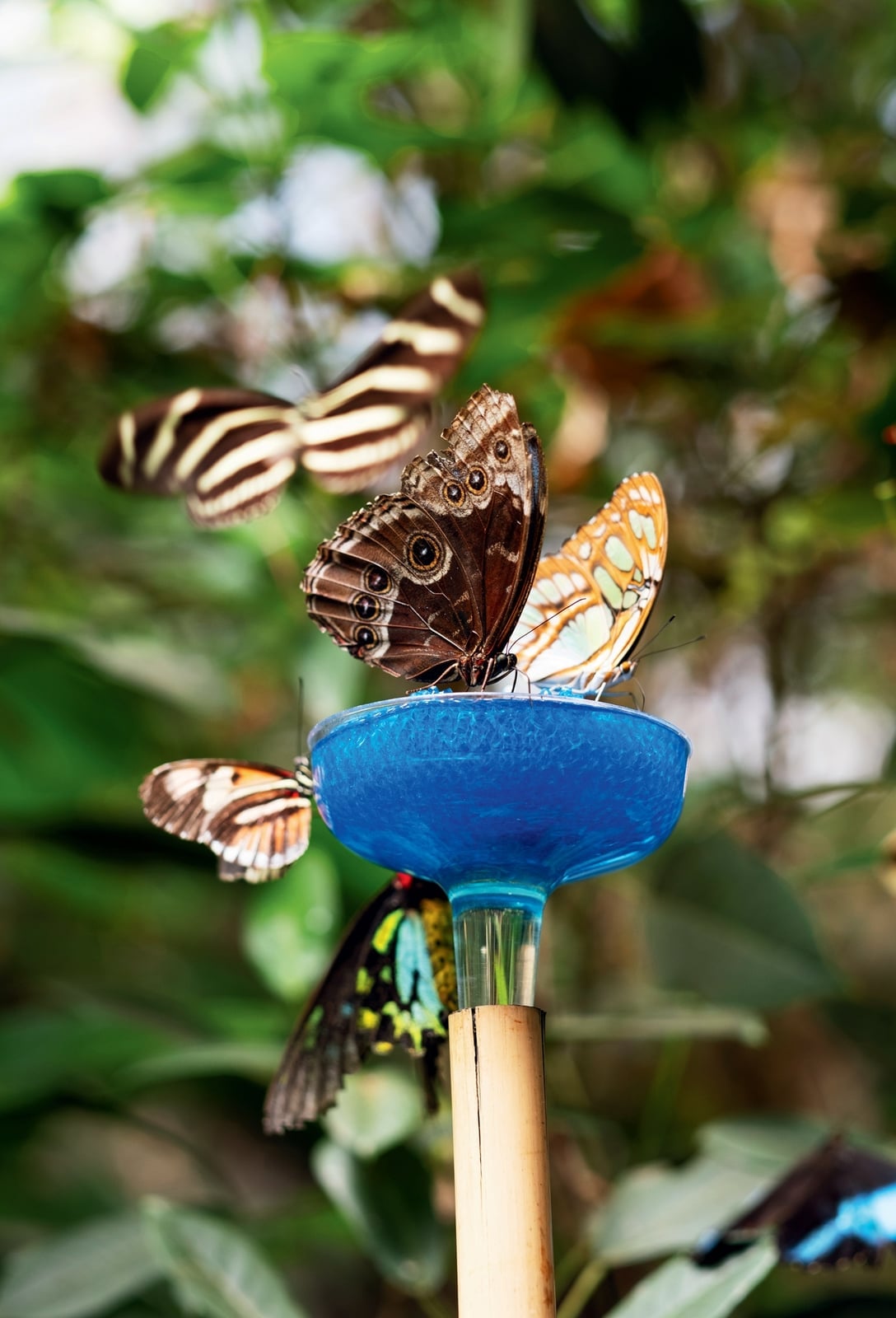
A blue glass feeder hung near green leaves and brown wood draws butterflies to one spot. The feeder’s color stands out against the garden, and the glass lets you see when the sugar water needs changing. Place it where you can see it from a window or a seating area. The butterflies will come to the feeder regularly, and you get a clear view without walking through the flower beds.
Monarch Butterfly on Purple Flowers
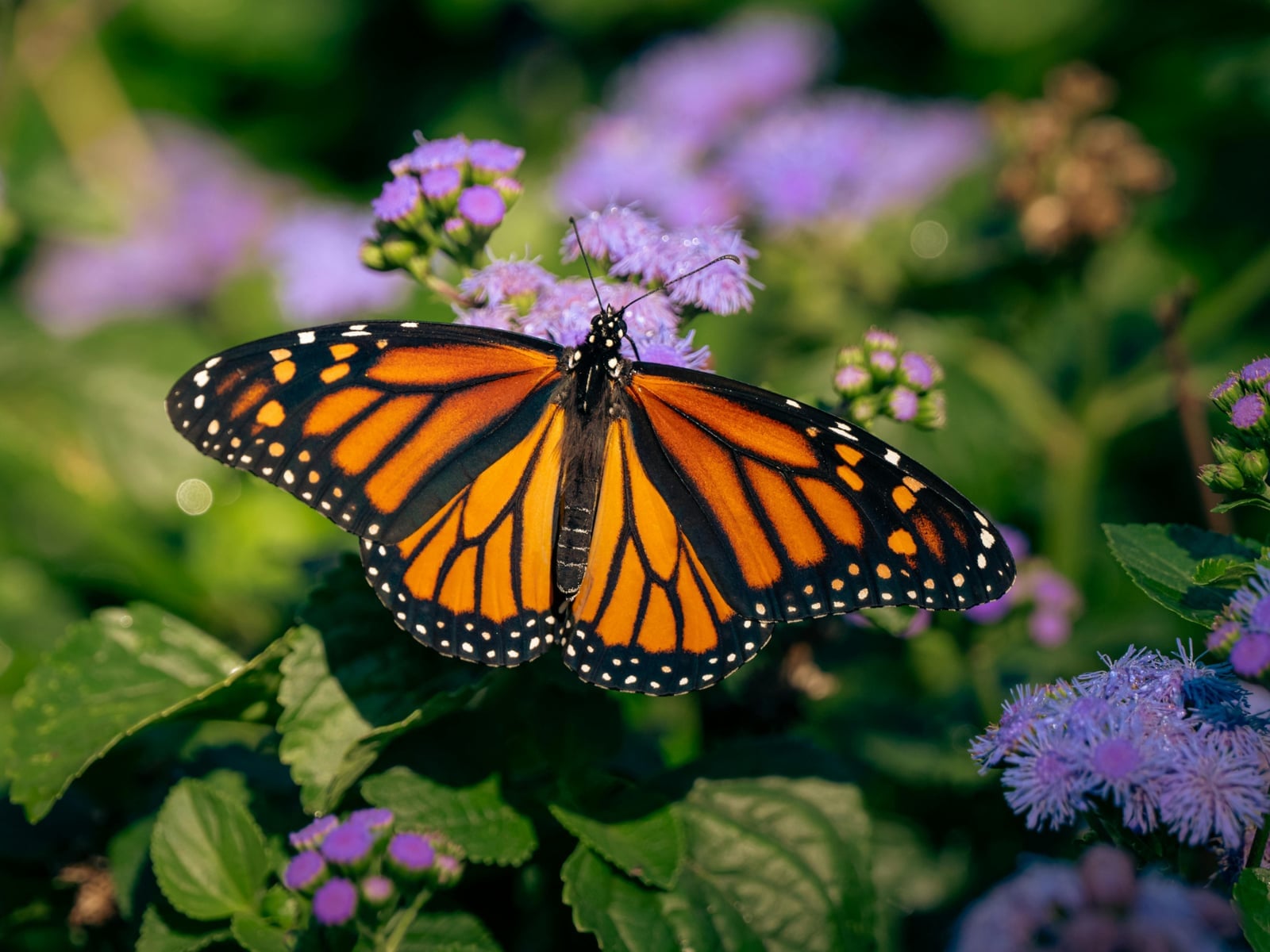
A monarch butterfly resting on purple flowers is one of those garden moments that feels both simple and complete. The orange and black wings stand out against the soft green foliage and the deep purple blooms, creating a natural color contrast that draws the eye right to the butterfly. The whole scene works because the palette is kept straightforward: warm orange against cool purple with green as the neutral. That balance is the key. When you are planning a butterfly garden, aim for that same ratio of high-contrast flower colors with plenty of green space between them. It lets each bloom and each visitor read clearly without the garden feeling busy.
Monarch Butterfly Amidst Garden Foliage and Flowers
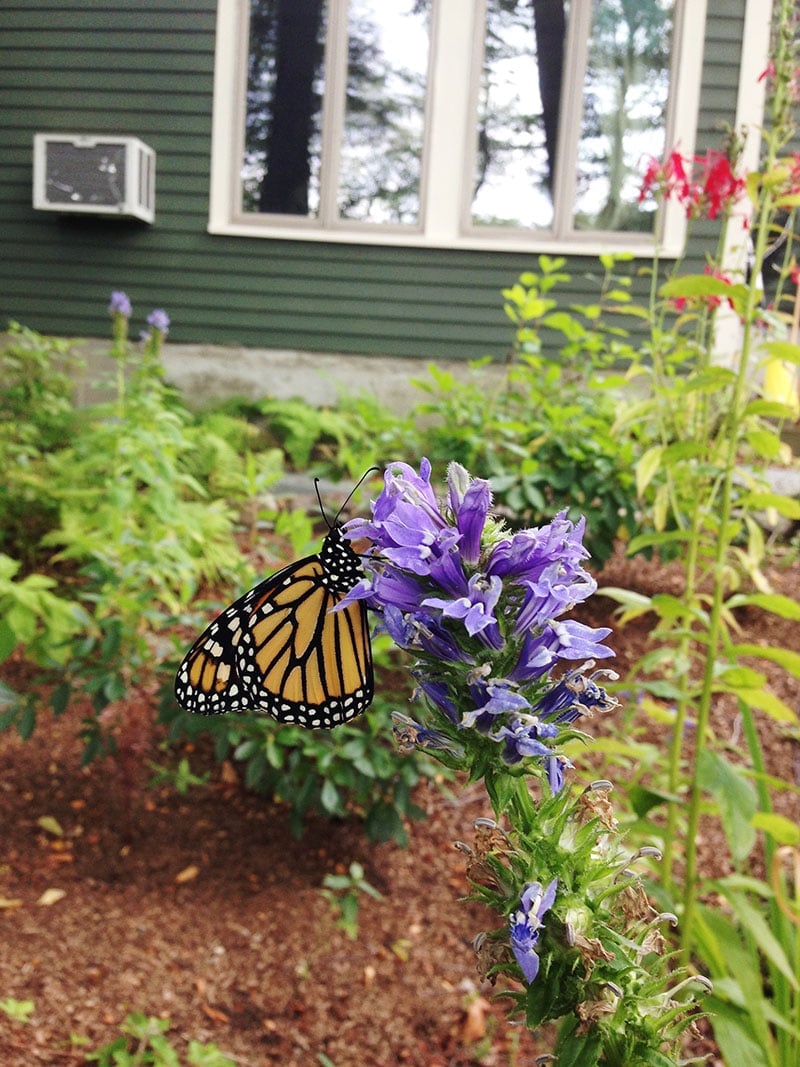
A butterfly garden benefits from a layered layout. The monarch butterfly on the purple flower sits at the front of the bed, with taller green foliage rising behind it and the house as a backdrop. That layering makes the garden feel full without being crowded. The butterfly has a clear place to land and the eye has a clear path from the flower to the house beyond.
For renters, this kind of layered planting is easy to achieve with containers. Place taller pots with grasses or shrubs at the back, medium plants like purple salvia in the middle, and lower flowering plants at the front. You get the same depth and structure as a permanent bed, but nothing is rooted in the ground. The whole arrangement can shift with the seasons or move with you.
Vibrant Orange Monarch on Orange and Yellow Blooms
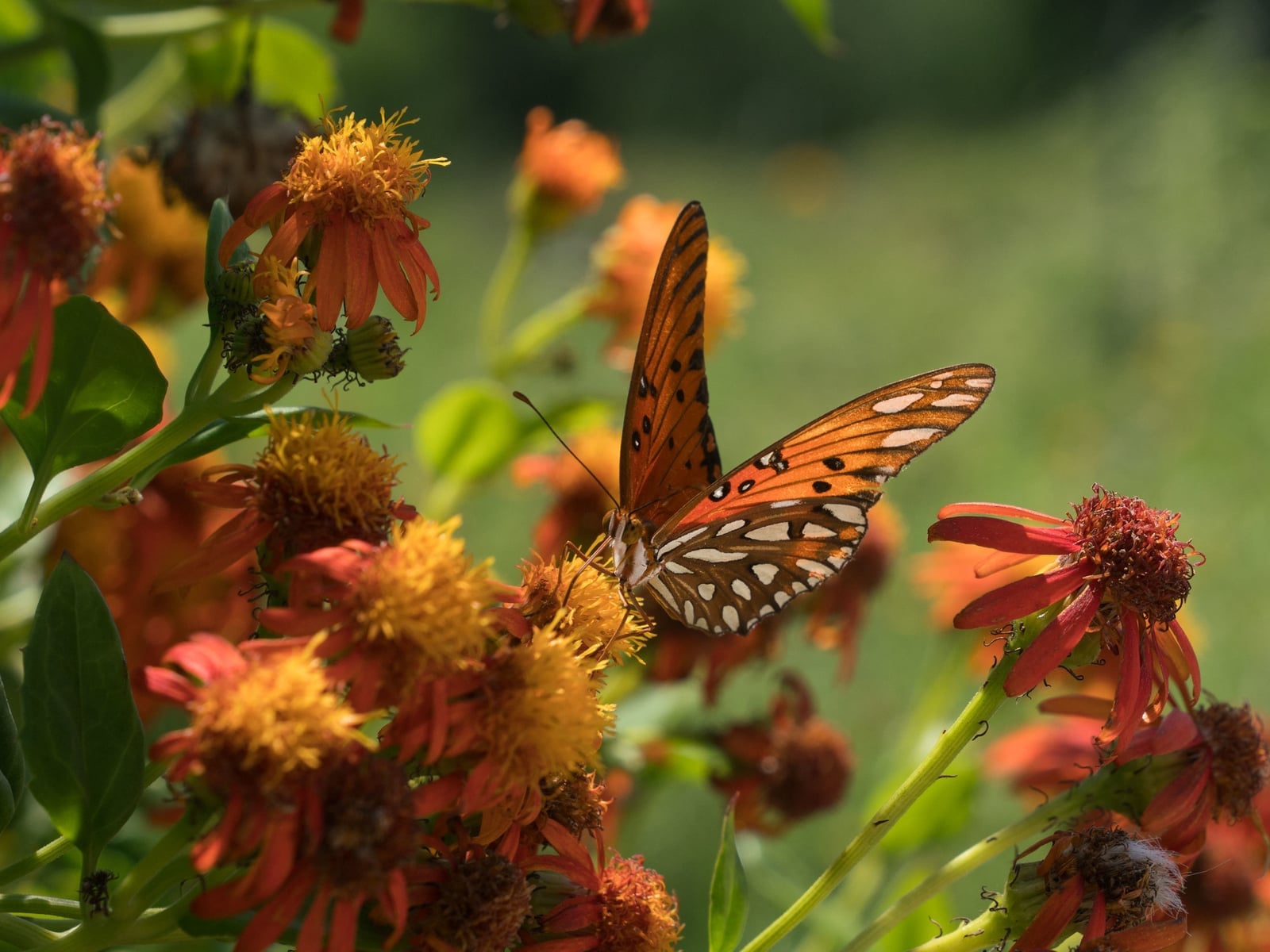
A vibrant orange monarch butterfly on orange and yellow garden flowers is a study in tonal harmony. The butterfly matches the flowers so closely that it almost disappears into the bloom, then reveals itself when it moves. That is the power of a monochromatic palette in the garden. When you repeat the same color family across flowers and visitors, the garden feels calm and cohesive. The green leaves provide the only break in the color, and that is enough. A tight palette like this one keeps the garden from feeling scattered, even when there is a lot going on.
Stunning Blue Morpho Butterfly on Mossy Ground
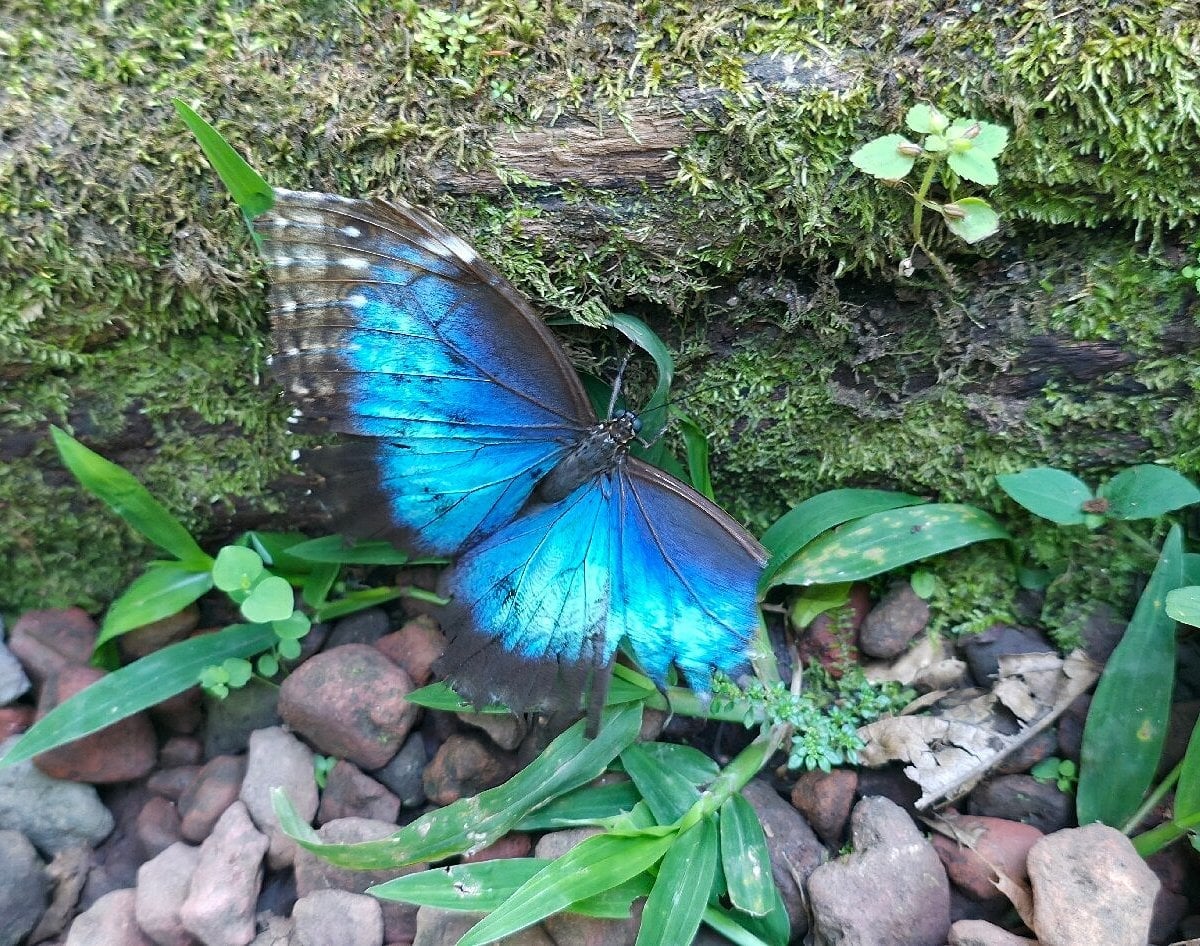
A blue morpho butterfly on mossy ground is a reminder that the best garden moments happen at ground level. The iridescent blue wings against the soft green moss and brown stone create a miniature landscape that is easy to miss if you are only looking at the flower tops. Moss is a practical ground cover in shady spots where grass struggles. It stays soft, needs little water once established, and provides a cool resting place for butterflies. Check your USDA zone to see if moss will thrive in your area. A small patch of moss near a damp stone or a shallow dish of water can turn an overlooked corner into a butterfly landing pad.
Red Admiral Butterfly on Purple Flowers
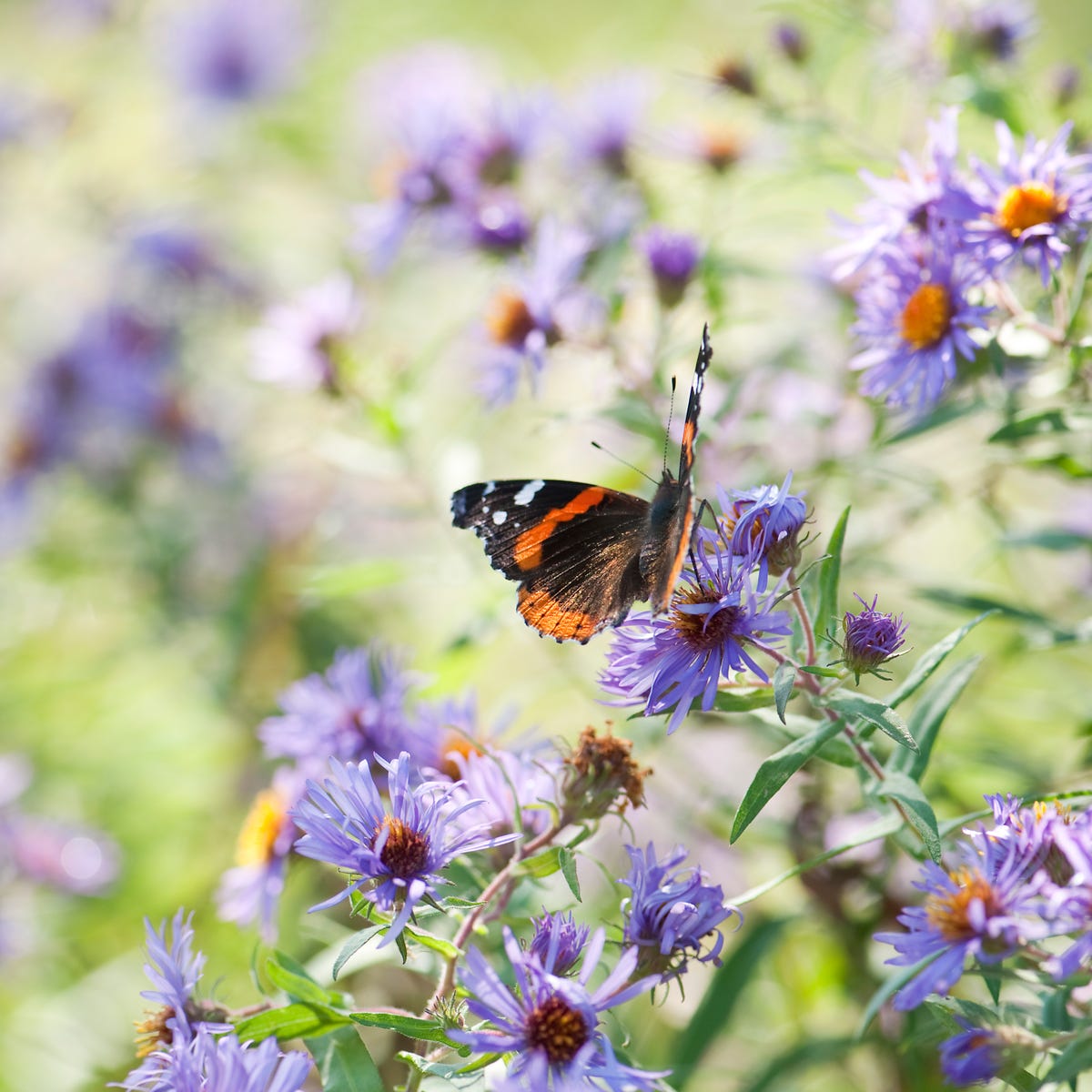
A red admiral butterfly might seem similar to a monarch at first glance, but the scale is different. The red admiral is smaller, with a more angular wing shape and a faster, darting flight pattern. On the purple flowers, its orange and black markings read as more delicate than the monarch’s bold blocks of color. That difference in scale matters when you are choosing plants. Smaller butterflies prefer flowers with smaller, clustered petals where they can land easily, like lantana or verbena.
For the same reason, the spacing between plants should be tighter for smaller butterflies. They want short flights from one flower to the next, not long open gaps. A dense planting of purple flowers with small blooms will attract a wider range of species than a few large statement flowers set far apart. The garden feels fuller and the butterflies feel safer moving through it.
Cottage Garden with a Curving Gravel Path
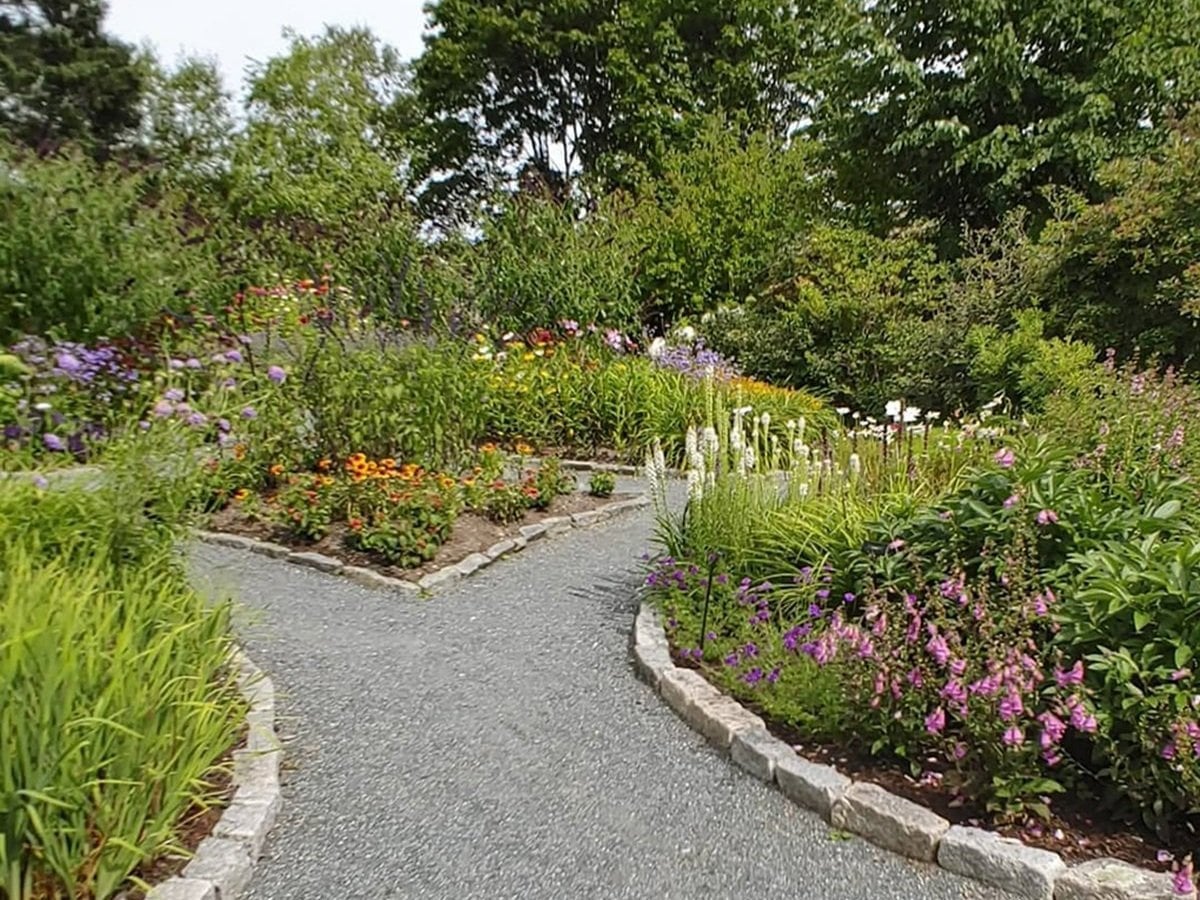
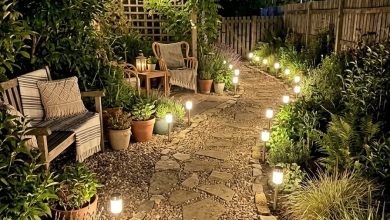
A winding gravel path draws you through dense flower beds rather than cutting straight across the yard. This layout slows the walk and gives each cluster of blooms its own moment. The path is wide enough for two people to walk side by side, with stone edging that keeps the gravel from spilling into the soil. Layered planting puts taller purple and white flowers at the back, with lower pink and yellow blooms spilling toward the edge. The result is a garden that feels generous and settled, not like a row of shrubs in a straight line.
Striking Blue Markings on Butterfly on Lantana
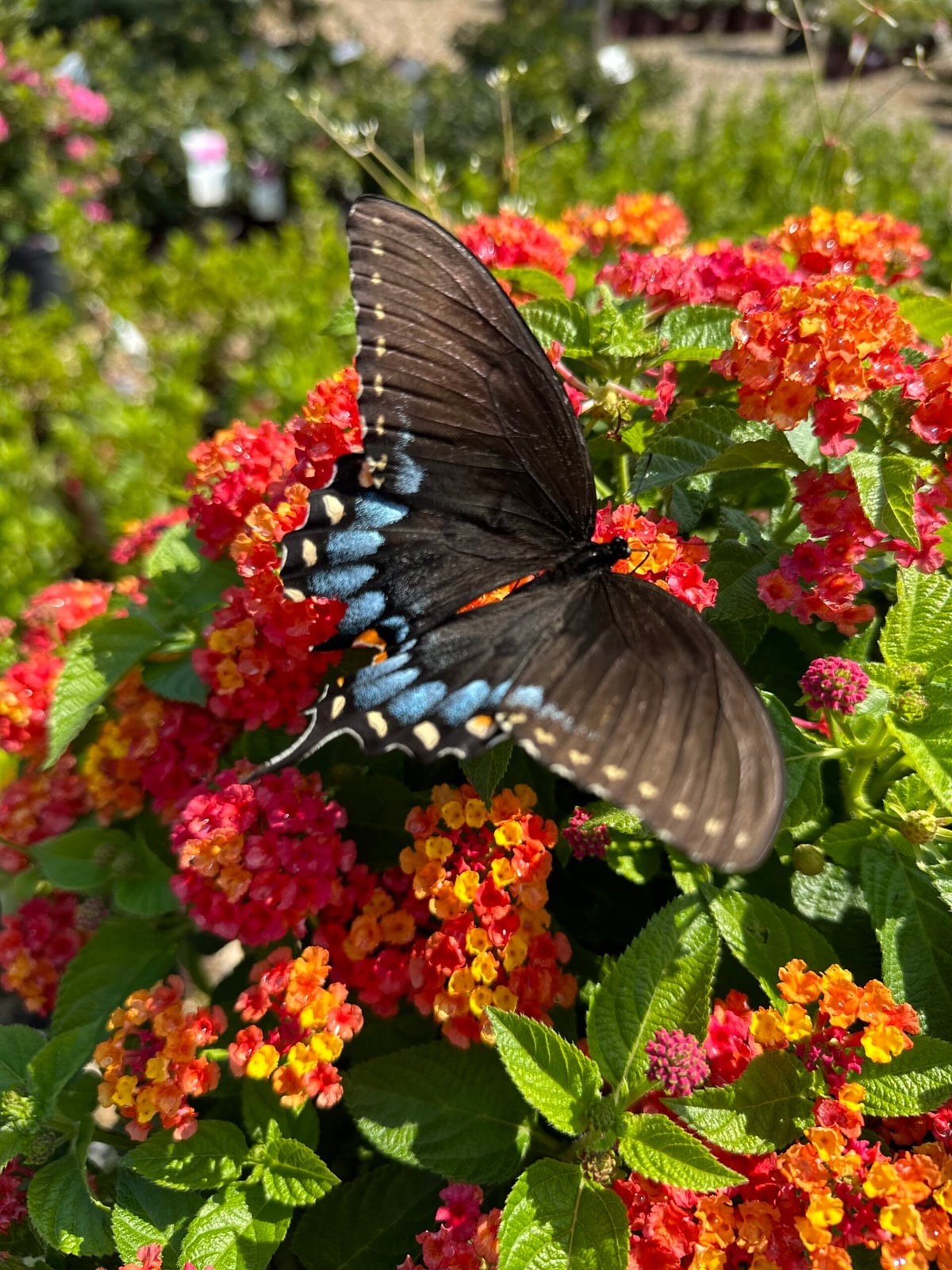
A brown butterfly with vivid blue markings rests on a cluster of orange and pink lantana, and the color pairing is the whole point. The cool blue against warm orange and pink creates a contrast that looks deliberate. In a garden setting, that same logic works for flower combinations: pair a cool-toned bloom like blue salvia or lavender with a warm neighbor like orange zinnia or yellow coreopsis. The ratio here is small patches of blue against larger drifts of orange and pink, which keeps the palette from feeling scattered. What breaks the look is adding too many competing cool tones.
Final Thoughts
Building a butterfly garden takes patience. Monarchs need milkweed, swallowtails favor dill and parsley, and painted ladies will visit almost any composite flower. Group similar bloom times so there is nectar from early spring through frost. Provide shallow water, a few flat stones for basking, and skip the pesticides. Leave some leaf litter for overwintering species. The real reward comes when you step outside and see the garden working, a monarch on the coneflower, a swallowtail circling the zinnias. That is the moment a bed of plants becomes a butterfly garden.