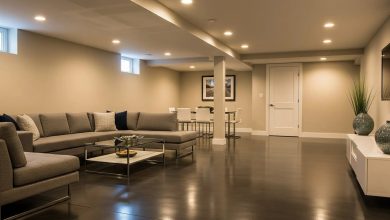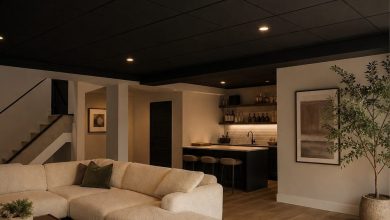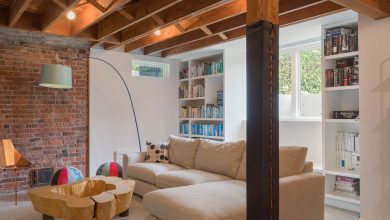

Choosing the right paint for a basement floor can turn a forgotten concrete slab into a usable part of your home. The finish matters as much as the color, affecting durability and how the space feels. This collection of 27 basement floor paint ideas focuses on the paint itself, from solid hues to speckled epoxies and marbled finishes.
Each option keeps the floor as the main visual element, with the garage setting staying simple and supportive. You will see how different paint treatments handle light, traffic, and the overall character of a garage.
Contemporary Terrazzo-Style Paint for a Modern Garage Floor
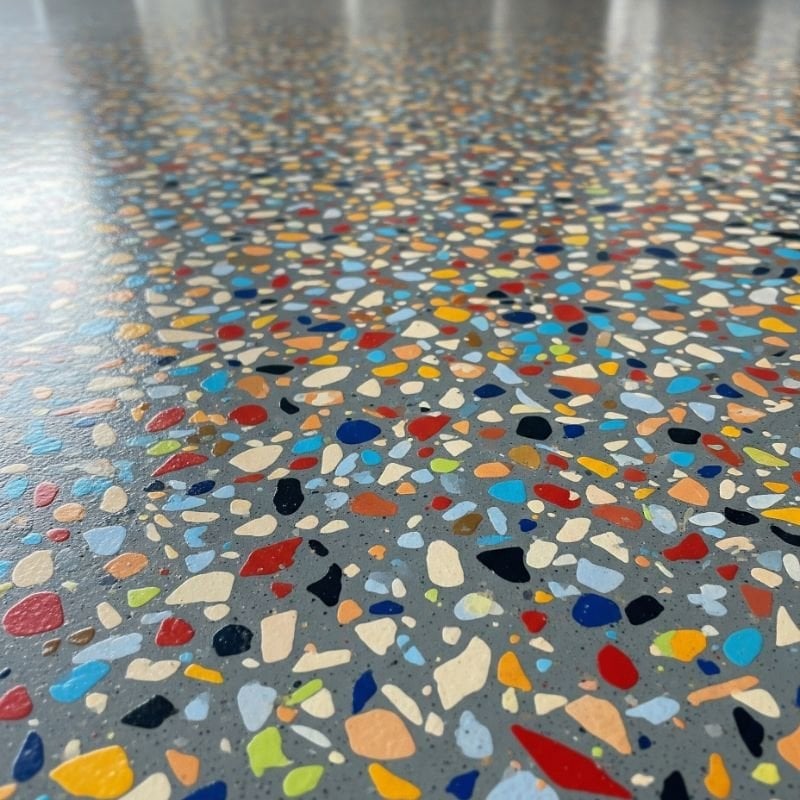
A contemporary terrazzo-style floor brings a playful texture to a modern garage without the weight of real stone. The gray base is scattered with colorful chips, creating a speckled look that hides dirt and tire marks better than a solid finish. Overhead artificial light catches the varied flecks, adding subtle sparkle across the open floor. This approach works well when you want the garage to feel more like an extension of the house than a utility space.
Speckled Gray Epoxy for a Durable Basement Floor
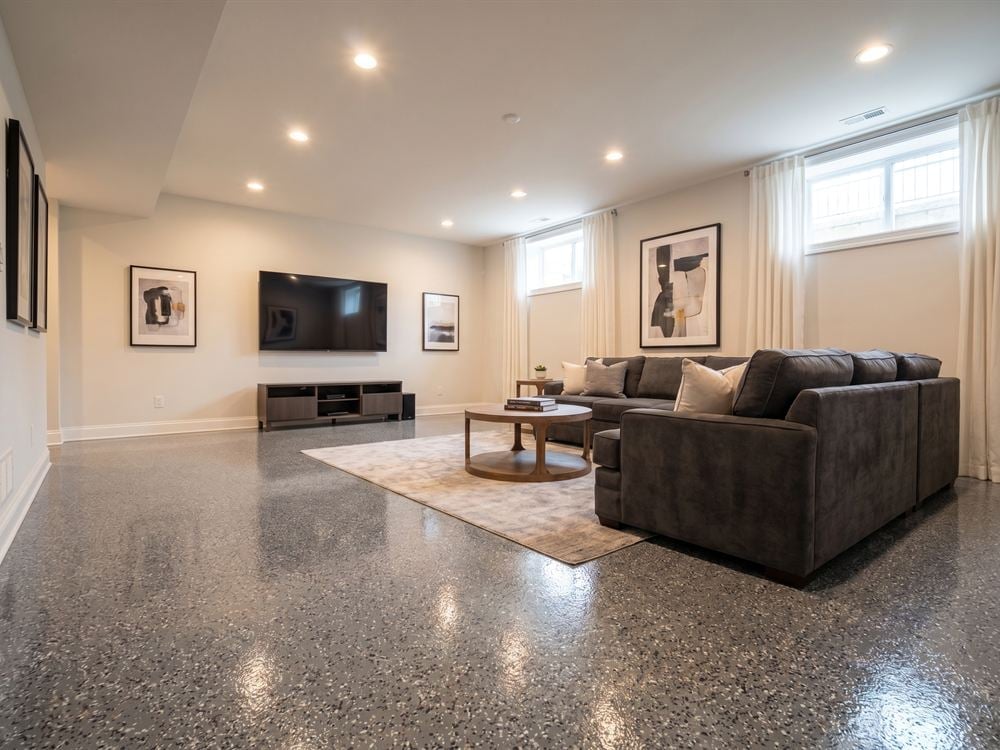
A speckled gray epoxy floor delivers durability that holds up in a basement where moisture and heavy use are real concerns. The gray, white, and black flecks create a textured surface that hides dust and scuffs between cleanings. In this open-plan basement, the floor anchors a sectional sofa and coffee table set on a rug, proving that a tough finish can still look intentional. The recessed ceiling lights keep the space bright, letting the speckled texture add visual interest without competing with the furniture.
High-Gloss Dark Gray Paint for a Sleek Basement Living Area
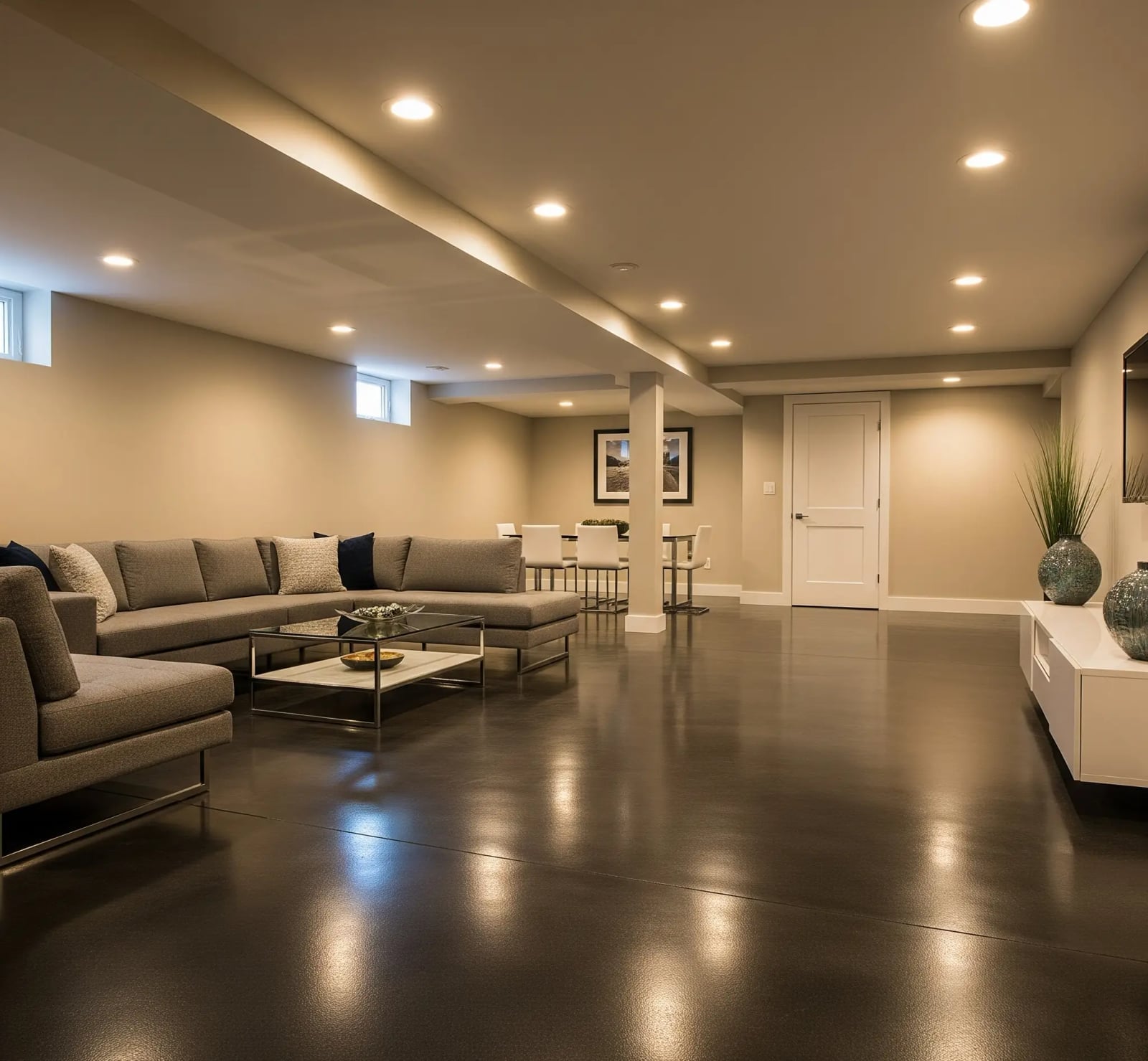
Can a dark floor make a basement feel bigger instead of smaller? A high-gloss dark gray finish does exactly that, bouncing light from recessed ceiling fixtures across the room. The glossy surface reflects the beige walls and wood accents in the media console, creating a cohesive look that feels open rather than cave-like. The dark gray anchors the sectional sofa and coffee table without overwhelming the space. Pairing a dark floor with lighter walls and furniture prevents a heavy feel, while the gloss adds a polished edge that a matte finish cannot match.
Reflective Marbled Epoxy for a Luxurious Dining Room Floor
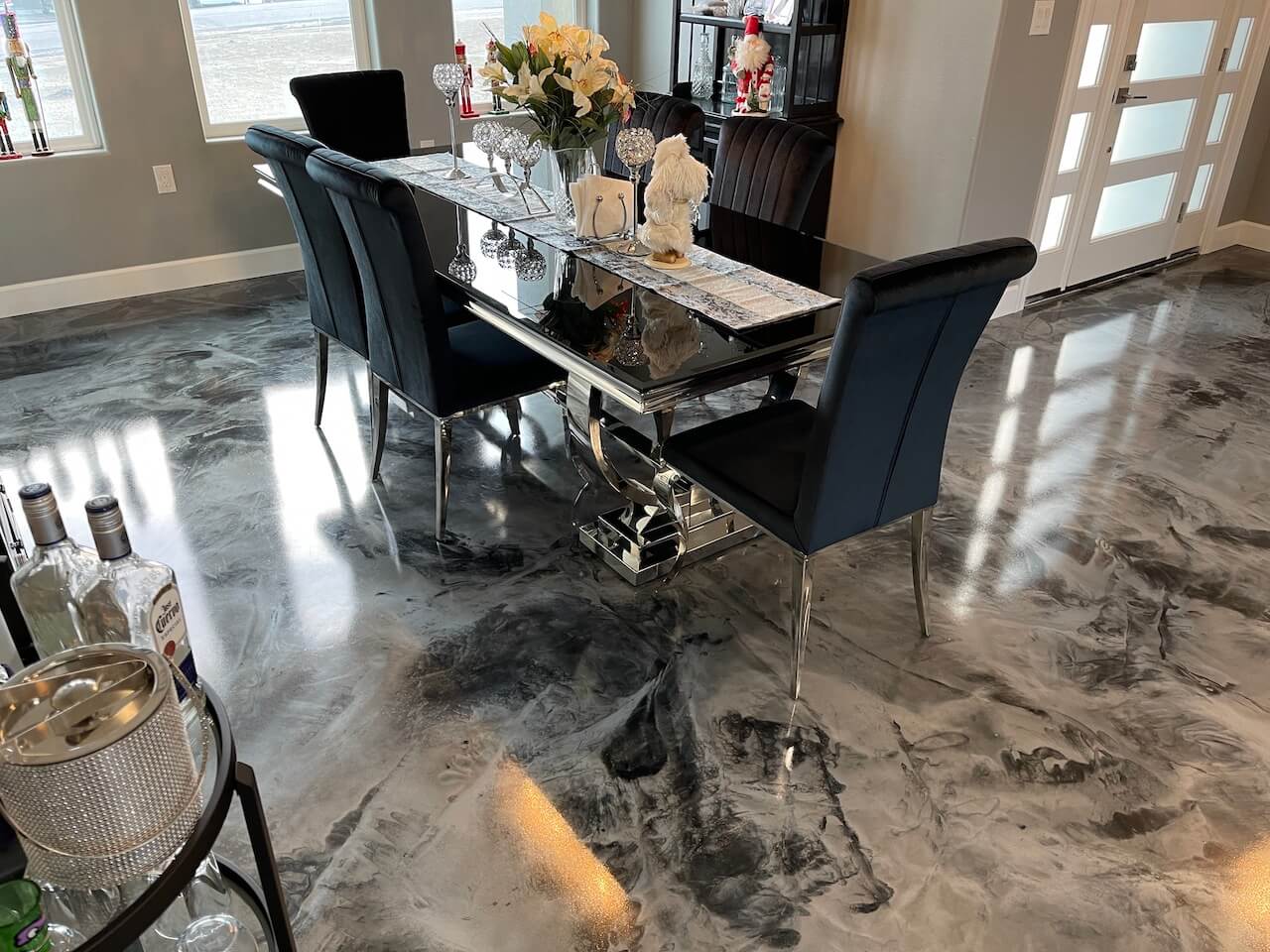
A highly reflective marbled epoxy floor turns a dining room into a space that feels both luxurious and practical. The gray, black, and white swirls catch natural light from windows and bounce it around the room, making the area feel larger. Glass and metal accents on the dining table and shelving unit echo the floor sheen, while velvet chairs soften the look. This finish suits a dining room where spills happen, since the epoxy surface wipes clean easily.
Elegant Marbled Epoxy Floor in an Open-Plan Kitchen and Dining Area
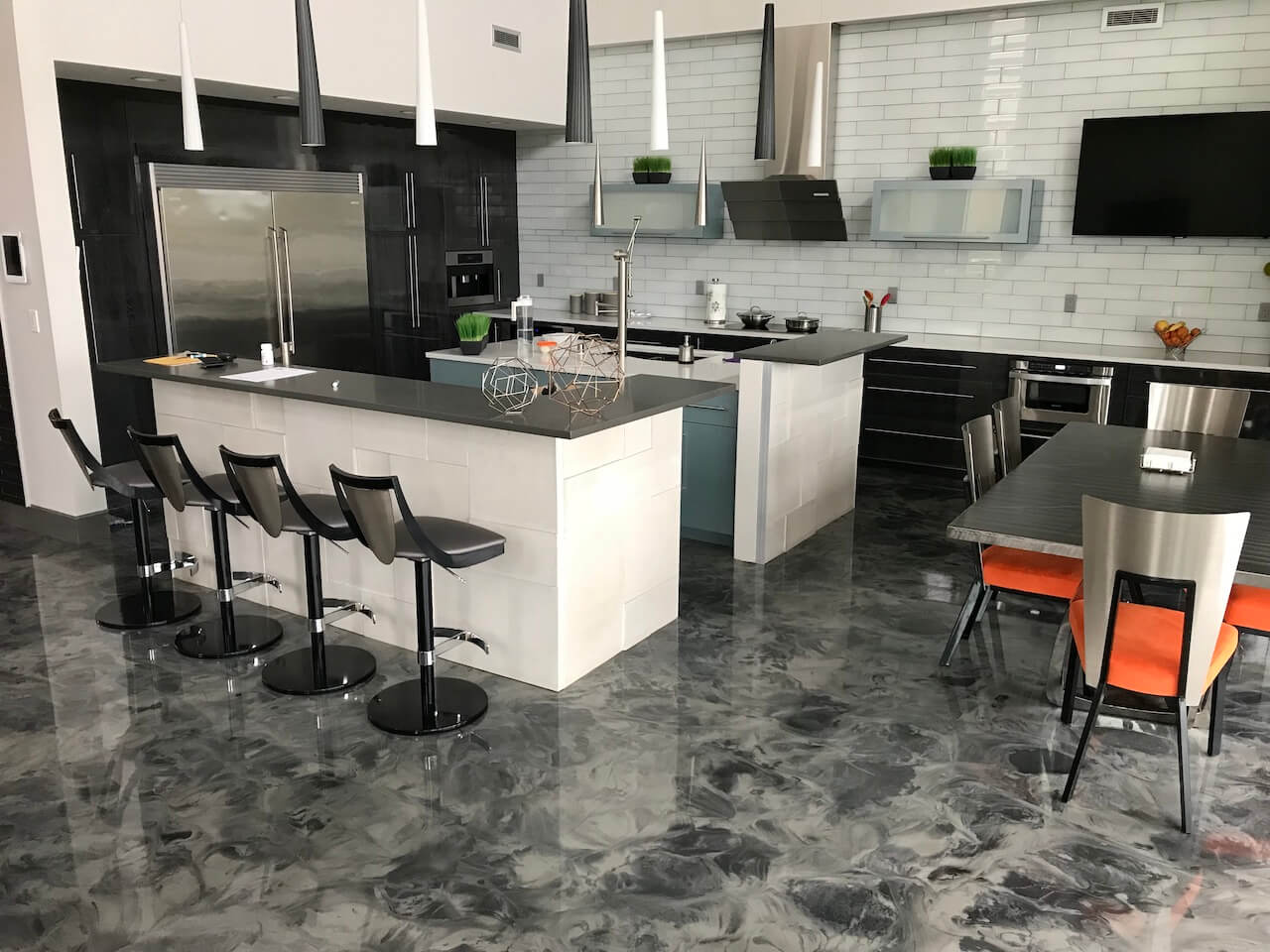
A gray and white marbled epoxy floor ties together an open-plan kitchen and dining area by providing a consistent surface that reads as one continuous space. The swirling pattern adds movement underfoot, which helps define zones without needing walls. Overhead pendant lights cast a warm glow over the kitchen island and dining table, and the epoxy finish reflects that light to keep the room feeling bright. For a busy kitchen and dining combo, this floor is a practical choice because it does not show every crumb or splash.
Metallic Epoxy Floor for a Striking Modern Basement
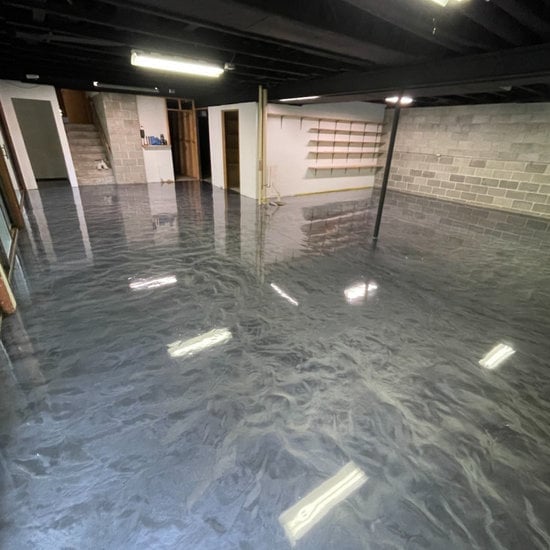
Concrete and brick walls usually read as raw, so a shiny metallic floor is a deliberate pivot toward polished. The gray and silver epoxy surface catches the fluorescent overheads and sends light back into the open room, which keeps the basement from feeling like a storage cave. Metal shelving and a set of open stairs continue the practical, industrial mood. What makes this finish work is the palette ratio: a cool metallic base with no warm accents to muddy the reflection. A single warm-toned rug or wooden stool would break the consistency, so if you want the mirror effect, commit to cool tones wall to wall.
Durable Speckled Gray Epoxy for a Functional Garage Space
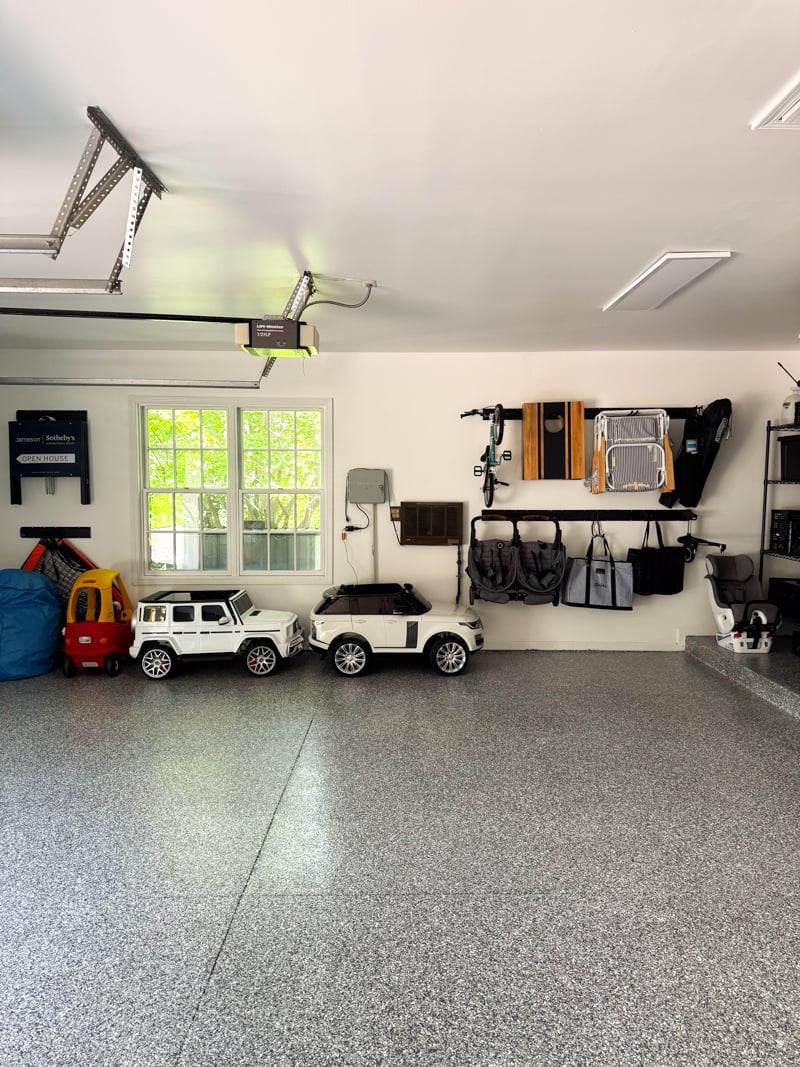
The gray base is scattered with white and black flecks, a pattern that hides daily garage dust and oil drips. Overhead fluorescents mix with natural light, and the speckled surface stays consistent under both. Roll on an epoxy coating that lifts off when you move out, no grinding or etching needed. The toy cars and storage shelves sit on the floor without marking it, which is the whole point of a finish that works as hard as the room does.
High-Gloss Metallic Gray and Beige Epoxy for a Basement Retreat
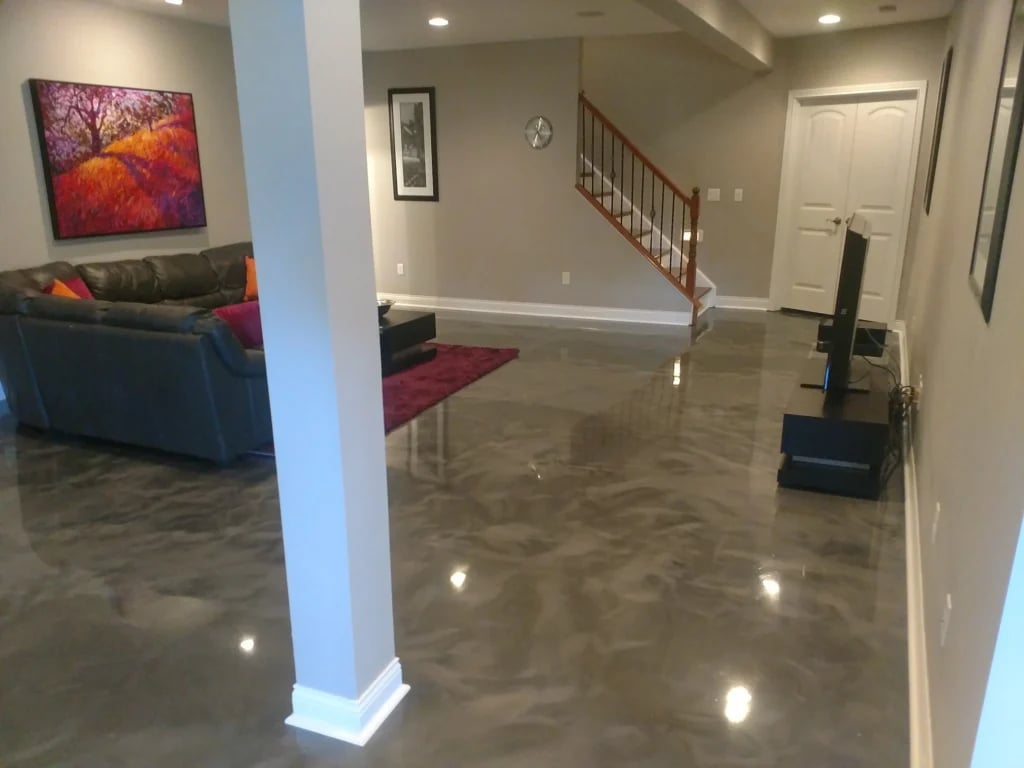
A metallic floor that shifts between gray and beige sounds like a gamble, but the high-gloss finish pulls both tones into a single reflective surface. Recessed ceiling lights hit the epoxy and bounce off the wood stairs, which creates a soft contrast between the cool floor and the warm stair treads. The sofa, tv stand, and coffee table sit in an open plan layout that lets the floor act as a unifying base rather than a spotlight. Keep the furniture palette neutral to let the metallic sheen do the talking, and you get a basement retreat that feels deliberate without feeling cold.
Vibrant Blue Speckled Epoxy for an Energetic Garage Floor
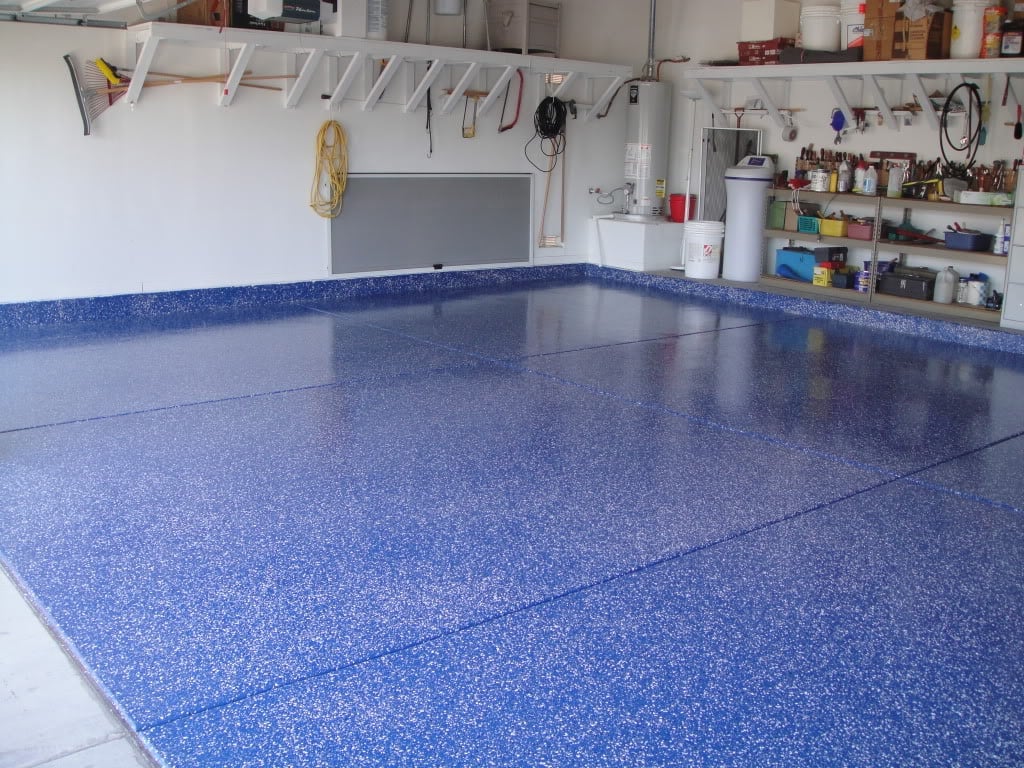
Can a garage floor actually set the energy of the room? This one does. The bright blue base is scattered with white speckles, which keeps the surface from feeling flat under the bright overhead artificial lights. The open floor space with shelving units and a water heater is purely functional, but the color injects a jolt of personality into a room that usually defaults to gray. The trick is the speckle ratio: enough white flecks to break up the blue so the floor looks planned and polished. For a garage that feels less like a utility room and more like a creative workspace, this is the palette to try.
Artistic Splatter Paint for a Creative Garage Floor
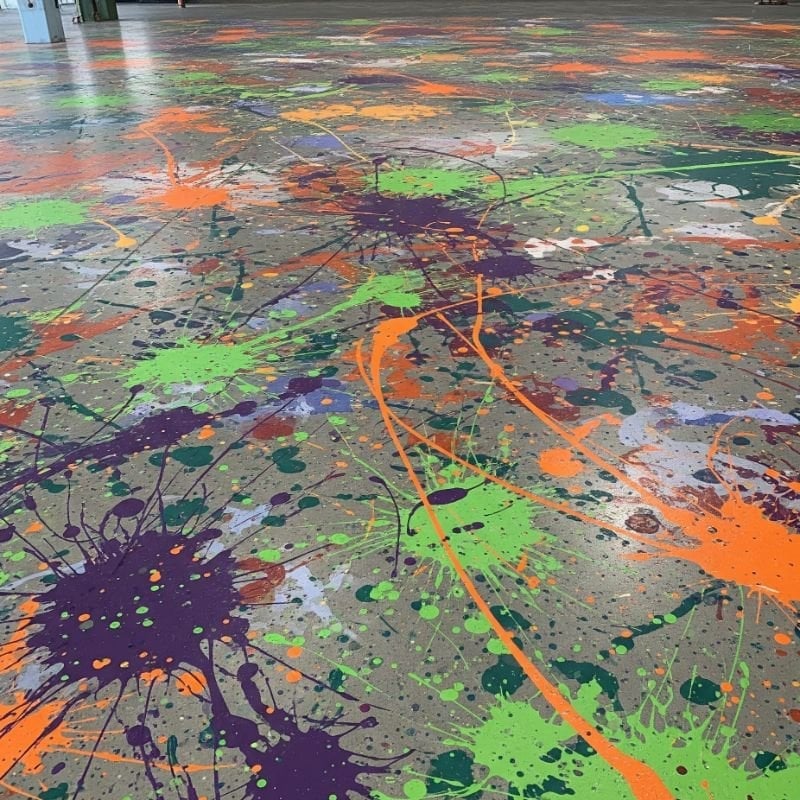
A painted concrete floor in gray gets hit with orange, green, and purple splatters, which turns a basic garage into a studio-like space. The open layout keeps the focus on the floor, because the pattern is the art. Try a splatter approach on a single section of the garage instead of the whole floor. The finish is playful without being chaotic, and the concrete base keeps the room grounded under the overhead artificial light.
Clean Speckled Gray Epoxy Floor in a Modern Garage
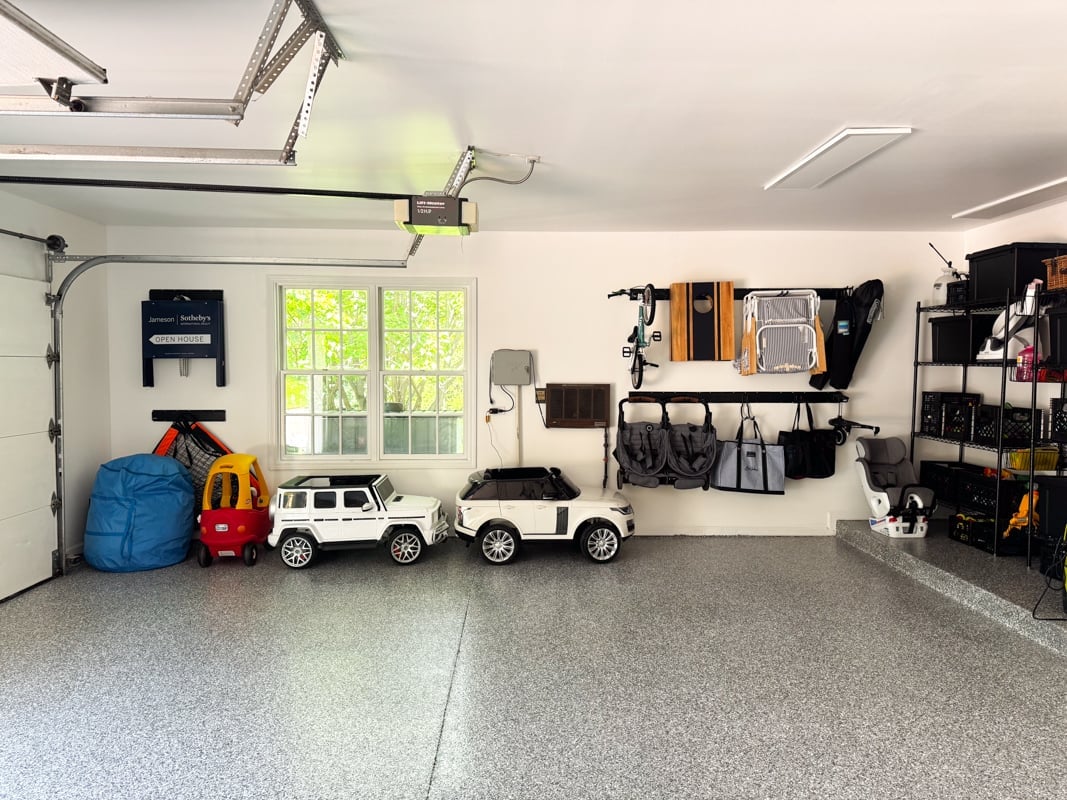
A speckled gray epoxy floor hides dust better than a solid finish, which matters in a garage where you are not mopping every week. The flecks break up the gray so stray dirt and tire marks blend in instead of standing out. The roomy garage here keeps the floor as the main event, with toy cars and storage shelves along the walls and metal cabinets that match the cool tone. Overhead fluorescent lights bounce off the speckled surface evenly, making the whole space feel brighter without extra fixtures. The wood tones on a few pieces add warmth against the gray, a trick that keeps an epoxy floor from looking too industrial.
Glossy Painted Floor for a Spacious Basement Living Area
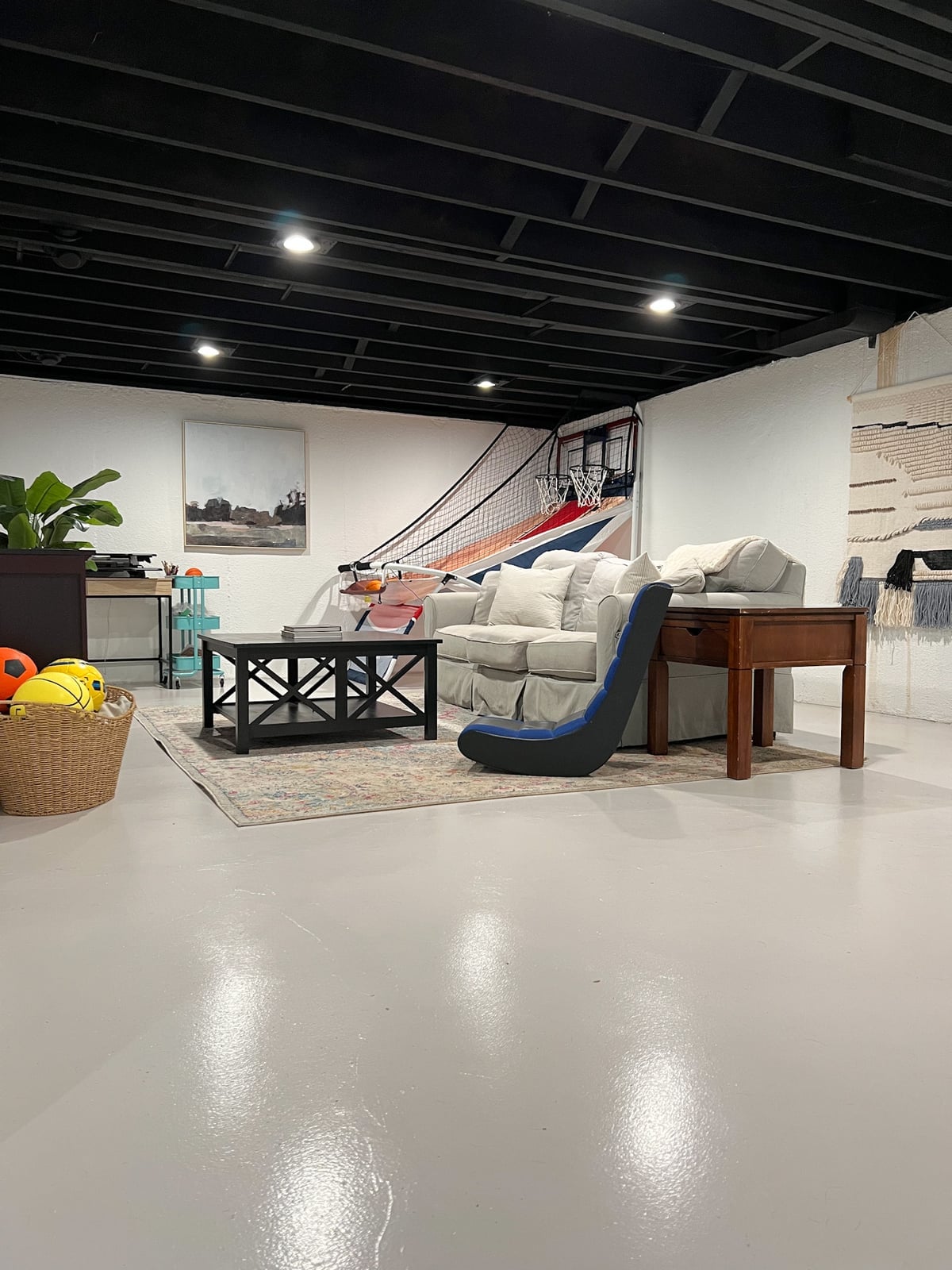
A matte floor feels cozy, but a glossy painted floor in a basement living area does the opposite: it bounces light around, which helps when natural light is limited. The open plan basement here uses a light gray gloss on the concrete, and the sheen reflects the recessed lights and ambient glow from the rest of the room. That reflection makes the space feel larger than it is, a useful trick for a basement that does not get a lot of windows.
The glossy floor pairs with a fabric sofa and a coffee table, and the contrast between the smooth, shiny surface and the soft upholstery gives the room some texture. A black basket and wood accents keep the palette from going flat. The key is to let the floor shine literally, so keep the furniture low and the wall color light to avoid competing with the floor’s reflective effect.
Smooth Light Gray Paint for an Unfinished Basement Floor
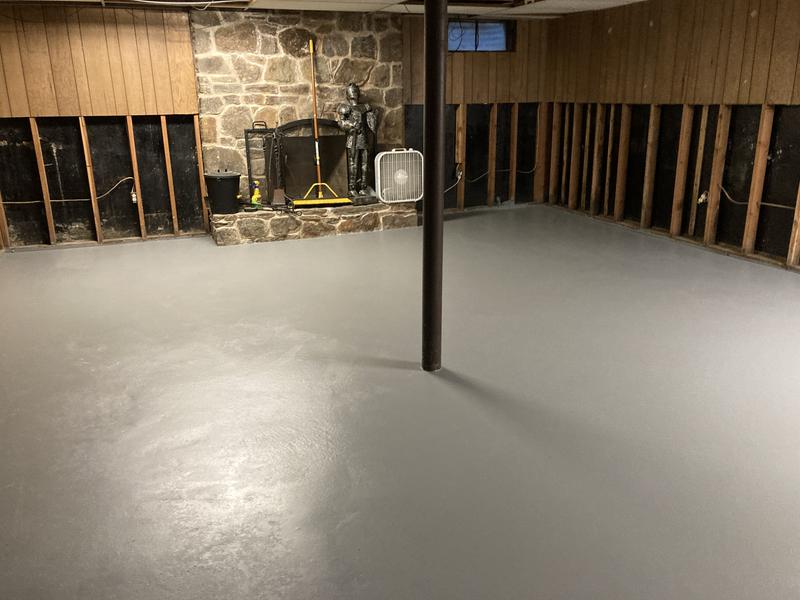
The smooth light gray paint on this unfinished basement floor does the job of unifying the space without pretending the concrete is something else. The gray is even and matte, so it does not draw attention to the unfinished walls or the exposed overhead fixtures. A fireplace against one wall and a standing fan break up the wide view, but the floor is what holds the room together. For a renter or anyone who cannot commit to epoxy, a simple coat of concrete paint in a neutral gray is a low-effort swap that still makes a raw basement feel intentional.
Geometric Patterned White Floor for a Modern Garage
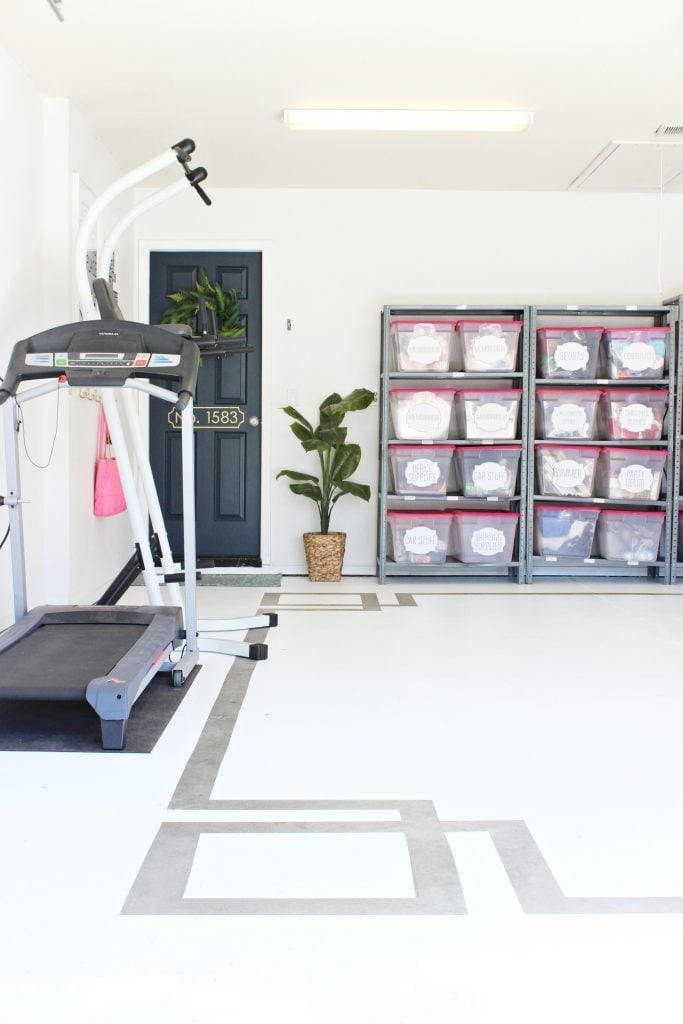
A geometric pattern on a garage floor is a smart way to define zones without building walls. The white and gray grid here creates a visual boundary around the main activity area, while the rest of the floor stays plain. That pattern also draws the eye across the wide space, making the garage feel longer and more purposeful than a plain slab would. The overhead fluorescent light picks up the white sections, so the floor reads as brighter than a full gray finish. A treadmill and storage shelves along the wall fit neatly into the layout, and a plant adds a soft note to the clean lines. The pattern does the work of a rug without the upkeep.
Minimalist Light Gray Paint for a Clean Garage Floor
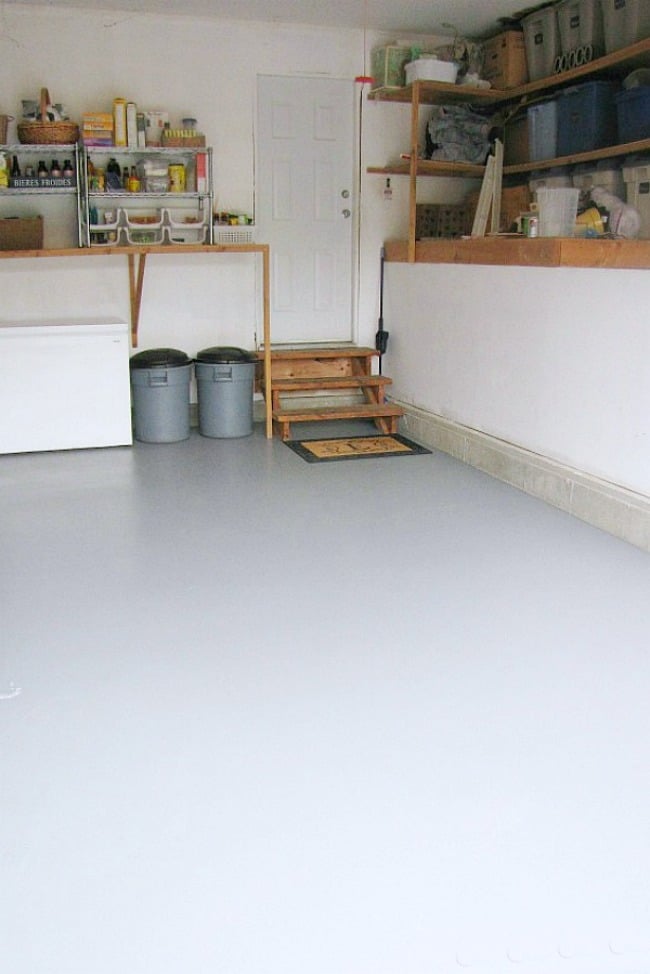
A minimalist garage floor works best when the paint color does all the heavy lifting. Light gray keeps the space clean without showing every scuff, and it does not fight with the items you store along the walls. The wide garage here uses a smooth, even coat of light gray paint that runs wall to wall, with shelves along one side and a door at the far end. The overhead fluorescent lighting makes the gray look consistent, which is exactly what you want in a room where function comes first.
The minimalist approach means the floor stays simple so the shelves and tools stand out. No pattern, no speckles, just a solid neutral that makes the garage feel bigger and easier to keep tidy. If you store a lot of gear, a light gray floor helps you spot dropped screws or spills fast, which is a practical bonus you do not get from a darker shade.
Wood-Grain Patterned Floor for a Rustic Workshop Corner
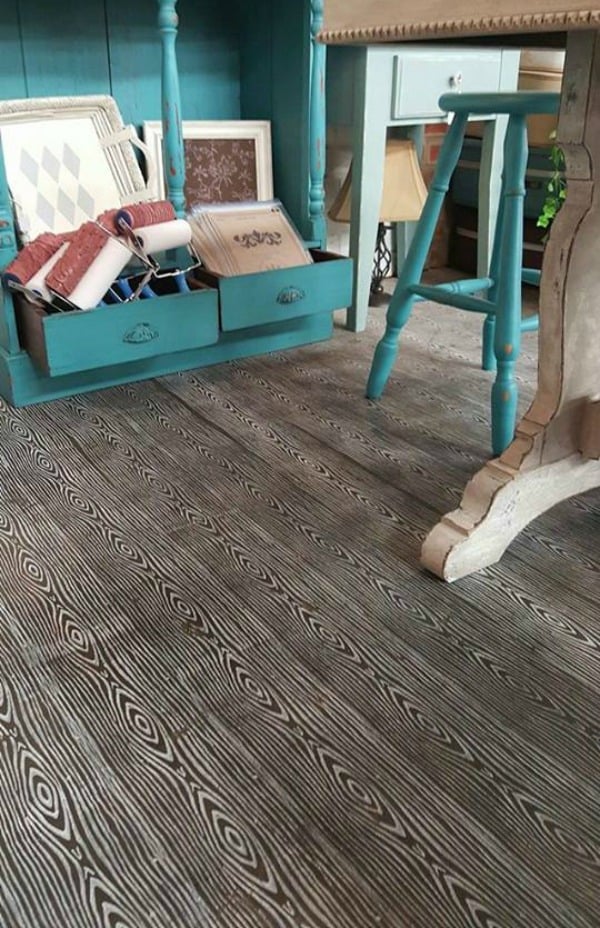
Concrete does not have to look like concrete. A stenciled wood-grain pattern turns a plain workshop floor into something that reads like reclaimed planks, without the cost or installation of real lumber. The trick is in the scale: a compact corner like this one, with a table, stool, and teal shelving unit, lets the pattern be the focal point without overwhelming the room. A nearby window plus a warm lamp keeps the space bright. For a renter-safe swap, use stencil paint that peels off or can be painted over later.
Simple Gray Painted Concrete Floor in an Unfinished Basement
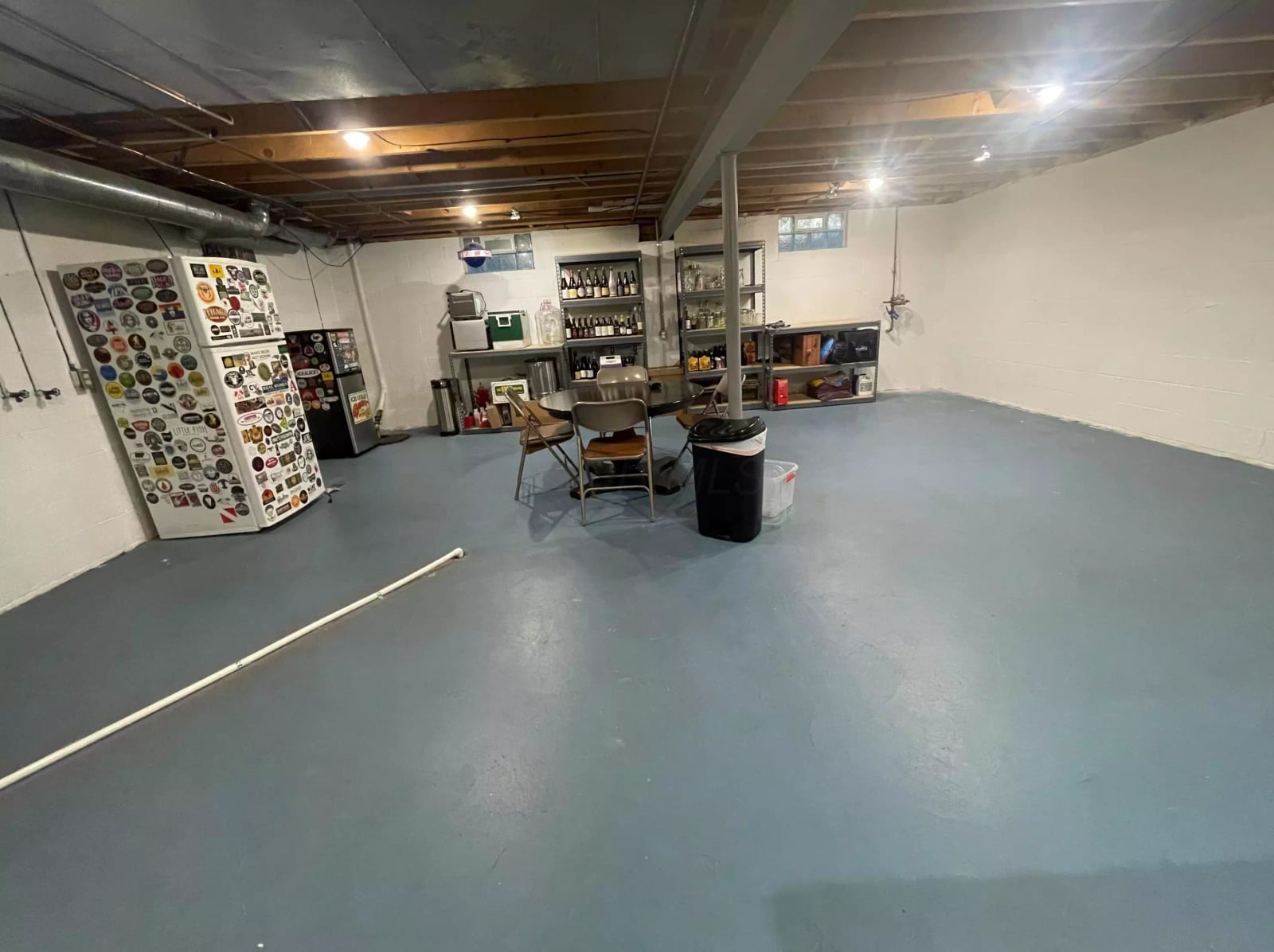
In an unfinished basement, the floor acts as the anchor. A solid gray painted concrete floor unifies the space with exposed pipes, ducting, and metal shelving overhead. The matte finish keeps glare from overhead fluorescent lights to a minimum, a benefit in a room that likely has no windows. White walls and a few wood-toned pieces keep the palette simple and the room feeling larger. This is a renter-friendly move if you use a concrete paint that can be covered later. Just test a small patch first to make sure the concrete is clean and dry enough to hold the paint.
Clean Geometric Design in White and Gray Floor Paint for a Garage
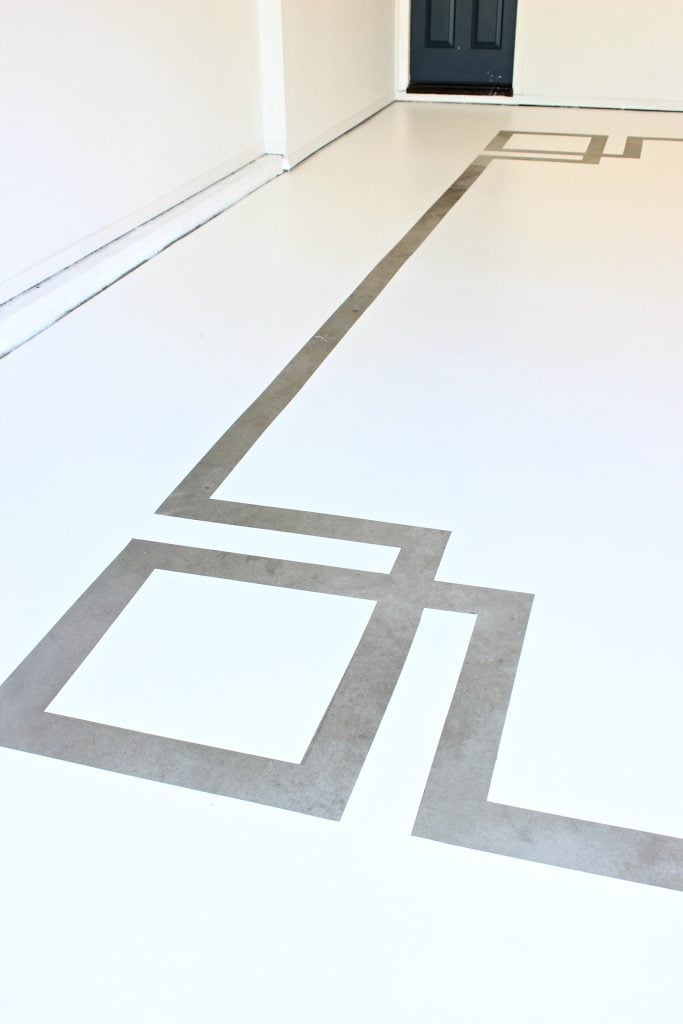
A solid gray floor works fine in a garage, but a geometric pattern in white and gray adds the same level of visual interest as a tile layout without the grout maintenance. The linear pattern runs the length of the space, which makes the garage feel wider and more open. Overhead fluorescent lights reflect off the white sections, brightening the room overall. The trick to keeping this look clean is to use a high-quality concrete paint and apply it in thin, even coats. Tape off the pattern carefully and press the edges down so the paint doesn’t bleed. If you want to change it later, a fresh coat of solid paint covers the design completely.
Expansive Light Gray Painted Floor in an Unfinished Basement
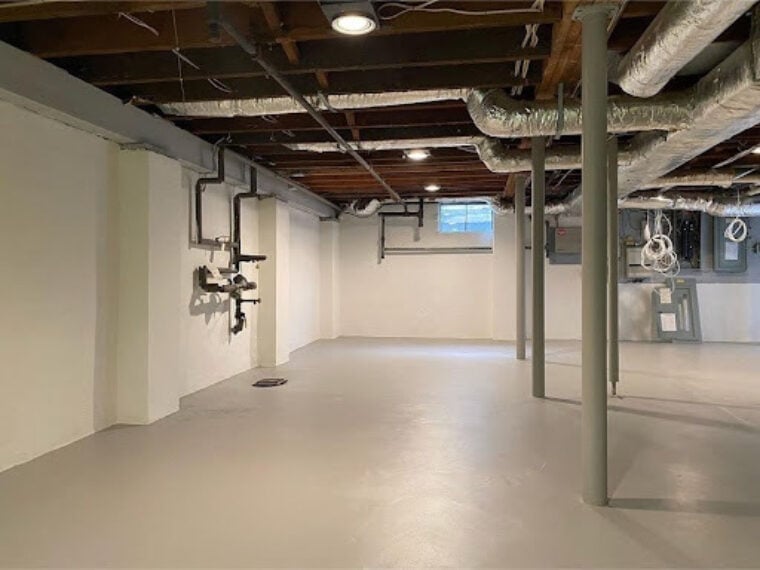
A light gray painted concrete floor does more than just cover up old stains. In an open basement with exposed pipes and ducting overhead, that single coat of paint defines the floor plane and makes the whole space feel finished. The pale tone bounces the overhead light around the room, cutting down on shadows and making the ceiling feel less intrusive. White walls continue the effect, so the room becomes a clean, modern shell instead of a half-finished storage area. Because the floor is the hero element here, keep the furniture minimal: a few pieces in natural wood or metal will ground the space without clashing with the painted surface.
High-Gloss Speckled Epoxy Floor in a Garage Corner
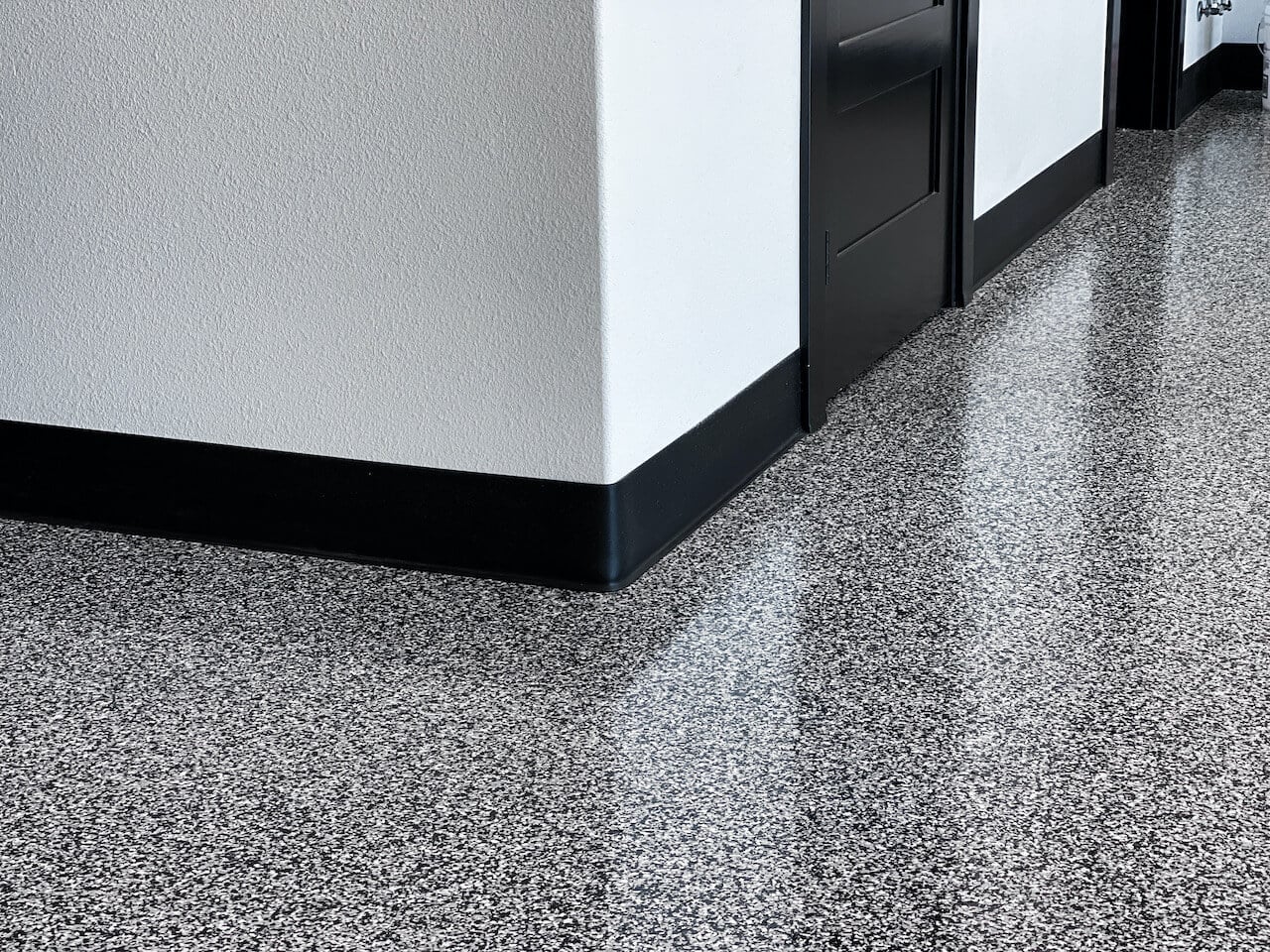
A high-gloss speckled epoxy floor in a garage corner does two things at once. The speckled pattern hides dust and small debris between cleanings, while the glossy finish reflects overhead light and makes the space feel brighter. The gray base with black and white flecks works well against a painted wall and black trim, creating a clean, modern look that doesn’t show every scuff. The reflections from the glossy surface also help define the garage as a finished space rather than a utility area. One note: the gloss level means the floor can be slippery when wet, so keep a mat near any door that leads outside.
Solid Green Painted Concrete Floor for a Basement Space
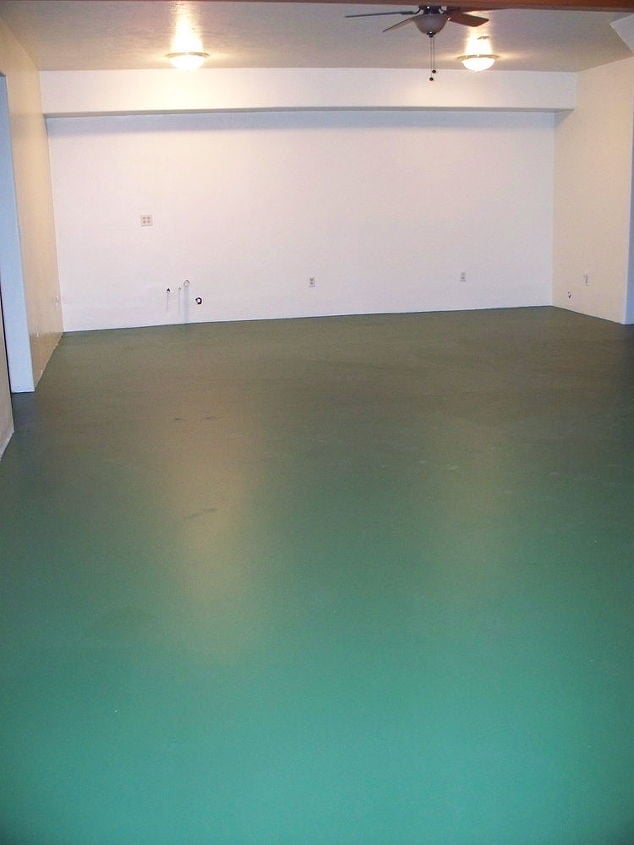
A solid color on a basement floor is a direct way to define a zone without adding a rug. The green here is a deliberate choice, not a placeholder. It gives the room a clear center of gravity, especially when the walls and ceiling stay white. A single saturated shade on the floor makes the open space feel complete.
The overhead lights keep the finish flat and even, which helps the color hold its weight. This approach is most effective when the floor is the only strong hue in the room. If you add furniture later, keep the palette simple so the green stays the anchor. A painted floor like this is a commitment to one color, but it also means you skip the cost and care of a large area rug.
Geometric Patterned Epoxy Floor in a Hallway
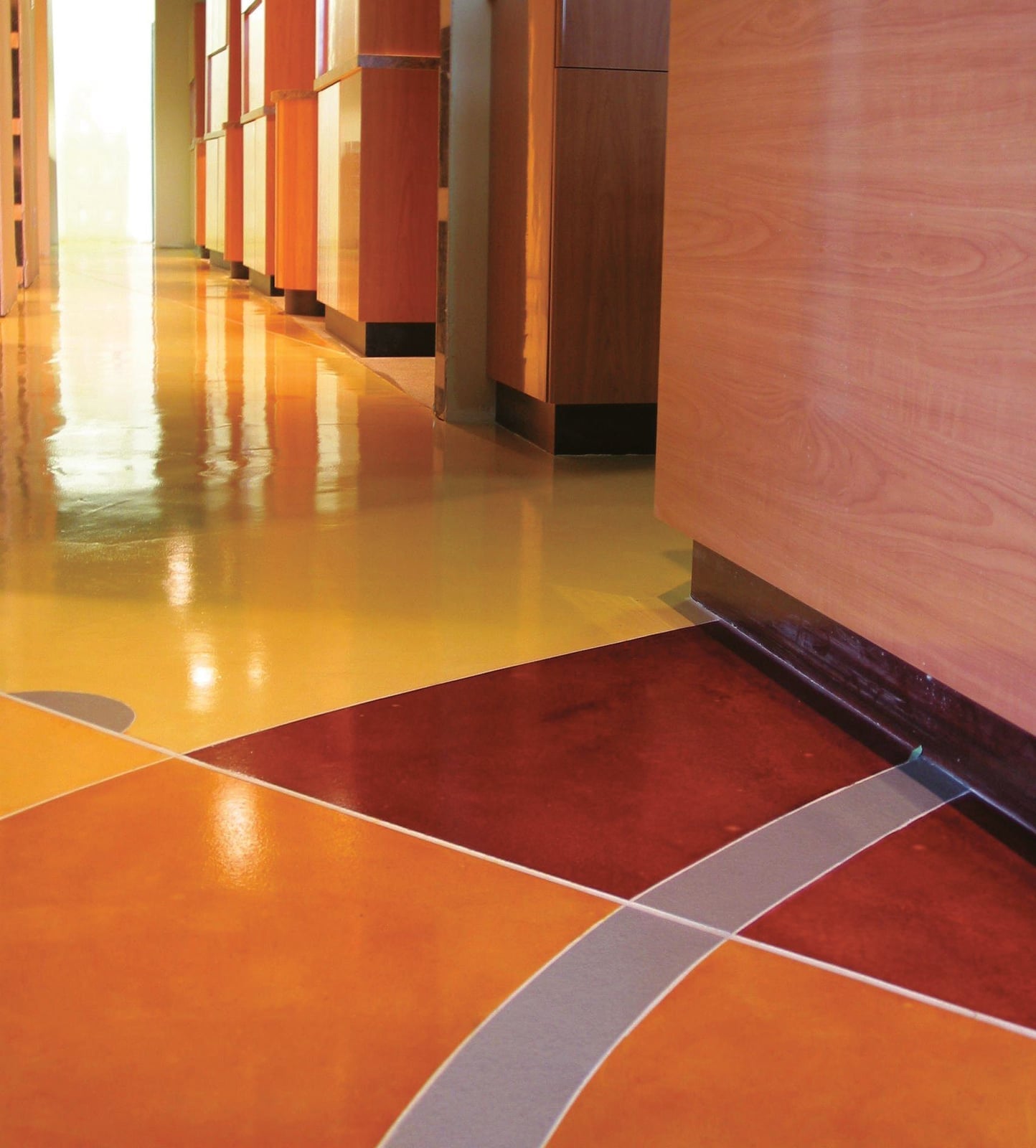
A geometric pattern on a hallway floor uses orange, yellow, brown, and gray in a repeating design that turns a pass-through into a visual stop. The pattern sits on epoxy, with wooden cabinets and baseboards framing the edges. Natural light and reflected light off the glossy finish help the colors stay distinct. This kind of layout works when the hallway is wide enough to read the full pattern without feeling cramped. The trick is to keep the walls neutral so the floor does the talking.
Smooth Light Blue-Gray Painted Concrete Floor in an Empty Garage
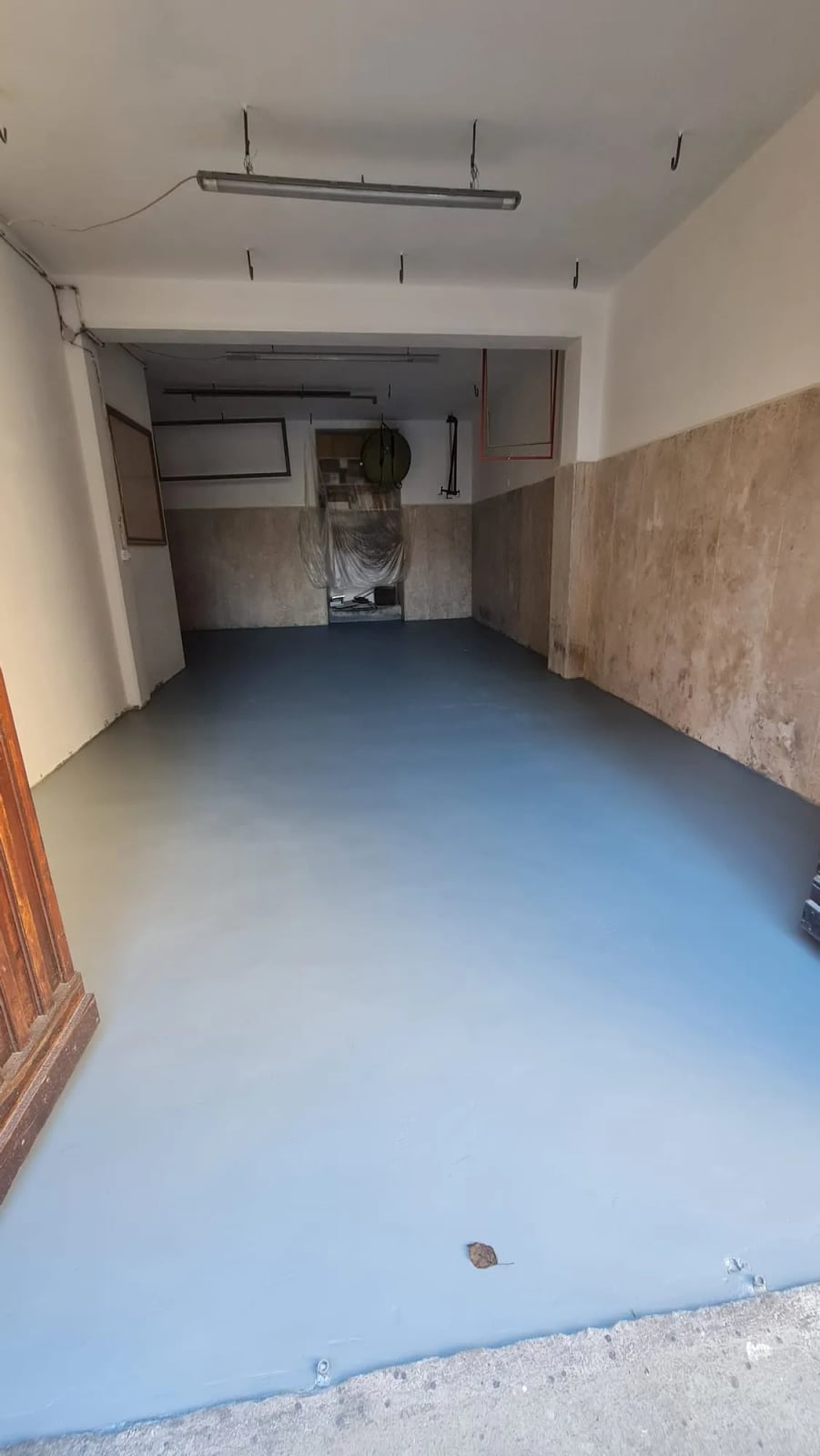
A smooth painted finish on a garage floor works for renters or anyone who wants a clean surface without the permanence of epoxy. The light blue-gray here covers the concrete evenly under fluorescent overhead lights, giving the space a finished look without extra furnishings. Concrete is the base, and paint is the material that does the work. This treatment works well in an empty garage because the solid color looks deliberate, not temporary. The smooth surface also makes sweeping straightforward, which is the main upkeep in a space like this.
Speckled Light Gray Epoxy Garage Floor with Extensive Cabinetry
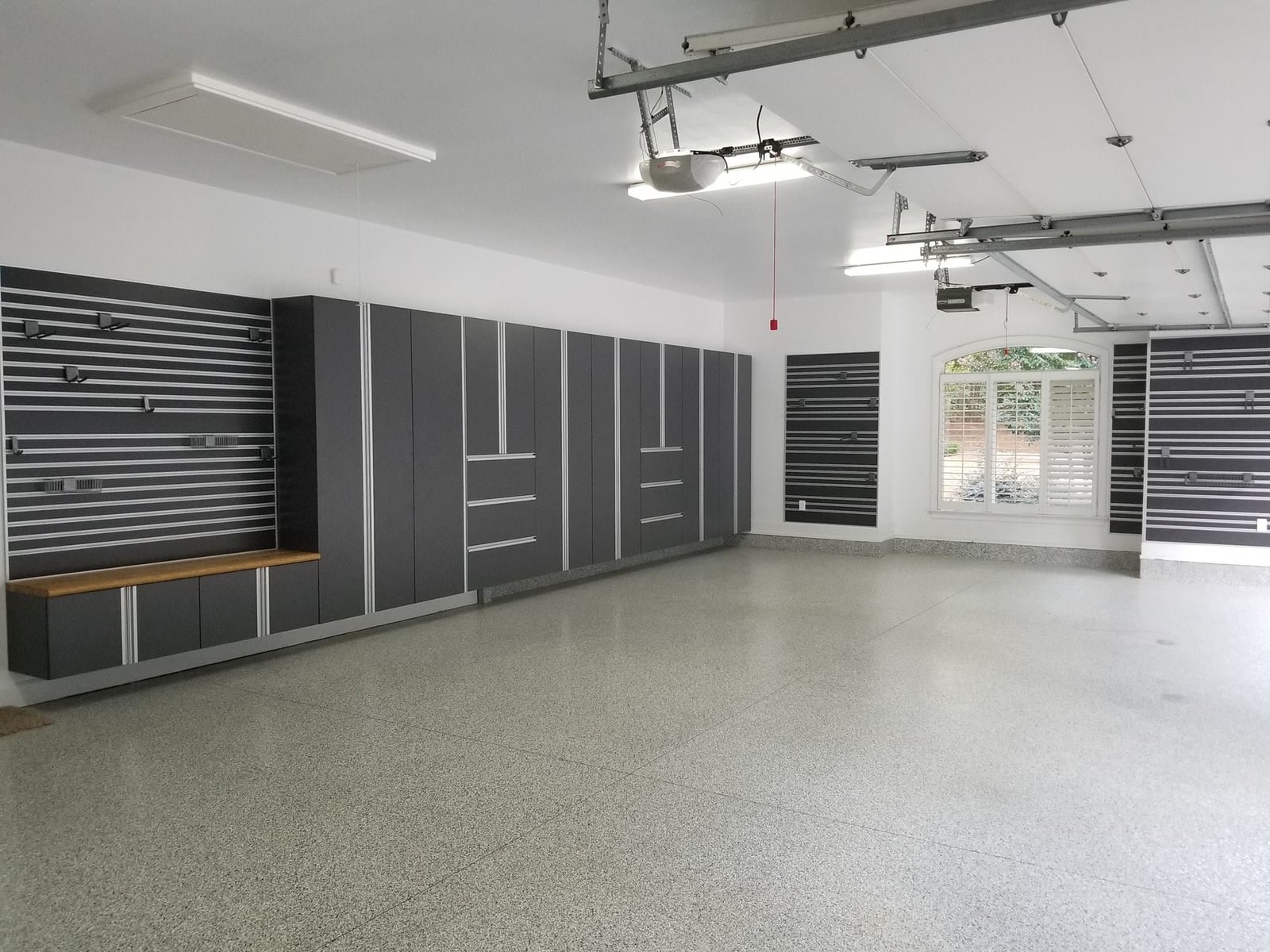
A speckled light gray epoxy floor works differently than a solid paint finish. The speckles hide dust and small debris, which matters in a garage where foot traffic and tool use are constant. Here the floor sits under extensive gray metal cabinets, a slatwall system, and a wooden bench, all lit by overhead fluorescent and natural light. The storage setup means the floor has to hold up to movement and occasional spills. Epoxy handles that better than standard paint. The light gray base keeps the space from feeling dark, even with the cabinets taking up visual room.
Glossy Gray Painted Concrete Floor in a Basement Hallway
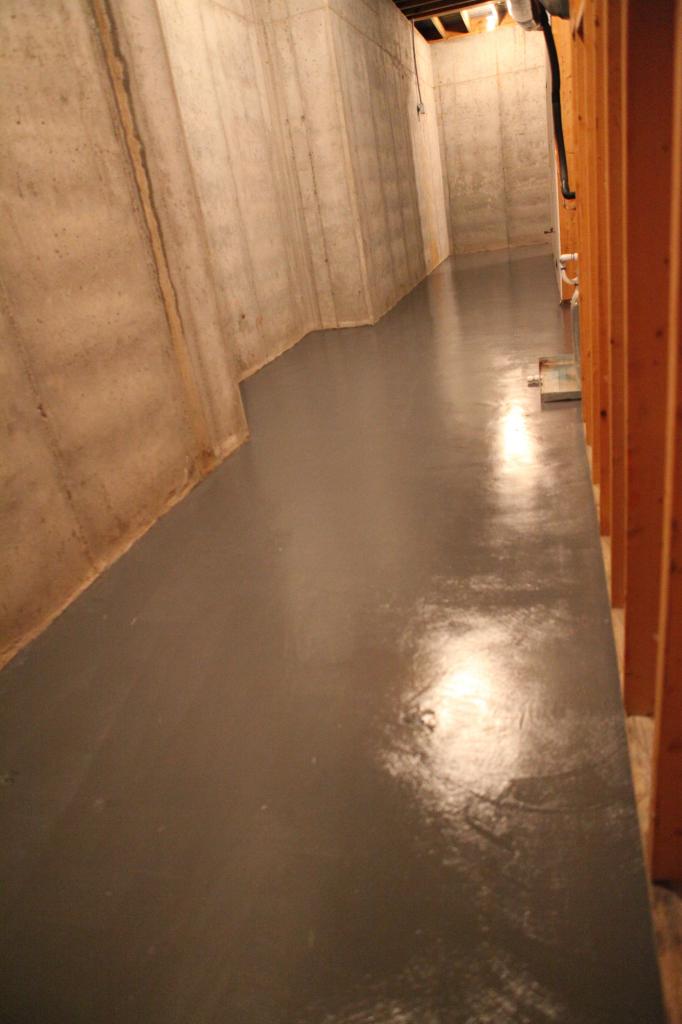
A glossy gray finish on a basement hallway floor reflects overhead light, which helps a narrow corridor feel wider. The painted concrete sits between wood-trimmed walls, and the gloss creates a subtle shine that breaks up the gray without adding a pattern. This layout works because the hallway is a straight shot, so the reflective surface carries the eye from one end to the other. The gloss also makes the floor easier to wipe clean, which matters in a high-traffic zone like a basement hallway.
Swirled Gray Epoxy Floor for a Modern Basement Play Area
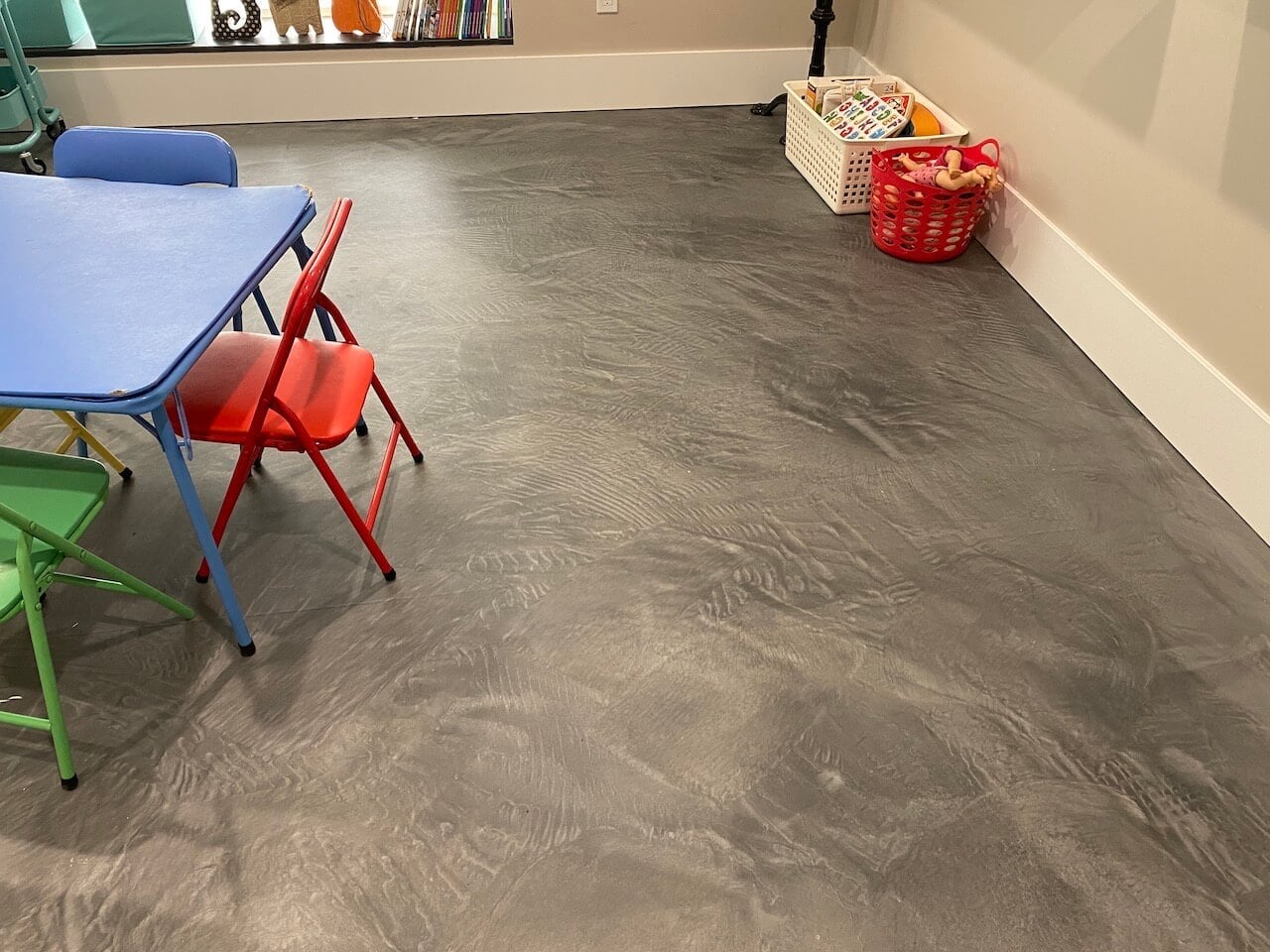
A swirled gray epoxy floor is a smart choice for a basement play area because it hides the mess without looking like it is trying to. The pattern in the finish adds motion to the room, so the floor feels like part of the design instead of a blank surface waiting for spills. In this modern basement setup, the gray and white palette keeps things calm, while the swirled pattern becomes the standout element. The plastic furniture and storage baskets are simple and practical, letting the floor do the talking. For a basement floor that can handle kids and still look deliberate, this is a solid option. The open layout benefits from the visual texture, which makes the room feel larger without adding any actual square footage.
Smooth Gray Painted Concrete Floor in a Garage Corner
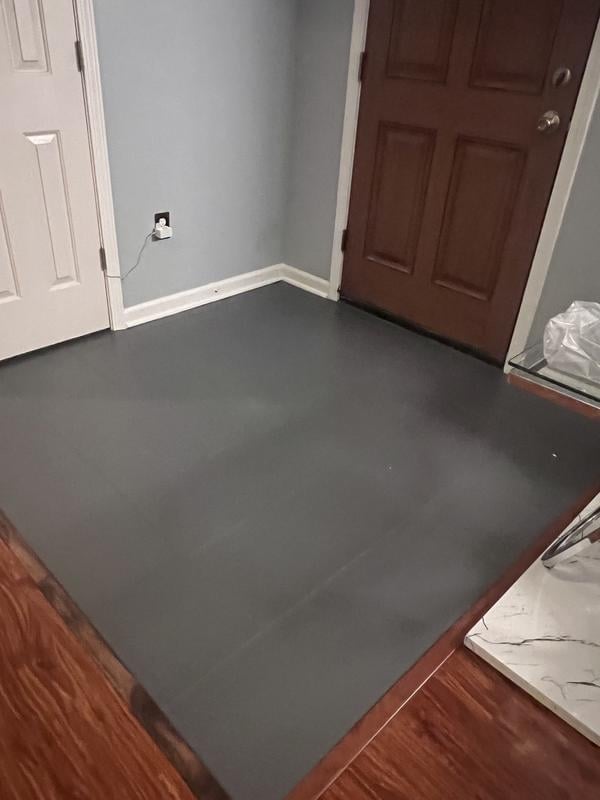
A smooth gray painted concrete floor feels more finished than bare concrete but less fussy than epoxy. It sits in that sweet spot where it looks clean without requiring a weekend of prep work. In this garage corner, the gray floor ties the space together, making the white baseboards and doors stand out more than they would against raw concrete. The smooth finish creates a clean, modern look in the compact space.
For renters, this is a practical option because a coat of paint is easier to reverse than a full epoxy pour. You can apply it over existing concrete with the right primer, and it peels up or gets covered when you move out. The compact layout of this corner shows how a simple painted floor can define a zone without needing walls or furniture. It keeps the garage looking modern and functional, which is exactly what most of us want from that space.
Final Thoughts
A painted garage floor is a practical upgrade that stands up to daily use. The key is picking a finish that matches how you use the space. A high-gloss or epoxy coating resists stains and is easy to sweep, while a speckled pattern hides dust and wear between cleanings. Smooth paint works best in low-traffic areas where you want a clean, unified look. Whichever you choose, proper surface prep and a weekend of work will give you a floor that lasts for years.