
There’s a reason the colonial exterior remains a cornerstone of American residential architecture. Its balance of formal symmetry and inviting frontage offers a template that adapts across centuries.
This collection of 26 ideas explores the spectrum of that look, from classic white clapboard to daring all-black facades, proving the style’s versatility without losing its disciplined roots. Whether you lean toward traditional brick or a modern farmhouse twist, expect practical notes on how these homes use paint, landscaping, and lighting to make an entrance.
Classic Colonial Revival Symmetry with Lush Landscaping
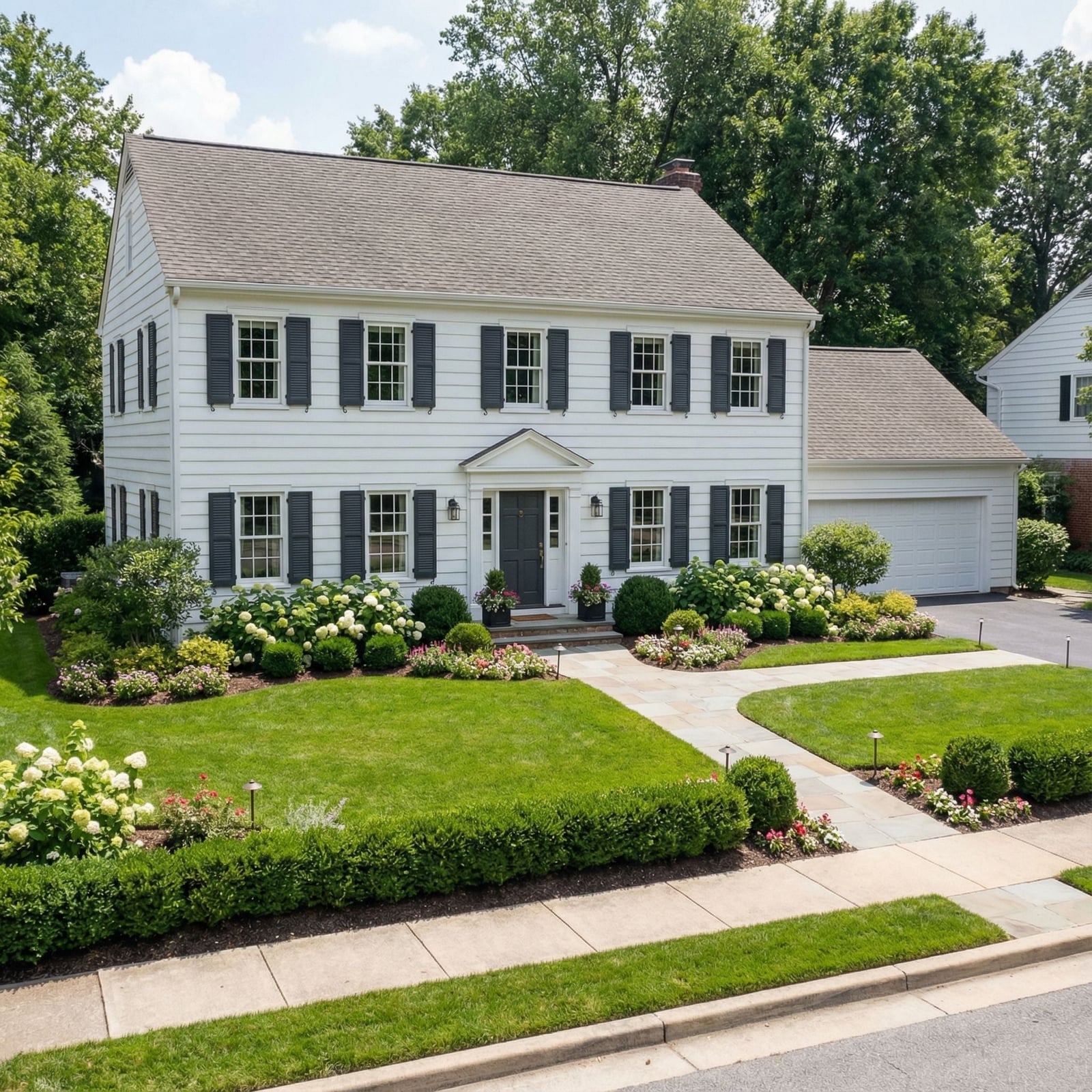
A colonial revival exterior banks on balance, and this one delivers it with a wide, symmetrical facade. The white siding and gray roof sit quietly while the manicured lawn and soft pink blooms add life without clutter. The brick chimney and wood details keep the look grounded. What defines the style here is the ratio of hardscape to softscape: the house holds its ground, and the landscaping wraps around it like a frame, not a blanket.
Inviting Colonial Entrance with Red Door and Greenery
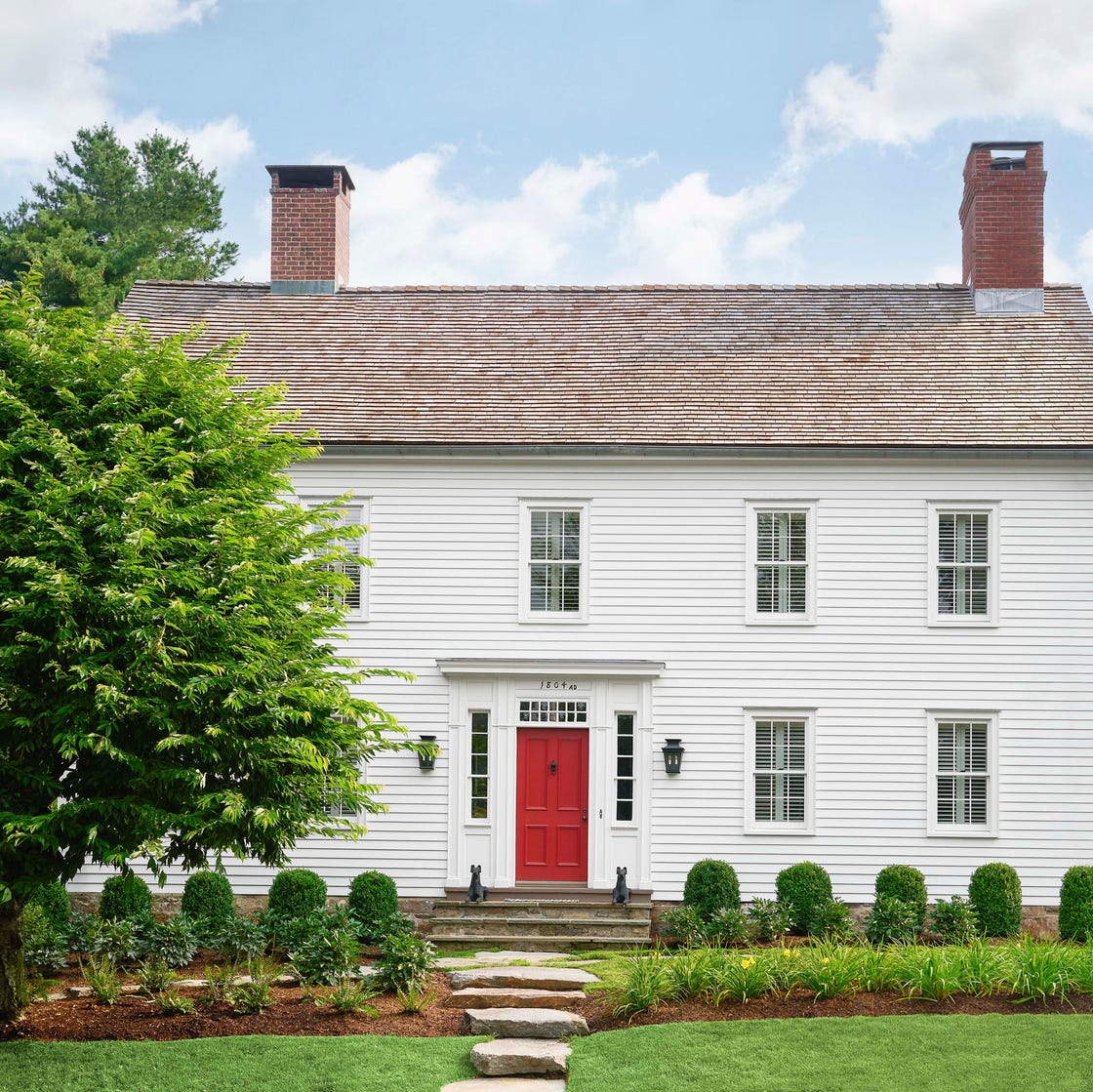
A red front door is the quickest way to signal welcome on a colonial house exterior. The color breaks the white siding and brick chimneys with a pop that looks deliberate, not loud. The palette here is restrained: white, red, green, and brown. The greenery at the base softens the transition from lawn to facade, and the symmetrical windows keep the eye moving upward. The red holds its own without overwhelming the brick or the wood shingles above.
Colonial Charm: White Siding with Contrasting Green Shutters
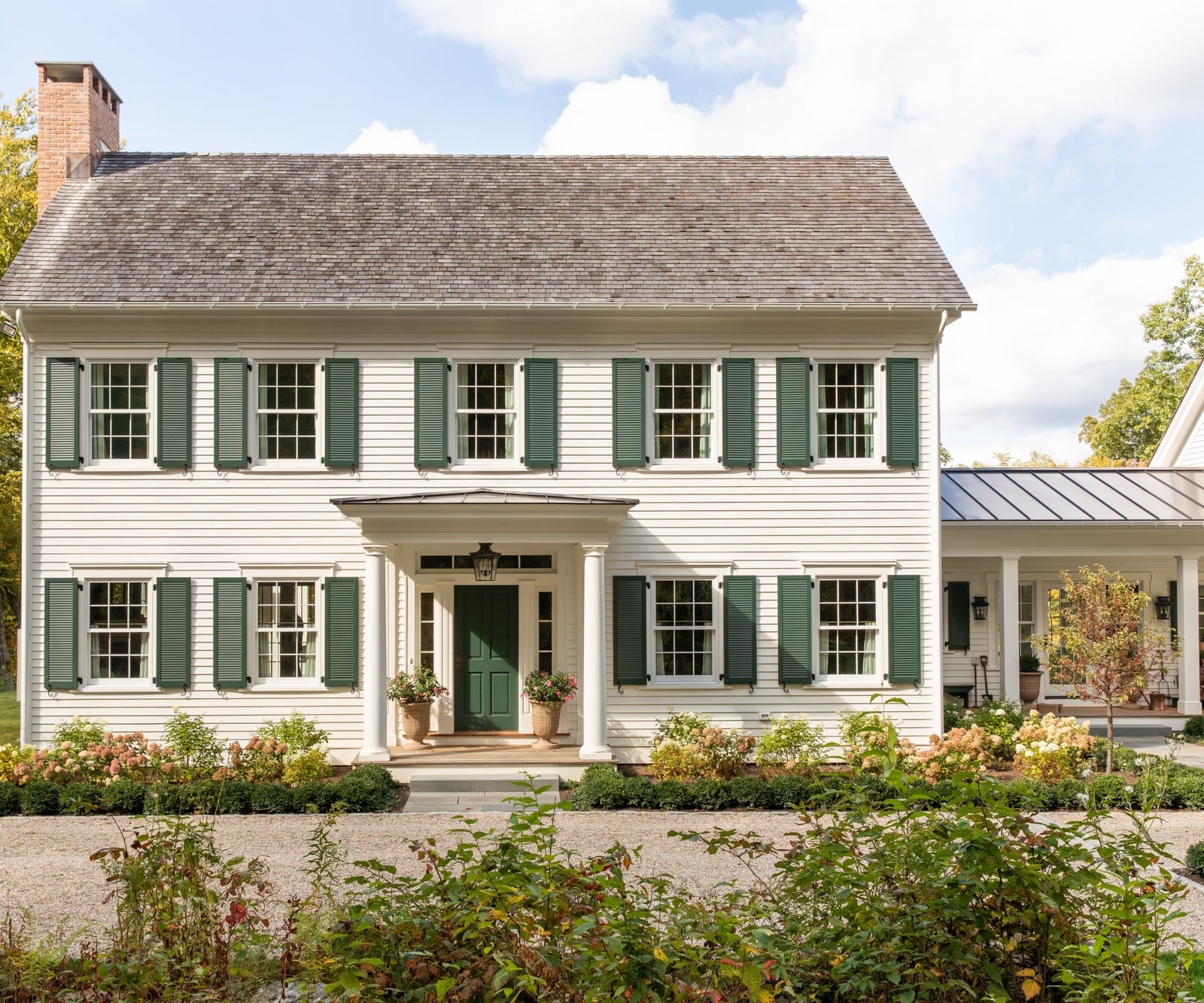
Is there a more classic combination than white siding and green shutters? It works because the green is dark enough to read as a solid accent, not a pastel. The two-story facade keeps the windows evenly spaced, and the stone base adds a weight that prevents the house from floating. The pink flowers in the beds below echo the warmth in the stone, tying the whole palette together.
The style here is defined by the contrast ratio: the shutters cover roughly a quarter of the window height, which is enough to frame the glass without dominating it. The centered entrance with its simple door keeps the symmetry intact. What breaks the formality is the landscaping, which is lush but not rigid.
Modern Colonial Aesthetic with All-Black Facade
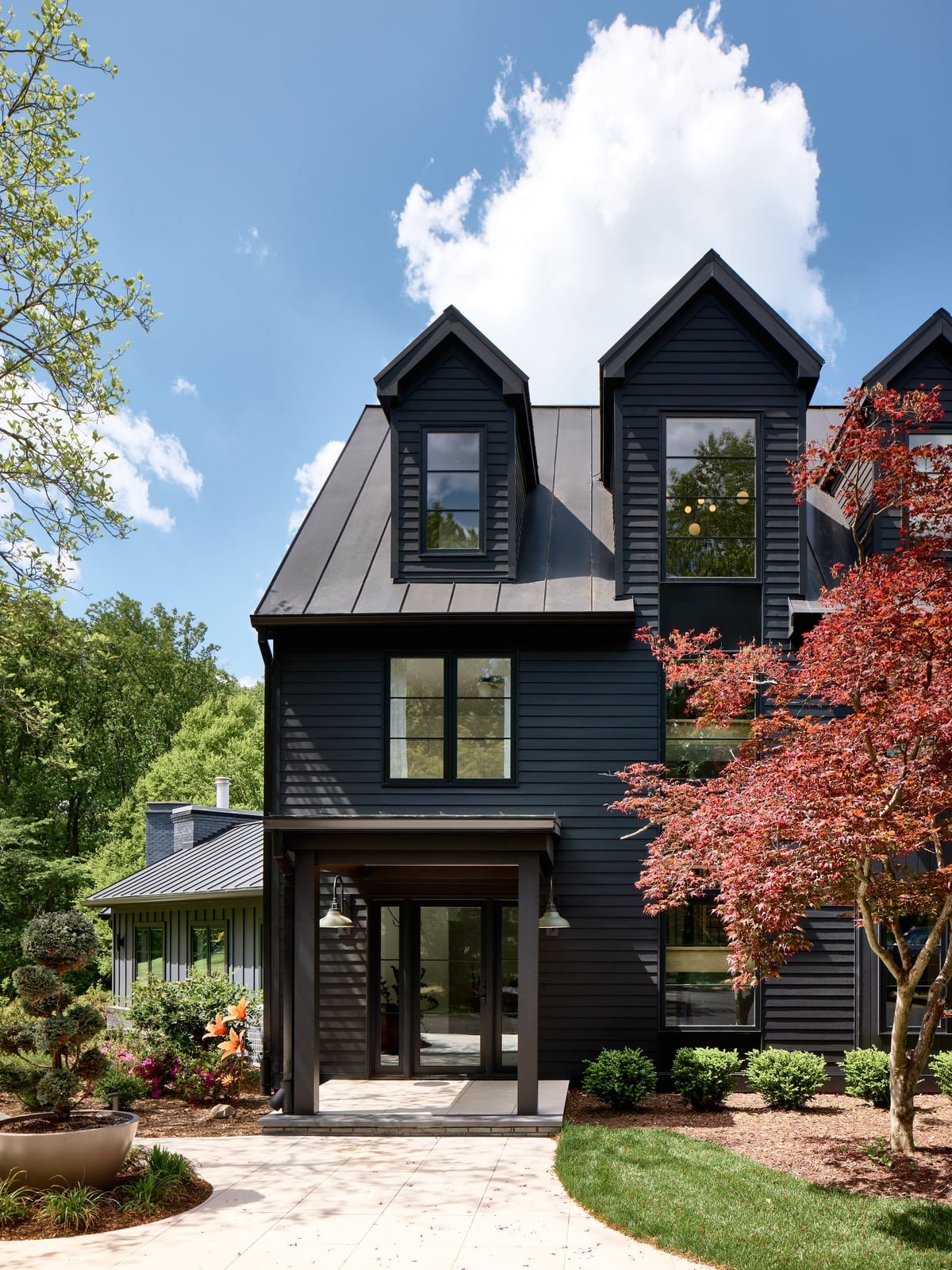
An all-black colonial exterior swaps tradition for edge without losing the bones. The dark siding, metal roof, and wood porch create a solid silhouette that is modern and grounded. The dormer windows break up the mass, and the covered porch adds a human scale. The style is defined by what it leaves out: no contrasting shutters, no bright door, just a monochrome shell that lets the greenery around it do the talking. The daylight hits the black surface differently at each hour, shifting the look from matte to sheen.
Grand Colonial Entrance Featuring Curved Brick Stairs
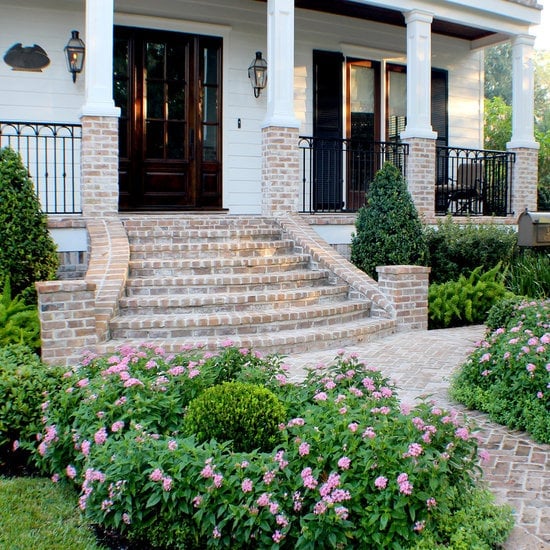
A curved brick staircase guides visitors up to the double doors with a natural flow, and the brick itself is a low-maintenance material that ages well. The white columns and dark wood door frame the entrance, while the lanterns on either side add a warm glow. The flanking paths split off from the stairs, creating a layout that directs foot traffic without guesswork. The brick color ties into the stone base of the house, keeping the palette cohesive. For a colonial entrance, this layout proves that curved lines can live comfortably inside a boxy facade.
Classic Colonial with Blue Hydrangeas and American Flag
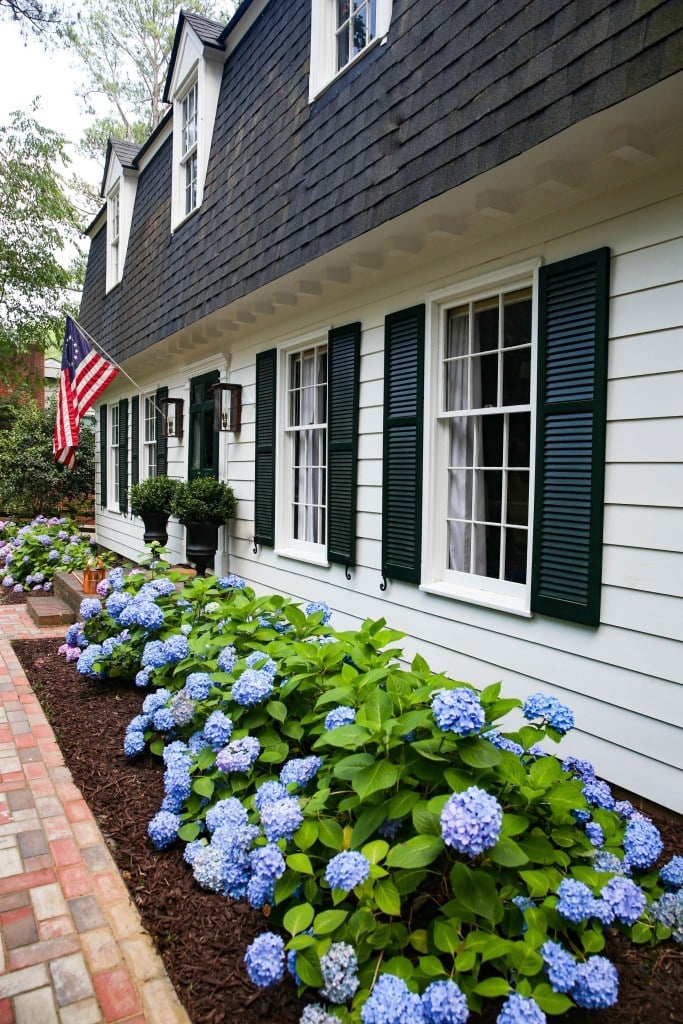
A white colonial with dark green shutters could lean formal, but the blue hydrangeas soften it. The bushes mass along the foundation in a dense row, their rounded blooms picking up the blue from the flag by the door. That color echo ties the palette together across the whole facade. The siding stays white, the shutters a muted green, and the hydrangeas carry the cool accent. For renters, potted hydrangeas in matching blue planters can create the same effect without digging. Just check your USDA zone first, hydrangea hardiness varies by region.
Southern Colonial Porch with Wicker Seating and Lanterns
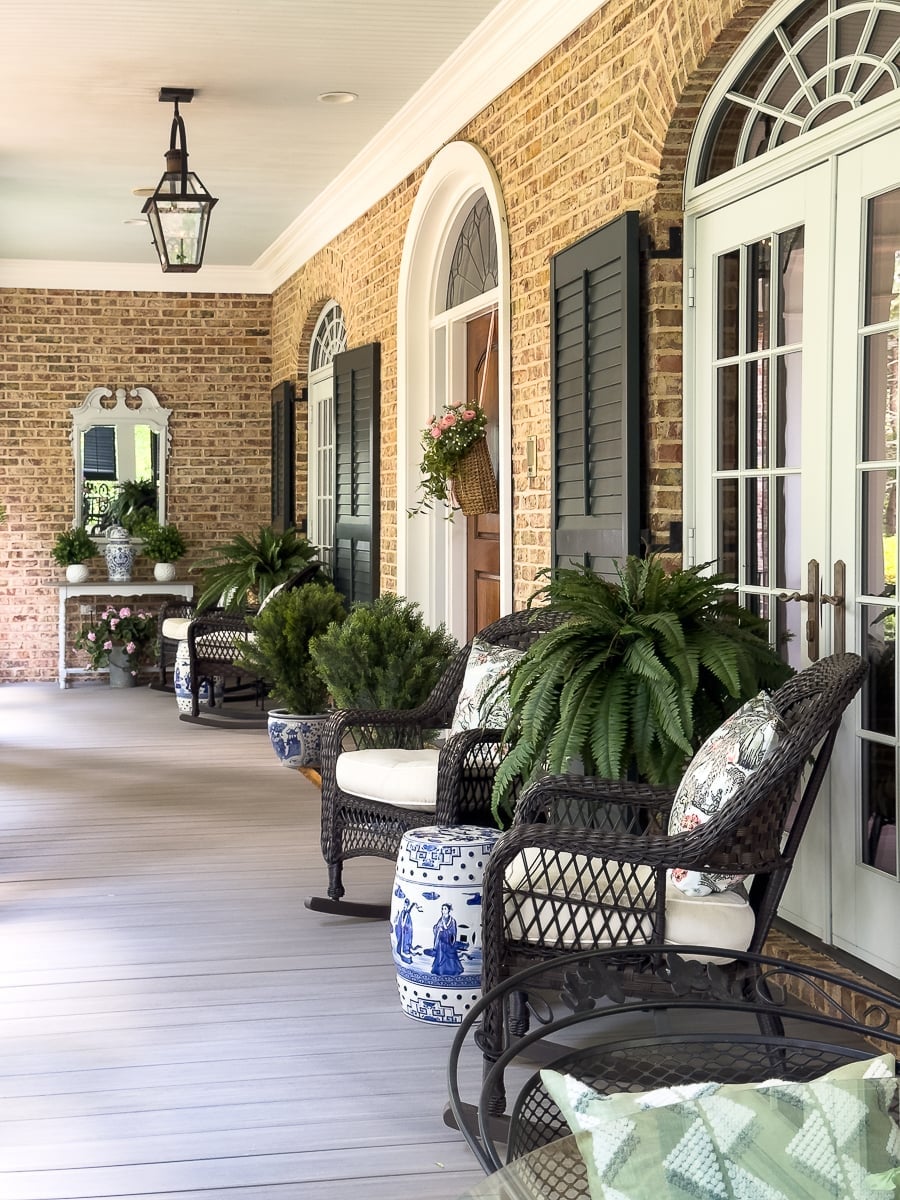
The brick facade and arched doorways already give this porch a grounded feel, but the wicker seating keeps it from turning stiff. Two wicker chairs with cushions sit between small garden stools, and a hanging lantern centers the grouping. The material mix matters here: brick reads solid, wicker reads airy, and the glass in the lantern adds a reflective note. A renter can swap in similar wicker pieces on a rental porch without changing the structure. The key is keeping the seating low enough that the arched doors stay visible.
Colonial Facade Draped in Lush Green Ivy
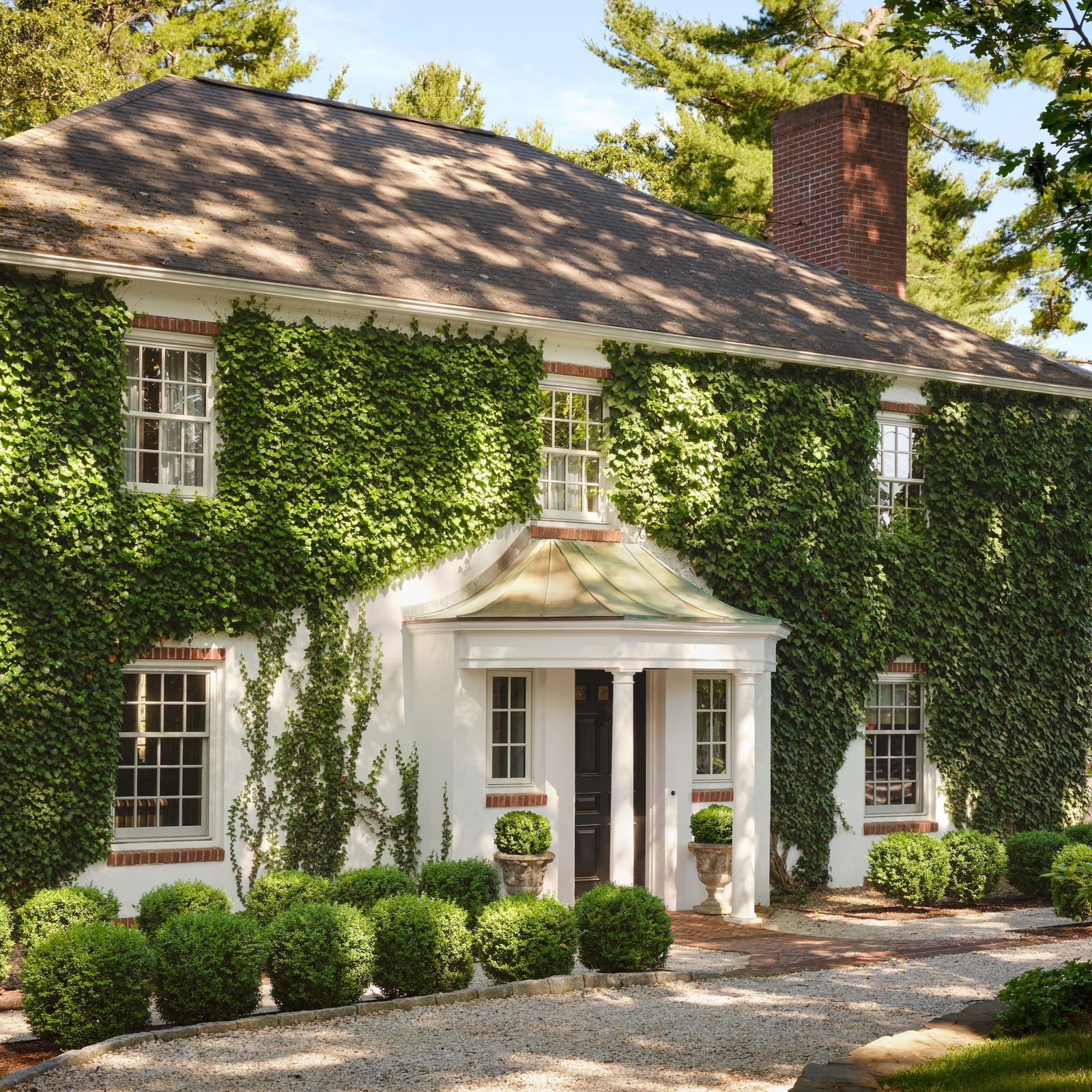
Ivy covering a stucco facade transforms a neat colonial into something that looks settled. The green vines spread across the white wall, framing the symmetrical windows and the portico without hiding them. Dappled sunlight filters through the leaves, softening the brick foundation and copper accents below. The contrast works because the house shape remains clear. The ivy is an overlay, not a disguise. For anyone wanting this look, start with a fast-growing evergreen ivy suited to your climate. The upkeep is trimming it back from windows and gutters a few times a year.
Colonial Charm with a Striking Teal Front Door
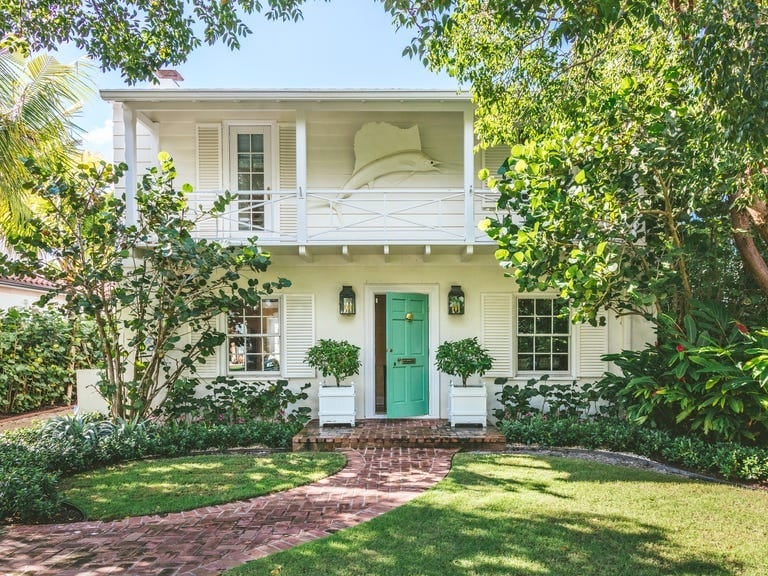
Can a front door color change the whole feel of a colonial exterior? Yes, when it is a bright teal against white siding and green shutters. The teal door sits centered in the symmetrical facade, flanked by white railings and a brick path that leads straight to it. Exterior lanterns on either side frame the entrance, making the color read even at dusk. The palette stays neutral, white stucco, dark green shutters, warm brick underfoot, so the door pulls focus without clashing. It is a single swap that redefines the entry, and it works because the ratio of color to white is roughly one to ten.
Grand Colonial Entrance with White Brick and Columns
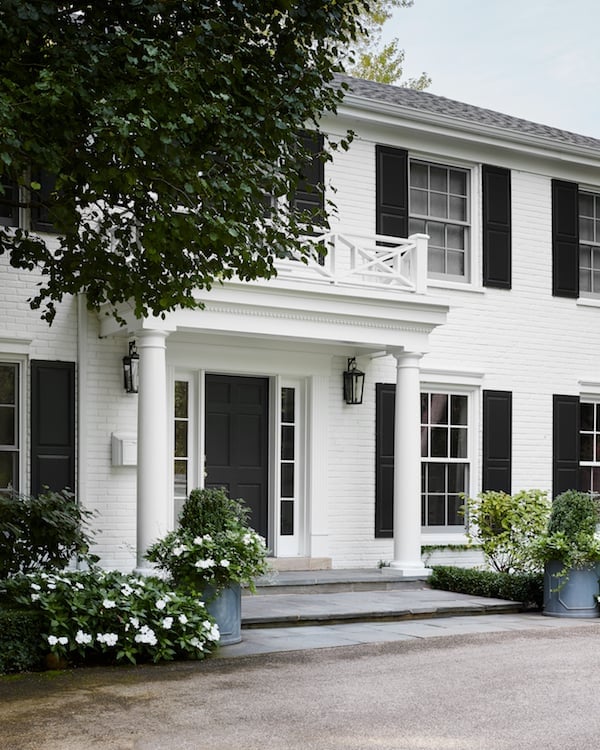
White brick with black shutters is a classic colonial pairing, but the columns and portico shift this one into grand territory. The portico projects from the facade, supported by two white columns that create a sheltered entry. Black shutters on the upper windows keep the contrast sharp, while the gray stone steps and metal railing add a modern edge. The layout is what makes it work: the centered entrance draws the eye straight up to the portico, and the columns set a clear boundary between porch and yard. No competing elements, just a clear hierarchy of form.
Illuminated Colonial Exterior at Night with Landscape Lighting
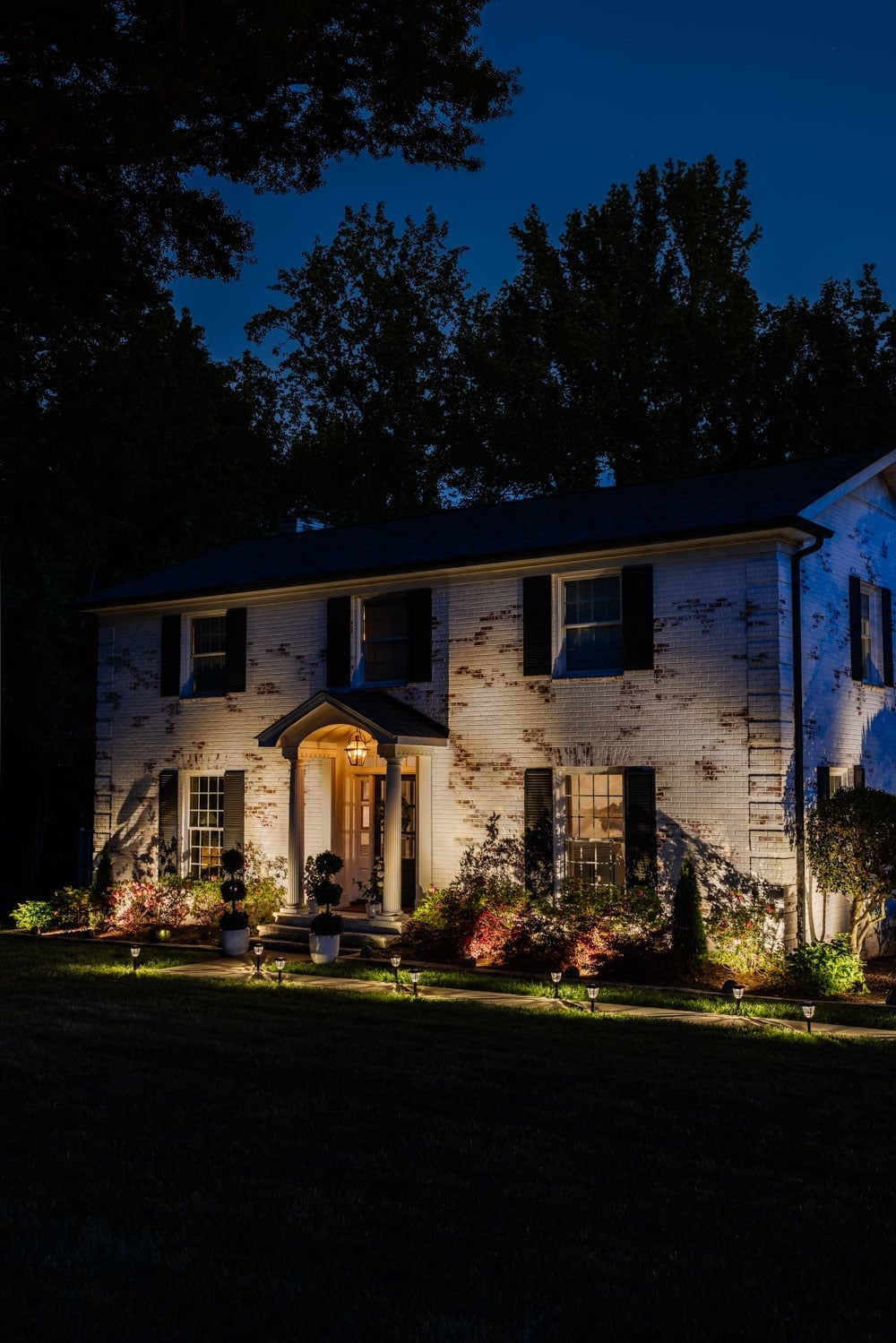
A good rule for exterior lighting is to aim for a layered effect that highlights the architecture without washing it out. On this colonial facade, warm landscape lights graze the brick and wood, while a single porch light marks the entrance. The mix of uplighting on the greenery and softer fixtures near the door keeps the facade from going flat after dark. The white trim and black shutters stand out because the light hits them from different angles. For a rented house, solar path lights or plug-in lanterns on a timer can give the same layered look without hardwiring.
Welcoming Colonial Porch with Green Door and Autumn Accents
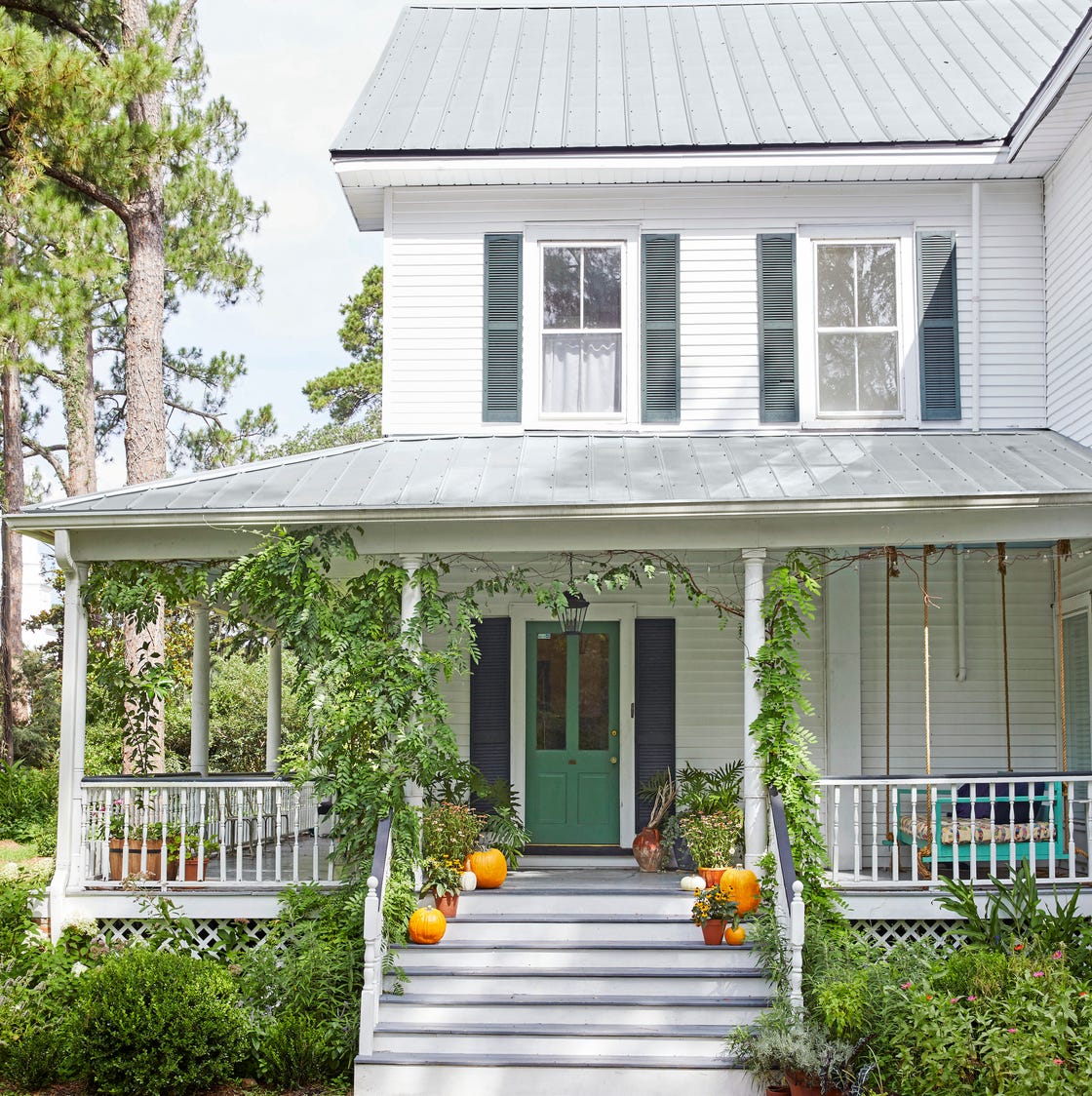
A white colonial porch with a green door can feel either crisp or cozy depending on what you add around it. Here the green door anchors the facade, and the warm browns of the wood porch swing and steps soften the contrast. The orange pumpkins on the steps pull the palette toward autumn without clashing with the greenery on either side.
The white siding takes up most of the visual space, so the green door and orange accents feel like punctuation marks. A porch swing adds a place to sit, but even a single chair in a warm neutral would keep the same balance. Let the door lead the palette and choose accents that echo its tone.
Holiday-Ready Rustic Outdoor Porch with Stone Fireplace
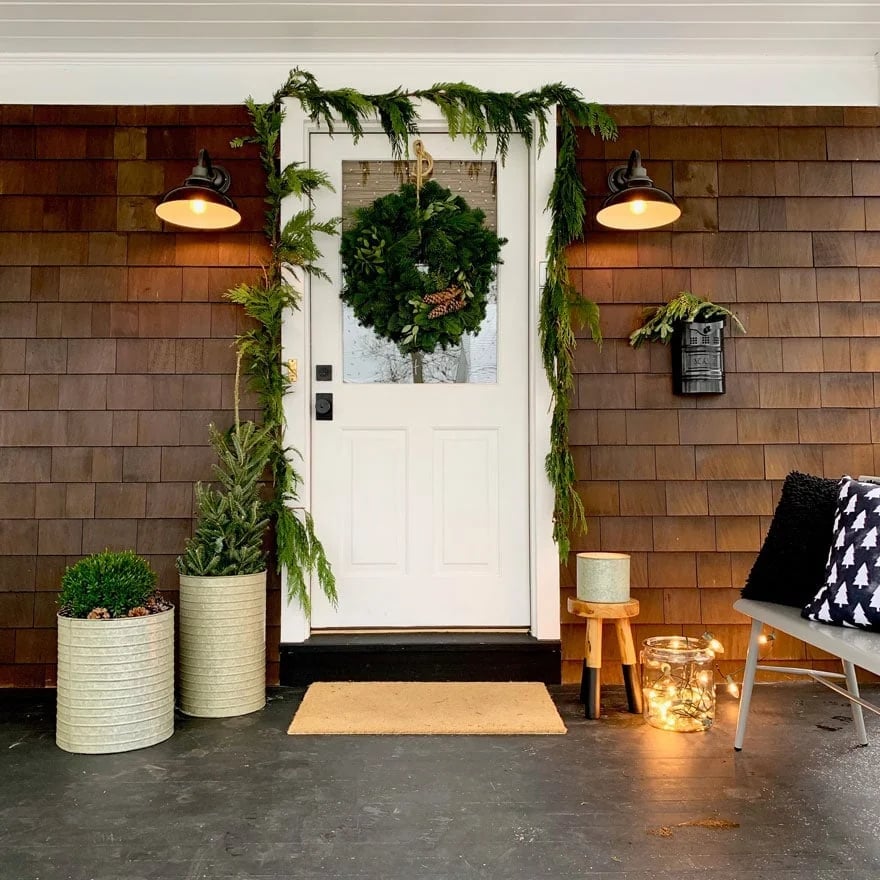
The stone fireplace anchors this rustic porch with a solid vertical mass, while the wooden furniture keeps the seating grounded and low. Green garland wraps the mantel and posts, and red accents appear in small doses on pillows and tabletop decor. The warm artificial lights soften the stone and wood, making the whole space feel enclosed even though it is open air. The mix of materials matters here: rough stone, smooth wood, and soft greenery each have a different texture, so no single surface dominates.
Colonial Home with Stone Siding and Red Shutters
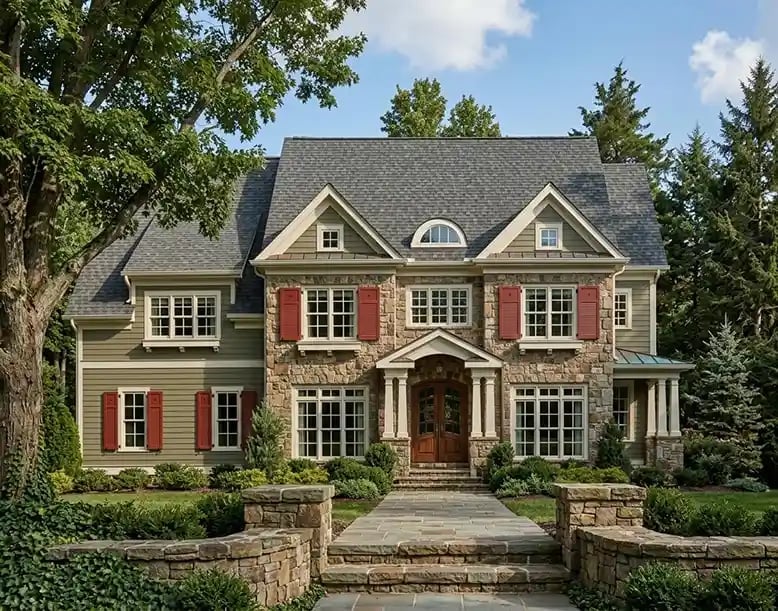
This colonial exterior uses stone siding on the lower half and wood shingles above, with red shutters framing the windows. The red is the most saturated color on the facade, so it pulls the eye across the symmetrical layout. The gray stone and white trim keep the red from feeling heavy, and the green landscaping adds a natural buffer. What makes the combination work is the balance of texture: the rough stone, smooth painted wood, and matte shingles each catch the daylight differently. If you want to try a similar look on a smaller scale, paint the shutters a clear red and let the siding stay neutral.
Colonial Farmhouse with Green Door and Arched Window
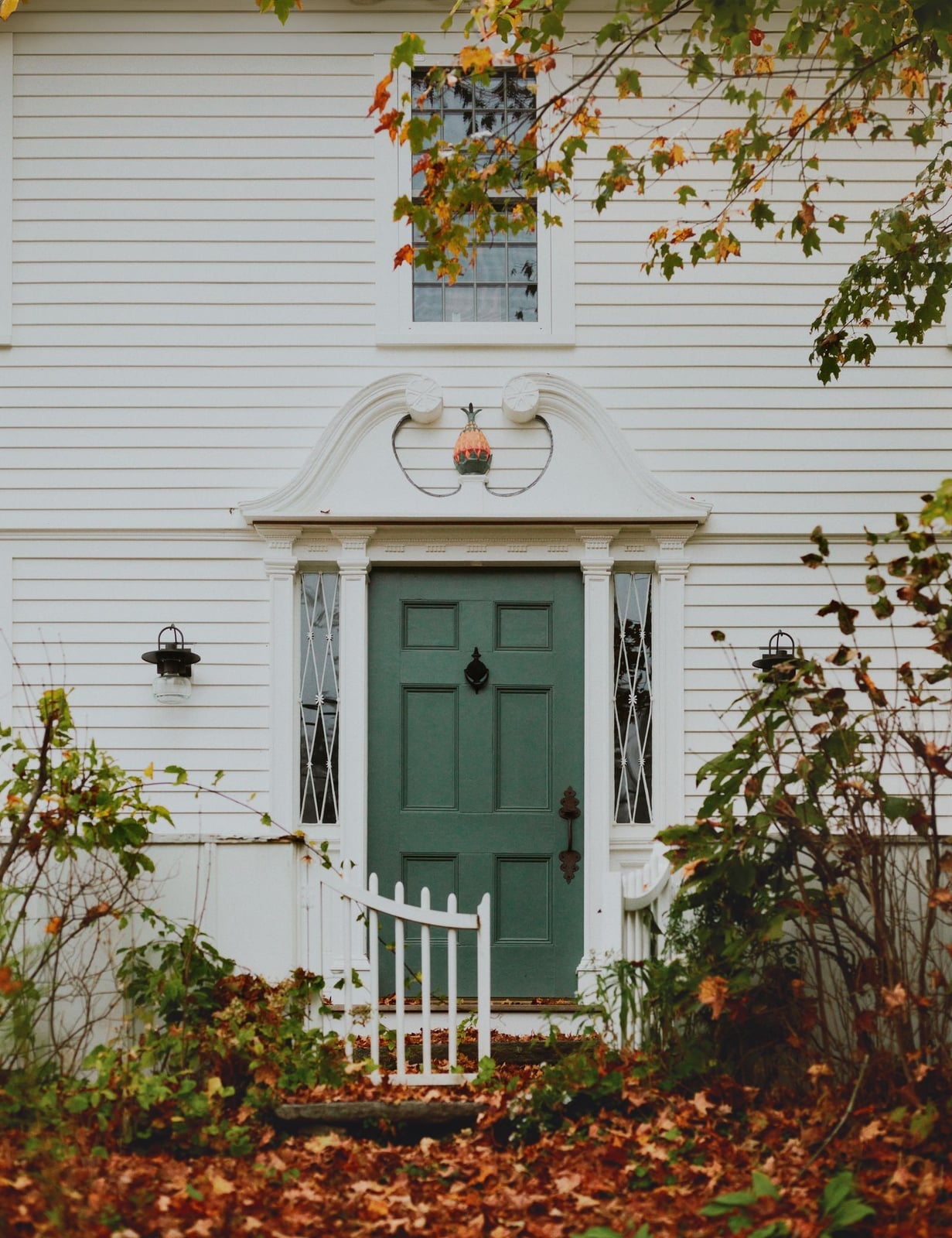
For a farmhouse facade, the front door and the window above it work as a pair. Here the green door sits directly below an arched window, which draws the eye upward and makes the entrance feel taller. The white wood siding and brick foundation keep the palette simple, so the green stands out as a deliberate choice.
On a medium-sized facade like this, the arched window breaks up the straight lines of the siding and door frame. If your house has a standard rectangular window above the door, adding a painted arch or a decorative lintel can create a similar effect without replacing the window. The overcast light softens the contrast, which helps the green door blend into the scene.
Colonial with Wrap-Around Porch and Mature Trees
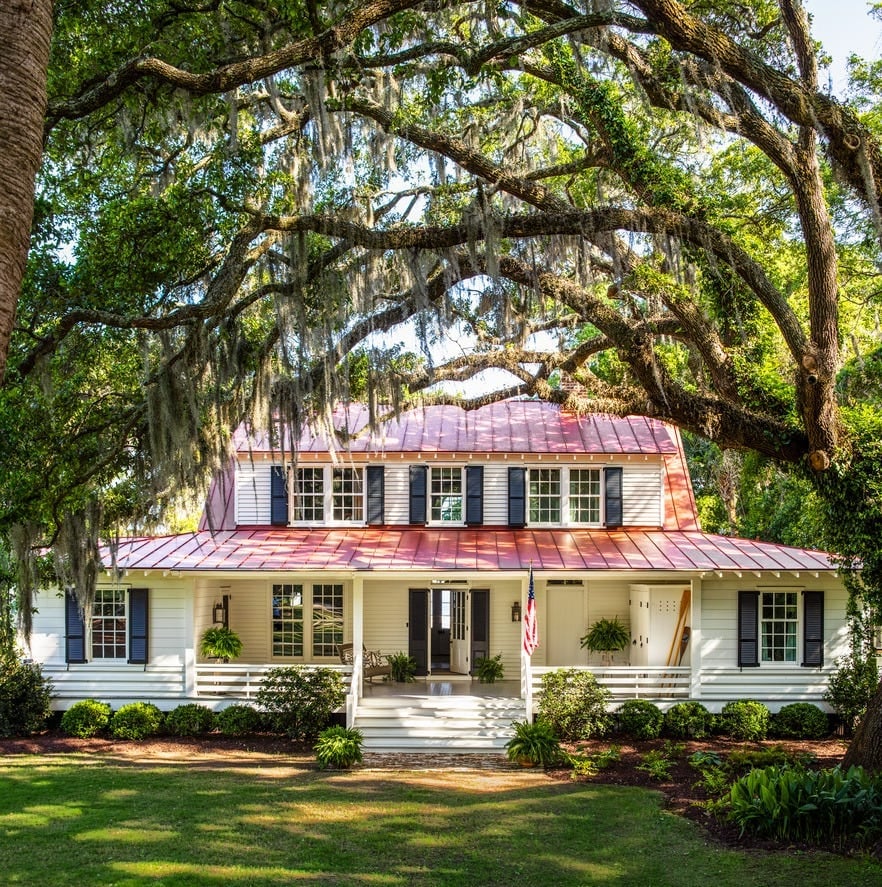
A wrap-around porch changes how a house lives, turning the exterior into an extension of the home. This two-story colonial uses a wide porch across the front, with dark blue shutters against white wood siding and a metal roof above. The porch connects the house to the surrounding yard, softened by mature trees that frame the structure without blocking it. The palette stays classic: white, dark blue, and red accents keep the look grounded. What defines this style is the balance between the centered house and the porch that wraps around it, creating a natural flow between indoors and out.
Colonial Home with Picket Fence and Lush Greenery
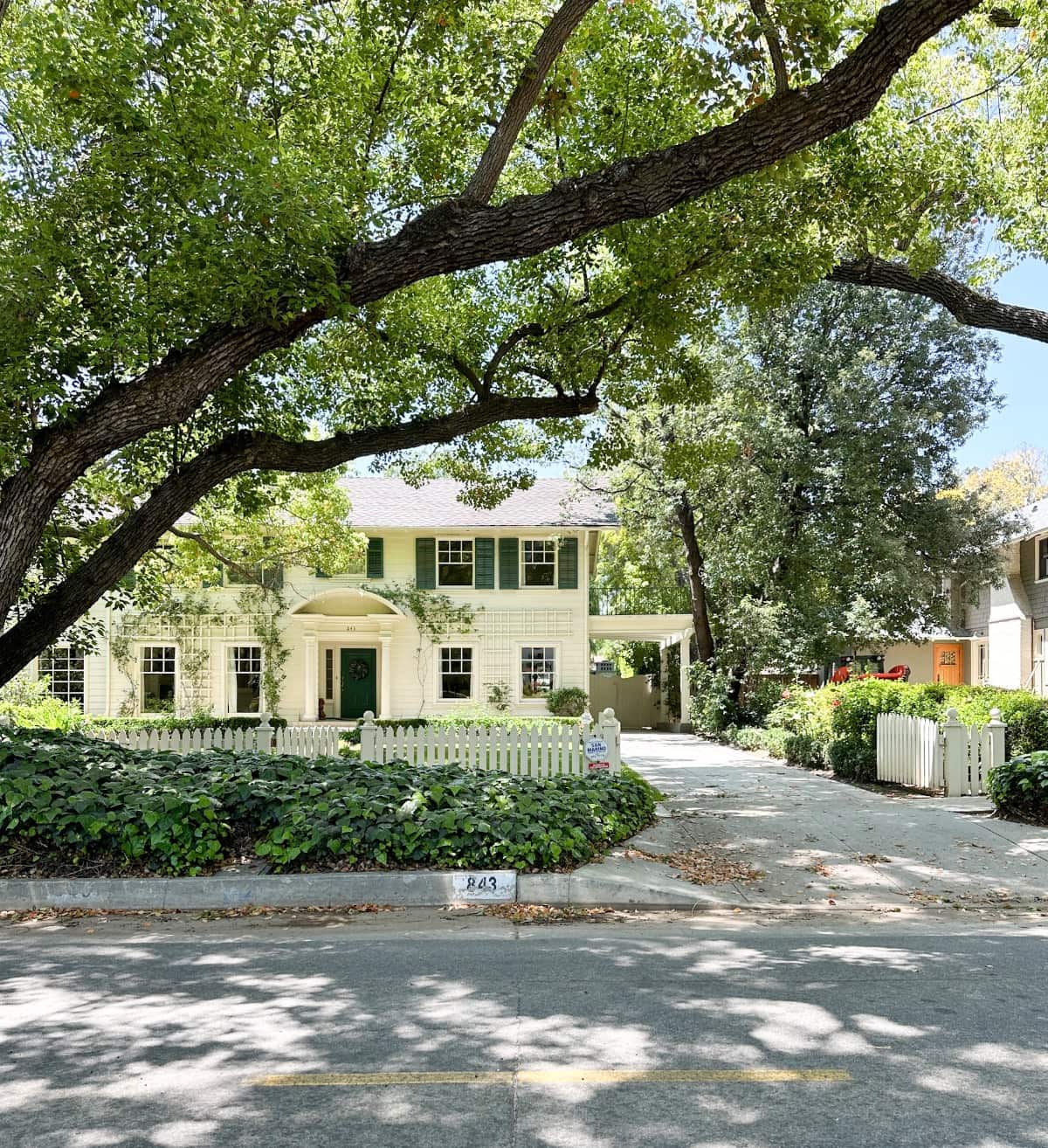
A white picket fence adds instant curb appeal without permanent changes. This colonial home uses cream wood siding with green shutters, and the fence runs along the front yard, defining the property line while keeping the view open. The lush greenery and mature trees soften the hard lines of the house, making the facade feel settled into its lot. The materials work together: wood siding, shutters, and the fence all share a similar matte finish, so nothing competes. It is a classic ratio of house to fence to plants, and the greenery breaks up the formality of the colonial shape.
Dutch Colonial Grandeur with Balcony and Evening Lights
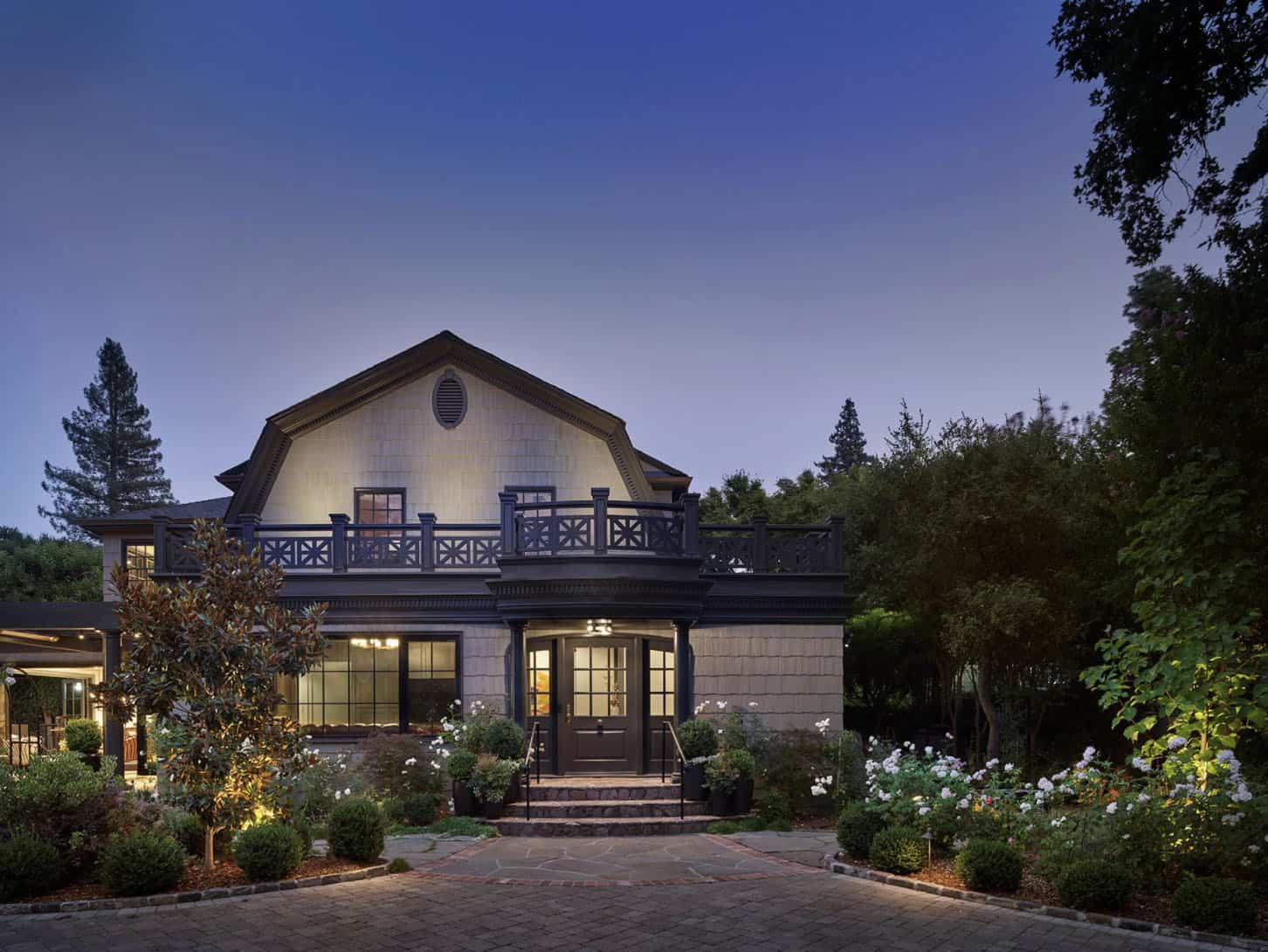
A Dutch colonial can lean into grandeur with a balcony and layered evening lighting. The facade uses tan shingles, gray wood, and dark brown trim, with stone details at the base, while landscape lights pick out the balcony railing and the surrounding plants. The gambrel roof is the defining feature, but what sets this apart is how the lighting changes the feel after dark.
The warm glow from the landscape fixtures makes the house feel inviting, and the balcony adds a second level of interest that a standard porch does not. The greenery softens the transition from house to ground, and the evening lights keep the facade from disappearing into the night. The lighting should be layered, not just one fixture at the door.
Colonial Red Brick Entrance with Copper Lanterns
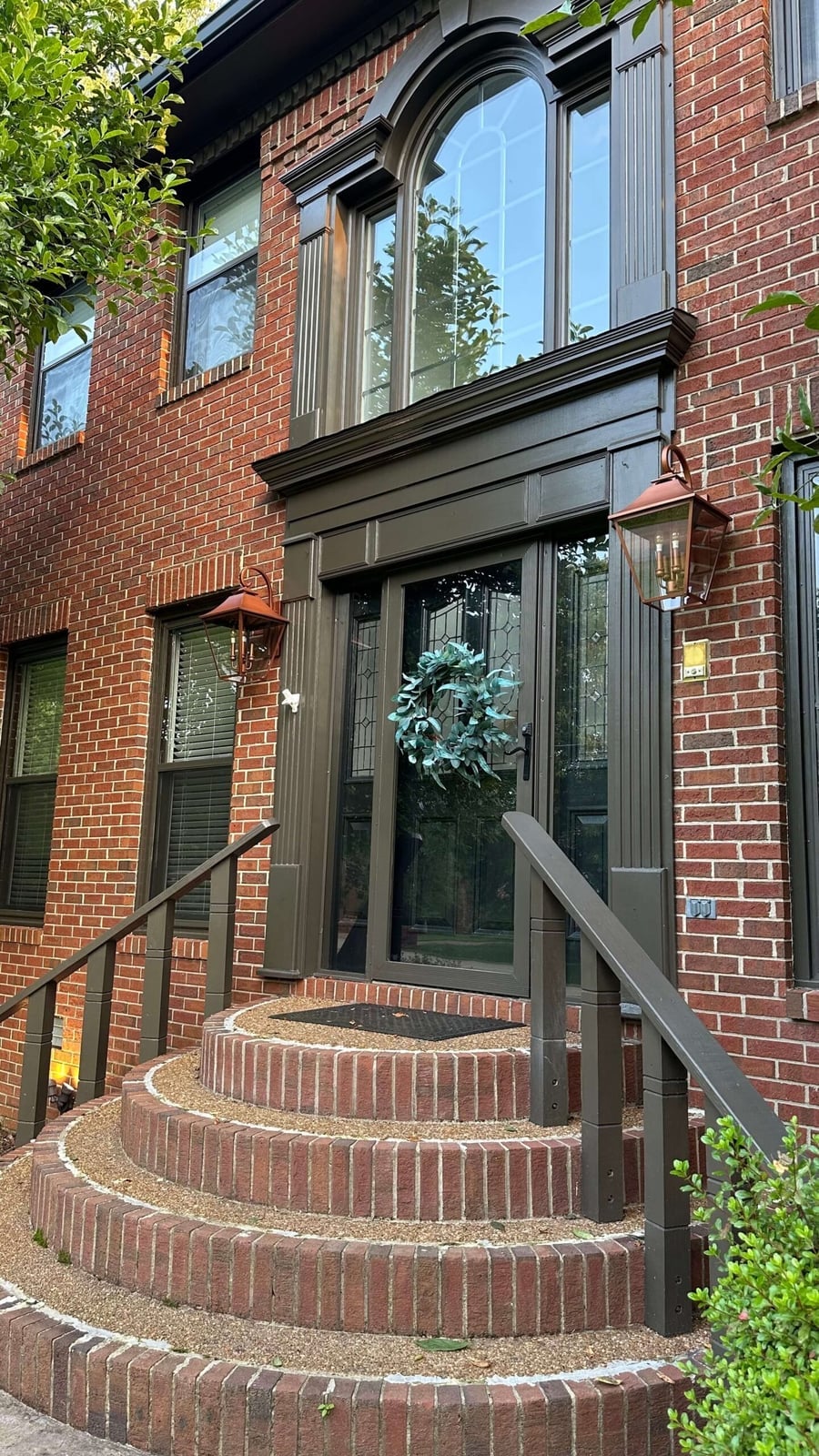
A curved brick staircase is a detail that signals care in construction, and here it leads to a front entrance framed by an arched window and copper lanterns. The red brick facade is warm against the dark brown wood of the door and trim, and the copper lanterns will develop a patina over time, adding character. The materials are the story: brick for permanence, wood for warmth, and copper for a touch of elegance that ages well. The centered entrance and symmetrical windows keep the colonial form intact, while the curved steps break the strict geometry just enough to feel planned.
Secluded Colonial Home Amidst Forest and Hedges
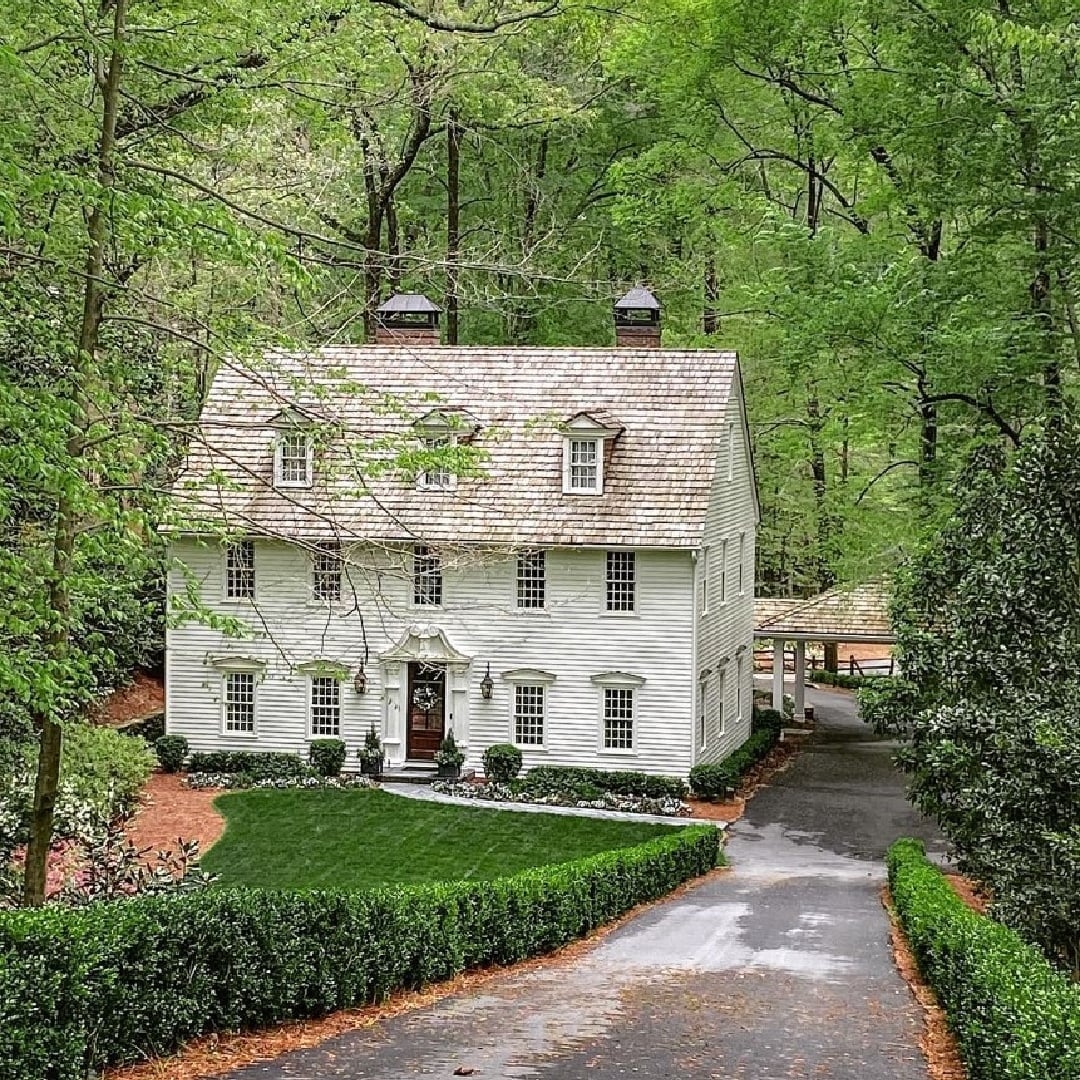
This colonial is all about setting: a white wood facade with dormer windows sits centered on a driveway, surrounded by dense trees and manicured hedges. The palette is white, green, and brown, letting the house recede into the landscape rather than dominate it. The wood siding and shingles are traditional, but the stone foundation and clipped hedges add texture that keeps the house from feeling flat against the forest. The scale works because the house is roomy but not oversized relative to the trees, and the overcast light softens the contrast. The hedges act as a transition zone between the wild woods and the formal house.
Colonial Facade with Flowering Trees and Large Lawn

A generous lawn gives a colonial house room to breathe, and flowering trees planted near the entrance soften the brick facade without crowding it. The symmetry of the two-story front, with trees flanking the center, keeps the eye on the balanced layout. Pink blooms against the brick red and green grass create a seasonal focal point that feels intentional. Even under an overcast sky, the palette reads clearly. The key is spacing: the trees are close enough to frame the house but far enough that the lawn still feels open. That gap matters more than the trees themselves.
Dramatic Ivy-Covered Colonial with Black Shutters and Balcony
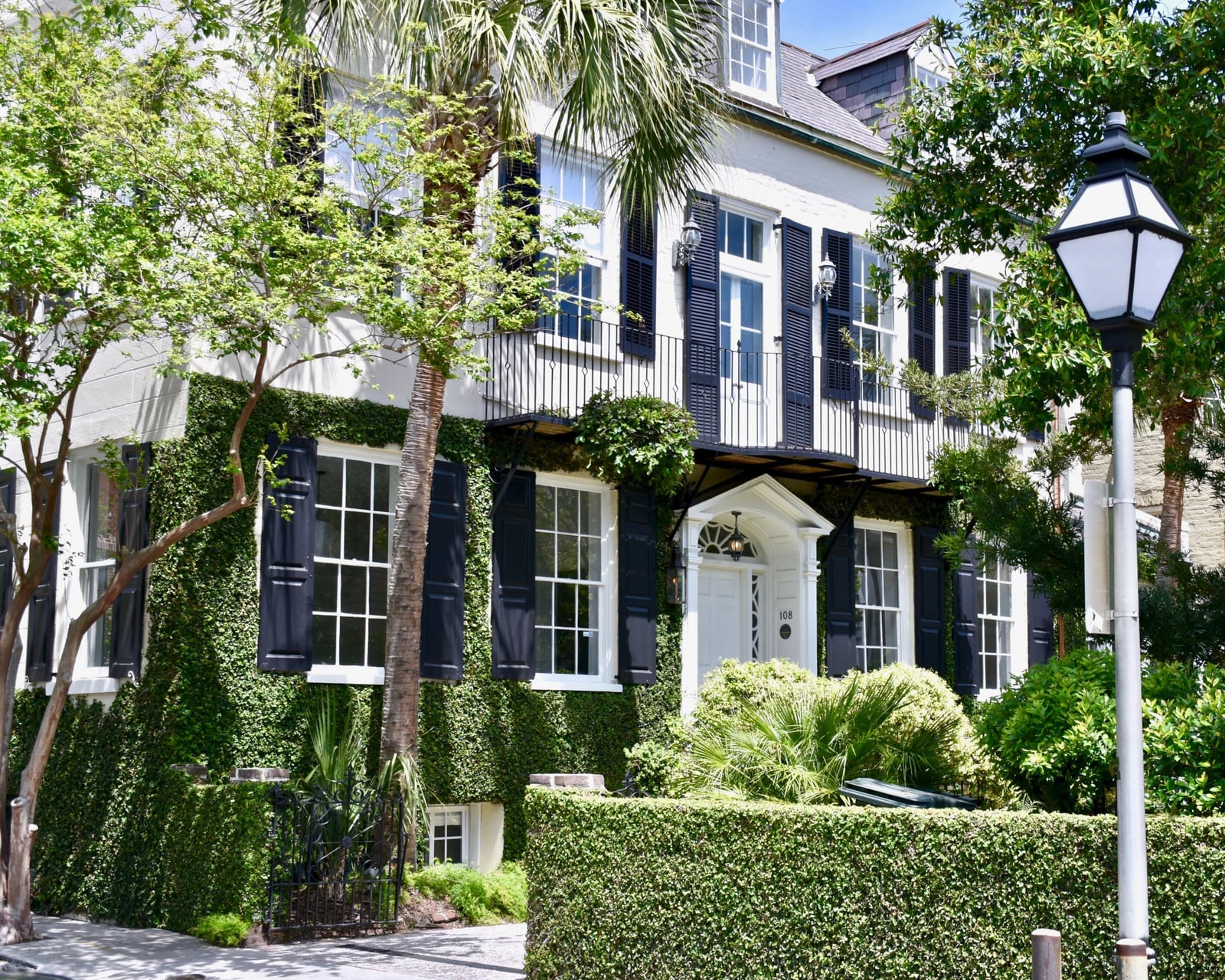
A stucco colonial covered in mature ivy pairs green growth with black shutters and a wrought-iron balcony for a look that is both old and sharp. The ivy softens the white stucco, while the dark shutters and balcony rail hold the line. The balcony breaks the facade into clear vertical sections, giving the house a sense of height without needing extra ornament. The palette stays tight: green, white, black. That restraint keeps the ivy from reading as messy.
Bright Yellow Colonial with White Picket Fence and Columns
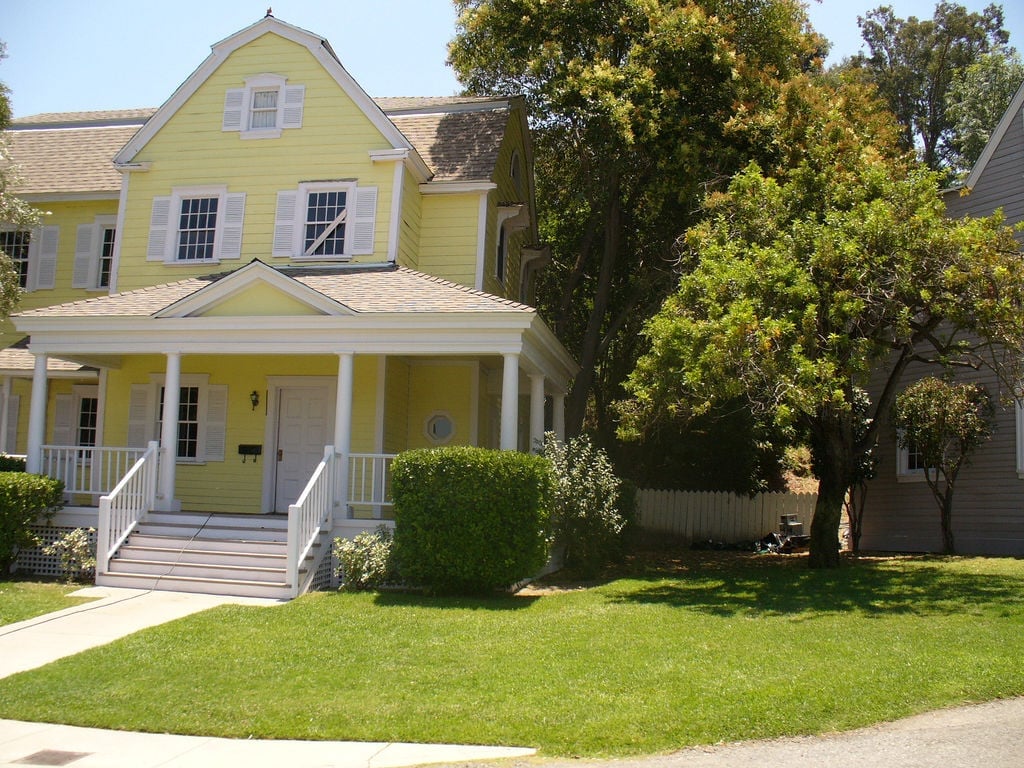
White columns, white railings, and white shutters frame bright yellow siding so it looks cheerful. The central staircase leads the eye to the porch, and the symmetrical window placement keeps the facade orderly. The picket fence echoes the white trim, tying the yard to the house. Yellow works on a colonial because the structure is clean enough to carry it. The trim is the anchor.
Dutch Colonial with Gray Shingles and Dormer Window Detail
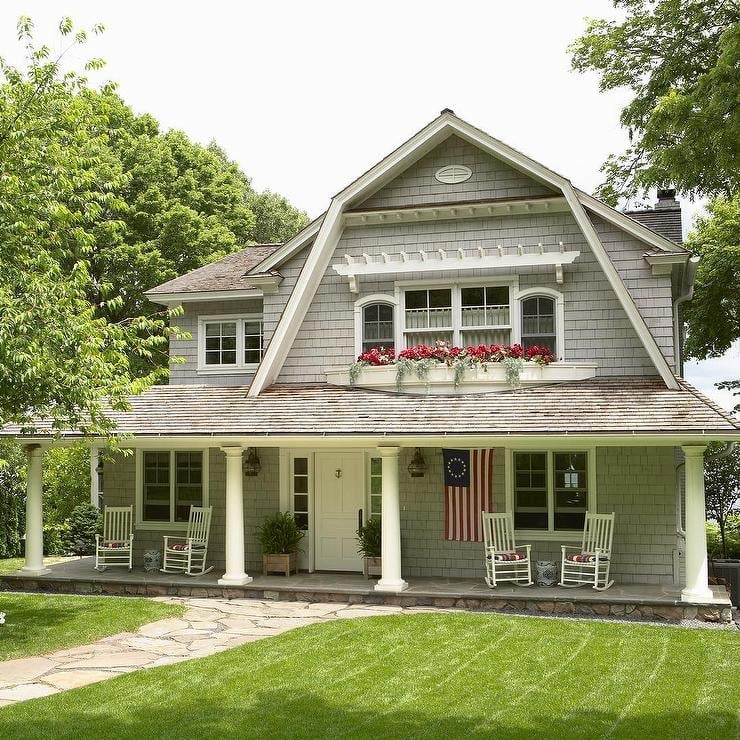
A Dutch colonial with gray shingles can feel reserved next to a traditional white one, but the dormer window changes that. It breaks the roof line and adds a practical second-floor opening that brings daylight into what would otherwise be a low attic. The porch below, with its rocking chairs, keeps the ground level welcoming. The stone foundation grounds the shingles, and the white trim around the dormer and porch rails keeps the gray from flattening out. The dormer is the detail that makes the style work without extra ornament.
Expansive Colonial Porch Bathed in Warm Sunlight
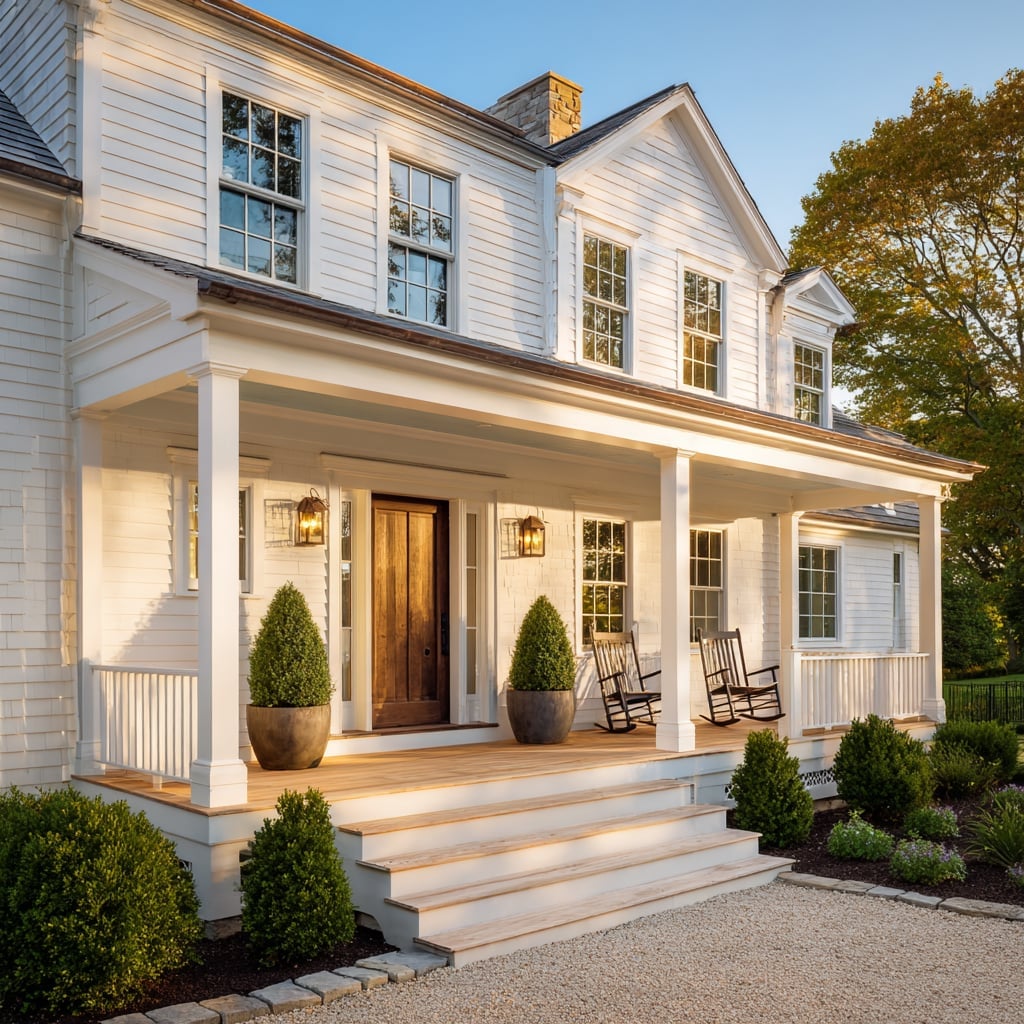
Late afternoon sun turns a wide wraparound porch into the best seat on the property. The warm light hits the wood siding and the porch floor, making the white trim and green potted plants stand out. Wooden rocking chairs sit ready, and the porch itself becomes a room without walls. The steps lead out to the lawn, but the porch holds the line between inside and outside. That light, low and golden, is what makes the space feel lived in.
Colonial Home with Stone Chimney and Symmetrical Windows
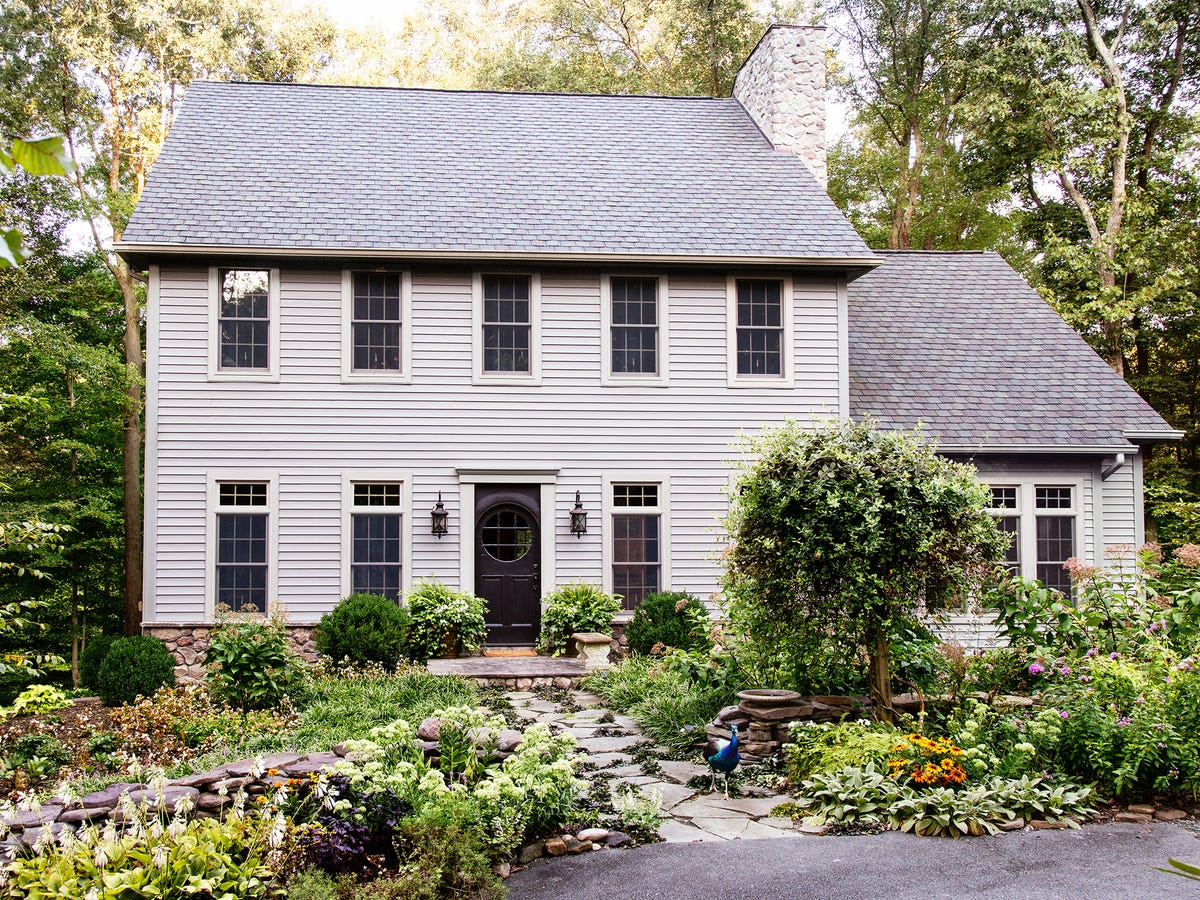
The stone chimney is the anchor here, giving the symmetrical facade a textured focal point that siding alone cannot match. Light gray siding and a dark brown door keep the palette neutral, so the multi-pane windows and green landscaping do the work of adding interest. For a similar look on a tighter budget, swap real stone for a stone veneer applied only to the chimney face, then paint the existing siding a warm gray and replace the front door with a darker tone. The asphalt shingle roof ties in with the brown door, making the whole facade feel cohesive. Exterior lanterns on either side of the entrance echo the symmetry and make the stone texture read clearly after sunset.
Final Thoughts
A colonial exterior is less about following a strict rulebook and more about honoring a sense of proportion. The best examples here share a quiet confidence, letting one or two elements do the talking, like a bold door color or a line of mature hydrangeas. You can adapt these ideas to your own home by focusing on what already works: the rhythm of the windows, the path to the front door, the scale of the porch. Keep the palette restrained, let the landscaping soften the geometry, and use lighting to extend that welcome into the evening. That balance is what makes the style feel both timeless and yours.