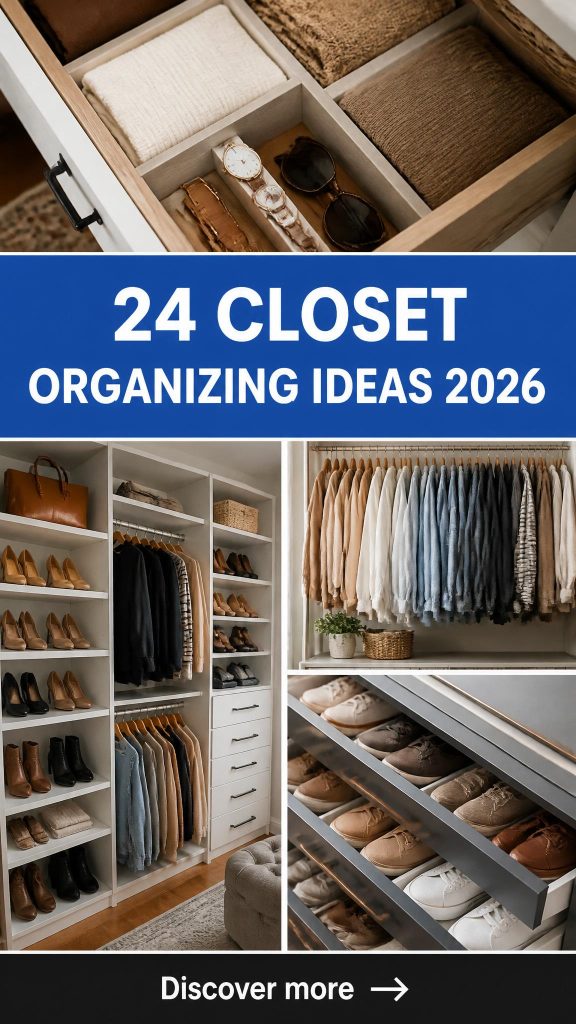
24 Chic Closet Organizing Ideas 2026 You Absolutely Need for a Stunning Room Makeover

Is your Pinterest board overflowing with closet inspiration, yet your own closet is still a chaotic mess? You’re not alone. It’s easy to feel stuck when you see all the perfect “after” shots. We’ve waded through hundreds of options at The Container Store, IKEA, and California Closets to find what truly works. From simple projects starting around $100 to full custom builds that can reach $15,000, we’ve got you covered.
Inside, you’ll find 24 distinct closet organizing ideas, covering everything from minimalist modern systems to cozy traditional wood setups, and we even compare high-end luxury closets with their brilliant budget-friendly counterparts. The focus for 2026 is on creating a personalized, boutique-like experience right in your own home, making the daily routine of getting dressed feel like a small luxury. And stay until the end — we break down the most common mistakes that can ruin these looks. 📌 Save this to Pinterest for later — you’ll want to revisit these ideas.
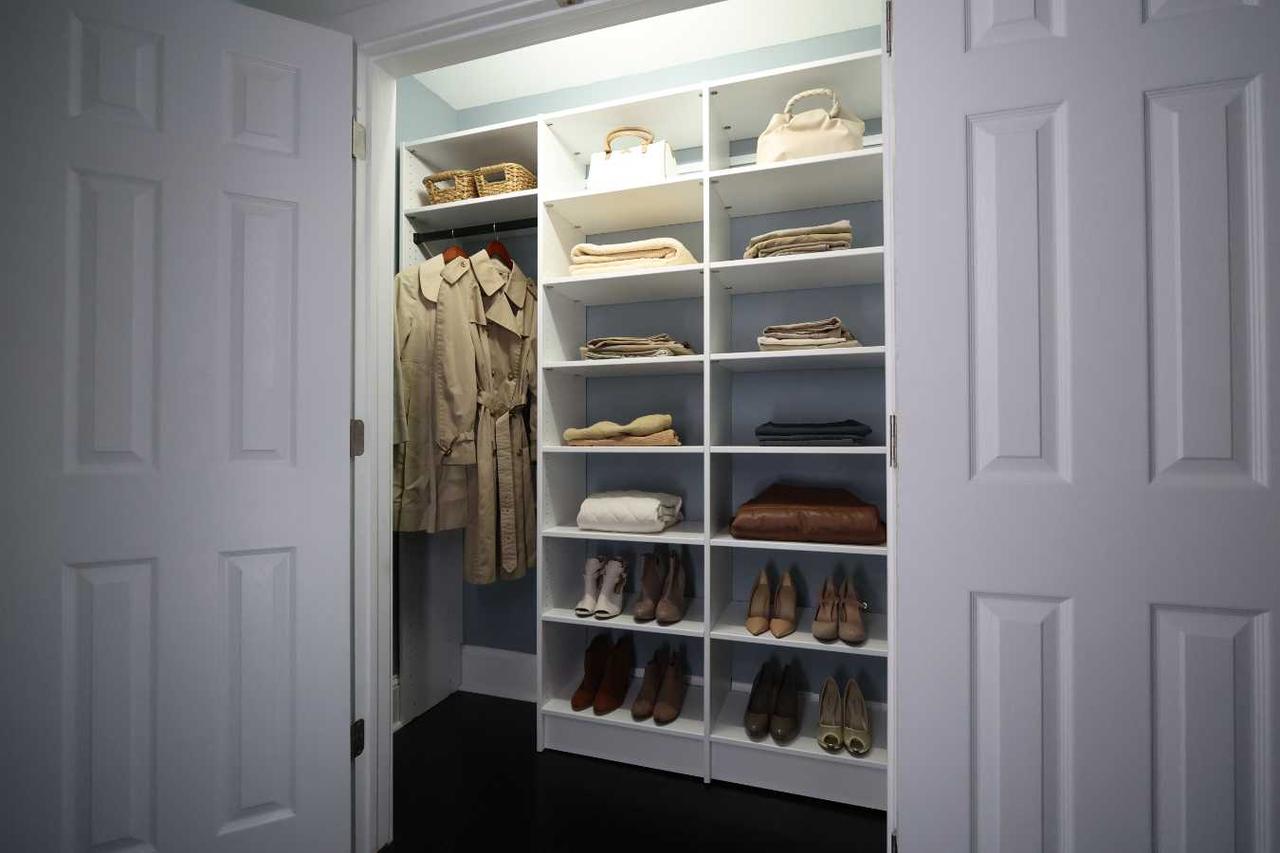
1. Contrast Blue Walls with Classic White Built-ins
The magic here is the simple but brave use of color. The light blue walls are a breath of fresh air in a space that is so often just plain white. It creates an immediate custom look and makes the white shelving pop, turning standard built-ins into a design feature. This contrast highlights the organization itself, making your neatly folded sweaters part of the decor. The choice of a dark floor grounds the space, preventing the light blue and bright white from feeling like they might float away. It adds a touch of sophistication and depth.
|
📋 Copy HEX 🔗 Share |
Recreating this clean, tailored look is more accessible than it seems. The key is in the semi-custom feel of the built-ins paired with a confident paint choice.
- Paint (Walls): $50 – $100
- Built-in Shelving System (e.g., IKEA PAX custom design): $800 – $1,500
- Clothing Rod & Hardware: $40 – $80
- Labor for Installation (DIY or Pro): $0 – $600
- TOTAL: $890 – $2,280
Budget alternative: Use freestanding white bookshelves and a tension rod for a similar effect for under $400.
2. Anchor Your Closet with a Central Full-Length Mirror
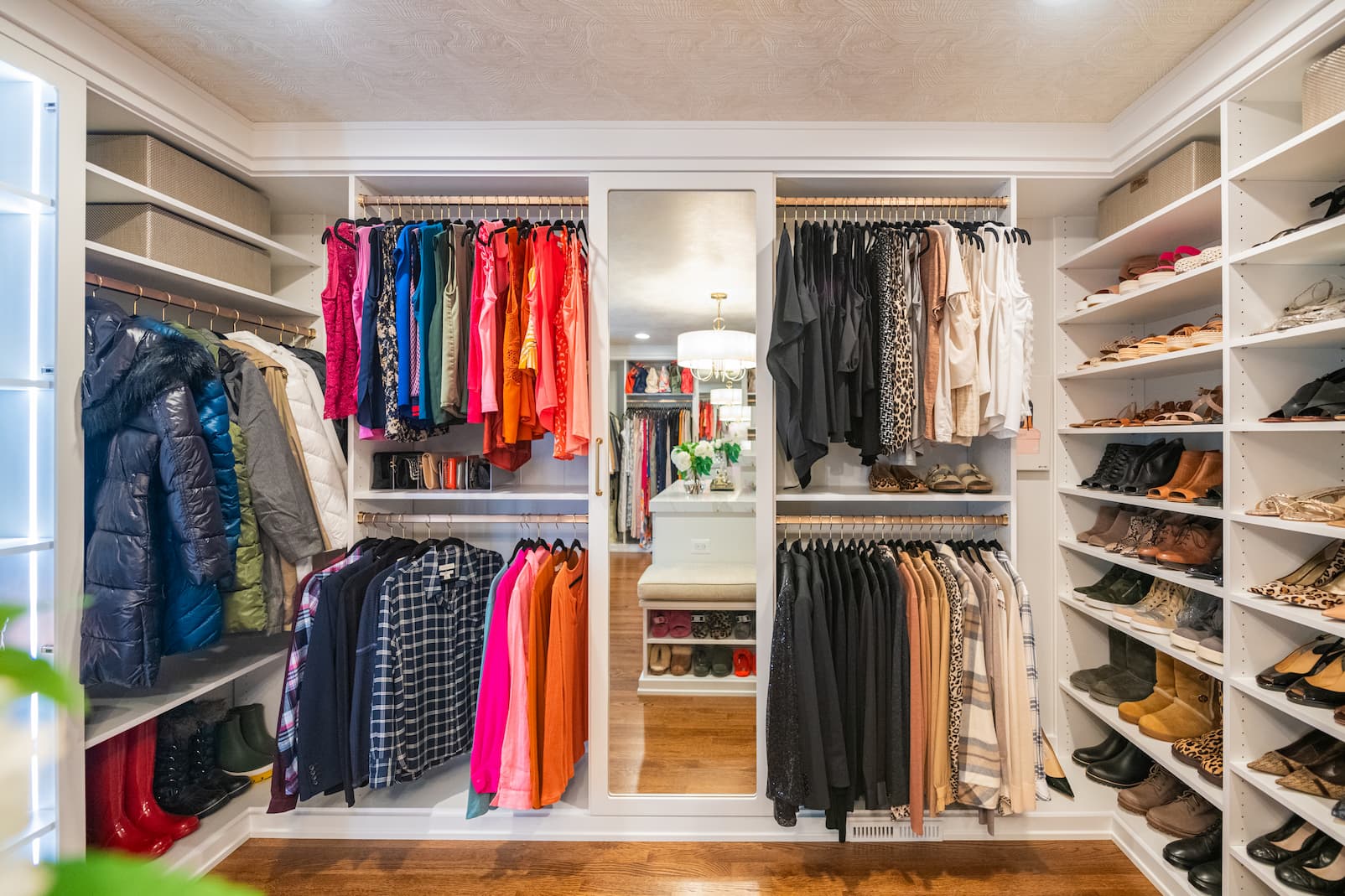
It’s all about that mirror. Without it, this is just a very nice, large closet. With it, the space completely transforms. The mirror acts as a centerpiece, reflecting the light from the chandelier and bouncing it around the room, making the closet feel even more expansive and bright. It adds a layer of boutique-like luxury, turning the functional act of checking your outfit into a moment of elegance. It also breaks up the visual monotony of wall-to-wall cabinetry, creating a focal point that draws you in.
|
📋 Copy HEX 🔗 Share |
This grand, reflective statement works best in a dedicated walk-in closet with at least 80 square feet to spare. The key is ensuring you have enough clearance—a minimum of 36 inches—between the mirror and any surrounding island or cabinetry. This allows for comfortable movement and ensures the mirror’s reflection captures the full scope of the room rather than just a tight corner. For smaller spaces, consider the layout in Idea #1, which uses color and simple built-ins to create a sense of order without needing a large central feature.
3. Combine a Drawer Island with a Matching Bench
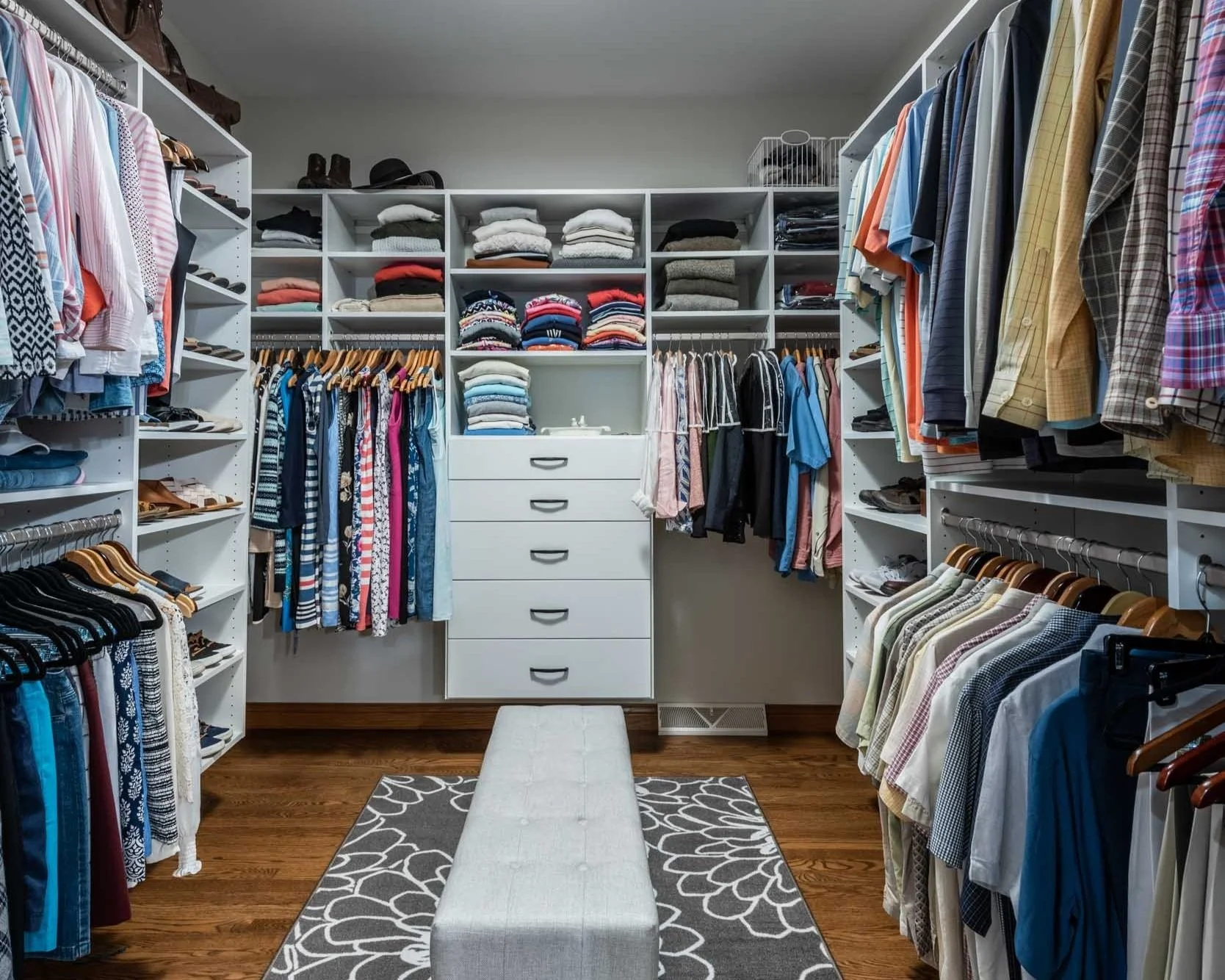
The formula for this serene and functional space is a careful balance of storage and comfort. Think of it as 60% built-in structure (the white shelving and rods), 30% central function (the drawer unit and bench), and 10% soft texture (the patterned rug). You can easily adapt this! Swap the white shelving for a warm wood tone, change the grey bench to a bold navy velvet, and switch the grey rug for a vibrant Persian-style one. As long as you maintain that 60/30/10 ratio, the fundamental balance and utility of the room will remain intact.
|
📋 Copy HEX 🔗 Share |
While a central bench is a lovely, luxurious touch, be honest about how you’ll use it. Will you genuinely sit there to put on your shoes, or will it become a permanent home for clothes that need to be put away? In a busy household, surfaces like this are clutter magnets. If you’re not disciplined about tidying, that beautiful upholstered bench can quickly disappear under a pile of jeans and shopping bags, defeating the purpose of your carefully organized space. Consider if open floor space might be more practical for your daily life.
4. Soften White Modular Units with Pale Green Walls
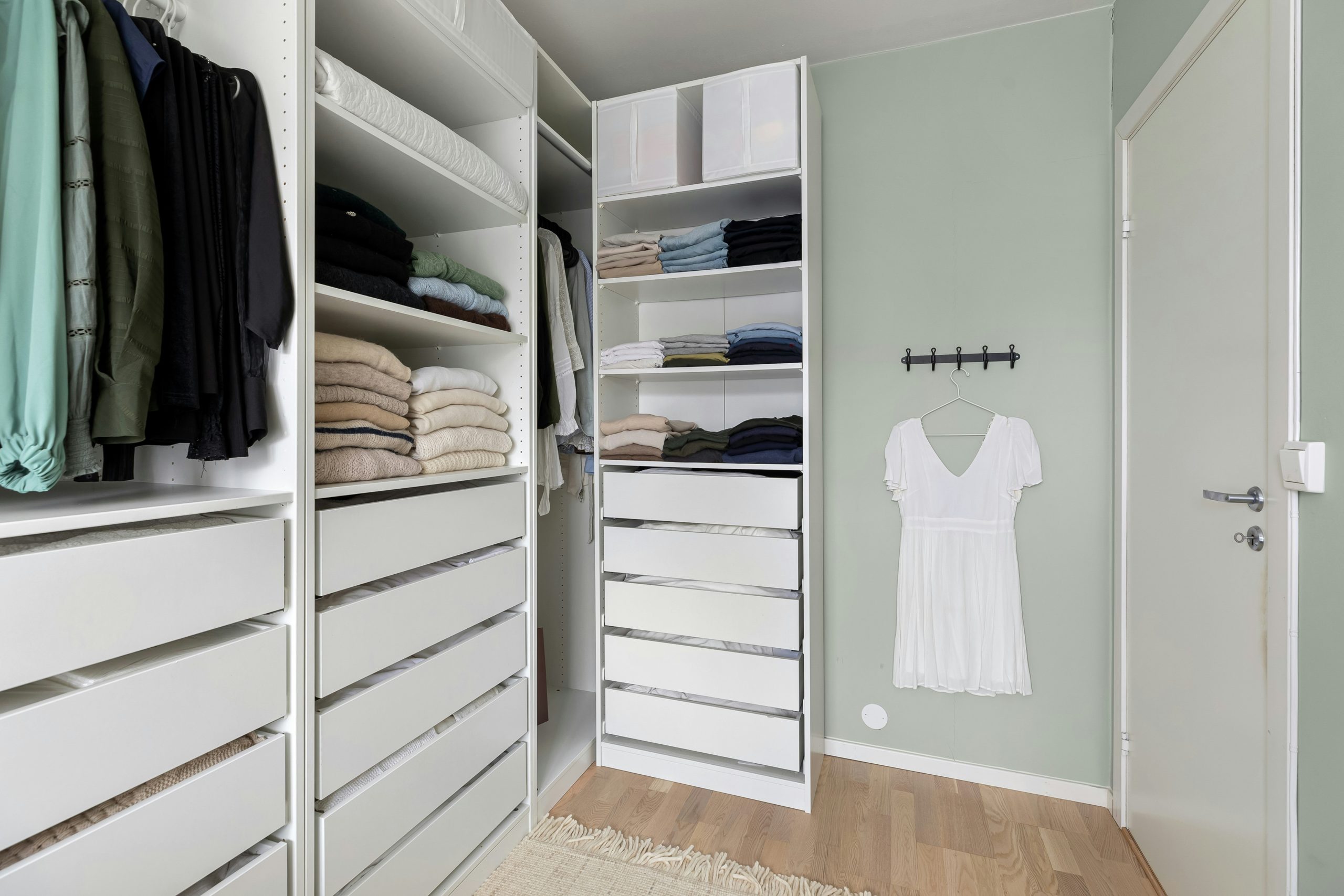
When painting a closet, most people either match the walls to the shelving (usually white) or the adjoining room. Instead, choose a soft, calming color like this pale green. The secret is to pick a shade with a grey undertone. This prevents the color from becoming too juvenile or saccharine, especially under artificial light. It adds a layer of designer sophistication and makes the closet feel like a deliberate, decorated space, not just a storage container. This technique from Idea #1 is repeated here with a different mood.
|
📋 Copy HEX 🔗 Share |
What makes this setup so calming and effective is the principle of repetition with slight variation. The clean, rectangular shapes of the modular units, the folded clothes, and the drawers are all repeated, creating a sense of rhythm and order. The variation comes from the soft green walls, which break the potential monotony of an all-white scheme. This introduces a gentle contrast that is pleasing to the eye and makes the white storage units look even cleaner and more defined against a soft, colorful backdrop.
5. Create a Luxury Boutique Vibe with Illuminated Shelving
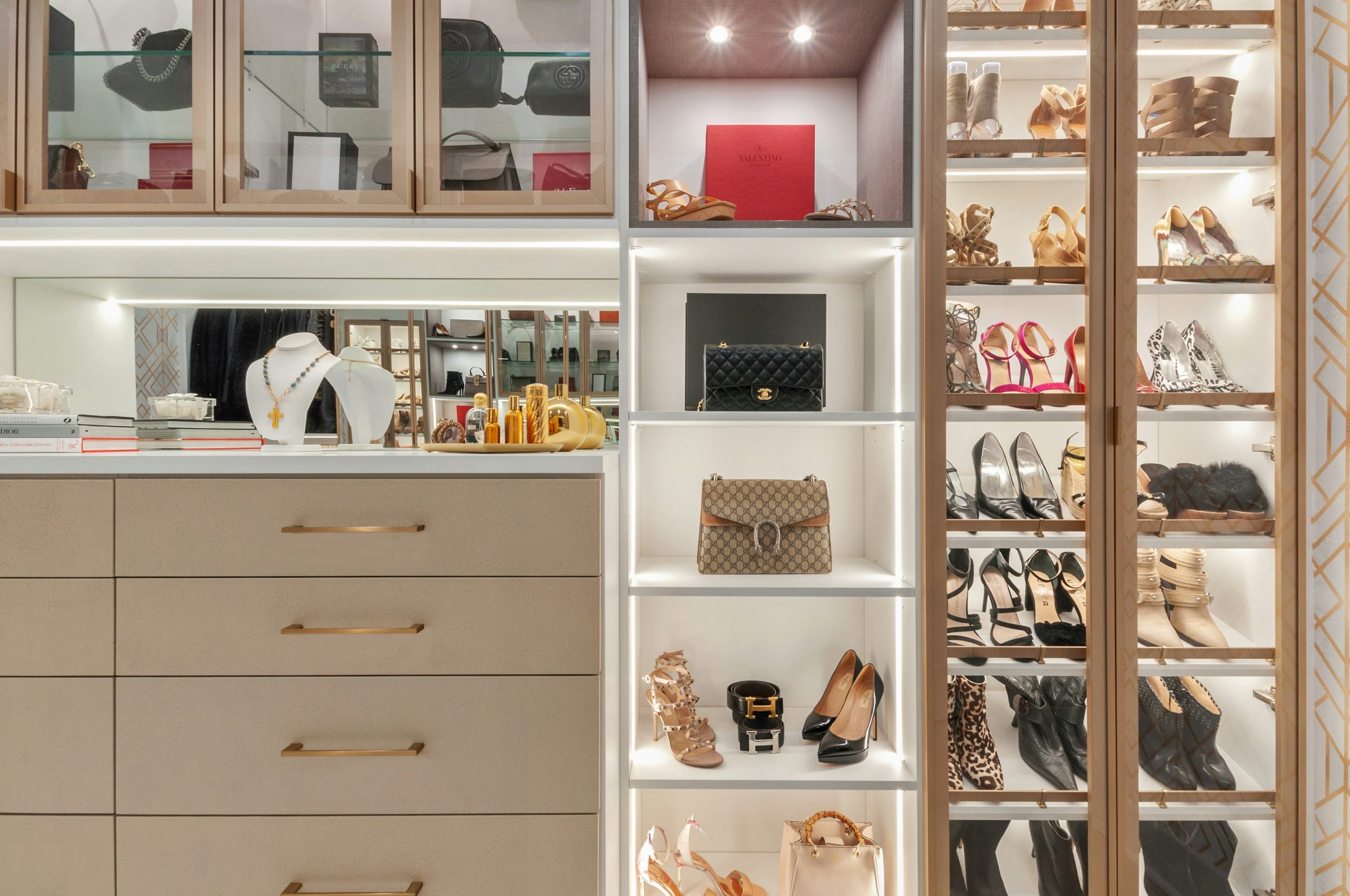
The integrated LED lighting is, without a doubt, the single element that elevates this closet from simple storage to a high-end, personal boutique. By placing linear light strips inside cabinets and under shelves, each handbag and pair of shoes is presented like a piece of art. It eliminates shadows, makes it easier to find what you’re looking for, and adds an incredible amount of warmth and glamour. Remove the lighting, and you’d be left with a perfectly nice but much more ordinary taupe and gold closet.
|
📋 Copy HEX 🔗 Share |
You don’t need a five-figure budget to get this illuminated look. The core concept is achievable with some smart shopping. Start with a basic modular system like the IKEA PAX or a Target Threshold unit. Then, add battery-operated, motion-sensor LED puck lights or adhesive LED strips from Amazon for under $50. You can find gold hardware on Etsy for a fraction of the custom cost. The key is layering—basic structure, smart lighting, and upgraded hardware—to mimic the feel of this luxury space, which can be compared to the more straightforward system in Idea #13.
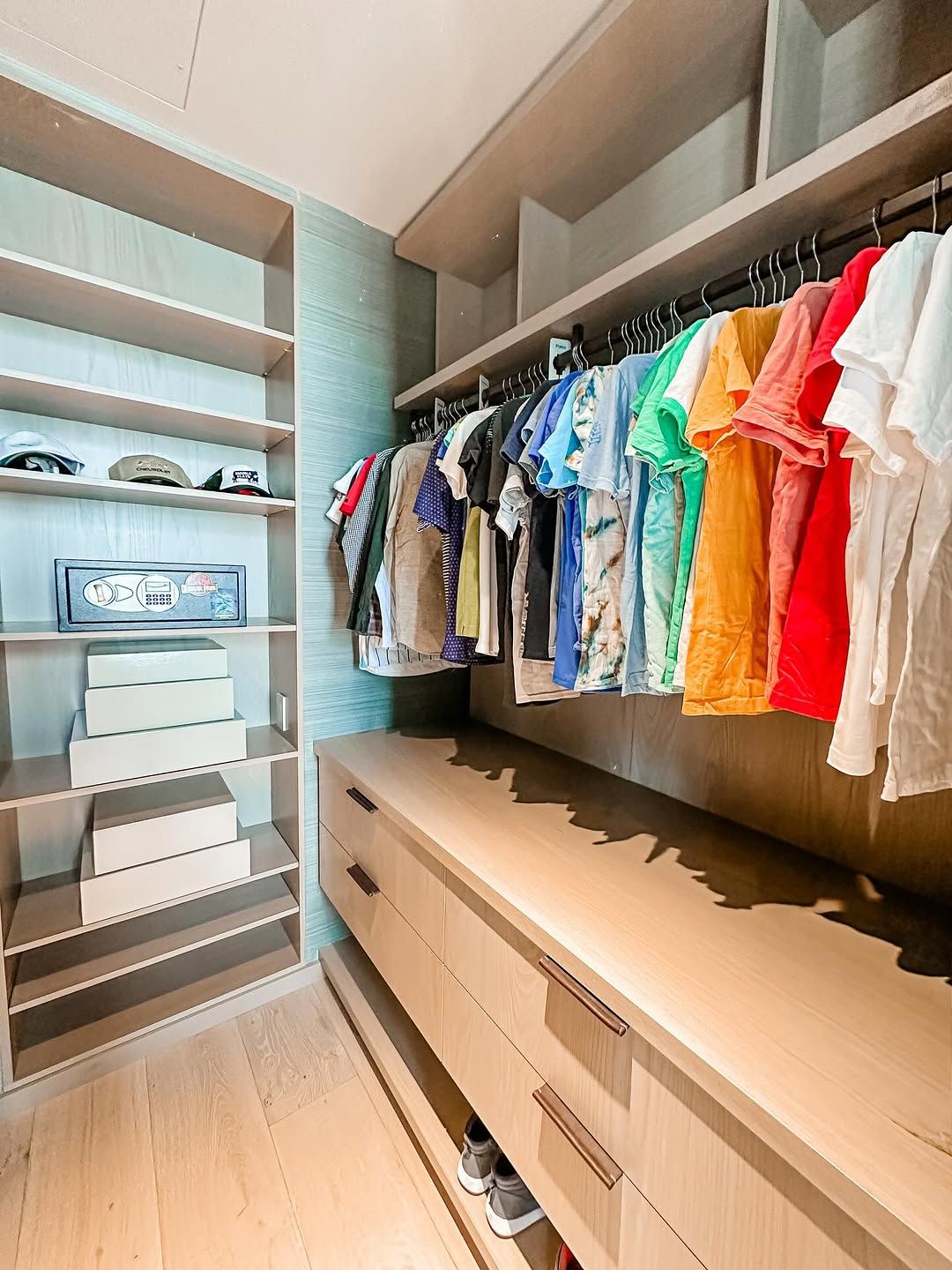
6. Mix Light Wood and a Textured Blue Accent Wall
This closet’s inviting, modern feel comes from a simple but effective equation: 50% warm, light wood + 40% cool, textured blue + 10% crisp white. The wood on the shelves and drawers brings natural warmth, while the textured blue wall adds depth and a pop of sophisticated color. The white accents (storage boxes, ceiling) keep it feeling fresh and bright. You could switch the blue for a deep forest green or a warm terracotta and swap the light wood for a richer walnut to create a different mood while keeping the same successful balance.
|
📋 Copy HEX 🔗 Share |
A textured wall, like the beautiful blue one here, adds amazing depth and character, but it’s not as simple as a coat of paint when it comes to upkeep. It can be a dust magnet, especially in a closet where fibers from clothes are constantly floating around. You’ll need to regularly vacuum the wall with a soft brush attachment (at least monthly) to keep it looking fresh. It’s also more difficult to patch or touch up than a standard painted wall if it gets scuffed or damaged.
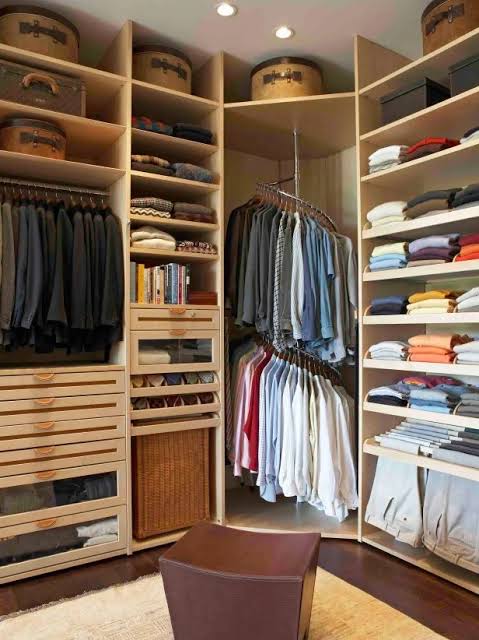
7. Maximize Small Spaces with Smart Vertical Hacks
In a small closet, every inch counts. Most people forget about the back of the door and the space between their hanging clothes and the shelf above. A simple over-the-door shoe organizer instantly frees up floor space. Then, use shelf dividers to stack sweaters or jeans without them toppling over. Look for dividers that are at least 12 inches high and slide onto your existing shelf. This lets you stack items twice as high, effectively doubling your shelf space without a single tool.
|
📋 Copy HEX 🔗 Share |
Let’s be honest: those perfectly curated photos of tiny closets often hide the reality of seasonal wardrobe changes. A small closet can be beautifully organized for one season, but it requires diligent editing and off-site storage for the other half of your clothes. If you live in a place with four distinct seasons, you MUST commit to a storage rotation system (using under-bed bins or a separate storage unit) or your small, tidy closet will quickly become overstuffed and chaotic again.
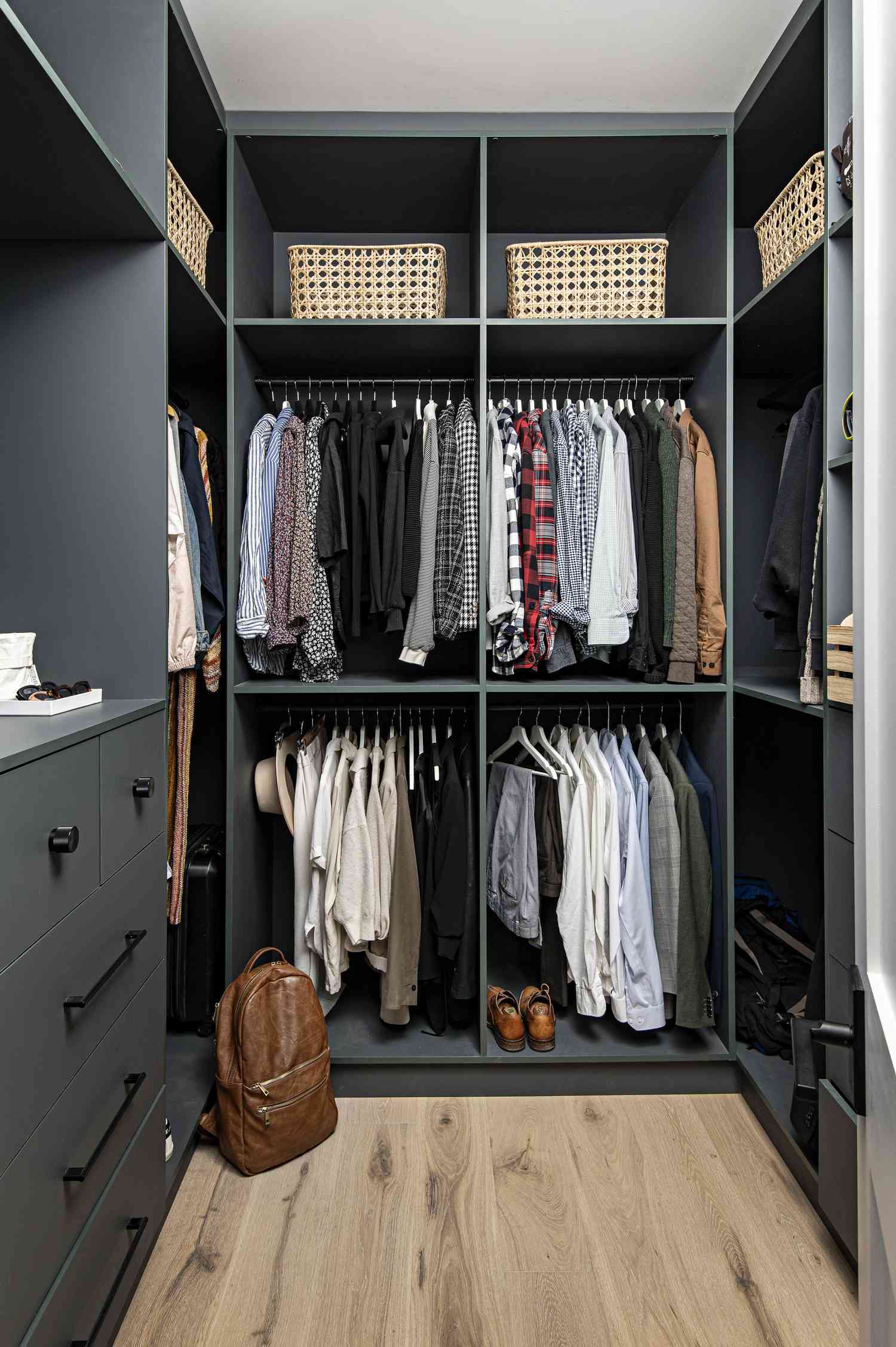
8. Go Moody with Dark Gray Cabinetry and Woven Baskets
This design succeeds by mastering the art of texture and temperature contrast. The dark gray, almost charcoal, cabinetry has a cool, modern, and sophisticated feel. This could easily become cold and imposing, but the introduction of warm, natural woven cane baskets on the upper shelves immediately balances it out. The texture of the baskets adds a tactile, organic element, while the light wood floor provides another layer of warmth underfoot, creating a space that feels both contemporary and inviting. It’s a fantastic alternative to the all-white closets seen in Idea #2 and Idea #3.
|
📋 Copy HEX 🔗 Share |
Dark and moody interiors, even in functional spaces like closets, are a direct response to years of all-white-everything dominating platforms like Pinterest. Homeowners are craving depth, personality, and a cozier, more enveloping feel. Using a color like this deep gray turns a utilitarian space into a personal sanctuary. This trend has staying power because it’s not about a specific color but about the desire for rooms that feel curated, intimate, and rich with character.
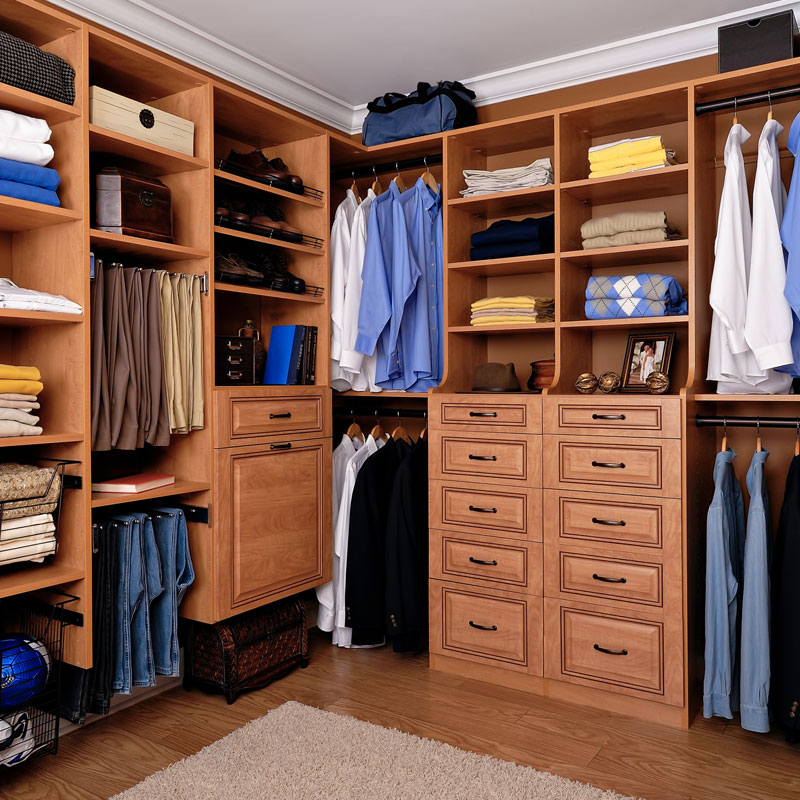
9. Embrace the Warmth of a Traditional Wood Walk-In
The standout feature here is the uniform, warm wood tone used for absolutely everything. From the shelving units to the integrated drawers, the consistent use of this light, maple-hued wood creates an incredibly cohesive and calming effect. In a space filled with the visual “noise” of different colored clothes, shoes, and accessories, having a single, unifying material for the structure provides a serene, orderly backdrop. It feels classic, sturdy, and timeless in a way that painted finishes sometimes don’t. Compare this to the lighter wood in Idea #24 for a different feel.
|
📋 Copy HEX 🔗 Share |
Want to perfectly fold your shirts for open shelving? Here’s the retail-display method. Estimated time: 2 minutes per shirt.
- Lay the shirt face down on a flat surface.
- Imagine a vertical line halfway between the collar and the shoulder. Fold one side in along that line, laying the sleeve flat so it points straight down.
- Fold the sleeve back up and over itself.
- Repeat steps 2 and 3 on the other side.
- Fold the bottom third of the shirt up.
- Fold the new bottom half up again to meet the collar. Flip it over, and you’re done.
10. Design a Custom System for Your Specific Needs
Before you invest in a custom closet system, it’s crucial to do a thorough inventory and plan for your actual life, not an imaginary one.
- Take a full inventory of your wardrobe. How many long-hang items (dresses, coats) vs. short-hang items (shirts, blazers) do you have? Measure the linear feet you currently use for each.
- Count your shoes. Are they heels, flats, or boots? This determines if you need flat shelves, slanted shelves, or taller cubbies.
- Don’t forget accessories. Do you need shallow drawers with dividers for ties and jewelry, or deeper drawers for scarves and bags?
- Measure your room twice. Note window locations, door swings, and any electrical outlets.
|
📋 Copy HEX 🔗 Share |
When designing a custom system, think in zones. Create a “getting ready” zone with your most-used items, a long-term storage zone for out-of-season clothes, and a dedicated shoe zone. Most people just want as much hanging space as possible, but you’ll be much happier with specific, designated areas. For instance, place your tie and belt racks right next to your shirts, and your jewelry drawers near a mirror. It sounds obvious, but building these workflows into the design from the start is a total game-changer.
11. Achieve an Airy Look with Light Wood-Grain Cabinetry
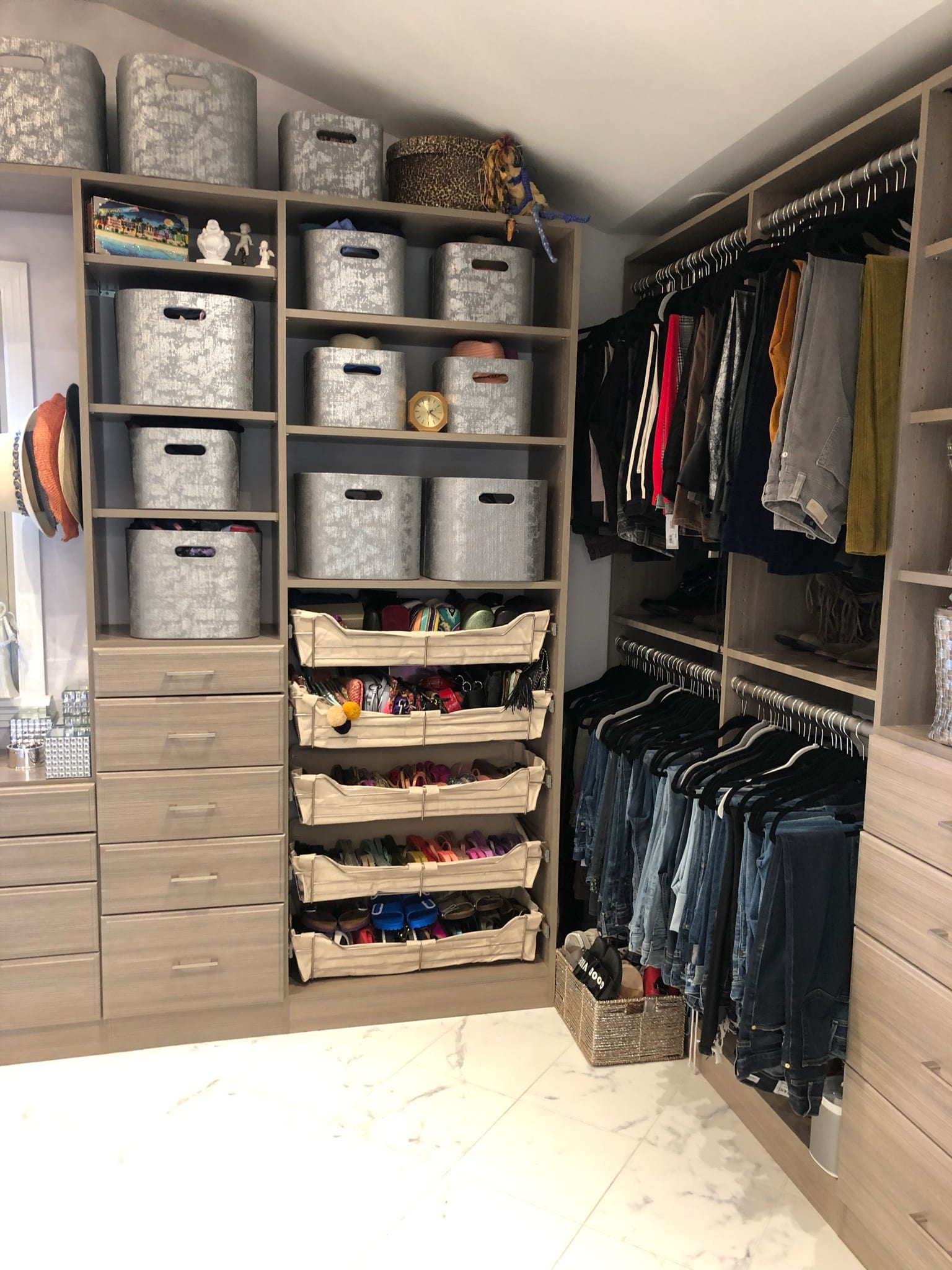
This closet feels incredibly light and organized because it pairs a neutral, low-contrast wood grain with smart, semi-opaque storage. The light wood-grain laminate provides a hint of natural texture without the visual weight of dark or heavily grained wood. The silver-patterned bins continue this theme—they conceal clutter while their light color and subtle pattern prevent them from feeling like heavy blocks. This combination ensures the eye flows smoothly across the space, reinforcing a sense of clean, uncluttered openness.
|
📋 Copy HEX 🔗 Share |
You can get this look for much less. The core components are light-colored shelving and patterned bins. Start with a basic white or birch-effect shelving unit from IKEA (like the BILLY or KALLAX series). Then, hunt for stylish fabric or cardboard storage boxes from Target’s Brightroom line or even Amazon. You can often find beautiful sets of 6-8 bins for under $75. A peel-and-stick marble-look vinyl flooring can cover an old floor for around $1-$2 per square foot, completing the transformation on a serious budget.
12. Style a White Modular System with Rattan and Art
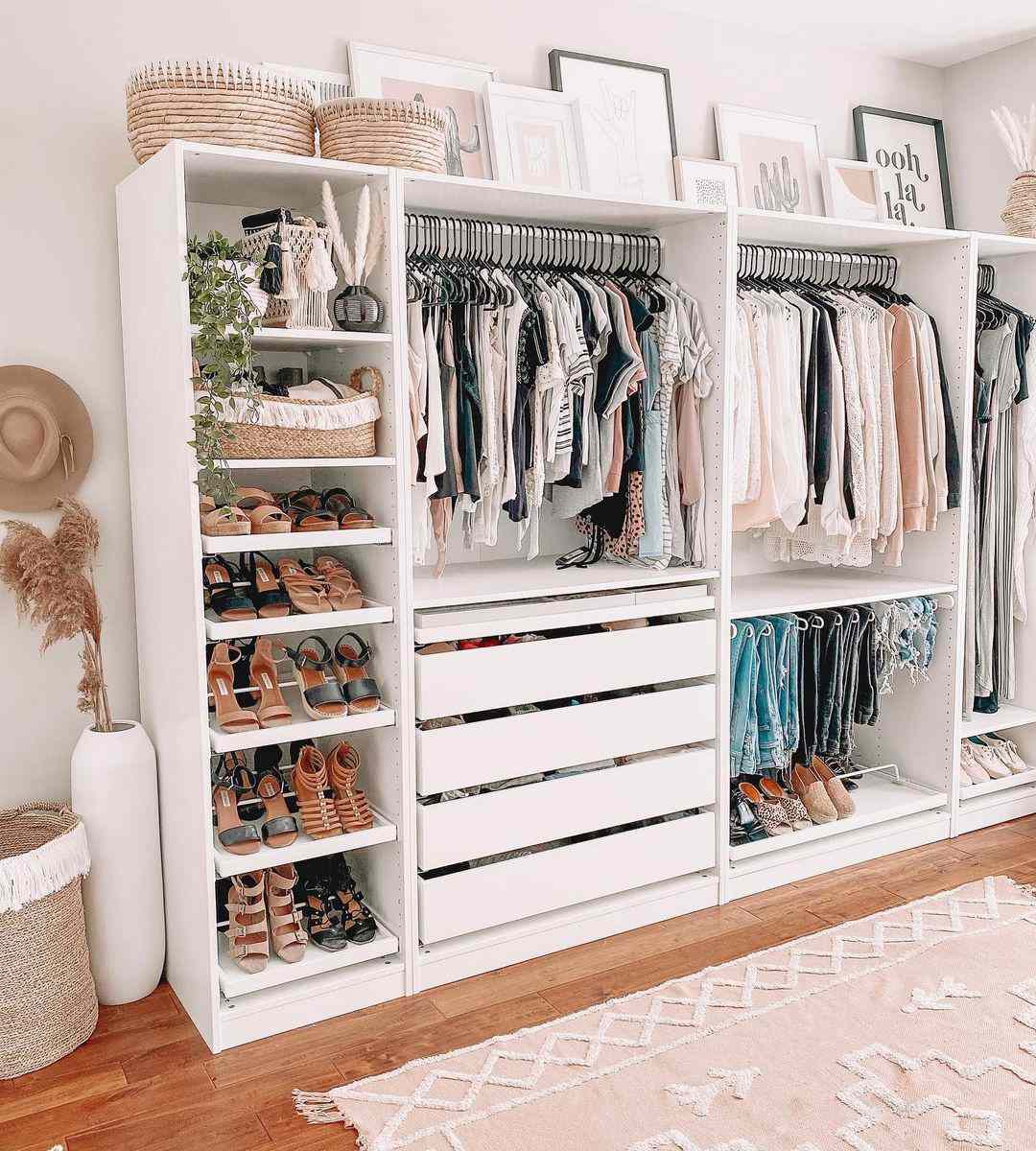
The art and the rattan baskets on the top shelf are the elements that make this closet sing. Without them, it’s a perfectly functional, if slightly generic, white modular system. But by adding those decorative touches in the often-neglected space near the ceiling, the entire unit is transformed from pure storage into a piece of furniture with personality and style. It’s a signal that this is a curated space, where aesthetics are just as important as organization. That small act of styling makes the whole room feel more intentional and complete.
|
📋 Copy HEX 🔗 Share |
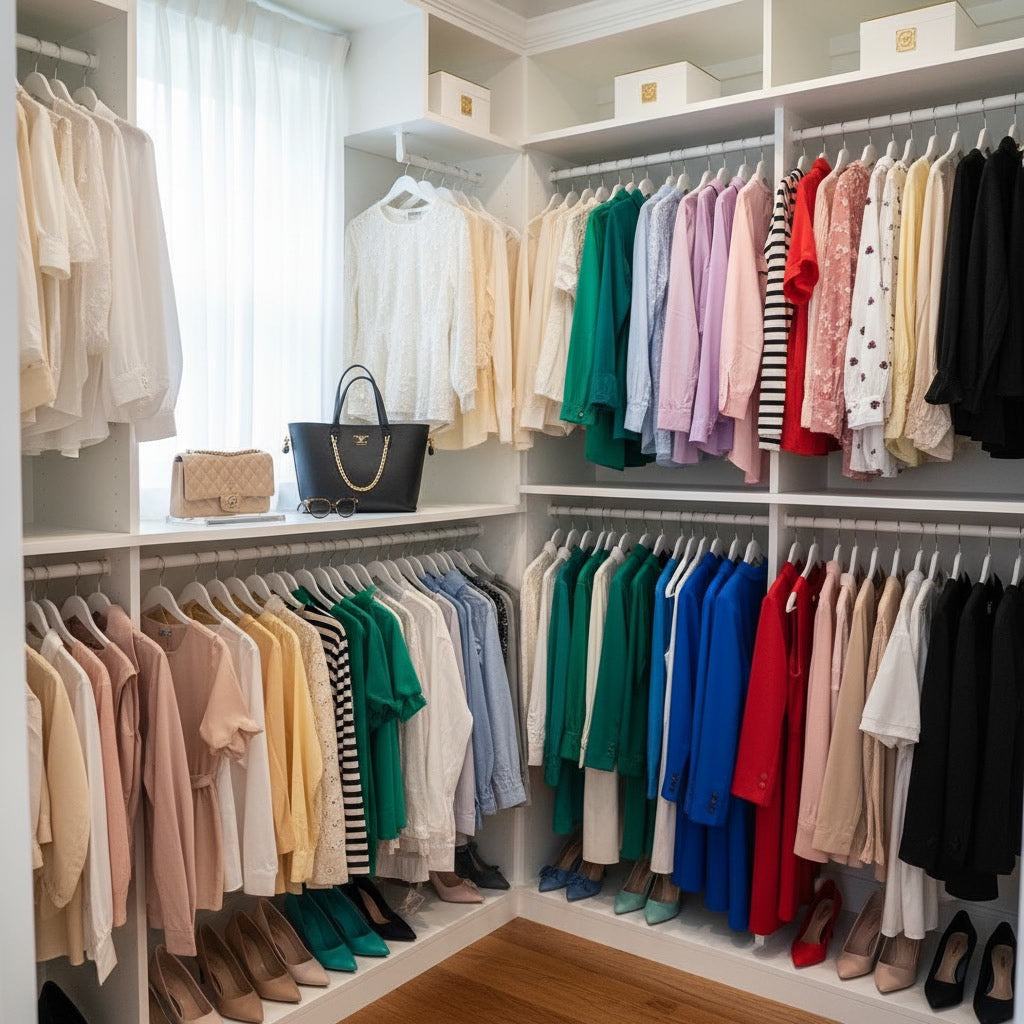
13. Organize by Color for a Rainbow Effect
The success of this closet isn’t just about the white built-ins; it’s the visual therapy of color coordination. Arranging clothes in rainbow order (or by shade, from light to dark) instantly creates a sense of calm and order out of potential chaos. It pleases the brain’s natural tendency to seek out patterns, turning your wardrobe into a large-scale art installation. This method also has a practical benefit: when you’re looking for that specific blue shirt, your eye knows exactly where to go, making finding things much faster.
|
📋 Copy HEX 🔗 Share |
A color-coded closet is beautiful, but it requires a specific kind of maintenance. It looks great if your wardrobe is naturally colorful and you’re diligent about putting things back in their exact spot. However, if your wardrobe is 80% black, grey, and white, the effect will be far less dramatic. Also, be honest: are you the type of person who will painstakingly re-hang a shirt in the right color section after doing laundry, or will it end up on the first available hanger? If it’s the latter, this system will become a source of stress, not serenity.
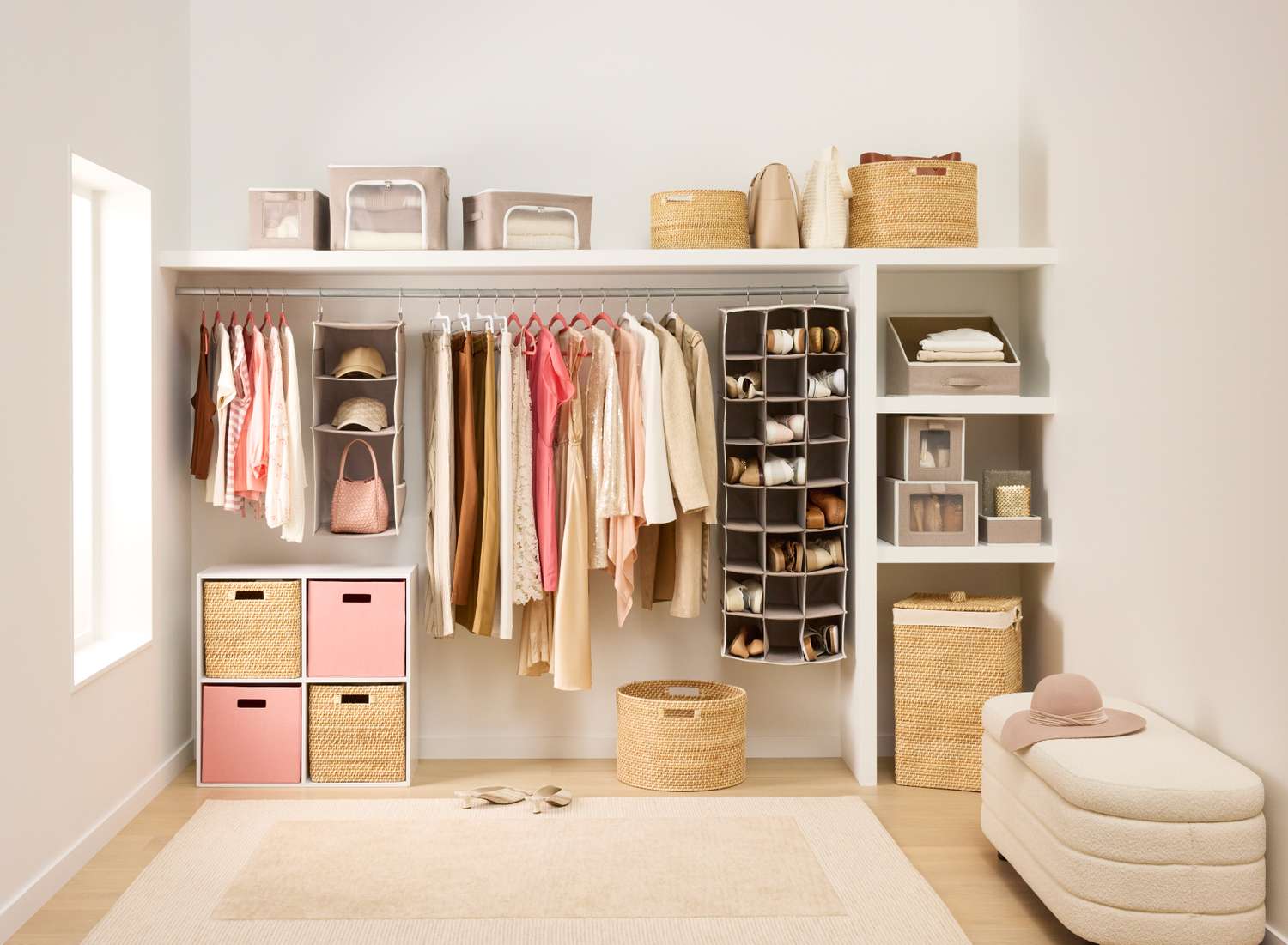
14. Use Pink Hangers and Woven Bins for a Soft Touch
The formula here is all about softening a functional space. It breaks down to roughly 70% neutral base (white shelves, cream bench, and beige bins) + 20% natural texture (the numerous woven baskets) + 10% playful accent color (the pink hangers and drawer inserts). This balance ensures the closet feels organized and calm, but not sterile. The pink adds a pop of personality without overwhelming the space, and the texture makes it feel warm and inviting. You could swap the pink for a soft sage green or baby blue for a similar effect.
|
📋 Copy HEX 🔗 Share |
Installing fabric drawer inserts is a 5-minute upgrade that makes a huge difference. Estimated cost: $15-$40.
- Empty and wipe down the drawer you want to organize.
- Purchase a set of collapsible fabric drawer organizers. Choose a size that best fits your drawer dimensions.
- Simply pop open the organizers; most have a zipper on the bottom to create a rigid shape.
- Arrange the different-sized boxes inside your drawer to create custom compartments.
- Start sorting! Use the new sections for socks, underwear, scarves, or other small items.
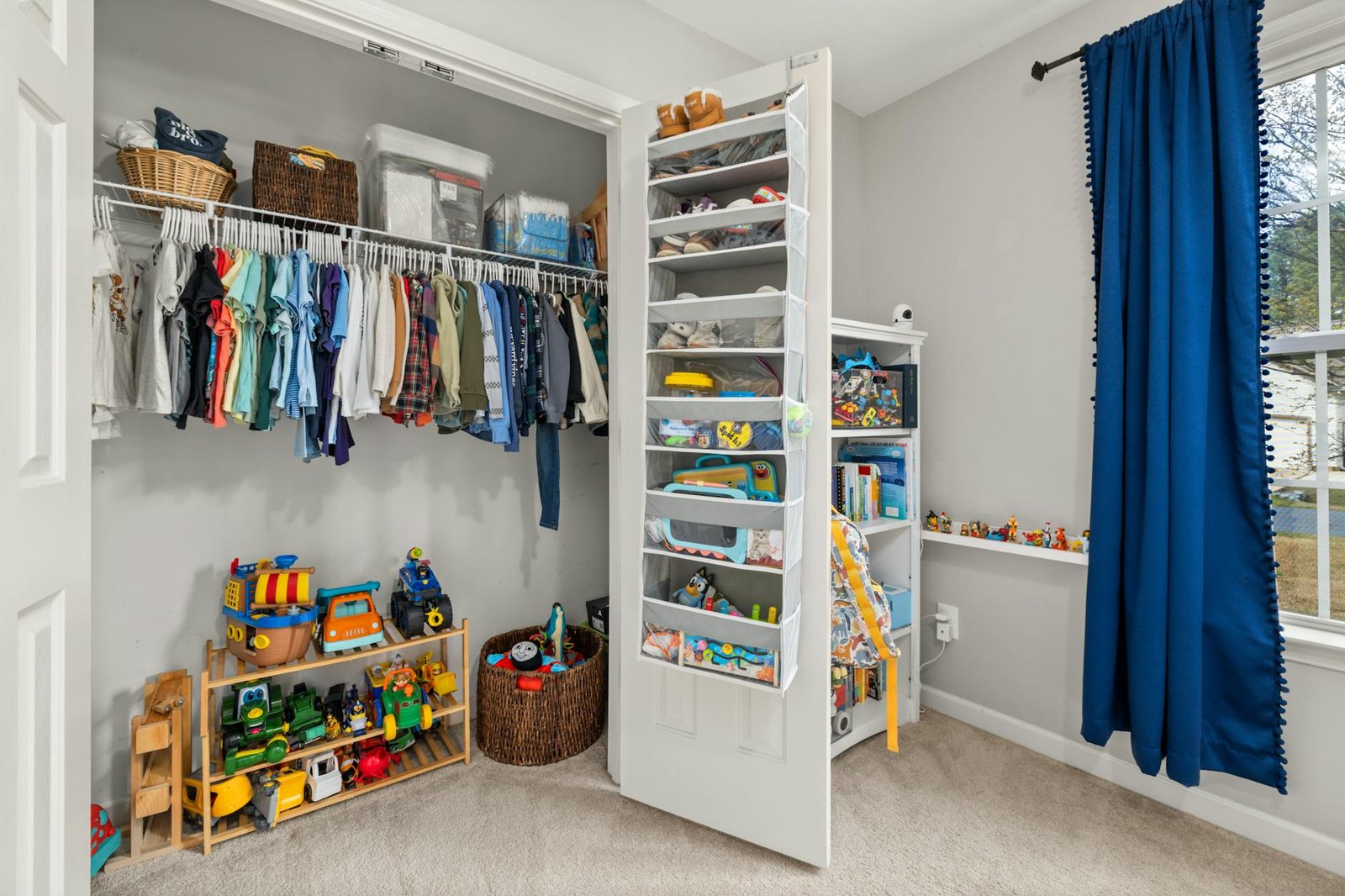
15. Organize a Child’s Closet with Wicker and Wood
This child’s closet works because it’s designed from a kid’s perspective. The most important items—the toys—are stored at floor level on an open wooden shelf, making them easily accessible for playtime (and, optimistically, for cleanup). Everyday clothes are on a single, low-hanging rod. Less-used items and back stock are stored up high in wicker baskets and clear bins, out of the way but still visible for parents. This tiered approach to accessibility is what makes the space both fun for the child and functional for the adult. For another take on kids’ closets, see Idea #22.
|
📋 Copy HEX 🔗 Share |
When organizing a child’s closet, take a moment to plan for the future. Their needs change fast!
- Consider adjustable systems. Can the hanging rod and shelves be moved as the child grows and their clothes get longer?
- Think about safety. Ensure any freestanding shelving units are securely anchored to the wall to prevent tipping.
- Opt for open and/or clear storage. Bins that kids can see into (like the clear ones here) or easily access (like open wicker baskets) encourage them to find and put away their own things.
- Leave some room to grow. Don’t pack the closet to 100% capacity. Leave empty space for new clothes and toys after birthdays and holidays.
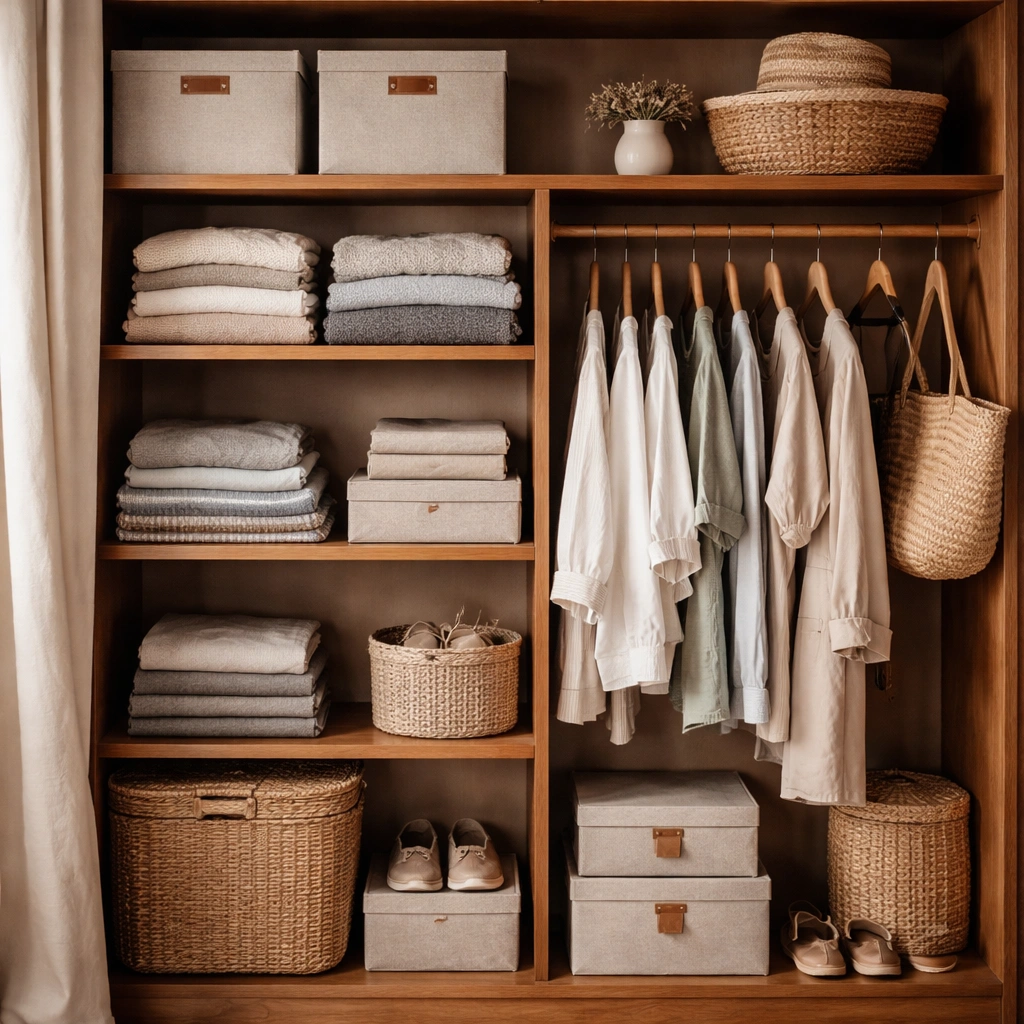
16. Curate a Cozy Linen Closet with Neutral Tones
The secret to this closet’s serene, spa-like atmosphere is its strict, warm-neutral color palette. Everything—from the wood shelving itself to the folded linens, storage boxes, and even the handbag—exists within a narrow range of white, cream, beige, grey, and straw. This disciplined color cohesion is incredibly soothing to the eye. It elevates simple folded towels and sweaters into a beautifully curated collection. If you introduced a pop of bright color, you’d instantly lose that calm, monochromatic magic.
|
📋 Copy HEX 🔗 Share |
A beautifully organized linen closet with open shelving requires discipline. Folded items are your friend, but they need to be maintained. To keep those perfect stacks from looking messy, you’ll need to refold everything at least once a quarter. Fabric storage boxes are great for hiding mismatched or less-than-perfectly-folded items, but they can collect dust. Plan to wipe down or vacuum the boxes and shelves every other month. Natural wicker or straw baskets can also shed over time, requiring a bit more cleanup than solid wood or plastic.
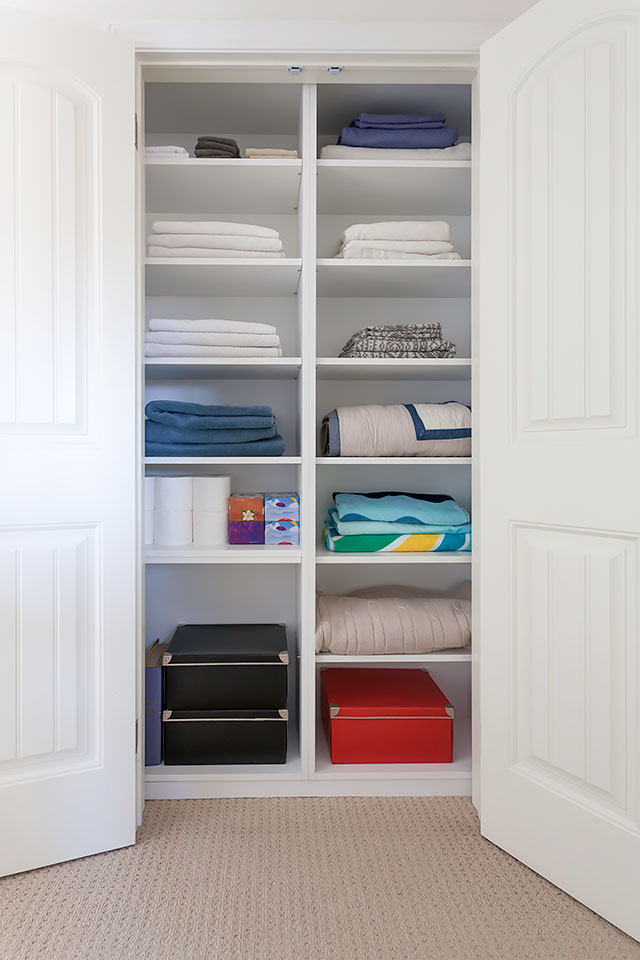
17. Tidy a Small Linen Closet with Uniform Folding
When dealing with a simple, built-in linen closet like this, the key to a high-end look is uniform folding. Don’t just fold your towels and sheets—fold them so they have the same final dimensions. For example, make sure every folded towel ends up being a 10-inch by 15-inch rectangle. It sounds fussy, but when they are stacked on the shelf, the perfect alignment creates a sense of geometric order that looks incredibly clean and intentional. It’s a zero-cost trick that makes standard shelves look custom-organized.
|
📋 Copy HEX 🔗 Share |
Giving a standard bifold-door closet this level of organization is one of the most cost-effective upgrades you can make. The structure is already there; you’re just adding the order.
- Set of 6 matching bath towels: $40 – $120
- Decorative Storage Boxes (set of 2-3): $30 – $70
- Shelf Liners (optional, but nice): $15 – $25
- TOTAL: $85 – $215
Budget alternative: Use only the items you already own, but commit to refolding everything uniformly. The impact is huge, and it costs nothing but a bit of your time.
18. Pair Dark Wood Cabinetry with Gold Hardware
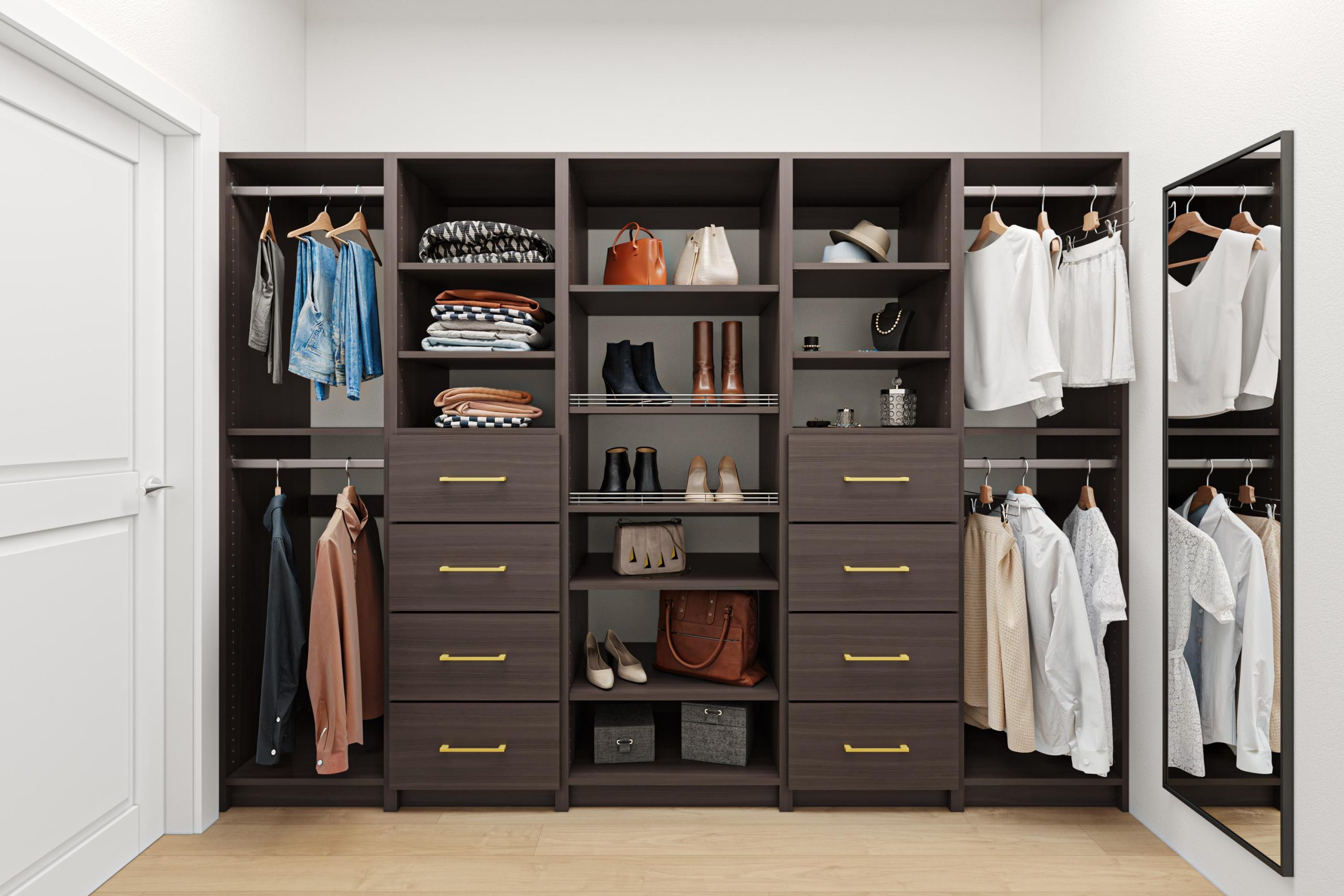
The visual formula for this handsome closet is classic and effective: 80% rich, dark wood + 15% bright white and light wood + 5% metallic accent. The dark brown wood-look system provides a deep, dramatic base. The light wood floor and white walls/ceiling prevent the space from feeling too heavy or cave-like. But it’s that 5% of polished, gold-toned hardware that acts like jewelry, adding a touch of warmth and luxury that elevates the entire system from merely functional to genuinely stylish.
|
📋 Copy HEX 🔗 Share |
A full-length, floor-standing mirror is a fantastic addition to any walk-in closet, but be realistic about your floor space and traffic patterns. While it adds a ton of function and light, it can also become an obstacle. Make sure you have at least 30 inches of clear walkway in front of it. If your closet is narrow, a leaning mirror can make the path feel cramped and become a tipping hazard, especially around kids or pets. In tight quarters, a wall-mounted mirror is a much safer and more space-efficient choice.
19. Design a Child’s Closet with Room to Grow
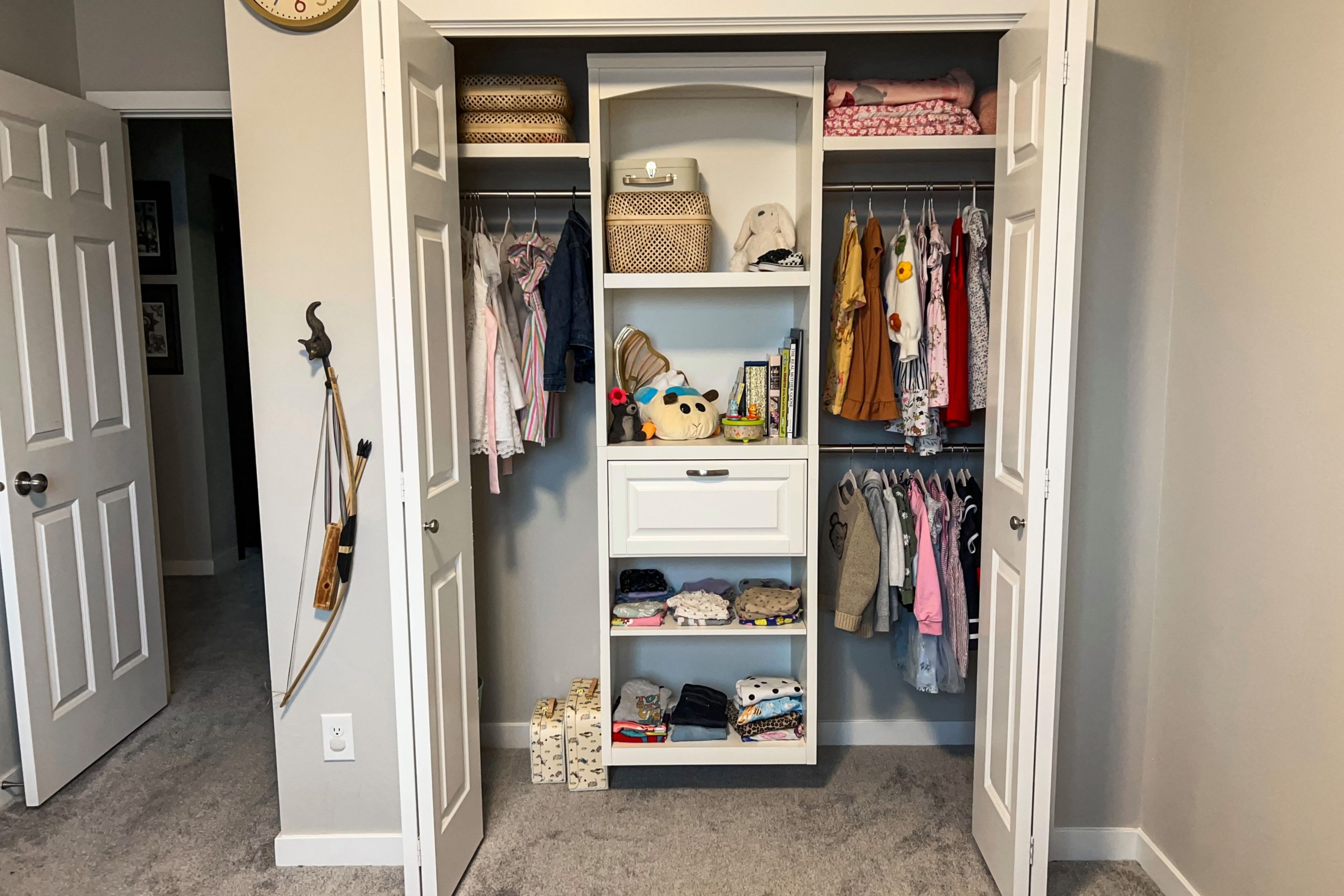
The smartest feature here is the use of multiple hanging rods at different heights. When designing a closet for a young child, install the main rod at a height they can reach themselves, around 36-40 inches from the floor. This empowers them to pick out their own clothes and (maybe) hang them back up. Then, install a second rod much higher up for out-of-season items, dress-up clothes, or things they need to grow into. As the child gets older, you can simply remove the lower rod to make space for longer dresses and coats.
|
📋 Copy HEX 🔗 Share |
This type of multi-rod and open-shelf system is perfect for a standard reach-in closet, typically ranging from 4 to 8 feet wide and 24 to 30 inches deep. You don’t need a full walk-in to create this level of organization. The key is to maximize the vertical space. For this to work effectively, you need a standard ceiling height of at least 8 feet to accommodate two hanging levels and a top shelf for baskets without everything feeling cramped. It’s a far more efficient use of space than the classic single-rod-and-shelf setup.
20. Achieve Serenity with a Neutral Palette and Light Wood
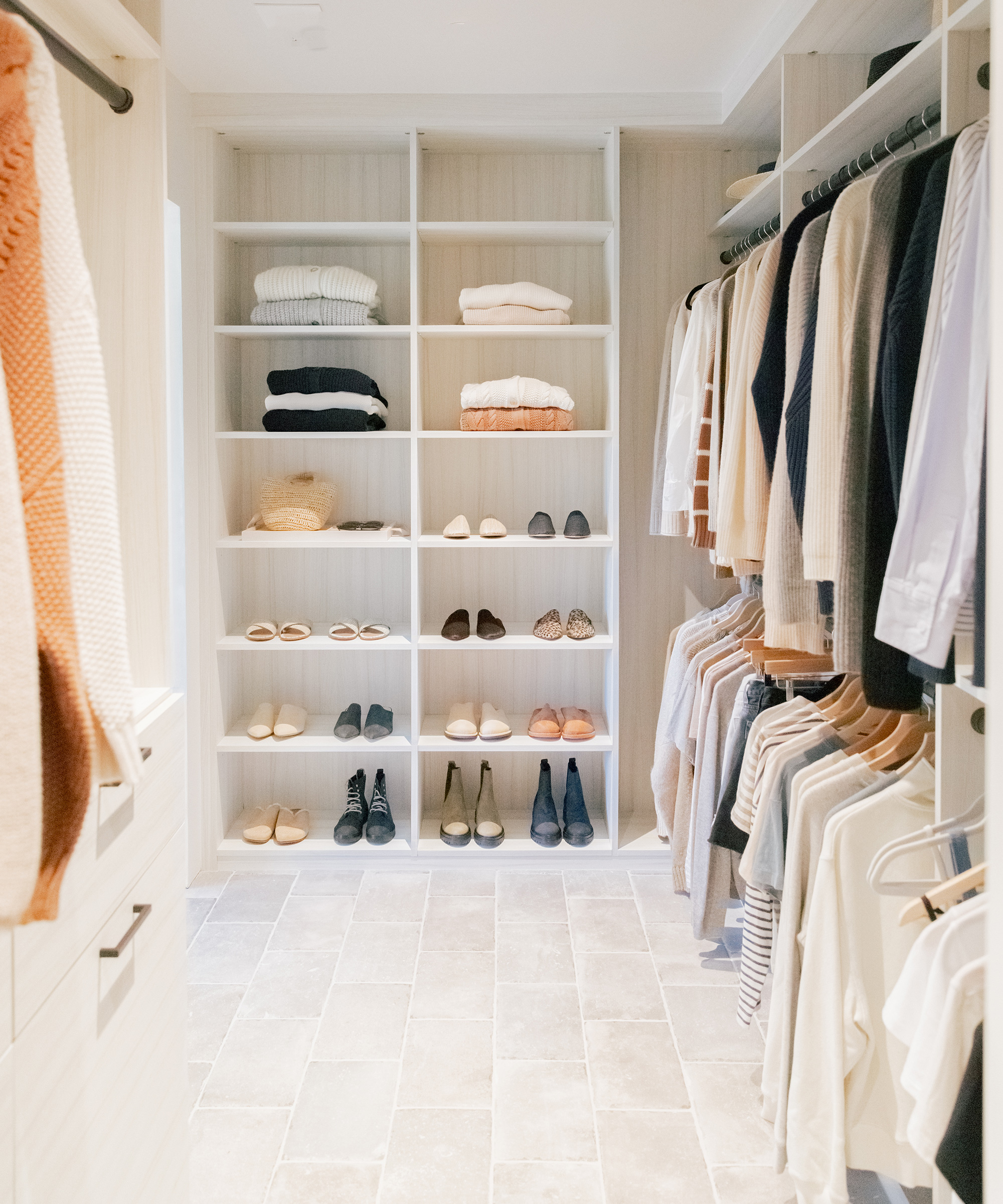
This closet feels remarkably serene because of its low visual contrast. The light wood-toned cabinetry, the beige floor tiles, and the neutral-colored clothing all share a similar value and saturation. There are no harsh, jarring shifts from light to dark or neutral to bright. This monochromatic harmony allows the eye to relax and take in the space as a whole, perceiving it as calm and orderly. The subtle organization—the neat stacks, the evenly spaced shoes—becomes the focus, rather than competing with a busy color scheme.
|
📋 Copy HEX 🔗 Share |
21. Use Over-the-Door and Cubby Storage in a Kid’s Room
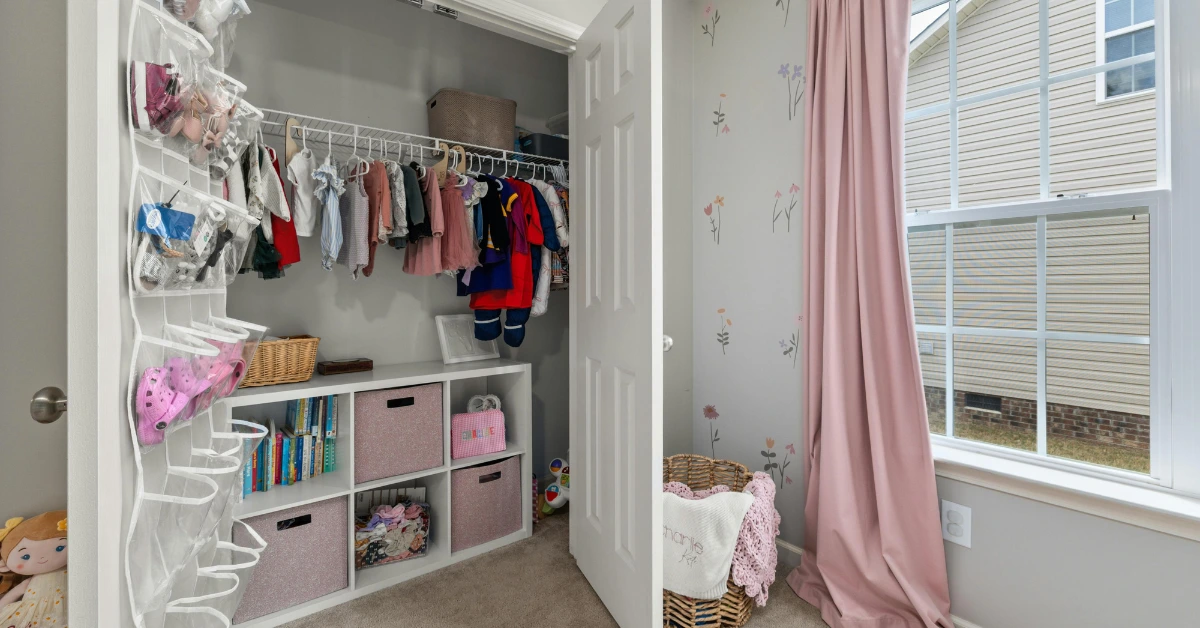
The single most effective piece of organization in this child’s space is the over-the-door clear pocket organizer. It is an absolute workhorse. It costs very little, requires zero installation, and instantly creates dozens of small compartments for the endless small treasures kids accumulate—from shoes and socks to small toys, hair accessories, and art supplies. It keeps these items visible and off the floor, single-handedly solving a huge source of clutter in most kids’ rooms. This is also a great idea for a craft or bathroom closet.
|
📋 Copy HEX 🔗 Share |
Getting this organized and playful look is extremely budget-friendly. The main components are available at any big-box store. A white cubby storage unit from Target or Walmart can be found for $40-$60, and the fabric bins are about $5-$8 each. An over-the-door shoe organizer is typically under $20 on Amazon. You can create a similar wall decal effect with a set of peel-and-stick vinyl stickers for about $15. This entire setup can be replicated for well under $150, proving that great organization doesn’t require a big investment. Compare this with Idea #16 for a slightly different approach.
22. Organize an Entryway Closet with Baskets and Cubbies
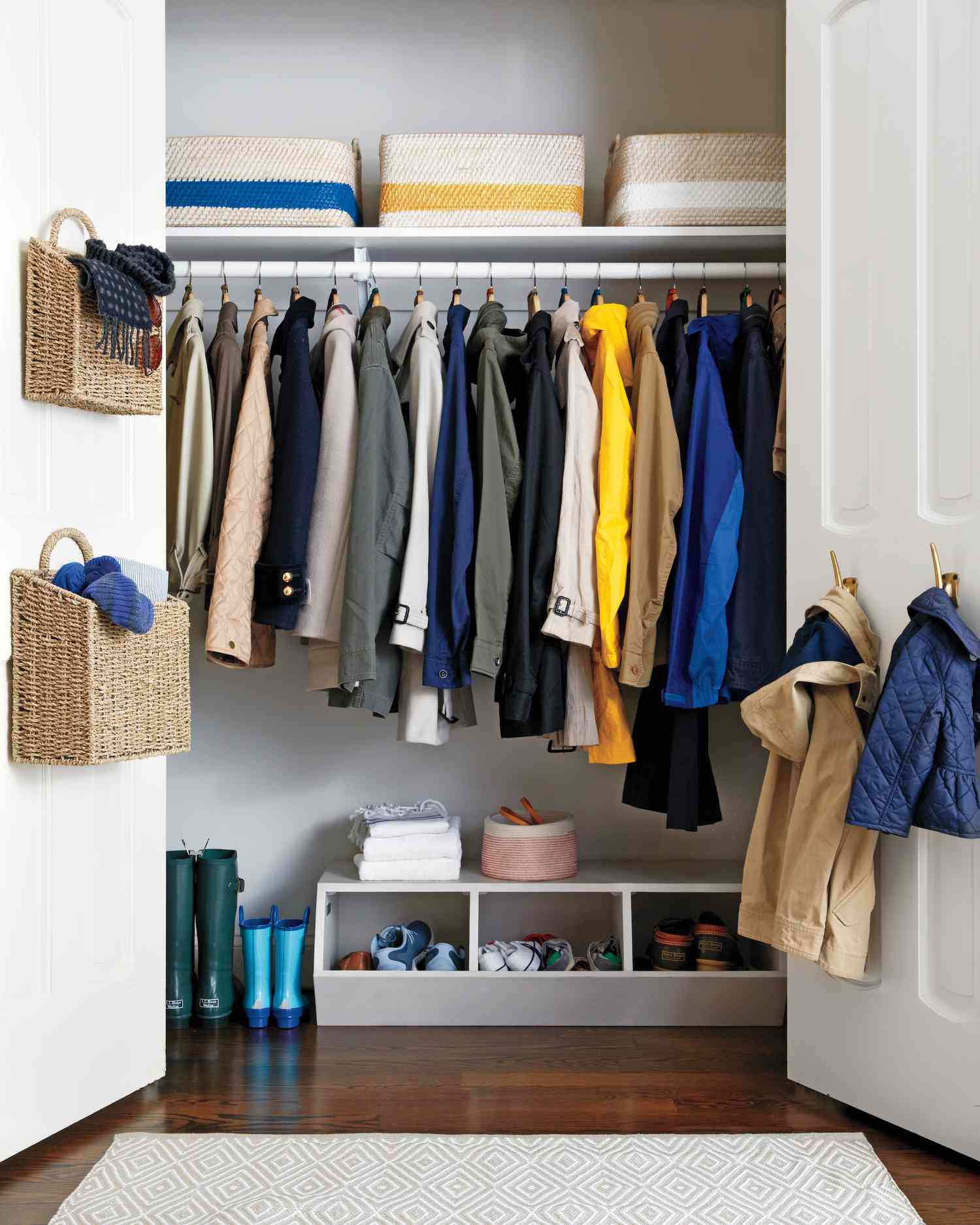
This entryway closet is a masterclass in zoned storage. It’s not just one big space; it’s three distinct zones tailored to specific needs. The top shelf is for long-term or less-frequently-used items, neatly tucked away in woven baskets. The central hanging rod is for the items you need every day—your go-to coats and jackets. The floor level is dedicated to footwear, with a cubby shelf for everyday shoes and open space for bulky items like rain boots. This clear separation of purpose is why it feels so effortlessly functional.
|
📋 Copy HEX 🔗 Share |
An entryway closet refresh is a high-impact weekend project with a modest budget. The goal is to maximize utility for the items you grab on your way out the door.
- Woven Baskets (set of 3): $40 – $90
- White Cubby Shoe Organizer: $50 – $100
- Wall-mounted hooks (optional): $20 – $40
- Entryway Rug: $30 – $75
- TOTAL: $140 – $305
Budget alternative: Raid your own home for baskets you’re not using and look for a used cubby shelf on Facebook Marketplace for under $25.
23. Use Open-Frame Wooden Drawers for Easy Access
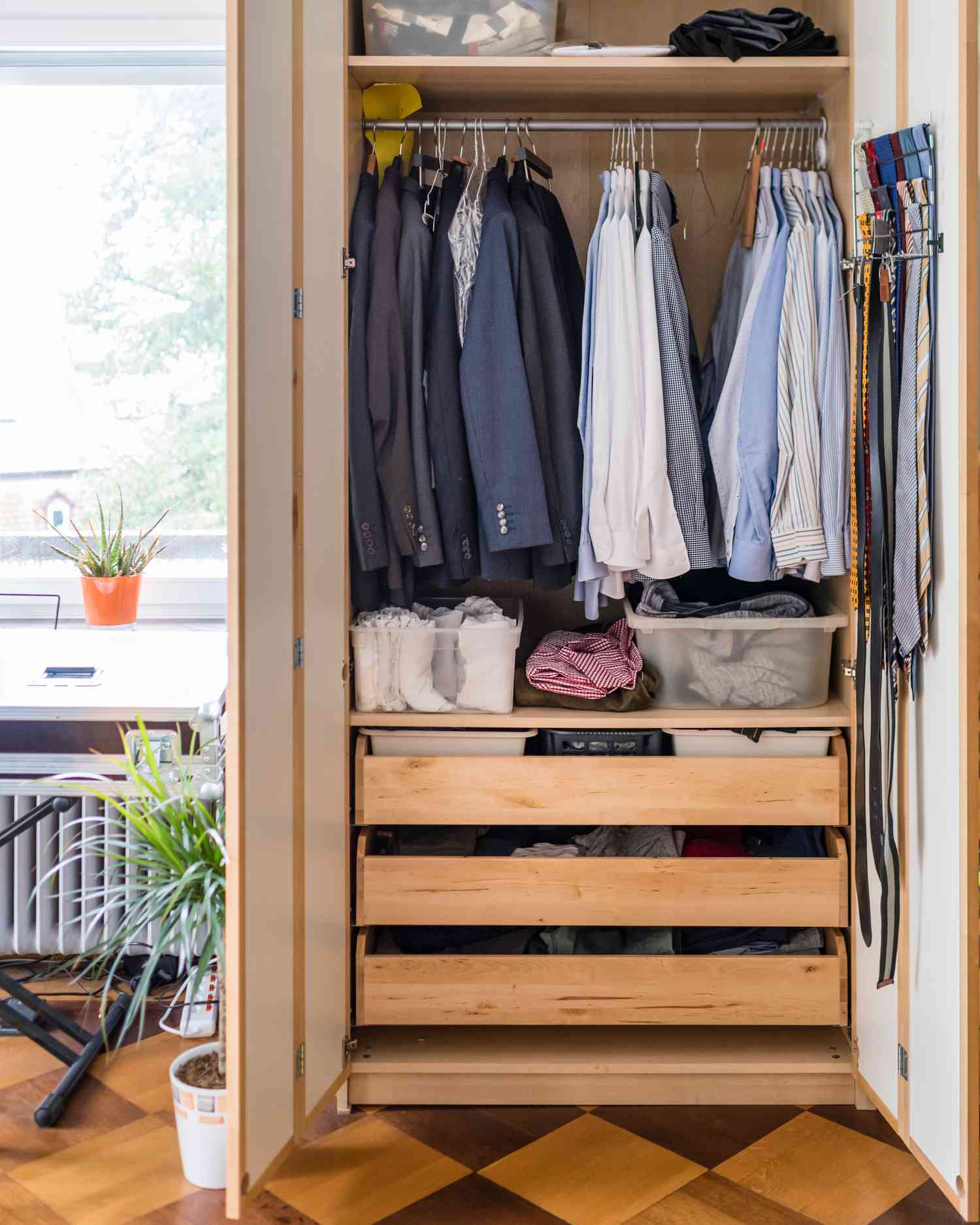
The most clever element here is the use of wide, shallow, open-frame drawers. Unlike traditional drawers that completely hide their contents, these offer the perfect compromise between the neatness of a drawer and the visibility of a shelf. You can easily see what’s inside at a glance, which means you’re more likely to find what you’re looking for and keep things tidy. It’s an ideal solution for folded items like t-shirts and sweaters, preventing the messy, toppling stacks that often happen on open shelves. This system looks less cluttered than the open shelving in Idea #9.
|
📋 Copy HEX 🔗 Share |
A dedicated tie rack is a simple addition that protects your investment and makes mornings smoother. Here’s how to install one. Time: 15 minutes. Cost: $10-$30.
- Choose your spot. The side panel of a closet shelving unit or a small, unused bit of wall is perfect.
- Select your rack. They come in simple hook styles or sliding, retractable versions.
- Hold the rack in place and use a pencil to mark where the screws will go. Use a small level to make sure it’s straight.
- For solid wood shelves, you can drill small pilot holes and screw the rack directly in.
- If installing on drywall, tap in plastic wall anchors first, then screw the rack into the anchors for a secure hold.
- Hang up your ties. Done!
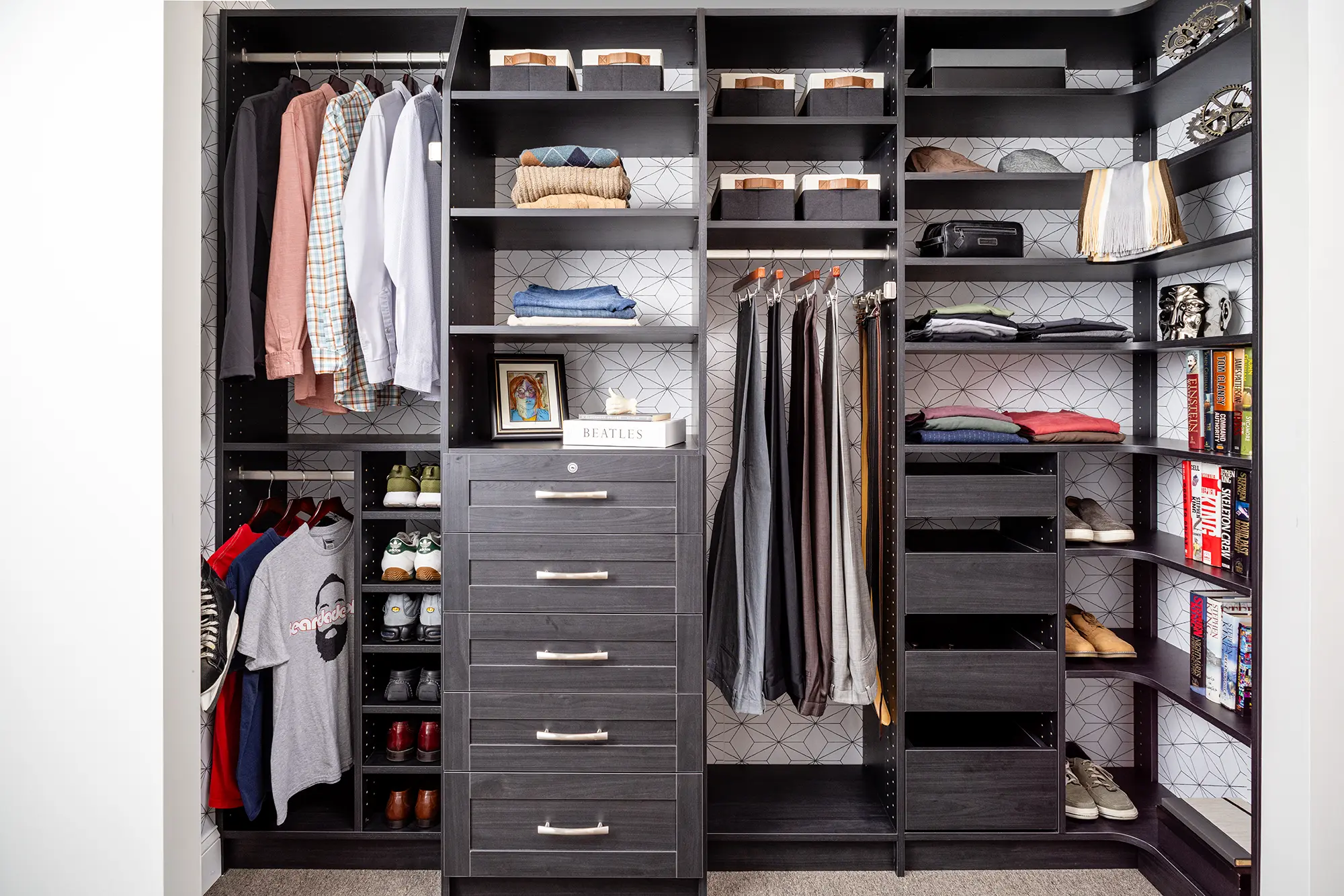
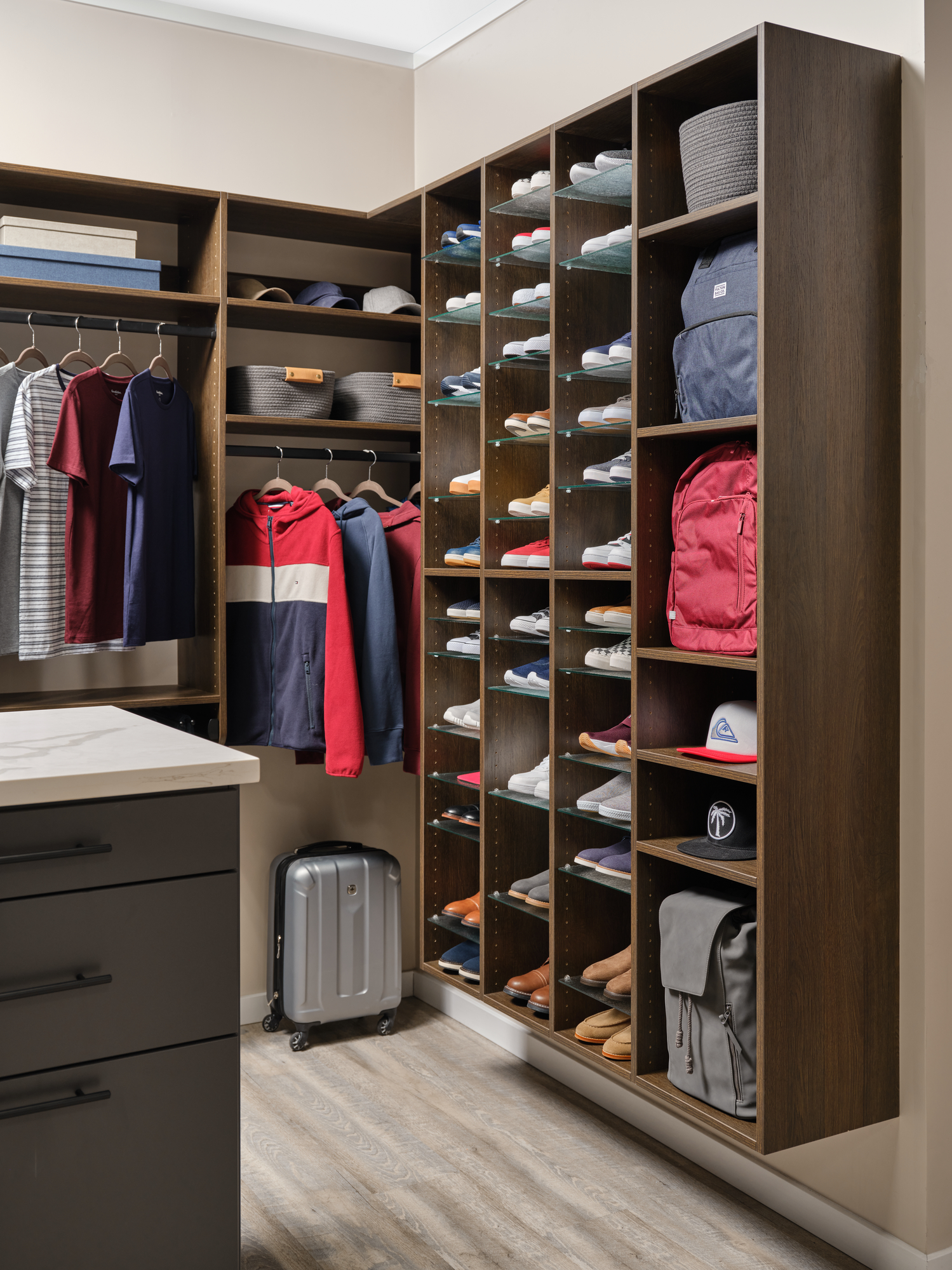
24. Create a Masculine Space with Tailored Storage Zones
A well-designed men’s closet is about function-first zoning. Think about it with this formula: 50% short-hang space (for shirts and jackets), 25% shelf or cubby space (for folded sweaters and shoes), 15% specialized racks (for pants, ties, and belts), and 10% drawer space (for socks and essentials). Many closet systems over-index on long-hang space, which is often unnecessary. Prioritizing double-hung shirt rods effectively doubles your most valuable storage area. The key is a clear, logical layout where every category of clothing has its own specific, easy-to-access home.
|
📋 Copy HEX 🔗 Share |
A word of warning to the newly organized man: a great system is only half the battle. The other half is discipline. That chair in the corner of your bedroom that used to hold a week’s worth of clothes? Its magnetic pull is strong. A custom closet with a designated spot for everything only works if you commit to using it. You have to build the habit of putting clothes away immediately. Otherwise, you’ll just have a very expensive, very empty closet and the same old pile of clothes on the chair.
From Chaos to Curated: Your Closet Story Starts Now
We’ve walked through 24 incredible ways to bring order and style to your closet. Now it’s your turn to pick a favorite, take that ‘before’ photo, and start creating a space that makes getting ready a joy. A well-organized closet can genuinely make your mornings better and your home feel more peaceful. What are you waiting for?
Don’t forget to save your top picks to your Pinterest board to keep the inspiration flowing!