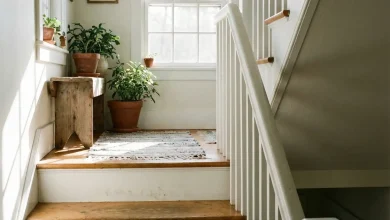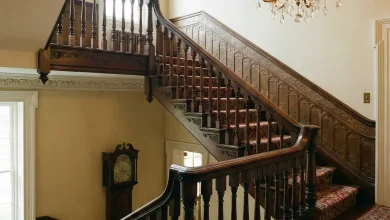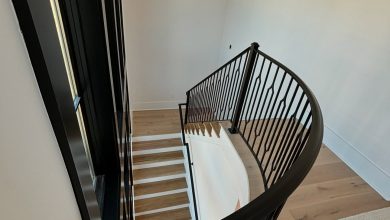

A stair runner is more than just a decorative touch. It’s a practical upgrade that adds grip, muffles footsteps, and protects your treads from wear. Whether you’re drawn to bold patterns or quiet textures, the right runner can anchor the entire staircase and make every trip up and down feel intentional.
This roundup of 30 stair runner ideas showcases real homes with clear, unfiltered photos so you can see exactly how each style works on actual stairs. From classic florals to modern geometrics, each look is chosen to help you find the balance between function and personality.
Contemporary Staircase with Antelope Print Runner and Coral Walls
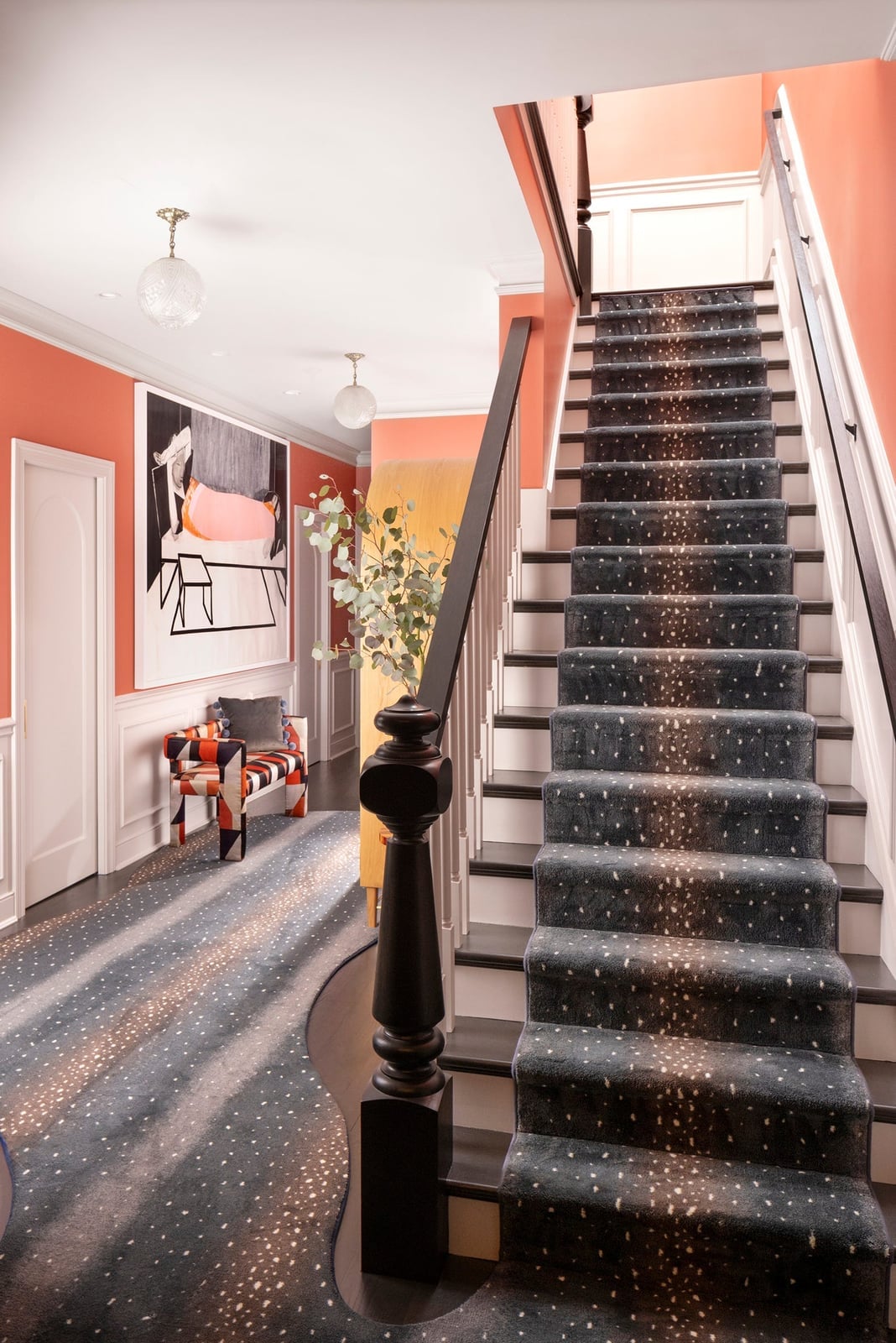
In a hallway where coral walls meet gray stairs, the antelope print runner is the quiet star. The curved staircase keeps the layout open, while abstract art and a simple bench keep the room from tipping into too much pattern. This is a palette that works because the runner does the talking and the walls listen.
Modern Stair Runner with Vibrant Geometric Pattern
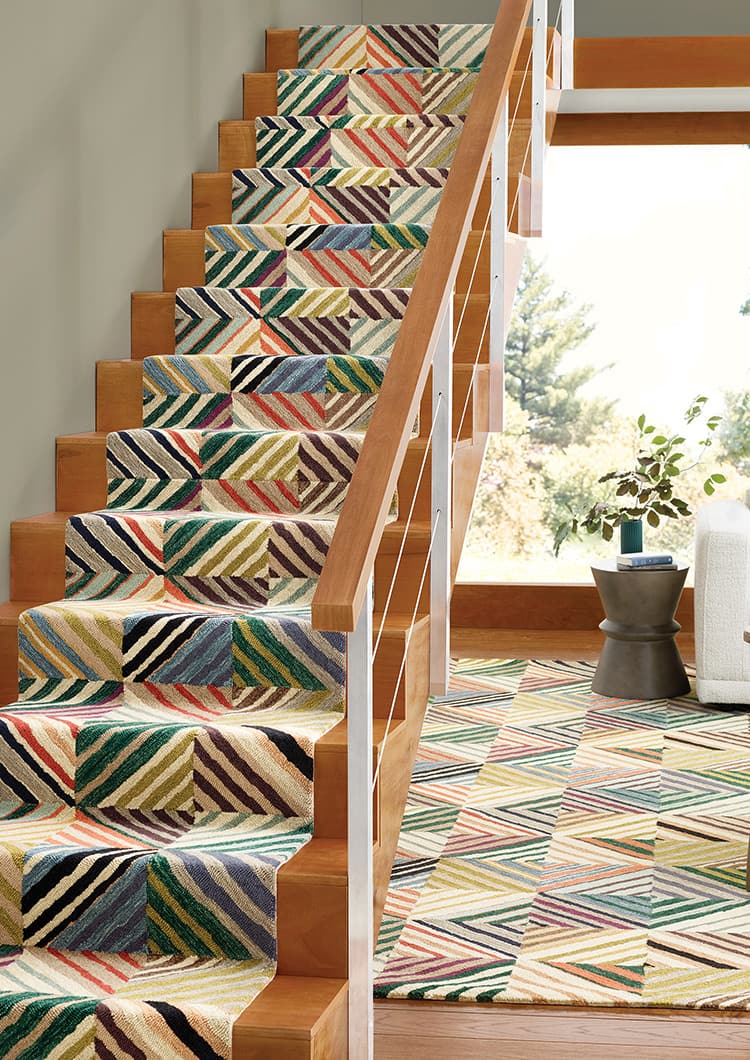
This modern staircase uses a multi-colored geometric runner that turns a simple wooden banister into a backdrop. The bright natural light hits the pattern, making the colors shift as you move. Keep the banister and risers neutral, so the design stays the focus.
Traditional Red Stair Runner Extending into Hallway
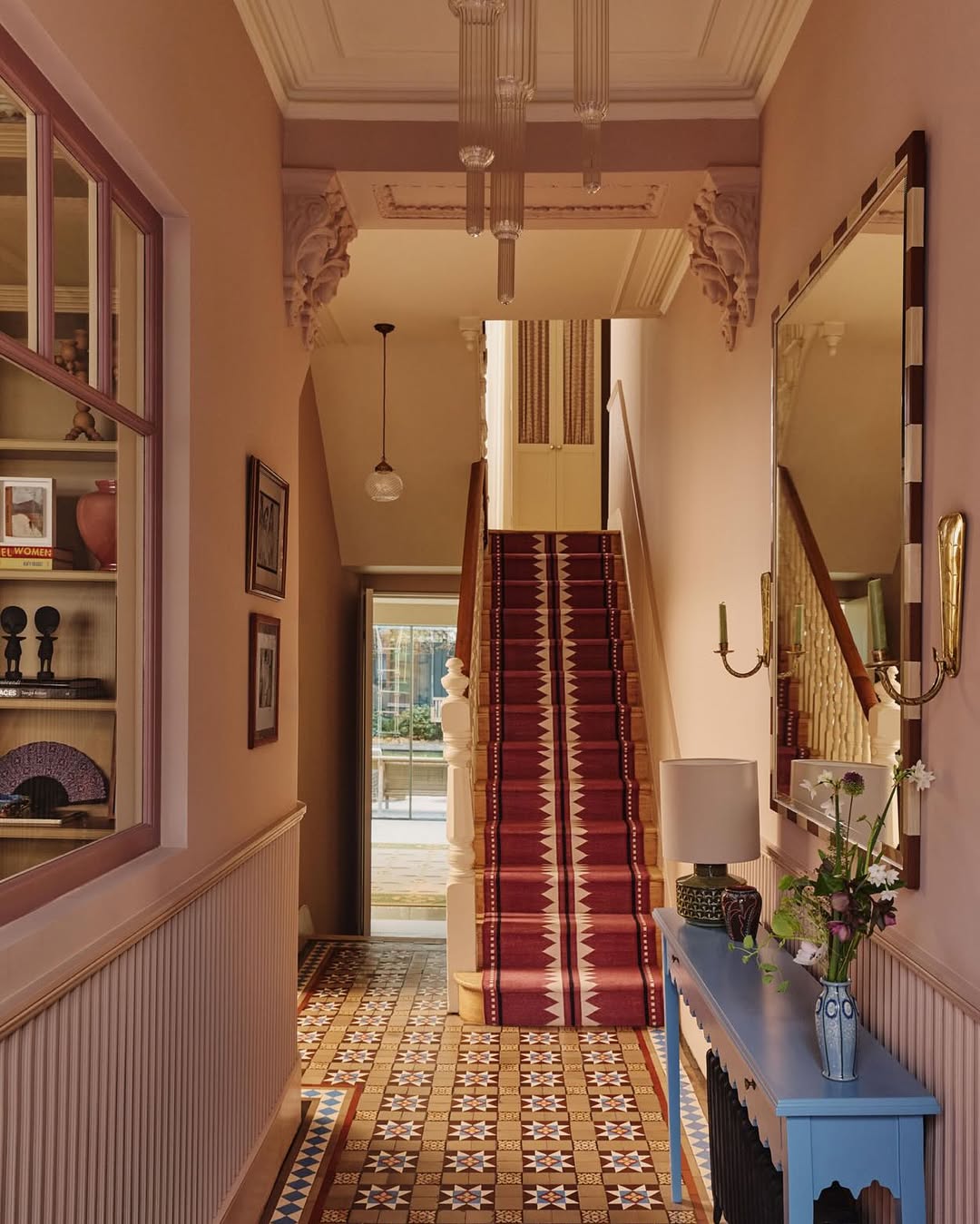
How do you make a hallway and staircase feel connected without being one long tunnel? A traditional red patterned runner that runs from the entry up the stairs. The tile floor below and the wood trim frame the runner, so it reads as a deliberate path rather than just a carpet. This layout works because the runner ties the two spaces together, and the cream walls keep it from feeling heavy.
Eclectic Staircase Runner with Checkerboard Pattern
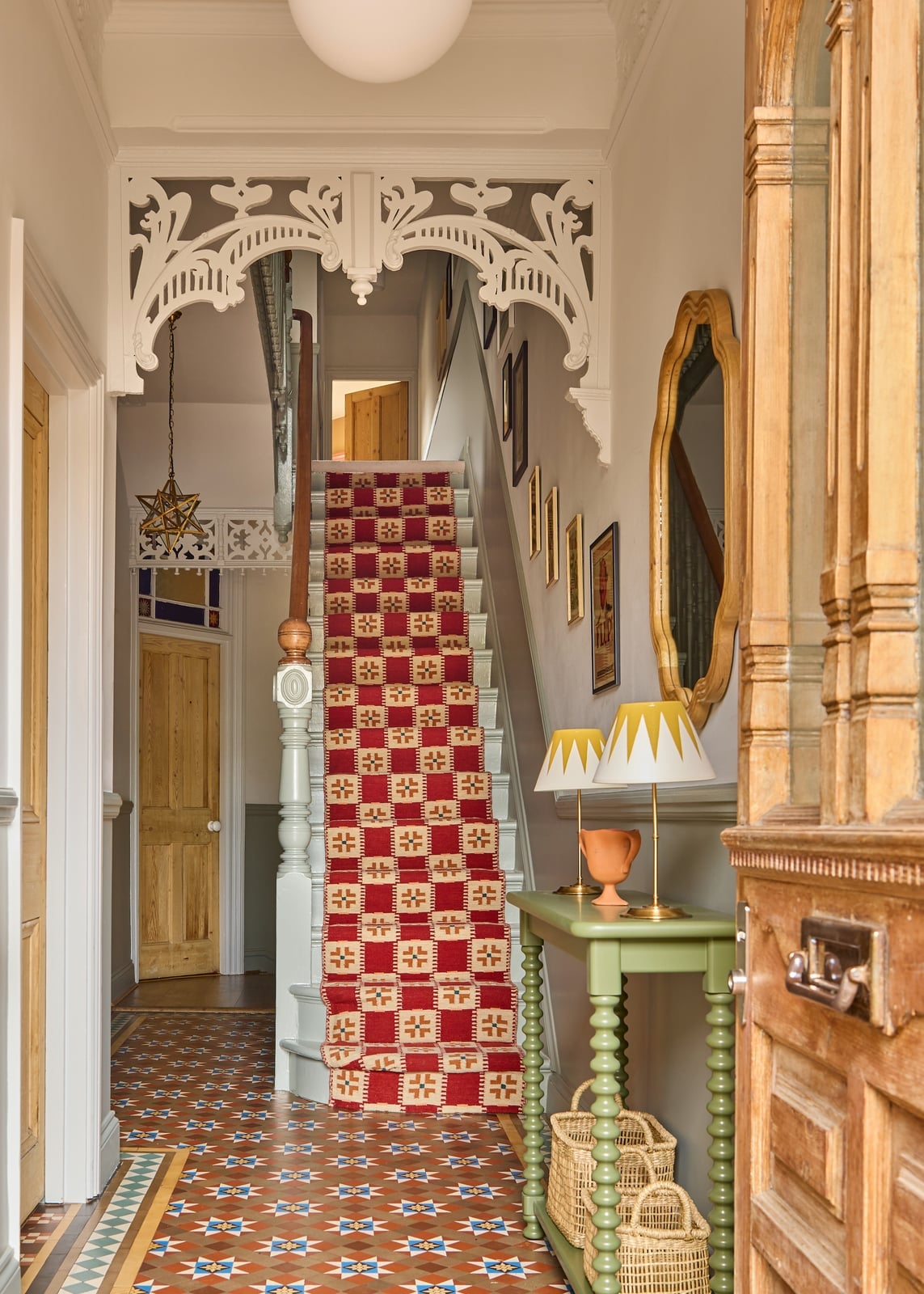
A checkerboard runner on straight stairs gets extra personality from the ornate archway above and a console table with a mirror. The red and cream pattern picks up the wood tones, while the green in the tile adds a layer. For a similar effect, choose a runner that echoes one color in the archway or floor, so the whole entry feels curated.
Eclectic Staircase with Ornate Chandelier and Patterned Runner
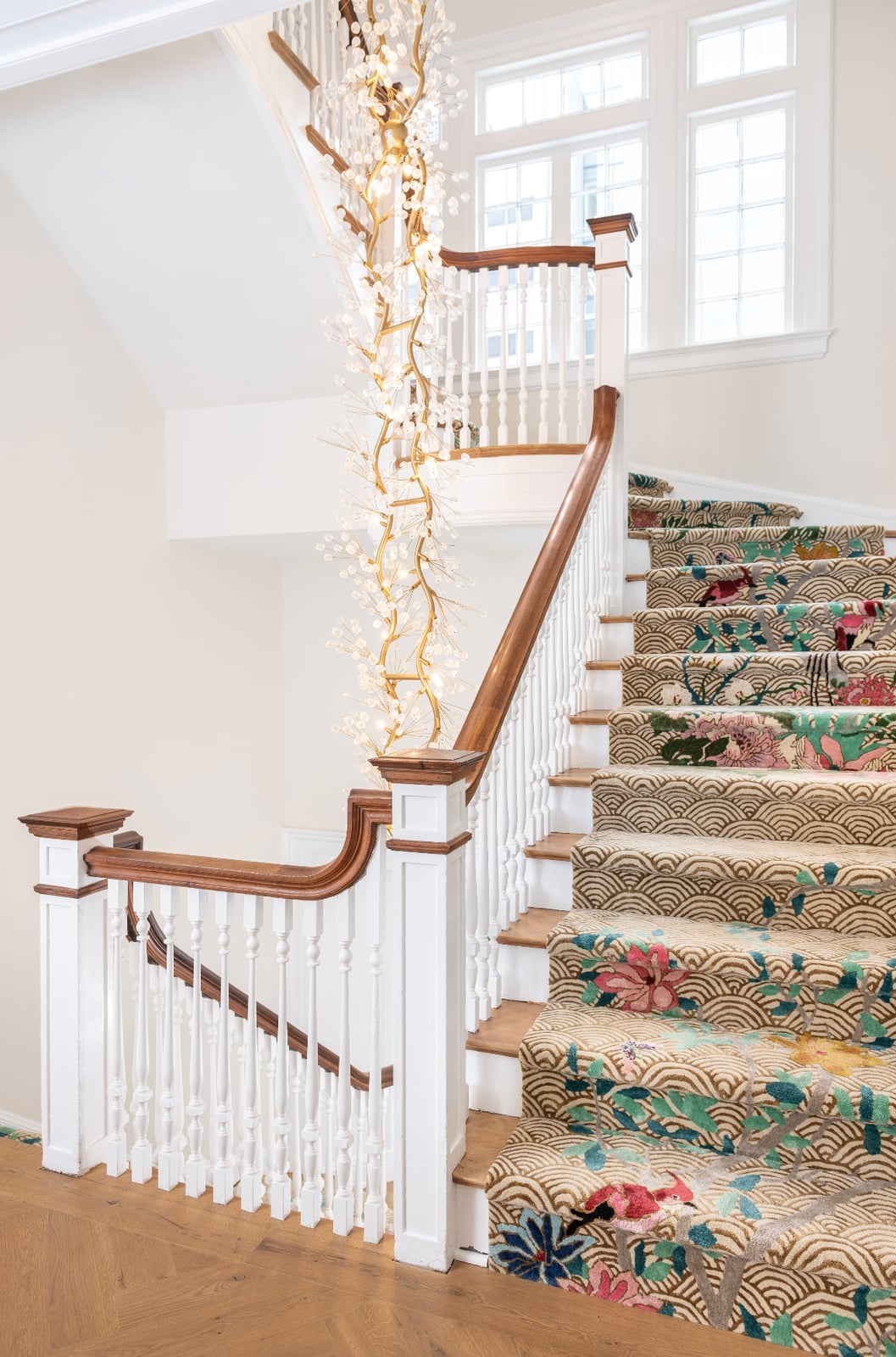
For a staircase with both a patterned runner and a chandelier, let the runner set the palette and the light fixture add the sparkle. Here, the multi-color runner brings warmth, while the ornate chandelier in gold and glass catches the natural light. The straight layout keeps the eye moving up, and the beige walls give the pattern room to breathe.
Modern Staircase with High-Contrast Beige Runner and Black Spindles
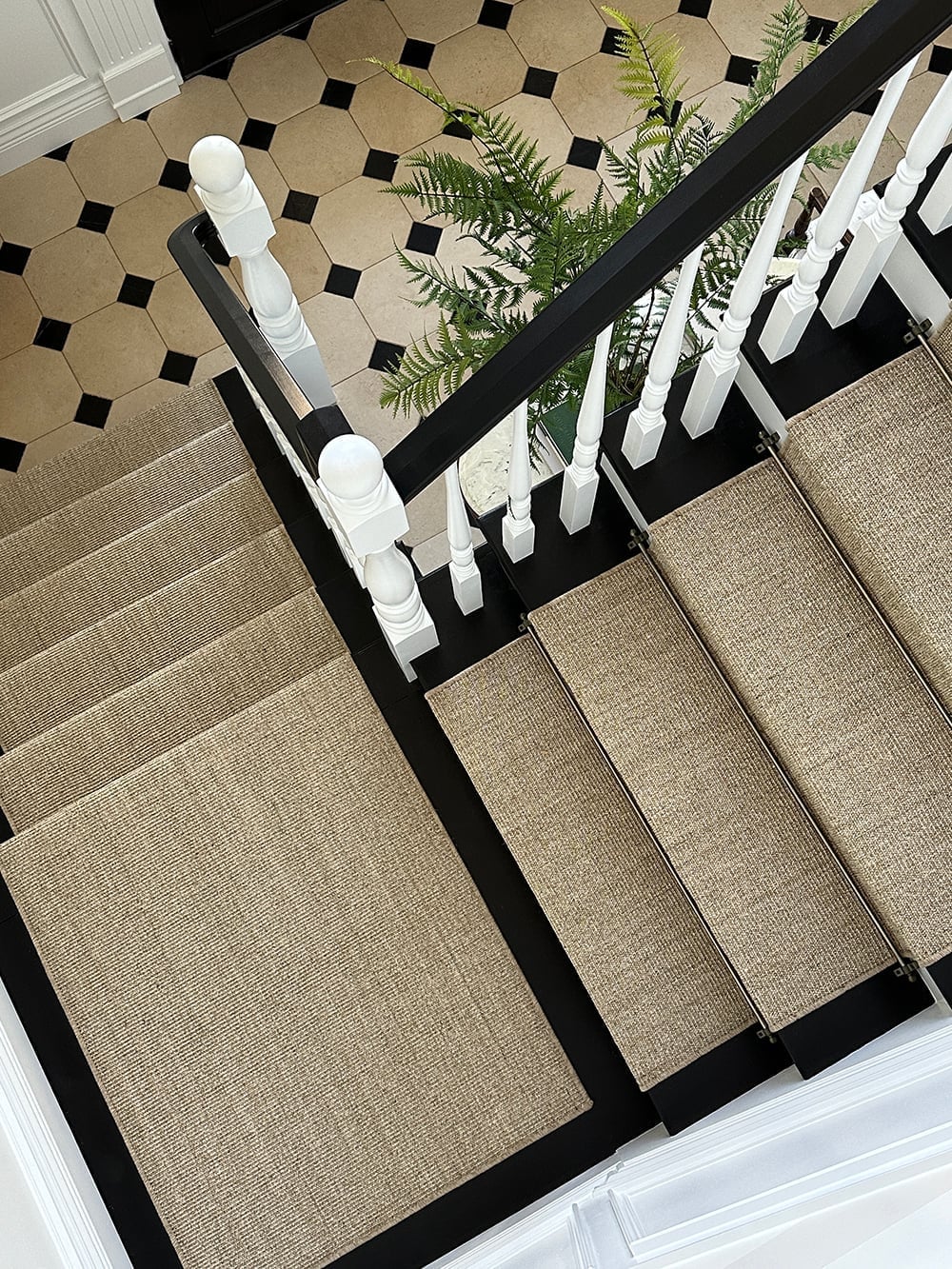
A beige runner on a staircase is a safe choice, but pairing it with black spindles keeps it from looking forgettable. The warm neutral carpet stands out against the dark vertical lines, and the contrast gives the straight flight a cleaner silhouette. The palette here is limited to beige, black, and white, with the runner softening the wood treads and tile landing. Match the runner’s undertone to the wall color so the spindles become the real focal point. It is a straightforward swap that makes a standard layout feel more deliberate without adding pattern or color.
Traditional Stair Runner with Black Risers and Metal Rods
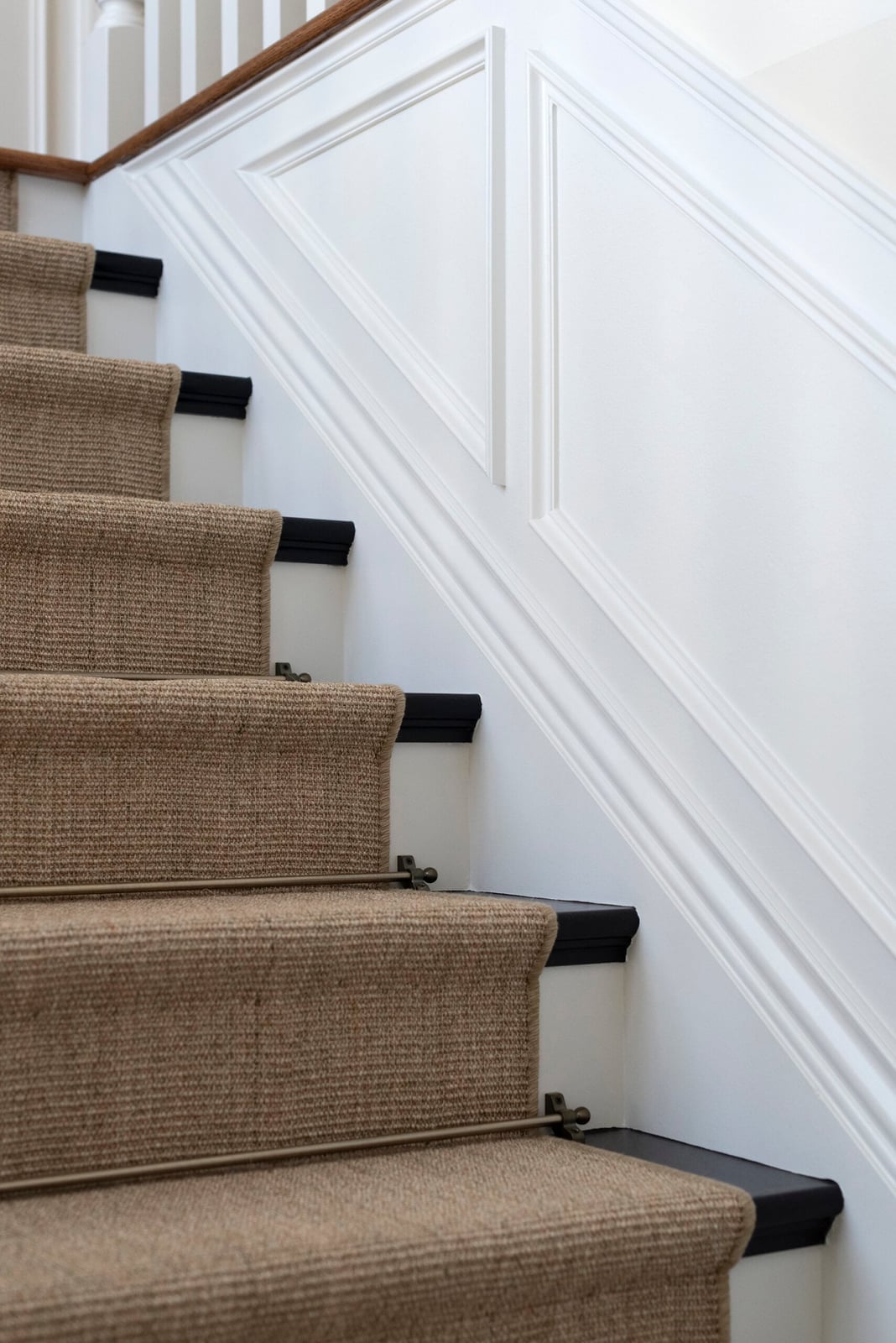
The black painted risers under a tan woven fiber runner create a rhythm that feels both old and fresh. Metal rods hold the runner in place, a detail that reads as traditional but also practical for renters who cannot glue or staple the carpet down. The rods allow the runner to be removed without damaging the wood, and the black risers add depth without requiring paint removal later. It is a layered look that relies on the contrast between the natural fiber and the dark backdrop, not on expensive materials.
Winding Staircase with Vibrant Multicolored Striped Runner
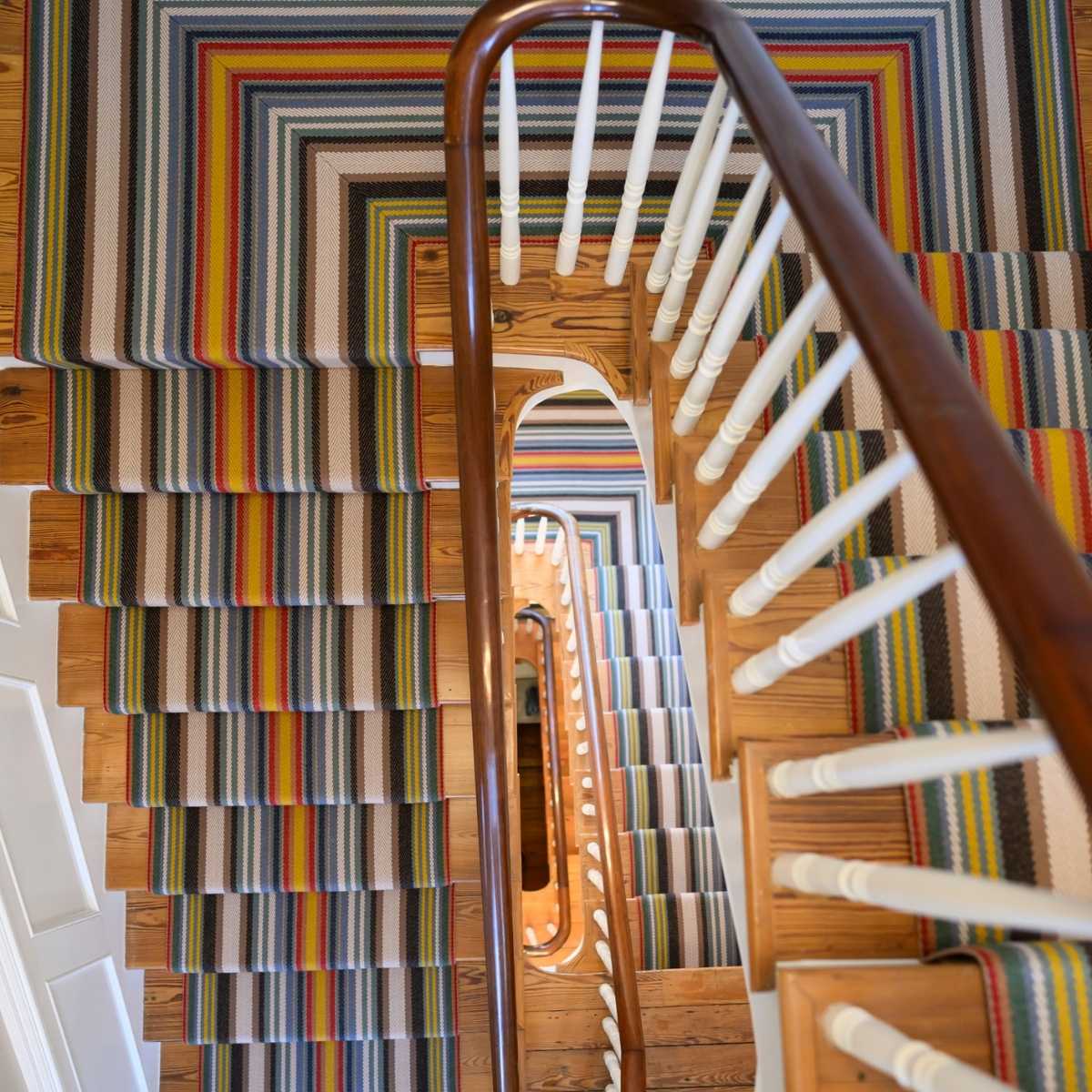
A winding staircase is a natural place for a bold runner because the curve already draws the eye. The multicolored striped pattern here works with the turn, and the overhead view makes the geometry of the wood treads and the runner’s lines feel deliberate. The key is to keep the banister simple so the runner does the talking. On a straight flight, this pattern might feel busy, but on a curve, the stripes follow the path and make the layout feel cohesive.
Cozy Staircase with Textured Beige Runner and Warm Wood Tones
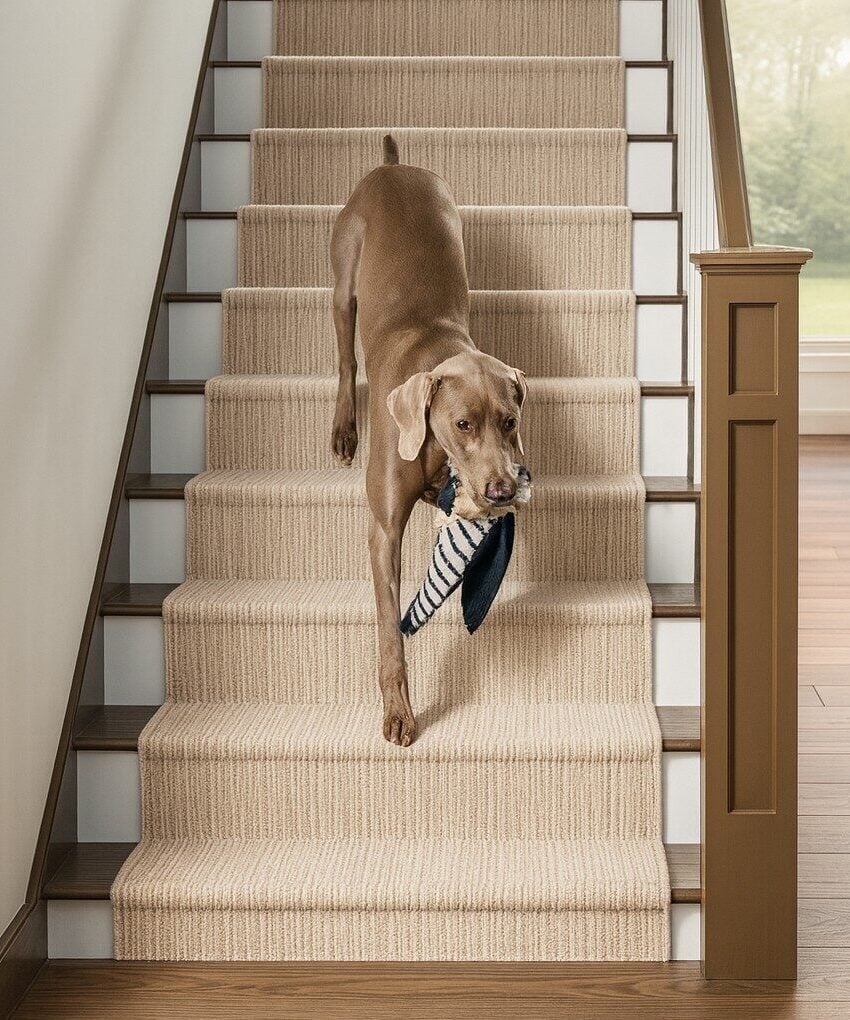
Can a stair runner handle daily traffic and still look soft? The ribbed texture on this beige runner helps with traction and hides footprints better than a smooth pile. The warm wood tones of the treads and the natural light coming in keep the beige from reading as flat or cold. A dog running up and down is a good test of durability, and the runner’s low-profile weave means less snagging. For homes with pets or kids, a textured neutral like this one balances comfort and practicality without adding a pattern that shows every mark.
Modern Stair Runner with Herringbone Pattern and Burgundy Border
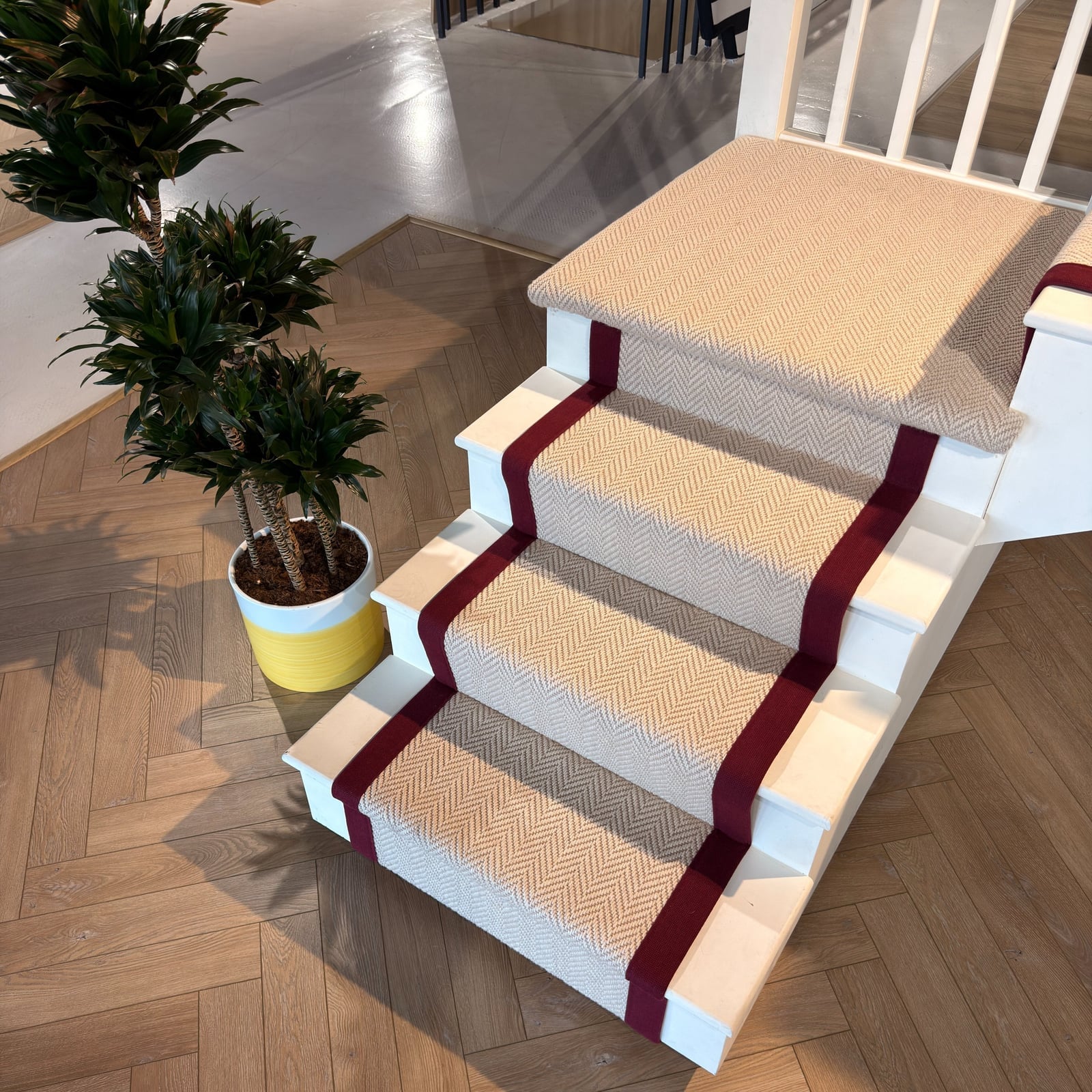
The herringbone weave on this runner adds visual movement without relying on a busy print, and the burgundy border gives the staircase a defined edge. The border acts as a frame, making the runner feel custom even if it is a standard width. On a landing, the contrast between the beige center and the darker trim breaks up the long line of the stairs. This kind of scaled pattern works best when the walls stay neutral so the runner’s geometry becomes the main event.
Gray and White Herringbone Runner on Dark Wood Stairs
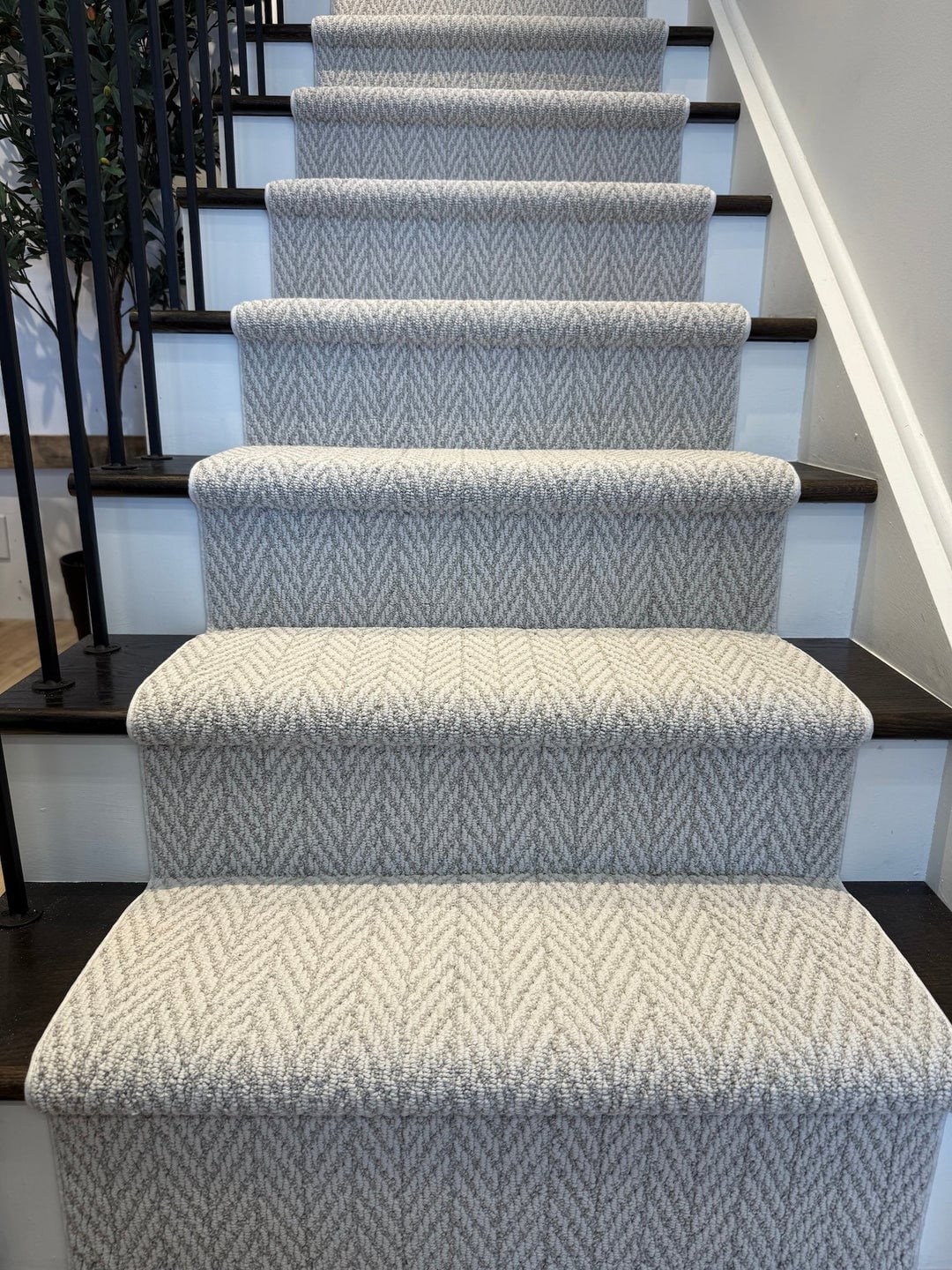
A herringbone runner does more than cover treads; it adds a directional rhythm that guides the eye upward. The gray and white weave here sits against dark wood stairs, so the contrast is sharp without feeling cold. Because herringbone is a tight, repeating V pattern, it hides minor traffic marks better than a solid light carpet would. The runner is centered on the stairs, leaving a band of dark wood visible on each side. That exposed wood acts as a natural frame and keeps the staircase from looking fully carpeted. For a similar effect, choose a runner width that leaves at least two inches of bare tread on both sides.
Transitional Staircase with Neutral Runner and Wainscoting
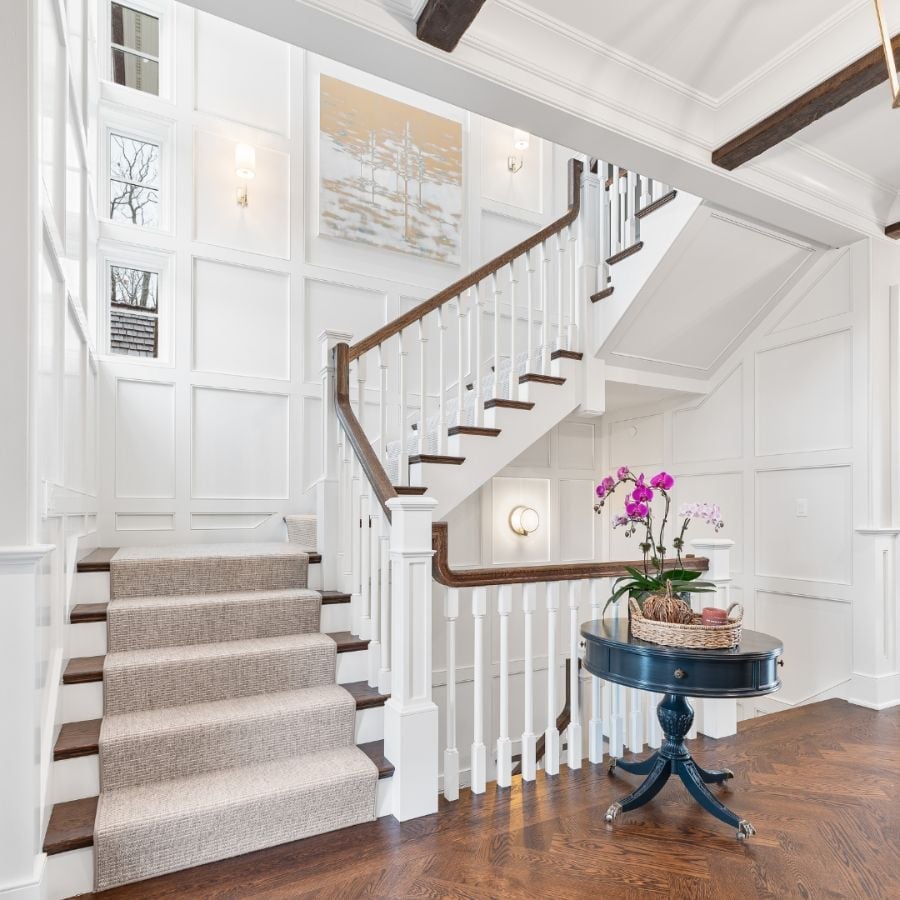
A cream runner on dark wood stairs could read as too plain, but here the wall treatment gives it the structure it needs. The wainscoting runs halfway up the wall, adding a horizontal line that balances the vertical climb of the stairs. Wall sconces cast light across the runner, bringing out the texture in the neutral carpet. The palette stays restrained: cream, white, and dark wood, with no competing accent color. That restraint lets the wainscoting and the stair shape do the work.
Renters can borrow this approach by adding stick-on wainscoting panels or a simple chair rail. The neutral runner works with almost any wall color, so you can change the paint without replacing the carpet. Just keep the runner tone warm enough to avoid washing out against white walls.
Crisp Navy Striped Runner on Wooden Stairs
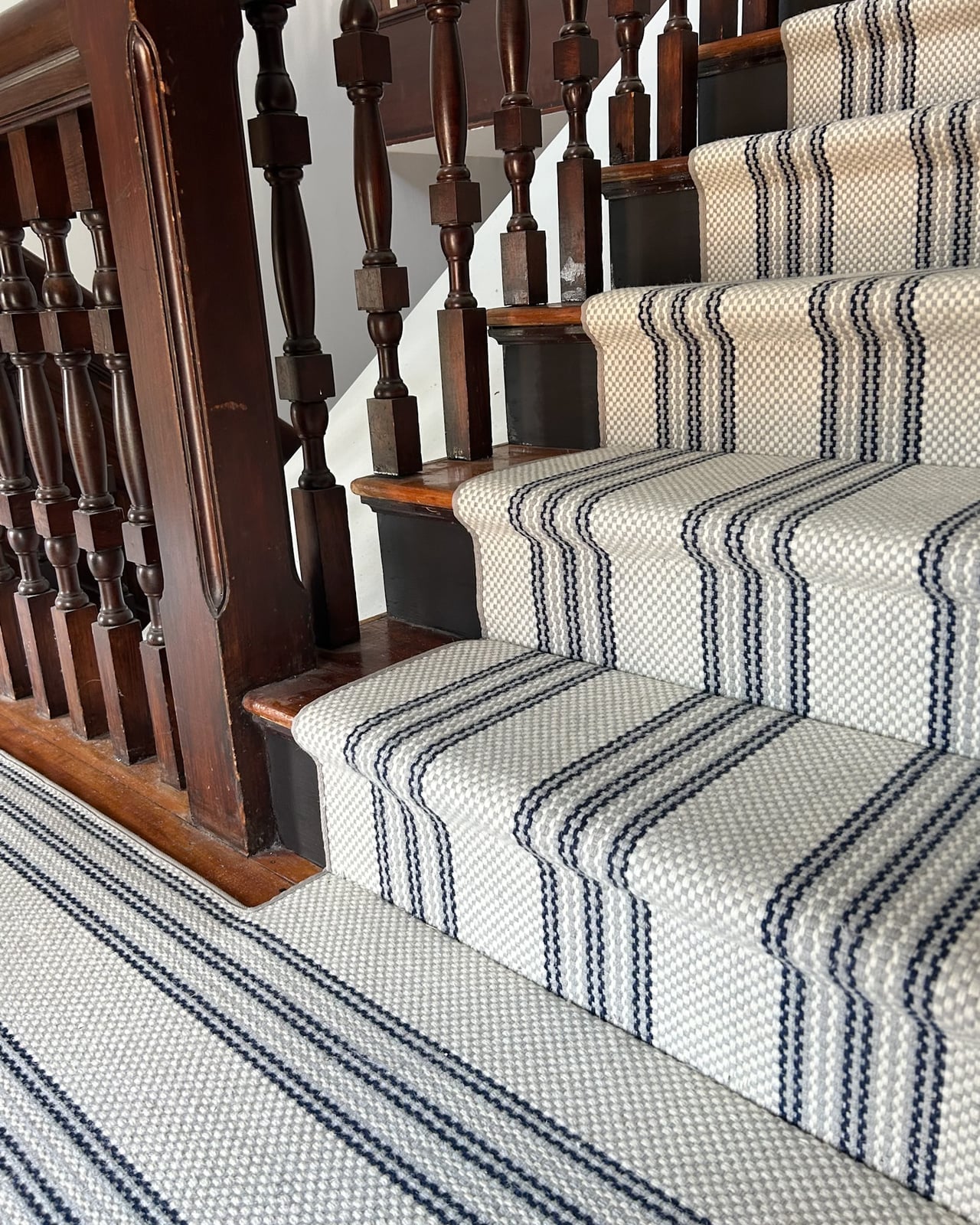
The navy stripe runs the length of the runner, not across the treads, which makes the staircase feel longer and more deliberate. White ground between the stripes keeps the look airy, while the dark wood banister anchors the whole composition. A striped runner like this defines each step visually, which can be helpful in homes with low light or similar tread finishes. The close-up framing shows the weave is tight, so the stripes stay crisp even under daily foot traffic.
Traditional Staircase with Geometric Runner and Ornate Railings
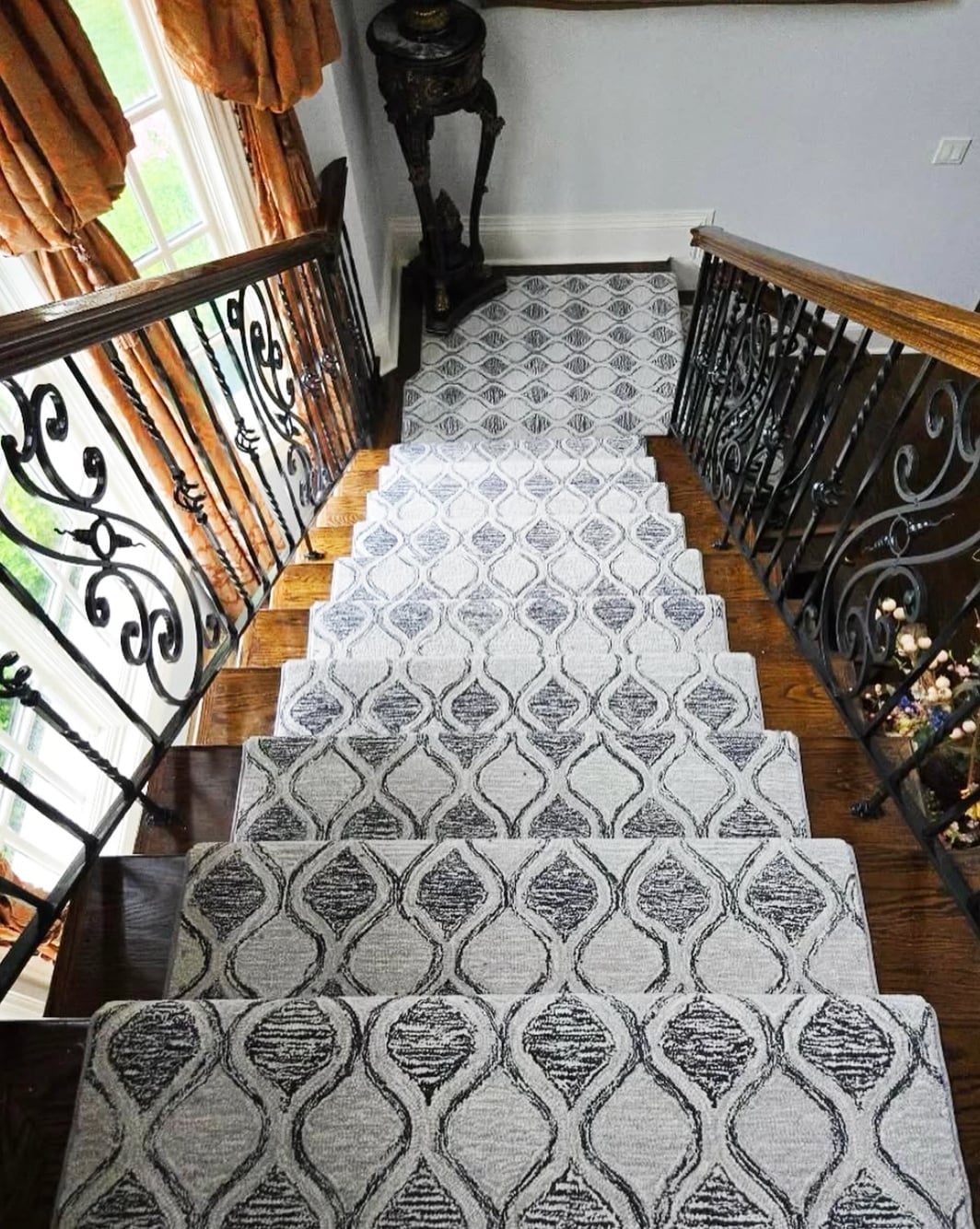
This staircase gets its presence from scale: the runner covers the full width of every tread, and the geometric pattern repeats without interruption from bottom to top. The ornate railings, with their turned spindles and curved newel posts, add visual weight on both sides. A runner this wide means the pattern dominates the view, so the railings act as a frame, not a distraction. Natural light hits the center of the runner and softens the gray and black tones. For a traditional home with detailed woodwork, a full-width runner with a repeating motif ties the stair parts together into one composed piece.
Transitional Staircase with Beige Runner and Polished Brass Rods
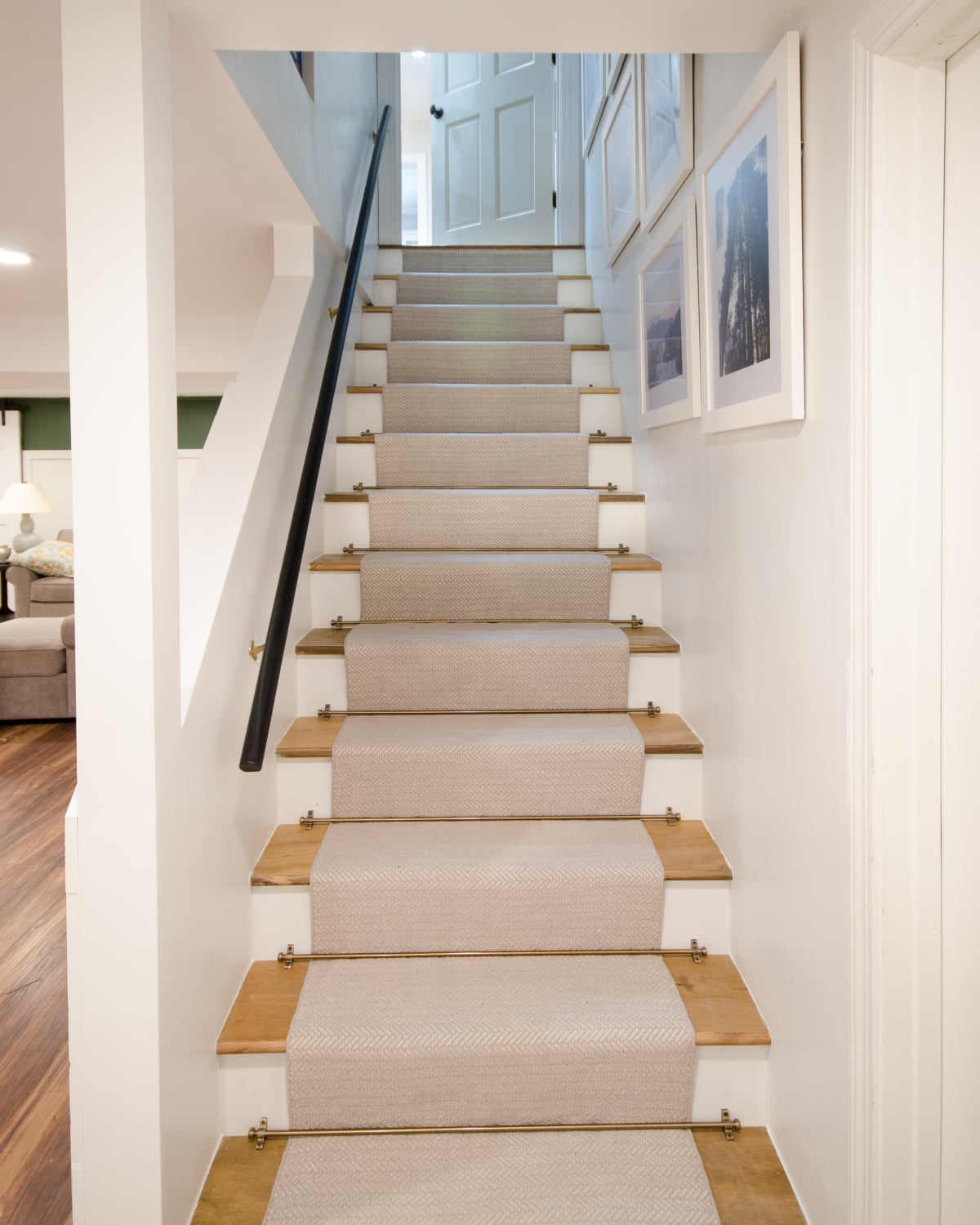
A plain beige runner can look unfinished unless you add a detail that signals intention. Polished brass rods hold the runner in place at each tread, turning a functional fastener into a design feature. The rods run the full width of the runner and catch natural light, adding a warm metallic line across the neutral carpet. The beige tone bridges the dark wood stairs and the lighter walls, so the whole staircase feels cohesive.
Brass rods work for transitional homes because the metal adds formality without feeling ornate. They also make removal straightforward if you want to swap the runner later. Just check that the rod brackets fit your tread depth before installing. The plain runner keeps attention on the rods and the wood, which is the point of this look.
Bohemian Staircase with Vibrant Geometric Textile Runner
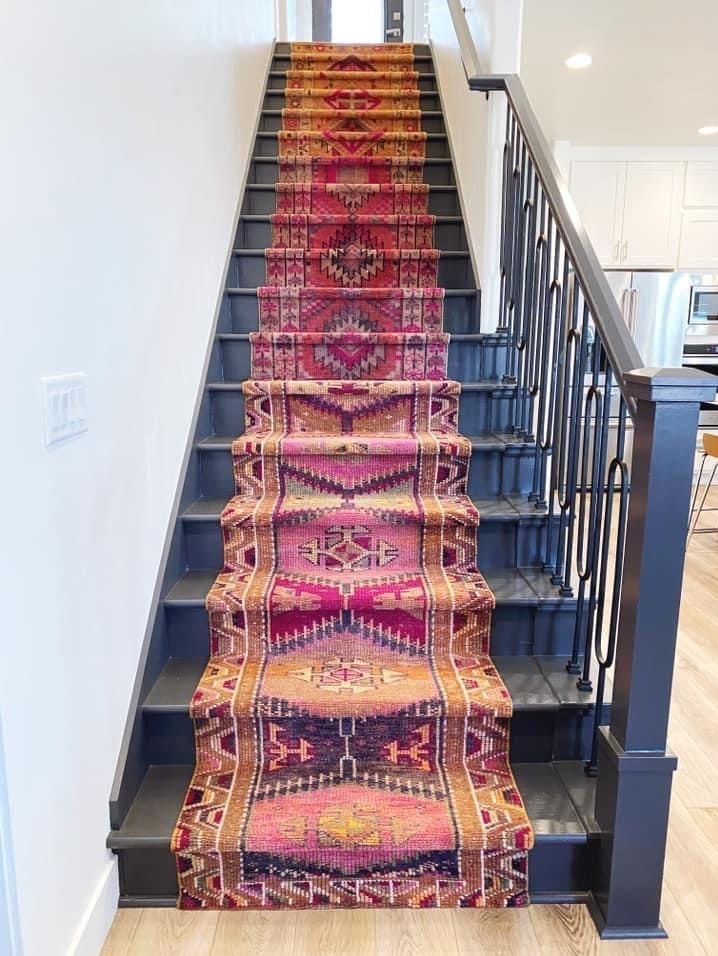
A geometric runner in pink, orange, and purple brings the color without covering every inch of the stairs. The dark gray treads peek out at the sides, which keeps the pattern from feeling overwhelming on a roomy staircase. A palette this bold works best when the rest of the entry stays simple, letting the runner be the focal point. If you rent and cannot swap the flooring, a wide runner like this one can still shift the whole look of the landing.
Eclectic Hallway and Staircase with Striped Runners
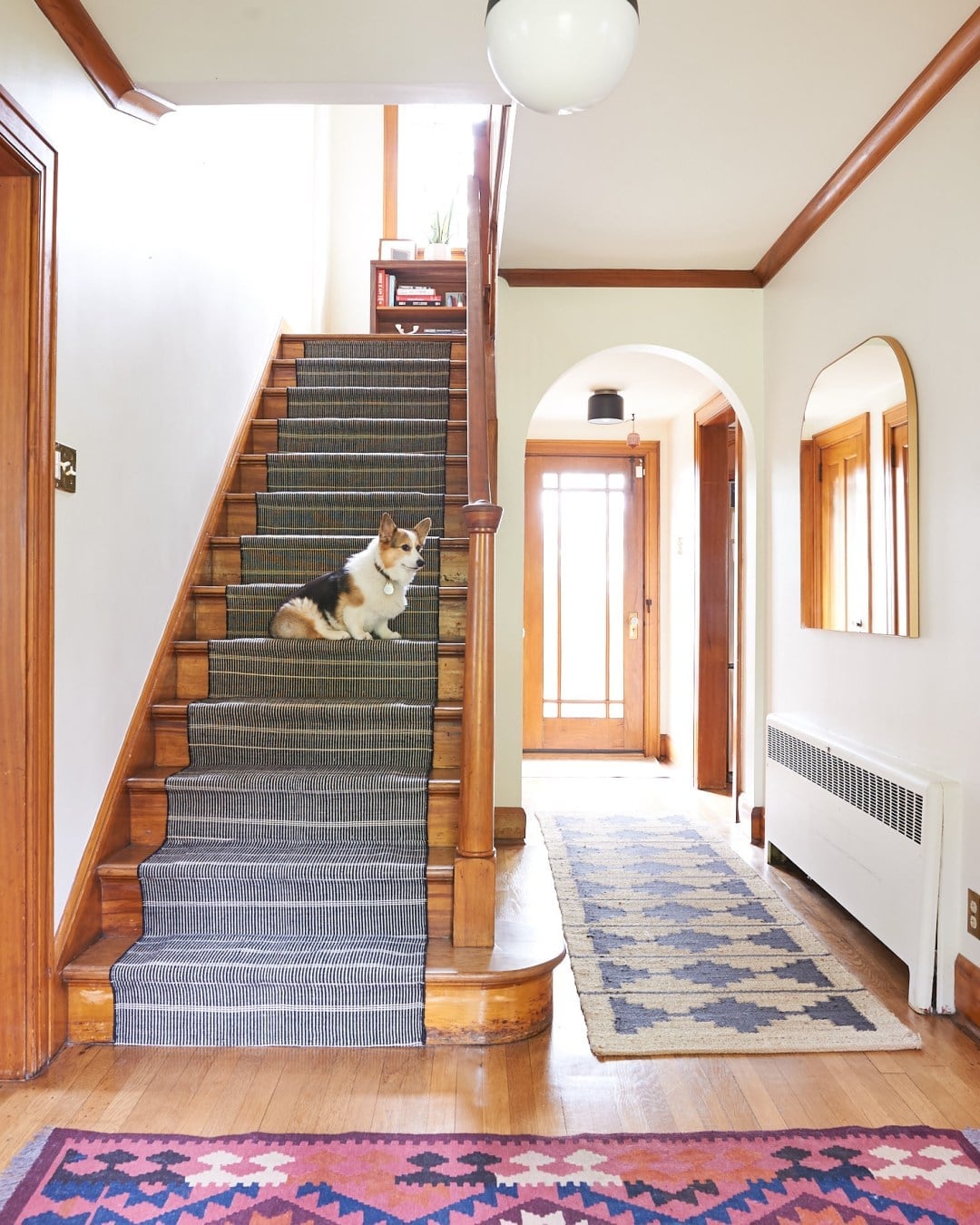
A runner in a busy entry should match the stair runner to a hallway runner so the eye travels smoothly through the open plan. Here, a gray and blue striped carpet continues from the stairs into the hall, creating a clear path without a visual break. The wood treads on the sides add warmth against the cool tones of the runner. For renters, a continuous runner like this can be installed with tension rods instead of permanent tack strips, making removal straightforward when you move out.
Transitional Sisal Runner with Black and White Striped Border
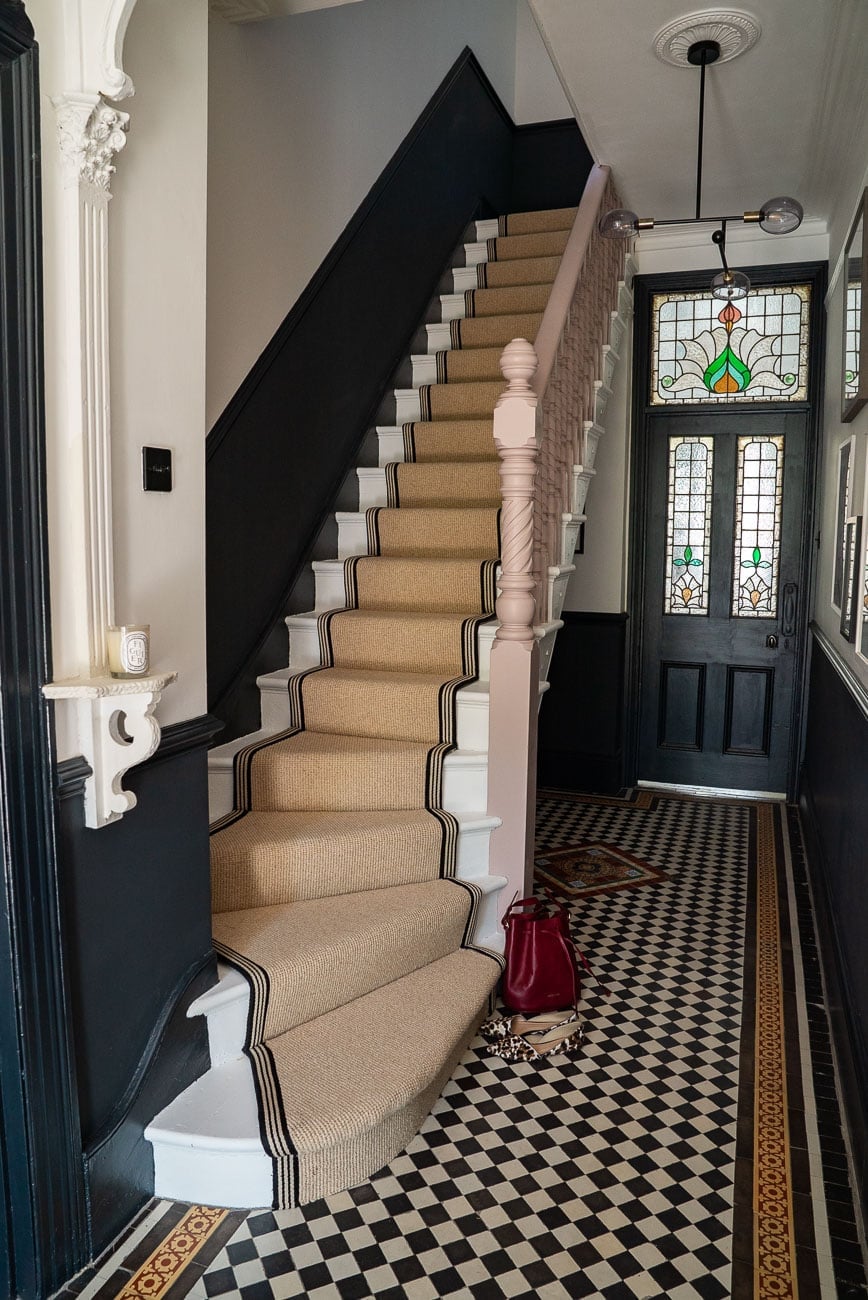
A natural sisal runner can feel too casual for a formal staircase, but a black and white striped border changes the equation. The beige base keeps the texture grounded, while the graphic border gives it a crisp edge. The low angle of the shot shows how the runner plays off the patterned floor tiles at the base, creating a layered look without clashing.
Sisal is a dense natural fiber that holds up well on stairs with moderate traffic, though it does not like moisture. A border runner like this works with a range of wood stains and tile patterns because the contrast is confined to the edge, not spread across the whole width.
Traditional Staircase with Ornate Floral Patterned Runner
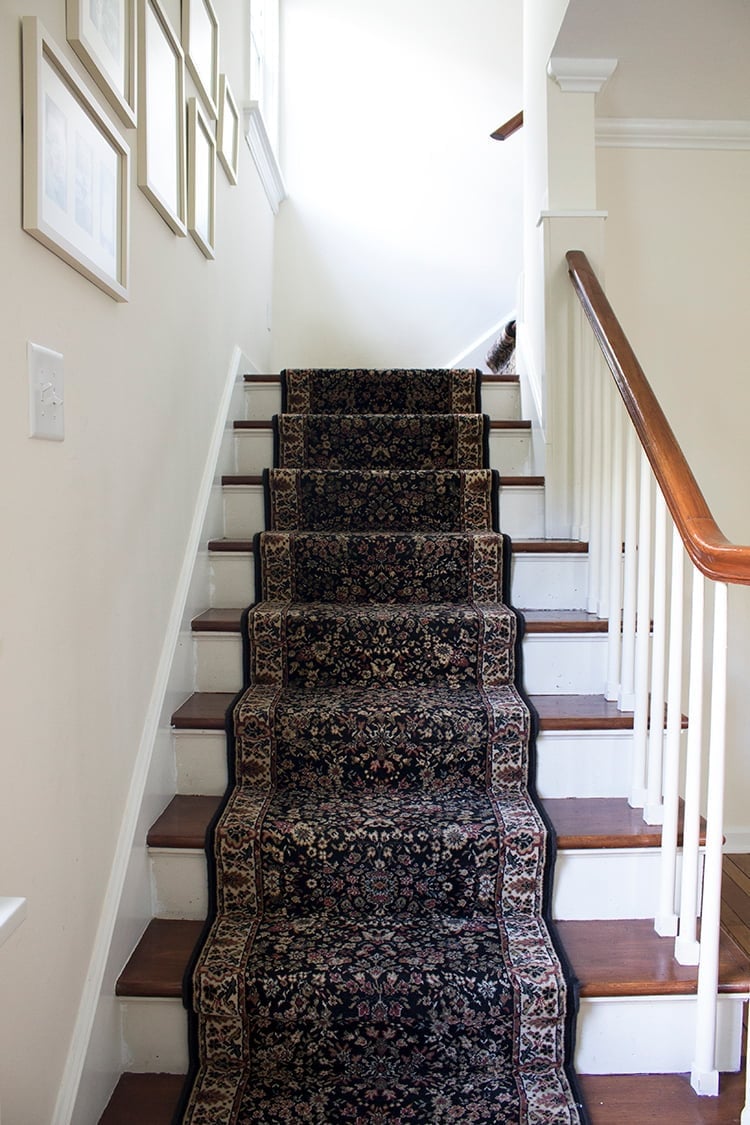
An intricate floral runner in black, cream, red, blue, and green packs a lot of detail into a narrow space. The pattern is dense enough to hide daily scuffs, which matters on a staircase that sees regular use. Natural daylight from above brings out the tonal shifts in the design, so the runner does not read as flat even in the middle of the day. A traditional floral pattern like this one pairs well with simple framed art on the wall, letting the runner anchor the whole stairwell.
Bohemian Staircase with Layered Patterned Red and Blue Runners
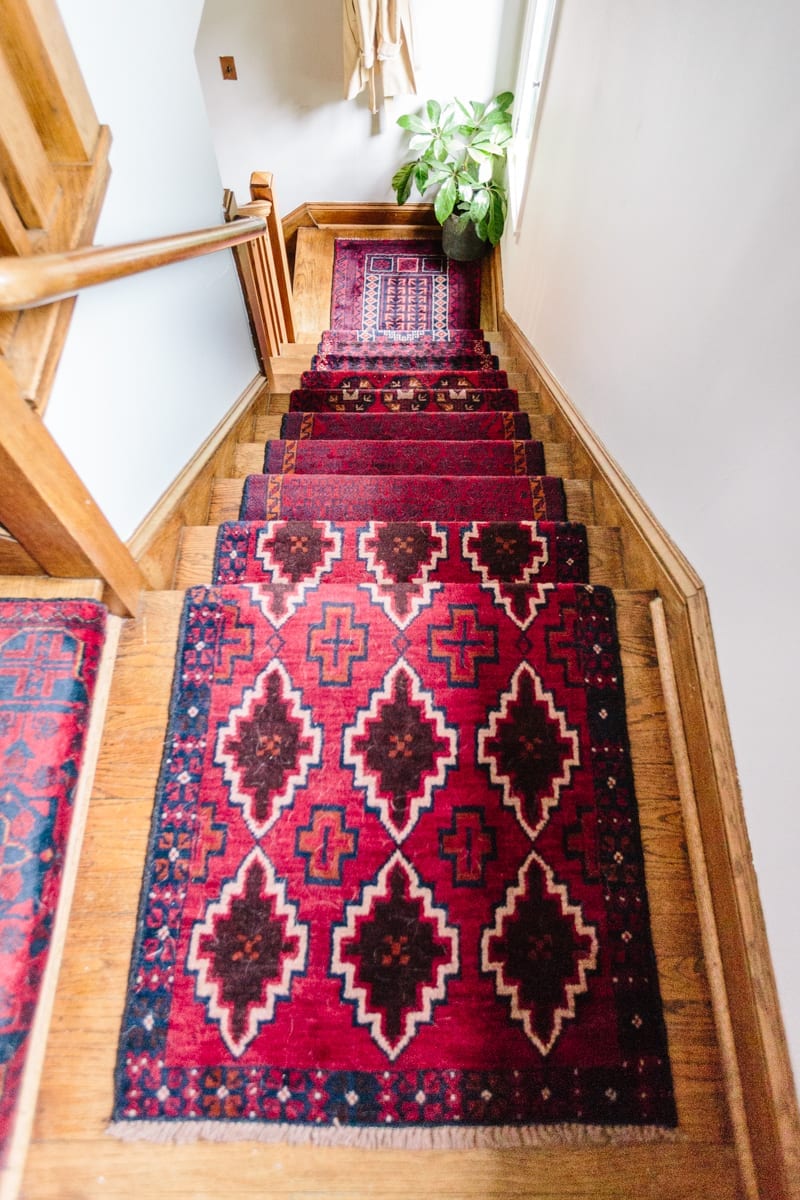
Layering two patterned runners on a single straight staircase is a bold move that pays off when the colors share a common ground. Here, a red runner sits beneath a blue one, both with cream accents that tie them together. The wood treads show at the edges, which keeps the layers from blurring into one mass. This approach works best on a roomy staircase where each runner has room to read as its own element. A potted plant at the base softens the transition from stair to floor.
Modern Staircase with Simple Neutral Gray Runner
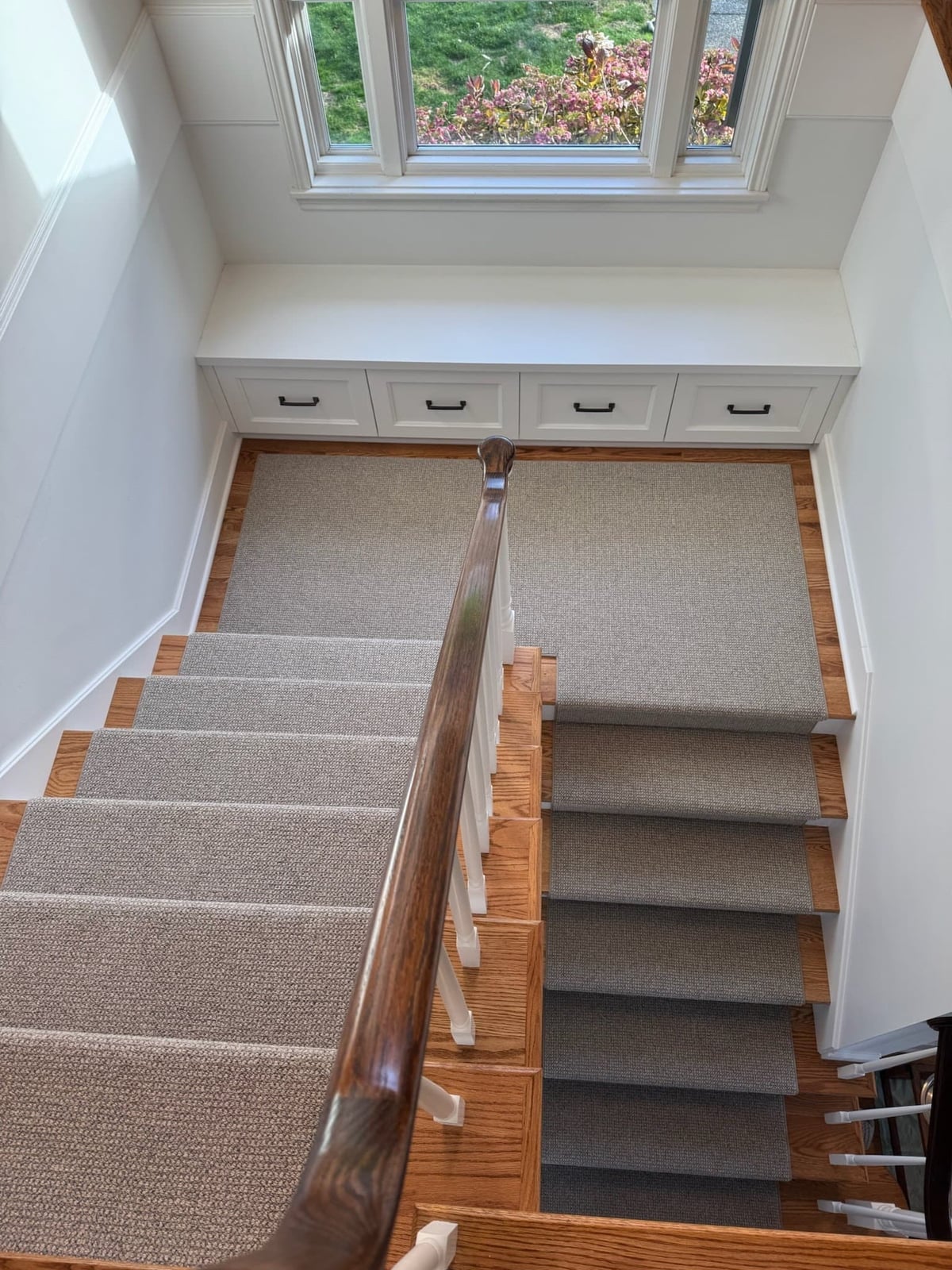
A plain runner works best when the staircase stays out of its way. This straight set of wooden stairs carries a neutral gray carpet from top to bottom, with no pattern to compete against the warm wood treads visible on either side. The compact landing includes a built-in storage unit, but the runner does not fight for attention with it. Layout stays simple because the runner is the only patterned element in the view. The overhead shot confirms that a single, solid color keeps a small staircase from feeling crowded. If the treads are in good shape, letting them peek out along the edges adds just enough contrast to define each step without visual noise.
Modern Stair Runner with Neon Pink and Orange Trim
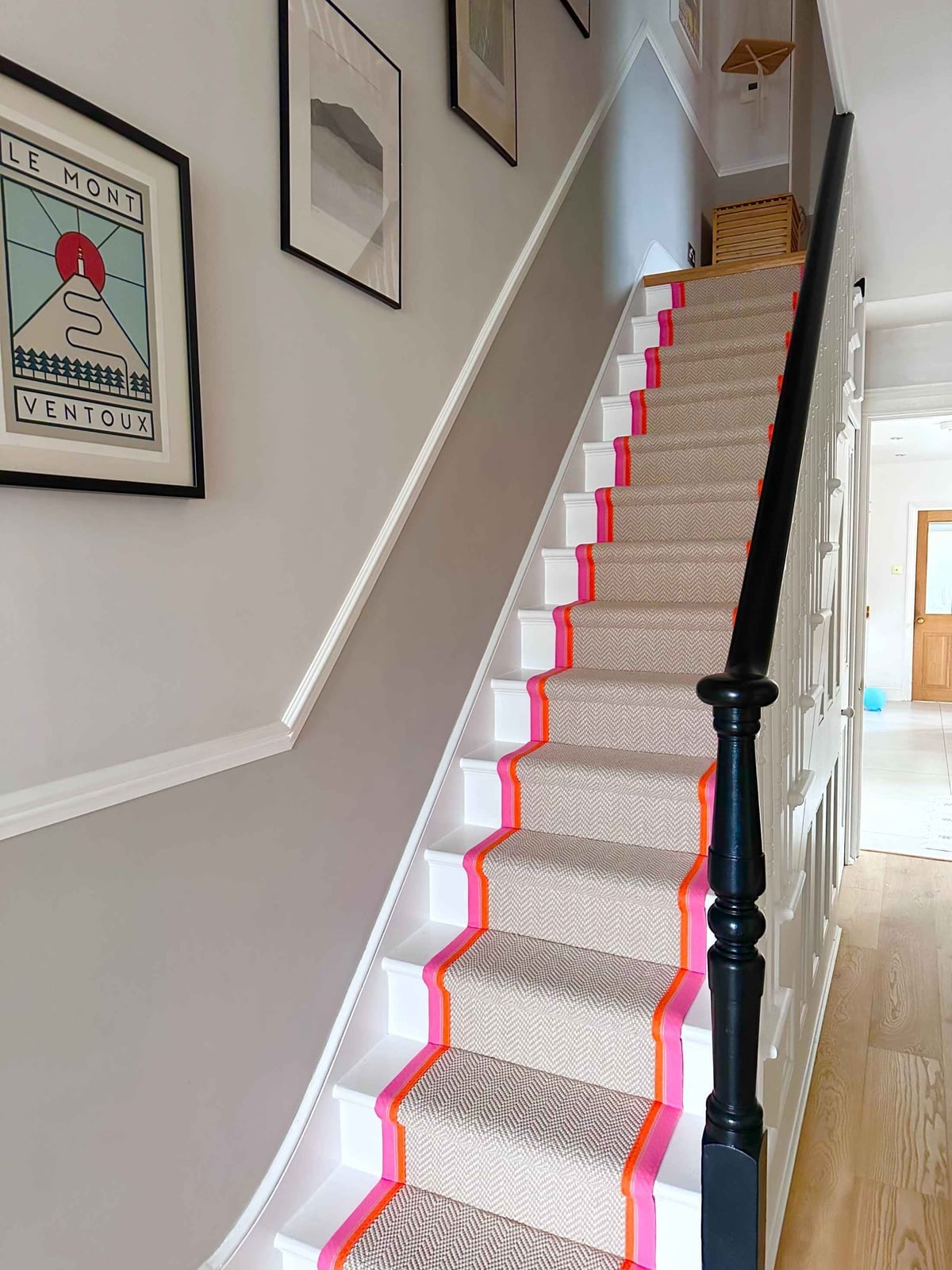
A beige runner gets a jolt of personality from neon pink and orange trim that runs along both edges. The bright piping breaks up the neutral field and echoes the black painted wood of the banister and newel posts. Natural daylight hitting the staircase and hallway keeps the trim from reading as harsh. Palette works here because the neon colors stay contained to the border, so the center of each step remains calm. That small ratio of bold to quiet means the trim feels deliberate rather than chaotic. Anyone who wants a neutral stair runner but misses a pop of color can borrow this trick of adding contrast only at the edges.
Natural Fiber Woven Runner on Light Wood Stairs
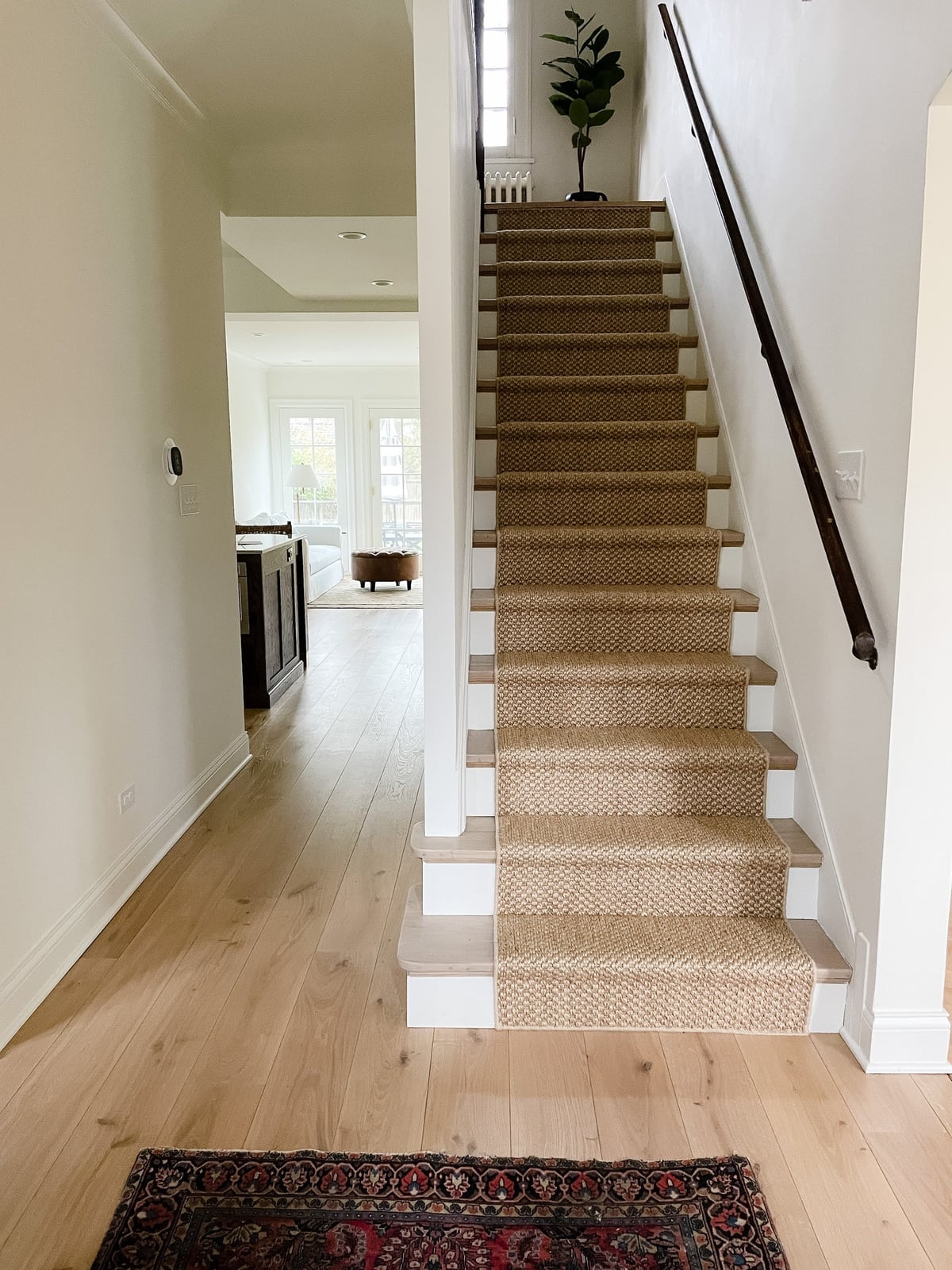
A sisal runner on light wood stairs brings texture without introducing a pattern that competes with the room. The woven natural fiber in beige and cream tones softens the hard surface of each tread while the open weave lets some of the wood grain show through. Bright natural light from a wide shot catches the subtle variation in the weave, which keeps the surface from looking flat. The material choice matters here because natural fiber runners tend to grip carpet grippers well on straight flights. For renters, a sisal runner secured with double-sided tape at the top and bottom of each step avoids permanent hardware while still reducing slip risk on smooth wood.
Distressed Blue Runner with Brass Stair Rods on Wood Stairs
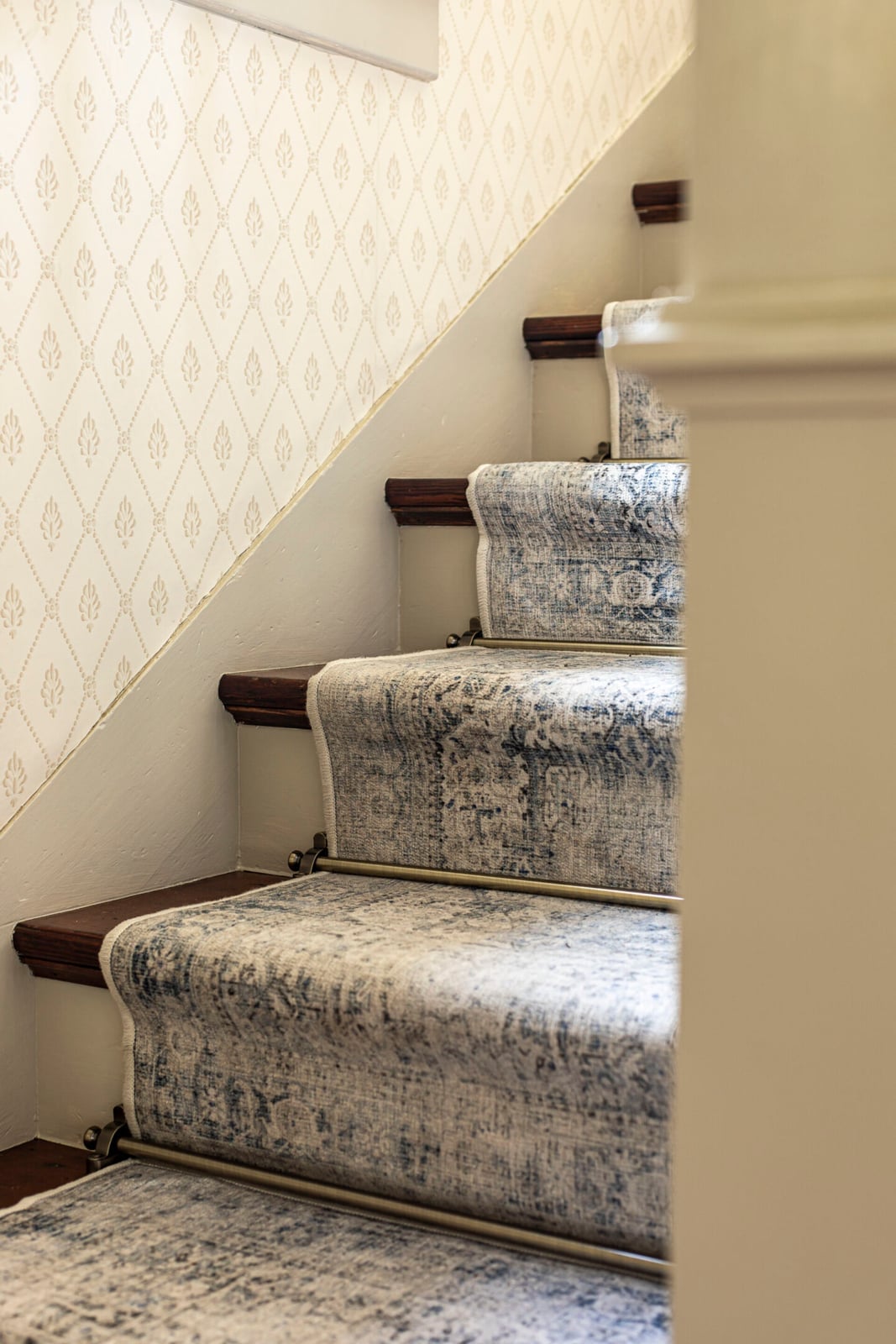
A traditional runner with brass rods can feel formal, but a distressed blue version softens that effect. The blue and gray pattern on the fabric picks up the cream tones in the wood stairs, while the brass stair rods add a polished accent at the base of each riser. Soft natural light in the detail shot keeps the worn finish on the runner from looking faded. The rods serve a practical purpose beyond decoration: they hold the runner taut across the treads, which reduces bunching on a busy staircase. For anyone who likes the look of rods but rents, rod pockets sewn into the runner edges mimic the visual without drilling into the stairs.
Bohemian Patchwork Runner from Vintage Rugs on Brick Risers
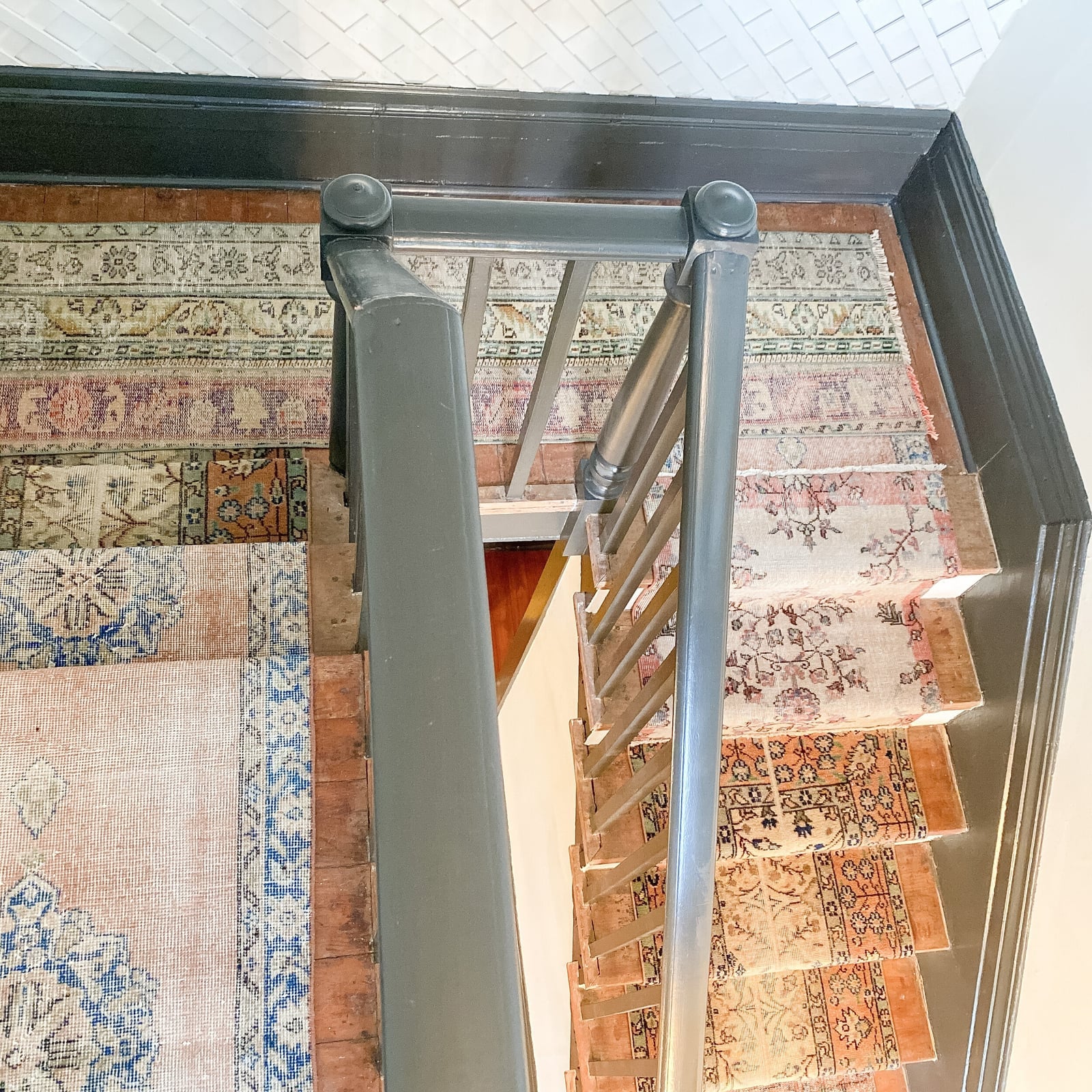
A patchwork of vintage rugs turns a straight staircase into a gallery of pattern and color. The runner here combines sections in pink, orange, blue, and cream, each piece cut to fit a single step or two, creating a deliberate mix. The brick risers add a rough, earthy base that keeps the bright patches from floating. The high angle shot shows how the varied textures of the rugs catch light differently, which adds depth to the climb. Storing spare rug sections flat in a closet or under a bed makes swapping out a worn piece simple without redoing the whole run.
Eclectic Runner with Geometric Pattern and Gallery Wall of Mirrors
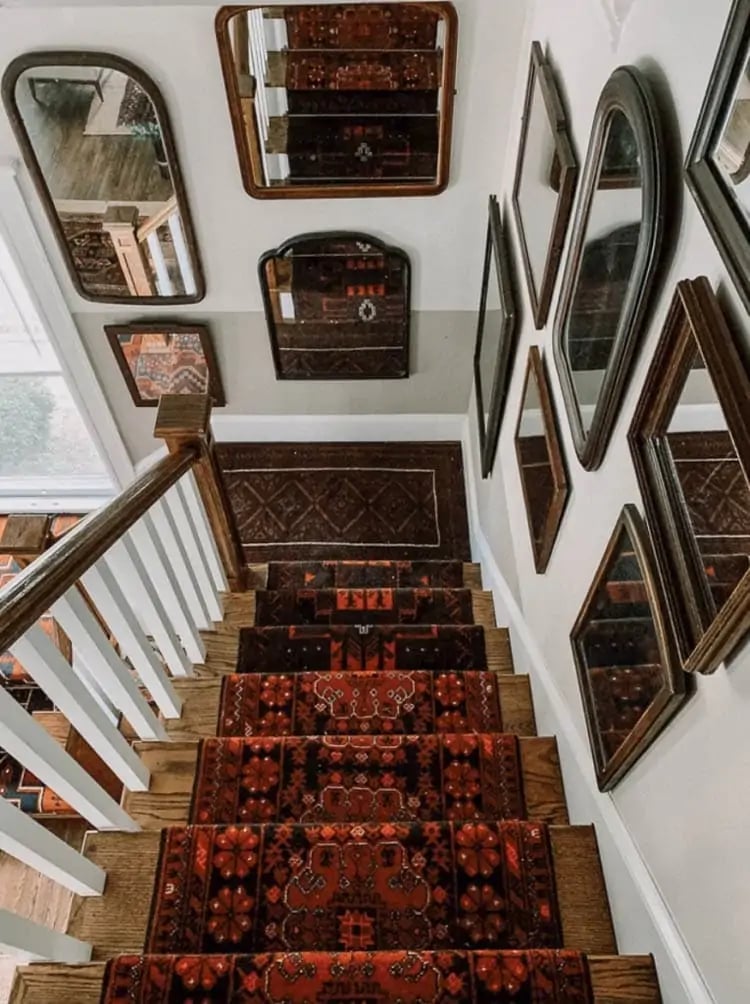
A collection of mirrors in varied shapes and frames turns the wall into a gallery, while the stair runner below keeps the color story grounded in red, black, orange, and cream. The geometric pattern on the runner picks up the lines and repetition of the mirror frames, so the landing looks like a composed vignette. Light hits the glass surfaces and bounces soft color onto the carpet, which helps the runner feel integrated even with a busy print. The layout works because the runner stays centered and the mirrors cluster at the landing, leaving the stairs themselves uncluttered. That deliberate spacing is the trick: let one element dominate each vertical plane.
Modern Textured Gray Runner with Wood Paneling
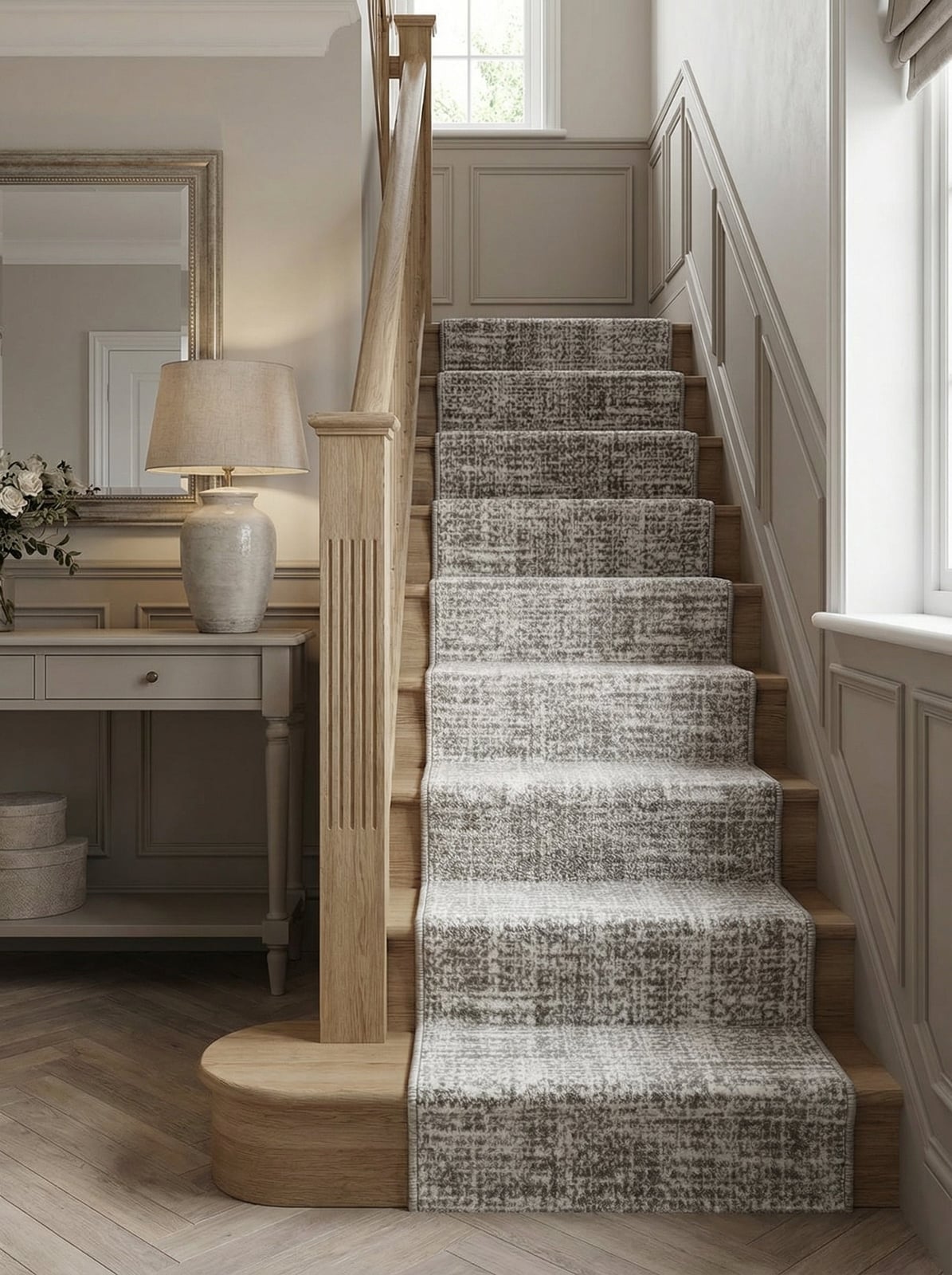
A plain gray runner might fade into the background, but a textured one in beige, taupe, and gray holds its own against wood paneling without competing. The loop or cut pile catches light from the table lamp at the landing, creating subtle shadow lines that change through the day. For renters who cannot replace paneling or paint walls, a textured runner in a neutral palette softens the hard lines of wood and stone while adding acoustic comfort. The runner covers the treads fully, which means the wood shows only at the edges, a look that appears deliberate rather than a compromise. It is a material swap that changes the feel of the whole staircase without a single permanent change.
Modern Farmhouse Runner with Dog on Wooden Stairs
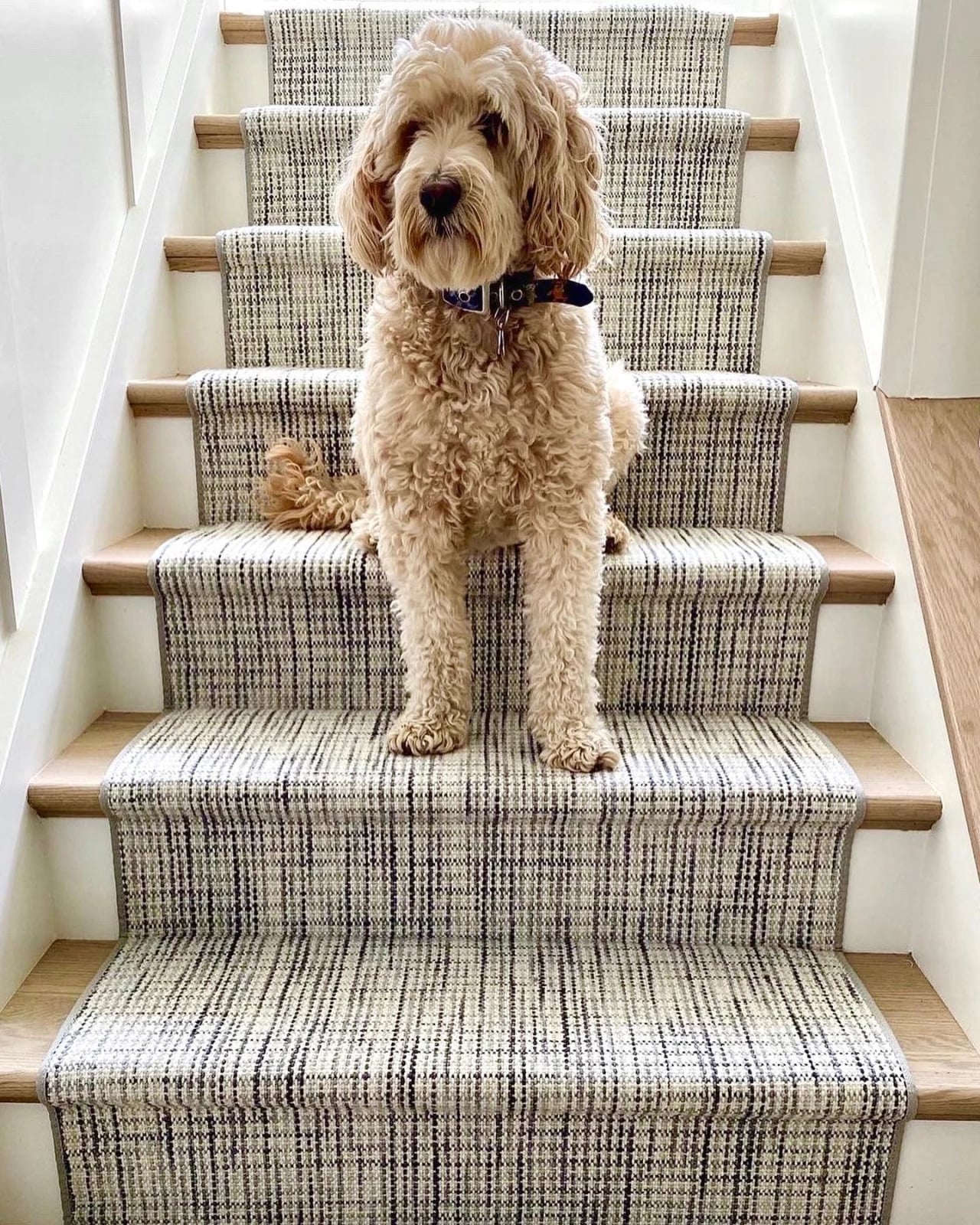
The cream, brown, and black palette of the runner matches the dog’s coat closely enough that the animal looks like part of the decor. That is not an accident: a runner with a natural, slightly irregular pattern hides fur and dirt far better than a solid light color. The centered layout keeps the wood edges exposed, which balances the farmhouse warmth with a modern clean line. If your dog claims the stairs as a nap spot, a runner with a forgiving pattern and a low pile is a practical choice that still photographs well.
Elegant Staircase with Black and Gold Patterned Runner
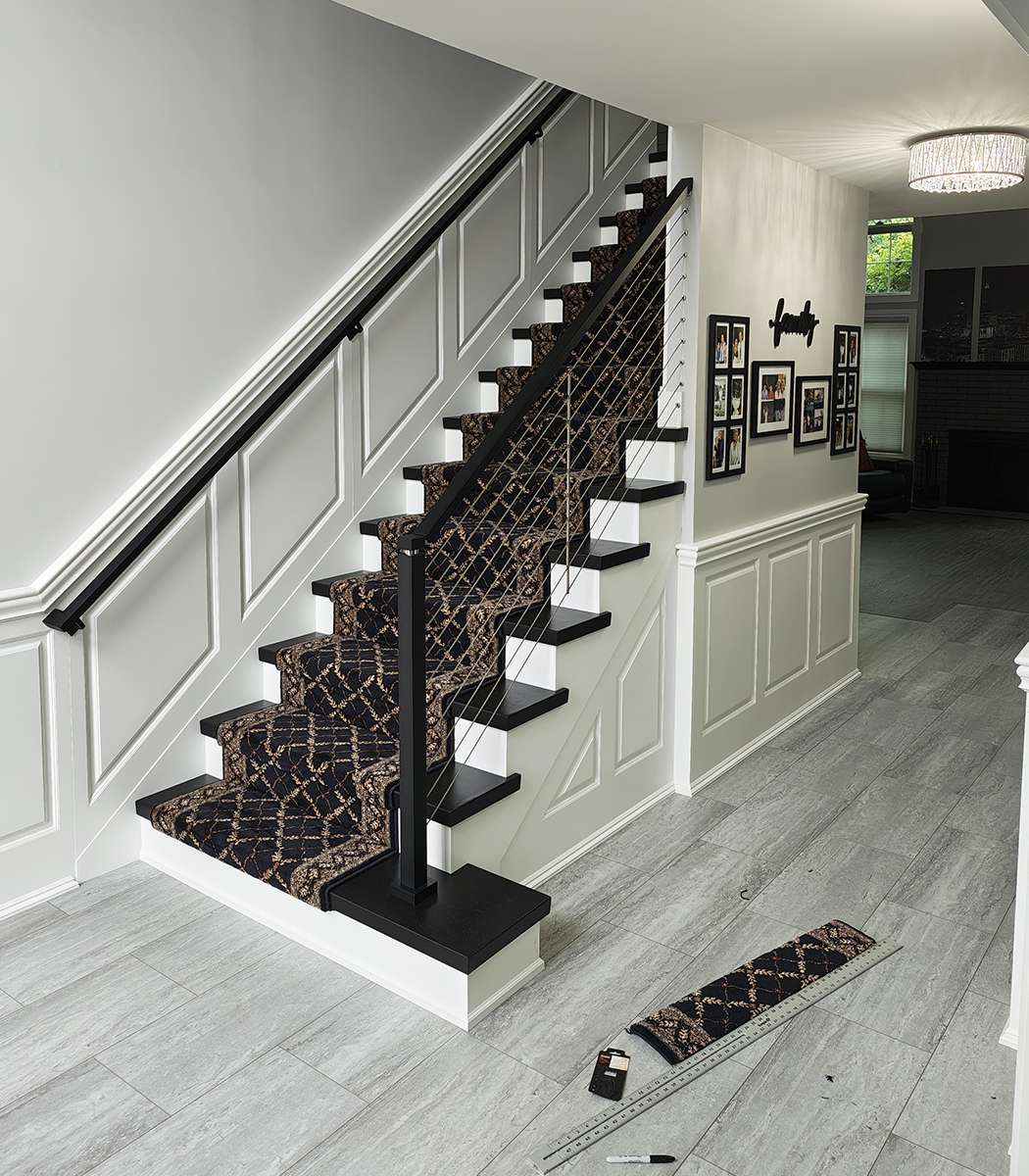
The black and gold runner introduces contrast that the white wainscoting and painted paneling cannot provide on their own. Gold threads or metallic accents in the runner pick up the light from the ambient ceiling fixture, while the black base anchors the staircase against the pale walls. The pattern is intricate enough to read as formal but repeats at a scale that works with the black banister and the straight line of the steps. A palette this deliberate does not need extra color: the gold does the work of an accent wall without painting a single surface. The runner becomes the room’s primary decorative gesture, and everything else steps back.
Farmhouse Jute Runner with Golden Retriever on Wood Stairs
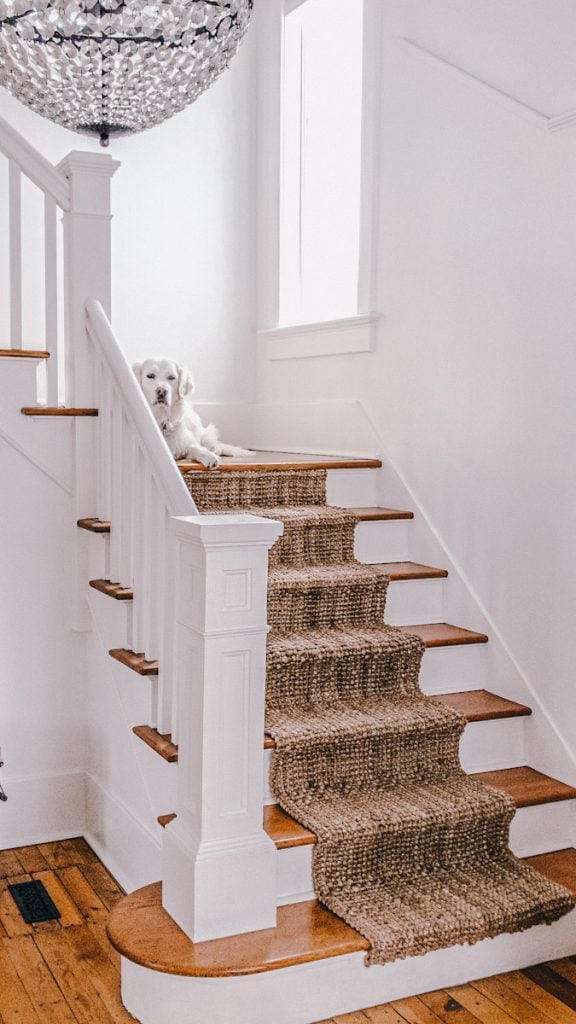
A jute runner on wood stairs reads as farmhouse through and through, but the natural fiber also brings a texture that contrasts with the smooth white banister and painted risers. The beige and wood-tone palette blends with the dog’s coat, so the runner hides shedding better than a dark synthetic weave would. The runner is centered on the treads, leaving a border of bare wood on each side, which keeps the staircase feeling open rather than carpeted wall to wall.
Jute has a looser weave that can fray at the edges, so a bound or stitched border helps the runner hold its shape under foot traffic. The natural daylight from the window warms the beige tones, making the whole staircase feel softer than a synthetic runner in the same color would. For a farmhouse look that welcomes pets, jute offers texture and a neutral base that works with almost any wall color.
Final Thoughts
A stair runner does its best work when it is the first thing you notice and the last thing you think about. Across these 30 examples, the common thread is clarity: a clear pattern, a deliberate color, and a simple background that lets the runner stand out. From sisal borders to neon trim, the practical lesson is the same, choose a runner that can handle foot traffic, vacuum cleanly, and hold its own against the daily up and down. Let the runner lead, and the staircase will follow. For upkeep, rotate the runner if possible, vacuum weekly, and spot clean spills quickly to keep the fibers fresh.