
Mid-century modern houses are having a serious moment, and it’s easy to see why. Their clean lines, connection to nature, and smart indoor-outdoor flow feel as fresh today as they did decades ago. If you’re looking to bring that timeless look into your own space, you’ve come to the right place.
We’ve rounded up 29 inspiring examples that show the style in action, from iconic exteriors with butterfly roofs to warm, wood-paneled living rooms. This collection covers the full range of what makes a mid-century modern house tick, giving you plenty of ideas to borrow for your own home, whether you’re starting from scratch or just tweaking a room or two.
Iconic Mid-Century Modern House with Poolside Ambiance
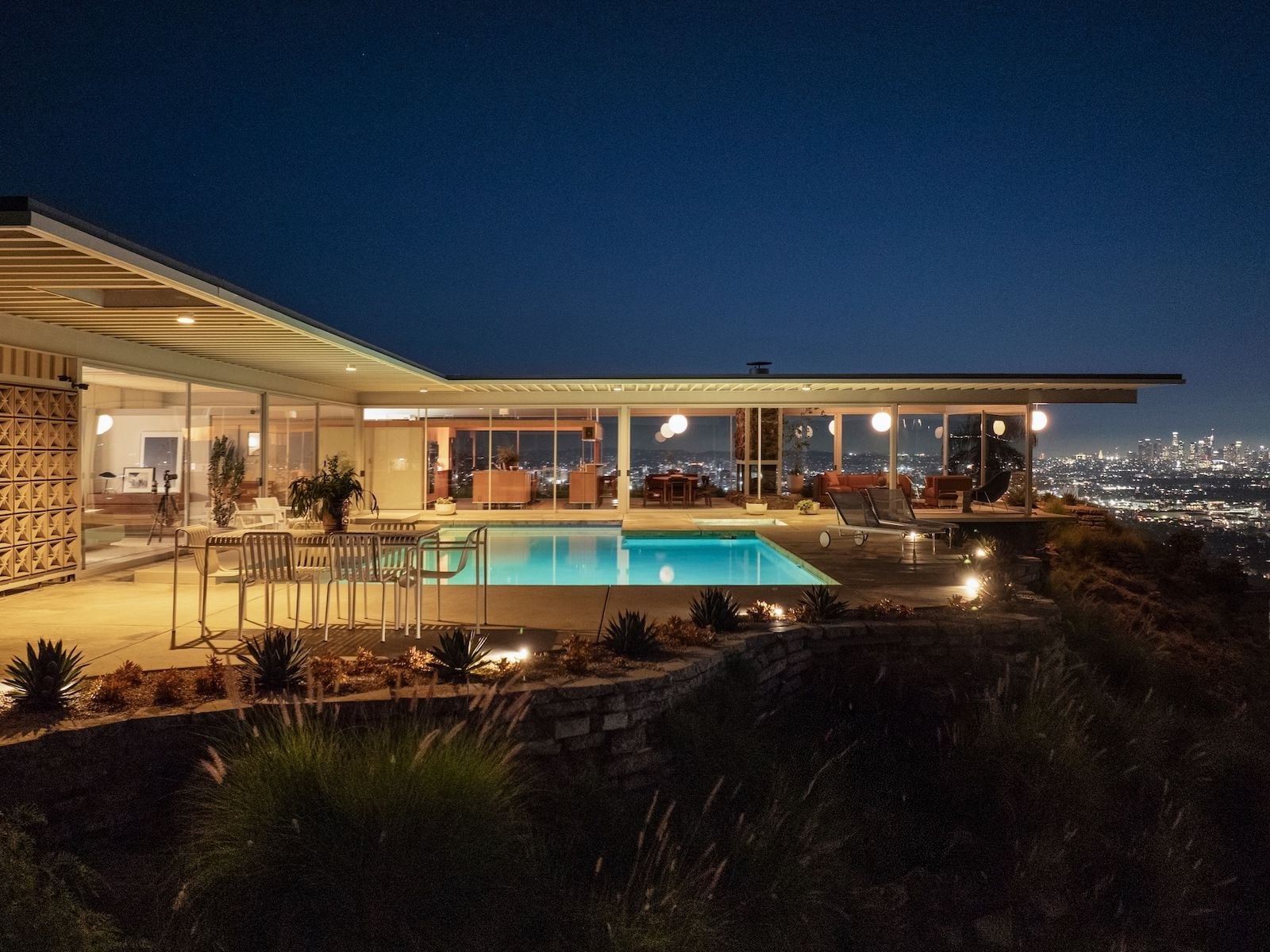
The house sits on an elevated patio, its clean lines mirrored in the still pool below. At night, the pool lights and warm interior glow frame the view, while lounge chairs on the terrace anchor the outdoor space. The city lights beyond stretch the scene wider, making the pool feel like a reflecting pond for the skyline. This layout works because the pool acts as a foreground anchor, keeping the eye from drifting straight to the city. It is a simple trick: let the nearest element hold the ground so the view beyond reads as depth, not distance.
Seamless Indoor-Outdoor Living in Mid-Century Style
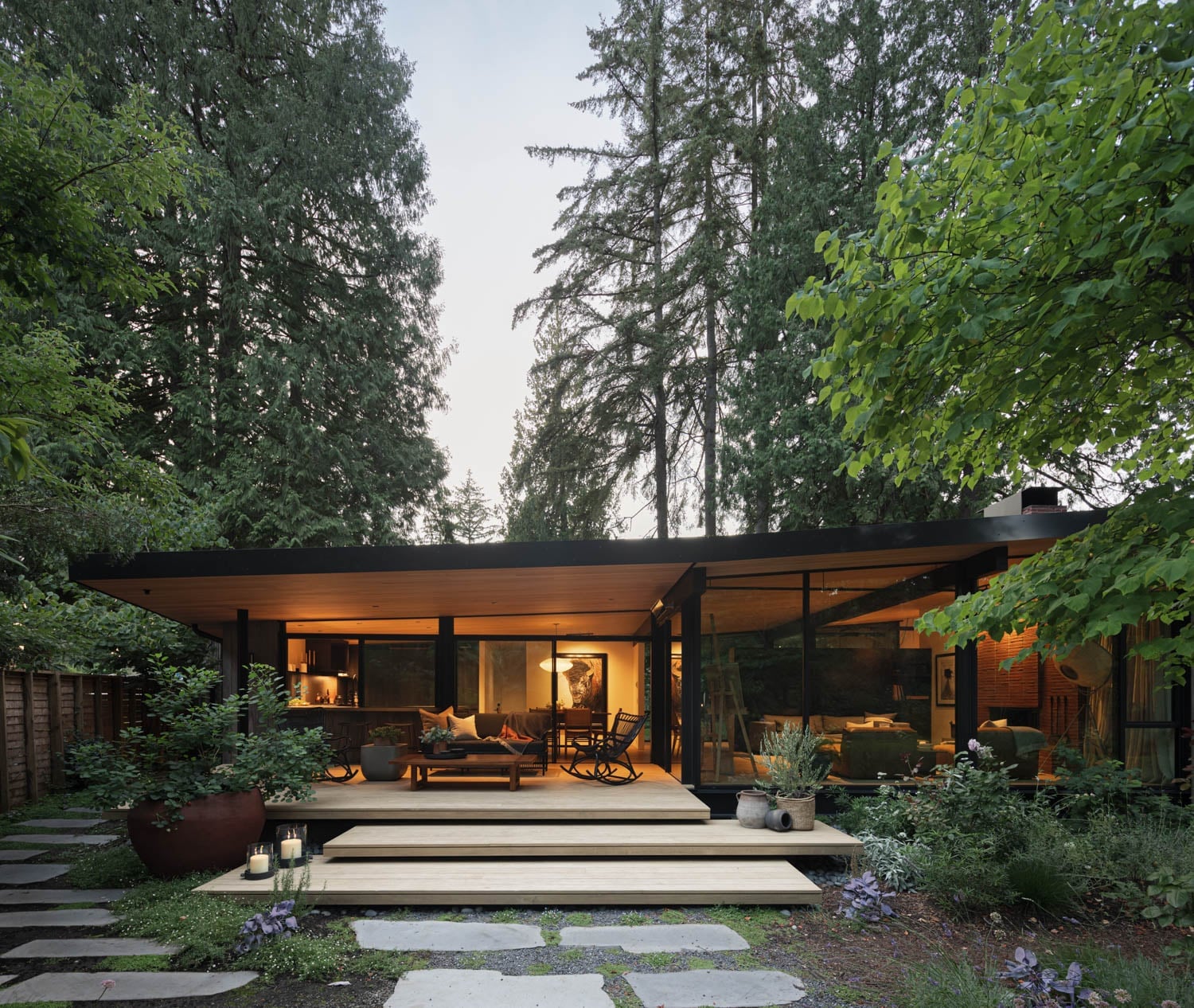
This open plan living and dining area does not stop at the glass door. The low sofa and rocking chairs sit close to the deck, and the stone path leading out suggests the room keeps going. The palette here is restrained: wood tones, green, and gray. The wood ceiling and deck match, so the eye travels across the threshold without a visual hitch. A practical rule for this connection is to repeat one material on both sides of the door. Here, the same stone continues from the interior floor to the exterior path, making the transition feel built rather than added.
Mid-Century Living Room with Wood Paneling and Sculptural Lighting
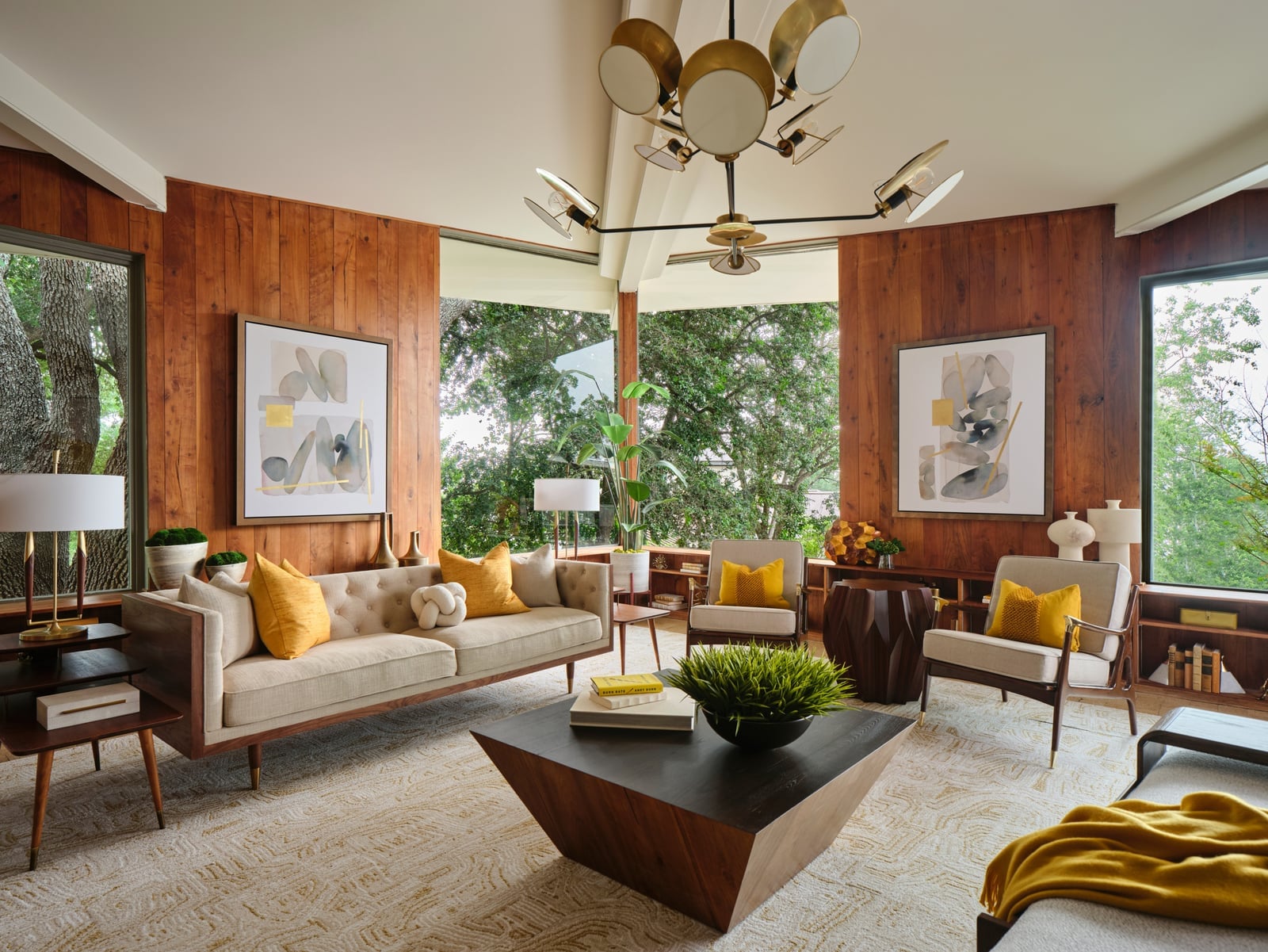
How do you add drama without cluttering the room? Start with the ceiling. The multi-arm light fixture here does the work of ten smaller lamps. It hangs low enough to define the conversation area but high enough that a tall person can walk under it. The tufted sofa and geometric coffee table stay neutral in cream and gray, so the fixture is the event.
The wood paneling on the walls warms the space and gives the light something to reflect off. Without it, the fixture might feel cold against bare drywall. Table lamps on the side tables add soft light for reading, but the main event stays overhead. The lesson is that one sculptural piece can set the whole mood, as long as the room steps back.
Expansive Mid-Century Living Room with Vaulted Wood Ceiling
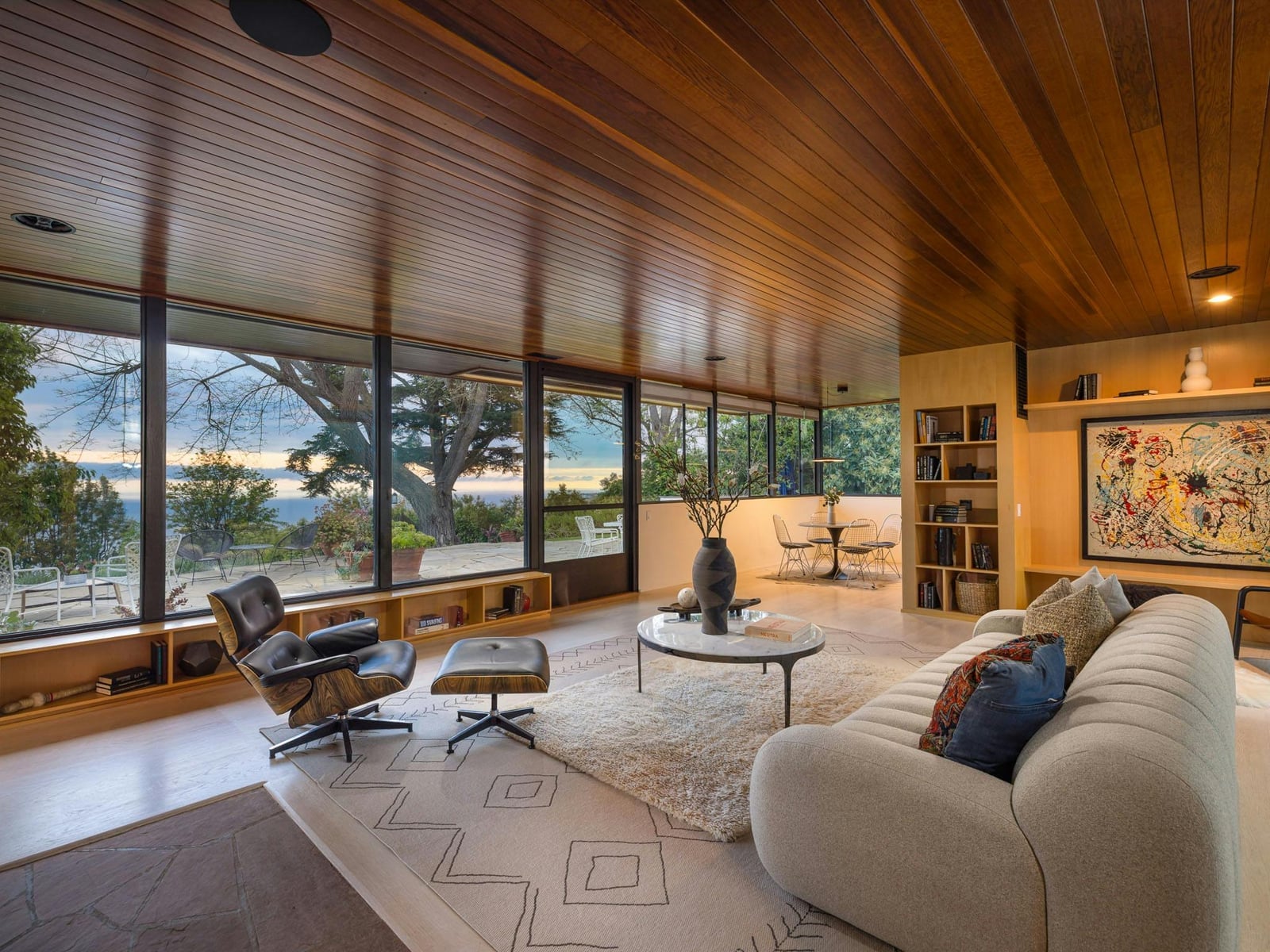
The vaulted wood ceiling runs the full length of the room, drawing the eye from the curved sofa past the marble coffee table to the floor-to-ceiling windows. The Eames lounge chair sits to one side, a quiet landmark in the open plan. Natural daylight pours in from the windows, so the recessed lighting and floor lamp are only needed after sunset. The scale here is generous but not overwhelming, because the furniture is grouped in zones: the sofa faces the fireplace, the chair faces the view. Lighting follows the same logic: task light by the chair, ambient light overhead, and daylight as the main source.
Striking Mid-Century Modern House Amidst Forest Landscape
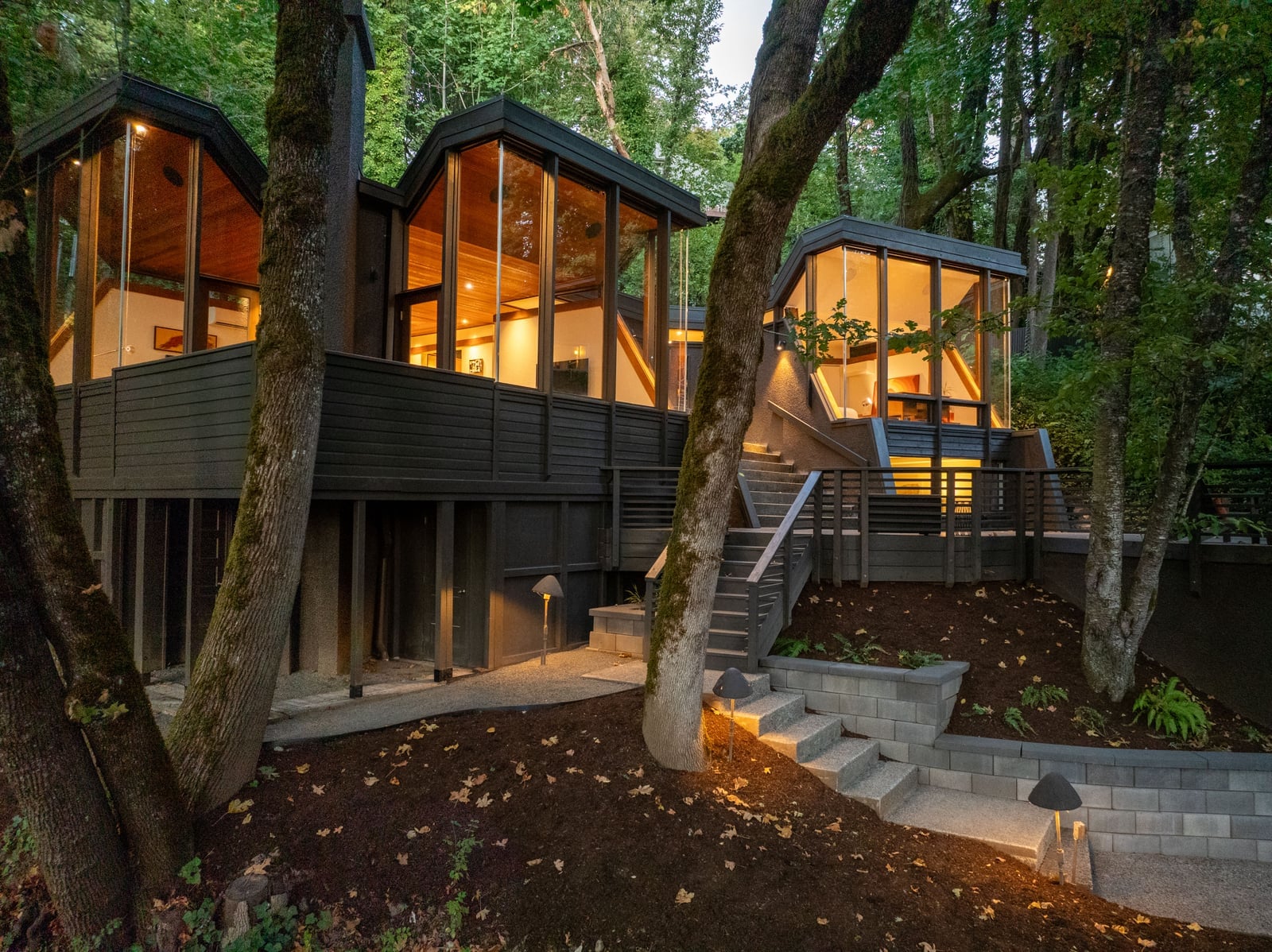
A practical rule for a house in the woods: let the windows do the talking. This multi-level house uses large glass panels to catch the last light of dusk, while the dark gray exterior recedes into the trees. The wood and stone materials echo the forest floor, so the house feels settled rather than dropped in. Outdoor stairs cut through the terraced landscaping, leading the eye up the slope. The glowing windows at dusk are the main event, but the trick is that the house does not try to outshine the trees. It borrows their green, their shadow, and their scale.
Relaxed Mid-Century Living Area with Leather Chaise and Credenza
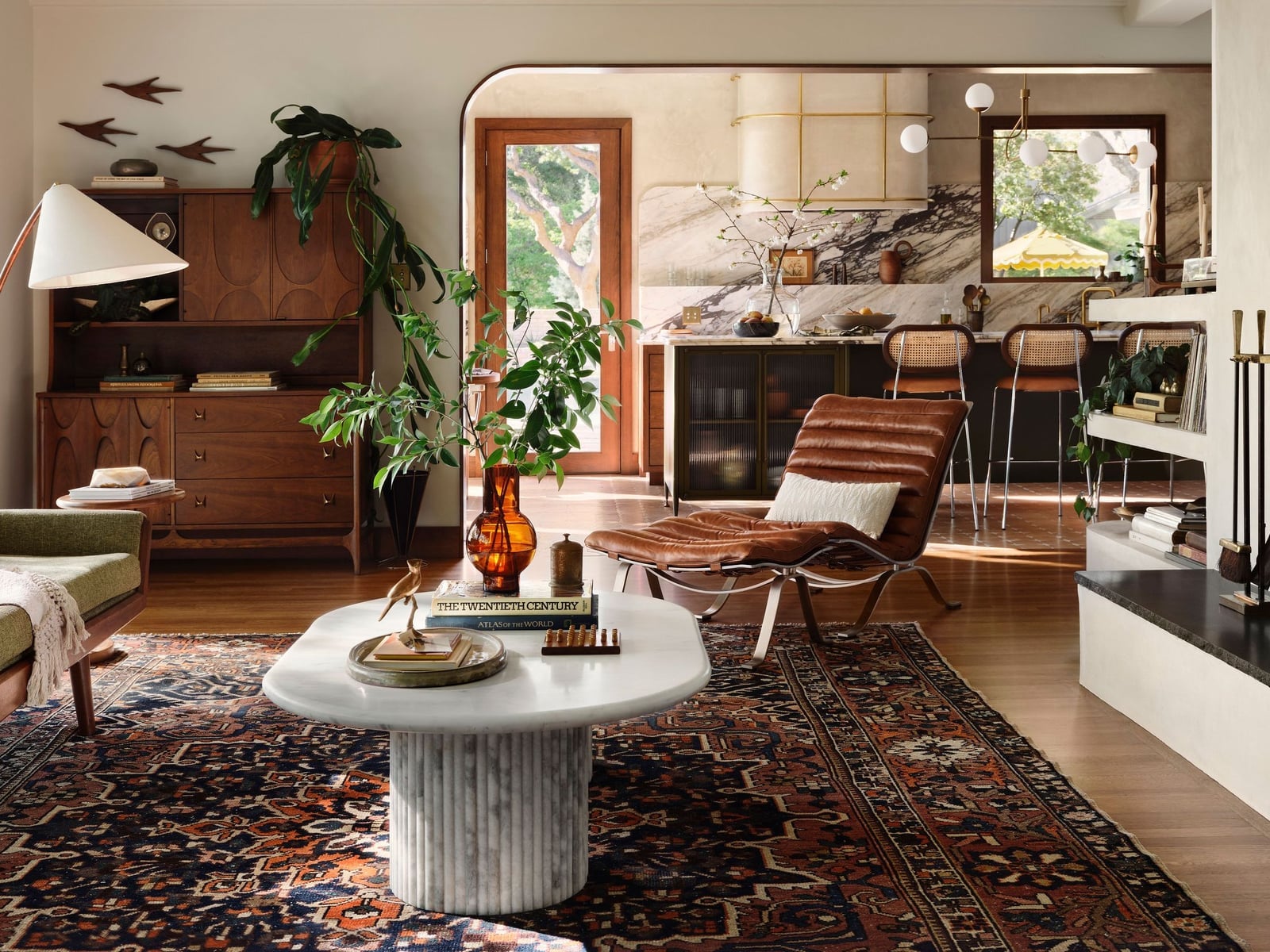
A leather chaise lounge can feel like a piece of sculpture before it is a seat. This one, in a warm brown, anchors a living area that keeps furnishings low and grounded. A navy rug with a geometric pattern sits underfoot, while a wooden credenza holds the far wall. The palette of brown, cream, navy and rust is a classic mid-century combination that reads as collected. The look works because the leather piece is the only high-back element; everything else stays below sightline, letting the chaise define the room’s silhouette.
Mid-Century Modern Exterior with Sloping Roof and Wood Accents
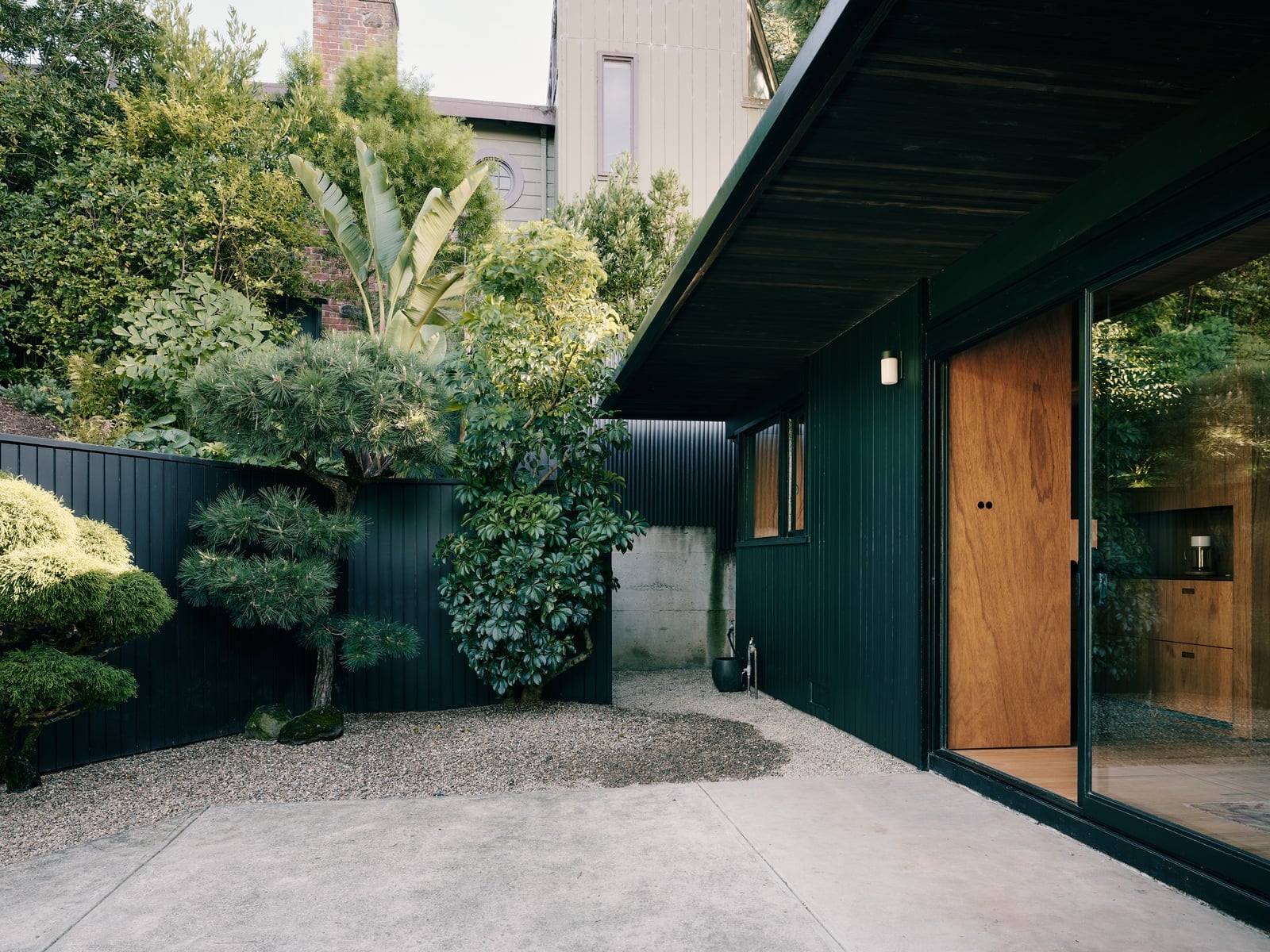
The dark green siding and deep wood soffit on this exterior do more than add curb appeal. The sloping roof line draws the eye horizontally, which makes the house feel wider and more grounded. Large windows break up the solid wall and reflect the surrounding trees. For renters, the takeaway is paint: a dark green front door or window trim can echo this look without touching the siding. The wood door keeps the warmth, and the stone path ties it to the landscape.
Architectural Mid-Century House Integrated with a Waterfall
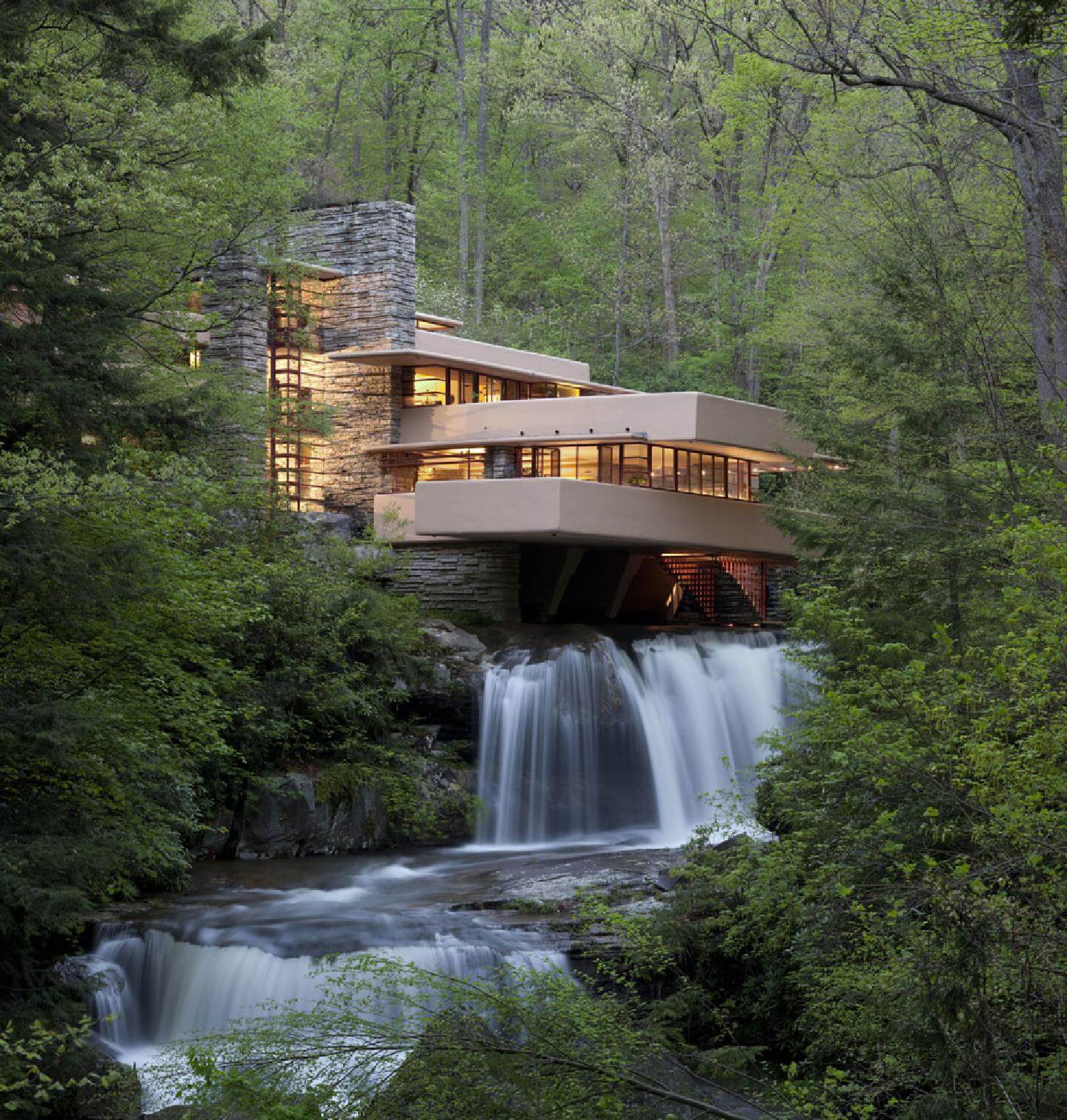
This house does not sit next to the waterfall; it is built over it. The cantilevered structure extends out from a stone chimney, with large windows that let the water become part of the interior view. Evening light from inside glows through the glass, while the stone and concrete exterior blends into the rock face. The house follows the land instead of reshaping it. A stone chimney anchors the mass, and the waterfall becomes the front yard.
Mid-Century Bedroom with Brick Wall and Outdoor Access
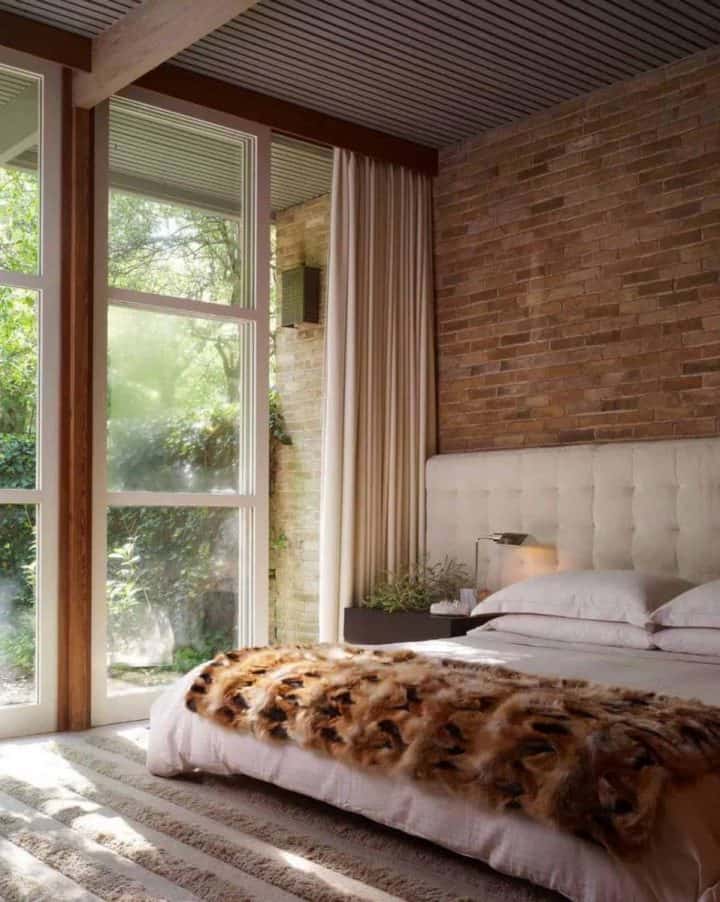
Can a bedroom feel both sturdy and soft at the same time? Yes, when the main wall is exposed brick in a warm red tone and the bed is tufted cream linen with a fur throw at the foot. The brick gives texture and weight, while the soft bedding and a light wood floor balance the look. Large glass doors open directly to the outdoors, which pulls in daylight and makes the space feel larger. The material balance is the lesson: one rough surface needs several soft ones to keep the room comfortable.
Compact Mid-Century Living Room with Leather Sofa and Pouf
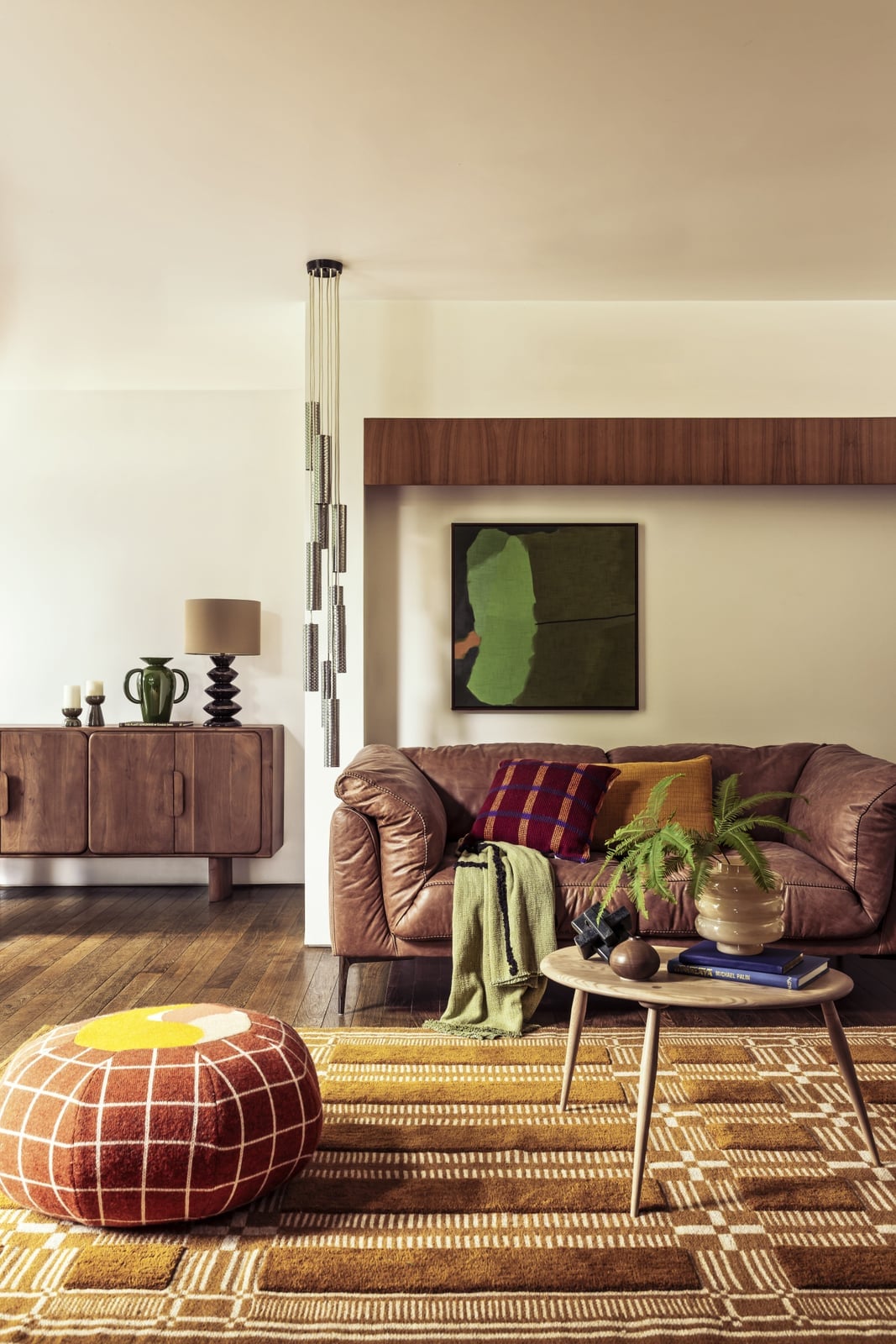
A brown leather sofa sits low to the ground, leaving room for a sculptural light fixture overhead to become the vertical focus. The sideboard to the left is wood with clean lines, and a small woven pouf sits nearby for extra seating that tucks away when not in use. The mustard and burgundy accents in the room come from smaller pieces, so the overall palette stays grounded. The trick in a compact room is scale: the low sofa and sideboard keep the eye moving horizontally, and the one tall light fixture gives the room its height without crowding it.
Mid-Century Living Room with Dramatic Brick Fireplace and Built-in
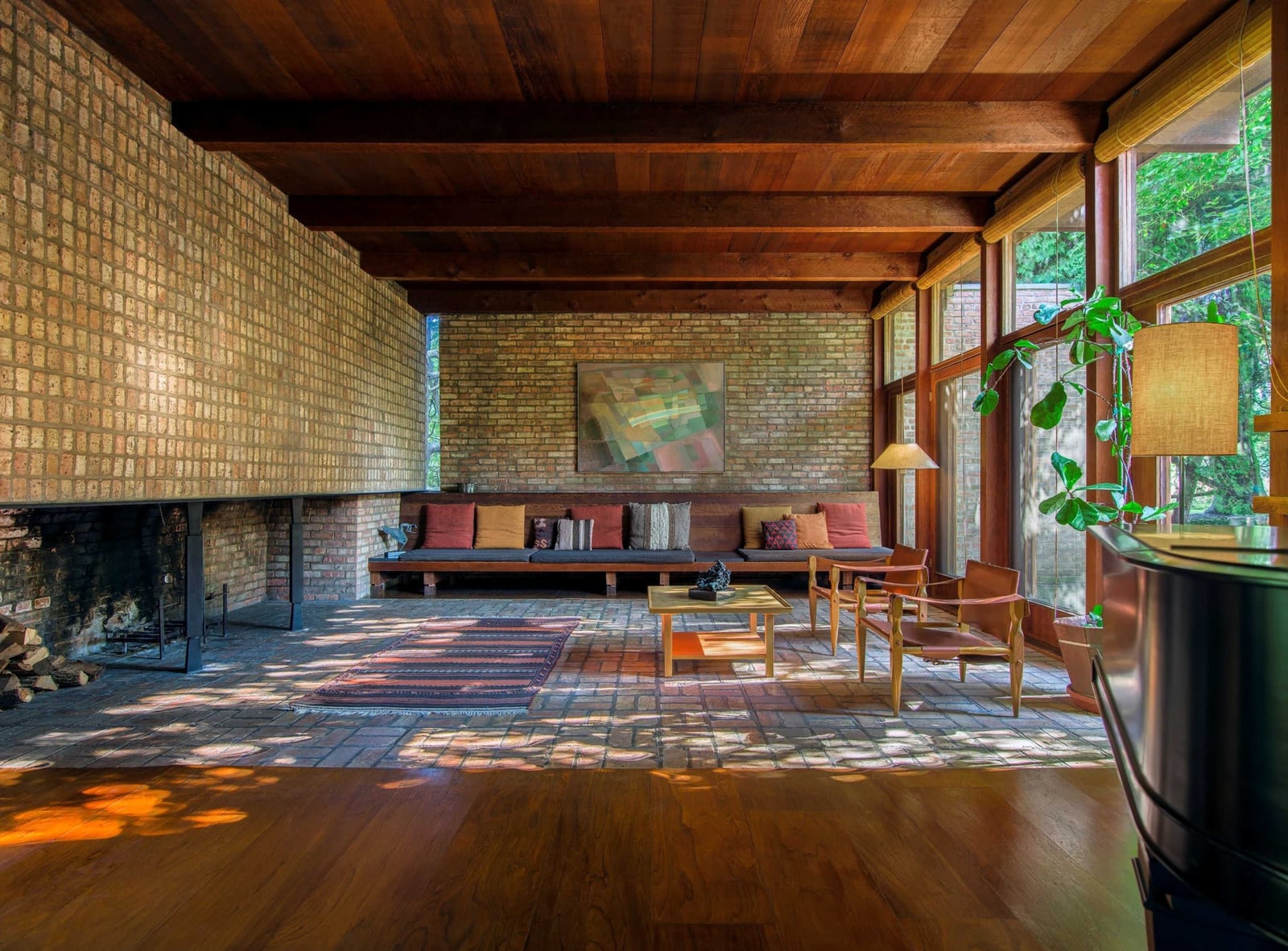
A room with a dominant brick fireplace needs the seating to work with it, not against it. Here, the massive textured brick wall anchors the whole space, and the built-in wooden bench with cushions along one side turns that wall into a usable zone. Wooden chairs and a low coffee table keep the seating open and conversational, avoiding the impulse to push everything against the walls. Large windows bring in natural daylight that softens the brick red and muted earth tones, so the room feels warm without being heavy. The layout proves that a dramatic fireplace succeeds when the furniture acknowledges it instead of competing.
Mid-Century Modern House Nestled in Lush Greenery
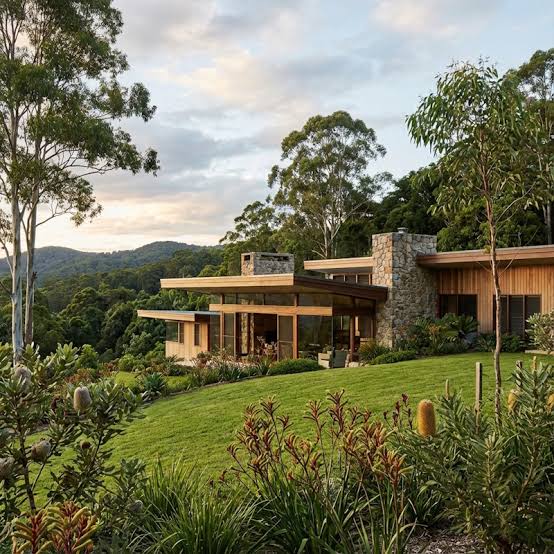
Some houses sit on the land. This one grows out of it. At dusk, with interior lights glowing through large windows, the mid-century modern house blends into the lush greenery around it. The cantilevered roof structure extends outward, while a stone chimney rises through the wood, glass, and metal facade. The palette of wood tones, green, and gray pulls the structure into the landscape instead of setting it apart.
A house tucked into dense foliage needs a material strategy that connects it to the site. Wood cladding and a stone chimney echo the natural surroundings, while the glass panes reflect the trees. The cantilever keeps the footprint light, letting the ground cover stay intact underneath. Start by matching the palette to the view.
Palm Springs Mid-Century Facade with Teal Double Doors
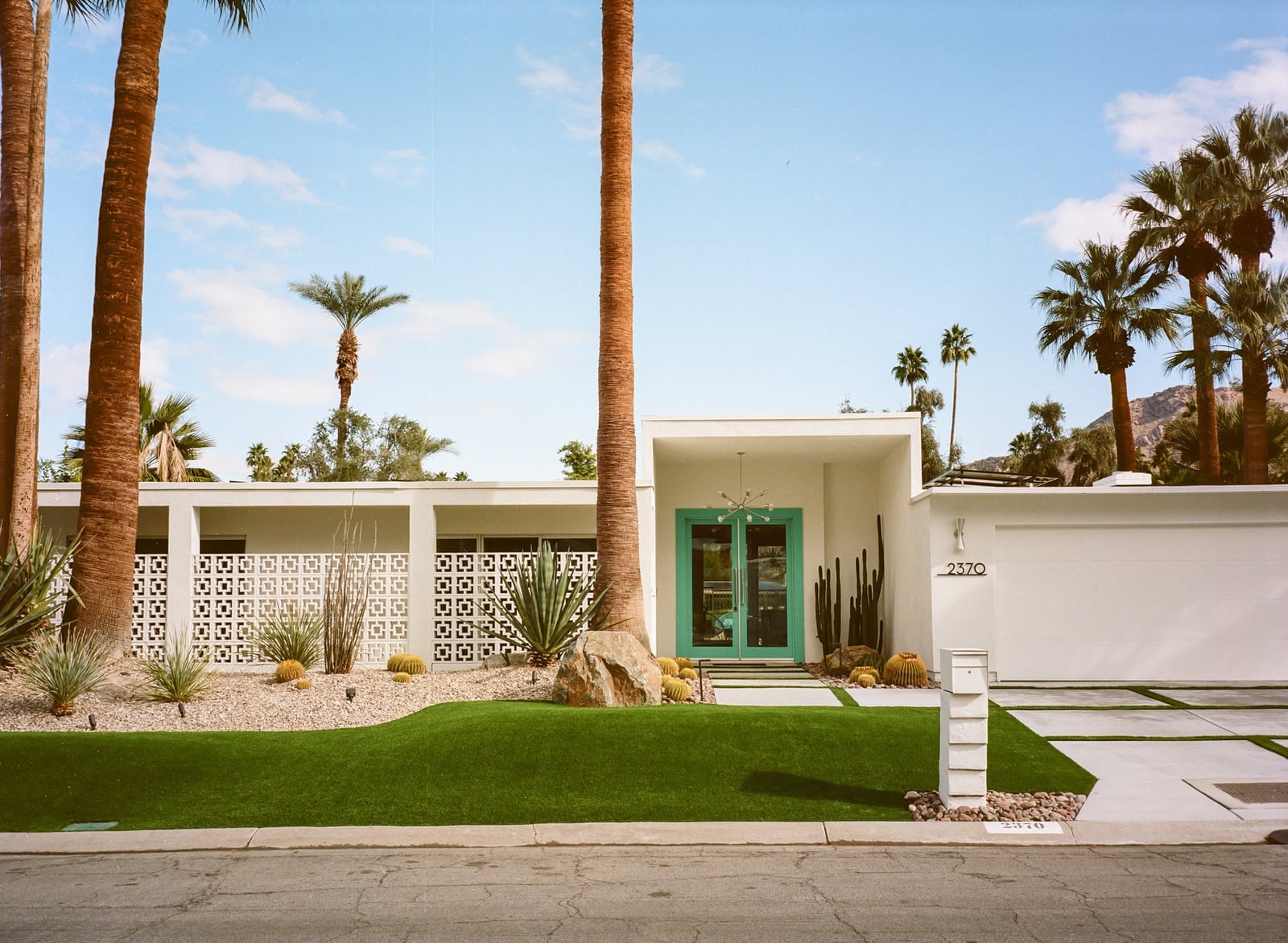
Teal double doors against a white stucco facade make an immediate statement. The vibrant color draws the eye straight to the entrance, while a geometric screen above the door adds a layer of texture without blocking the light. Minimalist landscaping in green and beige keeps the focus on the architecture. The lesson is that a bold front door works when the rest of the facade stays restrained.
Mid-Century Dining Room with Wood Table and Pendant Light
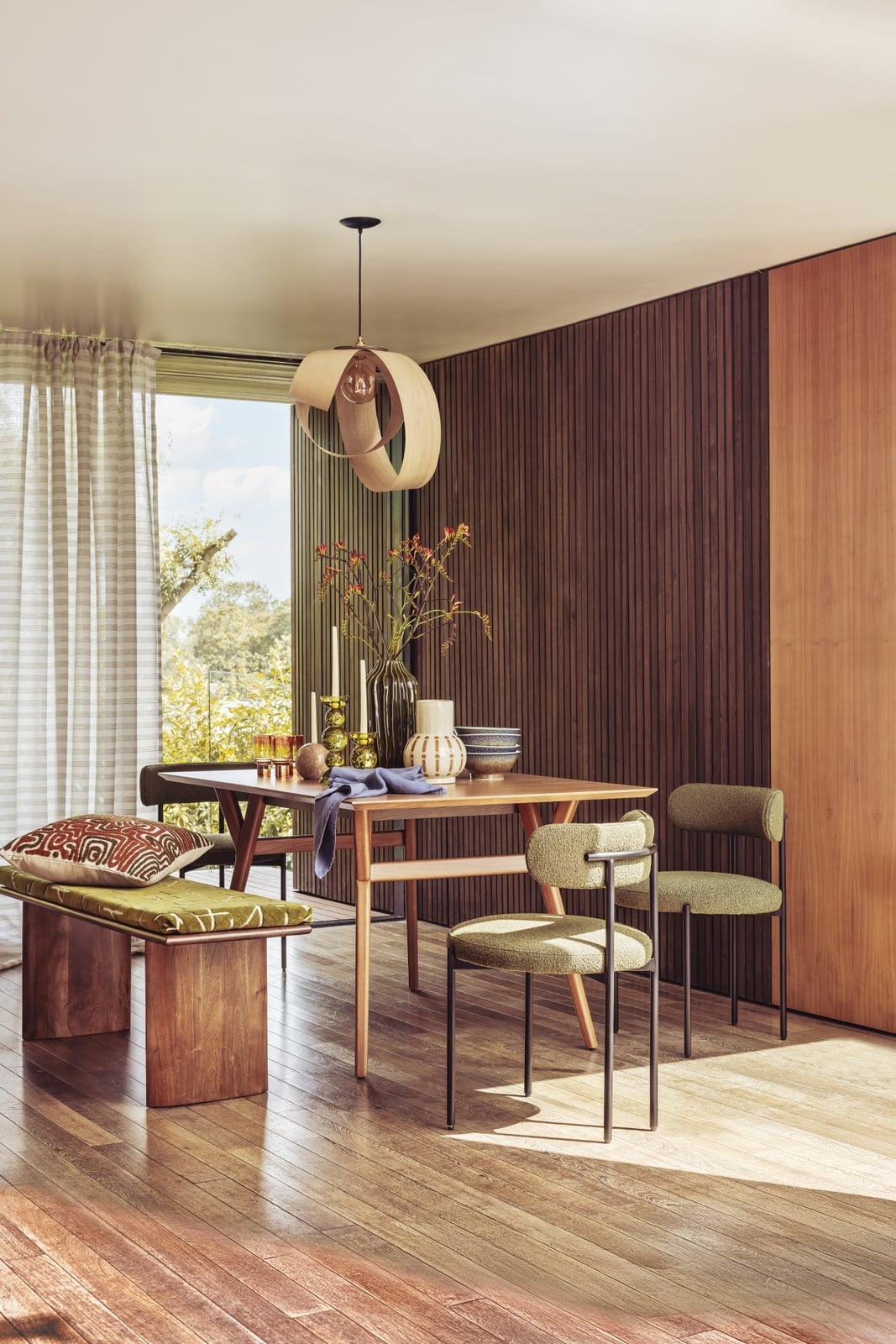
This dining room centers on the pendant light. A sculptural fixture hangs above the wood table, becoming the visual anchor for the whole layout. The table is centered, with a bench on one side and chairs on the other, keeping the room open. The windows provide light that balances the warm wood tones and green accents, so the space works for everyday meals and longer gatherings. The pendant is the defining piece, needing nothing else to compete.
Mid-Century House Entrance with Vibrant Lime Green Door
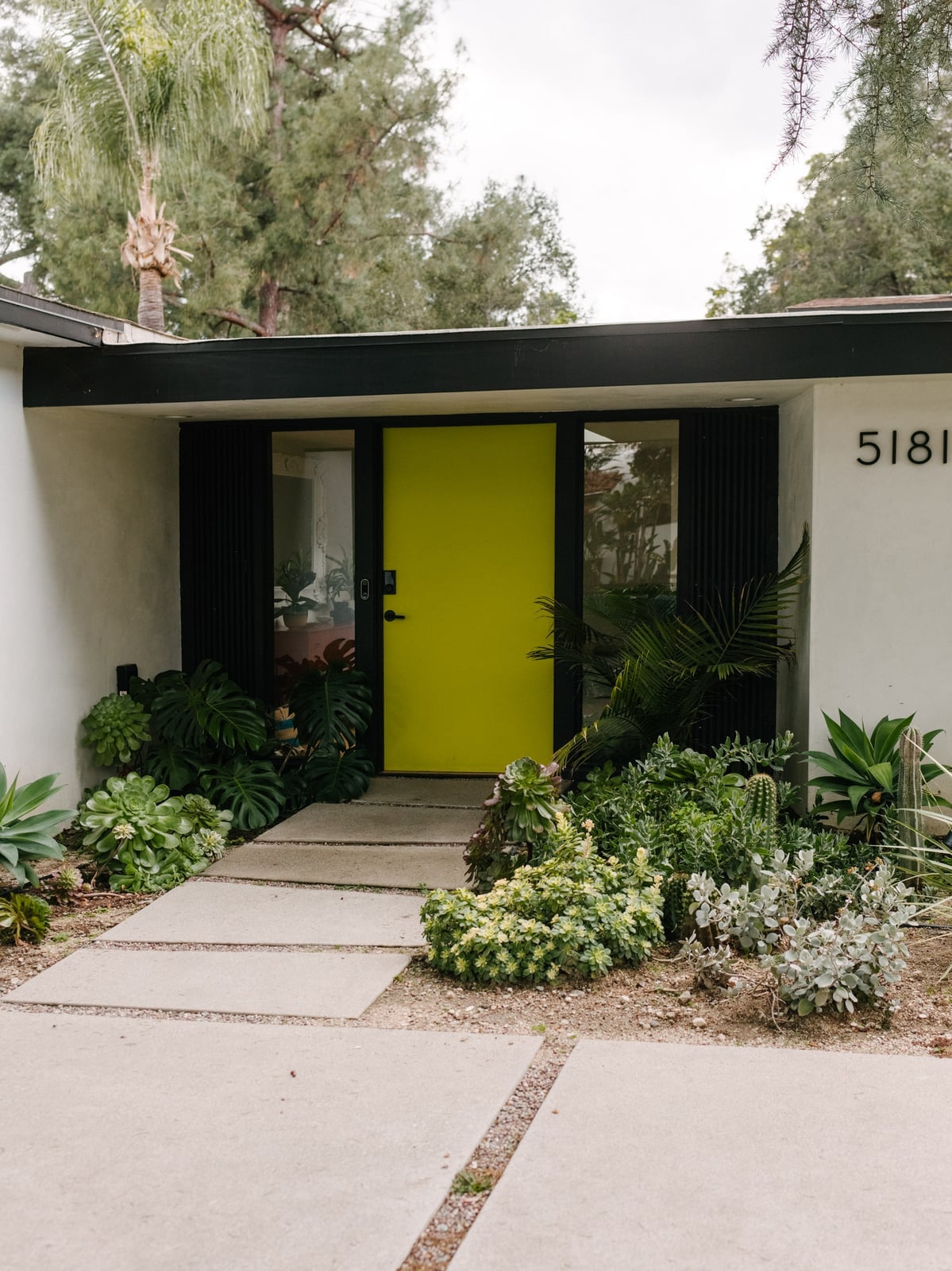
A front door is the first thing guests see, so it should signal what the house is about. A bright lime green door on a white stucco house does exactly that: it says this is not a timid home. The contrast is sharp and immediate, with the black framing and concrete path grounding the pop of color. Plants along the pathway soften the transition from street to door, adding green that complements the lime without competing.
Choosing a door color this bold means the rest of the entrance needs to hold its own. The white stucco provides a clean backdrop, while the concrete path and dark trim keep the look from feeling too playful. If you rent, a temporary adhesive film or a removable door wrap can give you the same effect without painting the original door. The lime green works because it is the only saturated color in the view.
Mid-Century House with Butterfly Roofline and Stone Patio
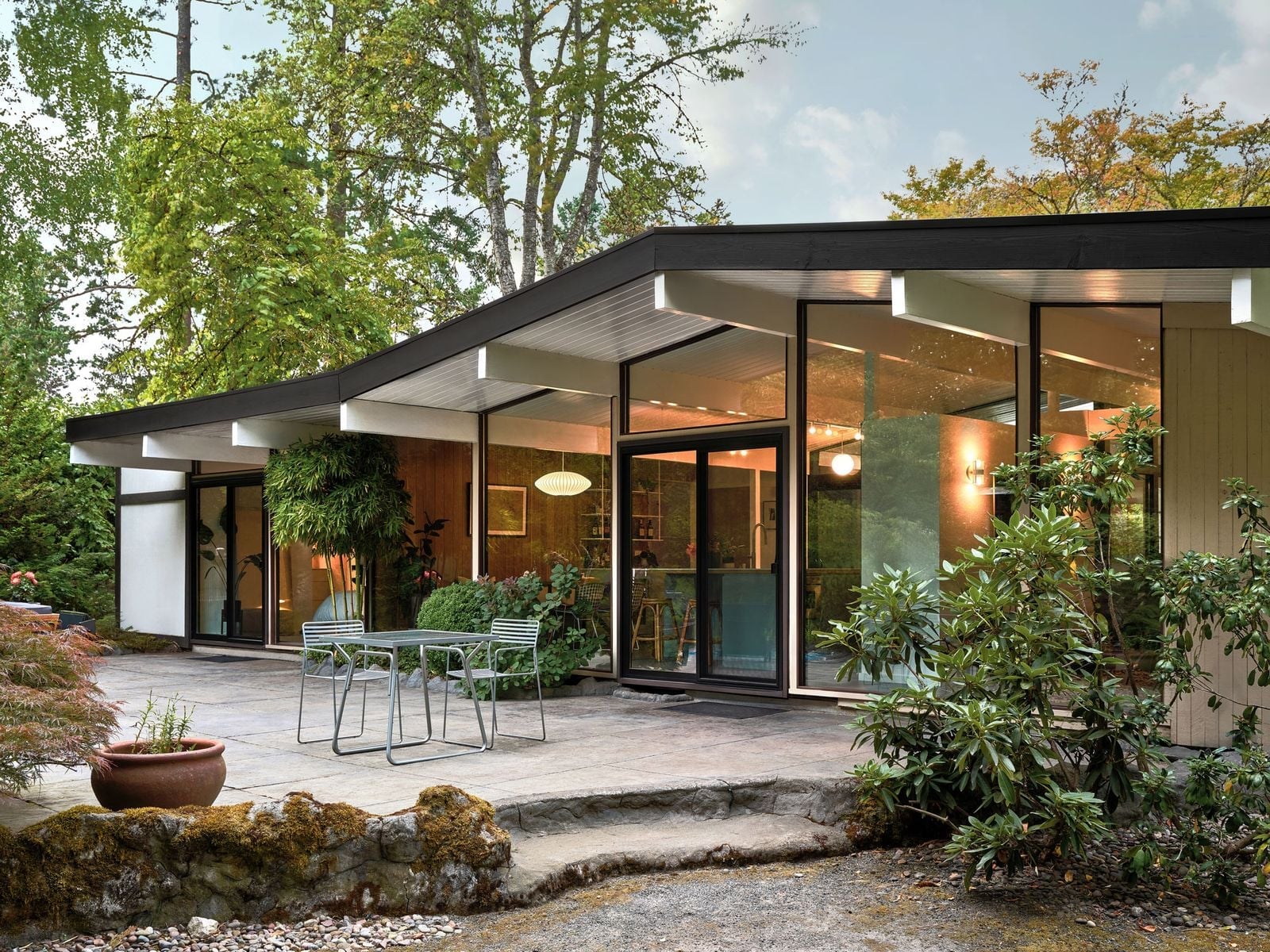
A butterfly roof does more than catch water; it defines the whole silhouette. Here the roofline angles up at the edges and dips in the center, creating a shape that feels both grounded and light. The exterior uses natural wood, white, and black, with large windows that blur the line between inside and out. A stone patio extends the living space, with simple furniture that keeps the focus on the architecture. The palette is what makes this style work: warm wood against cool stone, with greenery breaking up the geometry. If you want a similar effect without a roof overhaul, paint your front door a deep charcoal and add a wide stone path.
Angular Mid-Century House Design with Red Car Accent
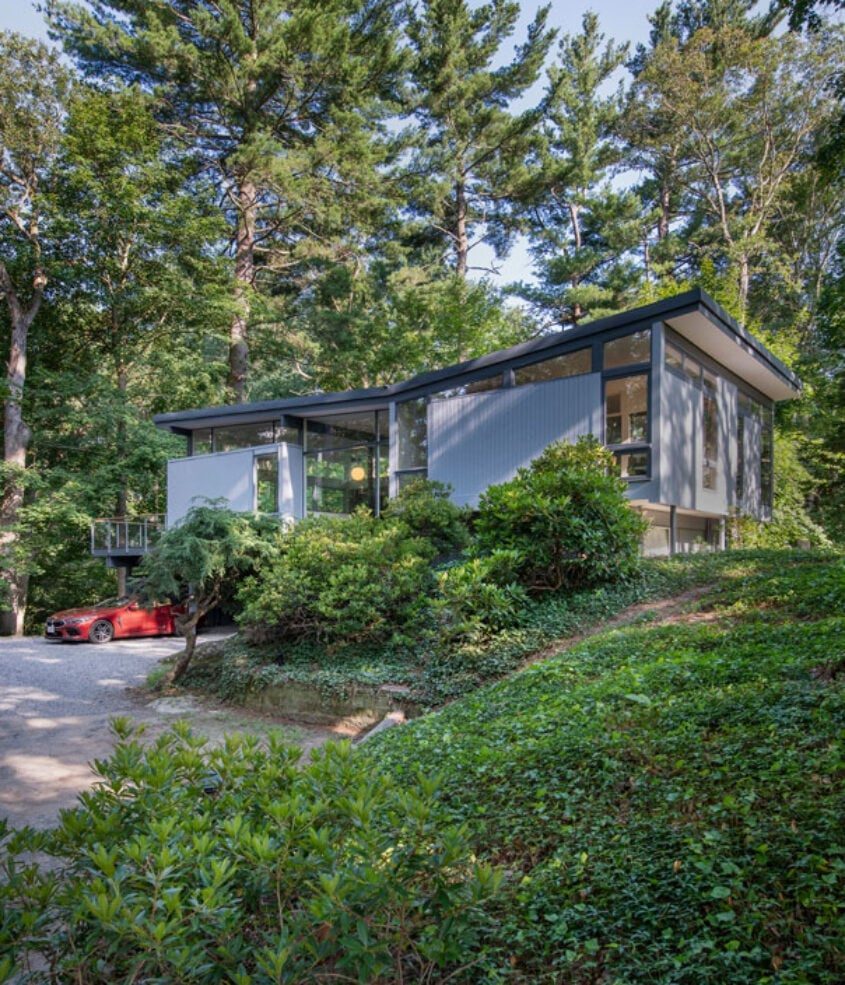
Let the architecture lead, and let one accent color do the talking. This house uses clean lines, wood, glass, and stone to create a strong silhouette against the landscape. The gray and green palette keeps the exterior calm, while the red car parked on the sloping driveway adds a pop of contrast. For renters, you can borrow this trick without touching the house. Park a bicycle or a planter in a bold color near the entrance. A bright red or orange chair on a patio works the same way. Keep the rest of the exterior neutral so that single accent feels deliberate, not random.
Open-Plan Mid-Kitchen, Dining, and Living Area
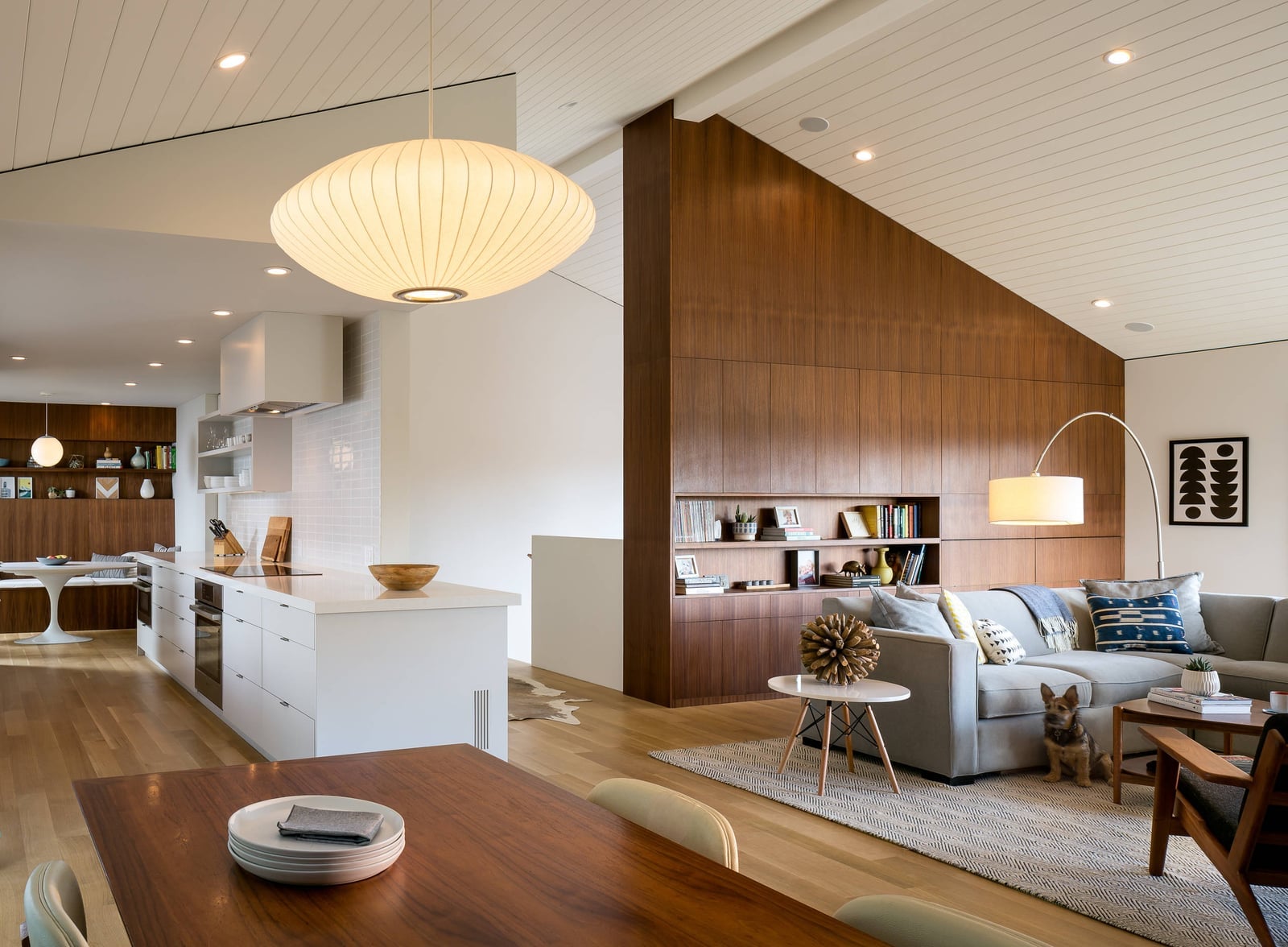
An open plan can feel like one big room or a series of connected zones. This one leans into the latter. The kitchen island anchors the cooking area, while a large sectional defines the living side. An oversized Nelson bubble pendant light hangs above the island, drawing the eye up and marking the kitchen as its own zone. The palette stays restrained: white, wood tones, and gray, with light wood floors running through the whole space.
A built-in shelving unit on one wall adds storage without closing off the room. The arc floor lamp near the sofa provides task light without competing with the pendant. If you are working with an open layout, use lighting to create separation. A single large pendant over the dining table or kitchen island can do the job of a wall. Keep furniture low to maintain sightlines across the room.
Mid-Century Hallway with Stone Fireplace and Wood Paneling
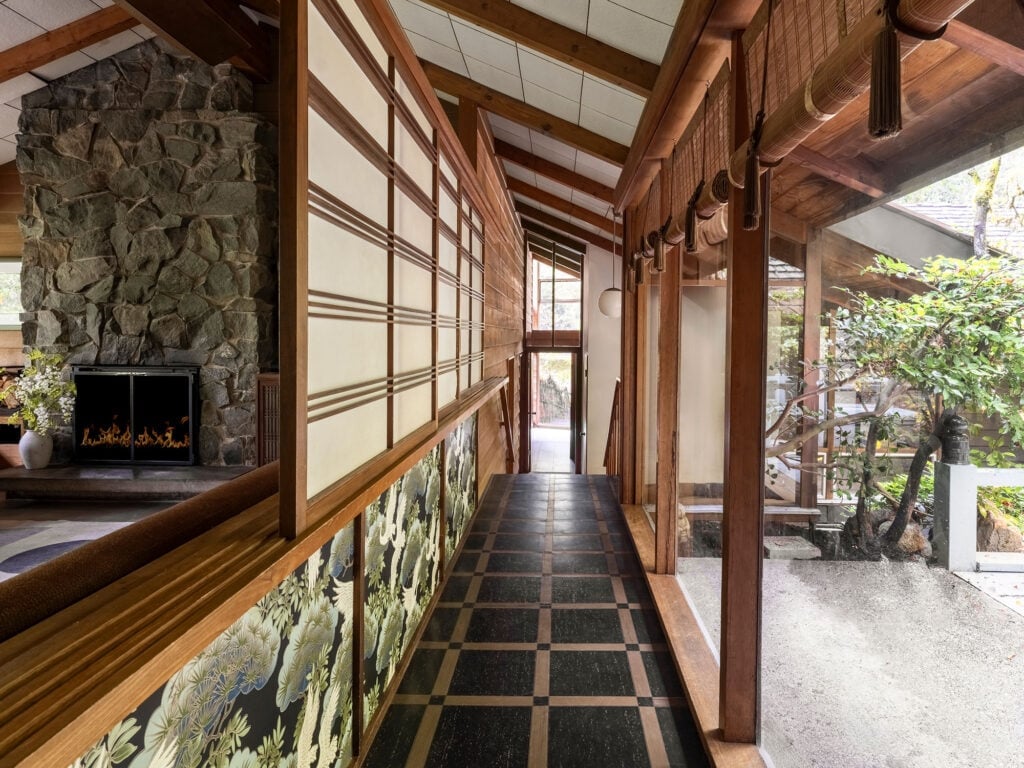
A stone fireplace in a hallway is an unusual move, and it works here because the materials are consistent. The wood-paneled walls and stone share a similar warmth, while a shoji-style paper screen adds texture without weight. The palette stays within a tight range of wood tones, gray stone, and cream, so the eye moves easily from the fireplace to the living area beyond. Natural daylight from windows keeps the stone from feeling heavy. If you want a durable material that ages well, stone is a solid choice. It needs no paint, no polish, and it hides wear better than drywall. Just be sure to seal it if it is near a high-traffic doorway.
Mid-Century Living Room with Sloped Wood Ceiling and Large Window
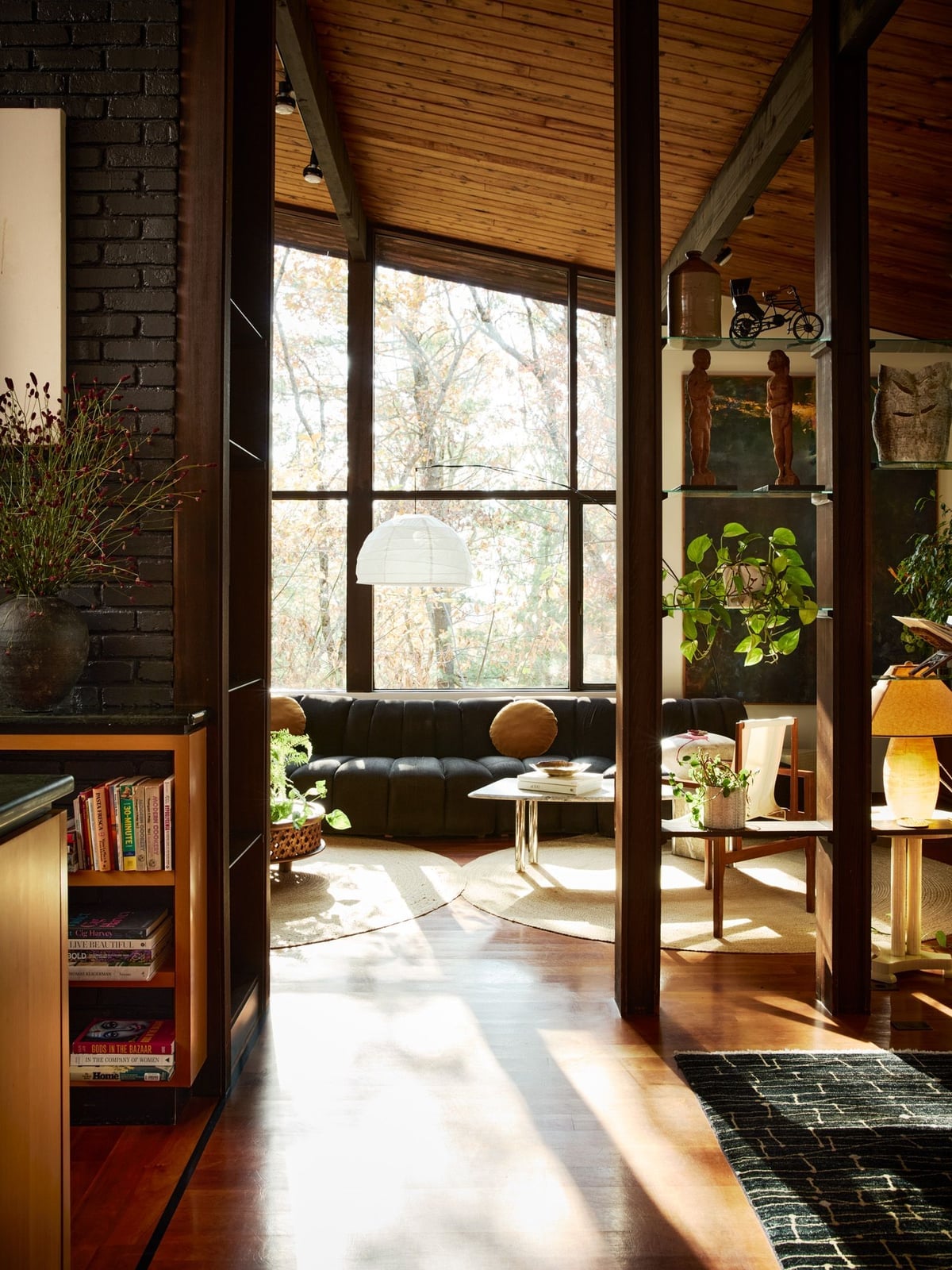
This room makes one bold bet: that the ceiling and the window can carry the whole space. The sloped wood ceiling pulls the eye upward, while a large window floods the room with natural light and frames the view outside. The palette stays minimal with wood tones, dark green, and black, so nothing competes with the architecture. A simple sofa and a shelving unit keep the furniture low, letting the ceiling feel even taller. A pendant light hangs at just the right height to provide evening light without blocking the window. If your room has a strong architectural feature, let it lead. Keep window treatments simple or skip them entirely, and choose furniture that does not fight for attention.
Desert Mid-Century House with Angular White Roofline
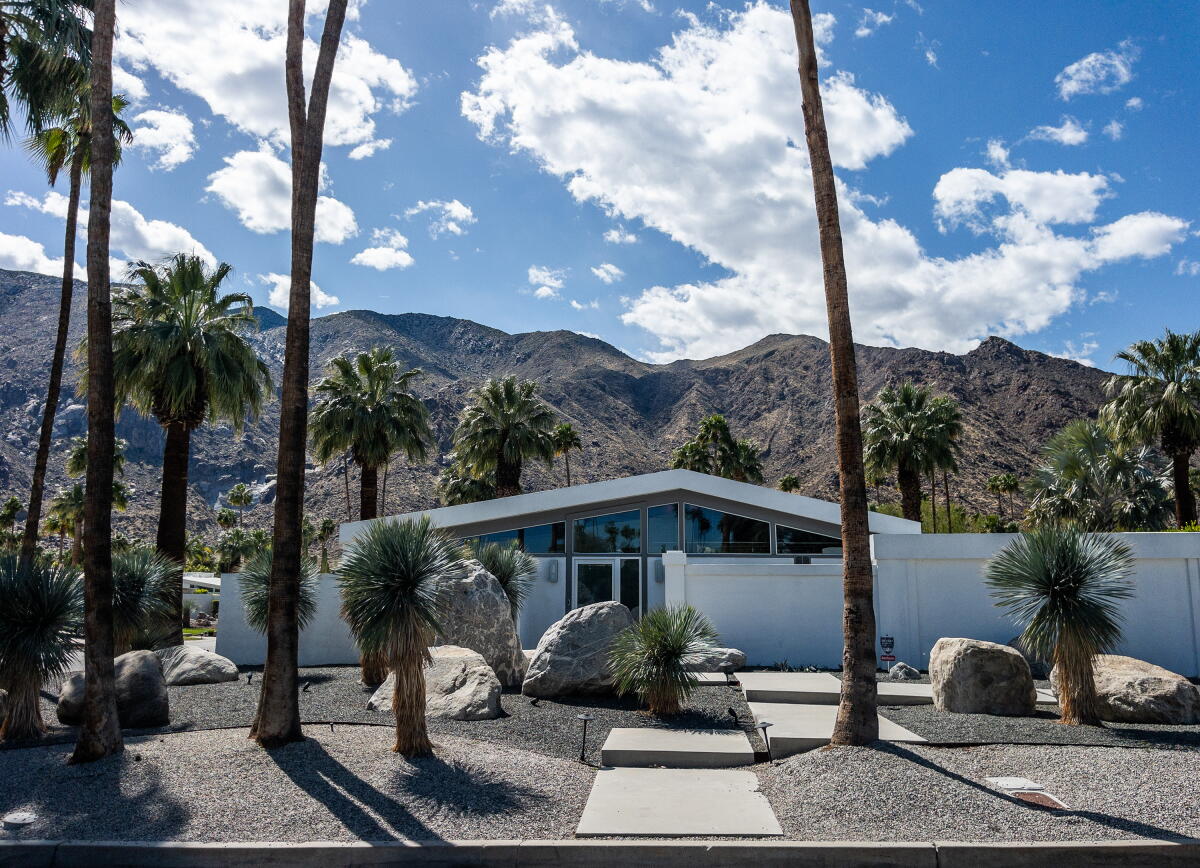
When a roof line cuts a sharp angle against a blue desert sky, the house becomes part of the landscape. That angular white roofline is the defining gesture here: low, wide, and tilted just enough to catch the eye. The stucco walls stay neutral, letting the concrete and stone hardscaping ground the structure. Large windows break up the white facade and reflect the surrounding greenery, which softens the geometry. The palette is restrained: white, gray, green. The desert landscaping, with its dry brush and boulders, repeats the gray-green notes so the building blends in as a natural outcropping. For a layout like this, keep the hardscape materials consistent with the house. If the exterior is stucco and stone, carry those same tones into the patio or pathway. This creates a clear line from roof to ground.
Mid-Century Bedroom with Mustard Yellow Headboards and Wood Paneling
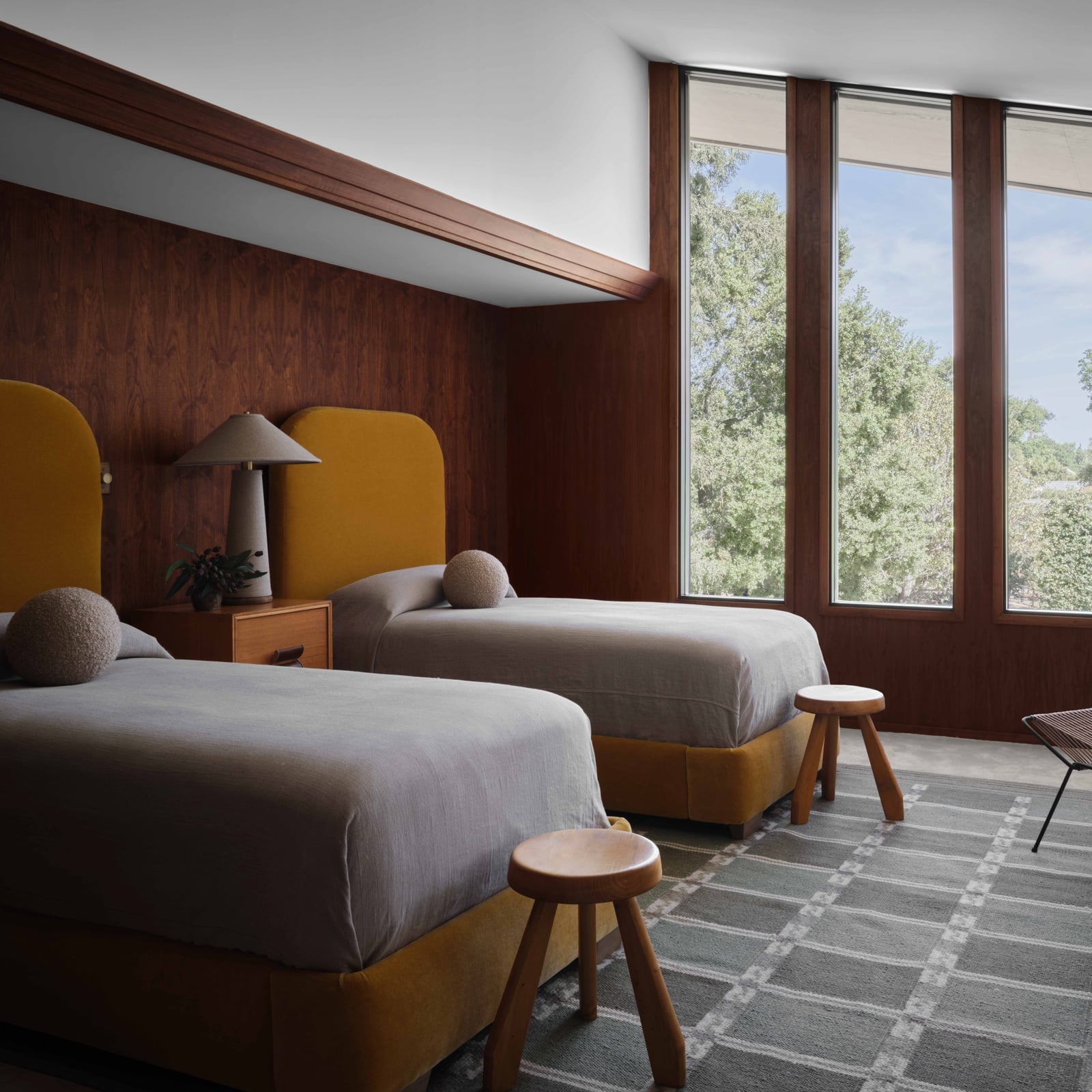
Two beds sit side by side, each with a mustard yellow headboard that pulls warmth from the surrounding wood paneling. The wood tones wrap the room in a consistent brown-gray range, so the yellow stands out as an accent. The large wood-framed windows let in natural light that keeps the darker paneling from feeling heavy. A small bedside table and wooden stools keep the floor plan open. The palette works because the yellow is the only saturated note. To recreate it, pick one warm accent color and repeat it only on the headboards or a single piece of furniture. Let the walls and flooring stay in the same tonal family.
Mid-Century Interior with Mannequin and Garden View
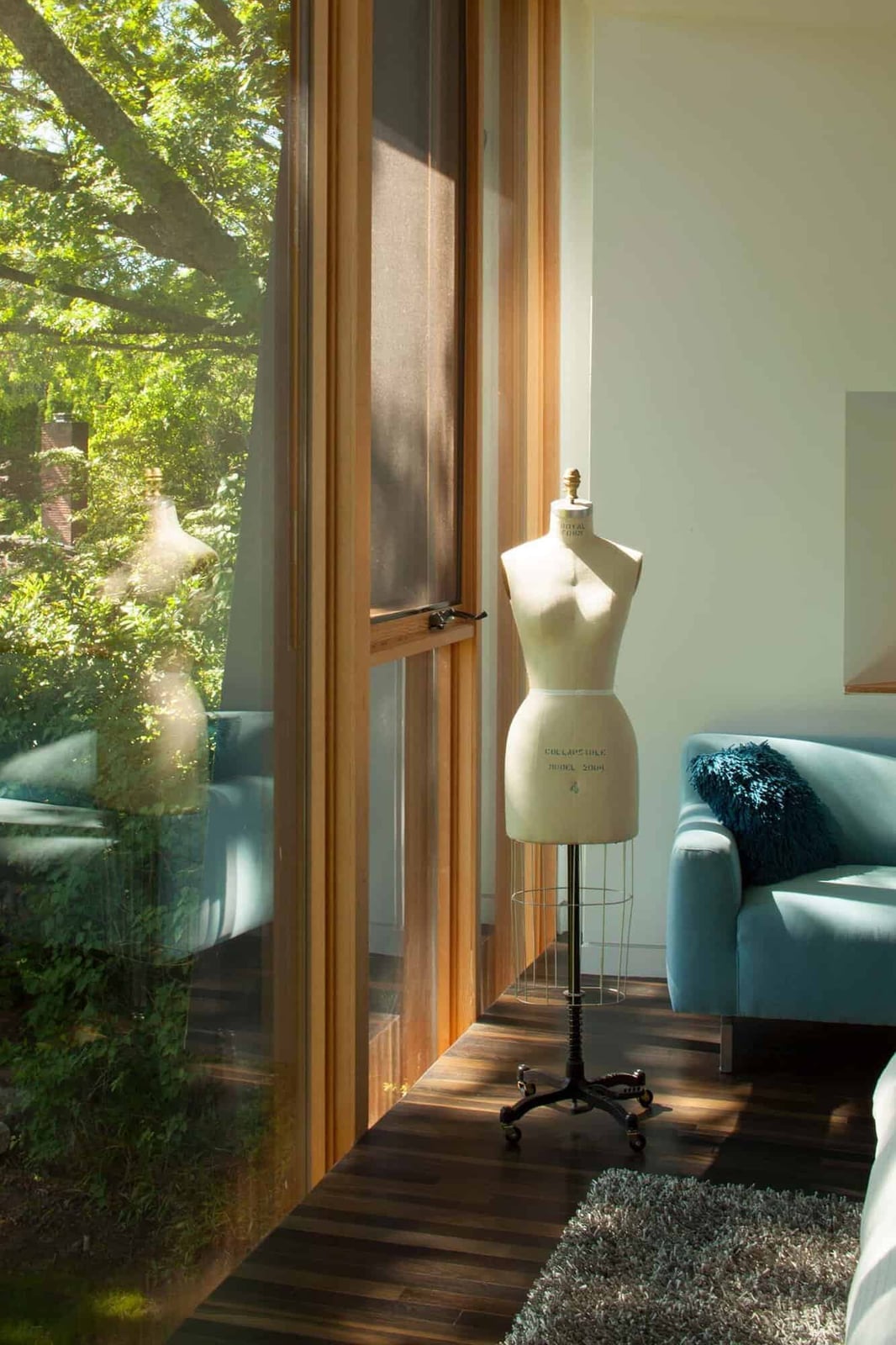
To style an interior with an unexpected object, let the room around it stay simple. Here a vintage mannequin stands near a large window, its pale form catching the natural light and drawing attention to the garden outside. The sofa nearby is upholstered in a light blue fabric, a soft contrast to the wood tones in the floor and window frame. The glass and metal details are minimal, so the mannequin becomes the conversation piece without competing for space. The room feels roomy because the layout puts the sofa parallel to the window, leaving the center open. If you want to add an unusual piece like this, place it where it gets natural light and keep the surrounding furniture low and neutral.
Black Mid-Century House Exterior with Pool and Spiral Staircase
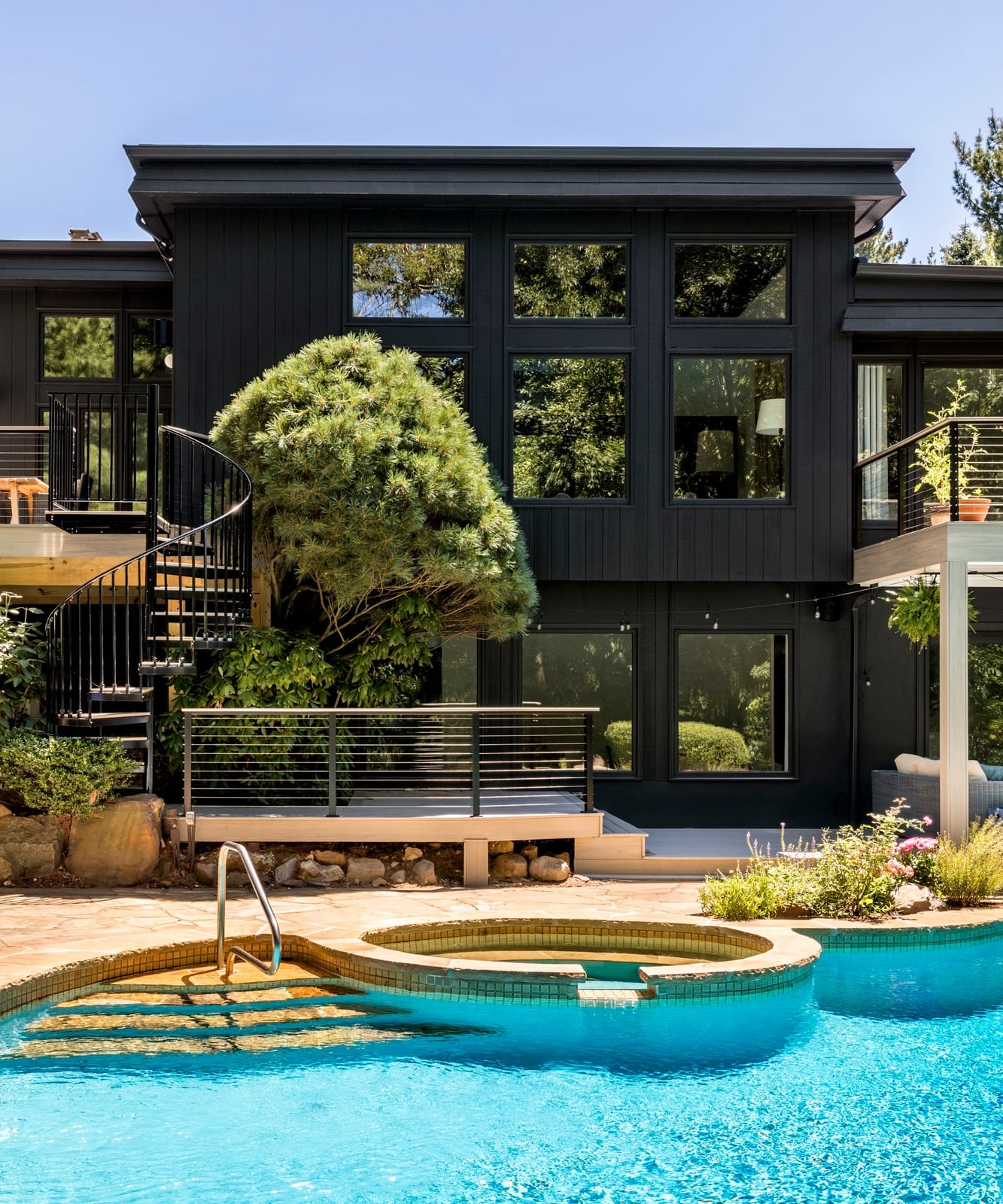
A black house exterior might sound like a bold choice for a mid-century modern home, but it actually makes the architecture read more clearly. The dark wood siding recedes, letting the glass and metal details stand out. A pool and hot tub sit on the deck below, their blue water adding the only saturated color to the scene. A spiral staircase connects the deck to the upper level, its metal railings repeating the slim lines of the house. The natural daylight keeps the black from feeling flat, catching the texture of the wood siding. The layout is spacious, with the house set back from the pool so the two feel connected but not crowded. For a similar effect, use dark siding only on the exterior and balance it with large windows. The glass will reflect the surrounding trees and keep the facade from reading as a solid block.
Single-Story Mid-Century House with Horizontal Brickwork
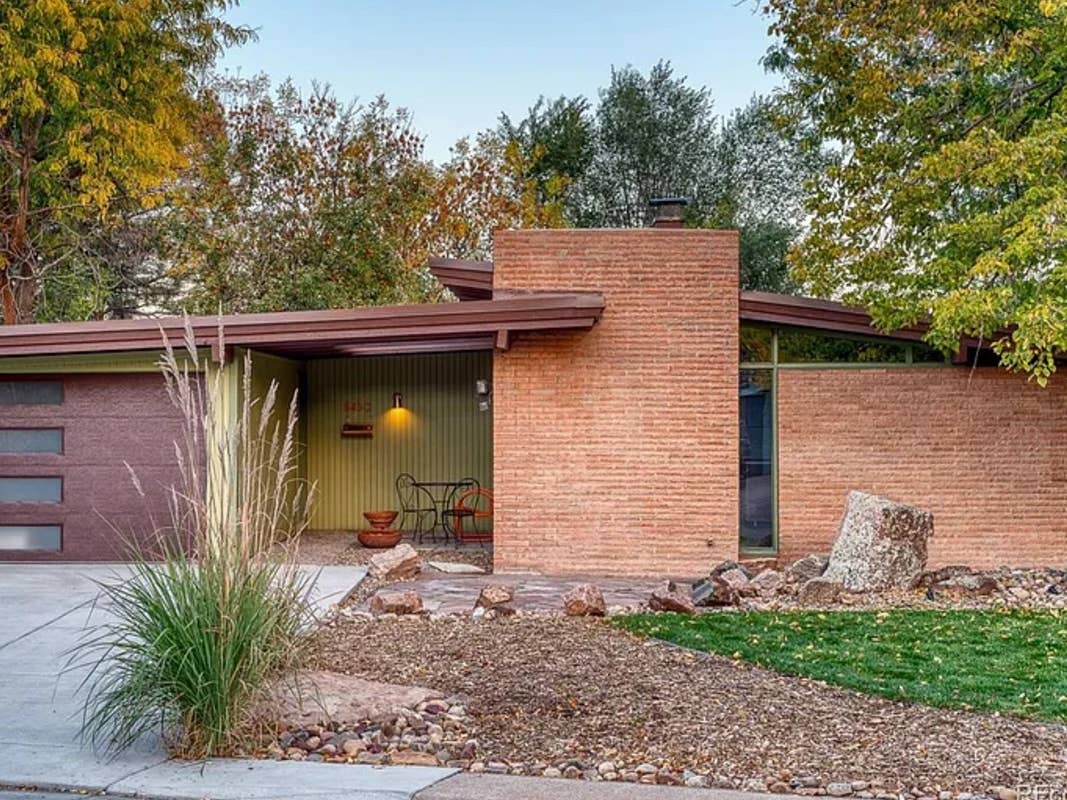
The horizontal brickwork on this single-story facade runs in clean, even lines that emphasize the low profile of the house. The brick is a warm red-brown, offset by olive green trim and a covered entryway with a warm light. Large windows sit within the brick pattern, breaking up the solid surface and letting daylight into the interior. The single-story layout includes an integrated garage, which keeps the roofline uninterrupted. The horizontal brick pattern is the standout detail here. It gives the house a grounded, stable look without needing tall columns or dramatic angles. If your home has a similar low profile, consider using brick in a long, horizontal pattern. It will stretch the facade visually and reinforce the mid-century modern preference for clean, straight lines.
Cozy Mid-Century Living Room Corner with Velvet Armchair
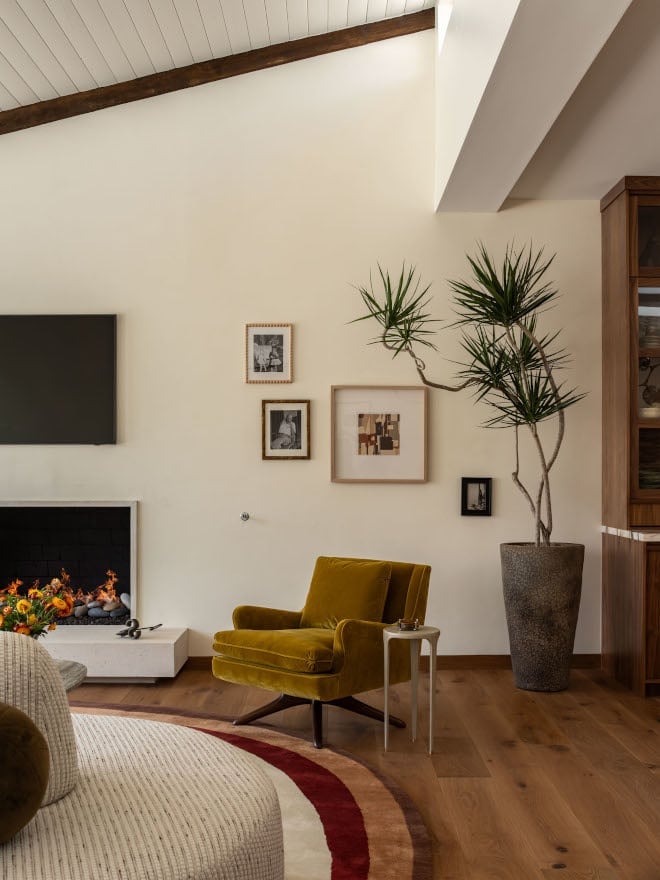
A mustard yellow velvet armchair brings a welcome jolt of color to a mid-century modern living room corner. The chair sits on a warm wood floor, angled toward a stone fireplace that adds texture and a natural focal point. A large potted plant nearby softens the geometry. The palette works because the cream walls and wood tones let the yellow stand out without competing. Style mode here means one strong piece sets the tone. What breaks the look is adding a second bright color in the same corner. Stick to neutral companions and let the velvet chair hold the spotlight.
Expansive Mid-Century Living Room with Sloped Beamed Ceiling
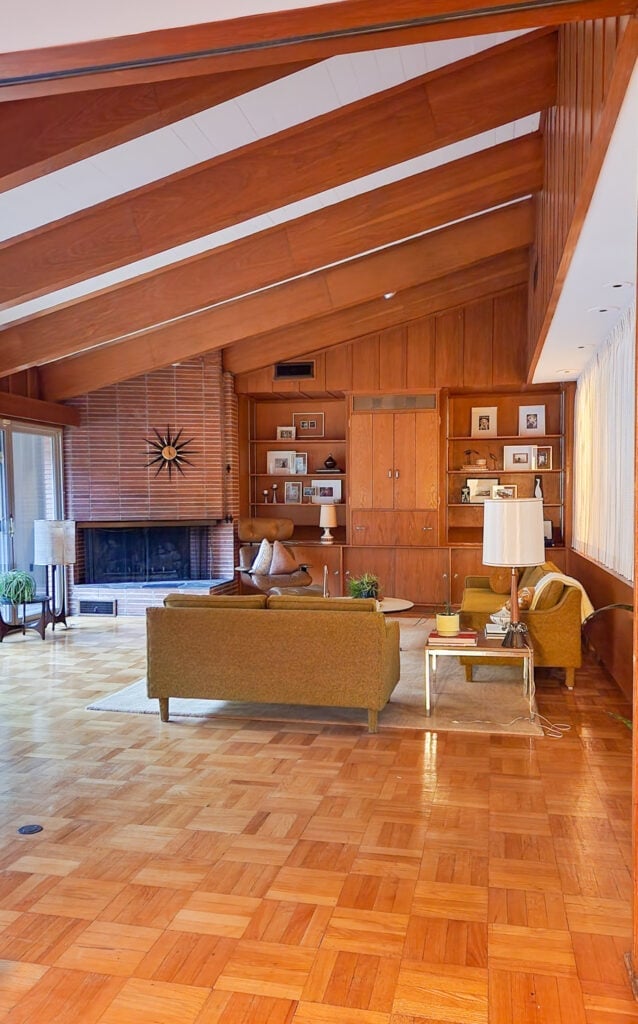
A sloped beamed ceiling covered in warm wood paneling might seem like a feature only an owner can enjoy, but renters can borrow the same effect. The room pairs that dramatic ceiling with a brick fireplace, parquet flooring, and built-in shelving. The palette stays within warm wood tones, brick red, and mustard yellow. For a rental, focus on what sits at eye level. Bring in a sofa and armchairs in those same warm hues. Add a floor lamp with an ambient shade to echo the soft light the ceiling would catch. The scale feels generous, so keep furniture low and let the floor plan breathe. A large area rug in a geometric pattern can anchor the seating area without touching the walls.
Mid-Century Living Room with Geometric Rug and Angled Windows
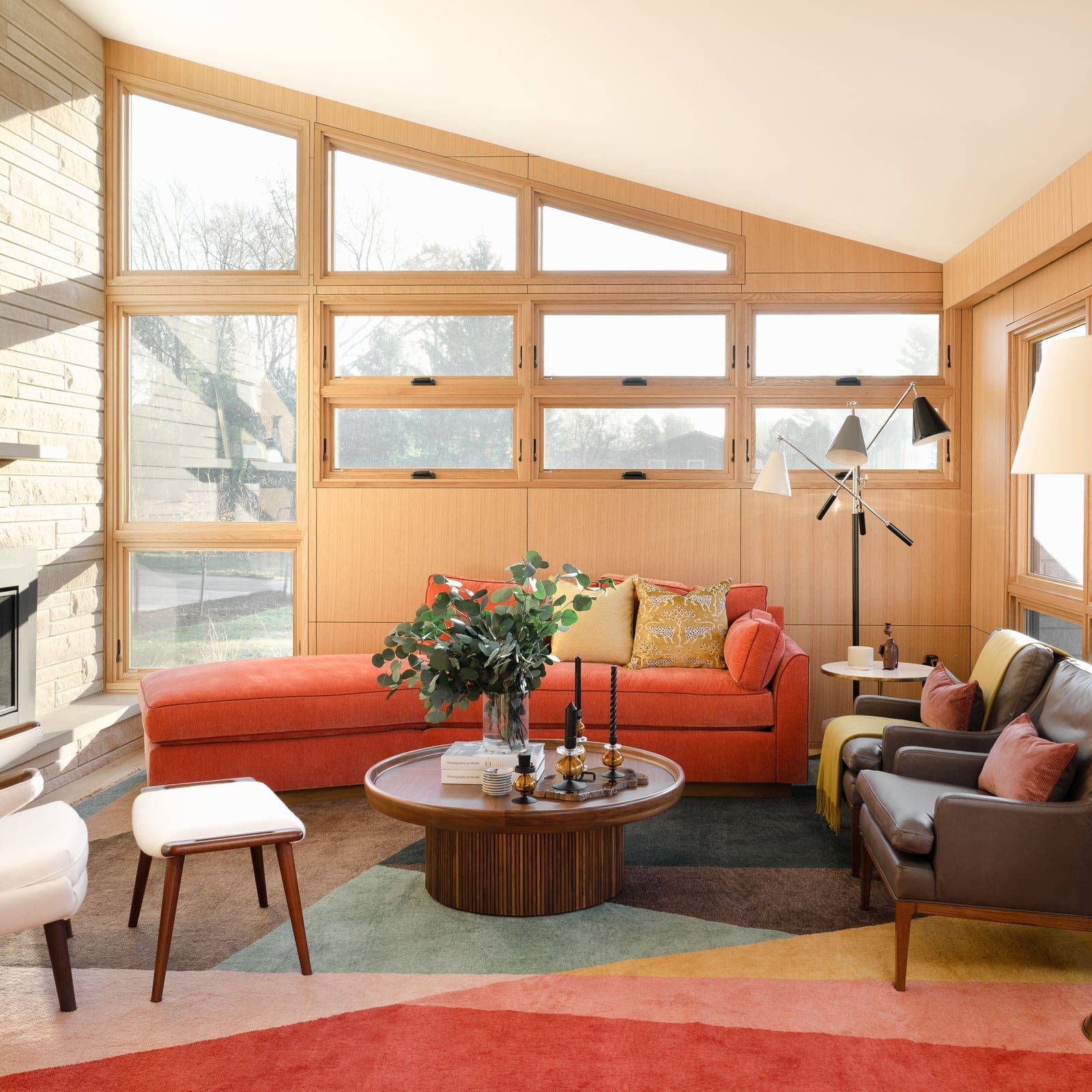
The angled window frames in this mid-century modern living room do more than bring in light. They break up the straight lines of the walls and create a rhythm that the geometric rug below echoes. The rug pulls from orange, yellow, green, and brown, tying the brick and leather pieces together. A floor lamp with a simple shade adds warmth at night. The trick is repetition. The windows set the angles, and the rug repeats them. Keep the furniture arrangement simple around the coffee table so the pattern has room to work.
Inviting Mid-Century Entrance with Vibrant Orange Door
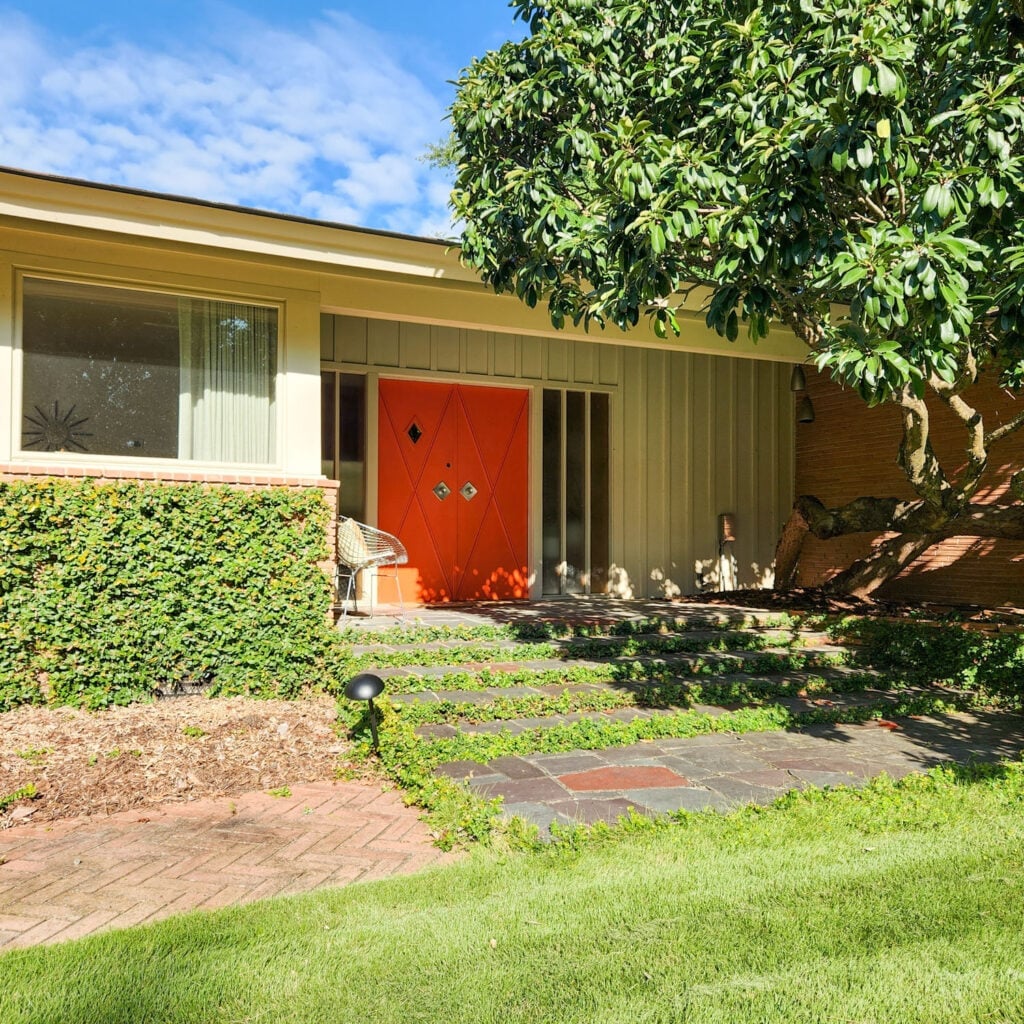
A bright orange door against beige painted siding makes a mid-century modern entrance instantly memorable. The color is bold but the facade stays restrained. Brick and stone add weight, while a manicured hedge keeps the path clear and inviting. A geometric window on the door repeats the era’s love of clean lines. Style mode here is about letting one element lead. The orange door defines the look. What would break it is a second competing color on the trim or shutters. Let the door be the single note, and the entrance feels deliberate.
Final Thoughts
The best mid-century modern houses share a few common threads: honest materials, a clear indoor-outdoor relationship, and shapes that do not need embellishment. If you are working with a similar look, focus on keeping the layout open and the palette grounded in wood, stone, and neutral tones. Add one bold color on a door or a sculptural light fixture to punctuate the space. Check your USDA zone before planting around a glass wall, and remember that original details like a sloped ceiling or brick accent are worth preserving. The goal is a home that feels both of its time and timeless.