
You know that feeling when you find the perfect plant stand on Pinterest, but the link is dead and you have no idea how to recreate it? We’ve all been there. That endless scroll for inspiration can feel more like a chore than a creative spark. But getting that perfect, intentional, “pulled-together” look for your indoor jungle is easier than you think. After filtering through hundreds of options, we narrowed it down to 30 incredible DIY and ready-made plant stand ideas that actually deliver.
This isn’t just another list of pretty pictures. We’re diving deep into what makes these setups work, from minimalist modern stands to rustic farmhouse shelves. For 2026, it’s all about structural greenery—using stands to give your plants the pedestals they deserve. And stay until the end — we break down the most common mistakes that can ruin these looks.
📌 Save this to Pinterest for later — you’ll want to revisit these ideas.
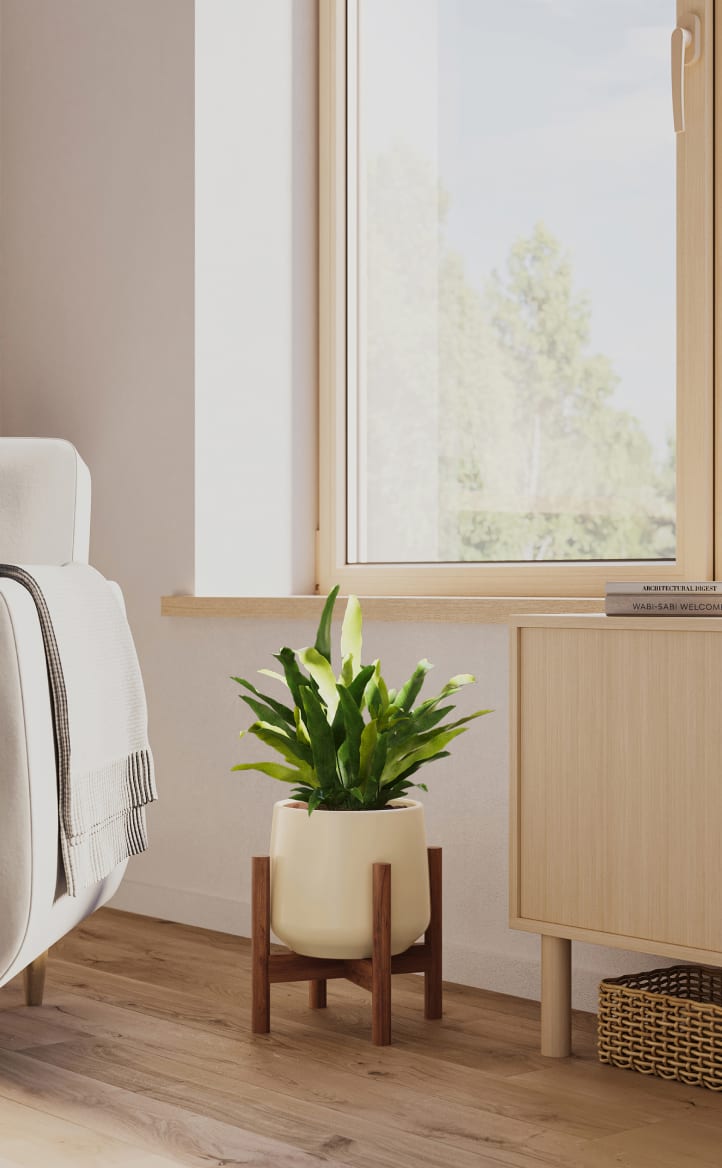
1. A Minimalist Moment with a Dark Wood Stand
This look is a masterclass in quiet contrast. The plant stand’s dark, almost espresso-colored wood creates a strong graphic outline against the off-white wall and light wood flooring. But instead of feeling heavy, the open-frame design keeps it airy and light. The creamy, smooth ceramic pot acts as a perfect midpoint, softening the transition from the dark stand to the vibrant green leaves of the plant. It’s a simple combination that works because each element is allowed to shine without competing.
|
📋 Copy HEX 🔗 Share |
When selecting a pot for an open-frame stand, a common mistake is matching the pot size to the stand’s outer dimensions. Instead, choose a pot with a diameter that is 75-80% of the stand’s width. This creates negative space, making the composition feel more deliberate and less like the pot is just crammed in there. For stability and proportion, the pot’s height should ideally be between 1 and 1.5 times the height of the stand’s cradle portion.
2. The Leaning Ladder Shelf for an Airy, Casual Vibe
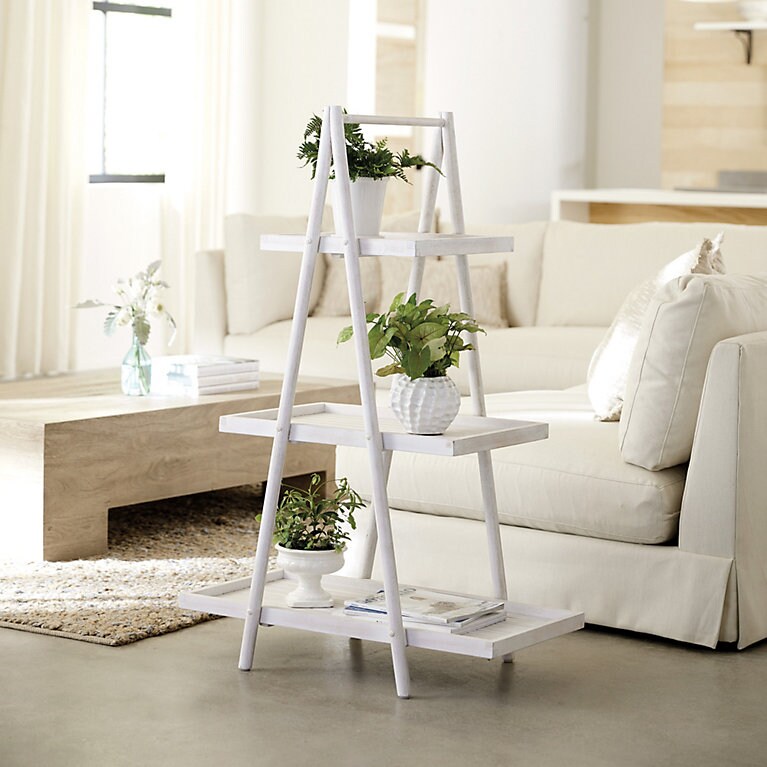
This effortless look follows a simple formula: 60% soft neutrals + 30% natural textures + 10% fresh greenery. The white slipcovered sofa and white distressed ladder create the neutral base. The beige textured rug and light wood coffee table provide the tactile, natural element. Finally, the strategically placed plants provide a pop of life. You could easily swap the palette—imagine a charcoal sofa, a black ladder, and a grey rug—and the serene, balanced formula would still work perfectly.
|
📋 Copy HEX 🔗 Share |
Let’s be honest: ladder shelves, especially leaner styles, are not the most stable option for a high-traffic area or a home with curious pets or toddlers. Their beauty is in their casual, propped appearance, but that also means they can be knocked over more easily than a traditional four-legged stand. If you love the look but are worried about safety, secure the top of the ladder to the wall with a small, discreet L-bracket. This maintains the look while preventing any accidental tips.
3. Elevate Your Space with a Dark Wood Pedestal
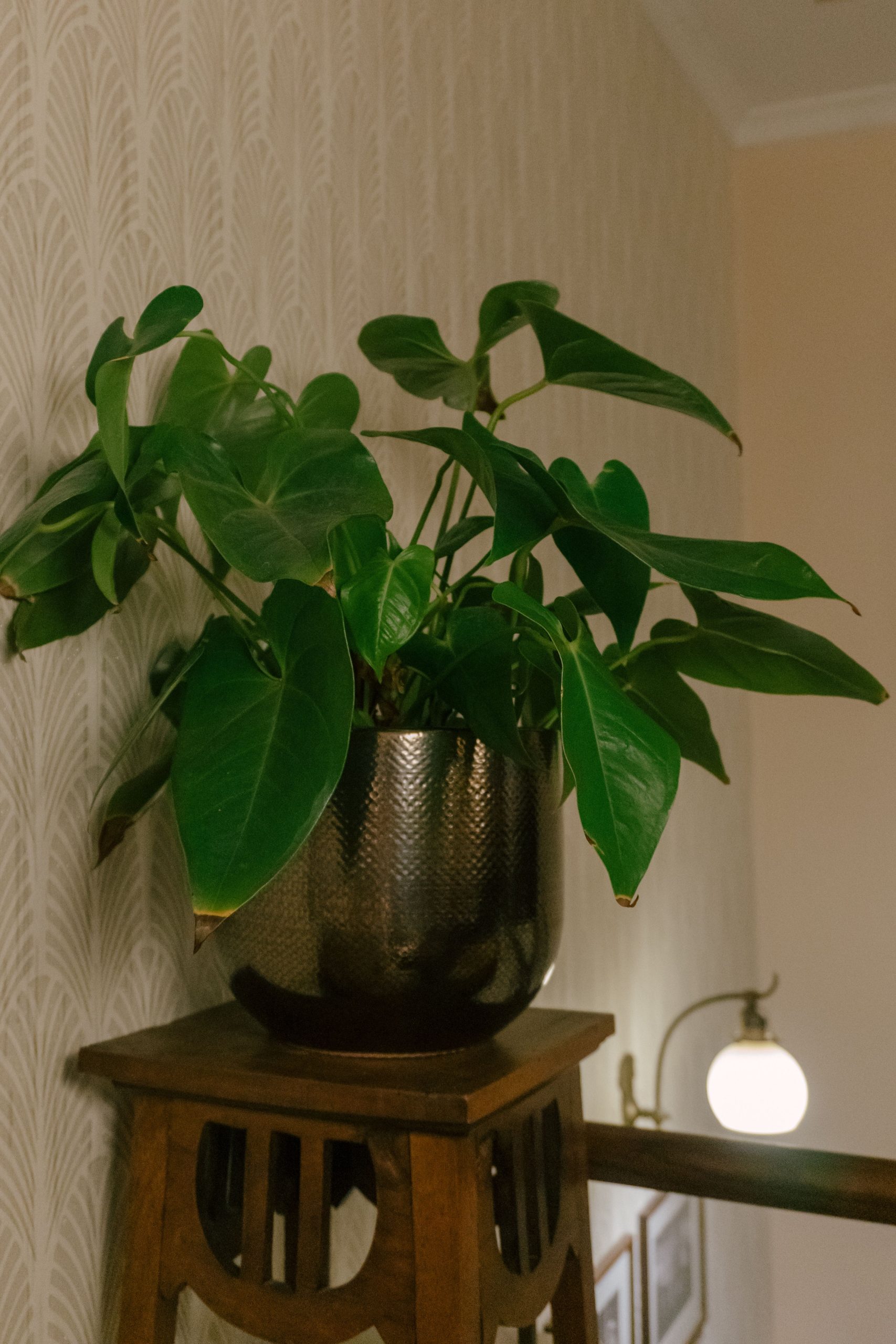
What truly makes this design sing is the patterned wallpaper. Without it, you’d have a perfectly fine plant on a handsome stand. With it, you have a complete, atmospheric moment. The Art Deco-inspired fan motif provides a sophisticated, classic backdrop that elevates the simple act of displaying a plant into a true design statement. The pedestal and planter’s dark, moody tones are a direct, intentional echo of the pattern, creating a cohesive and deeply satisfying visual story.
|
📋 Copy HEX 🔗 Share |
There’s a reason we’re seeing more pedestal-style stands trending on Pinterest and in designer homes. It marks a shift away from the sprawling, multi-plant jungle look of the past few years and toward a more curated, ‘specimen’ approach. Instead of having dozens of small plants, the focus in 2026 is on celebrating a single, beautiful plant by giving it its own distinct piece of furniture. It’s about treating your favorite plant like a piece of sculpture.
4. Black Metal Tiers for a Modern Touch of Green
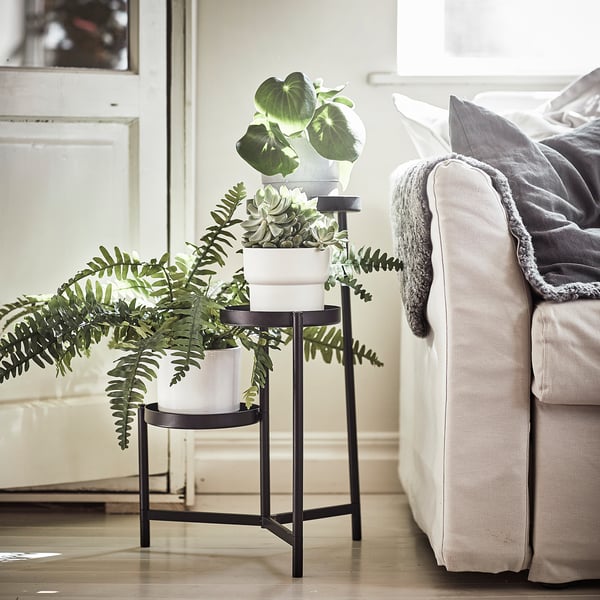
A tiered metal stand like this is a fantastic way to get a lot of green into a small footprint. You can find similar minimalist black metal stands at places like IKEA or Target for around $30 to $50. To get this curated look for less, stick to a simple pot color scheme—all white, all terracotta, or all grey—which makes the collection feel cohesive, even if the plants themselves are different. This strategy makes a budget-friendly setup look incredibly chic and intentional, giving a similar vertical effect to the elegant display in Idea #7 but with a more industrial edge.
|
📋 Copy HEX 🔗 Share |
This type of vertical stand is a small-space superhero. It works best in a room with standard 8- to 9-foot ceilings where it can draw the eye upward without hitting the ceiling. The ideal spot is next to a piece of low-profile furniture, like the sofa shown here, which allows the stand to occupy the vertical space above the sofa’s arm. It typically requires a floor footprint of only about 1.5 to 2 square feet, making it perfect for apartment living rooms or tight corners that need touch of life.
5. Geometric Shelving Against a Stacked Stone Wall
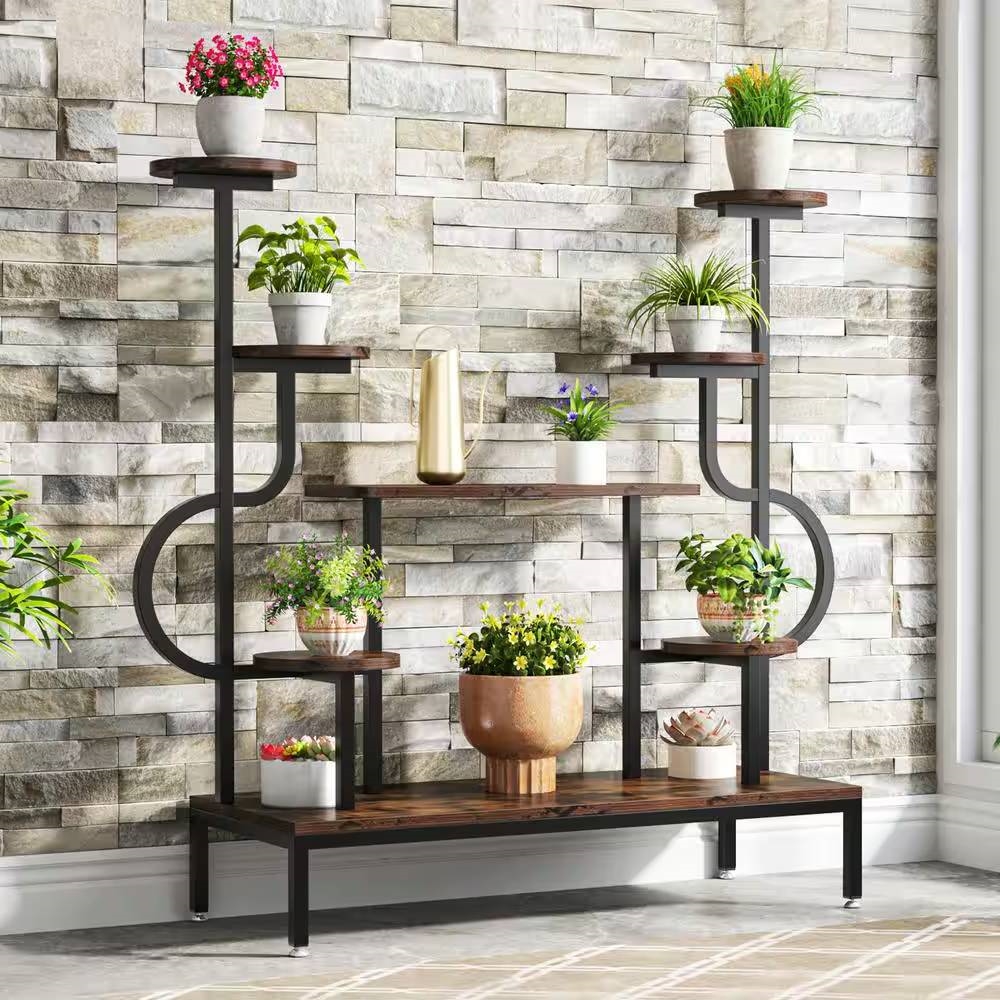
This setup is all about the interplay of textures and shapes. The rough, horizontal lines of the stacked stone wall provide a powerful, organic background. The plant stand’s dark, thin metal frame creates a delicate, geometric line drawing against it. Then, the mix of rectangular and circular shelves adds another layer of geometric interest. The final touch? The soft, irregular shapes of the plant leaves, which prevent the whole scene from feeling too rigid. It’s a beautiful balance of natural and man-made forms.
|
📋 Copy HEX 🔗 Share |
A stand with this many plants requires a commitment. You’re not just watering one plant; you’re tending to a small ecosystem. Expect to spend 10-15 minutes each week checking soil moisture, rotating pots for even light exposure, and pruning any yellowing leaves. The faux wood shelves are low-maintenance, but dust will be very visible on them, so a weekly wipe-down is essential. A gold watering can, like the one shown, is both a functional tool and a beautiful piece of decor to keep nearby.
6. Light Wood and Black Walls for Dramatic Contrast
When pairing a light-colored wood stand with a dark wall, the finish of the wood is critical. Matte or satin finishes work best, as they absorb light and create a soft, natural feel. A high-gloss finish on the wood would create too much reflection and glare against the dark backdrop, making it look cheap and distracting. By keeping the wood’s finish subdued, you allow its natural grain and color to be the star, creating a warm, organic element against the dramatic black.
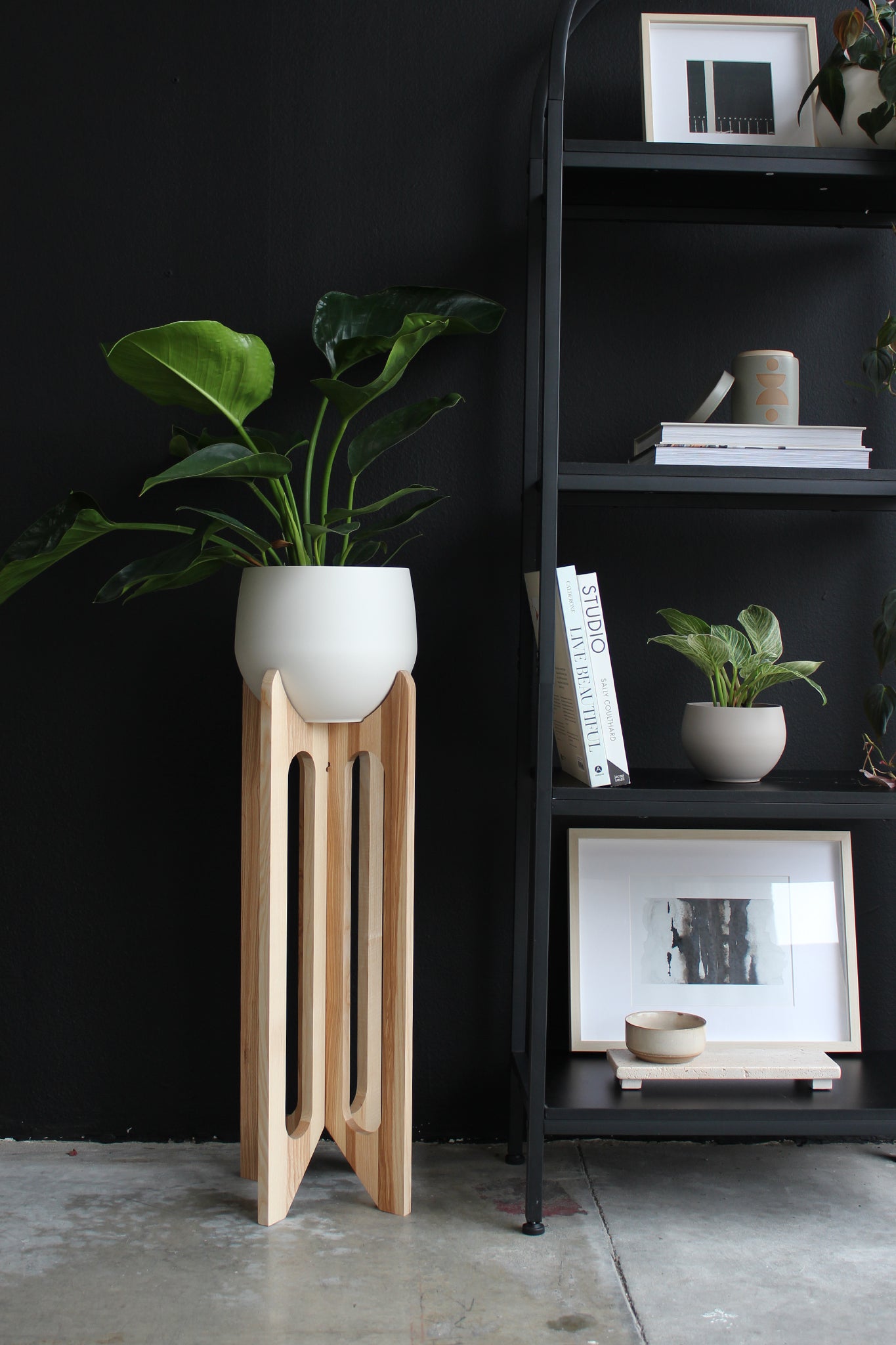
The single element that makes this idea so powerful is the bold, black wall. It’s a commitment, but the payoff is huge. The dark backdrop makes the green of the plant leaves appear infinitely more lush and vibrant, and the light tone of the wooden plant stand pops with architectural clarity. It turns a simple plant and stand into a piece of high-contrast art. If you remove the black wall, the effect is pleasant, but it’s no longer a showstopper. For a similar high-contrast look on a smaller scale, refer to the hairpin stool in Idea #14.
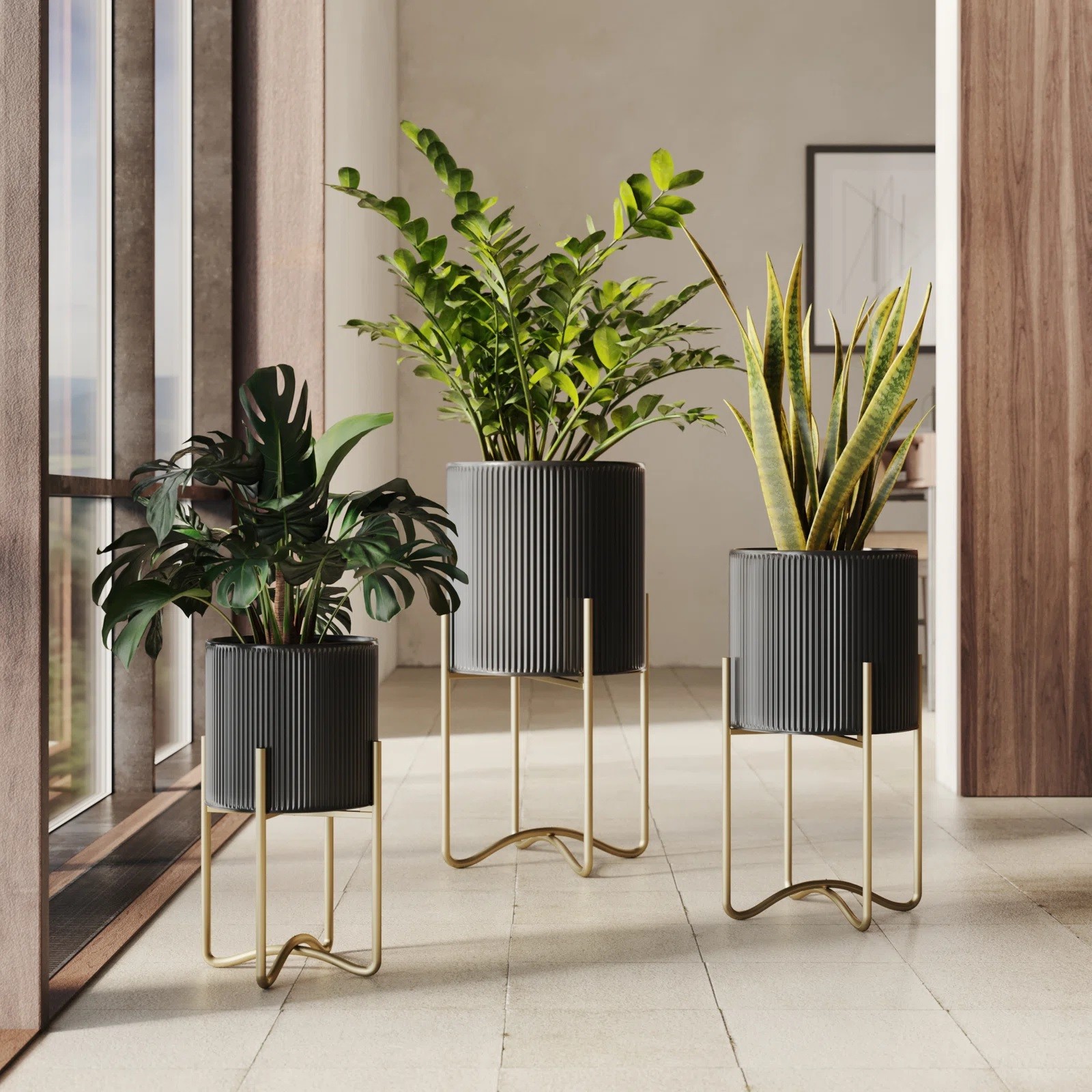
7. A Trio of Fluted Planters on Geometric Gold Stands
Recreating this chic, modern trio requires a bit of an investment in the planters themselves, but the result is stunning. Here’s a potential cost breakdown:
-
- Planter/Stand Sets (3): $225 – $450 ($75-$150 each for quality pieces)
- Mature Plants (Monstera, ZZ, Snake Plant): $100 – $250
- Potting Soil & Materials: $25 – $40
- TOTAL: $350 – $740
Budget alternative: Look for similar gold-tone stands on Amazon or at HomeGoods and pair them with less expensive ribbed pots from a big-box store. Total cost could be 40-50% lower.
|
📋 Copy HEX 🔗 Share |
This look is a beautiful equation of repetition and variation. The formula is 70% Repetition + 30% Variation. The repetition comes from the three identical planters and stands, which creates a strong sense of rhythm and cohesion. The variation comes from the plants themselves—each has a different height, leaf shape, and shade of green. This keeps the arrangement from feeling boring. You could use this same formula with any style of planter, from rustic terracotta to minimalist white ceramic, to achieve a similarly pleasing result.
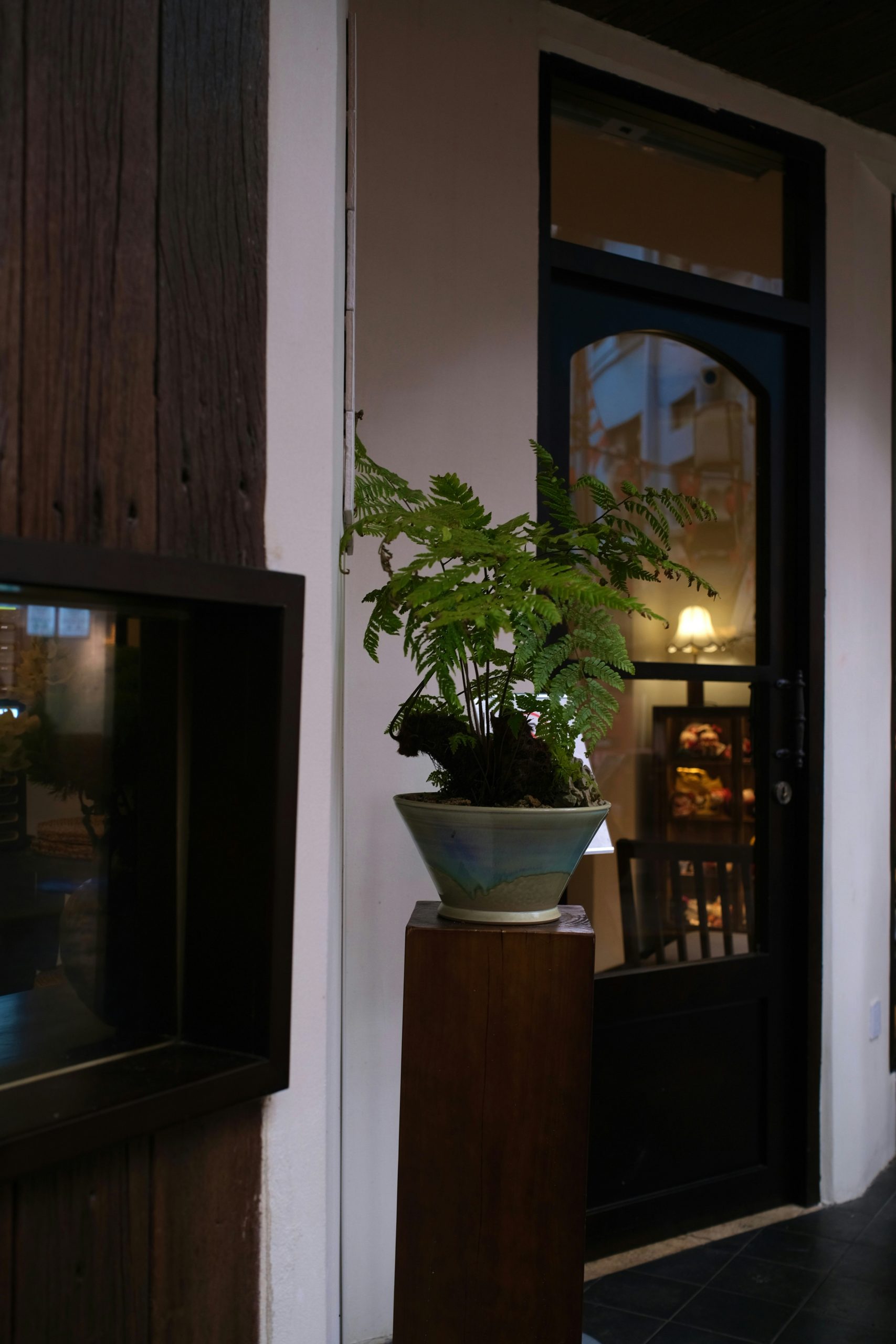
8. A Solid Wood Block Stand for a Grounded, Earthy Feel
While a solid block of wood makes a stunningly simple and rustic plant stand, be practical about its placement. You don’t want to stub your toe on it in the middle of the night. Because of its low profile, it works best in a well-lit corner or alongside a substantial piece of furniture, like a credenza or an armchair. It can become a tripping hazard if left floating in a more open area or walkway. Also, ensure the bottom is perfectly level to avoid any wobbling, especially on an uneven floor.
|
📋 Copy HEX 🔗 Share |
Before you commit to a solid wood stand, run through this quick checklist:
- Is the wood sealed? Unsealed wood will get water rings and stains almost immediately. Apply a coat of clear polyurethane if needed.
- What is underneath? Place felt pads on the bottom to prevent it from scratching your wood or tile floors.
- Is the scale right? A chunky block like this needs a substantial plant and pot to look balanced. A tiny pot will look silly.
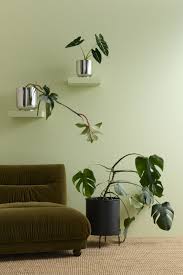
9. Integrated Greenery with Floating Shelves and a Velvet Sofa
When painting shelves the same color as the wall, the key is to vary the sheen. Paint the wall in a flat or eggshell finish, and use a semi-gloss or satin finish for the shelves. This subtle difference in reflectivity allows the shelves to stand out just enough from the wall without introducing a new color. The slight sheen on the shelves will also catch the light, creating delicate highlights that define their shape and make them easier to wipe clean.
|
📋 Copy HEX 🔗 Share |
Want to recreate those perfectly matched floating shelves? Here’s a quick guide.
- Time Estimate: 2 hours (plus paint drying time)
- Material Cost: $30-$60
- Purchase simple floating shelves and wall paint in your chosen color (in this case, a soft sage green).
- Lightly sand the shelves to scuff up the surface for better paint adhesion. Wipe clean.
- Apply a coat of primer. Let it dry completely.
- Apply two coats of your wall paint to the shelves, letting each coat dry according to the manufacturer’s instructions.
- Install the shelves on the wall using the provided hardware.
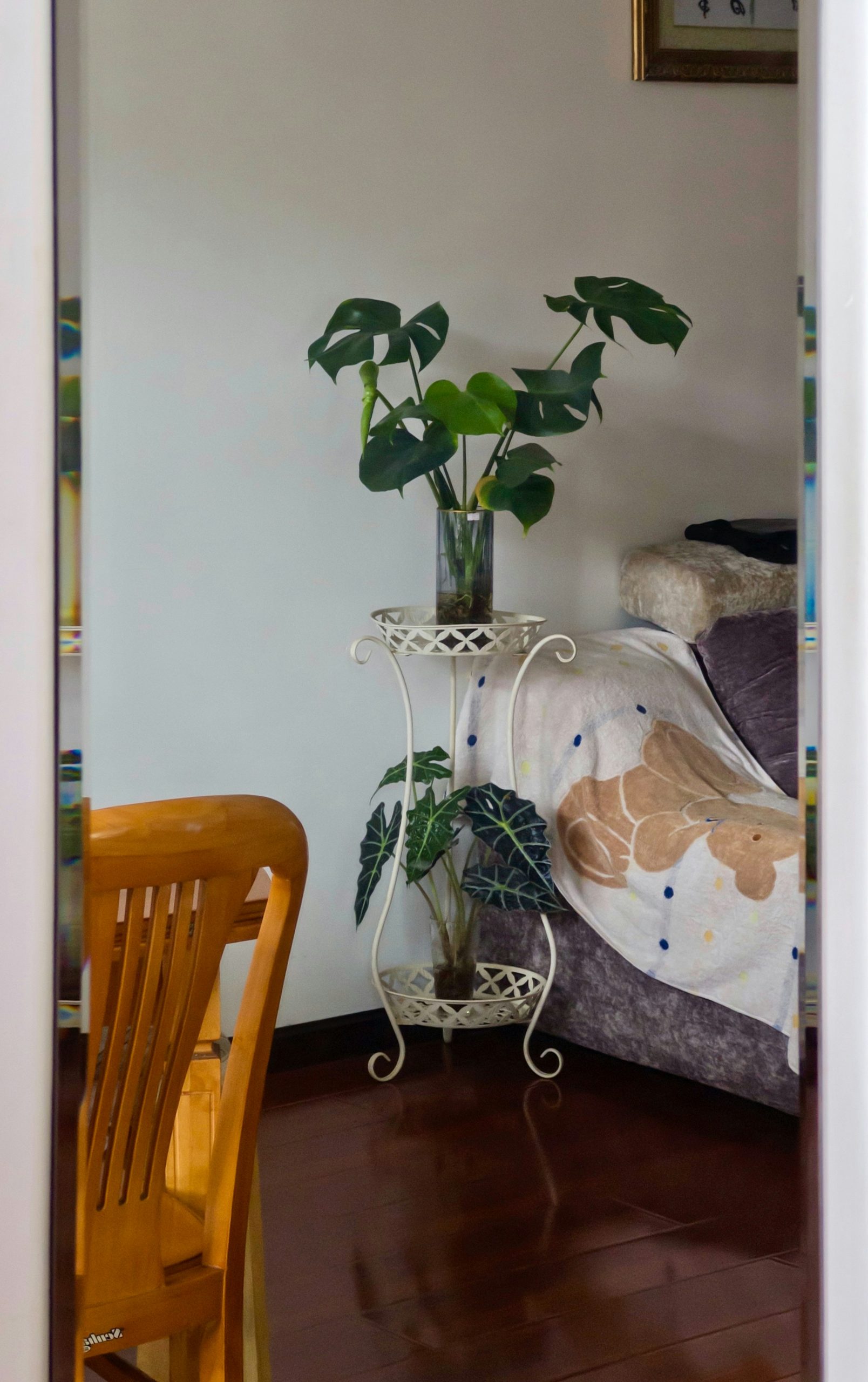
10. Traditional White Wrought Iron Stand with a Lush Philodendron
This composition works because of a principle called ‘Figure-Ground’. The intricate, bright white lines of the wrought iron stand (the ‘figure’) pop clearly against the solid, dark gray sofa (the ‘ground’). This contrast makes the stand’s traditional, slightly ornate shape a focal point. Furthermore, the wild, organic shape of the split-leaf philodendron provides a beautiful counterpoint to the stand’s rigid structure, creating a perfect balance between the natural and the man-made.
|
📋 Copy HEX 🔗 Share |
A narrow, two-tiered stand like this is incredibly versatile. It has a floor footprint of only about 12-16 inches in diameter. This small size makes it perfect for the often-awkward space at the end of a sofa, as shown here. It can also be used to fill a narrow gap between two armchairs, in a bathroom corner, or on a covered porch. However, because of its height and narrow base, it’s best suited for rooms where it won’t be easily bumped into. It’s a great alternative to the wider profile of the leaning shelf in Idea #2.
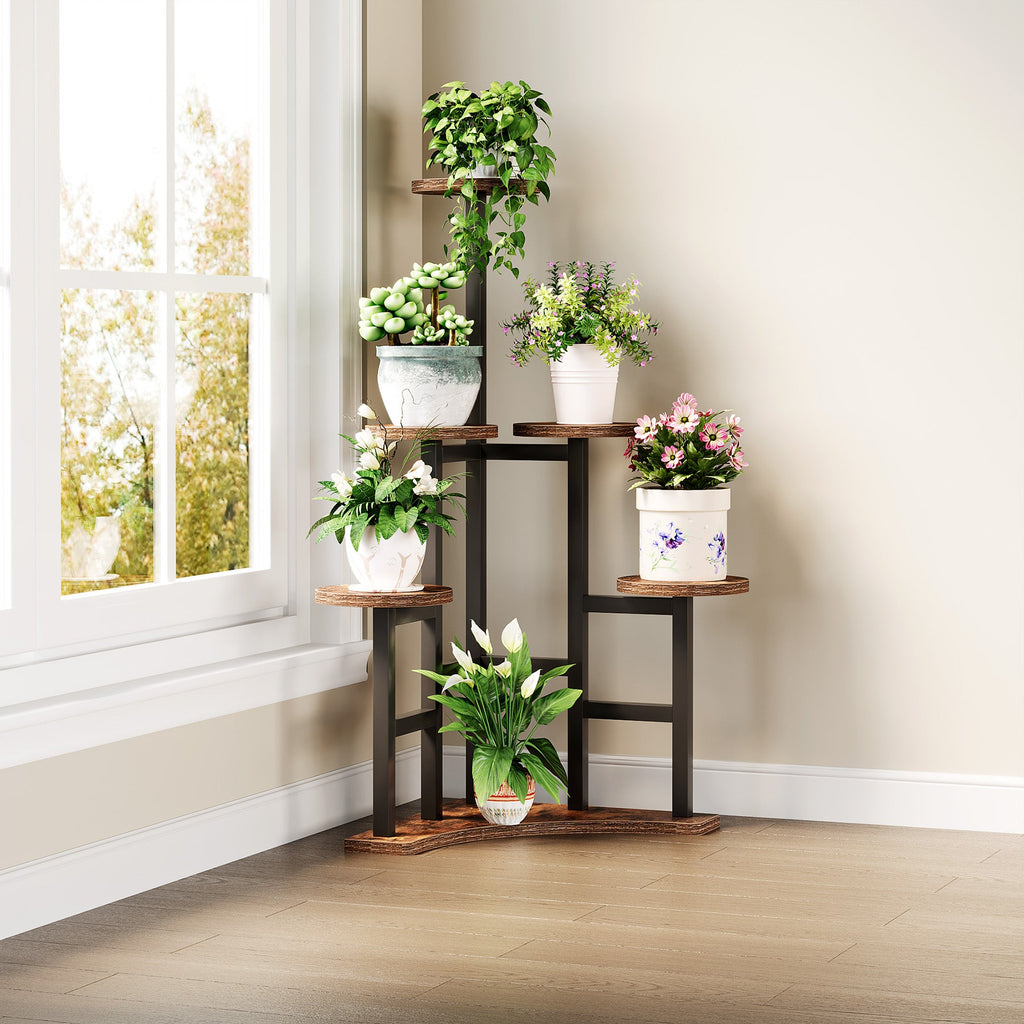
11. A Tiered Corner Stand to Maximize Vertical Space
The single most important element here is the use of varying heights. This isn’t just one plant on a stand; it’s a curated collection where each plant is given its stage. The multi-tiered design allows smaller plants on lower shelves to receive light, while taller ones can stretch out on top. This strategic staggering creates a lush, ‘indoor garden’ effect that feels abundant and full, turning an empty corner into a vibrant focal point. Without the different levels, it would just be a cluster of pots on the floor.
|
📋 Copy HEX 🔗 Share |
You don’t need a fancy stand to get this look. Check Facebook Marketplace or thrift stores for old ‘baker’s racks’ or simple corner étagères, which often sell for $20-$40. A quick coat of black spray paint can unify a mismatched metal piece and give it this same modern look. The key is to collect various plants over time. Start with a few inexpensive snake plants and pothos, and then add a flowering plant like a kalanchoe for a pop of color. The ‘collected over time’ feel is part of its charm.
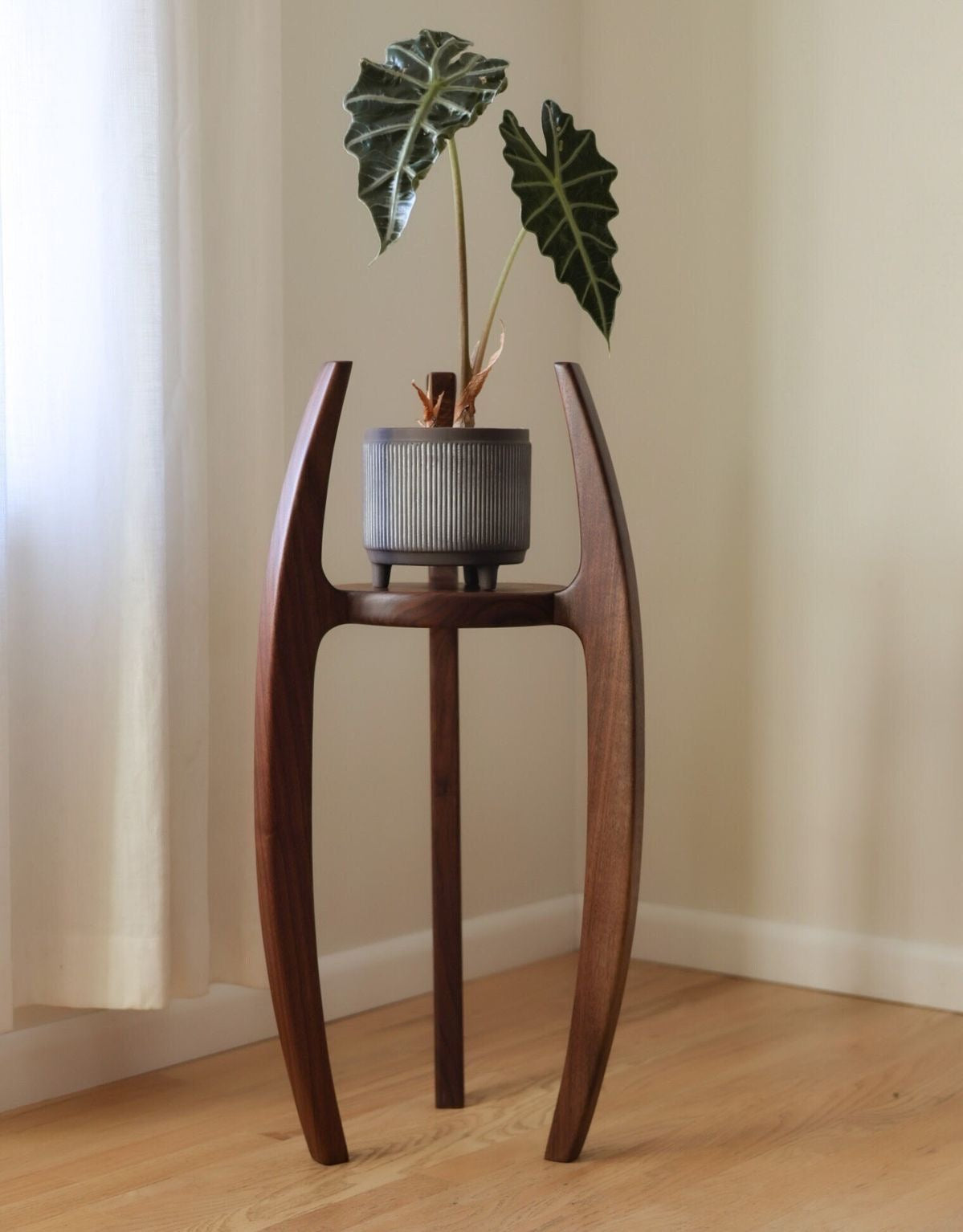
12. A Modern Curved Wood Stand for an Organic Statement
The magic of this piece comes from the tension between its material and its form. Wood is typically considered a rigid, linear material. However, this stand uses beautifully curved, open-sided supports that make the dark wood feel fluid and organic. Holding a simple, textured pot enhances this sculptural quality. The stand itself serves as the art piece, while the plant provides the beautiful finishing touch. It’s a perfect example of how a functional item can also serve as sculpture.
|
📋 Copy HEX 🔗 Share |
When you have a plant stand with a strong, sculptural silhouette like this one, choose a plant that complements its shape rather than hides it. An upright plant with striking leaves, like the Alocasia shown here, works well because it continues the stand’s vertical movement. A bushy, trailing plant would cascade over the sides, completely obscuring the stand’s unique curved design. Let the stand have its moment! For a different take on a sculptural stand, see the tree-branch design in Idea #26.
13. Rustic Floating Shelves for a Succulent Collection
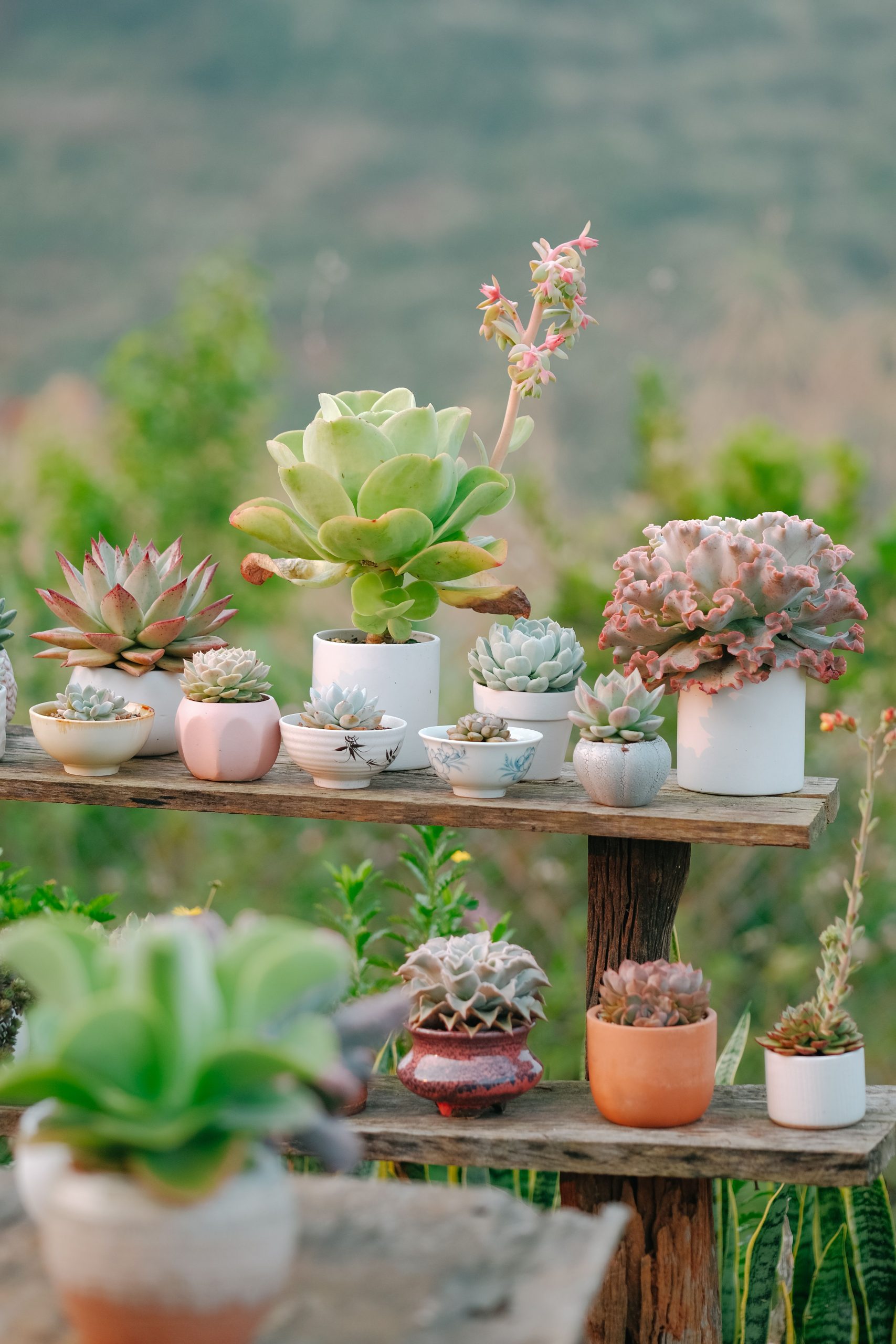
A beautiful succulent collection like this requires one non-negotiable element: tons of light. The visual notes mention a ‘blurred green outdoor background,’ suggesting that these shelves are likely placed directly in front of a window or on a covered patio. If you try to recreate this look in a dim corner of your home, you will be deeply disappointed. The succulents will etiolate, stretching unnaturally toward the light and losing their compact shape and vibrant color. Be honest about your light situation before you invest in a sun-loving collection.
|
📋 Copy HEX 🔗 Share |
This charmingly rustic display is a perfect mix: 50% raw texture + 30% varied color + 20% repetition. The raw, unfinished wood shelves provide the dominant textural element. The variety of colors—from the greens and pinks of the succulents to the white and terracotta of the pots—adds visual interest. Finally, the repetition of small, similarly sized pots keeps the collection from feeling cluttered. It’s a formula that feels collected and personal, not random.
14. Peace Lily on a Hairpin Leg Stool
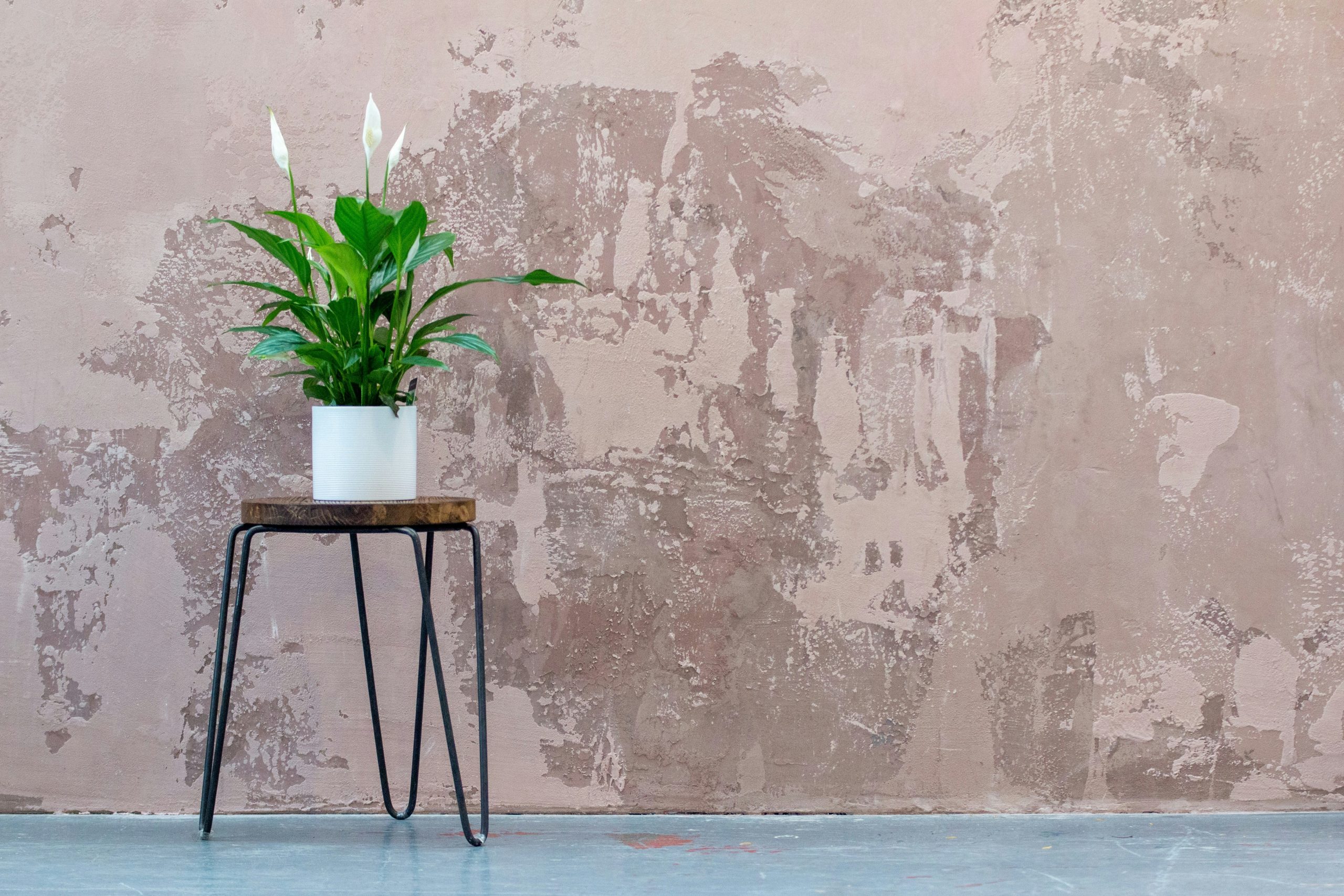
This vignette is a lesson in textural contrast. You have the super smooth, almost waxy leaves of the Peace Lily, the ribbed texture of the white pot; the smooth, warm grain of the wooden stool top; the thin, industrial lines of the black hairpin legs; and the rough, distressed texture of the pink and tan wall. It’s an incredibly rich and tactile combination. The minimal color palette allows these different textures to take center stage, proving that a space doesn’t need to be colorful to be captivating.
|
📋 Copy HEX 🔗 Share |
This is one of the most budget-friendly and versatile DIY plant stand ideas out there. You can buy a set of four hairpin legs, 12 to 16 inches long, online for about $20 to $30. Then, head to a thrift store and find a small wooden cutting board, a round slice of live-edge wood, or even a sturdy old hardcover book to use as the top. Simply screw the legs into the base, and you have a stylish, mid-century-inspired plant stand for under $40. It’s a perfect weekend project that delivers a high-end look.
15. A Woven Basket Tray on Modern Hairpin Legs
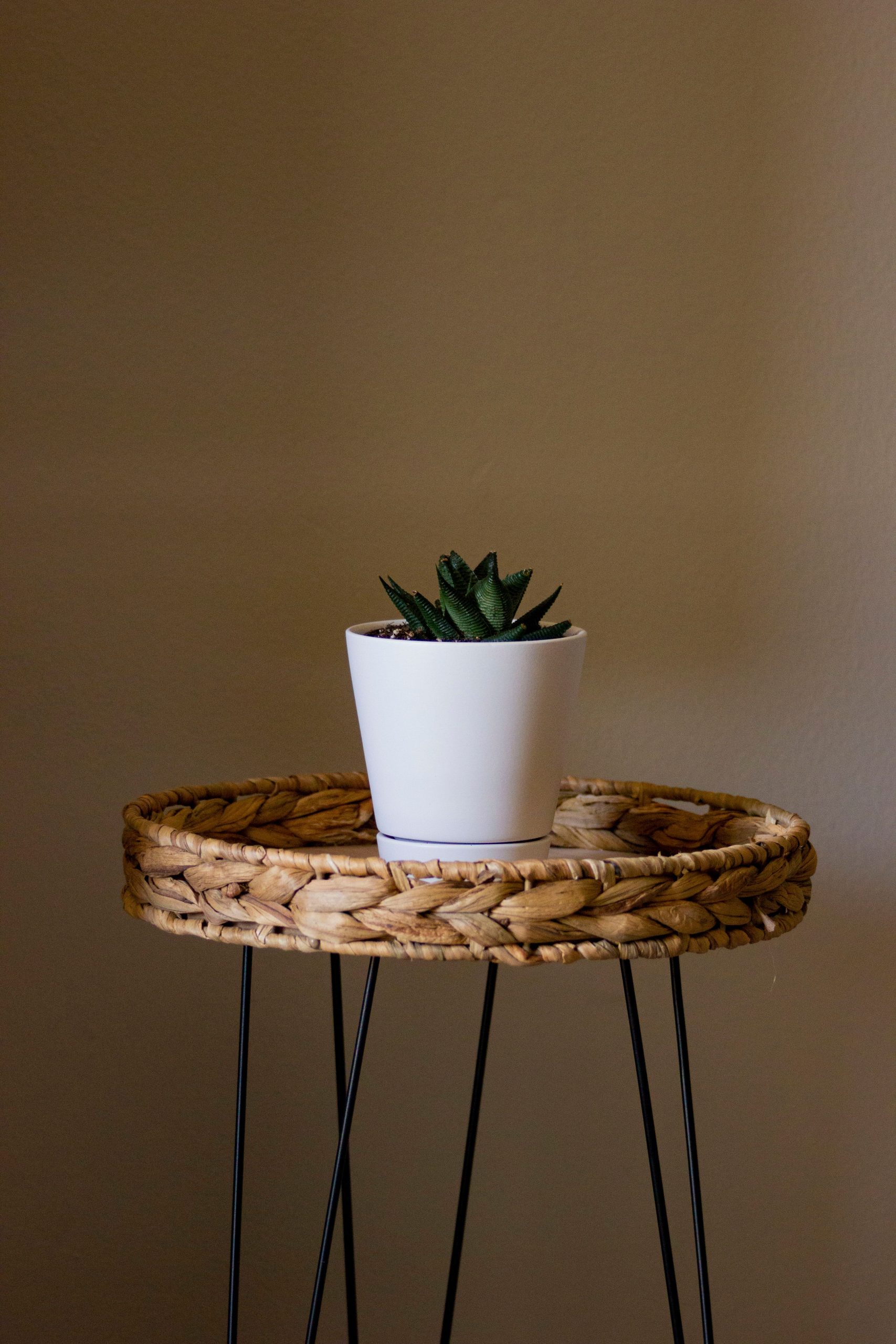
This incredibly chic and simple stand is an effortless DIY project.
-
-
- Time Estimate: 30 minutes
- Material Cost: $25 – $50
- Source your materials: You’ll need a set of 12-16 inch hairpin legs, a round, shallow woven tray (like a charger plate or basket lid), and a thin piece of plywood cut to the same diameter as the tray’s base.
- Use a strong construction adhesive to glue the plywood circle to the bottom of the woven tray. This creates a solid surface to attach the legs. Let it dry completely.
- Position the hairpin legs evenly on the plywood base.
- Secure the legs to the plywood with short screws, making sure they don’t poke through the top of the tray.
-
|
📋 Copy HEX 🔗 Share |
The element that elevates this simple idea is the woven basket tray. It introduces a layer of natural, bohemian texture that you wouldn’t get from a standard wood or metal top. This single choice transforms the stand from a purely modern/industrial piece (just hairpin legs) into something warmer, earthier, and more on-trend. It bridges the gap between minimalist design and the craving for natural materials, which is why it feels so fresh and current.
16. An Organic tiered Stand Made from Natural Branches
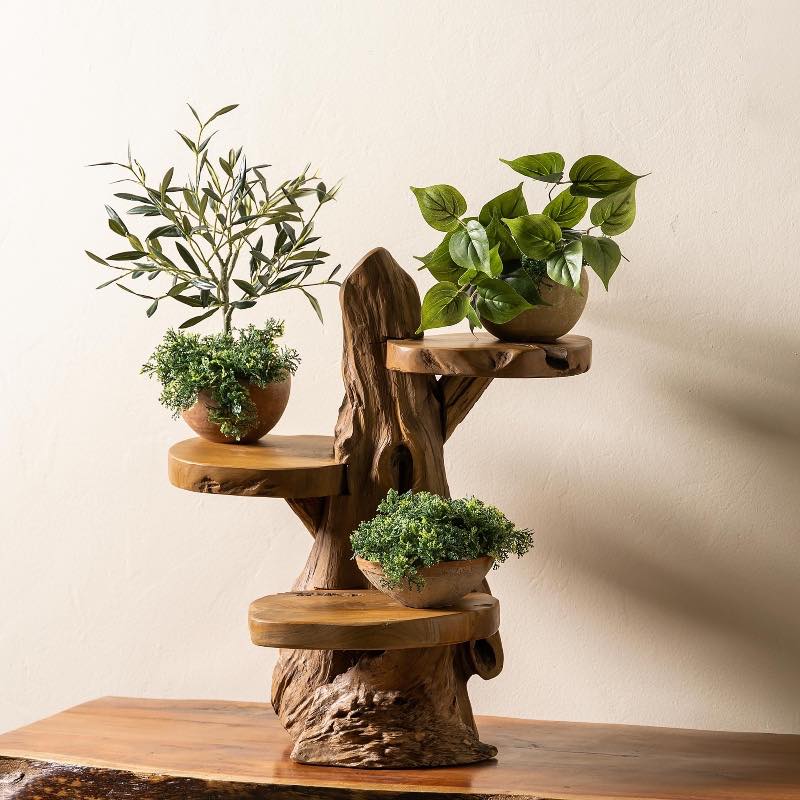
The beauty of this stand lies in its authentic, organic form. Unlike a typical stand with straight lines and perfect angles, this one, crafted from gnarled wood, celebrates the imperfections and natural shapes of the material. It feels less like a piece of furniture and more like a piece of the forest brought indoors. By pairing it with simple, earthy pots, the focus remains on the stand’s unique sculptural quality and the natural beauty of the wood grain. This is a perfect example of biophilic design—the practice of connecting architecture and design with nature.
|
📋 Copy HEX 🔗 Share |
A natural wood stand like this requires a bit of care to keep it looking its best. If the wood is raw or has an oil finish, it will be susceptible to water damage. Always use cachepots with drainage saucers to prevent water from sitting directly on the wood. About twice a year, you may want to refresh the finish with a light sanding and a new coat of tung oil or a similar wood wax to keep the grain from drying out and to maintain its rich color. Dust will also love to settle in the nooks and crannies, so a regular dusting with a soft brush is a must.
17. Simple Three-Tiered Stand for Utilitarian Charm
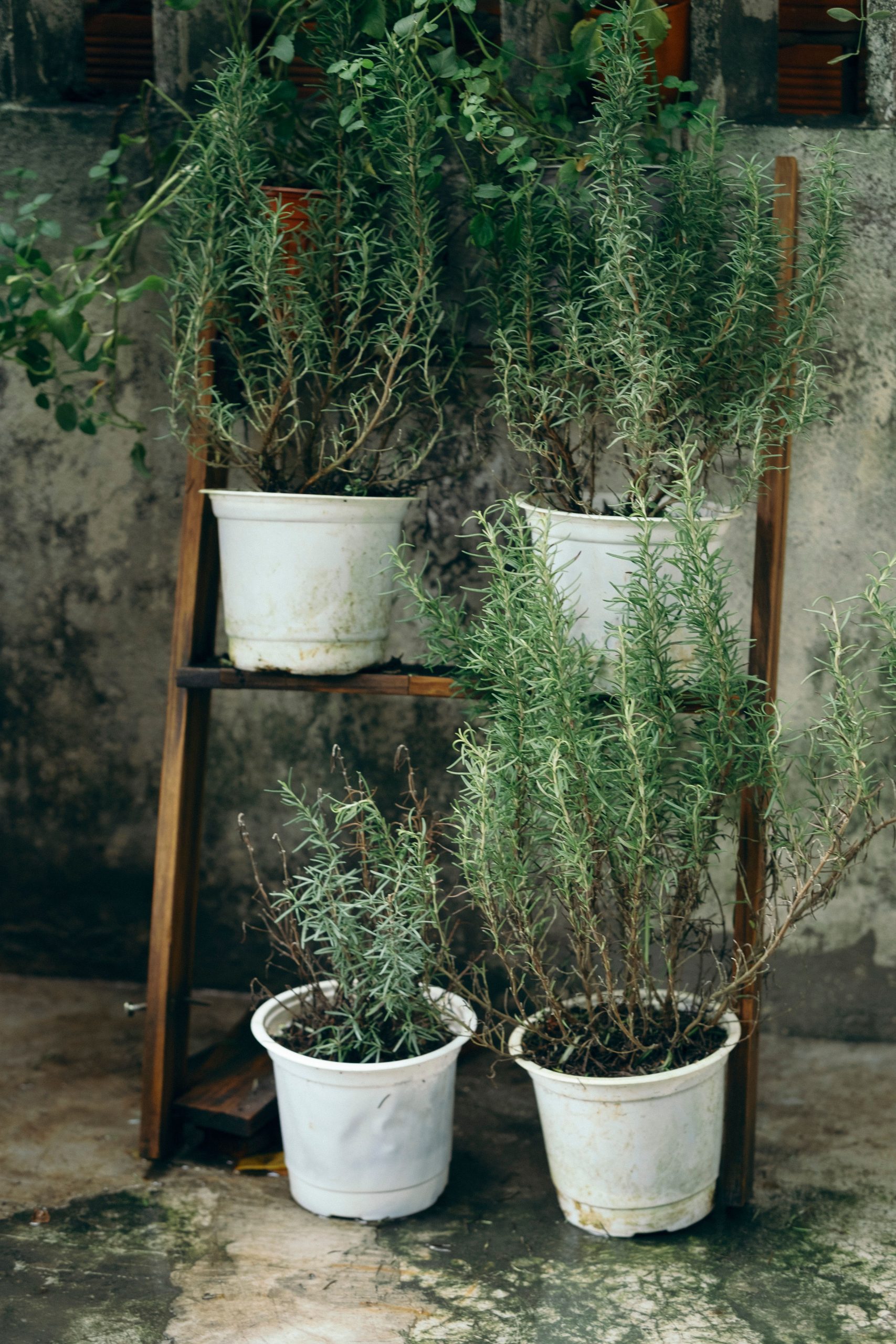
Let’s be real: this stand is a workhorse, not a show pony. The ‘roughly constructed’ nature of this wooden stand, along with the use of basic white plastic planters, gives it a utilitarian, almost greenhouse-like feel. This isn’t the stand you put in your formal living room. This is the stand for a covered patio, a mudroom, or a dedicated plant-starting corner in a sunroom. Its charm lies in its function-first approach. Embrace its rustic simplicity rather than trying to make it something it’s not.
|
📋 Copy HEX 🔗 Share |
You can create a stand almost identical to this for under $20. Head to a hardware store and buy a few lengths of the cheapest pine or furring strips and a box of wood screws. You don’t need fancy joinery—just cut the pieces to your desired height and shelf width and assemble a simple boxy frame. Don’t worry about perfect cuts or a flawless finish. The slightly ‘homemade’ look is what gives it its character. Pair it with inexpensive plastic pots for a truly budget-friendly vertical garden.
18. A Cheerful Wooden Stand for a Colorful Patio Display
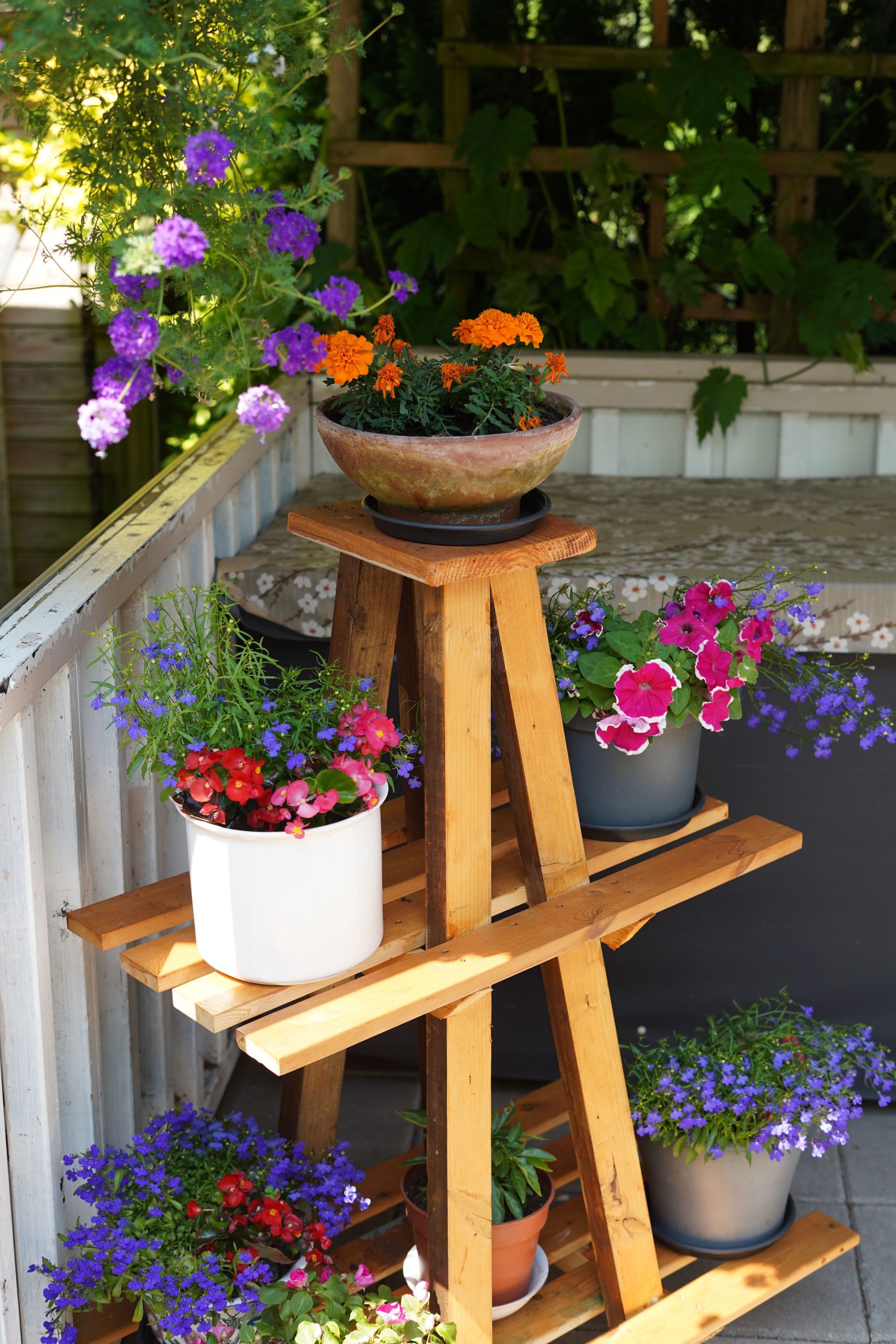
When creating a dense, multi-plant display like this, the key to avoiding a chaotic look is to create a ‘visual anchor.’ Here, the vibrant purple flowering plant in the center acts as that anchor. Your eye is immediately drawn to it, and all the other plants—the orange, the pink, the greens—support it like a cast. When you assemble your collection, choose one ‘star’ plant that is either the largest, the most brightly colored, or has the most interesting shape, and build the rest of the arrangement around it.
|
📋 Copy HEX 🔗 Share |
This arrangement feels so lush and vibrant because it uses the design principle of repetition with variation. There is repetition in the function (all are plants on a stand) and in the material of the stand itself (wood). But there is immense variation in the colors of the flowers (purple, orange, pink), the shapes of the pots (bowl, cylinder), and the textures of the leaves. This combination of a unifying structure and varied details is what makes a collection feel curated and interesting, rather than just messy.
19. Whimsical Decorative Bicycle Plant Stands
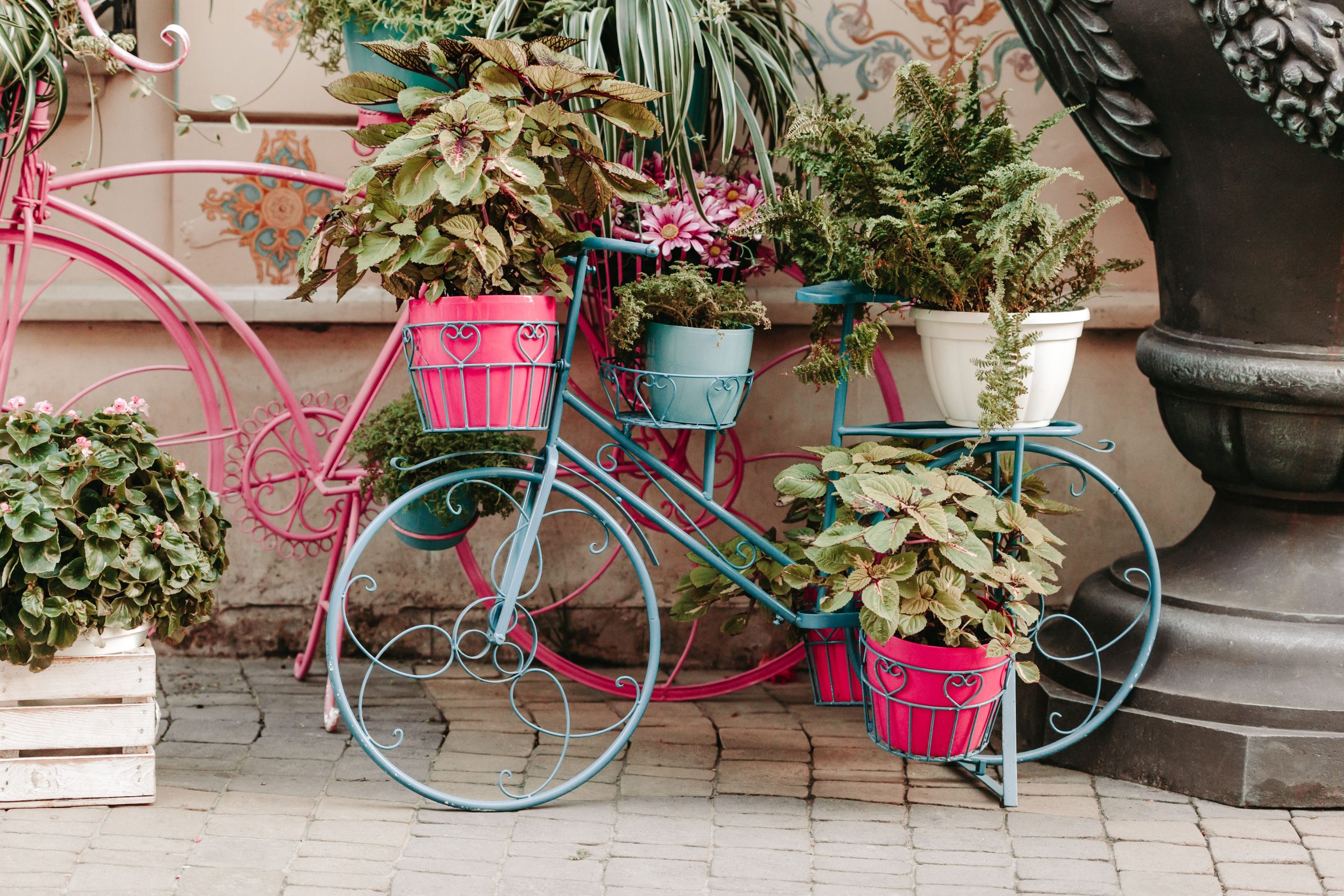
The single element that defines this idea is pure, unapologetic whimsy. These stands aren’t trying to be minimalist, modern, or rustic; their entire purpose is to be playful and charming. A bicycle that holds plants is inherently quirky, and by painting them bright pink and blue, the design leans fully into that fun-loving spirit. This design is for the gardener who doesn’t take themselves too seriously and wants their outdoor space to bring a smile to people’s faces. Compare this playful vibe to the more serene, rustic feel of Idea #17.
|
📋 Copy HEX 🔗 Share |
While undeniably cute, be aware that decorative metal stands like these can have a shorter lifespan outdoors. The intricate metalwork has many joints and crevices where water can collect, leading to rust over time, especially in rainy climates. To prolong their life, consider spraying them with a clear, rust-resistant sealant at the beginning of each season. Furthermore, their stability can be questionable on uneven ground, so they are best placed on a flat patio or paved area rather than directly on a bumpy lawn.
20. Tall Gold Geometric Stand for an Elegant Floral Box
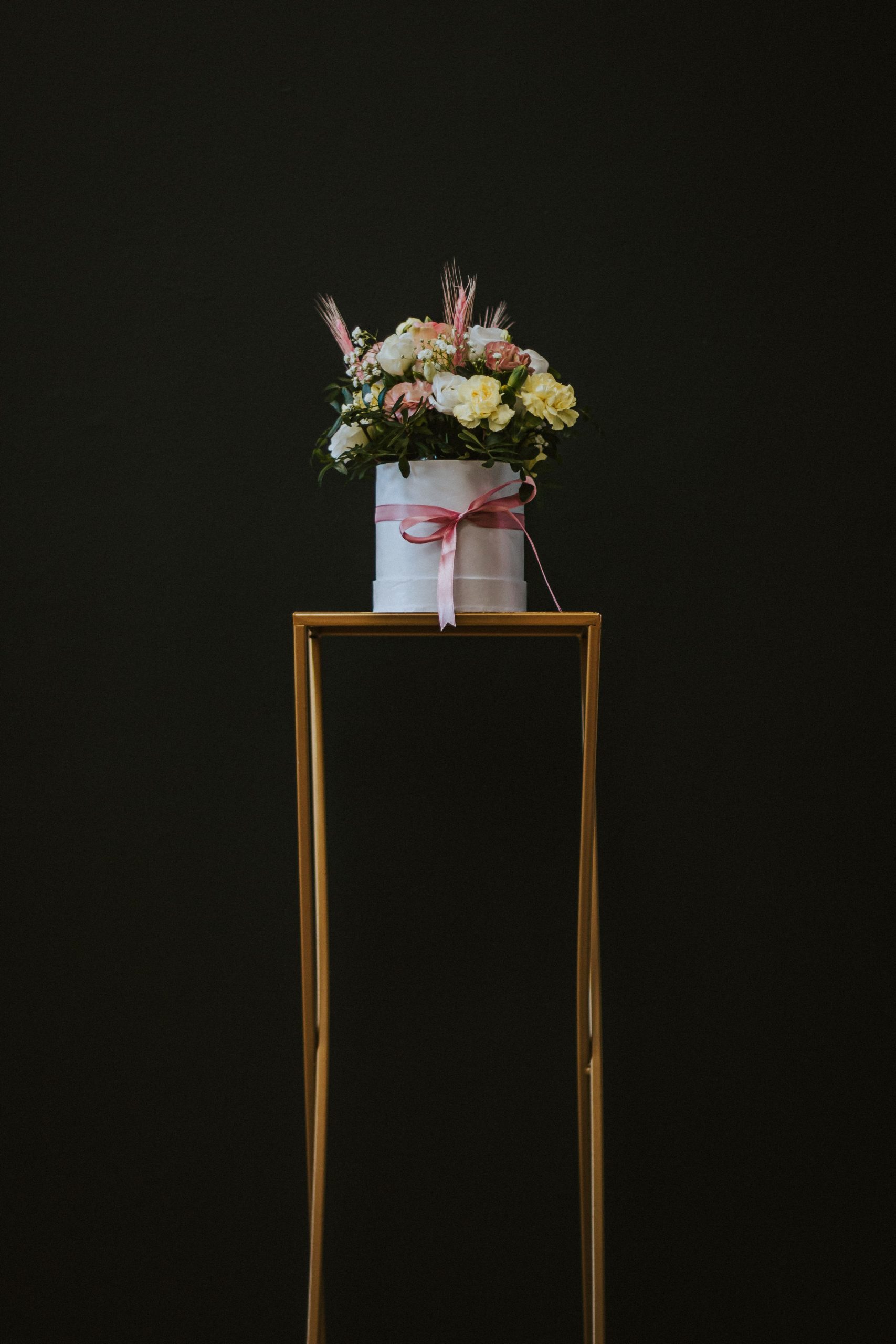
This celebratory look follows a simple, elegant formula: 80% minimalist structure + 20% soft romance. The tall, clean lines of the gold metal stand provide the strong, minimalist base. It’s architectural and chic on its own. The romance comes from the overflowing white flower box, filled with soft-colored flowers and delicate pink grasses, all tied up with a ribbon. The tension between the hard geometry of the stand and the soft, organic nature of the floral arrangement is what creates the sophisticated, modern-yet-pretty vibe.
|
📋 Copy HEX 🔗 Share |
This type of stand is hugely popular for event decor—think weddings, baby showers, and milestone birthdays—and that trend is now moving into home decor. People are investigating how to make everyday moments feel a little more special. Using a stand like this to display a beautiful floral arrangement (or even a particularly stunning houseplant) in an entryway or dining room is a way to bring that sense of occasion into the home on a permanent basis. It feels more intentional and grand than a simple vase on a table.
21. A Rustic X-leg Planter on Terracotta Tiles
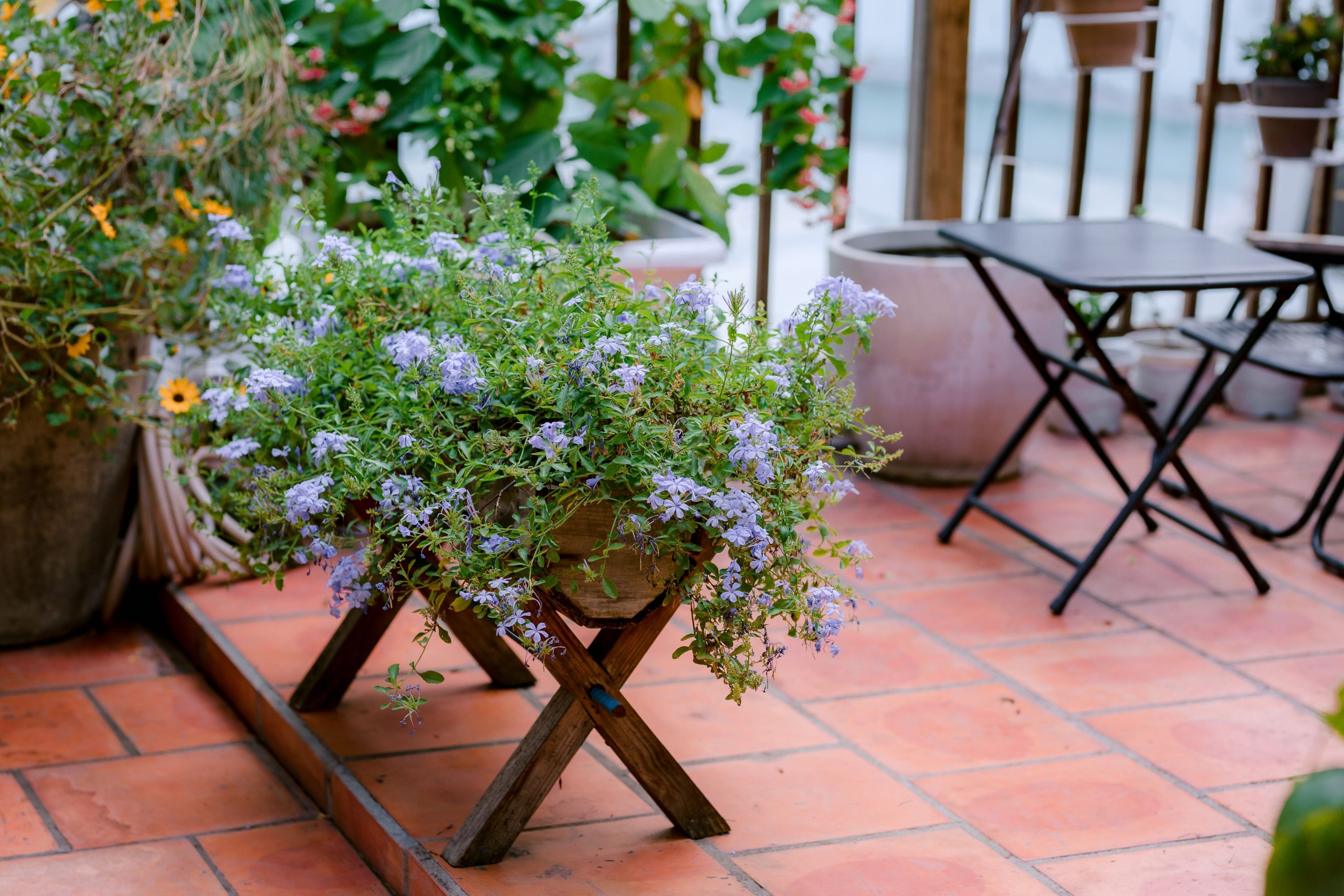
This look is a masterclass in complementary color theory. The light sky blue of the flowering plant is directly opposite the warm, earthy orange of the terracotta tiles on the color wheel. This opposition creates a natural, vibrant contrast that is incredibly pleasing to the eye. The neutral brown wood of the stand acts as a perfect intermediary, grounding the two colors and keeping them from feeling too jarring. It’s a classic color combination that always works in a garden or patio setting.
|
📋 Copy HEX 🔗 Share |
An elevated planter box like this is ideal for a patio, deck, or balcony. It typically measures between 24 and 36 inches in length and stands about 30 inches tall, a comfortable height that saves you from bending over to tend to your plants. This scale is substantial enough to define a space—you could use a pair of them to flank a doorway or use a single one to anchor the corner of an outdoor seating area. Just ensure you have a relatively flat surface, as the X-legs can be wobbly on uneven ground.
22. A Tiny Trio of Decorative Pots on a White Stand
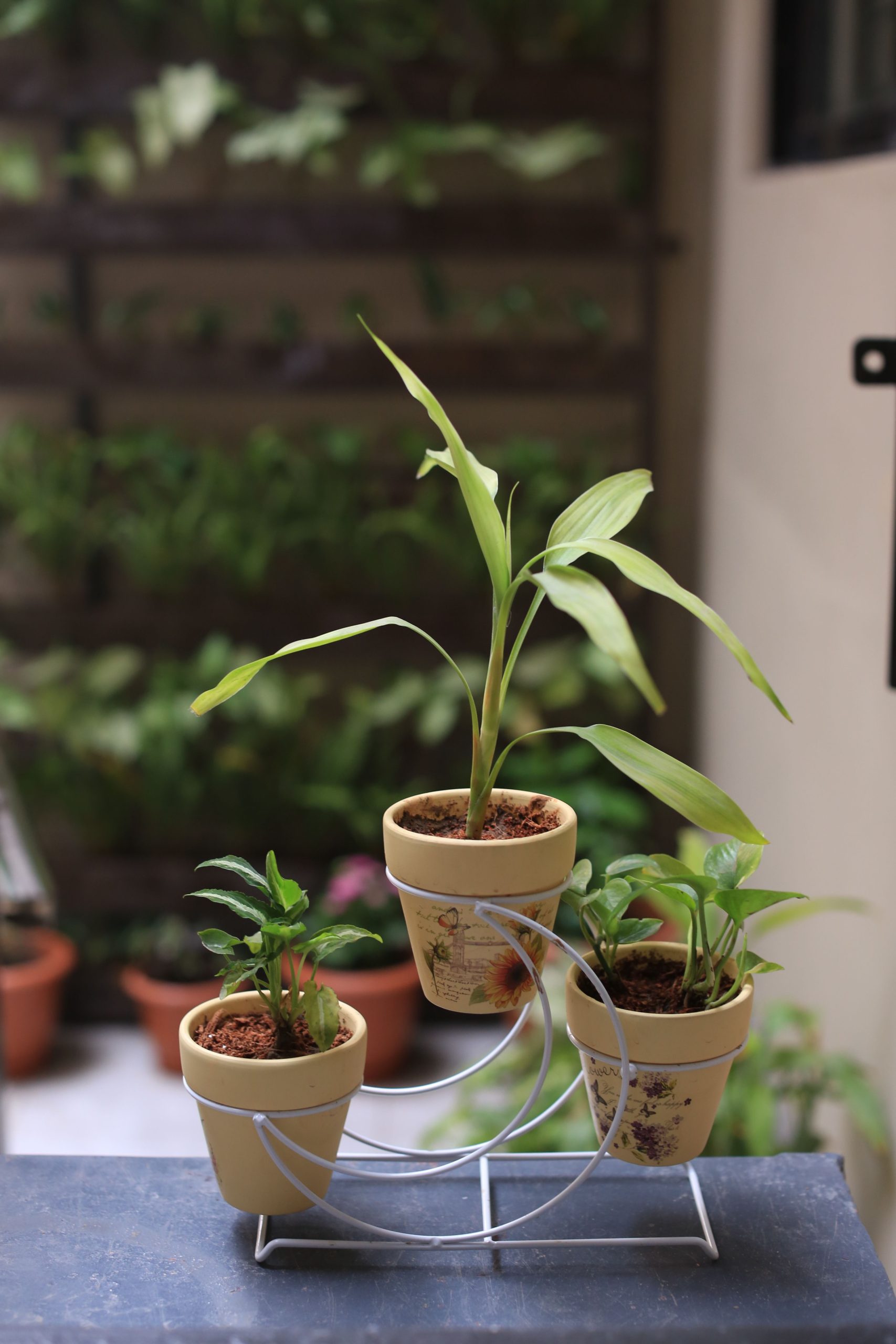
What makes this little arrangement so charming is the decoration on the pots themselves. They aren’t just plain yellow clay pots; they feature delicate floral and butterfly patterns. This small detail adds a layer of personality and craft that elevates the entire piece from a simple plant holder to a truly decorative object. It’s a reminder that even the smallest elements matter. Such a piece would be a lovely gift or a sweet addition to a bedside table or a bathroom vanity where it can be appreciated up close.
|
📋 Copy HEX 🔗 Share |
Before you get a small, multi-plant stand like this, be honest about your plant care style.
- Are you an attentive plant parent? Small pots dry out rapidly—sometimes in just a day or two—and will require frequent watering.
- Do you have the right plants? This container is for tiny succulents, air plants, or miniature cuttings, not for plants that want to grow large.
- Where will it live? It needs a spot with bright, indirect light to keep three different plants thriving simultaneously. A north or east-facing windowsill is often ideal.
23. Rustic Tiered Stand for a Succulent Collection
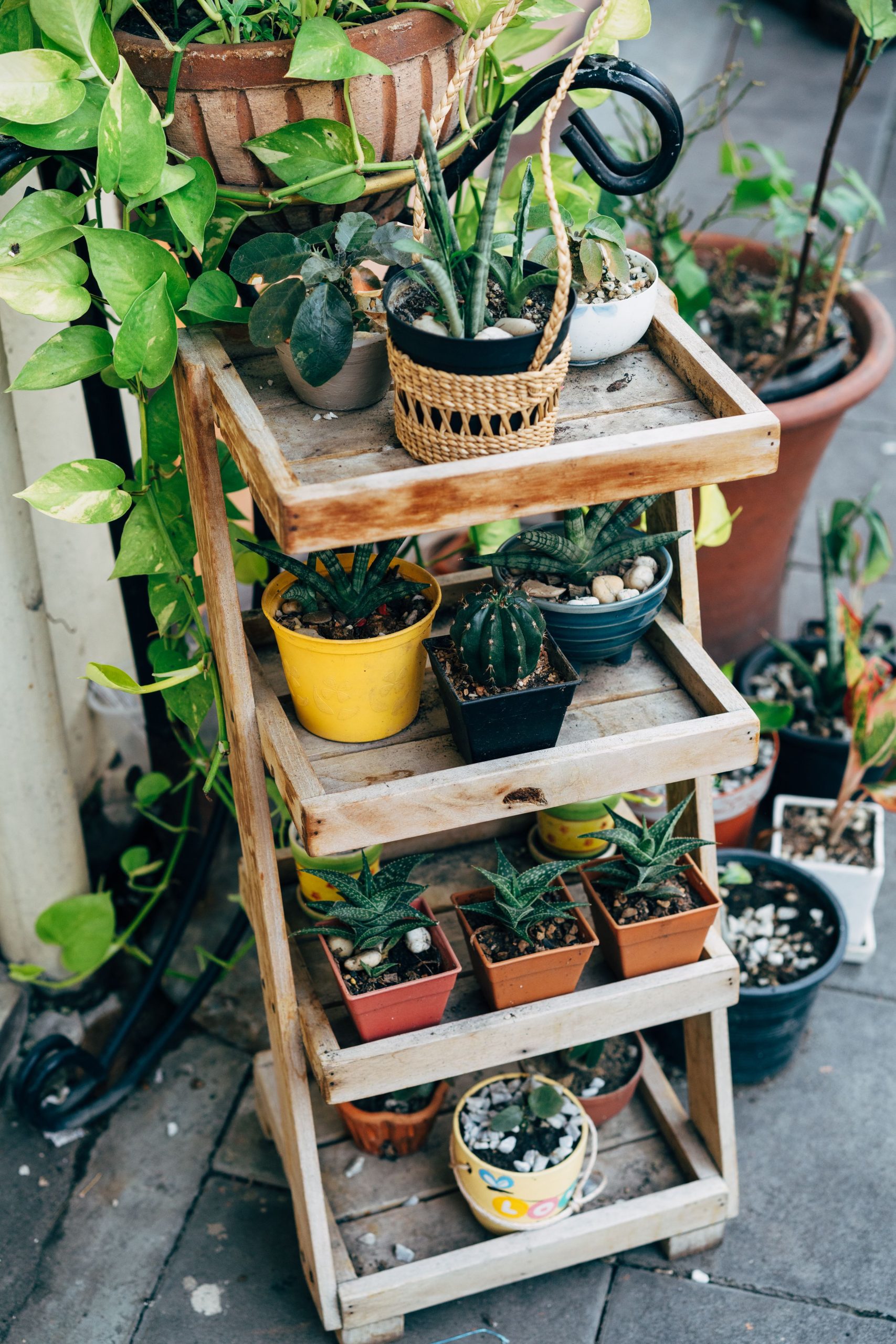
This display feels so wonderfully ‘collectedembraces a lack ofse it rejects uniformity. While the stand provides a single, uniting structure, the pots themselves are a delightful hodgepodge of different materials, colors, and sizes—terracotta, glazed ceramic, plastic, blue, yellow, and white. This variation is what gives it personality and a rustic, homegrown charm. It doesn’t look like it was bought as a set from a big-box store; it looks like it was lovingly assembled over time by a true plant enthusiast. The similar upright form of the tiered wooden stands in Idea #17 offers a more utilitarian take on this look.
|
📋 Copy HEX 🔗 Share |
Want to build a similar rustic stand? It’s a perfect beginner’s woodworking project.
- Time: 2-3 hours
- Cost: $25-$40
- Get your materials: Grab several 1×3 or 1×4 pine boards and a box of 1.25″ wood screws.
- Build two ‘ladders’ that will serve as the side supports. These are your two vertical posts with horizontal crosspieces screwed in at your desired shelf heights.
- Cut your shelf slats to your desired width (e.g., 3 feet).
- Stand the two ladder sides up and simply lay the shelf slats across the horizontal supports. Screw them into place from the top.
- For added stability, you can add a diagonal brace to the back. Leave the wood raw for a rustic look or apply a stain.
24. An Elegant Hourglass Stand Between Two Armchairs
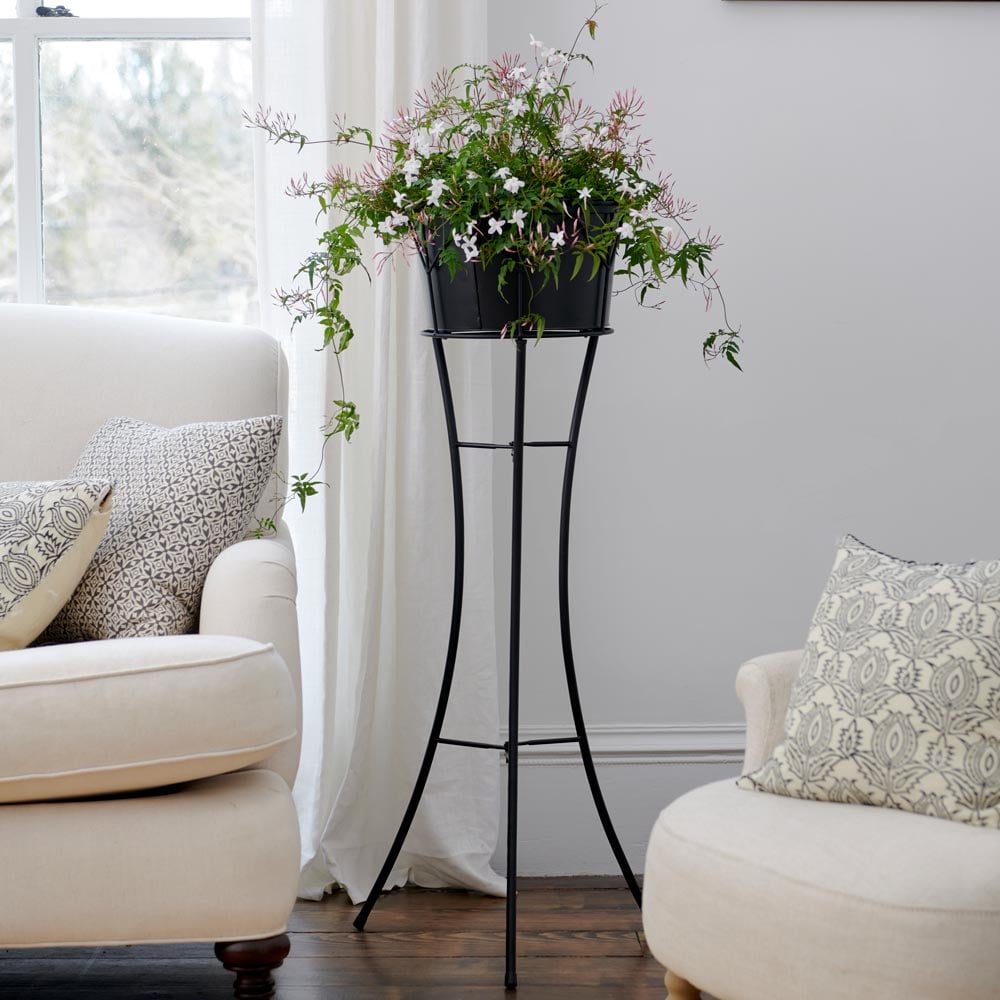
A tall, slender stand like this is the perfect solution for the space between two chairs. It provides height and a touch of nature without adding visual bulk. Look for a stand that is roughly the same height as the chair backs; this arrangement creates a pleasing, cohesive line. The diameter should be narrow enough to allow for unobstructed passage and to ensure it doesn’t crowd the seating area. A footprint of 10-14 inches is usually ideal. This creates a functional and beautiful alternative to a shared end table.
|
📋 Copy HEX 🔗 Share |
To make a trailing plant look so full and luxurious, you need to start with the right planting technique. Don’t just plant one single vine in the middle of the pot. Instead, purchase a pot that already has 3-5 separate rooted cuttings. When you repot it, arrange these individual plants evenly around the container. This ‘multi-planting’ approach is the secret to achieving that overflowing, cascading effect right from the start, rather than waiting years for a single vine to fill out.
25. A Tall White Textured Planter on a Mid-Century Stand
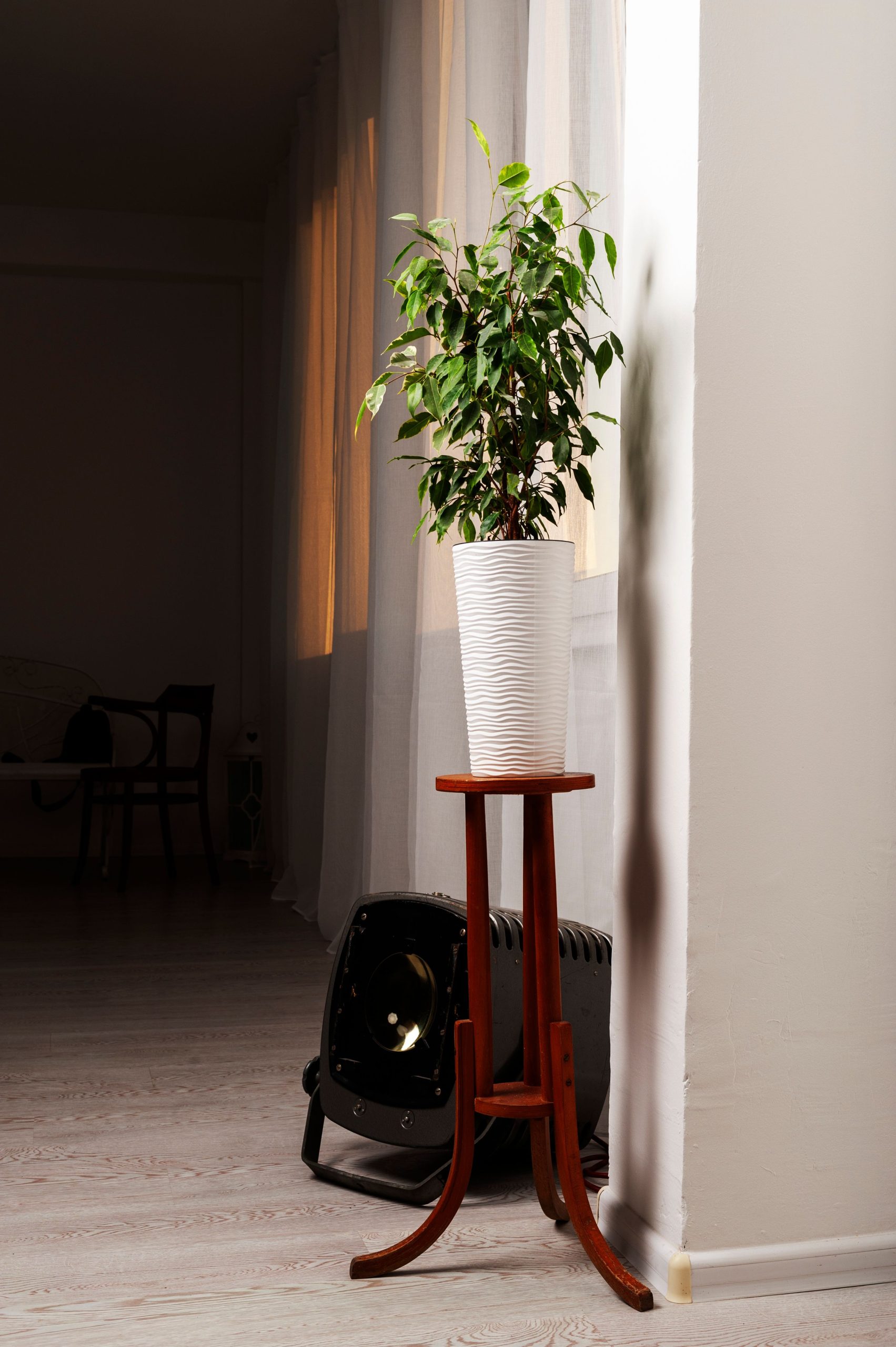
The success of this simple combination lies in its smart use of proportion and texture. The planter is tall and substantial, while the wooden stand is delicate and leggy. This contrast prevents the setup from feeling either too heavy or too flimsy. At the same time, the wavy, textured surface of the white pot adds a layer of subtle interest that catches the light, keeping the large white object from looking like a boring monolith. It’s simple, but every detail is considered.
|
📋 Copy HEX 🔗 Share |
The single most important element here is the plant stand’s reddish-brown wood tone. Against the light wood floors, sheer white curtains, and white pot, this specific warm, mid-century-esque color provides a necessary point of contrast and warmth. If the stand were a light wood like the floor, it would disappear. If it were black, it would feel too harsh. This specific reddish-brown is the perfect choice to tie the warm and cool elements in the room together. This demonstrates how a small item’s color can be the glue that holds a whole vignette together.
26. A Sculptural Tree-Branch Stand for an Organic Look
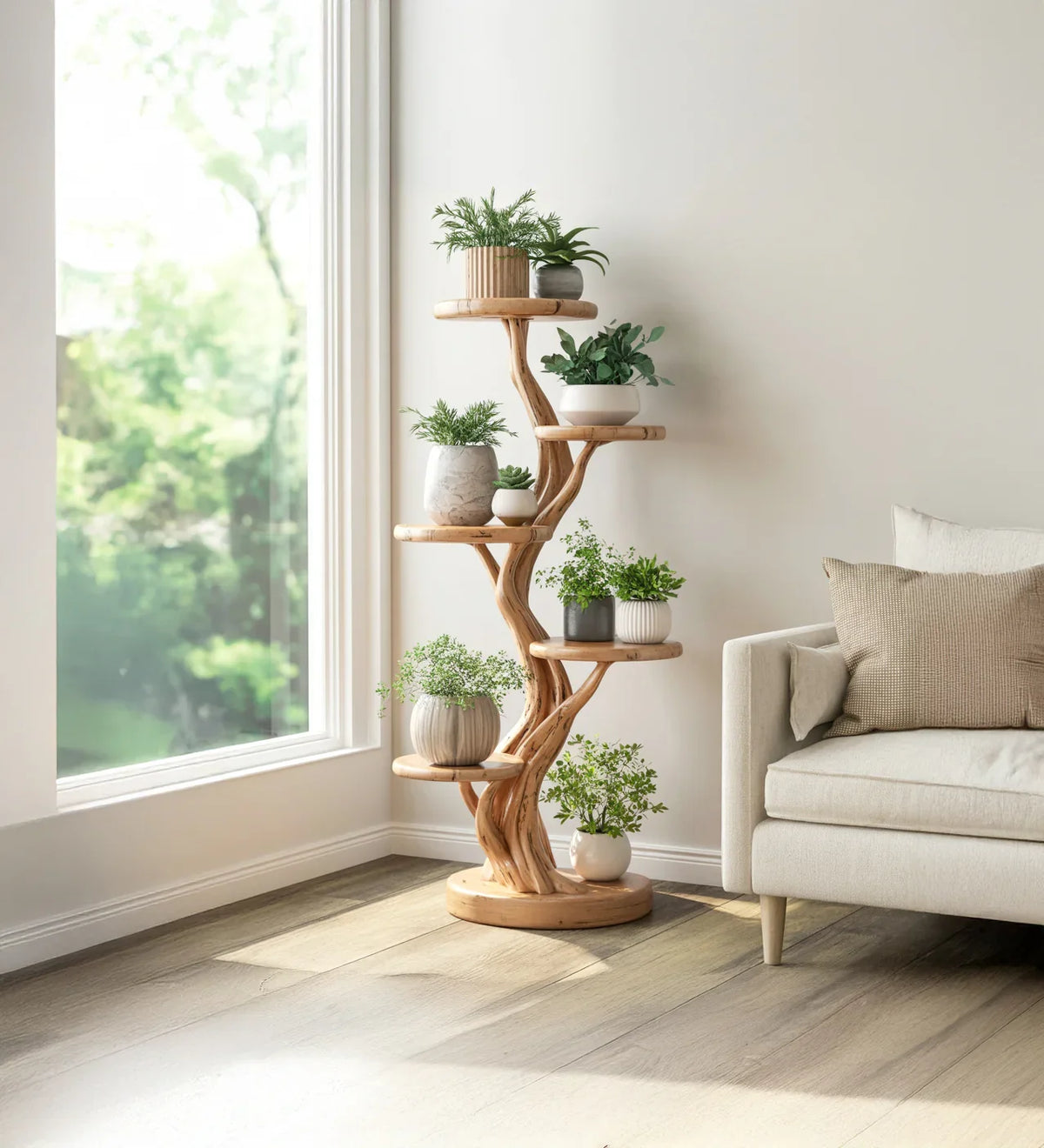
As our lives become more digital, a massive trend in interior design is emerging towards biophilia—the idea of incorporating natural forms, materials, and light into our homes. This ‘tree-branch’ plant stand is a perfect embodiment of that trend. It’s not just a functional object for holding plants; its very form mimics the organic, ‘imperfect’ shapes of nature. It serves a psychological purpose as much as a decorative one, creating a sense of calm and connection to the outdoors, which is something many people are craving in 2026.
|
📋 Copy HEX 🔗 Share |
A sculptural, statement piece like this has specific space requirements. It’s not a small-corner solution. Because of its irregular, branching shape, it needs space to be appreciated. Crowding it with other furniture will make it look cluttered and chaotic. It should be placed against a relatively plain wall, where its unique silhouette can shine. Trying to shoehorn this piece into a tiny, already-full room will do both the room and the stand a great disservice.
27. Aesthetic Indoor Plant Stand with Grow Lights
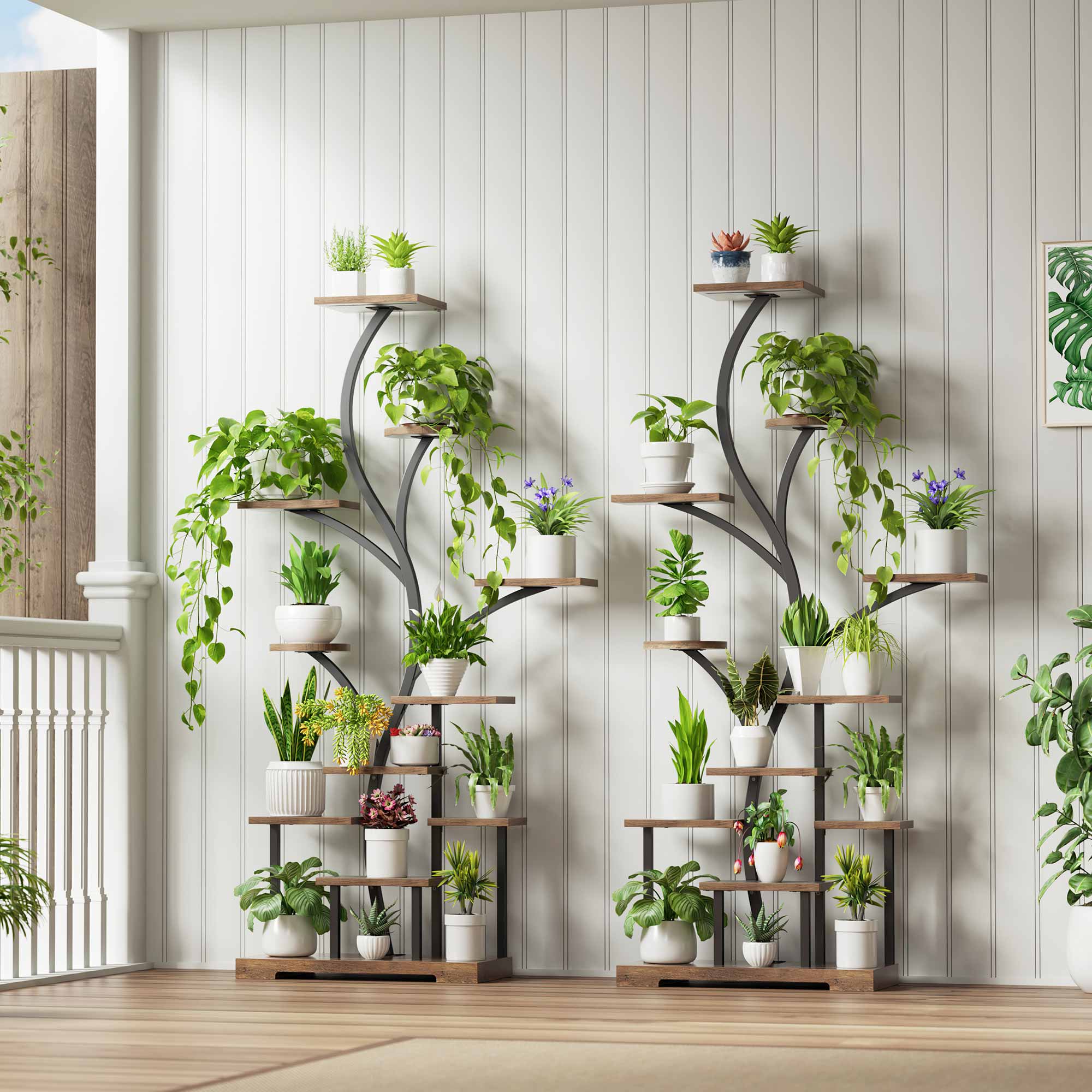
The Belleze 63 stand works because it merges form and function in a way that’s becoming essential for modern plant lovers. Its tall, multi-tiered structure provides the aesthetic of a classic étagère, allowing for a vertical display of greenery. The game-changer is the integration of grow lights. This solves the universal problem of having a perfect spot for a plant stand that, unfortunately, has terrible lighting. It transforms any corner, no matter how dim, into a viable place for plants to thrive, democratizing the indoor jungle for everyone.
|
📋 Copy HEX 🔗 Share |
When styling a stand with integrated grow lights, think like a merchandiser. Place the plants that need the most light, like succulents or flowering varieties, on the shelves directly under the light bars. Plants that are more tolerant of lower light, like snake plants, ZZ plants, or pothos, can be placed on lower shelves or further from the direct light source. This not only ensures your plants are happy but also creates a more dynamic and visually interesting arrangement.
28. Symmetrical Branching Stands Flanking a Media Console
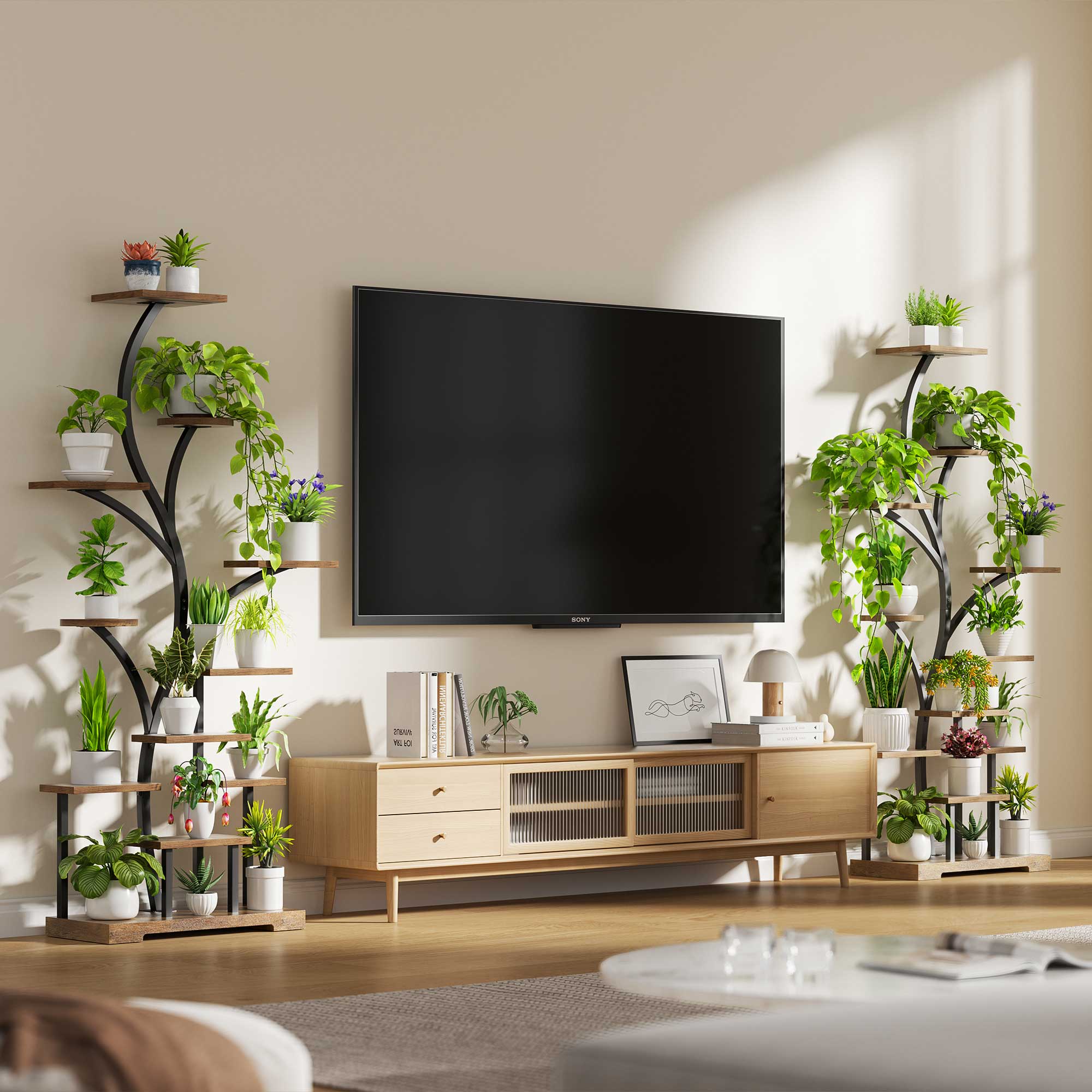
What makes this entire wall work is symmetry. By placing two identical branching plant stands on either side of the TV and media console, the designer has created a sense of balance and intentionality. This formal arrangement frames the television, making it feel like part of a larger, cohesive design rather than just a black box on the wall. The plants soften the technology, and the symmetry calms the eye. If you only had one stand, the wall would feel lopsided and incomplete. This is very different from the charming, asymmetrical collection in Idea #22.
|
📋 Copy HEX 🔗 Share |
This balanced look can be broken down into a simple formula: 40% clean-lined furniture + 40% symmetrical structure + 20% organic greenery. The light wood media console and the bare wall provide the clean, modern base. The two identical black metal plant stands create the strong, symmetrical framework. Finally, the varied green plants in their simple white pots fill that framework with life and organic softness, preventing the symmetrical design from feeling too rigid or boring.
29. A Vertical Garden on a Dark Wood Slatted Stand
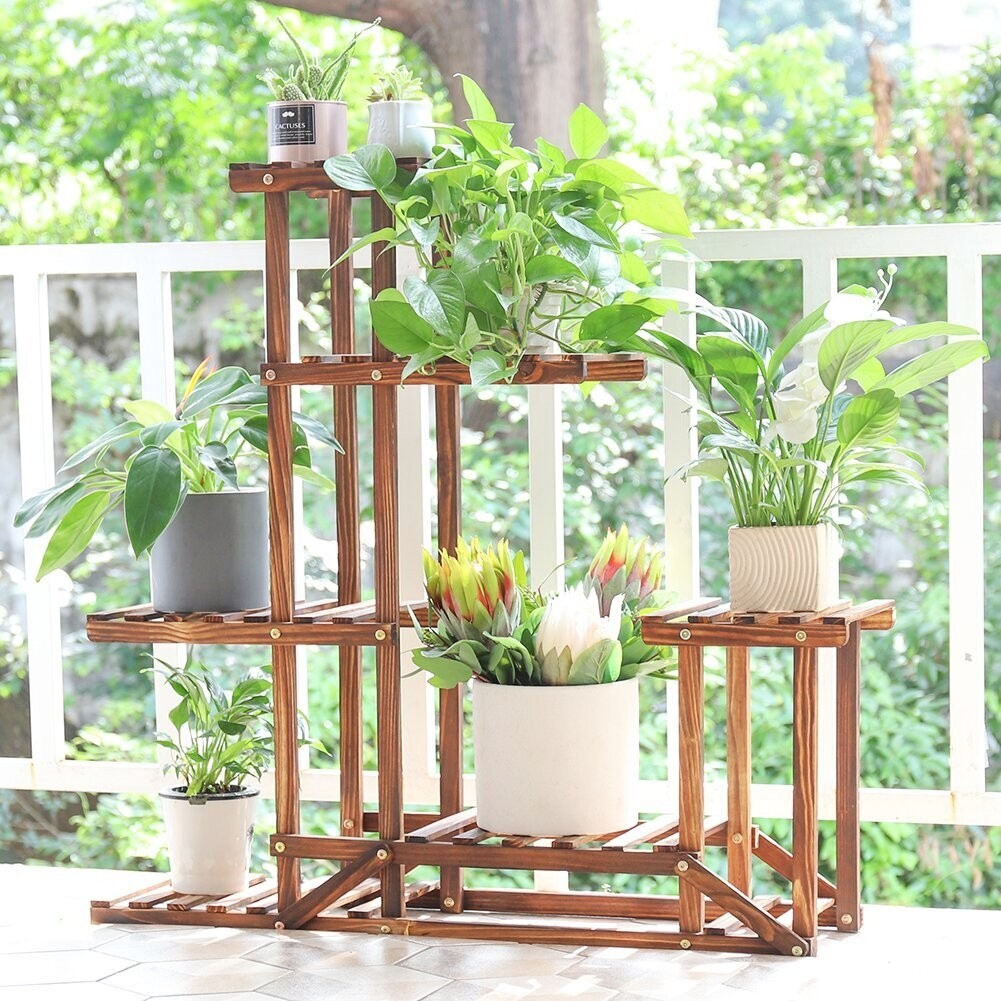
Creating this lush outdoor vertical garden is surprisingly affordable, as the stand itself is often a simple construction. Here’s a possible breakdown:
-
-
- Multi-Tier Wooden Stand: $75 – $150 (or less for a DIY version)
- Assorted Plants & Flowers: $80 – $200 (depending on size and variety)
- Pots & Potting Mix: $50 – $100
- TOTAL: $205 – $450
-
Budget alternative: Build the stand yourself from cedar or pressure-treated pine for about $40 in materials. Start with smaller, less expensive plants and let them grow to fill the space over the season.
|
📋 Copy HEX 🔗 Share |
An outdoor stand like this, especially one made of dark wood, will require some annual upkeep to survive the elements. At the end of each growing season, it’s wise to empty the stand and perform it a thorough cleaning to remove dirt and any potential mold. Check for any wobbly joints. Most importantly, applying a fresh coat of weather-sealing stain or oil once a year will prevent the wood from fading to gray, drying out, and splintering. A little bit of annual maintenance can double or triple the life of your wooden outdoor furniture.
30. A Charming Vintage Bicycle Planter for the Garden
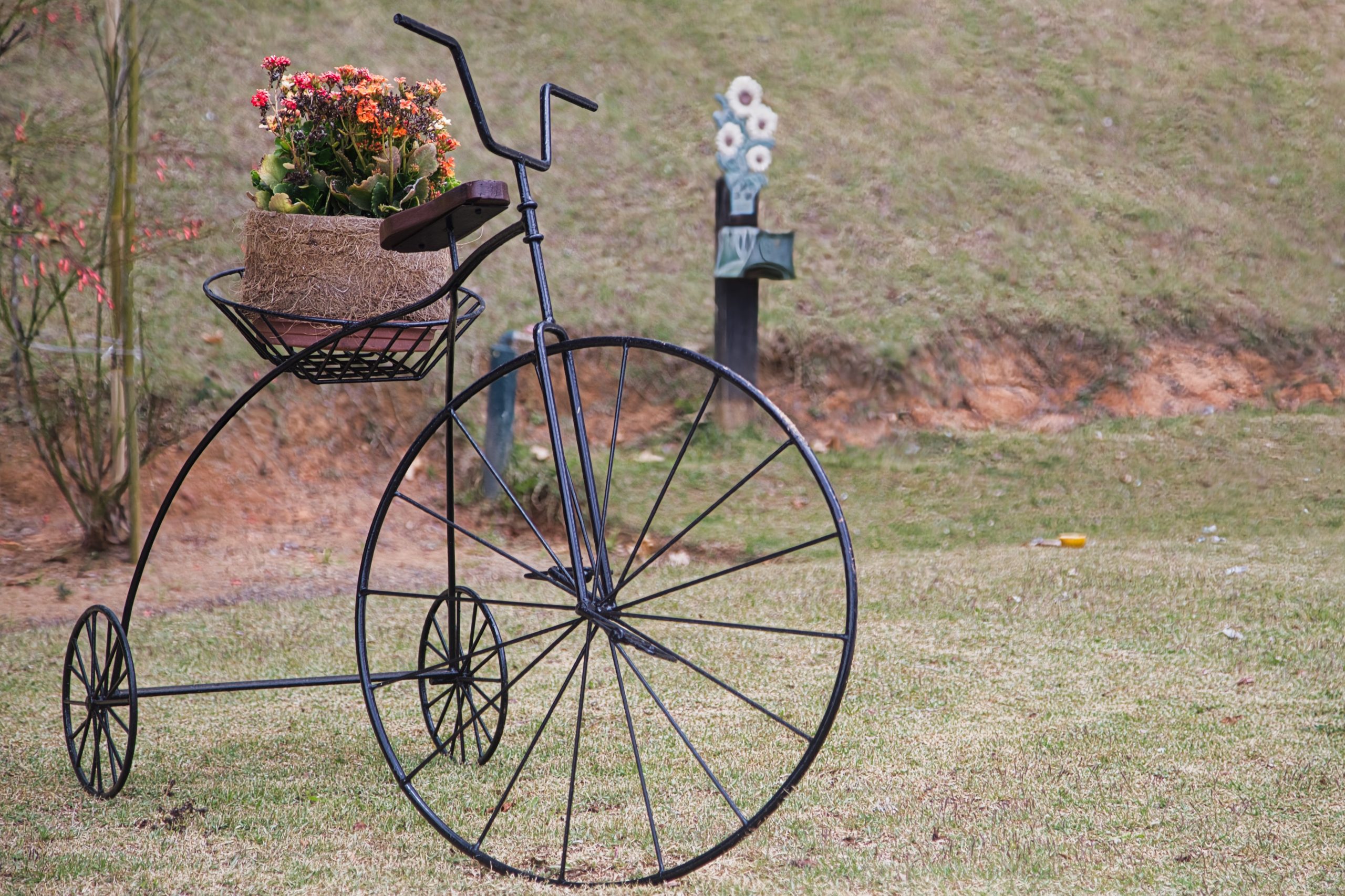
This idea works by creating a delightful sense of juxtaposition. A bicycle is a functional object meant for movement and transport, but here it is stationary, repurposed into something purely decorative. The industrial, mechanical nature of the black metal frame contrasts beautifully with the soft, vibrant, and very much alive flowering plant it holds. This unexpected combination is what captures the imagination and makes it a charming focal point in a lawn or garden setting. It tells a tiny, whimsical story.
|
📋 Copy HEX 🔗 Share |
When using a novelty planter like this, don’t just drop a plastic nursery pot into the basket. It looks unfinished. Take the extra five minutes to wrap the pot in a textural material, like the fibrous coco liner shown here. You could also use burlap, moss, or even landscape fabric. This extra layer conceals the plastic pot, adds a richer texture, and makes the whole arrangement feel more cohesive and thoughtfully put together. It’s a small detail that makes a significant difference in the final presentation.
Conclusion
You’ve seen the ideas, you know the mistakes to avoid—now it’s your turn to bring some structured greenery into your home. Whether you go for a simple DIY project or a sculptural statement piece, the right stand can entirely change the way you see your plants and your space. Pick a project that excites you and start small.
Please remember to save your favorites to your Pinterest board for when inspiration strikes!