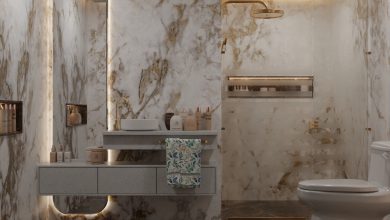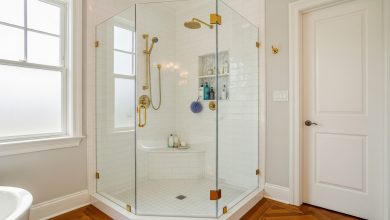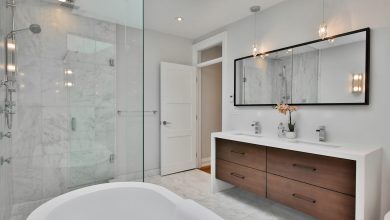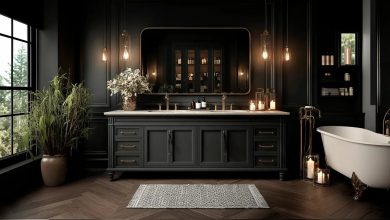

Still scrolling through endless bathroom photos without a clear direction? We get it. That’s why we’ve gone deep, analyzing hundreds of real designer projects and the most saved pins to find what’s actually fresh and achievable for 2026. Inside, you’ll find 28 distinct bathroom ideas—from warm modern minimalism to moody, dramatic spaces. For 2026, the biggest shift is away from sterile, all-white everything and toward spaces with soul. We’re talking rich textures, unexpected color, and a focus on making the bathroom feel like a true personal retreat. And stay with us until the end — we’ll break down the most common mistakes that can ruin these looks. 📌 Save this to Pinterest for later — you’ll want to revisit these ideas.
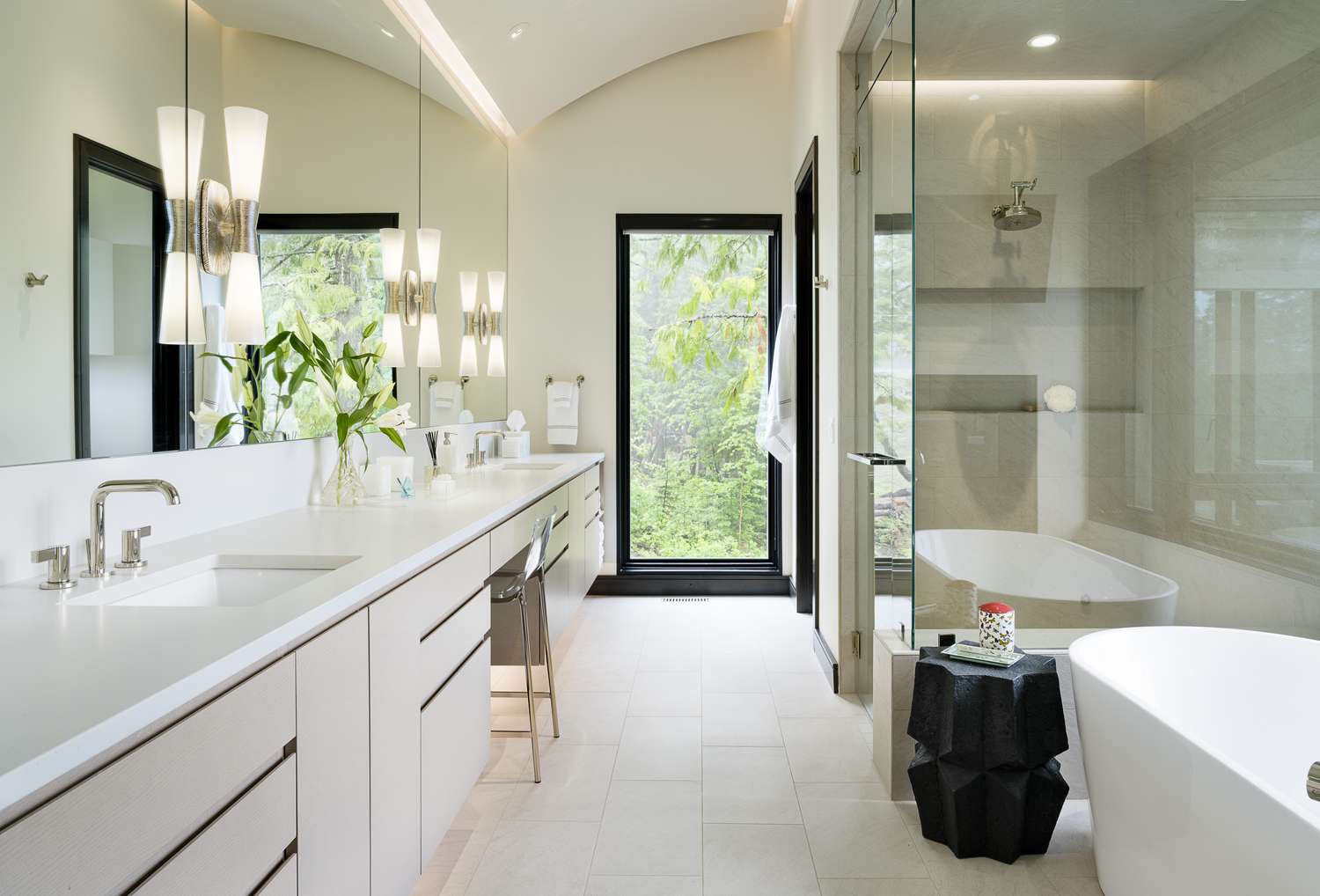
1. Modern Serenity: A Freestanding Tub with a Lush Green View
What really makes this space sing is the masterful blend of clean, modern lines with the softness of nature. The long, floating vanity creates a strong horizontal line that draws the eye across the room, making it feel wider. This is balanced by the organic shape of the freestanding tub and the vibrant greenery peeking through the large window. The design succeeds by not over-cluttering; every object has a purpose and room to breathe, from the simple sconces to the geometric side table. It’s a textbook example of how minimalism can feel warm and inviting, not cold.
|
📋 Copy HEX 🔗 Share |
Thinking about a similar layout? Run through this checklist first. This look thrives on open space and natural light, so cramming it into a small, dark room will lose the effect.
- Measure for clearance: Ensure you have at least 30 inches of walkway around a freestanding tub.
- Check your light source: Is your window large enough to be a feature? If not, you may need to invest more in statement lighting.
- Plumbing logistics: A floating vanity and freestanding tub filler require moving plumbing, which can add significant cost. Get a quote before you fall in love.
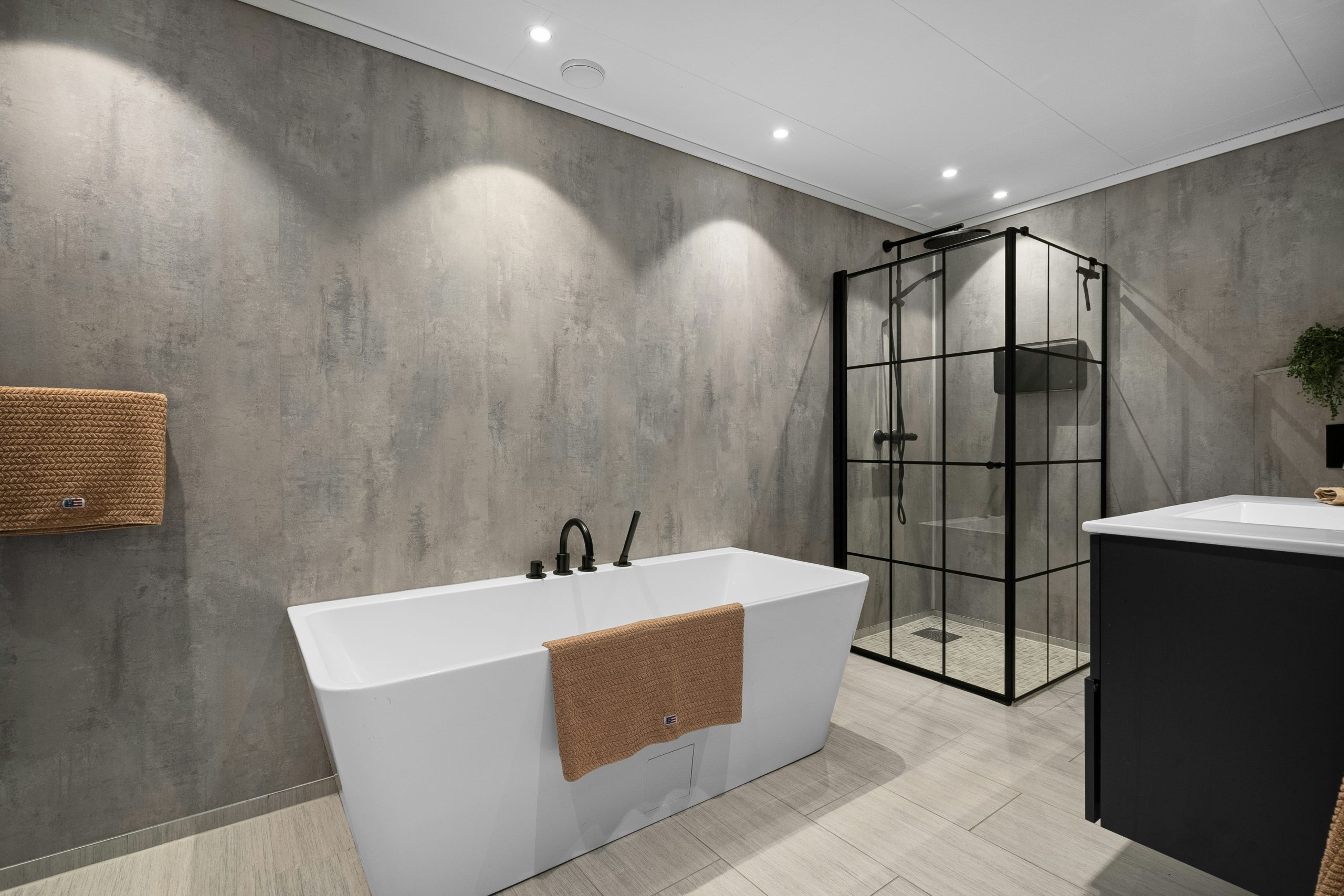
2. Industrial Edge: Concrete-Look Walls Meet Matte Black Fixtures
The single element holding this entire look together is the textured grey wall treatment. Without it, the freestanding tub and black fixtures would just be modern; with it, they become part of a raw, industrial narrative. This isn’t just paint—it looks like real, hand-troweled concrete, giving the space a tactile quality and depth that flat color could never achieve. It provides the perfect moody backdrop that makes the crisp white tub and the light wood-effect floor pop with intention. Remove that texture, and the whole design loses its soul.
|
📋 Copy HEX 🔗 Share |
That gorgeous concrete-look wall has its quirks. If you use actual microcement or a similar plaster, it needs to be sealed perfectly, especially in a wet area like a bathroom, to prevent water spots and staining. Resealing might be required every few years. As for the matte black fixtures, be prepared to combat water spots. Unlike chrome, which can be wiped clean easily, matte finishes tend to show mineral deposits more readily. A gentle cleaner or a simple vinegar solution and a soft cloth are your best friends here to keep them looking sharp.
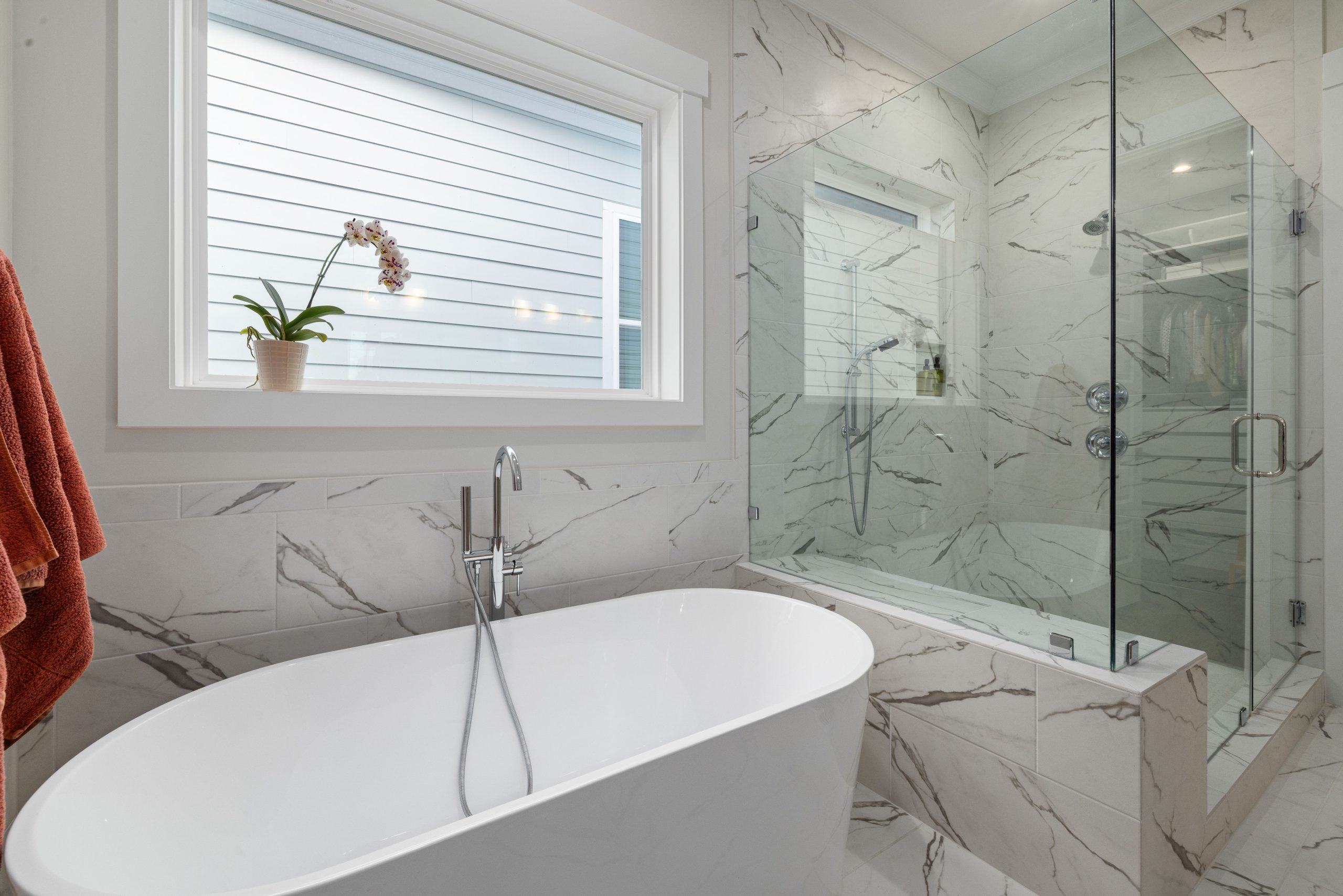
3. Pure & Simple: The All-White Marble Look
When you go for a monochrome look with a single material like this marble-look tile, the key to avoiding a flat, boring result is subtle variation. Use the same tile, but in different sizes or formats. For example, use large 24×48 inch tiles on the walls but a smaller 2×2 inch mosaic of the exact same marble pattern on the shower floor. This adds textural interest and improves slip-resistance underfoot without breaking the cohesive, seamless aesthetic. The visual continuity makes a small space feel much larger.
|
📋 Copy HEX 🔗 Share |
Let’s be honest: while beautiful, a floor-mounted tub filler can be a bit of a cleaning headache. The base where it meets the floor is a prime spot for dust, stray hairs, and water splashes to collect. You’ll be doing more bending and careful wiping around it than you would with a wall-mounted or deck-mounted faucet. Furthermore, consider the layout carefully. If your space is tight, it’s one more thing to bump into or work around. It’s a statement piece, but make sure you have the space and patience for it.
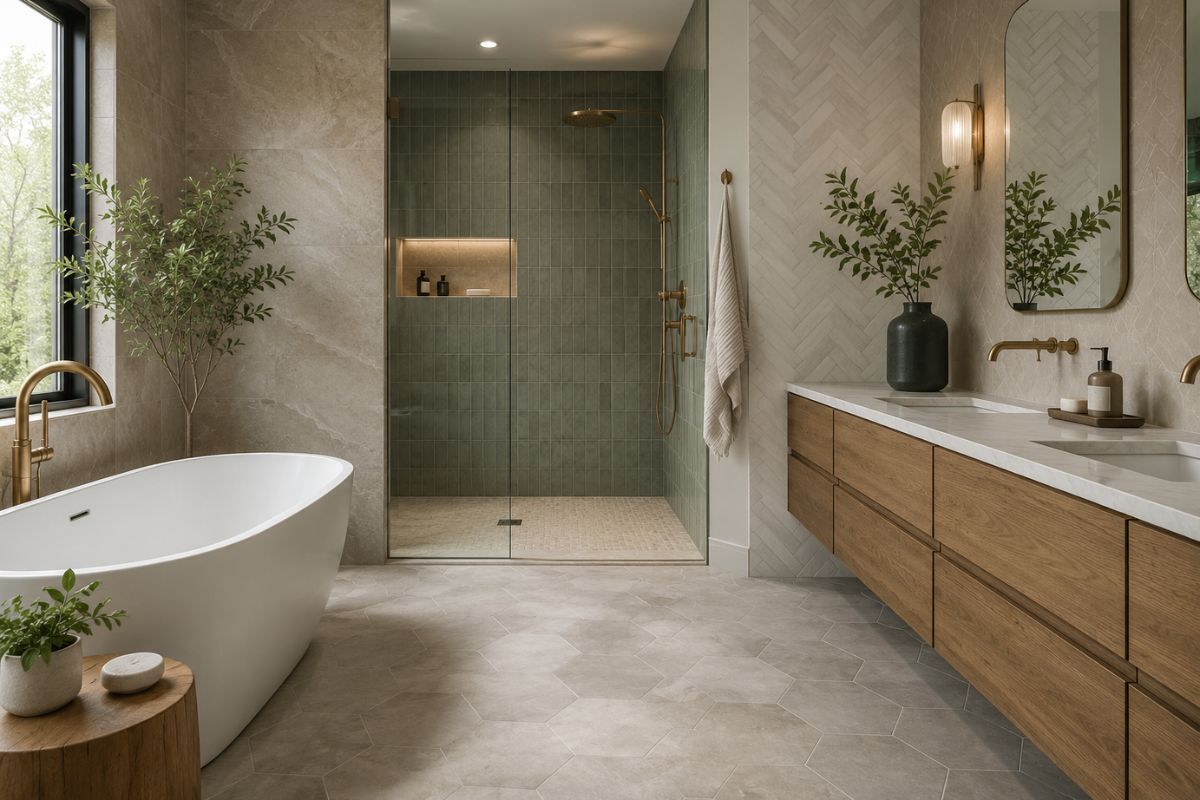
4. Earthy & Modern: Olive Green Tile with Warm Brass
This bathroom’s visual formula is a masterclass in balance. It’s about 50% warm neutral base (the large-format stone-look wall tiles and floating wood vanity), 30% statement color (that gorgeous olive green subway tile in the shower), 10% pattern (the hexagonal floor and herringbone accent), and 10% metallic warmth (the brass fixtures). You could swap the olive green for a deep navy or a rich terracotta and the brass for matte black, and the room’s core harmony would remain intact. The key is keeping the base neutral and letting the accent color and metal do the talking.
|
📋 Copy HEX 🔗 Share |
You can get this vibe for a fraction of the cost. Check Facebook Marketplace or a local tile outlet for leftover lots of designer tiles—you can often find high-end stuff for pennies on the dollar. For the floating vanity, an IKEA GODMORGON cabinet hacked with a custom wood-veneer front gives you the exact same look for under $500. For fixtures, brands like Signature Hardware and Kingston Brass offer beautiful brass options that feel substantial without the designer price tag. Re-creating this look for under $3,500 is totally possible with some savvy shopping.
5. Fresh Take: Mint Green Square Tiles & Pale Wood
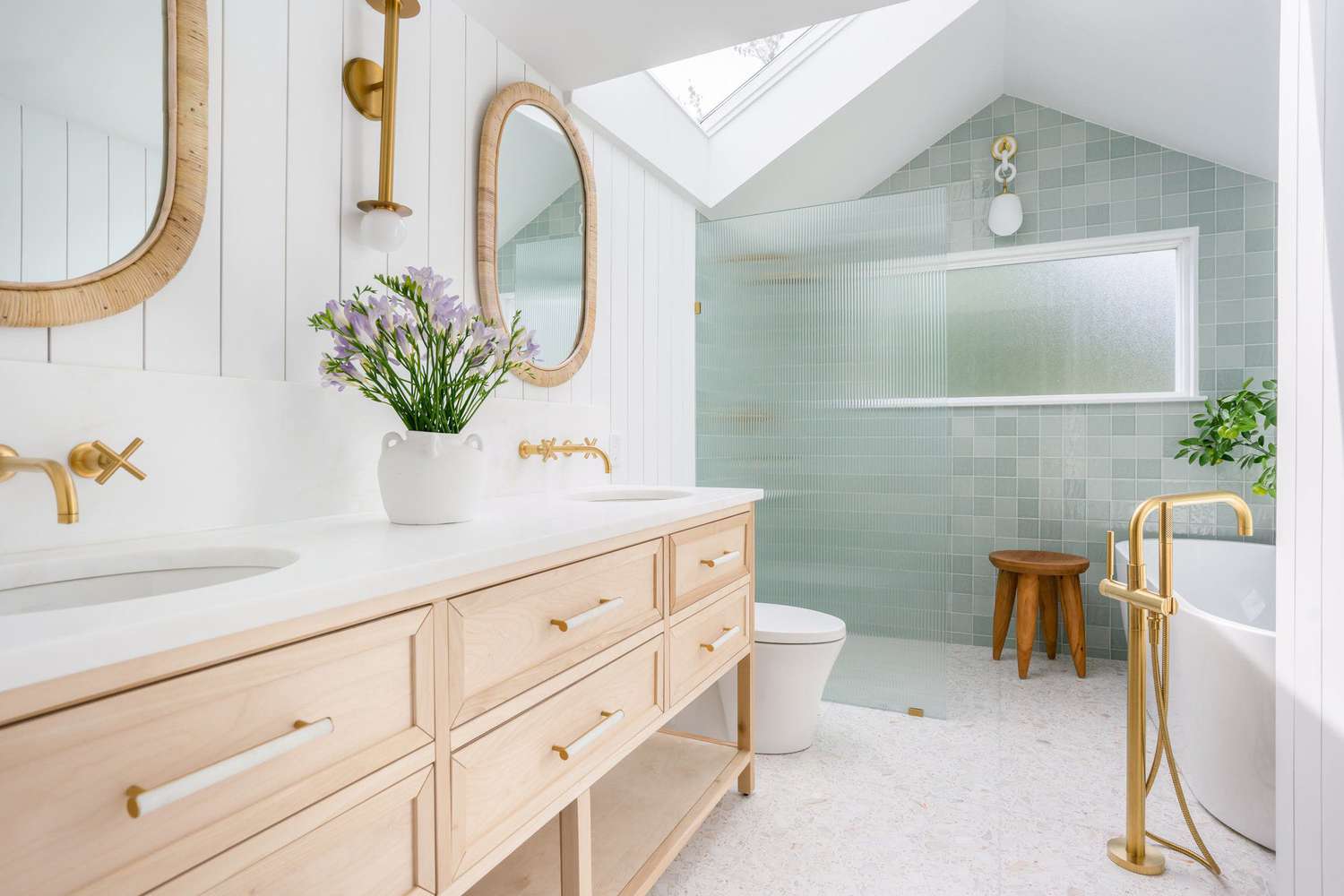
This design feels so fresh because it perfectly balances warm and cool tones. The pale wood of the vanity and the natural rattan mirrors bring in warmth and organic texture, which is a beautiful counterpoint to the cool, crisp mint green tiles and white shiplap walls. The brass fixtures act as a bridge between the two, adding a touch of sophisticated gleam that ties everything together. The repetition of curved shapes in the oval mirrors and rounded sconces softens the square tiles and straight lines of the vanity, creating a gentle, welcoming flow.
|
📋 Copy HEX 🔗 Share |
This look is incredibly versatile and works well in medium-sized bathrooms, from about 75 to 120 square feet. The light color palette and reflective surfaces (like the mirrors and brass) help maximize the feeling of space. The double vanity requires a wall that is at least 60 to 72 inches long. If your space is smaller, you could easily adapt the design by using a single vanity and one mirror. The verticality of the shiplap and square tile stack also helps to draw the eye upward, making it a particularly effective choice for bathrooms with standard 8-foot ceilings.
6. Understated Cool: Grey, White, and Matte Black
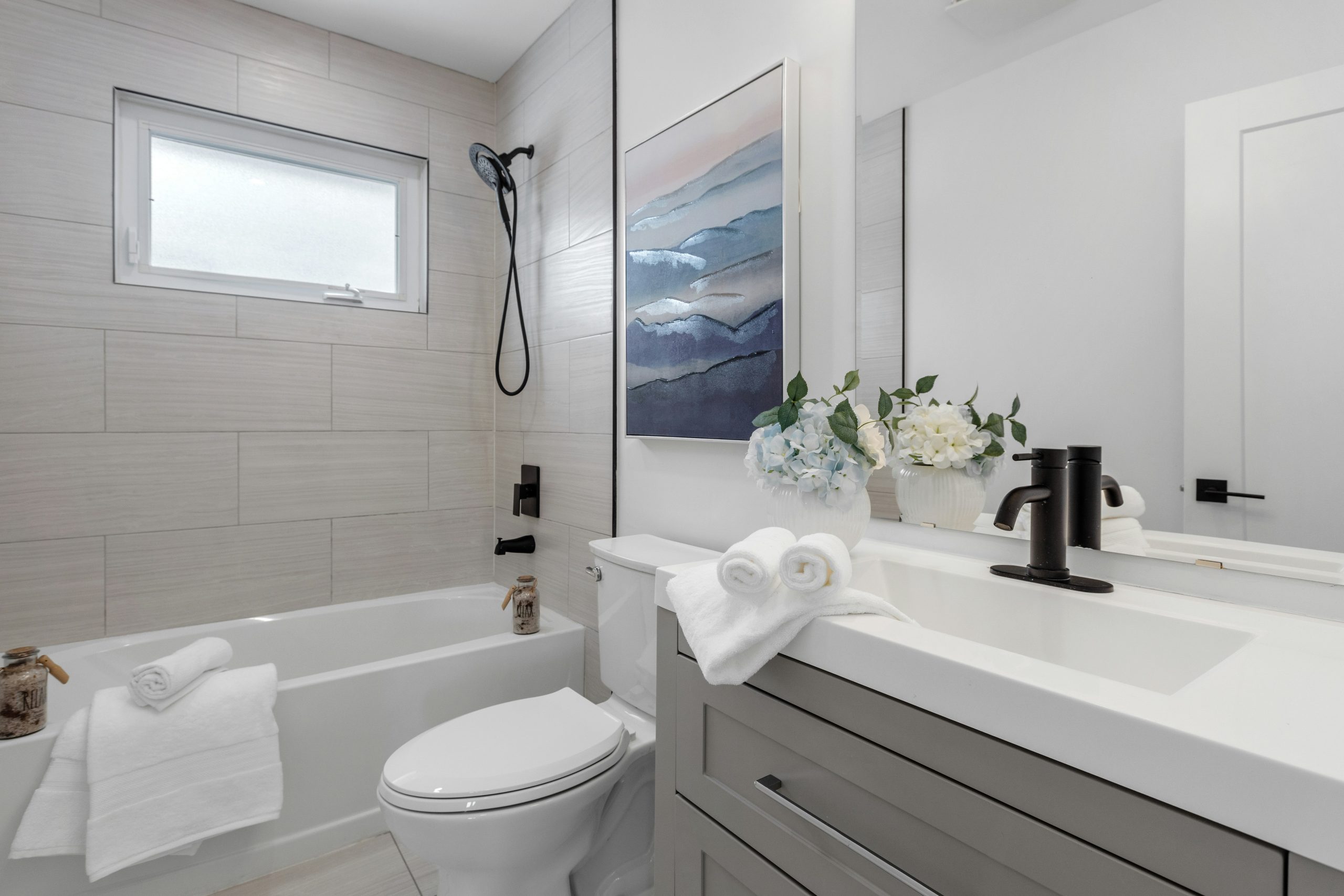
The secret ingredient here is the intentional use of matte black as a graphic element. It’s not just a finish; it’s the punctuation in the room’s otherwise quiet sentence. The sharp, dark lines of the tub filler, shower head, and faucet cut through the soft grey and white, creating a visual structure that feels modern and confident. If you swapped these for chrome, the design would be pleasant but forgettable. The black provides it an edge and a focal point, turning a simple color scheme into a deliberate style statement. Compare the black accents to the brass accents in Idea #4 to see how metal choice defines the mood.
|
📋 Copy HEX 🔗 Share |
If you have a small bathroom, lean into a “less is more” philosophy. Instead of cluttering the space with decor, choose one impactful piece of art. In a compact room, a single, well-chosen framed print can add personality and a focal point without taking up any floor or counter space. To integrate the artwork, pick at least one color from your tile or vanity, as the blue tones in this piece echo the cool grey of the tiles.
7. Sumptuous Drama: Deep Plum Walls with Gold & Marble
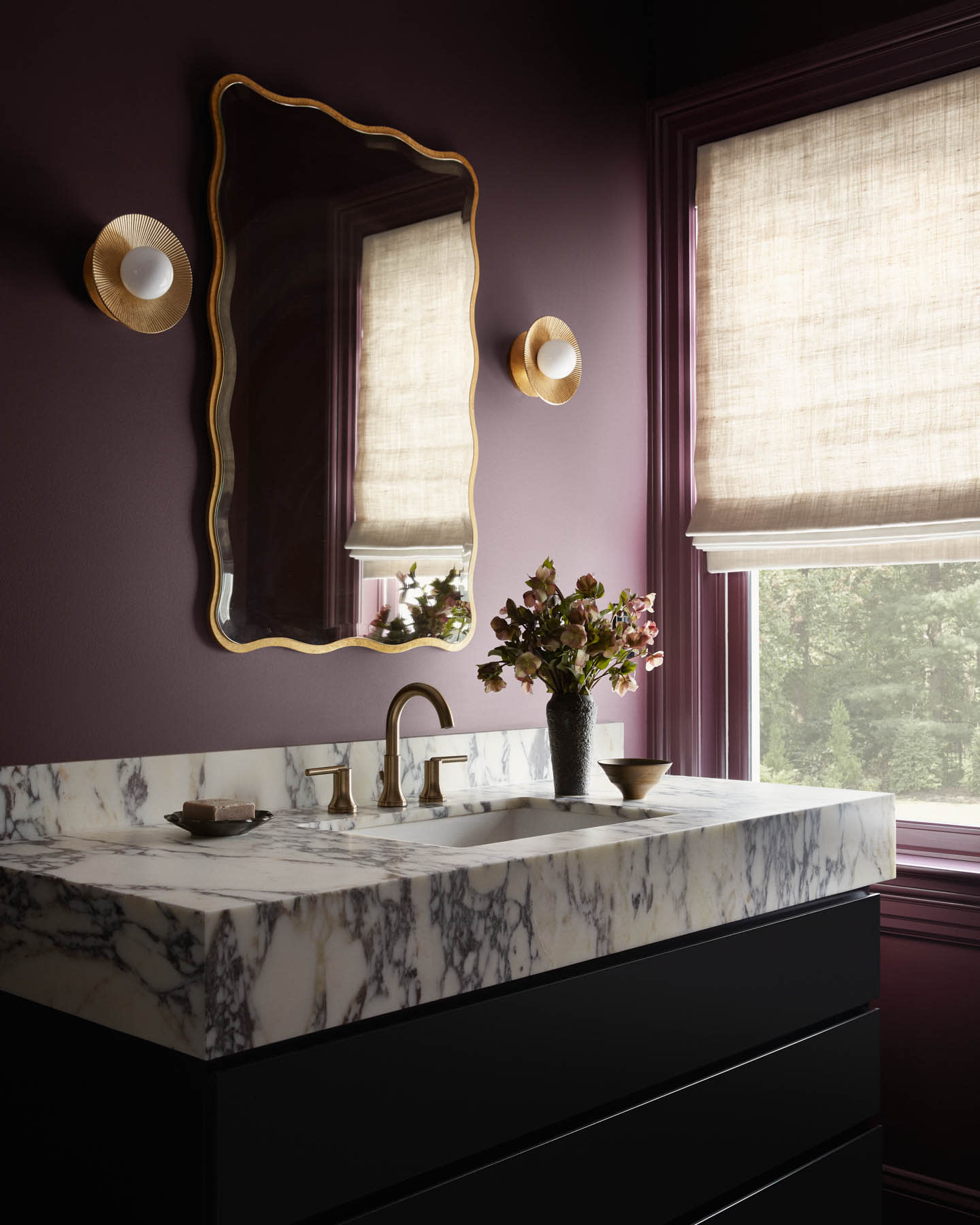
We’re seeing a major pushback against the all-white-and-grey-everything trend that dominated the last decade. Homeowners are craving personality, mood, and a touch of drama, and this bathroom delivers. Using a deep, saturated color like this plum feels bold, personal, and luxurious. It’s part of the larger “Dark Academia” and “Romantic Modernism” aesthetics trending on Pinterest. Paired with timeless materials like marble and brass, it feels sophisticated and curated, not trendy. This is a look with staying power because it’s rooted in classic elegance.
|
📋 Copy HEX 🔗 Share |
A thick marble countertop is stunning, but it is also porous. This is a natural stone, which means it can etch or stain from acidic products like certain cleaners, makeup removers, or even citrus. Sealing it upon installation and then annually is non-negotiable. For daily cleaning, use a pH-neutral stone cleaner, not a generic bathroom spray. The gold and brass fixtures will also require some care to prevent water spots and maintain their luster, so a quick wipe-down after use is a good habit to form.
8. Playful Pattern: Geometric Blue Tiles Meet Natural Wood
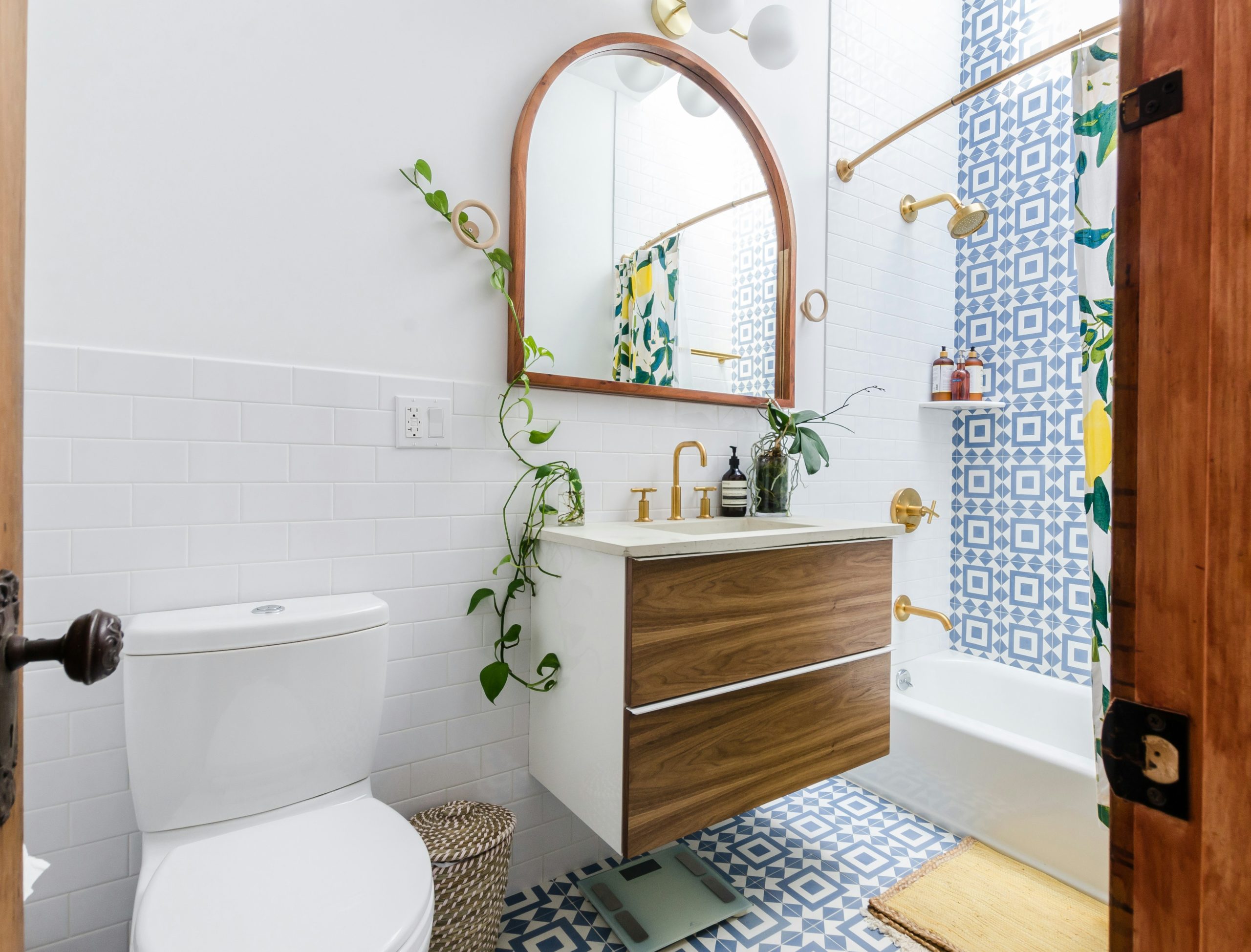
This small bathroom is bursting with personality because of a smart use of pattern and material mixing. The bold, geometric tile on the floor and in the shower creates a strong focal point and fools the eye into seeing a larger, more dynamic space. By keeping the walls in simple white subway tile, the design avoids becoming overwhelming. The floating wood vanity and arched mirror add natural warmth and texture, preventing the blue and white scheme from feeling cold. Finally, the gold fixtures are a perfect, warm metallic accent against the cool blue tones.
|
📋 Copy HEX 🔗 Share |
Patterned cement-look tiles can be pricey, but you can get this look for much less. Many big-box stores, like Home Depot and Floor & Decor, offer ceramic or porcelain versions with similar bold, graphic patterns for $5 to $10 per square foot. Pair them with basic, affordable white subway tile. For the vanity, a simple IKEA cabinet can be warmed up with a wood-toned contact paper or gel stain. You’ll achieve the same vibrant, playful energy seen in Idea #19 without the high-end price tag.
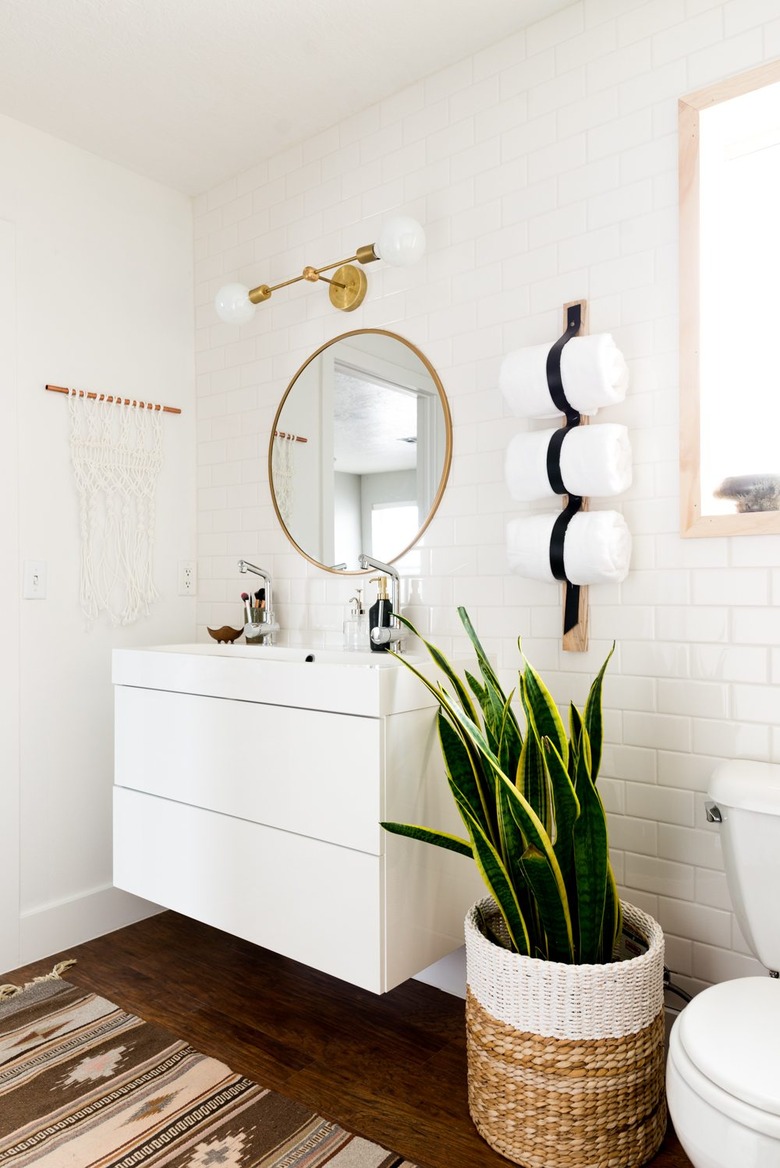
9. Bohemian Minimalist: White Subway Tile with Woven Textures
The formula for this inviting look is simple: 70% clean, minimal base + 30% natural, bohemian accents. The base is your classic white subway tile and a simple floating vanity—a blank canvas. The personality comes from layering in textures. The woven basket, the macrame wall hanging, the warm wood tones, and even the snake plant all contribute to that 30%. The metallic touch of the gold mirror and brass light fixture adds a hint of polish that keeps the look from feeling too rustic. It’s a perfect blend of modern clean lines and handmade warmth.
|
📋 Copy HEX 🔗 Share |
This style is achievable, but it needs a bit of planning to look curated, not cluttered. Before you start buying, check these things:
- Identify your “blank canvas”: Is it white subway tile? A smooth, neutral painted wall? You need a simple backdrop for the textures to pop.
- Plan your lighting: The brass sconce here is a key feature. Do you have the wiring for a wall light, or will you need to stick to an overhead fixture?
- Check for stud locations: A floating vanity needs to be securely mounted to wall studs. Use a stud finder to make sure you can place it where you want it.
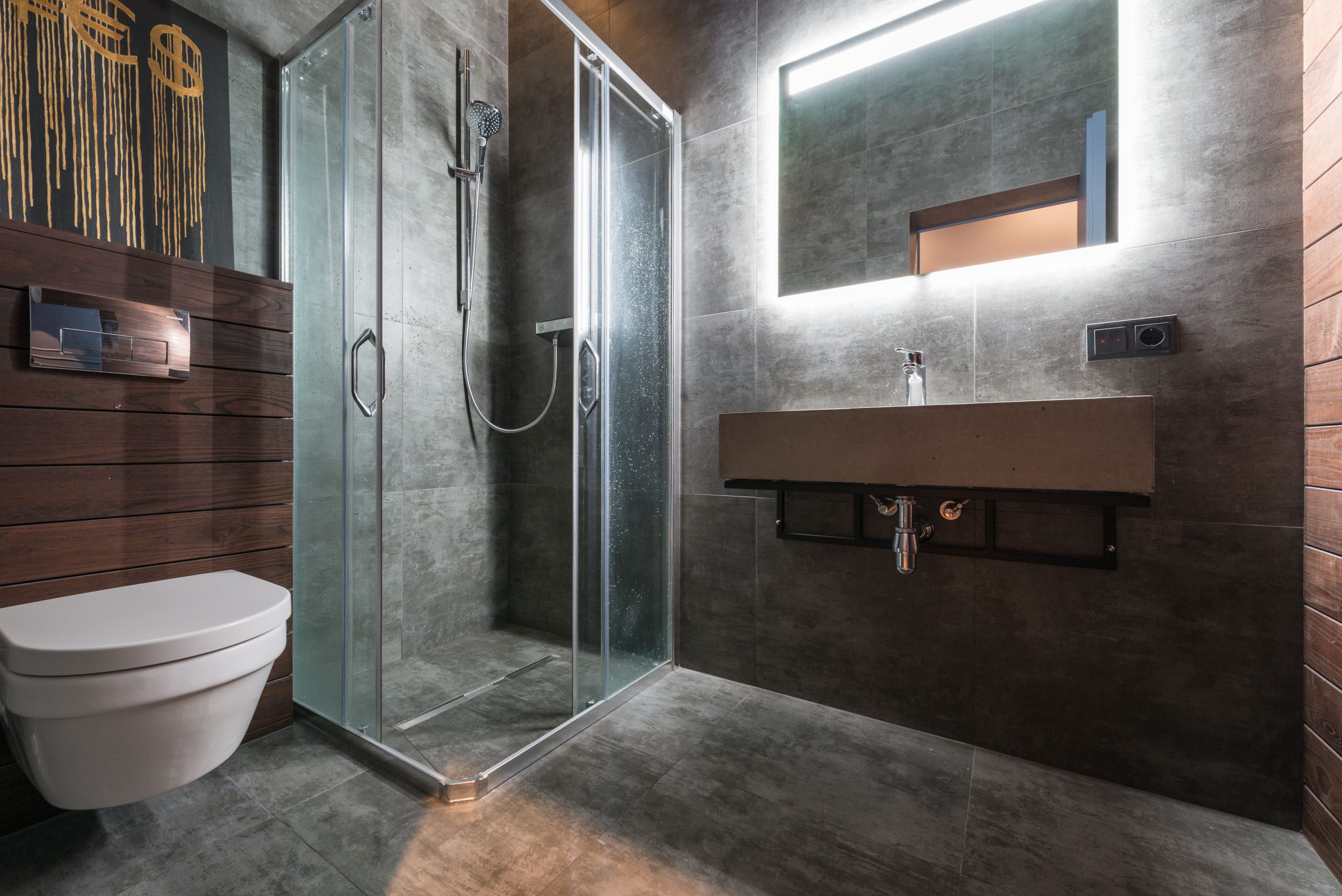
10. Sleek & Urban: Concrete Textures and Dark Wood
The horizontal dark wood paneling is the single element that elevates this bathroom from a simple industrial space to a sophisticated urban retreat. While the dark concrete-look tiles set a moody, modern tone, they could feel cold and monolithic on their own. The wood paneling introduces a necessary layer of warmth, natural texture, and linear direction. It breaks up the stone texture, guides the eye, and creates a feature wall that feels intentional and architectural. It’s the detail that adds soul and sophistication.
|
📋 Copy HEX 🔗 Share |
This moody, dramatic style is best suited for a primary bathroom or a powder room where you want to make a bold statement. It requires careful lighting to avoid feeling like a cave. The look works well in a space of at least 60 square feet. For the floating concrete sink and wall-mounted toilet to not feel cramped, you need adequate floor space. The dark color palette can make a compact room feel smaller, so if you’re working with less than 50 square feet, consider using the dark wood or concrete on just one accent wall instead of all over.
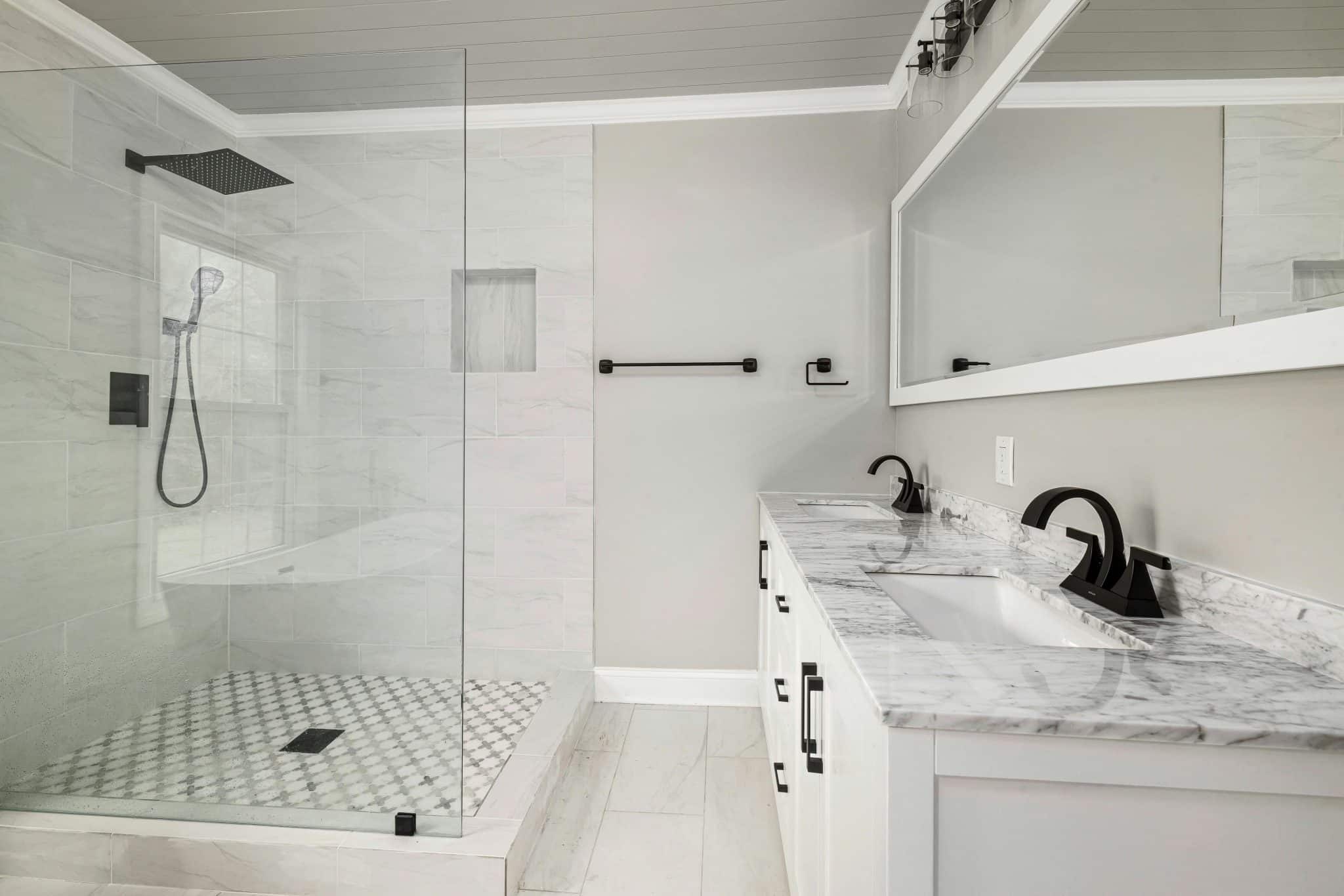
11. Crisp & Contrasting: A Black, White, and Marble Scheme
This bathroom nails the high-contrast look by repeating its core elements with intention. The matte black of the fixtures repeats in the window frame and mirror trim, creating a cohesive visual rhythm. The grey tones in the marble-look countertop are picked up in the geometric shower floor tile and the subtle grey of the planked ceiling. This repetition makes the design feel purposeful and harmonious, rather than a random collection of trendy items. The large, simple white cabinets provide a calm visual anchor, allowing the tile and fixtures to stand out.
|
📋 Copy HEX 🔗 Share |
When using a bold geometric tile on the floor, keep the surrounding elements simple to let the pattern shine. Notice how the walls are a simple, large-format tile and the vanity is a clean, white shaker style. If you pair a busy floor with a busy wall and a detailed vanity, the space will feel chaotic. Let one element be the star. For a shower floor mosaic, always check the DCOF (Dynamic Coefficient of Friction) rating to ensure it’s slip-resistant enough for wet areas.
12. Minimalist Luxe: Gray Marble with Sleek Black Fixtures
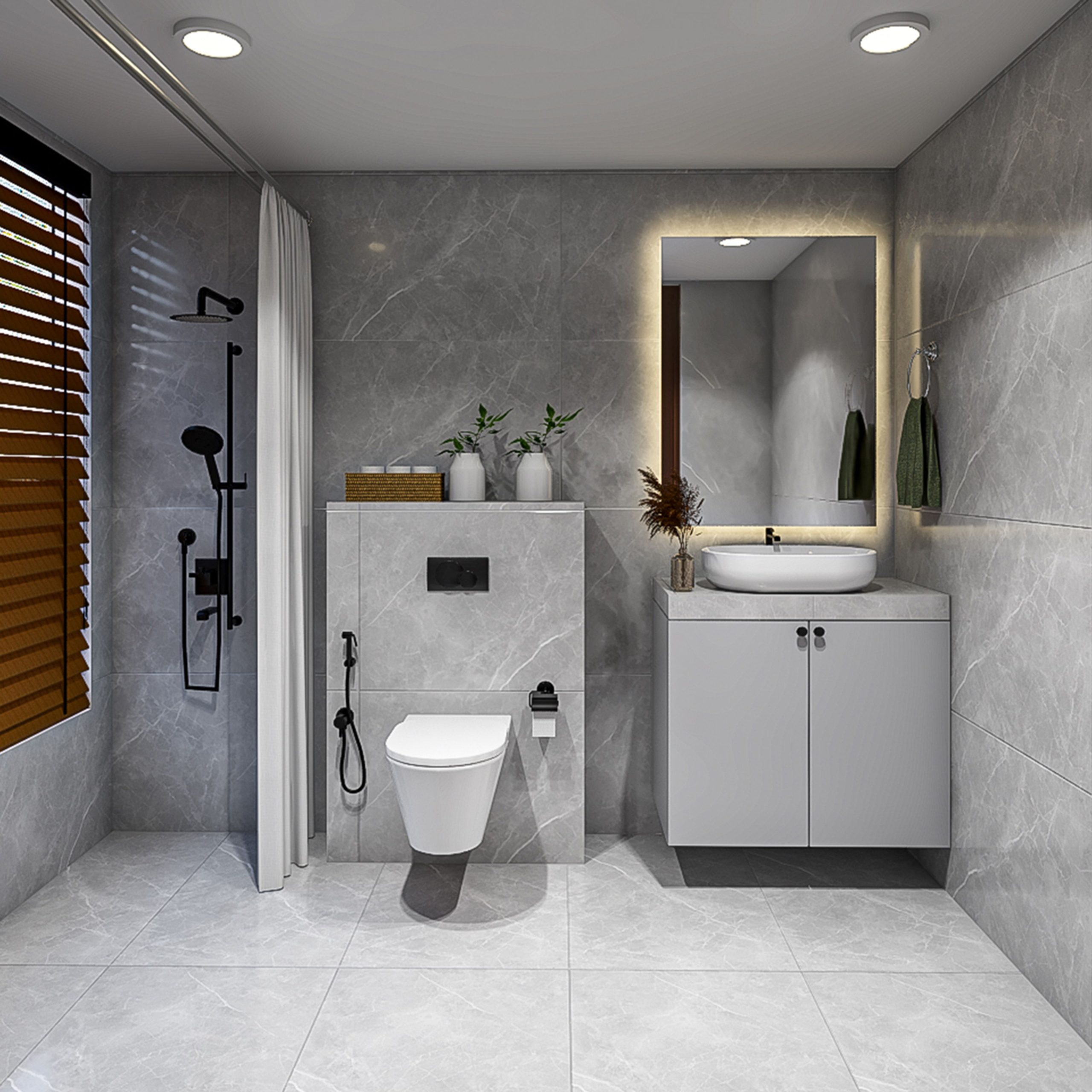
A backlit mirror is a fantastic way to get even, flattering light, but not all backlit mirrors are created equal. Pay close attention to the Kelvin temperature (K) and CRI (Color Rendering Index) of the integrated LEDs. For a bathroom, you want a neutral to warm light, typically between 3000K and 4000K. Anything higher can feel sterile and clinical. A CRI of 90+ is essential for accurate makeup application and skin tones. Cheaper models often have low CRI and a harsh, blue-toned light, which can ruin the sophisticated vibe of a room like this.
|
📋 Copy HEX 🔗 Share |
Want to install those trendy wooden Venetian blinds in your bathroom? It’s a lovely way to add warmth. Here’s a quick guide:
Time: 45 minutes. Cost: $50 – $200.
- Measure your window inset carefully in three places for both width and height; use the smallest measurement.
- Choose faux-wood blinds. Real wood can warp from bathroom humidity. Faux wood is moisture-resistant.
- Install the mounting brackets inside the top corners of the window frame using the included screws. Make sure they are level.
- Slide the headrail of the blinds into the open brackets and snap the covers shut.
- Attach the tilt wand. Voila! Instant warmth and privacy.
13. Dramatic Elegance: Dark Gray Walls & Boldly Veined Marble
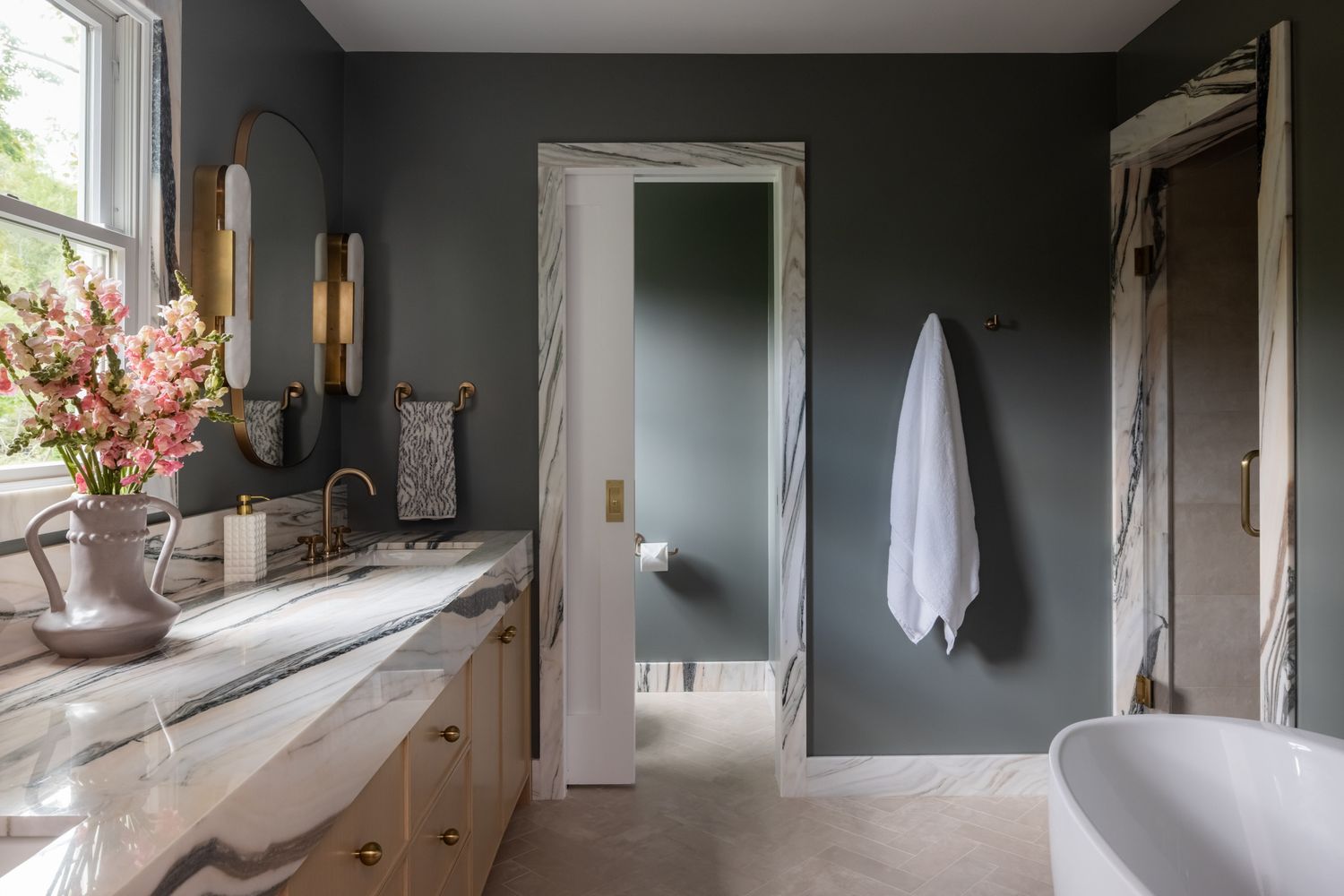
Recreating this level of drama comes with a price tag, largely due to the slab of marble. Here is a sample breakdown:
- Vanity & Marble Slab: $5,000 – $12,000
- Lighting & Mirror: $800 – $2,500
- Freestanding Tub: $2,000 – $5,000
- Fixtures (Brass): $1,000 – $3,000
- Herringbone Floor Tile: $1,500 – $4,000 (installed)
- Paint & Labor: $1,000 – $2,000
- TOTAL: $11,300 – $28,500
- Budget alternative: Use a marble-look quartz countertop, a less expensive tub, and shop for lighting on sites like AllModern to achieve this look for 40-50% less.
|
📋 Copy HEX 🔗 Share |
The single most impactful element here is the dramatic, heavily veined marble slab used for the vanity countertop and backsplash. It’s a piece of natural art. The dark gray walls are the perfect supporting actor, providing a moody canvas that makes the white and black of the marble explode with contrast. Without that specific, bold marble choice, the room would still be lovely, but it wouldn’t have that breathtaking, gallery-worthy focal point. It’s a splurge that makes the entire design.
14. Harmonious Greys: Marble-Look Tiles Paired with Light Wood
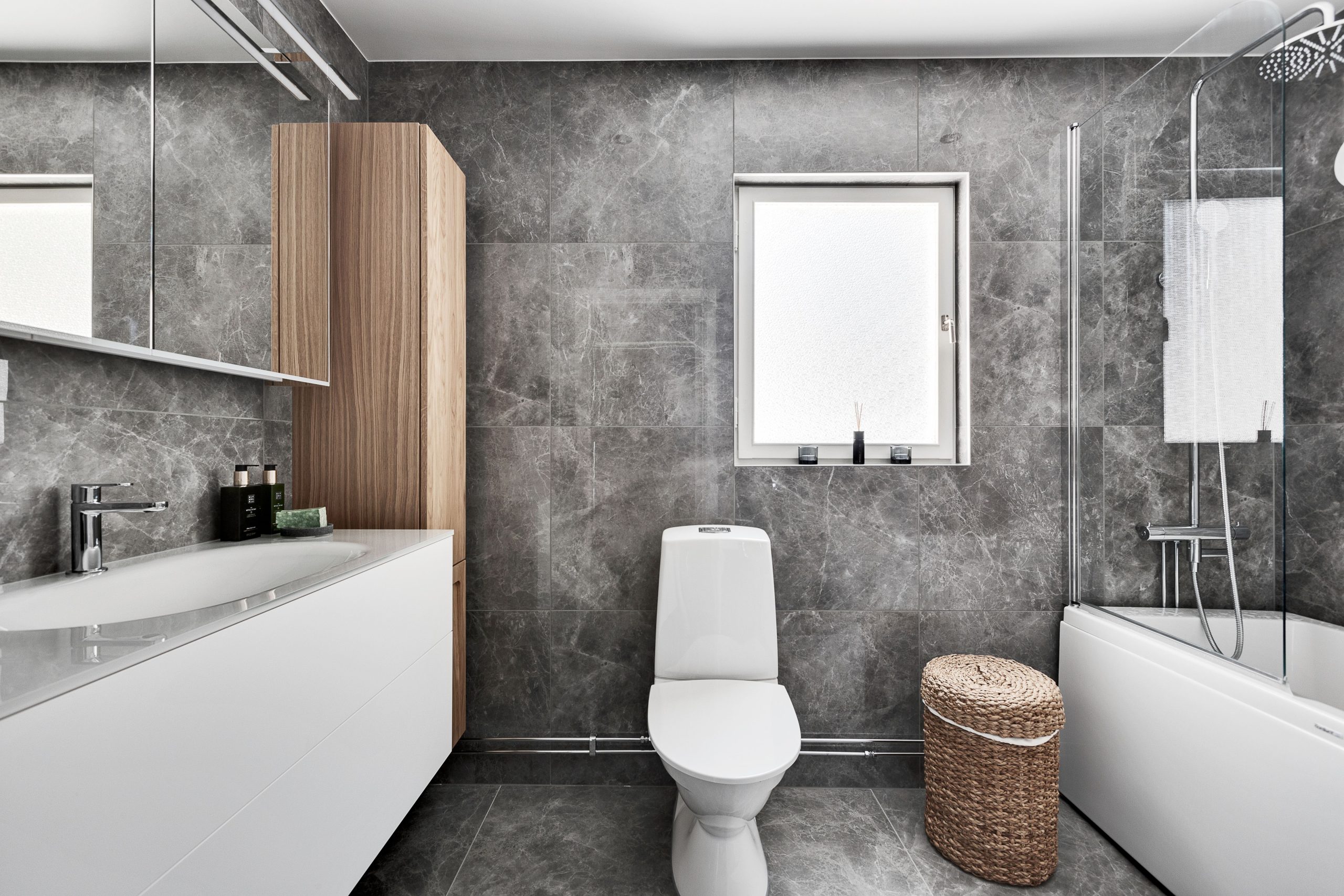
This bathroom feels so calming and cohesive because it commits to a limited color palette but varies the texture. The dark gray marble-look tiles on the floor and walls create a seamless, enveloping feel. The space could have been cold and overwhelming, but the introduction of the tall light wood cabinet and woven basket adds crucial organic warmth and texture. The clean, white fixtures (vanity, tub, toilet) provide a crisp, fresh contrast that prevents the gray from becoming too heavy. It’s a perfectly executed balance of sleek and natural.
|
📋 Copy HEX 🔗 Share |
A floating vanity looks incredibly chic and makes cleaning the floor a breeze. However, it offers significantly less storage space than a traditional floor-standing vanity. Notice the tall cabinet next to it? That’s not just a style choice; it’s a practical necessity to make up for the lack of under-sink drawers and cabinets. If you’re considering a floating vanity, first take a ruthless inventory of everything you need to store in your bathroom and make sure you have a secondary solution like a tall cabinet or closet.
15. Moody Luxury: Fluted Wood Panels & Dark Marble
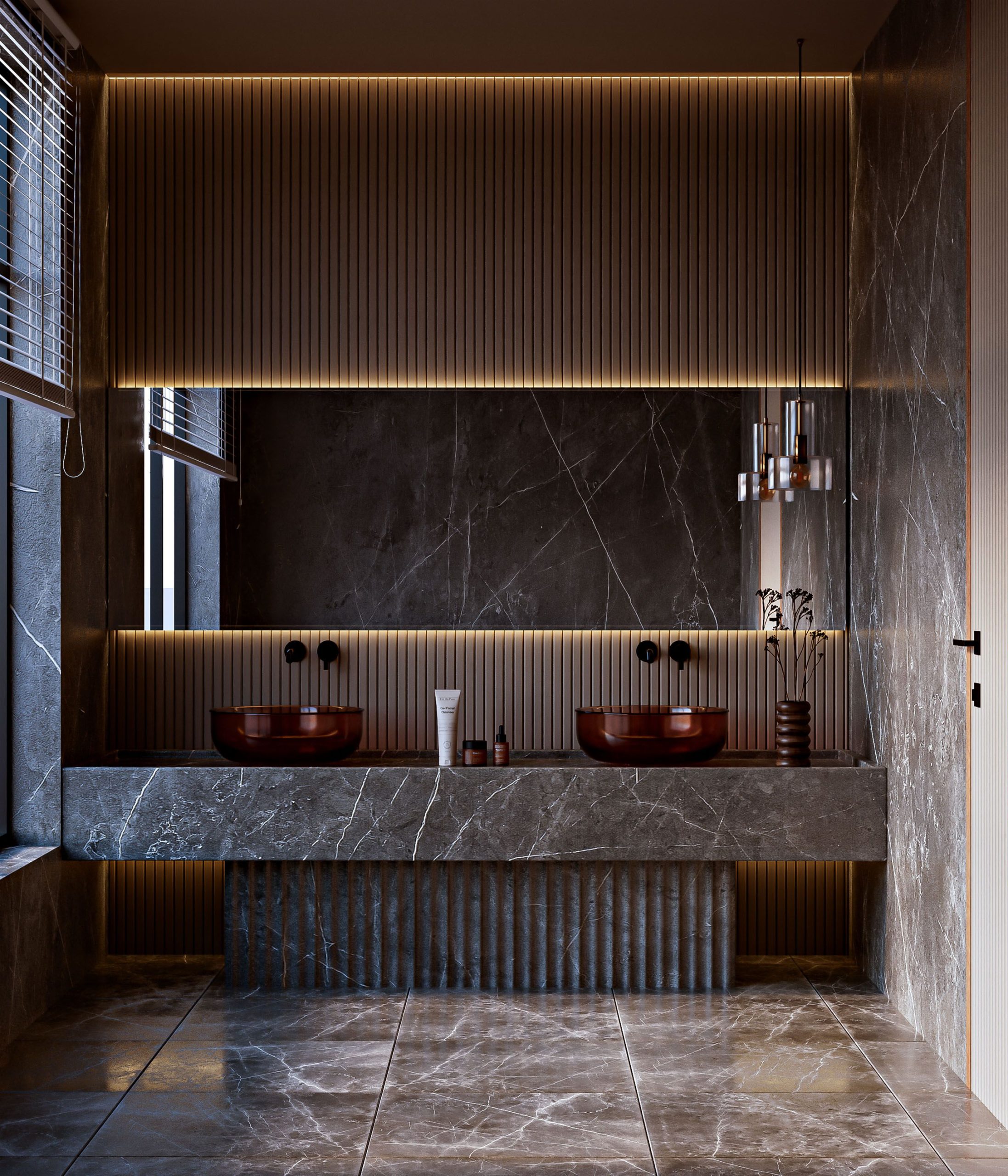
Integrated lighting is the secret to making a dark, moody bathroom feel luxurious, not just dark. In this design, the subtle LED strips under the vanity and behind the fluted panels are non-negotiable. They highlight the texture of the wood, make the vanity appear to float, and provide a soft, ambient glow. This prevents the dark marble and wood from feeling heavy and flat. When designing a dark space, always incorporate layers of light: ambient (like these strips), task (vanity lights), and accent lighting.
|
📋 Copy HEX 🔗 Share |
Dark marble is stunning, but it shows everything—water spots, toothpaste drips, fingerprints, and dust. This is a high-maintenance surface. Similarly, those beautiful amber glass sinks will require frequent cleaning to avoid looking cloudy from soap scum and water minerals. The matte black faucets can also show water spots if you have hard water. This look is absolutely a showstopper, but it’s best suited for someone who doesn’t mind a daily wipe-down to keep it looking pristine. Compare the upkeep to a simpler finish like in Idea #11.
16. Functional Edge: Black Slate Tile with a Light Wood Vanity
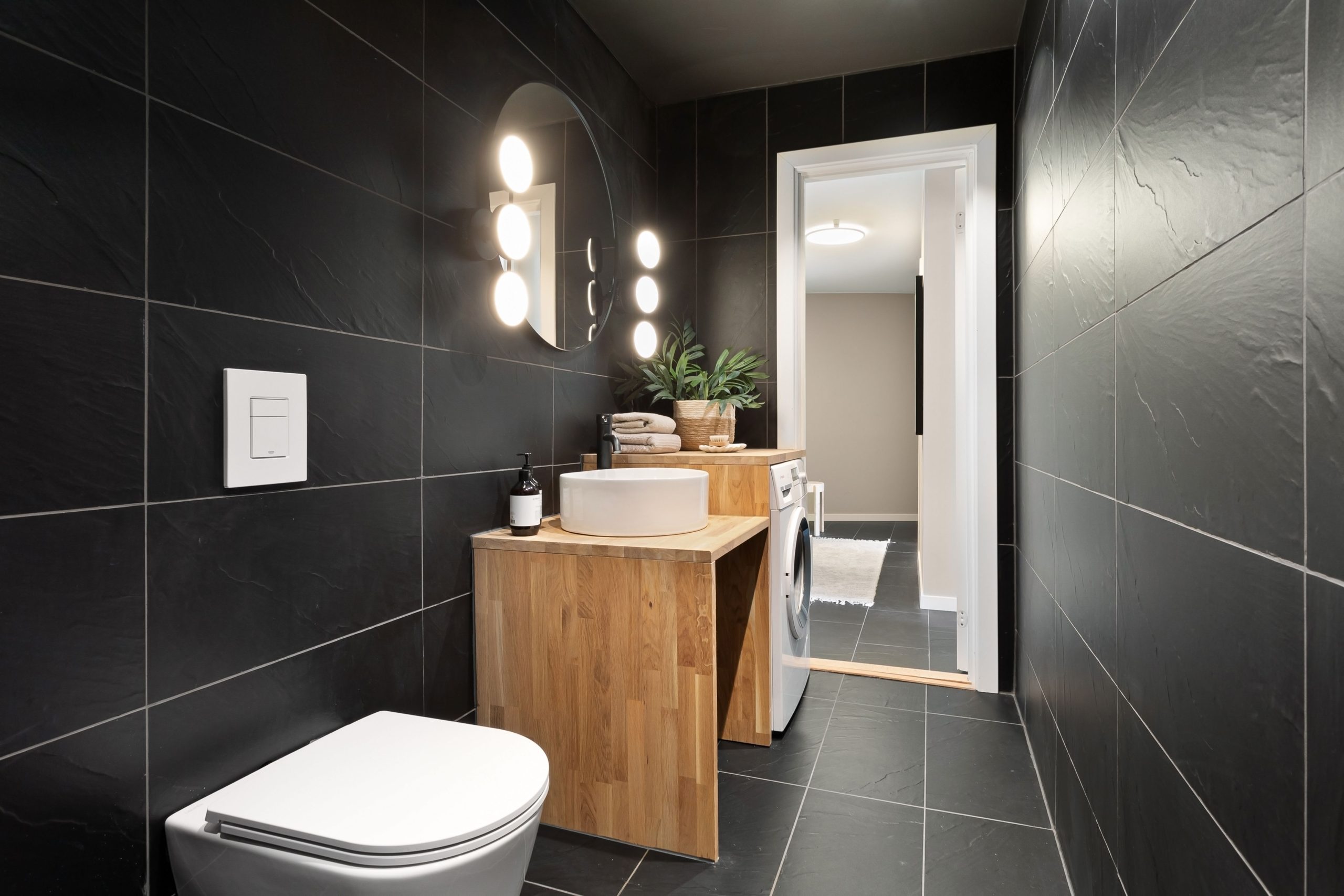
The most brilliant part of this design is its unapologetic functionality. The integration of a washing machine directly into the vanity is a game-changer for small-space living. It’s a move that says a bathroom doesn’t have to hide its practical purpose. By matching the vanity wood and wrapping it all into one cohesive unit, the appliance becomes a deliberate part of the design, not an afterthought. This commitment to blending utility with high style is what makes the space feel so intelligently modern and livable.
|
📋 Copy HEX 🔗 Share |
Let’s talk about putting a washing machine in a bathroom. While a washing machine can save space, you need to plan for it. First, the vibrations during a spin cycle can be significant. You’ll need to ensure the vanity is robustly built and secured to handle it and potentially add sound-dampening pads. Second, water supply and drainage need to be professionally installed. Finally, humidity can be tough on appliances, so ensure your bathroom has excellent ventilation to protect the machine’s electronics and prevent rust over time.
17. Warm Industrial: Textured Bronze Tiles & Copper Pendants
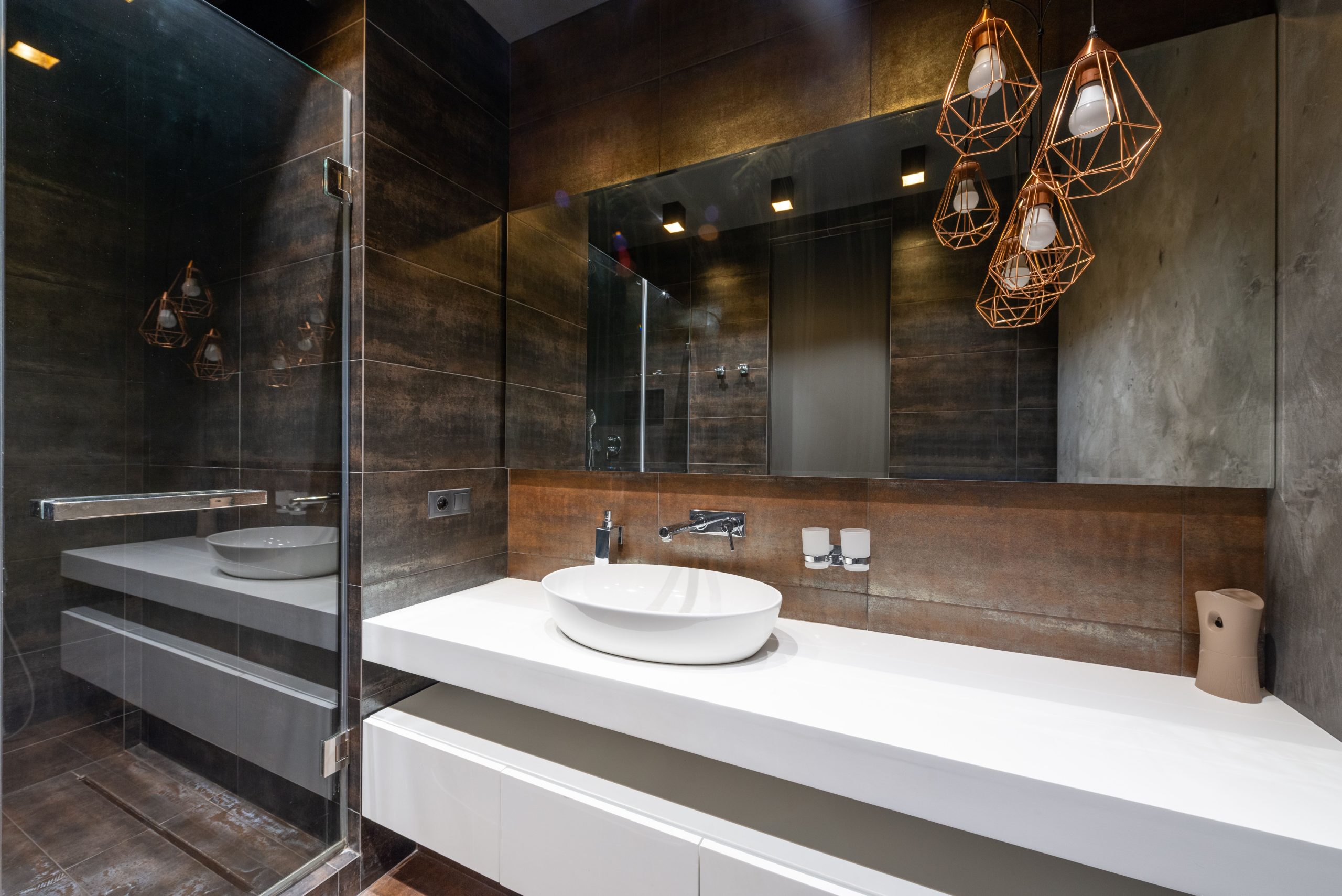
The success of this design lies in its sophisticated layering of materials within a tight color story. The dark, textured tiles have a metallic, bronze-like sheen that is picked up perfectly by the warm glow of the copper pendant lights. This creates a rich, warm, and cohesive atmosphere. The crisp white of the floating vanity and sink provides a stark, clean contrast that prevents the dark tones from becoming overpowering. It’s a confident mix of rough texture (tiles), polished metal (pendants), and smooth surfaces (vanity).
|
📋 Copy HEX 🔗 Share |
This dramatic, high-contrast look works best in a bathroom with some vertical space. The pendant lights require a ceiling height of at least 9 feet to hang comfortably without becoming a head-bumping hazard. The large-format dark tiles can make a very small bathroom feel enclosed, so this design is ideal for a space that is at least 70 square feet. If you have lower ceilings, you could achieve a similar moody vibe by using wall sconces instead of pendants, like those shown in Idea #6.
18. Earthy Minimalism: A Freestanding Tub and Fluted Tiles
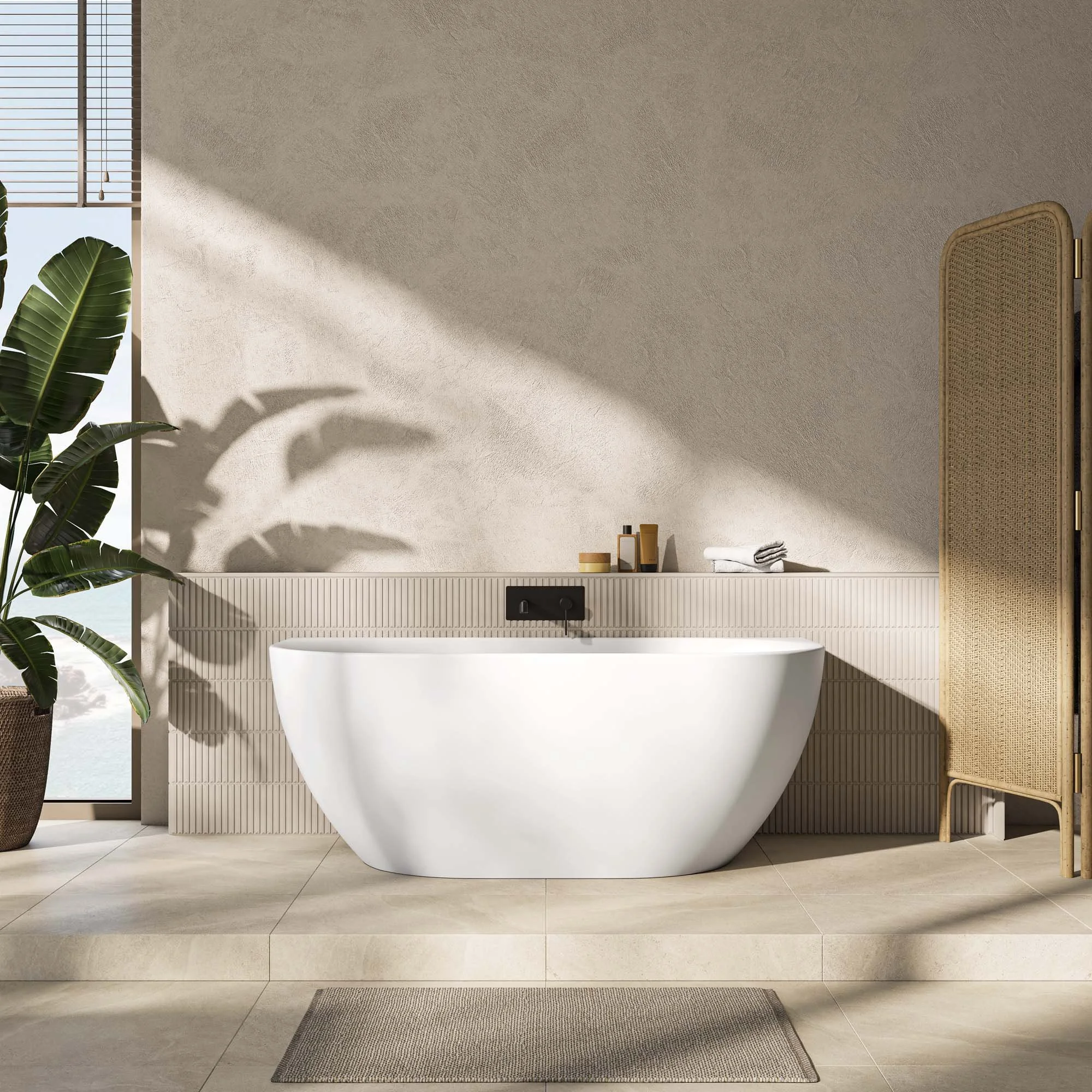
This serene space is a study in texture. The formula is roughly 60% smooth surfaces (the tub, the large floor tiles) and 40% articulated texture (the fluted wall tiles, the woven blinds, the rattan divider, and the plant). The color palette is kept extremely tight—almost entirely light beige and warm white—which allows the different textures to become the main story. A single black accent in the faucet provides a tiny point of contrast that sharpens the whole look. It’s proof that you don’t need color to create interest.
|
📋 Copy HEX 🔗 Share |
Achieving this level of serene minimalism requires restraint. Before you begin, get on board with a “less is more” mindset.
- Commit to a neutral palette: This look depends on a tight range of beige, cream, and white. Are you willing to forgo bold color?
- Plan for plants: The green of the plant is a key “living” accent. Does your bathroom have enough natural light to support a plant this size? If not, invest in a high-quality faux version.
- Source your textures: Find your key textural elements—the fluted tile and the woven pieces—before you start. They need to work together harmoniously.
19. Modern Prep: Vertical Blue Tiles with Polished Gold Accents
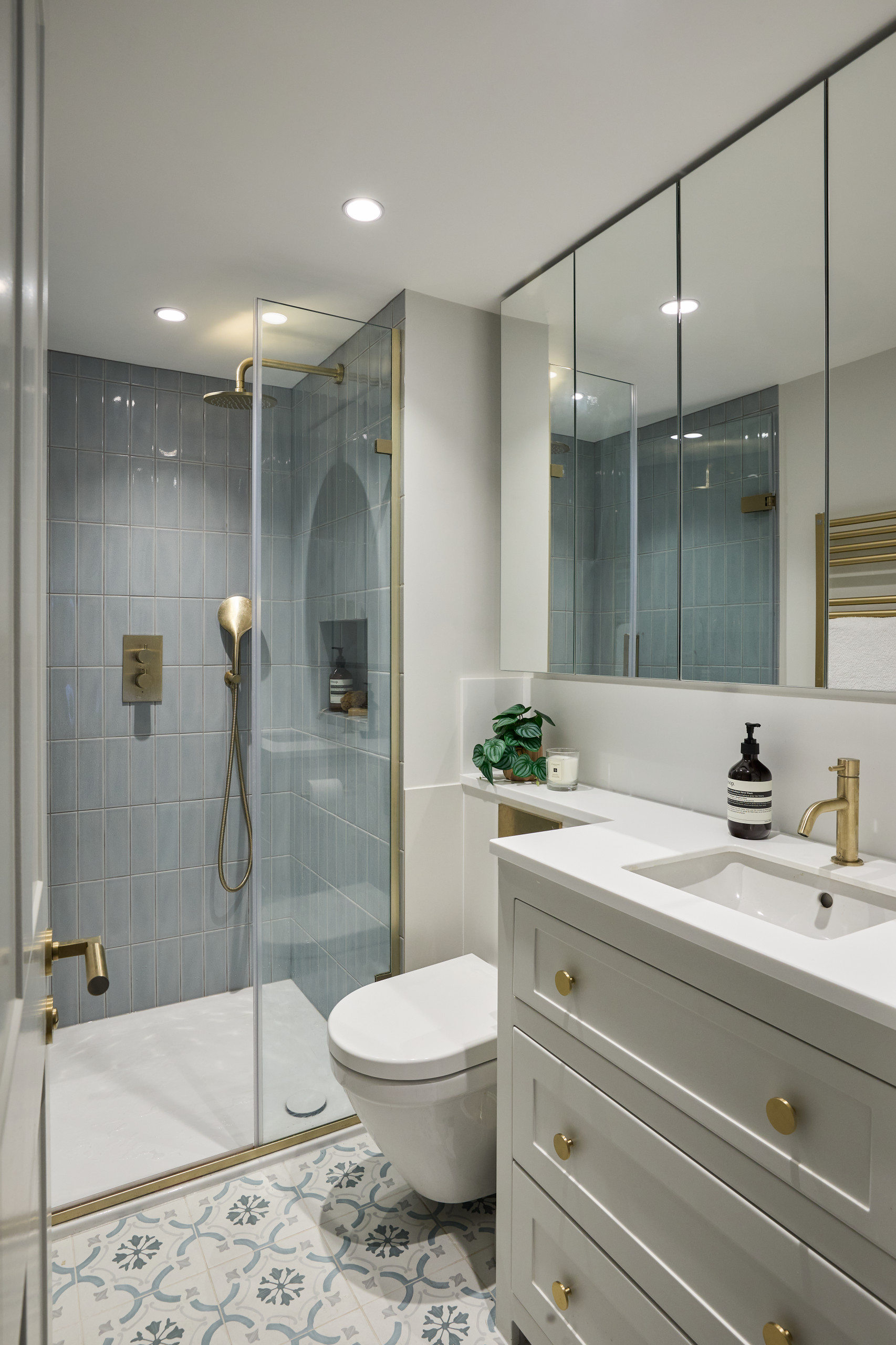
When working with a small space, stacking subway tiles vertically is a brilliant designer trick. The vertical lines draw the eye upward, creating the illusion of higher ceilings and a more spacious room. Here, the choice of a soft, light blue tile keeps the effect bright and airy, while the vertical orientation feels more modern and less expected than a traditional horizontal brick pattern. It’s a simple choice that has a major impact on the perceived size of the shower area.
|
📋 Copy HEX 🔗 Share |
The patterned floor tile is the element that gives this bathroom its unique personality. The white vanity and light blue subway tile are clean and lovely, but they are classic choices. The floor, with its more intricate, multi-toned blue pattern, adds a layer of bespoke detail and visual excitement. It grounds the space and keeps the simple elements from feeling generic. It’s the difference between a nice bathroom and a bathroom with a clear perspective. It’s a similar strategy to the one used in Idea #8, but with a more refined pattern.
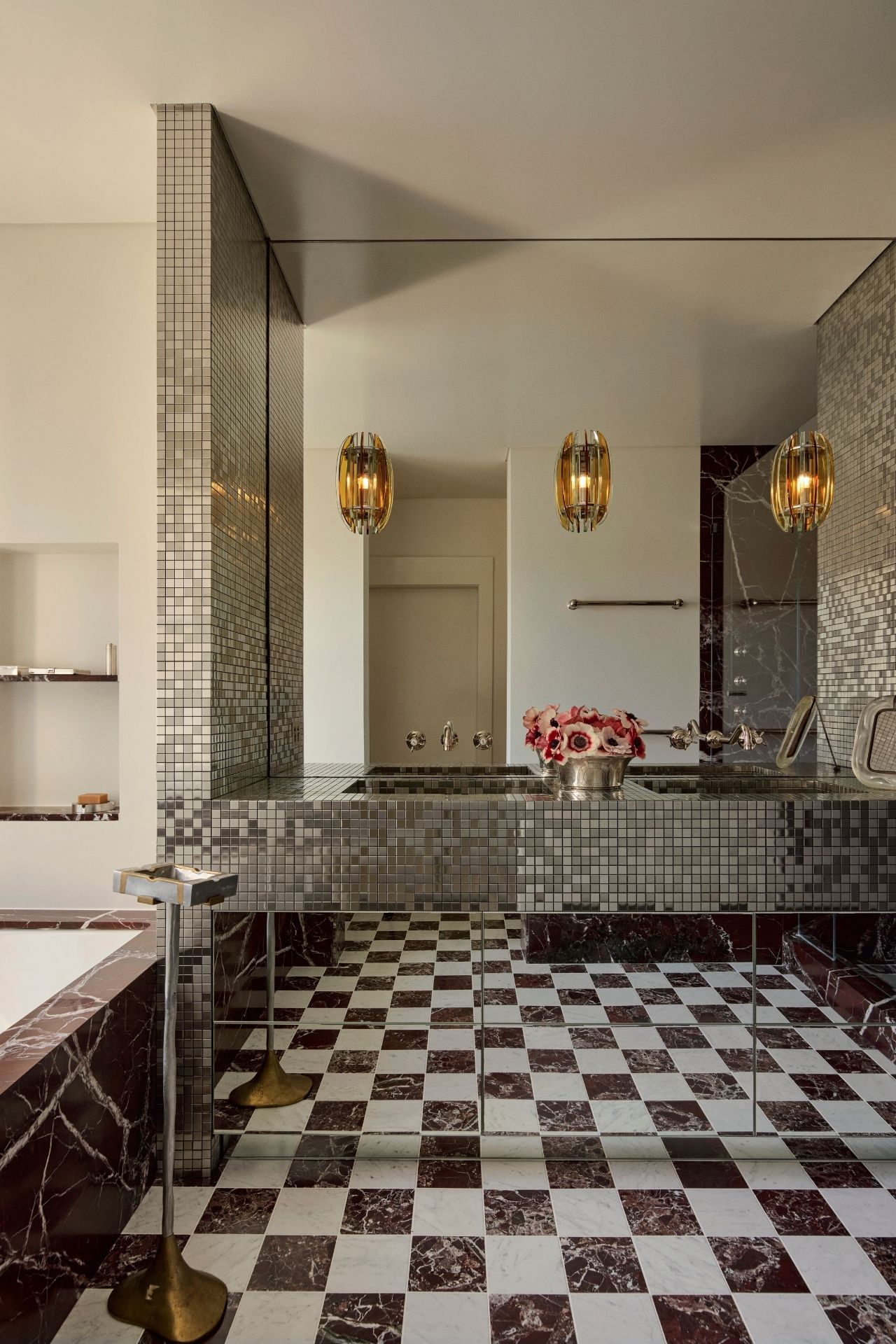
20. Glam Deco: Mirrored Vanity and Checkerboard Marble
A mirrored vanity is the definition of high-glam, but it is also the definition of high-maintenance. It will show every single fingerprint, water splash, and speck of dust. If you have kids or are not a fan of daily wiping, this style might not be the choice for you. Similarly, those small, metallic wall tiles have many grout lines, which can be tedious to keep clean in a bathroom environment. This style is a look that prioritizes high drama over low maintenance, and it’s important to go in with your eyes open.
|
📋 Copy HEX 🔗 Share |
This bold, unapologetic style is a reaction to years of safe, neutral design. It taps into the revival of Art Deco and 80s postmodern aesthetics, where glamour, geometric patterns, and luxe materials reigned supreme. After a period of minimalism, people are ready for spaces that feel lively, opulent, and a little bit over-the-top. The checkerboard pattern, in particular, has seen a massive resurgence on social media. This look is for someone who wants their home to make a statement, and it definitely has staying power as a niche, maximalist trend.
21. Organic Modern: A Floating Wood Vanity with Woven Pendants
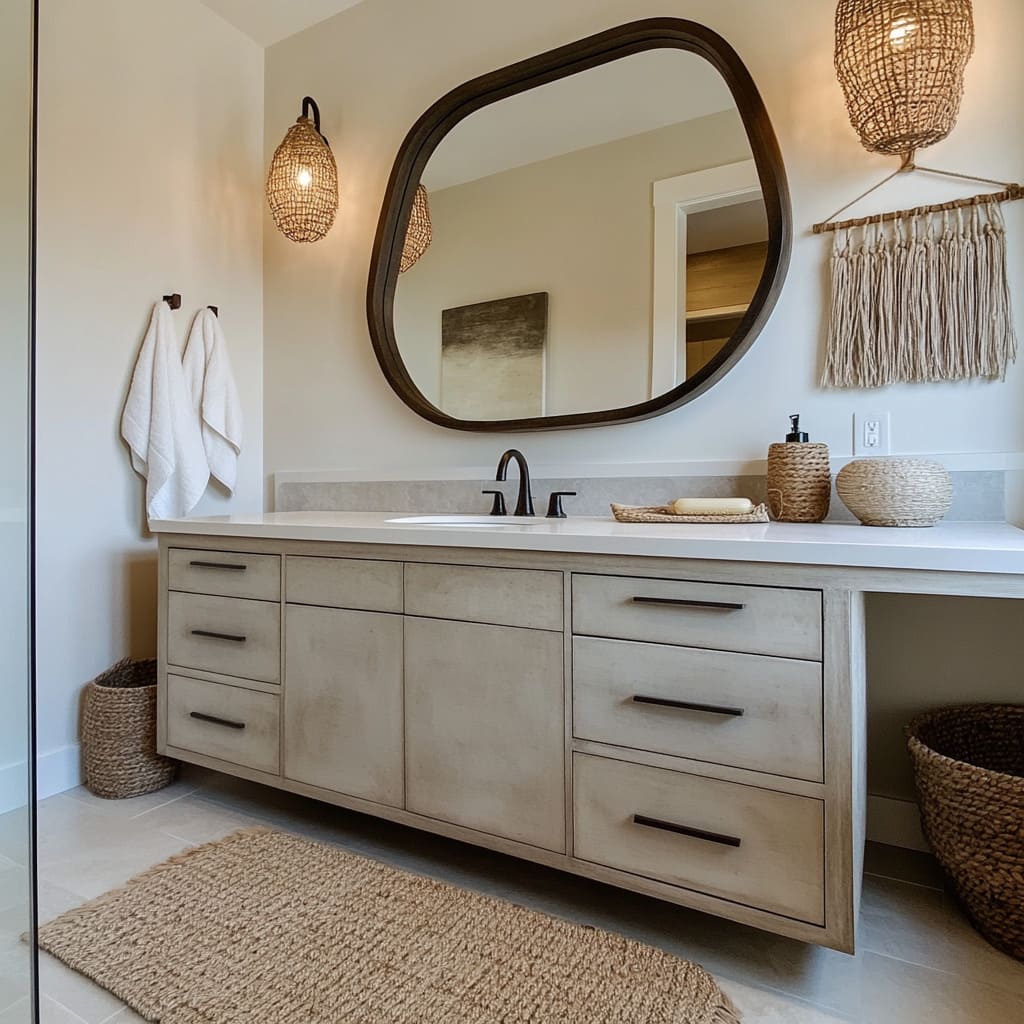
This design feels so grounded and calm because of the consistent use of natural, woven textures. The jute bath mat, the macrame wall hanging, and the statement woven pendant lights all speak the same textural language. This repetition creates a sense of harmony and intentionality. These soft, organic elements provide a perfect contrast to the firm, smooth surfaces of the countertop and the crisp, dark lines of the faucet and mirror frame. It’s this interplay between soft and and <phrase>hard,</phrase> organic and linear, that makes the space feel balanced and complete.
|
📋 Copy HEX 🔗 Share |
Love this look but not the price of designer woven pendants? You can DIY this feeling easily. Stores like IKEA (think SINNERLIG or TORARED) and Target have incredibly affordable woven pendants and baskets. You can often find a simple woven basket at a thrift store for a few dollars and buy a basic pendant light kit for under $20 to create your own fixture. For the vanity, a standard big-box store cabinet can be elevated with modern black handles and paired with an affordable, organically shaped mirror from a place like HomeGoods or Wayfair.
22. Contemporary & Natural: Dark Wood Vanity Beside a Soaking Tub
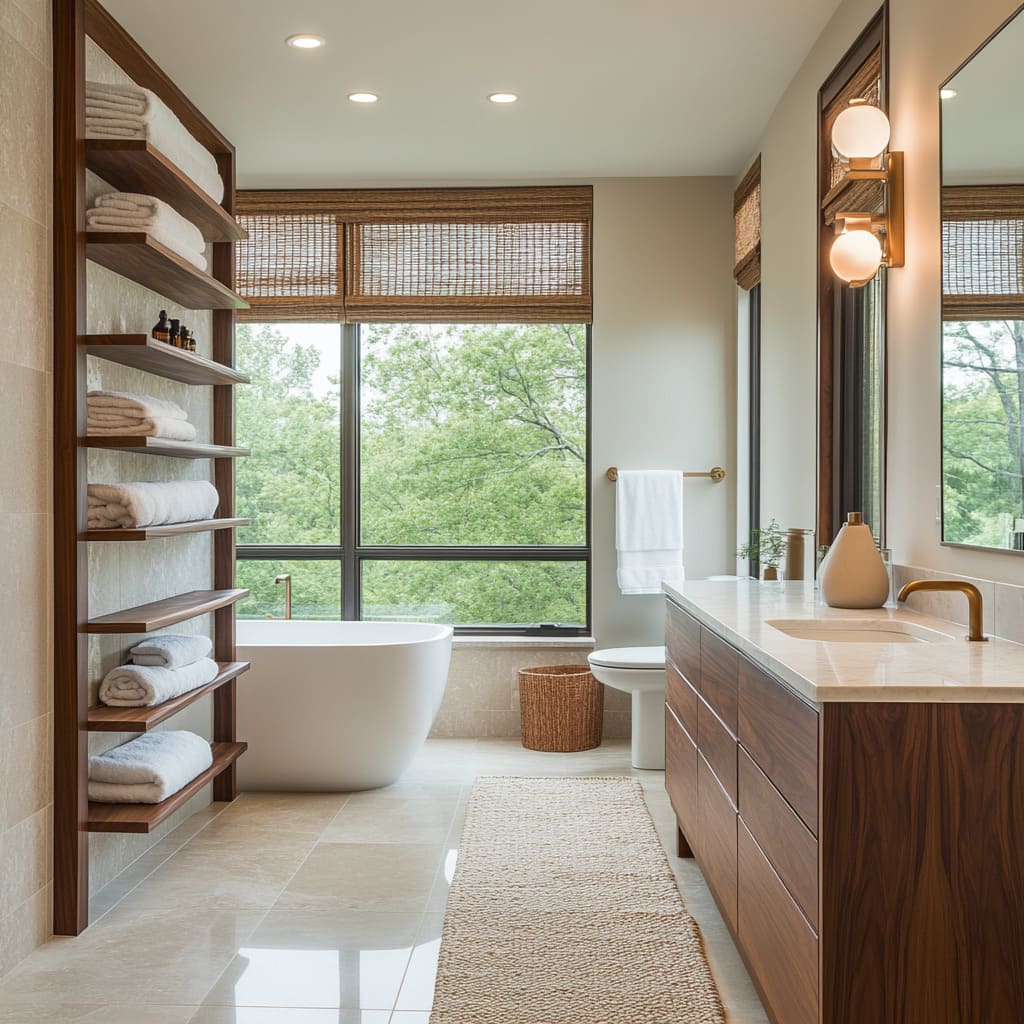
The single element that defines this bathroom is the beautiful, dark wood used for both the long vanity and the tall open shelving unit. It provides a rich, warm anchor in an otherwise light and neutral space. The consistency of using the same wood for both pieces makes the design feel custom and cohesive. This warmth is what elevates the room from a standard modern bathroom to a sophisticated, serene retreat. The wood’s natural grain provides a beautiful organic counterpoint to the clean lines of the tub and the smooth tile.
|
📋 Copy HEX 🔗 Share |
This is a layout for a generously sized primary bathroom. You’re looking at a minimum of 120-150 square feet to accommodate a long double vanity, a freestanding tub, and a separate shelving unit without feeling cramped. The key is to maintain ample “breathing room” around each major piece. The window also plays a giant role; the abundance of natural light is what keeps the dark wood from feeling too heavy. Don’t try to replicate this exact layout in a small space; instead, pull inspiration from the material palette, as seen in the more compact Idea #10.
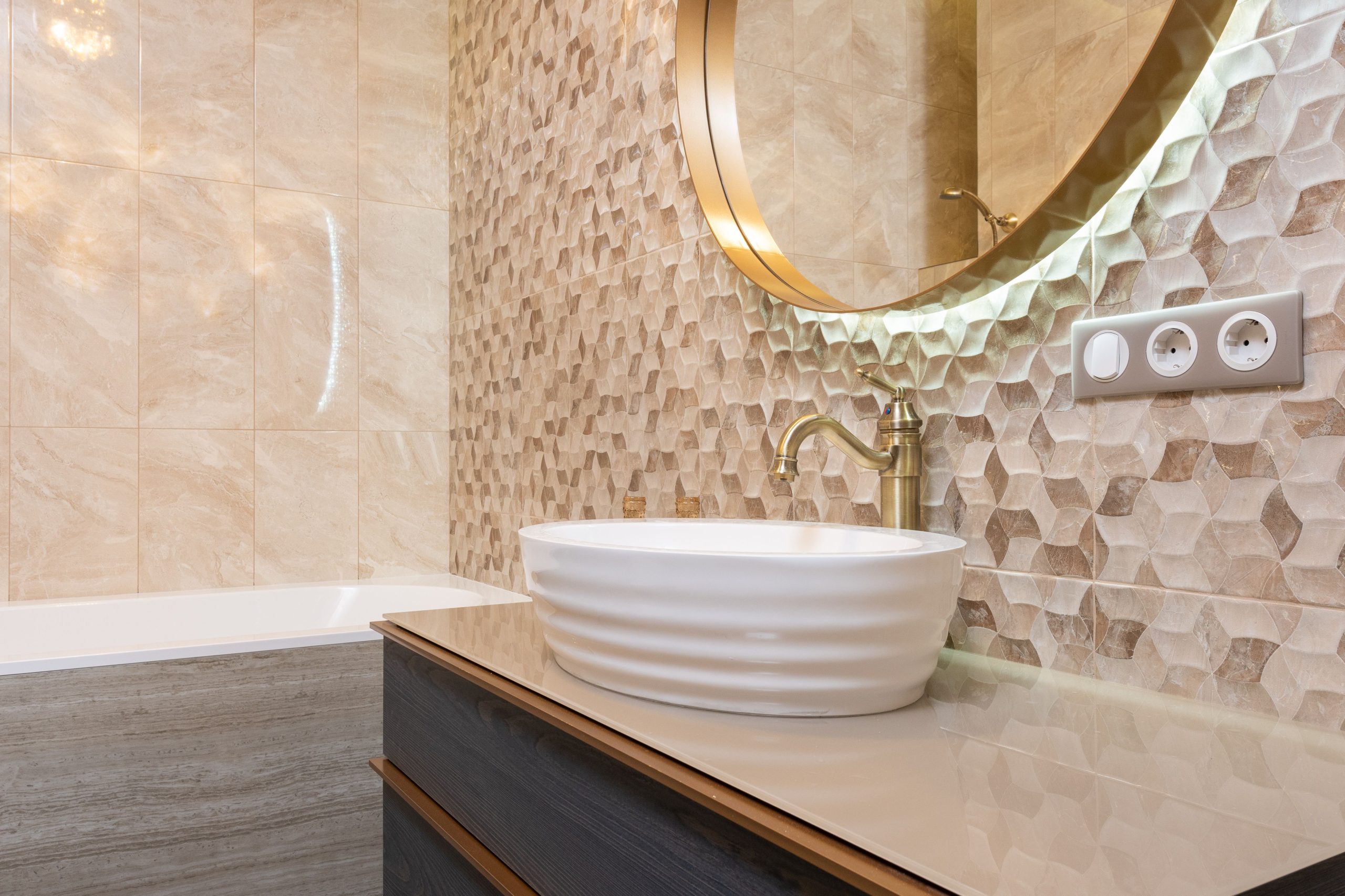
23. Textured Neutrals: A Symphony of Beige and Brown
Want to install a backlit mirror? It’s easier than you think and adds a majorly luxe feel. Here’s how:
Time: 1-2 hours. Cost: $200 – $700.
- Turn off power to the bathroom at the circuit breaker. SAFETY FIRST!
- If you have an old vanity light, remove it. You’ll use its junction box. If not, you may need an electrician to run wiring.
- Most backlit mirrors come with a mounting bracket. Mark your holes, making sure they’re level, and attach the bracket securely to the wall (use drywall anchors if you can’t hit a stud).
- Following the manufacturer’s instructions, connect the mirror’s wires to the wires in the junction box (usually black to black, green to white, and green to ground).
- Hang the mirror on the mounting bracket.
- Turn the power back on and admire your glow!
|
📋 Copy HEX 🔗 Share |
This bathroom proves that a neutral color scheme can be increcaptivatingand interesting. The key is a masterful use of texture. You have the smooth, cool feel of the marble-look tiles, the raised, geometric pattern of the accent tiles, the subtle fluting on the vessel sink’s exterior, and the organic grain of the dark wood vanity. Each surface engages the eye and hand differently. The backlit mirror adds another layer—a soft glow—that enhances all these textures. The brushed brass faucet is the final, warm, metallic touch that ties it all together.
24. Functional Modern: Sleek Lines in Light Brown Marble-Look Tile
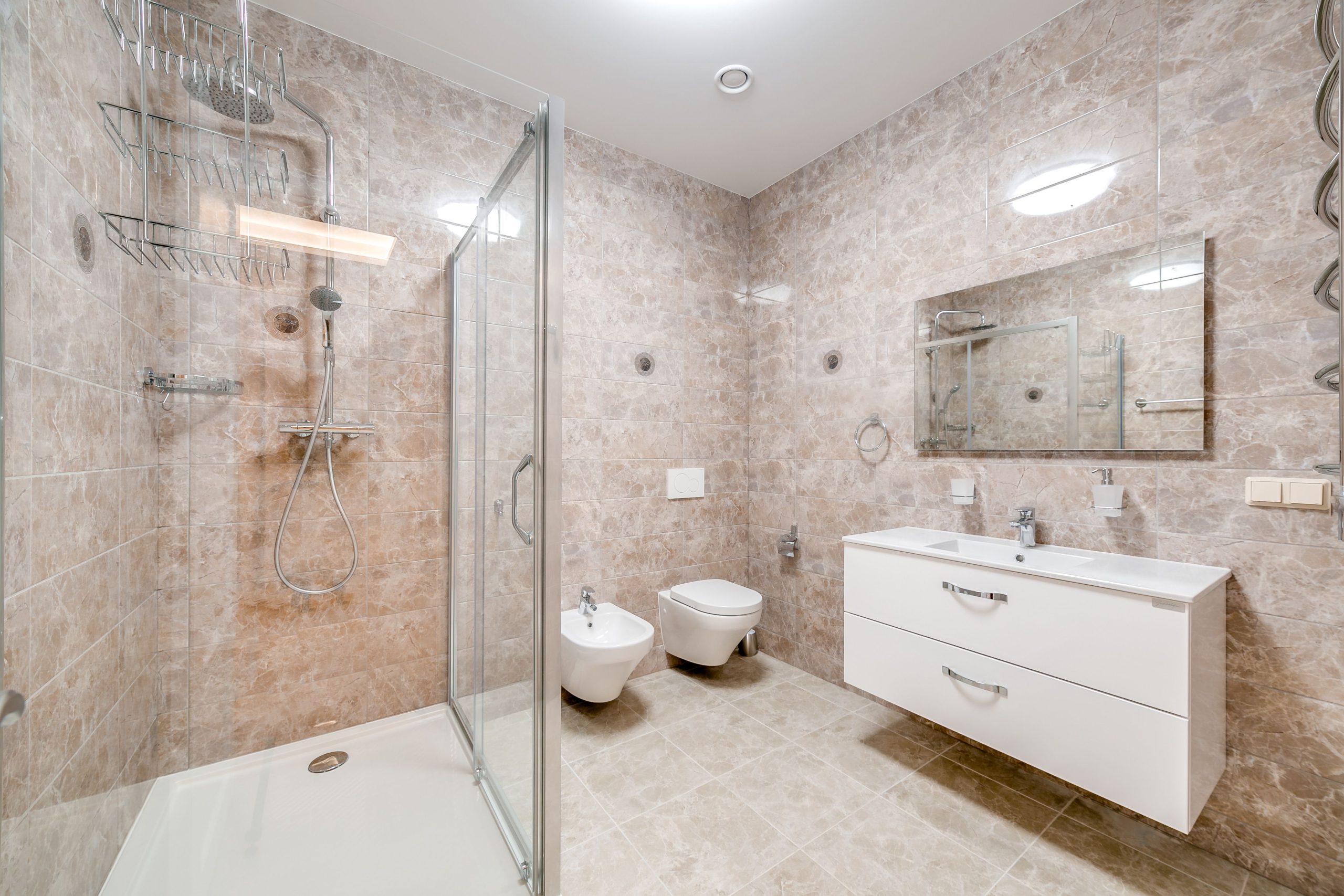
The defining feature of this bathroom is its commitment to a single tile. By wrapping the entire room—walls and floor—in the same large-format, light brown marble-look tile, the design achieves a seamless, unified, and expansive feel. This uninterrupted surface is very European in its aesthetic and makes the room feel larger by blurring the transitions between floor and wall. It creates a serene, hotel-like backdrop that allows the clean lines of the white fixtures to stand out. It’s a bold choice that pays off in pure, uncluttered modernism.
|
📋 Copy HEX 🔗 Share |
While a wall-mounted toilet looks incredibly sleek and saves floor space, be aware that it comes with a hidden cost and complexity. The tank is concealed inside the wall in a carrier system, which means installation is more involved and expensive than a standard toilet. More importantly, if there are any issues with the tank or fill valve down the line, accessing it for repairs means opening up the wall. While access panels are standard, it’s still significantly more complicated than fixing a regular toilet. It’s a trade-off of aesthetics for serviceability.
25. Airy A-Frame: Light Green Subway Tile & a Vaulted Ceiling
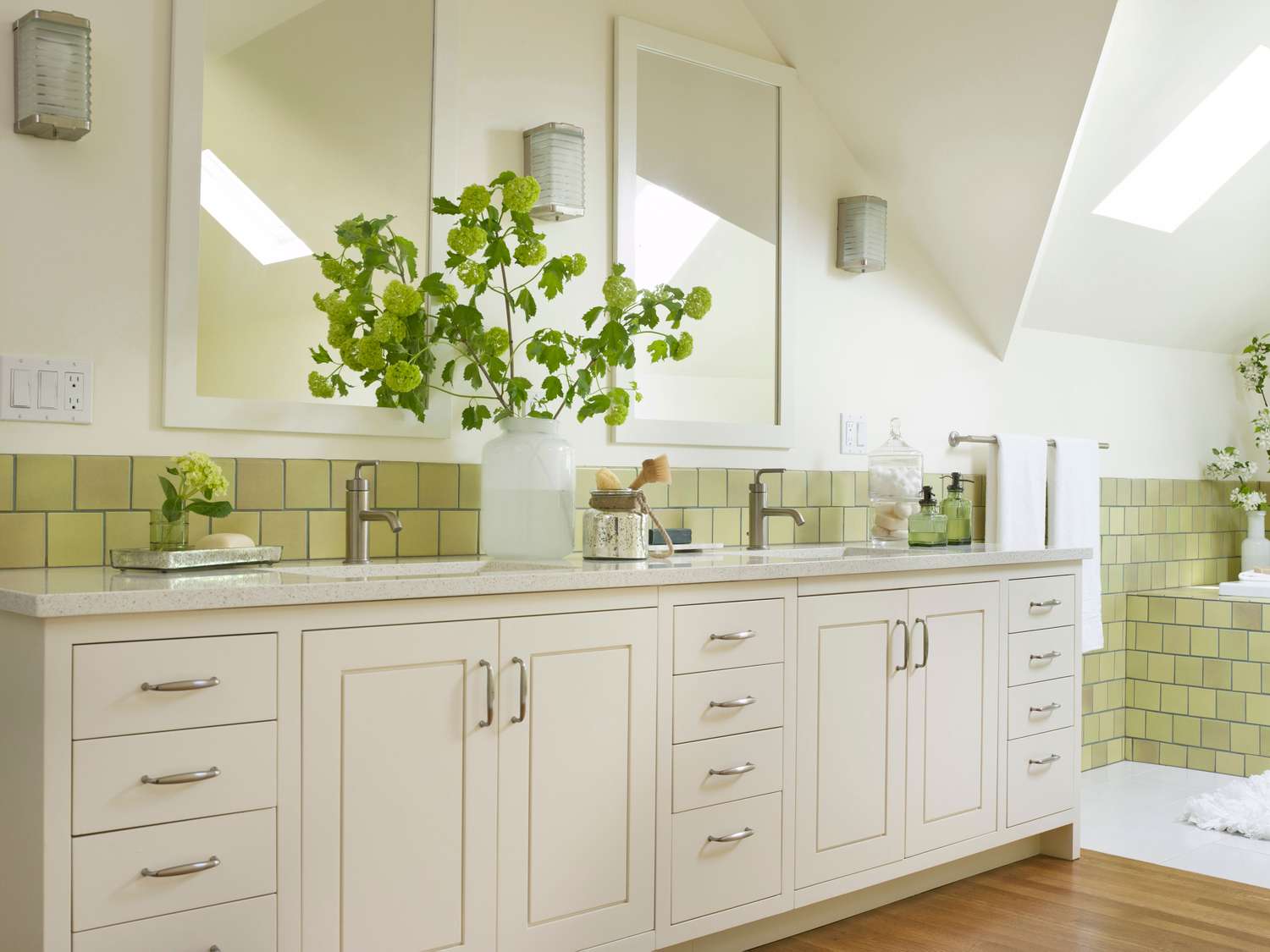
When you have a beautiful architectural feature like a vaulted ceiling, your design goal should be to emphasize it. This bathroom does it perfectly. By running the light green subway tile only halfway up the wall as a wainscoting, it creates a horizontal line that makes the creamy white upper walls and ceiling feel even taller and more expansive. If the tile went all the way up, it would chop up the A-frame and diminish its impact. The simple, large white-framed mirrors also reflect the light and the height, further enhancing the room’s airy quality.
|
📋 Copy HEX 🔗 Share |
This space feels so serene and fresh because of its smart color-blockinThe soft, cool green tile grounds the bottom half of the room, creating a calming and clean feel.ming and clean. The top half is all about light and air, with the creamy white walls and ceiling drawing the eye up to the skylights. The light wood vanity in the middle adds the perfect touch of natural warmth, preventing the greens and whites from feeling cold. The brushed nickel fixtures are a quiet, contemporary choice that complements the palette without competing with it.
26. Refined Elegance: Olive Green Paneling Meets Classic Marble
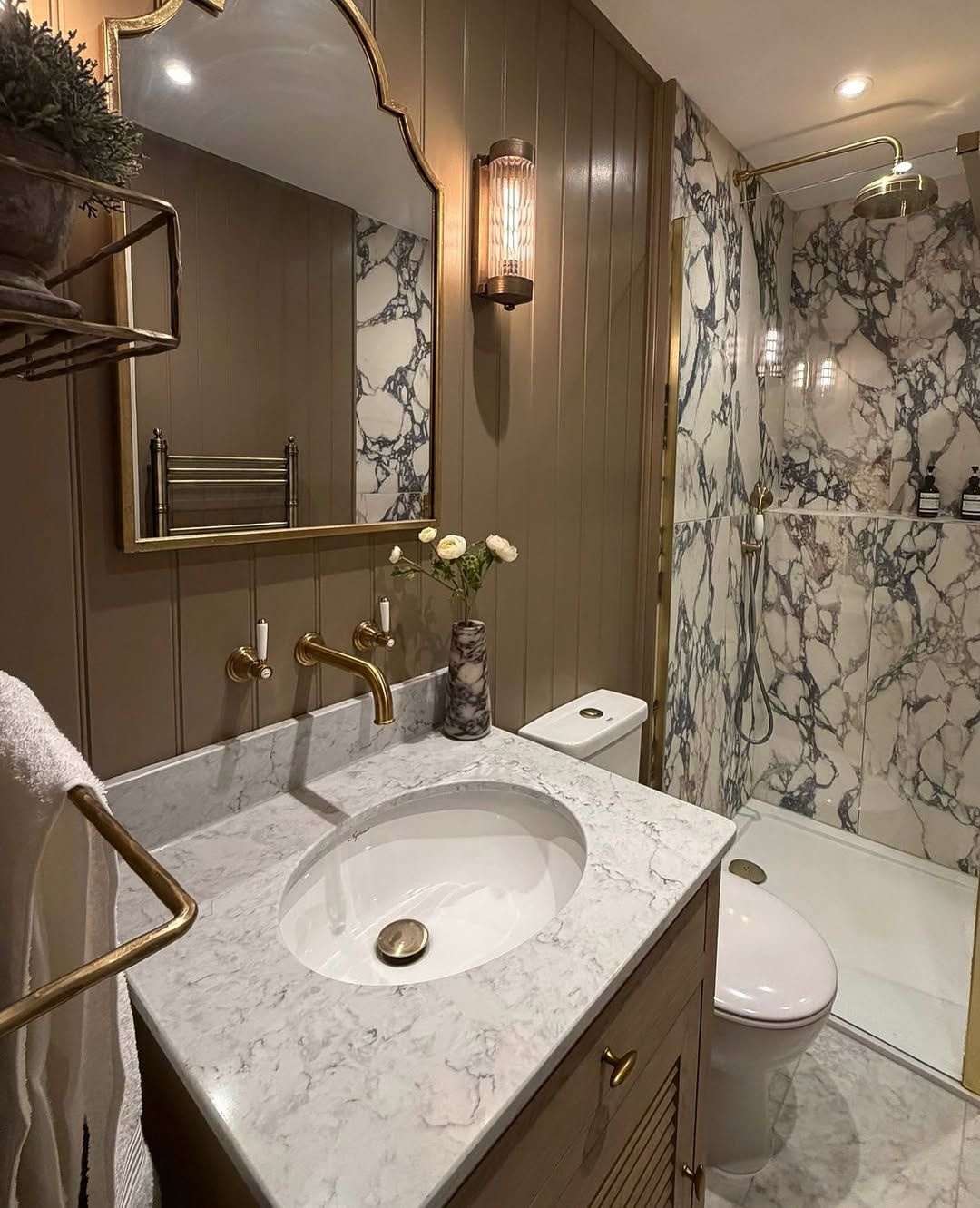
This bathroom achieves its refined, luxurious feel through a carefully balanced equation: 40% classic (the veined marble), 40% traditional but bold (the olive green wood paneling), and 20% antique glamour (the brass fixtures and ornate mirror). The key is the tension between The deep green and rich wood vanity warm up the clean, cool marble.cThe ornate mirror makes the simple, modern lines of the paneling more elegant. ornate mirror. You could swap the green for a deep navy for a more nautical feel, and look beautifulork beautifully.
|
📋 Copy HEX 🔗 Share |
That stunning white marble is a timeless choice, but it requires care. Marble is a soft, porous stone, so it can be susceptible to scratching and etching from acidic products. Always use a pH-neutral cleaner. The vertical wood paneling, while gorgeous, can be a dust magnet. The grooves will need regular dusting with a soft brush attachment. Finally, unlacquered brass fixtures will develop a natural patina over time, which can be beautiful. If you prefer a constant shine, you’ll need to polish them periodically.
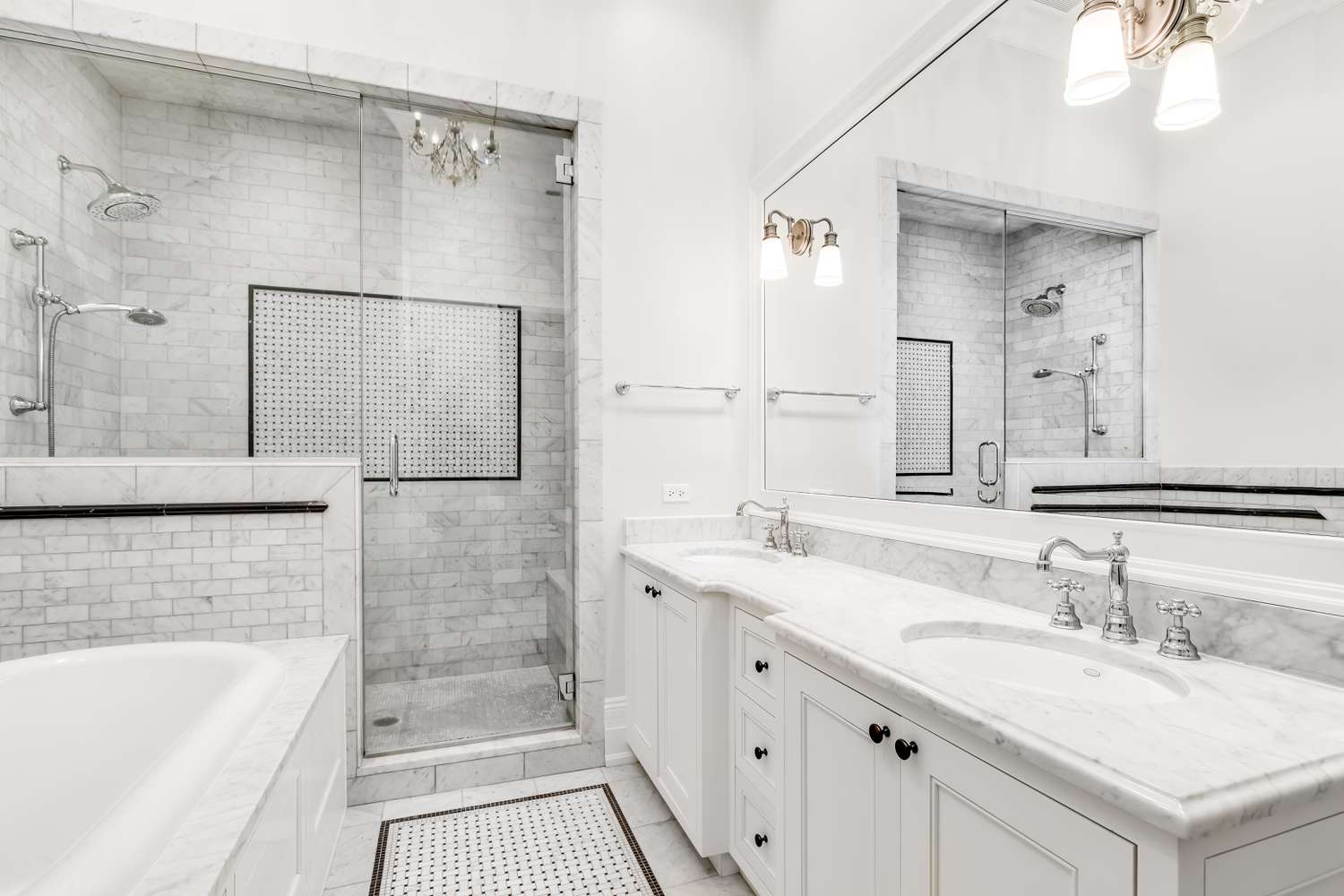
27. Timeless Glamour: White Marble & a Shower Chandelier
The single elementthe designt elevates this from a beautiful, classic bathroom to a truly memorable, glamorous space is the small chandelier inside the shower enclosure. It’s completely unexpected. It’s a touch of formal, old-world luxury in the most utilitarian part of the room. This single, delightful detaithe areagnals that this is a space designed for indulgence and pleasure, not just function. It transforms the act of taking a shower into an event. Without it, the bathroom is lovely; with it, it has a story.
|
📋 Copy HEX 🔗 Share |
A chandelier in the shower? Yes, it can be done, but only with extreme care and professionalYou truly mustabsolutely must use a chandelier that is UL-rated for “wet locations,” not just “damp locations.” This is a critical safety requirement. The installation must be done by a licensed electrician who understands the specific building codes for wiring in a shower. Do not, under any circumstances, attempt to hang a regular chandelier in a wet area. It is a serious electrical hazard.
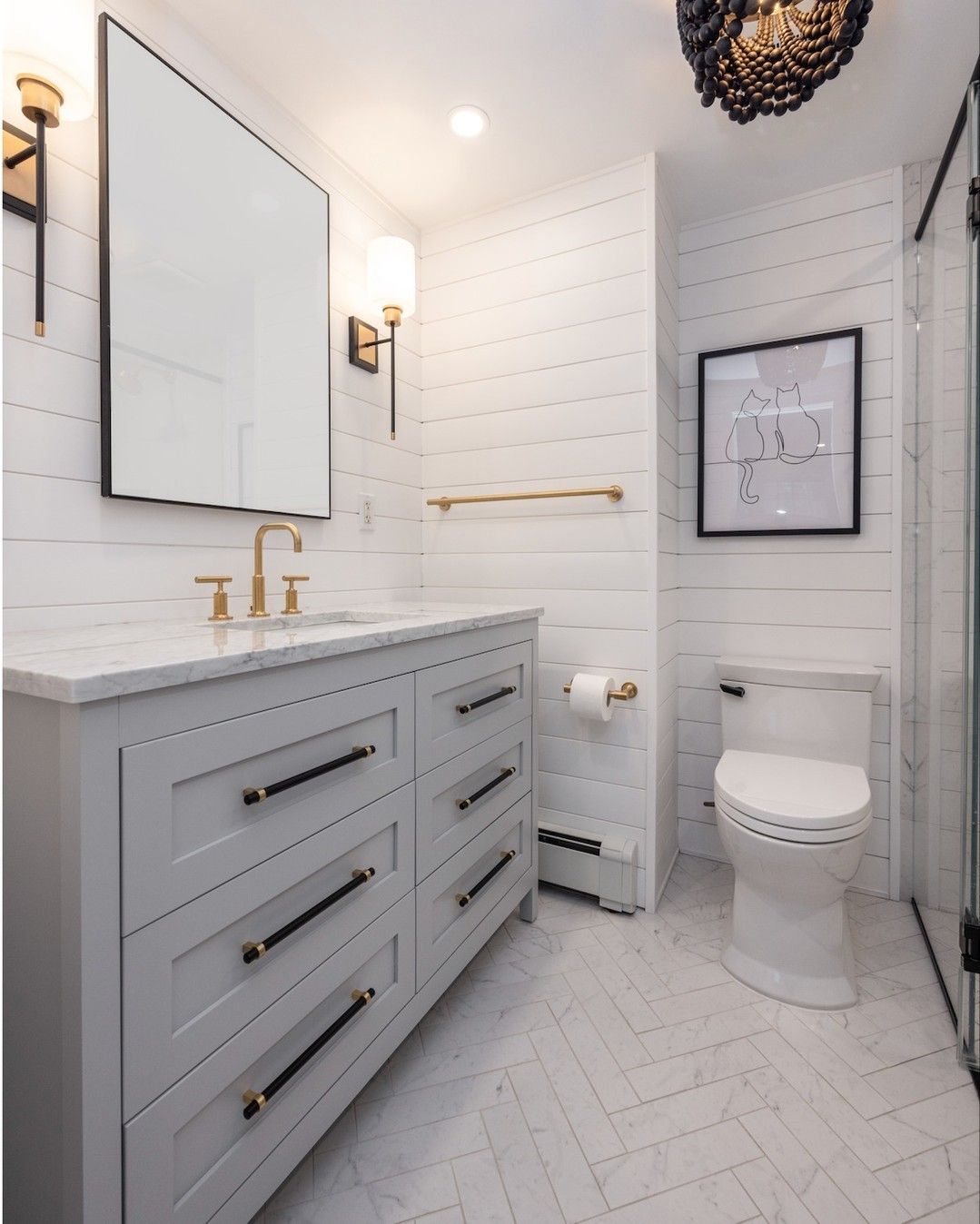
28. The Classic Grey and White Bathroom, Refined for 2026
To keep a classic grey and white color palette feeling fresh and modern, focus on texture and form. Instead of basic square tiles, choose a tile with a subtleeye-catching an interesting shape, like a hexagon or a picket. For your vanity, move beyond a simple flat-front cabinet and consider one with reeded, fluted, or shaker-style door fronts. These details add depth and a tactile quality that prevents the simple color scheme from looking flat or generic. It’s how you make a timeless combo feel personal and current.
|
📋 Copy HEX 🔗 Share |
A grey and white bathroom is timeless for a reason: it’s a serene, clean, and incredibly versatile foundation. Grey provides a soft, neutral backdrop that is less stark than pure black, while white keeps the space feeling bright and spacious. This combination works because it allows you to easily introduce other materials and finishes without clashing. You can bring in wood tones for warmth, black fixtures for a graphic punch (as seen in Idea #6), or brass accents for a touch of glamour. It’s a canvas that you can easily adapt to your personal style.
Conclusion
Hopefully, these 28 ideas have sparked some serious iyouron for your own project. Remember, the best bathroom is one that feels like a personal retreat, not just a utilitarian space. So pick the elements you love, and don’t be afraid to create a room that feels uniquely you. Ready for more? Head over to Pinterest to see what other ideas we’re saving!