
You know that feeling when you finally find the dark office inspiration that looks exactly right for your space, only to realize you have no idea how to actually pull it off? It’s more than just a can of black paint. We’ve been there, and we’ve done the deep dive for you. After filtering through hundreds of options across West Elm, Restoration Hardware, and Facebook Marketplace, we narrowed it down to 24 ideas that deliver on the moody, sophisticated vibe you’re after. This isn’t just a gallery; we’re breaking down modern, minimalist, and even traditional takes on the dark office, showing you exactly why they work. In 2026, the move towards creating personal ‘focus zones’ at home is stronger than ever, and a dark, enveloping office is the ultimate expression of that. Pin this guide for later—your future self will thank you when it’s time to actually do this.
1. Deep Teal and Charcoal Office with a Crystal Chandelier
This room is a masterclass in using saturated color without overwhelming a space. The magic lies in the balance of ‘cool’ and ‘warm’ tones and the strategic use of texture. The deep teal on the accent wall is a cool color, which can make a room feel larger, while the charcoal built-ins provide a grounding, neutral anchor. The vibrant magenta and purple in the art and chair, along with the warm brass from the chandelier, inject life and prevent the room from feeling like a cave. It’s a textbook example of color theory in action—complementary and analogous colors working in perfect harmony.
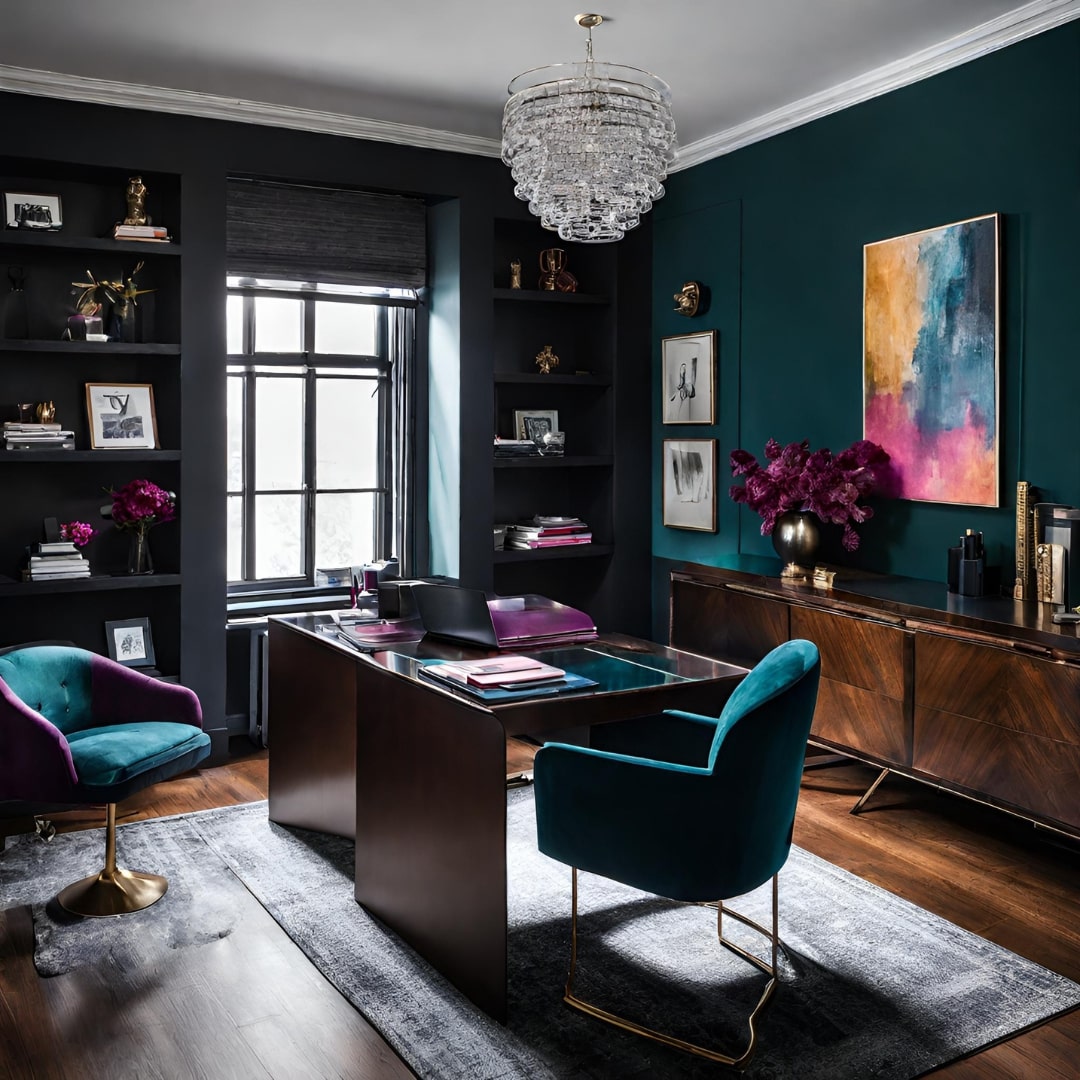
When using a bold wall color like this deep teal, don’t stop at the paint. To create a truly cohesive and high-end look, you need to echo that color in at least two other places in the room, using different materials. Here, the wall color is mirrored in the velvet of the office chair and again in the abstract painting. This repetition creates a visual thread that ties the entire room together, making the bold choice feel intentional and sophisticated rather than random. For a 10×12 foot room, aim for one large item (like a chair) and one medium item (like artwork) to carry the color.
2. Royal Purple Velvet Chair in a Navy Blue Office
This is what happens when you commit to a jewel-toned palette. The deep navy walls and desk create a rich, enveloping feel, but that royal purple velvet chair is the undeniable star. It’s a bold, confident choice that says this isn’t just a place to answer emails. The brass accents on the chair, desk hardware, and lighting act like jewelry, adding a necessary layer of warmth and shine to cut through all the dark, cool tones. The multi-colored rug is the secret weapon here, grounding the space and tying the navy, purple, and gold together beautifully.
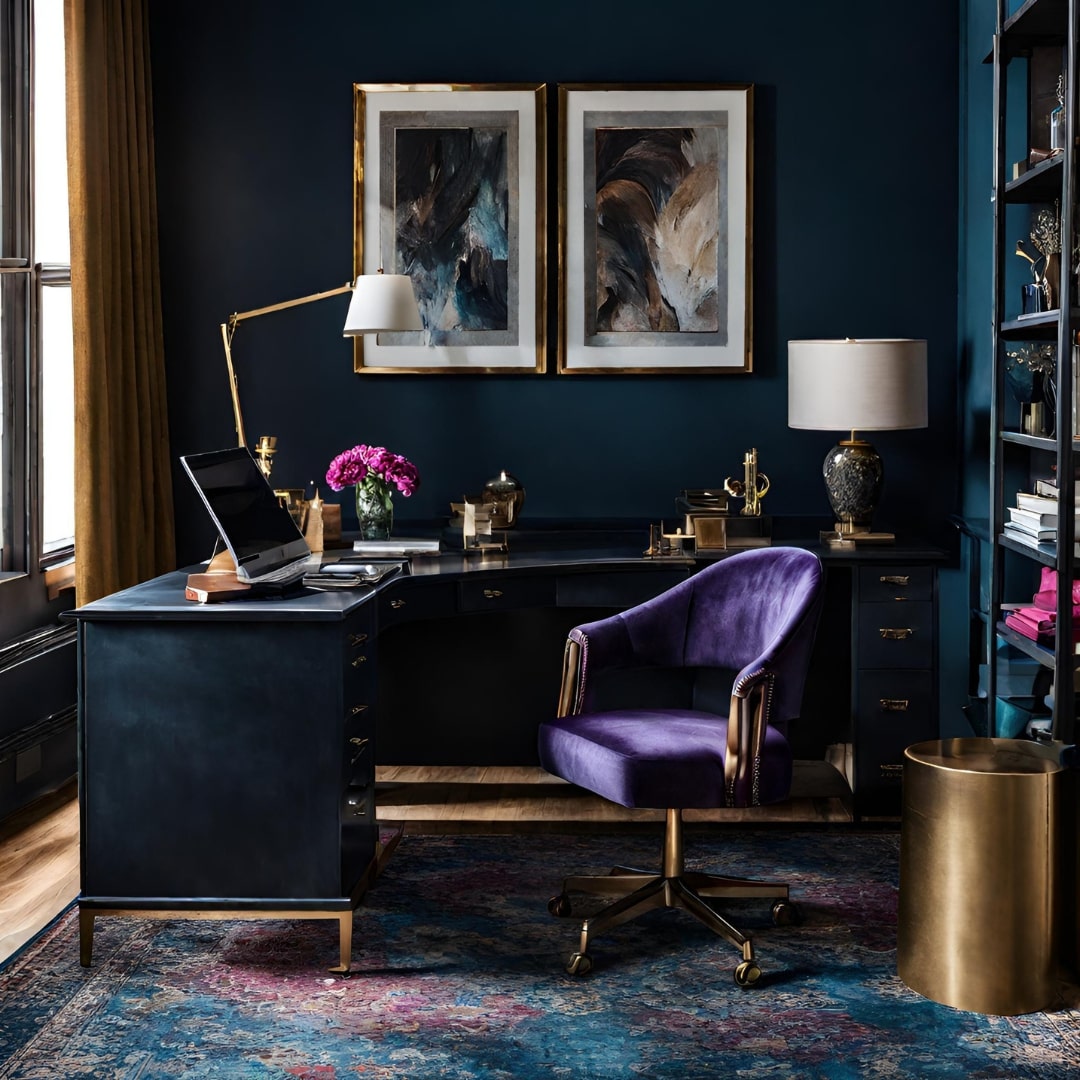
Achieving this level of opulence comes with a price tag, but it’s more attainable than you might think if you’re smart about where you spend.
- Main Furniture (L-shaped desk, chair): $2,500 – $5,000
- Lighting (lamps, sconces): $700 – $1,500
- Textiles (rugs, drapes): $600 – $2,000
- Decor/Accessories (Art, etc.): $400 – $1,000
- Paint (high-quality navy): $150 – $250
- TOTAL: $4,350 – $9,750
Budget alternative: Find a standard desk on Facebook Marketplace and paint it navy ($150), get a similar chair from an online retailer like Wayfair ($300), and focus on a great rug to carry the look for about 40% of the cost.
3. Integrated Dark Grey Home Office with Marble-Look Desk
The single most important element in this design is the integration. It’s not just a desk placed against a wall; it’s a cohesive unit where the desk, shelving, and even the wall color are all part of the same thoughtful system. Removing this seamlessness—say, by using a freestanding desk—would completely change the feel from a custom, architectural feature to just another piece of furniture. The continuous dark grey paint over the built-ins and the wall makes the room feel larger and more serene, as your eye isn’t interrupted by sharp contrasts. This creates a calm, focused work environment that feels incredibly bespoke.
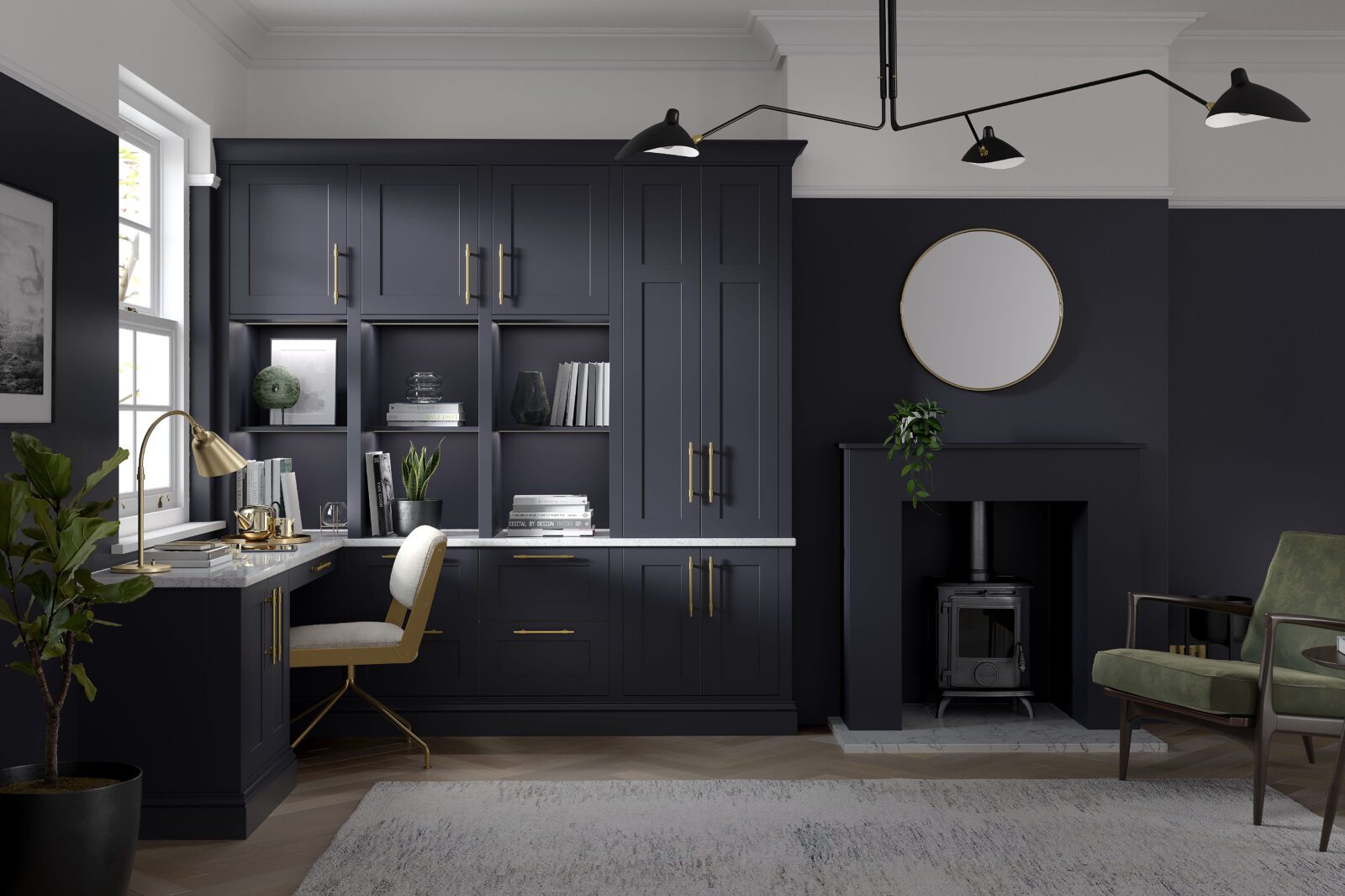
This built-in approach works best in rooms with at least one solid wall measuring 8 to 12 feet long. This gives you enough space for a functional desk area (minimum 48 inches wide), flanking storage cabinets, and some open shelving without feeling cramped. Ceiling height should be standard (8 feet) or higher; lower ceilings might make the dark, floor-to-ceiling unit feel a bit imposing. For smaller spaces, consider the more compact design in Idea #11, which uses a similar color contrast principle in a smaller footprint. This look is perfect for carving out a dedicated office in an open-plan living area or a larger bedroom.
4. Scholarly Dark Teal Office with Rich Wood Paneling
This space feels so grand and established because it masters the art of layering traditional elements. The foundation is the dark teal paneled walls, which add architectural depth and a sense of history (even if it’s brand new). The second layer is the rich, dark wood of the executive desk and floor-to-ceiling bookshelves, which brings warmth and gravitas. The final layer consists of luxurious textiles—the tufted brown leather, the plush velvet drapes, and the intricate patterned rug. These textures soften the hard surfaces and absorb sound, creating a quiet, scholarly atmosphere perfect for deep work.
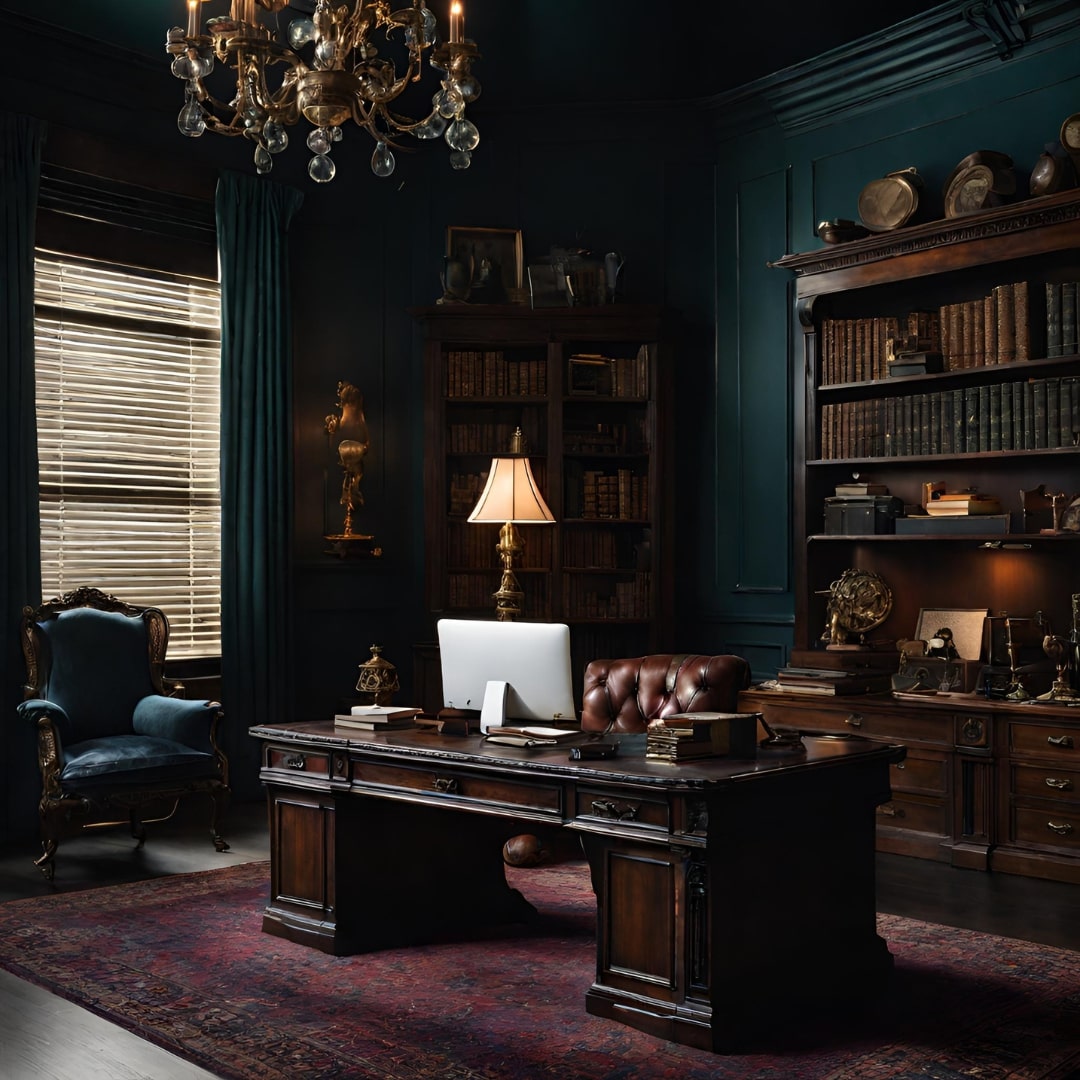
Let’s be honest: a room this handsome requires a bit of upkeep. The dark wood surfaces, especially the large executive desk, will show dust and fingerprints like it’s their job. Plan for a weekly dusting with a microfiber cloth. The tufted leather chair needs conditioning every 6-12 months to prevent cracking and keep it supple, costing about $20-30 for a good quality kit. The biggest commitment is the floor-to-ceiling bookshelves; they are a magnet for dust. A long-handled duster will be your best friend. While beautiful, dark velvet drapes can also attract dust and pet hair, requiring a good vacuum with a brush attachment every few months.
5. Urban Modern Office with Dark Wood and City Views
The formula for this sleek, urban look is surprisingly simple. Think of it as 70% dark, moody base + 20% warm natural texture + 10% sharp artistic accent. The ‘dark base’ is the charcoal walls and the black leather chair, which create a sophisticated, low-distraction environment. The ‘warm natural texture’ comes from the expansive dark wood of the built-in shelving and desk, which keeps the room from feeling cold or clinical. The final ‘sharp accent’ is the bold, abstract artwork with its pop of red. You could swap the wood for a different tone or change the accent color in the art to blue or yellow, and the powerful, professional vibe would remain intact.
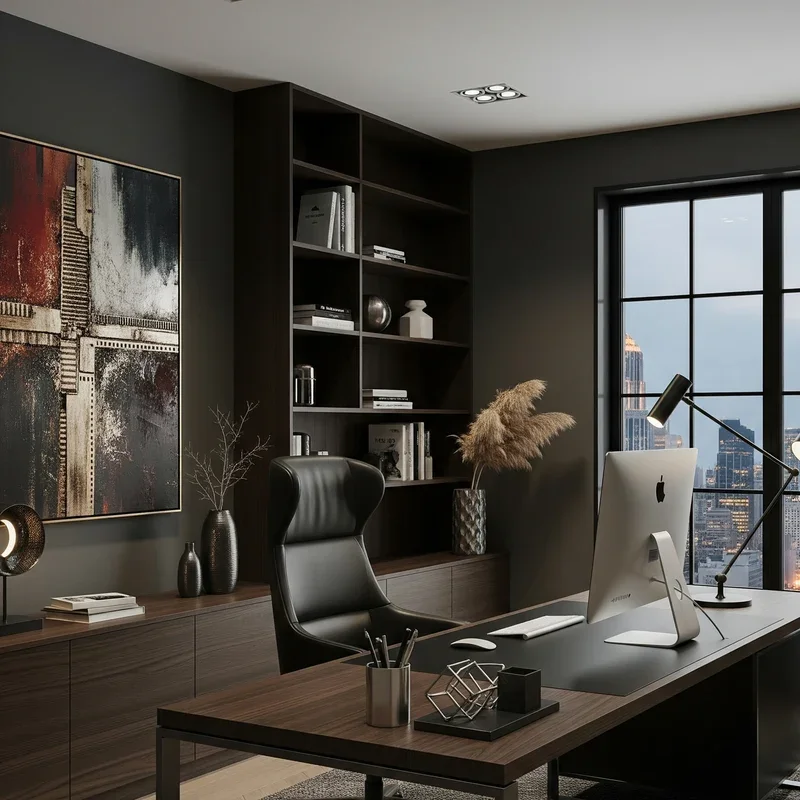
When you have a dominant feature like a large window with a great view, orient your desk to face into the room, with the window to your side. This is a pro move for two reasons. First, it prevents screen glare and silhouetting that occurs when the window is directly behind you. Second, placing your back to a solid wall (like the dark charcoal one here) is a principle of command position (or ‘power-positioning’), which can subconsciously make you feel more secure and in control of your environment. You can easily turn to enjoy the view, but it won’t be a constant distraction from your work.
6. Minimalist Home Office with a Textured Charcoal Wall
You don’t need a massive budget to achieve this focused, minimalist vibe. The entire look hinges on a simple, brilliant hack: a high-end-looking desk made from affordable components. A solid dark wood butcher block from a home improvement store ($150-$300) placed on top of two basic black drawer units from IKEA (the ‘ALEX’ series is a classic for this, around $99 each) gives you a massive, sturdy workspace with tons of storage for less than $500. Pair it with a simple upholstered chair from Target or Wayfair ($100-$200) and you’ve replicated the core furniture for a fraction of the cost of a designer desk. For a similar aesthetic, compare with the sleek setup in Idea #8.
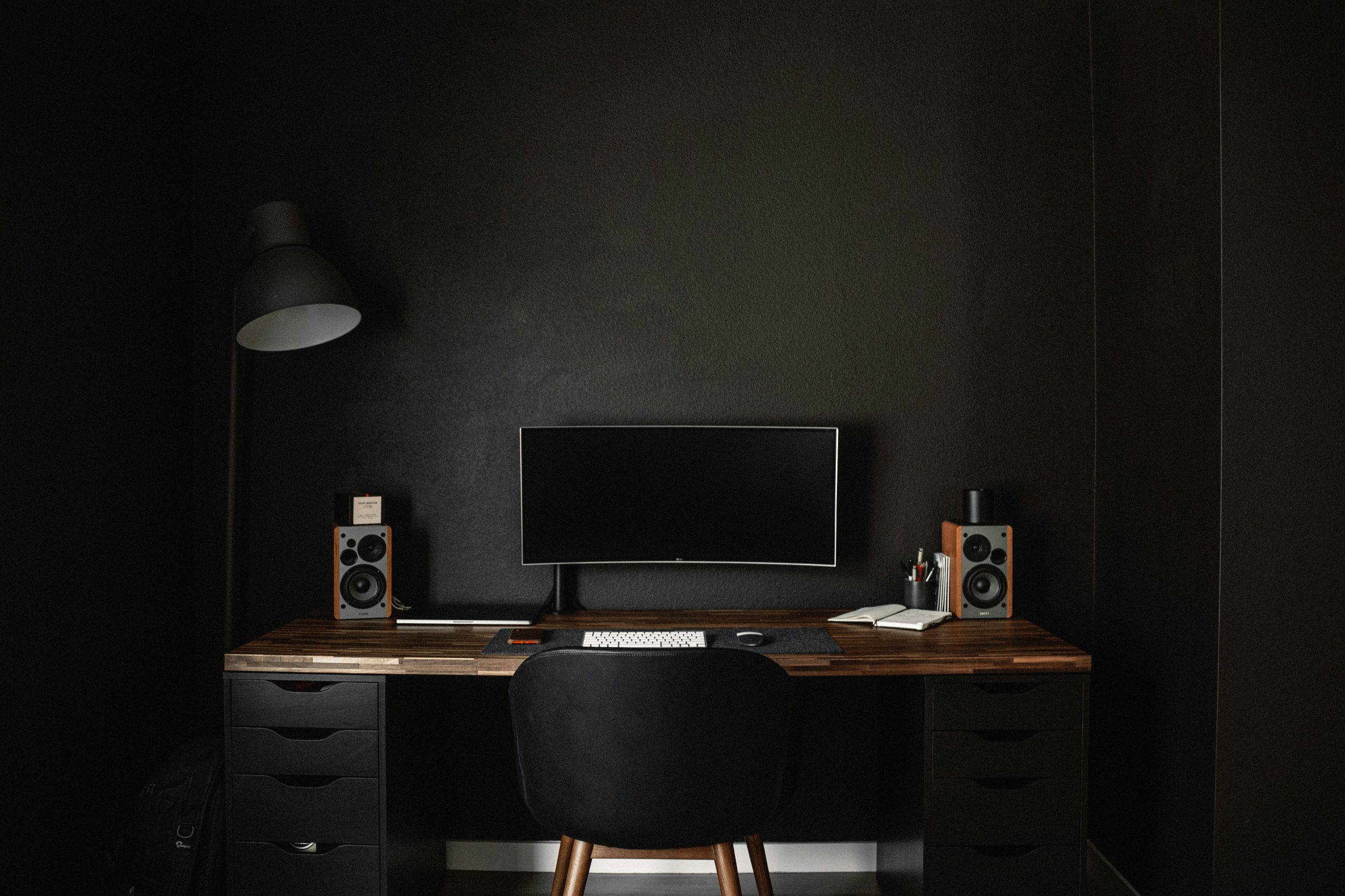
Want to create that dark, textured wall? A limewash or Roman clay finish is the key. Here’s a quick guide to getting the look with a limewash paint kit.
- Prep Your Wall: Clean the wall and apply a special mineral-based primer that comes with most kits. Let it dry completely. (Time: 2 hours, Cost: $40-60 for primer
- Mix the Limewash: Mix the limewash powder or concentrate with water according to the package directions. It should be a thin, milky consistency.
- Apply First Coat: Use a large, long-bristle brush. Apply the paint in sweeping, overlapping ‘X’ patterns. Don’t try to make it perfect; the variation is the goal.
- Apply Second Coat: While the first coat is still slightly damp, apply the second coat using the same technique to build up depth and texture. The color will lighten significantly as it dries.
This is a weekend project that dramatically transforms a room.
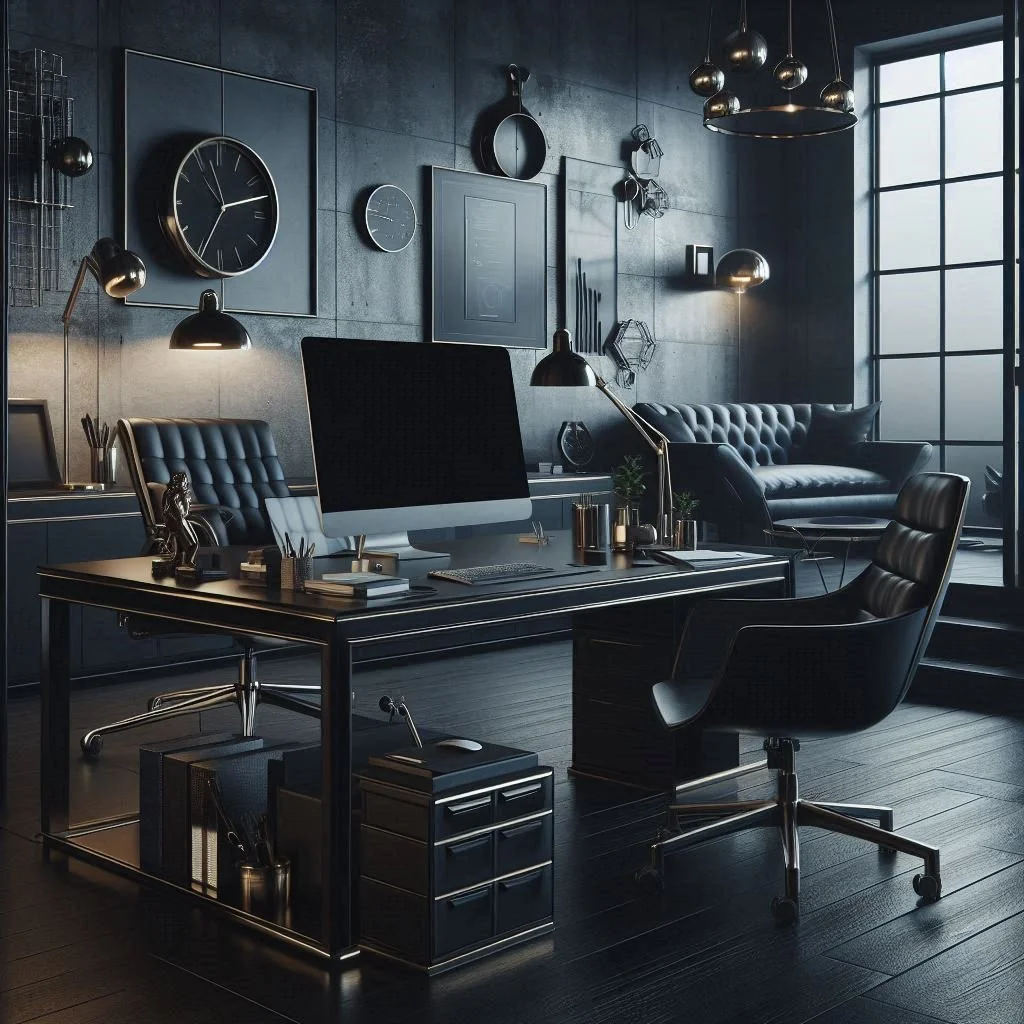
7. Luxurious Black Office with Gold and Chrome Accents
This look, often dubbed ‘dark academia’ or ‘modern gothic’ on Pinterest and TikTok, is trending hard because it’s the antithesis of the sterile, all-white home offices from the early 2020s. As work-from-home becomes a permanent fixture for many, there’s a growing desire to create workspaces that are not just functional but also deeply personal and atmospheric. This style leans into drama and sophistication, using a dark canvas to make metallic accents and rich textures pop. This isn’t just about painting a room black; it’s about curating an experience of sophisticated drama. This trend has staying power because it’s rooted in classic design principles—contrast, texture, and mood. For a less intense but equally sophisticated industrial take, see Idea #10.
Before you commit to this level of dramatic design, run through this quick checklist:
- Natural Light Source: Do you have at least one large window? A dark room without sufficient natural light can feel oppressive rather than cozy. The large grid-pane window here is essential.
- Material Mix: Can you incorporate at least three different textures? This room has textured walls, quilted leather, a tufted sofa, and smooth metal. A lack of texture will make a dark room feel flat.
- Lighting Plan: Have you planned for task, ambient, AND accent lighting? You can’t rely on one overhead fixture. You need a desk lamp, floor lamps, and maybe even spotlights on art.
- Accent Metals: Will you commit to a metal palette? This room successfully mixes gold and silver. Decide on your mix (or single metal) beforehand to ensure a cohesive look.
8. Sleek Black Office with Light Wood Floors and Integrated Shelving
The single element that makes this room work is the light natural wood floor. Take it away and replace it with a dark floor, and the entire space would collapse into a featureless black box. The floor provides a crucial visual lift, offering a bright, warm foundation that contrasts sharply with the matte black walls and shelving. It’s the visual anchor that keeps the room feeling airy and modern, not heavy and oppressive. It proves that a ‘dark’ office doesn’t have to be dark from top to bottom; in fact, it’s often more successful when it’s not.
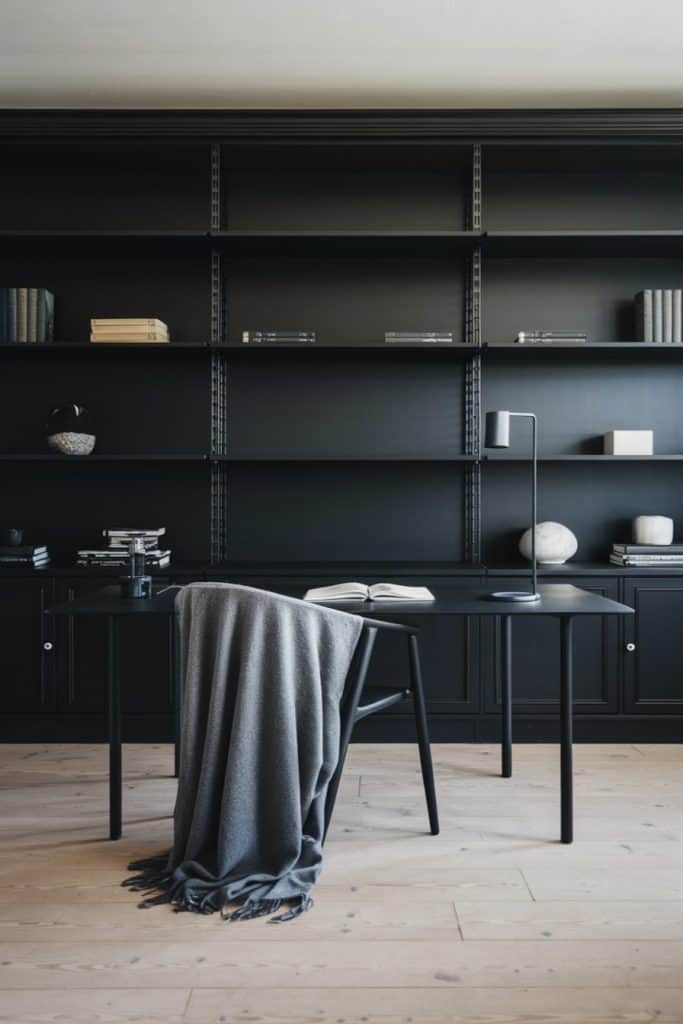
This design is a brilliant exercise in contrast and repetition. The primary contrast is between the matte black vertical surfaces (walls, shelves) and the light wood horizontal surface (the floor). This stark difference creates immediate visual interest and defines the room’s architecture. Repetition is used more subtly: the black of the walls is repeated in the desk, the chair, and the lamp, creating a cohesive, unified look. The straight, clean lines of the shelving are echoed in the desk and even the floorboards, reinforcing the room’s minimalist, organized feel. It’s a calm, disciplined space designed for focus.
9. Modern Office with Distressed Walls and a Dark Wood Table
A distressed wall finish like this adds incredible depth and character, but it’s not for the faint of heart. The reality is that this texture can be a major dust collector, especially if it has a rough, plaster-like feel. It’s also much harder to patch or touch up than a standard painted wall if it gets nicked or scratched. And while it looks amazing in this professional, moody setting, it might not be the most kid-friendly finish. Imagine trying to wipe crayon or sticky fingerprints off that surface. It’s a high-style, high-commitment choice that’s best for a dedicated, adult-only workspace.
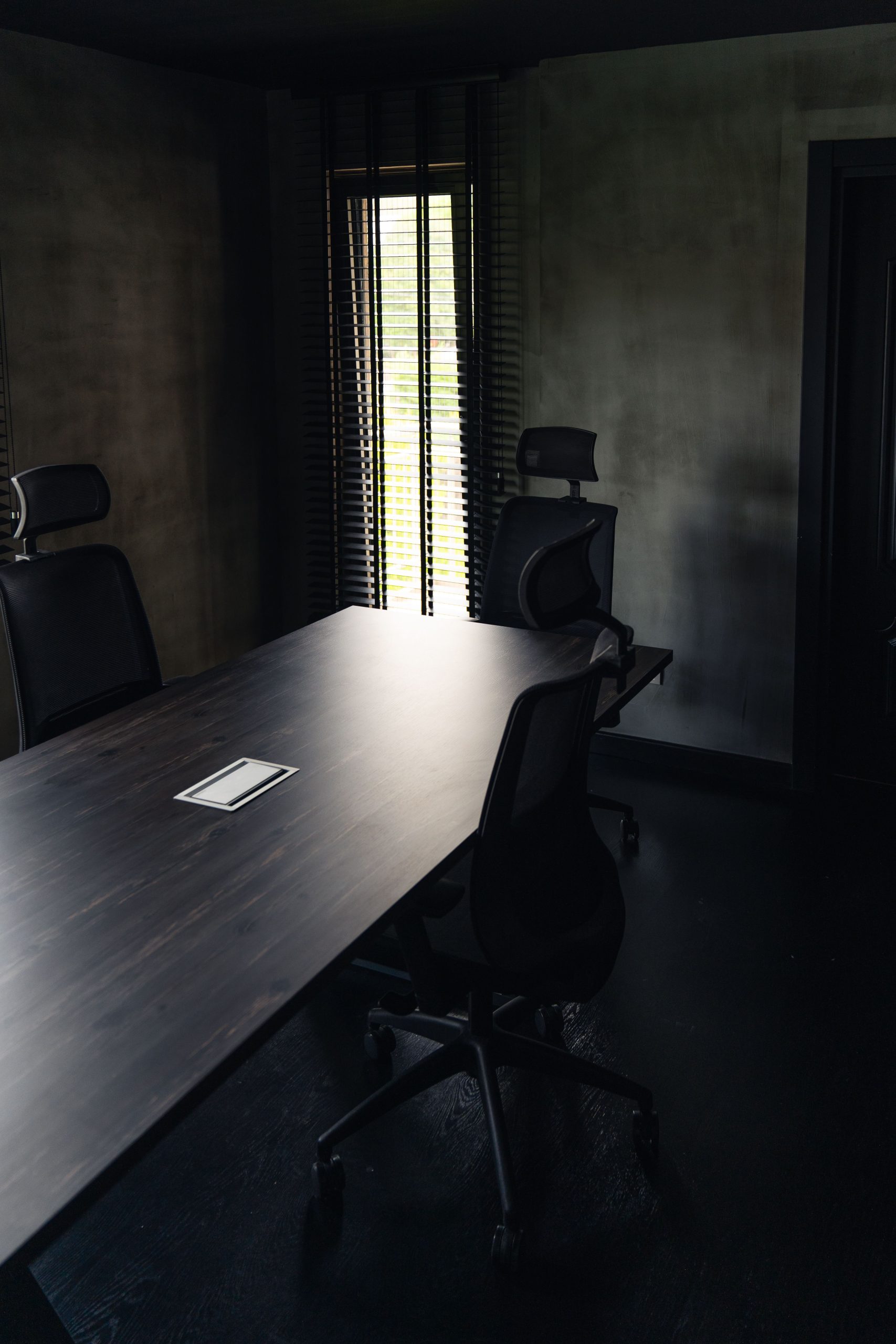
This setup, centered around a large conference-style table rather than a traditional desk, is ideal for a spacious room, at least 150-200 square feet. You need ample clearance on all sides of the table (at least 36-48 inches) for the chairs to be pulled out comfortably and to maintain easy traffic flow. This makes it perfect for a converted spare bedroom or a dedicated study. A standard 8-foot ceiling is fine, as the dark, textured walls create a sense of enclosure that works well with average ceiling heights. For a more compact, single-person version, see the desk setup in Idea #5.
10. Industrial Open Office with Dark Blue Brick and Linear Lighting
Love this modern industrial vibe but don’t have an old warehouse to renovate? You can get the look for less. That dark blue brick wall can be convincingly faked with high-quality brick veneer panels from a home improvement store (around $8-$15 per square foot). For the desks, use light wood laminate tops from IKEA on simple black metal legs for a communal feel. The key is to spend your money on the lighting. A few dramatic linear black pendant lights will sell the entire aesthetic. Hunt for these on sites like Wayfair or Amazon, where you can find great options for $150-$300 each, a steal compared to commercial-grade fixtures.
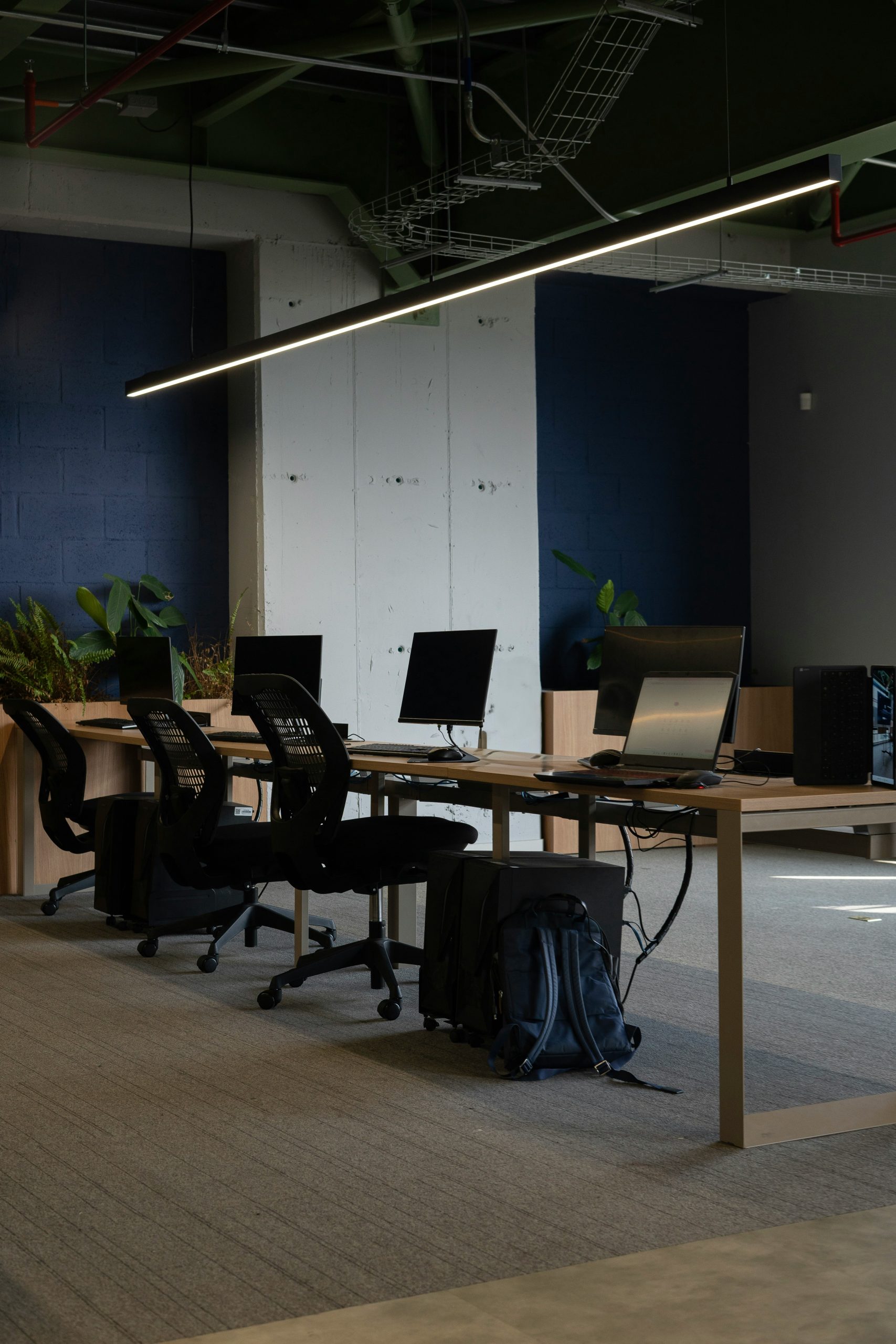
In an open-plan space with multiple workstations, acoustics are paramount. The hard surfaces here—brick, concrete, and wood floors—are a recipe for an echo chamber where every phone call and keyboard click is amplified. To combat this without sacrificing the aesthetic, you need to sneak in sound-absorbing materials. The green planter boxes are a great start, as plants and soil absorb sound. You could also place large, felt-like acoustic panels on the plain gray wall sections or even hang a few upholstered panels from the ceiling, treating them like art installations. It’s a functional addition that can enhance the design.
11. Dark Charcoal Built-In Office Nook with Natural Wood Shelves
The formula for this stunning built-in is all about a strong contrast in both color and material. Let’s call it 60% Dark Structure + 35% Warm Wood + 5% Metallic Accent. The ‘Dark Structure’ is the charcoal cabinetry, which creates a sophisticated, solid frame. The ‘warm wood’ of the desk surface and open shelves provides a natural, organic counterpoint, preventing the unit from feeling too severe. The final ‘Metallic Accent’ comes from the gold hardware, adding a small but vital touch of glamour and light. You could change the paint to navy blue and the wood to a lighter ash, and as long as you keep the ratios and the contrast, the look will still be a winner.
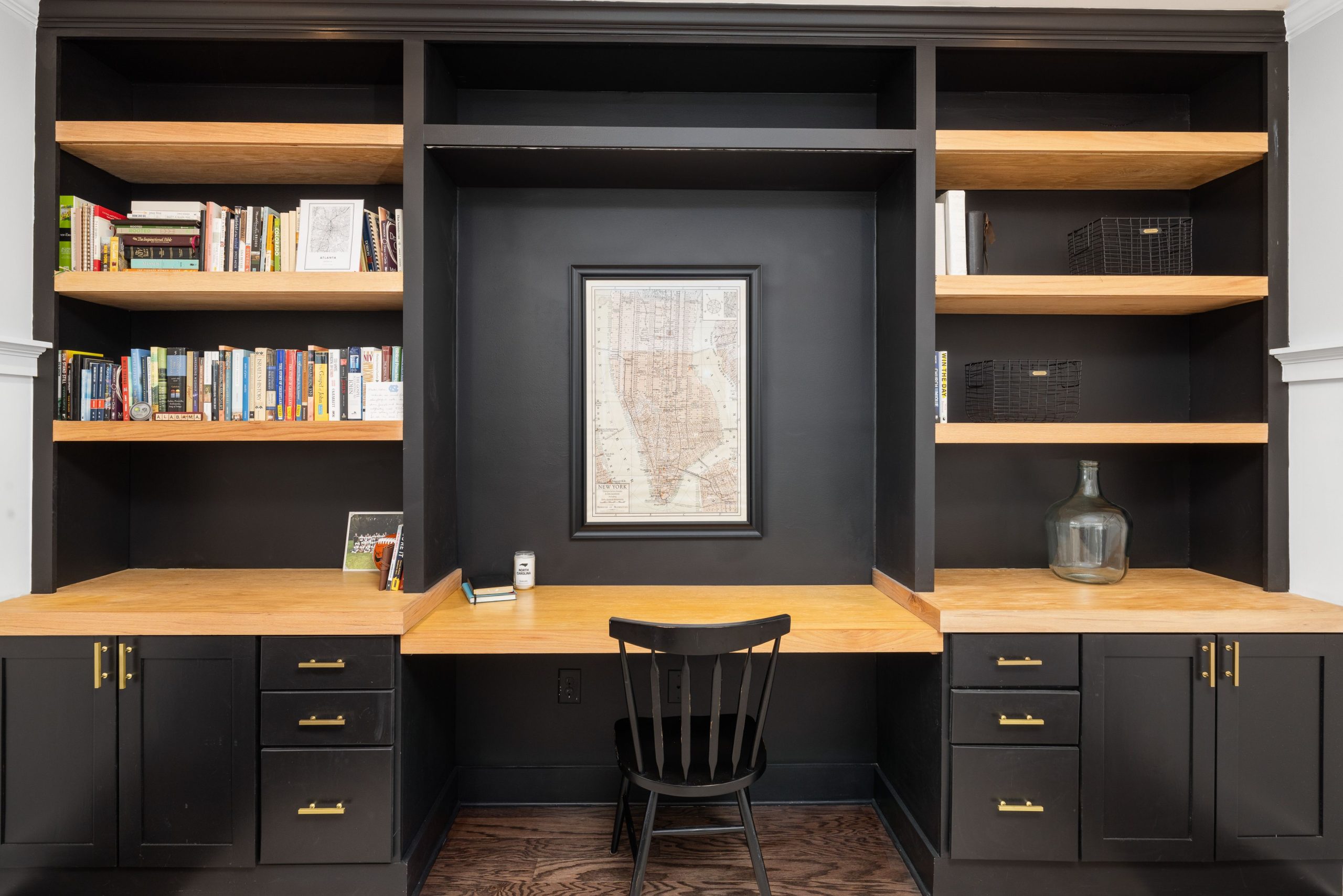
Creating those perfectly styled ‘shelfie’ moments is an art. Here’s a simple process for one shelf:
- Start with an Anchor: Place one large, vertical object, like the framed map artwork, about one-third of the way in from one side. This creates a focal point.
- Add Height Variation: On the other side of the shelf, stack a few books horizontally and place a smaller decorative object on top. This balances the height of your anchor object.
- Incorporate Greenery: Add a small, low-light-tolerant plant like a pothos or snake plant. The organic shape breaks up all the straight lines.
- Fill with ‘Smalls’: Place a small bowl, a single beautiful object, or a short stack of coasters in the remaining space. Step back and edit, ensuring there’s some empty space for the arrangement to ‘breathe.’
Total time per shelf: 10 minutes. Cost: Use what you have!
12. Black Paneled Office Wall with a Tan Leather Chair
This is a high-impact, relatively focused look that you can recreate without a full room renovation. The cost is concentrated in a few key pieces.
- Wall Treatment (DIY paneling + paint): $300 – $700
- Key Furniture (Executive Chair, Desk): $1,500 – $4,000
- Lighting (Pendant lights): $400 – $900
- Textiles (Area Rug): $300 – $1,200
- Decor (Artwork): $150 – $500
- TOTAL: $2,650 – $7,300
Budget alternative: Get the paneling effect with strategically placed trim molding on a black-painted wall ($100). Find a mid-century modern-inspired tan faux-leather chair ($250), a simple black desk from IKEA ($200), and a dramatic rug from an online retailer ($250). You can capture the same warm, sophisticated mood for around $1,000.
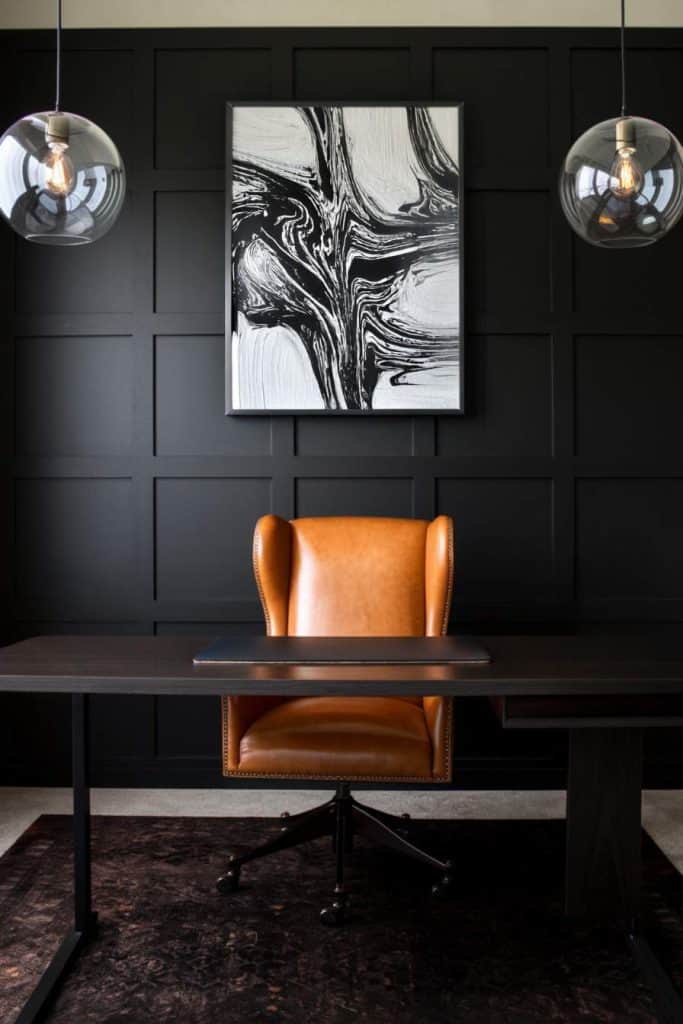
The success of this room hinges on the principle of textural contrast. You have the smooth, matte finish of the black paneled wall set against the warm, slightly worn texture of the tan leather chair. Then you have the cool, hard surface of the glass pendants and the soft, woven texture of the dark area rug. It’s a sensory experience. If everything were matte, the room would feel flat. If everything were glossy, it would feel cheap. The mix of different textures is what gives the space its sophisticated depth and makes it feel so inviting. The cognac leather chair in Idea #24 achieves a similar effect against a marble desk.
13. Luxurious Navy and Black Office with Gold Details
A space this dark and glamorous requires a commitment to cleanliness. The black marble-topped desk, while stunning, will show every speck of dust, fingerprint, and coffee ring smudge. You’ll want to keep a microfiber cloth and a gentle stone cleaner handy for daily wipe-downs. Similarly, the high-gloss gold trim and black shelving will need frequent dusting to maintain their gleam. Dark, saturated wall colors, like this navy blue, are also notorious for showing scuffs and scrapes more than lighter colors, so keep a small container of touch-up paint at the ready. This isn’t a low-maintenance look; it’s a look that demands and rewards attention.
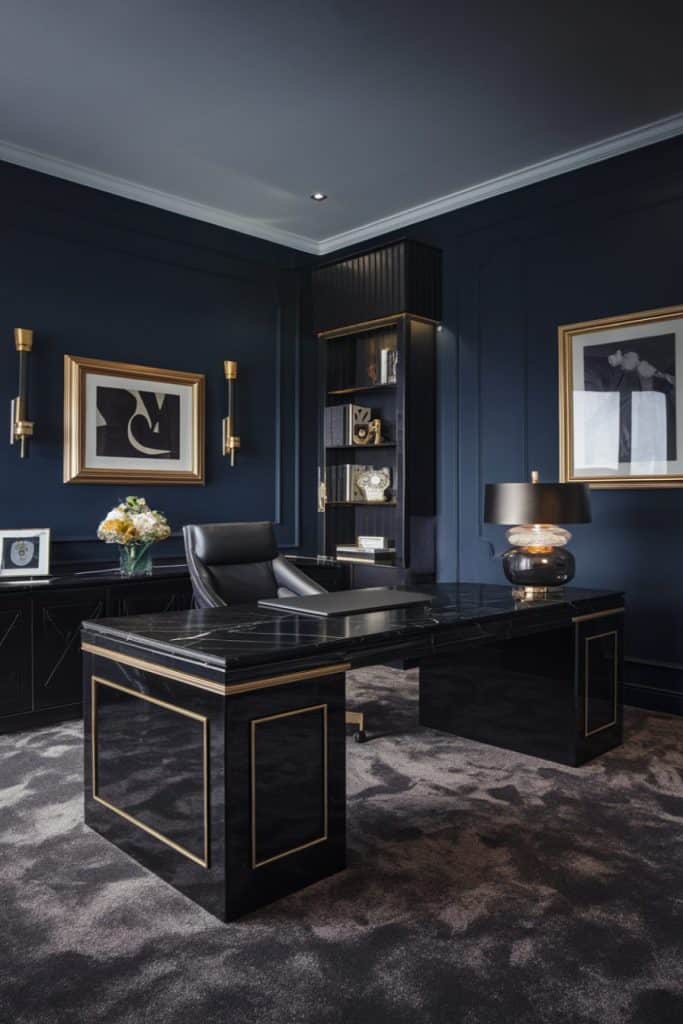
When using a very dark wall color like navy or black, painting the trim, crown molding, and ceiling a crisp, clean white is a classic designer trick for a reason. This does two crucial things. First, the white trim creates a sharp, graphic frame around the dark walls, making the color appear even richer and more intentional. Second, the white ceiling reflects light back down into the room, preventing the space from feeling like a dark cave and making the ceiling appear higher. Without the contrast of the white trim, a room this dark could feel heavy and claustrophobic. It’s a small detail with a massive impact.
14. Monochromatic Workspace with Ergonomic Seating and Blinds
The most critical element in this functional space is the controlled light from the large window. The horizontal blinds are not just a decorative choice; they are the engine of the room’s usability. They allow the user to precisely manage the amount and direction of natural light, preventing screen glare while still keeping the space from feeling dark and gloomy. In a room with dark walls, this ability to bounce and direct light is absolutely essential. Remove the blinds, and you’d be left with a choice between blinding sun or a depressing, cave-like atmosphere. They provide the flexibility that makes the workspace truly work.
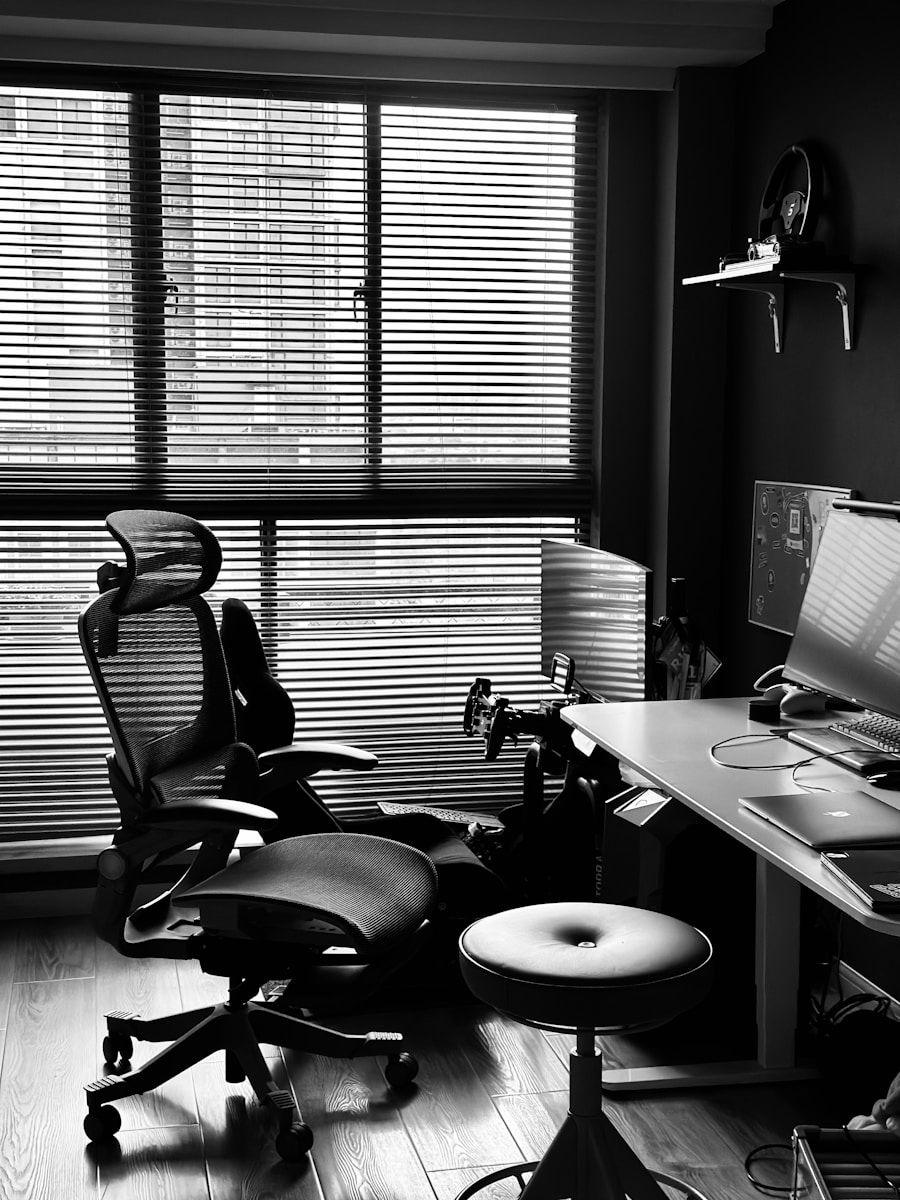
This kind of simple, focused corner setup is perfect for small spaces. You don’t need a whole room; a dedicated corner in a bedroom or living area will do. The key is a wall space of at least 4-5 feet wide to accommodate a decent-sized desk without feeling cramped. Because the visual ‘weight’ of the design is low—thanks to the light-colored desk and minimal clutter—it works well in rooms with lower ceilings (around 7.5-8 feet). The dark wall behind the desk actually helps to define the zone and can make the corner feel like its own little ‘room,’ a smart trick for creating separation in a multi-purpose space.
15. Dimly Lit Dark Desk Focused on a Modern Computer Setup
This cozy, focused vibe is incredibly appealing, but let’s talk about eye strain. Working for long hours in a dimly lit room with your only major light source being a bright computer screen can be tough on your eyes. The high contrast between the bright screen and the dark surroundings forces your pupils to constantly adjust, which can lead to fatigue and headaches. The articulated task lamp is a non-negotiable element here. It’s crucial for providing focused light on your keyboard, notes, or any physical documents, reducing the overall contrast and making the workspace much more ergonomic and comfortable for extended periods.
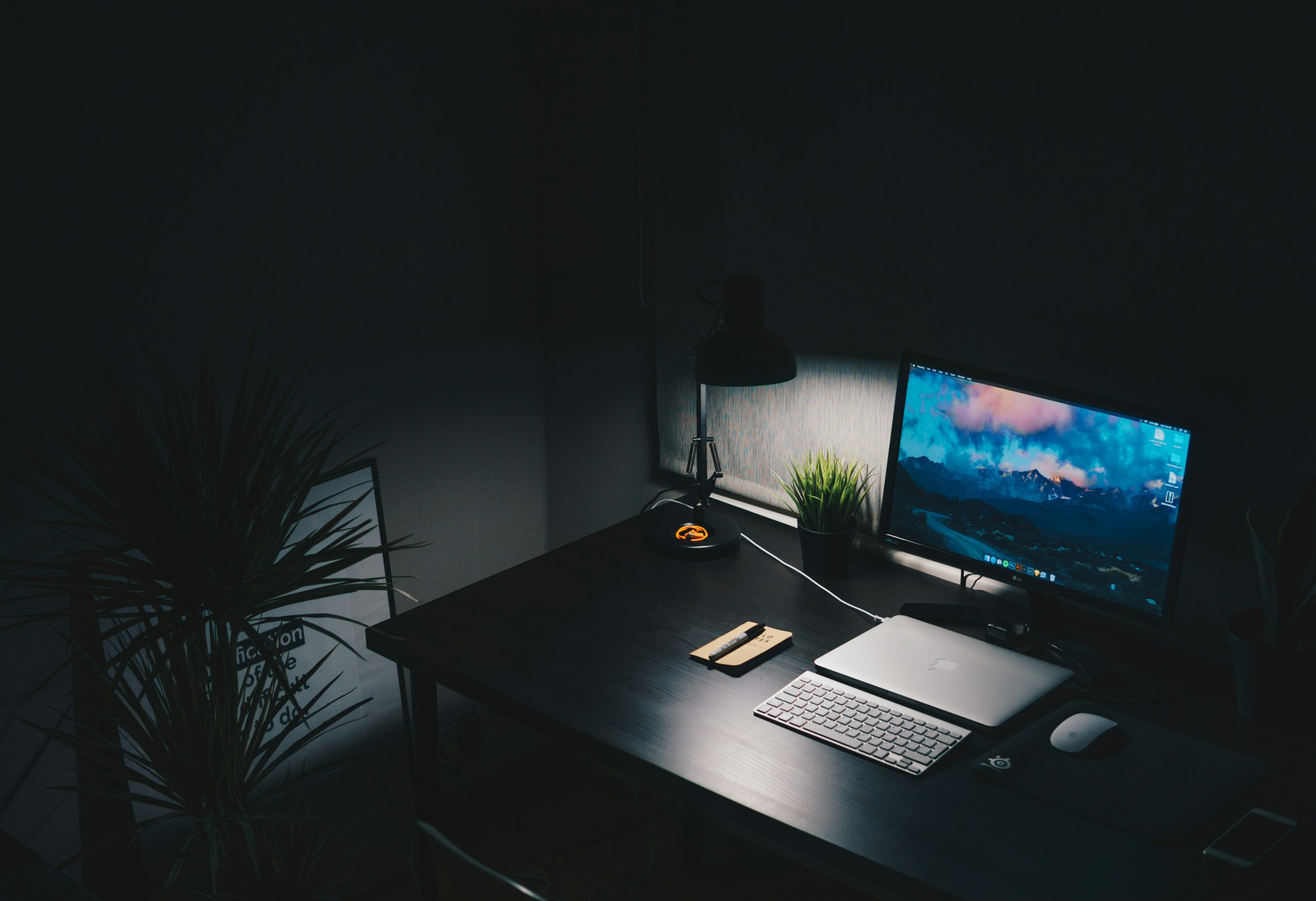
This look is all about ambient lighting. Before you commit, assess your lighting options.
- Do you have a dedicated outlet for a task lamp? The position of this lamp is key, so make sure you can place it optimally without running messy extension cords.
- Can you control your overhead lighting? Ideally, you want to be able to dim or turn off overhead lights to achieve this moody look without sitting in total darkness. A dimmer switch is your best friend here.
- Is your monitor’s brightness adjustable? You’ll need to turn down your screen’s brightness in the evening to match the lower ambient light and reduce eye strain. Check your monitor’s settings.
16. Modern Gaming PC Desk Setup with Blue and Yellow Accent Lighting
This is the 2026 evolution of the ‘battlestation.’ It’s moved beyond the chaotic, rainbow-vomit RGB of the past into something more intentional and atmospheric. The trend, heavily influenced by tech YouTubers and Twitch streamers, is now about ‘light layering’ for your desk. It’s not just about illuminating your space but about creating a specific mood and aesthetic. The use of both warm linear backlighting and a cool blue accent strip shows a sophisticated understanding of color temperature. This has staying power because it merges high-tech hobbies with thoughtful interior design principles, making the PC setup a deliberate and beautiful part of the room’s decor.
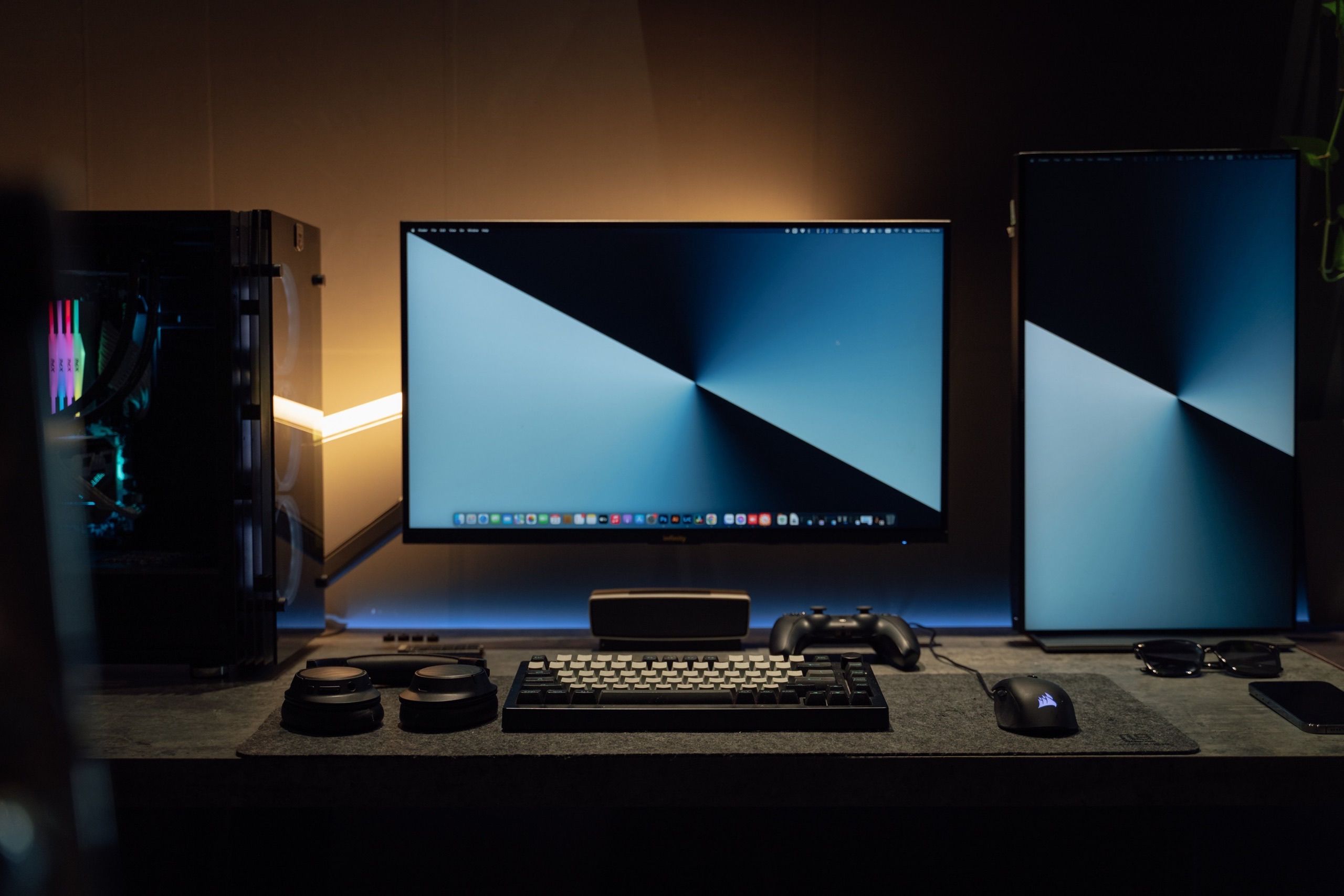
The visual harmony of this setup can be broken down into a simple formula: 80% Monochromatic Base + 15% Primary Accent Light + 5% Secondary Accent Light. The ‘Monochromatic Base’ is the dark desk, black peripherals, and dark walls. The ‘Primary Accent Light’ is the warm, linear LED backlighting, which creates a soft, inviting glow. The ‘Secondary Accent Light’ is the subtle strip of blue, which provides a cool, futuristic contrast. You could swap the blue for purple or red, or the warm light for a clean white, and the balanced, layered effect would be preserved as long as you maintain those proportions.
17. Moody Office with Stacked Stone Wall and a Teal Rug
That stacked stone wall is a showstopper, but it can be pricey. For a similar high-texture look on a budget, consider textured wallpaper. Modern ‘3D’ wallpapers can convincingly mimic stone, brick, or concrete for as little as $2 per square foot. Another great option is to create a ‘German Schmear’ effect on a plain wall using joint compound, which gives a rustic, textured look for the cost of a bucket of compound and a weekend of your time. Pair it with a light wood desk from IKEA and a shaggy teal rug from a site like Rugs USA (often on sale for under $200), and you’ve got the same moody, textural vibe for a fraction of the cost. The wall treatment in Idea #19 offers another textural alternative.
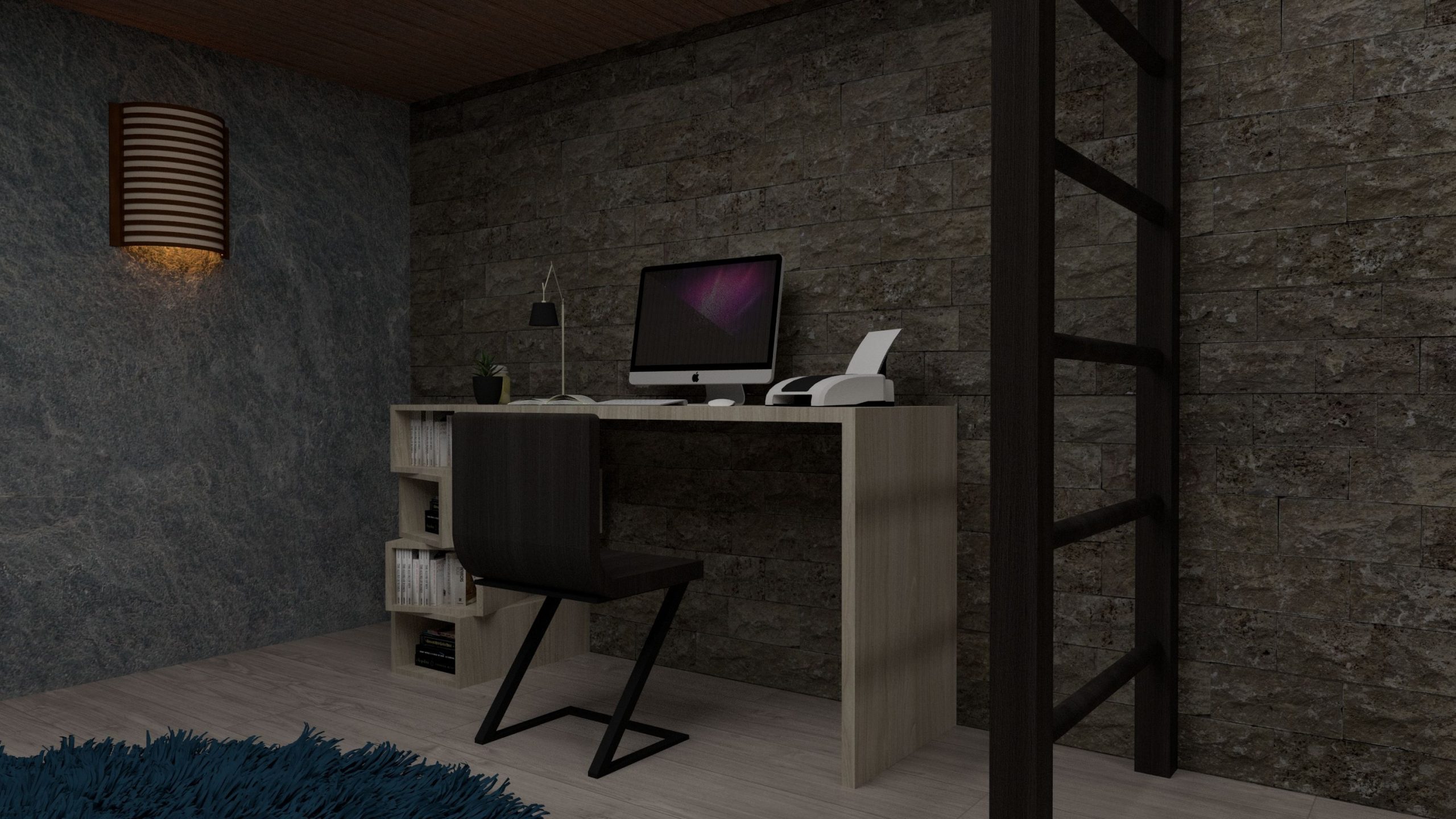
The slatted wood wall sconce adds a perfect touch of warmth and sculptural interest. You can make a similar one yourself.
- Get Supplies: You’ll need a simple, hard-wired cylinder wall sconce kit ($20-30), a piece of thin, flexible plywood or veneer sheet, and about 20-30 thin wood coffee stirrers or craft sticks.
- Build the Frame: Cut the veneer sheet to wrap around the sconce, leaving a gap for light to escape. This will be your backing.
- Attach the Slats: Using strong wood glue, carefully attach the coffee stirrers vertically onto the veneer sheet, leaving a tiny, uniform gap between each one.
- Install: Once dry, wrap the slatted veneer around your installed sconce fixture and secure it. It’s a custom piece that looks far more expensive than it is.
18. High-Tech Trading Desk with Vibrant RGB Lighting
When your desk setup is the main feature and light source, cable management becomes the most important design element. Nothing ruins this sleek, high-tech look faster than a nest of tangled wires. Invest in a comprehensive cable management kit for under $20. Use a combination of adhesive cable clips for routing wires under the desk, Velcro ties to bundle cables together, and a cable raceway or sleeve to hide the main bundle of wires running from the desk to the outlet. Dedicate a full hour to meticulously planning your cable routes before you plug anything in. A clean setup looks professional and makes it much easier to clean and swap out components later.

This setup works because it uses light as the primary decorative element. The room itself is dark and minimalist, acting as a blank canvas. The vibrant, colorful light from the PC fans, the keyboard, and the mouse isn’t just for function; it’s what ‘paints’ the space. The principle at play is focus and contrast. Your eye is immediately drawn to the points of bright, colored light against the dark background. The bright white light from the PC tower acts as the main ‘fill light’ for the corner, while the multi-colored RGB peripherals provide the playful, dynamic accents. It’s a living, breathing light installation.
19. Home Office with Vertical Wood Slats and a Textured Gray Wall
The single element that elevates this office from good to great is the combination of two different wall textures: the vertical wood slats and the textured dark gray paint. Using just one would have been nice, but using both creates a sophisticated, layered look that feels custom and expensive. The linear, organized pattern of the wood slats contrasts beautifully with the more random, organic texture of the gray wall. This juxtaposition is what gives the room its visual interest and depth. It’s a pro-level move that shows a deep understanding of how materials play off one another.
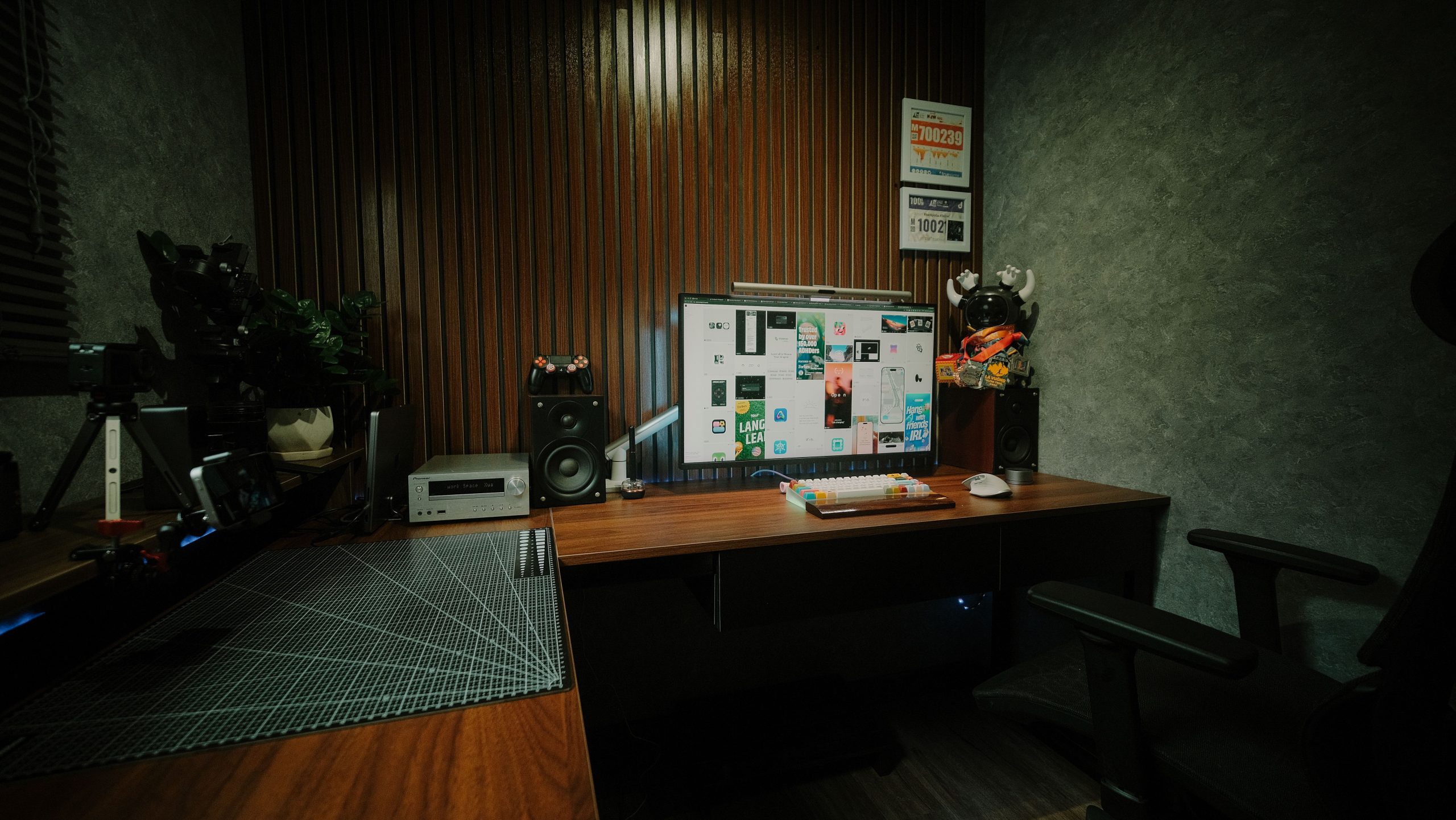
A wood-slatted wall looks incredible, but it’s a dust-catcher, pure and simple. Those narrow grooves are prime real estate for dust bunnies. To keep it looking sharp, you’ll need to commit to a weekly cleaning routine. The most effective method is using the brush attachment on your vacuum cleaner to gently go over the entire surface. For a quick touch-up, a feather duster or a microfiber duster with a long handle will work. Avoid using wet cloths or spray cleaners, as moisture can damage the wood or its finish over time. It’s a 5-minute weekly task that is essential to preserving the clean, sharp lines of the design.
20. Dark Gray Workspace with a Distressed Wood Desk and White Shelf
This is a perfect example of a stylish, moody office that’s achievable on a realistic budget, as the focus is on a few key items and a strong wall color.
- Main Furniture (Desk, Chair): $400 – $900
- Shelving (White floating shelf): $30 – $70
- Lighting (monitor light bar, keyboard): $80 – $200
- Paint (High-quality dark gray): $70 – $120
- Decor/Tech (vertical laptop stand, etc.): $50 – $150
- TOTAL: $630 – $1,440
Budget alternative: The core of this look is the distressed wood desk. You can achieve this by finding a solid wood desk on Facebook Marketplace for under $100 and spending a weekend sanding and re-staining it yourself. A dark walnut or Jacobean stain will give you this rich, moody finish. The rest of the items are relatively inexpensive, making this a very accessible design.
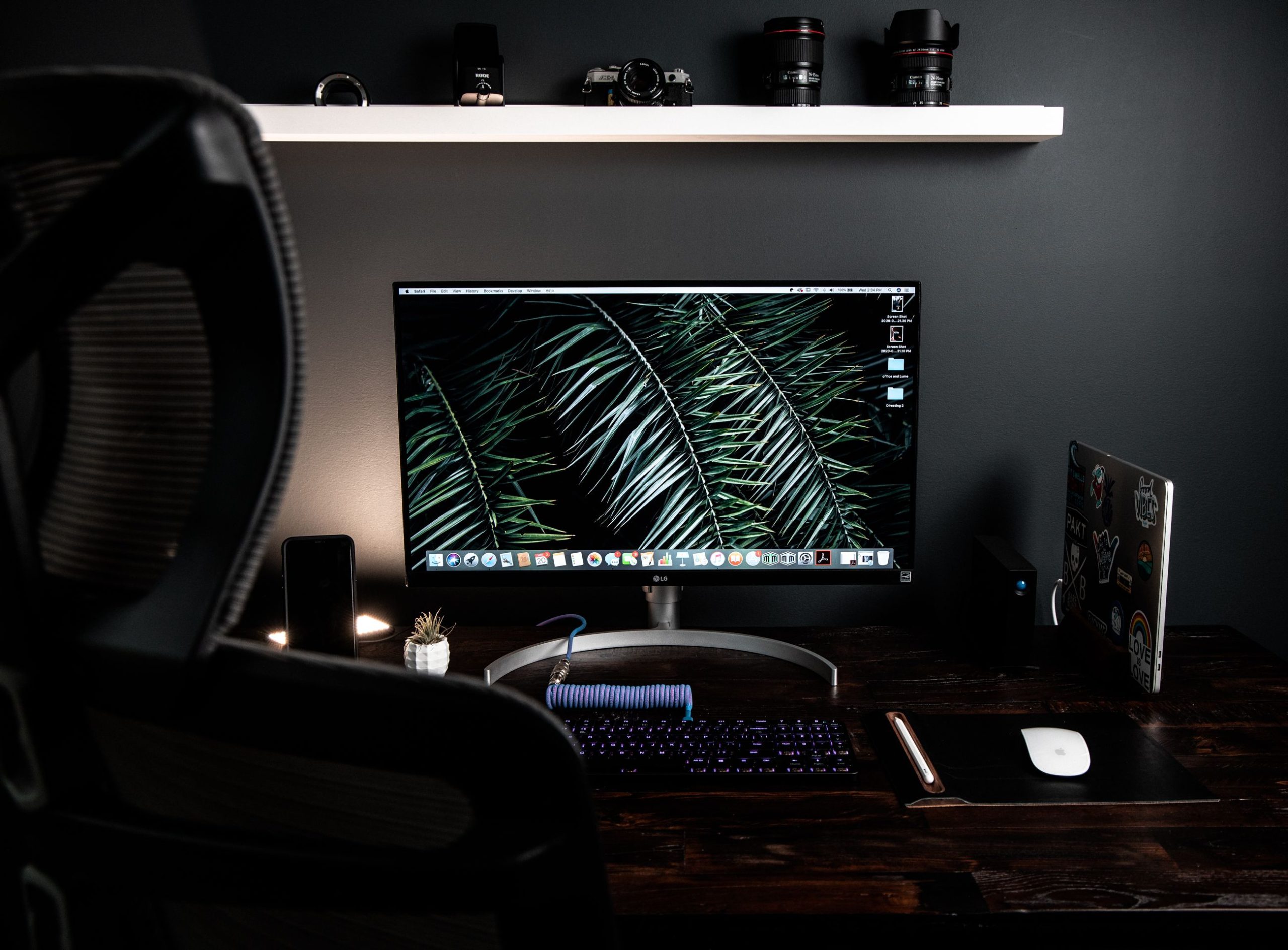
Before you paint your wall a deep, dramatic gray, do this one thing: paint a large sample and watch it for 24 hours.
- Check the Undertones: Dark grays are notorious for having tricky undertones. In morning light, your perfect charcoal might look purple. In the afternoon, it might look blue or even green. Make sure you like how it behaves throughout the day.
- Test Your Lighting: See how the color looks with your artificial lighting on. Some bulbs can bring out unexpected and unwanted undertones in dark paint.
- Assess the ‘Feel’: A small paint chip can’t tell you how a color will feel when it’s covering a whole wall. A large sample will give you a much better sense of whether the color will feel cozy and sophisticated or just plain dark and depressing in your specific room.
21. Monochromatic Office with White Desk and Technical Art
This setup is a fantastic solution for smaller rooms or apartments where your office has to share space. It works best along a wall that is at least 6 feet wide, which gives you enough room for a 48-inch desk and prevents it from feeling crammed. The key to making it work in a small space is the use of ‘visually light’ furniture. The white desk, white shelves, and open-leg design of the desk create an airy feel. The dark wall behind actually helps, as it creates a sense of depth and visually ‘pushes’ the white elements forward, making the area feel more defined and less cluttered. This would be perfect for a guest room/office combo.
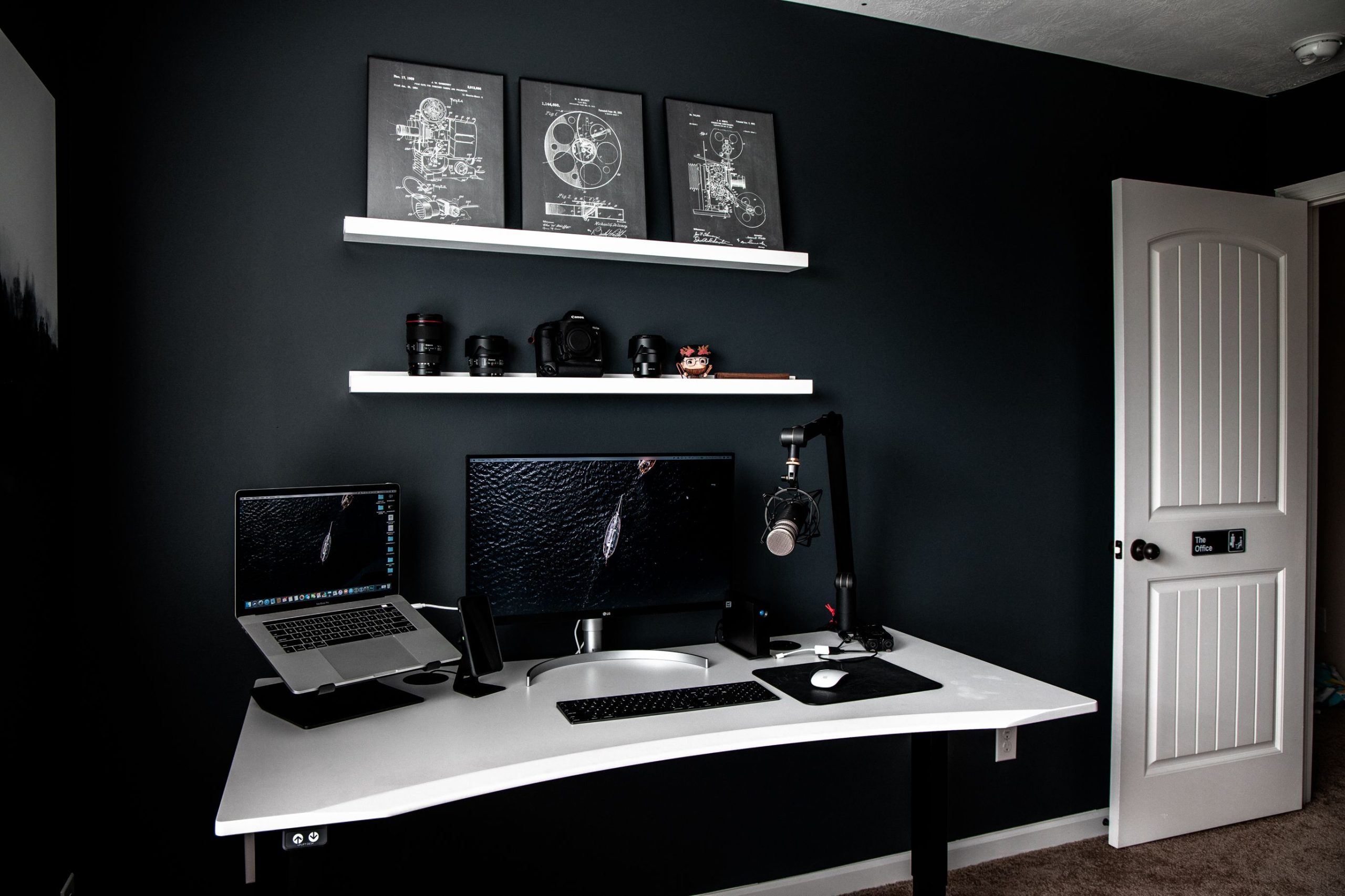
When styling floating shelves against a dark wall, the secret is to use a consistent color palette for your display items. Notice how everything on these shelves is black, white, silver, or a warm wood tone. There are no random pops of bright color. This disciplined palette is what makes the shelves look curated and intentional, rather than cluttered. The framed patent art with its black frames and white background is the perfect choice, as it reinforces the room’s monochromatic scheme. When in doubt, edit your shelf decor down to just two or three core colors for a guaranteed professional look.
22. Dark Charcoal Paneled Office with Abstract Rug and Tripod Lamp
This is the grown-up, sophisticated version of the ‘dark and moody’ aesthetic that’s all over Pinterest. While some trends lean into a more casual, boho version of dark decor, this look is pure, unapologetic elegance. It’s trending in 2026 because it speaks to a desire for permanence and quality in our home spaces. After years of fast furniture, people are craving rooms that feel solid, timeless, and enveloping. The full-room paneling, the substantial executive desk, and the large-scale art all contribute to a feeling of a ‘forever’ room, not just a temporary setup. The key takeaway is that going fully dark, even on the ceiling, can create an incredibly cozy and immersive space if balanced correctly. Compare the traditional feel here with the more jewel-toned version in Idea #4.
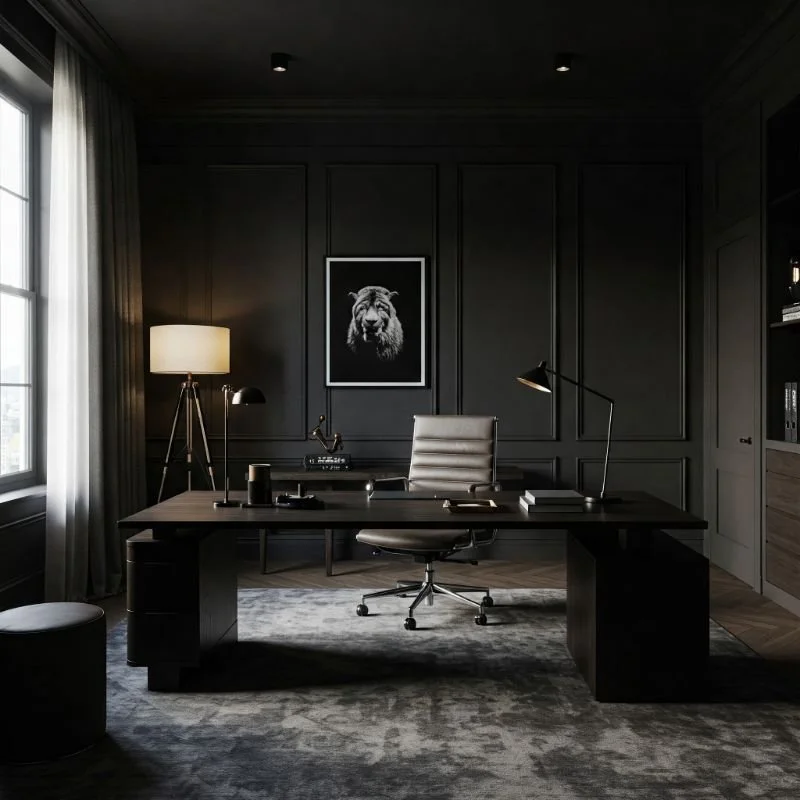
Want this high-end look without the custom paneling price tag? The trick is to mimic the effect. Create a feature wall using MDF trim boards from a hardware store, laid out in a grid pattern, and paint the same charcoal as the wall. This ‘box trim’ or ‘wainscoting’ effect costs a fraction of full paneling (around $200-$400 in materials). For the furniture, find a solid, dark wood desk on Facebook Marketplace—look for something with good bones from the 80s or 90s. A grey leather-look chair from an office supply store and an abstract rug from a site like Wayfair or Overstock can complete the look for under $1500 total.
23. Minimalist Dark Wood Desk with Integrated Strip Lighting
That integrated light strip is the detail that makes this entire setup feel futuristic and high-end. You can recreate this effect on a paneled or even a flat wall behind your desk. Here’s how:
- Create the Channel: Attach two horizontal pieces of 1×2 lumber to the wall where you want the light, leaving a 1-inch gap between them. This creates a channel.
- Install the Light: Purchase a dimmable, diffused LED strip light kit online. Stick the self-adhesive strip inside the channel you created. A diffuser cover is key to avoid seeing individual LED dots.
- Add the Fascia: Attach a piece of trim or a thin board over the front of the 1x2s, covering the channel and the light strip itself. This will make the light appear to glow from a seamless gap in the wall.
- Manage Wires: Run the wire down the corner of the wall or use a paintable cord cover to hide it.
This project takes a few hours and costs under $100 for a truly custom look.
This design’s success comes from its extreme simplicity and strict material ratio. It’s roughly 80% Dark Material + 15% Voids/Negative Space + 5% Focused Light. The ‘Dark Material’ is the combination of the dark wood desk and the dark paneled wall, which read as one continuous surface. The ‘Voids’ are the open space under the desk and the minimal clutter, which keeps the look clean and uncluttered. The final, critical ‘Focused Light’ is the single warm strip, which provides all the drama and visual interest. It’s a formula that celebrates minimalism and proves that you don’t need a lot of ‘stuff’ to make a big statement.
24. Sleek Dark Marble Desk Paired with a Cognac Leather Chair
This contemporary look is all about the interplay between slick, cool surfaces and warm, inviting textures. The cost is mainly in the two statement pieces: the desk and the chair.
- Main Furniture (Marble-look Desk, Leather Chair): $1,200 – $3,500
- Technology (iMac, Peripherals): $1,500 – $2,500
- Accessories (Headphones, Coffee Machine): $300 – $800
- Flooring (LVP or similar): $5 – $10 per sq. ft.
- TOTAL (excluding tech): $1,500 – $4,300+
Budget alternative: The ‘marble’ desk is the key. You can get this exact look for under $150 by using high-quality marble-patterned contact paper on a simple black desk from IKEA or a thrift store. Spend a bit more on a good-quality faux-leather chair ($250-$400) to nail the textural contrast. The final look is nearly identical for about 70% less.
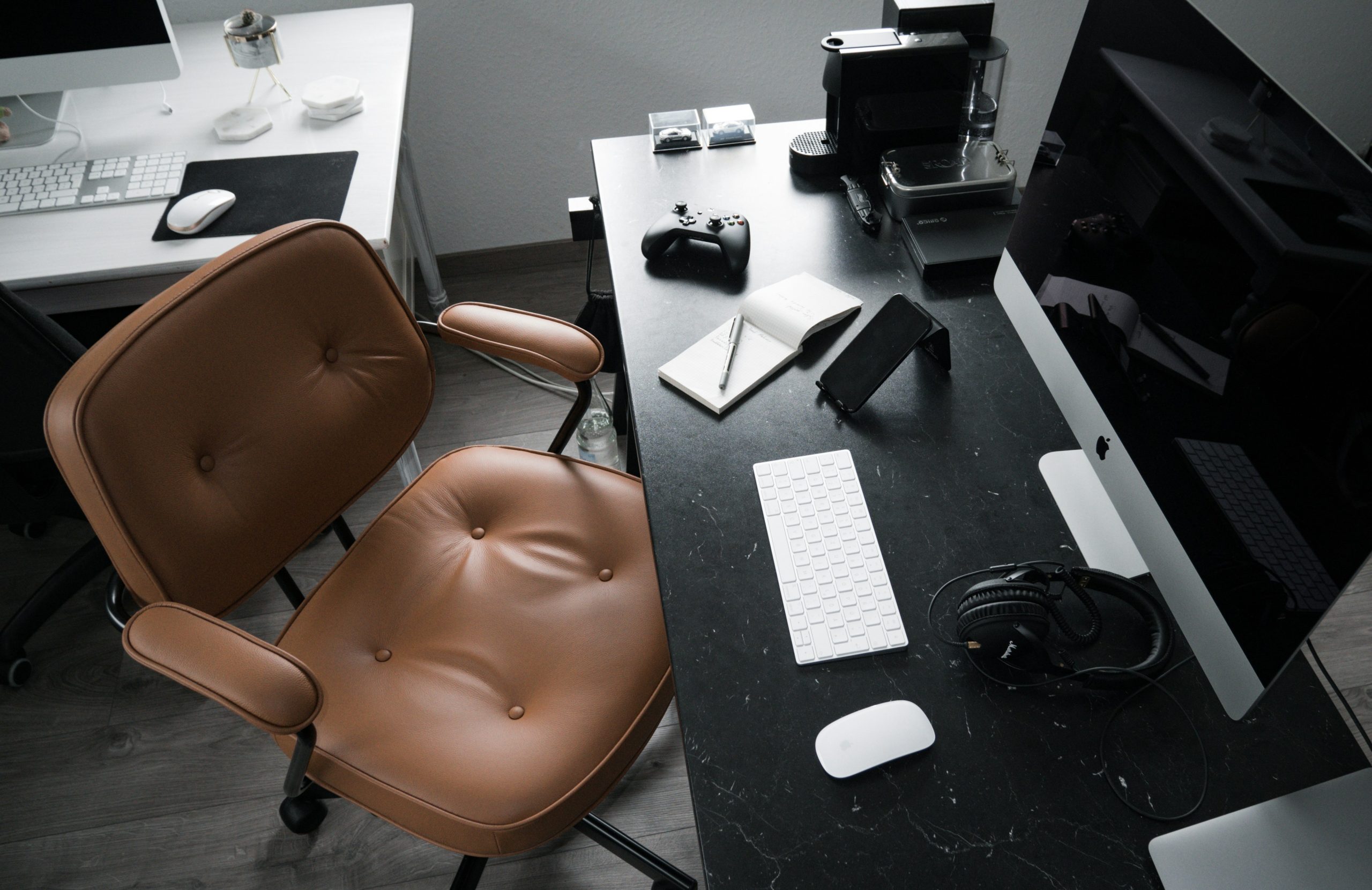
Let’s be real about that cognac leather chair. It’s absolutely gorgeous and provides the perfect warm contrast to the cool black and grey tones. However, if your office gets a lot of direct, intense sunlight, a dark leather like this is susceptible to fading over time. The sun’s UV rays can dry out the leather and cause the rich brown color to lighten and look washed out in patches. To prevent this, you’ll need to either position the desk away from the direct path of sunlight or be diligent about using blinds or curtains during the brightest parts of the day. It’s a small consideration that will keep your statement piece looking its best for years.
Your Moody Masterpiece Awaits
Going dark with your office is a bold choice, but as you’ve seen, it’s one of the most effective ways to create a space that feels focused, sophisticated, and uniquely yours. Don’t be afraid to mix textures, play with light, and choose that dramatic paint color. Your perfect productive sanctuary is just a few decisions away. Now, which one are you saving to your Pinterest board first?