
A sewing room should work as hard as you do, but that doesn’t mean it can’t look good too. Whether you’re drowning in fabric bolts or tripping over thread spools, the right setup turns chaos into creativity.
These 29 sewing room ideas cover every corner of the craft, from pegboard power walls to rainbow drawer systems and clever angled storage. Expect practical layouts that keep your machine central and your supplies within arm’s reach, no matter your style or square footage.
Pegboard Power: Organizing Spools and Tools on a Sewing Room Wall
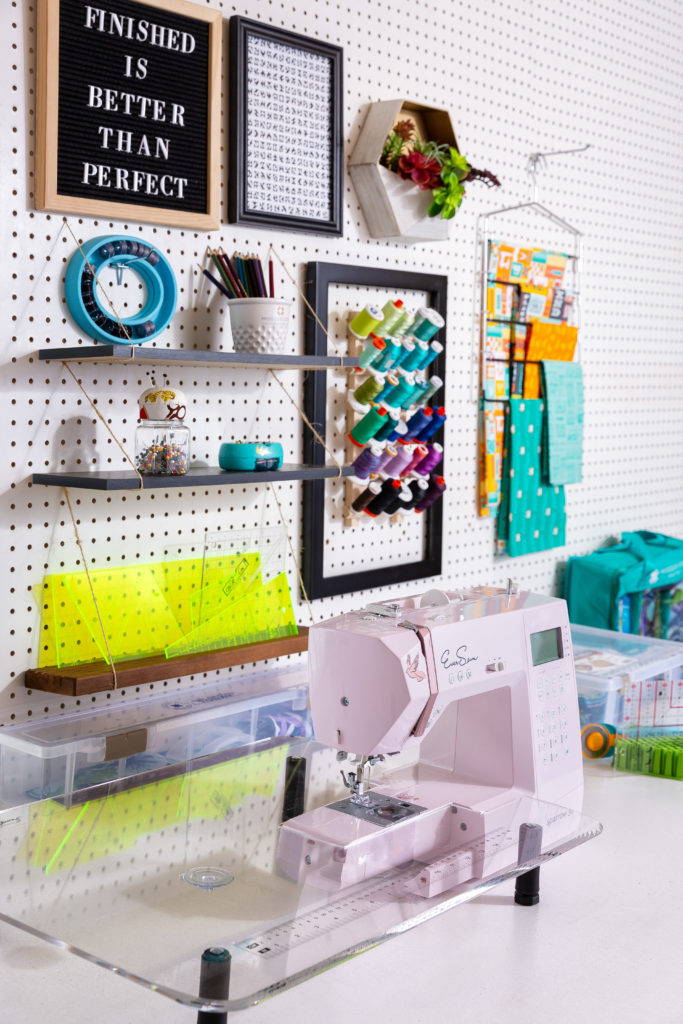
A white pegboard wall holding acrylic cutting mats and pink accessories makes the sewing machine the center of a compact setup. The palette stays light with white and pink, while clear plastic bins and teal accents add contrast without clutter. Overhead lighting keeps the work surface bright, and the organized wall means scissors, rulers, and spools are within arm’s reach. This is a layout that prioritizes workflow over decoration, and it works.
Colorful Fabric Storage in a Cube Unit for Sewing Rooms
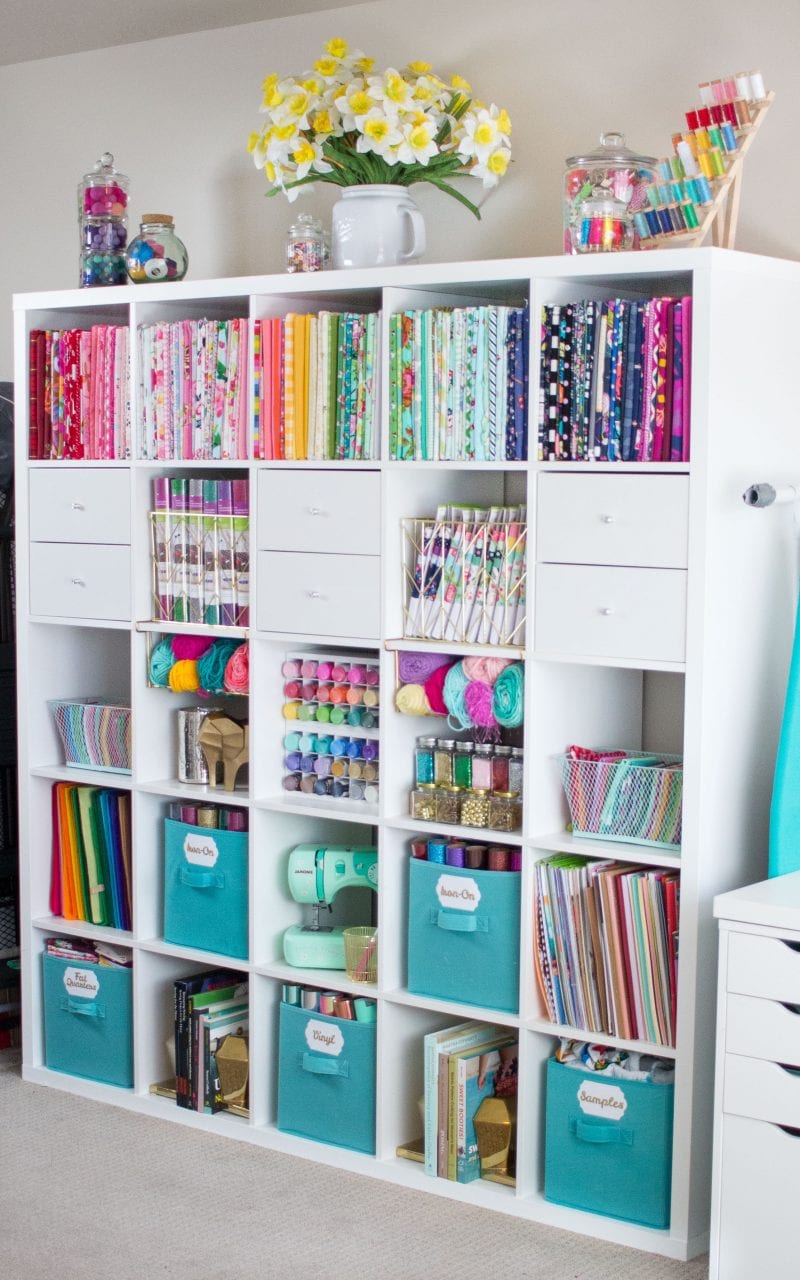
A large white cube storage unit filled with rainbow fabric bins and teal containers is a straightforward way to keep bolts and scraps sorted. The eclectic palette turns stash management into a visual feature, with each cube holding a different color family. A sewing machine sits nearby, ready for use, while the open shelves make it easy to pull fabrics without digging. The trick is treating the unit as a palette tool: arrange bins by color, and the room gains both order and energy.
Clever Use of Angled Walls for Sewing Studio Storage
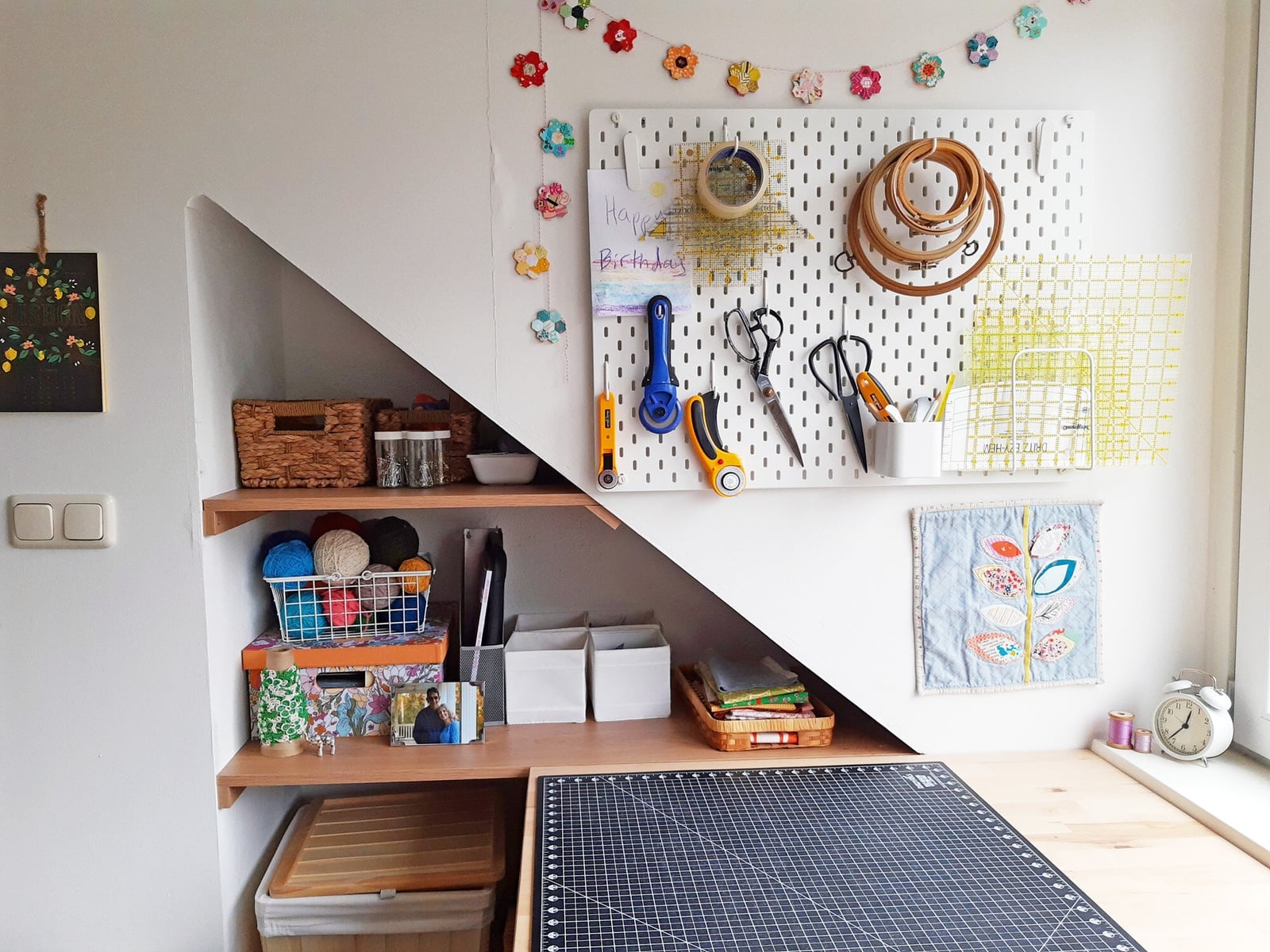
What do you do with a sloped wall under the stairs? In this bohemian craft studio, the answer is a custom cutting station with a white pegboard and natural wood shelves. A cutting mat sits at the perfect height, with rotary cutters and scissors hanging within reach. Wicker baskets hold colorful yarn, and hoop art adds a personal touch. The angled wall becomes an asset: the pegboard follows the slope, and natural light keeps the nook from feeling cramped.
Vibrant Rainbow Drawers for Eclectic Sewing Studio Organization
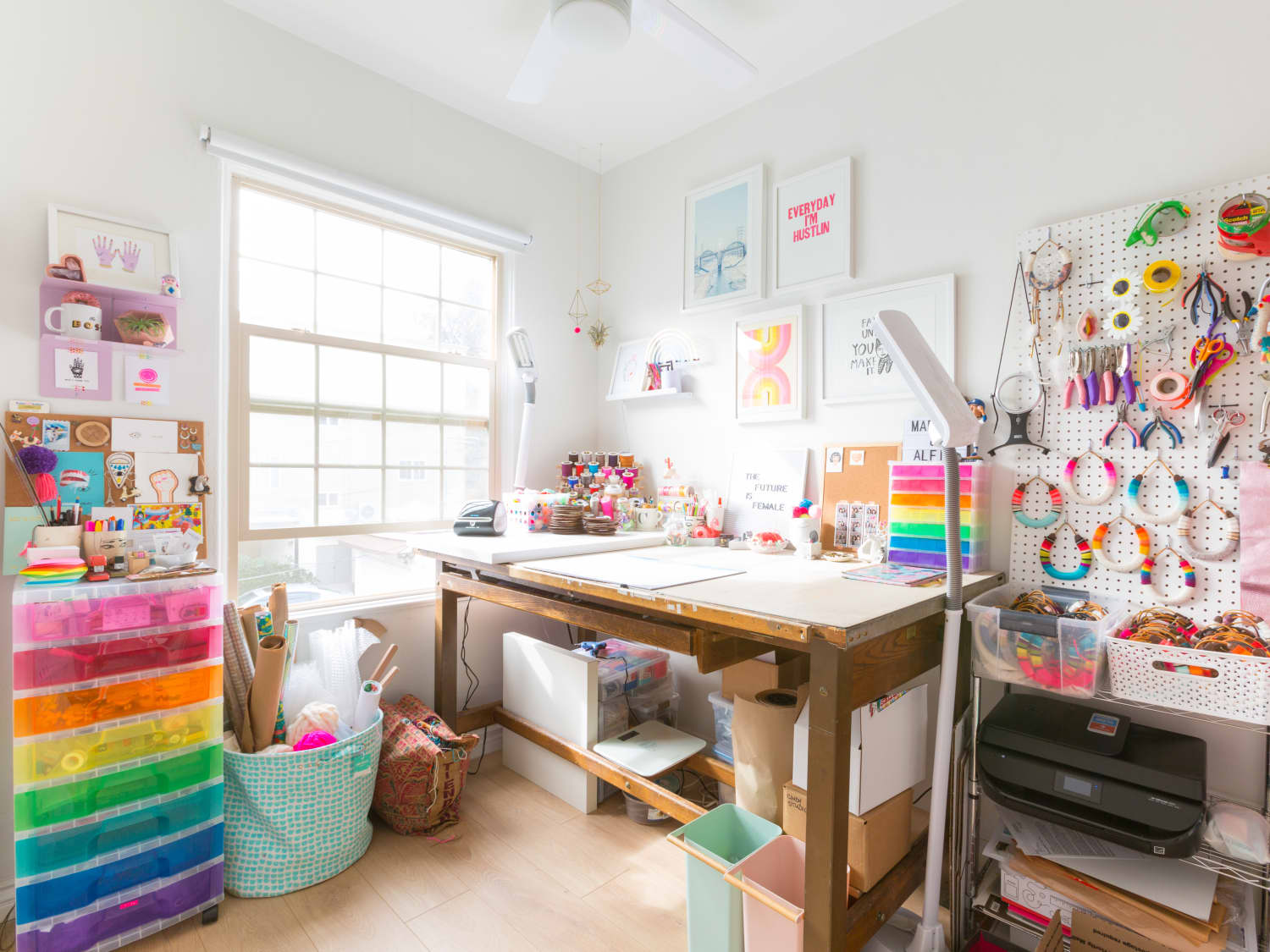
A craft desk facing a large window anchors a roomy studio, but the real focal point is the wall of rainbow storage drawers. Each drawer holds a different category of supplies, from thread to buttons to tools, and the bright colors make finding what you need almost instant. A white pegboard above the desk keeps scissors and rulers visible, while the natural wood desk provides a calm workspace. The rainbow drawers break the monotony of white walls and add personality without sacrificing function.
Teal Wall and Wood Desk for a Modern Sewing Room
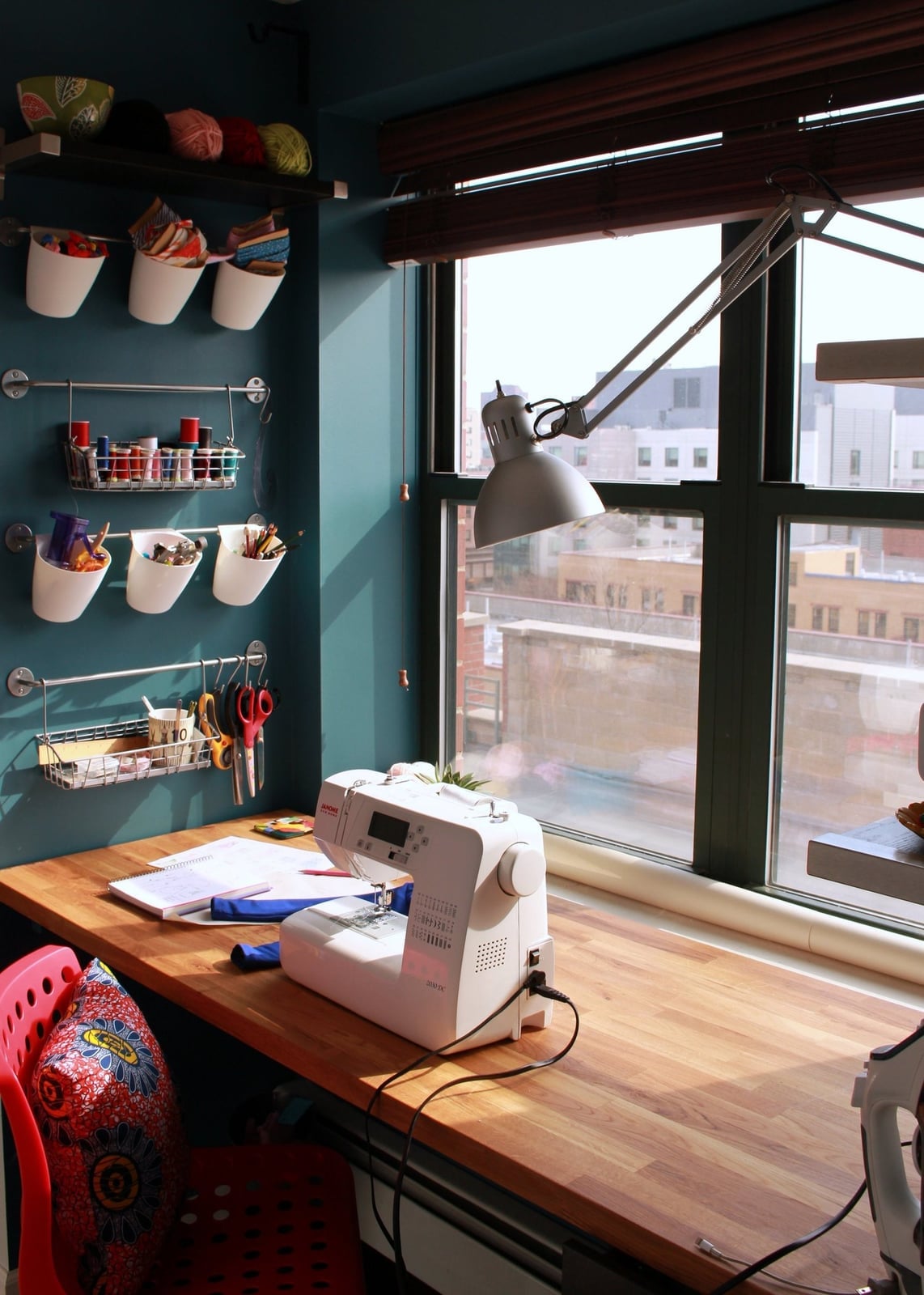
Choose a wall color that makes your materials stand out. Here, a teal wall behind a wood desk does exactly that, with white wall organizers holding scissors, thread, and patterns in clear view. The sewing machine sits near a window for natural light, and a task lamp provides focused illumination for detailed work. The teal adds energy without overwhelming the space, and the wood tones keep it grounded. It is a palette that supports the work, not the other way around.
Modern Farmhouse Sewing Room with Extensive Pegboard Wall
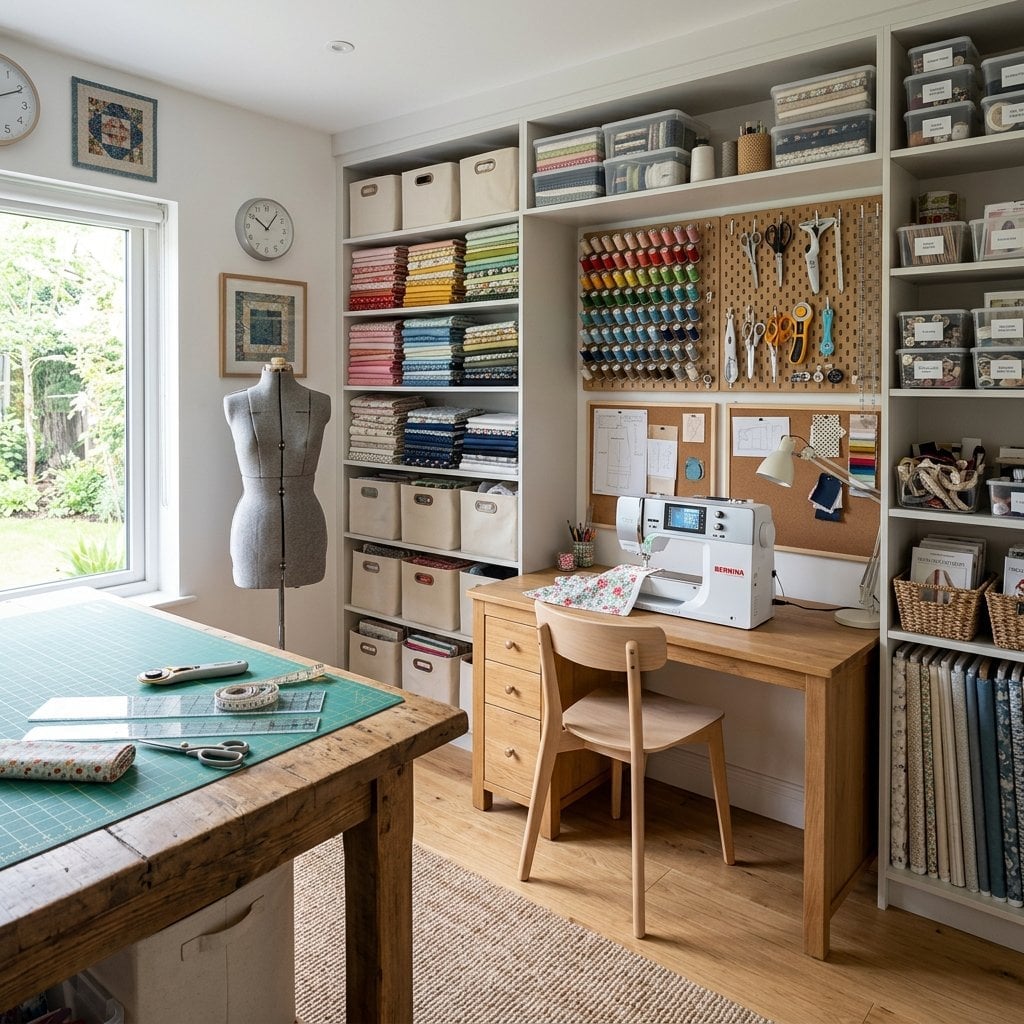
A solid wood sewing table and a dress form in the corner might read as purely traditional, but the real backbone here is the pegboard wall. It spans a generous section of the room, holding scissors, rulers, and smaller tools at eye level while leaving the desktop clear for the machine and a current project. Open shelves above store fabric bolts by color, turning supplies into part of the decor. The beige walls and natural daylight prevent a cluttered look despite the volume of materials. For a similar setup, mount a pegboard panel yourself and use hooks to hang frequently used items. It costs less than a custom cabinet and adapts as your collection grows.
L-Shaped Desk and Fabric Rolls in a Colorful Sewing Room
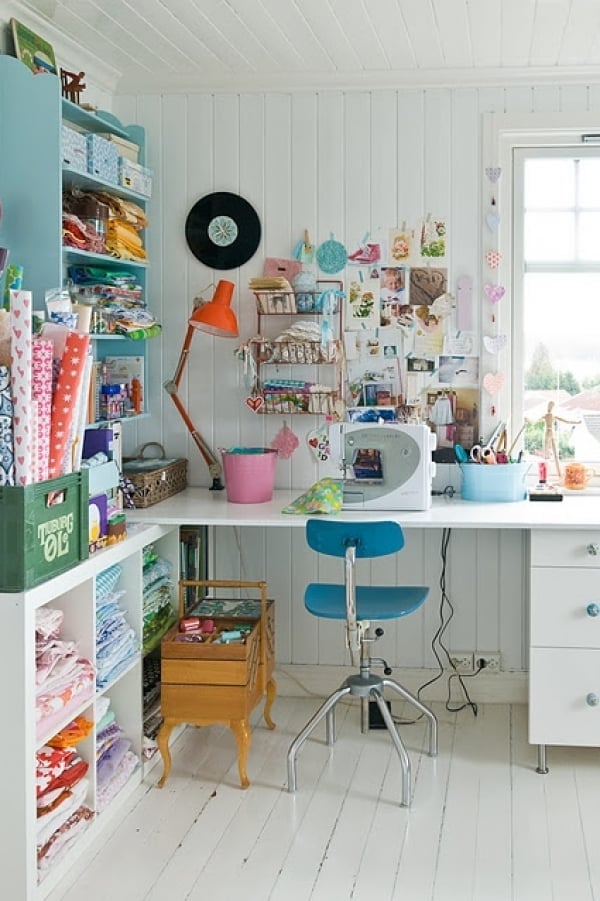
An L-shaped desk makes the most of a corner without blocking the bright natural light. The long leg holds a sewing machine, while the shorter side offers space for cutting or folding. Fabric rolls stand upright on a shelf unit beside the desk, their pastel blues and whites visible at a glance. An orange desk lamp adds warm task lighting for evening work. The layout works because the desk does not fight the room’s shape; it follows it. Renters can achieve the same setup with two inexpensive tables pushed together at a right angle.
Farmhouse Sewing Room Central Island for Cutting and Storage
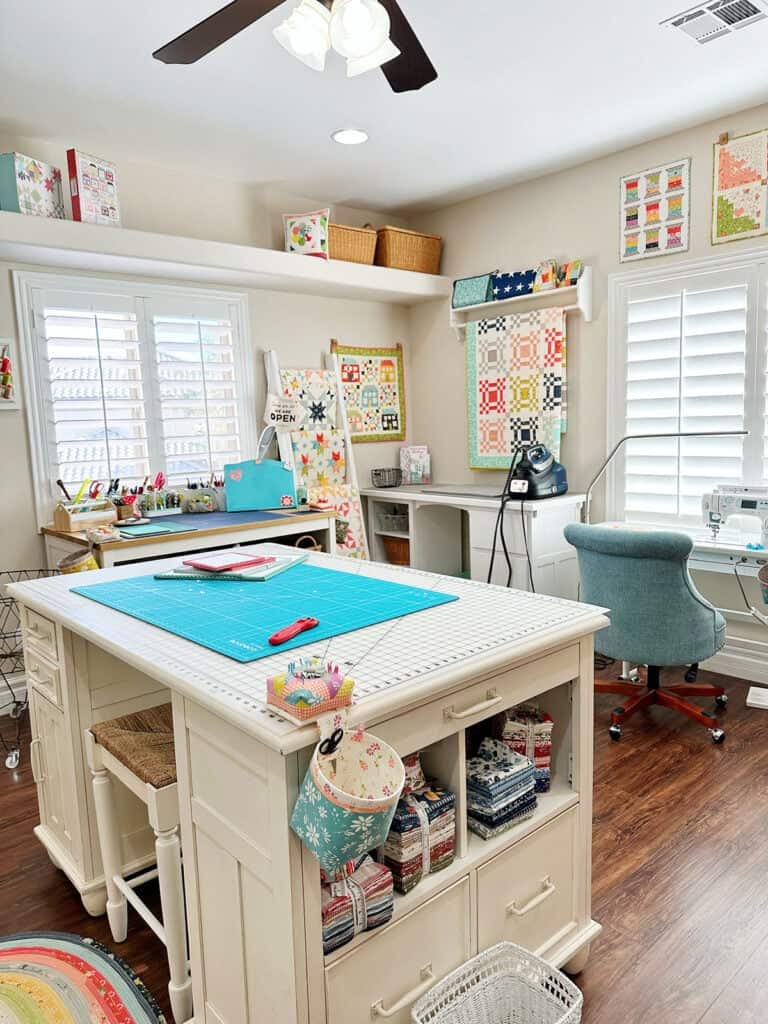
A large island in the center of the room does double duty as a cutting surface and storage hub. The laminate top is smooth enough for precise cuts, and the open shelves below hold baskets of fabric and supplies. Around the perimeter, wall shelves store quilts and additional materials, while a sewing machine sits on a dedicated table near the window for good daylight. The island anchors the layout, giving every task its own zone. The farmhouse feel comes through in the white palette and wood accents. To keep the island functional, choose a height that works for standing work, around 36 inches, and add casters if you want the option to move it aside.
Traditional Sewing Room with Multiple Work Tables and Thread Display
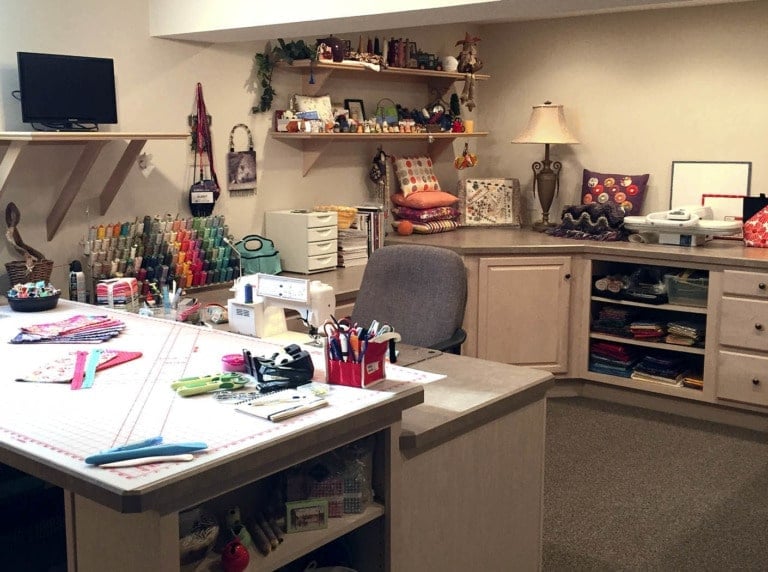
Can one room handle cutting, sewing, and pressing without traffic jams? This traditional layout answers yes with two large work tables placed apart, each with its own machine. One table is dedicated to sewing, the other to cutting and assembly. Along the back wall, floor-to-ceiling shelves hold fabric and supplies, while a separate wall is fitted with racks of colorful thread spools, organized by color. The beige walls and warm wood tones keep the scene from feeling busy. A table lamp on each workstation provides directed light. The key is to give each table a clear purpose so you move between stations rather than clearing one surface repeatedly.
Eclectic Sewing Room with String Light Pegboard Wall
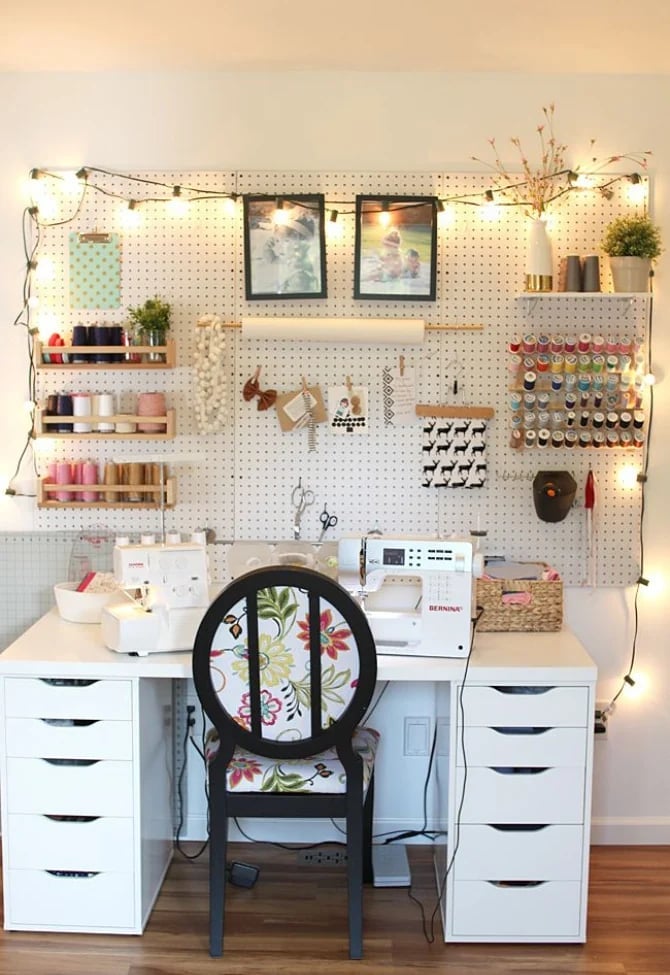
String lights draped across a pegboard wall add a warm glow that overhead fixtures often miss. The pegboard itself holds tools and small supplies, but the lights soften the utilitarian look and make the room feel inviting for long sessions. Two sewing machines sit on a wood desk below, with drawers for smaller items. The white walls keep the pegboard and lights as the focal point. Use battery-operated string lights on a pegboard so you can place them without worrying about outlet placement or dangling cords.
Compact Sewing Workspace with Organized Thread Pegboard
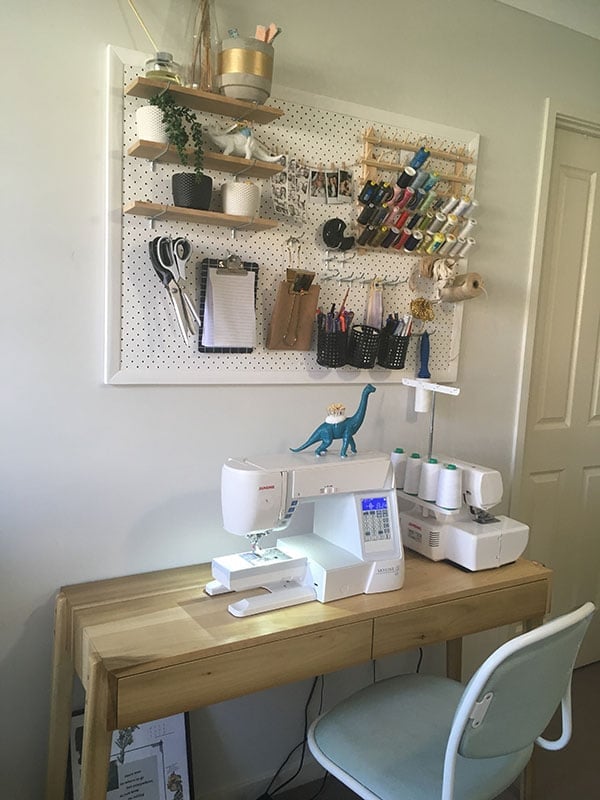
A pegboard wall keeps your most-used tools within arm’s reach without eating up desk space. In this compact corner, a white pegboard holds rows of thread spools sorted by color, with scissors and small tools hanging on hooks below. A wood desk holds the sewing machine in bright natural light, making it easier to match thread colors to fabric. A pegboard works best when you group like items together. Threads in neat color rows, scissors at the ready, and pins in a small cup. The desk stays clear for the project at hand.
Modern Sewing Room with Organized Wall Art Display
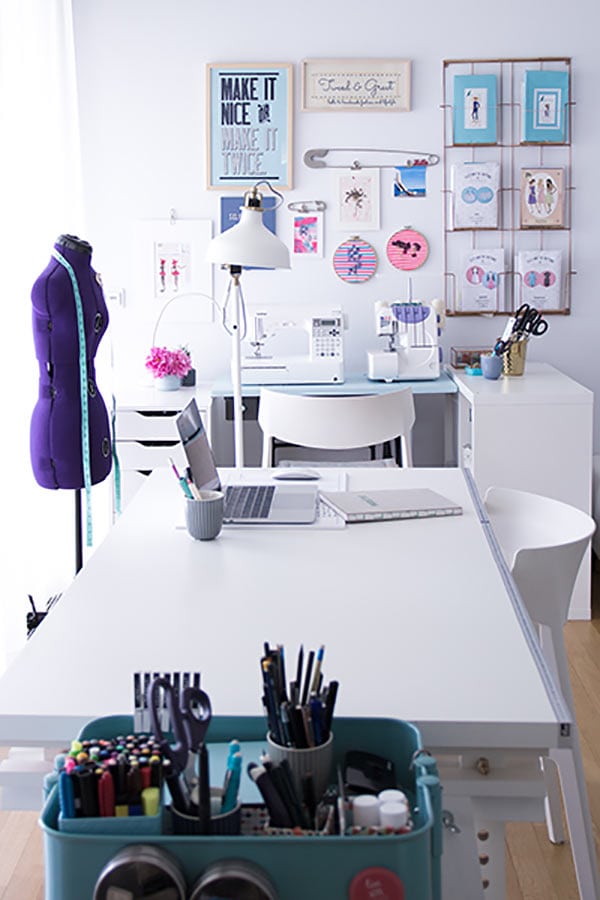
A sewing room can lean more toward gallery than utility when you treat your supplies as decor. Here, the wall above the desk holds a curated mix of framed art and a small shelf, while a mobile storage cart keeps notions and smaller tools on hand. The desk itself holds a laptop next to the sewing machine, suggesting a space that handles both drafting and stitching. The white walls and light wood desk keep the palette neutral, letting the colorful accents in the art and supplies provide the visual energy. Overhead lighting and natural daylight combine to keep the whole workspace well lit, which matters when you are matching thread colors or reading pattern markings.
Modern Farmhouse Sewing Room with Rolling Cart and Rug
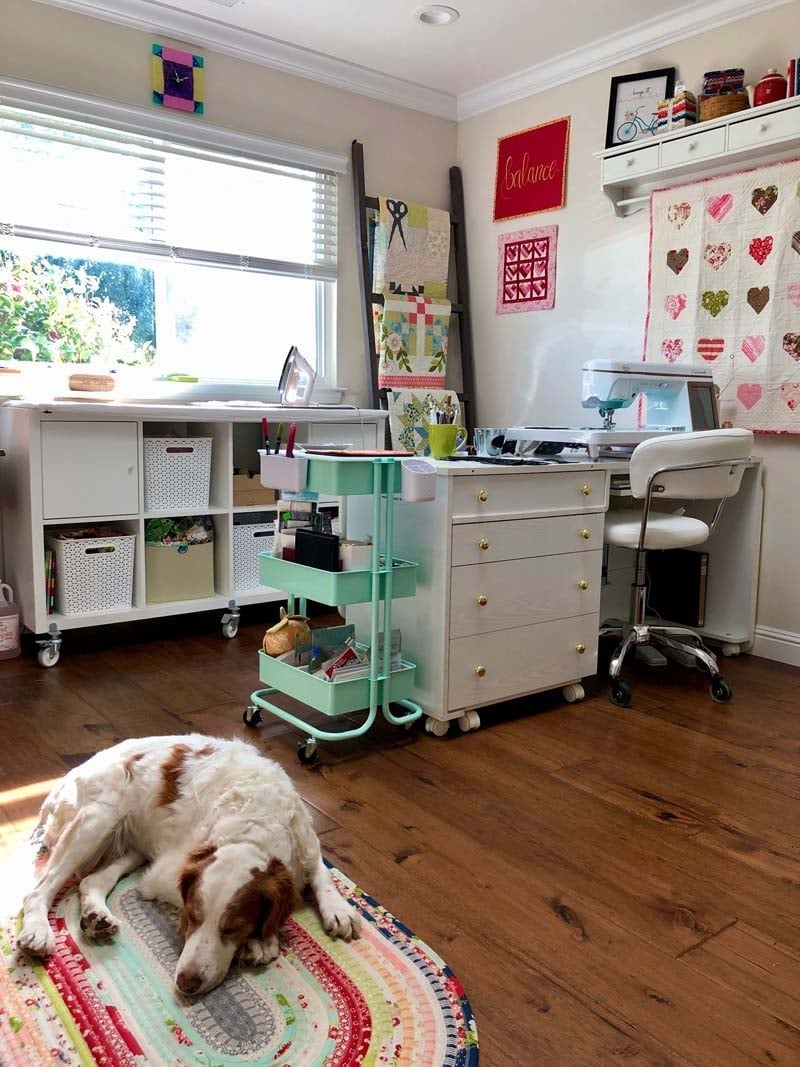
A white rolling cart parked next to the desk holds fabric and supplies in plain sight, making it easy to swap out materials mid-project. The room mixes wood tones from a ladder shelf and a small cabinet with the soft cream of the walls and rug. A dog naps on the rug, which tells you this space feels lived in, not just staged. Bright natural window light softens the whole scene, and the wicker basket on the shelf adds a textural contrast to all the metal and wood.
Modern Sewing Room Storage Cart and Pegboard Combination
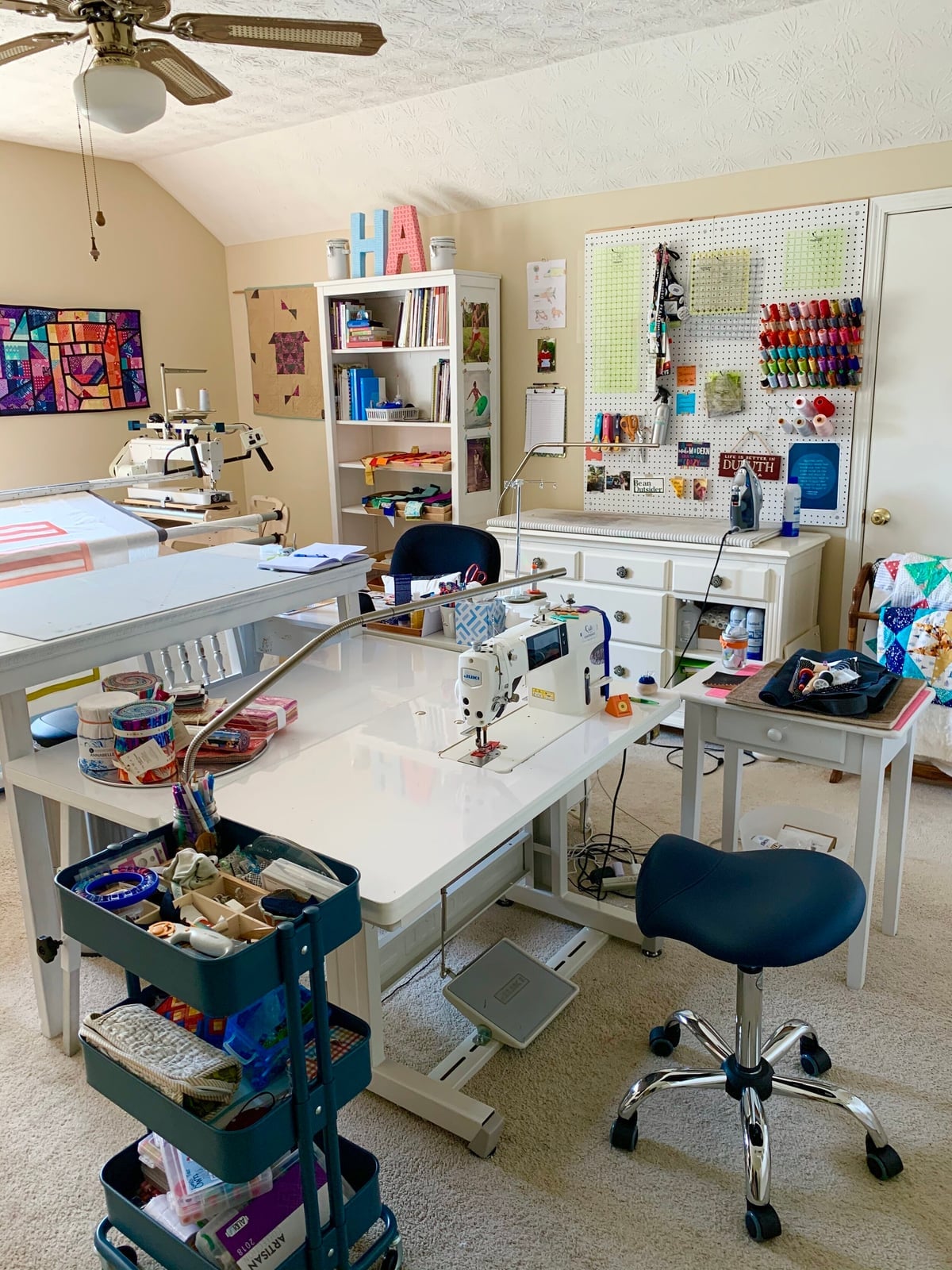
A rolling cart with clear drawers and a pegboard wall make a strong team for keeping a sewing room tidy without a built-in. The cart sits to one side of the desk, holding thread, scissors, and small tools in labeled compartments. Behind it, a white pegboard holds larger items like a rotary cutter and ruler. The overhead light and a small task lamp on the desk ensure you can see into every drawer and reach every hook. This setup works well for renters since nothing is attached to the walls permanently. You can roll the cart to another room if your sewing corner needs to double as a dining area.
Rainbow Fabric Organization in a Sewing Room Corner Unit
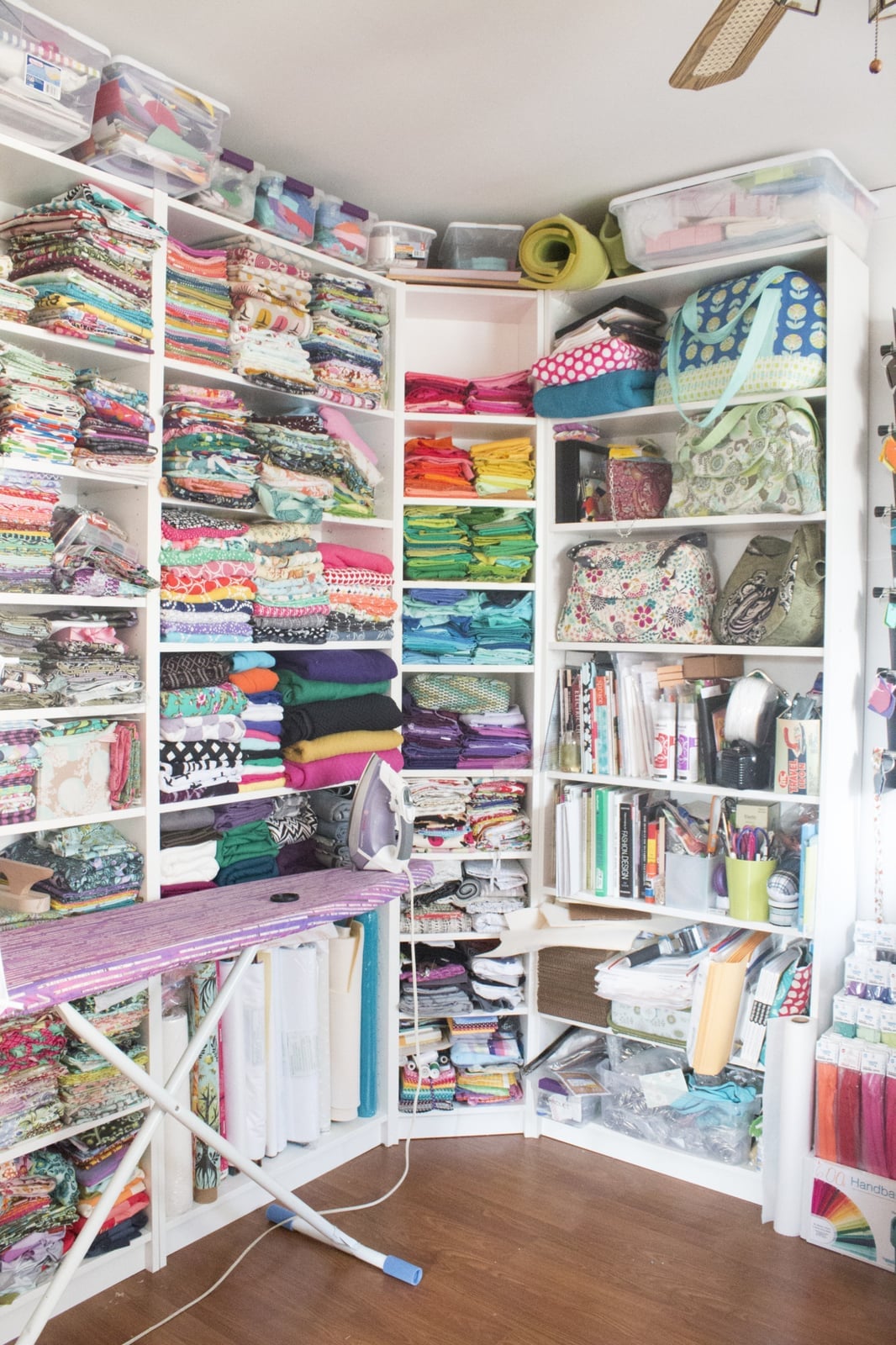
Stacking fabric by color in a corner shelving unit turns a practical storage need into a visual feature. Here, white laminate shelves hold folded fabric sorted from reds and oranges at the top down to purples and blues near the bottom, with neutrals in between. The ironing board folds down from the same unit, keeping pressing tools close to the cutting surface. Overhead lighting helps the colors read true, so you can grab the right shade without pulling every piece out. This kind of rainbow system requires folding each piece to the same width, so the stacks stay neat and the color gradient reads clearly.
Modern Farmhouse Sewing Room with Glass Cabinet Fabric Display
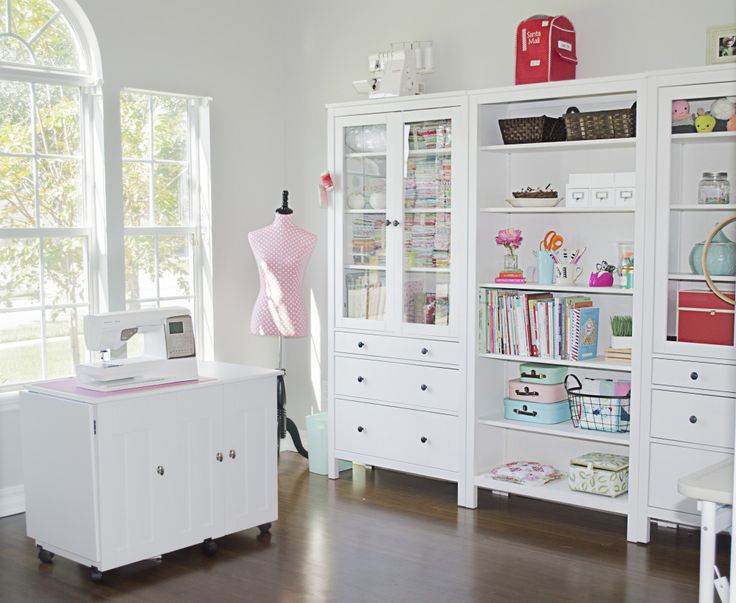
A glass-fronted cabinet turns fabric into a focal point without sacrificing organization. The sewing machine sits at a dedicated station, while the mannequin and cabinetry keep supplies within reach. White walls and wood tones keep the room feeling open, and the pastel fabric accents add soft color. The layout uses the glass doors to protect fabric from dust while still letting you see every print at a glance. It is a practical way to store a growing collection without hiding it away.
Modern Farmhouse Sewing Room Fabric Shelves and Dresser Storage
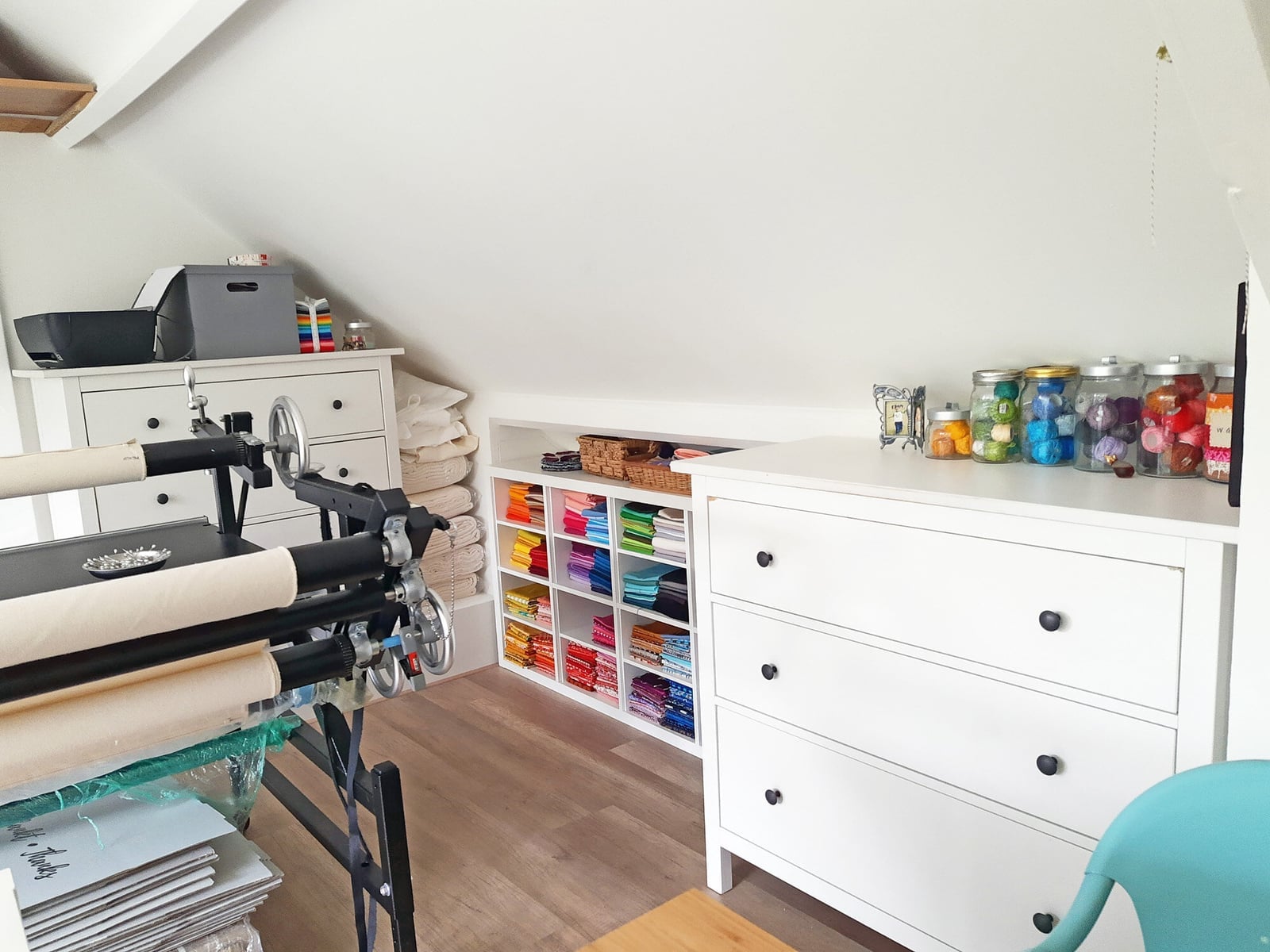
Open shelving and a dresser work together to keep fabric visible and accessible. The white dresser holds jars of thread, while the shelves above display colorful fabric stacks. A window brings in natural light that helps when matching colors for a project. The sewing machine is on a desk nearby, so cutting and stitching happen in the same zone. This setup works for renters because the dresser and shelves are freestanding pieces that move with you. The key is using containers like glass jars to corral small items so the shelves stay organized.
Modern Sewing Room with Ergonomic Curved Desk and Pegboard
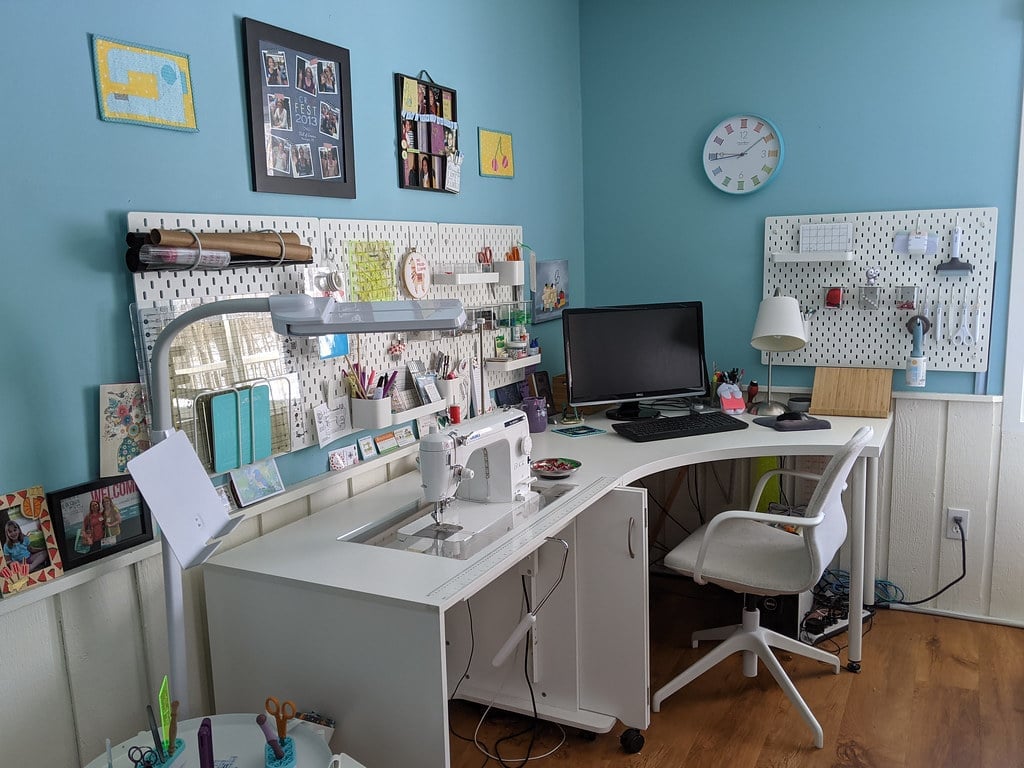
A straight desk works fine, but a curved desk changes how you move through a sewing project. The curve pulls the sewing machine and serger closer to you, reducing reach and strain during long sessions. The pegboard above the desk keeps scissors, thread, and tools on the wall rather than cluttering the work surface. Natural light from a window and a task lamp give you control over brightness. The blue and wood palette keeps the room calm, while the pegboard adds function without taking up floor space. For anyone who spends hours at the machine, the curve is a layout upgrade that makes the room easier to work in.
Modern Craft Sewing Room with Abundant Organized Supplies
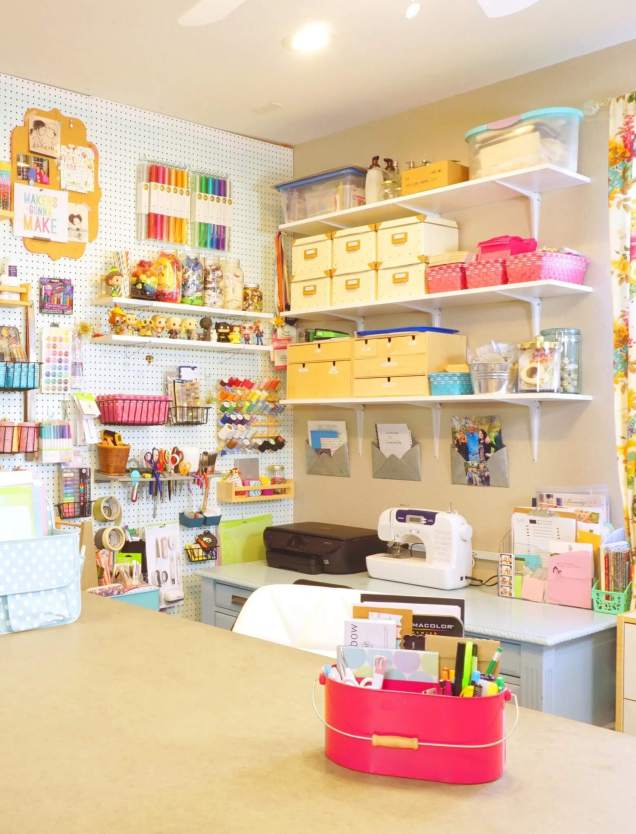
A light blue desk anchors a room packed with neatly arranged craft supplies. White shelves and pegboard hold bins and tools, keeping everything visible and within arm’s reach. The setup uses overhead lighting and window light to make sure no corner stays dim. The durability of this system comes from the mix of plastic bins and metal pegboard hooks, which hold up under regular use. Replacing a bin or rearranging hooks takes minutes, so the system adapts as your stash changes.
Modern Sewing Room with Extensive Fabric Roll Shelving
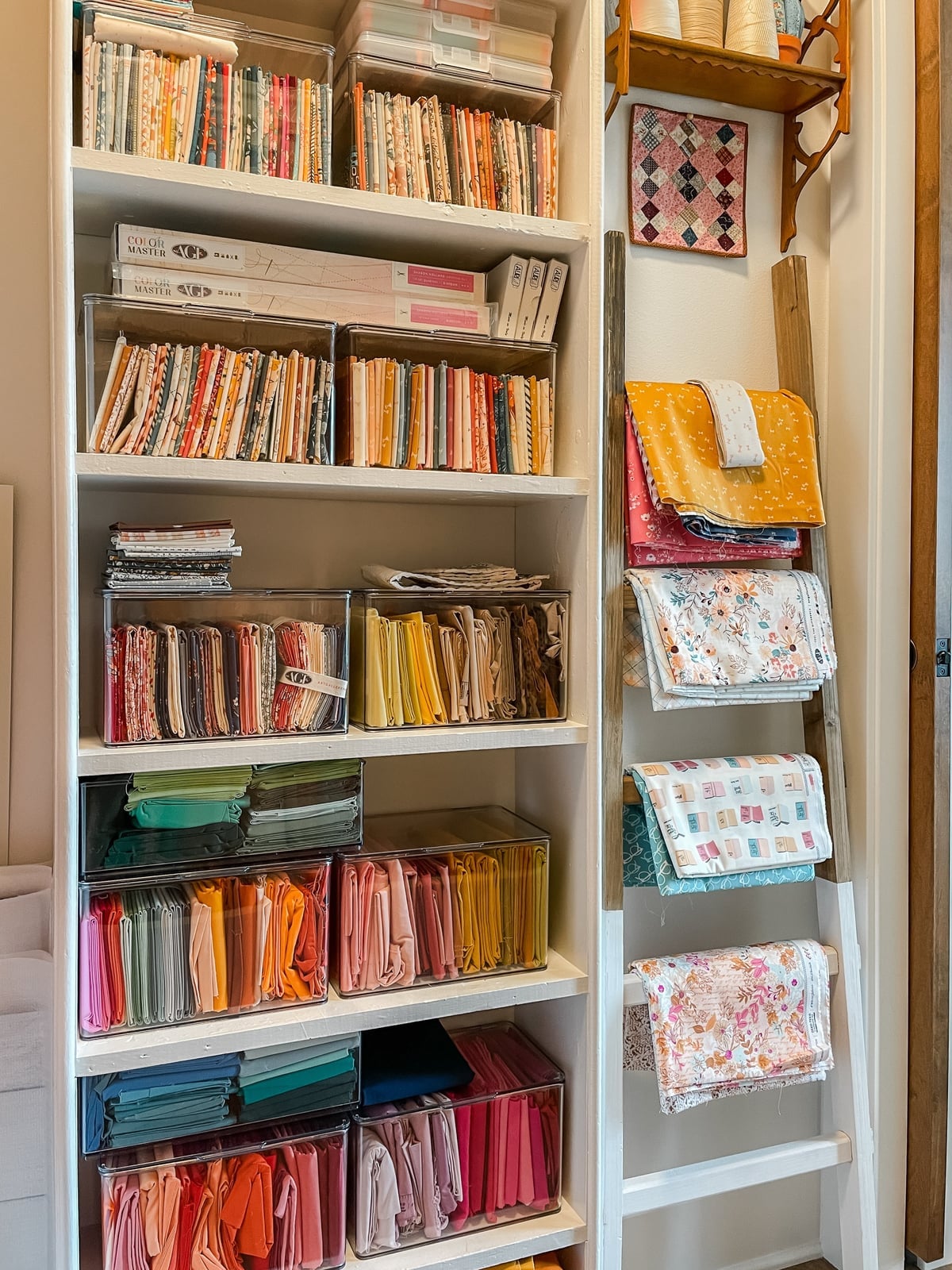
This room proves that scale matters when storing fabric rolls. A tall shelving unit paired with a ladder display keeps bolts upright and easy to pull. White shelves let the multi-colored fabrics stand out, and clear plastic bins on lower shelves hold smaller cuts. The layout uses the full height of the wall, so you store more in the same footprint. For anyone with a large fabric collection, this kind of shelving turns inventory management into a visual system. You see every color and pattern without digging through stacks.
Craftsman Sewing Room Pegboard with Colorful Thread Collection
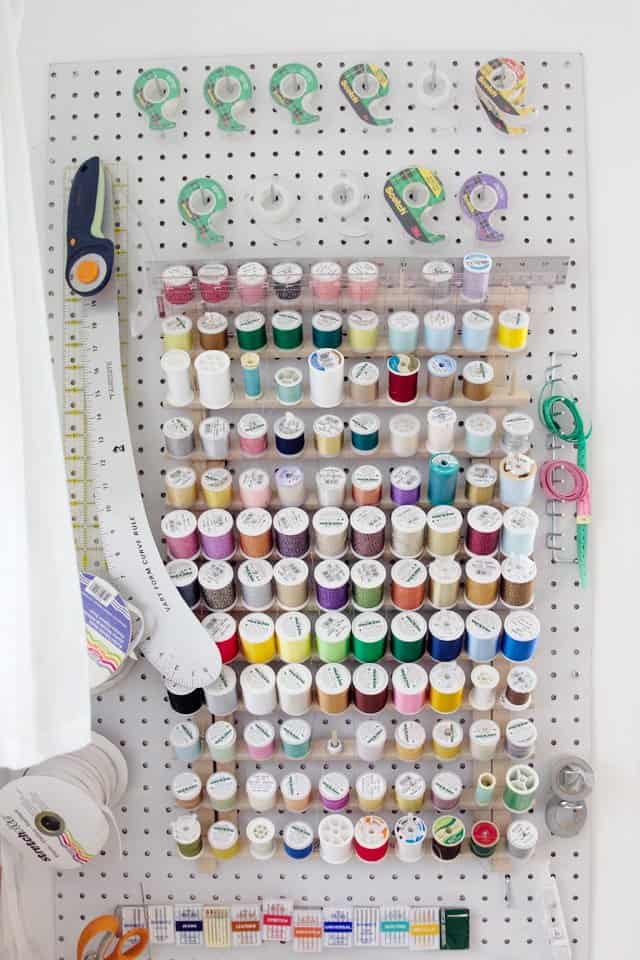
A pegboard wall is one of those storage systems that rewards a little time spent on setup. Organizing spools by color along a white pegboard turns a practical tool into a visual anchor for the room. The compact wall-mounted layout keeps scissors, a ruler, and tape within reach without crowding the cutting surface. Natural light from the left helps distinguish similar thread shades at a glance, which matters when you are matching a bobbin to a project. For a craftsman-style sewing room, the mix of metal hooks and plastic spools adds just enough texture against the clean white board.
Modern Sewing Room with Tall Cabinet Fabric Storage
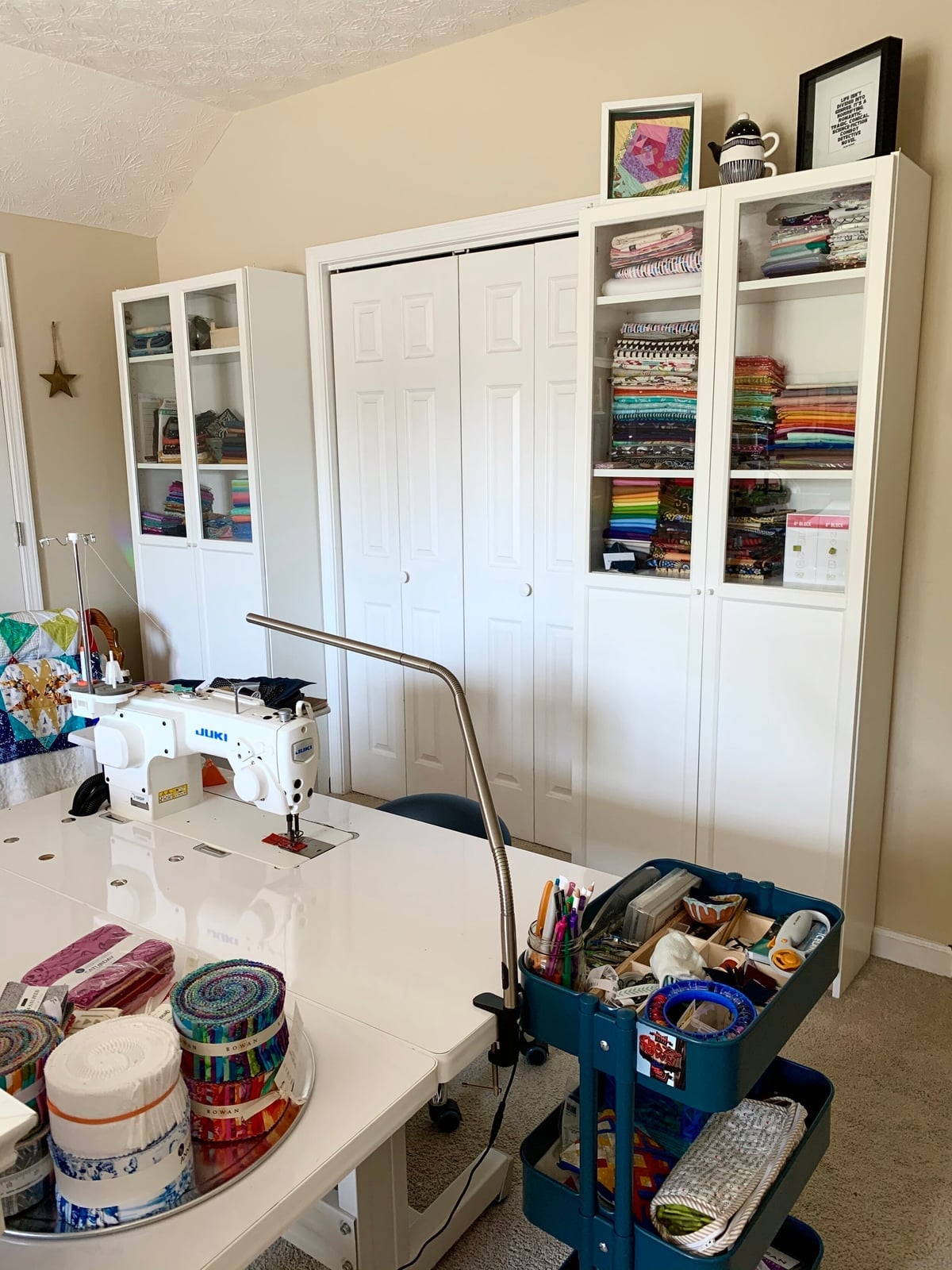
A row of tall cabinets with glass fronts turns neatly folded fabric into a design feature for a modern sewing room. The white and beige palette keeps the room calm while the colorful fabrics inside supply the energy. A sewing machine sits on a large cutting table, with an overhead light and a task lamp providing even illumination for detailed work. This setup suggests a practical rule: when you have a lot of material to store, closed cabinets with transparent panels give you easy identification without visual clutter.
Modern Storage Sewing Room with Clear Bin Shelving
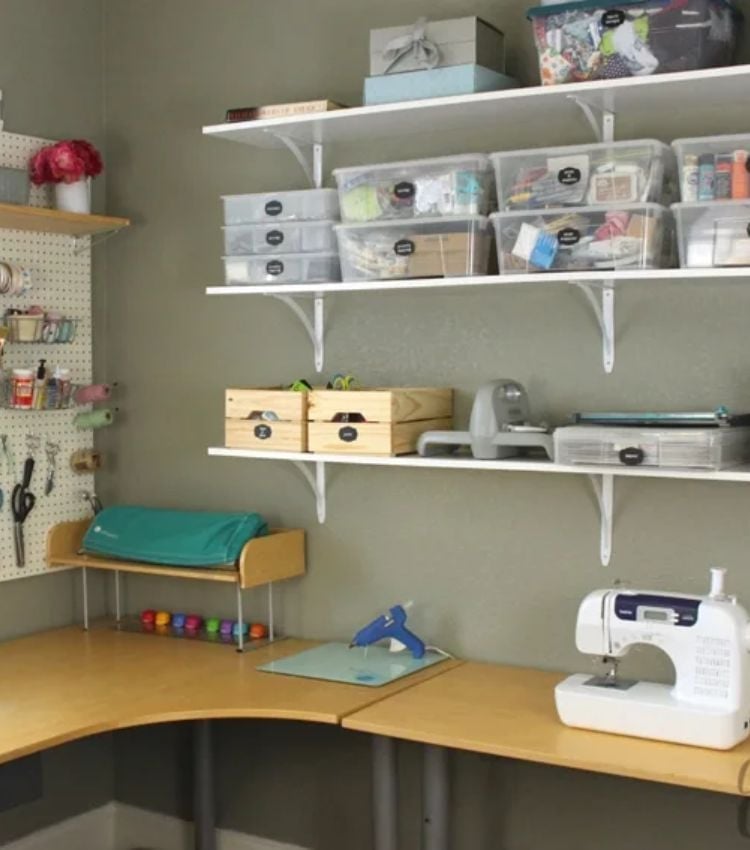
Clear bins on open shelving make finding a specific spool of thread or a hot glue gun a matter of seconds rather than a rummage through a drawer. In this modern storage sewing room, a wall of clear plastic bins sits above a corner desk, with a sewing machine ready to go. The gray walls and wood tones keep the look grounded while the bins themselves do all the organizing. The material choice matters here: plastic bins are lightweight and stackable, and they protect small craft tools from dust while keeping everything visible.
Modern Sewing Room with Vibrant Thread Wall and Multiple Machines
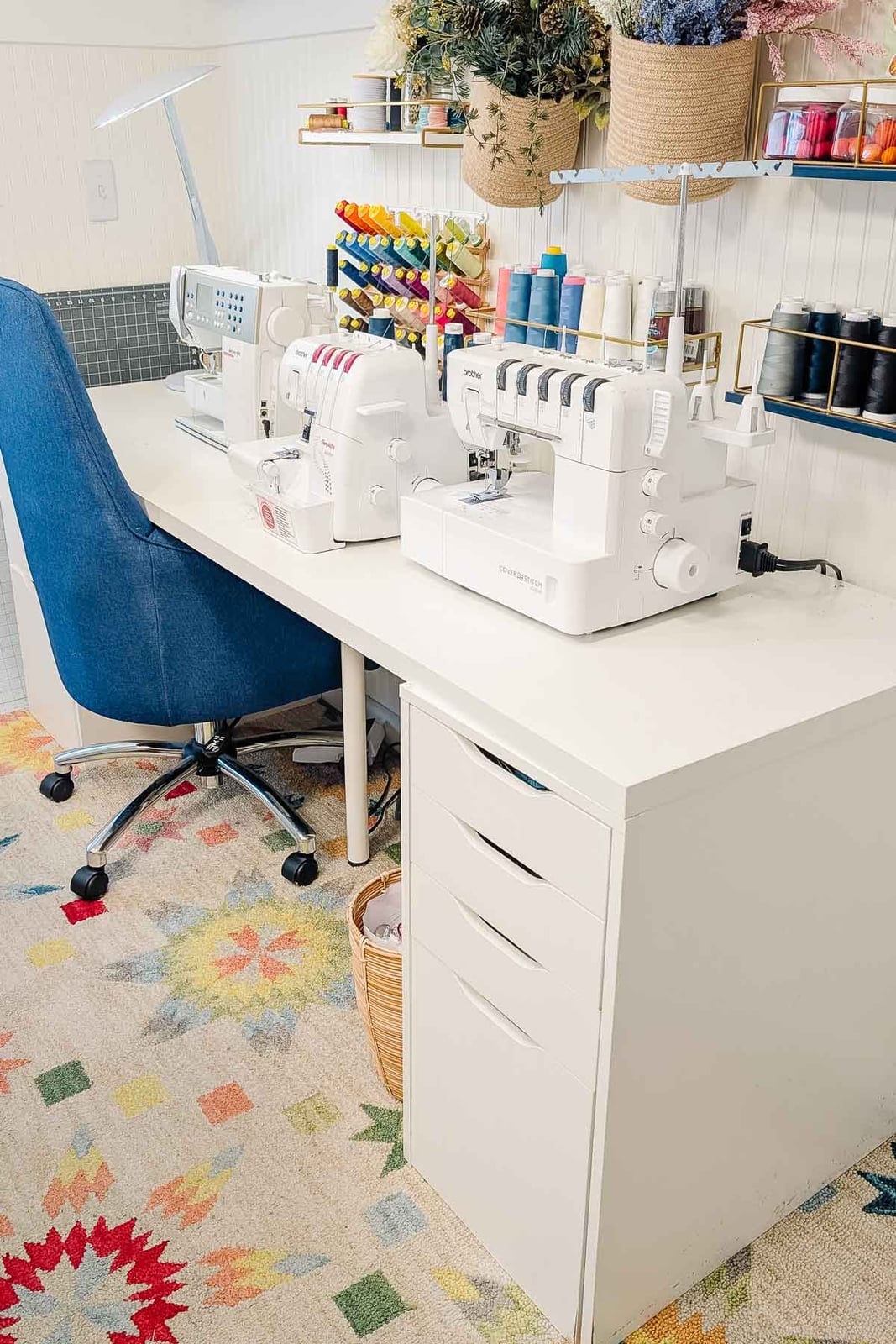
A wall of colorful thread spools can do more than store supplies. In a modern sewing room with a white and blue palette, that vibrant thread display becomes the room’s main focal point. Two sewing machines and a serger share a long desk, with a task lamp and natural light providing the illumination needed for precise work. The thread racks sit within arm’s reach of each machine, which means you can switch colors without getting up. This arrangement is particularly useful if you switch between projects frequently.
Functional Sewing Room with DIY Cinder Block Shelving
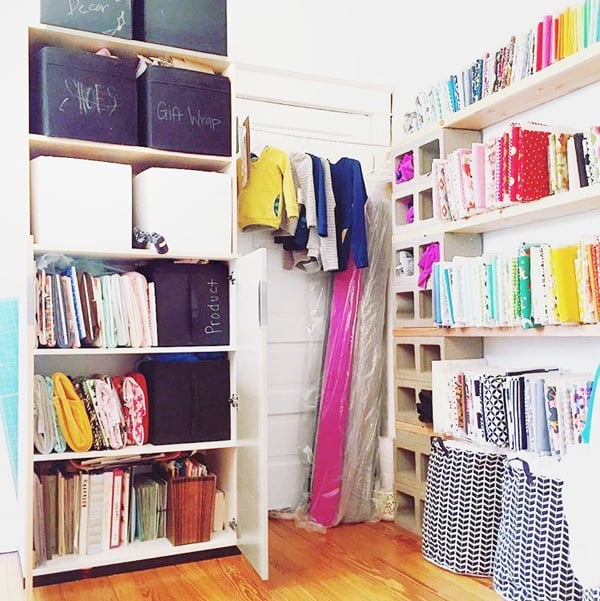
Cinder block shelving brings a utilitarian look that suits a functional sewing room. The white and wood palette keeps the space from feeling too industrial, while the concrete blocks add a sturdy base for tall shelving units loaded with fabric rolls and storage boxes. Hanging clothes on a rail nearby makes the most of vertical space in a compact room. This is a material choice that prioritizes strength and low cost over polish.
Very Roomy Sewing Room Centered on a Large Cutting Table
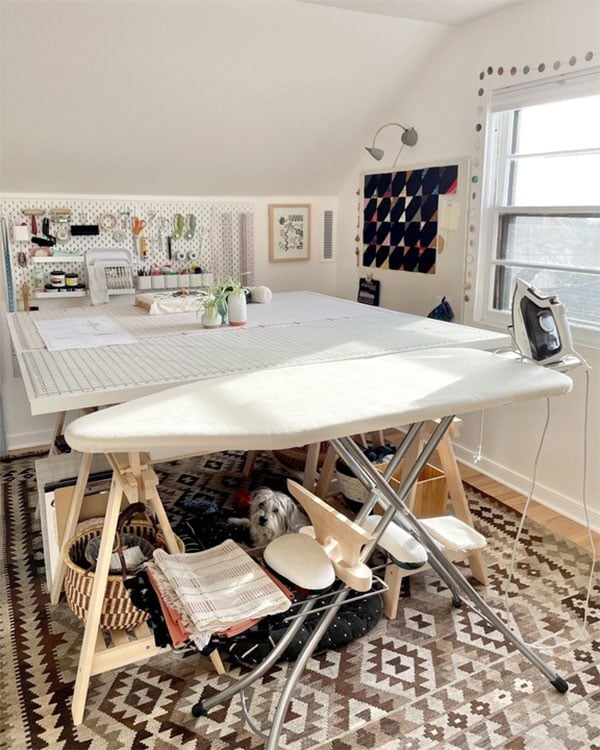
A very roomy sewing room needs a clear anchor, and a massive multi-purpose cutting table does exactly that. The layout here puts the table front and center, with the ironing board and sewing machine arranged around it. This setup keeps the workflow logical: cut at the table, press at the board, sew at the machine. The neutral palette and wood tones on the table and patterned rug add warmth despite the square footage. Bright natural light from the window helps with color matching and reduces eye strain during long sessions. If you have the floor space, a single large table is worth more than several smaller ones.
Transitional Sewing Room with Folding Table and Wall Shelves
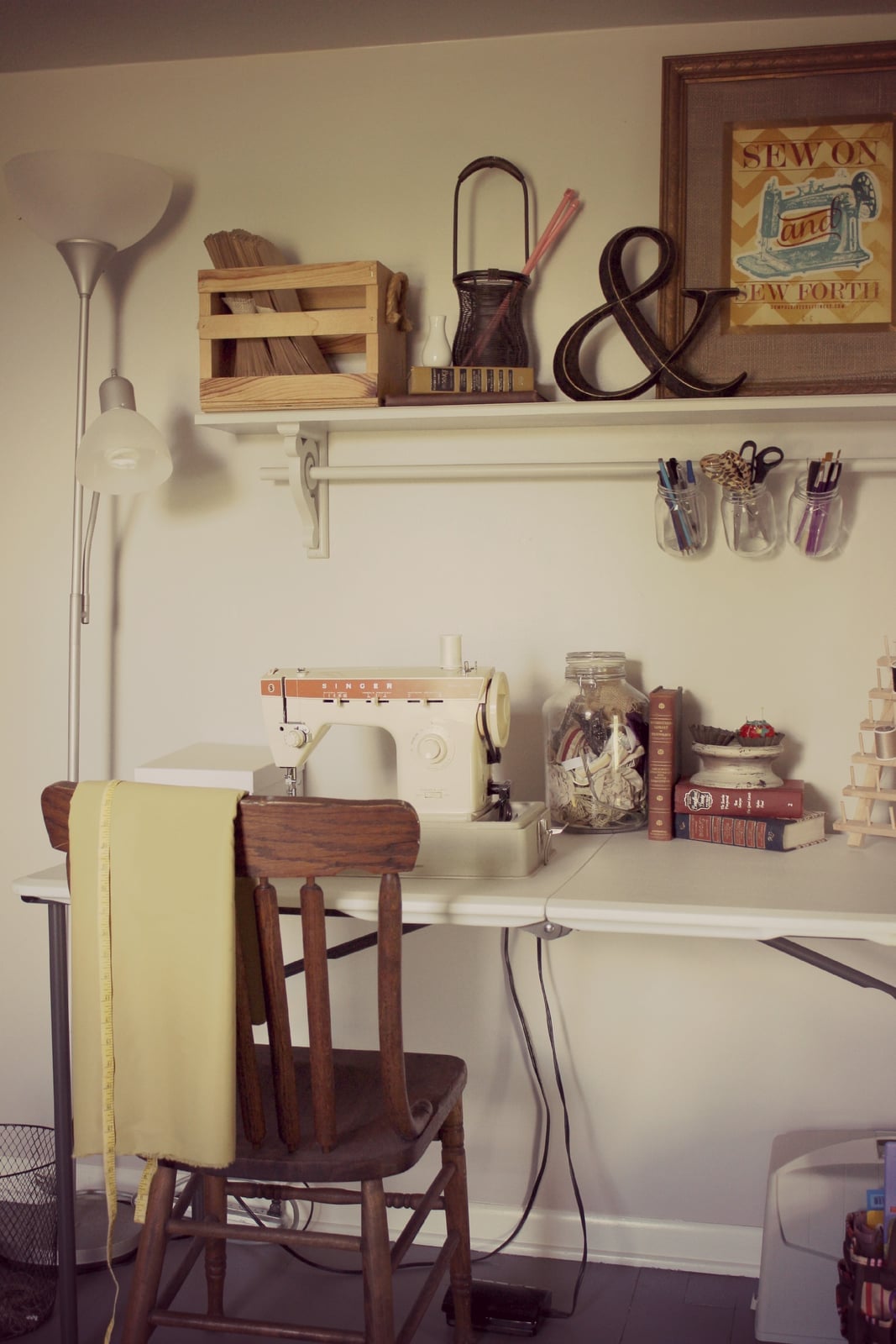
This transitional sewing room proves you do not need a permanent setup to get good work done. The folding table and chair keep the footprint compact, while wall shelves above hold supplies within reach. A floor lamp and overhead light together provide task lighting for the sewing machine. This approach works well for anyone who shares the room or wants the flexibility to clear the space when needed. The neutral walls and wood tones keep the look calm and adaptable.
The real win here is how the wall shelves turn blank wall into organized storage without taking up floor area. Bins and baskets on the shelves keep smaller items sorted and visible. The folding table itself is easy to tuck away, making this a practical choice for a guest room or multi-purpose area.
Modern Farmhouse Sewing Room with Abundant Fabric Stacks
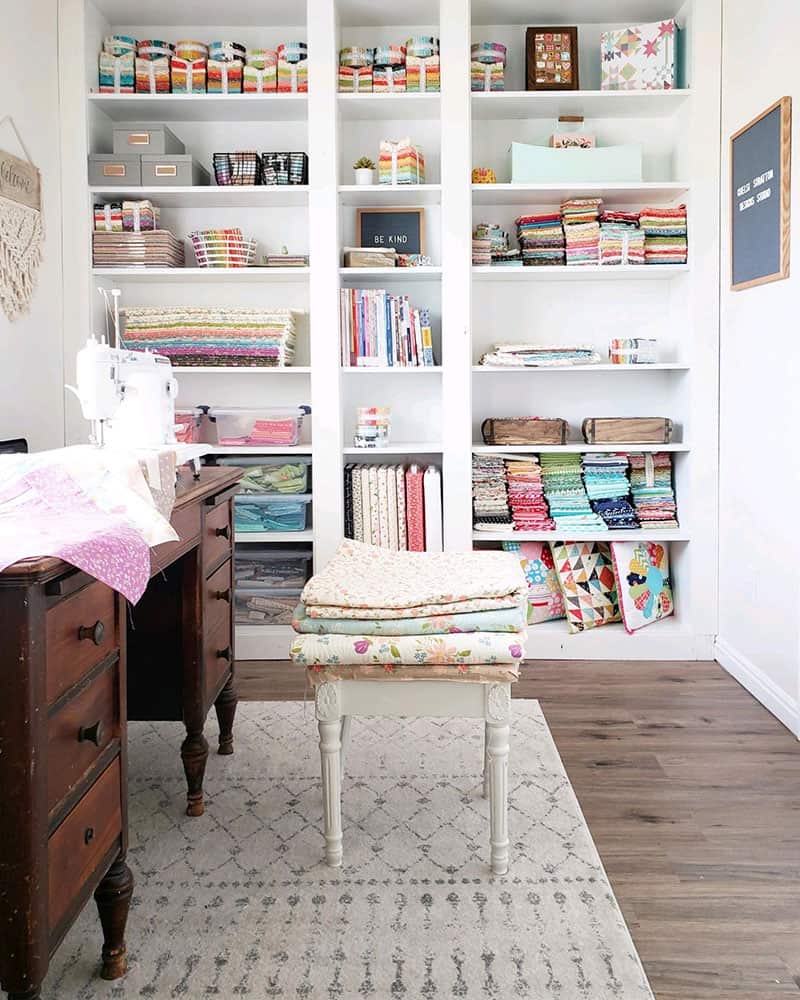
A wall of shelves stacked with colorful fabric turns storage into the main design feature in this modern farmhouse sewing room. The white shelves and desk keep the backdrop neutral, letting the bright fabric stacks and wood tones provide warmth. A sewing machine sits ready on the desk, with everything within arm’s reach. Bright natural light makes the fabric colors pop and helps with accurate cutting. This setup works best when you keep the stacks organized by color or project, so you can find what you need without pulling everything apart.
Traditional Compact Sewing Room with Hanging Garments
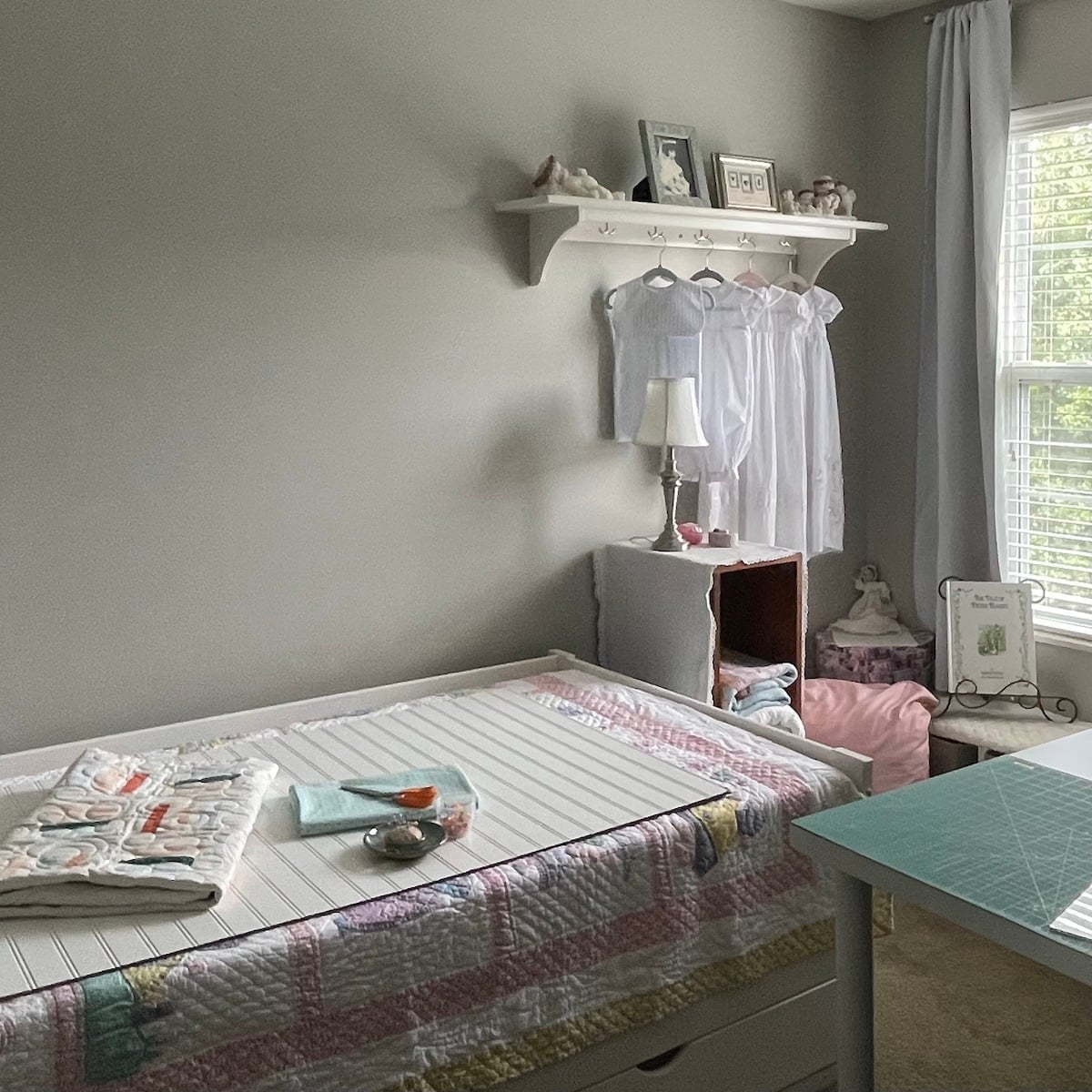
A compact sewing room does not have to sacrifice function, as shown by this traditional setup where hanging white garments and a pastel quilt add a soft, lived-in feel. The pale gray walls keep the small room airy, while the sewing machine and lamp sit ready on a surface next to the bed. Framed pictures on the wall add a personal touch without taking up workspace. Dim natural light means a good task lamp is essential for detailed work. The hanging garments double as both storage and a visual reminder of projects in progress, making the most of every inch.
Final Thoughts
A sewing room that works for you balances storage with flow. Pegboards handle small tools, cube units and shelves tame fabric piles, and a clear cutting surface keeps projects moving. The best setups adapt to how you sew, whether that means rolling carts, glass-front cabinets, or a dedicated island. Start with one zone that frustrates you most and solve it first. The rest will fall into place as you go.