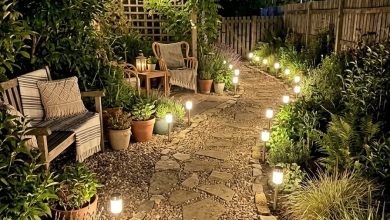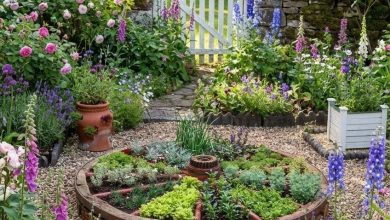

A secret garden isn’t about hiding; it’s about discovery. These 26 ideas focus on the paths, gates, and quiet corners that make an outdoor space feel like your own private find.
We’re looking at the bones of the garden itself: the layout, the palette, the materials that give it character. Forget the perfect flower; think about the journey to get there.
Modern Rustic Patio Seating Layout
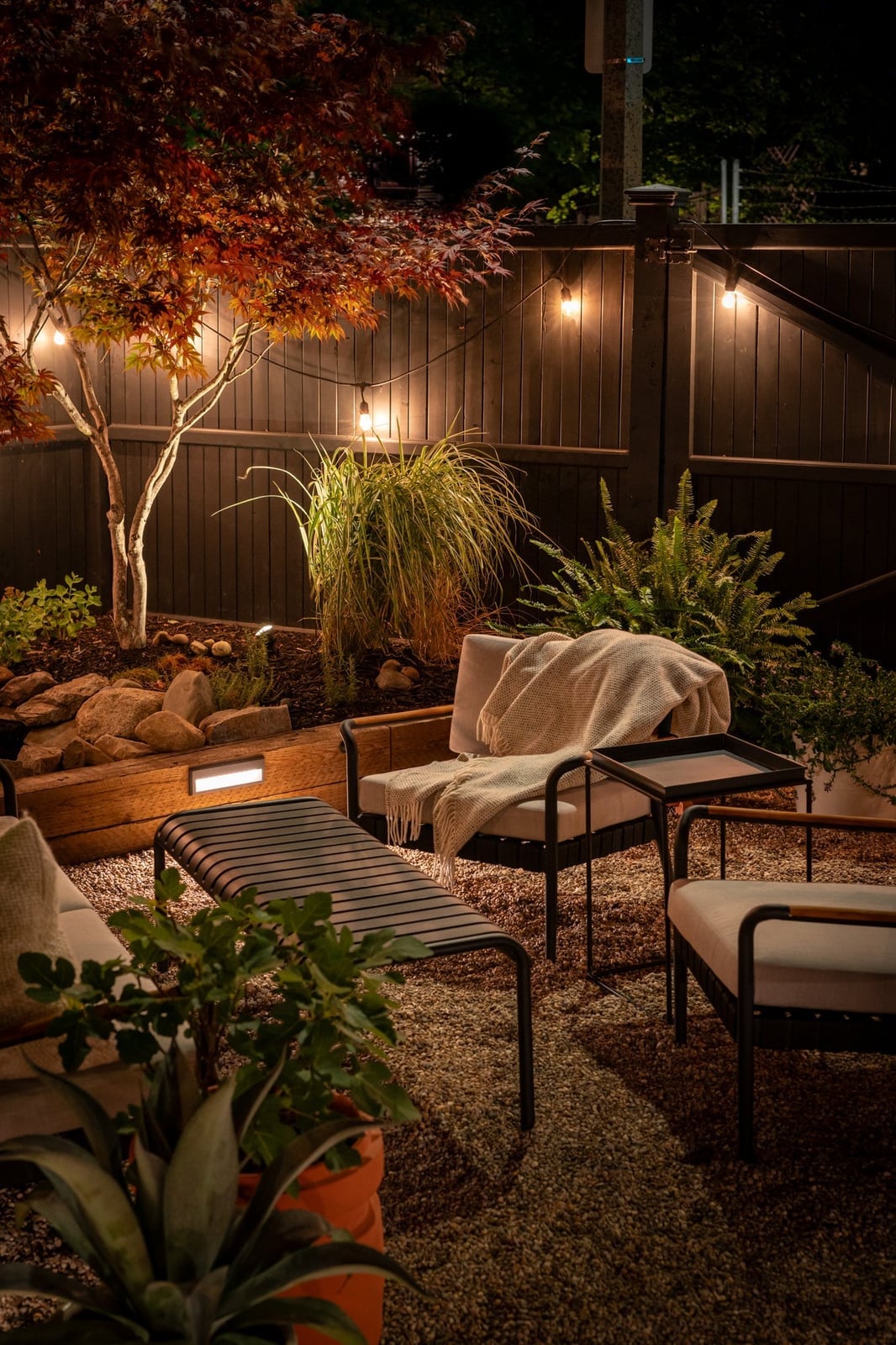
The string lights create a defined zone above the gravel base, so the seating area reads as a room even though it has no walls. Lounge chairs and a side table sit on the stones, and the warm glow from the accent lights separates the patio from the darkening yard around it. The wood, metal, and stone materials keep the patio from looking like a showroom, while the blanket adds a layer of comfort. That is the main trick of modern rustic outdoor patio lighting: you mark the edges of the space with light rather than with walls.
Misty Garden Ruins Palette
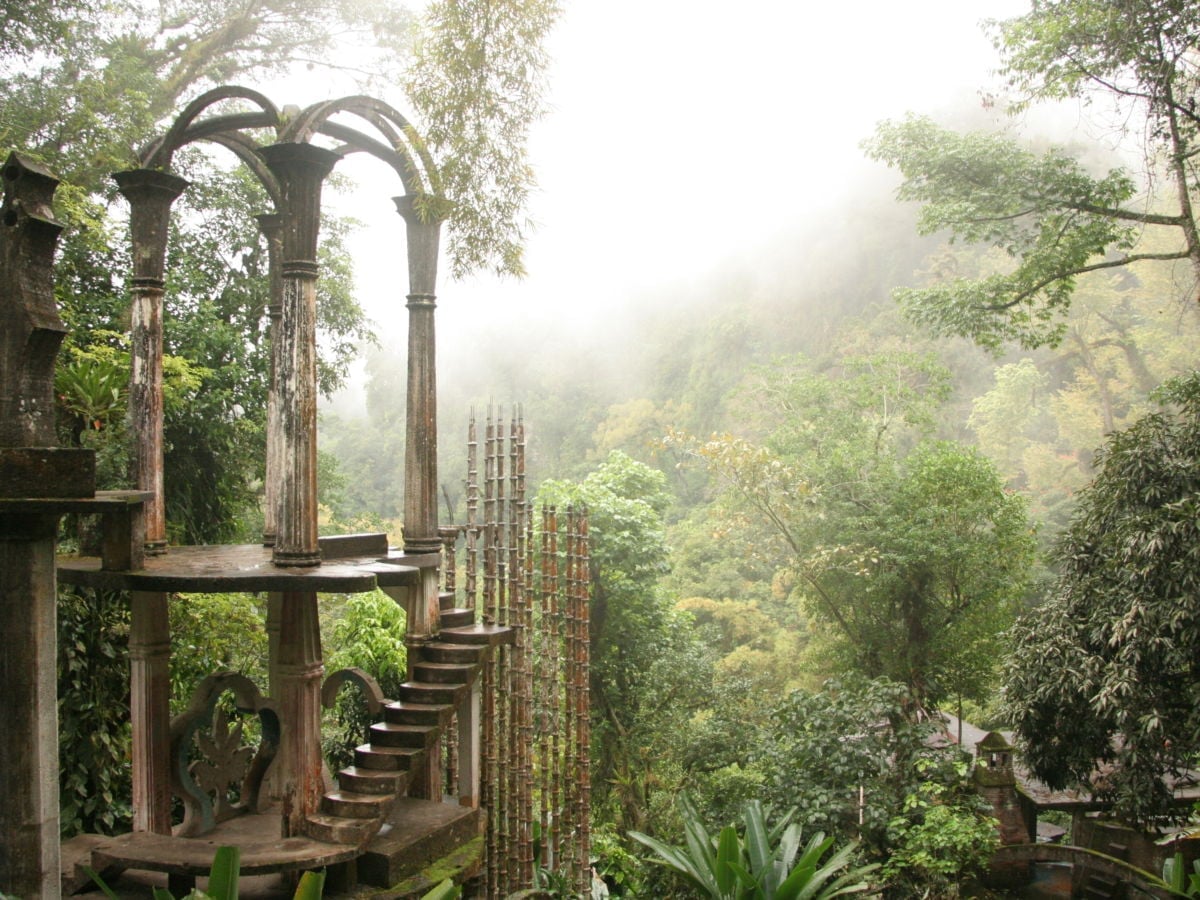
The palette here is almost entirely gray, green, and beige, which sounds dull until you see how the misty daylight moves across the stone arches and concrete columns. The bamboo reads as the softest material in the scene, which balances the hard edges of the ruin. A staircase climbs through the structure, and the mist pulls the whole thing together by muting the contrast between the stone and the greenery. A limited palette works when the light adds depth. You do not need a dozen colors when one or two textures can carry the look.
Cottage Garden Path Materials
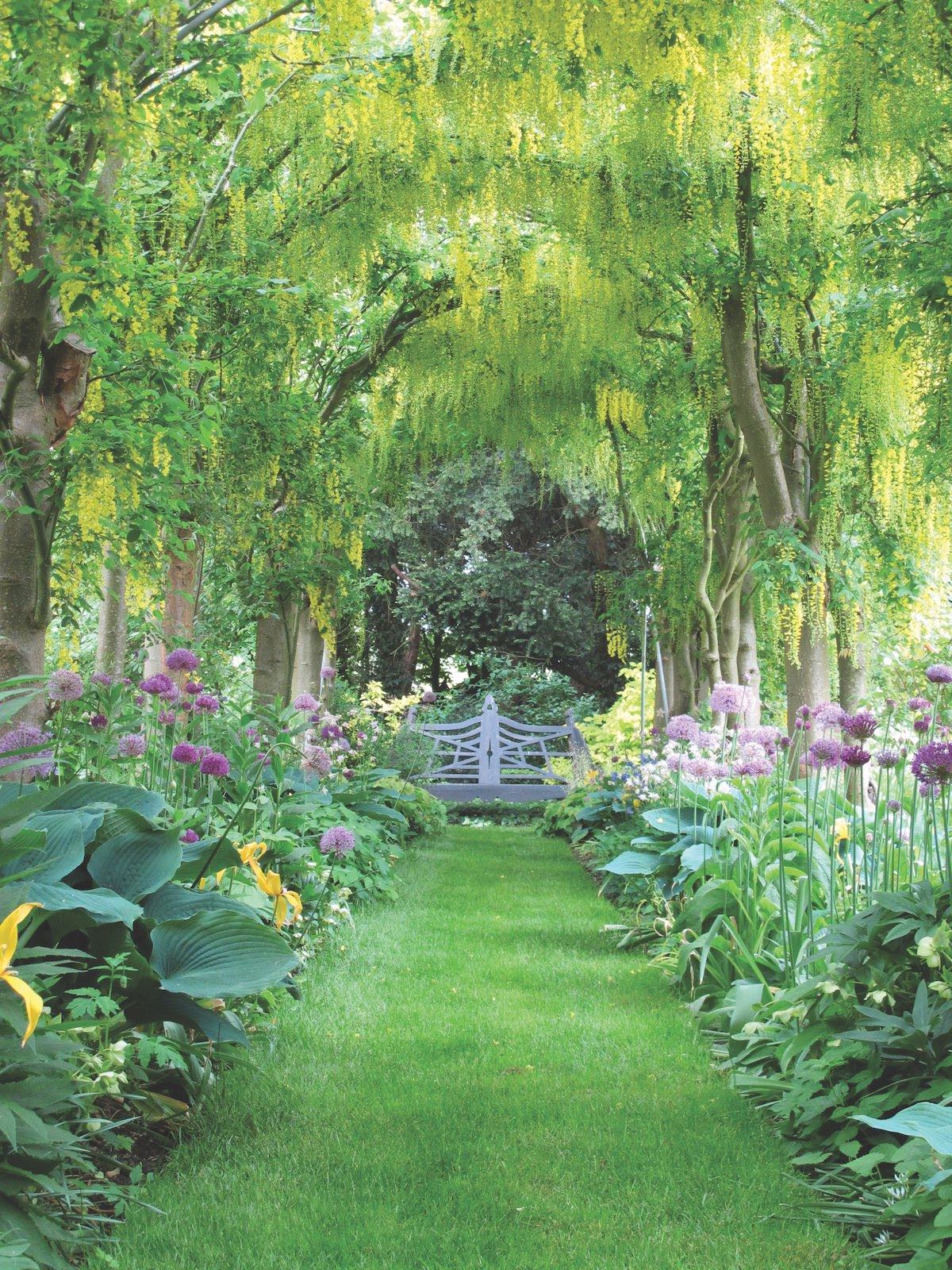
How do you keep a garden path from reading as a sidewalk? This cottage garden path uses stone slabs set into grass, so the path is solid underfoot but the grass softens the edges. The bench sits off to the side, which makes the path itself the main event rather than the seating.
The canopy of yellow flowers overhead is what makes the space feel enclosed without walls. The dense planting on both sides of the stones directs the eye forward, and the dappled sunlight filters through the blooms to keep the scene from feeling flat. The cottage garden path with flowering trees works because the path is just wide enough for two people to walk side by side, but the planting crowds in to make it feel intimate.
Enclosed Garden Entrance Lighting
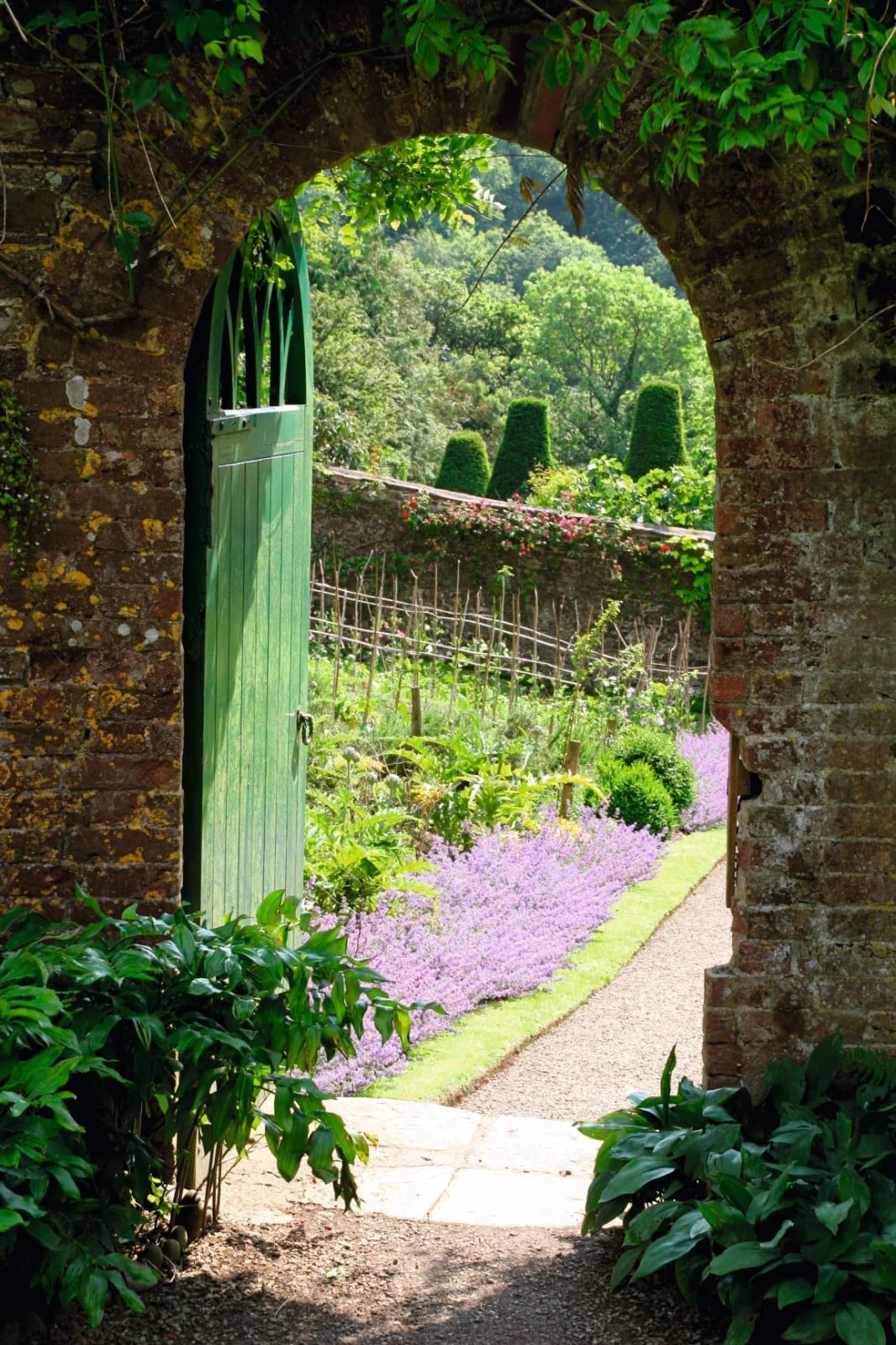
A green wooden door set into a brick archway is the focal point here, but the lavender rows on either side of the stone path are what make the entrance feel deliberate. The dappled daylight hits the brick and the purple blooms at the same angle, so the archway acts as a frame for the path beyond. The scale of the arch matches the width of the gravel path, which keeps the transition from feeling abrupt. The garden entrance with brick arch and lavender works because the planting echoes the vertical line of the arch, drawing the eye up and through.
Formal Garden Wisteria Styling Variation
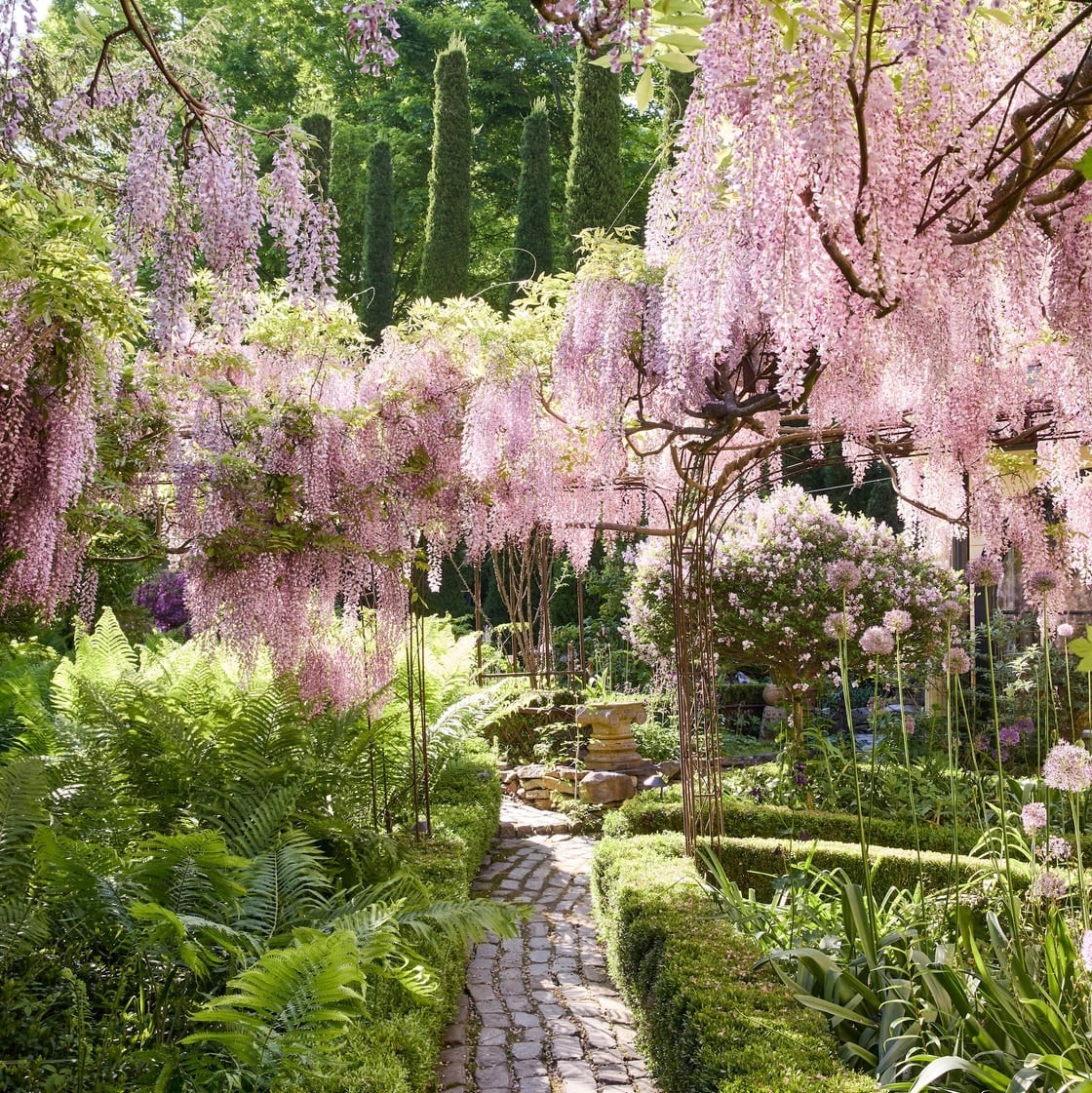
In a formal garden, the hardscape should stay quiet so the plants can take the lead. Here the cobblestone path and manicured hedges are neutral, and the cascading pink wisteria is the only element that draws the eye upward. The stone urn at the turn in the path breaks the symmetry to keep the scene from feeling rigid. The formal garden path with pink wisteria uses the hedges as a low wall, which contains the wisteria without competing with it. The metal supports are barely visible, so the blooms look like they are floating above the path.
Traditional Garden Gate Storage
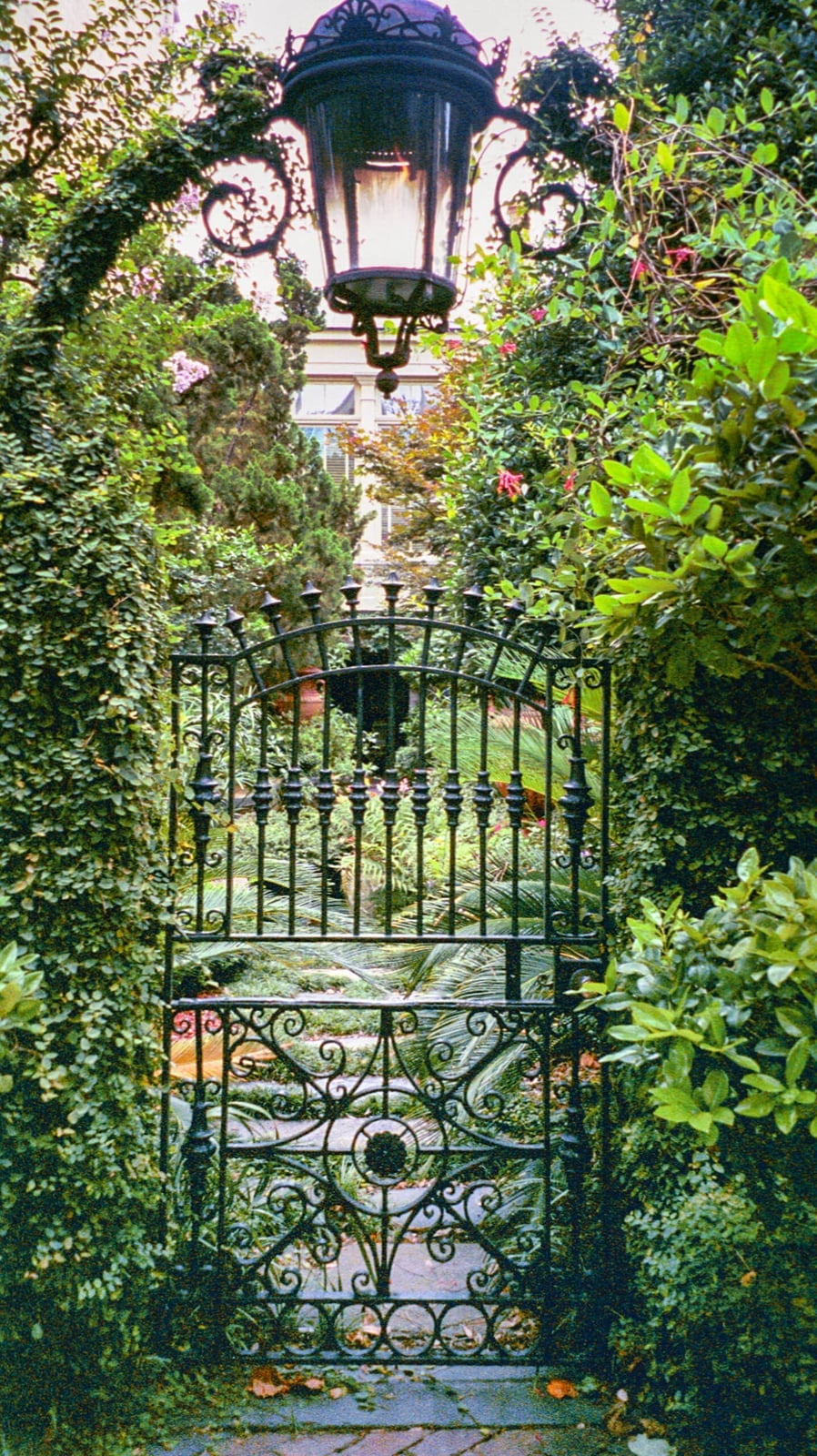
An ornate iron gate can serve as pure decoration until you notice how it solves a real problem: it gives you a way to tuck tools, pots, and a watering can out of sight without building a shed. The gate here is set inside a stone arch, with ivy climbing the frame and a lantern glowing beside the path, so the storage zone feels like part of the garden. Keep the ground level and simple, with a few large planters flanking the walk, and the gate becomes a quiet backdrop for whatever you stash behind it. A path that curves slightly before the gate slows you down, which makes the entrance feel intentional.
Cottage Garden Entrance Renter-Friendly
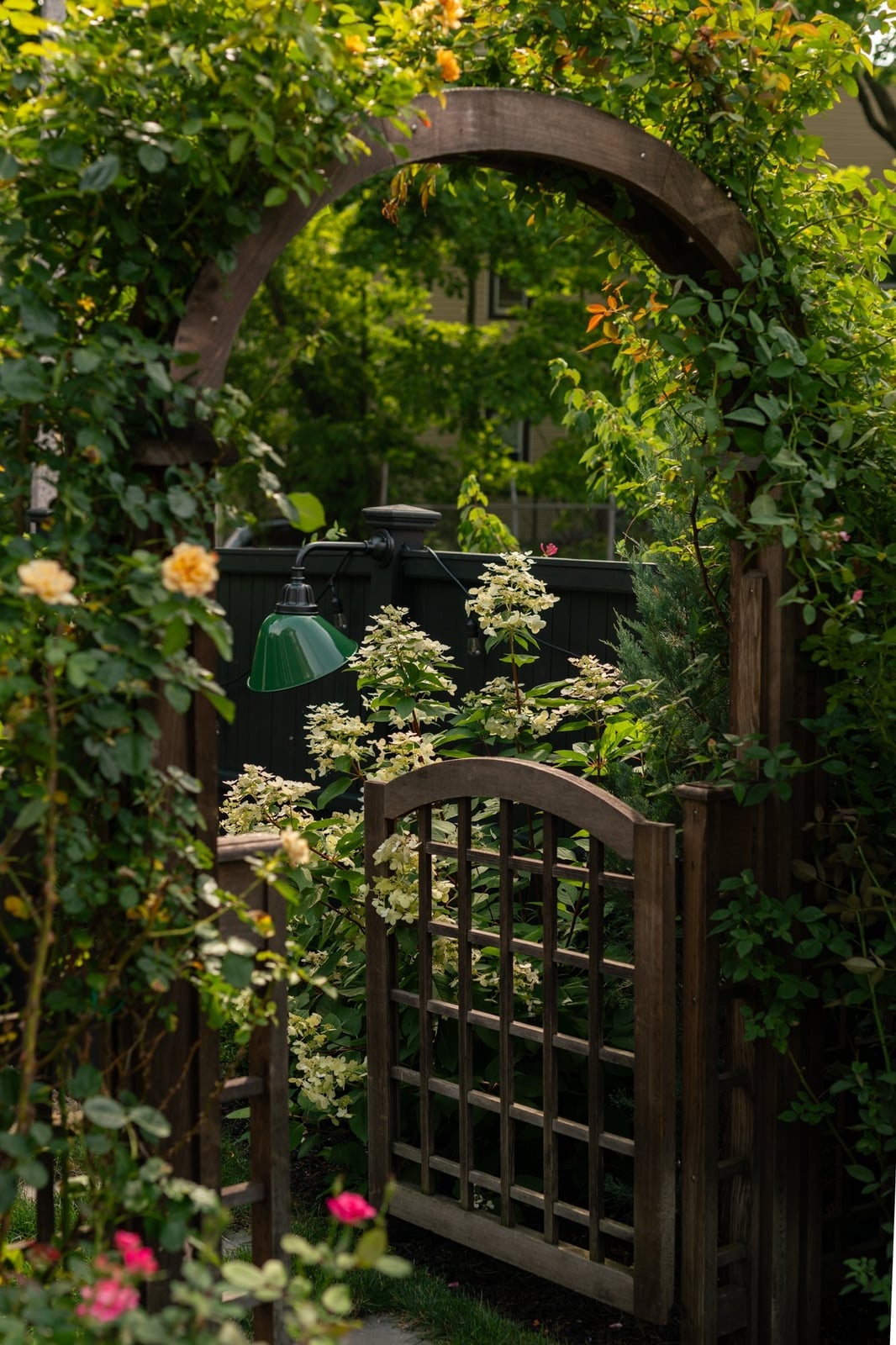
A wooden lattice gate set within dense planting, with rose bushes crowding the frame and a green lantern hanging nearby, shows how a renter can make a garden entrance feel established without permanent changes. Lattice panels are lightweight, easy to move, and they look charming and not temporary, especially when you let climbing plants weave through the openings. The key is to anchor the gate with pots and soft greenery on both sides, so it looks like it grew there and not like it arrived on a truck. For renters, this is about choosing pieces that can travel with you and still do their job in the next yard.
Rustic Garden Pathway Durability
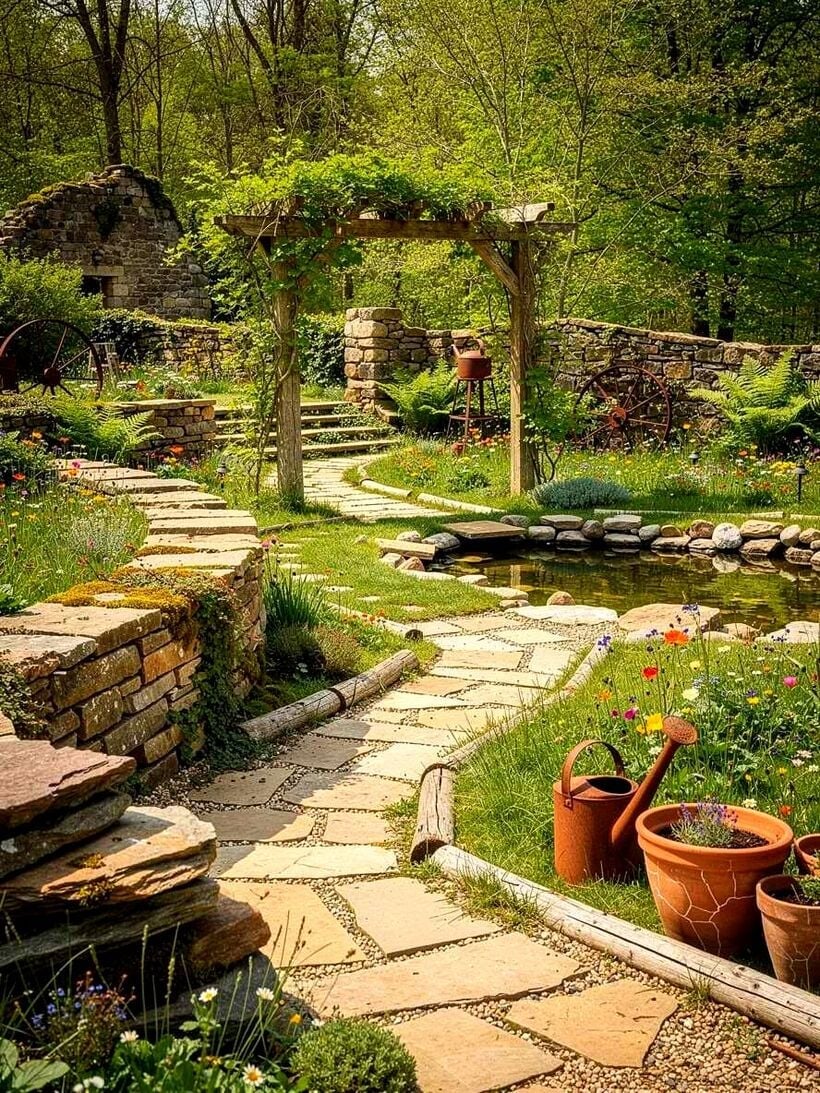
A winding stone pathway leading to a pond holds up better than a straight, paved route because it spreads foot traffic across a wider surface and lets water drain between the stones. The arbor overhead and the layered planting along the edges keep the path from feeling like a corridor, while terracotta pots and watering cans near the pond add a working-garden character. Stone, brick, and wood in the same palette tie the path to the pond and the beds, so the whole yard reads as one space. If you want a rustic garden path that lasts, choose materials that can handle weather and root pressure, and let the planting soften the edges.
Asian-Style Pavilion Scale and Proportion
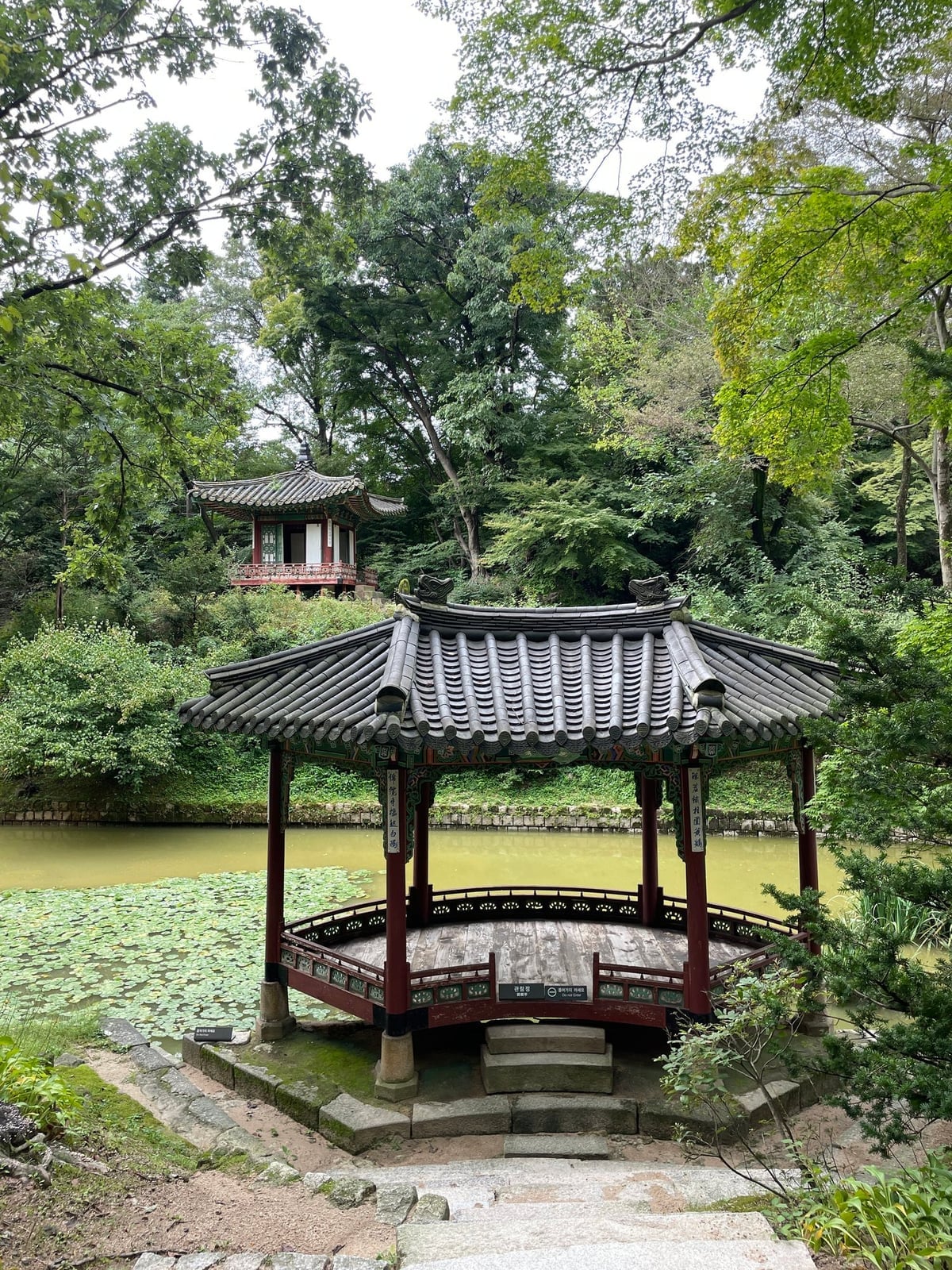
How big should a garden pavilion be? The octagonal structure here, set beside a pond and framed by trees, answers that question by showing what happens when the building is sized to its surroundings. The pavilion dominates the view but does not crowd the water, and the red and yellow accents in the woodwork keep it from disappearing into the green. The scale works because the pavilion is the largest element, the pond is the second, and the trees are the background. If you are planning a similar structure, measure the open space first and let the pavilion fill about a third of it, with the water and planting filling the rest.
Secret Garden Blue Door Palette
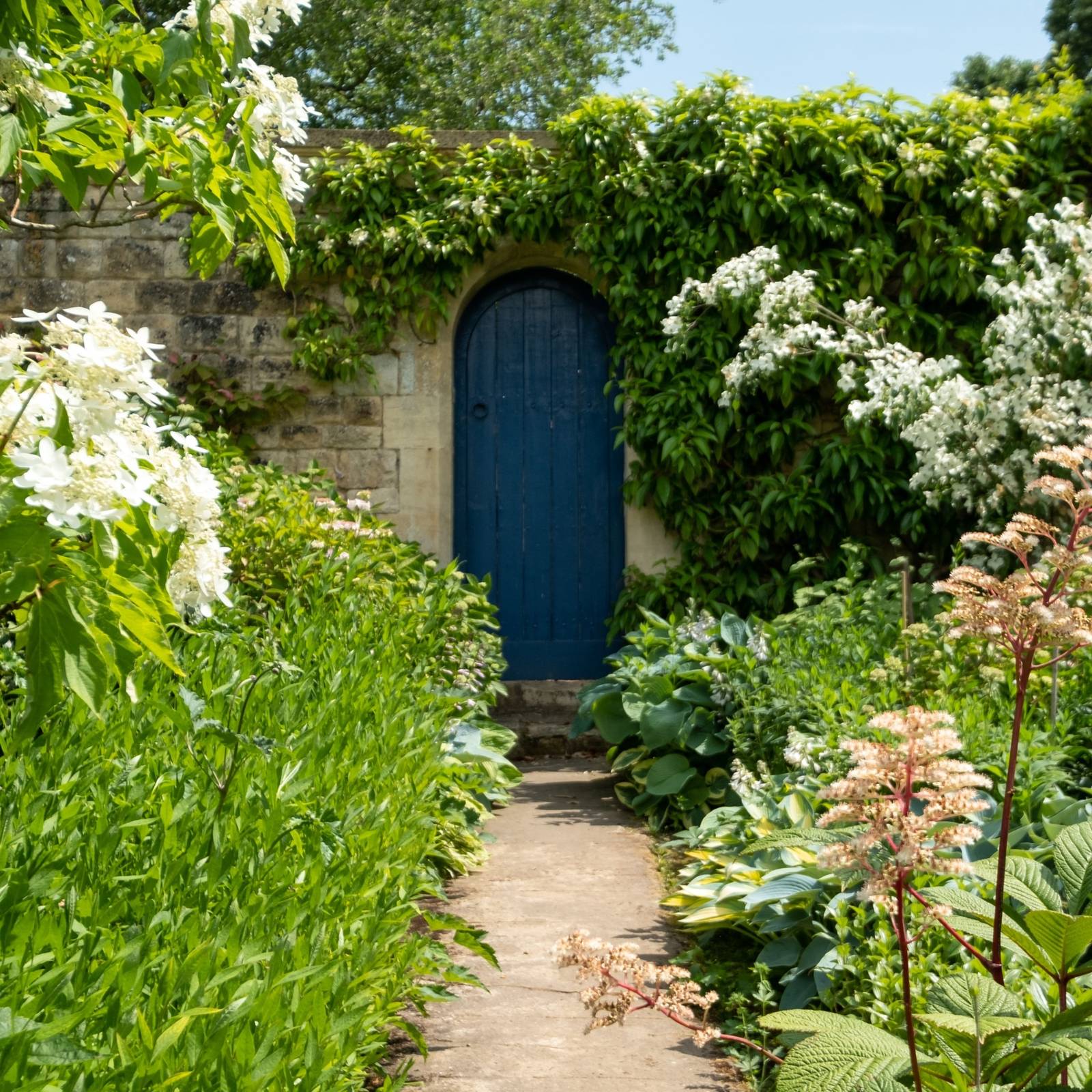
A vibrant blue door set into a stone wall, with ivy climbing the edges and lush planting at the base, is the kind of palette that makes a garden entrance feel like a discovery. The blue works here because it is the only saturated color in a field of green and stone, so it pulls the eye without fighting the foliage. If you want this effect, choose a blue that leans toward the deeper end of the spectrum, and keep the wall and plants muted around it. The pathway leading to the door adds to the sense of a hidden room, and the cool stone paired with the warm blue makes the entrance feel inviting.
Ornate Wrought Iron Gate Layout
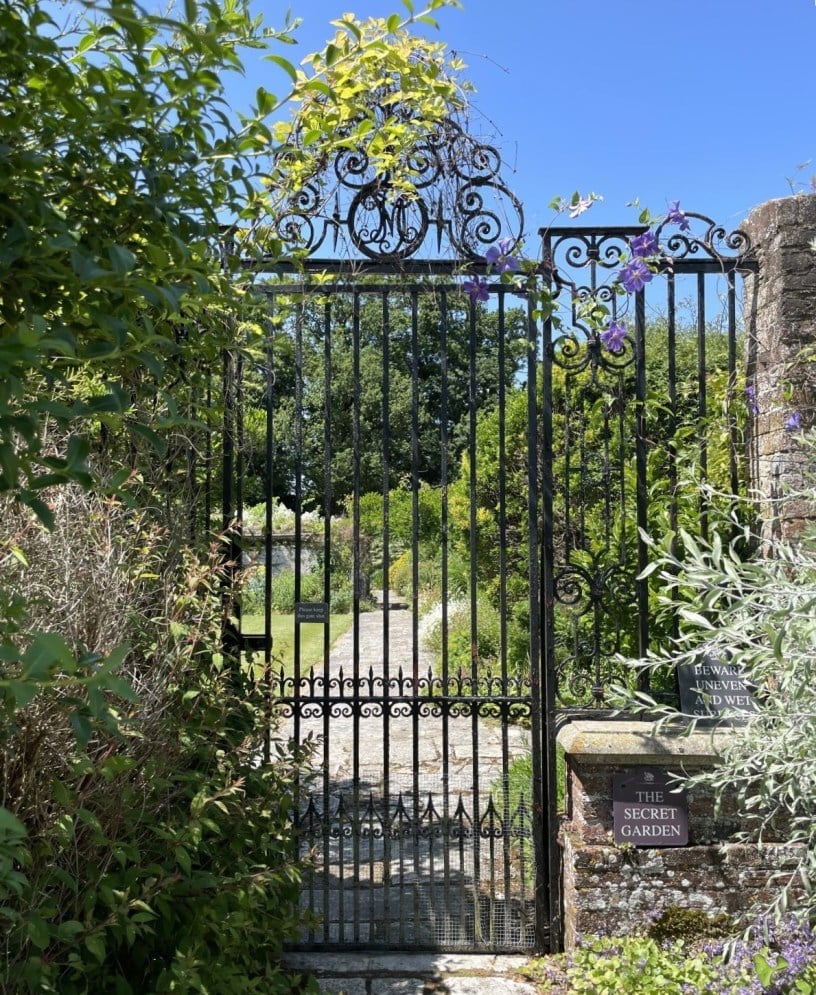
A garden entrance with an ornate wrought iron gate sets a formal tone before you even step through. The black metalwork, with its scrolls and flourishes, stands against stone pillars and brickwork, creating a defined threshold. Treat the gate as the anchor of the entrance. The path beyond should lead the eye straight through, not compete with the detail at the threshold. Here, the gate opens onto a garden path that continues the line, making the transition from outside to inside the garden feel like an arrival. Keep the planting around the pillars low and structured so the gate remains the focal point, not hidden by overgrowth.
Formal Garden Folly Materials
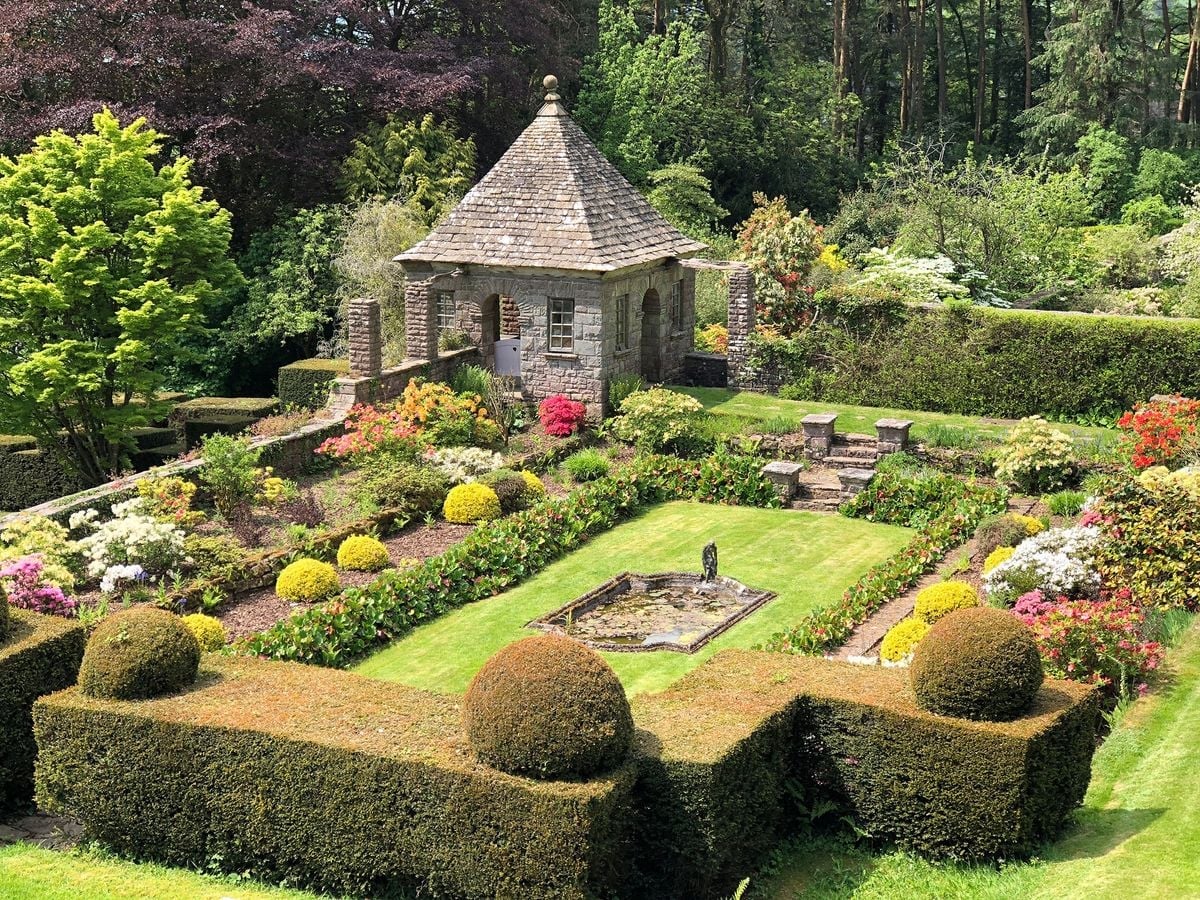
A formal garden can feel severe if every line is straight and every hedge clipped tight. Adding a stone folly shifts the mood without losing the structure. The folly here is an architectural ornament, set at the far end of a central lawn. Its gray stone is a natural partner for the gravel paths and the clipped hedges that frame the space. What makes it work is the contrast between the hard, permanent feel of the stone and the softness of the surrounding pink and yellow blooms.
The pond at the base of the folly adds a reflective surface that breaks up the ground plane. When choosing materials for a formal garden, think about one feature that can serve as a visual destination. A folly, a statue, or even a large urn can pull the eye down the length of the garden and give the geometry a reason to exist.
Asian Pavilion Over Water Lighting
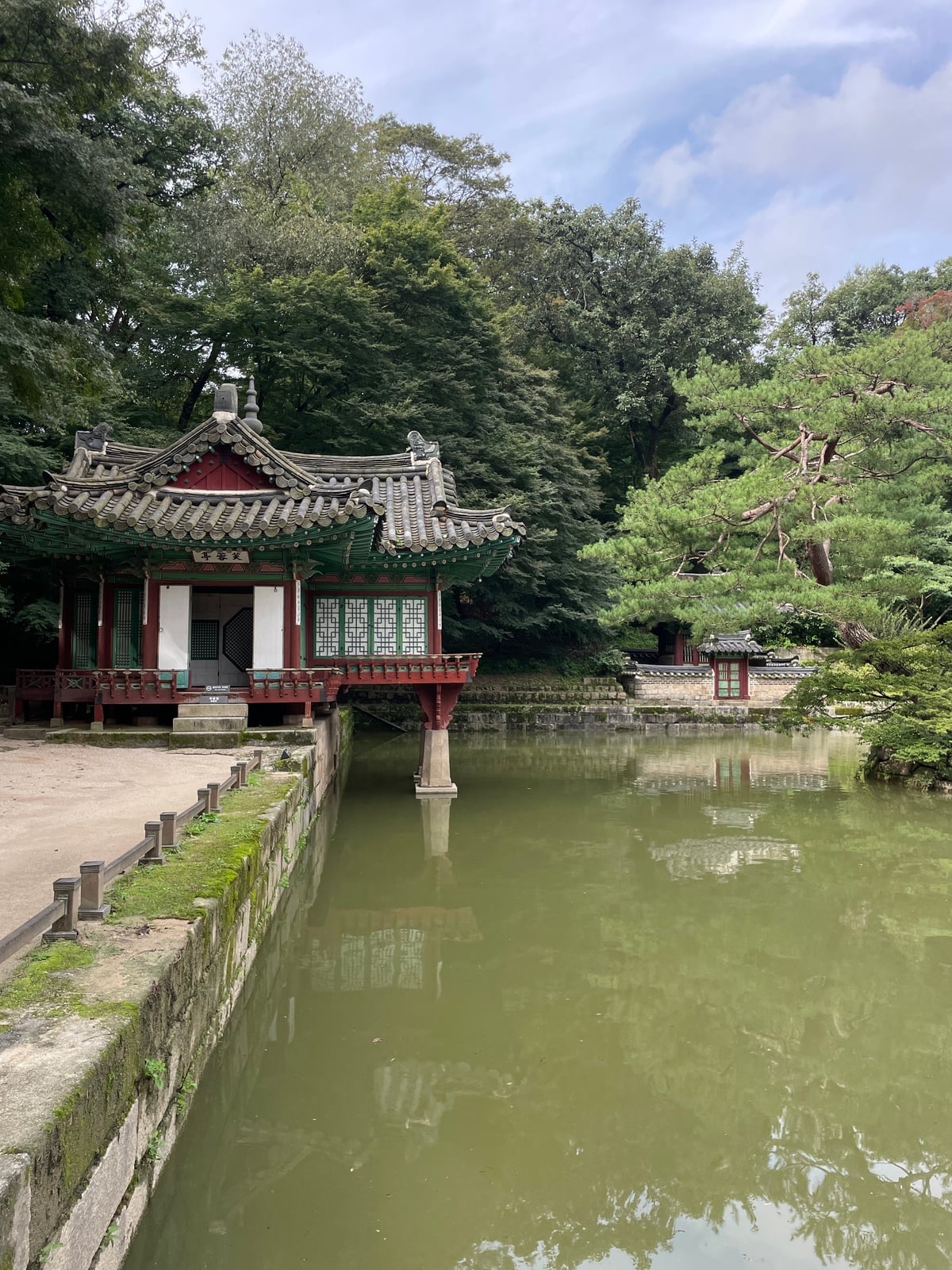
An Asian-style pavilion placed over water creates a clear destination, but the materials are what make it feel grounded. The wood structure with its tiled roof sits on a stone base, and the walkway leading to it is also stone, connecting the pavilion to the shore. Under overcast light, the red accents on the wood and the white of the tile pop against the green of the surrounding trees and the gray of the pond. The stone wall at the back adds a sense of enclosure. For a similar effect, choose materials that weather well and keep the palette limited to wood, stone, and tile, letting the water and plants provide the variation.
Secret Garden Archway Styling Variation
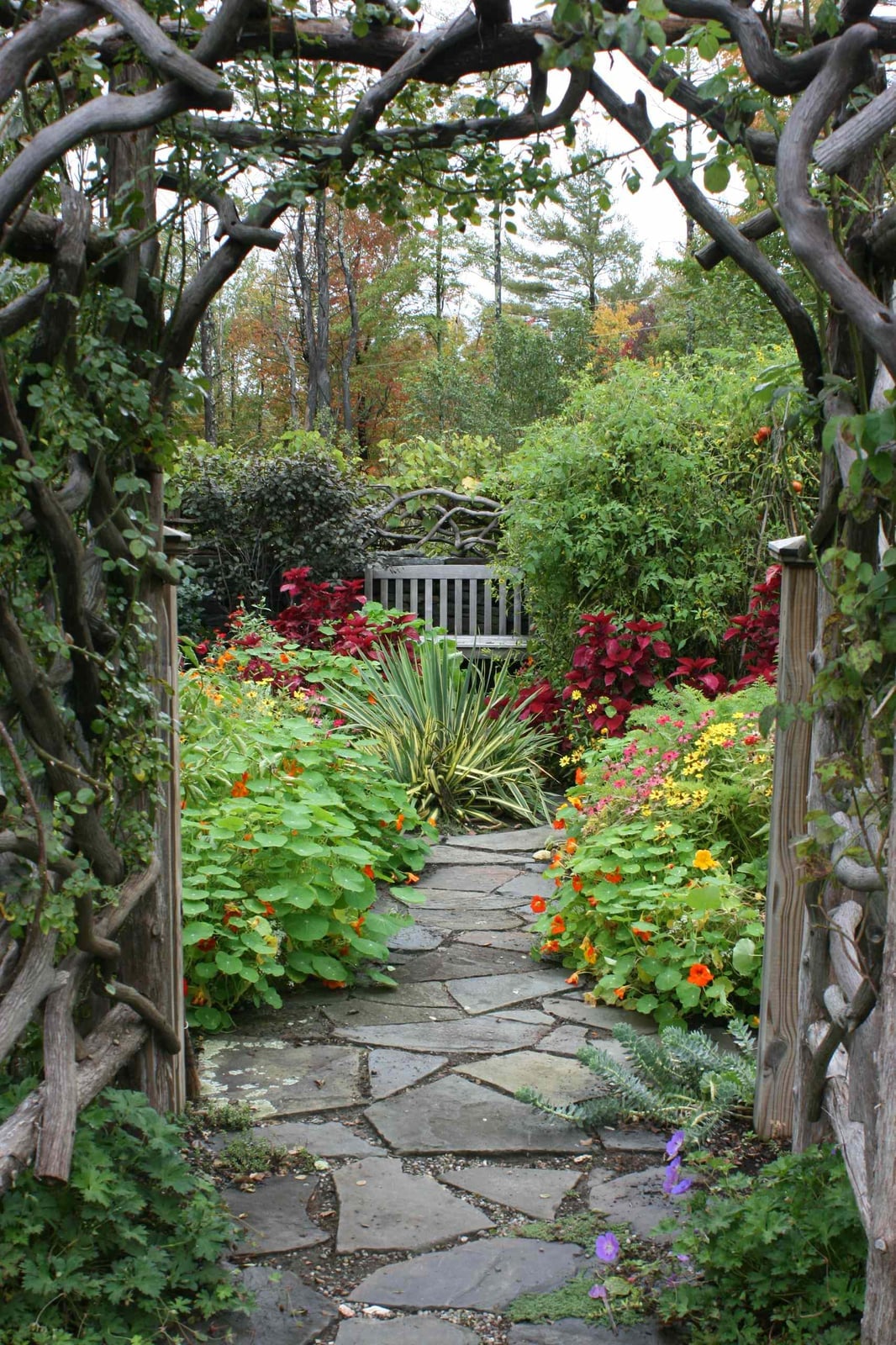
A gnarled wood archway is the kind of feature that looks like it has always been there. This one frames a winding stone path that disappears into dense planting, making the garden feel larger than it is. The organic shape of the arch is the opposite of a straight pergola, and that irregularity is what gives the space its cottage garden character. A bench tucked to one side offers a place to sit and look back at the path you just came from. The mix of orange and red blooms against the green foliage keeps the eye moving. When styling a garden archway, let the wood be the star and keep the plants around it varied but not manicured.
Garden Path Pergola Scale and Proportion
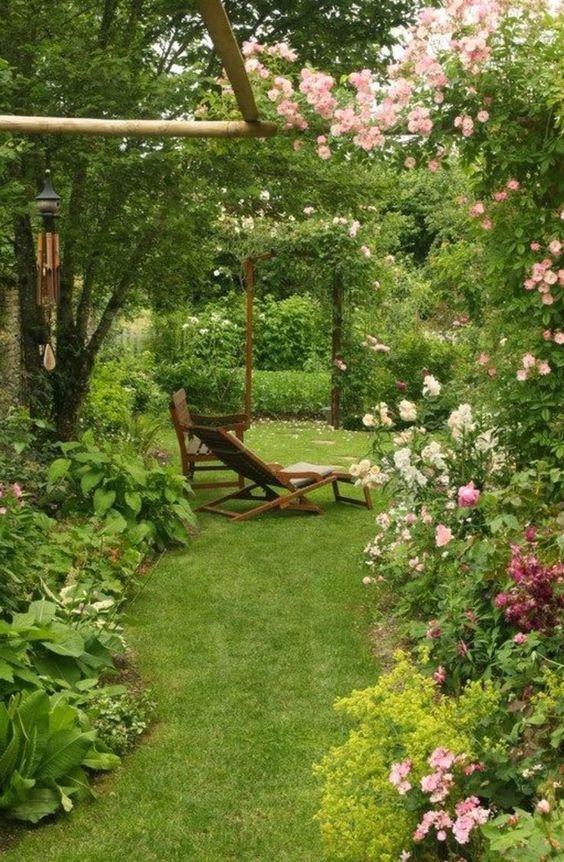
A pergola over a garden path does more than provide shade. It defines the scale of the walkway and gives the eye a ceiling. Here, the wooden structure is wide enough to feel generous without overwhelming the path below. The dappled light that filters through the flowering vines softens the hard edges of the wood and the stone path. A practical rule for pergola placement is to match its width to the path it covers. A pergola that is too narrow feels like a tunnel, while one that is too wide loses its connection to the ground.
The wooden lounge chair set to the side of the path is a clue that this space is for lingering. The pergola creates a destination within the garden, a spot where you can sit and look out at the lush planting. When planning a garden path, think about where you want to stop, not just where you want to walk.
Intimate Cottage Garden Seating Layout
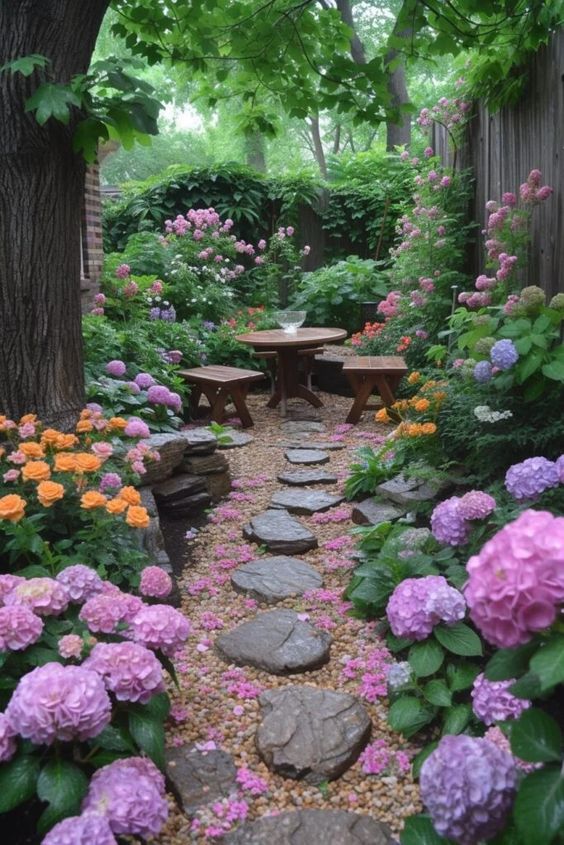
A winding stone path pulls you past a cluster of pink, purple, and orange blooms before opening onto a small wooden table and benches tucked among the greenery. The cottage garden feel comes from mixing stone and gravel underfoot and letting the plants spill toward the path. Dappled daylight filters through the leaves, softening the edges of the seating area. That mix of hard and soft textures is what makes a compact garden feel like a room, not just a walkway.
Formal Garden Cypress Trees Palette
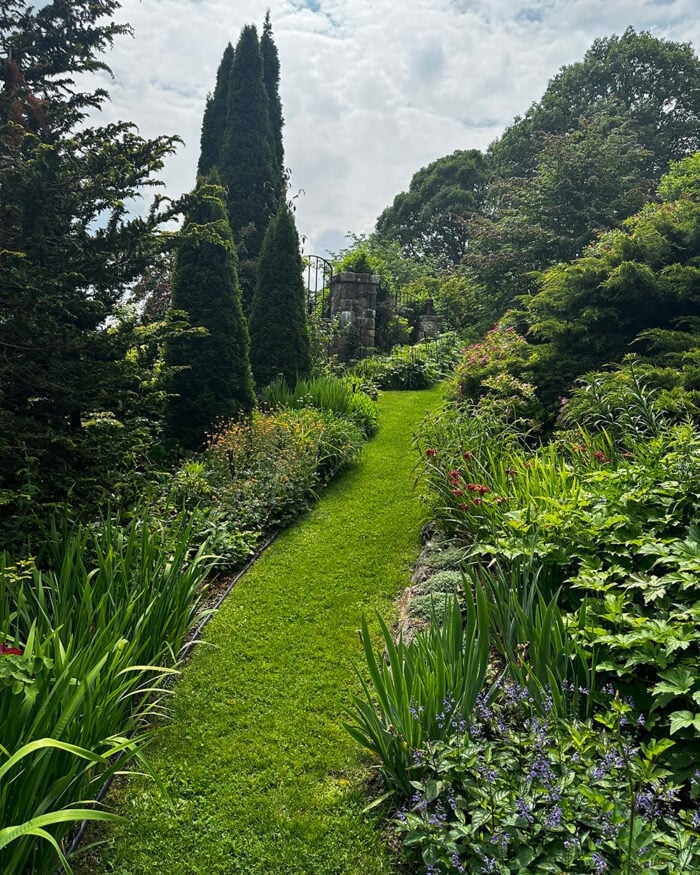
A practical rule for a formal garden palette is to limit the main colors to two or three and let structure carry the rest. Here, tall cypress trees line a central lawn path, their gray-green needles anchoring the space. A stone gate and purple foliage add contrast without crowding the eye. The greens, purples, and grays stay quiet enough that the clean geometry of the layout reads first. If you want a formal look without permanent planting, place tall evergreens in large pots on either side of a straight path.
Naturalistic Garden Pond Materials
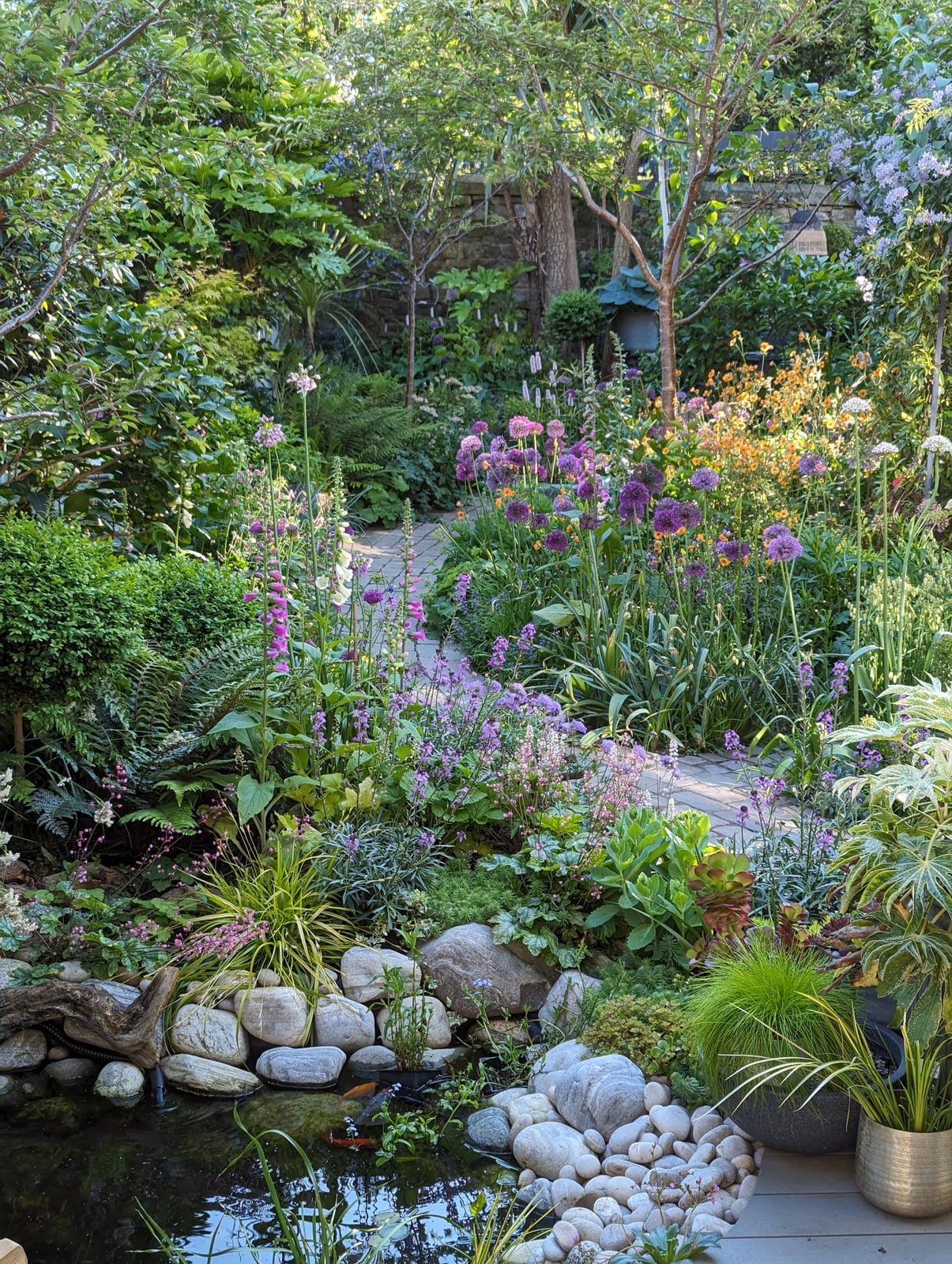
A naturalistic garden pond trades the crisp edges of a formal water feature for softer lines that blend into the planting. A stone-edged pond sits among dense beds of greens, purples, oranges, and whites, with a wooden path winding past it. The effect is looser than a clipped hedge border, but the materials still need a reason to be there. Stone around the water keeps the bank from washing out, and the wooden path lifts feet above damp soil without a hardscape look. A naturalistic style works best when every material matches a practical need.
Tropical Garden Bridge Lighting
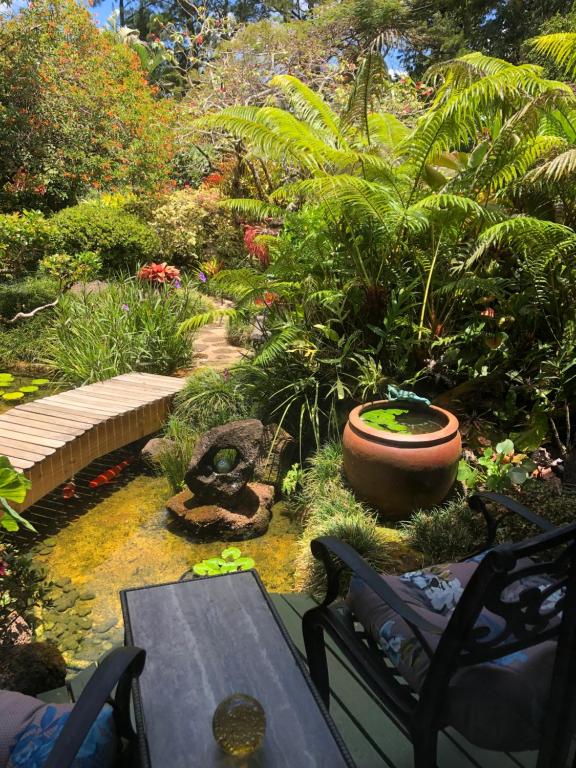
A wooden bridge arches over a koi pond, with a large ceramic planter and seating nearby. The bright daylight hits the water and bounces into the lush foliage, making the greens and oranges pop. Tropical gardens depend on that kind of light to keep the palette from turning muddy. A clear blue sky and open canopy let the full range of leaf tones show. If your yard gets less direct sun, choose plants with variegated leaves to get the same layered effect.
English Garden Floral Displays Styling Variation
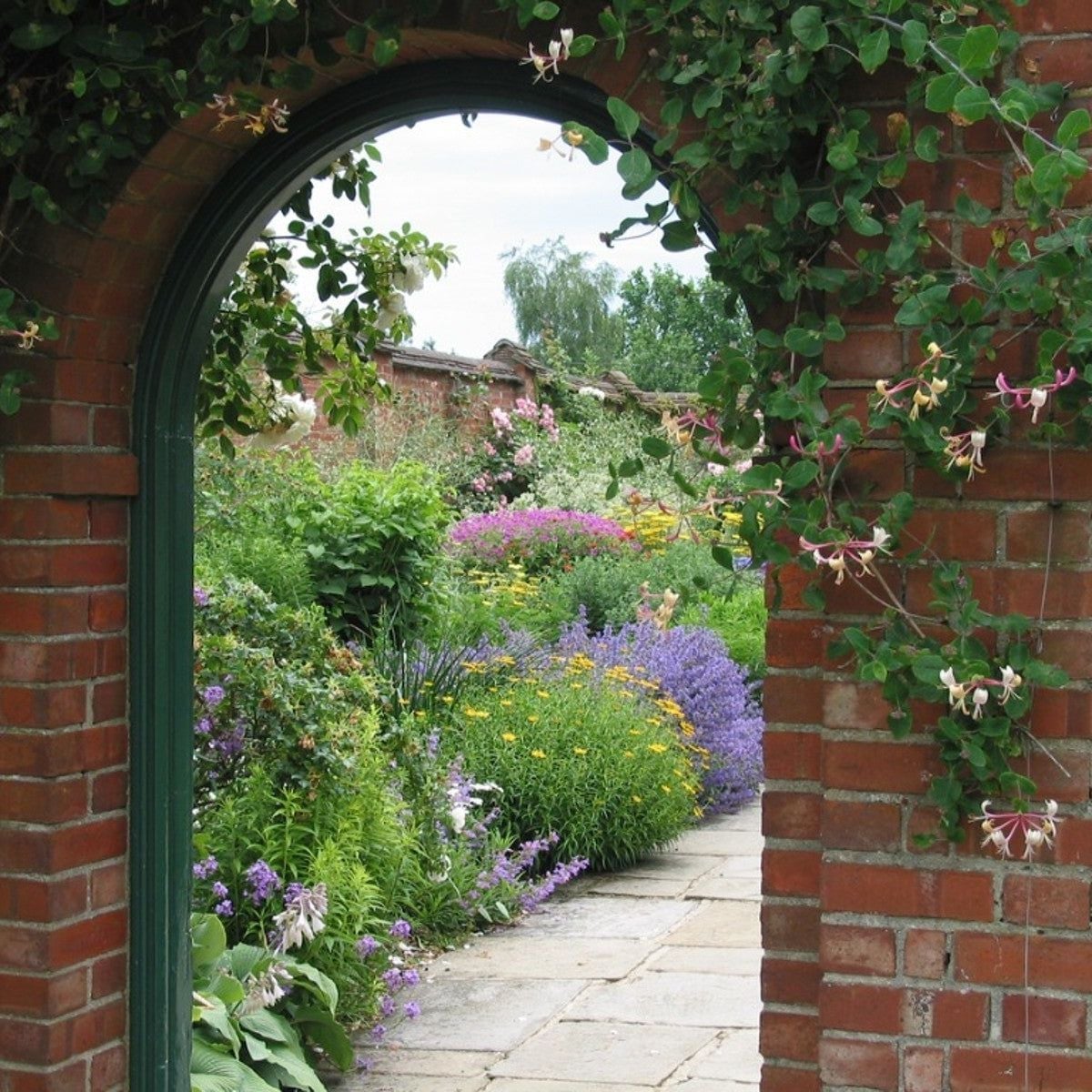
An English garden path lined with brick and stone leads through a brick archway into a dense wall of green, purple, yellow, and pink blooms. The look feels abundant because the flowers are layered, not spaced out. Instead of one tall plant per spot, the planting mixes heights and textures so nothing stands alone. A brick archway frames the view and gives the eye a reason to stop before moving deeper into the garden. That sense of discovery is what separates a pretty border from a truly secluded path.
Whimsical ‘She Shed’ Interior Budget Swap
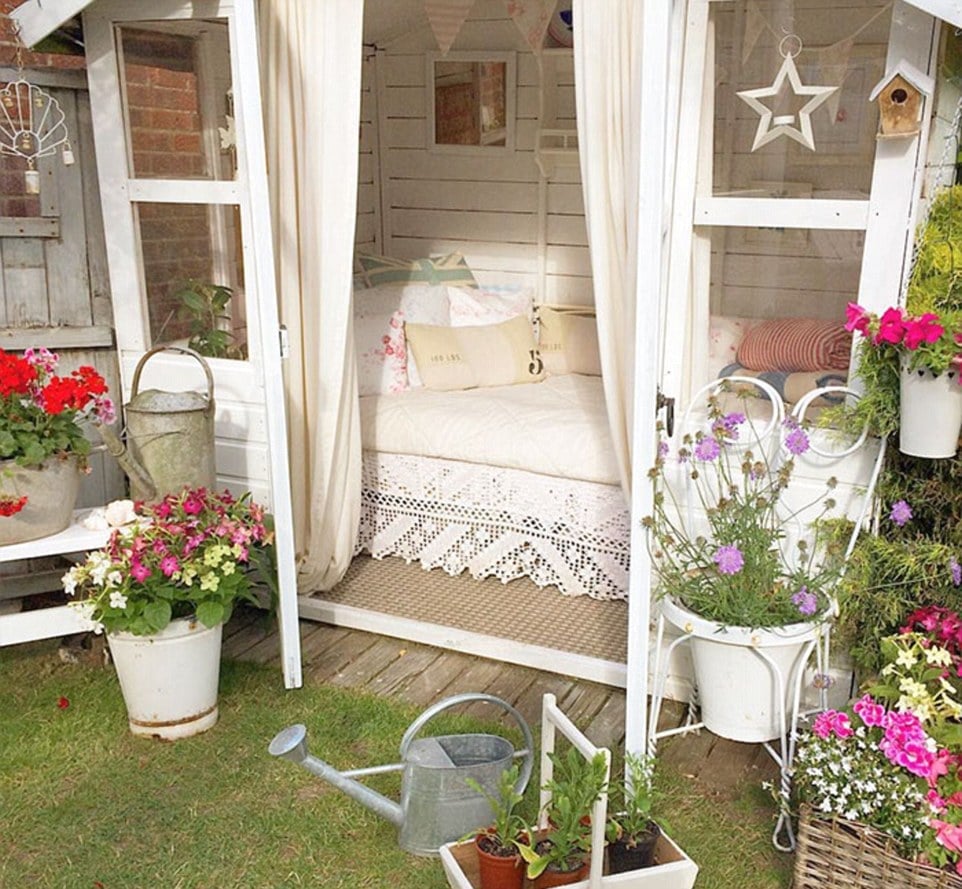
A shed with a view of the garden works best when the interior feels like an extension of the outdoors. White walls and cream bedding keep the space airy, while pastel pink accents in the chair and watering cans add a playful note. The compact layout means every piece earns its place, so a single patterned pillow or a small metal stool can define the shabby chic style without clutter. Soft daylight streaming in ties the shed to the garden, making the room feel larger than its actual footprint.
Enchanted Rustic Garden Ruins Materials
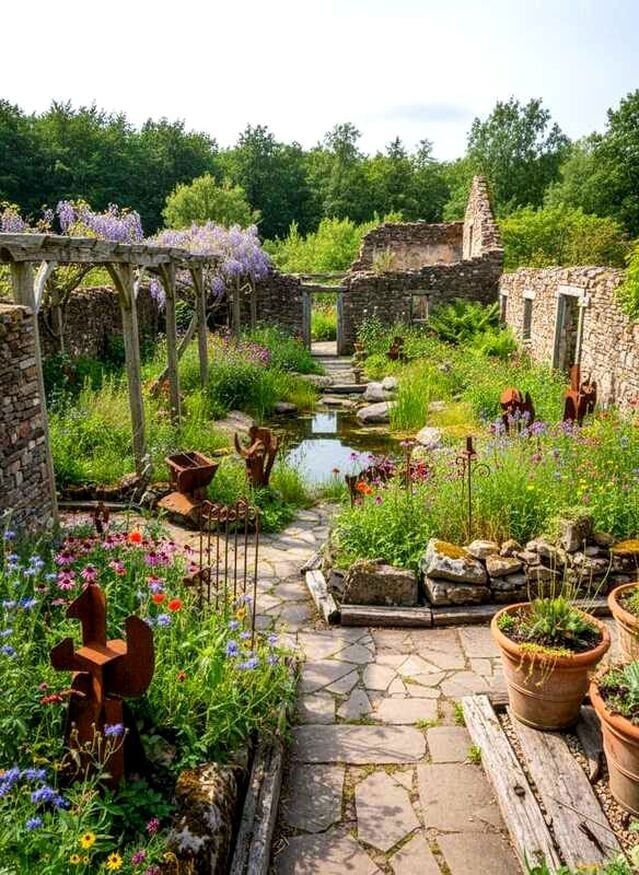
A ruined stone structure anchors this garden with a palette of green, pink, purple, and weathered stone. The overgrown look comes from metal sculptures, terracotta pots, and flower beds spilling around the pond. Wooden pathway planks lead the eye through the ruins, balancing the rough stone with a softer natural element. The contrast between the rigid stone walls and the soft blooms is what gives the space its enchanted feel.
Expansive Garden Landscape Layout
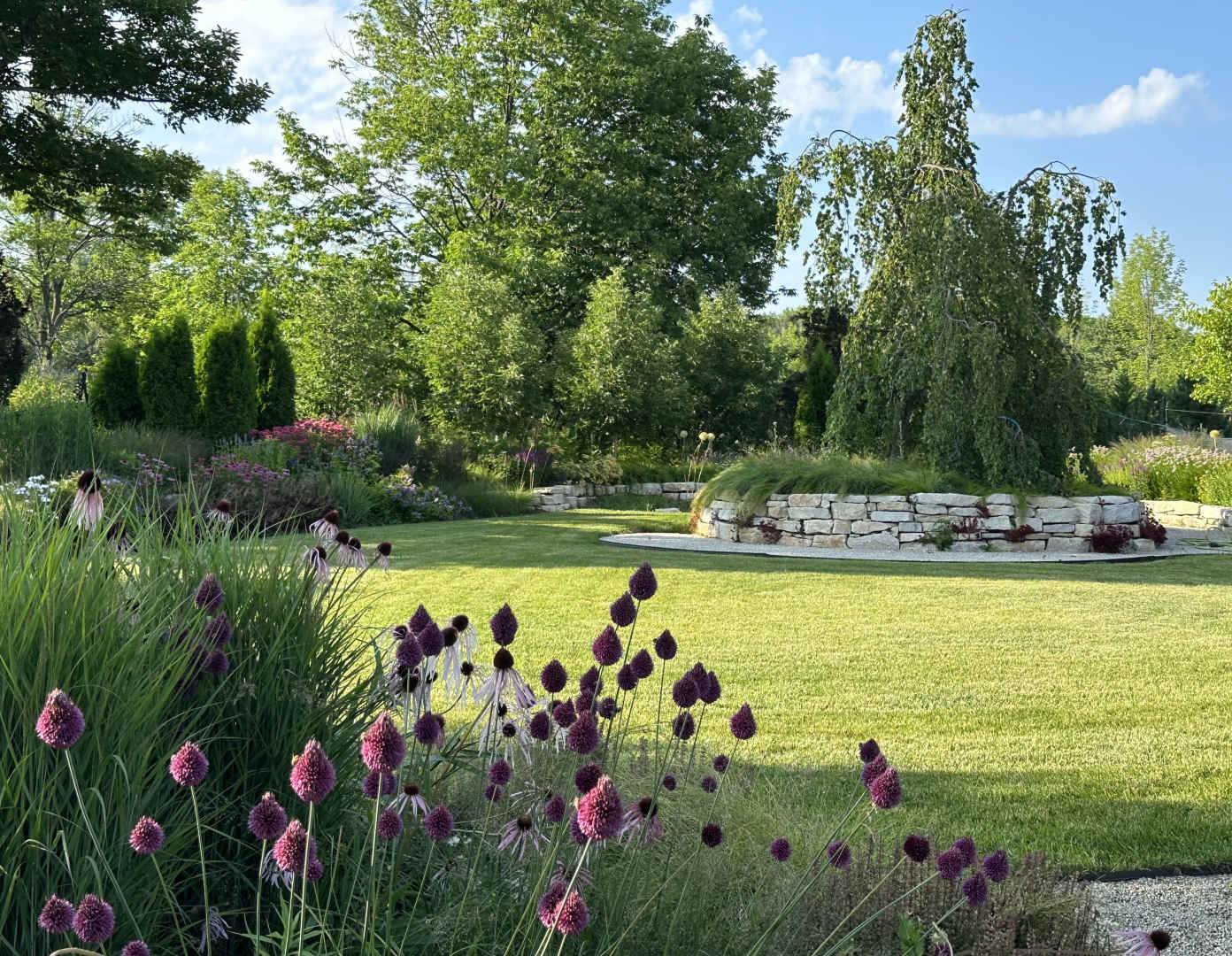
A sweeping lawn with layered planting makes a large garden feel full and designed. Curved stone walls guide the view through the space, while manicured grass creates a clean base for the flower borders. The mix of green, purple, pink, and white blooms adds depth without overwhelming the lawn. Bright daylight with soft clouds keeps the scene open and welcoming, perfect for a contemporary garden that lives up to its scale.
Secret Garden Hidden Doorway Renter-Friendly
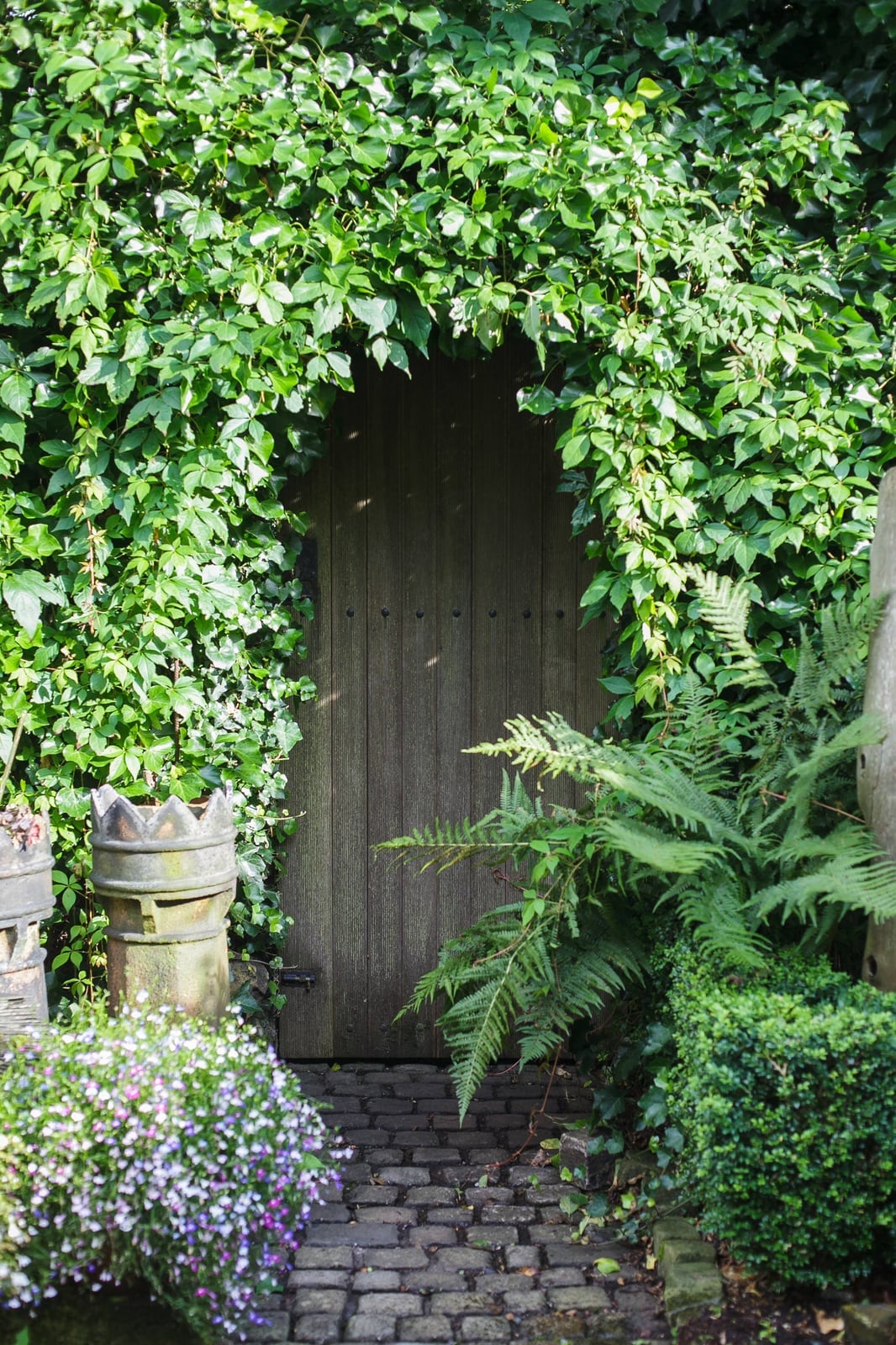
A hidden doorway in a garden wall usually relies on permanent stone or brick, but a renter-friendly swap uses a wooden door set into an ivy-covered wall. The ivy softens the wood tones and blends the door into the greenery, creating the same secret garden effect without structural changes. Stone pots on either side anchor the entrance and add a permanent feel. Soft daylight filtering through the leaves makes the doorway feel like a discovery, even if the wall is temporary.
Vibrant Purple Salvia Scale and Proportion
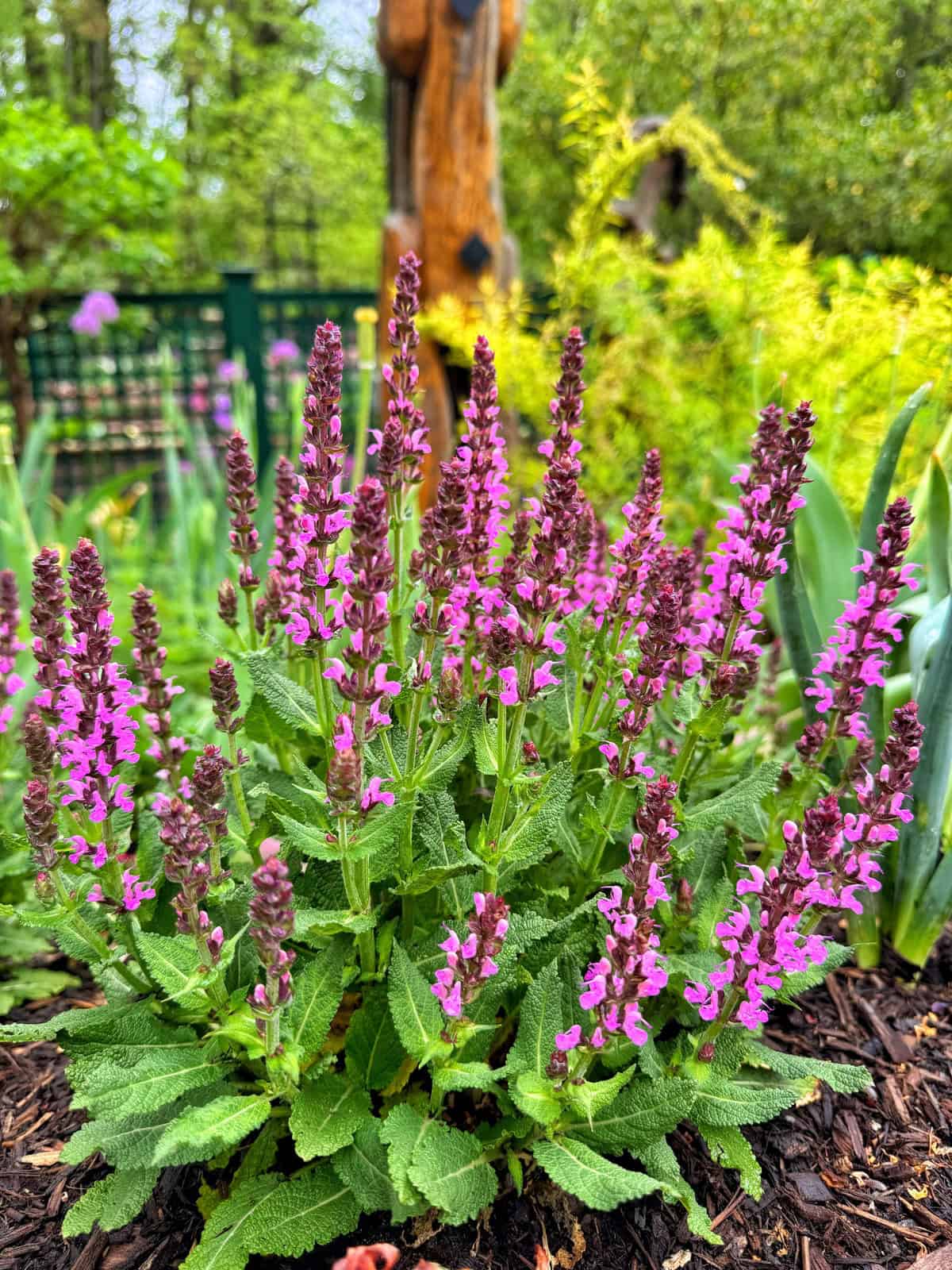
Purple salvia in a cottage garden bed draws the eye with its tall spikes of violet against soft green foliage. The plant’s upright shape creates a natural vertical line that breaks up the horizontal spread of lower flowers. A layer of dark mulch around the base helps the purple pop and keeps the soil moist. This simple addition of a single vibrant plant can shift the whole garden’s palette without reworking the bed.
Magical Garden Sunlight Lighting
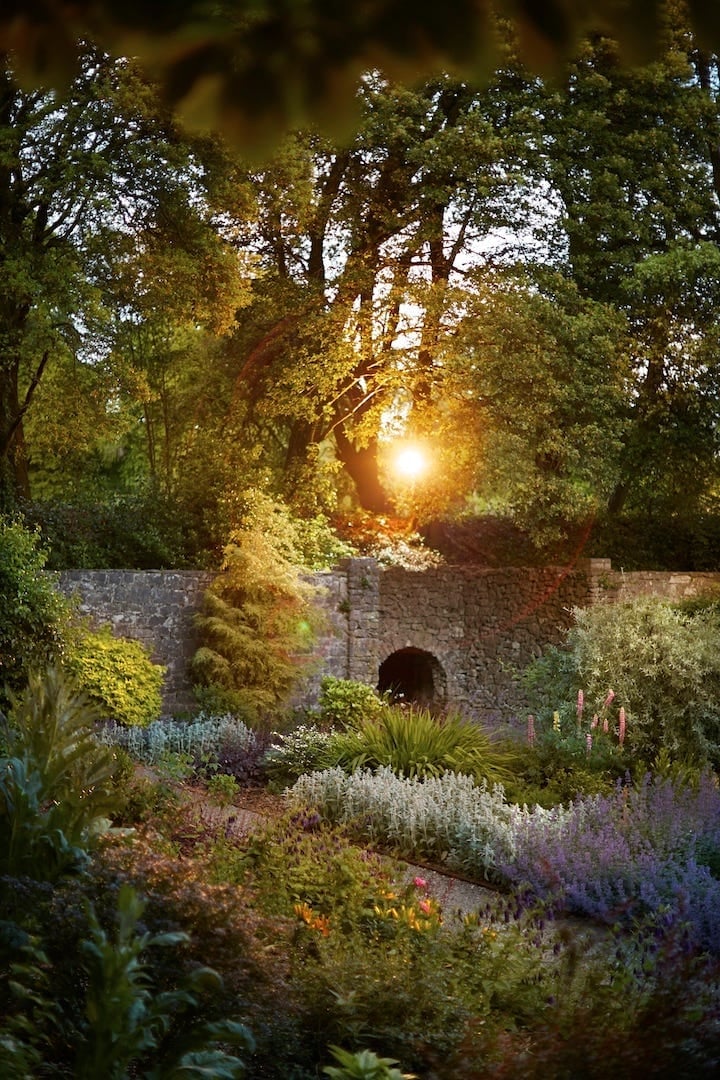
Golden hour sunlight turns a cottage garden into a living painting, and this scene proves the trick is letting light do the decorating. The stone wall and arched opening anchor a lush tangle of green, purple, pink, white and yellow planting, but the real magic is the sun flare streaming through the trees. That warm, low-angle light catches every leaf and petal, creating depth without a single fixture. The lesson here is to plan your garden layout around where the sun hits in late afternoon. Place taller plants where they will cast interesting shadows across the path, and leave the archway clear so light pours through like a natural spotlight. No wiring needed, just a watchful eye on the clock.
Final Thoughts
Building a secret garden is less about grand gestures and more about layering texture, scale, and a bit of mystery. Paths that curve out of sight, gates that hint at what’s beyond, and seating tucked into foliage all work together to make a space feel private. Stick with plants suited to your USDA zone, keep hardscaping simple, and let the garden evolve. The best secret gardens don’t reveal everything at once. They invite you to come back and see what’s changed.