
A handful of basil, a sprig of rosemary, some mint for tea, growing your own herbs is one of the easiest upgrades a garden can get. This collection of 38 herb garden ideas covers layouts for every outdoor space, from a tiny balcony to a sprawling yard.
You will find practical setups that make cooking easier and the garden look better.
Charming Cottage Garden with a Circular Herb Wheel, Close-Up Take
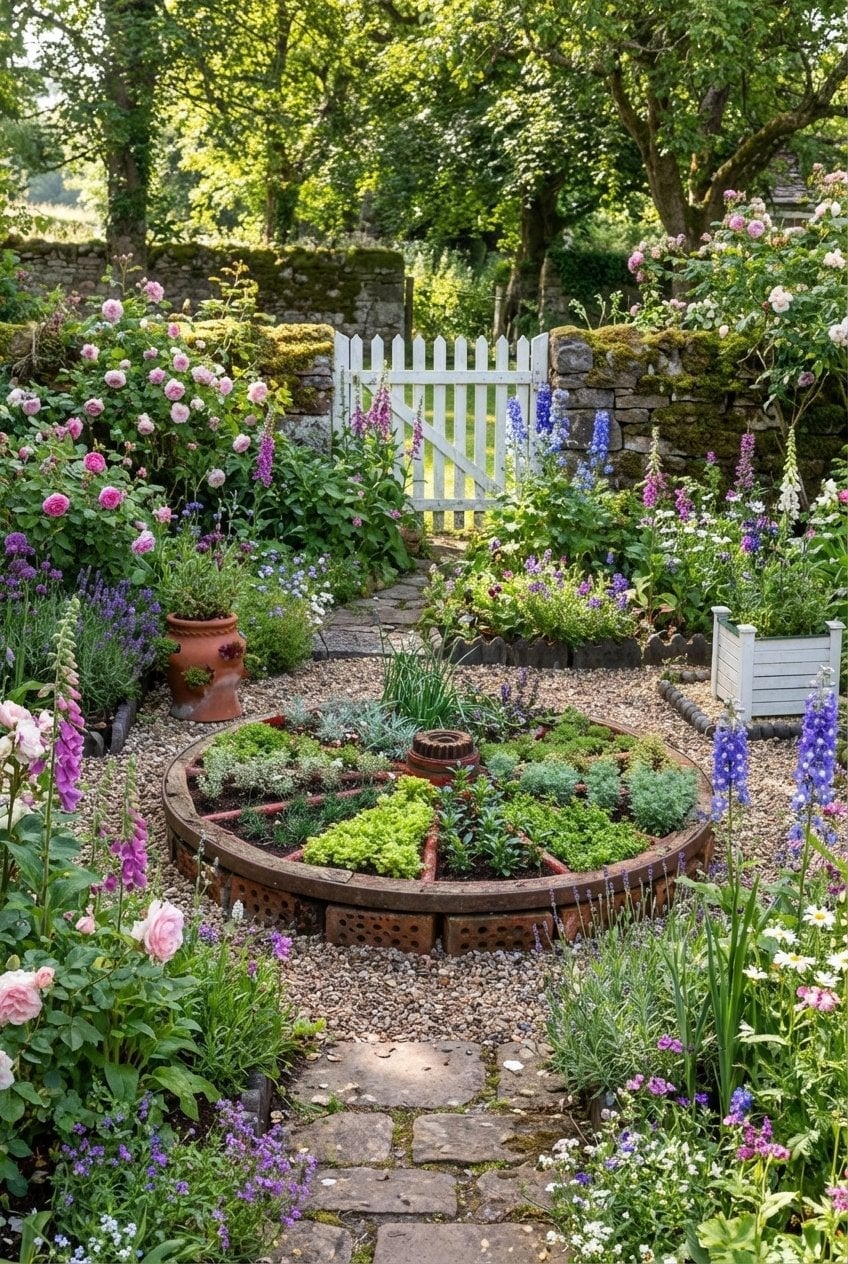
A circular herb wheel breaks up a garden without feeling rigid, thanks to the mix of materials that keep it from looking too formal. The stone, brick, and wood border holds a ring of green, pink, purple, and white herbs and flowers, with gravel filling the center for drainage and foot access. A picket fence and a low stone wall frame the bed, so the circle reads as a deliberate focal point. The layout works because the wheel shape lets you reach every plant from the edge, which makes harvesting and weeding simpler than a traditional square bed.
Modern Farmhouse Raised Beds with Integrated Lighting, Close-Up Take
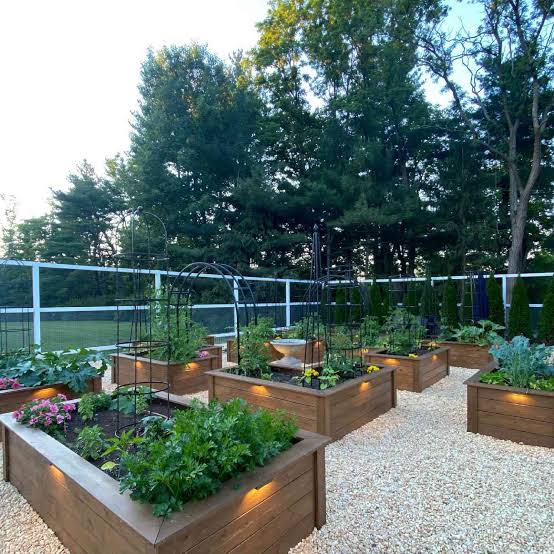
The integrated low lighting in these raised beds extends the garden’s usability past sunset without turning the yard into a construction site. Multiple rectangular wood beds sit on gravel paths, with trellises at the back for climbing plants, and the warm lights tucked into the bed frames create a soft glow that outlines the structure. The palette stays restrained, brown wood, green foliage, white flowers, so the lighting reads as a deliberate feature. This setup suits anyone who wants to cook with fresh herbs after dark or entertain in the garden without harsh overhead floods.
Lush Cottage Garden with Abundant Raised Herb Beds, Close-Up Take
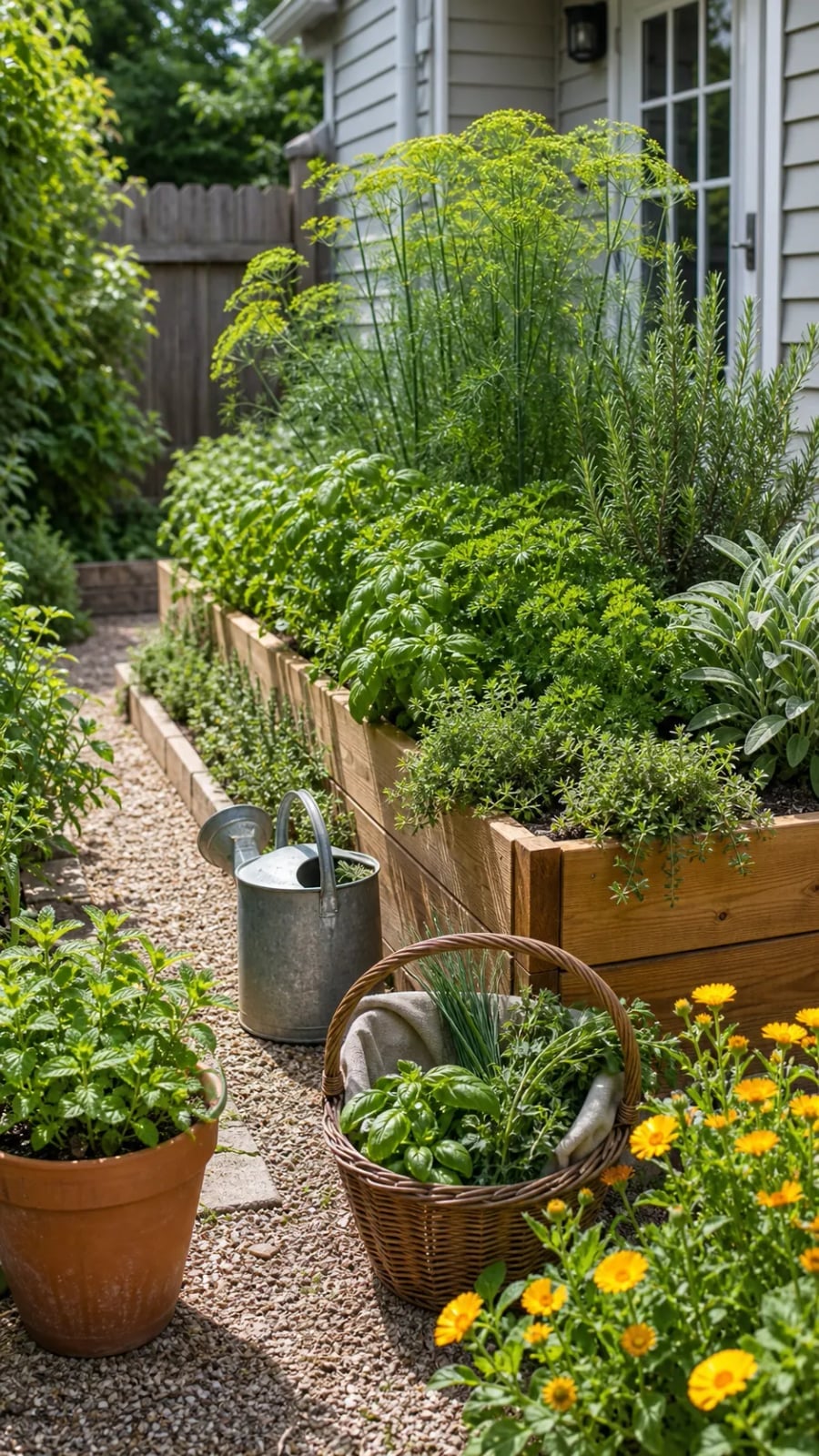
How do you get that full, overgrown cottage look without the garden taking over the yard? The answer is in the material choices. Wood raised beds keep the planting area defined, while gravel paths between them stop the greenery from spreading into the walkways. Terracotta pots sit on the bed edges, holding overflow herbs that would otherwise compete for space in the soil.
The mix of wood, gravel, and terracotta creates a layered texture that feels abundant but controlled. A watering can and a basket resting on the gravel suggest the garden is in regular use, which is the point. The wood beds weather to a soft gray over time, which blends with the green foliage and keeps the garden from looking like a brand new installation. For a lush look that still functions, stick to natural materials that age well together.
Formal Garden Layout with Symmetrical Beds, Close-Up Take
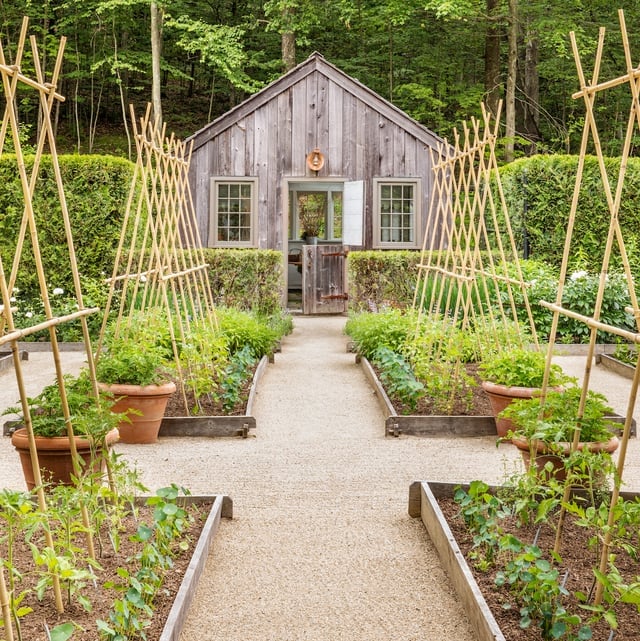
A formal garden relies on symmetry to create order, and this layout uses raised beds and trellises arranged in a balanced grid. The wood-framed beds sit on gravel paths, with trellises at the back of each bed to support climbing plants like beans or peas. The symmetry means each bed mirrors the one across the path, which gives the garden a structured feel even when the herbs are still small. The natural daylight keeps the green and brown palette crisp without needing any artificial boost. For upkeep, the gravel paths suppress weeds between the beds, so you spend less time pulling and more time harvesting.
Bohemian Patio with Potted Herbs and Jute Rug, Close-Up Take
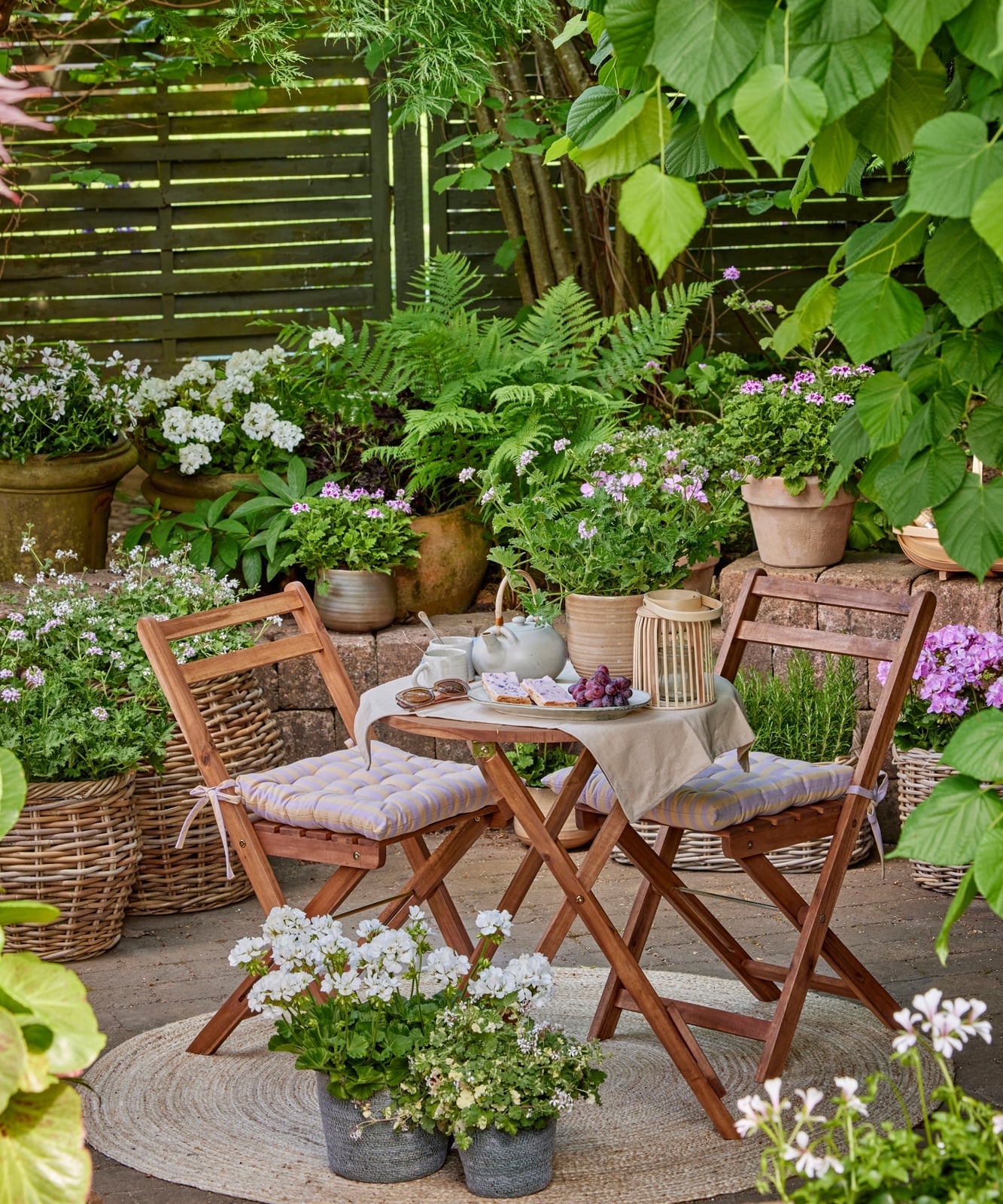
On a small patio, treat herbs like furniture. Here a bistro set sits on a circular jute rug, with potted herbs grouped around the table and chairs instead of off in a corner. The folding chairs have patterned cushions that add color against the wood tones and green foliage, while the ceramic pots keep the herbs within arm’s reach of the seating. The rug anchors the arrangement, so the cluster of pots looks placed rather than scattered. The compact layout means you can water everything from one spot, and the herbs stay close enough to snip while you sit.
Rustic Porch with Vertical Pallet and Hanging Jar Herb Gardens
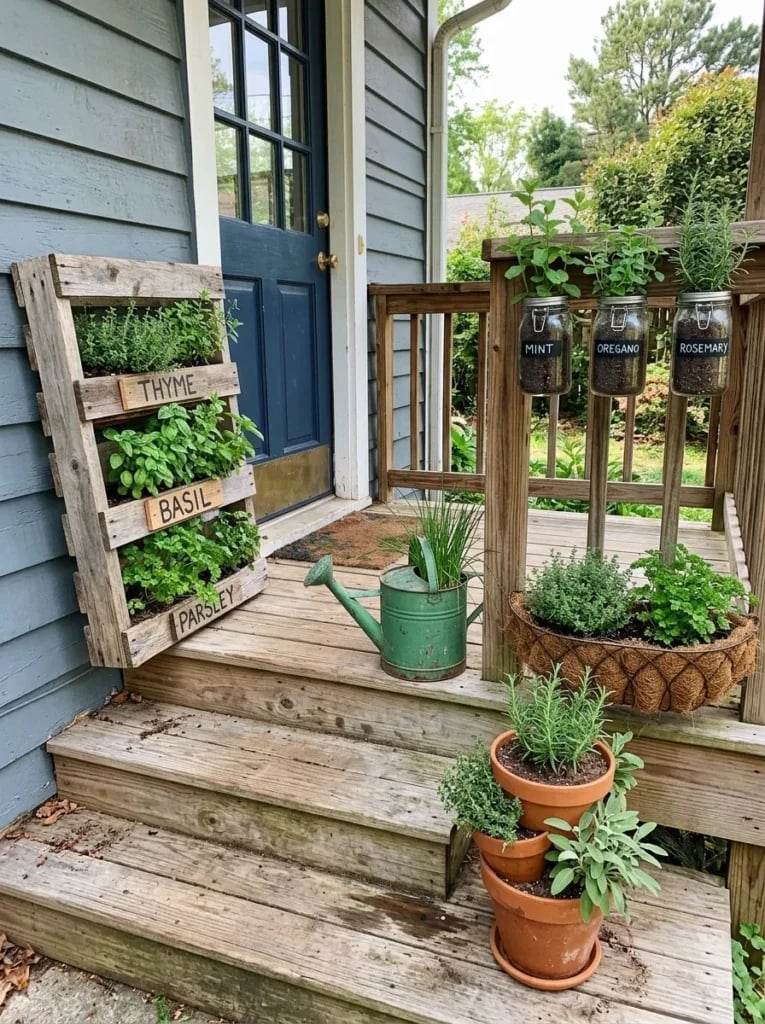
If a single planter feels too neat for your porch, this setup proves you can have it both ways. A vertical pallet planter anchors one side, while hanging glass jars and a few terracotta pots scatter the space. The layered, lived-in look still leaves room for a watering can and a chair. The layout works because each display sits at a different height: the pallet holds herbs at chest level, the jars hang overhead, and the pots rest on the floor. That tiered arrangement keeps the porch from feeling cluttered even when every container is full.
Compact Circular Stone Planter with Bird Bath Accent
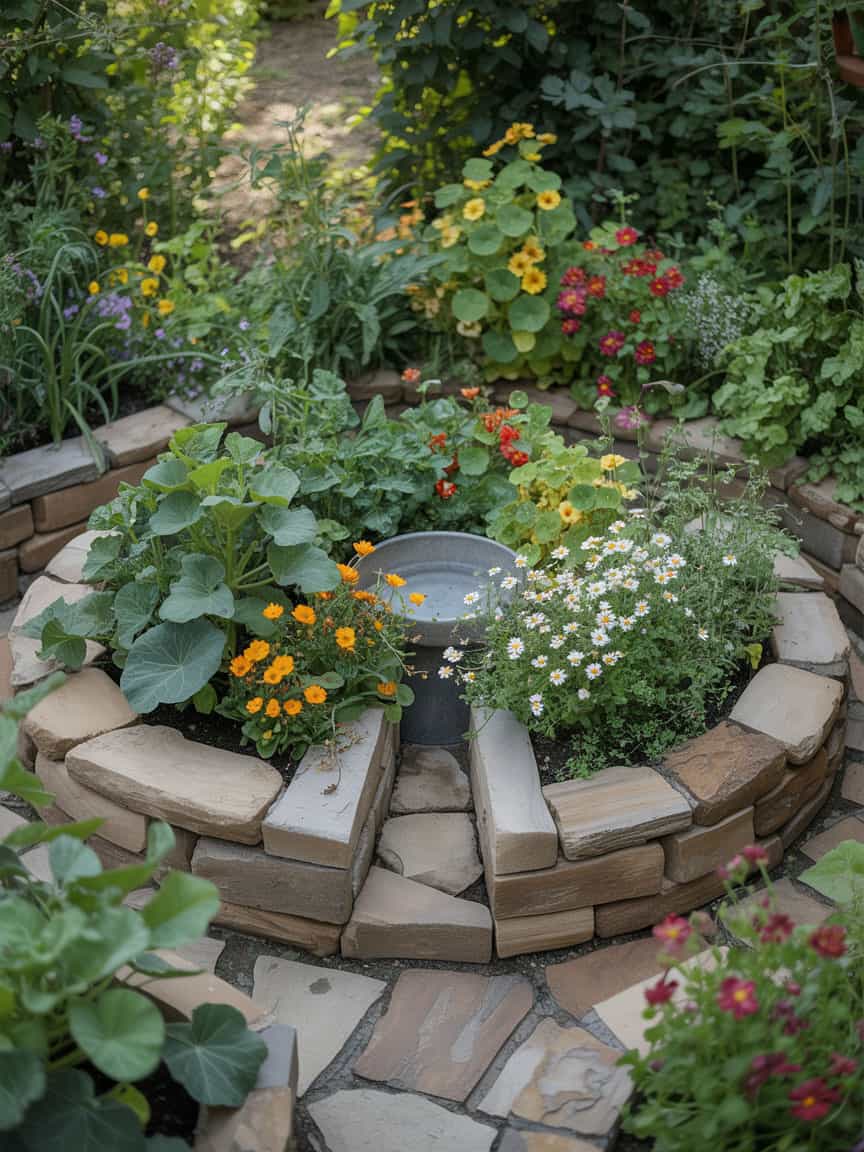
A circular stone planter raises the herbs just enough to define them as a focal point, even in a small garden. The ring shape creates a clear boundary, and the bird bath in the center adds a vertical element. Because the bed is compact, it fits into a corner or alongside a path without taking over the yard. The stone keeps the design grounded, letting the herbs and a few orange or red accents provide the color.
Farmhouse Vertical Herb Garden on a Brick Wall
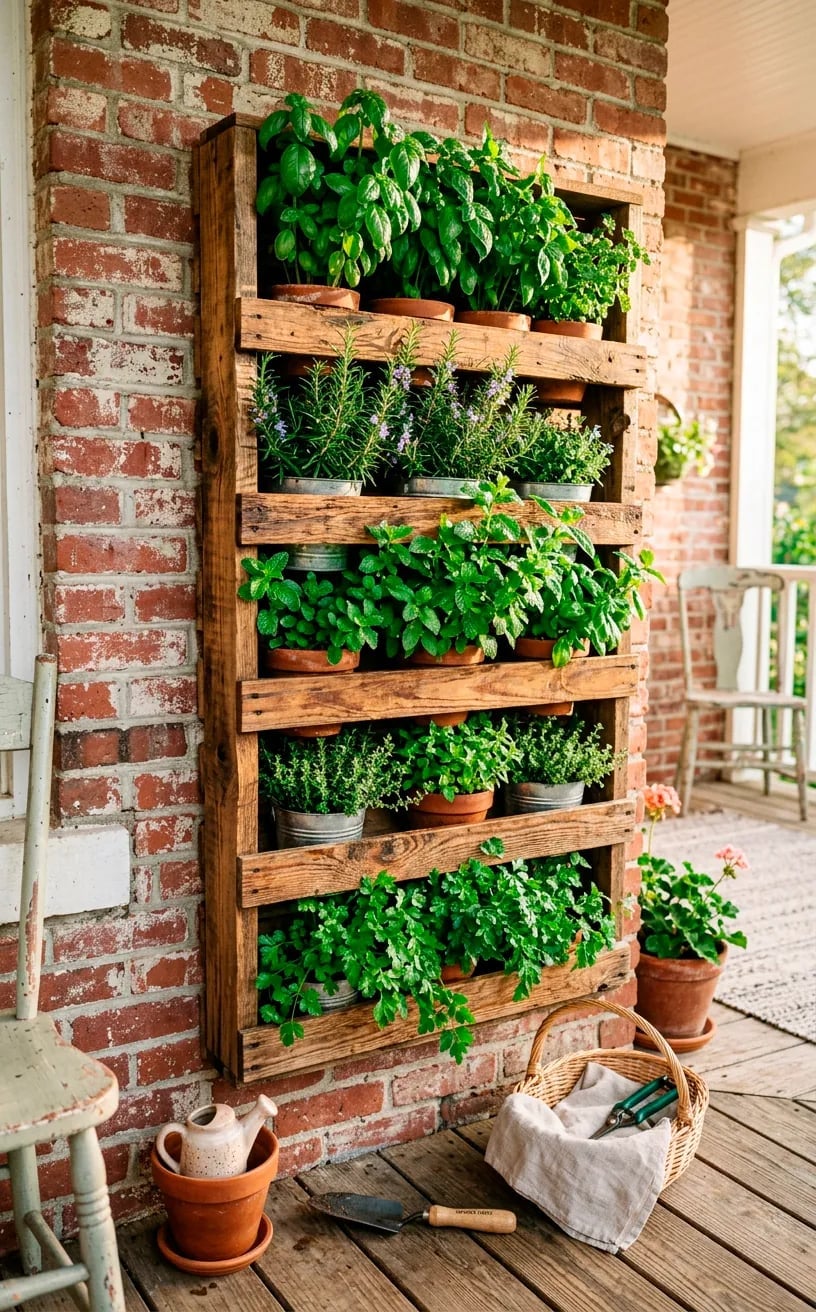
This farmhouse vertical herb garden makes good use of an otherwise plain brick wall. A stacked wooden planter holds several terracotta pots at different heights, turning the wall into a living display. The brick adds warmth and texture, while the wood and clay keep the look unfussy. Because the planter mounts directly to the wall, it takes up no floor space, which is helpful on a compact porch. The terracotta pots are porous, so herbs get steady airflow around the roots, and the natural color fades nicely over time.
Cottage Garden Tiered Stand with Terracotta Herb Pots
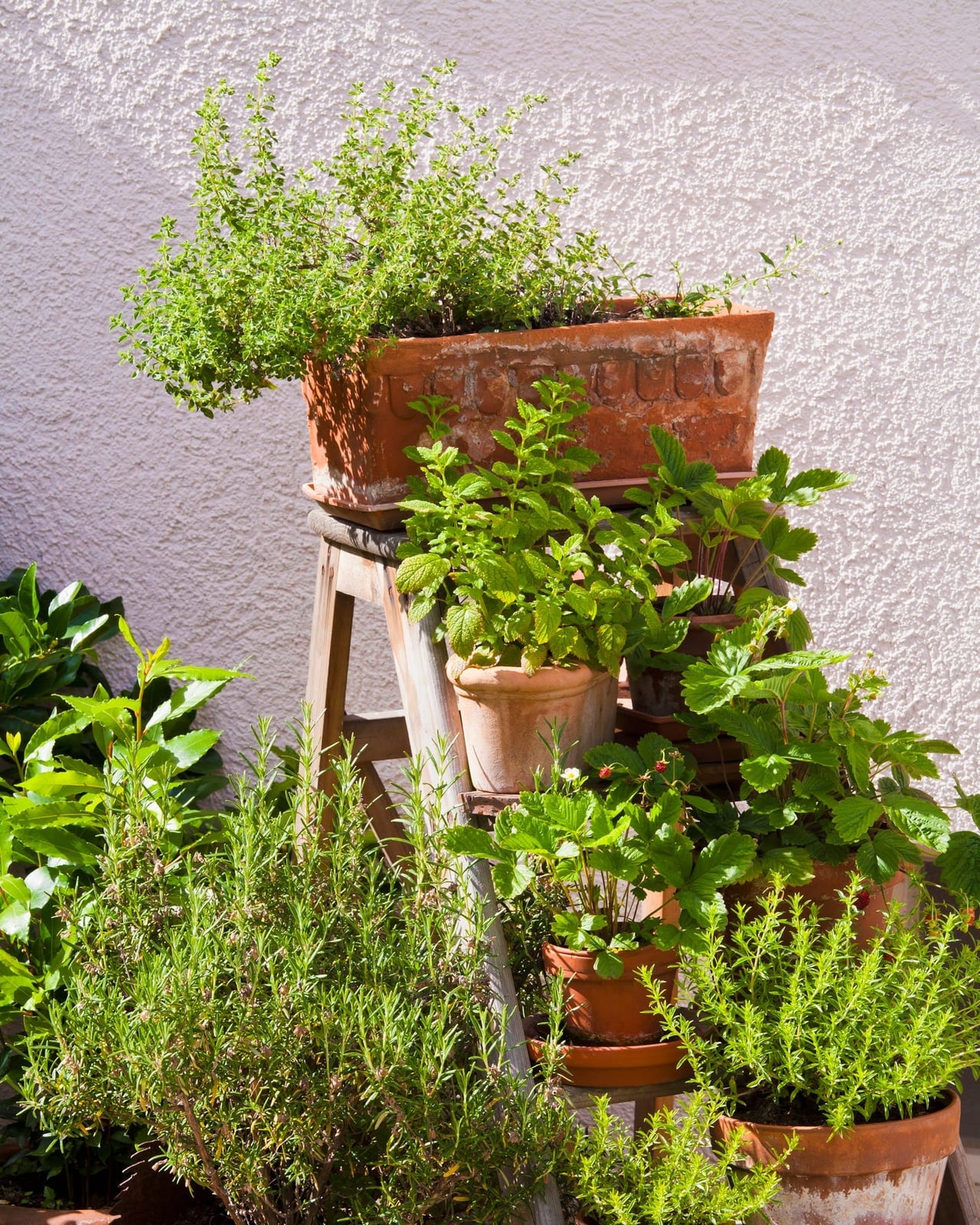
How do you fit a full herb garden on a small patio without spreading pots across the floor? A tiered wooden stand solves the problem. This one holds several terracotta pots on three levels, stacking them vertically so every plant gets light. The warm clay and white accents fit a cottage garden palette, and the stand itself adds structure. Because terracotta is heavy, the lower tier stays stable while the upper pots are easy to reach. The stand also keeps the herbs off the ground, which helps with drainage and reduces the chance of pests.
Modern Rustic Circular Stone Bed with Gravel Path
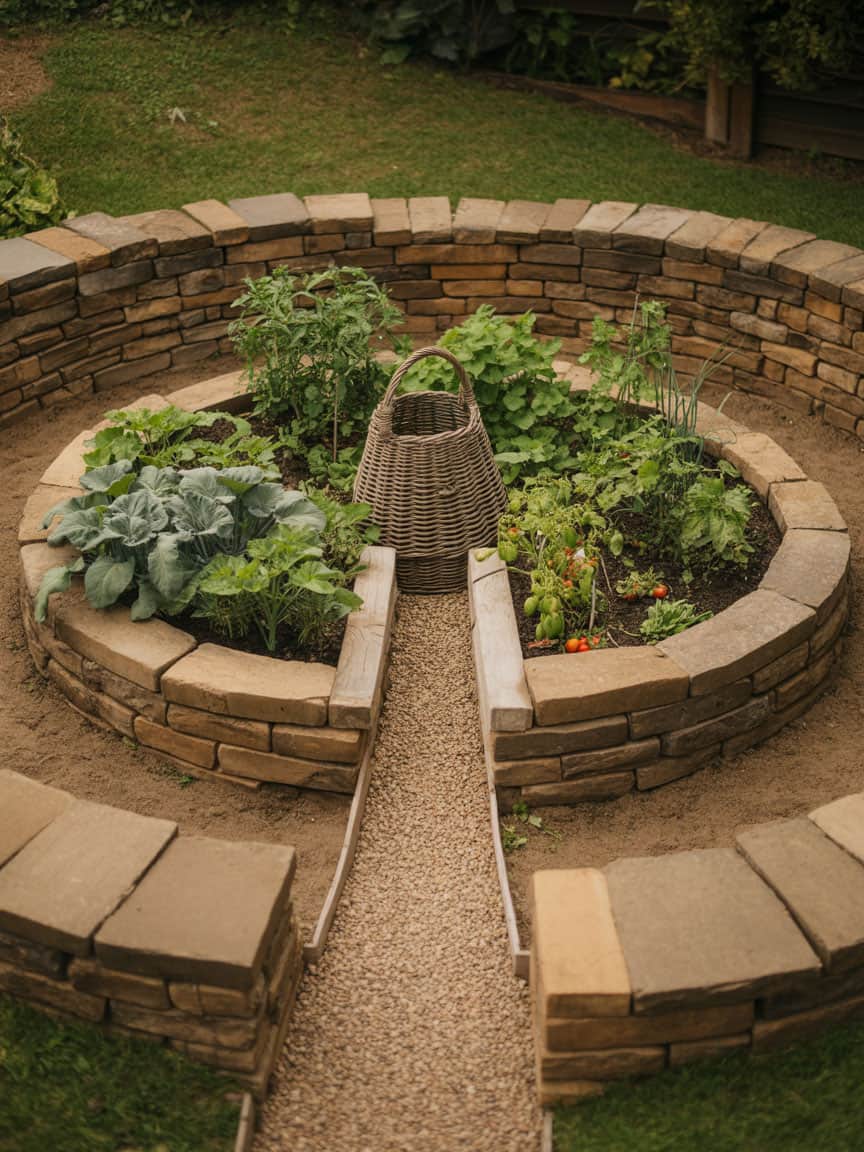
Stone and wood divide this circular raised bed into clear planting sections. A gravel path wraps around the edge, defining the bed as a distinct zone in the garden. The circle is large enough for several types of herbs, and the wooden dividers keep them from mixing. Gravel makes the path easy to walk on in any weather and stops mud from spreading onto the lawn. The stone wall holds soil steady and gives the whole bed a permanent, built-in feel.
Rustic Porch with Vertical Pallet Herb Garden
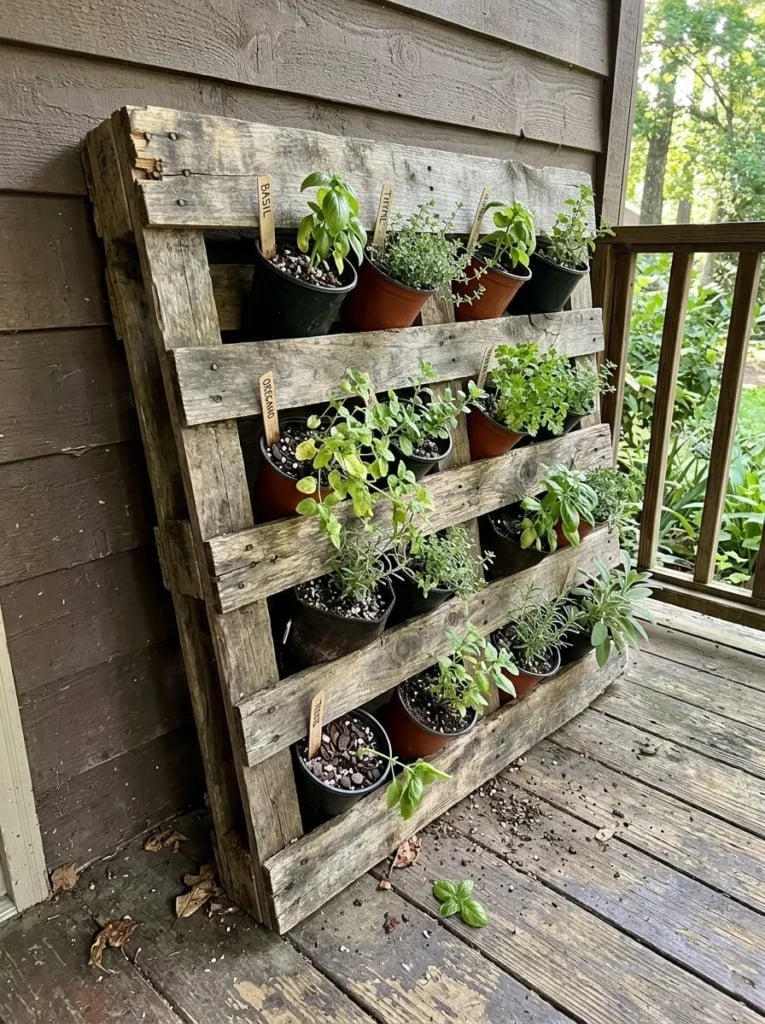
A vertical pallet herb garden is a smart way to add greenery without sacrificing floor space on a porch. The wooden pallet holds plastic pots of basil, thyme, oregano, and rosemary in a tiered layout that catches dappled natural light. This approach works especially well for renters, since the pallet leans against the wall without permanent attachment. The natural wood and green foliage keep the look rustic and relaxed. You can swap out pots as the season changes or as your cooking needs shift, making the whole setup flexible without any major commitment.
Unique Circular Keyhole Herb Garden Design
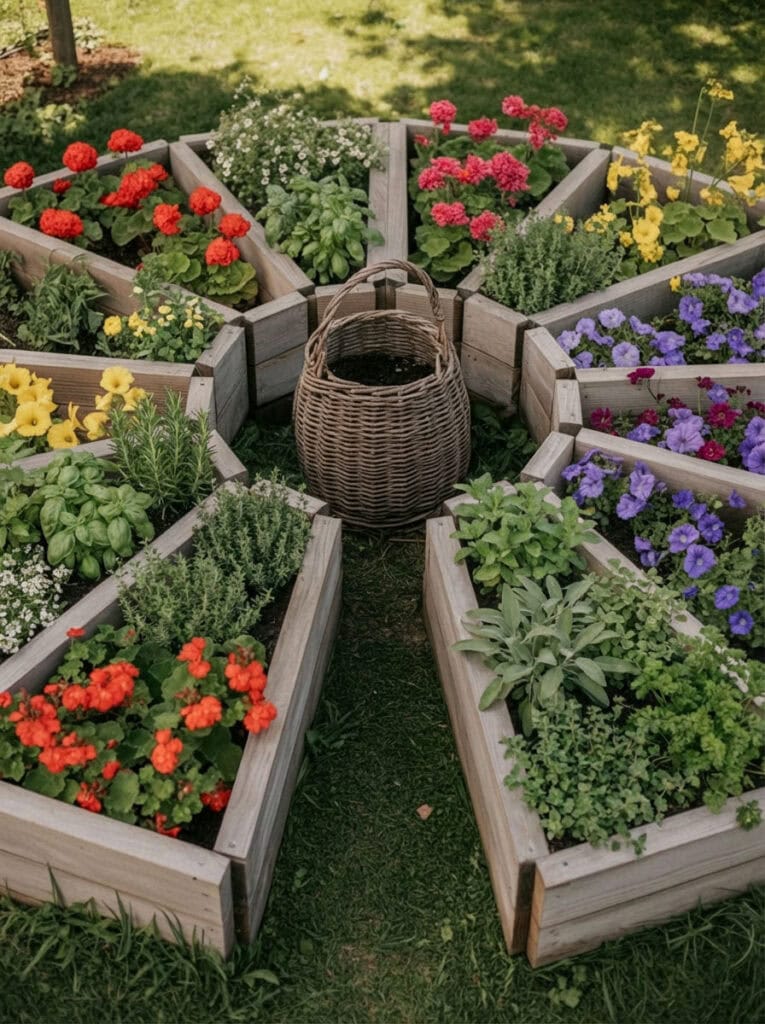
A circular keyhole garden might sound complicated, but it is actually a straightforward twist on the traditional raised bed. Instead of a simple rectangle, the layout uses wedge-shaped wooden beds arranged in a ring around a central opening. This design lets you reach every plant from the center, which makes harvesting and watering easier on your back.
The palette mixes natural wood tones with the green of herbs and the pink, red, and purple of nearby flowers. The circular arrangement also creates a natural focal point in the garden, breaking up the usual straight lines of a vegetable patch. If you have the space, this shape adds visual interest while keeping the herbs just as productive as any standard bed.
DIY Rustic Pallet Herb Garden with Chalkboard Labels
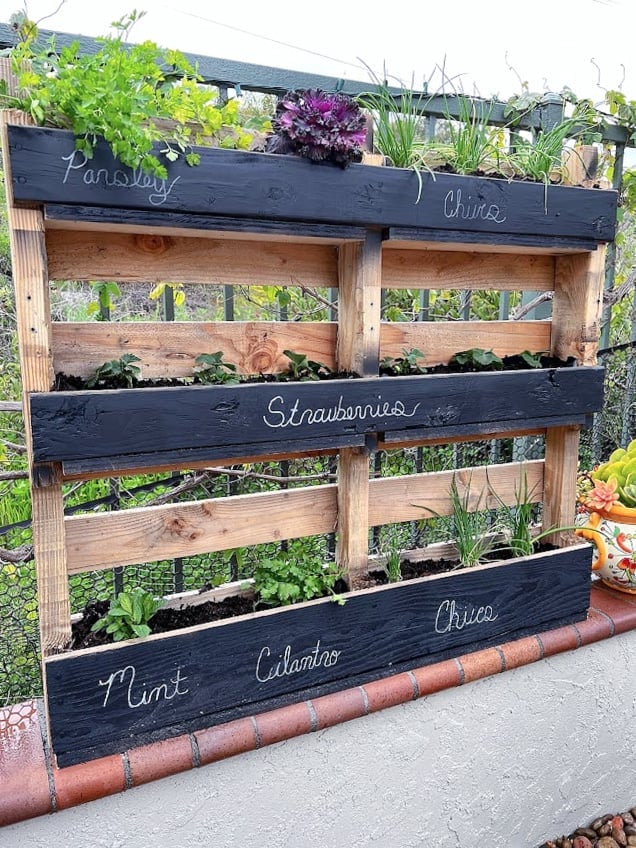
A painted pallet planter holds herbs and even a few strawberries in a compact vertical setup. The black paint on the wood gives it a finished look, while chalkboard labels on each section make it easy to tell basil from mint at a glance. This is a budget-friendly way to turn a salvaged pallet into a practical garden feature that fits against a wall or fence.
Modern Balcony Tiered Shelf Herb Garden
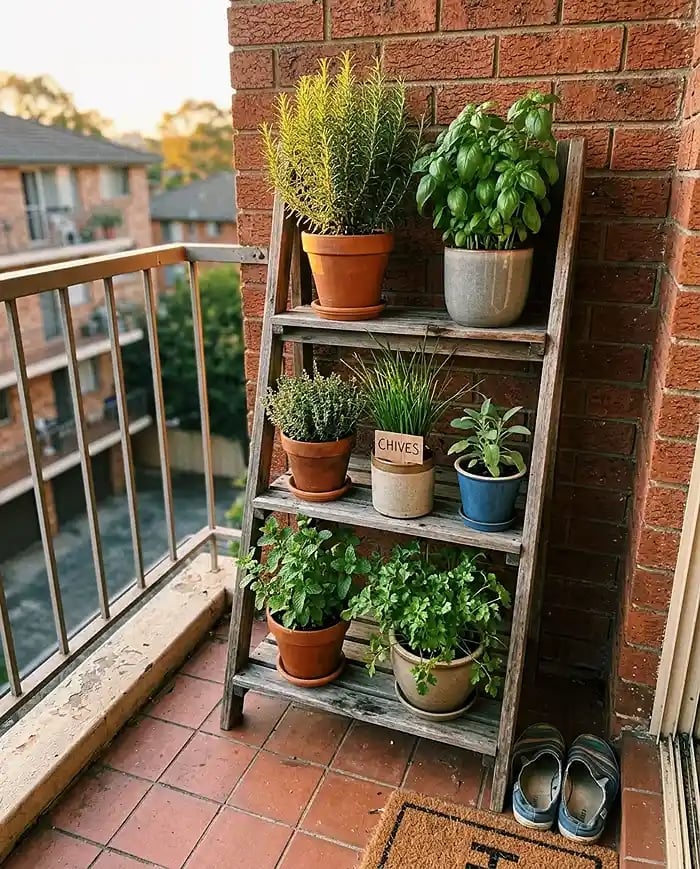
A wooden tiered shelf is a smart fit for a compact balcony. The three levels hold terracotta and ceramic pots with rosemary, basil, chives, and mint, making the most of the available vertical space without crowding the floor. The warm wood tones and soft sunset light keep the arrangement from feeling too stark. Each shelf gets enough daylight since the tiers are spaced to avoid heavy shadows. For a small outdoor area, this kind of stepped shelf gives you a proper herb collection without needing a full garden bed.
Rustic Galvanized Metal Trough Herb Planter
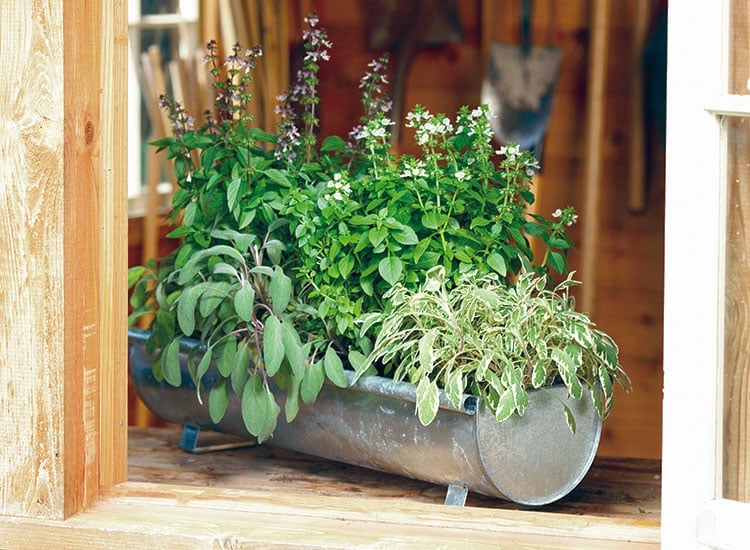
A galvanized metal trough makes a sturdy home for a mix of herbs, with the silver metal contrasting against the green, purple, and white foliage. The material is a practical choice for outdoor use because it holds up to weather and does not absorb moisture like untreated wood.
Seen from a window, the planter appears as a neat, compact garden feature that fits into a small corner of the yard. The metal also reflects light, which can help keep the soil from getting too hot in direct sun. If you want a container that looks rustic without the upkeep of wood, a metal trough is a solid option.
Naturalistic Herb Garden with Textured Stone Border
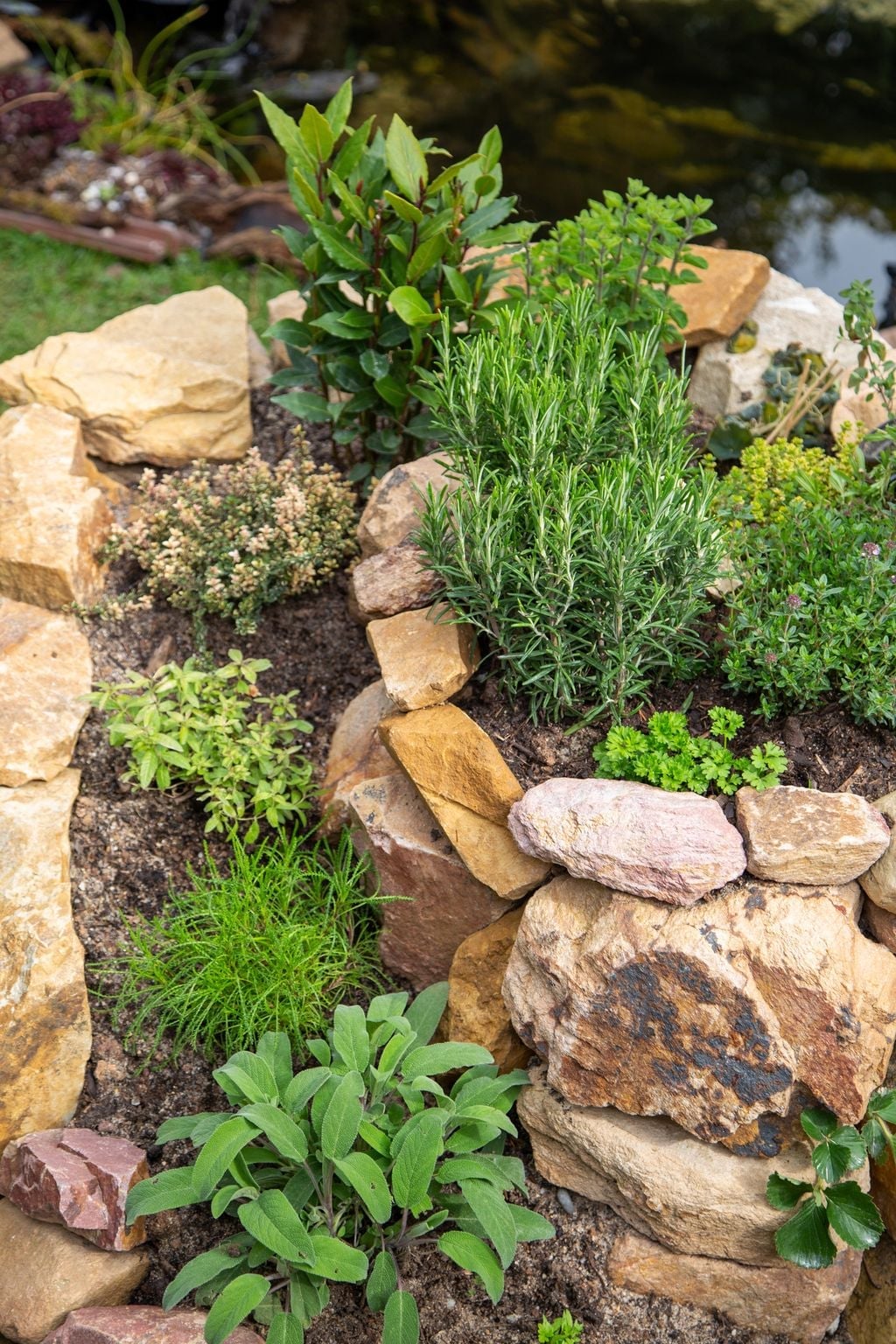
A raised bed edged with rough, textured stone feels like it has always been part of the garden. Rosemary, sage, and bay leaf fill the space in a compact bed, their green and gray-green leaves softening the hard stone. The naturalistic style works because the border does not fight the plants for attention. A material swap like this costs only time and some lifting, and it outlasts wood by years. The palette of green, brown, gray, and a touch of pink from the stone keeps the whole bed looking grounded.
Layered Garden Bed with Flowering Plants and Herbs
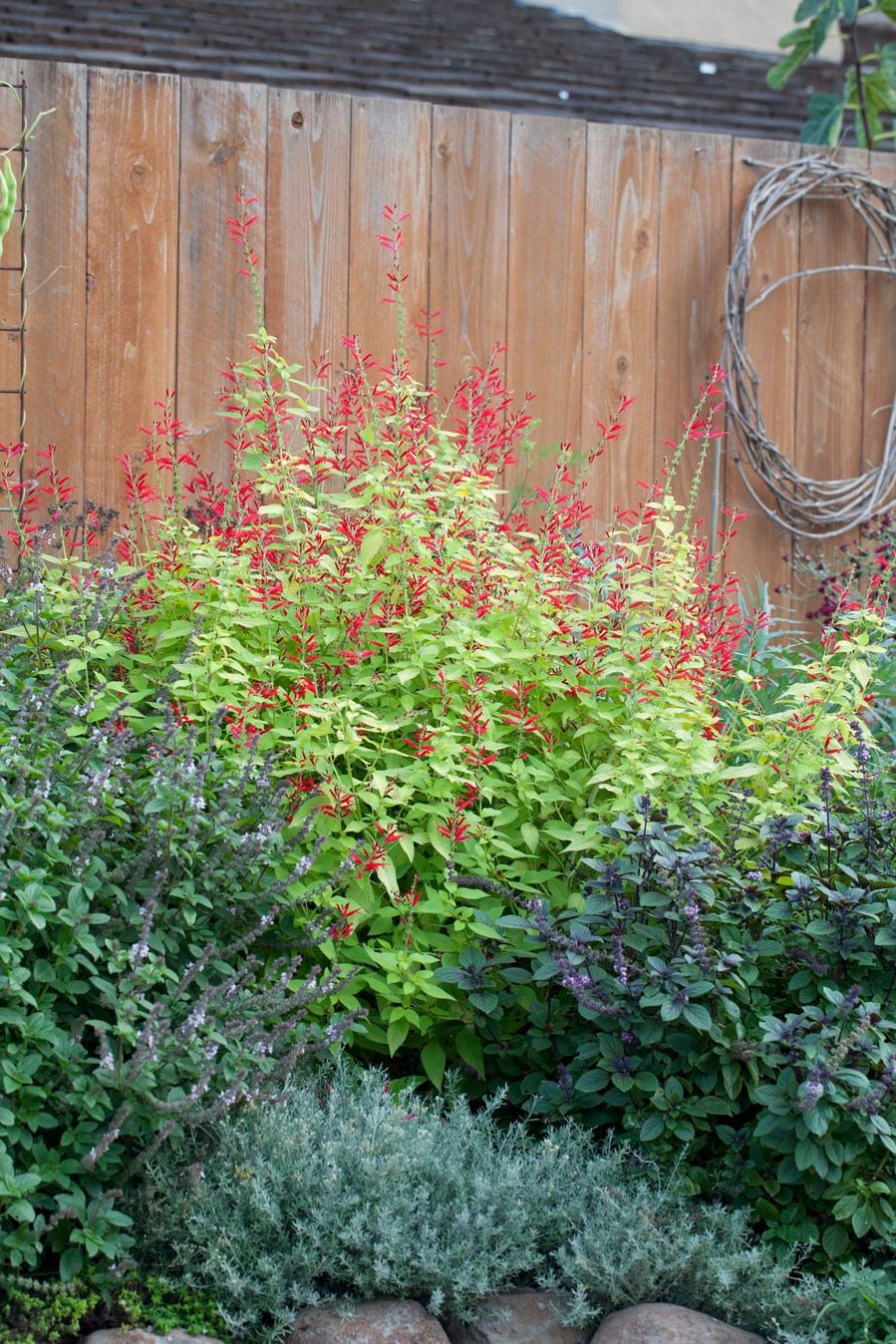
For a layered bed, place the tallest flowering plant in the back and let herb bushes fill the front. A large red flowering plant rises above lower green and purple herb bushes, creating depth without fussy spacing. The wood and stone border holds the soil in place, so the layout stays tidy. For renters, this is a smart approach because the structure is just a few stones and a low wood frame. You can take it apart at the end of the lease and leave the lawn unharmed. The red blooms against the green foliage give the bed a visual anchor without expensive ornament.
Modern Garden Seating Area with Potted Herbs
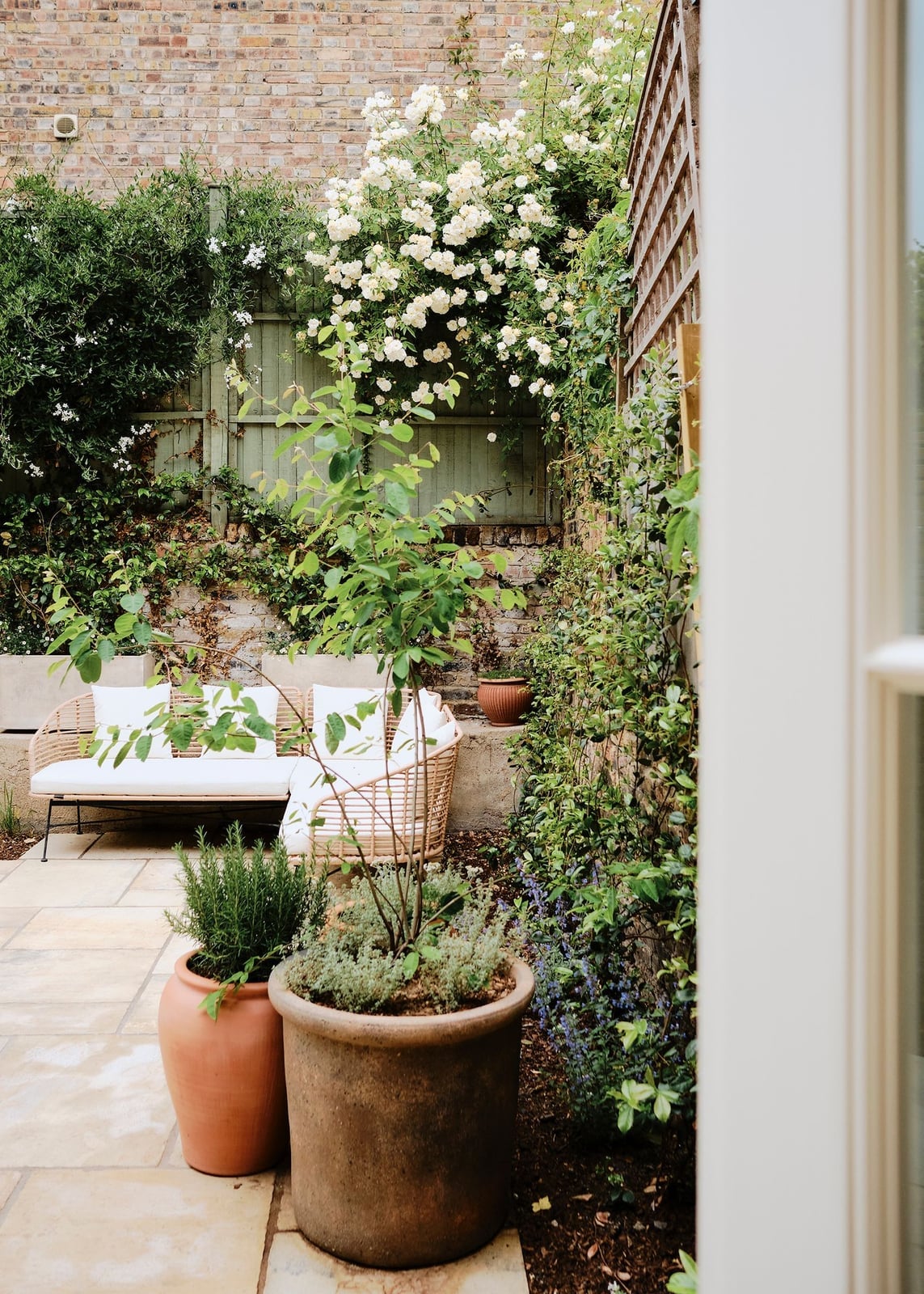
A seating area with potted herbs differs from a dedicated vegetable patch. Here a wicker sofa sits on a stone and brick patio, with terracotta pots of herbs placed around it instead of a formal garden bed. The herbs become part of the furniture arrangement, not a separate zone. White climbing roses on a nearby trellis add height and soften the straight lines of the brick.
The palette of green, white, terracotta, and beige keeps the space calm. If you already have a patio or deck, this is a simple variation on a standard herb garden. You do not need to dig or build beds. Just set pots where you already sit, and the herbs become part of the room. The wicker sofa and the terracotta share a warm, natural tone that makes the grouping feel cohesive.
Modern Rustic Herbs in Glass Jars on a Wooden Stand
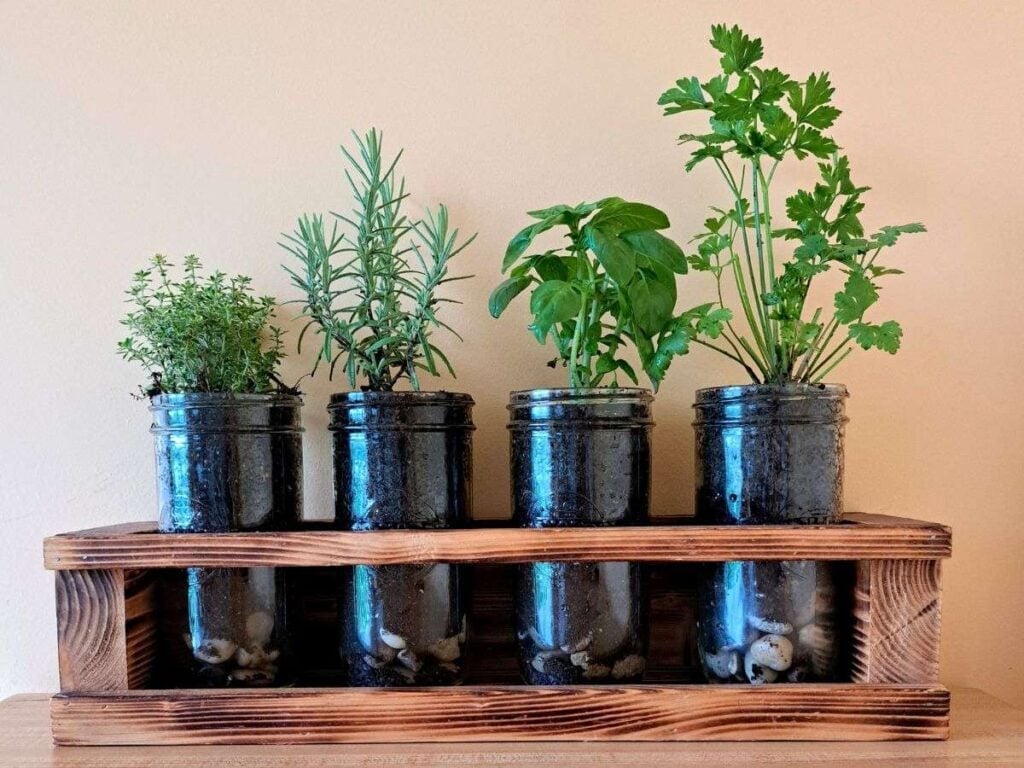
Glass jars on a wooden stand turn a handful of herbs into a storage solution that is also a display. Each jar holds a single herb in a bit of soil and pebbles, so the roots stay visible and the plants stay separate. The wooden stand lifts the jars off the ground, which makes watering easier and keeps the herbs from sitting in wet soil. The modern rustic style here comes from the mix of black glass, green leaves, and raw wood tones. This setup works best for a compact outdoor spot where a full bed would crowd the path or the door.
Whimsical Wagon Wheel Herb Planter
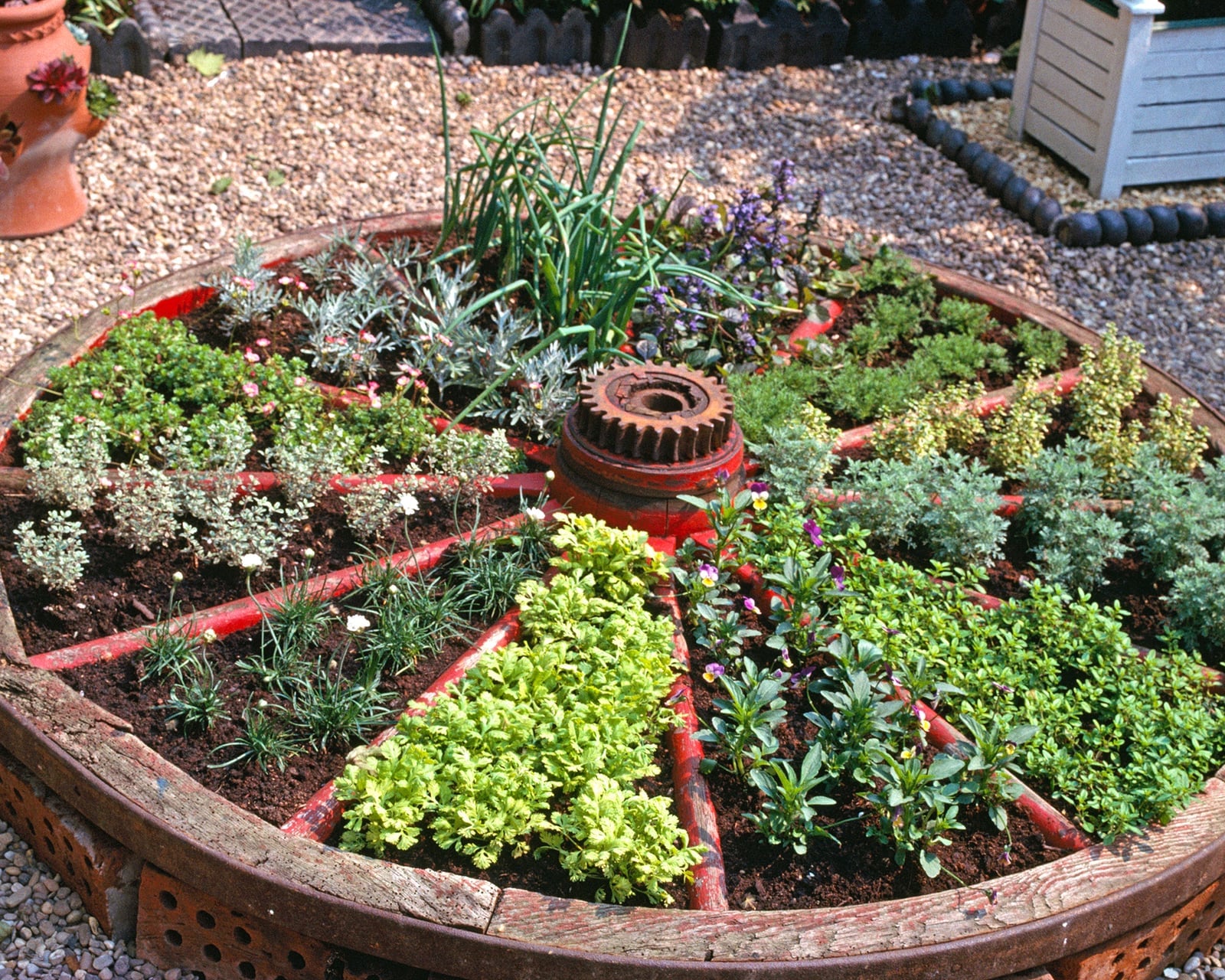
A wagon wheel laid flat and planted with herbs is a budget swap that has a clear point: it turns a found object into a circular planter. The wheel’s metal rim and wooden spokes divide the planting area into natural sections, so each herb gets its own wedge of soil. The red, green, brown, and earth tones of the plants and the wheel blend with a brick or stone patio. This kind of planter works best on a medium-sized patch of ground where you want a focal point without digging a full bed. The wheel will eventually rust, which only adds to the rustic look.
Vibrant Cottage Garden with Layered Flowering Plants
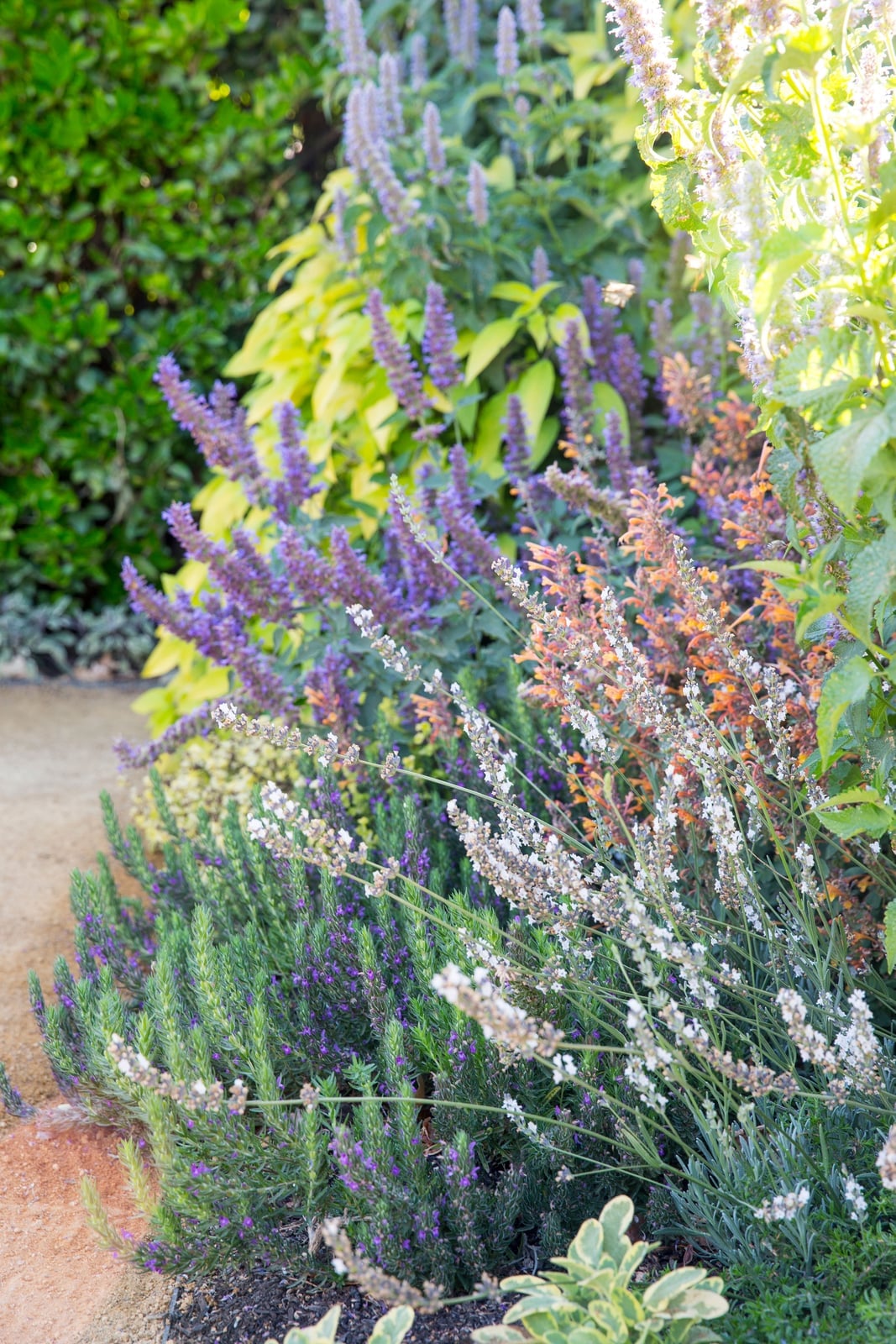
A layered planting bed uses height and bloom timing to keep the garden interesting from spring through fall. In this cottage garden, tall purple salvia and lavender stand behind lower mounds of orange and white flowers, with gravel paths weaving between the beds. The mix of purple, orange, green and white creates a palette that feels lively without being chaotic. Each layer gets enough light because the taller plants sit at the back of the bed. This kind of layout works well for a roomy garden where you want a long season of color without replanting every few weeks.
Farmhouse White Shelving Unit with Terracotta Herb Pots
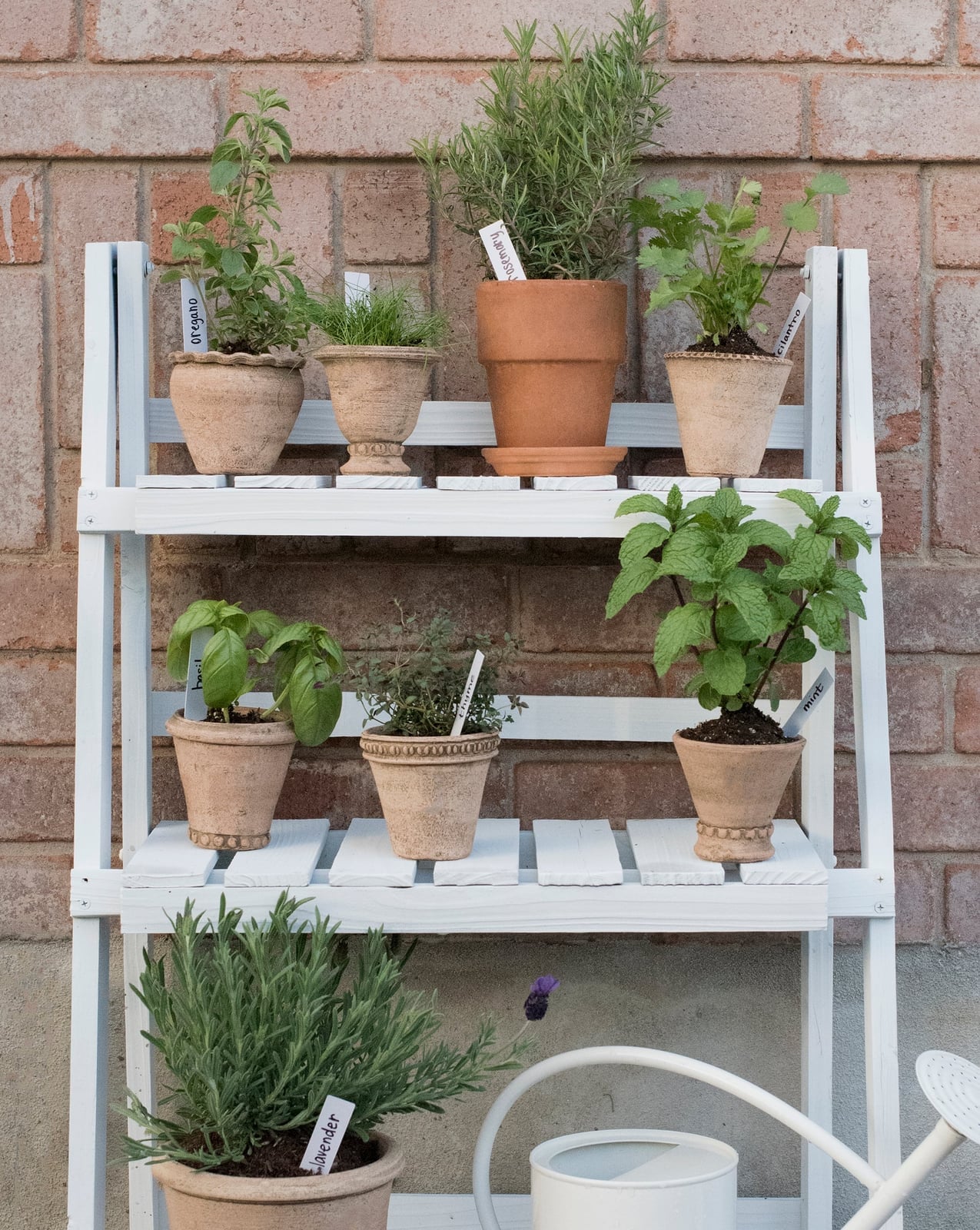
A white wooden shelving unit set against a brick wall holds rows of terracotta herb pots, each one filled with a different green plant. The light terracotta against the white shelves keeps the display airy, while the brick adds warmth. This setup groups the pots at eye level so watering and harvesting are easy. The white shelving and terracotta combination reads as classic farmhouse without feeling precious.
Formal Garden with Sculpted Hedges and Stone Statue
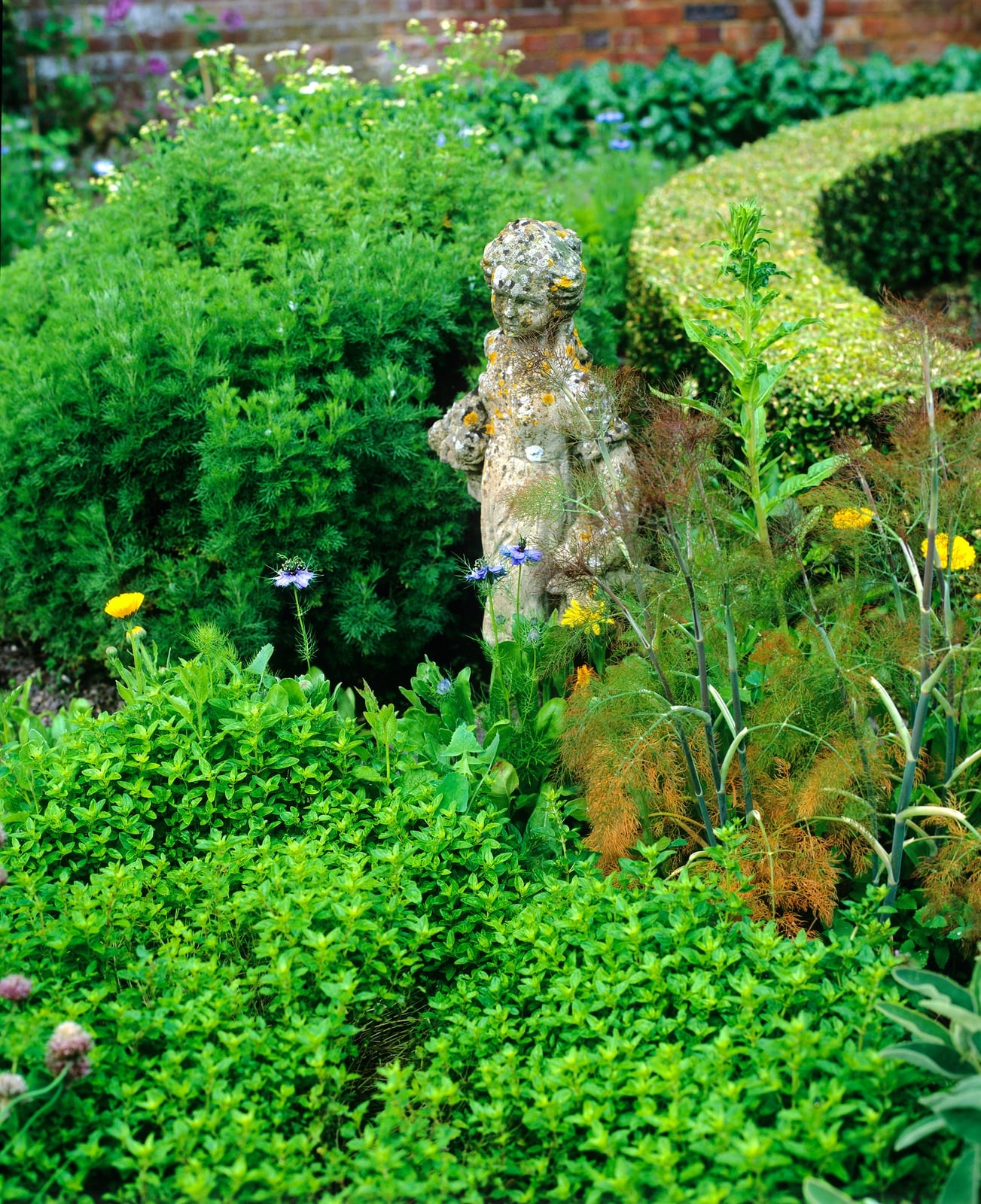
A central stone statue anchors this formal garden, with curved beds of flowering plants and sculpted hedges radiating around it. The weathered stone reads as the oldest element in the space, while the hedges and flowers fill in with green, yellow and blue. Gravel paths keep the layout crisp and define the curves without needing edging. For a renter-friendly version, place a single stone urn or bird bath in a flower bed and trim the surrounding plants into simple rounded shapes. The statue becomes the focal point, and everything else stays low enough to frame it.
Natural Herb Baskets with Lush Green and Purple Foliage
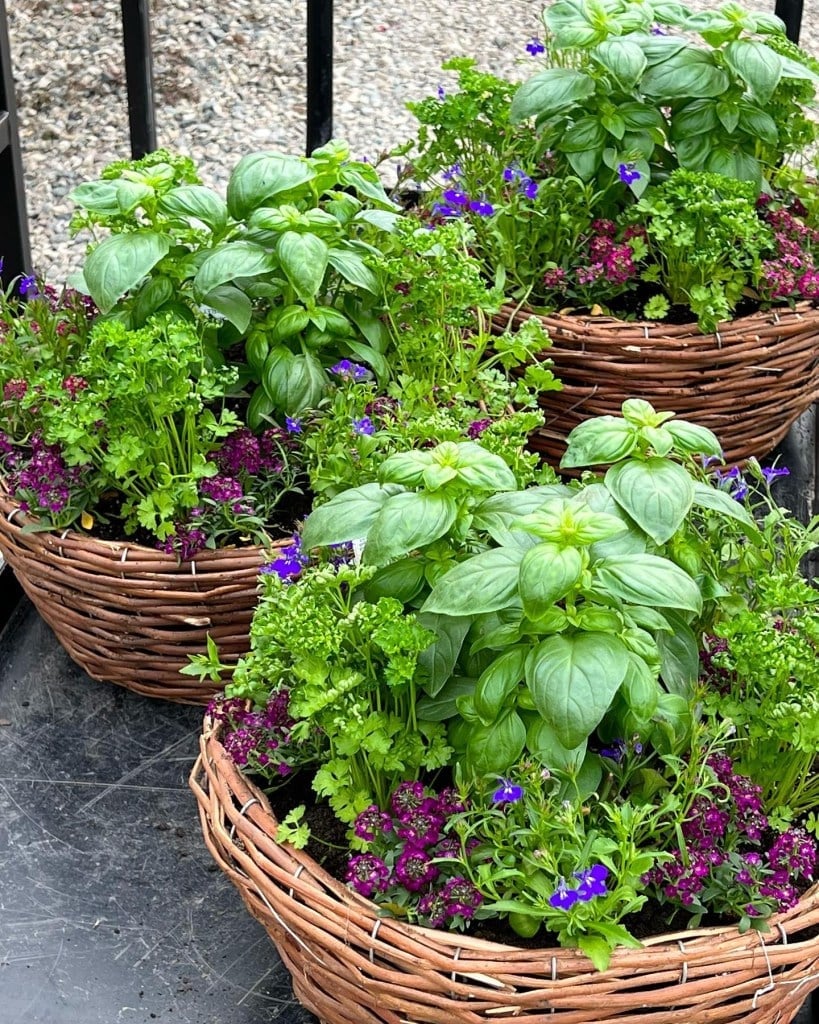
Wicker baskets blend into a garden more easily than plastic pots, especially when the herbs inside are full and trailing over the edges. In this setup, three woven baskets hold basil, parsley and small purple flowers, with the brown wicker and green leaves softening the overall look. The baskets sit directly on the ground, which keeps the arrangement compact and makes it easy to shift them as the sun moves. If you usually plant herbs in rows, grouping them in baskets creates a looser, more gathered feel. The soft daylight brings out the purple tones in both the flowers and the darker basil leaves.
Modern Horizontal Herb Planter in Dark Gray
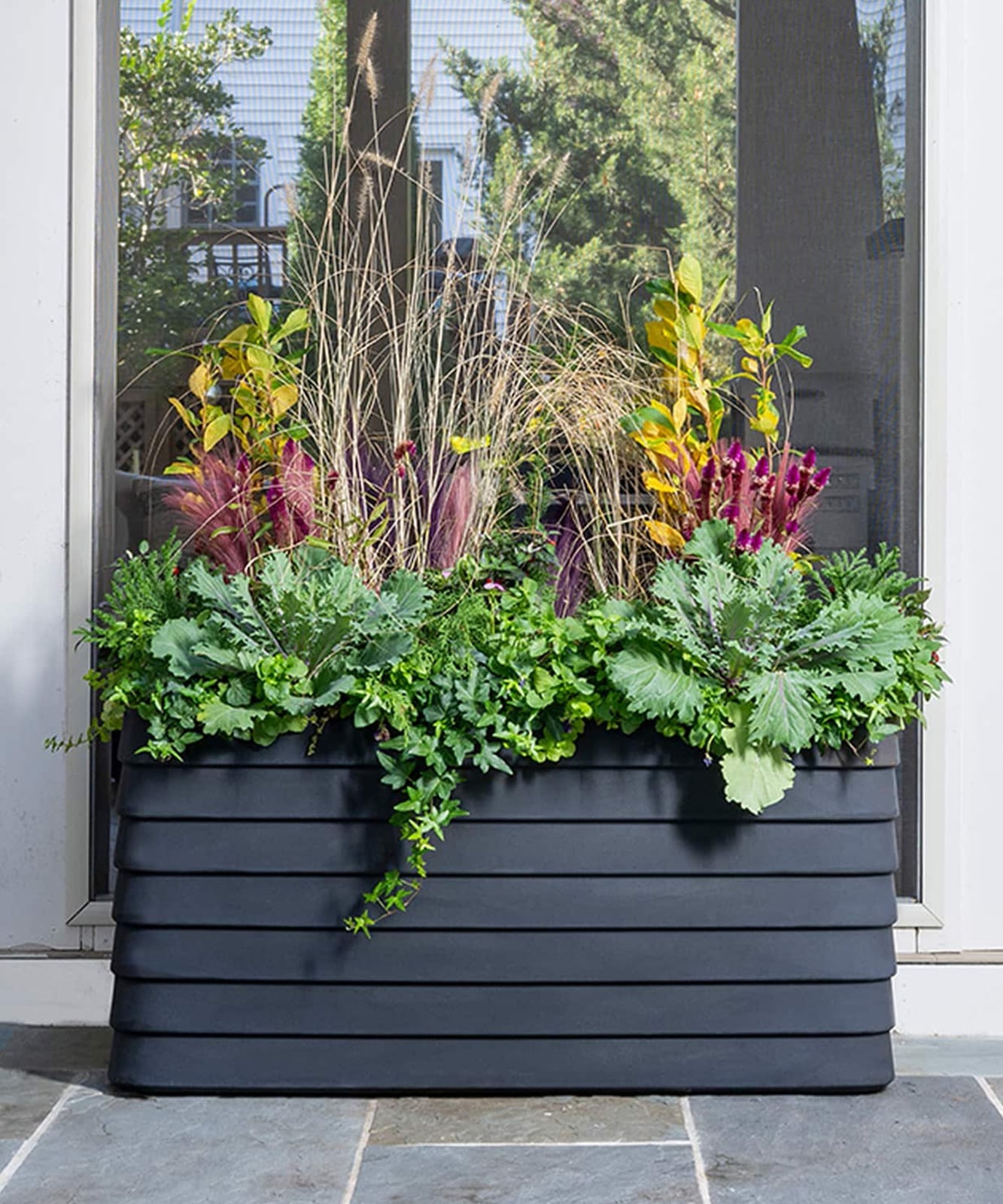
A long dark gray planter stretches across a stone patio, filled with a mix of herbs that include green, purple and yellow foliage. The horizontal shape mirrors the line of the patio edge, which makes the planter feel built into the space rather than placed on it. Dark gray plastic keeps the weight low and holds moisture longer than terracotta. For a patio that gets full sun, a single long container like this gives each herb enough root room without taking up the whole floor.
Modern Farmhouse Vertical Herb Garden with Labeled Boxes
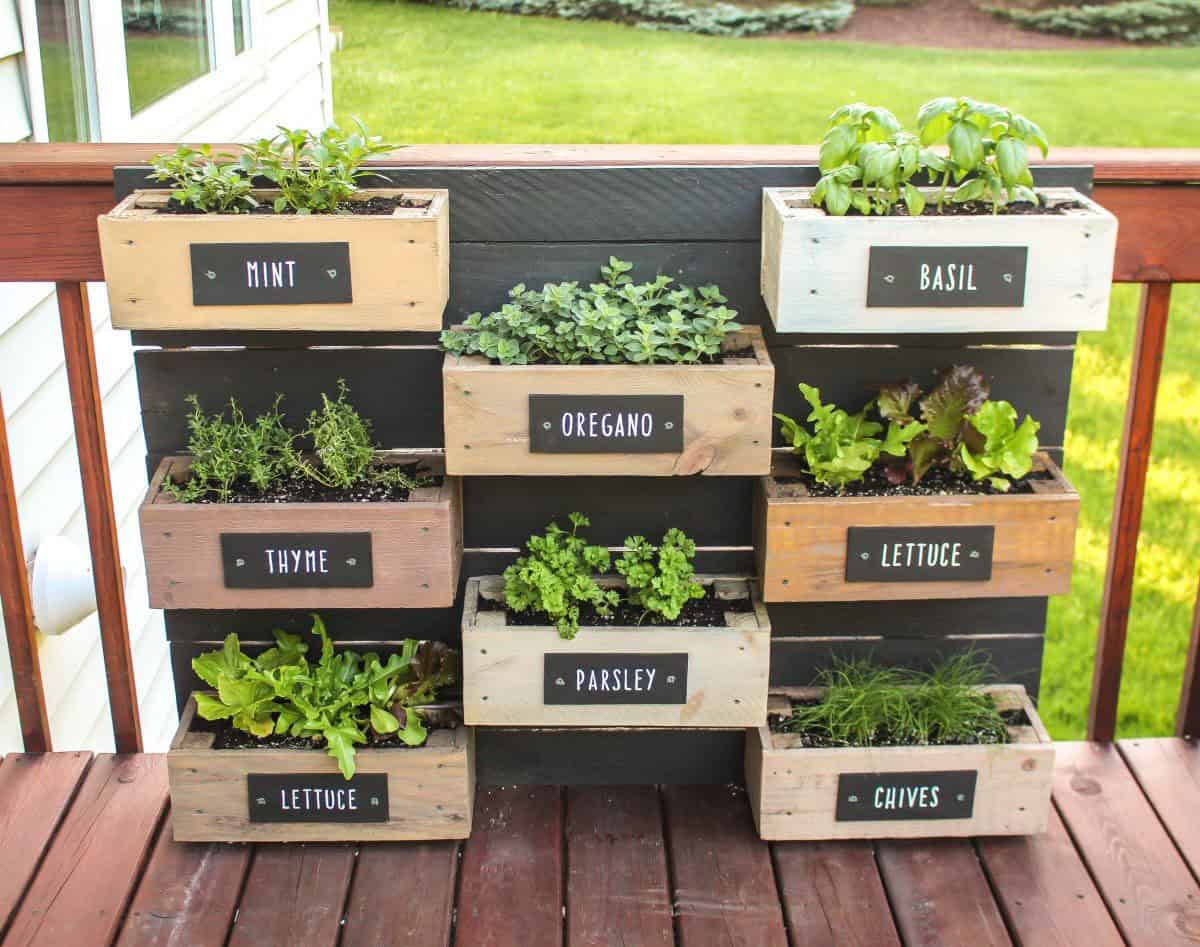
A wall-mounted vertical herb garden with clearly labeled boxes is a clean, practical solution for a deck. The wooden planter boxes hold a mix of assorted herbs, each one marked so you know what you are picking. Black metal hardware and labels keep the look modern farmhouse without fuss. The compact layout uses vertical space, leaving the deck floor open for seating or traffic. This is a good approach if you want the herbs organized and easy to reach. The labels also add a graphic element that breaks up all the green. Just check your local climate before choosing which herbs to plant, since sun exposure on a deck varies.
Rustic Oval Galvanized Metal Tub Herb Planter
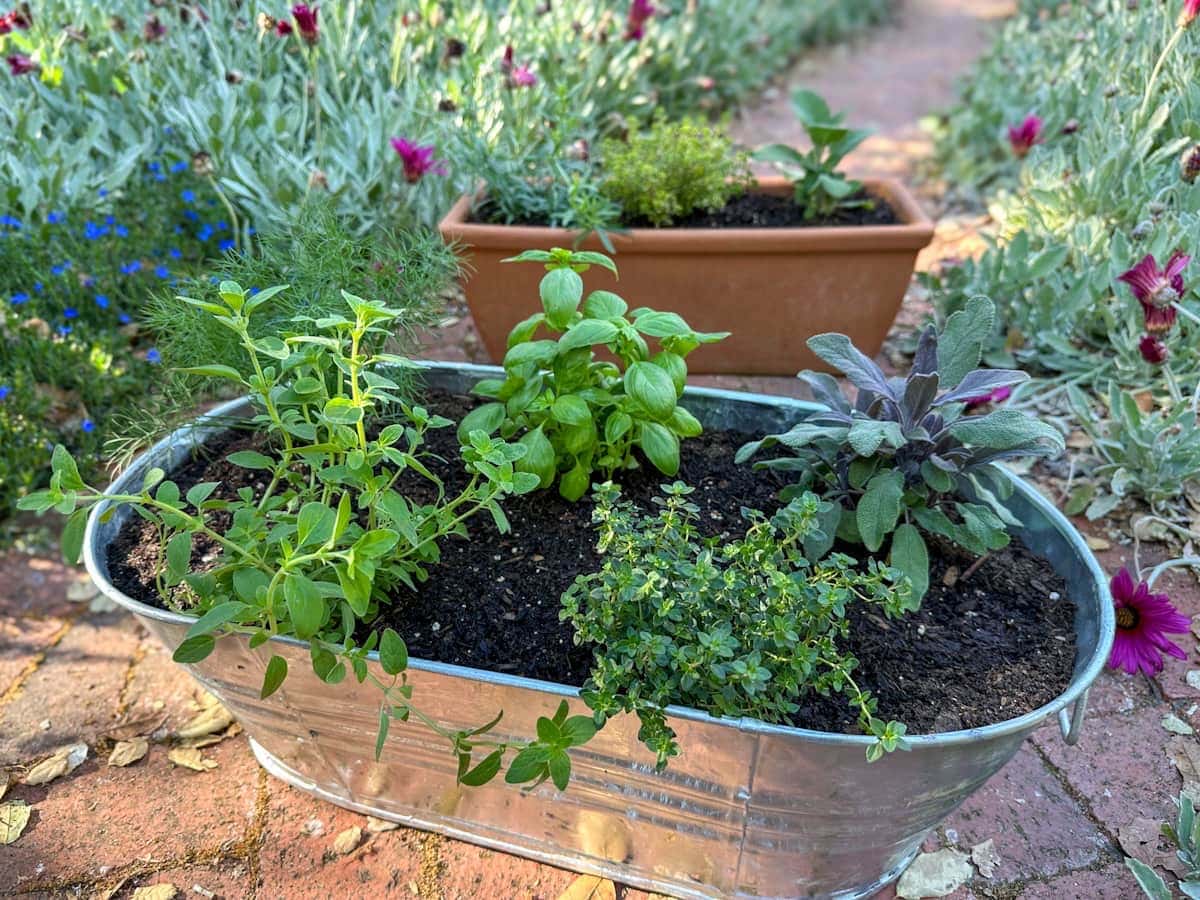
Choose a planter that moves with you. An oval galvanized metal tub filled with a variety of herbs fits that brief. The silver metal contrasts with the green foliage and a pink bloom from a nearby terracotta pot. The metal tub sits directly on the garden soil, but you can lift it onto a patio or balcony just as easily. The material is lightweight enough to relocate and resists rust better than plain steel. Pairing the tub with a terracotta pot adds warmth and breaks up the industrial feel. This setup shows that a rental garden does not need permanent beds to look put together. Just check your USDA zone to confirm which herbs will thrive in a container.
Farmhouse Ladder Planter with Terracotta Herb Pots
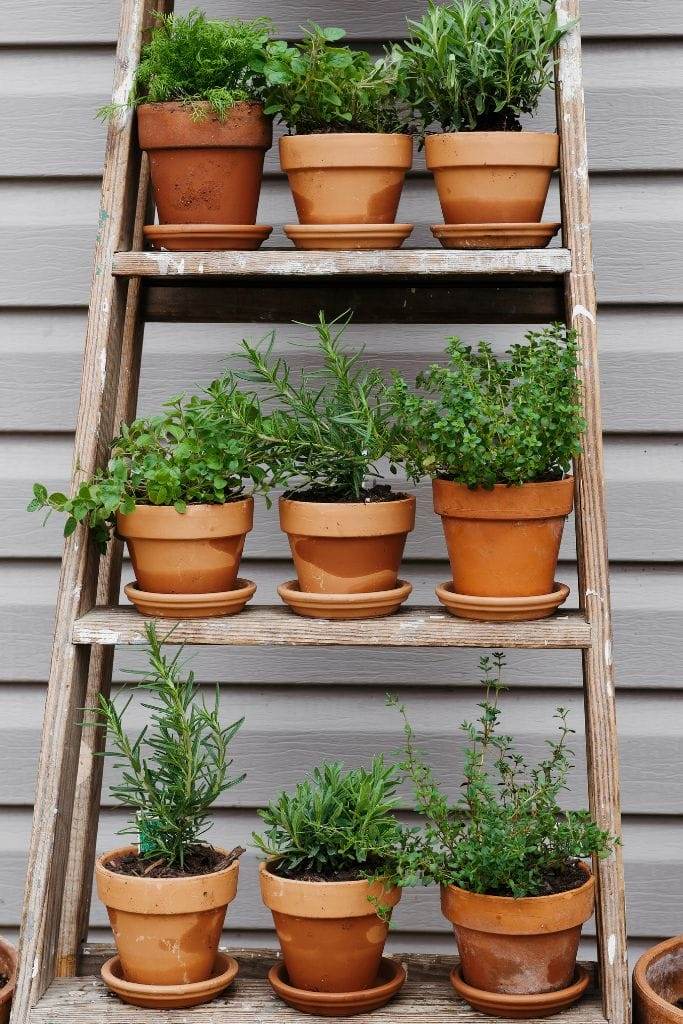
A ladder planter holds terracotta pots on its rungs, creating a vertical tiered layout for herbs. The wood frame leans against a garden wall, and the warm terracotta against the gray-green foliage reads as classic farmhouse. This arrangement uses the vertical plane so you can grow several herbs without taking up much ground space. The open rungs let each pot drain freely, which matters for plants like rosemary that dislike wet roots. It is a straightforward way to add height to a flat garden bed.
Modern Stacked Planter Tower with White Finish
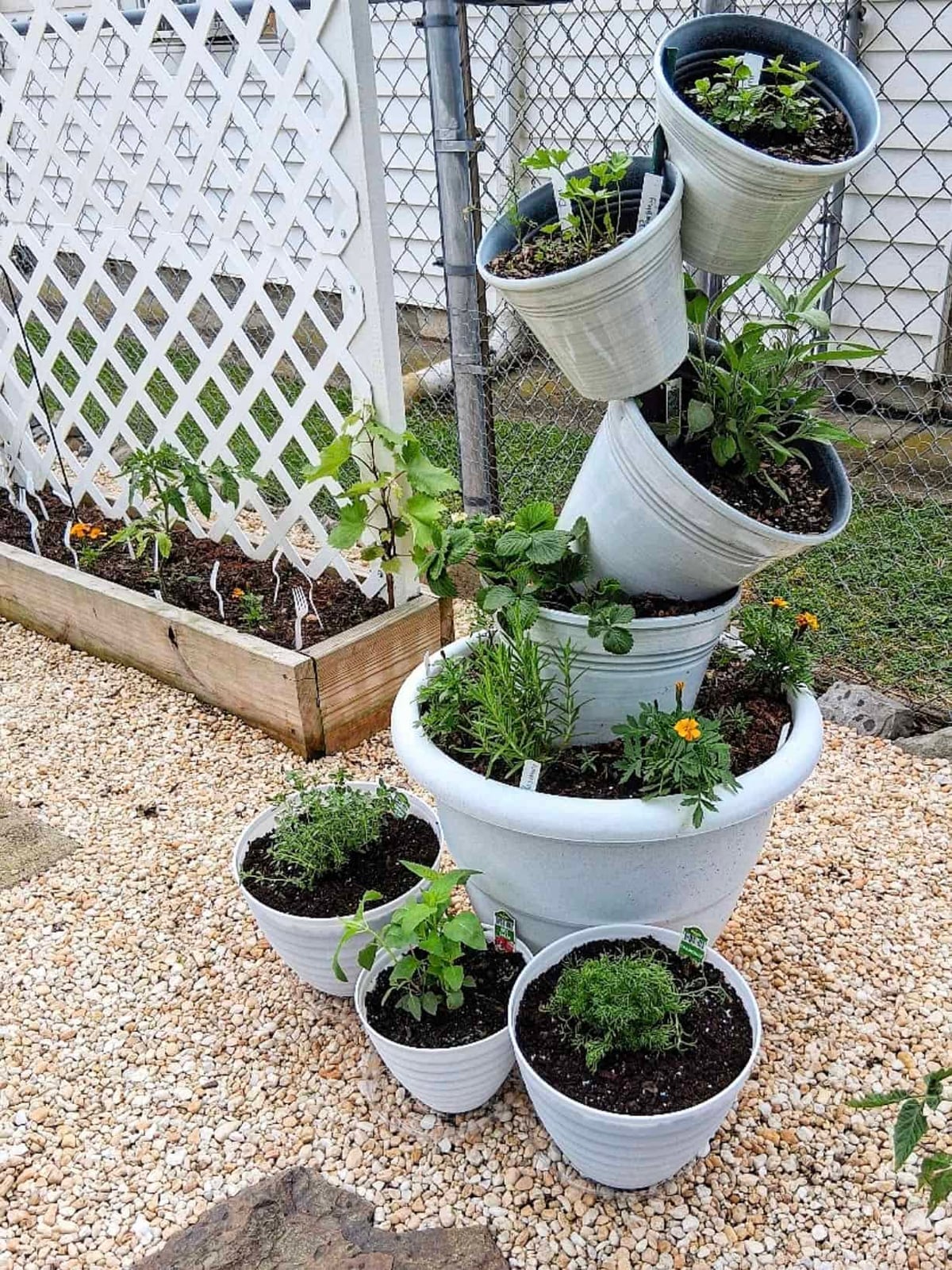
For outdoor planters, match the container size to the surrounding space. A white stacked planter tower in a garden looks modern without feeling bulky. The white finish reflects light, keeping the structure from dominating the planting. The stacked vertical arrangement holds several herbs in a compact footprint, which works for a small garden or a corner of a patio. Soft daylight and gray gravel underneath keep the scene neutral. The plastic material is lightweight and resists cracking in cold weather, so the planter stays put through the seasons. Just check your local frost dates before planting.
Rustic Tabletop Vignette with Repurposed Window Frame
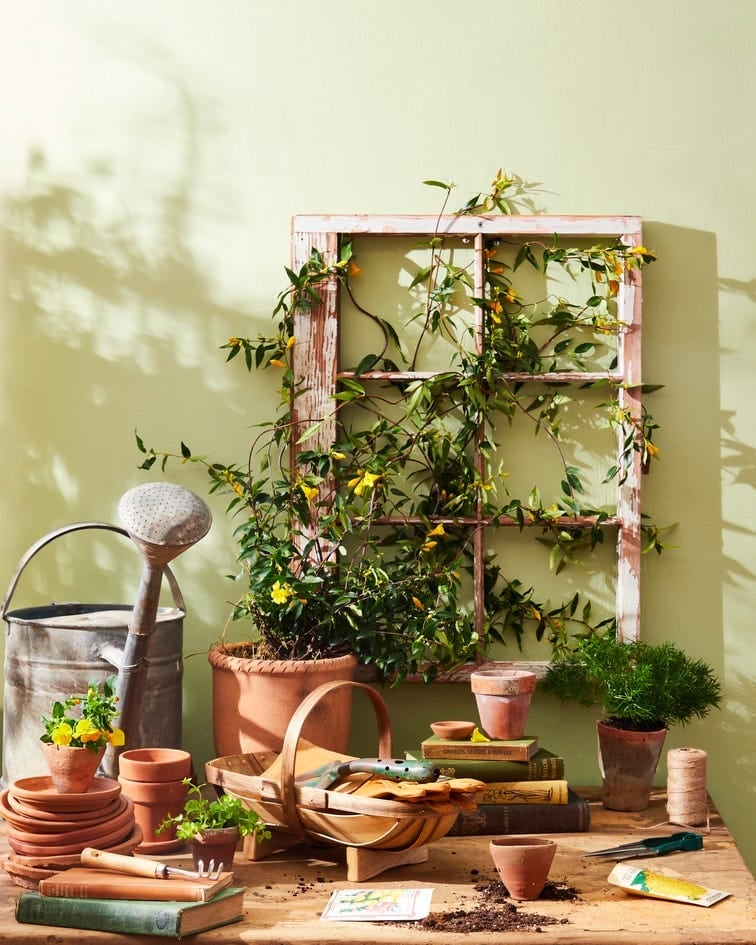
A repurposed window frame herb garden offers a different look than a standard planter box. The distressed wood frame leans against a patio wall, with a climbing plant weaving through the panes. A small watering can, a terracotta pot, and a basket sit on the tabletop below, creating a layered vignette. The sage green and yellow tones in the frame and accessories keep the arrangement soft and rustic. This approach works if you want herbs close at hand for cooking but prefer a decorative display over a utilitarian row of pots. The vertical element draws the eye upward, making the patio feel larger. The climbing plant adds a living texture that changes through the season. Just confirm that the window frame wood is untreated or sealed for outdoor use, since pressure-treated lumber can leach chemicals into the soil.
Modern Rustic Stacked Ceramic Planters with Chalkboard Labels
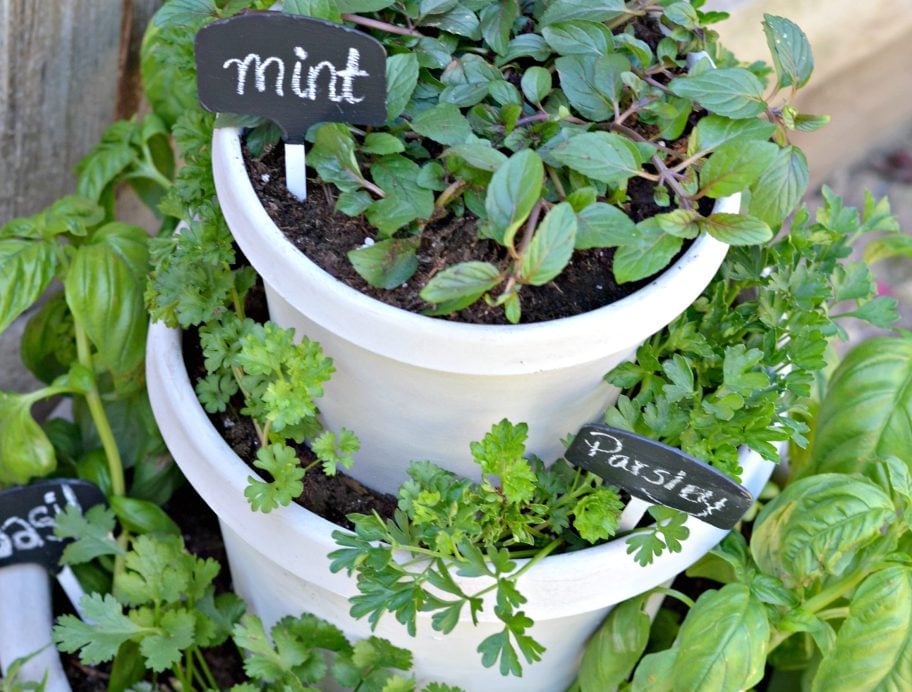
Two stacked white ceramic planters turn a corner of the garden into a compact herb station. The top tier catches more sun, while the lower one stays shaded and holds varieties that appreciate it. Chalkboard labels on each planter solve the problem of telling sage from thyme at a glance. For storage, keep a small bag of soil and a trowel nearby on a low shelf so replanting stays quick. The white glaze reflects heat, which helps roots in a sunny spot. This setup works for renters since the planters lift off and move as one unit.
Modern Vertical Wall Garden with Black Planters
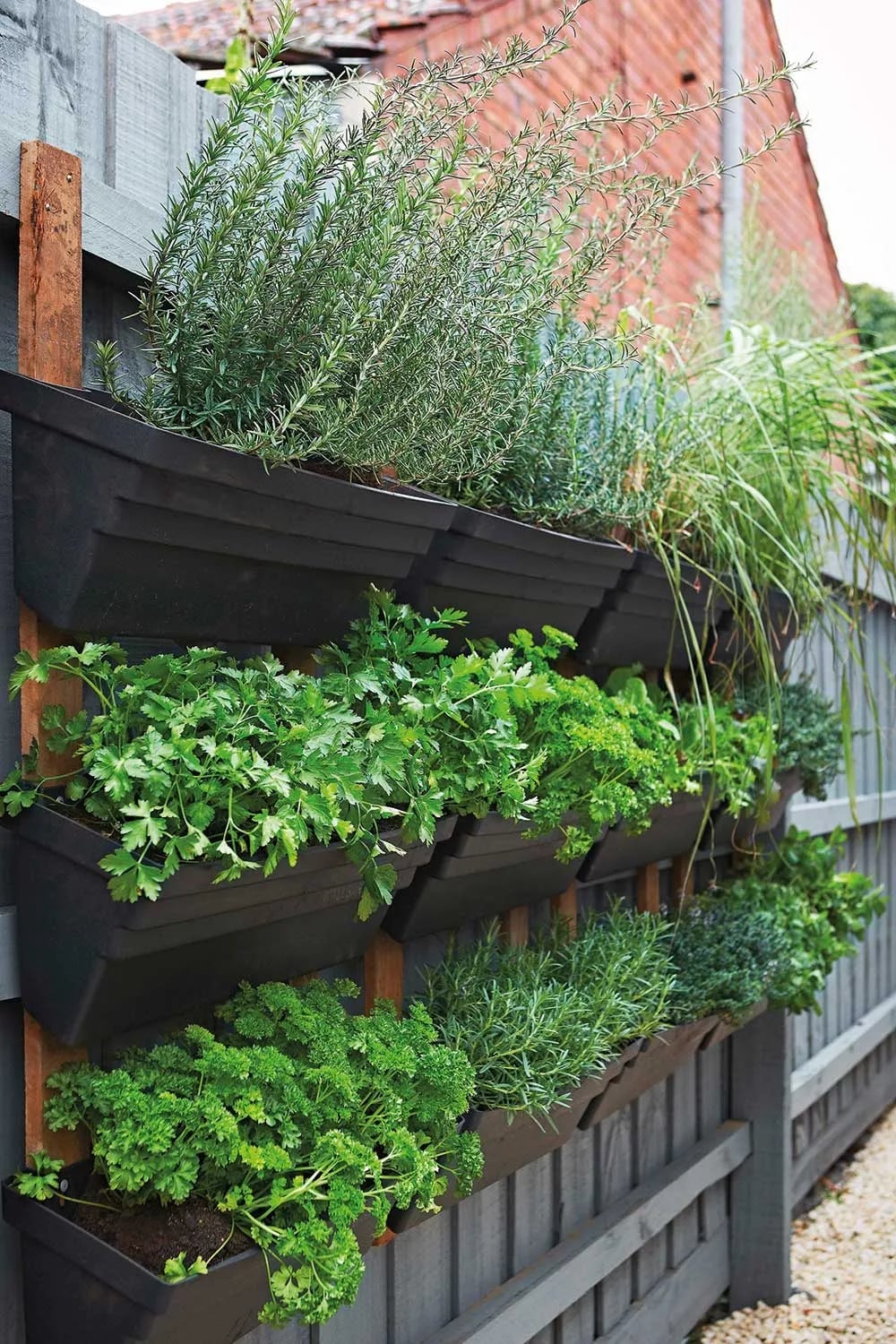
A wall-mounted grid of black planters turns a bare garden wall into a living pantry. The dark plastic containers absorb warmth during the day and release it at night, which can extend the growing season for tender herbs. Metal brackets and a wood backing frame keep the whole thing stable. Each pocket holds a single plant, making it simple to swap out a spent basil for a fresh start. The vertical layout puts every herb at eye level, so watering and harvesting need no bending. For the best light, mount the system on a south-facing wall, but adjust for your own yard.
Rustic Hanging Wire Basket Herb Planter
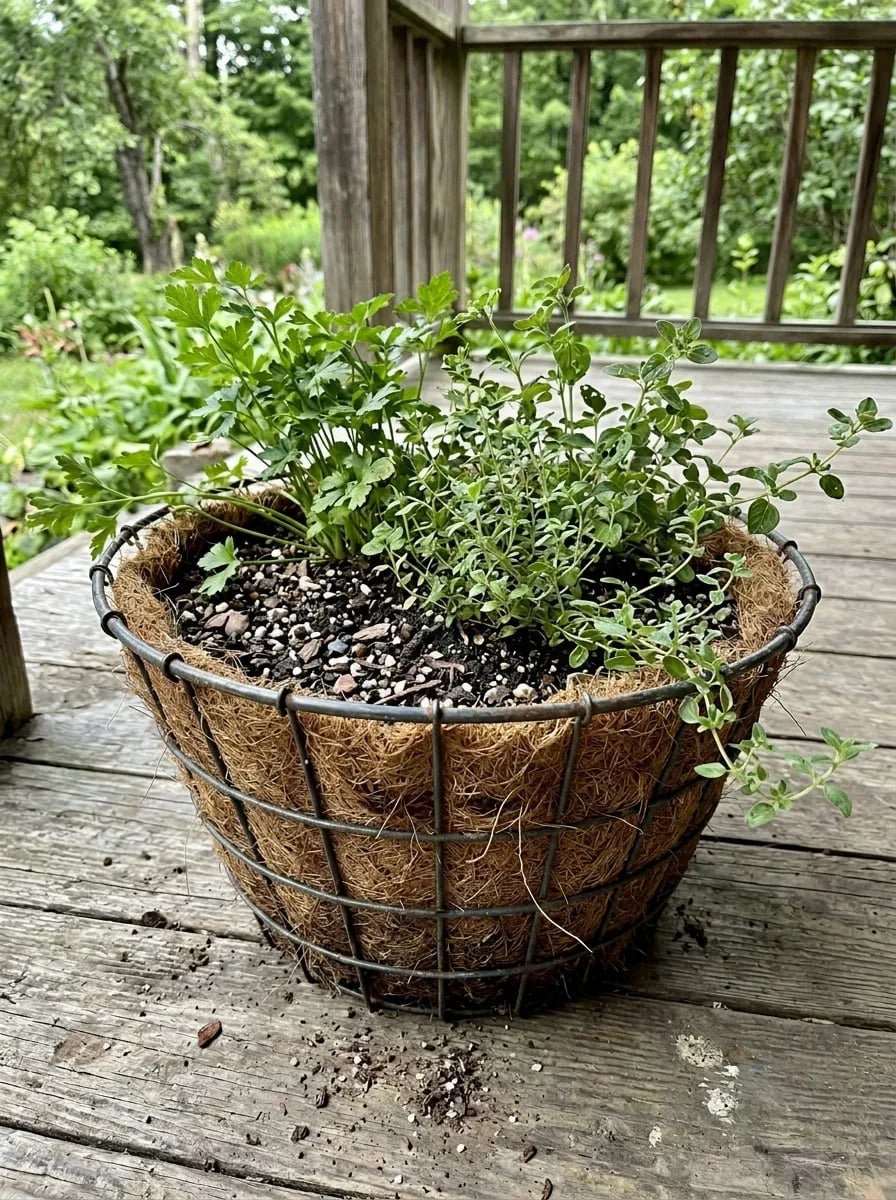
A hanging wire basket skips the footprint of a tabletop garden altogether. The coir liner holds moisture better than bare wire, so the soil dries out more slowly between waterings. This matters for herbs like mint and parsley that dislike dry roots. The basket hangs from a porch beam or a sturdy hook, which keeps the plants out of reach of ground-level pests. The open wire sides let air circulate around the root ball, reducing the chance of rot. A single basket holds three to four small herbs, enough for casual cooking. Choose trailing varieties like oregano or thyme to soften the basket edge. The natural brown and gray tones blend with any porch finish.
Rustic Pallet Herb Garden with Pastel Metal Containers
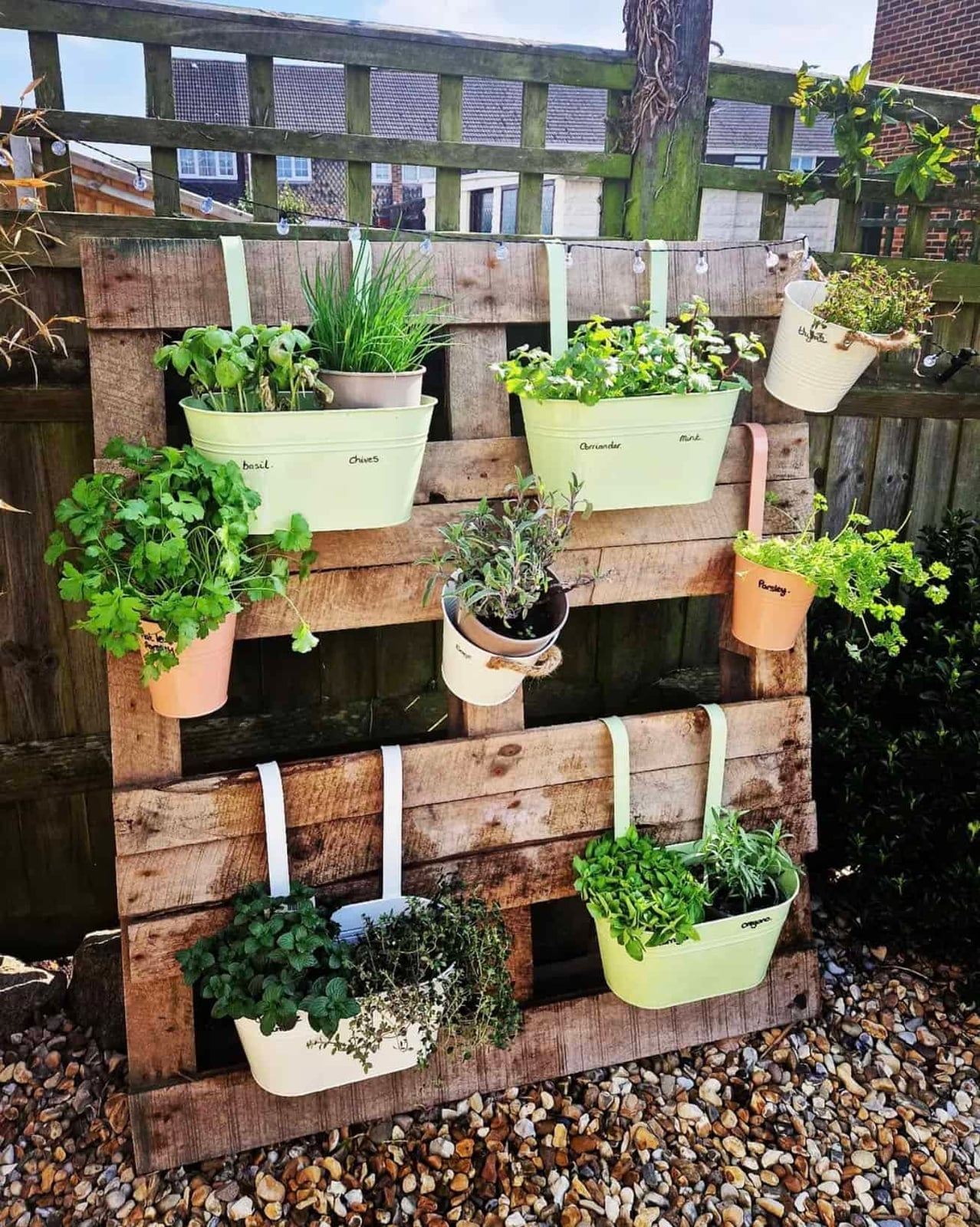
A reclaimed wood pallet holds individual pastel metal pots in a vertical row. The light colors of the containers contrast with the weathered wood, making the herbs stand out. Each pot lifts out separately, so you can rotate a leggy plant toward the sun without disturbing the others. For a renter-safe swap, lean the pallet against a wall instead of mounting it. The slats provide natural drainage gaps, and the metal pots heat up faster than ceramic, which suits basil and rosemary in cooler spring weather.
Modern Rustic Mason Jar Herb Garden on a Tray
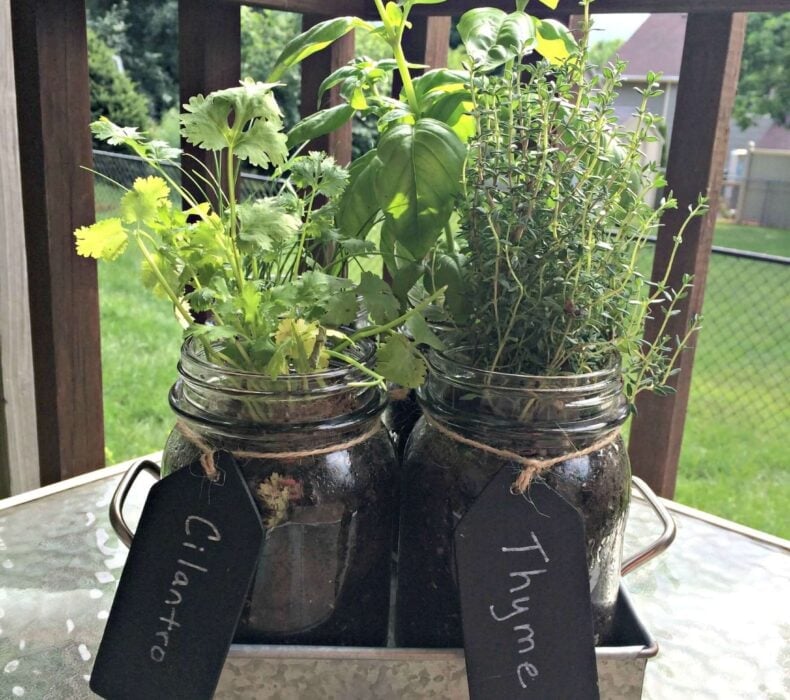
Glass mason jars lined up on a metal tray create a portable herb garden that moves with the sun. The clear glass lets you see root growth and soil moisture at a glance, so you know when to water. A layer of pebbles at the bottom of each jar prevents roots from sitting in standing water. The metal tray catches any drips, which keeps the deck surface dry. For storage, slide the whole tray under a bench during a storm. Twine wrapped around the jar necks adds grip for carrying. This system works well for a single variety per jar so that each herb gets the exact watering it needs.
Shabby Chic Repurposed Door Herb Display
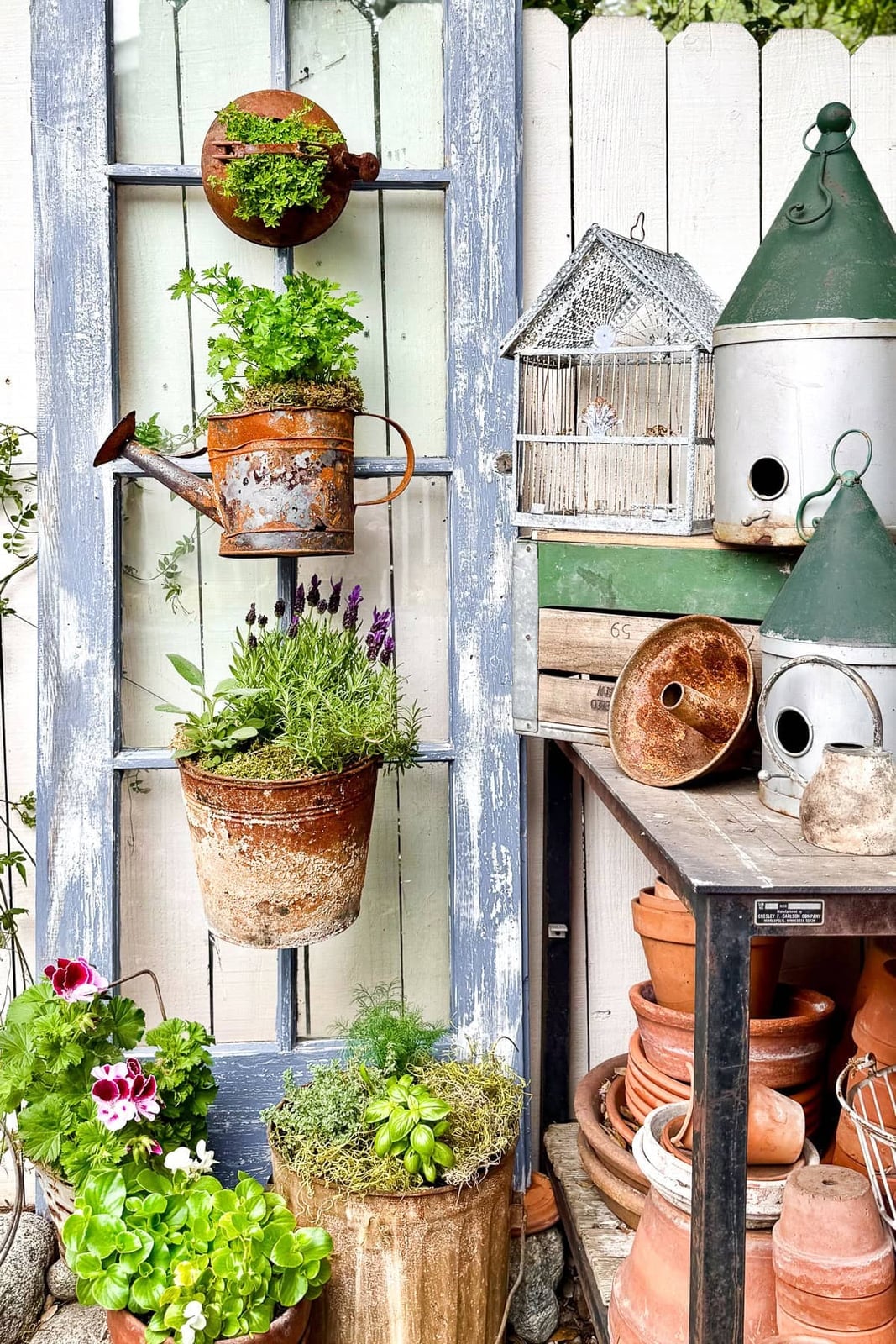
A formal wall planter can feel too deliberate for a relaxed garden. An old door mounted flat against a wall, with a watering can planter, a few terracotta pots, and a small birdhouse attached to it, creates a different feel. The weathered wood and rusted metal bring a shabby chic look that softens the garden’s edge. The watering can planter acts as the focal point, while the smaller pots scatter around it in a planned cluster. The palette of blues, greens, terracotta, and rust ties the door to the surrounding plants. For a renter, this setup works because the door leans against the wall instead of being permanently fastened. The compact layout fits a narrow garden corner without taking up ground space.
Casual Patio Container Herb Garden in a Large Gray Tub
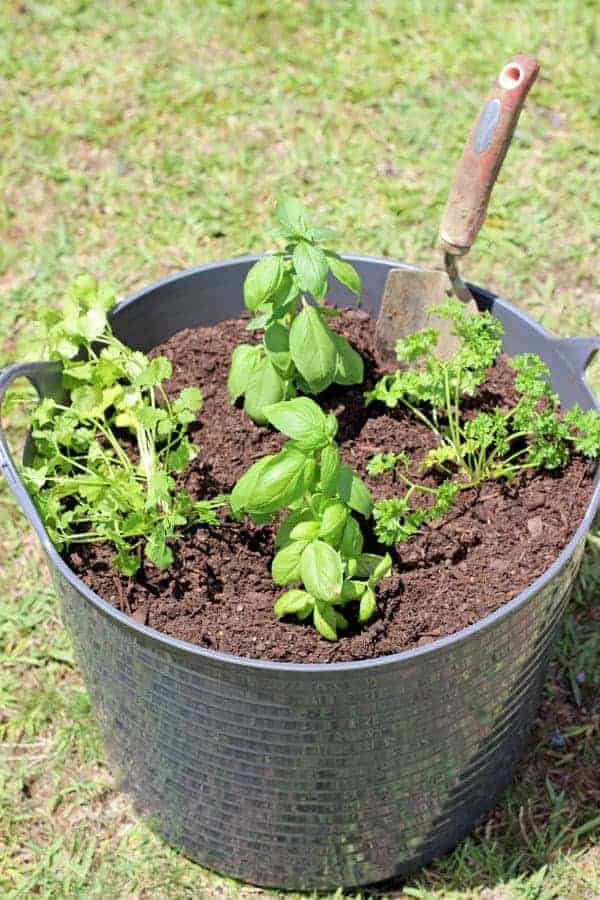
A single large gray plastic tub holds basil, parsley, and cilantro in one compact container, which simplifies watering and weeding into one task. The tub sits on a patio, with a small metal trowel resting in the soil, ready for quick harvests. The casual style means the tub does not need to match the patio furniture or the house siding. The gray color blends with concrete or stone patios, so the planter does not stand out more than the herbs themselves. The plastic material is lightweight, so moving the whole garden to follow the sun or to avoid a frost is a one-person job.
DIY Rustic Pallet Vertical Herb Garden on a Deck
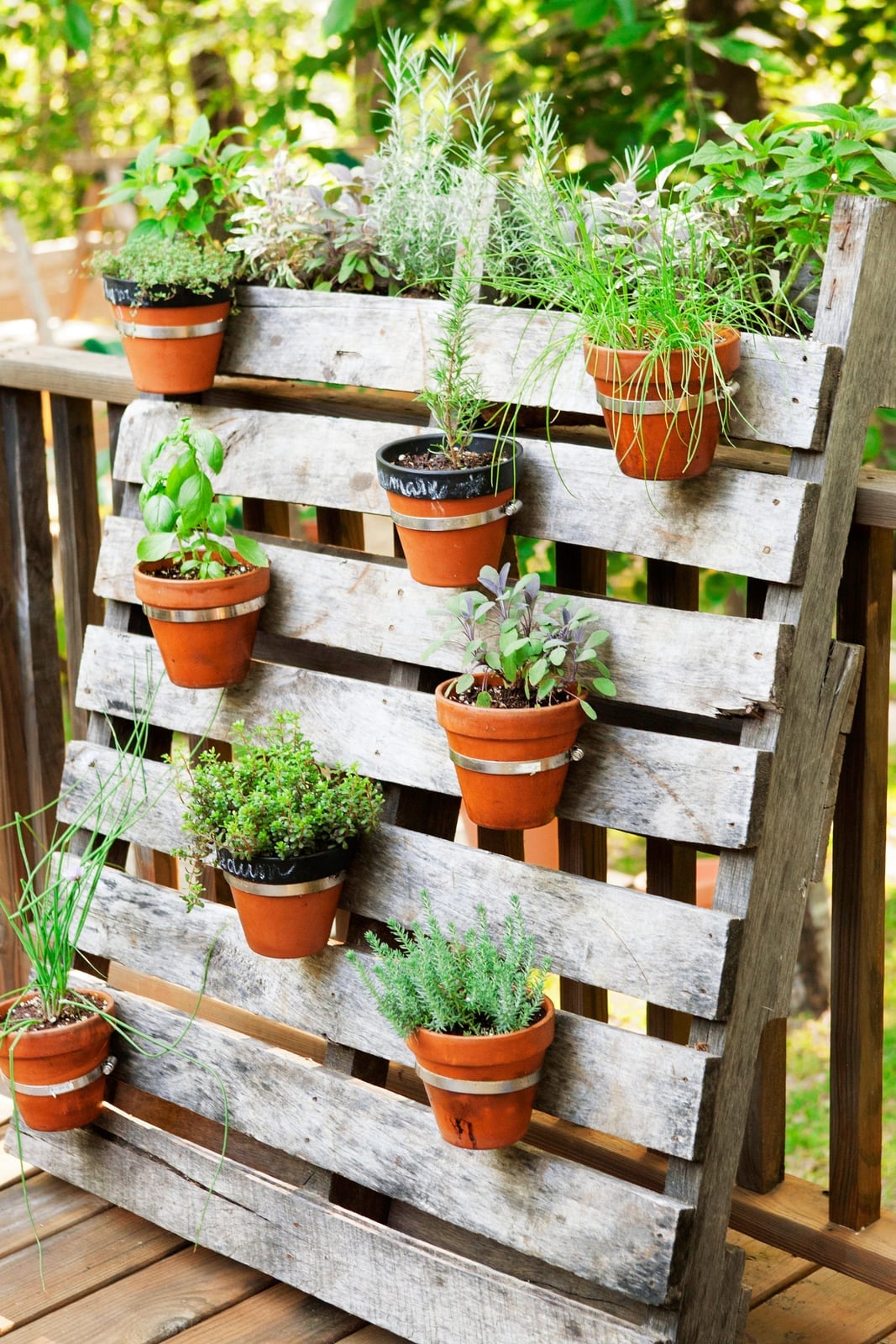
A reclaimed wood pallet holding terracotta pots in a vertical arrangement is a straightforward way to grow herbs on a deck without sacrificing floor space. The terracotta against the weathered wood keeps the look rustic, and the vertical focus means each pot gets direct daylight. The pallet leans against a railing or wall, which makes it stable without permanent installation. For durability, untreated pallet wood weathers to a gray tone that matches the rustic style, but sealing the wood extends its life through wet seasons. The terracotta pots breathe, which helps prevent overwatering in humid climates.
Final Thoughts
A well-planned herb garden rewards you with fresh clippings and a tidy corner of the yard. Most setups need six hours of sun and well-draining soil. Water when the top inch feels dry, and prune often to keep plants bushy. If you’re in a colder zone, move pots indoors before frost. The best layout is the one you’ll actually use, whether that’s a raised bed, a set of terracotta pots, or a repurposed pallet. Start small, and let the garden grow with you.