
Landscaping with large rocks is a direct way to add structure and permanence to a garden. Boulders anchor the space visually and reduce the area you need to plant, water, or weed.
This roundup covers 26 approaches to using stone outdoors, from xeriscape beds with succulents to naturalistic ponds and tiered hillsides. Whether you want a modern minimalist look or a rustic retreat, these ideas show how rock can shape a garden that reads as established from day one.
Xeriscape Garden with Tan Boulders and Succulents
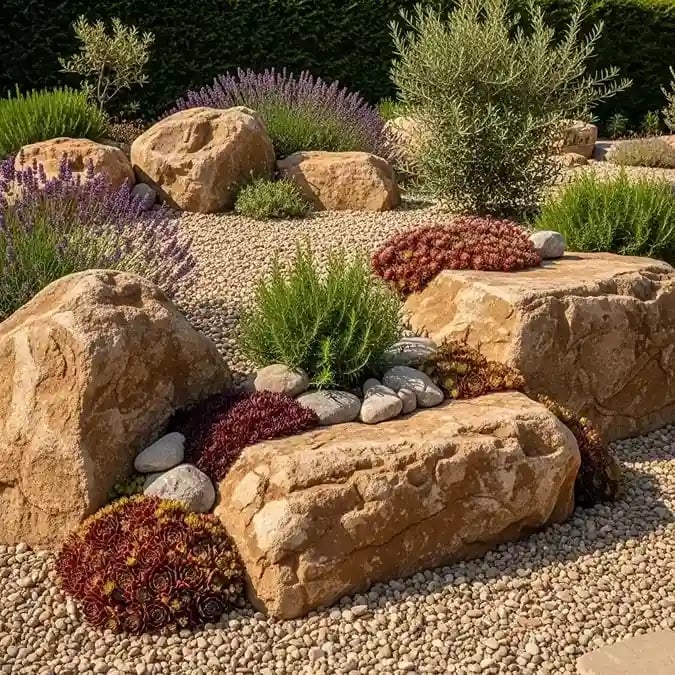
A bed of fine gravel sets the stage for large tan boulders and a mix of succulents, creating a naturalistic xeriscape that thrives on neglect. The rocks anchor the layout while the plants add color in reds, greens, and purples. Grouping the succulents around the base of the boulders gives the garden a settled look, as if the stones have been there for years. This is a material-driven design where the contrast between rough stone and soft succulents does all the work.
Naturalistic Garden Pond with Cascading Waterfall and Massive Boulders
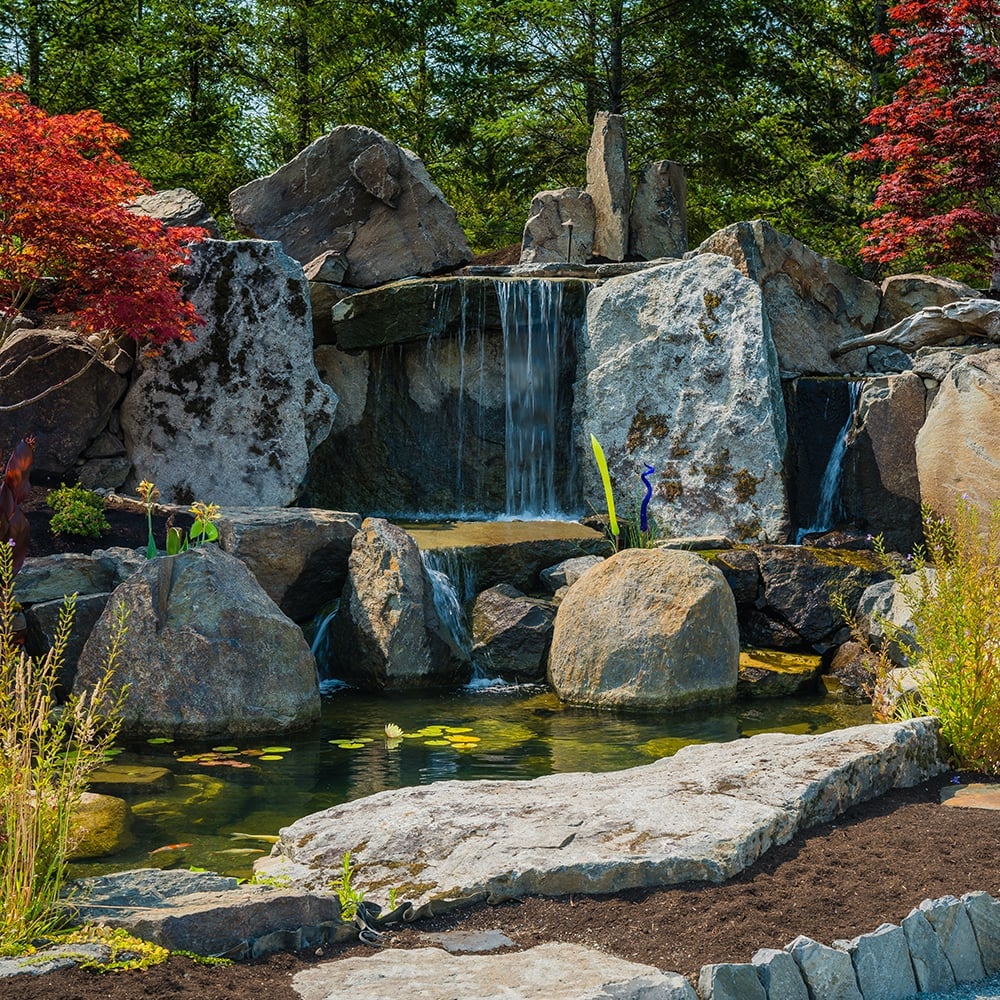
A pond with a cascading waterfall and massive gray boulders looks like a slice of wilderness. The palette is simple: gray stone, green plants, and blue water. The layout places the waterfall at the center, with boulders stacked to create height and depth. Water flows over the rocks into the pond below, where fish add movement. This kind of outdoor pond with waterfall and large boulders feels natural when the rocks look unarranged. Vary the size of the boulders so the waterfall looks like it belongs.
Modern Garden with Textured Boulders and Ground Cover
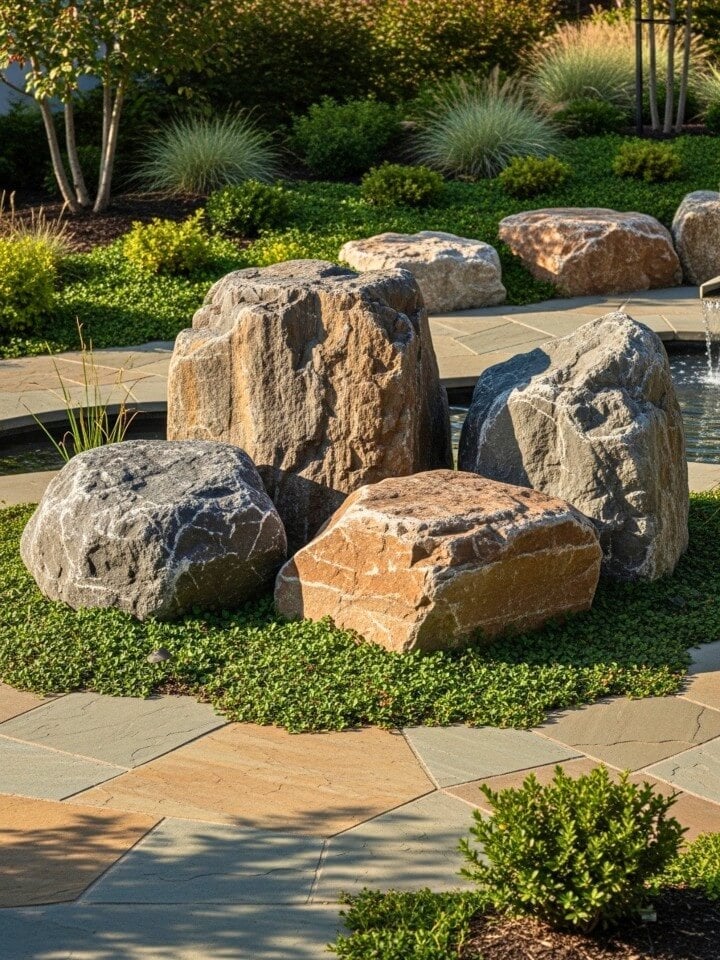
How do you make a rock garden feel deliberate rather than leftover? A cluster of large textured boulders on a bed of ground cover plants answers that. The materials are straightforward: gray and tan stone, gravel, and low-growing greenery. Stone tiles create a path that gives the garden structure. The boulders act as permanent sculpture, while the ground cover softens the edges. In a modern garden design with large textured rocks, leave space between the elements. Crowding the boulders makes the garden feel smaller. Let each rock breathe, and the whole garden opens up.
Tropical Garden Focal Point with Sandstone Boulder
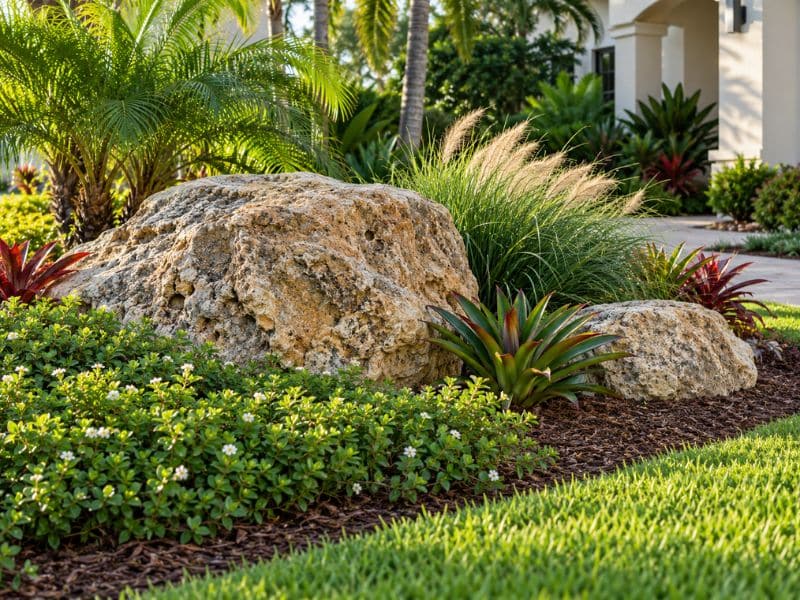
A large sandstone boulder with warm tan tones becomes the anchor for a tropical garden bed. Bromeliads and ornamental grass surround the stone, their greens and reds picking up the warmth in the rock. The boulder sits slightly off center, which gives the eye room to move around it. This tropical garden focal point with sandstone boulder works because the stone’s texture and color hold their own against the bold foliage. Golden hour light brings out the sandstone’s grain, making the whole scene feel richer without adding another thing.
Naturalistic Garden with Large Boulders and Vibrant Flower Beds
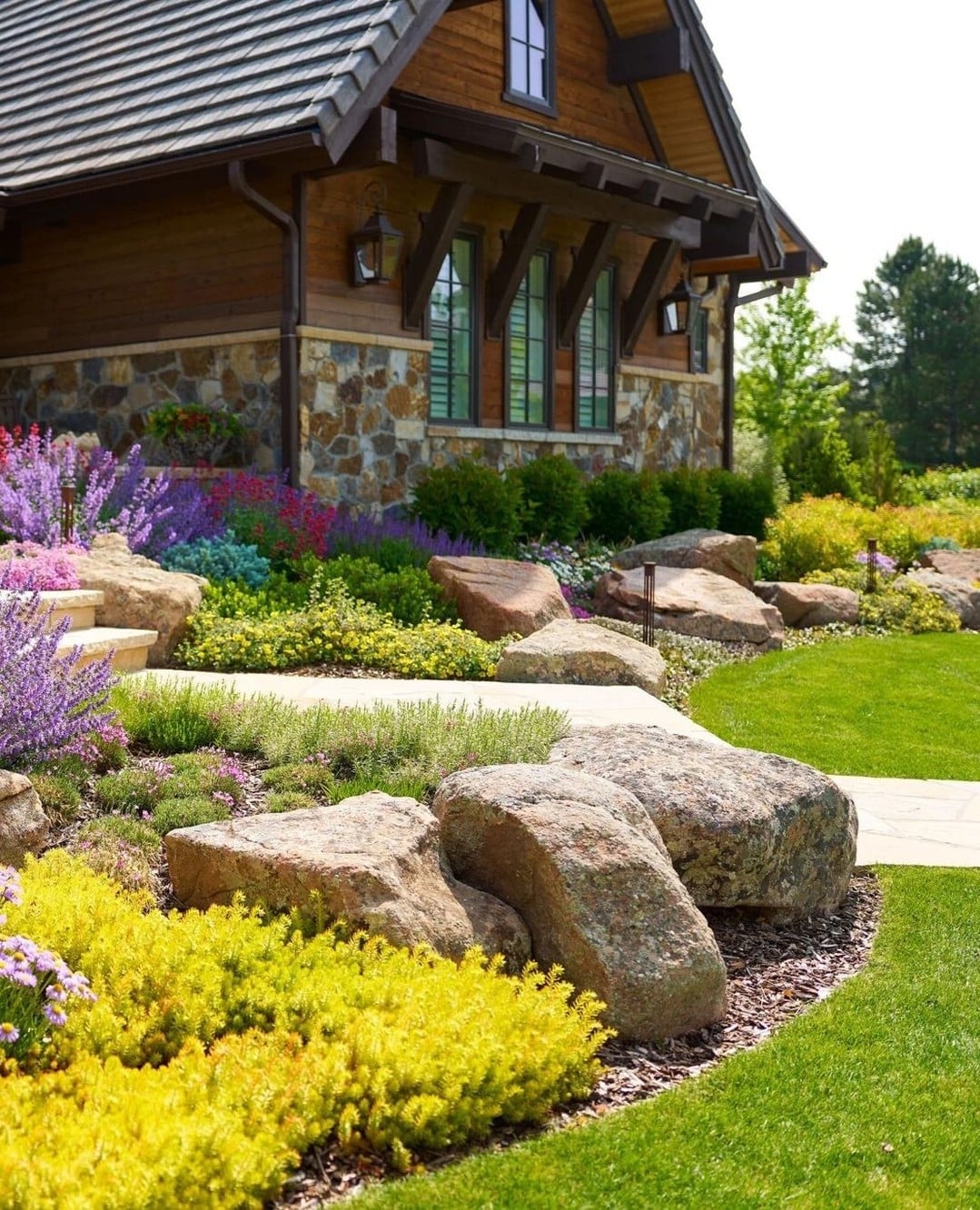
Large boulders form the structure of a naturalistic garden, with flowers adding color. Here, gray stone sits in garden beds among purple, yellow, and pink blooms. The stone house exterior in the background ties the palette together. The boulders are partially buried, which makes them look like they belong in the soil. For garden landscaping with large rocks and flowers, the ratio matters: more rock than flower keeps the garden grounded, while the flowers keep it from feeling like a quarry.
Garden Design Featuring Two Large Textured Boulders and Ornamental
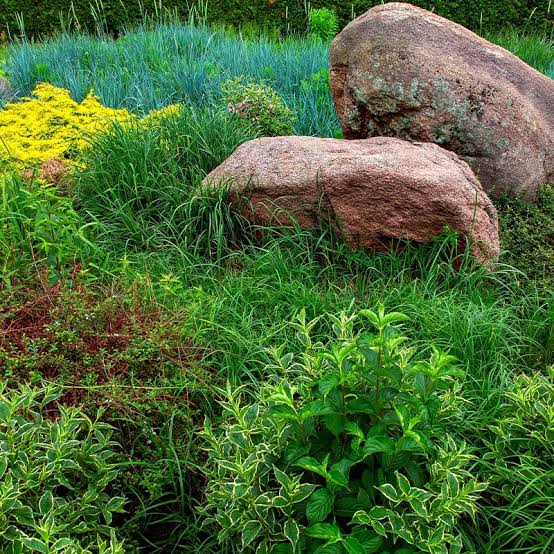
You could line up a row of identical shrubs and call it a day. This garden takes a different route, placing two large textured boulders as the main event. The boulders sit in a naturalistic layout that feels roomy, with ornamental grasses and shrubs tucked around them in a palette of green, brown, and soft yellow. The soft daylight keeps the scene from looking stark.
Two boulders create a stronger visual anchor than a dozen small rocks scattered around. Grouping them together gives the arrangement a settled look, and the surrounding plants soften the hard edges. To recreate it, look for one large boulder and a second that is a different shape or size, then plant low ground cover around the base to tie them into the garden bed.
Modern Naturalistic Backyard with Large Boulders and Stepping Stone
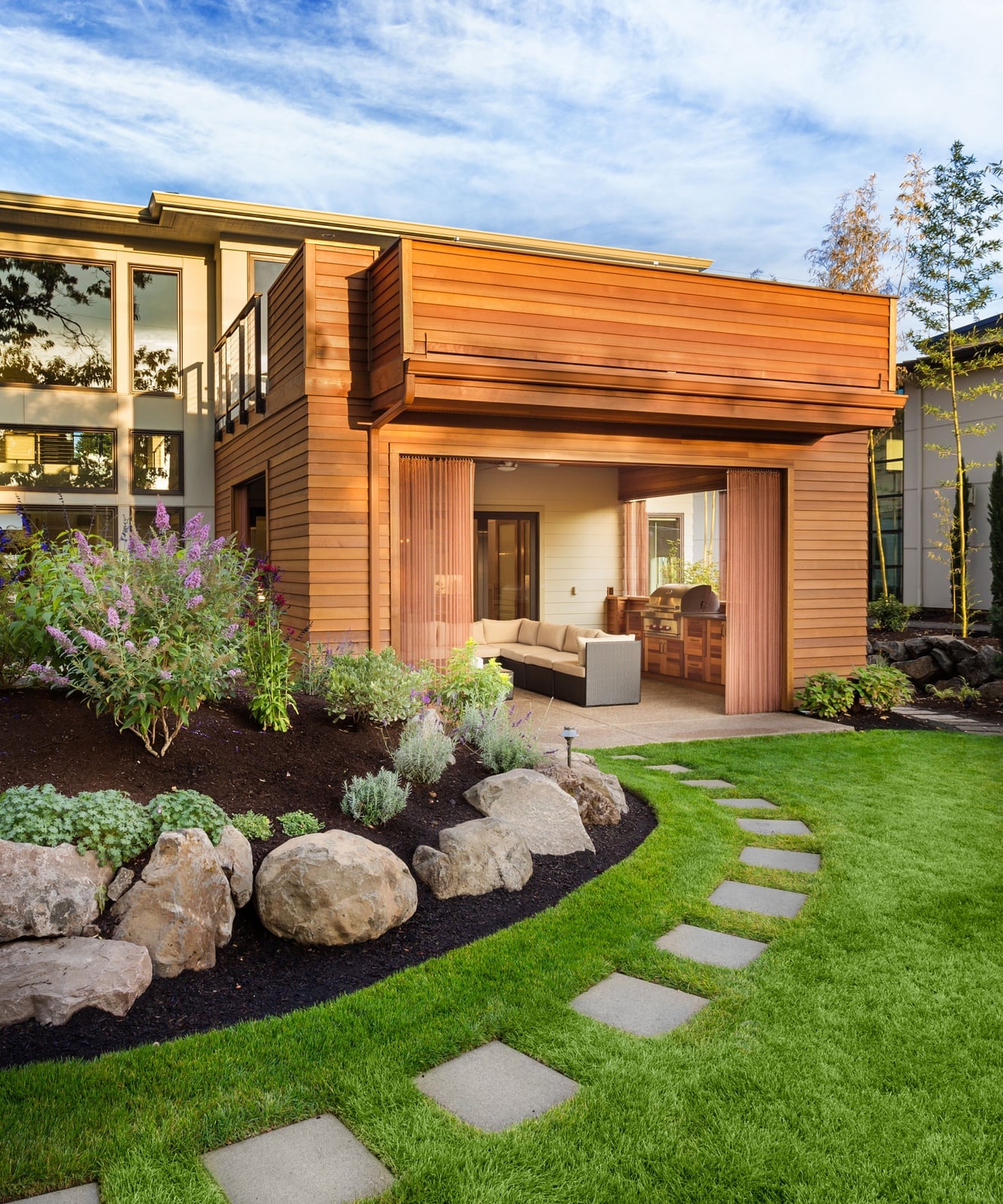
A curving stepping stone path leads the eye through this backyard, with large boulders anchoring a rock garden bed on one side. The palette mixes green, brown, gray, and wood tones from the wooden exterior, and bright daylight shows off the texture of the stones. For renters, the key layout trick is that boulders sit directly on the ground without permanent digging or concrete footings. You can arrange them by hand (or with a helper for the heavy ones) along an existing path or garden edge, then pull them out when you move. No structural work, just placement.
Garden with Moss-Covered Stone Steps and Spherical Boulder
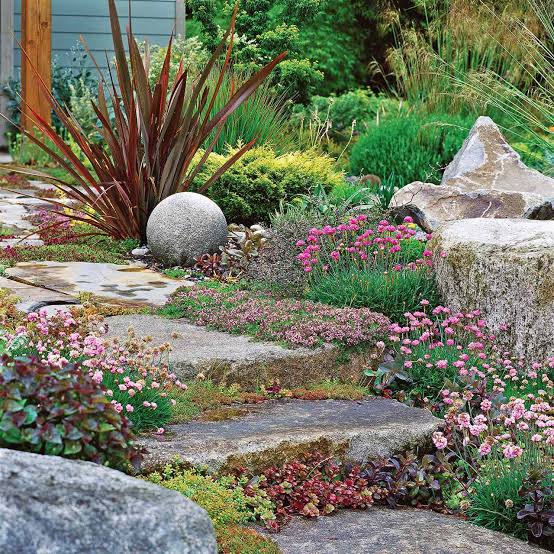
This garden feature works because the materials do the talking. Large stone steps lead up a terraced slope, with a spherical boulder sitting to one side and pink flowers adding a soft color note against the gray stone and green moss. The bright daylight makes the spherical shape stand out against the angular steps. When choosing materials for a garden path or step, look for flat stones with at least one straight edge so they stack cleanly. The spherical boulder breaks the repetition of flat surfaces and gives the eye a place to rest.
Naturalistic Garden with Stacked Rock Planter and Herbs
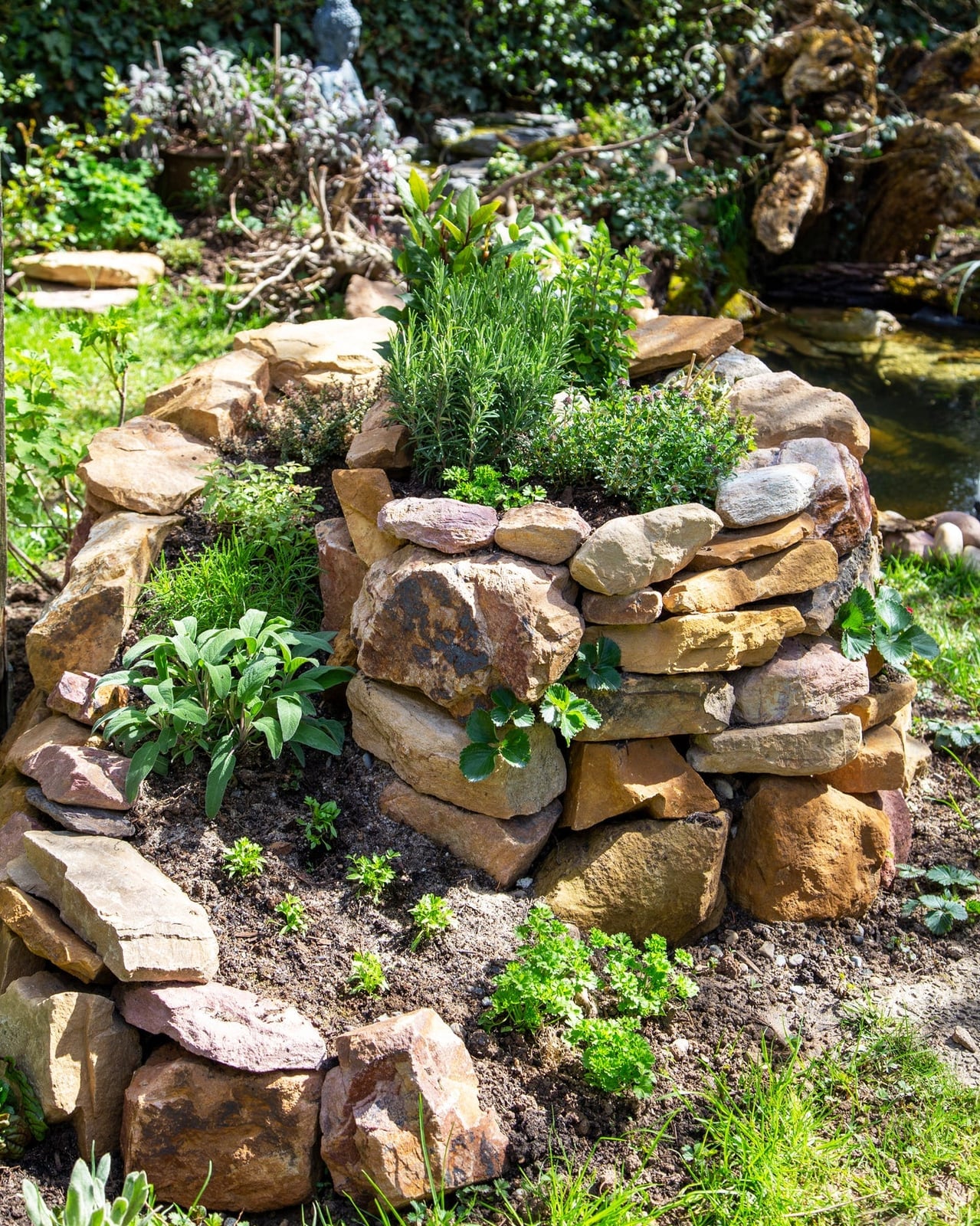
Can you grow herbs without a traditional raised bed or wooden planter? This compact garden bed uses a stacked rock planter in earth tones, with herbs and small plants spilling over the edges in green and purple. The dappled daylight filters through the leaves, softening the hard stone lines. The styling variation here is that the stacked rocks act as both planter wall and decorative edge. You can adjust the height by adding or removing rocks, and the gaps between stones let excess water drain naturally. For a cohesive look, keep the rock colors within a similar warm or cool range. Mixing tones from different sources can create a disjointed appearance.
Minimalist Garden Vignette with Large Granite Boulder
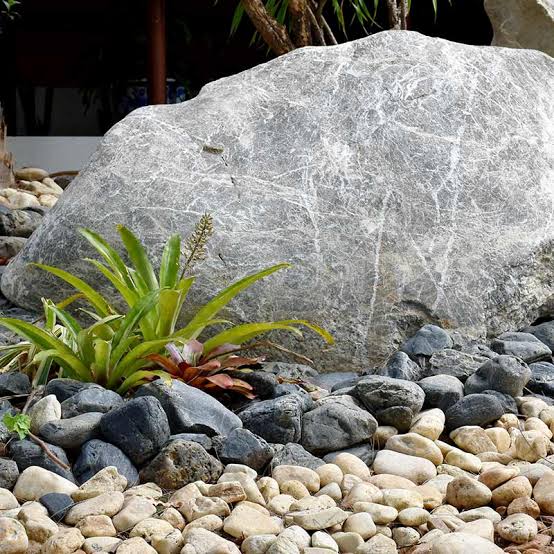
A single large granite boulder sits on a bed of river stones, with one small plant tucked beside it. The palette is restrained: gray granite, beige river stones, and green foliage, all under soft daylight. The scale and proportion make this work. The boulder is large enough to anchor the vignette, while the river stones are small enough to read as ground cover. In a minimalist garden, one large rock does more than ten small ones ever could.
Rock Garden with Gravel, Flowering Plants, and Succulents
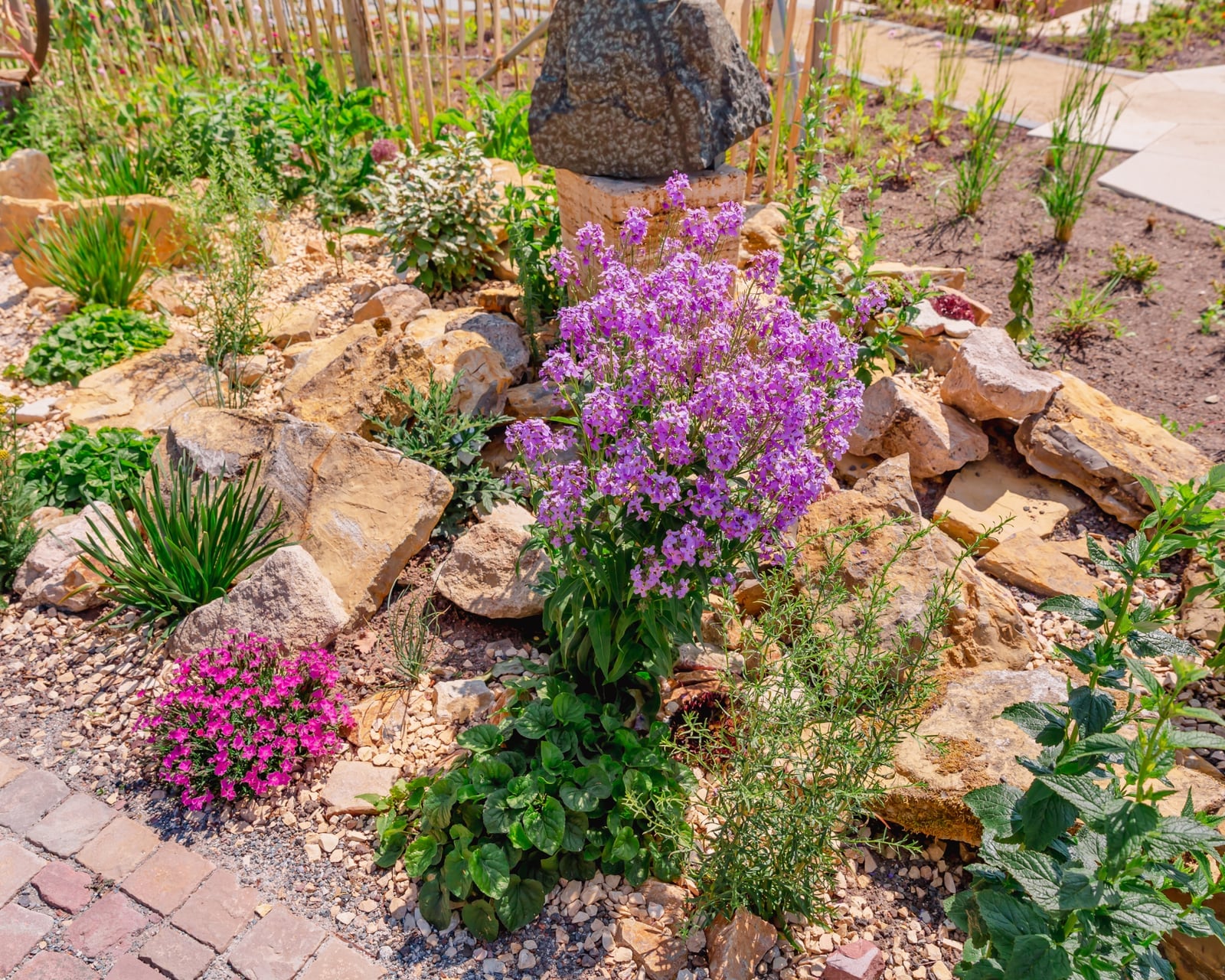
For a rock garden with a deliberate layout, start with a consistent gravel bed to anchor the design. A compact bed of pale tan gravel serves as a neutral backdrop for clusters of pink flowers, low succulents, and a mix of rocks in various sizes. The palette stays tight: tan, pink, and green, which prevents a busy look despite the number of plants. Bright daylight helps the pink blooms stand out against the stone, making the whole bed feel brighter than its compact footprint would suggest.
Naturalistic Garden Path with Large Flat Stone Steps
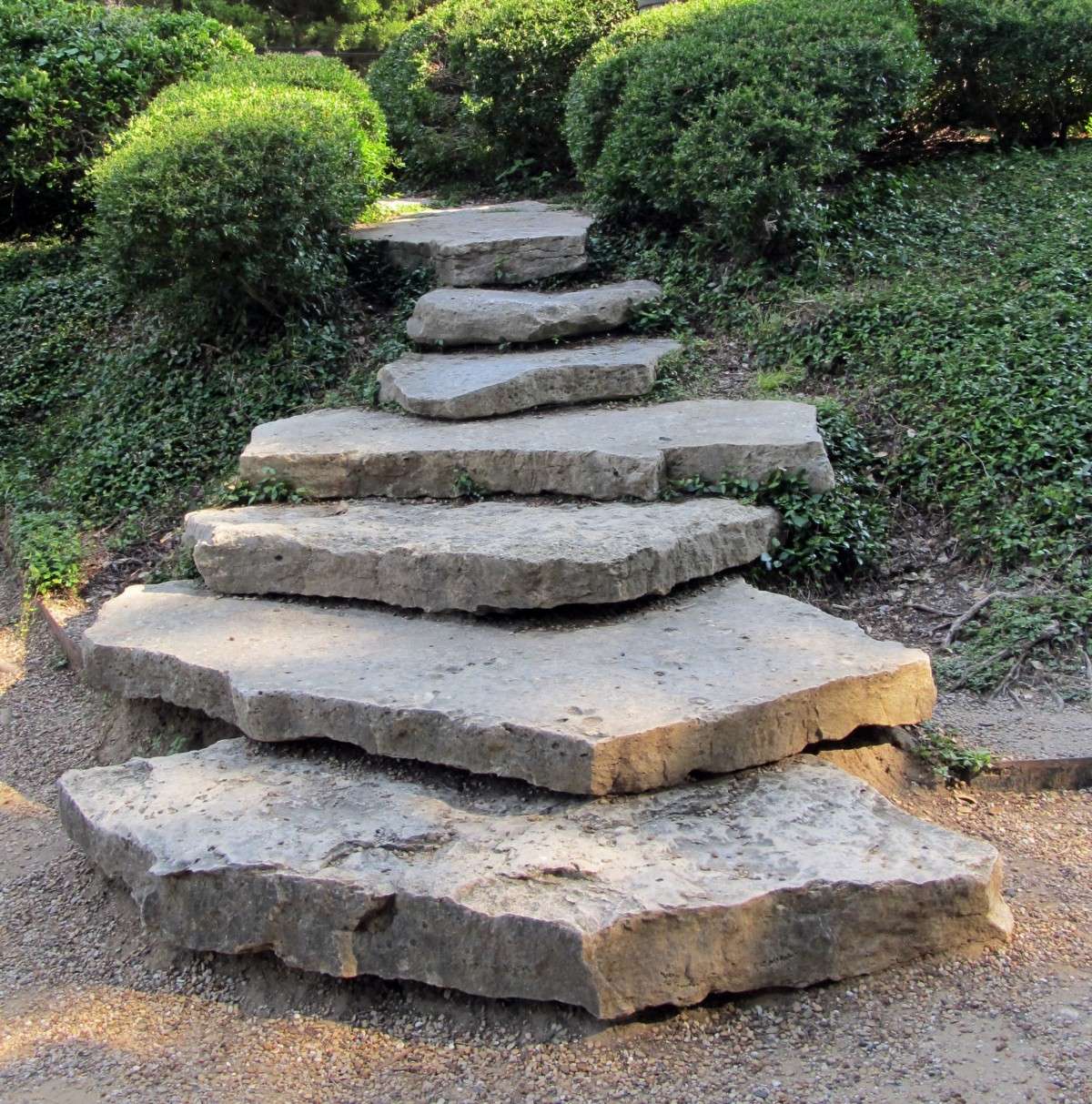
A garden path made of large, uneven stone steps feels more like a natural trail than a formal staircase. The key is the material itself: thick, flat stones in gray tones that sit slightly askew, with low ground cover creeping into the gaps. Soft daylight filters through overhead trees, casting dappled shadow across the path and softening the hard edges of the stone. The steps ascend a gentle slope, so the path draws you upward without feeling rushed. Ground-hugging plants between the stones soften the transition from rock to soil, making the whole thing look like it has been there for years.
Backyard Garden with Rocks, Ferns, Bamboo, and Artificial Grass
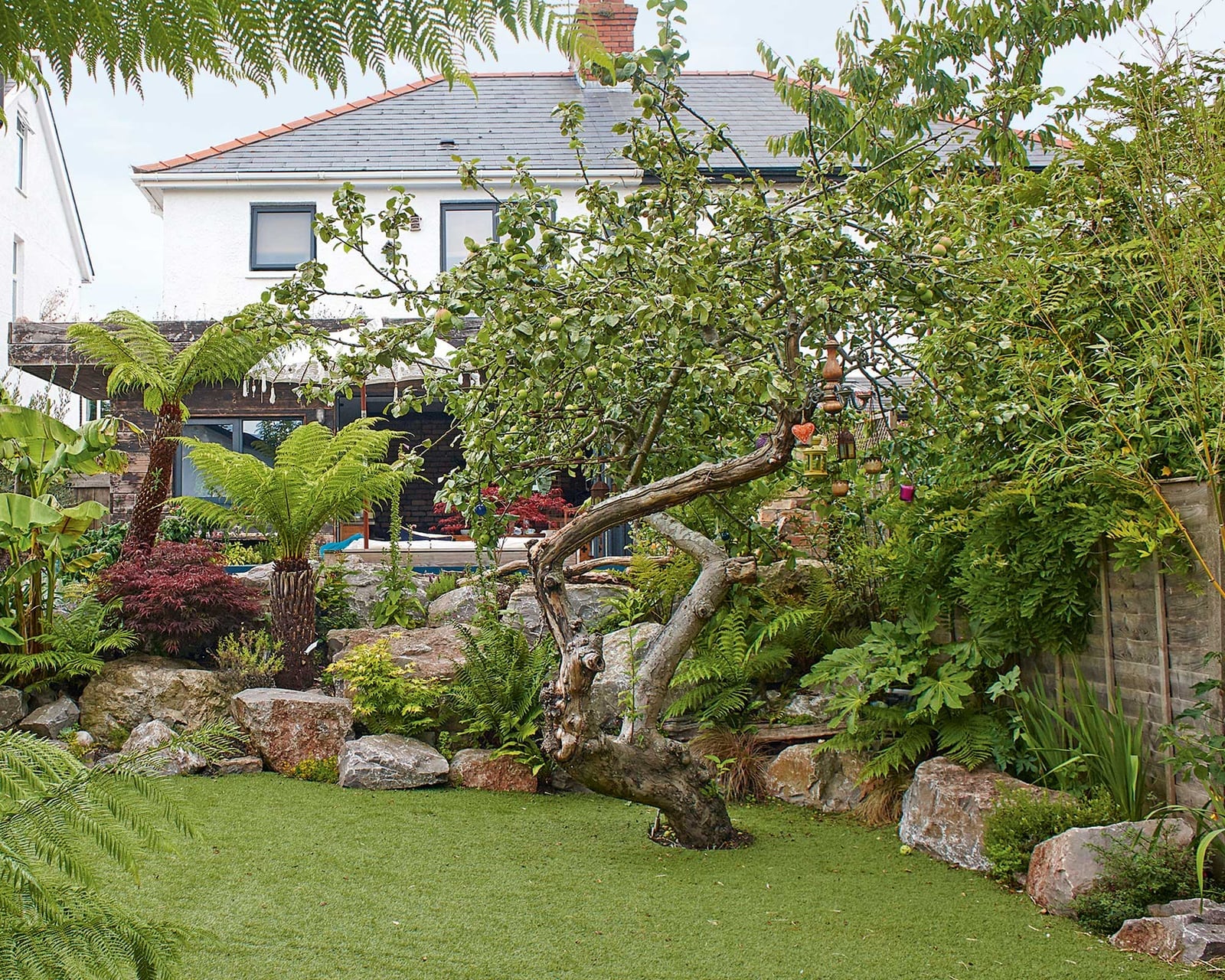
This backyard garden mixes large rocks, ferns, and a gnarled tree trunk with a patch of artificial grass for a low-maintenance green zone. The rocks sit naturally on the lawn, breaking up the flat surface and adding visual weight near the base of the tree. Slightly overcast daylight keeps the greens rich without harsh shadows, so the contrast between the rough bark and smooth stone reads clearly. Bamboo near the back fence adds vertical interest without crowding the space.
Expansive Garden with Terraced Hillside, Boulders, and Retaining Walls
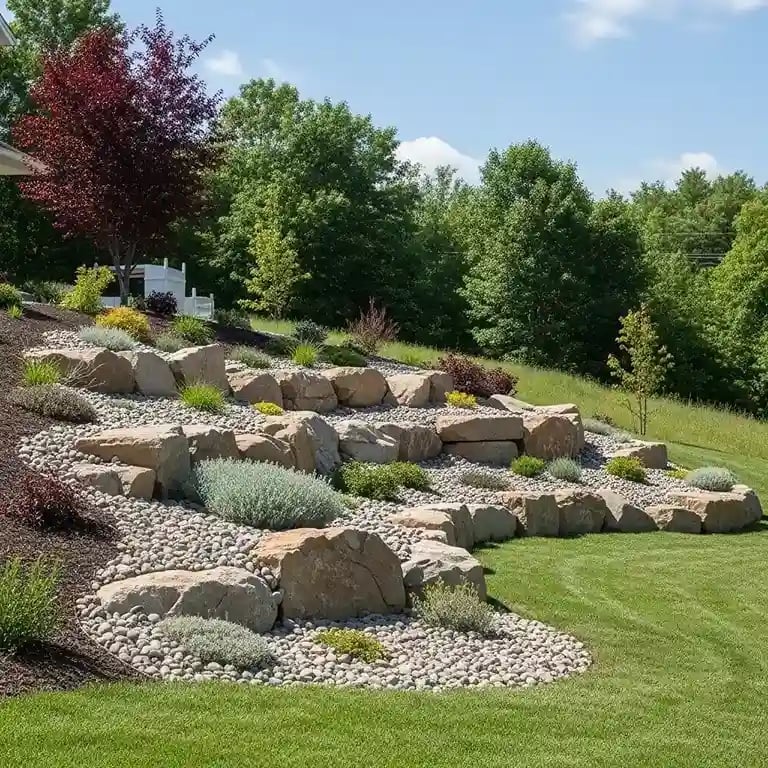
This is a big garden that uses its slope well. Terraced retaining walls in tan stone follow the natural contour of the hillside, with large boulders placed at key points to anchor each level. Sunny daylight makes the warm tones of the stone stand out against the green shrubs and trees planted on each terrace. The layout solves a tricky slope by turning it into a series of usable flat areas, each with its own planting pocket. Boulders at the edges of the terraces prevent soil erosion and give the whole garden a grounded, permanent feel.
Garden with Integrated Boulders, Ornamental Grasses, and Shrubs
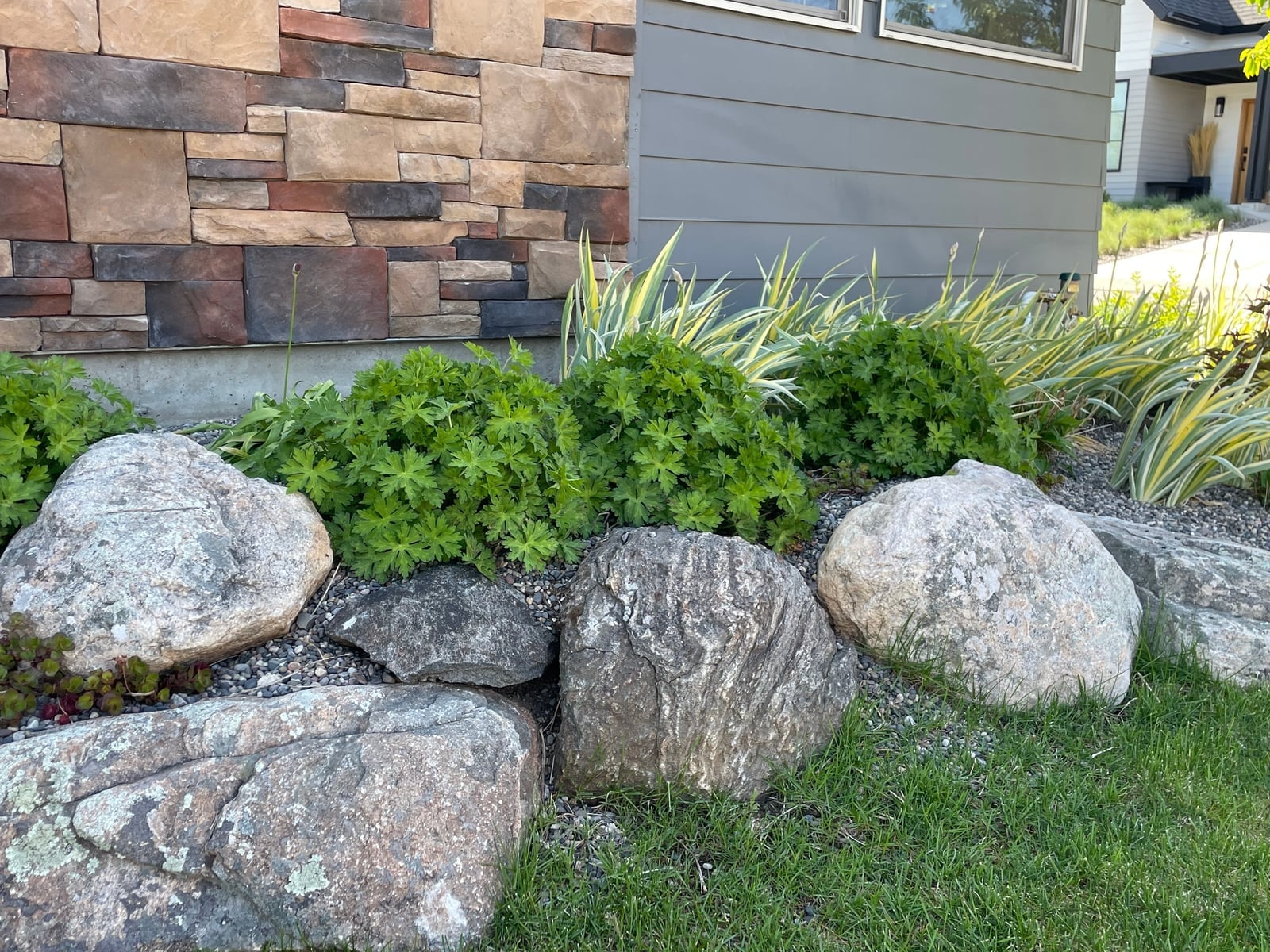
A practical rule for placing large rocks in a modern garden: bury them a third of the way into the soil so they look like they grew there. Here, two large textured boulders sit at the corner of a planting bed, surrounded by ornamental grasses and low shrubs in gray, green, and beige tones. The scale works because the boulders are the biggest element in the bed, with the grasses and shrubs staying lower to create a layered silhouette. Soft daylight keeps the textures of the stone visible without harsh glare. The gravel ground cover ties the whole composition together and keeps weeds down between the plants.
Contemporary Garden with Terraced Gabion Walls Filled with Rocks
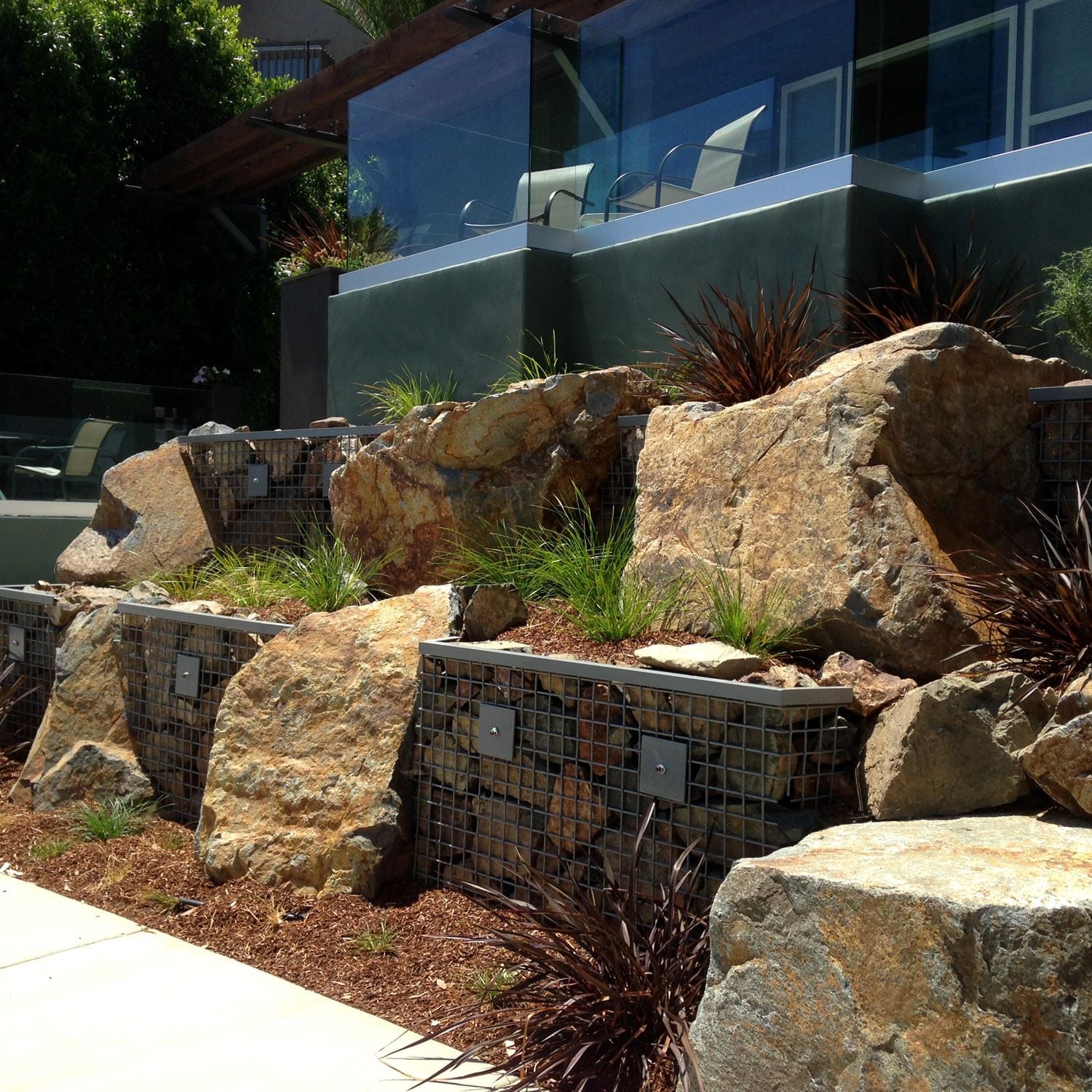
Gabion walls are basically wire cages packed with stone, and they bring serious structure to a contemporary garden without the permanence of poured concrete. In this terraced design, the metal baskets hold a mix of gray rock and larger brown boulders, creating a textured wall that doubles as a planter for ornamental grasses. The warm brown tones of the stone and the rust-red of the metal soften the industrial look, while the terraced layout handles a slope without retaining wall permits.
Naturalistic Garden Bed with Large Boulders and Ground Cover
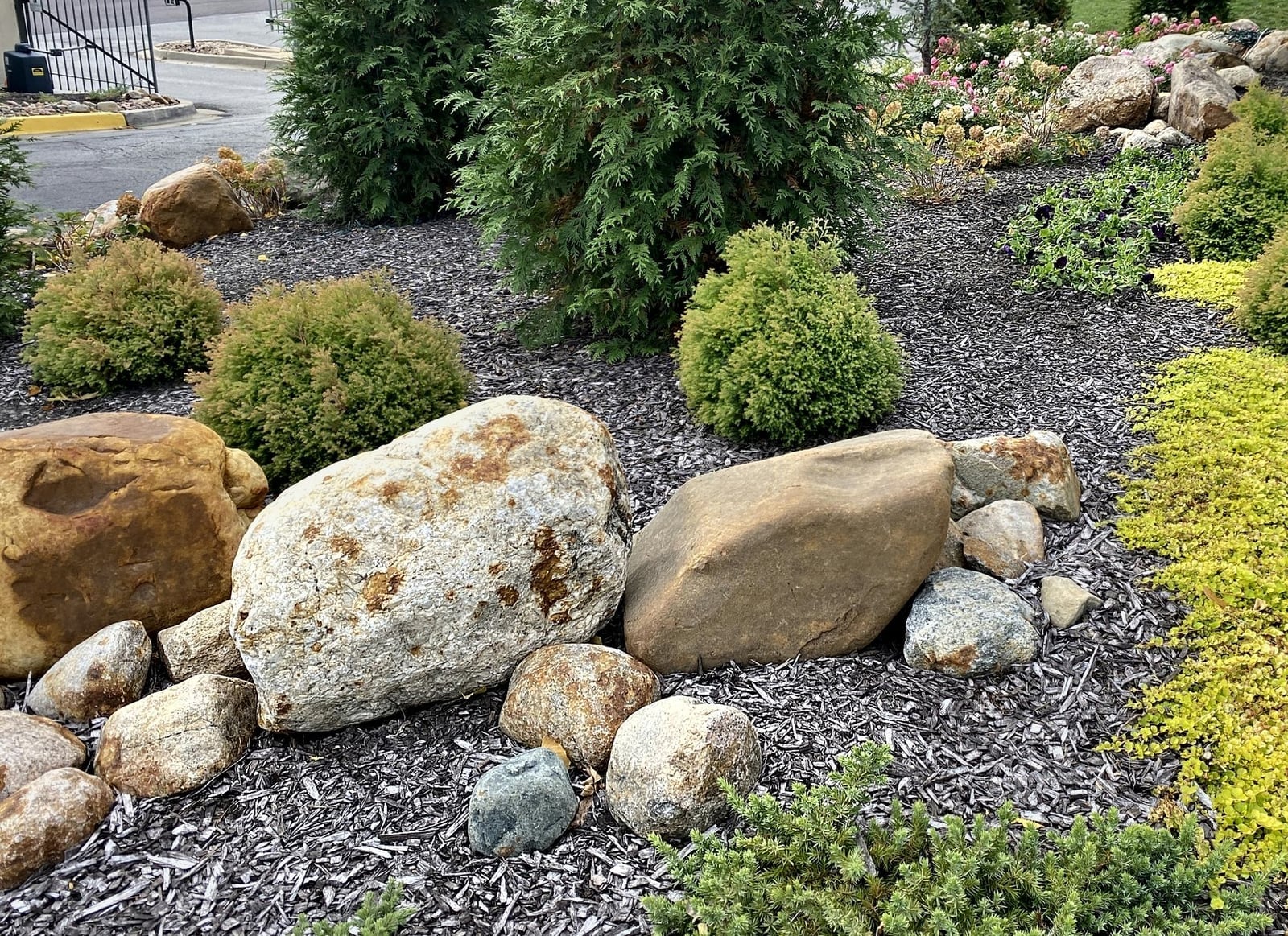
To make a large boulder look like a permanent part of the landscape, bury at least one third of its height. This prevents it from appearing as if it was dropped from a truck. In this naturalistic design, a single large, textured gray-brown boulder anchors the bed, with low shrubs and ground cover weaving around its base. The brown mulch ties the stone to the soil, so the rock blends into the landscape instead of standing out as an obstacle. Renters can achieve a similar effect with a single boulder placed in an existing bed; no digging or hardscaping required, just a strong back and a friend to help lift.
Tiered Garden with Winding Stone Steps and Large Boulders
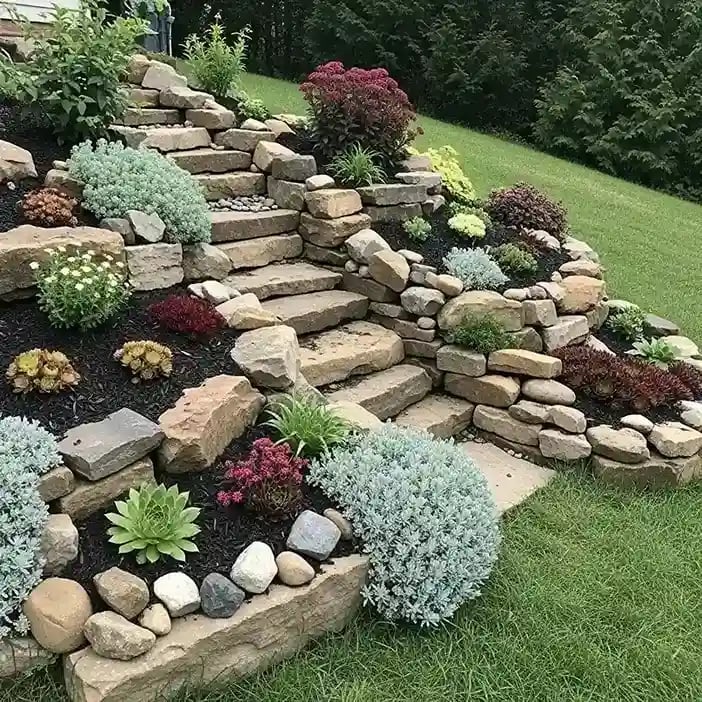
Where a straight stairway forces the eye up in a single line, a winding set of stone steps invites a slower pace. In this tiered garden, large boulders anchor the turns, so each landing feels like its own destination. The steps are wide, irregular flagstones set into gravel and mulch, which keeps the path looking natural rather than engineered.
The palette stays in earth tones, brown stone, green foliage, and soft pink flowers from low-growing plants tucked between the rocks. The boulders double as guardrails of a sort, guiding foot traffic without a metal rail. The winding layout works especially well on a gentle slope, where a straight run would feel like a chore rather than a stroll.
Naturalistic Garden with a Rock Wall Border and Lavender
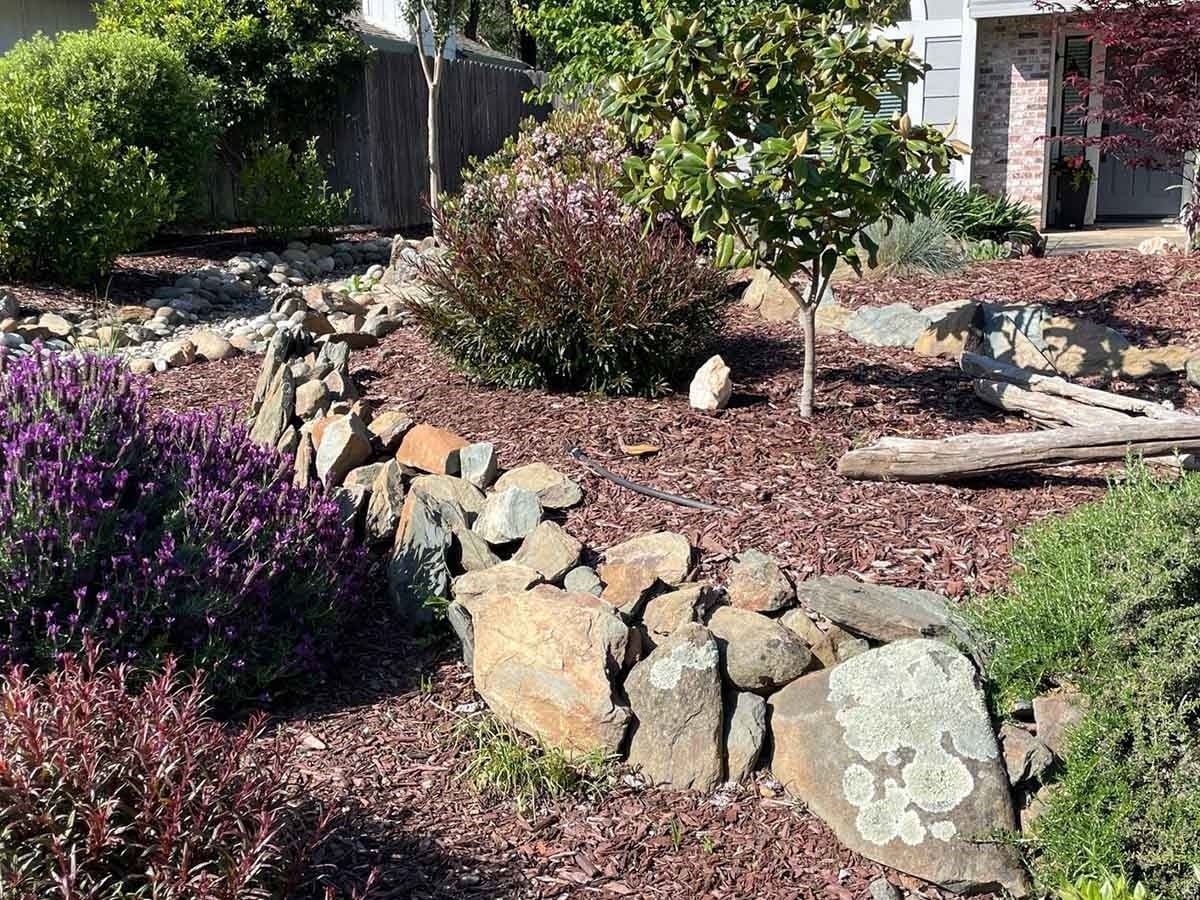
A low rock wall does more than mark a boundary. It creates a microclimate for plants that prefer well-drained soil. In this garden, a stacked stone border in gray and brown wraps around a bed of lavender and green shrubs. The lavender spills slightly over the top, softening the hard edge, while the wall itself holds the mulch in place. The purple flowers against the gray stone is a classic combo that also happens to be drought-tolerant once established, so check your USDA zone before planting.
Tropical Garden Focal Point with Large Textured Boulder, Close-Up Take
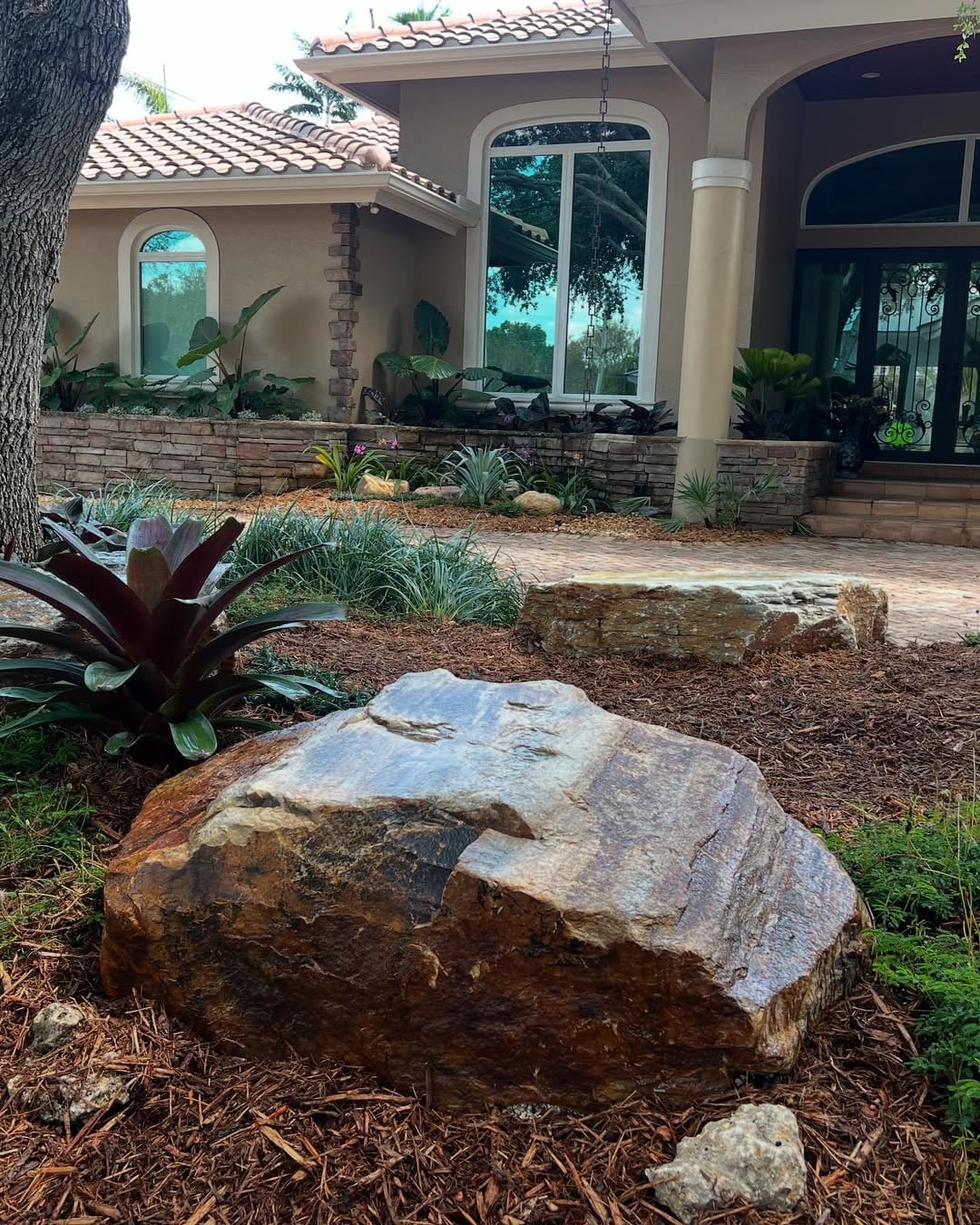
One large boulder can carry a whole tropical garden if you pick the right one. This example pairs a richly textured, brown stone with a red bromeliad planted at its base, and the contrast is immediate, the rough, inert rock against the glossy, upright leaves. The boulder sits in a deep layer of brown mulch, which keeps the bed clean and highlights the stone and the plant. In a smaller space, choose a single boulder with visible grain or pitting, and set a single bold plant next to it. The scale works because the rock is large enough to hold its own against the broad tropical leaves.
Sloped Garden Bed with Large Gray Boulders and Flowering Plants
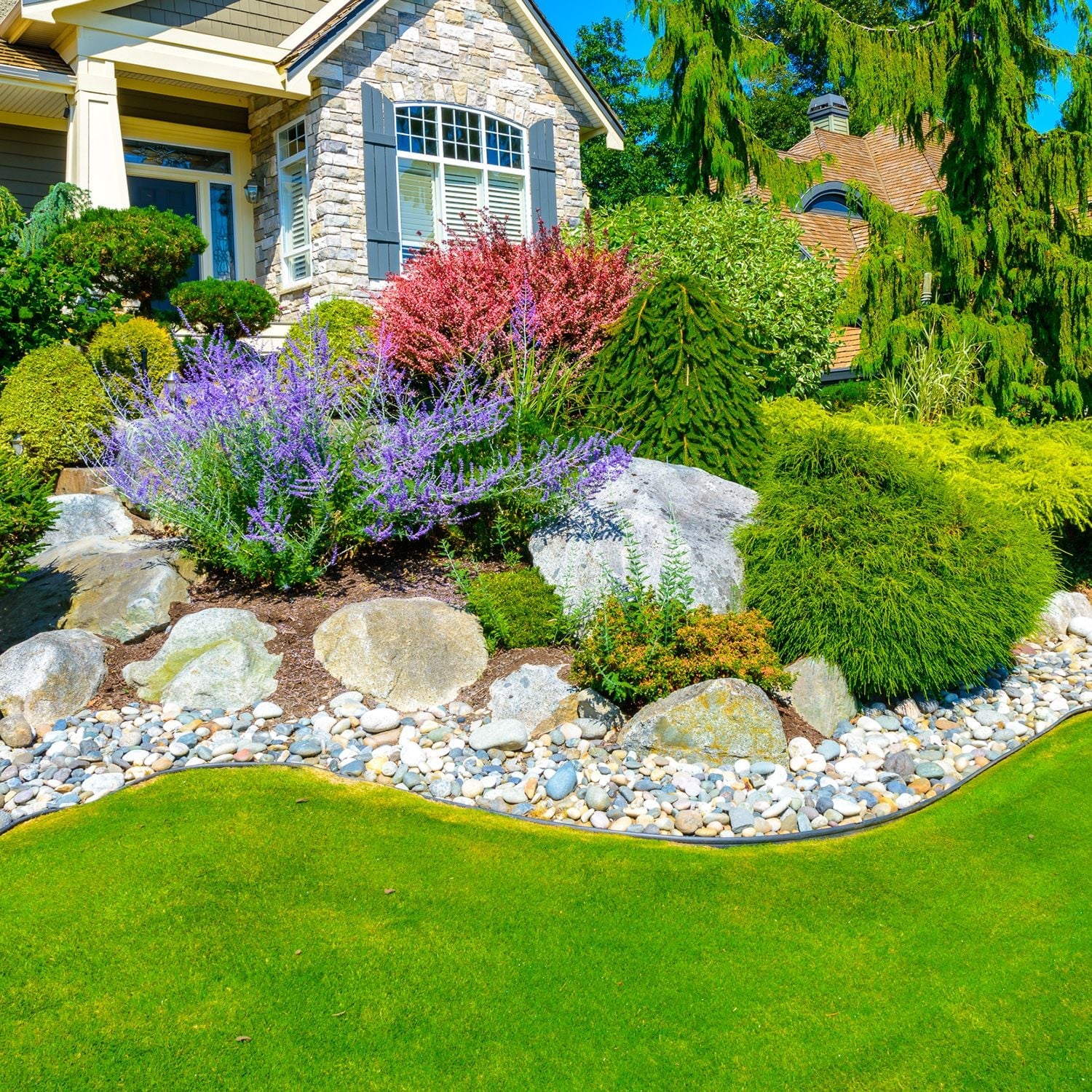
When a yard slopes, the instinct is to fight the grade with retaining walls. A simpler move is to let the slope dictate the layout by anchoring large gray boulders at the lowest point of a garden bed. This creates a natural visual stop that keeps soil and gravel in place without a single concrete block. Flowering plants in purple and pink rise above the boulders, their soft forms contrasting with the hard stone. Mulch and grass fill the gaps, making the whole bed look established from day one. Bury about a third of each boulder into the soil so they look like they belong there.
A sloped bed planted this way handles runoff better than a flat one does. Water moves down through the gravel and mulch instead of pooling at the base of a wall. The boulders slow the flow, catching leaves and debris before they wash into the lawn. This layout works especially well for a traditional garden where you want structure without the formality of a hard edge. The gray stone ties the green and pink together, keeping the slope from looking like an afterthought.
Naturalistic Rock Garden with Pond, Waterfall, and Irises
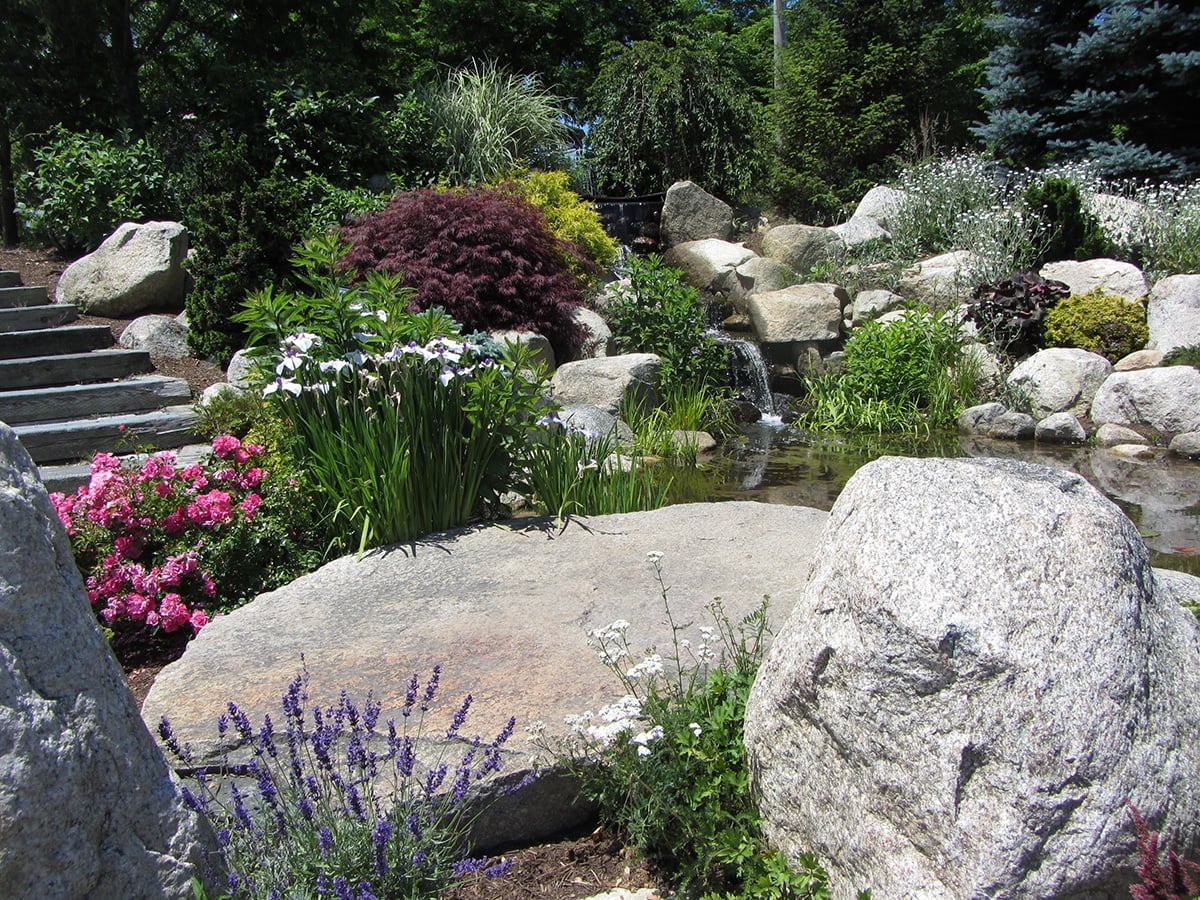
A pond and waterfall built into a rock garden uses a palette of gray stone, pink roses, white irises, and purple lavender. The gray boulders frame the water, their neutral tones letting the flowers take center stage. The pink and white blooms soften the hard edges of the stone, while lavender adds a vertical accent that draws the eye upward from the pond. The green foliage of irises and roses ties the whole palette together, creating a natural gradient from the dark water to the bright flowers. This combination works because the cool gray and warm pink balance each other. If the palette feels too sweet, swapping a few pink roses for a deeper magenta keeps the same structure with more edge.
Rustic Stacked Stone Wall with Plants in Crevices
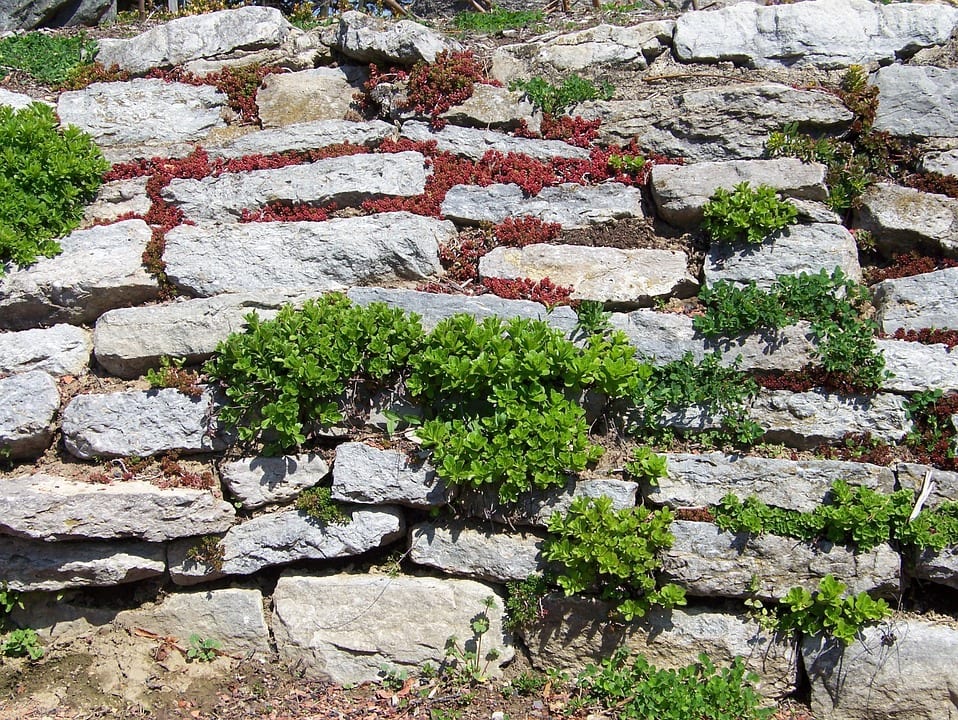
A stacked stone wall that doubles as a planter is one of the most efficient uses of material in a garden. The stones are dry-stacked without mortar, leaving natural gaps that become planting pockets for sedum and small red flowers. The gray stone provides a neutral backdrop that makes the green and red foliage pop. Sedum is a smart choice here because it thrives in shallow soil and spreads to fill the gaps over time. The wall has a purely rustic style, but the planting pockets give it a curated feel. For a renter-safe version, stack stones in a single row against an existing fence or wall instead of building a freestanding structure.
Autumnal Garden Pathway with Large Boulders and Stone Steps
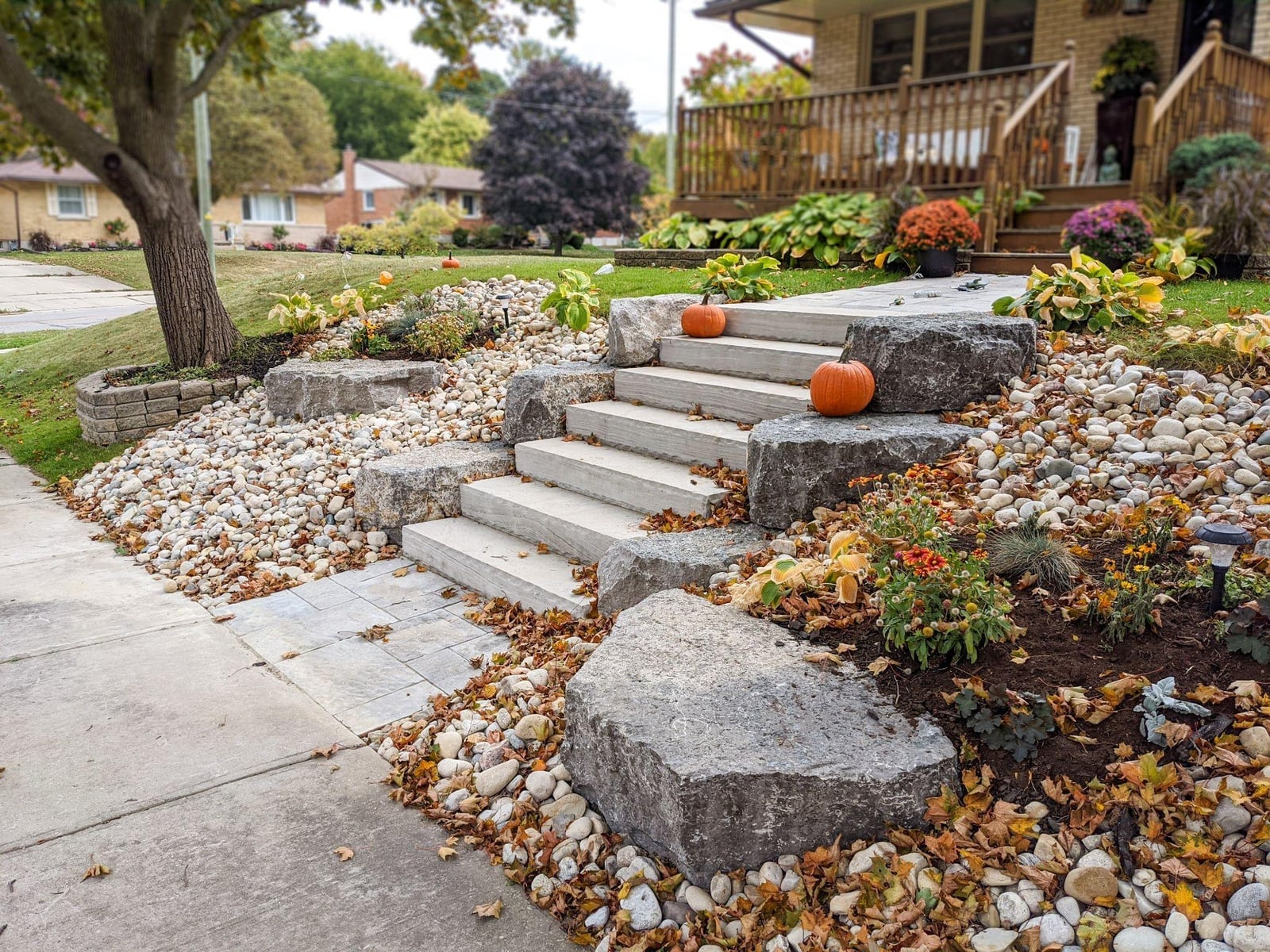
A garden pathway can feel like a functional necessity. Placing large boulders at the turn of a path changes that, especially when the steps are wide flat stones set into gravel and mulch. The boulders anchor the path visually, making the route feel like a planned feature. Orange pumpkins set against gray stone add a seasonal pop that works with the green and brown palette. The soft daylight of autumn lets the textures of stone and mulch take the lead.
This approach works for any path that changes direction or elevation. The boulders mark the transition point, signaling to the eye that the route is shifting. Concrete steps would do the job structurally, but the irregular stone steps keep the natural feel intact. The gravel between the steps drains well and softens the look. If you want to try this in your own yard, place the boulders first, then lay the steps so they line up with the natural gap between the rocks. The path will feel like it was always there.
Rustic Backyard Patio with Massive Stacked Stone Fireplace
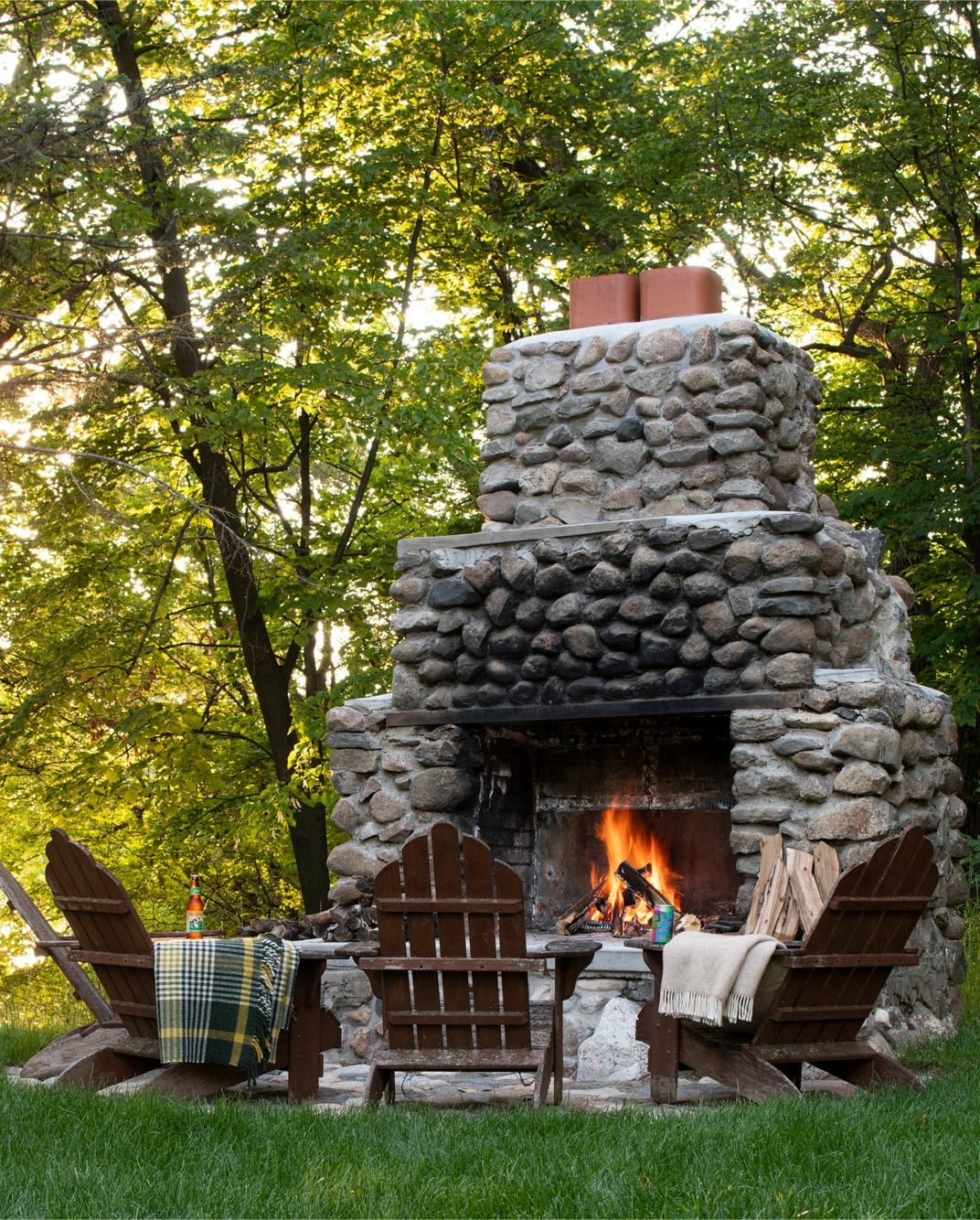
A massive stacked stone fireplace transforms a backyard patio into a year-round gathering spot. The fireplace rises as the clear focal point, its gray stone matching the rustic feel of the space. Wood Adirondack chairs face the fireplace, with a fire pit in between for extra warmth and light. The palette stays grounded in gray, brown, and green, with the stone providing most of the visual weight. The evening firelight softens the stone’s rough texture and casts warm shadows across the patio. This layout keeps the seating close to the heat source, making the space usable well into cooler months.
Rustic Rock Garden with Stream, Boulders, and Fire Pit at Dusk
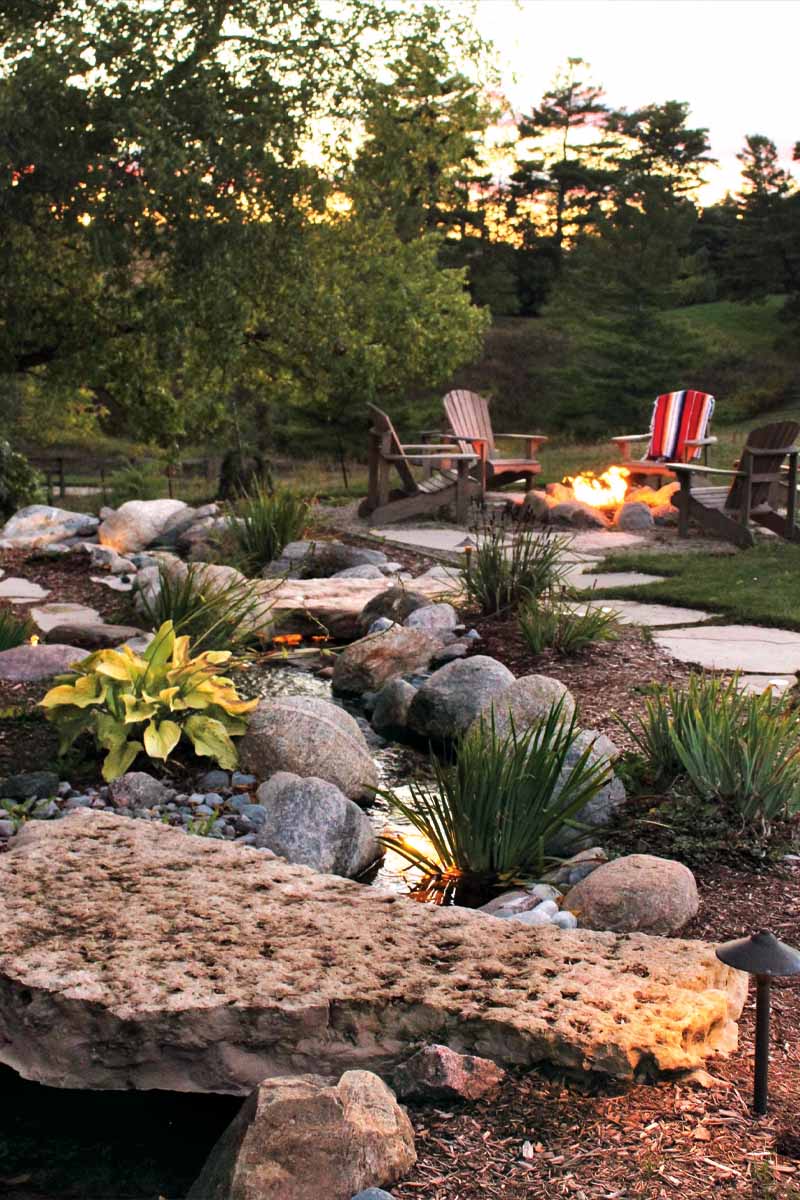
Dusk is the best time to see a rustic rock garden with stream and fire pit really come together. The fire glow turns the large boulders and Adirondack chairs into warm shapes against the fading sky, while the stream catches the last of the daylight. A multi-level layout like this one keeps the seating area slightly apart from the water feature, so you get the sound without the splash. The palette stays in earth tones and green, with the orange firelight acting as the accent. For a similar feel without installing a permanent fire pit, look for a portable metal bowl that can sit on gravel and be moved when the season changes.
Final Thoughts
Large rocks give a garden bones, and the ideas here prove they work in almost any setting. The practical lessons are simple: bury a third of each boulder for a settled look, match stone to your local geology, and pair it with plants that soften the edges. Group rocks in odd numbers and vary their sizes for a natural feel. For upkeep, check that drainage stays clear and that no stone has shifted after heavy rain. Landscaping with large rocks is about choosing pieces that feel like they belong, not ones that fight the rest of the yard.