
A retaining wall does more than hold back soil. It carves flat usable space from a slope, adds structure to a garden, and can become the backbone of your entire landscape.
The trick is choosing the right style for your yard, whether you want formal stone terracing, a modern concrete block look, or a rustic wall that blends into the surroundings. These 29 retaining wall ideas cover a range of materials, shapes, and layouts to help you turn a functional necessity into a design feature that actually improves how your outdoor space lives.
Contemporary Luxury with Tiered Retaining Walls and Integrated
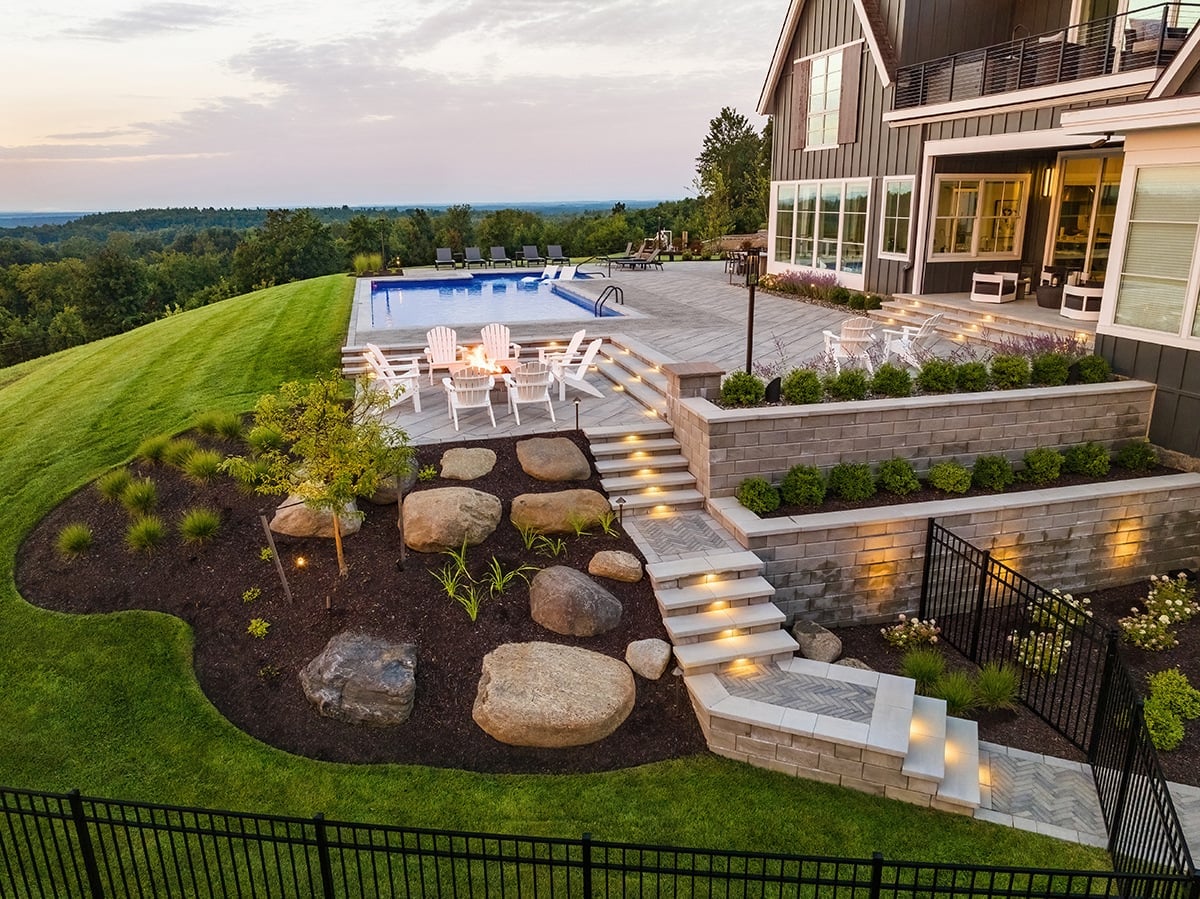
The tiered retaining walls and stairs here do more than hold back soil, they structure the whole backyard into distinct zones. A multi-level layout sets an infinity pool apart from the seating area and fire pit, with each shift in elevation offering its own view. Integrated step lights and pool lights make the gray stone blocks and concrete read as warm rather than cold at dusk, turning a practical grade change into the backbone of the landscape.
Formal Landscape Design with Sweeping Tiered Stone Retaining Walls
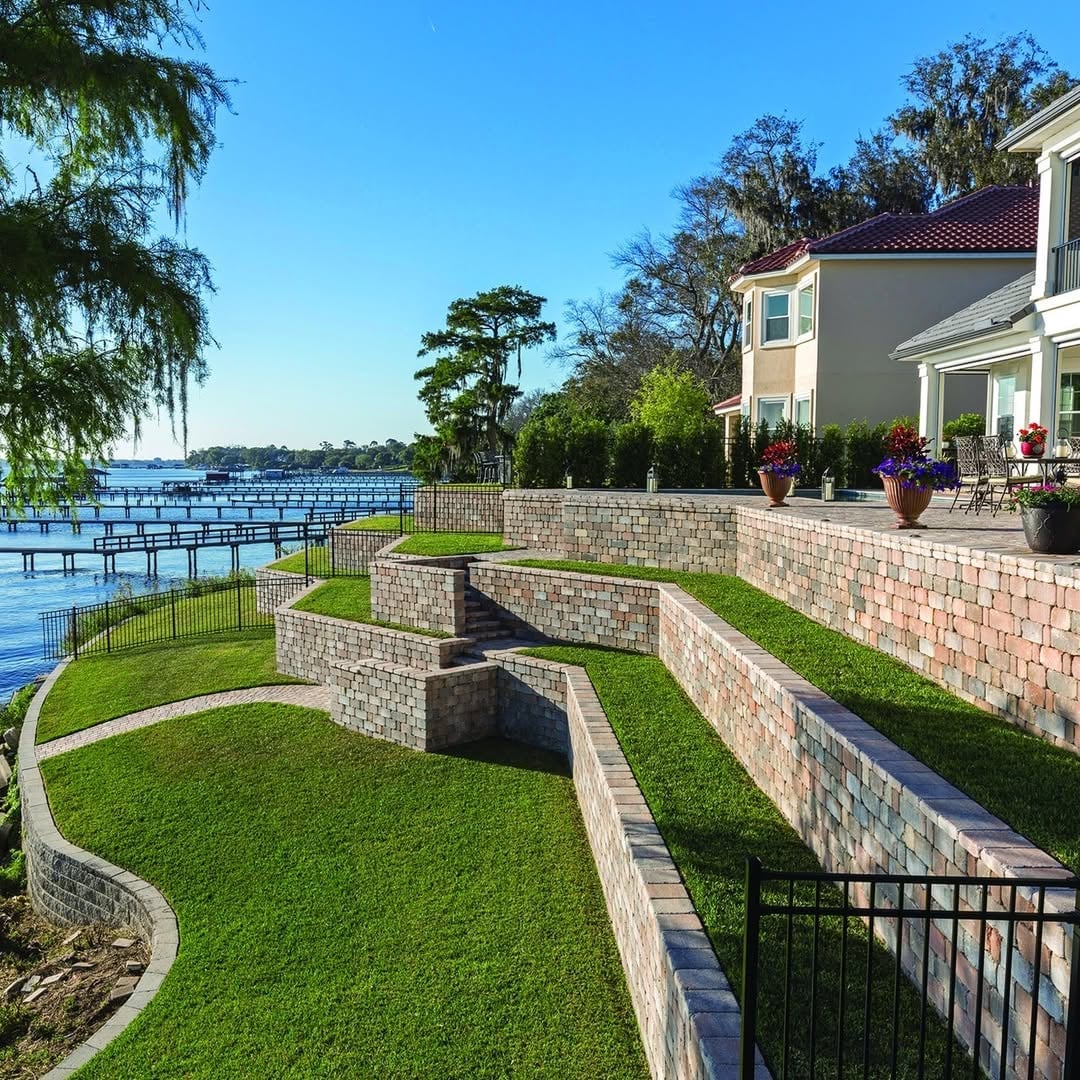
This is a landscape where symmetry and repetition rule. Sweeping tiered stone walls step down the slope in clean horizontal bands, with beige stone blocks and brick accents that echo the formal geometry. A paved patio anchors the lowest level, while manicured lawn and still water soften the hard lines. The palette sticks to green, beige and pink blooms against a clear blue sky, keeping the eye moving along the terraces rather than stopping on any one element. It’s a design that reads as deliberate from every angle.
Naturalistic Terraced Levels Connected by Stone Steps and Pathways
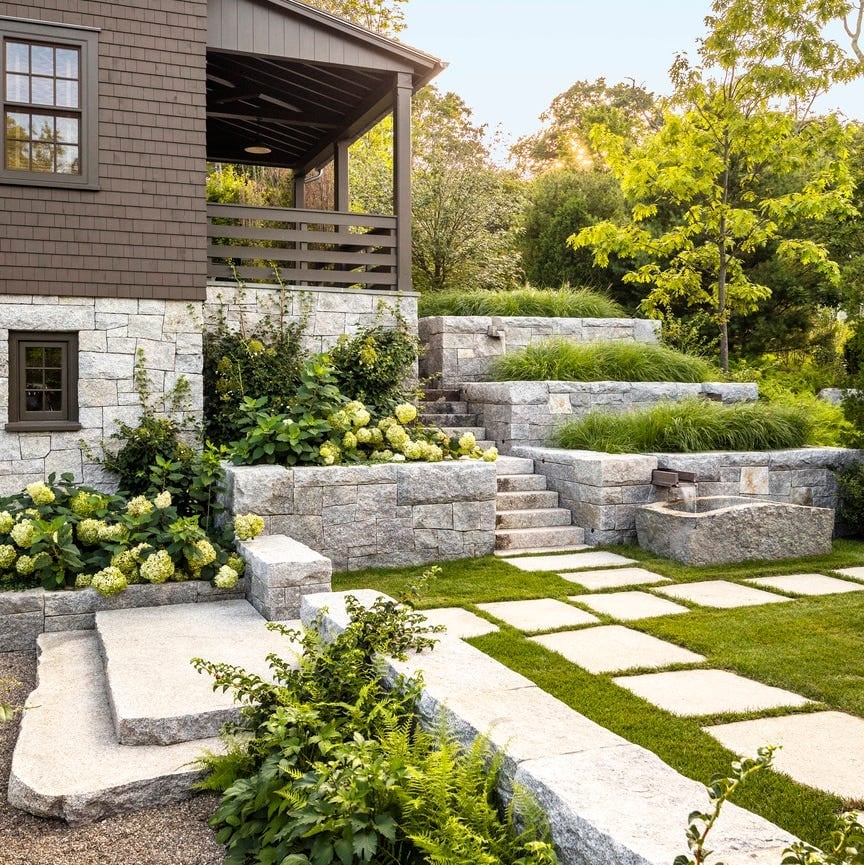
How do you manage a steep slope without making the yard look like a construction site? This approach uses multi-level stone retaining walls that follow the land’s natural contours, then links them with stone steps and winding pathways. The gray stone blends into the surrounding green and white plantings, while the concrete steps feel sturdy without calling attention to themselves.
Sun flare filtering through the trees adds a softness that a fully manicured terrace would miss. The layout treats each level as its own room, a spot for a chair here, a patch of grass there, connected but never crowded. It’s a practical solution that lets the site, not the wall, set the pace.
Modern Patio with Dark Stacked Stone Retaining Wall and Integrated
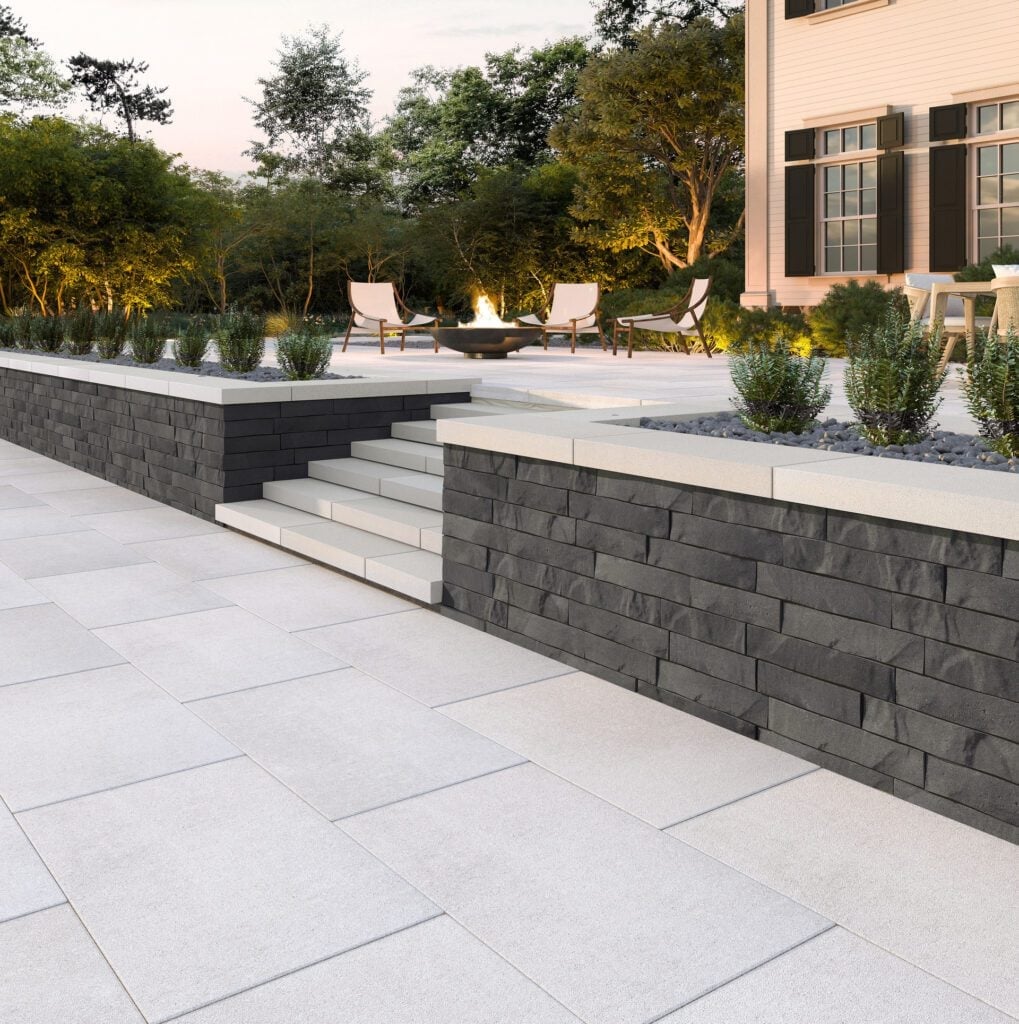
A dark stacked stone retaining wall runs the length of this patio, its rough texture a deliberate contrast to the smooth large format pavers underfoot. The wall incorporates stairs that climb the grade without breaking the visual line, a detail that keeps the patio feeling open rather than divided. Subtle accent lighting at dusk picks out the stone’s layered edges, turning a structural element into the evening’s focal point.
Extensive Terracing with Tan Concrete Block Retaining Walls
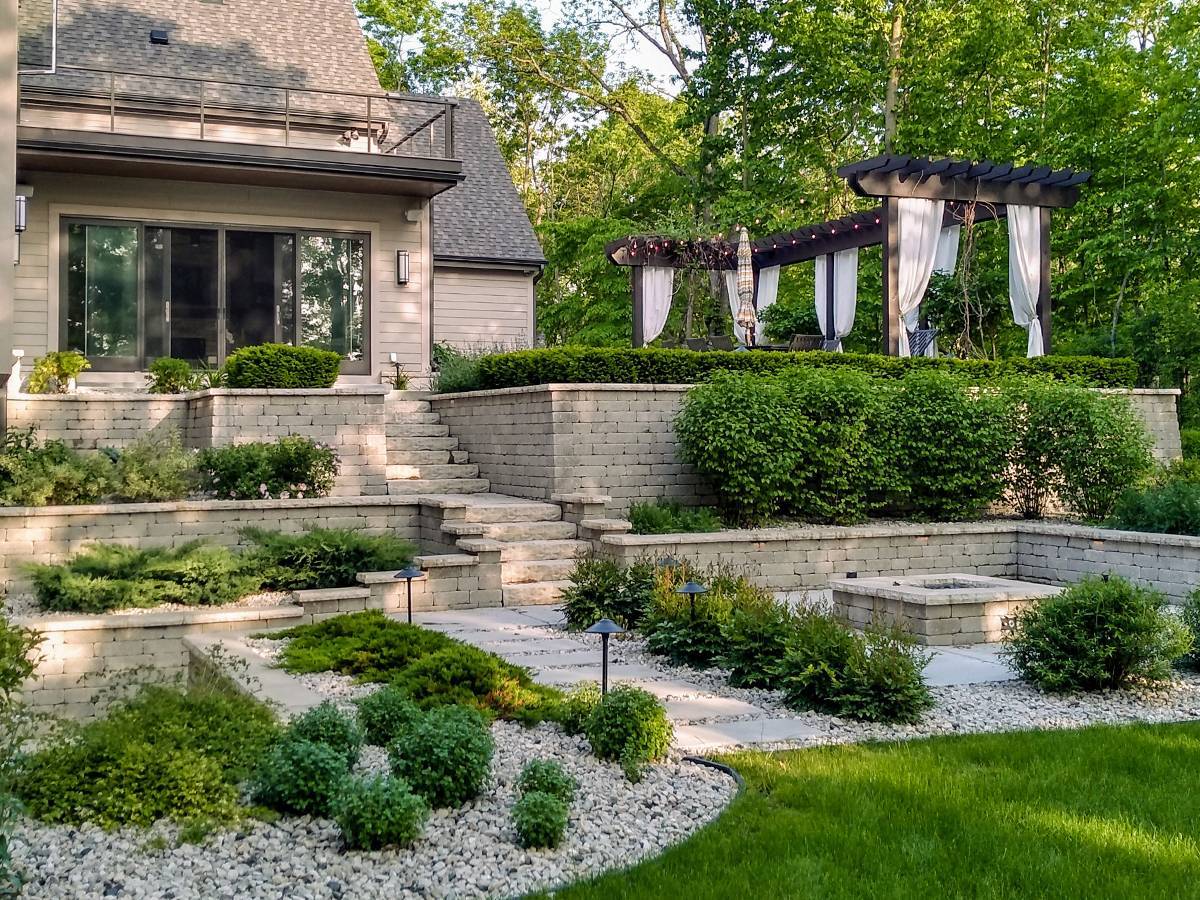
For a sloped backyard, retaining walls can double as the framework for lighting. Here, tan concrete block walls step across the yard in wide terraces, with integrated landscape lighting tucked into the blocks themselves. The glow picks out the path from the lower fire pit area up to a wood pergola, making the route visible after dark. Stone steps and fabric seating keep the tan blocks from feeling too heavy, while the daylight view reveals a garden that uses elevation to create separate rooms without fences.
Modern Garden with Tiered Gray Concrete Block Walls and Integrated
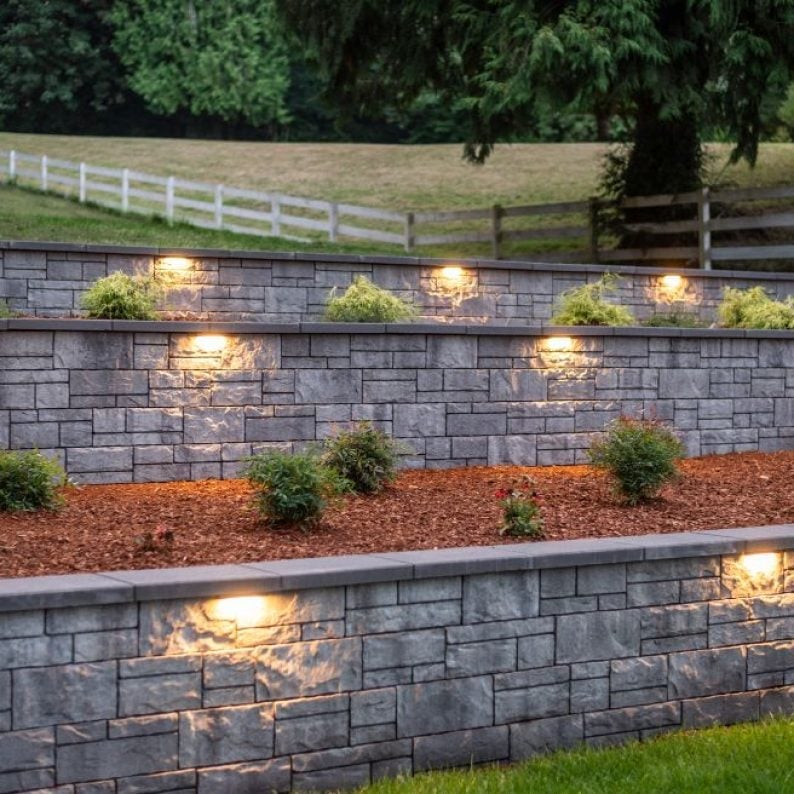
A modern garden with tiered gray concrete block walls feels structured and calm, but the real trick is what happens when the sun goes down. Without integrated lighting, a multi-level wall like this one disappears into the dark. Here, small spotlights built into the blocks highlight each tier and the shrubs planted between them. The palette stays restrained: gray, green, and brown, with mulch softening the base of the walls. That evening glow turns a practical retaining system into a landscape feature you actually want to look at. If you are planning a similar layout, ask about conduit placement before the wall goes in. Running low-voltage wiring later means digging up the planting beds, and nobody wants that.
Naturalistic Stepped Retaining Wall with Evergreen Trees
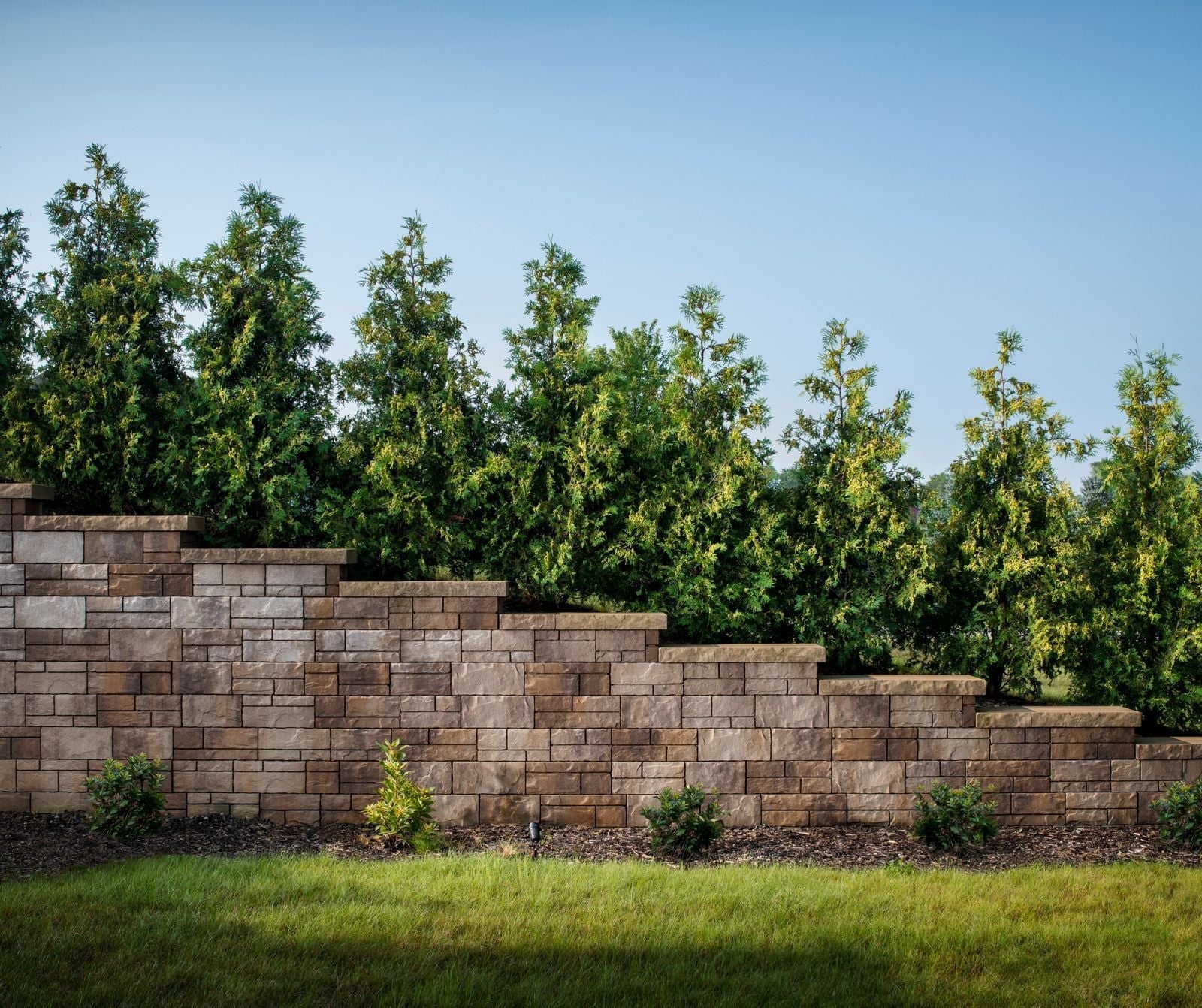
A stepped stone wall that follows the natural slope of the land avoids the boxy look of a single tall retaining structure. Here, multiple short walls create terraces that hold evergreen trees at different levels, with each step wide enough to plant a row of conifers. The palette stays muted: brown stone, gray rock, and deep green foliage. What makes this feel natural is the break in symmetry. The steps are not all the same height, and the stone varies in size. For a renter, a temporary version uses stacked concrete pavers without mortar, backfilled with soil. Just check your lease rules before digging.
Modern Rustic Patio with Low Retaining Wall and Central Fire Pit
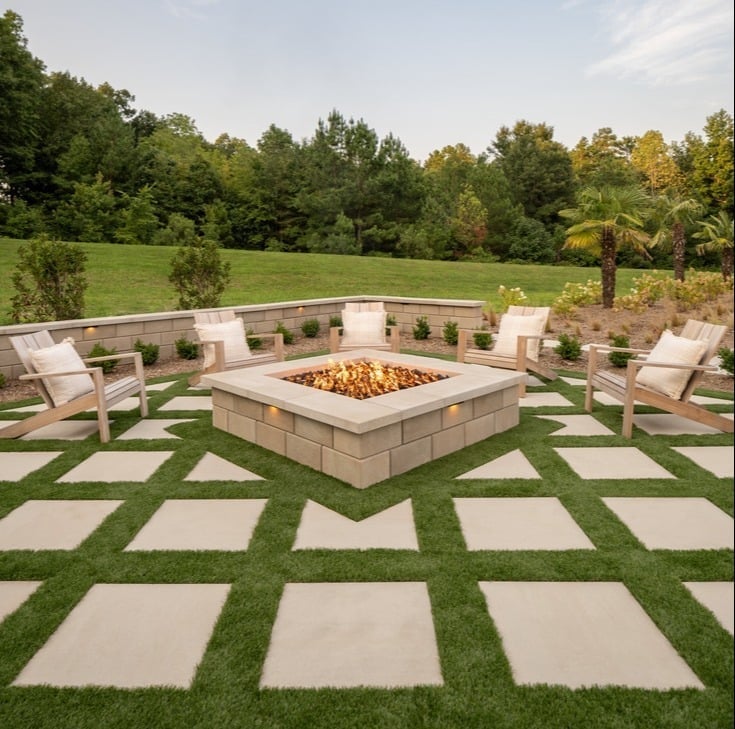
A low retaining wall around a patio does more than hold back soil. In this setup, it frames a square fire pit at the center, with Adirondack chairs arranged around the glow. The wall is built from stone blocks in warm beige, which keeps the look rustic without feeling heavy. Wood accents on the furniture and the patio edge add texture against the grass. At dusk, accent lights pick up the wall texture while the fire pit becomes the main source of warmth and light. The layout works because the wall is low enough to sit on or set a drink on, which makes the whole patio feel like one continuous seating area.
Naturalistic Garden Edge with Curved Light Stone Retaining Wall
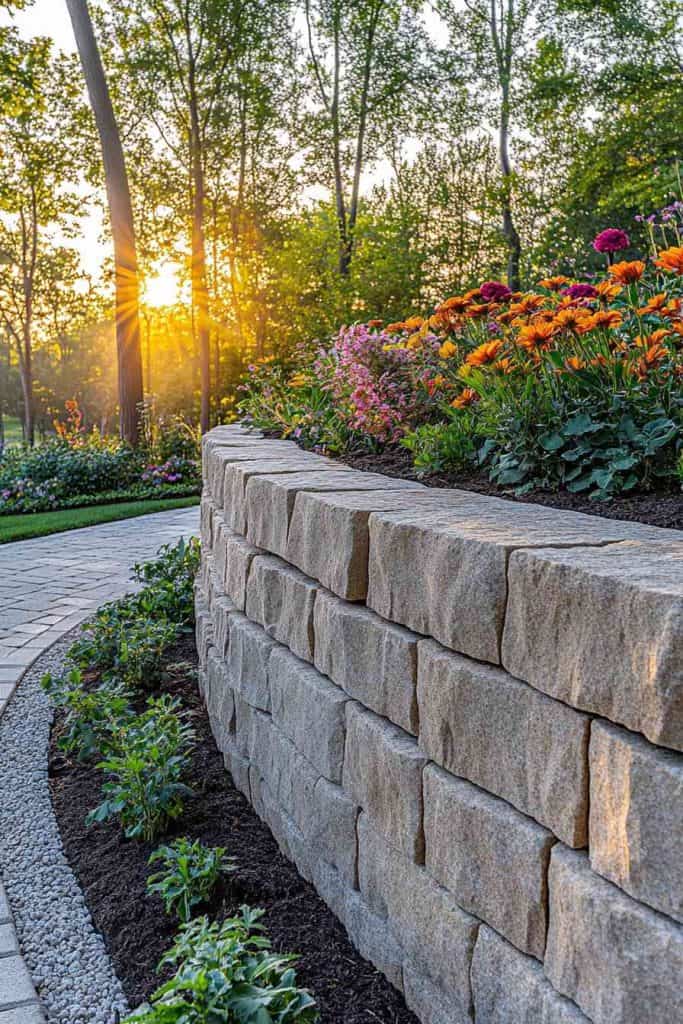
Can a retaining wall look like it grew there? This one gets close. The curve follows the garden bed, and the light stone blocks catch the golden hour sun in a way that makes the whole edge glow. Behind the wall, colorful flowers in orange and pink rise above the gravel path that runs alongside. The palette mixes warm beige stone with green foliage and bright blooms, which keeps the boundary from feeling like a barrier. Curved walls require more cutting and fitting than straight ones, so expect the installation to take longer. But the payoff is a garden edge that feels soft, not industrial.
Contemporary Patio with Sleek Black Retaining Wall and Water Feature
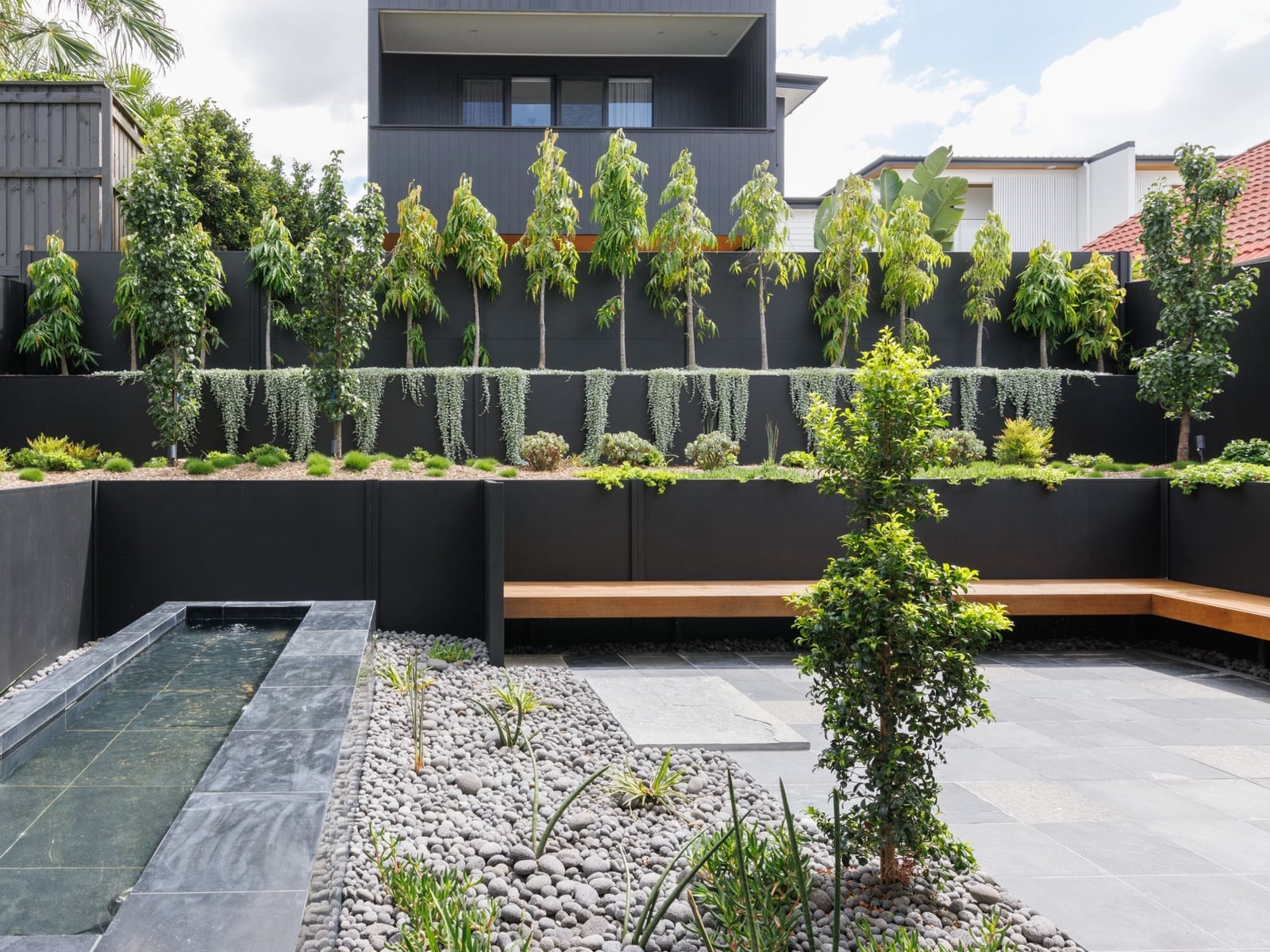
A black retaining wall makes a strong statement, especially when paired with a water feature and a simple wooden bench. The dark metal finish contrasts with gray stone, gravel, and the green of surrounding plants. Under overcast daylight, the wall defines the patio without blocking the view. The water feature adds movement and sound, which softens the hard materials. For this look to work, the wall needs to be the anchor. Keep the bench and plantings minimal so the black surface stays the focal point. A dark wall also hides soil splatter better than a light one, which is a practical bonus.
Natural Curved Stone Retaining Wall Bordering a Winding Paver Pathway
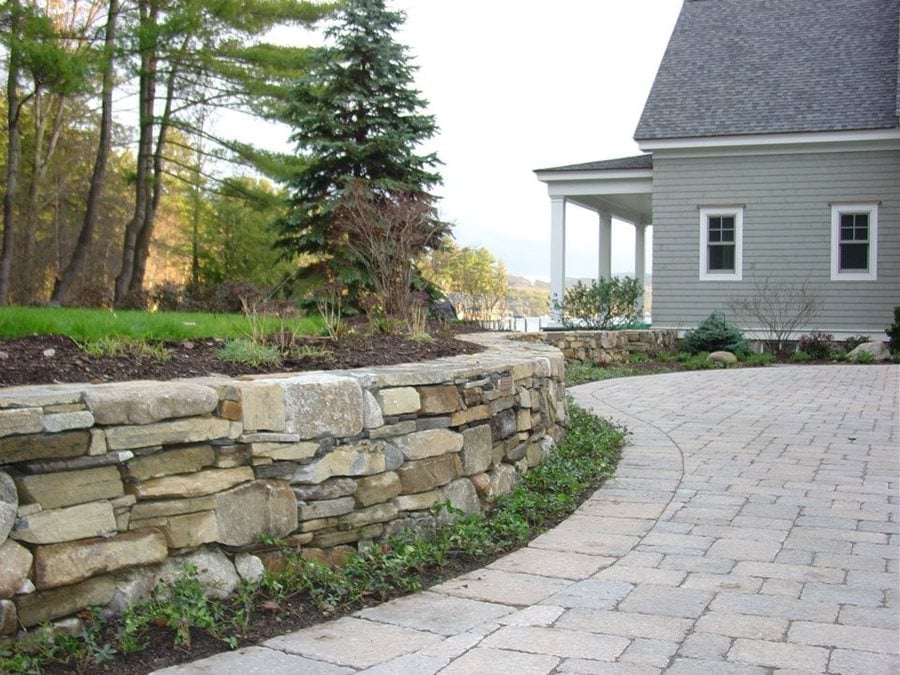
A curved retaining wall softens a sloped front yard better than a straight run ever could. In this roomy landscape, a curving stone wall follows the edge of a winding paver pathway, guiding the eye from the driveway to the house entrance. The tan and gray stones blend with the greenery and the wood details on the home exterior, keeping the structure from feeling like a barrier. The gentle arc creates a natural separation between the raised planting bed and the walkway, making the path feel planned. Mark the curve with a garden hose before you place the first stone.
Elaborate Tiered Garden with Curved Gray Stone Walls and Water
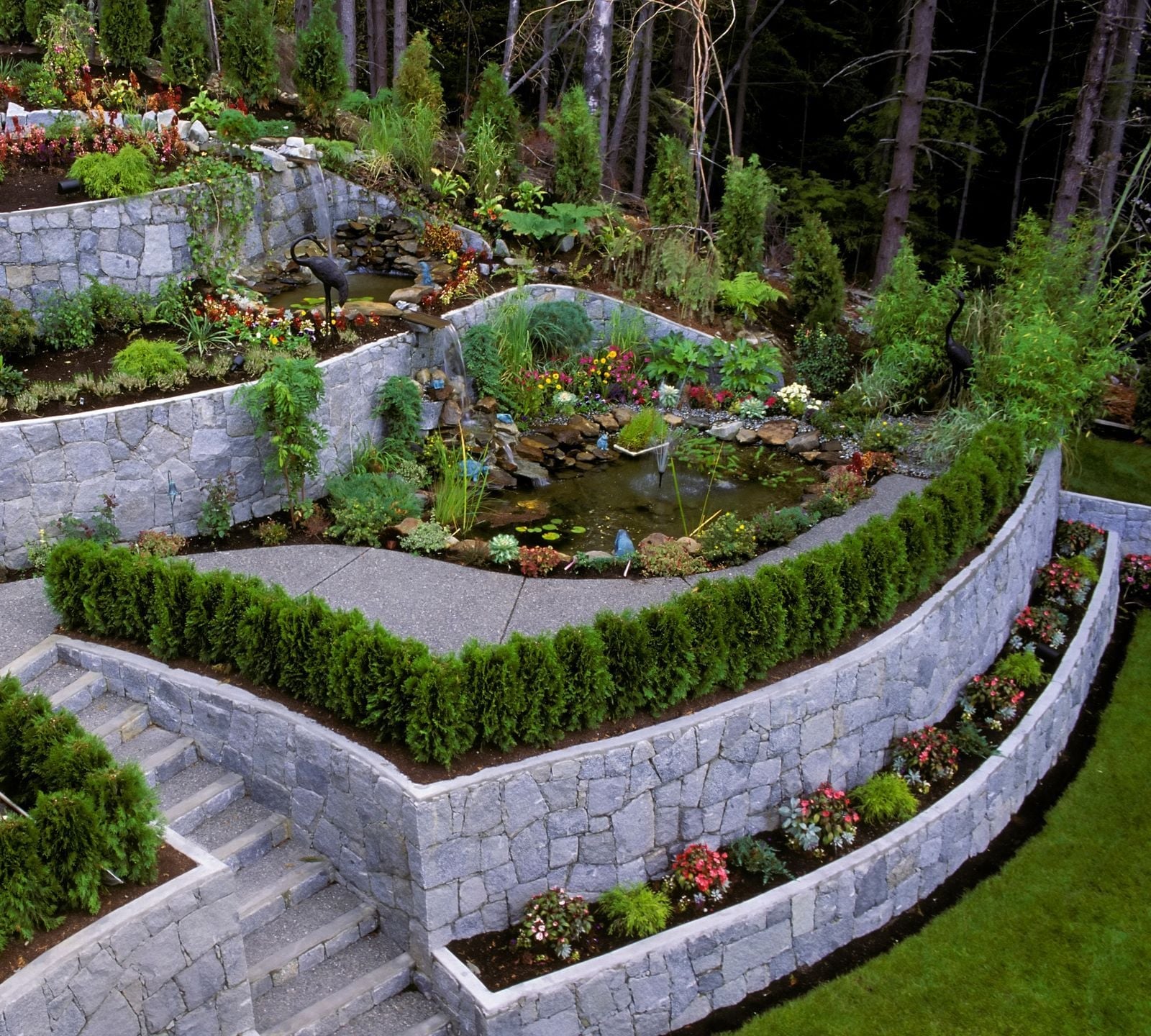
Some retaining walls are purely practical, but this one leans into ornament. A formal garden with tiered curved gray stone walls uses a palette of gray, green, blue, and pink, where the cool stone and hedge work as a backdrop for a water feature and flowering plants. The multi-level layout takes a flat yard and gives it depth, with stairs connecting each terrace so the garden becomes a series of rooms on a slope.
Water is the element that breaks the symmetry here. A small pool or fountain at the lower level adds movement to an otherwise structured design. If your yard has enough grade for two or three tiers, consider where a water feature could sit as the visual anchor for the lowest level.
Traditional Front Yard with Stone Block Retaining Wall and Brick Paver
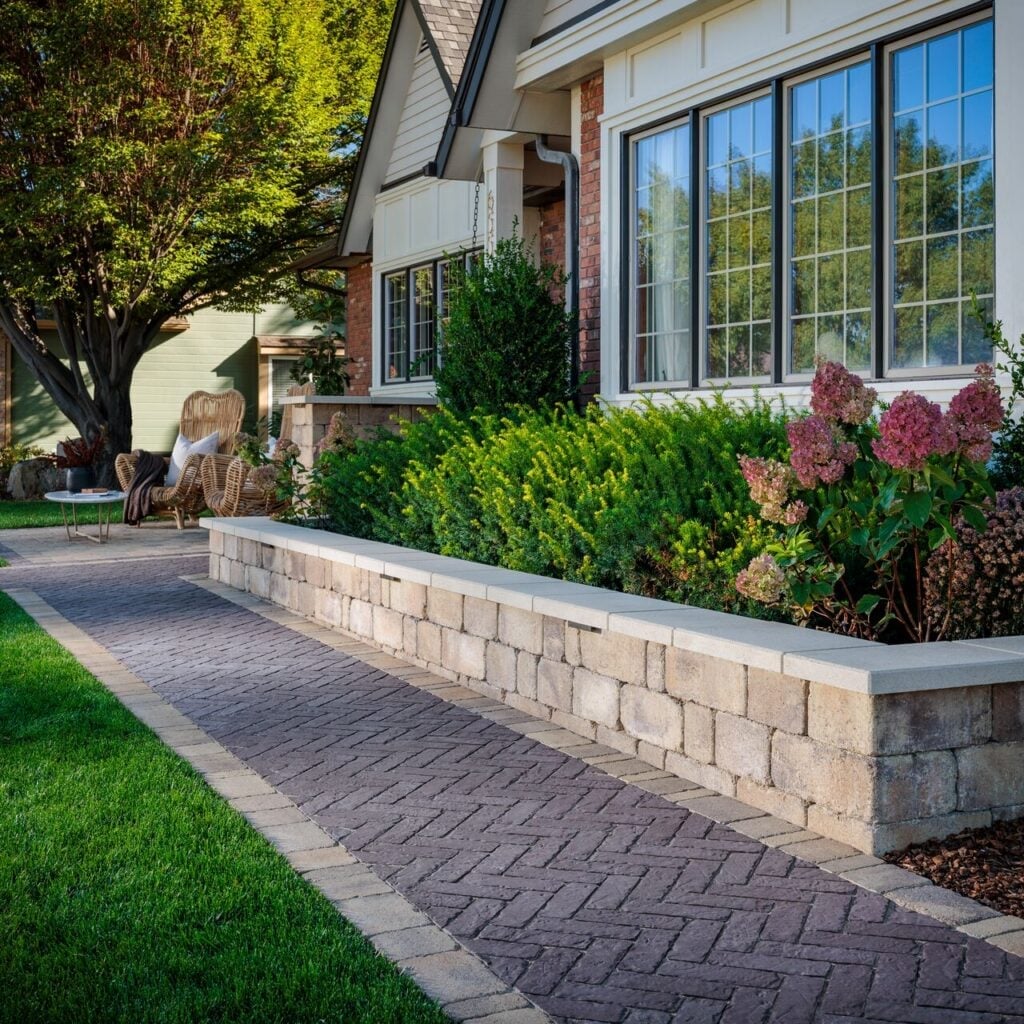
A stone block retaining wall paired with brick pavers creates a clean transition from the street to the front door. In this setup, the wall borders a raised garden bed alongside a pathway, with a wicker chair and side table tucked into the corner for a porch-like feel. The beige and tan tones of the stone and brick keep the look warm, while the soft shadows from the daylight add texture to the stone surface. It is a traditional approach that works well for front yards where you want a defined garden edge without blocking the view of the house.
Contemporary Patio with Concrete Block Retaining Wall and Square Fire
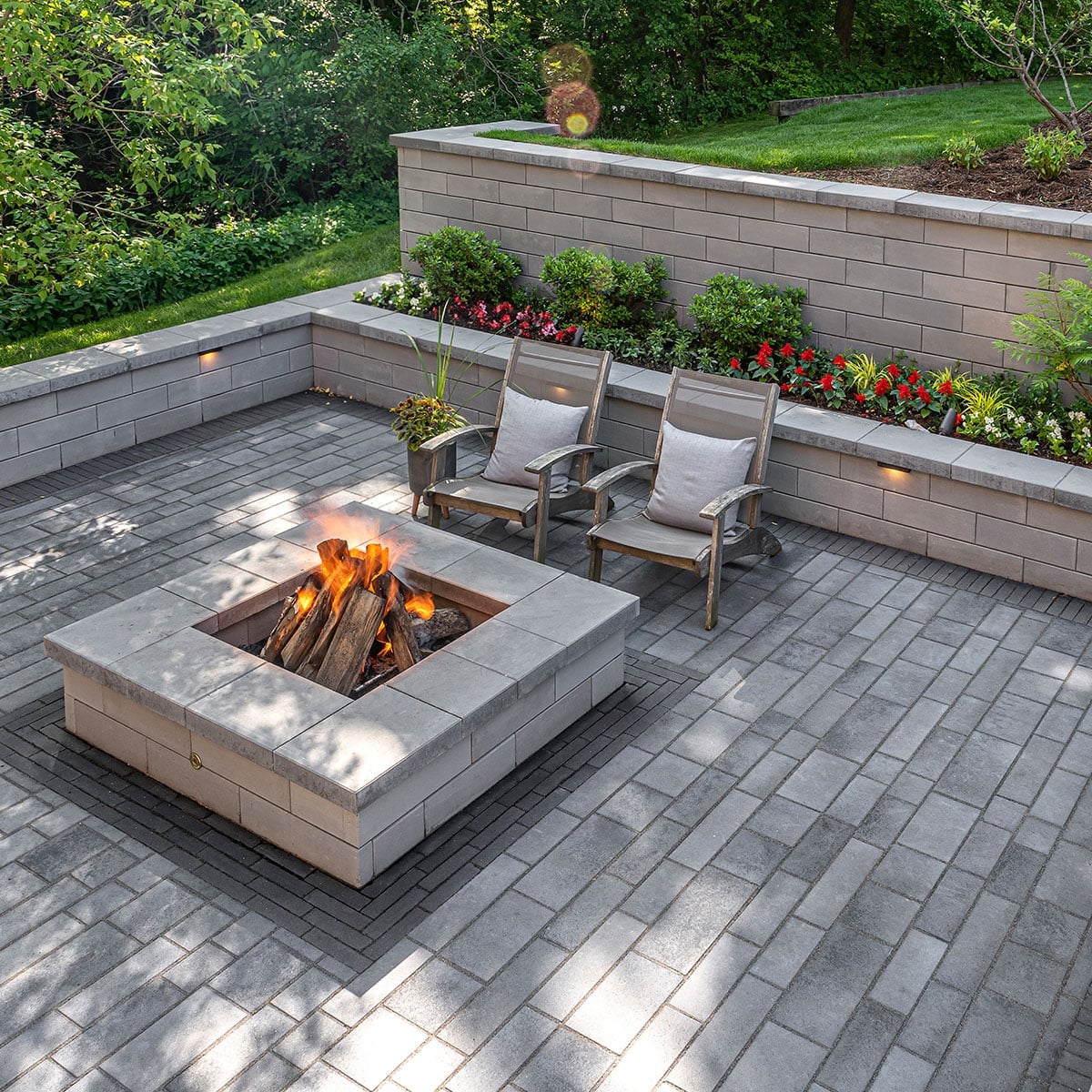
This patio keeps things simple with a concrete block retaining wall that defines the space and a square fire pit as the centerpiece. The gray blocks and wood-toned chairs give the backyard a clean, contemporary feel, while the fire pit anchors the seating area so the wall acts as a backdrop. Daylight softens the edges of the concrete, making the wall a natural boundary for the patio. If you are working with a flat lot, a low retaining wall like this one can carve out a dedicated lounge zone without needing a grade change.
Spacious Suburban Backyard with Extensive Curved Gray Concrete Block
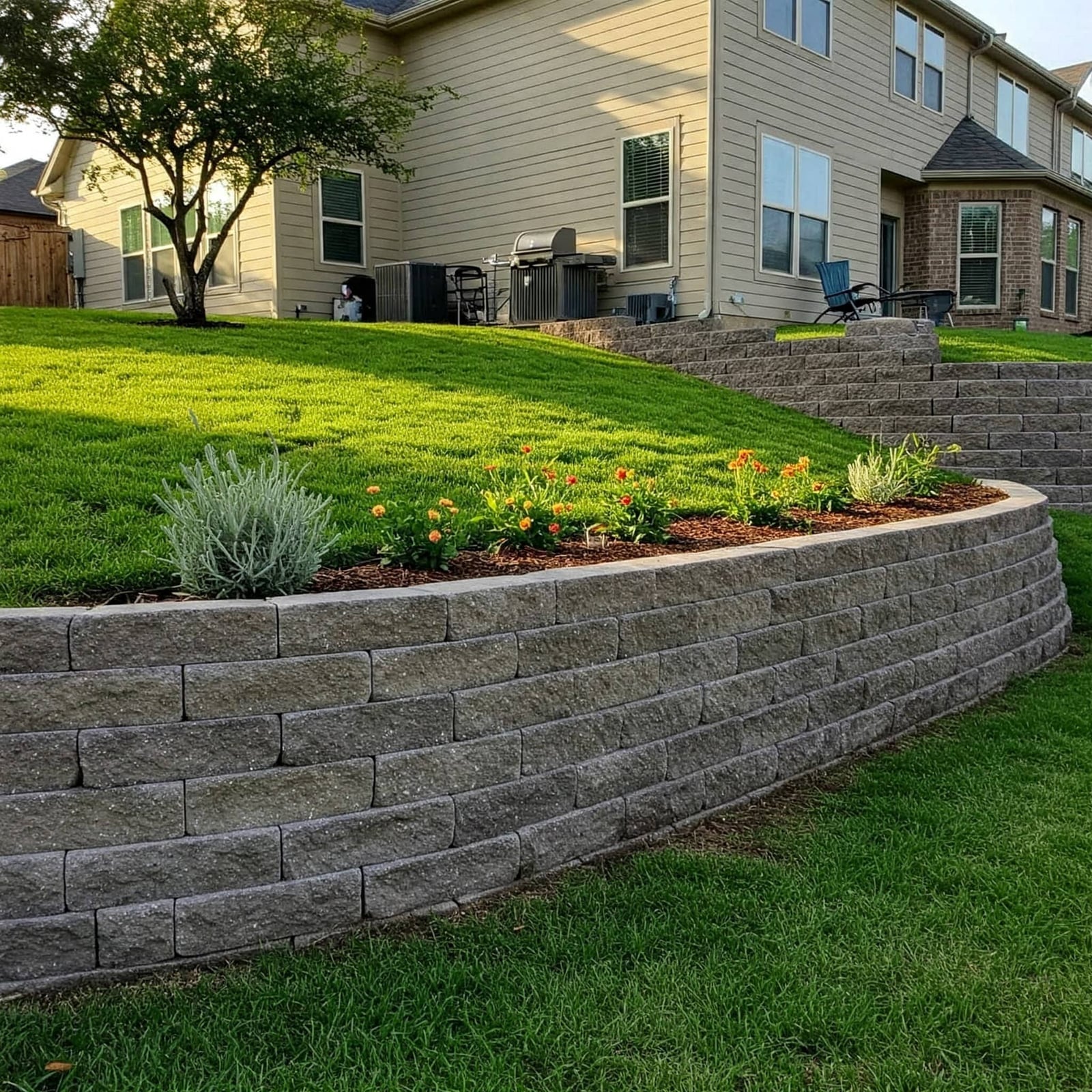
An extensive curved retaining wall can turn a sprawling suburban backyard into a series of usable terraces. Here, the gray concrete block wall sweeps across the yard, creating multiple levels of lawn and garden beds that break up the flat expanse. The late afternoon sun casts long shadows across the grass, emphasizing the curve and giving the space a sense of movement.
When a yard feels too open, terracing adds definition without closing it in. The wall supports a garden bed on the upper level while the lower lawn stays open for play or seating. For a similar approach, map out two or three broad tiers that follow the natural slope of the land, keeping the curves wide enough to mow around easily.
Modern Landscape with Gray Stone Walls, Steps, and Multi-Level Garden
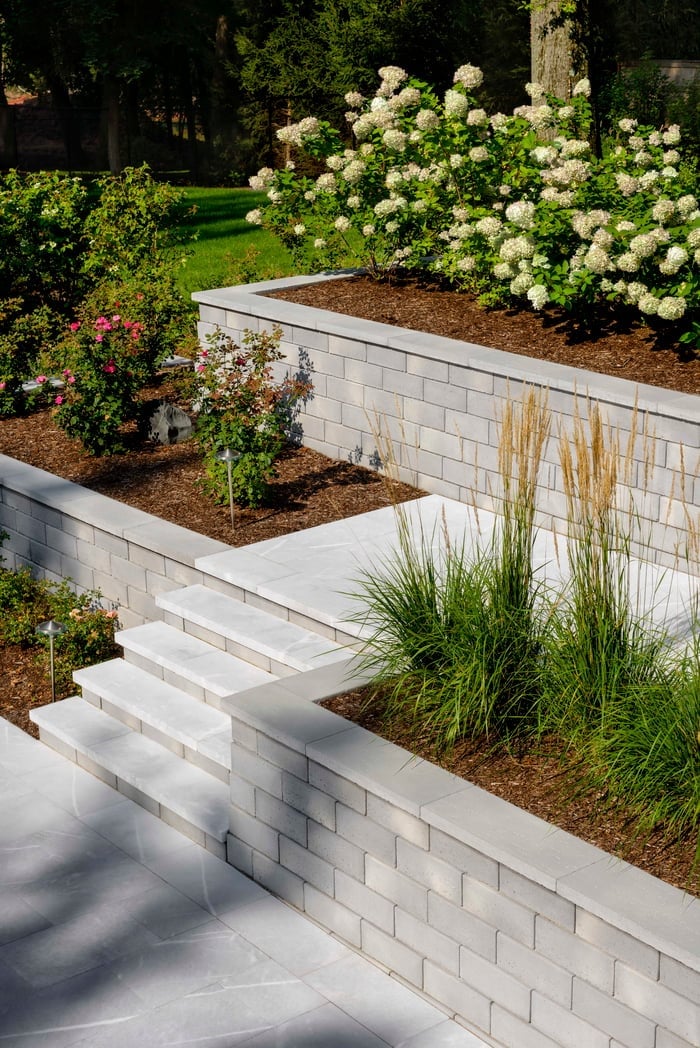
A multi-level patio and garden relies on clean horizontal lines to feel organized. Gray stone retaining walls create those lines, breaking a sloped yard into flat, usable terraces. Stone steps connect the levels so the path from patio to garden is a single movement, not a scramble. The gray palette keeps the hardscape neutral, letting green plants and white flowers supply the contrast. What defines this look is repetition: the same stone block appears in the walls and the steps, tying every level together. Introducing a second wall material mid-slope fractures the visual flow.
Traditional Garden with Curved Stone Wall, Steps, and Paved Pathway
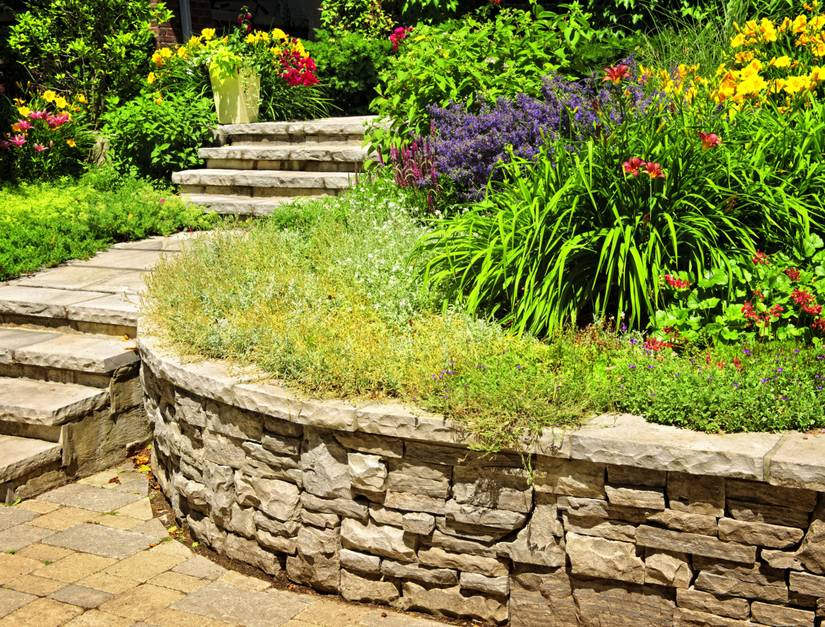
A curved stone retaining wall stays put, but the planting around it is yours to swap. The curve itself softens the transition between a paved pathway and the raised garden bed behind it. Stone steps cut into the wall let you move between levels without a detour. The gray stone anchors the look, while yellow and pink flowers add seasonal color you can change each year. What defines this style is the wall’s gentle arc, which feels older and more settled than a straight line. Planting tall shrubs that hide the curve entirely turns the wall into a mere backdrop.
Modern Garden with Sleek Concrete Planter Box and Geometric Stepping
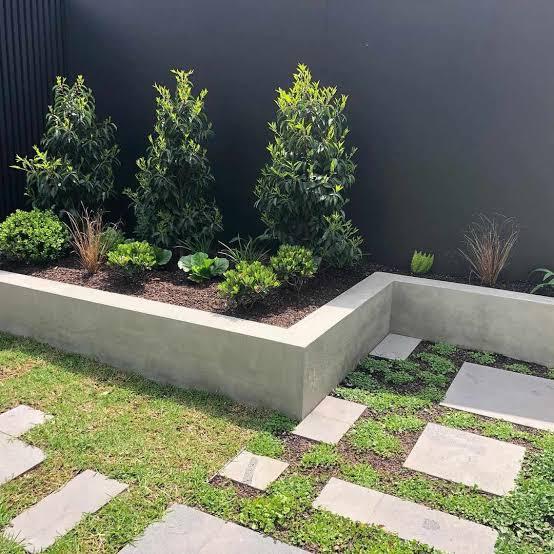
A traditional stone retaining wall holds soil in place; a modern concrete planter box does the same job but doubles as a design object. The difference is in the details: the planter box here has clean, straight edges and a smooth gray finish, while the stepping stones leading away from it follow a geometric grid rather than a meandering path. Manicured shrubs fill the planter in neat rows, reinforcing the orderly feel.
What defines this approach is the ratio of hardscape to plant material. The concrete box and stone path take up more visual space than the greenery, which is exactly the point. What breaks it is overplanting. Let the shrubs stay trimmed so the geometry of the planter remains the hero. The wood elements, probably a fence or deck nearby, warm up the gray concrete without competing with it.
Traditional Garden Raised Bed with Vertical Dark Wood Plank Retaining
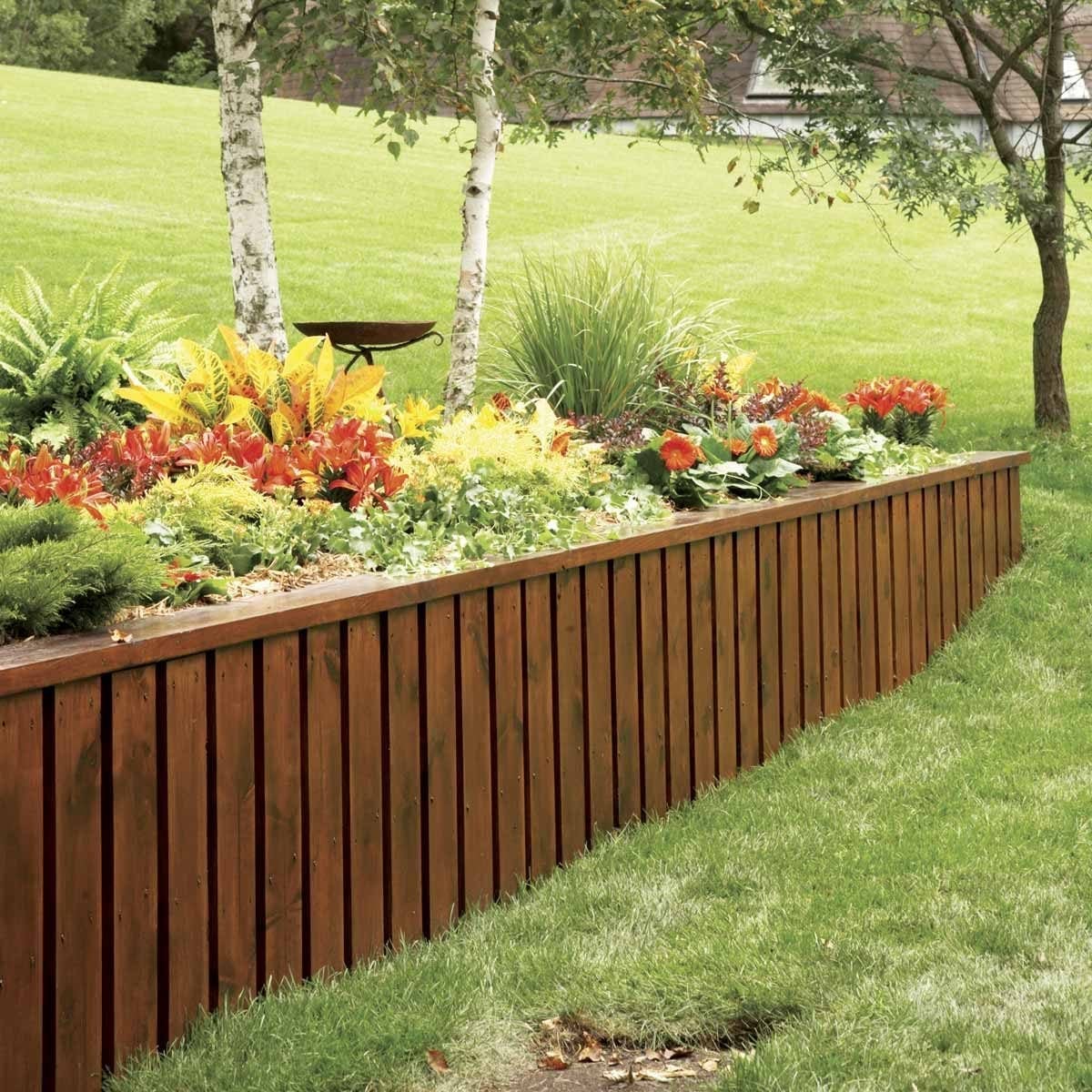
Dark wood planks installed vertically give a raised garden bed a clean, tailored edge that blends into a traditional yard. The vertical grain draws the eye upward, which makes the planting bed feel taller than its actual height. Yellow flowers and green foliage spill over the top, softening the dark brown wood. The contrast defines this material choice: the wood looks warm and natural against the bright garden colors. Uneven weathering can disrupt the look. A consistent stain or sealant keeps the wall looking polished year after year.
Modern Multi-Level Backyard with Dark Gray Block Retaining Walls
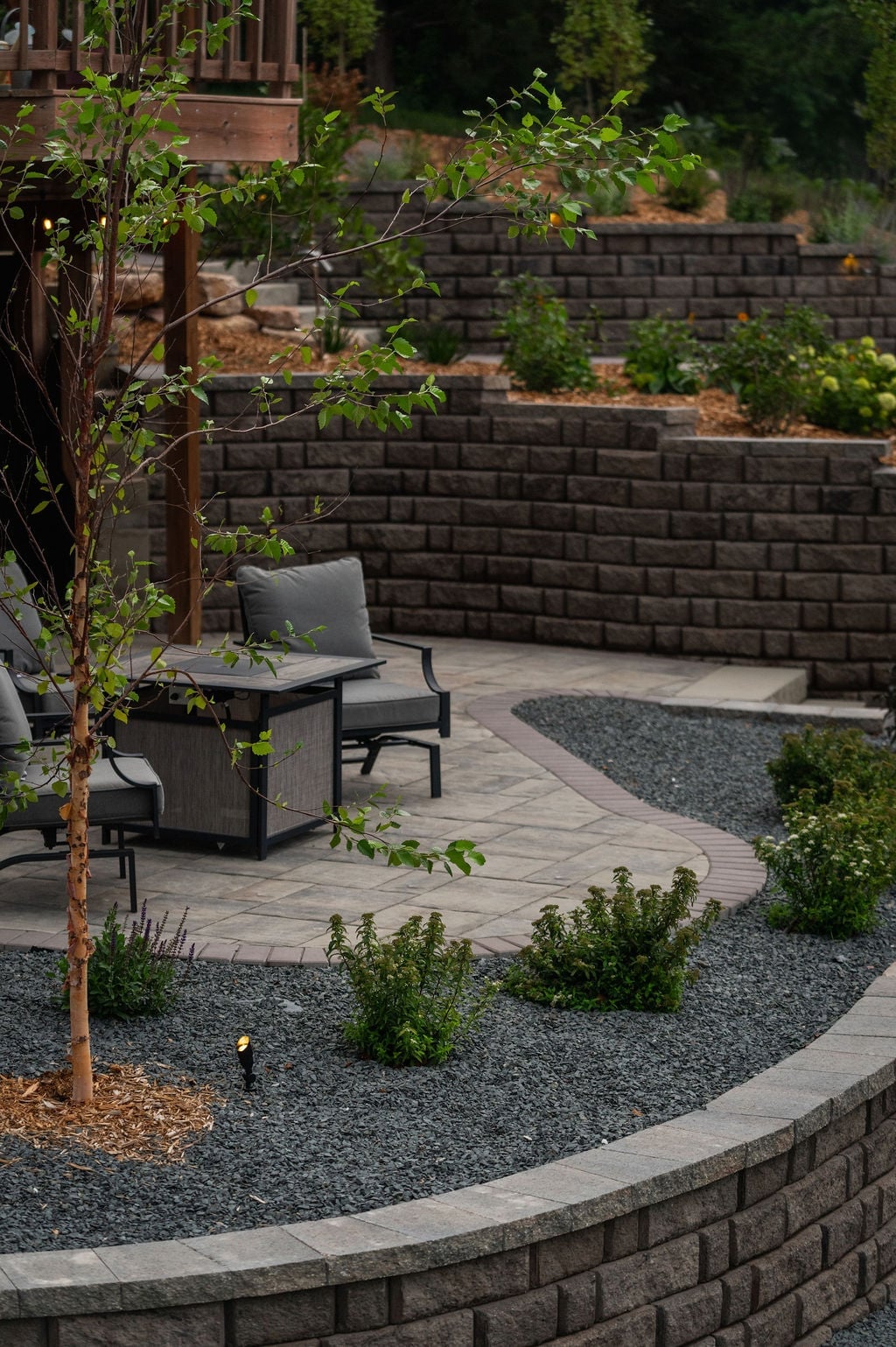
This backyard commits to a single move: layer dark gray block retaining walls at two heights to create distinct zones. The upper level holds the patio furniture, the lower level holds a gravel area, and subtle landscape lights at dusk pick out the edge of each tier. The palette is restrained, gray blocks, gray gravel, green plants, which makes the space feel larger than it is. What defines this layout is the proportion between the two levels. The upper patio is wide enough for a seating group, the lower zone is narrow and functions as a transition space. Keep the lower level open so the wall itself becomes the feature.
Rustic Outdoor Patio with Prominent Stone Fireplace and Natural
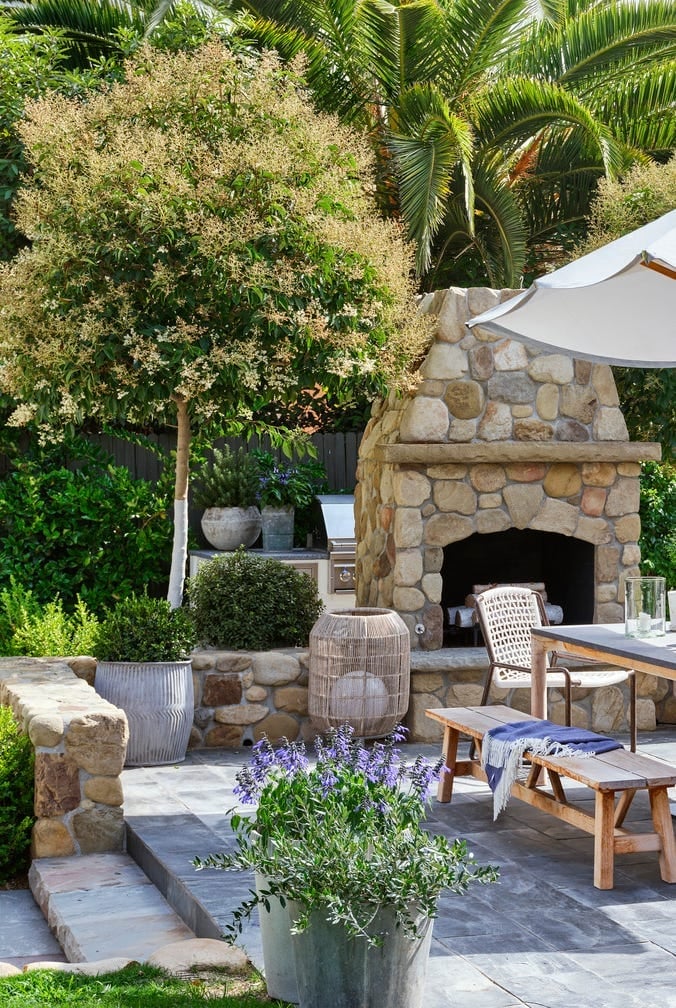
A focal point like a large stone fireplace does more than anchor a patio; it sets the entire outdoor room’s rhythm. In this rustic layout, the fireplace stands as the clear hero, with an outdoor dining set and a bench arranged in its orbit. The palette of natural stone, warm wood, and green foliage keeps the scene grounded. A fabric umbrella softens the daylight and adds a casual note that keeps the look from veering into formal. The style works because the materials stay honest: stone, wood, wicker, and fabric all appear natural. Avoid anything too polished or glossy next to those rough-hewn surfaces.
Traditional Garden Backyard with Beige Concrete Block Walls and Wooden
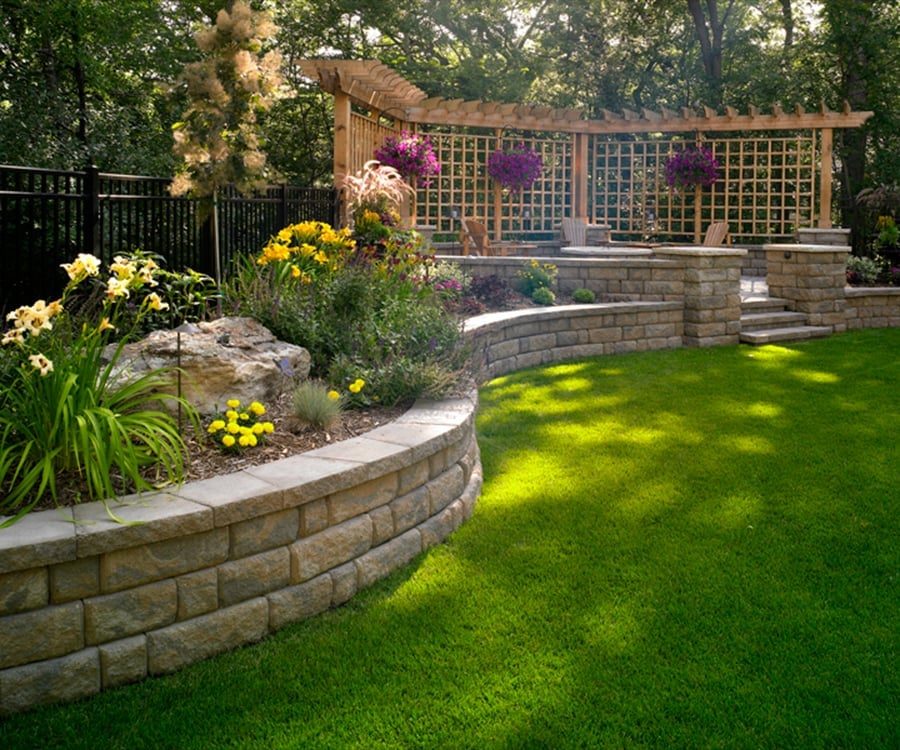
Beige concrete block retaining walls create a neutral backdrop that lets a wooden pergola take center stage in this traditional backyard. The palette runs beige, green, yellow, and purple, with the pergola adding a warm wood tone that softens the concrete’s mass. Stone steps link the multi-level garden, and the seating area beneath the pergola becomes the natural gathering spot. The style reads as classic and orderly, with the block walls providing structure and the pergola offering a sense of enclosure.
Contemporary Landscape with Stone Waterfall Retaining Wall and Evening
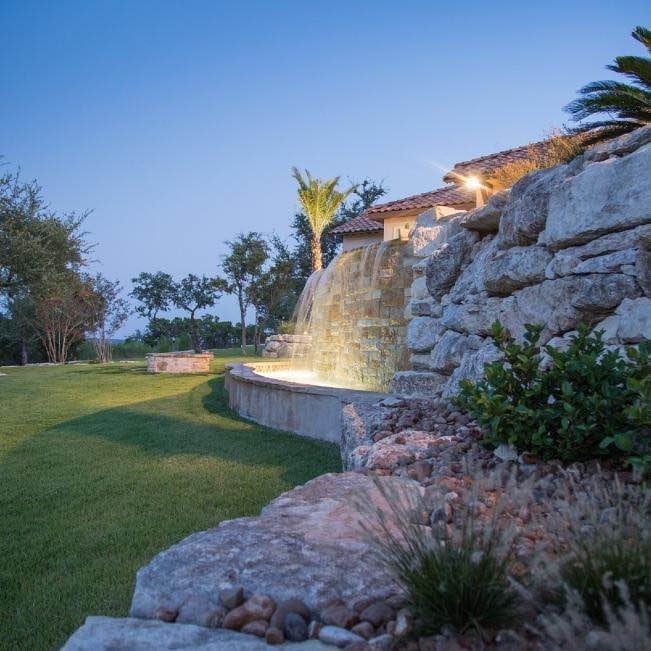
When a retaining wall doubles as a water feature, you get a multi-functional element that handles slope management and adds sensory appeal. In this contemporary landscape, the stone waterfall wall becomes the hero, illuminated in the evening by artificial lights that emphasize the movement of water. The palette stays restrained with stone, green, and blue sky, letting the water’s sheen and the modern house’s clean lines do the talking. The layout creates distinct levels, with the waterfall connecting them visually and acoustically.
Modern Landscape Garden with Stacked Gray Stone Wall and Manicured
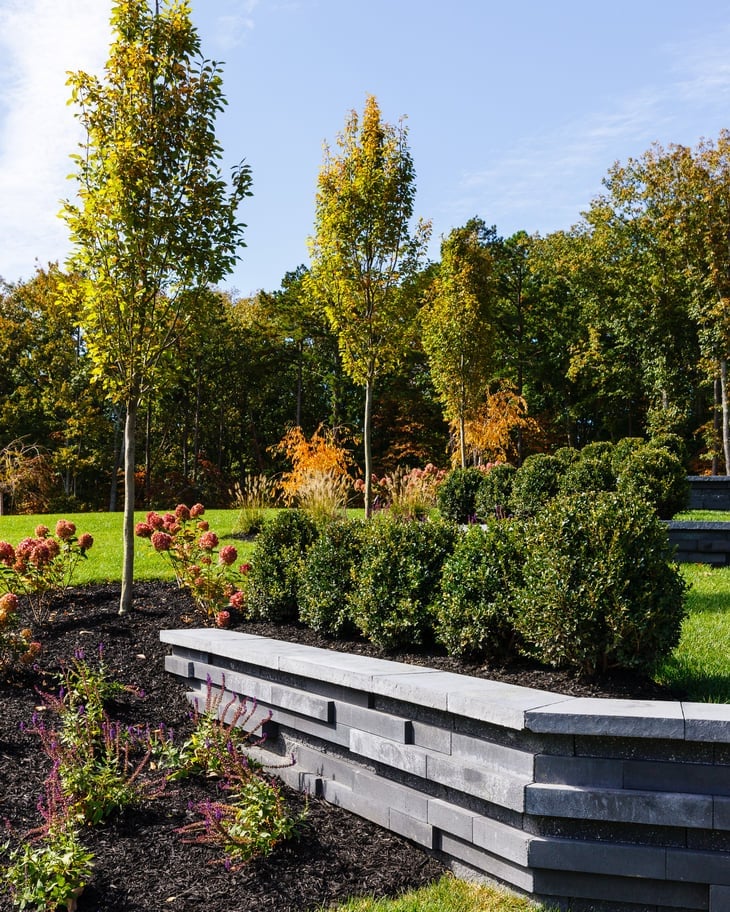
Not every retaining wall needs to be a heavy rustic boulder wall; stacked gray stone offers a cleaner, more geometric alternative that suits a modern garden. Here, the stacked stone wall creates tiered garden beds, with manicured shrubs and a clear blue sky above. The daylight and clear sky keep the palette of gray, green, and blue feeling crisp. The geometric precision of the wall contrasts with the organic shapes of the foliage, which is the key to making modern landscape materials work together.
Rustic Patio with Stone Retaining Wall and Cozy Fire Pit Seating
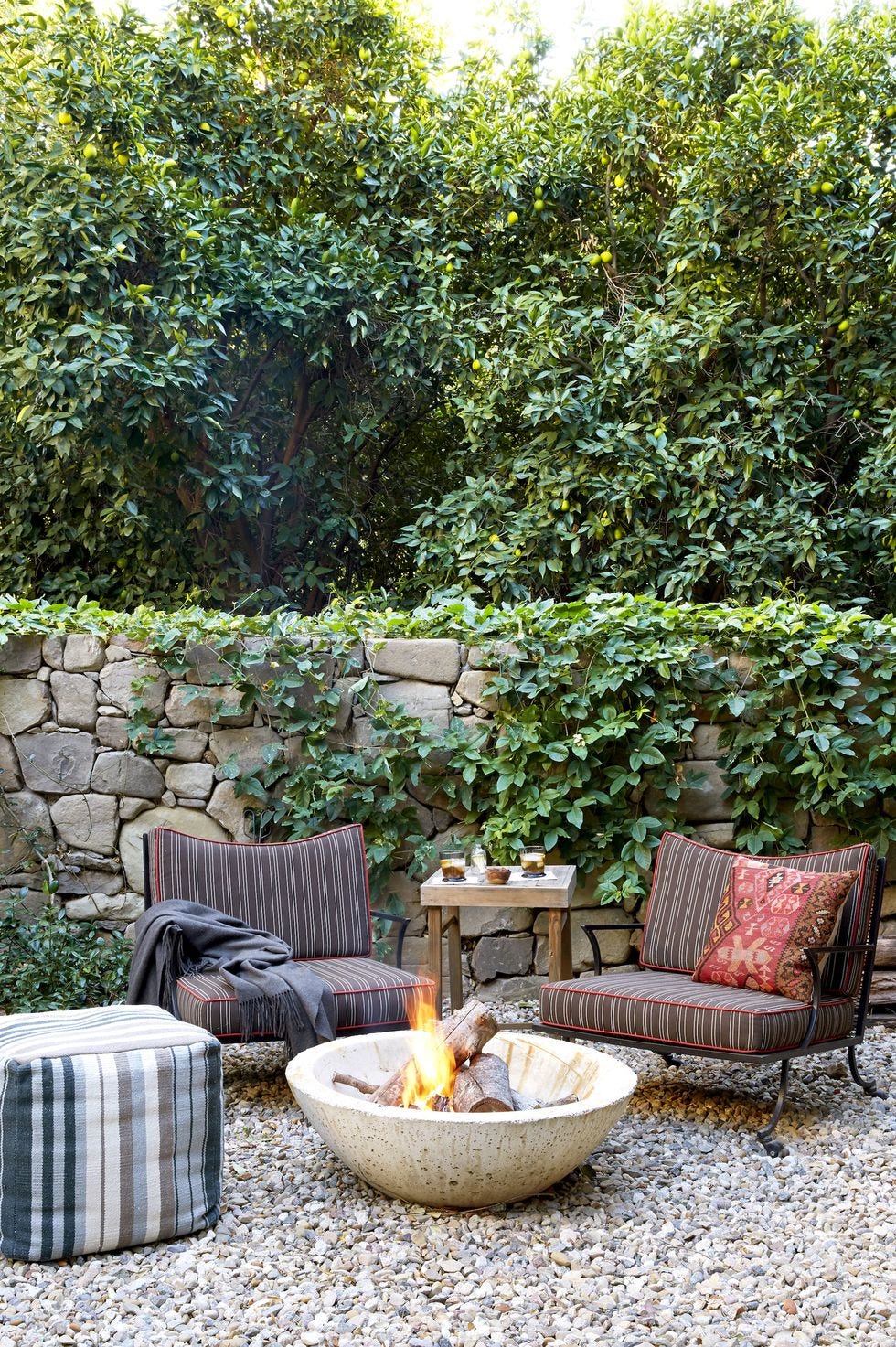
A low stone retaining wall does not just hold back earth; it can define a seating area without adding a separate structure. In this rustic patio, the wall wraps around a fire pit, with chairs and an ottoman arranged for conversation. The earth tones, green, and gray palette stays true to the setting, and the fire pit adds a second light source that shifts the mood as evening falls. The layout reads as cozy because the wall creates a clear boundary while keeping the space open to the surrounding landscape.
Modern Landscape with Curved Gray Stone Wall and Vibrant Pink
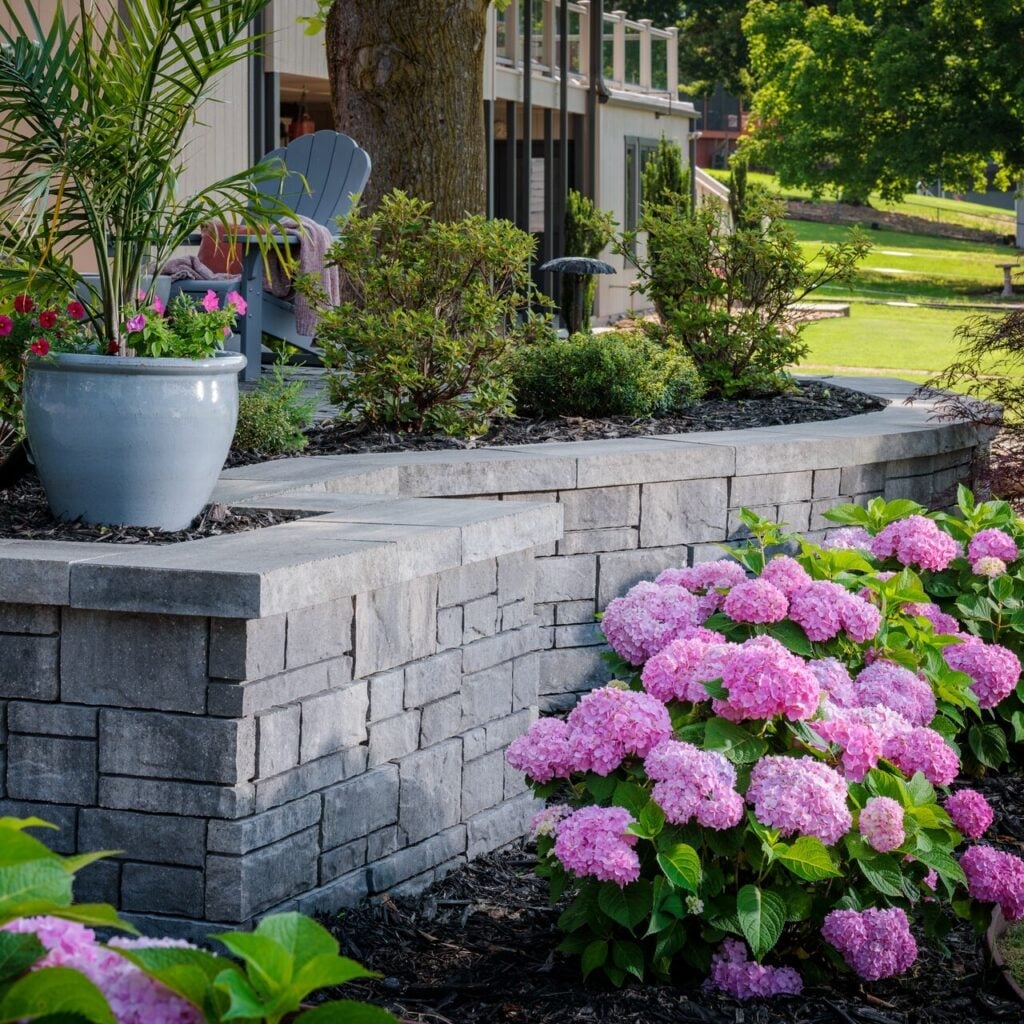
A curved gray stone retaining wall does not have to fade into the background. In this compact garden bed, the soft gray blocks form a low, sweeping edge that cradles a burst of pink hydrangeas. The contrast is the point: the wall stays neutral and lets the flowers own the color. A large dark planter and a single outdoor chair sit nearby, but they do not compete. The palette works because the ratio of gray to pink is heavily weighted toward the stone. If you want a similar pop without committing to hydrangeas, check which perennials thrive in your USDA zone and swap in a shade that stands out against the wall.
Naturalistic Backyard Pool with Surrounding Stone Retaining Wall
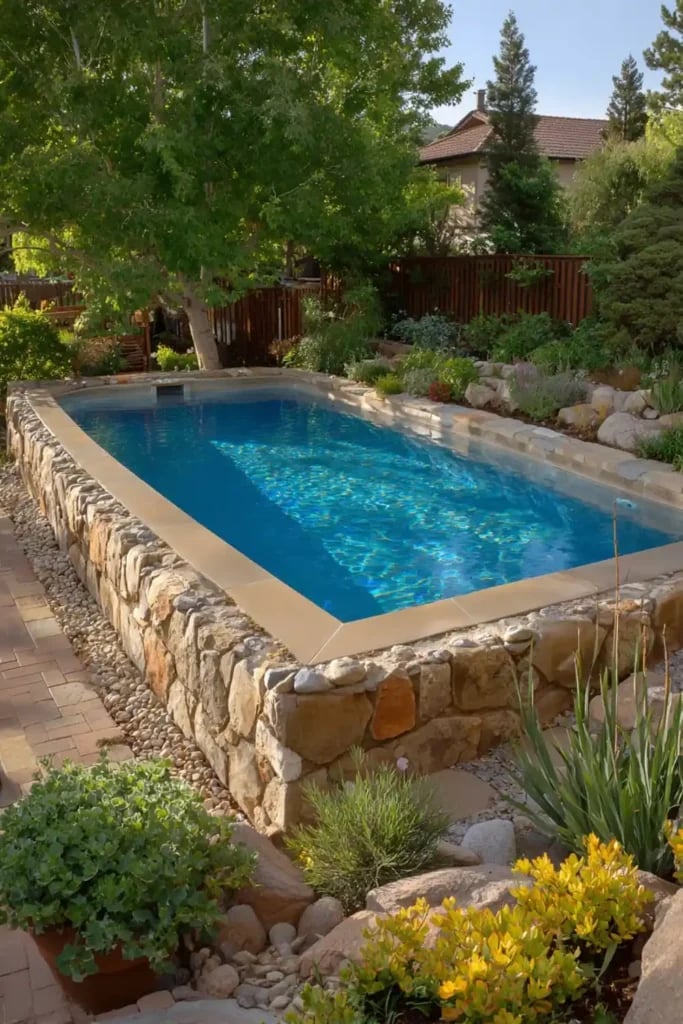
A pool surrounded by a stone retaining wall sounds like a permanent fixture, but the look can be adapted for a rental with the right approach. This expansive backyard uses a low stone wall that wraps around the pool, blending into the landscaping with blue water, green plants, and brown earth tones. The wall feels natural rather than engineered, so it reads as part of the terrain. For a renter-friendly version, skip the built stone and use large, freestanding stone planters arranged in a curve around the pool edge. They mimic the weight and shape of a retaining wall without altering the ground. Layer in potted grasses and low shrubs to soften the line, and remove everything when you move out.
Spacious Backyard with Tiered Stacked Stone Walls and Concrete Stairs
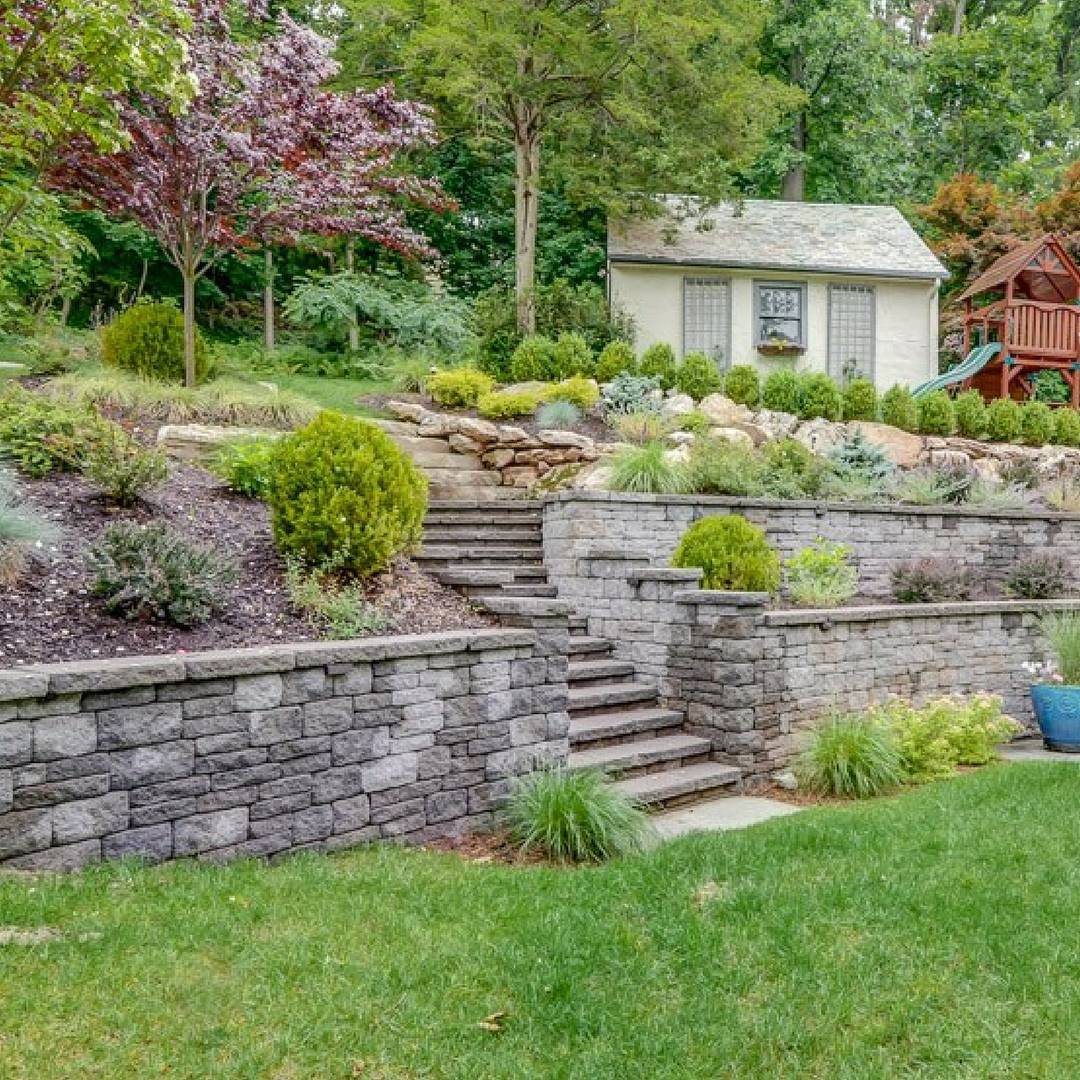
Two levels of stacked stone block walls create a clear division in this spacious backyard, with a wide concrete stairway running straight up the center. The layout solves a steep slope without making the yard feel chopped up. Each tier holds its own planting bed, so the upper level stays visible from below. The central stairs anchor the design and give the eye a direct path through the space. When you have a long, narrow grade, placing the stairs in the middle rather than off to one side keeps both sides of the yard usable and balanced.
Rustic Patio with Curved Stone Wall, Integrated Seating, and Evening
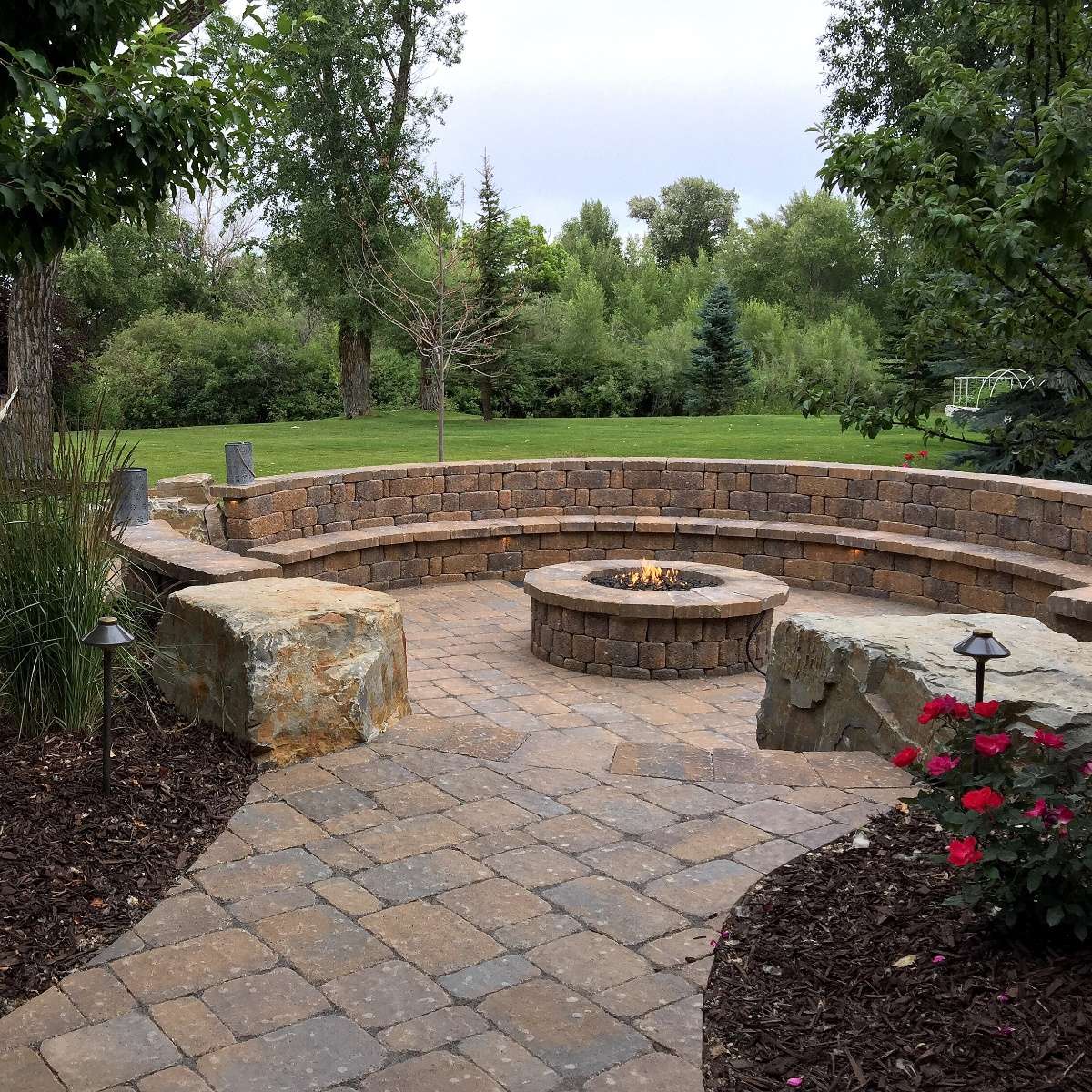
The curved stone wall here does double duty: it holds back the earth and provides built-in seating around a fire pit. Large boulders and a mix of stone sizes give the wall a rugged, hand-laid feel that suits the rustic patio. In the evening, landscape lighting picks up the texture of the stone and casts a warm glow across the seating area. The integrated seats mean you do not need to drag chairs across the pavers every time you light the fire. If you are planning a similar setup, place the lights low to graze the wall surface rather than blasting it from above, so the stone reads as solid and sculptural rather than flat.
Final Thoughts
A retaining wall is a structure, but it can also be an opportunity. The best ones do more than hold soil: they define a garden room, frame a view, or create a spot to sit. As you plan yours, think about how it lives with the house and the plants around it. Check drainage before you build. Match the material to the climate. A thoughtful wall will earn its keep for decades.