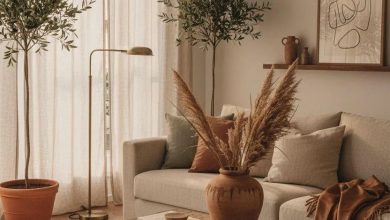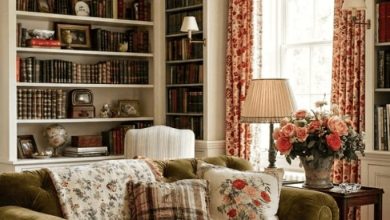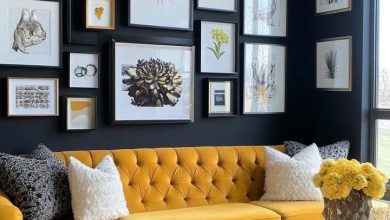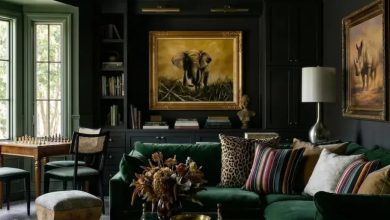

Choosing living room wall colors can feel like a high-stakes decision. The right shade sets the mood, makes furniture pop, and turns a house into a home. We’ve gathered 32 ideas that actually work, from soft neutrals to deep, dramatic hues.
Whether you lean toward cozy and traditional or sleek and modern, this collection offers real-world inspiration for your next paint project. Each look shows how a single color choice can transform the entire space, proving that paint is one of the most powerful tools in your decorating kit. Get ready to find your perfect match.
Soft Off-White Walls for a Light-Filled Transitional Living Room
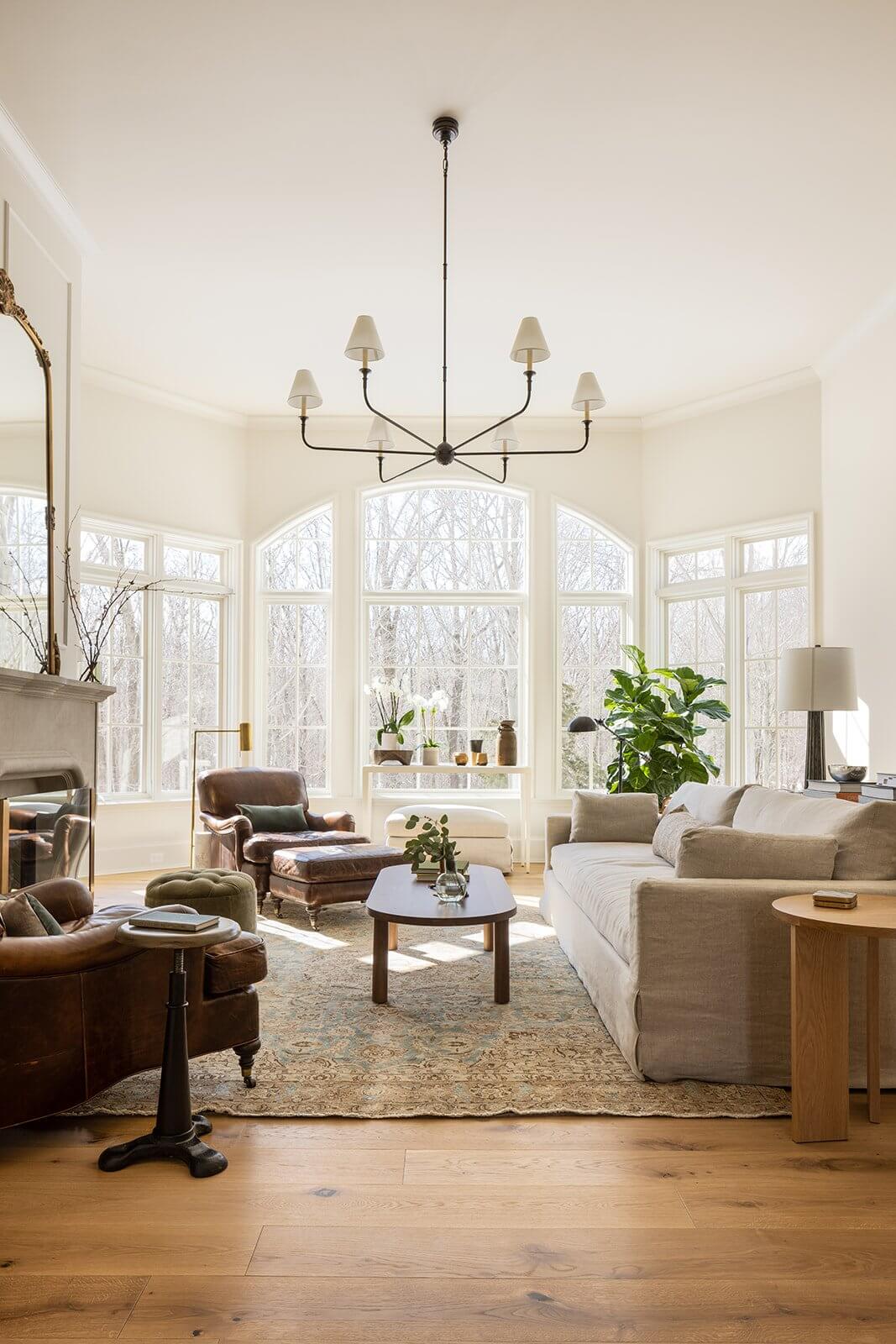
Expansive arched windows flood this open-plan transitional living room with abundant natural light, making the off-white walls feel almost luminous. The palette stays quiet with beige, brown, and green accents, so the room reads as calm rather than sterile. A chandelier adds a touch of formality without competing with the generous daylight. The key to this look is letting the light do the work: keep window treatments minimal and let the soft wall color shift throughout the day.
Neutral Off-White Walls in a Serene Transitional Living Room
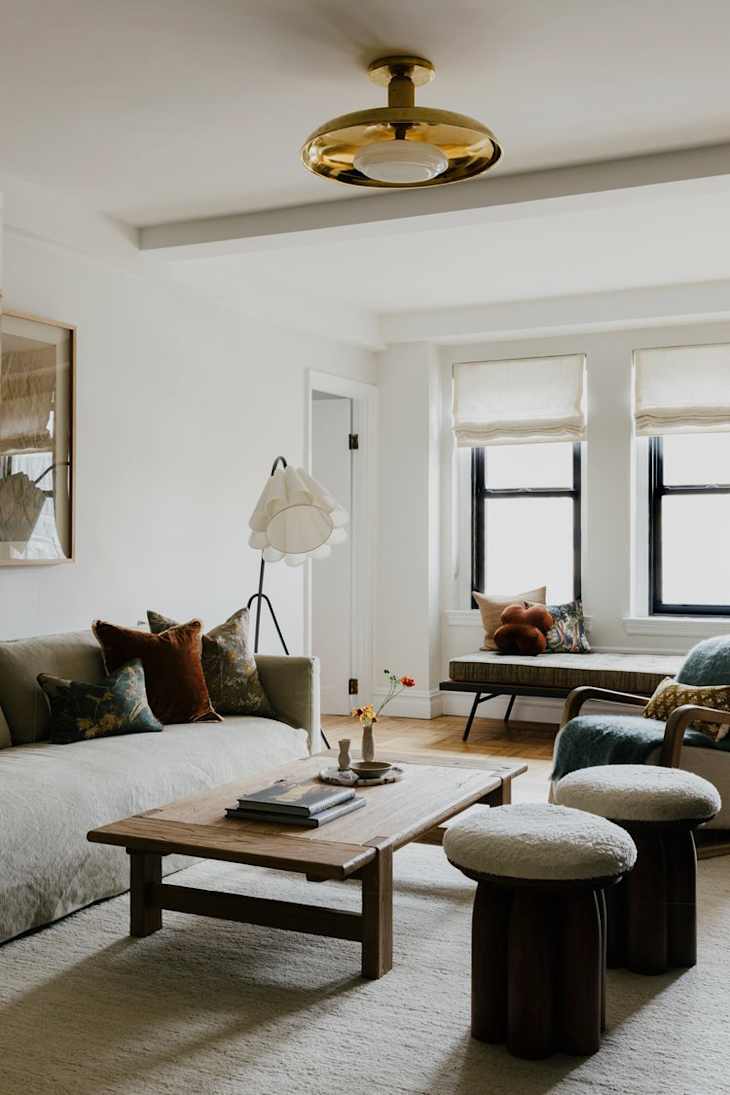
This room proves that a neutral living room wall color can feel warm when you pair it with the right wood accents. The off-white walls here are anything but flat: they pick up natural light and the glow of a floor lamp, creating a soft backdrop for the sofa and coffee table. Wood tones in the furniture and floor add just enough contrast to keep the room from feeling blank. Choose an off-white with a subtle beige undertone and repeat that warmth in larger wood pieces. It is a transitional design that lives quietly and lets the textures speak.
Cream Walls with Deep Green Trim for a Sophisticated Living Room
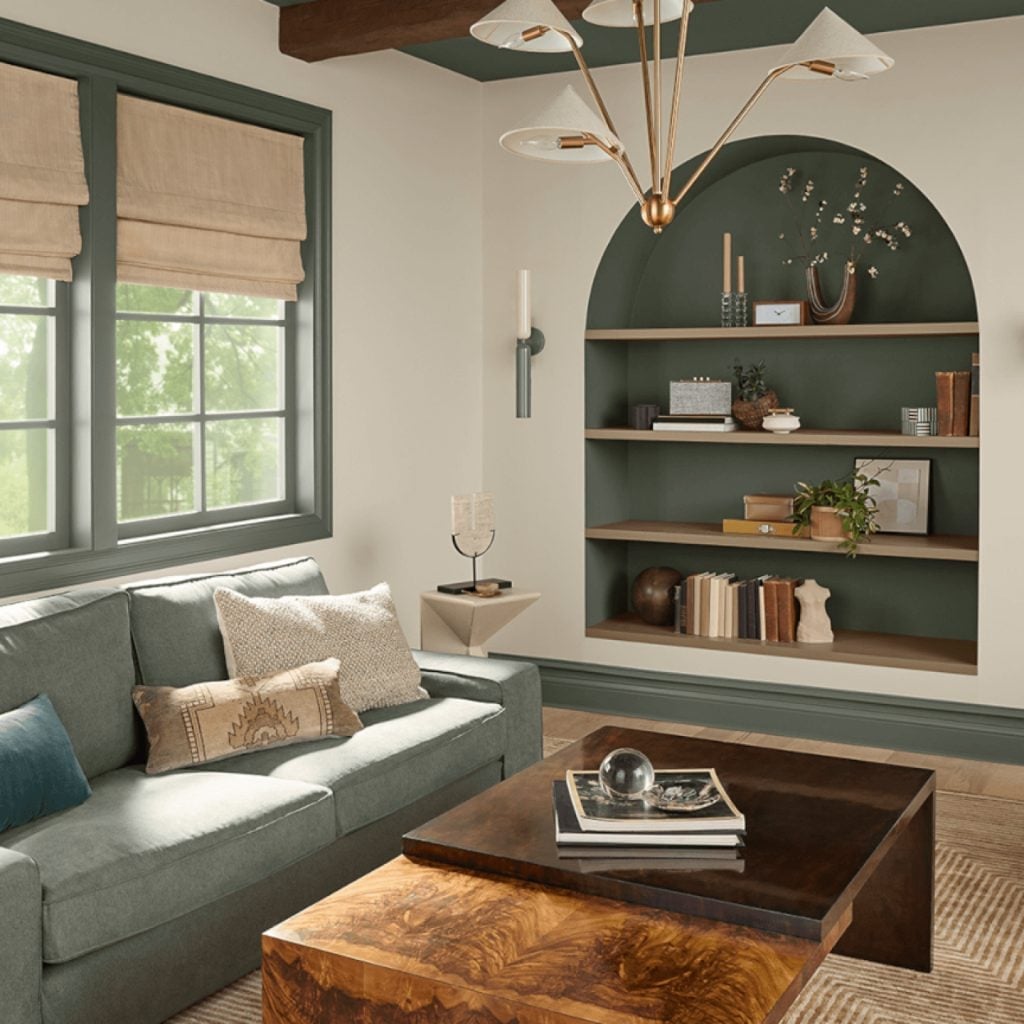
Can a wall color make built-in shelves look intentional rather than added on? In this room, the cream walls and deep green trim do exactly that. The cream is warm enough to feel cozy, while the green outlines the arched built-ins and gives them a permanent, finished look. The palette also includes touches of gray in the linen and plaster, which keeps the green from feeling too literal or seasonal.
The trick is to treat the trim as part of the architecture: paint it the same green you would use on a front door, and let the cream walls recede behind it. This approach works especially well when the built-ins have a strong shape, like these arches, because the contrast makes the silhouette read clearly.
Charcoal Walls Create a Cozy Modern Rustic Living Room
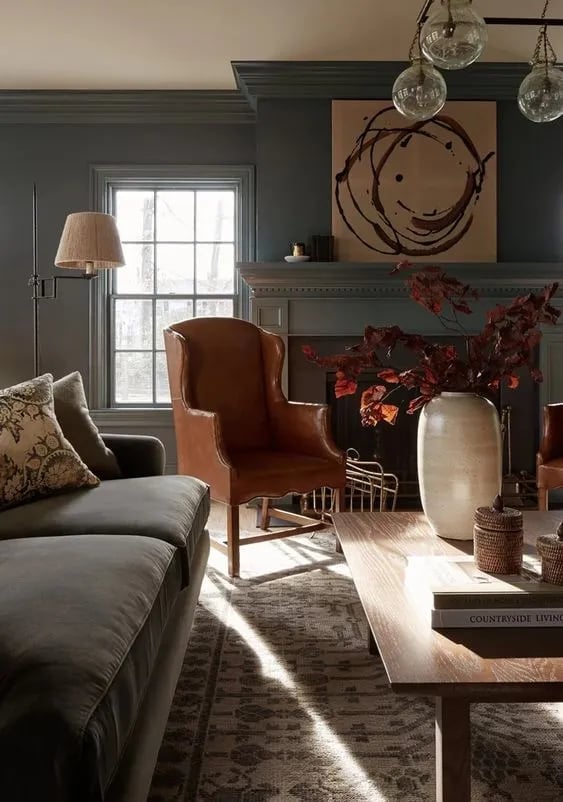
A compact corner vignette with a leather wingback chair and a large vase shows how charcoal walls can make a modern rustic living room feel intimate. The palette balances charcoal with brown, rust, and natural stone, so the room stays grounded. A floor lamp and ambient natural light prevent the dark walls from closing in. The key is contrast: pair a deep wall color with lighter upholstery and warm wood tones to keep the room inviting.
Beige Accent Wall in a Modern Living Room with Bold Accents
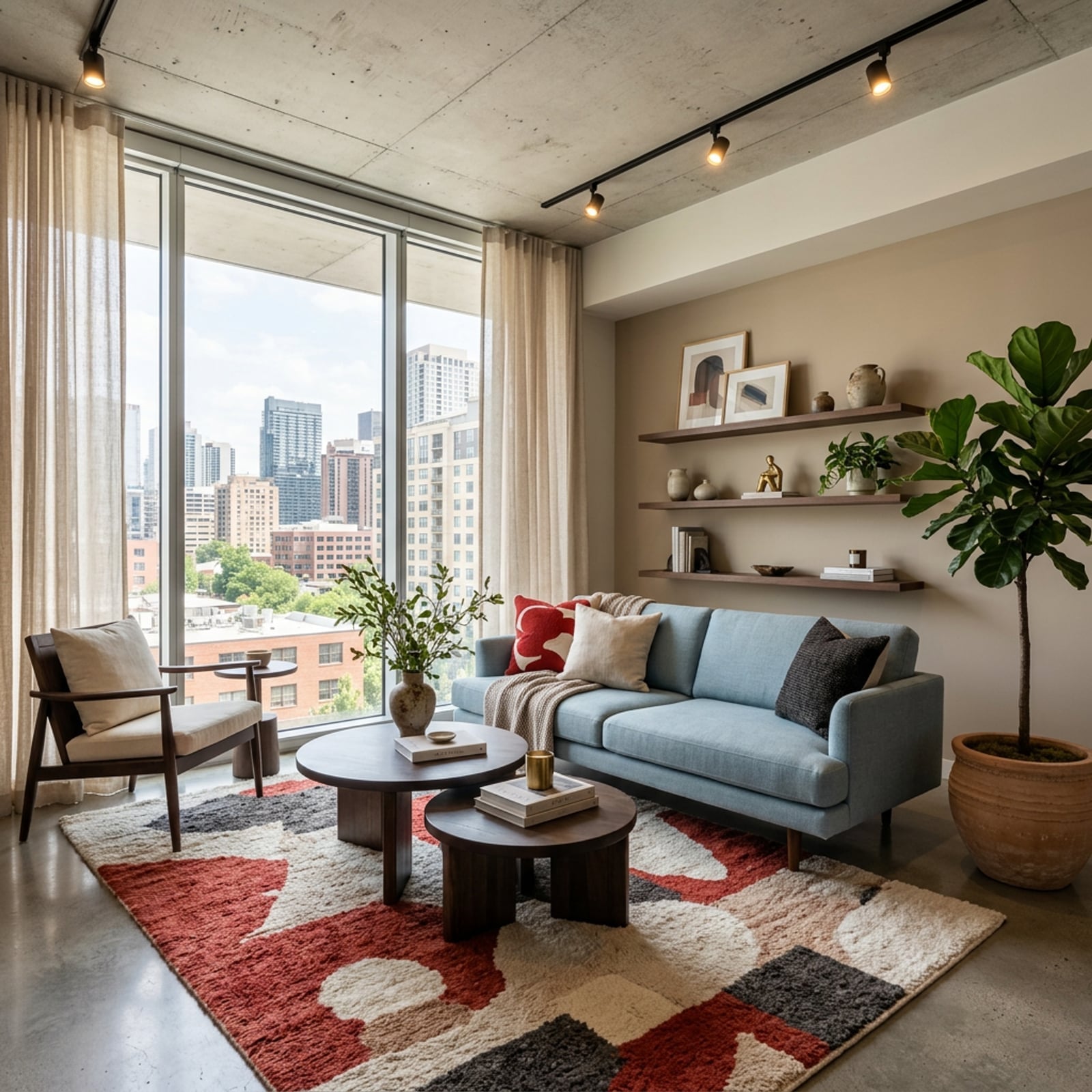
A practical rule for a beige accent wall in a modern living room is to let it anchor the bold pieces rather than compete with them. In this room, the beige wall sits behind a blue sofa and a patterned rug with red and cream tones, and it does not try to steal attention. The concrete and terracotta accents add texture, while the track lighting and natural light keep the space bright. The beige wall gives the eye a place to rest between the vivid colors, so the room feels balanced instead of chaotic.
Deep Navy Walls for Luxurious Modern Living Room Elegance
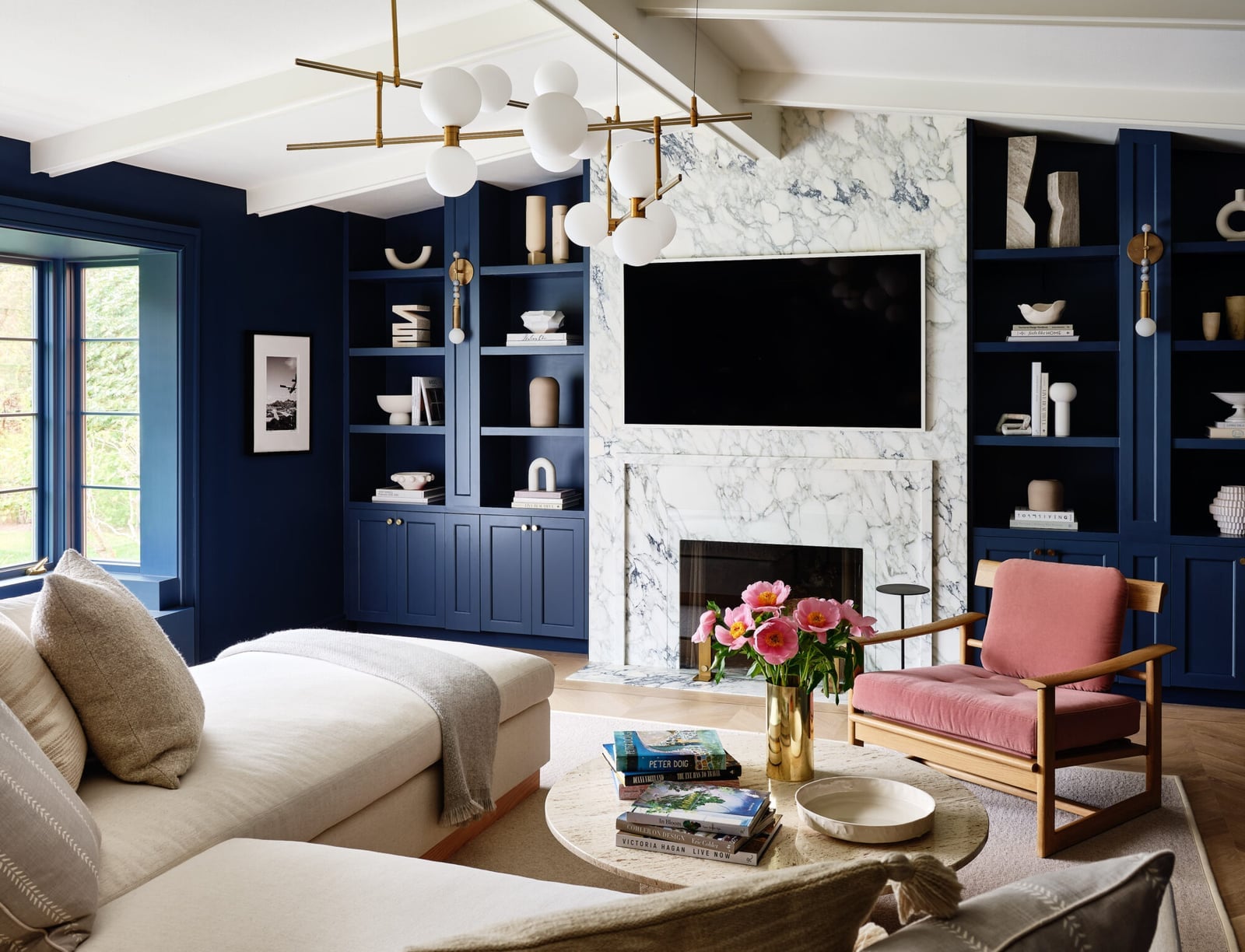
If white walls feel too safe but charcoal reads as too somber, deep navy lands in a sweeter spot. It brings the same weight as black but with a hint of warmth that keeps the room from feeling closed in. Here the navy walls frame a marble fireplace and built-in shelving, with a sectional and an armchair in soft neutrals. A chandelier and recessed lights keep the ceiling bright, so the dark walls feel deliberate rather than dim. The trick is to let one material do the talking. With a marble surround and wood accents, navy acts as the backdrop that makes those surfaces stand out. Keep the furniture light in color and the ceiling well lit, and the room stays open and polished.
Deep Blue Accent Wall in a Modern Bohemian Living Room
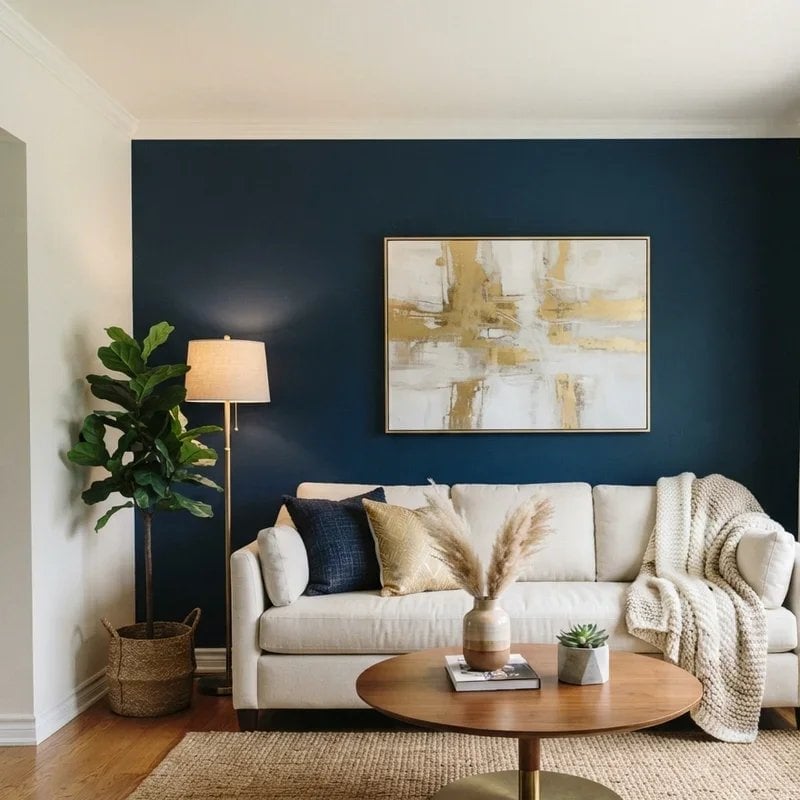
The sofa sits flush against the deep blue wall, and the large abstract art above it becomes the natural focal point. A cream rug and gold floor lamp keep the room airy, so the blue adds boldness without heaviness. For a renter-friendly approach, use a peel-and-stick wallpaper or a tension rod with a floor-to-ceiling curtain in the same shade. You get the same punch of color without painting, and you can reverse it when you move out.
Vibrant Terracotta Walls for an Earthy Bohemian Living Room
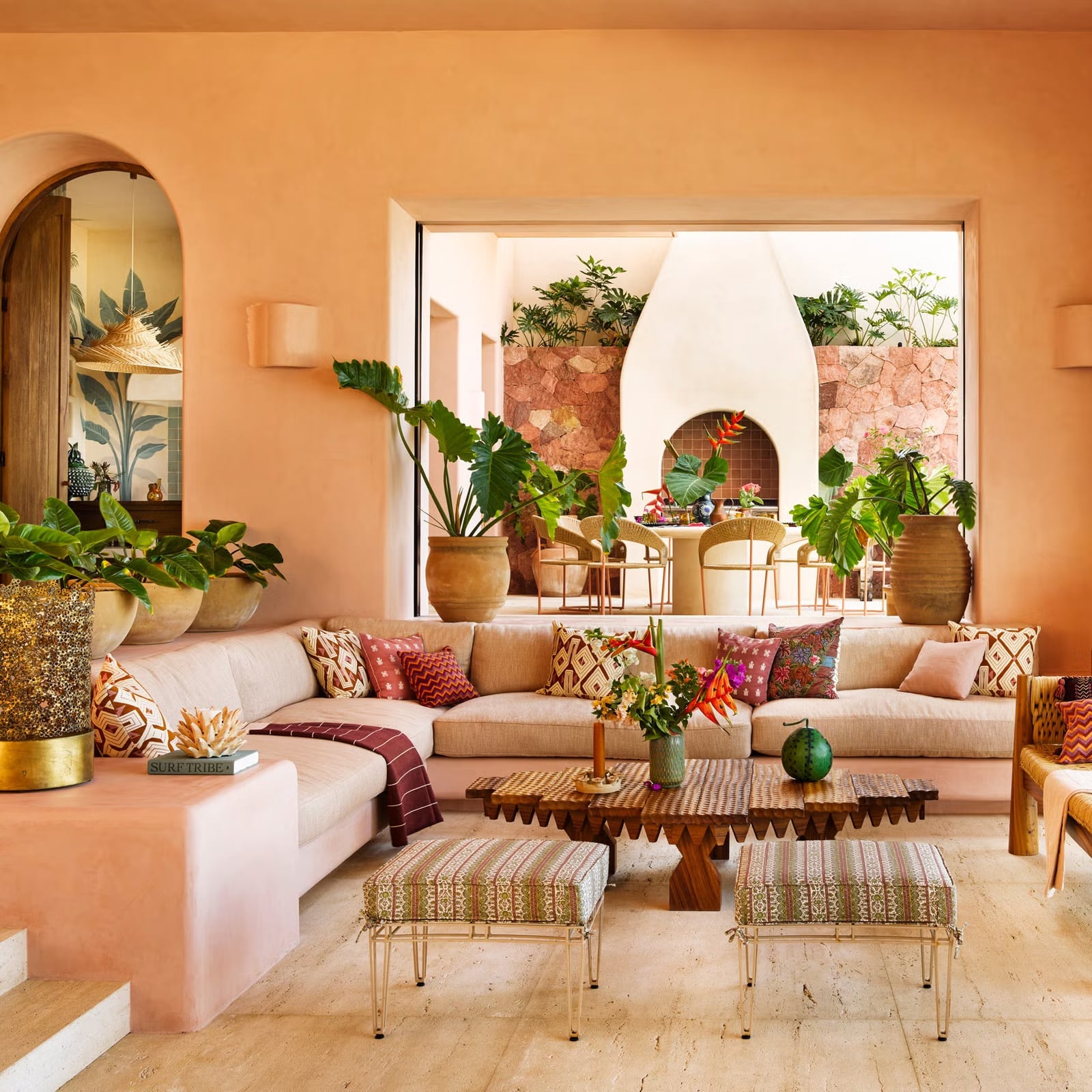
Terracotta walls do the work of a dozen accessories. The warm clay tone sets the whole room, so you can keep furniture simple and let texture carry the rest. Here a large sectional in beige sits with stone and rattan accents, and plants add green contrast. The open plan means the color flows naturally into the next space. If you want a bohemian look that does not rely on layers of pattern, start with terracotta on the walls. It grounds the room and makes every woven basket or ceramic vase feel like it belongs.
Mauve Walls and Teal Velvet Sofa in an Eclectic Living Room
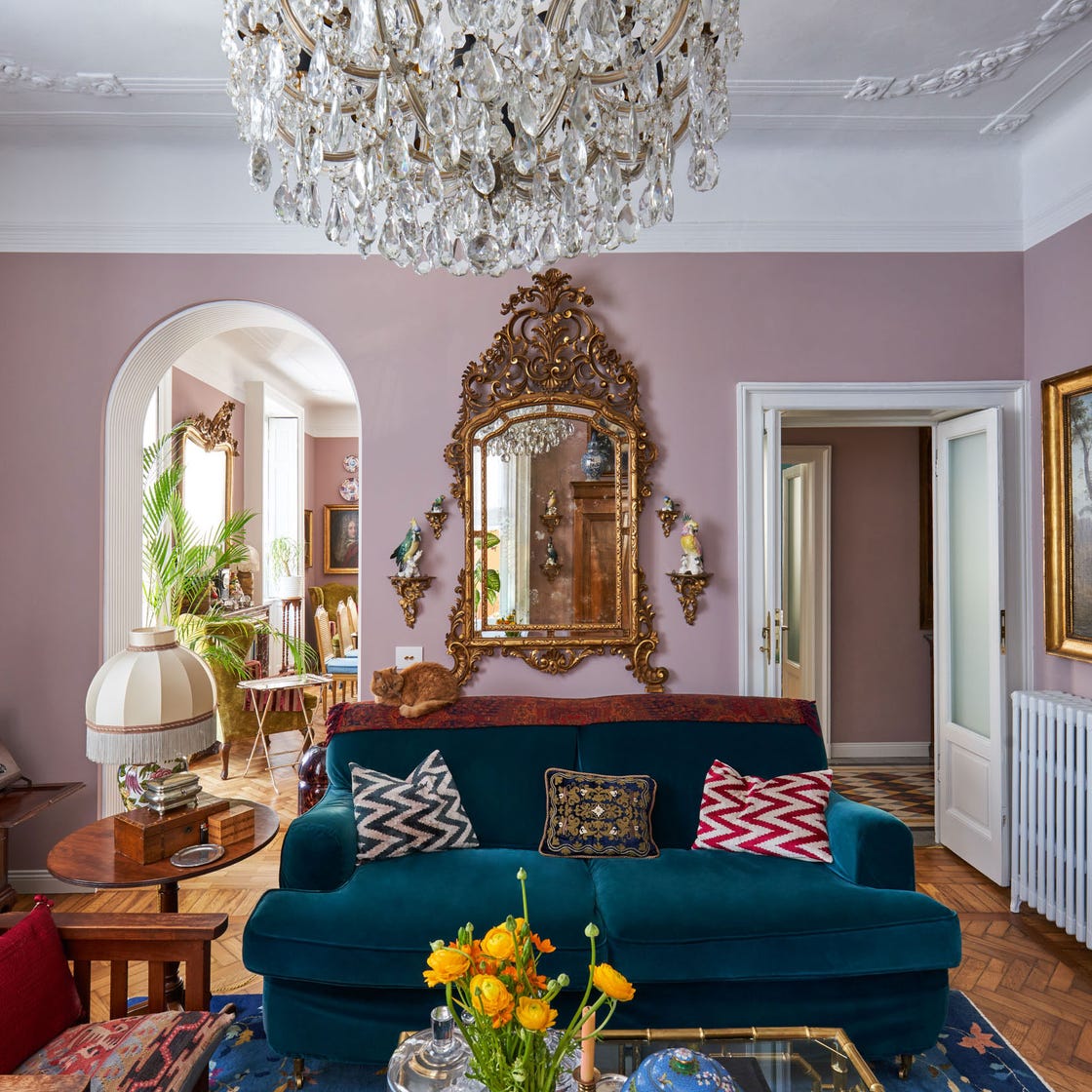
Can mauve and teal live in the same room without fighting? Yes, when you let one dominate and the other accent. Here the mauve walls are the backdrop, and the teal velvet sofa is the star. Gold details on the mirror and chandelier tie the two cool tones together, while a hint of red in the accessories adds warmth. The velvet sofa is a high-traffic piece, so choose a fabric with a high rub count if you expect daily use. With the wall color doing the heavy lifting on style, the sofa can stay practical.
Deep Green Painted Fireplace and Walls in a Modern Living Room
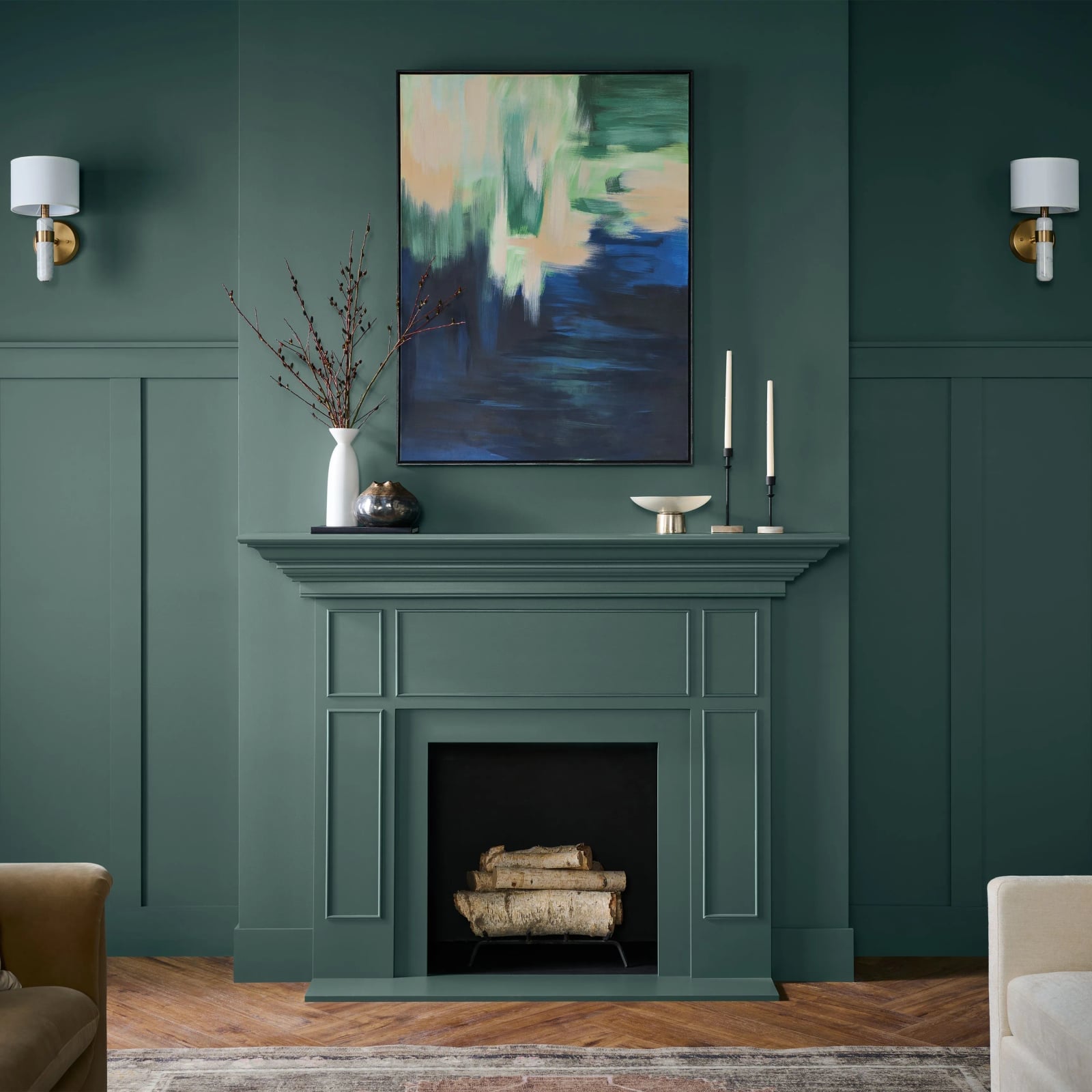
The fireplace is painted the same deep green as the walls, so it blends in rather than standing apart. A cream armchair and gold sconces provide contrast, and the brass details catch the natural light. When you paint the fireplace to match the wall, the room feels taller and more unified. The fireplace becomes a sculptural element rather than a focal point, which works well if you want the art or the furniture to take center stage.
Deep Teal Accent Wall for a Sleek Modern Living Room
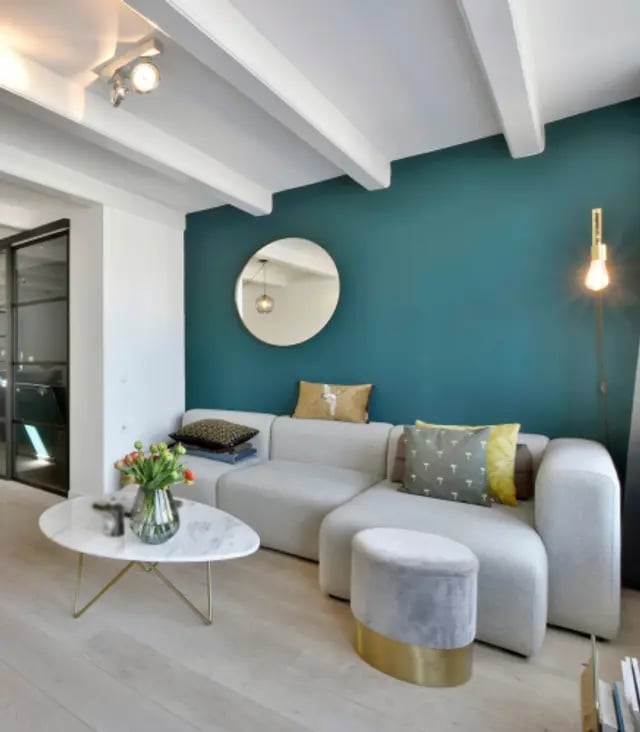
A single deep teal wall anchors this open-plan living room. The teal wall sets off a sectional sofa and ottoman, while white walls, wood tones, and a gray floor lamp keep the look clean. The color draws the eye to the seating area without overwhelming the natural window light. Stick to one accent wall per room to maintain the effect; painting an adjacent wall the same shade would flatten the depth the contrast creates.
Deep Olive Green Walls in a Cozy Traditional Living Room
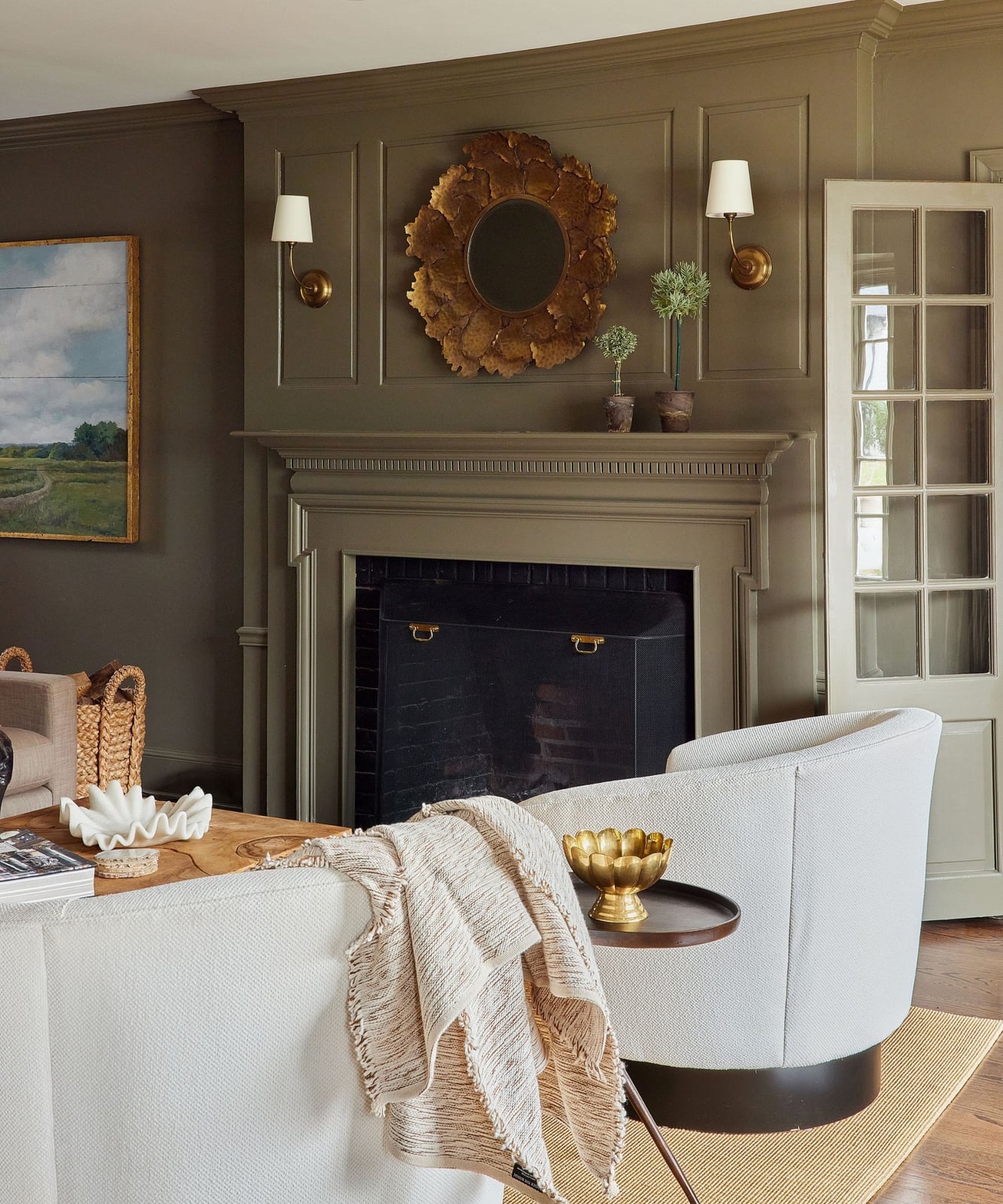
Olive green reads warmer than sage and less formal than hunter, making it a solid middle ground for a traditional room that still feels lived in. Here the olive walls wrap a roomy space centered on a fireplace, with cream upholstery and gold accents from the wall sconces and an ornate mirror above the mantel. The green pulls the wood tones and the plaster together without letting either dominate.
The key is letting the fireplace stay the focal point. A deep wall color can compete with a mantel if the finish is glossy or the trim is too bright. Matte olive keeps the background calm, so the mirror and sconces catch attention without shouting. Keep the seating neutral to let the walls do the heavy lifting.
Light Gray Walls in a Modern Organic Living Room with Curved Furniture
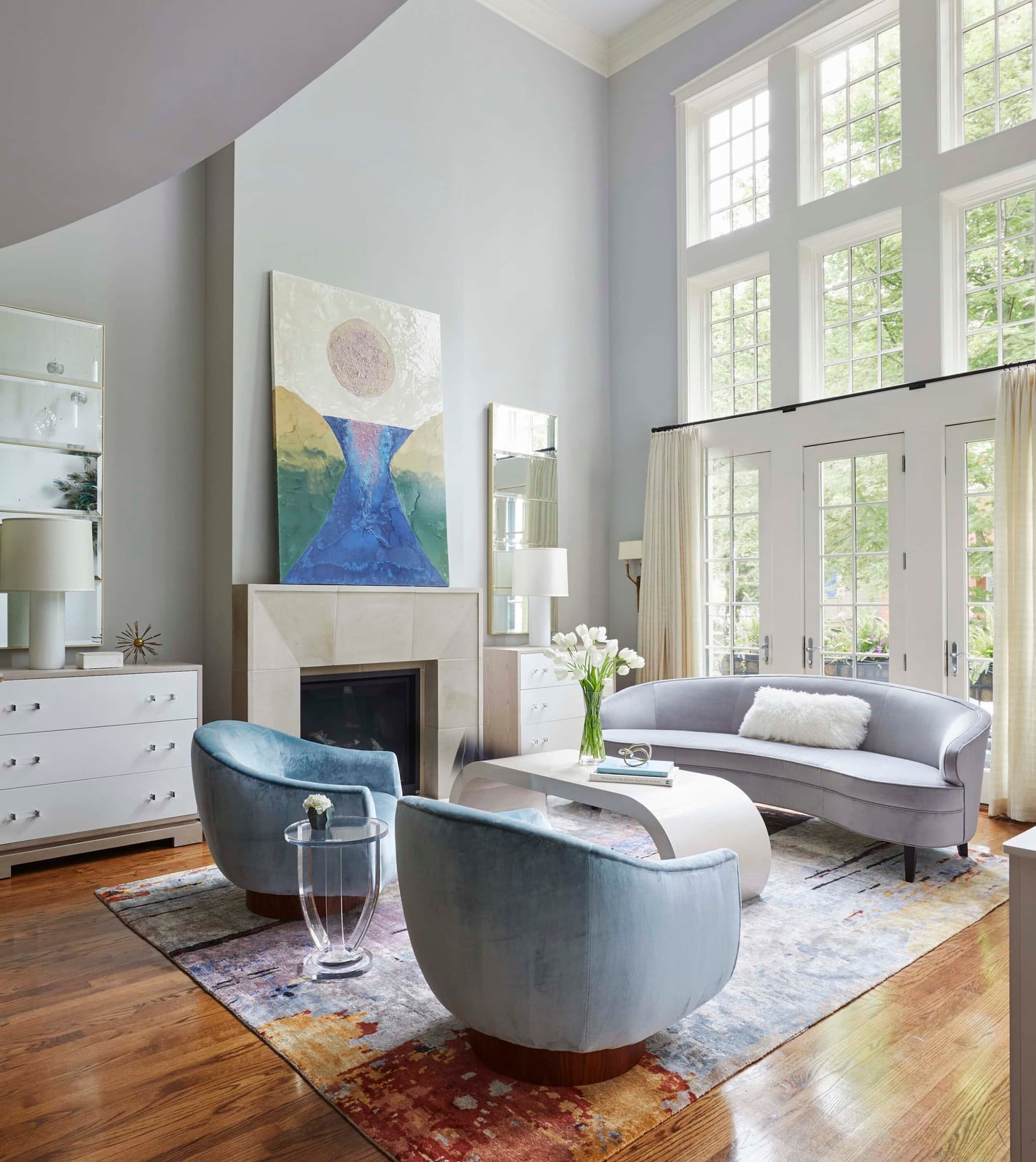
Light gray walls act as a neutral backdrop that lets curved furniture shapes read clearly. In this roomy open-plan space, the gray sets off a blue velvet curved sofa, cream accent chairs, and a glass coffee table without adding visual noise. Abstract art on the wall introduces colorful accents that would feel scattered against a busier background. The gray stays cool enough to balance the warm wood tones and marble, but not so cool that it clashes with the cream.
Deep Teal Walls Complementing a Rust Orange Sofa
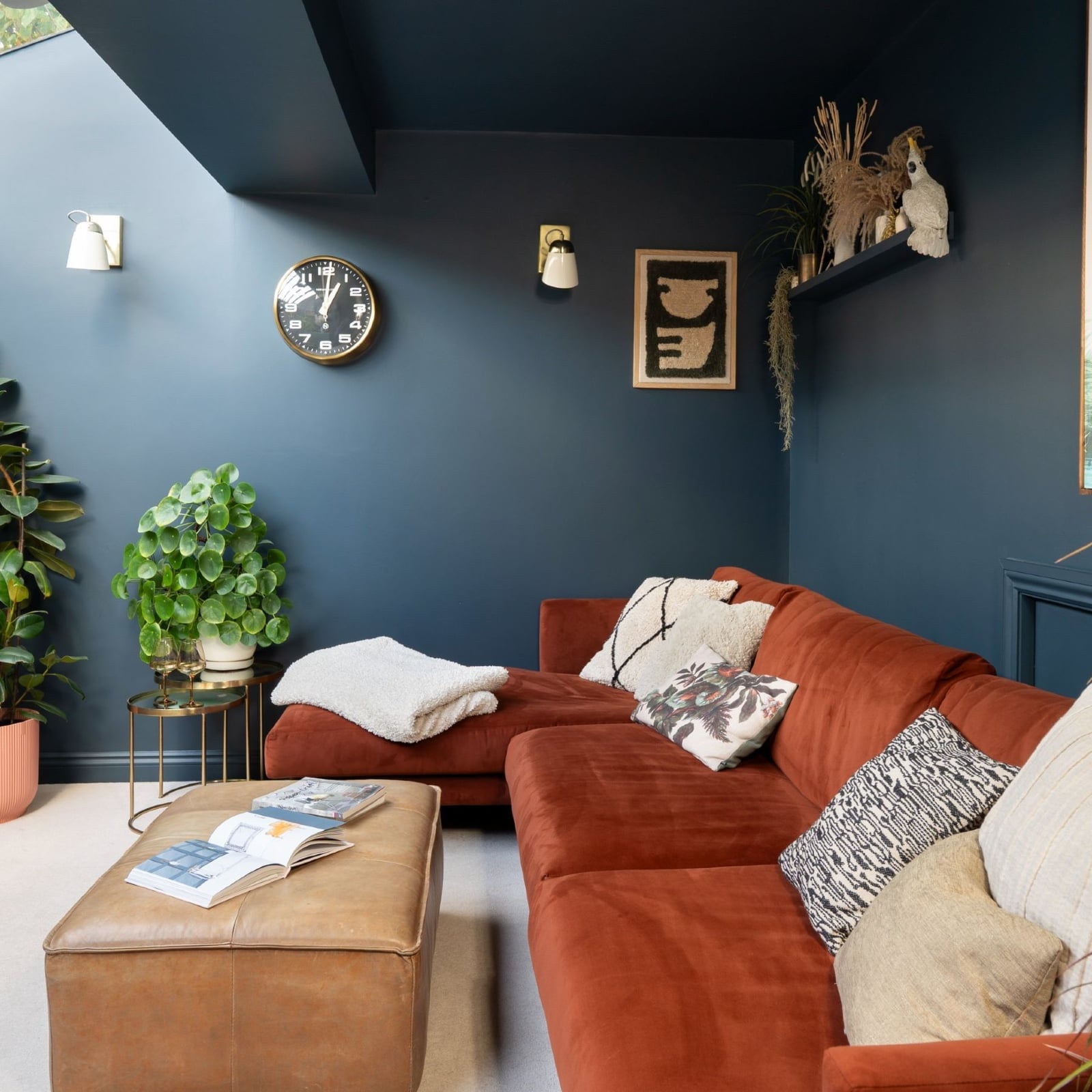
Deep teal and rust orange are a complementary pair that works because one is cool and the other warm. In this roomy living room, the teal walls frame a rust orange sectional sofa and ottoman, with gold wall sconces adding a metallic bridge between the two colors. The natural light from the window keeps the teal from turning flat, while the ceiling light and sconces provide evening warmth. If the room had less light, the teal would read darker and the rust might feel heavy; a lighter rust or a teal with more gray would be a safer call.
Deep Charcoal Gray Walls for a Moody Traditional Living Room
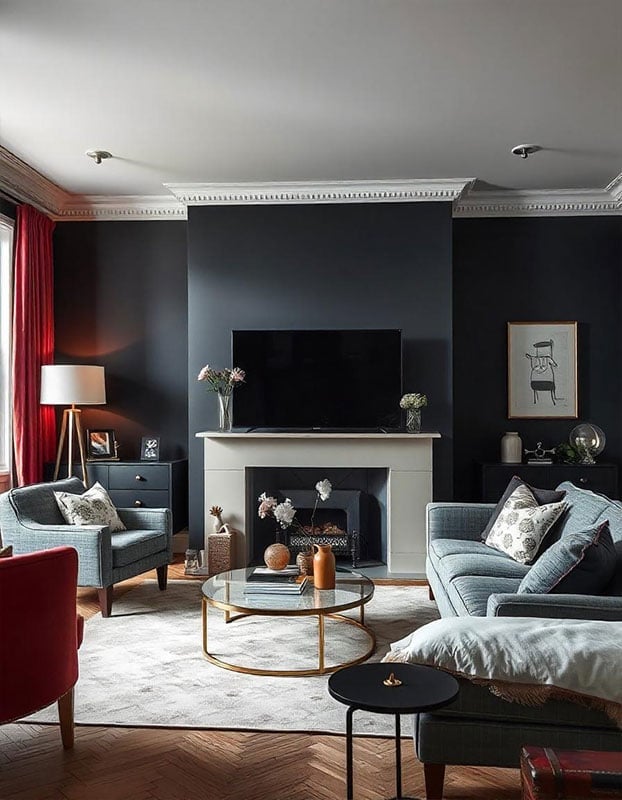
Dark walls need enough ambient light. In this traditional living room, the deep charcoal gray walls work because the seating is arranged around a fireplace and coffee table with multiple lamps providing warm pools of light. The red and blue accents in the upholstery stand out against the dark background in a way they would not against white walls.
A room with dark walls benefits from lighter floors and ceiling to keep the space from shrinking visually. The windows help, but the real balance comes from the lamps: they create layers of light that define the seating areas. Without those, the charcoal would swallow the furniture.
Two-Tone Peach and Terracotta Walls in a Bohemian, Close-Up Take
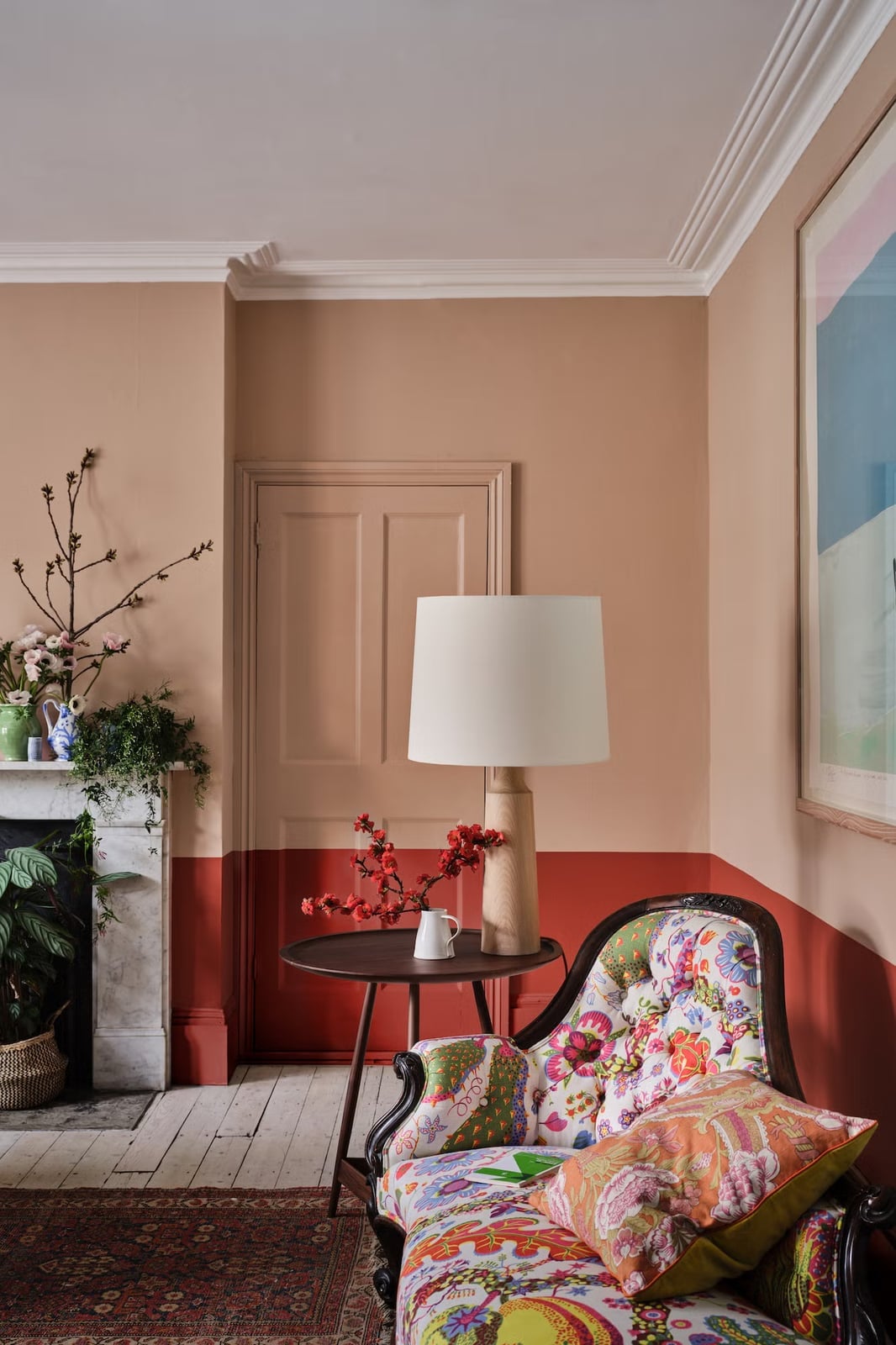
The two-tone wall treatment in this bohemian living room uses a bold terracotta red lower band and a soft peach upper section, a combination that adds visual weight without needing extra furniture. The lower color grounds the compact space and connects to the marble fireplace surround, while the peach keeps the room from feeling closed in. A floral upholstered chair and a wooden side table sit near the hearth, and the natural daylight from nearby windows keeps both tones from turning muddy. The palette works because the ratio leans heavily on the lighter peach, with the terracotta acting as a deliberate anchor rather than an equal partner.
Bright Yellow Sofa as the Centerpiece in an Eclectic, Close-Up Take
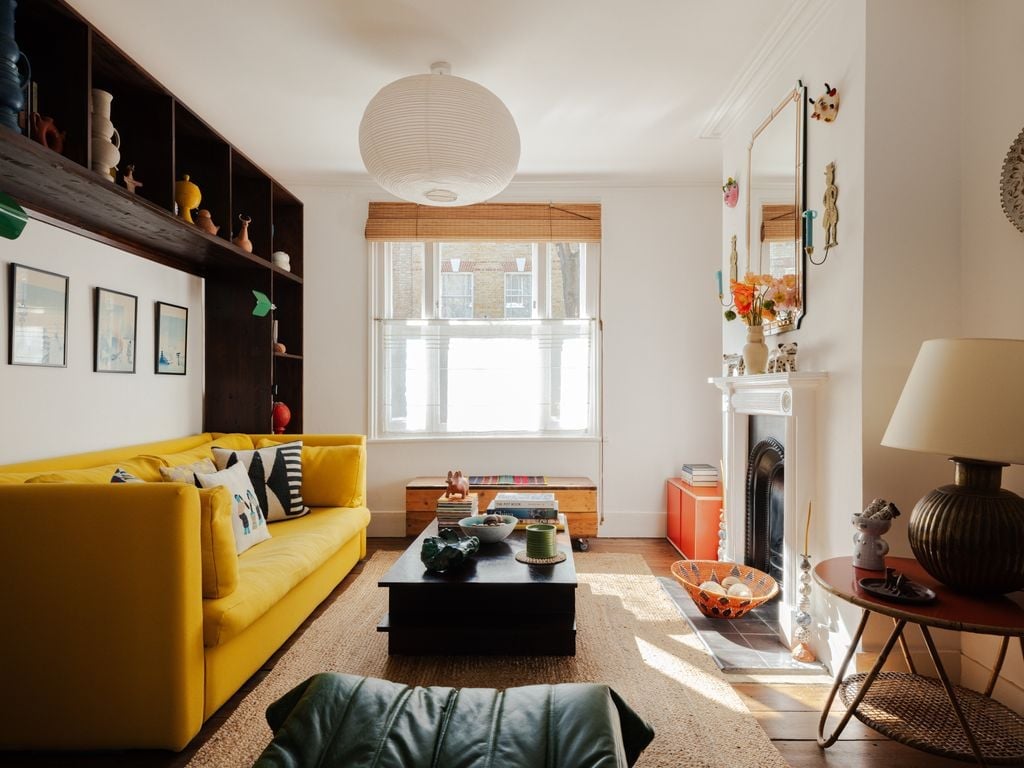
A bright yellow sofa in an eclectic living room works best when it is the loudest piece and everything else stays simple. In this roomy space, the vibrant yellow sofa faces a fireplace, with a shelving unit on the wall and a coffee table in between. The palette sticks to white, wood tones, and black, so the sofa gets all the attention without competition. Natural window light and an overhead pendant keep the room bright enough to handle the strong color. Start with a large yellow sofa cover or a fitted slipcover instead of committing to a painted wall or a permanent furniture purchase.
Light Cream Walls and Warm Wood Tones in a Modern Living Room
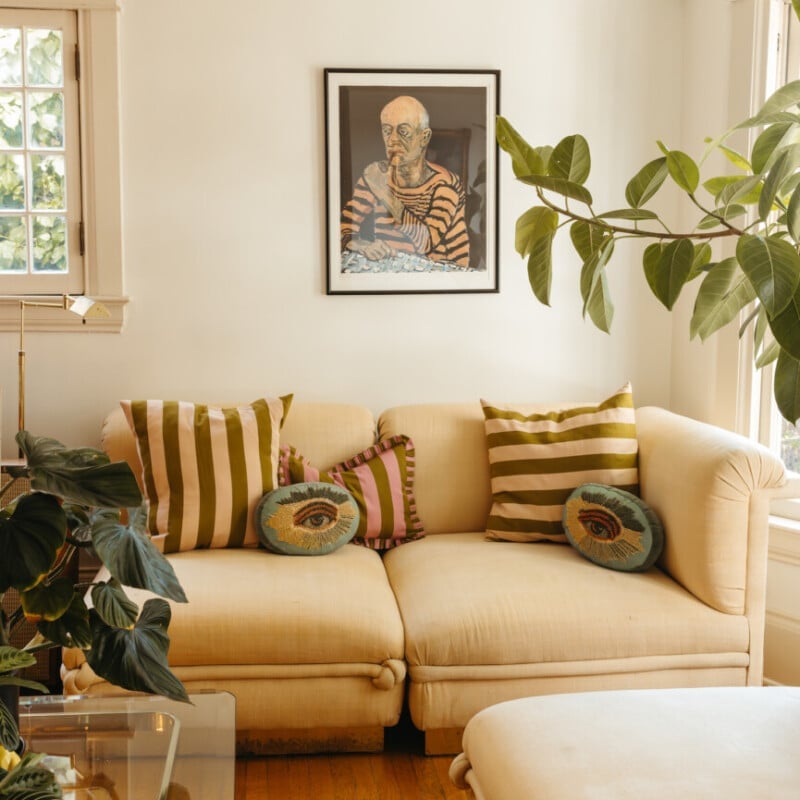
Light cream walls can read as flat if the room lacks contrast, but warm wood tones solve that problem without adding another paint color. In this modern living room, the cream walls are the backdrop, and the wood floor and wood accents provide the warmth that keeps the space from feeling sterile. A sofa sits against the cream wall with a large plant beside it and abstract art above, so the eye has places to rest. A floor lamp adds a second light source that helps the cream pick up a slight golden glow. The palette works because the wood tones are repeated enough to feel intentional: the floor, the furniture legs, and any smaller wood pieces all echo each other. That repetition creates a cohesive look without needing a third color on the walls.
Warm Beige Walls in a Cozy Corner Vignette, Close-Up Take
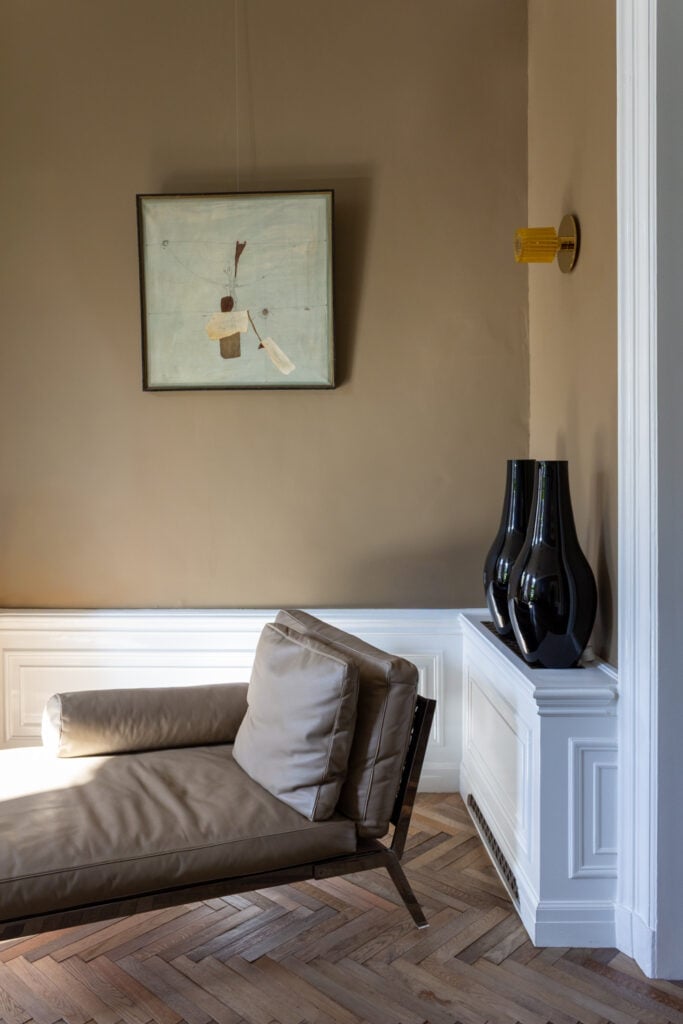
A warm beige wall color in a traditional corner vignette works best when you pair it with dark accents that give the eye a place to rest. Here the beige plaster sets a soft backdrop for the chaise lounge and the artwork above it, while two black vases on the console table create a contrast that stops the room from feeling washed out. The window and the wall sconce keep the beige warm, and the brown furniture ties the palette together. The palette leans heavily on warm beige, with the dark accents staying small, so the corner feels composed.
Deep Blue Walls Create a Bold Modern Living Room, Close-Up Take
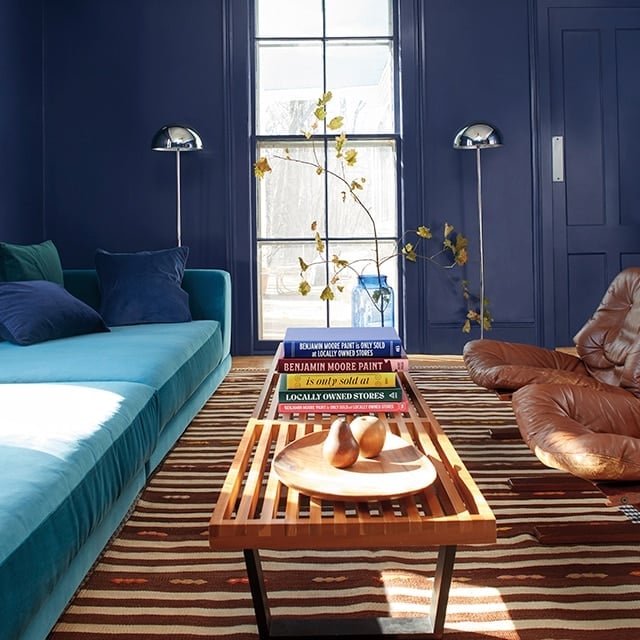
Deep blue walls can anchor a modern living room without shrinking it, provided the furniture palette stays light enough to balance the weight. Here the deep blue backdrop sets a confident stage for a beige sofa and a matching armchair placed facing each other, with a wood coffee table between them. The floor lamps add pools of warm light that keep the blue from reading as cold, while the woven textile rug and velvet upholstery introduce texture that softens the room. The layout works because the blue is the single dominant color, and the brown and beige pieces provide enough contrast to prevent a heavy feel. Natural light from the windows helps the blue appear rich and deep.
Neutral Beige Walls in a Modern Farmhouse Living Room
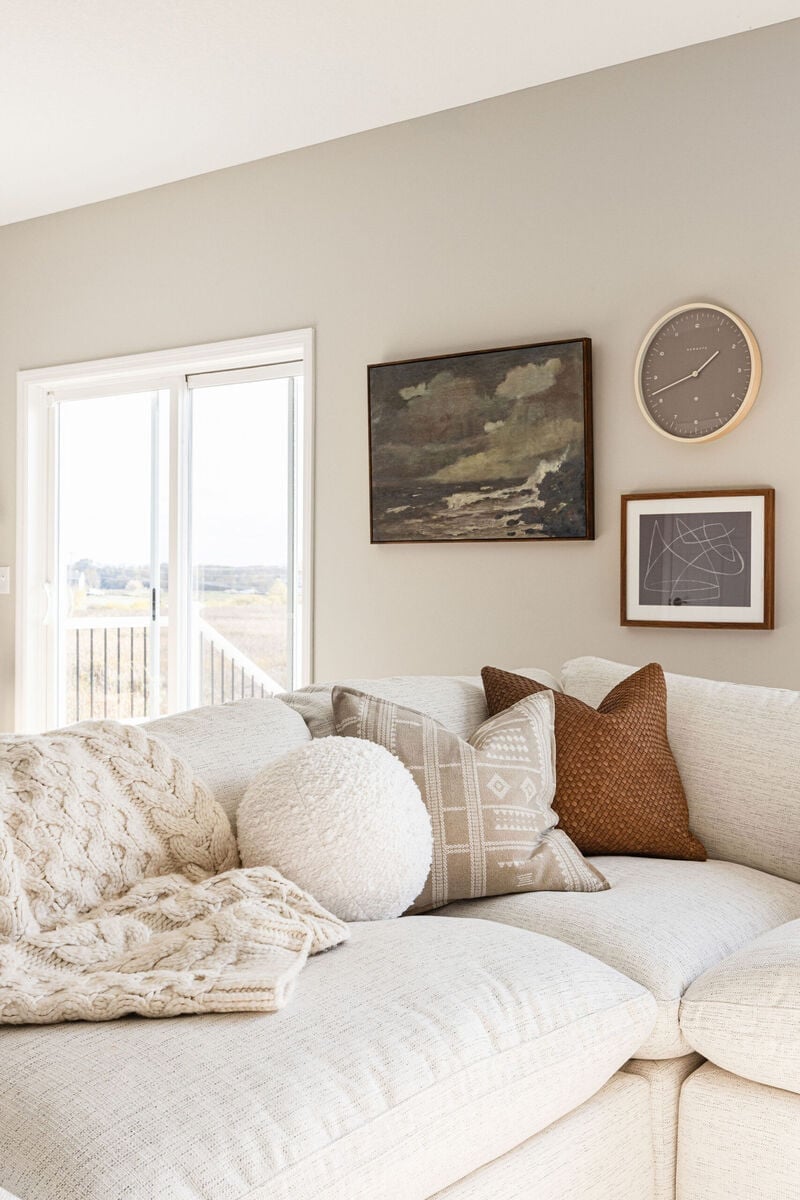
A neutral wall color works best when you give the eye something to land on, like layered textures. In this modern farmhouse living room, the beige walls stay quiet while the sofa’s throw pillows bring in varied fabric weaves that keep the palette from feeling flat. Natural light from a nearby window softens the beige further, and the overhead light adds a warm glow that makes the creamy tones read as inviting rather than washed out. The artwork above the sofa pulls the eye upward, balancing the room’s horizontal layout. A neutral base like this lets you swap out accent pillows or a rug without repainting, which is a practical move for anyone who likes to refresh a room seasonally.
Dusty Blue Walls and Matching Shelving in a Traditional Living Room
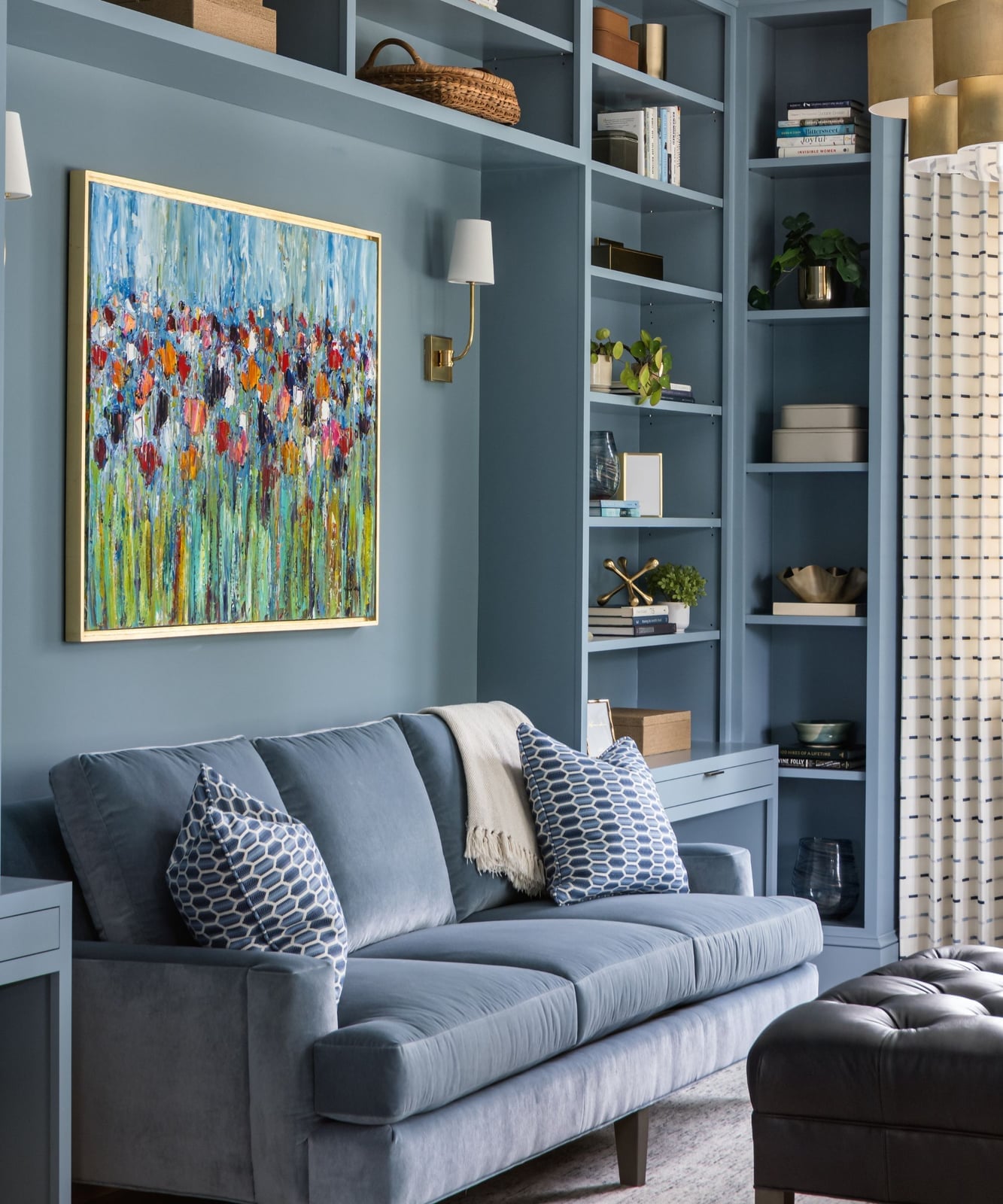
The dusty blue walls in this traditional living room extend onto the built-in shelving, creating a seamless backdrop that makes the room feel taller and more deliberate. Gold accents from the wall sconces and a white sofa keep the blue from turning heavy, while the natural light hitting the shelves prevents the color from reading as flat. The matching shelving and wall color is a smart trick for rooms with built-ins: it unifies the architecture and lets the decor on the shelves stand out without competing with the background.
Sage Green Walls in a Traditional Living Room with Patterned Sofas
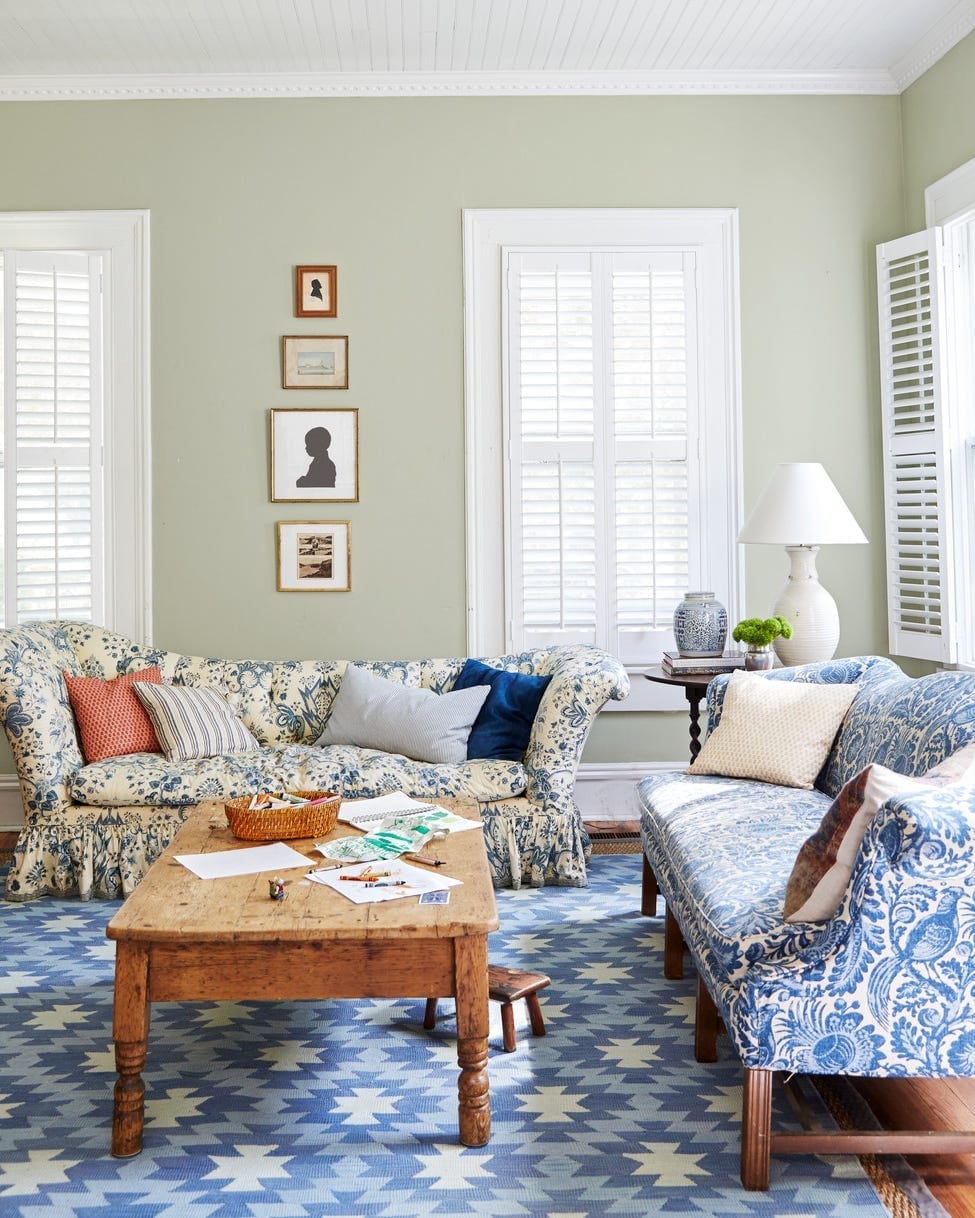
Patterned furniture pairs best with a simple wall color, and sage green fits that role without fading into the background. In this traditional living room, the sage walls let two patterned sofas and a blue rug take center stage without visual clutter. Natural light from the shutters and a table lamp keeps the green from going too dark, while the wood coffee table adds warmth that matches the earthy tone. The space feels balanced because the wall color acts as a calm middle ground between the blue rug and the sofas’ designs.
Sage Green Walls for a Calm Scandinavian Living Room
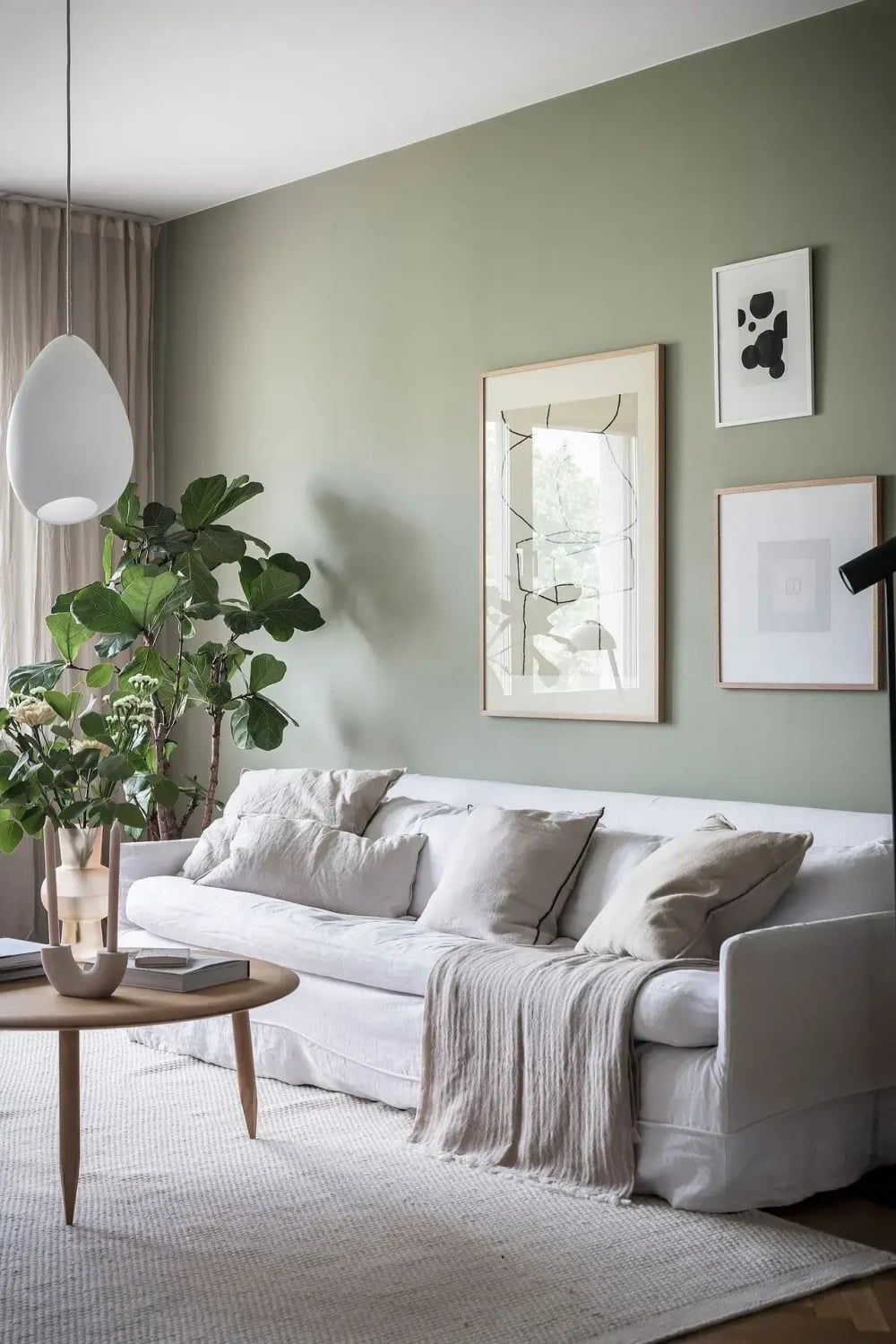
Sage green in a Scandinavian living room reads differently than it does in a traditional one. Where a traditional room might pair sage with dark wood and heavy fabrics, this Scandi space keeps the green light by balancing it with white walls, a beige linen sofa, and a glass coffee table. The natural light from the window does most of the work here, bouncing off the pale surfaces and keeping the sage from feeling too dense. A large plant in a ceramic pot echoes the green without competing, and the pendant light adds a soft glow that matches the room’s calm tone.
What breaks the Scandi look is the same thing that makes it work: restraint. There are no extra patterns or bold accents, so the sage green wall color becomes the room’s main event. If you want this look, keep the furniture minimal and let the wall do the talking.
Blush Pink Walls in a Traditional Living Room with Marble Fireplace
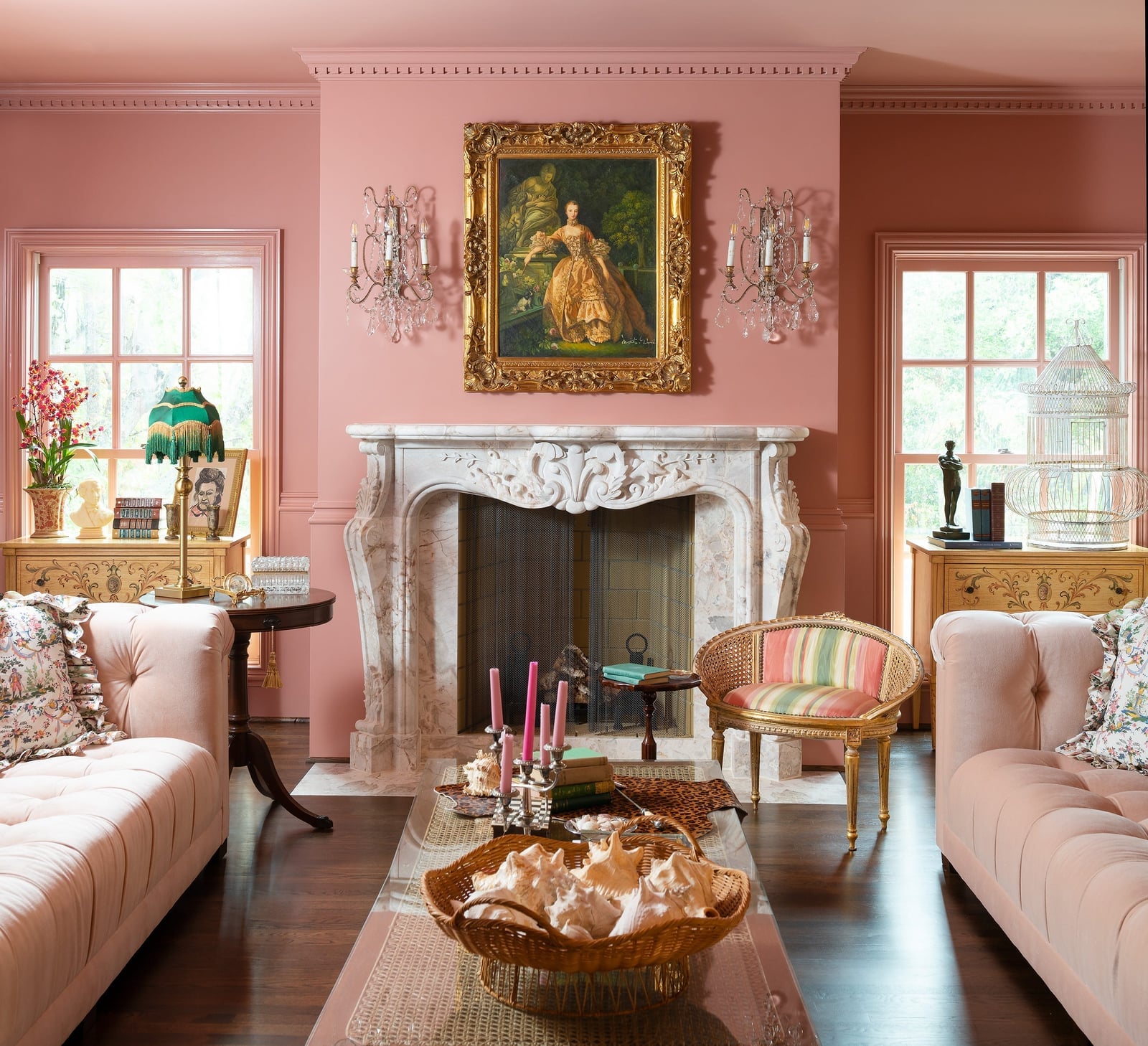
The blush pink walls in this traditional living room are a precise choice. They pick up the warm veining in the marble fireplace surround and soften the formality of the crystal sconces and ornate mirror. The sofas flanking the fireplace in cream and gold keep the pink from reading as too sweet, while natural light from the windows makes the color look airy rather than heavy. The result is a room where the pink feels grown-up and intentional, not like a nursery leftover.
Off-White Walls in a Bright Modern Farmhouse Living Room
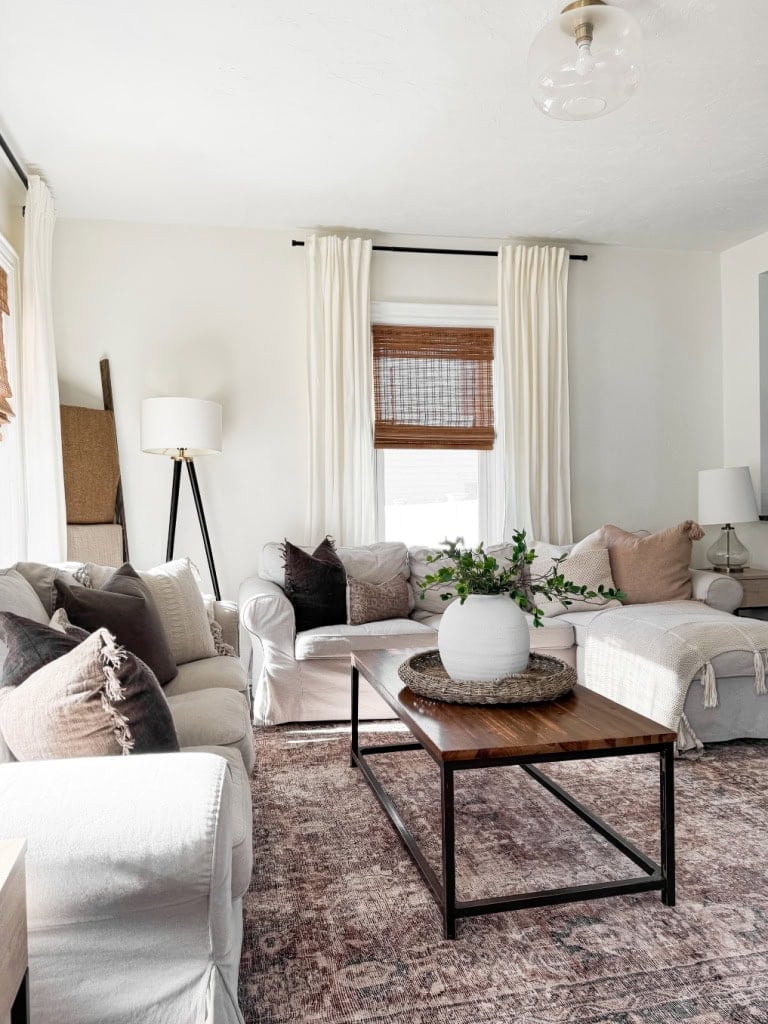
The bright off-white walls in this modern farmhouse living room set a calm, open backdrop that keeps the focus on comfortable seating and natural textures. A large sectional sofa with an ottoman anchors the layout, while a wood coffee table and a floor lamp add warmth without competing with the abundant natural light. The palette stays in the cream, beige, and brown family, which reinforces the airy feel. A practical rule for palette: off-white walls let you swap in darker wood or metal accents later without repainting, so the room can evolve as your taste shifts.
Beige Textured Walls with Bold Abstract Artwork and Black Fireplace
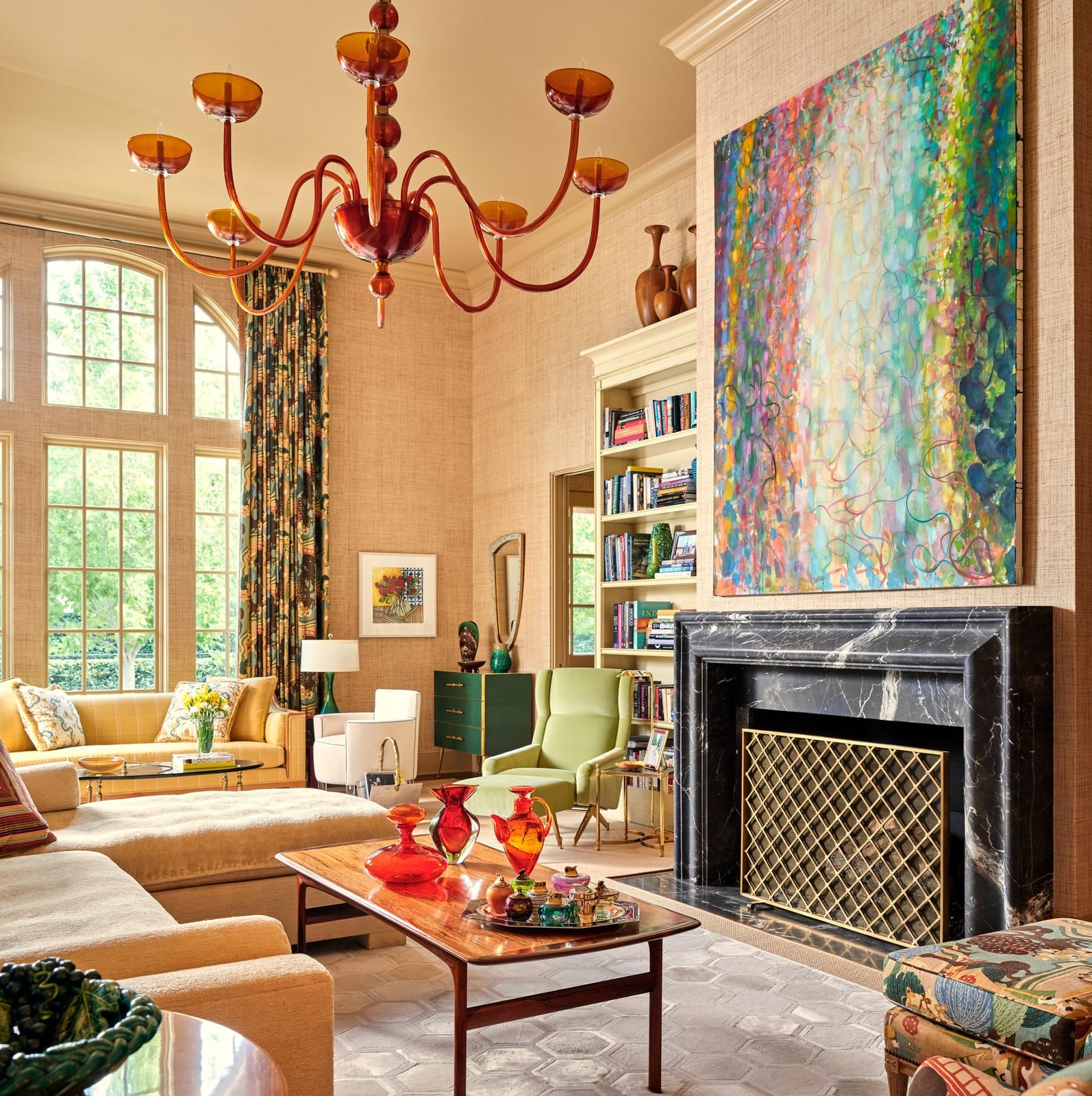
Decorating with a bold artwork lets it set the room’s energy while the rest of the palette stays restrained. Here, beige textured walls and a black fireplace frame a large colorful abstract piece with yellow, orange, green, and blue tones. The sectional sofa sits low, so the art stays the visual anchor, and the chandelier adds a formal note that balances the casual seating. For a renter-friendly swap, use removable wallpaper on a single wall behind a sofa or console to create a similar textured backdrop without a permanent commitment. The window keeps the space from feeling too dark despite the black fireplace.
Warm Taupe Walls with a Striking Pink Painted Fireplace
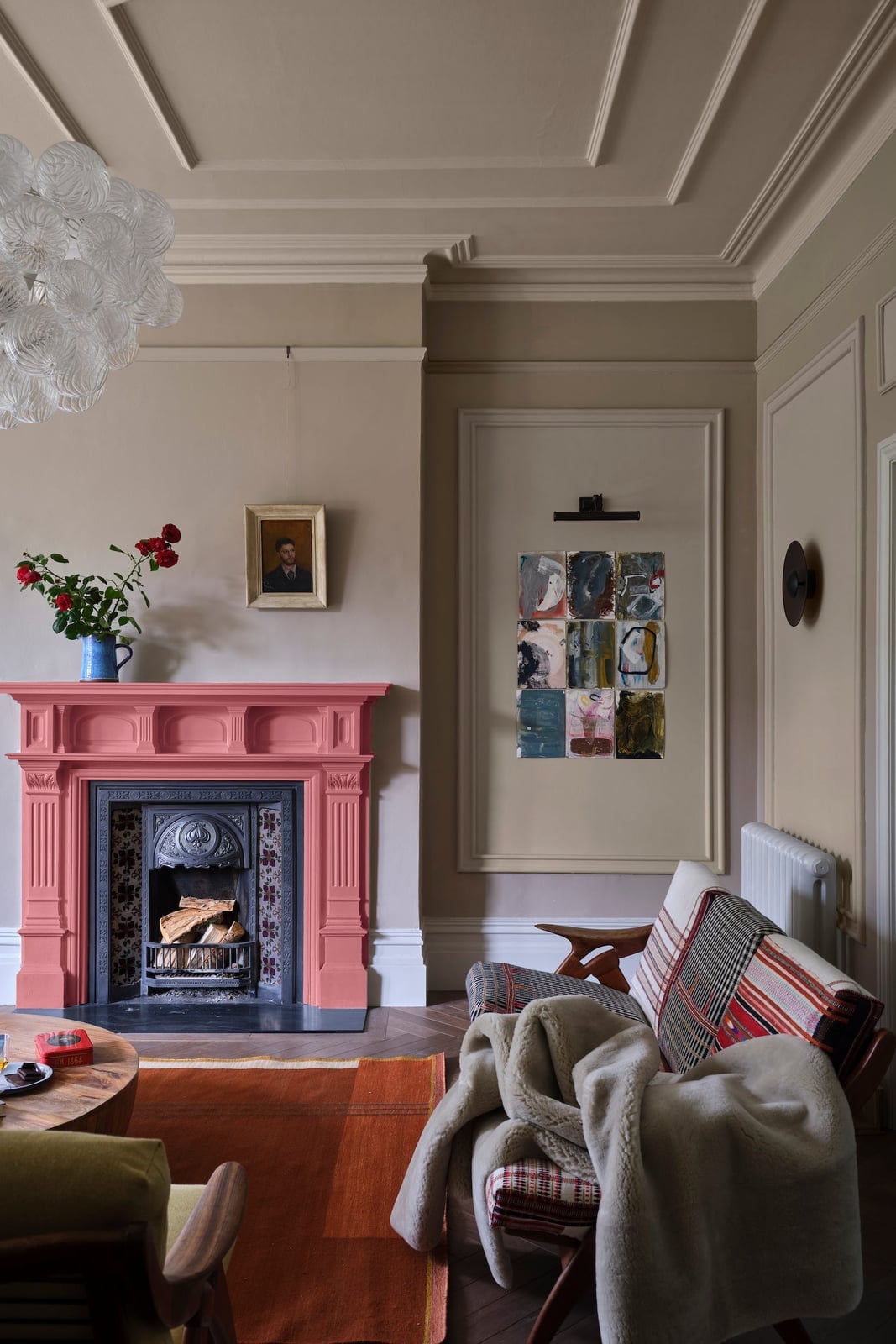
The pink painted fireplace turns a traditional feature into the room’s main event, while warm taupe walls keep the space grounded. A single armchair and a small coffee table create an intimate seating area around the hearth, and the chandelier adds a polished touch. The taupe background makes the pink stand out, and the red accents in the artwork pull the warmer end of the palette together. This setup works when the fireplace is the hero element and the seating stays minimal.
Crisp White Walls in a Bright Coastal Living Room
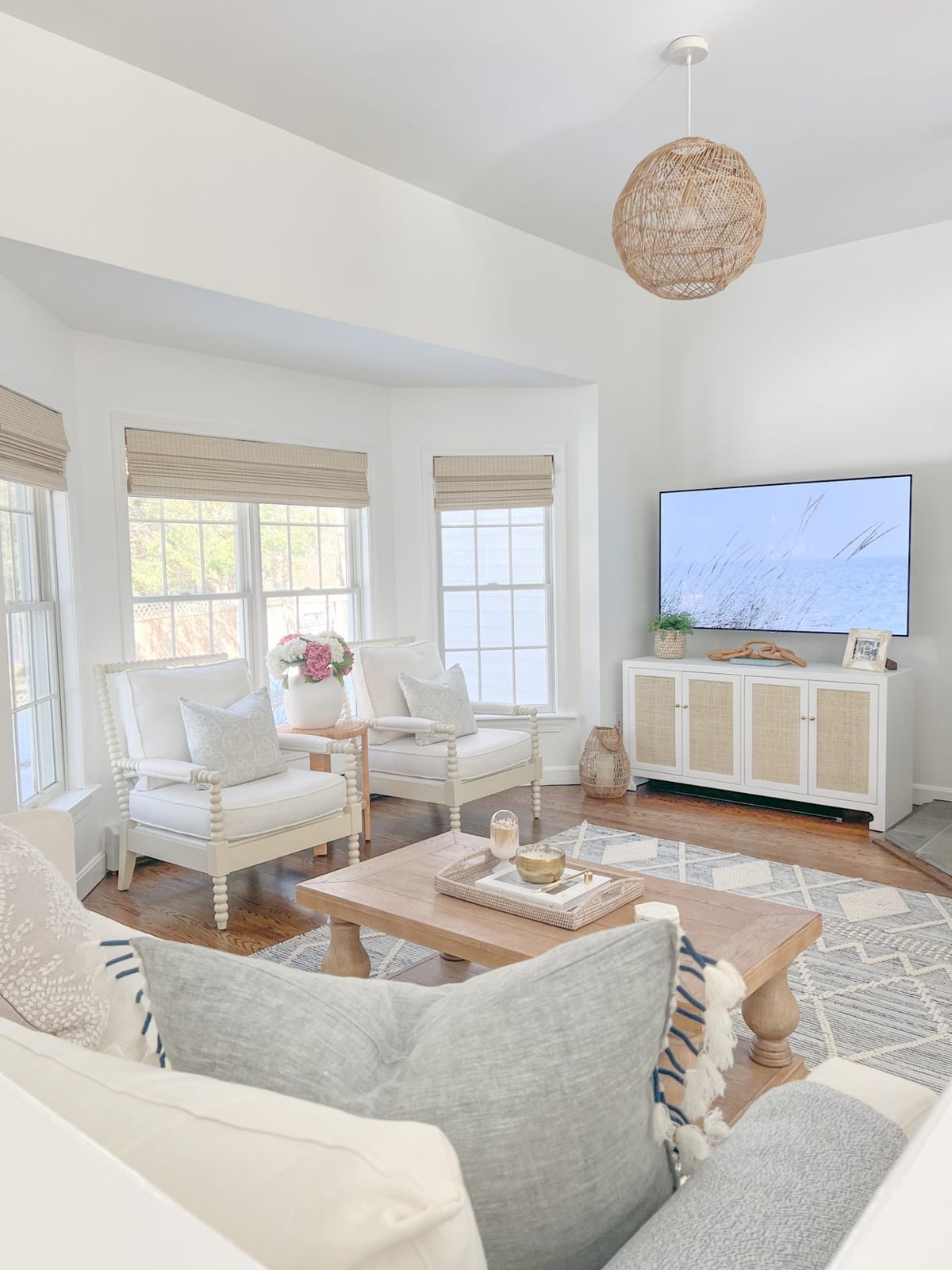
White walls in this coastal living room do more than just brighten the space: they make the rattan console and white armchairs feel like natural extensions of the palette. The light blue accents in the rug and the beige sofa add just enough contrast to keep the room from reading as flat. A pendant light over the seating area provides focused illumination. For palette, crisp white walls are a practical choice when you want to change accent colors seasonally without repainting the whole room.
Dramatic Two-Tone Dark Gray and White Walls in an Eclectic Living Room
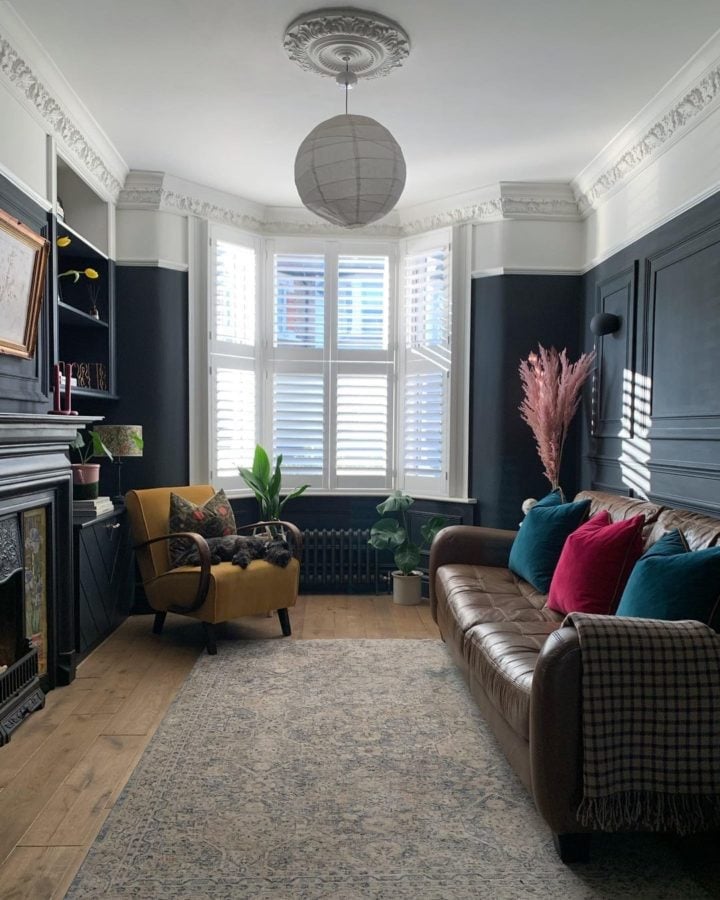
A two-tone wall treatment can feel risky, but this eclectic living room shows how it works when the split is clean and the furniture does not compete. The dark gray lower half grounds the space, while the white upper half keeps the room from shrinking. A leather sofa and a patterned rug in mustard yellow and brown sit on the darker side, and the wall sconce adds light exactly where the gray could feel heavy. The natural light from the window softens the contrast. For scale and proportion, the rule is to keep the darker color below eye level or at a height that aligns with furniture lines, so the room stays balanced rather than chopped in half.
Dramatic Teal Paneled Walls in a Contemporary Living Room
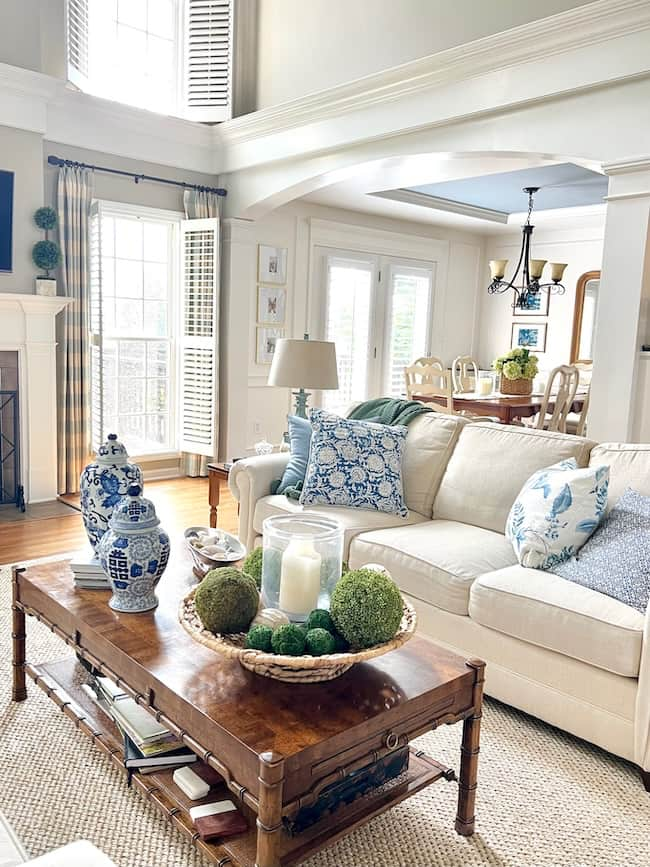
A full wall of teal paneling sets a strong stage in this contemporary living room, where the deep color works as a deliberate backdrop. The fireplace becomes the natural focal point, flanked by the paneling that adds texture without competing for attention. A blue leather armchair and a sofa in a neutral tone keep the seating grounded, while black and gold accents in the lighting and decor add contrast. The room feels spacious because the color is contained to the walls and the rest of the palette stays simple. This is a palette-driven approach: let one saturated shade lead, then pull in metals and neutrals to balance it.
Beige Textured Walls with Colorful Accent Pillows in a Transitional
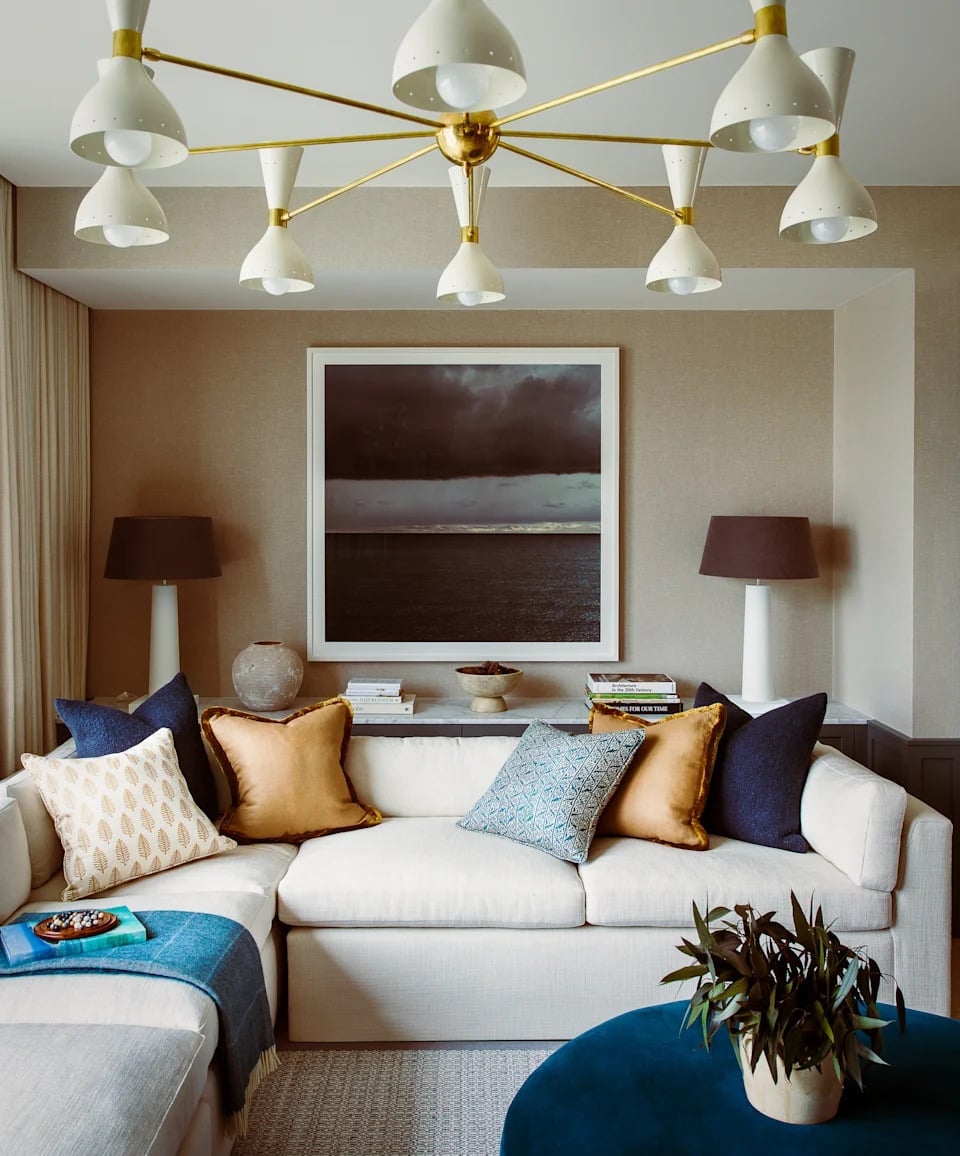
Beige textured walls give this transitional living room a calm foundation, and the real energy comes from the accent pillows. A navy and mustard mix on the sectional sofa adds punch without overwhelming the neutral backdrop. The coffee table and table lamps introduce wood and glass, keeping the room from feeling too soft. Natural light from nearby windows helps the beige read warm rather than flat. The palette works because the color ratio leans heavily on beige and cream, with the brighter tones staying small and movable. That makes it easy to refresh the look by swapping out a few pillows instead of repainting.
Final Thoughts
Paint is one of the most powerful tools you have for changing a room’s mood. Across these 32 choices, the common thread is that every color works best when it supports how you actually use the space. A soft neutral can open up a small living room, while a deep shade can make a large one feel cozy. The best wall color is the one that makes you want to sit down and stay a while. Before you buy a gallon, test a few samples on different walls and watch them at different times of day. That small step is the difference between a color you like and one you love.