28 Cozy Bedroom Aesthetic Ideas You Need to Try in 2026 That Will Transform Your Space

That feeling when you land on the perfect cozy bedroom pin… and then another and another until your board is full but your room is still empty. We’ve all been there. It’s easy to get lost in the scroll, but the hard part is turning that inspiration into a real, livable space. That’s why we did the homework for you, sifting through hundreds of designs to find what “cozy” truly means in 2026. We’ve curated 28 distinct, achievable bedroom ideas that you can actually see yourself waking up in.
These aren’t just stunning pictures; they’re complete design recipes, from minimalist Nordic styles to warm, textured rustic looks. And stay until the end — we break down the most common mistakes that can ruin these looks. 📌 Save this to Pinterest for later—you’ll want to revisit these ideas.
1. Frame a View with an Abstract Blue Accent Wall
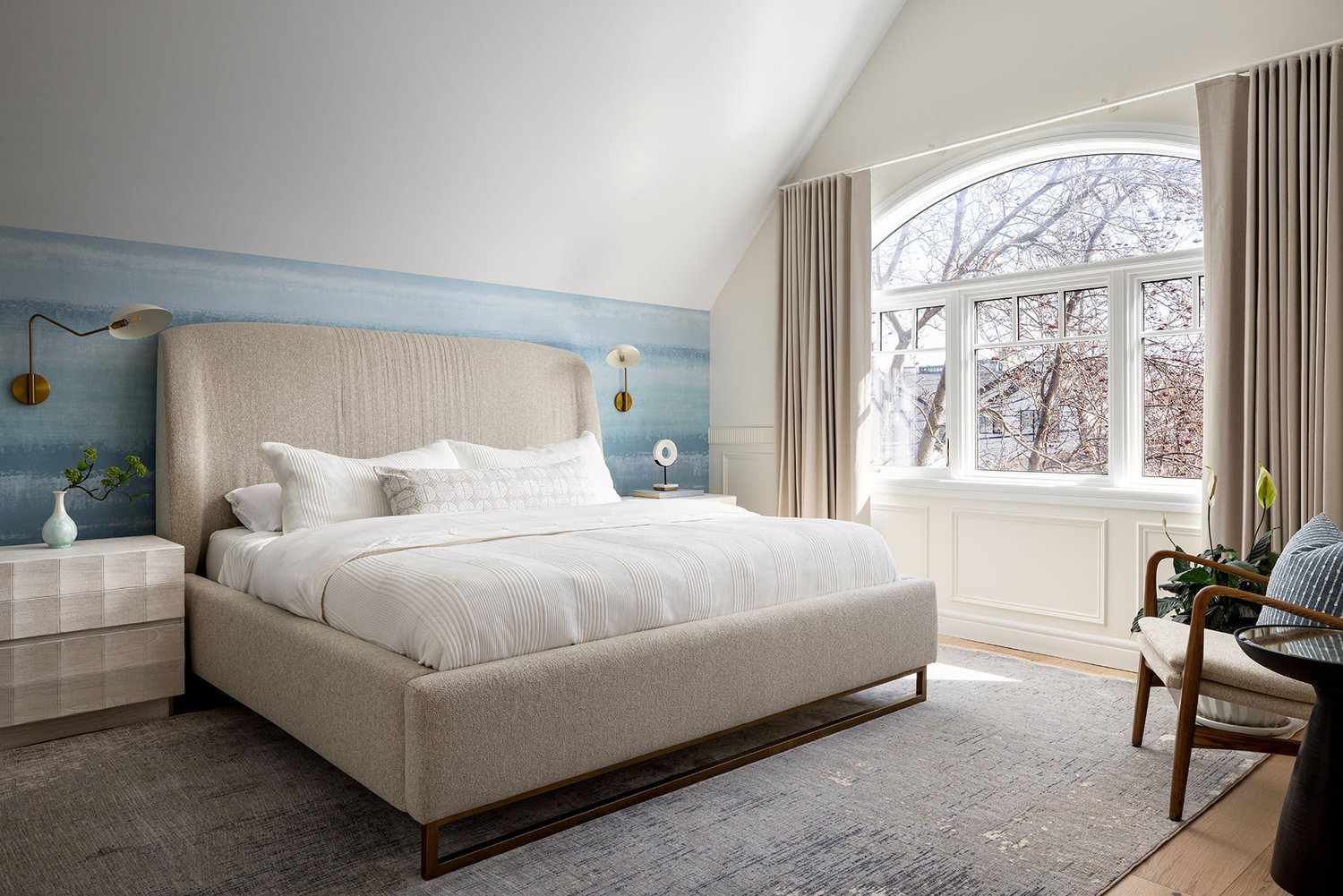
This room is a masterclass in using a bold pattern without overwhelming the space. The abstract blue and white accent wall acts almost like a piece of art, providing a dynamic backdrop that still feels incredibly serene. It works because the rest of the room is intentionally quiet. The upholstered bed, the simple wooden nightstands, and the neutral drapes are all soft, calming counterpoints. The large arched window isn’t just a light source; it’s a key element, balancing the weight of the feature wall and keeping the entire room feeling open and bright.
|
📋 Copy HEX 🔗 Share |
A tall headboard can entirely change the perceived height of your room. For a standard 8-foot ceiling, aim for a headboard that’s between 48 and 58 inches tall from the floor. If you have taller ceilings (9 feet or more), you can go higher, up to 70 inches, to create a truly dramatic focal point. The key is to ensure the top of the headboard lands in the upper third of the wall’s height, drawing the eye upward and making the entire space feel more grand and thoughtfully designed.
2. Embrace Natural Calm with Light Wood and Floral Bedding
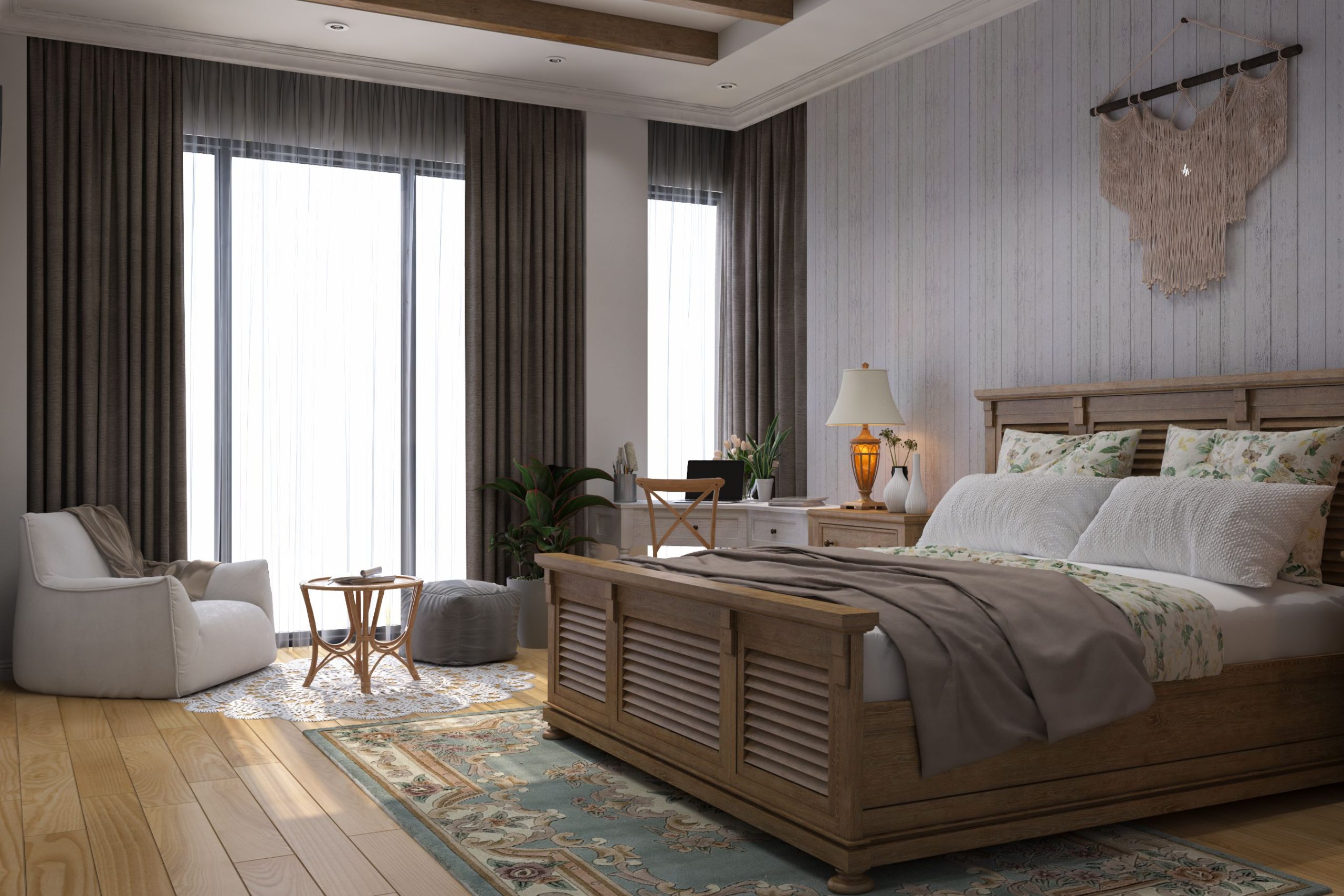
The single most important element here is the commitment to a light, natural wood tone across multiple pieces. It’s in the louvered bed frame, the plank flooring, and the rattan furniture. This repetition is what creates such a cohesive and calming atmosphere. If you were to swap the wooden bed for a metal or upholstered one, the room would lose its foundational serenity. The wood provides a warmth and organic feel that the soft textiles and floral patterns can then build upon, creating a look that feels both grounded and airy.
|
📋 Copy HEX 🔗 Share |
A room design reliant on natural materials needs careful humidity control. Light wood, especially in plank flooring or delicate furniture, can be susceptible to warping or drying out if the air is too damp or too dry. In winter, you might need a humidifier to prevent shrinking and cracking. Conversely, in a humid climate, a dehumidifier is essential to prevent swelling. It’s a small, practical step to protect the long-term beauty and integrity of your serene, wood-filled retreat.
3. Combine Rustic Wood Paneling with Crisp White Beadboard
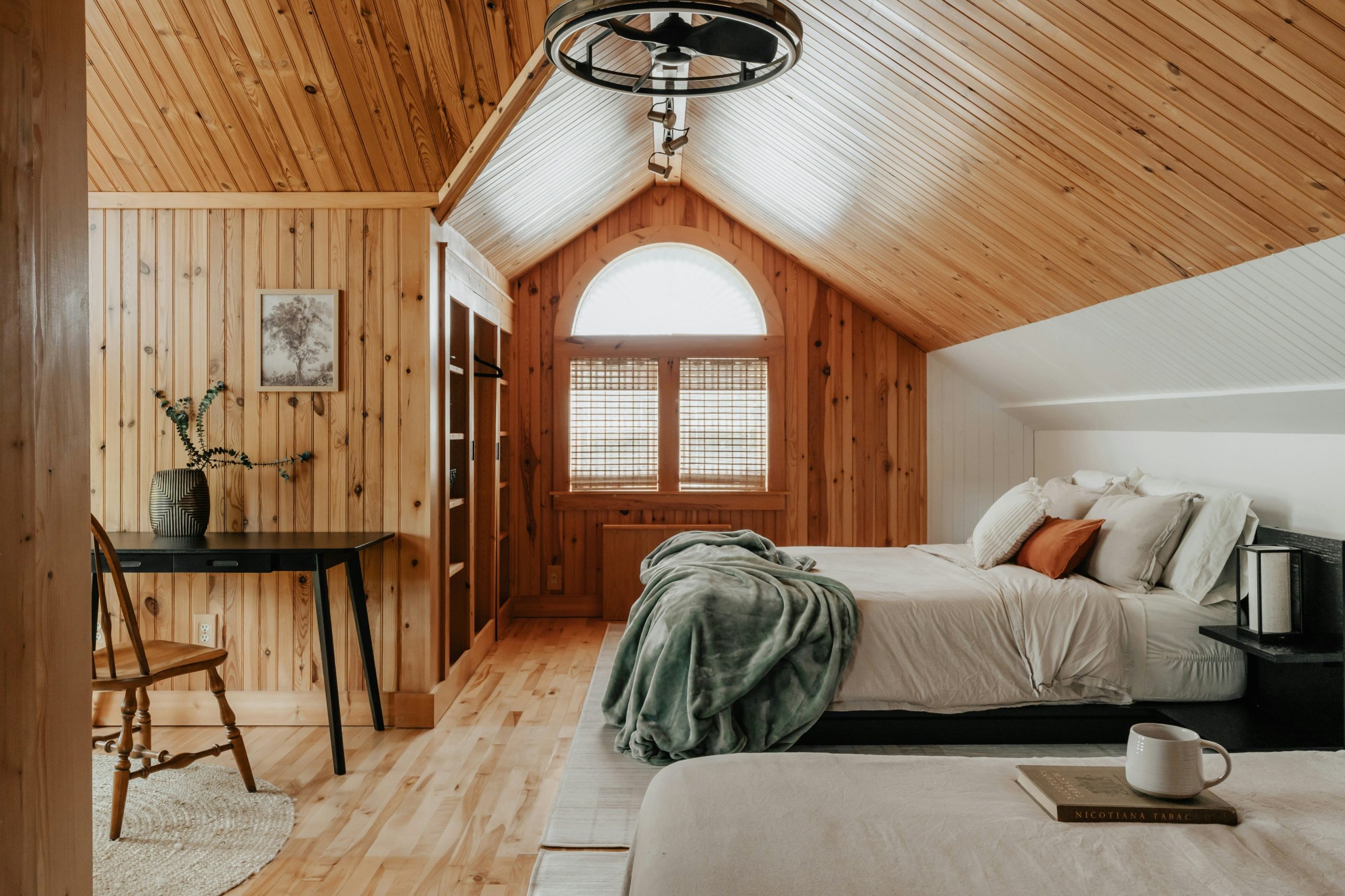
This look is ideally suited for attic conversions or rooms with interesting architectural angles, typically ranging from 150 to 250 square feet. The key is the ceiling height variation. You need at least one wall that’s a standard 8-foot height to avoid feeling cramped, while the sloped sections enhance the cozy, cabin-like feel. The mix of wood paneling and white beadboard works best when there’s a clear line of separation, like the peak of a roofline or a change in wall plane. This design is less about a large footprint and more about embracing unique shapes. For a similar vibe in a standard room, see Idea #10.
|
📋 Copy HEX 🔗 Share |
The visual recipe here is about balancing texture and color. Think of it as 50% warm wood + 40% crisp white + 10% black accents. The natural wood paneling provides the dominant rustic texture. The white beadboard and bedding offer a clean, bright contrast that keeps the wood from feeling too heavy or dated. Finally, the strategic use of black in the desk, chair, and fan provides a modern, graphic punch that grounds the entire design and keeps it from looking like a 70s ski lodge.
4. Mix a Paisley Headboard with Calm Grays and Beiges
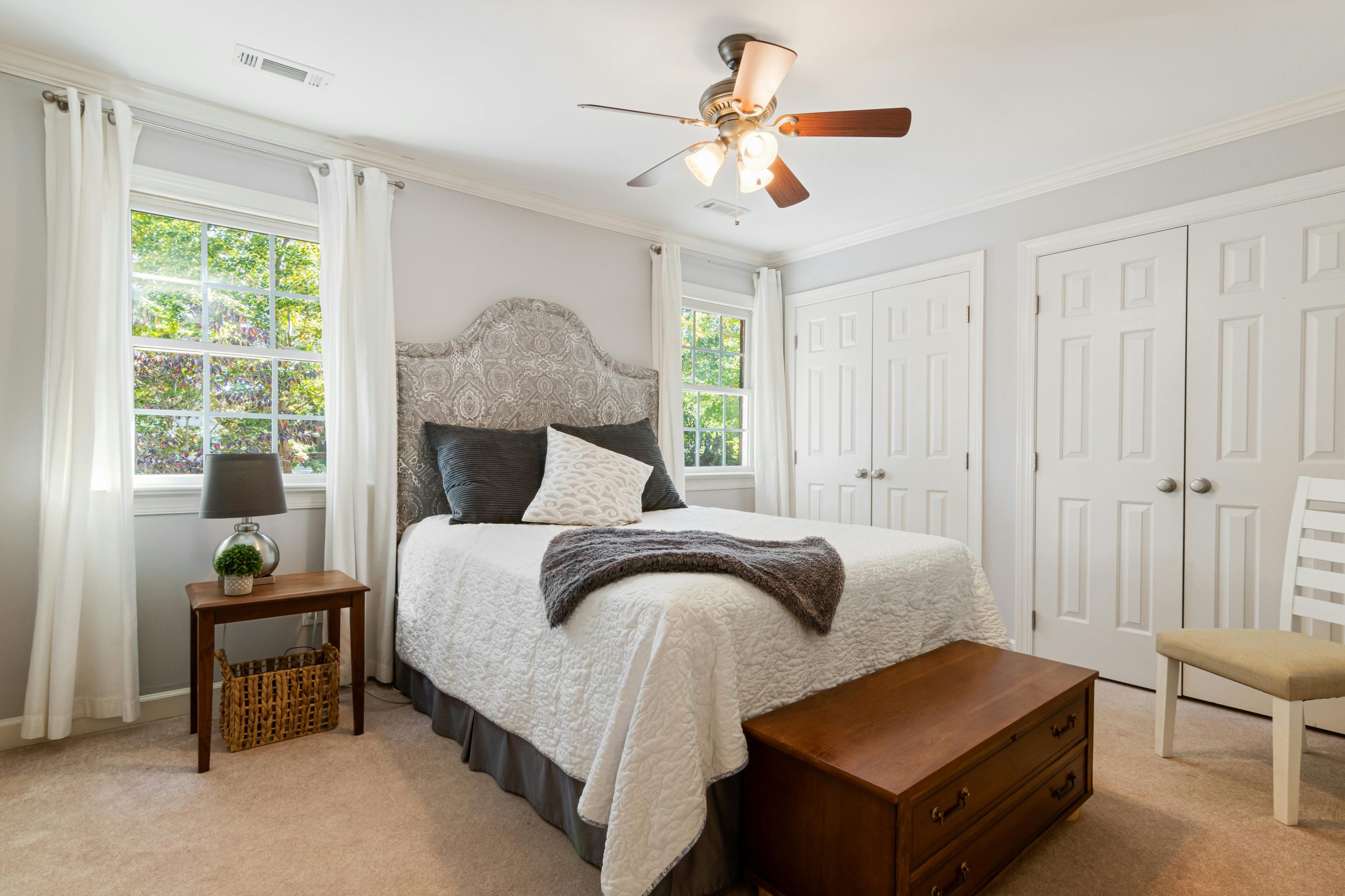
This design succeeds by layering neutrals with a single, controlled pattern. The light gray walls and beige carpet create a soft, gallery-like canvas. Upon this canvas, the paisley headboard acts as the focal artwork, but because its colors are a simple gray and white, it feels sophisticated rather than busy. The dark gray pillows and throw blanket then pull the darker tones from the paisley, creating an intentional echo of color that makes the whole bed arrangement feel unified and professionally styled. It’s a smart way to do a pattern without committing to a full wall of wallpaper.
|
📋 Copy HEX 🔗 Share |
You can achieve this calm, patterned look without splurging on a custom upholstered bed. Start with a simple, affordable metal or wood bed frame. The hero piece is the headboard, which you can find as a standalone item on sites like Wayfair or Overstock for $150-$300. Alternatively, search Facebook Marketplace for a used one. Pair it with a simple white quilt from Target ($70) and some dark gray textured pillows from IKEA ($15 each). The texture is more important than the price tag.
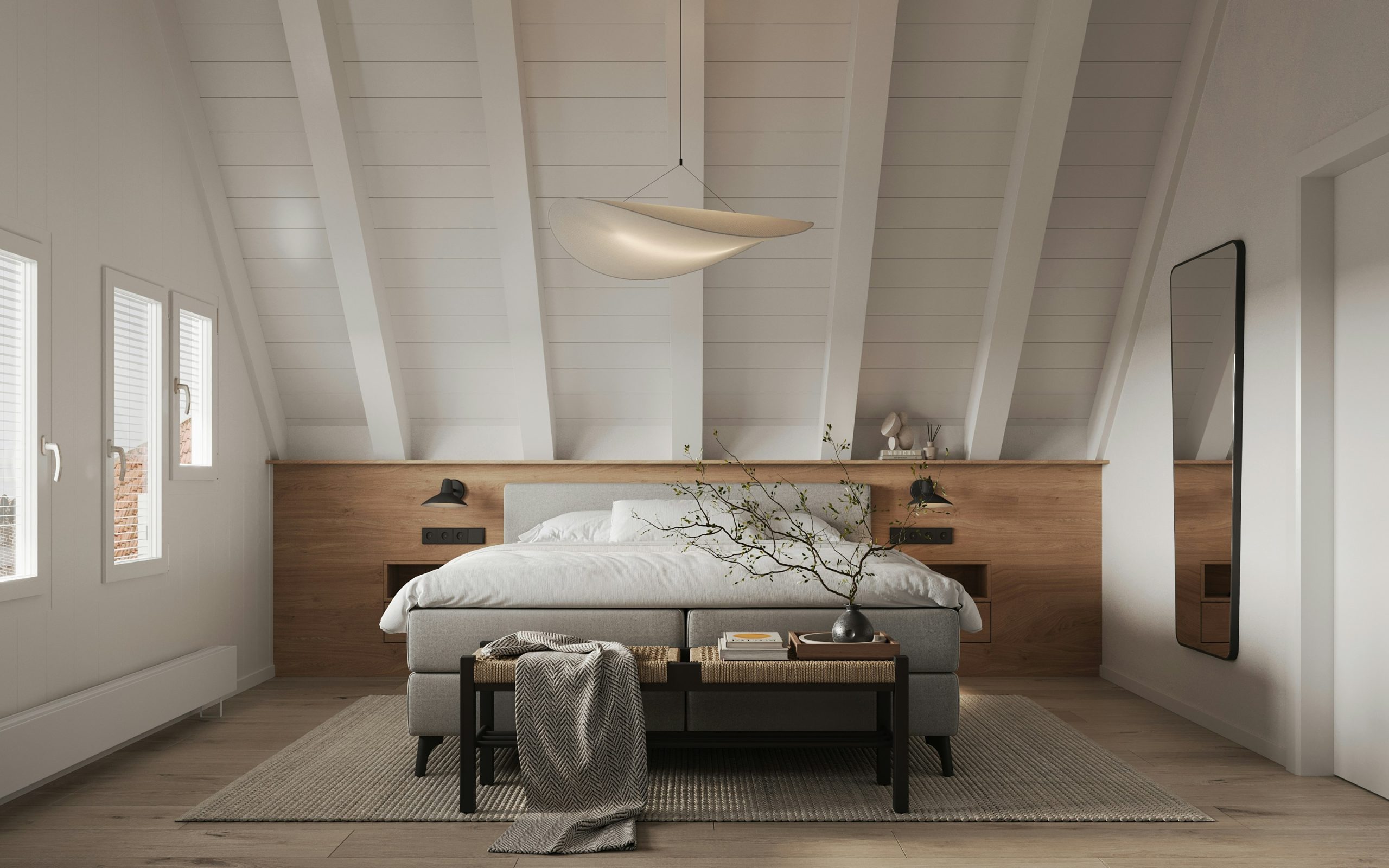
5. Achieve Serenity with a Minimalist White and Wood Attic Room
The integrated light wood headboard structure is the absolute heart of this design. It’s not just a headboard; it’s a piece of functional architecture that organizes the entire room. By building in the nightstand alcoves and subtle backlighting, it eliminates the need for clumsy bedside tables and lamps, creating an unbroken, serene line. It turns the bed into a calm, self-contained sanctuary. Without this clever, multi-purpose element, the room would just be a simple bed in a white attic—this piece provides it purpose and a high-design feel. Compare the minimalism here with the more rustic attic in Idea #3.
|
📋 Copy HEX 🔗 Share |
When designing for a sloped attic ceiling, lighting is everything. Avoid relying on a single central fixture. Instead, layer your lighting. Here, the integrated headboard light provides a warm, low glow for reading. The modern pendant adds sculptural interest and general ambient light. Finally, track lighting (not visible but essential) can be aimed at the wardrobe and darker corners. This layered approach prevents the awkward shadows that sloped ceilings often create and makes the space feel intentionally lit and thoughtfully designed.
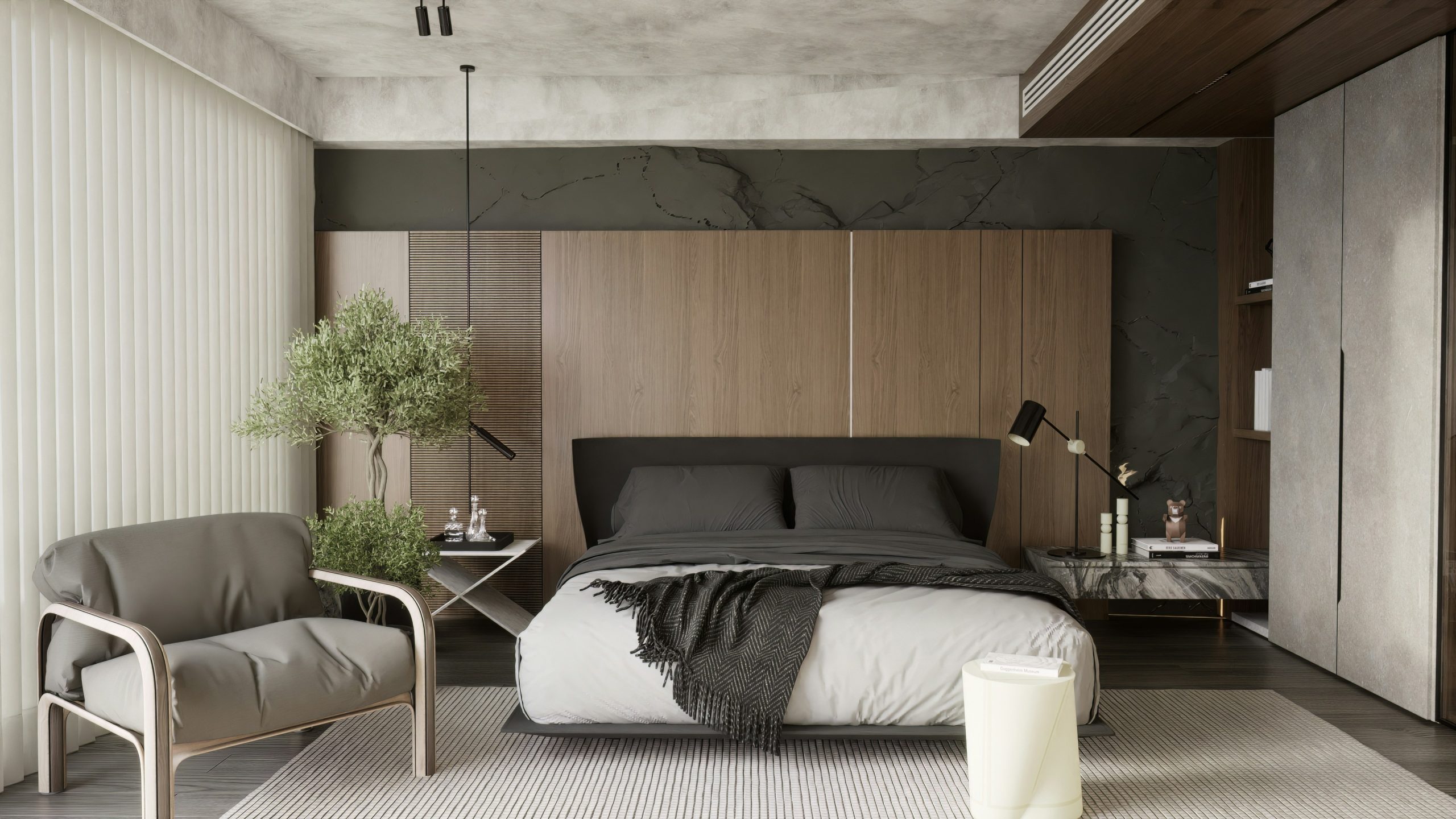
6. Layer a Marble Accent Wall with Warm Wood Paneling
- Wall Treatment: Real marble slab installation can be pricey. Expect $4,000 to $9,000, depending on the stone. The light wood paneling would add another $1,500 – $3,000.
- Furniture: A quality upholstered armchair costs $600 – $1,200. The bed frame itself would cost $800 – $1,500.
- Lighting: The minimalist task lamp is a relatively small cost, around $100 – $250.
- Textiles: The striped area rug and dark gray bedding will likely cost $700 – $1,300 total.
- TOTAL: $7,200 – $15,050
- Budget alternative: Use large-format porcelain tiles that mimic marble for the wall ($1,500-$2,500 installed) and source furniture from more accessible retailers to bring the total down to $4,000-$6,000.
|
📋 Copy HEX 🔗 Share |
That stunning dark marble wall is a statement, but it requires specific care. Marble is a porous stone, meaning it can stain. Be cautious with liquids, especially oils or colored drinks, near the wall. For cleaning, never use acidic or abrasive cleaners (like vinegar or general-purpose bathroom sprays). Stick to a pH-neutral stone cleaner and a soft microfiber cloth. It will also need to be professionally sealed every 1-2 years (for around $200-$400) to maintain its resistance to staining and etching. It’s high-impact, but it’s not a set-it-and-forget-it surface.
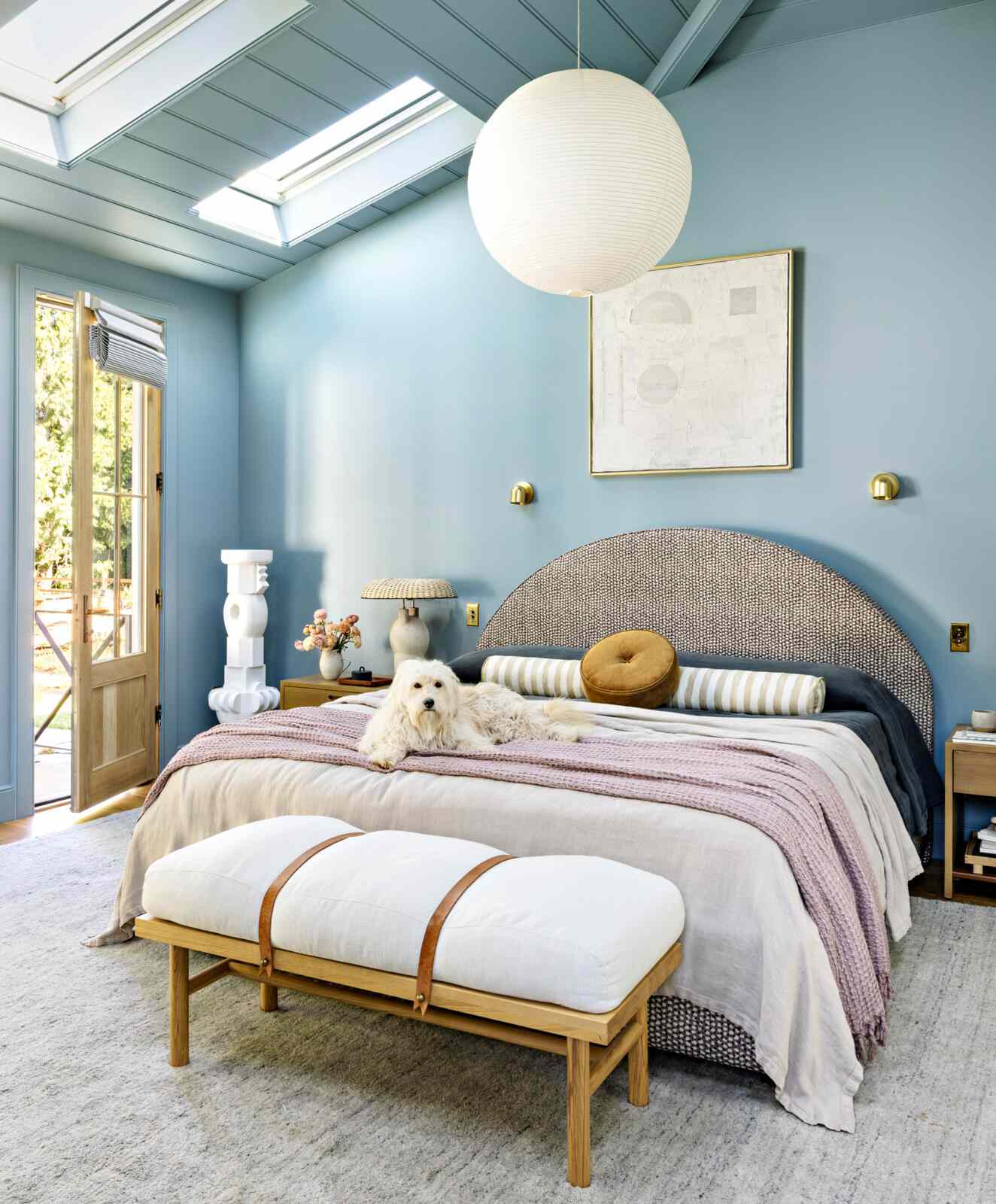
7. Create an Airy Escape with Light Blue Walls and Woven Textures
The success of this room lies in its masterful blend of color and texture. The light blue on the walls and vaulted ceiling creates an immediate sense of calm and airiness, almost like bringing the sky indoors. The design then layers in natural textures to keep it from feeling cold. The woven detail on the headboard, the paper lantern, the wood of the bench, and the leather straps all add a tactile warmth that balances the cool blue. The final touch is the strategic use of brass in the sconces, which adds a tiny bit of metallic gleam and sophistication.
|
📋 Copy HEX 🔗 Share |
That beautiful, oversized paper lantern pendant is a fantastic way to add soft, diffused light and sculptural volume for an affordable price. However, be honest about your cleaning habits. Paper shades are notorious dust magnets and can be delicate to clean. You can’t just spray and wipe them. You’ll need to gently dust them with a soft brush or a microfiber duster weekly. If they get a stain or a smudge, it can be nearly impossible to remove, and a tear means a full replacement. It’s a high-impact look, but it requires gentle, consistent maintenance.
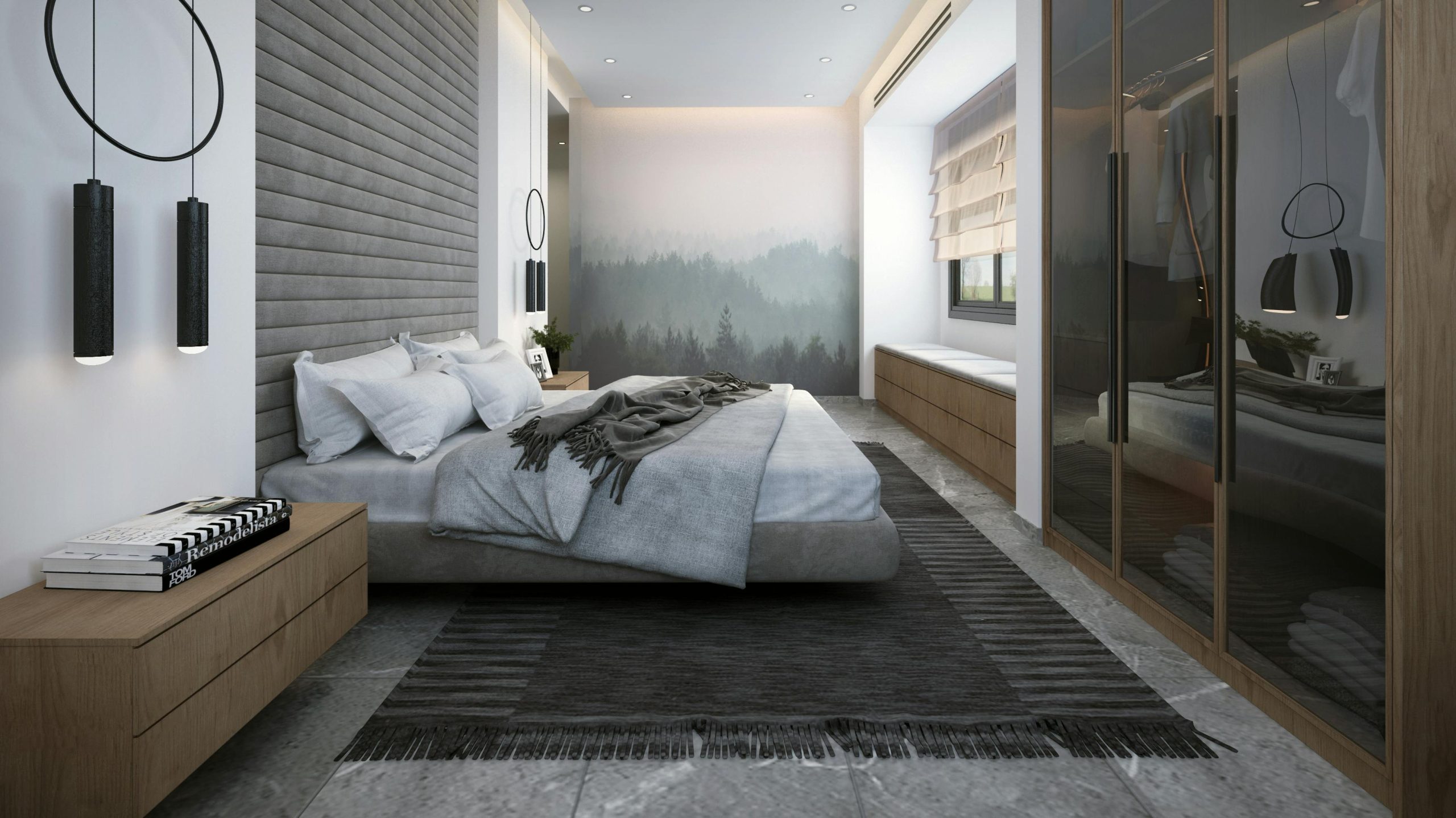
8. Set a Serene Mood with a Misty Forest Wall Mural
The forest mural is undeniably the soul of this room. It does more than just decorate the wall; it sets the entire mood and provides an instant sense of depth and tranquility. Removing it would leave a perfectly nice but generic modern bedroom. The mural transforms the space into an escape, making the room feel larger and more connected to nature. It’s a powerful statement that turns a simple wall into a window to a serene, misty world, and all the other design choices—the grey tones, the light wood, the simple lighting—are there to support it.
|
📋 Copy HEX 🔗 Share |
This room follows a simple but effective formula: 60% Soft Neutrals + 30% Natural Elements + 10% Industrial Accents. The soft neutrals come from the gray upholstered headboard, the bedding, and the striped rug. The natural elements are the star: the forest mural and the light wood furniture. The final 10% comes from the black industrial pendant lights, which add a touch of sharpness and contrast, preventing the room from feeling too soft or one-note. You could easily swap the forest for a mountain scene and the light wood for a darker walnut, and the formula would still hold.
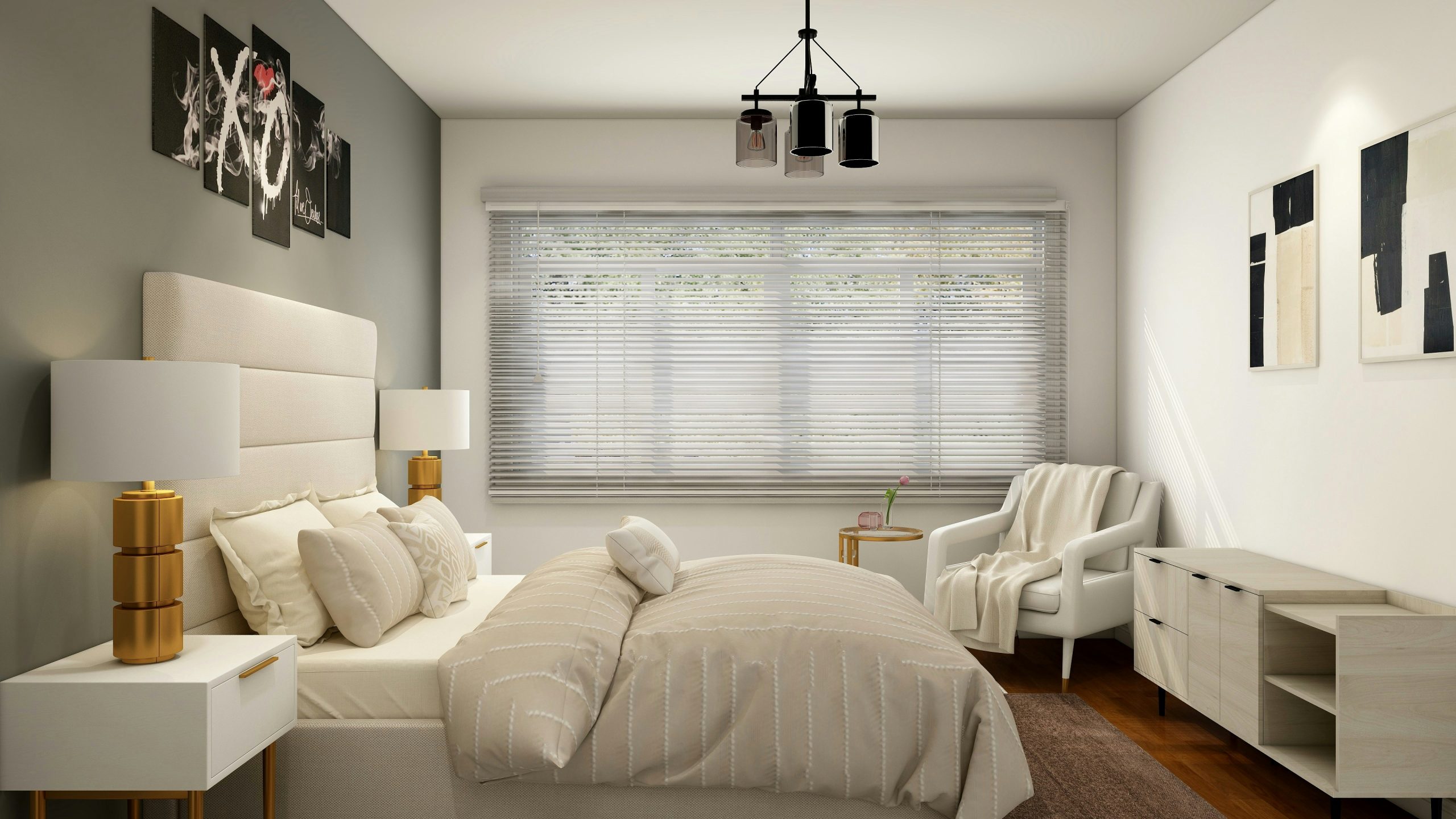
9. Keep it Simple with a Gray Accent Wall and Warm Gold Lamps
This look feels high-end, but it’s incredibly achievable on a budget. The key is the gray accent wall—a can of paint is only about $50! Find a simple cream upholstered headboard from an online retailer like Wayfair or Amazon for under $200. The magic comes from the accessories. Look for those cylindrical gold lamps at places like Target or HomeGoods; you can often find similar styles for $40-$60 each. The multi-panel art can be a DIY project or a digital print purchase from Etsy. The focus is on clean shapes and a tight color palette, not expensive individual items.
|
📋 Copy HEX 🔗 Share |
This room proves that minimalism doesn’t have to be cold. The design works because of a careful balance of color temperatures. The gray accent wall and white trim are cool tones, which create a crisp, clean backdrop. The warmth is then strategically introduced through the gold lamps, the light wood of the dresser, and the cream fabric of the headboard. This mix of cool and warm is what gives the room its sophisticated yet comfortable feel. It feels balanced and complete, not stark or sterile.
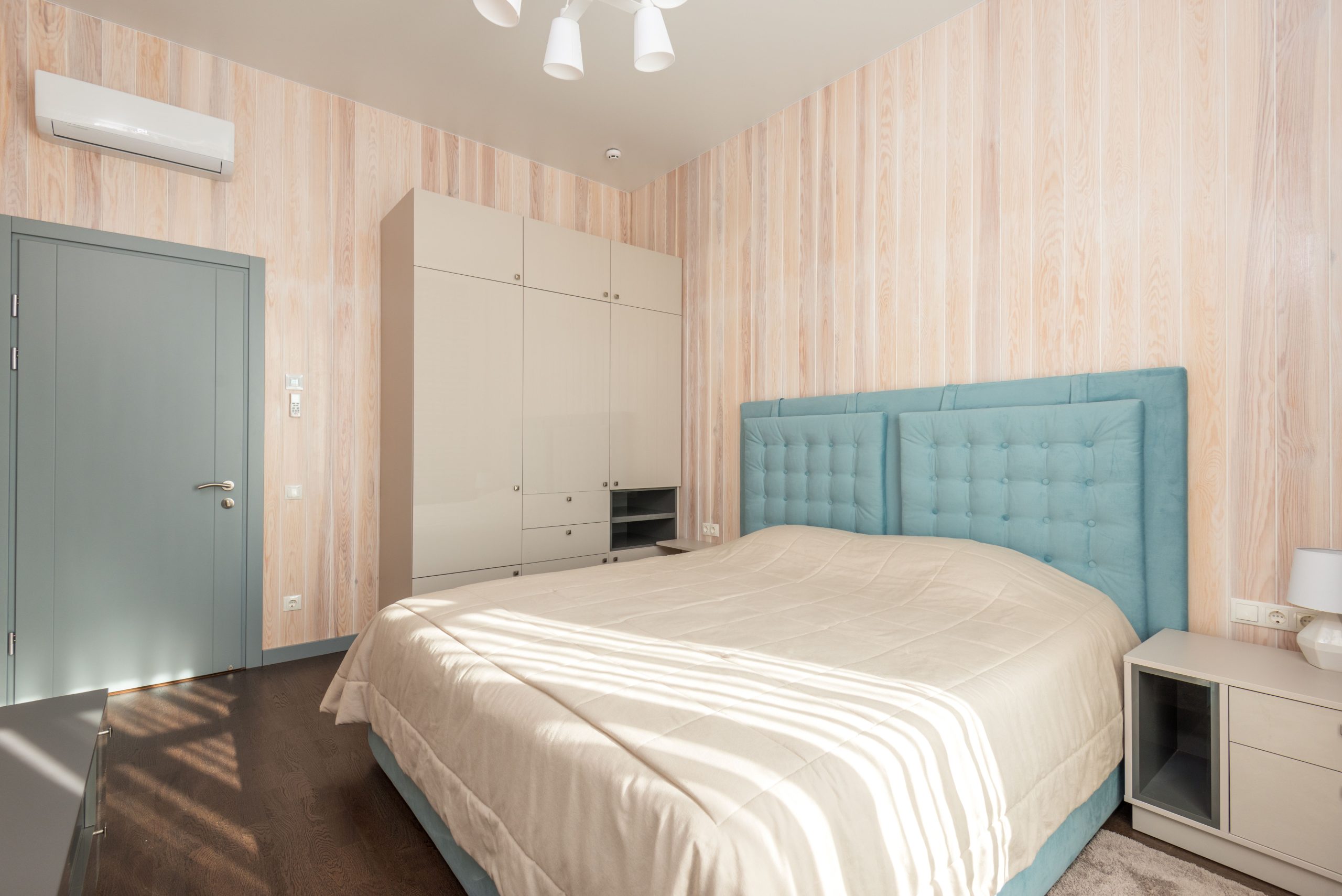
10. Use Light Wood Paneling with a Powder Blue Bed
You can replicate this high-end wood paneling look with a bit of DIY. This brief covers a single 8×10-foot wall.
|
📋 Copy HEX 🔗 Share |
- Time Estimate: 4-6 hours
- Material Cost: $150 – $300
- Step 1: Purchase decorative wood composite or MDF panels (often called ‘fluted’ or ‘slat’ panels). They come in various finishes.
- Step 2: Measure your wall and cut the panels to height using a circular or miter saw.
- Step 3: Apply construction adhesive to the back of the first panel and press it firmly into a corner of your wall, using a level to ensure it’s perfectly vertical.
- Step 4: Secure the panel with a few brad nails along the edge. Continue with the next panel, locking it into the previous one, until the wall is covered.
This style, often called “Japandi” (a hybrid of Japanese and Scandinavian design), is popular for a reason. We’re seeing a cultural shift away from stark, cold minimalism towards spaces that feel both clean and warm. This room nails it. The light wood paneling brings in the natural, organic element central to Scandinavian design, while the clean lines and uncluttered feel echo Japanese aesthetics. The soft powder blue of the bed adds a gentle touch of color without disrupting the overall serenity, making it a perfect example of this enduring trend.
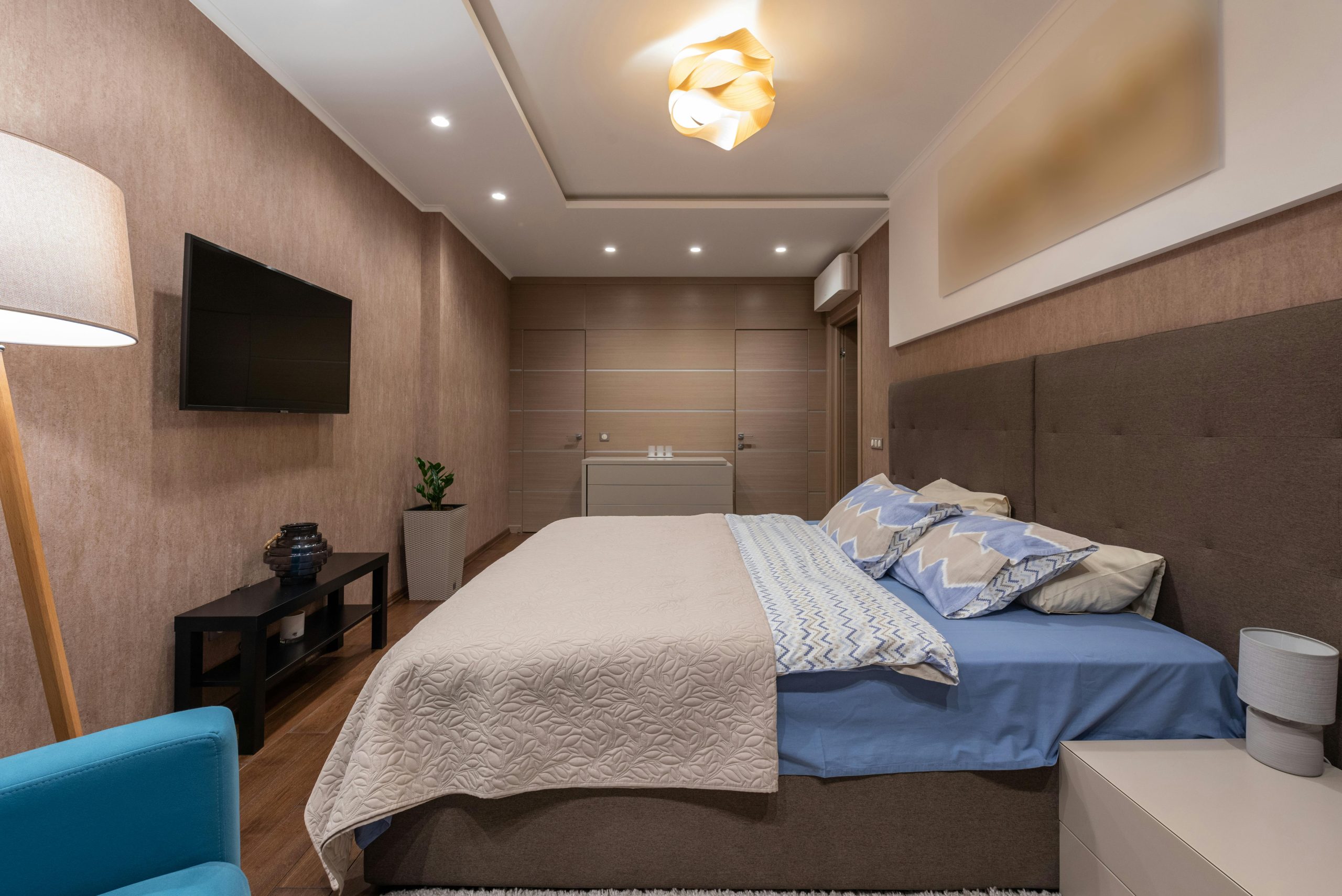
11. Layer Blue Bedding on a Brown Upholstered Bed for Depth
The color story here is a sophisticated blend of earthy and cool tones. Let’s break it down: 50% Earthy Browns (textured walls, headboard, wood cabinetry) + 30% Calming Blues (bedding, accent decor) + 20% Bright Accents (teal armchair, white ceiling). The brown creates a warm, cocooning base. The blues on the bed add a layer of coolness and serenity, preventing the brown from feeling dated. The pop of teal in the armchair is the final, unexpected touch that energizes the entire palette and shows a confident design hand.
|
📋 Copy HEX 🔗 Share |
When you have extensive built-in cabinetry, as seen here, it’s crucial to break up the visual monotony. The designer achieved this effect by integrating different materials and depths. Notice how the light wood cabinetry is paired with a different texture on the main wall and a smooth white dropped ceiling. This textural shift is key. If your room has a wall of uniform built-ins, consider painting the back of an open shelf or applying a textured wallpaper to an adjacent surface to create similar visual interest and a more custom feel.
12. Integrate a Workspace with a Patterned Accent Wall
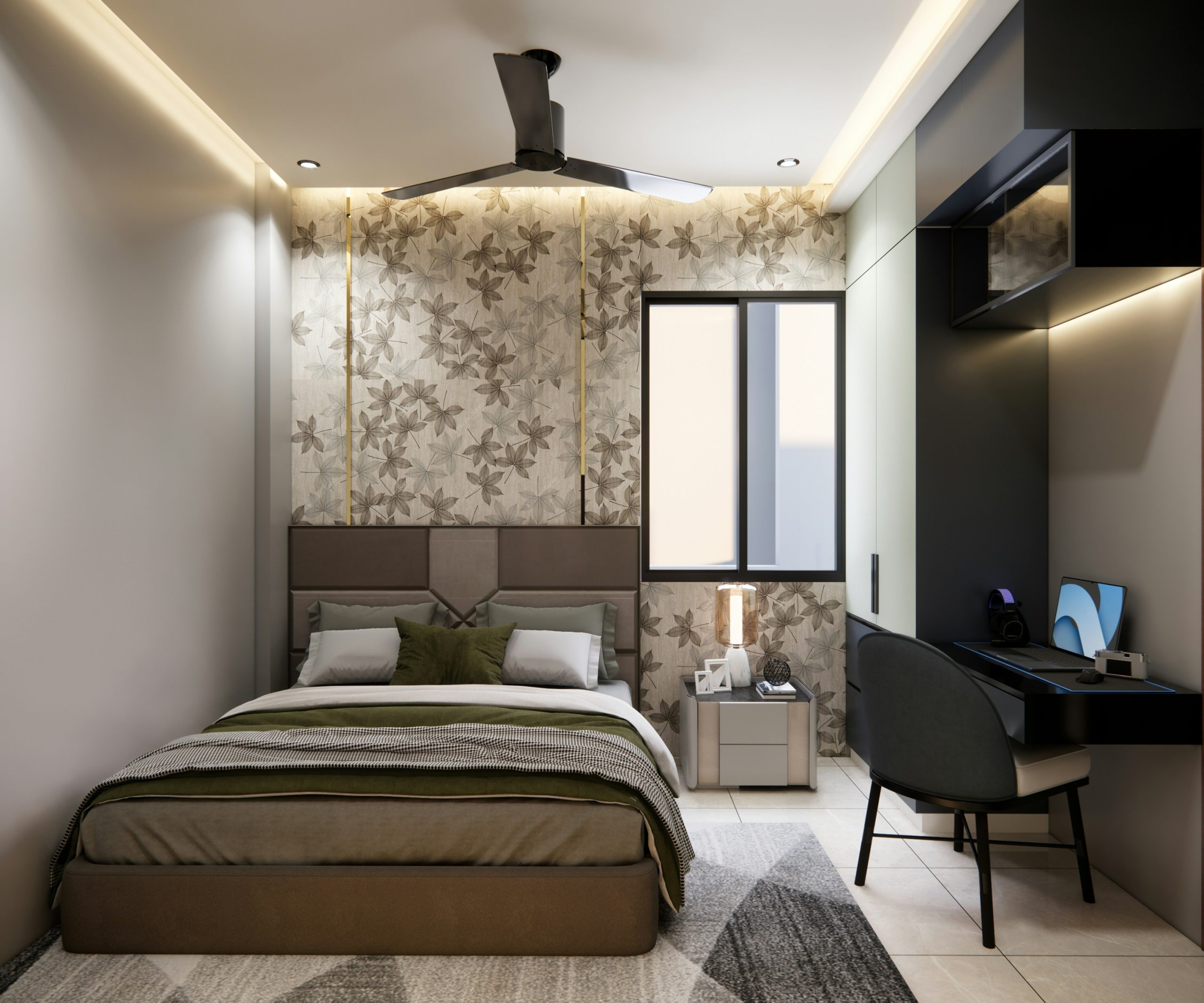
This bedroom proves that a functional workspace doesn’t have to be an eyesore. The design works because the desk and shelving are treated as an integrated part of the overall architectural plan, not as an afterthought. By using black for the desk area, it recedes visually, while the overhead shelving provides storage without adding bulk. The consistent use of clean lines and the continuation of the room’s calm color palette into the workspace make it feel like a cohesive, intentional zone, rather than a desk awkwardly shoved into a corner.
|
📋 Copy HEX 🔗 Share |
That subtle cove lighting and the recessed ceiling lights look incredibly chic, but they have implications for both installation and maintenance. Installing cove lighting requires a skilled electrician and minor construction to create the ledge or recess for the light strips, adding cost and complexity to a renovation. Furthermore, when the LED strips eventually fail (they have a long but finite lifespan), replacing them can be tricky, as you have to access the hidden channel. It’s a gorgeous effect, but it’s more involved than simply hanging a new light fixture.
13. Maximize a Small Room with an Integrated Bed and Desk
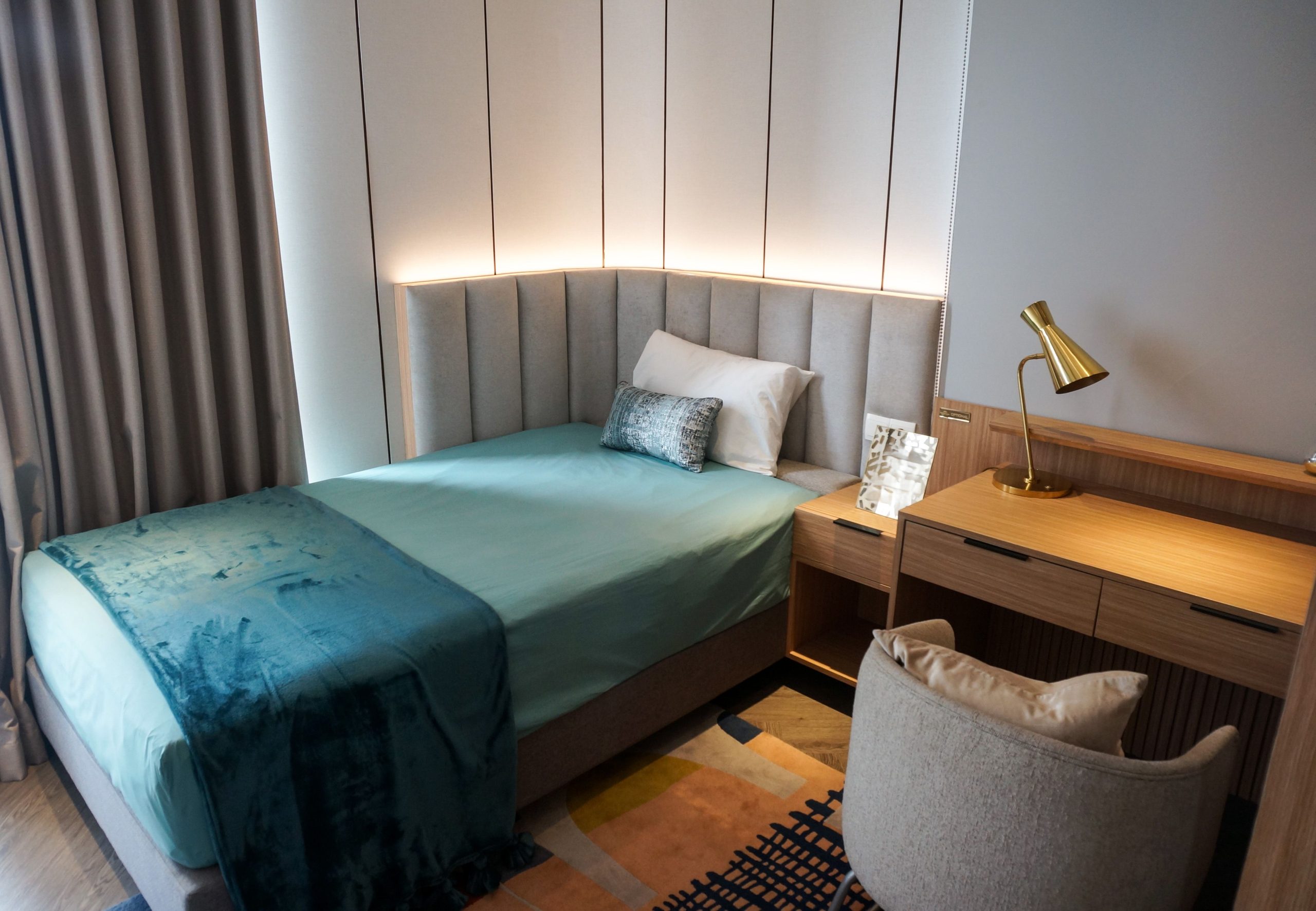
This integrated furniture concept is a game-changer for small bedrooms, particularly those under 120 square feet. It’s perfect for studio apartments, guest rooms, or teen bedrooms where space is at a premium. The minimum viable wall length for a setup like this (for a full-size bed) is around 11 feet to accommodate the bed and a functional desk space beside it. The key is that it uses vertical space for shelving and combines the nightstand and desk into one fluid piece, freeing up valuable floor space. The plush textures here make it feel cozy, not cramped.
|
📋 Copy HEX 🔗 Share |
The seamless integration of the furniture is what makes this design so brilliant. The wooden desk surface flows directly from the side of the paneled headboard, creating one continuous, custom-looking unit. This is the element that elevates the room from simply being ‘small’ to being ‘smart.’ It tells a story of thoughtful design and maximum efficiency. Without this continuous line, you’d just have a bed and a desk next to each other; with it, you have a cohesive and highly functional design feature.
14. Add a Pop of Sunshine with Bright Orange Pillows
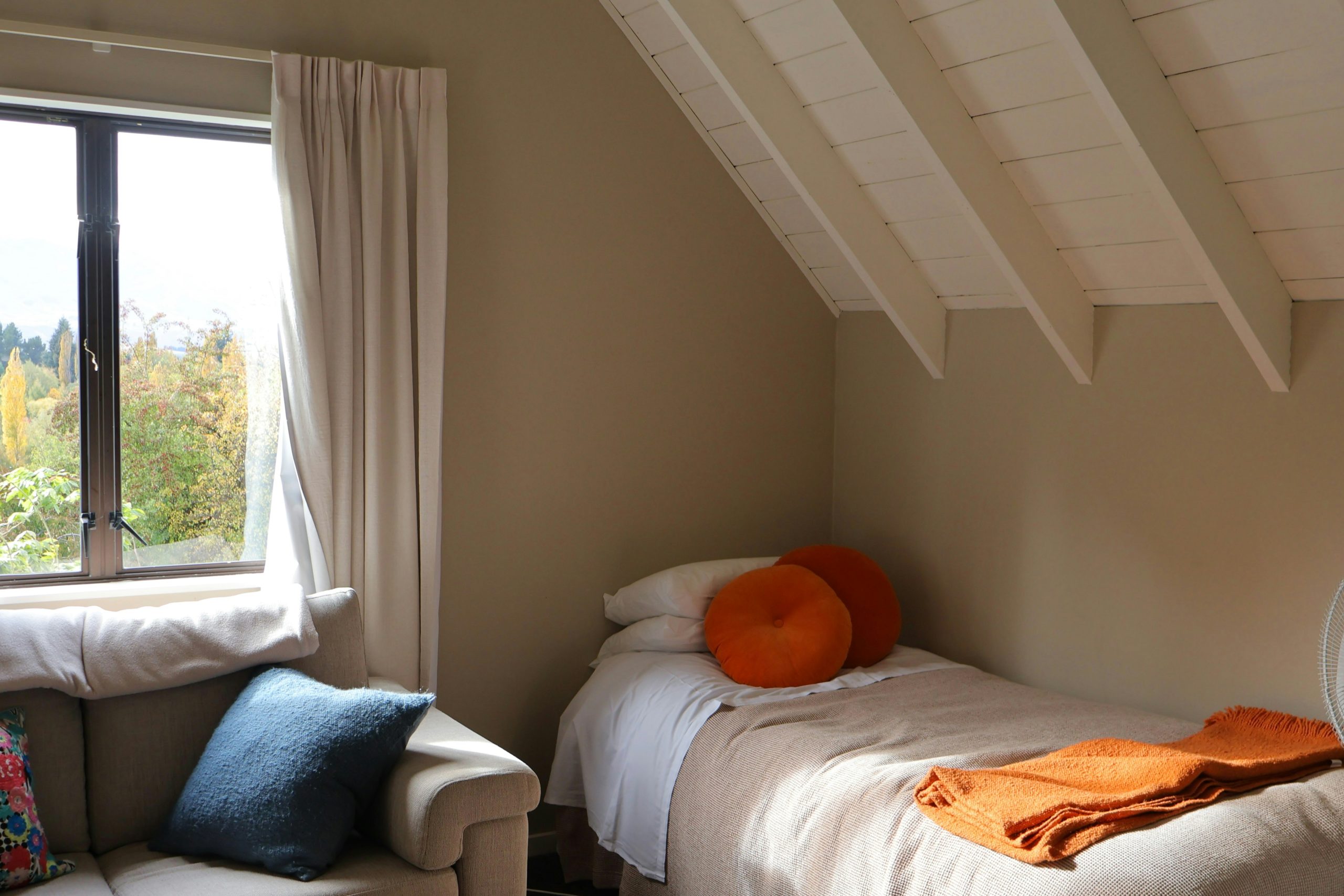
This room’s welcoming vibe comes from a simple formula: 80% Soft Neutrals + 20% High-Energy Accent Color. The taupe walls, white bedding and beams, and beige couch create a serene, neutral envelope. This foundation allows the vibrant orange pillows and throw to truly sing. They become the undeniable focal point without having to fight for attention. You could swap the orange for a bright magenta or a deep cobalt blue, and the same principle would apply: a dominant neutral base allows a small dose of saturated color to have a giant impact.
|
📋 Copy HEX 🔗 Share |
The design works because of the smart use of repetition and shape. Notice how the bright, punchy orange isn’t just on one pillow. It’s repeated in the throw blanket and in the round shape of the two main accent pillows. This repetition makes the color choice feel intentional and balanced. The round shape of the pillows also helps to soften the sharp angles of the attic ceiling and the rectangular window, adding a playful and gentle touch to the overall geometry of the space. It’s a small detail that makes a big difference in how friendly and inviting the room feels.
15. Ground a Small Space with a Bold Black and White Rug
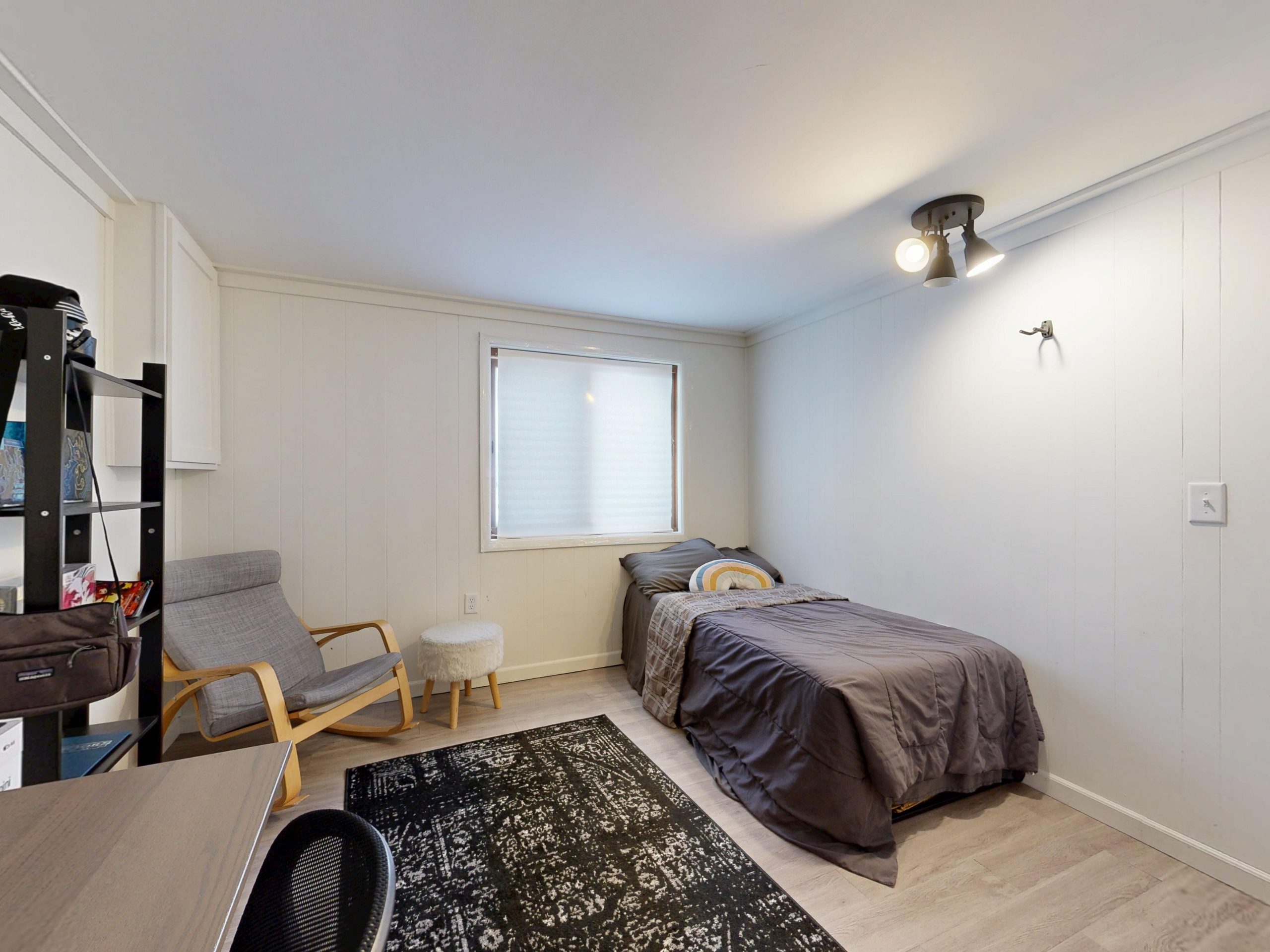
Recreating this white vertical wall paneling, or ‘shiplap,’ is a classic DIY project that adds instant character.
|
📋 Copy HEX 🔗 Share |
- Time Estimate: 6-8 hours for a small room.
- Material Cost: $200 – $400 for primed MDF boards and supplies.
- Step 1: Measure your wall height and decide on your plank width (5-6 inches is standard). Purchase pre-primed MDF boards and paint.
- Step 2: Use a stud finder to mark the location of studs on your wall. This is where you’ll nail the boards.
- Step 3: Start in a corner. Place your first board, use a level to ensure it’s perfectly plumb (vertical), and nail it to the studs.
- Step 4: Use a spacer (a nickel is a handy trick for consistent gaps) and place the next board beside it. Nail it in place.
- Step 5: Continue across the wall, cutting the last board to fit. Fill nail holes, caulk seams, and apply your final coats of paint.
- Measure for Rug Scale: Before buying that bold rug, measure your floor space. In a small room, the rug should be large enough that at least the front two legs of the bed and any chairs are on it. This anchors the space. A rug that’s too small will look like a bathmat and make the room feel even smaller.
- Check Your Light: White paneling looks stunning, but it can appear stark or cold in a north-facing room with cool light. Observe your room’s natural light throughout the day before committing to a bright white paint.
- Assess Your Floor Tone: The light wood floor here works beautifully. If you have dark or orange-toned floors, make sure the other wood elements in the room (like the rocking chair) coordinate with the floor, not fight it.
16. Mix Raw Concrete and Warm Gold for a Modern Edge
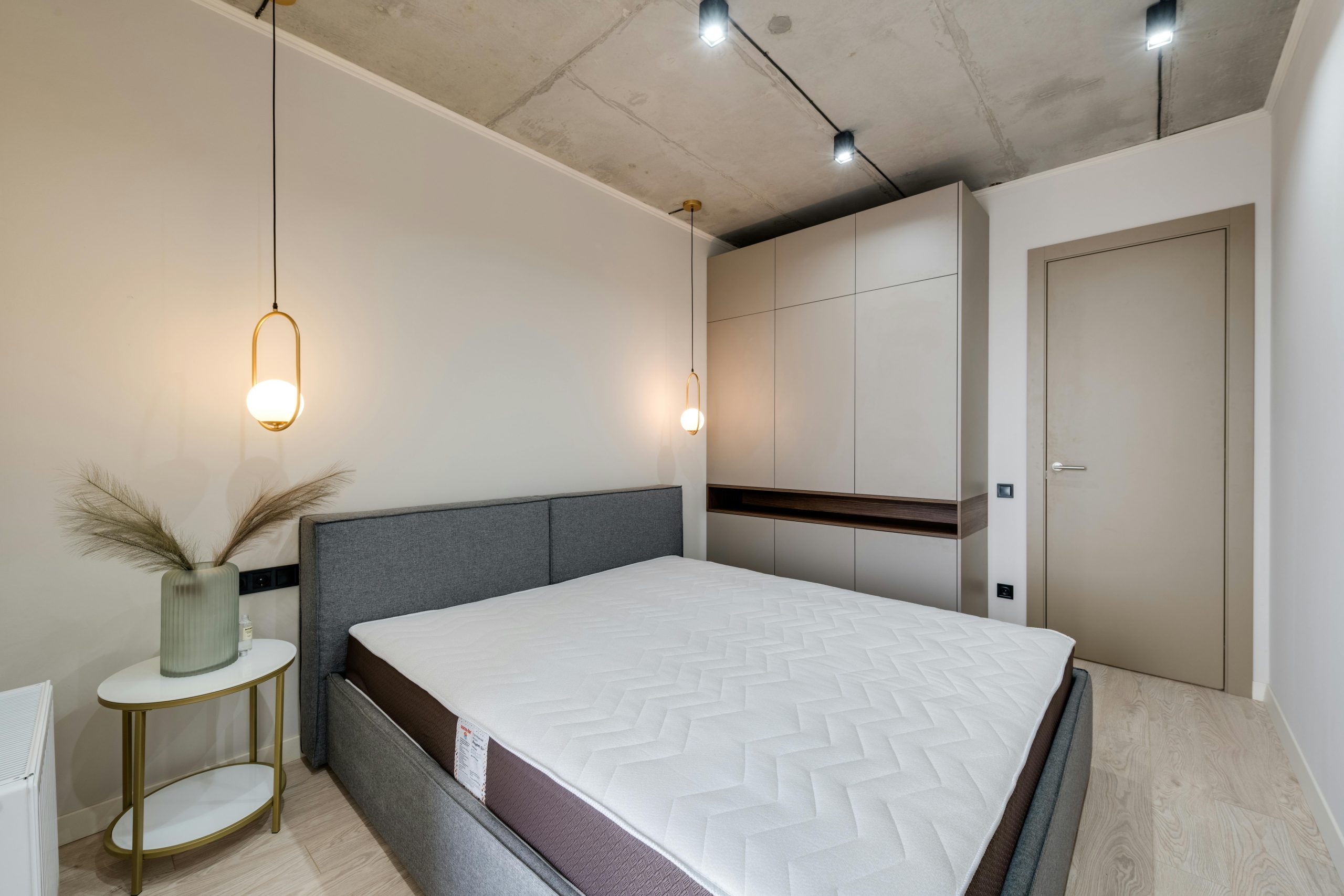
We’re seeing this blend of raw industrial materials and polished luxe accents everywhere, and it speaks to a desire for spaces that feel both authentic and elevated. The raw concrete ceiling gives the room an honest, almost Brutalist edge, while the sleek gold on the pendant lights and side table adds a necessary touch of warmth and glamour. This high-low mix feels very current in 2026, rejecting the idea that a room must be either purely industrial or purely luxurious. It’s about finding the beauty in the contrast between the two.
|
📋 Copy HEX 🔗 Share |
A raw, unsealed concrete ceiling has a very specific texture that can ‘shed’ fine dust over time, especially in a new build or renovation. While it’s not a major issue, it’s something to be aware of. It requires more than just a quick swipe with a duster; you’ll want to vacuum it with a brush attachment every few months to properly remove accumulated dust. Furthermore, be mindful that you can’t easily patch or paint it without losing the raw aesthetic. Any repairs or changes to overhead lighting will be visible.
17. Pair Gray Walls with a Rich, Red-Toned Wood Floor
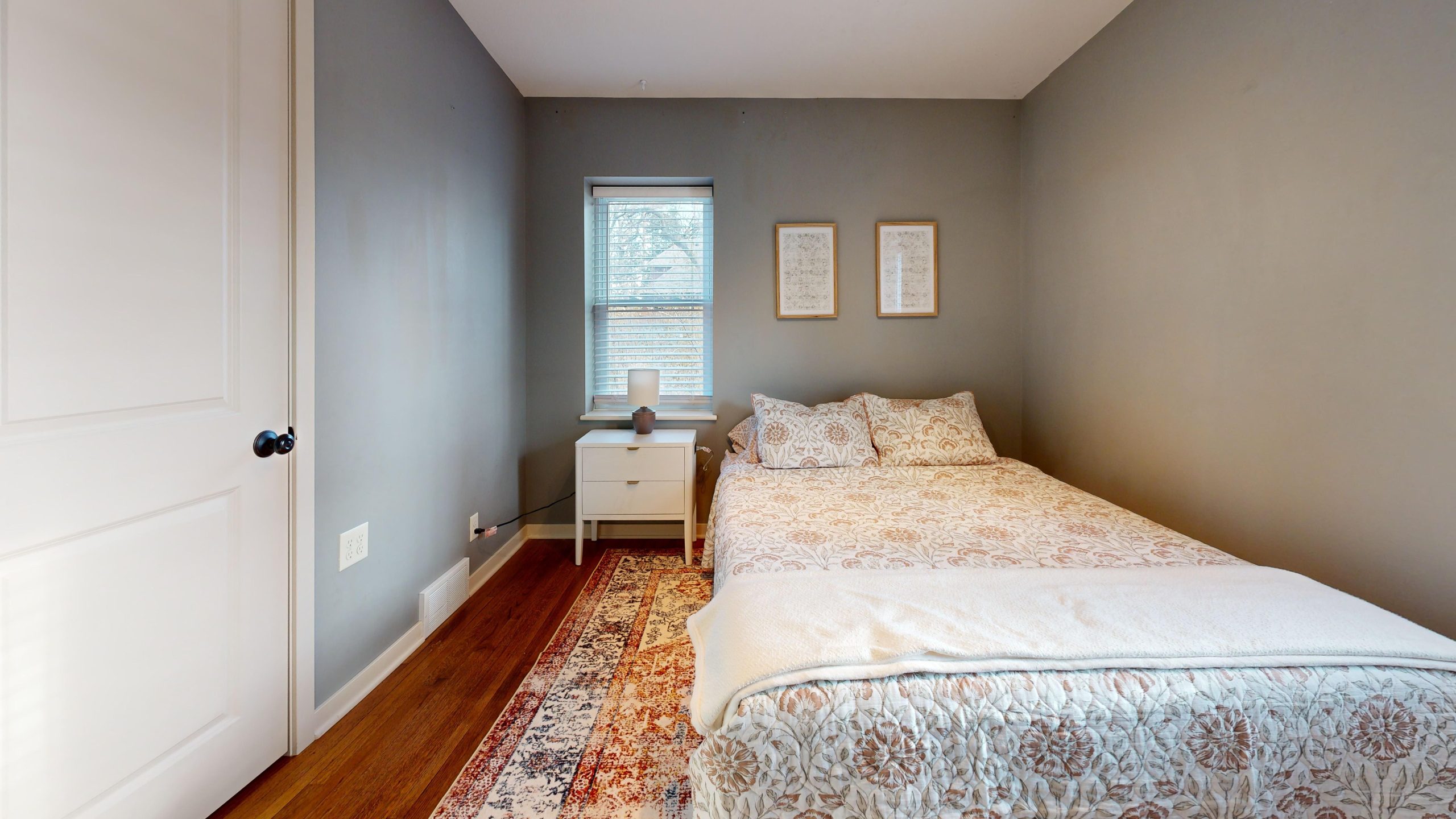
This simple bedroom works because of the powerful color contrast between the floor and the walls. The cool, medium-gray on the walls provides a modern, neutral backdrop that is very calming. Against this backdrop, the reddish-brown wood floor brings an immense amount of warmth and character. The two colors are opposites in temperature, which creates a dynamic and visually striking foundation for the room. The white trim, door, and blinds act as a crisp border, cleanly separating the two dominant colors and making both feel more intentional.
|
📋 Copy HEX 🔗 Share |
This style is a look that celebrates simplicity and can be recreated on a tight budget. The key is the paint color—a can of gray paint is an inexpensive starting point. Look for floral bedding sets at Target or Walmart; you can often find a full set for under $100. The white nightstand is a classic piece that can be found secondhand on Facebook Marketplace for $30-$50—a quick coat of white paint will make it look brand new. The focus is on the color combination, not high-end furniture. For a similar aesthetic with a different pop of color, check out Idea #14.
18. Create a Warm Welcome with a Camel and Cream Palette
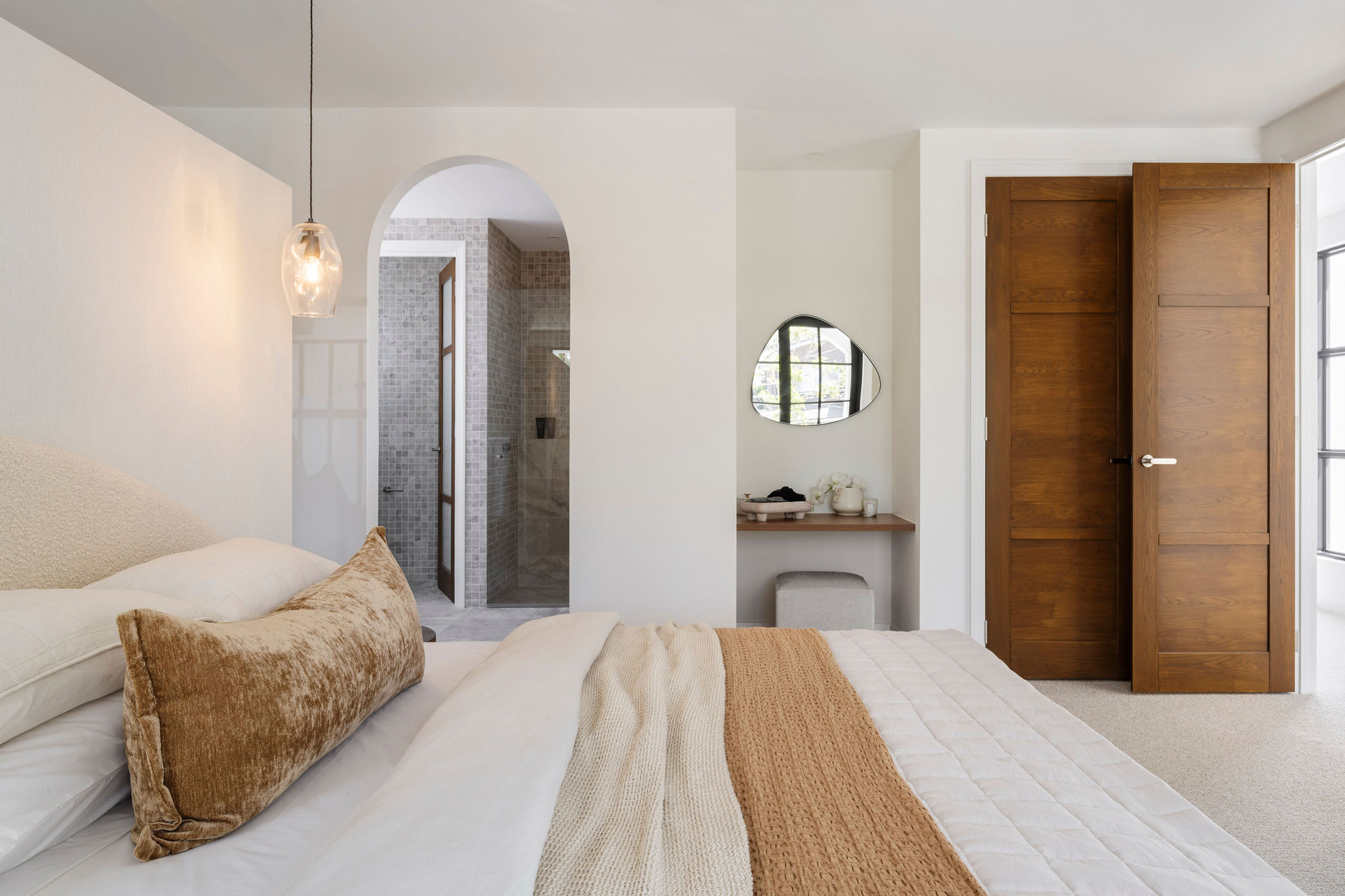
The arched doorway leading to the ensuite is the architectural feature that makes this room truly special. It softens the modern, clean lines of the rest of the space, adding a touch of romance and custom-made charm. It transforms a standard doorway into a graceful transition between spaces. Without this gentle curve, the room would still be lovely and serene, but it would lack this standout moment of unique character. It’s a testament to how a single, thoughtful architectural detail can elevate an entire room from ‘nice’ to ‘memorable.’
|
📋 Copy HEX 🔗 Share |
When working with a monochromatic neutral palette like this, texture is your best friend. Notice the variety: the quilted duvet, the chunky knitted throw, the smooth velvet pillow, and the plush carpet. Each element, while neutral in color, has a distinct tactile quality. This layering of textures is what keeps the room from feeling flat or boring. When in doubt, add another texture. A good rule of thumb is to aim for at least three different textures in your bedding alone to create a look that feels rich and inviting.
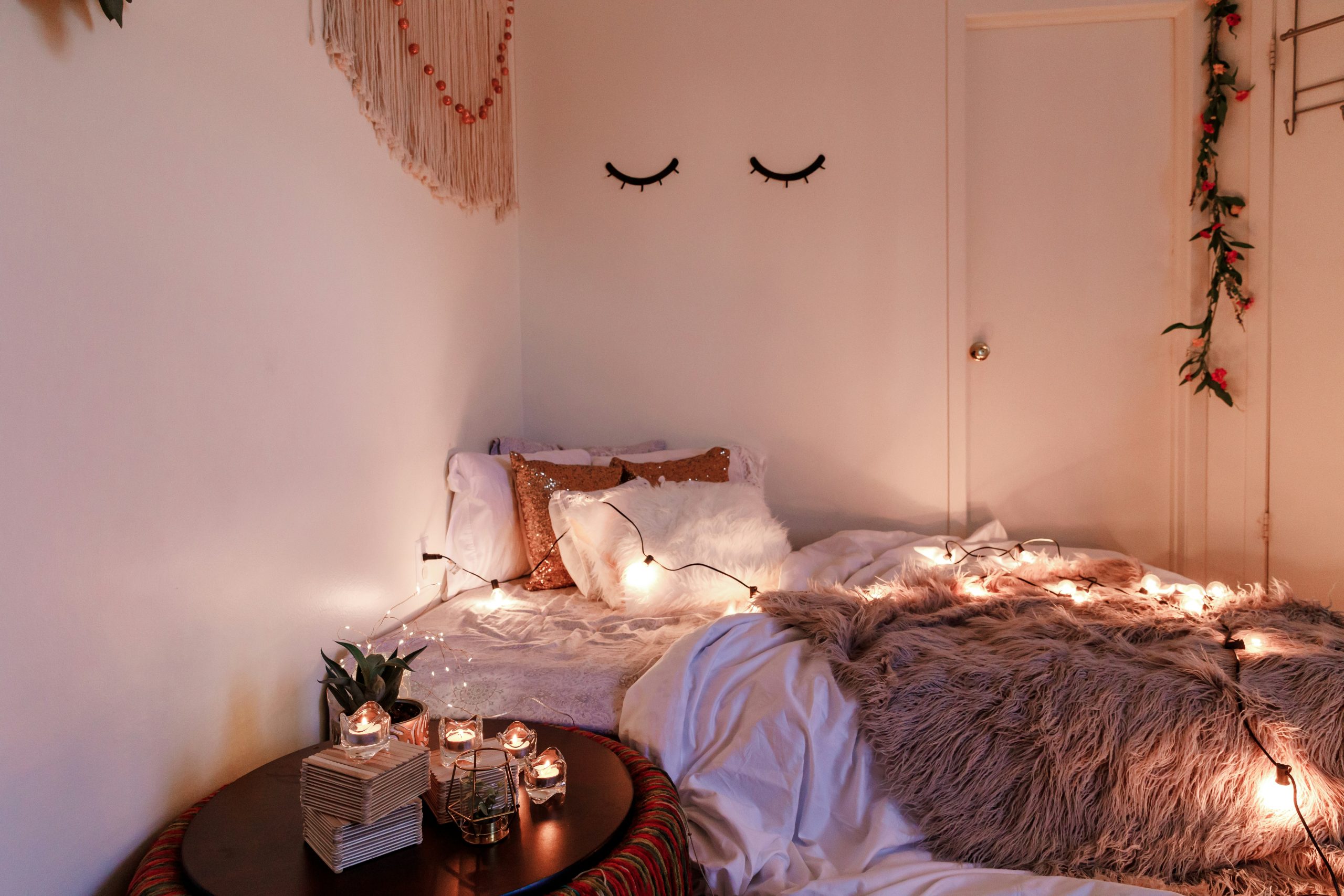
19. Weave a Whimsical Nook with Fairy Lights and Faux Fur
This delightful nook is pure magic, and its formula is easily replicated. Think of it as 50% Soft Textures + 30% Warm Lighting + 20% Personal Details. The textures come from the faux fur blanket, the sequin pillow, and the macrame hanging. The lighting is all about those warm-toned fairy lights, which provide the signature cozy glow. The final 20% consists of the playful ‘closed eyes’ decals, the plants, and the personal trinkets. It’s not about expensive furniture but about layering these three categories to create a sense of personal sanctuary.
|
📋 Copy HEX 🔗 Share |
A tangle of string lights, while whimsical, requires a bit of safety planning. Always use high-quality, UL-certified lights, especially if you plan to leave them on for extended periods or have them draped over fabrics. Opt for LED versions, as they generate significantly less heat than older incandescent bulbs, reducing any fire risk. Furthermore, consider using battery-operated lights to avoid messy, unsightly cords running down your wall and creating tripping hazards. It’s a dreamy look, but safety first!
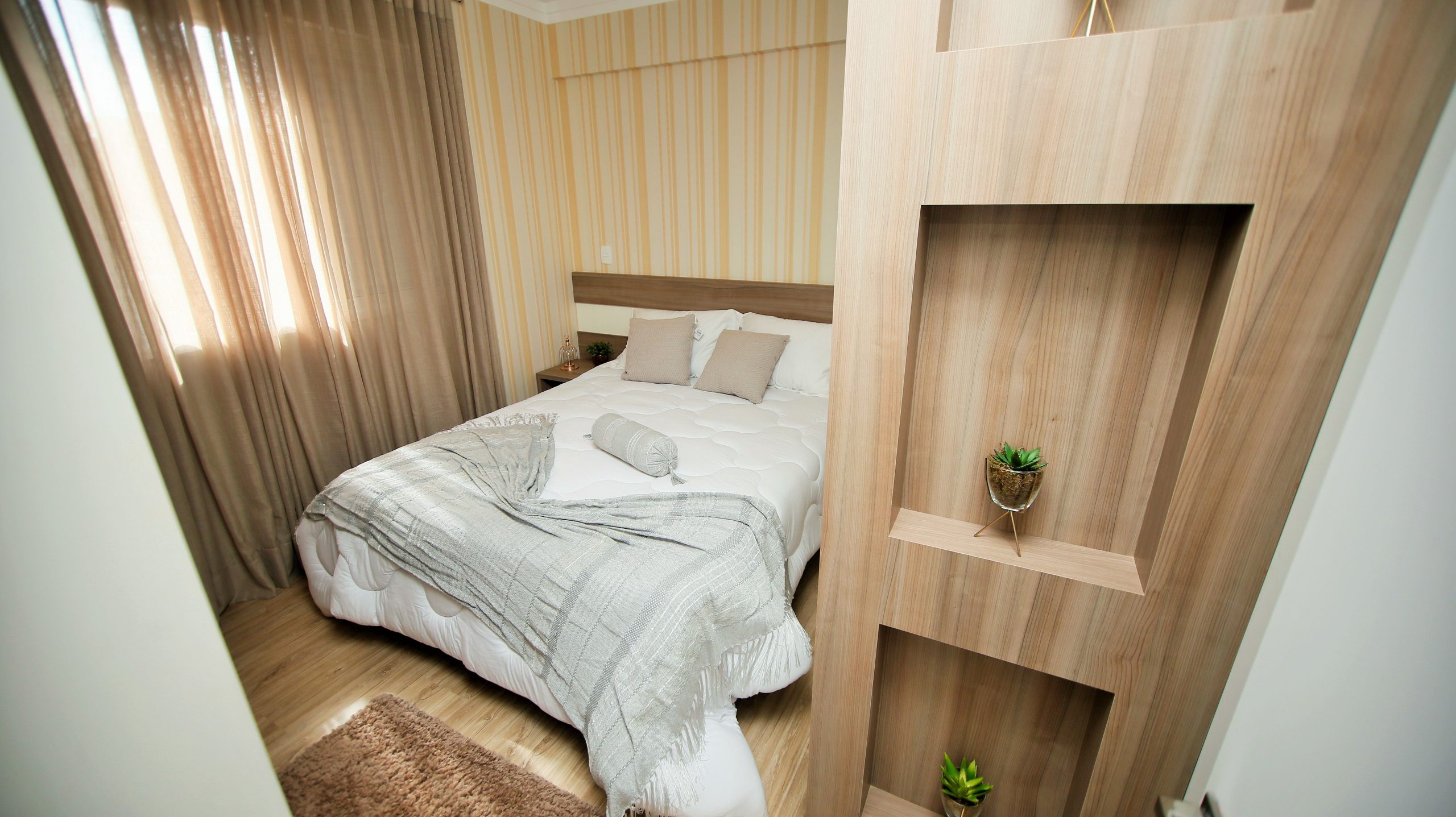
20. Balance Light Wood with Cream and Yellow Stripes
This room feels so calm and cohesive because it operates within a very narrow and controlled color palette. Everything—the light wood floors, the built-in shelving, the striped wallpaper—exists within the warm family of white, cream, pale yellow, and blonde wood. Even the gray throw is a soft, warm gray. This tonal consistency is what creates the serene, unified atmosphere. There are no jarring contrasts, allowing the subtle differences in texture between the wood grain, the woven blanket, and the quilted comforter to provide the visual interest.
|
📋 Copy HEX 🔗 Share |
This design, with its light colors and clean built-in storage, is fantastic for medium-sized rooms, around 130-200 square feet. The vertical stripes on the wallpaper can help to make a room with standard 8-foot ceilings feel a bit taller. The built-in shelving is a space-saving star, but it does require a room with enough length to accommodate it without cramping the bed area. If your room is smaller, consider a less-deep, standalone bookshelf in a similar light wood tone to get the same effect, as seen in the more compact Idea #27.
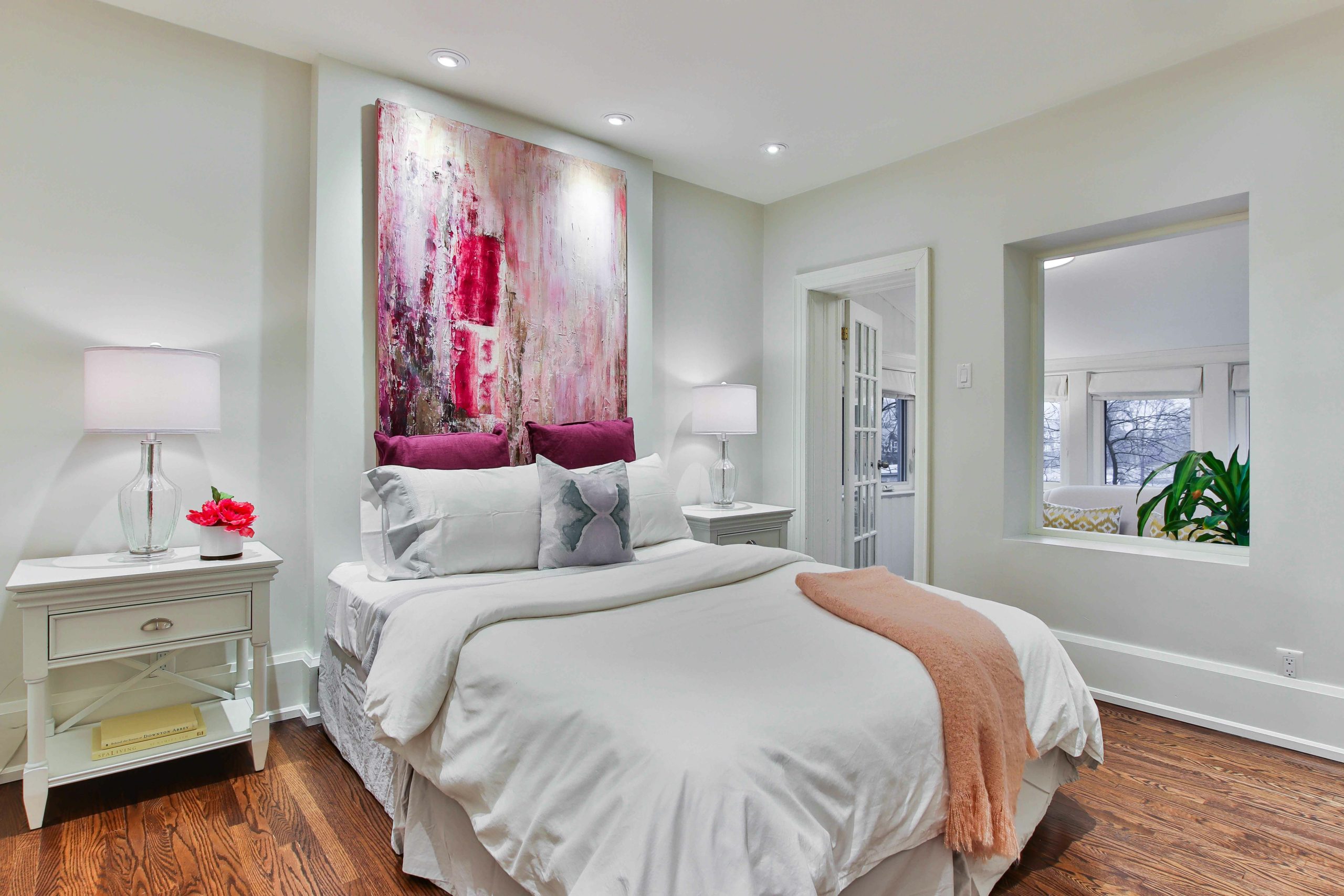
21. Make a Statement with Oversized Abstract Art
The oversized abstract artwork is clearly the standout feature of this bedroom. It dictates the entire color palette and sets an energetic, artistic tone. If you were to replace it with a smaller piece or a different style of art, the room’s personality would completely deflate. The art is the confident statement that allows the rest of the decor—the simple white bedding, the classic glass lamps—to be quiet and supportive. It proves that sometimes, one single, large-scale investment piece is all you need to build a memorable room around.
|
📋 Copy HEX 🔗 Share |
When hanging art above a bed, scale and placement are crucial. A common mistake is hanging art that is too small or placing it too high. A good guideline is that the artwork should be about two-thirds the width of the headboard. For a queen bed (60 inches wide), aim for art that is around 40 inches wide. The bottom edge of the frame should be 5-9 inches above the top of the headboard. This creates a cohesive visual unit where the art and bed feel connected, not like they are floating separately.
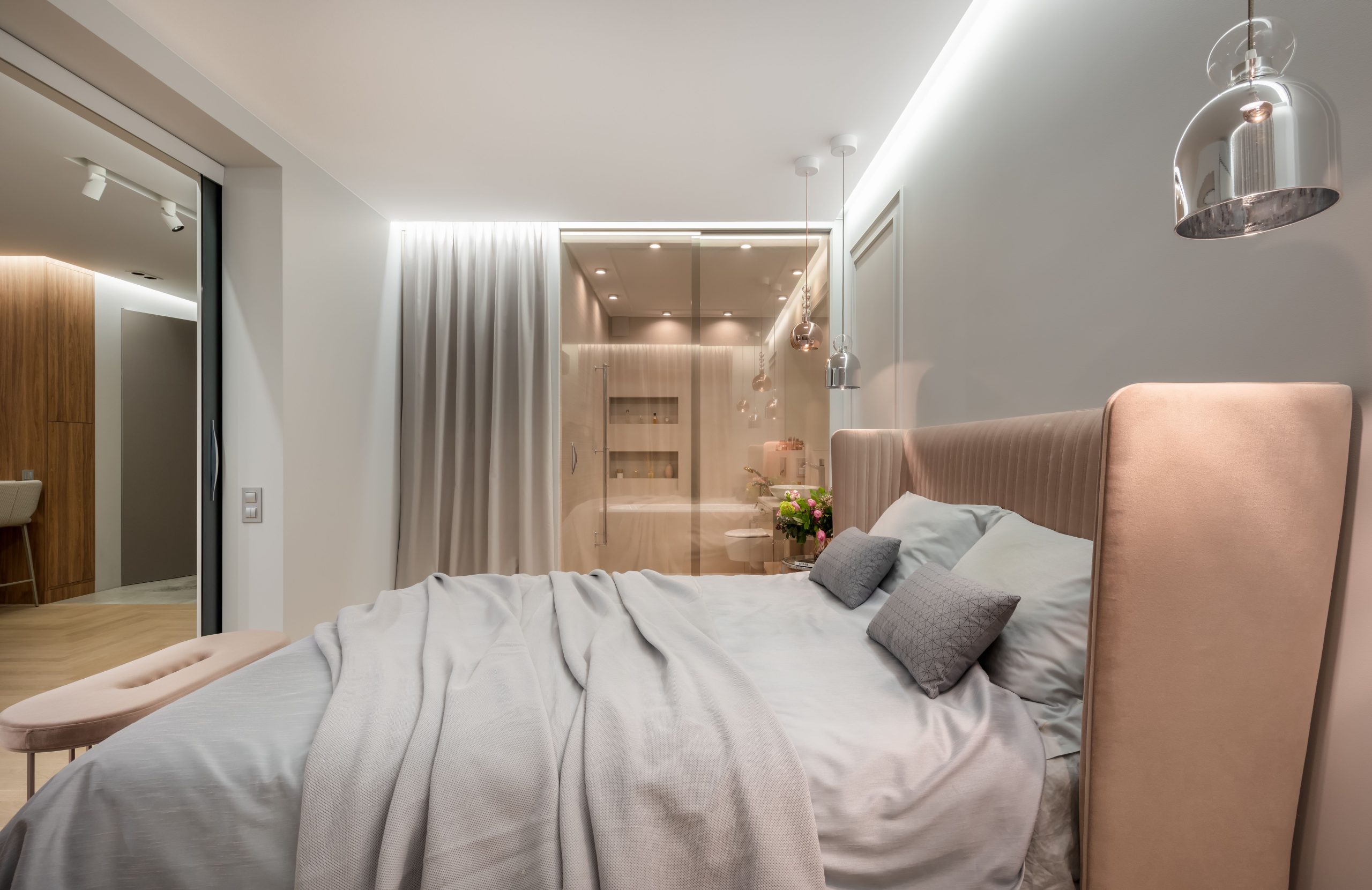
22. Define Your Suite with a Glass Wall and Coral Velvet Bed
- Furniture: A king-sized velvet-upholstered bed with a curved headboard typically costs between $1,500 and $3,500.
- Wall Treatment: The glass wall partition is a major architectural feature. Including framing and installation, the partition could cost anywhere from $3,000 to $8,000.
- Lighting: The combination of cove lighting and two designer pendant lights could cost $1,000 – $2,500.
- Textiles: High-quality sheer curtains, along with the pale blue and gray bedding, would add $500 – $1,200.
- TOTAL: $6,000 – $15,200
- Budget alternative: Get the feel by focusing on the color palette. A coral fabric headboard ($400), IKEA sheer curtains ($50), and simple globe pendants ($100/each) can deliver the vibe for under $2,000, forgoing the expensive glass wall.
|
📋 Copy HEX 🔗 Share |
A glass wall between a bedroom and an ensuite bathroom is the height of chic, hotel-inspired design. It creates an incredible sense of openness and luxury. But let’s be honest about the practicality: there is zero privacy. This is a design choice best suited for a primary suite used by a single person or a couple who are very, very comfortable with each other. Furthermore, glass shows every single water spot and smudge. You will be cleaning this feature constantly to keep it looking as pristine as it does in this photo. It’s a high-style, high-maintenance choice.
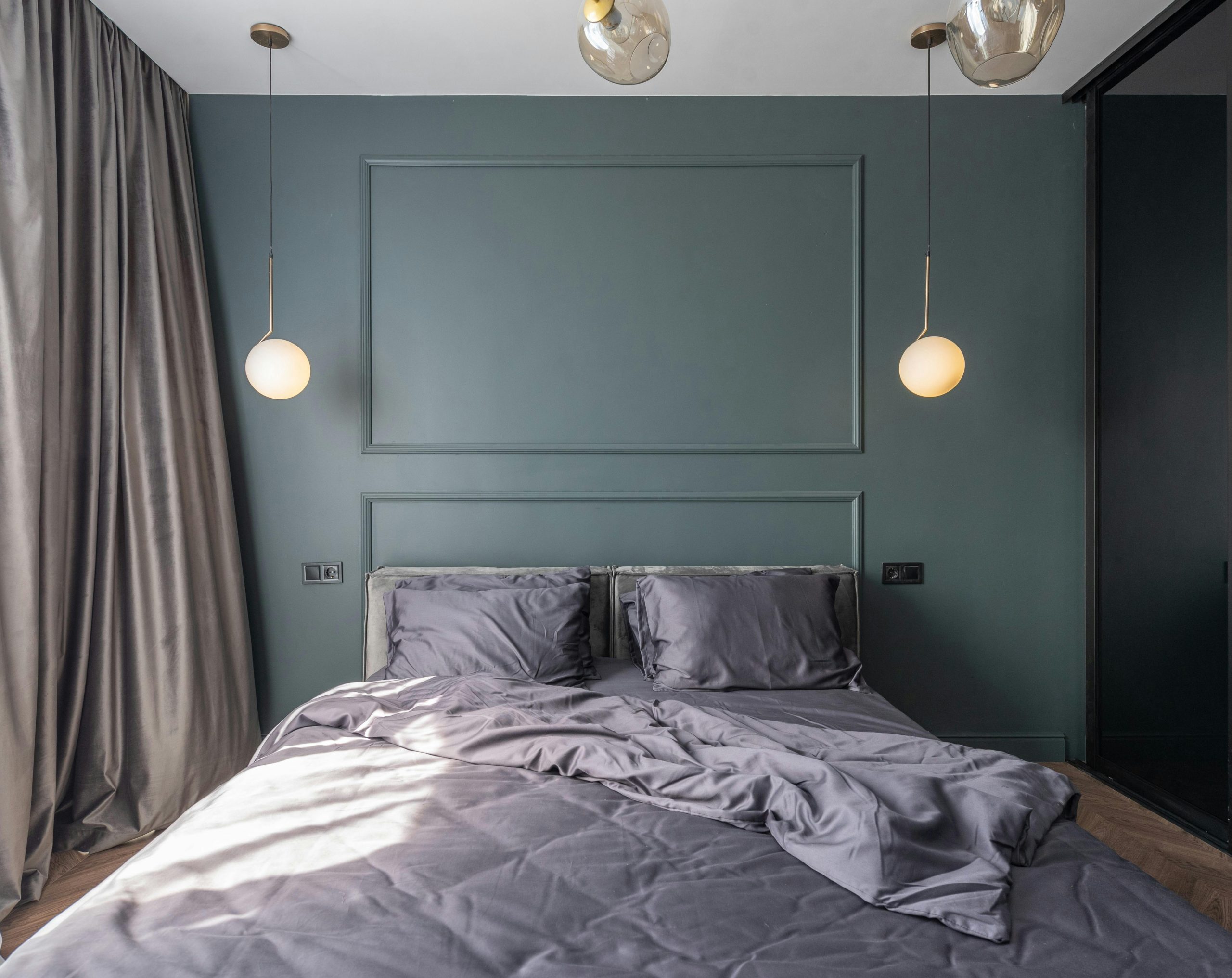
23. Embrace a Moody Vibe with a Deep Teal Paneled Wall
This room’s sophisticated, moody atmosphere is achieved through a technique called ‘tonal layering.’ Instead of using contrasting colors, the design layers different shades and tints of the same core colors—teal and grey. The deep teal wall is the darkest tone, followed by the medium grey of the velvet curtains, the slightly lighter grey of the upholstered headboard, and the lightest grey on the sateen bedding. This creates a rich, enveloping feel that is incredibly calming. The wood floor and warm light from the pendants add just enough warmth to keep it from feeling cold.
|
📋 Copy HEX 🔗 Share |
Rich, dark, matte paint colors like this deep teal are stunning, but they are notoriously prone to showing scuffs, fingerprints, and dust. Any little bump from a vacuum cleaner or scuff from a suitcase will be much more visible than on a lighter, eggshell-finish wall. Touch-ups can also be tricky, as they often ‘flash’ or appear shinier than the original paint. To keep it looking sharp, dust the horizontal panels regularly and be prepared to be very gentle. For high-traffic areas, consider a more durable ‘scuff-resistant’ matte paint formula.
24. Go Fresh and Modern with a Palm Leaf Print
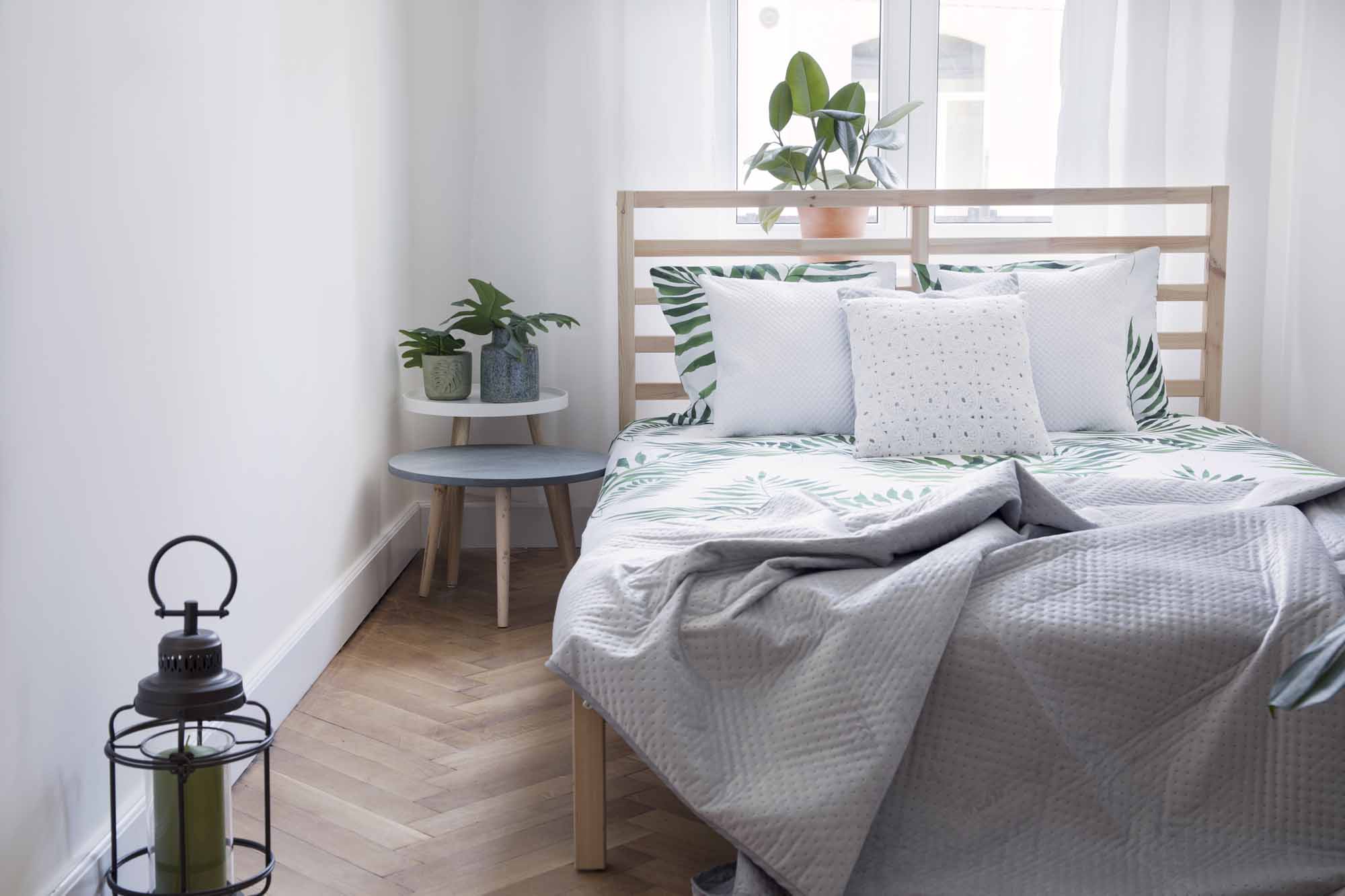
The palm leaf duvet cover is the single element that gives this room its personality. Without it, you have a perfectly nice, neutral, modern bedroom: a light wood bed, a grey blanket, and white pillows. It would be serene but forgettable. The bold, graphic palm print injects life, energy, and a touch of tropical freshness into the space. It’s a powerful reminder that you don’t need to paint a wall or buy expensive furniture to make a big impact. Occasionally, the right piece of bedding is all it takes to define a room’s entire vibe.
|
📋 Copy HEX 🔗 Share |
This style is a look you can get for a song. The key is the graphic bedding, and you can find bold botanical and leaf-print duvet cover sets all over the internet. Check H&M Home, Zara Home, IKEA, and even Amazon for options, often under $75 for a queen set. The light wood bed frame is a classic Scandinavian style that IKEA has perfected for under $300 (like the NEIDEN or TARVA frames). A simple grey blanket from Target and some basic white pillows complete the look. You can get this entire fresh, modern vibe for less than $500.
25. Add Subtle Texture with a Fluted Wall Panel
When layering a headboard against a textured panel like this, the secret is creating visual separation. The designer here has used a dark-framed headboard, which creates a crisp, contrasting line against the light-colored fluted panel. This makes both elements feel distinct and intentional. If the headboard were a similar light, neutral color, it would visually blend into the wall, and you’d lose the sophisticated, layered effect. Always create contrast when layering texture on texture. Even a subtle difference in depth or color makes a significant impact.
|
📋 Copy HEX 🔗 Share |
- Confirm Your Lighting Plan: A fluted or textured wall looks best when it can catch light, creating subtle shadows that highlight the texture. Does your room have wall sconces, or can you add pendant lights like in Idea #28? Direct overhead light won’t showcase the texture as effectively.
- Get a Sample: Before committing to a full wall, get a sample of the fluted paneling and the coordinating wallpaper. See how they look in your room’s natural light at different times of day. Colors can shift dramatically from the showroom to your home.
- Measure for Outlets: Plan where your outlets and light switches will fall on the fluted panel. Cutting holes in these panels requires precision and the right tools (like a jigsaw or oscillating multi-tool). It’s a key detail to plan before installation begins.
26. Embrace Calm with Light Wood and a Low-Profile Bed
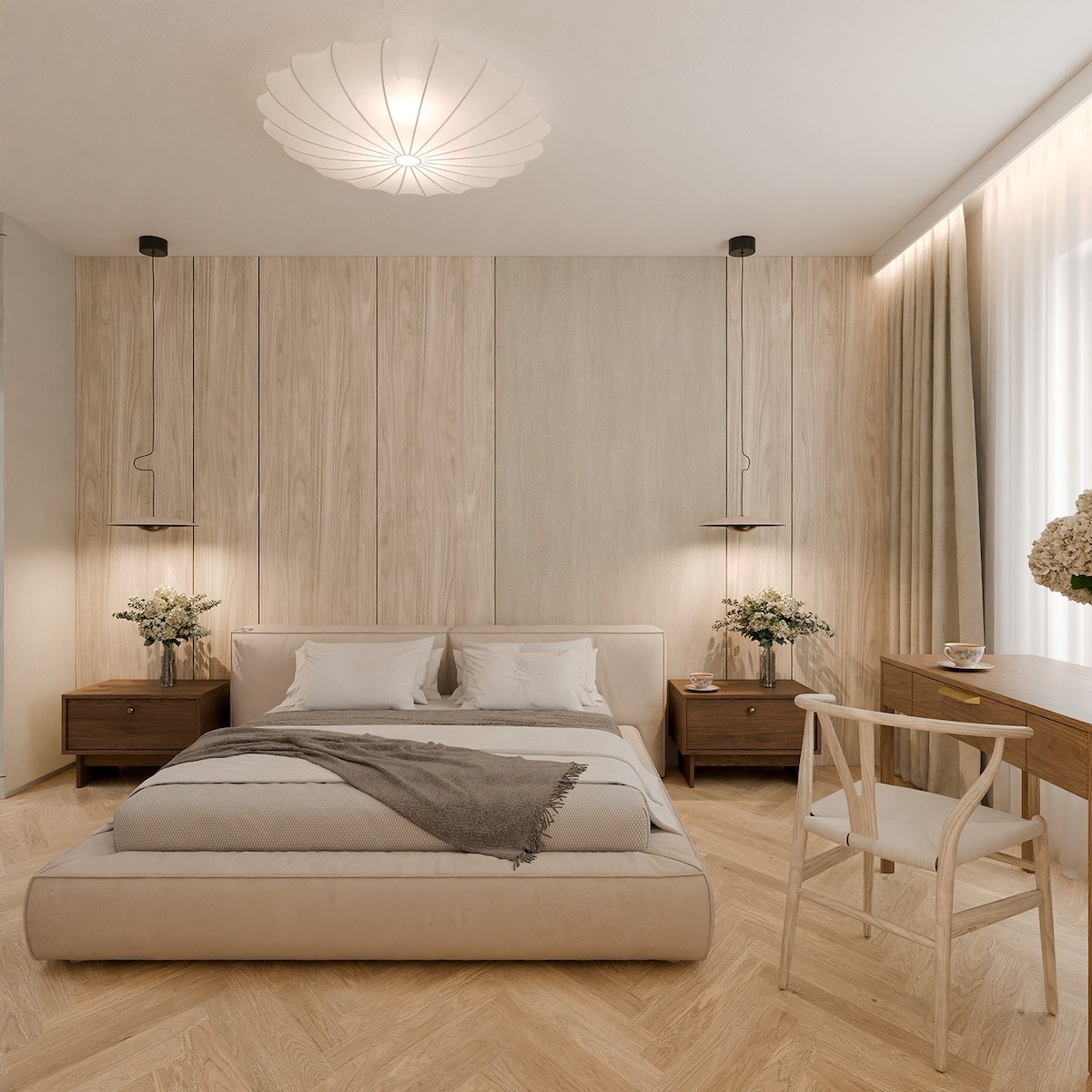
This room feels incredibly serene because of its strong emphasis on horizontal lines. The full-height paneled wall has vertical slats, which draw the eye up, but all the furniture works on a low, horizontal plane. The low-profile bed, the long and low floating nightstands, and the desk all create a grounded, calm feeling. This prevents the tall wall from feeling overwhelming and contributes to a sense of stability and restfulness. The delicate, thin pendant lights add a necessary vertical counterpoint without disrupting the tranquility.
|
📋 Copy HEX 🔗 Share |
A low-profile bed is a great choice for creating a minimalist, modern aesthetic. This style works particularly well in rooms with high ceilings, as the contrast between the low bed and the tall ceiling can be quite dramatic. It’s also a good fit for rooms with standard 8-foot ceilings, where it can help the ceiling feel a bit higher than it is. Minimum room size would be around 140 square feet to prevent the bed and full-paneled wall from overpowering the space. If you have a smaller room, consider a paneled wall that only goes halfway up.
27. Frame a Bed with Smart Built-In Shelving
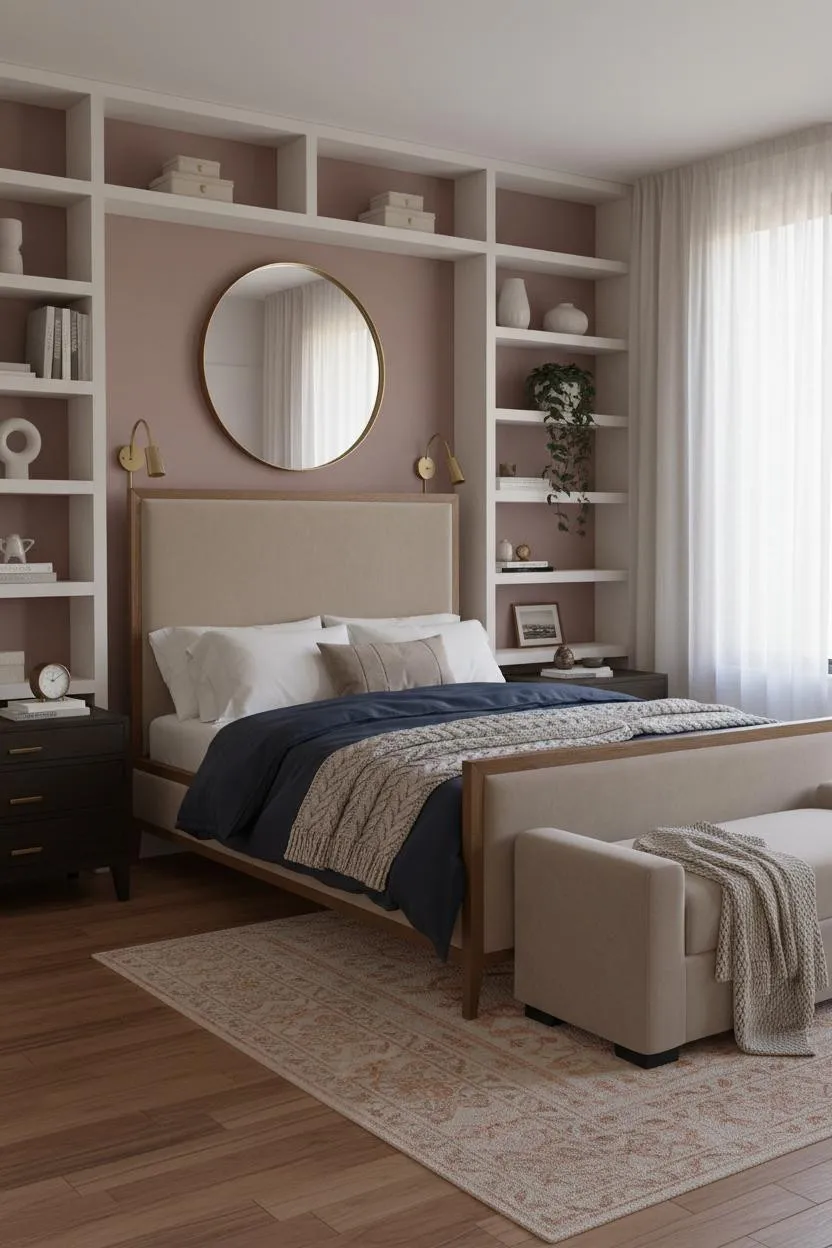
Styling built-in shelves is an art. Here’s a mini-guide to get that curated, effortless look.
|
📋 Copy HEX 🔗 Share |
- Time Estimate: 1-2 hours
- Material Cost: Uses your existing decor!
- Step 1 (Declutter): Empty the shelves completely. Only plan to put back 50-60% of what was there. Negative space is crucial.
- Step 2 (Anchor Items): Place your largest items first—big books, storage boxes, and a large vase. Stagger them on different shelves to balance the visual weight.
- Step 3 (Layer in Medium Objects): Add medium-sized decor like framed photos, smaller plants, or stacked books (stack some vertically, some horizontally).
- Step 4 (Add Small Details): Finish with your smallest items—a single candle, a small bowl, a beloved trinket. Group small items in threes.
- Step 5 (Edit): Step back. Does it look too busy? Please remove one more item from each shelf.
The built-in shelving is the element that provides all the personality and function in this room. It’s a brilliant solution for storage that also creates a custom architectural frame for the bed. It eliminates the need for bulky, mismatched furniture, making the room feel larger and more cohesive. It’s not just storage; it’s a canvas for personal expression through books, art, and objects. Take away the shelves, and you lose the room’s core intelligence and charm. It cleverly combines the headboard, nightstands, and bookcase into one smart feature.
28. Use Integrated LED Lighting for a Soft, Warm Glow
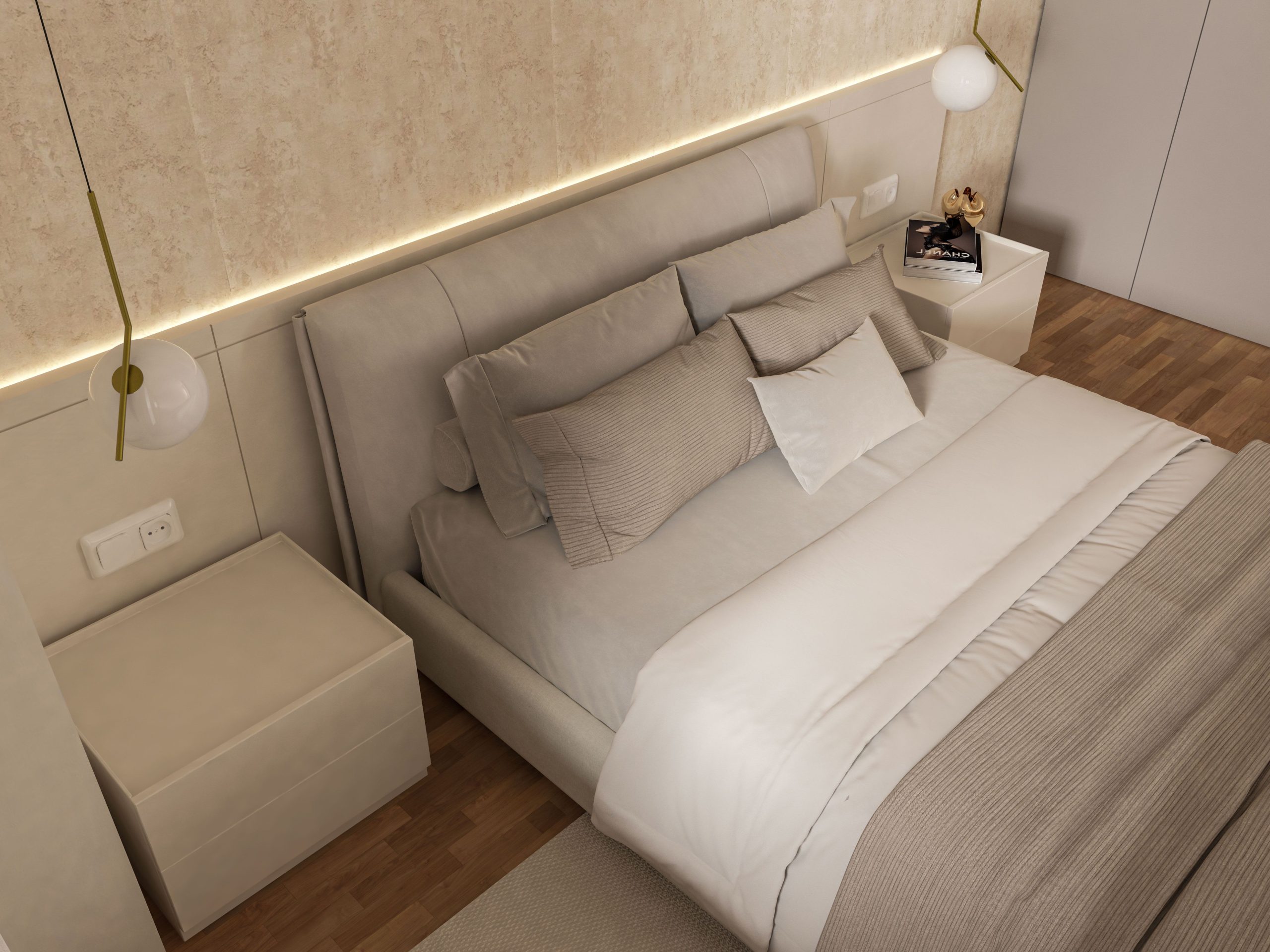
The magic of this room is in its sophisticated use of layered neutrals and lighting. The wall isn’t just one flat surface; it’s composed of a smooth upper panel and a lower textured panel. The recessed LED strip between them is the key. It washes the textured part of the wall in a soft, warm light, highlighting its matte finish and creating a beautiful floating effect for the panel above. This turns a simple beige wall into a dynamic architectural feature. The globe pendants then add another layer of soft, ambient light at a different height, making the whole space glow.
|
📋 Copy HEX 🔗 Share |
Integrated lighting is a major trend for 2026 as we move towards a more ‘quiet luxury’ aesthetic. Instead of having lamps as decorative objects, the light source itself is built directly into the architecture of the room. This creates a cleaner, more minimalist look that feels incredibly high-end and intentional. It’s less about the lamp and more about the light it casts. This bedroom, with its glowing strip light, is a perfect example of how this trend creates ambiance and sophistication with minimal visual clutter.
Conclusion
Feeling inspired? That’s the goal. Remember that creating a cozy space isn’t about copying a photo exactly, but about borrowing the ideas that resonate with you—a color palette from one, a texture from another. Take these concepts, mix them with your style, and start building a bedroom that truly feels like home. Ready to start planning? Head over to Pinterest and start a new board for your favorite looks from this list!