
You know that feeling when you finally find the accent wall that looks exactly right for your space? That’s aha! A moment is what we live for. But getting there can feel like an endless scroll through a sea of sameness. That’s why we did the hard work for you.
After filtering through hundreds of options across Wayfair, Home Depot, and specialty boutiques, we narrowed it down to 28 ideas that actually deliver. We’re covering everything from modern wood slats and bold geometric patterns to luxurious upholstered panels and natural stone. The move towards deep texture and personal expression is huge for 2024, and an accent wall is the perfect canvas. And stay until the end—we break down the most common mistakes that can ruin these looks. 📌 Save this to Pinterest for later—you’ll want to revisit these ideas.
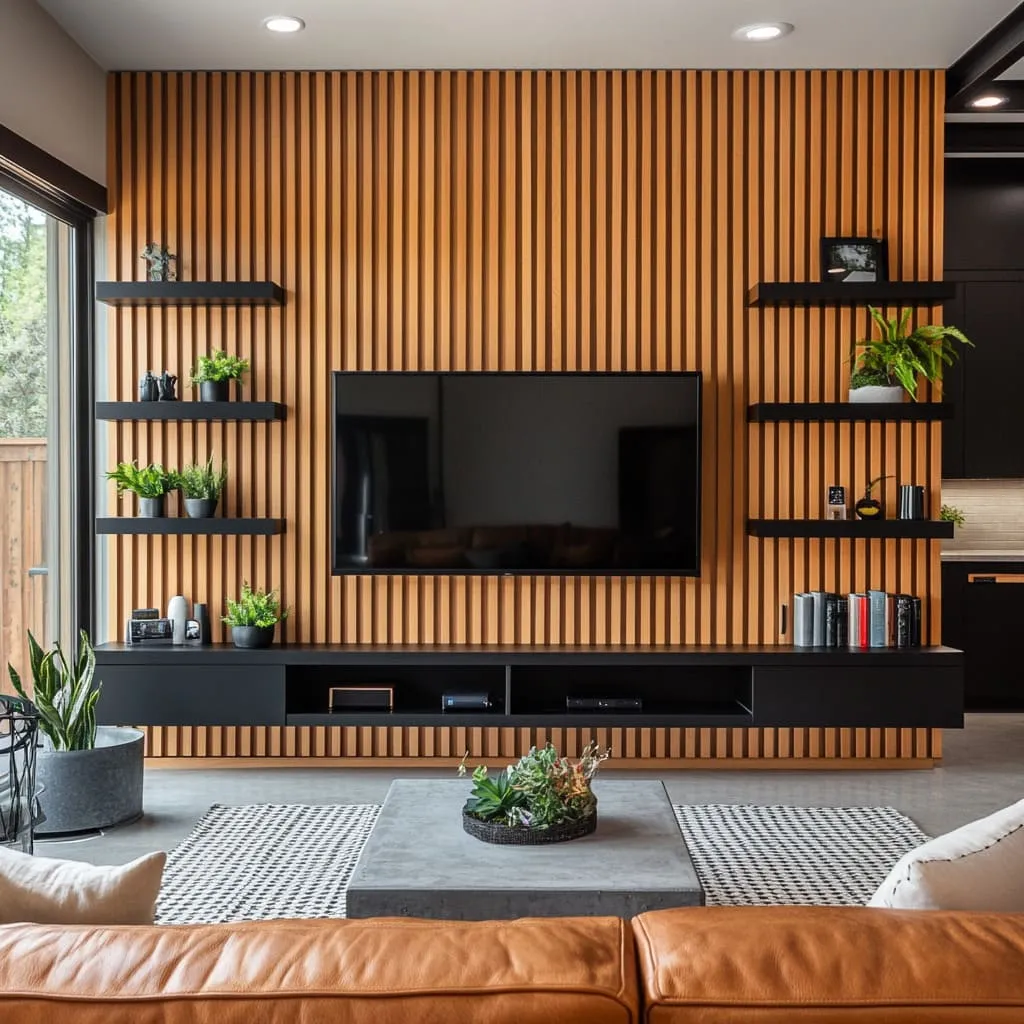
1. Modern Wood Slat Wall with Integrated Black Shelving
This look is a masterclass in balancing texture and clean lines. The vertical rhythm of the light wood slats draws the eye upward, making the ceiling feel higher, while the matte black floating shelves and media console ground the composition. It’s not just a wall; it’s a fully integrated system that provides storage, a media center, and a major style statement all in one. The warmth of the wood prevents the black elements from feeling too stark, and the carefully curated plants add a touch of organic life.
|
📋 Copy HEX 🔗 Share |
A wood slat wall is a fantastic way to hide television cables for a super clean look. Plan your layout in advance, running all the wires for the TV, soundbar, and any other devices behind the slat panels before you install the final boards. This keeps the focus on the beautiful texture of the wood, not on a tangled mess of black cords. Use a recessed wall box for power and HDMI connections to keep everything flush and professional.
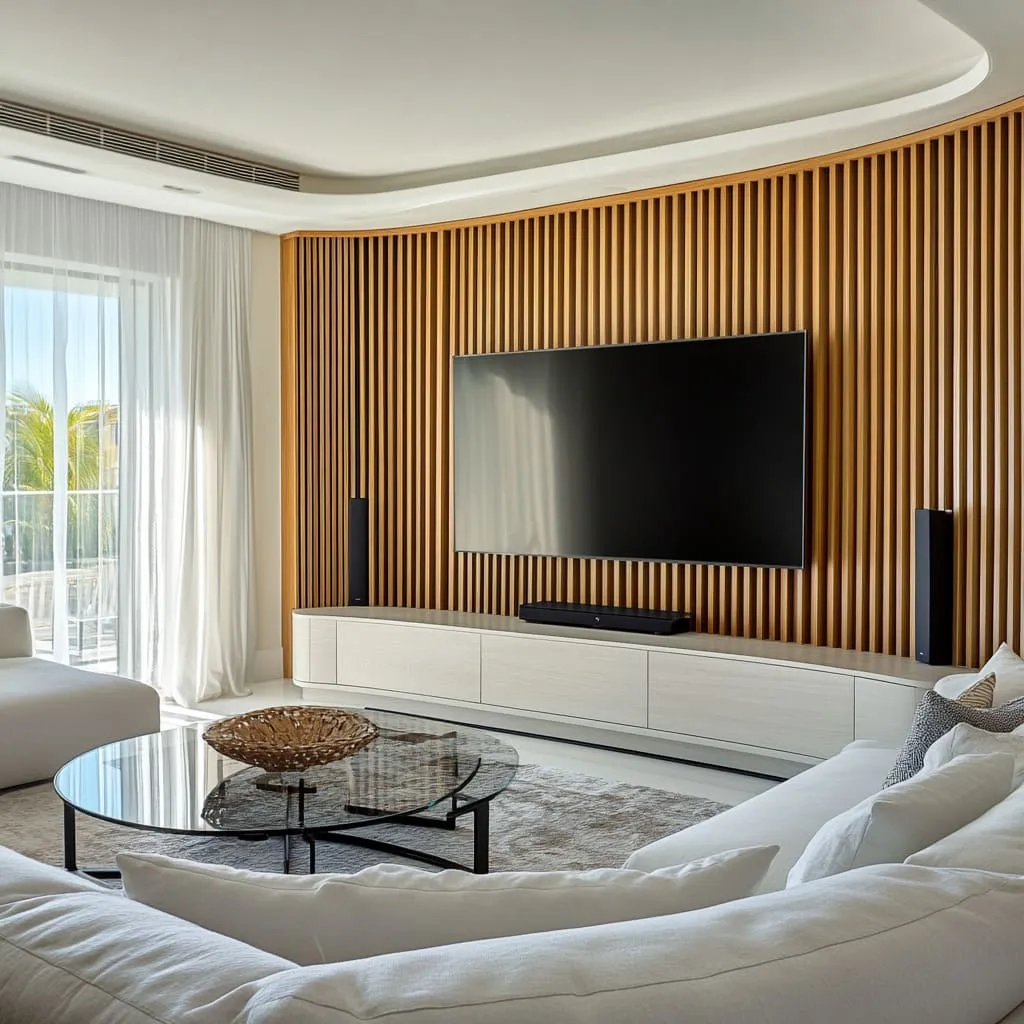
2. Curved Wooden Slat Wall for a Softer Modern Look
The single most important element here is the curve. In a world of hard lines and sharp corners, introducing a gentle, sweeping curve completely changes the energy of the room. It feels more organic, more enveloping, and infinitely more custom. Without the curve, this would be just another (albeit lovely) wood slat wall. With it, the wall becomes a sculptural feature that softens the geometry of the television and media console, guiding your eye smoothly through the space. It’s a sophisticated move that says ‘thoughtful design.’
|
📋 Copy HEX 🔗 Share |
A feature like a curved wall needs room to breathe. This idea works best in a living area that is at least 15 feet wide. In a smaller space, the curve could protrude too much, making traffic flow awkward and the room feel cramped. For ceiling heights, a standard 8-foot ceiling works, but the vertical slats will have even more impact with 9-foot or higher ceilings, really emphasizing the height and the graceful arc of the wall.
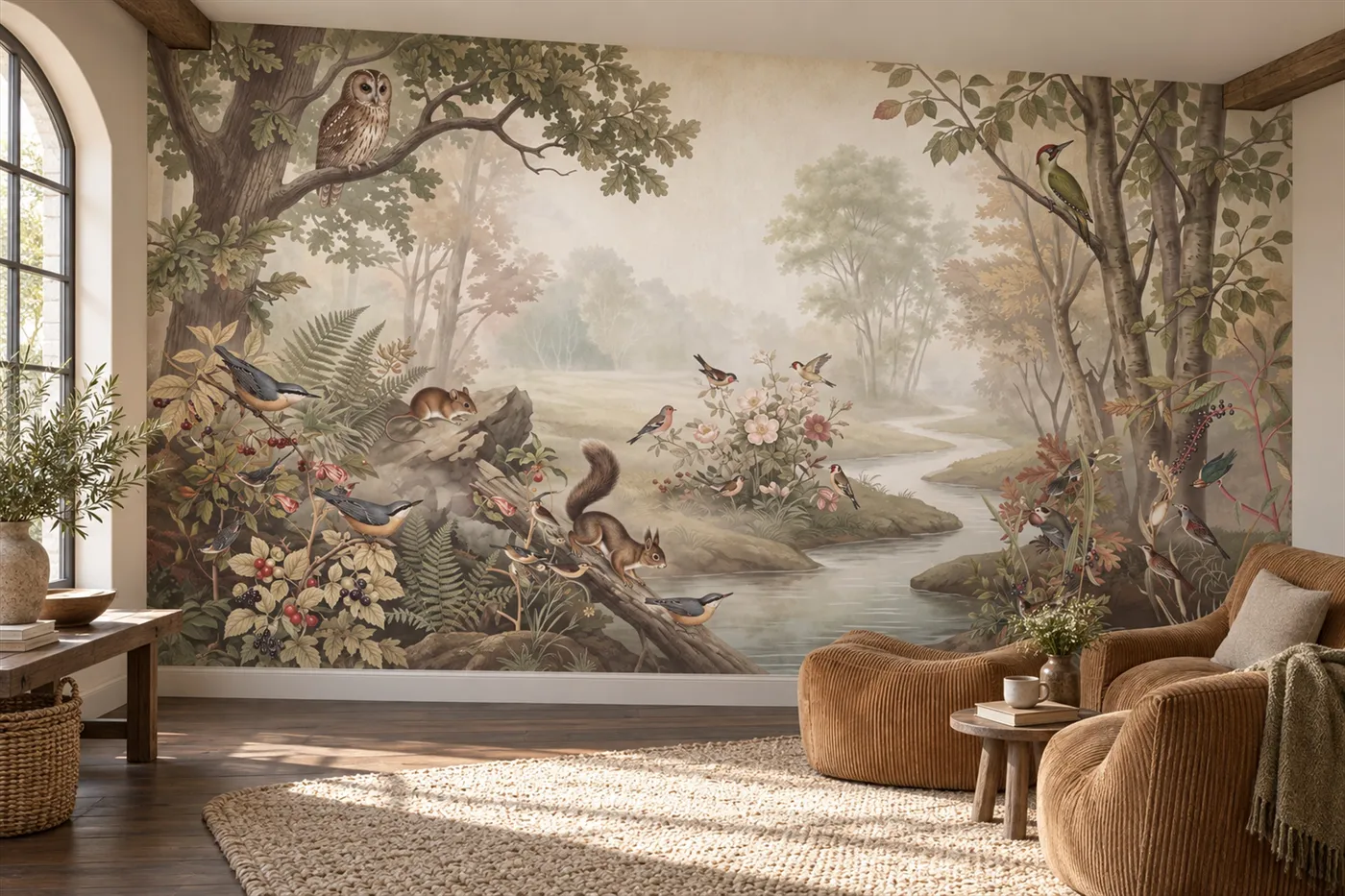
3. Enchanting Forest Mural with Illustrated Wildlife
The magic of this room comes from a carefully balanced formula. It’s roughly 60% immersive nature murals, 30% grounding textures, and 10% classic comfort. The mural provides the story and the color palette of muted greens and earthy browns. The jute rug and dark wood floors act as the grounding elements, pulling tones directly from the artwork. Finally, the rich, ribbed velvet armchairs add a touch of familiar, cozy comfort that keeps the room from feeling like a museum diorama. You could swap the forest for a seascape and the velvet for linen, and the formula would still hold.
|
📋 Copy HEX 🔗 Share |
Let’s be honest: a full-wall Mural is a major commitment. While absolutely stunning, it can be visually overwhelming if the rest of your decor isn’t chosen carefully. A busy, detailed mural demands simple furniture and textiles to avoid sensory overload. It can also make a small room feel even smaller by bringing the wall ‘in.’ Before you commit, order the largest sample possible and live with it on your wall for a few days to see how it feels at different times of day.
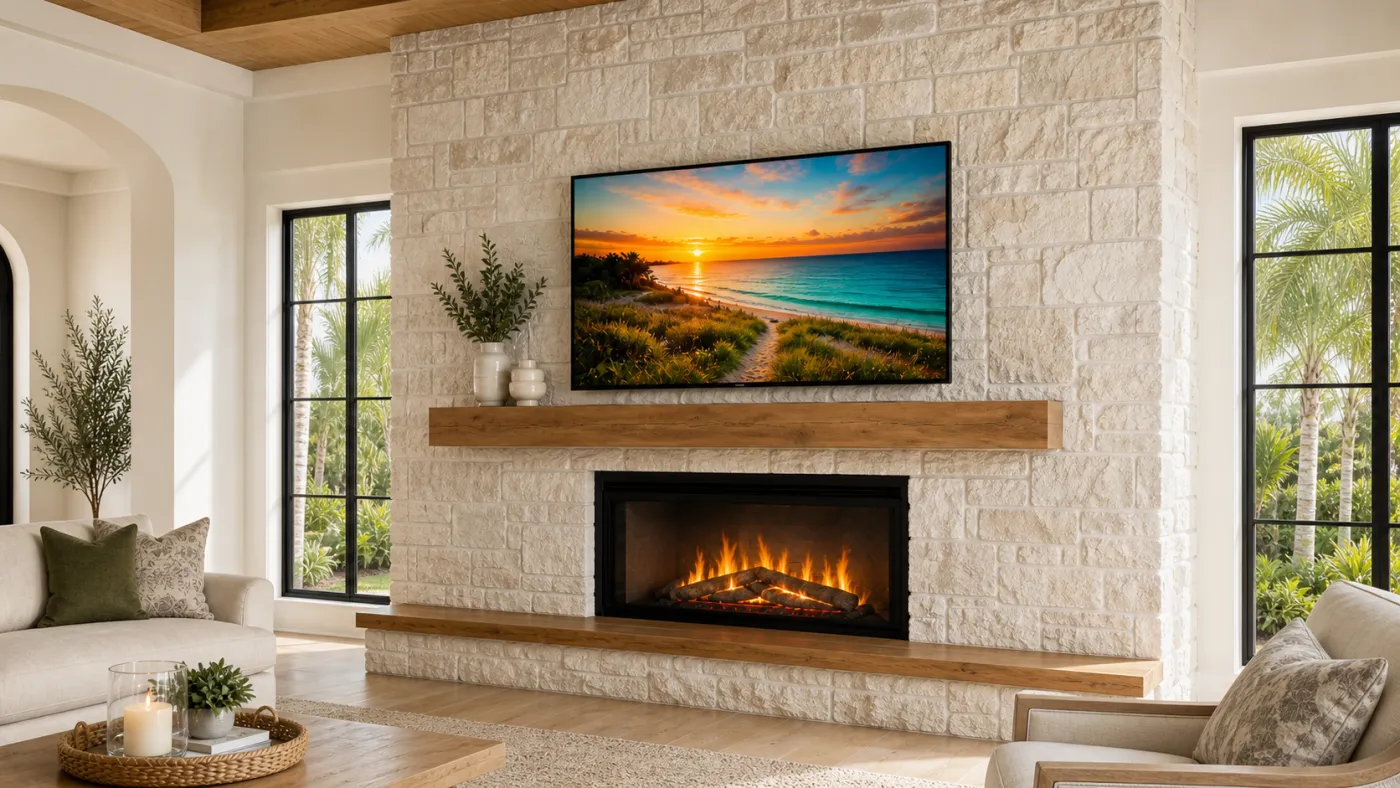
4. Floor-to-Ceiling Stacked Stone Fireplace Wall
Here’s what it might cost to get this substantial, earthy look. Keep in mind that labor for stone veneer installation can vary widely by region.
|
📋 Copy HEX 🔗 Share |
- Stone Veneer Panels: $800 – $2,500 (for approx. 100 sq. ft.)
- Installation Labor & Materials: $1,000 – $3,000
- Electric Fireplace Insert: $400 – $1,500
- Floating Wood Mantel & Hearth: $300 – $900
- TOTAL: $2,500 – $7,900
Budget alternative: Use a high-quality stacked stone wallpaper or textured 3D wall panels for a similar effect, and source a reclaimed wood beam for the mantel from a local salvage yard to bring the total cost down to around $800 – $1,500.
A rough-hewn stone wall is a magnet for dust and cobwebs. Unlike a smooth painted wall, you can’t just wipe it down. You’ll need to use the brush attachment on your vacuum cleaner at least once a month to get into all the nooks and crannies. For deeper cleaning, especially around the fireplace opening where soot can accumulate, a stiff-bristled brush and a mixture of mild soap and water are your best bet. Avoid harsh chemicals, as they can discolor the stone. It’s not a high-maintenance feature, but it’s definitely not zero-maintenance either.
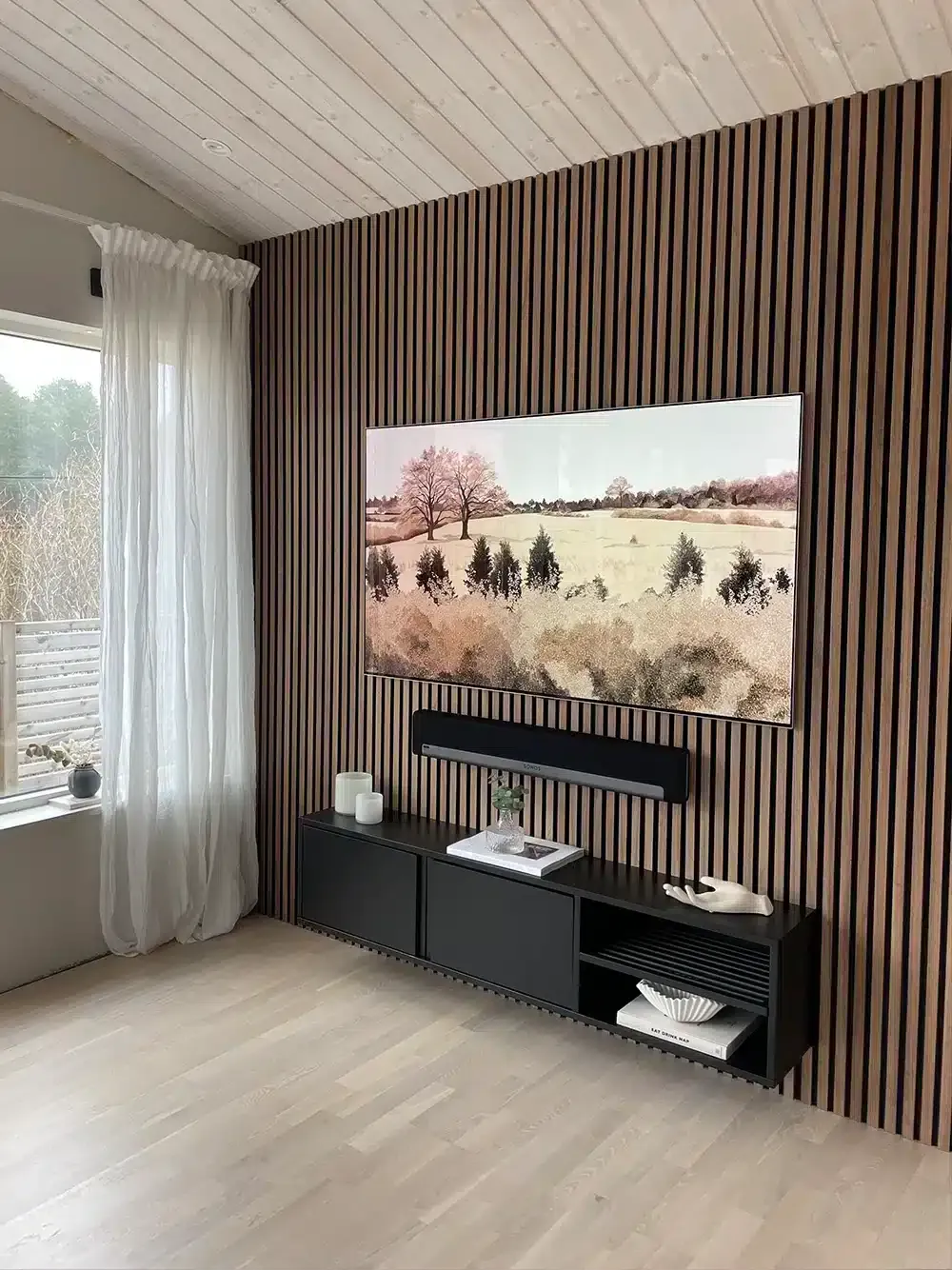
5. Minimalist TV Wall with Vertical Wood Slats
This design succeeds because it solves a common problem elegantly: where to put the giant black rectangle? By mounting the TV on a textured wood slat wall, the television becomes part of a larger, intentional design feature instead of just an object hanging on a blank wall. The dark backing behind the slats helps the screen recede visually when it’s off, and the vertical lines add a sense of height and order. The floating black console maintains the minimalist feel, keeping the floor clear and the look uncluttered. It’s functional, beautiful, and purposeful. Compare this simpler take with the integrated shelving in Idea #0.
|
📋 Copy HEX 🔗 Share |
You don’t need a custom millworker to get this look. You can achieve a very similar vibe for a fraction of the price. Many companies now offer peel-and-stick wood slat panels that can be installed in an afternoon for around $200-$400. For a true DIY approach, buy 1×2 lumber from a hardware store, stain it to your desired color, and nail the slats to the wall over a painted black backdrop. This could bring your material cost down to as little as $150 if you’re willing to put in the sweat equity.
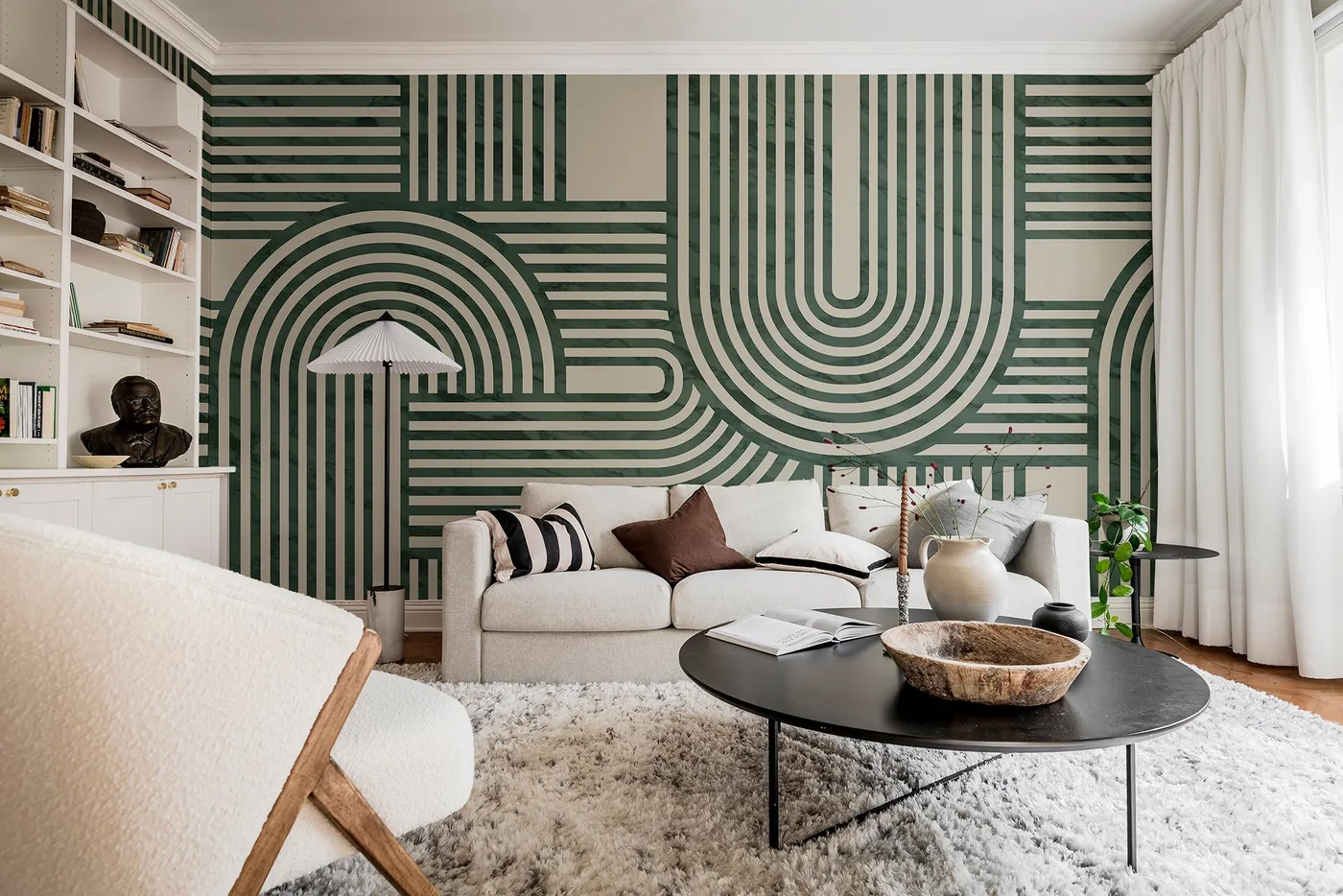
6. Abstract Geometric Wallpaper in Forest Green and Beige
The detail that truly elevates this wallpaper is the subtle marble-like texture within the forest green sections. From a distance, you see a cool, graphic pattern of stripes and arches. But up close, that unexpected touch of texture adds a layer of depth and sophistication. It keeps the bold geometric shapes from feeling flat or cartoonish. This small detail transforms the wallpaper from just a pattern into a surface with its own character, making the whole wall feel more luxurious and interesting to look at.
|
📋 Copy HEX 🔗 Share |
When working with a large-scale, non-repeating geometric pattern, your starting point is crucial. Don’t start in a corner. Instead, find the absolute center of your wall and hang your first panel there, ensuring it’s perfectly plumb with a level. Then, work your way out to the corners. This guarantees that the most prominent part of the design is centered and balanced, and any awkward cuts or partial patterns will be less noticeable in the less-visible corners of the room.
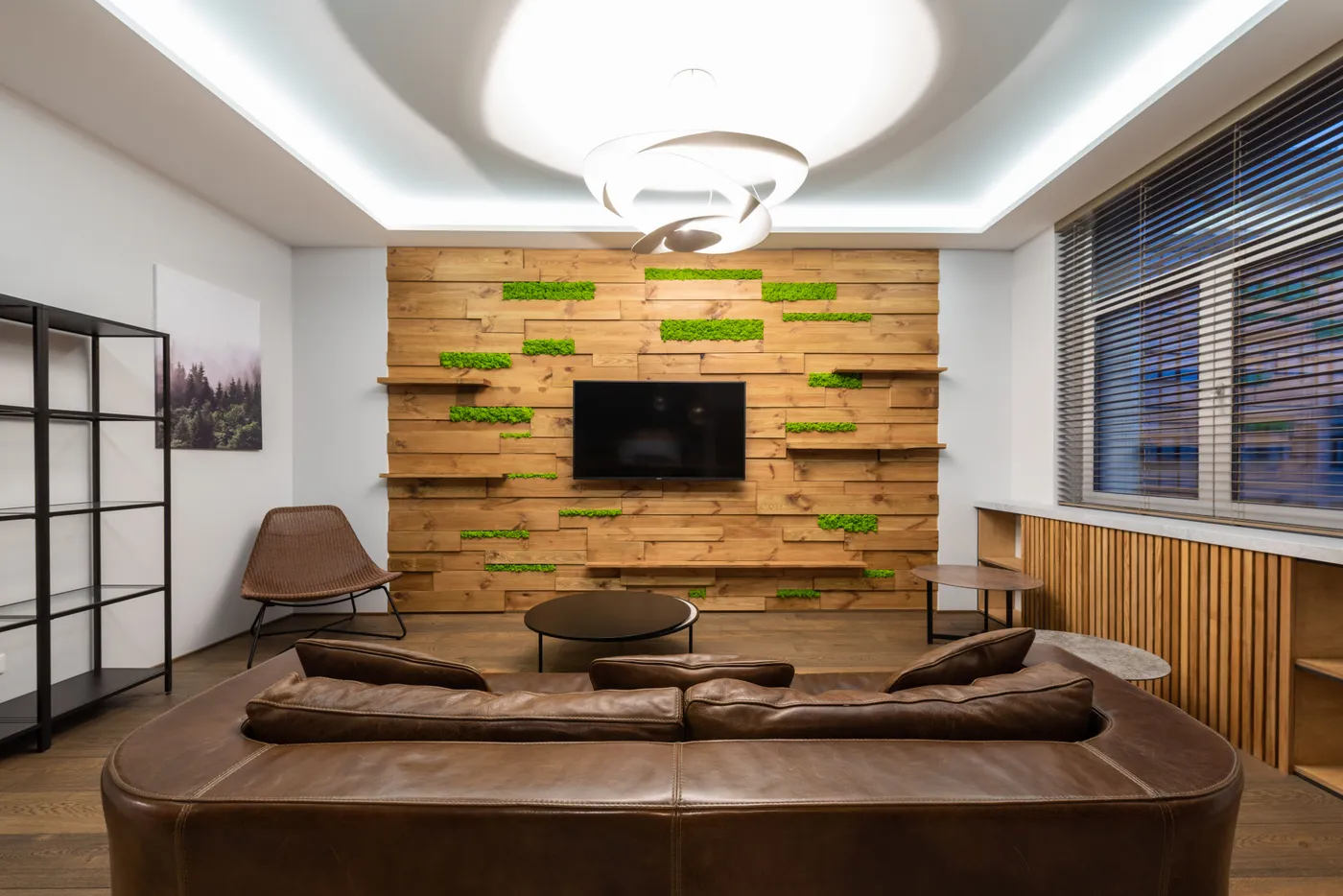
7. Textured Wood Plank Wall with Preserved Moss Inlays
This isn’t just a wall; it’s a perfect example of the biophilic design trend in action. Biophilia is all about connecting our indoor spaces with nature to improve our well-being. This design hits all the right notes: the natural wood grain, the varying depths of the planks that mimic natural formations, and of course, the vibrant pops of preserved moss. It’s a move away from sterile, flat surfaces toward spaces that feel alive, organic, and restorative. This is why you’re seeing more natural materials, plants, and nature-inspired textures all over Pinterest right now.
|
📋 Copy HEX 🔗 Share |
Preserved moss is incredibly low-maintenance, but not zero-maintenance. It requires no water or sunlight (in fact, direct sunlight can cause it to fade). Its main enemy is dust. About once a month, you’ll want to use a can of compressed air (held at a distance) or a hairdryer on a cool, low setting to gently blow away any accumulated dust. It’s also best to keep it in a room with stable humidity; very dry air can make it brittle over time. And be warned: people will want to touch it, so place it where it won’t be constantly prodded.
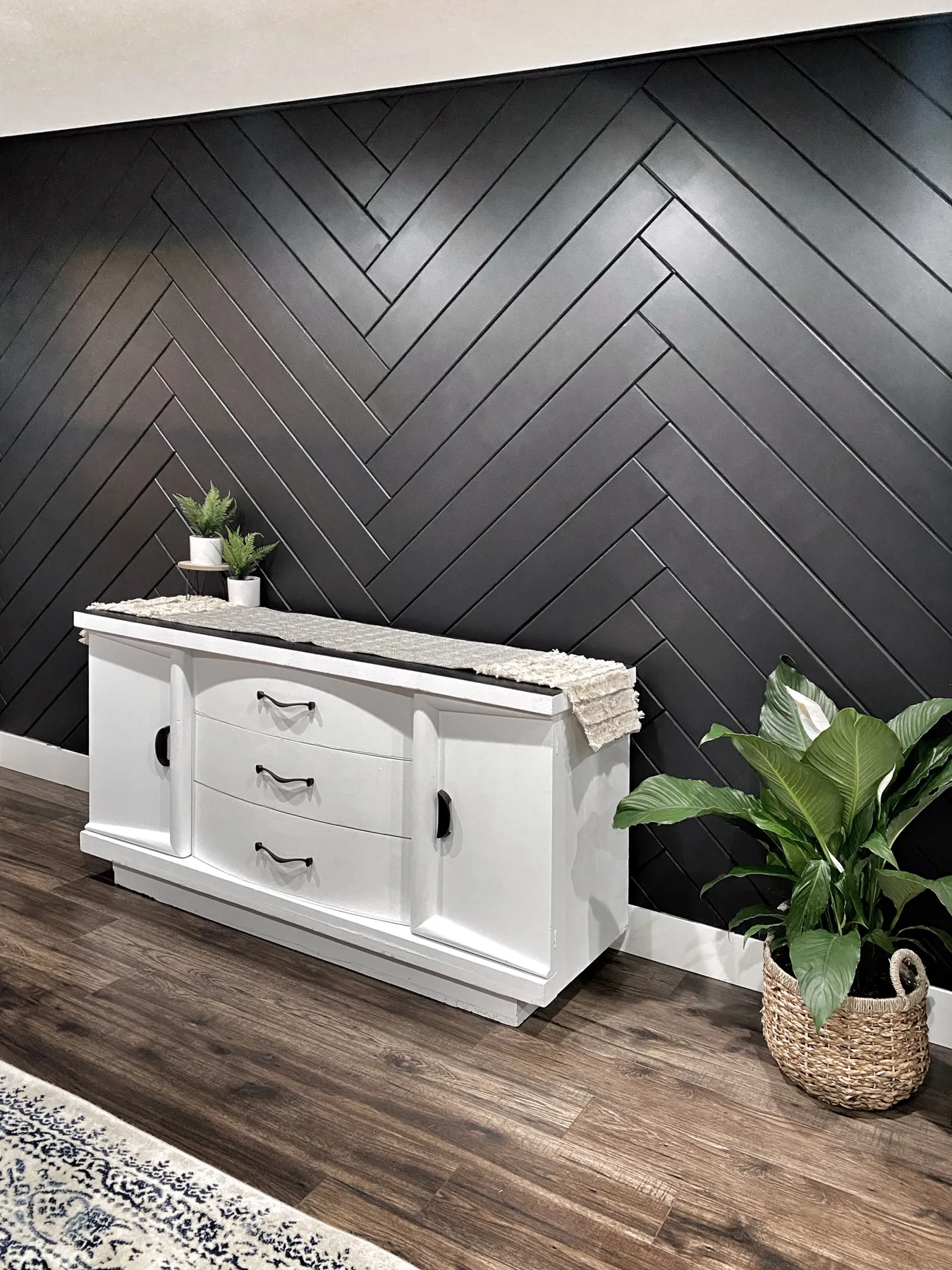
8. High-Contrast Charcoal Herringbone Wall
The success of this bold look lies in its simple but powerful ratio: 70% dark drama + 20% crisp white + 10% natural warmth. The charcoal herringbone wall provides the moody, textured backdrop that makes up the bulk of the statement. The bright white console table cuts through the darkness, creating a sharp, gallery-like contrast that prevents the wall from feeling oppressive. The final 10% comes from the green plants and wood-toned flooring, which breathe life and organic warmth into the high-contrast scheme, making it feel like home.
|
📋 Copy HEX 🔗 Share |
This design works because of the powerful interplay between texture and contrast. The herringbone pattern adds so much more visual interest than a flat coat of black paint would. The angled lines create a sense of movement and catch the light in different ways, adding depth and dimension. Placing the clean, simple lines of the white console table against this dynamic background creates a focal point that is both dramatic and incredibly chic. It’s proof that you don’t need a lot of stuff to make a big impact.
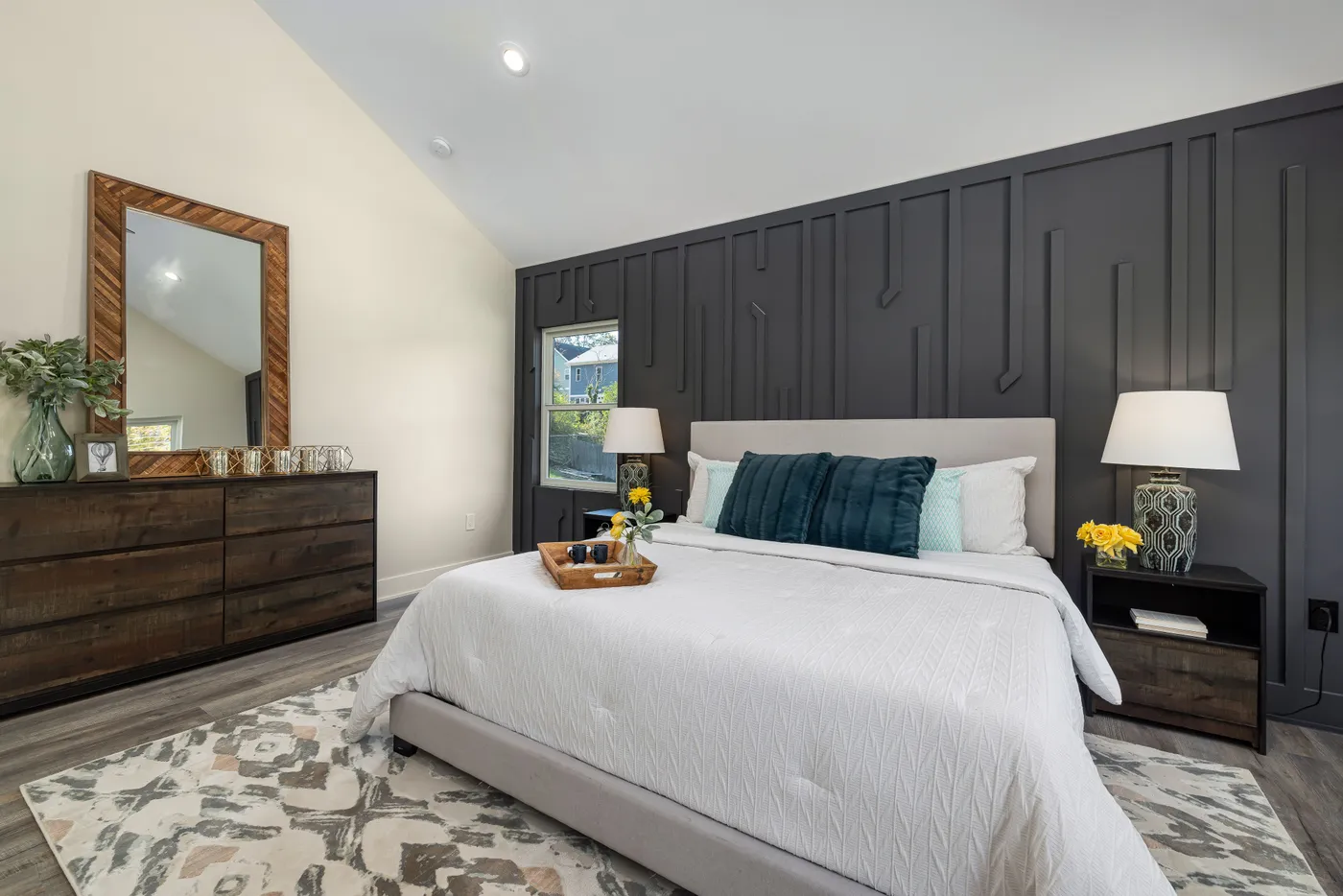
9. Dark Gray Geometric Paneled Bedroom Wall
A dark wall can sometimes fall flat or feel like a black hole, but the geometric paneling here prevents that entirely. The raised trim creates a grid of shadows and highlights that shifts as the light changes throughout the day. This texture adds incredible depth and architectural interest, making the dark gray color feel dynamic and sophisticated rather than heavy. It turns a simple paint color into a sculptural element that provides a perfect, hotel-like backdrop for the soft, upholstered bed and rich wood furniture.
|
📋 Copy HEX 🔗 Share |
While this geometric trim is stunning, be prepared for a new cleaning task: dusting the ledges. The tops of the horizontal trim pieces are perfect little shelves for dust to settle on. It won’t be a huge chore, but you will need to run a duster or a microfiber cloth over them every week or two to keep the lines looking crisp and clean. If you have pets or live in a dusty area, you might notice it even more. It’s a small price to pay for such a high-impact look, but it’s a reality to consider.
10. Luxurious Blue Velvet Upholstered Wall Panels
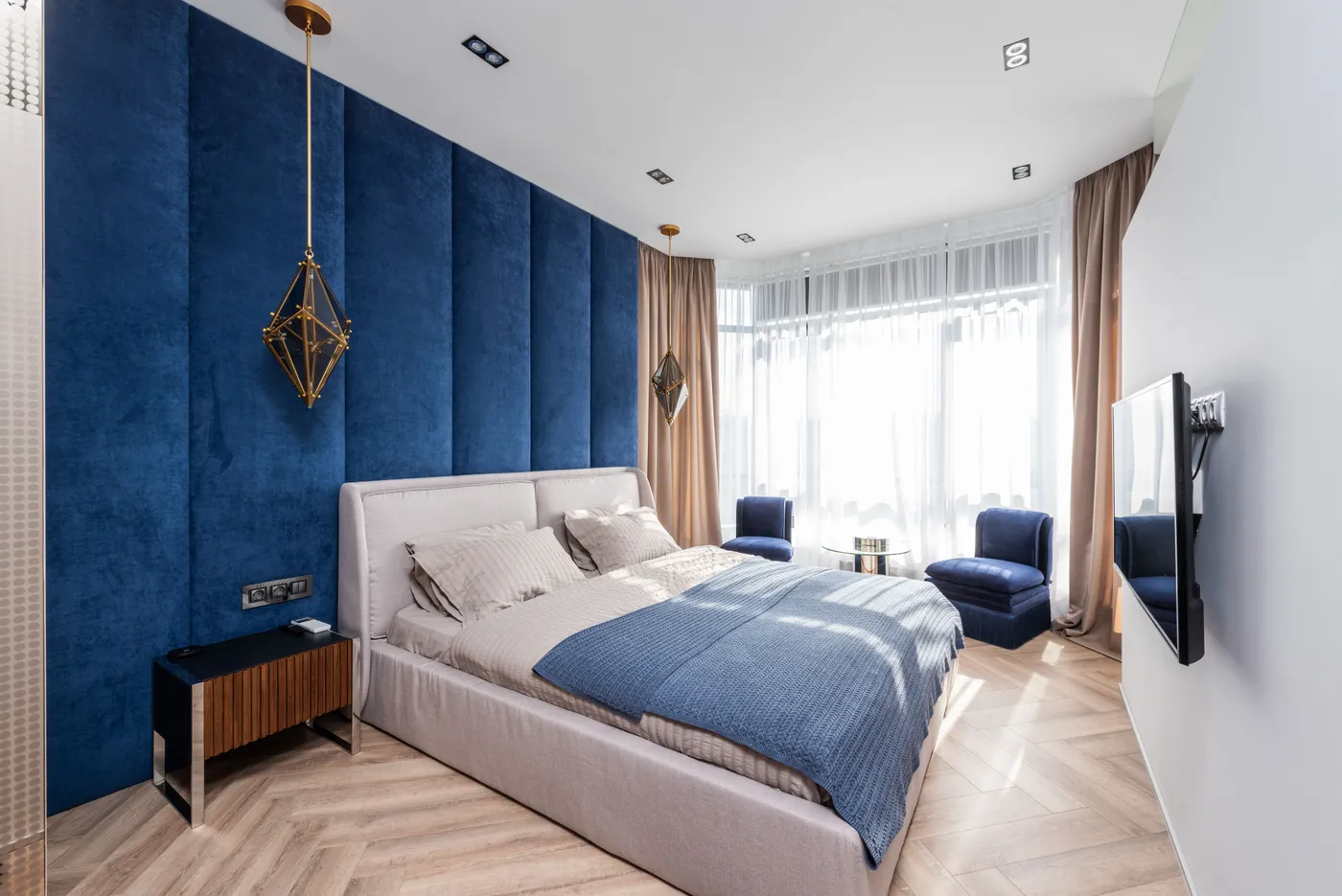
To create your own upholstered wall, you don’t need a professional upholsterer. You can DIY this look using thin plywood or MDF panels, 1-inch thick foam batting, and your chosen fabric. Cut the panels to your desired width (e.g., 12 inches). Use spray adhesive to attach the foam to the panels. Then, stretch your fabric tightly over the foam and panel, using a staple gun on the back to secure it. Mount the finished panels to the wall using construction adhesive or by screwing them into studs.
|
📋 Copy HEX 🔗 Share |
This is a look that craves height. While you can do it with standard 8-foot ceilings, the vertical panels have a much more dramatic and luxurious effect in a room with ceilings that are 9 feet or taller. In a room with lower ceilings, the vertical lines can actually help to create an illusion of height, but you’ll want to keep the panels relatively narrow (10-14 inches wide) to enhance that effect. In a room that’s smaller than 10×12 feet, a full wall of plush velvet might feel a bit overwhelming, so consider doing it in a larger master bedroom.
11. Classic Dark Teal Board and Batten Bedroom Wall
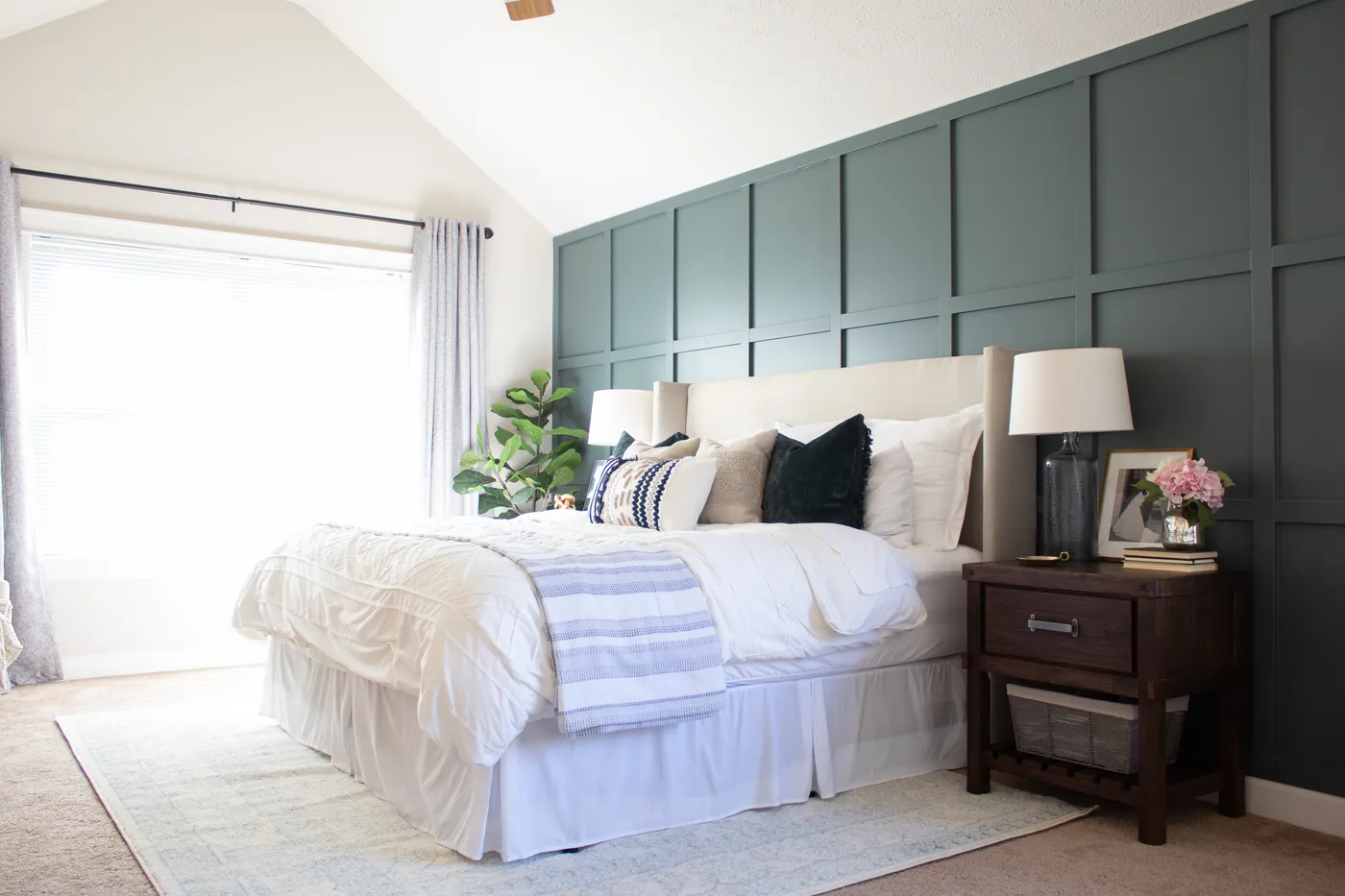
Board and batten is one of the most cost-effective ways to add architectural character to a room. Forget expensive custom paneling. This entire look can be achieved with a few MDF boards, a nail gun, some caulk, and a can of paint. A typical 12-foot wall can be done for under $200 in materials. It delivers a timeless, high-end feel for a fraction of the cost of wallpaper or other wall treatments, making it a go-to trick for designers on a budget who want to add instant charm and depth to a space.
|
📋 Copy HEX 🔗 Share |
Creating a simple board and batten wall is a perfect weekend project. Here’s a quick guide:
- Plan your layout: Decide on the spacing of your vertical battens (typically 16-24 inches apart). Use painter’s tape to visualize it on the wall first.
- Install the top horizontal board: Cut a 1×4 MDF board to the width of your wall and nail it at your desired height.
- Cut and install vertical battens: Measure from the top of your baseboard to the bottom of the top board and cut your 1×3 vertical battens to size.
- Attach the battens: Apply construction adhesive to the back of each batten and secure with a brad nailer.
- Caulk and paint: Fill all nail holes and caulk all seams where the boards meet the wall and each other. Once dry, prime and paint everything the same color for a seamless finish.
12. Dark Green Geometric Trim Wall with a Sunburst Mirror
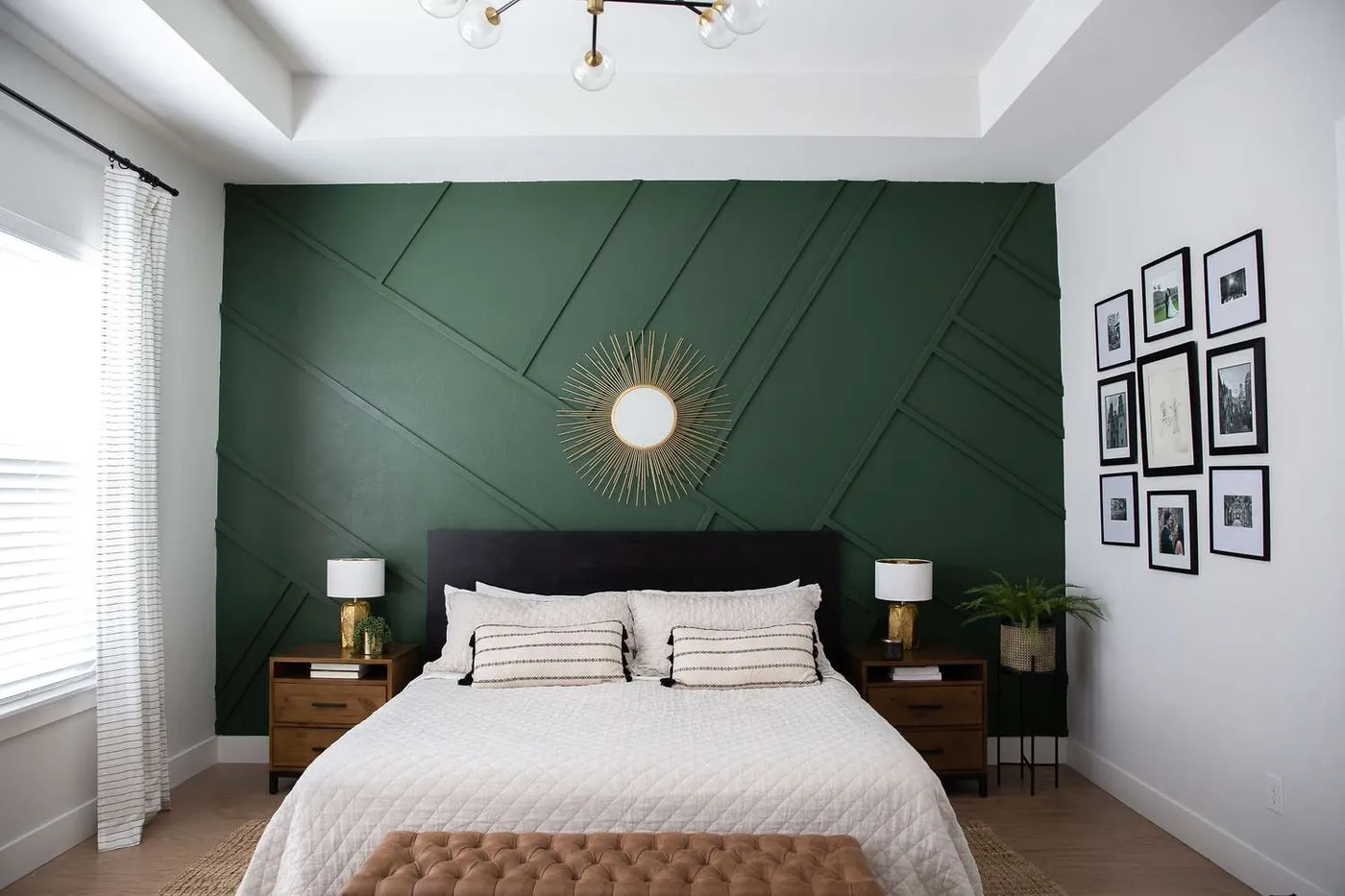
The star of this show is, without a doubt, the gold sunburst mirror. The dark green wall with its angular, geometric trim is bold and beautiful on its own, but it’s also very rigid. The round shape and radiating lines of the mirror completely break up that rectalinear pattern. It introduces a soft, organic element and a point of metallic glamour that acts as the perfect centerpiece. Without it, the wall would be handsome; with it, the wall becomes a stunning, curated composition.
|
📋 Copy HEX 🔗 Share |
nailing up trim, run through this quick checklist:
- Measure, then measure again. For a geometric pattern to work, it needs to be precise. Map out your entire design on the wall with painter’s tape or a pencil and a level first.
- Locate your outlets. Make sure your pattern doesn’t awkwardly intersect with light switches or power outlets. Adjust your design as needed.
- Choose your trim width. The width of your trim (e.g., 1 inch, 1.5 inches) will significantly impact the final look. Thinner trim is more delicate; wider trim is bolder.
- Consider your wall texture. This works best on a smooth wall. If your walls are heavily textured, you may need to skim coat them first for the trim to sit flat.
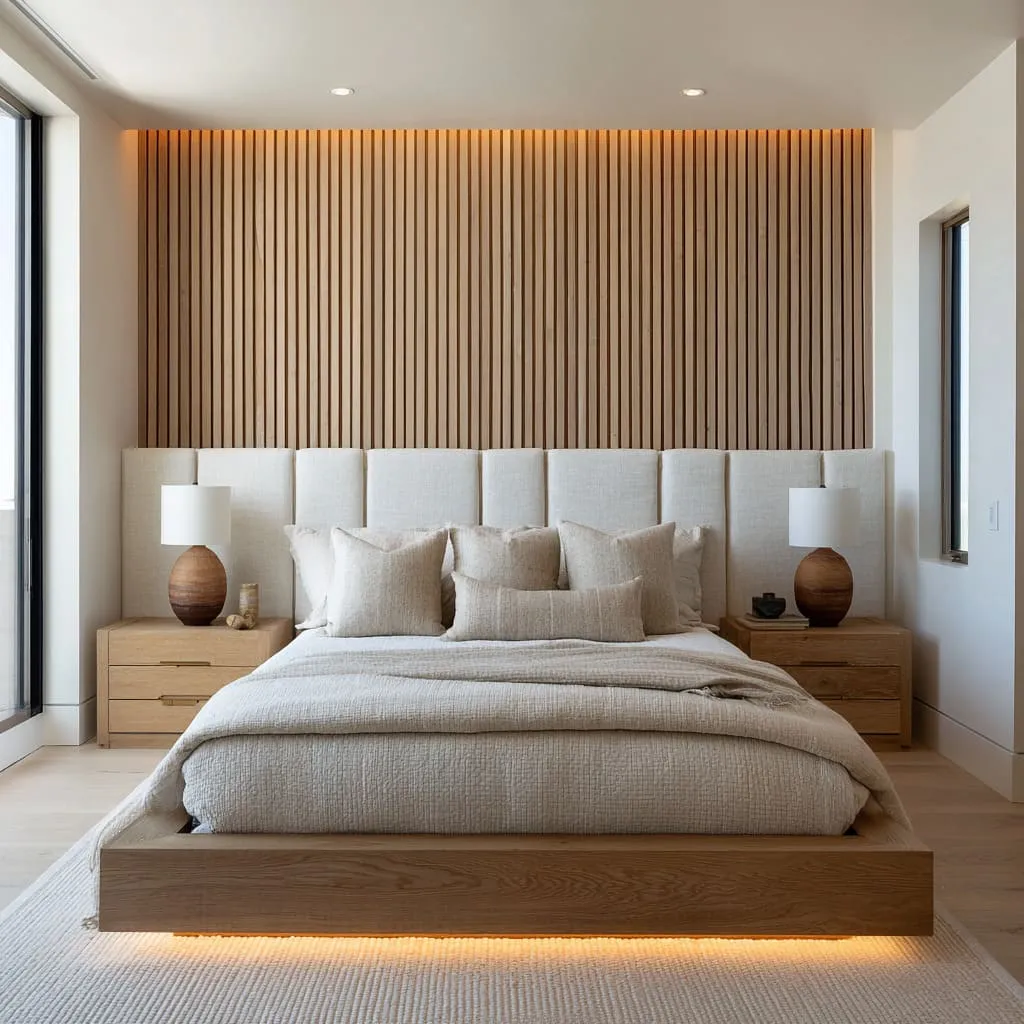
13. Backlit Vertical Wood Slat Wall for a Serene Glow
Integrated lighting is the secret ingredient that transforms this from a nice accent wall into a luxury feature. The soft backlighting creates a beautiful ‘wash’ of light that highlights the texture and warmth of the wood. It eliminates the need for harsh overhead lighting in the evening, casting a serene, hotel-like ambiance. This type of ambient, indirect light is much more flattering and relaxing than direct light, making the bedroom feel like a true sanctuary. It also creates a floating effect, adding to the modern, airy feel. Compare this to the unlit slat wall in Idea #27.
|
📋 Copy HEX 🔗 Share |
While the look is stunning, integrating lighting behind a wall is not a simple plug-and-play project. You will almost certainly need an electrician to safely run the wiring for the LED strips and connect them to a switch. Plan for this in your budget and timeline. Also, consider the longevity and replaceability of the LEDs. Use high-quality LED tape in an aluminum channel for better heat dissipation, which will extend its life. It’s also wise to design the wall so that a portion can be removed if a transformer or a section of the lights ever fails.
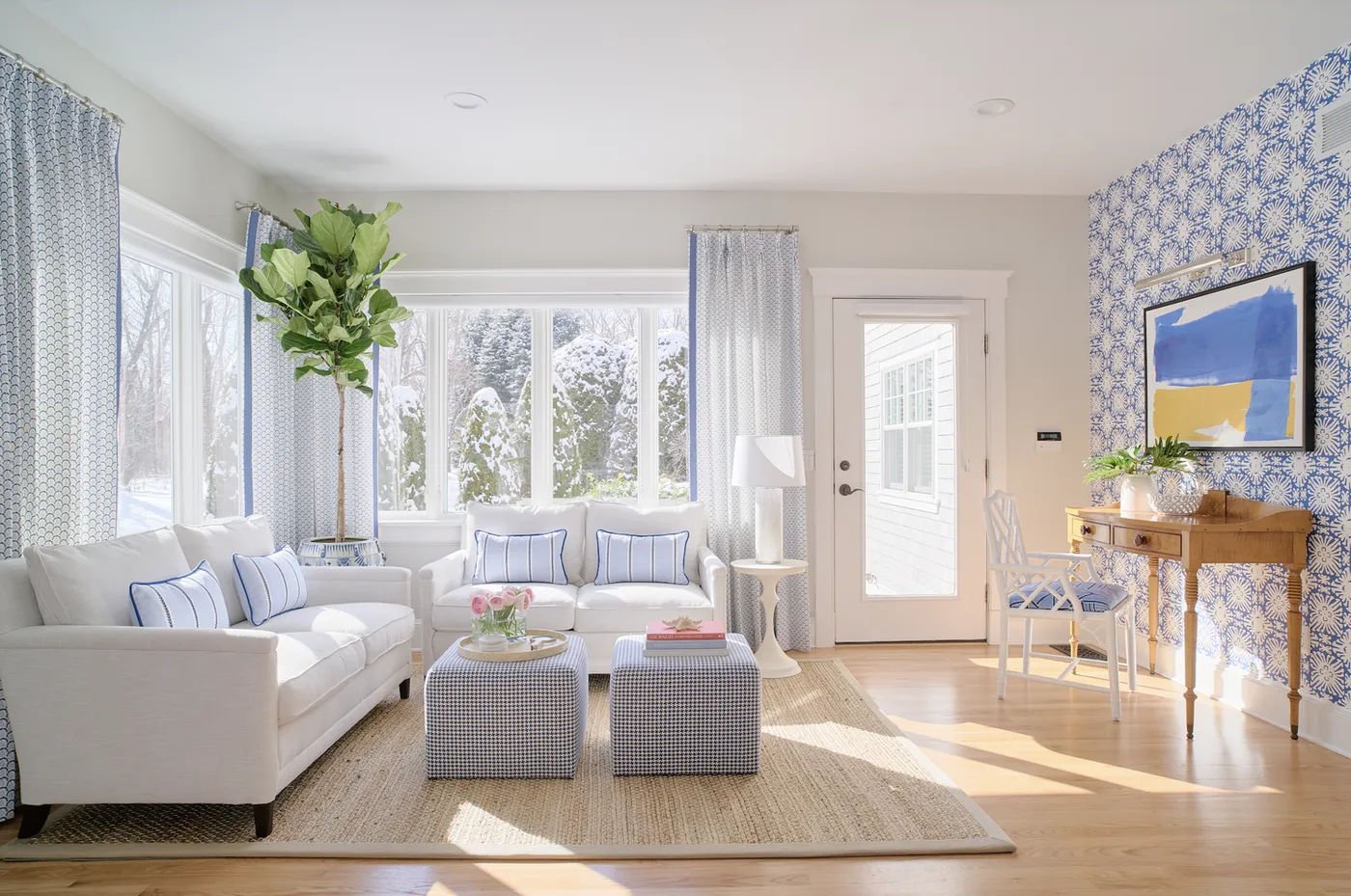
14. Coastal-Inspired Blue and White Patterned Wallpaper
This fresh, coastal vibe is a simple equation: 50% classic pattern + 30% natural wood + 20% crisp white. The blue and white wallpaper provides the foundational pattern, feeling timeless and breezy. The light wood console table brings in a warm, organic element that feels like sun-bleached driftwood. The crisp white of the chair and trim keeps everything feeling bright, clean, and airy. The pops of yellow and black in the artwork are like a little twist of lemon, adding a zesty accent that keeps the look from being too predictable.
|
📋 Copy HEX 🔗 Share |
Love this look but not the price tag or commitment of traditional wallpaper? You have options. High-quality peel-and-stick wallpaper has come a long way and can give you a nearly identical look for about $2-4 per square foot, and it’s removable. For an even more budget-friendly approach, find a stencil with a similar pattern. With a bit of patience, a stencil brush, and a sample pot of blue paint, you can recreate this look for under $50. It’s a fantastic way to get a custom feel for a fraction of the cost.
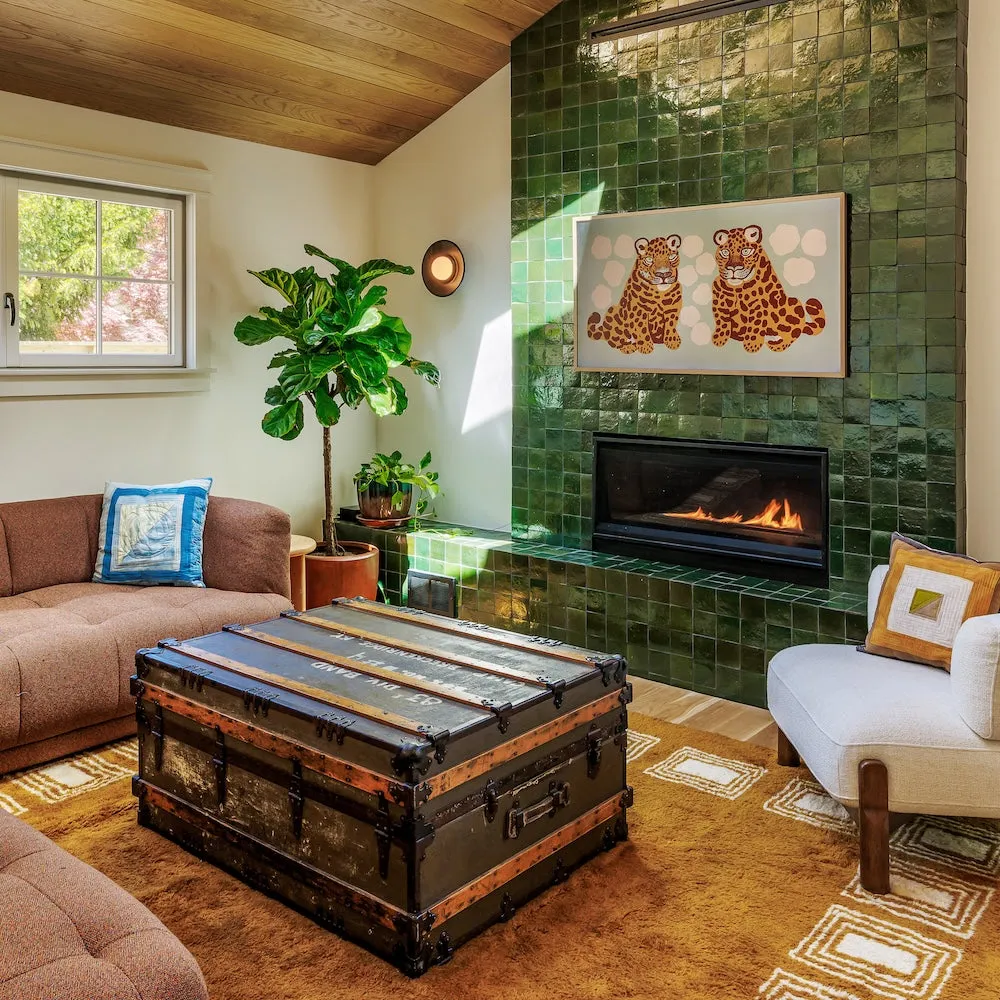
15. Glossy Green Zellige Tile Fireplace Surround
Zellige tiles are beloved for their handcrafted, perfectly imperfect character. However, that unique quality comes with some maintenance quirks. The irregular surface and wide grout lines can trap dust and soot, requiring more frequent cleaning than standard tile. The glossy finish is beautiful but can be prone to crazing (fine cracks in the glaze) over time, which is considered part of its charm. Because the tiles are hand-cut, they can also have sharp edges and are more susceptible to chipping than machine-made porcelain, so take care when arranging firewood or using fireplace tools.
|
📋 Copy HEX 🔗 Share |
This look is surging in popularity because it’s the antithesis of the mass-produced, cookie-cutter finishes that dominated for years. Each Zellige tile is unique, with variations in color, texture, and shape. This speaks to a growing desire for authenticity, craftsmanship, and materials with a story. It’s part of a larger movement towards ‘wabi-sabi’ design, which finds beauty in imperfection. The deep, glossy green also connects to the trend of bringing rich, nature-inspired colors into the home in a bold way.
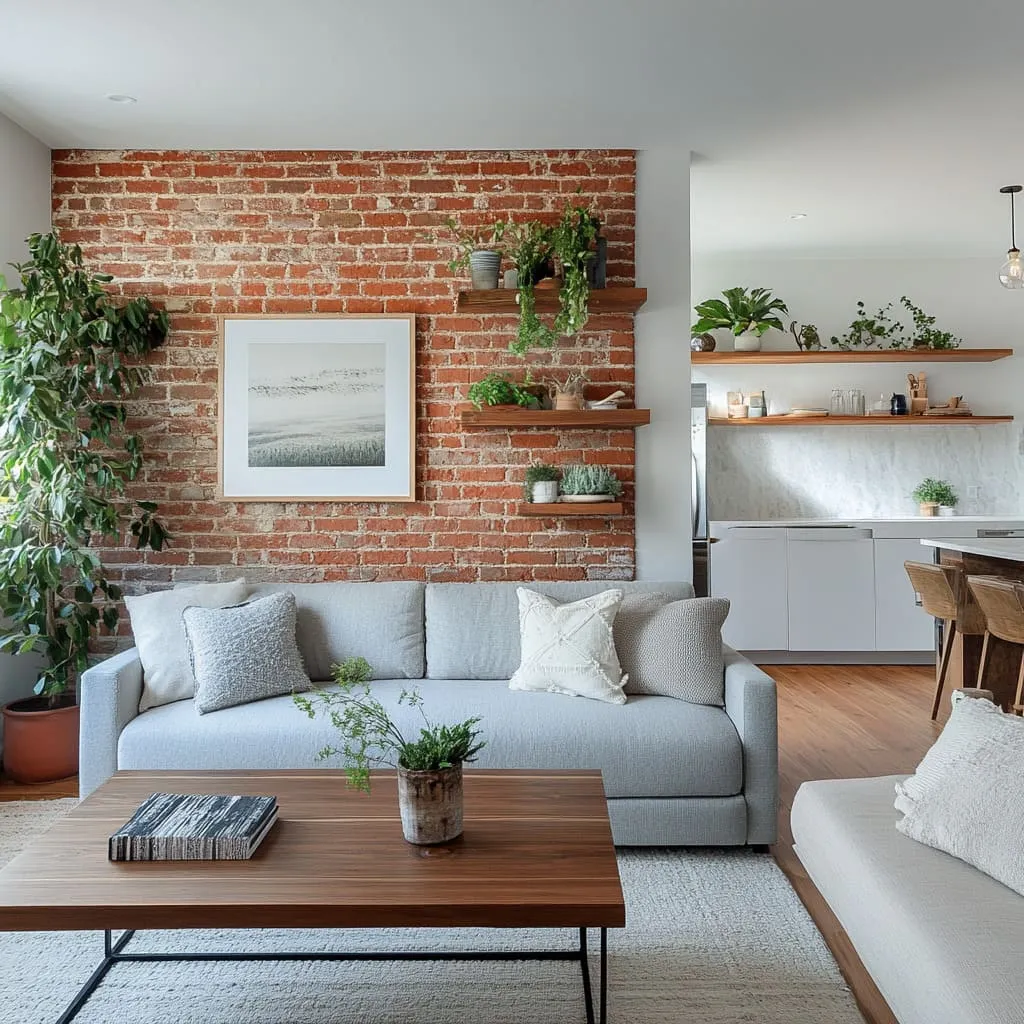
16. Exposed Red Brick Wall with Floating Plant Shelves
The single element that makes this entire room work is the authentic texture of the exposed brick. It provides a layer of history, warmth, and urban grit that you simply cannot replicate with a flat surface. Every crack, color variation, and mortar line tells a story. This raw texture is the perfect foil for the soft gray sofa and the smooth wood of the shelves and coffee table. If you were to cover this wall with drywall, the room would instantly lose its character and become just another generic living space.
|
📋 Copy HEX 🔗 Share |
Mounting heavy floating shelves onto a brick wall requires more than just a standard screw and anchor. You need to drill into the brick itself, not the softer mortar joints. Use a hammer drill with a masonry bit to create your pilot holes. Then, use lead or lag shield anchors specifically designed for brick or concrete. These expand to create a super-secure hold. Make sure the shelves are rated to hold the weight of your plants and pots, and always aim for a depth of at least 1.5 inches into the brick for a secure anchor.
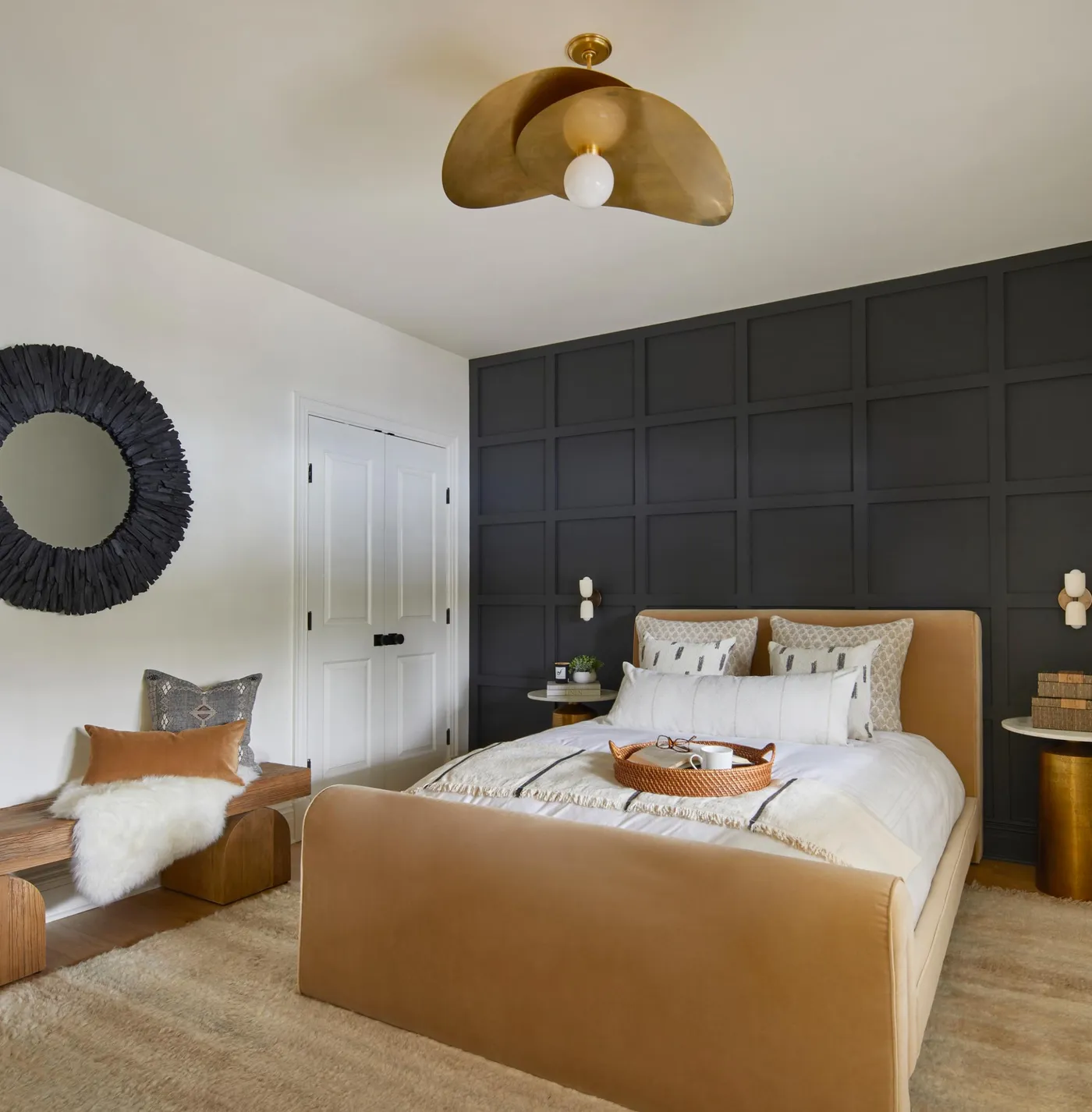
17. Moody Charcoal Paneled Wall with a Sculptural Brass Light
This combination is a classic example of balancing warm and cool tones. The dark charcoal gray of the paneled wall is cool, sophisticated, and moody. On its own, it could feel a bit somber. The sculptural brass ceiling light is the perfect counterbalance. Its warm, golden metallic tone cuts through the coolness of the gray, adding a touch of glamour and reflecting light around the room. The contrast between the matte, dark wall and the gleaming, warm metal is what creates the visual excitement and keeps the room from feeling flat.
|
📋 Copy HEX 🔗 Share |
Don’t be afraid to use dark colors in a smaller room, but do it strategically. A dark accent wall, like this one, can actually create an illusion of depth, making the wall appear to recede. This works best in a room that is at least 10×10 feet and has a good source of natural light. If your room is very small or lacks windows, a dark accent wall can feel claustrophobic. In that case, consider painting just a portion of the wall or using the dark color on a lower third of the wall to ground the space without overwhelming it.
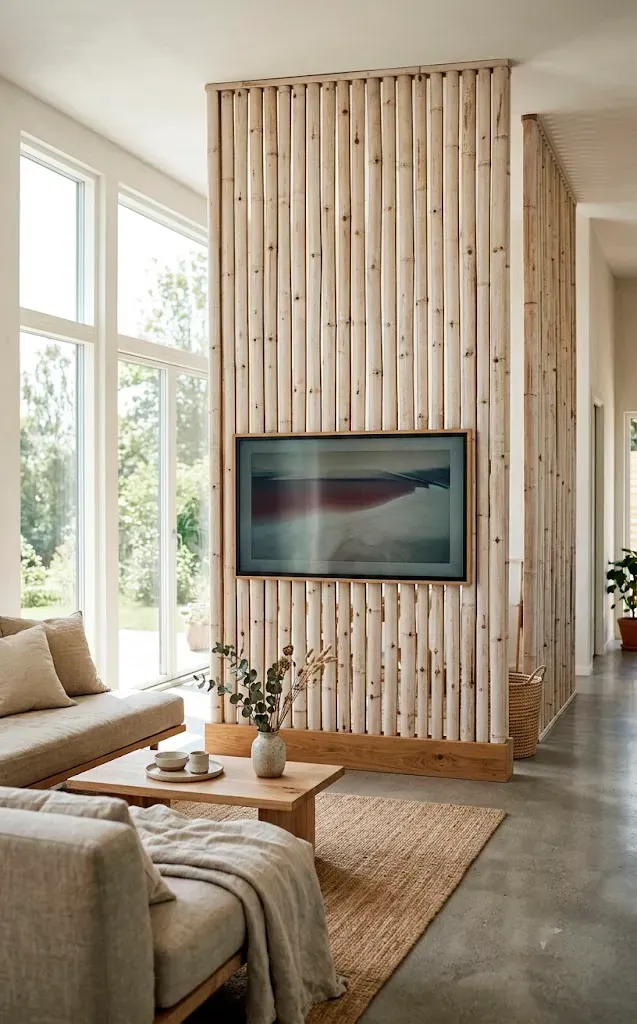
18. Organic Modern Bamboo Pole Accent Wall
Creating this natural, serene divider is more accessible than it looks. The cost will depend heavily on the type and diameter of bamboo you choose.
|
📋 Copy HEX 🔗 Share |
- Bamboo Poles: $200 – $800 (for a 10-foot wide wall, depending on thickness)
- Wood for Top/Bottom Trim: $50 – $150
- Hardware & Adhesives: $30 – $70
- Labor (if hiring): $300 – $700
- TOTAL: $580 – $1,720
Budget alternative: For a similar look with less structure, consider using a pre-made bamboo screen or room divider, which you can find for $100-$300. You could also use thinner, more flexible bamboo fencing material, often sold in rolls, and attach it to an existing wall for a textured effect.
This bamboo wall is a beautiful way to define a space, but it’s important to remember that it’s a visual divider, not a functional one. It provides a sense of separation between the living area and the hallway without blocking light or air flow. However, it offers zero sound insulation. If you’re looking to create a quiet home office or a private nook, this is not the solution for you. It’s perfect for delineating zones in an open-concept space, but not for creating true privacy.
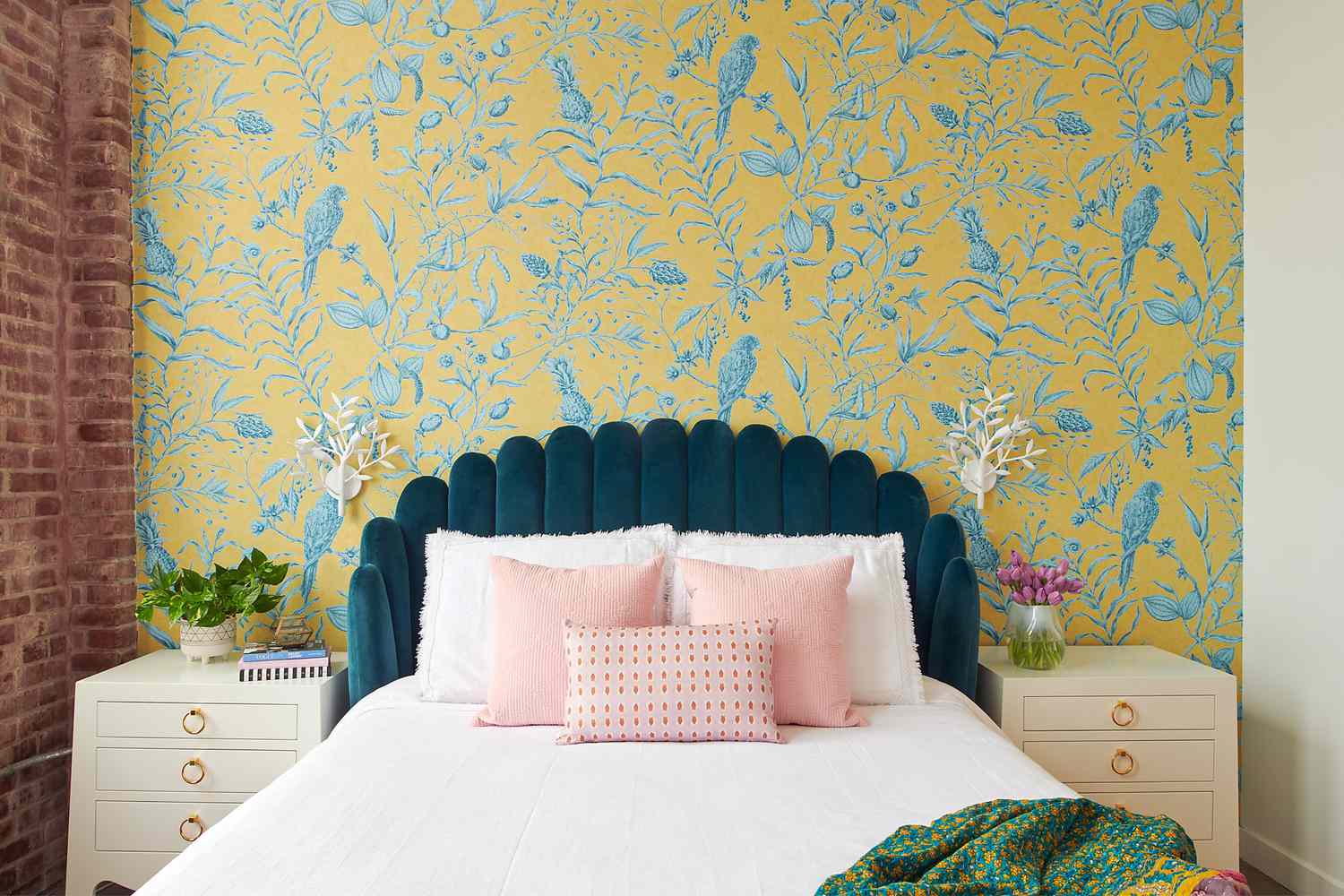
19. Eclectic Yellow and Blue Botanical Wallpaper
This vibrant, eclectic look follows a fearless formula: 60% bold pattern + 30% solid jewel tone + 10% crisp neutrals. The yellow and blue botanical wallpaper is the undeniable star, setting a playful and energetic tone. The teal velvet headboard provides a large, solid block of a coordinating jewel tone, which grounds the busy pattern. The final 10% comes from the white bedding, nightstands, and sconces, which act as a visual resting place, preventing the room from becoming chaotic and allowing the colors to truly pop.
|
📋 Copy HEX 🔗 Share |
What makes this room so memorable is its fearless color combination. Pairing a bright, sunny yellow with a deep, rich teal is a bold choice that pays off in spades. It’s unexpected, full of personality, and exudes confidence. The addition of the soft pink pillows is another clever touch, adding a third, warmer color that bridges the gap between the yellow and teal. This isn’t a room that plays it safe; it’s a room that celebrates color in a joyful and sophisticated way.
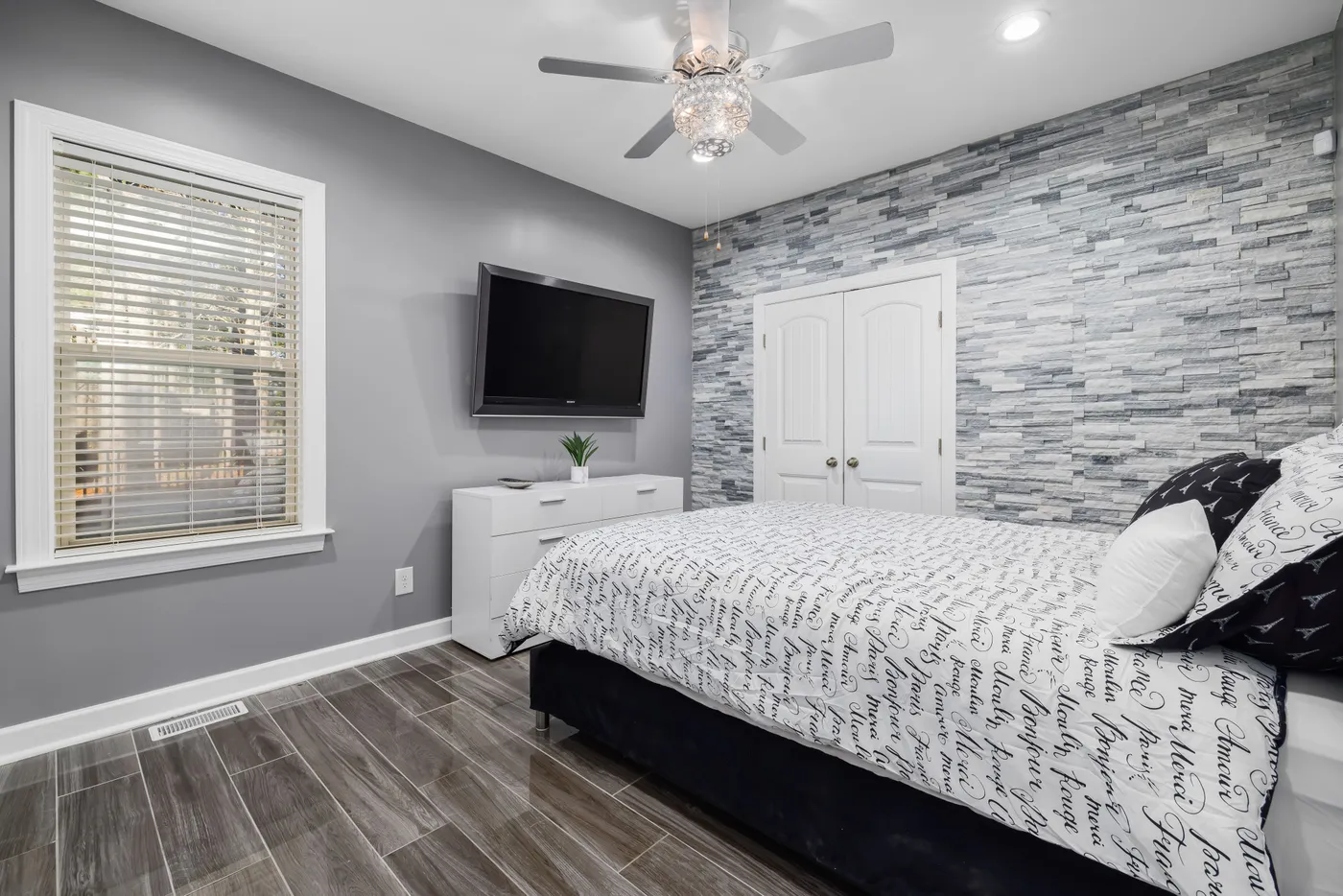
20. Textured Grey Stacked Stone Bedroom Wall
A monochrome gray color scheme can sometimes feel cold or sterile, but the stacked stone accent wall completely prevents that here. The immense amount of texture—the rough surfaces, the varied depths of the stones, the subtle color variations from light to dark gray—adds a layer of organic warmth and visual interest. It proves that texture can be just as important as color in making a space feel cozy and inviting. It’s a much more dynamic backdrop than a simple coat of gray paint. This is a cooler, more contemporary version of the earthy stone seen in Idea #3.
|
📋 Copy HEX 🔗 Share |
Be warned: stacked stone is a dust magnet. All those little ledges and rough surfaces are perfect for trapping dust, pet hair, and cobwebs. You won’t be able to just wipe it down. The most effective way to clean it is with the soft brush attachment on your vacuum cleaner. Plan to do this every couple of weeks to keep it looking fresh. For any spots or stains, use a stiff nylon brush and a gentle cleaner; avoid anything harsh that could damage or discolor the stone.
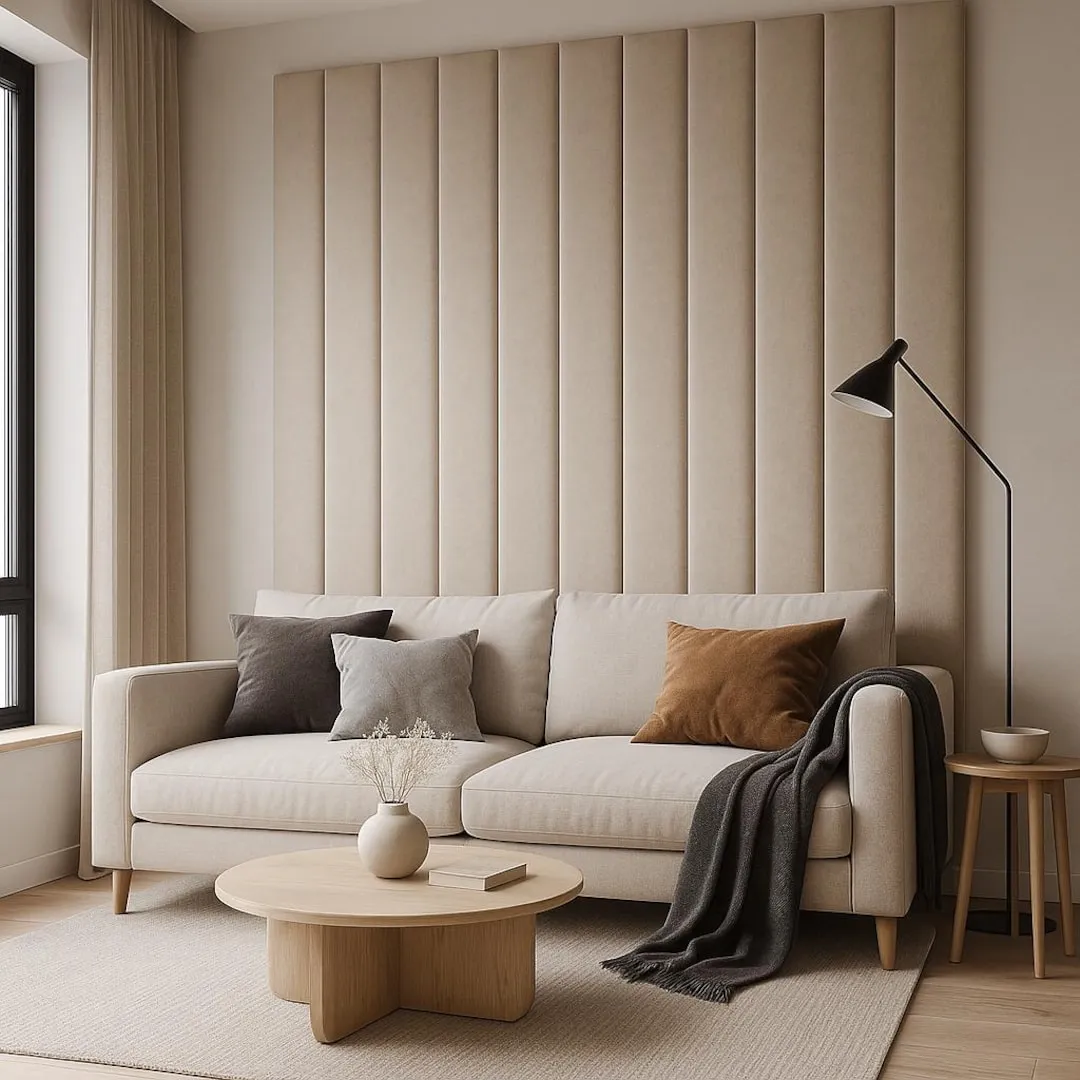
21. Serene Greige Vertical Upholstered Wall Panels
When choosing a fabric for an upholstered wall, especially in a living room, durability and cleanability are key. Look for performance fabrics that are inherently stain-resistant, such as those treated with Crypton or Sunbrella. A commercial-grade fabric with a high double rub count (over 30,000) will also stand up better to wear and tear. A slight texture or a heathered color, like the greige shown here, will be much more forgiving in hiding dust and minor imperfections than a solid, flat-colored fabric.
|
📋 Copy HEX 🔗 Share |
Don’t even think about starting this project without a quick check-in. First, ensure the wall you’re using is flat and in good condition; major bows or bumps will make it difficult to get clean seams between panels. Next, use a stud finder to locate and mark the studs so you know where you can securely mount your panels. Finally, and most importantly, get fabric samples! Tape them to the wall and observe them for a few days. The color can look dramatically different depending on the natural and artificial light in your specific room.
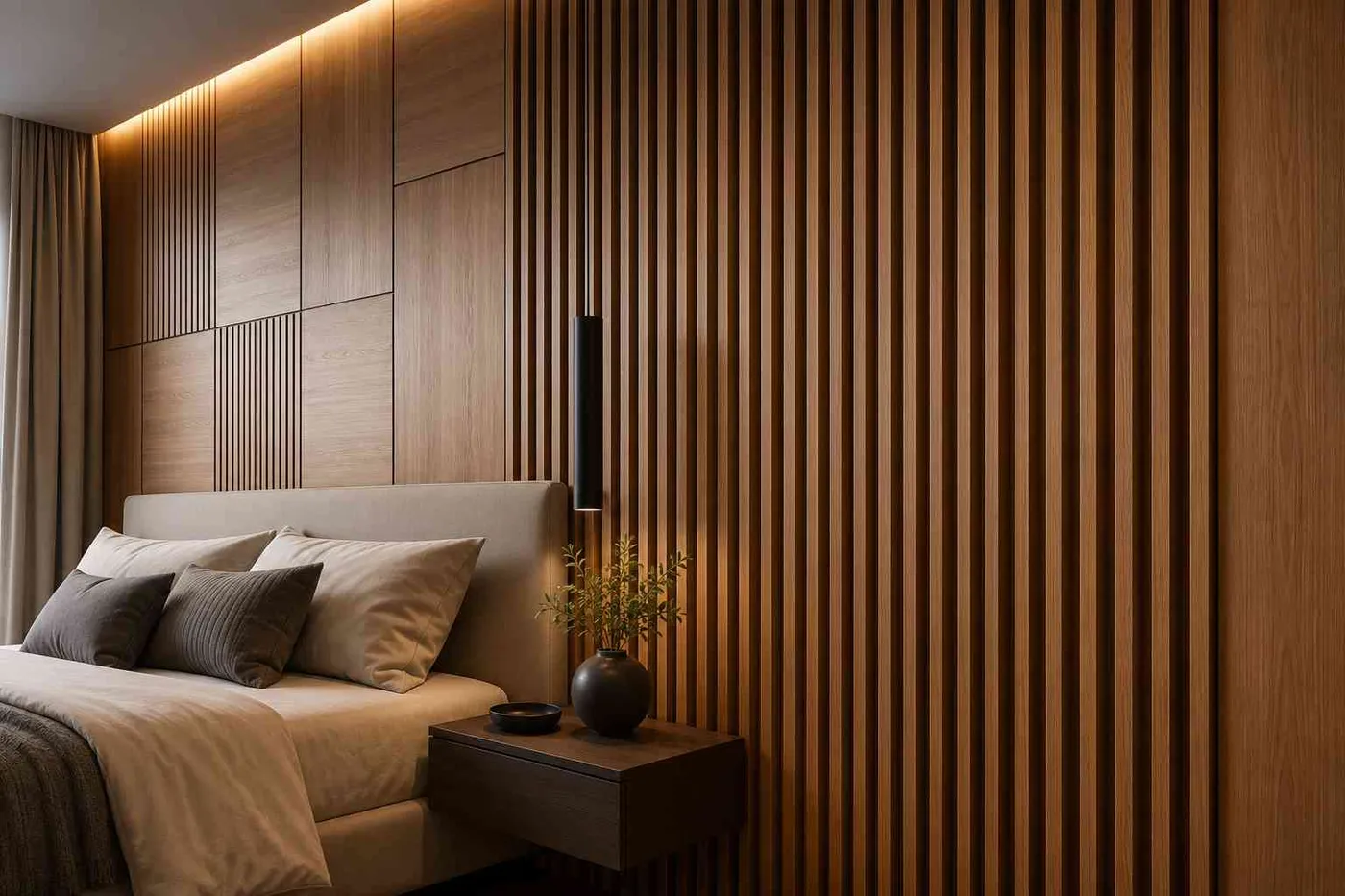
22. Mixed Wood Panels with Integrated Ambient Lighting
Adding that professional-looking ambient glow is easier than you think. Here’s a simplified process for installing LED strip lighting:
|
📋 Copy HEX 🔗 Share |
- Create a channel: When building out your wall panels, leave a recessed channel or attach a trim piece that creates a ledge for the LED strip to sit on, hidden from direct view.
- Install the LED track: For a more diffused, dot-free look, mount a shallow aluminum channel with a frosted cover in your recess.
- Apply the LED tape: Peel the backing off your LED light strip and press it firmly into the channel.
- Connect the power: Run the low-voltage wire from the end of the LED strip down to the hidden power supply (transformer), which should be placed in an accessible location (like behind a nightstand or in a closet).
- Consult an electrician: Have a professional connect the power supply to a wall switch for easy control.
A complex, multi-textured design like this needs a significant amount of wall space to truly shine. It’s best suited for a master bedroom with a feature wall that’s at least 12 feet wide and unencumbered by windows or doors. On a smaller wall, the combination of vertical slats, geometric patterns, and different wood tones could feel chaotic and visually cluttered. Standard 8-foot ceilings are fine, but the design will feel even more grand and intentional with 9-foot or higher ceilings, allowing the different patterns to have their own space.
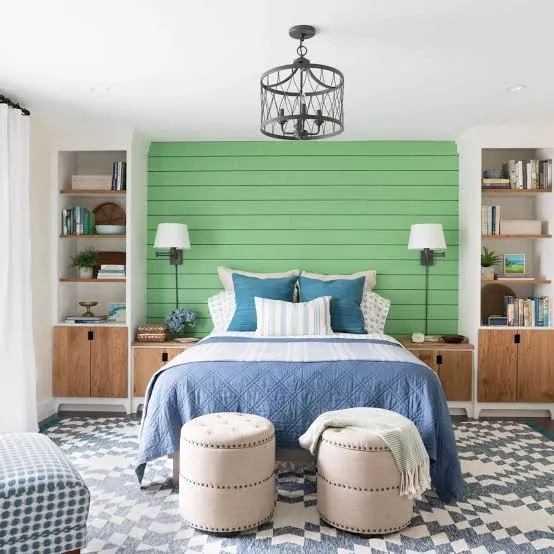
23. Bedroom with a Hand-Troweled Plaster Accent Wall
This accent wall is all about subtle, organic movement. Unlike a repeating wallpaper pattern, a hand-troweled plaster or limewash finish has a soft, cloud-like texture that feels completely unique and custom. The way it catches the light creates a gentle play of shadow and highlight that adds immense depth and warmth to the room without being overpowering. It’s a texture you feel as much as you see, providing a serene and earthy backdrop that is both modern and timeless. It’s a more refined texture than the bold stacked stone in Idea #19.
|
📋 Copy HEX 🔗 Share |
True Venetian plaster requires a skilled artisan and can be quite expensive. But you can get a very similar look on a budget. Look for DIY-friendly Roman clay or limewash paint kits from brands like Portola Paints or Color Atelier. These products are designed to be applied by homeowners and create a beautiful, matte, chalky texture with subtle tonal variations. A kit for a standard accent wall might cost between $150 and $300, giving you that high-end, custom-plastered look for a fraction of the price of hiring a pro.
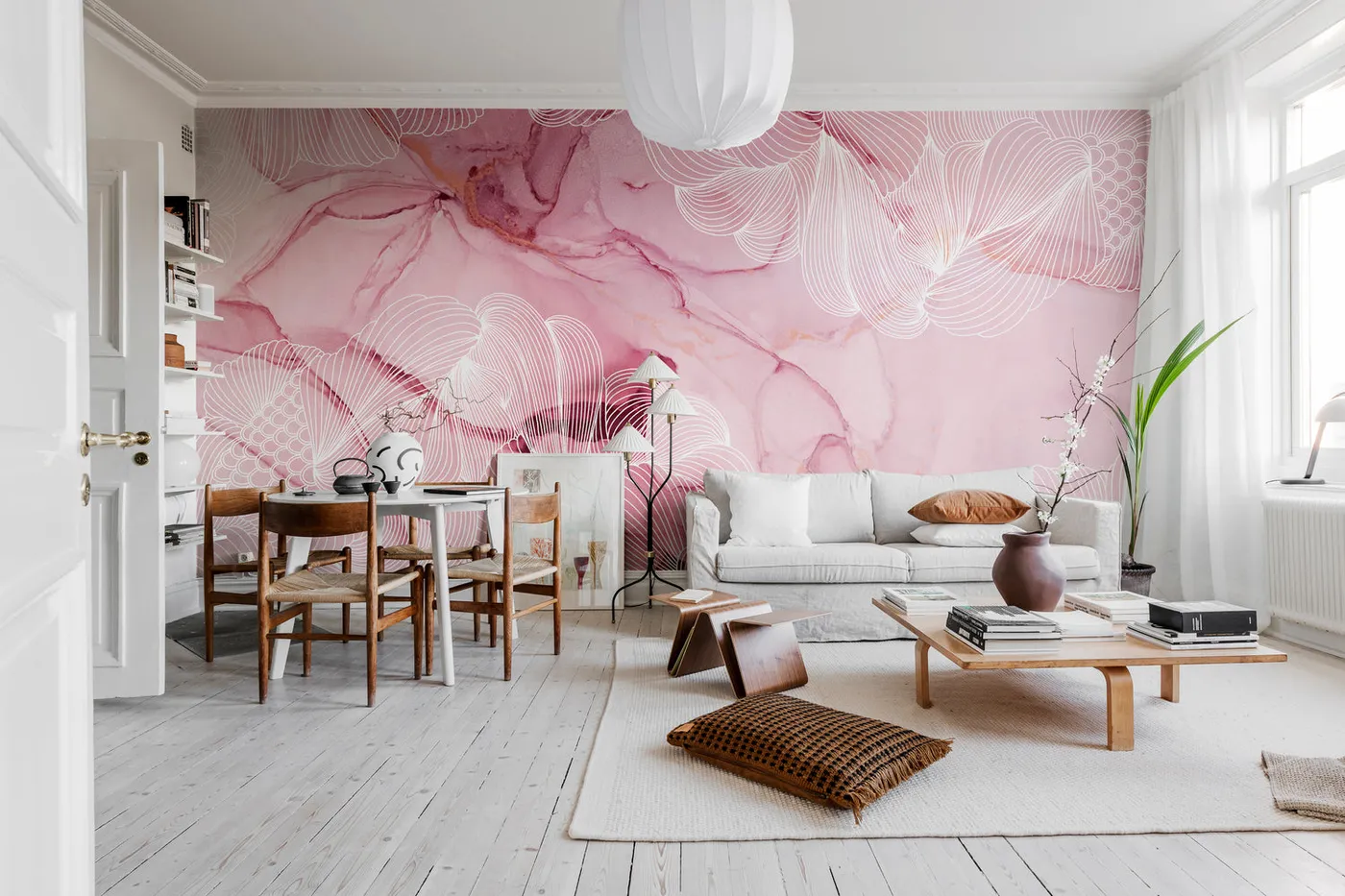
24. Blush Pink Watercolor Wallpaper with Flowing Line Art
We’re seeing a huge move toward what’s being called dopamine decor—spaces that are designed to make you happy. This wallpaper is a perfect example. It’s artistic, colorful, and joyful, turning a plain wall into a massive piece of art. This trend is a reaction against years of minimalist, all-neutral-everything interiors. People are craving personality, self-expression, and spaces that feel uniquely their own. Large-scale, mural-like wallpapers like this one are an easy way to inject a huge dose of character and happiness into a room.
|
📋 Copy HEX 🔗 Share |
The most impactful feature of this wallpaper is its monumental scale. This isn’t a small, repeating pattern; it’s a vast, flowing composition that spans the entire wall. This large scale is what makes it feel less like wallpaper and more like a custom-painted mural. It transforms the wall from a simple background into the main event, a captivating piece of art that sets the tone for the entire open-plan space. A smaller version of this pattern just wouldn’t have the same dramatic, immersive effect.
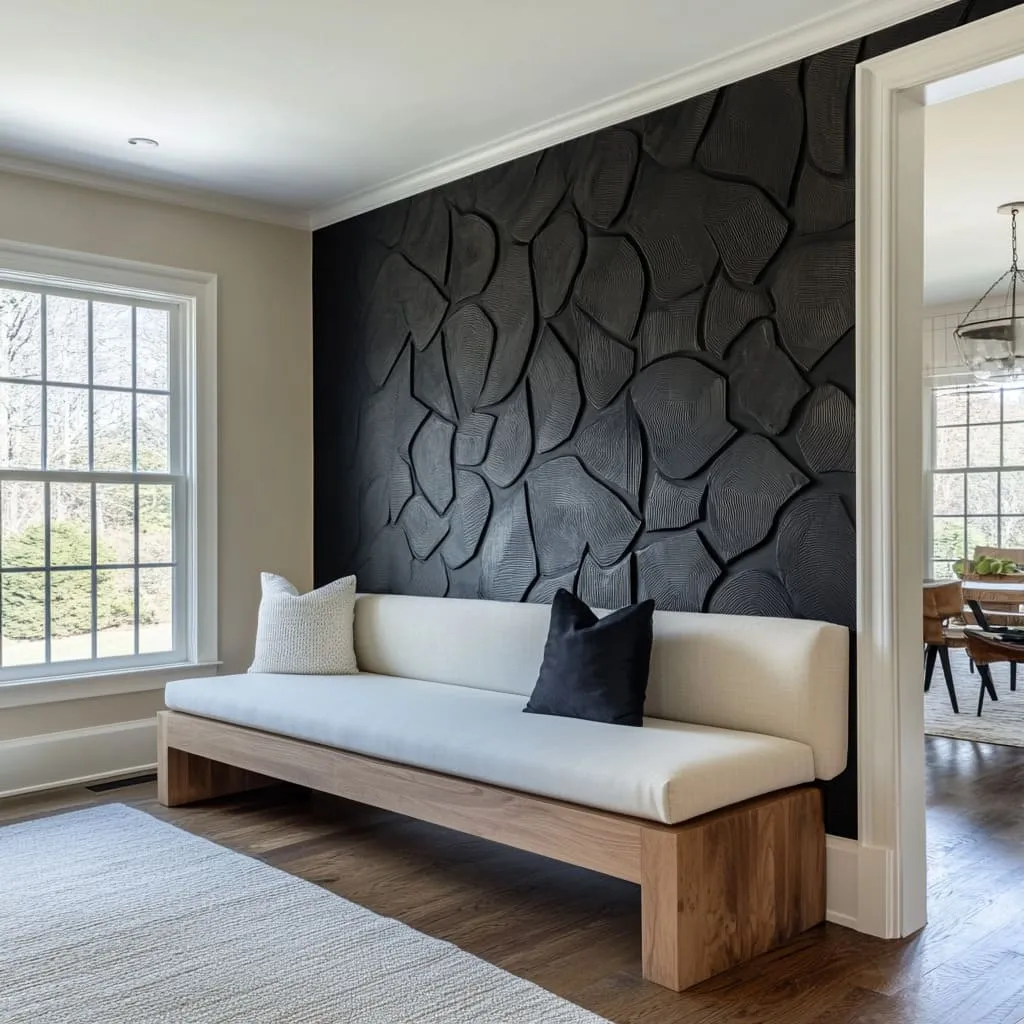
25. Dramatic Sculptural 3D Wall Panels in Charcoal
A 3D sculptural wall is a showstopper, but it comes with a few practical downsides. First, cleaning is a challenge. All those grooves, curves, and edges are prime real estate for dust. You’ll need to regularly use a vacuum with a soft brush attachment. Second, they can be delicate. A stray bump from a vacuum cleaner or a piece of furniture could chip or dent the panels, and repairs can be tricky. For that reason, they’re best used in lower-traffic areas like behind a sofa or bed, rather than a busy hallway.
|
📋 Copy HEX 🔗 Share |
To make the most of a 3D textured wall, lighting is everything. Do not light it with a ceiling fixture directly in front of it. This will flatten the texture. Instead, use ‘grazing’ light. Install recessed lighting or track lighting in the ceiling close to the wall (about 12-18 inches away) and aim the lights straight down. This creates dramatic shadows that rake across the surface, highlighting every curve and contour of the panels and maximizing the three-dimensional effect. Side lighting from a floor lamp can also work well.
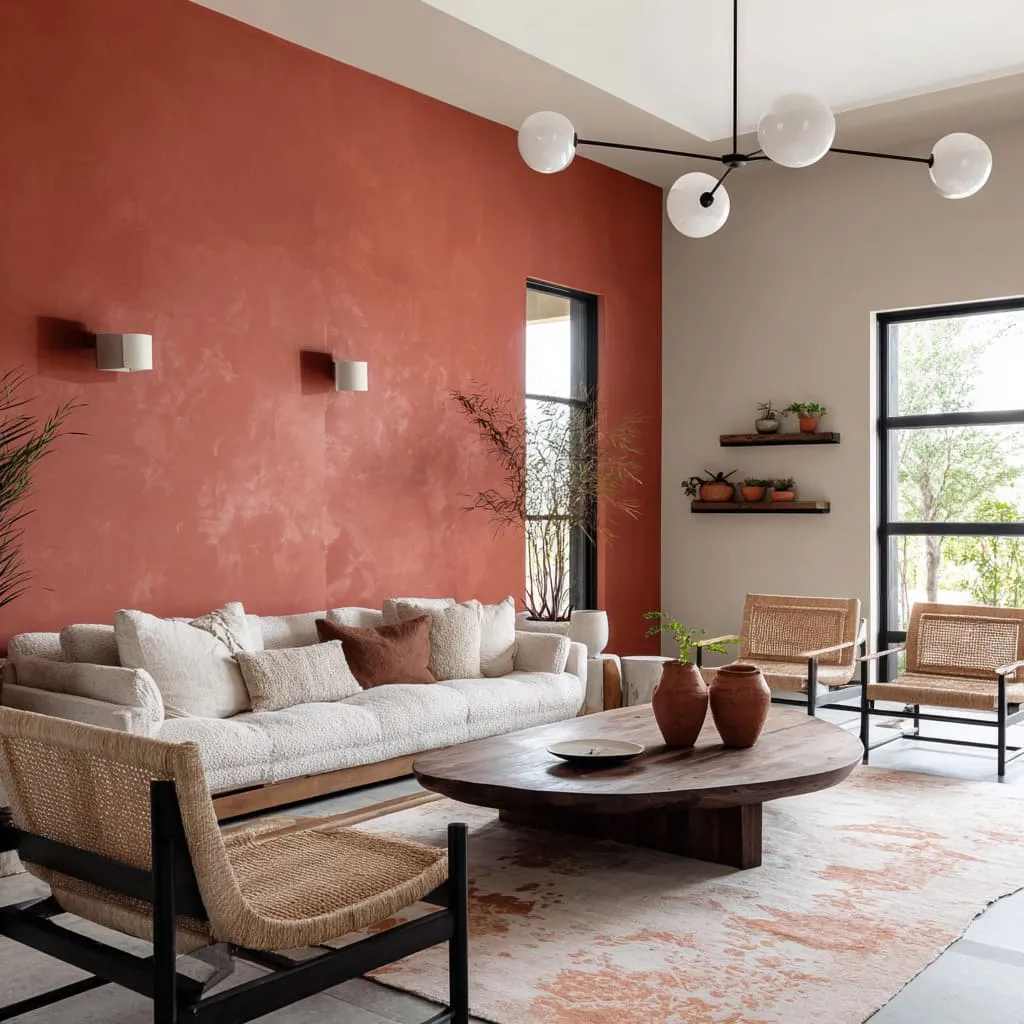
26. Earthy and Warm Textured Terracotta Wall
This warm, inviting room is a study in earthy balance. The formula is approximately 50% warm earth tones + 30% creamy neutrals + 20% dark accents. The textured terracotta wall provides the dominant warm color, creating a cozy and enveloping feel. The large cream sofa and light-colored rug offer a soft, neutral counterpoint that keeps the space bright. The final 20% comes from the dark wood coffee table and the black frames of the chairs and chandelier, which provide necessary contrast and definition, preventing the warm tones from becoming muddy.
|
📋 Copy HEX 🔗 Share |
You can achieve a similar textured paint finish without buying expensive specialty products. Here’s a quick guide to a knockdown texture:
- Protect your space: Cover floors and furniture, as this can be messy.
- Mix your mud: Thin down some all-purpose joint compound with water until it has a pancake batter consistency.
- Apply the texture: Use a trowel or a wide putty knife to apply the thinned mud to the wall in a random, sweeping pattern.
- Let it set: Wait about 15-20 minutes, until the peaks of the mud are no longer wet but not fully dry.
- Knock it down: Gently drag a clean, flat trowel or wide putty knife over the surface to flatten the peaks, creating the textured effect.
- Prime and paint: Once fully dry (24 hours), prime the wall and then apply your terracotta paint color.
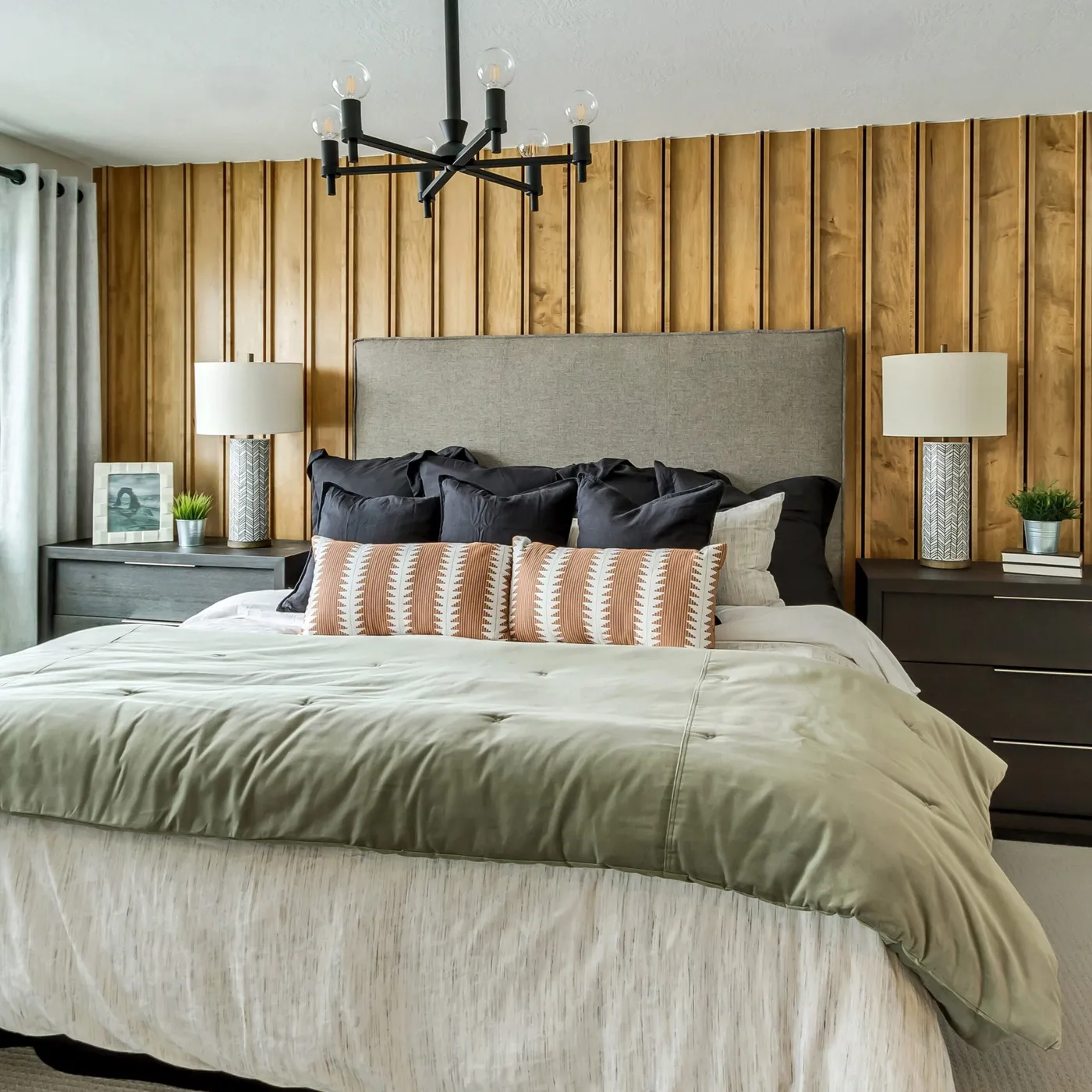
27. Natural Wood Slat Wall with a Sage and Charcoal Palette
This bedroom feels so balanced and serene because of its masterful color and texture palette. The natural wood slat wall provides a warm, organic foundation. The sage green duvet brings in a soft, calming color from nature. The dark charcoal pillows add a touch of moody contrast and depth, keeping the look modern and preventing it from being too sweet. Finally, the cream and off-white elements in the lamps and patterned pillows provide a necessary point of brightness. It’s a sophisticated mix of warm, cool, light, and dark that feels perfectly harmonious. For a brighter look, see the backlit version in Idea #12.
|
📋 Copy HEX 🔗 Share |
A custom wood slat wall can be pricey, but you can get this look for much less with a trip to the hardware store. Buy several 1-inch by 2-inch pine or poplar boards. Lightly sand and seal them with a matte polyurethane to keep the natural color. Paint the wall behind your bed a dark charcoal or black. Then, using a spacer (a small block of wood works great), attach the boards vertically to the wall with a brad nailer. For a 10-foot wall, your materials cost could be as low as $150-$250.
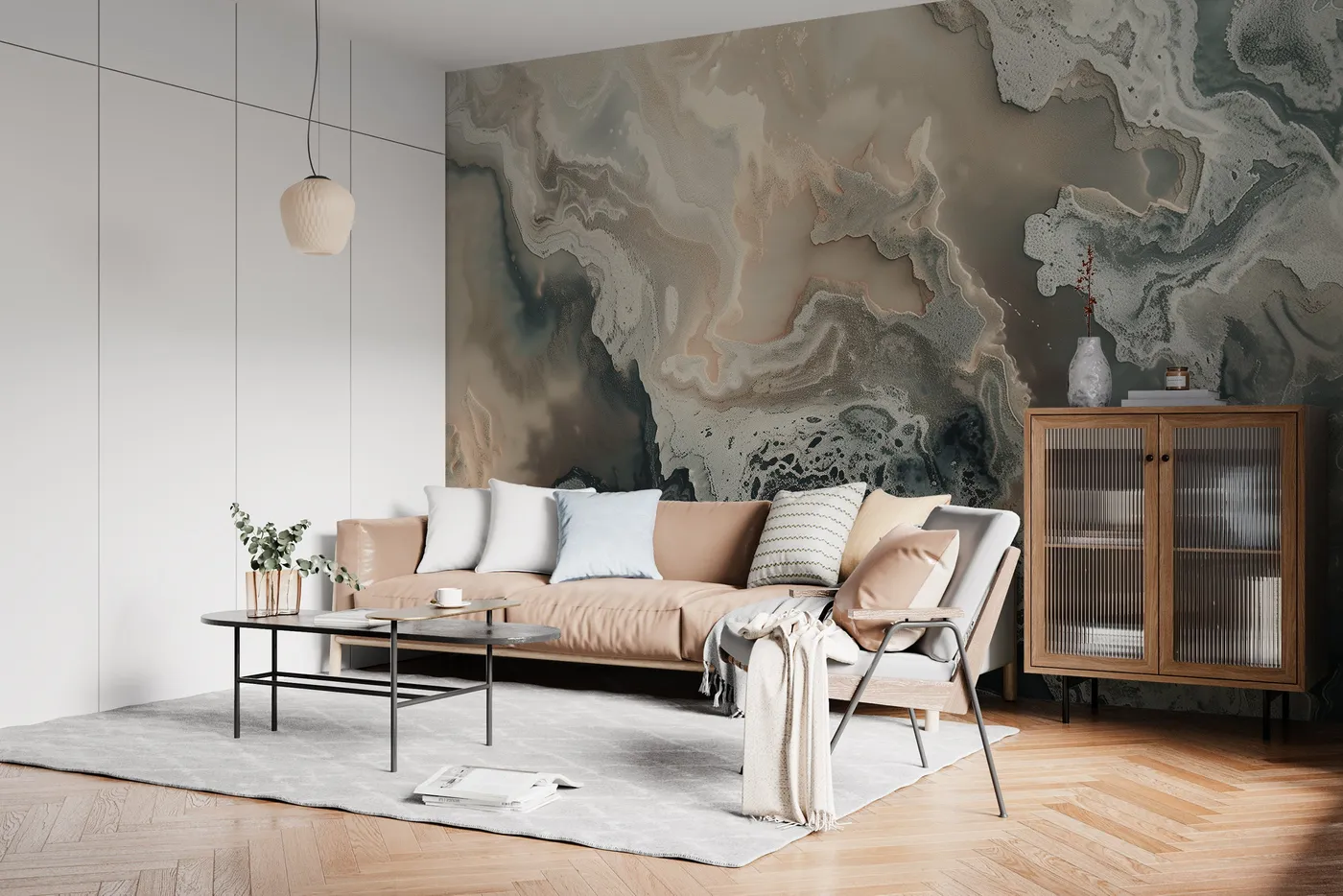
28. Sophisticated Neutral Wallpaper with an Abstract Marble Swirl
When you’re installing a large-scale mural or a wallpaper with a non-repeating pattern, ordering extra material is non-negotiable. Always order at least 15% more than your measurements require. With a small, repeating pattern, you can often use offcuts from one area to patch in another. With a large mural, each panel is unique and must go in a specific order. If you mis-cut a panel, you can’t just grab another piece. That extra 15% is your insurance policy against costly mistakes and ensures you have enough for any tricky cuts around windows or doors.
|
📋 Copy HEX 🔗 Share |
The key to this wallpaper’s sophisticated, high-end feel is its large-scale, non-repeating pattern. It doesn’t look like a roll of wallpaper; it looks like a custom mural or a single, massive slab of polished marble. This lack of obvious repetition tricks the eye into seeing it as a more authentic, artistic material. It creates a flowing, organic movement across the wall that feels both calming and incredibly luxurious, turning a simple living room wall into a major statement piece.
Your Next Favorite Wall Starts Here
An accent wall is your chance to make a statement, add character, and tell a story about your personal style. It’s the easiest way to transform a room from fine to fabulous. We hope these 28 ideas have sparked your imagination and given you the confidence to go bold. Now, head over to Pinterest and start saving your favorites — your dream room is just one wall away.