
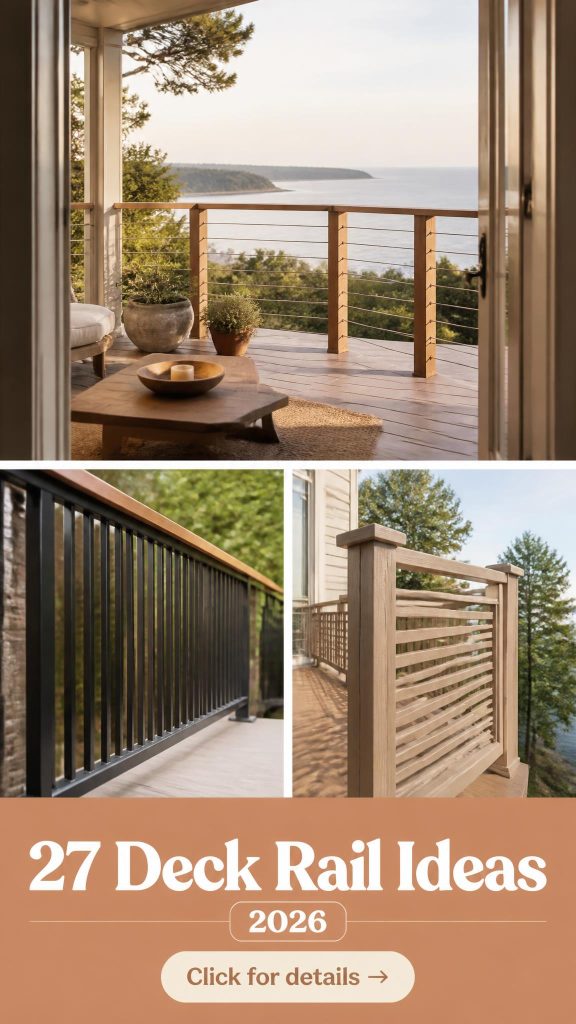
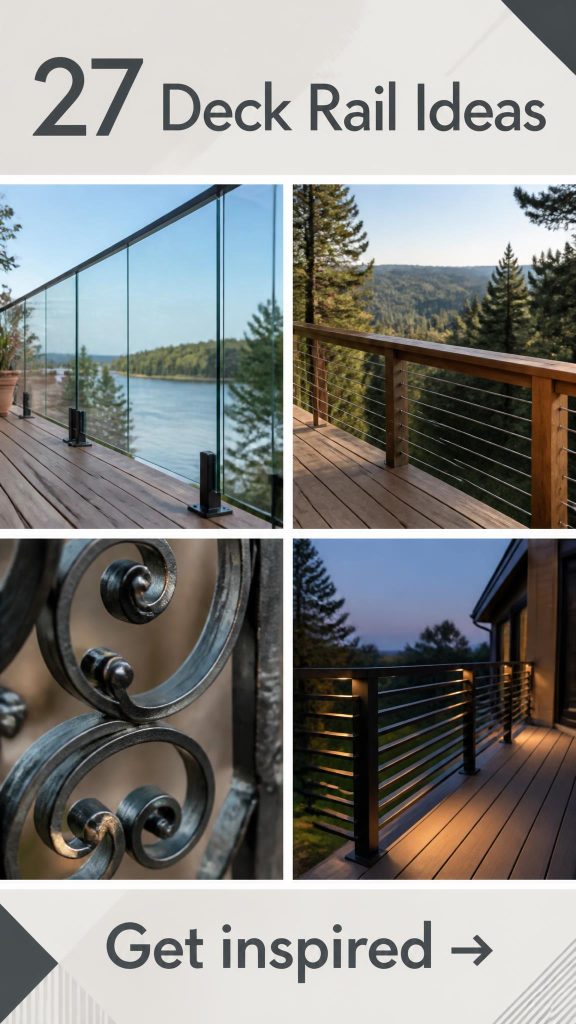
You know that feeling when you finally find the deck rail ideas that look exactly right for your outdoor space? We spent serious time browsing Trex, Home Depot, and Wayfair to bring you only what’s worth your attention this year. In this guide, you’ll find 27 curated ideas covering everything from sleek contemporary cables to rustic farmhouse wood slats. Whether you’re doing a budget refresh or a luxury exterior overhaul, we compare options side by side across every price point—from $150 to $5,000+. With outdoor living spaces becoming true extensions of our homes in 2026, the demand for railings that don’t block the view—like thin cables and minimalist metals—is at an all-time high. Pin this guide for later—your future self will thank you when it’s time to actually do this.
1. Seamless Cable Railing With Built-In Seating
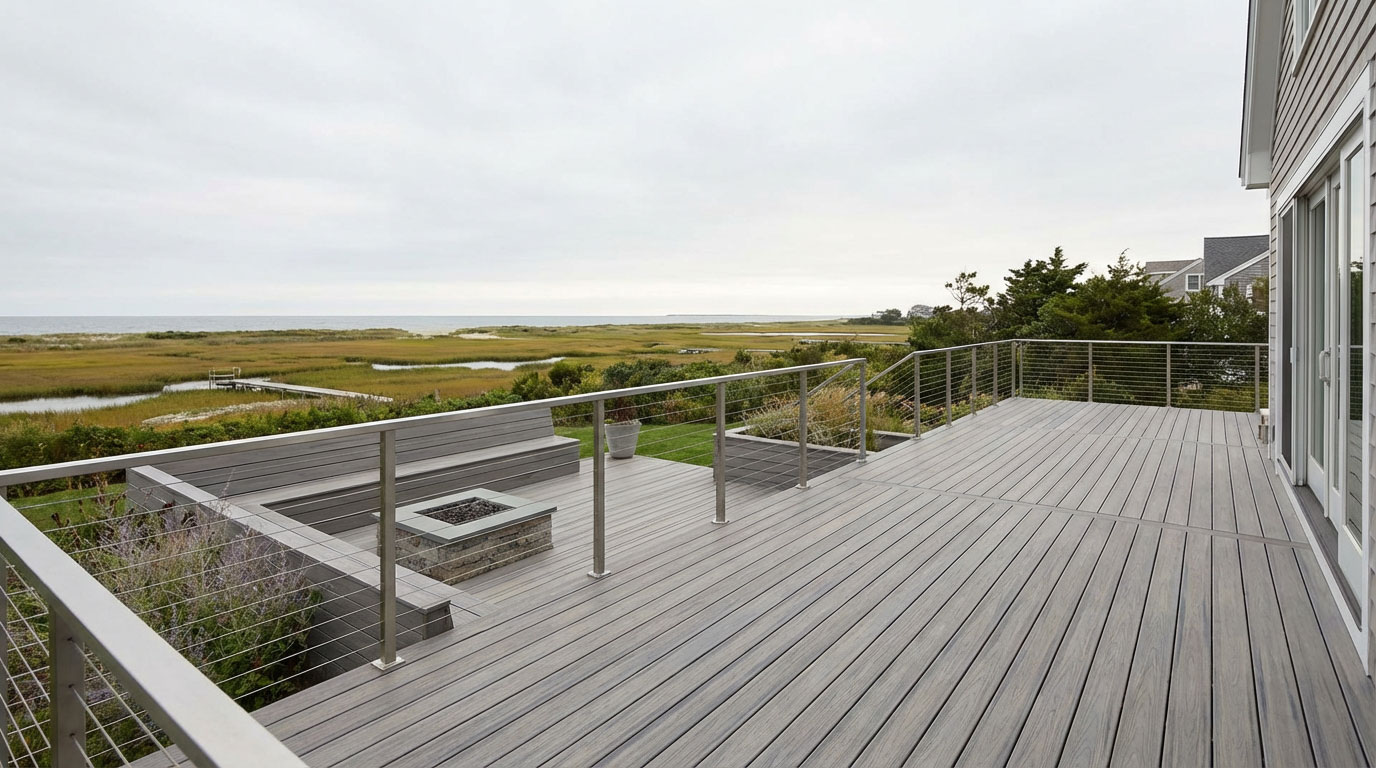
The true standout here isn’t just the stainless steel cables, but how they wrap around the built-in L-shaped bench and square stone fire pit without stealing attention from the marshland view. If you opted for thick wooden balusters here, the eye would stop at the deck’s edge instead of traveling out to the distant ocean. The minimal hardware acts almost like a picture frame for the light gray composite decking and the natural landscape beyond.
|
📋 Copy HEX 🔗 Share |
Because this design utilizes thin horizontal lines, it excels in sprawling, open outdoor spaces where you want to emphasize width over height. You need a minimum deck depth of about twelve feet to comfortably accommodate the built-in seating and fire feature while maintaining a safe walkway. The low visual weight of the cables keeps the large footprint from feeling heavy against the home’s gray shingle siding.
2. Multi-Level Cable Design With Light Wood Handrails
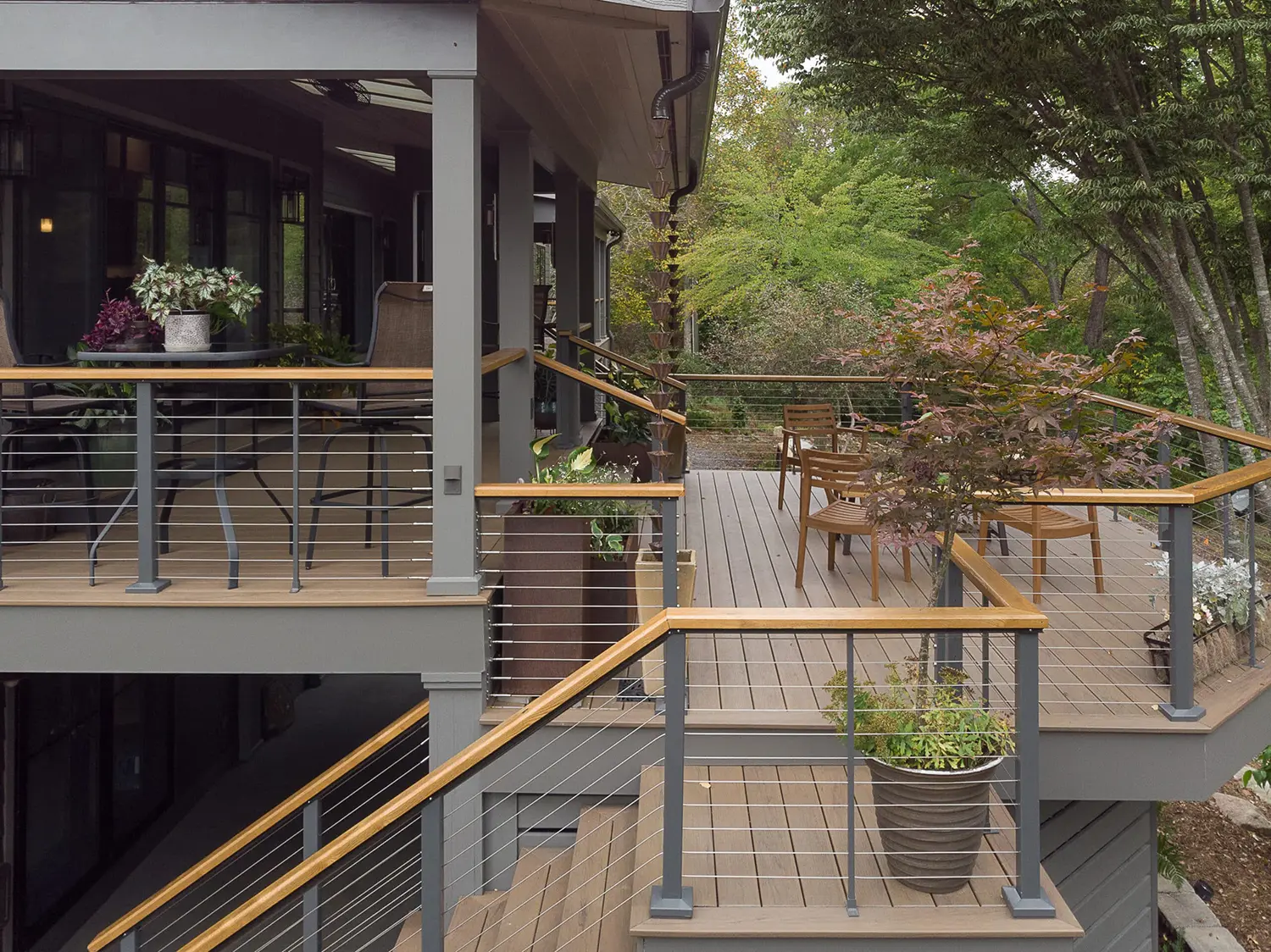
This multi-level structure succeeds through a very specific ratio: 70% industrial gray metal and cables, 20% organic light wood on the handrails, and 10% lush greenery from the surrounding potted plants. The light wood top rail warms up the inherently cold gray metal posts, bridging the gap between the modern architecture and the lush natural landscaping bordering the wood-look composite flooring.
|
📋 Copy HEX 🔗 Share |
When mixing metal posts with wood handrails outdoors, always use a specialized exterior sealant on the wood with UV protection, reapplying every 12 to 18 months. Unsealed light wood will quickly turn a weathered gray, completely losing that warm contrast against the gray metal posts that makes this specific design so visually appealing.
3. Dark Brown Composite Over Stainless Steel Cables
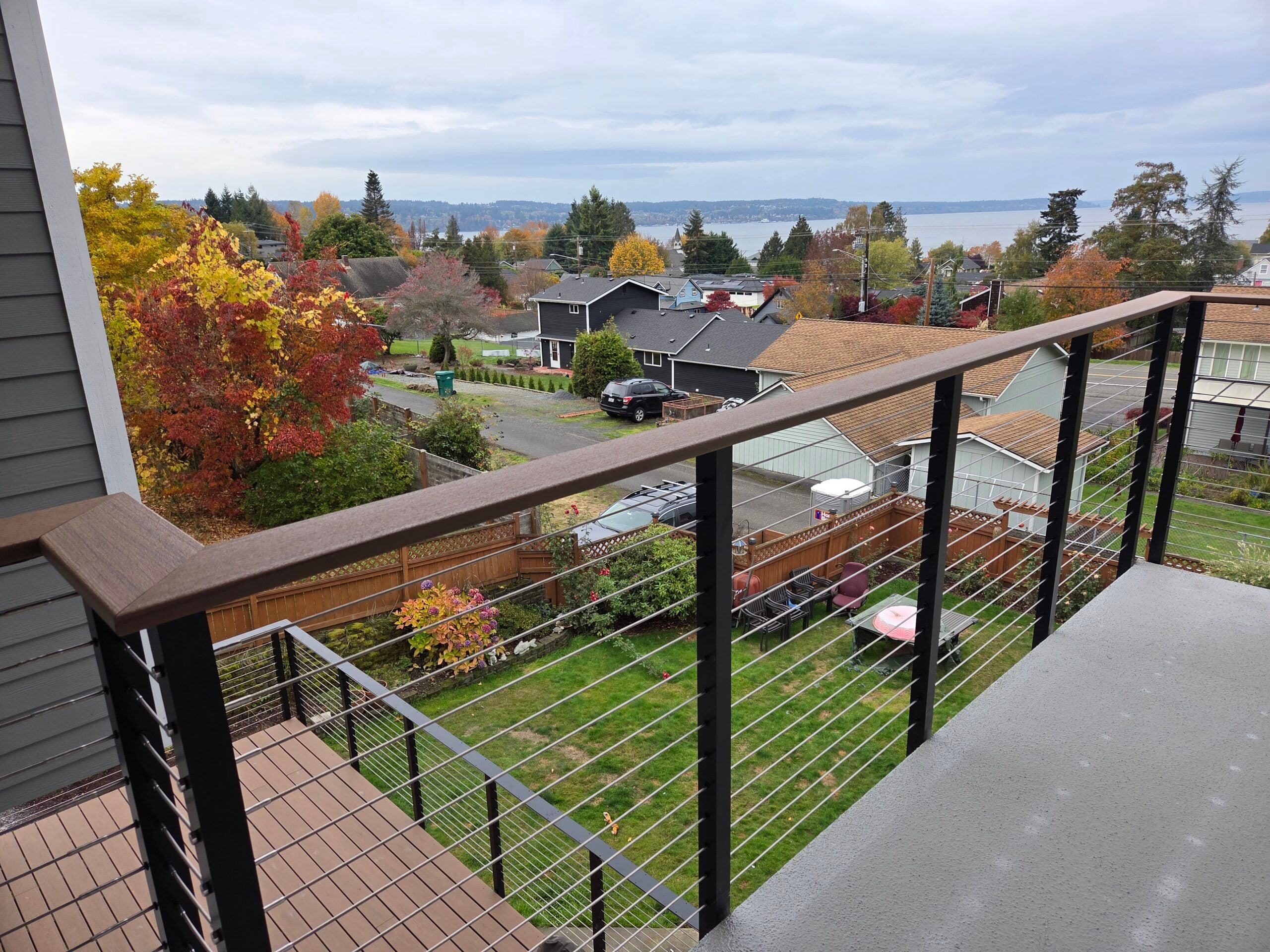
Recreating this sleek perimeter requires budgeting for both composite and custom metals. Here is how the materials break down for an average twenty-foot run.
|
📋 Copy HEX 🔗 Share |
- Dark gray/black metal posts: $400 – $650
- Stainless steel cable infill kit: $300 – $550
- Dark brown composite top rail: $150 – $250
- Mounting hardware and tensioners: $100 – $200
- Total estimated material cost: $950 – $1,650 for a twenty-foot section.
Tensioning horizontal stainless steel cables is not a set-it-and-forget-it installation. Depending on your climate and the changing seasons, you will need to tighten the cables periodically to prevent sagging. Similar to the stainless look in Idea #0, this requires a specialized tensioning tool that you absolutely must keep handy in your garage tool kit.
4. Dark Horizontal Slats Bordering A Concrete Patio
The brilliant contrast here relies entirely on color temperature and material differences. The dark charcoal grey of the horizontal slat railing provides a crisp, high-contrast boundary line against both the light grey concrete patio slab and the vibrant green lawn. By keeping the design strictly linear and minimalist, it frames the small green shrubbery without competing for visual dominance.
|
📋 Copy HEX 🔗 Share |
Dark painted or stained horizontal wood slats require significant upkeep to maintain that rich, opaque charcoal finish. Direct sunlight will cause dark colors to fade rapidly, meaning you are looking at a restaining or repainting project every two to three years. If you want this exact minimalist look with zero maintenance, opt for powder-coated aluminum slats instead of wood.
5. Black Vertical Posts Meet Warm Wood Accents
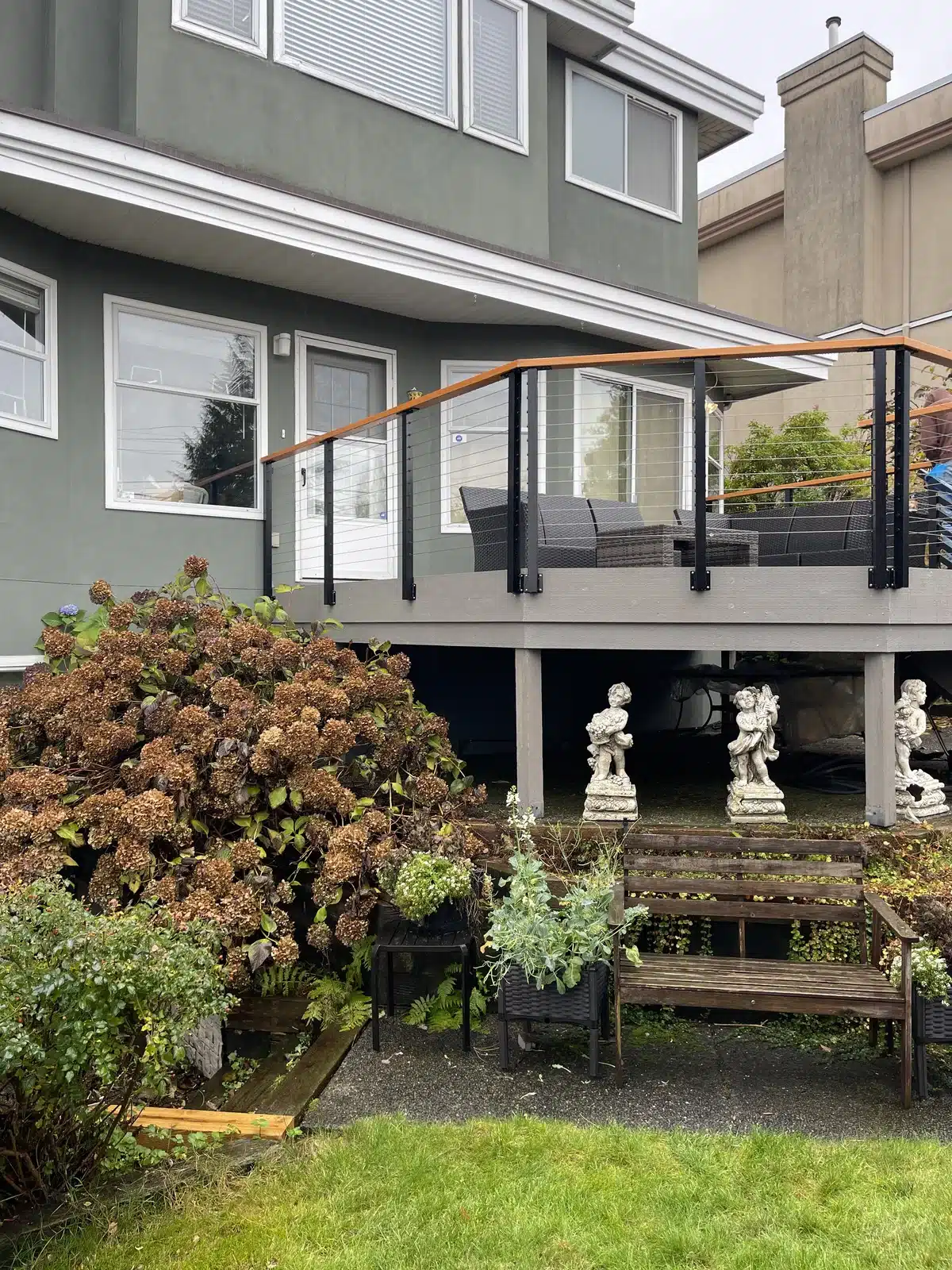
If you are pairing a warm wooden top handrail with black vertical posts like this, source your handrail material to match any indoor flooring that sits just inside the house. This creates a seamless visual flow from the interior out to the grey deck surface, making the dark woven outdoor furniture feel like a natural extension of your indoor living room.
|
📋 Copy HEX 🔗 Share |
This specific combination—black metal framing with natural wood caps—is currently dominating Pinterest boards for a reason. It bridges the gap between stark modernism and organic warmth. Much like the multi-level design in Idea #1, this hybrid approach allows homeowners with dark green traditional siding to incorporate contemporary stainless steel cables without the addition feeling entirely out of place.
6. Classic Coastal White Pickets Against Blue Siding
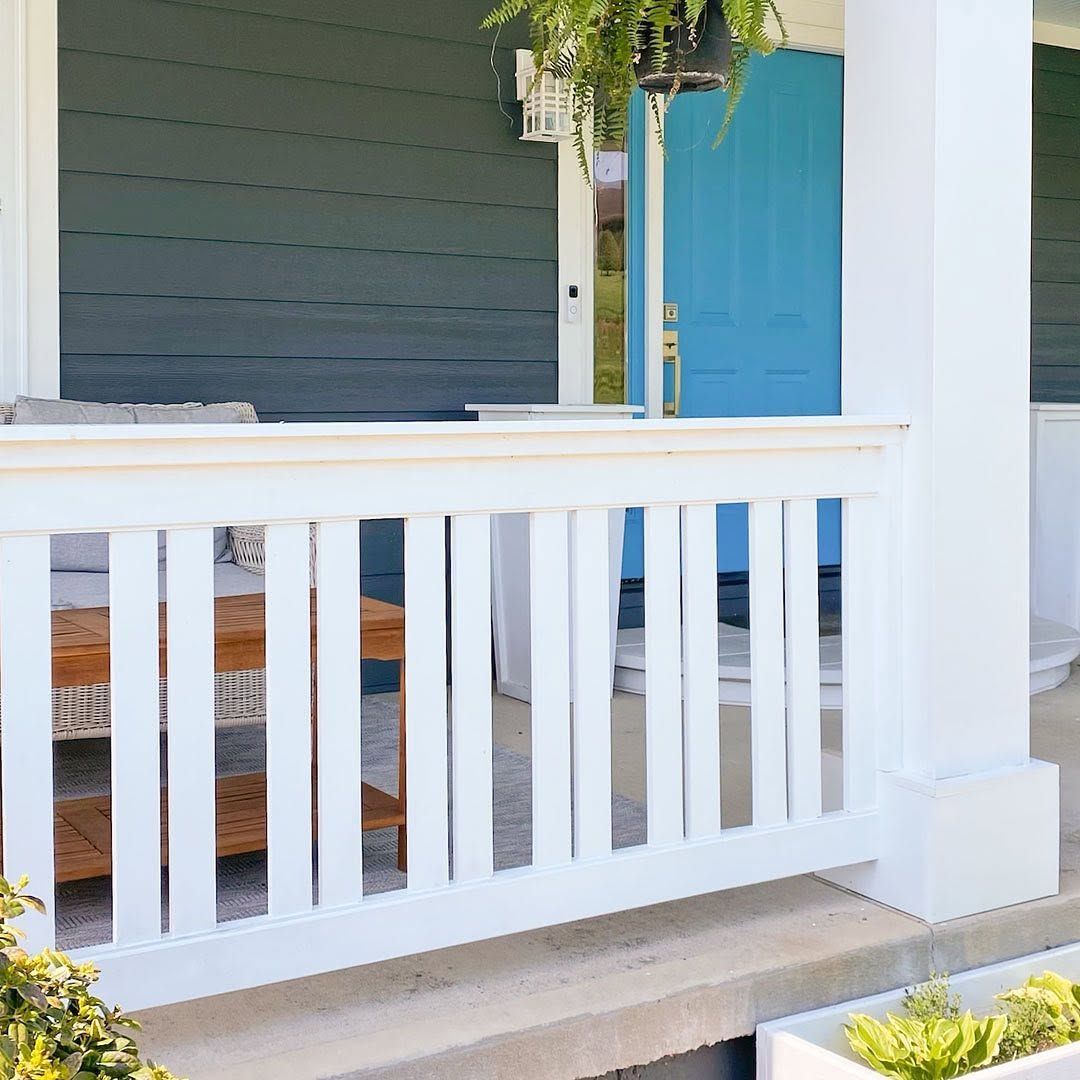
The bright blue front door with its gold handle is the undisputed star here, but it only shines because the classic white vertical picket railing acts as a pristine, quiet boundary. If you swapped these white pickets for a dark heavy metal, the coastal charm of the porch would instantly vanish. The crisp white structural pillars and railing perfectly frame the wicker outdoor seating.
|
📋 Copy HEX 🔗 Share |
You do not need to buy expensive composite materials to achieve this classic coastal look. Standard pressure-treated pine pickets and rails from any big box store will cost you a fraction of the price. With a coat of high-quality exterior primer and a durable semi-gloss white exterior paint, you can recreate this fresh, inviting perimeter for under $300 for a standard porch.
7. Industrial Black Posts Paired With Natural Stone
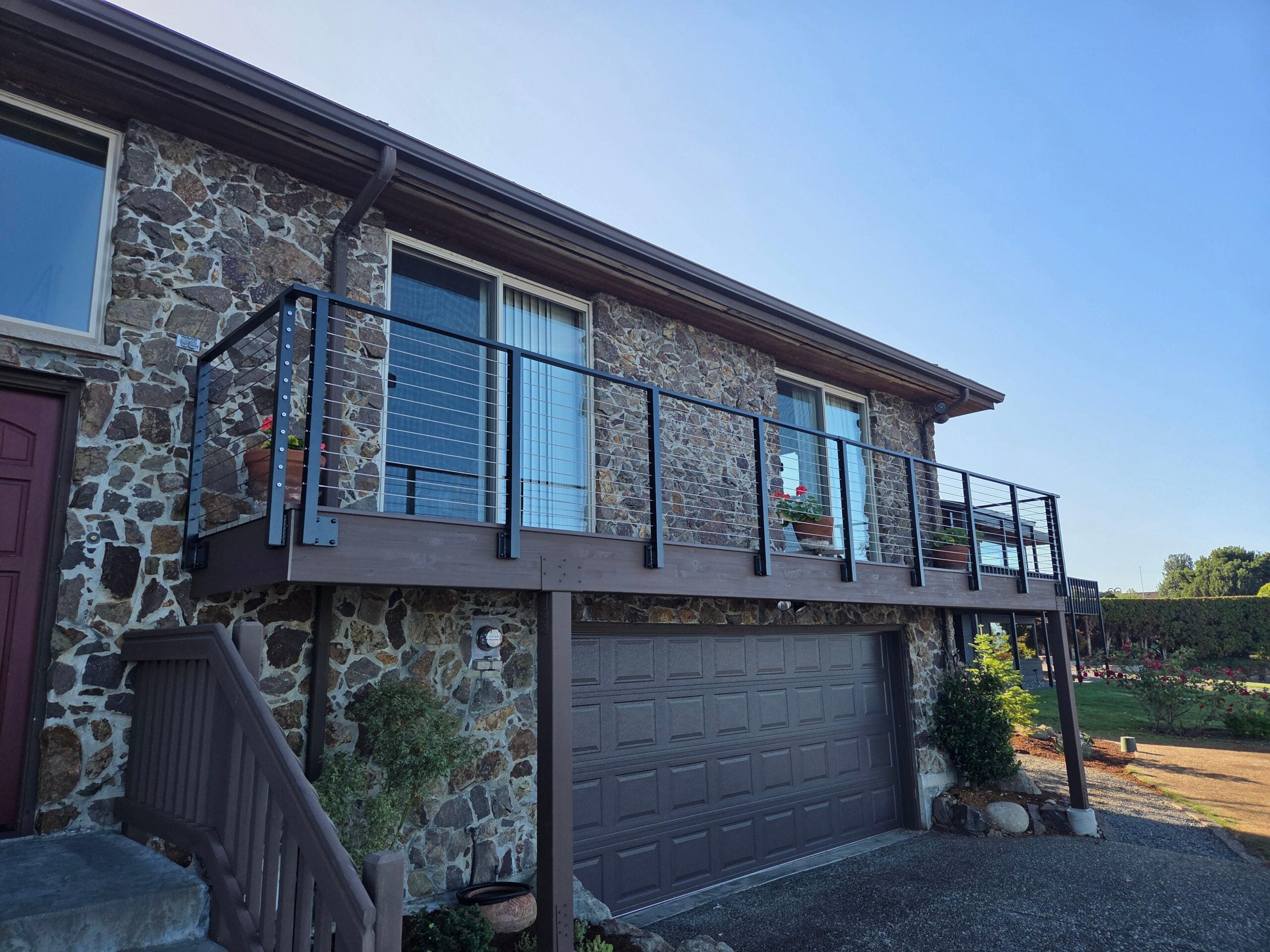
This rustic-contemporary mix hits the perfect balance: 60% heavy, earthy textures from the multi-toned natural stone house siding and dark brown composite surface, 30% industrial edge from the black square metal railing posts, and 10% organic softness from the terra cotta planters with red flowers. The thin horizontal stainless steel cables disappear visually, letting the stone facade stand out.
|
📋 Copy HEX 🔗 Share |
While horizontal cable railings look incredible and offer unobstructed views, they basically act as a ladder for adventurous toddlers. If you have small children, check your local building codes before installing horizontal infill. Many municipalities have strict regulations regarding the spacing and orientation of deck rails specifically to prevent climbing hazards.
8. Traditional White Balusters Over Diagonal Lattice Skirting
Installing a decorative white diagonal lattice skirt below your porch requires a few precise steps to get right.
|
📋 Copy HEX 🔗 Share |
- Measure the height from the ground to the bottom of the porch joist.
- Cut your lattice panels to size using a circular saw with a fine-tooth blade.
- Build a simple frame using 1×4 treated lumber to hold the lattice securely.
- Attach the framed panels using exterior-grade deck screws.
- Add hinges to one panel if you need access to the crawlspace underneath.
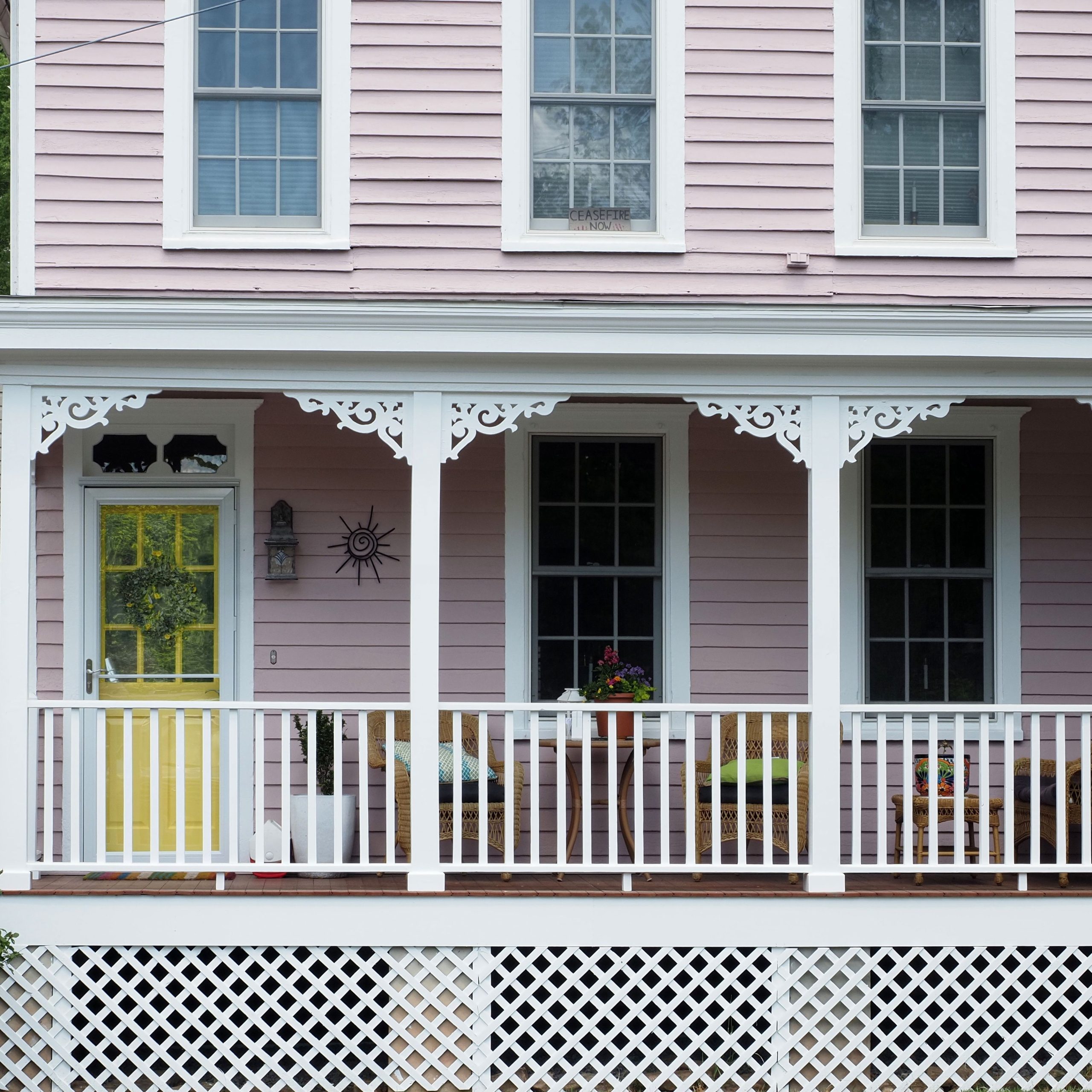
To make traditional white vertical balusters look custom and high-end, focus on the details above the rail. Adding ornate white scrollwork brackets to the top of your painted porch columns draws the eye upward, making the entire brown wooden porch floor area feel intentional and historically accurate rather than just a basic builder-grade installation.
9. Vibrant Yellow Horizontal Bars Against Cedar Shakes
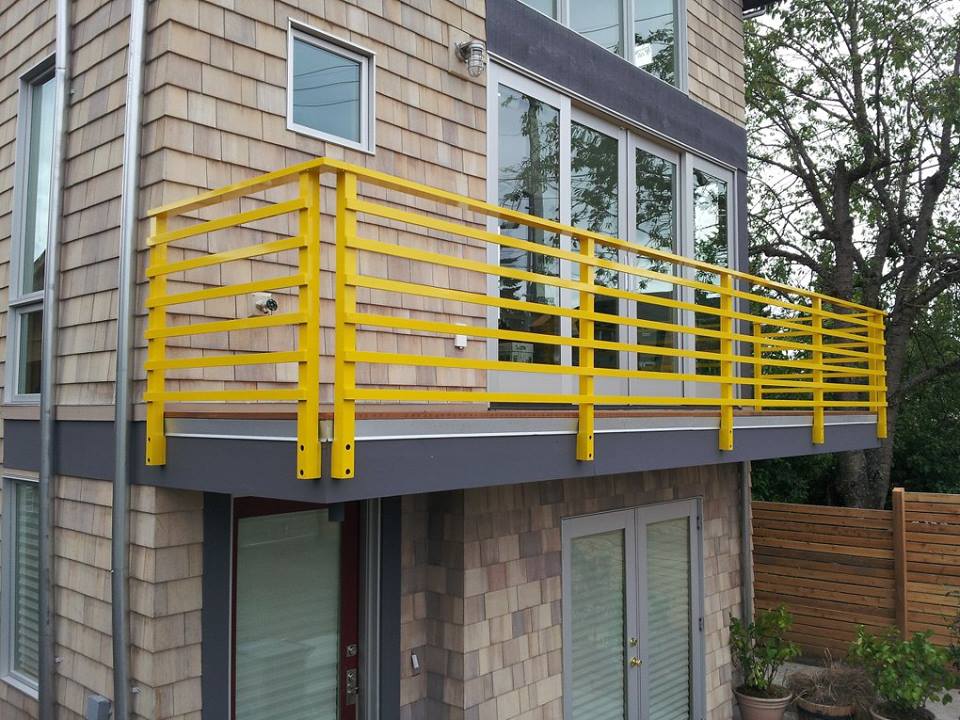
The single element that makes this elevated deck unforgettable is the sheer audacity of the bright yellow metal railing. Remove that saturated pop of color, and you are left with a very standard, albeit nice, natural cedar shake building. The bold horizontal bar design transforms a functional safety barrier into an intentional piece of modern architectural art.
|
📋 Copy HEX 🔗 Share |
This bold choice works because it relies on the principle of complementary contrast. The natural wood tones of the cedar siding and the dark gray deck base provide a neutral, earthy backdrop that allows the artificial, lively yellow to pop without overwhelming the senses. The metallic rain pipe subtly echoes the industrial feel of the metal railing.
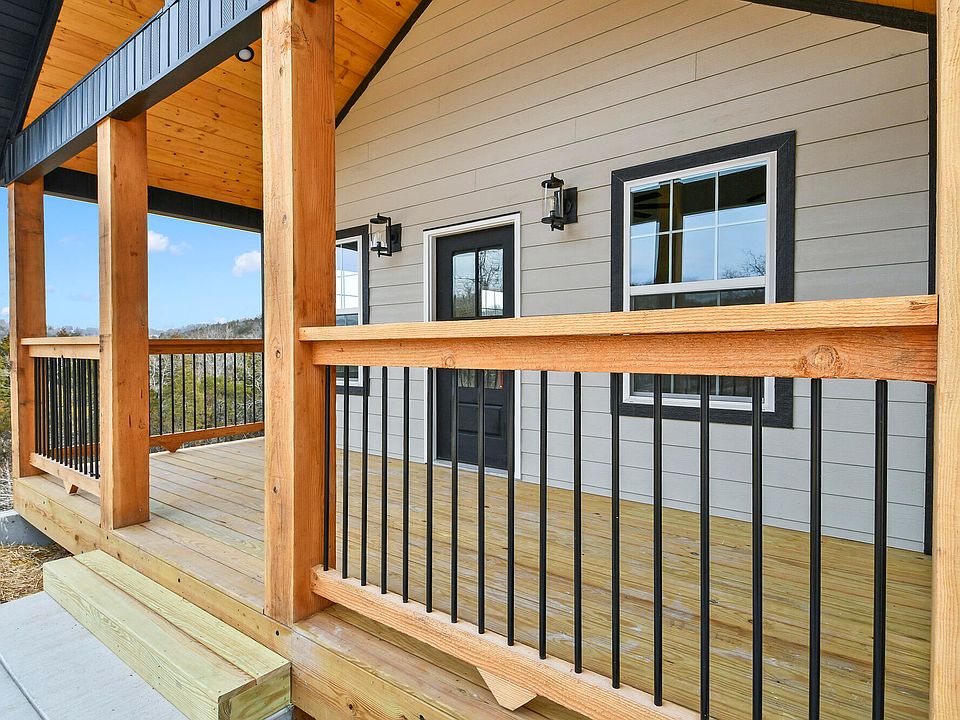
10. Natural Wood Framing Around Slender Black Balusters
Before tearing out your old deck to recreate this modern rustic look, run through this quick checklist.
|
📋 Copy HEX 🔗 Share |
- Verify the structural integrity of your thick natural wood support posts.
- Measure the distance between posts to calculate how many black metal balusters you need (usually spaced 4 inches apart).
- Check the condition of your existing light beige-gray house siding to ensure it pairs nicely with warm wood tones.
- Confirm you have the budget for high-quality exterior wood sealant.
Solid cedar or redwood top rails can be incredibly expensive. To get this exact look for about forty percent less, use standard pressure-treated pine for the natural wood top rail and bottom frame. Sand it thoroughly and apply a high-quality semi-transparent cedar-toned stain. Paired with affordable hollow black aluminum vertical balusters from a big-box store, no one will know the difference.
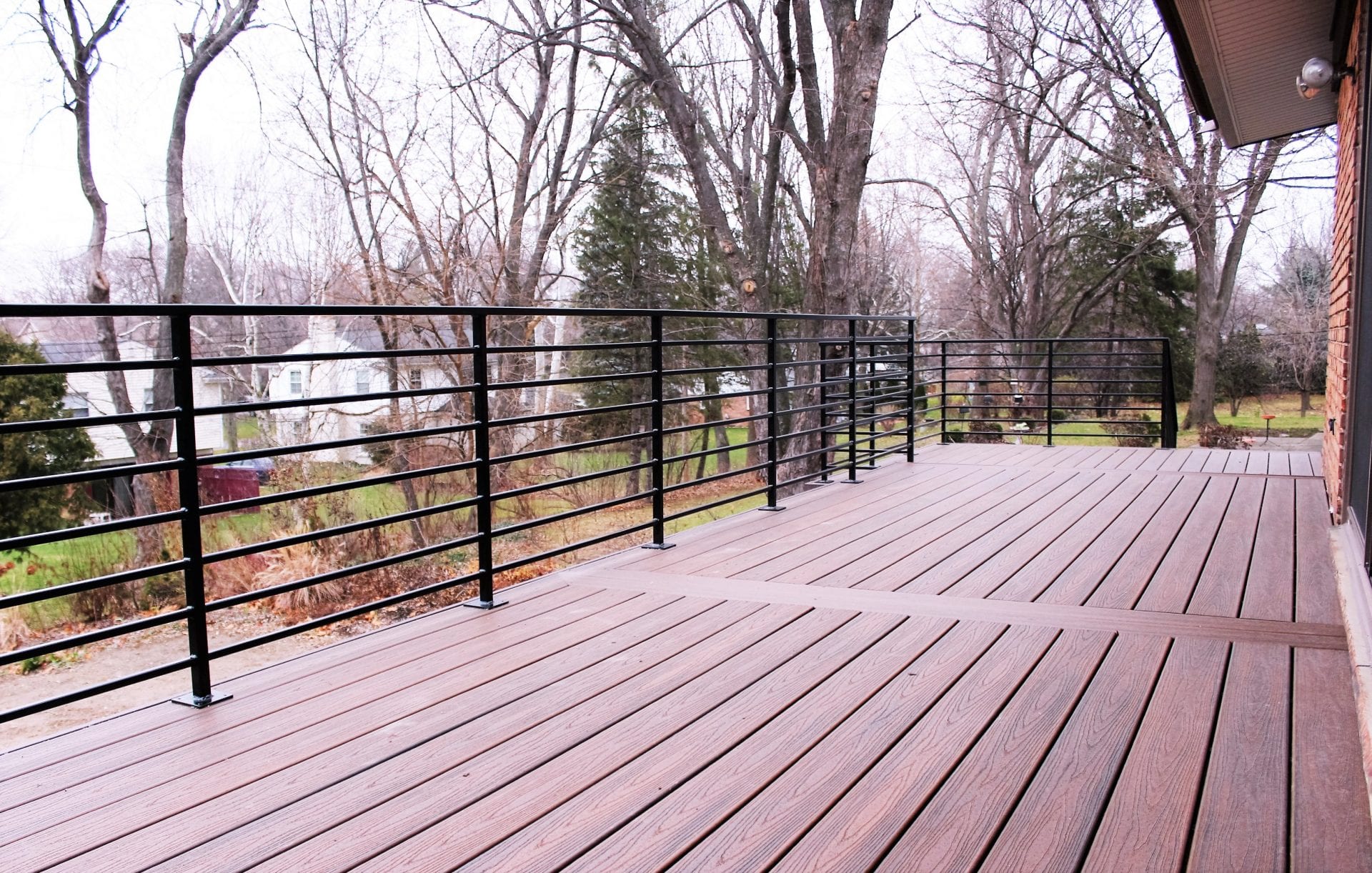
11. Thin Black Horizontal Bars Over Reddish-Brown Planks
This contemporary design requires significant horizontal space to make an impact. The long, sweeping lines of the thin black metal horizontal bar railing look best when they can stretch for at least fifteen feet unbroken. In a tiny balcony setting, horizontal bars can feel slightly cramped and cage-like, but on this wide outdoor deck with reddish-brown composite planks, it feels expansive and sleek.
|
📋 Copy HEX 🔗 Share |
If you look closely at the reddish-brown composite deck planks, you will notice a section laid perpendicular to the others. This isn’t just a design choice—it’s often necessary when a deck is wider than standard twenty-foot composite boards. Like the bold design in Idea #8, this requires careful planning. Seams will be highly visible, so creating a deliberate pattern is a great way to hide unavoidable board joints.
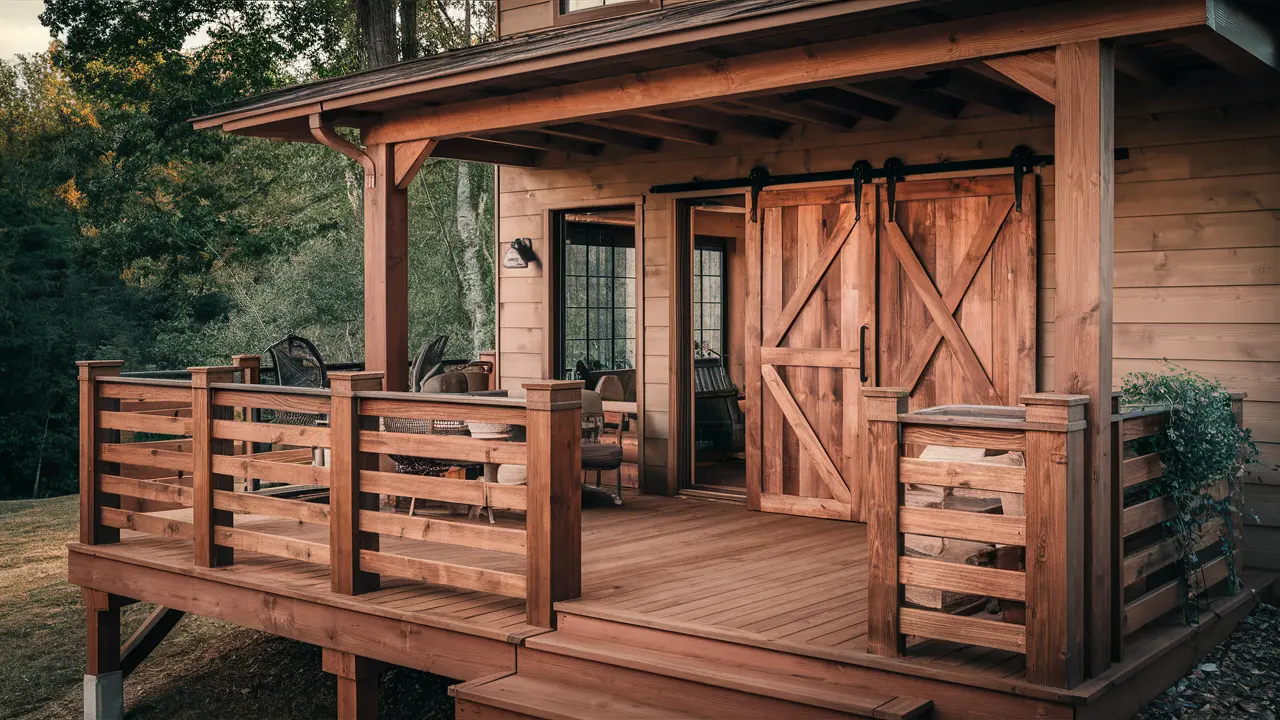
12. Rustic Horizontal Slats With Integrated Firewood Storage
The absolute genius of this covered outdoor deck is the integrated firewood storage unit built directly into the thick square railing posts. It takes a mundane necessity and turns it into a textured, functional design feature. Flanked by sliding barn-style doors with black metal hardware, the stacked wood adds organic warmth to the reddish-brown stained wood.
|
📋 Copy HEX 🔗 Share |
Horizontal wood slat railings are notorious for collecting debris. Unlike vertical balusters where water and leaves slide right off, horizontal flat surfaces will collect pollen, dust, and standing rainwater. You will need to use a leaf blower or pressure washer on a low setting regularly to keep the slats clean and prevent rot, especially near the dark green foliage.
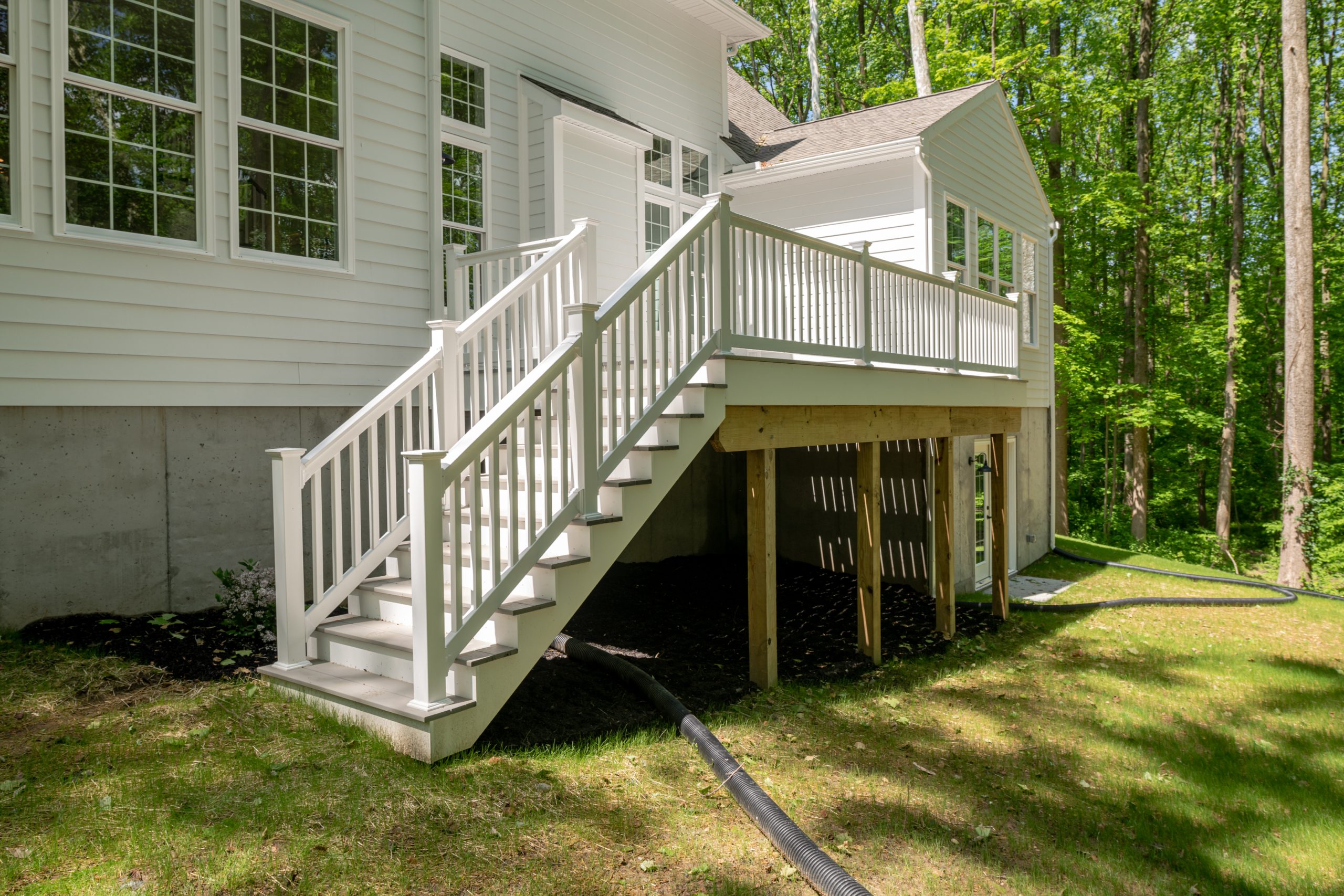
13. Continuous White Pickets Stepping Down To The Forest
Here is what it takes to build a traditional matching staircase with white vertical picket railings.
|
📋 Copy HEX 🔗 Share |
- White square newel posts with caps: $200 – $350
- White vertical pickets and rails: $250 – $450
- Light gray stair treads (composite): $300 – $600
- White risers and stringer fascia: $150 – $250
- Total estimated cost for a standard staircase: $900 – $1,650.
When pairing light gray stair treads with white risers against an exposed concrete foundation, use a hidden fastening system for the treads. Visible screw heads will collect dirt and immediately detract from the clean, pristine look of the white horizontal house siding and crisp white square newel posts. The smooth treads make the descent into the dense green forest feel much more elegant.
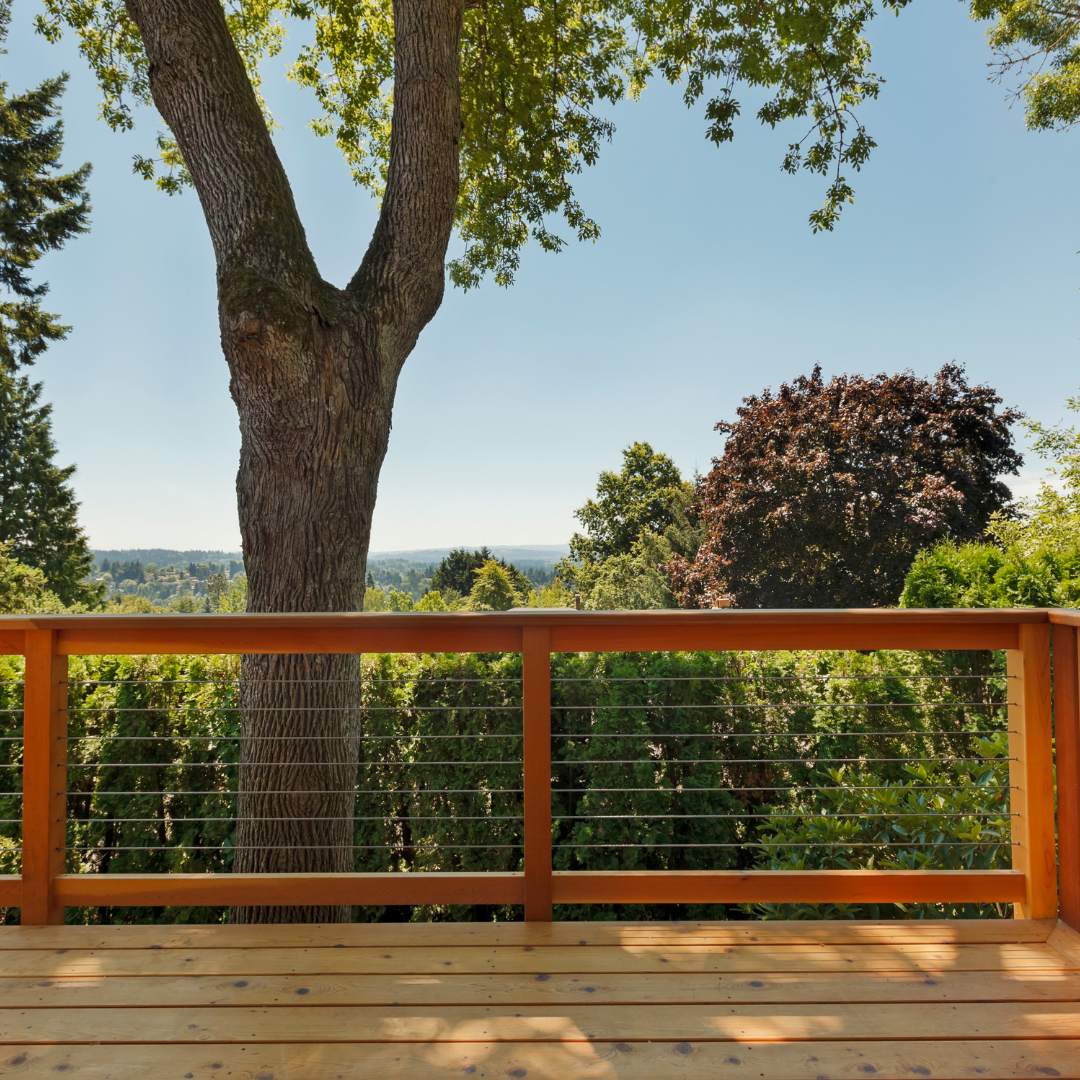
14. Warm Wood Frames Highlighting Unobstructed Green Views
This serene space works on a beautiful visual ratio: 80% nature and 20% framing. The warm natural wood deck planks and matching top and bottom rails provide just enough structure to feel safe, while the nearly invisible horizontal metal cable infill allows the lush green trees and clear blue sky to dominate the experience.
|
📋 Copy HEX 🔗 Share |
Similar to the natural framing in Idea #9, this setup relies on color harmony. The warm tones of the wooden top and bottom rails sit directly opposite the vibrant greens and clear blue sky on the color wheel. This natural complementary pairing makes the wood look richer and the landscape look more vivid without requiring any artificial decor.
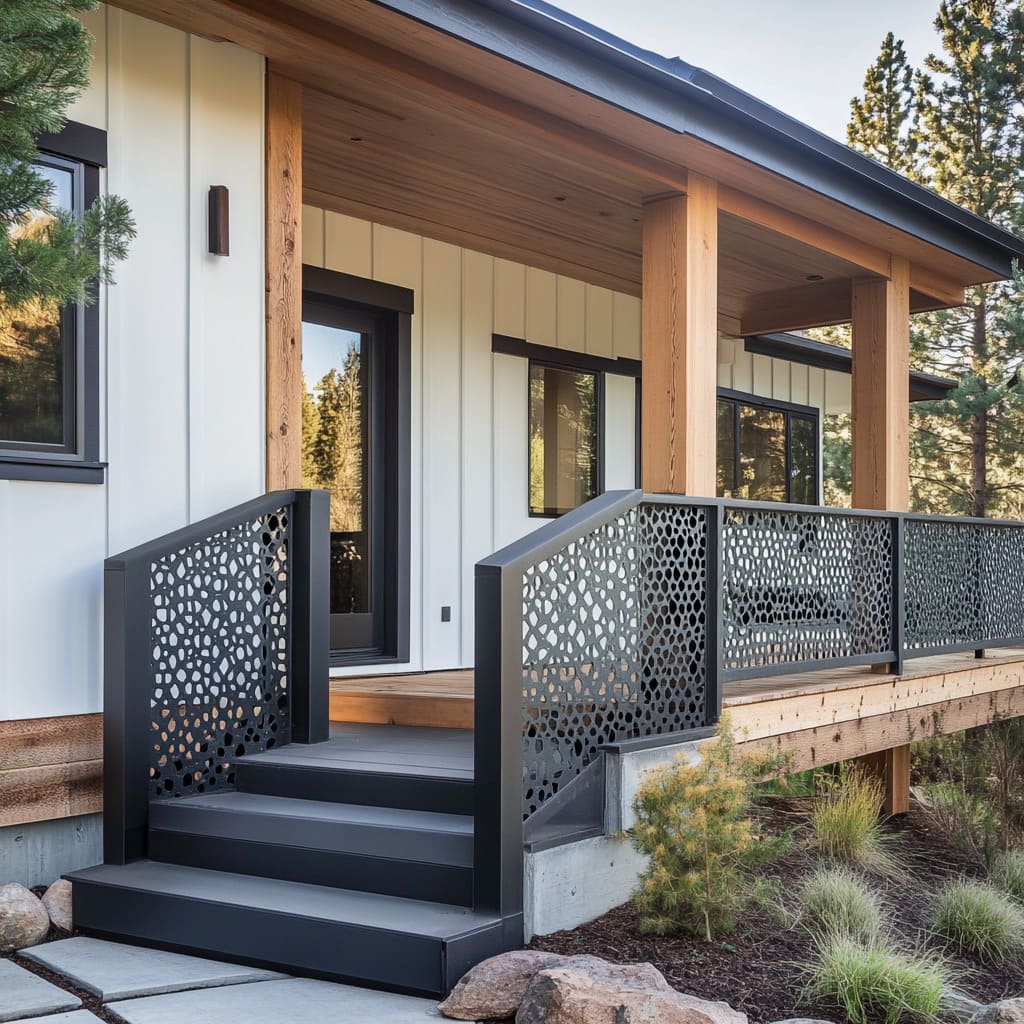
15. Organic Laser-Cut Patterns On Matte Black Metal
Laser-cut architectural panels are heavily trending as homeowners look for alternatives to glass and cables that still offer a modern edge. The organic laser-cut pattern on these matte black perforated metal panels creates stunning shadow play on the natural wood deck flooring during the golden hour, perfectly balancing the rigid lines of the white vertical board and batten siding.
|
📋 Copy HEX 🔗 Share |
Custom laser-cut metal panels can easily cost over $1,000 per section. For a budget-friendly alternative that offers a similar architectural shadow effect, look into heavy-duty decorative polymer privacy screens. Sold at most home improvement stores for around $80 a panel, these can be framed out with matte black painted lumber to mimic the high-end metal look for a fraction of the cost.
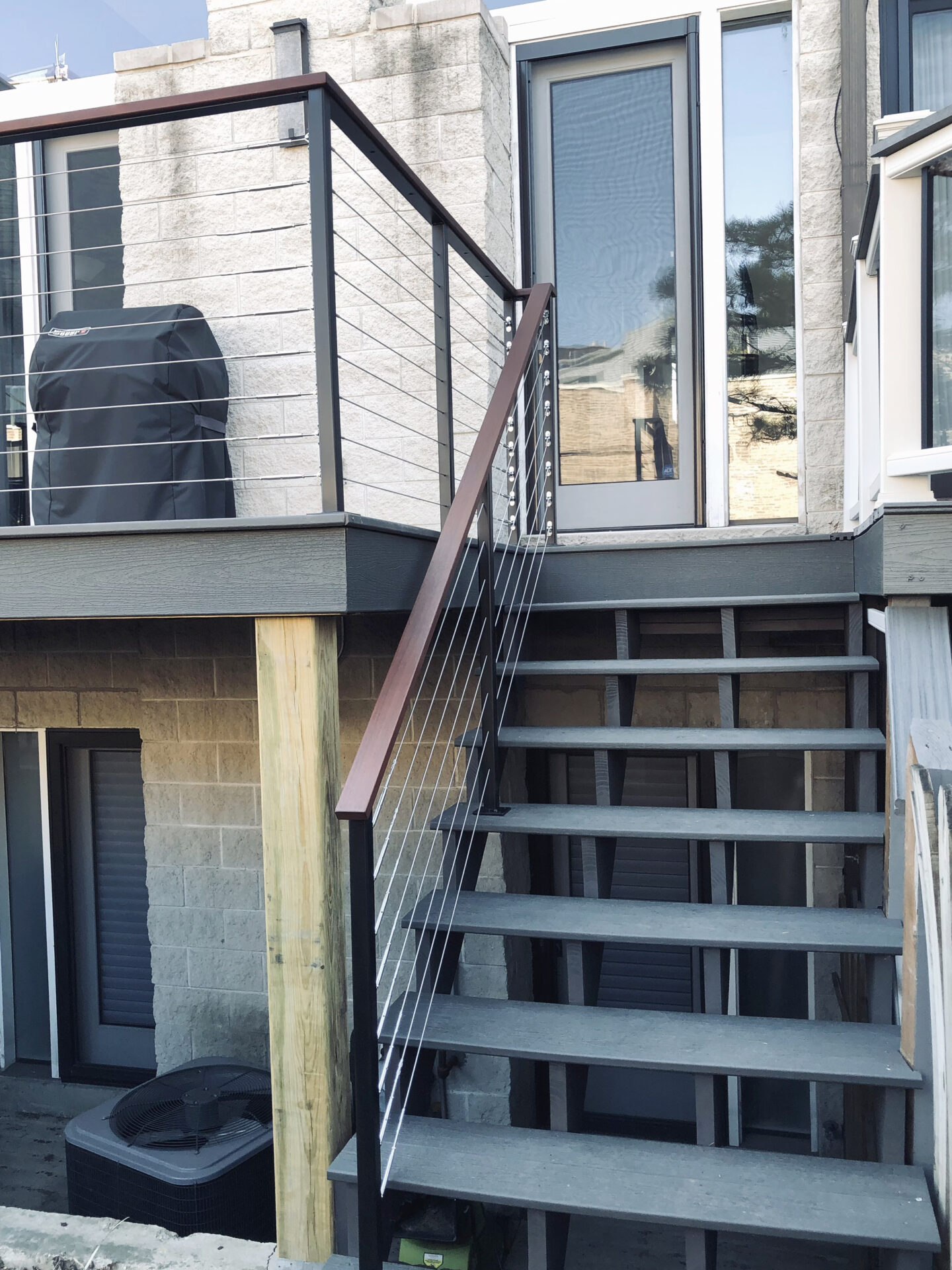
16. Deep Gray Composite Paired With Dark Brown Rails
Using dark colors heavily on both the horizontal and vertical planes visually shrinks a space. This combination of dark gray composite deck boards and dark black metal railing posts works beautifully here because the area is open and receives plenty of sunlight. In a small, deeply shaded side yard, these deep tones against the light beige concrete block wall might feel somewhat oppressive.
|
📋 Copy HEX 🔗 Share |
Dark gray composite stairs and decking will get incredibly hot under direct summer sunlight—sometimes too hot for bare feet or pet paws. While the dark brown top handrail adds a beautiful modern touch, you must be prepared for the heat retention of dark synthetic materials. Always test a sample board in full sun before committing to this sleek color palette.
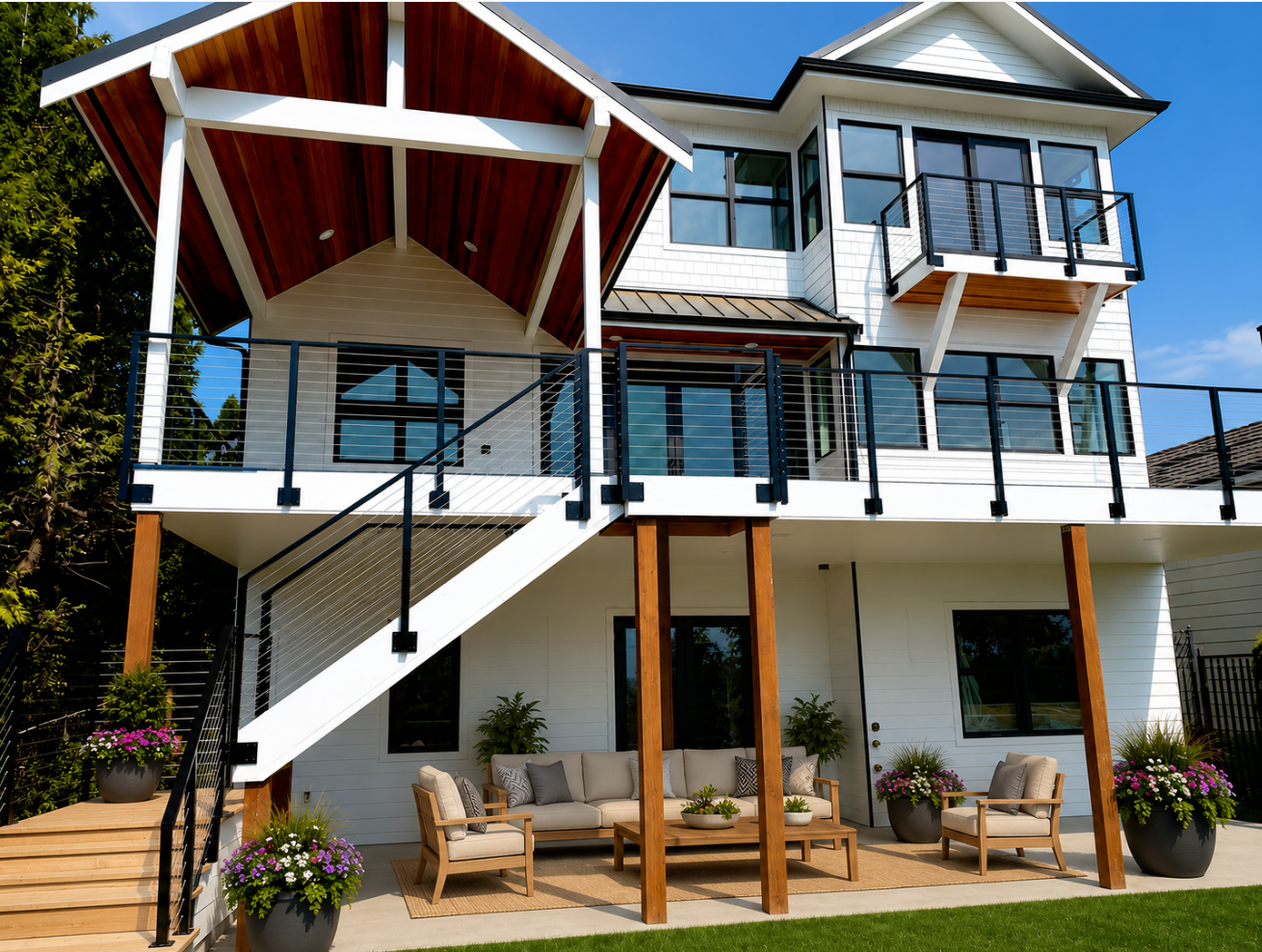
17. High-Contrast Black Cables Against Crisp White Structures
The defining feature of this contemporary multi-level space is the extreme contrast. Black vertical railing posts and thin horizontal stainless steel cables are set directly against stark white deck structures and white house siding. Remove this intense black-and-white dynamic, and the natural wood deck stairs would lose their dramatic, focal-point impact.
|
📋 Copy HEX 🔗 Share |
This works precisely because it utilizes negative space. The thin profile of the cables and minimal posts don’t fight with the large black-framed windows for attention. Instead, the railing mimics the window frames, creating a cohesive architectural language across the exterior, while the natural wood soffits warm up the stark monochromatic palette above.
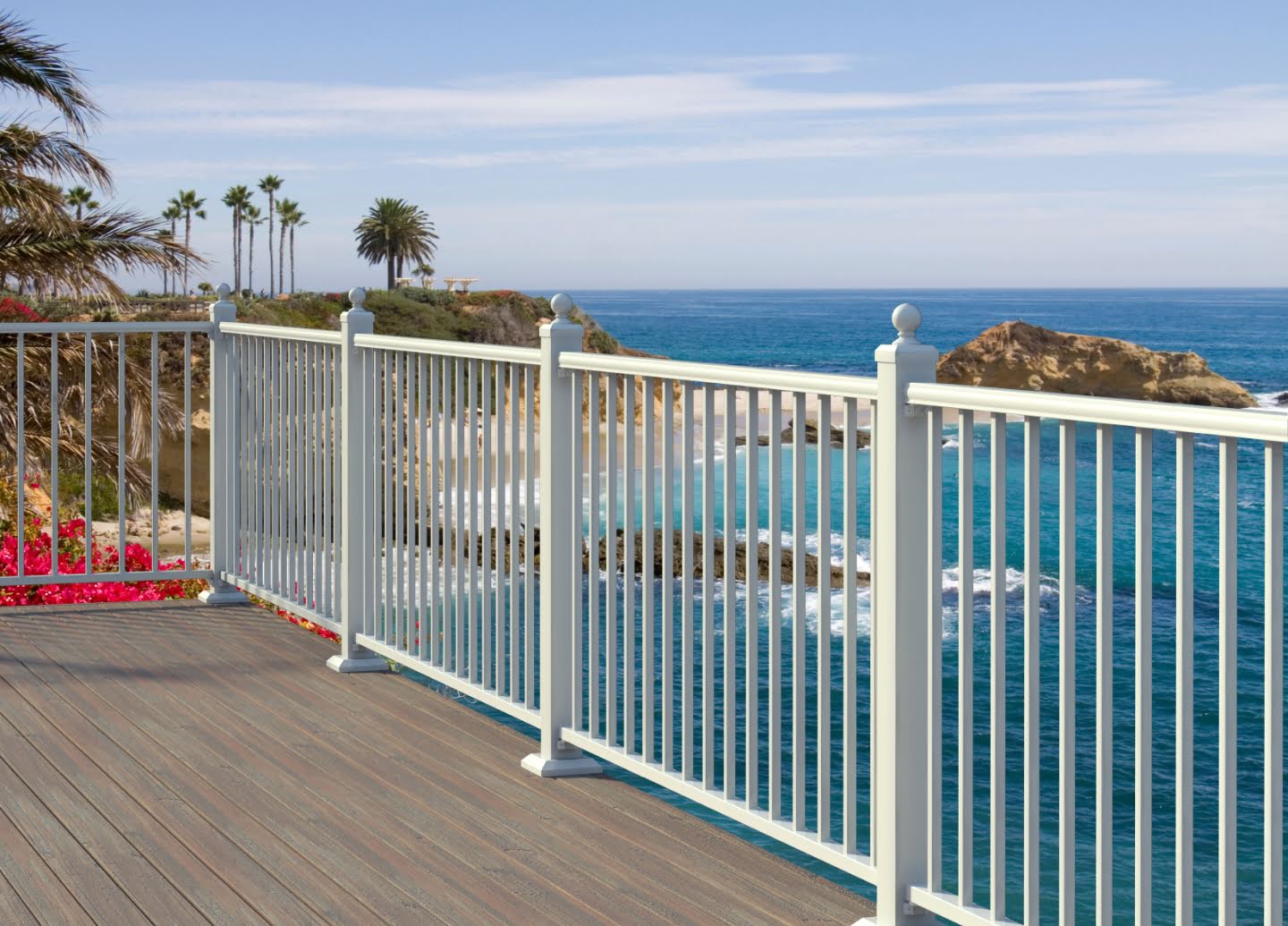
18. Spherical Finials Topping White Coastal Aluminum Pickets
When installing square white railing posts overlooking a blue ocean backdrop, always opt for spherical post finials rather than flat or pyramid caps. The round shape breaks up the endless grid of slender vertical pickets and horizontal decking, introducing a soft, nautical detail that elevates the entire design without requiring a custom builder.
|
📋 Copy HEX 🔗 Share |
White aluminum is incredible for coastal environments because it will not rot or warp from the salt air, but it does show dirt, seagull droppings, and pollen very quickly. You will need to wipe down the bright white vertical balusters and top rails with a mild soapy solution at least once a month to keep them looking pristine against the dark brown wood-look deck planks.
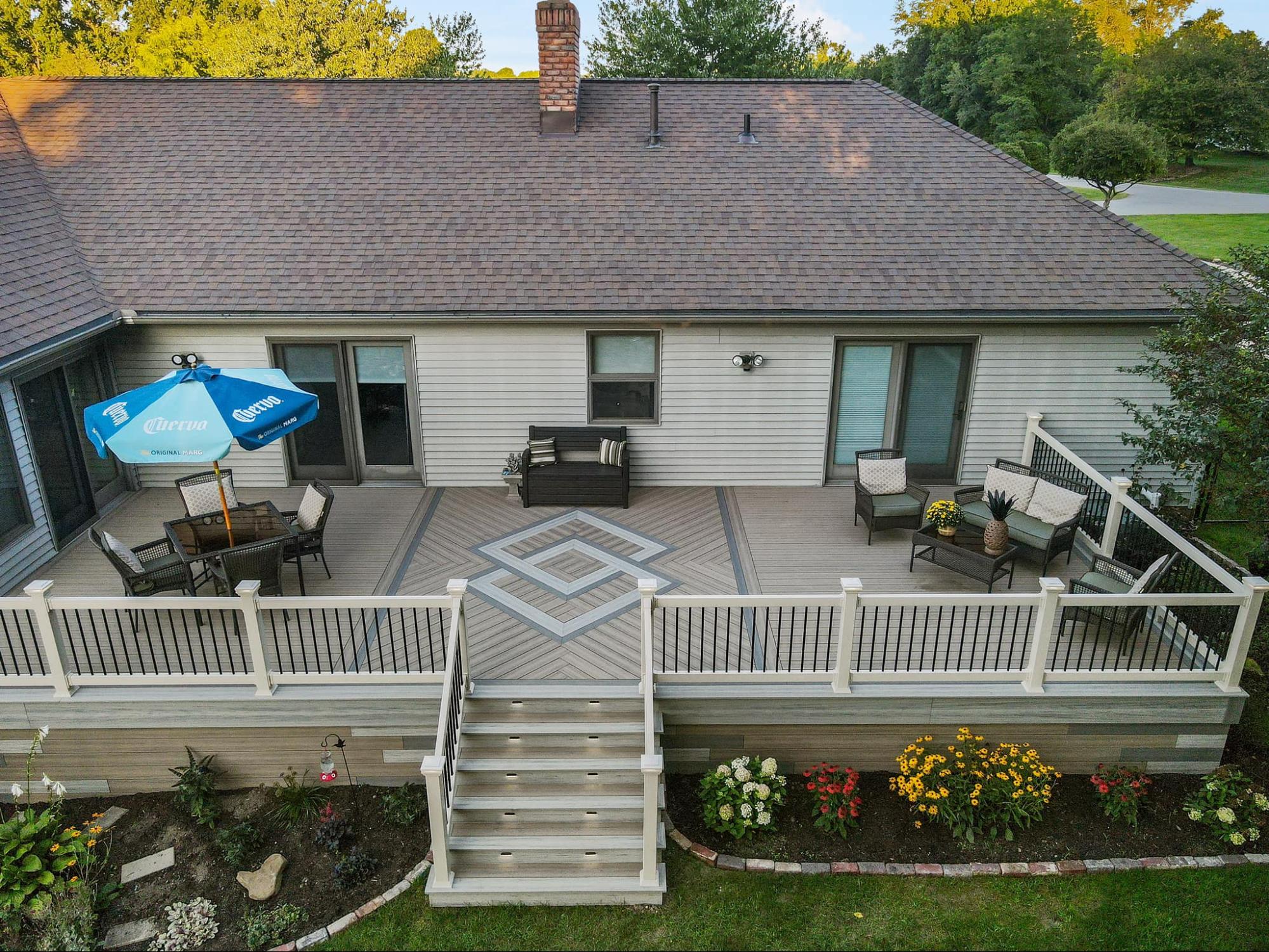
19. Two-Tone White And Black Enclosing A Diamond Inlay
To pull off a multi-toned composite deck floor with a central diamond pattern inlay, you need a substantial square footage—typically at least sixteen by sixteen feet. On a narrow balcony, the pattern will be cut off by the white deck posts and top rail, looking messy rather than intentional. The wide area here perfectly accommodates both dining and lounge areas around the design.
|
📋 Copy HEX 🔗 Share |
Integrating step lighting into your deck stairs, as seen here descending to the landscaped flower beds, is heavily advised but requires running low-voltage wire before the composite fascia is closed up. Do not wait until the white rail posts and black balusters are installed to think about lighting; retrofitting those small LEDs later requires dismantling perfectly good construction.
20. Minimalist Black Balusters Capped With Substantial Wood
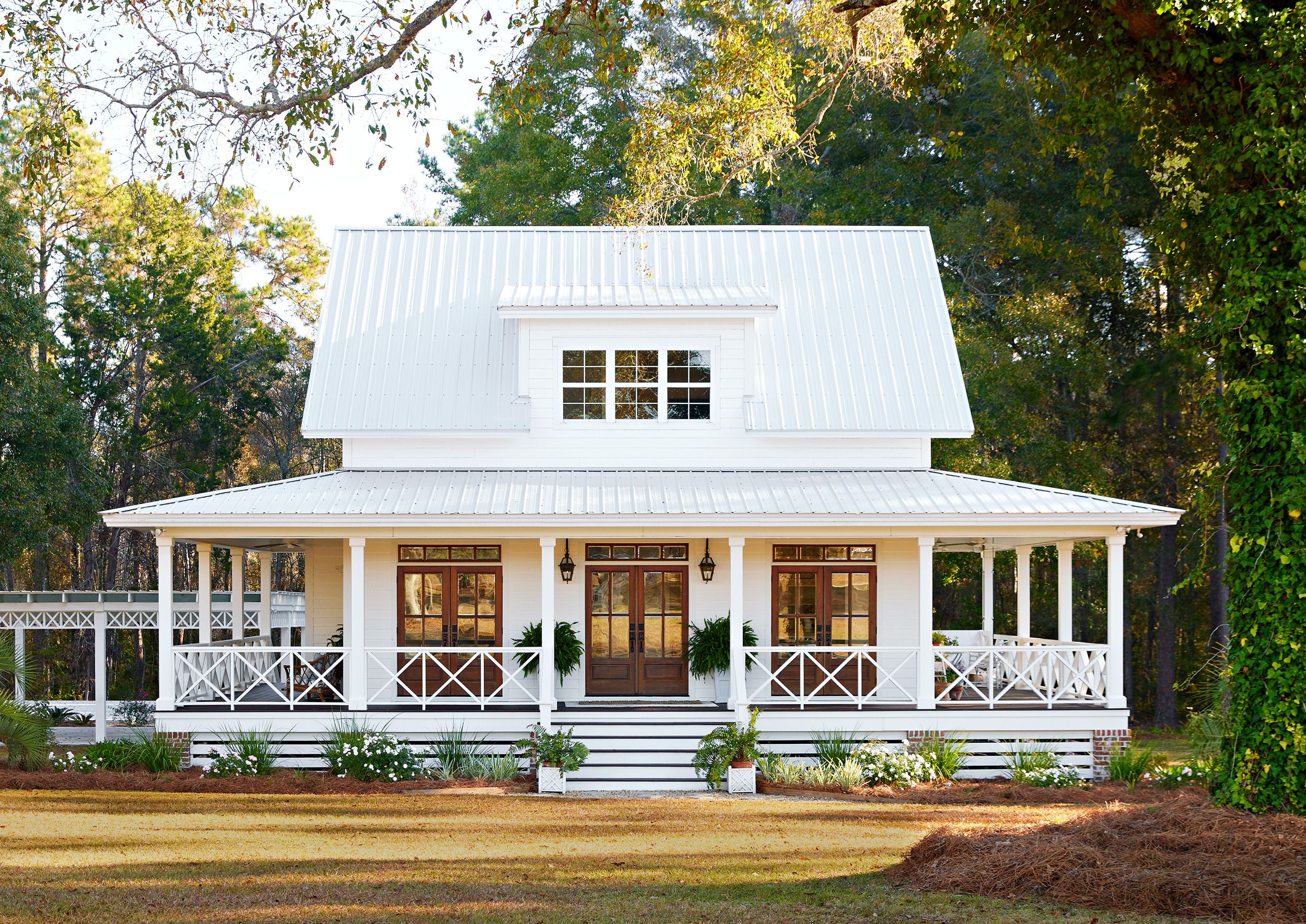
The magic here is entirely in the proportion of the natural wood top rail. The black metal vertical balusters are exceptionally thin, almost disappearing into the green foliage background. The substantial, thick wooden cap gives the eye a solid boundary line to rest on, anchoring the minimalist design to the warm wooden deck floor.
|
📋 Copy HEX 🔗 Share |
Instead of purchasing pre-fabricated metal railing panels that can be quite pricey, you can build this exact look using individual face-mount black metal balusters screwed directly into a pressure-treated wood frame. Capped with a nice piece of sealed 2×6 lumber, you can achieve this sleek, unobstructed view for less than half the cost of a pre-welded system.
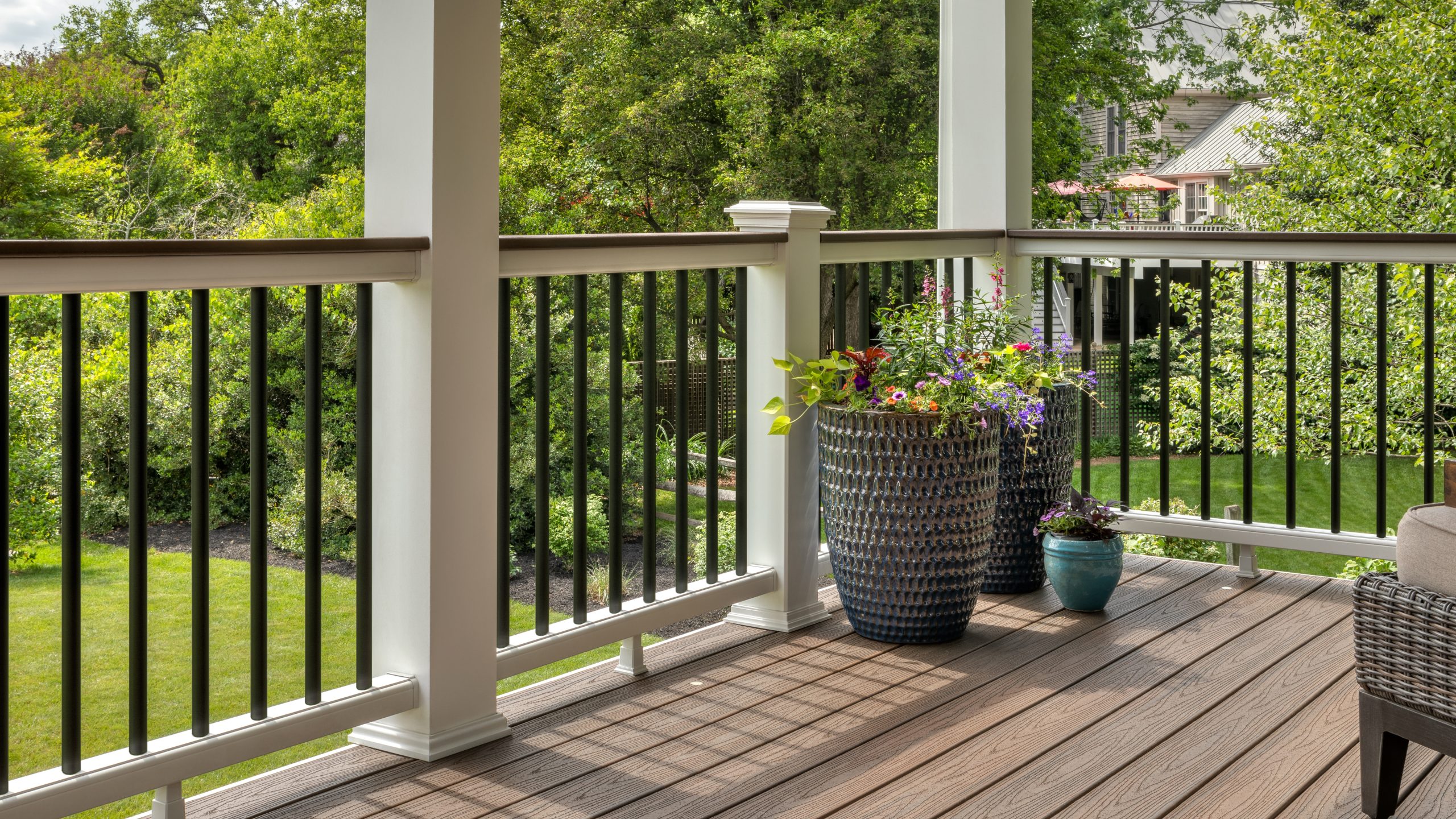
21. Thick White Square Posts Framing Dark Round Balusters
If you love the two-tone look seen in Idea #18 but want something slightly warmer, pair thick white square deck posts with a dark brown top handrail instead of a white one. This dark cap not only coordinates beautifully with medium brown composite planks, but it also completely hides the dirt and handprints that inevitably cover a white top rail.
|
📋 Copy HEX 🔗 Share |
Mixing shapes is a subtle way to add interest to outdoor structures. The sharp, heavy geometry of the white square posts contrasts perfectly with the slender black round metal balusters. This interplay of thick/thin and square/round keeps the boundary visually engaging without distracting from the large, textured planters with colorful flowers on the deck.
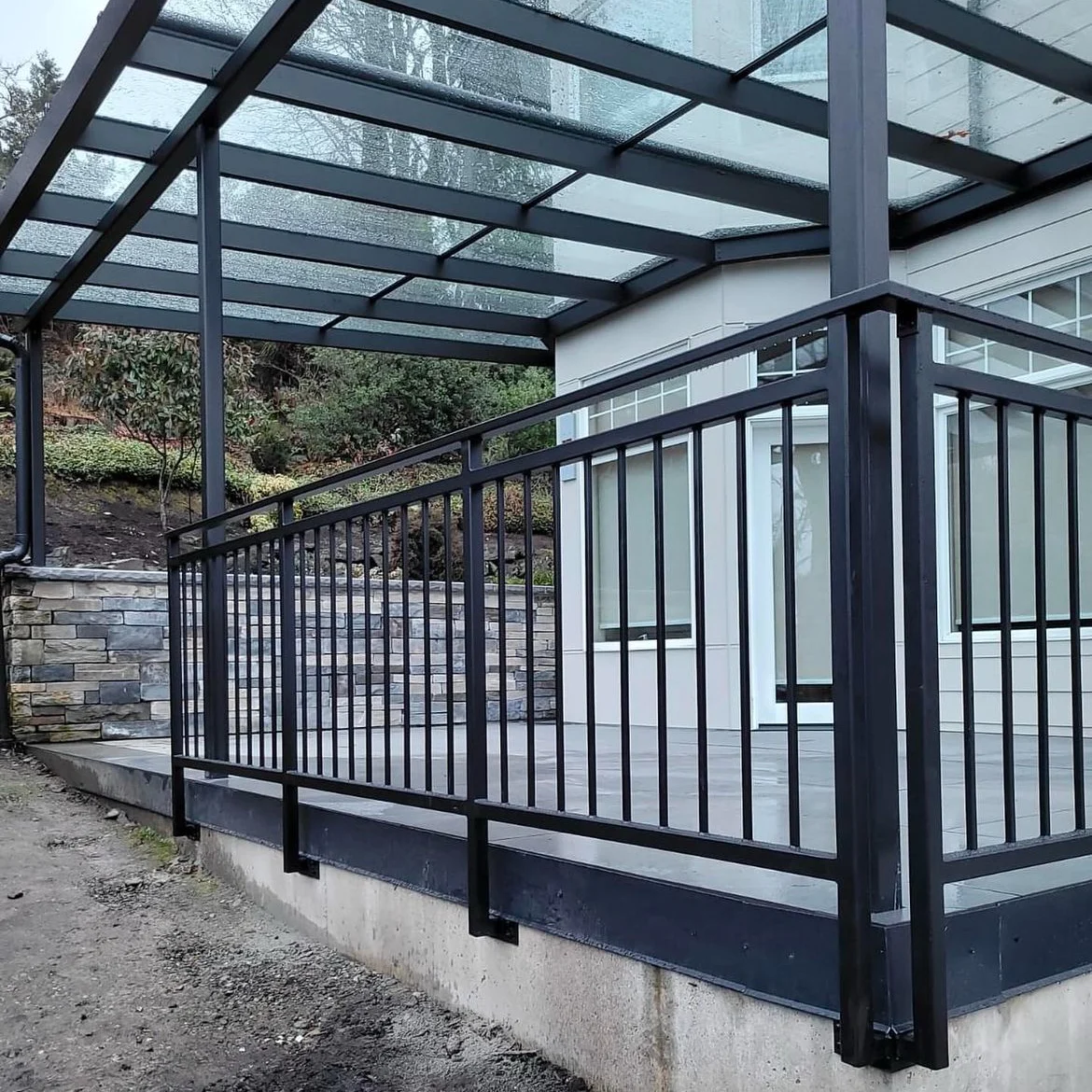
22. Sturdy Black Pickets Bordering A Covered Paver Deck
Integrating heavy-duty materials like this dark gray paved deck and multi-toned stacked stone wall with sleek black metal vertical pickets is a major trend in durable outdoor living. Homeowners are moving away from materials that require yearly staining, opting instead for solid pavers and powder-coated metals that can withstand decades of harsh weather beneath a glass patio cover.
|
📋 Copy HEX 🔗 Share |
While the black metal vertical picket railing and square metal railing posts require almost zero maintenance, the clear glass patio cover above is a different story. To keep that light beige exterior siding looking crisp and well-lit, you will need to get up on a ladder to scrub water spots, pine needles, and bird droppings off that glass roof several times a year.
23. Pyramid-Capped Posts Over Textured Light Brown Composite
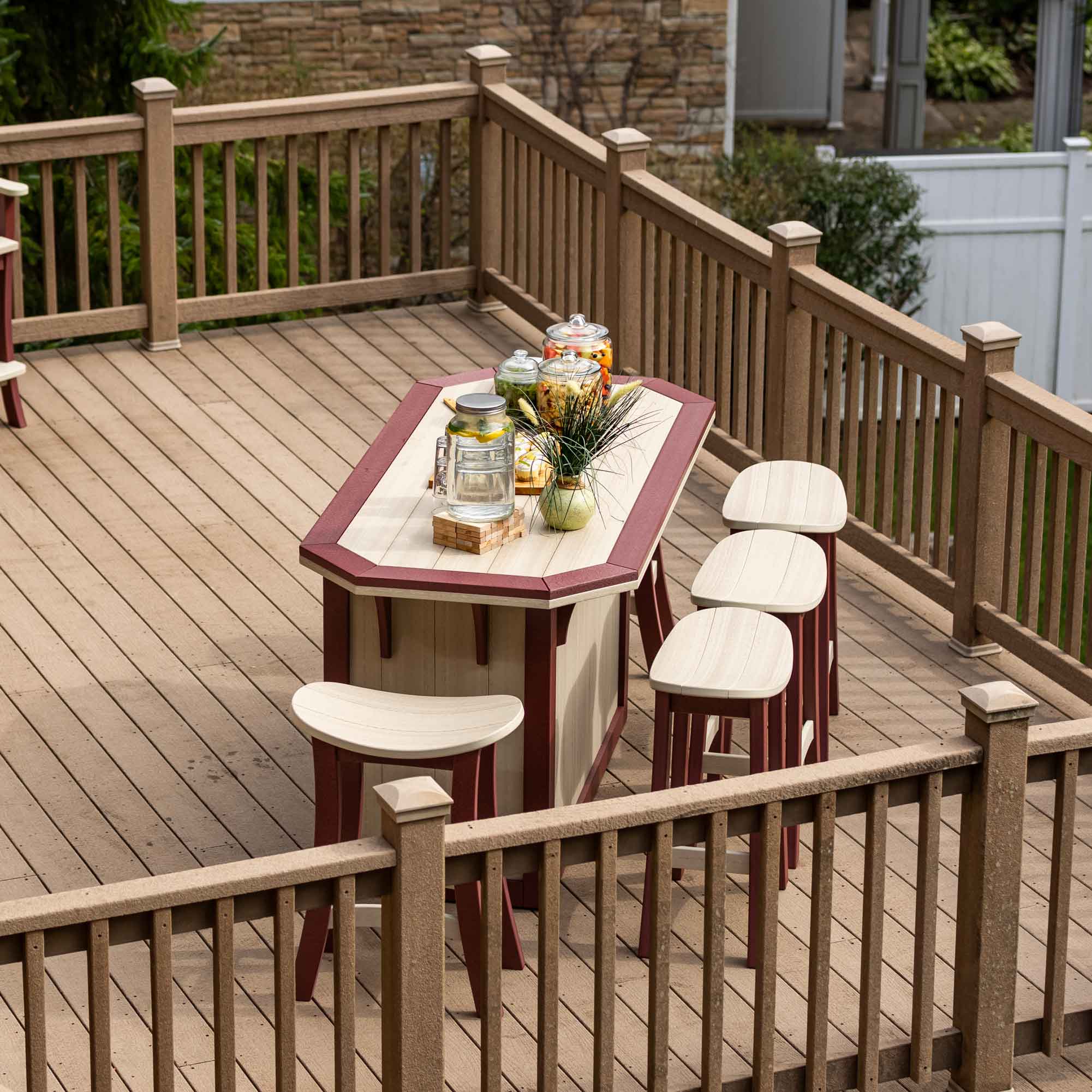
This cohesive outdoor space uses a very tight material palette: 90% textured light brown composite for both the decking and the railing system, and 10% dark contrasting accents from the outdoor bar height table and stools. The matching square vertical balusters and flat top rail create a seamless, unified look that feels highly intentional and integrated.
|
📋 Copy HEX 🔗 Share |
Composite railing systems are incredibly durable, but they can look a bit plastic or bulky if not styled correctly. The addition of pyramid-shaped caps on the square posts breaks up the flat, boxy profile of the synthetic material. Be aware that heavily textured composite will hold onto pollen and dust in its faux-wood grain grooves much more than smooth metal or vinyl.
24. Mixing White Pickets With Natural Wood Horizontal Planks
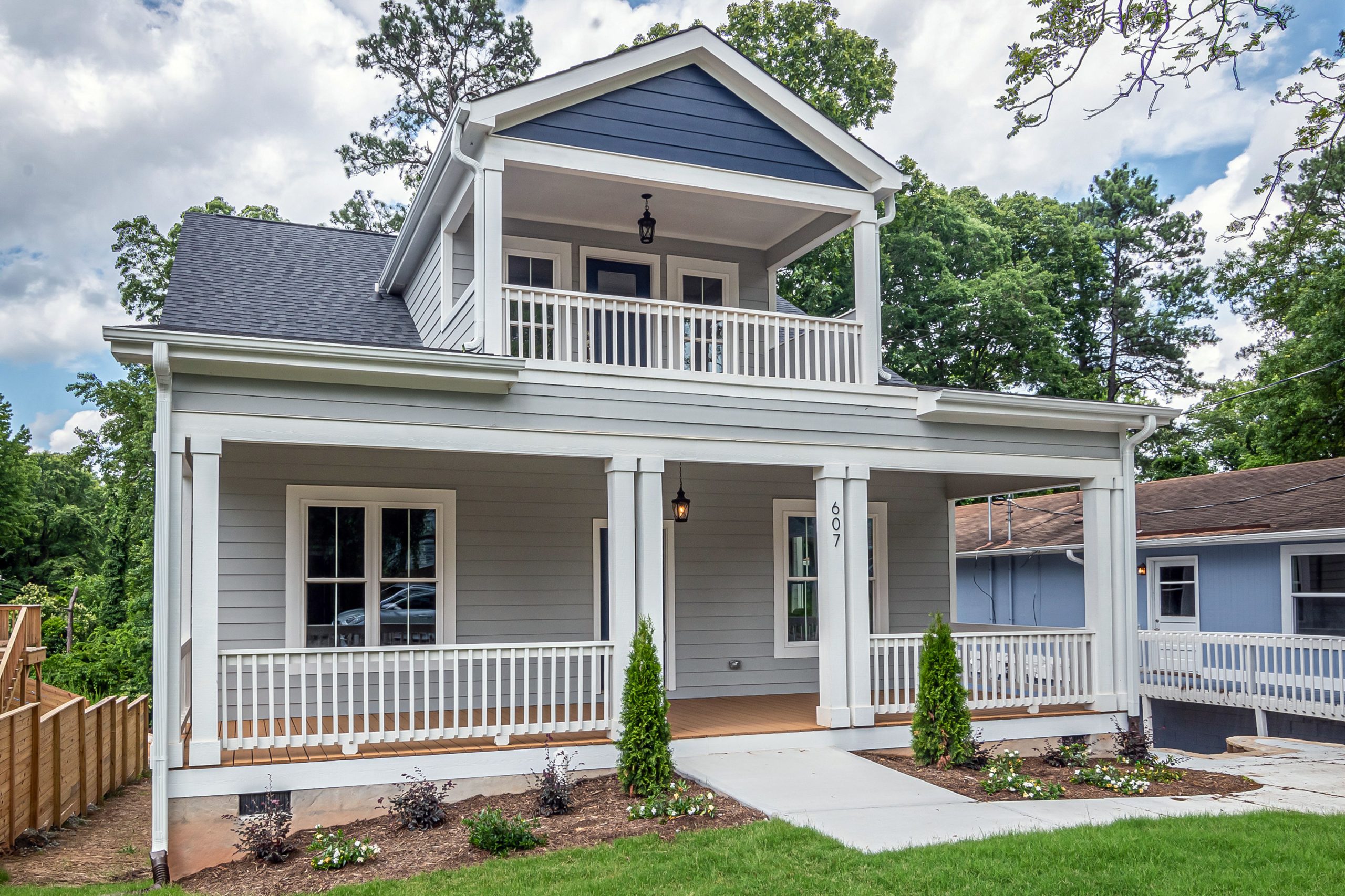
The brilliant move on this two-story house is purposefully breaking the rules by mixing styles. The first-level covered porch and upper balcony use classic white vertical picket railings, but the side deck utilizes a horizontal plank railing made of natural wood. This creates distinct zones, signaling that the side deck is a more casual, separate entertaining space from the formal porch.
|
📋 Copy HEX 🔗 Share |
Mixing railing styles requires enough architectural separation to avoid looking like a mistake. This works here because the natural wood deck is physically stepped down and separated from the main white square support columns and light gray horizontal house siding. Do not attempt this mixed-material look on a small, continuous 10×10 patio, as it will just look unfinished.
25. Weathered Gray Post-And-Spindle On A Casual Deck
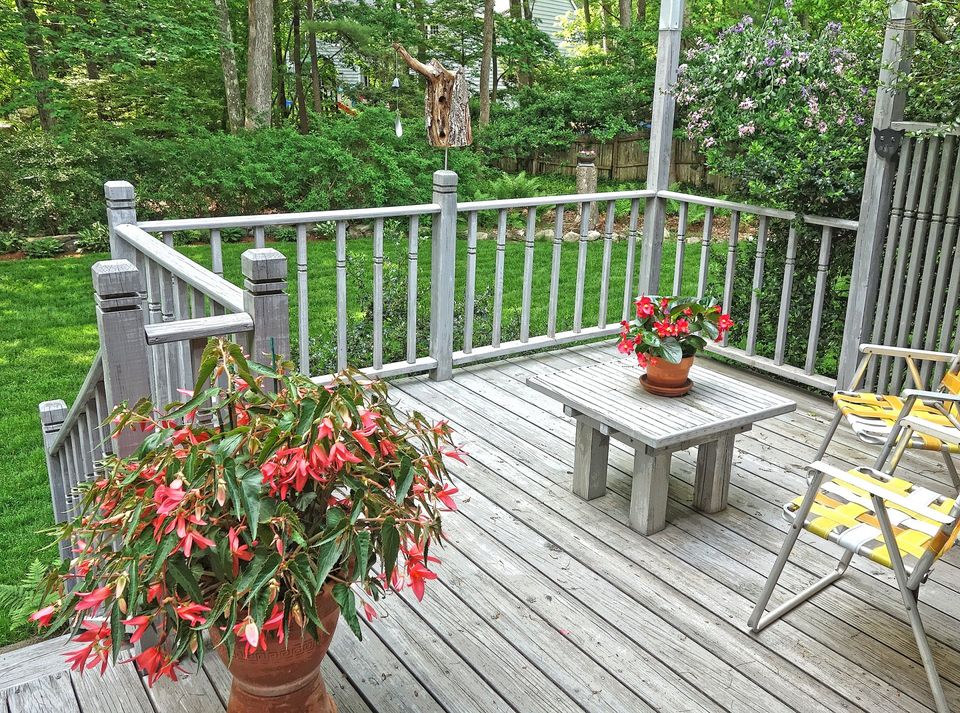
When embracing a weathered grey wood finish for your plank flooring and matching post-and-spindle railing, you must introduce highly saturated colors through your decor to keep the space from looking neglected. The bright yellow and white webbed lawn chairs and terra cotta pots with vibrant red flowers are essential here; they instantly communicate that the grey wood is a deliberate, rustic style choice.
|
📋 Copy HEX 🔗 Share |
Achieving this relaxed, aged look doesn’t require decades of waiting. You can purchase standard, budget-friendly pine spindles and apply a specialized chemical weathering wash (available at hardware stores for under $20). It reacts with the wood tannins to create this exact weathered grey finish in just a few hours, saving you a fortune on premium reclaimed lumber.
26. Modern Black Pickets Trimming Warm Brown Wood Planks
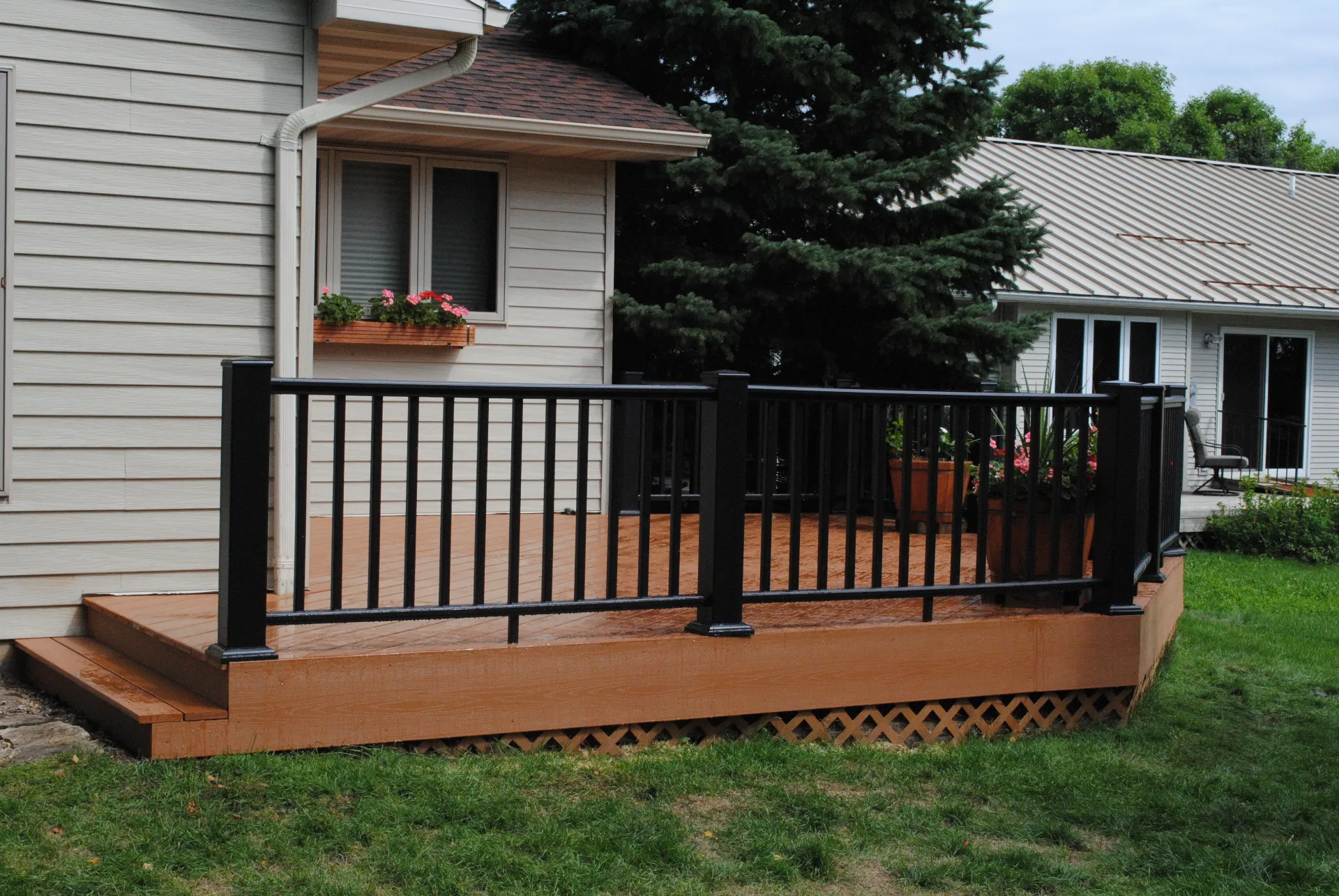
The success of this raised outdoor deck lies in the stark, clean boundary it creates. The thick black support posts and black metal vertical pickets act as a sharp frame around the warm brown wooden deck flooring. Much like the lattice skirt in Idea #7, the lattice deck skirting here hides the ugly structural framing beneath, allowing the modern black railing to shine.
|
📋 Copy HEX 🔗 Share |
While this combination of warm wood and black metal is undeniably inviting, keep an eye on that window flower box with pink flowers hanging just above. Constant watering of window boxes can lead to prolonged dripping onto your warm brown wood planks below, eventually causing water stains or localized rot if the deck surface isn’t properly sealed against standing moisture.
27. Sloped Handrails Trimming Shingle-Sided Exterior Stairs
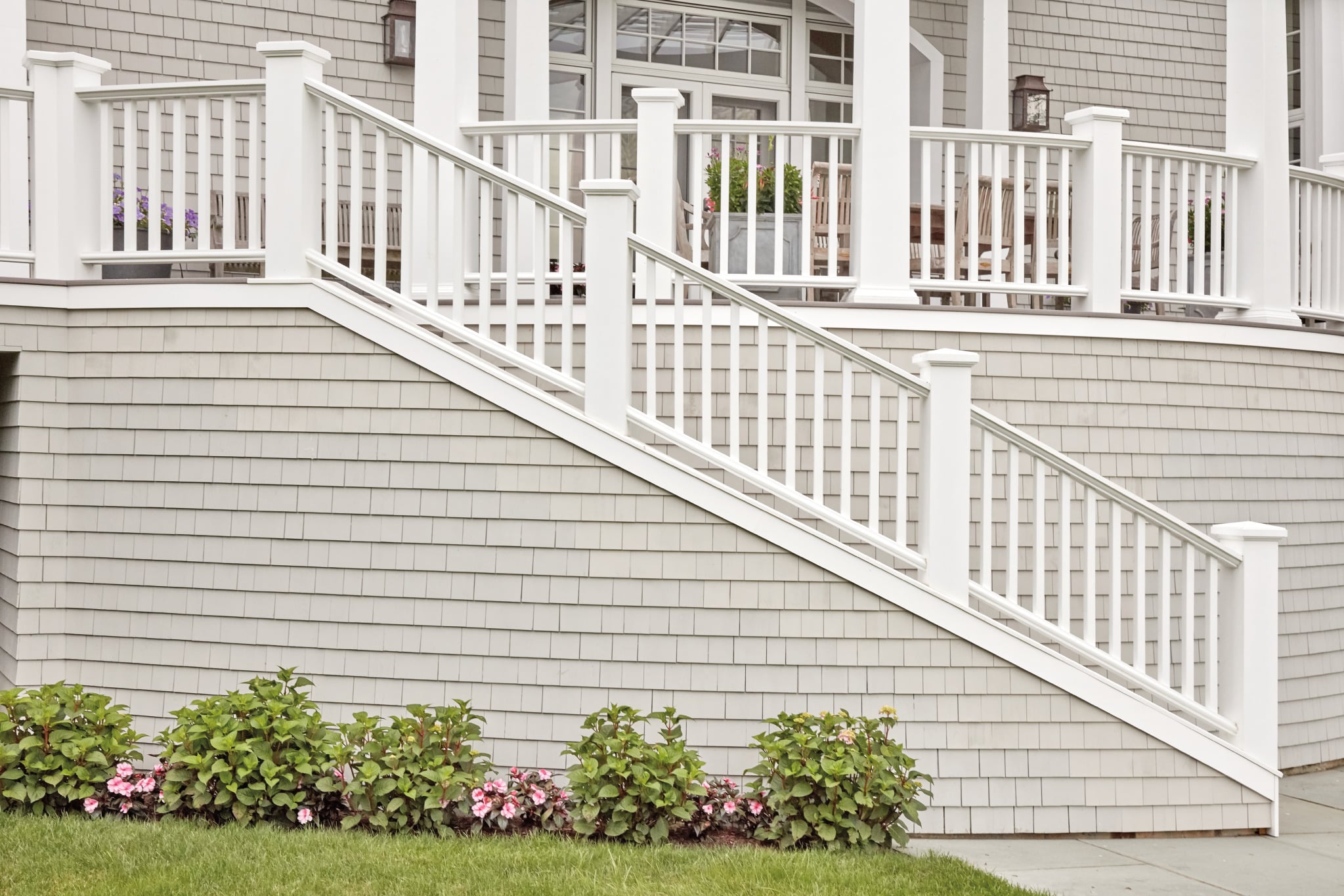
The defining feature here isn’t a bold color or wild material; it’s the absolute precision of the traditional design. The squared white wooden balusters and substantial white structural posts line up perfectly with the sloped handrail. Against the light gray shingle siding and foundation plantings, this orderly repetition creates an undeniable sense of classic coastal permanence.
|
📋 Copy HEX 🔗 Share |
White painted wood on exterior stairs takes a beating from weather and daily foot traffic. To keep those squared white balusters looking crisp against the green landscaping plants, you will need to pressure wash the green algae off at the end of every damp season. A fresh coat of high-gloss exterior enamel every few years is mandatory to prevent peeling.
Your Next Step Outdoors
Choosing the right perimeter for your outdoor space sets the tone for every summer barbecue and quiet morning coffee to come. Take these concepts, measure your footprint, and start building out your ideal open-air retreat. 📌 Don’t forget to save this to Pinterest so you can reference these details when material shopping!