25 Stunning Pumpkin Arrangement Ideas That Will Transform Your Fall Decor in 2026

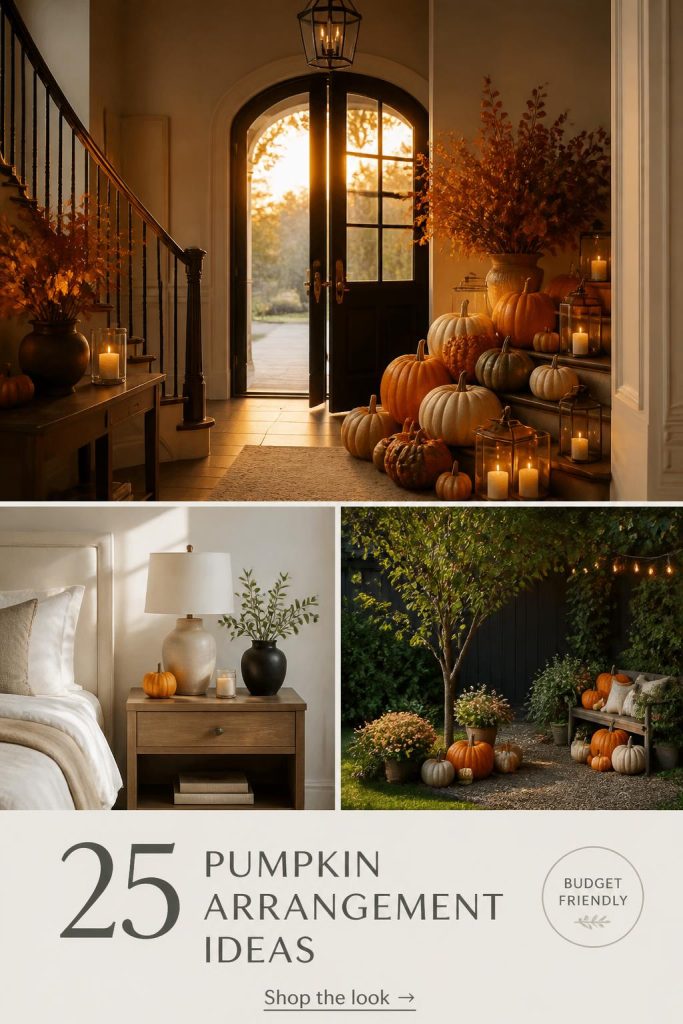
You know that feeling—you’ve pinned a hundred pumpkin arrangements, but when it comes to your own front porch or dining table, it all feels a bit… uninspired. The secret to those effortlessly chic fall displays isn’t magic; it’s about having the right formulas. After filtering through hundreds of options from artisan markets to high-end decor shops, we’ve narrowed it down to 25 ideas that genuinely work. From lush, floral-stuffed pumpkins to minimalist gourd groupings, this guide covers it all, with looks ranging from a simple $20 setup to a more elaborate $400 display. We’re focusing on personal, natural, and bespoke arrangements that feel curated, not store-bought. And stay until the end—we break down the most common mistakes that can ruin these looks. 📌 Save this to Pinterest for later—you’ll want to revisit these ideas.
1. Rustic Tiered Pumpkin Display on Hay Bales
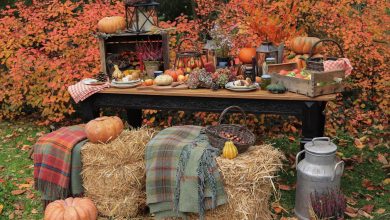
What makes this setup so compelling is the use of varied height and scale. The hay bales act as natural, rustic pedestals, creating multiple levels that draw the eye up and around the entire display. It’s not just a pile of pumpkins; it’s a composed landscape. The mix of classic orange pumpkins with unexpected white and light green gourds adds depth and prevents color monotony. This intentional variation in size, color, and elevation is what turns a simple pumpkin patch vibe into a deliberate design statement.
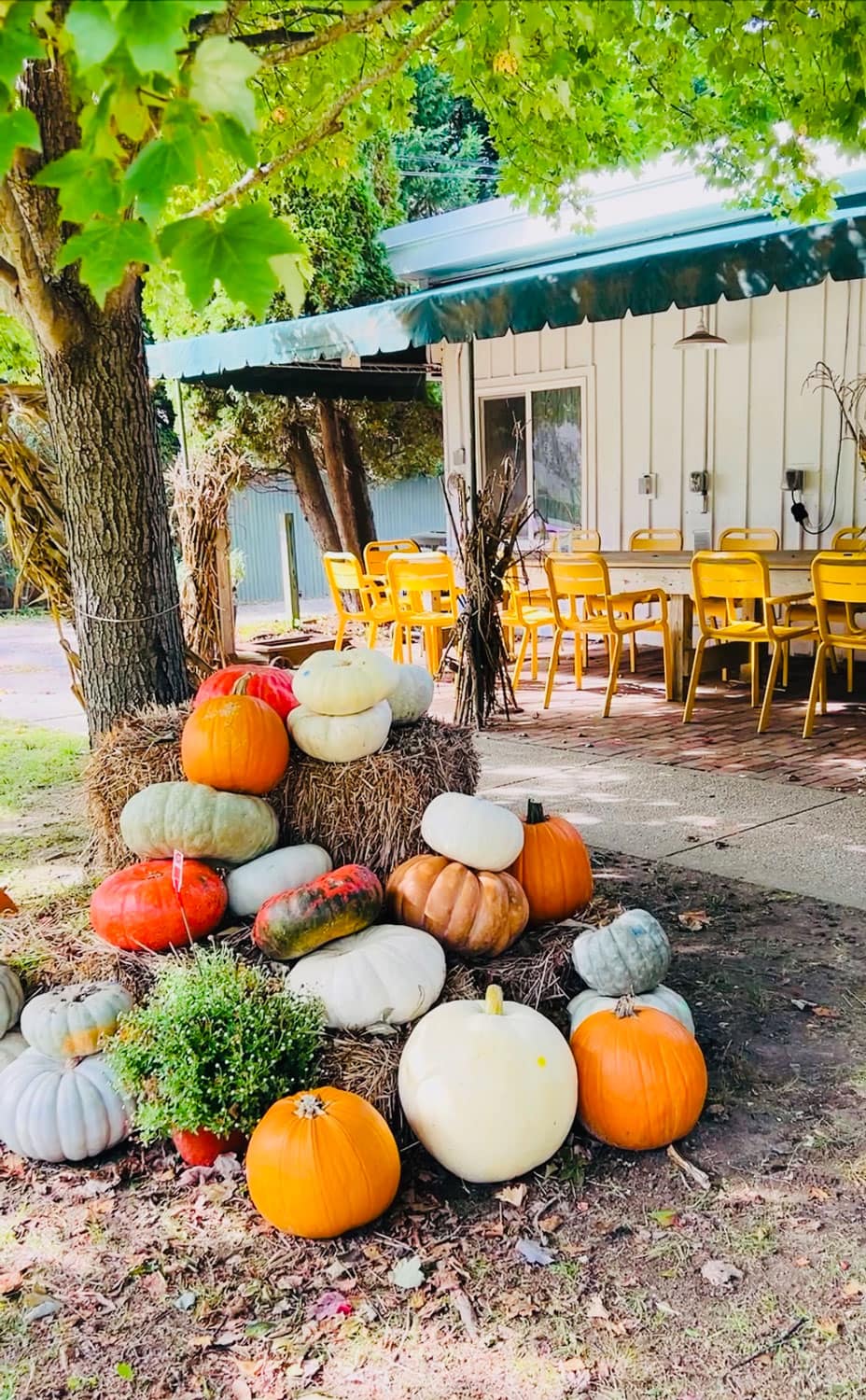
Let’s have a real talk about using hay bales. While they provide incredible rustic texture and height, they can be messy. Expect stray straw to find its way everywhere, especially in windy conditions. More importantly, hay can attract small critters and insects looking for a cozy autumn home. If you’re placing this near your entryway, be prepared for some sweeping and potential uninvited guests. Also, hay can become a soggy, moldy mess in the rain if not properly aired out. Consider using faux hay bales for less maintenance if this will be up for a long season.
2. Welcoming Porch with Corn Stalks and Pumpkin Urns
To get your corn stalks to stand up straight and look full like this, don’t just lean them against the wall. They’ll droop and look sad within days. Instead, use heavy-duty zip ties or sturdy twine to bundle 5-7 stalks together at two points: once about 12 inches from the bottom and again about two-thirds of the way up. This creates a more stable, column-like structure. Then, use a small, clear Command hook or a brick placed behind the bundle to anchor it securely to the porch, preventing it from toppling over in the first gust of wind.
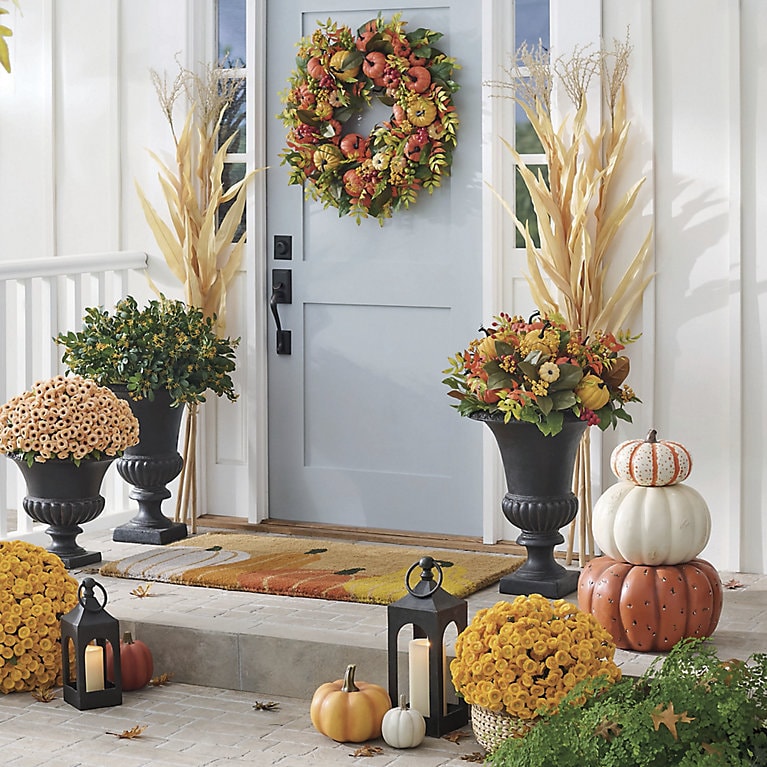
This porch look follows a classic design formula that is easy to replicate. Think of it as 50% natural and rustic elements (the pumpkins and corn stalks), 30% classic architectural features (the black urns, lanterns, and the door itself), and 20% vibrant color accents (the yellow florals and red berries in the wreath). The light blue door provides a beautiful, cool counterpoint to the warm autumnal colors. You could easily swap the light blue for a deep green or even a classic white, and the formula would still hold up perfectly.
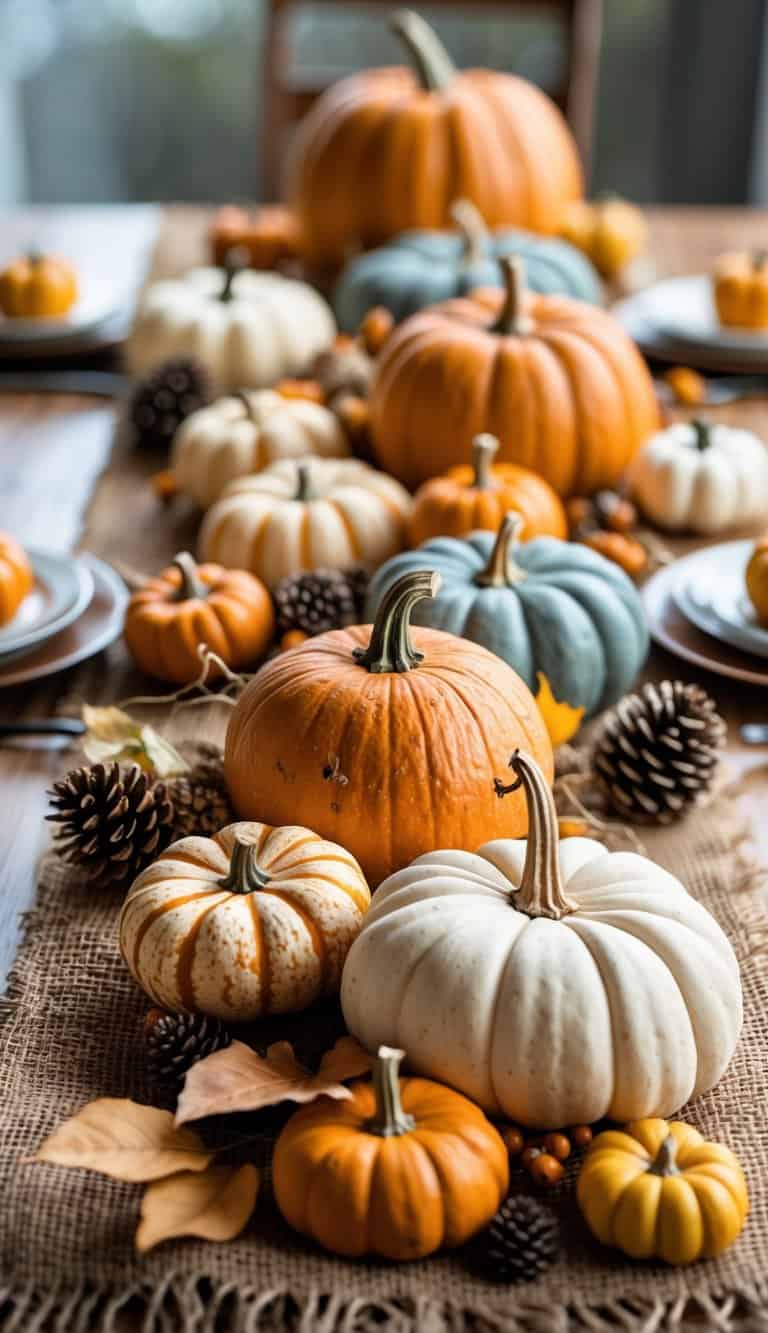
3. Abundant Burlap Runner with Gourds and Pinecones
This look is all about creating a sense of natural, overflowing abundance. Here’s what it might cost to recreate this dense tablescape for a 6-foot table:
- Assorted Pumpkins & Gourds (20-30 pieces): $70 – $150 (farmer’s market is your friend!)
- Lighting/Candles: N/A
- Textiles (Burlap Runner): $15 – $25
- Decor/Accessories (pinecones, collected leaves): $0 – $10
- TOTAL: $85 – $185
Budget alternative: Buy half the number of pumpkins and supplement with more foraged pinecones and leaves. You can also mix in a few faux pumpkins from a craft store to fill gaps, cutting the cost to around $50-$75.
This kind of dense, linear centerpiece works best on long, rectangular dining tables that are at least 36 inches wide. You need enough width to accommodate the runner and the spread of the gourds without encroaching on the place settings. A minimum table length of 72 inches (6 feet) is ideal to achieve that feeling of overflowing abundance. For a smaller round or square table, this horizontal layout would feel cramped. Instead, try a clustered version of this look in the center, which you can see in Idea #19.
4. Three Orange Pumpkins with a Sunflower and Mum Arch
that elevates this from just being pumpkins in front of straw is, without a doubt, the floral arch. It frames the entire scene, turning a simple trio of pumpkins into a festive focal point. Without the arch, you’d have a perfectly fine but forgettable fall display. The arch adds drama, color, and a sense of occasion. It’s the element that says ‘celebration’ rather than just ‘autumn.’ The density of the sunflowers and chrysanthemums creates a lushness that makes the entire composition feel special and intentional.
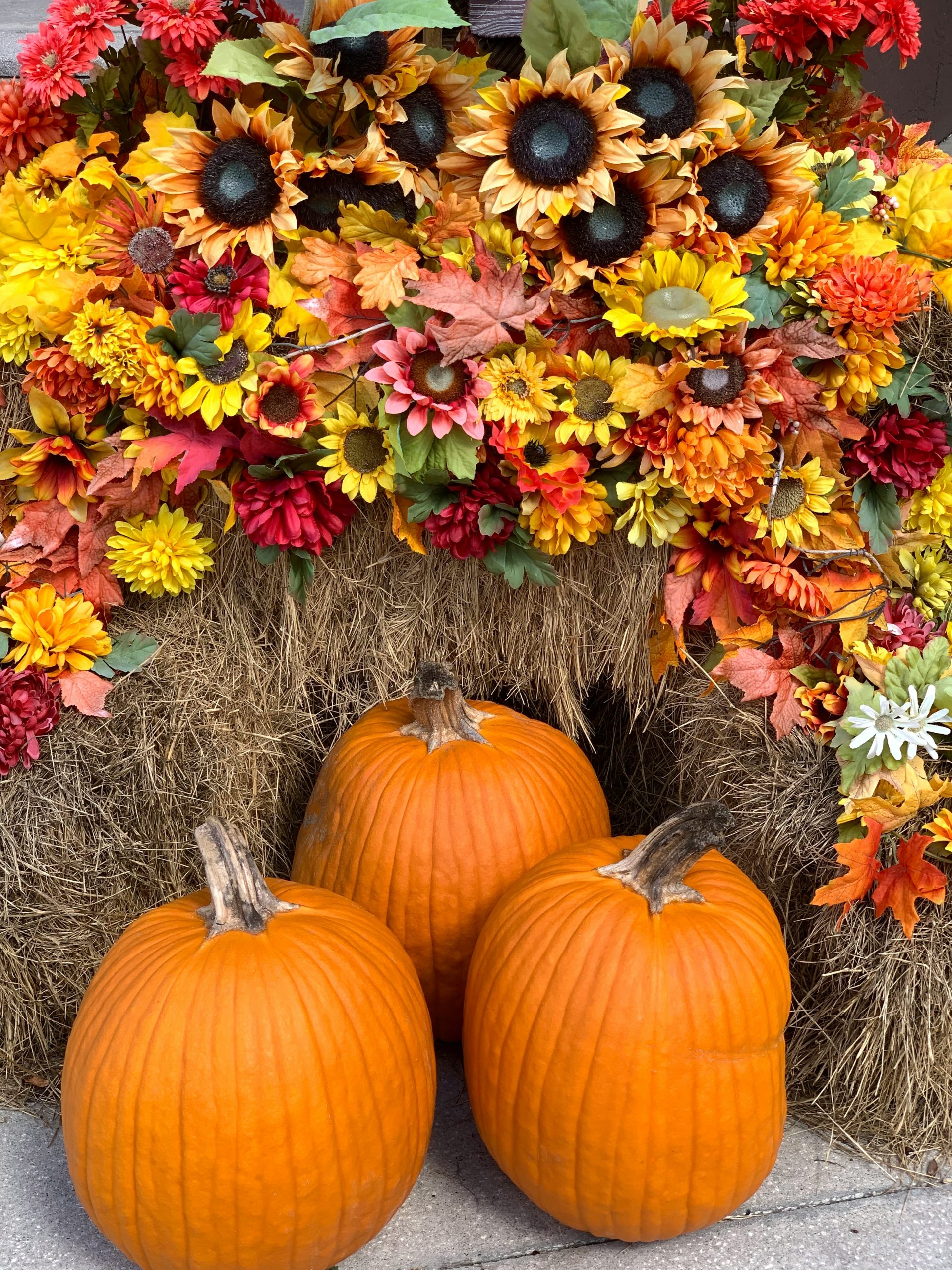
Want to create a smaller-scale version of this floral arch for a doorway or a large mirror? Here’s a quick guide for a 4-foot arch. Time: 1 hour. Cost: $40-$60.
- Purchase a pre-made grapevine wreath form (or a pool noodle for a fuller shape) and some floral wire.
- Buy 4-5 bunches of faux autumn flowers (sunflowers, mums, and leaves) from a craft store.
- Cut the flower stems down to about 4-6 inches.
- Start by inserting the largest flowers (sunflowers) into the form, spacing them out evenly.
- Fill in the gaps with the medium-sized flowers (mums), tucking them around the sunflowers.
- Use the faux leaves and smaller berry sprigs to cover any visible parts of the form. Use floral wire to secure anything that feels loose.
5. Mixed Pumpkin Cluster with a Dried Grass Planter
This arrangement works so well because of its mastery of texture and color harmony. You have the smooth surface of the cream pumpkins, the bumpy texture of the mottled gourds, and the feathery softness of the dried grasses in the planter. It’s a feast for the eyes. The color palette is also beautifully cohesive, using analogous colors—shades that are next to each other on the color wheel, like orange, red-orange, and yellow-orange—paired with the complementary cool tones of the pale blue-grey gourds and the sage green planter. This creates a look that is vibrant yet feels completely natural and coordinated.
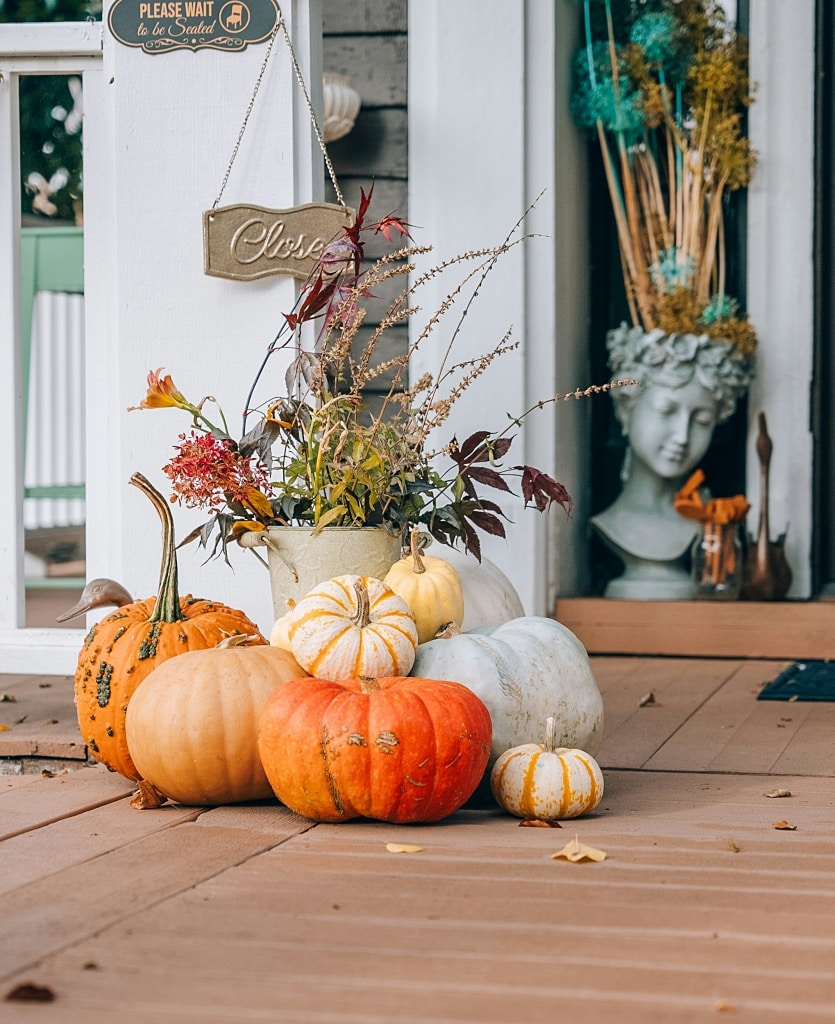
Dried ornamental grasses and foliage are stunning, but they are not zero-maintenance. They can be quite brittle and will shed, especially in a high-traffic area like a porch. A strong gust of wind can send tiny bits of dried grass flying. To minimize this, you can give them a light coat of hairspray, which helps hold them together. Also, be aware that their color will fade over time with direct sun exposure. For a look that lasts longer with less mess, consider high-quality faux dried grasses, which are now incredibly realistic.
6. Stacked Pumpkins with Cascading Bittersweet Berries
Before you run out to forage for bittersweet, a word of caution. While undeniably beautiful with its vibrant berries, American Bittersweet is often confused with the highly invasive Oriental Bittersweet. The latter can wreak havoc on native plants. Furthermore, the berries and plant material of both varieties are toxic to humans and pets if ingested. If you have curious pets or small children, it’s far safer to opt for high-quality faux bittersweet branches from a craft store. You’ll get the same stunning visual effect without any of the risk or ecological impact.
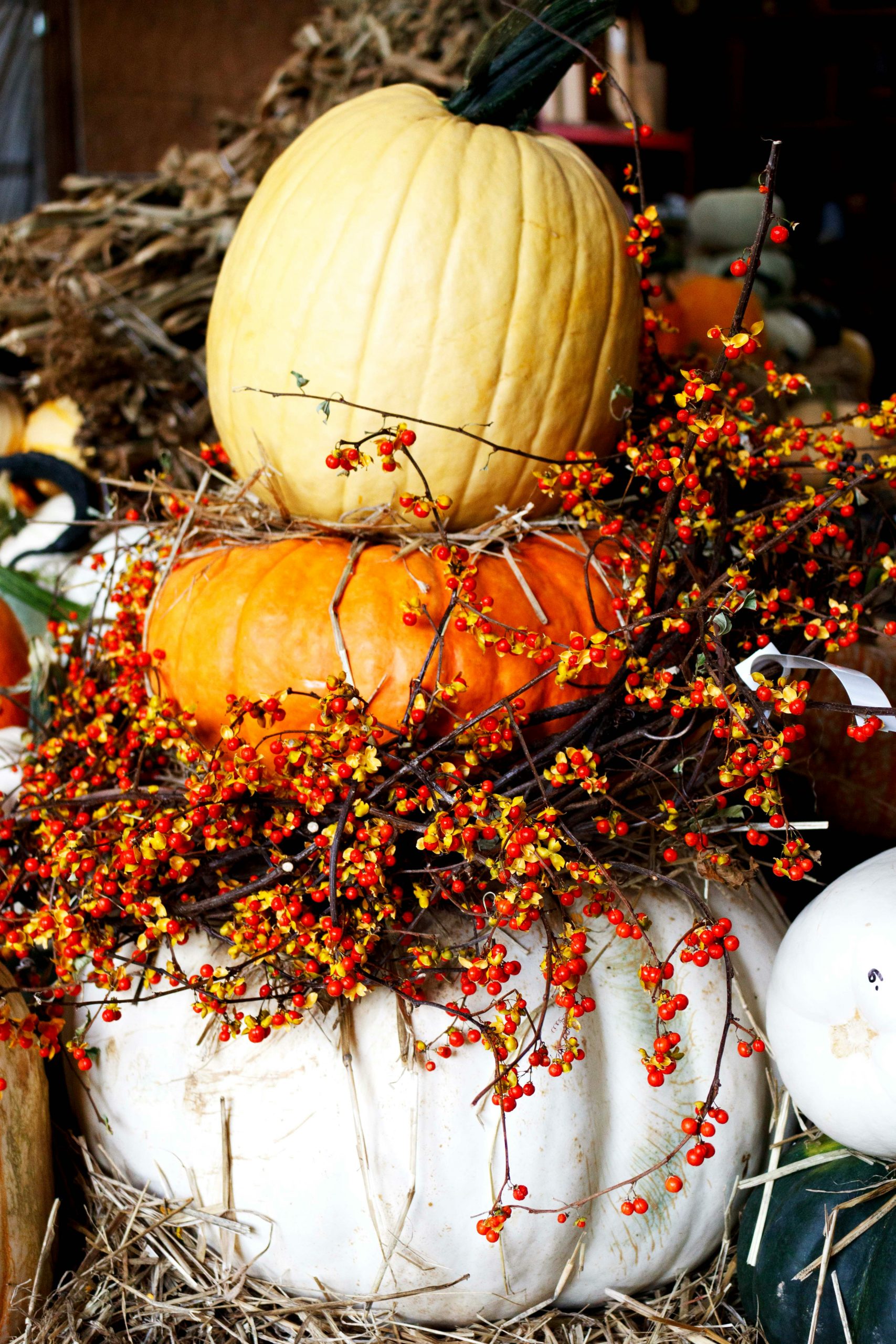
The key to a stable pumpkin stack is choosing the right pumpkins. Look for ‘Cinderella’ or ‘Fairytale’ varieties, which are naturally flatter and more squat, providing a wider, more stable base. Before stacking, use a sharp knife to carefully slice off the stem of the bottom and middle pumpkins to create a flat surface. For added security, especially in a windy spot, you can drill a hole through the center of each pumpkin and slide them onto a wooden dowel or a piece of rebar hammered into the ground. This ensures your tower won’t topple.
7. Vibrant Gourd and Mum Display with Buffalo Plaid
This look is a perfect example of a balanced fall formula: 60% harvest abundance + 30% vibrant floral color + 10% rustic pattern. The pumpkins and gourds create the foundational texture and classic orange-and-green palette. The bright purple mums inject a surprising and energetic pop of cool color that cuts through the warmth. The red and black buffalo plaid fabric adds that final, cozy, rustic touch. You could swap the purple mums for golden yellow ones for a more traditional look, or exchange the buffalo plaid for a simple burlap for a more neutral feel, and the core formula would still shine.
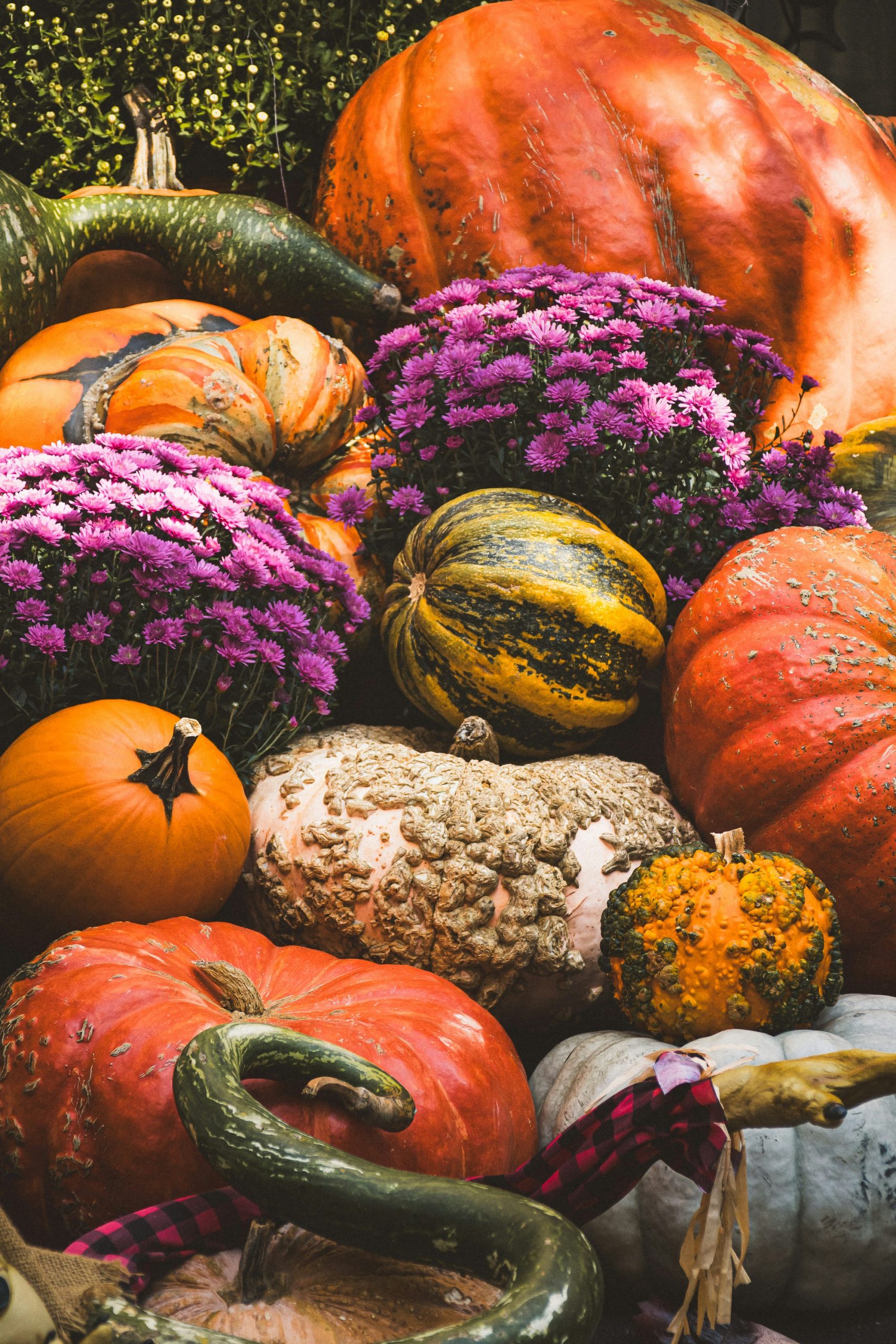
It’s the purple mums. Take away the bright purple chrysanthemums, and you’re left with a lovely but fairly standard pile of pumpkins and gourds. The mums are the element of surprise. Purple sits opposite yellow-orange on the color wheel, making them complementary colors. This high-contrast pairing is what gives the entire arrangement its visual punch and energy. It’s an unexpected choice that elevates the display from predictable to truly memorable and eye-catching. This is a great example of how one bold color choice can transform a whole look.
8. Neutral White Pumpkin and Sola Wood Floral Table Arrangement
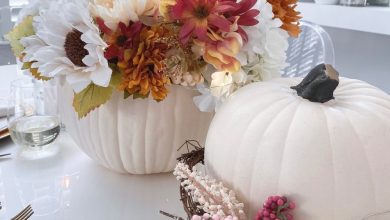
This soft, natural aesthetic is a direct response to years of loud, bright orange fall decor. In 2026, we’re seeing a huge movement towards ‘quiet autumn’—decor that whispers instead of shouts. It’s about bringing the textures and subtle colors of the natural world indoors in a more permanent, less disposable way. Sola wood flowers, which are made from a tapioca plant root, are a key part of this trend. They are sustainable, last forever, and can be scented with essential oils, making them a more thoughtful choice than plastic decor. This look has serious staying power because it feels more like home decor and less like a seasonal novelty.
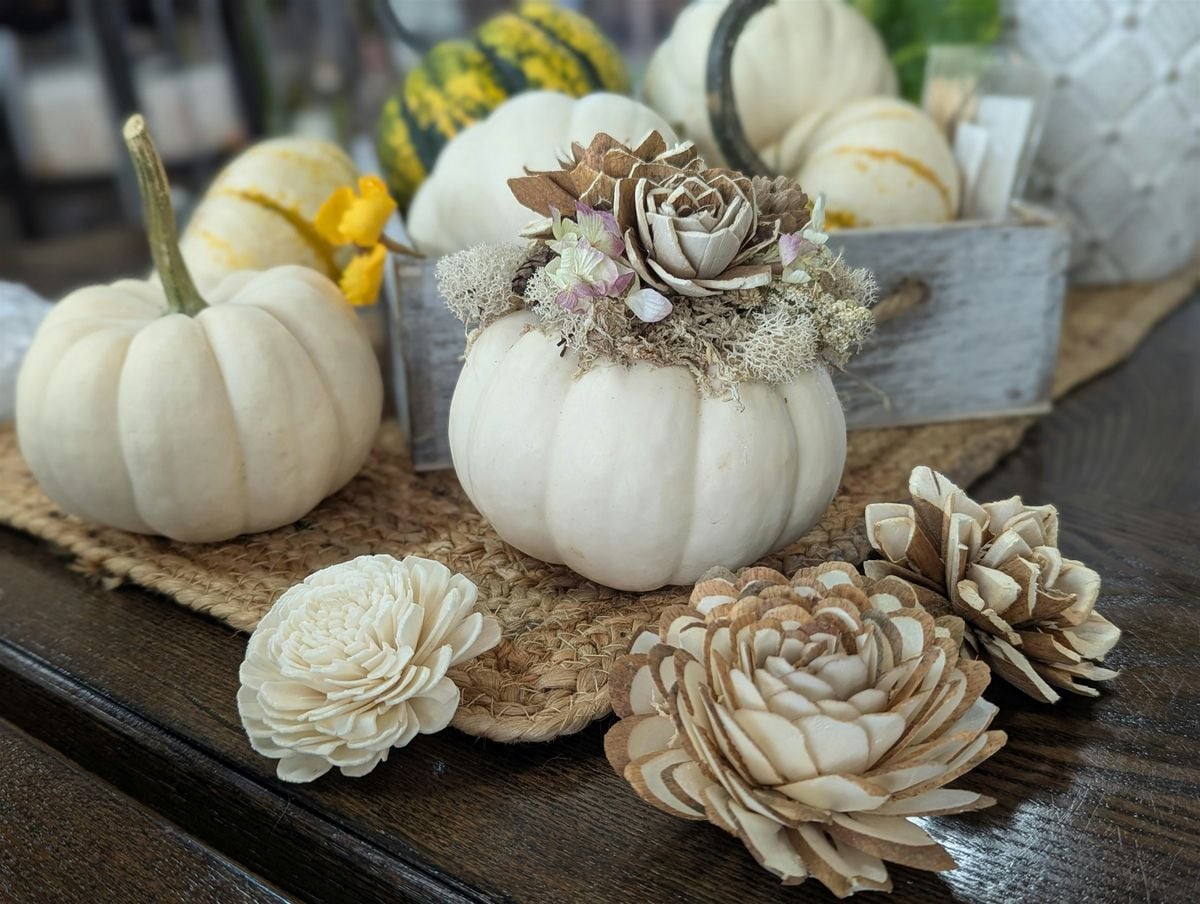
Let’s make that adorable sola wood flower pumpkin. It’s easier than it looks! Time: 20 minutes. Cost: $15-$25.
- Select a small white pumpkin. Using a sharp knife, carefully cut a circle around the stem, about 2 inches in diameter, and scoop out the top portion.
- Place a small piece of floral foam inside the opening.
- Arrange a small bed of dried green moss over the foam.
- Take your sola wood flowers (you can buy them at craft stores or online) and dip the ends of the stems in a bit of hot glue.
- Gently press the flowers into the foam, starting with the largest one in the center and working your way out with smaller blooms.
- Tuck in a few extra tiny dried floral accents to fill any gaps.
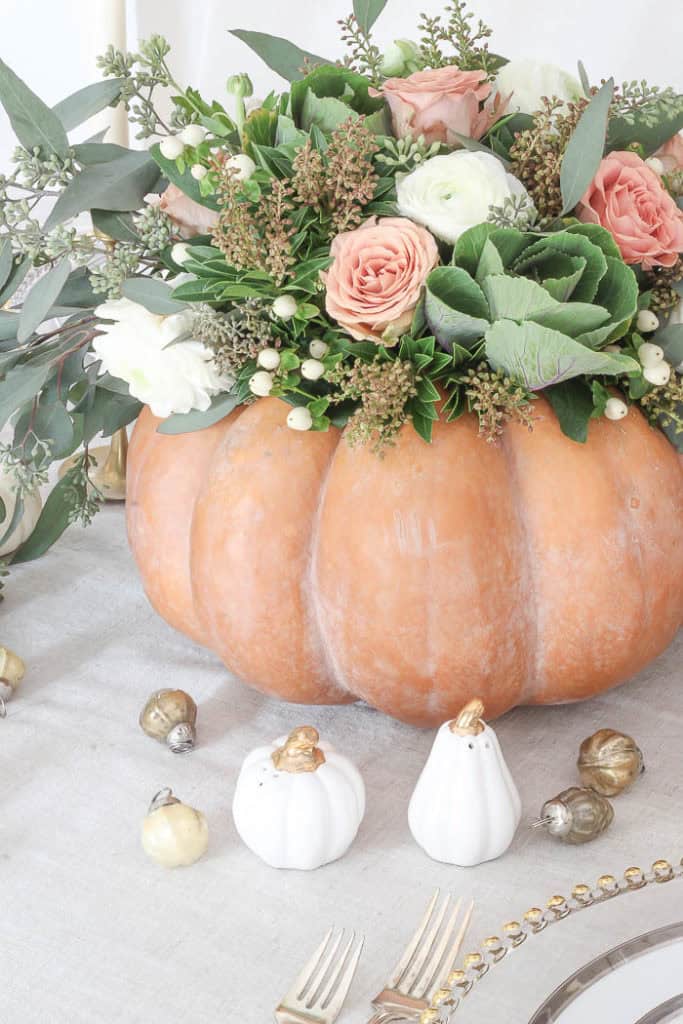
9. Elegant Pumpkin Vase with Pastel Roses and Eucalyptus
Achieving this level of floral artistry comes at a price, as fresh flowers are the main event. Here’s a realistic breakdown for this sophisticated centerpiece:
- Main Furniture (Pumpkin ‘Vase’): $8 – $15
- Lighting: N/A
- Textiles (Tablecloth): $30 – $60
- Florals (Roses, Ranunculus, Eucalyptus, etc.): $80 – $150
- Decor/Accessories (small decorative pumpkins, acorns): $25 – $40
- TOTAL: $143 – $265
Budget alternative: Keep the real pumpkin vase but use high-quality faux flowers. Supplement with foraged eucalyptus or greenery from your yard. This can bring the total cost down to the $60-$90 range.
While stunning, a fresh pumpkin vase has a very limited lifespan. Once carved, a pumpkin begins to decompose. You can expect this centerpiece to look its best for about 3-5 days, maybe a week if you’re lucky and keep it cool. To prolong its life, place a plastic container or a small glass vase inside the pumpkin to hold the water and floral foam, preventing the pumpkin’s flesh from getting waterlogged. Even so, this is a centerpiece you make for a specific event or weekend, not one that will last the entire season. This is the opposite of the everlasting arrangement in Idea #8.
10. Autumnal Centerpiece with Faux Pumpkins and Rust-Colored Florals
The formula for this classic fall centerpiece is straightforward and effective: 40% main pumpkins (the large orange and white ones create the structure), 40% mixed florals (the rust and cream flowers provide color and fill), and 20% accent foliage (the leaves and berries add texture and detail). The key is the repetition of color. The orange from the main pumpkin is echoed in the smaller leaves, and the white of the other pumpkins is picked up in the berry clusters and cream flowers. This creates a cohesive look even with many different elements.
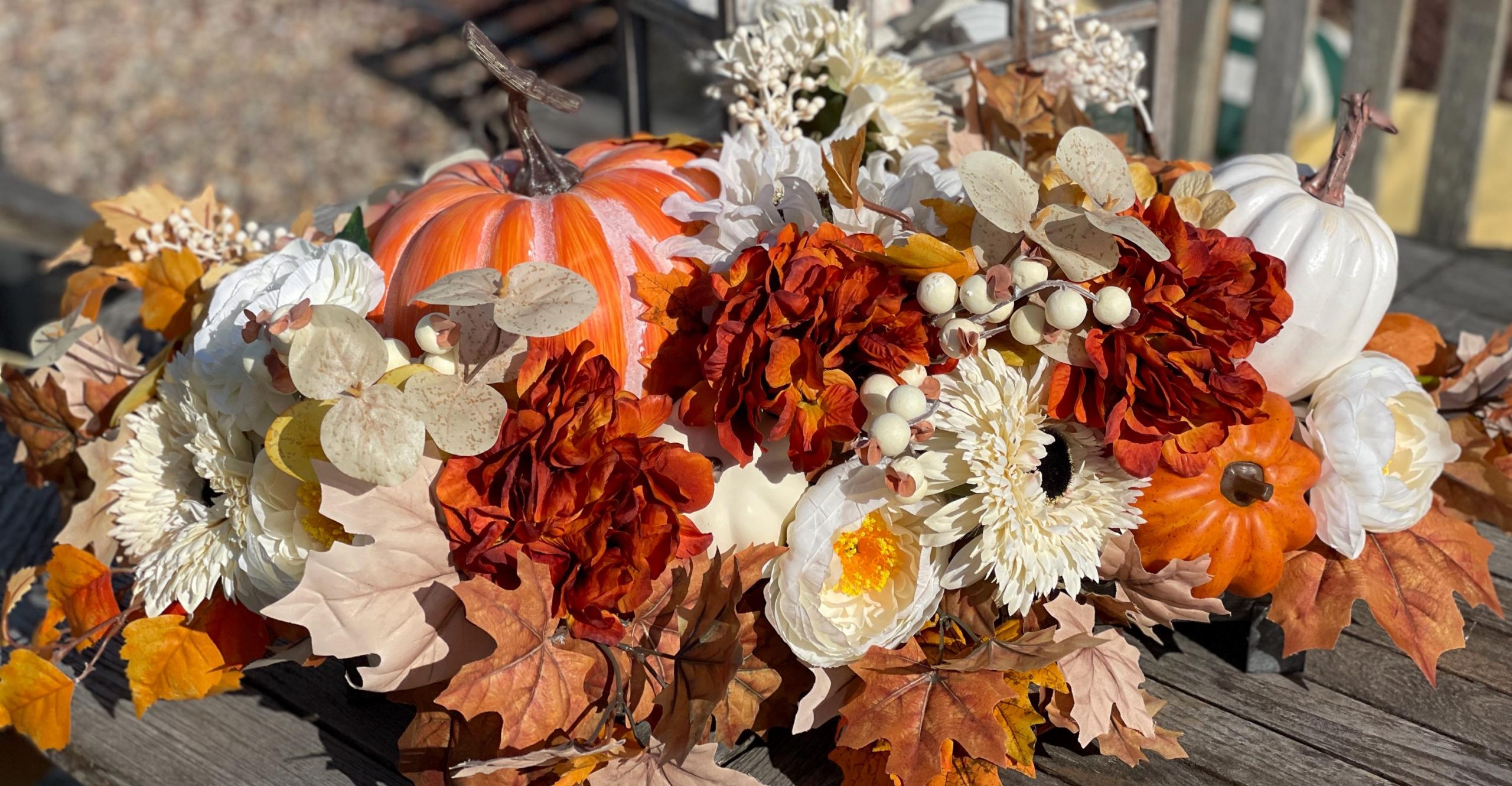
This arrangement uses high-quality artificial elements, which can be an investment. For a more budget-friendly version, hit up IKEA for their affordable SMYCKA line of faux flowers and leaves. You can often find faux pumpkins and berries at Target or Walmart for a fraction of the price of specialty decor stores. A quick trip to the dollar store in early fall can also yield a surprising number of these components. With some savvy shopping, you could assemble a similar-looking centerpiece for under $50, and the best part is you can reuse it year after year.
11. Rustic Pumpkin Vase with Burgundy Florals and Votive Candles
This arrangement feels so cozy and authentic because it perfectly balances light and dark and rough and smooth. The weathered, light wood table provides a bright, rustic base that keeps the darker elements—the deep burgundy flowers, dark berries, and muted pumpkin—from feeling too heavy. The smooth, flickering glass of the votive candles offers a delicate contrast to the rough texture of the pumpkin skin and the splintery wood grain. It’s this thoughtful play on contrasting elements that makes the scene feel layered and emotionally warm.
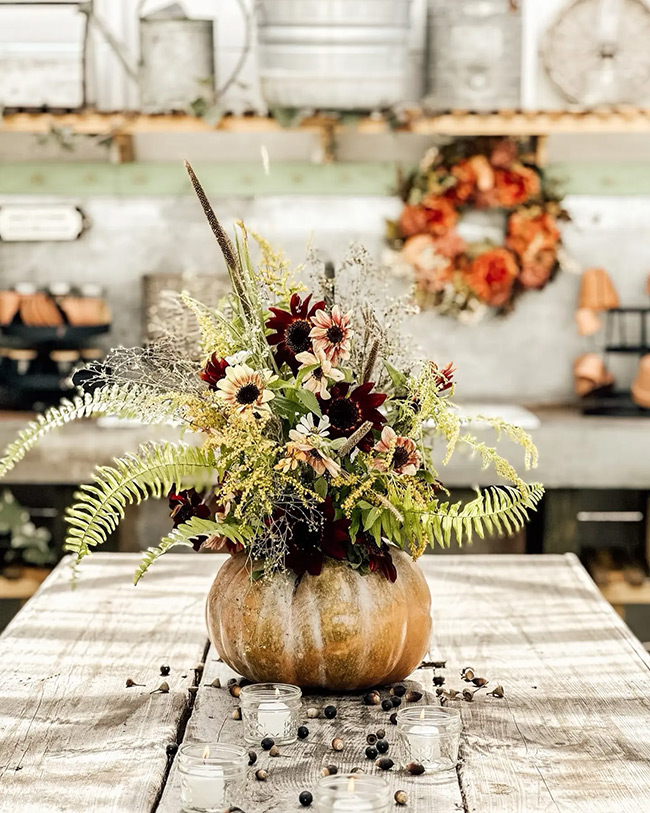
When creating a floral arrangement in a real pumpkin, don’t just fill it with water. The pumpkin flesh will quickly turn the water murky and shorten the life of your flowers. Instead, thoroughly scoop out the pumpkin, then line it with a small plastic bag or place a water-tight container (a small glass vase or even a yogurt container) inside. Cut a block of floral foam to fit the container, soak it thoroughly, and then arrange your flowers in the foam. Your arrangement will last twice as long and stay much fresher.
12. Three Varied Pumpkins with Dried Leaves on Textured Fabric
The single most important element in this photo is the color variation of the pumpkins. If all three pumpkins were standard orange, the image would lose all of its sophisticated charm. It’s the unexpected and harmonious combination of the light blue-grey, the warm classic orange, and the deep green-grey that makes this simple arrangement feel curated and special. This palette demonstrates a thoughtful selection process, moving beyond the default choice and exploring the beautiful, muted diversity of the gourd family. It proves that sometimes, the simplest arrangements have the biggest impact when the colors are just right.
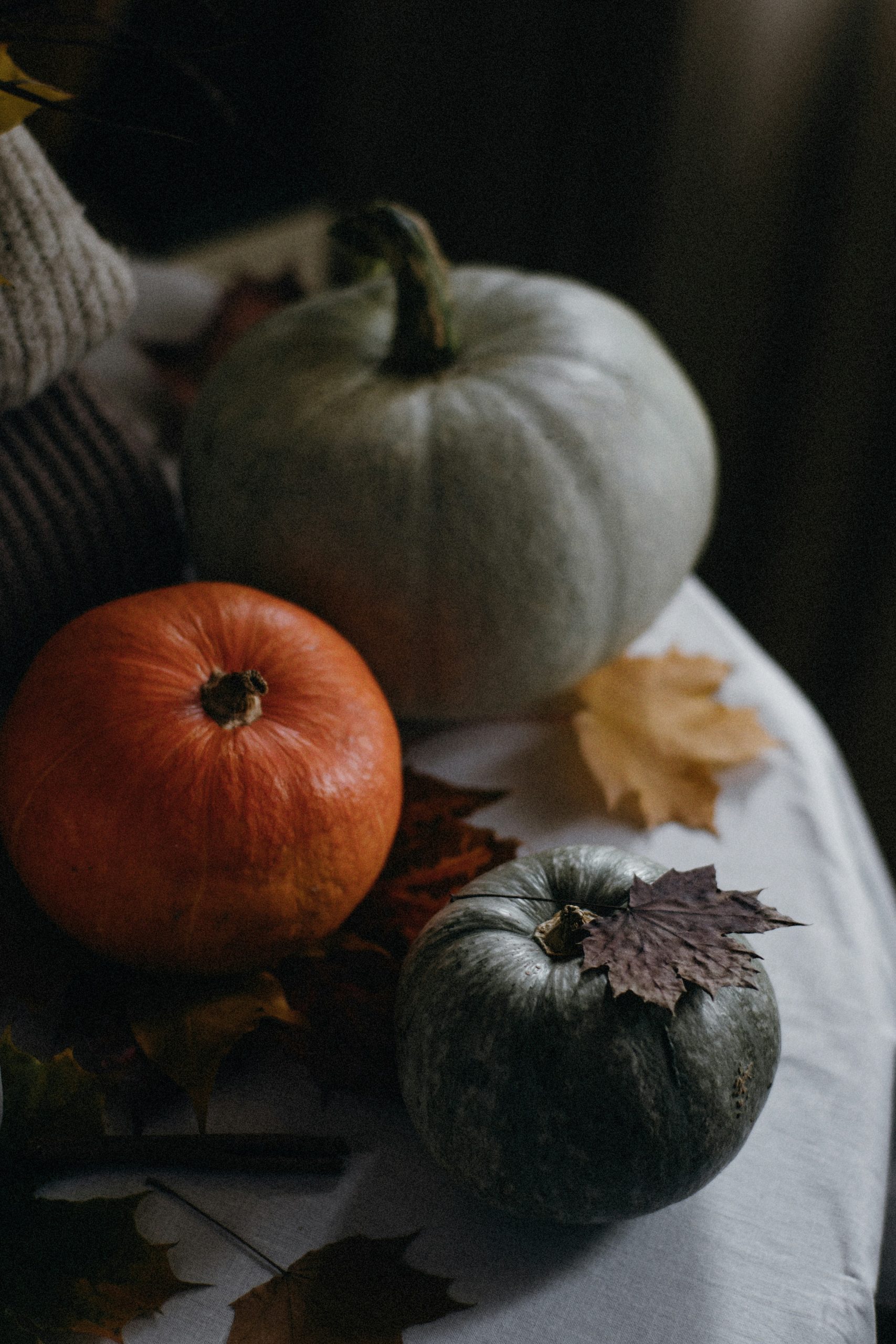
This minimalist look is all about a restrained, natural formula. Let’s break it down: 50% muted cool tones (the blue-grey and green-grey pumpkins), 25% classic warm tones (the single orange pumpkin and reddish-brown leaves), and 25% neutral texture (the light grey fabric and beige knit). The key is that the cool tones dominate, making the single pop of orange feel intentional and warm rather than overwhelming. You could apply this same math with different colors—for instance, three shades of green with one pop of white.
13. Elegant Console with Gourds, Dried Magnolia Leaves, and Taper Candles
This type of layered, vertical arrangement is perfect for a narrow space like a console table, entryway credenza, or fireplace mantel. The key is the use of height. The tall vase of magnolia leaves and the slender taper candles draw the eye upward, creating a sense of drama and elegance without taking up a wide footprint. This setup requires a surface at least 12-15 inches deep to safely accommodate the dish, vase, and candle holders. For it to not feel cramped, aim for a console that’s at least 48 inches long, allowing for breathing room on either side of the display.
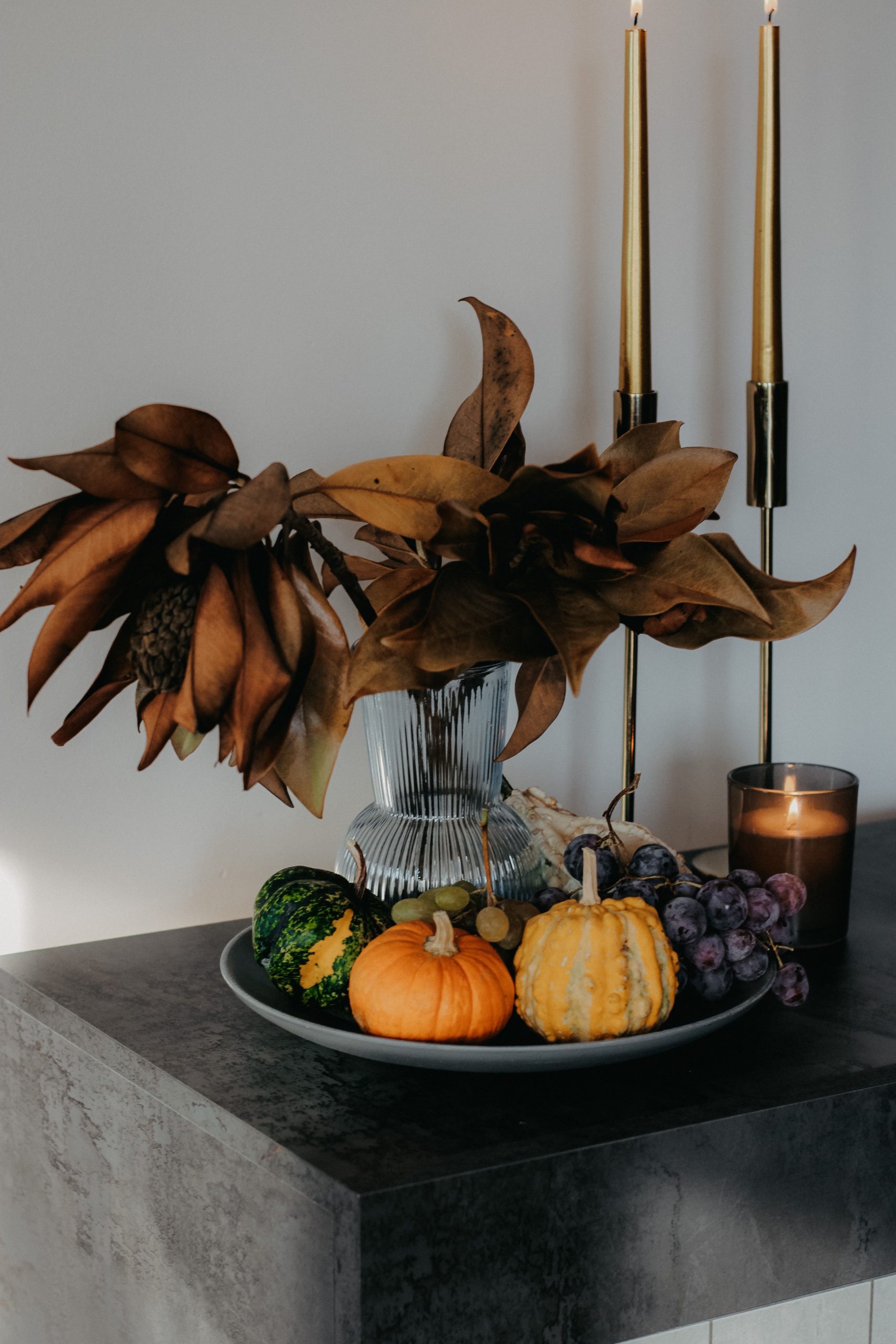
Dried magnolia leaves are gorgeous, with their rich brown color and velvety texture. However, they are famously brittle. They will crack and crumble if handled too much, and they can shed fine dust. To preserve them and add a subtle sheen, you can lightly mist them with a clear acrylic sealer spray, available at any craft store. Do this outdoors and let them dry completely before bringing them inside. As for the taper candles, never leave burning candles unattended, and ensure they are placed far from the dry, flammable leaves.
14. White Pumpkins with Ribbon, Hydrangeas, and a Patterned Candle
The reason this arrangement feels so soft and elegant, rather than kitschy, is its incredibly restrained and sophisticated color palette. The design sticks to a narrow range of white, cream, and natural tan, with gentle accents of sage green, dusty blue, and mauve. There are no bright oranges or yellows to be found. This disciplined approach to color allows the subtle textures—the weave of the runner, the grosgrain of the ribbon, the delicate petals of the hydrangea, and the painted pattern—to take center stage. It’s a look that feels more like a watercolor painting than a typical fall decoration. It’s a great counterpoint to the rustic look of Idea #7.
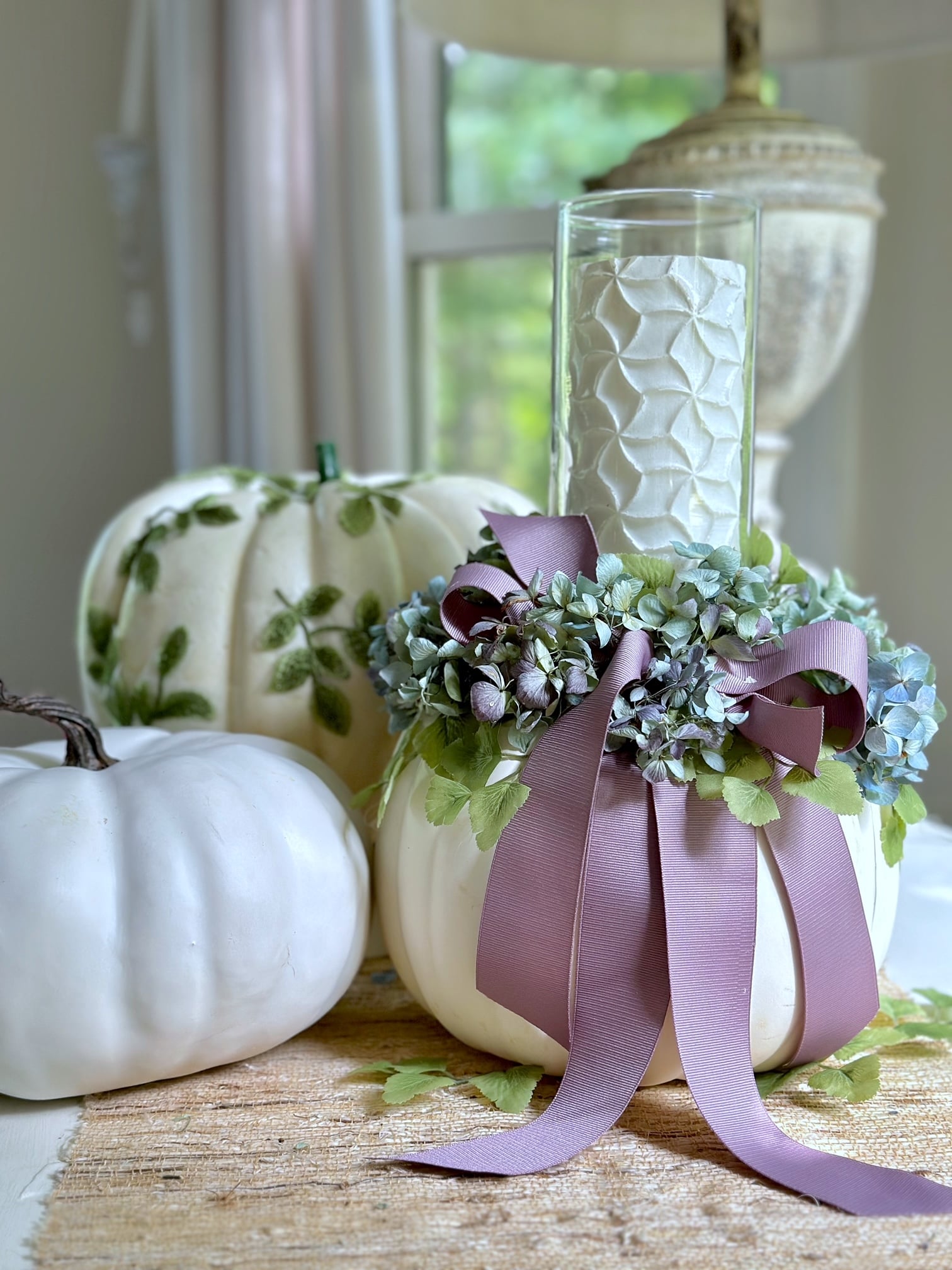
Before you commit to this delicate, painted look, run through this quick checklist:
- Do you have the right pumpkins? Look for smooth, unblemished white pumpkins. Faux craft pumpkins work best for painting, as they have a perfect surface.
- What’s your paint? Use acrylic craft paint and a fine-tipped brush for the vine pattern. Test it on the bottom of the pumpkin first to ensure it adheres well.
- Got the right ribbon? A grosgrain or velvet ribbon will provide the right texture and structure. Avoid shiny, cheap satin.
- Is the location safe? A hurricane glass is essential if you plan to actually light the candle to protect the arrangement.
15. Fall Floral Arrangement in a White Pumpkin Vase
The white pumpkin vase is the game-changer here. Using a white vase instead of a traditional orange one instantly modernizes the entire arrangement. It provides a clean, bright, neutral background that makes the vibrant yellows and deep reds of the flowers pop in a way they wouldn’t against an orange pumpkin. The ribbed texture adds visual interest without competing for attention. This single swap takes the arrangement from ‘rustic farmhouse’ to ‘fresh and contemporary fall,’ proving how much impact the ‘vase’ can have on the overall mood.
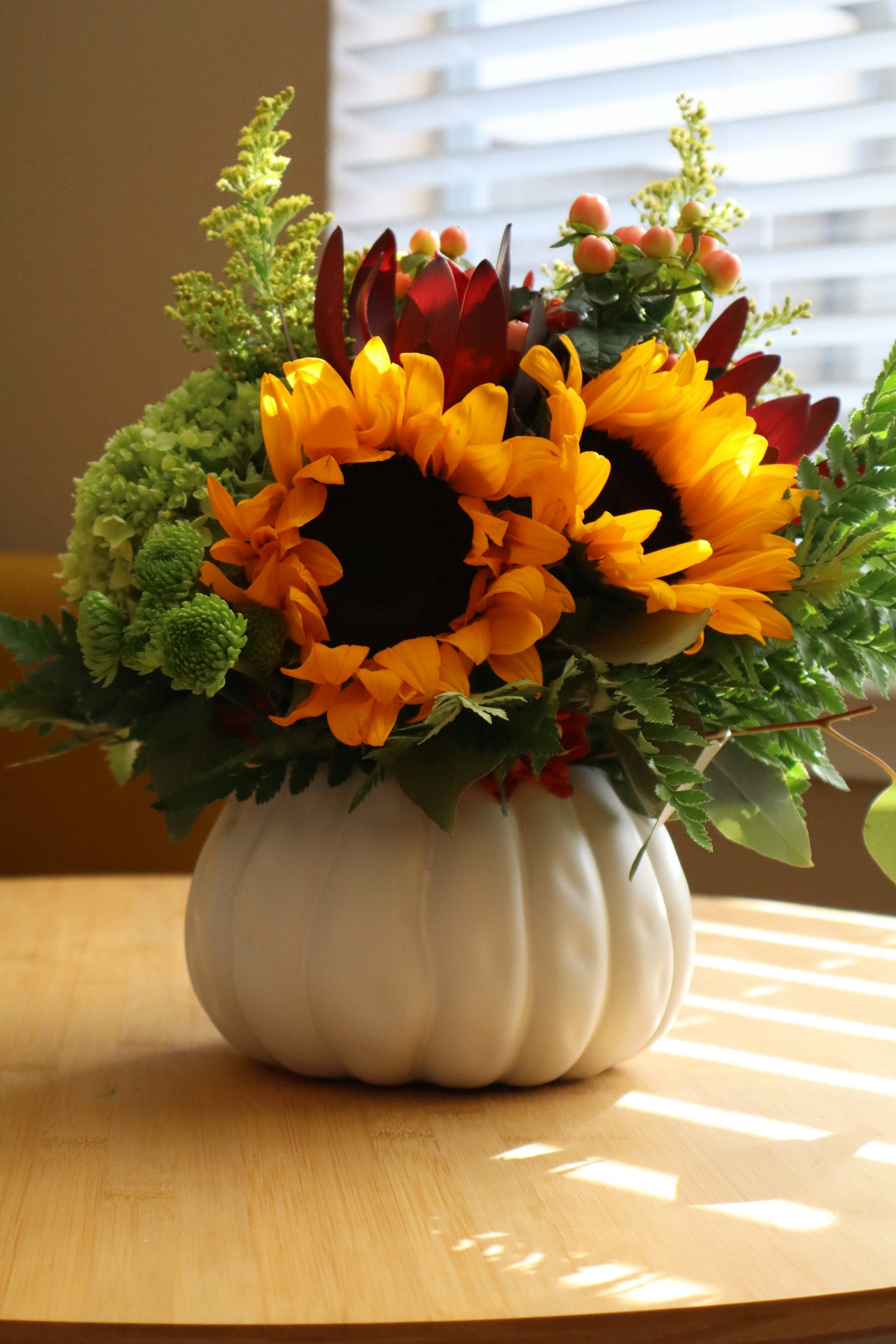
A high-quality ceramic pumpkin vase like this can be a bit of an investment. For a look that’s almost identical and much friendlier on your wallet, find a real white pumpkin (‘Lumina’ is a great variety) for about $8-$10. Carefully hollow it out and place a plastic cup or small vase inside to hold the water. Then, head to a grocery store like Trader Joe’s, which has fantastic, affordable seasonal flower bunches. You can easily recreate this entire vibrant look with fresh flowers for under $30. It won’t last forever like the ceramic version, but it’s perfect for a party or special occasion.
16. Abundant Autumn Porch with a Vintage Bicycle and Woven Baskets
This grand display is built on a formula of layered rusticity: 50% natural harvest (the dozens of pumpkins and gourds form the base), 30% rustic textures (woven baskets, wooden crates, and log sections), and 20% statement pieces (the vintage bicycle and the large faux tree). The plaid textile acts as a small, cozy accent that ties it all together. The magic is in the sheer volume and density. It’s not just one basket; it’s three. It’s not three pumpkins; it’s thirty. The design commits fully to the ‘more is more’ philosophy, creating an immersive autumn experience. Compare this to the more focused approach of Idea #2.
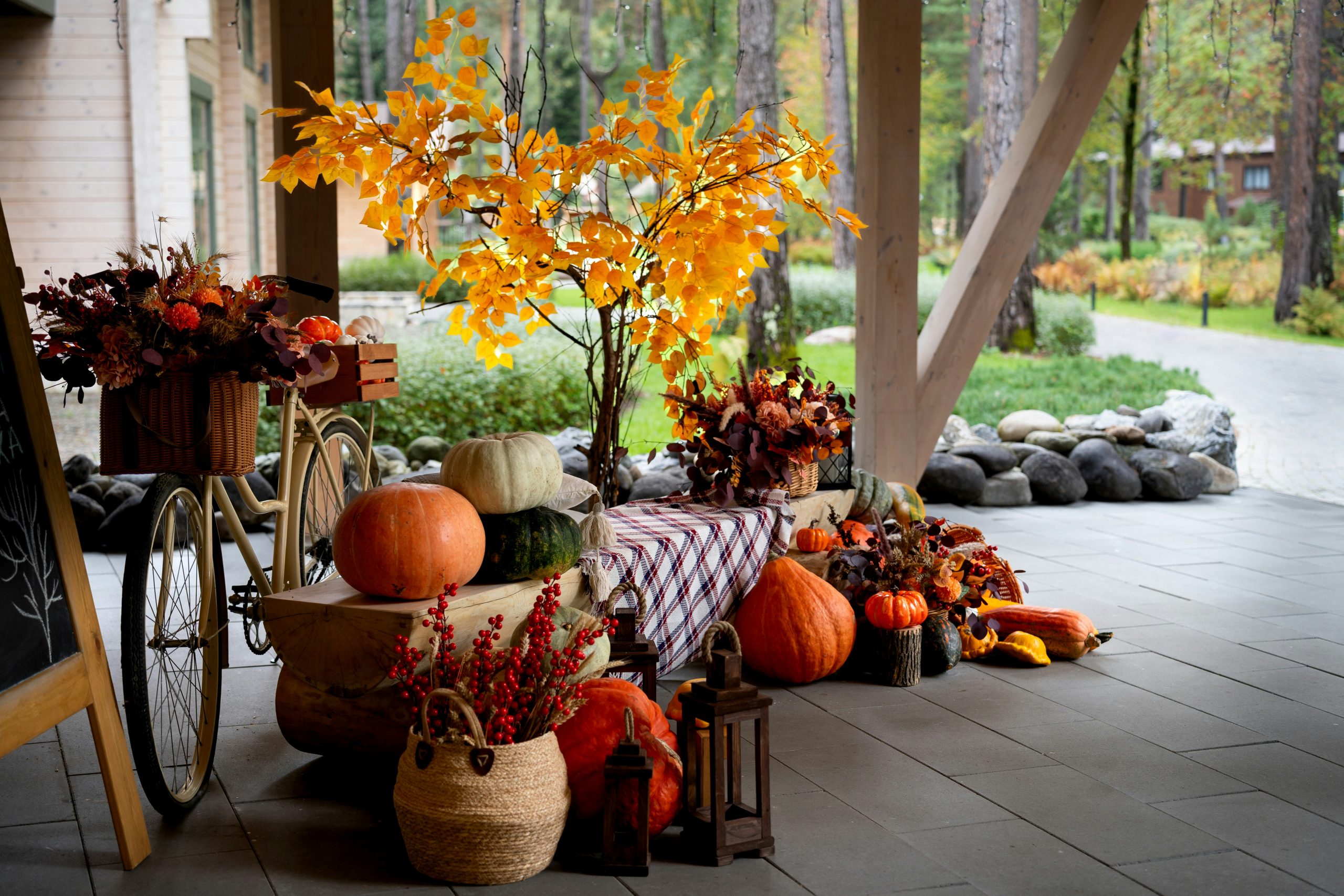
Let’s be honest: this is a high-effort, high-cost display. Sourcing this many pumpkins, a large faux tree, multiple large baskets, and a vintage-style bicycle is a significant investment of both time and money, likely running into several hundred dollars. It also requires a substantial amount of space. This isn’t a weekend DIY project; it’s a seasonal installation. Maintaining it means sweeping away leaves, protecting textiles from rain, and ensuring nothing gets knocked over. It’s absolutely stunning, but be realistic about the commitment before you attempt a display of this scale.
17. Whimsical Cabbage Head Pumpkin Character
This works because it leans fully into its own whimsy and charm. It’s not trying to be an elegant, sophisticated centerpiece. It’s fun, creative, and has a distinct personality. The genius lies in using common, recognizable vegetables and flowers to create a face. The carrot nose, the berry eyes, and the chili pepper mouth—they are unexpected and clever. This element of surprise and humor is what makes it so memorable and delightful. It taps into a sense of childlike creativity, reminding us that fall decor doesn’t always have to be so serious. It’s a conversation starter, guaranteed to make people smile.
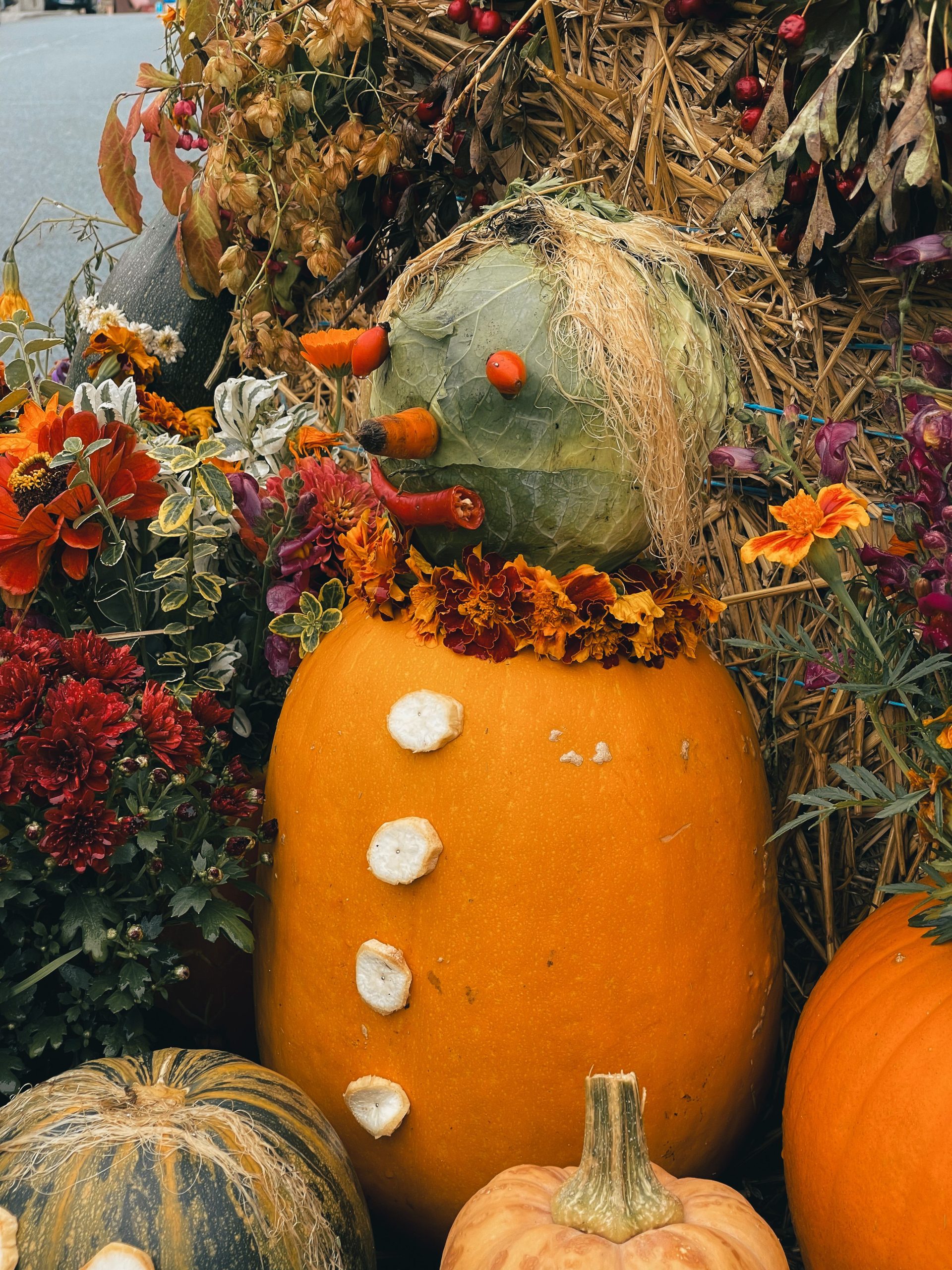
To make your pumpkin character last longer, don’t pierce the ‘body’ pumpkin at all. Instead, attach the facial features to the cabbage ‘head’ using toothpicks or small dabs of hot glue. For the head itself, hollow out the bottom of the cabbage slightly so it sits securely on top of the pumpkin stem. This prevents you from breaking the skin of the main pumpkin, which is what leads to rapid rot. Your character’s head might wilt after a week, but the pumpkin body will remain pristine for much longer.
18. Wooden Tray with Mixed Gourds, Berries, and Leaves
This simple, self-contained arrangement is incredibly versatile because of its small scale. It’s perfect for spaces where a large, sprawling centerpiece wouldn’t work. Think coffee tables, small side tables, a nightstand, or even a bathroom vanity for a touch of seasonal charm. The tray creates a defined boundary, making the arrangement feel purposeful and tidy. Its compact size, likely no more than 12×8 inches, means it can bring that cozy autumn feeling to the smallest corners of your home without creating clutter. It’s the perfect solution for apartment dwellers or anyone with limited surface space.
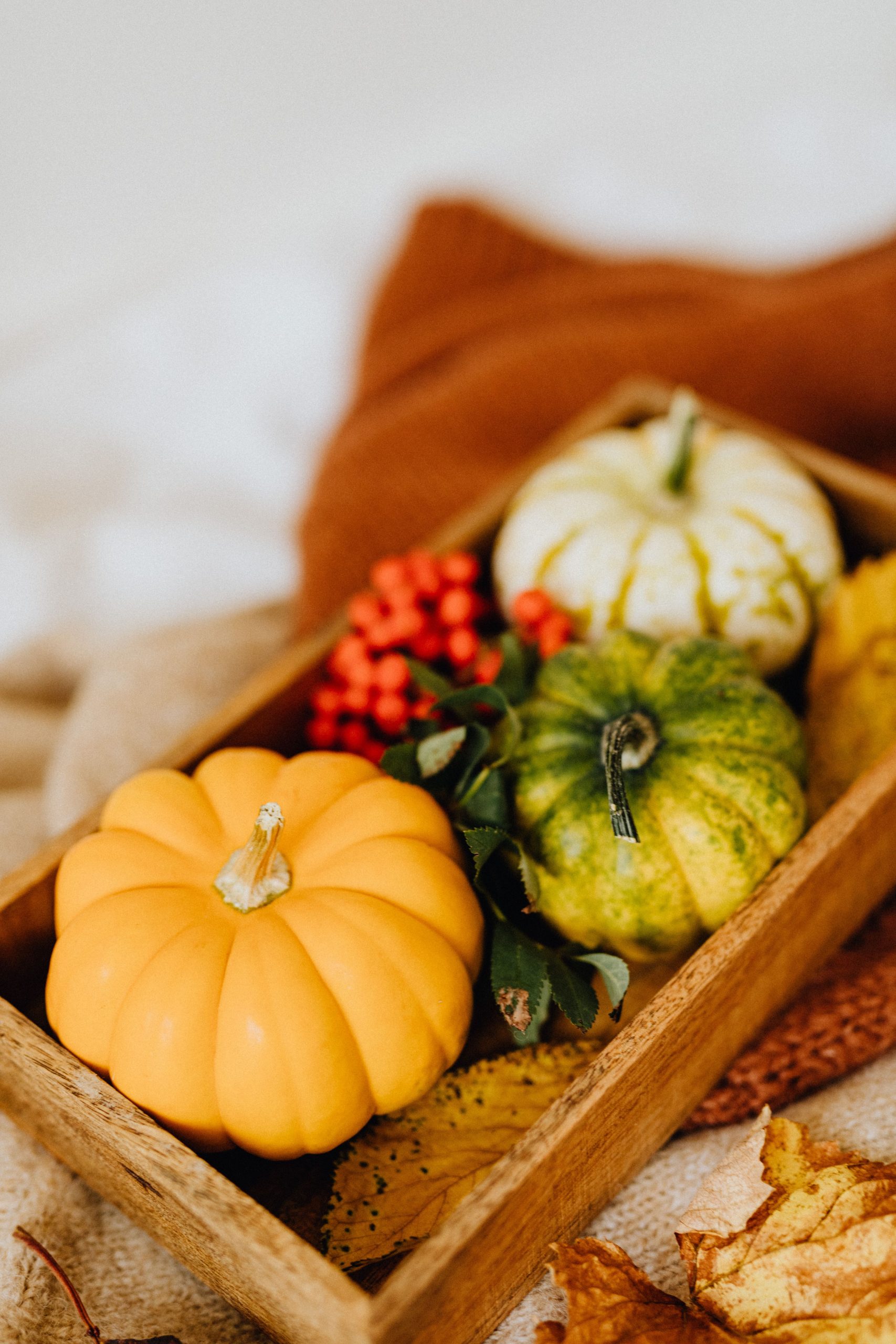
Here’s how to put together this exact look in just a few minutes. It’s a perfect fall craft for a quiet afternoon. Time: 10 minutes. Cost: $10-$20.
- Find a small wooden tray or a shallow bowl. A cutting board also works well.
- Choose three small gourds with different colors and textures. Odd numbers are always more visually appealing.
- Place the largest gourd first, slightly off-center.
- Arrange the other two gourds around it, creating a small, tight cluster.
- Take a small sprig of faux red berries and tuck it into the gaps between the gourds.
- Scatter 5-7 dried or artificial autumn leaves around the base of the gourds to fill out the tray.
19. Vibrant Pumpkin Vase with Orange Gerbera Daisies
While muted, neutral palettes have been dominant, we’re seeing a joyful return to vibrant, saturated color in 2026. This is a direct pushback against the ‘sad beige’ aesthetic. People are craving energy, optimism, and cheerfulness in their homes, and this bright orange-on-orange arrangement delivers exactly that. The gerbera daisy, with its happy, open face, is the perfect flower for this trend. This look is popular because it’s unapologetically autumnal and festive. It’s not trying to be subtle; it’s celebrating the season in full technicolor. This is a great alternative to the more subdued arrangement in Idea #9.
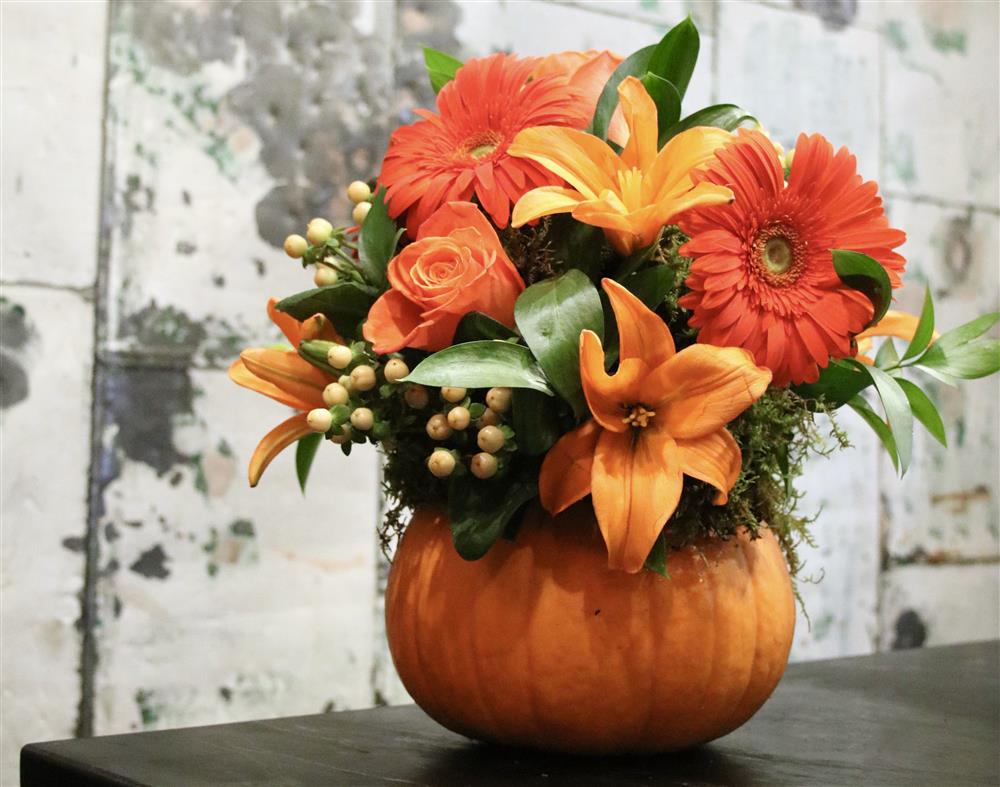
This arrangement is a fantastic study in monochromatic color scheming. By pairing a vibrant orange pumpkin with flowers in the exact same color family—gerbera daisies, lilies, and roses—the focus shifts from color contrast to the interplay of shape and texture. You notice the perfect circular shape of the daisy, the delicate ruffles of the rose petals, and the smooth skin of the pumpkin. The deep green foliage and moss provide just enough contrast to make the oranges feel even richer and more intense. It’s a bold choice that works because of its total commitment.
20. Pale Pumpkin Vase with Dahlias and Eucalyptus
The undisputed star of this arrangement is the pumpkin itself. Its pale, creamy yellow color and deep, dramatic ribs give it a sculptural quality that a standard orange pumpkin just can’t match. It’s a ‘Jarrahdale’ or similar heirloom variety, and its unique color provides the perfect neutral-yet-warm base for the coral, cream, and green tones of the flowers. If you were to swap this for a regular pumpkin, the arrangement would lose its sophisticated, rustic-chic vibe and feel much more ordinary. The pumpkin is not just a container here; it’s a foundational design element.
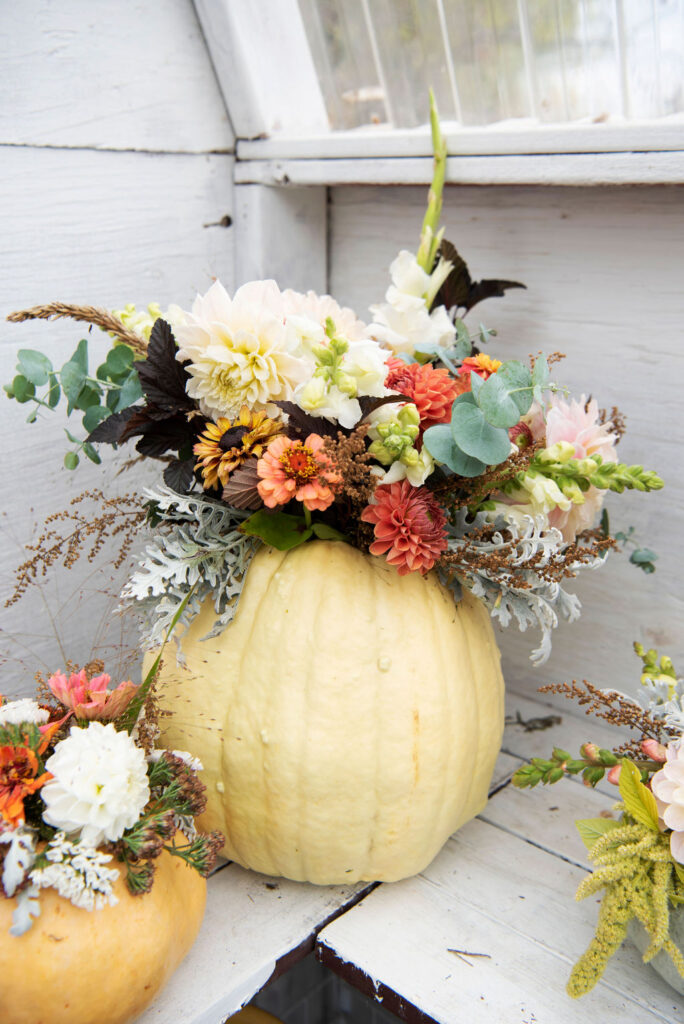
Fresh dahlias are breathtakingly beautiful, but they are notoriously delicate and short-lived as cut flowers. Expect a fresh arrangement like this to last only 3-4 days before the dahlias begin to wilt. To get the most out of them, be sure to re-cut the stems and change the water daily. Also, dusty miller, the silvery-grey foliage, tends to get slimy in water quickly, which can foul the water for other flowers. It might be the first thing you need to pull out. This is a high-maintenance beauty, best assembled the day of an event.
21. Mini Pumpkins with Decorative Fabric Bows
This is one of the most charming and budget-friendly DIY fall decor projects you can tackle. Mini pumpkins often sell for less than a dollar each at grocery stores or pumpkin patches. The rest of the materials can be sourced from a craft store’s remnant bin or by using scraps of fabric, ribbon, and lace you already have at home. You can create a whole series of these adorable decorative pumpkins for a long table runner or to tuck onto shelves for well under $20. It’s a fantastic way to get a high-impact, personalized look for very little money.
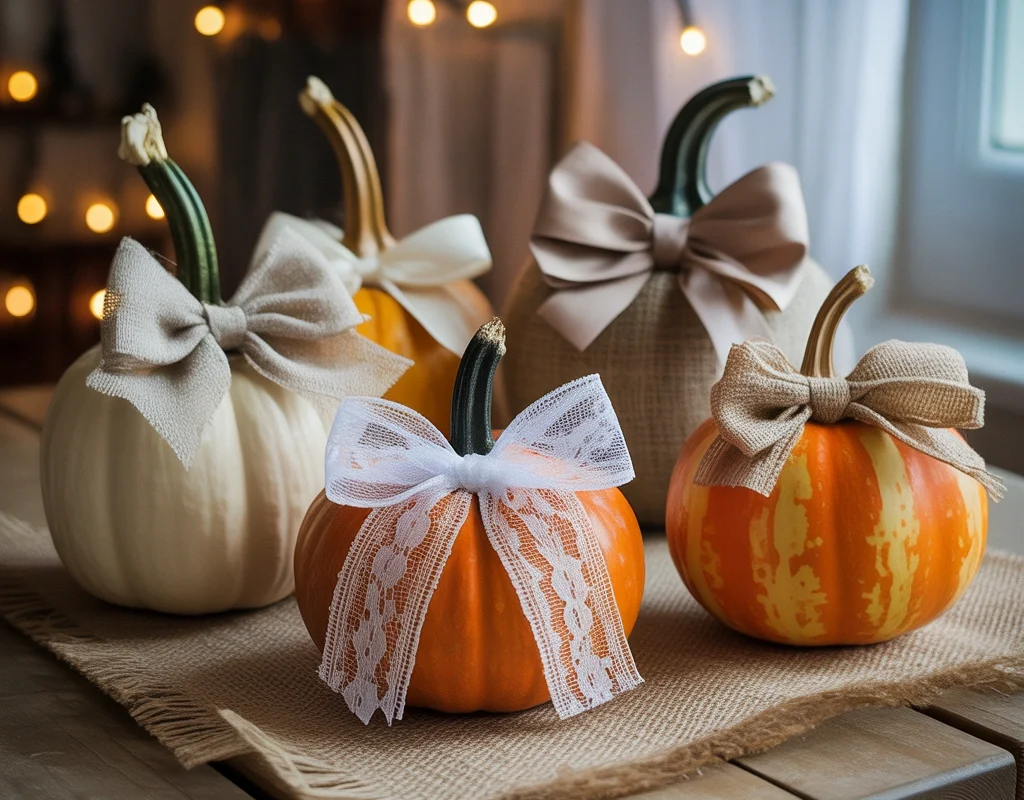
tying bows on everything, a few things to check:
- Are your pumpkins clean and dry? Wipe them down with a damp cloth to remove any dirt so your ribbons stay clean.
- Do you have the right adhesive? A small dot of hot glue is the best way to secure the bow to the pumpkin top, but be careful, as it can melt the surface of a faux pumpkin. For real pumpkins, it’s perfect.
- Have you trimmed the stems? Some mini pumpkins have long, scraggly stems. Trim them down to about half an inch to create a neat platform for your bow.
- Mix up your textures! The look works best with a variety of fabrics—burlap, satin, lace, and velvet. Don’t use just one type.
22. Minimalist White and Pale Green Pumpkin Still Life
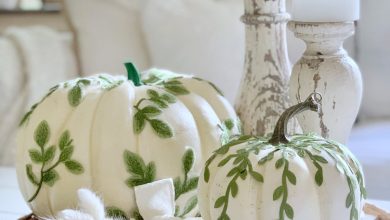
The beauty of this arrangement lies in its restraint. It’s a perfect example of the design principle ‘less is more.’ By using only a handful of items in a strictly controlled, pale color palette, each element is given space to be appreciated for its unique form and subtle color. You notice the smooth roundness of one white pumpkin, the squat shape of another, and the gentle green hue of the third. The sparse placement of the dried botanicals adds a delicate, almost poetic touch. This isn’t about fall abundance; it’s about quiet, contemplative beauty, making it feel more like a piece of art than a seasonal decoration.
This minimalist approach is ideal for smaller spaces where a large, bountiful display would be overwhelming. It’s perfectly suited for a bedside table, a small floating shelf, or the corner of a desk. The entire footprint is likely no more than 10×10 inches. This style proves you don’t need a giant mantel or a huge dining table to create a beautiful, impactful fall moment. It’s an excellent strategy for bringing seasonal decor into apartments, dorm rooms, or minimalist homes. For a larger-scale version with a similar palette, see Idea #7.
23. Abundant Modern Porch with Layered Pumpkins and Gourds
This look masterfully blends modern architecture with natural abundance. The formula is approximately 70% natural harvest elements (a huge variety of pumpkins and gourds in all colors), 20% modern structure (the clean lines of the gray siding, concrete steps, and dark door), and 10% classic accents (the fall wreath and striped doormat). The key is the intentional ‘piling’ and ‘spilling’ of the pumpkins. They aren’t just lined up neatly; they are clustered and layered to look as though they have grown there, which beautifully softens the hard, modern lines of the house.
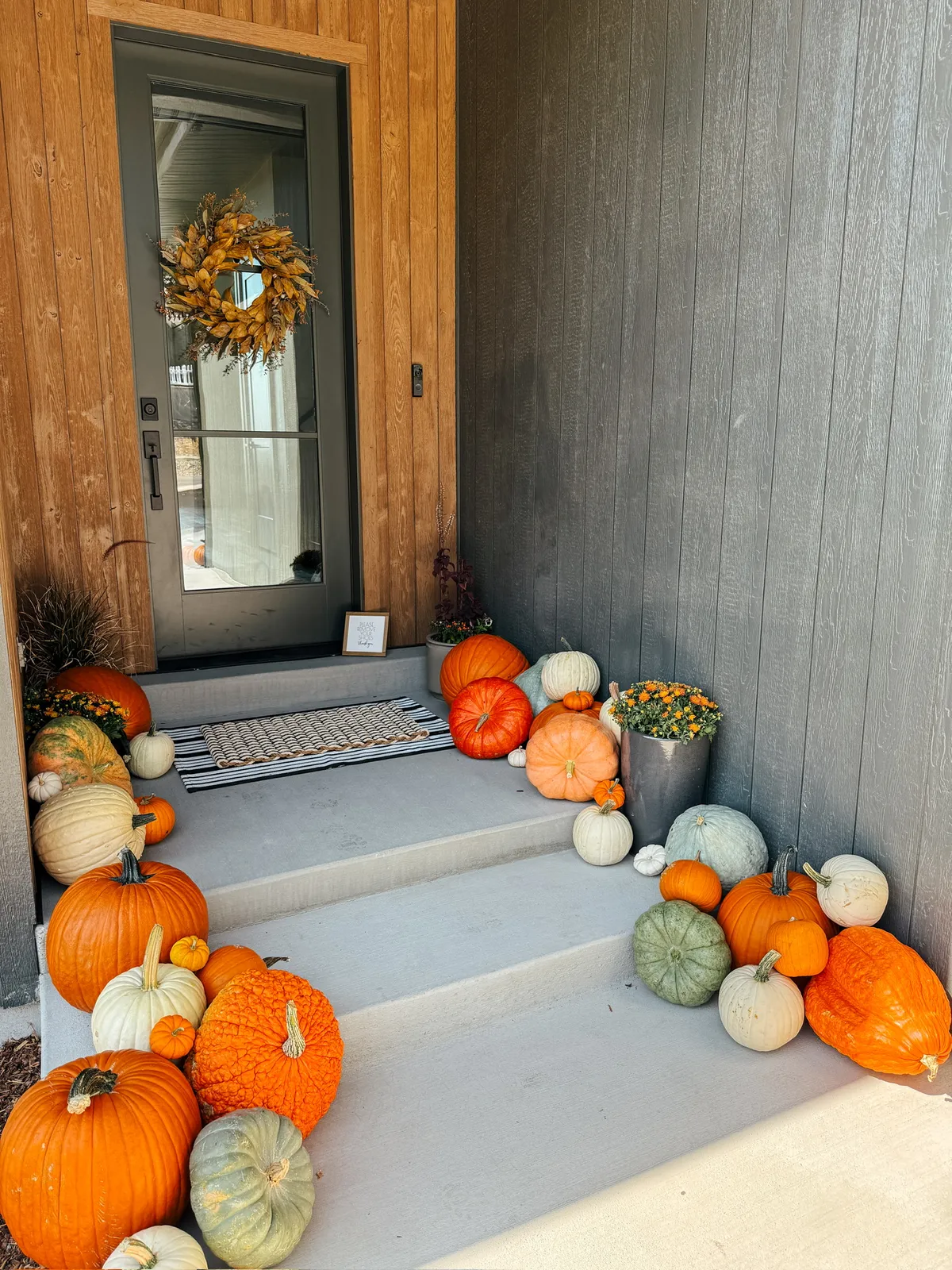
An abundant display like this is gorgeous, but it’s also a tempting playground for squirrels, chipmunks, and other wildlife, who see it as an all-you-can-eat buffet. To deter them from nibbling on your decor, try spraying the pumpkins with a commercial deer and rabbit repellent. Some people also swear by a light dusting of cayenne pepper around the base or wiping the pumpkins with a cloth lightly dampened with eucalyptus oil. Be prepared to reapply after it rains. No solution is foolproof, so a little bit of nibbling is just part of the reality of decorating with real produce outdoors.
24. Lush Pumpkin Floral Arrangements with Sunflowers and Roses
When creating a floral arrangement in a real pumpkin, especially with heavy flowers like sunflowers, the center of gravity is crucial. To prevent your beautiful creation from tipping over, choose a wide, squat pumpkin over a tall, narrow one. Then, after you’ve scooped it out, place a small, heavy rock or a sealed bag of sand in the bottom before you insert your vase or floral foam. This simple trick lowers the center of gravity and makes the entire arrangement significantly more stable, which is especially important if it’s placed on an uneven surface like a weathered stool or metal bucket.
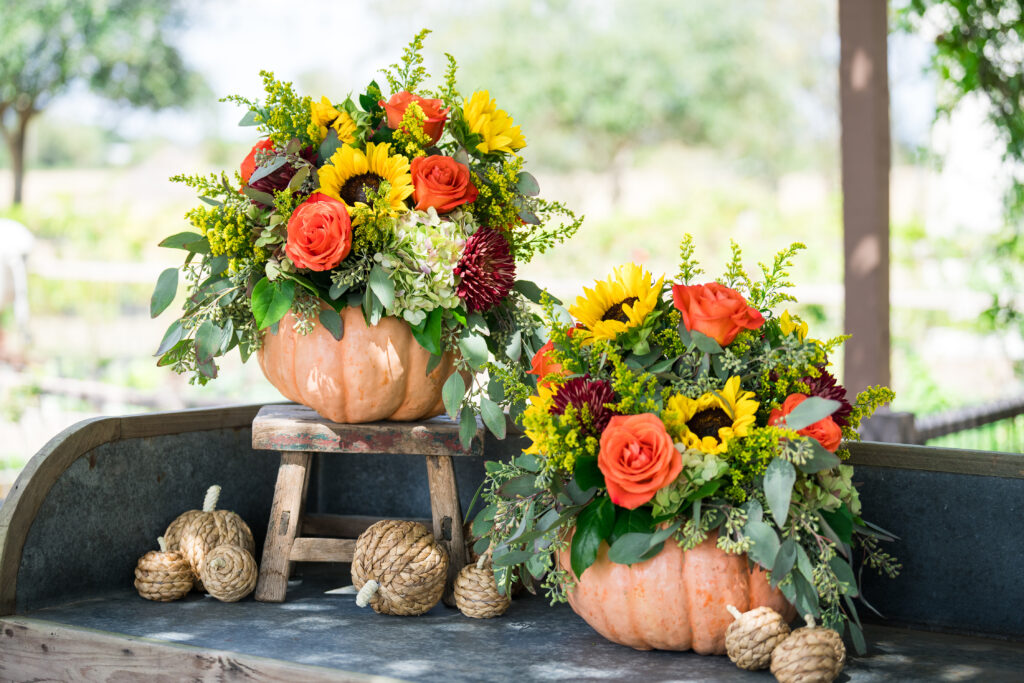
This cheerful, abundant look involves two full floral arrangements. Here’s a potential cost breakdown for creating the pair:
- Main Furniture (Pumpkins, Stool): $25 – $40
- Lighting: N/A
- Textiles: N/A
- Florals (sunflowers, roses, hydrangeas, etc. for two): $100 – $180
- Decor/Accessories (Woven pumpkins): $15 – $25
- TOTAL: $140 – $245
Budget alternative: Create just one arrangement. Use more affordable filler flowers like carnations and mums alongside a few star sunflowers and roses. Forage for your own green foliage. This could cut the cost for a single arrangement to the $50-$75 range.
25. Galvanized Bucket Planter with Mums, Grasses, and Mini Pumpkins
This ‘container recipe’ is a classic for a reason. Here’s how to assemble your own ‘thriller, filler, spiller’ fall planter. Time: 30 minutes. Cost: $50-$80.
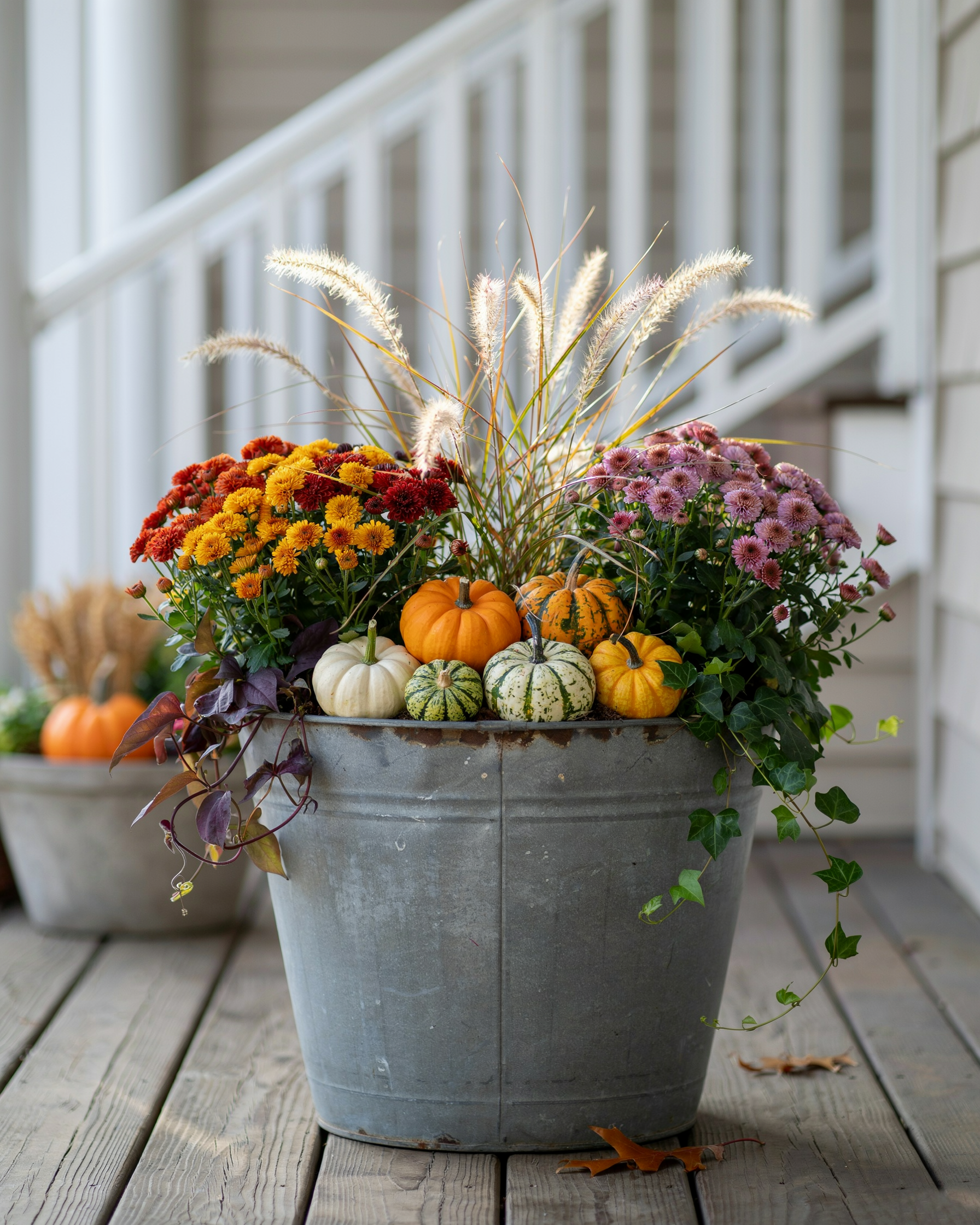
- Start with a large galvanized bucket. Make sure it has drainage holes. If not, drill 3-4 holes in the bottom.
- Add your ‘thriller’—the tallest element. In this case, it’s the feathery ornamental grass. Plant it in the center or towards the back of the bucket.
- Next, add your ‘filler.’ Arrange the chrysanthemum plants around the grass. Use 3-4 plants in different colors (orange, red, and purple) to fill up the main body of the planter.
- Finally, add your ‘spiller. ‘Plant the trailing ivy near the edge of the bucket so it can cascade down the sides.
- The finishing touch: Nestle 3-5 mini pumpkins and gourds into the gaps between the plants, right on top of the soil.
Before you build this beautiful planter, check these few things:
- Does your bucket have drainage? This is non-negotiable. Without drainage holes, your plants’ roots will rot in standing water. If there are no holes, you must drill them.
- Where will it live? This is a ‘full sun’ arrangement. Mums and ornamental grasses need at least 6 hours of direct sunlight a day to thrive and continue blooming.
- Are you prepared for watering? Container plants dry out much faster than plants in the ground. You will likely need to water this bucket every 1-2 days, especially if it’s not getting much rain.
- Is your planter big enough? For this many plants, you’ll need a bucket that is at least 15-18 inches in diameter.
Ready to Create Your Autumn Masterpiece?
See? It’s all about finding a look that speaks to you and understanding the simple design tricks that bring it to life. Whether you go for overflowing abundance or quiet, minimalist charm, the best fall decor is the kind that makes your home feel more like you. Now go forth and gather your gourds! Don’t forget to save your favorite ideas to your fall Pinterest board so you can find them later.