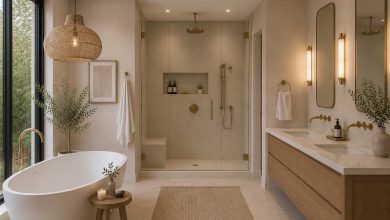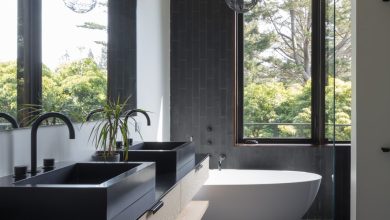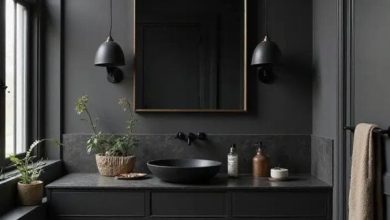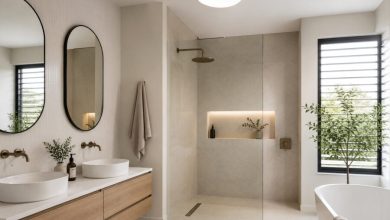

A mid century modern bathroom balances clean lines with warm materials and a touch of retro flair. This style thrives on geometric tiles, natural wood vanities, and thoughtful lighting that keeps the space feeling open rather than cluttered. In this article, you will find 36 practical ideas that bring that iconic look into your own bathroom, from bold tile choices to simple furniture updates.
Each suggestion focuses on what works in a real home, so you can adapt the look without a full renovation. Whether you are drawn to walnut finishes or playful terrazzo, these examples show how to make mid century modern feel current and livable.
Floating Wood Vanity with Geometric Green and White Tiles
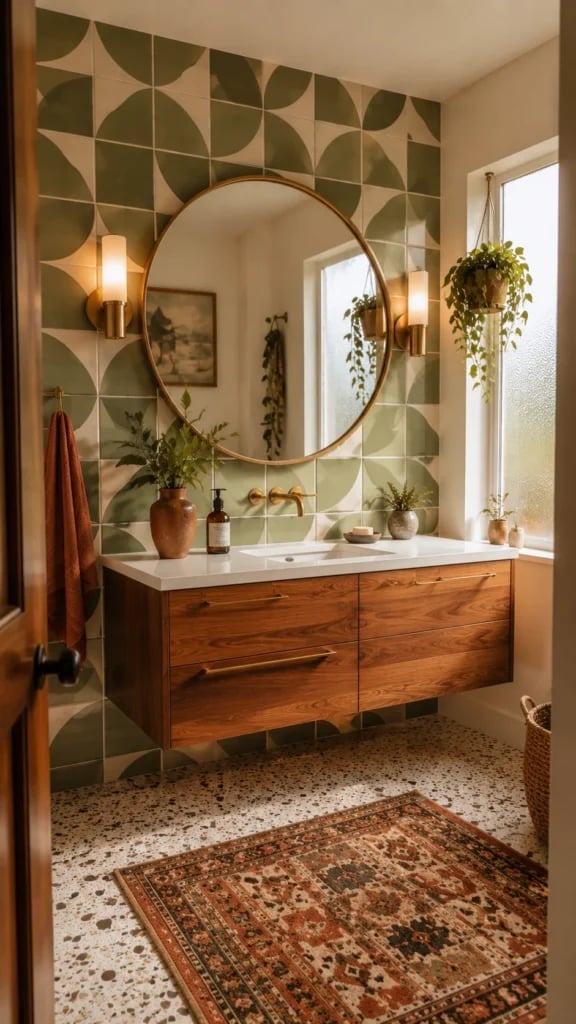
A floating wood vanity, paired with a round mirror and brass wall sconces, anchors the room without touching the floor. The real move here is the geometric green and white wall tile behind it. That tile turns a simple sink area into the room’s focal point, while the vanity’s open space below keeps the layout airy. A potted plant on the counter adds a soft, organic contrast to the sharp tile pattern.
Warm Ochre Shower and Walnut Vanity
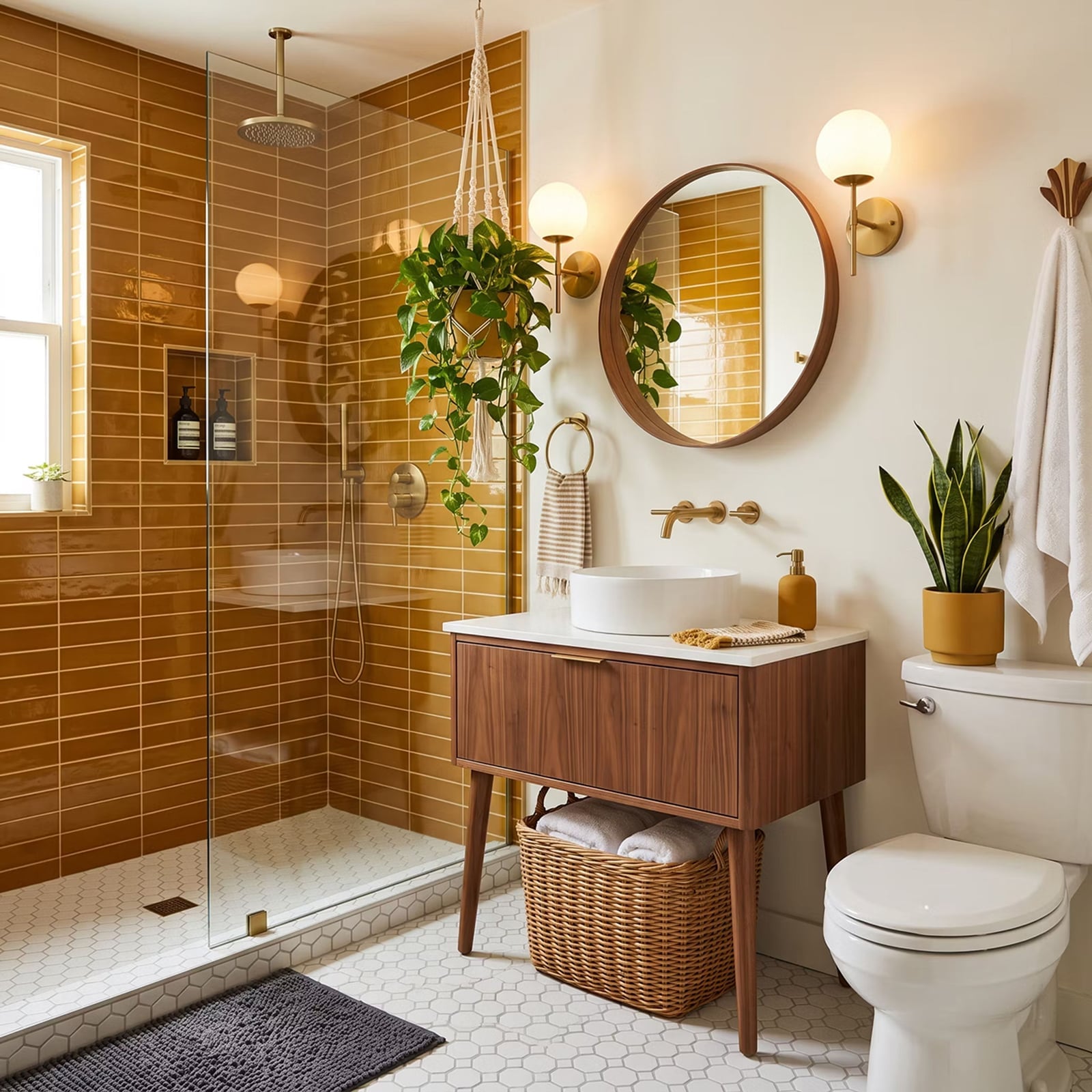
The ochre shower tile and walnut vanity set a warm, grounded palette that defines the whole room. Ochre brings a sun-baked richness, while the walnut’s darker grain keeps it from feeling flat. A white vessel sink and round mirror break up the warmth with clean, reflective surfaces. A hanging plant near the window adds a green note that ties the wood and tile together without competing. The palette works because the ochre reads as the main color, with white and green as supporting players.
Bold Geometric Wallpaper with Sputnik Chandelier
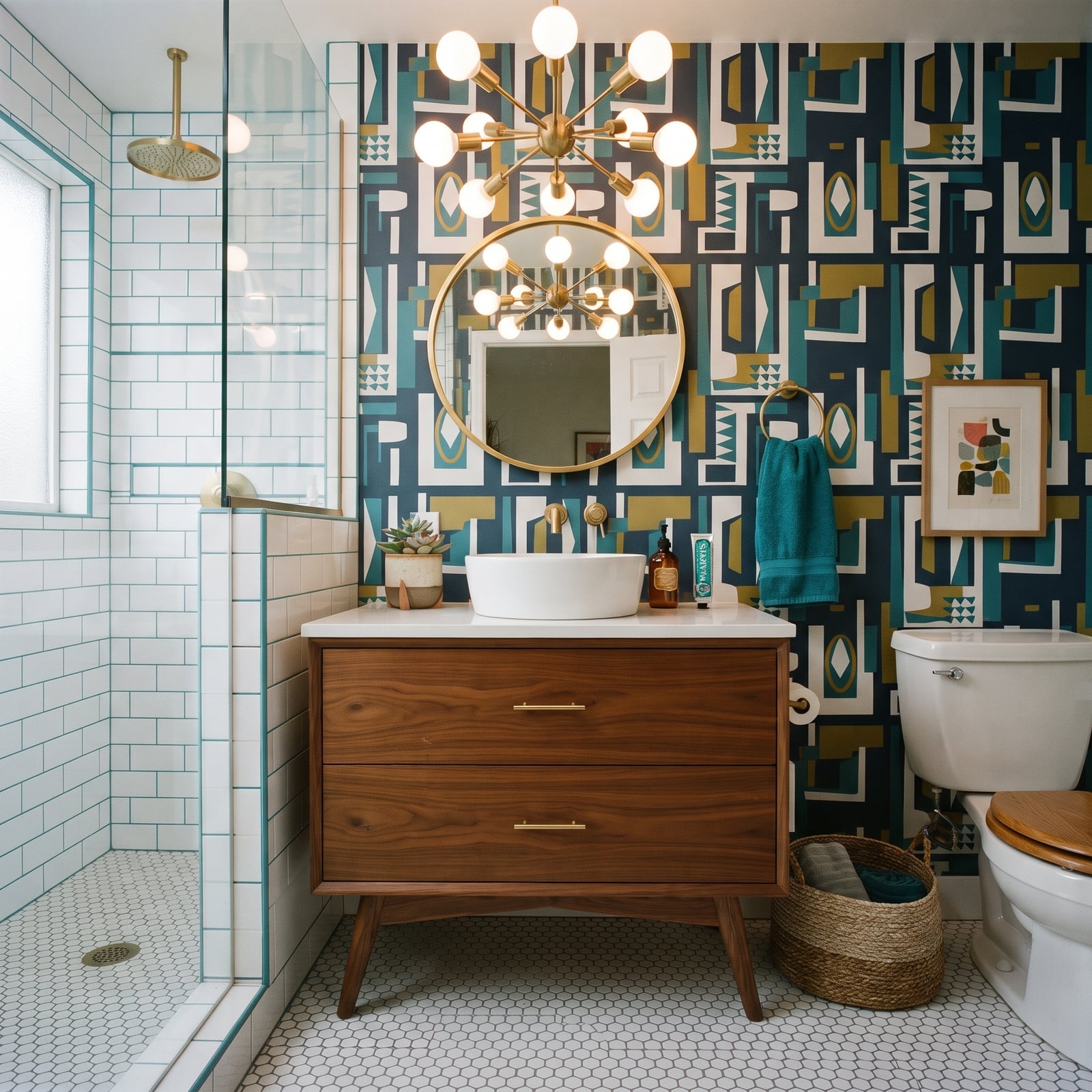
Can wallpaper work in a bathroom with a shower and toilet nearby? Yes, if it’s a bold geometric pattern in teal, navy, and gold. The Sputnik chandelier above the vanity echoes the mid-century lines of the wallpaper, while the round mirror softens the busy pattern below.
The key is keeping the other surfaces plain. A simple wood vanity and white tile let the wallpaper and chandelier do the talking. In a compact room, this approach stops the space from feeling cluttered. The gold in the wallpaper picks up the chandelier’s metallic finish, creating a cohesive look without matching.
Terrazzo Countertop with Natural Light
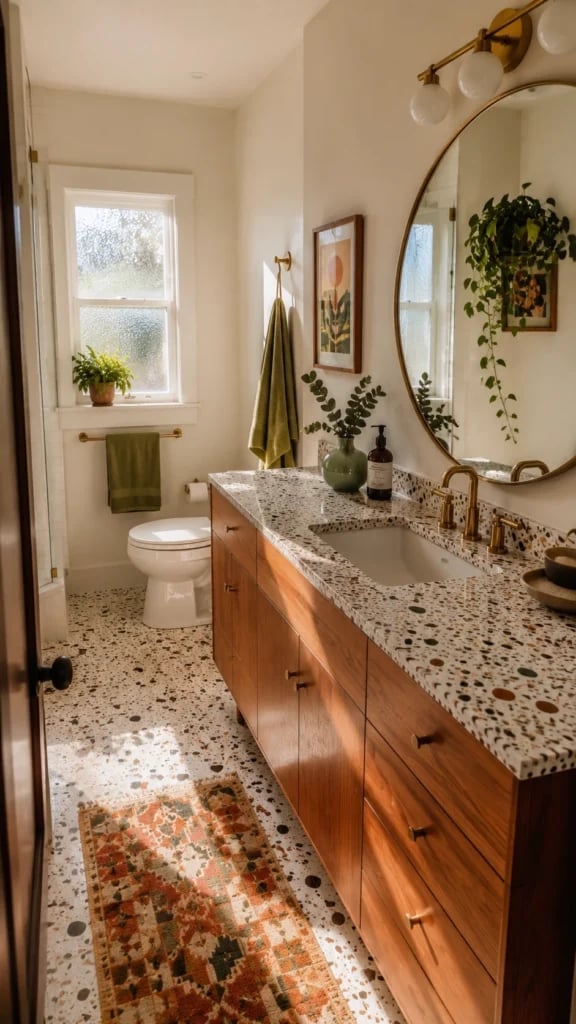
A terrazzo countertop with colorful flecks brings texture and visual interest to a floating wood vanity. The natural light from a nearby window makes the flecks pop, while the vanity’s warm wood keeps the stone from feeling cold. Brass fixtures add a subtle metallic line that ties the vanity and countertop together. In this setup, the window light does the heavy lifting, making the terrazzo’s pattern the room’s main decorative element.
Dark Gray Subway Tile and Wood Double Vanity Contrast
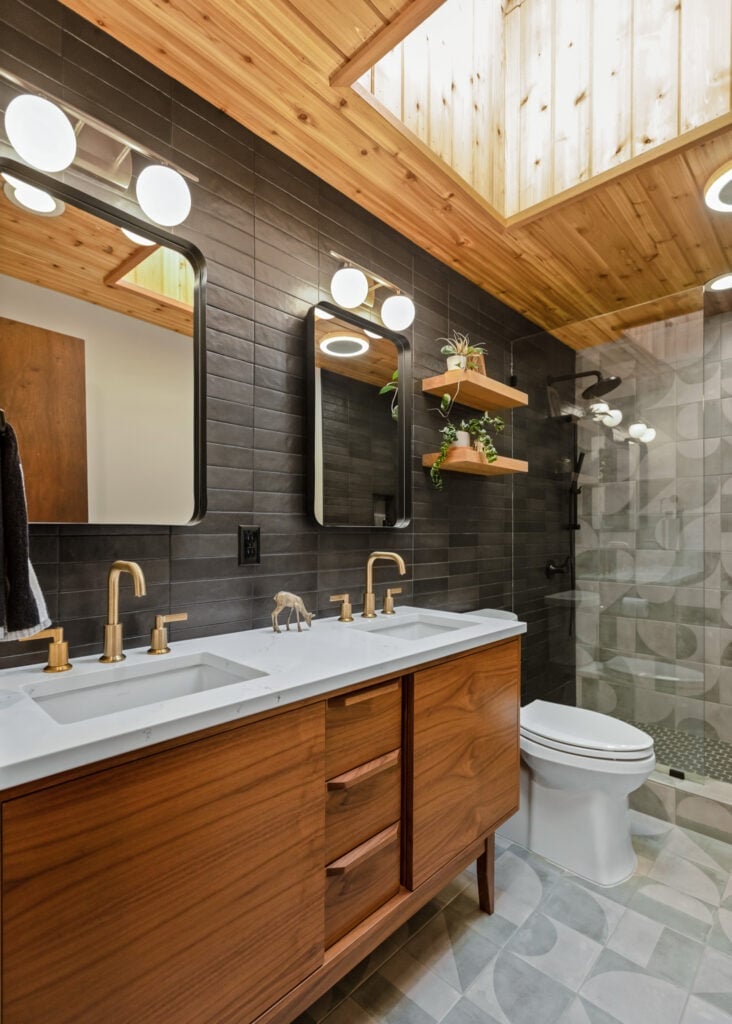
A warm wood double vanity against dark gray subway tile creates a contrast that defines the room’s palette. The dark tile acts as a backdrop, making the wood’s grain and warm tones stand out. White countertops and brass faucets add light and a touch of shine, while a skylight overhead keeps the gray from feeling too heavy. The palette is straightforward: warm wood and dark gray, with white and brass as accents.
Terrazzo Floor with Floating Vanity and Glass Shower
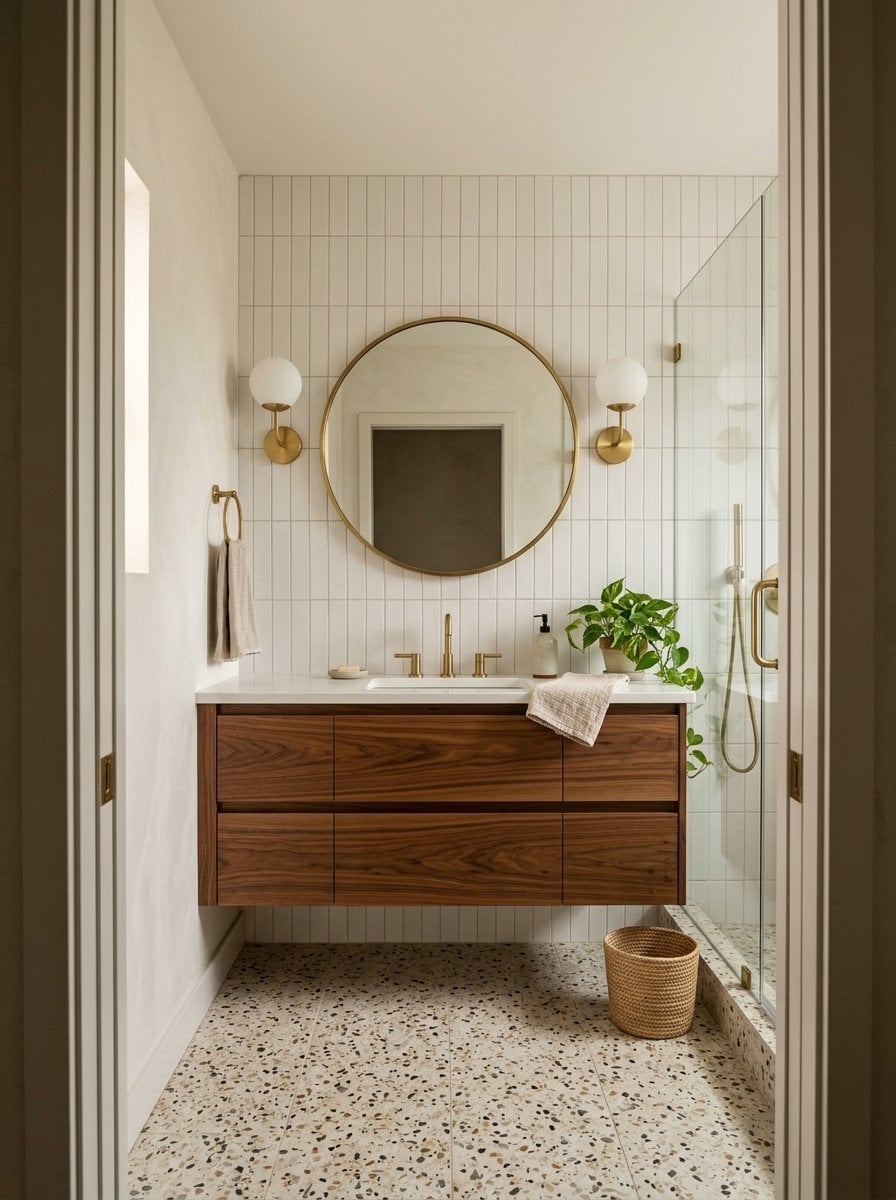
Tile is the obvious choice for a bathroom floor, but terrazzo brings a different texture. This compact room uses a terrazzo floor with white and wood-toned fragments, a floating wood vanity, and a round mirror above it. The glass shower enclosure keeps the sightline open, so the floor pattern reads as the main event. Wall sconces around the mirror add task light. The layout works because the vanity is the only large piece touching the floor, letting the terrazzo do its job without interruption.
In a rental, a terrazzo-look vinyl sheet or peel-and-stick tile can mimic the speckled surface without a permanent install. Pair it with a vanity that has visible legs or a floating mount to keep the floor visible. The round mirror softens the straight lines of the vanity and shower, and gold-toned hardware ties back to the warm flecks in the floor. Check your local climate before adding live plants on the counter, since humidity and light levels vary.
Black and White Geometric Floor Tile with Freestanding Tub
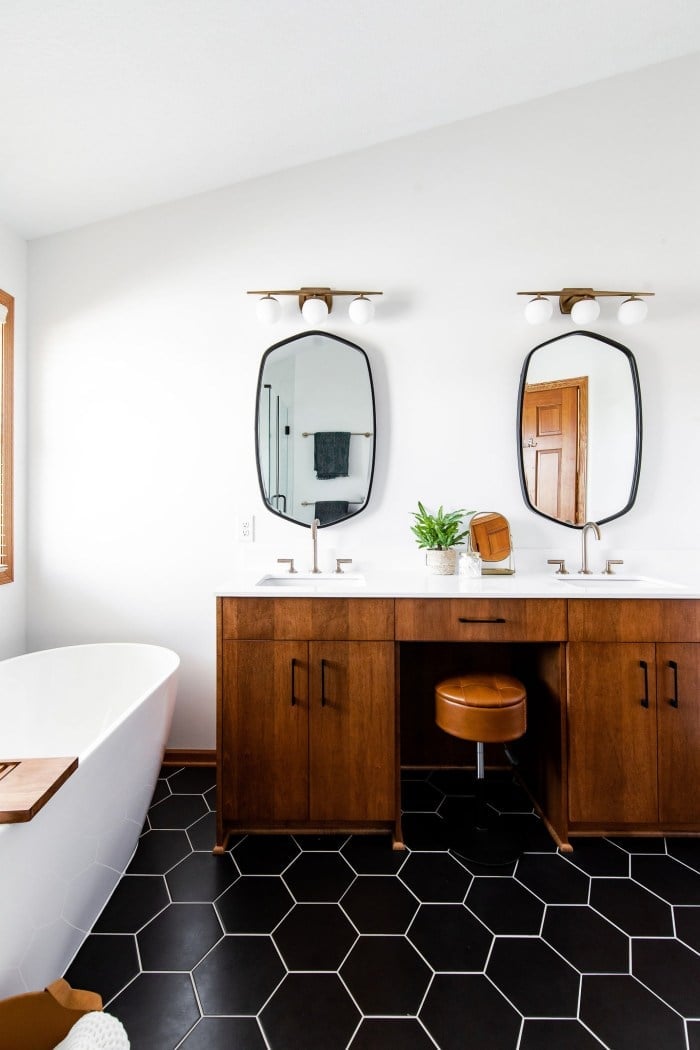
The black and white geometric floor tile in this roomy bathroom does not need a lot of help. It runs under a freestanding tub and a double vanity with a marble top, and the wood tones in the vanity keep the black and white from feeling cold. Vanity lights above the mirror provide even illumination for grooming, and natural light balances the contrast. The layout includes a seating area, which makes sense for a room this size, but the tile is what holds the eye. A large geometric rug in the same pattern could give the same visual anchor without touching the existing floor.
Green Tile Accent Wall with Double Vanity
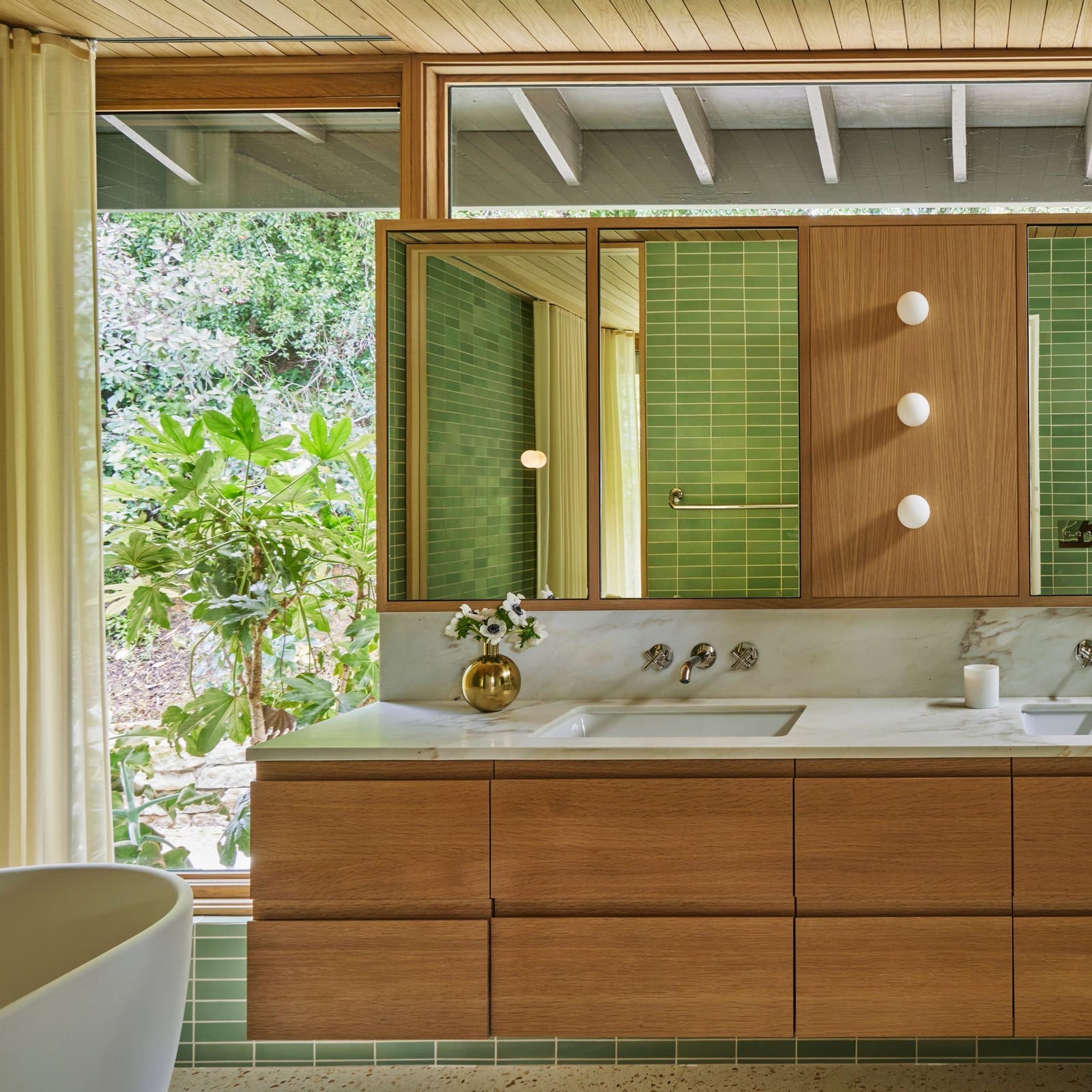
This roomy bathroom goes all in on a green tile accent wall behind a double vanity and a freestanding tub. The green is deep enough to read as a color rather than a neutral, and it pairs with wood-toned vanity cabinets and a white marble countertop. Recessed ceiling lights and window light keep the green from darkening the room. The double vanity faces the window, which is a smart layout for light on both sides of the mirror. The green wall defines the palette, and the white fixtures and wood provide the break. For a similar look without tiling, a high-moisture paint in a matching green on one wall can deliver the same focal point for less commitment.
White and Blue Geometric Tile Bathtub Surround
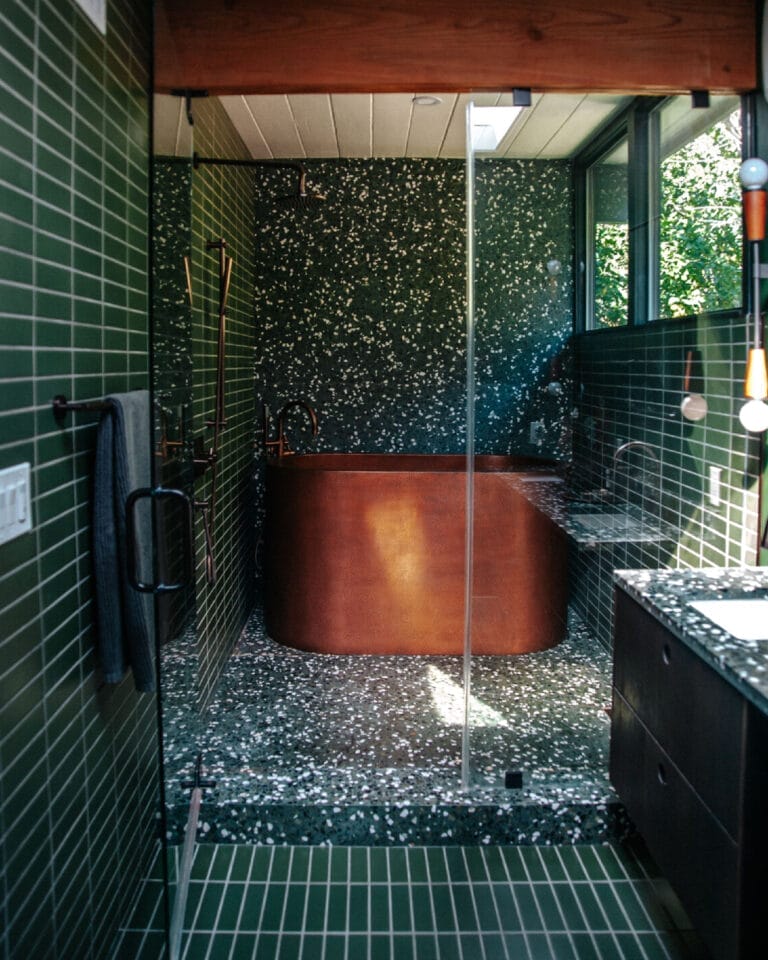
Can a tile pattern hold up to daily splashes and still look sharp? Yes, if the tile is glazed porcelain with a geometric mid-century design. This compact bathroom uses white and blue geometric tiles on the bathtub surround and floor, creating a continuous surface that is easy to wipe down. The blue adds contrast without overwhelming the small space, and the white base keeps the room bright. Natural light from a nearby window helps the glaze reflect, which makes the pattern pop. The tile on the floor means there is no transition between wet and dry areas, which simplifies cleaning. For a renter, a waterproof vinyl sheet with a similar geometric print can go over existing tile, but check that the adhesive is safe for the surface below.
Geometric Blue Accent Wall and Hexagonal Floor Tiles
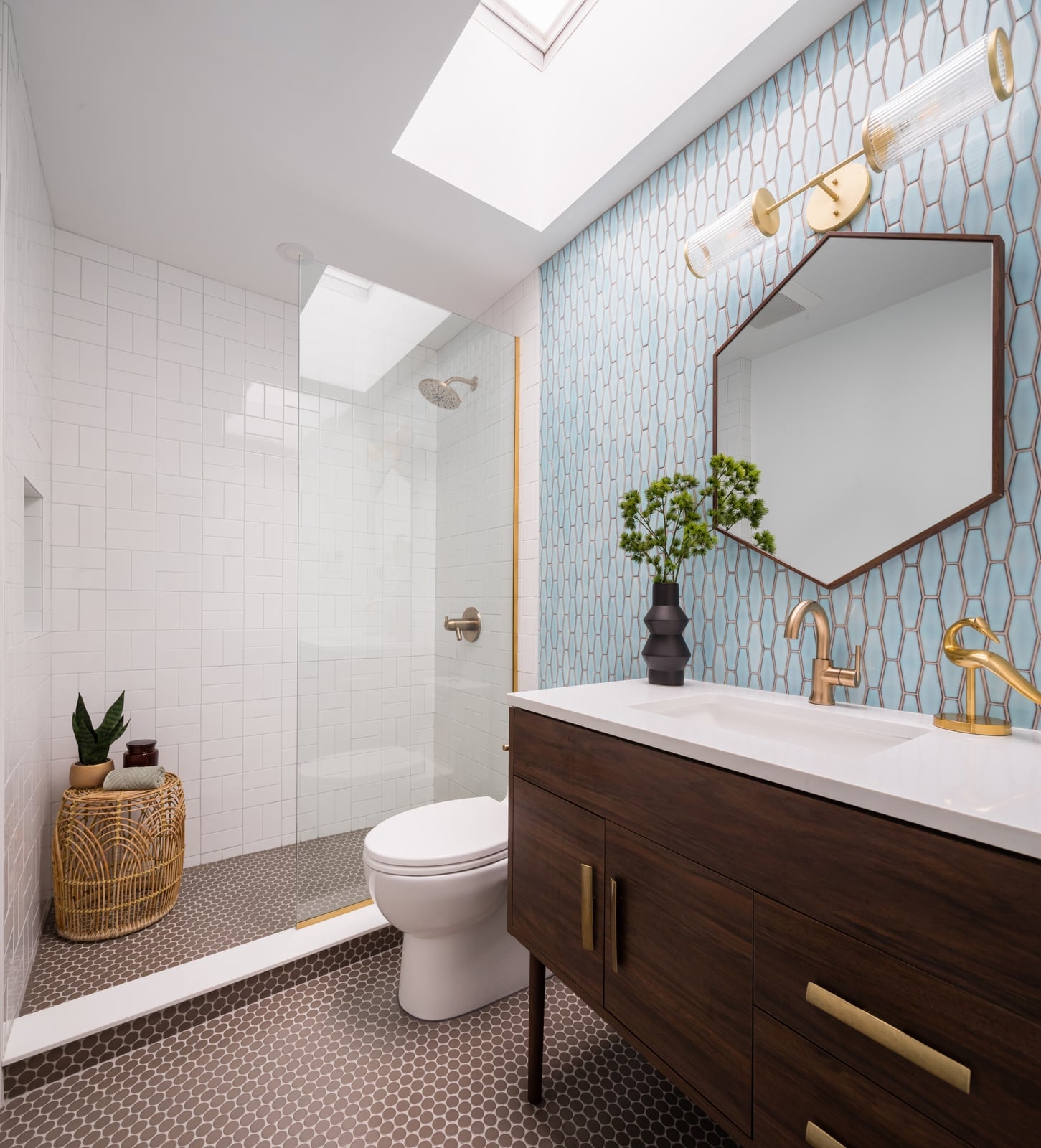
A geometric blue accent wall covers one side of this roomy bathroom, and hexagonal floor tiles in a lighter tone spread underfoot. The blue tile is bold enough to act as the room’s color anchor, while the hexagon floor adds texture without competing. A dark wood vanity with a brass faucet sits between them, and natural light from a skylight hits the blue wall directly. The modern vanity light above the mirror provides additional task lighting. The ratio works because the blue wall takes one vertical plane and the hex floor covers the horizontal, with the wood vanity as the visual break between them. The brass faucet picks up the warm notes in the wood.
Navy Blue Geometric Tile Bathtub Platform
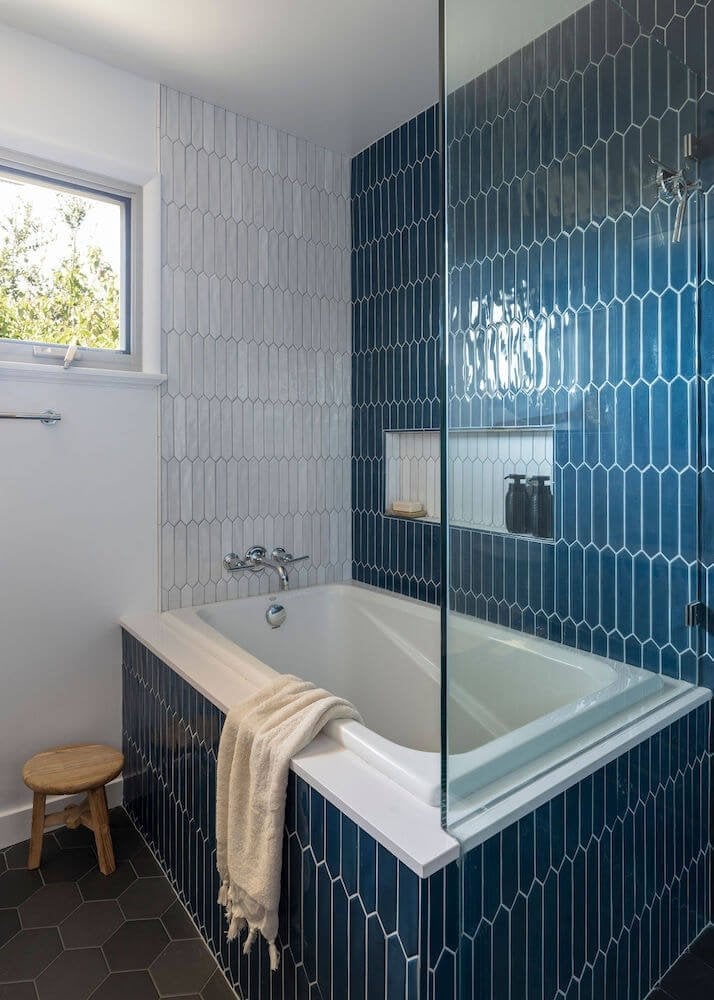
A tiled platform turns the bathtub into a built-in feature rather than a standalone piece. The navy blue geometric tile wraps the base and rises behind the tub, creating a cohesive anchor in a room with white walls and a glass shower screen. A small wooden stool nearby adds a natural contrast to all that glazed surface. The platform approach works best when the tile pattern is strong enough to carry the visual weight, and navy blue holds up well against splashes without showing every drop.
Tapered Leg Vanity with Brass Pendant Lights
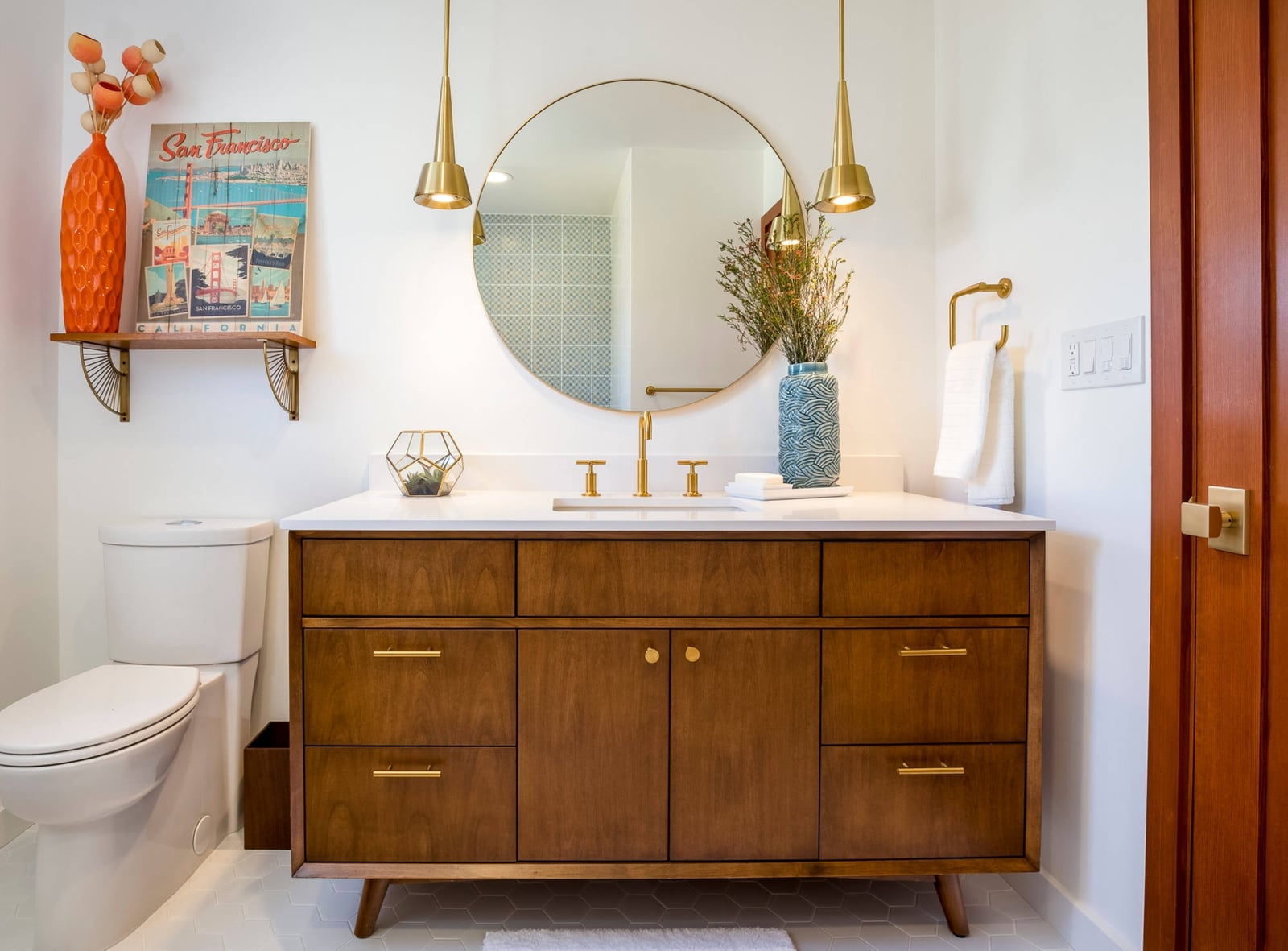
A flat-front vanity feels solid but can read as heavy in a wide room. This one keeps its presence light with tapered legs that lift the cabinet off the floor, letting the tile continue underneath. The wood grain warms the white surroundings, and the marble top adds a polished surface that reflects the pendant lights overhead. Brass fixtures pick up the warm tone of the wood without competing with it.
The orange accent in the room, likely from a towel or decor piece, keeps the palette from leaning too cool. The round mirror above the vanity softens the straight lines of the cabinet and the wall sconces. To the left, the toilet sits in its own zone, leaving the vanity as the clear center of the layout.
Arched Mirrors and Floral Mosaic Tile Backsplash
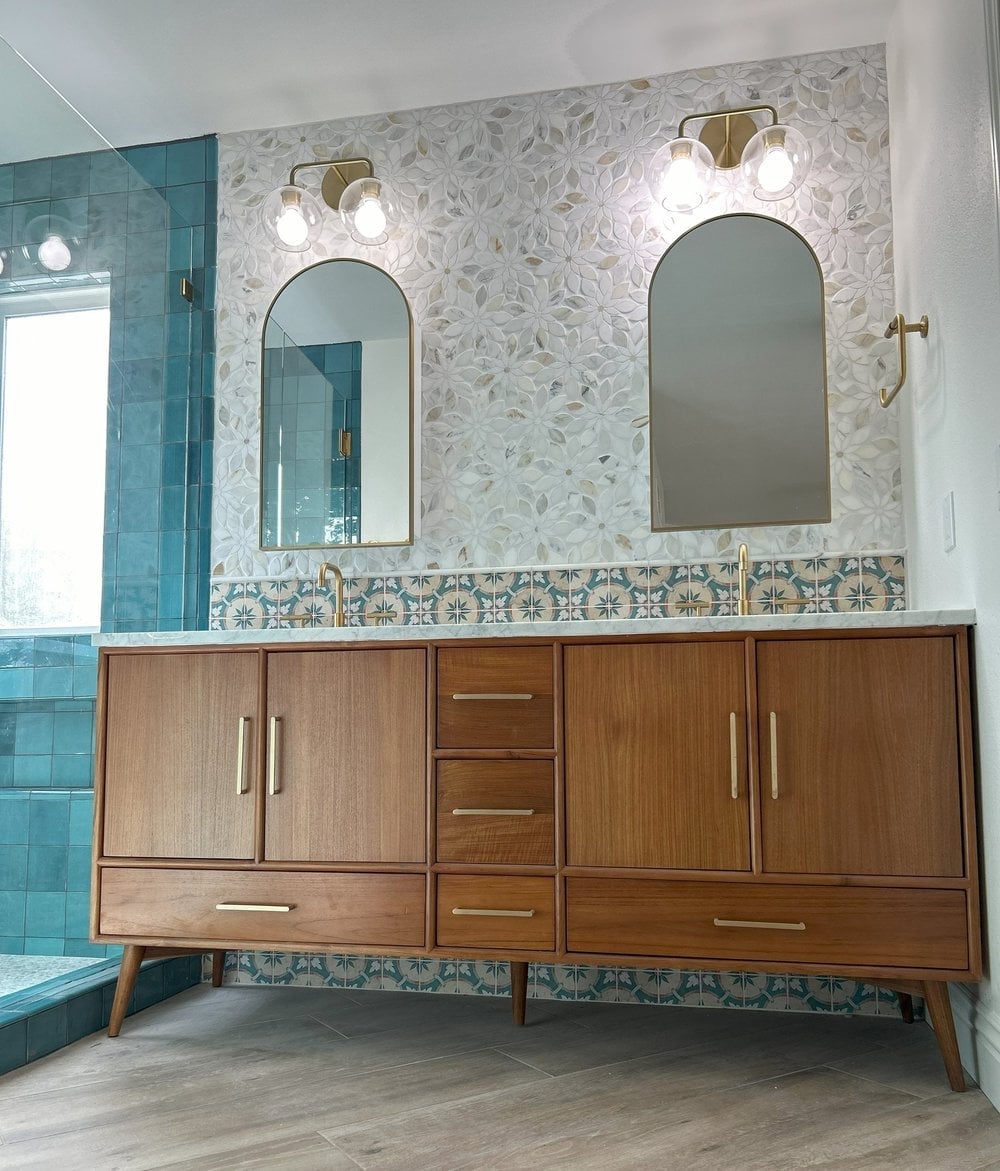
Two arched mirrors above a floating vanity with tapered legs create symmetry without feeling rigid. The floral mosaic tile backsplash, in teal and white, adds pattern in a contained strip rather than covering the whole wall. The wood vanity and gold-toned sconces keep the look grounded, while the glass shower to the left lets natural light move through the space. The mosaic works as a decorative band, not a full wall treatment, which makes it a manageable update for a weekend project.
Warm Wood Vanity with White Marble Countertop
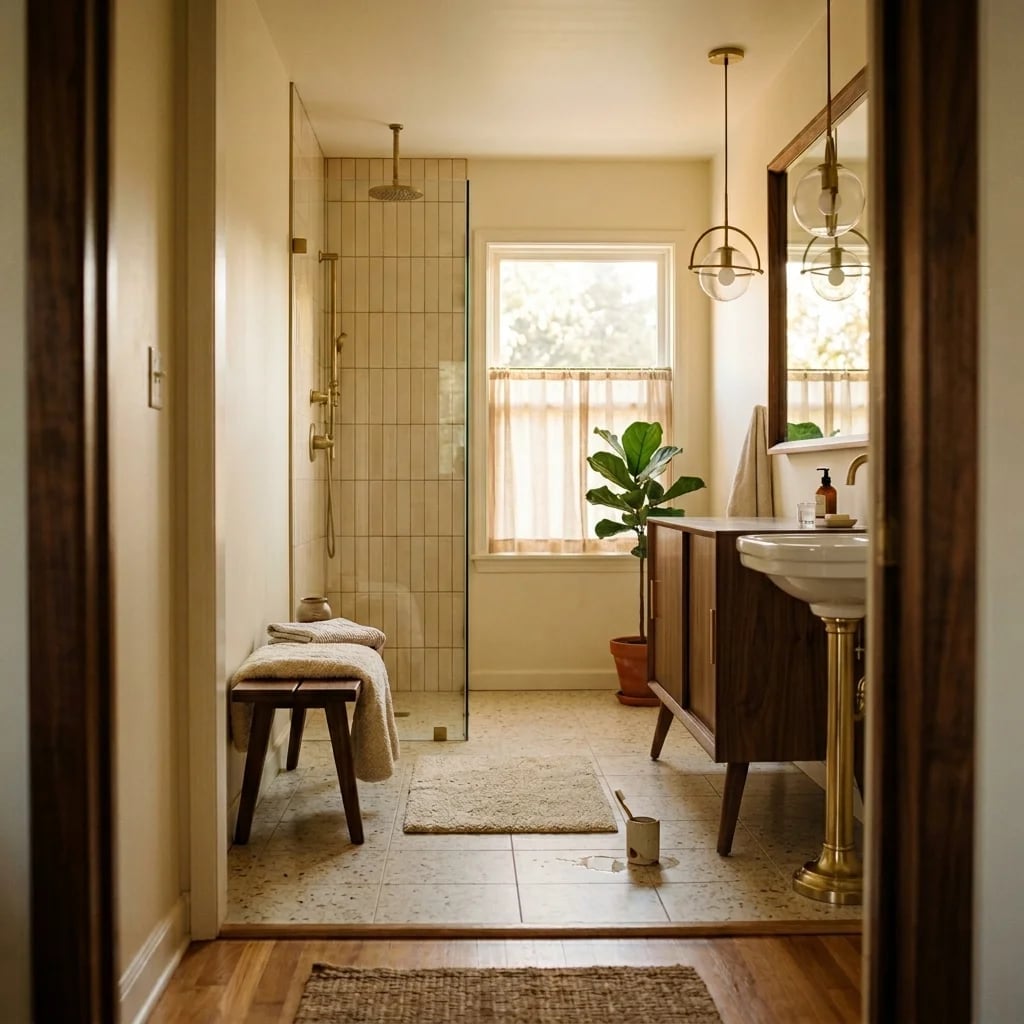
This is a straightforward formula that delivers every time. A warm wood vanity with clean lines pairs with a white marble countertop, and brass fixtures tie the two together. The natural light from the window hits the marble surface and bounces around the room, keeping the space bright even with darker wood tones. The double vanity layout gives each person their own sink without making the room feel like a commercial restroom. The brass faucets and handles are the detail that stops the look from reading as basic.
Wood Grain Vanity Detail with Vessel Sink
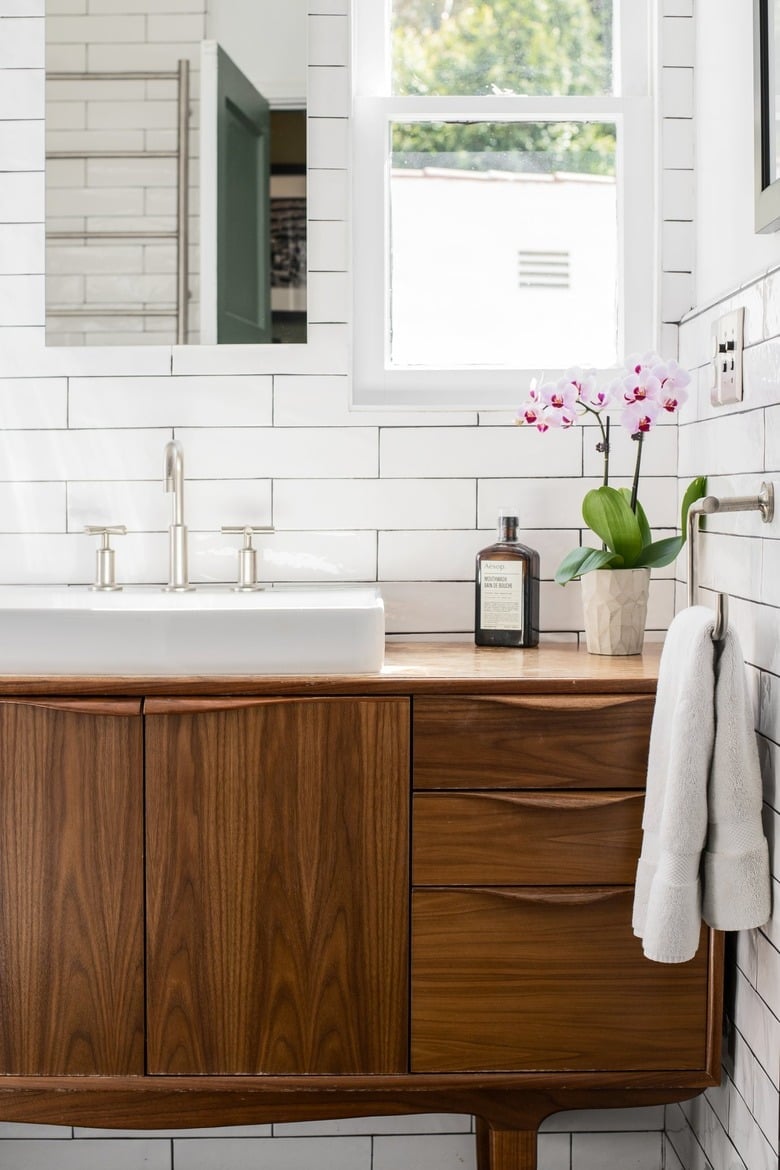
A vanity with visible wood grain adds texture that flat paint cannot fake. In a compact bathroom, a vessel sink sits on top of the counter instead of cutting into it, which keeps the cabinet space underneath for drawers. The wood grain runs horizontally across the drawer fronts, a detail that makes the cabinet feel wider than it is. The grain catches the light and gives the room a warm, lived-in feel.
Drawers beat cabinet doors in a small vanity because you can reach everything without digging past bottles stored at the back. The stone countertop around the vessel sink gives you a solid landing spot for a soap dispenser or a toothbrush holder. Keeping the palette to white and wood tones lets the grain be the main event.
Green Bathtub Against Vibrant Yellow Tiles
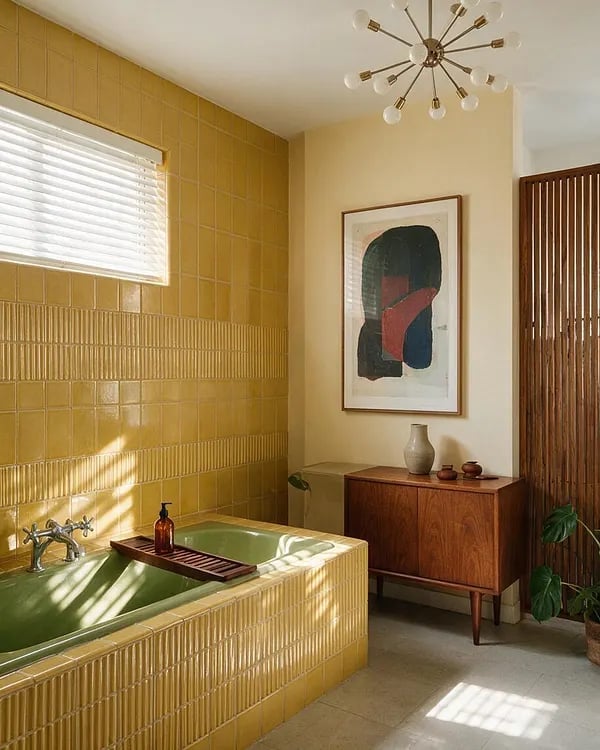
A green bathtub set against vibrant yellow tiles makes a mid century modern bathroom feel like a deliberate color study. The yellow runs wall to wall, which keeps the green tub from looking like an accident. A wood cabinet and slatted screen add warmth without competing, and the sputnik chandelier overhead nods to the era without turning the room into a museum. The palette works because yellow and green sit next to each other on the color wheel, so the contrast is balanced. For a similar effect in a rental, swap the tile for peel-and-stick in the same yellow tone and change the light fixture instead.
Terracotta Geometric Tile Walk-In Shower
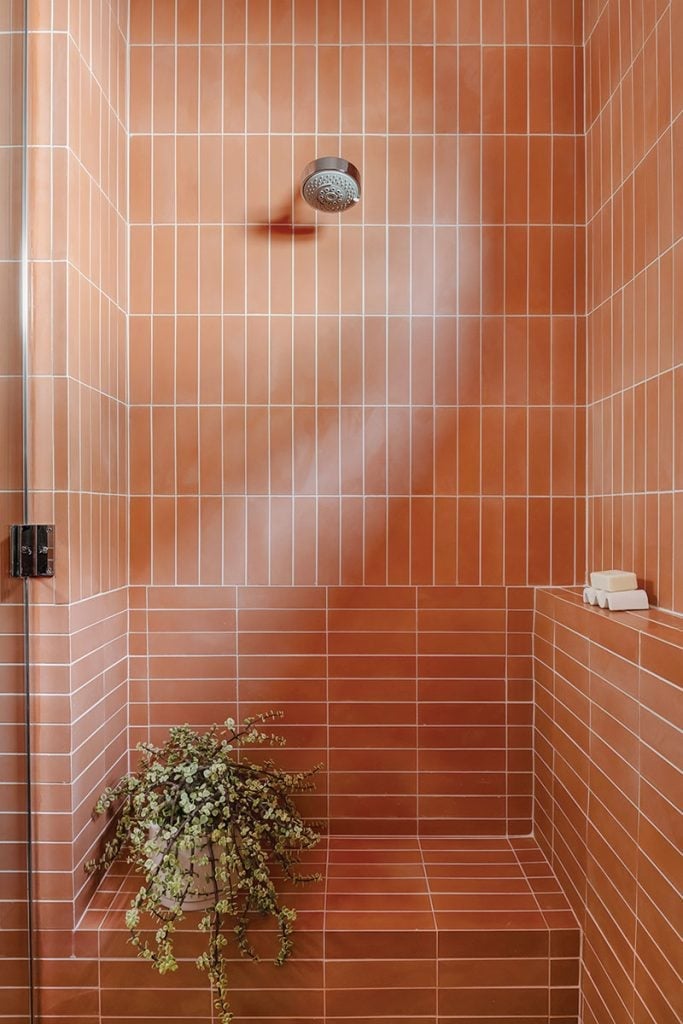
In a compact bathroom, let one surface carry the pattern and keep everything else neutral. In this mid-century modern bathroom, the walk-in shower features terracotta geometric tile from floor to bench height. The bold pattern is the main event, so the surrounding walls stay plain white with a single plant for contrast. Natural light prevents the terracotta from feeling heavy, which matters in a smaller space where dark tile can close things in. For renters, a similar effect comes from a waterproof peel-and-stick tile sheet applied only to the shower wall behind the curtain rod. The pattern still stands out, and you can remove it when you move.
Walnut Vanity with Integrated Shelf and Gold Accents
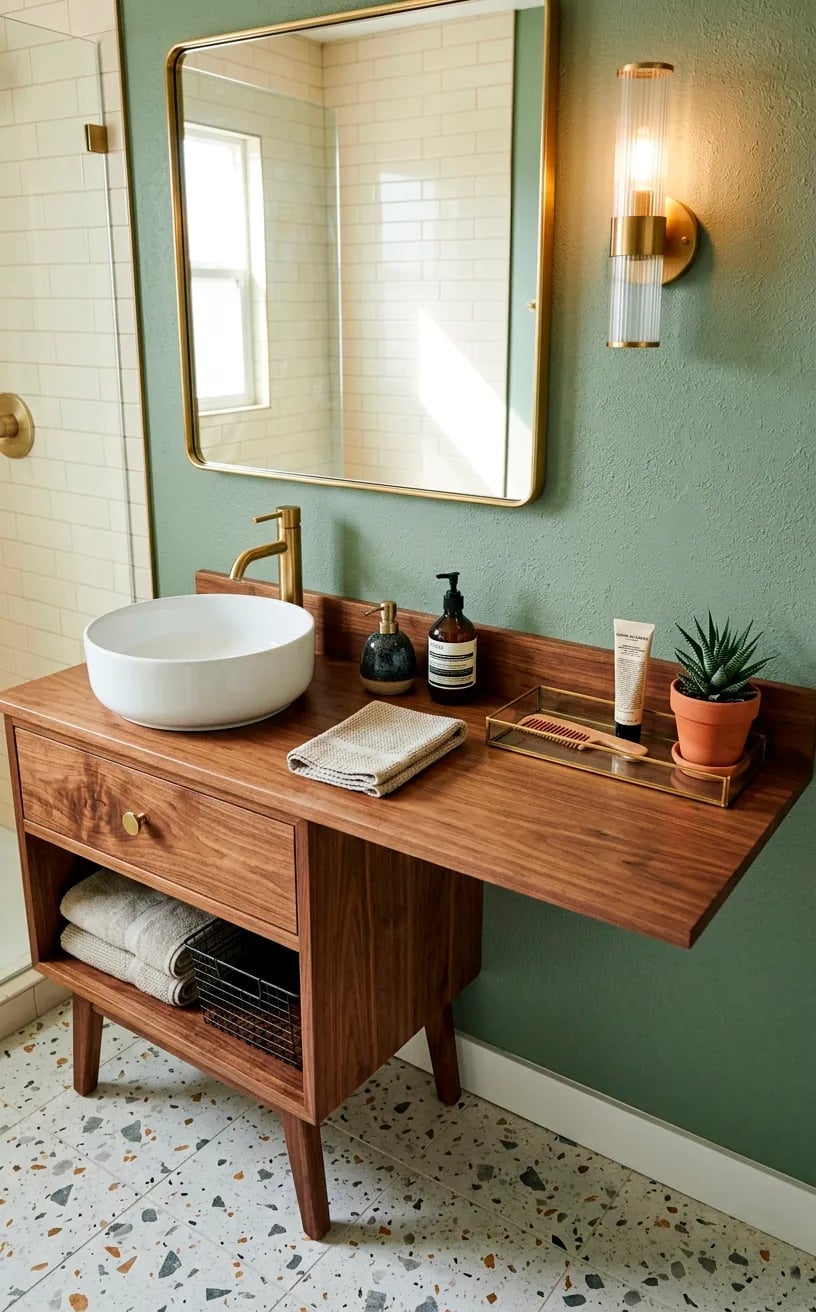
A walnut vanity with an integrated shelf sits somewhere between a custom build and a smart furniture find. The shelf breaks up the vertical face without adding another piece to clean around, and the warm wood keeps the gold faucet and glass sconce from reading as too dressy. The vessel sink on top continues the mid century modern bathroom look without demanding a whole new countertop.
The layout matters here because the vanity becomes the anchor. With natural light hitting the walnut from one side and accent lighting from the sconce, the wood grain does the decorating. If you are working with a double vanity setup, consider adding a similar shelf on only one side to keep the asymmetry intentional. The gold works best when it is the only metallic finish in the room, so stick with one tone for faucet, sconce and any cabinet pulls.
Dramatic Green Onyx Bathtub with Skylight
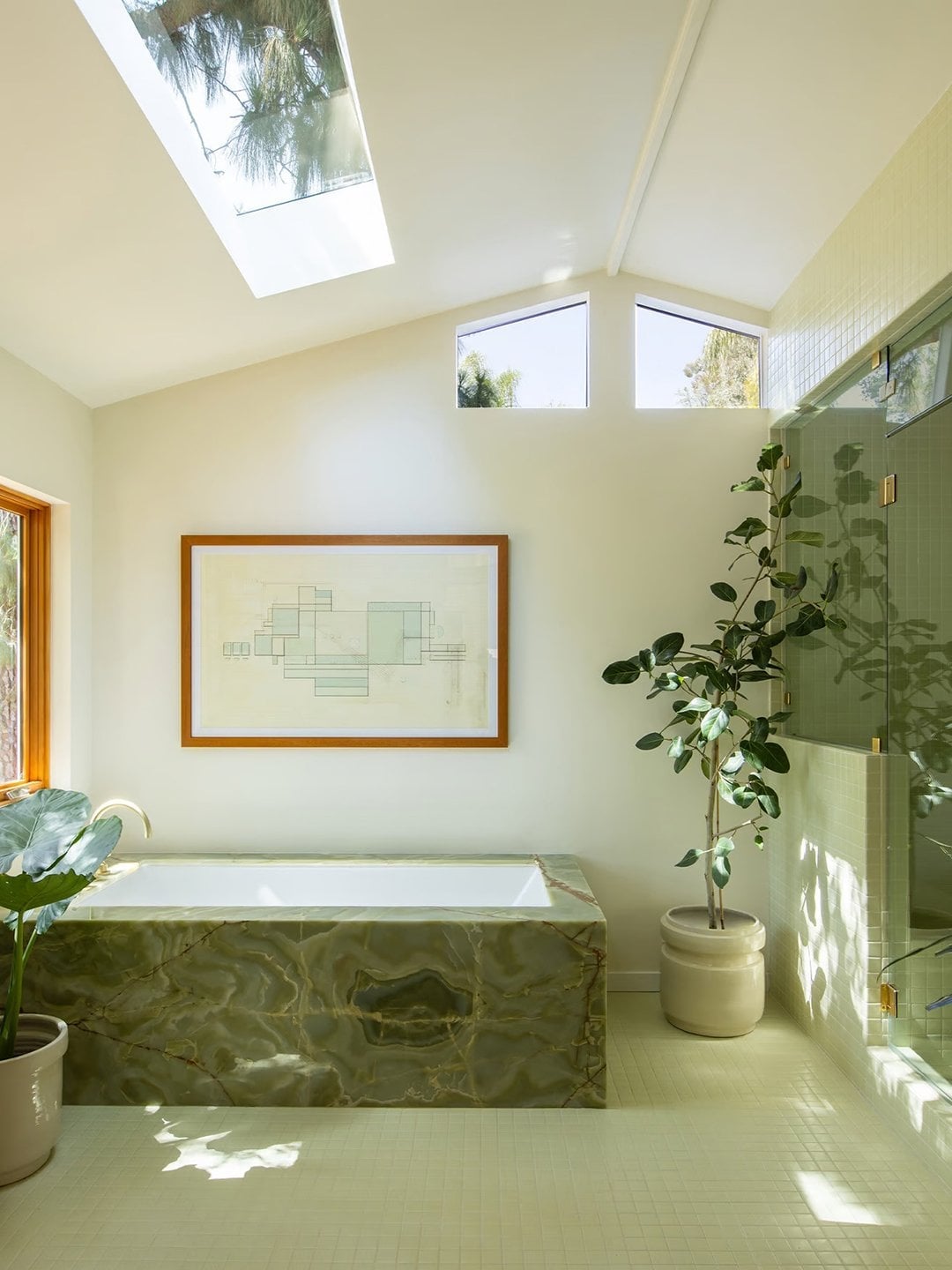
A green onyx bathtub surround catches the skylight in a way that changes through the day, which is the whole point of choosing a stone with movement. The onyx wraps the tub in a way that feels permanent without needing a full renovation, since the surround sits as a single sculptural element rather than wall-to-wall cladding. A large potted plant and glass shower enclosure keep the open plan from feeling empty, and the cream and wood tones balance the green so it does not dominate. The skylight is the key: without overhead natural light, onyx can look flat, so this setup only works if you have access to the ceiling or a large window nearby.
Blue Tiled Shower Wall with Freestanding Tub
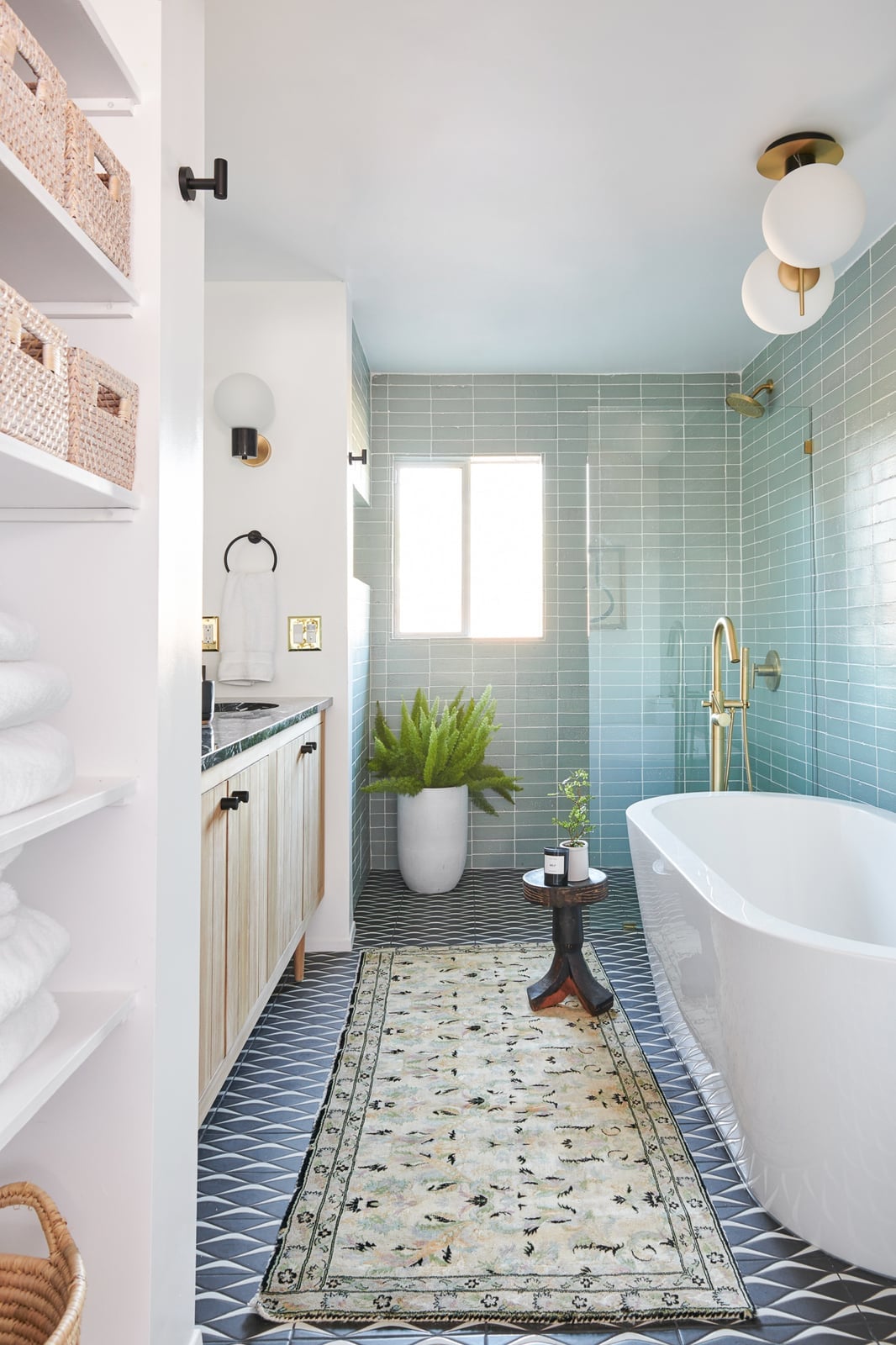
This mid century modern bathroom gets its balance from one clear move: a full wall of blue tile behind the shower, with the freestanding tub placed off center in the open floor. The tub does not fight the tile because it stays white and simple, while a wood vanity and rug add warmth at ground level. The blue reads as the dominant color, but the ratio keeps it from overwhelming the room since the tile stops at the shower wall rather than wrapping the whole space. A plant near the window softens the hard tile edge. If you want the same proportion in a smaller bathroom, limit the blue to a single wall behind the tub and paint the rest a warm white. The contrast still lands without the tile cost.
Vibrant Blue Square Tile Walls and Floor
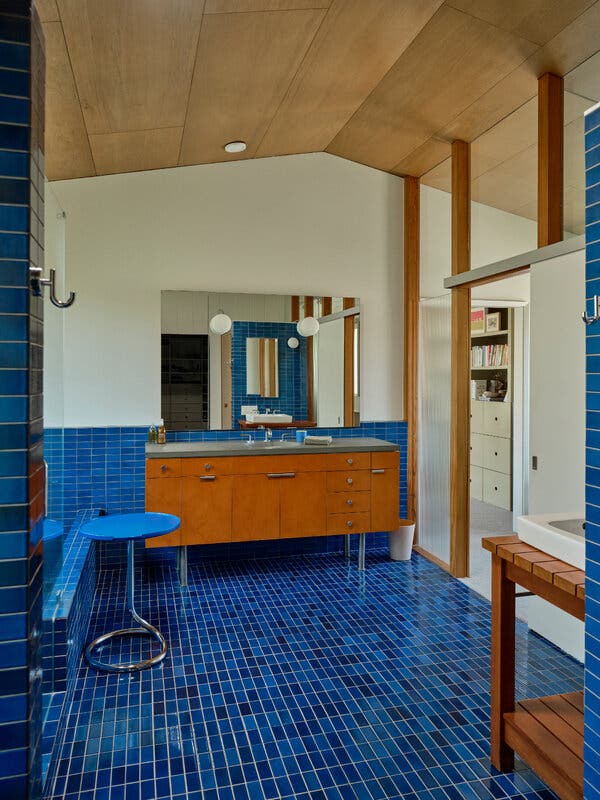
When a single color covers walls and floor, the room needs a counterbalance. Here, vivid blue square tile wraps the whole bathroom, so white fixtures break the intensity. The glass partition keeps the shower visible without closing off the space, which matters when the color reads this loud. The layout places the tub and shower on one side, the vanity opposite, so the eye travels across the room. That trip through the blue is what makes the palette work. A roomy bathroom can absorb a full-coverage color like this, but a smaller one might feel enclosed. Keeping the vanity in a warm wood tone provides a natural contrast.
Freestanding Tub with Garden View and Stone Accents
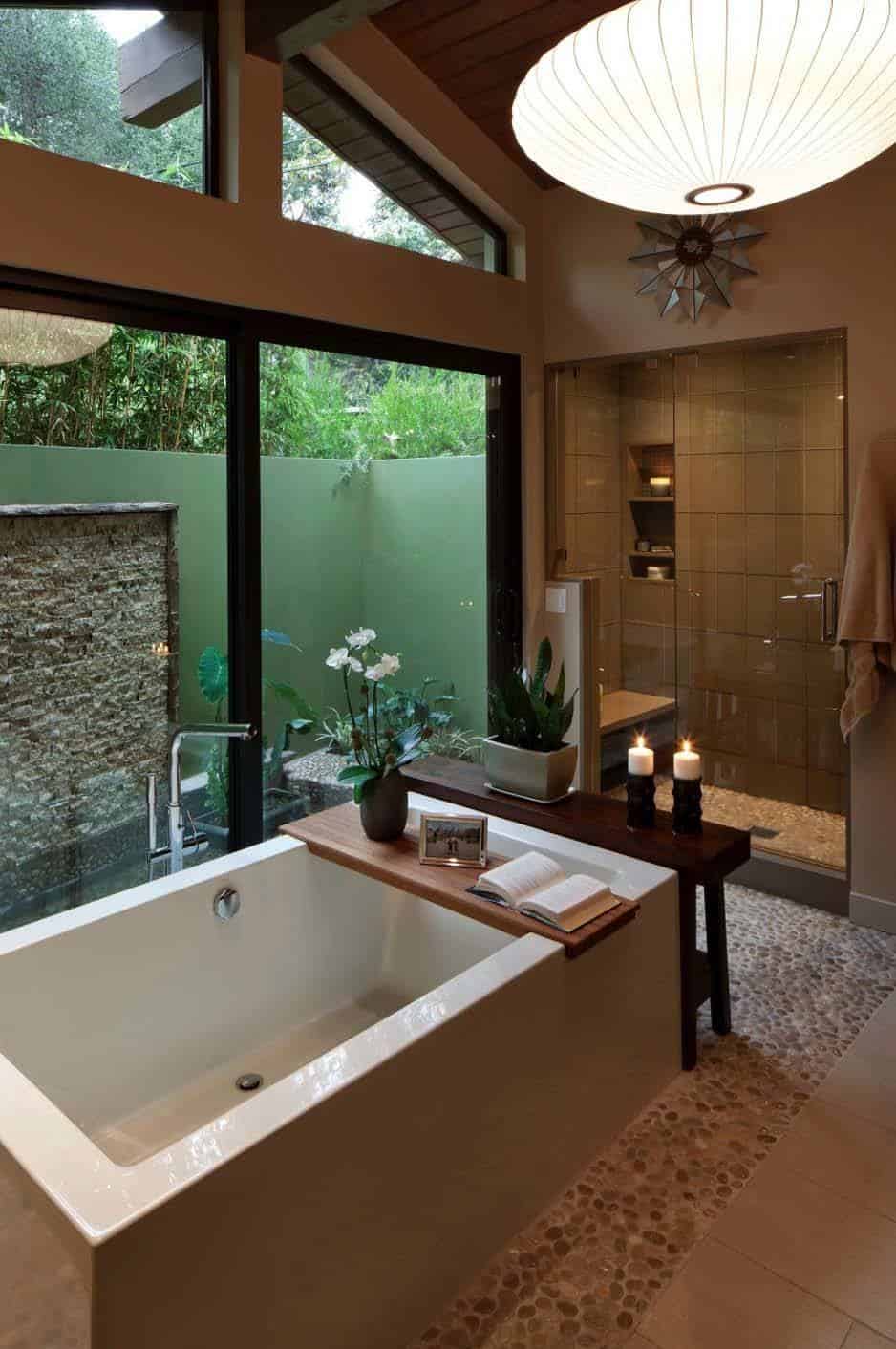
The freestanding tub sits directly in front of a large window, and the garden view turns bathing into a room-scale experience. A stone accent wall behind the tub anchors the earthy palette, while a wooden bench adds a natural counterpoint to the stone. Overhead and accent lighting layer the space, but the real light source is the window, which shifts the feel of the room throughout the day. The shower enclosure sits off to the side, keeping the tub as the visual anchor. For a layout like this, the tub needs enough clearance from walls and fixtures so the room breathes. Placing the bench within arm’s reach of the tub makes the setup feel deliberate rather than scattered.
Patterned Floor Tile with Curved Wood Vanity
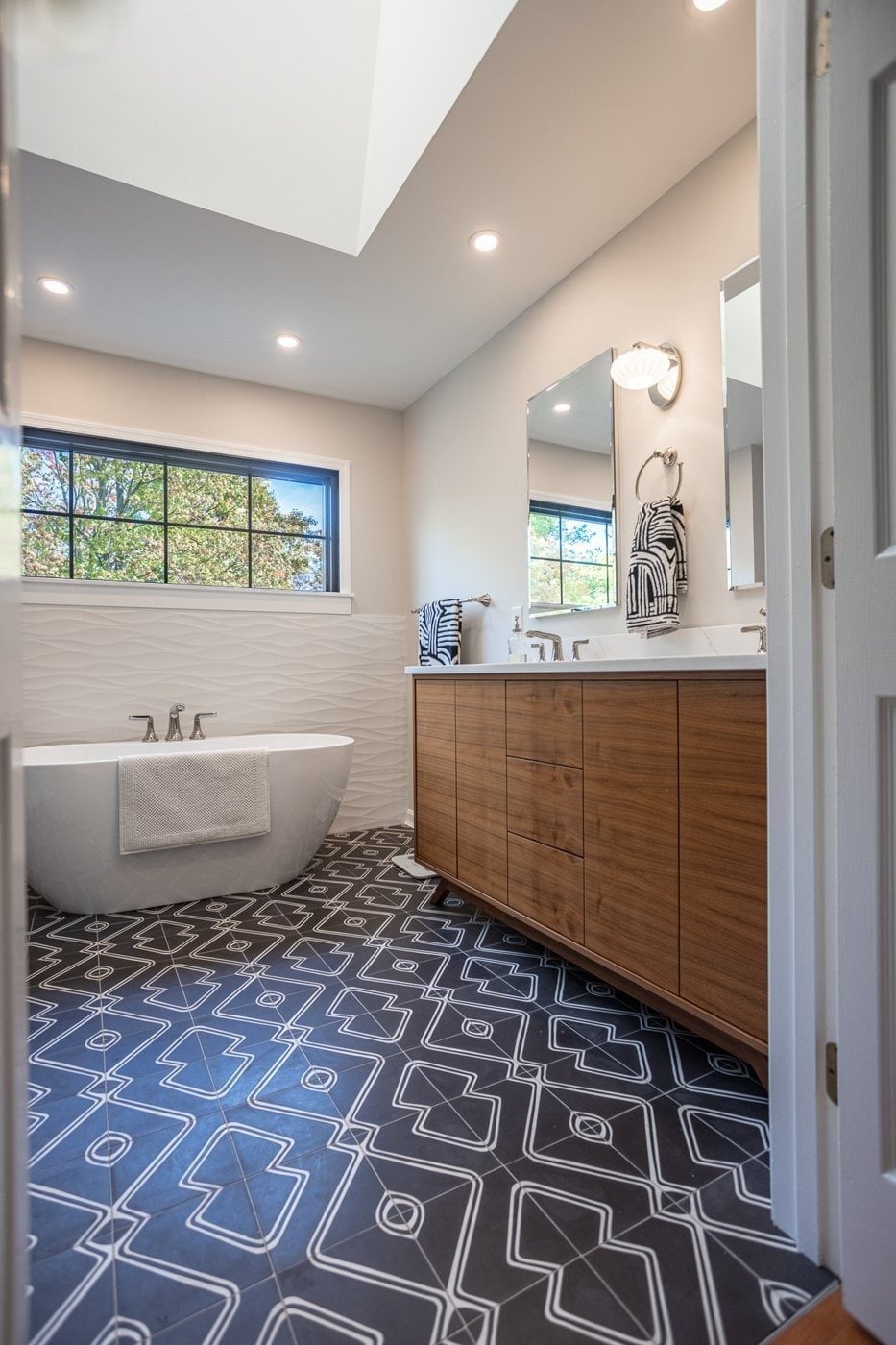
A patterned floor tile can set the rhythm of a room, and here the curve of the wood vanity softens its geometry. The tile reads as the dominant material, so the vanity, tub, and walls stay mostly neutral. White walls and a stone countertop keep the eye on the floor pattern without competing. The freestanding tub sits opposite the vanity, which creates a clear path through the room. When the floor carries that much visual weight, the vanity should offer a contrasting shape rather than a matching one. A curved front breaks the straight lines of the tile and keeps the room from feeling like a grid.
Geometric Teal and Gray Shower Tiles
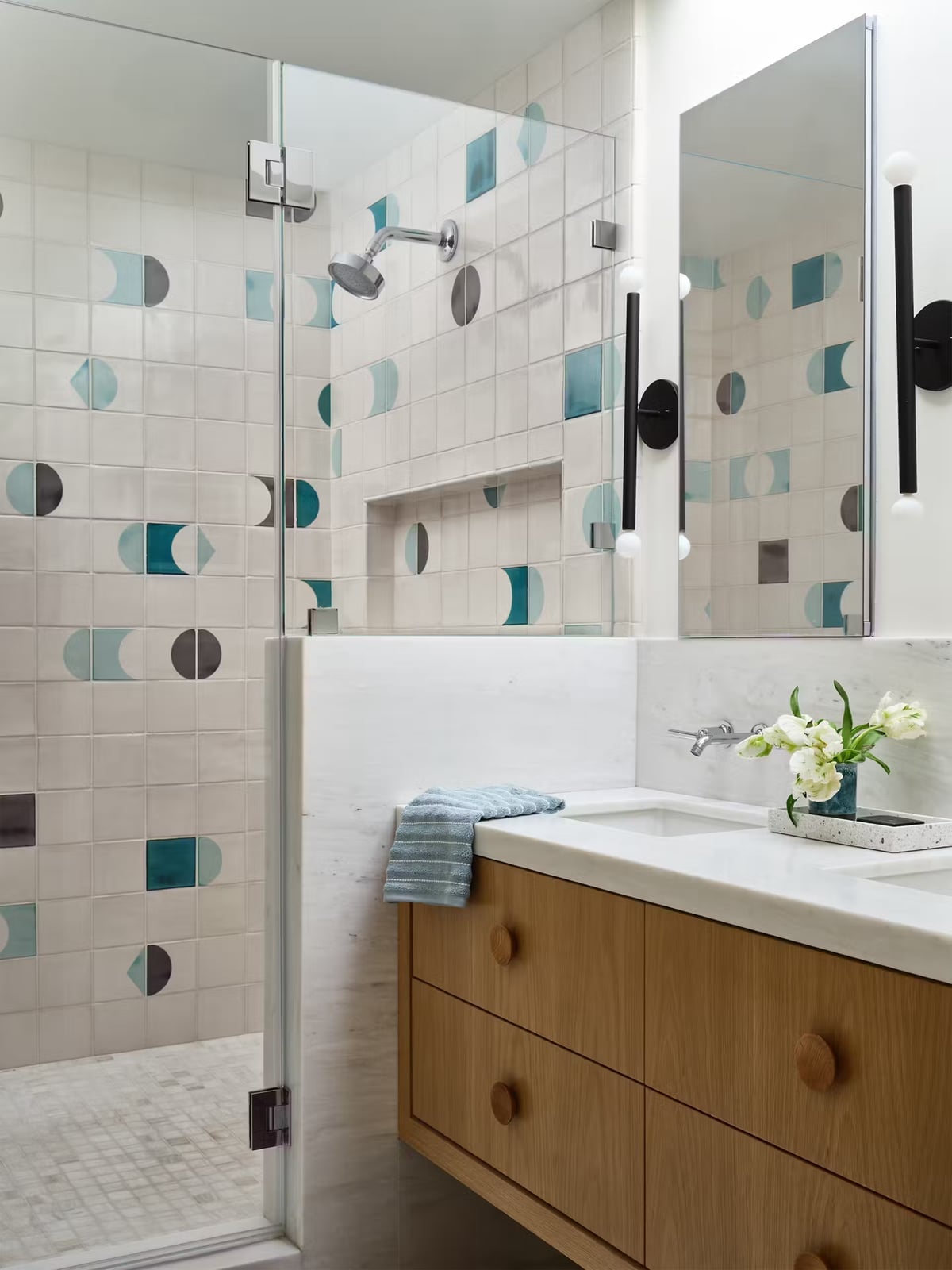
A solid-color shower wall is predictable. A geometric teal and gray tile pattern is not. Here, the shower tile becomes the focal point, so the double vanity stays clean with a white marble top and simple wood cabinets. Wall sconces on each side of the mirror throw light across the vanity, but the shower benefits from the natural light coming through a nearby window. In a compact bathroom, a bold shower pattern works best when the rest of the room keeps its palette narrow. The gray in the tile echoes the vanity’s hardware and the marble veining, which ties the two zones together without repeating the pattern. That kind of visual echo keeps a small room from feeling busy.
Pale Blue-Green Vertical Tile with Freestanding Tub
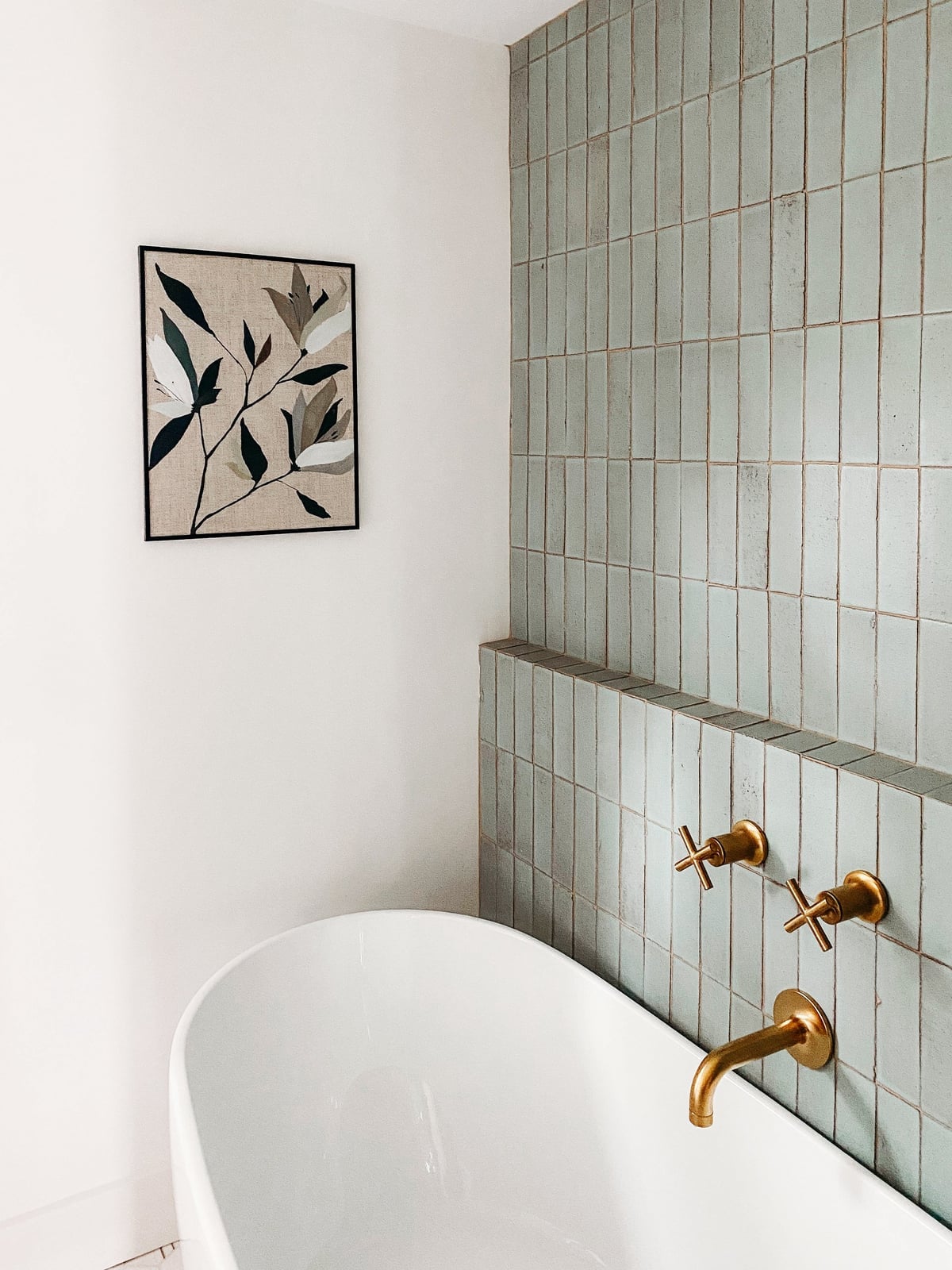
The vertical orientation of the pale blue-green tile draws the eye upward, making the compact bathroom feel taller than it is. The freestanding tub sits against that tiled wall, and the brass cross-handle faucets pick up the warm undertone in the tile. Natural light softens the blue-green, so it appears airy. In a smaller room, the tile stops at the ceiling line and the floor stays neutral, which keeps the color from overwhelming. The brass hardware provides just enough contrast to keep the palette from washing out.
Light Wood Double Vanity with Brass Hardware
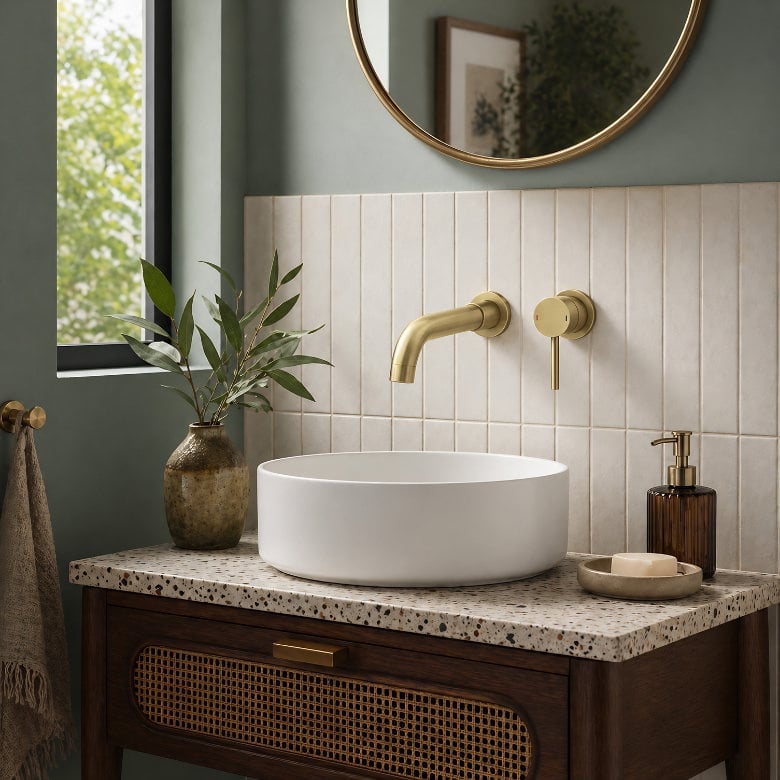
A light wood double vanity with brass hardware anchors the room without overpowering it. The pale wood keeps the space open, while the warm metal pulls in a hit of mid-century character. Round mirrors and simple wall sconces above the vanity balance the clean lines, and the stone countertop adds a durable surface for daily use. For layout, centering the vanity under the window uses natural light to highlight the wood grain and brass finish, making the whole setup feel intentional rather than accidental.
Olive Green Tile Wall with Glass Block Shower
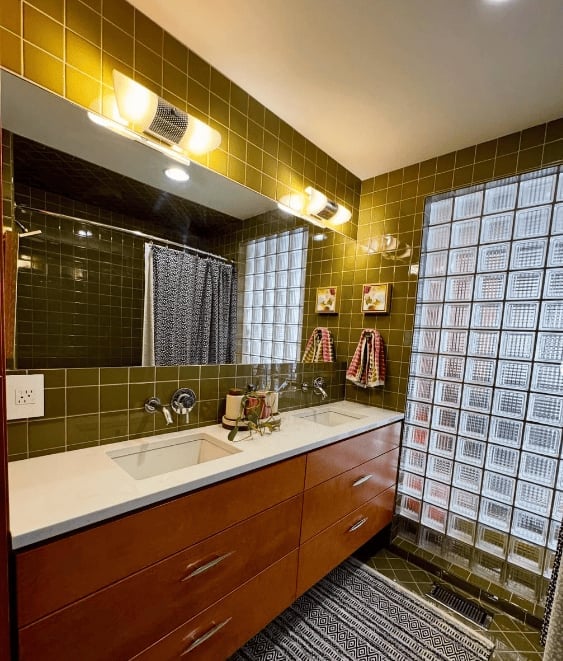
A practical rule for tile in a mid-century modern bathroom is to use one bold surface and keep everything else quiet. Here the olive green tile wall runs behind the vanity and wraps into the shower area, giving the room a single strong focal point. The glass block shower wall lets light pass through while still separating the wet zone, which helps the space feel larger than it is.
A long wood vanity in a warm tone grounds the green, and chrome fixtures keep the look from getting too heavy. For a renter-friendly version, consider peel-and-stick tile in a similar olive shade on one wall, paired with a wood-finish vanity cart. The key is letting the green do the talking while the wood and chrome stay in the background.
Vertical Reddish-Brown Shower Tile with Wood Vanity
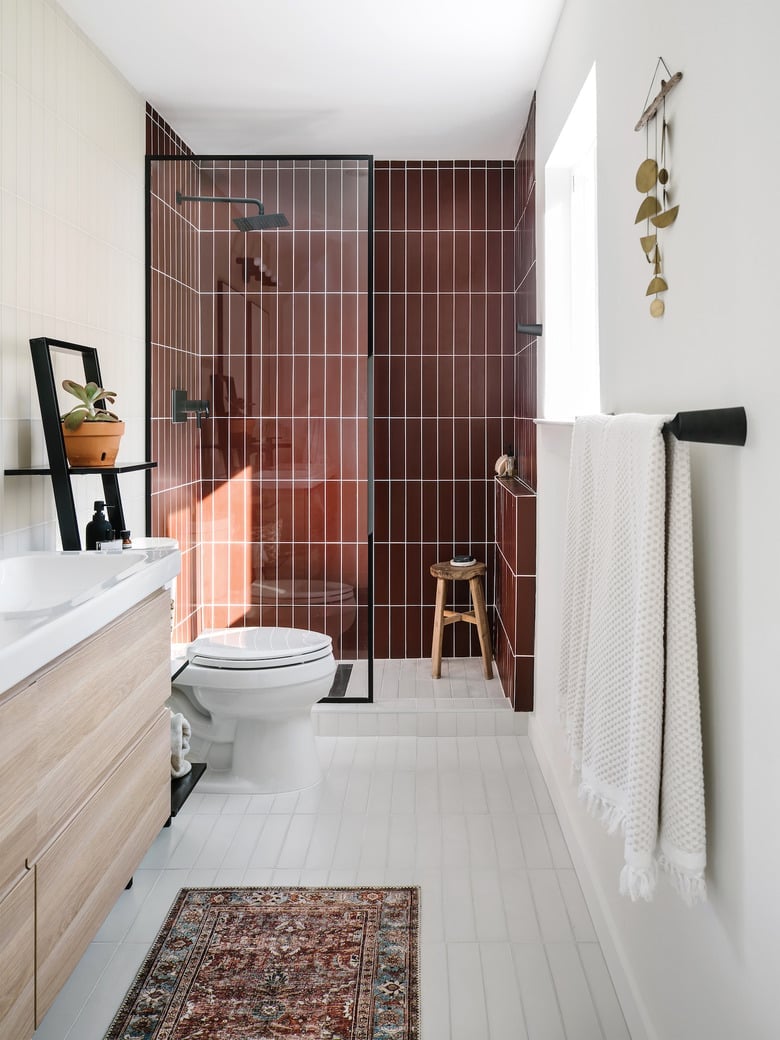
Vertical reddish-brown tile in the shower draws the eye upward, making the compact room feel taller. The wood vanity and a small wooden stool echo the warm tone, while white walls and natural light keep the palette from turning too dark. The narrow layout places the vanity, toilet, and shower in a straight line, so the tile acts as the visual anchor on one end. This setup works best when the rest of the bathroom stays neutral, letting the reddish-brown shade define the mid-century feel.
Arched Brass Mirror Above Double Vanity
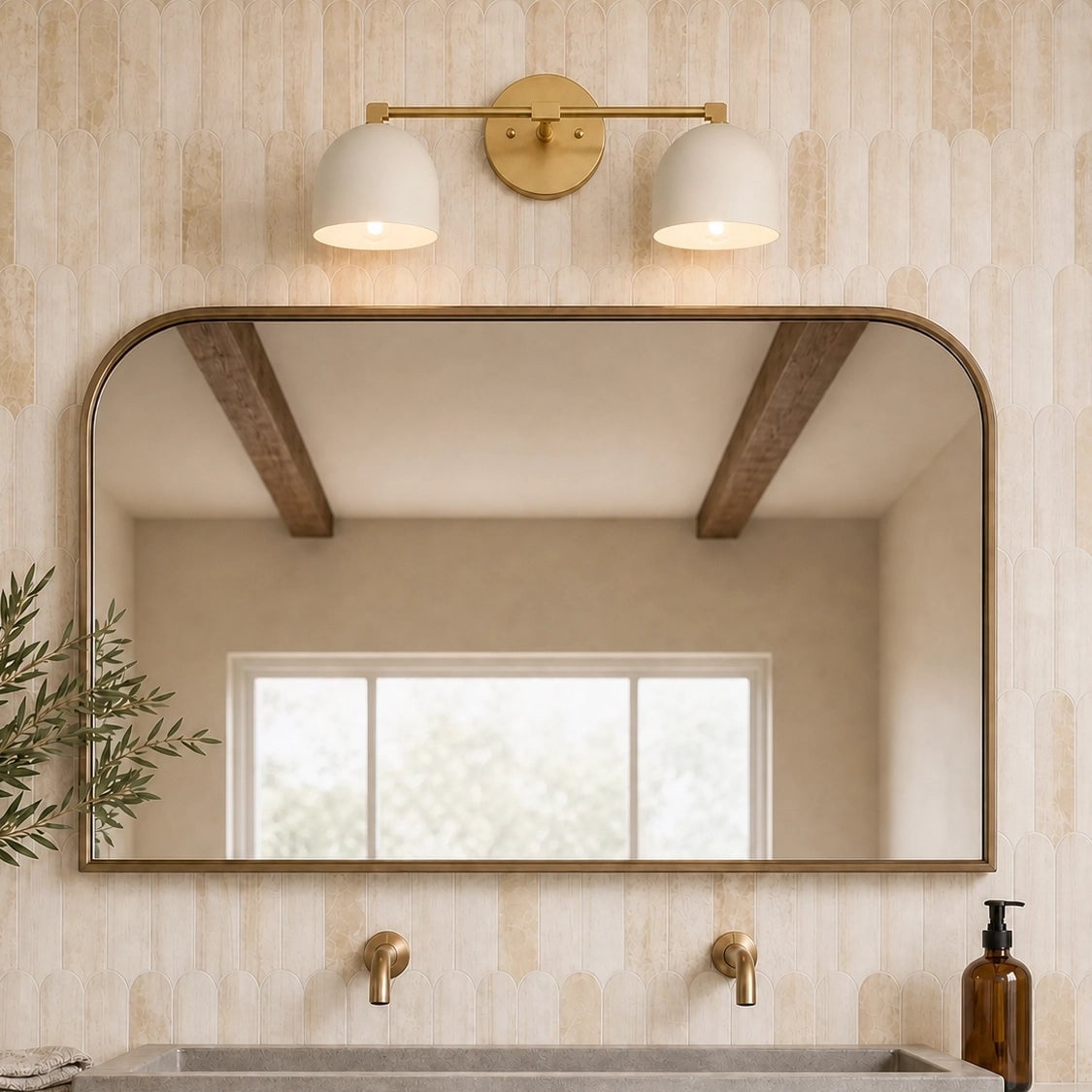
An arched brass mirror above a double vanity brings a sculptural element to the room without adding clutter. The warm metal frame catches the light from overhead fixtures and wall sconces, creating a soft glow that the neutral beige tile and countertop let stand out. The mirror’s curved shape softens the straight lines of the vanity and tile, a classic mid-century move. For durability, brass holds up well in a bathroom if you wipe down the frame now and then to keep water spots from building up. The mirror becomes the hero piece, so keep the surrounding surfaces simple.
Wood Vanity with Stone Countertop and Large Window
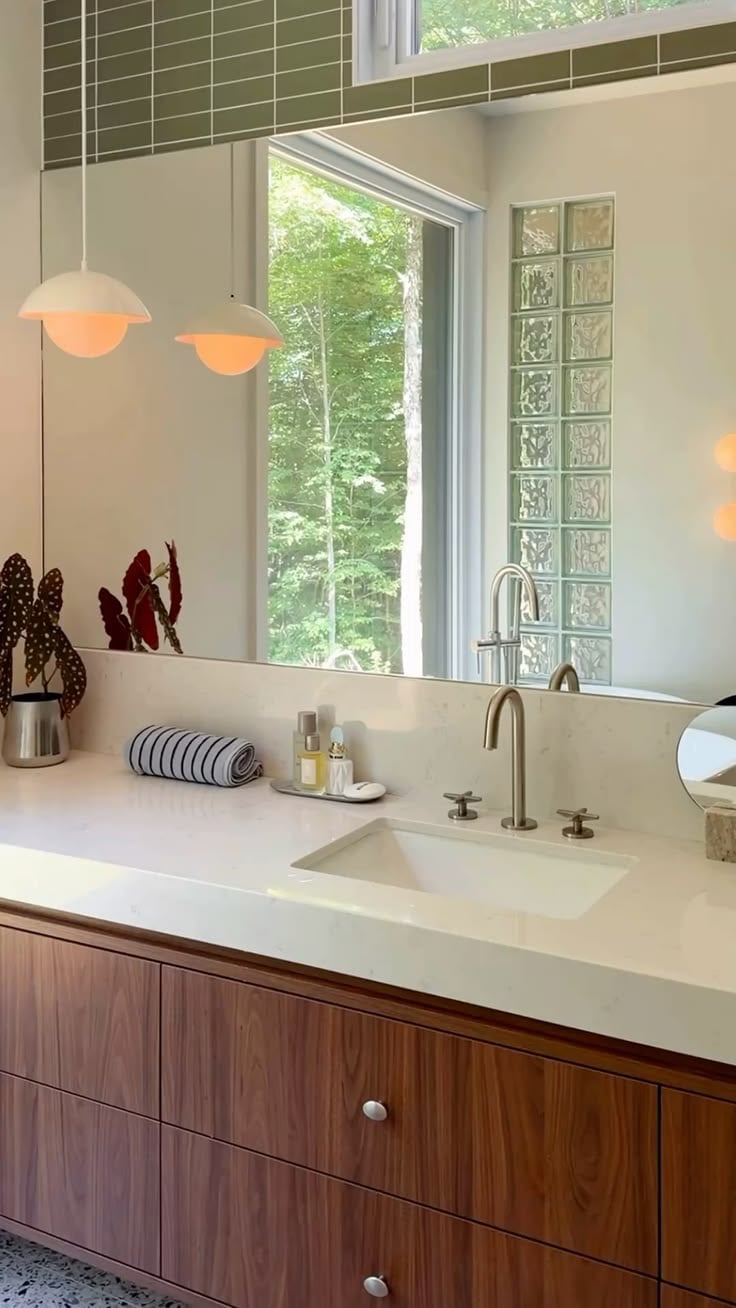
A wood vanity with a stone countertop can feel heavy, but a large window with a forest view keeps the room light and open. The window illuminates the vanity directly, warming the wood tone and making the stone countertop appear cool and clean. Pendant lights above the vanity add task lighting for evenings, while the greenery outside brings a soft contrast to the white and gray palette.
For lighting, the key is layering. The window provides ambient light during the day, and the pendants handle the close-up work. Position the vanity so the window is directly above or beside it, not behind a closed wall. This setup works well for a roomy bathroom where you want the outdoors to feel like part of the decor.
Deep Purple Textured Tile Walls with Blue Door
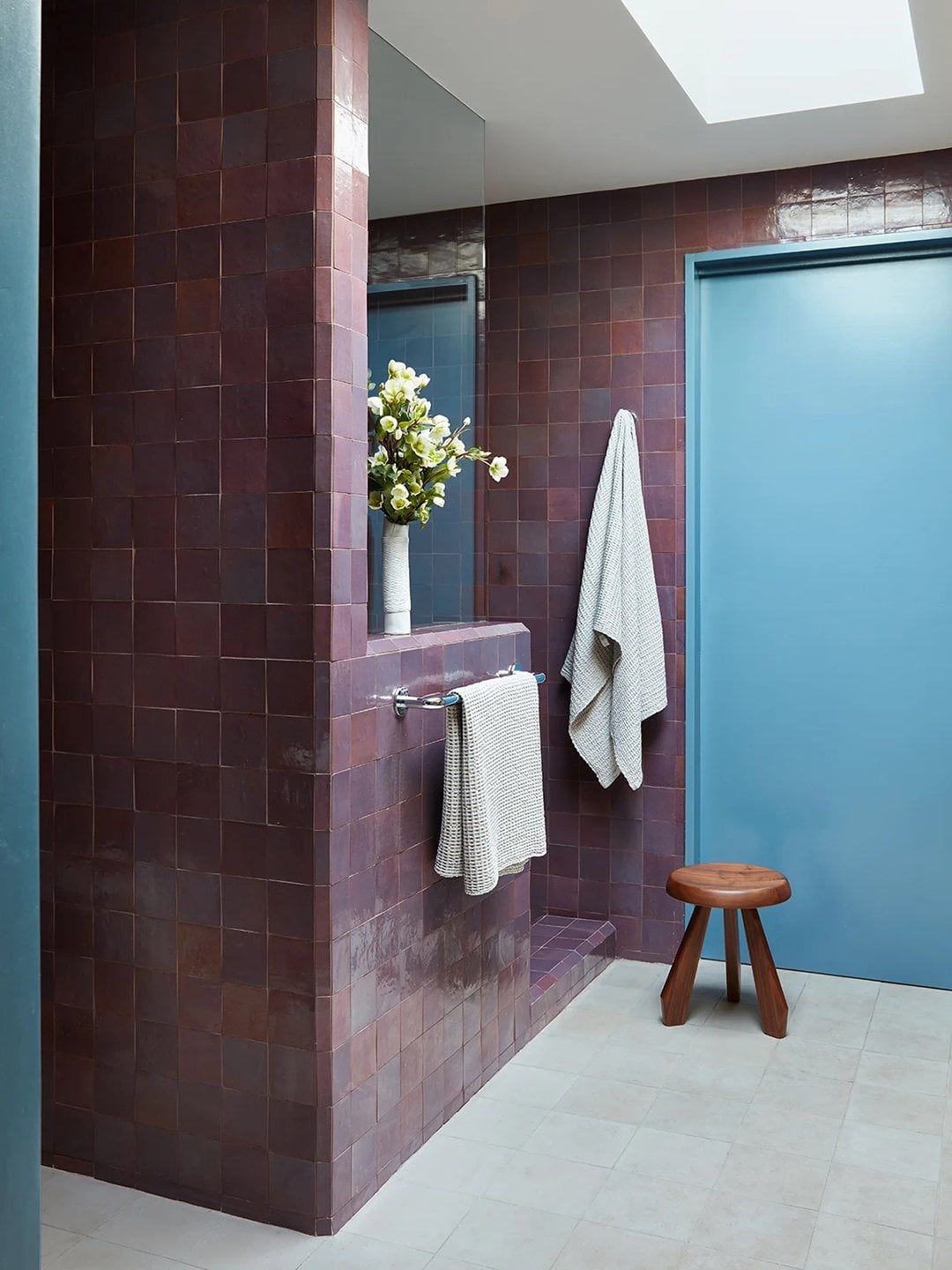
Deep purple textured tiles cover the walls of this compact bathroom, and a blue door adds a second saturated color. A wooden stool and a tiled shower niche break up the dense pattern. The room gets natural light from a skylight and an overhead fixture. The layout puts the corner shower opposite the vanity area. For an eclectic look, the ratio favors color over neutral ground. What breaks it is the plain wood stool and the blue door, which prevent the purple from dominating.
Floating Double Vanity with Marble Countertop
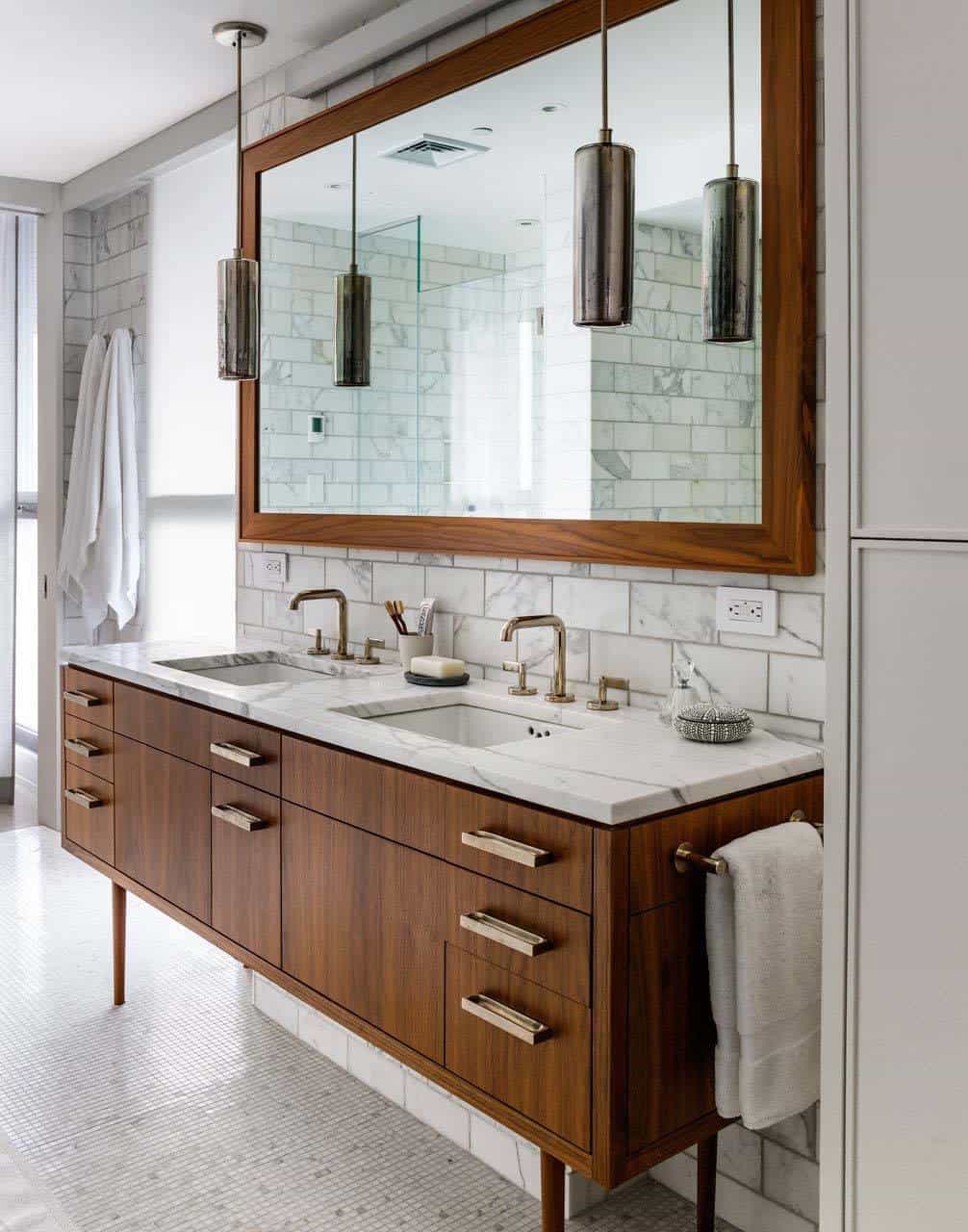
A warm wood floating double vanity with a marble countertop sits in a roomy bathroom with ample counter space. Brass fixtures and modern sconces add metallic accents against white and gray tile. Natural light from a window balances the cool stone and warm wood. The layout places the vanity as the central element, with enough room for two people to use it at once. The palette works because the wood tones warm up the gray and white, while the brass hardware ties the two together.
Wooden Vanity with Marble Top and Vessel Sink Detail
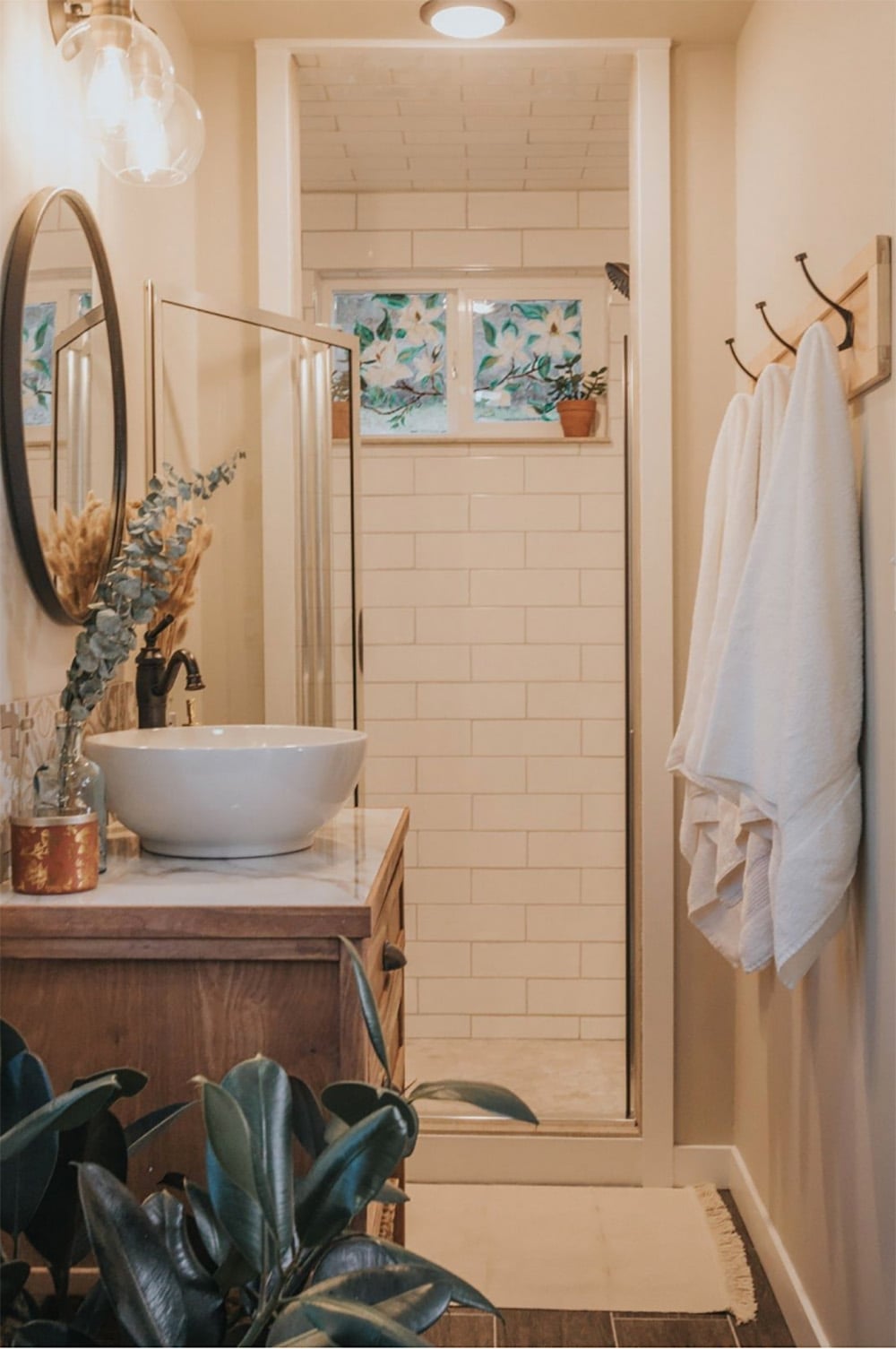
A wooden vanity with a marble top and a glass vessel sink makes a compact bathroom feel open and spacious. A round mirror and a couple of plants soften the hard surfaces. Window light and an overhead light keep the space bright.
Compared to a full double vanity, this setup uses less counter space while still giving you a generous sink and a solid surface for toiletries. The marble top adds a cool, smooth contrast to the warm wood base. The vessel sink sits above the counter, which means you lose some usable surface area but gain a sculptural look that defines the vanity area.
Matching Walnut Vanities with Hexagonal Floor Tiles
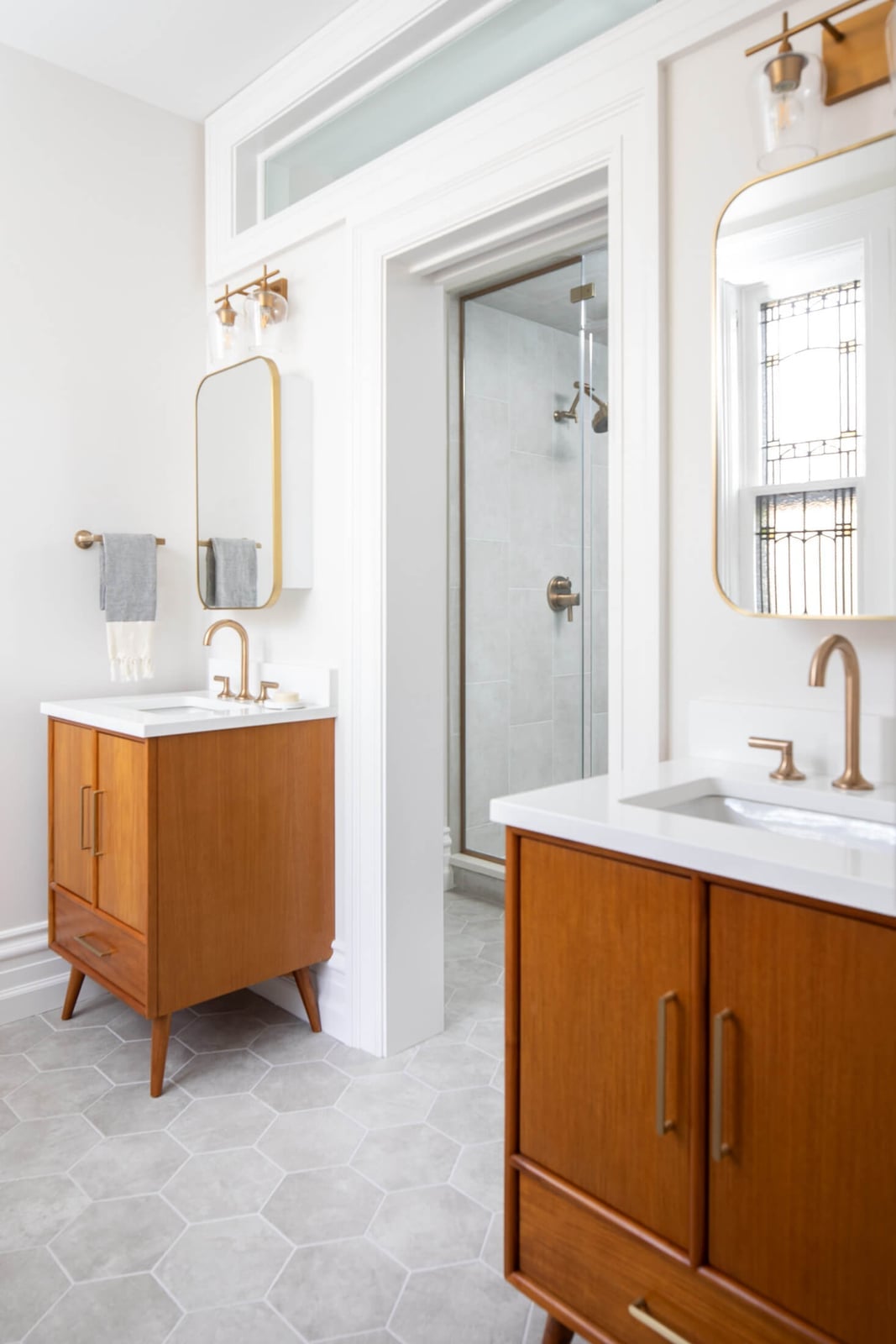
Two matching walnut vanities with vessel sinks and brass hardware sit in a roomy bathroom with hexagonal floor tiles in a gray tone. Wall sconces flank a large mirror, and natural light comes through a window. The walnut wood brings warmth to the white walls and gray floor. The brass fixtures add a subtle shine. The layout uses the double vanity as the main feature, with enough space between the sinks for two people. The hexagonal tiles on the floor add a geometric pattern without competing with the clean lines of the vanities.
Curved Wood Vanity with Oval Mirror and Green Armchair
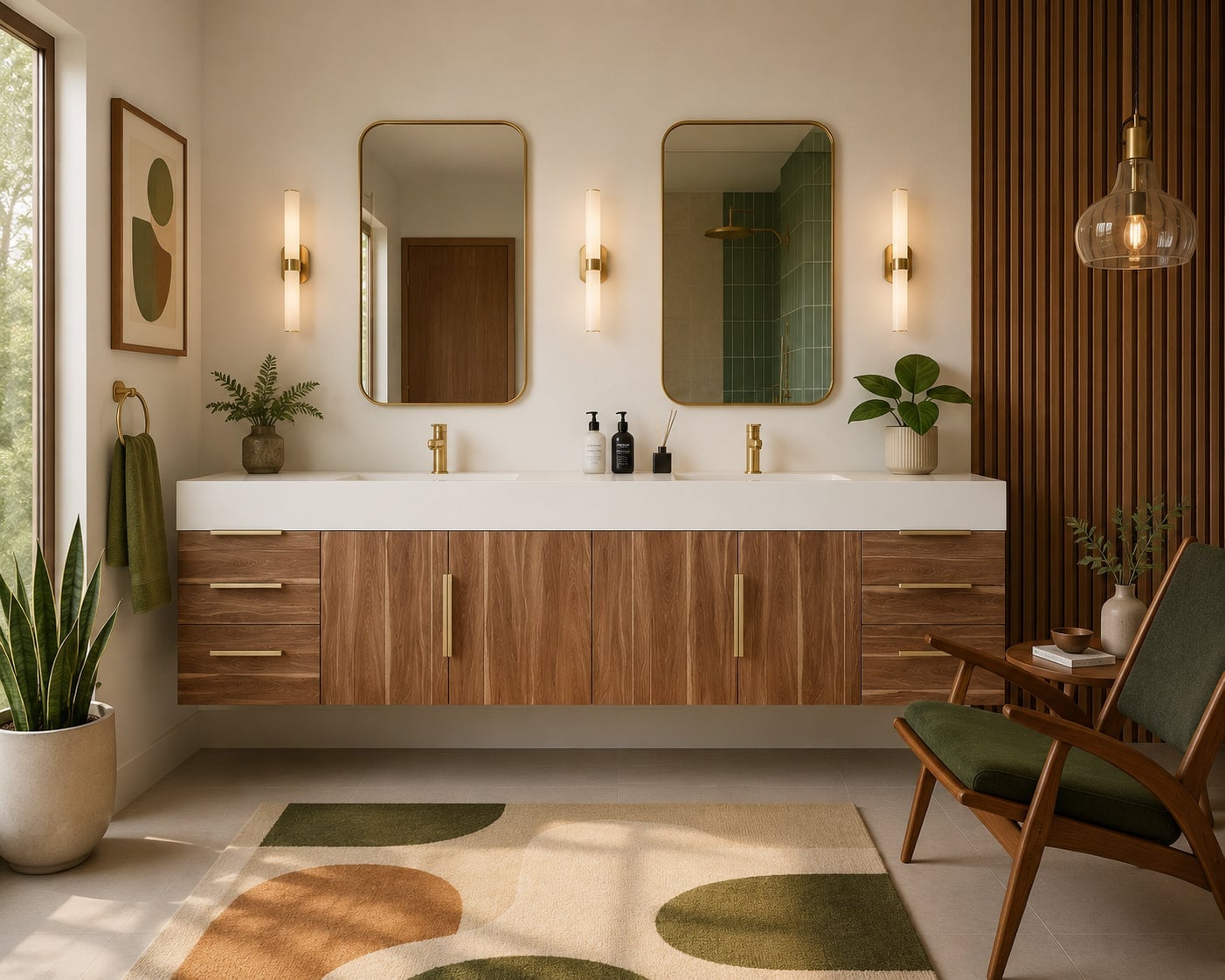
A curved wood vanity with a marble top anchors a roomy bathroom that also includes a green armchair and an oval mirror. Wall sconces and natural light light the space. The vanity has a long run of counter space, and the chair turns one corner into a seating area. The curve of the vanity softens the room, while the oval mirror repeats that shape. The green chair adds a pop of color against the cream and wood tones. The layout works because the vanity and chair are placed at opposite ends, making the room feel functional and leisurely.
Deep Green Geometric Floor with Wood Vanity
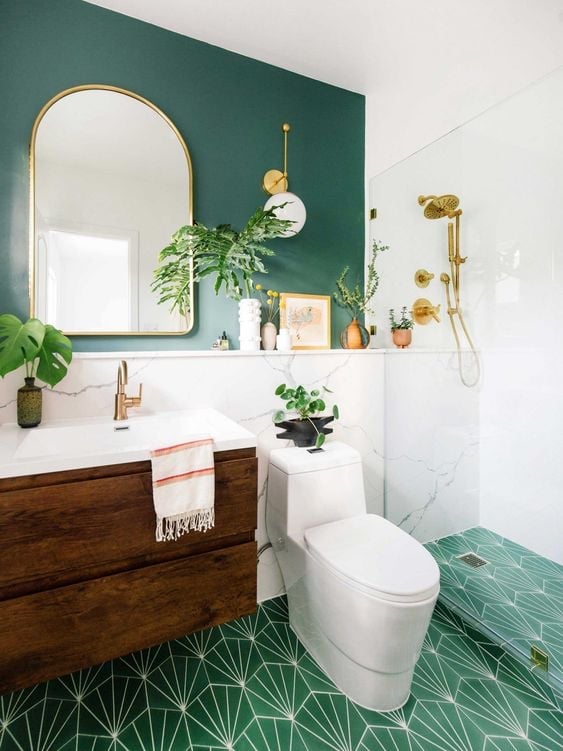
A white marble countertop and pale walls can feel reserved, but a deep green geometric floor tile changes the whole room. The pattern runs wall to wall, so the vanity, toilet, and shower sit on top of that green surface. The wood vanity with brass fixtures keeps the look grounded and warm, and the arched mirror above it adds a softer curve against all those straight tile lines. Natural light lands on the marble and tile, which helps the green look rich.
The floor tile is the standout piece here, so the rest of the room stays clean. White walls and a white shower enclosure keep the focus down where the pattern lives, and the wood vanity brings in the warmth that a mid-century modern bathroom needs. If the floor were a solid color, this room would feel simpler. The geometric tile gives it a clear identity without needing anything else to be busy.
Final Thoughts
Getting the mid century modern bathroom right comes down to three things: choosing wood tones that feel warm and natural, picking tile patterns that add visual interest without overwhelming the room, and keeping fixtures simple with clean lines. Brass or gold accents can help tie the look together. For upkeep, seal natural stone and wood regularly, and wipe down tiles to prevent grout from staining. The best spaces in this style feel intentional but not fussy, with each element earning its place. Start with one piece you love and build from there.