
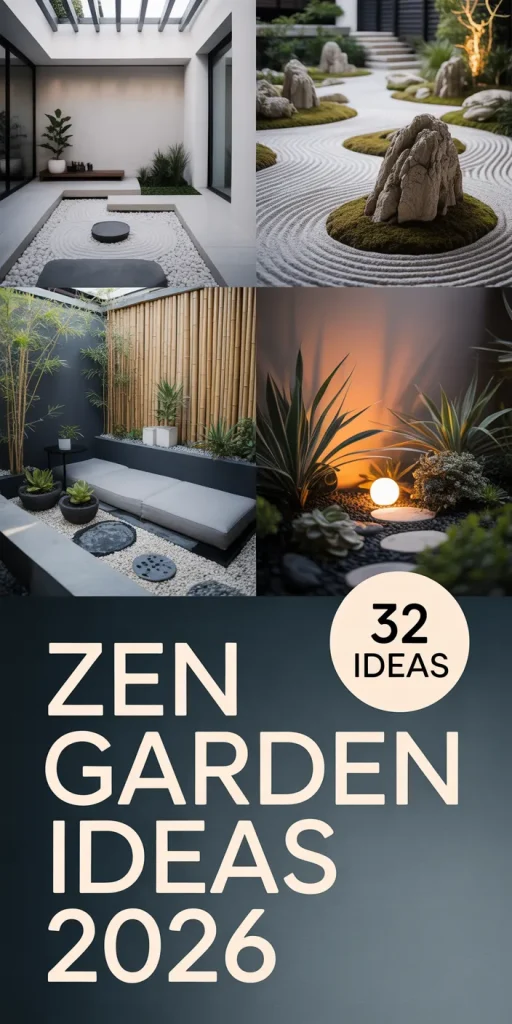
If your backyard has been a source of stress more than serenity, and you’ve been scrolling endlessly through Zen garden ideas, you’ve landed in the right place. We’ve gone through hundreds of real-world designs—from minimalist modern layouts to lush, traditional Japanese-inspired spaces—to find what truly works. In this guide, you’ll discover 32 distinct ideas that go beyond the same old raked gravel. Creating a personal sanctuary is more important than ever in 2026, serving as a real-world escape from our digital lives. Stay until the end, as we break down the most common mistakes that can ruin these looks.
This post may contain affiliate links. As an Amazon Associate, we earn from qualifying purchases at no extra cost to you.
📌 Save this to Pinterest for later — you’ll want to revisit these ideas.
1. Balance Raked Gravel with Soft, Mossy Mounds
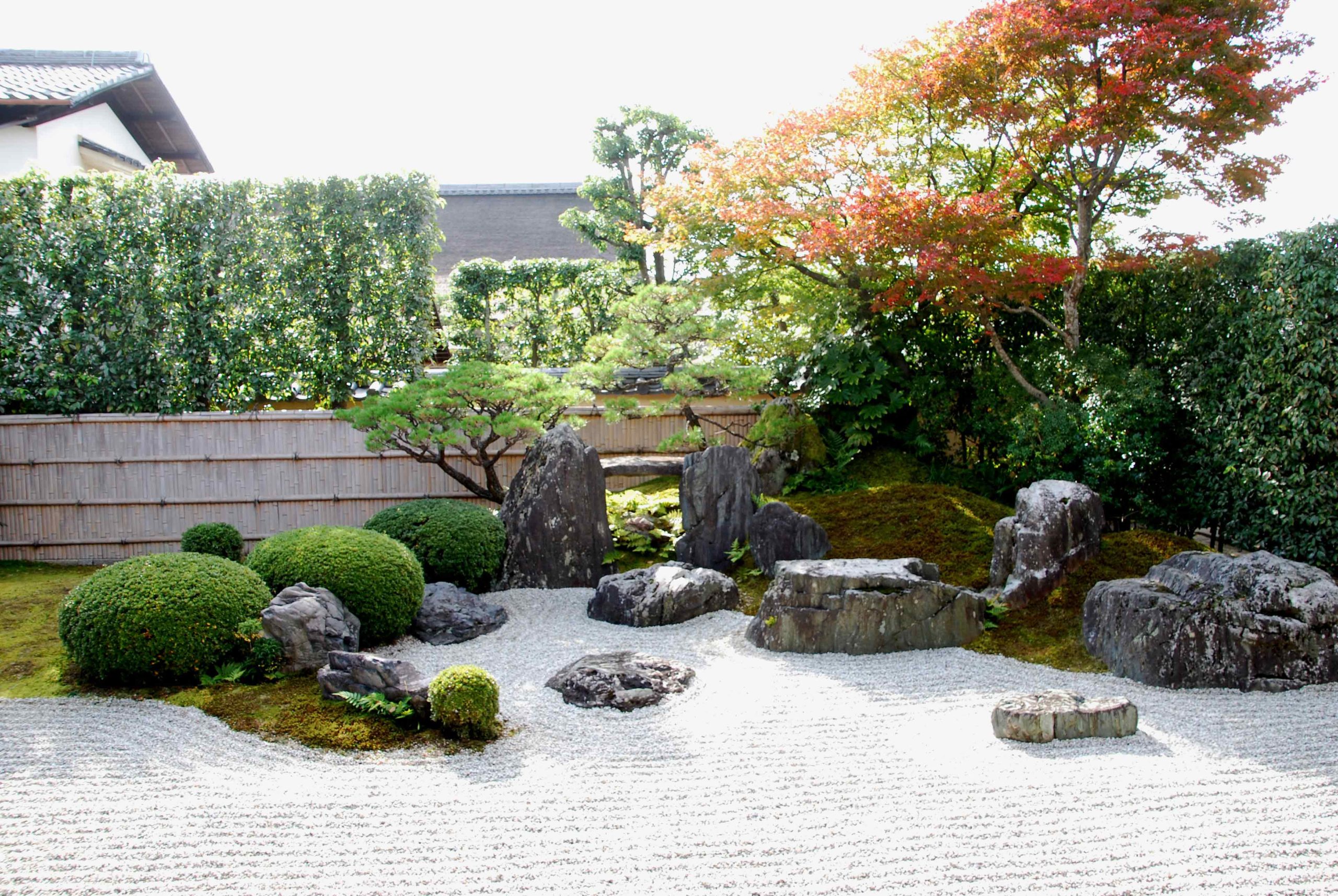
This design is a masterclass in contrast. The meticulously raked light grey gravel provides a clean, geometric base that represents water, while the soft, undulating mounds of lush green moss introduce a feeling of organic, untamed nature. The two elements balance each other perfectly. The dark, solid presence of the natural rocks acts as an anchor, grounding the entire composition and preventing the gravel and moss from feeling disconnected.
|
📋 Copy HEX 🔗 Share |
|
📋 Copy HEX 🔗 Share |
|
$190.00
|
$35.11
|
$51.97
|
$18.40
|

For those perfect, crisp lines in your gravel, use a specialized Zen garden rake with wide-set wooden tines. Rake in the early morning or late evening when the low-angle light creates deeper shadows, making the pattern more dramatic. A light mist of water with a hose before raking can also help the gravel settle and hold its shape for longer, especially in drier climates. This little trick prevents the stones from shifting around too much.
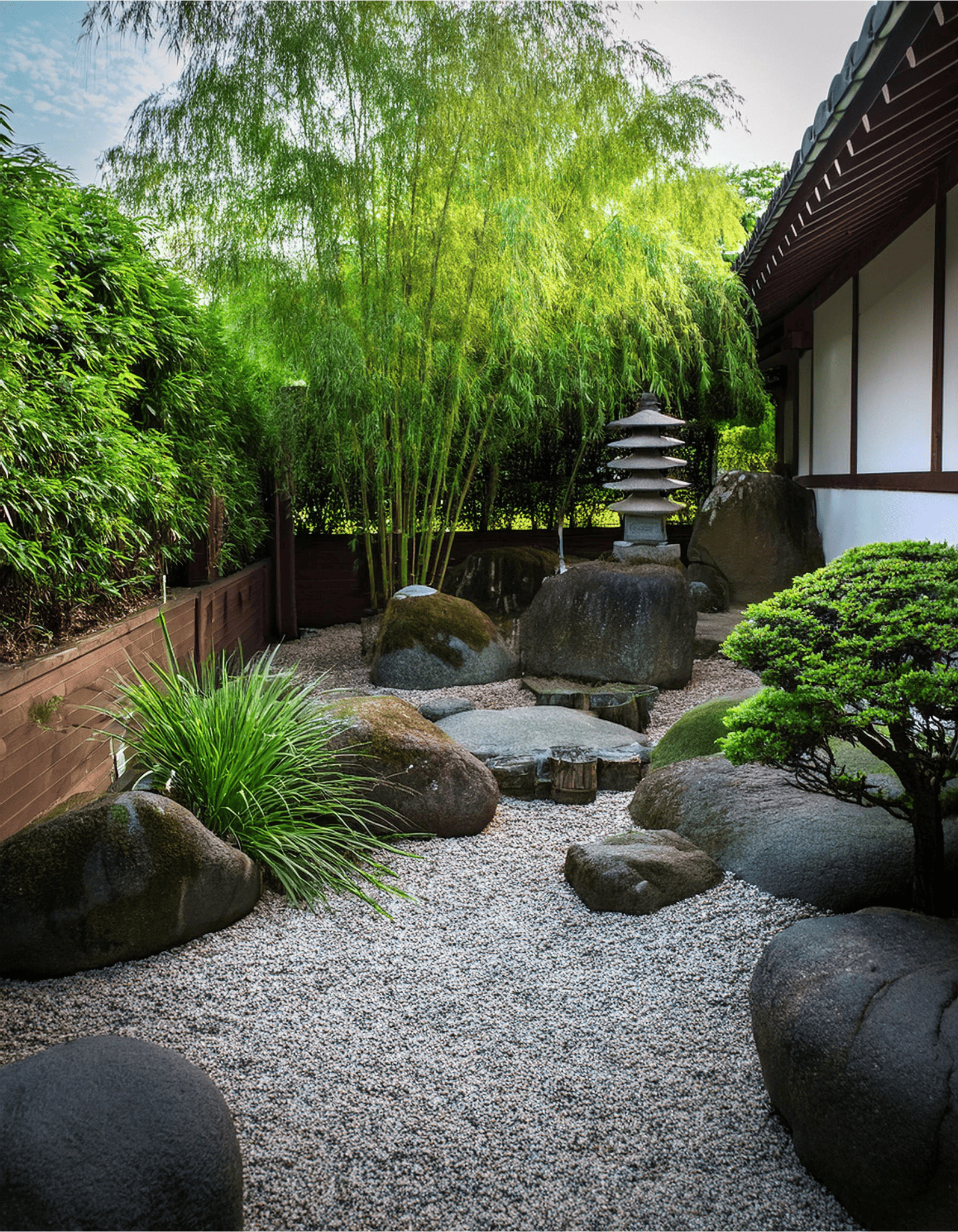
2. Use a Stone Lantern as a Meditative Focal Point
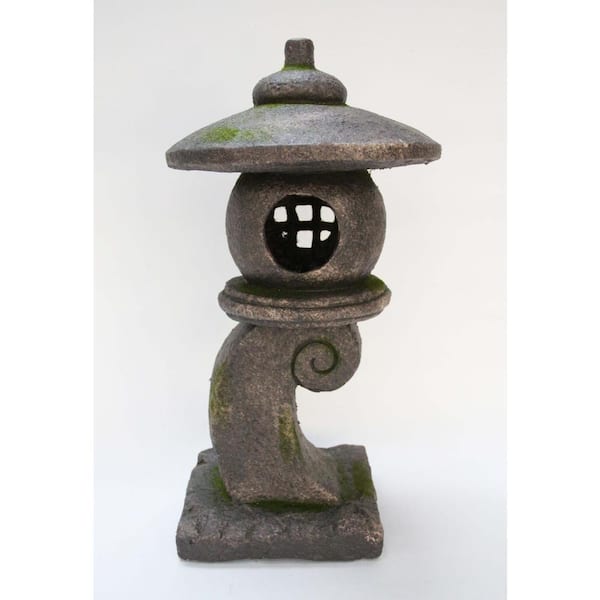
The tiered stone pagoda lantern is the undeniable soul of this garden. Without it, you’d simply have a pleasant arrangement of rocks and bamboo. The lantern introduces a sense of history, intention, and tranquility. It’s a focal point that draws the eye and gives the space a clear purpose beyond just being a collection of plants. It transforms the area from a simple backyard corner into a place for contemplation and peace.
|
$63.10
|
$6.78
|
$78.97
|
$32.42
|
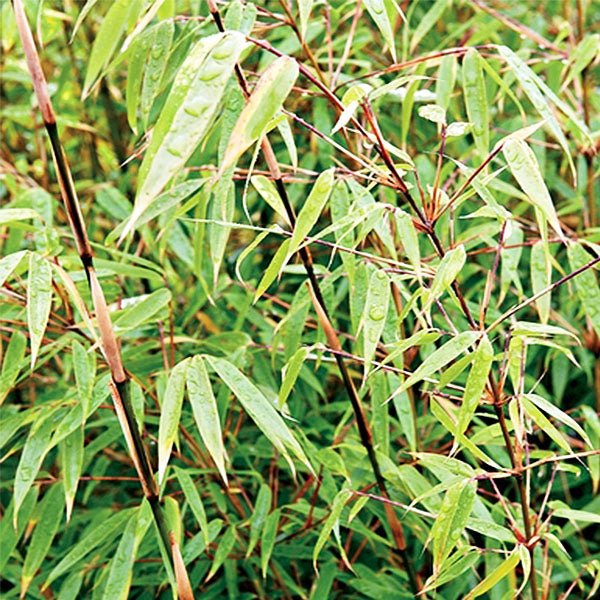
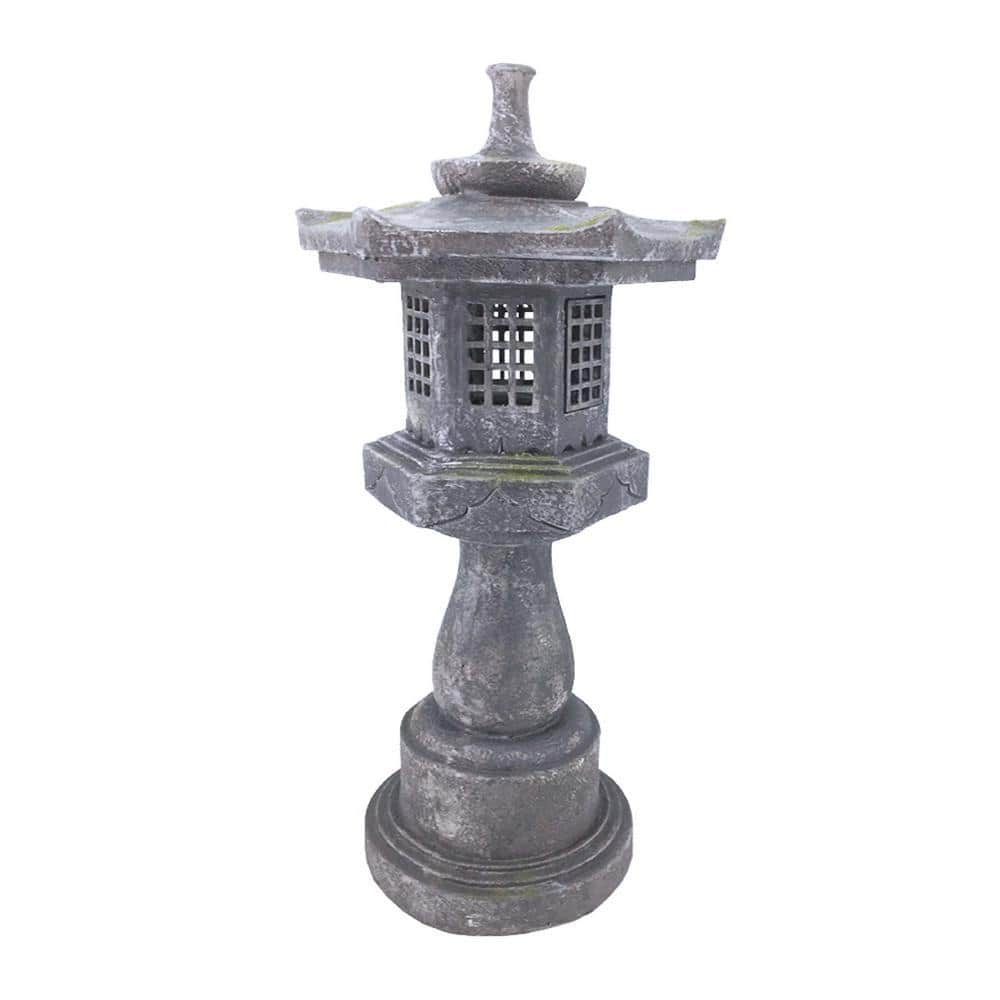
This arrangement is surprisingly versatile. It works beautifully in a smaller, dedicated corner of a backyard, requiring a minimum of 8×10 feet to allow the elements to breathe. The key is the height of the bamboo; ensure you have at least 15-20 feet of vertical space for it to grow without overpowering the area. For a larger space, you can expand the gravel area and add more boulders, following the pattern seen in a grander design like Idea #5.
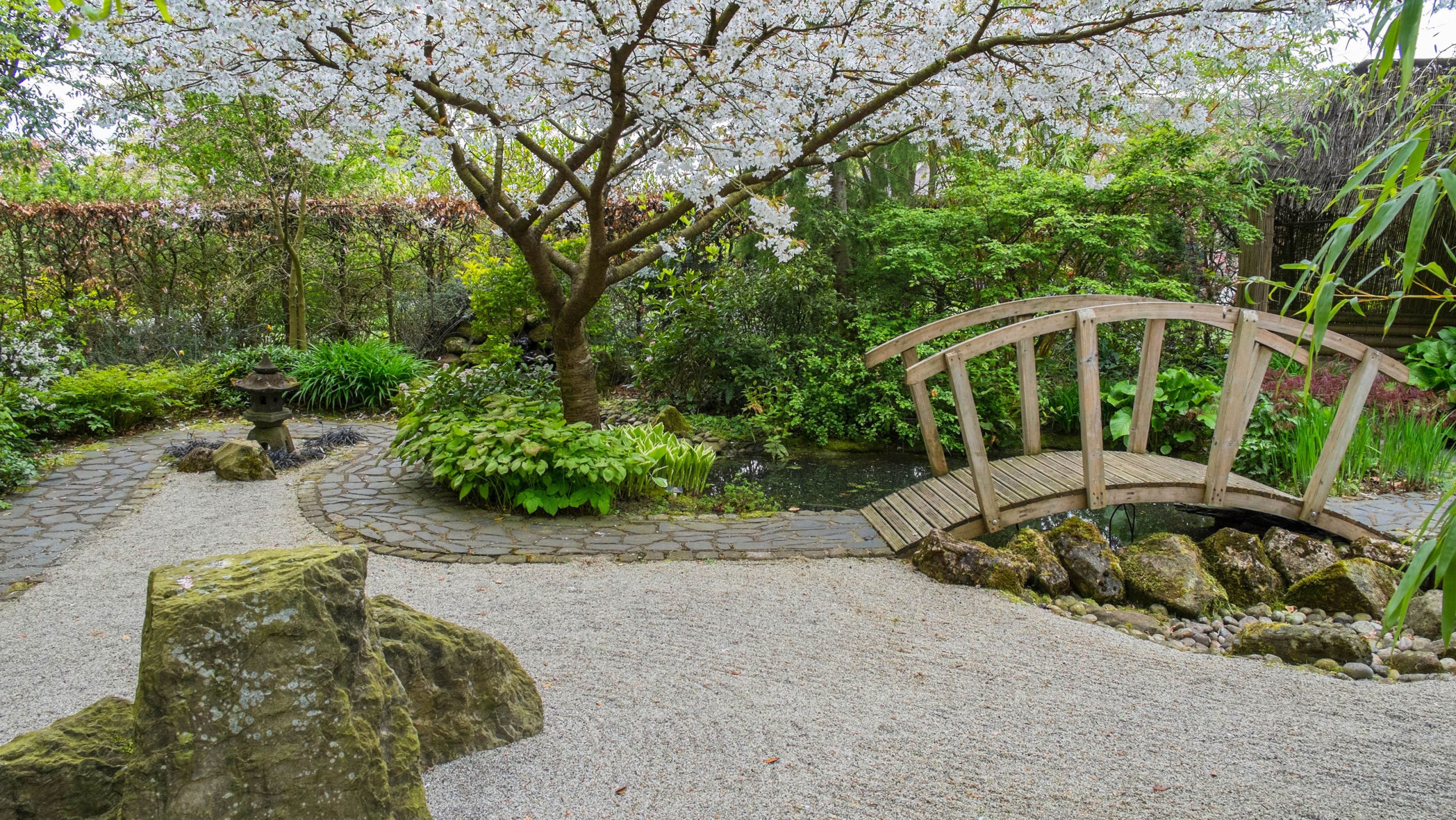
3. Combine Gravel Paths and Wooden Bridges for a Journey
To recreate this layered path and bridge feature, your budget will vary based on the size and materials. The wooden bridge is the largest investment, but it also defines the entire design.
|
📋 Copy HEX 🔗 Share |
|
📋 Copy HEX 🔗 Share |
|
$166.60
|
$73.99
|
$617.64
|


- Main Furniture (Bridge): $700 – $2,500
- Path Materials (Gravel & Pavers): $400 – $900
- Plants & Moss: $300 – $800
- Decor (Stone Lantern): $150 – $500
- TOTAL: $1,550 – $4,700
- Budget Alternative: A simple flat wooden walkway from reclaimed deck boards and a smaller bag of gravel can give a similar feel for around $500.
Let’s be honest: a pond, even a small one, is a commitment. You’re not just digging a hole; you’re creating a mini-ecosystem. It will require a pump and filter to stay clear, and you’ll need to regularly clean out leaves and debris. If you have pets or small children, you must consider safety measures. While stunning, a water feature adds a significant layer of maintenance compared to a dry-rock garden.
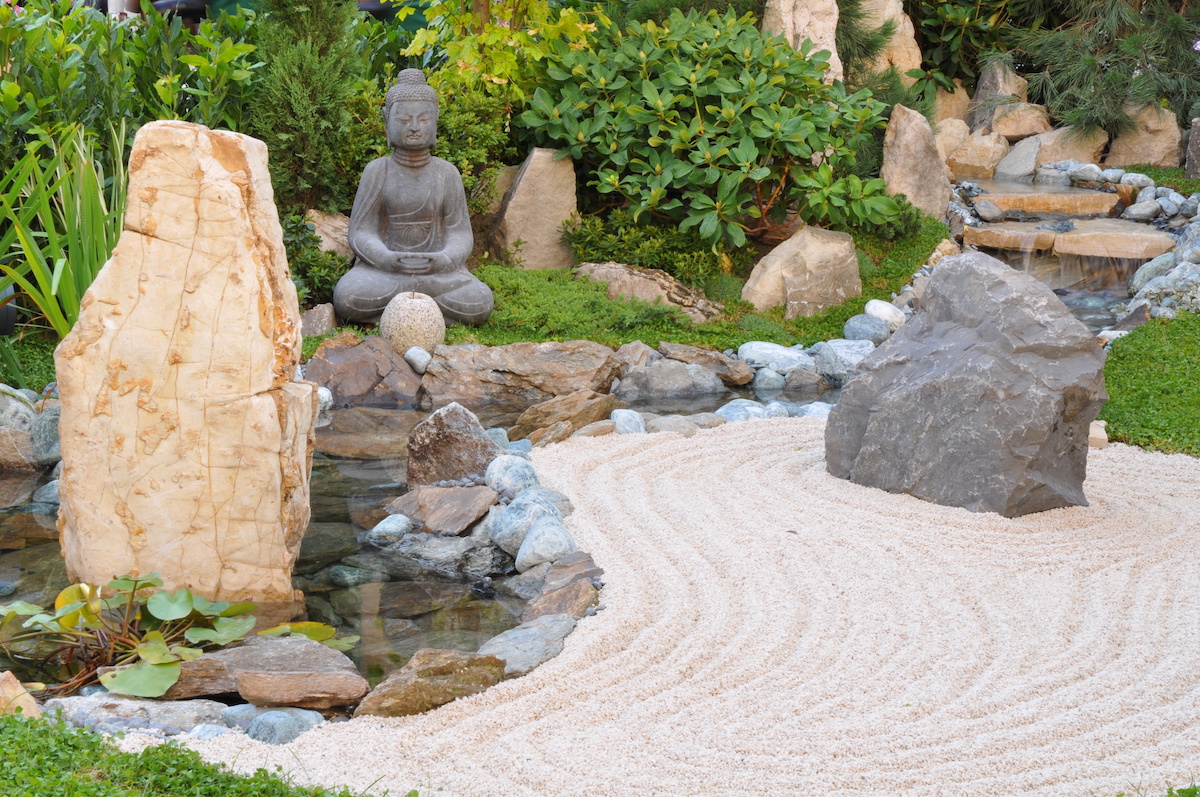
4. Center Your Garden Around a Sculptural Buddha and Water
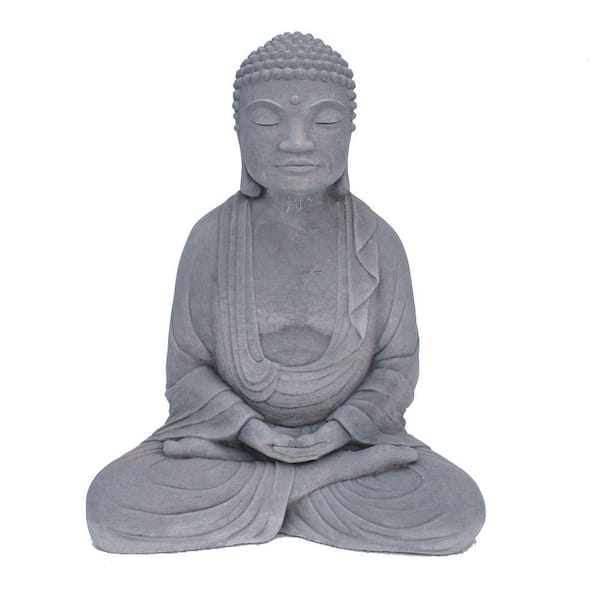
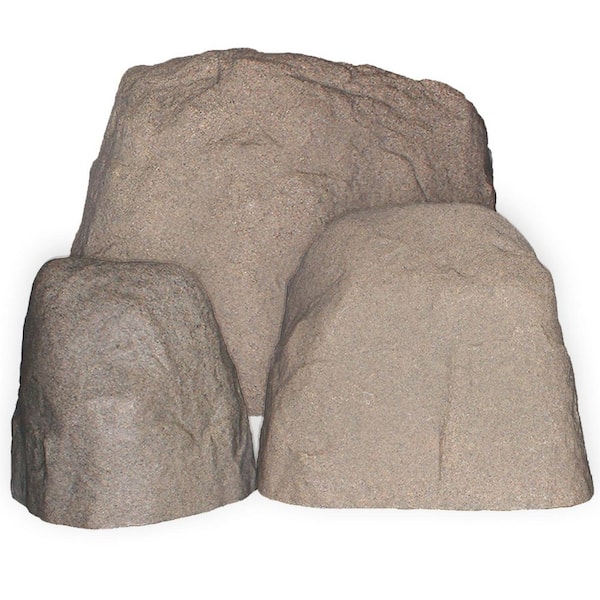
This composition uses the principle of asymmetrical balance. The large, light beige rock on the left is visually heavy, but it’s balanced by the combined weight of the Buddha statue and the tiered waterfall on the right. The calm, raked gravel in the foreground provides negative space, a crucial element in Zen design that gives the eye a place to rest and amplifies the importance of the other objects. The water acts as a unifying thread, connecting all the elements.
|
$319.94
|
$31.47
|
$93.73
|
$75.97
|

A tiered waterfall looks beautiful but requires consistent upkeep. You’ll need to clean the pump filter at least once a month to prevent clogs from algae or leaves. The water level must be monitored and topped up weekly, especially in sunny or windy conditions, due to evaporation. Annually, you should drain and scrub the basins to remove algae buildup, a task that can take a few hours. A simpler, lower-maintenance alternative is the self-contained water basin seen in Idea #7.
5. Contrast Wavy Raked Gravel with Mossy Boulders
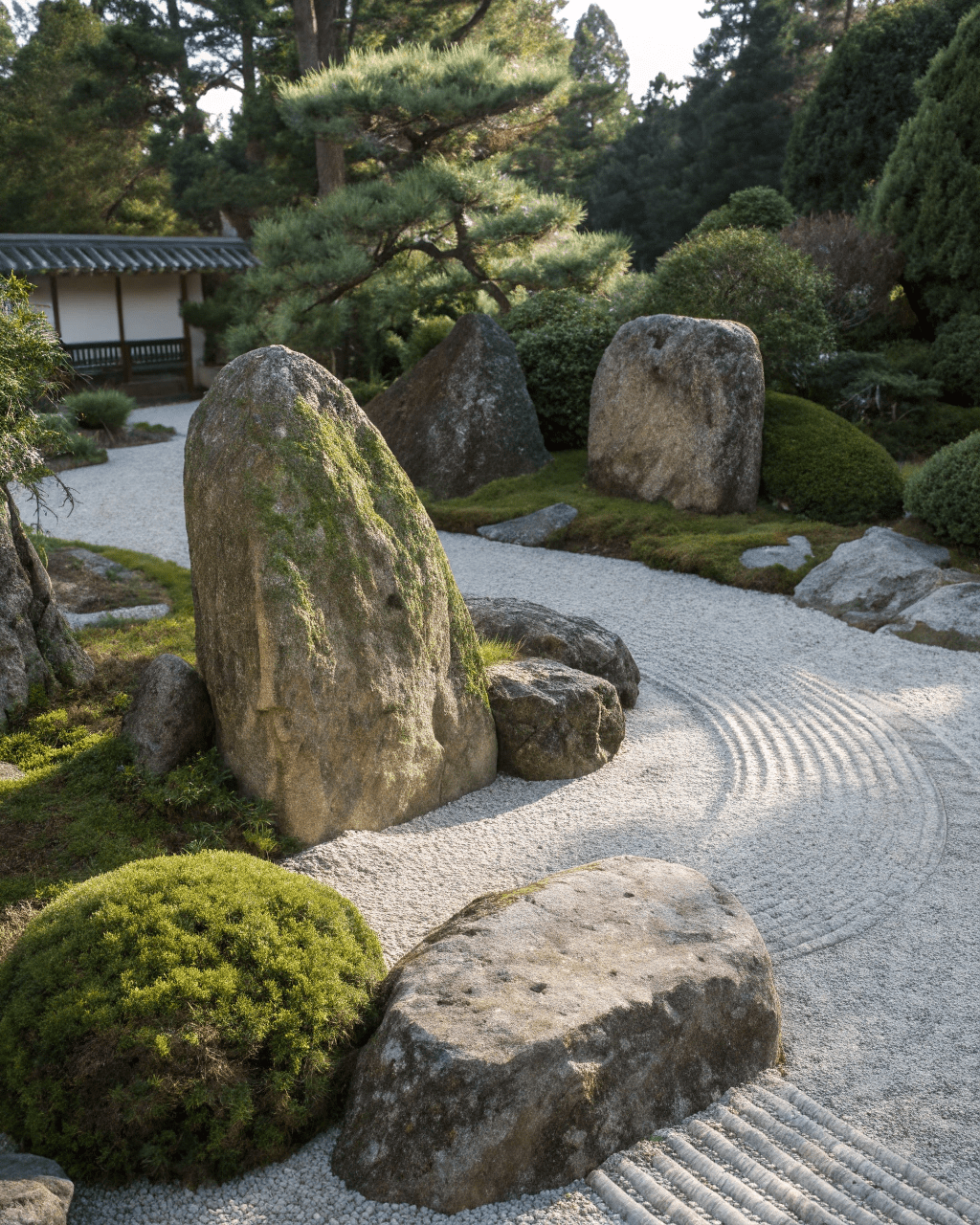
The visual harmony here breaks down into a simple formula: 50% carefully raked white gravel + 40% organic green elements (moss and shrubs) + 10% structural grey stone. The key is the high percentage of the meticulously patterned gravel, which sets a serene, intentional tone. You could switch out the materials while keeping the same ratio. For a drier look, you could use black volcanic sand instead of white gravel or low-growing, drought-tolerant succulents instead of green moss. The balance remains.
|
📋 Copy HEX 🔗 Share |
|
📋 Copy HEX 🔗 Share |
|
$379.99
|
$6.97
|
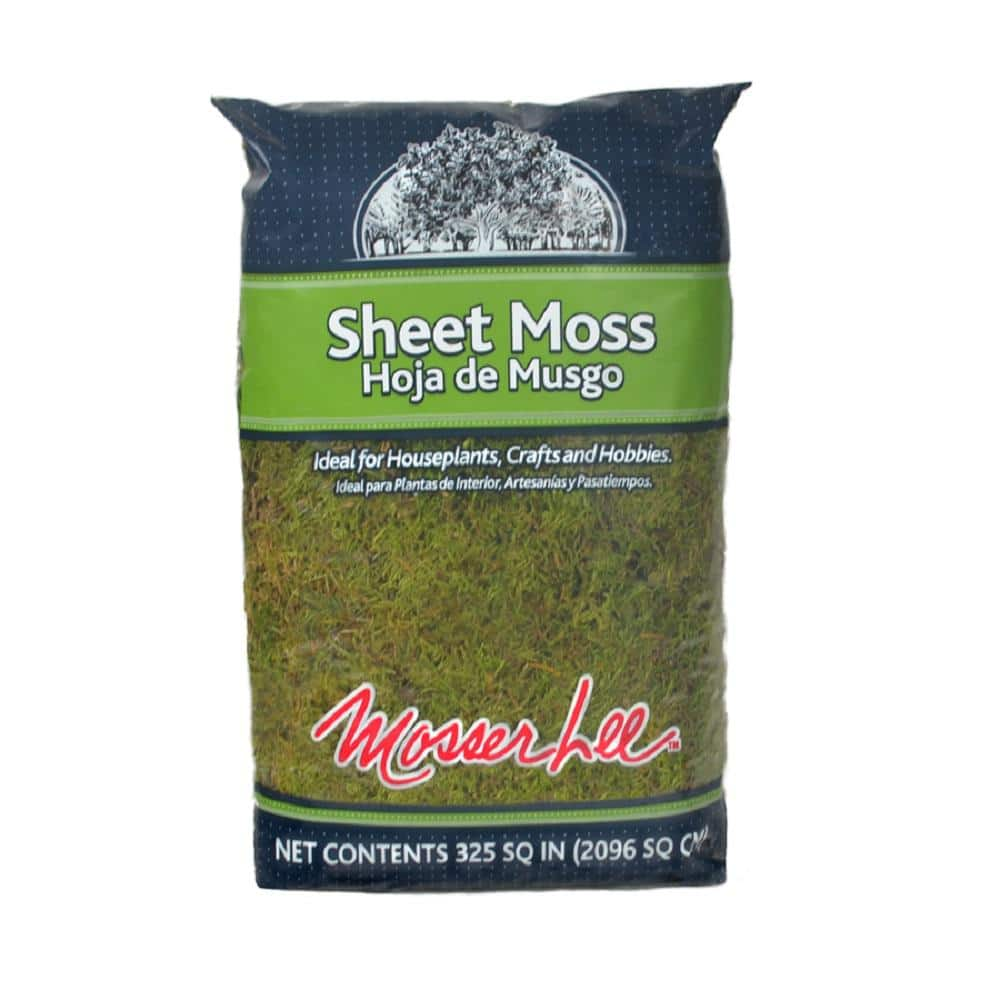
There’s a growing movement towards “dopamine decor” indoors, and this is its calmer, outdoor cousin: “serotonin scaping.” In 2026, homeowners are actively designing spaces that offer a tangible sense of peace and a gentle break from a chaotic world. The act of raking the gravel itself is a meditative practice, which is a giant part of its current appeal. This trend has serious staying power because it’s not just about looks; it’s about creating a feeling.
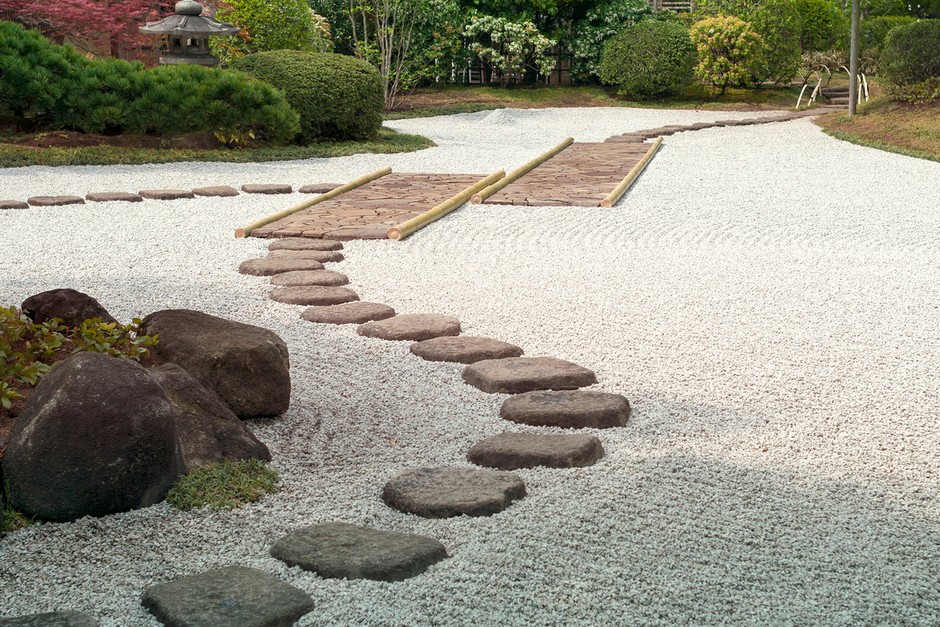
6. Create a Path with Stepping Stones and a Simple Wooden Bridge
It’s the stepping-stone path. Remove that, and you have a static rock garden. The path creates a sense of journey and narrative. It invites you to move through the space, not just look at it from a distance. The irregular shape of the stones forces a slower, more deliberate pace, which is the entire point of a garden like this. It’s an active invitation to participate in the tranquility of the space.
|
$25.00
|
$4.00
|
$13.97
|


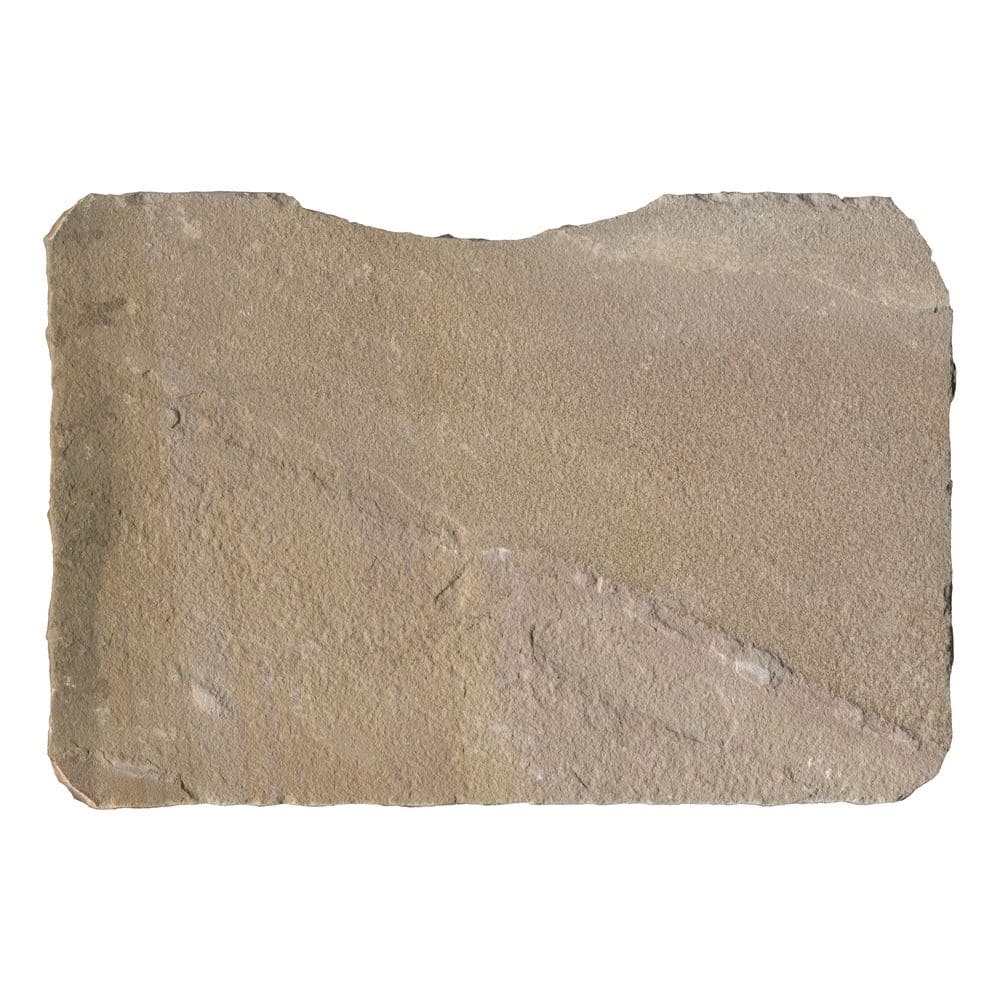
You don’t need a professionally installed bridge to get this look. A fantastic alternative can be found on Facebook Marketplace or at a thrift store. Look for simple, flat wooden benches or even old, sturdy coffee tables that can be repurposed. A thorough sanding and a coat of weatherproof stain can turn a $50 find into a beautiful garden feature. For stepping stones, check landscape supply yards for remnant pieces, often sold at a steep discount compared to new pavers.
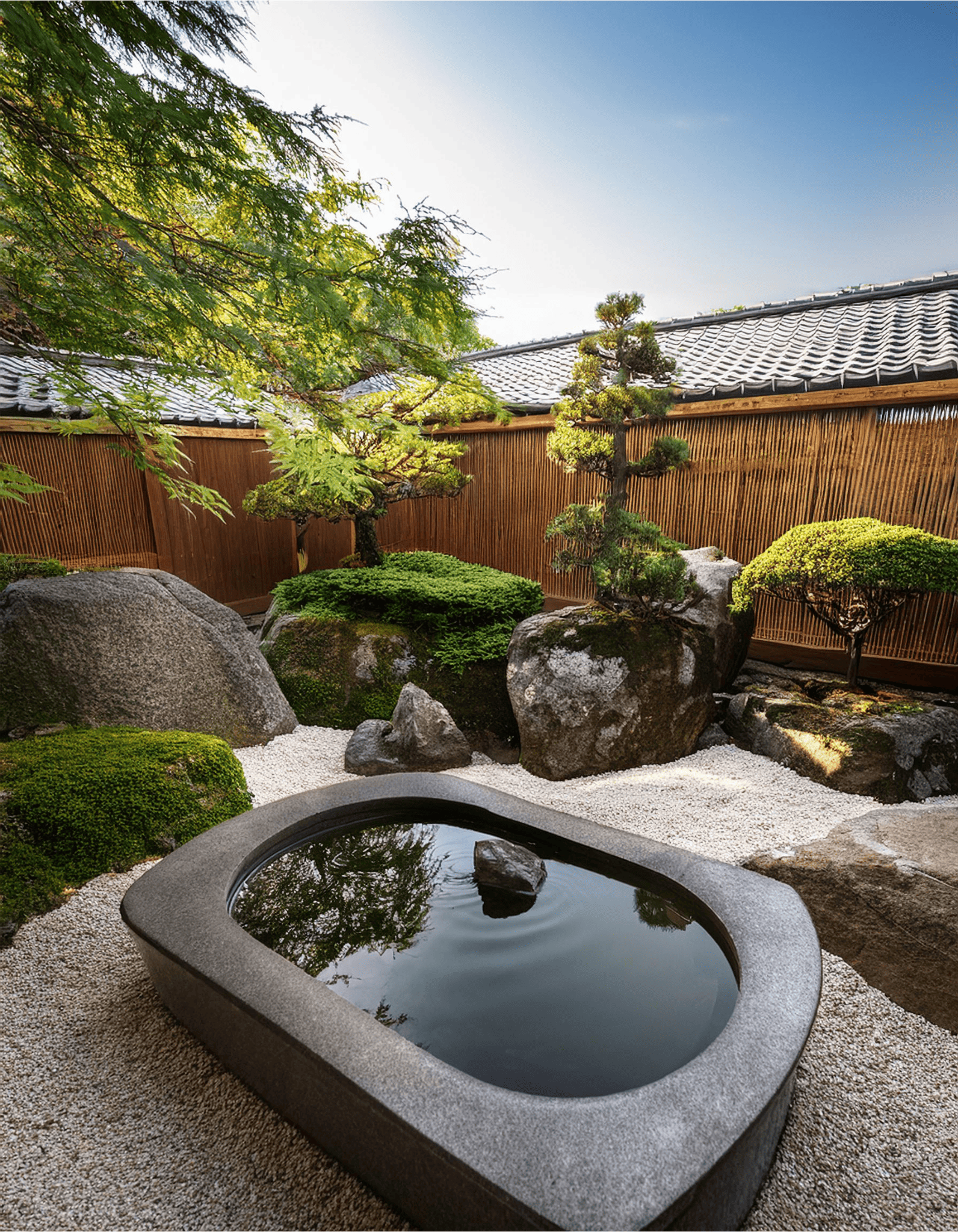
7. Incorporate a Modern Stone Water Basin for Simple Elegance
A dark stone basin looks incredibly chic, but be aware that in hard water areas, it will show mineral deposits (white residue) very clearly. To keep it looking pristine, you’ll need to wipe it down weekly with a soft cloth and a vinegar-water solution. Furthermore, the standing water, while beautiful, can be a breeding ground for mosquitoes. Consider adding a small, discreet bubbler to keep the water moving or use mosquito dunks, which are safe for birds and pets.
|
📋 Copy HEX 🔗 Share |
|
📋 Copy HEX 🔗 Share |
|
$39.48
|
$129.00
|
$179.00
|
$5.48
|
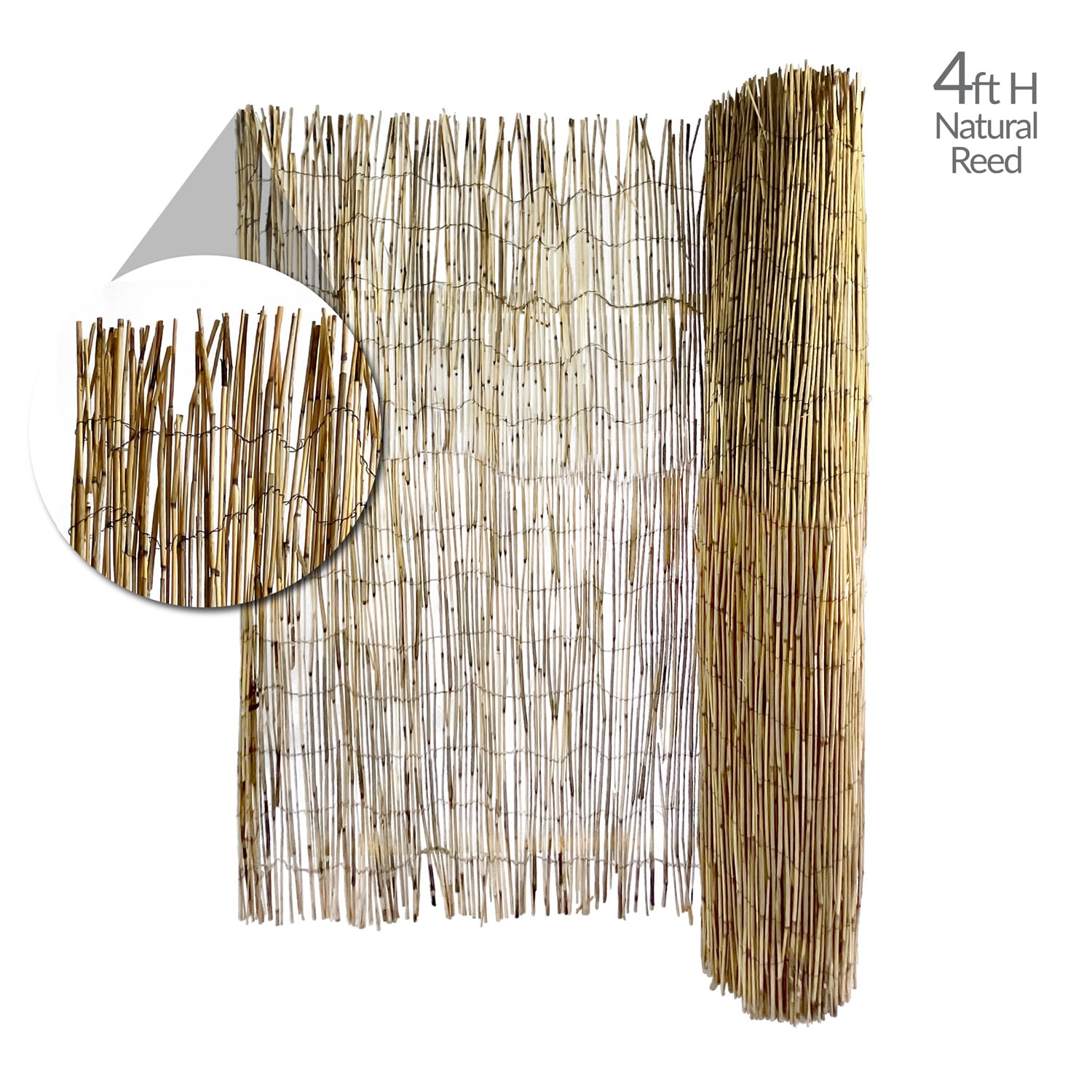


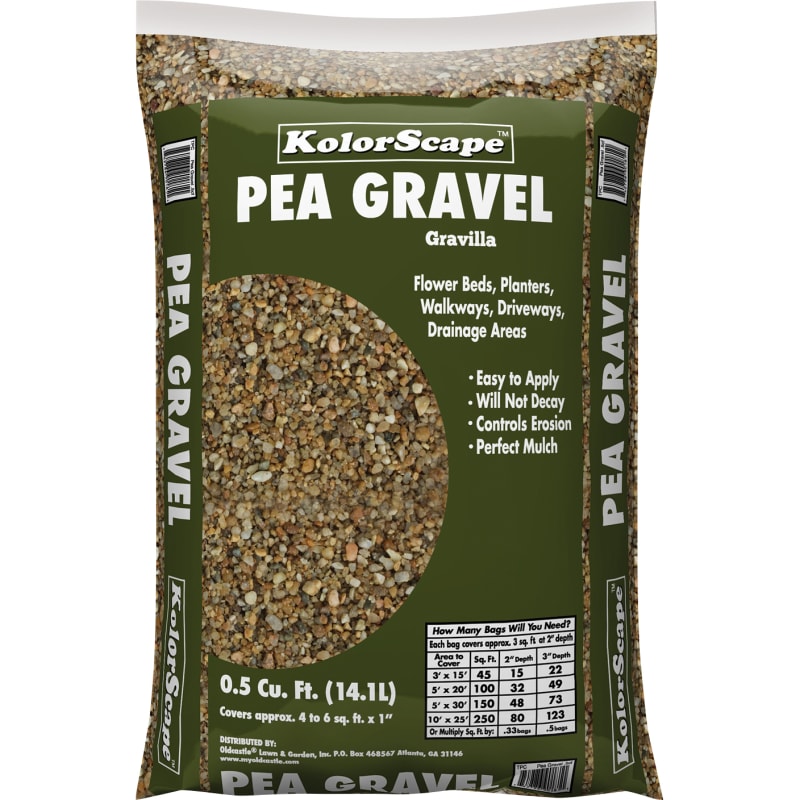
When placing a water basin (a ‘tsukubai’ in traditional Japanese design), position it so it’s not the absolute center of the garden. It should feel like a discovery. Tuck it near a larger boulder or partially behind a sculpted shrub. The ideal height is low, forcing a slight bow to interact with the water, which encourages a moment of mindfulness and respect for the element. Aim for the basin’s rim to be about 12 to 16 inches off the ground.
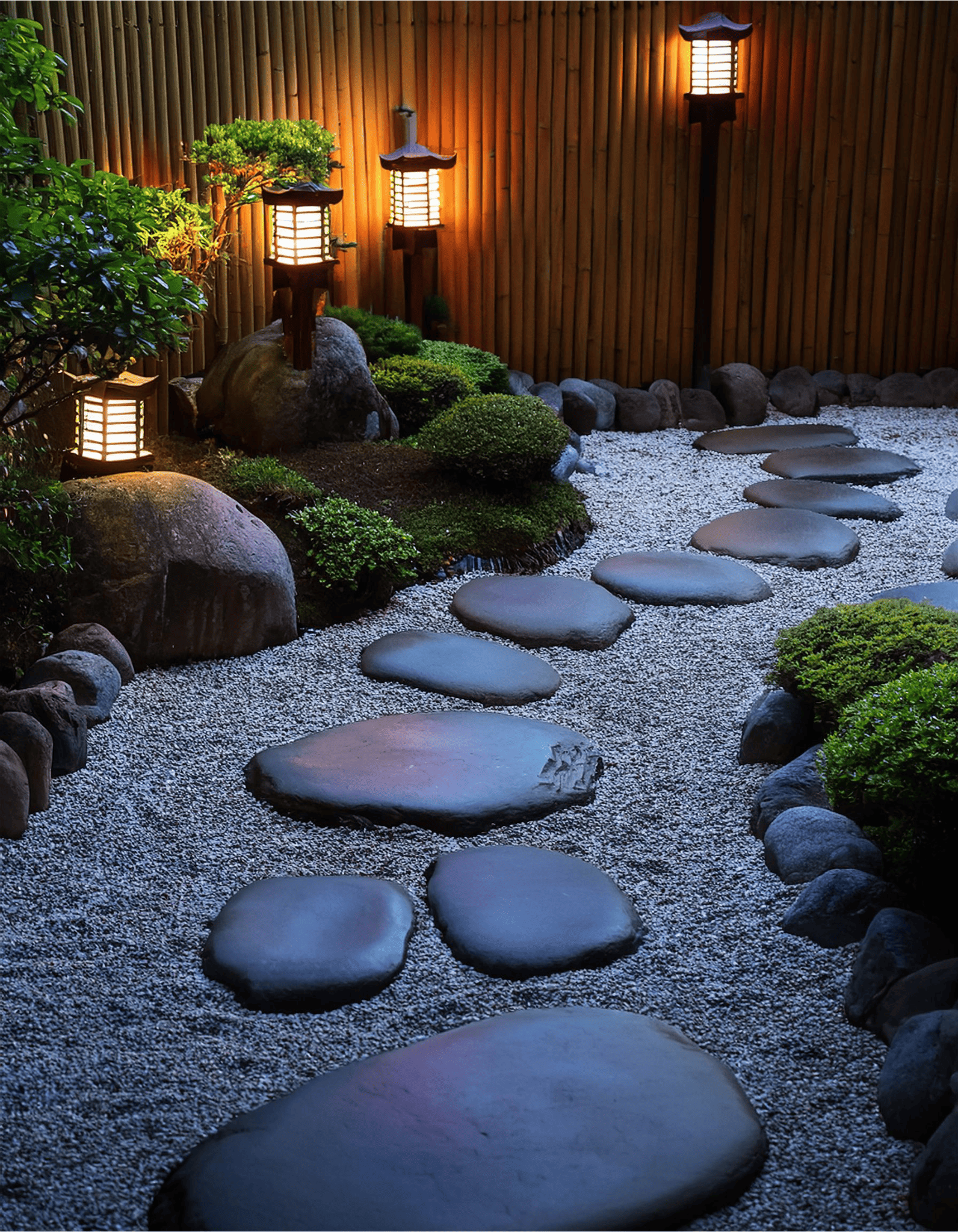
8. Light the Way with Japanese Lanterns and a Bamboo Wall
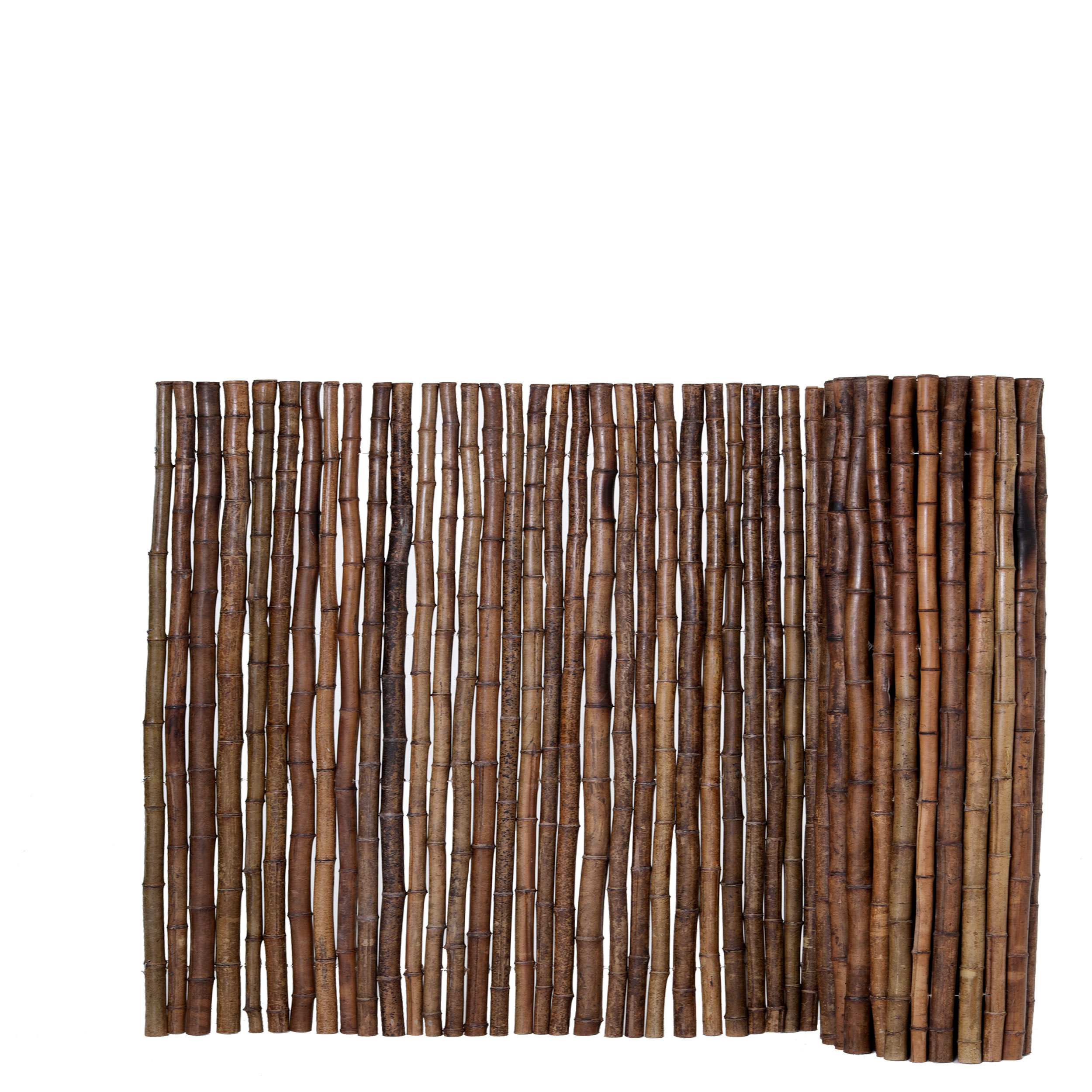
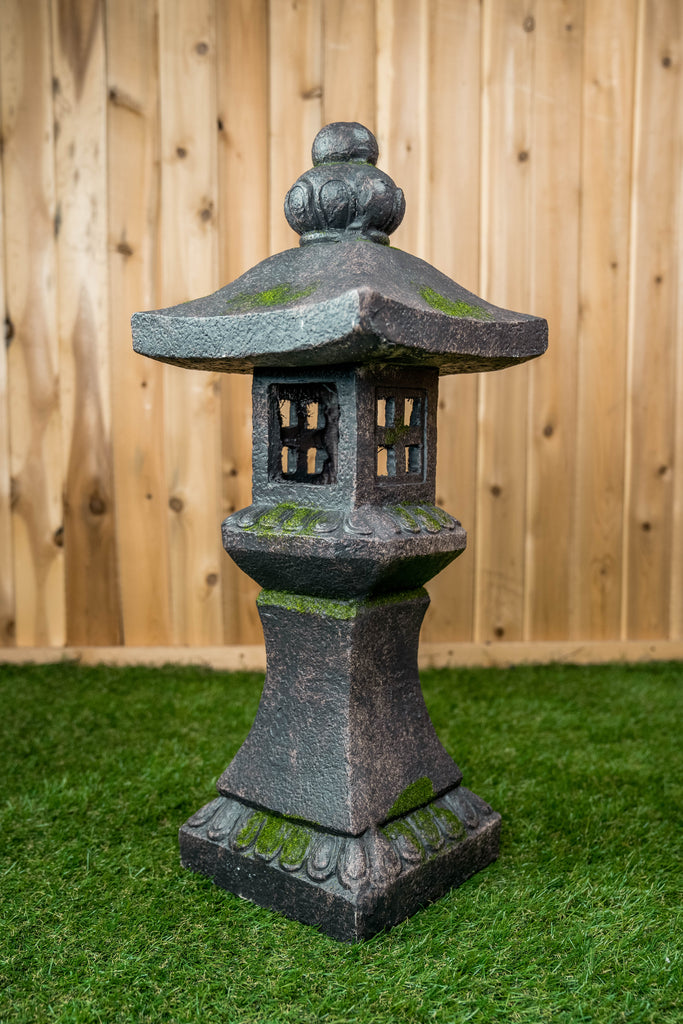
The magic here is the interplay of light and texture. The warm, soft glow from the lanterns creates a welcoming ambiance, a stark contrast to harsh overhead floodlights. This warm light beautifully highlights the varied textures in the garden: the smooth, flat stepping stones, the fine grain of the gravel, the waxy leaves of the bushes, and the rigid vertical lines of the bamboo fence. It’s a multi-sensory experience that feels calm and incredibly sophisticated.
|
$49.99
|
$203.99
|
$77.99
|
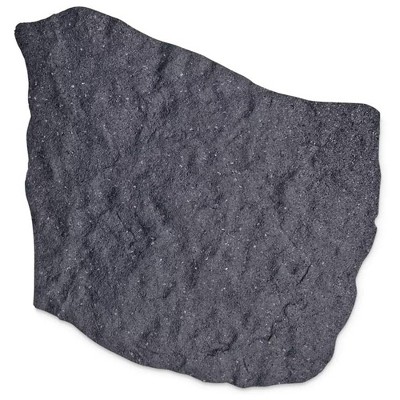
You can install a low-voltage lighting system for your path in an afternoon. Time: 2-3 hours. Cost: $150-$400.
- Lay out your lanterns along the path where you want them.
- Dig a shallow trench (3-4 inches deep) for the low-voltage cable.
- Connect each lantern to the main cable using the provided snap-on connectors.
- Run the cable to your transformer, which should be plugged into an outdoor GFCI outlet.
- Bury the cable and enjoy your beautifully lit path.
9. Bring the Garden Indoors With a Bonsai and Water Feature
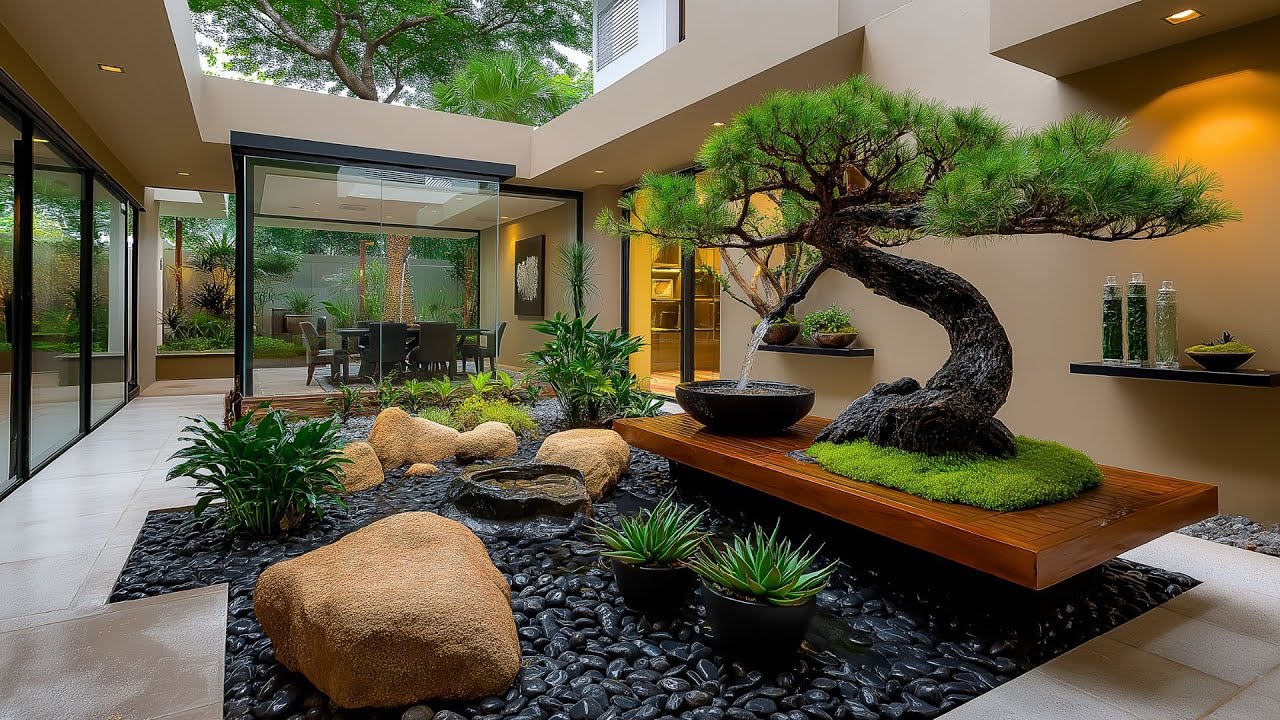
This idea is perfect for a courtyard, an atrium, or a transitional space between indoors and outdoors. It requires a footprint of at least 6×6 feet to feel intentional and not cramped. The key is ceiling height; with a prominent bonsai tree, you need at least 9-10 feet of vertical clearance to prevent the space from feeling compressed. This look is less suited for a standard room unless it has a large picture window or sliding glass doors to connect it visually to the outside.
|
📋 Copy HEX 🔗 Share |
|
📋 Copy HEX 🔗 Share |
|
$209.99
|
$199.00
|
$30.00
|
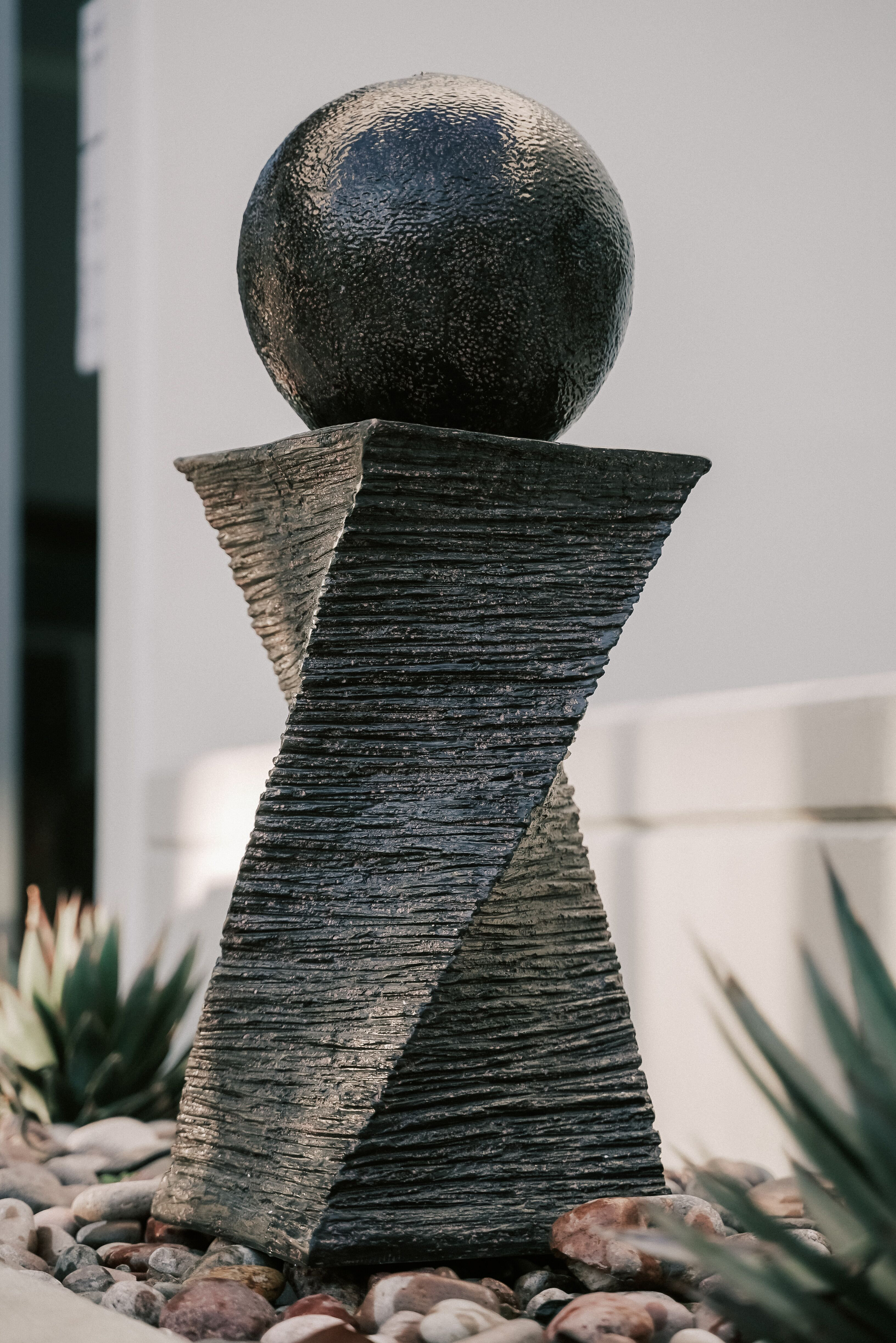

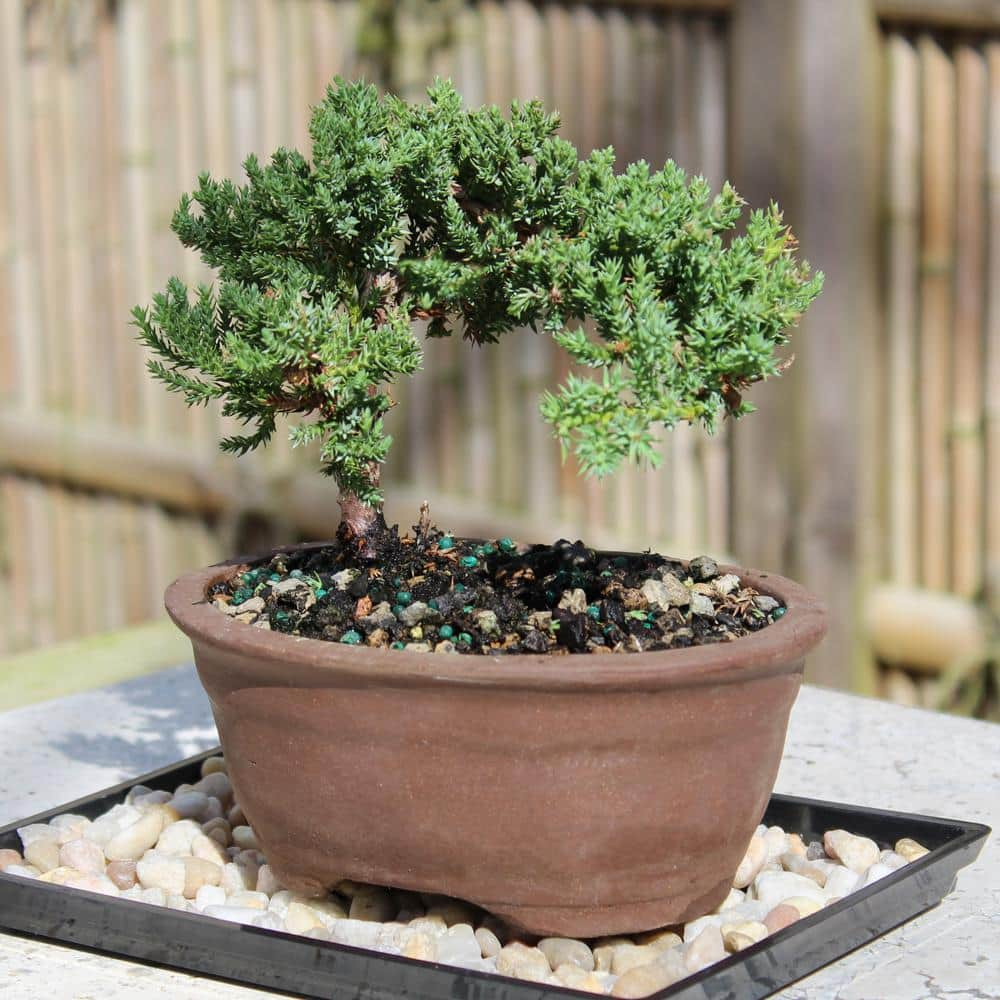
Bonsai are not your average houseplants. They are a serious horticultural hobby. A bonsai tree like this requires daily monitoring for water, weekly feeding during its growing season, and careful pruning several times a year to maintain its shape. You’ll also need to be vigilant for pests. The water feature will also need its pump cleaned monthly. This design is a high-reward look, but it comes with a high-maintenance commitment.
10. Create an Indoor Water Feature with River Rocks and Ferns
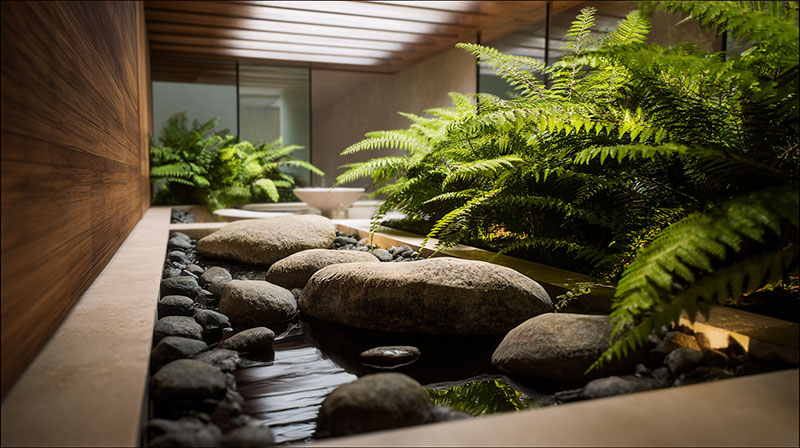
The lighting is everything. Without the carefully hidden uplighting, the scene would just be a dark, static collection of rocks and water. The light transforms it, creating dramatic reflections on the water, highlighting the smooth texture of the pebbles, and making the green ferns pop against the dark background. It turns a simple feature into a living, breathing piece of art that changes depending on your viewing angle.
|
$69.99
|
$25.89
|
$23.56
|
$6.28
|

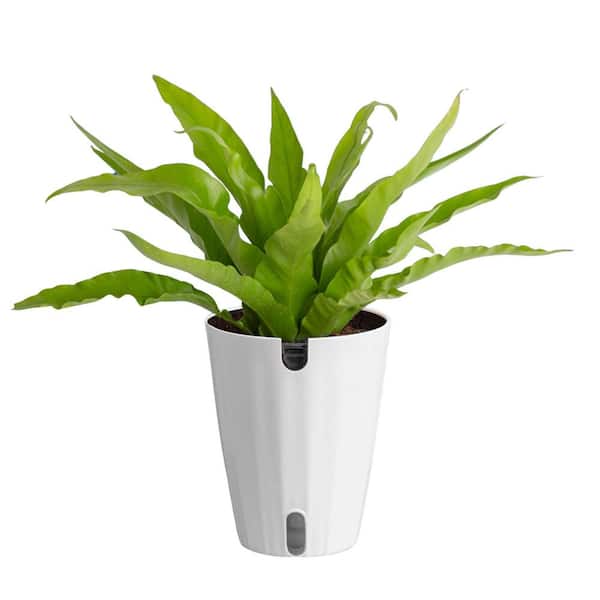

An indoor water feature brings tranquility, but it also brings humidity. In a poorly ventilated space, the humidity can lead to issues with mold or mildew over time. Ensure the room has adequate airflow or a dehumidifier. Furthermore, be mindful of splashes. The area around the feature needs to be a waterproof material like stone or tile, not hardwood or carpet. Finally, the gentle sound of water is calming to most, but make sure the pump you choose is truly silent, or the mechanical hum will ruin the zen vibe.
11. Anchor Your Garden with an Illuminated Wooden Tea House
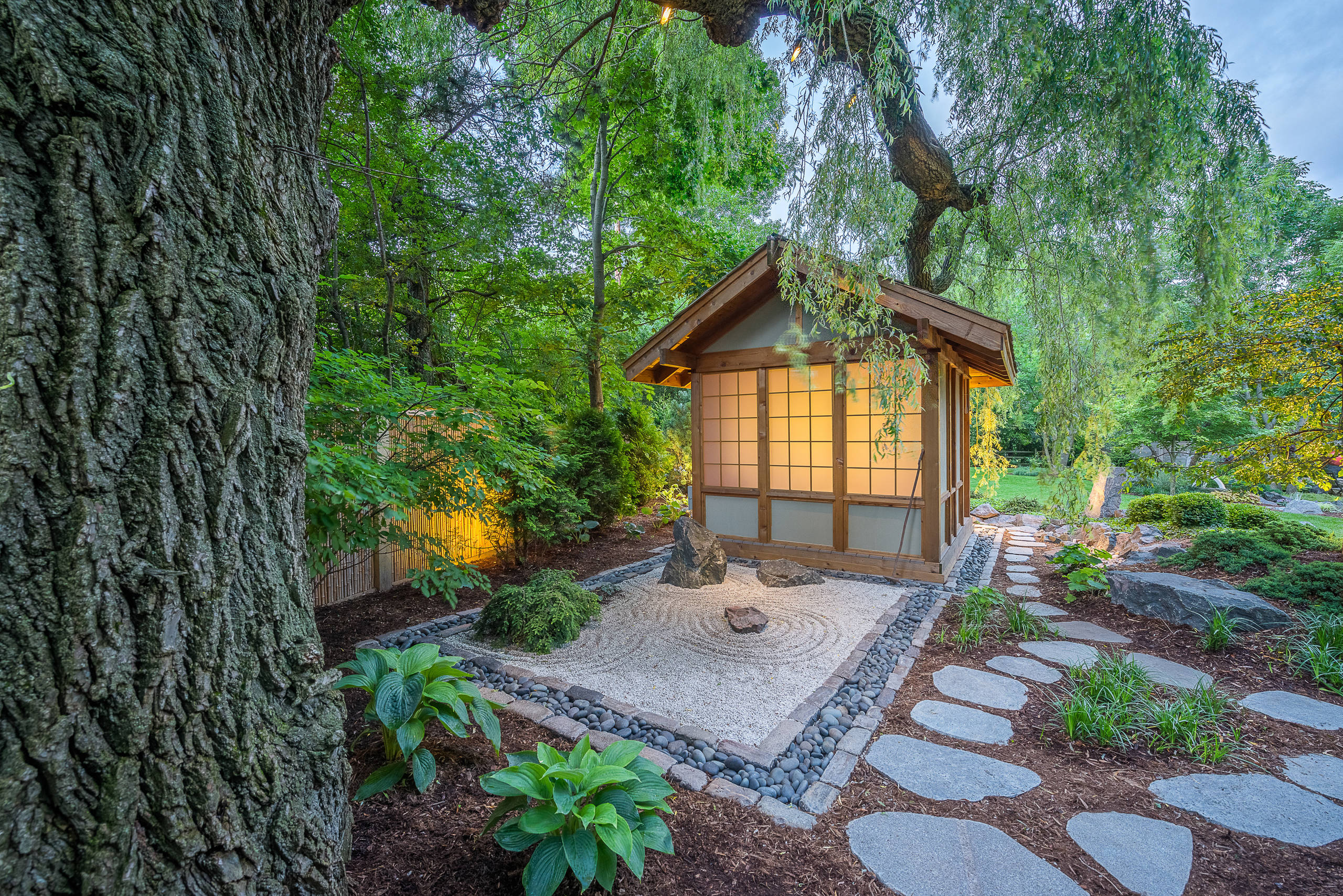
This design creates a powerful sense of destination. The illuminated tea house acts as a beacon, drawing you through the garden. The stepping stone path and surrounding foliage aren’t just decoration; they frame the journey to this peaceful sanctuary. The warm glow from the shoji-style screens suggests life and warmth within, making the entire garden feel more inviting and purposeful than a purely decorative space. It tells a story.
|
📋 Copy HEX 🔗 Share |
|
📋 Copy HEX 🔗 Share |
|
$75.21
|
$9.98
|
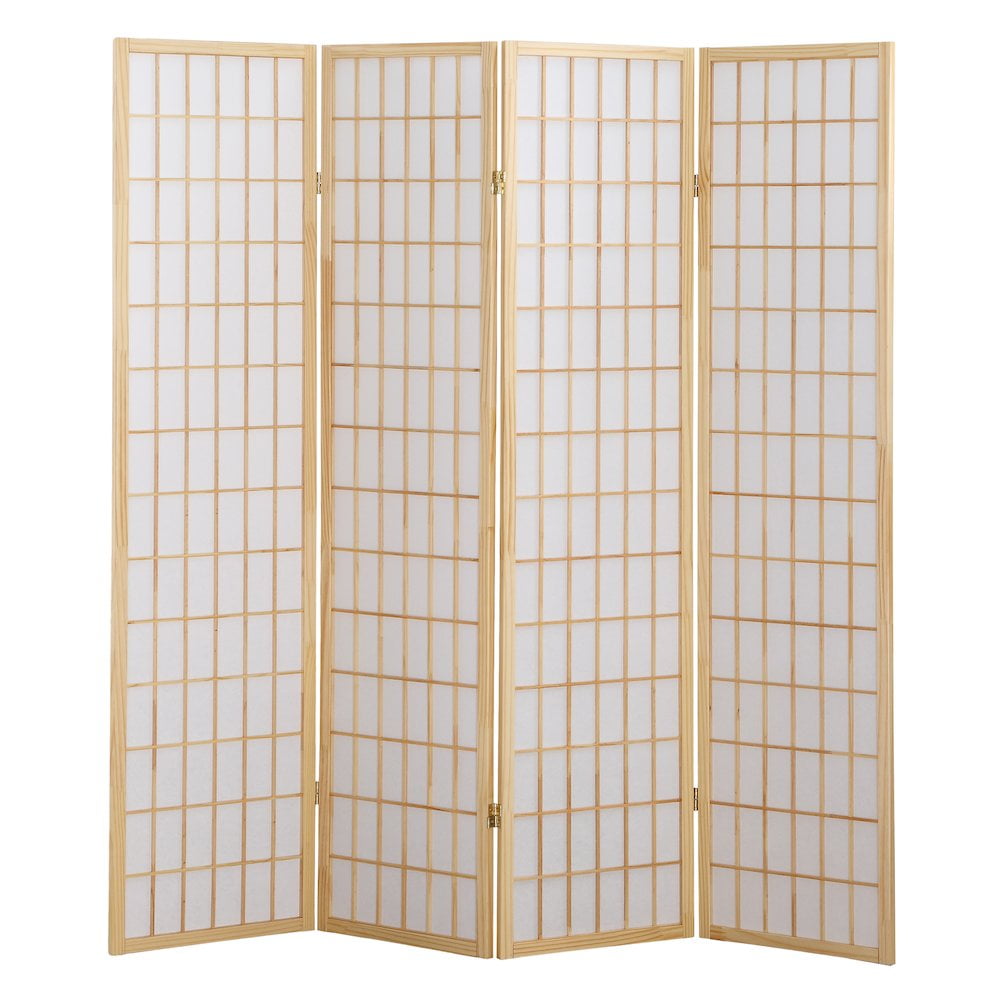

A full tea house is a major project, but you can capture this essence for less. Look at garden sheds or even children’s playhouses from big-box stores like Home Depot or Lowe’s. With a few modifications—like replacing door panels with frosted plexiglass and adding a dark stain—a $500 shed can be transformed. Add an inexpensive solar-powered lantern inside for that warm glow, and you have a beautiful focal point for a fraction of the cost.
12. Weave a Path Through Lush Greenery with Stone Accents
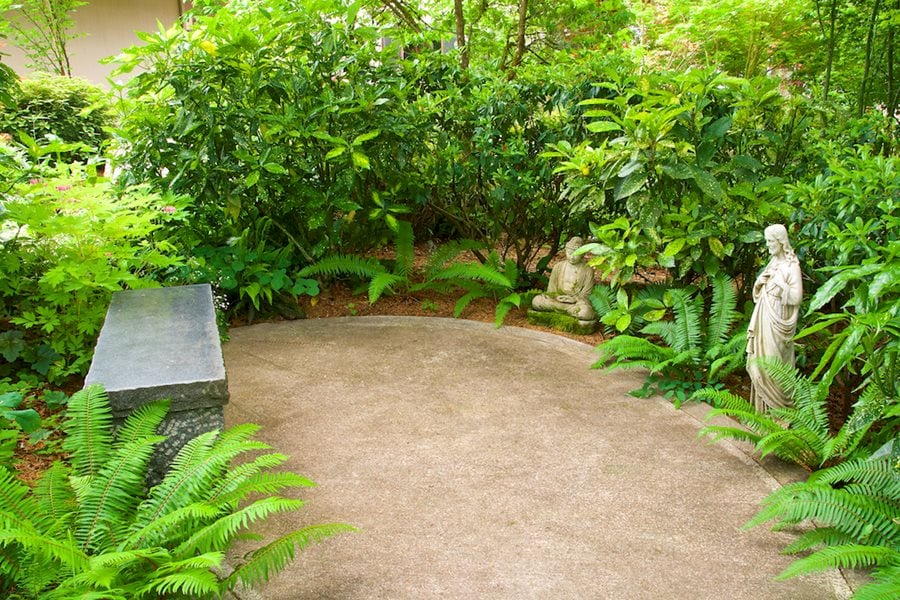
To get that incredibly lush, dense foliage look, the secret is layering plants of different heights and textures. Start with a ground cover like ferns, then add mid-height shrubs, and finally a few taller plants or small trees. Place the tallest plants in the back and the shortest in the front to create a sense of depth. Don’t plant in straight rows; stagger them in organic, triangular patterns for a more natural, “found” look.
|
$4,570.00
|
$126.72
|
$26.99
|
$29.99
|

Before you commit to this jungle-like look, check these boxes:
- Soil Check: Does your soil drain well? Most ferns and lush plants hate having “wet feet.” Amend with compost if needed.
- Light Direction: This design thrives in partial to full shade. Will it get blasted by the harsh afternoon sun?
- Water Source: Is a hose or irrigation system easily accessible? Dense plantings like these are thirsty.
- Statue Placement: Do you have a natural nook where a statue can be a quiet discovery, rather than a centerpiece?
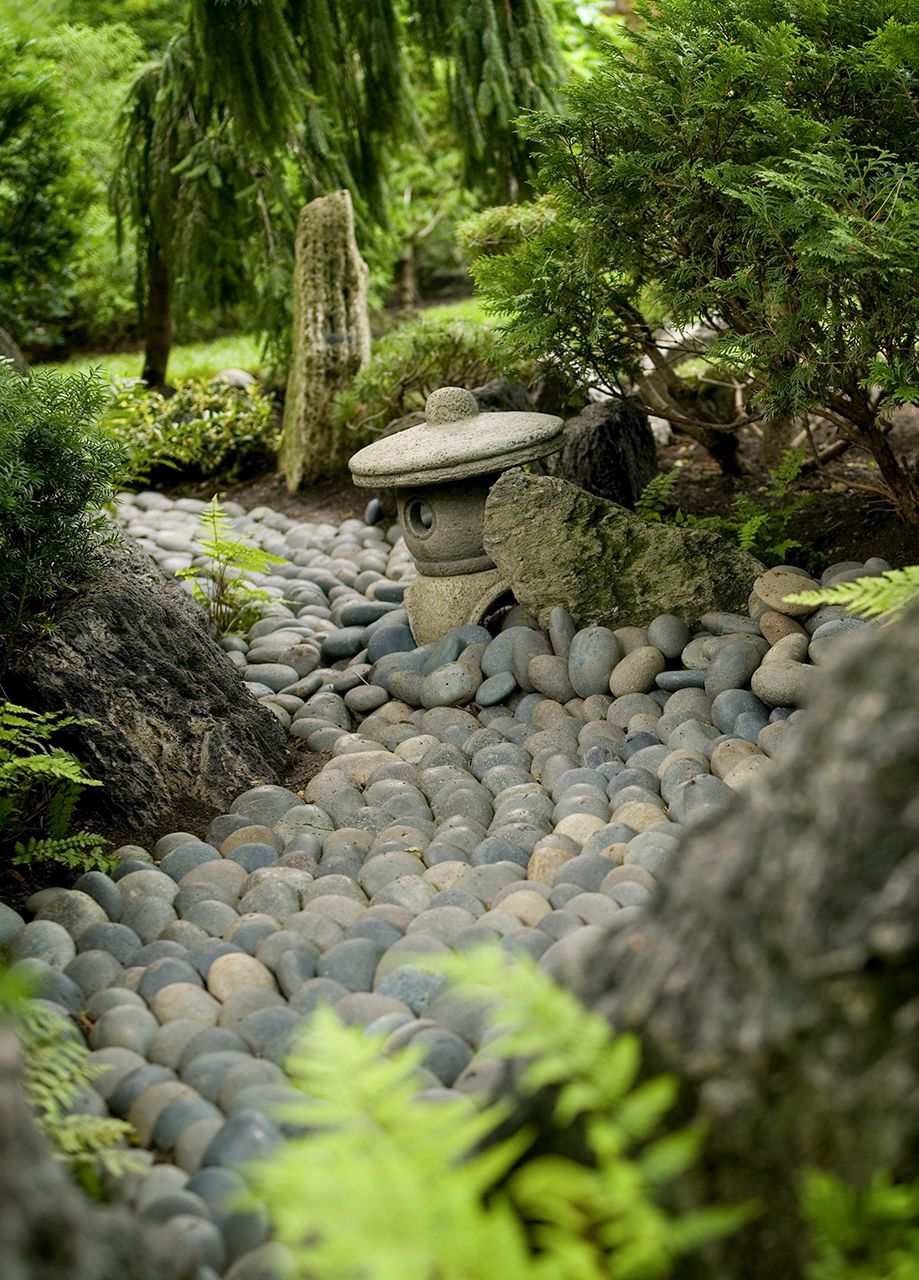
13. Let a Pebble Pathway Meander Through the Greens
Creating a durable pebble path is easier than it looks. Time: 4-6 hours for a 15-foot section. Cost: $200-$500.
|
📋 Copy HEX 🔗 Share |
|
📋 Copy HEX 🔗 Share |
|
$59.97
|
$16.65
|
$14.98
|

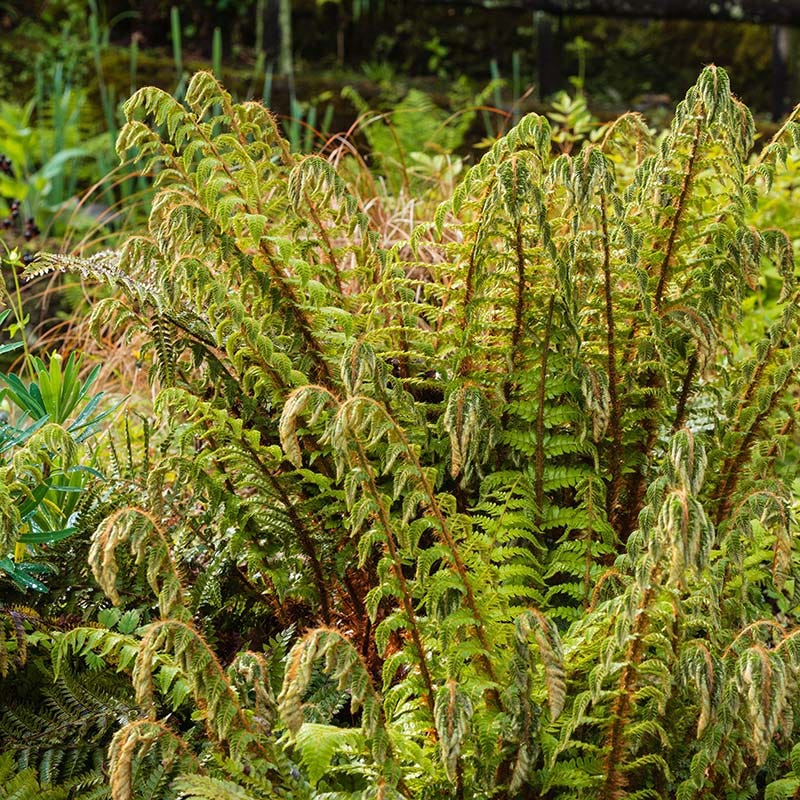

- Mark out the shape of your path with rope or spray paint.
- Excavate the area to a depth of 4 inches.
- Use a hand tamper to compact the soil.
- Install flexible landscape edging along the borders to contain the pebbles.
- Lay down a layer of landscape fabric to suppress weeds.
- Fill the path with 3-4 inches of smooth river pebbles (1-2 inch diameter is best for walking).
A pebble pathway is beautiful and sounds wonderful underfoot, but it’s not the most practical surface for everything. It can be difficult to wheel a lawnmower, wheelbarrow, or stroller over it. The pebbles will inevitably migrate into surrounding garden beds or lawn, so the edging is non-negotiable. And if you live in a snowy climate, forget about shoveling it cleanly—a snow blower is your only real option. This is a much more barefoot-friendly design than the sharp gravel in Idea #1.
14. Create a Dry River Bed Alongside a Stepping Stone Path
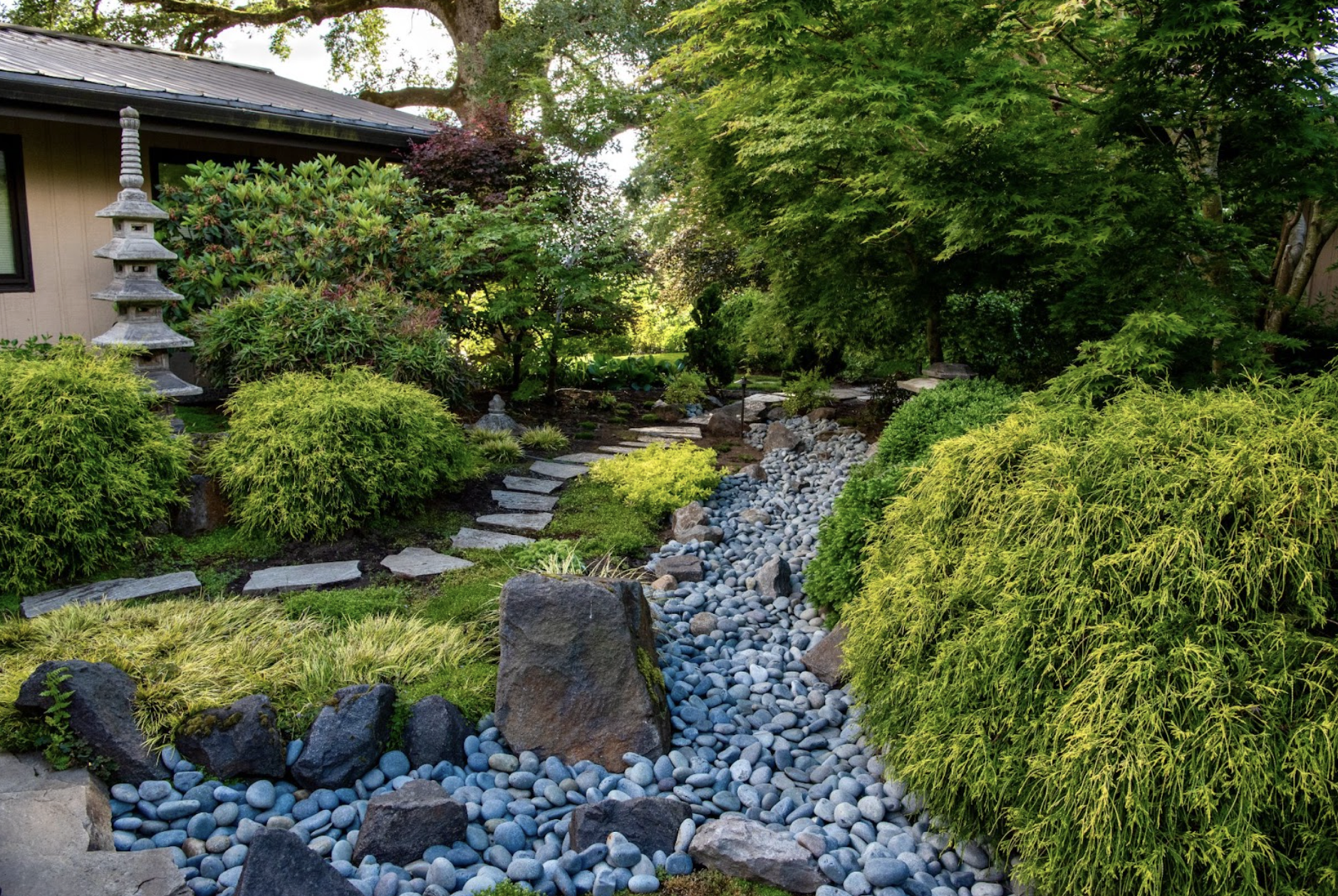
This design brilliantly mimics nature by creating a “story” of water. The dry riverbed isn’t just a trench of pebbles; it suggests a path where water once flowed, or could flow again. The larger boulders interspersed within it look as if they were deposited by a current. This suggestion of movement adds a dynamic, living quality to a static garden. The stepping stone path then becomes the “bank” of this implied river, reinforcing the natural narrative.
|
$313.50
|
$336.00
|

This design is a great solution for a long, narrow side yard, which many homes have. You need a minimum width of about 5–6 feet to accommodate both the path and the dry river bed without them feeling cramped. Anything narrower, and you should choose one or the other. The length can be anything from 15 feet to 50+ feet. The key is to introduce gentle curves to your “river” to make it feel more natural and less like a straight drainage ditch.
15. Integrate a Tiered Waterfall into a Paved Garden Patio
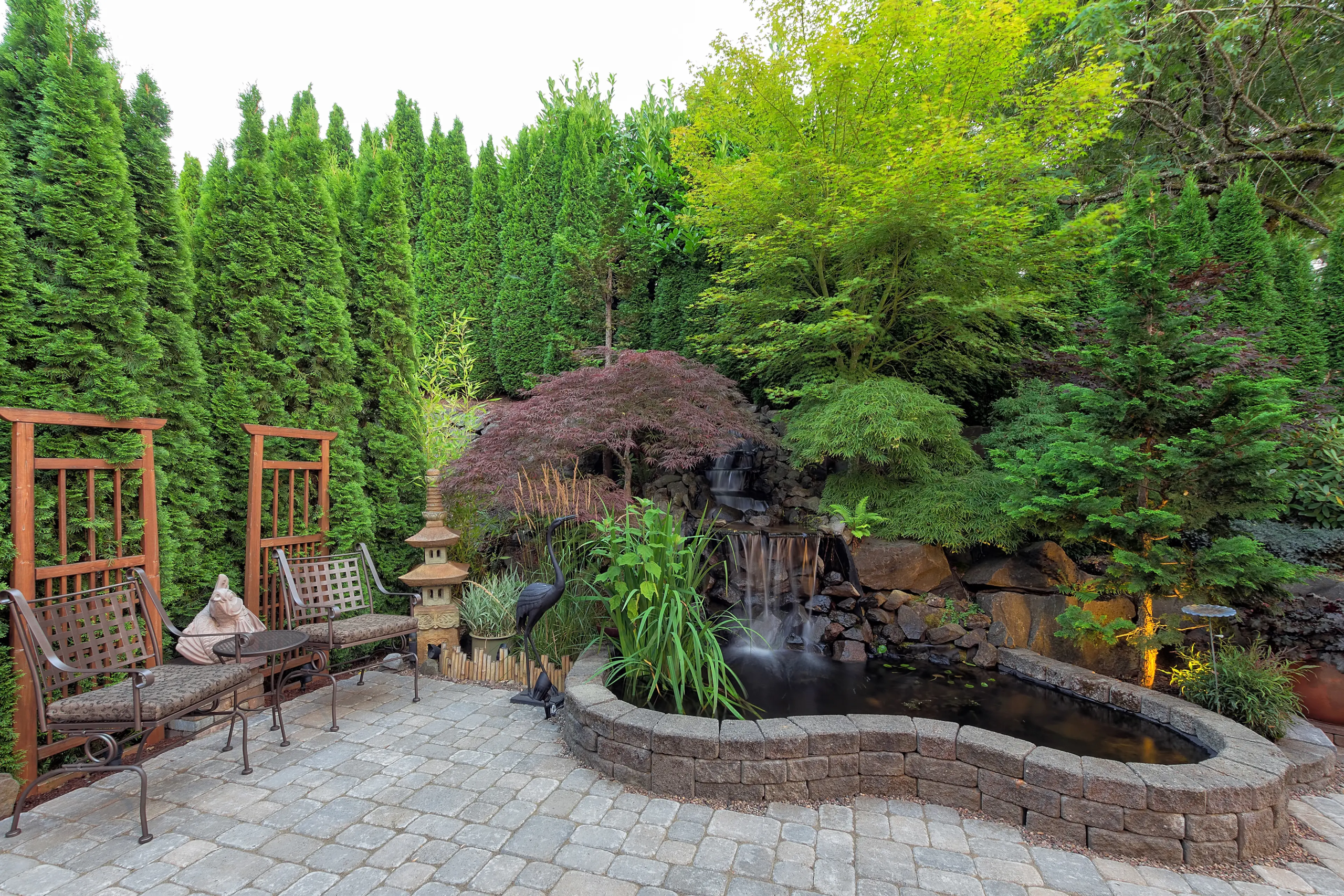
Here’s the formula for this relaxing patio: 40% hardscape (pavers) + 30% water feature + 20% lush greenery + 10% comfortable seating. The pavers provide a solid, usable foundation, but it’s the significant presence of the waterfall that defines the space’s character. The vibrant red leaves of the Japanese maple act as a crucial pop of color, preventing the grey stone and dark metal from feeling too somber. You could easily swap the iron benches for modern wicker chairs to change the vibe.
|
📋 Copy HEX 🔗 Share |
|
📋 Copy HEX 🔗 Share |
|
$199.99
|
$144.99
|

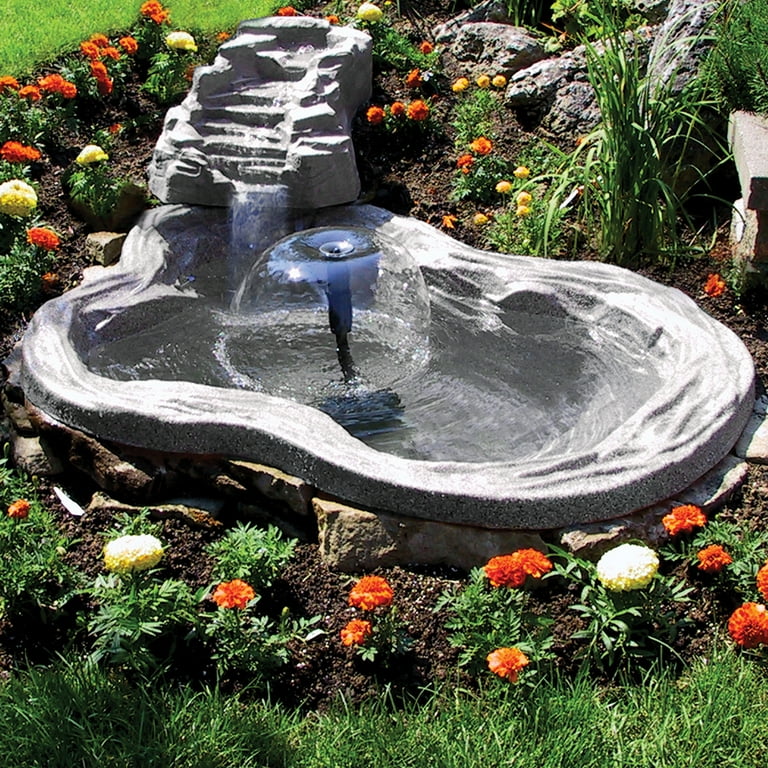
A custom-built tiered waterfall can be pricey. For a similar effect on a budget, look for self-contained, multi-tiered fountains at stores like Target or Walmart during their summer patio sales. You can often find one for $150 to $300. Place it against a wall and surround it with potted plants to give it a more integrated, built-in look. Pair it with a simple bistro set from IKEA for a charming seating area.
16. Accessorize with Eclectic Statues and Planters
The personality is the one thing that makes this work. While many Zen-inspired spaces focus on minimalism and natural elements, this corner leans into personal expression. The quirky, colorful owl, the serene Buddha, and the playful elephant planter wouldn’t be found in a traditional Japanese garden, but here they create a little vignette that tells a story about the homeowner. It’s a reminder that your garden should make *you* happy.

|
$11.99
|
$96.96
|
$49.40
|

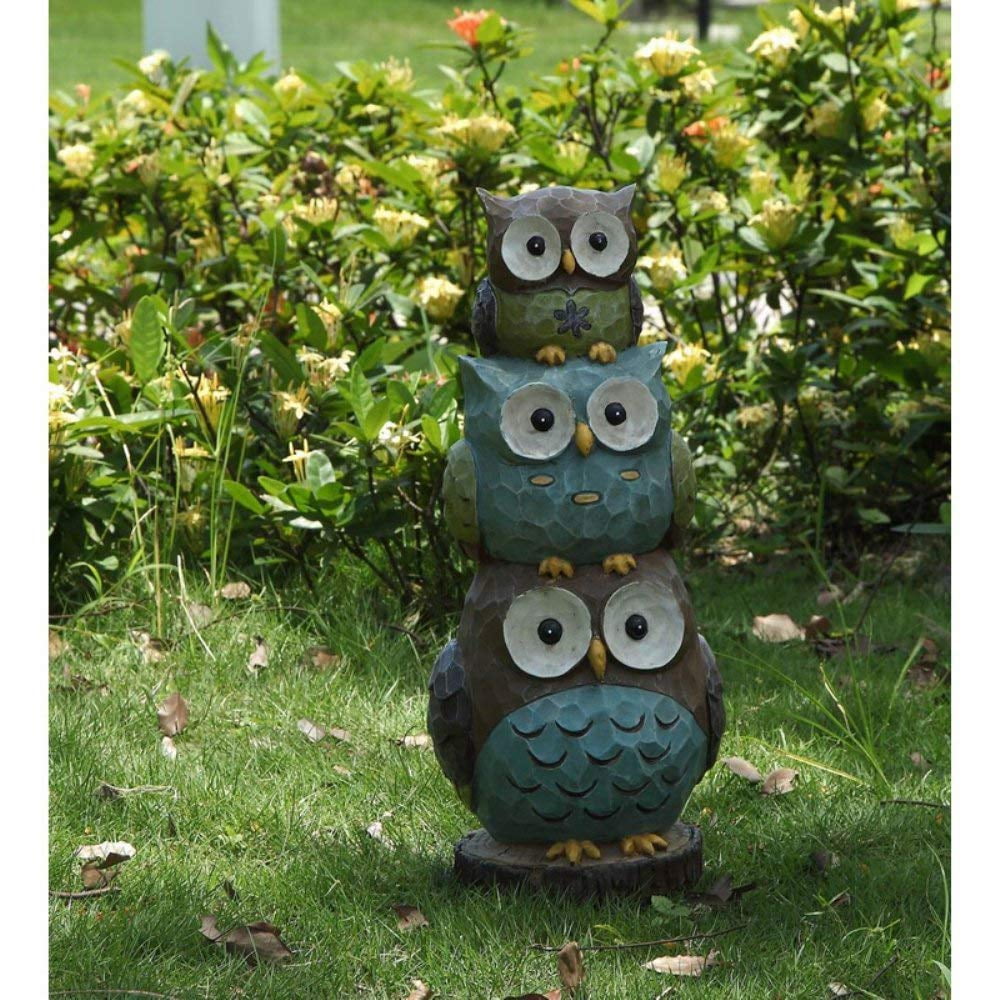
When grouping decorative objects, think in threes or fives, and vary the height and shape. Notice how the tall, vertical form of the Buddha is balanced by the round, stout owl and the low, horizontal elephant planter. This creates a visually captivating triangle. If all three objects were the same height and shape, the arrangement would feel static and boring. Always place the tallest item in the back.
17. Install a Traditional Stone Water Feature with Bamboo Spout
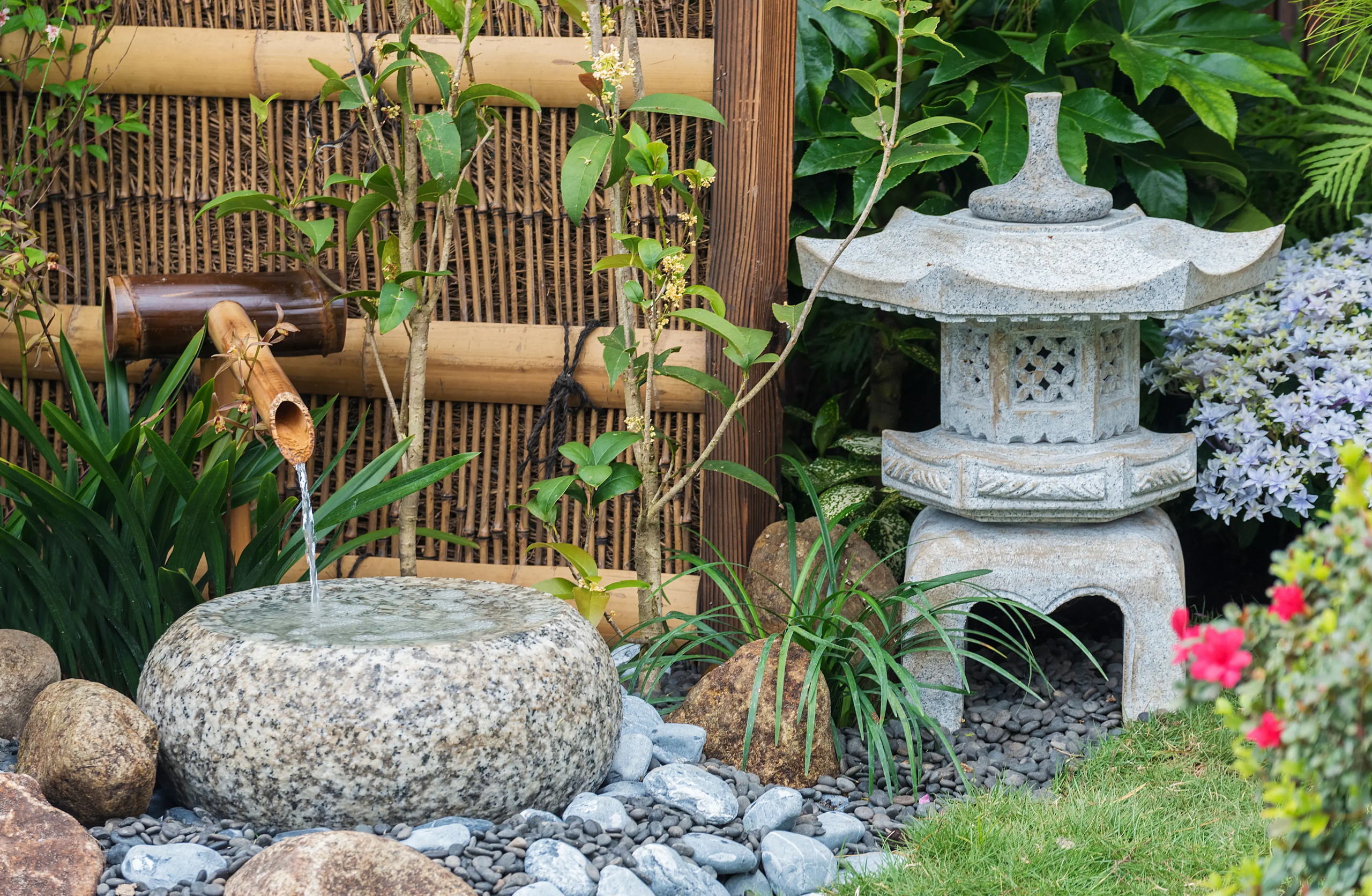
A feature like this, with running water, is a magnet for birds, which is lovely but also means you’ll be cleaning bird droppings from the basin and surrounding rocks fairly often. Also, the bamboo spout will need to be replaced every few years as it weathers and breaks down. While it seems self-contained, splashing can still be an issue, leading to a consistently damp patch of ground that could affect nearby plants or become a muddy spot.
|
📋 Copy HEX 🔗 Share |
|
📋 Copy HEX 🔗 Share |
|
$159.99
|
$29.98
|
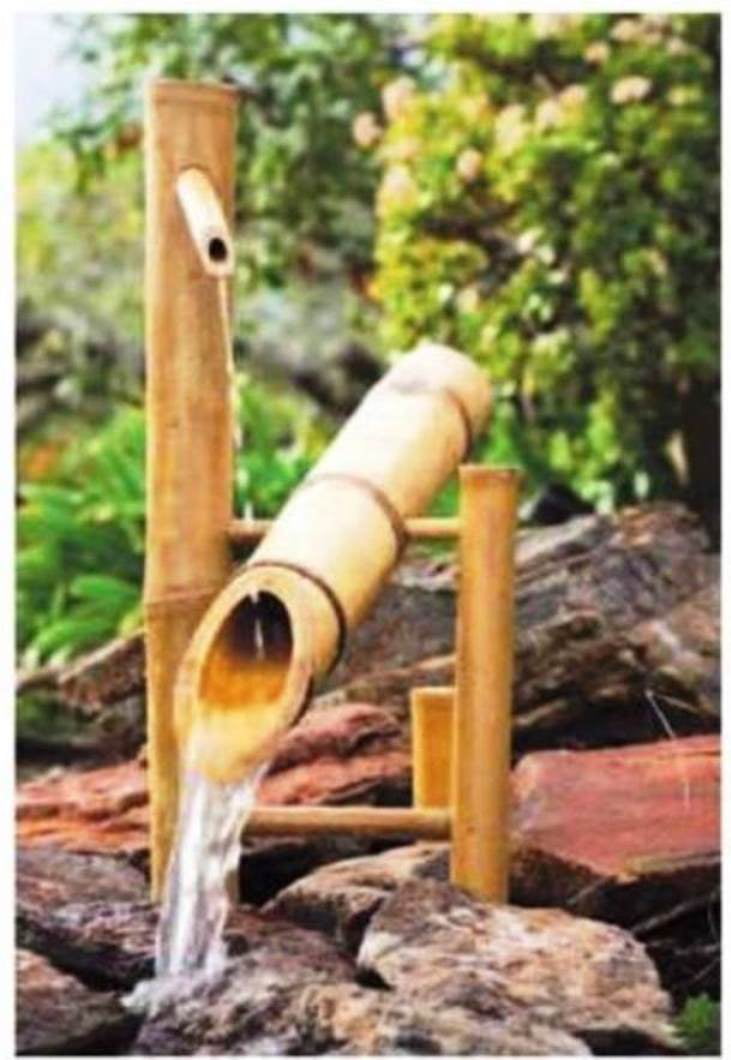
The combination of sound and motion is what makes the device so effective. The gentle clack of the bamboo spout (if it’s a ‘shishi-odoshi’ or deer-scarer) and the soft splash of water create a calming soundscape that can help mask less pleasant neighborhood noises. Visually, the movement of the water adds a dynamic element to the otherwise still garden, capturing light and creating a constant, subtle focal point that encourages you to pause and watch.
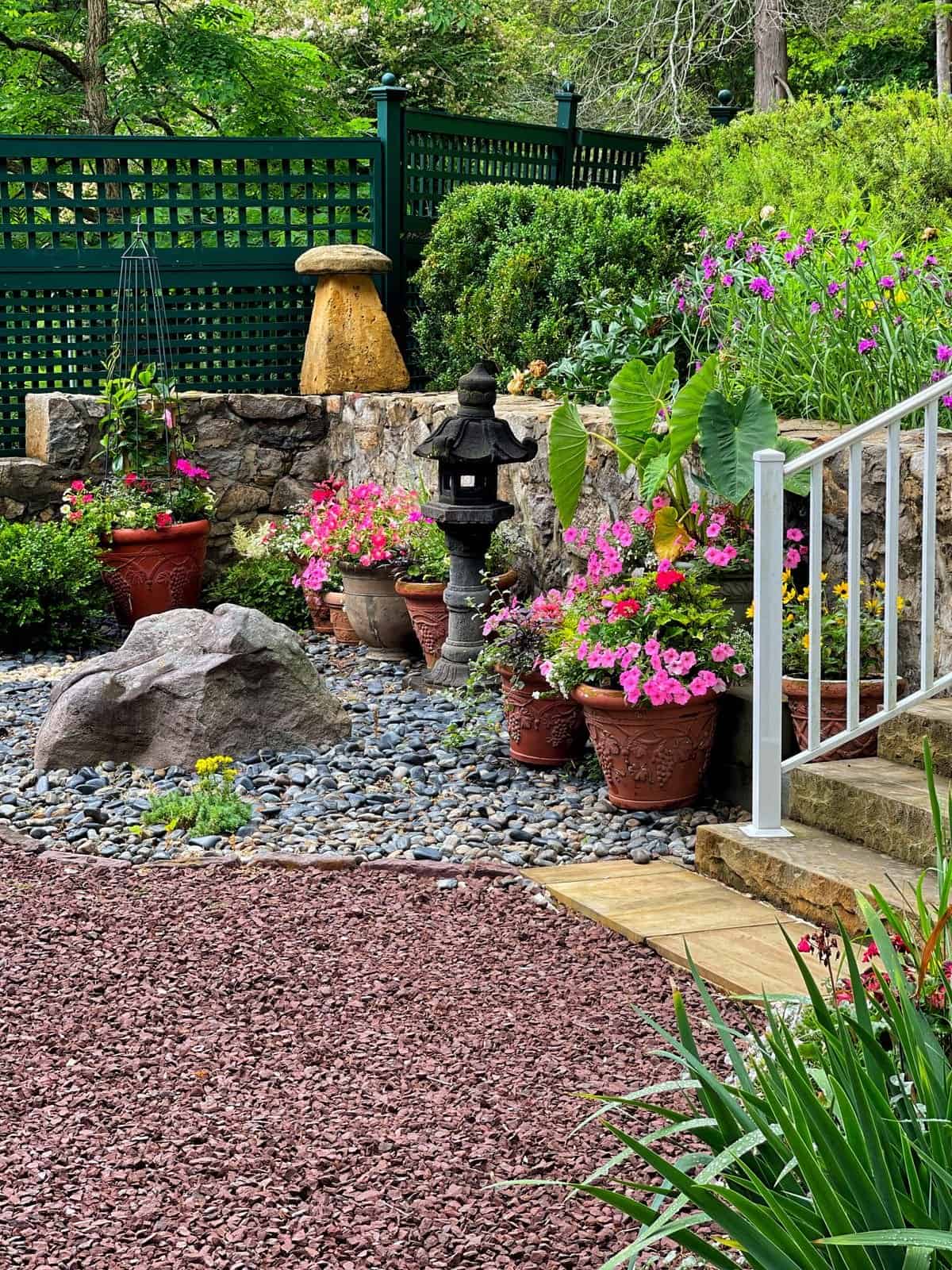
18. Use Potted Flowers to Add Bursts of Color
This is a fantastic way to bring vibrant life to a stone-heavy garden without committing to in-ground planting. Here’s a rough cost estimate for this specific look:
|
$54.99
|
$54.97
|
$32.98
|
$35.58
|
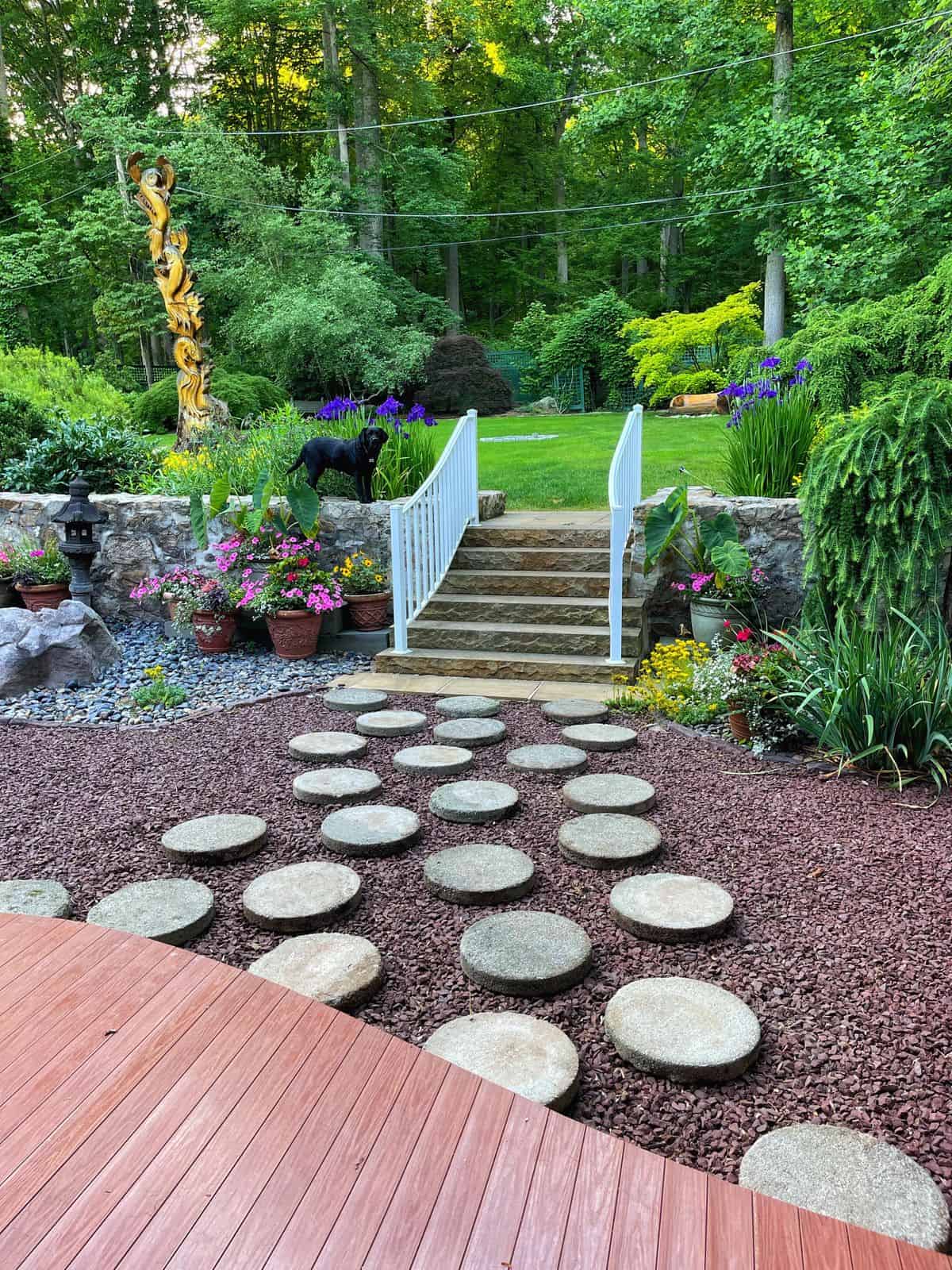
19. Connect Spaces with Circular Stepping Stones and a Staircase
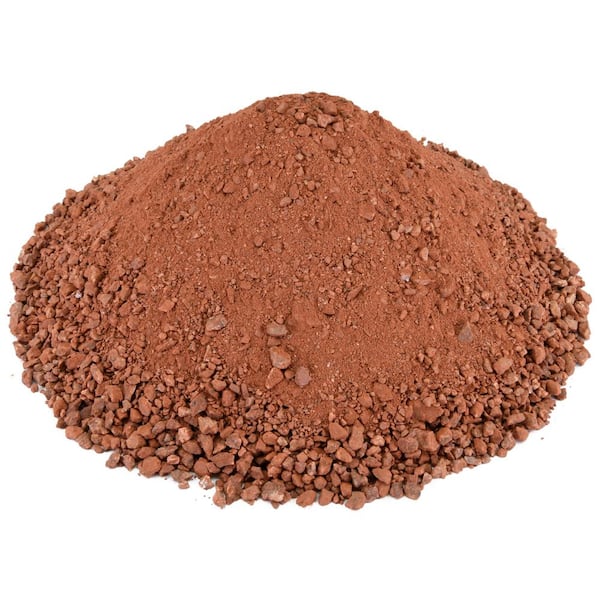
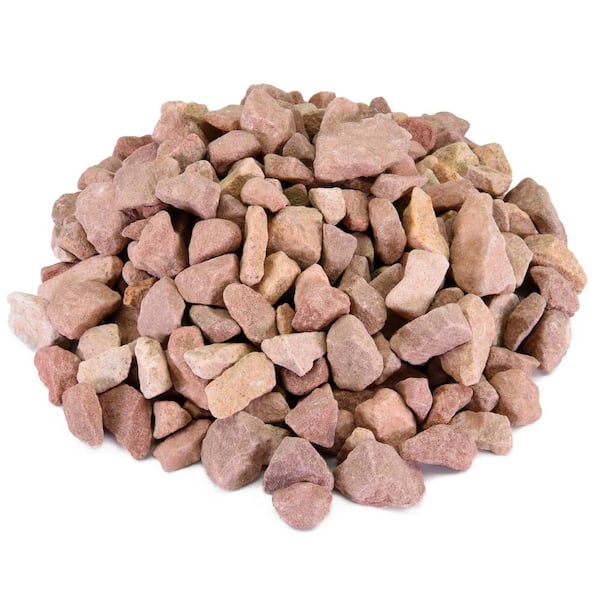
The dark reddish-brown mulch is the unsung hero of this design. It creates a rich, dark canvas that makes the other colors and textures pop. The light grey stepping stones stand out clearly, the vibrant green foliage looks even more lush, and the bright pink flowers feel more intense against this dark, earthy backdrop. If this were light-colored gravel, the whole scene would feel washed out and lack depth.
|
📋 Copy HEX 🔗 Share |
|
📋 Copy HEX 🔗 Share |
|
$0.01
|
$114.00
|
$19.98
|
$34.91
|


When using circular stepping stones, the spacing is critical. Place them close enough for a comfortable stride—typically 18 to 24 inches from the center of one stone to the center of the next. Don’t lay them in a perfectly straight line. A gentle, sweeping curve is much more pleasing to the eye and feels more natural to walk. Use a rubber mallet to gently tap them into the mulch so they are firm and don’t wobble underfoot.
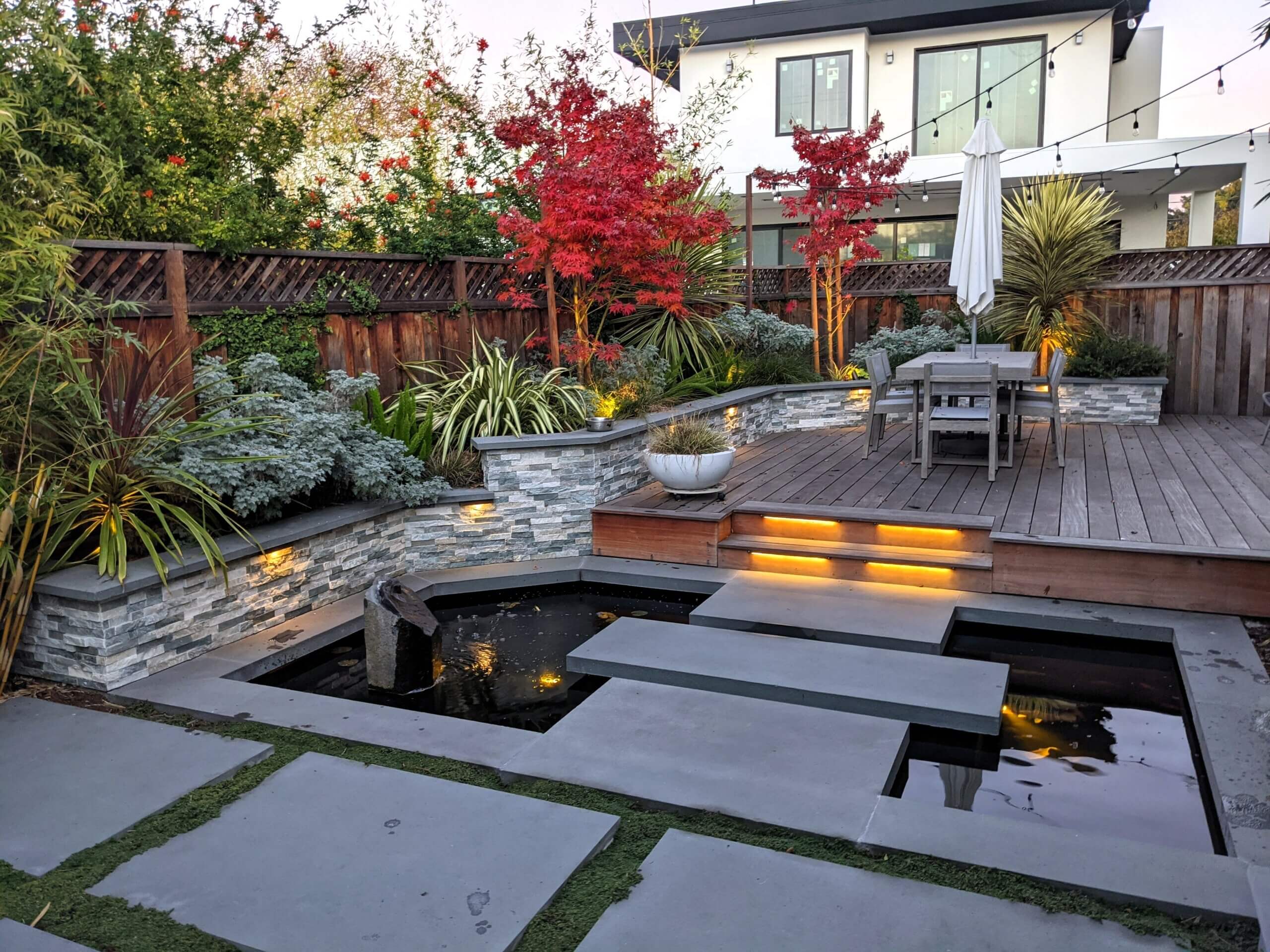
20. Mix Modern Pavers and a Wood Deck for a Sleek Look
This modern oasis follows a strict geometric formula: 50% sleek grey hardscaping (pavers and stone walls) + 30% warm wood decking + 20% strategically placed foliage. The clean lines and right angles of the deck and planters soften the organic shapes of the Japanese maples. The built-in lighting is that crucial 1% that elevates the entire design from nice to spectacular after sunset.
|
$1,800.00
|
$749.99
|
$1,286.99
|
$6.99
|
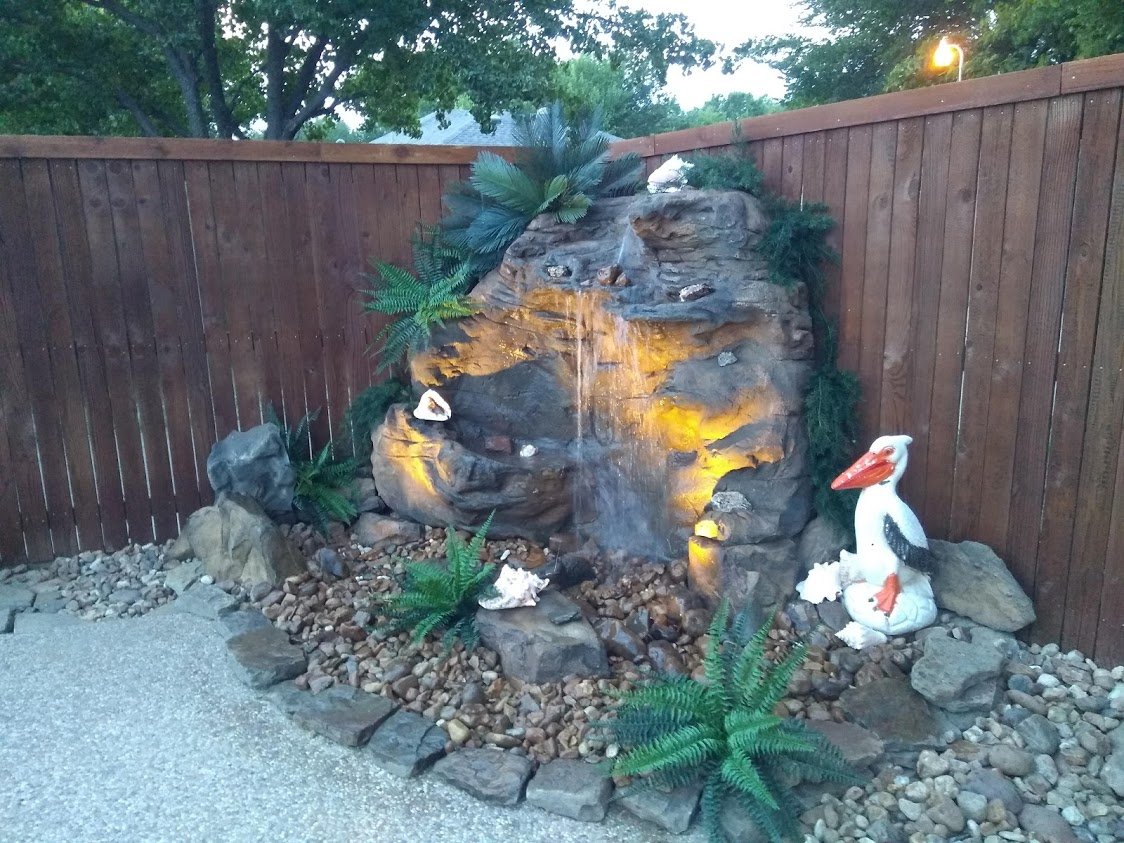
A dark water feature is stunning, but it can be a safety concern, especially at night and with children. The flat stepping stones can be slippery when wet, and the dark water makes it impossible to judge the depth. Good lighting, like the strip lighting on the deck and uplighting on the plants, is not just for aesthetics here—it’s a critical safety feature. Make sure all walking surfaces have a non-slip finish.
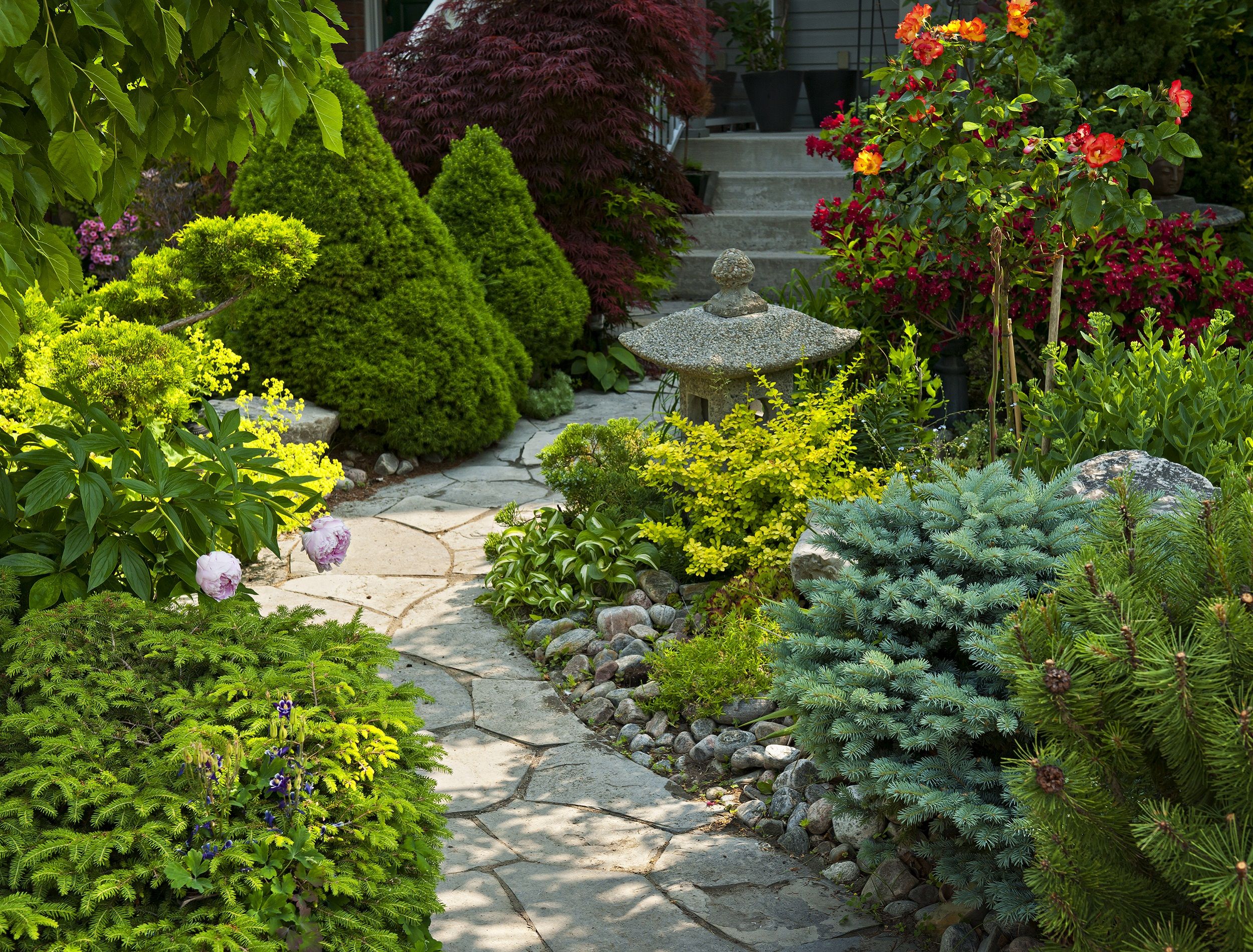
21. Create a Painterly Path with Lush, colorful Foliage
This garden works because it treats plants like paint on a canvas. Instead of just green, it uses a full palette: the deep reds of a Japanese maple, the vibrant chartreuse of a ‘Gold Mop’ cypress, and the bright yellows and oranges of flowering shrubs. This color variation creates visual interest and depth. The irregular flagstone path acts like a neutral “brushstroke” leading the eye through the composition, much like the more minimalist path in Idea #13.
|
📋 Copy HEX 🔗 Share |
|
📋 Copy HEX 🔗 Share |
|
$32.98
|
$23.99
|
Ready to plant a masterpiece? Check this list first:
- Test Your Soil pH: Many colorful plants like azaleas and Japanese maples prefer acidic soil. Get a simple test kit from a garden center.
- Map the Sun: Track how many hours of direct sun each part of the bed gets. Full-sun, part-shade, and full-shade plants have very different needs.
- Mature Size Matters: Check the plant tags! That adorable little shrub might grow to be 8 feet wide and swallow your path. Plan for its final size, not its nursery size.
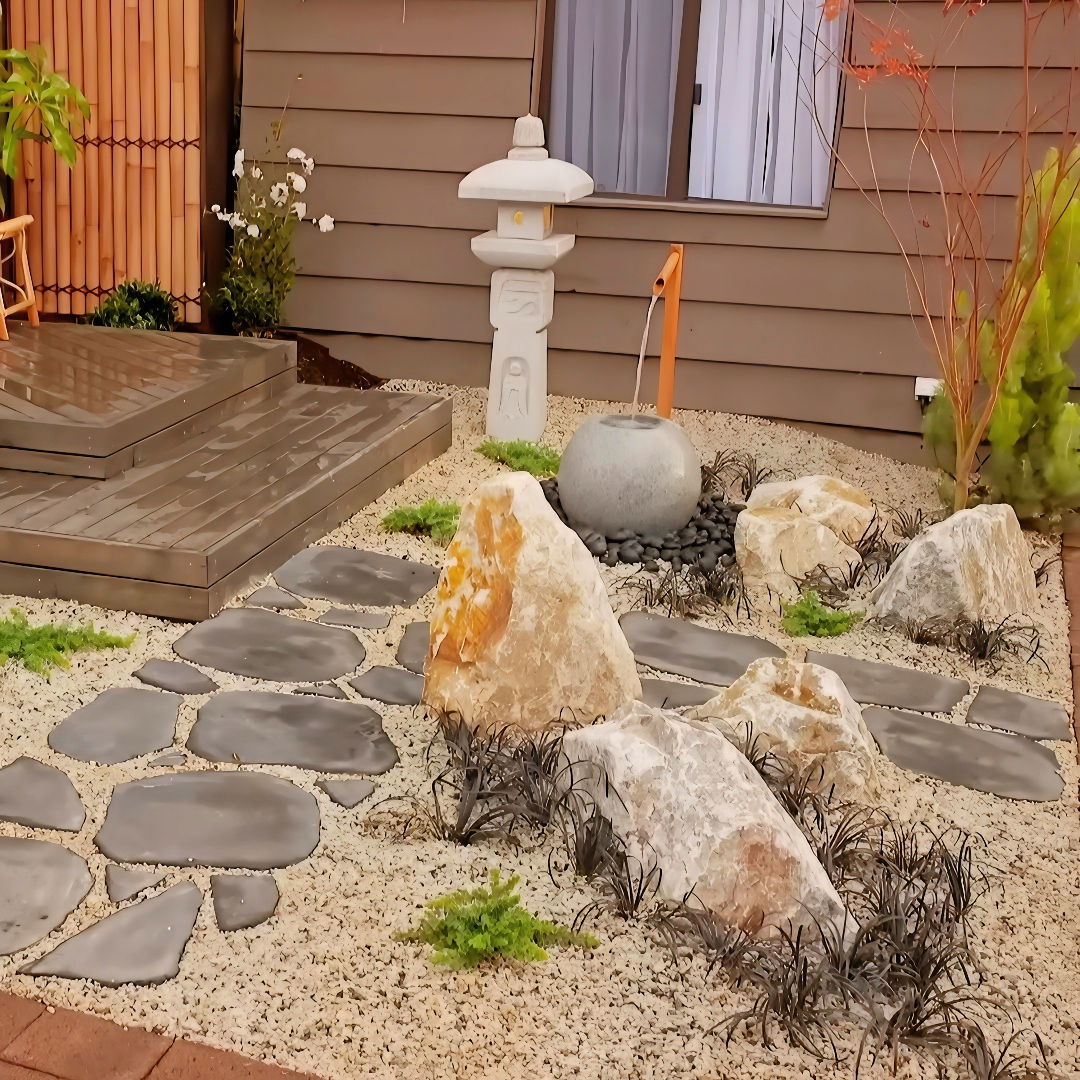
22. Embrace Minimalism with Gravel, Rock, and a Bamboo Spout
This look is gaining traction in 2026 as a direct response to overly complicated and high-maintenance garden designs. It’s part of the “low-impact landscaping” trend, focusing on drought-tolerant materials like gravel and rocks and minimizing thirsty lawn areas. For many homeowners, the goal is a beautiful space that requires contemplation, not constant labor. It has incredible longevity because its beauty lies in its simplicity.
|
$61.09
|
$78.97
|
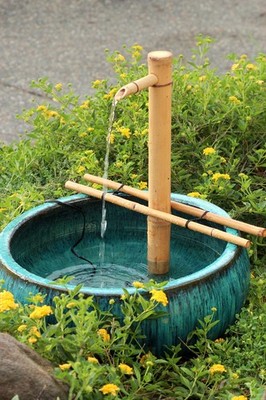
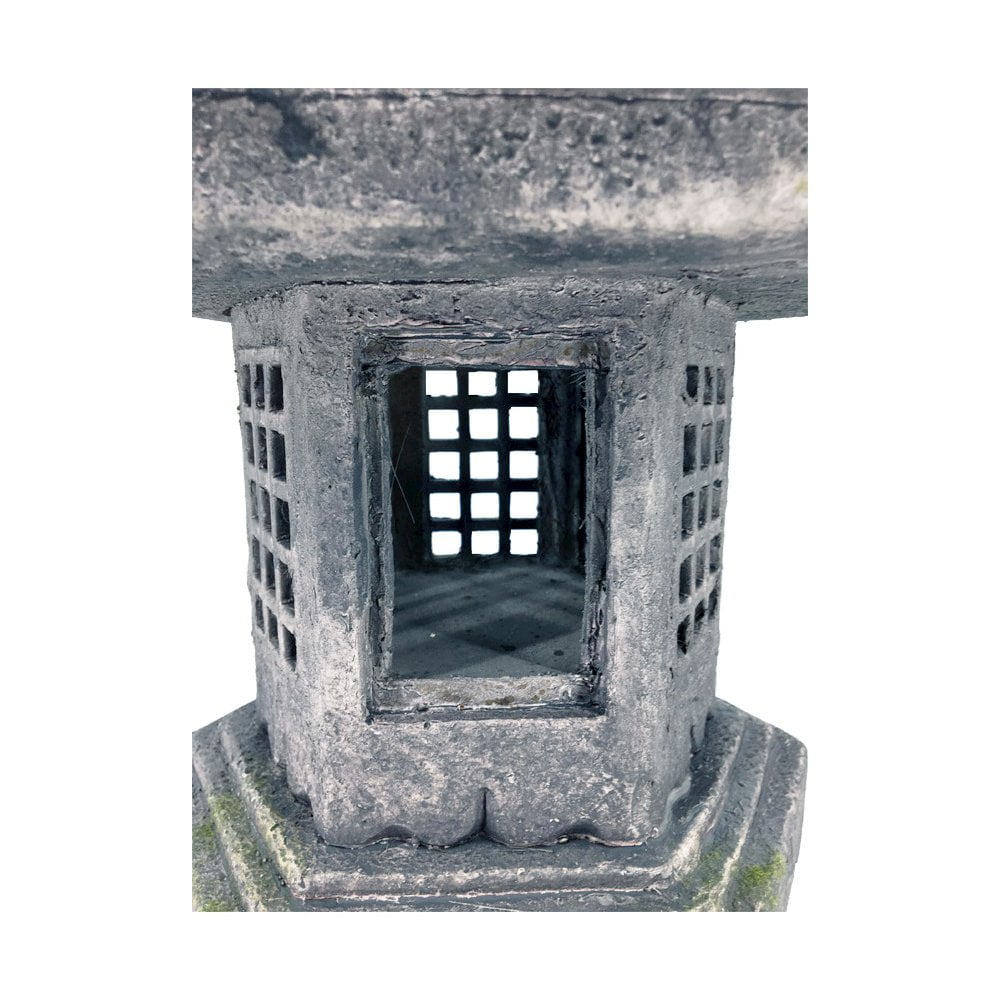
You can achieve this serene, minimalist look for under $400. The key is sourcing materials smartly. Check Facebook Marketplace or Craigslist for free or cheap rocks and pavers that people are removing from their yards. A few bags of gravel from a home improvement store ($50-$100) can cover a small area. For the water feature, a simple solar-powered bubbler fountain ($50-$80 online) can mimic the look of the bamboo spout without complex plumbing.
23. Use Raked Gravel and Sculpted Trees for a Classic Dry Garden
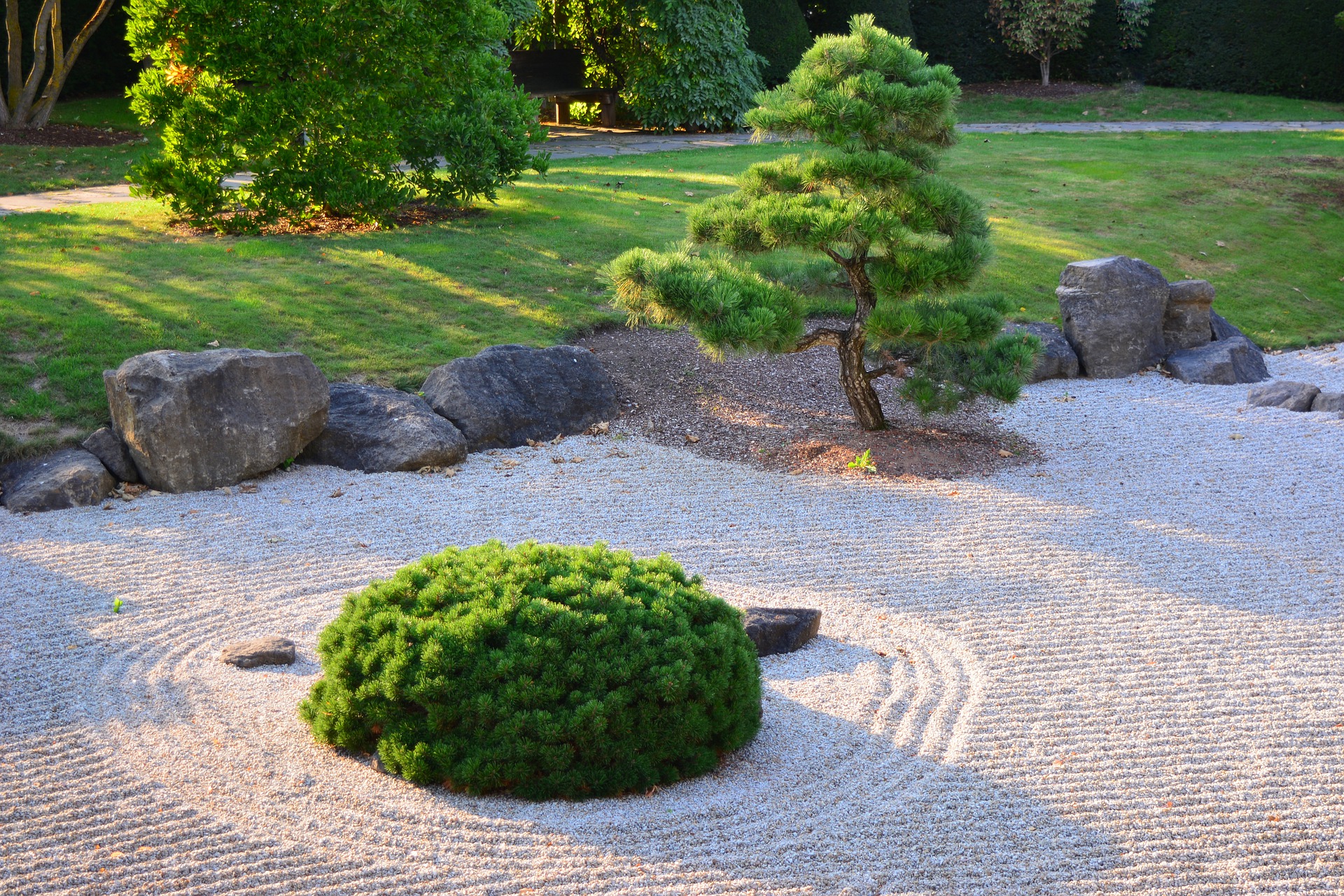
The raked gravel is the undeniable heart of this garden. It’s not just ground cover; it’s an active element of the design. The concentric circles raked around the rocks symbolize ripples in water, turning a static scene into one with implied motion and energy. Without the raked patterns, the rocks and trees would just be sitting in a plain field of stones. The raking is what brings the “Zen” to the garden.
|
📋 Copy HEX 🔗 Share |
|
📋 Copy HEX 🔗 Share |
|
$21.00
|
$116.49
|
$24.95
|

A pristine, raked garden requires dedication. Fallen leaves, twigs, and footprints are its enemies. Plan on spending 15-20 minutes every few days tidying and re-raking to keep it looking sharp, especially in the fall. A leaf blower on a low setting is your best friend. The sculpted bonsai-like tree will also need careful, regular pruning to maintain its shape, a skill that takes time to learn. This is a garden for someone who finds joy in the process of maintenance.
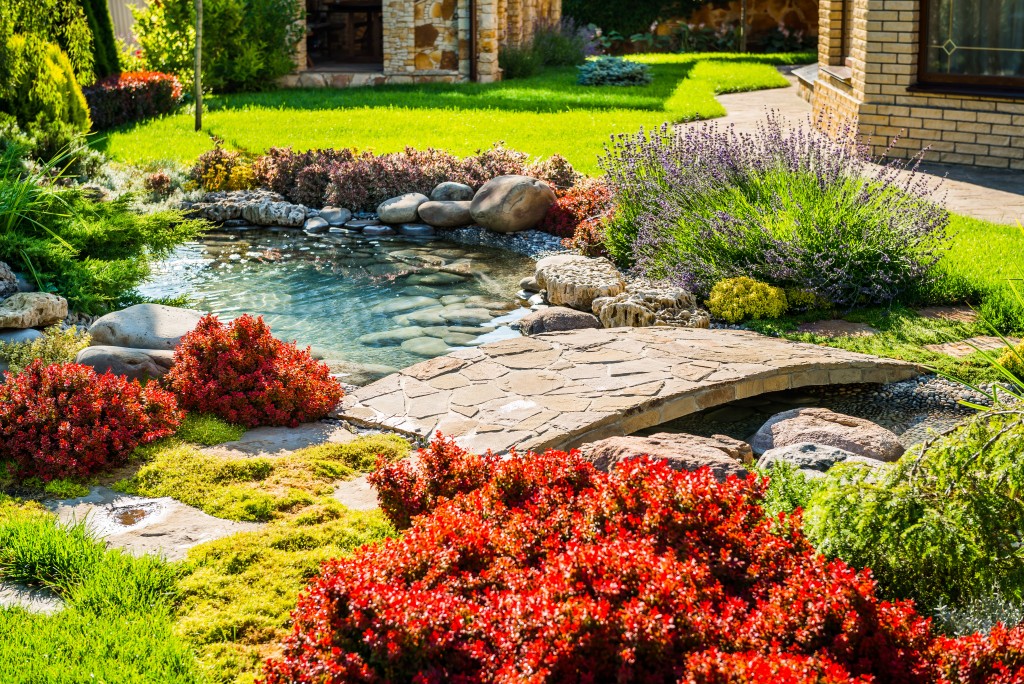
24. Go Bold with a Clear Pond and Vibrant Red Foliage
The power of this design comes from its bold use of complementary colors. The vibrant red foliage of the bushes creates a stunning contrast against the lush, bright greens of the surrounding lawn and ground cover. The cool blue tones of the water further amplify the warmth of the reds. This isn’t a quiet, meditative space like the one in Idea #22; it’s an energetic and joyful one, proving that Zen-inspired design can also be full of life and color.
|
$7.00
|
$293.99
|
$43.99
|
$24.95
|
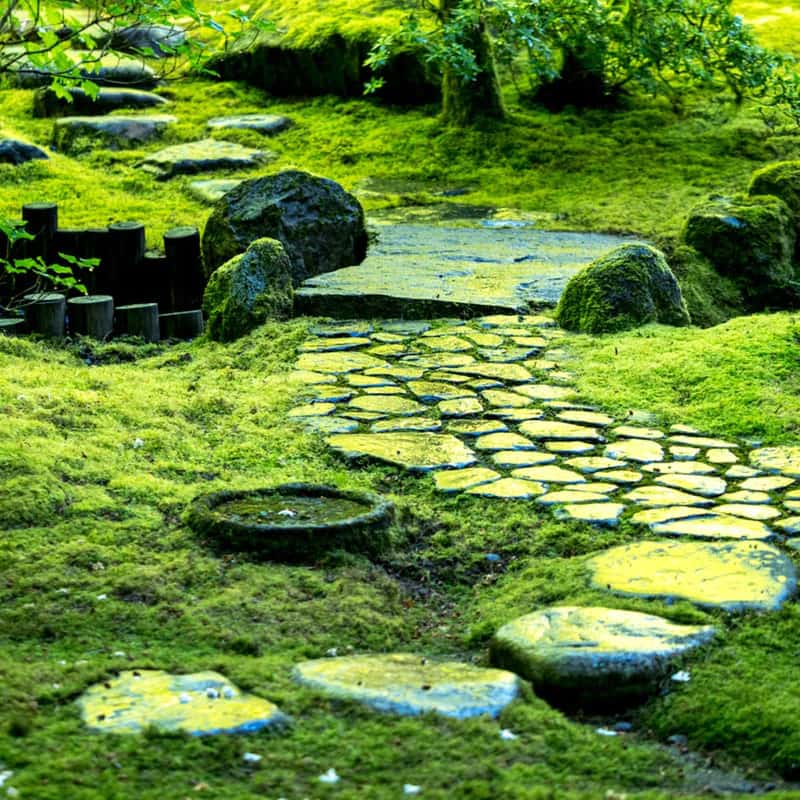
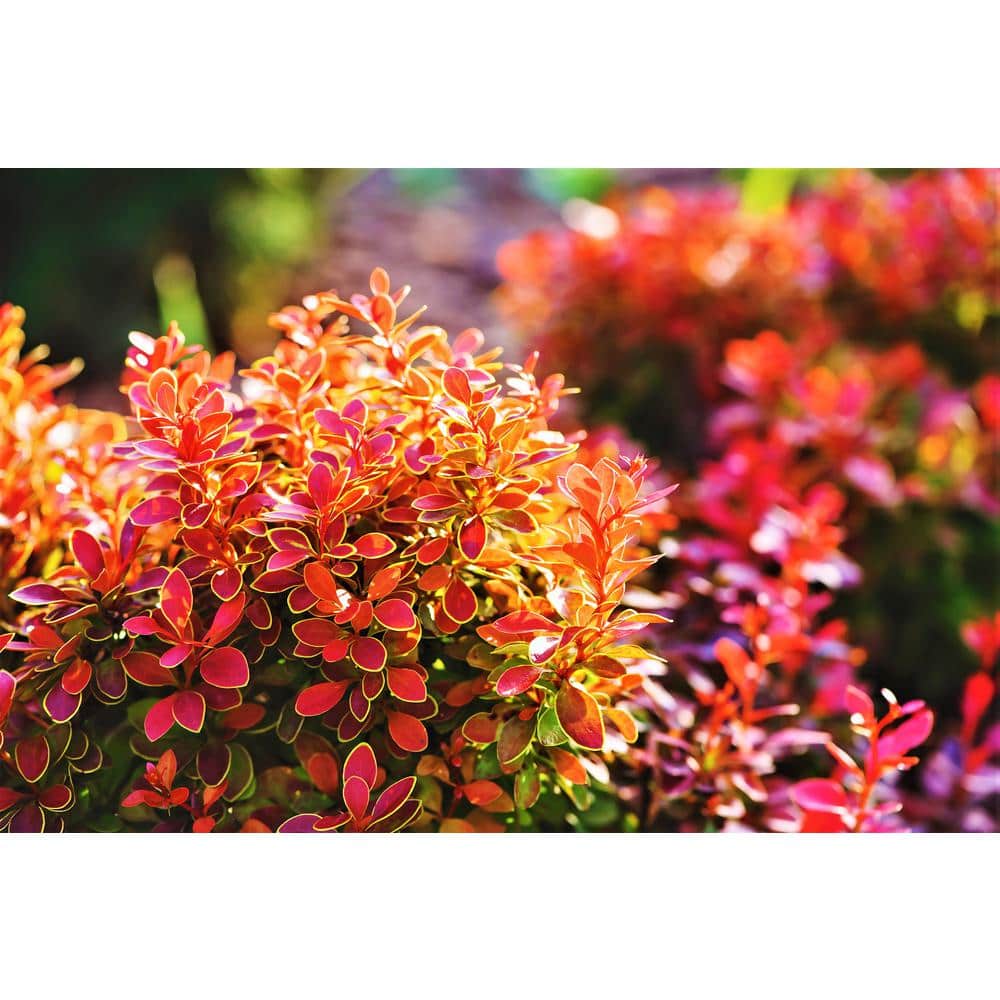
A pond and bridge are statement features that need room to shine. This idea is best for a medium to large backyard, requiring a footprint of at least 20×25 feet. The pond itself should be a minimum of 8×10 feet to have a real presence, and the bridge needs to look proportional. In a smaller space, this many elements would feel cluttered. If you have a small yard, pick one star element—either the pond or the bold foliage, but not both.
25. Create a Modern Look with Orange, Yellow, and White Pebbles
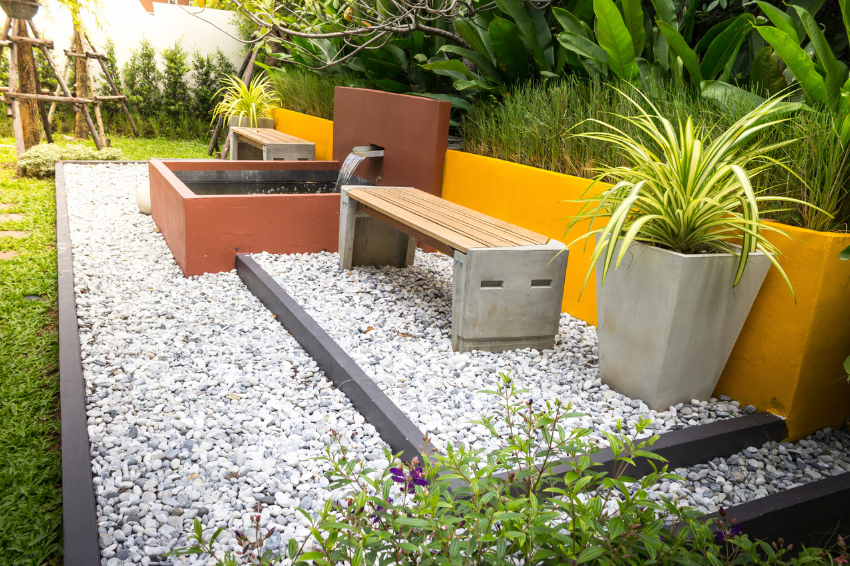
This vibrant space is a lesson in modern color blocking. The formula is approximately 40% neutral base (white pebbles and grey planters) + 30% bold warm color (the rusty orange wall and pool) + 20% bright accent color (the yellow wall) + 10% natural green. The disciplined use of color in large, solid blocks is what gives it such a strong, contemporary character. It’s confident and playful, yet the clean lines keep it from feeling chaotic.
|
📋 Copy HEX 🔗 Share |
|
📋 Copy HEX 🔗 Share |
|
$76.59
|
$110.00
|
$23.99
|


When using multiple bold colors in a garden, the secret is to connect them with a neutral. Here, the white pebbles and light grey concrete act as a visual resting place, preventing the orange and yellow from competing with each other. If you want to try a bold color, paint ONE wall first and live with it for a week. A little goes a long way, and it’s much easier to add more later than to repaint an entire space.
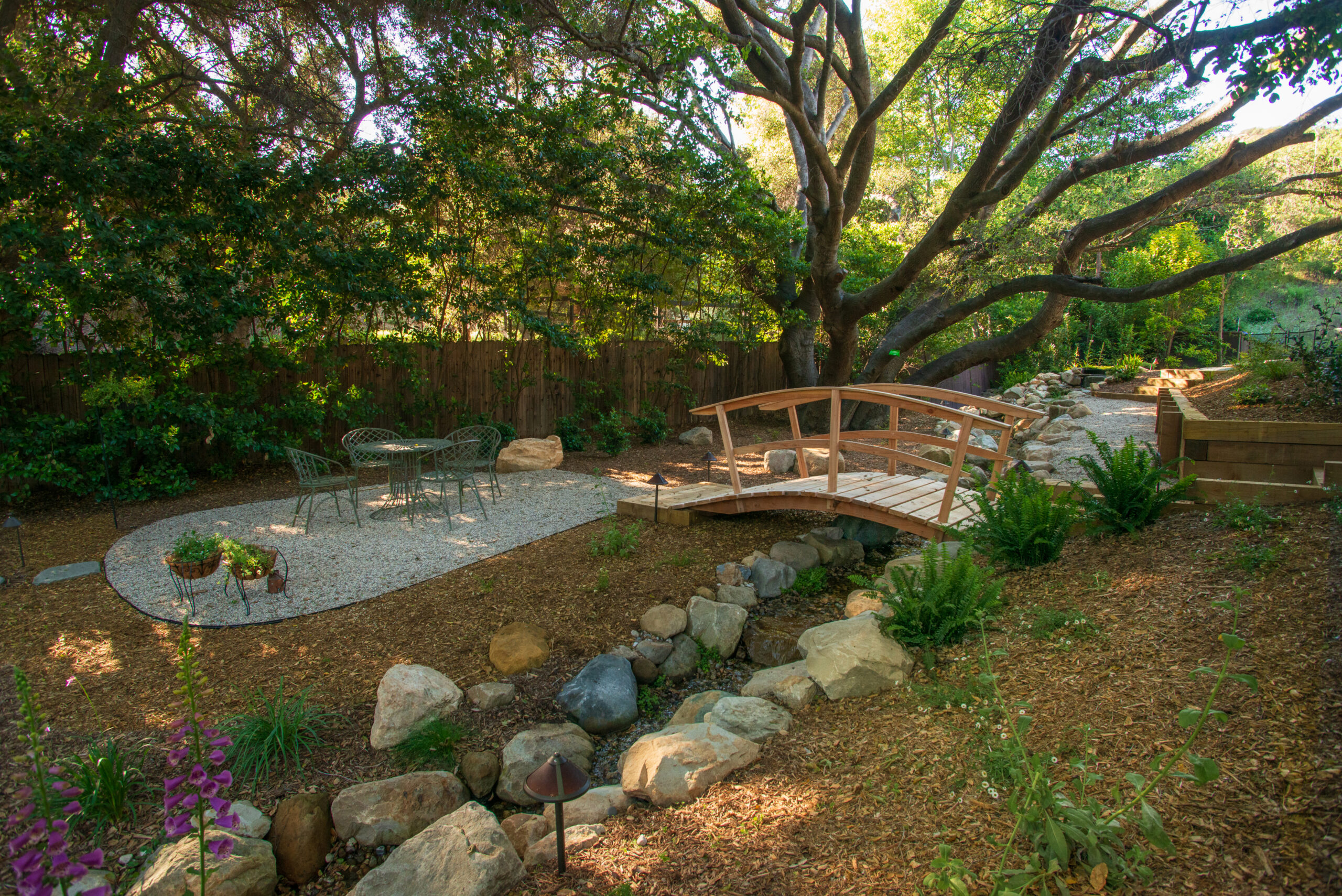
26. Combine a Wooden Bridge and Gravel Patio for an Organic Feel
The use of natural, humble materials is what makes this garden so inviting. The unfinished wood of the bridge, the simple grey gravel, and the wood chip ground cover all speak the same language of organic simplicity. There are no flashy colors or overly sculpted plants. It feels less like a “designed” space and more like a beautiful, natural area that you just happened to put a table and chairs in. This unpretentious quality is its greatest strength.
|
$399.98
|
$6.78
|
$997.99
|


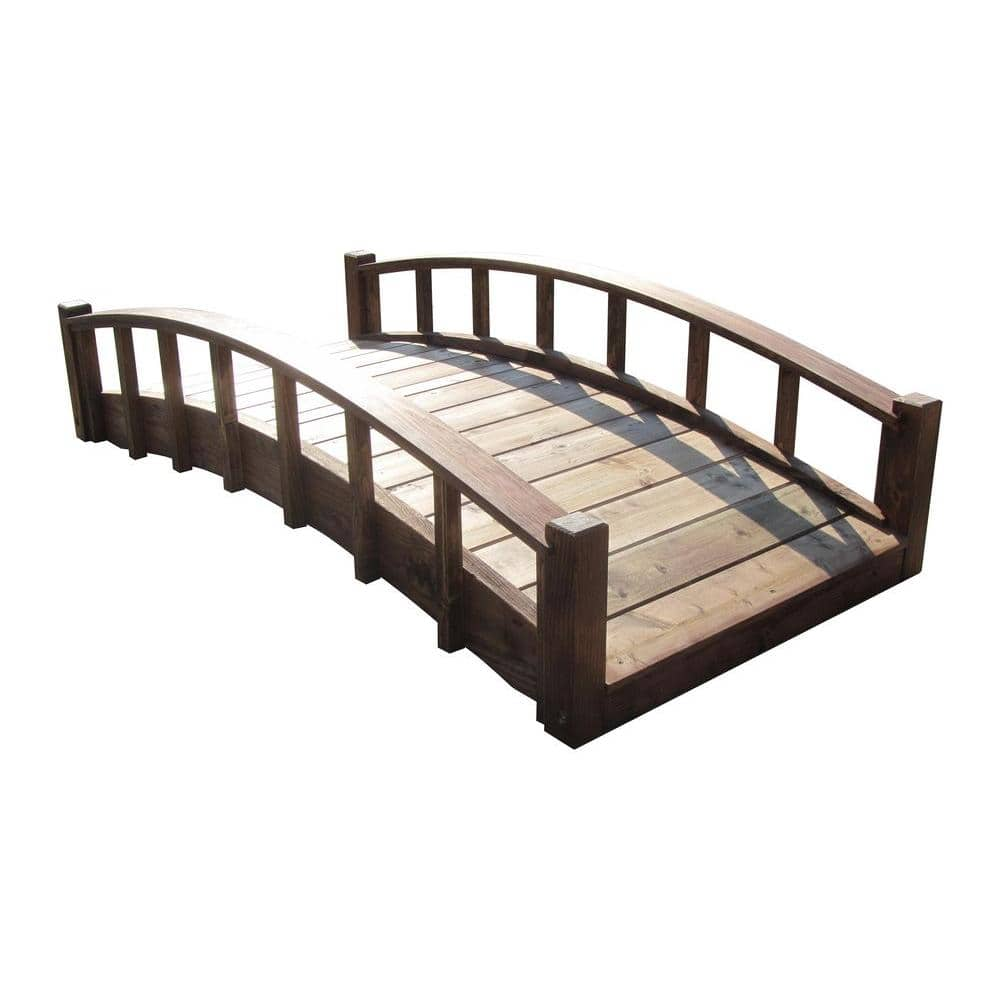
Here’s a breakdown for this charming, natural-style garden, focusing on materials over expensive statement pieces.
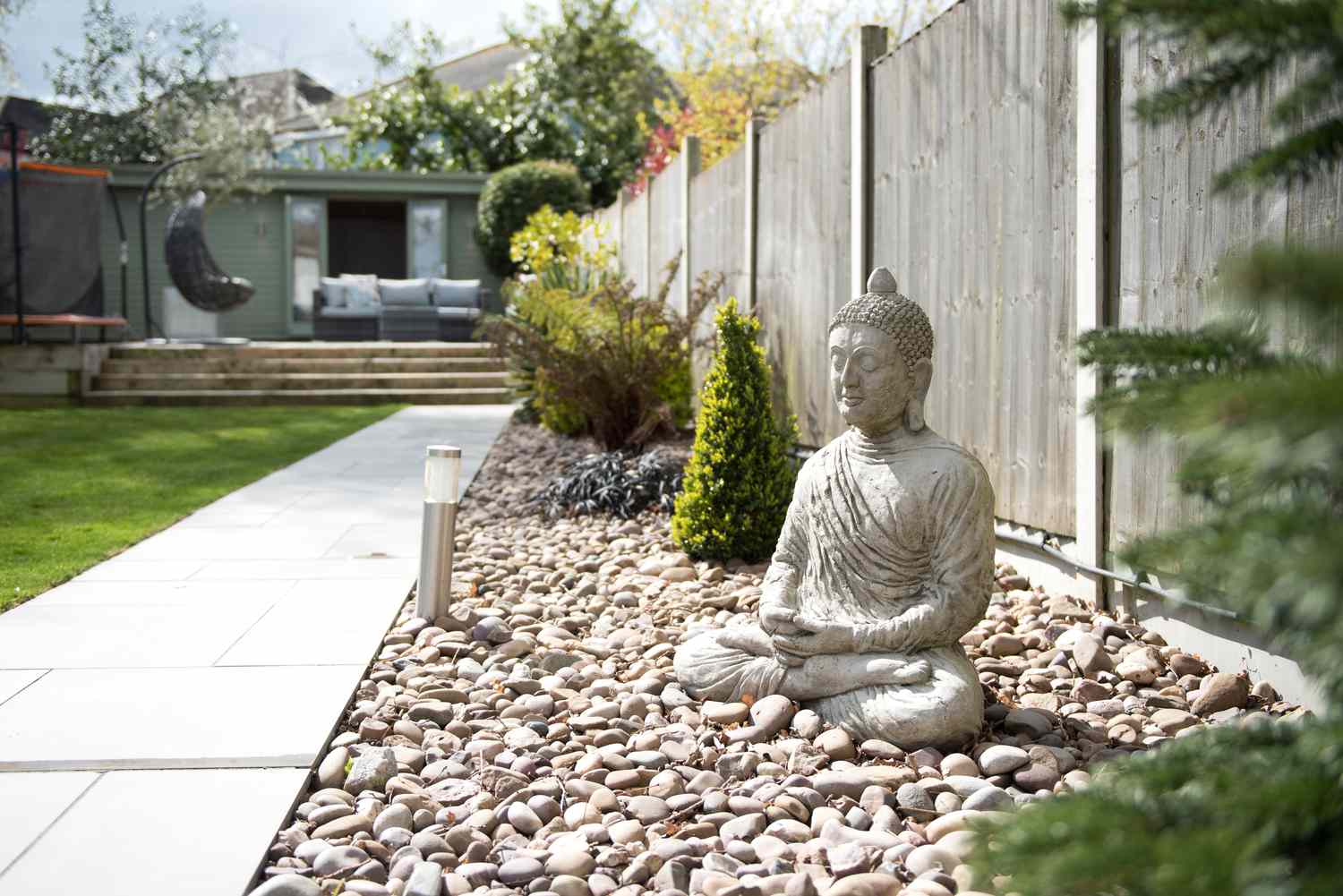
27. Pair a Buddha Statue with Modern Pavers and Pea Shingle
This design successfully blends modern and traditional elements through a shared color palette and texture. The cool light grey of the Buddha statue is perfectly matched by the sleek paving slabs. The varied brown and tan tones of the pea shingle echo the warm wood of the fence. By keeping the materials harmonious, the juxtaposition of the ancient-style statue and the contemporary path light feels intentional and curated, not random.
|
📋 Copy HEX 🔗 Share |
|
📋 Copy HEX 🔗 Share |
|
$43.97
|
$82.00
|
$48.78
|
$6.99
|
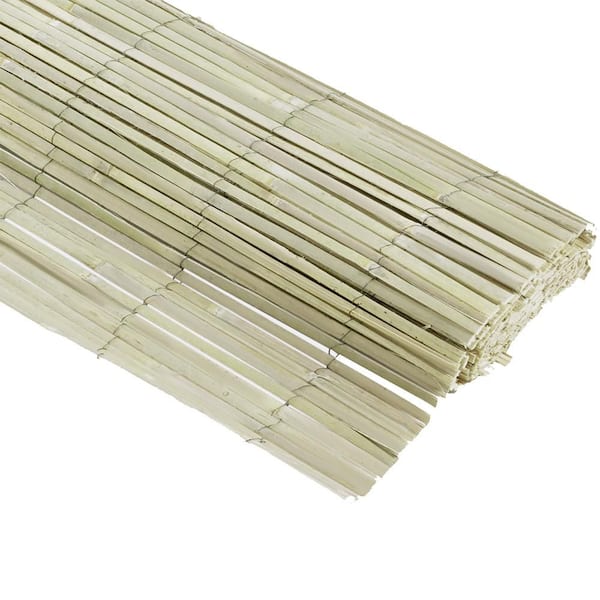
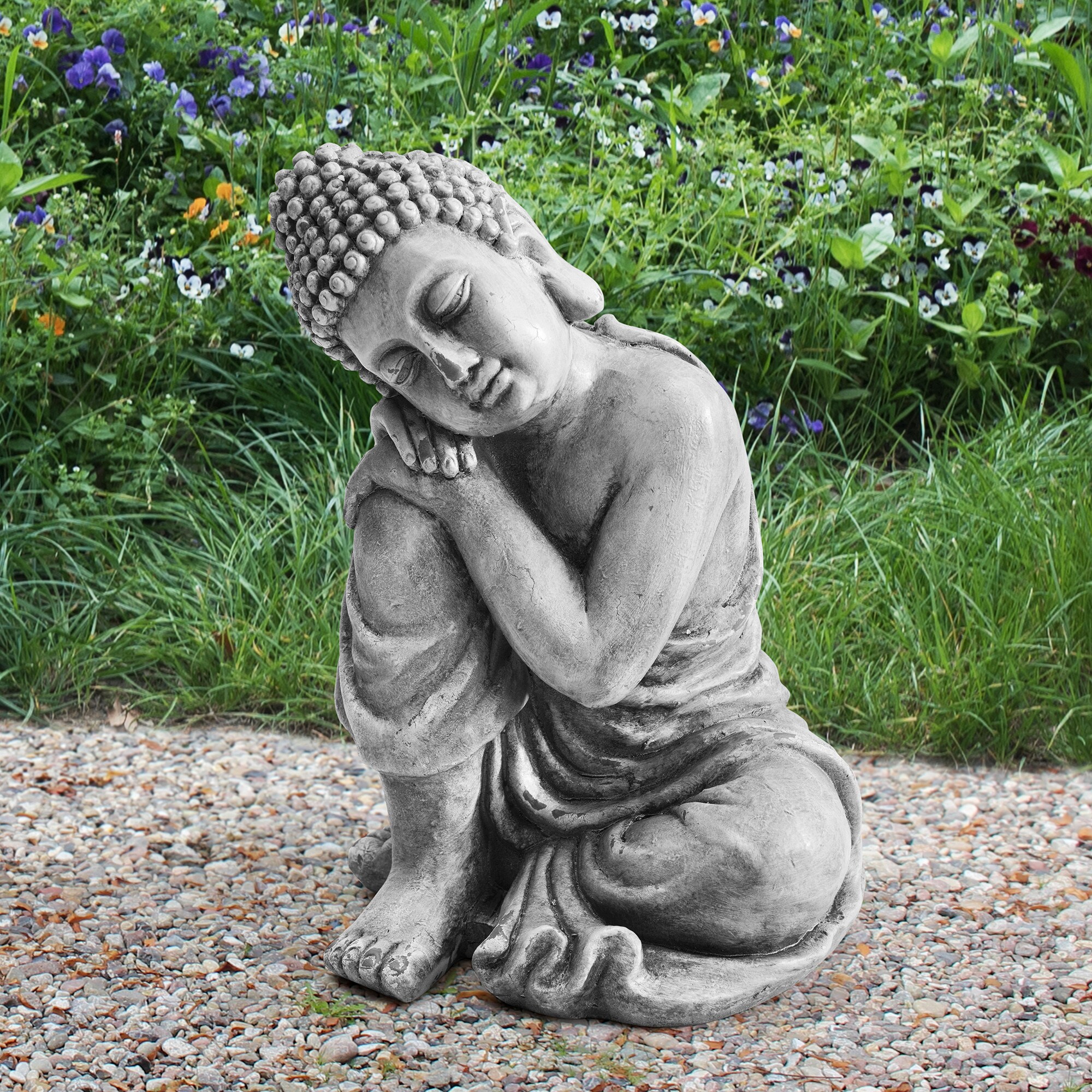
Pea shingle (or pea gravel) is notorious for traveling. It will get kicked onto your lawn, tracked into your house on shoes, and hidden in the treads of your sneakers. A sturdy, raised edging between the shingle and any other surface is absolutely essential to keep it contained. Also, be aware that it can be a tempting litter box for neighborhood cats. If that’s a concern in your area, you might want to consider larger river rocks instead.
28. Design with Winding Gravel Paths and Contoured Moss Beds
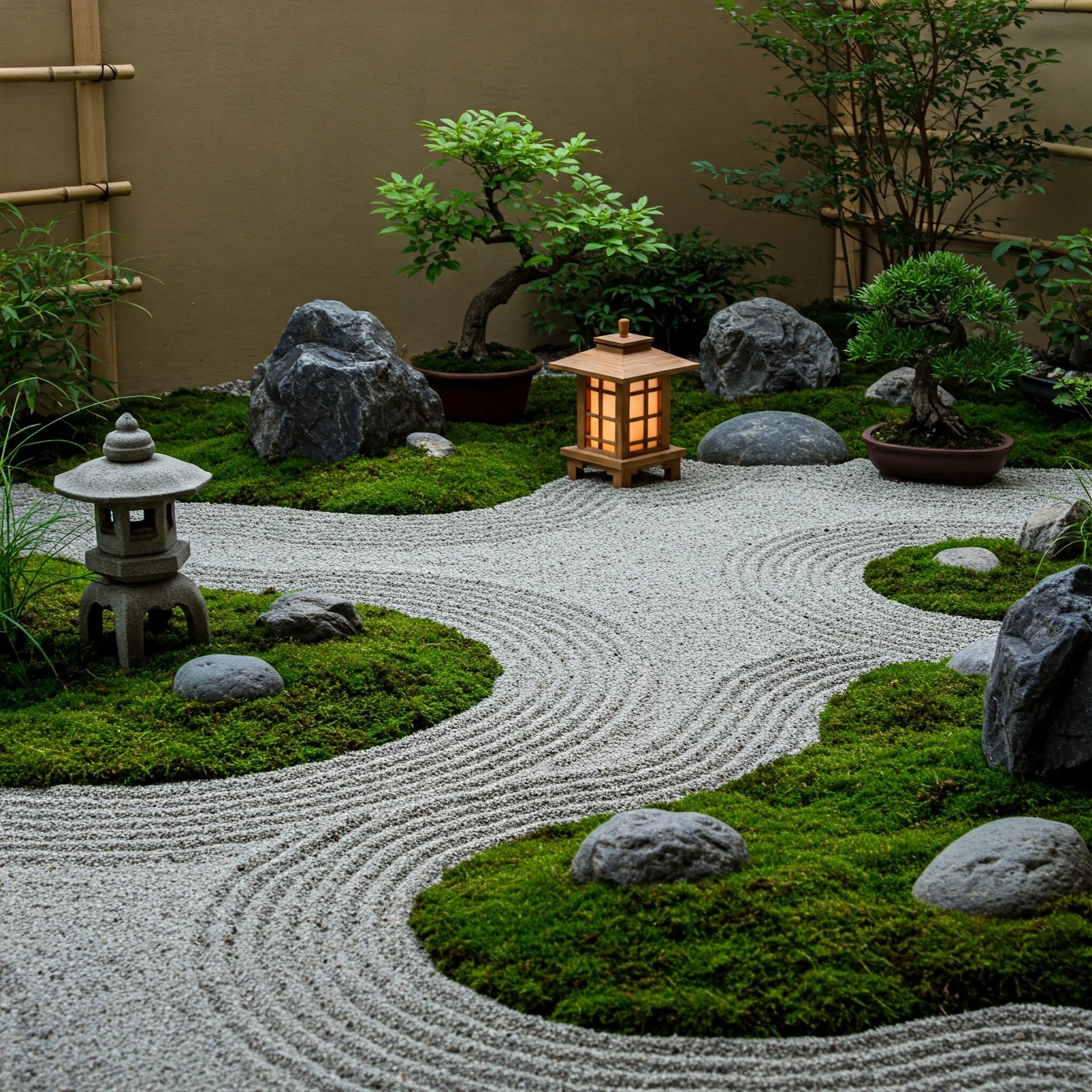
The secret to convincing contoured moss beds is to build up the soil underneath them into mounds, known as ‘tsukiyama’ (artificial hills). Don’t just lay moss on flat ground; instead, create a mound. Create gentle, undulating hills of varying heights with a good-quality topsoil mixed with compost. This not only creates a much more dramatic and natural look but also ensures the excellent drainage that moss needs to thrive. The different elevations will catch the light in beautiful ways.
|
$17.52
|
$119.19
|


The sense of containment makes this garden special. The wall, the carefully placed rocks, and the dense bamboo create a feeling of a world apart. It’s not a garden that’s open to the rest of the yard; it’s a secluded sanctuary. This enclosure is crucial for a meditative space, as it quiets the visual noise from the surrounding environment, allowing your mind to focus on the serene details within the garden itself.
29. Add Sculptural Elegance with Marble Spheres and a Basin
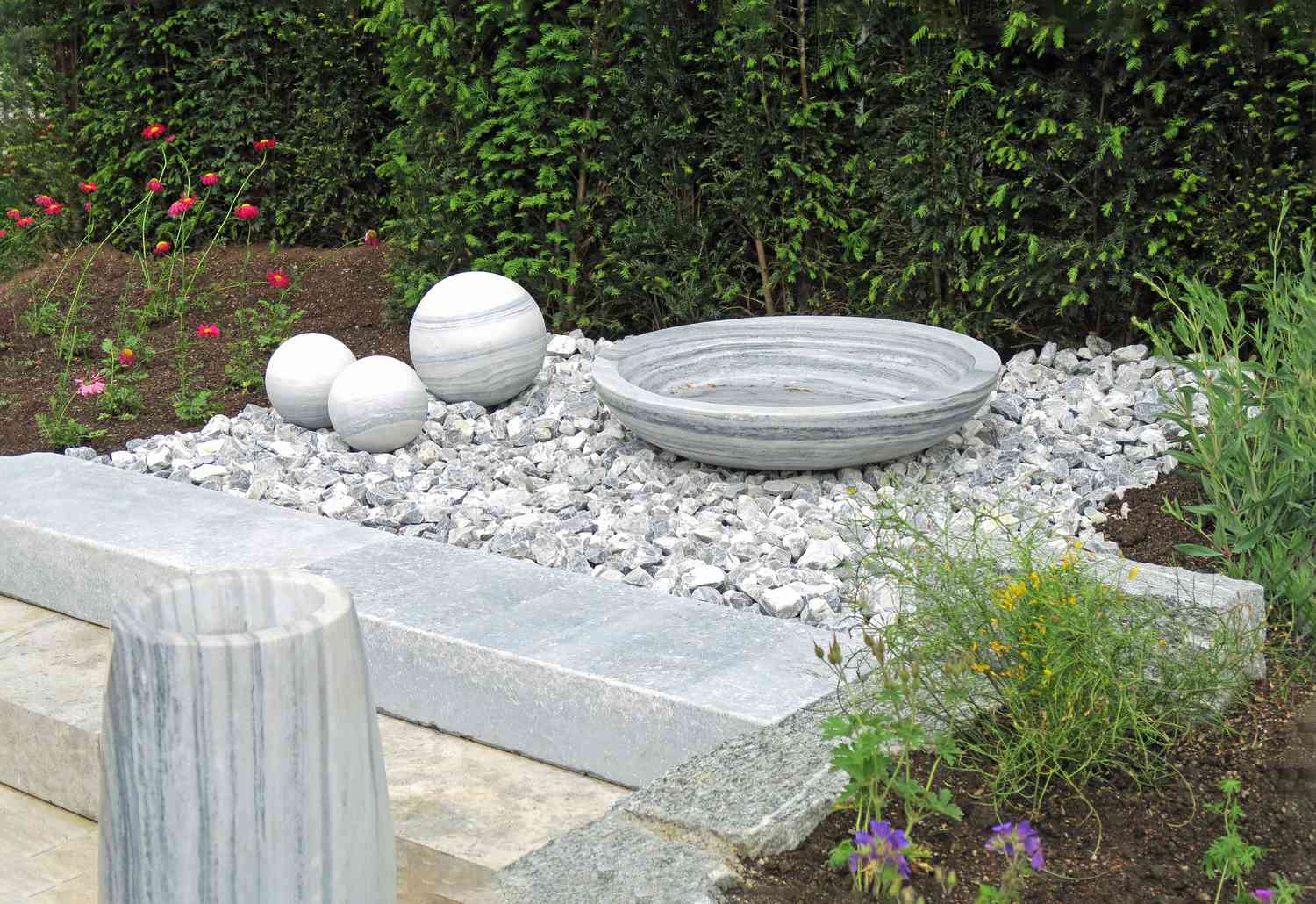
This is all about the power of pure form. The perfect, smooth geometry of the marble spheres provides a striking, human-made contrast to the random texture of the crushed gravel and the organic chaos of the hedge behind it. It’s a minimalist approach that relies on the inherent beauty of the shapes and the material itself. The arrangement feels less like a garden and more like an outdoor art installation, proving that you don’t need plants to create interest.
|
📋 Copy HEX 🔗 Share |
|
📋 Copy HEX 🔗 Share |
|
$1,199.00
|
$67.99
|
$622.00
|
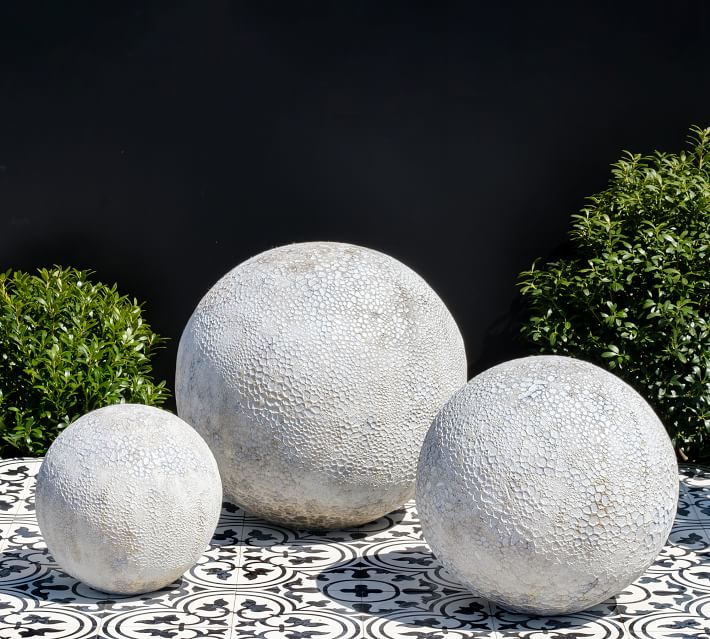
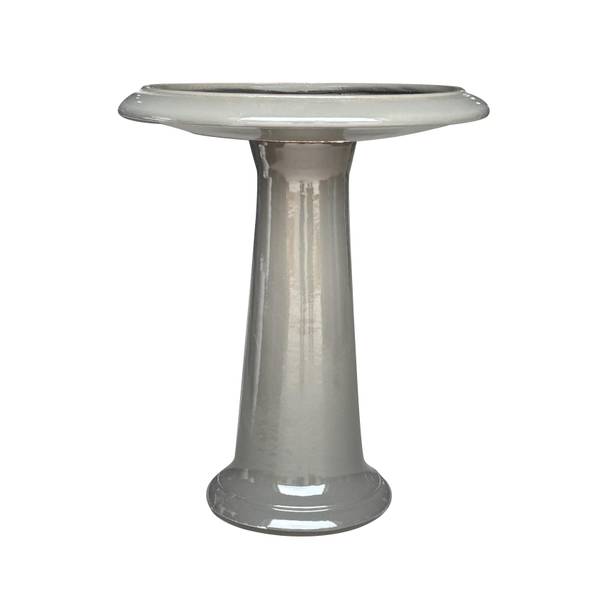
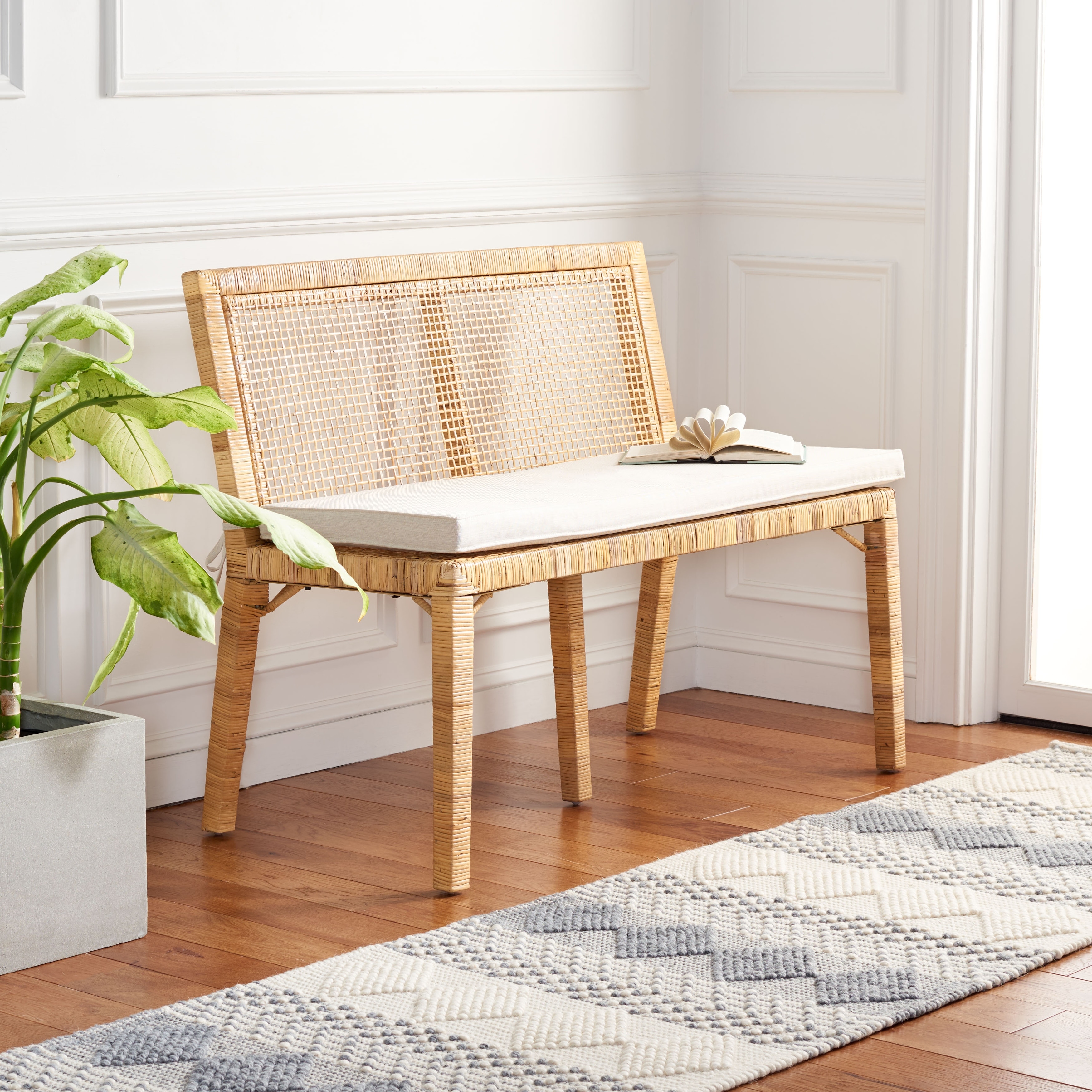
White and light-colored marble are porous and will show dirt, algae, and water stains over time, especially outdoors. To keep these pieces looking their best, you’ll need to clean them a few times a year with a pH-neutral stone cleaner. Avoid acidic cleaners like vinegar, which can etch the marble. In the fall, be sure to remove any wet leaves promptly, as they can leave stubborn tannin stains on the light surface.
30. Choose a Stone Lantern with Personality
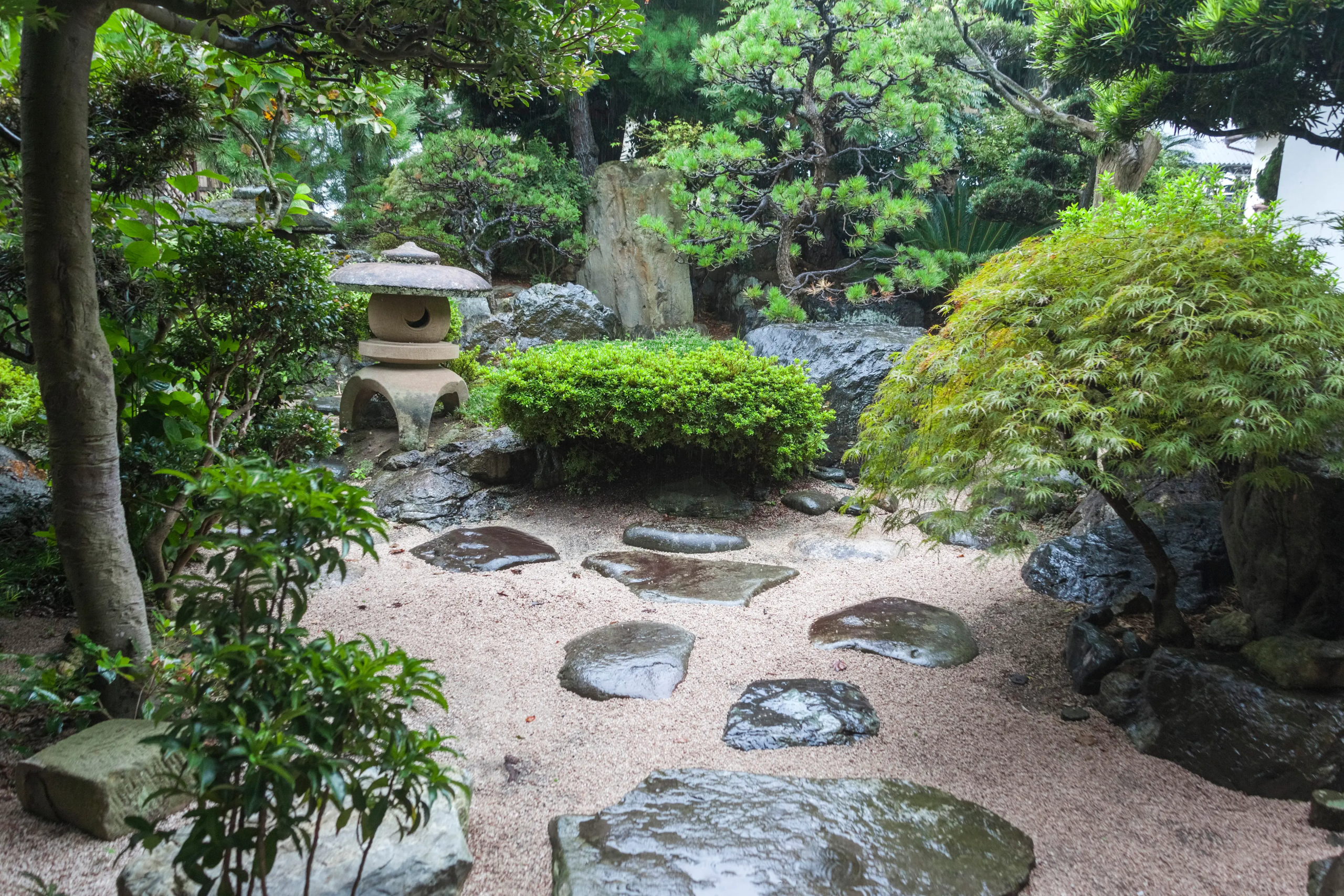
It’s the smiling face on the lantern! In a world of stoic, traditional garden elements, this cheerful, unexpected detail injects a dose of warmth and humanity. It changes the entire mood of the space from one of solemn reverence to gentle, joyful tranquility. It’s a small touch that reminds you not to take the design—or life—too seriously. This garden feels like it has a secret, friendly guardian watching over it.
|
$720.00
|
$99.00
|
$15.80
|
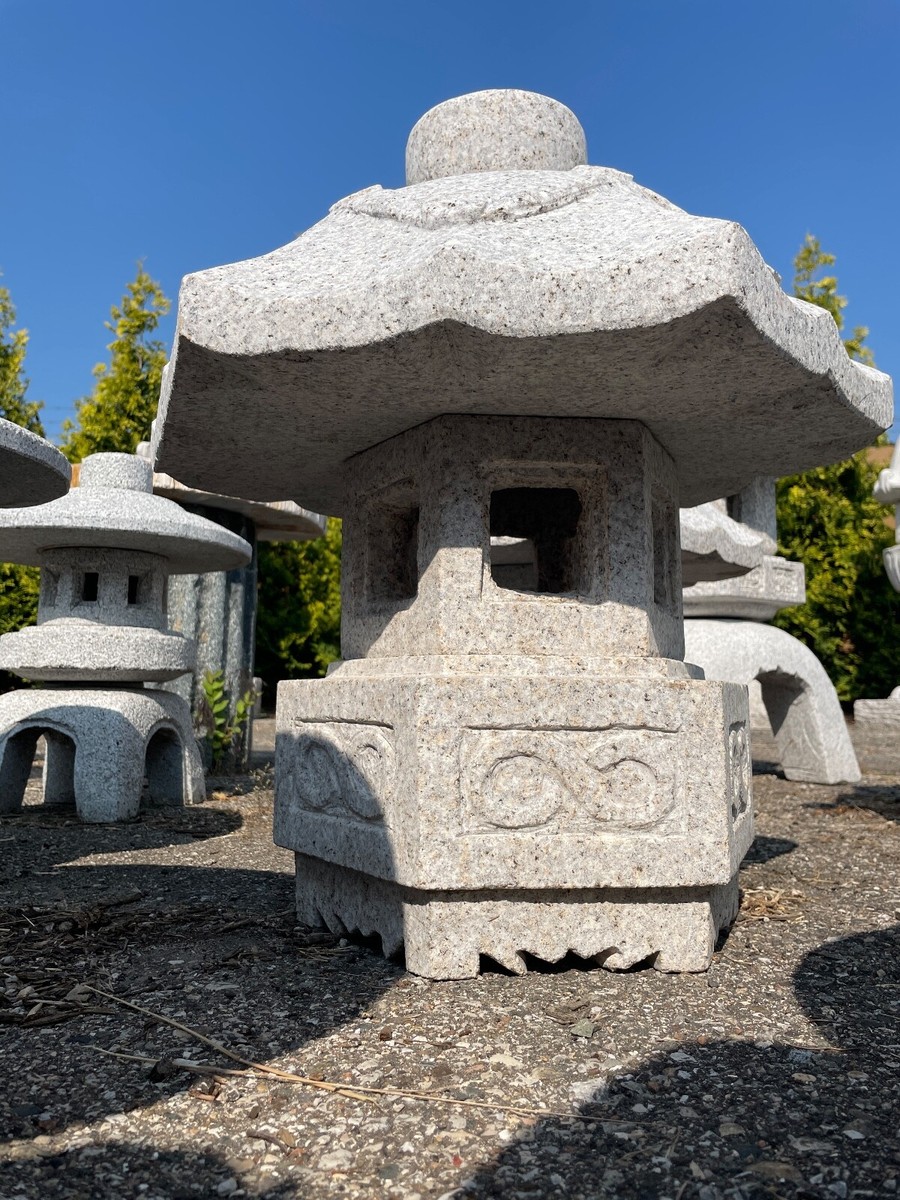


A lush, dense garden like this can become a haven for pests like slugs and snails, who love the damp, shady conditions. You’ll need a plan for pest management, whether it’s eco-friendly traps or just a morning patrol. Also, the dense foliage will require regular trimming to keep the stepping stones and lantern from being completely overgrown. This isn’t a “plant it and forget it” style; it’s an active relationship with your garden.
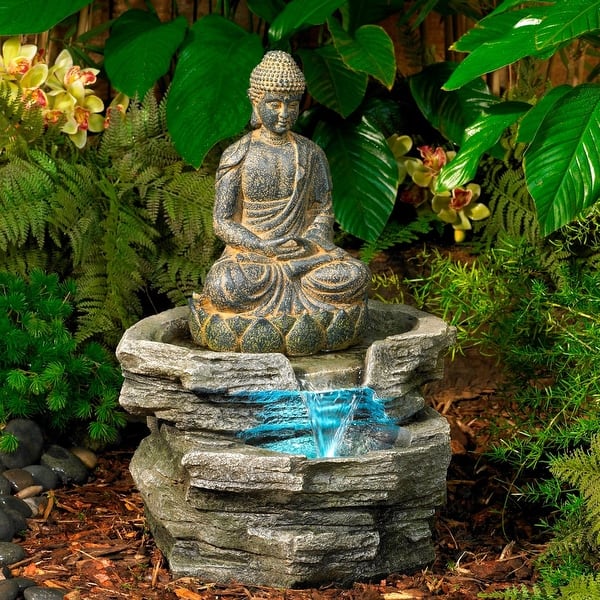
31. Illuminate a Buddha Fountain for a Calming Night Scene
When using lights in a water feature, aim for subtlety. The goal is to make the water itself appear to glow from within, not to spotlight the fountain like a monument. Use a small, waterproof submersible LED puck light. Place it on a lower tier, aimed upwards, so it catches the cascading water. The blue light here is a specific choice, but a soft, warm white light often feels more natural and serene in a green garden setting.
|
📋 Copy HEX 🔗 Share |
|
📋 Copy HEX 🔗 Share |
|
$29.75
|
$93.08
|
$15.98
|

You can create a similar serene, illuminated feature on a much smaller budget. Start with a large ceramic or resin planter from a store like Target or HomeGoods ($40-$80). Purchase a small, solar-powered fountain pump kit online ($20-$30). Place the pump in the planter, fill it with water, and arrange some rocks around it. For the glow, add a solar-powered waterproof floating light. You get the calming sound and light for under $150.
32. Create a Focal Point with a Raked Gravel Circle
Raking a perfect circle is a meditative practice. Time: 20-30 minutes. Cost: Free (with a rake!).
|
$30.00
|
$43.99
|
$26.00
|
$53.56
|


- Place a small stone or marker at the center of your desired circle.
- Tie a string to your marker. The length of the string will be the radius of your largest circle.
- Hold the string taut and walk around the marker, using a stick or your finger to trace a circle in the gravel.
- Use this line as a guide for your rake, starting from the outside and working your way in.
- For concentric circles, simply shorten the string and repeat the process.
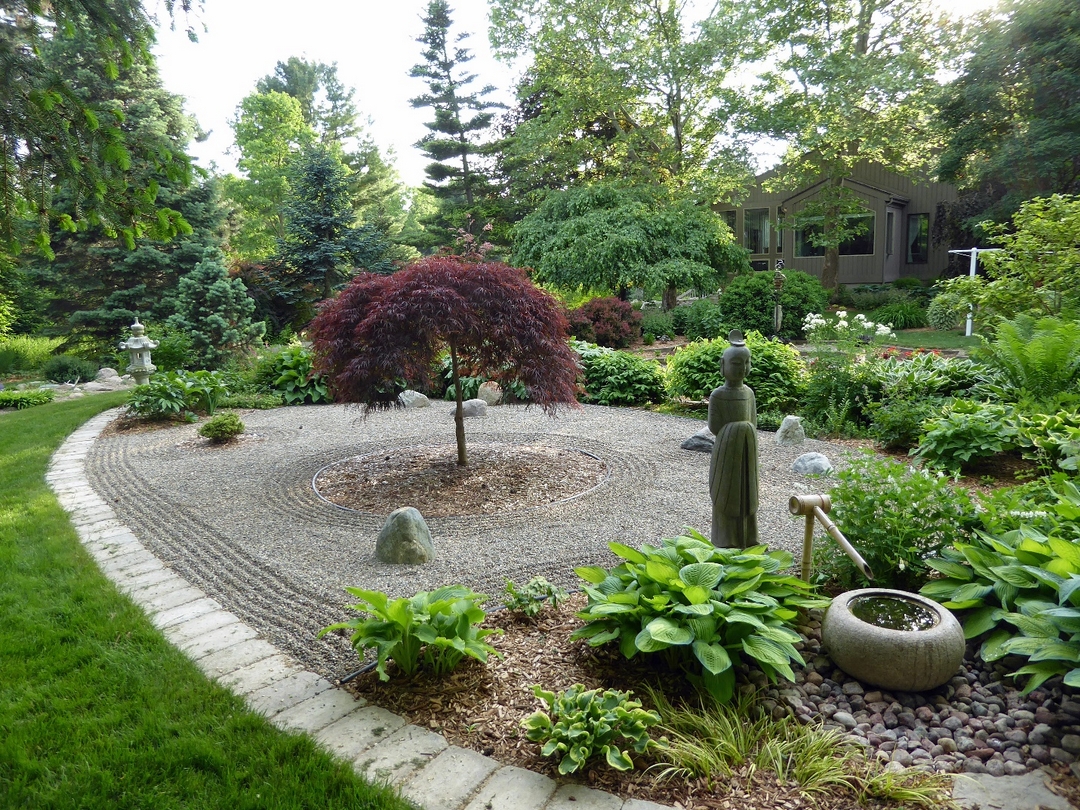
This garden is a beautiful example of the “Rule of Thirds” in landscape design. Imagine a tic-tac-toe grid over the scene. The main focal points—the red-leaved tree, the standing figure statue, and the stone lantern—are placed at or near the intersections of the lines, not dead center. This creates a more dynamic and visually captivating composition that feels balanced yet natural. It encourages your eye to move around the space and discover each element in turn.
Conclusion
We hope these 32 ideas have demystified the art of the Zen garden and sparked some real inspiration for your own outdoor escape. Remember, this isn’t about achieving some impossible standard of perfection but about creating a space that brings you a sense of peace. Your garden’s story is yours to write.
Ready to start planning? Head over to Pinterest and create a new board for your project!
Photo credits: Better Homes & Gardens, Bigger Garden, Gardeners’ World, AweDeco, Stacy Ling, Elemental Design, Bower & Branch, Backyard Boss, Urban Soil Landscape, The Prepared Ninja, The Spruce, Fine Gardening, Tampa Bay Ponds, Greenhaven Landscapes, Singing Tree Gardens Nursery, Landscaping Rockhampton, Garden Design, YouTube, Houzz, Garden Eros, Bed Bath & Beyond, DIY Crafts, Martin John Company, National Garden Bureau, Gardeningetc / Web, Péter Borkó / Pexels
Photo credits: Better Homes & Gardens, Bigger Garden, Gardeners’ World, AweDeco, Stacy Ling, Elemental Design, Bower & Branch, Backyard Boss, Urban Soil Landscape, The Prepared Ninja, The Spruce, Fine Gardening, Tampa Bay Ponds, Greenhaven Landscapes, Singing Tree Gardens Nursery, Landscaping Rockhampton, Garden Design, YouTube, Houzz, Garden Eros, Bed Bath & Beyond, DIY Crafts, Martin John Company, National Garden Bureau, Gardeningetc / Web, Péter Borkó / Pexels