
That moment when you’ve scrolled through a thousand pictures of deck landscaping ideas and you’re still not sure where to begin? We get it. A great deck is one thing, but it’s the landscaping around it that truly makes it feel like an outdoor oasis. After filtering through hundreds of options across Home Depot, Target, and IKEA, we narrowed it down to 29 ideas that actually deliver. We’ve curated the best modern, rustic, and tropical styles to show you what’s truly possible in 2026. And stay until the end—we break down the most common mistakes that can ruin these looks. 📌 Save this to Pinterest for later—you’ll want to revisit these ideas.
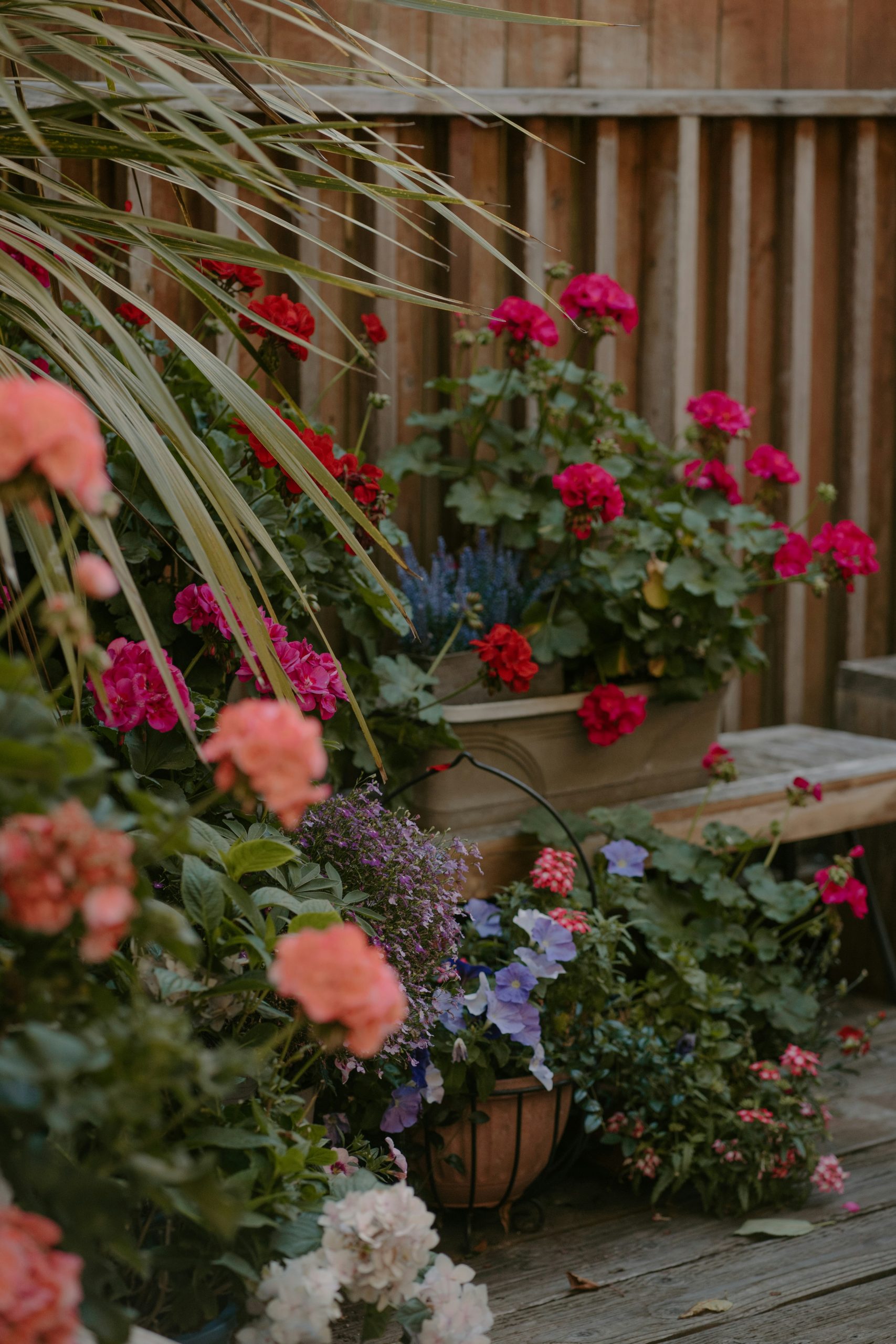
1. Lush Potted Geraniums and Tropical Palms on a Deck
This vibrant explosion of color works because it uses the simple principle of repetition with variation. Notice how the pinks and reds of the geraniums are echoed in different tones and forms throughout the arrangement. This creates a cohesive look that still feels wild and natural. The spiky palm fronds add a much-needed vertical element and textural contrast, breaking up the soft, mounding flowers and preventing the display from feeling flat.
|
📋 Copy HEX 🔗 Share |
A professional trick for container gardens is called Thriller, Filler, and Spiller. For every large pot, you need one thriller (a tall, dramatic plant like the palm), a few fillers (mounding plants like the geraniums that make the arrangement look full), and a spiller (a trailing plant like the purple lobelia that cascades over the edge). For a 24-inch diameter pot, aim for 1 thriller, 3-4 fillers, and 2-3 spillers for a lush, designer-quality look.
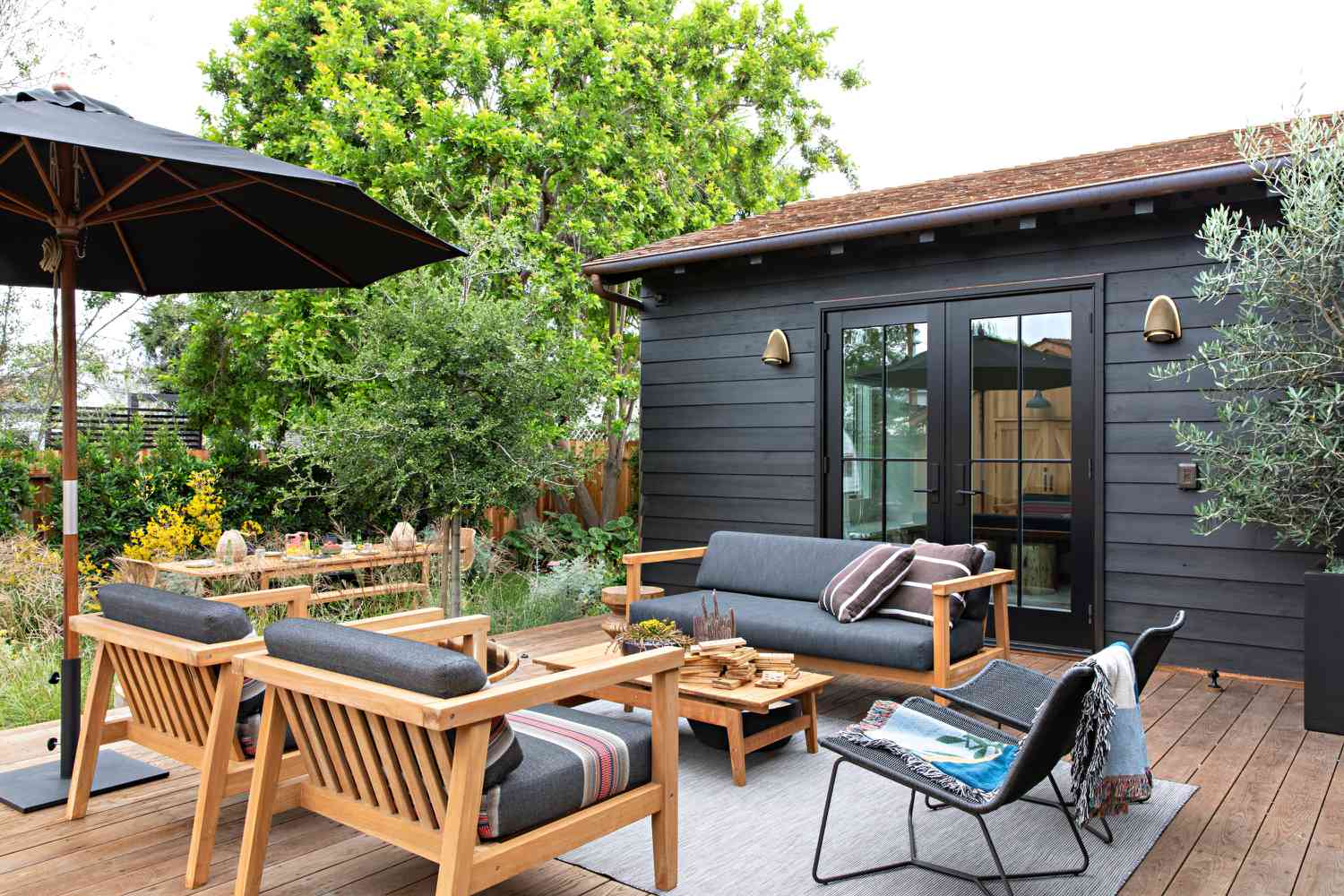
2. Modern Deck with Integrated Planters and Bench Seating
The single element holding this entire design together is the integration. It’s not just a deck with planters placed on it; the planters and the bench are built directly into the deck’s structure. Removing this feature would turn a bespoke, architectural space into a generic platform with furniture. This seamless construction creates clean, uninterrupted lines that are the hallmark of modern design, making the space feel both intentional and effortlessly chic. The planters become part of the architecture, not just decoration.
|
📋 Copy HEX 🔗 Share |
This integrated concept excels in spaces that are at least 15 feet wide. The bench needs a minimum depth of 18 inches for comfortable seating, and the planters should be at least 18-24 inches wide and deep to support healthy root systems for shrubs. Anything smaller and the features will feel cramped and out of scale. For smaller decks under 12 feet wide, consider scaling this down to a single planter-bench combo on one side rather than wrapping the entire perimeter.
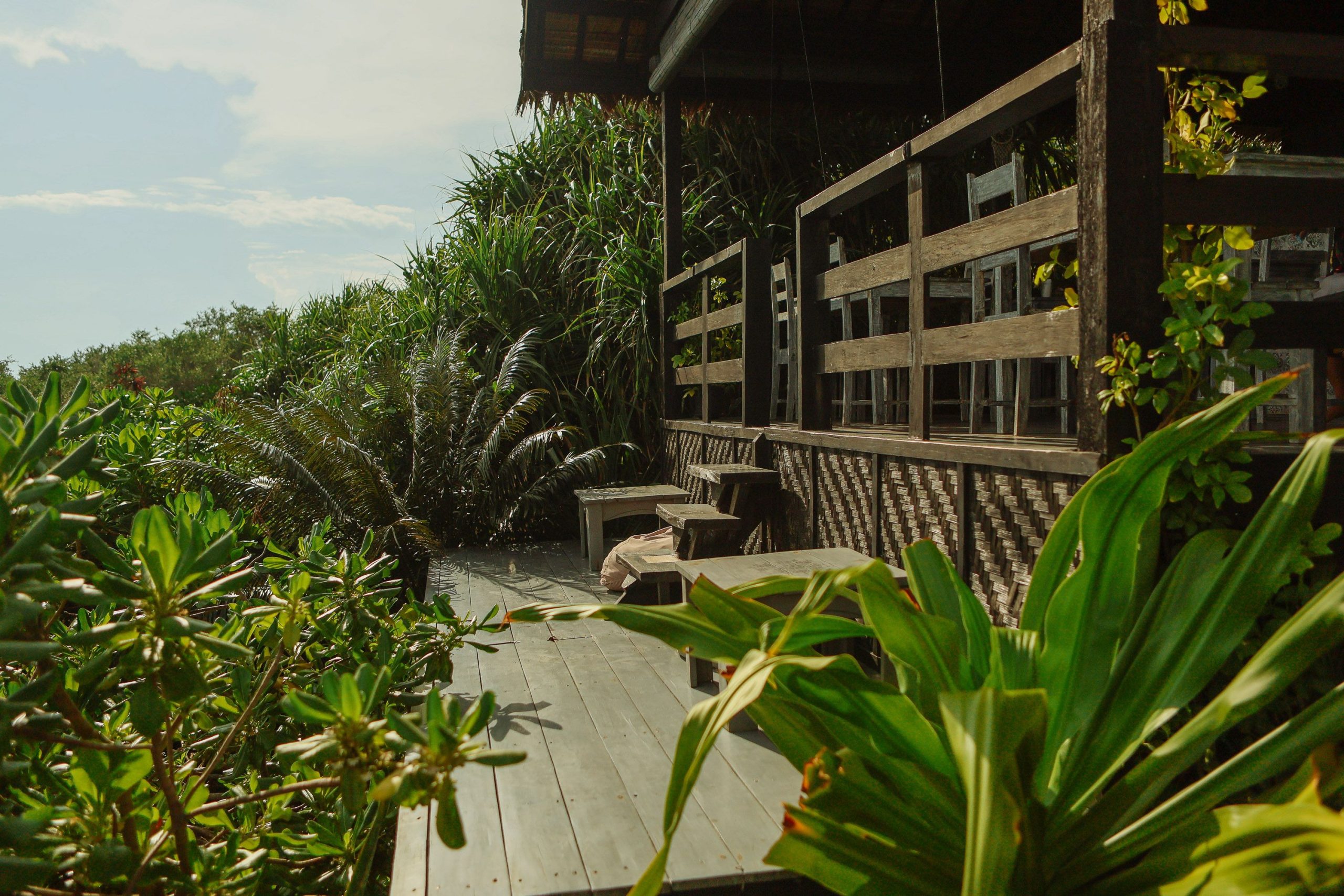
3. Raised Deck Enveloped by Tropical Ferns
Let’s be honest about this jungle paradise: that much dense foliage right up against a wooden deck is a fast track to moisture issues. Constant dampness from the plants can accelerate wood rot, attract insects, and promote mildew on the deck surface and substructure. You’ll need to be vigilant about sealing your deck annually and ensuring there’s adequate airflow underneath. While it looks stunning, this is a high-maintenance relationship between structure and nature.
|
📋 Copy HEX 🔗 Share |
The visual formula here is all about immersion. Think of it as 70% wild foliage + 20% rustic wood structure + 10% empty space. The key is that the greenery is the dominant character, almost swallowing the man-made elements. The dark wood of the railings and posts recedes into the shadows, while the light gray deck boards provide a neutral stage. You could swap the tropical ferns for native temperate plants, but you must maintain that high foliage-to-structure ratio to keep this secluded vibe.
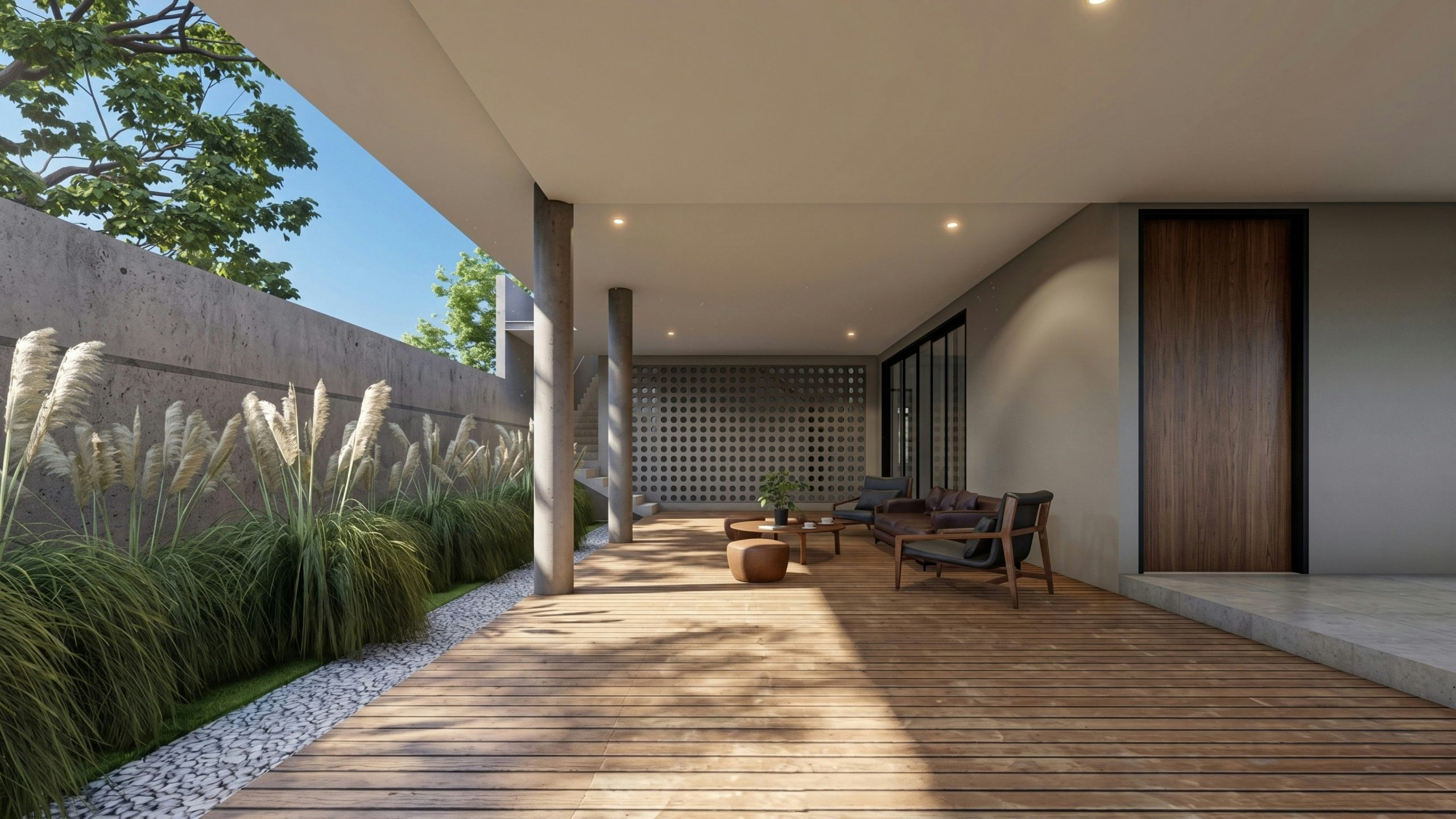
4. Serene Deck with Ornamental Grasses Under a Concrete Overhang
While this look is beautifully minimal, the combination of white gravel and ornamental grasses requires specific upkeep. The white gravel will show dirt, leaves, and debris, so plan on a light leaf-blowing session every week or two to keep it pristine. The ornamental grasses will need to be cut back hard once a year, typically in late winter or early spring, to encourage fresh growth. It’s a quick job, but skipping it will result in a messy, brown-thatch look by summer.
|
📋 Copy HEX 🔗 Share |
When using grasses as a border, planting them in dense clusters is key. Don’t plant them in a single, straight soldier line. Instead, stagger them in a triangular pattern, with plants spaced about 18-24 inches apart on center. This creates a fuller, more natural-looking mass of foliage once they mature. For a 10-foot-long border, you’d want a grouping of at least 5-7 plants to achieve the right density and avoid a sparse, disconnected appearance.
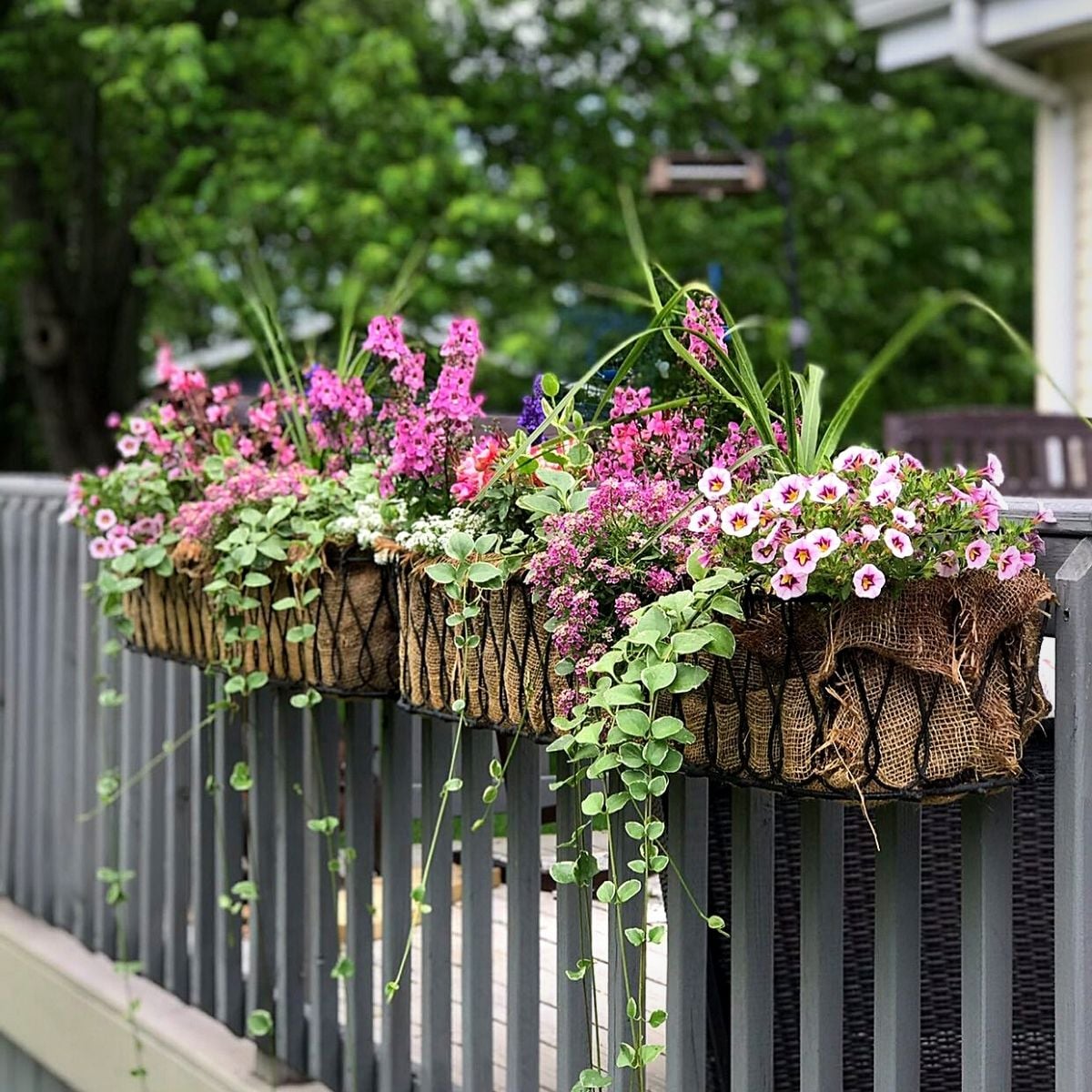
5. Hang Burlap-Lined Planters from Your Deck Railing
Here’s how to create these charming railing planters. Total time: 30 minutes per planter. Cost: $15-25 each.
- Purchase wire frame planters (hayrack style) and a roll of burlap.
- Cut a piece of burlap large enough to line the inside of the wire basket with a few inches of overhang.
- Press the burlap firmly into the basket, molding it to the shape. Don’t worry about perfect pleats.
- Fill the burlap-lined basket two-thirds full with quality potting mix.
- Arrange your plants inside, adding more soil to fill gaps and cover the roots.
- Water thoroughly and hang on the railing. Fold or trim any excess burlap for a neat edge.
|
📋 Copy HEX 🔗 Share |
You can get this exact look for so much less. Skip the garden center and hit up a farm supply store for the burlap—you can often get a huge roll for under $20. The wire planters are a common find at thrift stores and garage sales in the spring. For plants, check Facebook Marketplace for locals who divide their perennials; you can often get trailing vines and other fillers for free or a few dollars per clump. This is a much smarter play than the budget version of wrapping your railing in vines, which can take years to establish.
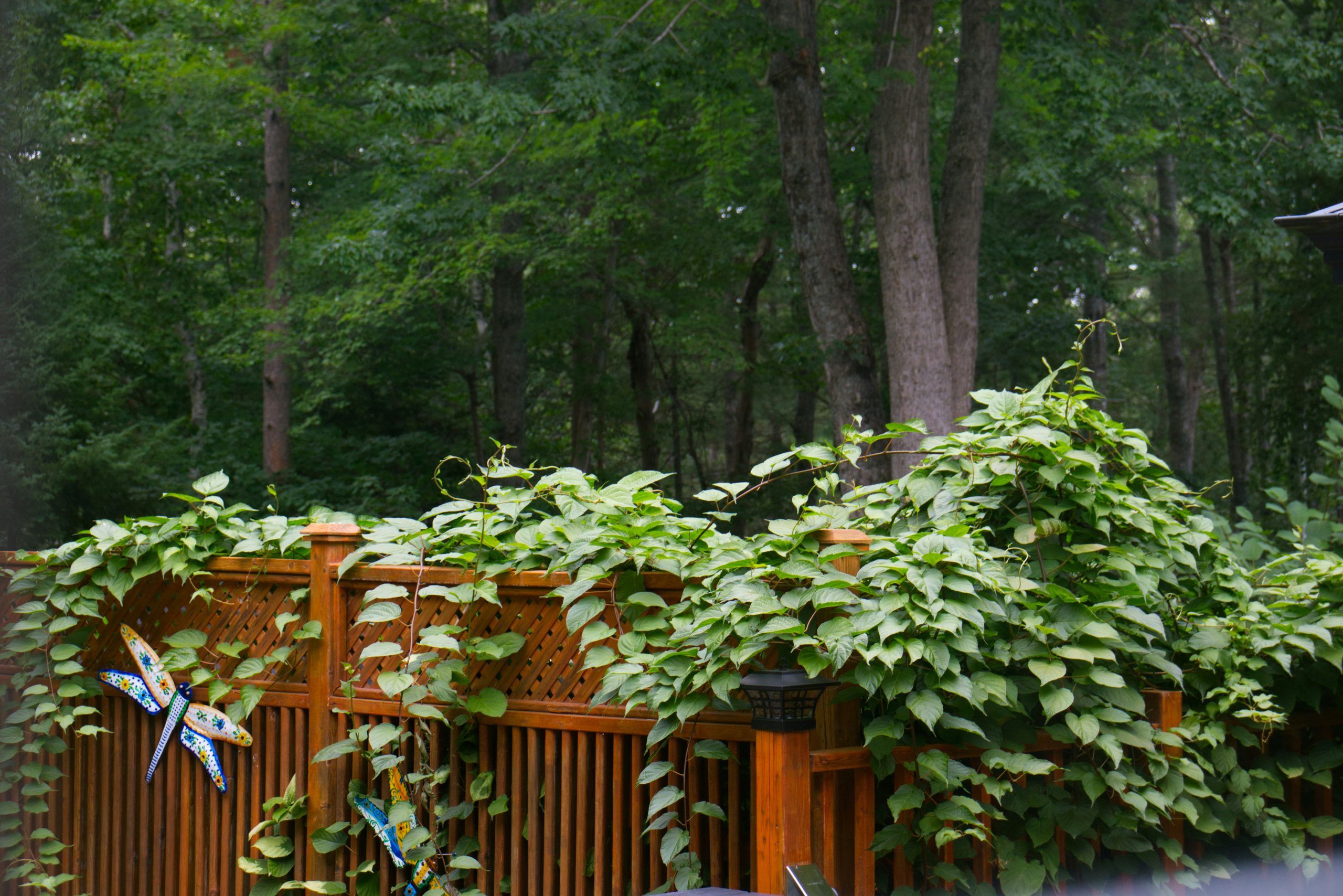
6. Cover a Privacy Fence with Climbing Green Vines
This is a masterclass in softening hardscapes. The rigid, man-made geometry of the wooden privacy fence is beautifully broken up by the organic, chaotic growth of the climbing vines. The lattice panel at the top is crucial; it provides an easy-to-grab structure for the vines, encouraging vertical growth. This creates a ‘living wall’ effect that makes the yard feel more secluded and natural, effectively erasing the boundary line and blending it into the forested backdrop.
|
📋 Copy HEX 🔗 Share |
Before you commit to a living fence, be aware that not all vines are created equal. Some, like English ivy, can be incredibly destructive to wood fences, working their way into crevices and holding moisture against the boards, leading to rot. Others, like Virginia Creeper, are aggressive growers that will require constant pruning to keep them from taking over your yard (and your neighbor’s). Research your vine choice carefully and opt for less aggressive, easily managed varieties like clematis or passionflower.
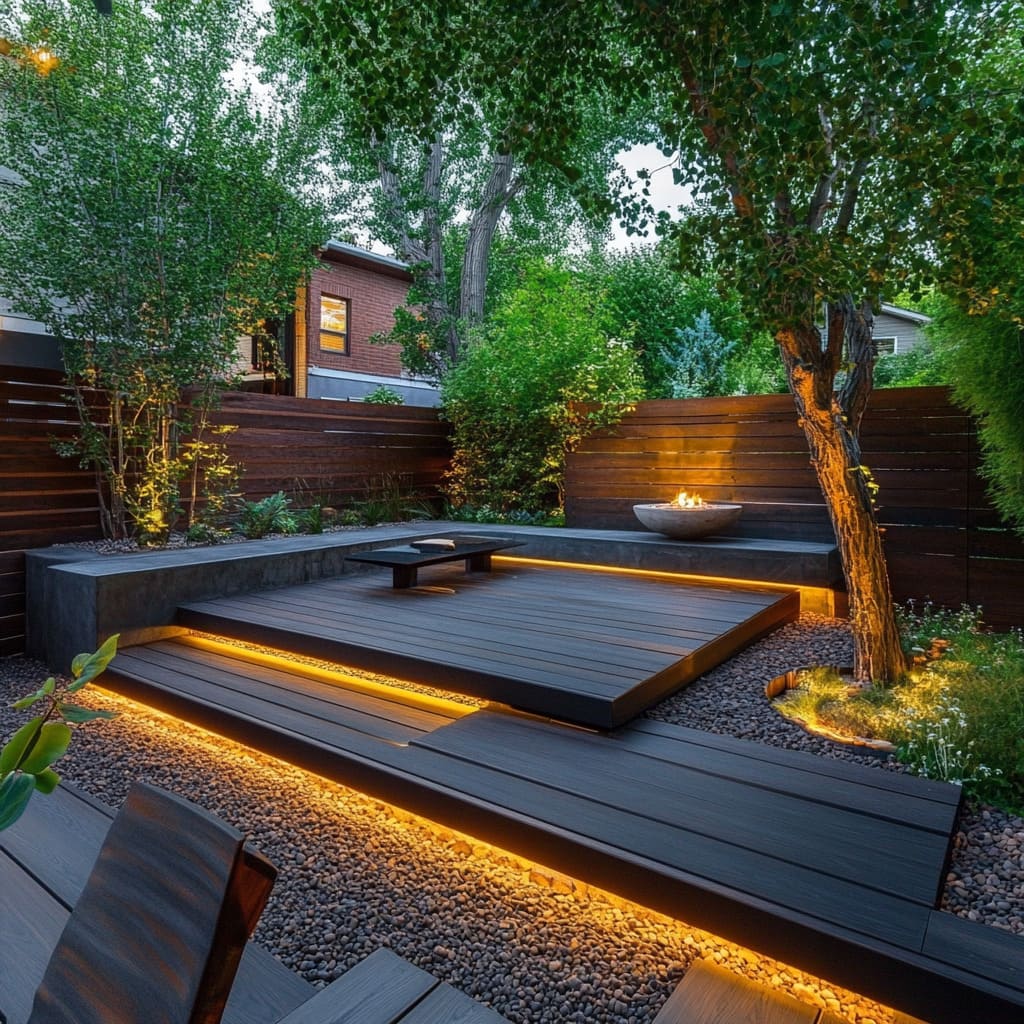
7. Illuminate a Multi-Level Deck with LED Strip Lighting
The warm LED strip lighting is, without a doubt, the hero of this design. By day, this is a handsome, modern deck. But at night, the lighting transforms it into a magical, floating space. It’s not just for looks; it’s a critical safety feature, clearly defining the edges of the steps and levels without the harsh glare of traditional spotlights. This subtle, atmospheric glow is what elevates the entire project from a simple structure to a sophisticated outdoor room.
|
📋 Copy HEX 🔗 Share |
Recreating this high-end, atmospheric look has a wide cost range depending on the quality of materials and whether you DIY the installation.
- Main Furniture (Concrete Bench, Fire Bowl): $2,500 – $7,000
- Lighting (outdoor-rated LED strips, transformer, wiring): $800 – $2,500
- Decking (dark wood or high-end composite): $4,000 – $10,000 (for a 200 sq ft area)
- Decor/Accessories (Gravel, Plants): $500 – $1,500
- TOTAL: $7,800 – $21,000
- Budget alternative: Use solar-powered LED strip lights and build simple wooden benches instead of cast concrete to achieve a similar vibe for about 40% of the cost.
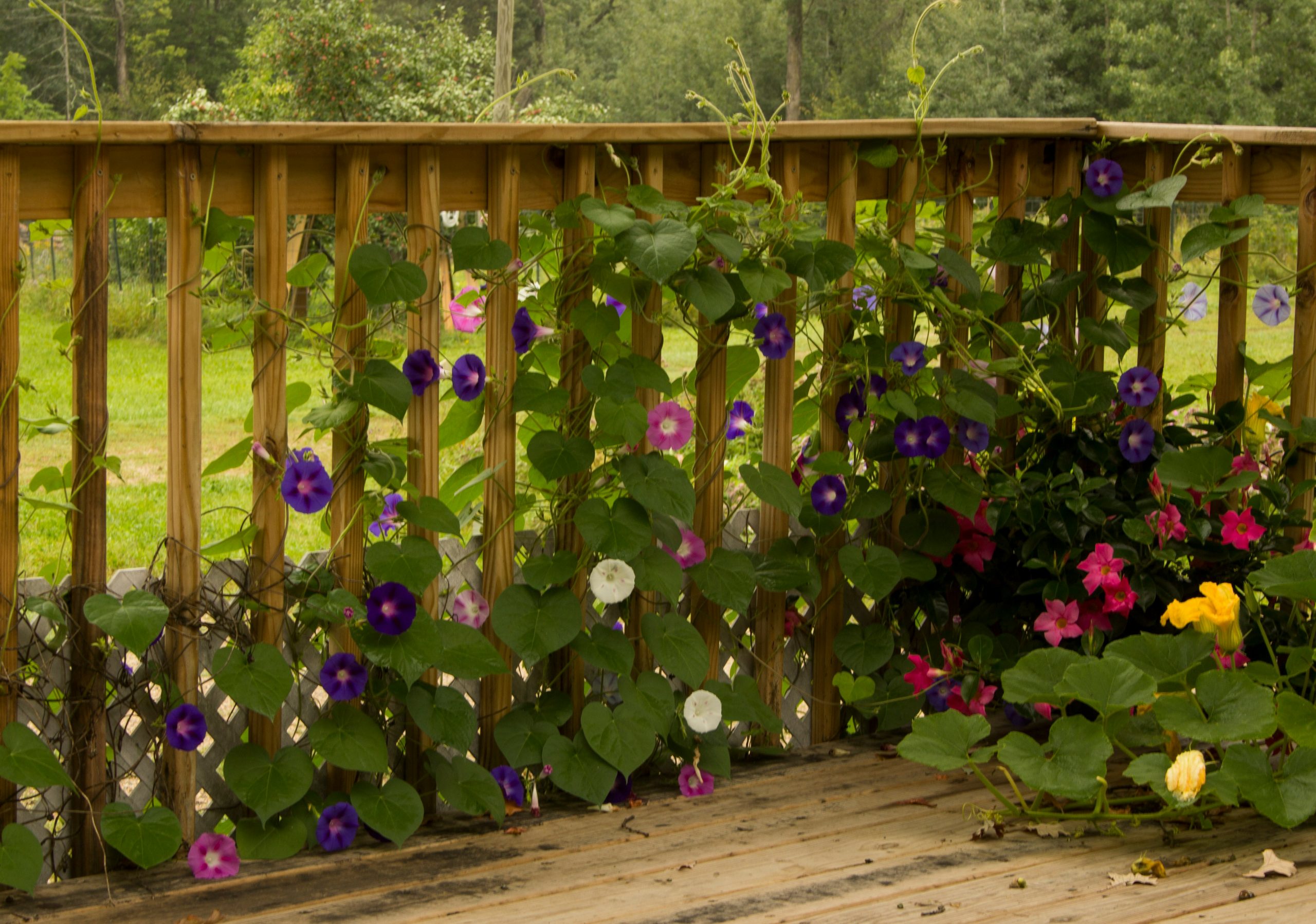
8. Wrap Your Deck Railing in Blooming Morning Glory Vines
This look is pure cottagecore romance, and it follows a simple formula: 80% natural elements + 20% simple structure. The overwhelming majority of the visual is the chaotic beauty of the heart-shaped leaves and delicate trumpet flowers. The plain wooden railing and deck boards are just a simple canvas for nature to do its thing. You could achieve the same feel by swapping the morning glories for climbing nasturtiums or sweet peas, as long as the plant is the star and the structure is the supporting act.
|
📋 Copy HEX 🔗 Share |
Morning glories are annuals that grow incredibly fast from seed. To get this lush look in a single season, you need to give them a head start. In early spring, soak the seeds overnight in warm water. Then, plant them directly in soil at the base of your deck posts, about 6 inches apart. As they begin to climb, gently guide the first few tendrils around the posts and railings. They’ll take it from there, covering the structure completely by mid-summer.
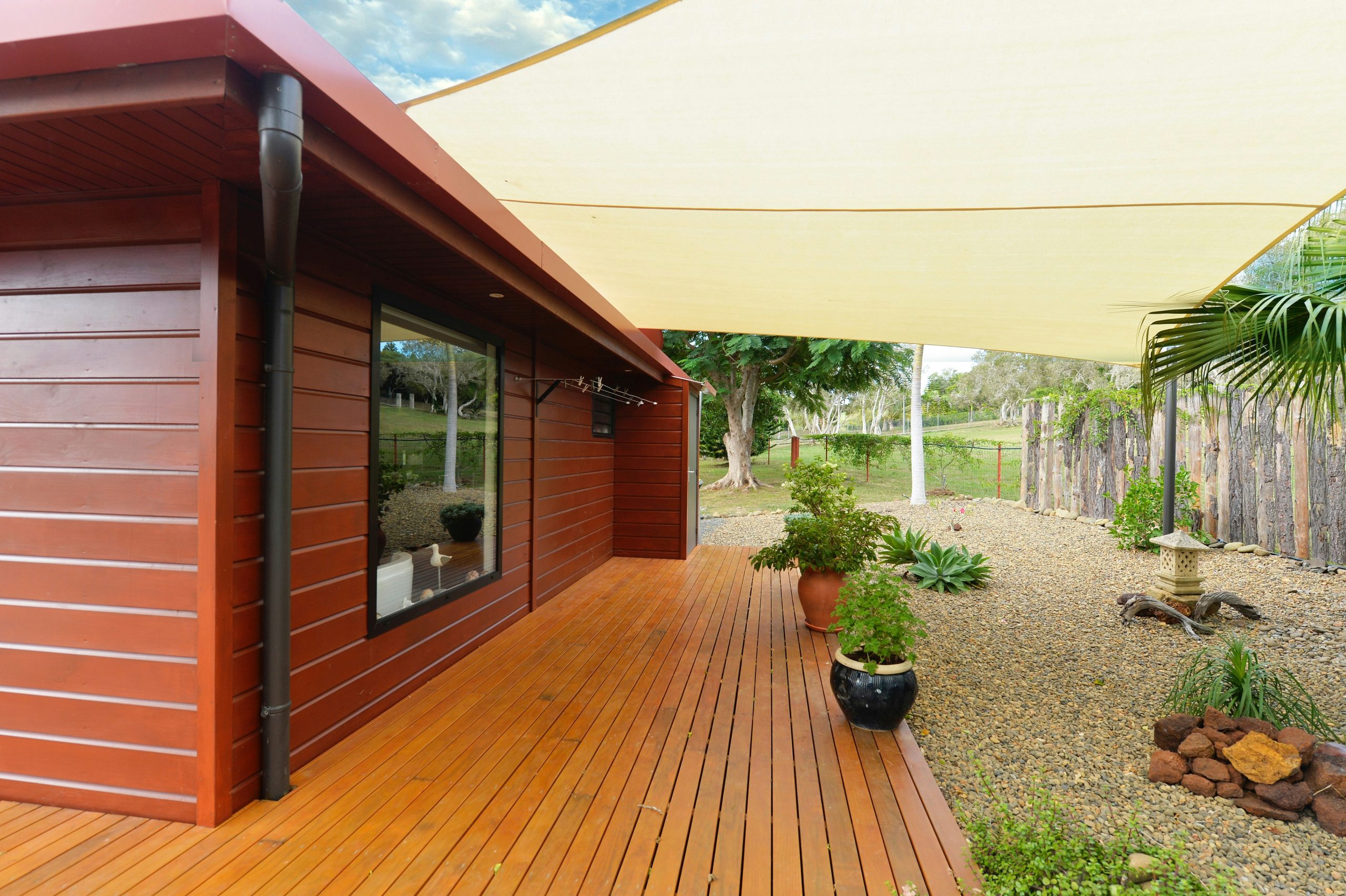
9. Create Shade with a Sun Sail Over a Gravel Garden Deck
A sun sail is a fantastic, modern alternative to a traditional umbrella or pergola, but you need to check a few things before you buy.
- Measure your space diagonally. Sun sails are sold by their corner-to-corner dimensions, so make sure you have enough room for the sail itself plus about 1-2 feet of tensioning hardware on each corner.
- Identify your anchor points. You need at least three (for a triangle) or four (for a rectangle) solid points to attach to. This can be the side of your house, a sturdy fence post, or a dedicated pole set in concrete.
- Check the sun’s path. Watch where the sun travels across your deck during the hottest part of the day to ensure you position the sail for maximum effectiveness.
|
📋 Copy HEX 🔗 Share |
This design works because of its thoughtful layering of textures. The smooth, taut fabric of the sun shade contrasts beautifully with the rough, organic texture of the gravel bed. The warm reddish-brown wood of the building and deck provides a midpoint between the two. This textural play is what makes the space feel rich and considered, even with a relatively simple palette of materials. The straight lines of the deck boards and siding are softened by the gentle curve of the sail’s edge.
10. Pair Wicker Chairs with a Glass Railing for a Modern Look
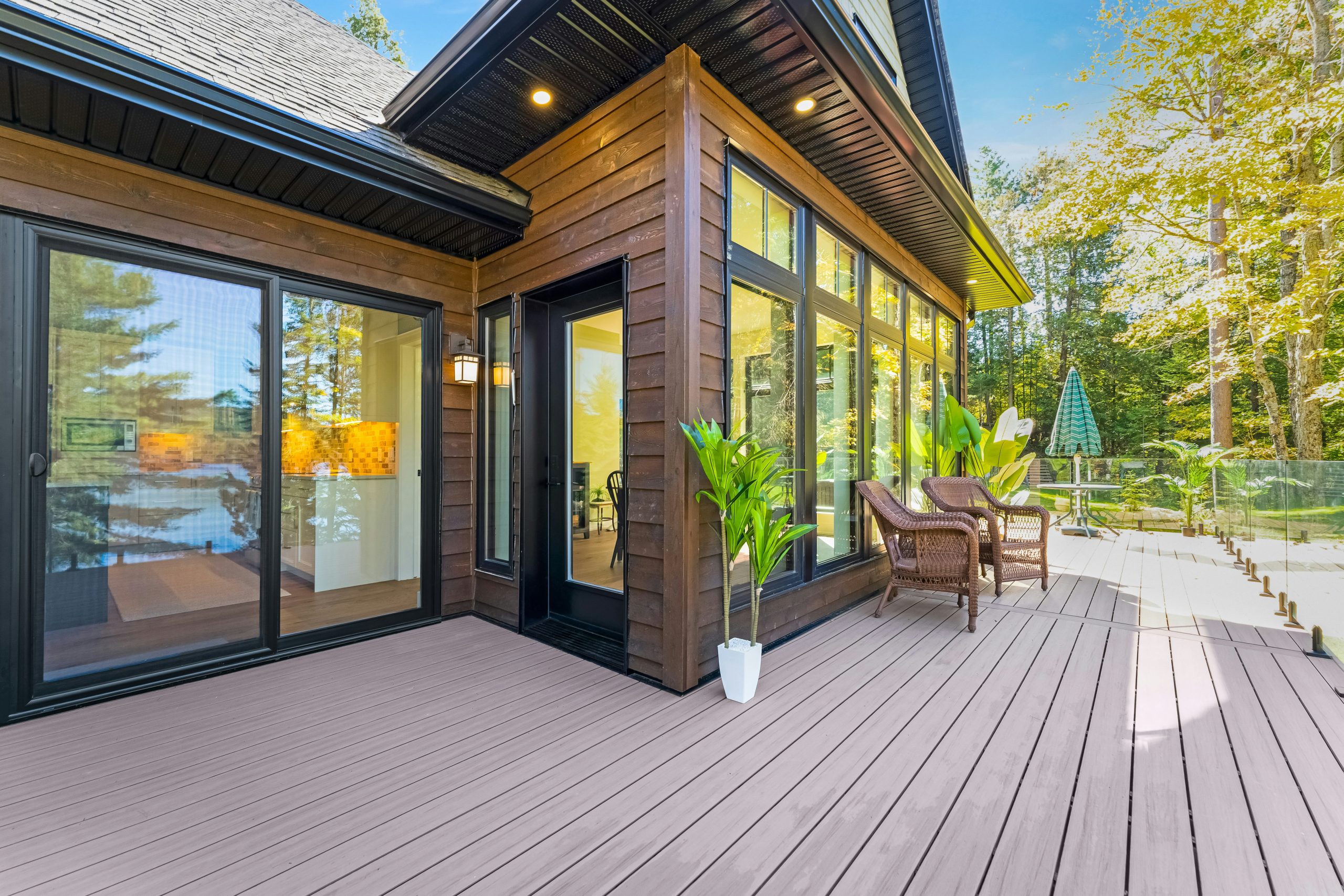
A clear glass railing is all about preserving a view, so this idea is best suited for decks that overlook something worth seeing—a forest, a lake, or even just a beautifully landscaped yard. It works on decks of any size, but its effect is most dramatic on second-story or elevated decks where it creates a feeling of floating above the landscape. On a ground-level deck, it can feel a bit like an unnecessary expense unless you’re using it to contain pets without blocking light.
|
📋 Copy HEX 🔗 Share |
Glass railings are not for the low-maintenance crowd. They show every fingerprint, water spot, and streak of pollen. If you live in an area with hard water or lots of dust, you’ll be cleaning them constantly to keep them looking crystal clear. While they are made of tempered safety glass, a stray baseball or a very clumsy guest could still lead to a costly replacement. They look amazing, but you have to be willing to put in the work.
11. Brighten a Stone Patio with Pink Sling Chairs
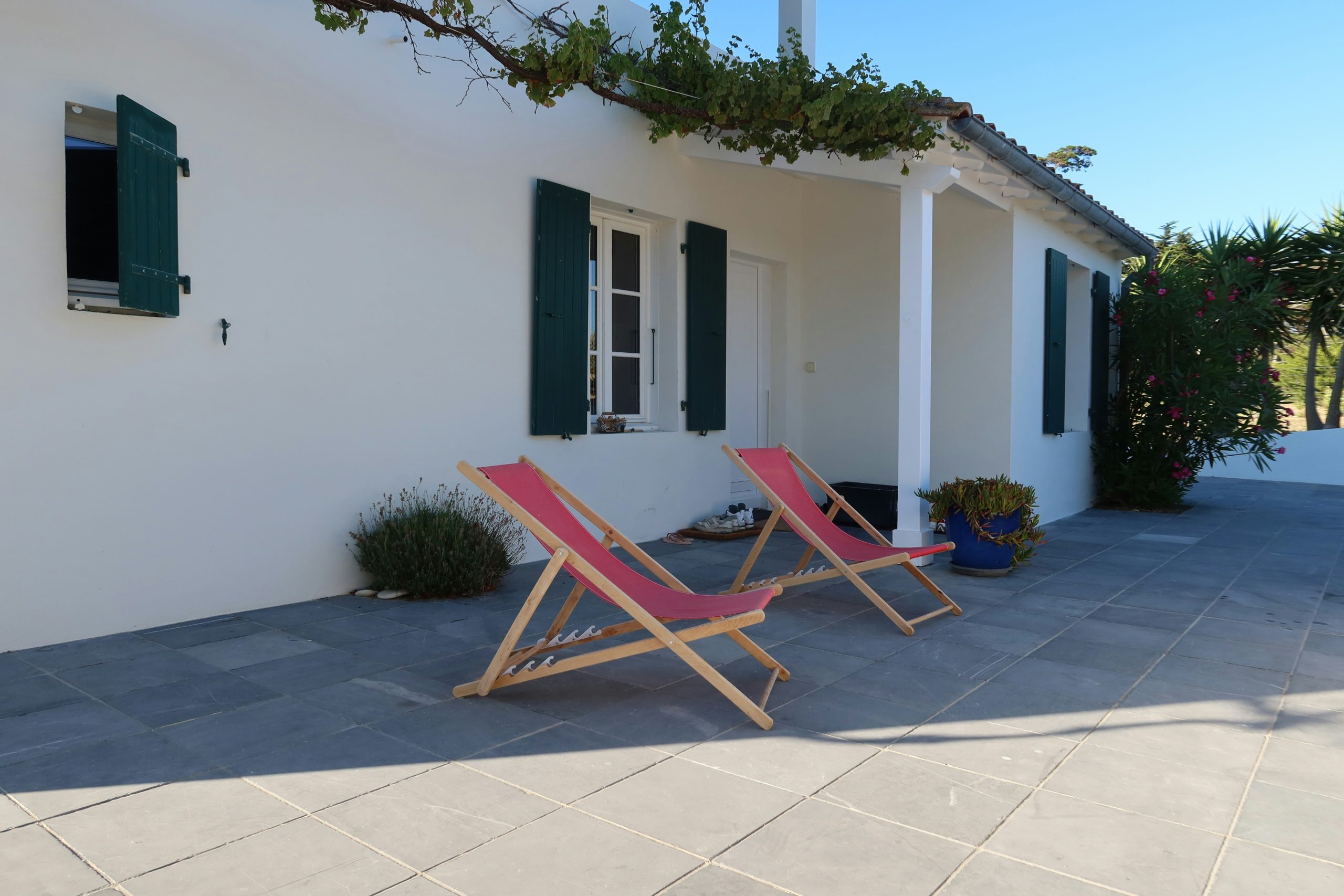
You don’t need a custom-built patio to get this breezy, coastal vibe. Start with budget-friendly gray concrete pavers from a big box store like Home Depot—they’ll give you the same neutral base as these stone tiles. The real stars, the sling chairs, can be found for under $100 a pair at places like Target or IKEA. If you have old chairs, you can even buy replacement canvas in fun colors online and give them a refresh for about $20. Add a few terracotta pots from a thrift store, and you’ve got the look for a fraction of the cost. This is a great alternative to the gravel-based seating in Idea #18.
|
📋 Copy HEX 🔗 Share |
It’s the pink. Seriously. Take away the two pink sling chairs, and what do you have? A perfectly nice but very neutral patio. The chairs are a bold, singular statement of color that injects personality and fun into the scene. The pink provides a warm, playful contrast to the cool gray stone, the dark green shutters, and the crisp white stucco. It’s proof that sometimes, one strategic, colorful choice is all you need to make a space memorable.
12. Design a Curved, Multi-Tiered Deck with Built-in Benches
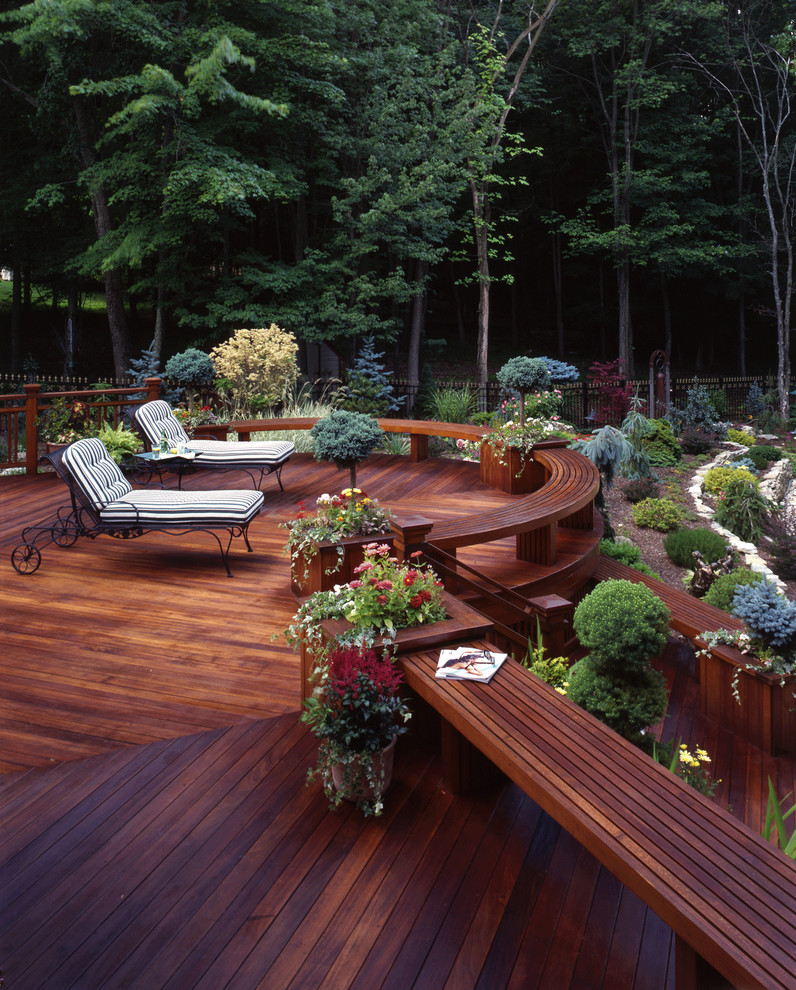
When designing a curved deck, avoid making the curves too tight or complex. The most successful curved decks use broad, sweeping arcs rather than tight, wavy lines. A good rule of thumb is to use a radius of at least 8 to 12 feet. You can create a simple guide by staking a rope in the center of your proposed arc and using it like a giant compass to mark the layout. This ensures a graceful, elegant curve that’s easier to build and more visually pleasing.
|
📋 Copy HEX 🔗 Share |
This design’s success comes from a formula of 60% flowing structure + 30% lush greenery + 10% curated accents. The massive, curved wooden deck is the undeniable foundation of the space. The tiered garden beds and surrounding forest provide a soft, green counterpoint. Finally, the black and white striped lounge chairs and bright floral planters are the small, impactful accents that give the space focus and personality. The balance is key; too much structure feels cold, and too much greenery feels overgrown.
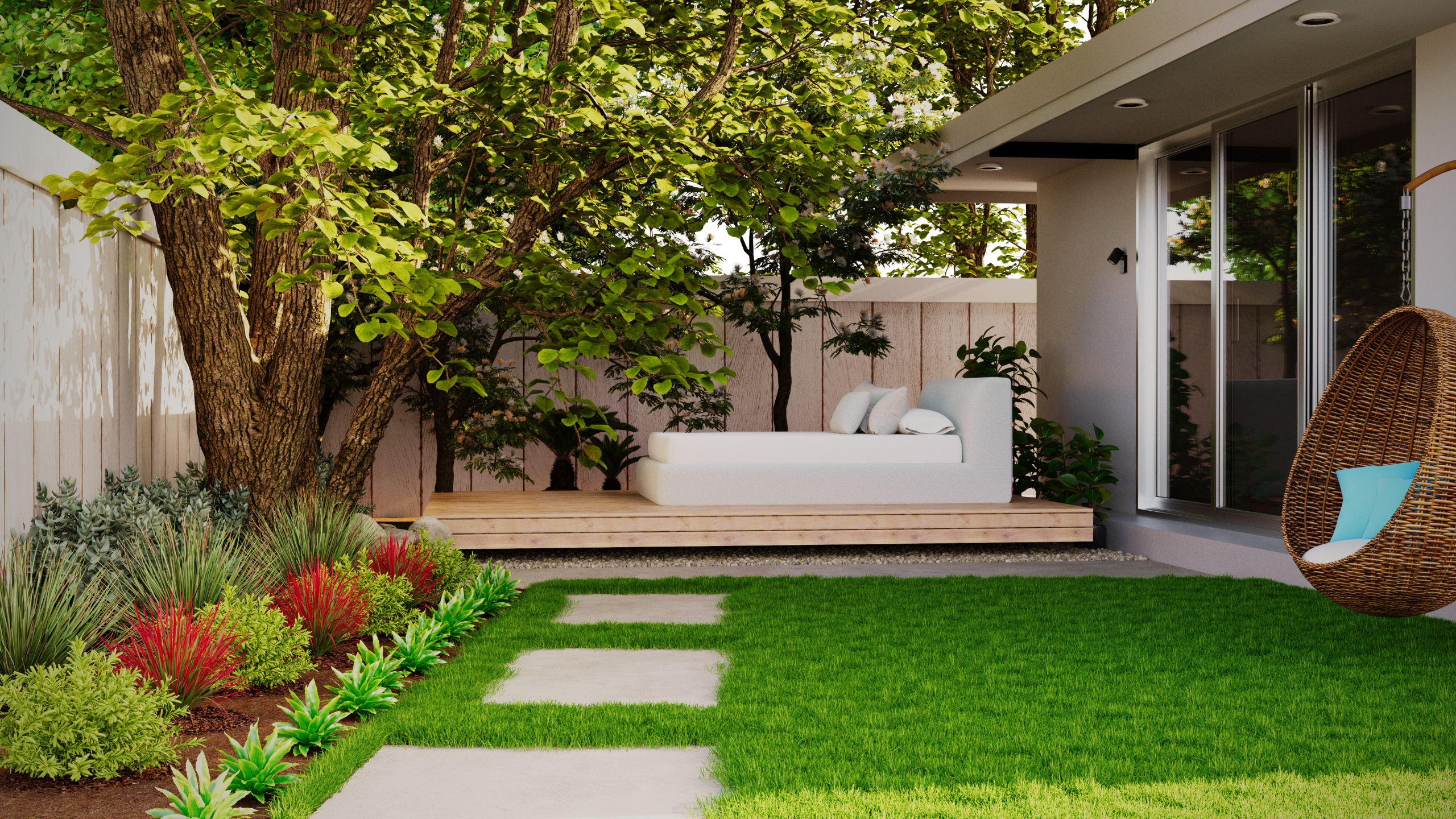
13. Add a Low Platform Daybed to Your Landscaped Yard
This look is tapping directly into the 2026 trend of ‘Outdoor Rooms’ that blur the line between interior and exterior living. People are no longer content with just a grill and a couple of chairs. They want their outdoor spaces to have the same comfort and style as their living rooms. The daybed, hanging chair, and plush cushions are elements borrowed directly from indoor design, signaling a desire for true relaxation and sanctuary in our own backyards. It’s less about hosting and more about personal escape.
|
📋 Copy HEX 🔗 Share |
This scene is a beautiful exercise in balancing geometric and organic forms. The sharp, clean lines of the low wooden deck and the square concrete stepping stones provide a strong, modern structure. This man-made geometry is then softened and contrasted by the lush, untamed greenery, the round form of the hanging egg chair, and the soft pillows on the daybed. This interplay between hard and soft, straight and curved, is what creates a dynamic yet harmonious composition.
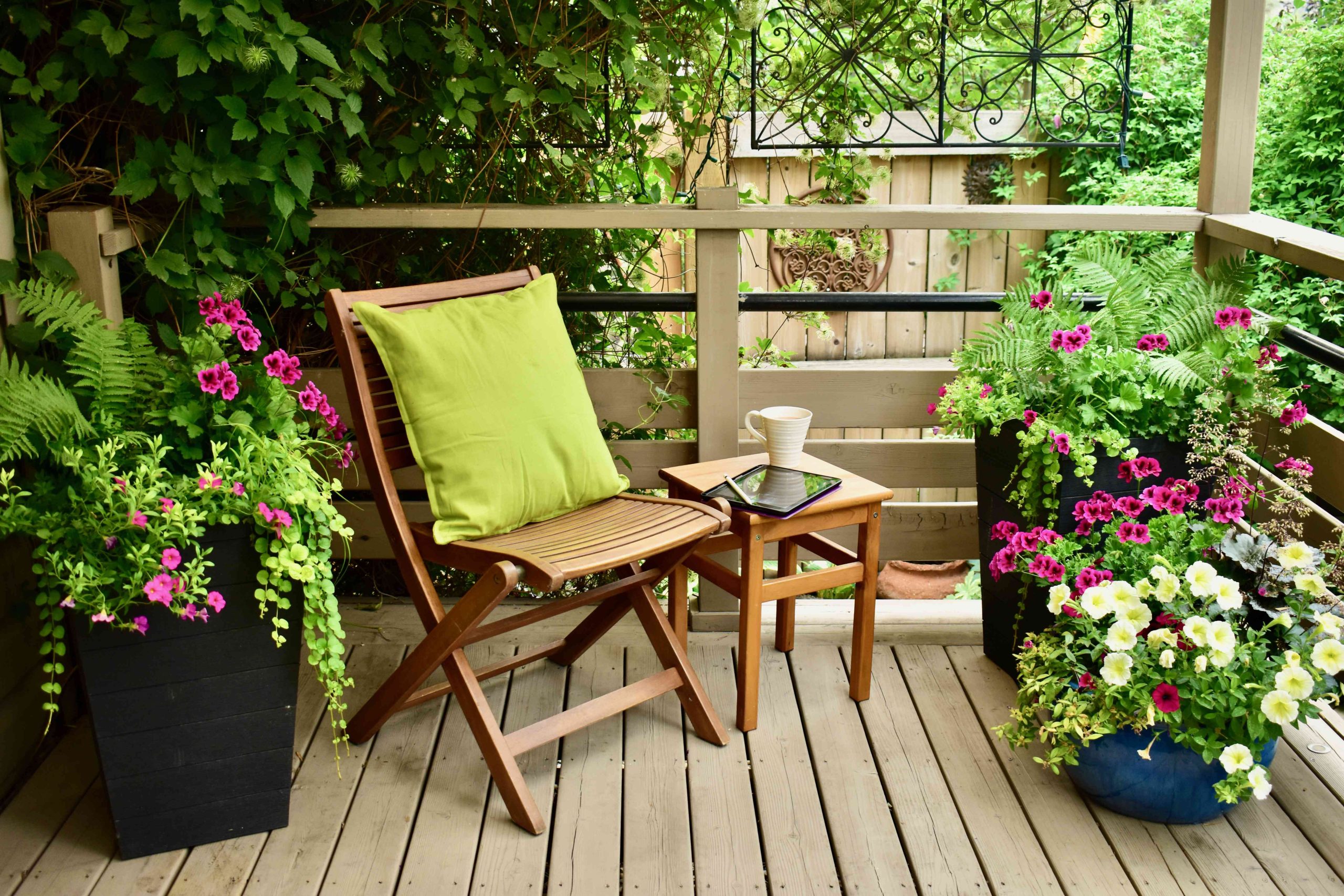
14. Combine Horizontal Railings with Built-in Planter Boxes
This is a fantastic solution for medium-sized decks (around 150-300 sq ft) where you want the safety of a railing without sacrificing floor space to pots and containers. The horizontal slats create a modern, open feeling, and the built-in planters keep the main deck area clear for furniture and foot traffic. It’s particularly effective for second-story decks, as the planters provide a bit of a privacy screen and a beautiful green border against the sky.
|
📋 Copy HEX 🔗 Share |
A word of caution on those built-in planters: drainage is everything. Make sure they are constructed with plenty of drainage holes in the bottom and a layer of gravel before you add soil. Without proper drainage, water will sit in the bottom of the box, leading to root rot for your plants and, even worse, accelerating wood rot in the planter and the deck structure it’s attached to. This is a place where you cannot cut corners during construction.
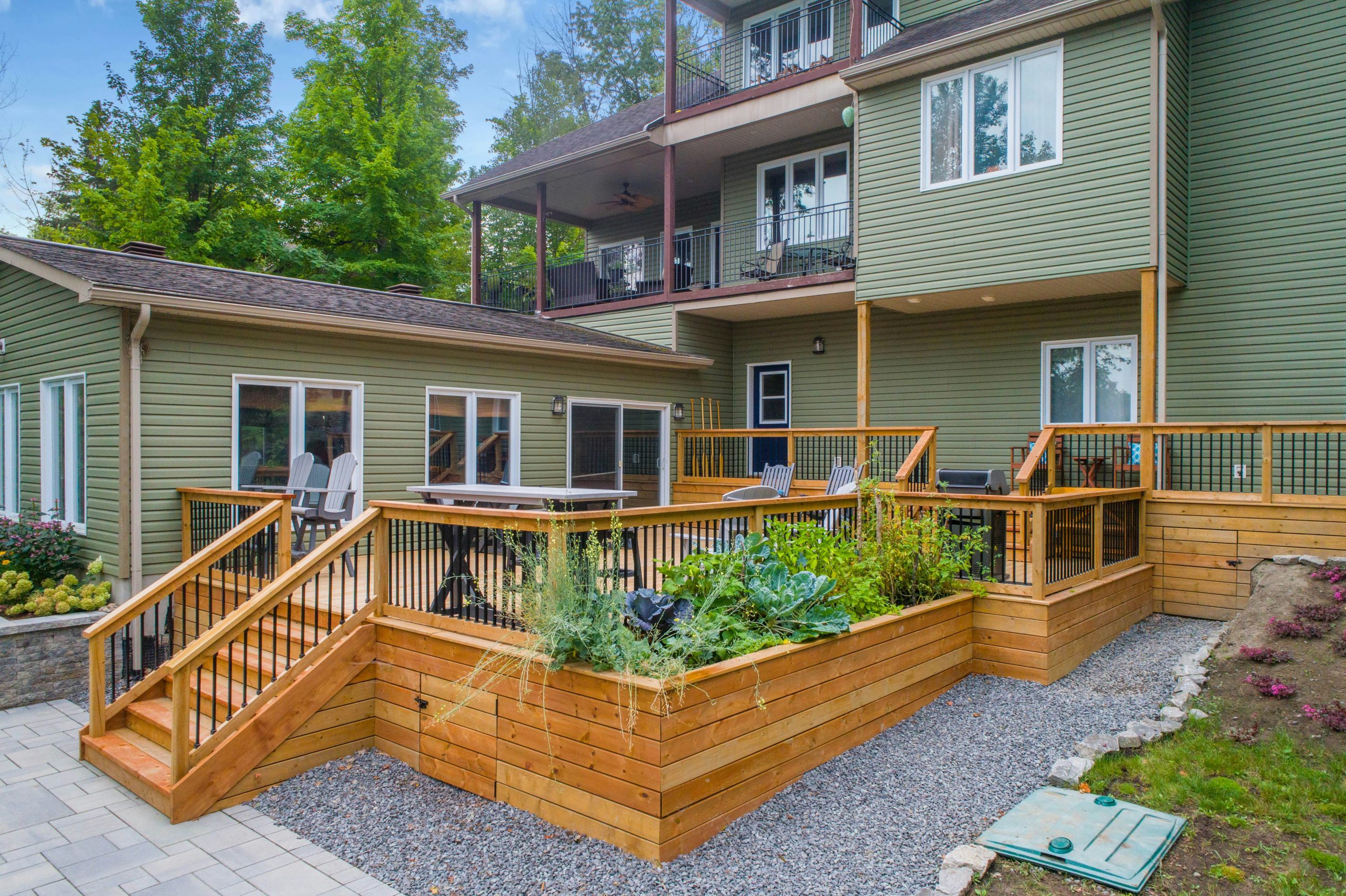
15. Build a Multi-Tiered Deck with Integrated Vegetable Gardens
Want to build your own integrated garden bed? Here’s a quick guide for one 4’x2′ bed. Cost: $80-150. Time: 3 hours.
- Cut your lumber. You’ll need two 4-foot boards and two 2-foot boards for the sides (use cedar or pressure-treated for longevity).
- Assemble the box frame using exterior-grade screws.
- Attach the box to the deck joists or support posts for stability before the deck boards go on.
- Line the inside of the box with heavy-duty landscape fabric, stapling it securely to the top edge. This will hold the soil in while letting water out.
- Fill with a layer of gravel for drainage, then top with a mix of garden soil and compost.
- Plant your veggies and herbs!
|
📋 Copy HEX 🔗 Share |
When you’re building raised beds that are part of your deck structure, don’t skimp on depth. Many vegetables, especially root vegetables like carrots or larger plants like tomatoes, need at least 12-18 inches of soil depth to thrive. A shallow 6-inch bed might look nice, but your gardening efforts will be frustrated. Building them deeper also means they’ll retain moisture better and require less frequent watering in the hot summer sun.
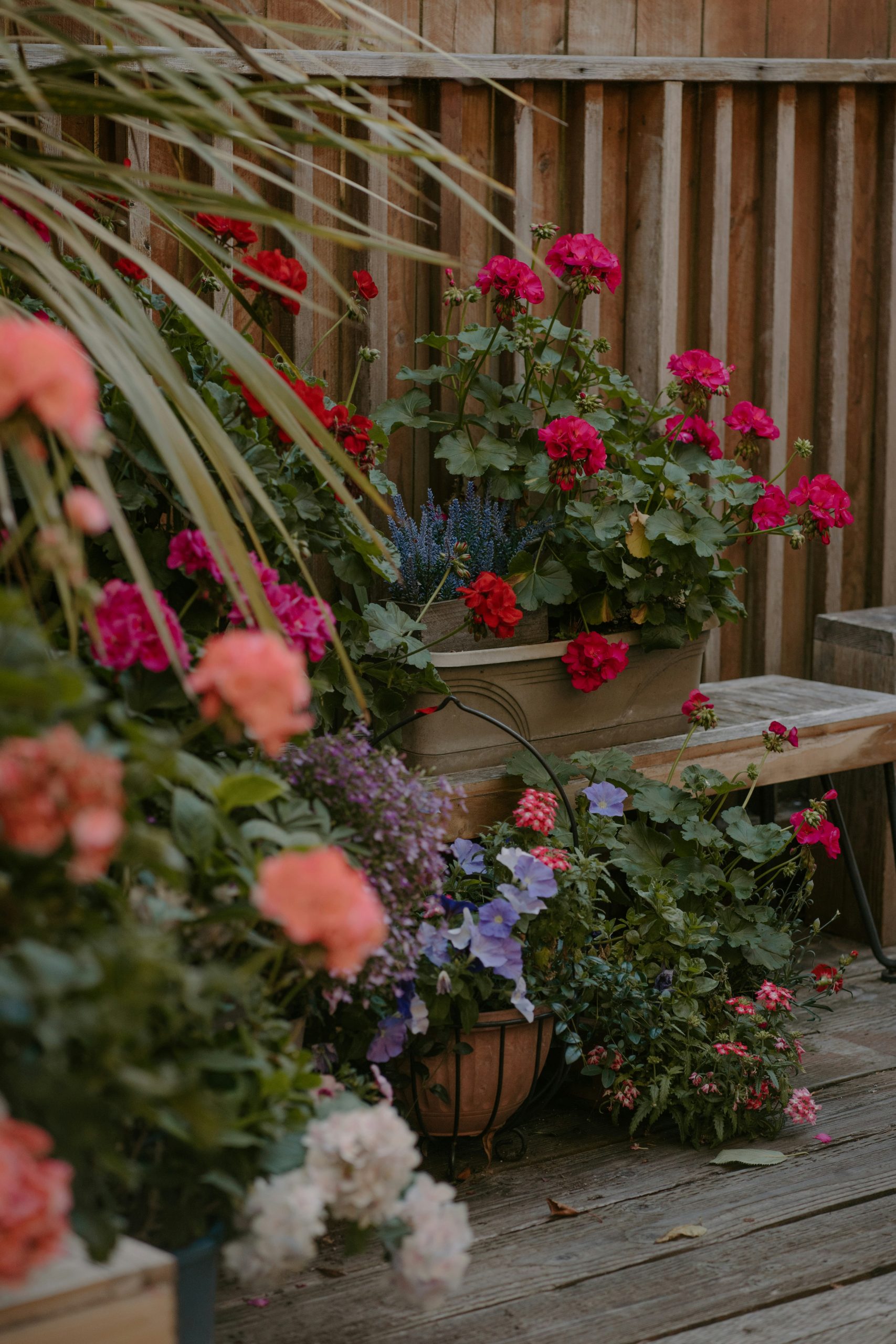
16. A Burst of Colorful Potted Flowers on a Wood Deck
What makes this arrangement feel so special is its density. The pots aren’t just placed on the deck; they’re clustered together to form a single, overflowing mass of color and life. This creates a much more powerful visual impact than spacing the same pots out individually. It feels intentional and abundant, like a living, breathing piece of art rather than a collection of separate plants. This is a much more vibrant and dense take on the potted plant idea shown in Idea #1.
|
📋 Copy HEX 🔗 Share |
The style of math here is about joyful maximalism. It’s roughly 50% hot colors (pinks, reds, and oranges) + 30% cool colors (purples and blues) + 20% neutral backdrop (wood and greenery). The key is the dominance of the warm, energetic colors that grab your attention. The cooler purples and blues provide depth and prevent the palette from feeling one-note. The neutral wood deck and fence act as a calm canvas that allows the flowers to be the undisputed stars of the show.
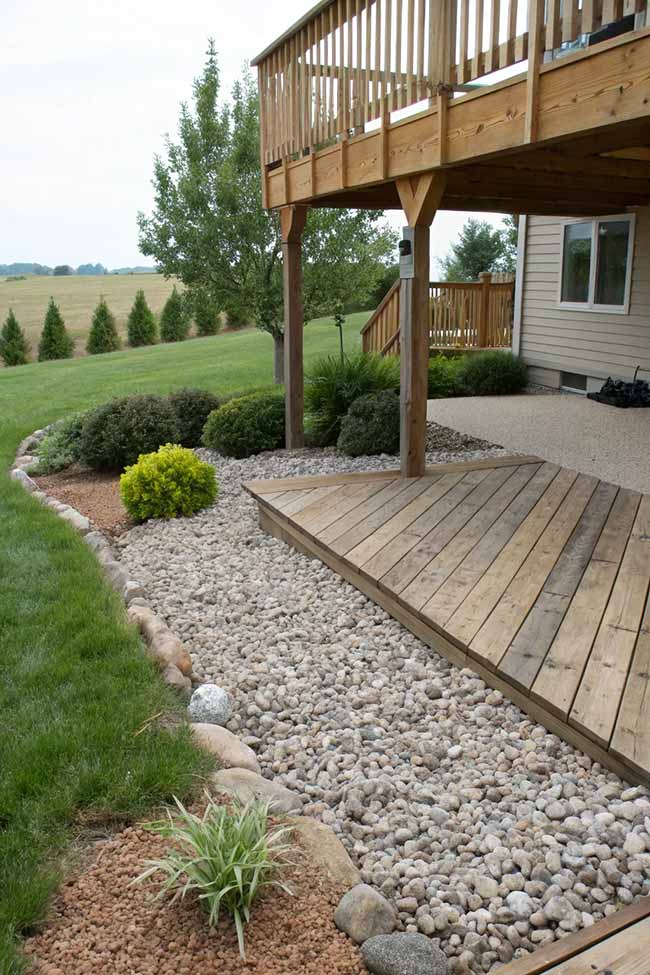
17. Edge Your Multi-Level Deck with a Pebble Landscaping Border
That crisp, clean pebble border looks amazing, but it’s not a ‘set it and forget it’ feature. Weeds are inevitable. Even with landscape fabric underneath, seeds will blow in and sprout on top of the stones. You’ll need to do a weekly pass to pull any intruders or give it a quick spray with a vinegar-based weed killer. Also, mowing next to a gravel edge can be tricky, as the mower can suck up stones and fling them. Installing a solid mowing strip or edge is highly recommended.
|
📋 Copy HEX 🔗 Share |
Before you order a truckload of pebbles, here’s a quick checklist to ensure a successful installation.
- Have you installed a quality landscape edging? You need a physical barrier (metal, plastic, or stone) to keep your pebbles from migrating into your lawn and your lawn from creeping into your pebbles.
- Did you lay down a high-quality, permeable landscape fabric? Skipping this step means you’ll be fighting a losing battle against weeds from day one.
- Is the area graded correctly? Ensure the ground slopes slightly away from your deck and house foundation to prevent water from pooling.
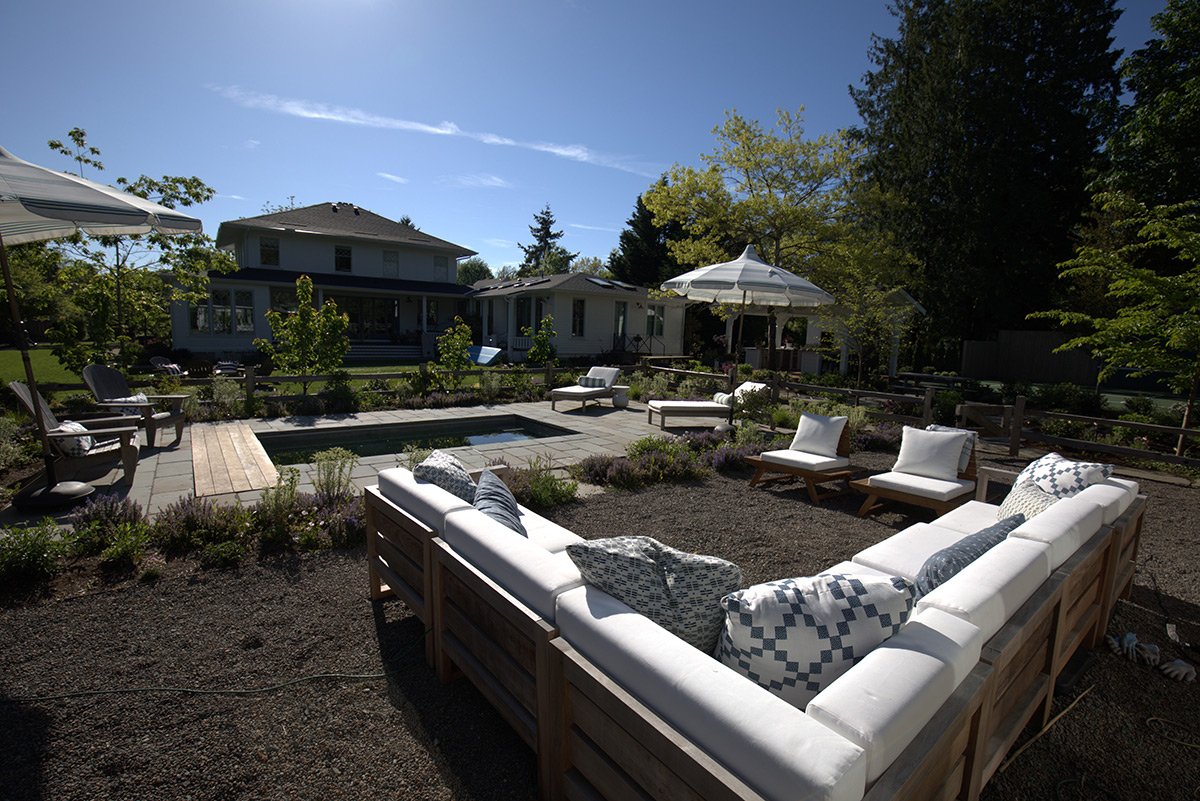
18. Lay a Gravel Foundation for a Sprawling Outdoor Sofa Area
Let’s talk about walking on gravel in anything other than sturdy shoes. It’s not fun. While a gravel patio or pea stone patio sounds romantic and European, the reality is that it’s a shifty, uneven surface. Chair legs sink, it’s noisy to walk on, and it gets tracked everywhere. It’s a fantastic, budget-friendly option for a large area, but if you plan on hosting parties where guests might be wearing heels, you’ve been warned. It’s best for a relaxed, casual zone, not formal entertaining.
|
📋 Copy HEX 🔗 Share |
A gravel seating area is a brilliant solution for defining a large outdoor room without the expense of pavers or a deck. This concept truly shines in expansive backyards where you have at least a 20×20 foot area to dedicate. The scale is what makes it feel grand and intentional. Trying to do this in a small, 10×10 space will just look like you ran out of mulch. The large sectional sofa also helps anchor the space; this is not a look for small bistro sets.
19. A Modern Deck with a Sleek Integrated Planter Bench
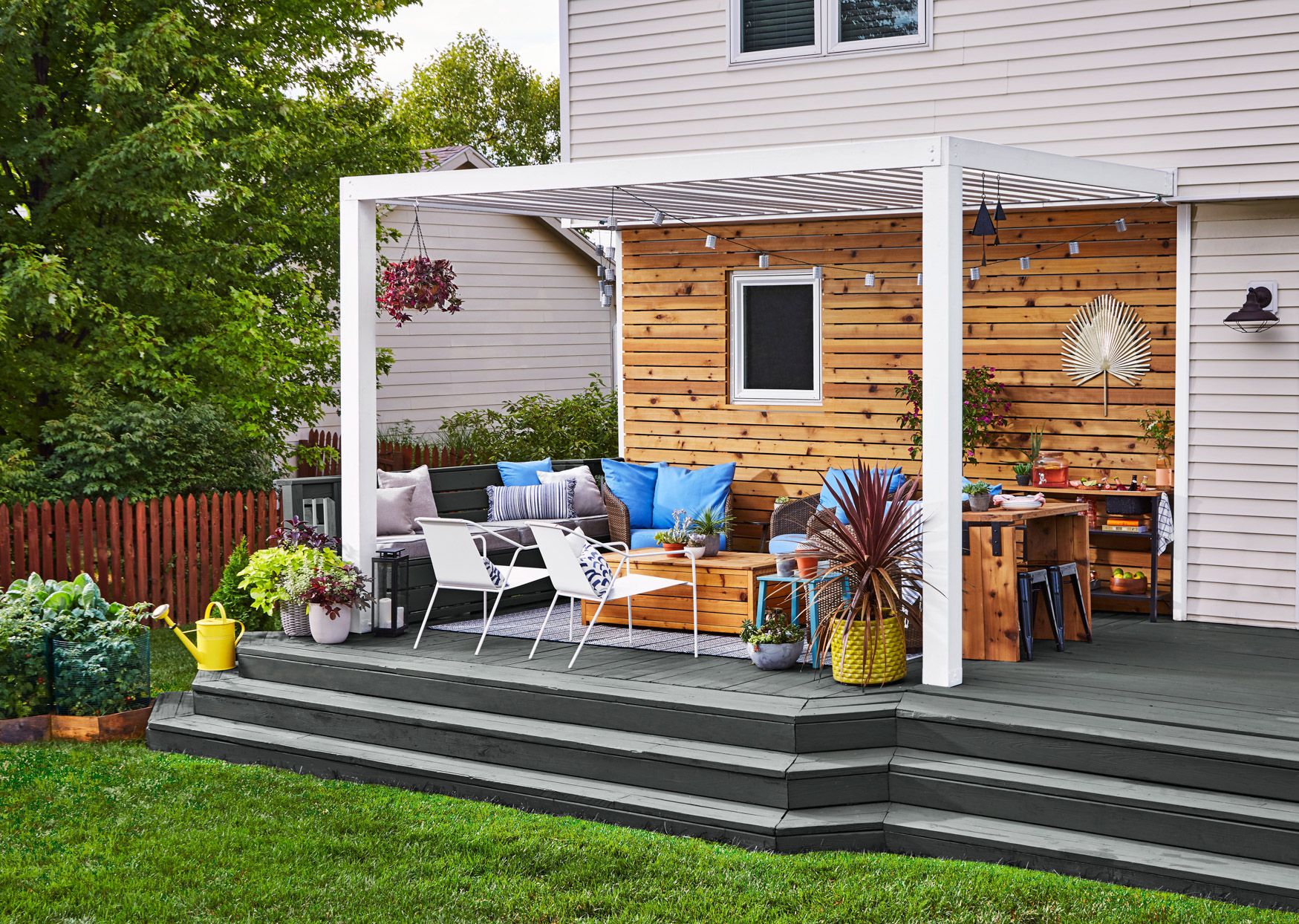
This design is a study in repetition of form. Notice how the horizontal lines of the slatted wood decking are mirrored in the horizontal slats of the privacy screen and the long, linear shape of the bench and planter. This creates a cohesive, rhythmic pattern that is incredibly calming and pleasing to the eye. The lush green foliage provides a soft, organic counterpoint to all this clean geometry, preventing the design from feeling too rigid or sterile. It’s a perfect balance. This is a sleeker, more minimal take on the same concept seen in Idea #2.
|
📋 Copy HEX 🔗 Share |
Want this look without the custom carpentry budget? You can mimic the feel of an integrated bench and planter using off-the-shelf items. Place a simple, backless wooden bench from IKEA or Target against a wall or railing. Then, flank it with two tall, rectangular planters (also from Target or a home improvement store) that are the same height as the bench seat. Fill the planters with tall, upright shrubs. This creates the illusion of a single, built-in unit for a few hundred dollars instead of a few thousand.
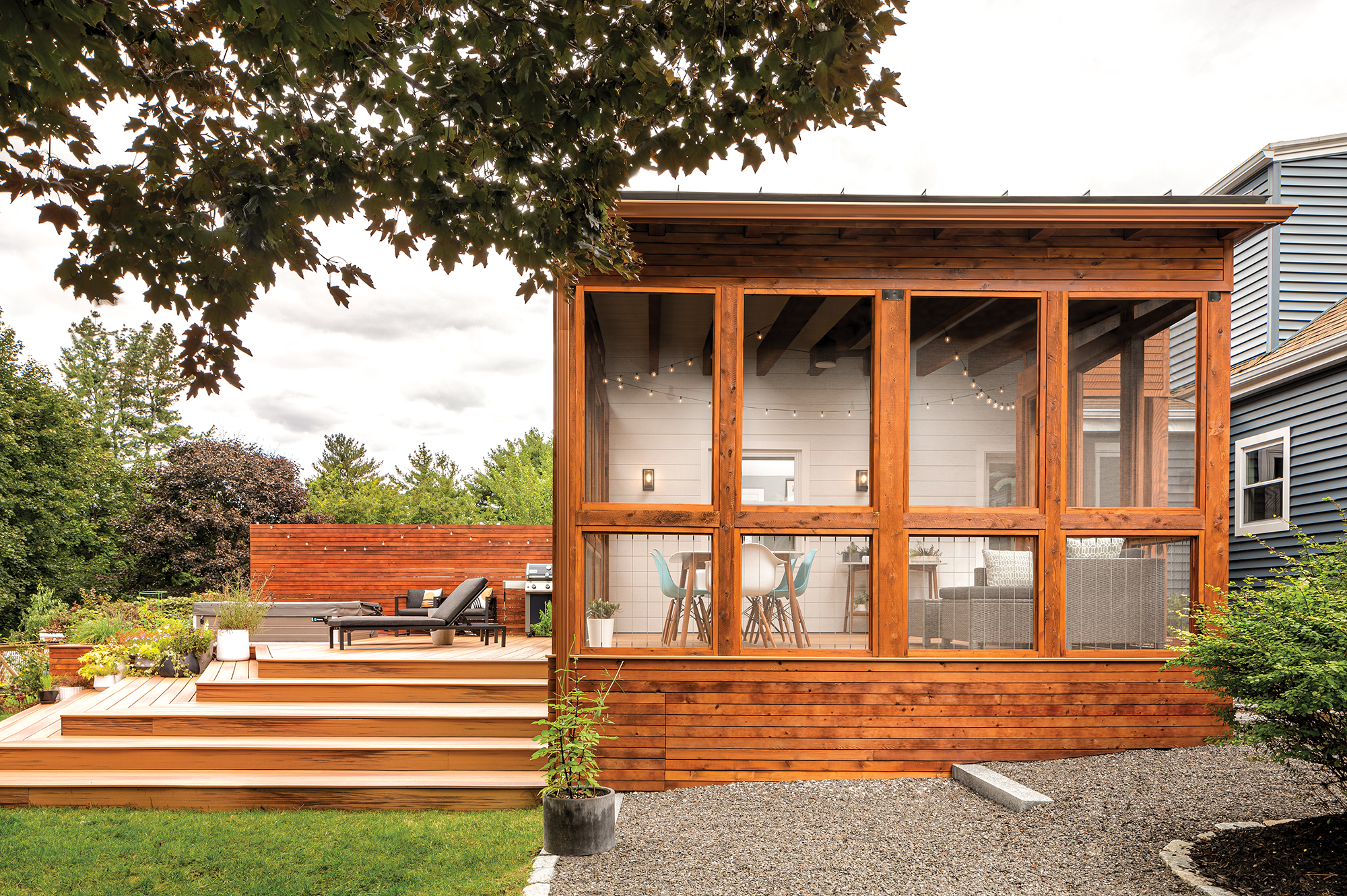
20. Connect a Screened Porch to a Multi-Level Wooden Deck
When designing a multi-level deck, think about creating distinct zones for different activities. Here, the screened-in porch is the bug-free, all-weather lounge, while the open upper deck is for sunbathing on the chaise lounge, and the lower level provides access to the yard. The key is to make the transition between levels feel intentional. Using wide, generous steps, like the ones shown here, makes the deck feel more like a unified space and less like separate, disconnected platforms.
|
📋 Copy HEX 🔗 Share |
The screened-in porch is the undeniable anchor of this entire backyard design. It’s the destination that the multi-level deck leads to. Without it, you’d have a perfectly nice deck, but it wouldn’t have a focal point or a sense of purpose. The porch provides shelter, a bug-free environment, and a cozy, room-like feeling that the open deck can’t offer. It gives you a reason to be outside in the rain or on a buggy evening, dramatically increasing the usability of the entire outdoor space.
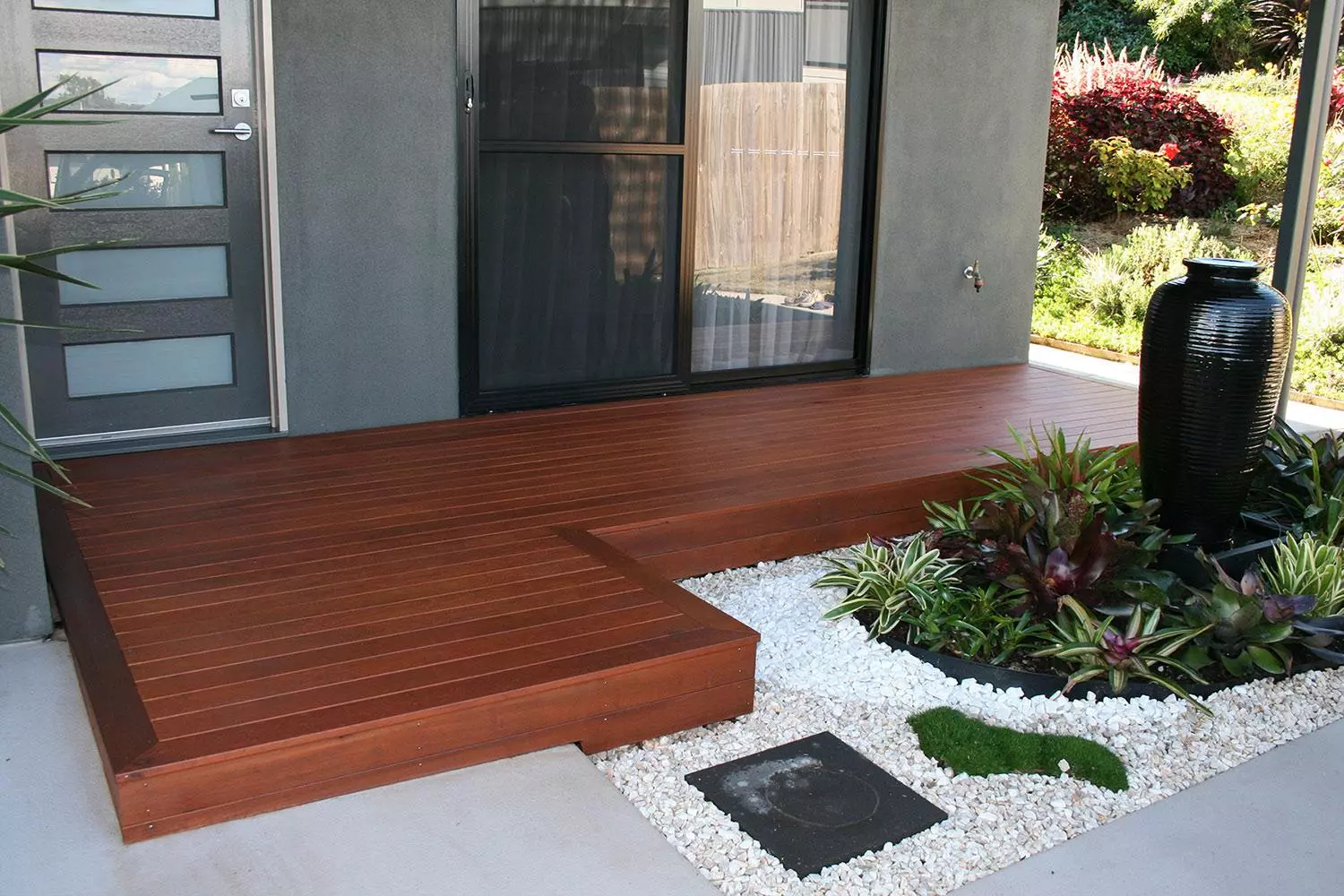
21. Contrast a Red-Brown Deck with a White Gravel Garden
This design is a masterclass in controlled contrast. The formula is approximately 40% warm wood + 40% cool hardscape + 20% vibrant green. The rich, reddish-brown deck provides warmth and a natural feel. The stark white gravel and grey exterior wall provide a cool, minimalist backdrop. Then, the carefully placed tropical plants and bright green moss act as pops of living color that bridge the gap between the two. The tall black urn serves as a strong vertical anchor in the composition.
|
📋 Copy HEX 🔗 Share |
White gravel looks incredible when it’s first installed, but it’s a magnet for dirt, algae, and fallen leaves. To keep it looking this crisp, you’ll need to rake it and rinse it down regularly. In a shady, damp area, it can develop a greenish tint from algae. If you have a lot of trees overhead, you’ll be constantly fighting to keep it free of debris. It’s a high-fashion choice with high-maintenance demands. For a similar look with less work, consider a light gray or tan gravel.
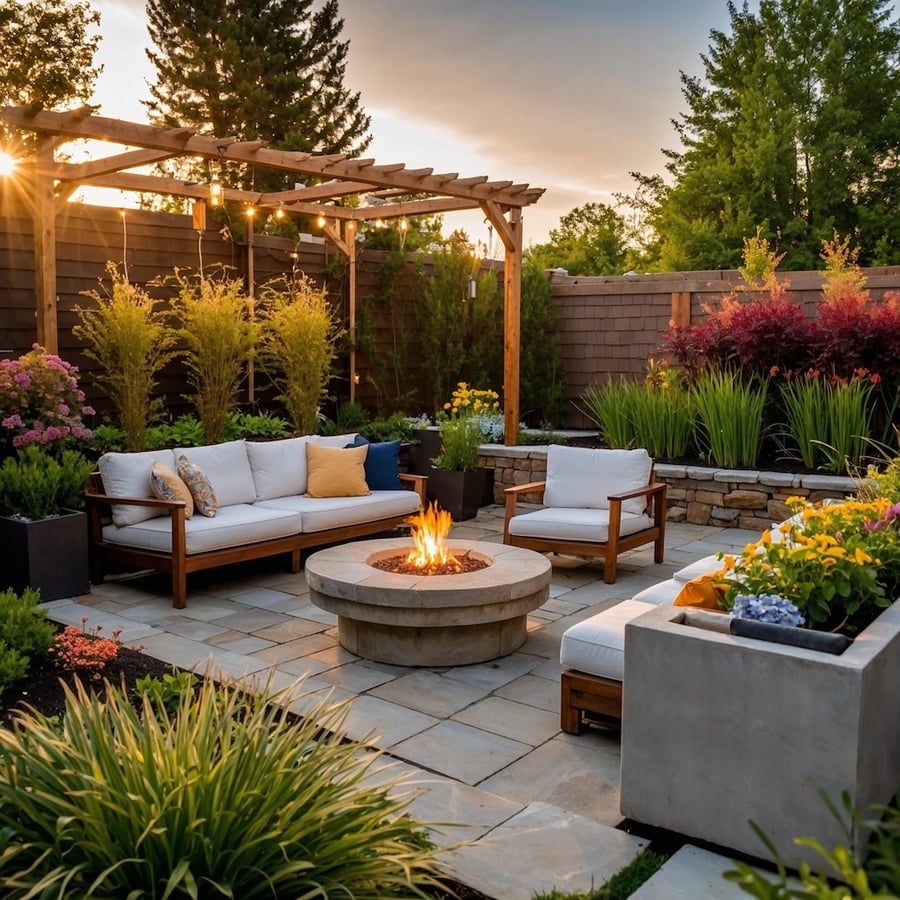
22. Gather Around a Concrete Fire Pit on a Stone Patio
Creating a cozy fire pit lounge like this involves several key investments. Here’s a realistic look at the costs.
- Hardscaping (stone pavers for a 15’x15′ area): $2,000 – $6,000 installed
- Pergola (wood kit or custom build): $1,500 – $8,000
- Furniture (Outdoor sofa & chairs): $1,200 – $5,000
- Fire Pit (Concrete, gas-powered): $800 – $3,000
- Lighting & Landscaping (String lights, plants): $500 – $1,500
- TOTAL: $6,000 – $23,500
- Budget alternative: Use gravel instead of pavers, a simple metal fire pit, and find a secondhand patio set to get a similar cozy zone for under $2,000.
|
📋 Copy HEX 🔗 Share |
The reason this space feels so incredibly inviting is the principle of enclosure. The pergola overhead, the dark wooden fence behind, and the tiered planters on the side all work together to create a sense of being in a room, even though it’s outdoors. This enclosure makes the space feel protected, intimate, and cozy. The round fire pit acts as a natural gathering point, drawing people in and encouraging conversation. It’s a primal, effective way to create a social hub.
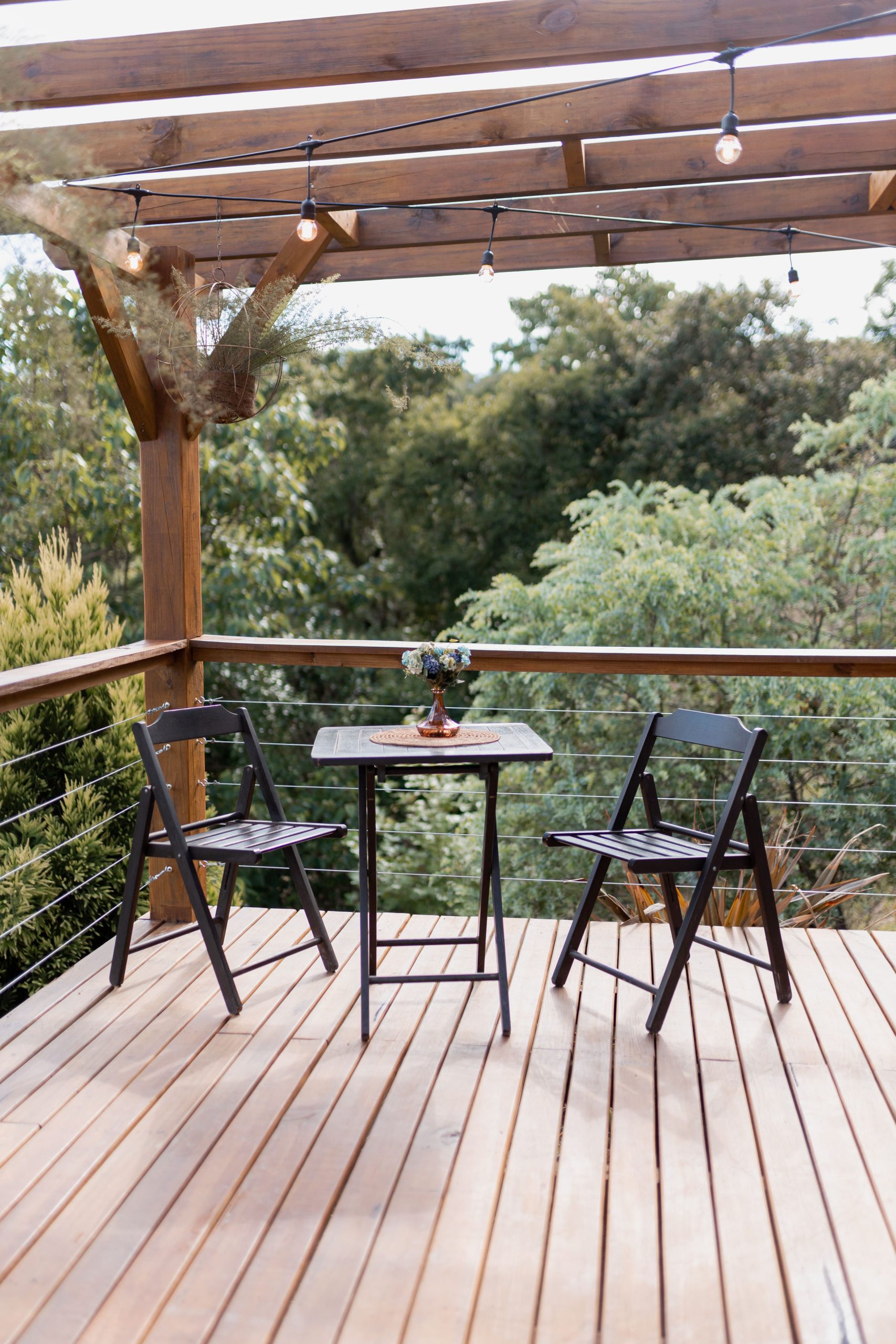
23. A Simple Bistro Set Under a Pergola with String Lights
This is proof that you don’t need a huge budget to create a magical outdoor moment. A simple folding bistro set can be found for under $100 at stores like IKEA or Wayfair. A set of outdoor string lights is about $30. If you don’t have a pergola, you can string the lights between your house and a tree or a sturdy fence post. The key is the simplicity and the focus on the view. This entire intimate dining spot can be created for less than the cost of one high-end outdoor armchair.
|
📋 Copy HEX 🔗 Share |
This idea is perfect for smaller decks, balconies, or overlooked corners of a larger yard. All you really need is an 8×8 foot space to accommodate the pergola footprint and a small table set. It’s an ideal solution for adding a functional, charming feature without consuming a lot of square footage. Its intimate scale makes it feel like a private retreat, a little getaway spot right in your own backyard. It proves you don’t need a massive deck to have a great outdoor space.
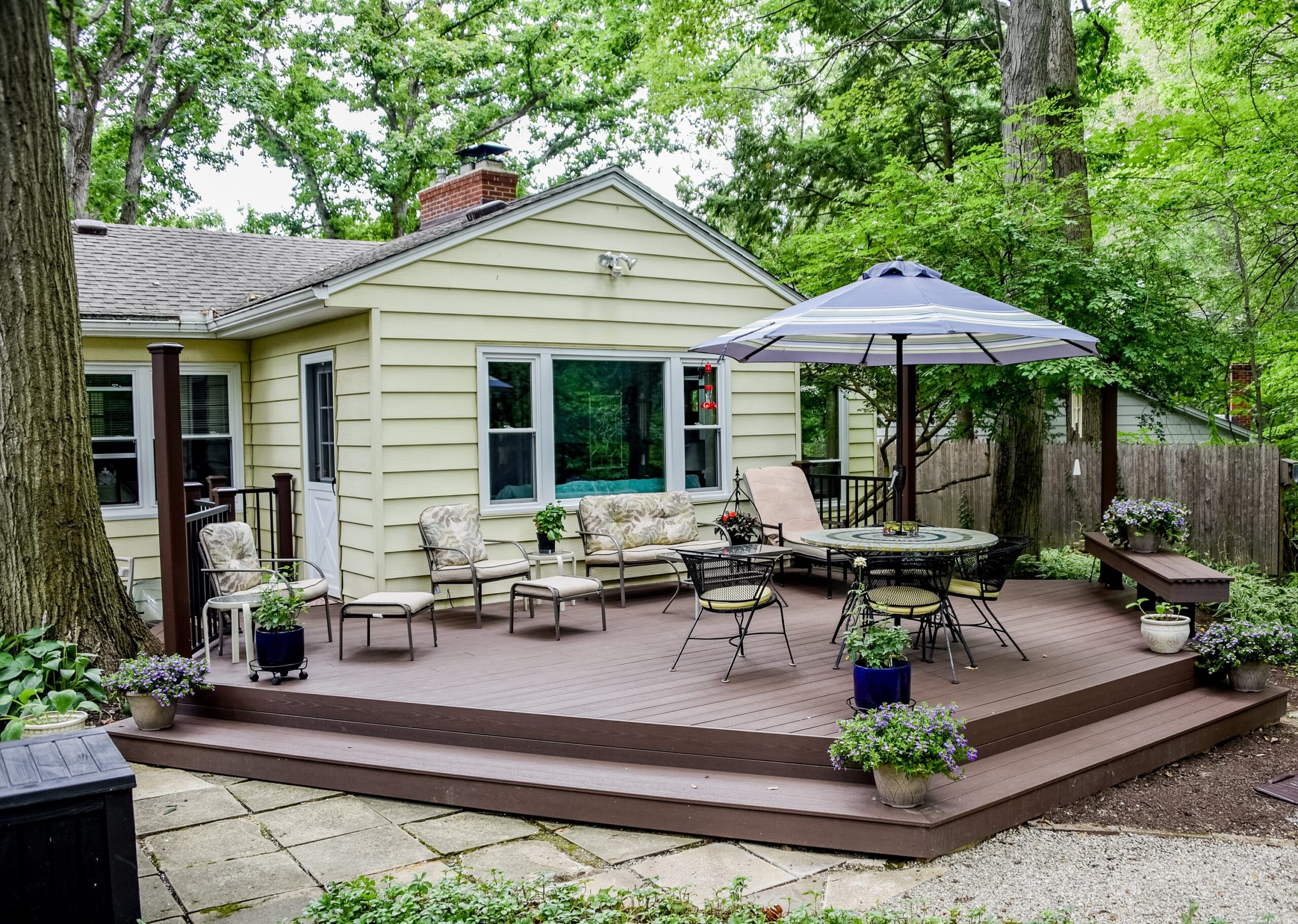
24. Furnish a Sprawling Multi-Level Deck for Dining and Lounging
The single most important element making this large deck work is the creation of distinct zones. It’s not just one vast, empty platform; it’s thoughtfully divided into a dining area (with the table and umbrella), a conversation area (with the cushioned loveseat and chairs), and a quiet lounging spot (with the chaise and built-in bench). This zoning is what transforms a simple structure into a highly functional and welcoming outdoor living space. It gives every part of the deck a clear purpose.
|
📋 Copy HEX 🔗 Share |
When furnishing a large, multi-level deck, use area rugs to visually anchor your different zones. An outdoor rug under the dining table will define that space, while another rug under the conversation set will create a distinct living room area. This is a classic interior design trick that works just as well outdoors. It helps break up the monotony of the wood decking and makes the furniture groupings feel more intentional and cohesive. Choose rugs made from polypropylene or other all-weather materials.
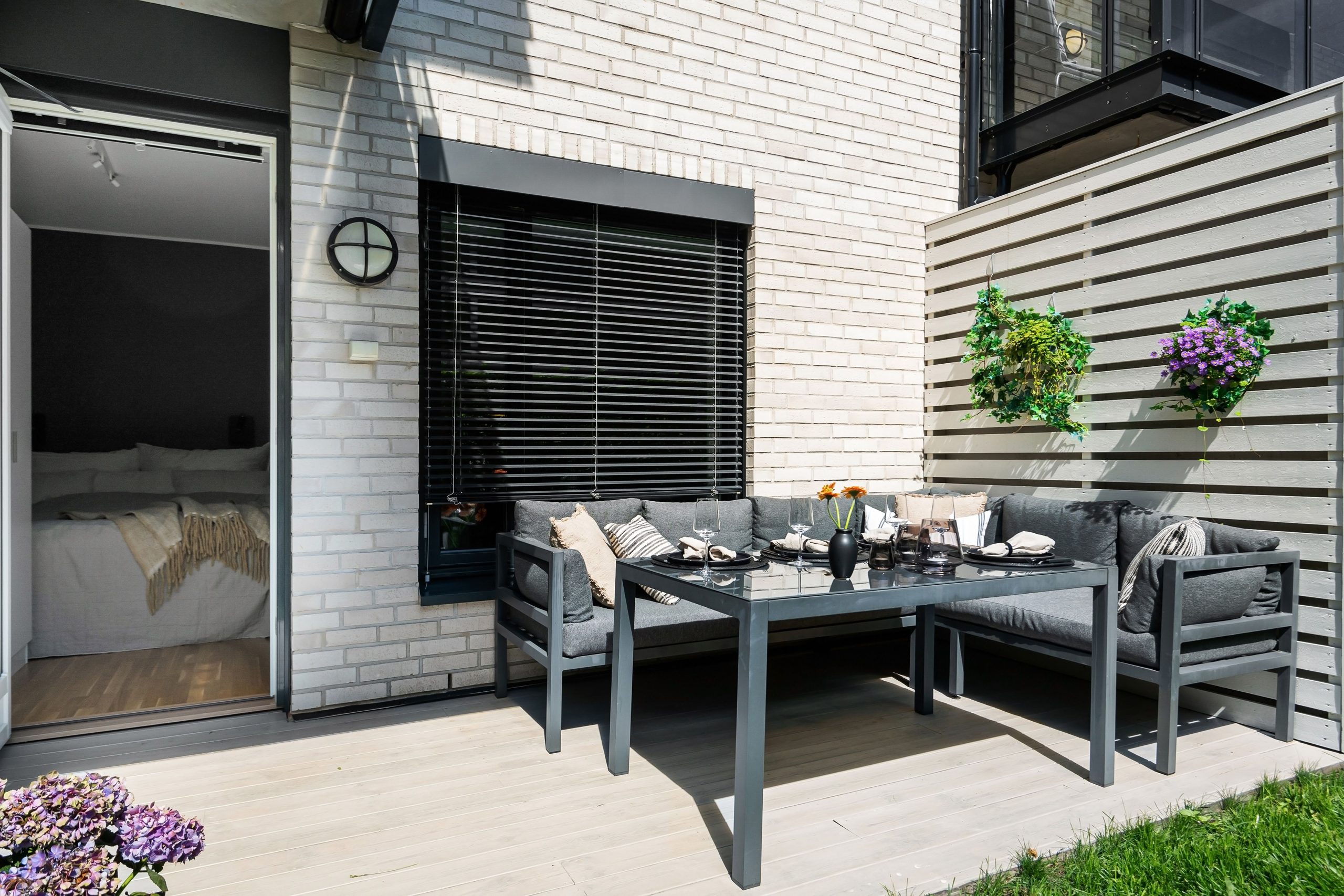
25. A Gray Sectional and Glass Table for Modern Outdoor Dining
This look is straight from the 2026 patio-as-dining-room trend. The sectional sofa pulled right up to the dining table is a move away from traditional, formal patio sets. It’s more casual, comfortable, and lounge-y, reflecting how people actually want to hang out: relaxed and together. This hybrid setup acknowledges that outdoor meals often blend into long evenings of conversation, and it provides the perfect, comfortable spot for just that. It’s less about formal dining and more about stylish, communal lounging.
|
📋 Copy HEX 🔗 Share |
Let’s be real about that glass-top table outdoors. It will look pristine for about five minutes. Then comes the dust, the pollen, the water spots from rain, and the constant fingerprints. It also creates a surprising amount of glare in direct sunlight. While it contributes to a clean, modern aesthetic, it’s a high-maintenance choice. If you love the look, keep a squeegee and a microfiber cloth handy. You’re going to need them. Daily.
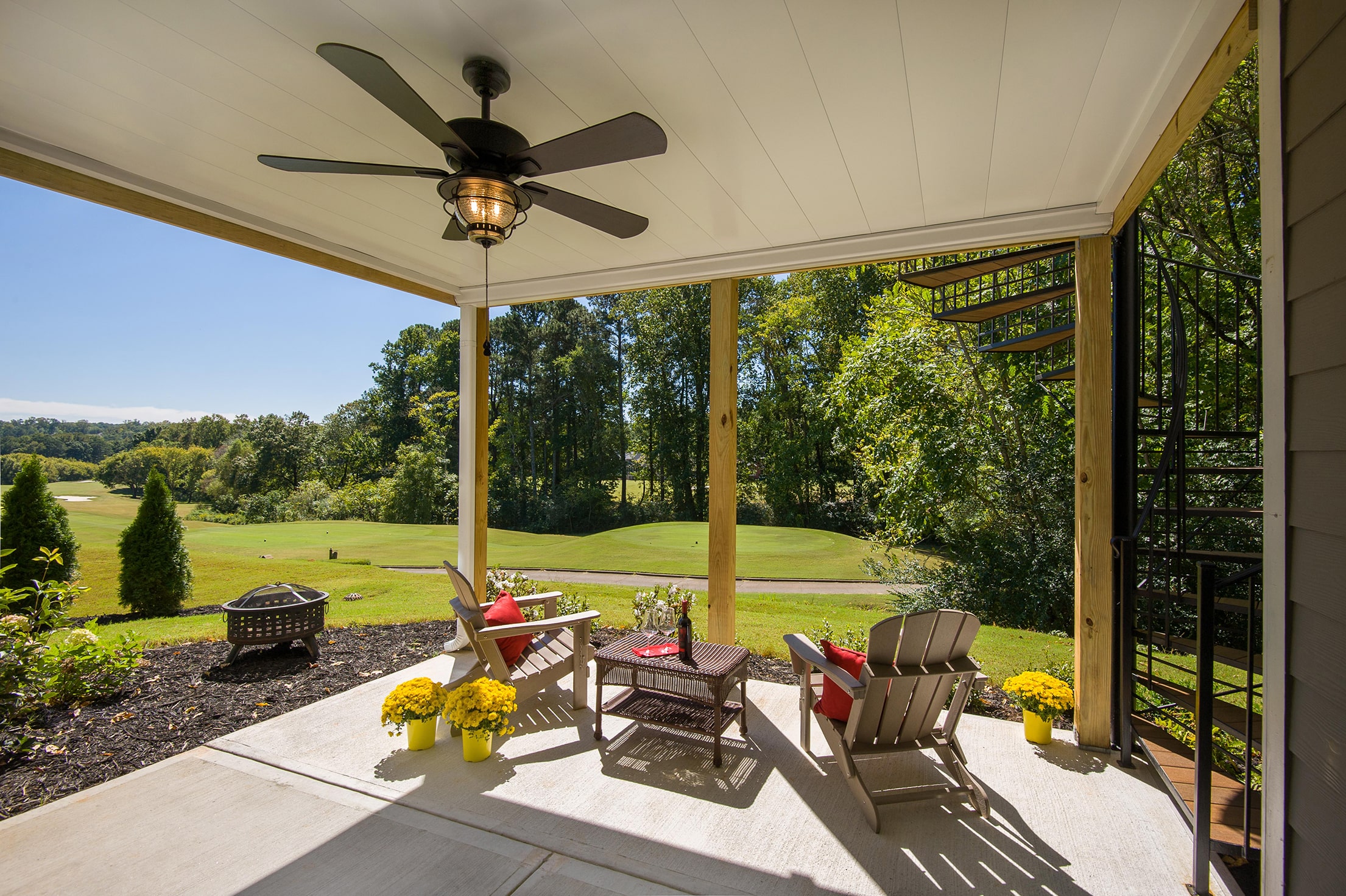
26. Frame a Golf Course View with Adirondack Chairs
This perfectly serene view follows a simple recipe: 50% dominant view + 30% comfortable framework + 20% natural foreground. The expansive golf course is the undeniable star. The covered patio with its posts, roof, and Adirondack chairs acts as a ‘frame,’ directing your gaze outward. Finally, the flower beds and lawn in the immediate foreground provide a soft, colorful transition between your space and the wider landscape. The red pillows are a key accent, drawing the eye and adding a pop of warmth.
|
📋 Copy HEX 🔗 Share |
This composition is a classic example of using framing in design. The wooden posts and the roof of the covered patio create a window-like effect, focusing and enhancing the view of the golf course beyond. Without this structure, the view would still be nice, but it wouldn’t feel as intentional or composed. The chairs are placed perfectly to invite you to sit and appreciate this framed moment. It’s a simple but powerful technique for making a view feel like a work of art.
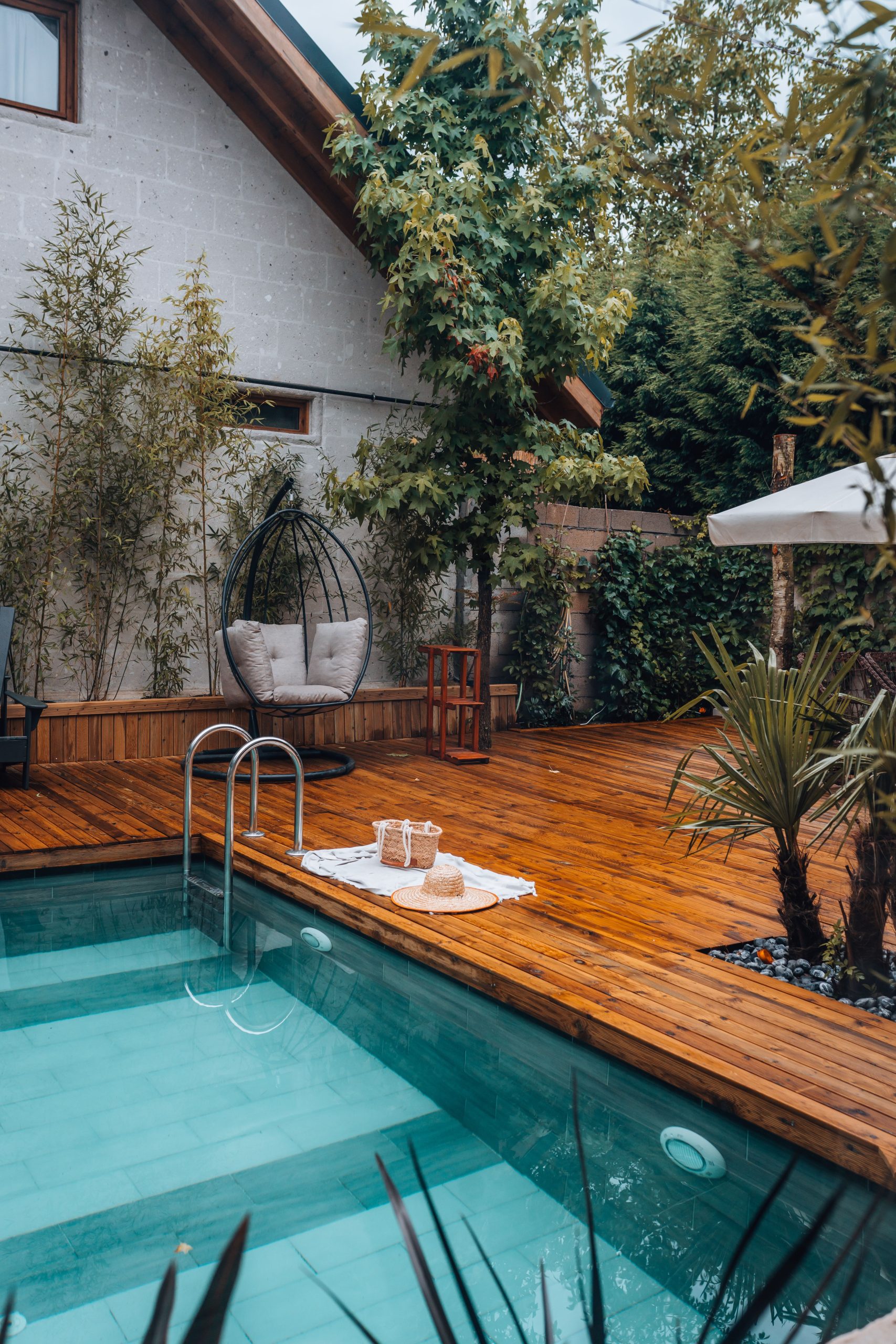
27. Hang an Egg Chair on a Modern Wooden Pool Deck
If you’re adding a hanging chair to a deck, you must ensure you have adequate support. Don’t just screw a hook into a ceiling joist. For a single-joist installation, you need to add blocking—short pieces of lumber installed between the joists on either side of your hanging joist. This distributes the load and prevents the rotational force of swinging from cracking your ceiling or pulling the joist loose. It’s a critical safety step that’s often overlooked. When in doubt, consult a professional.
|
📋 Copy HEX 🔗 Share |
Want that tropical, relaxing vibe without the expense of a custom pool deck? You can get a similar feel on any patio or deck. The key is the hanging egg chair, which you can find at stores like Target, Walmart, or Wayfair for $300-$500—many come with their own stand, so no structural work is needed. Pair it with a few large pots filled with dramatic tropical plants like elephant ears or cannas lilies from a local nursery. It’s the chair and the foliage that really sell this look.
28. Cozy Up on a Built-in Bench with Integrated Planters
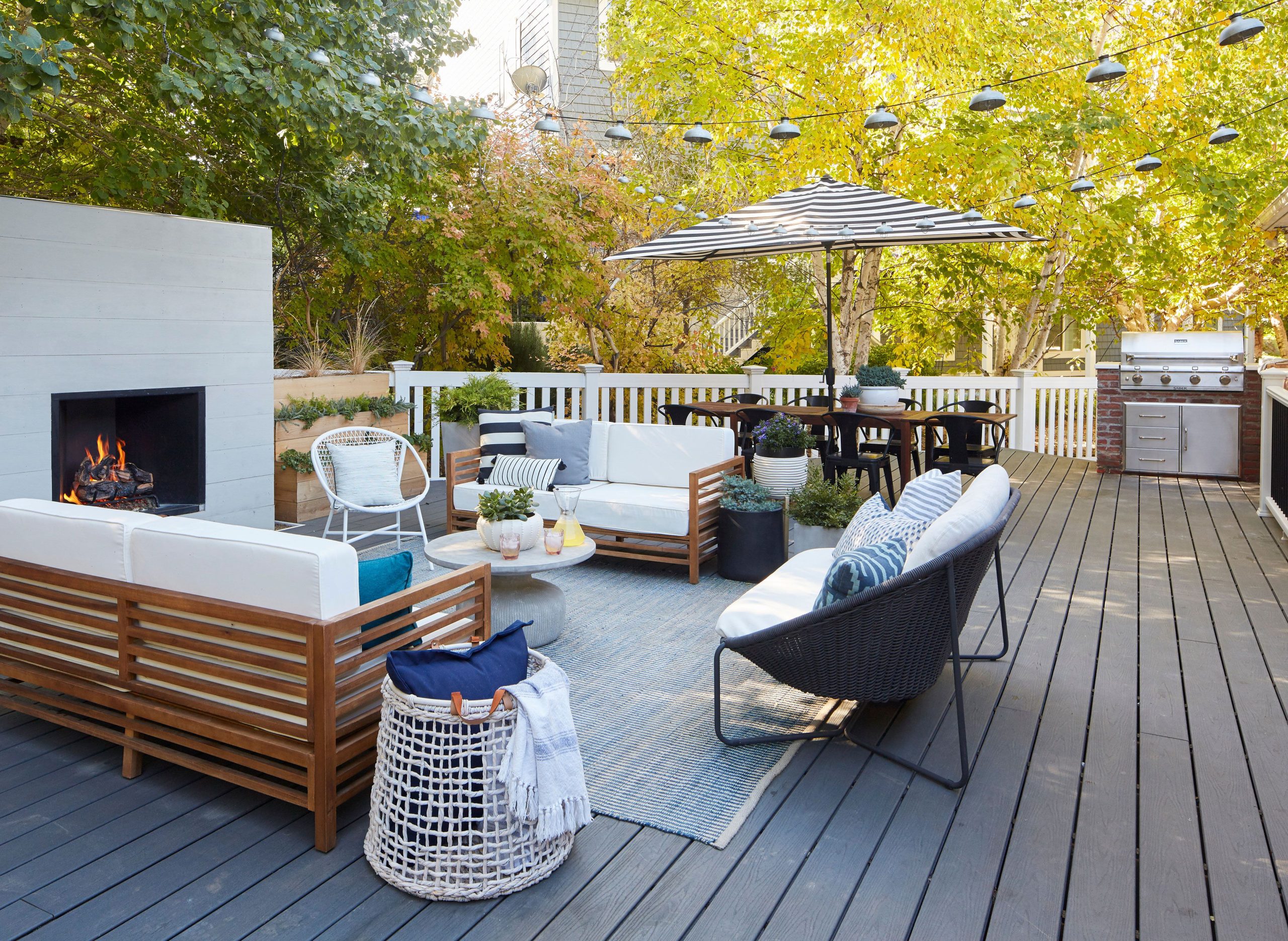
The magic of this design lies in its multi-functionality. The structure isn’t just a planter, and it isn’t just a bench—it’s both, seamlessly integrated into one piece. This clever combination saves space and creates a beautifully cohesive look. The planters act as a living ‘backrest’ for the bench, wrapping you in greenery and creating a sense of cozy enclosure. It’s this thoughtful, dual-purpose design that makes the space feel both smart and serene. It shares DNA with the look in Idea #14 but feels even cozier.
|
📋 Copy HEX 🔗 Share |
An integrated bench and planter combo is a brilliant space-saver for small- to medium-sized decks (100-250 sq ft). For comfortable seating, the bench portion should be at least 18 inches deep and 16-18 inches high. The planter section works best when it’s at least 18 inches deep to give plant roots enough room. On a smaller deck, a single 8-foot section of this along one side can provide seating for 3-4 people without taking up any of the central floor space.
29. A Clean-Lined Deck with Horizontal Rails and a Built-in Planter
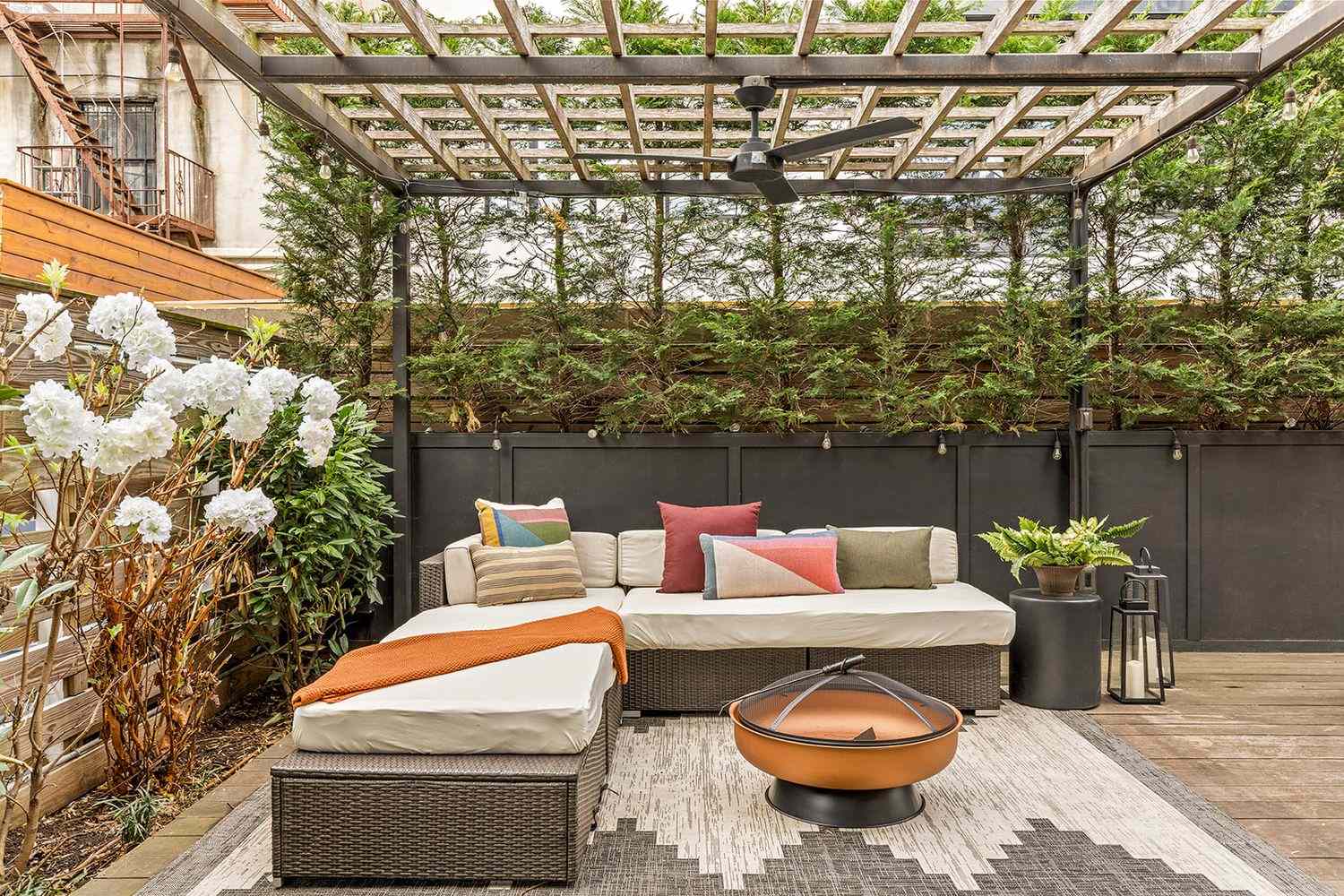
This design succeeds because of its strong, clean lines. The horizontal slats of the railing create a sense of length and modernity, drawing the eye along the deck’s edge. The wood deck planks, laid parallel to the house, reinforce this linear direction. The built-in planter provides a moment of visual interest—a block of lush green texture—without disrupting the overall clean aesthetic. It’s a very controlled, architectural approach to landscaping. It’s a simpler version of the lit-up modern deck seen in Idea #7.
|
📋 Copy HEX 🔗 Share |
Those sleek horizontal railings look amazing, but if you have small children, they can be a safety concern. The ladder-like design can be tempting for little ones to climb, which is a significant fall risk on an elevated deck. Many local building codes now have specific restrictions on horizontal railing designs for this very reason. Before you commit to this style, check your local regulations and be honest with yourself about your family’s needs.
Your Outdoor Story Starts Now
Your deck has so much potential beyond just being a wooden platform. It’s a chance to create an extension of your home, a place to relax, and a connection to nature. We hope these ideas have sparked your imagination for what’s possible. Now go ahead and start planning your perfect outdoor escape—and don’t forget to save your favorites to Pinterest!